WO2020241638A1 - Drp1-FILAMIN COMPLEX FORMATION INHIBITORS - Google Patents
Drp1-FILAMIN COMPLEX FORMATION INHIBITORS Download PDFInfo
- Publication number
- WO2020241638A1 WO2020241638A1 PCT/JP2020/020744 JP2020020744W WO2020241638A1 WO 2020241638 A1 WO2020241638 A1 WO 2020241638A1 JP 2020020744 W JP2020020744 W JP 2020020744W WO 2020241638 A1 WO2020241638 A1 WO 2020241638A1
- Authority
- WO
- WIPO (PCT)
- Prior art keywords
- compound
- solvate
- acceptable salt
- pharmacologically acceptable
- pharmaceutical composition
- Prior art date
- Legal status (The legal status is an assumption and is not a legal conclusion. Google has not performed a legal analysis and makes no representation as to the accuracy of the status listed.)
- Ceased
Links
- 0 CC(C)(CC(C)(C)OC(c1c(**)c(C(*C2(C3)C3(*)C2)=O)c(*)*(C)c1*)=O)C=C* Chemical compound CC(C)(CC(C)(C)OC(c1c(**)c(C(*C2(C3)C3(*)C2)=O)c(*)*(C)c1*)=O)C=C* 0.000 description 6
- ZXNCTLOWNQOIBI-DHZHZOJOSA-N CC(NC(C)=C(C1c2cc(N)ccc2)C(OC/C=C/c2ccccc2)=O)=C1C(OCCOC)=O Chemical compound CC(NC(C)=C(C1c2cc(N)ccc2)C(OC/C=C/c2ccccc2)=O)=C1C(OCCOC)=O ZXNCTLOWNQOIBI-DHZHZOJOSA-N 0.000 description 1
- PKRKULINAKYDAX-AATRIKPKSA-N CC(NC(C)=C(C1c2cccc(N)c2)C(OC/C=C/c2ccncc2)=O)=C1C(OCCOC)=O Chemical compound CC(NC(C)=C(C1c2cccc(N)c2)C(OC/C=C/c2ccncc2)=O)=C1C(OCCOC)=O PKRKULINAKYDAX-AATRIKPKSA-N 0.000 description 1
- REECJCLUHPHXBS-UHFFFAOYSA-N CC(NC(C)=C(C1c2cccc(N)c2)C(Oc2ccccc2)=O)=C1C(OCCOC)=O Chemical compound CC(NC(C)=C(C1c2cccc(N)c2)C(Oc2ccccc2)=O)=C1C(OCCOC)=O REECJCLUHPHXBS-UHFFFAOYSA-N 0.000 description 1
- WADXKYKIHAFQIP-AATRIKPKSA-N CC(NC(C)=C(C1c2cccc([N+]([O-])=O)c2)C(OC/C=C/c2ccncc2)=O)=C1C(OCCOC)=O Chemical compound CC(NC(C)=C(C1c2cccc([N+]([O-])=O)c2)C(OC/C=C/c2ccncc2)=O)=C1C(OCCOC)=O WADXKYKIHAFQIP-AATRIKPKSA-N 0.000 description 1
- SNGADKXSOUFMCA-UHFFFAOYSA-N CC(NC(C)=C(C1c2cccc([N+]([O-])=O)c2)C(Oc2ccccc2)=O)=C1C(OCCOC)=O Chemical compound CC(NC(C)=C(C1c2cccc([N+]([O-])=O)c2)C(Oc2ccccc2)=O)=C1C(OCCOC)=O SNGADKXSOUFMCA-UHFFFAOYSA-N 0.000 description 1
Images


Classifications
-
- C—CHEMISTRY; METALLURGY
- C07—ORGANIC CHEMISTRY
- C07D—HETEROCYCLIC COMPOUNDS
- C07D213/00—Heterocyclic compounds containing six-membered rings, not condensed with other rings, with one nitrogen atom as the only ring hetero atom and three or more double bonds between ring members or between ring members and non-ring members
- C07D213/02—Heterocyclic compounds containing six-membered rings, not condensed with other rings, with one nitrogen atom as the only ring hetero atom and three or more double bonds between ring members or between ring members and non-ring members having three double bonds between ring members or between ring members and non-ring members
- C07D213/04—Heterocyclic compounds containing six-membered rings, not condensed with other rings, with one nitrogen atom as the only ring hetero atom and three or more double bonds between ring members or between ring members and non-ring members having three double bonds between ring members or between ring members and non-ring members having no bond between the ring nitrogen atom and a non-ring member or having only hydrogen or carbon atoms directly attached to the ring nitrogen atom
- C07D213/60—Heterocyclic compounds containing six-membered rings, not condensed with other rings, with one nitrogen atom as the only ring hetero atom and three or more double bonds between ring members or between ring members and non-ring members having three double bonds between ring members or between ring members and non-ring members having no bond between the ring nitrogen atom and a non-ring member or having only hydrogen or carbon atoms directly attached to the ring nitrogen atom with hetero atoms or with carbon atoms having three bonds to hetero atoms with at the most one bond to halogen, e.g. ester or nitrile radicals, directly attached to ring carbon atoms
- C07D213/78—Carbon atoms having three bonds to hetero atoms, with at the most one bond to halogen, e.g. ester or nitrile radicals
- C07D213/79—Acids; Esters
- C07D213/80—Acids; Esters in position 3
-
- A—HUMAN NECESSITIES
- A61—MEDICAL OR VETERINARY SCIENCE; HYGIENE
- A61K—PREPARATIONS FOR MEDICAL, DENTAL OR TOILETRY PURPOSES
- A61K9/00—Medicinal preparations characterised by special physical form
- A61K9/0012—Galenical forms characterised by the site of application
- A61K9/0014—Skin, i.e. galenical aspects of topical compositions
-
- A—HUMAN NECESSITIES
- A61—MEDICAL OR VETERINARY SCIENCE; HYGIENE
- A61K—PREPARATIONS FOR MEDICAL, DENTAL OR TOILETRY PURPOSES
- A61K9/00—Medicinal preparations characterised by special physical form
- A61K9/0012—Galenical forms characterised by the site of application
- A61K9/0019—Injectable compositions; Intramuscular, intravenous, arterial, subcutaneous administration; Compositions to be administered through the skin in an invasive manner
-
- A—HUMAN NECESSITIES
- A61—MEDICAL OR VETERINARY SCIENCE; HYGIENE
- A61K—PREPARATIONS FOR MEDICAL, DENTAL OR TOILETRY PURPOSES
- A61K9/00—Medicinal preparations characterised by special physical form
- A61K9/0012—Galenical forms characterised by the site of application
- A61K9/0053—Mouth and digestive tract, i.e. intraoral and peroral administration
-
- A—HUMAN NECESSITIES
- A61—MEDICAL OR VETERINARY SCIENCE; HYGIENE
- A61P—SPECIFIC THERAPEUTIC ACTIVITY OF CHEMICAL COMPOUNDS OR MEDICINAL PREPARATIONS
- A61P1/00—Drugs for disorders of the alimentary tract or the digestive system
- A61P1/04—Drugs for disorders of the alimentary tract or the digestive system for ulcers, gastritis or reflux esophagitis, e.g. antacids, inhibitors of acid secretion, mucosal protectants
-
- A—HUMAN NECESSITIES
- A61—MEDICAL OR VETERINARY SCIENCE; HYGIENE
- A61P—SPECIFIC THERAPEUTIC ACTIVITY OF CHEMICAL COMPOUNDS OR MEDICINAL PREPARATIONS
- A61P21/00—Drugs for disorders of the muscular or neuromuscular system
-
- A—HUMAN NECESSITIES
- A61—MEDICAL OR VETERINARY SCIENCE; HYGIENE
- A61P—SPECIFIC THERAPEUTIC ACTIVITY OF CHEMICAL COMPOUNDS OR MEDICINAL PREPARATIONS
- A61P29/00—Non-central analgesic, antipyretic or antiinflammatory agents, e.g. antirheumatic agents; Non-steroidal antiinflammatory drugs [NSAID]
-
- A—HUMAN NECESSITIES
- A61—MEDICAL OR VETERINARY SCIENCE; HYGIENE
- A61P—SPECIFIC THERAPEUTIC ACTIVITY OF CHEMICAL COMPOUNDS OR MEDICINAL PREPARATIONS
- A61P3/00—Drugs for disorders of the metabolism
- A61P3/08—Drugs for disorders of the metabolism for glucose homeostasis
- A61P3/10—Drugs for disorders of the metabolism for glucose homeostasis for hyperglycaemia, e.g. antidiabetics
-
- A—HUMAN NECESSITIES
- A61—MEDICAL OR VETERINARY SCIENCE; HYGIENE
- A61P—SPECIFIC THERAPEUTIC ACTIVITY OF CHEMICAL COMPOUNDS OR MEDICINAL PREPARATIONS
- A61P43/00—Drugs for specific purposes, not provided for in groups A61P1/00-A61P41/00
-
- A—HUMAN NECESSITIES
- A61—MEDICAL OR VETERINARY SCIENCE; HYGIENE
- A61P—SPECIFIC THERAPEUTIC ACTIVITY OF CHEMICAL COMPOUNDS OR MEDICINAL PREPARATIONS
- A61P9/00—Drugs for disorders of the cardiovascular system
- A61P9/04—Inotropic agents, i.e. stimulants of cardiac contraction; Drugs for heart failure
-
- C—CHEMISTRY; METALLURGY
- C07—ORGANIC CHEMISTRY
- C07D—HETEROCYCLIC COMPOUNDS
- C07D211/00—Heterocyclic compounds containing hydrogenated pyridine rings, not condensed with other rings
- C07D211/04—Heterocyclic compounds containing hydrogenated pyridine rings, not condensed with other rings with only hydrogen or carbon atoms directly attached to the ring nitrogen atom
- C07D211/80—Heterocyclic compounds containing hydrogenated pyridine rings, not condensed with other rings with only hydrogen or carbon atoms directly attached to the ring nitrogen atom having two double bonds between ring members or between ring members and non-ring members
- C07D211/84—Heterocyclic compounds containing hydrogenated pyridine rings, not condensed with other rings with only hydrogen or carbon atoms directly attached to the ring nitrogen atom having two double bonds between ring members or between ring members and non-ring members with hetero atoms or with carbon atoms having three bonds to hetero atoms, with at the most one bond to halogen directly attached to ring carbon atoms
- C07D211/90—Carbon atoms having three bonds to hetero atoms with at the most one bond to halogen
-
- C—CHEMISTRY; METALLURGY
- C07—ORGANIC CHEMISTRY
- C07D—HETEROCYCLIC COMPOUNDS
- C07D401/00—Heterocyclic compounds containing two or more hetero rings, having nitrogen atoms as the only ring hetero atoms, at least one ring being a six-membered ring with only one nitrogen atom
- C07D401/02—Heterocyclic compounds containing two or more hetero rings, having nitrogen atoms as the only ring hetero atoms, at least one ring being a six-membered ring with only one nitrogen atom containing two hetero rings
- C07D401/12—Heterocyclic compounds containing two or more hetero rings, having nitrogen atoms as the only ring hetero atoms, at least one ring being a six-membered ring with only one nitrogen atom containing two hetero rings linked by a chain containing hetero atoms as chain links
Definitions
- the present invention relates to dynamin-related protein 1 (Drp1)-filamin complex formation inhibitors and novel compounds.
- Mitochondria is an organelle found in almost all eukaryotic cells, and principally takes part in ATP generation as a result of oxidative phosphorylation that occurs in the electron transfer system. Mitochondria repeats fusion and division, and any abnormality thereof is known to be involved in onset of cancer, cardiovascular disease, neurodegenerative disease and so forth. It has been suggested, for example, that morphological dysfunction of mitochondria, induced in a non-infarct area after myocardial infarction, would cause energy metabolic disorder, causing chronic heart failure.
- Drp1 is a GTP-binding protein.
- Drp1 is a GTP-binding protein.
- the present inventors clarified that upon hypoxic stimulation of myocardial cells, Drp1 in the cells combines filamin to form a Drp1-filamin complex, further forms a Drp1-filamin-actin complex to activate itself, and promotes mitochondrial division.
- the present inventors also clarified that cilnidipine inhibits formation of the Drp1-filamin complex. (See Non Patent Literature 1, for example.)
- Cilnidipine is a compound represented by chemical formula (A1) below.
- Cilnidipine functions to block the L-type calcium channel and the N-type calcium channel, and has been used as a hypertension drug.
- Cilnidipine is featured by its long lastingness of the hypotensive effect, as compared with other antihypertensive drugs.
- Cilnidipine is therefore valuable as a therapeutic agent for cardiovascular diseases including heart failure and arrhythmia (see Patent Literature 1, for example).
- An object of the present invention is to provide Drp1-filamin complex formation inhibitors and novel compounds that can be included as an active ingredient in Drp1-filamin complex formation inhibitors.
- the present invention includes the following aspects.
- the invention includes compounds of Formula (I): and pharmacologically acceptable salts thereof and solvates of them, where: R 1 is phenyl substituted with one to three substituents each of which is independently NO 2 , NH 2 , OH, C 1 -C 6 alkyl, C 1 -C 6 haloalkyl, or C 1 -C 6 alkoxyalkyl, provided that at least one substituent is NO 2 or NH 2 ; R 2 is H, C 1 -C 6 alkyl, C 1 -C 6 haloalkyl, or C 1 -C 6 alkoxyalkyl; R 3 is H, C 1 -C 6 alkyl, C 1 -C 6 haloalkyl, or C 1 -C 6 alkoxyalkyl; R 4 is C 1 -C 6 alkyl or C 1 -C 6 haloalkyl; R 5 is phenyl or pyridinyl, wherein the phenyl or pyri
- the invention includes compounds of Formula (1): and pharmacologically acceptable salts thereof and solvates of them, where: R 1 represents a phenyl group, 2-pyridyl group, 3-pyridyl group or 4-pyridyl group, R 2 represents a hydrogen atom or amino group, R 3 represents a hydrogen atom or nitro group, and if R 2 is a hydrogen atom then R 3 is a nitro group, and, if R 2 is an amino group then R 3 is a hydrogen atom.
- R 1 represents a phenyl group, 2-pyridyl group, 3-pyridyl group or 4-pyridyl group
- R 2 represents a hydrogen atom or amino group
- R 3 represents a hydrogen atom or nitro group
- R 2 is a hydrogen atom then R 3 is a nitro group
- R 2 is an amino group then R 3 is a hydrogen atom.
- the invention includes compounds of Formula (2): and pharmacologically acceptable salts thereof and solvates of them, where: R 4 represents a phenyl group, 2-pyridyl group, 3-pyridyl group or 4-pyridyl group, R 5 represents an amino group, and R 6 represents a hydrogen atom.
- the invention includes compounds of Formula (A): and pharmacologically acceptable salts thereof and solvates of them, where: R is NO 2 or NH 2 , wherein R is at the 2-position, 3-position, or 4-position of the phenyl ring; and X is CH or N, provided the compound is other than
- the invention includes compounds of Formula (B): and pharmacologically acceptable salts thereof and solvates of them, where: R is NO 2 or NH 2 , wherein R is at the 2-position, 3-position, or 4-position of the phenyl ring; and X represents CH or N.
- the invention includes pharmaceutical compositions comprising (a) a compound of the invention and (b) one or more pharmaceutically acceptable carriers.
- compound of the invention refers to a compound of Formula (I) or a pharmacologically acceptable salt thereof or solvate of them, a compound of Formula (1) or a pharmacologically acceptable salt thereof or solvate of them, a compound of Formula (2) or a pharmacologically acceptable salt thereof or solvate of them, a compound of Formula (A) or a pharmacologically acceptable salt thereof or solvate of them, or a compound of Formula (B) or a pharmacologically acceptable salt thereof or solvate of them.
- pharmaceutical compositions sometimes referred to herein as “pharmaceutical compositions of the invention”, are further described in the Description of Embodiments and specific embodiments 65 to 88, infra.
- the invention includes dynamin-related protein 1 (Drp1)-filamin complex formation inhibitors that contain, as an active ingredient, a compound of the invention.
- dynamin-related protein 1 (Drp1)-filamin complex formation inhibitors sometimes referred to herein as “(Drp1)-filamin complex formation inhibitors of the invention”, are further described in the Description of Embodiments and specific embodiment 89, infra.
- the invention includes compounds of the invention that have advantageous properties as compared to cilnidipine.
- the compounds have a similar ability to cilnidipine to inhibit mitochondrial division but reduced ability to block calcium channels as compared to cilnidipine.
- the compounds have enhanced ability as compared to cilnidipine to inhibit mitochondrial division, with or without a reduced ability to block calcium channels.
- the invention includes the compounds, pharmaceutical compositions, and (Drp1)-filamin complex formation inhibitors of the invention for use as a prophylactic or therapeutic agent, for example for a disease caused by Drp1 dysfunction, for chronic heart failure, for amyotrophic lateral sclerosis, for inflammatory bowel disease, or for diabetes, e.g., type 1 and type 2 (type 1/2) diabetes.
- a prophylactic or therapeutic agent for example for a disease caused by Drp1 dysfunction, for chronic heart failure, for amyotrophic lateral sclerosis, for inflammatory bowel disease, or for diabetes, e.g., type 1 and type 2 (type 1/2) diabetes.
- Methods of treating disease caused by Drp1 dysfunction, chronic heart failure, amyotrophic lateral sclerosis, inflammatory bowel disease, and diabetes, e.g., type 1/2 diabetes with the compounds, pharmaceutical compositions, and (Drp1)-filamin complex formation inhibitors of the invention are also provided. Exemplary uses and methods of treatment are further described in the Description of Em
- a dynamin-related protein 1 (Drp1)-filamin complex formation inhibitor that contains, as an active ingredient, a compound represented by formula (1) below or a pharmacologically acceptable salt thereof or a solvate of them.
- R 1 represents a phenyl group, 2-pyridyl group, 3-pyridyl group or 4-pyridyl group
- R 2 represents a hydrogen atom or amino group
- R 3 represents a hydrogen atom or nitro group, wherein if R 2 is a hydrogen atom then R 3 is a nitro group, and, if R 2 is an amino group then R 3 is a hydrogen atom].
- R 1 represents a phenyl group, 2-pyridyl group, 3-pyridyl group or 4-pyridyl group
- R 2 represents a hydrogen atom
- R 3 represents a nitro group
- R 1 represents a 2-pyridyl group, 3-pyridyl group or 4-pyridyl group
- R 2 represents an amino group
- R 3 represents a hydrogen atom
- R 1 represents a phenyl group, 2-pyridyl group, 3-pyridyl group or 4-pyridyl group
- R 2 represents an amino group
- R 3 represents a hydrogen atom.
- the Drp1-filamin complex formation inhibitor according to [4] in which the disease is chronic heart failure, amyotrophic lateral sclerosis, inflammatory bowel disease or diabetes, e.g., type 1/2 diabetes.
- a pharmaceutical composition for inhibiting Drp1-filamin complex formation including the Drp1-filamin complex formation inhibitor described in any one of [1] to [5], and a pharmaceutically acceptable carrier.
- R 4 represents a phenyl group, 2-pyridyl group, 3-pyridyl group or 4-pyridyl group
- R 5 represents an amino group
- R 6 represents a hydrogen atom
- Fig. 1(a) is a fluorescent microphotograph of a cell cultured under normoxia in Exemplary Experiment 1
- Fig. 1(b) is a fluorescent microphotograph of a cell cultured under hypoxia in Exemplary Experiment 1.
- Fig. 2(a) is a representative fluorescent microphotograph of mitochondria.
- Fig. 2(b) is an image that illustrates a shape of mitochondria extracted by filtering from the photograph in Fig. 2(a).
- Fig. 2(c) is a graph that illustrates length of mitochondria from the myocardial cells of a neonatal rat cultured under normoxia or hypoxia.
- Fig. 3 is a graph that illustrates results of a measurement of percentage of cells having vesicular mitochondria in Exemplary Experiment 2.
- Fig. 1(a) is a fluorescent microphotograph of a cell cultured under normoxia in Exemplary Experiment 1
- Fig. 1(b) is a fluorescent microphotograph of a cell cultured under
- FIG. 4(a) is a drawing that illustrates an experiment schedule of Exemplary Experiment 3.
- Fig. 4(b) is a graph that illustrates results of measurement of survival rate in Exemplary Experiment 3.
- Fig. 5(a) is a drawing that illustrates an experiment schedule of Exemplary Experiment 4.
- Fig. 5(b) is a graph that illustrates results of measurement of survival rate in Exemplary Experiment 4.
- Fig. 6 is a graph that illustrates temporal changes in blood sugar level of mice in the individual groups in Exemplary Experiment 5.
- Fig. 7 is a graph that illustrates analytical results of Exemplary Experiment 6.
- Fig. 8 is a graph that illustrates results of measurement of percentages of cells having tubular mitochondria in Exemplary Experiment 8.
- FIG. 9(a) is a fluorescent microphotograph of cells in Exemplary Experiment 9.
- Fig. 9(b) is a graph that illustrates results of measurement of average length of mitochondrial fragments, as a result of image analysis of fluorescent microphotograph in Fig. 9(a).
- Fig. 10 is a graph that illustrates results of measurement of percentage of p53 accumulating cells relative to ⁇ -actinin-positive cells in Exemplary Experiment 10.
- Fig. 11 is a graph that illustrates results of a measurement of percentage of cells having vesicular mitochondria in Exemplary Experiment 11.
- Fig. 12 is a graph that illustrates increase of intracellular calcium ion concentration after potassium chloride stimulation in Exemplary Experiment 12.
- FIG. 13 is a graph that illustrates results of a measurement of percentage of cells having vesicular mitochondria in Exemplary Experiment 13.
- Fig. 14 is a graph that illustrates results of measurement of percentages of cells having tubular mitochondria in Exemplary Experiment 14.
- Fig. 15 is a graph that illustrates increase of intracellular calcium ion concentration after potassium chloride stimulation in Exemplary Experiment 15.
- the invention includes compounds of Formula (I): and pharmacologically acceptable salts thereof and solvates of them, where: R 1 is phenyl substituted with one to three substituents each of which is independently NO 2 , NH 2 , OH, C 1 -C 6 alkyl, C 1 -C 6 haloalkyl, or C 1 -C 6 alkoxyalkyl, provided that at least one substituent is NO 2 or NH 2 ; R 2 is H, C 1 -C 6 alkyl, C 1 -C 6 haloalkyl, or C 1 -C 6 alkoxyalkyl; R 3 is H, C 1 -C 6 alkyl, C 1 -C 6 haloalkyl, or C 1 -C 6 alkoxyalkyl; R 4 is C 1 -C 6 alkyl or C 1 -C 6 haloalkyl; R 5 is phenyl or pyridinyl, wherein the phenyl
- C 1 -C n alkyl refers to a straight- or branched-chain unsubstituted alkyl having from 1 to n carbon atoms in the chain.
- Examples of C 1 -C 6 alkyl include methyl, ethyl, n-propyl, isopropyl, butyl, isobutyl, sec-butyl, tert-butyl (tBu), pentyl, isopentyl, tert-pentyl, hexyl, and isohexyl.
- C 1 -C n haloalkyl refers to a straight- or branched-chain unsubstituted alkyl having from 1 to n carbon atoms in the chain and having one or more hydrogen atoms substituted with halogens.
- haloalkyl groups include trifluoromethyl (CF 3 ), difluoromethyl (CF 2 H), monofluoromethyl (CH 2 F), pentafluoroethyl (CF 2 CF 3 ), tetrafluoroethyl (CHFCF 3 ), monofluoroethyl (CH 2 CH 2 F), and trifluoroethyl (CH 2 CF 3 .
- C 1 -C n alkoxyalkyl refers to a straight- or branched-chain unsubstituted alkyl having from 1 to n carbon atoms in the chain and a terminal oxygen linking the group to the remainder of the molecule.
- Examples of C 1 -C 6 alkyoxy groups include methoxy, ethoxy, propoxy, isopropoxy, n-butoxy, t-butoxy, pentoxy, and hexoxy.
- phenyl represents the following group:
- a substituent on a substituted phenyl group can be identified by its position on the phenyl ring.
- a substituent can be at the 2-position, 3-position, or 4-position, where the position numbering refers to the positions as shown in the foregoing phenyl structure.
- pyridinyl or “pyridyl” represents a phenyl group in which one ring CH has been replaced with a nitrogen atom.
- Pyridinyl groups can be 2-pyridyl, 3-pyridyl, or 4-pyridyl.
- 2-pyridyl refers to the following group:
- 3-pyridyl refers to the following group:
- 4-pyridyl refers to the following group:
- unsubstituted with reference to a group means that the specified group has no substituents.
- substituted with reference to a group means that the specified group has one or more substituents. If a group is not expressly noted as being substituted, it is understood that such group is unsubstituted.
- the compound of Formula (I) is a compound of Formula (Ia):
- the compound of Formula (I) is a compound of Formula (Ib):
- R 1 is wherein R 1a is NO 2 or NH 2 , and R 1b and R 1c are each independently H, NO 2 , NH 2 , OH, C 1 -C 6 alkyl, C 1 -C 6 haloalkyl, or C 1 -C 6 alkoxyalkyl. In some embodiments, both R 1b and R 1c are H.
- R 2 is H, C 1 -C 3 alkyl, C 1 -C 3 haloalkyl, or C 1 -C 3 alkoxyalkyl. In some embodiments, R 2 is CH 3 .
- R 3 is H, C 1 -C 3 alkyl, C 1 -C 3 haloalkyl, or C 1 -C 3 alkoxyalkyl. In some embodiments, R 3 is CH 3 . In some embodiments, both R 2 and R 3 are CH 3 .
- R 4 is C 1 -C 3 alkyl or C 1 -C 3 haloalkyl. In some embodiments, R 4 is CH 3 .
- R 5 is phenyl which is unsubstituted or substituted with one to three substituents each of which is independently NO 2 , NH 2 , OH, C 1 -C 6 alkyl, C 1 -C 6 haloalkyl, or C 1 -C 6 alkoxyalkyl. In some embodiments, R 5 is unsubstituted phenyl.
- R 5 is pyridinyl which is unsubstituted or substituted with one to three substituents each of which is independently NO 2 , NH 2 , OH, C 1 -C 6 alkyl, C 1 -C 6 haloalkyl, or C 1 -C 6 alkoxyalkyl.
- R 5 is unsubstituted pyridinyl.
- the R 5 pyridinyl group is 4-pyridyl (e.g., unsubstituted 4-pyridyl).
- the R 5 pyridinyl is 3-pyridyl (e.g., unsubstituted 4-pyridyl).
- the R 5 pyridinyl is 2-pyridyl (e.g., unsubstituted 2-pyridyl).
- m is 1. In other embodiments, m is 2. In other embodiments, m is 3. In yet other embodiments, m is 4.
- n is 1. In other embodiments, n is 2. In other embodiments, n is 3. In some embodiments, m is 2 and n is 1.
- R 1 is wherein R 1a is NO 2 or NH 2 ; R 2 , R 3 , and R 4 are CH 3 ; R 5 is unsubstituted phenyl or unsubstituted pyridinyl (e.g., unsubstituted 4-pyridyl; m is 2; and n is 1.
- the compound of Formula (I) is 3-(2-methoxyethyl) 5-[(2E)-3-phenyl-2-propen-1-yl] 2,6-dimethyl-4-(2-nitrophenyl)-1,4-dihydropyridine-3,5-dicarboxylate.
- the compound of Formula (I) is 3-(2-methoxyethyl) 5-[(2E)-3-phenyl-2-propen-1-yl] 4-(3-aminophenyl)-2,6-dimethyl-1,4-dihydropyridine-3,5-dicarboxylate.
- the compound of Formula (I) is 3-(2-methoxyethyl) 5-[(2E)-3-phenyl-2-propen-1-yl] 2,6-dimethyl-4-(3-nitrophenyl)pyridine-3,5-dicarboxylate. In other embodiments, the compound of Formula (I) is 3-(2-methoxyethyl) 5-[(2E)-3-phenyl-2-propen-1-yl] 2,6-dimethyl-4-(4-nitrophenyl)-1,4-dihydropyridine-3,5-dicarboxylate.
- the compound of Formula (I) is 3-(2-methoxyethyl) 5-[(2E)-3-phenyl-2-propen-1-yl] 4-(4-aminophenyl)-2,6-dimethyl-1,4-dihydropyridine-3,5-dicarboxylate.
- the compound of Formula (I) is 3-(2-methoxyethyl) 5-[(2E)-3-(pyridin-4-yl)-2-propen-1-yl] 2,6-dimethyl-4-(2-nitrophenyl)-1,4-dihydropyridine-3,5-dicarboxylate.
- the compound of Formula (I) is 3-(2-methoxyethyl) 5-[(2E)-3-(pyridin-4-yl)-2-propen-1-yl] 2,6-dimethyl-4-(3-nitrophenyl)-1,4-dihydropyridine-3,5-dicarboxylate.
- the compound of Formula (I) is 3-(2-methoxyethyl) 5-[(2E)-3-(pyridin-4-yl)-2-propen-1-yl] 4-(3-aminophenyl)-2,6-dimethyl-1,4-dihydropyridine-3,5-dicarboxylate.
- the compound of Formula (I) is 3-(2-methoxyethyl) 5-[(2E)-3-(pyridin-4-yl)-2-propen-1-yl] 2,6-dimethyl-4-(4-nitrophenyl)-1,4-dihydropyridine-3,5-dicarboxylate.
- the invention includes compounds of Formula (1): and pharmacologically acceptable salts thereof and solvates of them, where: R 1 represents a phenyl group, 2-pyridyl group, 3-pyridyl group or 4-pyridyl group, R 2 represents a hydrogen atom or amino group, R 3 represents a hydrogen atom or nitro group, and if R 2 is a hydrogen atom then R 3 is a nitro group, and, if R 2 is an amino group then R 3 is a hydrogen atom.
- R 1 represents a phenyl group, 2-pyridyl group, 3-pyridyl group or 4-pyridyl group
- R 2 represents a hydrogen atom
- R 3 represents a nitro group
- R 1 represents a 2-pyridyl group, 3-pyridyl group or 4-pyridyl group
- R 2 represents an amino group
- R 3 represents a hydrogen atom
- R 1 represents a phenyl group, 2-pyridyl group, 3-pyridyl group or 4-pyridyl group
- R 2 represents an amino group
- R 3 represents a hydrogen atom
- R 1 represents a phenyl group, 2-pyridyl group, 3-pyridyl group or 4-pyridyl group
- R 2 represents a hydrogen atom
- R 3 represents a nitro group.
- R 1 represents a 2-pyridyl group, 3-pyridyl group or 4-pyridyl group
- R 2 represents an amino group
- R 3 represents a hydrogen atom
- R 1 represents a phenyl group, 2-pyridyl group, 3-pyridyl group or 4-pyridyl group
- R 2 represents an amino group
- R 3 represents a hydrogen atom.
- the present invention provides a compound represented by formula (2) below or a pharmacologically acceptable salt thereof or a solvate of them.
- R 4 represents a phenyl group, 2-pyridyl group, 3-pyridyl group or 4-pyridyl group
- R 5 represents an amino group
- R 6 represents a hydrogen atom
- the compound represented by formula (2) above is a novel compound.
- Specific examples of the compound represented by formula (2) above include a compound represented by chemical formula (5) below (referred to as “NS4-700”, hereinafter), and a compound represented by chemical formula (6) below (referred to as “NS4-238”, hereinafter).
- NS4-700 exhibits suppressive ability over mitochondrial division, to a high degree comparative to that of NS4-238, but does not block the calcium channel.
- NS4-238 exhibits suppressive ability over mitochondrial division, which is approximately three times stronger than that of cilnidipine, and blocks the calcium channel to a comparable degree with cilnidipine.
- the invention includes compounds of Formula (A): and pharmacologically acceptable salts thereof and solvates of them, where: R is NO 2 or NH 2 , wherein R is at the 2-position, 3-position, or 4-position of the phenyl ring; and X is CH or N, provided the compound is other than
- the invention includes compounds of Formula (B): and pharmacologically acceptable salts thereof and solvates of them, where: R is NO 2 or NH 2 , wherein R is at the 2-position, 3-position, or 4-position of the phenyl ring; and X represents CH or N.
- the invention includes dynamin-related protein 1 (Drp1)-filamin complex formation inhibitors that contain, as an active ingredient, a compound of Formula (I) or a pharmacologically acceptable salt thereof or solvate of them, a compound of Formula (1) or a pharmacologically acceptable salt thereof or solvate of them, a compound of Formula (2) or a pharmacologically acceptable salt thereof or solvate of them, a compound of Formula (A) or a pharmacologically acceptable salt thereof or solvate of them, or a compound of Formula (B) or a pharmacologically acceptable salt thereof or solvate of them.
- dynamin-related protein 1 (Drp1)-filamin complex formation inhibitors that contain, as an active ingredient, a compound of Formula (I) or a pharmacologically acceptable salt thereof or solvate of them, a compound of Formula (1) or a pharmacologically acceptable salt thereof or solvate of them, a compound of Formula (2) or a pharmacologically acceptable salt thereof or
- the present invention provides a dynamin-related protein 1 (Drp1)-filamin complex formation inhibitor that contains, as an active ingredient, a compound represented by formula (1) below or a pharmacologically acceptable salt thereof or a solvate of them.
- Drp1 dynamin-related protein 1
- R 1 represents a phenyl group, 2-pyridyl group, 3-pyridyl group or 4-pyridyl group
- R 2 represents a hydrogen atom or amino group
- R 3 represents a hydrogen atom or nitro group, wherein if R 2 is a hydrogen atom then R 3 is a nitro group, and, if R 2 is an amino group then R 3 is a hydrogen atom.
- the compound represented by formula (1) above is a derivative of cilnidipine represented by chemical formula (A1) above. As described later in Examples, the present inventors clarified that the compound represented by formula (1) can inhibit formation of the Drp1-filamin complex. Inhibition of formation of the Drp1-filamin complex can suppress mitochondrial division.
- the Drp1-filamin complex formation inhibitor of this embodiment may also be understood as the compound represented by formula (1) above, or a pharmacologically acceptable salt thereof, or a solvate of them.
- Human Drp1 protein is assigned NCBI accession numbers NP_036193.2, NP_036192.2, NP_001265395.1 and so forth.
- Murine Drp1 protein is assigned NCBI accession numbers NP_001021118.1, NP_001263269.1, NP_001263270.1 and so forth.
- Filamin is exemplified by filamin A, filamin B, filamin C and so forth.
- Human filamin A protein is assigned NCBI accession number NP_001104026.1, NP_001447.2 and so forth.
- Murine filamin A protein is assigned NCBI accession numbers NP_001277350.1, NP_034357.2 and so forth.
- Human Filamin B protein is assigned NCBI accession numbers NP_001157789.1, NP_001157790.1, NP_001157791.1 and so forth.
- Murine Filamin B protein is assigned NCBI accession numbers NP_001074896.1, NP_598841.1 and so forth.
- Human Filamin C protein is assigned NCBI accession numbers NP_001120959.1, NP_001449.3 and so forth.
- Murine Filamin C protein is assigned NCBI accession numbers NP_001074654.1, NP_001298003.1 and so forth.
- the Drp1-filamin complex formation inhibitor of the invention contains a compound represented by (a) Formula (I) or a pharmacologically acceptable salt thereof or a solvate of them, (b) formula (1) or a pharmacologically acceptable salt thereof or a solvate of them, (c) Formula (2) or a pharmacologically acceptable salt thereof or a solvate of them, (d) Formula (A) or a pharmacologically acceptable salt thereof or a solvate of them, or (e) Formula (E) or a pharmacologically acceptable salt thereof or a solvate of them, the content of which is however not specifically limited.
- the Drp1-filamin complex formation inhibitor of the invention contains a compound represented by formula (1) or a pharmacologically acceptable salt thereof or a solvate of them.
- the compound represented by Formula (I), formula (1), Formula (2), Formula (A), or Formula (B) may be a free species, may be a pharmacologically acceptable salt of the compound represented by Formula (I), formula (1), Formula (2), Formula (A), or Formula (B), may be a solvate of the compound represented by Formula (I), formula (1), Formula (2), Formula (A), or Formula (B), or may be a solvate of a pharmacologically acceptable salt of the compound represented by Formula (I), formula (1), Formula (2), Formula (A), or Formula (B).
- the compound is in the form of a solvate, more particularly a hydrate. In other embodiments, the compound is not in the form of a solvate.
- the pharmacologically acceptable salt is exemplified by hydrochlorate, sulfate, hydrobromate, hydroiodide, phosphate, nitrate, benzoate, methanesulfonate, 2-hydroxyethanesulfonate, p-toluenesulfonate, acetate, propanoate, oxalate, malonate, succinate, glutarate, adipate, tartarate, maleate, fumarate, malate, and mandelate.
- the solvate is not specifically limited so long as it is a pharmaceutically acceptable solvate, and is exemplified by hydrate and organic solvates. In some embodiments, the solvate is a hydrate.
- the invention provides compounds of the invention, e.g., compounds as described above, that have advantageous properties as compared to cilnidipine.
- the compounds have a similar ability to cilnidipine to inhibit mitochondrial division but reduced ability to block calcium channels as compared to cilnidipine.
- a compound of the invention can have at least 50% of the mitochondrial division inhibitory activity of cilnidipine, at least 75% of the of the mitochondrial division inhibitory activity of cilnidipine, at least 90% of the mitochondrial division inhibitory activity of cilnidipine, or at least equal mitochondrial division inhibitory activity to the mitochondrial division inhibitory activity of cilnidipine.
- Mitochondrial division inhibitory activity can be determined as described herein, e.g., by the evaluation system of Exemplary Experiment 1.
- the compounds of the invention have enhanced ability as compared to cilnidipine to inhibit mitochondrial division, with or without a reduced ability to block calcium channels.
- a compound of the invention can have (a) at least 100%, at least 125% or at least 150% (and optionally up to 200%, up to 300% or up to more than 300%) of the mitochondrial division inhibitory activity of cilnidipine and, optionally (b) calcium channel blocking activity no greater than 75%, no greater than 50%, no greater than 25% or no greater than 10% of the calcium channel blocking activity of cilnidipine.
- Mitochondrial division inhibitory activity can be determined as described herein, e.g., by the evaluation system of Exemplary Experiment 1 and calcium channel blocking activity can be determined as described herein, e.g., by the evaluation system of Exemplary Experiment 12.
- a compound represented by formula (1) may be such that R1 represents a phenyl group, 2-pyridyl group, 3-pyridyl group or 4-pyridyl group, R2 represents a hydrogen atom, and R3 represents a nitro group.
- a compound represented by formula (1) may be such that R1 represents a 2-pyridyl group, 3-pyridyl group or 4-pyridyl group, R2 represents an amino group, and R3 represents a hydrogen atom.
- the present inventors clarified that the cilnidipine derivative of the first embodiment has the Drp1-filamin complex formation inhibitor.
- the present inventors also clarified that the cilnidipine derivative of the first embodiment does not act to block the calcium channel, unlike cilnidipine that blocks the calcium channel. That is, the cilnidipine derivative of the first embodiment does not exhibit hypotensive effect.
- cilnidipine exhibits therapeutic effects on intractable diseases such as amyotrophic lateral sclerosis (ALS), inflammatory bowel disease, and diabetes, e.g., type 1/2 diabetes.
- ALS amyotrophic lateral sclerosis
- diabetes e.g., type 1/2 diabetes.
- cilnidipine is, however, difficult for non-hypertensive patients, due to its hypotensive effect.
- the cilnidipine derivative of the first embodiment having no hypotensive effect, can be administered also to the non-hypertensive patients.
- cilnidipine derivative of the first embodiment examples include a compound represented by chemical formula (3) below (referred to as “NS4-019”, hereinafter), a compound represented by chemical formula (4) below (referred to as “NS4-043”, hereinafter), and a compound represented by chemical formula (5) below (referred to as “NS4-700”, hereinafter).
- NS4-019 and NS4-043 exhibit suppressive ability over mitochondrial division, to a degree equivalent to that of cilnidipine.
- NS4-700 exhibits suppressive ability over mitochondrial division, to a high degree comparable to that of NS4-238 described later.
- a compound represented by formula (1) may be such that R 1 represents a phenyl group, 2-pyridyl group, 3-pyridyl group or 4-pyridyl group, R 2 represents an amino group, and R 3 represents a hydrogen atom.
- the present inventors clarified that the cilnidipine derivative of the second embodiment exhibits suppressive ability over mitochondrial division, approximately three times stronger than that of cilnidipine.
- cilnidipine derivative of the second embodiment examples include a compound represented by chemical formula (5) below (referred to as “NS4-700”, hereinafter), and a compound represented by chemical formula (6) below (referred to as “NS4-238”, hereinafter).
- NS4-700 exhibits suppressive ability over mitochondrial division, to a high degree comparative to that of NS4-238, but does not block the calcium channel.
- NS4-238 exhibits suppressive ability over mitochondrial division, which is approximately three times stronger than that of cilnidipine, and blocks the calcium channel to a comparable degree with cilnidipine.
- the present invention provides, in one embodiment, a prophylactic agent or therapeutic agent for diseases caused by Drp1 dysfunction, containing any of the aforementioned compounds and Drp1-filamin complex formation inhibitors of the invention as an active ingredient.
- the diseases caused by Drp1 dysfunction are exemplified by chronic heart failure, amyotrophic lateral sclerosis (ALS), inflammatory bowel disease, and diabetes, e.g., type 1/2 diabetes.
- ALS amyotrophic lateral sclerosis
- diabetes e.g., type 1/2 diabetes.
- the aforementioned compound or Drp1-filamin complex formation inhibitor is preferably mixed with a pharmaceutically acceptable carrier, to be formulated as a pharmaceutical composition.
- the pharmaceutical composition may have an oral dosage form or non-oral dosage form.
- the oral dosage form is exemplified by tablet, pill, capsule, elixir, and microcapsule.
- the non-oral dosage form is exemplified by injection, inhalant, suppository, and patch.
- the pharmaceutically acceptable carrier is exemplified by bases such as purified water, titanium oxide, carnauba wax, synthetic squalane, crotamiton, and gelatin; binders such as ethyl cellulose, glycerin and methacrylic acid copolymer S; excipients such as crystalline cellulose, croscarmellose sodium, magnesium stearate, and hypromellose; stabilizers such as gum arabic, magnesium aluminometasilicate, povidone, benzyl alcohol, sodium acetate, and magnesium stearate; plasticizers such as Macrogol 400 and Macrogol 6000; and solubilizers such as benzyl benzoate and benzyl alcohol.
- bases such as purified water, titanium oxide, carnauba wax, synthetic squalane, crotamiton, and gelatin
- binders such as ethyl cellulose, glycerin and methacrylic acid copolymer S
- the pharmaceutical composition may further contain an additive.
- the additive is exemplified by sweeteners such as sucrose, lactose, and saccharin; flavors such as peppermint and l-menthol; and preservatives such as benzoic acid, salicylic acid, thimerosal, and phenol.
- the pharmaceutical composition may be formulated by suitably combining the aforementioned carrier and additive, and by mixing them according to any of unit dosage form required by generally accepted pharmaceutical practice.
- the pharmaceutical composition may be characterized by the purity of the compound of the invention.
- the pharmaceutical composition does not include an active pharmaceutical ingredient other than the compound of the invention, and in a particular embodiment the pharmaceutical composition does not substantially include cilnidipine.
- the term “does not substantially include cilnidipine” refers to a detectable amount of cilnidipine, a therapeutically effective amount of cilnidipine, and/or any amount of cilnidipine.
- the compound of the invention in the pharmaceutical composition is at least 90% pure (for example is at least 95% pure, 98% pure or 99% pure).
- the percentage of purity refers to the purity of the active pharmaceutical ingredient in a pharmaceutical composition exclusive of carriers, e.g., excipients.
- the pharmaceutical composition containing a compound of the invention is preferably in a dosage form containing (a) at least 1 mg of the compound of the invention, at least 2 mg of the compound of the invention, at least 5 mg of the compound of the invention, at least 10 mg of the compound of the invention and / or (b) up to 20 mg of the compound of the invention, up to 25 mg of the compound of the invention, or up to 50 mg of the compound of the invention.
- Administration to patients may be implemented typically by intraarterial injection, intravenous injection, subcutaneous injection, as well as any method known to those skilled in the art, such as intranasal, transbronchial, intramuscular, transdermal, or oral method. Dosage may vary depending on weight, age and symptom of patient, and on method of administration. Proper dosage may be selected suitably by those skilled in the art.
- dosage of the Drp1-filamin complex formation inhibitor may vary depending on type of the Drp1-filamin complex formation inhibitor and symptom of patient, oral dose for an adult (assumed to weigh 60 kg) is normally considered to be approximately 1 to 30 mg per day, which is administered once a day, or several times a day.
- non-oral dose may vary depending on type of the Drp1-filamin complex formation inhibitor, symptom of patient, target organ, administration method and so forth
- systemic administration for an adult is normally considered to be approximately 0.1 to 10 mg per day, which is administered once a day, or several times a day.
- local administration for an adult is normally considered to be approximately 0.1 to 10 mg per day, which is administered once a day, or several times a day.
- the present invention provides a prophylactic or therapeutic method for disease caused by Drp1 dysfunction, comprising administering an effective dose of the Drp1-filamin complex formation inhibitor to a patient in need of therapy.
- the present invention provides the Drp1-filamin complex formation inhibitor for prophylactic or therapy for disease caused by Drp1 dysfunction.
- the present invention provides a usage of the Drp1-filamin complex formation inhibitor for manufacturing a prophylactic or therapeutic agent for disease caused by Drp1 dysfunction.
- the Drp1-filamin complex formation inhibitor is same as any of those described previously. Also the diseases caused by Drp1 dysfunction are same as those described previously.
- one equivalent of compound A, one equivalent of compound B, and one equivalent of compound C, with protecting groups on R 1a , R 1b , R 1c , R 2 , R 3 , R 4 , and R 5 as needed, can be combined in 2-propanol and stirred at approximately 70 °C for a period of time (e.g., 24 to 72 hours) to provide compound D.
- Suitable protecting groups are known and readily selected by those of skill in the art (see, e.g., Wuts and Greene, 2007, Greene's Protective Groups in Organic Synthesis, Fourth Edition, John Wiley & Sons, Inc.; Kocienski, 2005, Protecting Groups, Third Edition, Thieme).
- an amine group can be protected with a tert-butyloxycarbonyl (Boc) protecting group.
- Compound D can be purified, for example, by flash column chromatography on silica gel.
- Protecting groups on R 1a , R 1b , R 1c , R 2 , R 3 , R 4 , and R 5 when present, can be removed by standard means before or after a purification step.
- a Boc protected amine can be deprotected by acid hydrolysis (e.g., treating the protected amine in dichloromethane with trifluoroacetic acid).
- one equivalent of compound E, one equivalent of compound F, and one equivalent of compound C, with protecting groups on R 1a , R 1b , R 1c , R 2 , R 3 , R 4 , and R 5 as needed, can be combined in 2-propanol and stirred at approximately 70 °C for a period of time (e.g., 24 to 72 hours) to provide compound D.
- Compound D can be purified, for example, by flash column chromatography on silica gel.
- Protecting groups on R 1a , R 1b , R 1c , R 2 , R 3 , R 4 , and R 5 when present, can be removed by standard means before or after a purification step.
- the residue can then be purified, e.g., by flash column chromatography on silica gel, to provide compound H.
- Protecting groups on R 1b , R 1c , R 2 , R 3 , R 4 , and R 5 when present, can be removed by standard means before or after a purification step.
- Figs. 1(a) and 1(b) are representative fluorescent microphotographs of mitochondria.
- Fig. 1(a) is a fluorescent microphotograph of a cell cultured under normoxia
- Fig. 1(b) is a fluorescent microphotograph of a cell cultured under hypoxia.
- Figs. 2(a) and 2(b) are photographs and images explaining a method for quantifying the shape of mitochondria by image analysis.
- Fig. 2(a) is a representative fluorescent microphotograph of mitochondria.
- Fig. 2(b) is an image that illustrates a shape of mitochondria extracted by filtering from the photograph in Fig. 2(a). The image in Fig. 2(b) was analyzed to quantify the shape of mitochondria.
- Fig. 2(c) is a graph that illustrates length of mitochondria from the myocardial cells of a neonatal rat cultured under normoxia or hypoxia.
- “Normoxia” represents results obtained from culture under the normal oxygen concentration
- “Hypoxia” represents results obtained from culture under the low oxygen concentration.
- 3.5 ⁇ m or smaller mitochondria were classified into Vesicle, 4.2 ⁇ m or larger mitochondria were classified into Tubule, and mitochondria having a size of 3.6 ⁇ m or larger but smaller than 4.2 ⁇ m were classified into Intermediate.
- Each of the aforementioned compounds was added to a culture medium of the myocardial cells from the neonatal rat, so as to adjust the final concentration to 1 ⁇ M, the cells were incubated for one hour, and further cultured under hypoxic environment for 16 hours. The cells were then stained in the same way as described in Exemplary Experiment 1 using MitoTracker Green FM (from Thermo Fischer Scientific Inc.), observed under a fluorescent microscope, and the shape of mitochondria was quantified. Also a group having dimethylsulfoxide (DMSO) added thereto in place of the drugs was prepared for comparison.
- DMSO dimethylsulfoxide
- Fig. 3 is a graph that illustrates results of a measurement of percentage of cells having vesicular mitochondria. The results clarified that cilnidipine can significantly suppress mitochondrial division under hypoxic stimulation.
- Fig. 4(a) is a drawing that illustrates an experiment schedule.
- An osmotic pump containing 5,000 ⁇ g/kg of cilnidipine was intraperitoneally implanted into each model mouse after onset of ALS, the drug was administered continuously over 28 days, and the survival rate was measured.
- Fig. 4(b) is a graph that illustrates results of measurement of survival rate.
- SOD1-G93A represents results obtained from the ALS model mice
- SOD1-G93A + CIL represents results obtained from the ALS model mice after cilnidipine administration.
- the results suggest a therapeutic effect of cilnidipine against ALS.
- Example 4 ⁇ Improvement of Inflammatory Bowel Disease by Cilnidipine Administration> Effects of cilnidipine on intractable disease were examined.
- cilnidipine was administered to model mice of inflammatory bowel disease, and survival rate was examined.
- the model mice of inflammatory bowel disease employed were mice on which inflammatory bowel disease is inducible by administrating dextran sulfate (DSS).
- DSS dextran sulfate
- Fig. 5(a) is a drawing that illustrates an experiment schedule. From three days before the administrating DSS started, an osmotic pump containing 25,000 ⁇ g/kg of cilnidipine was intraperitoneally implanted into each mouse, the drug was administered continuously over 17 days, and the survival rate was measured.
- mice From the first day (Day 0) the cilnidipine administration started, the mice were fed tap water containing 3% DSS as a drinking water for seven days. Over a period between Day 7 after the start of cilnidipine administration to Day 14, the drinking water was reverted to ordinary tap water. Also a control group was prepared, in which the mice were fed a solvent only in place of cilnidipine.
- Fig. 5(b) is a graph that illustrates results of measurement of survival rate.
- “3% DSS Veh” represents results obtained from the model mice of inflammatory bowel disease administered the solvent only
- “3% DSS CIL” represents results obtained from the model mice of inflammatory bowel disease administered cilnidipine.
- mice in the cilnidipine-administered group showed significant increase of the survival rate as compared with the mice in the non-cilnidipine-administered group.
- the results suggest a prophylactic or therapeutic effect of cilnidipine against inflammatory bowel disease.
- mice in the individual groups were measured over time after the start of experiment. On the 14th day after the start of experiment, an osmotic pump containing 5,000 ⁇ g/kg of cilnidipine or the solvent only was implanted into each mouse in each group, for prolonged administration.
- Fig. 6 is a graph that illustrates temporal changes in blood sugar level of mice in the individual groups.
- STZ Veh represents results obtained from the model mice of type 1/2 diabetes administered solvent only
- STZ CIL represents results obtained from the model mice of type 1/2 diabetes administered cilnidipine
- Spham Veh represents results obtained from the control mice administered solvent only
- Sham CIL represents results obtained from the control mice administered cilnidipine.
- Fig. 7 is a graph that illustrates analytical results.
- Amlodipine represents analytical results of the patients administered amlodipine
- Cronidipine represents analytical results of the patients administered cilnidipine.
- Numerals in the graph represent the number of patients.
- 2-methoxyethyl acetoacetate 164 mg, 1.02 mmol
- 2-nitrobenzaldehyde 153 mg, 1.01 mmol
- cinnamyl 3-aminocrotonate 220 mg, 1.01 mmol
- 2-propanol 10mL
- the solvent was then evaporated off, and the residue was purified by silica gel column chromatography (hexane : ethyl acetate graded from 2 : 1 to 3 : 2), to obtain NS4-019 (283 mg, 57% yield) as a yellow viscous oil.
- (E)-3-(4-pyridyl)allyl acetoacetate (220 mg, 1.00 mmol), 2-nitrobenzaldehyde (153 mg, 1.01 mmol) and 2-methoxyethyl 3-aminocrotonate (162 mg, 1.02 mmol) were dissolved in 2-propanol (5 mL), and the mixture was stirred at 70°C for 36 hours. The solvent was evaporated off, and the residue was purified by silica gel column chromatography (hexane : ethyl acetate graded from 1 : 1 to 1 : 6), to obtain NS4-043 (128 mg, 26% yield) as a yellow solid.
- cilnidipine (67.9 mg, 0.138 mmol) was dissolved in acetic acid (2mL), and iron powder (425 mg, 7.60 mmol) was added.
- the mixture was stirred at 100°C for 15 minutes, the reaction mixture was diluted with ethyl acetate, and then filtered through celite to separate a solid component.
- the filtrate was washed with saturated sodium bicarbonate water and saturated brine, the organic layer was dried over sodium sulfate, and the solvent was evaporated off under reduced pressure.
- JYK-002 A compound represented by chemical formula (8) below (referred to as “JYK-002”, hereinafter) was prepared from 2-methoxyethyl 3-oxobutanoate, (E)-3-phenyl-2-propen-1-yl 3-aminobut-2-enoate, and 4-nitrobenzaldehyde according to the procedure described for NS4-019.
- JYK-003 A compound represented by chemical formula (9) below (referred to as “JYK-003”, hereinafter) was prepared from 3-(2-methoxyethyl) 5-[(2E)-3-phenyl-2-propen-1-yl] 2,6-dimethyl-4-(4-nitrophenyl)-1,4-dihydropyridine-3,5-dicarboxylate according to the procedure described for NS4-238.
- JYK-001 A compound represented by chemical formula (10) below (referred to as “JYK-001”, hereinafter) was prepared from 2-methoxyethyl 3-aminobut-2-enoate, (E)-3-(pyridin-4-yl)-2-propen-1-yl 3-oxobutanoate, and 3-nitrobenzaldehyde according to the procedure for NS4-043.
- JYK-004 A compound represented by chemical formula (11) below (referred to as “JYK-004”, hereinafter) was prepared from 2-methoxyethyl 3-aminobut-2-enoate, (E)-3-(pyridin-4-yl)-2-propen-1-yl 3-oxobutanoate, and 4-nitrobenzaldehyde according to the procedure described for NS4-043.
- NS4-238 was added to a culture medium of the myocardial cells from the neonatal rat, so as to adjust the final concentration to 1 ⁇ M, the cells were incubated for one hour, and further cultured under hypoxic environment for 16 hours. The cells were then stained in the same way as described in Exemplary Experiment 1 using MitoTracker Green FM (from Thermo Fischer Scientific Inc.), observed under a fluorescent microscope, and the shape of mitochondria was quantified. Also a group having cilnidipine added thereto in place of NS4-238, and a group having dimethylsulfoxide (DMSO) added thereto in place of the drugs were prepared for comparison.
- MitoTracker Green FM from Thermo Fischer Scientific Inc.
- Fig. 8 is a graph that illustrates results of measurement of percentages of cells having tubular mitochondria.
- CIL represents results obtained from cilnidipine administration
- NS4-238 represents results obtained from NS4-238 administration
- DMSO represents results obtained from DMSO administration
- N represents results obtained from the normoxic environment
- H represents results obtained from the hypoxic environments.
- a disease called filamin cardiomyopathy has been known to involve A1539T mutation (substitution of adenine at position 1539 to thymine) on filamin-C gene. Then influence of A1545T mutant of filamin A gene, similar to A1539T mutant of filamin-C gene, on the shape of mitochondria of myocardial cell was examined.
- H9c2 cell which is a murine heart striated muscle cell line, and allowed to overexpress. Also a group, having an expression vector of mCherry transduced and allowed to overexpress therein, was prepared for comparison.
- the cells were cultured for 24 hours, cilnidipine or NS4-238 was added to the culture medium while adjusting the final concentration to 1 ⁇ M, and the cells were further cultured for 24 hours. Also a group having DMSO added thereto in place of the drugs was prepared for comparison.
- the cells were then stained in the same way as described in Exemplary Experiment 1 using MitoTracker Green FM (from Thermo Fischer Scientific Inc.). The cells were observed under a fluorescent microscope, and the shape of mitochondria was quantified by image analysis.
- Fig. 9(b) is a graph that illustrates results of measurement of average length of mitochondrial fragments, as a result of image analysis of fluorescent microphotograph in Fig. 9(a).
- “*” represents presence of significant difference at p ⁇ 0.05
- “**” represents presence of significant difference at p ⁇ 0.01.
- DMSO represents results obtained from DMSO addition
- CIL represents results obtained from cilnidipine addition
- NS4-238 represents results obtained from NS4-238 addition
- mCherry represents results obtained from overexpressed mCherry
- mCherry-FLNa WT represents results obtained from overexpressed wild type filamin A gene fused with mCherry tag
- mCherry-FLNa A1545T represents results obtained from overexpressed A1545T mutant of filamin A gene fused with mCherry tag.
- cilnidipine could not suppress mitochondrial division which is promoted by overexpressed wild type filamin A gene or overexpressed A1545T mutant of filamin A gene.
- the cells were then subjected to hypoxic-reoxygenation stimulation, by cultivation under hypoxic (1%) environment for 18 hours, followed by cultivation under normoxic (21%) environment for 18 hours.
- the cells in each culture were then fixed with 4% paraformaldehyde, and immunostained with anti-p53 antibody and anti- ⁇ -actinin antibody.
- ⁇ -Actinin is a marker of myocardial cell.
- the cells in each culture were observed under a fluorescent microscope, and percentage of p53 accumulating cells relative to the ⁇ -actinin-positive cells was determined.
- Fig. 10 is a graph that illustrates results of measurement of percentage of p53 accumulating cells relative to ⁇ -actinin-positive cells.
- “Nor DMSO” represents results obtained from the cells normoxically cultured with DMSO added thereto without hypoxic-reoxygenation stimulation
- “H/R DMSO” represents results obtained from the cells cultured with DMSO added thereto and under hypoxic-reoxygenation stimulation
- “H/R CIL” represents results obtained from the cells cultured with cilnidipine added thereto and under hypoxic-reoxygenation stimulation
- H/R NS4-019 represents results obtained from the cells cultured with NS4-019 added thereto and under hypoxic-reoxygenation stimulation
- “H/R NS4-021” represents results obtained from the cells cultured with NS4-021 added thereto and under hypoxic-reoxygenation stimulation
- “H/R NS4-043” represents results obtained from the cells cultured with NS4-043 added thereto and under hypox
- NS4-019 and NS4-043 showed, like cilnidipine, suppressive effects over aging of myocardial cell possibly induced by hypoxic-reoxygenation stimulation.
- NS4-021 was found to show no suppressive effect over aging of myocardial cell possibly induced by hypoxic-reoxygenation stimulation.
- each cell was further cultured under hypoxic environment for 18 hours.
- the cells were then stained in the same way as described in Exemplary Experiment 1 using MitoTracker Green FM (from Thermo Fischer Scientific Inc.), observed under a fluorescent microscope, and the shape of mitochondria was quantified. Also a group having dimethylsulfoxide (DMSO) added thereto in place of the drugs was prepared for comparison.
- DMSO dimethylsulfoxide
- Fig. 11 is a graph that illustrates results of a measurement of percentage of cells having vesicular mitochondria.
- CIL represents results obtained from cells having cilnidipine added thereto
- * represents presence of significant difference at p ⁇ 0.05
- ** represents presence of significant difference at p ⁇ 0.01.
- NS4-019 and NS4-043 can significantly suppress mitochondrial division under hypoxic stimulation.
- NS4-021 was found to have a tendency to suppress mitochondrial division under hypoxic stimulation.
- the results of Exemplary Experiments 10 and 11 clarified that NS4-021 did not show a suppressive effect on aging of myocardial cells under hypoxic-reoxygenation stimulation, but showed a tendency to suppress mitochondrial division under hypoxic stimulation.
- the culture media were then replaced with HEPES buffered nutrient solution (pH7.4), and each of cilnidipine, and the individual compounds namely NS4-019, NS4-021, NS4-043, NS4-238, and NS4-700, synthesized in Exemplary Experiment 7, was added to the culture media so as to adjust the final concentrations to 0, 1, 10, 100, and 1,000 nM, and the culture media were incubated for 30 minutes.
- HEPES buffered nutrient solution pH7.4
- each of cilnidipine, and the individual compounds namely NS4-019, NS4-021, NS4-043, NS4-238, and NS4-700, synthesized in Exemplary Experiment 7, was added to the culture media so as to adjust the final concentrations to 0, 1, 10, 100, and 1,000 nM, and the culture media were incubated for 30 minutes.
- Depolarizing stimulation was then given by adding potassium chloride solution (to a final concentration of 60 mM), and inflow of calcium ions into the cells was observed under a fluorescent microscope.
- Fig. 12 is a graph that illustrates increase of intracellular calcium ion concentration after potassium chloride stimulation.
- CIL represents results obtained from the cells having cilnidipine added thereto
- NS4-238 represents results obtained from the cells having NS4-238 added thereto
- ** represents presence of significant difference at p ⁇ 0.01.
- the abscissa indicates concentration of the individual compounds, and the ordinate indicates ⁇ Ratio given by equation (F1) below.
- ⁇ Ratio is a value relevant to the intracellular calcium ion concentration.
- ⁇ Ratio (fluorescent intensity at 510 nm, when excited at 340 nm)/(fluorescent intensity at 510 nm, when excited at 380 nm) ... (F1)
- NS4-238 or NS4-700 was added to a culture medium of the myocardial cells from neonatal rat, so as to adjust the final concentration to 0.3 ⁇ M, and the cells were incubated for one hour.
- each cell was further cultured under hypoxic environment for 18 hours.
- the cells were then stained in the same way as described in Exemplary Experiment 1 using MitoTracker Green FM (from Thermo Fischer Scientific Inc.), observed under a fluorescent microscope, and the shape of mitochondria was quantified. Also a group having dimethylsulfoxide (DMSO) added thereto in place of the drugs was prepared for comparison.
- DMSO dimethylsulfoxide
- Fig. 13 is a graph that illustrates results of a measurement of percentage of cells having vesicular mitochondria.
- DMSO represents results obtained from the cells having DMSO added thereto
- NS4-238 represents results obtained from the cells having NS4-238 added thereto
- * represents presence of significant difference at p ⁇ 0.05
- ** represents presence of significant difference at p ⁇ 0.01.
- NS4-700 can, similarly to NS4-238, significantly suppress mitochondrial division under hypoxic stimulation.
- Fig. 14 is a graph that illustrates results of measurement of percentages of cells having tubular mitochondria.
- “Nor DMSO” represents results obtained from cells normoxically cultured with DMSO added thereto
- “DMSO” represents results obtained from DMSO administration
- “Cilnidipine” represents results obtained from cilnidipine administration
- “No. 1” through “No. 9” represent results obtained from administration of NS4-019, NS4-238, NS4-021, JYK-002, JYK-003, NS4-043, JYK-001, NS4-700, and JYK-004, respectively.
- “*” represents presence of significant difference at p ⁇ 0.05
- “**” represents presence of significant difference at p ⁇ 0.01.
- Fig. 15 is a graph that illustrates increase of intracellular calcium ion concentration after potassium chloride stimulation.
- “Cilnidipine” represents results obtained from the cells having cilnidipine added thereto
- “No. 1” through “No. 9” represent results obtained from administration of NS4-019, NS4-238, NS4-021, JYK-002, JYK-003, NS4-043, JYK-001, NS4-700, and JYK-004, respectively.
- “**” represents presence of significant difference at p ⁇ 0.01.
- the abscissa indicates concentration of the individual compounds, and the ordinate indicates ⁇ Ratio given by equation (F1) as in Example 12.
- Drp1-filamin complex formation inhibitor it is possible to provide a Drp1-filamin complex formation inhibitor.
- R 1b and R 1c are each independently H, NO 2 , NH 2 , OH, C 1 -C 3 alkyl, C 1 -C 3 haloalkyl, or C 1 -C 3 alkoxyalkyl. 6.
- R 1 is 7.
- R 1 is 8.
- R 1 is 9.
- R 5 is phenyl which is unsubstituted or substituted with one to three substituents each of which is independently NO 2 , NH 2 , OH, C 1 -C 6 alkyl, C 1 -C 6 haloalkyl, or C 1 -C 6 alkoxyalkyl. 21.
- R 5 is pyridinyl which is unsubstituted or substituted with one to three substituents each of which is independently NO 2 , NH 2 , OH, C 1 -C 6 alkyl, C 1 -C 6 haloalkyl, or C 1 -C 6 alkoxyalkyl.
- the compound of embodiment 1, or a pharmacologically acceptable salt thereof or a solvate of them, wherein the compound is 41.
- R 1 represents a phenyl group, 2-pyridyl group, 3-pyridyl group or 4-pyridyl group
- R 2 represents a hydrogen atom
- R 3 represents a nitro group
- R 1 represents a 2-pyridyl group, 3-pyridyl group or 4-pyridyl group
- R 2 represents an amino group
- R 3 represents a hydrogen atom.
- R 1 represents a phenyl group, 2-pyridyl group, 3-pyridyl group or 4-pyridyl group
- R 2 represents an amino group
- R 3 represents a hydrogen atom.
- R 4 represents a phenyl group, 2-pyridyl group, 3-pyridyl group or 4-pyridyl group
- R 5 represents an amino group
- R 6 represents a hydrogen atom.
- R is NO 2 or NH 2 , wherein R is at the 2-position, 3-position, or 4-position of the phenyl ring; and (b) X represents CH or N.
- the compound, pharmacologically acceptable salt or solvate of embodiment 48 wherein the pharmacologically acceptable salt is a hydrochlorate, sulfate, hydrobromate, hydroiodide, phosphate, nitrate, benzoate, methanesulfonate, 2-hydroxyethanesulfonate, p-toluenesulfonate, acetate, propanoate, oxalate, malonate, succinate, glutarate, adipate, tartarate, maleate, fumarate, malate, or mandelate.
- the compound, pharmacologically acceptable salt or solvate of any one of embodiments 1 to 47 which is in the form of a free base. 51.
- 52. The compound, pharmacologically acceptable salt or solvate of any one of embodiments 1 to 51, which has mitochondrial division inhibitory activity.
- 53. The compound, pharmacologically acceptable salt or solvate of embodiment 52 whose mitochondrial division inhibitory activity is at least 50% of the mitochondrial division inhibitory activity of cilnidipine, e.g., as determined by the evaluation system of Exemplary Experiment 1. 54.
- the compound, pharmacologically acceptable salt or solvate of embodiment 52 whose mitochondrial division inhibitory activity is at least equal to the mitochondrial division inhibitory activity of cilnidipine, e.g., as determined by the evaluation system of Exemplary Experiment 1.
- the compound, pharmacologically acceptable salt or solvate of embodiment 60 whose calcium channel blocking activity is no greater than 25% of the calcium channel blocking activity of cilnidipine, e.g., as determined by the evaluation system of Exemplary Experiment 12. 64.
- 65 A pharmaceutical composition comprising the compound, pharmacologically acceptable salt or solvate of any one of embodiments 1 to 64 and one or more pharmaceutically acceptable carriers.
- the pharmaceutical composition of embodiment 66, wherein the base comprises purified water, titanium oxide, carnauba wax, synthetic squalane, crotamiton, or gelatin.
- the pharmaceutical composition of any one of embodiments 65 to 67, wherein the one or more pharmaceutically acceptable carriers comprise a binder.
- the binder comprises ethyl cellulose, glycerin or methacrylic acid copolymer S.
- the pharmaceutical composition of any one of embodiments 65 to 69, wherein the one or more pharmaceutically acceptable carriers comprise an excipient. 71.
- the pharmaceutical composition of embodiment 70 wherein the excipient is crystalline cellulose, croscarmellose sodium, magnesium stearate, and hypromellose; stabilizers such as gum arabic, magnesium aluminometasilicate, povidone, benzyl alcohol, sodium acetate, or magnesium stearate.
- the pharmaceutical composition of any one of embodiments 65 to 71, wherein the one or more pharmaceutically acceptable carriers comprise a plasticizer.
- the plasticizer is Macrogol 400 or Macrogol 6000.
- the pharmaceutical composition of any one of embodiments 65 to 73, wherein the one or more pharmaceutically acceptable carriers comprise a solubilizer. 75.
- the solubilizer is benzyl benzoate and benzyl alcohol.
- the pharmaceutical composition of any one of embodiments 65 to 75 which does not substantially include cilnidipine.
- the pharmaceutical composition of any one of embodiments 65 to 77, in which the compound, pharmacologically acceptable salt or solvate of any one of embodiments 1 to 64 is at least 90% pure. 79.
- the pharmaceutical composition of any one of embodiments 65 to 79 which comprises at least 1 mg of the compound, pharmacologically acceptable salt or solvate of any one of embodiments 1 to 64.
- the pharmaceutical composition of any one of embodiments 65 to 79 which comprises at least 2 mg of the compound, pharmacologically acceptable salt or solvate of any one of embodiments 1 to 64.
- the pharmaceutical composition of any one of embodiments 65 to 79 which comprises at least 5 mg of the compound, pharmacologically acceptable salt or solvate of any one of embodiments 1 to 64.
- the pharmaceutical composition of any one of embodiments 65 to 79 which comprises at least 10 mg of the compound, pharmacologically acceptable salt or solvate of any one of embodiments 1 to 64.
- the pharmaceutical composition of any one of embodiments 65 to 85 which comprises up to 20 mg of the compound, pharmacologically acceptable salt or solvate of any one of embodiments 1 to 64. 87.
- the pharmaceutical composition of any one of embodiments 65 to 85 which comprises up to 25 mg of the compound, pharmacologically acceptable salt or solvate of any one of embodiments 1 to 64.
- the pharmaceutical composition of any one of embodiments 65 to 85 which comprises up to 50 mg of the compound, pharmacologically acceptable salt or solvate of any one of embodiments 1 to 64.
- a dynamin-related protein 1 (Drp1)-filamin complex formation inhibitor that contains, as an active ingredient, the compound, pharmacologically acceptable salt or solvate of any one of embodiments 1 to 64. 90.
- a method of treating a disease caused by Drp1 dysfunction comprising administering to a subject in need thereof a therapeutically effective amount of a compound, pharmacologically acceptable salt or solvate of any one of embodiments 1 to 64, the pharmaceutical composition of any one of embodiments 65 to 88, or the (Drp1)-filamin complex formation inhibitor of embodiment 89.
- a method of treating chronic heart failure comprising administering to a subject in need thereof a therapeutically effective amount of a compound, pharmacologically acceptable salt or solvate of any one of embodiments 1 to 64, the pharmaceutical composition of any one of embodiments 65 to 88, or the (Drp1)-filamin complex formation inhibitor of embodiment 89.
- a method of treating amyotrophic lateral sclerosis comprising administering to a subject in need thereof a therapeutically effective amount of a compound, pharmacologically acceptable salt or solvate of any one of embodiments 1 to 64, the pharmaceutical composition of any one of embodiments 65 to 88, or the (Drp1)-filamin complex formation inhibitor of embodiment 89. 98.
- a method of treating inflammatory bowel disease comprising administering to a subject in need thereof a therapeutically effective amount of a compound, pharmacologically acceptable salt or solvate of any one of embodiments 1 to 64, the pharmaceutical composition of any one of embodiments 65 to 88, or the (Drp1)-filamin complex formation inhibitor of embodiment 89. 99.
- a method of treating diabetes e.g., type 1 diabetes or type 2 diabetes, comprising administering to a subject in need thereof a therapeutically effective amount of a compound, pharmacologically acceptable salt or solvate of any one of embodiments 1 to 64, the pharmaceutical composition of any one of embodiments 65 to 88, or the (Drp1)-filamin complex formation inhibitor of embodiment 89. 1’.
- a dynamin-related protein 1 (Drp1)-filamin complex formation inhibitor that contains, as an active ingredient, a compound represented by formula (1) below or a pharmacologically acceptable salt thereof or a solvate of them: wherein in formula (1), R 1 represents a phenyl group, 2-pyridyl group, 3-pyridyl group or 4-pyridyl group, R 2 represents a hydrogen atom or amino group, R 3 represents a hydrogen atom or nitro group, and if R 2 is a hydrogen atom then R 3 is a nitro group, and, if R 2 is an amino group then R 3 is a hydrogen atom. 2’.
- R 1 represents a phenyl group, 2-pyridyl group, 3-pyridyl group or 4-pyridyl group
- R 2 represents a hydrogen atom
- R 3 represents a nitro group
- R 1 represents a 2-pyridyl group, 3-pyridyl group or 4-pyridyl group
- R 2 represents an amino group
- R 3 represents a hydrogen atom.
- Drp1-filamin complex formation inhibitor according to embodiment 1’ wherein in formula (1), R 1 represents a phenyl group, 2-pyridyl group, 3-pyridyl group or 4-pyridyl group, R 2 represents an amino group, and R 3 represents a hydrogen atom. 4’.
- the Drp1-filamin complex formation inhibitor according to embodiment 4’ wherein the disease is chronic heart failure, amyotrophic lateral sclerosis, inflammatory bowel disease or type 2 diabetes. 6’.
- a pharmaceutical composition for inhibiting Drp1-filamin complex formation comprising the Drp1-filamin complex formation inhibitor described in any one of embodiments 1’ to 5’, and a pharmaceutically acceptable carrier. 7’.
Landscapes
- Health & Medical Sciences (AREA)
- Chemical & Material Sciences (AREA)
- Organic Chemistry (AREA)
- Public Health (AREA)
- Medicinal Chemistry (AREA)
- Pharmacology & Pharmacy (AREA)
- Veterinary Medicine (AREA)
- Life Sciences & Earth Sciences (AREA)
- Animal Behavior & Ethology (AREA)
- General Health & Medical Sciences (AREA)
- Nuclear Medicine, Radiotherapy & Molecular Imaging (AREA)
- Engineering & Computer Science (AREA)
- Bioinformatics & Cheminformatics (AREA)
- Chemical Kinetics & Catalysis (AREA)
- General Chemical & Material Sciences (AREA)
- Epidemiology (AREA)
- Diabetes (AREA)
- Cardiology (AREA)
- Dermatology (AREA)
- Physical Education & Sports Medicine (AREA)
- Emergency Medicine (AREA)
- Neurology (AREA)
- Orthopedic Medicine & Surgery (AREA)
- Pain & Pain Management (AREA)
- Physiology (AREA)
- Hospice & Palliative Care (AREA)
- Heart & Thoracic Surgery (AREA)
- Nutrition Science (AREA)
- Rheumatology (AREA)
- Endocrinology (AREA)
- Hematology (AREA)
- Obesity (AREA)
- Pharmaceuticals Containing Other Organic And Inorganic Compounds (AREA)
- Pyridine Compounds (AREA)
- Plural Heterocyclic Compounds (AREA)
- Medicinal Preparation (AREA)
Abstract
Description

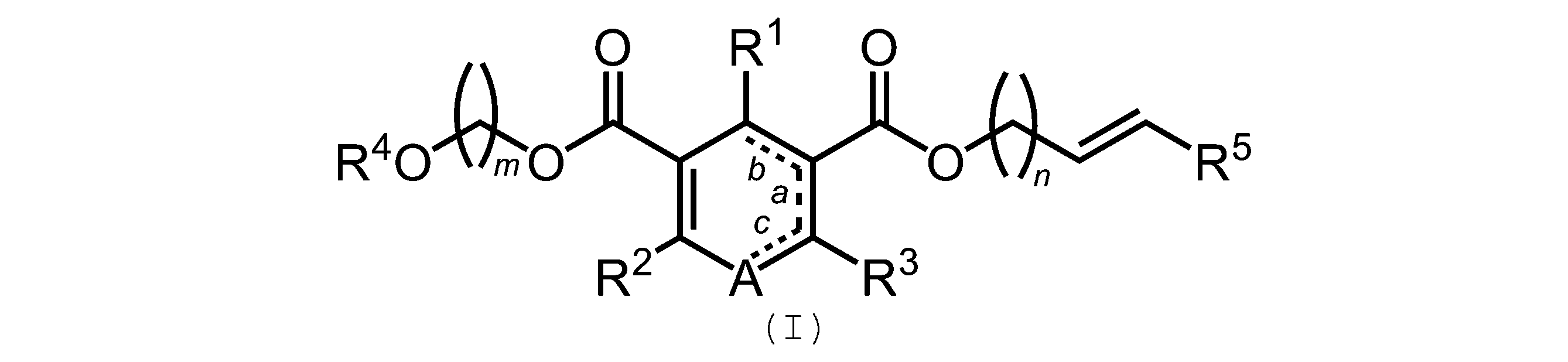
R1 is phenyl substituted with one to three substituents each of which is independently NO2, NH2, OH, C1-C6 alkyl, C1-C6 haloalkyl, or C1-C6 alkoxyalkyl, provided that at least one substituent is NO2 or NH2;
R2 is H, C1-C6 alkyl, C1-C6 haloalkyl, or C1-C6 alkoxyalkyl;
R3 is H, C1-C6 alkyl, C1-C6 haloalkyl, or C1-C6 alkoxyalkyl;
R4 is C1-C6 alkyl or C1-C6 haloalkyl;
R5 is phenyl or pyridinyl, wherein the phenyl or pyridinyl is unsubstituted or substituted with one to three substituents each of which is independently NO2, NH2, OH, C1-C6 alkyl, C1-C6 haloalkyl, or C1-C6 alkoxyalkyl;
either (i) bond a is present and bonds b and c are absent or (ii) bonds b and c are present and bond a is absent;
A is NH when bond a is present and N when bonds b and c are present;
m is an integer from 1 to 4; and
n is an integer from 1 to 3;
provided that the compound is other than

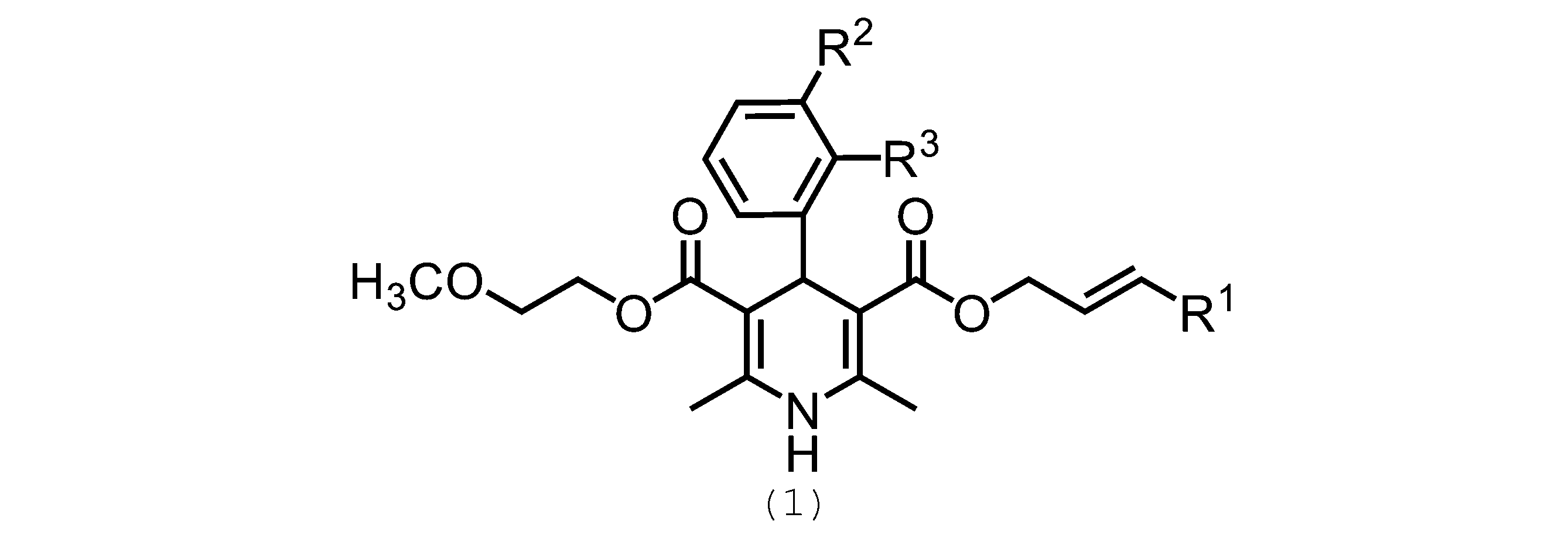
R1 represents a phenyl group, 2-pyridyl group, 3-pyridyl group or 4-pyridyl group, R2 represents a hydrogen atom or amino group, R3 represents a hydrogen atom or nitro group, and if R2 is a hydrogen atom then R3 is a nitro group, and, if R2 is an amino group then R3 is a hydrogen atom.
Compounds of Formula (I) are further described in the Description of Embodiments and specific embodiments 42 to 44, infra.
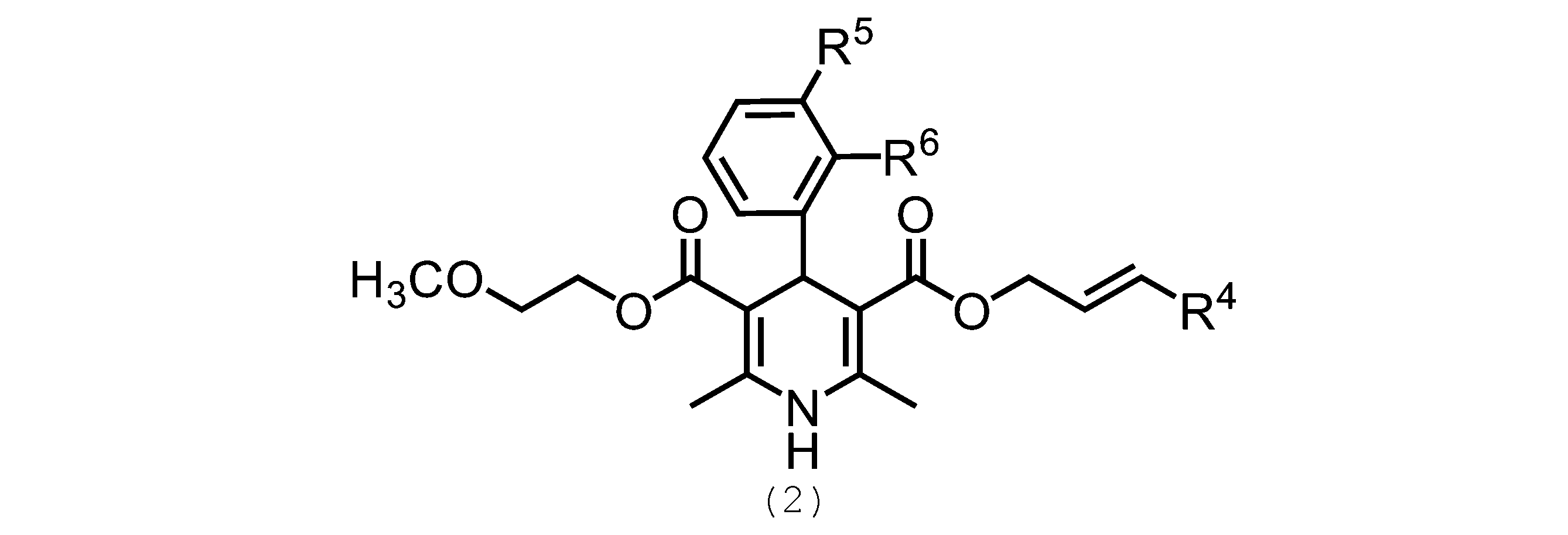
R4 represents a phenyl group, 2-pyridyl group, 3-pyridyl group or 4-pyridyl group, R5 represents an amino group, and R6 represents a hydrogen atom.
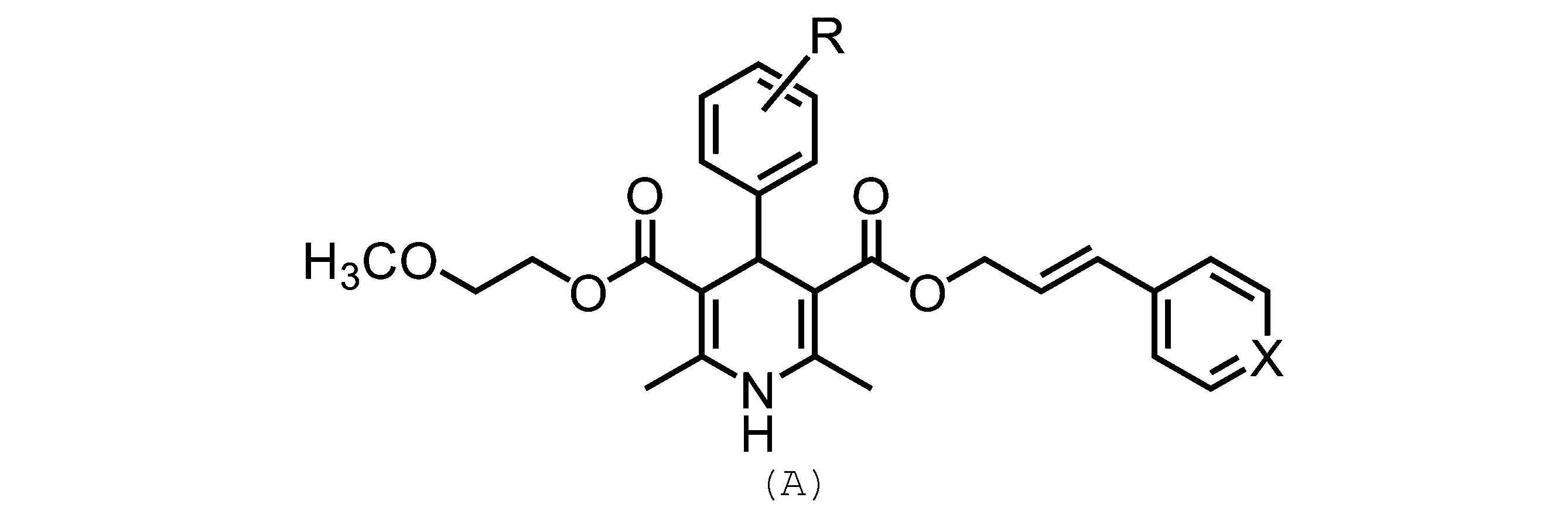
R is NO2 or NH2, wherein R is at the 2-position, 3-position, or 4-position of the phenyl ring; and X is CH or N, provided the compound is other than

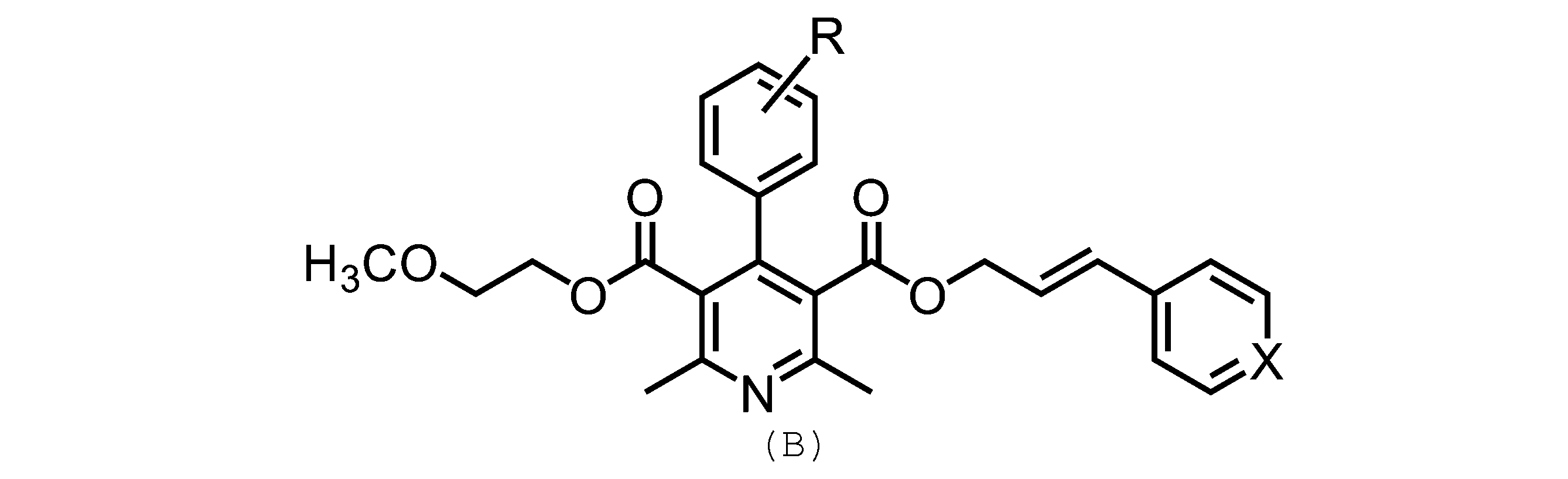
R is NO2 or NH2, wherein R is at the 2-position, 3-position, or 4-position of the phenyl ring; and X represents CH or N.
[1] A dynamin-related protein 1 (Drp1)-filamin complex formation inhibitor that contains, as an active ingredient, a compound represented by formula (1) below or a pharmacologically acceptable salt thereof or a solvate of them.

[2] The Drp1-filamin complex formation inhibitor according to [1], in which in formula (1), R1 represents a phenyl group, 2-pyridyl group, 3-pyridyl group or 4-pyridyl group, R2 represents a hydrogen atom, and R3 represents a nitro group, or, R1 represents a 2-pyridyl group, 3-pyridyl group or 4-pyridyl group, R2 represents an amino group, and R3 represents a hydrogen atom.
[3] Drp1-filamin complex formation inhibitor according to [1], in which in formula (1), R1 represents a phenyl group, 2-pyridyl group, 3-pyridyl group or 4-pyridyl group, R2 represents an amino group, and R3 represents a hydrogen atom.
[4] The Drp1-filamin complex formation inhibitor according to any one of [1] to [3], being a prophylactic or therapeutic agent for disease caused by Drp1 dysfunction.
[5] The Drp1-filamin complex formation inhibitor according to [4], in which the disease is chronic heart failure, amyotrophic lateral sclerosis, inflammatory bowel disease or diabetes, e.g.,
[6] A pharmaceutical composition for inhibiting Drp1-filamin complex formation, including the Drp1-filamin complex formation inhibitor described in any one of [1] to [5], and a pharmaceutically acceptable carrier.
[7] A compound represented by formula (2) below or a pharmacologically acceptable salt thereof or a solvate of them.

In one aspect, the invention includes compounds of Formula (I):
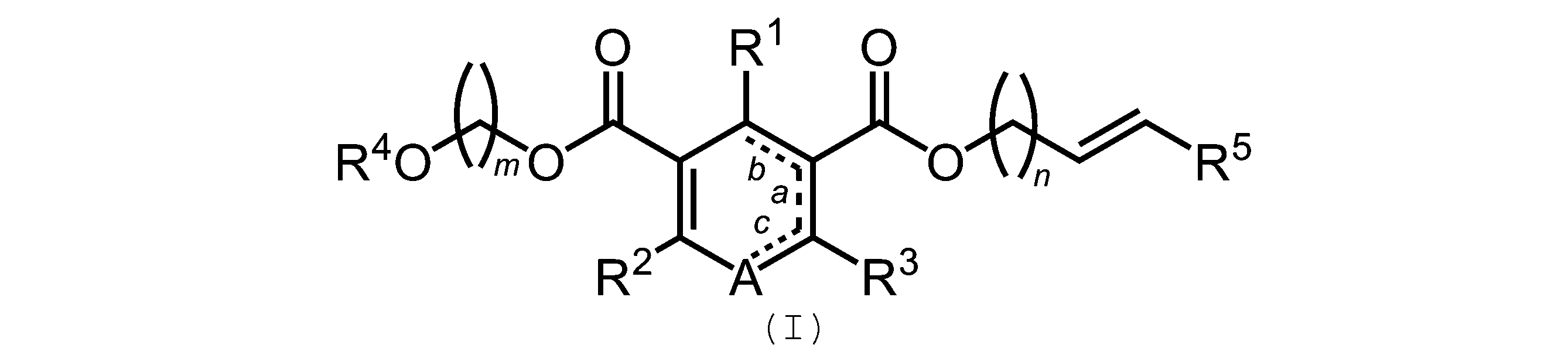
R1 is phenyl substituted with one to three substituents each of which is independently NO2, NH2, OH, C1-C6 alkyl, C1-C6 haloalkyl, or C1-C6 alkoxyalkyl, provided that at least one substituent is NO2 or NH2;
R2 is H, C1-C6 alkyl, C1-C6 haloalkyl, or C1-C6 alkoxyalkyl;
R3 is H, C1-C6 alkyl, C1-C6 haloalkyl, or C1-C6 alkoxyalkyl;
R4 is C1-C6 alkyl or C1-C6 haloalkyl;
R5 is phenyl or pyridinyl, wherein the phenyl or pyridinyl is unsubstituted or substituted with one to three substituents each of which is independently NO2, NH2, OH, C1-C6 alkyl, C1-C6 haloalkyl, or C1-C6 alkoxyalkyl;
either (i) bond a is present and bonds b and c are absent or (ii) bonds b and c are present and bond a is absent;
A is NH when bond a is present and N when bonds b and c are present;
m is an integer from 1 to 4; and
n is an integer from 1 to 3;
provided that the compound is other than





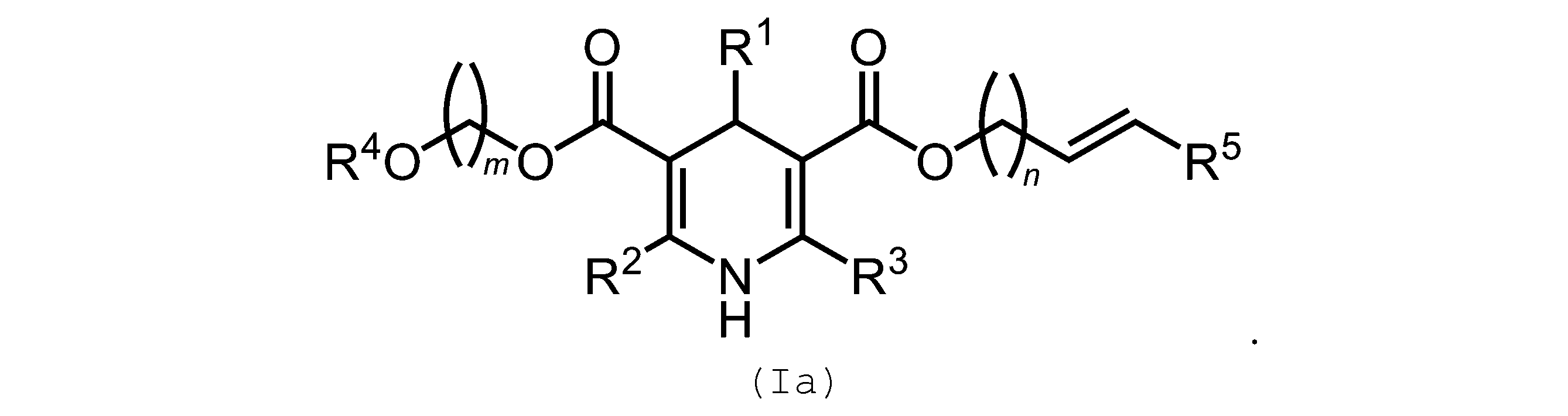
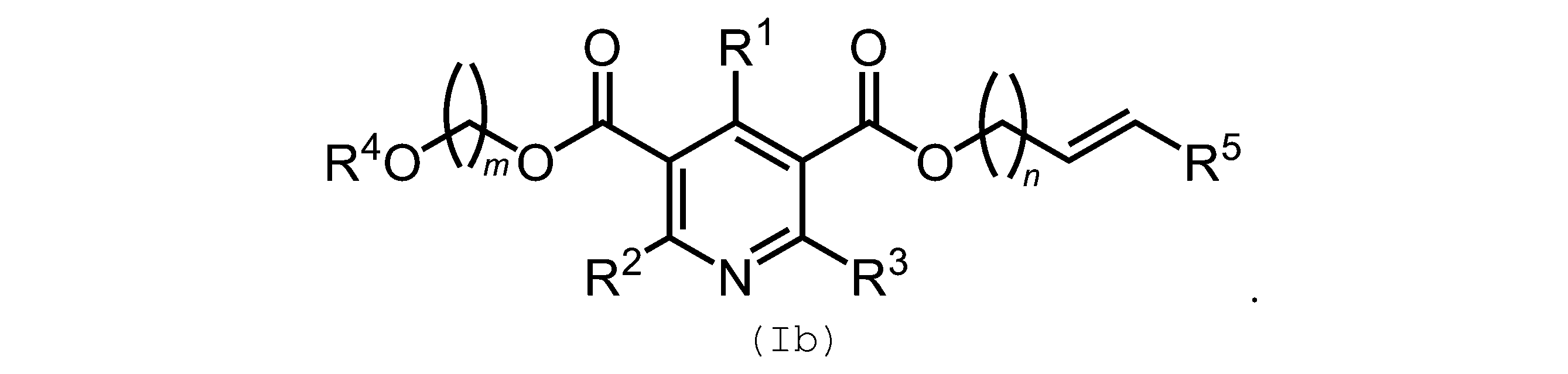
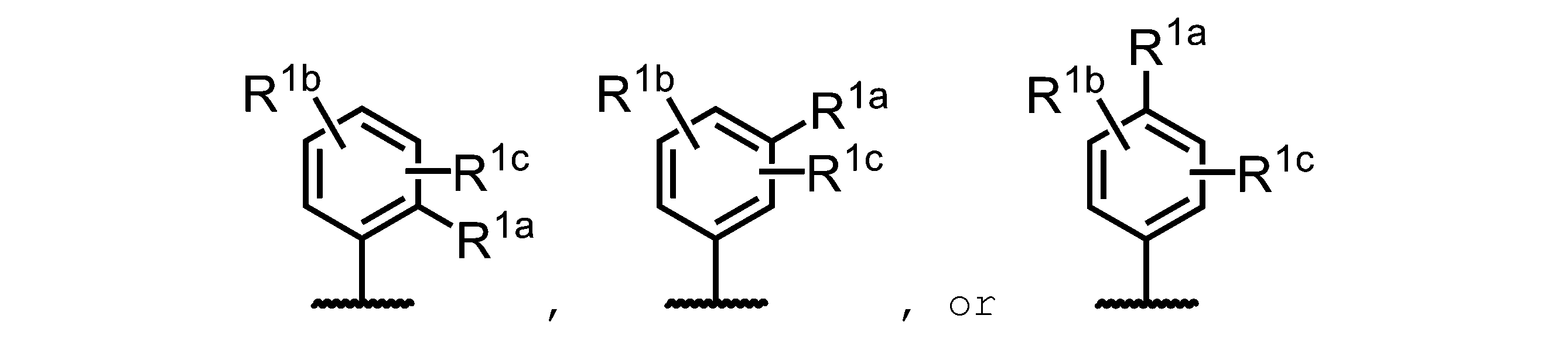


R1 represents a phenyl group, 2-pyridyl group, 3-pyridyl group or 4-pyridyl group, R2 represents a hydrogen atom or amino group, R3 represents a hydrogen atom or nitro group, and if R2 is a hydrogen atom then R3 is a nitro group, and, if R2 is an amino group then R3 is a hydrogen atom.
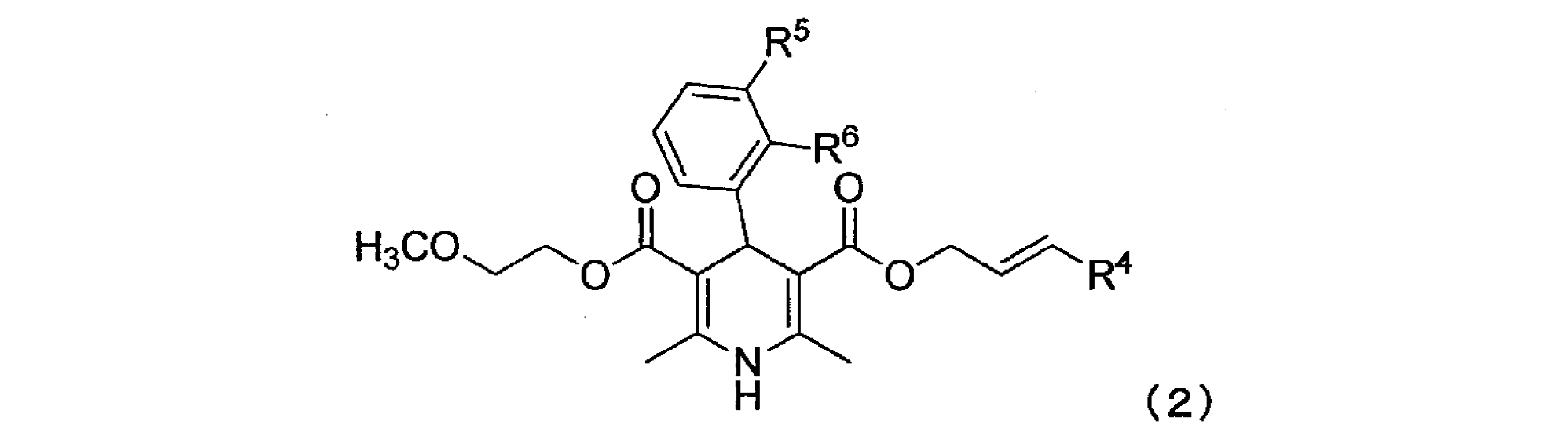
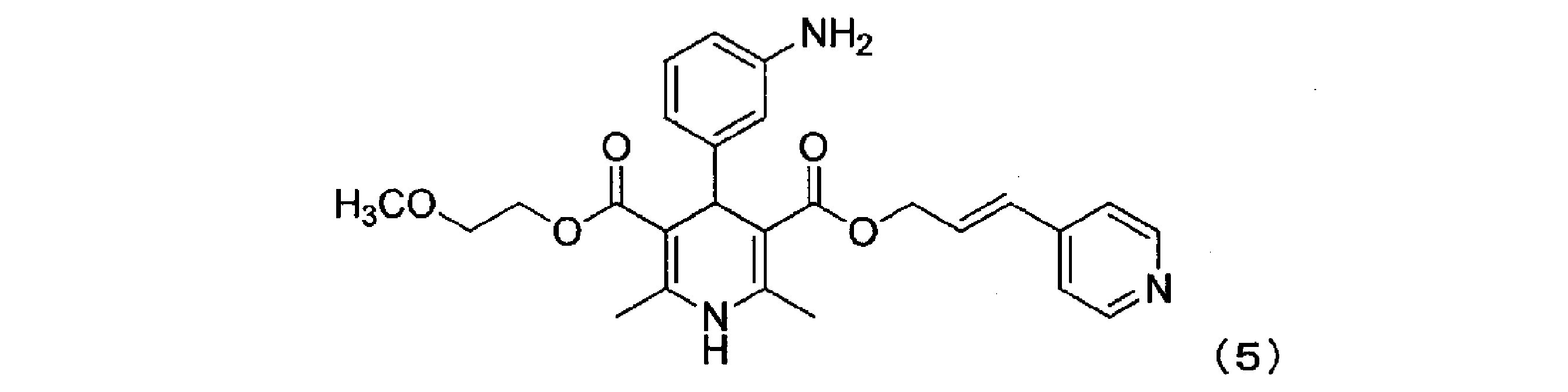

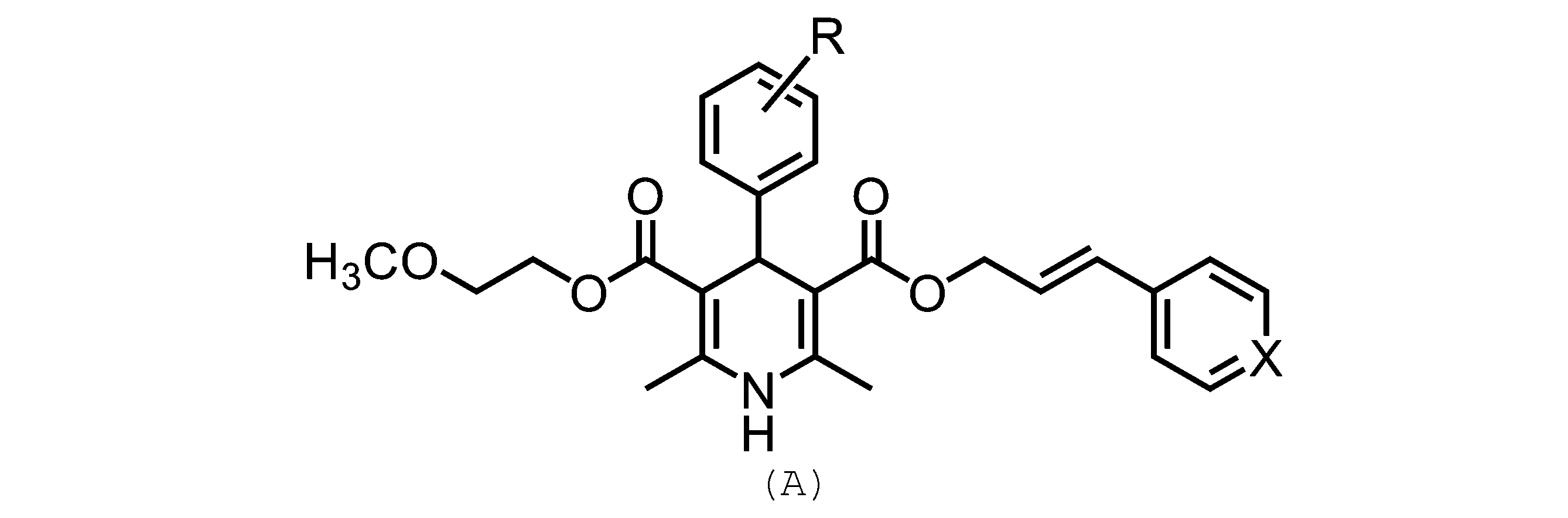
R is NO2 or NH2, wherein R is at the 2-position, 3-position, or 4-position of the phenyl ring; and X is CH or N, provided the compound is other than

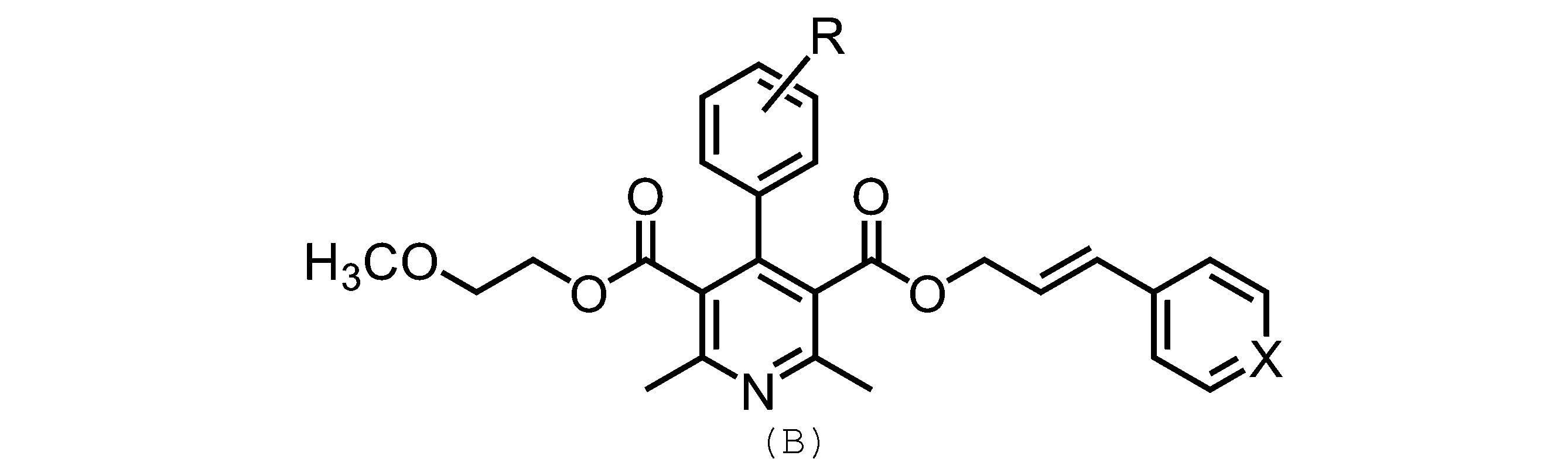
R is NO2 or NH2, wherein R is at the 2-position, 3-position, or 4-position of the phenyl ring; and X represents CH or N.
In one aspsect, the invention includes dynamin-related protein 1 (Drp1)-filamin complex formation inhibitors that contain, as an active ingredient, a compound of Formula (I) or a pharmacologically acceptable salt thereof or solvate of them, a compound of Formula (1) or a pharmacologically acceptable salt thereof or solvate of them, a compound of Formula (2) or a pharmacologically acceptable salt thereof or solvate of them, a compound of Formula (A) or a pharmacologically acceptable salt thereof or solvate of them, or a compound of Formula (B) or a pharmacologically acceptable salt thereof or solvate of them.
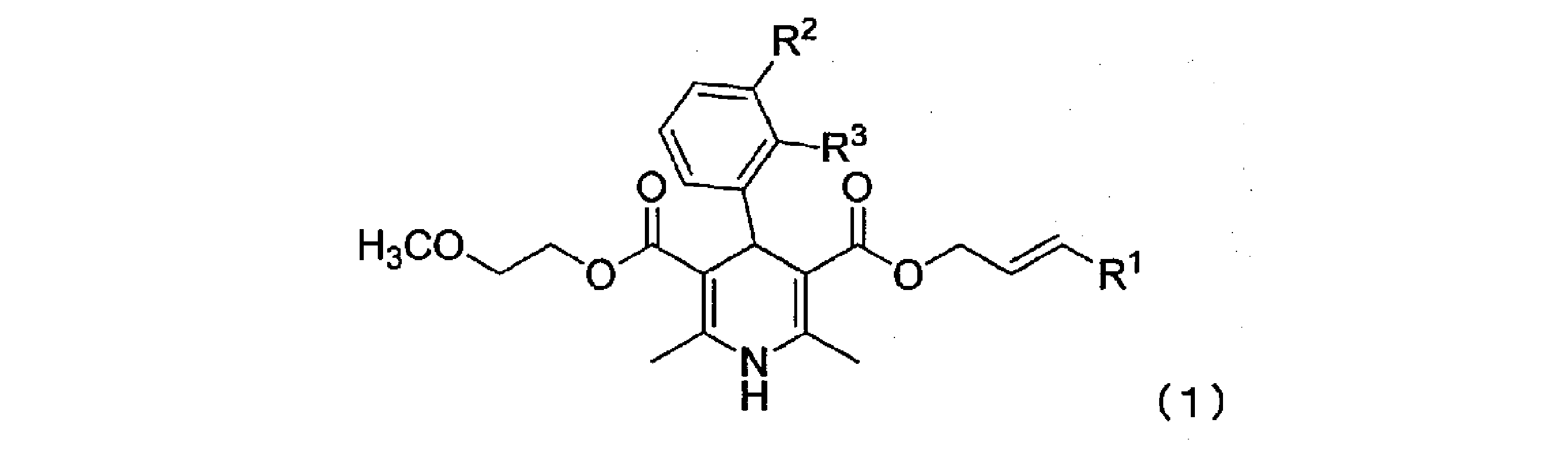
The compound represented by Formula (I), formula (1), Formula (2), Formula (A), or Formula (B) may be a free species, may be a pharmacologically acceptable salt of the compound represented by Formula (I), formula (1), Formula (2), Formula (A), or Formula (B), may be a solvate of the compound represented by Formula (I), formula (1), Formula (2), Formula (A), or Formula (B), or may be a solvate of a pharmacologically acceptable salt of the compound represented by Formula (I), formula (1), Formula (2), Formula (A), or Formula (B). In some embodiments, the compound is in the form of a solvate, more particularly a hydrate. In other embodiments, the compound is not in the form of a solvate.
<First Embodiment>
Regarding the Drp1-filamin complex formation inhibitor of a first embodiment, a compound represented by formula (1) may be such that R1 represents a phenyl group, 2-pyridyl group, 3-pyridyl group or 4-pyridyl group, R2 represents a hydrogen atom, and R3 represents a nitro group. Alternatively, regarding the Drp1-filamin complex formation inhibitor of the first embodiment, a compound represented by formula (1) may be such that R1 represents a 2-pyridyl group, 3-pyridyl group or 4-pyridyl group, R2 represents an amino group, and R3 represents a hydrogen atom.
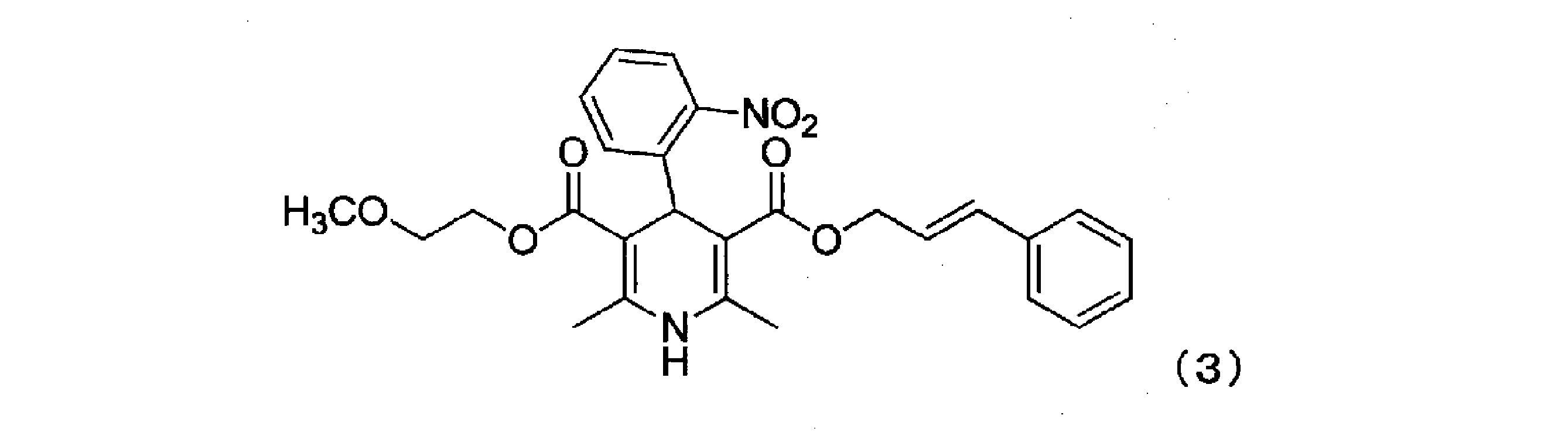

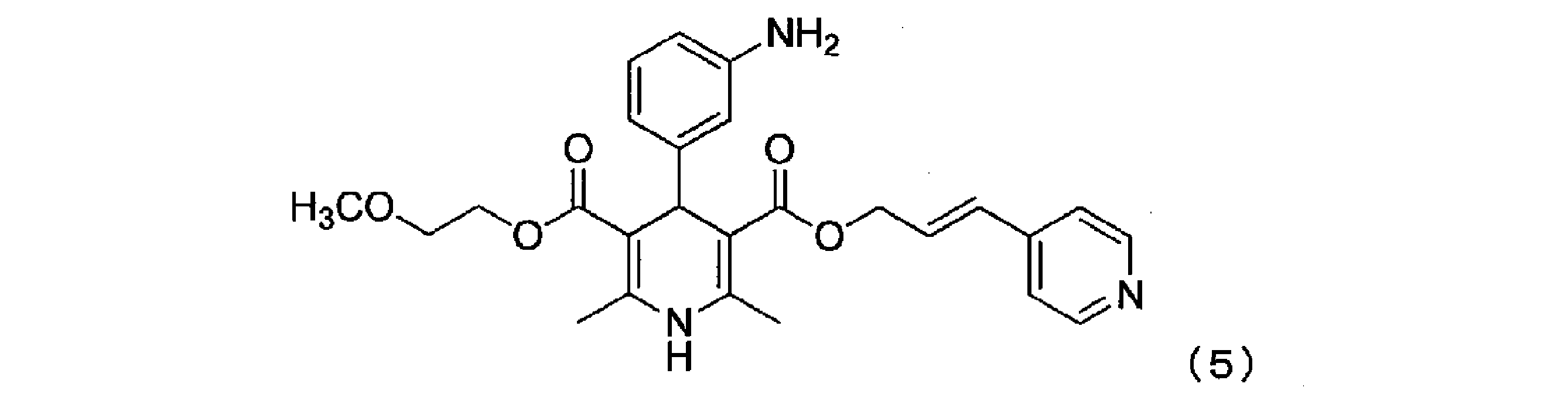
Regarding the Drp1-filamin complex formation inhibitor of the second embodiment, a compound represented by formula (1) may be such that R1 represents a phenyl group, 2-pyridyl group, 3-pyridyl group or 4-pyridyl group, R2 represents an amino group, and R3 represents a hydrogen atom.
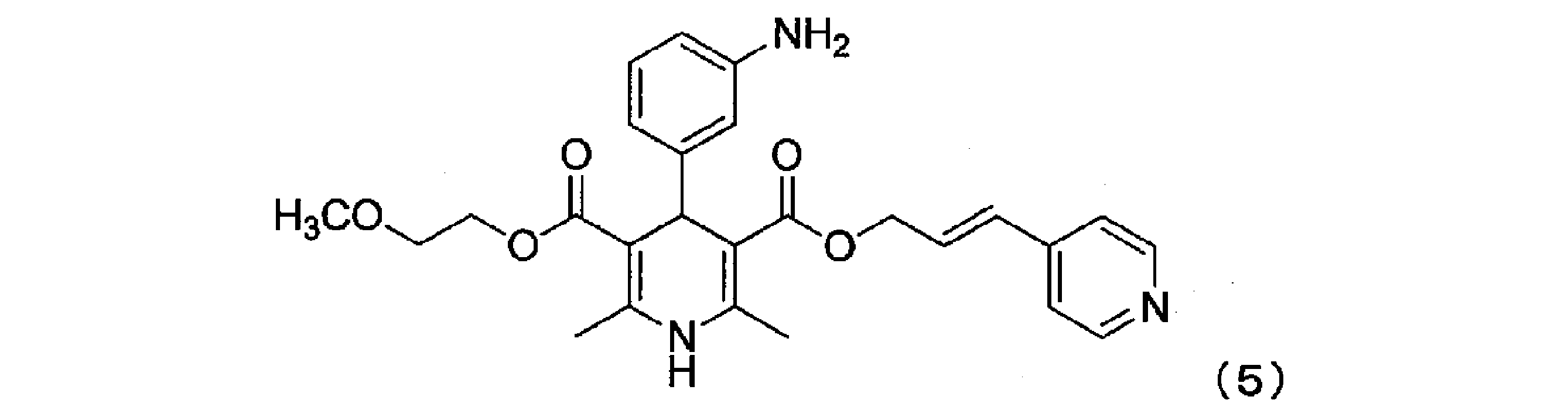

The present invention provides, in one embodiment, a prophylactic agent or therapeutic agent for diseases caused by Drp1 dysfunction, containing any of the aforementioned compounds and Drp1-filamin complex formation inhibitors of the invention as an active ingredient. The diseases caused by Drp1 dysfunction are exemplified by chronic heart failure, amyotrophic lateral sclerosis (ALS), inflammatory bowel disease, and diabetes, e.g.,
In one embodiment, the present invention provides a prophylactic or therapeutic method for disease caused by Drp1 dysfunction, comprising administering an effective dose of the Drp1-filamin complex formation inhibitor to a patient in need of therapy.
The following synthetic schemes can be used to prepare compounds of the invention. In Schemes A to D, R1a, R1b, R1c, R2, R3, R4, and R5 are as defined herein for compounds of Formula (I).
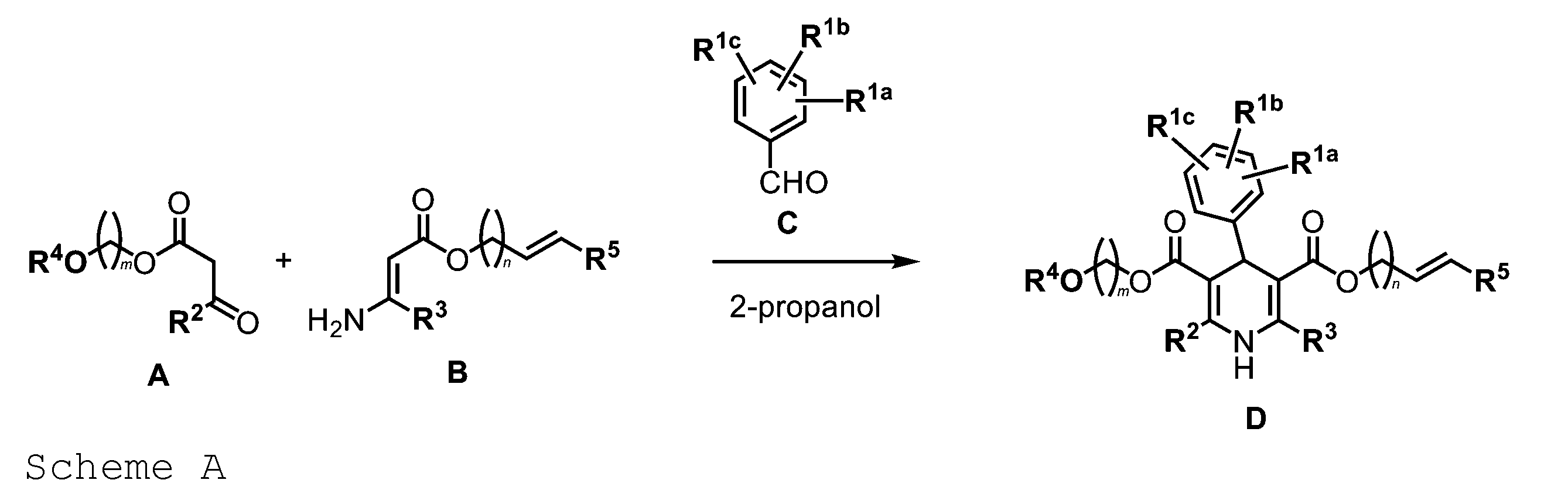
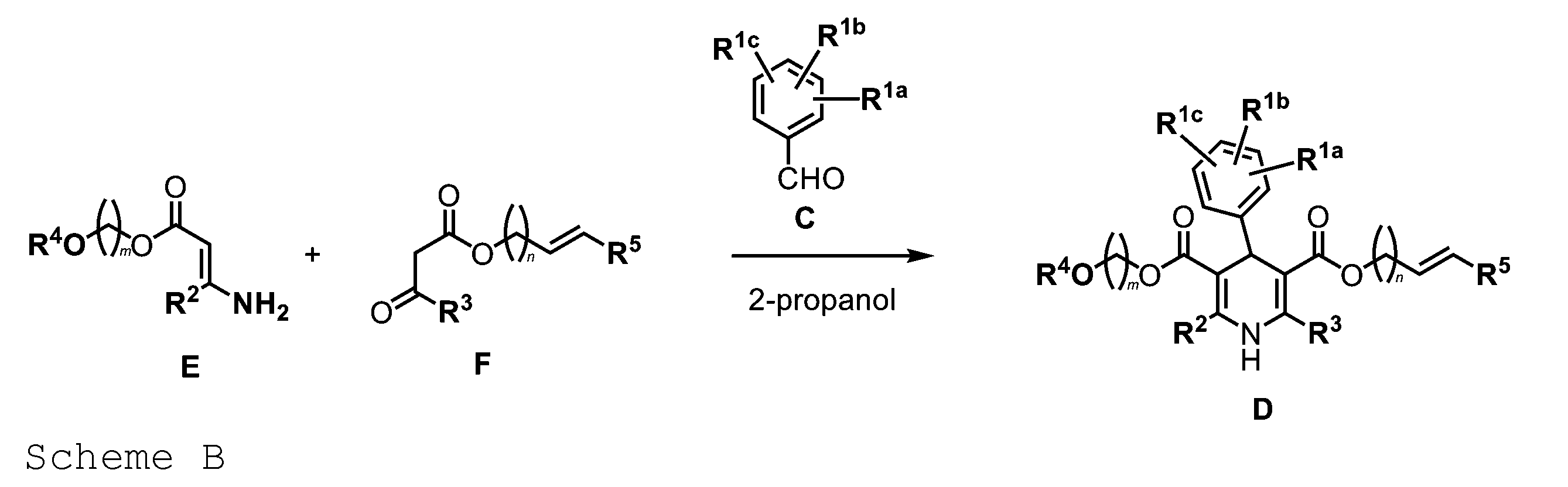
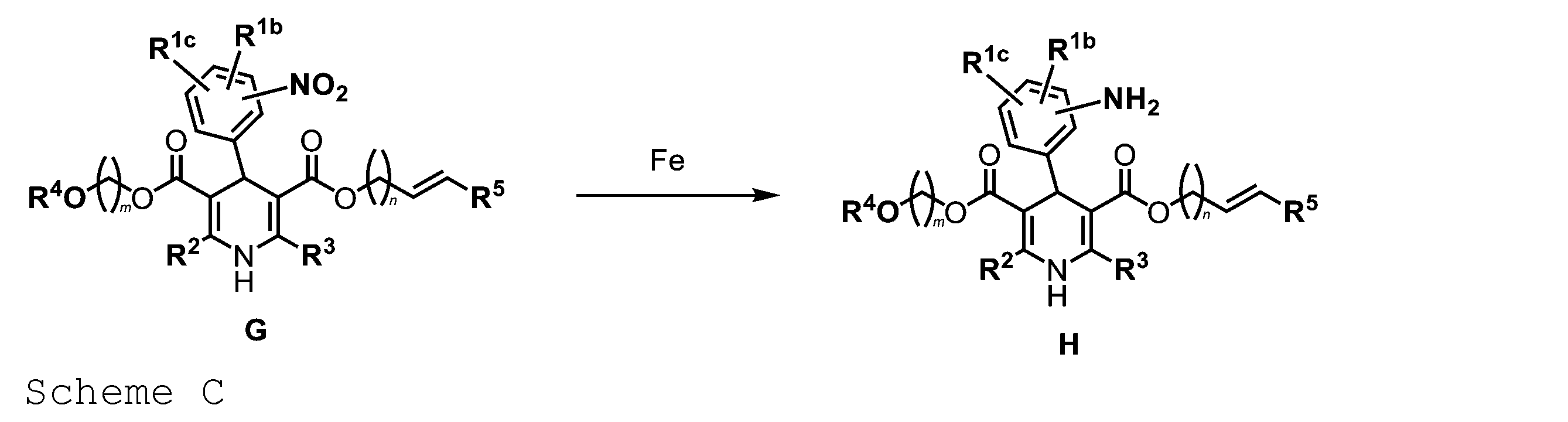
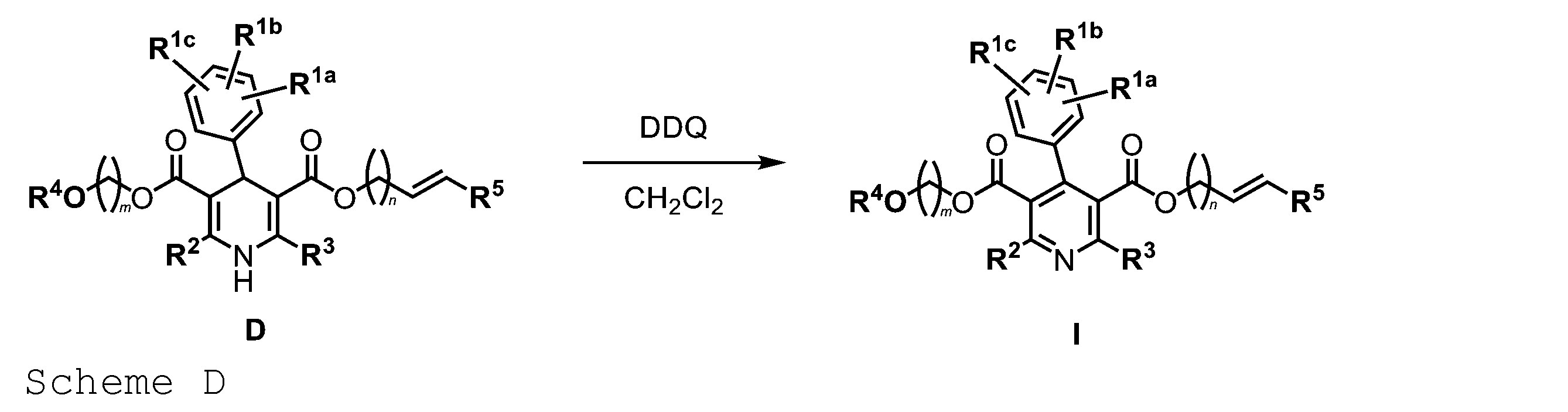
<Building of System for Evaluating Degree of Mitochondrial Division>
A system for quantitatively evaluating degree of intracellular mitochondrial division was built. More specifically, myocardial cells obtained from a neonatal rat were cultured under normoxia (20%) or under hypoxia (1%) for 16 hours. The cells were then stained with a fluorescent dye (MitoTracker Green FM, from Thermo Fisher Scientific Inc.) that selectively stains mitochondria. The cells were observed under a fluorescent microscope, and the shape of mitochondria was quantified by image analysis.
<Screening of Existing Drugs>
Compounds capable of suppressing mitochondrial division under the hypoxic environment were screened from existing drugs, using the evaluation system built in
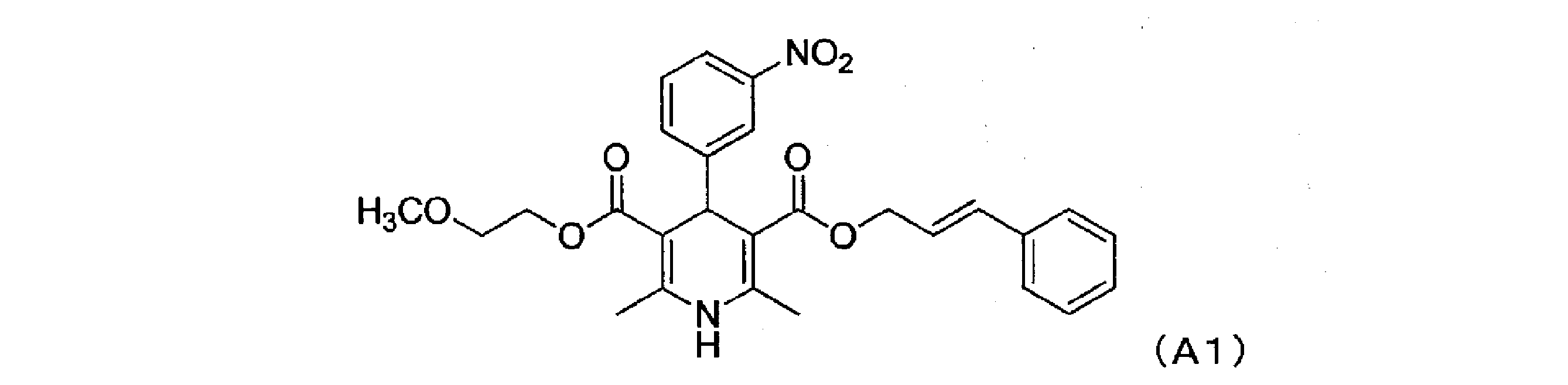





<Improvement of Amyotrophic Lateral Sclerosis by Cilnidipine Dosage>
Effects of cilnidipine on intractable disease were examined. In this Exemplary Experiment, cilnidipine was administered to model mice of amyotrophic lateral sclerosis (ALS), and survival rate was examined. The ALS model mice employed were SOD1-G93A mice.
<Improvement of Inflammatory Bowel Disease by Cilnidipine Administration>
Effects of cilnidipine on intractable disease were examined. In this Exemplary Experiment, cilnidipine was administered to model mice of inflammatory bowel disease, and survival rate was examined. The model mice of inflammatory bowel disease employed were mice on which inflammatory bowel disease is inducible by administrating dextran sulfate (DSS).
<First Improvement of Diabetes by Cilnidipine Administration>
Effects of cilnidipine on intractable disease were examined. In this Exemplary Experiment, cilnidipine was administered to model mice of
<Second Improvement of
Effects of cilnidipine on intractable disease were examined. The results shown in this Exemplary Experiment were obtained from retrospective analyses on patients in Kyushu University Hospital. In this Exemplary Experiment, percentages of blood HbA1c in hypertensive and hyperglycemic patients administered amlodipine, and in hypertensive and hyperglycemic patients administered cilnidipine, were evaluated.
<Synthesis of Cilnidipine Derivatives>
Cilnidipine derivatives were synthesized.
A compound represented by chemical formula (3) below (referred to as “NS4-019”, hereinafter) was synthesized according to Scheme I below.

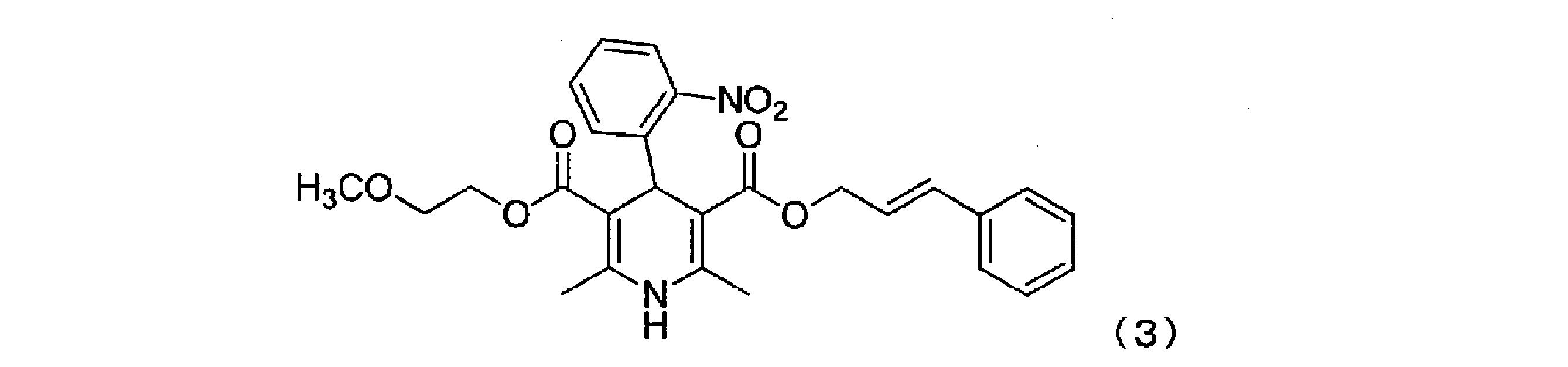
A compound represented by chemical formula (7) below (referred to as “NS4-021”, hereinafter) was synthesized according to Scheme II below.
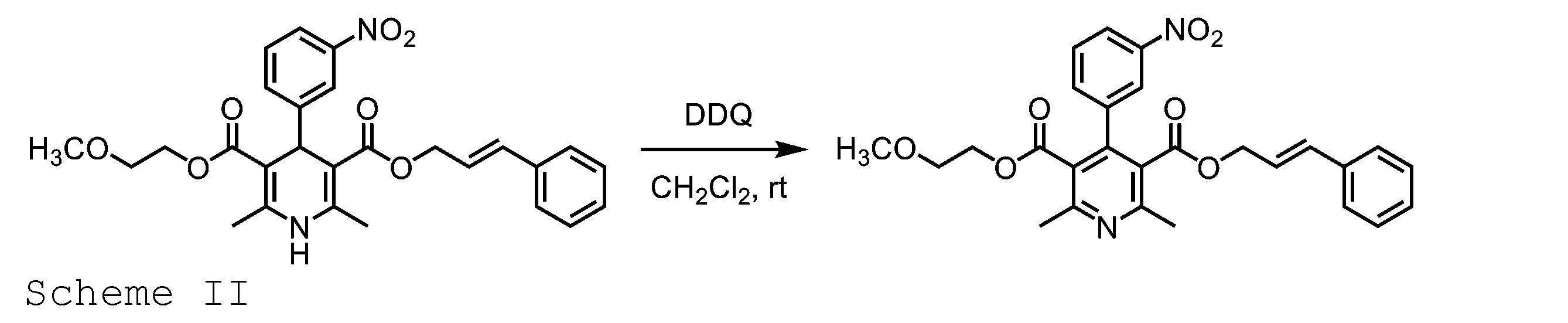

A compound represented by chemical formula (4) below (referred to as “NS4-043”, hereinafter) was synthesized according to Scheme III below.

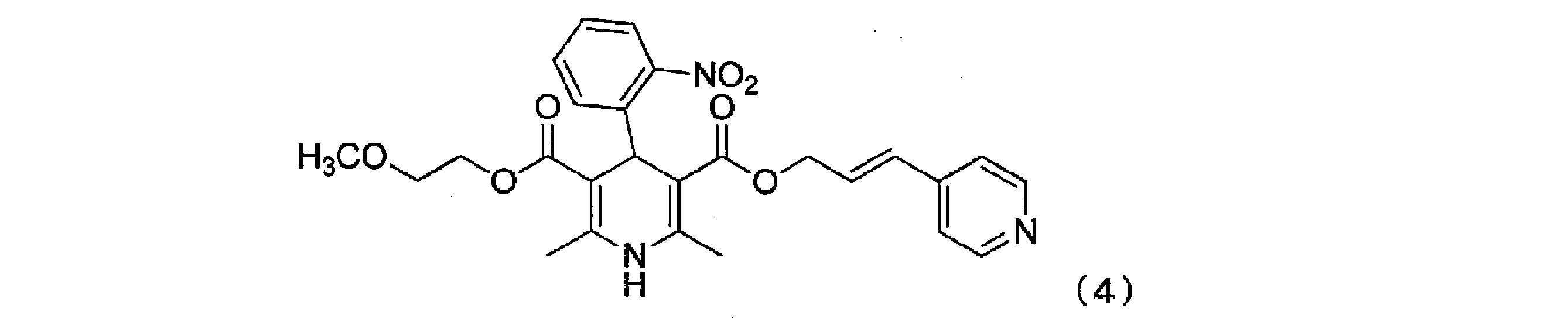
A compound represented by chemical formula (6) below (referred to as “NS4-238”, hereinafter) was synthesized according to Scheme IV below.
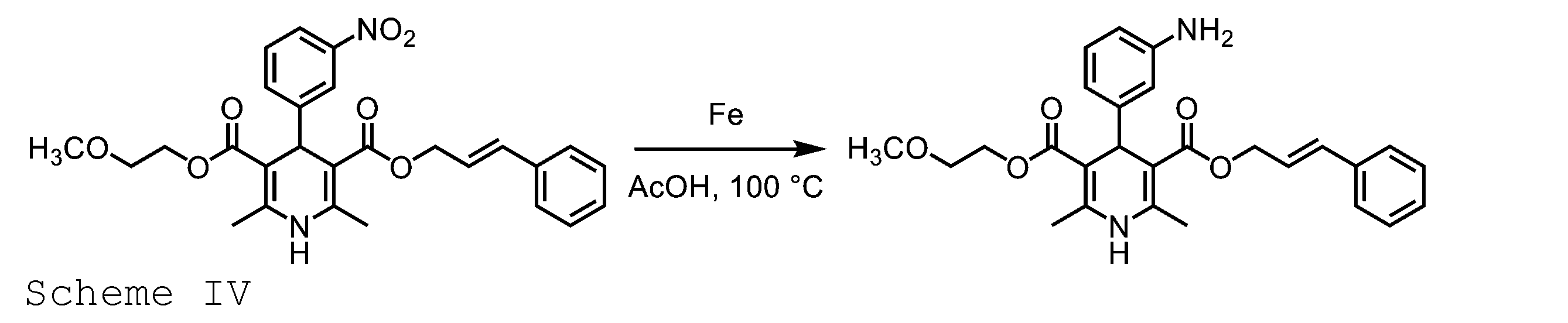

A compound represented by chemical formula (5) below (referred to as “NS4-700”, hereinafter) was synthesized according to Scheme V below.
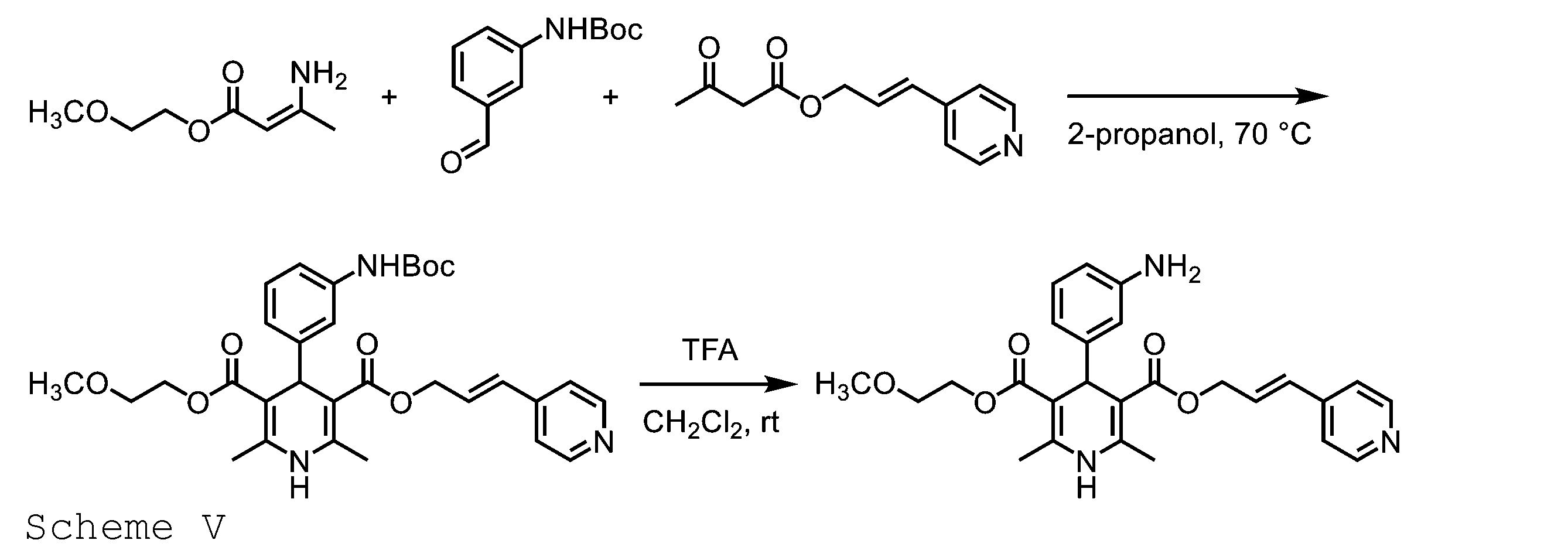

A compound represented by chemical formula (8) below (referred to as “JYK-002”, hereinafter) was prepared from 2-methoxyethyl 3-oxobutanoate, (E)-3-phenyl-2-propen-1-yl 3-aminobut-2-enoate, and 4-nitrobenzaldehyde according to the procedure described for NS4-019.
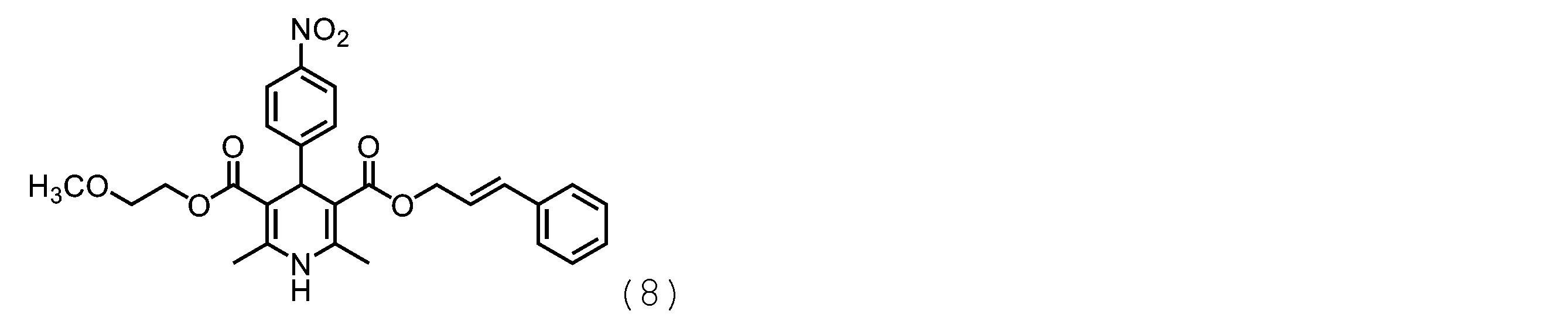
A compound represented by chemical formula (9) below (referred to as “JYK-003”, hereinafter) was prepared from 3-(2-methoxyethyl) 5-[(2E)-3-phenyl-2-propen-1-yl] 2,6-dimethyl-4-(4-nitrophenyl)-1,4-dihydropyridine-3,5-dicarboxylate according to the procedure described for NS4-238.

A compound represented by chemical formula (10) below (referred to as “JYK-001”, hereinafter) was prepared from 2-methoxyethyl 3-aminobut-2-enoate, (E)-3-(pyridin-4-yl)-2-propen-1-yl 3-oxobutanoate, and 3-nitrobenzaldehyde according to the procedure for NS4-043.

A compound represented by chemical formula (11) below (referred to as “JYK-004”, hereinafter) was prepared from 2-methoxyethyl 3-aminobut-2-enoate, (E)-3-(pyridin-4-yl)-2-propen-1-yl 3-oxobutanoate, and 4-nitrobenzaldehyde according to the procedure described for NS4-043.
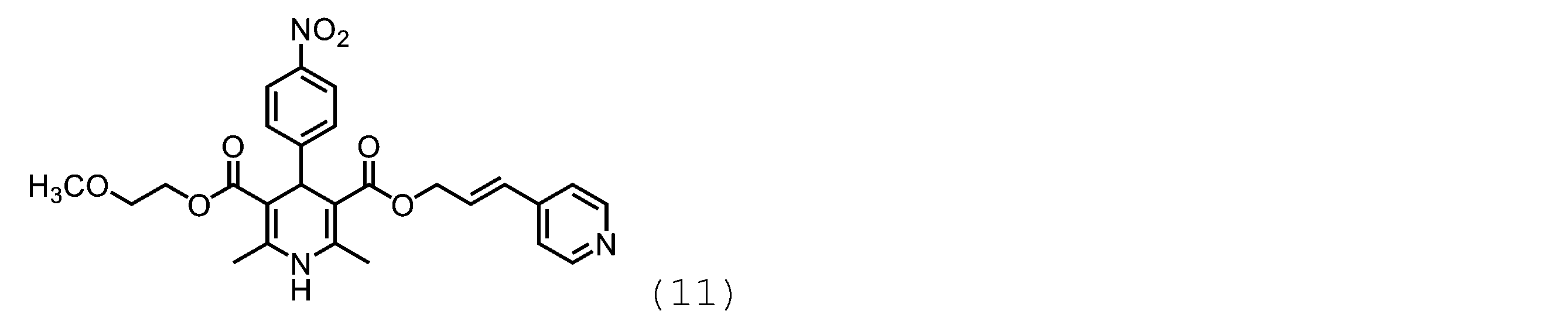
<First Evaluation of NS4-238>
Using the evaluation system built in
<Second Evaluation of NS4-238>
In
<First Evaluation of Cilnidipine Derivative>
How the cilnidipine derivatives, synthesized in
<Second Evaluation of Cilnidipine Derivative>
Using the evaluation system built in
<Third Evaluation of Cilnidipine Derivative>
Effect of blocking the calcium channel by the cilnidipine derivative, synthesized in
ΔRatio = (fluorescent intensity at 510 nm, when excited at 340 nm)/(fluorescent intensity at 510 nm, when excited at 380 nm) … (F1)
<Fourth Evaluation of Cilnidipine Derivative>
Using the evaluation system built in
<Fifth Evaluation of Cilnidipine Derivatives>
The suppressive ability of cilnidipine derivatives synthesized in
<Sixth Evaluation of Cilnidipine Derivatives>
The effect of blocking the calcium channel by the cilnidipine derivatives synthesized in
Industrial Applicability
Specific embodiments
1. A compound of Formula (I):

R1 is phenyl substituted with one to three substituents each of which is independently NO2, NH2, OH, C1-C6 alkyl, C1-C6 haloalkyl, or C1-C6 alkoxyalkyl, provided that at least one substituent is NO2 or NH2;
R2 is H, C1-C6 alkyl, C1-C6 haloalkyl, or C1-C6 alkoxyalkyl;
R3 is H, C1-C6 alkyl, C1-C6 haloalkyl, or C1-C6 alkoxyalkyl;
R4 is C1-C6 alkyl or C1-C6 haloalkyl;
R5 is phenyl or pyridinyl, wherein the phenyl or pyridinyl is unsubstituted or substituted with one to three substituents each of which is independently NO2, NH2, OH, C1-C6 alkyl, C1-C6 haloalkyl, or C1-C6 alkoxyalkyl;
either (i) bond a is present and bonds b and c are absent or (ii) bonds b and c are present and bond a is absent;
A is NH when bond a is present and N when bonds b and c are present;
m is an integer from 1 to 4; and
n is an integer from 1 to 3;
provided that the compound is other than

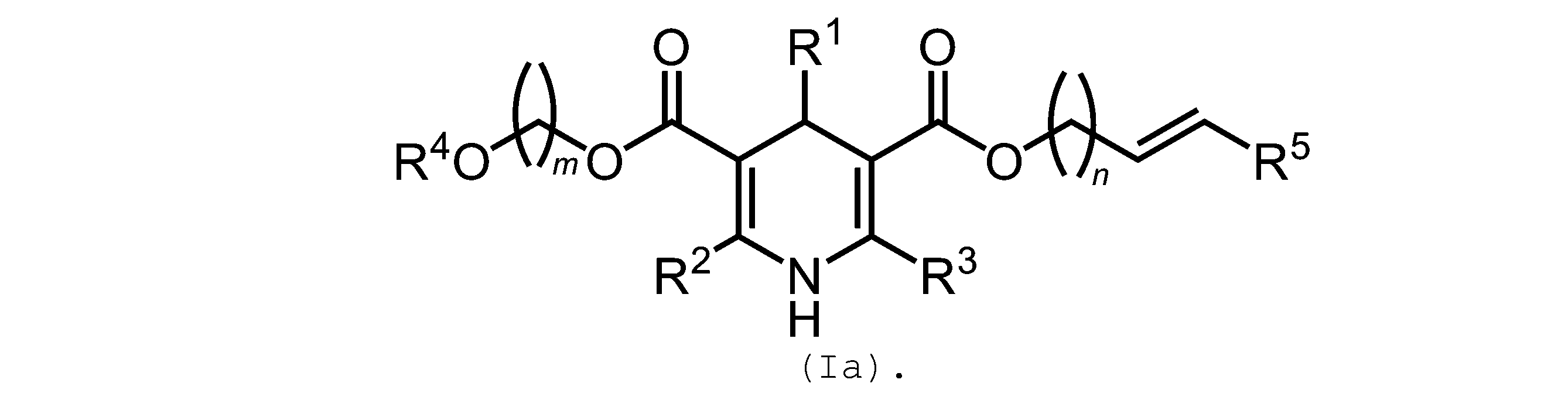
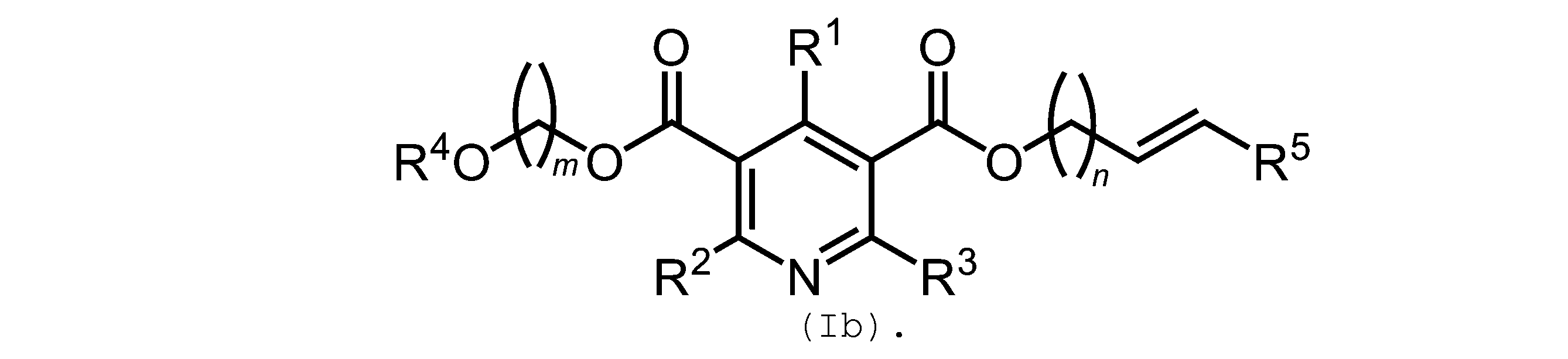
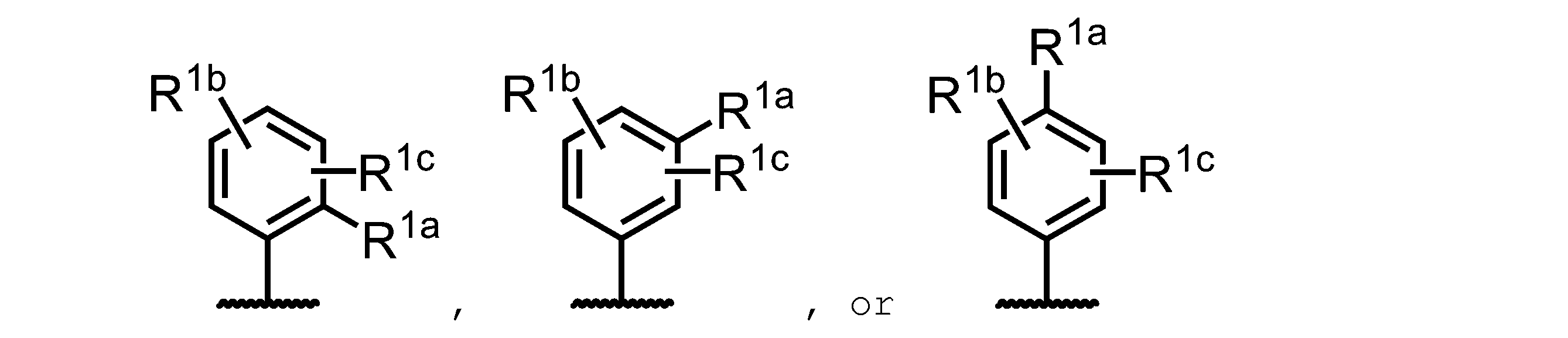
5. The compound of
6. The compound of


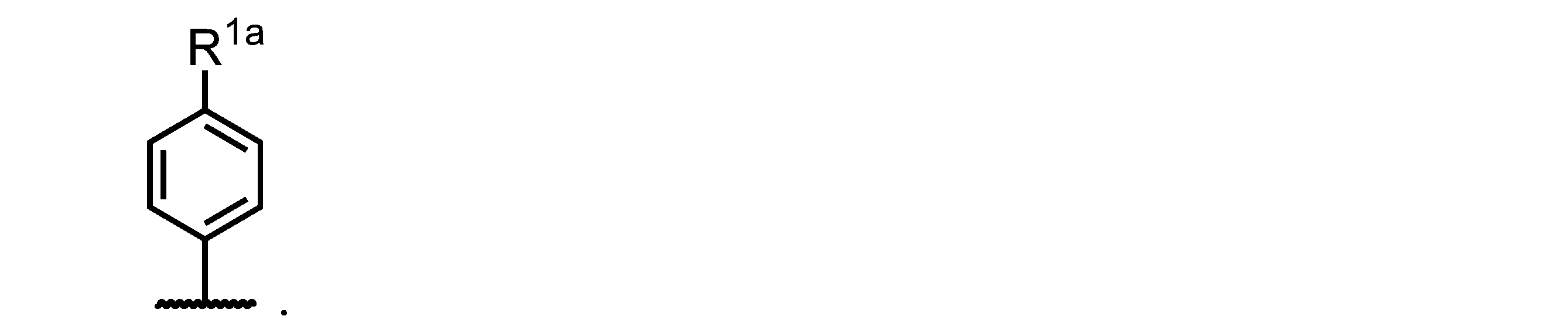
10. The compound of any one of
11. The compound of any one of
12. The compound of
13. The compound of
14. The compound of any one of
15. The compound of
16. The compound of
17. The compound of any one of
18. The compound of embodiment 17, or a pharmacologically acceptable salt thereof or a solvate of them, wherein R4 is C1-C3 alkyl.
19. The compound of embodiment 18, or a pharmacologically acceptable salt thereof or a solvate of them, wherein R4 is CH3.
20. The compound of any one of
21. The compound of
22. The compound of
23. The compound of any one of
24. The compound of embodiment 23, or a pharmacologically acceptable salt thereof or a solvate of them, wherein R5 is pyridinyl which is unsubstituted or substituted with one to three substituents each of which is independently NO2, NH2, OH, C1-C3 alkyl, C1-C3 haloalkyl, or C1-C3 alkoxyalkyl.
25. The compound of embodiment 23, or a pharmacologically acceptable salt thereof or a solvate of them, wherein R5 is unsubstituted pyridinyl.
26. The compound of any one of embodiments 23 to 25, or a pharmacologically acceptable salt thereof or a solvate of them, wherein the R5 pyridinyl is 4-pyridyl.
27. The compound of any one of embodiments 23 to 25, or a pharmacologically acceptable salt thereof or a solvate of them, wherein the R5 pyridinyl is 3-pyridyl.
28. The compound of any one of embodiments 23 to 25, or a pharmacologically acceptable salt thereof or a solvate of them, wherein the R5 pyridinyl is 2-pyridyl.
29. The compound of any one of
30. The compound of any one of
31. The compound of
R1 is

R2, R3, and R4 are CH3;
R5 is unsubstituted phenyl or unsubstituted pyridinyl;
m is 2; and
n is 1.
32. The compound of embodiment 31, or a pharmacologically acceptable salt thereof or a solvate of them, wherein wherein R5 is unsubstituted 4-pyridyl.
33. The compound of



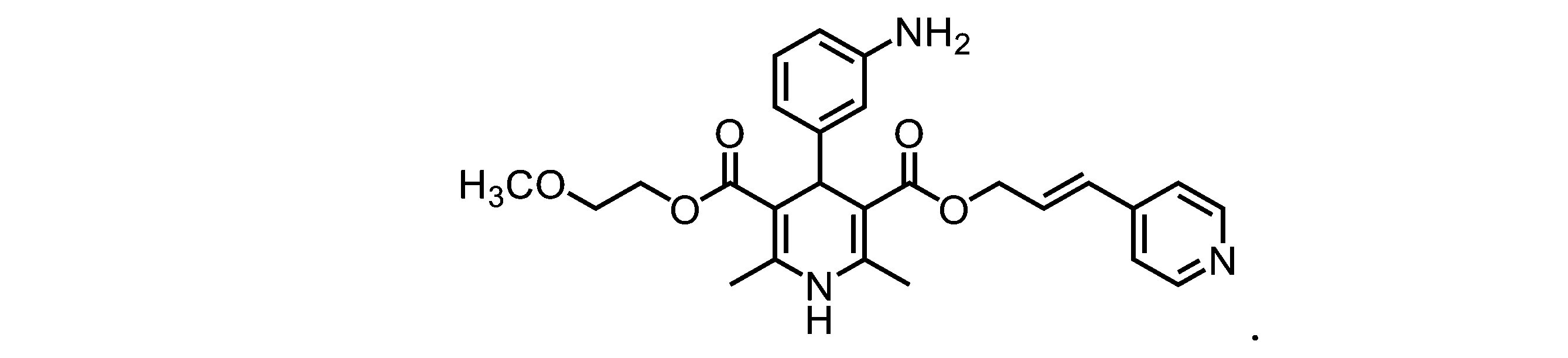




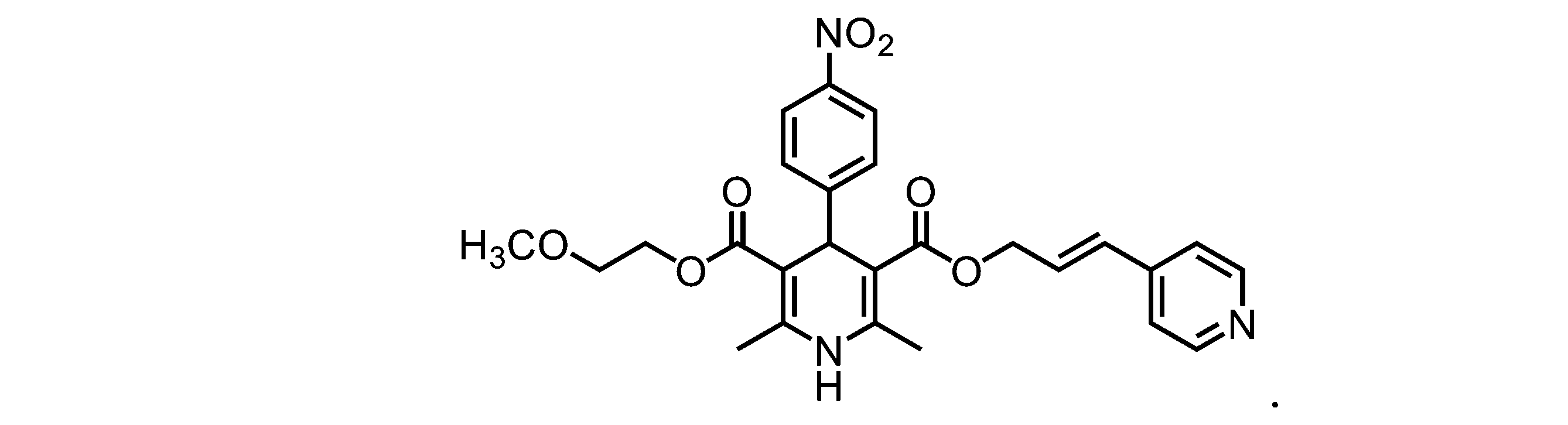
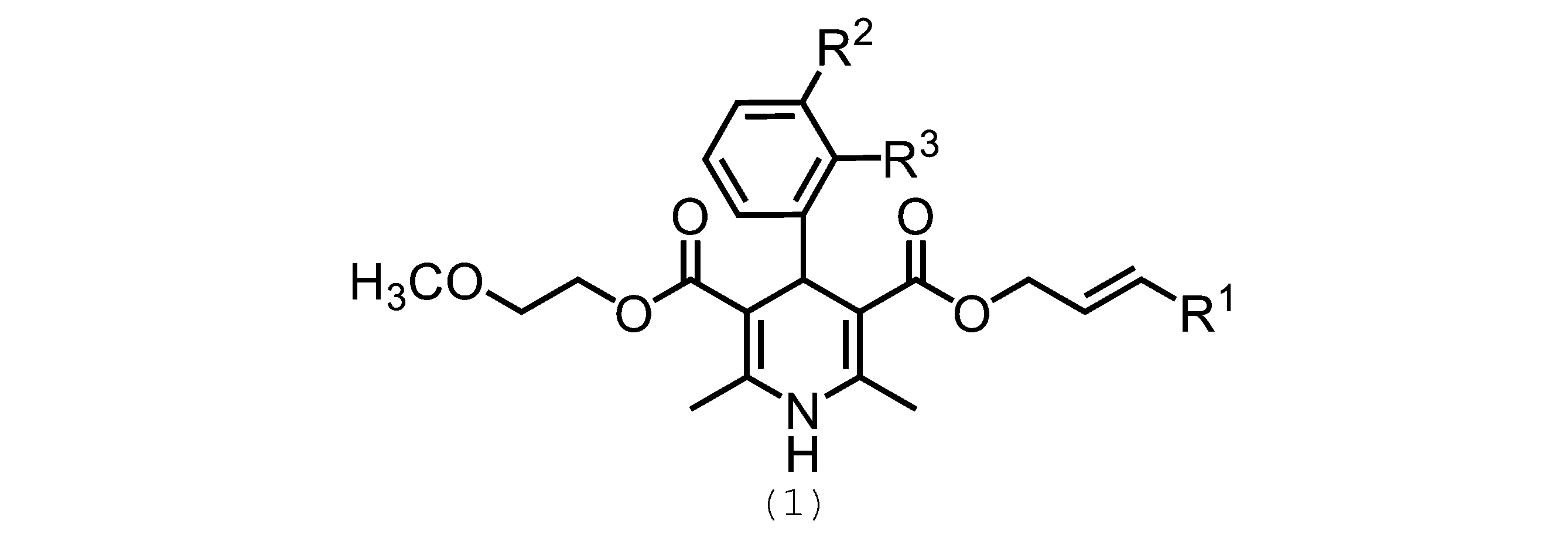
43. The compound of embodiment 42, wherein in Formula (1),
(a) R1 represents a phenyl group, 2-pyridyl group, 3-pyridyl group or 4-pyridyl group, R2 represents a hydrogen atom, and R3 represents a nitro group, or,
(b) R1 represents a 2-pyridyl group, 3-pyridyl group or 4-pyridyl group, R2 represents an amino group, and R3 represents a hydrogen atom.
44. The compound of embodiment 42, wherein in Formula (1), R1 represents a phenyl group, 2-pyridyl group, 3-pyridyl group or 4-pyridyl group, R2 represents an amino group, and R3 represents a hydrogen atom.
45. A compound represented by Formula (2) below or a pharmacologically acceptable salt thereof or a solvate of them:
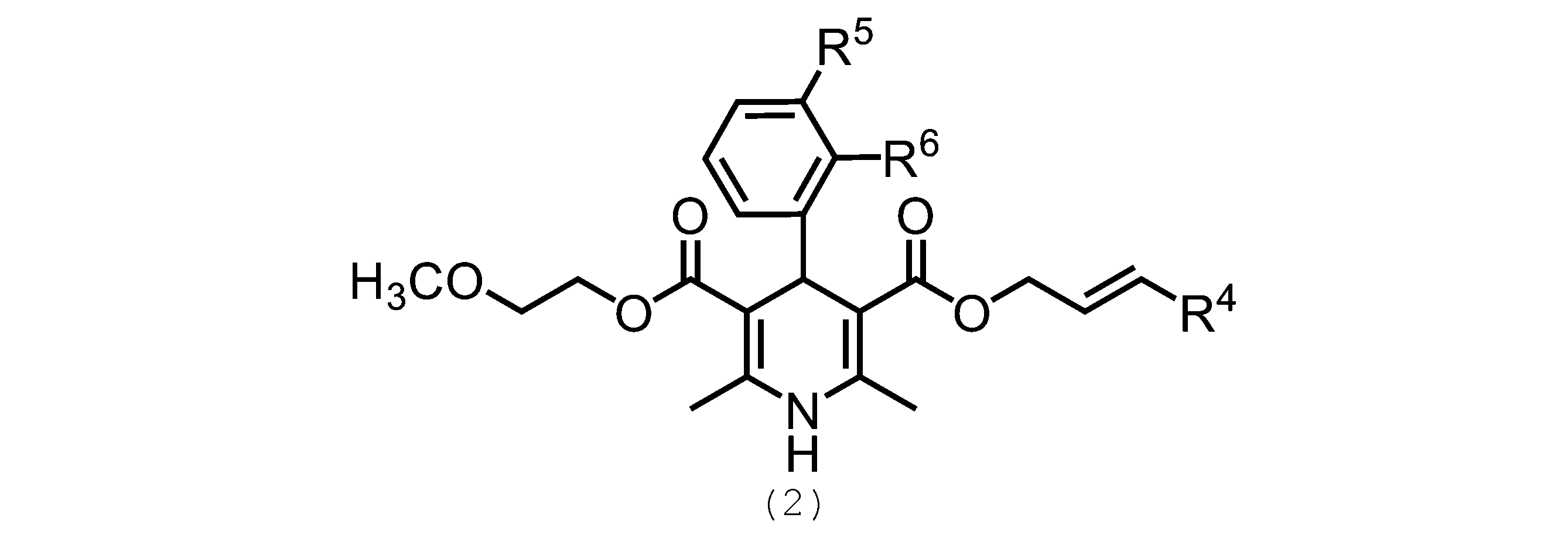
46. A compound of Formula (A):
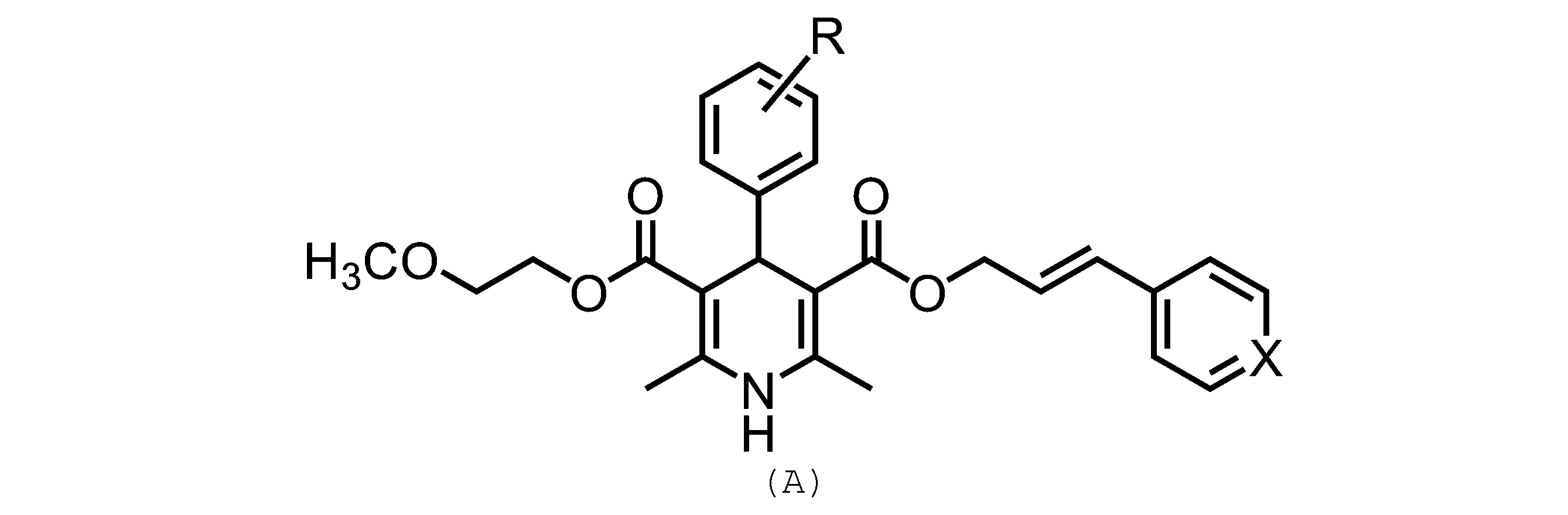
(a) R is NO2 or NH2, wherein R is at the 2-position, 3-position, or 4-position of the phenyl ring; and
(b) X is CH or N,
provided that the compound is other than

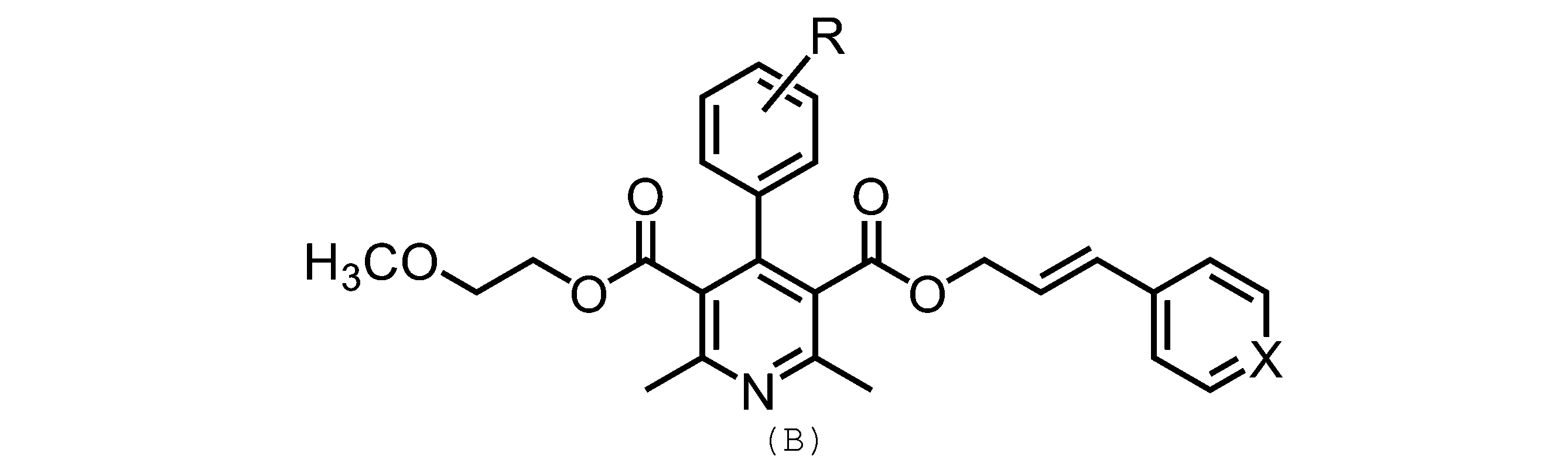
(a) R is NO2 or NH2, wherein R is at the 2-position, 3-position, or 4-position of the phenyl ring; and
(b) X represents CH or N.
48. The compound, pharmacologically acceptable salt or solvate of any one of
49. The compound, pharmacologically acceptable salt or solvate of embodiment 48, wherein the pharmacologically acceptable salt is a hydrochlorate, sulfate, hydrobromate, hydroiodide, phosphate, nitrate, benzoate, methanesulfonate, 2-hydroxyethanesulfonate, p-toluenesulfonate, acetate, propanoate, oxalate, malonate, succinate, glutarate, adipate, tartarate, maleate, fumarate, malate, or mandelate.
50. The compound, pharmacologically acceptable salt or solvate of any one of
51. The compound, pharmacologically acceptable salt or solvate of any one of
52. The compound, pharmacologically acceptable salt or solvate of any one of
53. The compound, pharmacologically acceptable salt or solvate of embodiment 52 whose mitochondrial division inhibitory activity is at least 50% of the mitochondrial division inhibitory activity of cilnidipine, e.g., as determined by the evaluation system of
54. The compound, pharmacologically acceptable salt or solvate of embodiment 52 whose mitochondrial division inhibitory activity is at least 75% of the mitochondrial division inhibitory activity of cilnidipine, e.g., as determined by the evaluation system of
55. The compound, pharmacologically acceptable salt or solvate of embodiment 52 whose mitochondrial division inhibitory activity is at least 90% of the mitochondrial division inhibitory activity of cilnidipine, e.g., as determined by the evaluation system of
56. The compound, pharmacologically acceptable salt or solvate of embodiment 52 whose mitochondrial division inhibitory activity is at least equal to the mitochondrial division inhibitory activity of cilnidipine, e.g., as determined by the evaluation system of
57. The compound, pharmacologically acceptable salt or solvate of any one of embodiments 52 to 56 whose mitochondrial division inhibitory activity is up to 300% of the mitochondrial division inhibitory activity of cilnidipine, e.g., as determined by the evaluation system of
58. The compound, pharmacologically acceptable salt or solvate of any one of embodiments 52 to 56 whose mitochondrial division inhibitory activity is up to 200% of the mitochondrial division inhibitory activity of cilnidipine, e.g., as determined by the evaluation system of
59. The compound, pharmacologically acceptable salt or solvate of any one of embodiments 52 to 56 whose mitochondrial division inhibitory activity is up to 150% of the mitochondrial division inhibitory activity of cilnidipine, e.g., as determined by the evaluation system of
60. The compound, pharmacologically acceptable salt or solvate of any one of
61. The compound, pharmacologically acceptable salt or solvate of
62. The compound, pharmacologically acceptable salt or solvate of
63. The compound, pharmacologically acceptable salt or solvate of
64. The compound, pharmacologically acceptable salt or solvate of
65. A pharmaceutical composition comprising the compound, pharmacologically acceptable salt or solvate of any one of
66. The pharmaceutical composition of embodiment 65, wherein the one or more pharmaceutically acceptable carriers comprise a base.
67. The pharmaceutical composition of embodiment 66, wherein the base comprises purified water, titanium oxide, carnauba wax, synthetic squalane, crotamiton, or gelatin.
68. The pharmaceutical composition of any one of embodiments 65 to 67, wherein the one or more pharmaceutically acceptable carriers comprise a binder.
69. The pharmaceutical composition of embodiment 68, wherein the binder comprises ethyl cellulose, glycerin or methacrylic acid copolymer S.
70. The pharmaceutical composition of any one of embodiments 65 to 69, wherein the one or more pharmaceutically acceptable carriers comprise an excipient.
71. The pharmaceutical composition of embodiment 70, wherein the excipient is crystalline cellulose, croscarmellose sodium, magnesium stearate, and hypromellose; stabilizers such as gum arabic, magnesium aluminometasilicate, povidone, benzyl alcohol, sodium acetate, or magnesium stearate.
72. The pharmaceutical composition of any one of embodiments 65 to 71, wherein the one or more pharmaceutically acceptable carriers comprise a plasticizer.
73. The pharmaceutical composition of embodiment 72, wherein the plasticizer is
74. The pharmaceutical composition of any one of embodiments 65 to 73, wherein the one or more pharmaceutically acceptable carriers comprise a solubilizer.
75. The pharmaceutical composition of embodiment 74, wherein the solubilizer is benzyl benzoate and benzyl alcohol.
76. The pharmaceutical composition of any one of embodiments 65 to 75, which does not include an active pharmaceutical ingredient other than the compound, pharmacologically acceptable salt or solvate of any one of
77. The pharmaceutical composition of any one of embodiments 65 to 75, which does not substantially include cilnidipine.
78. The pharmaceutical composition of any one of embodiments 65 to 77, in which the compound, pharmacologically acceptable salt or solvate of any one of
79. The pharmaceutical composition of any one of embodiments 65 to 77, in which the compound, pharmacologically acceptable salt or solvate of any one of
80. The pharmaceutical composition of any one of embodiments 65 to 79, which is an oral dosage form.
81. The pharmaceutical composition of
82. The pharmaceutical composition of any one of embodiments 65 to 79, which comprises at least 1 mg of the compound, pharmacologically acceptable salt or solvate of any one of
83. The pharmaceutical composition of any one of embodiments 65 to 79, which comprises at least 2 mg of the compound, pharmacologically acceptable salt or solvate of any one of
84. The pharmaceutical composition of any one of embodiments 65 to 79, which comprises at least 5 mg of the compound, pharmacologically acceptable salt or solvate of any one of
85. The pharmaceutical composition of any one of embodiments 65 to 79, which comprises at least 10 mg of the compound, pharmacologically acceptable salt or solvate of any one of
86. The pharmaceutical composition of any one of embodiments 65 to 85, which comprises up to 20 mg of the compound, pharmacologically acceptable salt or solvate of any one of
87. The pharmaceutical composition of any one of embodiments 65 to 85, which comprises up to 25 mg of the compound, pharmacologically acceptable salt or solvate of any one of
88. The pharmaceutical composition of any one of embodiments 65 to 85, which comprises up to 50 mg of the compound, pharmacologically acceptable salt or solvate of any one of
89. A dynamin-related protein 1 (Drp1)-filamin complex formation inhibitor that contains, as an active ingredient, the compound, pharmacologically acceptable salt or solvate of any one of
90. The compound, pharmacologically acceptable salt or solvate of any one of
91. The compound, pharmacologically acceptable salt or solvate of any one of
92. The compound, pharmacologically acceptable salt or solvate of any one of
93. The compound, pharmacologically acceptable salt or solvate of any one of
94. The compound, pharmacologically acceptable salt or solvate of any one of
(a)
(b)
95. A method of treating a disease caused by Drp1 dysfunction, comprising administering to a subject in need thereof a therapeutically effective amount of a compound, pharmacologically acceptable salt or solvate of any one of
96. A method of treating chronic heart failure, comprising administering to a subject in need thereof a therapeutically effective amount of a compound, pharmacologically acceptable salt or solvate of any one of
97. A method of treating amyotrophic lateral sclerosis, comprising administering to a subject in need thereof a therapeutically effective amount of a compound, pharmacologically acceptable salt or solvate of any one of
98. A method of treating inflammatory bowel disease, comprising administering to a subject in need thereof a therapeutically effective amount of a compound, pharmacologically acceptable salt or solvate of any one of
99. A method of treating diabetes, e.g.,
1’. A dynamin-related protein 1 (Drp1)-filamin complex formation inhibitor that contains, as an active ingredient, a compound represented by formula (1) below or a pharmacologically acceptable salt thereof or a solvate of them:

2’. The Drp1-filamin complex formation inhibitor according to embodiment 1’,
wherein in formula (1), R1 represents a phenyl group, 2-pyridyl group, 3-pyridyl group or 4-pyridyl group, R2 represents a hydrogen atom, and R3 represents a nitro group, or,
R1 represents a 2-pyridyl group, 3-pyridyl group or 4-pyridyl group, R2 represents an amino group, and R3 represents a hydrogen atom.
3’. Drp1-filamin complex formation inhibitor according to embodiment 1’, wherein in formula (1), R1 represents a phenyl group, 2-pyridyl group, 3-pyridyl group or 4-pyridyl group, R2 represents an amino group, and R3 represents a hydrogen atom.
4’. The Drp1-filamin complex formation inhibitor according to any one of embodiments 1’ to 3’, being a prophylactic or therapeutic agent for disease caused by Drp1 dysfunction.
5’. The Drp1-filamin complex formation inhibitor according to embodiment 4’, wherein the disease is chronic heart failure, amyotrophic lateral sclerosis, inflammatory bowel disease or
6’. A pharmaceutical composition for inhibiting Drp1-filamin complex formation, comprising the Drp1-filamin complex formation inhibitor described in any one of embodiments 1’ to 5’, and a pharmaceutically acceptable carrier.
7’. A compound represented by formula (2) below or a pharmacologically acceptable salt thereof or a solvate of them:

Claims (99)
- A compound of Formula (I):
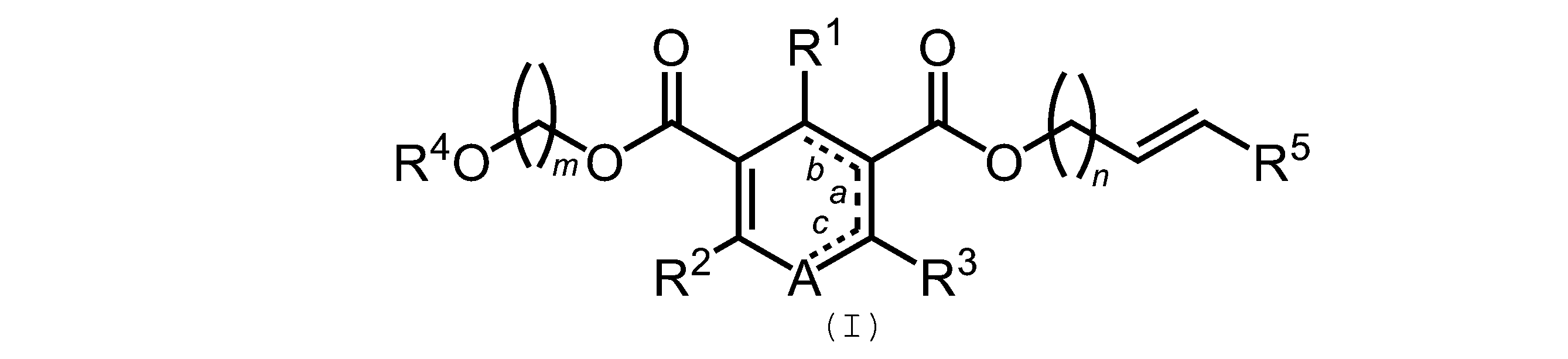
R1 is phenyl substituted with one to three substituents each of which is independently NO2, NH2, OH, C1-C6 alkyl, C1-C6 haloalkyl, or C1-C6 alkoxyalkyl, provided that at least one substituent is NO2 or NH2;
R2 is H, C1-C6 alkyl, C1-C6 haloalkyl, or C1-C6 alkoxyalkyl;
R3 is H, C1-C6 alkyl, C1-C6 haloalkyl, or C1-C6 alkoxyalkyl;
R4 is C1-C6 alkyl or C1-C6 haloalkyl;
R5 is phenyl or pyridinyl, wherein the phenyl or pyridinyl is unsubstituted or substituted with one to three substituents each of which is independently NO2, NH2, OH, C1-C6 alkyl, C1-C6 haloalkyl, or C1-C6 alkoxyalkyl;
either (i) bond a is present and bonds b and c are absent or (ii) bonds b and c are present and bond a is absent;
A is NH when bond a is present and N when bonds b and c are present;
m is an integer from 1 to 4; and
n is an integer from 1 to 3;
provided that the compound is other than
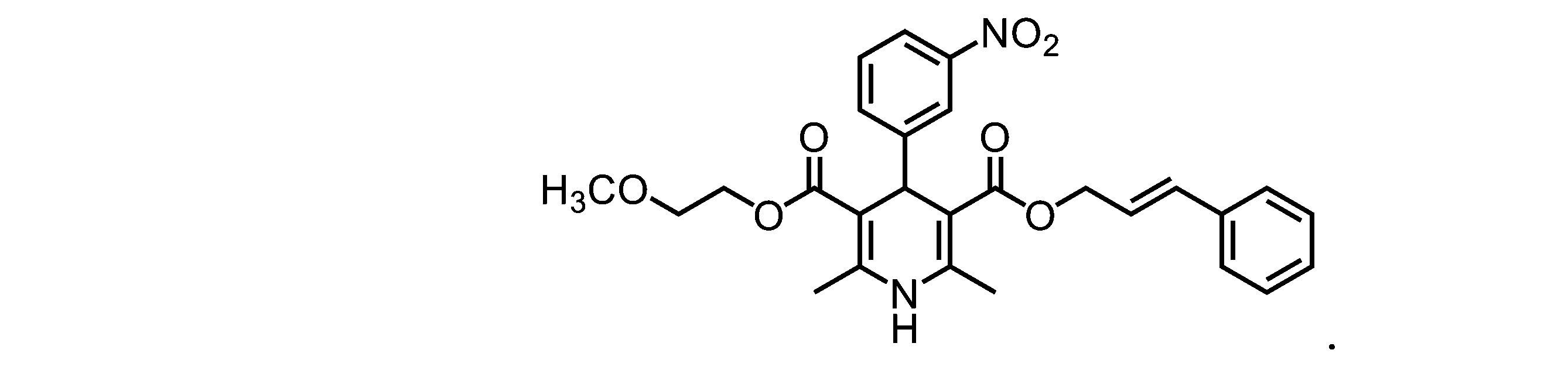
- The compound of claim 1, or a pharmacologically acceptable salt thereof or a solvate of them, having the structure of Formula (Ia):

- The compound of claim 1, or a pharmacologically acceptable salt thereof or a solvate of them, having the structure of Formula (Ib):
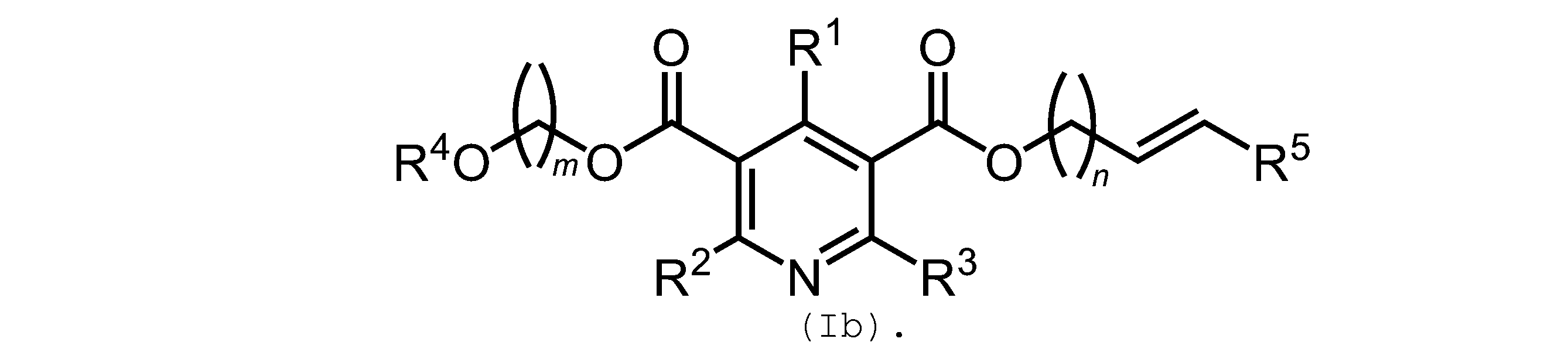
- The compound of any one of claims 1 to 3 or a pharmacologically acceptable salt thereof or a solvate of them, wherein R1 is:
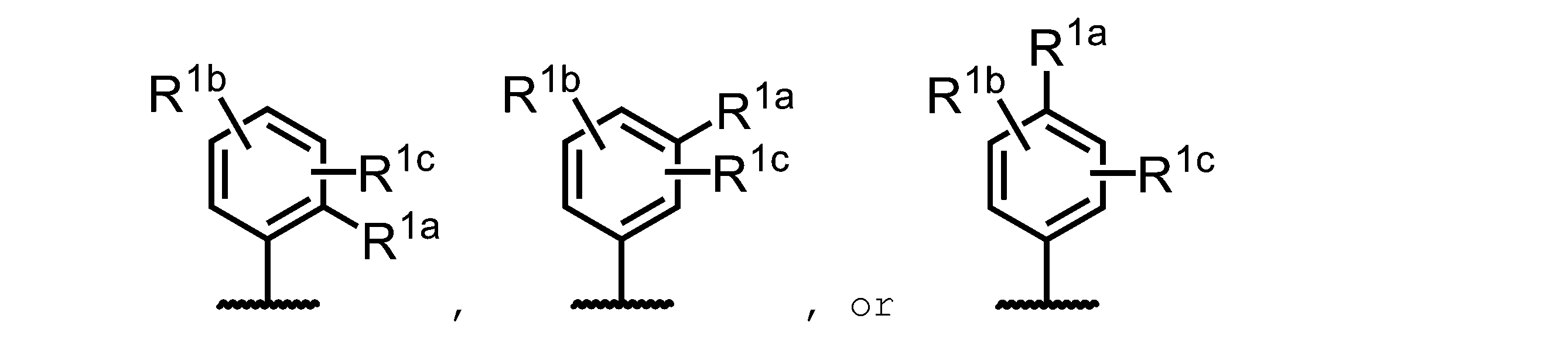
- The compound of claim 4 or a pharmacologically acceptable salt thereof or a solvate of them, wherein R1b and R1c are each independently H, NO2, NH2, OH, C1-C3 alkyl, C1-C3 haloalkyl, or C1-C3 alkoxyalkyl.
- The compound of claim 4 or a pharmacologically acceptable salt thereof or a solvate of them, wherein R1 is

- The compound of claim 4 or a pharmacologically acceptable salt thereof or a solvate of them, wherein R1 is

- The compound of claim 4 or a pharmacologically acceptable salt thereof or a solvate of them, wherein R1 is

- The compound of any one of claims 4 to 8, or a pharmacologically acceptable salt thereof or a solvate of them, wherein R1a is NO2.
- The compound of any one of claims 4 to 8, or a pharmacologically acceptable salt thereof or a solvate of them, wherein R1a is NH2.
- The compound of any one of claims 1 to 10, or a pharmacologically acceptable salt thereof or a solvate of them, wherein R2 is H, C1-C3 alkyl, C1-C3 haloalkyl, or C1-C3 alkoxyalkyl.
- The compound of claim 11, or a pharmacologically acceptable salt thereof or a solvate of them, wherein R2 is C1-C3 alkyl.
- The compound of claim 12, or a pharmacologically acceptable salt thereof or a solvate of them, wherein R2 is CH3.
- The compound of any one of claims 1 to 13, or a pharmacologically acceptable salt thereof or a solvate of them, wherein R3 is H, C1-C3 alkyl, C1-C3 haloalkyl, or C1-C3 alkoxyalkyl.
- The compound of claim 14, or a pharmacologically acceptable salt thereof or a solvate of them, wherein R3 is C1-C3 alkyl.
- The compound of claim 15, or a pharmacologically acceptable salt thereof or a solvate of them, wherein R3 is CH3.
- The compound of any one of claims 1 to 16, or a pharmacologically acceptable salt thereof or a solvate of them, wherein R4 is C1-C3 alkyl or C1-C3 haloalkyl.
- The compound of claim 17, or a pharmacologically acceptable salt thereof or a solvate of them, wherein R4 is C1-C3 alkyl.
- The compound of claim 18, or a pharmacologically acceptable salt thereof or a solvate of them, wherein R4 is CH3.
- The compound of any one of claims 1 to 19, or a pharmacologically acceptable salt thereof or a solvate of them, wherein R5 is phenyl which is unsubstituted or substituted with one to three substituents each of which is independently NO2, NH2, OH, C1-C6 alkyl, C1-C6 haloalkyl, or C1-C6 alkoxyalkyl.
- The compound of claim 20, or a pharmacologically acceptable salt thereof or a solvate of them, wherein R5 is phenyl which is unsubstituted or substituted with one to three substituents each of which is independently NO2, NH2, OH, C1-C3 alkyl, C1-C3 haloalkyl, or C1-C3 alkoxyalkyl.
- The compound of claim 20, or a pharmacologically acceptable salt thereof or a solvate of them, wherein R5 is unsubstituted phenyl.
- The compound of any one of claims 1 to 19, or a pharmacologically acceptable salt thereof or a solvate of them, wherein R5 is pyridinyl which is unsubstituted or substituted with one to three substituents each of which is independently NO2, NH2, OH, C1-C6 alkyl, C1-C6 haloalkyl, or C1-C6 alkoxyalkyl.
- The compound of claim 23, or a pharmacologically acceptable salt thereof or a solvate of them, wherein R5 is pyridinyl which is unsubstituted or substituted with one to three substituents each of which is independently NO2, NH2, OH, C1-C3 alkyl, C1-C3 haloalkyl, or C1-C3 alkoxyalkyl.
- The compound of claim 23, or a pharmacologically acceptable salt thereof or a solvate of them, wherein R5 is unsubstituted pyridinyl.
- The compound of any one of claims 23 to 25, or a pharmacologically acceptable salt thereof or a solvate of them, wherein the R5 pyridinyl is 4-pyridyl.
- The compound of any one of claims 23 to 25, or a pharmacologically acceptable salt thereof or a solvate of them, wherein the R5 pyridinyl is 3-pyridyl.
- The compound of any one of claims 23 to 25, or a pharmacologically acceptable salt thereof or a solvate of them, wherein the R5 pyridinyl is 2-pyridyl.
- The compound of any one of claims 1 to 28, or a pharmacologically acceptable salt thereof or a solvate of them, wherein m is 2.
- The compound of any one of claims 1 to 28, or a pharmacologically acceptable salt thereof or a solvate of them, wherein n is 1.
- The compound of claim 2, or a pharmacologically acceptable salt thereof or a solvate of them, wherein:
R1 is

R2, R3, and R4 are CH3;
R5 is unsubstituted phenyl or unsubstituted pyridinyl;
m is 2; and
n is 1. - The compound of claim 31, or a pharmacologically acceptable salt thereof or a solvate of them, wherein wherein R5 is unsubstituted 4-pyridyl.
- The compound of claim 1, or a pharmacologically acceptable salt thereof or a solvate of them, wherein the compound is

- The compound of claim 1, or a pharmacologically acceptable salt thereof or a solvate of them, wherein the compound is

- The compound of claim 1, or a pharmacologically acceptable salt thereof or a solvate of them, wherein the compound is

- The compound of claim 1, or a pharmacologically acceptable salt thereof or a solvate of them, wherein the compound is

- The compound of claim 1, or a pharmacologically acceptable salt thereof or a solvate of them, wherein the compound is
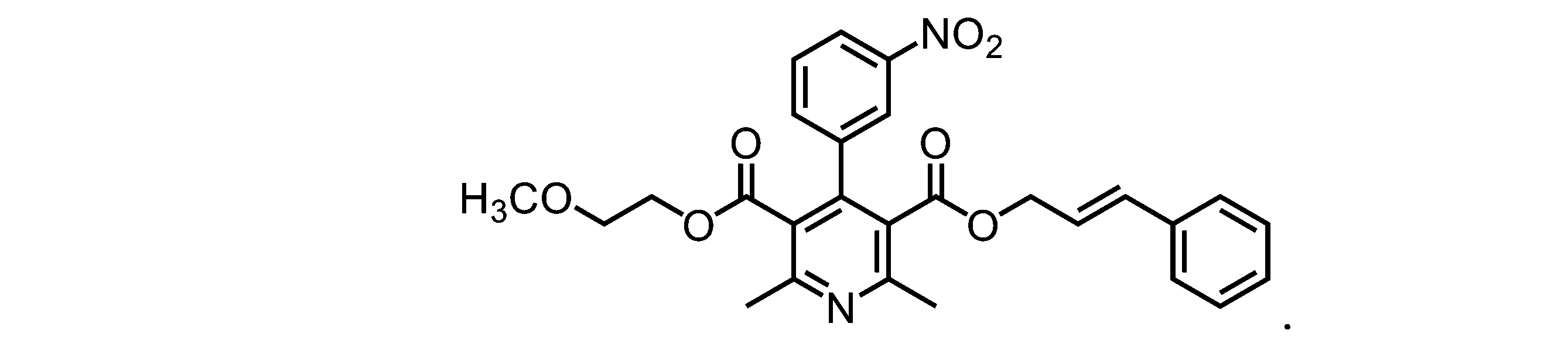
- The compound of claim 1, or a pharmacologically acceptable salt thereof or a solvate of them, wherein the compound is
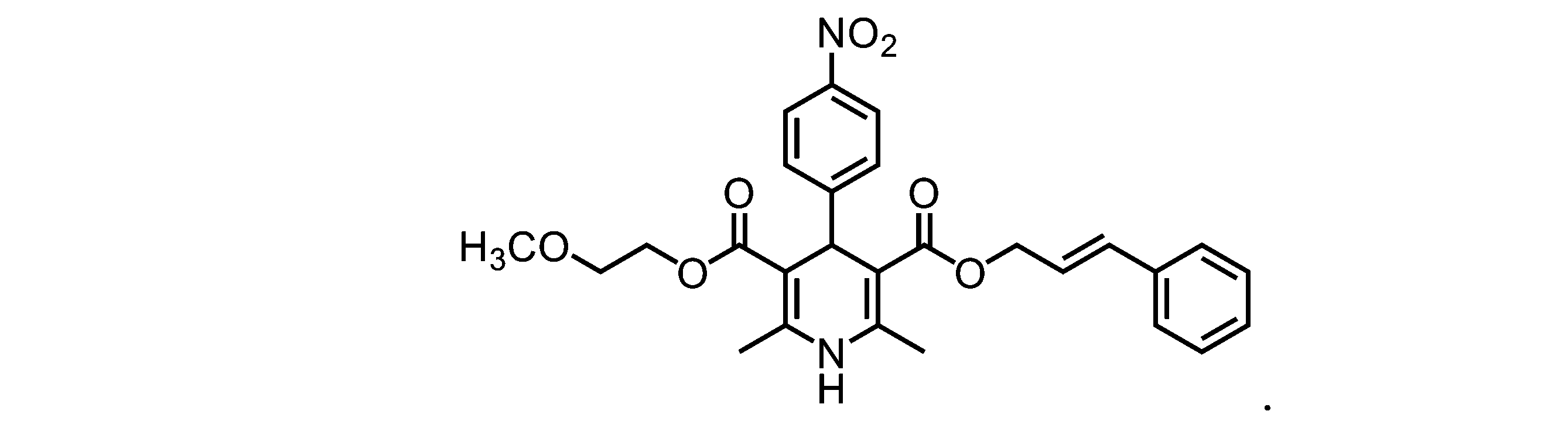
- The compound of claim 1, or a pharmacologically acceptable salt thereof or a solvate of them, wherein the compound is

- The compound of claim 1, or a pharmacologically acceptable salt thereof or a solvate of them, wherein the compound is

- The compound of claim 1, or a pharmacologically acceptable salt thereof or a solvate of them, wherein the compound is
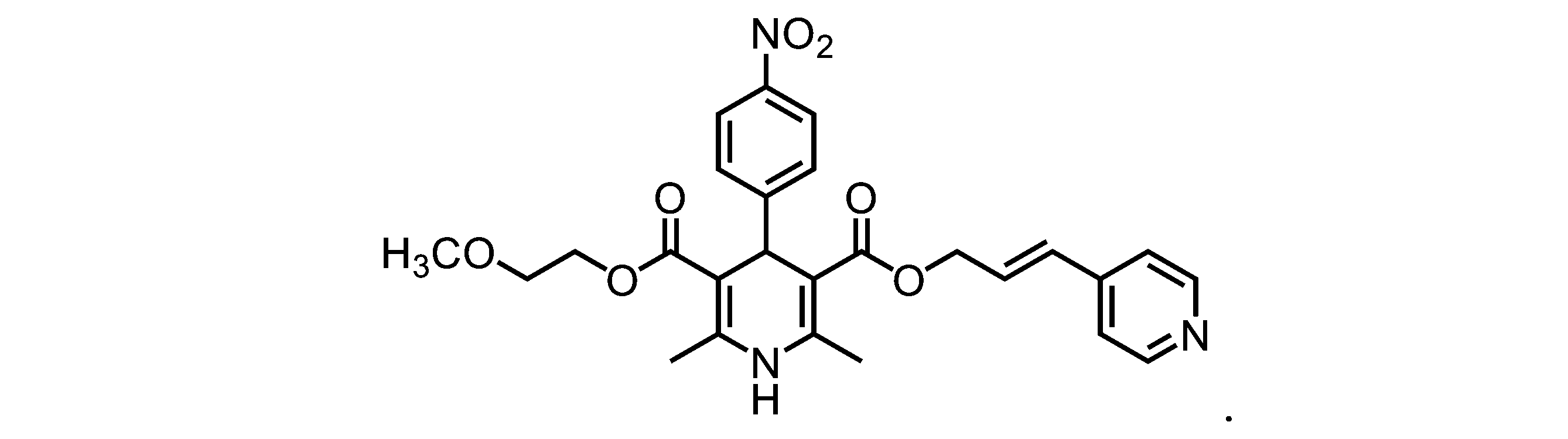
- A compound represented by Formula (1) below or a pharmacologically acceptable salt thereof or a solvate of them:

- The compound of claim 42, wherein in Formula (1),
(a) R1 represents a phenyl group, 2-pyridyl group, 3-pyridyl group or 4-pyridyl group, R2 represents a hydrogen atom, and R3 represents a nitro group, or,
(b) R1 represents a 2-pyridyl group, 3-pyridyl group or 4-pyridyl group, R2 represents an amino group, and R3 represents a hydrogen atom. - The compound of claim 42, wherein in Formula (1), R1 represents a phenyl group, 2-pyridyl group, 3-pyridyl group or 4-pyridyl group, R2 represents an amino group, and R3 represents a hydrogen atom.
- A compound represented by Formula (2) below or a pharmacologically acceptable salt thereof or a solvate of them:
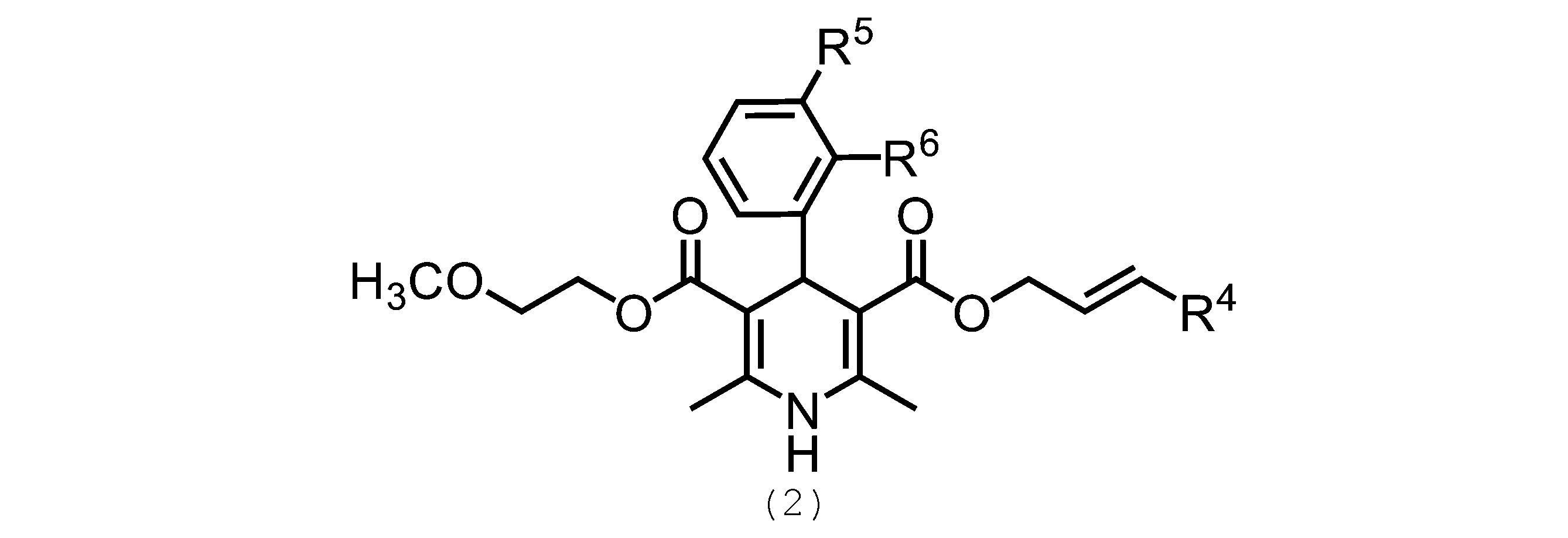
- A compound of Formula (A):

(a) R is NO2 or NH2, wherein R is at the 2-position, 3-position, or 4-position of the phenyl ring; and
(b) X is CH or N,
provided that the compound is other than
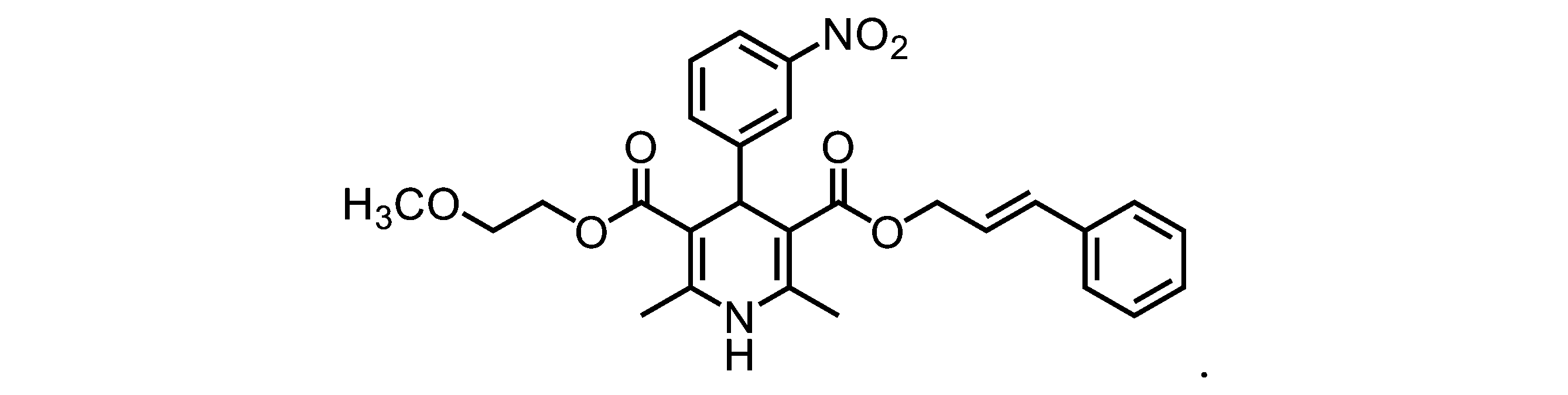
- A compound of Formula (B):
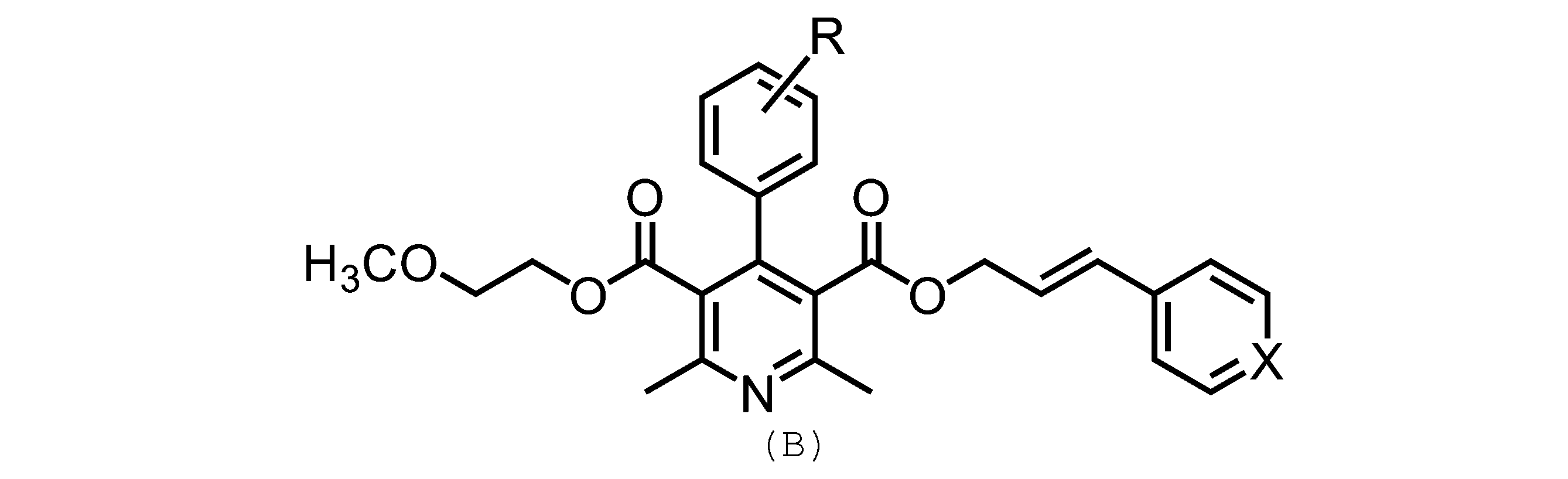
(a) R is NO2 or NH2, wherein R is at the 2-position, 3-position, or 4-position of the phenyl ring; and
(b) X represents CH or N. - The compound, pharmacologically acceptable salt or solvate of any one of claims 1 to 47, which is in the form of a pharmacologically acceptable salt.
- The compound, pharmacologically acceptable salt or solvate of claim 48, wherein the pharmacologically acceptable salt is a hydrochlorate, sulfate, hydrobromate, hydroiodide, phosphate, nitrate, benzoate, methanesulfonate, 2-hydroxyethanesulfonate, p-toluenesulfonate, acetate, propanoate, oxalate, malonate, succinate, glutarate, adipate, tartarate, maleate, fumarate, malate, or mandelate.
- The compound, pharmacologically acceptable salt or solvate of any one of claims 1 to 47, which is in the form of a free base.
- The compound, pharmacologically acceptable salt or solvate of any one of claims 1 to 50, which is not in the form of a solvate.
- The compound, pharmacologically acceptable salt or solvate of any one of claims 1 to 51, which has mitochondrial division inhibitory activity.
- The compound, pharmacologically acceptable salt or solvate of claim 52 whose mitochondrial division inhibitory activity is at least 50% of the mitochondrial division inhibitory activity of cilnidipine, e.g., as determined by the evaluation system of Exemplary Experiment 1.
- The compound, pharmacologically acceptable salt or solvate of claim 52 whose mitochondrial division inhibitory activity is at least 75% of the mitochondrial division inhibitory activity of cilnidipine, e.g., as determined by the evaluation system of Exemplary Experiment 1.
- The compound, pharmacologically acceptable salt or solvate of claim 52 whose mitochondrial division inhibitory activity is at least 90% of the mitochondrial division inhibitory activity of cilnidipine, e.g., as determined by the evaluation system of Exemplary Experiment 1.
- The compound, pharmacologically acceptable salt or solvate of claim 52 whose mitochondrial division inhibitory activity is at least equal to the mitochondrial division inhibitory activity of cilnidipine, e.g., as determined by the evaluation system of Exemplary Experiment 1.
- The compound, pharmacologically acceptable salt or solvate of any one of claims 52 to 56 whose mitochondrial division inhibitory activity is up to 300% of the mitochondrial division inhibitory activity of cilnidipine, e.g., as determined by the evaluation system of Exemplary Experiment 1.
- The compound, pharmacologically acceptable salt or solvate of any one of claims 52 to 56 whose mitochondrial division inhibitory activity is up to 200% of the mitochondrial division inhibitory activity of cilnidipine, e.g., as determined by the evaluation system of Exemplary Experiment 1.
- The compound, pharmacologically acceptable salt or solvate of any one of claims 52 to 56 whose mitochondrial division inhibitory activity is up to 150% of the mitochondrial division inhibitory activity of cilnidipine, e.g., as determined by the evaluation system of Exemplary Experiment 1.
- The compound, pharmacologically acceptable salt or solvate of any one of claims 1 to 59 that has reduced calcium channel blocking activity as compared to cilnidipine.
- The compound, pharmacologically acceptable salt or solvate of claim 60 whose calcium channel blocking activity is no greater than 75% of the calcium channel blocking activity of cilnidipine, e.g., as determined by the evaluation system of Exemplary Experiment 12.
- The compound, pharmacologically acceptable salt or solvate of claim 60 whose calcium channel blocking activity is no greater than 50% of the calcium channel blocking activity of cilnidipine, e.g., as determined by the evaluation system of Exemplary Experiment 12.
- The compound, pharmacologically acceptable salt or solvate of claim 60 whose calcium channel blocking activity is no greater than 25% of the calcium channel blocking activity of cilnidipine, e.g., as determined by the evaluation system of Exemplary Experiment 12.
- The compound, pharmacologically acceptable salt or solvate of claim 60 whose calcium channel blocking activity is no greater than 10% of the calcium channel blocking activity of cilnidipine, e.g., as determined by the evaluation system of Exemplary Experiment 12.
- A pharmaceutical composition comprising the compound, pharmacologically acceptable salt or solvate of any one of claims 1 to 64 and one or more pharmaceutically acceptable carriers.
- The pharmaceutical composition of claim 65, wherein the one or more pharmaceutically acceptable carriers comprise a base.
- The pharmaceutical composition of claim 66, wherein the base comprises purified water, titanium oxide, carnauba wax, synthetic squalane, crotamiton, or gelatin.
- The pharmaceutical composition of any one of claims 65 to 67, wherein the one or more pharmaceutically acceptable carriers comprise a binder.
- The pharmaceutical composition of claim 68, wherein the binder comprises ethyl cellulose, glycerin or methacrylic acid copolymer S.
- The pharmaceutical composition of any one of claims 65 to 69, wherein the one or more pharmaceutically acceptable carriers comprise an excipient.
- The pharmaceutical composition of claim 70, wherein the excipient is crystalline cellulose, croscarmellose sodium, magnesium stearate, and hypromellose; stabilizers such as gum arabic, magnesium aluminometasilicate, povidone, benzyl alcohol, sodium acetate, or magnesium stearate.
- The pharmaceutical composition of any one of claims 65 to 71, wherein the one or more pharmaceutically acceptable carriers comprise a plasticizer.
- The pharmaceutical composition of claim 72, wherein the plasticizer is Macrogol 400 or Macrogol 6000.
- The pharmaceutical composition of any one of claims 65 to 73, wherein the one or more pharmaceutically acceptable carriers comprise a solubilizer.
- The pharmaceutical composition of claim 74, wherein the solubilizer is benzyl benzoate and benzyl alcohol.
- The pharmaceutical composition of any one of claims 65 to 75, which does not include an active pharmaceutical ingredient other than the compound, pharmacologically acceptable salt or solvate of any one of claims 1 to 64.
- The pharmaceutical composition of any one of claims 65 to 75, which does not substantially include cilnidipine.
- The pharmaceutical composition of any one of claims 65 to 77, in which the compound, pharmacologically acceptable salt or solvate of any one of claims 1 to 64 is at least 90% pure.
- The pharmaceutical composition of any one of claims 65 to 77, in which the compound, pharmacologically acceptable salt or solvate of any one of claims 1 to 64 is at least 95% pure.
- The pharmaceutical composition of any one of claims 65 to 79, which is an oral dosage form.
- The pharmaceutical composition of claim 80, which is in the form of a pill, tablet, capsule, elixir or microcapsule.
- The pharmaceutical composition of any one of claims 65 to 79, which comprises at least 1 mg of the compound, pharmacologically acceptable salt or solvate of any one of claims 1 to 64.
- The pharmaceutical composition of any one of claims 65 to 79, which comprises at least 2 mg of the compound, pharmacologically acceptable salt or solvate of any one of claims 1 to 64.
- The pharmaceutical composition of any one of claims 65 to 79, which comprises at least 5 mg of the compound, pharmacologically acceptable salt or solvate of any one of claims 1 to 64.
- The pharmaceutical composition of any one of claims 65 to 79, which comprises at least 10 mg of the compound, pharmacologically acceptable salt or solvate of any one of claims 1 to 64.
- The pharmaceutical composition of any one of claims 65 to 85, which comprises up to 20 mg of the compound, pharmacologically acceptable salt or solvate of any one of claims 1 to 64.
- The pharmaceutical composition of any one of claims 65 to 85, which comprises up to 25 mg of the compound, pharmacologically acceptable salt or solvate of any one of claims 1 to 64.
- The pharmaceutical composition of any one of claims 65 to 85, which comprises up to 50 mg of the compound, pharmacologically acceptable salt or solvate of any one of claims 1 to 64.
- A dynamin-related protein 1 (Drp1)-filamin complex formation inhibitor that contains, as an active ingredient, the compound, pharmacologically acceptable salt or solvate of any one of claims 1 to 64.
- The compound, pharmacologically acceptable salt or solvate of any one of claims 1 to 64, the pharmaceutical composition of any one of claims 65 to 88, or the (Drp1)-filamin complex formation inhibitor of claim 89, for use as a prophylactic or therapeutic agent for disease caused by Drp1 dysfunction.
- The compound, pharmacologically acceptable salt or solvate of any one of claims 1 to 64, the pharmaceutical composition of any one of claims 65 to 88, or the (Drp1)-filamin complex formation inhibitor of claim 89, for use as a prophylactic or therapeutic agent for chronic heart failure.
- The compound, pharmacologically acceptable salt or solvate of any one of claims 1 to 64, the pharmaceutical composition of any one of claims 65 to 88, or the (Drp1)-filamin complex formation inhibitor of claim 89, for use as a prophylactic or therapeutic agent for amyotrophic lateral sclerosis.
- The compound, pharmacologically acceptable salt or solvate of any one of claims 1 to 64, the pharmaceutical composition of any one of claims 65 to 88, or the (Drp1)-filamin complex formation inhibitor of claim 89, for use as a prophylactic or therapeutic agent for inflammatory bowel disease.
- The compound, pharmacologically acceptable salt or solvate of any one of claims 1 to 64, the pharmaceutical composition of any one of claims 65 to 88, or the (Drp1)-filamin complex formation inhibitor of claim 89, for use as a prophylactic or therapeutic agent for diabetes, e.g., type 1 diabetes or type 2 diabetes.
- A method of treating a disease caused by Drp1 dysfunction, comprising administering to a subject in need thereof a therapeutically effective amount of a compound, pharmacologically acceptable salt or solvate of any one of claims 1 to 64, the pharmaceutical composition of any one of claims 65 to 88, or the (Drp1)-filamin complex formation inhibitor of claim 89.
- A method of treating chronic heart failure, comprising administering to a subject in need thereof a therapeutically effective amount of a compound, pharmacologically acceptable salt or solvate of any one of claims 1 to 64, the pharmaceutical composition of any one of claims 65 to 88, or the (Drp1)-filamin complex formation inhibitor of claim 89.
- A method of treating amyotrophic lateral sclerosis, comprising administering to a subject in need thereof a therapeutically effective amount of a compound, pharmacologically acceptable salt or solvate of any one of claims 1 to 64, the pharmaceutical composition of any one of claims 65 to 88, or the (Drp1)-filamin complex formation inhibitor of claim 89.
- A method of treating inflammatory bowel disease, comprising administering to a subject in need thereof a therapeutically effective amount of a compound, pharmacologically acceptable salt or solvate of any one of claims 1 to 64, the pharmaceutical composition of any one of claims 65 to 88, or the (Drp1)-filamin complex formation inhibitor of claim 89.
- A method of treating diabetes, e.g., type 1 diabetes or type 2 diabetes, comprising administering to a subject in need thereof a therapeutically effective amount of a compound, pharmacologically acceptable salt or solvate of any one of claims 1 to 64, the pharmaceutical composition of any one of claims 65 to 88, or the (Drp1)-filamin complex formation inhibitor of claim 89.
Priority Applications (4)
| Application Number | Priority Date | Filing Date | Title |
|---|---|---|---|
| EP20814484.0A EP3976177A4 (en) | 2019-05-31 | 2020-05-26 | DRP1-FILAMIN COMPLEX FORMATION INHIBITORS |
| CN202080054686.6A CN114206441B (en) | 2019-05-31 | 2020-05-26 | Drp 1-filamin complex formation inhibitors |
| JP2021571409A JP7333105B2 (en) | 2019-05-31 | 2020-05-26 | Drp1-filamin complex formation inhibitor |
| US17/595,817 US12441687B2 (en) | 2019-05-31 | 2020-05-26 | Drp1-filamin complex formation inhibitors |
Applications Claiming Priority (2)
| Application Number | Priority Date | Filing Date | Title |
|---|---|---|---|
| JP2019103034 | 2019-05-31 | ||
| JP2019-103034 | 2019-05-31 |
Publications (1)
| Publication Number | Publication Date |
|---|---|
| WO2020241638A1 true WO2020241638A1 (en) | 2020-12-03 |
Family
ID=73552785
Family Applications (1)
| Application Number | Title | Priority Date | Filing Date |
|---|---|---|---|
| PCT/JP2020/020744 Ceased WO2020241638A1 (en) | 2019-05-31 | 2020-05-26 | Drp1-FILAMIN COMPLEX FORMATION INHIBITORS |
Country Status (5)
| Country | Link |
|---|---|
| US (1) | US12441687B2 (en) |
| EP (1) | EP3976177A4 (en) |
| JP (2) | JP7333105B2 (en) |
| CN (1) | CN114206441B (en) |
| WO (1) | WO2020241638A1 (en) |
Cited By (3)
| Publication number | Priority date | Publication date | Assignee | Title |
|---|---|---|---|---|
| WO2022098642A1 (en) | 2020-11-03 | 2022-05-12 | Rdiscovery, LLC | Therapies for treatment of cancer and phagocytosis-deficiency related diseases |
| WO2022114187A1 (en) * | 2020-11-30 | 2022-06-02 | 国立大学法人九州大学 | Compound having inhibitory action against excessive mitochondrial divisions |
| CN116829158A (en) * | 2020-11-03 | 2023-09-29 | R发现有限责任公司 | Therapies for the treatment of cancer and diseases related to phagocytosis defects |
Families Citing this family (1)
| Publication number | Priority date | Publication date | Assignee | Title |
|---|---|---|---|---|
| CN117820216A (en) * | 2023-12-05 | 2024-04-05 | 蚌埠丰原医药科技发展有限公司 | A preparation method of cilnidipine oxidized impurities |
Citations (4)
| Publication number | Priority date | Publication date | Assignee | Title |
|---|---|---|---|---|
| US4672068A (en) * | 1984-05-04 | 1987-06-09 | Fujirebio Kabushiki Kaisha | Antihypertensive 1,4-dihydropyridines having a conjugated ester |
| JPH02121967A (en) * | 1988-10-31 | 1990-05-09 | Fujirebio Inc | 1,4-dihydropyridine derivative |
| US6482841B1 (en) * | 1997-10-09 | 2002-11-19 | Cermol S.A. | Pyridyl compounds and pharmaceutical compositions containing them |
| WO2016080516A1 (en) | 2014-11-21 | 2016-05-26 | 味の素株式会社 | Drp1 POLYMERIZATION INHIBITOR |
Family Cites Families (4)
| Publication number | Priority date | Publication date | Assignee | Title |
|---|---|---|---|---|
| JPH0629245B2 (en) * | 1984-06-20 | 1994-04-20 | 富士レビオ株式会社 | 1,4-dihydropyridine derivative |
| JPS60233058A (en) * | 1984-05-04 | 1985-11-19 | Fujirebio Inc | 1,4-dihydropyridine derivative |
| CN102416013A (en) * | 2011-12-30 | 2012-04-18 | 湖南九典制药有限公司 | New uses of cilnidipine |
| US10960020B2 (en) | 2016-09-15 | 2021-03-30 | The Brigham And Women's Hospital, Inc. | Modulation of PCSK9 and LDLR through DRP1 inhibition |
-
2020
- 2020-05-26 US US17/595,817 patent/US12441687B2/en active Active
- 2020-05-26 WO PCT/JP2020/020744 patent/WO2020241638A1/en not_active Ceased
- 2020-05-26 EP EP20814484.0A patent/EP3976177A4/en active Pending
- 2020-05-26 CN CN202080054686.6A patent/CN114206441B/en active Active
- 2020-05-26 JP JP2021571409A patent/JP7333105B2/en active Active
-
2023
- 2023-04-20 JP JP2023069650A patent/JP7587300B2/en active Active
Patent Citations (4)
| Publication number | Priority date | Publication date | Assignee | Title |
|---|---|---|---|---|
| US4672068A (en) * | 1984-05-04 | 1987-06-09 | Fujirebio Kabushiki Kaisha | Antihypertensive 1,4-dihydropyridines having a conjugated ester |
| JPH02121967A (en) * | 1988-10-31 | 1990-05-09 | Fujirebio Inc | 1,4-dihydropyridine derivative |
| US6482841B1 (en) * | 1997-10-09 | 2002-11-19 | Cermol S.A. | Pyridyl compounds and pharmaceutical compositions containing them |
| WO2016080516A1 (en) | 2014-11-21 | 2016-05-26 | 味の素株式会社 | Drp1 POLYMERIZATION INHIBITOR |
Non-Patent Citations (7)
| Title |
|---|
| "NCBI", Database accession no. NP_001298003.1 |
| AKIYUKI NISHIMURA, SHIMAUCHI TSUKASA, TANAKA TOMOHIRO, SHIMODA KAKERU, TOYAMA TAKASHI, KITAJIMA NAOYUKI, ISHIKAWA TATSUYA, SHINDO : "Hypoxia-induced interaction of filamin with Drp1 causes mitochondrial hyperfission–associated myocardial senescence", SCIENCE SIGNALING, vol. 11, 13 November 2018 (2018-11-13), pages 1 - 15, XP055757187, ISSN: 1945-0877, DOI: 10.1126/scisignal.aat5185 * |
| HONGXIA ZENG, WANG FAN, ZHU BINGQI, ZHONG WEIHUI, SHAN WEIGUANG, WANG JIAN: "Study of the structures of photodegradation impurities and pathways of photodegradation of cilnidipine by liquid chromatography/Q-Orbitrap mass spectrometry", RAPID COMMUNICATIONS IN MASS SPECTROMETRY, vol. 30, no. 15, 15 August 2016 (2016-08-15), pages 1771 - 1778, XP055757180, ISSN: 0951-4198, DOI: 10.1002/rcm.7657 * |
| KOCIENSKI: "Protecting Groups", 2005, THIEME |
| NISHIMURA A ET AL.: "Hypoxia-induced interaction of filamin with Drp1 causes mitochondrial hyperfission-associated myocardial senescence", SCI. SIGNAL, vol. 11, no. 556, 2018, pages 5185 |
| See also references of EP3976177A4 |
| WUTSGREENE: "Greene's Protective Groups in Organic Synthesis", 2007, JOHN WILEY & SONS, INC. |
Cited By (3)
| Publication number | Priority date | Publication date | Assignee | Title |
|---|---|---|---|---|
| WO2022098642A1 (en) | 2020-11-03 | 2022-05-12 | Rdiscovery, LLC | Therapies for treatment of cancer and phagocytosis-deficiency related diseases |
| CN116829158A (en) * | 2020-11-03 | 2023-09-29 | R发现有限责任公司 | Therapies for the treatment of cancer and diseases related to phagocytosis defects |
| WO2022114187A1 (en) * | 2020-11-30 | 2022-06-02 | 国立大学法人九州大学 | Compound having inhibitory action against excessive mitochondrial divisions |
Also Published As
| Publication number | Publication date |
|---|---|
| JP2022525697A (en) | 2022-05-18 |
| US12441687B2 (en) | 2025-10-14 |
| EP3976177A1 (en) | 2022-04-06 |
| JP7587300B2 (en) | 2024-11-20 |
| CN114206441B (en) | 2024-07-02 |
| JP2023093638A (en) | 2023-07-04 |
| CN114206441A (en) | 2022-03-18 |
| JP7333105B2 (en) | 2023-08-24 |
| US20220169613A1 (en) | 2022-06-02 |
| EP3976177A4 (en) | 2023-05-31 |
Similar Documents
| Publication | Publication Date | Title |
|---|---|---|
| JP7587300B2 (en) | Inhibitor of Drp1-filamin complex formation | |
| US6218538B1 (en) | 2-aryl dihydropyrimidine compounds | |
| US20090054424A1 (en) | Optically active pyridine derivative and a medicament containing the same | |
| JPS6360755B2 (en) | ||
| RU2345074C2 (en) | Imidazol derivatives, method of their obtaining and their application, medication | |
| EP1470108B1 (en) | 1,4-dihydropyridine and pyridine compounds as calcium channel blockers | |
| WO2000078730A1 (en) | Novel dihydropyrimidine derivatives | |
| JP3588363B2 (en) | Quinoxaline diones | |
| EP0257616A2 (en) | Dihydropyridine derivates and pharmaceutical composition thereof | |
| EP4165048B1 (en) | Methyl 2-methyl-5-oxo-1,4,5,7-tetradhydrofuro[3,4- b]pyridine-3-carboxylate compounds as cav1.2 activators | |
| WO2023163203A1 (en) | Pharmaceutical composition for preventing and/or treating renal disease | |
| CA1323876C (en) | Dihydropyridine derivatives and pharmaceutical composition thereof | |
| EP0160451B1 (en) | Dihydropyridine-3,5-dicarboxylic acid ester derivative isomers, their preparation, and pharmaceutical compositions containing them | |
| AP982A (en) | Quinoxalinediones. | |
| WO2022170052A1 (en) | Quinazoline derivatives, pyridopyrimidine derivatives, pyrimidopyrimidine derivatives, and uses thereof | |
| CN108912035B (en) | Indole amide compound with anti-tumor activity | |
| EP4596553A1 (en) | Salt of dioxane quinoline compound, crystal form thereof, preparation methods therefor and uses thereof | |
| WO2004024153A2 (en) | Calcium channel blockers | |
| CN121712748A (en) | (2S, 5R) -5- (hydroxymethyl) morpholine-2-carboxamide as SSTR4 agonist | |
| US20040006110A1 (en) | 1,4-dihydropyridine and pyridine compounds as calcium channel blockers | |
| WO2024026262A1 (en) | Substituted pyrazolyl-pyridinyl compounds as ligand directed degraders of irak3 | |
| EP3189061A1 (en) | Derivatives of macrocyclic n-aryl-tricyclopyrimidine-2-amine polyethers as inhibitors of ftl3 and jak | |
| KR20250117821A (en) | HDAC inhibitors and uses thereof | |
| CZ284447B6 (en) | 4-/3-(4-oxothiazoledinyl)/butinylamine, process for preparing such compound, pharmaceutical composition containing thereof and its use | |
| JPH09268177A (en) | Dihydropyridine compound |
Legal Events
| Date | Code | Title | Description |
|---|---|---|---|
| 121 | Ep: the epo has been informed by wipo that ep was designated in this application |
Ref document number: 20814484 Country of ref document: EP Kind code of ref document: A1 |
|
| ENP | Entry into the national phase |
Ref document number: 2021571409 Country of ref document: JP Kind code of ref document: A |
|
| NENP | Non-entry into the national phase |
Ref country code: DE |
|
| ENP | Entry into the national phase |
Ref document number: 2020814484 Country of ref document: EP Effective date: 20220103 |
|
| WWG | Wipo information: grant in national office |
Ref document number: 17595817 Country of ref document: US |