WO2020244644A1 - 一种网络系统分级方法及装置 - Google Patents
一种网络系统分级方法及装置 Download PDFInfo
- Publication number
- WO2020244644A1 WO2020244644A1 PCT/CN2020/094747 CN2020094747W WO2020244644A1 WO 2020244644 A1 WO2020244644 A1 WO 2020244644A1 CN 2020094747 W CN2020094747 W CN 2020094747W WO 2020244644 A1 WO2020244644 A1 WO 2020244644A1
- Authority
- WO
- WIPO (PCT)
- Prior art keywords
- maintenance
- parameters
- network
- scenario
- network system
- Prior art date
- Legal status (The legal status is an assumption and is not a legal conclusion. Google has not performed a legal analysis and makes no representation as to the accuracy of the status listed.)
- Ceased
Links
Images



Classifications
-
- H—ELECTRICITY
- H04—ELECTRIC COMMUNICATION TECHNIQUE
- H04W—WIRELESS COMMUNICATION NETWORKS
- H04W16/00—Network planning, e.g. coverage or traffic planning tools; Network deployment, e.g. resource partitioning or cells structures
- H04W16/18—Network planning tools
-
- G—PHYSICS
- G06—COMPUTING OR CALCULATING; COUNTING
- G06Q—INFORMATION AND COMMUNICATION TECHNOLOGY [ICT] SPECIALLY ADAPTED FOR ADMINISTRATIVE, COMMERCIAL, FINANCIAL, MANAGERIAL OR SUPERVISORY PURPOSES; SYSTEMS OR METHODS SPECIALLY ADAPTED FOR ADMINISTRATIVE, COMMERCIAL, FINANCIAL, MANAGERIAL OR SUPERVISORY PURPOSES, NOT OTHERWISE PROVIDED FOR
- G06Q10/00—Administration; Management
- G06Q10/20—Administration of product repair or maintenance
-
- H—ELECTRICITY
- H04—ELECTRIC COMMUNICATION TECHNIQUE
- H04L—TRANSMISSION OF DIGITAL INFORMATION, e.g. TELEGRAPHIC COMMUNICATION
- H04L41/00—Arrangements for maintenance, administration or management of data switching networks, e.g. of packet switching networks
- H04L41/06—Management of faults, events, alarms or notifications
- H04L41/0654—Management of faults, events, alarms or notifications using network fault recovery
-
- H—ELECTRICITY
- H04—ELECTRIC COMMUNICATION TECHNIQUE
- H04L—TRANSMISSION OF DIGITAL INFORMATION, e.g. TELEGRAPHIC COMMUNICATION
- H04L41/00—Arrangements for maintenance, administration or management of data switching networks, e.g. of packet switching networks
- H04L41/08—Configuration management of networks or network elements
- H04L41/0876—Aspects of the degree of configuration automation
- H04L41/0886—Fully automatic configuration
-
- H—ELECTRICITY
- H04—ELECTRIC COMMUNICATION TECHNIQUE
- H04L—TRANSMISSION OF DIGITAL INFORMATION, e.g. TELEGRAPHIC COMMUNICATION
- H04L41/00—Arrangements for maintenance, administration or management of data switching networks, e.g. of packet switching networks
- H04L41/50—Network service management, e.g. ensuring proper service fulfilment according to agreements
- H04L41/5003—Managing SLA; Interaction between SLA and QoS
- H04L41/5009—Determining service level performance parameters or violations of service level contracts, e.g. violations of agreed response time or mean time between failures [MTBF]
-
- H—ELECTRICITY
- H04—ELECTRIC COMMUNICATION TECHNIQUE
- H04W—WIRELESS COMMUNICATION NETWORKS
- H04W24/00—Supervisory, monitoring or testing arrangements
- H04W24/02—Arrangements for optimising operational condition
-
- H—ELECTRICITY
- H04—ELECTRIC COMMUNICATION TECHNIQUE
- H04W—WIRELESS COMMUNICATION NETWORKS
- H04W24/00—Supervisory, monitoring or testing arrangements
- H04W24/04—Arrangements for maintaining operational condition
-
- Y—GENERAL TAGGING OF NEW TECHNOLOGICAL DEVELOPMENTS; GENERAL TAGGING OF CROSS-SECTIONAL TECHNOLOGIES SPANNING OVER SEVERAL SECTIONS OF THE IPC; TECHNICAL SUBJECTS COVERED BY FORMER USPC CROSS-REFERENCE ART COLLECTIONS [XRACs] AND DIGESTS
- Y04—INFORMATION OR COMMUNICATION TECHNOLOGIES HAVING AN IMPACT ON OTHER TECHNOLOGY AREAS
- Y04S—SYSTEMS INTEGRATING TECHNOLOGIES RELATED TO POWER NETWORK OPERATION, COMMUNICATION OR INFORMATION TECHNOLOGIES FOR IMPROVING THE ELECTRICAL POWER GENERATION, TRANSMISSION, DISTRIBUTION, MANAGEMENT OR USAGE, i.e. SMART GRIDS
- Y04S10/00—Systems supporting electrical power generation, transmission or distribution
- Y04S10/50—Systems or methods supporting the power network operation or management, involving a certain degree of interaction with the load-side end user applications
Definitions
- network system operation and maintenance refers to the production organization and management activities taken to ensure the safe and effective operation of the network system and related services, including network planning, network deployment, site deployment in the network system, Network optimization, network maintenance and business operations.
- 5G (5th-generation) wireless communication technology the number of sites in the network system and the complexity of connections between sites continue to increase, and the difficulty of operation and maintenance of the network system continues to increase.
- This application provides a network system classification method and device, which are used to implement the classification of the degree of automation of the network system in a specific operation and maintenance scenario.
- this application provides a method for grading a network system.
- the method can be determined by a site or a component of a site, or a subsystem, or a component of a subsystem in the network system to be evaluated, or it can be Implementation of sites, systems, equipment or chips outside the system.
- the method may include the following steps: obtaining operation and maintenance parameters of the network system in an operation and maintenance scenario, where the operation and maintenance parameters are used to characterize the operation and maintenance performance of the network system in the operation and maintenance scenario;
- the operation and maintenance parameters in the operation and maintenance scenario determine the automation level of the network system in the operation and maintenance scenario, and the automation level of the network system in the operation and maintenance scenario is used to characterize the network system The degree of automated operation and maintenance in the operation and maintenance scenario.
- the operation and maintenance parameters of the network system in a specific operation and maintenance scenario can be obtained, and the automation level of the network system in the specific operation and maintenance scenario can be determined according to the operation and maintenance parameters, so as to realize the network system in the specific operation and maintenance scenario.
- the level of automation is a level of automation.
- the network system when determining the automation level of the network system in the operation and maintenance scenario according to the operation and maintenance parameters of the network system in the operation and maintenance scenario, the network system may be The operation and maintenance parameters in the operation and maintenance scenario and the respective evaluation information of the multiple reference automation levels in the operation and maintenance scenario are determined, and one of the multiple reference automation levels is determined as the network system in the operation The level of automation in the dimension scenario.
- the automation level of the network system in the operation and maintenance scenario is the reference automation level according to the respective evaluation information of multiple reference automation levels in the operation and maintenance scenario, thereby improving the efficiency in determining the automation level.
- the evaluation information of the reference automation level can be used to determine whether the automation level of the network system in the operation and maintenance scenario meets the reference automation level.
- the evaluation information of the reference automation level may include the characteristic information of the reference automation level, such as information about the complexity of the network system corresponding to the reference automation level, the number of sites (and/or subsystems) contained in the network system, or the establishment time of the network system, etc.
- the characteristic information of the reference automation level such as information about the complexity of the network system corresponding to the reference automation level, the number of sites (and/or subsystems) contained in the network system, or the establishment time of the network system, etc.
- the above evaluation information of the reference automation level may include level information corresponding to the reference automation level, such as the operation and maintenance performance evaluation index corresponding to the reference automation level.
- the operation and maintenance performance index may specifically be a threshold value of an operation and maintenance parameter in a certain operation and maintenance scenario.
- a plurality of reference automation levels may be selected The highest-level reference automation level is selected as the automation level of the network system in the operation and maintenance scenario, wherein the operation and maintenance parameters of the network system in the operation and maintenance scenario meet the evaluation information of the selected highest-level reference automation level.
- the operation and maintenance parameters of the network system in the operation and maintenance scenario meet the evaluation information of the first reference automation level, and the operation and maintenance parameters of the network system in the operation and maintenance scenario do not meet the second reference automation Level evaluation information, it can be determined that the automation level of the network system in the operation and maintenance scenario is the first reference automation level, wherein the second reference automation level and the first reference automation level are adjacent levels , And the degree of automation characterized by the second reference automation level is higher than the degree of automation characterized by the first reference automation level.
- the automation level of the network system in the operation and maintenance scenario is the The third reference automation level, wherein the degree of automation characterized by the third reference automation level is higher than the degree of automation characterized by all reference automation levels except the third reference automation level.
- the foregoing operation and maintenance scenarios may include at least one of a site deployment scenario, a network deployment scenario, a network optimization scenario, a network maintenance scenario, a network planning scenario, and a business operation scenario.
- the foregoing operation and maintenance parameters include at least one of site planning parameters, full configuration data generation parameters, site activation parameters, or site acceptance parameters.
- the operation and maintenance parameters in this scenario may specifically include at least one of the following parameters: parameters used to indicate whether human participation in site planning is required; or, the duration of site planning; or, human participation in site planning Or, the number of site planning data; or, the accuracy rate of site planning data; or, the parameter used to indicate whether human participation in the generation of full configuration data is required; or, the length of time the full configuration data is generated; or, for Parameter indicating the completeness of the full configuration data; or, the duration of human participation in the generation of full configuration data; or, the parameter used to indicate whether human participation is required for site activation; or, the duration of site activation; or, the duration of human participation during site activation ; Or, the number of failures during site activation; or, the parameter used to indicate whether people are required to participate in site acceptance; or, the length of site acceptance; or, the length of human participation in site acceptance; or, the success rate of site acceptance; Or, the accuracy of site acceptance.
- the operation and maintenance parameters may include fault handling plan execution parameters, data collection parameters (or fault presentation parameters), fault compression parameters, fault root cause analysis parameters, fault location parameters, and fault prediction At least one of parameters or decision-making parameters of a fault handling solution.
- the operation and maintenance parameters in this scenario may specifically include at least one of the following parameters: a parameter used to indicate whether humans are required to participate in the execution of the fault handling solution; or, the execution time of the fault handling solution; or, the fault The duration of manual intervention in the execution of the processing plan; or, the parameter used to indicate whether human participation in data collection is required; or, the duration of data collection; or, the duration of human participation in data collection; or, it is used to indicate the validity of the collected data Or, the failure data compression rate; or, the parameter used to indicate whether humans are required to participate in the root cause analysis; or, the length of the root cause analysis; or, the length of human participation in the root cause analysis; or, to indicate whether Parameter that requires human participation in fault location; or, the accuracy of fault location; or, the parameter used to indicate whether fault prediction can be performed; or, the parameter that indicates whether human participation in fault prediction is required; or, the accuracy rate of fault prediction ; Or, the period of failure prediction; or, the parameter used to indicate whether humans are required to participate
- the foregoing operation and maintenance parameters may include at least one of the following parameters: a parameter used to indicate whether humans are required to participate in network planning; or, network planning duration; or, network planning The length of time that people participate; or, the accuracy of network planning; or, the number of times people participate in network planning; or, the parameters used to indicate whether manual site surveys are required; or, whether manual site selection is required Parameters.
- the foregoing operation and maintenance parameters may include at least one of the following parameters: the duration of network deployment; or, the duration of human participation in the network deployment process; or, whether human participation is required A parameter of the process of mapping network requirements to network topology; or, a parameter used to indicate whether people are required to participate in the process of generating network requirements to network configuration; or, the number of interruptions in the network deployment process.
- the operation and maintenance parameters may include network performance data collection parameters (or performance presentation parameters), optimization parameter configuration parameters, problem identification parameters, optimization plan formulation and decision-making parameters, or intention demand decomposition parameters At least one of the others.
- the operation and maintenance parameters in this scenario may specifically include at least one of the following parameters: a parameter used to indicate whether a person is required to participate in data collection; or a parameter used to indicate whether a person is required to input a collection strategy ; Or, the duration of data collection; Or, the duration of human participation in data collection; Or, a parameter used to indicate whether network performance data can be collected; Or, a parameter used to indicate whether drive test data can be collected; or Parameters indicating whether QoE data can be collected; or, to indicate whether human participation is required to optimize parameter configuration; or, to optimize the parameter configuration time; or, to optimize the human participation time in parameter configuration; or, to optimize the evaluation accuracy; or, to Parameter indicating whether it is necessary to participate in network problem identification; or, the length of network problem identification; or, the length of human participation in network problem identification; or, the accuracy of network problem identification; or, the parameter used to indicate whether people are required to participate in the formulation of the optimization plan; Or, to optimize the length of plan formulation; or, to
- the operation and maintenance parameters may include at least one of a business requirement mapping parameter, a service provisioning parameter, a service evaluation parameter, or a service performance presentation parameter.
- the operation and maintenance parameters in this scenario may specifically include at least one of the following parameters: a parameter used to indicate whether humans are required to participate in the mapping process from business requirements to network requirements; or, the parameters from business requirements to network requirements Mapping time; or, the length of time that people participate in the mapping of business requirements to network requirements; or, the parameters used to indicate whether people are required to participate in the service delivery process; or, the length of the service delivery process; or, the time that people participate in the service delivery process; or , The accuracy of business release; or, the parameter used to indicate whether people are required to participate in the business evaluation; or, the duration of the business evaluation; or, the parameter used to indicate whether people are required to participate in the business performance presentation; or, the business performance presentation time; or, A parameter used to indicate whether business performance can be presented.
- the method may further include: determining multiple operation and maintenance scenarios supported by the network system, and determining the automation level of the network system in the multiple supported operation and maintenance scenarios. Describe the automation level of the network system.
- the automation level of the network system can be determined according to the automation level of the network system in multiple operation and maintenance scenarios, to realize the comprehensive assessment of the automation level of the network system, and improve the accuracy of the automation level assessment of the network system.
- the multiple operation and maintenance scenarios supported by the network system may include the operation and maintenance scenarios.
- this application provides a device that can be used to execute the methods involved in the above first aspect and any possible designs.
- the device can implement the functions in the above-mentioned methods through a hardware structure, a software module, or a hardware structure plus a software module.
- the device may include a parameter acquisition module and a level determination module that are coupled to each other, and the parameter acquisition module and the level determination module implement any possible implementation method in the first aspect.
- the operation and maintenance parameter acquisition module may be used to acquire the operation and maintenance parameters of the network system in the operation and maintenance scenario, and the operation and maintenance parameters are used to characterize the network system in the operation and maintenance scenario.
- Operation and maintenance performance The level determination module may be used to determine the automation level of the network system in the operation and maintenance scenario according to the operation and maintenance parameters of the network system in the operation and maintenance scenario, and the network system is in the operation and maintenance scenario.
- the lower automation level is used to characterize the degree of automated operation and maintenance of the network system in the operation and maintenance scenario.
- the level determination module may be specifically configured to determine the operation and maintenance parameters of the network system in the operation and maintenance scenario and the respective evaluation information of multiple reference automation levels in the operation and maintenance scenario.
- One of the multiple reference automation levels is the automation level of the network system in the operation and maintenance scenario.
- the evaluation information of the reference automation level can be used to determine whether the automation level of the network system in the operation and maintenance scenario meets the reference automation level.
- the above evaluation information of the reference automation level may include level information corresponding to the reference automation level, such as the operation and maintenance performance evaluation index corresponding to the reference automation level.
- the operation and maintenance performance index may specifically be a threshold value of an operation and maintenance parameter in a certain operation and maintenance scenario.
- the level determination module can be used to select the highest level of reference automation level from multiple reference automation levels as the automation level of the network system in the operation and maintenance scenario, where the network system is in the operation and maintenance scenario The operation and maintenance parameters below meet the selected evaluation information of the highest level of reference automation level.
- the level determination module can be used to determine that the automation level of the network system in the operation and maintenance scenario is the first reference automation level, wherein the second reference automation level is the same as the first reference automation level.
- the automation levels are adjacent levels, and the degree of automation characterized by the second reference automation level is higher than the degree of automation characterized by the first reference automation level.
- the level determination module may be used to determine the network system in the operation and maintenance scenario.
- the automation level is the third reference automation level, wherein the degree of automation represented by the third reference automation level is higher than the degree of automation represented by all reference automation levels except the third reference automation level.
- the level determination module may also be used to determine multiple operation and maintenance scenarios supported by the network system, according to the automation level of the network system in the multiple supported operation and maintenance scenarios. Determine the automation level of the network system.
- the method for determining the automation level of the network system in the multiple operation and maintenance scenarios supported by the network system may refer to the above-mentioned first aspect and its possible design for determining the automation level of the network system in the operation and maintenance scenario.
- the device may include a processor.
- the steps performed by the above operation and maintenance parameter acquisition module and/or level determination module may be executed by the processor.
- the device may also include a memory and/or a transceiver.
- the memory is used to store a program that can be executed by the processor to perform the steps performed by the above processing module; the transceiver may be used to support the above device Communicate with other equipment or devices.
- this application provides a network system, which may include the device described in the second aspect.
- this application provides a computer storage medium in which instructions (or programs) are stored, which when invoked and executed on a computer, cause the computer to execute the above-mentioned first aspect or the first aspect. Any one of the possible designs described in the method.
- the present application provides a chip or a chip system including the chip, and the chip may include a processor.
- the chip may also include a memory (or storage module) and/or a transceiver (or communication module).
- the chip can be used to implement the method described in the first aspect or any one of the possible designs of the first aspect.
- the chip system may be composed of the above-mentioned chips, or may include the above-mentioned chips and other discrete devices, such as a memory (or storage module) and/or a transceiver (or communication module).
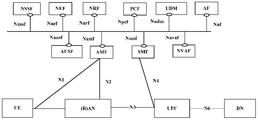
- FIG. 1 is a schematic diagram of the architecture of a network system applicable to the embodiments of this application;
- FIG. 2 is a schematic diagram of the architecture of another network system applicable to the embodiments of this application;
- FIG. 3 is a schematic flowchart of a network system classification method provided by an embodiment of this application.
- FIG. 4 is a schematic flowchart of another network system classification method provided by an embodiment of this application.
- Figure 5 is a schematic structural diagram of a device provided by this application.
- Fig. 6 is a schematic structural diagram of another device provided by this application.
- the network management system includes but is not limited to Network Slice Management Function (NSMF), SubNetwork Management Function (SubNetwork Management Function), Domain Manager (DM), Network Function Virtualization Orchestrator (Network Function Virtualization Orchestrator (NFVO), Virtualized Network Function Manager (VNFM), etc.
- the network slice manager is used to provide the operation and maintenance function of network slicing
- the subnet manager is used to provide the operation and maintenance function of the subnet
- the domain manager is used to provide the operation and maintenance function of the network and network equipment in a certain domain
- the network function virtualization orchestrator is used to Provides network service (Network Service) and virtual network function (VNF) operation and maintenance functions
- the virtual network function manager is used to provide virtual network function operation and maintenance functions.
- the site described in this application may include an access website point and a core website point in a wireless communication system, where the access website point may specifically include a base station (BS), or include a base station and control the base station
- the base station may be a radio access network (radio access network, RAN) base station or an access network base station, etc., which is not specifically limited in this application (access network, AN).
- Access site points can include relay stations (relay devices), access points, in-vehicle devices, wearable devices, and base stations in the future 5G network, and base stations in the future evolved public land mobile network (PLMN) network Or NR base stations, etc., which are not limited in the embodiment of the present application.
- the station can also be a communication chip with a communication module.
- the core website point may specifically include network elements in the core network of the wireless communication system, such as mobile management entity MME, mobile switching center MSC and other equipment.
- the 5G network architecture may include three parts, namely a terminal equipment part, a data network (DN), and an operator network part.
- the network system shown in this application may include one or more sites in the operator's network part.
- the sites in the operator network may include but are not limited to: network slice selection function (NSSF), network exposure function (NEF) network elements, network storage function (network function repository function, NRF) Network element, policy control function (PCF) network element, unified data management (UDM) network element, application function (AF) network element, network vision and awareness function (network vision and awareness) function, NVAF) network element, authentication server function (authentication server function, AUSF) network element, access and mobility management function (AMF) network element, session management function (session management function, SMF) Network elements, (radio) access network ((radio) access network, (R) AN), user plane function (UPF) network elements, etc.
- NSF network slice selection function
- NRF network exposure function
- PCF policy control function
- UDM unified data management
- AF application function
- AF authentication server function
- AUSF authentication server function
- AMF access and mobility management function
- SMF session management function
- SMF session management function
- UPF user plane function
- the UE as shown in Figure 2 can be a device with wireless transceiver function, which can be deployed on land, including indoor or outdoor, handheld or vehicle-mounted; it can also be deployed on the water (such as ships, etc.); it can also be deployed on In the air (such as airplanes, balloons, satellites, etc.).
- the UE may be a mobile phone (mobile phone), a tablet computer (pad), a computer with wireless transceiving function, a virtual reality (VR) terminal, an augmented reality (AR) terminal, an industrial control (industrial control) Wireless terminals in the 5G vertical industry, mobile robots in the 5G vertical industry, automated guided vehicles (AGV), sensors, control equipment, or wireless terminals such as vehicles and train equipment, and unmanned Wireless terminals in self-driving, wireless terminals in remote medical, wireless terminals in smart grid, wireless terminals in transportation safety, and smart city Wireless terminals, wireless terminals in smart homes, etc.
- VR virtual reality
- AR augmented reality
- AMV automated guided vehicles
- sensors control equipment
- wireless terminals such as vehicles and train equipment
- unmanned Wireless terminals in self-driving wireless terminals in remote medical, wireless terminals in smart grid, wireless terminals in transportation safety, and smart city Wireless terminals, wireless terminals in smart homes, etc.
- the above-mentioned terminal equipment can establish a connection with the operator's network through an interface (such as N1, etc.) provided by the operator's network, and use services such as data and/or voice provided by the operator's network.
- the terminal device can also access the DN through the operator's network, and use the operator's service deployed on the DN and/or the service provided by a third party.
- the aforementioned third party may be a service party other than the operator's network and terminal equipment, and may provide other services such as data and/or voice for the terminal equipment.
- the specific form of expression of the aforementioned third party can be determined according to actual application scenarios, and is not limited here.
- Access network equipment refers to equipment that provides wireless communication functions for terminals.
- Access network equipment includes, but is not limited to: next-generation base stations (gnodeB, gNB) in 5G, evolved node B (evolved node B, eNB), radio network controller (RNC), node B (node B) B, NB), base station controller (BSC), base transceiver station (base transceiver station, BTS), home base station (for example, home evolved nodeB, or home node B, HNB), baseband unit (baseBand unit, BBU), transmission point (transmitting and receiving point, TRP), transmission point (transmitting point, TP), mobile switching center, etc.
- next-generation base stations gnodeB, gNB
- 5G evolved node B (evolved node B, eNB), radio network controller (RNC), node B (node B) B, NB), base station controller (BSC), base transceiver station (base transceiver station, BTS),
- the above network slicing selection NSSF network element can be used to realize flexible selection of network slicing.
- the network slice selection network element can support a slice selection strategy based on various information such as network slice selection assistance information (network slice selection assistance information, NSSAI), location information, or slice load information, and intelligentization can be realized based on the slice selection strategy The slice selection scheme.
- the network slice selection network element may store information such as slice selection strategy configured by the operator.
- the network slice selection network element can be an NSSF network element.
- future communications such as 6G (the 6th generation, 6G)
- the network slice selection network element can still be an NSSF network element or has other names. This application does not Make a limit.
- the above-mentioned access and mobility management function AMF network element is a control plane network element provided by the operator's network, responsible for the access control and mobility management of the terminal device when accessing the operator's network, for example, including mobility status management and allocation User temporary identification, authentication and authorization of users and other functions.
- the access and mobility management function network element can be an AMF network element.
- future communications such as the sixth generation, the access and mobility management function network element can still be an AMF network element, or have other names, This application is not limited.
- the above-mentioned session management SMF network element is a control plane network element provided by an operator network, and is responsible for managing a protocol data unit (protocol data unit, PDU) session of a terminal device.
- the PDU session is a channel used to transmit PDUs, and terminal devices need to transmit PDUs to each other through the PDU session and the DN.
- the PDU session is established, maintained, and deleted by the SMF network element.
- SMF network elements include session management (such as session establishment, modification, and release, including tunnel maintenance between UPF and RAN), UPF network element selection and control, service and session continuity (Service and Session Continuity, SSC) mode selection, Session-related functions such as roaming.
- the session management network element may be an SMF network element.
- future communications such as 6G, the session management network element may still be an SMF network element or have other names, which is not limited in this application.
- the network visual perception function NVAF network element shown above can save the environmental information of the corresponding vertical industry (such as the map data where the vertical industry is located, the layout information of the factory area, etc., which can be obtained from the vertical industry control center), The communication network deployment information of the corresponding area of the vertical industry (such as the deployment area of the access network equipment, the coverage area of the network cell, etc.), and the movement path of the terminal equipment can also be obtained from the vertical industry control center.
- the network visual perception function network element may be an NVAF network element.
- future communications such as 6G, the network visual perception function network element may still be an NVAF network element or have other names, which is not limited by this application.
- the user plane function UPF network element shown above is a gateway provided by an operator, and a gateway for communication between the operator's network and the DN.
- UPF network elements include user plane-related functions such as data packet routing and transmission, packet inspection, service usage reporting, quality of service (QoS) processing, lawful monitoring, upstream packet inspection, and downstream packet storage.
- QoS quality of service
- the user plane function network element may be a UPF network element.
- future communications such as 6G, the user plane function network element may still be a UPF network element or have other names, which is not limited by this application.
- DN also called packet data network (PDN)
- PDN packet data network
- the operator’s network can be connected to multiple DNs, and multiple services can be deployed on the DN to provide terminal equipment. Services such as data and/or voice.
- DN is the private network of a smart factory.
- the sensors installed in the workshop of the smart factory can be terminal devices.
- the control server of the sensor is deployed in the DN, and the control server can provide services for the sensors.
- the sensor can communicate with the control server, obtain instructions from the control server, and transmit the collected sensor data to the control server according to the instructions.
- a DN is an internal office network of a company.
- the mobile phones or computers of employees of the company can be terminal devices, and the mobile phones or computers of employees can access information and data resources on the company's internal office network.
- the above unified data management UDM network element is a control plane network element provided by the operator, which is responsible for storing the subscriber permanent identifier (SUPI), credential, and security context of the subscribers in the operator’s network. context), contract data and other information.
- the information stored in UDM network elements can be used for authentication and authorization of terminal equipment accessing the operator's network.
- the contracted users of the above-mentioned operator's network may specifically be users who use the services provided by the operator's network, such as users who use China Telecom's mobile phone core card, or users who use China Mobile's mobile phone core card.
- the SUPI of the aforementioned subscriber may be the number of the mobile phone core card, etc.
- the credential and security context of the aforementioned subscriber may be a small file stored such as the encryption key of the mobile phone core card or information related to the encryption of the mobile phone core card for authentication and/or authorization.
- the aforementioned security context may be data (cookie) or token (token) stored on the user's local terminal (for example, mobile phone).
- the contract data of the aforementioned subscriber may be the supporting service of the mobile phone core card, for example, the data package of the mobile phone core card or the network usage. It should be noted that permanent identifiers, credentials, security contexts, authentication data (cookies), and tokens are equivalent to information related to authentication and authorization. In this application file, no distinction or restriction is made for the convenience of description.
- the unified data management network element may be a UDM network element.
- the unified data management element may still be a UDM network element or have other names, which is not limited in this application.
- the above-mentioned network opening function NEF network element is a control plane network element provided by the operator.
- the network opening function network element opens the external interface of the operator's network to a third party in a safe manner.
- the network open function network element can be used as a relay for the communication between the SMF network element and the third-party network element.
- the network open function network element can be used as the translation of the identification information of the subscriber and the translation of the identification information of the third-party network element. For example, when NEF sends the SUPI of the subscriber from the operator network to the third party, it can translate the SUPI into its corresponding external identity (identity, ID).
- the network opening function network element when it sends the external ID (third-party network element ID) to the operator's network, it can be translated into SUPI.
- the network opening function network element may be a NEF network element.
- future communications such as 6G, the network opening function network element may still be a NEF network element or have other names, which is not limited by this application.
- the above policy control function PCF network element is a control plane function provided by the operator, which is used to provide a PDU session strategy to the SMF network element.
- Policies can include charging-related policies, QoS-related policies, and authorization-related policies.
- the policy control function network element may be a PCF network element.
- future communications such as 6G, the policy control function network element may still be a PCF network element or have other names, which is not limited in this application.
- Nnssf, Nnef, Nausf, Nnrf, Npcf, Nudm, Naf, Namf, Nnvaf, Nsmf, N1, N2, N3, N4, and N6 are interface serial numbers.
- the meaning of these interface serial numbers can refer to the meaning defined in the 3GPP standard protocol, which is not limited here.
- At least one of a, b, or c can mean: a, b, c, a and b, a and c, b and c, or a, b and c, where a, b, c It can be single or multiple.
- the management method embodiment provided by the present application will be described in detail. First, the network system classification method provided by the embodiment of the present application is introduced, and then the device provided by the embodiment of the present application is introduced.
- the present application provides a network system classification method.
- the network system classification method described below in this application may be executed by an automated classification device.
- the automated classification device can be used to perform the steps shown in S101 and/or S102.
- the automated grading device may be a site or a subsystem in the network system to be evaluated, or a functional module in a site, or a functional module in a subsystem, or the automated grading device may be the subject to be evaluated A site or system outside the network system, or a functional module or chip in a site, or a functional module in the system.
- the automated classification device may be a network management system in a network system to be evaluated.
- the method may include the following steps shown in S101 to S102:
- S101 Obtain operation and maintenance parameters of the network system in the operation and maintenance scenario, where the operation and maintenance parameters are used to characterize the operation and maintenance performance of the network system in the operation and maintenance scenario.
- the operation and maintenance scenario may correspond to one or more operation and maintenance processes of the network system, and the network system performs corresponding operation and maintenance during each operation and maintenance process.
- the operation and maintenance process of the network system may include network planning, network deployment, site deployment in the network system, network optimization, network maintenance, and business operation.
- the operation and maintenance scenarios of the network system may include network planning scenarios, network One or more of deployment scenarios, site deployment scenarios, network optimization scenarios, network maintenance scenarios, business operation scenarios, or other operation and maintenance scenarios.
- the network system performs a network planning and design, including planning and design of network air interface, frequency spectrum, architecture, and/or performance to meet new scenarios or new services.
- the operation and maintenance parameters may include at least one of the following parameters: parameters used to indicate whether humans are required to participate in network planning; or, the length of network planning; or, the length of human participation in network planning; or, the parameters of network planning Accuracy; or, the number of people participating in network planning; or, a parameter used to indicate whether manual site surveys are required, where site surveys refer to the collection of information such as the terrain, obstacles and/or nearby sites where the site is located And obtain; or, a parameter used to indicate whether manual site selection is required.
- the network system executes a network deployment process, including deployment of sites, generation of network topology, and/or site configuration according to network planning conditions to meet business requirements.
- the operation and maintenance parameters may include at least one of the following parameters: the duration of network deployment; or, the duration of human participation in the network deployment process; or, whether human participation is required in the process of mapping network requirements to network topology; Or, a parameter used to indicate whether people are required to participate in the process of generating network requirements to network configuration; or, the number of interruptions in the network deployment process.
- Site planning parameters can refer to the parameters related to the key planning process, which can specifically include parameters used to indicate whether people are required to participate in site planning, the duration of site planning, the duration of human participation in site planning, the number of site planning data or site planning At least one of the accuracy of the data. Among them, the accuracy of the site planning data can be used to indicate the accuracy of the data output by the site planning.
- Full configuration data generation parameters can refer to parameters related to the full configuration data generation process, and specifically can include parameters used to indicate whether humans are required to generate full configuration data, the duration of full configuration data generation, and the completeness of full configuration data. At least one of the parameters or the duration of participation in the full configuration data generation.
- the full configuration data refers to all configuration parameters and/or data required by the stations and/or subsystems in the network system.
- the parameters used to indicate the completeness of the full configuration data can be used to indicate the completeness of the full configuration data, that is, the lower the completeness, the higher the proportion of the full configuration data that needs to be completed by manual input, etc., to the total configuration data .
- Site activation parameters can refer to the parameters related to the site activation process, which can specifically include the parameters used to indicate whether people are required to participate in site activation, the duration of site activation, the duration of people's participation during site activation, or the number of failures during site activation. At least one of. Among them, site activation refers to the process from the site's power-on to the site's successful self-configuration.
- the network system performs a network optimization to meet the requirements of business assurance, including business assurance requirement decomposition, optimization strategy generation, data collection, problem discovery, problem identification, optimization plan generation and decision-making and/or optimization plan Perform other processes.
- the operation and maintenance parameters may include at least one of network performance data collection parameters (or performance presentation parameters), optimization parameter configuration parameters, problem identification parameters, optimization plan formulation and decision-making parameters, or intended demand decomposition parameters.
- Network performance data collection parameters can refer to parameters related to the collection process of network performance data, and can specifically include parameters used to indicate whether people are required to participate in the collection of network performance data, and parameters used to indicate whether people are required to input network performance data collection strategies ,
- the length of network performance data collection, the length of time that people participate in network performance data collection, the parameters used to indicate whether network performance data can be collected, the parameters used to indicate whether drive test data can be collected, or whether the quality of experience can be collected At least one of the parameters of (quality of experience, QoE) data.
- the network performance data may include data such as capacity, physical resource block (PRB) usage rate, call drop rate, and/or delay.
- PRB physical resource block
- the drive test data may include a measurement report with latitude and longitude information reported by the UE, such as minimization of drive tests (MDT).
- QoE refers to the user's subjective perception of the quality and performance of the network system or the network bearer service provided by the network system, such as voice QoE and/or video QoE.
- Optimization plan formulation and decision-making parameters may refer to parameters related to the formulation and/or decision-making process of the optimization plan, and specifically may include parameters indicating whether human participation in the formulation of the optimization plan is required, the length of the optimization plan formulation, and the length of human participation in the formulation of the optimization plan , At least one of the parameters used to indicate whether humans are required to participate in the decision-making of the optimization plan, the decision-making duration of the optimization plan, the duration of human participation in the decision-making of the optimization plan, or the decision accuracy rate of the optimization plan.
- Intentional demand decomposition parameters can refer to parameters related to optimization intent, which can specifically include parameters used to indicate whether people are required to participate in the dynamic update of the optimization strategy, the dynamic update duration of the optimization strategy, the human participation duration in the dynamic update of the optimization strategy, and the accuracy of the dynamic update of the optimization strategy At least one of a rate or a parameter used to indicate whether network optimization can be achieved according to the optimization intention.
- the network system performs a network maintenance process, which may include a fault maintenance scenario.
- the process may include fault data collection, fault correlation and compression, fault root cause analysis, fault handling plan generation and decision, and fault handling plan Execution and/or failure prediction processes.
- the operation and maintenance parameters can include fault handling plan execution parameters, data collection parameters (or fault presentation parameters), fault compression parameters, fault root cause analysis parameters, fault location parameters, fault prediction parameters, or fault handling plan decision parameters, etc. At least one of them.
- the above execution parameters of the fault handling plan may refer to the parameters related to the execution process of the fault handling plan, and may specifically include parameters used to indicate whether humans are required to participate in the execution of the fault handling plan; or, the execution time of the fault handling plan; or, the execution of the fault handling plan At least one of the parameters such as the duration of the artificial parameter.
- the fault handling plan refers to the plan executed to solve the fault or reduce the impact of the fault after the fault occurs.
- Data collection parameters can refer to parameters related to the collection process of fault data, and can specifically include parameters used to indicate whether humans are required to participate in data collection, the length of data collection, the length of human participation in data collection, or the validity of the collected data. At least one of sexual parameters, etc.
- the fault data refers to the alarm information of the network, or fault information, which is used to indicate the occurrence of a fault and/or the cause of the fault, such as a single board fault, etc., which is not specifically limited in this application.
- the parameter used to indicate the validity of the collected data can be used to indicate whether the alarm information is a valid alarm. If the alarm information is determined to be an invalid alarm, the parameter indicates that the alarm information is invalid.
- the fault compression parameter may refer to the parameter related to the fault compression process, and may specifically include the fault data compression rate.
- the following takes fault data as alarm information as an example to illustrate the fault compression process.
- multiple pieces of alarm information may be sent after compression, thereby reducing the amount of alarm information, and the compression ratio is Compression rate, the purpose of compressing fault data includes reducing the associated fault data and avoiding excessive use of resources by the same fault.
- Fault root cause analysis parameters can refer to the parameters related to the root cause analysis of the fault. Specifically, it can include parameters indicating whether humans are required to participate in the root cause analysis, the length of the root cause analysis, or the length of human participation in the root cause analysis. At least one of. Among them, root cause analysis refers to the analysis of the most fundamental cause of the alarm.
- the fault location parameter may refer to a parameter related to the fault location process, and may specifically include at least one of a parameter used to indicate whether a person is required to participate in the fault location or the accuracy of the fault location.
- the fault location process is used to locate the faulty node.
- Failure prediction parameters can refer to parameters related to the failure prediction process, and can specifically include parameters used to indicate whether failure prediction can be performed, parameters used to indicate whether human participation in failure prediction is required, the accuracy of failure prediction, or the period of failure prediction, etc. At least one of the parameters.
- Fault handling plan decision-making parameters can refer to the parameters related to the decision-making process of the fault handling plan, and can specifically include parameters used to indicate whether humans are required to participate in the decision-making of the fault handling plan, the time length of the fault handling plan decision, and the participation of people in the fault handling plan decision-making At least one of the parameters such as the time length, the accuracy rate of the failure handling plan decision, or the failure recovery success rate.
- the network system executes a business operation process, which may include business demand mapping, business issuance, and/or business performance presentation.
- the operation and maintenance parameters may include at least one of service requirement mapping parameters, service provisioning parameters, service evaluation parameters, or service performance presentation parameters.
- the above business demand mapping parameters can refer to the parameters related to the business demand mapping process, which can specifically include the parameters used to indicate whether people are required to participate in the business demand to network demand mapping process, the mapping time from business demand to network demand, or business demand to network The length of time that people participate in the demand mapping.
- Service release parameters may refer to parameters related to the service release process, and may specifically include parameters used to indicate whether people are required to participate in the service release process, the length of the service release process, the length of human participation in the service release process, or the accuracy of service release.
- the business performance presentation parameters can refer to the parameters related to the business performance presentation process, and can specifically include the parameters used to indicate whether people are required to participate in the business evaluation, the duration of the business evaluation, the parameters used to indicate whether people are required to participate in the business performance presentation, and the business performance presentation Duration or parameter used to indicate whether business performance can be presented.
- an operation and maintenance scenario can be selected from the operation and maintenance scenarios supported by the network system, and the operation and maintenance scenarios of the network system can be obtained.
- the operation and maintenance parameters in the maintenance scenario further determine the automation level of the network system in the operation and maintenance scenario.
- the operation and maintenance parameters involved in this application may be statistical values of the operation and maintenance process in a certain operation and maintenance scenario.
- the duration of network planning can be counted, and the statistical value can be used as the statistical planning duration and stored locally.
- the statistical planning duration can be obtained locally as an operation and maintenance parameter.
- the operation and maintenance parameters can be obtained by the statistical device according to the operation and maintenance process in the operation and maintenance scenario, where the statistical device can be a site or a subsystem in the network system to be evaluated, or a function in a site Module or chip, or a functional module or chip in a subsystem, or the statistical device may be a site, system, device or chip other than the network system to be evaluated.
- the statistical device can store the operation and maintenance parameters locally or in the network system.
- the statistics device may correspond to one or more network systems, and is used to count the operation and maintenance parameters of one or more network systems.
- the statistical device may be the same device as the automated grading device used to implement the embodiments of the present application.
- the statistical device and the automated grading device are both a site in the network system to be evaluated. Therefore, when the automated grading device executes the steps shown in S101, the operation and maintenance parameters can be obtained from the local storage.
- this application does not exclude that the statistical device may be different from the above automated classification device.
- the statistical device and the automated classification device are respectively different sites in the network system to be evaluated. At this time, the automated grading device can obtain operation and maintenance parameters from the statistical device when performing the steps shown in S101.
- S102 Determine the automation level of the network system in the operation and maintenance scenario according to the operation and maintenance parameters of the network system in the operation and maintenance scenario, and the automation of the network system in the operation and maintenance scenario The level is used to characterize the degree of automated operation and maintenance of the network system in the operation and maintenance scenario.
- a reference automation level can be determined from multiple reference automation levels according to the operation and maintenance parameters of the network system in the operation and maintenance scenario and the evaluation information of the reference automation level in the operation and maintenance scenario.
- the level is the automation level of the network system in the operation and maintenance scenario.
- the evaluation information of the reference automation level can be used to determine whether the automation level of the network system in the operation and maintenance scenario meets the reference automation level.
- the evaluation information of the reference automation level may include the characteristic information of the reference automation level, such as the complexity information of the network system corresponding to the reference automation level, the number of sites (and/or subsystems) included in the network system, or Part or all of the information such as the network system establishment time.
- the characteristic information of the reference automation level such as the complexity information of the network system corresponding to the reference automation level, the number of sites (and/or subsystems) included in the network system, or Part or all of the information such as the network system establishment time.
- the automation level of the network system will be limited to a certain extent, and high automation operation and maintenance cannot be achieved.
- the evaluation information of the reference automation level may include level information corresponding to the reference automation level, such as the operation and maintenance performance evaluation index corresponding to the reference automation level.
- the operation and maintenance performance index may specifically be a threshold value of the operation and maintenance parameter in a certain operation and maintenance scenario, and the operation and maintenance performance evaluation index may be used to compare the operation and maintenance parameters of the network system to be evaluated in the operation and maintenance scenario, based on The comparison result determines whether the network system meets the reference automation level corresponding to the operation and maintenance performance evaluation index.
- the multiple reference automation levels may be determined according to the operation and maintenance performance evaluation index corresponding to the reference automation level.
- One of the reference automation levels is the automation level of the network system in the operation and maintenance scenario.
- the correspondence between the above reference automation level and the operation and maintenance performance evaluation index may be preset.
- the operation and maintenance performance evaluation indicators corresponding to a certain reference automation level include the full configuration parameter generation time of less than 2 hours, the full configuration parameter generation time of human participation is 0 hours, and the completion of the full configuration data.
- the parameter is greater than 95%, when determining the automation level of the network system in the key deployment scenario, it can be judged separately whether the generation time of the full configuration parameter is less than 2 hours in the operation and maintenance parameters of the network system to be evaluated in the site deployment scenario , Whether the human participation time in the full configuration parameter generation is 0 hours and whether the parameter used to indicate the completeness of the full configuration data is greater than 95%, if so, it is determined that the operation and maintenance parameters meet the operation and maintenance performance evaluation index of the reference automation level; otherwise , If the judgment result of any one of them is no, it is determined that the operation and maintenance parameters do not meet the operation and maintenance performance evaluation index of the reference automation level.
- the highest reference automation level may be selected from the multiple reference automation levels as the The automation level of the network system in the operation and maintenance scenario, wherein the operation and maintenance parameters of the network system in the operation and maintenance scenario meet the selected evaluation information of the highest level of reference automation level. That is to say, among one or more reference automation levels corresponding to the evaluation information satisfied by the operation and maintenance parameters, the reference automation level characterized by the highest degree of automation can be selected as the automation level of the network system in the operation and maintenance scenario.
- the third network automation level can be determined as the automation level of the network system in the site deployment scenario.
- an achievable way may be: if it is determined that the operation and maintenance parameters of the network system in the operation and maintenance scenario meet the evaluation information of the first reference automation level, and If the operation and maintenance parameters of the network system in the operation and maintenance scenario do not meet the evaluation information of the second reference automation level, it is determined that the automation level of the network system in the operation and maintenance scenario is the first reference automation level, wherein, The second reference automation level and the first reference automation level are adjacent levels, and the degree of automation characterized by the second reference automation level is higher than the degree of automation characterized by the first reference automation level.
- Another achievable manner may also be that if the operation and maintenance parameters of the network system in the operation and maintenance scenario meet the evaluation information of the third reference automation level, determine that the automation level of the network system in the operation and maintenance scenario is all In the third reference automation level, the degree of automation characterized by the third reference automation level is higher than the degree of automation characterized by all reference automation levels except the third reference automation level.
- the current reference automation level includes the first network automation level, the second network automation level, the third network automation level, the fourth network automation level, and the fifth network automation level, where each reference automation level corresponds to its own Operation and maintenance performance evaluation index.
- the degree of automation represented by the first network automation level, the second network automation level, the third network automation level, the fourth network automation level, and the fifth network automation level is increasing or decreasing, which is not specifically limited by this application.
- the following takes the evaluation information of the reference automation level including the operation and maintenance performance evaluation index corresponding to the reference automation level as an example. Take the increasing degree of automation represented by the first network automation level, the second network automation level, the third network automation level, the fourth network automation level, and the fifth network automation level as an example. If the network system to be evaluated is in a site deployment scenario
- the operation and maintenance parameters include that the duration of human participation in the generation of full configuration data is 1 hour, and the operation and maintenance performance evaluation indicators corresponding to the first network automation level include the duration of human participation in the generation of full configuration data greater than 0, the second network automation level, and In the operation and maintenance performance evaluation index corresponding to the more automated reference automation level, the duration of human participation in the full configuration data generation is 0.
- the operation and maintenance parameters of the network system to be evaluated in the site deployment scenario meet the first network automation level The corresponding operation and maintenance performance evaluation index, but does not meet the operation and maintenance performance evaluation index corresponding to the second network automation level.
- the second network automation level and the reference automation level with a higher degree of automation are excluded, and the first network automation level is selected as this The automation level of the network system in the site deployment scenario.
- the network system to be evaluated is deployed in the site
- the following operation and maintenance parameters include that the duration of human participation in the generation of full configuration data is 0 hours, and the operation and maintenance performance evaluation index corresponding to the fifth network automation level includes the duration of human participation in the generation of full configuration data is 0, therefore, to be evaluated
- the operation and maintenance parameters of the network system in the site deployment scenario meet the operation and maintenance performance evaluation index corresponding to the fifth network automation level. Since the fifth network automation level represents the highest degree of automation, the fifth network automation level is selected as the network system at this time The level of automation in the site deployment scenario.
- the reference automation level can be selected from multiple reference automation levels in the order of increasing or decreasing the degree of automation of the characterization, and it is judged whether the operation and maintenance parameters of the network system to be evaluated in the operation and maintenance scenario meet the reference Evaluation information of the automation level. For example, if in increasing order, after determining that the operation and maintenance parameters of the network system to be evaluated in the operation and maintenance scenario meet the evaluation information of a certain reference automation level, select the next reference automation level, and determine whether the operation and maintenance parameters meet the next one Refer to the evaluation information of the automation level. If it is satisfied, continue to select the next reference automation level; otherwise, if it is not satisfied, the previous satisfied reference automation level is taken as the automation level of the network system in the operation and maintenance scenario.
- the satisfied reference automation level will be regarded as the automation level of the network system in the operation and maintenance scenario; otherwise, if it is not satisfied, continue to select the next reference automation level, and Continue to compare the operation and maintenance parameters with the evaluation information of the next reference automation level.
- the operation and maintenance parameters of the network system in a specific operation and maintenance scenario can be obtained, and the automation level of the network system in the specific operation and maintenance scenario can be determined according to the operation and maintenance parameters, so as to realize the network system in a specific operation and maintenance scenario.
- the level of automation in the operation and maintenance scenario can be obtained, and the automation level of the network system in the specific operation and maintenance scenario can be determined according to the operation and maintenance parameters, so as to realize the network system in a specific operation and maintenance scenario.
- the automation level of the network system may also be determined according to the automation level of the network system in one or more operation and maintenance scenarios supported by the network system.
- the automation level of the network system in the operation and maintenance scenario may be determined as the automation level of the network system.
- the number of automation levels of the network system in the multiple operation and maintenance scenarios supported by the network system can be the one with the lowest degree of automation.
- the automation level is determined as the automation level of the network system, or the automation level characterized by the highest degree of automation among the multiple automation levels of the network system in multiple operation and maintenance scenarios supported by the network system can be determined as the automation level of the network system .
- an optional method can determine the automation level of the network system by the average value of the values corresponding to the respective automation levels of the network system in each operation and maintenance scenario.
- the value corresponding to the automation level of the network system can be determined according to the following formula:
- L represents a value corresponding to the level of automation network system
- L i represents a value corresponding to the automation level network system at the i-th operation and maintenance scenarios
- i is a positive integer, 1 ⁇ i ⁇ N
- N network system supports The number of O&M scenarios.
- the value L determined according to the above formula can be rounded up or down, and the automation level corresponding to the rounding result is the automation level corresponding to the network system.
- the operation and maintenance scenarios supported by the network system include N operation and maintenance scenarios, and quantify the first network automation level, the second network automation level, the third network automation level, the fourth network automation level, and the fifth network automation level as Values from 1 to 5.
- O&M scenarios supported by the network system include O&M scenario A, O&M scenario B, and O&M scenario C, and it is known that the automation level of the network system in O&M scenario A is the second network automation level, the corresponding value is 2.
- the automation level of the network system in operation and maintenance scenario B is the third network automation level, and its corresponding value is 3, and the automation level of the network system in operation and maintenance scenario C is the fifth network automation level, and its corresponding value is 5.
- the weighted average of the automation level of the network system in multiple operation and maintenance scenarios can be calculated according to the weight corresponding to each of the multiple operation and maintenance scenarios supported by the network system, and determined according to the calculation result
- the automation level of the network system, where the weights corresponding to the operation and maintenance scenarios can be set according to the importance of different operation and maintenance scenarios.
- the value corresponding to the automation level of the network system can be determined according to the following formula:
- L represents automation level corresponding to the value of the network system
- L i represents the value of automation level corresponding to the network system at the i-th operation and maintenance of the scene
- q i represents the weight of the network system in the i-th operation and maintenance scenarios corresponding to the weight
- i It is a positive integer, 1 ⁇ i ⁇ N
- N is the number of operation and maintenance scenarios.
- q i can be normalized before calculation.
- the value L determined according to the above formula can be rounded up or down, and the automation level corresponding to the rounding result is the automation level corresponding to the network system.
- O&M scenario A When multiple O&M scenarios supported by the network system include O&M scenario A, O&M scenario B, and O&M scenario C, and it is known that the automation level of the network system under O&M scenario A is the second network automation level, its corresponding The value is 2, the weight corresponding to O&M scenario A is 0.6, the automation level of the network system in O&M scenario B is the third network automation level, and its corresponding value is 3, and the weight corresponding to O&M scenario B is 0.3.
- Rounding up L shows that the automation level of the network system is the third network automation level, or rounding L down, it can be seen that the automation level of the network system is the second network automation level.
- the degree of automation represented by the first network automation level, the second network automation level, the third network automation level, the fourth network automation level, and the fifth network automation level respectively increases, the above formula 1 and/ Or the L determined by formula 2 is rounded down; if the degree of automation represented by the first network automation level, the second network automation level, the third network automation level, the fourth network automation level, and the fifth network automation level is decreasing, then Round up the L determined by the above formula 1 and/or formula 2.
- the multiple network scenarios supported by the above network system may include at least one of a network deployment scenario, a network optimization scenario, a network maintenance scenario, a network planning scenario, and a business operation scenario.
- the method of determining the automation level of the network system in the multiple network scenarios supported by the network system may refer to the foregoing method of determining the automation level of the network system in the network scenario, and details are not repeated again.
- multiple operation and maintenance scenarios supported by the network system may be determined by the automated classification device, and the automation level of the network system may be determined by the automated classification device according to multiple automation levels of the network system in at least one operation and maintenance scenario.
- the steps of a network system classification method provided in the embodiment of the present application are specifically described. As shown in Figure 4, the method may include the following steps:
- the automated classification device obtains the operation and maintenance parameters of the network system in the operation and maintenance scenario from the network system.
- the operation and maintenance parameters are stored in the network system.
- the operation and maintenance parameters of the network system in the operation and maintenance scenario may be obtained by performing statistics according to the operation and maintenance process of the network system in the operation and maintenance scenario.
- the automated classification device may request the network system to obtain the operation and maintenance parameters, and receive the operation and maintenance parameters from the network system.
- the automation grading device determines the automation level of the network system in the operation and maintenance scenario according to the operation and maintenance parameters of the network system in the operation and maintenance scenario.
- the automated classification device determines multiple operation and maintenance scenarios supported by the network system.
- the multiple operation and maintenance scenarios include the operation and maintenance scenarios described in S201.
- the automation grading device determines the automation level of the network system according to the automation level of the network system in the multiple operation and maintenance scenarios.
- the automation level of the network system in the multiple operation and maintenance scenarios includes the automation level of the network system in the operation and maintenance scenario in S202.
- the embodiment of the present application also provides a device that can have the function of the automatic classification device in the above method embodiment and can be used to perform the automatic classification provided by the above method embodiment.
- the steps performed by the device can be realized by hardware, or by software or hardware executing corresponding software.
- the hardware or software includes one or more modules corresponding to the above-mentioned functions.
- the device 500 shown in FIG. 5 can be used as an automatic grading device of the foregoing method embodiment, and is configured to perform the steps shown in the foregoing method embodiment.
- the device 500 may be a site or a component of a site, or a subsystem, or a component of a subsystem in the network system to be evaluated, or the device 500 may also be a site, system, or component other than the network system to be evaluated.
- Device or chip As shown in FIG. 5, the device 500 may include an operation and maintenance parameter acquisition module 501 and a level determination module 502, and the above operation and maintenance parameter acquisition module 501 and the level determination module 502 are coupled with each other.
- the operation and maintenance parameter acquisition module 501 may be used to acquire the operation and maintenance parameters of the network system in the operation and maintenance scenario, and the operation and maintenance parameters are used to characterize the operation and maintenance of the network system in the operation and maintenance scenario.
- the level determination module 502 may be configured to determine the automation level of the network system in the operation and maintenance scenario according to the operation and maintenance parameters of the network system in the operation and maintenance scenario, and the network system is in the operation and maintenance scenario.
- the automation level in the scenario is used to characterize the degree of automated operation and maintenance of the network system in the operation and maintenance scenario.
- the level determination module 502 may be specifically configured to The operation and maintenance parameters of the system in the operation and maintenance scenario and the respective evaluation information of the multiple reference automation levels in the operation and maintenance scenario, and it is determined that one of the multiple reference automation levels is that the network system is in the The level of automation in the O&M scenario.
- the evaluation information of the reference automation level may include the characteristic information of the reference automation level, such as the complexity information of the network system corresponding to the reference automation level, the number of sites (and/or subsystems) contained in the network system, or the establishment time of the network system, etc. Some or all of the information in.
- the evaluation information of the reference automation level may include level information corresponding to the reference automation level.
- the level information corresponding to the reference automation level is, for example, the operation and maintenance performance evaluation index corresponding to the reference automation level.
- the level determining module 502 may be used to select the highest level of reference automation level from a plurality of reference automation levels as the automation level of the network system in the operation and maintenance scenario, wherein the operation of the network system in the operation and maintenance scenario is The dimensional parameter satisfies the evaluation information of the selected highest level reference automation level.
- the level determination module 502 can be specifically used to, if the operation and maintenance parameters of the network system in the operation and maintenance scenario meet the first reference automation Level evaluation information, and the operation and maintenance parameters of the network system in the operation and maintenance scenario do not meet the evaluation information of the second reference automation level, it is determined that the automation level of the network system in the operation and maintenance scenario is the first A reference automation level, wherein the second reference automation level and the first reference automation level are adjacent levels, and the degree of automation characterized by the second reference automation level is higher than the degree of automation characterized by the first reference automation level .
- one of the multiple reference automation levels is determined
- the level determination module 502 may be specifically used to, if the operation and maintenance parameters of the network system in the operation and maintenance scenario meet the third reference automation level
- the third reference automation level represents a higher degree of automation than the third reference automation All reference to the automation level other than the level represents the degree of automation.
- the meaning and content of the above operation and maintenance scenarios can refer to the description of the operation and maintenance scenarios in the above method embodiment, and the meaning and content of the above operation and maintenance parameters can refer to the description of the operation and maintenance parameters in the above method embodiment. Repeat.
- the level determining module 502 may also be used to determine multiple operation and maintenance scenarios supported by the network system, where the multiple operation and maintenance scenarios include the operation and maintenance scenarios; The automation level in each operation and maintenance scenario determines the automation level of the network system.
- the device provided in the embodiment of the present application may also be composed of hardware components.
- these hardware components may include a processor, a memory, or a transceiver.
- the structure of the device may be as shown in FIG. 6.
- FIG. 6 only shows the structure necessary for the device to perform the method shown in this application, and this application does not limit the device to be equipped with more components.
- the communication device 600 may include a communication interface 601, a memory 602, and a processor 603.
- the communication interface 601 can be used for the communication device 600 to communicate, for example, for sending or receiving signals.
- the communication interface 601 may be used for the communication device 600 to send and receive signals in a wired manner.
- the communication interface 601 may be used for the communication device 600 to perform wired communication with other sites in the network system.
- the memory 602 is coupled with the processor 603, and is used to store programs and data necessary for the communication device 600 to implement various functions.
- the processor 603 is configured to support the communication device 600 to execute the corresponding processing functions in the foregoing method.
- the above memory 602 and the processor 603 may be integrated or independent of each other.
- the above memory 602 may also be externally connected to the communication device 600.
- the communication device 600 may include a communication interface 601 and a processor 603.
- the communication device 600 may include the processor 603 at this time.
- the communication interface may also be externally connected to the communication device 600.
- the communication device 600 may include a processor 603.
- the above operation and maintenance parameter acquisition module 501 may be implemented by the processor 603, or implemented by the processor 603 and the memory 602.
- the above level determination module 502 may be implemented by the processor 603, or implemented by the processor 603 and the memory 602.
- the steps performed by the above operation and maintenance parameter acquisition module 501 and/or the level determination module 502 may be executed by the processor 603.
- the memory 602 may be used to store a program for the processor 603 to call the program to execute the steps performed by the operation and maintenance parameter acquisition module 501 and/or the level determination module 502 above.
- each component in the above device can be integrated into a module, or can be a separate physical existence.
- the above-mentioned integrated modules can be implemented in the form of hardware or software functional modules, and should not be construed as limited to the structure shown in the above drawings.
- the embodiment of the application also provides a computer-readable storage medium on which a computer program is stored.
- the program When the program is executed by a processor, the computer executes the above method embodiment and method implementation. Examples of the operations performed by the automated classification device in any one of the possible implementations.
- the present application also provides a computer program product, which when invoked and executed by a computer, enables the computer to implement the above method embodiment and any possible implementation of the method embodiment The operation performed by the automated grading device.
- the present application also provides a chip or chip system, and the chip may include a processor.
- the chip may also include a memory (or storage module) and/or a transceiver (or communication module), or the chip may be coupled with a memory (or storage module) and/or a transceiver (or communication module), wherein the transceiver ( (Or communication module) can be used to support the chip for wired and/or wireless communication, the memory (or storage module) can be used to store a program, and the processor can call the program to implement any of the above method embodiments and method embodiments.
- One possible implementation is the operation performed by the automated grading device.
- the chip system may include the above chips, and may also include the above chips and other discrete devices, such as a memory (or storage module) and/or a transceiver (or communication module).
- this application also provides a communication system that can be used to implement the above method embodiment and any possible implementation of the method embodiment.
- the terminal device and the first access network The operation performed by the device, the second access network device, or the management device.
- the communication system has a structure as shown in FIG. 1 or FIG. 2.
- These computer program instructions can also be stored in a computer-readable memory that can guide a computer or other programmable data processing equipment to work in a specific manner, so that the instructions stored in the computer-readable memory produce an article of manufacture including the instruction device.
- the device implements the functions specified in one process or multiple processes in the flowchart and/or one block or multiple blocks in the block diagram.
- These computer program instructions can also be loaded on a computer or other programmable data processing equipment, so that a series of operation steps are executed on the computer or other programmable equipment to produce computer-implemented processing, so as to execute on the computer or other programmable equipment.
- the instructions provide steps for implementing functions specified in a flow or multiple flows in the flowchart and/or a block or multiple blocks in the block diagram.
Landscapes
- Engineering & Computer Science (AREA)
- Computer Networks & Wireless Communication (AREA)
- Signal Processing (AREA)
- Business, Economics & Management (AREA)
- Human Resources & Organizations (AREA)
- Marketing (AREA)
- Tourism & Hospitality (AREA)
- Entrepreneurship & Innovation (AREA)
- Theoretical Computer Science (AREA)
- Operations Research (AREA)
- Quality & Reliability (AREA)
- Strategic Management (AREA)
- Economics (AREA)
- Physics & Mathematics (AREA)
- General Business, Economics & Management (AREA)
- General Physics & Mathematics (AREA)
- Automation & Control Theory (AREA)
- Data Exchanges In Wide-Area Networks (AREA)
- Mobile Radio Communication Systems (AREA)
Abstract
本申请提供一种网络系统分级方法及装置。该方法可包括以下步骤:获取网络系统在运维场景下的运维参数,所述运维参数用于表征所述网络系统在所述运维场景下的运维性能;根据所述网络系统在所述运维场景下的所述运维参数,确定所述网络系统在所述运维场景下的自动化等级,所述网络系统在所述运维场景下的自动化等级用于表征所述网络系统在所述运维场景下的自动化运维程度,从而实现网络系统在特定运维场景中的自动化程度的等级划分。
Description
相关申请的交叉引用
本申请要求在2019年06月06日提交中国专利局、申请号为201910492320.6、申请名称为“一种网络系统分级方法及装置”的中国专利申请的优先权,其全部内容通过引用结合在本申请中。
本申请涉及移动通信技术领域,尤其涉及一种网络系统分级方法及装置。
在无线通信技术领域,网络系统的运维是指为保障网络系统和相关业务的安全和有效运行而采取的生产组织管理活动,包括网络系统的网络规划、网络部署、网络系统中的站点部署、网络优化、网络维护和业务运营等方面。随着5G(5th-generation)无线通信技术的发展,网络系统中的站点数量和站点之间连接的复杂程度不断增加,网络系统的运维难度不断增加。
目前,自动化技术在移动通信网络中的应用逐渐成熟,尤其是自动化技术在网络系统的运维方面的应用,已成为当前网络系统的运维难度不断增加的局面下降低运维成本和提高运维效率的有效途径。
虽然目前已经开始对网络系统运维过程的自动化分级进行讨论,但目前仍缺少网络系统分级方法,无法实现网络系统在特定运维场景中的自动化程度的有效分级,因此难以定量评价网络系统在特定运维场景中的自动化运维程度,为网络系统在运维过程中的自动化程度的提高制造了障碍。
发明内容
本申请提供一种网络系统分级方法及装置,用以实现网络系统在特定运维场景中的自动化程度的等级划分。
第一方面,本申请提供一种网络系统分级方法,该方法可由待评价的网络系统中的站点或站点的组成部分,或子系统,或子系统的组成部分,或者也可以由待评价的网络系统以外的站点、系统、设备或芯片实施。该方法可包括以下步骤:获取网络系统在运维场景下的运维参数,所述运维参数用于表征所述网络系统在所述运维场景下的运维性能;根据所述网络系统在所述运维场景下的所述运维参数,确定所述网络系统在所述运维场景下的自动化等级,所述网络系统在所述运维场景下的自动化等级用于表征所述网络系统在所述运维场景下的自动化运维程度。
采用以上方法,可获取网络系统在特定运维场景下的运维参数,并根据该运维参数确定网络系统在该特定运维场景下的自动化等级,从而实现网络系统在特定运维场景中的自动化程度的等级划分。
在一种可能的设计中,根据所述网络系统在所述运维场景下的所述运维参数,确定所 述网络系统在所述运维场景下的自动化等级时,可根据所述网络系统在运维场景下的运维参数以及所述运维场景下的多个参考自动化等级分别的评价信息,确定所述多个参考自动化等级中的一个参考自动化等级为所述网络系统在所述运维场景下的自动化等级。采用该设计,可根据运维场景下的多个参考自动化等级分别的评价信息判断网络系统在该运维场景下的自动化等级是否为该参考自动化等级,提高自动化等级确定时的效率。
示例性的,参考自动化等级的评价信息可用于确定网络系统在运维场景下的自动化等级是否满足该参考自动化等级。例如,参考自动化等级的评价信息可包括参考自动化等级的特征信息,如参考自动化等级对应的网络系统的复杂程度信息、网络系统包含的站点(和/或子系统)的数量或网络系统建立时间等信息中的部分或全部信息,当满足参考自动化等级的特征信息时,可认为网络系统在运维场景下的自动化等级满足该参考自动化等级。以上参考自动化等级的评价信息可包括参考自动化等级对应的等级信息,如参考自动化等级对应的运维性能评价指标。所述运维性能指标具体可以是某一运维场景下的运维参数的阈值。
一种具体示例,在根据所述网络系统在所述运维场景下的所述运维参数,确定所述网络系统在所述运维场景下的自动化等级时,可从多个参考自动化等级中选择最高等级的参考自动化等级为所述网络系统在运维场景下的自动化等级,其中所述网络系统在运维场景下的运维参数满足所述选择的最高等级的参考自动化等级的评价信息。
另一种具体示例,若所述网络系统在运维场景下的运维参数满足第一参考自动化等级的评价信息,且所述网络系统在运维场景下的运维参数不满足第二参考自动化等级的评价信息,则可确定所述网络系统在所述运维场景下的自动化等级为所述第一参考自动化等级,其中,所述第二参考自动化等级与第一参考自动化等级为相邻等级,且所述第二参考自动化等级表征的自动化程度高于所述第一参考自动化等级表征的自动化程度。
另一种具体示例,若所述网络系统在运维场景下的运维参数满足第三参考自动化等级的评价信息,则可确定所述网络系统在所述运维场景下的自动化等级为所述第三参考自动化等级,其中,所述第三参考自动化等级表征的自动化程度高于除所述第三参考自动化等级以外的全部参考自动化等级分别表征的自动化程度。
以上所述运维场景可包括站点部署场景,网络部署场景,网络优化场景,网络维护场景,网络规划场景和业务运营场景中的至少一个。
当所述运维场景包括站点部署场景时,以上所述运维参数包括站点规划参数、全配置数据生成参数、站点开通参数或者站点验收参数等中的至少一种。
在一种具体示例中,该场景下运维参数具体可包括以下参数中的至少一种:用于指示是否需要人参与站点规划的参数;或者,站点规划的时长;或者,站点规划中人参与的时长;或者,站点规划数据的个数;或者,站点规划数据的准确率;或者,用于指示是否需要人参与全配置数据生成的参数;或者,全配置数据生成的时长;或者,用于指示全配置数据的完备性的参数;或者,全配置数据生成中人参与时长;或者,用于指示是否需要人参与站点开通的参数;或者,站点开通的时长;或者,站点开通中人参与时长;或者,站点开通中发生故障的次数;或者,用于指示是否需要人参与站点验收的参数;或者,站点验收的时长;或者,站点验收中人参与的时长;或者,站点验收的成功率;或者,站点验收的准确率。
当所述运维场景包括网络维护场景时,运维参数可包括故障处理方案执行参数、数据 采集参数(或称故障呈现参数)、故障压缩参数、故障根因分析参数、故障定位参数、故障预测参数或者故障处理方案决策参数等中的至少一种。
在一种具体示例中,该场景下运维参数具体可包括以下参数中的至少一种:用于指示是否需要人参与故障处理方案执行的参数;或者,故障处理方案执行的时长;或者,故障处理方案执行中人工参的时长;或者,用于指示是否需要人参与数据采集的参数;或者,数据采集的时长;或者,数据采集中人参与的时长;或者,用于指示采集数据的有效性的参数;或者,故障数据压缩率;或者,用于指示是否需要人参与根因分析的参数;或者,根因分析的时长;或者,根因分析中人参与的时长;或者,用于指示是否需要人参与故障定位的参数;或者,故障定位的准确率;或者,用于指示是否能进行故障预测的参数;或者,用于指示是否需要人参与故障预测的参数;或者,故障预测的准确率;或者,故障预测的周期;或者,用于指示是否需要人参与故障处理方案决策的参数;或者,故障处理方案决策的时长;或者,故障处理方案决策中人参与的时长;或者,故障处理方案决策的准确率;或者,故障恢复成功率。
当所述运维场景包括网络规划场景时,以上所述运维参数可包括以下参数中的至少一种:用于指示是否需要人参与网络规划的参数;或者,网络规划时长;或者,网络规划中人参与的时长;或者,网络规划的准确率;或者,网络规划中人参与的次数;或者,用于指示是否需要人工进行站点勘测的参数;或者,用于指示是否需要人工进行站点选址的参数。
当所述运维场景包括网络部署场景时,以上所述运维参数可包括以下参数中的至少一种:网络部署的时长;或者,网络部署过程中人参与的时长;或者,是否需要人参与网络需求到网络拓扑的映射过程的参数;或者,用于指示是否需要人参与网络需求到网络配置的生成过程的参数;或者,网络部署过程中断次数。
当所述运维场景包括网络优化场景时,运维参数可包括网络性能数据采集参数(或称性能呈现参数)、优化参数配置参数、问题识别参数、优化方案制定和决策参数或意图需求分解参数等中的至少一种。
在一种具体示例中,该场景下运维参数具体可包括以下参数中的至少一种:用于指示是否需要人参与数据的采集的参数;或者,用于指示是否需要人输入采集策略的参数;或者,数据采集的时长;或者,数据采集中人参与的时长;或者,用于指示是否可以采集网络性能数据的参数;或者,用于指示是否可以采集路测数据的参数;或者,用于指示是否可以采集QoE数据的参数;或者,用于指示是否需要人参与优化参数配置;或者,优化参数配置时长;或者,优化参数配置中人参与时长;或者,优化评估准确率;或者,用于指示是否需要参与网络问题识别的参数;或者,网络问题识别时长;或者,网络问题识别中人参与时长;或者,网络问题识别准确率;或者,用于指示是否需要人参与优化方案制定的参数;或者,优化方案制定时长;或者,优化方案制定中人参与时长;或者,用于指示是否需要人参与优化方案决策的参数;或者,优化方案决策时长;或者,优化方案决策中人参与时长;或者,优化方案决策准确率;或者,用于指示是否需要人参与优化策略动态更新的参数;或者,优化策略动态更新时长;或者,优化策略动态更新中人参与时长;或者,优化策略动态更新准确率;或者,用于指示是否可以根据优化意图实现网络优化的参数。
当所述运维场景包括业务运营场景时,运维参数可包括业务需求映射参数、业务发放 参数、业务评估参数或者业务性能呈现参数等中的至少一种。
在一种具体示例中,该场景下运维参数具体可包括以下参数中的至少一种:用于指示是否需要人参与业务需求到网络需求的映射过程的参数;或者,业务需求到网络需求的映射时长;或者,业务需求到网络需求映射人参与的时长;或者,用于指示是否需要人参与业务发放过程的参数;或者,业务发放过程时长;或者,业务发放过程中人参与的时长;或者,业务发放准确率;或者,用于指示是否需要人参与业务评估的参数;或者,业务评估时长;或者,用于指示是否需要人参与业务性能呈现的参数;或者,业务性能呈现时长;或者,用于指示是否可以呈现业务性能的参数。
在一种可能的设计中,所述方法还可包括:确定所述网络系统支持的多个运维场景,根据所述网络系统分别在所述支持的多个运维场景下的自动化等级确定所述网络系统的自动化等级。采用该设计,可根据多个运维场景下网络系统的自动化等级,确定网络系统的自动化等级,实现网络系统自动化等级的综合评定,提高网络系统的自动化等级评定时的准确度。其中,所述网络系统支持的多个运维场景可包括所述运维场景。
第二方面,本申请提供一种装置,该装置可用于执行以上第一方面及其任意可能的设计所涉及的方法。该装置可通过硬件结构、软件模块、或硬件结构加软件模块的形式来实现上述各方法中的各功能。例如,在由软件模块构成时,该装置可包括相互耦合的参数获取模块以及等级确定模块,由参数获取模块以及等级确定模块实现上述第一方面中任一可能的实现方法。
在执行上述第一方面所述方法时,运维参数获取模块可用于获取网络系统在运维场景下的运维参数,所述运维参数用于表征所述网络系统在所述运维场景下的运维性能。等级确定模块可用于根据所述网络系统在所述运维场景下的所述运维参数,确定所述网络系统在所述运维场景下的自动化等级,所述网络系统在所述运维场景下的自动化等级用于表征所述网络系统在所述运维场景下的自动化运维程度。
在一种可能的设计中,所述等级确定模块具体可用于根据所述网络系统在运维场景下的运维参数以及所述运维场景下的多个参考自动化等级分别的评价信息,确定所述多个参考自动化等级中的一个参考自动化等级为所述网络系统在所述运维场景下的自动化等级。
示例性的,参考自动化等级的评价信息可用于确定网络系统在运维场景下的自动化等级是否满足该参考自动化等级。
以上参考自动化等级的评价信息可包括参考自动化等级对应的等级信息,如参考自动化等级对应的运维性能评价指标。所述运维性能指标具体可以是某一运维场景下的运维参数的阈值。
在一种可能的设计中,等级确定模块可用于从多个参考自动化等级中选择最高等级的参考自动化等级为所述网络系统在运维场景下的自动化等级,其中所述网络系统在运维场景下的运维参数满足所述选择的最高等级的参考自动化等级的评价信息。
在一种具体的示例中,若所述网络系统在运维场景下的运维参数满足第一参考自动化等级的评价信息,且所述网络系统在运维场景下的运维参数不满足第二参考自动化等级的评价信息,则等级确定模块可用于确定所述网络系统在所述运维场景下的自动化等级为所述第一参考自动化等级,其中,所述第二参考自动化等级与第一参考自动化等级为相邻等级,且所述第二参考自动化等级表征的自动化程度高于所述第一参考自动化等级表征的自动化程度。
在另一种示例中,若所述网络系统在运维场景下的运维参数满足第三参考自动化等级的评价信息,则等级确定模块可用于确定所述网络系统在所述运维场景下的自动化等级为所述第三参考自动化等级,其中,所述第三参考自动化等级表征的自动化程度高于除所述第三参考自动化等级以外的全部参考自动化等级分别表征的自动化程度。
以上运维场景及运维参数可参照以上第一方面及其可能的设计中的说明。
在一种可能的设计中,所述等级确定模块还可用于:确定所述网络系统支持的多个运维场景,根据所述网络系统分别在所述支持的多个运维场景下的自动化等级确定所述网络系统的自动化等级。
以上网络系统支持的多个运维场景可参照以上第一方面及其可能的设计中对于运维场景的说明。确定网络系统分别在网络系统支持的多个运维场景下的自动化等级的方式可参照上述第一方面及其可能的设计中确定网络系统在运维场景下的自动化等级的方式。
在通过硬件组件实现以上装置时,装置可包括处理器。可由处理器执行以上运维参数获取模块和/或等级确定模块所执行的步骤。在通过硬件组件实现以上装置时,该装置还可包括存储器和/或收发器,存储器用于存储程序,可由处理器执行该程序以执行以上处理模块所执行的步骤;收发器可用于支持以上装置与其他设备或装置进行通信。
第三方面,本申请提供一种网络系统,该网络系统可以包括第二方面所述的装置。
第四方面,本申请提供一种计算机存储介质,所述计算机存储介质中存储有指令(或称程序),当其在计算机上被调用执行时,使得计算机执行上述第一方面或第一方面的任意一种可能的设计中所述的方法。
第五方面,本申请提供一种计算机程序产品,该计算基础产品可包含指令,当所述计算机程序产品在计算机上运行时,使得计算机执行上述第一方面或第一方面的任意一种可能的设计中所述的方法。
第六方面,本申请提供一种芯片或包含芯片的芯片系统,该芯片可包括处理器。该芯片还可以包括存储器(或存储模块)和/或收发器(或通信模块)。该芯片可用于执行上述第一方面或第一方面的任意一种可能的设计中所述的方法。该芯片系统可以由上述芯片构成,也可以包含上述芯片和其他分立器件,如存储器(或存储模块)和/或收发器(或通信模块)。
上述第二方面至第六方面及其可能的设计中的有益效果可以参考对第一方面及其任一可能的设计中所述方法的有益效果的描述。
图1为本申请实施例可应用的一种网络系统的架构示意图;
图2为本申请实施例可应用的另一种网络系统的架构示意图;
图3为本申请实施例提供的一种网络系统分级方法的流程示意图;
图4为本申请实施例提供的另一种网络系统分级方法的流程示意图;
图5为本申请提供的一种装置的结构示意图;
图6为本申请提供的另一种装置的结构示意图。
为了使本申请的目的、技术方案和优点更加清楚,下面将结合附图对本申请作进一步地详细描述。方法实施例中的具体操作方法也可以应用于装置实施例或系统实施例中。
为便于理解本申请实施例的方案,先介绍本申请实施例可以应用的场景。
如图1所示,本申请所述网络系统(或称电信网络系统、通信网络系统等),是指由至少一个网络站点(或称站点或网元)组成的通信系统。当网络系统包括多个站点时,该网络系统中的多个站点之间可通过有线和/或无线方式实现通信。网络系统可包括至少一个子系统,每个子系统可包括至少一个站点。网络系统还可包括网络管理系统,用于提供网络运维功能,例如,可用于网络的生命周期管理、网络的部署、网络的故障管理、网络的性能管理、网络的配置管理、网络的保障、网络数据分析、网络数据采集等。网络管理系统可由网络系统中的一个或多个站点构成。网络管理系统可以是网络系统的一个子系统。
其中,网络管理系统包括但不仅限于网络切片管理器(Network Slice Management Function,NSMF),子网络管理器(SubNetwork Management Function),域管理器(Domain Manager,DM),网络功能虚拟化编排器(Network Function Virtualization Orchestrator,NFVO),虚拟网络功能管理器(Virtualized Network Function Manager,VNFM)等。网络切片管理器用于提供网络切片的运维功能,子网管理器用于提供子网的运维功能,域管理器用于提供某个域内网络和网络设备的运维功能,网络功能虚拟化编排器用于提供网络服务(Network Service)和虚拟网络功能(VNF)的运维功能,虚拟网络功能管理器用于提供虚拟网络功能的运维功能。
应理解,本申请所述站点可包括无线通信系统中的接入网站点和核心网站点,其中,接入网站点如具体可包括基站(base station,BS),或包括基站以及用于控制基站的无线资源管理设备等,基站具体可以是无线接入网(radio access network,RAN)基站或接入网基站,(access network,AN)本申请不做具体限定。接入网站点可包括中继站(中继设备)、接入点、车载设备、可穿戴设备以及未来5G网络中的基站、未来演进的公共陆地移动网络(public land mobile network,PLMN)网络中的基站或者NR基站等,本申请实施例并不限定。站点也可以是具有通信模块的通信芯片。核心网站点具体可包括无线通信系统核心网中的网元,比如包括移动管理实体MME、移动交换中心MSC等设备。
以图2所示5G通信系统为例,5G网络架构中可包括三部分,分别是终端设备部分、数据网络(data network,DN)和运营商网络部分。本申请所示网络系统可包括运营商网络部分的一个或多个站点。
其中,运营商网络中的站点可包括但不限于:网络切片选择(network slice selection function,NSSF)、网络开放功能(network exposure function,NEF)网元、网络存储功能(network function repository function,NRF)网元、策略控制功能(policy control function,PCF)网元、统一数据管理(unified data management,UDM)网元、应用功能(application function,AF)网元、网络视觉和感知功能(network vision and awareness function,NVAF)网元、鉴权服务器功能(authentication server function,AUSF)网元、接入与移动性管理功能(access and mobility management function,AMF)网元、会话管理功能(session management function,SMF)网元、(无线)接入网((radio)access network,(R)AN)以及用户面功能(user plane function,UPF)网元等。上述运营商网络中,除(无线)接入网部分之外的部分可以称为核心网络(CN)部分。为方便说明,后续以(R)AN称为接入网设 备为例进行说明。
如图2所示的UE可以是一种具有无线收发功能的设备,其可以部署在陆地上,包括室内或室外、手持或车载;也可以部署在水面上(如轮船等);还可以部署在空中(例如飞机、气球和卫星上等)。所述UE可以是手机(mobile phone)、平板电脑(pad)、带无线收发功能的电脑、虚拟现实(virtual reality,VR)终端、增强现实(augmented reality,AR)终端、工业控制(industrial control)中的无线终端、5G垂直行业中的移动机器人(mobile robot)、自动导引运输车(automated guided vehicle,AGV)、传感器、控制设备或者车辆(vehicle)和列车上的设备等无线终端、无人驾驶(self driving)中的无线终端、远程医疗(remote medical)中的无线终端、智能电网(smart grid)中的无线终端、运输安全(transportation safety)中的无线终端、智慧城市(smart city)中的无线终端、智慧家庭(smart home)中的无线终端等。
上述终端设备可通过运营商网络提供的接口(例如N1等)与运营商网络建立连接,使用运营商网络提供的数据和/或语音等服务。终端设备还可通过运营商网络访问DN,使用DN上部署的运营商业务,和/或第三方提供的业务。其中,上述第三方可为运营商网络和终端设备之外的服务方,可为终端设备提供他数据和/或语音等服务。其中,上述第三方的具体表现形式,具体可根据实际应用场景确定,在此不做限制。
接入网设备,是指为终端提供无线通信功能的设备。接入网设备包括但不限于:5G中的下一代基站(g nodeB,gNB)、演进型节点B(evolved node B,eNB)、无线网络控制器(radio network controller,RNC)、节点B(node B,NB)、基站控制器(base station controller,BSC)、基站收发台(base transceiver station,BTS)、家庭基站(例如,home evolved nodeB,或home node B,HNB)、基带单元(baseBand unit,BBU)、传输点(transmitting and receiving point,TRP)、发射点(transmitting point,TP)、移动交换中心等。
以上网络切片选择NSSF网元可用于实现网络切片的灵活选择。示例性的,网络切片选择网元可支持基于网络切片选择协助信息(network slice selection assistance information,NSSAI)、位置信息或切片负荷信息等多种信息的切片选择策略,基于切片选择策略可实现智能化的切片选择方案。其中,网络切片选择网元可存储由运营商配置的切片选择策略等信息。在5G中,网络切片选择网元可以是NSSF网元,在未来通信如6G(the 6th generation,6G)中,网络切片选择网元仍可以是NSSF网元,或有其它的名称,本申请不做限定。
以上所示接入与移动性管理功能AMF网元是由运营商网络提供的控制面网元,负责终端设备接入运营商网络时的接入控制和移动性管理,例如包括移动状态管理,分配用户临时身份标识,认证和授权用户等功能。在5G中,接入与移动性管理功能网元可以是AMF网元,在未来通信如第六代中,接入与移动性管理功能网元仍可以是AMF网元,或有其它的名称,本申请不做限定。
以上所示会话管理SMF网元是由运营商网络提供的控制面网元,负责管理终端设备的协议数据单元(protocol data unit,PDU)会话。PDU会话是一个用于传输PDU的通道,终端设备需要通过PDU会话与DN互相传送PDU。PDU会话由SMF网元负责建立、维护和删除等。SMF网元包括会话管理(如会话建立、修改和释放,包含UPF和RAN之间的隧道维护)、UPF网元的选择和控制、业务和会话连续性(Service and Session Continuity,SSC)模式选择、漫游等会话相关的功能。在5G中,会话管理网元可以是SMF网元,在未来通信如6G中,会话管理网元仍可以是SMF网元,或有其它的名称,本申请不做限定。
以上所示网络视觉感知功能NVAF网元,可保存对应的垂直行业的环境信息(如垂直行业所在的地图数据、工厂区域的布局(layout)信息等,该信息可以从垂直行业控制中心获取)、垂直行业对应区域的通信网络部署信息(如接入网设备部署区域、网络小区的覆盖区域等),以及还可以从垂直行业控制中心获取终端设备的移动路径等信息。在5G中,网络视觉感知功能网元可以是NVAF网元,在未来通信如6G中,网络视觉感知功能网元仍可以是NVAF网元,或有其它的名称,本申请不做限定。
以上所示用户面功能UPF网元是由运营商提供的网关,是运营商网络与DN通信的网关。UPF网元包括数据包路由和传输、包检测、业务用量上报、服务质量(Quality of Service,QoS)处理、合法监听、上行包检测、下行数据包存储等用户面相关的功能。在5G中,用户面功能网元可以是UPF网元,在未来通信如6G中,用户面功能网元仍可以是UPF网元,或有其它的名称,本申请不做限定。
DN,也可以称为分组数据网络(packet data network,PDN),是位于运营商网络之外的网络,运营商网络可以接入多个DN,DN上可部署多种业务,可为终端设备提供数据和/或语音等服务。例如,DN是某智能工厂的私有网络,智能工厂安装在车间的传感器可为终端设备,DN中部署了传感器的控制服务器,控制服务器可为传感器提供服务。传感器可与控制服务器通信,获取控制服务器的指令,根据指令将采集的传感器数据传送给控制服务器等。又例如,DN是某公司的内部办公网络,该公司员工的手机或者电脑可为终端设备,员工的手机或者电脑可以访问公司内部办公网络上的信息、数据资源等。
以上的统一数据管理UDM网元是由运营商提供的控制面网元,负责存储运营商网络中签约用户的用户永久标识符(subscriber permanent identifier,SUPI)、信任状(credential)、安全上下文(security context)、签约数据等信息。UDM网元所存储的这些信息可用于终端设备接入运营商网络的认证和授权。其中,上述运营商网络的签约用户具体可为使用运营商网络提供的业务的用户,例如使用中国电信的手机芯卡的用户,或者使用中国移动的手机芯卡的用户等。上述签约用户的SUPI可为该手机芯卡的号码等。上述签约用户的信任状、安全上下文可为该手机芯卡的加密密钥或者跟该手机芯卡加密相关的信息等存储的小文件,用于认证和/或授权。上述安全上下文可为存储在用户本地终端(例如手机)上的数据(cookie)或者令牌(token)等。上述签约用户的签约数据可为该手机芯卡的配套业务,例如该手机芯卡的流量套餐或者使用网络等。需要说明的是,永久标识符、信任状、安全上下文、认证数据(cookie)、以及令牌等同认证、授权相关的信息,在本申请文件中,为了描述方便起见不做区分、限制。如果不做特殊说明,本申请实施例将以用安全上下文为例进行来描述,但本申请实施例同样适用于其他表述方式的认证、和/或授权信息。在5G中,统一数据管理网元可以是UDM网元,在未来通信如6G中,统一数据管理元仍可以是UDM网元,或有其它的名称,本申请不做限定。
以上网络开放功能NEF网元是由运营商提供控制面网元。网络开放功能网元以安全的方式对第三方开放运营商网络的对外接口。在SMF网元需要与第三方的网元通信时,网络开放功能网元可作为SMF网元与第三方的网元通信的中继。网络开放功能网元作为中继时,可作为签约用户的标识信息的翻译,以及第三方的网元的标识信息的翻译。比如,NEF将签约用户的SUPI从运营商网络发送到第三方时,可以将SUPI翻译成其对应的外部身份标识(identity,ID)。反之,网络开放功能网元将外部ID(第三方的网元ID)发送到运营商网络时,可将其翻译成SUPI。在5G中,网络开放功能网元可以是NEF网元,在 未来通信如6G中,网络开放功能网元仍可以是NEF网元,或有其它的名称,本申请不做限定。
以上策略控制功能PCF网元是由运营商提供的控制面功能,用于向SMF网元提供PDU会话的策略。策略可以包括计费相关策略、QoS相关策略和授权相关策略等。在5G中,策略控制功能网元可以是PCF网元,在未来通信如6G中,策略控制功能网元仍可以是PCF网元,或有其它的名称,本申请不做限定。
图2中Nnssf、Nnef、Nausf、Nnrf、Npcf、Nudm、Naf、Namf、Nnvaf、Nsmf、N1、N2、N3、N4,以及N6为接口序列号。这些接口序列号的含义可参见3GPP标准协议中定义的含义,在此不做限制。
本申请实施例下述所提及的至少一个,是指一个,或一个以上,即包括一个、两个、三个及以上。多个,是指两个,或两个以上,即包括两个、三个及以上。携带,可以是指某消息用于承载某信息或数据,也可以是指某消息由某信息构成。耦合是指装置、单元或模块之间的间接耦合或通信连接,可以是电性,机械或其它的形式,用于装置、单元或模块之间的信息交互。
另外应理解,本申请实施例中,“和/或”,描述关联对象的关联关系,表示可以存在三种关系,例如,A和/或B,可以表示:单独存在A,同时存在A和B,单独存在B的情况,其中A、B可以是单数或者复数。字符“/”一般表示前后关联对象是一种“或”的关系。“以下至少一(项)个”或其类似表达,是指的这些项中的任意组合,包括单项(个)或复数项(个)的任意组合。例如,a、b或c中的至少一项(个),可以表示:a,b,c,a和b,a和c,b和c,或a、b和c,其中a、b、c可以是单个,也可以是多个。
下面,结合上述图1和图2所示的无线通信系统,对本申请提供的管理方法实施例进行详细说明。首先,介绍本申请实施例提供的网络系统分级方法,然后介绍本申请实施例提供的装置。
为解决背景技术中提到的问题,基于图1所示的架构,本申请提供一种网络系统的分级方法。
示例性的,本申请下述介绍的所述网络系统分级方法可由自动化分级装置执行。具体的,自动化分级装置可用于执行S101和/或S102所示步骤。所述自动化分级装置可以是待评价的网络系统中一个站点或一个子系统,或一个站点中的一个功能模块,或一个子系统中的一个功能模块,或者,自动化分级装置可以是该待评价的网络系统以外的站点或系统,或站点中的功能模块或芯片,或系统中的功能模块。比如,所述自动化分级装置可以是待评价的网络系统中的网络管理系统。
如图3所示,该方法可包括以下S101至S102所示步骤:
S101:获取网络系统在运维场景下的运维参数,所述运维参数用于表征所述网络系统在所述运维场景下的运维性能。
在本申请中,运维场景可与网络系统的一个或多个运维过程对应,每个运维过程中网络系统进行相应的运维。例如,网络系统的运维过程可包括网络规划、网络部署、网络系统中的站点部署、网络优化、网络维护和业务运营等方面,相应地,网络系统的运维场景可包括网络规划场景、网络部署场景、站点部署场景、网络优化场景、网络维护场景、业务运营场景或其他运维场景中的一个或多个。
其中,网络规划场景下,网络系统执行一张网络的规划设计,包括对于网络空口、频 谱、架构和/或性能等的规划设计来满足新场景或者新业务。该场景下,运维参数可包括以下参数中的至少一种:用于指示是否需要人参与网络规划的参数;或者,网络规划时长;或者,网络规划中人参与的时长;或者,网络规划的准确率;或者,网络规划中人参与的次数;或者,用于指示是否需要人工进行站点勘测的参数,其中,站点勘测是指对于站点所在地的地形、障碍物和/或附近站点等信息的采集和获取;或者,用于指示是否需要人工进行站点选址的参数。
网络部署场景下,网络系统执行一张网络的部署过程,包括根据网络规划情况进行站点的部署、网络拓扑的生成和/或站点的配置等部署满足业务需求。该场景下,运维参数可包括以下参数中的至少一种:网络部署的时长;或者,网络部署过程中人参与的时长;或者,是否需要人参与网络需求到网络拓扑的映射过程的参数;或者,用于指示是否需要人参与网络需求到网络配置的生成过程的参数;或者,网络部署过程中断次数。
站点部署场景下,网络系统执行站点的部署过程,包括站点的规划、站点的开通、站点全配置数据生成和/或站点验收等过程。该场景下,运维参数可包括站点规划参数、全配置数据生成参数、站点开通参数或者站点验收参数等中的至少一种。
站点规划参数可指与重点规划过程相关的参数,具体可包括用于指示是否需要人参与站点规划的参数、站点规划的时长、站点规划中人参与的时长、站点规划数据的个数或者站点规划数据的准确率等中的至少一种。其中,站点规划数据的准确率可用于指示站点规划输出的数据的准确程度。
全配置数据生成参数可指与全配置数据生成过程相关的参数,具体可包括用于指示是否需要人参与全配置数据生成的参数、全配置数据生成的时长、用于指示全配置数据的完备性的参数或者全配置数据生成中人参与时长等参数中的至少一种。其中,全配置数据是指网络系统中站点和/或子系统所需的全部配置参数和/或数据。用于指示全配置数据的完备性的参数可用于指示全配置数据的完备程度,即完备程度越低,则后续需要通过人工输入等方式进行完善的全配置数据占全部全配置数据的比例越高。
站点开通参数可指与站点开通过程相关的参数,具体可包括用于指示是否需要人参与站点开通的参数、站点开通的时长、站点开通中人参与时长或者站点开通中发生故障的次数等参数中的至少一种。其中,站点开通是指从站点上电到站点自配置成功的过程。
站点验收参数可指与站点验收过程相关的参数,具体可包括用于指示是否需要人参与站点验收的参数、站点验收的时长、站点验收中人参与的时长、站点验收的成功率或者站点验收的准确率等参数中的至少一种。其中,站点验收是指测试站点开通情况是否满足预期,如果满足,则确定接收成功。
网络优化场景下,网络系统执行一张网络的优化来满足业务保障的诉求,包括,业务保障需求分解、优化策略产生、数据采集、问题发现、问题识别、优化方案产生和决策和/或优化方案执行等过程。该场景下,运维参数可包括网络性能数据采集参数(或称性能呈现参数)、优化参数配置参数、问题识别参数、优化方案制定和决策参数或意图需求分解参数等中的至少一种。
网络性能数据采集参数可指与网络性能数据的采集过程相关的参数,具体可包括用于指示是否需要人参与网络性能数据的采集的参数、用于指示是否需要人输入网络性能数据采集策略的参数、网络性能数据采集的时长、网络性能数据采集中人参与的时长、用于指示是否可以采集网络性能数据的参数、用于指示是否可以采集路测数据的参数或者用于指 示是否可以采集体验质量(quality of experience,QoE)数据的参数等中的至少一种。其中,网络性能数据可包括容量、物理资源块(physical resource block,PRB)使用率、掉话率和/或时延等数据。路测数据可包括UE上报的带有经纬度信息的测量报告,如最小化路测数据(minimization of drive tests,MDT)。QoE是指用户对网络系统或对网络系统提供的网络承载业务的质量和性能的主观感受,如语音QoE和/或视频QoE等。
优化参数配置参数可指与优化参数配置过程相关的参数,具体可包括用于指示是否需要人参与优化参数配置、优化参数配置时长、优化参数配置中人参与时长或者优化评估准确率等参数中的至少一种。
问题识别参数可指与网络问题的识别过程相关的参数,具体可包括用于指示是否需要参与网络问题识别的参数、网络问题识别时长、网络问题识别中人参与时长或者网络问题识别准确率等参数中的至少一种。
优化方案制定和决策参数可指与优化方案的制定和/或决策过程相关的参数,具体可包括用于指示是否需要人参与优化方案制定的参数、优化方案制定时长、优化方案制定中人参与时长、用于指示是否需要人参与优化方案决策的参数、优化方案决策时长、优化方案决策中人参与时长或者优化方案决策准确率等参数中的至少一种。
意图需求分解参数可指与优化意图相关的参数,具体可包括用于指示是否需要人参与优化策略动态更新的参数、优化策略动态更新时长、优化策略动态更新中人参与时长、优化策略动态更新准确率或者用于指示是否可以根据优化意图实现网络优化的参数等中的至少一种。
网络维护场景下,网络系统执行一张网络的维护过程,可包括故障维护场景,该过程可包括故障数据的采集、故障关联和压缩、故障根因分析、故障处理方案产生和决策、故障处理方案执行和/或故障预测等过程。该场景下,运维参数可包括故障处理方案执行参数、数据采集参数(或称故障呈现参数)、故障压缩参数、故障根因分析参数、故障定位参数、故障预测参数或者故障处理方案决策参数等中的至少一种。
以上故障处理方案执行参数可指与故障处理方案执行过程相关的参数,具体可包括用于指示是否需要人参与故障处理方案执行的参数;或者,故障处理方案执行的时长;或者,故障处理方案执行中人工参的时长等参数中的至少一个。其中,故障处理方案是指故障发生后为解决该故障或降低故障影响程度所执行的方案。
数据采集参数可指与故障数据的采集过程相关的参数,具体可包括用于指示是否需要人参与数据采集的参数、数据采集的时长、数据采集中人参与的时长或者用于指示采集数据的有效性的参数等中的至少一种。其中,故障数据(或称数据)是指网络的告警信息,或称故障信息,用于指示发生故障和/或故障原因,比如单板故障等,本申请不做具体限定。用于指示采集数据的有效性的参数,可用于指示告警信息是否为有效告警,若告警信息被确定为无效告警,则该参数指示该告警信息无效。
故障压缩参数可指与故障压缩过程有关的参数,具体可包括故障数据压缩率。下面以故障数据为告警信息为例说明故障压缩过程,当存在连续发送的内容相同的多条告警信息,则多条告警信息可能在压缩后发送,从而减少告警信息的数量,进行压缩的比例即压缩率,对故障数据进行压缩的目的包括减少关联的故障数据,避免资源被同一故障过度占用。
故障根因分析参数可指与故障的根因分析相关的参数,具体可包括用于指示是否需要人参与根因分析的参数、根因分析的时长或者根因分析中人参与的时长等参数中的至少一 种。其中,根因分析是指分析告警出现的最根本原因。
故障定位参数可指与故障定位过程有关的参数,具体可包括用于指示是否需要人参与故障定位的参数或者故障定位的准确率等参数中的至少一种。故障定位过程用于对发生故障的节点进行定位。
故障预测参数可指与故障预测过程有关的参数,具体可包括用于指示是否能进行故障预测的参数、用于指示是否需要人参与故障预测的参数、故障预测的准确率或者故障预测的周期等参数中的至少一种。
故障处理方案决策参数可指与故障处理方案的决策过程有关的参数,具体可包括用于指示是否需要人参与故障处理方案决策的参数、故障处理方案决策的时长、故障处理方案决策中人参与的时长、故障处理方案决策的准确率或者故障恢复成功率等参数中的至少一种。
业务运营场景下,网络系统执行一个业务的运营过程,可包括业务需求映射、业务发放和/或业务性能呈现等过程。该场景下,运维参数可包括业务需求映射参数、业务发放参数、业务评估参数或者业务性能呈现参数等中的至少一种。
以上业务需求映射参数可指与业务需求映射过程相关的参数,具体可包括用于指示是否需要人参与业务需求到网络需求的映射过程的参数、业务需求到网络需求的映射时长或者业务需求到网络需求映射中人参与的时长。
业务发放参数可指与业务发放过程相关的参数,具体可包括用于指示是否需要人参与业务发放过程的参数、业务发放过程时长、业务发放过程中人参与的时长或者业务发放准确率。
业务性能呈现参数可指与业务性能呈现过程相关的参数,具体可包括用于指示是否需要人参与业务评估的参数、业务评估时长、用于指示是否需要人参与业务性能呈现的参数、业务性能呈现时长或者用于指示是否可以呈现业务性能的参数。
应理解,不同网络系统所支持的运维场景可能相同或不同,在执行以上图3所示流程时,可从网络系统支持的运维场景中选择一个运维场景,并获取网络系统在该运维场景下的运维参数,进一步确定该运维场景下网络系统的自动化等级。
另外,本申请所涉及的运维参数,可以是某个运维场景下的运维过程的统计值。比如,在网络规划场景下,可统计网络规划的时长,将该统计值作为统计规划时长并存储在本地,在执行S101所示步骤时,从本地获取统计规划时长作为运维参数。再比如,运维参数可以是统计装置根据运维场景下的运维过程进行统计得到的,其中,统计装置可以是待评价的网络系统中一个站点或一个子系统,或一个站点中的一个功能模块或芯片,或一个子系统中的一个功能模块或芯片,或者,统计装置可以是待评价的网络系统以外的站点、系统、设备或芯片。统计装置在获取运维参数后,可将运维参数存储于本地,或存储于网络系统。示例性的,统计装置可与一个或多个网络系统对应,用于统计一个或多个网络系统的运维参数。
示例性的,统计装置可以与用于执行本申请实施例自动化分级装置为同一装置,例如,统计装置与自动化分级装置同为待评价的网络系统中的一个站点。从而,自动化分级装置在执行S101所示步骤时,可从本地存储中获取运维参数。另外,本申请并不排除统计装置可以与以上自动化分级装置为不同设备,例如,统计装置与自动化分级装置分别为待评价的网络系统中的不同站点。此时,自动化分级装置在执行S101所示步骤时,可从统计 装置获取运维参数。
S102:根据所述网络系统在所述运维场景下的所述运维参数,确定所述网络系统在所述运维场景下的自动化等级,所述网络系统在所述运维场景下的自动化等级用于表征所述网络系统在所述运维场景下的自动化运维程度。
在S102所示步骤的执行中,可根据所述网络系统在运维场景下的运维参数以及所述运维场景下的参考自动化等级的评价信息,从多个参考自动化等级中确定一个参考自动化等级为所述网络系统在运维场景下的自动化等级。其中,参考自动化等级的评价信息可用于确定网络系统在运维场景下的自动化等级是否满足该参考自动化等级,当网络系统在运维场景下的运维参数满足参考自动化等级的评价信息时,可确定网络系统在运维场景下的自动化等级满足该参考自动化等级;和/或,当网络系统在运维场景下的运维参数不满足参考自动化等级的评价信息时,可确定网络系统在运维场景下的自动化等级不满足该参考自动化等级。
一种可能的示例中,参考自动化等级的评价信息可包括参考自动化等级的特征信息,如参考自动化等级对应的网络系统的复杂程度信息、网络系统包含的站点(和/或子系统)的数量或网络系统建立时间等信息中的部分或全部信息。例如,在网络系统的复杂程度很高、包含的站点数量很多或者网络系统建立的时间较久远的情况下,网络系统的自动化等级会在一定程度上受限,无法实现很高的自动化运维。
另一种可能的示例中,参考自动化等级的评价信息可包括参考自动化等级对应的等级信息,如参考自动化等级对应的运维性能评价指标。所述运维性能指标具体可以是某一运维场景下的运维参数的阈值,所述运维性能评价指标可用于比对待评价的网络系统在该运维场景下的运维参数,以根据比对结果确定网络系统是否满足运维性能评价指标对应的参考自动化等级。
具体来说,在从多个参考自动化等级中确定一个参考自动化等级为所述网络系统在运维场景下的自动化等级时,可根据参考自动化等级对应的运维性能评价指标,确定所述多个参考自动化等级中的一个参考自动化等级为所述网络系统在运维场景下的自动化等级。
以上参考自动化等级与运维性能评价指标之间的对应关系可以是预先设定的。例如,站点部署场景下,某个参考自动化等级对应的运维性能评价指标包括全配置参数生成时长小于2个小时、全配置参数生成中人参与时长为0小时以及用于指示全配置数据的完备性的参数大于95%,则在确定网络系统在重点部署场景下的自动化等级时,可分别判断站点部署场景下待评价的网络系统的运维参数中,全配置参数生成时长是否小于2个小时、全配置参数生成中人参与时长是否为0小时以及用于指示全配置数据的完备性的参数是否大于95%,若是,则确定运维参数满足该参考自动化等级的运维性能评价指标;否则,若其中任一次的判断结果为否,则确定运维参数不满足该参考自动化等级的运维性能评价指标。
示例性的,在从多个参考自动化等级中确定一个参考自动化等级为所述网络系统在运维场景下的自动化等级时,可从多个参考自动化等级中选择最高等级的参考自动化等级为所述网络系统在运维场景下的自动化等级,其中所述网络系统在运维场景下的运维参数满足所述选择的最高等级的参考自动化等级的评价信息。也就是说,可选择所述运维参数满足的评价信息对应的一个或多个参考自动化等级中,表征的自动化程度最高的参考自动化等级作为所述网络系统在运维场景下的自动化等级。
例如,以第一网络自动化等级、第二网络自动化等级、第三网络自动化等级、第四网 络自动化等级以及第五网络自动化等级分别表征的自动化程度递增为例,若待评价的网络系统在站点部署场景下的运维参数分别满足第一网络自动化等级、第二网络自动化等级以及第三网络自动化等级各自的评价信息,所述运维参数不满足第四网络自动化等级以及第五网络自动化等级各自的评价信息,则可将第三网络自动化等级确定为网络系统在站点部署场景下的自动化等级。
基于上述参考自动化等级与运维性能评价指标之间的对应关系,一种可实现方式可以是:若确定网络系统在运维场景下的运维参数满足第一参考自动化等级的评价信息,且所述网络系统在运维场景下的运维参数不满足第二参考自动化等级的评价信息,则确定所述网络系统在所述运维场景下的自动化等级为所述第一参考自动化等级,其中,所述第二参考自动化等级与第一参考自动化等级为相邻等级,且所述第二参考自动化等级表征的自动化程度高于所述第一参考自动化等级表征的自动化程度。再一种可实现方式还可以是若所述网络系统在运维场景下的运维参数满足第三参考自动化等级的评价信息,确定所述网络系统在所述运维场景下的自动化等级为所述第三参考自动化等级,其中,所述第三参考自动化等级表征的自动化程度高于除所述第三参考自动化等级以外的全部参考自动化等级分别表征的自动化程度。
举例来说,假设当前参考自动化等级包括第一网络自动化等级、第二网络自动化等级、第三网络自动化等级、第四网络自动化等级、第五网络自动化等级,其中,每个参考自动化等级对应各自的运维性能评价指标。其中,第一网络自动化等级、第二网络自动化等级、第三网络自动化等级、第四网络自动化等级以及第五网络自动化等级分别表征的自动化程度递增或递减,本申请不作具体限定。
下面以参考自动化等级的评价信息包括参考自动化等级对应的运维性能评价指标为例说明。以第一网络自动化等级、第二网络自动化等级、第三网络自动化等级、第四网络自动化等级以及第五网络自动化等级分别表征的自动化程度递增为例,若待评价的网络系统在站点部署场景下的运维参数包括全配置数据生成中人参与的时长为1小时,且第一网络自动化等级对应的运维性能评价指标包括全配置数据生成中人参与的时长大于0,第二网络自动化等级以及自动化程度更高的参考自动化等级对应的运维性能评价指标中全配置数据生成中人参与的时长为0,因此,待评价的网络系统在站点部署场景下的运维参数满足第一网络自动化等级对应的运维性能评价指标,但不满足第二网络自动化等级对应的运维性能评价指标,此时排除第二网络自动化等级以及自动化程度更高的参考自动化等级,选择第一网络自动化等级为该网络系统在站点部署场景下的自动化等级。
仍以第一网络自动化等级、第二网络自动化等级、第三网络自动化等级、第四网络自动化等级以及第五网络自动化等级分别表征的自动化程度递增为例,若待评价的网络系统在站点部署场景下的运维参数包括全配置数据生成中人参与的时长为0小时,且第五网络自动化等级对应的运维性能评价指标包括全配置数据生成中人参与的时长为0,因此,待评价的网络系统在站点部署场景下的运维参数满足第五网络自动化等级对应的运维性能评价指标,由于第五网络自动化等级表征的自动化程度最高,此时选择第五网络自动化等级为该网络系统在站点部署场景下的自动化等级。
一种可选择的方式中,可按照表征的自动化程度递增或递减的顺序从多个参考自动化等级中选择参考自动化等级,并判断待评价网络系统在运维场景下的运维参数是否满足该参考自动化等级的评价信息。比如,若按照递增顺序,则在确定待评价网络系统在运维场 景下的运维参数满足某一个参考自动化等级的评价信息后,选择下一个参考自动化等级,并判断运维参数是否满足下一个参考自动化等级的评价信息,若满足,则继续选择下一个参考自动化等级;否则,若不满足,则将前一个满足的参考自动化等级作为该网络系统在该运维场景下的自动化等级。再比如,若按照递减顺序,则在确定待评价网络系统在运维场景下的运维参数不满足某一个参考自动化等级的评价信息后,选择下一个参考自动化等级,并比较运维参数是否满足下一个参考自动化等级的评价信息,若满足,则将该满足的参考自动化等级作为该网络系统在该运维场景下的自动化等级;否则,若不满足,则继续选择下一个参考自动化等级,并继续比较运维参数与下一个参考自动化等级的评价信息。
可见采用以上图3所示方法,可获取网络系统在特定运维场景下的运维参数,并根据该运维参数确定网络系统在该特定运维场景下的自动化等级,从而实现网络系统在特定运维场景中的自动化程度的等级划分。
在本申请实施中,还可根据网络系统在网络系统支持的一个或多个运维场景下的自动化等级,确定所述网络系统的自动化等级。
在一种具体的示例中,若网络系统支持的运维场景的数量为一个,可将网络系统在该运维场景下的自动化等级确定为网络系统的自动化等级。在另一种具体的示例中,若网络系统支持的运维场景的数量为多个,可将网络系统支持的多个运维场景下网络系统的多个自动化等级中,表征的自动化程度最低的自动化等级,确定为网络系统的自动化等级,或者,可将网络系统支持的多个运维场景下网络系统的多个自动化等级中,表征的自动化程度最高的自动化等级,确定为网络系统的自动化等级。
在一种可能的实现方式中,一种可选方式可将网络系统在每个运维场景下分别的自动化等级对应的数值的平均值,确定网络系统的自动化等级。
例如,可根据以下公式确定网络系统的自动化等级对应的数值:

其中,L表示网络系统的自动化等级对应的数值,L
i表示网络系统在第i个运维场景下的自动化等级对应的数值,i为正整数,1≤i≤N,N为网络系统支持的运维场景的数量。
进一步,可对根据以上公式确定的数值L进行上取整或下取整,取整结果对应的自动化等级即网络系统对应的自动化等级。
假设网络系统支持的运维场景包括N个运维场景,以及,将第一网络自动化等级、第二网络自动化等级、第三网络自动化等级、第四网络自动化等级以及第五网络自动化等级分别量化为数值1至5。当网络系统支持的运维场景包括运维场景A、运维场景B以及运维场景C,且已知网络系统在运维场景A下的自动化等级为第二网络自动化等级,其对应的数值为2,网络系统在运维场景B下的自动化等级为第三网络自动化等级,其对应的数值为3,网络系统在运维场景C下的自动化等级为第五网络自动化等级,其对应的数值为5,则根据公式一可确定L=3.33。对L进行上取整,可知网络系统的自动化等级为第四网络自动化等级,或者,对L进行下取整,可知网络系统的自动化等级为第三网络自动化等级。
再一种可选方式,可根据网络系统支持的多个运维场景中每个运维场景对应的权重,计算多个运维场景下网络系统的自动化等级的加权平均值,并根据计算结果确定网络系统的自动化等级,其中,可根据不同的运维场景的重要性程度设置运维场景对应的权重。具体的,可根据以下公式,确定网络系统的自动化等级对应的数值:

其中,L表示网络系统的自动化等级对应的数值,L
i表示网络系统在第i个运维场景下的自动化等级对应的数值,q
i表示网络系统在第i个运维场景对应的权重,i为正整数,1≤i≤N,N为运维场景的数量。示例性的,
 例如,在计算前可对q
i进行归一化处理。
进一步,可对根据以上公式确定的数值L进行上取整或下取整,取整结果对应的自动化等级即网络系统对应的自动化等级。
当网络系统支持的多个运维场景包括运维场景A、运维场景B以及运维场景C,且已知网络系统在运维场景A下的自动化等级为第二网络自动化等级,其对应的数值为2、运维场景A对应的权重为0.6,网络系统在运维场景B下的自动化等级为第三网络自动化等级,其对应的数值为3、运维场景B对应的权重为0.3,网络系统在运维场景C下的自动化等级为第五网络自动化等级,其对应的数值为5、运维场景C对应的权重为0.1,则根据公式二可确定L=2.6。对L进行上取整,可知网络系统的自动化等级为第三网络自动化等级,或者,对L进行下取整,可知网络系统的自动化等级为第二网络自动化等级。
示例性的,若第一网络自动化等级、第二网络自动化等级、第三网络自动化等级、第四网络自动化等级以及第五网络自动化等级分别表征的自动化程度递增,则可对通过上述公式一和/或公式二确定的L进行下取整;若第一网络自动化等级、第二网络自动化等级、第三网络自动化等级、第四网络自动化等级以及第五网络自动化等级分别表征的自动化程度递减,则可对通过上述公式一和/或公式二确定的L进行上取整。
以上网络系统支持的多个网络场景,可包括网络部署场景,网络优化场景,网络维护场景,网络规划场景和业务运营场景中的至少一个。网络系统分别在网络系统支持的多个网络场景下的自动化等级的确定方式,可参照前述确定网络系统在网络场景下的自动化等级的方式,再次不再赘述。
应理解,可由自动化分级装置确定网络系统支持的多个运维场景,并由自动化分级装置根据至少一个运维场景下网络系统的多个自动化等级,确定网络系统的自动化等级。
下面,以自动化分级装置为执行主体为例,具体说明本申请实施例提供的一种网络系统分级方法的步骤。如图4所示,该方法可包括以下步骤:
S201:自动化分级装置从网络系统获取该网络系统在运维场景下的运维参数。
其中,所述运维参数存储于所述网络系统。所述网络系统在所述运维场景下的运维参数可以是根据所述网络系统在所述运维场景下的运维过程进行统计得到的。
示例性的,S201的实施中,自动化分级装置可向网络系统请求获取所述运维参数,并从网络系统接收所述运维参数。
S202:自动化分级装置根据该网络系统在该运维场景下的运维参数,确定所述网络系统在所述运维场景下的自动化等级。
S203:自动化分级装置确定该网络系统支持的多个运维场景。其中,多个运维场景包括S201所述运维场景。
S204:自动化分级装置根据所述网络系统在所述多个运维场景下的自动化等级,确定所述网络系统的自动化等级。
其中,所述网络系统在所述多个运维场景下的自动化等级,包括S202中的所述网络系统在所述运维场景下的自动化等级。
采用以上流程,自动化分级装置可根据网络系统在运维场景下的运维参数确定所述网 络系统在所述运维场景下的自动化等级,进一步,自动化分级装置还可根据所述网络系统在多个运维场景下的自动化等级,确定网络系统的自动化等级,从而实现网络系统自动化等级的评定。
应理解,本申请对于以上S203所示步骤的时序没有严格限制,该步骤可以在S202之后以及S204之前进行,也可以在S201或S202之前执行。以上S201-S204的具体实现方式,可参照以上方法实施例中的相应描述,在此不再赘述。
基于与以上方法实施例相同的技术构思,本申请实施例还提供了一种装置,该装置可具备上述方法实施例中自动化分级装置的功能,并可用于执行上述方法实施例提供的由自动化分级装置执行的步骤。所述功能可以通过硬件实现,也可以通过软件或者硬件执行相应的软件实现。所述硬件或软件包括一个或多个与上述功能相对应的模块。
在一种可能的实现方式中,如图5所示的装置500可作为上述方法实施例的自动化分级装置,用于执行上述方法实施例所示的步骤。其中,装置500可以是待评价的网络系统中的一个站点或站点的组成部分,或子系统,或子系统的组成部分,或者,装置500也可以是待评价的网络系统以外的站点、系统、设备或芯片。如图5所示,该装置500可包括运维参数获取模块501以及等级确定模块502,以上运维参数获取模块501以及等级确定模块502之间相互耦合。
在执行上述方法实施例所示步骤时,运维参数获取模块501可用于获取网络系统在运维场景下的运维参数,所述运维参数用于表征所述网络系统在所述运维场景下的运维性能。等级确定模块502可用于根据所述网络系统在所述运维场景下的所述运维参数,确定所述网络系统在所述运维场景下的自动化等级,所述网络系统在所述运维场景下的自动化等级用于表征所述网络系统在所述运维场景下的自动化运维程度。
在根据所述网络系统在所述运维场景下的所述运维参数,确定所述网络系统在所述运维场景下的自动化等级时,所述等级确定模块502具体可用于根据所述网络系统在运维场景下的运维参数以及所述运维场景下的多个参考自动化等级分别的评价信息,确定所述多个参考自动化等级中的一个参考自动化等级为所述网络系统在所述运维场景下的自动化等级。
其中,参考自动化等级的评价信息可包括参考自动化等级的特征信息,如参考自动化等级对应的网络系统的复杂程度信息、网络系统包含的站点(和/或子系统)数量或网络系统建立时间等信息中的部分或全部信息。另外,参考自动化等级的评价信息可包括参考自动化等级对应的等级信息。参考自动化等级对应的等级信息例如参考自动化等级对应的运维性能评价指标。
示例性的,等级确定模块502可用于从多个参考自动化等级中选择最高等级的参考自动化等级为所述网络系统在运维场景下的自动化等级,其中所述网络系统在运维场景下的运维参数满足所述选择的最高等级的参考自动化等级的评价信息。
一种具体的示例中,在根据所述网络系统在运维场景下的运维参数以及所述运维场景下的多个参考自动化等级分别的评价信息,确定所述多个参考自动化等级中的一个参考自动化等级为所述网络系统在所述运维场景下的自动化等级时,所述等级确定模块502具体可用于,若所述网络系统在运维场景下的运维参数满足第一参考自动化等级的评价信息,且所述网络系统在运维场景下的运维参数不满足第二参考自动化等级的评价信息,则确定所述网络系统在所述运维场景下的自动化等级为所述第一参考自动化等级,其中,所述第 二参考自动化等级与第一参考自动化等级为相邻等级,且所述第二参考自动化等级表征的自动化程度高于所述第一参考自动化等级表征的自动化程度。
另一种示例中,在根据所述网络系统在运维场景下的运维参数以及所述运维场景下的多个参考自动化等级分别的评价信息,确定所述多个参考自动化等级中的一个参考自动化等级为所述网络系统在所述运维场景下的自动化等级时,所述等级确定模块502具体可用于,若所述网络系统在运维场景下的运维参数满足第三参考自动化等级的评价信息,确定所述网络系统在所述运维场景下的自动化等级为所述第三参考自动化等级,其中,所述第三参考自动化等级表征的自动化程度高于除所述第三参考自动化等级以外的全部参考自动化等级分别表征的自动化程度。
以上运维场景的含义及内容可参照以上方法实施例中对于运维场景的说明,以及,以上运维参数的含义及内容可参照以上方法实施例中对于运维参数的说明,在此不再赘述。
示例性的,所述等级确定模块502还可用于:确定所述网络系统支持的多个运维场景,所述多个运维场景包括所述运维场景;根据所述网络系统在所述多个运维场景下的自动化等级确定所述网络系统的自动化等级。
在另一种实现方式中,本申请实施例提供的装置还可由硬件组件构成,例如这些硬件组件可包括处理器、存储器或者收发器等。示例性的,该装置的结构可如图6所示。为便于理解,图6中仅示出了该装置执行本申请所示方法所必须的结构,本申请并不限制该装置可具备更多组件。该通信装置600可包括通信接口601、存储器602以及处理器603。该通信接口601可以用于通信装置600进行通信,如用于发送或接收信号。具体的,通信接口601可用于通信装置600通过有线方式收发信号,例如,通信接口601可以用于通信装置600与网络系统内的其他站点进行有线通信。该存储器602与所述处理器603耦合,其用于保存通信装置600实现各功能所必要的程序和数据。该处理器603被配置为支持通信装置600执行上述方法中相应的处理功能。以上存储器602以及处理器603可集成于一体也可相互独立。
其中,以上存储器602也可以是外接于通信装置600的,此时该通信装置600可包括通信接口601以及处理器603。另外,若通信接口601以及存储器602均外接于通信装置600,此时该通信装置600可包括处理器603。通信接口也可以是外接于通信装置600的,此时该通信装置600可包括处理器603。
应理解,以上运维参数获取模块501可由处理器603实现,或由处理器603以及存储器602实现。另外,以上等级确定模块502可由处理器603实现,或由处理器603以及存储器602实现。
在通过如图6所示结构实现以上装置时,可由处理器603执行以上运维参数获取模块501和/或等级确定模块502所执行的步骤。存储器602可用于存储程序,用于处理器603调用该程序以执行以上运维参数获取模块501和/或等级确定模块502所执行的步骤。
应理解,以上实施例中对于装置所包含组件是示意性的,仅仅为一种可能的示例,其实际实现时可以具有另外的构成方式。另外,以上装置中的各组件可以集成在一个模块中,也可以是单独的物理存在。上述集成的模块既可以采用硬件的形式实现,也可以采用软件功能模块的形式实现,不应理解为以以上附图所示结构为限。
基于与上述方法实施例相同构思,本申请实施例中还提供一种计算机可读存储介质,其上存储有计算机程序,该程序被处理器执行时,使该计算机执行上述方法实施例、方法 实施例的任意一种可能的实现方式中由自动化分级装置执行的操作。
基于与上述方法实施例相同构思,本申请还提供一种计算机程序产品,该计算机程序产品在被计算机调用执行时,可以使得计算机实现上述方法实施例、方法实施例的任意一种可能的实现方式中由自动化分级装置执行的操作。
基于与上述方法实施例相同构思,本申请还提供一种芯片或芯片系统,该芯片可包括处理器。该芯片还可包括存储器(或存储模块)和/或收发器(或通信模块),或者,该芯片与存储器(或存储模块)和/或收发器(或通信模块)耦合,其中,收发器(或通信模块)可用于支持该芯片进行有线和/或无线通信,存储器(或存储模块)可用于存储程序,所述处理器调用所述程序可用于实现上述方法实施例、方法实施例的任意一种可能的实现方式中由自动化分级装置执行的操作。该芯片系统可包括以上芯片,也可以包含上述芯片和其他分立器件,如存储器(或存储模块)和/或收发器(或通信模块)。
基于与上述方法实施例相同构思,本申请还提供一种通信系统,该通信系统可用于实现上述方法实施例、方法实施例的任意一种可能的实现方式中由终端设备、第一接入网设备、第二接入网设备或者管理设备执行的操作。示例性的,该通信系统具有如图1或图2所示结构。
本申请实施例是参照实施例所涉及的方法、装置、和计算机程序产品的流程图和/或方框图来描述的。应理解可由计算机程序指令实现流程图和/或方框图中的每一流程和/或方框、以及流程图和/或方框图中的流程和/或方框的结合。可提供这些计算机程序指令到通用计算机、专用计机、嵌入式处理机或其他可编程数据处理设备的处理器以产生一个机器,使得通过计算机或其他可编程数据处理设备的处理器执行的指令产生用于实现在流程图一个流程或多个流程和/或方框图一个方框或多个方框中指定的功能的装置。
这些计算机程序指令也可存储在能引导计算机或其他可编程数据处理设备以特定方式工作的计算机可读存储器中,使得存储在该计算机可读存储器中的指令产生包括指令装置的制造品,该指令装置实现在流程图一个流程或多个流程和/或方框图一个方框或多个方框中指定的功能。
这些计算机程序指令也可装载到计算机或其他可编程数据处理设备上,使得在计算机或其他可编程设备上执行一系列操作步骤以产生计算机实现的处理,从而在计算机或其他可编程设备上执行的指令提供用于实现在流程图一个流程或多个流程和/或方框图一个方框或多个方框中指定的功能的步骤。
Claims (32)
- 一种网络系统分级方法,其特征在于,包括:获取网络系统在运维场景下的运维参数,所述运维参数用于表征所述网络系统在所述运维场景下的运维性能;根据所述网络系统在所述运维场景下的所述运维参数,确定所述网络系统在所述运维场景下的自动化等级,所述网络系统在所述运维场景下的自动化等级用于表征所述网络系统在所述运维场景下的自动化运维程度。
- 如权利要求1所述的方法,其特征在于,根据所述网络系统在所述运维场景下的所述运维参数,确定所述网络系统在所述运维场景下的自动化等级,包括:根据所述网络系统在运维场景下的运维参数以及所述运维场景下的参考自动化等级的评价信息,从多个参考自动化等级中确定一个参考自动化等级为所述网络系统在运维场景下的自动化等级。
- 如权利要求2所述的方法,其特征在于,所述参考自动化等级的评价信息包括参考自动化等级对应的等级信息。
- 如权利要求2或3所述的方法,其特征在于,根据所述网络系统在运维场景下的运维参数以及所述运维场景下的参考自动化等级的评价信息,从多个参考自动化等级中确定一个参考自动化等级为所述网络系统在运维场景下的自动化等级,包括:从多个参考自动化等级中选择最高等级的参考自动化等级为所述网络系统在运维场景下的自动化等级,其中所述网络系统在运维场景下的运维参数满足所述选择的最高等级的参考自动化等级的评价信息。
- 如权利要求2或3所述的方法,其特征在于,所述根据所述网络系统在运维场景下的运维参数以及所述运维场景下的参考自动化等级的评价信息,从多个参考自动化等级中确定一个参考自动化等级为所述网络系统在运维场景下的自动化等级,包括:若所述网络系统在运维场景下的运维参数满足第一参考自动化等级的评价信息,且所述网络系统在运维场景下的运维参数不满足第二参考自动化等级的评价信息,则确定所述网络系统在所述运维场景下的自动化等级为所述第一参考自动化等级;其中,所述第二参考自动化等级与第一参考自动化等级为相邻等级,且所述第二参考自动化等级表征的自动化程度高于所述第一参考自动化等级表征的自动化程度。
- 如权利要求2或3所述的方法,其特征在于,所述根据所述网络系统在运维场景下的运维参数以及所述运维场景下的参考自动化等级的评价信息,从多个参考自动化等级中确定一个参考自动化等级为所述网络系统在运维场景下的自动化等级,包括:若所述网络系统在运维场景下的运维参数满足第三参考自动化等级的评价信息,确定所述网络系统在所述运维场景下的自动化等级为所述第三参考自动化等级;其中,所述第三参考自动化等级表征的自动化程度高于除所述第三参考自动化等级以外的全部参考自动化等级分别表征的自动化程度。
- 如权利要求1-6任一所述的方法,其特征在于,所述运维场景包括站点部署场景,网络部署场景,网络优化场景,网络维护场景,网络规划场景和业务运营场景中的至少一个。
- 如权利要求1-7任一所述的方法,其特征在于,当所述运维场景包括站点部署场景 时,所述运维参数包括以下参数中的至少一种:站点规划参数;或者,全配置数据生成参数;或者,站点开通参数;或者,站点验收参数。
- 如权利要求1-7任一所述的方法,其特征在于,当所述运维场景包括网络维护场景时,所述运维参数包括以下参数中的至少一种:故障处理方案执行参数;或者,数据采集参数;或者,故障压缩参数;或者,故障根因分析参数;或者,故障定位参数;或者,故障预测参数;或者,故障处理方案决策参数。
- 如权利要求1-7任一所述的方法,其特征在于,当所述运维场景包括网络规划场景时,所述运维参数包括以下参数中的至少一种:用于指示是否需要人参与网络规划的参数;或者,网络规划时长;或者,网络规划中人参与的时长;或者,网络规划的准确率;或者,网络规划中人参与的次数;或者,用于指示是否需要人工进行站点勘测的参数;或者,用于指示是否需要人工进行站点选址的参数。
- 如权利要求1-7任一所述的方法,其特征在于,当所述运维场景包括网络部署场景时,所述运维参数包括以下参数中的至少一种:网络部署的时长;或者,网络部署过程中人参与的时长;或者,是否需要人参与网络需求到网络拓扑的映射过程的参数;或者,用于指示是否需要人参与网络需求到网络配置的生成过程的参数;或者,网络部署过程中断次数。
- 如权利要求1-7任一所述的方法,其特征在于,当所述运维场景包括网络优化场景时,所述运维参数包括以下参数中的至少一种:网络性能数据采集参数;或者,优化参数配置参数;或者,问题识别参数;或者,优化方案制定和决策参数;或者,意图需求分解参数。
- 如权利要求1-7任一所述的方法,其特征在于,当所述运维场景包括业务运营场景时,所述运维参数包括以下参数中的至少一种:业务需求映射参数;或者,业务发放参数;或者,业务评估参数;或者,业务性能呈现参数。
- 如权利要求1-13任一所述的方法,其特征在于,所述方法还包括:确定所述网络系统支持的多个运维场景;根据所述网络系统分别在所述支持的多个运维场景下的自动化等级确定所述网络系统的自动化等级。
- 一种装置,其特征在于,包括:运维参数获取模块,用于获取网络系统在运维场景下的运维参数,所述运维参数用于表征所述网络系统在所述运维场景下的运维性能;等级确定模块,用于根据所述网络系统在所述运维场景下的所述运维参数,确定所述网络系统在所述运维场景下的自动化等级,所述网络系统在所述运维场景下的自动化等级用于表征所述网络系统在所述运维场景下的自动化运维程度。
- 如权利要求15所述的装置,其特征在于,所述等级确定模块具体用于:根据所述网络系统在运维场景下的运维参数以及所述运维场景下的多个参考自动化等级的评价信息,确定所述多个参考自动化等级中的一个参考自动化等级为所述网络系统在所述运维场景下的自动化等级。
- 如权利要求16所述的装置,其特征在于,所述参考自动化等级的评价信息包括参考自动化等级对应的等级信息。
- 如权利要求16或17所述的装置,其特征在于,所述等级确定模块具体用于:从多个参考自动化等级中选择最高等级的参考自动化等级为所述网络系统在运维场景下的自动化等级,其中所述网络系统在运维场景下的运维参数满足所述选择的最高等级的参考自动化等级的评价信息。
- 如权利要求16或17所述的装置,其特征在于,所述等级确定模块具体用于:若所述网络系统在运维场景下的运维参数满足第一参考自动化等级的评价信息,且所述网络系统在运维场景下的运维参数不满足第二参考自动化等级的评价信息,则确定所述网络系统在所述运维场景下的自动化等级为所述第一参考自动化等级;其中,所述第二参考自动化等级与第一参考自动化等级为相邻等级,且所述第二参考自动化等级表征的自动化程度高于所述第一参考自动化等级表征的自动化程度。
- 如权利要求16或17所述的装置,其特征在于,所述等级确定模块具体用于:若所述网络系统在运维场景下的运维参数满足第三参考自动化等级的评价信息,确定所述网络系统在所述运维场景下的自动化等级为所述第三参考自动化等级;其中,所述第三参考自动化等级表征的自动化程度高于除所述第三参考自动化等级以外的全部参考自动化等级分别表征的自动化程度。
- 如权利要求15-20任一所述的装置,其特征在于,所述运维场景包括站点部署场景,网络部署场景,网络优化场景,网络维护场景,网络规划场景和业务运营场景中的至少一个。
- 如权利要求15-21任一所述的装置,其特征在于,当所述运维场景包括站点部署场景时,所述运维参数包括以下参数中的至少一种:站点规划参数;或者,全配置数据生成参数;或者,站点开通参数;或者,站点验收参数。
- 如权利要求15-21任一所述的装置,其特征在于,当所述运维场景包括网络维护场景时,所述运维参数包括以下参数中的至少一种:故障处理方案执行参数;或者,数据采集参数;或者,故障压缩参数;或者,故障根因分析参数;或者,故障定位参数;或者,故障预测参数;或者,故障处理方案决策参数。
- 如权利要求15-21任一所述的装置,其特征在于,当所述运维场景包括网络规划场景时,所述运维参数包括以下参数中的至少一种:用于指示是否需要人参与网络规划的参数;或者,网络规划时长;或者,网络规划中人参与的时长;或者,网络规划的准确率;或者,网络规划中人参与的次数;或者,用于指示是否需要人工进行站点勘测的参数;或者,用于指示是否需要人工进行站点选址的参数。
- 如权利要求15-21任一所述的装置,其特征在于,当所述运维场景包括网络部署场景时,所述运维参数包括以下参数中的至少一种:网络部署的时长;或者,网络部署过程中人参与的时长;或者,是否需要人参与网络需求到网络拓扑的映射过程的参数;或者,用于指示是否需要人参与网络需求到网络配置的生成过程的参数;或者,网络部署过程中断次数。
- 如权利要求15-21任一所述的装置,其特征在于,当所述运维场景包括网络优化 场景时,所述运维参数包括以下参数中的至少一种:网络性能数据采集参数;或者,优化参数配置参数;或者,问题识别参数;或者,优化方案制定和决策参数;或者,意图需求分解参数。
- 如权利要求15-21任一所述的装置,其特征在于,当所述运维场景包括业务运营场景时,所述运维参数包括以下参数中的至少一种:业务需求映射参数;或者,业务发放参数;或者,业务评估参数;或者,业务性能呈现参数。
- 如权利要求15-27任一所述的装置,其特征在于,所述等级确定模块还用于:确定所述网络系统支持的多个运维场景;根据所述网络系统分别在所述支持的多个运维场景下的自动化等级确定所述网络系统的自动化等级。
- 一种通信装置,其特征在于,包括处理器;所述处理器用于调用存储器中存储的指令,执行如权利要求1-14中任一所述的方法。
- 一种计算机可读存储介质,其特征在于,包括程序指令,当所述程序指令在计算机上运行时,使得所述计算机执行如权利要求1-14中任一所述的方法。
- 一种计算机程序产品,其特征在于,当所述计算机程序产品被执行时,使得如权利要求1-14中任一所述的方法被实现。
- 一种芯片,其特征在于,包括处理器,所述处理器用于执行存储器中存储的程序指令,执行如权利要求1-14中任一所述的方法。
Priority Applications (2)
| Application Number | Priority Date | Filing Date | Title |
|---|---|---|---|
| EP20818521.5A EP3968683B1 (en) | 2019-06-06 | 2020-06-05 | Method and device for grading network system |
| US17/541,842 US12439278B2 (en) | 2019-06-06 | 2021-12-03 | Network system level division method and apparatus |
Applications Claiming Priority (2)
| Application Number | Priority Date | Filing Date | Title |
|---|---|---|---|
| CN201910492320.6 | 2019-06-06 | ||
| CN201910492320.6A CN112055364B (zh) | 2019-06-06 | 2019-06-06 | 一种网络系统分级方法及装置 |
Related Child Applications (1)
| Application Number | Title | Priority Date | Filing Date |
|---|---|---|---|
| US17/541,842 Continuation US12439278B2 (en) | 2019-06-06 | 2021-12-03 | Network system level division method and apparatus |
Publications (1)
| Publication Number | Publication Date |
|---|---|
| WO2020244644A1 true WO2020244644A1 (zh) | 2020-12-10 |
Family
ID=73608817
Family Applications (1)
| Application Number | Title | Priority Date | Filing Date |
|---|---|---|---|
| PCT/CN2020/094747 Ceased WO2020244644A1 (zh) | 2019-06-06 | 2020-06-05 | 一种网络系统分级方法及装置 |
Country Status (4)
| Country | Link |
|---|---|
| US (1) | US12439278B2 (zh) |
| EP (1) | EP3968683B1 (zh) |
| CN (1) | CN112055364B (zh) |
| WO (1) | WO2020244644A1 (zh) |
Families Citing this family (7)
| Publication number | Priority date | Publication date | Assignee | Title |
|---|---|---|---|---|
| CN114745258B (zh) * | 2020-12-23 | 2023-09-05 | 中移(苏州)软件技术有限公司 | 网元功能体的生成方法、装置、设备及存储介质 |
| WO2022236791A1 (zh) * | 2021-05-14 | 2022-11-17 | 华为技术有限公司 | 一种网络管理的方法及相关设备 |
| CN113467984B (zh) * | 2021-07-20 | 2024-03-29 | 中国商用飞机有限责任公司北京民用飞机技术研究中心 | 飞机系统故障诊断方法、装置、计算机设备及存储介质 |
| CN116939673B (zh) * | 2022-04-01 | 2025-10-31 | 华为技术有限公司 | 一种网络自治能力评估方法、装置及存储介质 |
| CN117714300A (zh) * | 2022-09-08 | 2024-03-15 | 华为技术有限公司 | 一种运维网络自治等级的评估方法、装置及系统 |
| CN116187830B (zh) * | 2023-01-06 | 2024-04-16 | 北京科技大学 | 基于熵权-理想解法的带钢冷连轧自动化率综合评价方法 |
| CN116980285B (zh) * | 2023-09-22 | 2023-12-08 | 北京绿色苹果技术有限公司 | 基于数据处理的驻场运维智能检测响应方法、系统和介质 |
Citations (2)
| Publication number | Priority date | Publication date | Assignee | Title |
|---|---|---|---|---|
| CN108933810A (zh) * | 2017-05-24 | 2018-12-04 | 通用汽车环球科技运作有限责任公司 | 基于驾驶模式的车辆网络交换机配置 |
| US20190049958A1 (en) * | 2017-08-08 | 2019-02-14 | Nio Usa, Inc. | Method and system for multiple sensor correlation diagnostic and sensor fusion/dnn monitor for autonomous driving application |
Family Cites Families (19)
| Publication number | Priority date | Publication date | Assignee | Title |
|---|---|---|---|---|
| WO1998010307A1 (en) * | 1996-09-09 | 1998-03-12 | Dennis Jay Dupray | Location of a mobile station |
| US6012152A (en) * | 1996-11-27 | 2000-01-04 | Telefonaktiebolaget Lm Ericsson (Publ) | Software fault management system |
| EP1947802B1 (en) * | 2007-01-22 | 2014-07-30 | Nokia Solutions and Networks GmbH & Co. KG | Operating network entities in a communications system |
| US8301480B2 (en) * | 2007-11-01 | 2012-10-30 | International Business Machines Corporation | Automatically evolving processes in workflow automation |
| US8289870B2 (en) * | 2009-09-23 | 2012-10-16 | Avaya Inc. | Priority-based, dynamic optimization of utilized bandwidth |
| US9615318B2 (en) * | 2011-09-20 | 2017-04-04 | Nokia Solutions And Networks Oy | Multiplexing core networks in RAN sharing |
| KR20170056022A (ko) * | 2012-08-08 | 2017-05-22 | 노키아 솔루션스 앤드 네트웍스 오와이 | 자가 조직화 네트워크 동작 진단 기능 |
| CN105325023B (zh) * | 2013-05-14 | 2018-11-16 | 诺基亚通信公司 | 用于小区异常检测的方法和网络设备 |
| CN105512788A (zh) * | 2015-05-04 | 2016-04-20 | 上海北塔软件股份有限公司 | 一种智能运维管理方法及系统 |
| US10952082B2 (en) * | 2017-01-26 | 2021-03-16 | Telefonaktiebolaget Lm Ericsson (Publ) | System and method for analyzing network performance data |
| CN108880842A (zh) * | 2017-05-11 | 2018-11-23 | 上海宏时数据系统有限公司 | 一种自动化运维平台的故障根源分析定位系统及分析方法 |
| WO2020002359A1 (en) * | 2018-06-25 | 2020-01-02 | NEC Laboratories Europe GmbH | Oam functional service exposure and discovery function and data repository |
| US11359926B2 (en) * | 2018-09-27 | 2022-06-14 | Intel Corporation | Technologies for autonomous driving quality of service determination and communication |
| CN109377061A (zh) * | 2018-10-30 | 2019-02-22 | 百度在线网络技术(北京)有限公司 | 无人车的分级方法、装置、设备、存储介质和车辆 |
| CN109558464A (zh) * | 2018-11-21 | 2019-04-02 | 中国人民解放军国防科技大学 | 网络性能分级表示方法 |
| CN109656820B (zh) * | 2018-12-10 | 2022-02-22 | 中国铁道科学研究院集团有限公司通信信号研究所 | 基于cbtc的智能自动化测试系统 |
| WO2020205597A1 (en) * | 2019-03-29 | 2020-10-08 | Intel Corporation | Autonomous vehicle system |
| US10965558B2 (en) * | 2019-03-30 | 2021-03-30 | Wipro Limited | Method and system for effective data collection, aggregation, and analysis in distributed heterogeneous communication network |
| US11388615B2 (en) * | 2019-08-14 | 2022-07-12 | Cisco Technology, Inc. | Interaction between radio controller platform and third party applications |
-
2019
- 2019-06-06 CN CN201910492320.6A patent/CN112055364B/zh active Active
-
2020
- 2020-06-05 WO PCT/CN2020/094747 patent/WO2020244644A1/zh not_active Ceased
- 2020-06-05 EP EP20818521.5A patent/EP3968683B1/en active Active
-
2021
- 2021-12-03 US US17/541,842 patent/US12439278B2/en active Active
Patent Citations (2)
| Publication number | Priority date | Publication date | Assignee | Title |
|---|---|---|---|---|
| CN108933810A (zh) * | 2017-05-24 | 2018-12-04 | 通用汽车环球科技运作有限责任公司 | 基于驾驶模式的车辆网络交换机配置 |
| US20190049958A1 (en) * | 2017-08-08 | 2019-02-14 | Nio Usa, Inc. | Method and system for multiple sensor correlation diagnostic and sensor fusion/dnn monitor for autonomous driving application |
Non-Patent Citations (3)
| Title |
|---|
| 3GPP: "Study on architecture enhancements for EPS and 5G System to support advanced V2X services (Release 16)", 3GPP TR 23.786 V2.0.0 (2019-03), 31 March 2019 (2019-03-31), pages 1 - 119, XP051722777 * |
| HUAWEI: "Add description for level of automation in mobile network management", 3GPP TSG-SA5 MEETING #125 S5-193173, 12 April 2019 (2019-04-12), XP051722208, DOI: 20200824110827A * |
| See also references of EP3968683A4 * |
Also Published As
| Publication number | Publication date |
|---|---|
| EP3968683A4 (en) | 2022-06-29 |
| EP3968683A1 (en) | 2022-03-16 |
| EP3968683B1 (en) | 2025-02-19 |
| US20220095133A1 (en) | 2022-03-24 |
| US12439278B2 (en) | 2025-10-07 |
| CN112055364B (zh) | 2023-04-07 |
| CN112055364A (zh) | 2020-12-08 |
Similar Documents
| Publication | Publication Date | Title |
|---|---|---|
| CN112055364B (zh) | 一种网络系统分级方法及装置 | |
| US11601850B2 (en) | Systems and methods for allocating network resources utilizing bearer information | |
| CN104144521B (zh) | 中继通信方法、装置及系统 | |
| US20130157676A1 (en) | Control method for device-to-device communication | |
| CN110062407A (zh) | 网络切片性能管理的方法和装置 | |
| CN110267343A (zh) | 一种寻呼管理方法、网络数据分析功能及网络侧设备 | |
| CN112087777A (zh) | 一种mdbv的确定方法、装置及系统 | |
| CN112333826B (zh) | 一种业务接纳方法及装置 | |
| CN114487995B (zh) | 一种小区天线方位角确定的方法,相关装置以及设备 | |
| JP7213339B2 (ja) | データ伝送方法および装置 | |
| KR20230086726A (ko) | Prs 설정을 요청하는 방법, 통신 기기 및 저장 매체 | |
| EP4207850A1 (en) | Data analysis method and apparatus | |
| US20230345255A1 (en) | Spectrum resource sharing method, device, and system | |
| CN107071911B (zh) | 一种基于最大snr的虚拟小区载波分配方法 | |
| US20250016547A1 (en) | Wireless communication method and apparatus of supporting artificial intelligence | |
| CN116582864B (zh) | 异常小区的确定方法、装置、设备以及存储介质 | |
| US20250071603A1 (en) | Systems and methods for applying quality of service profiles based on observed flow data rates | |
| CN115567899B (zh) | 一种智能电表的误差分析方法及装置 | |
| CN111885636B (zh) | 一种路测方法及设备 | |
| CN118075787A (zh) | 一种信息处理方法及相关设备 | |
| WO2024222436A1 (zh) | 一种确定覆盖延伸增益的方法及装置 | |
| WO2024148528A1 (zh) | 通信方法以及通信设备 | |
| CN120434703A (zh) | 一种通信方法及相关装置 | |
| WO2026016871A1 (zh) | 网络能耗确定方法、终端及网络侧设备 | |
| WO2025261460A1 (zh) | 通信方法及装置 |
Legal Events
| Date | Code | Title | Description |
|---|---|---|---|
| 121 | Ep: the epo has been informed by wipo that ep was designated in this application |
Ref document number: 20818521 Country of ref document: EP Kind code of ref document: A1 |
|
| NENP | Non-entry into the national phase |
Ref country code: DE |
|
| ENP | Entry into the national phase |
Ref document number: 2020818521 Country of ref document: EP Effective date: 20211206 |