WO2020246503A1 - 狂犬病治療のための環状アミド化合物およびその方法 - Google Patents
狂犬病治療のための環状アミド化合物およびその方法 Download PDFInfo
- Publication number
- WO2020246503A1 WO2020246503A1 PCT/JP2020/021940 JP2020021940W WO2020246503A1 WO 2020246503 A1 WO2020246503 A1 WO 2020246503A1 JP 2020021940 W JP2020021940 W JP 2020021940W WO 2020246503 A1 WO2020246503 A1 WO 2020246503A1
- Authority
- WO
- WIPO (PCT)
- Prior art keywords
- substituted
- needed
- alkyl
- aryl
- group
- Prior art date
- Legal status (The legal status is an assumption and is not a legal conclusion. Google has not performed a legal analysis and makes no representation as to the accuracy of the status listed.)
- Ceased
Links
- 0 **C([C@]1(C2N(*)CC1CC1C2*)NC1=O)=O Chemical compound **C([C@]1(C2N(*)CC1CC1C2*)NC1=O)=O 0.000 description 6
Classifications
-
- C—CHEMISTRY; METALLURGY
- C07—ORGANIC CHEMISTRY
- C07D—HETEROCYCLIC COMPOUNDS
- C07D471/00—Heterocyclic compounds containing nitrogen atoms as the only ring hetero atoms in the condensed system, at least one ring being a six-membered ring with one nitrogen atom, not provided for by groups C07D451/00 - C07D463/00
- C07D471/02—Heterocyclic compounds containing nitrogen atoms as the only ring hetero atoms in the condensed system, at least one ring being a six-membered ring with one nitrogen atom, not provided for by groups C07D451/00 - C07D463/00 in which the condensed system contains two hetero rings
- C07D471/08—Bridged systems
-
- A—HUMAN NECESSITIES
- A61—MEDICAL OR VETERINARY SCIENCE; HYGIENE
- A61K—PREPARATIONS FOR MEDICAL, DENTAL OR TOILETRY PURPOSES
- A61K31/00—Medicinal preparations containing organic active ingredients
- A61K31/33—Heterocyclic compounds
- A61K31/395—Heterocyclic compounds having nitrogen as a ring hetero atom, e.g. guanethidine or rifamycins
- A61K31/435—Heterocyclic compounds having nitrogen as a ring hetero atom, e.g. guanethidine or rifamycins having six-membered rings with one nitrogen as the only ring hetero atom
- A61K31/439—Heterocyclic compounds having nitrogen as a ring hetero atom, e.g. guanethidine or rifamycins having six-membered rings with one nitrogen as the only ring hetero atom the ring forming part of a bridged ring system, e.g. quinuclidine
-
- A—HUMAN NECESSITIES
- A61—MEDICAL OR VETERINARY SCIENCE; HYGIENE
- A61P—SPECIFIC THERAPEUTIC ACTIVITY OF CHEMICAL COMPOUNDS OR MEDICINAL PREPARATIONS
- A61P31/00—Antiinfectives, i.e. antibiotics, antiseptics, chemotherapeutics
- A61P31/12—Antivirals
- A61P31/14—Antivirals for RNA viruses
-
- C—CHEMISTRY; METALLURGY
- C07—ORGANIC CHEMISTRY
- C07D—HETEROCYCLIC COMPOUNDS
- C07D471/00—Heterocyclic compounds containing nitrogen atoms as the only ring hetero atoms in the condensed system, at least one ring being a six-membered ring with one nitrogen atom, not provided for by groups C07D451/00 - C07D463/00
- C07D471/12—Heterocyclic compounds containing nitrogen atoms as the only ring hetero atoms in the condensed system, at least one ring being a six-membered ring with one nitrogen atom, not provided for by groups C07D451/00 - C07D463/00 in which the condensed system contains three hetero rings
- C07D471/18—Bridged systems
Definitions
- the present disclosure relates to novel condensed tricyclic compounds useful as pharmaceuticals or enantiomers thereof, pharmaceutically acceptable salts thereof, or solvates thereof. More specifically, the present invention relates to a pharmaceutical composition containing the condensed tricyclic compound or an enantiomer thereof, a pharmaceutically acceptable salt thereof, or a solvate thereof. The present disclosure also relates to therapeutic agents containing the condensed tricyclic compounds or enantiomers thereof or pharmaceutically acceptable salts thereof or solvates thereof.
- Rabies is an infectious disease caused by the rabies virus, and the post-onset mortality rate in humans is almost 100%. Every year, more than 15 million people worldwide are post-exposure prophylaxis to prevent rabies, while the number of rabies deaths worldwide is about 55,000 each year. An effective treatment method for rabies has not yet been established, and its establishment is still required.
- Equation XXIF A compound represented by, or an enantiomer thereof or a salt thereof, or a solvate thereof, in the formula.
- R 1 , R 3 and R 4 are independent of each other. hydrogen, Hydrocarbon groups substituted as needed, Heterocycles substituted as needed, A carbonyl substituted as needed, or a functional group substituted as needed
- R 2A and R 2B are independent of each other hydrogen, Hydrocarbon groups substituted as needed, Heterocycles substituted as needed, A carbonyl substituted as needed, or a functional group substituted as needed, or R 2A and R 2B together with the nitrogen atom to which they bind form a heterocycle, where the heterocycles are each independently substituted as needed.
- Equation XXIF A compound represented by, or an enantiomer thereof or a salt thereof, or a solvate thereof, in the formula.
- R 1 , R 3 and R 4 are independent of each other.
- R 2A and R 2B are independent of each other hydrogen, Hydrocarbon groups substituted as needed, Heterocycles substituted as needed, A carbonyl substituted as needed, or a functional group substituted as needed, or R 2A and R 2B together with the nitrogen atom to which they bind form a heterocycle, where the heterocycles are each independently substituted as needed.
- Equation XXIB A compound represented by, or an enantiomer thereof or a salt thereof, or a solvate thereof, in the formula.
- R 1 , R 3 and R 4 are independent of each other. hydrogen, Alkyl substituted as needed, Alkenyl replaced as needed, Alkynyl replaced as needed, Cycloalkyl, substituted as needed, Heterocycloalkyl, substituted as needed, Aryl, substituted as needed, Heteroaryl substituted as needed, or carbonyl substituted as needed
- R 2A and R 2B are independent of each other hydrogen, Alkyl substituted as needed, Alkenyl replaced as needed, Alkynyl replaced as needed, Cycloalkyl, substituted as needed, Heterocycloalkyl, substituted as needed, Aryl, substituted as needed, Heteroaryl substituted as needed, or carbonyl substituted as needed, or R 2A and R 2B combine with the nitrogen atom to which they bind to form a non-
- non-aryl heterocycle and the heteroaryl ring are each independently substituted as necessary.
- Item 2 The compound according to Item 2, an enantiomer thereof, a salt thereof, or a solvate thereof.
- the alkyl, alkenyl, alkynyl, cycloalkyl, heterocycloalkyl, aryl, heteroaryl, carbonyl, and the non-aryl heterocycles and heteroaryl rings of R 2A and R 2B are each independently selected from Substituent Group I. Substituents are optionally substituted with the same or different substituents from one to the maximum substituent.
- R 1 , R 3 and R 4 are independent of each other.
- R 2A and R 2B are independent of each other hydrogen, Alkyl substituted as needed, Cycloalkyl, substituted as needed, Heterocycloalkyl, substituted as needed, Aryl, substituted as needed, Heteroaryl substituted as needed, or carbonyl substituted as needed, R 2A and R 2B are independent of each other hydrogen, Alkyl substituted as needed, Cycloalkyl, substituted as needed, Heterocycloalkyl, substituted as needed, Aryl, substituted as needed, Heteroaryl substituted as needed, or carbonyl substituted as needed, or R 2A and R 2B combine with the nitrogen atom to which they bind to form a non-aryl heterocycle or a heteroaryl ring.
- non-aryl heterocycle and the heteroaryl ring are each independently substituted as necessary.
- R 1 , R 3 and R 4 are independent of each other. hydrogen, C 1-12 alkyl substituted as needed, C 3-10 cycloalkyl, substituted as needed, 5- to 10-membered heterocycloalkyl, substituted as needed, C 6-10 aryl, substituted as needed, A 5- to 10-membered heteroaryl substituted as needed, or a carbonyl substituted as needed.
- R 1 , R 3 and R 4 are independent of each other. hydrogen, Alkyl substituted as needed, Arylalkyl substituted as needed, Heteroarylalkyl, substituted as needed, Cycloalkyl, substituted as needed, Heterocycloalkyl, substituted as needed, Aryl, substituted as needed, Holmil, Alkylcarbonyl substituted as needed, Alkoxycarbonyl, substituted as needed, Arylcarbonyl substituted as needed, Aryloxycarbonyl, substituted as needed, Heteroarylcarbonyl, substituted as needed, Heteroaryloxycarbonyl, substituted as needed, Cycloalkylcarbonyl substituted as needed, Cycloalkyloxycarbonyl, substituted as needed, Heterocycloalkylcarbonyl substituted as needed, Heterocycloalkyloxycarbonyl,
- R 2A and R 2B are independent of each other hydrogen, Alkyl substituted as needed, Arylalkyl substituted as needed, Cycloalkyl, substituted as needed, Heterocycloalkyl, substituted as needed, Holmil, Alkylcarbonyl substituted as needed, Alkoxycarbonyl, substituted as needed, Arylcarbonyl substituted as needed, Aryloxycarbonyl, substituted as needed, Heteroarylcarbonyl, substituted as needed, Heteroaryloxycarbonyl, substituted as needed, Cycloalkylcarbonyl substituted as needed, Cycloalkyloxycarbonyl, substituted as needed, Heterocycloalkylcarbonyl substituted as needed, Heterocycloalkyloxycarbonyl, substituted as needed, Carbamic acid, Alkylcarbamoyl substituted as needed, Alkoxycarbamoyl substituted as needed, Arylcarbamoyl substituted as needed, Heteroarylcarbamoyl
- non-aryl heterocycle and the heteroaryl ring may each be independently substituted with the same or different substituents from one selected from Substituent Group II to the maximum substituent number.
- R 1 , R 3 and R 4 are independent of each other.
- R 2A and R 2B are independent of each other hydrogen, C 1-12 alkyl substituted as needed, C 6-10 aryl C 1-12 alkyl substituted as needed, C 3-10 cycloalkyl, substituted as needed, 5- to 10-membered heterocycloalkyl, substituted as needed, Holmil, C 1-12 alkylcarbonyl, substituted as needed, C 1-12 alkoxycarbonyl, substituted as needed, C 6-10 arylcarbonyl, substituted as needed, C 6-10 aryloxycarbonyl, substituted as needed, 5-10-membered heteroarylcarbonyl, substituted as needed, 5- to 10-membered heteroaryloxycarbonyl, substituted as needed, C 3-10 cycloalkylcarbonyl, substituted as needed, C 3-10 cycloalkyloxycarbonyl, substituted as needed, 5- to 10-membered heterocycloalkylcarbonyl substituted as needed, 5-10 membered heterocycloalkyloxycarbonyl, substituted as needed
- R 2A and R 2B are optionally substituted with the same or different substituents from one selected from Substituent Group III to the maximum substituent number, or R 2A and R 2B , together with the nitrogen atom to which they bind, form a 5- to 10-membered non-aryl heterocycle or a 5- to 10-membered heteroaryl ring.
- the non-aryl heterocycle and the 5- to 10-membered heteroaryl ring are each independently substituted with the same or different substituents from one selected from the substituent group V to the maximum substituent number.
- R 1 and R 4 are independent of each other. hydrogen, Alkyl substituted as needed, Arylalkyl substituted as needed, Heteroarylalkyl, substituted as needed, Heterocycloalkyl, substituted as needed, Holmil, Alkylcarbonyl substituted as needed, Alkoxycarbonyl, substituted as needed, Arylcarbonyl substituted as needed, or aryloxycarbonyl substituted as needed,
- the above groups of R 1 and R 4 are optionally substituted with the same or different substituents from one selected from Substituent Group III to the maximum substitutable number.
- R 1 is hydrogen; Alkyl; Alkyl substituted with the same or different substituents from one to the maximum substitutable selected from the group consisting of hydroxy, substituted oxy, formyl, substituted carbonyl, amino, substituted amino, and cycloalkyl, and substituted cycloalkyl.
- Arylalkyl substituted with the same or different substituents Heteroarylalkyl; Halogen, alkyl, haloalkyl, hydroxy, alkoxy, haloalkoxy, arylalkoxy, amino, alkylamino, (alkyl) 2 amino, cycloalkyl carbonyl amino, and one selected from the group consisting of nitro to the maximum substitutable number Heteroarylalkyl substituted with the same or different substituents; Cycloalkyl; Halocycloalkyl; Heterocycloalky
- R 1 is hydrogen; C 1-12 alkyl; C 1-12 Alkoxy, C 1-12 Haloalkoxy, Formyl, Carboxy, Carbamoyl, C 1-12 Alkoxycarbonyl, C 1-12 Alkoxycarbonyl, C 1-12 Haloalkoxycarbonyl, Amidinoamino, C 1-12 Alkoxycarbonyl Same or different from one selected from the group consisting of substituted amidinoamino, C 1-12 alkoxycarbonylamino, hydroxy, C 3-10 cycloalkyl, and C 3-10 halocycloalkyl, to the maximum replaceable number C 1-12 alkyl substituted with a substituent; C 6-10 aryl C 1-12 alkyl; Halogen, C 1-12 alkyl, C 1-12 haloalkyl, hydroxy, C 1-12 alkoxy, C 1-12 haloalkoxy, C 6-10 aryl C 1-12 alkoxy, amino, C 1-12 alkylamino, (
- R 1 is hydrogen; C 1-12 alkyl; C 1-6 Alkoxy, C 1-6 Haloalkoxy, Formyl, Carboxy, Carbamoyl, C 1-6 Alkoxycarbonyl, C 1-6 Alkoxycarbonyl, C 1-6 Haloalkoxycarbonyl, Amidinoamino, C 1-6 Alkoxycarbonyl Same or different from one selected from the group consisting of substituted amidinoamino, C 1-6 alkoxycarbonylamino, hydroxy, C 3-10 cycloalkyl, and C 3-10 halocycloalkyl, to the maximum replaceable number C 1-12 alkyl substituted with a substituent; C 6-10 aryl C 1-6 alkyl; Halogen, C 1-6 alkyl, C 1-6 haloalkyl, hydroxy, C 1-6 alkoxy, C 1-6 haloalkoxy, C 6-10 aryl C 1-6 alkoxy, amino, C 1-6 alkyl amino, ( C
- R 3 is Alkyl; Alkyl substituted with the same or different substituents from one selected from the group consisting of hydroxy, substituted oxy, substituted carbonyl, amino, substituted amino, cycloalkyl, and substituted cycloalkyl; Arylalkyl; Arylalkyls substituted with the same or different substituents from one to the maximum substituent selected from the group consisting of halogens, alkyls, substituted alkyls, hydroxys, and substituted oxys; Aryl; or a substituted aryl, wherein the substituted oxy, substituted carbonyl, substituted amino, substituted cycloalkyl, substituted alkyl, and substituted aryl are each independently maximally substituted from one selected from Substituent Group IV.
- R 3 is, Alkyl; Hydroxy, alkoxy, haloalkoxy, trialkylsilyloxy, carboxy, carbamoyl, alkoxycarbonyl, haloalkoxycarbonyl, amino, amidinoamino, alkoxycarbonyl-substituted amidinoamino, alkoxycarbonylamino, haloalkoxycarbonylamino, cycloalkyl, and halo Alkoxy substituted with the same or different substituents from one selected from the group consisting of cycloalkyls to the maximum substitutable number; Arylalkyl; Arylalkyls substituted with the same or different substituents from one selected from the group consisting of halogens, alkyls, haloalkyls, hydroxys,
- R 3 is C 1-12 alkyl; Hydroxy, C 1-6 Alkoxy, C 1-6 Haloalkoxy, Tri C 1-6 Alkoxysilyloxy, Carboxy, Carbamoyl, C 1-6 Alkoxycarbonyl, C 1-6 Haloalkoxycarbonyl, Amino, Amidinoamino, C 1 -6 Alkoxycarbonyl Selected from the group consisting of substituted amidinoamino, C 1-6 alkoxycarbonylamino, C 1-6 haloalkoxycarbonylamino, C 3-10 cycloalkyl, and C 3-10 halocycloalkyl 1 C 1-12 alkyl substituted with the same or different substituents from the number to the maximum substitutable number; C 6-10
- R 2A and R 2B are independent of each other.
- R 2A and R 2B have the same or different substituents from to the maximum number of substituents, or R 2A and R 2B together with the nitrogen atom to which they bind form a non-aryl heterocycle, where the non-aryl heterocycle is one or the largest substitution selected from the substituent group VI. It may be substituted with as many identical or different substituents as possible.
- R 2A and R 2B are independent of each other.
- Alkyl The same from one selected from the group consisting of hydroxy, alkoxy, carboxy, alkoxycarbonyl, amino, amidinoamino, alkoxycarbonyl-substituted amidinoamino, alkoxycarbonylamino, cycloalkyl, and halocycloalkyl to the maximum substitutable number.
- alkyl substituted with a different substituent Arylalkyl; Arylalkyls substituted with the same or different substituents from one to the maximum substituent selected from the group consisting of halogens, alkyls, haloalkyls, hydroxys, alkoxys, and haloalkoxys; Cycloalkyl; Alkyl-substituted cycloalkyl; or heterocycloalkyl or R 2A and R 2B together with the nitrogen atom to which they bind form a non-aryl heterocycle, where the non-aryl heterocycle is one or the largest substitution selected from the substituent group VI. It may be substituted with as many identical or different substituents as possible.
- R 2A and R 2B are independent of each other. hydrogen; C 1-12 alkyl; Hydroxy, C 1-12 Alkoxy, Carboxy, C 1-12 Alkoxycarbonyl, Amino, Amidinoamino, C 1-12 Alkoxycarbonyl Substituted Amidinoamino, and C 1-12 Alkoxycarbonylamino, C 3-10 Cycloalkyl, And C 1-12 alkyl substituted with the same or different substituents from one to the maximum substituent selected from the group consisting of C 3-10 halocycloalkyl; C 6-10 aryl C 1-12 alkyl; from one selected from the group consisting of halogen, C 1-12 alkyl, C 1-12 haloalkyl, hydroxy, C 1-12 alkoxy, and C 1-12 haloalkoxy.
- R 2A and R 2B are independent of each other. hydrogen; C 1-12 alkyl; Hydroxy, C 1-6 Alkoxy, Carboxy, C 1-6 Alkoxycarbonyl, Amino, Amidinoamino, C 1-6 Alkoxycarbonyl Substituted Amidinoamino, and C 1-6 Alkoxycarbonylamino, C 3-10 Cycloalkyl, And C 1-12 alkyl substituted with the same or different substituents from one to the maximum substituent selected from the group consisting of C 3-10 halocycloalkyl; C 6-10 aryl C 1-6 alkyl; The same or different substituents from one to the maximum substituent selected from the group consisting of halogen, C 1-6 alkyl, C 1-6 haloalkyl, hydroxy, C 1-6 alkoxy, and C 1-6 haloalkoxy.
- R 4 is hydrogen, alkyl, or substituted alkyl, wherein the substituted alkyl is from the group consisting of halogen, carboxy, carbamoyl, amino, alkylamino, aryl, nitroaryl, and alkoxycarbonylamino. Having the same or different substituents up to one selected or the maximum number of substituents, The compound according to any one of the above items, an enantiomer thereof, a salt thereof, or a solvate thereof.
- R 4 is hydrogen, C 1-12 alkyl, or substituted C 1-12 alkyl, wherein the substituted C 1-12 alkyl is halogen, carboxy, carbamoyl, amino, C 1-12.
- R 4 is hydrogen or alkyl
- R 4 is hydrogen, or C 1-12 alkyl, The compound according to any one of the above items, an enantiomer thereof, a salt thereof, or a solvate thereof.
- R 1 contains hydrogen, methyl, propyl, isopropyl, isobutyl, sec-butyl, isopentyl, hexyl, amidinoaminopropyl, (tert-butoxycarbonyl substituted amidinoamino) propyl, tert-butoxyethyl, tert- Butoxypropyl, tert-butoxycarbonylethyl, carboxyethyl, hydroxyethyl, hydroxypropyl, tert-butoxycarbonylaminopropyl, cyclopentylmethyl, cyclohexylmethyl, cycloheptylmethyl, 5,6,7,8-tetrahydronaphthalenylmethyl, benzyl , Phenyleth
- R 2A is hydrogen
- R 2B is isopropyl, isobutyl, sec-butyl, pentyl, isopentyl, hexyl, heptyl, amidinoaminopropyl, (tert-butoxycarbonyl substituted amidinoamino) propyl, (tert-butoxycarbonyl) ethyl, tert-butoxyethyl, Methoxybutyl, carboxyethyl, hydroxyethyl, (tert-butoxycarbonylamino) propyl, cyclopentylmethyl, cyclohexylmethyl, cycloheptylmethyl, (1,2,3,4-tetrahydronaphthalenyl) methyl, 2,2,6, 6-Tetramethylpiperidinyl, benzyl, phenylethyl, naphthalenylmethyl, fluorobenzyl, chlorobenzyl, (fluorophenyl
- R 3 is propyl, isobutyl, isopentyl, hexyl, amidinoaminopropyl, (tert-butoxycarbonyl substituted amidinoamino) propyl, (tert-butoxycarbonyl) ethyl, carboxyethyl, hydroxyethyl, (tert- Butyldimethylsilyloxy) ethyl, (tert-butoxycarbonylamino) propyl, cyclopentylmethyl, cyclohexylmethyl, cyclohexylethyl, benzyl, naphthalenylmethyl, phenylethyl, naphthalenylethyl, chlorobenzyl, methylbenzyl, (methylphenyl) Ethyl, (isopropylphenylphenyl
- R 4 is hydrogen or methyl, The compound according to any one of the above items, an enantiomer thereof, a salt thereof, or a solvate thereof.
- R 1 is an alkyl, substituted arylalkyl, or substituted heteroarylalkyl
- R 2A is hydrogen
- R 2B may be alkyl, arylalkyl, substituted arylalkyl, or substituted.
- R 3 is an alkyl
- R 4 is hydrogen.
- R 1 is alkyl, alkyl-substituted arylalkyl, chloro-substituted arylalkyl, alkoxy-substituted arylalkyl, heteroarylalkyl substituted with Boc and alkyl, or hetero-substituted with Boc and halogen.
- R 2A is hydrogen
- R 2B is alkyl, arylalkyl, fluoroalkyl-substituted aryl alkyl, chloro substituted arylalkyl or cycloalkylalkyl
- R 3 is alkyl, the term The compound according to any one of the above, an enantiomer thereof, a salt thereof, or a solvate thereof.
- R 1 is C 1-12 alkyl, C 1-12 alkyl substituted C 6-10 aryl C 1-12 alkyl, chloro substituted C 6-10 aryl C 1-12 alkyl, C 1-12 alkoxy substituted.
- R 1 is isobutyl, isopentyl, methylbenzyl, t-butylbenzyl, chlorobenzyl, methoxybenzyl, 1-tert-butoxycarbonyl-6-methyl-1H-indole-3-ylmethyl or 6-fluoro-1H.
- R 2A is hydrogen
- R 2B is, isobutyl, benzyl, fluorobenzyl, chlorobenzyl, or cycloheptylmethyl
- R 3 is isobutyl or isopentyl
- the compound according to any one of the above, an enantiomer thereof, a salt thereof, or a solvate thereof.
- the compound is a compound selected from the group consisting of Compound Nos. I-1 to I-50, II-1 to II-50, IF-51 to IF-800, and IB-51 to IB-832.
- the compound is a compound selected from the group consisting of Compound Nos. I-1 to I-50, II-1 to II-50, IF-51 to IF-411, and IB-51 to IB-425.
- the Lyssavirus virus includes a rabies virus.
- a drug containing the compound according to any one of the above items or a pharmaceutically acceptable salt thereof A drug containing the compound according to any one of the above items or a pharmaceutically acceptable salt thereof.
- a pharmaceutical composition for preventing or treating rabies which comprises the compound according to any one of the above items, a pharmaceutically acceptable salt thereof, and a pharmaceutically acceptable carrier.
- a method for preventing or treating rabies which is a therapeutically effective amount of a compound according to any one of the above items or pharmaceutically acceptable thereof for a patient in need of prevention or treatment. It is characterized by administering a salt, an antiviral agent according to any one of the above items, a drug according to any one of the above items, or a pharmaceutical composition according to any one of the above items. how to.
- Use of antiviral agents is a salt, an antiviral agent according to any one of the above items, a drug according to any one of the above items, or a pharmaceutical composition according to any one of the above items.
- Equation IF A compound represented by, or an enantiomer thereof or a salt thereof, or a solvate thereof, in the formula.
- R 1 and R 2 are independently substituted alkyl as required, cycloalkyl as required, or heterocycloalkyl as required, and R 3 is required.
- Equation IB A compound represented by, or an enantiomer thereof or a salt thereof, or a solvate thereof, in the formula.
- R 1 and R 2 are independently substituted alkyl as required, cycloalkyl as required, or heterocycloalkyl as required, and R 3 is required.
- R 1 and R 2 are independently substituted alkyl as required, cycloalkyl as required, or heterocycloalkyl as required, and R 3 Is a optionally substituted alkyl, a optionally substituted alkenyl, or an optionally substituted aryl, The compound according to any one of the above items, an enantiomer thereof, a salt thereof, or a solvate thereof.
- R 1 and R 2 are independently substituted alkyl as required, cycloalkyl as required, or heterocycloalkyl as required, and R 3 Is the compound according to any one of the above items, or an enantiomer thereof or a salt thereof, or a solvate thereof, which is an alkyl substituted as necessary or an aryl substituted as necessary.
- R 1 , R 2 and R 3 are each independently substituted with an alkyl substituted with a hydroxyl group, a carboxyl group, a carbamoyl group, an amino group or an amidinoamino group, if necessary.
- R 1 , R 2 and R 3 are each independently substituted with an alkyl substituted with a hydroxyl group, a carboxyl group, a carbamoyl group, an amino group or an amidinoamino group, if necessary; substituted as necessary.
- R 1 , R 2 and R 3 are each independently substituted with a hydroxyl group, a carboxyl group, a carbamoyl group, an amino group or an amidinoamino group, respectively; as necessary.
- R 1 , R 2 and R 3 are each independently substituted with a hydroxyl group, a carboxyl group, a carbamoyl group, an amino group or an amidinoamino group, if necessary; substituted as necessary.
- R 1 , R 2 and R 3 are independently substituted with hydroxyl groups, carboxyl groups, carbamoyl groups, amino groups or amidinoamino groups as required; cycloalkylalkyls; as required.
- R 1 is an alkyl or, optionally substituted benzyl, the compound according to any one of the above items or an enantiomer thereof or a salt thereof or a solvate thereof.
- R 1 and R 2 are independently substituted with C 1-6 alkyl substituted with a hydroxyl group, a carboxyl group, a carbamoyl group, an amino group or an amidinoamino group as necessary; substituted as necessary.
- R 1 and R 2 are independently substituted with C 1-6 alkyl substituted with a hydroxyl group, a carboxyl group, a carbamoyl group, an amino group or an amidinoamino group as necessary; substituted as necessary.
- R 2 is a C 6-10 aryl C 1-6 alkyl substituted as necessary, the compound according to any one of the above items, an enantiomer thereof or a salt thereof, or a solvent thereof.
- R 2 is a C 6 aryl C 1-6 alkyl substituted as necessary, the compound according to any one of the above items, an enantiomer thereof or a salt thereof, or a solvate thereof. ..
- R 2 is a benzyl substituted as necessary, the compound according to any one of the above items, an enantiomer thereof, a salt thereof, or a solvate thereof.
- R 1 is a C 1-6 alkyl substituted with a hydroxyl group, a carboxyl group, a carbamoyl group, an amino group or an amidinoamino group as required; a C 3-6 cycloalkyl substituted as necessary.
- R 1 is a C 1-6 alkyl substituted with a hydroxyl group, a carboxyl group, a carbamoyl group, an amino group or an amidinoamino group, if necessary, or a benzyl substituted if necessary.
- R 3 is an alkyl substituted with a hydroxyl group, a carboxyl group, a carbamoyl group, an amino group or an amidinoamino group as required; a C 6-10 arylalkyl substituted as necessary; if necessary. C 2-6 alkenyl substituted with C 2-6 alkenyl; or C 6-10 aryl substituted as necessary, the compound according to any one of the above paragraphs or an enantiomer thereof or a salt thereof or a solvate thereof. ..
- R 3 is optionally a hydroxyl group, a carboxyl group, a carbamoyl group, alkyl substituted with amino or Amijinoamino group; a C 6-10 aryl optionally substituted alkyl or necessary, The compound according to any one of the above items, an enantiomer thereof, a salt thereof, or a solvate thereof.
- R 3 is an alkyl compound according to any one of the above items, an enantiomer thereof, a salt thereof, or a solvate thereof.
- R 3 is a C 1-6 alkyl substituted with a hydroxyl group, a carboxyl group, a carbamoyl group, an amino group or an amidinoamino group as required; or a C 6-10 aryl substituted as necessary.
- R 1 and R 2 are independently C 1-6 alkyl; hydroxy-substituted C 1-6 alkyl; carbamoyl-substituted C 1-6 alkyl; amidinoamino-substituted C 1-6.
- R 2 is hydroxy-substituted C 1-6 alkyl; carbamoyl-substituted C 1-6 alkyl; amidinoamino-substituted C 1-6 alkyl; carboxy-substituted C 1-6 alkyl; C.
- 6-10 Aryl C 1-6 Alkoxy; C 1-4 Aryl Substituted C 6-10 Aryl C 1-6 Alkoxy; Hydroxy Substituted C 6-10 Aryl C 1-6 Alkoxy; Haloalkane Substituted C 6 -10 aryl C 1-6 alkyl; C 1-4 alkoxy substituted C 6-10 aryl C 1-6 alkyl; C 1-4 alkoxycarbonyl substituted C 1-6 alkyl; C 1-4 alkyl substituted amino C 6-10 aryl C 1-6 alkyl substituted with C 6-10 aryl C 1-6 alkyl; or C 3-6 cycloalkyl C 1-6 alkyl, the compound according to any one of the above paragraphs or an enantiomer thereof or a salt thereof or a salt thereof.
- R 2 is C 6-10 aryl C 1-6 alkyl; C 1-4 alkyl substituted C 6-10 aryl C 1-6 alkyl; hydroxy substituted C 6-10 aryl C 1- 6 Alkyl; Haloalkane Substituted C 6-10 Aryl C 1-6 Alkyl; C 1-4 Alkoxy Substituted C 6-10 Aryl C 1-6 Alkyl; Or C 1-4 Alkoxy Substituted C A compound according to any one of the above items, which is a 6-10 aryl C 1-6 alkyl, an enantiomer thereof, a salt thereof, or a solvate thereof.
- R 3 is C 1-6 alkyl; hydroxy-substituted C 1-6 alkyl; carbamoyl-substituted C 1-6 alkyl; amidinoamino-substituted C 1-6 alkyl; carboxy-substituted C.
- R 3 is C 1-6 alkyl; hydroxy-substituted C 1-6 alkyl; carbamoyl-substituted C 1-6 alkyl; amidinoamino-substituted C 1-6 alkyl; carboxy-substituted C. 1-6 alkyl; C 1-4 alkoxycarbonyl substituted C 1-6 alkyl; or C 3-6 cycloalkyl C 1-6 alkyl, the compound according to any one of the above paragraphs or an enantiomer thereof or Their salts or their solvates.
- R 1 and R 2 are independently C 1-6 alkyl; C 6-10 aryl C 1-6 alkyl; C 1-6 alkyl substituted C 6-10 aryl C 1-6 alkyl.
- R 1 and R 2 are independently methyl; n-propyl; isobutyl; isopentyl; benzyl; methyl or t-butyl substituted benzyl; fluoro or chloro substituted benzyl; methoxy or ethoxy substituted.
- Benzyl trifluoromethoxy-substituted benzyl; hydroxy-substituted benzyl; dimethylamino-substituted benzyl; cyclohexyl; methyl-substituted cyclohexyl; tetrahydro-2H-pyran-4-yl; or 2,2,6,6 - a tetramethyl-4-yl, R 3 is methyl; is methoxy or ethoxy substituent; n-propyl; isobutyl; isopentyl; benzyl; methyl or t- butyl substituted benzyl; is fluoro or chloro substituted benzyl Benzyl; trifluoromethoxy-substituted benzyl; hydroxy-substituted benzyl; dimethylamino-substituted benzyl; or phenyl, the compound according to any one of the above paragraphs or an enantio
- R 2 is C 6 aryl C 1-6 alkyl; C 1-6 alkyl substituted C 6 aryl C 1-6 alkyl; C 1-6 alkoxy substituted C 6 aryl C 1-6 alkyl. C 1-6 haloalkoxy substituted C 6 aryl C 1-6 alkyl; hydroxy substituted C 6 aryl C 1-6 alkyl; halogen substituted C 6 aryl C 1-6 alkyl; or C 1- 6 alkyl C 6 aryl C 1-6 alkyl substituted with a substituted amino compound or enantiomers or salts thereof or solvate thereof according to any one of the above items.
- R 2 is benzyl; methyl or t-butyl substituted benzyl; methoxy or ethoxy substituted benzyl; trifluoromethoxy substituted benzyl; hydroxy substituted benzyl; fluoro or chloro substituted benzyl; Alternatively, the compound according to any one of the above items, or an enantiomer thereof or a salt thereof, or a solvate thereof, which is a dimethylamino-substituted substituted benzyl.
- R 1 is C 1-6 alkyl; C 6 aryl C 1-6 alkyl; C 1-6 alkyl substituted C 6 aryl C 1-6 alkyl; C 1-6 alkoxy substituted C 6 Aryl C 1-6 alkyl; C 1-6 haloalkoxy substituted C 6 aryl C 1-6 alkyl; hydroxy substituted C 6 aryl C 1-6 alkyl; halogen substituted C 6 aryl C 1-6 alkyl
- R 1 is methyl; isobutyl; isopentyl; benzyl; methyl or t-butyl substituted benzyl; methoxy or ethoxy substituted benzyl; trifluoromethoxy substituted benzyl; hydroxy substituted benzyl; fluoro or
- R 3 is C 1-6 alkyl; C 6 aryl C 1-6 alkyl; C 1-6 alkyl substituted C 6 aryl C 1-6 alkyl; halogen substituted C 6 aryl C 1- 6 alkyl; C 1-6 haloalkoxy substituted C 6 aryl C 1-6 alkyl; C 1-6 alkoxy substituted C 6 aryl C 1-6 alkyl; hydroxy-substituted C 6 aryl C 1-6 alkyl
- R 3 is propyl; isobutyl; isopentyl; benzyl; methyl or t- butyl substituted benzyl; fluoro or chloro substituted benzyl; methoxy or ethoxy substituted benzyl; trifluoromethoxy-substituted benzyl;
- R 3 is C 1-6 alkyl; C 6 aryl C 1-6 alkyl; or halogen-substituted C 6 aryl C 1-6 alkyl. Or its enantiomers or salts thereof or solvates thereof.
- R 3 is propyl; isobutyl; isopentyl; benzyl; or chloro substituted benzyl, compounds or enantiomers or salts thereof or solvate thereof according to any one of the above items.
- R 3 is a C 1-6 alkyl compound according to any one of the above items, an enantiomer thereof, a salt thereof, or a solvate thereof.
- R 1 and R 2 are independently methyl, ethyl, n-propyl, isopropyl, isobutyl, isopentyl, benzyl, 4-methylbenzyl, 4- (t-butyl) benzyl, 4-fluorobenzyl, respectively.
- R 2 is isobutyl, isopentyl, benzyl, 4-fluorobenzyl, 4-chlorobenzyl, 4-hydroxybenzyl, 3-hydroxybenzyl, cyclohexyl, tetrahydro-2H-pyran-4-yl, or 2,2. , 6,6-Tetramethylpiperidin-4-yl, the compound according to any one of the above items, an enantiomer thereof, a salt thereof, or a solvate thereof.
- R 2 is the compound according to any one of the above items, which is benzyl, 4-fluorobenzyl, 4-chlorobenzyl, 4-hydroxybenzyl, or 3-hydroxybenzyl, or an enantiomer thereof or an enantiomer thereof. Salts or solvates thereof.
- R 1 is methyl, isobutyl, isopentyl, benzyl, 4-methylbenzyl, 4- (t-butyl) benzyl, 3-chlorobenzyl, 4-chlorobenzyl, 4-methoxybenzyl, 4-ethoxybenzyl,
- R 1 is methyl, isobutyl, isopentyl, benzyl, 4-methylbenzyl, 4- (t-butyl) benzyl, 3-chlorobenzyl, 4-chlorobenzyl, 4-methoxybenzyl, 4-ethoxybenzyl,
- R 3 is, n- propyl, isobutyl, isopentyl, benzyl, 4-chlorobenzyl or phenyl, the compound or its enantiomers or salts thereof or their solvents according to any one of the above items, Japanese product.
- R 3 is, n- propyl, isobutyl or isopentyl, compounds or enantiomers or salts thereof or solvate thereof according to any one of the above items.
- R 2 is benzyl
- R 1 is isobutyl, methoxy-substituted benzyl, methyl-substituted benzyl, t-butyl-substituted benzyl, or chloro-substituted benzyl
- R 3 is isobutyl.
- An antiviral agent against a Lyssavirus virus which comprises the compound according to any one of the above items, a pharmaceutically acceptable salt thereof, or a solvate thereof.
- the medicament according to Item 58 which is a prophylactic or therapeutic agent for rabies.
- [Item A60] A pharmaceutical composition containing the compound according to any one of the above items, a pharmaceutically acceptable salt thereof, a solvate thereof, and a pharmaceutically acceptable carrier.
- a method comprising the step of administering a solvate or the pharmaceutical composition according to item 60 or 61.
- Equation XXIF A compound represented by, or an enantiomer thereof or a salt thereof, or a solvate thereof, in the formula.
- R 1 , R 3 and R 4 are each independently hydrogen, optionally substituted hydrocarbon groups, optionally substituted heterocycles, optionally substituted carbonyls, or optionally substituted. It is a functional group substituted with R 2A and R 2B are each independently hydrogen, optionally substituted hydrocarbon groups, optionally substituted heterocycles, optionally substituted carbonyl, or optionally substituted. Is a functional group or R 2A and R 2B together with the nitrogen atom to which they bind form a heterocycle, where the heterocycles are each independently substituted as needed.
- Equation XXIF A compound represented by, or an enantiomer thereof or a salt thereof, or a solvate thereof, in the formula.
- R 1 , R 3 and R 4 were independently substituted with hydrogen, optionally substituted alkyl, optionally substituted alkenyl, optionally substituted alkynyl, optionally substituted.
- R 2A and R 2B are independently hydrogen, optionally substituted alkyl, optionally substituted alkenyl, optionally substituted alkynyl, optionally substituted cycloalkyl, Heterocycloalkyls substituted as needed, aryls substituted as needed, heteroaryls substituted as needed, or carbonyls substituted as needed, or R 2A and R 2B combine with the nitrogen atom to which they bind to form a non-aryl heterocycle or a heteroaryl ring.
- the non-aryl heterocycle and the heteroaryl ring are each independently substituted as necessary.
- Item 2 The compound according to Item 1, an enantiomer thereof, a salt thereof, or a solvate thereof.
- Equation XXIB A compound represented by, or an enantiomer thereof or a salt thereof, or a solvate thereof, in the formula.
- R 1 , R 3 and R 4 are each independently hydrogen, optionally substituted hydrocarbon groups, optionally substituted heterocycles, optionally substituted carbonyls, or optionally substituted. It is a functional group substituted with R 2A and R 2B are each independently hydrogen, optionally substituted hydrocarbon groups, optionally substituted heterocycles, optionally substituted carbonyl, or optionally substituted. Is a functional group or R 2A and R 2B together with the nitrogen atom to which they bind form a heterocycle, where the heterocycles are each independently substituted as needed.
- Equation XXIB A compound represented by, or an enantiomer thereof or a salt thereof, or a solvate thereof, in the formula.
- R 1 , R 3 and R 4 were independently substituted with hydrogen, optionally substituted alkyl, optionally substituted alkenyl, optionally substituted alkynyl, optionally substituted. Cycloalkyl, optionally substituted heterocycloalkyl, optionally substituted aryl, optionally substituted heteroaryl, or optionally substituted carbonyl.
- R 2A and R 2B are independently hydrogen, optionally substituted alkyl, optionally substituted alkenyl, optionally substituted alkynyl, optionally substituted cycloalkyl, Heterocycloalkyls substituted as needed, aryls substituted as needed, heteroaryls substituted as needed, or carbonyls substituted as needed, or R 2A and R 2B combine with the nitrogen atom to which they bind to form a non-aryl heterocycle or a heteroaryl ring.
- the non-aryl heterocycle and the heteroaryl ring are each independently substituted as necessary.
- Item 2 The compound according to Item 2, an enantiomer thereof, a salt thereof, or a solvate thereof.
- alkyl of R 1, R 3 and R 4 alkenyl, alkynyl, one cycloalkyl, heterocycloalkyl, aryl, heteroaryl, and carbonyl, each independently, are selected from substituent group I Substituents are optionally substituted with the same or different substituents from to the maximum number of substituents.
- the alkyl, alkenyl, alkynyl, cycloalkyl, heterocycloalkyl, aryl, heteroaryl, carbonyl, and the non-aryl heterocycles and heteroaryl rings of R 2A and R 2B are each independently selected from Substituent Group I.
- Substituents are optionally substituted with the same or different substituents from one to the maximum substituent.
- R 1 , R 3 and R 4 are independently hydrogen, optionally substituted alkyl, optionally substituted cycloalkyl, optionally substituted heterocycloalkyl, Aryl substituted as needed, heteroaryl substituted as needed, or carbonyl substituted as needed.
- R 2A and R 2B were independently substituted with hydrogen, optionally substituted alkyl, optionally substituted cycloalkyl, optionally substituted heterocycloalkyl, optionally substituted.
- Aryl, optionally substituted heteroaryl, or optionally substituted carbonyl, or R 2A and R 2B combine with the nitrogen atom to which they bind to form a non-aryl heterocycle or a heteroaryl ring.
- the non-aryl heterocycle and the heteroaryl ring are each independently substituted as necessary.
- R 1 , R 3 and R 4 are independently hydrogen, optionally substituted C 1-12 alkyl, optionally substituted C 3-10 cycloalkyl, optionally 5-10-membered heterocycloalkyl substituted with, optionally substituted C 6-10 aryl, optionally substituted 5--10- membered heteroaryl, or optionally substituted carbonyl.
- R 2A and R 2B are independently hydrogen, optionally substituted C 1-12 alkyl, optionally substituted C 3-10 cycloalkyl, optionally substituted 5-10.
- heterocycloalkyl optionally substituted C 6-10aryl , optionally substituted 5-10 member heteroaryl, or optionally substituted carbonyl or R 2A and R 2B , together with the nitrogen atom to which they bind, form a 5- to 10-membered non-aryl heterocycle or a 5- to 10-membered heteroaryl ring.
- the non-aryl heterocycle and the heteroaryl ring are each independently substituted as necessary.
- R 1 , R 3 and R 4 are independently hydrogen, optionally substituted alkyl, optionally substituted aryl alkyl, optionally substituted cycloalkyl, required.
- R 1 , R 3 and R 4 are Substituents selected from Substituent Group II, substituted with the same or different substituents from one to the maximum substituent, as needed.
- R 2A and R 2B are independently hydrogen, optionally substituted alkyl, optionally substituted arylalkyl, optionally substituted cycloalkyl, optionally substituted hetero.
- Cycloalkyl formyl, optionally substituted alkylcarbonyl, optionally substituted alkoxycarbonyl, optionally substituted arylcarbonyl, optionally substituted aryloxycarbonyl, optionally Substituted heteroarylcarbonyl, optionally substituted heteroaryloxycarbonyl, optionally substituted cycloalkylcarbonyl, optionally substituted cycloalkyloxycarbonyl, optionally substituted hetero Cycloalkylcarbonyl, optionally substituted heterocycloalkyloxycarbonyl, carbamoyl, optionally substituted alkylcarbamoyl, optionally substituted alkoxycarbamoyl, optionally substituted arylcarbamoyl, required Heteroarylcarbamoyl substituted according to, cycloalkylcarbamoyl substituted as needed, or heterocycloalkylcarbamoyl substituted as needed.
- R 2A and R 2B are optionally substituted with the same or different substituents from one selected from Substituent Group II to the maximum substituent number, or R 2A and R 2B combine with the nitrogen atom to which they bind to form a non-aryl heterocycle or a heteroaryl ring.
- the non-aryl heterocycle and the heteroaryl ring may each be independently substituted with the same or different substituents from one selected from Substituent Group II to the maximum substituent number.
- R 1 , R 3 and R 4 are independently hydrogen, optionally substituted C 1-12 alkyl, optionally substituted C 6-10 aryl C 1-12 alkyl. , C 3-10 cycloalkyl substituted as needed, 5- to 10-membered heterocycloalkyl substituted as needed, C 6-10 aryl substituted as needed, formyl, substituted as needed C 1-12 alkylcarbonyl substituted, C 1-12 alkoxycarbonyl substituted as needed, C 6-10 arylcarbonyl substituted as needed, C 6-10 aryloxy substituted as needed Carbonyl, 5-10-membered heteroarylcarbonyl substituted as needed, 5-10-membered heteroaryloxycarbonyl substituted as needed, C 3-10 cycloalkylcarbonyl substituted as needed, as needed C 3-10 cycloalkyloxycarbonyl substituted accordingly, 5-10 membered heterocycloalkylcarbonyl substituted as needed, 5-10 membered heterocycloalkylcarbonyl substituted
- R 1 , R 3 and R 4 are optionally substituted with the same or different substituents from one selected from Substituent Group III to the maximum replaceable number.
- R 2A and R 2B are independently substituted with hydrogen, optionally substituted C 1-12 alkyl, optionally substituted C 6-10 aryl C 1-12 alkyl, optionally substituted.
- non-aryl heterocycle and the 5- to 10-membered heteroaryl ring are each independently substituted with the same or different substituents from one selected from the substituent group V to the maximum substituent number.
- R 1 and R 4 are independently hydrogen, alkyl substituted if necessary, aryl alkyl substituted if necessary, cycloalkyl substituted if necessary, if necessary.
- heterocycloalkyl formyl, optionally substituted alkylcarbonyl, optionally substituted alkoxycarbonyl, optionally substituted arylcarbonyl, optionally substituted aryloxycarbonyl, Cycloalkylcarbonyl substituted as needed, cycloalkyloxycarbonyl substituted as needed, heterocycloalkylcarbonyl substituted as needed, heterocycloalkyloxycarbonyl substituted as needed, carbamoyl, Alkylcarbamoyl substituted as needed, alkoxycarbamoyl substituted as needed, arylcarbamoyl substituted as needed, heteroarylcarbamoyl substituted as needed, cycloalkyl substituted as needed Carbamoyl, or heterocycloalkylcarbamoyl substituted as needed,
- the above groups of R 1 and R 4 are optionally substituted with the same or different substituents from one selected from Substituent Group III to the maximum substitutable
- R 1 and R 4 are independently hydrogen, optionally substituted C 1-12 alkyl, optionally substituted C 6-10 aryl C 1-12 alkyl, if required.
- R 1 and R 4 are independently hydrogen, optionally substituted alkyl, optionally substituted aryl alkyl, optionally substituted heterocycloalkyl, formyl, required.
- the above groups of R 1 and R 4 are optionally substituted with the same or different substituents from one selected from Substituent Group III to the maximum substitutable number.
- R 1 and R 4 are independently hydrogen, optionally substituted C 1-12 alkyl, optionally substituted C 6-10 aryl C 1-6 alkyl, if required.
- R 1 is hydrogen; Alkyl; Alkyl substituted with the same or different substituents from one to the maximum substitutable selected from the group consisting of hydroxy, substituted oxy, formyl, substituted carbonyl, amino, substituted amino, and cycloalkyl, and substituted cycloalkyl.
- Arylalkyl Arylalkyl substituted with the same or different substituents from one to the maximum replaceable number selected from the group consisting of halogens, alkyls, substituted alkyls, hydroxys, substituted oxys, aminos, substituted aminos, and nitros; Cycloalkyl; Substituted cycloalkyl; Heterocycloalkyl; Substituted heterocycloalkyl; or substituted carbonyl, wherein the substituted oxy, substituted carbonyl, substituted amino, substituted cycloalkyl, substituted heterocycloalkyl, and substituted alkyl are each independently selected from Substituent Group IV.
- R 1 is hydrogen; Alkyl; Selected from the group consisting of hydroxy, alkoxy, haloalkoxy, formyl, carboxy, carbamoyl, alkylcarbonyl, alkoxycarbonyl, amino, amidinoamino, alkoxycarbonyl-substituted amidinoamino, alkoxycarbonylamino, cycloalkyl, and halocycloalkyl.
- R 1 is hydrogen; C 1-12 alkyl; C 1-6 Alkoxy, C 1-6 Haloalkoxy, Formyl, Carboxy, Carbamoyl, C 1-6 Alkoxycarbonyl, C 1-6 Alkoxycarbonyl, C 1-6 Haloalkoxycarbonyl, Amidinoamino, C 1-6 Alkoxycarbonyl Same or different from one selected from the group consisting of substituted amidinoamino, C 1-6 alkoxycarbonylamino, hydroxy, C 3-10 cycloalkyl, and C 3-10 halocycloalkyl, to the maximum replaceable number C 1-12 alkyl substituted with a substituent; C 6-10 aryl C 1-6 alkyl; Halogen, C 1-6 alkyl, C 1-6 haloalkyl, hydroxy, C 1-6 alkoxy, C 1-6 haloalkoxy, amino, C 1-6 alkyl amino, (C 1-6 alkyl) 2 amino, C 3
- R 3 is Alkyl; Alkyl substituted with the same or different substituents from one selected from the group consisting of hydroxy, substituted oxy, substituted carbonyl, amino, substituted amino, cycloalkyl, and substituted cycloalkyl; Arylalkyl; Arylalkyls substituted with the same or different substituents from one to the maximum substituent selected from the group consisting of halogens, alkyls, substituted alkyls, hydroxys, and substituted oxys; Aryl; or a substituted aryl, wherein the substituted oxy, substituted carbonyl, substituted amino, substituted cycloalkyl, substituted alkyl, and substituted aryl are each independently maximally substituted from one selected from Substituent Group IV.
- R 2A and R 2B together with the nitrogen atom to which they bind form a non-aryl heterocycle, where the non-aryl heterocycle is one or the largest substitution selected from the substituent group VI. It may be substituted with as many identical or different substituents as possible.
- Alkyl The same from one selected from the group consisting of hydroxy, alkoxy, carboxy, alkoxycarbonyl, amino, amidinoamino, alkoxycarbonyl-substituted amidinoamino, alkoxycarbonylamino, cycloalkyl, and halocycloalkyl to the maximum substitutable number.
- alkyl substituted with a different substituent Arylalkyl; Arylalkyls substituted with the same or different substituents from one to the maximum substituent selected from the group consisting of halogens, alkyls, haloalkyls, hydroxys, alkoxys, and haloalkoxys; Cycloalkyl; Alkyl-substituted cycloalkyl; or heterocycloalkyl or R 2A and R 2B together with the nitrogen atom to which they bind form a non-aryl heterocycle, where the non-aryl heterocycle is one or the largest substitution selected from the substituent group VI. It may be substituted with as many identical or different substituents as possible.
- R 2A and R 2B are independent of each other. hydrogen; C 1-12 alkyl; Hydroxy, C 1-6 Alkoxy, Carboxy, C 1-6 Alkoxycarbonyl, Amino, Amidinoamino, C 1-6 Alkoxycarbonyl Substituted Amidinoamino, and C 1-6 Alkoxycarbonylamino, C 3-10 Cycloalkyl, And C 1-12 alkyl substituted with the same or different substituents from one to the maximum substituent selected from the group consisting of C 3-10 halocycloalkyl; C 6-10 aryl C 1-6 alkyl; The same or different substituents from one to the maximum substituent selected from the group consisting of halogen, C 1-6 alkyl, C 1-6 haloalkyl, hydroxy, C 1-6 alkoxy, and C 1-6 hal
- R 4 is hydrogen, alkyl, or substituted alkyl, wherein the substituted alkyl is from the group consisting of halogen, carboxy, carbamoyl, amino, alkylamino, aryl, nitroaryl, and alkoxycarbonylamino. Having the same or different substituents up to one selected or the maximum number of substituents, The compound according to any one of the above items, an enantiomer thereof, a salt thereof, or a solvate thereof.
- R 4 is hydrogen or alkyl, The compound according to any one of the above items, an enantiomer thereof, a salt thereof, or a solvate thereof.
- R 4 is hydrogen or C 1-12 alkyl, The compound according to any one of the above items, an enantiomer thereof, a salt thereof, or a solvate thereof.
- R 1 is hydrogen, methyl, propyl, isopropyl, isobutyl, sec-butyl, isopentyl, hexyl, (tert-butoxycarbonyl substituted amidinoamino) propyl, tert-butoxyethyl, tert-butoxypropyl, tert.
- R 2A is hydrogen
- R 2B is isopropyl, isobutyl, sec-butyl, pentyl, isopentyl, hexyl, heptyl, amidinoaminopropyl, (tert-butoxycarbonyl substituted amidinoamino) propyl, (tert-butoxycarbonyl) ethyl, tert-butoxyethyl, Carboxyethyl, hydroxyethyl, (tert-butoxycarbonylamino) propyl, cyclopentylmethyl, cyclohexylmethyl, (1,2,3,4-tetrahydronaphthalenyl) methyl, 2,2,6,6-tetramethylpiperidinyl , Benzyl, phenylethyl, naphthalenylmethyl, fluorobenzyl, chlorobenzyl, (fluorophenyl) ethyl, methylbenzyl
- R 3 is propyl, isobutyl, isopentyl, hexyl, amidinoaminopropyl, (tert-butoxycarbonyl substituted amidinoamino) propyl, (tert-butoxycarbonyl) ethyl, carboxyethyl, hydroxyethyl, (tert- Butyldimethylsilyloxy) ethyl, (tert-butoxycarbonylamino) propyl, cyclopentylmethyl, cyclohexylmethyl, cyclohexylethyl, benzyl, naphthalenylmethyl, naphthalenylethyl, chlorobenzyl, (methylphenyl) ethyl, (isopropylphenyl) Ethyl, tert-butoxy
- R 4 is hydrogen or methyl, compound or enantiomers or salts thereof or solvate thereof according to any one of the above items.
- the compound is a compound selected from the group consisting of Compound Nos. I-1 to I-50, II-1 to II-50, IF-51 to IF-411, and IB-51 to IB-425. The compound according to any one of the above items, an enantiomer thereof, a salt thereof, or a solvate thereof.
- An antiviral agent against a Lyssavirus virus which comprises the compound according to any one of the above items or a pharmaceutically acceptable salt thereof.
- a pharmaceutical composition for preventing or treating rabies which comprises the compound according to any one of the above items, a pharmaceutically acceptable salt thereof, and a pharmaceutically acceptable carrier.
- a method for preventing or treating rabies in which a therapeutically effective amount of a compound according to any one of the above items or a pharmaceutically acceptable substance thereof is acceptable to a patient in need of prevention or treatment. It is characterized by administering a salt, an antiviral agent according to any one of the above items, a drug according to any one of the above items, or a pharmaceutical composition according to any one of the above items. how to.
- a salt, an antiviral agent according to any one of the above items, a drug according to any one of the above items, or a pharmaceutical composition according to any one of the above items. how to.
- the compounds of the present disclosure exhibit excellent antiviral activity against Lyssavirus viruses including rabies virus. Therefore, the compounds of the present disclosure are useful as therapeutic and / or prophylactic agents for rabies.
- base in this specification means a monovalent group unless otherwise specified.
- non-monovalent groups include alkylene groups (divalent) and the like.
- group may be omitted in the following description of substituents and the like.
- the number of substituents when defined as “replaced as necessary” or “replaced” is not particularly limited as long as it can be substituted, unless otherwise specified. Or more than one.
- the description of each substituent also applies when the substituent is a part or a substituent of another substituent.
- the "maximum replaceable number” is the maximum number of substituents that a group can have, and may differ for each group.
- the methyl group is 3, the ethyl group is 5, the benzyl group is 7, and the naphthalenylethyl group is 11.
- any part of the group may be substituted.
- “optionally substituted arylalkyl” and “substituted arylalkyl” may have the aryl moiety substituted or the alkyl moiety substituted, both the aryl moiety and the alkyl moiety. May be replaced.
- the substituent in the case of "substituent as necessary” may be one or more identical or different substituents selected from any of the following substituent groups I to VI.
- the type of atom in the substituent involved in the bond is not particularly limited by the type of the substituent, but when the atom to which the substituent is bonded is an oxygen atom, a nitrogen atom, or a sulfur atom, the bond point in the following substituent is It is limited to those that are carbon atoms and is selected from them.
- Substituent group I includes halogen, hydroxy, oxo, carboxy, amino, imino, hydroxyamino, hydroxyimino, formyl, formyloxy, carbamoyl, sulfamoyl, sulfanyl, sulfino, sulfo, thioformyl, thiocarboxy, dithiocarboxy, thiocarbamoyl, Cyano, nitro, nitroso, azide, hydrazino, ureido, amidino, amidinoamino, unsubstituted or substituted alkyl, unsubstituted or substituted alkyne, unsubstituted or substituted alkynyl, unsubstituted or substituted aryl, unsubstituted or substituted cycloalkyl, unsubstituted or substituted heteroaryl, unsubstituted or substituted heterocycloalkyl,
- halogen hydroxy, oxo, carboxy, amino, imino, hydroxyamino, hydroxyimino, formyl, formyloxy, carbamoyl, sulfamoyl, sulfanyl, sulfino, sulfo, thioformyl, thiocarboxy, dithiocarboxy, thiocarbamoyl, cyano, nitro, nitroso, azido, hydrazino, ureido, amidino, Amijinoamino, alkyl, alkenyl, alkynyl, aryl, cycloalkyl, heteroaryl, heterocycloalkyl, alkyloxy, alkenyloxy, alkynyloxy, aryl -L X - oxy , cycloalkyl -L X - oxy, heteroaryl -L X - oxy, heterocycloamino, alky
- Substituent groups II include halogen, hydroxy, oxo, carboxy, amino, imino, hydroxyamino, hydroxyimino, formyl, formyloxy, carbamoyl, sulfamoyl, sulfanyl, sulfino, sulfo, thioformyl, thiocarboxy, dithiocarboxy, thiocarbamoyl, Cyan, nitro, nitroso, azide, hydrazino, ureido, amidino, amidinoamino, unsubstituted or substituted C 1-12 alkyl, unsubstituted or substituted C 2-12 alkenyl, unsubstituted or substituted C 2-12 alkynyl, unsubstituted or Substitutable C 6-10 aryl, unsubstituted or substituted C 3-10 cycloalkyl, unsubstituted or substituted 5-10-
- Substituent groups III include halogen, hydroxy, carboxy, amino, carbamoyl, nitro, amidinoamino, alkyl, aryl, cycloalkyl, heteroaryl, alkyloxy, alkylcarbonyl, cycloalkylcarbonyl, alkylcarbonylamino, cycloalkylcarbonylamino, It consists of alkylamino, cycloalkylalkylamino, alkyloxycarbonyl, and trialkylsilyloxy, and these groups in the substituent group are halogen, hydroxy, carboxy, amino, carbamoyl, nitro, alkyl, haloalkyl, aryl, haloaryl, It may be substituted with the same or different substituents from one selected from the group consisting of alkyloxy, haloalkyloxy, and alkyloxycarbonyl to the maximum substitutable number.
- Substituent Group III is preferably Substituent Group III', which includes halogen, hydroxy, carboxy, amino, carbamoyl, nitro, amidinoamino, C 1-12 alkyl, C 6-10 aryl, C 3-10.
- Substituent group IV includes halogen, hydroxy, carboxy, amino, carbamoyl, nitro, amidino, alkyl, aryl, cycloalkyl, heteroaryl heterocycloalkyl, arylalkyl, cycloalkylalkyl, alkyloxy, aryloxy, alkylcarbonyl, cyclo. It consists of alkylcarbonyl, alkyloxycarbonyl, and trialkylsilyloxy, and these groups of the substituents are halogen, hydroxy, carboxy, amino, carbamoyl, nitro, alkyl, haloalkyl, alkyloxy, haloalkyloxy, and alkyloxy.
- Substituent Group IV is preferably Substituent Group IV', which includes halogen, hydroxy, carboxy, amino, carbamoyl, nitro, amidino, C 1-6 alkyl, C 6-10 aryl, C 3-10 cyclo.
- Alkyl 5-10-membered heteroaryl 5-10-membered heterocycloalkyl, C 6-10aryl C 1-6 alkyl, C 3-10 cycloalkyl C 1-6 alkyl, C 1-6 alkyloxy, C 6-10 It consists of aryloxy, C 1-6 alkylcarbonyl, C 3-10 cycloalkylcarbonyl, C 1-6 alkyloxycarbonyl, and tri-C 1-6 alkylsilyloxy, and these groups in the substituent group are independent of each other.
- Substituents V are halogen, hydroxy, carboxy, amino, formyl, carbamoyl, cyano, nitro, amidino, amidinoamino, alkyl, aryl, cycloalkyl, heteroaryl, heterocycloalkyl, alkyloxy, aryloxy, cycloalkyloxy.
- each of these groups in the substituent group is independently halogen, hydroxy, carboxy, amino, formyl, carbamoyl, cyano, nitro, amidino, amidinoamino, alkyl, alkyloxy, haloalkyl, haloalkyloxy, alkylamino.
- Formil, alkylcarbonyl, alkyloxycarbonyl, and alkylcarbamoyl may be substituted with the same or different substituents from one selected to the maximum substitutable number.
- Substituent group V is preferably substituent group V', which is halogen, hydroxy, carboxy, amino, formyl, carbamoyl, cyano, nitro, amidino, amidinoamino, C 1-12 alkyl, C 6-10.
- Carboxy amino, formyl, carbamoyl, cyano, nitro, amidino, amidinoamino, C 1-6 alkyl, C 1-6 alkyloxy, C 1-6 haloalkyl, C 1-6 haloalkyloxy, C 1-6 alkylamino, Substituted with the same or different substituents from one selected from the group consisting of formyl, C 1-6 alkylcarbonyl, C 1-6 alkyloxycarbonyl, and C 1-6 alkylcarbamoyl to the maximum replaceable number. May be good.
- Substituents VI are halogen, hydroxy, carboxy, amino, formyl, carbamoyl, cyano, nitro, amidino, amidinoamino, alkyl, alkyloxy, haloalkyl, haloalkyloxy, alkylamino, formyl, alkylcarbonyl, alkyloxycarbonyl, and. Consists of alkylcarbamoyl.
- the substituent group VI is preferably the substituent group VI', which includes halogen, hydroxy, carboxy, amino, formyl, carbamoyl, cyano, nitro, amidino, amidinoamino, C 1-6 alkyl, C 1-6.
- the substituent group ⁇ and the substituent group ⁇ are exemplified as the substituents in the case of being “substituted as necessary”.
- the substituent group ⁇ may be the substituent group ⁇ 1, the substituent group ⁇ 2 or the substituent group ⁇ 3, and the substituent group ⁇ may be the substituent group ⁇ 1, the substituent group ⁇ 2 or the substituent group ⁇ 3.
- the substituent in the case of "substituent as necessary” may be selected from the substituent group ⁇ 1 or may be substituted with the same or different 1 to 5 substituents.
- the type of atom in the substituent involved in the bond is not particularly limited by the type of the substituent, but when the atom to which the substituent is bonded is an oxygen atom, a nitrogen atom, or a sulfur atom, the bond is formed from the following substituents.
- the atom to be used is limited to that of a carbon atom.
- R 13a , R 13c , R 13d , R 13e , R 13f , R 13g , R 13h , R 13i , R 13j , and R 13k are independently the same or different, hydrogen atom, hydroxyl group, and C 1-6.
- R 18a and R 18b are independently the same or different hydrogen atoms or C 1-6 alkyl.
- the hydrogen of any hydroxyl group in the substituent groups ⁇ 1 and ⁇ 1 may be substituted with a protecting group.
- substituents in the case of "substituent as necessary” preferably include the following substituents.
- the substituent group ⁇ 2 is preferably preferred. 1) a halogen atom 2) a hydroxyl group 3) a carboxyl group 4) a cyano group 5) C 1-6 alkyl 6) C 1-6 alkoxy 7) C 1-6 alkylthio 8) C 1-6 alkylcarbonyl from (but 5)
- Each of the substituents in 8) may be substituted with the same or different 1 to 5 substituents selected from the substituent group ⁇ 2).
- the substituent group ⁇ 2 is preferably 1) Halogen atom 2) hydroxyl group 3) cyano group 4) C 3-10 alicyclic group 5) C 1-6 alkoxy 6) C 1-6 alkylthio 7) 5 or 6 member heteroary
- R 13a , R 13b , R 13c , R 13d , R 13e , R 13f , R 13g , R 13h are independently the same or different, hydrogen atom, hydroxyl group, C 1-6 alkyl, C 1-6.
- R 10a, R 10b, R 10c , R 10d, R 10e, R 10f, R 10g, R 10g2, R 10h, R 10i, R 10j, R 11a, R 11b, R 11c, R 11d, R 11e, R 11f , R 11f2, R 11g, R 11h, R 11i, R 12a, R 12b, R 12c, R 15a, R 15b, R 15c, R 15d, R 15e, R 15f, R 15g, R 15h, R 16a, R 16b , R 16c , R 16d , R 16e , R 16f , R 16g , R 17a , R 17b are each independently the same or different, hydrogen atom, C 1-6 alkyl (the C 1-6 alkyl is , Hydroxyl group, cyano group, C 1-6 alkoxy, may be substituted with the same or different 1 to 3 substituents selected from -NR 18a
- substituents examples include the following substituents.
- the substituent group ⁇ 3 is more preferably 1) a halogen atom 2) a hydroxyl group 3) a cyano group 4) C 1-6 alkyl 5) C 1-6 alkoxy 6) C 1-6 alkylthio 7) C 1-6 alkylcarbonyl (where each of the 4) 7) Substituents may be substituted with the same or different 1-5 substituents selected from the substituent group ⁇ 3).
- R 10a, R 10b, R 10c , R 10d, R 10e, R 10f, R 10g, R 10h, R 11a, R 11b, R 11c, R 11d, R 11e, R 11f, R 11g, R 12a, R 12b , R 15a , R 15b , R 15c , R 15d , R 15e , R 15f , R 15g , R 15h , R 16a , R 16b , R 16c , R 16d , R 16e , R 16f , R 16g , R 17a 17b are each independently the same or different, the same selected from the hydrogen atom, C 1-6 alkyl (the C 1-6 alkyl is a hydroxyl group, a cyano group, C 1-6 alkoxy, -NR 18a R 18b).
- R 18a and R 18b are independently, identical or different, hydrogen atoms or C 1-6 alkyl.
- the hydrogen of any hydroxyl group in the substituent groups ⁇ 3 and ⁇ 3 may be substituted with a protecting group.
- the hydroxyl groups in the substituent group may be further protected by a silyl protecting group.
- the amino groups in the substituent groups I-VI may be further protected with a nitrogen protecting group.
- C 1-6 means that the number of carbon atoms is 1 to 6.
- C 1-4 means that the number of carbon atoms is 1 to 4
- C 1-3 means that the number of carbon atoms is 1 to 3. means.
- the description having a limited number of carbon atoms is merely a preferable numerical range, and the present disclosure is intended to include groups having a substituent having a carbon number other than the specified carbon number within the scope of the present disclosure. ..
- hydrocarbon group is also referred to as a hydrocarbyl group, and is a group produced by removing at least one hydrogen from a “hydrocarbon” containing at least one carbon and at least one hydrogen. (Group).
- the term "functional group” refers to any group that imparts some functionality, such as a carboxyl group, a nitrile group, a carbonyl group, a hydroxy group, an amino group, an imino group, a nitro group, or a halogen group.
- an alkyl group is also included, and in a broad sense, a group formed by a bond such as an acid anhydride, an ester bond, an amide bond, or an ether bond is also included.
- hetero atom refers to an atom other than a carbon atom and a hydrogen atom, and means, for example, an oxygen atom, a nitrogen atom, a sulfur atom and the like.
- a group containing a hetero atom is a hetero ... group (eg, a heteroaryl group (meaning that the aryl group contains at least a hetero atom)) or a hetero ... group (eg, a heterocyclic group (ring group (ring group)). It means that the carbocyclic group) contains at least one heteroatom.)))
- a hetero ... group eg, a heteroaryl group (meaning that the aryl group contains at least a hetero atom)
- a hetero ... group eg, a heterocyclic group (ring group (ring group)
- halogen atom is an atom belonging to the halogen group, and means a fluorine atom, a chlorine atom, a bromine atom, an iodine atom, or the like. It is preferably a fluorine atom or a chlorine atom.
- the "halogen atom” may be referred to as “halogen” or "halo”.
- hydroxyl group is a monovalent group of -OH. This group is sometimes referred to as a "hydroxy group” or "hydroxy".
- the "carboxyl group” is a monovalent group of -COOH. This group is sometimes referred to as a “carboxy group,” “carboxy,” or “carboxyl.”
- cyano group is a monovalent group of -CN.
- amino is a monovalent group of -NH 2 . This group is sometimes referred to as an "amino group”.
- alkyl means a linear or branched saturated aliphatic hydrocarbon group.
- C 1-12 alkyl is an alkyl group having 1 to 12 carbon atoms, and examples thereof include C 1-6 alkyl, heptyl, isoheptyl, octyl, isooctyl, nonyl, isononyl, decyl, isodecyl, undecyl, and isoundecyl. , Dodecyl, isododecyl and the like, but are not limited thereto.
- C 1-12 alkyl is an alkyl group having 1 to 12 carbon atoms.
- C 1-6 alkyl is an alkyl group having 1 to 6 carbon atoms, and preferred examples thereof include “C 1-4 alkyl", more preferably “C 1-3 alkyl”. More preferably, it is “C 1-2 alkyl”. Specific examples of "C 1-4 alkyl” include methyl, ethyl, n-propyl, isopropyl, n-butyl, isobutyl, tert-butyl, sec-butyl and the like.
- C 1-6 alkyl include, but are limited to, C 1-4 alkyl, n-pentyl, isopentyl, neopentyl, tert-pentyl, 1,2-dimethylpropyl, n-hexyl and the like. Not done.
- C 1-12 alkyl include C 1-6 alkyl, n-heptyl, isoheptyl, n-octyl, isooctyl, n-nonyl, n-decanyl, n-undecyl, n-dodecyl and the like. However, it is not limited to these.
- alkenyl means a linear or branched unsaturated aliphatic hydrocarbon group containing at least one carbon-carbon double bond.
- C 2-12 alkenyl is an alkenyl group having 2 to 12 carbon atoms.
- C 2-6 alkenyl is an alkenyl group having 2 to 6 carbon atoms, and a preferable example is “C 2-4 alkenyl”.
- Specific examples of “C 2-6 alkenyl” include vinyl, 1-propenyl, 2-propenyl, 1-butenyl, 2-butenyl, 3-butenyl, 2-methyl-1-propenyl, 2-methyl-2-propenyl. Etc., but are not limited to these.
- alkynyl means a straight-chain or branched-chain unsaturated aliphatic hydrocarbon group containing at least one carbon-carbon triple bond.
- C 2-12 alkynyl is an alkynyl group having 2 to 12 carbon atoms, and examples thereof include heptynyl, isoheptinyl, octynyl, isooctynyl, nonynyl, isononinyl, decynyl, isodecinyl, undecynyl, isoundecynyl, dodecynyl, isododecynyl and the like. However, it is not limited to these.
- C 2-6 alkynyl is an alkynyl group having 2 to 6 carbon atoms, and a preferable example thereof is “C 2-4 alkynyl”. Specific examples of “C 2-6 alkynyl” include ethynyl, 1-propynyl, 2-propynyl, 1-butynyl, 1-methyl-2-propynyl, 3-butynyl, 1-pentynyl, 1-hexynyl and the like. However, it is not limited to these.
- aryl means a monovalent group of a monocyclic or bicyclic aromatic hydrocarbon ring
- C 6-10 aryl means an aryl group having 6 to 10 carbon atoms.
- aryl include, but are not limited to, C 6 aryl, C 10 aryl and the like.
- C 6 aryl, and phenyl, and the like without limitation.
- Specific examples of the C 10 aryl include, but are not limited to, 1-naphthyl, 2-naphthyl and the like.
- the substituent or the aryl group as a part thereof may be condensed with the alicyclic group.
- the phenyl group may condense with the cyclohexane ring to form a 1,2,3,4-tetrahydronaphthalenyl group, in which case any of the possible carbon atoms on the benzene ring will be the matrix.
- it binds to a group close to the mother skeleton or its atom.
- Aryl groups include 5,6,7,8-tetrahydronaphthalene-1-yl and 5,6,7,8-tetrahydronaphthalene-2-yl.
- arylalkyl means an alkyl substituted with at least one aryl.
- C 6-10 aryl C 1-6 alkyl means a C 1-6 alkyl substituted with at least one C 6-10 aryl.
- Specific examples of C 6-10 aryl C 1-6 alkyl include benzyl (ie, phenyl-CH 2- ), phenethyl (ie, phenyl-CH 2 CH 2- ), 1-phenylethyl, naphthalene-1-ylmethyl.
- (optionally amino) -arylalkyl means an arylalkyl substituted with an optionally substituted amino group, wherein the alkyl group or the aryl group or Both of them are substituted with amino groups.
- the amino group of the arylalkyl group may be unsubstituted or 1, 2, or 3 substituents, eg, an alkyl optionally substituted (eg, unsubstituted C 1-6 alkyl, C 3-6 cycloalkyl -C 1-6 alkyl, optionally substituted with C 3-6 such cycloalkylcarbonyl).
- Examples of ( optionally substituted amino) -C 6-10aryl C 1-6 alkyl include (di (alkyl) amino) benzyl, ((cycloalkylalkyl) amino) benzyl, ((cycloalkylcarbonyl)).
- benzyl ((carbamoylalkyl) carbonylamino) benzyl, ((carboxyalkyl) carbonyl) aminobenzyl, (di (alkyl) amino) naphthalenylmethyl, ((cycloalkylalkyl) amino) naphthalenylmethyl, ( Examples thereof include, but are not limited to, (cycloalkylcarbonyl) amino) naphthalenylmethyl, ((carbamoylalkyl) carbonylamino) naphthalenylmethyl, and ((carboxyalkyl) carbonyl) aminonaphthalenylmethyl.
- aryl portion of “arylthio” is synonymous with the above aryl.
- the "C 6-10 arylthio” is preferably “C 6 or C 10 arylthio”.
- Specific examples of “C 6-10 aryloxy” include, but are not limited to, phenylthio, 1-naphthylthio, 2-naphthylthio and the like.
- arylsulfonyl means a sulfonyl substituted with the above “aryl”.
- the "C 6-10 aryl sulfonyl” is preferably “C 6 or C 10 aryl sulfonyl”.
- Specific examples of “C 6-10 aryl sulfonyl” include, but are not limited to, phenylsulfonyl, 1-naphthylsulfonyl, 2-naphthylsulfonyl and the like.
- heteroaryl is a monocyclic or bicyclic aromatic heterocycle containing 1 to 4 different heteroatoms selected from the group consisting of oxygen, nitrogen and sulfur atoms. It means a monovalent group.
- a "5- or 6-membered heteroaryl” is from 5 to 6 atoms, including the same or different 1 to 4 heteroatoms selected from the group consisting of oxygen, nitrogen and sulfur atoms. It means a monovalent group of a monocyclic aromatic heterocycle.
- the "5- or 6-membered heteroaryl” include pyrrolyl, frills, thienyl, pyrazolyl, imidazolyl, oxazolyl, isooxazolyl, oxadiazolyl, thiazolyl, isothiazolyl, thiadiazolyl, tetrazolyl, pyridyl, frills, pyridadinyl, pyrimidinyl, pyrazinyl and the like. However, it is not limited to these.
- a "5- to 10-membered heteroaryl” consists of 5 to 10 atoms, including the same or different 1 to 4 heteroatoms selected from the group consisting of oxygen, nitrogen and sulfur atoms. It means a monovalent group of a monocyclic or bicyclic aromatic heterocycle.
- Specific examples of the "5- to 10-membered heteroaryl” include 5- or 6-membered heteroaryl, quinolyl, isoquinolyl, naphthyldinyl, quinoxalinyl, cinnolinyl, quinazolinyl, phthalazinyl, imidazolidyl, imidazoliazolyl, imidazolyl, benzothiazolyl.
- Benzoxazolyl benzoimidazolyl, indolyl, isoindyl, indazolyl, pyropyridyl, thienopyridyl, flopyridyl, benzothiasiazolyl, benzoxaziazolyl, pyridopyrimidinyl, benzofuryl, benzothienyl, benzo [1,3] dioxol, thienofryl, chromenyl , Cromanil, coumarinyl, quinolonyl and the like, but are not limited thereto.
- heteroarylalkyl means an alkyl substituted with at least one heteroaryl.
- “5-10-membered heteroaryl C 1-6 alkyl” means a C 1-6 alkyl substituted with at least one 5--10-membered heteroaryl.
- Specific examples of the 5- to 10-membered heteroaryl C 1-6 alkyl include pyridine-2-ylmethyl, pyridine-4-ylmethyl, 2- (quinoline-8-yl) ethyl, and 2- (quinoline-5-yl) ethyl. , 2- (Quinoline-5-yl) ethyl, 1H-indole-3-ylmethyl, 2- (1H-indole-3-yl) ethyl and the like, but are not limited thereto.
- alicyclic group means a monovalent group of a monocyclic, bicyclic or tricyclic non-aromatic hydrocarbon ring, which has a partially unsaturated bond and a part. It also includes those having a crosslinked structure, those partially spirolated and those having one or two or more carbonyl structures.
- Alicyclic groups include cycloalkyl, cycloalkenyl, and cycloalkynyl.
- the "C 3-20 alicyclic group” is preferably "C 3-10 alicyclic group", more preferably "C 3-6 alicyclic group”.
- C 3-20 alicyclic group examples include cyclopropyl, cyclobutyl, cyclopentyl, cyclohexyl, cycloheptyl, cyclooctyl, cyclohexazinyl, cycloheptadinyl, cyclooctazinyl, adamantyl, norbornyl and the like. However, but not limited to these.
- the alicyclic group may be a fused ring of a non-aryl ring and an aryl and / or heteroaryl ring.
- cycloalkyl condensed with C 6-10 aryl or 5- or 6-membered heteroaryl is included in the alicyclic group.
- condensed alicyclic groups are 1,2,3,4-tetrahydronaphthalene, indan, 1,2,3,4-tetrahydroanthracene, and one hydrogen from 5,6,7,8-tetrahydroquinoline.
- Examples thereof include monovalent groups from which atoms have been removed, and specific examples thereof include 1,2,3,4-tetrahydronaphthalene-1-yl, 1,2,3,4-tetrahydronaphthalene-2-yl and indan-. Examples thereof include 1-yl, indan-2-yl, 5,6,7,8-tetrahydroquinoline-5-yl and 5,6,7,8-tetrahydroquinoline-6-yl. Condensed alicyclic groups attach to the matrix from any possible ring-constituting atom on the non-aryl ring.
- C 3-10 alicyclic group is a substituent in which the "C 3-10 alicyclic group” is a monovalent group among the above “C 3-20 alicyclic groups”. Means.
- alicyclic oxy means (alicyclic group) -O- group, and the alicyclic portion is synonymous with an alicyclic group.
- C 3-6 alicyclic oxy means (C 3-6 alicyclic group) -O- group, and the C 3-6 alicyclic portion is a C 3-6 alicyclic group. It is synonymous.
- the "C 3-6 alicyclic oxy” is preferably "C 3-5 alicyclic oxy". Specific examples of "C 3-6 alicyclic oxy” include, but are not limited to, cyclopropyloxy, cyclobutyloxy, cyclopentyloxy, cyclohexyloxy and the like.
- alicyclic carbonyl means a carbonyl substituted with the above “alicyclic group”.
- the "C 3-10 alicyclic carbonyl” is preferably “C 3-6 alicyclic carbonyl”. Specific examples of the “C 3-10 alicyclic carbonyl” include, but are not limited to, cyclopropylcarbonyl, cyclobutylcarbonyl, cyclopentylcarbonyl, cyclohexylcarbonyl and the like.
- alicyclic thio means (alicyclic group) -S- group, and the alicyclic portion is as defined above.
- the "C 3-10 alicyclic thio” is preferably “C 3-6 alicyclic thio".
- Specific examples of "C 3-6 alicyclic thio” include, but are not limited to, cyclopropylthio, cyclobutylthio, cyclopentylthio, cyclohexylthio and the like.
- alicyclic sulfonyl means a sulfonyl group substituted with the above “alicyclic group”.
- the "C 3-10 alicyclic sulfonyl” is preferably “C 3-6 alicyclic sulfonyl”. Specific examples of the “C 3-10 alicyclic sulfonyl” include, but are not limited to, cyclopropylsulfonyl, cyclobutylsulfonyl, cyclopentylsulfonyl, cyclohexylsulfonyl and the like.
- cycloalkyl means a non-aromatic saturated hydrocarbon ring group, having a partially crosslinked structure, a partially spiroized one, and one or two or more carbonyl structures. Including those having.
- C 3-20 cycloalkyl means a monocyclic or bicyclic cycloalkyl having 3 to 20 carbon atoms.
- C 3-6 cycloalkyl means a monocyclic cycloalkyl having 3 to 6 carbon atoms. Specific examples of C 3-6 cycloalkyl include, but are not limited to, cyclopropyl, cyclobutyl, cyclopentyl, and cyclohexyl.
- C 3-10 cycloalkyl means a monocyclic or bicyclic cycloalkyl having 3 to 10 carbon atoms. Specific examples of C 3-10 cycloalkyl include C 3-6 cycloalkyl, cycloheptyl, cyclooctyl, cyclononyl, cyclodecyl, bicyclo [4.1.0] heptyl, bicyclo [3.3.0] octyl, bicyclo [4.2.0]. ] Octyl, bicyclo [4.3.0] nonyl, decahydronaphthyl and the like, but are not limited thereto.
- the substituent or the cycloalkyl group as a part thereof may be condensed with an aryl and / or a heteroaryl ring.
- the cyclohexyl group may condense with the benzene ring to form a 1,2,3,4-tetrahydronaphthalenyl group, in which case any of the possible carbon atoms on the cyclohexane ring will be the matrix.
- it binds to a group close to the mother skeleton or its atom.
- Cycloalkyl groups are 1,2,3,4-tetrahydronaphthalene-1-yl, 1,2,3,4-tetrahydronaphthalene-2-yl, indan-1-yl, indan-2-yl, 5,6. , 7,8-Tetrahydroquinoline-5-yl, 5,6,7,8-tetrahydroquinoline-6-yl are included.
- cycloalkylalkyl means an alkyl substituted with at least one cycloalkyl.
- C 3-10 cycloalkyl C 1-6 alkyl means C 1-6 alkyl substituted with at least one C 3-10 cycloalkyl, "C 3-6 cycloalkyl C 1-6 alkyl”.
- Cycloalkyl C 1-6 Alkyl is a specific example of cyclopropylmethyl, cyclobutylmethyl, cyclopentylmethyl, cyclohexylmethyl, 2-cyclopropylethyl, 2-cyclobutylethyl, 2-cyclopentylethyl, 2-. Examples thereof include, but are not limited to, cyclohexylethyl, 3-cyclopropylpropyl, 3-cyclobutylpropyl, 3-cyclopentylpropyl, 3-cyclohexylpropyl and the like.
- C 3-10 cycloalkyl C 1-6 alkyl include C 3-6 cycloalkyl methyl, C 3-6 cycloalkyl ethyl, cycloheptyl methyl, cycloheptyl ethyl, cyclooctyl methyl, cyclooctyl ethyl, and cyclo. Examples thereof include, but are not limited to, nonylmethyl, cyclononylethyl, cyclodecylmethyl, cyclodecylethyl and the like.
- a “heterocycloalkyl” is composed of three or more atoms, including one or two or more heteroatoms selected from the group consisting of oxygen, nitrogen and sulfur atoms. It means a saturated or partially unsaturated heterocycle of a non-aromatic compound, and includes a partially crosslinked structure and a partially spirolated one.
- “Heterocycloalkyl” includes “non-arylheterocycles”. The heterocycloalkyl may have a structure in which a non-aromatic heterocycle is fused with an aryl ring and / or a heteroaryl ring.
- a "non-aryl heterocycle” is a group of three or more atoms, including the same or different one or two or more heteroatoms selected from the group consisting of oxygen, nitrogen and sulfur atoms. Consists of monocyclic or bicyclic non-aromatic heterocycles, saturated non-aryl heterocycles, partially unsaturated bonds, partially crosslinked structures and partially spiro Including those that have been converted.
- the non-aryl heterocycle may form a fused ring with aryl or heteroaryl. For example, condensation with C 6-10 aryl or 5- or 6-membered heteroaryl is also included in the heterocycle.
- one or two or more carbonyls, thiocarbonyls, sulfinyls or sulfonyls may be included to constitute the non-aryl heterocycle, for example lactam, thiolactam, lactone, thiolactone, cyclic imide.
- Cyclic carbamates, cyclic thiocarbamates and the like are also included in the non-aryl heterocycle.
- the oxygen atom of carbonyl, sulfinyl and sulfonyl and the sulfur atom of thiocarbonyl are not included in the number of ring members (ring size) and the number of heteroatoms constituting the ring.
- the "4 to 10-membered non-aryl heterocycle” means a substituent in which the "4 to 10-membered non-aryl heterocycle” is a monovalent group among the above “non-aryl heterocycles”. To do.
- non-aryl heterocyclic portion of "non-aryl heterocyclic oxy” is synonymous with the above “4 to 10-membered non-aryl heterocycle".
- the "4 to 10-membered non-aryl heterocyclic oxy” is preferably “4 to 6-membered non-aryl heterocyclic oxy”.
- Specific examples of the "4 to 10-membered non-arylheterocyclic oxy” include, but are limited to, tetrahydrofuranyloxy, tetrahydropyranyloxy, azetidinyloxy, pyrrolidinyloxy, piperidinyloxy and the like. Not done.
- non-aryl heterocyclic portion of the "non-aryl heterocyclic thio" is synonymous with the above “non-aryl heterocycle”.
- the "4- to 10-membered non-aryl heterocyclic thio" is preferably “4 to 6-membered non-aryl heterocyclic thio".
- Specific examples of the "4 to 10-membered non-arylheterocyclic thio" include, but are not limited to, tetrahydropyranylthio, piperidinylthio and the like.
- non-aryl heterocyclic carbonyl means a carbonyl group substituted with the above “non-aryl heterocycle”.
- the "4- to 10-membered non-aryl heterocyclic carbonyl” is preferably “4 to 6-membered non-aryl heterocyclic carbonyl”.
- Specific examples of the "4 to 10-membered non-arylheterocyclic carbonyl” include, but are not limited to, azetidinylcarbonyl, pyrrolidinylcarbonyl, piperidinylcarbonyl, morpholinylcarbonyl and the like.
- non-aryl heterocyclic sulfonyl means a sulfonyl group substituted with the above “non-aryl heterocycle”.
- the "4 to 10-membered non-aryl heterocyclic sulfonyl” is preferably “4 to 6-membered non-aryl heterocyclic sulfonyl”.
- Specific examples of the “4 to 10-membered non-arylheterocyclic sulfonyl” include, but are not limited to, azetidinylsulfonyl, pyrrolidinylsulfonyl, piperidinylsulfonyl, morpholinylsulfonyl and the like.
- heterocycloalkyl and “5- to 6-membered heterocycloalkyl” are the same or different one or more heteros selected from an oxygen atom, a nitrogen atom and a sulfur atom. It means a heterocycloalkyl composed of 5 to 6 ring atoms including an atom.
- heterocycloalkylalkyl means an alkyl substituted with at least one heterocycloalkyl.
- Preferred examples of the alkylcarbonyl include C 1-6 alkylcarbonyl.
- alkoxy is a monovalent group of -O-alkyl.
- Preferred examples of alkoxy include C 1-6 alkoxy (ie, C 1-6 alkyl-O-), C 1-4 alkoxy (ie, C 1-4 alkyl-O-) and the like.
- Specific examples of C 1-4 alkoxy include methoxy (CH 3 O-), ethoxy (CH 3 CH 2 O-), n-propoxy (CH 3 (CH 2 ) 2 O-), and isopropoxy ((CH 3 )).
- C 1-6 alkoxy examples include C 1-4 alkoxy, n-pentyloxy (CH 3 (CH 2 ) 4 O-), isopentyloxy ((CH 3 ) 2 CHCH 2 CH 2 O-), Neopentyloxy ((CH 3 ) 3 CCH 2 O-), tert-Pentyloxy (CH 3 CH 2 C (CH 3 ) 2 O-), 1,2-dimethylpropoxy (CH 3 CH (CH 3 ) CH (CH 3 CH (CH 3 ) CH) CH 3 ) O-) and the like can be mentioned, but the present invention is not limited to these.
- alkoxycarbonyls include, but are not limited to, C 1-6 alkoxycarbonyl, preferably C 1-4 alkoxycarbonyl.
- Specific examples of C 1-4 alkoxycarbonyl include methoxycarbonyl, ethoxycarbonyl, n-propoxycarbonyl, isopropoxycarbonyl, n-butoxycarbonyl, sec-butoxycarbonyl, tert-butoxycarbonyl, isobutoxycarbonyl and the like.
- C 1-6 alkoxycarbonyl examples include C 1-4 alkoxycarbonyl, n-pentyloxycarbonyl, isopentyloxycarbonyl, neopentyloxycarbonyl, tert-pentyloxycarbonyl, 1,2-dimethylpropyloxycarbonyl, Examples thereof include, but are not limited to, n-hexyloxycarbonyl and the like.
- alkoxycarbonylamino include, but are not limited to, C 1-6 alkoxycarbonylamino, preferably C 1-4 alkoxycarbonylamino.
- Specific examples of C 1-4 alkoxycarbonylamino include methoxycarbonylamino, ethoxycarbonylamino, n-propoxycarbonylamino, isopropoxycarbonylamino, n-butoxycarbonylamino, sec-butoxycarbonylamino, tert-butoxycarbonylamino, Examples thereof include isobutoxycarbonylamino and the like.
- C 1-6 alkoxycarbonylamino examples include C 1-4 alkoxycarbonylamino, n-pentyloxycarbonylamino, isopentyloxycarbonylamino, neopentyloxycarbonylamino, tert-pentyloxycarbonylamino, 1,2. -Dimethylpropyloxycarbonylamino, n-hexyloxycarbonylamino and the like can be mentioned, but the present invention is not limited thereto.
- haloalkyl is a monovalent group of alkyl halides in which one or more hydrogens on the alkyl group are substituted with halogen.
- perhaloalkyl means a haloalkyl in which all hydrogens on the alkyl group are substituted with halogen.
- perfluoroethyl is -CF 2 CF 3
- perchloro-n-propyl is -CCl 2 CCl 2 CCl 3
- haloalkyl include C 1-6 haloalkyl, C 1-4 haloalkyl, C 1-3 haloalkyl and the like.
- C 1-3 alkyl include fluoromethyl, chloromethyl, bromomethyl, difluoromethyl, dichloromethyl, dibromomethyl, trifluoromethyl, trichloromethyl, tribromomethyl, fluorochloromethyl, difluorochloromethyl and fluorodichloromethyl.
- Fluoroethyl chloroethyl, bromoethyl, trifluoroethyl, trichloroethyl, tribromoethyl, perfluoroethyl, perchloroethyl, perbromoethyl, perfluoropropyl, perchloropropyl, perbromopropyl, perfluoroisopropyl, perchloroisopropyl, perbromo Examples thereof include, but are not limited to, isopropyl.
- C 1-4 alkyl include, but are not limited to, C 1-3 haloalkyl, perfluorobutyl, perchlorobutyl, perbromobutyl, perfluoroisobutyl, perfluoro-t-butyl and the like.
- C 1-6 alkyl include C 1-4 haloalkyl, perfluoro-n-pentyl, perfluoroisopentyl, perfluoroneopentyl, perfluorotert-pentyl, perfluoro-1,2-dimethylpropyl and the like. Not limited to these.
- haloalkoxy and haloalkyloxy are monovalent groups of -O-haloalkyl in which one or more hydrogens on the alkyl group are substituted with halogen.
- perhaloalkoxy means haloalkoxy in which all hydrogens on the alkyl group are substituted with halogen.
- perfluoroethoxy is -OCF 2 CF 3
- perchloro-n-propoxy is -OCCl 2 CCl 2 CCl 3 .
- Preferred examples of haloalkoxy include C 1-6 haloalkoxy, C 1-4 haloalkoxy, C 1-3 haloalkoxy and the like.
- C 1-3 alkoxy include fluoromethoxy, chloromethoxy, bromomethoxy, difluoromethoxy, dichloromethoxy, dibromomethoxy, trifluoromethoxy, trichloromethoxy, tribromomethoxy, fluorochloromethoxy, difluorochloromethoxy, and fluorodichloro.
- Examples thereof include, but are not limited to, isopropoxy and perbromoisopropoxy.
- C 1-4 alkoxy examples include, but are not limited to, C 1-3 haloalkoxy, perfluorobutoxy, perchlorobutoxy, perbromobutoxy, perfluoroisobutoxy, perfluoro-t-butoxy and the like.
- C 1-6 alkoxy examples include C 1-4 haloalkoxy, perfluoro-n-pentyloxy, perfluoroisopentyloxy, perfluoroneopentyloxy, perfluorotert-pentyloxy, perfluoro-1,2-dimethylpropoxy and the like. However, it is not limited to these.
- alkylsulfonyl means a sulfonyl group substituted with the above “alkyl”.
- the "C 1-6 alkyl sulfonyl” is preferably “C 1-4 alkyl sulfonyl”. Specific examples of “C 1-6 alkyl sulfonyl” include, but are not limited to, methyl sulfonyl, propionyl sulfonyl, butyryl sulfonyl and the like.
- alkyl moiety of "alkylthio” is synonymous with the above alkyl.
- Examples of “C 1-6 alkyl thio” include “C 1-4 alkyl thio", preferably “C 1-3 alkyl thio”.
- Specific examples of “C 1-6 alkylthio” include methylthio, ethylthio, n-propylthio, n-butylthio, isopropylthio, isobutylthio, tert-butylthio, sec-butylthio, isopentilthio, neopentylthio, and tert-pentylthio. , 1,2-Dimethylpropylthio, and the like, but are not limited thereto.
- Preferred examples of arylcarbonyl include C 6-10 arylcarbonyl.
- aryl portion of “aryloxy” is synonymous with the above aryl.
- the "C 6-10 aryloxy” is preferably “C 6 or C 10 aryloxy”.
- Specific examples of the “C 6-10 aryloxy group” include, but are not limited to, a phenoxy group, a 1-naphthyloxy group, a 2-naphthyloxy group and the like.
- heteroarylcarbonyl group means a carbonyl group substituted with the above “heteroaryl”.
- Specific examples of the "5- or 6-membered heteroarylcarbonyl group” include a pyrazoylcarbonyl group, a triazoylcarbonyl group, a thiazoylcarbonyl group, a thiadiazoylcarbonyl group, a pyridylcarbonyl group, a pyridazoylcarbonyl group and the like. However, it is not limited to these.
- heteroaryl portion of the "heteroaryloxy group” is synonymous with the above “heteroaryl”.
- the 5- or 6-membered heteroaryl portion of a “5- or 6-membered heteroaryloxy group” is synonymous with “5-membered heteroaryl” or “6-membered heteroaryl", respectively.
- Specific examples of the "5- or 6-membered heteroaryloxy group” include a pyrazoyloxy group, a triazoyloxy group, a thiazoyloxy group, a thiadiazoyloxy group, a pyridyloxy group, a pyridazoyloxy group and the like. However, it is not limited to these.
- heteroaryl portion of the "heteroarylthio group” is synonymous with the above “heteroaryl”.
- the 5- or 6-membered heteroaryl portion of a “5- or 6-membered heteroarylthio group” is synonymous with “5-membered heteroaryl” or “6-membered heteroaryl", respectively.
- Specific examples of the "5- or 6-membered heteroarylthio group” include, but are not limited to, a pyrazoylthio group, a triazoylthio group, a thiazoylthio group, a thiadiazoylthio group, a pyridylthio group, a pyridazoylthio group and the like.
- heteroaryl portion of the "heteroarylsulfonyl group” is synonymous with the above “heteroaryl”.
- the "5- or 6-membered heteroarylsulfonyl group” means a sulfonyl group substituted with the above "5- or 6-membered heteroaryl”.
- the "5- or 6-membered heteroarylsulfonyl group” include pyrazoylsulfonyl group, triazoylsulfonyl group, thiazoylsulfonyl group, thiadiazoylsulfonyl group, pyridylsulfonyl group, pyridazoylsulfonyl group and the like. However, it is not limited to these.
- “optionally substituted carbonyl” groups are formyl, optionally substituted carbamoyl, alkylcarbonyl, alkoxycarbonyl, alkenylcarbonyl, alkenyloxycarbonyl, alkynylcarbonyl, alkynyloxycarbonyl, arylcarbonyl.
- the hydrogen-substituted carbonyl group is a formyl group.
- the amino-substituted carbonyl group is a carbamoyl group.
- the "optionally substituted oxy” group means a monovalent group of -O- (hydrogen or any group selected from the group of substituents described herein).
- Examples of “necessarily substituted oxy” groups are hydroxy, optionally substituted alkyloxy, alkenyloxy, alkynyloxy, aryloxy, heteroaryloxy, heterocycloalkyloxy, alkylcarbonyloxy. , Alkynecarbonyloxy, alkynylcarbonyloxy, arylcarbonyloxy, heteroarylcarbonyloxy, heterocycloalkylcarbonyloxy and the like, but not limited to these.
- the hydrogen-substituted oxy group is a hydroxy group.
- the “amidinoamino” group is sometimes referred to as the “guanidino” group or the “guanidyl” group, and these terms are used interchangeably.
- group substituted with a substituent means that the group is substituted with at least one substituent.
- hydroxy-substituted C 1-6 alkyl means that the C 1-6 alkyl is substituted with at least one hydroxy.
- a nitrogen protecting group eg, tert-butoxycarbonyl group.
- Examples of “amidinoamino-substituted C 1-6 alkyl” include, but are not limited to, “amidino amino-substituted C 1-4 alkyl”.
- aminoamino-substituted C 1-4 alkyl examples include (amidinoamino) methyl, 2- (amidinoamino) ethyl, 3- (amidinoamino) propyl, 4- (amidinoamino) butyl and the like. However, it is not limited to these.
- Specific examples of the "amidinoamino-substituted C 1-6 alkyl” include amidino-amino-substituted C 1-4 alkyl, 5- (amidinoamino) pentyl, 6- (amidinoamino) hexyl, and the like. Not limited to these.
- An example of an amidinoamino group protected by a nitrogen protecting group is Can be mentioned. In the present specification, “amidinoamino” and “guanidino” are synonymous.
- a “carboxysubstituted alkyl” is an alkyl substituted with at least one -COOH group.
- Examples of “carboxy-substituted C 1-6 alkyl” include, but are not limited to, carboxy-substituted C 1-4 alkyl, 5-carboxypentyl, 6-carboxyhexyl and the like.
- Specific examples of the “carboxy-substituted C 1-4 alkyl” include, but are not limited to, carboxymethyl, 2-carboxyethyl, 3-carboxypropyl, 4-carboxybutyl and the like.
- an "alkyl-substituted amino-substituted arylalkyl” is an arylalkyl substituted with at least one alkyl-substituted amino.
- C 1-6 alkyl-substituted aminos include -NH (CH 3 ), -N (CH 3 ) 2 , -NH (CH 2 CH 3 ), -N (CH 2 CH 3 ) 2 , and -NH ( (CH 2 ) 2 CH 3 ), -N ((CH 2 ) 2 CH 3 ) 2 , -NH (CH (CH 3 ) 2 ), -N (CH (CH 3 ) 2 ) 2 , -NH ((CH 2 )) 2 ) 3 CH 3 ), -N ((CH 2 ) 3 CH 3 ) 2 , -NH (CH 2 CH (CH 3 ) 2 ), -N (CH 2 CH (CH 3 ) 2 ) 2 , -NH ( (CH 2 ) 4 CH
- Protecting group refers to a group of atoms that, when attached to an intramolecular reactive functional group, shield, reduce, or prevent the reactivity of the functional group.
- the compounds of the present disclosure may be substituted by any R 1 ⁇ R 4, or any where appropriate or necessary protecting groups at positions such as those substituents or a substituent other than those, those protecting groups Compounds containing are also within the scope of the present disclosure. Typically, protecting groups can be selectively removed during the synthetic process, if desired.
- protecting groups are Greene and Wuts, Protective Groups in Organic Chemistry, 5th Edition, 2014, John Wiley & Sons, NY and Harrison et al., Compendium of Synthetic Organic Methods, Volumes 1-8, John Wiley & Sons, NY Etc. can be found.
- "protecting group” may fall under the definitions of substituents ⁇ 1) to 53) and substituents ⁇ 1) to 26). In that case, in the substituent group ⁇ 1, "54) protecting group” is “protecting group other than” 54) 1) to 53) ", and in the substituent group ⁇ 1,” 27) protecting group “is” 1) to 26). It may be described as "protecting group other than”.
- Typical nitrogen protecting groups include formyl, acetyl, trifluoroacetyl, benzyl, benzyloxycarbonyl (“CBZ”), tert-butoxycarbonyl (“Boc”), trimethylsilyl (“TMS”), 2-trimethylsilylethanesulfonyl. (“TES”), trityl and substituted trityl groups, allyloxycarbonyl, 9-fluorenylmethyloxycarbonyl (“FMOC”), nitro-veratryloxycarbonyl (“NVOC”), and “Protect” herein. , But the group is not limited to these.
- hydroxyl protecting groups include those in which the hydroxyl group is acylated (esterified) or alkylated, such as benzyl and trityl ethers, as well as alkyl ethers, tetrahydropyranyl ethers, trialkylsilyl ethers (eg TMS, etc.).
- Amino groups contained in the compounds of the present disclosure are represented by nitrogen-protecting groups or "Protect”. It may be protected by a group.
- the amino groups among the substituents listed in the substituent group may be further protected by a nitrogen protecting group or a group represented by "Protect", and the protected substituent is utilized as a substituent. May be good.
- the hydroxy group of the compound of the present disclosure (for example, a hydroxy group as a substituent, a hydroxy group in a substituent of the compound, a hydroxy group in the above-mentioned Substituent group, etc.) is also protected by a protective group of a hydroxy group. You may.
- the hydroxy group among the substituents listed in the substituent group may be further protected by the hydroxyl protecting group described herein (such as silyl ether), and the protected substituent may be used as the substituent. It may be used.
- the compounds of the present disclosure have the formula XXIF: Can be exemplified as a compound represented by, or an enantiomer thereof or a salt thereof, or a solvate thereof.
- R 1 , R 3 and R 4 were independently substituted with hydrogen, optionally substituted alkyl, optionally substituted alkenyl, optionally substituted alkynyl, optionally substituted. Cycloalkyl, optionally substituted heterocycloalkyl, optionally substituted aryl, optionally substituted heteroaryl, or optionally substituted carbonyl.
- R 2A and R 2B are independently hydrogen, optionally substituted alkyl, optionally substituted alkenyl, optionally substituted alkynyl, optionally substituted cycloalkyl, Heterocycloalkyls substituted as needed, aryls substituted as needed, heteroaryls substituted as needed, or carbonyls substituted as needed, or R 2A and R 2B together with the nitrogen atom to which they are attached form a non-aryl heterocycle or a heteroaryl ring, where the non-aryl heterocycle and the heteroaryl ring are independent of each other. It has been replaced as needed.
- R 2A and R 2B is hydrogen, the same definition as R 2 described in this specification can be adopted.
- the compounds of the present disclosure are of formula XXIB: Can be exemplified as a compound represented by, or an enantiomer thereof or a salt thereof, or a solvate thereof.
- R 1 , R 2a , R 2B and R 3 in formula XXIB are defined as in the case of formula XXIF described herein.
- alkyl of R 1, R 3 and R 4, alkenyl, alkynyl, cycloalkyl, heterocycloalkyl, aryl, heteroaryl, and carbonyl are each independently selected from Substituent Group I
- Substituents of R 2A and R 2B said alkyl, alkenyl, alkynyl, cycloalkyl, heterocycloalkyl, aryl, heteroaryl, carbonyl, which are optionally substituted with the same or different substituents from one to the maximum substituent.
- the non-aryl heterocycle and the heteroaryl ring are each independently substituted with the same or different substituents from one selected from Substituent Group I to the maximum substituent number, as needed.
- R 1 , R 3 and R 4 are independently hydrogen, optionally substituted alkyl, optionally substituted cycloalkyl, optionally substituted heterocycloalkyl.
- R 2A and R 2B were independently substituted with hydrogen, optionally substituted alkyl, optionally substituted cycloalkyl, optionally substituted heterocycloalkyl, optionally substituted.
- R 1 , R 3 and R 4 are each independently hydrogen, optionally substituted C 1-12 alkyl, optionally substituted C 3-10 cycloalkyl, if required. With optionally substituted 5-10 membered heterocycloalkyl, optionally substituted C 6-10aryl , optionally substituted 5-10 membered heteroaryl, or optionally substituted carbonyl. Yes, R 2A and R 2B are each independently hydrogen, optionally substituted C 1-12 alkyl, optionally substituted C 3-10 cycloalkyl, optionally substituted 5-10.
- heterocycloalkyl optionally substituted C 6-10 aryl, optionally substituted 5-10 membered heteroaryl, or optionally substituted carbonyl, or R 2A and R 2B , together with the nitrogen atoms to which they bind, form a 5- to 10-membered non-aryl heterocycle or a 5- to 10-membered heteroaryl ring, where the non-aryl heterocycle and the heteroaryl ring are Each is independently replaced as needed.
- R 1 , R 3 and R 4 are independent of each other. hydrogen, Alkyl substituted as needed, Arylalkyl substituted as needed, Heteroarylalkyl, substituted as needed, Cycloalkyl, substituted as needed, Heterocycloalkyl, substituted as needed, Aryl, substituted as needed, Holmil, Alkylcarbonyl substituted as needed, Alkoxycarbonyl, substituted as needed, Arylcarbonyl substituted as needed, Aryloxycarbonyl, substituted as needed, Heteroarylcarbonyl, substituted as needed, Heteroaryloxycarbonyl, substituted as needed, Cycloalkylcarbonyl substituted as needed, Cycloalkyloxycarbonyl, substituted as needed, Heterocycloalkylcarbonyl substituted as needed, Heterocycloalkyloxycarbonyl, substituted as needed, Carbamic acid, Alkylcarbamoyl substituted as needed, Alkoxycarbamoyl substituted as needed
- R 2A and R 2B are independent of each other hydrogen, Alkyl substituted as needed, Arylalkyl substituted as needed, Cycloalkyl, substituted as needed, Heterocycloalkyl, substituted as needed, Holmil, Alkylcarbonyl substituted as needed, Alkoxycarbonyl, substituted as needed, Arylcarbonyl substituted as needed, Aryloxycarbonyl, substituted as needed, Heteroarylcarbonyl, substituted as needed, Heteroaryloxycarbonyl, substituted as needed, Cycloalkylcarbonyl substituted as needed, Cycloalkyloxycarbonyl, substituted as needed, Heterocycloalkylcarbonyl substituted as needed, Heterocycloalkyloxycarbonyl, substituted as needed, Carbamic acid, Alkylcarbamoyl substituted as needed, Alkoxycarbamoyl substituted as needed, Arylcarbamoyl substituted as needed, Heteroarylcarbamoyl
- R 1, R 3 and R 4 are each independently hydrogen, alkyl optionally substituted, optionally substituted arylalkyl, optionally substituted cycloalkyl, Heterocycloalkyl substituted as needed, aryl substituted as needed, formyl, alkylcarbonyl substituted as needed, alkoxycarbonyl substituted as needed, aryl substituted as needed Carbonyl, optionally substituted aryloxycarbonyl, optionally substituted heteroarylcarbonyl, optionally substituted heteroaryloxycarbonyl, optionally substituted cycloalkylcarbonyl, optionally substituted Substituted cycloalkyloxycarbonyl, optionally substituted heterocycloalkylcarbonyl, optionally substituted heterocycloalkyloxycarbonyl, carbamoyl, optionally substituted alkylcarbamoyl, optionally substituted Substituted alkoxycarbamoyl, optionally substituted arylcarbamoyl,
- Cycloalkyl formyl, optionally substituted alkylcarbonyl, optionally substituted alkoxycarbonyl, optionally substituted arylcarbonyl, optionally substituted aryloxycarbonyl, optionally Substituted heteroarylcarbonyl, optionally substituted heteroaryloxycarbonyl, optionally substituted cycloalkylcarbonyl, optionally substituted cycloalkyloxycarbonyl, optionally substituted hetero Cycloalkylcarbonyl, optionally substituted heterocycloalkyloxycarbonyl, carbamoyl, optionally substituted alkylcarbamoyl, optionally substituted alkoxycarbamoyl, optionally substituted arylcarbamoyl, required Heteroarylcarbamoyl substituted according to, optionally substituted cycloalkylcarbamoyl, or optionally substituted heterocycloalkylcarbamoyl, wherein the groups of R 2A and R 2B are substituted.
- R 1 , R 3 and R 4 are independent of each other. hydrogen, C 1-12 alkyl substituted as needed, C 6-10 aryl C 1-12 alkyl substituted as needed, 5-10-membered heteroaryl C 1-12 alkyl substituted as needed, C 3-10 cycloalkyl, substituted as needed, 5- to 10-membered heterocycloalkyl, substituted as needed, C 6-10 aryl, substituted as needed, Holmil, C 1-12 alkylcarbonyl, substituted as needed, C 1-12 alkoxycarbonyl, substituted as needed, C 6-10 arylcarbonyl, substituted as needed, C 6-10 aryloxycarbonyl, substituted as needed, 5-10-membered heteroarylcarbonyl, substituted as needed, 5- to 10-membered heteroaryloxycarbonyl, substituted as needed, C 3-10 cycloalkylcarbonyl, substituted as needed, C 3-10 cycloalkyloxycarbonyl, substituted as needed, 5- to
- R 2A and R 2B are independent of each other hydrogen, C 1-12 alkyl substituted as needed, C 6-10 aryl C 1-12 alkyl substituted as needed, C 3-10 cycloalkyl, substituted as needed, 5- to 10-membered heterocycloalkyl, substituted as needed, Holmil, C 1-12 alkylcarbonyl, substituted as needed, C 1-12 alkoxycarbonyl, substituted as needed, C 6-10 arylcarbonyl, substituted as needed, C 6-10 aryloxycarbonyl, substituted as needed, 5-10-membered heteroarylcarbonyl, substituted as needed, 5- to 10-membered heteroaryloxycarbonyl, substituted as needed, C 3-10 cycloalkylcarbonyl, substituted as needed, C 3-10 cycloalkyloxycarbonyl, substituted as needed, 5- to 10-membered heterocycloalkylcarbonyl substituted as needed, 5-10 membered heterocycloalkyloxycarbonyl, substituted as needed
- R 2A and R 2B are optionally substituted with the same or different substituents from one selected from Substituent Group III to the maximum substituent number, or R 2A and R 2B , together with the nitrogen atom to which they bind, form a 5- to 10-membered non-aryl heterocycle or a 5- to 10-membered heteroaryl ring.
- the non-aryl heterocycle and the 5- to 10-membered heteroaryl ring are each independently substituted with the same or different substituents from one selected from the substituent group V to the maximum substituent number. May be good.
- R 1 , R 3 and R 4 are each independently hydrogen, optionally substituted C 1-12 alkyl, optionally substituted C 6-10 aryl C 1-12.
- R 2A and R 2B together with the nitrogen atom to which they bind form a 5- to 10-membered non-aryl heterocycle or a 5- to 10-membered heteroaryl ring, where the non-aryl heterocycle and the 5
- Each of the ⁇ 10-membered heteroaryl rings may be independently substituted with the same or different substituents from one selected from the substituent group V to the maximum replaceable number.
- R 1 and R 4 are independent of each other. hydrogen, Alkyl substituted as needed, Arylalkyl substituted as needed, Heteroarylalkyl, substituted as needed, Cycloalkyl, substituted as needed, Heterocycloalkyl, substituted as needed, Holmil, Alkylcarbonyl substituted as needed, Alkoxycarbonyl, substituted as needed, Arylcarbonyl substituted as needed, Aryloxycarbonyl, substituted as needed, Cycloalkylcarbonyl substituted as needed, Cycloalkyloxycarbonyl, substituted as needed, Heterocycloalkylcarbonyl substituted as needed, Heterocycloalkyloxycarbonyl, substituted as needed, Carbamic acid, Alkylcarbamoyl substituted as needed, Alkoxycarbamoyl substituted as needed, Arylcarbamoyl substituted as needed, Heteroarylcarbamoyl substituted as needed, Cycloalkyl carbamo
- R 1 and R 4 are independently hydrogen, optionally substituted alkyl, optionally substituted arylalkyl, optionally substituted cycloalkyl, optionally.
- R 1 and R 4 are independent of each other. hydrogen, C 1-12 alkyl substituted as needed, C 6-10 aryl C 1-12 alkyl substituted as needed, 5-10-membered heteroaryl C 1-12 alkyl substituted as needed, C 3-10 cycloalkyl, substituted as needed, 5- to 10-membered heterocycloalkyl, substituted as needed, Holmil, C 1-12 alkylcarbonyl, substituted as needed, C 1-12 alkoxycarbonyl, substituted as needed, C 6-10 arylcarbonyl, substituted as needed, C 6-10 aryloxycarbonyl, substituted as needed, C 3-10 cycloalkylcarbonyl, substituted as needed, C 3-10 cycloalkyloxycarbonyl, substituted as needed, 5- to 10-membered heterocycloalkylcarbonyl substituted as needed, 5-10 membered heterocycloalkyloxycarbonyl, substituted as needed, Carbamic acid, C 1-12 alkyl carbamo
- R 1 and R 4 are each independently hydrogen, optionally substituted C 1-12 alkyl, optionally substituted C 6-10 aryl C 1-12 alkyl, required.
- R 1 and R 4 are independent of each other. hydrogen, Alkyl substituted as needed, Arylalkyl substituted as needed, Heteroarylalkyl, substituted as needed, Heterocycloalkyl, substituted as needed, Holmil, Alkylcarbonyl substituted as needed, Alkoxycarbonyl, substituted as needed, Arylcarbonyl substituted as needed, or aryloxycarbonyl substituted as needed,
- the above groups of R 1 and R 4 are optionally substituted with the same or different substituents from one selected from Substituent Group III to the maximum substitutable number.
- R 1 and R 4 are each independently hydrogen, optionally substituted alkyl, optionally substituted arylalkyl, optionally substituted heterocycloalkyl, formyl, alkylcarbonyl which is optionally substituted, an alkoxycarbonyl which is optionally substituted, optionally substituted aryl or aryloxycarbonyl substituted optionally, wherein, R 1 and the group R 4 is optionally substituted with same or different substituents up to the maximum substitutable number from 1 selected from substituent group III.
- R 1 and R 4 are independent of each other. hydrogen, C 1-12 alkyl substituted as needed, C 6-10 aryl C 1-12 alkyl substituted as needed, 5-10-membered heteroaryl C 1-12 alkyl substituted as needed, 5- to 10-membered heterocycloalkyl, substituted as needed, Holmil, C 1-12 alkylcarbonyl, substituted as needed, C 1-12 alkoxycarbonyl, substituted as needed, C 6-10 arylcarbonyl, substituted as needed, C 6-10 aryloxycarbonyl substituted as needed,
- the above groups of R 1 and R 4 are optionally substituted with the same or different substituents from one selected from Substituent Group III to the maximum substitutable number.
- R 1 and R 4 are independent of each other. hydrogen, C 1-12 alkyl substituted as needed, C 6-10 aryl C 1-6 alkyl substituted as needed, 5-10-membered heteroaryl C 1-6 alkyl substituted as needed, 5- to 10-membered heterocycloalkyl, substituted as needed, Holmil, C 1-12 alkylcarbonyl, substituted as needed, C 1-12 alkoxycarbonyl, substituted as needed, C 6-10 arylcarbonyl, substituted as needed, C 6-10 aryloxycarbonyl substituted as needed,
- the above groups of R 1 and R 4 are optionally substituted with the same or different substituents from one selected from Substituent Group III to the maximum substitutable number.
- R 1 and R 4 are each independently hydrogen, optionally substituted C 1-12 alkyl, optionally substituted C 6-10 aryl C 1-6 alkyl, required. 5-10-membered heterocycloalkyl substituted according to, formyl, C 1-12 alkylcarbonyl substituted as needed, C 1-12 alkoxycarbonyl substituted as needed, substituted as needed C 6-10 arylcarbonyl, optionally substituted C 6-10 aryloxycarbonyl, where the above groups of R 1 and R 4 are the largest from one selected from substituent group III. Substituted as needed with the same or different substituents up to a substitutable number.
- R 1 is hydrogen; Alkyl; Alkyl substituted with the same or different substituents from one to the maximum substitutable selected from the group consisting of hydroxy, substituted oxy, formyl, substituted carbonyl, amino, substituted amino, and cycloalkyl, and substituted cycloalkyl.
- R 1 is hydrogen, Alkyl, Alkyl substituted with the same or different substituents from one to the maximum substitutable selected from the group consisting of hydroxy, substituted oxy, formyl, substituted carbonyl, amino, substituted amino, and cycloalkyl, and substituted cycloalkyl.
- R 1 is hydrogen; Alkyl; Selected from the group consisting of hydroxy, alkoxy, haloalkoxy, formyl, carboxy, carbamoyl, alkylcarbonyl, alkoxycarbonyl, amino, amidinoamino, alkoxycarbonyl-substituted amidinoamino, alkoxycarbonylamino, cycloalkyl, and halocycloalkyl.
- Arylalkyl substituted with the same or different substituents Heteroarylalkyl; Halogen, alkyl, haloalkyl, hydroxy, alkoxy, haloalkoxy, arylalkoxy, amino, alkylamino, (alkyl) 2 amino, cycloalkyl carbonyl amino, and one selected from the group consisting of nitro to the maximum substitutable number Heteroarylalkyl substituted with the same or different substituents; Cycloalkyl; Halocycloalkyl; Heterocycloalky
- R 1 is hydrogen, Alkyl, Selected from the group consisting of hydroxy, alkoxy, haloalkoxy, formyl, carboxy, carbamoyl, alkylcarbonyl, alkoxycarbonyl, amino, amidinoamino, alkoxycarbonyl-substituted amidinoamino, alkoxycarbonylamino, cycloalkyl, and halocycloalkyl.
- Alkoxy substituted with the same or different substituents from 1 to the maximum number of substituents Arylalkyl, Halogen, alkyl, haloalkyl, hydroxy, alkoxy, haloalkoxy, amino, alkylamino, (alkyl) 2 amino, identical or different cycloalkyl carbonyl amino, and one selected from the group consisting of nitro to the maximum substitutable number
- Arylalkyl substituted with a substituent Cycloalkyl, halocycloalkyl, heterocycloalkyl, alkylcarbonyl, arylalkylcarbonyl, alkoxycarbonyl, arylcarbonyl, or aryloxycarbonyl.
- R 1 is hydrogen; C 1-12 alkyl; C 1-12 Alkoxy, C 1-12 Haloalkoxy, Formyl, Carboxy, Carbamoyl, C 1-12 Alkoxycarbonyl, C 1-12 Alkoxycarbonyl, C 1-12 Haloalkoxycarbonyl, Amidinoamino, C 1-12 Alkoxycarbonyl Same or different from one selected from the group consisting of substituted amidinoamino, C 1-12 alkoxycarbonylamino, hydroxy, C 3-10 cycloalkyl, and C 3-10 halocycloalkyl, to the maximum replaceable number C 1-12 alkyl substituted with a substituent; C 6-10 aryl C 1-12 alkyl; Halogen, C 1-12 alkyl, C 1-12 haloalkyl, hydroxy, C 1-12 alkoxy, C 1-12 haloalkoxy, C 6-10 aryl C 1-12 alkoxy, amino, C 1-12 alkylamino, ( C 1
- R 1 is hydrogen; C 1-12 alkyl; C 1-6 Alkoxy, C 1-6 Haloalkoxy, Formyl, Carboxy, Carbamoyl, C 1-6 Alkoxycarbonyl, C 1-6 Alkoxycarbonyl, C 1-6 Haloalkoxycarbonyl, Amidinoamino, C 1-6 Alkoxycarbonyl Same or different from one selected from the group consisting of substituted amidinoamino, C 1-6 alkoxycarbonylamino, hydroxy, C 3-10 cycloalkyl, and C 3-10 halocycloalkyl, to the maximum replaceable number C 1-12 alkyl substituted with a substituent; C 6-10 aryl C 1-6 alkyl; Halogen, C 1-6 alkyl, C 1-6 haloalkyl, hydroxy, C 1-6 alkoxy, C 1-6 haloalkoxy, C 6-10 aryl C 1-6 alkoxy, amino, C 1-6 alkyl amino, ( C 1-6 1-6 al
- R 1 is hydrogen, C 1-12 alkyl, C 1-6 Alkoxy, C 1-6 Haloalkoxy, Formyl, Carboxy, Carbamoyl, C 1-6 Alkoxycarbonyl, C 1-6 Alkoxycarbonyl, C 1-6 Haloalkoxycarbonyl, Amidinoamino, C 1-6 Alkoxycarbonyl Identical or up to the maximum replaceable number selected from the group consisting of substituted amidinoamino, C 1-6 alkoxycarbonylamino, hydroxy, and C 3-10 cyclocycloalkyl, and C 3-10 halocycloalkyl.
- C 1-12 alkyl substituted with a different substituent C 6-10 aryl C 1-6 alkyl, Halogen, C 1-6 alkyl, C 1-6 haloalkyl, hydroxy, C 1-6 alkoxy, C 1-6 haloalkoxy, amino, C 1-6 alkyl amino, (C 1-6 alkyl) 2 amino, C 3 -10 cycloalkyl carbonyl amino, nitro, and C 6-10 aryl C 1-6 alkyl from one selected from the group consisting of hydroxy substituted with same or different substituents up to the maximum substitutable number, C 3-10 cycloalkyl, 5-10 member heterocycloalkyl, C 1-6 alkylcarbonyl, C 6-10aryl C 1-6 alkylcarbonyl, C 1-6 alkoxycarbonyl, C 6-10 arylcarbonyl, or C It is a 6-10 aryloxycarbonyl.
- R 3 is Alkyl, Alkyl substituted with the same or different substituents from one selected from the group consisting of hydroxy, substituted oxy, substituted carbonyl, amino, substituted amino, cycloalkyl, and substituted cycloalkyl, to the maximum substituent number.
- R 3 is Alkyl, Hydroxy, alkoxy, haloalkoxy, trialkylsilyloxy, carboxy, carbamoyl, alkoxycarbonyl, haloalkoxycarbonyl, amino, amidinoamino, alkoxycarbonyl-substituted amidinoamino, alkoxycarbonylamino, haloalkoxycarbonylamino, cycloalkyl, and halo Alkoxy substituted with the same or different substituents from one selected from the group consisting of cycloalkyls to the maximum substitutable number, Arylalkyl, Arylalkyls or aryls substituted with the same or different substituents from one selected from the group consisting of halogens, alkyls, haloalkyls, hydroxys, alkoxys, and haloalkoxys to the maximum substituents.
- R 3 is C 1-12 alkyl, Hydroxy, C 1-6 Alkoxy, C 1-6 Haloalkoxy, Tri C 1-6 Alkoxysilyloxy, Carboxy, Carbamoyl, C 1-6 Alkoxycarbonyl, C 1-6 Haloalkoxycarbonyl, Amino, Amidinoamino, C 1 -6 Alkoxycarbonyl Selected from the group consisting of substituted amidinoamino, C 1-6 alkoxycarbonylamino, C 1-6 haloalkoxycarbonylamino, C 3-10 cycloalkyl, and C 3-10 halocycloalkyl 1 C 1-12 alkyl substituted with the same or different substituents, from the number to the maximum number of substitutables, C 6-10 aryl C 1-6 alkyl, The same or different substituents from one to the maximum substituent selected from the group consisting of halogen, C 1-6 alkyl, C 1-6 haloalkyl, hydroxy, C
- R 2A and R 2B are independently hydrogen, respectively.
- the substituted oxy, the substituted amino, the substituted alkyl, the substituted cycloalkyl, and the substituted heterocycloalkyl are each independently the same or different substituents from one selected from the substituent group IV to the maximum substituent number.
- R 2A and R 2B together with the nitrogen atom to which they bind form a non-aryl heterocycle, where the non-aryl heterocycle is one or the largest substitution selected from the substituent group VI. It may be substituted with as many identical or different substituents as possible.
- R 2A and R 2B are independently hydrogen, respectively.
- Alkyl The same from one selected from the group consisting of hydroxy, alkoxy, carboxy, alkoxycarbonyl, amino, amidinoamino, alkoxycarbonyl-substituted amidinoamino, alkoxycarbonylamino, cycloalkyl, and halocycloalkyl to the maximum substitutable number.
- alkyl substituted with a different substituent Arylalkyl, Arylalkyls substituted with the same or different substituents from one selected from the group consisting of halogens, alkyls, haloalkyls, hydroxys, alkoxys, and haloalkoxys to the maximum substituents.
- Cycloalkyl, Alkyl-substituted cycloalkyls, or heterocycloalkyls, or R 2A and R 2B combine with the nitrogen atoms to which they are attached to form non-aryl heterocycles, wherein said non-aryl heterocycles.
- the heterocycle may be substituted with one selected from the substituent group VI or with the same or different substituents up to the maximum substitutable number.
- R 2A and R 2B are independent of each other. hydrogen; C 1-12 alkyl; Hydroxy, C 1-12 Alkoxy, Carboxy, C 1-12 Alkoxycarbonyl, Amino, Amidinoamino, C 1-12 Alkoxycarbonyl Substituted Amidinoamino, and C 1-12 Alkoxycarbonylamino, C 3-10 Cycloalkyl, And C 1-12 alkyl substituted with the same or different substituents from one to the maximum substituent selected from the group consisting of C 3-10 halocycloalkyl; C 6-10 aryl C 1-12 alkyl; from one selected from the group consisting of halogen, C 1-12 alkyl, C 1-12 haloalkyl, hydroxy, C 1-12 alkoxy, and C 1-12 haloalkoxy.
- R 2A and R 2B are independently hydrogen, respectively.
- R 4 is hydrogen, alkyl, or substituted alkyl, wherein the substituted alkyl comprises a group consisting of halogen, carboxy, carbamoyl, amino, alkylamino, aryl, nitroaryl, and alkoxycarbonylamino. It has the same or different substituents up to one or the maximum number of substituents selected from.
- R 4 is hydrogen, alkyl, or substituted alkyl, wherein the substituted alkyl is halogen, carboxy, carbamoyl, amino, C 1-6 alkylamino, C 6-10 aryl, nitro-. It has the same or different substituents up to one or the maximum substitutable selected from the group consisting of C 6-10 aryl and C 1-6 alkoxycarbonylamino.
- R 4 is hydrogen, C 1-12 alkyl, or substituted C 1-12 alkyl, wherein the substituted C 1-12 alkyl is halogen, carboxy, carbamoyl, amino, C 1-. It has one or up to the maximum number of substituents selected from the group consisting of 12 alkylamino, C 6-10 aryl, nitro-C 6-10 aryl, and C 1-12 alkoxycarbonylamino.
- R 4 is hydrogen or alkyl.
- R 4 is hydrogen or C 1-12 alkyl.
- R 1 is hydrogen, methyl, propyl, isopropyl, isobutyl, sec-butyl, isopentyl, hexyl, amidinoaminopropyl, (tert-butoxycarbonyl substituted amidinoamino) propyl, tert-butoxyethyl, tert.
- R 1 is hydrogen, methyl, propyl, isopropyl, isobutyl, sec-butyl, isopentyl, hexyl, (tert-butoxycarbonyl substituted amidinoamino) propyl, tert-butoxyethyl, tert-butoxypropyl, tert-butoxycarbonylethyl, carboxyethyl, hydroxyethyl, hydroxypropyl, tert-butoxycarbonylaminopropyl, cyclopentylmethyl, cyclohexylmethyl, 5,6,7,8-tetrahydronaphthalenylmethyl, benzyl, 2-phenylethyl, naphthal Lenylmethyl, fluorobenzyl, chlorobenzyl, methylbenzyl, dimethylbenzyl, tert-butylbenzyl, methoxybenzyl, ethoxybenzyl, tert-butoxybenzyl
- R 2A is hydrogen and R 2B is isopropyl, isobutyl, sec-butyl, pentyl, isopentyl, hexyl, heptyl, amidinoaminopropyl, (tert-butoxycarbonyl substituted amidinoamino) propyl, (tert-butoxycarbonyl) ethyl, tert-butoxyethyl, Methoxybutyl, carboxyethyl, hydroxyethyl, (tert-butoxycarbonylamino) propyl, cyclopentylmethyl, cyclohexylmethyl, cycloheptylmethyl, (1,2,3,4-tetrahydronaphthalenyl) methyl, 2,2,6, 6-Tetramethylpiperidinyl, benzyl, phenylethyl, naphthalenylmethyl, fluorobenzyl, chlorobenzyl, (fluorophenyl)
- R 2A is hydrogen and R 2B is isopropyl, isobutyl, pentyl, isopentyl, hexyl, heptyl, (tert-butoxycarbonyl substituted amidinoamino) propyl, tert-butoxyethyl, hydroxyethyl, ( tert-butoxycarbonylamino) propyl, cyclopentylmethyl, cyclohexylmethyl, (1,2,3,4-tetrahydronaphthalenyl) methyl, 2,2,6,6-tetramethylpiperidinyl, benzyl, phenylethyl, naphthal Renylmethyl, fluorobenzyl, chlorobenzyl, (fluorophenyl) ethyl, methylbenzyl, tert-butoxybenzyl, hydroxybenzyl, ⁇ -hydroxyphenethyl, ⁇ -hydroxymethylphenethyl, cyclopenty
- R 3 is propyl, isobutyl, isopentyl, hexyl, amidino aminopropyl, (tert-butoxycarbonyl-substituted Amijinoamino) propyl, (tert-butoxycarbonyl) ethyl, carboxyethyl, hydroxyethyl, (tert -Butyldimethylsilyloxy) ethyl, (tert-butoxycarbonylamino) propyl, cyclopentylmethyl, cyclohexylmethyl, cyclohexylethyl, benzyl, naphthalenylmethyl, phenylethyl, naphthalenylethyl, chlorobenzyl, methylbenzyl, (methylphenyl) ) Ethyl, (isopropylphenyl) ethyl, tert-butoxybenzyl, hydroxybenzyl, or phenyl
- R 3 is propyl, isobutyl, isopentyl, hexyl, (tert-butoxycarbonyl-substituted Amijinoamino) propyl, (tert-butoxycarbonyl) ethyl, carboxyethyl, hydroxyethyl, (tert-butyldimethylsilyl Oxy) ethyl, (tert-butoxycarbonylamino) propyl, cyclopentylmethyl, cyclohexylmethyl, cyclohexylethyl, benzyl, naphthalenylmethyl, (naphthalenyl) ethyl, chlorobenzyl, (methylphenyl) ethyl, (isopropylphenyl) ethyl, tert -Butoxybenzyl, hydroxybenzyl, or phenyl.
- R 4 is hydrogen or C 1-6 alkyl. In one embodiment, R 4 is hydrogen or methyl. In one embodiment, R 4 is hydrogen. In one embodiment, R 4 is methyl.
- R 1 is an alkyl, substituted arylalkyl, or substituted heteroarylalkyl
- R 2A is hydrogen
- R 2B is alkyl, arylalkyl, substituted arylalkyl, or even substituted. It is a good cycloalkylalkyl
- R 3 is alkyl and R 4 is hydrogen.
- R 1 is substituted with alkyl, alkyl-substituted arylalkyl, chloro-substituted arylalkyl, alkoxy-substituted arylalkyl, or heteroarylalkyl substituted with Boc and alkyl, or with Boc and halogen.
- Heteroarylalkyl R 2A is hydrogen
- R 2B is alkyl, arylalkyl, fluorosubstituted arylalkyl, chloro substituted arylalkyl, or cycloalkylalkyl
- R 3 is alkyl.
- R 1 is C 1-12 alkyl, C 1-12 alkyl substituted C 6-10 aryl C 1-12 alkyl, chloro substituted C 6-10 aryl C 1-12 alkyl, C 1-12 alkoxy. substituted C 6-10 aryl C 1-12 alkyl or Boc and C 1-12 alkyl and substituted by 5 and to 10-membered heteroaryl C 1-12 alkyl, or Boc halogen and 5 is substituted with -, 10-membered heteroaryl C 1-12 alkyl, R 2A is hydrogen, R 2B is C 1-12 alkyl, C 6-10 aryl C 1-12 alkyl, fluorosubstituted C 6-10 aryl C 1 -12 alkyl, chloro-substituted C 6-10 aryl C 1-12 alkyl, or C 3-10 cycloalkyl C 1-12 alkyl, R 3 is C 1-12 alkyl.
- R 1 is isobutyl, isopentyl, methylbenzyl, t-butylbenzyl, chlorobenzyl, methoxybenzyl, 1-tert-butoxycarbonyl-6-methyl-1H-indole-3-ylmethyl or 6-fluoro-.
- R 2A is hydrogen
- R 2B is, isobutyl, benzyl, fluorobenzyl, chlorobenzyl, or cycloheptylmethyl
- R 3 is isobutyl or isopentyl.
- the compounds of the present disclosure have the following formula IF: Can be exemplified as a compound represented by, or an enantiomer thereof or a salt thereof, or a solvate thereof.
- R 1 and R 2 are independent, optionally substituted alkyl, optionally substituted cycloalkyl, or optionally substituted heterocycloalkyl, respectively.
- R 3 is an alkyl substituted as needed, an alkenyl substituted as needed, an alkynyl substituted as needed, an aryl substituted as needed, a heteroaryl substituted as needed, Cycloalkyl substituted as needed, or heterocycloalkyl substituted as needed, X is -NH-.
- R 1 and R 2 are independently substituted alkyl as required, cycloalkyl as required, or heterocycloalkyl as required, respectively.
- R 3 is alkyl, aryl which is optionally substituted alkenyl or necessary, optionally substituted optionally substituted.
- R 1 and R 2 are independently substituted alkyl as required, cycloalkyl as required, or heterocycloalkyl as required, respectively.
- R 3 is an optionally substituted alkyl or optionally substituted aryl.
- R 1 , R 2 and R 3 are each independently substituted with an alkyl substituted with a hydroxyl group, a carboxyl group, a carbamoyl group, an amino group or an amidinoamino group, if necessary. Cycloalkylalkyl, optionally substituted arylalkyl, or optionally substituted heteroarylalkyl.
- R 1 , R 2 and R 3 are each independently substituted with an alkyl substituted with a hydroxyl group, a carboxyl group, a carbamoyl group, an amino group or an amidinoamino group, if necessary.
- R 1 , R 2 and R 3 are each independently substituted with an alkyl substituted with a hydroxyl group, a carboxyl group, a carbamoyl group, an amino group or an amidinoamino group, if necessary.
- R 1 , R 2 and R 3 are each independently substituted with an alkyl substituted with a hydroxyl group, a carboxyl group, a carbamoyl group, an amino group or an amidinoamino group, if necessary.
- R 1 , R 2 and R 3 are each independently, optionally substituted with a hydroxyl group, a carboxyl group, a carbamoyl group, an amino group or an amidinoamino group, and optionally It is a optionally substituted benzyl, or a optionally substituted 5- or 6-membered heteroarylmethyl.
- R 1 and R 2 are independently C 1-6 alkyl, C 6-10 aryl C 1-6 alkyl, C 1-6 alkyl substituted C 6-10 aryl C 1-6, respectively.
- R 3 is C 1-6 alkyl, C 6-10 aryl C 1-6 alkyl, C 1-6 alkyl substituted C 6-10 aryl C 1-6 alkyl, halogen substituted C 6-10 aryl C. 1-6 alkyl, C 1-6 haloalkoxy substituted C 6-10 aryl C 1-6 alkyl, C 1-6 alkoxy substituted C 6-10 aryl C 1-6 alkyl, hydroxy substituted C 6 -10 aryl C 1-6 alkyl, C 1-6 alkyl-substituted amino that is substituted with C 6-10 aryl C 1-6 alkyl, C 6-10 aryl, C 1-4 alkyl-substituted C 6-10 aryl , Or halogen-substituted C 6-10 aryl.
- R 1 and R 2 are independently methyl, n-propyl, isobutyl, isopentyl, benzyl, methyl or t-butyl substituted benzyl, fluoro or chloro substituted benzyl, methoxy or ethoxy substituted, respectively.
- R 3 is methyl, n-propyl, isobutyl, isopentyl, benzyl, methyl or t-butyl substituted benzyl, fluoro or chloro substituted benzyl, methoxy or ethoxy substituted benzyl, trifluoromethoxy substituted benzyl, It is a hydroxy-substituted benzyl, a dimethylamino-substituted benzyl, or a phenyl.
- R 1 and R 2 are independent of each other, methyl, ethyl, n-propyl, isopropyl, isobutyl, isopentyl, benzyl, 4-methylbenzyl, 4- (t-butyl) benzyl, 4-fluorobenzyl.
- R 3 is methyl, ethyl, n-propyl, isopropyl, isobutyl, isopentyl, benzyl, 4-methylbenzyl, 4- (t-butyl) benzyl, 4-fluorobenzyl, 3-chlorobenzyl, 4-chlorobenzyl, 4 -Methoxybenzyl, 4-ethoxybenzyl, 4-hydroxybenzyl, 3-hydroxybenzyl, 4- (dimethylamino) benzyl, 4- (trifluoromethoxy) benzyl, or phenyl.
- R 1 and R 2 are each independently substituted with C 1-6 alkyl substituted with a hydroxyl group, a carboxyl group, a carbamoyl group, an amino group or an amidinoamino group, if necessary, and optionally substituted.
- R 1 and R 2 are independently substituted with C 1-6 alkyl substituted with a hydroxyl group, a carboxyl group, a carbamoyl group, an amino group or an amidinoamino group, if necessary, and optionally substituted.
- R 1 and R 2 are independently C 1-6 alkyl, hydroxy substituted C 1-6 alkyl, carbamoyl substituted C 1-6 alkyl, amidino amino substituted C 1- 6- alkyl, carboxy-substituted C 1-6 alkyl, C 6-10 aryl C 1-6 alkyl, C 1-4 alkyl substituted C 6-10 aryl C 1-6 alkyl, hydroxy-substituted C 6- 10 aryl C 1-6 alkyl, halogen substituted C 6-10 aryl C 1-6 alkyl, C 1-4 alkoxy substituted C 6-10 aryl C 1-6 alkyl, C 1-4 alkoxycarbonyl substituted C 1-6 alkyl, C 1-4 alkyl substituted amino C 6-10 aryl C 1-6 alkyl, or C 3-6 cycloalkyl C 1-6 alkyl.
- R 2 is a C 6-10 aryl C 1-6 alkyl optionally substituted. In one embodiment, R 2 is C 6 aryl C 1-6 alkyl optionally substituted. In one embodiment, R 2 is optionally substituted benzyl.
- R 2 is independently hydroxy-substituted C 1-6 alkyl, carbamoyl-substituted C 1-6 alkyl, amidino amino-substituted C 1-6 alkyl, and carboxy-substituted C 1 -6 alkyl, C 6-10 aryl C 1-6 alkyl, C 1-4 alkyl substituted C 6-10 aryl C 1-6 alkyl, hydroxy substituted C 6-10 aryl C 1-6 alkyl, halogen Substituted C 6-10 aryl C 1-6 alkyl, C 1-4 alkoxy substituted C 6-10 aryl C 1-6 alkyl, C 1-4 alkoxycarbonyl substituted C 1-6 alkyl, C 1 -4 Alkoxy Substituents C 6-10 aryl C 1-6 alkyl substituted with amino, or C 3-6 cycloalkyl C 1-6 alkyl.
- R 2 is, C 6-10 aryl C 1-6 alkyl, C 1-4 alkyl-substituted C 6-10 aryl C 1-6 alkyl, C is hydroxy substituted 6-10 aryl C 1 -6 alkyl, halogen substituted C 6-10 aryl C 1-6 alkyl, C 1-4 alkoxy substituted C 6-10 aryl C 1-6 alkyl, or C 1-4 alkyl substituted amino substituted C 6-10 aryl C 1-6 alkyl.
- R 2 is, C 6 aryl C 1-6 alkyl, C 1-6 alkyl-substituted C 6 aryl C 1-6 alkyl, C 1-6 alkoxy-substituted C 6 aryl C 1-6 Alkoxy, C 1-6 haloalkoxy substituted C 6 aryl C 1-6 alkyl, hydroxy substituted C 6 aryl C 1-6 alkyl, halogen substituted C 6 aryl C 1-6 alkyl, or C 1 -6 Aryl Substituted C 6 Aryl C 1-6 Alkoxy substituted with Amino.
- R 2 is benzyl, methyl or t- butyl substituted benzyl, methoxy or ethoxy-substituted benzyl, trifluoromethoxy-substituted benzyl, hydroxy substituted benzyl, fluoro or chloro substituted benzyl , Or a dimethylamino-substituted substituted benzyl.
- R 2 is isobutyl, isopentyl, benzyl, 4-fluorobenzyl, 4-chlorobenzyl, 4-hydroxybenzyl, 3-hydroxybenzyl, cyclohexyl, tetrahydro -2H- pyran-4-yl, or 2, It is 2,6,6-tetramethylpiperidin-4-yl.
- R 2 is benzyl, 4-fluorobenzyl, 4-chlorobenzyl, 4-hydroxybenzyl, or 3-hydroxybenzyl.
- R 2 is a 5- or 6-membered heteroaryl substituted C 1-6 alkyl.
- 5-membered or 6-membered heteroaryl group in the 5-membered or 6-membered heteroaryl substituted alkyl of R 2 is thienyl, pyrrolyl, thiazolyl, isothiazolyl, pyrazolyl, imidazolyl, furanyl, oxazolyl, isoxazolyl, oxadiazolyl, It may be selected from the group consisting of thiadiazolyl, triazolyl, tetrazolyl, pyridyl, pyridadinyl, pyrimidinyl, pyrazinyl.
- R 2 is pyridyl substituted methyl or thienyl substituted methyl.
- R 2 is a C 10 aryl substituted C 1-6 alkyl.
- R 2 is 1-naphthylmethyl or 2-naphthylmethyl. In one embodiment, R 2 is 1-naphthylmethyl.
- R 1 is alkyl, or optionally substituted benzyl, where the alkyl is unsubstituted.
- R 1 is C 1-6 alkyl substituted with a hydroxyl group, carboxyl group, carbamoyl group, amino group or amidinoamino group as needed, and C 3-6 cyclo substituted as needed Alkyl C 1-6 alkyl, optionally substituted C 6 aryl C 1-6 alkyl, or optionally substituted 5- or 6-membered heteroaryl C 1-6 alkyl.
- R 1 is a C 1-6 alkyl substituted with a hydroxyl group, a carboxyl group, a carbamoyl group, an amino group or an amidinoamino group, as needed, or a benzyl optionally substituted.
- R 1 is C 1-6 alkyl, C 6 aryl C 1-6 alkyl, C 1-6 alkyl substituted C 6 aryl C 1-6 alkyl, C 1-6 alkoxy substituted C. 6 aryl C 1-6 alkyl, C 1-6 haloalkoxy substituted C 6 aryl C 1-6 alkyl, hydroxy substituted C 6 aryl C 1-6 alkyl, halogen-substituted C 6 aryl C 1-6 alkyl, or a C 6 aryl C 1-6 alkyl substituted with C 1-6 alkyl substituted amino.
- R 1 is methyl, isobutyl, isopentyl, benzyl, methyl or t-butyl substituted benzyl, methoxy or ethoxy substituted benzyl, trifluoromethoxy substituted benzyl, hydroxy substituted benzyl, fluoro.
- it is a chloro-substituted benzyl or a dimethylamino-substituted benzyl.
- R 1 is methyl, isobutyl, isopentyl, benzyl, 4-methylbenzyl, 4- (t-butyl) benzyl, 3-chlorobenzyl, 4-chlorobenzyl, 4-methoxybenzyl, 4-ethoxybenzyl. , 4-Hydroxybenzyl, 4- (dimethylamino) benzyl, cyclohexyl, or trans-4-methylcyclohexyl.
- R 1 is methyl, isobutyl, isopentyl, benzyl, 4-methylbenzyl, 4- (t-butyl) benzyl, 3-chlorobenzyl, 4-chlorobenzyl, 4-methoxybenzyl, 4-ethoxybenzyl. , 4-Hydroxybenzyl, or 4- (dimethylamino) benzyl.
- R 1 is C 3-6 cycloalkyl C 1-6 alkyl.
- C 3-6 cycloalkyl group in C 3-6 cycloalkyl C 1-6 alkyl for R 1 include cyclopropyl, cyclobutyl, cyclopentyl, and may be selected from the group consisting of cyclohexyl, the C The 1-6 alkyl groups are methyl, ethyl, n-propyl, isopropyl, n-butyl, isobutyl, tert-butyl, sec-butyl, n-pentyl, isopentyl, neopentyl, tert-pentyl, 1,2-dimethylpropyl, It may be selected from the group consisting of n-hexyl.
- R 1 is cyclopropylmethyl, cyclobutylmethyl, cyclopentylmethyl, cyclohexylmethyl, cyclopropylethyl, cyclobutylethyl, cyclopentylethyl, or cyclohexylethyl. In one embodiment, R 1 is cyclopropylmethyl, or cyclohexylmethyl.
- R 3 is optionally a hydroxyl group, a carboxyl group, a carbamoyl group, alkyl substituted with amino or Amijinoamino group, an optionally substituted C 6-10 arylalkyl, needs C 2-6 alkenyl substituted accordingly, or C 6-10 aryl optionally substituted.
- R 3 is optionally a hydroxyl group, is a carboxyl group, a carbamoyl group, an amino group or alkyl substituted with Amijinoamino group or C 6-10 arylalkyl optionally substituted, ..
- R 3 is alkyl optionally substituted. In one embodiment, R 3 is alkyl, where the alkyl is unsubstituted. In one embodiment, R 3 is a optionally substituted C 1-6 alkyl. R 3 is C 1-6 alkyl.
- R 3 is optionally a hydroxyl group, a carboxyl group, a carbamoyl group, C 1-6 alkyl or C 6-10 substituted optionally substituted with amino group or Amijinoamino group It is aryl C 1-6 alkyl.
- R 3 is C 1-6 alkyl, hydroxy substituted C 1-6 alkyl, carbamoyl substituted C 1-6 alkyl, amidino amino substituted C 1-6 alkyl, carboxy substituted.
- R 3 was C 1-6 alkyl, hydroxy substituted C 1-6 alkyl, carbamoyl substituted C 1-6 alkyl, amidino amino substituted C 1-6 alkyl, carboxy substituted.
- R 3 is C 1-6 alkyl, C 6 aryl C 1-6 alkyl, C 1-6 alkyl substituted C 6 aryl C 1-6 alkyl, halogen substituted C 6 aryl C 1 -6 alkyl, C 1-6 haloalkoxy substituted C 6 aryl C 1-6 alkyl, C 1-6 alkoxy substituted C 6 aryl C 1-6 alkyl, hydroxy substituted C 6 aryl C 1-6 alkyl, or a C 6 aryl C 1-6 alkyl substituted with C 1-6 alkyl substituted amino.
- R 3 is, n- propyl, isobutyl, isopentyl, benzyl, methyl or t- butyl substituted benzyl, fluoro or chloro substituted benzyl, methoxy or ethoxy-substituted benzyl, the trifluoromethoxy substituent Benzyl, hydroxy-substituted benzyl, or dimethylamino-substituted benzyl.
- R 3 is a C 1-6 alkyl, a C 6 aryl C 1-6 alkyl, or a halogen-substituted C 6 aryl C 1-6 alkyl.
- R 3 is n- propyl, isobutyl, isopentyl, benzyl or chloro substituted benzyl.
- R 3 is C 1-6 alkyl.
- R 3 is, n- propyl, isobutyl, isopentyl, benzyl, 4-chlorobenzyl, or phenyl.
- R 3 is n- propyl, isobutyl or isopentyl.
- R 3 is C 3-6 cycloalkyl C 1-6 alkyl.
- C 3-6 cycloalkyl group in C 3-6 cycloalkyl C 1-6 alkyl R 3 is cyclopropyl, cyclobutyl, cyclopentyl, and may be selected from the group consisting of cyclohexyl, the C The 1-6 alkyl groups are methyl, ethyl, n-propyl, isopropyl, n-butyl, isobutyl, tert-butyl, sec-butyl, n-pentyl, isopentyl, neopentyl, tert-pentyl, 1,2-dimethylpropyl, It may be selected from the group consisting of n-hexyl.
- R 3 is cyclopropylmethyl.
- R 3 is C 2-6 alkenyl.
- R 3 is 1-propenyl, 1-butenyl, 1-pentenyl, 1-hexenyl, 2-methyl-1-propenyl, 2-methyl-1-butenyl, 2-ethyl-1-butenyl, and It may be selected from the group consisting of 2-methyl-1-pentenyl.
- R 3 is 2-methyl-1-propenyl.
- R 2 is benzyl
- R 1 is isobutyl, methoxy-substituted benzyl, methyl-substituted benzyl, t-butyl-substituted benzyl, or chloro-substituted benzyl
- R 3 is isobutyl. Is.
- R 2 is benzyl
- R 1 is methoxy-substituted benzyl or chloro-substituted benzyl
- R 3 is isobutyl
- R 2 is benzyl
- R 1 is 4-methoxybenzyl or 3-chlorobenzyl
- R 3 is isobutyl
- R 2 in the compound of formula IF is benzyl
- R 1 is 4-methoxybenzyl
- R 3 is isobutyl
- R 2 in the compound of formula IB is benzyl
- R 1 is 4-methoxybenzyl
- R 3 is isobutyl
- R 2 is benzyl, or chloro-substituted benzyl
- R 1 and R 3 are independently isobutyl or isopentyl, respectively.
- R 2 is benzyl
- R 1 is isopentyl
- R 3 is isobutyl
- R 2 in the compound of formula IB is benzyl or 4-chlorobenzyl, and both R 1 and R 3 are isobutyl.
- R 2 in the compound of formula IB is benzyl, R 1 is isobutyl, and R 3 is isopentyl.
- the compounds of the present disclosure in some embodiments, have the formula IB: Can be exemplified as a compound represented by, or an enantiomer thereof or a salt thereof, or a solvate thereof.
- R 1 , R 2 and R 3 in the formula IB are defined as in the case of the formula IF, where X is -NH-.
- the compounds of the present disclosure may include steric isomers such as tautomers and geometric isomers and optical isomers depending on the type of substituent, but the present disclosure also includes them. That is, when one or more asymmetric carbon atoms are present in the compound of the present disclosure, diastereomers and optical isomers are present, but a mixture of these diastereomers and optical isomers or isolated ones. Is also included in the compounds of the present disclosure.
- the disclosure is also intended to include various hydrates, solvates and polymorphs.
- the compounds of the present disclosure are isotopic elements (eg, 2 H (or D), 3 H (or T), 11 C, 13 C, 14 C, 13 N, 15 N, 15 O, 35 S, 18 It may be substituted with F, 125 I, etc.), and these compounds are also included in the compounds of the present disclosure.
- isotopic elements eg, 2 H (or D), 3 H (or T), 11 C, 13 C, 14 C, 13 N, 15 N, 15 O, 35 S, 18 It may be substituted with F, 125 I, etc.
- a prodrug is defined as a prodrug in vivo, for example, by acid hydrolysis or enzymatically, and the formulas IF, IB, IIF, IIB, XXIF, XXIB, XXIIF, XXIIB, XXIIIF described in the present specification. , Or a derivative that gives the compound represented by XXIIIB.
- the compounds represented by the formulas IF, IB, IIF, IIB, XXIF, XXIB, XXIIF, XXIIB, XXIIIF, or XXIIIB described herein have hydroxyl groups, amino groups, or carboxyl groups, these The group can be modified according to a conventional method to produce a prodrug.
- the technology of prodrugs is described in, for example, C. G. Wermuth, "The Practice of Medical Chemistry", 4th Ed., Academic Press, (2015), Chapter 28.
- a compound having the carboxyl group as an alkoxycarbonyl group a compound having an alkylthiocarbonyl group, or a compound having an alkylaminocarbonyl group can be mentioned.
- a compound having an amino group a compound in which the amino group is substituted with an alkanoyl group to become an alkanoylamino group, a compound substituted with an alkoxycarbonyl group to become an alkoxycarbonylamino group, and an alkanoyloxymethylamino group.
- examples thereof include a compound that has become hydroxylamine or a compound that has become hydroxylamine.
- a compound having a hydroxyl group a compound in which the hydroxyl group is substituted with the alkanoyl group to become an alkanoyloxy group, a compound having a phosphoric acid ester, or a compound having an alkanoyloxymethyloxy group can be mentioned.
- alkyl moiety of the group used for prodrugization examples include the above-mentioned alkyl group, and the alkyl group may be substituted with, for example, an alkoxy group.
- Preferred examples include the following.
- an example of a compound in which a carboxyl group is an alkoxycarbonyl group is an alkoxycarbonyl such as methoxycarbonyl or ethoxycarbonyl, or methoxymethoxycarbonyl, ethoxymethoxycarbonyl, 2-methoxyethoxycarbonyl, 2-methoxyethoxymethoxycarbonyl or pi.
- alkoxycarbonyl substituted with an alkoxy group such as baroyloxymethoxycarbonyl.
- pharmaceutically acceptable salt means an acid addition salt and a base addition salt that are pharmaceutically acceptable.
- pharmaceutically acceptable salts include acetate, propionate, butyrate, formate, trifluoroacetate, maleate, fumarate, tartrate, citrate, stearic acid.
- Salt succinate, ethyl succinate, malonate, lactobionate, gluconate, glucoheptoneate, benzoate, methanesulfonate, benzenesulfonic acid, paratoluenesulfonate (tosilate), Lauryl sulfate, malate, ascorbate, mandelate, saccharate, xinafoate, pamoate, silicate, adipate, cysteine salt, N-acetylcysteine salt, hydrochloride, bromide Acid addition salts such as hydrides, phosphates, sulfates, hydroiodates, nicotinates, oxalates, picrates, thiocyanates, undecanoates, acrylic acid polymer salts, carboxyvinyl polymers, etc.
- Inorganic base addition salts such as lithium salt, sodium salt, potassium salt, calcium salt; organic base addition salts such as morpholin and piperidine; addition salts with amino acids such as aspartic acid and glutamic acid, but are not limited thereto. ..
- compound or solvate thereof or salt thereof or solvate thereof is a compound, an enantiomer of the compound, a salt of the compound, a salt of the enantiomer, a solvate of the compound, a solvate of the enantiomer. , A solvate of the salt of the compound, or a solvate of the salt of the enantiomer.
- a therapeutic agent that "prevents" rabies reduces the appearance of a disorder or condition in a treated subject compared to an untreated subject, or is untreated.
- the term “treat” includes prophylactic and / or therapeutic treatment.
- the term “prophylactic or therapeutic” treatment is approved in the art and includes administration of one or more compounds or pharmaceutical compositions of the present invention to a host.
- the treatment When administered prior to clinical findings of an undesired condition (eg, disease of the host animal or other undesired condition), the treatment is prophylactic (ie, protects the host from the development of the undesired condition).
- the treatment is therapeutic (ie, intended to reduce, ameliorate, or stabilize an existing undesired condition or its side effects).
- prodrug is intended to include compounds that are converted to the therapeutically active agents of the present disclosure (eg, compounds of formula I) under physiological conditions.
- a common method for making prodrugs is to include one or more selected moieties that expose the desired molecule by being hydrolyzed under physiological conditions.
- the prodrug is converted by the enzymatic activity of the host animal.
- esters or carbonates eg, esters or carbonates of alcohols or carboxylic acids
- some or all compounds of the formula IF, IB, XXIF, and XXIB in the formulations represented above are, for example, given the hydroxyl in the parent compound as an ester or carbonate, or the parent.
- the carboxylic acid present in the compound can be replaced with the corresponding appropriate prodrug provided as an ester.
- compositions and methods of the present disclosure can be utilized to treat individuals in need thereof.
- the individual is a mammal, such as a human, or a non-human mammal.
- the composition or compound is preferably administered as a pharmaceutical composition comprising, for example, the compounds of the present disclosure and a pharmaceutically acceptable carrier.
- Pharmaceutically acceptable carriers are well known in the art and include, for example, aqueous solutions such as water or buffered saline, or other solvents or vehicles such as glycols, glycerol, oils such as olive oil and the like. , Or organic esters for injection.
- a pharmaceutical composition when such a pharmaceutical composition is for administration to a human, particularly for administration of an invasive route (ie, a route such as injection or implantation that avoids transport or diffusion through an epithelial barrier, eg). ),
- the aqueous solution is pyrogen-free or substantially free of pyrogen.
- Excipients can be selected, for example, to perform delayed release of the agent or to selectively target one or more cells, tissues or organs.
- Pharmaceutical compositions are in unit dosage forms, such as tablets, capsules (including sprinkle capsules and gelatin capsules), granules, lyophilized for reconstruction, powders, solutions, syrups, suppositories, Or it can be an injection or the like.
- the composition can also be present in a percutaneous delivery system, eg, a skin patch.
- the composition can also be present in a liquid preparation suitable for topical administration, such as eye drops.
- a pharmaceutically acceptable carrier is a physiologically acceptable agent that acts to stabilize, eg, increase solubility, or increase absorption of a compound, such as the compounds of the present disclosure. Can be contained.
- physiologically acceptable agents include, for example, carbohydrates such as glucose, sucrose or dextran, antioxidants such as ascorbic acid or glutathione, chelating agents, low molecular weight proteins or other stabilizers or excipients. Shapes and the like can be mentioned.
- the choice of pharmaceutically acceptable carrier, including physiologically acceptable agents depends, for example, on the route of administration of the composition.
- the preparation or pharmaceutical composition may be a self-emulsifying drug delivery system or a self-microemulsifying drug delivery system.
- the pharmaceutical composition may also be a liposome or another polymer matrix, in which, for example, the compounds of the present disclosure can be incorporated.
- Liposomes such as liposomes containing phospholipids or other lipids, are non-toxic, physiologically acceptable, metabolizable carriers that are relatively easy to make and administer.
- phrases "pharmaceutically acceptable” is incorporated herein to include excessive toxicity, irritation, allergic responses, and other problems, within sound medical judgment.
- pharmaceutically acceptable carrier is a pharmaceutically acceptable material, composition or vehicle, such as a liquid or solid filler, diluent, excipient, solvent. Or it means an encapsulating material or the like.
- Each carrier must be “acceptable” in the sense that it is compatible with the other ingredients of the formulation and is not harmful to the patient.
- materials that can function as pharmaceutically acceptable carriers include: (1) sugars such as lactose, glucose and sucrose; (2) starches such as corn starch and Potato starch and the like; (3) cellulose and its derivatives, such as sodium carboxymethyl cellulose, ethyl cellulose and cellulose acetate; (4) powdered tragacant; (5) malt; (6) gelatin; (7) talc; (8) Excipients such as cocoa butter and suppository wax; (9) oils such as peanut oil, cottonseed oil, benibana oil, sesame oil, olive oil, corn oil and soybean oil; (10) glycols such as propylene glycol and the like.
- polyols such as glycerin, sorbitol, mannitol and polyethylene glycol
- esters such as ethyl oleate and ethyl laurate
- agar such as agar
- buffers such as magnesium hydroxide And aluminum hydroxide and the like
- excipients (16) pyrogen-free water; (17) isotonic physiological saline; (18) Ringer's solution; (19) ethyl alcohol; (20) phosphate buffer; and ( 21) Other non-toxic compatible substances used in pharmaceutical preparations.
- the pharmaceutical composition may be, for example, orally (eg, in drinking, tablets, capsules (including sprinkle capsules and gelatin capsules), such as in aqueous or non-aqueous solutions or suspensions).
- the compounds can be administered to a subject.
- the compounds can also be formulated for inhalation.
- the compound may simply be dissolved or suspended in sterile water. Details of suitable routes of administration and suitable compositions are described, for example, in US Pat. Nos. 6,110,973, 5,731,000, 5,541,231, 5,427,798. It can be found in Nos. 5,358,970 and 4,172,896, and in the patents cited therein.
- the formulation may be conveniently given in unit dosage form and may be prepared by any method well known in the technical field of pharmacy.
- the amount of active ingredient that can be combined with the carrier material to produce a single dosage form will vary depending on the host being treated and the particular mode of administration.
- the amount of active ingredient that can be combined with the carrier material to produce a single dosage form is generally the amount of compound that produces a therapeutic effect. Generally, this amount is about 1 percent to about 99 percent active ingredient, preferably about 5 percent to about 70 percent active ingredient, and most preferably about 10 percent to about 30 percent active ingredient out of 100 percent. It covers the range of.
- the method of preparing these formulations or compositions comprises associating an active compound, such as the compounds of the present disclosure, with a carrier and, optionally, one or more accessory components.
- formulations are made by uniformly and densely associating the compounds of the present disclosure with a liquid carrier, a finely divided solid carrier, or both, and then, if necessary, molding the product. Prepared.
- Suitable formulations for oral administration are capsules (including sprinkle capsules and gelatin capsules), cashiers, pills, tablets, lozenges (flavored bases, usually syrup and acacia or tragacant).
- a liquid or suspending agent in lyophilized powders, granules, or aqueous or non-aqueous liquids, or as an oil-in-water or water-in-oil liquid emulsion, or an elixir or syrup
- an inert base eg, gelatin and glycerin, etc., or using syrup and acacia
- a mouthwash each of which is disclosed as an active ingredient.
- the composition or compound may also be administered as a bolus, lick or paste.
- the active ingredient may be one or more.
- multiple pharmaceutically acceptable carriers such as sodium citrate or calcium diphosphate and / or any of the following: (1) Fillers or bulking agents such as starch, lactose, sucrose, glucose , Mannitol, and / or silicic acid; (2) binders such as carboxymethyl cellulose, alginate, gelatin, polyvinylpyrrolidone, starch and / or acacia; (3) moisturizers such as glycerol; (4) disintegration.
- Agents such as agar, calcium carbonate, potato starch or tapioca starch, alginic acid, certain silicates, and sodium carbonate; (5) dissolution retarders such as paraffin; (6) absorption enhancers such as quaternary. Ammonium compounds and the like; (7) wetting agents such as cetyl alcohol and glycerol monostearate; (8) absorbents such as kaolin and bentonite clay; (9) lubricants such as talc, calcium stearate, stear Magnesium acid acid, solid polyethylene glycol, sodium lauryl sulfate, and mixtures thereof; (10) complexing agents such as modified and unmodified cyclodextrin; and (11) colorants.
- dissolution retarders such as paraffin
- absorption enhancers such as quaternary. Ammonium compounds and the like
- wetting agents such as cetyl alcohol and glycerol monostearate
- absorbents such as kaolin and bentonite clay
- the pharmaceutical composition may also include buffering agents.
- Similar types of solid compositions can also be employed as fillers in soft and hard packed gelatin capsules using excipients such as lactose or lactose, as well as high molecular weight polyethylene glycols and the like.
- Tablets can be made by compression or molding with one or more sub-ingredients as needed.
- Compressed tablets are binders (eg gelatin or hydroxypropylmethylcellulose), lubricants, inert diluents, preservatives, disintegrants (eg sodium starch glycolate or crosslinked sodium carboxymethylcellulose), surface activators or dispersants.
- binders eg gelatin or hydroxypropylmethylcellulose
- lubricants eg gelatin or hydroxypropylmethylcellulose
- inert diluents eg gelatin or hydroxypropylmethylcellulose
- preservatives eg sodium starch glycolate or crosslinked sodium carboxymethylcellulose
- disintegrants eg sodium starch glycolate or crosslinked sodium carboxymethylcellulose
- surface activators or dispersants eg sodium starch glycolate or crosslinked sodium carboxymethylcellulose
- dispersants eg sodium starch glycolate or crosslinked sodium carboxymethylcellulose
- Molded tablets can be made by molding
- Tablets and other solid dosage forms of the pharmaceutical composition may be chopped or coated as needed. It may be prepared using a shell, such as an enteric coating and other coatings well known in pharmaceutical formulation techniques. They also use, for example, hydroxypropyl methylcellulose, other polymer matrices, liposomes and / or microspheres in different proportions to provide the desired release profile and the sustained release or controllability of the active ingredient therein. It may be formulated to provide release.
- compositions may also contain emulsifiers as needed, with the active ingredient (s) in specific parts of the gastrointestinal tract only, or preferentially in this part, as needed.
- the composition may be released in a delayed manner.
- embedding compositions include polymeric substances and waxes.
- the active ingredient can also be in microencapsulated form, where appropriate, with one or more of the excipients listed above.
- Liquid dosage forms useful for oral administration include pharmaceutically acceptable emulsions, lyophilized for reconstitution, microemulsions, liquids, suspensions, syrups and elixirs.
- liquid dosage forms are commonly used in the art inactive diluents such as water or other solvents, cyclodextrin and derivatives thereof, solubilizers and emulsifiers such as ethyl alcohol.
- the oral composition can also include adjuvants such as wetting agents, emulsifying and suspending agents, sweeteners, flavoring agents, coloring agents, flavoring agents and preservatives.
- adjuvants such as wetting agents, emulsifying and suspending agents, sweeteners, flavoring agents, coloring agents, flavoring agents and preservatives.
- the suspending agents include suspending agents such as ethoxylated isostearyl alcohol, polyoxyethylene sorbitol and sorbitan esters, microcrystalline cellulose, aluminum hydroxide hydroxide, bentonite, agar and tragacant, and these. May contain a mixture of the above.
- Formulations of pharmaceutical compositions for rectal, vaginal, or urethral administration may be given as suppositories, which suppositories may contain one or more active compounds, such as cocoa butter, polyethylene glycol, etc. It can be prepared by mixing with one or more suitable non-irritating excipients or carriers, including suppository wax or salicylate, which is solid at room temperature but liquid at body temperature. There is, therefore, melting in the rectal or vaginal cavity to release the active compound.
- active compounds such as cocoa butter, polyethylene glycol, etc.
- suitable non-irritating excipients or carriers including suppository wax or salicylate, which is solid at room temperature but liquid at body temperature. There is, therefore, melting in the rectal or vaginal cavity to release the active compound.
- the formulation of the pharmaceutical composition for oral administration may be given as a mouthwash, an oral spray, or an oral ointment.
- the composition can be formulated for delivery via catheters, stents, wires, or other intraluminal devices. Delivery via such a device can be particularly useful for delivery to the bladder, urethra, ureter, rectum, or intestine.
- Suitable formulations for vaginal administration also include pessaries, tampons, creams, gels, pastes, foams or spray formulations containing carriers known to be suitable in the art. Including.
- Dosage forms for topical or transdermal administration include powders, sprays, ointments, pastes, creams, lotions, gels, liquids, patches and inhalants.
- the active compound can be mixed under sterile conditions with a pharmaceutically acceptable carrier and any preservative, buffer, or spray that may be needed.
- Ointments, pastes, creams and gels, in addition to active compounds, are excipients such as animal and vegetable fats and oils, waxes, paraffins, starches, tragacants, cellulose derivatives, polyethylene glycols, silicones, bentonites. , Silicic acid, starch and zinc oxide, or mixtures thereof and the like.
- powders and sprays can contain excipients such as lactose, talc, silicic acid, aluminum hydroxide, calcium silicate and polyamide powder, or mixtures of these substances.
- the spraying agent can further contain conventional spraying agents such as chlorofluoro hydrocarbons and volatile unsubstituted hydrocarbons such as butane and propane.
- the percutaneous patch has the added benefit of providing the body with controlled delivery of the compounds of the present disclosure.
- dosage forms can be made by dissolving or dispersing the active compound in a suitable medium.
- Absorption enhancers can also be used to increase the flux of the compound across the skin. The rate of such flux can be controlled either by providing a rate control membrane or by dispersing the compound in a polymer matrix or gel.
- Eye formulations, eye ointments, powders, liquids, etc. are also assumed to be within the scope of this disclosure.
- Exemplary ocular formulations are US Patent Application Publication Nos. 2005/0080056, 2005/0059744, 2005/0031697 and 2005/004074 and US Pat. No. 6,583,124 (these). The contents are incorporated herein by reference).
- liquid ocular formulations have properties similar to tear fluid, aqueous humor or vitreous humor, or are compatible with such fluids.
- the preferred route of administration is local administration (eg, topical administration, such as eye drops, or via implant).
- parenteral administration and “administered parenterally” as used herein mean administration modes other than enteric and topical administration, usually by injection, without limitation.
- Intravenous, intramuscular, intraarterial, intramedullary, intracapsular, intraorbital, intracardiac, intradermal, intraperitoneal, transtracheal, subcutaneous, subepithelial, intraarticular, subcapsular, submucosal, intraspinal and intrathoracic Injections and infusions are included.
- Suitable pharmaceutical compositions for parenteral administration are one or more pharmaceutically acceptable sterile, isotonic, aqueous or non-aqueous solutions, dispersions of one or more active compounds.
- Containing in combination with solutions, suspensions or emulsions, or sterile powders that can be reconstituted into sterile injections or dispersions immediately prior to use such as antioxidants, buffers, bacteriostats, target recipes. It can contain a solute that makes the ent blood and the preparation isotonic, or a suspending or thickening agent.
- aqueous and non-aqueous carriers examples include water, ethanol, polyols (eg, glycerol, propylene glycol, and polyethylene glycol, etc.), and suitable mixtures thereof, vegetable oils, and the like.
- polyols eg, glycerol, propylene glycol, and polyethylene glycol, etc.
- suitable mixtures thereof vegetable oils, and the like.
- vegetable oils and the like.
- olive oil and the like, and organic esters for injection such as ethyl oleate and the like.
- Proper fluidity can be maintained, for example, by using coating materials such as lecithin, in the case of dispersions by maintaining the required particle size, and by using surfactants. it can.
- compositions can also contain adjuvants such as preservatives, wetting agents, emulsifiers and dispersants. Prevention of microbial action can be ensured by inclusion of various antibacterial and antifungal agents such as parabens, chlorobutanol, and phenol sorbic acid. It is also desirable to include isotonic agents, such as sugar and sodium chloride, in the composition. In addition, long-term absorption in the form of an injectable drug can be triggered by the inclusion of agents that delay absorption, such as aluminum monostearate and gelatin.
- This may be accomplished by using a liquid suspending agent of poorly water soluble, crystalline or amorphous material.
- the rate of absorption of a drug may depend on its rate of dissolution, and the rate may depend on crystal size and crystal morphology.
- delayed absorption in the form of parenterally administered drugs is accomplished by dissolving or suspending the drug in an oil vehicle.
- the depot form for injection is made by forming a microencapsulation matrix of the target compound in a biodegradable polymer (eg, polylactide-polyglycolide, etc.). Depending on the drug-to-polymer ratio and the nature of the particular polymer used, the rate of drug release can be controlled. Examples of other biodegradable polymers include poly (orthoester) and poly (anhydride). Depot injectable formulations are also prepared by encapsulating the drug in liposomes or microemulsions that are compatible with body tissue.
- a biodegradable polymer eg, polylactide-polyglycolide, etc.
- Depot injectable formulations are also prepared by encapsulating the drug in liposomes or microemulsions that are compatible with body tissue.
- the active compound itself may be given, or, for example, 0.1-99.5% (more preferably 0.5-90%) of the active ingredient. It may be given as a pharmaceutical composition contained in combination with a pharmaceutically acceptable carrier.
- the method of introduction can also be provided by a refillable device or a biodegradable device.
- various sustained release polymer devices have been developed and tested in vivo for controlled delivery of drugs, including proteinaceous biologics. Implants for sustained release of compounds at specific target sites by using a variety of biocompatible polymers (including hydrogels), including both biodegradable and non-biodegradable polymers. Can be formed.
- the amount of active ingredient effective in achieving the above can be obtained.
- the dose level selected is the specific compound or combination of compounds employed, or the activity of its esters, salts or amides, the route of administration, the duration of administration, and the rate of excretion of the specific compound (s) employed.
- Duration of treatment, other drugs, compounds and / or substances used in combination with the particular compound (s) adopted, age, gender, weight, condition of the patient being treated, general Depends on various factors, including good health and previous medical history, as well as similar factors well known in the medical arts.
- a physician or veterinarian in the art can easily determine and prescribe a therapeutically effective amount of the required pharmaceutical composition. For example, if you are a physician or veterinarian, start the dose of the pharmaceutical composition or compound at a level below the level required to achieve the desired therapeutic effect and continue with the dose until the desired effect is achieved. It can be increased gradually.
- “Therapeutically effective amount” means the concentration of a compound sufficient to manifest the desired therapeutic effect. It is generally understood that the effective amount of a compound will vary depending on the subject's weight, gender, age, and medical history. Other factors affecting the effective dose include, but are not limited to, the severity of the patient's condition, the disorder being treated, the stability of the compound, and, if desired, administered with the compounds of the present disclosure. There are other types of therapeutic agents.
- a higher total dose can be delivered by multiple doses of the above agents.
- Methods of determining efficacy and dosage are known to those of skill in the art (Isselbacher et al. (1996) Harrison's Principles of International Medicine, 13th Edition, pp. 1814-1882, incorporated herein by reference).
- a suitable daily dose of active compound used in the compositions and methods of the present disclosure will be the amount of compound, which is the lowest effective dose to produce a therapeutic effect.
- Such effective doses generally depend on the factors listed above.
- the effective daily dose of active compound is 1, 2, 3, 4, 5, or 6 or 6 administered separately at appropriate intervals throughout the day, optionally in unit dosage form. It may be administered in multiple divided doses. In certain embodiments of the present disclosure, the active compound may be administered twice or three times daily. In a preferred embodiment, the active compound is administered once daily.
- Patients undergoing this treatment are primates, especially humans, and other mammals such as horses, cows, pigs and sheep; and any animal in need of treatment, including poultry and pets in general. ..
- the compounds of the present disclosure may be used alone or in combination with another type of therapeutic agent.
- the phrase "co-administered" is such that a second compound is administered while the previously administered therapeutic compound is still active in the body (eg, this 2).
- a compound of a species is effective simultaneously in the patient's body, which may include synergistic effects of the two compounds) and refers to any form of administration of two or more different therapeutic compounds.
- different therapeutic compounds can be administered either in the same formulation or in separate formulations, either simultaneously or sequentially.
- the different therapeutic compounds can be administered to each other within 1 hour, within 12 hours, within 24 hours, within 36 hours, within 48 hours, within 72 hours, or within 1 week. Therefore, individuals undergoing such treatment can benefit from the combined effects of different therapeutic compounds.
- co-administration of the compounds of the present disclosure with one or more additional therapeutic agents (s) eg, one or more additional chemotherapeutic agents (s)
- additional therapeutic agents eg, one or more additional chemotherapeutic agents (s)
- co-administration provides an additive effect, wherein the additive effect is an individual of the compounds of the present disclosure and one or more additional therapeutic agents (s). Refers to the sum of the effects of administration of.
- the compounds of the present disclosure can be administered orally or parenterally to a formulation, pharmaceutical or pharmaceutical composition, either directly or in a suitable dosage form.
- suitable dosage forms include, but are not limited to, tablets, capsules, powders, granules, liquids, suspensions, injections, patches, and poultices.
- these preparations can be produced by a known method using additives that are usually used as pharmaceutical additives.
- additives include excipients, disintegrants, binders, fluidizers, lubricants, coating agents, solubilizers, solubilizers, thickeners, dispersants, and stabilizers, depending on the purpose. , Sweeteners, flavors and the like can be used. Specific examples of these additives include lactose, mannitol, crystalline cellulose, low-substituted hydroxypropyl cellulose, corn starch, partially pregelatinized starch, carmellose calcium, croscarmellose sodium, hydroxypropyl cellulose, hydroxypropylmethyl cellulose, polyvinyl. Examples include, but are not limited to, alcohol, magnesium stearate, sodium stearyl fumarate, polyethylene glycol, propylene glycol, titanium oxide, talc and the like.
- the dose of the compound of the present disclosure is appropriately selected depending on the subject to be administered, the route of administration, the disease, the age, weight and symptoms of the subject.
- the lower limit is 0.01 mg (preferably 100 mg) and the upper limit is 10000 mg (preferably 6000 mg) per day for adults, and this amount may be adjusted once or several times a day. It can be administered separately.
- the compound of the present disclosure is a compound having antiviral activity against a virus of the genus Lyssavirus.
- the lyssavirus genus virus includes rabies virus, lagos bat virus, mocola virus, dubenhage virus, European bat lyssavirus 1, European bat lyssavirus 2, Australian lyssavirus, and the like, preferably the lyssavirus genus virus contains rabies virus. Including.
- the administration time of the compounds of the present disclosure and their therapeutic agents is not limited, and they may be administered to the subject to be administered at the same time or at different times. In addition, it may be a mixture of the compounds of the present disclosure and their therapeutic agents.
- the dose of these therapeutic agents can be appropriately selected based on the clinically used dose.
- the compounding ratio of the compounds of the present disclosure and their therapeutic agents can be appropriately selected depending on the subject to be administered, the administration route, the target disease, the symptoms, the combination and the like.
- the compounds of the present disclosure when used, can be administered simultaneously or in combination at different times.
- Such pharmaceutical compositions are also within the scope of the present disclosure.
- Such pharmaceuticals, formulations and pharmaceutical compositions can be made using any technique known in the art to include the compounds and / or additional agents of the present disclosure (eg, anti-mad dog disease gamma globulin formulations, antibacterial agents, antiviral agents (eg Produced by mixing, for example, ribavirin, amantadine, etc.), sedatives (eg, ketamine, midazolam, etc.) together or separately, as a mixture or as separate agents, with any suitable ingredient. It can be prepared by using any technique known in the art to prepare an appropriate preparation, for example, a tablet, a capsule, a powder, a granule, a liquid, a suspension, an injection, a patch, or a poultice.
- anti-mad dog disease gamma globulin formulations eg, antibacterial agents, antiviral agents (eg Produced by mixing, for example, ribavirin, amantadine, etc.), sedatives (eg,
- the compounds and / or additional agents of the present disclosure are separate agents.
- antimadine gamma globulin preparations e.g, antibacterial agents, antiviral agents (eg, ribavirin, amantadine, etc.), sedatives (eg, ketamine, midazolam, etc.), etc.
- antibacterial agents e.g, ribavirin, amantadine, etc.
- antiviral agents eg, ribavirin, amantadine, etc.
- sedatives eg, ketamine, midazolam, etc.
- antibacterial agents for example, ribavirin, amantadine, etc.
- sedatives for example, ketamine, midazolam, etc.
- the compounds of the present disclosure are used as active ingredients in pharmaceuticals, they are not intended to be used exclusively in humans, but in other non-human animals (cats, dogs, cows, horses, bats, foxes, mongooses, raccoons). Etc.) can also be used.
- the present disclosure is also a method of preventing or treating rabies, which is pharmaceutically acceptable to a subject in need of the prevention or treatment of a compound of formula IF, formula IB, formula XXIF, or formula XXIB or a compound thereof.
- a method comprising the step of administering a salt or a solvate thereof, or a pharmaceutical composition containing the same.
- a method of preventing or treating rabies is such that a therapeutically effective amount, a compound of formula IF, formula IB, formula XXIF, or a compound of formula XXIB, or a pharmaceutically thereof, is given to a subject in need of the prevention or treatment.
- a compound of formula IF, formula IB, XXIF, or XXIB or a pharmaceutically acceptable salt thereof or a solvate thereof for the manufacture of a medicament for preventing or treating rabies Provide use of things.
- the present disclosure also provides compounds of formula IF, formula IB, XXIF, or XXIB or pharmaceutically acceptable salts thereof or solvates thereof for use in the prevention or treatment of rabies.
- the compounds of the present disclosure are not limited to these, but can be produced, for example, by the production method described below. These production methods can be appropriately improved based on the knowledge of those who are proficient in synthetic organic chemistry. In the following production method, the compounds used as raw materials may use salts thereof as long as they do not interfere with the reaction.
- the target compound can be obtained by protecting other than the reaction site as necessary and deprotecting after the reaction is completed or after a series of reactions are carried out.
- Protecting groups used in these processes include literature (Peter G. M. Wuts, "Greene's Protective Groups in Organic Synthesis", 5th Ed., John Wiley & Sons, Inc., Hoboken, New Jersey (2014)), etc.
- the usual protecting groups described in 1 can be used.
- the protecting group can be introduced and removed by a method commonly used in synthetic organic chemistry (for example, the method described in the above document) or a method similar thereto.
- the intermediates and target compounds in the following production methods can also be converted to other compounds included in the present disclosure by appropriately converting their functional groups.
- Conversion of functional groups in that case, the method conventionally used in organic synthetic chemistry (for example, R. C. Larock, "Comprehensive Organic Transformations", 2 nd Ed., John Wiley and Sons, Inc., is described in New York (1999) It can be done by the method that is used) or a method similar to them.
- the inert solvent in the following production method is a solvent that does not react with the raw materials, reagents, bases, acids, catalysts, ligands, etc. used in the reaction (hereinafter, may be referred to as "raw materials used in the reaction"). means. Further, even when the solvent used in each step reacts with the raw material or the like used in the reaction, it can be used as an inert solvent as long as the target reaction proceeds and the target compound is obtained.
- Synthesis scheme 1 Synthesis of Compound III
- Compound III can be produced, for example, by the following production method.
- (1) Route 1-1 Synthesis from Compound VII and Compound VIII
- (2) Synthesis from compound VII and compound VIII via pathway 1-2 amine protection
- (3) Route 1-3 Synthesis from compound XI and compound XII
- X L represents a leaving group in nucleophilic substitution reaction, examples of which include halogen (e.g., chlorine, bromine, iodine), sulfate (-OSO 3 H and the like), sulfonyl -O- group (e.g. , Methanesulfonyl-O-, toluenesulfonyl-O-, etc.).
- amino group protective groups include ethoxycarbonyl group, tert-butoxycarbonyl group, acetyl group, benzoyl group, trifluoroacetyl group, benzyloxycarbonyl group, 3- or 4-chlorobenzyloxycarbonyl group, triphenylmethyl.
- the starting material compound a commercially available compound can be used, or a compound produced by a known method can be used.
- Synthesis scheme 2 Synthesis of Compound V
- the compound of formula V can be produced, for example, by the following production method.
- (1) Route 2-1 Synthesis from compound XVI and compound XVII
- R 8 represents alkoxy, aryloxy, hydroxy or halogen. This synthesis is achieved by various reactions known to those of skill in the art. If R 2 is aryl, compound V may be synthesized according to the method described in C. W. Cheung, M. L. Ploeger, and X. Hu, Nature Communications 2017, 8, 14878.
- (2) Route 2-2 Synthesis from compound XVIII In the formula, R 2 is as defined in item 1 or item A1 herein.
- the starting material compound a commercially available compound can be used, or a compound produced by a known method can be used.
- Synthesis scheme 3 Synthesis of Compound VI
- the compound of the formula VI can be produced from Compound III and Compound IV by, for example, the following production method.
- R 1 and R 3 are as defined in Section 1 or A1 herein.
- Synthesis scheme 7 Synthesis of Compound V'
- the compound of formula V' can be produced, for example, by the following production method.
- (1) Route 7-1 Synthesis from compound XVI and compound XVII'
- the compound of formula V' can be synthesized under the same conditions as Route 2-1 of Synthesis Scheme 2.
- R 8 represents alkoxy, aryloxy, hydroxy or halogen.
- (2) Route 7-2 Synthesis from compound XVIII' In the formula, R 2 is as defined in item 1 or item A1 herein.
- the starting material compound a commercially available compound can be used, or a compound produced by a known method can be used.
- Synthesis scheme 10 Synthesis of Compound XXIF and Compound XXIB by Oxidation of Imine
- Compound XXIF ie, a compound of formula XXIF
- compound XXIB ie, a compound of formula XXIB
- compound XXIIF ie, a compound of formula XXIIF
- compound XXIIB ie, formula XXIIB
- X L represents a leaving group in nucleophilic substitution reaction, examples of which include halogen (e.g., chlorine, bromine, iodine), sulfate esters (-SO 3 H), sulfonyl -O- group (e.g., Methanesulfonyl-O-, toluenesulfonyl-O-etc.).
- halogen e.g., chlorine, bromine, iodine
- sulfate esters -SO 3 H
- sulfonyl -O- group e.g., Methanesulfonyl-O-, toluenesulfonyl-O-etc.
- R 4 is not a synthetic R 4 is hydrogen compounds XXIF and XXIB not hydrogen compound XXIF and Compound XXIB, respectively, for example, can be prepared from intermediate compounds XXIIIF and XXIIIB as follows.
- Compounds XXIF, XXIB, XXIIF, and XXIIB having various groups in R 1 , R 2A , R 2B , R 3 , and R 4 can be synthesized by subjecting them to appropriate chemical reaction conditions.
- Synthesis scheme 13 Synthesis of Compound XXIF and XXIB via conversion of R 1
- the groups in R 1 of the compounds XXIF, XXIB, XXIIF, XXIIB can be converted to hydrogen by an appropriate chemical reaction, and hydrogen can be further converted to a different R 1 '.
- the intermediate and the target compound in the above production method are simply subjected to a purification method commonly used in synthetic organic chemistry (for example, neutralization, filtration, extraction, washing, drying, concentration, recrystallization, various chromatographys, etc.). It can be de-purified. In addition, each intermediate can be subjected to the next reaction without any particular purification.
- a purification method commonly used in synthetic organic chemistry for example, neutralization, filtration, extraction, washing, drying, concentration, recrystallization, various chromatographys, etc.
- each intermediate can be subjected to the next reaction without any particular purification.
- the optically active compound of the compound of the present disclosure can be produced by using an optically active starting material or intermediate, or by optically resolving the intermediate or final racemic mixture.
- the method of optical resolution is not limited to these, and examples thereof include a separation method using an optically active column and a separation method such as a fractional crystallization method.
- the diastereomers of the compounds of the present disclosure are not limited to these, but can be produced by, for example, a separation method such as column chromatography or fractional crystallization.
- the pharmaceutically acceptable salts of the compounds represented by the formulas IF, IB, IIF, IIB, XXIF, XXIB, XXIIF, XXIIB, XXIIIF, or XXIIIB are not limited to, for example, water, methanol, ethanol, etc.
- the present disclosure provides a medicament (composition) for treating, preventing or controlling a disease, disorder or symptom caused by infection with a Lyssavirus virus and / or virus infection.
- a medicament for treating, preventing or controlling a disease, disorder or symptom caused by infection with a Lyssavirus virus and / or virus infection.
- Such pharmaceuticals or pharmaceutical compositions can be used in the preparation of individual single unit dosage forms.
- the pharmaceutical compositions and dosage forms of the present disclosure contain the compounds of the present disclosure or pharmaceutically acceptable salts, solvates or stereoisomers thereof, and optionally additional active substances.
- the pharmaceutical compositions and dosage forms of the present disclosure can further contain one or more carriers, excipients or diluents.
- compositions and dosage forms of the present disclosure may also contain one or more additional active substances or ingredients.
- the pharmaceutical compositions and dosage forms of the present disclosure may contain the compounds of the present disclosure, or pharmaceutically acceptable salts, solvates or stereoisomers thereof, and at least one second active substance. Examples of any second active agent are disclosed herein.
- the lyssavirus genus virus that can be covered by the present disclosure includes rabies virus, lagossavirus, mocolavirus, dubenhage virus, European bat lyssavirus 1, European bat lyssavirus 2, Australian lyssavirus, and the like, and preferably the lyssavirus genus virus. Includes rabies virus.
- the compounds of the present disclosure are administered orally or parenterally (eg, transmucosally (eg, sublingual, nasal, vaginal, intracystic, transrectal, transcapsular, intraocular, intracheek or).
- parenterally eg, subcutaneous, intravenous, bolus injection, intramuscular or intraarterial
- topically eg, eye drops or other ophthalmic formulations
- percutaneously or transdermally Alternatively, it can be prepared into a preparation, a drug or a pharmaceutical composition using an appropriate dosage form and administered.
- these dosage forms include tablets, caplets, capsules, such as elastic soft gelatin capsules, cashiers, troches, powders, licks, granules, liquids, dispersants, suppositories, aerosols.
- oral sprays or inhalants for example, nasal sprays or inhalants
- suspensions eg, aqueous or non-aqueous liquid suspensions, oil-in-water liquid emulsions or water-in-oil liquid emulsions
- elixirs injections
- these preparations can be produced by a known method using additives that are usually used as pharmaceutical additives.
- the present disclosure is also suitable for liquid dosage forms suitable for oral or transmucosal administration to patients, including elixirs, liquid dosage forms suitable for parenteral administration to patients, eye drops or other topical administration.
- Ophthalmic formulations as well as sterile solids (eg, crystalline or amorphous solids) that can be reconstituted to provide liquid dosage forms suitable for parenteral administration to patients. There may be.
- the present disclosure can be administered as a single unit dosage form.
- Additives that can be used in the present disclosure include excipients, disintegrants, binders, fluidizers, lubricants, coating agents, solubilizers, solubilizers, thickeners, dispersants, depending on the purpose. , Stabilizers, sweeteners, flavors and the like can be used. Specific examples of these additives include lactose, mannitol, crystalline cellulose, low-substituted hydroxypropyl cellulose, corn starch, partially pregelatinized starch, carmellose calcium, croscarmellose sodium, hydroxypropyl cellulose, hydroxypropylmethyl cellulose, polyvinyl. Examples thereof include, but are not limited to, alcohol, magnesium stearate, sodium stearyl fumarate, polyethylene glycol, propylene glycol, titanium oxide, and talc.
- compositions, shapes and types of the compositions and dosage forms of the present disclosure typically vary depending on their use.
- a dosage form used for the rapid treatment of a disease may contain a large amount of one or more active ingredients, which may contain more than the dosage form used in the chronic treatment of the disease.
- parenteral dosage forms may contain a smaller amount of one or more active ingredients, the content of which active ingredient is less than the oral dosage forms used in the treatment of the disease.
- the dose of the compound of the present disclosure is appropriately selected depending on the subject to be administered, the route of administration, the disease, the age, weight and symptoms of the subject.
- the lower limit is 0.01 mg (preferably 100 mg) and the upper limit is 10000 mg (preferably 6000 mg) per day for adults, and this amount may be adjusted once or several times a day. It can be administered separately.
- the pharmaceutical compositions of the present disclosure suitable for oral administration are individual, but not limited to, tablets (eg, chewable tablets), caplets, capsules and solutions (eg, flavored syrups). It can be presented as a dosage form.
- Typical oral dosage forms of the present disclosure are prepared by combining at least one excipient with the active ingredient into a complete mixture according to conventional pharmaceutical formulation techniques. Excipients can take a wide variety of forms, depending on the form of the preparation desired for administration. Non-limiting examples of excipients suitable for use in oral liquid or aerosol dosage forms include water, glycols, oils, alcohols, flavors, preservatives and colorants.
- Non-limiting examples of excipients suitable for use in solid oral dosage forms include starches, sugars, microcrystalline cellulose, diluents, granulants and glides. Agents, binders and disintegrants are included.
- Non-limiting examples of excipients that can be used in the oral dosage forms of the present disclosure include binders, fillers, disintegrants and lubricants.
- Non-limiting examples of binders suitable for use in pharmaceutical compositions and dosage forms include corn starch, potato starch or other starches, gelatin, natural and synthetic rubbers such as acacia rubber, sodium alginate, alginic acid, etc.
- Non-limiting examples of fillers suitable for use in the pharmaceutical compositions and dosage forms disclosed herein include starch, calcium carbonate (eg granules or powders), microcrystalline cellulose, powdered cellulose. , Dextran, kaolin, mannitol, silicic acid, sorbitol, starch, pregelatinized starch and mixtures thereof. Binders or fillers in the pharmaceutical compositions of the present disclosure are typically present in about 50-about 99% by weight of the pharmaceutical composition or dosage form.
- Non-limiting examples of disintegrants that can be used in the pharmaceutical compositions and dosage forms of the present disclosure include agar, alginic acid, calcium carbonate, microcrystalline cellulose, croscarmellose sodium, crospovidone, potassium polarin.
- examples include sodium starch glycolate, potato or tapioca starch, other starches, pregelatinized starches, other starches, clays, other argins, other celluloses, gums and mixtures thereof.
- Non-limiting examples of lubricants that can be used in the pharmaceutical compositions and dosage forms of the present disclosure include calcium stearate, magnesium stearate, mineral oils, light mineral oils, glycerin, sorbitol, mannitol, polyethylene glycol and others. Glyceric acid, stearic acid, sodium lauryl sulfate, talc, hardened vegetable oils (eg peanut oil, cottonseed oil, sunflower oil, sesame oil, olive oil, corn oil and soybean oil), zinc stearate, ethyl oleate, ethyl laurate, agar and them A mixture of.
- Glyceric acid, stearic acid, sodium lauryl sulfate, talc hardened vegetable oils (eg peanut oil, cottonseed oil, sunflower oil, sesame oil, olive oil, corn oil and soybean oil), zinc stearate, ethyl oleate, ethyl laurate, agar and them A mixture of
- additional lubricants include siloid silica gel, solidified aerosols of synthetic silica, CAB-O-SIL (exothermic silicon dioxide products, sold by Cabot. (Boston, MA)) and mixtures thereof. Be done. Lubricants, when used, are typically used in an amount less than about 1% by weight of the pharmaceutical composition or dosage form in which they are incorporated.
- release control means or delivery devices include US Pat. Nos. 3,845,770; 3,916,899; 3,536,809; 3,598,123, 4,008,719, 5,674,533, 5,059,595. , 5,591,767, 5,120,548, 5,073,543, 5,639,476, 5,354,556 and 5,733,566, which are incorporated herein by reference. There is.
- the present disclosure includes, but is not limited to, unit dosage forms suitable for oral administration, such as, but not limited to, tablets, capsules, gel caps and caplets adapted for release control.
- Parenteral dosage forms can be administered to patients by a variety of routes including, but not limited to, subcutaneous, intravenous (including bolus injection), intramuscular and intraarterial.
- Parenteral dosage forms are preferably sterile or sterile prior to administration to the patient, as their administration typically bypasses the patient's natural defenses against contaminants.
- Non-limiting examples of parenteral dosage forms include ready-to-injectable solutions, dry products that are readily dissolved or suspended in pharmaceutically acceptable vehicles for injection, and injectable suspensions and emulsions. Be done. Suitable vehicles that can be used to provide the parenteral dosage forms of the present disclosure are well known to those of skill in the art.
- Non-limiting examples of suitable vehicles are water for injection (US Pharmacy); aqueous vehicles such as, but not limited to, sodium chloride solution for injection, Ringer injection, dextrose injection, dextrose and sodium chloride injection, and Ringer lactate injection, etc .; water-miscible vehicles such as, but not limited to, ethyl alcohol, polyethylene glycol and polypropylene glycol; and non-aqueous vehicles, such as corn oil, cottonseed oil, peanut oil, sesame oil, olein, etc. Examples include ethyl acid, isopropyl myristate and benzyl benzoate.
- the drug can be applied topically to the skin and its appendages or to various mucous membranes. Routes that can be used include sublingual, nasal, vaginal, intracystic, transrectal, transforeskin, intraocular, intracheek or intraear. Many dosage forms have been developed to deliver the active active agent to the site of application for local action.
- Non-limiting examples of topical and mucosal dosage forms of the present disclosure include ointments, creams, gels, pastes, powders, lotions, sprays, coatings, poultices, aerosols, liquids. , Emulsions, suspensions, eye drops or other ophthalmic preparations or other dosage forms known to those of skill in the art.
- Dosage forms suitable for treating mucosal tissue in the oral cavity can be formulated as a mouthwash or oral gel.
- Suitable excipients eg, carriers and diluents
- other materials that can be used to provide the topical and mucosal dosage forms included in the present disclosure are well known to those in the pharmaceutical field. It also depends on the specific tissue to which the prescribed pharmaceutical composition or dosage form is applied.
- Non-limiting examples of typical excipients for forming liquids, emulsions or gels include water, acetone, ethanol, ethylene glycol, propylene glycol, butane-1,3-diol, isopropyl myristate, Examples include isopropyl palmitate, mineral oils and mixtures thereof, which are non-toxic and pharmaceutically acceptable.
- wetting agents such as occlusive, moisturizers, palliatives and protein rejuvenators can also be added to pharmaceutical compositions and dosage forms if desired.
- Closing agent is a substance that physically blocks the loss of water in the stratum corneum.
- occlusive agents include petrolatum, lanolin, mineral oil, silicones such as dimethicone, zinc oxide and combinations thereof.
- Preferred closures are petrolatum and lanolin, more preferably petrolatum at a minimum concentration of 5%.
- a moisturizer is a substance that, when applied to the skin, attracts water to the skin and theoretically improves the hydration of the stratum corneum. However, the water attracted to the skin is water derived from other cells, not atmospheric water. With this type of moisturizer, evaporation from the skin continues and in fact dryness can be exacerbated.
- Non-limiting examples of moisturizers include glycerin, sorbitol, urea, alpha hydroxy acids, sugars and combinations thereof.
- Preferred moisturizers include alpha hydroxy acids such as glycolic acid, lactic acid, malic acid, citric acid, tartaric acid and the like.
- a palliative is a substance that smoothes the skin by filling the space between skin flakes with oil droplets, and usually does not occlude unless applied thickly. When used in combination with emulsifiers, they can help retain oil and water in the stratum corneum. Vitamin E is a common additive that appears to have no effect except as a palliative. Similarly, other vitamins such as vitamin A and vitamin D are added, but their effects are questionable.
- Non-limiting examples of palliatives include mineral oils, lanolins, fatty acids, cholesterol, squalene, structural lipids and combinations thereof.
- the timing of administration of the compounds of the present disclosure and their therapeutic agents is not limited, and they may be administered to the subject to be administered at the same time or at intervals (that is, at different times). .. In addition, it may be a mixture of the compounds of the present disclosure and their therapeutic agents.
- the dose of these therapeutic agents can be appropriately selected based on the clinically used dose.
- the compounding ratio of the compounds of the present disclosure and their therapeutic agents can be appropriately selected depending on the subject to be administered, the administration route, the target disease, the symptoms, the combination and the like.
- the compounds of the present disclosure when used, can be administered simultaneously or in combination at different times.
- Such pharmaceutical compositions are also within the scope of the present disclosure.
- Such pharmaceuticals, formulations and pharmaceutical compositions can be made using any technique known in the art to include the compounds and / or additional agents of the present disclosure (eg, anti-mad dog disease gamma globulin formulations, antibacterial agents, antiviral agents (eg Produced by mixing, for example, ribavirin, amantadine, etc.), sedatives (eg, ketamine, midazolam, etc.) together or separately, as a mixture or as separate agents, with any suitable ingredient. It can be prepared by using any technique known in the art to prepare an appropriate preparation, for example, a tablet, a capsule, a powder, a granule, a liquid, a suspension, an injection, a patch, or a poultice.
- anti-mad dog disease gamma globulin formulations eg, antibacterial agents, antiviral agents (eg Produced by mixing, for example, ribavirin, amantadine, etc.), sedatives (eg,
- the compounds and / or additional agents of the present disclosure are separate agents.
- antimadine gamma globulin preparations e.g, antibacterial agents, antiviral agents (eg, ribavirin, amantadine, etc.), sedatives (eg, ketamine, midazolam, etc.), etc.
- antibacterial agents e.g, ribavirin, amantadine, etc.
- antiviral agents eg, ribavirin, amantadine, etc.
- sedatives eg, ketamine, midazolam, etc.
- antibacterial agents for example, ribavirin, amantadine, etc.
- sedatives for example, ketamine, midazolam, etc.
- the compounds of the present disclosure are used as active ingredients in pharmaceuticals, they are not intended to be used exclusively in humans, but in other non-human animals (cats, dogs, cows, horses, bats, foxes, mongooses, raccoons). Etc.) can also be used.
- Toxicity and therapeutic efficacy of the compounds of the present disclosure are by measuring, for example, LD 50 (dose in which 50% of the population is lethal) and ED 50 (dose in which 50% of the population is therapeutically effective).
- LD 50 dose in which 50% of the population is lethal
- ED 50 dose in which 50% of the population is therapeutically effective
- the dose ratio between toxic and therapeutic effects is the therapeutic index, which can be expressed as the ratio LD 50 / ED 5O .
- Compounds that exhibit a large therapeutic index are preferred.
- Compounds that exhibit toxic side effects can be used, but delivery systems that target such compounds to affected tissue sites in order to minimize possible damage to uninfected cells and thereby reduce side effects. The design of the must be done carefully.
- the dose of such compounds is preferably within the circulating concentration range, including ED 50 , with little or no toxicity.
- the dose may vary within this range, depending on the dosage form used and the route of administration used.
- therapeutically sufficient doses can first be estimated from cell culture assays. IC 50 as determined in cell culture (i.e., the concentration of the test compound to achieve half-maximal inhibition of symptoms) the dose to achieve a circulating plasma concentration range that includes the can be formulated in animal models. Such information can be used to more accurately determine useful doses in humans. Plasma levels can be measured, for example, by high performance liquid chromatography.
- the compounds of the present disclosure can be administered orally and in single or divided daily doses of about 0.10 to about 150 mg / day in terms of active ingredient amount, parenterally, locally or transmucosally. For example, when administered nasally, transrectally or transdermally, or topically, the same conversion can be performed.
- the amount of the pharmaceutical composition administered by the methods of the present disclosure will depend on the subject being treated, the severity of the disorder or symptoms of the disorder, the method of administration, the frequency of administration and the discretion of the physician.
- the frequency of administration ranges from approximately hourly administration to monthly administration.
- administration is from 8 times daily to once every other day, or 1 to 3 times / day.
- the pharmaceutical compositions of the present disclosure are administered chronically, eg, daily.
- TLC Silica gel 60 F254 25 glass plates, 20 x 20 cm) manufactured by Merck and CHROMATOREX NH-TLC Plates (20 x 20 cm) manufactured by Fuji Silysia Chemical Ltd. were used. ..
- As the developing solvent a chloroform-methanol mixed solvent system, an ethyl acetate-methanol mixed solvent system, or an ethyl acetate-hexane mixed solvent system was used. Spots were confirmed by UV irradiation and color development with ninhydrin, iodine, or phosphomolybdic acid (ethanol solution).
- the organic solvent was dried using anhydrous sodium sulfate and anhydrous magnesium sulfate.
- the synthesized compound was identified by LC / MS (Liquid Chromatography / Mass Spectrometry), and the retention time (t R ) and m / z value [M + 1] + are shown in the table below.
- the LCMS-2020 system manufactured by Shimadzu Corporation was used for the measurement, and the L-column 2ODS, 3 ⁇ m, 3.0 ⁇ 50 mm manufactured by the Chemical Evaluation and Research Institute was used as the analysis column.
- the column oven was set to 40 ° C., and the compound was detected by using ultraviolet absorption (220 nm, 254 nm) and mass spectrometry in combination.
- the elution conditions used were A or B shown below.
- Nuclear Magnetic Resonance is Bruker AVANCE III 400MHz Spectrometer (resonance frequency: 1 H: 400MHz, 13 C: 100MHz) and Bruker AVANCE III 300MHz Spectrometer (resonance frequency: 1 H: 300MHz, 13 C: 75MHz). ) was used for measurement.
- Propa-2-en-1-amine (3.42 g, 60.0 mmol) was added dropwise to a solution of cyclohexanecarbaldehyde (7.06 g, 63.0 mmol) in methanol (40.0 mL) under ice-cooling.
- sodium tetrahydroborate (0.850 g, 22.0 mmol) was added in portions under ice-cooling, and the mixture was further stirred for 1 hour.
- Methanol was distilled off under reduced pressure, ethyl ether was added to the residue, the organic layer was washed with saturated brine, dried over anhydrous sodium sulfate, and concentrated under reduced pressure. The residue was distilled under reduced pressure to obtain the title compound (7.35 g, 80%, boiling point 79-84 ° C./9.1 mmHg).
- Propa-2-en-1-amine (300 mg, 5.3 mmol) was added dropwise to a solution of tetrahydro-4H-pyran-4-one (530 mg, 5.3 mmol) in dichloromethane (7.0 mL), and sodium sulfate (750 mg, 5.3 mmol) was added dropwise. 5.3 mmol) was added, and the mixture was vigorously stirred at room temperature for 6 hours. Sodium sulfate was filtered off, and the obtained filtrate was concentrated under reduced pressure to distill off methanol.
- Second step Iodization (3S * , 3aS * , 6R * , 7R * , 7aS * ) -3a- (benzylcarbamoyl) -7- (3- (tert-butoxy) -3-oxopropyl) -4-methyl- Synthesis of 1- (4-nitrobenzyl) -2,3,3a, 6,7,7a-hexahydro-1H-3,6-methanopyrrolo [3,2-b] pyridine-4-ium
- reaction mixture was concentrated, water and ethyl acetate were added, the mixture was transferred to a separating funnel, and the mixture was washed with saturated brine.
- Example 3 (1) Synthesis of N- (pyridin-4-yl) methyl-1,2,4-triazine-3-carboxamide Ethyl 1,2,4-triazine-3-carboxylate was dissolved in methanol to dissolve 4-aminopyridine. After adding, stir at room temperature. Methanol is distilled off under reduced pressure, and the obtained residue is purified by column chromatography. The fraction of interest is concentrated to give the title compound.
- Example 4 Anti-rabies virus activity evaluation method
- each test compound prepared as a 10 mM stock by DMSO was first prepared with 10% bovine fetal serum-added eagle medium so as to be 100 ⁇ M or 40 ⁇ M. (Hereinafter, medium) was diluted, and then the medium was further diluted to the desired final concentration, and 50 ⁇ l of the diluted solution was added dropwise to each hole of the 96-well plate. Further, 50 ⁇ l of a medium containing 4 ⁇ 10 2 infection units of recombinant rabies virus 1088 (1088 / GLuc) expressing Gaussia Luciferase (GLuc) and 4 ⁇ 10 4 Neuro-2a cells was added to each hole.
- the compounds listed in the table below showed an activity of T-705 (trade name: favipiravir), which is being investigated as an anti-rabies virus agent, with an IC 50 value of 30 ⁇ M or more. It turned out to show.
- the table below shows the anti-rabies activity of compounds of formula IF, IB, XXIF or XXIB. If the IC 50 is 5 ⁇ M or less, it is classified as A, if it is more than 5 ⁇ M and 10 ⁇ M or less, it is classified as B, and if it is more than 10 ⁇ M and 30 ⁇ M or less, it is classified as C. na means not applicable.
- This disclosure is useful in the field of rabies treatment and prevention.
Landscapes
- Health & Medical Sciences (AREA)
- Life Sciences & Earth Sciences (AREA)
- Chemical & Material Sciences (AREA)
- Organic Chemistry (AREA)
- Virology (AREA)
- Veterinary Medicine (AREA)
- Public Health (AREA)
- General Health & Medical Sciences (AREA)
- Animal Behavior & Ethology (AREA)
- Medicinal Chemistry (AREA)
- Pharmacology & Pharmacy (AREA)
- Oncology (AREA)
- Nuclear Medicine, Radiotherapy & Molecular Imaging (AREA)
- General Chemical & Material Sciences (AREA)
- Chemical Kinetics & Catalysis (AREA)
- Communicable Diseases (AREA)
- Molecular Biology (AREA)
- Epidemiology (AREA)
- Pharmaceuticals Containing Other Organic And Inorganic Compounds (AREA)
- Nitrogen Condensed Heterocyclic Rings (AREA)
Abstract
Description

により表される化合物もしくはそのエナンチオマーまたはそれらの塩またはそれらの溶媒和物であって、式中、
R1、R3およびR4は各々独立して、
水素、
必要に応じて置換された炭化水素基、
必要に応じて置換された複素環、
必要に応じて置換されたカルボニル、もしくは
必要に応じて置換された官能基であり、
R2AおよびR2Bは各々独立して、
水素、
必要に応じて置換された炭化水素基、
必要に応じて置換された複素環、
必要に応じて置換されたカルボニル、もしくは
必要に応じて置換された官能基であるか、または、
R2AおよびR2Bは、それらが結合する窒素原子と一緒になって、複素環を形成し、ここで、前記複素環は各々独立して、必要に応じて置換されている、
化合物もしくはそのエナンチオマーまたはそれらの塩またはそれらの溶媒和物。
[項1B]式XXIF:
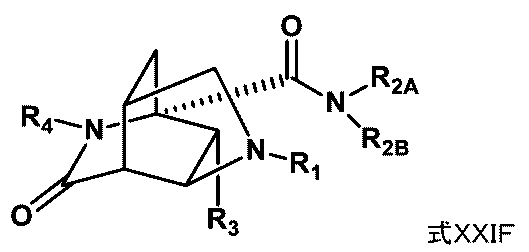
により表される化合物もしくはそのエナンチオマーまたはそれらの塩またはそれらの溶媒和物であって、式中、
R1、R3およびR4は各々独立して、
水素、
必要に応じて置換されたアルキル、
必要に応じて置換されたアルケニル、
必要に応じて置換されたアルキニル、
必要に応じて置換されたシクロアルキル、
必要に応じて置換されたヘテロシクロアルキル、
必要に応じて置換されたアリール、
必要に応じて置換されたヘテロアリール、または
必要に応じて置換されたカルボニルであり、
R2AおよびR2Bは各々独立して、
水素、
必要に応じて置換されたアルキル、
必要に応じて置換されたアルケニル、
必要に応じて置換されたアルキニル、
必要に応じて置換されたシクロアルキル、
必要に応じて置換されたヘテロシクロアルキル、
必要に応じて置換されたアリール、
必要に応じて置換されたヘテロアリール、もしくは
必要に応じて置換されたカルボニルであるか、または、
R2AおよびR2Bは、それらが結合する窒素原子と一緒になって、非アリールヘテロ環もしくはヘテロアリール環を形成し、
ここで、前記非アリールヘテロ環および前記ヘテロアリール環は各々独立して、必要に応じて置換されている、
項1に記載の化合物もしくはそのエナンチオマーまたはそれらの塩またはそれらの溶媒和物。
[項2A]式XXIB:

により表される化合物もしくはそのエナンチオマーまたはそれらの塩またはそれらの溶媒和物であって、式中、
R1、R3およびR4は各々独立して、
水素、
必要に応じて置換された炭化水素基、
必要に応じて置換された複素環、
必要に応じて置換されたカルボニル、または
必要に応じて置換された官能基であり、
R2AおよびR2Bは各々独立して、
水素、
必要に応じて置換された炭化水素基、
必要に応じて置換された複素環、
必要に応じて置換されたカルボニル、もしくは
必要に応じて置換された官能基であるか、または、
R2AおよびR2Bは、それらが結合する窒素原子と一緒になって、複素環を形成し、ここで、前記複素環は各々独立して、必要に応じて置換されている、
化合物もしくはそのエナンチオマーまたはそれらの塩またはそれらの溶媒和物。
[項2B]式XXIB:

により表される化合物もしくはそのエナンチオマーまたはそれらの塩またはそれらの溶媒和物であって、式中、
R1、R3およびR4は各々独立して、
水素、
必要に応じて置換されたアルキル、
必要に応じて置換されたアルケニル、
必要に応じて置換されたアルキニル、
必要に応じて置換されたシクロアルキル、
必要に応じて置換されたヘテロシクロアルキル、
必要に応じて置換されたアリール、
必要に応じて置換されたヘテロアリール、または
必要に応じて置換されたカルボニルであり、
R2AおよびR2Bは各々独立して、
水素、
必要に応じて置換されたアルキル、
必要に応じて置換されたアルケニル、
必要に応じて置換されたアルキニル、
必要に応じて置換されたシクロアルキル、
必要に応じて置換されたヘテロシクロアルキル、
必要に応じて置換されたアリール、
必要に応じて置換されたヘテロアリール、もしくは
必要に応じて置換されたカルボニルであるか、または、
R2AおよびR2Bは、それらが結合する窒素原子と一緒になって、非アリールヘテロ環もしくはヘテロアリール環を形成し、
ここで、前記非アリールヘテロ環および前記ヘテロアリール環は各々独立して、必要に応じて置換されている、
項2に記載の化合物もしくはそのエナンチオマーまたはそれらの塩またはそれらの溶媒和物。
[項3A]R1、R3およびR4の前記アルキル、アルケニル、アルキニル、シクロアルキル、ヘテロシクロアルキル、アリール、ヘテロアリール、およびカルボニルは各々独立して、置換基群Iから選択される1個から最大置換可能数までの同一または異なる置換基で必要に応じて置換されており、
R2AおよびR2Bの前記アルキル、アルケニル、アルキニル、シクロアルキル、ヘテロシクロアルキル、アリール、ヘテロアリール、カルボニル、ならびに前記非アリールヘテロ環および前記ヘテロアリール環は各々独立して、置換基群Iから選択される1個から最大置換可能数までの同一または異なる置換基で必要に応じて置換されている、
上記項のいずれか一項に記載の化合物もしくはそのエナンチオマーまたはそれらの塩またはそれらの溶媒和物。
[項4A]R1、R3およびR4は各々独立して、
水素、
必要に応じて置換されたアルキル、
必要に応じて置換されたシクロアルキル、
必要に応じて置換されたヘテロシクロアルキル、
必要に応じて置換されたアリール、
必要に応じて置換されたヘテロアリール、または
必要に応じて置換されたカルボニルであり、
R2AおよびR2Bは各々独立して、
水素、
必要に応じて置換されたアルキル、
必要に応じて置換されたシクロアルキル、
必要に応じて置換されたヘテロシクロアルキル、
必要に応じて置換されたアリール、
必要に応じて置換されたヘテロアリール、もしくは
必要に応じて置換されたカルボニルであるか、または、
R2AおよびR2Bは、それらが結合する窒素原子と一緒になって、非アリールヘテロ環もしくはヘテロアリール環を形成し、
ここで、前記非アリールヘテロ環および前記ヘテロアリール環は各々独立して、必要に応じて置換されている、
上記項のいずれか一項に記載の化合物もしくはそのエナンチオマーまたはそれらの塩またはそれらの溶媒和物。
[項4B]R1、R3およびR4は各々独立して、
水素、
必要に応じて置換されたC1-12アルキル、
必要に応じて置換されたC3-10シクロアルキル、
必要に応じて置換された5~10員ヘテロシクロアルキル、
必要に応じて置換されたC6-10アリール、
必要に応じて置換された5~10員ヘテロアリール、または
必要に応じて置換されたカルボニルであり、
R2AおよびR2Bは各々独立して、
水素、
必要に応じて置換されたC1-12アルキル、
必要に応じて置換されたC3-10シクロアルキル、
必要に応じて置換された5~10員ヘテロシクロアルキル、
必要に応じて置換されたC6-10アリール、
必要に応じて置換された5~10員ヘテロアリール、もしくは
必要に応じて置換されたカルボニルであるか、または、
R2AおよびR2Bは、それらが結合する窒素原子と一緒になって、5~10員非アリールヘテロ環もしくは5~10員ヘテロアリール環を形成し、
ここで、前記非アリールヘテロ環および前記ヘテロアリール環は各々独立して、必要に応じて置換されている、
上記項のいずれか一項に記載の化合物もしくはそのエナンチオマーまたはそれらの塩またはそれらの溶媒和物。
[項5A]R1、R3およびR4は各々独立して、
水素、
必要に応じて置換されたアルキル、
必要に応じて置換されたアリールアルキル、
必要に応じて置換されたヘテロアリールアルキル、
必要に応じて置換されたシクロアルキル、
必要に応じて置換されたヘテロシクロアルキル、
必要に応じて置換されたアリール、
ホルミル、
必要に応じて置換されたアルキルカルボニル、
必要に応じて置換されたアルコキシカルボニル、
必要に応じて置換されたアリールカルボニル、
必要に応じて置換されたアリールオキシカルボニル、
必要に応じて置換されたヘテロアリールカルボニル、
必要に応じて置換されたヘテロアリールオキシカルボニル、
必要に応じて置換されたシクロアルキルカルボニル、
必要に応じて置換されたシクロアルキルオキシカルボニル、
必要に応じて置換されたヘテロシクロアルキルカルボニル、
必要に応じて置換されたヘテロシクロアルキルオキシカルボニル、
カルバモイル、
必要に応じて置換されたアルキルカルバモイル、
必要に応じて置換されたアルコキシカルバモイル、
必要に応じて置換されたアリールカルバモイル、
必要に応じて置換されたヘテロアリールカルバモイル、
必要に応じて置換されたシクロアルキルカルバモイル、または
必要に応じて置換されたヘテロシクロアルキルカルバモイルであり、
ここで、R1、R3およびR4の上記基は、
置換基群IIから選択される1個から最大置換可能数までの同一または異なる置換基で必要に応じて置換され、
R2AおよびR2Bは各々独立して、
水素、
必要に応じて置換されたアルキル、
必要に応じて置換されたアリールアルキル、
必要に応じて置換されたシクロアルキル、
必要に応じて置換されたヘテロシクロアルキル、
ホルミル、
必要に応じて置換されたアルキルカルボニル、
必要に応じて置換されたアルコキシカルボニル、
必要に応じて置換されたアリールカルボニル、
必要に応じて置換されたアリールオキシカルボニル、
必要に応じて置換されたヘテロアリールカルボニル、
必要に応じて置換されたヘテロアリールオキシカルボニル、
必要に応じて置換されたシクロアルキルカルボニル、
必要に応じて置換されたシクロアルキルオキシカルボニル、
必要に応じて置換されたヘテロシクロアルキルカルボニル、
必要に応じて置換されたヘテロシクロアルキルオキシカルボニル、
カルバモイル、
必要に応じて置換されたアルキルカルバモイル、
必要に応じて置換されたアルコキシカルバモイル、
必要に応じて置換されたアリールカルバモイル、
必要に応じて置換されたヘテロアリールカルバモイル、
必要に応じて置換されたシクロアルキルカルバモイル、または
必要に応じて置換されたヘテロシクロアルキルカルバモイルであり、
ここで、R2AおよびR2Bの上記基は、置換基群IIから選択される1個から最大置換可能数までの同一または異なる置換基で必要に応じて置換されるか、または、
R2AおよびR2Bは、それらが結合する窒素原子と一緒になって、非アリールヘテロ環もしくはヘテロアリール環を形成し、
ここで、前記非アリールヘテロ環および前記ヘテロアリール環は各々独立して、置換基群IIから選択される1個から最大置換可能数までの同一または異なる置換基で置換されていてもよい、
上記項のいずれか一項に記載の化合物もしくはそのエナンチオマーまたはそれらの塩またはそれらの溶媒和物。
[項5B]R1、R3およびR4は各々独立して、
水素、
必要に応じて置換されたC1-12アルキル、
必要に応じて置換されたC6-10アリールC1-12アルキル、
必要に応じて置換された5~10員ヘテロアリールC1-12アルキル、
必要に応じて置換されたC3-10シクロアルキル、
必要に応じて置換された5~10員ヘテロシクロアルキル、
必要に応じて置換されたC6-10アリール、
ホルミル、
必要に応じて置換されたC1-12アルキルカルボニル、
必要に応じて置換されたC1-12アルコキシカルボニル、
必要に応じて置換されたC6-10アリールカルボニル、
必要に応じて置換されたC6-10アリールオキシカルボニル、
必要に応じて置換された5~10員ヘテロアリールカルボニル、
必要に応じて置換された5~10員ヘテロアリールオキシカルボニル、
必要に応じて置換されたC3-10シクロアルキルカルボニル、
必要に応じて置換されたC3-10シクロアルキルオキシカルボニル、
必要に応じて置換された5~10員ヘテロシクロアルキルカルボニル、
必要に応じて置換された5~10員ヘテロシクロアルキルオキシカルボニル、
カルバモイル、
必要に応じて置換されたC1-12アルキルカルバモイル、
必要に応じて置換されたC1-12アルコキシカルバモイル、
必要に応じて置換されたC6-10アリールカルバモイル、
必要に応じて置換された5~10員ヘテロアリールカルバモイル、
必要に応じて置換されたC3-10シクロアルキルカルバモイル、または
必要に応じて置換された5~10員ヘテロシクロアルキルカルバモイルであり、
ここで、R1、R3およびR4の上記基は、置換基群IIIから選択される1個から最大置換可能数までの同一または異なる置換基で必要に応じて置換され、
R2AおよびR2Bは各々独立して、
水素、
必要に応じて置換されたC1-12アルキル、
必要に応じて置換されたC6-10アリールC1-12アルキル、
必要に応じて置換されたC3-10シクロアルキル、
必要に応じて置換された5~10員ヘテロシクロアルキル、
ホルミル、
必要に応じて置換されたC1-12アルキルカルボニル、
必要に応じて置換されたC1-12アルコキシカルボニル、
必要に応じて置換されたC6-10アリールカルボニル、
必要に応じて置換されたC6-10アリールオキシカルボニル、
必要に応じて置換された5~10員ヘテロアリールカルボニル、
必要に応じて置換された5~10員ヘテロアリールオキシカルボニル、
必要に応じて置換されたC3-10シクロアルキルカルボニル、
必要に応じて置換されたC3-10シクロアルキルオキシカルボニル、
必要に応じて置換された5~10員ヘテロシクロアルキルカルボニル、
必要に応じて置換された5~10員ヘテロシクロアルキルオキシカルボニル、
カルバモイル、
必要に応じて置換されたC1-12アルキルカルバモイル、
必要に応じて置換されたC1-12アルコキシカルバモイル、
必要に応じて置換されたC6-10アリールカルバモイル、
必要に応じて置換された5~10員ヘテロアリールカルバモイル、
必要に応じて置換されたC3-10シクロアルキルカルバモイル、もしくは
必要に応じて置換された5~10員ヘテロシクロアルキルカルバモイルであり、
ここで、R2AおよびR2Bの上記基は、置換基群IIIから選択される1個から最大置換可能数までの同一または異なる置換基で必要に応じて置換されるか、または、
R2AおよびR2Bは、それらが結合する窒素原子と一緒になって、5~10員非アリールヘテロ環もしくは5~10員ヘテロアリール環を形成し、
ここで、前記非アリールヘテロ環および前記5~10員ヘテロアリール環は各々独立して、置換基群Vから選択される1個から最大置換可能数までの同一または異なる置換基で置換されていてもよい、
上記項のいずれか一項に記載の化合物もしくはそのエナンチオマーまたはそれらの塩またはそれらの溶媒和物。
[項6A]R1およびR4は各々独立して、
水素、
必要に応じて置換されたアルキル、
必要に応じて置換されたアリールアルキル、
必要に応じて置換されたヘテロアリールアルキル、
必要に応じて置換されたシクロアルキル、
必要に応じて置換されたヘテロシクロアルキル、
ホルミル、
必要に応じて置換されたアルキルカルボニル、
必要に応じて置換されたアルコキシカルボニル、
必要に応じて置換されたアリールカルボニル、
必要に応じて置換されたアリールオキシカルボニル、
必要に応じて置換されたシクロアルキルカルボニル、
必要に応じて置換されたシクロアルキルオキシカルボニル、
必要に応じて置換されたヘテロシクロアルキルカルボニル、
必要に応じて置換されたヘテロシクロアルキルオキシカルボニル、
カルバモイル、
必要に応じて置換されたアルキルカルバモイル、
必要に応じて置換されたアルコキシカルバモイル、
必要に応じて置換されたアリールカルバモイル、
必要に応じて置換されたヘテロアリールカルバモイル、
必要に応じて置換されたシクロアルキルカルバモイル、または
必要に応じて置換されたヘテロシクロアルキルカルバモイルであり、
ここで、R1およびR4の上記基は、置換基群IIIから選択される1個から最大置換可能数までの同一または異なる置換基で必要に応じて置換されている、
上記項のいずれか一項に記載の化合物もしくはそのエナンチオマーまたはそれらの塩またはそれらの溶媒和物。
[項6B]R1およびR4は各々独立して、
水素、
必要に応じて置換されたC1-12アルキル、
必要に応じて置換されたC6-10アリールC1-12アルキル、
必要に応じて置換された5~10員ヘテロアリールC1-12アルキル、
必要に応じて置換されたC3-10シクロアルキル、
必要に応じて置換された5~10員ヘテロシクロアルキル、
ホルミル、
必要に応じて置換されたC1-12アルキルカルボニル、
必要に応じて置換されたC1-12アルコキシカルボニル、
必要に応じて置換されたC6-10アリールカルボニル、
必要に応じて置換されたC6-10アリールオキシカルボニル、
必要に応じて置換されたC3-10シクロアルキルカルボニル、
必要に応じて置換されたC3-10シクロアルキルオキシカルボニル、
必要に応じて置換された5~10員ヘテロシクロアルキルカルボニル、
必要に応じて置換された5~10員ヘテロシクロアルキルオキシカルボニル、
カルバモイル、
必要に応じて置換されたC1-12アルキルカルバモイル、
必要に応じて置換されたC1-12アルコキシカルバモイル、
必要に応じて置換されたC6-10アリールカルバモイル、
必要に応じて置換された5~10員ヘテロアリールカルバモイル、
必要に応じて置換されたC3-10シクロアルキルカルバモイル、または
必要に応じて置換された5~10員ヘテロシクロアルキルカルバモイルであり、
ここで、R1およびR4の上記基は、置換基群IIIから選択される1個から最大置換可能数までの同一または異なる置換基で必要に応じて置換されている、
上記項のいずれか一項に記載の化合物もしくはそのエナンチオマーまたはそれらの塩またはそれらの溶媒和物。
[項7A]R1およびR4は各々独立して、
水素、
必要に応じて置換されたアルキル、
必要に応じて置換されたアリールアルキル、
必要に応じて置換されたヘテロアリールアルキル、
必要に応じて置換されたヘテロシクロアルキル、
ホルミル、
必要に応じて置換されたアルキルカルボニル、
必要に応じて置換されたアルコキシカルボニル、
必要に応じて置換されたアリールカルボニル、または
必要に応じて置換されたアリールオキシカルボニルであり、
ここで、R1およびR4の上記基は、置換基群IIIから選択される1個から最大置換可能数までの同一または異なる置換基で必要に応じて置換されている、
上記項のいずれか一項に記載の化合物もしくはそのエナンチオマーまたはそれらの塩またはそれらの溶媒和物。
[項7B]R1およびR4は各々独立して、
水素、
必要に応じて置換されたC1-12アルキル、
必要に応じて置換されたC6-10アリールC1-12アルキル、
必要に応じて置換された5~10員ヘテロアリールC1-12アルキル、
必要に応じて置換された5~10員ヘテロシクロアルキル、
ホルミル、
必要に応じて置換されたC1-12アルキルカルボニル、
必要に応じて置換されたC1-12アルコキシカルボニル、
必要に応じて置換されたC6-10アリールカルボニル、
必要に応じて置換されたC6-10アリールオキシカルボニルであり、
ここで、R1およびR4の上記基は、置換基群IIIから選択される1個から最大置換可能数までの同一または異なる置換基で必要に応じて置換されている、
上記項のいずれか一項に記載の化合物もしくはそのエナンチオマーまたはそれらの塩またはそれらの溶媒和物。
[項7C]R1およびR4は各々独立して、
水素、
必要に応じて置換されたC1-12アルキル、
必要に応じて置換されたC6-10アリールC1-6アルキル、
必要に応じて置換された5~10員ヘテロアリールC1-6アルキル、
必要に応じて置換された5~10員ヘテロシクロアルキル、
ホルミル、
必要に応じて置換されたC1-12アルキルカルボニル、
必要に応じて置換されたC1-12アルコキシカルボニル、
必要に応じて置換されたC6-10アリールカルボニル、
必要に応じて置換されたC6-10アリールオキシカルボニルであり、
ここで、R1およびR4の上記基は、置換基群IIIから選択される1個から最大置換可能数までの同一または異なる置換基で必要に応じて置換されている、
上記項のいずれか一項に記載の化合物もしくはそのエナンチオマーまたはそれらの塩またはそれらの溶媒和物。
[項8A]R1は、
水素;
アルキル;
ヒドロキシ、置換オキシ、ホルミル、置換カルボニル、アミノ、置換アミノ、およびシクロアルキル、および置換シクロアルキルからなる群より選択される1個から最大置換可能数までの同一または異なる置換基で置換されているアルキル;
アリールアルキル;
ハロゲン、アルキル、置換アルキル、ヒドロキシ、置換オキシ、アミノ、置換アミノ、およびニトロからなる群より選択される1個から最大置換可能数までの同一または異なる置換基で置換されているアリールアルキル;
ヘテロアリールアルキル;
ハロゲン、アルキル、置換アルキル、ヒドロキシ、置換オキシ、アミノ、置換アミノ、およびニトロからなる群より選択される1個から最大置換可能数までの同一または異なる置換基で置換されているヘテロアリールアルキル;
シクロアルキル;
置換シクロアルキル;
ヘテロシクロアルキル;
置換ヘテロシクロアルキル;または
置換カルボニルであり、ここで、前記置換オキシ、置換カルボニル、置換アミノ、置換シクロアルキル、置換ヘテロシクロアルキル、および置換アルキルは各々独立して、置換基群IVから選択される1個から最大置換可能数までの同一または異なる置換基を有する、
上記項のいずれか一項に記載の化合物もしくはそのエナンチオマーまたはそれらの塩またはそれらの溶媒和物。
[項8B]R1は、
水素;
アルキル;
ヒドロキシ、アルコキシ、ハロアルコキシ、ホルミル、カルボキシ、カルバモイル、アルキルカルボニル、アルコキシカルボニル、アミノ、アミジノアミノ、アルコキシカルボニル置換されたアミジノアミノ、アルコキシカルボニルアミノ、シクロアルキル、およびハロシクロアルキルからなる群より選択される1個から最大置換可能数までの同一または異なる置換基で置換されているアルキル;
アリールアルキル;
ハロゲン、アルキル、ハロアルキル、ヒドロキシ、アルコキシ、ハロアルコキシ、アリールアルコキシ、アミノ、アルキルアミノ、(アルキル)2アミノ、シクロアルキルカルボニルアミノ、およびニトロからなる群より選択される1個から最大置換可能数までの同一または異なる置換基で置換されているアリールアルキル;
ヘテロアリールアルキル;
ハロゲン、アルキル、ハロアルキル、ヒドロキシ、アルコキシ、ハロアルコキシ、アリールアルコキシ、アミノ、アルキルアミノ、(アルキル)2アミノ、シクロアルキルカルボニルアミノ、およびニトロからなる群より選択される1個から最大置換可能数までの同一または異なる置換基で置換されているヘテロアリールアルキル;
シクロアルキル;
ハロシクロアルキル;
ヘテロシクロアルキル;
アルキルカルボニル;
アリールアルキルカルボニル;
アルコキシカルボニル;
アリールカルボニル;または
アリールオキシカルボニルである、
上記項のいずれか一項に記載の化合物もしくはそのエナンチオマーまたはそれらの塩またはそれらの溶媒和物。
[項8C]R1は、
水素;
C1-12アルキル;
C1-12アルコキシ、C1-12ハロアルコキシ、ホルミル、カルボキシ、カルバモイル、C1-12アルキルカルボニル、C1-12アルコキシカルボニル、C1-12ハロアルコキシカルボニル、アミジノアミノ、C1-12アルコキシカルボニル置換されたアミジノアミノ、C1-12アルコキシカルボニルアミノ、ヒドロキシ、C3-10シクロアルキル、およびC3-10ハロシクロアルキルからなる群より選択される1個から最大置換可能数までの同一または異なる置換基で置換されているC1-12アルキル;
C6-10アリールC1-12アルキル;
ハロゲン、C1-12アルキル、C1-12ハロアルキル、ヒドロキシ、C1-12アルコキシ、C1-12ハロアルコキシ、C6-10アリールC1-12アルコキシ、アミノ、C1-12アルキルアミノ、(C1-12アルキル)2アミノ、C3-10シクロアルキルカルボニルアミノ、ニトロ、およびヒドロキシからなる群より選択される1個から最大置換可能数までの同一または異なる置換基で置換されているC6-10アリールC1-12アルキル;
5~10員ヘテロアリールC1-12アルキル;
ハロゲン、C1-12アルキル、C1-12ハロアルキル、ヒドロキシ、C1-12アルコキシ、C1-12ハロアルコキシ、C6-10アリールC1-12アルコキシ、アミノ、C1-12アルキルアミノ、(C1-12アルキル)2アミノ、C3-10シクロアルキルカルボニルアミノ、ニトロ、およびヒドロキシからなる群より選択される1個から最大置換可能数までの同一または異なる置換基で置換されている5~10員ヘテロアリールC1-12アルキル;
C3-10シクロアルキル;
5~10員ヘテロシクロアルキル;
C1-12アルキルカルボニル;
C6-10アリールC1-12アルキルカルボニル;
C1-12アルコキシカルボニル;
C6-10アリールカルボニル;または
C6-10アリールオキシカルボニルである、
上記項のいずれか一項に記載の化合物もしくはそのエナンチオマーまたはそれらの塩またはそれらの溶媒和物。
[項8D]R1は、
水素;
C1-12アルキル;
C1-6アルコキシ、C1-6ハロアルコキシ、ホルミル、カルボキシ、カルバモイル、C1-6アルキルカルボニル、C1-6アルコキシカルボニル、C1-6ハロアルコキシカルボニル、アミジノアミノ、C1-6アルコキシカルボニル置換されたアミジノアミノ、C1-6アルコキシカルボニルアミノ、ヒドロキシ、C3-10シクロアルキル、およびC3-10ハロシクロアルキルからなる群より選択される1個から最大置換可能数までの同一または異なる置換基で置換されているC1-12アルキル;
C6-10アリールC1-6アルキル;
ハロゲン、C1-6アルキル、C1-6ハロアルキル、ヒドロキシ、C1-6アルコキシ、C1-6ハロアルコキシ、C6-10アリールC1-6アルコキシ、アミノ、C1-6アルキルアミノ、(C1-6アルキル)2アミノ、C3-10シクロアルキルカルボニルアミノ、ニトロ、およびヒドロキシからなる群より選択される1個から最大置換可能数までの同一または異なる置換基で置換されているC6-10アリールC1-6アルキル;
ハロゲン、C1-6アルキル、C1-6ハロアルキル、ヒドロキシ、C1-6アルコキシ、C1-6ハロアルコキシ、C6-10アリールC1-6アルコキシ、アミノ、C1-6アルキルアミノ、(C1-6アルキル)2アミノ、C3-10シクロアルキルカルボニルアミノ、ニトロ、およびヒドロキシからなる群より選択される1個から最大置換可能数までの同一または異なる置換基で置換されている5~10員ヘテロアリールC1-6アルキル;
C3-10シクロアルキル;
5~10員ヘテロシクロアルキル;
C1-6アルキルカルボニル;
C6-10アリールC1-6アルキルカルボニル;
C1-6アルコキシカルボニル;
C6-10アリールカルボニル;または
C6-10アリールオキシカルボニルである、
上記項のいずれか一項に記載の化合物もしくはそのエナンチオマーまたはそれらの塩またはそれらの溶媒和物。
[項9A]R3は、
アルキル;
ヒドロキシ、置換オキシ、置換カルボニル、アミノ、置換アミノ、シクロアルキル、および置換シクロアルキルからなる群より選択される1個から最大置換可能数までの同一または異なる置換基で置換されているアルキル;
アリールアルキル;
ハロゲン、アルキル、置換アルキル、ヒドロキシ、および置換オキシからなる群より選択される1個から最大置換可能数までの同一または異なる置換基で置換されているアリールアルキル;
アリール;または
置換アリールであり、ここで、前記置換オキシ、置換カルボニル、置換アミノ、置換シクロアルキル、置換アルキル、および置換アリールは各々独立して、置換基群IVから選択される1個から最大置換可能数までの同一または異なる置換基を有する、
上記項のいずれか一項に記載の化合物もしくはそのエナンチオマーまたはそれらの塩またはそれらの溶媒和物。
[項9B]R3は、
アルキル;
ヒドロキシ、アルコキシ、ハロアルコキシ、トリアルキルシリルオキシ、カルボキシ、カルバモイル、アルコキシカルボニル、ハロアルコキシカルボニル、アミノ、アミジノアミノ、アルコキシカルボニル置換されたアミジノアミノ、アルコキシカルボニルアミノ、ハロアルコキシカルボニルアミノ、シクロアルキル、およびハロシクロアルキルからなる群より選択される1個から最大置換可能数までの同一または異なる置換基で置換されているアルキル;
アリールアルキル;ハロゲン、アルキル、ハロアルキル、ヒドロキシ、アルコキシ、およびハロアルコキシからなる群より選択される1個から最大置換可能数までの同一または異なる置換基で置換されているアリールアルキル;または
アリールである、
上記項のいずれか一項に記載の化合物もしくはそのエナンチオマーまたはそれらの塩またはそれらの溶媒和物。
[項9C]R3は、
C1-12アルキル;
ヒドロキシ、C1-12アルコキシ、C1-12ハロアルコキシ、トリC1-12アルキルシリルオキシ、カルボキシ、カルバモイル、C1-12アルコキシカルボニル、C1-12ハロアルコキシカルボニル、アミノ、アミジノアミノ、C1-12アルコキシカルボニル置換されたアミジノアミノ、C1-12アルコキシカルボニルアミノ、C1-12ハロアルコキシカルボニルアミノ、C3-10シクロアルキル、およびC3-10ハロシクロアルキルからなる群より選択される1個から最大置換可能数までの同一または異なる置換基で置換されているC1-12アルキル;
C6-10アリールC1-12アルキル;
ハロゲン、C1-12アルキル、C1-12ハロアルキル、ヒドロキシ、C1-12アルコキシ、およびC1-12ハロアルコキシからなる群より選択される1個から最大置換可能数までの同一または異なる置換基で置換されているC6-10アリールC1-12アルキル;または
C6-10アリールである、
上記項のいずれか一項に記載の化合物もしくはそのエナンチオマーまたはそれらの塩またはそれらの溶媒和物。
[項9D]R3は、
C1-12アルキル;
ヒドロキシ、C1-6アルコキシ、C1-6ハロアルコキシ、トリC1-6アルキルシリルオキシ、カルボキシ、カルバモイル、C1-6アルコキシカルボニル、C1-6ハロアルコキシカルボニル、アミノ、アミジノアミノ、C1-6アルコキシカルボニル置換されたアミジノアミノ、C1-6アルコキシカルボニルアミノ、C1-6ハロアルコキシカルボニルアミノ、C3-10シクロアルキル、およびC3-10ハロシクロアルキルからなる群より選択される1個から最大置換可能数までの同一または異なる置換基で置換されているC1-12アルキル;
C6-10アリールC1-6アルキル;
ハロゲン、C1-6アルキル、C1-6ハロアルキル、ヒドロキシ、C1-6アルコキシ、およびC1-6ハロアルコキシからなる群より選択される1個から最大置換可能数までの同一または異なる置換基で置換されているC6-10アリールC1-6アルキル;または
C6-10アリールである、
上記項のいずれか一項に記載の化合物もしくはそのエナンチオマーまたはそれらの塩またはそれらの溶媒和物。
[項10A]R2AおよびR2Bは各々独立して、
水素;
アルキル;
ヒドロキシ、置換オキシ、アミノ、置換アミノ、シクロアルキル、および置換シクロアルキルからなる群より選択される1個から最大置換可能数までの同一または異なる置換基で置換されているアルキル;
アリールアルキル;
ハロゲン、アルキル、置換アルキル、ヒドロキシ、および置換オキシからなる群より選択される1個から最大置換可能数までの同一または異なる置換基で置換されているアリールアルキル;
シクロアルキル;
置換シクロアルキル;
ヘテロシクロアルキル;もしくは
置換ヘテロシクロアルキルであり、ここで、前記置換オキシ、置換アミノ、置換アルキル、置換シクロアルキル、および置換ヘテロシクロアルキルは各々独立して、置換基群IVから選択される1個から最大置換可能数までの同一または異なる置換基を有するか、または、
R2AおよびR2Bは、それらが結合する窒素原子と一緒になって、非アリールヘテロ環を形成し、ここで、前記非アリールヘテロ環は、置換基群VIから選択される1個または最大置換可能数までの同一または異なる置換基で置換されていてもよい、
上記項のいずれか一項に記載の化合物もしくはそのエナンチオマーまたはそれらの塩またはそれらの溶媒和物。
[項10B]R2AおよびR2Bは各々独立して、
水素;
アルキル;
ヒドロキシ、アルコキシ、カルボキシ、アルコキシカルボニル、アミノ、アミジノアミノ、アルコキシカルボニル置換されたアミジノアミノ、アルコキシカルボニルアミノ、シクロアルキル、およびハロシクロアルキルからなる群より選択される1個から最大置換可能数までの同一または異なる置換基で置換されているアルキル;
アリールアルキル;
ハロゲン、アルキル、ハロアルキル、ヒドロキシ、アルコキシ、およびハロアルコキシからなる群より選択される1個から最大置換可能数までの同一または異なる置換基で置換されているアリールアルキル;
シクロアルキル;
アルキル置換されたシクロアルキル;もしくは
ヘテロシクロアルキルであるか、または、
R2AおよびR2Bは、それらが結合する窒素原子と一緒になって、非アリールヘテロ環を形成し、ここで、前記非アリールヘテロ環は、置換基群VIから選択される1個または最大置換可能数までの同一または異なる置換基で置換されていてもよい、
上記項のいずれか一項に記載の化合物もしくはそのエナンチオマーまたはそれらの塩またはそれらの溶媒和物。
[項10C]R2AおよびR2Bは各々独立して、
水素;
C1-12アルキル;
ヒドロキシ、C1-12アルコキシ、カルボキシ、C1-12アルコキシカルボニル、アミノ、アミジノアミノ、C1-12アルコキシカルボニル置換されたアミジノアミノ、およびC1-12アルコキシカルボニルアミノ、C3-10シクロアルキル、およびC3-10ハロシクロアルキルからなる群より選択される1個から最大置換可能数までの同一または異なる置換基で置換されているC1-12アルキル;
C6-10アリールC1-12アルキル;ハロゲン、C1-12アルキル、C1-12ハロアルキル、ヒドロキシ、C1-12アルコキシ、およびC1-12ハロアルコキシからなる群より選択される1個から最大置換可能数までの同一または異なる置換基で置換されているC6-10アリールC1-12アルキル;
C3-10シクロアルキル;
C1-12アルキル置換されたC3-10シクロアルキル;もしくは
5~10員ヘテロシクロアルキルであるか、または、
R2AおよびR2Bは、それらが結合する窒素原子と一緒になって、5~6員非アリールヘテロ環を形成し、ここで、前記非アリールヘテロ環は、置換基群VIから選択される1個または最大置換可能数までの同一または異なる置換基で置換されていてもよい、
上記項のいずれか一項に記載の化合物もしくはそのエナンチオマーまたはそれらの塩またはそれらの溶媒和物。
[項10D]R2AおよびR2Bは各々独立して、
水素;
C1-12アルキル;
ヒドロキシ、C1-6アルコキシ、カルボキシ、C1-6アルコキシカルボニル、アミノ、アミジノアミノ、C1-6アルコキシカルボニル置換されたアミジノアミノ、およびC1-6アルコキシカルボニルアミノ、C3-10シクロアルキル、およびC3-10ハロシクロアルキルからなる群より選択される1個から最大置換可能数までの同一または異なる置換基で置換されているC1-12アルキル;
C6-10アリールC1-6アルキル;
ハロゲン、C1-6アルキル、C1-6ハロアルキル、ヒドロキシ、C1-6アルコキシ、およびC1-6ハロアルコキシからなる群より選択される1個から最大置換可能数までの同一または異なる置換基で置換されているC6-10アリールC1-6アルキル;
C3-10シクロアルキル;
C1-6アルキル置換されたC3-10シクロアルキル;もしくは
5~10員ヘテロシクロアルキルであるか、または、
R2AおよびR2Bは、それらが結合する窒素原子と一緒になって、5~6員非アリールヘテロ環を形成し、ここで、前記非アリールヘテロ環は、置換基群VIから選択される1個または最大置換可能数までの同一または異なる置換基で置換されていてもよい、
上記項のいずれか一項に記載の化合物もしくはそのエナンチオマーまたはそれらの塩またはそれらの溶媒和物。
[項11A]R4は、水素、アルキル、または置換アルキルであり、ここで、前記置換アルキルは、ハロゲン、カルボキシ、カルバモイル、アミノ、アルキルアミノ、アリール、ニトロアリール、およびアルコキシカルボニルアミノからなる群より選択される1個または最大置換可能数までの同一または異なる置換基を有する、
上記項のいずれか一項に記載の化合物もしくはそのエナンチオマーまたはそれらの塩またはそれらの溶媒和物。
[項11B]R4は、水素、C1-12アルキル、または置換C1-12アルキルであり、ここで、前記置換C1-12アルキルは、ハロゲン、カルボキシ、カルバモイル、アミノ、C1-12アルキルアミノ、C6-10アリール、ニトロC6-10アリール、およびC1-12アルコキシカルボニルアミノからなる群より選択される1個または最大置換可能数までの同一または異なる置換基を有する、
上記項のいずれか一項に記載の化合物もしくはそのエナンチオマーまたはそれらの塩またはそれらの溶媒和物。
[項11C]R4は、水素、またはアルキルである、
上記項のいずれか一項に記載の化合物もしくはそのエナンチオマーまたはそれらの塩またはそれらの溶媒和物。
[項11D]R4は、水素、またはC1-12アルキルである、
上記項のいずれか一項に記載の化合物もしくはそのエナンチオマーまたはそれらの塩またはそれらの溶媒和物。
[項12A]R1は、水素、メチル、プロピル、イソプロピル、イソブチル、sec-ブチル、イソペンチル、ヘキシル、アミジノアミノプロピル、(tert-ブトキシカルボニル置換されたアミジノアミノ)プロピル、tert-ブトキシエチル、tert-ブトキシプロピル、tert-ブトキシカルボニルエチル、カルボキシエチル、ヒドロキシエチル、ヒドロキシプロピル、tert-ブトキシカルボニルアミノプロピル、シクロペンチルメチル、シクロヘキシルメチル、シクロヘプチルメチル、5,6,7,8-テトラヒドロナフタレニルメチル、ベンジル、フェニルエチル、ナフタレニルメチル、フルオロベンジル、クロロベンジル、メチルベンジル、ジメチルベンジル、tert-ブチルベンジル、メトキシベンジル、エトキシベンジル、tert-ブトキシベンジル、トリフルオロメチルベンジル、(トリフルオロメトキシ)ベンジル、ベンジルオキシベンジル、アミノベンジル、(ジメチルアミノ)ベンジル、(シクロペンチルカルボニルアミノ)ベンジル、6-メチル-1H-インドール-3-イルメチル、6-フルオロ-1H-インドール-3-イルメチル、1-tert-ブトキシカルボニル-6-メチル-1H-インドール-3-イルメチル、1-tert-ブトキシカルボニル-6-フルオロ-1H-インドール-3-イルメチル、ニトロベンジル、ヒドロキシベンジル、シクロヘキシル、イソバレリル、フェニルアセチル、ベンゾイル、イソプロピルオキシカルボニル、フェノキシカルボニル、またはテトラヒドロ-2H-ピラニルである、
上記項のいずれか一項に記載の化合物もしくはそのエナンチオマーまたはそれらの塩またはそれらの溶媒和物。
[項12B]R2Aは水素であり、
R2Bは、イソプロピル、イソブチル、sec-ブチル、ペンチル、イソペンチル、ヘキシル、ヘプチル、アミジノアミノプロピル、(tert-ブトキシカルボニル置換されたアミジノアミノ)プロピル、(tert-ブトキシカルボニル)エチル、tert-ブトキシエチル、メトキシブチル、カルボキシエチル、ヒドロキシエチル、(tert-ブトキシカルボニルアミノ)プロピル、シクロペンチルメチル、シクロヘキシルメチル、シクロへプチルメチル、(1,2,3,4-テトラヒドロナフタレニル)メチル、2,2,6,6-テトラメチルピペリジニル、ベンジル、フェニルエチル、ナフタレニルメチル、フルオロベンジル、クロロベンジル、(フルオロフェニル)エチル、メチルベンジル、tert-ブトキシベンジル、ヒドロキシベンジル、β-ヒドロキシフェネチル、α-ヒドロキシメチルフェネチル、シクロペンチル、シクロヘキシル、もしくはメチルシクロヘキシルであるか、または、R2AおよびR2Bは、それらが結合する窒素原子と一緒になって、ピロリジン環を形成する、
上記項のいずれか一項に記載の化合物もしくはそのエナンチオマーまたはそれらの塩またはそれらの溶媒和物。
[項12C]R3は、プロピル、イソブチル、イソペンチル、ヘキシル、アミジノアミノプロピル、(tert-ブトキシカルボニル置換されたアミジノアミノ)プロピル、(tert-ブトキシカルボニル)エチル、カルボキシエチル、ヒドロキシエチル、(tert-ブチルジメチルシリルオキシ)エチル、(tert-ブトキシカルボニルアミノ)プロピル、シクロペンチルメチル、シクロヘキシルメチル、シクロヘキシルエチル、ベンジル、ナフタレニルメチル、フェニルエチル、ナフタレニルエチル、クロロベンジル、メチルベンジル、(メチルフェニル)エチル、(イソプロピルフェニル)エチル、tert-ブトキシベンジル、ヒドロキシベンジル、またはフェニルである、
上記項のいずれか一項に記載の化合物もしくはそのエナンチオマーまたはそれらの塩またはそれらの溶媒和物。
[項12D]R4は、水素またはメチルである、
上記項のいずれか一項に記載の化合物もしくはそのエナンチオマーまたはそれらの塩またはそれらの溶媒和物。
[項13A]R1は、アルキル、置換アリールアルキル、または置換ヘテロアリールアルキルであり、R2Aは、水素であり、R2Bは、アルキル、アリールアルキル、置換アリールアルキル、または置換されていてもよいシクロアルキルアルキルであり、R3は、アルキルであり、R4は、水素である、上記項のいずれか一項に記載の化合物もしくはそのエナンチオマーまたはそれらの塩またはそれらの溶媒和物。
[項13B]R1は、アルキル、アルキル置換アリールアルキル、クロロ置換アリールアルキル、アルコキシ置換アリールアルキル、またはBocとアルキルとで置換されているヘテロアリールアルキル、もしくはBocとハロゲンとで置換されているヘテロアリールアルキルであり、R2Aは、水素であり、R2Bは、アルキル、アリールアルキル、フルオロ置換アリールアルキル、クロロ置換アリールアルキル、またはシクロアルキルアルキルであり、R3は、アルキルである、上記項のいずれか一項に記載の化合物もしくはそのエナンチオマーまたはそれらの塩またはそれらの溶媒和物。
[項13C]R1は、C1-12アルキル、C1-12アルキル置換C6-10アリールC1-12アルキル、クロロ置換C6-10アリールC1-12アルキル、C1-12アルコキシ置換C6-10アリールC1-12アルキル、またはBocとC1-12アルキルとで置換されている5~10員ヘテロアリールC1-12アルキル、もしくはBocとハロゲンとで置換されている5~10員ヘテロアリールC1-12アルキルであり、R2Aは、水素であり、R2Bは、C1-12アルキル、C6-10アリールC1-12アルキル、フルオロ置換C6-10アリールC1-12アルキル、クロロ置換C6-10アリールC1-12アルキル、またはC3-10シクロアルキルC1-12アルキルであり、R3は、C1-12アルキルである、上記項のいずれか一項に記載の化合物もしくはそのエナンチオマーまたはそれらの塩またはそれらの溶媒和物。
[項13D]R1は、イソブチル、イソペンチル、メチルベンジル、t-ブチルベンジル、クロロベンジル、メトキシベンジル、1-tert-ブトキシカルボニル-6-メチル-1H-インドール-3-イルメチルまたは6-フルオロ-1H-インドール-3-イルメチルであり、R2Aは、水素であり、R2Bは、イソブチル、ベンジル、フルオロベンジル、クロロベンジル、またはシクロヘプチルメチルであり、R3は、イソブチルまたはイソペンチルである、上記項のいずれか一項に記載の化合物もしくはそのエナンチオマーまたはそれらの塩またはそれらの溶媒和物。
[項14A]前記化合物は、化合物番号I-1~I-50、II-1~II-50、IF-51~IF-800、およびIB-51~IB-832からなる群より選択される化合物である、上記項のいずれか一項に記載の化合物もしくはそのエナンチオマーまたはそれらの塩またはそれらの溶媒和物。
[項14B]前記化合物は、化合物番号I-1~I-50、II-1~II-50、IF-51~IF-411、およびIB-51~IB-425からなる群より選択される化合物である、上記項のいずれか一項に記載の化合物もしくはそのエナンチオマーまたはそれらの塩またはそれらの溶媒和物。
[項15]上記項のいずれか一項に記載の化合物またはその薬学的に許容される塩を含有する、リッサウイルス属ウイルスに対する抗ウイルス剤。
[項16]前記リッサウイルス属ウイルスは狂犬病ウイルスを含む、
上記項のいずれか一項に記載の抗ウイルス剤。
[項17]上記項のいずれか一項に記載の化合物またはその薬学的に許容される塩を含有する医薬。
[項18]狂犬病の予防薬または治療薬である、上記項のいずれか一項に記載の医薬。
[項19]上記項のいずれか一項に記載の化合物またはその薬学的に許容される塩及び薬学的に許容される担体を含有する医薬組成物。
[項20]上記項のいずれか一項に記載の化合物またはその薬学的に許容される塩及び薬学的に許容される担体を含有する、狂犬病を予防または治療するための医薬組成物。
[項21]狂犬病を予防または治療するための方法であって、予防または治療が必要な患者に、治療上の有効量の上記項のいずれか一項に記載の化合物またはその薬学的に許容される塩、上記項のいずれか一項に記載の抗ウイルス剤、上記項のいずれか一項に記載の医薬、あるいは上記項のいずれか一項に記載の医薬組成物を投与することを特徴とする、方法。
[項22]狂犬病を予防または治療するための医薬を製造するための、上記項のいずれか一項に記載の化合物またはその薬学的に許容される塩、あるいは上記項のいずれか一項に記載の抗ウイルス剤の使用。

により表される化合物もしくはそのエナンチオマーまたはそれらの塩またはそれらの溶媒和物であって、式中、
R1およびR2は各々独立して、必要に応じて置換されたアルキル、必要に応じて置換されたシクロアルキル、または必要に応じて置換されたヘテロシクロアルキルであり、R3は、必要に応じて置換されたアルキル、必要に応じて置換されたアルケニル、必要に応じて置換されたアルキニル、必要に応じて置換されたアリール、必要に応じて置換されたヘテロアリール、必要に応じて置換されたシクロアルキル、または必要に応じて置換されたヘテロシクロアルキルであり、Xは-NH-である、
化合物もしくはそのエナンチオマーまたはそれらの塩またはそれらの溶媒和物。
[項A2]式IB:

により表される化合物もしくはそのエナンチオマーまたはそれらの塩またはそれらの溶媒和物であって、式中、
R1およびR2は各々独立して、必要に応じて置換されたアルキル、必要に応じて置換されたシクロアルキル、または必要に応じて置換されたヘテロシクロアルキルであり、R3は、必要に応じて置換されたアルキル、必要に応じて置換されたアルケニル、必要に応じて置換されたアルキニル、必要に応じて置換されたアリール、必要に応じて置換されたヘテロアリール、必要に応じて置換されたシクロアルキル、または必要に応じて置換されたヘテロシクロアルキルであり、Xは-NH-である、
化合物もしくはそのエナンチオマーまたはそれらの塩またはそれらの溶媒和物。
[項A3]R1およびR2は各々独立して、必要に応じて置換されたアルキル、必要に応じて置換されたシクロアルキル、または必要に応じて置換されたヘテロシクロアルキルであり、R3は、必要に応じて置換されたアルキル、必要に応じて置換されたアルケニル、または必要に応じて置換されたアリールである、
上記項のいずれか一項に記載の化合物もしくはそのエナンチオマーまたはそれらの塩またはそれらの溶媒和物。
[項A4]R1およびR2は各々独立して、必要に応じて置換されたアルキル、必要に応じて置換されたシクロアルキル、または必要に応じて置換されたヘテロシクロアルキルであり、R3は、必要に応じて置換されたアルキル、または必要に応じて置換されたアリールである、上記項のいずれか一項に記載の化合物もしくはそのエナンチオマーまたはそれらの塩またはそれらの溶媒和物。
[項A5]R1、R2およびR3は各々独立して、必要に応じて、水酸基、カルボキシル基、カルバモイル基、アミノ基もしくはアミジノアミノ基で置換されたアルキル、必要に応じて置換されたシクロアルキルアルキル、必要に応じて置換されたアリールアルキル、または必要に応じて置換されたヘテロアリールアルキルである、上記項のいずれか一項に記載の化合物もしくはそのエナンチオマーまたはそれらの塩またはそれらの溶媒和物。
[項A6]R1、R2およびR3は各々独立して、必要に応じて、水酸基、カルボキシル基、カルバモイル基、アミノ基もしくはアミジノアミノ基で置換されたアルキル;必要に応じて置換されたシクロアルキルアルキル;必要に応じて置換されたC6-10アリールC1-6アルキル;または必要に応じて置換された5~10員ヘテロアリールC1-6アルキルである、上記項のいずれか一項に記載の化合物もしくはそのエナンチオマーまたはそれらの塩またはそれらの溶媒和物。
[項A7]R1、R2およびR3は各々独立して、必要に応じて、水酸基、カルボキシル基、カルバモイル基、アミノ基もしくはアミジノアミノ基で置換されたアルキル;必要に応じて置換されたシクロアルキルアルキル;必要に応じて置換されたC6アリールC1-6アルキル;または必要に応じて置換された5員または6員ヘテロアリールC1-6アルキルである、上記項のいずれか一項に記載の化合物もしくはそのエナンチオマーまたはそれらの塩またはそれらの溶媒和物。
[項A8]R1、R2およびR3は各々独立して、必要に応じて、水酸基、カルボキシル基、カルバモイル基、アミノ基もしくはアミジノアミノ基で置換されたアルキル;必要に応じて置換されたシクロアルキルアルキル;必要に応じて置換されたベンジル;または必要に応じて置換された5員または6員ヘテロアリールメチルである、上記項のいずれか一項に記載の化合物もしくはそのエナンチオマーまたはそれらの塩またはそれらの溶媒和物。
[項A9]R1、R2およびR3は各々独立して、必要に応じて、水酸基、カルボキシル基、カルバモイル基、アミノ基もしくはアミジノアミノ基で置換されたアルキル;シクロアルキルアルキル;必要に応じて置換されたベンジル;または必要に応じて置換された5員または6員ヘテロアリールメチルである、上記項のいずれか一項に記載の化合物もしくはそのエナンチオマーまたはそれらの塩またはそれらの溶媒和物。
[項A10]R1は、アルキル、または必要に応じて置換されたベンジルである、上記項のいずれか一項に記載の化合物もしくはそのエナンチオマーまたはそれらの塩またはそれらの溶媒和物。
[項A11]R1およびR2は各々独立して、必要に応じて、水酸基、カルボキシル基、カルバモイル基、アミノ基もしくはアミジノアミノ基で置換されたC1-6アルキル;必要に応じて置換されたC3-6シクロアルキルC1-6アルキル;必要に応じて置換されたC6-10アリールC1-6アルキル;必要に応じて置換された5~10員ヘテロアリールC1-6アルキル;または必要に応じて置換された4~6員ヘテロシクロアルキルC1-6アルキルである、上記項のいずれか一項に記載の化合物もしくはそのエナンチオマーまたはそれらの塩またはそれらの溶媒和物。
[項A12]R1およびR2は各々独立して、必要に応じて、水酸基、カルボキシル基、カルバモイル基、アミノ基もしくはアミジノアミノ基で置換されたC1-6アルキル;必要に応じて置換されたC3-6シクロアルキルC1-6アルキル;または必要に応じて置換されたC6-10アリールC1-6アルキルである、上記項のいずれか一項に記載の化合物もしくはそのエナンチオマーまたはそれらの塩またはそれらの溶媒和物。
[項A13]R2は、必要に応じて置換されたC6-10アリールC1-6アルキルである、上記項のいずれか一項に記載の化合物もしくはそのエナンチオマーまたはそれらの塩またはそれらの溶媒和物。
[項A14]R2は、必要に応じて置換されたC6アリールC1-6アルキルである、上記項のいずれか一項に記載の化合物もしくはそのエナンチオマーまたはそれらの塩またはそれらの溶媒和物。
[項A15]R2は、必要に応じて置換されたベンジルである、上記項のいずれか一項に記載の化合物もしくはそのエナンチオマーまたはそれらの塩またはそれらの溶媒和物。
[項A16]R1は、必要に応じて、水酸基、カルボキシル基、カルバモイル基、アミノ基もしくはアミジノアミノ基で置換されたC1-6アルキル;必要に応じて置換されたC3-6シクロアルキルC1-6アルキル;必要に応じて置換されたC6アリールC1-6アルキル;または必要に応じて置換された5員または6員ヘテロアリールC1-6アルキルである、上記項のいずれか一項に記載の化合物もしくはそのエナンチオマーまたはそれらの塩またはそれらの溶媒和物。
[項A17]R1は、必要に応じて、水酸基、カルボキシル基、カルバモイル基、アミノ基もしくはアミジノアミノ基で置換されたC1-6アルキル、または必要に応じて置換されたベンジルである、上記項のいずれか一項に記載の化合物もしくはそのエナンチオマーまたはそれらの塩またはそれらの溶媒和物。
[項A18]R3は、必要に応じて、水酸基、カルボキシル基、カルバモイル基、アミノ基もしくはアミジノアミノ基で置換されたアルキル;必要に応じて置換されたC6-10アリールアルキル;必要に応じて置換されたC2-6アルケニル;または必要に応じて置換されたC6-10アリールである、上記項のいずれか一項に記載の化合物もしくはそのエナンチオマーまたはそれらの塩またはそれらの溶媒和物。
[項A19]R3は、必要に応じて、水酸基、カルボキシル基、カルバモイル基、アミノ基もしくはアミジノアミノ基で置換されたアルキル;または必要に応じて置換されたC6-10アリールアルキルである、上記項のいずれか一項に記載の化合物もしくはそのエナンチオマーまたはそれらの塩またはそれらの溶媒和物。
[項A20]R3は、アルキルである、上記項のいずれか一項に記載の化合物もしくはそのエナンチオマーまたはそれらの塩またはそれらの溶媒和物。
[項A21]R3は、必要に応じて、水酸基、カルボキシル基、カルバモイル基、アミノ基もしくはアミジノアミノ基で置換されたC1-6アルキル;または必要に応じて置換されたC6-10アリールC1-6アルキルである、上記項のいずれか一項に記載の化合物もしくはそのエナンチオマーまたはそれらの塩またはそれらの溶媒和物。
[項A22]R1およびR2は各々独立して、C1-6アルキル;ヒドロキシ置換されたC1-6アルキル;カルバモイル置換されたC1-6アルキル;アミジノアミノ置換されたC1-6アルキル;カルボキシ置換されたC1-6アルキル;C6-10アリールC1-6アルキル;C1-4アルキル置換されたC6-10アリールC1-6アルキル;ヒドロキシ置換されたC6-10アリールC1-6アルキル;ハロゲン置換されたC6-10アリールC1-6アルキル;C1-4アルコキシ置換されたC6-10アリールC1-6アルキル;C1-4アルコキシカルボニル置換されたC1-6アルキル;C1-4アルキル置換アミノで置換されたC6-10アリールC1-6アルキル、またはC3-6シクロアルキルC1-6アルキルである、上記項のいずれか一項に記載の化合物もしくはそのエナンチオマーまたはそれらの塩またはそれらの溶媒和物。
[項A23]R2は、ヒドロキシ置換されたC1-6アルキル;カルバモイル置換されたC1-6アルキル;アミジノアミノ置換されたC1-6アルキル;カルボキシ置換されたC1-6アルキル;C6-10アリールC1-6アルキル;C1-4アルキル置換されたC6-10アリールC1-6アルキル;ヒドロキシ置換されたC6-10アリールC1-6アルキル;ハロゲン置換されたC6-10アリールC1-6アルキル;C1-4アルコキシ置換されたC6-10アリールC1-6アルキル;C1-4アルコキシカルボニル置換されたC1-6アルキル;C1-4アルキル置換アミノで置換されたC6-10アリールC1-6アルキル;またはC3-6シクロアルキルC1-6アルキルである、上記項のいずれか一項に記載の化合物もしくはそのエナンチオマーまたはそれらの塩またはそれらの溶媒和物。
[項A24]R2は、C6-10アリールC1-6アルキル;C1-4アルキル置換されたC6-10アリールC1-6アルキル;ヒドロキシ置換されたC6-10アリールC1-6アルキル;ハロゲン置換されたC6-10アリールC1-6アルキル;C1-4アルコキシ置換されたC6-10アリールC1-6アルキル;またはC1-4アルキル置換アミノで置換されたC6-10アリールC1-6アルキルである、上記項のいずれか一項に記載の化合物もしくはそのエナンチオマーまたはそれらの塩またはそれらの溶媒和物。
[項A25]R3は、C1-6アルキル;ヒドロキシ置換されたC1-6アルキル;カルバモイル置換されたC1-6アルキル;アミジノアミノ置換されたC1-6アルキル;カルボキシ置換されたC1-6アルキル;C6-10アリールC1-6アルキル;C1-4アルキル置換されたC6-10アリールC1-6アルキル;ヒドロキシ置換されたC6-10アリールC1-6アルキル;ハロゲン置換されたC6-10アリールC1-6アルキル;C1-4アルコキシ置換されたC6-10アリールC1-6アルキル;C1-4アルコキシカルボニル置換されたC1-6アルキル;C1-4アルキル置換アミノで置換されたC6-10アリールC1-6アルキル;またはC3-6シクロアルキルC1-6アルキルである、上記項のいずれか一項に記載の化合物もしくはそのエナンチオマーまたはそれらの塩またはそれらの溶媒和物。
[項A26]R3は、C1-6アルキル;ヒドロキシ置換されたC1-6アルキル;カルバモイル置換されたC1-6アルキル;アミジノアミノ置換されたC1-6アルキル;カルボキシ置換されたC1-6アルキル;C1-4アルコキシカルボニル置換されたC1-6アルキル;またはC3-6シクロアルキルC1-6アルキルである、上記項のいずれか一項に記載の化合物もしくはそのエナンチオマーまたはそれらの塩またはそれらの溶媒和物。
[項A27]R1およびR2は各々独立して、C1-6アルキル;C6-10アリールC1-6アルキル;C1-6アルキル置換されたC6-10アリールC1-6アルキル;C1-6アルコキシ置換されたC6-10アリールC1-6アルキル;C1-6ハロアルコキシ置換されたC6-10アリールC1-6アルキル;ヒドロキシ置換されたC6-10アリールC1-6アルキル;ハロゲン置換されたC6-10アリールC1-6アルキル;C1-6アルキル置換アミノで置換されたC6-10アリールC1-6アルキル;C5-6シクロアルキル;C1-6アルキル置換されたC5-6シクロアルキル;または必要に応じて置換された5員または6員ヘテロシクリルであり、R3は、C1-6アルキル;C6-10アリールC1-6アルキル;C1-6アルキル置換されたC6-10アリールC1-6アルキル;ハロゲン置換されたC6-10アリールC1-6アルキル;C1-6ハロアルコキシ置換されたC6-10アリールC1-6アルキル;C1-6アルコキシ置換されたC6-10アリールC1-6アルキル;ヒドロキシ置換されたC6-10アリールC1-6アルキル;C1-6アルキル置換アミノで置換されたC6-10アリールC1-6アルキル;C6-10アリール;C1-4アルキル置換されたC6-10アリール;またはハロゲン置換されたC6-10アリールである、上記項のいずれか一項に記載の化合物もしくはそのエナンチオマーまたはそれらの塩またはそれらの溶媒和物。
[項A28]R1およびR2は各々独立して、メチル;n-プロピル;イソブチル;イソペンチル;ベンジル;メチルもしくはt-ブチル置換されたベンジル;フルオロもしくはクロロ置換されたベンジル;メトキシもしくはエトキシ置換されたベンジル;トリフルオロメトキシ置換されたベンジル;ヒドロキシ置換されたベンジル;ジメチルアミノ置換されたベンジル;シクロヘキシル;メチル置換されたシクロヘキシル;テトラヒドロ-2H-ピラン-4-イル;または2,2,6,6-テトラメチルピペリジン-4-イルであり、R3は、メチル;n-プロピル;イソブチル;イソペンチル;ベンジル;メチルもしくはt-ブチル置換されたベンジル;フルオロもしくはクロロ置換されたベンジル;メトキシもしくはエトキシ置換されたベンジル;トリフルオロメトキシ置換されたベンジル;ヒドロキシ置換されたベンジル;ジメチルアミノ置換されたベンジル;またはフェニルである、上記項のいずれか一項に記載の化合物もしくはそのエナンチオマーまたはそれらの塩またはそれらの溶媒和物。
[項A29]R2は、C6アリールC1-6アルキル;C1-6アルキル置換されたC6アリールC1-6アルキル;C1-6アルコキシ置換されたC6アリールC1-6アルキル;C1-6ハロアルコキシ置換されたC6アリールC1-6アルキル;ヒドロキシ置換されたC6アリールC1-6アルキル;ハロゲン置換されたC6アリールC1-6アルキル;または、C1-6アルキル置換アミノで置換されたC6アリールC1-6アルキルである、上記項のいずれか一項に記載の化合物もしくはそのエナンチオマーまたはそれらの塩またはそれらの溶媒和物。
[項A30]R2は、ベンジル;メチルもしくはt-ブチル置換されたベンジル;メトキシもしくはエトキシ置換されたベンジル;トリフルオロメトキシ置換されたベンジル;ヒドロキシ置換されたベンジル;フルオロもしくはクロロ置換されたベンジル;または、ジメチルアミノ置換された置換されたベンジルである、上記項のいずれか一項に記載の化合物もしくはそのエナンチオマーまたはそれらの塩またはそれらの溶媒和物。
[項A31]R1は、C1-6アルキル;C6アリールC1-6アルキル;C1-6アルキル置換されたC6アリールC1-6アルキル;C1-6アルコキシ置換されたC6アリールC1-6アルキル;C1-6ハロアルコキシ置換されたC6アリールC1-6アルキル;ヒドロキシ置換されたC6アリールC1-6アルキル;ハロゲン置換されたC6アリールC1-6アルキル;またはC1-6アルキル置換アミノで置換されたC6アリールC1-6アルキルである、上記項のいずれか一項に記載の化合物もしくはそのエナンチオマーまたはそれらの塩またはそれらの溶媒和物。
[項A32]R1は、メチル;イソブチル;イソペンチル;ベンジル;メチルもしくはt-ブチル置換されたベンジル;メトキシもしくはエトキシ置換されたベンジル;トリフルオロメトキシ置換されたベンジル;ヒドロキシ置換されたベンジル;フルオロもしくはクロロ置換されたベンジル;またはジメチルアミノ置換されたベンジルである、上記項のいずれか一項に記載の化合物もしくはそのエナンチオマーまたはそれらの塩またはそれらの溶媒和物。
[項A33]R3は、C1-6アルキル;C6アリールC1-6アルキル;C1-6アルキル置換されたC6アリールC1-6アルキル;ハロゲン置換されたC6アリールC1-6アルキル;C1-6ハロアルコキシ置換されたC6アリールC1-6アルキル;C1-6アルコキシ置換されたC6アリールC1-6アルキル;ヒドロキシ置換されたC6アリールC1-6アルキル;またはC1-6アルキル置換アミノで置換されたC6アリールC1-6アルキルである、上記項のいずれか一項に記載の化合物もしくはそのエナンチオマーまたはそれらの塩またはそれらの溶媒和物。
[項A34]R3は、プロピル;イソブチル;イソペンチル;ベンジル;メチルもしくはt-ブチル置換されたベンジル;フルオロもしくはクロロ置換されたベンジル;メトキシもしくはエトキシ置換されたベンジル;トリフルオロメトキシ置換されたベンジル;ヒドロキシ置換されたベンジル;またはジメチルアミノ置換されたベンジルである、上記項のいずれか一項に記載の化合物もしくはそのエナンチオマーまたはそれらの塩またはそれらの溶媒和物。
[項A35]R3は、C1-6アルキル;C6アリールC1-6アルキル;またはハロゲン置換されたC6アリールC1-6アルキルである、上記項のいずれか一項に記載の化合物もしくはそのエナンチオマーまたはそれらの塩またはそれらの溶媒和物。
[項A36]R3は、プロピル;イソブチル;イソペンチル;ベンジル;またはクロロ置換されたベンジルである、上記項のいずれか一項に記載の化合物もしくはそのエナンチオマーまたはそれらの塩またはそれらの溶媒和物。
[項A37]R3は、C1-6アルキルである、上記項のいずれか一項に記載の化合物もしくはそのエナンチオマーまたはそれらの塩またはそれらの溶媒和物。
[項A38]R1およびR2は各々独立して、メチル、エチル、n-プロピル、イソプロピル、イソブチル、イソペンチル、ベンジル、4-メチルベンジル、4-(t-ブチル)ベンジル、4-フルオロベンジル、3-クロロベンジル、4-クロロベンジル、4-メトキシベンジル、4-エトキシベンジル、4-ヒドロキシベンジル、3-ヒドロキシベンジル、4-(ジメチルアミノ)ベンジル、4-(トリフルオロメトキシ)ベンジル、シクロヘキシル、trans-4-メチルシクロヘキシル、テトラヒドロ-2H-ピラン-4-イル、または2,2,6,6-テトラメチルピペリジン-4-イルであり、R3は、メチル、エチル、n-プロピル、イソプロピル、イソブチル、イソペンチル、ベンジル、4-メチルベンジル、4-(t-ブチル)ベンジル、4-フルオロベンジル、3-クロロベンジル、4-クロロベンジル、4-メトキシベンジル、4-エトキシベンジル、4-ヒドロキシベンジル、3-ヒドロキシベンジル、4-(ジメチルアミノ)ベンジル、4-(トリフルオロメトキシ)ベンジル、またはフェニルである、上記項のいずれか一項に記載の化合物もしくはそのエナンチオマーまたはそれらの塩またはそれらの溶媒和物。
[項A39]R2は、イソブチル、イソペンチル、ベンジル、4-フルオロベンジル、4-クロロベンジル、4-ヒドロキシベンジル、3-ヒドロキシベンジル、シクロヘキシル、テトラヒドロ-2H-ピラン-4-イル、または2,2,6,6-テトラメチルピペリジン-4-イルである、上記項のいずれか一項に記載の化合物もしくはそのエナンチオマーまたはそれらの塩またはそれらの溶媒和物。
[項A40]R2は、ベンジル、4-フルオロベンジル、4-クロロベンジル、4-ヒドロキシベンジル、または3-ヒドロキシベンジルである、上記項のいずれか一項に記載の化合物もしくはそのエナンチオマーまたはそれらの塩またはそれらの溶媒和物。
[項A41]R1は、メチル、イソブチル、イソペンチル、ベンジル、4-メチルベンジル、4-(t-ブチル)ベンジル、3-クロロベンジル、4-クロロベンジル、4-メトキシベンジル、4-エトキシベンジル、4-ヒドロキシベンジル、4-(ジメチルアミノ)ベンジル、シクロヘキシル、またはtrans-4-メチルシクロヘキシルである、上記項のいずれか一項に記載の化合物もしくはそのエナンチオマーまたはそれらの塩またはそれらの溶媒和物。
[項A42]R1は、メチル、イソブチル、イソペンチル、ベンジル、4-メチルベンジル、4-(t-ブチル)ベンジル、3-クロロベンジル、4-クロロベンジル、4-メトキシベンジル、4-エトキシベンジル、4-ヒドロキシベンジル、または4-(ジメチルアミノ)ベンジルである、上記項のいずれか一項に記載の化合物もしくはそのエナンチオマーまたはそれらの塩またはそれらの溶媒和物。
[項A43]R3は、n-プロピル、イソブチル、イソペンチル、ベンジル、4-クロロベンジル、またはフェニルである、上記項のいずれか一項に記載の化合物もしくはそのエナンチオマーまたはそれらの塩またはそれらの溶媒和物。
[項A44]R3は、n-プロピル、イソブチル、またはイソペンチルである、上記項のいずれか一項に記載の化合物もしくはそのエナンチオマーまたはそれらの塩またはそれらの溶媒和物。
[項A45]R2がベンジルであり、R1がイソブチル、メトキシ置換されたベンジル、メチル置換されたベンジル、t-ブチル置換されたベンジル、またはクロロ置換されたベンジルであり、R3がイソブチルである、上記項のいずれか一項に記載の化合物もしくはそのエナンチオマーまたはそれらの塩またはそれらの溶媒和物。
[項A46]R2がベンジルであり、R1がメトキシ置換されたベンジルまたはクロロ置換されたベンジルであり、R3がイソブチルである、上記項のいずれか一項に記載の化合物もしくはそのエナンチオマーまたはそれらの塩またはそれらの溶媒和物。
[項A47]R2がベンジルであり、R1が4-メトキシベンジルまたは3-クロロベンジルであり、R3がイソブチルである、上記項のいずれか一項に記載の化合物もしくはそのエナンチオマーまたはそれらの塩またはそれらの溶媒和物。
[項A48]前記化合物が式IFの化合物であり、R2がベンジルであり、R1が4-メトキシベンジルであり、R3がイソブチルである、上記項のいずれか一項に記載の化合物もしくはそのエナンチオマーまたはそれらの塩またはそれらの溶媒和物。
[項A49]前記化合物が式IBの化合物であり、R2がベンジルであり、R1が4-メトキシベンジルであり、R3がイソブチルである、上記項のいずれか一項に記載の化合物もしくはそのエナンチオマーまたはそれらの塩またはそれらの溶媒和物。
[項A50]R2がベンジル、またはクロロ置換されたベンジルであり、R1およびR3がそれぞれ独立してイソブチルまたはイソペンチルである、上記項のいずれか一項に記載の化合物もしくはそのエナンチオマーまたはそれらの塩またはそれらの溶媒和物。
[項A51]R2がベンジルであり、R1がイソペンチルであり、R3がイソブチルである、上記項のいずれか一項に記載の化合物もしくはそのエナンチオマーまたはそれらの塩またはそれらの溶媒和物。
[項A52]前記化合物が式IBの化合物であり、R2がベンジルまたは4-クロロベンジルであり、R1およびR3が共にイソブチルである、上記項のいずれか一項に記載の化合物もしくはそのエナンチオマーまたはそれらの塩またはそれらの溶媒和物。
[項A53]前記化合物が式IBの化合物であり、R2がベンジルであり、R1がイソブチルであり、R3がイソペンチルである、上記項のいずれか一項に記載の化合物もしくはそのエナンチオマーまたはそれらの塩またはそれらの溶媒和物。
[項A54]前記式IFにより表される化合物が、(3S*,3aR*,6S*,7R*,7aR*)-N-ベンジル-1-(4-クロロベンジル)-7-イソブチル-4-オキソオクタヒドロ-6H-3,6-メタノピロロ[3,2-c]ピリジン-6-カルボキサミド、(3S*,3aR*,6S*,7R*,7aR*)-N-ベンジル-1-(3-クロロベンジル)-7-イソブチル-4-オキソオクタヒドロ-6H-3,6-メタノピロロ[3,2-c]ピリジン-6-カルボキサミド、(3S*,3aR*,6S*,7R*,7aR*)-N-ベンジル-7-イソブチル-1-(4-メトキシベンジル)-4-オキソオクタヒドロ-6H-3,6-メタノピロロ[3,2-c]ピリジン-6-カルボキサミド、(3S*,3aR*,6S*,7R*,7aR*)-N-ベンジル-7-イソブチル-1-(4-メチルベンジル)-4-オキソオクタヒドロ-6H-3,6-メタノピロロ[3,2-c]ピリジン-6-カルボキサミド、(3S*,3aR*,6S*,7R*,7aR*)-1-ベンジル-N,7-ジイソブチル-4-オキソオクタヒドロ-6H-3,6-メタノピロロ[3,2-c]ピリジン-6-カルボキサミド、(3S*,3aR*,6S*,7R*,7aR*)-7-ベンジル-N-イソブチル-1-イソペンチル-4-オキソオクタヒドロ-6H-3,6-メタノピロロ[3,2-c]ピリジン-6-カルボキサミド、(3S*,3aR*,6S*,7R*,7aR*)-7-(4-クロロベンジル)-N,1-ジイソブチル-4-オキソオクタヒドロ-6H-3,6-メタノピロロ[3,2-c]ピリジン-6-カルボキサミド、(3S*,3aR*,6S*,7R*,7aR*)-N-ベンジル-1-(4-ヒドロキシベンジル)-7-イソブチル-4-オキソオクタヒドロ-6H-3,6-メタノピロロ[3,2-c]ピリジン-6-カルボキサミド、(3S*,3aR*,6S*,7R*,7aR*)-7-ベンジル-1-イソブチル-N-イソペンチル-4-オキソオクタヒドロ-6H-3,6-メタノピロロ[3,2-c]ピリジン-6-カルボキサミド、(3S*,3aR*,6S*,7R*,7aR*)-7-ベンジル-N,1-ジイソブチル-4-オキソオクタヒドロ-6H-3,6-メタノピロロ[3,2-c]ピリジン-6-カルボキサミド、(3S*,3aR*,6S*,7R*,7aR*)-N-ベンジル-1,7-ジイソブチル-4-オキソオクタヒドロ-6H-3,6-メタノピロロ[3,2-c]ピリジン-6-カルボキサミド、(3S*,3aR*,6S*,7R*,7aR*)-N-(4-クロロベンジル)-1,7-ジイソブチル-4-オキソオクタヒドロ-6H-3,6-メタノピロロ[3,2-c]ピリジン-6-カルボキサミド、(3S*,3aR*,6S*,7R*,7aR*)-N-ベンジル-1-イソブチル-7-イソペンチル-4-オキソオクタヒドロ-6H-3,6-メタノピロロ[3,2-c]ピリジン-6-カルボキサミド、(3S*,3aR*,6S*,7R*,7aR*)-N-ベンジル-7-イソブチル-1-イソペンチル-4-オキソオクタヒドロ-6H-3,6-メタノピロロ[3,2-c]ピリジン-6-カルボキサミド、(3S*,3aR*,6S*,7R*,7aR*)-N-ベンジル-1-(4-(ジメチルアミノ)ベンジル)-7-イソブチル-4-オキソオクタヒドロ-6H-3,6-メタノピロロ[3,2-c]ピリジン-6-カルボキサミド、(3S*,3aR*,6S*,7R*,7aR*)-N-ベンジル-1-(4-ヒドロキシベンジル)-7-イソペンチル-4-オキソオクタヒドロ-6H-3,6-メタノピロロ[3,2-c]ピリジン-6-カルボキサミド、(3S*,3aR*,6S*,7R*,7aR*)-N-(4-フルオロベンジル)-7-イソブチル-1-イソペンチル-4-オキソオクタヒドロ-6H-3,6-メタノピロロ[3,2-c]ピリジン-6-カルボキサミド、(3S*,3aR*,6S*,7R*,7aR*)-N-ベンジル-7-イソブチル-4-オキソ-1-(4-(トリフルオロメトキシ)ベンジル)オクタヒドロ-6H-3,6-メタノピロロ[3,2-c]ピリジン-6-カルボキサミド、(3S*,3aR*,6S*,7R*,7aR*)-N-ベンジル-1-(4-エトキシベンジル)-7-イソブチル-4-オキソオクタヒドロ-6H-3,6-メタノピロロ[3,2-c]ピリジン-6-カルボキサミド、(3S*,3aR*,6S*,7R*,7aR*)-1-ベンジル-N-(4-ヒドロキシベンジル)-7-イソブチル-4-オキソオクタヒドロ-6H-3,6-メタノピロロ[3,2-c]ピリジン-6-カルボキサミド、(3S*,3aR*,6S*,7R*,7aR*)-N-(4-ヒドロキシベンジル)-7-イソブチル-1-(4-メトキシベンジル)-4-オキソオクタヒドロ-6H-3,6-メタノピロロ[3,2-c]ピリジン-6-カルボキサミド、(3S*,3aR*,6S*,7R*,7aR*)-1-(4-(ジメチルアミノ)ベンジル)-N-(3-ヒドロキシベンジル)-7-イソブチル-4-オキソオクタヒドロ-6H-3,6-メタノピロロ[3,2-c]ピリジン-6-カルボキサミド、(3S*,3aR*,6S*,7R*,7aR*)-1-(4-(ジメチルアミノ)ベンジル)-N-(4-ヒドロキシベンジル)-7-イソブチル-4-オキソオクタヒドロ-6H-3,6-メタノピロロ[3,2-c]ピリジン-6-カルボキサミド、(3S*,3aR*,6S*,7R*,7aR*)-1-ベンジル-N-シクロヘキシル-4-オキソ-7-プロピルオクタヒドロ-6H-3,6-メタノピロロ[3,2-c]ピリジン-6-カルボキサミド、(3S*,3aR*,6S*,7R*,7aR*)-1,7-ジベンジル-N-((1R,4S)-4-メチルシクロヘキシル)-4-オキソオクタヒドロ-6H-3,6-メタノピロロ[3,2-c]ピリジン-6-カルボキサミド、(3S*,3aR*,6S*,7R*,7aR*)-1,7-ジベンジル-4-オキソ-N-(2,2,6,6-テトラメチルピペリジン-4-イル)オクタヒドロ-6H-3,6-メタノピロロ[3,2-c]ピリジン-6-カルボキサミド、および(3S*,3aR*,6S*,7R*,7aR*)-N-ベンジル-1-イソブチル-4-オキソ-7-フェニルオクタヒドロ-6H-3,6-メタノピロロ[3,2-c]ピリジン-6-カルボキサミドからなる群より選択される、上記項のいずれか一項に記載の化合物もしくはそのエナンチオマーまたはそれらの塩またはそれらの溶媒和物。
[項A55]前記式IBにより表される化合物が、(3S*,3aS*,6R*,7R*,7aS*)-N,7-ジベンジル-1-メチル-5-オキソオクタヒドロ-3aH-3,6-メタノピロロ[3,2-b]ピリジン-3a-カルボキサミド、(3S*,3aS*,6R*,7R*,7aS*)-N-ベンジル-1-(4-クロロベンジル)-7-イソブチル-5-オキソオクタヒドロ-3aH-3,6-メタノピロロ[3,2-b]ピリジン-3a-カルボキサミド、(3S*,3aS*,6R*,7R*,7aS*)-N-ベンジル-1-(3-クロロベンジル)-7-イソブチル-5-オキソオクタヒドロ-3aH-3,6-メタノピロロ[3,2-b]ピリジン-3a-カルボキサミド、(3S*,3aS*,6R*,7R*,7aS*)-N-ベンジル-7-イソブチル-1-(4-メトキシベンジル)-5-オキソオクタヒドロ-3aH-3,6-メタノピロロ[3,2-b]ピリジン-3a-カルボキサミド、(3S*,3aS*,6R*,7R*,7aS*)-N-ベンジル-7-イソブチル-1-(4-メチルベンジル)-5-オキソオクタヒドロ-3aH-3,6-メタノピロロ[3,2-b]ピリジン-3a-カルボキサミド、(3S*,3aS*,6R*,7R*,7aS*)-1-ベンジル-N,7-ジイソブチル-5-オキソオクタヒドロ-3aH-3,6-メタノピロロ[3,2-b]ピリジン-3a-カルボキサミド、(3S*,3aS*,6R*,7R*,7aS*)-7-ベンジル-N-イソブチル-1-イソペンチル-5-オキソオクタヒドロ-3aH-3,6-メタノピロロ[3,2-b]ピリジン-3a-カルボキサミド、(3S*,3aS*,6R*,7R*,7aS*)-7-(4-クロロベンジル)-N,1-ジイソブチル-5-オキソオクタヒドロ-3aH-3,6-メタノピロロ[3,2-b]ピリジン-3a-カルボキサミド、(3R*,3aS*,6R*,7R*,7aS*)-7-ベンジル-N,1-ジイソブチル-5-オキソオクタヒドロ-3aH-3,6-メタノピロロ[3,2-b]ピリジン-3a-カルボキサミド、(3S*,3aS*,6R*,7R*,7aS*)-N-(4-クロロベンジル)-1,7-ジイソブチル-5-オキソオクタヒドロ-3aH-3,6-メタノピロロ[3,2-b]ピリジン-3a-カルボキサミド、(3S*,3aS*,6R*,7R*,7aS*)-N-ベンジル-1-(4-ヒドロキシベンジル)-7-イソブチル-5-オキソオクタヒドロ-3aH-3,6-メタノピロロ[3,2-b]ピリジン-3a-カルボキサミド、(3S*,3aS*,6R*,7R*,7aS*)-7-ベンジル-1-イソブチル-N-イソペンチル-5-オキソオクタヒドロ-3aH-3,6-メタノピロロ[3,2-b]ピリジン-3a-カルボキサミド、(3S*,3aS*,6R*,7R*,7aS*)-N-ベンジル-1,7-ジイソブチル-5-オキソオクタヒドロ-3aH-3,6-メタノピロロ[3,2-b]ピリジン-3a-カルボキサミド、(3S*,3aS*,6R*,7R*,7aS*)-N-ベンジル-1-イソブチル-7-イソペンチル-5-オキソオクタヒドロ-3aH-3,6-メタノピロロ[3,2-b]ピリジン-3a-カルボキサミド、(3S*,3aS*,6R*,7R*,7aS*)-N-ベンジル-7-イソブチル-1-イソペンチル-5-オキソオクタヒドロ-3aH-3,6-メタノピロロ[3,2-b]ピリジン-3a-カルボキサミド、(3S*,3aS*,6R*,7R*,7aS*)-N-ベンジル-7-イソブチル-1-イソペンチル-5-オキソオクタヒドロ-3aH-3,6-メタノピロロ[3,2-b]ピリジン-3a-カルボキサミド、(3S*,3aS*,6R*,7R*,7aS*)-N-ベンジル-1-(4-(ジメチルアミノ)ベンジル)-7-イソブチル-5-オキソオクタヒドロ-3aH-3,6-メタノピロロ[3,2-b]ピリジン-3a-カルボキサミド、(3S*,3aS*,6R*,7R*,7aS*)-N-ベンジル-1-(4-(tert-ブチル)ベンジル)-7-イソブチル-5-オキソオクタヒドロ-3aH-3,6-メタノピロロ[3,2-b]ピリジン-3a-カルボキサミド、(3S*,3aS*,6R*,7R*,7aS*)-N-ベンジル-1-(4-ヒドロキシベンジル)-7-イソペンチル-5-オキソオクタヒドロ-3aH-3,6-メタノピロロ[3,2-b]ピリジン-3a-カルボキサミド、(3S*,3aS*,6R*,7R*,7aS*)-N-(4-クロロベンジル)-7-イソブチル-1-イソペンチル-5-オキソオクタヒドロ-3aH-3,6-メタノピロロ[3,2-b]ピリジン-3a-カルボキサミド、(3S*,3aS*,6R*,7R*,7aS*)-N-(4-フルオロベンジル)-7-イソブチル-1-イソペンチル-5-オキソオクタヒドロ-3aH-3,6-メタノピロロ[3,2-b]ピリジン-3a-カルボキサミド、(3S*,3aS*,6R*,7R*,7aS*)-N-ベンジル-7-イソブチル-5-オキソ-1-(4-(トリフルオロメトキシ)ベンジル)オクタヒドロ-3aH-3,6-メタノピロロ[3,2-b]ピリジン-3a-カルボキサミド、(3S*,3aS*,6R*,7R*,7aS*)-N-ベンジル-1-(4-エトキシベンジル)-7-イソブチル-5-オキソオクタヒドロ-3aH-3,6-メタノピロロ[3,2-b]ピリジン-3a-カルボキサミド、(3S*,3aS*,6R*,7R*,7aS*)-1-ベンジル-N-(4-ヒドロキシベンジル)-7-イソブチル-5-オキソオクタヒドロ-3aH-3,6-メタノピロロ[3,2-b]ピリジン-3a-カルボキサミド、(3S*,3aS*,6R*,7R*,7aS*)-N-(4-ヒドロキシベンジル)-7-イソブチル-1-(4-メトキシベンジル)-5-オキソオクタヒドロ-3aH-3,6-メタノピロロ[3,2-b]ピリジン-3a-カルボキサミド、(3S*,3aS*,6R*,7R*,7aS*)-1-(4-(ジメチルアミノ)ベンジル)-N-(3-ヒドロキシベンジル)-7-イソブチル-5-オキソオクタヒドロ-3aH-3,6-メタノピロロ[3,2-b]ピリジン-3a-カルボキサミド、(3S*,3aS*,6R*,7R*,7aS*)-1-(4-(ジメチルアミノ)ベンジル)-N-(4-ヒドロキシベンジル)-7-イソブチル-5-オキソオクタヒドロ-3aH-3,6-メタノピロロ[3,2-b]ピリジン-3a-カルボキサミド、(3S*,3aS*,6R*,7R*,7aS*)-1-ベンジル-N-シクロヘキシル-5-オキソ-7-プロピルオクタヒドロ-3aH-3,6-メタノピロロ[3,2-b]ピリジン-3a-カルボキサミド、(3S*,3aS*,6R*,7R*,7aS*)-1,7-ジベンジル-N-((1R,4S)-4-メチルシクロヘキシル)-5-オキソオクタヒドロ-3aH-3,6-メタノピロロ[3,2-b]ピリジン-3a-カルボキサミド、(3S*,3aS*,6R*,7R*,7aS*)-1,7-ジベンジル-5-オキソ-N-(2,2,6,6-テトラメチルピペリジン-4-イル)オクタヒドロ-3aH-3,6-メタノピロロ[3,2-b]ピリジン-3a-カルボキサミド、(3S*,3aS*,6R*,7R*,7aS*)-N-ベンジル-1-シクロヘキシル-7-イソブチル-5-オキソオクタヒドロ-3aH-3,6-メタノピロロ[3,2-b]ピリジン-3a-カルボキサミド、(3S*,3aS*,6R*,7S*,7aS*)-N-ベンジル-1-シクロヘキシル-5-オキソ-7-フェニルオクタヒドロ-3aH-3,6-メタノピロロ[3,2-b]ピリジン-3a-カルボキサミド、(3S*,3aS*,6R*,7S*,7aS*)-N-ベンジル-5-オキソ-7-フェニル-1-(テトラヒドロ-2H-ピラン-4-イル)オクタヒドロ-3aH-3,6-メタノピロロ[3,2-b]ピリジン-3a-カルボキサミド、および(3S*,3aS*,6R*,7S*,7aS*)-N-ベンジル-1-イソブチル-5-オキソ-7-フェニルオクタヒドロ-3aH-3,6-メタノピロロ[3,2-b]ピリジン-3a-カルボキサミドからなる群より選択される、上記項のいずれか一項に記載の化合物もしくはそのエナンチオマーまたはそれらの塩またはそれらの溶媒和物。
[項A56]上記項のいずれか一項に記載の化合物またはその薬学的に許容される塩またはそれらの溶媒和物を含有する、リッサウイルス属ウイルスに対する抗ウイルス剤。
[項A57]前記リッサウイルス属ウイルスは狂犬病ウイルスを含む、項56に記載の抗ウイルス剤。
[項A58]上記項のいずれか一項に記載の化合物もしくはその薬学的に許容される塩またはそれらの溶媒和物を含有する医薬。
[項A59]狂犬病の予防薬または治療薬である項58に記載の医薬。
[項A60]上記項のいずれか一項に記載の化合物もしくはその薬学的に許容される塩またはそれらの溶媒和物および薬学的に許容される担体を含有する医薬組成物。
[項A61]狂犬病を予防または治療するための、項60に記載の医薬組成物。
[項A62]狂犬病を予防または治療する方法であって、その予防または治療を必要とする被験体に、上記項のいずれか一項に記載の化合物もしくはその薬学的に許容される塩またはそれらの溶媒和物、あるいは項60もしくは61に記載の医薬組成物を投与する工程を含む、方法。
[項A63]狂犬病を予防または治療するための医薬の製造のための、上記項のいずれか一項に記載の化合物もしくはその薬学的に許容される塩またはそれらの溶媒和物の使用。
[項A64]狂犬病の予防または治療において使用するための、上記項のいずれか一項に記載の化合物もしくはその薬学的に許容される塩またはそれらの溶媒和物。
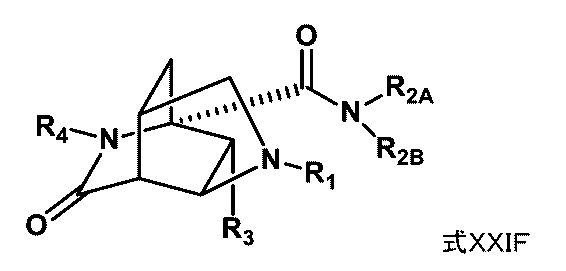
により表される化合物もしくはそのエナンチオマーまたはそれらの塩またはそれらの溶媒和物であって、式中、
R1、R3およびR4は各々独立して、水素、必要に応じて置換された炭化水素基、必要に応じて置換された複素環、必要に応じて置換されたカルボニル、もしくは必要に応じて置換された官能基であり、
R2AおよびR2Bは各々独立して、水素、必要に応じて置換された炭化水素基、必要に応じて置換された複素環、必要に応じて置換されたカルボニル、もしくは必要に応じて置換された官能基であるか、または、
R2AおよびR2Bは、それらが結合する窒素原子と一緒になって、複素環を形成し、ここで、前記複素環は各々独立して、必要に応じて置換されている、
化合物もしくはそのエナンチオマーまたはそれらの塩またはそれらの溶媒和物。
[項B1B]式XXIF:
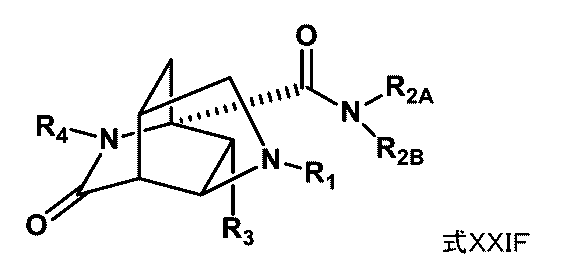
により表される化合物もしくはそのエナンチオマーまたはそれらの塩またはそれらの溶媒和物であって、式中、
R1、R3およびR4は各々独立して、水素、必要に応じて置換されたアルキル、必要に応じて置換されたアルケニル、必要に応じて置換されたアルキニル、必要に応じて置換されたシクロアルキル、必要に応じて置換されたヘテロシクロアルキル、必要に応じて置換されたアリール、必要に応じて置換されたヘテロアリール、または必要に応じて置換されたカルボニルであり、
R2AおよびR2Bは各々独立して、水素、必要に応じて置換されたアルキル、必要に応じて置換されたアルケニル、必要に応じて置換されたアルキニル、必要に応じて置換されたシクロアルキル、必要に応じて置換されたヘテロシクロアルキル、必要に応じて置換されたアリール、必要に応じて置換されたヘテロアリール、もしくは必要に応じて置換されたカルボニルであるか、または、
R2AおよびR2Bは、それらが結合する窒素原子と一緒になって、非アリールヘテロ環もしくはヘテロアリール環を形成し、
ここで、前記非アリールヘテロ環および前記ヘテロアリール環は各々独立して、必要に応じて置換されている、
項1に記載の化合物もしくはそのエナンチオマーまたはそれらの塩またはそれらの溶媒和物。
[項B2A]式XXIB:
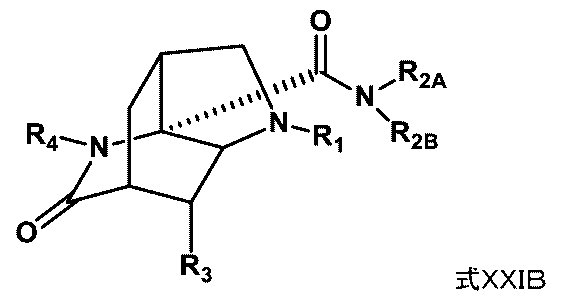
により表される化合物もしくはそのエナンチオマーまたはそれらの塩またはそれらの溶媒和物であって、式中、
R1、R3およびR4は各々独立して、水素、必要に応じて置換された炭化水素基、必要に応じて置換された複素環、必要に応じて置換されたカルボニル、または必要に応じて置換された官能基であり、
R2AおよびR2Bは各々独立して、水素、必要に応じて置換された炭化水素基、必要に応じて置換された複素環、必要に応じて置換されたカルボニル、もしくは必要に応じて置換された官能基であるか、または、
R2AおよびR2Bは、それらが結合する窒素原子と一緒になって、複素環を形成し、ここで、前記複素環は各々独立して、必要に応じて置換されている、
化合物もしくはそのエナンチオマーまたはそれらの塩またはそれらの溶媒和物。
[項B2B]式XXIB:
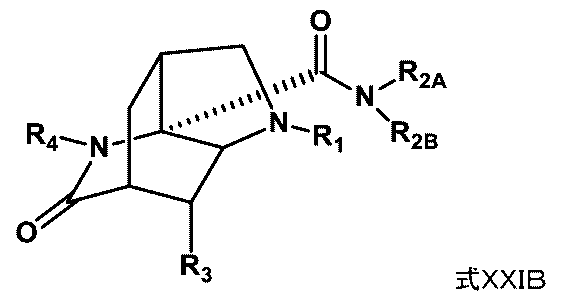
により表される化合物もしくはそのエナンチオマーまたはそれらの塩またはそれらの溶媒和物であって、式中、
R1、R3およびR4は各々独立して、水素、必要に応じて置換されたアルキル、必要に応じて置換されたアルケニル、必要に応じて置換されたアルキニル、必要に応じて置換されたシクロアルキル、必要に応じて置換されたヘテロシクロアルキル、必要に応じて置換されたアリール、必要に応じて置換されたヘテロアリール、または必要に応じて置換されたカルボニルであり、
R2AおよびR2Bは各々独立して、水素、必要に応じて置換されたアルキル、必要に応じて置換されたアルケニル、必要に応じて置換されたアルキニル、必要に応じて置換されたシクロアルキル、必要に応じて置換されたヘテロシクロアルキル、必要に応じて置換されたアリール、必要に応じて置換されたヘテロアリール、もしくは必要に応じて置換されたカルボニルであるか、または、
R2AおよびR2Bは、それらが結合する窒素原子と一緒になって、非アリールヘテロ環もしくはヘテロアリール環を形成し、
ここで、前記非アリールヘテロ環および前記ヘテロアリール環は各々独立して、必要に応じて置換されている、
項2に記載の化合物もしくはそのエナンチオマーまたはそれらの塩またはそれらの溶媒和物。
[項B3A]R1、R3およびR4の前記アルキル、アルケニル、アルキニル、シクロアルキル、ヘテロシクロアルキル、アリール、ヘテロアリール、およびカルボニルは各々独立して、置換基群Iから選択される1個から最大置換可能数までの同一または異なる置換基で必要に応じて置換されており、
R2AおよびR2Bの前記アルキル、アルケニル、アルキニル、シクロアルキル、ヘテロシクロアルキル、アリール、ヘテロアリール、カルボニル、ならびに前記非アリールヘテロ環および前記ヘテロアリール環は各々独立して、置換基群Iから選択される1個から最大置換可能数までの同一または異なる置換基で必要に応じて置換されている、
上記項のいずれか一項に記載の化合物もしくはそのエナンチオマーまたはそれらの塩またはそれらの溶媒和物。
[項B4A]R1、R3およびR4は各々独立して、水素、必要に応じて置換されたアルキル、必要に応じて置換されたシクロアルキル、必要に応じて置換されたヘテロシクロアルキル、必要に応じて置換されたアリール、必要に応じて置換されたヘテロアリール、または必要に応じて置換されたカルボニルであり、
R2AおよびR2Bは各々独立して、水素、必要に応じて置換されたアルキル、必要に応じて置換されたシクロアルキル、必要に応じて置換されたヘテロシクロアルキル、必要に応じて置換されたアリール、必要に応じて置換されたヘテロアリール、もしくは必要に応じて置換されたカルボニルであるか、または、
R2AおよびR2Bは、それらが結合する窒素原子と一緒になって、非アリールヘテロ環もしくはヘテロアリール環を形成し、
ここで、前記非アリールヘテロ環および前記ヘテロアリール環は各々独立して、必要に応じて置換されている、
上記項のいずれか一項に記載の化合物もしくはそのエナンチオマーまたはそれらの塩またはそれらの溶媒和物。
[項B4B]R1、R3およびR4は各々独立して、水素、必要に応じて置換されたC1-12アルキル、必要に応じて置換されたC3-10シクロアルキル、必要に応じて置換された5~10員ヘテロシクロアルキル、必要に応じて置換されたC6-10アリール、必要に応じて置換された5~10員ヘテロアリール、または必要に応じて置換されたカルボニルであり、
R2AおよびR2Bは各々独立して、水素、必要に応じて置換されたC1-12アルキル、必要に応じて置換されたC3-10シクロアルキル、必要に応じて置換された5~10員ヘテロシクロアルキル、必要に応じて置換されたC6-10アリール、必要に応じて置換された5~10員ヘテロアリール、もしくは必要に応じて置換されたカルボニルであるか、または、
R2AおよびR2Bは、それらが結合する窒素原子と一緒になって、5~10員非アリールヘテロ環もしくは5~10員ヘテロアリール環を形成し、
ここで、前記非アリールヘテロ環および前記ヘテロアリール環は各々独立して、必要に応じて置換されている、
上記項のいずれか一項に記載の化合物もしくはそのエナンチオマーまたはそれらの塩またはそれらの溶媒和物。
[項B5A]R1、R3およびR4は各々独立して、水素、必要に応じて置換されたアルキル、必要に応じて置換されたアリールアルキル、必要に応じて置換されたシクロアルキル、必要に応じて置換されたヘテロシクロアルキル、必要に応じて置換されたアリール、ホルミル、必要に応じて置換されたアルキルカルボニル、必要に応じて置換されたアルコキシカルボニル、必要に応じて置換されたアリールカルボニル、必要に応じて置換されたアリールオキシカルボニル、必要に応じて置換されたヘテロアリールカルボニル、必要に応じて置換されたヘテロアリールオキシカルボニル、必要に応じて置換されたシクロアルキルカルボニル、必要に応じて置換されたシクロアルキルオキシカルボニル、必要に応じて置換されたヘテロシクロアルキルカルボニル、必要に応じて置換されたヘテロシクロアルキルオキシカルボニル、カルバモイル、必要に応じて置換されたアルキルカルバモイル、必要に応じて置換されたアルコキシカルバモイル、必要に応じて置換されたアリールカルバモイル、必要に応じて置換されたヘテロアリールカルバモイル、必要に応じて置換されたシクロアルキルカルバモイル、または必要に応じて置換されたヘテロシクロアルキルカルバモイルであり、
ここで、R1、R3およびR4の上記基は、
置換基群IIから選択される1個から最大置換可能数までの同一または異なる置換基で必要に応じて置換され、
R2AおよびR2Bは各々独立して、水素、必要に応じて置換されたアルキル、必要に応じて置換されたアリールアルキル、必要に応じて置換されたシクロアルキル、必要に応じて置換されたヘテロシクロアルキル、ホルミル、必要に応じて置換されたアルキルカルボニル、必要に応じて置換されたアルコキシカルボニル、必要に応じて置換されたアリールカルボニル、必要に応じて置換されたアリールオキシカルボニル、必要に応じて置換されたヘテロアリールカルボニル、必要に応じて置換されたヘテロアリールオキシカルボニル、必要に応じて置換されたシクロアルキルカルボニル、必要に応じて置換されたシクロアルキルオキシカルボニル、必要に応じて置換されたヘテロシクロアルキルカルボニル、必要に応じて置換されたヘテロシクロアルキルオキシカルボニル、カルバモイル、必要に応じて置換されたアルキルカルバモイル、必要に応じて置換されたアルコキシカルバモイル、必要に応じて置換されたアリールカルバモイル、必要に応じて置換されたヘテロアリールカルバモイル、必要に応じて置換されたシクロアルキルカルバモイル、または必要に応じて置換されたヘテロシクロアルキルカルバモイルであり、
ここで、R2AおよびR2Bの上記基は、置換基群IIから選択される1個から最大置換可能数までの同一または異なる置換基で必要に応じて置換されるか、または、
R2AおよびR2Bは、それらが結合する窒素原子と一緒になって、非アリールヘテロ環もしくはヘテロアリール環を形成し、
ここで、前記非アリールヘテロ環および前記ヘテロアリール環は各々独立して、置換基群IIから選択される1個から最大置換可能数までの同一または異なる置換基で置換されていてもよい、
上記項のいずれか一項に記載の化合物もしくはそのエナンチオマーまたはそれらの塩またはそれらの溶媒和物。
[項B5B]R1、R3およびR4は各々独立して、水素、必要に応じて置換されたC1-12アルキル、必要に応じて置換されたC6-10アリールC1-12アルキル、必要に応じて置換されたC3-10シクロアルキル、必要に応じて置換された5~10員ヘテロシクロアルキル、必要に応じて置換されたC6-10アリール、ホルミル、必要に応じて置換されたC1-12アルキルカルボニル、必要に応じて置換されたC1-12アルコキシカルボニル、必要に応じて置換されたC6-10アリールカルボニル、必要に応じて置換されたC6-10アリールオキシカルボニル、必要に応じて置換された5~10員ヘテロアリールカルボニル、必要に応じて置換された5~10員ヘテロアリールオキシカルボニル、必要に応じて置換されたC3-10シクロアルキルカルボニル、必要に応じて置換されたC3-10シクロアルキルオキシカルボニル、必要に応じて置換された5~10員ヘテロシクロアルキルカルボニル、必要に応じて置換された5~10員ヘテロシクロアルキルオキシカルボニル、カルバモイル、必要に応じて置換されたC1-12アルキルカルバモイル、必要に応じて置換されたC1-12アルコキシカルバモイル、必要に応じて置換されたC6-10アリールカルバモイル、必要に応じて置換された5~10員ヘテロアリールカルバモイル、必要に応じて置換されたC3-10シクロアルキルカルバモイル、または必要に応じて置換された5~10員ヘテロシクロアルキルカルバモイルであり、
ここで、R1、R3およびR4の上記基は、置換基群IIIから選択される1個から最大置換可能数までの同一または異なる置換基で必要に応じて置換され、
R2AおよびR2Bは各々独立して、水素、必要に応じて置換されたC1-12アルキル、必要に応じて置換されたC6-10アリールC1-12アルキル、必要に応じて置換されたC3-10シクロアルキル、必要に応じて置換された5~10員ヘテロシクロアルキル、ホルミル、必要に応じて置換されたC1-12アルキルカルボニル、必要に応じて置換されたC1-12アルコキシカルボニル、必要に応じて置換されたC6-10アリールカルボニル、必要に応じて置換されたC6-10アリールオキシカルボニル、必要に応じて置換された5~10員ヘテロアリールカルボニル、必要に応じて置換された5~10員ヘテロアリールオキシカルボニル、必要に応じて置換されたC3-10シクロアルキルカルボニル、必要に応じて置換されたC3-10シクロアルキルオキシカルボニル、必要に応じて置換された5~10員ヘテロシクロアルキルカルボニル、必要に応じて置換された5~10員ヘテロシクロアルキルオキシカルボニル、カルバモイル、必要に応じて置換されたC1-12アルキルカルバモイル、必要に応じて置換されたC1-12アルコキシカルバモイル、必要に応じて置換されたC6-10アリールカルバモイル、必要に応じて置換された5~10員ヘテロアリールカルバモイル、必要に応じて置換されたC3-10シクロアルキルカルバモイル、もしくは必要に応じて置換された5~10員ヘテロシクロアルキルカルバモイルであり、
ここで、R2AおよびR2Bの上記基は、置換基群IIIから選択される1個から最大置換可能数までの同一または異なる置換基で必要に応じて置換されるか、または、
R2AおよびR2Bは、それらが結合する窒素原子と一緒になって、5~10員非アリールヘテロ環もしくは5~10員ヘテロアリール環を形成し、
ここで、前記非アリールヘテロ環および前記5~10員ヘテロアリール環は各々独立して、置換基群Vから選択される1個から最大置換可能数までの同一または異なる置換基で置換されていてもよい、
上記項のいずれか一項に記載の化合物もしくはそのエナンチオマーまたはそれらの塩またはそれらの溶媒和物。
[項B6A]R1およびR4は各々独立して、水素、必要に応じて置換されたアルキル、必要に応じて置換されたアリールアルキル、必要に応じて置換されたシクロアルキル、必要に応じて置換されたヘテロシクロアルキル、ホルミル、必要に応じて置換されたアルキルカルボニル、必要に応じて置換されたアルコキシカルボニル、必要に応じて置換されたアリールカルボニル、必要に応じて置換されたアリールオキシカルボニル、必要に応じて置換されたシクロアルキルカルボニル、必要に応じて置換されたシクロアルキルオキシカルボニル、必要に応じて置換されたヘテロシクロアルキルカルボニル、必要に応じて置換されたヘテロシクロアルキルオキシカルボニル、カルバモイル、必要に応じて置換されたアルキルカルバモイル、必要に応じて置換されたアルコキシカルバモイル、必要に応じて置換されたアリールカルバモイル、必要に応じて置換されたヘテロアリールカルバモイル、必要に応じて置換されたシクロアルキルカルバモイル、または必要に応じて置換されたヘテロシクロアルキルカルバモイルであり、
ここで、R1およびR4の上記基は、置換基群IIIから選択される1個から最大置換可能数までの同一または異なる置換基で必要に応じて置換されている、
上記項のいずれか一項に記載の化合物もしくはそのエナンチオマーまたはそれらの塩またはそれらの溶媒和物。
[項B6B]R1およびR4は各々独立して、水素、必要に応じて置換されたC1-12アルキル、必要に応じて置換されたC6-10アリールC1-12アルキル、必要に応じて置換されたC3-10シクロアルキル、必要に応じて置換された5~10員ヘテロシクロアルキル、ホルミル、必要に応じて置換されたC1-12アルキルカルボニル、必要に応じて置換されたC1-12アルコキシカルボニル、必要に応じて置換されたC6-10アリールカルボニル、必要に応じて置換されたC6-10アリールオキシカルボニル、必要に応じて置換されたC3-10シクロアルキルカルボニル、必要に応じて置換されたC3-10シクロアルキルオキシカルボニル、必要に応じて置換された5~10員ヘテロシクロアルキルカルボニル、必要に応じて置換された5~10員ヘテロシクロアルキルオキシカルボニル、カルバモイル、必要に応じて置換されたC1-12アルキルカルバモイル、必要に応じて置換されたC1-12アルコキシカルバモイル、必要に応じて置換されたC6-10アリールカルバモイル、必要に応じて置換された5~10員ヘテロアリールカルバモイル、必要に応じて置換されたC3-10シクロアルキルカルバモイル、または必要に応じて置換された5~10員ヘテロシクロアルキルカルバモイルであり、
ここで、R1およびR4の上記基は、置換基群IIIから選択される1個から最大置換可能数までの同一または異なる置換基で必要に応じて置換されている、
上記項のいずれか一項に記載の化合物もしくはそのエナンチオマーまたはそれらの塩またはそれらの溶媒和物。
[項B7A]R1およびR4は各々独立して、水素、必要に応じて置換されたアルキル、必要に応じて置換されたアリールアルキル、必要に応じて置換されたヘテロシクロアルキル、ホルミル、必要に応じて置換されたアルキルカルボニル、必要に応じて置換されたアルコキシカルボニル、必要に応じて置換されたアリールカルボニル、または必要に応じて置換されたアリールオキシカルボニルであり、
ここで、R1およびR4の上記基は、置換基群IIIから選択される1個から最大置換可能数までの同一または異なる置換基で必要に応じて置換されている、
上記項のいずれか一項に記載の化合物もしくはそのエナンチオマーまたはそれらの塩またはそれらの溶媒和物。
[項B7B]R1およびR4は各々独立して、水素、必要に応じて置換されたC1-12アルキル、必要に応じて置換されたC6-10アリールC1-6アルキル、必要に応じて置換された5~10員ヘテロシクロアルキル、ホルミル、必要に応じて置換されたC1-12アルキルカルボニル、必要に応じて置換されたC1-12アルコキシカルボニル、必要に応じて置換されたC6-10アリールカルボニル、必要に応じて置換されたC6-10アリールオキシカルボニルであり、
ここで、R1およびR4の上記基は、置換基群IIIから選択される1個から最大置換可能数までの同一または異なる置換基で必要に応じて置換されている、
上記項のいずれか一項に記載の化合物もしくはそのエナンチオマーまたはそれらの塩またはそれらの溶媒和物。
[項B8A]R1は、
水素;
アルキル;
ヒドロキシ、置換オキシ、ホルミル、置換カルボニル、アミノ、置換アミノ、およびシクロアルキル、および置換シクロアルキルからなる群より選択される1個から最大置換可能数までの同一または異なる置換基で置換されているアルキル;
アリールアルキル;
ハロゲン、アルキル、置換アルキル、ヒドロキシ、置換オキシ、アミノ、置換アミノ、およびニトロからなる群より選択される1個から最大置換可能数までの同一または異なる置換基で置換されているアリールアルキル;
シクロアルキル;
置換シクロアルキル;
ヘテロシクロアルキル;
置換ヘテロシクロアルキル;または
置換カルボニルであり、ここで、前記置換オキシ、置換カルボニル、置換アミノ、置換シクロアルキル、置換ヘテロシクロアルキル、および置換アルキルは各々独立して、置換基群IVから選択される1個から最大置換可能数までの同一または異なる置換基を有する、
上記項のいずれか一項に記載の化合物もしくはそのエナンチオマーまたはそれらの塩またはそれらの溶媒和物。
[項B8B]R1は、
水素;
アルキル;
ヒドロキシ、アルコキシ、ハロアルコキシ、ホルミル、カルボキシ、カルバモイル、アルキルカルボニル、アルコキシカルボニル、アミノ、アミジノアミノ、アルコキシカルボニル置換されたアミジノアミノ、アルコキシカルボニルアミノ、シクロアルキル、およびハロシクロアルキルからなる群より選択される1個から最大置換可能数までの同一または異なる置換基で置換されているアルキル;
アリールアルキル;
ハロゲン、アルキル、ハロアルキル、ヒドロキシ、アルコキシ、ハロアルコキシ、アミノ、アルキルアミノ、(アルキル)2アミノ、シクロアルキルカルボニルアミノ、およびニトロからなる群より選択される1個から最大置換可能数までの同一または異なる置換基で置換されているアリールアルキル;
シクロアルキル;
ハロシクロアルキル;
ヘテロシクロアルキル;
アルキルカルボニル;
アリールアルキルカルボニル;
アルコキシカルボニル;
アリールカルボニル;または
アリールオキシカルボニルである、
上記項のいずれか一項に記載の化合物もしくはそのエナンチオマーまたはそれらの塩またはそれらの溶媒和物。
[項B8C]R1は、
水素;
C1-12アルキル;
C1-6アルコキシ、C1-6ハロアルコキシ、ホルミル、カルボキシ、カルバモイル、C1-6アルキルカルボニル、C1-6アルコキシカルボニル、C1-6ハロアルコキシカルボニル、アミジノアミノ、C1-6アルコキシカルボニル置換されたアミジノアミノ、C1-6アルコキシカルボニルアミノ、ヒドロキシ、C3-10シクロアルキル、およびC3-10ハロシクロアルキルからなる群より選択される1個から最大置換可能数までの同一または異なる置換基で置換されているC1-12アルキル;
C6-10アリールC1-6アルキル;
ハロゲン、C1-6アルキル、C1-6ハロアルキル、ヒドロキシ、C1-6アルコキシ、C1-6ハロアルコキシ、アミノ、C1-6アルキルアミノ、(C1-6アルキル)2アミノ、C3-10シクロアルキルカルボニルアミノ、ニトロ、およびヒドロキシからなる群より選択される1個から最大置換可能数までの同一または異なる置換基で置換されているC6-10アリールC1-6アルキル;
C3-10シクロアルキル;
5~10員ヘテロシクロアルキル;
C1-6アルキルカルボニル;
C6-10アリールC1-6アルキルカルボニル;
C1-6アルコキシカルボニル;
C6-10アリールカルボニル;または
C6-10アリールオキシカルボニルである、
上記項のいずれか一項に記載の化合物もしくはそのエナンチオマーまたはそれらの塩またはそれらの溶媒和物。
[項B9A]R3は、
アルキル;
ヒドロキシ、置換オキシ、置換カルボニル、アミノ、置換アミノ、シクロアルキル、および置換シクロアルキルからなる群より選択される1個から最大置換可能数までの同一または異なる置換基で置換されているアルキル;
アリールアルキル;
ハロゲン、アルキル、置換アルキル、ヒドロキシ、および置換オキシからなる群より選択される1個から最大置換可能数までの同一または異なる置換基で置換されているアリールアルキル;
アリール;または
置換アリールであり、ここで、前記置換オキシ、置換カルボニル、置換アミノ、置換シクロアルキル、置換アルキル、および置換アリールは各々独立して、置換基群IVから選択される1個から最大置換可能数までの同一または異なる置換基を有する、
上記項のいずれか一項に記載の化合物もしくはそのエナンチオマーまたはそれらの塩またはそれらの溶媒和物。
[項B9B]R3は、
アルキル;
ヒドロキシ、アルコキシ、ハロアルコキシ、トリアルキルシリルオキシ、カルボキシ、カルバモイル、アルコキシカルボニル、ハロアルコキシカルボニル、アミノ、アミジノアミノ、アルコキシカルボニル置換されたアミジノアミノ、アルコキシカルボニルアミノ、ハロアルコキシカルボニルアミノ、シクロアルキル、およびハロシクロアルキルからなる群より選択される1個から最大置換可能数までの同一または異なる置換基で置換されているアルキル;
アリールアルキル;ハロゲン、アルキル、ハロアルキル、ヒドロキシ、アルコキシ、およびハロアルコキシからなる群より選択される1個から最大置換可能数までの同一または異なる置換基で置換されているアリールアルキル;または
アリールである、
上記項のいずれか一項に記載の化合物もしくはそのエナンチオマーまたはそれらの塩またはそれらの溶媒和物。
[項B9C]R3は、
C1-12アルキル;
ヒドロキシ、C1-6アルコキシ、C1-6ハロアルコキシ、トリC1-6アルキルシリルオキシ、カルボキシ、カルバモイル、C1-6アルコキシカルボニル、C1-6ハロアルコキシカルボニル、アミノ、アミジノアミノ、C1-6アルコキシカルボニル置換されたアミジノアミノ、C1-6アルコキシカルボニルアミノ、C1-6ハロアルコキシカルボニルアミノ、C3-10シクロアルキル、およびC3-10ハロシクロアルキルからなる群より選択される1個から最大置換可能数までの同一または異なる置換基で置換されているC1-12アルキル;
C6-10アリールC1-6アルキル;
ハロゲン、C1-6アルキル、C1-6ハロアルキル、ヒドロキシ、C1-6アルコキシ、およびC1-6ハロアルコキシからなる群より選択される1個から最大置換可能数までの同一または異なる置換基で置換されているC6-10アリールC1-6アルキル;または
C6-10アリールである、
上記項のいずれか一項に記載の化合物もしくはそのエナンチオマーまたはそれらの塩またはそれらの溶媒和物。
[項B10A]R2AおよびR2Bは各々独立して、
水素;
アルキル;
ヒドロキシ、置換オキシ、アミノ、置換アミノ、シクロアルキル、および置換シクロアルキルからなる群より選択される1個から最大置換可能数までの同一または異なる置換基で置換されているアルキル;
アリールアルキル;
ハロゲン、アルキル、置換アルキル、ヒドロキシ、および置換オキシからなる群より選択される1個から最大置換可能数までの同一または異なる置換基で置換されているアリールアルキル;
シクロアルキル;
置換シクロアルキル;
ヘテロシクロアルキル;もしくは
置換ヘテロシクロアルキルであり、ここで、前記置換オキシ、置換アミノ、置換アルキル、置換シクロアルキル、および置換ヘテロシクロアルキルは各々独立して、置換基群IVから選択される1個から最大置換可能数までの同一または異なる置換基を有するか、または、
R2AおよびR2Bは、それらが結合する窒素原子と一緒になって、非アリールヘテロ環を形成し、ここで、前記非アリールヘテロ環は、置換基群VIから選択される1個または最大置換可能数までの同一または異なる置換基で置換されていてもよい、
上記項のいずれか一項に記載の化合物もしくはそのエナンチオマーまたはそれらの塩またはそれらの溶媒和物。
[項B10B]R2AおよびR2Bは各々独立して、
水素;
アルキル;
ヒドロキシ、アルコキシ、カルボキシ、アルコキシカルボニル、アミノ、アミジノアミノ、アルコキシカルボニル置換されたアミジノアミノ、アルコキシカルボニルアミノ、シクロアルキル、およびハロシクロアルキルからなる群より選択される1個から最大置換可能数までの同一または異なる置換基で置換されているアルキル;
アリールアルキル;
ハロゲン、アルキル、ハロアルキル、ヒドロキシ、アルコキシ、およびハロアルコキシからなる群より選択される1個から最大置換可能数までの同一または異なる置換基で置換されているアリールアルキル;
シクロアルキル;
アルキル置換されたシクロアルキル;もしくは
ヘテロシクロアルキルであるか、または、
R2AおよびR2Bは、それらが結合する窒素原子と一緒になって、非アリールヘテロ環を形成し、ここで、前記非アリールヘテロ環は、置換基群VIから選択される1個または最大置換可能数までの同一または異なる置換基で置換されていてもよい、
上記項のいずれか一項に記載の化合物もしくはそのエナンチオマーまたはそれらの塩またはそれらの溶媒和物。
[項B10C]R2AおよびR2Bは各々独立して、
水素;
C1-12アルキル;
ヒドロキシ、C1-6アルコキシ、カルボキシ、C1-6アルコキシカルボニル、アミノ、アミジノアミノ、C1-6アルコキシカルボニル置換されたアミジノアミノ、およびC1-6アルコキシカルボニルアミノ、C3-10シクロアルキル、およびC3-10ハロシクロアルキルからなる群より選択される1個から最大置換可能数までの同一または異なる置換基で置換されているC1-12アルキル;
C6-10アリールC1-6アルキル;
ハロゲン、C1-6アルキル、C1-6ハロアルキル、ヒドロキシ、C1-6アルコキシ、およびC1-6ハロアルコキシからなる群より選択される1個から最大置換可能数までの同一または異なる置換基で置換されているC6-10アリールC1-6アルキル;
C3-10シクロアルキル;
C1-6アルキル置換されたC3-10シクロアルキル;もしくは
5~10員ヘテロシクロアルキルであるか、または、
R2AおよびR2Bは、それらが結合する窒素原子と一緒になって、5~6員非アリールヘテロ環を形成し、ここで、前記非アリールヘテロ環は、置換基群VIから選択される1個または最大置換可能数までの同一または異なる置換基で置換されていてもよい、
上記項のいずれか一項に記載の化合物もしくはそのエナンチオマーまたはそれらの塩またはそれらの溶媒和物。
[項B11A]R4は、水素、アルキル、または置換アルキルであり、ここで、前記置換アルキルは、ハロゲン、カルボキシ、カルバモイル、アミノ、アルキルアミノ、アリール、ニトロアリール、およびアルコキシカルボニルアミノからなる群より選択される1個または最大置換可能数までの同一または異なる置換基を有する、
上記項のいずれか一項に記載の化合物もしくはそのエナンチオマーまたはそれらの塩またはそれらの溶媒和物。
[項B11B]R4は、水素、またはアルキルである、
上記項のいずれか一項に記載の化合物もしくはそのエナンチオマーまたはそれらの塩またはそれらの溶媒和物。
[項B11C]R4は、水素、またはC1-12アルキルである、
上記項のいずれか一項に記載の化合物もしくはそのエナンチオマーまたはそれらの塩またはそれらの溶媒和物。
[項B12A]R1は、水素、メチル、プロピル、イソプロピル、イソブチル、sec-ブチル、イソペンチル、ヘキシル、(tert-ブトキシカルボニル置換されたアミジノアミノ)プロピル、tert-ブトキシエチル、tert-ブトキシプロピル、tert-ブトキシカルボニルエチル、カルボキシエチル、ヒドロキシエチル、ヒドロキシプロピル、tert-ブトキシカルボニルアミノプロピル、シクロペンチルメチル、シクロヘキシルメチル、5,6,7,8-テトラヒドロナフタレニルメチル、ベンジル、2-フェニルエチル、ナフタレニルメチル、フルオロベンジル、クロロベンジル、メチルベンジル、ジメチルベンジル、tert-ブチルベンジル、メトキシベンジル、エトキシベンジル、tert-ブトキシベンジル、(トリフルオロメトキシ)ベンジル、アミノベンジル、(ジメチルアミノ)ベンジル、(シクロペンチルカルボニルアミノ)ベンジル、ニトロベンジル、ヒドロキシベンジル、シクロヘキシル、イソバレリル、フェニルアセチル、ベンゾイル、イソプロピルオキシカルボニル、フェノキシカルボニル、またはテトラヒドロ-2H-ピラニルである、
上記項のいずれか一項に記載の化合物もしくはそのエナンチオマーまたはそれらの塩またはそれらの溶媒和物。
[項B12B]R2Aは水素であり、
R2Bは、イソプロピル、イソブチル、sec-ブチル、ペンチル、イソペンチル、ヘキシル、ヘプチル、アミジノアミノプロピル、(tert-ブトキシカルボニル置換されたアミジノアミノ)プロピル、(tert-ブトキシカルボニル)エチル、tert-ブトキシエチル、カルボキシエチル、ヒドロキシエチル、(tert-ブトキシカルボニルアミノ)プロピル、シクロペンチルメチル、シクロヘキシルメチル、(1,2,3,4-テトラヒドロナフタレニル)メチル、2,2,6,6-テトラメチルピペリジニル、ベンジル、フェニルエチル、ナフタレニルメチル、フルオロベンジル、クロロベンジル、(フルオロフェニル)エチル、メチルベンジル、tert-ブトキシベンジル、ヒドロキシベンジル、β-ヒドロキシフェネチル、α-ヒドロキシメチルフェネチル、シクロペンチル、シクロヘキシル、もしくはメチルシクロヘキシルであるか、または、R2AおよびR2Bは、それらが結合する窒素原子と一緒になって、ピロリジン環を形成する、
上記項のいずれか一項に記載の化合物もしくはそのエナンチオマーまたはそれらの塩またはそれらの溶媒和物。
[項B12C]R3は、プロピル、イソブチル、イソペンチル、ヘキシル、アミジノアミノプロピル、(tert-ブトキシカルボニル置換されたアミジノアミノ)プロピル、(tert-ブトキシカルボニル)エチル、カルボキシエチル、ヒドロキシエチル、(tert-ブチルジメチルシリルオキシ)エチル、(tert-ブトキシカルボニルアミノ)プロピル、シクロペンチルメチル、シクロヘキシルメチル、シクロヘキシルエチル、ベンジル、ナフタレニルメチル、ナフタレニルエチル、クロロベンジル、(メチルフェニル)エチル、(イソプロピルフェニル)エチル、tert-ブトキシベンジル、ヒドロキシベンジル、またはフェニルである、
上記項のいずれか一項に記載の化合物もしくはそのエナンチオマーまたはそれらの塩またはそれらの溶媒和物。
[項B12D]R4は、水素またはメチルである、上記項のいずれか一項に記載の化合物もしくはそのエナンチオマーまたはそれらの塩またはそれらの溶媒和物。
[項B13A]前記化合物は、化合物番号I-1~I-50、II-1~II-50、IF-51~IF-411、およびIB-51~IB-425からなる群より選択される化合物である、上記項のいずれか一項に記載の化合物もしくはそのエナンチオマーまたはそれらの塩またはそれらの溶媒和物。
[項B12]上記項のいずれか一項に記載の化合物またはその薬学的に許容される塩を含有する、リッサウイルス属ウイルスに対する抗ウイルス剤。
[項B13]前記リッサウイルス属ウイルスは狂犬病ウイルスを含む、上記項のいずれか一項に記載の抗ウイルス剤。
[項B14]上記項のいずれか一項に記載の化合物またはその薬学的に許容される塩を含有する医薬。
[項B15]狂犬病の予防薬または治療薬である、上記項のいずれか一項に記載の医薬。
[項B16]上記項のいずれか一項に記載の化合物またはその薬学的に許容される塩及び薬学的に許容される担体を含有する医薬組成物。
[項B17]上記項のいずれか一項に記載の化合物またはその薬学的に許容される塩及び薬学的に許容される担体を含有する、狂犬病を予防または治療するための医薬組成物。
[項B18]狂犬病を予防または治療するための方法であって、予防または治療が必要な患者に、治療上の有効量の上記項のいずれか一項に記載の化合物またはその薬学的に許容される塩、上記項のいずれか一項に記載の抗ウイルス剤、上記項のいずれか一項に記載の医薬、あるいは上記項のいずれか一項に記載の医薬組成物を投与することを特徴とする、方法。
[項B19]狂犬病を予防または治療するための医薬を製造するための、上記項のいずれか一項に記載の化合物またはその薬学的に許容される塩、あるいは上記項のいずれか一項に記載の抗ウイルス剤の使用。
本明細書の全体にわたり、単数形の表現は、特に言及しない限り、その複数形の概念をも含むことが理解されるべきである。従って、単数形の冠詞(例えば、英語の場合は「a」、「an」、「the」等)は、特に言及しない限り、その複数形の概念をも含むことが理解されるべきである。また、本明細書において使用される用語は、特に言及しない限り、当該分野で通常用いられる意味で用いられることが理解されるべきである。したがって、他に定義されない限り、本明細書中で使用されるすべての専門用語および科学技術用語は、本開示の属する分野の当業者によって一般的に理解されるのと同じ意味を有する。矛盾する場合、本明細書(定義を含めて)が優先する。
最初に本開示において使用される用語および一般的な技術を説明する。
-カルボニルアミノ、シクロアルキル-LX-カルボニルアミノ、ヘテロアリール-LX-カルボニルアミノ、ヘテロシクロアルキル-LX-カルボニルアミノ、アルキルカルボニルチオ、アルケニルカルボニルチオ、アルキニルカルボニルチオ、アリール-LX-カルボニルチオ、シクロアルキル-LX-カルボニルチオ、ヘテロアリール-LX-カルボニルチオ、ヘテロシクロアルキル-LX-カルボニルチオ、アルキルカルボニルイミノ、アルケニルカルボニルイミノ、アルキニルカルボニルイミノ、アリール-LX-カルボニルイミノ、シクロアルキル-LX-カルボニルイミノ、ヘテロアリール-LX-カルボニルイミノ、ヘテロシクロアルキル-LX-カルボニルイミノ、アルキルチオ、アルケニルチオ、アルキニルチオ、アリール-LX-チオ、シクロアルキル-LX-チオ、ヘテロアリール-LX-チオ、ヘテロシクロアルキル-LX-チオ、アルキルアミノ、アルケニルアミノ、アルキニルアミノ、アルキニルアミノ、アリール-LX-アミノ、シクロアルキル-LX-アミノ、ヘテロアリール-LX-アミノ、ヘテロシクロアルキル-LX-アミノ、アルキルスルホニル、アルケニルスルホニル、アルキニルスルホニル、アリール-LX-スルホニル、シクロアルキル-LX-スルホニル、ヘテロアリール-LX-スルホニル、ヘテロシクロアルキル-LX-スルホニル、アルキルスルホニルアミノ、アルケニルスルホニルアミノ、アルキニルスルホニルアミノ、アリール-LX-スルホニルアミノ、シクロアルキル-LX-スルホニルアミノ、ヘテロアリール-LX-スルホニルアミノ、ヘテロシクロアルキル-LX-スルホニルアミノ、アルキルイミノ、アルケニルイミノ、アルキニルイミノ、アリール-LX-イミノ、シクロアルキル-LX-イミノ、ヘテロアリール-LX-イミノ、ヘテロシクロアルキル-LX-イミノ、アルキルオキシイミノ、アルケニルオキシイミノ、アルキニルオキシイミノ、アリール-LX-オキシイミノ、シクロアルキル-LX-オキシイミノ、ヘテロアリール-LX-オキシイミノ、ヘテロシクロアルキル-LX-オキシイミノ、アルキルオキシカルボニル、アルケニルオキシカルボニル、アルキニルオキシカルボニル、アリール-LX-オキシカルボニル、シクロアルキル-LX-オキシカルボニル、ヘテロアリール-LX-オキシカルボニル、ヘテロシクロアルキル-LX-オキシカルボニル、アルキルオキシカルボニルアミノ、アルケニルオキシカルボニルアミノ、アルキニルオキシカルボニルアミノ、アリール-LX-オキシカルボニルアミノ、シクロアルキル-LX-オキシカルボニルアミノ、ヘテロアリール-LX-オキシカルボニルアミノ、ヘテロシクロアルキル-LX-オキシカルボニルアミノ、アルキルスルファニル、アルケニルスルファニル、アルキニルスルファニル、アリール-LX-スルファニル、シクロアルキル-LX-スルファニル、ヘテロアリール-LX-スルファニル、ヘテロシクロアルキル-LX-スルファニル、アルキルスルフィニル、アルケニルスルフィニル、アルキニルスルフィニル、アリール-LX-スルフィニル、シクロアルキル-LX-スルフィニル、ヘテロアリール-LX-スルフィニル、ヘテロシクロアルキル-LX-スルフィニル、アルキルカルバモイル、アルケニルカルバモイル、アルキニルカルバモイル、アリール-LX-カルバモイル、シクロアルキル-LX-カルバモイル、ヘテロアリール-LX-カルバモイル、ヘテロシクロアルキル-LX-カルバモイル、アルキルスルファモイル、アルケニルスルファモイル、アルキニルスルファモイル、アリール-LX-スルファモイル、シクロアルキル-LX-スルファモイル、ヘテロアリール-LX-スルファモイル、およびヘテロシクロアルキル-LX-スルファモイルからなる群より選択される1個から最大置換可能数までの同一または異なる置換基を有する。
6-10アリール-LX-カルバモイル、非置換もしくは置換C3-10シクロアルキル-LX-カルバモイル、非置換もしくは置換5~10員ヘテロアリール-LX-カルバモイル、非置換もしくは置換5~10員ヘテロシクロアルキル-LX-カルバモイル、非置換もしくは置換C1-12アルキルスルファモイル、非置換もしくは置換C2-12アルケニルスルファモイル、非置換もしくは置換C2-12アルキニルスルファモイル、非置換もしくは置換C6-10アリール-LX-スルファモイル、非置換もしくは置換C3-10シクロアルキル-LX-スルファモイル、非置換もしくは置換5~10員ヘテロアリール-LX-スルファモイル、および非置換もしくは置換5~10員ヘテロシクロアルキル-LX-スルファモイルからなり、ここで、LXは、単結合または非置換もしくは置換C1-12アルキレンであり、
前記置換基群中の、置換C1-12アルキル、置換C2-12アルケニル、置換C2-12アルキニル、置換C6-10アリール、置換C3-10シクロアルキル、置換5~10員ヘテロアリール、置換5~10員ヘテロシクロアルキル、および置換アルキレン部分(全体または一部として)は各々独立して、ハロゲン、ヒドロキシ、オキソ、カルボキシ、アミノ、イミノ、ヒドロキシアミノ、ヒドロキシイミノ、ホルミル、ホルミルオキシ、カルバモイル、スルファモイル、スルファニル、スルフィノ、スルホ、チオホルミル、チオカルボキシ、ジチオカルボキシ、チオカルバモイル、シアノ、ニトロ、ニトロソ、アジド、ヒドラジノ、ウレイド、アミジノ、アミジノアミノ、C1-12アルキル、C1-12ハロアルキル、C2-12アルケニル、C2-12アルキニル、C6-10アリール、C3-10シクロアルキル、5~10員ヘテロアリール、5~10員ヘテロシクロアルキル、C1-12アルキルオキシ、C1-12ハロアルキルオキシ、C2-12アルケニルオキシ、C2-12アルキニルオキシ、C6-10アリール-LX-オキシ、C3-10シクロアルキル-LX-オキシ、5~10員ヘテロアリール-LX-オキシ、5~10員ヘテロシクロアルキル-LX-オキシ、C1-12アルキルオキシアルキル、C2-12アルケニルオキシアルキル、C2-12アルキニルオキシアルキル、C6-10アリールオキシアルキル、C3-10シクロアルキルオキシアルキル、5~10員ヘテロアリールオキシアルキル、5~10員ヘテロシクロアルキルオキシアルキル、C1-12アルキルオキシアルキルオキシ、C2-12アルケニルオキシアルキルオキシ、C2-12アルキニルオキシアルキルオキシ、C6-10アリールオキシアルキルオキシ、C3-10シクロアルキルオキシアルキルオキシ、5~10員ヘテロアリールオキシアルキルオキシ、5~10員ヘテロシクロアルキルオキシアルキルオキシ、C1-12アルキルカルボニル、C2-12アルケニルカルボニル、C2-12アルキニルカルボニル、C6-10アリール-LX-カルボニル、C3-10シクロアルキル-LX-カルボニル、5~10員ヘテロアリール-LX-カルボニル、5~10員ヘテロシクロアルキル-LX-カルボニル、C1-12アルキルカルボニルオキシ、C2-12アルケニルカルボニルオキシ、C2-12アルキニルカルボニルオキシ、C6-10アリール-LX-カルボニルオキシ、C3-10シクロアルキル-LX-カルボニルオキシ、5~10員ヘテロアリール-LX-カルボニルオキシ、5~10員ヘテロシクロアルキル-LX-カルボニルオキシ、C1-12アルキルカルボニルアミノ、C2-12アルケニルカルボニルアミノ、C2-12アルキニルカルボニルアミノ、C6-10アリール-LX-カルボニルアミノ、C3-10シクロアルキル-LX-カルボニルアミノ、5~10員ヘテロアリール-LX-カルボニルアミノ、5~10員ヘテロシクロアルキル-LX-カルボニルアミノ、C1-12アルキルカルボニルチオ、C2-12アルケニルカルボニルチオ、C2-12アルキニルカルボニルチオ、C6-10アリール-LX-カルボニルチオ、C3-10シクロアルキル-LX-カルボニルチオ、5~10員ヘテロアリール-LX-カルボニルチオ、5~10員ヘテロシクロアルキル-LX-カルボニルチオ、C1-12アルキルカルボニルイミノ、C2-12アルケニルカルボニルイミノ、C2-12アルキニルカルボニルイミノ、C6-10アリール-LX-カルボニルイミノ、C3-10シクロアルキル-LX-カルボニルイミノ、5~10員ヘテロアリール-LX-カルボニルイミノ、5~10員ヘテロシクロアルキル-LX-カルボニルイミノ、C1-12アルキルチオ、C2-12アルケニルチオ、C2-12アルキニルチオ、C6-10アリール-LX-チオ、C3-10シクロアルキル-LX-チオ、5~10員ヘテロアリール-LX-チオ、5~10員ヘテロシクロアルキル-LX-チオ、C1-12アルキルアミノ、C2-12アルケニルアミノ、C2-12アルキニルアミノ、C2-12アルキニルアミノ、C6-10アリール-LX-アミノ、C3-10シクロアルキル-LX-アミノ、5~10員ヘテロアリール-LX-アミノ、5~10員ヘテロシクロアルキル-LX-アミノ、C1-12アルキルスルホニル、C2-12アルケニルスルホニル、C2-12アルキニルスルホニル、C6-10アリール-LX-スルホニル、C3-10シクロアルキル-LX-スルホニル、5~10員ヘテロアリール-LX-スルホニル、5~10員ヘテロシクロアルキル-LX-スルホニル、C1-12アルキルスルホニルアミノ、C2-12アルケニルスルホニルアミノ、C2-12アルキニルスルホニルアミノ、C6-10アリール-LX-スルホニルアミノ、C3-10シクロアルキル-LX-スルホニルアミノ、5~10員ヘテロアリール-LX-スルホニルアミノ、5~10員ヘテロシクロアルキル-LX-スルホニルアミノ、C1-12アルキルイミノ、C2-12アルケニルイミノ、C2-12アルキニルイミノ、C6-10アリール-LX-イミノ、C3-10シクロアルキル-LX-イミノ、5~10員ヘテロアリール-LX-イミノ、5~10員ヘテロシクロアルキル-LX-イミノ、C1-12アルキルオキシイミノ、C2-12アルケニルオキシイミノ、C2-12アルキニルオキシイミノ、C6-10アリール-LX-オキシイミノ、C3-10シクロアルキル-LX-オキシイミノ、5~10員ヘテロアリール-LX-オキシイミノ、5~10員ヘテロシクロアルキル-LX-オキシイミノ、C1-12アルキルオキシカルボニル、C2-12アルケニルオキシカルボニル、C2-12アルキニルオキシカルボニル、C6-10アリール-LX-オキシカルボニル、C3-10シクロアルキル-LX-オキシカルボニル、5~10員ヘテロアリール-LX-オキシカルボニル、5~10員ヘテロシクロアルキル-LX-オキシカルボニル、C1-12アルキルオキシカルボニルアミノ、C2-12アルケニルオキシカルボニルアミノ、C2-12アルキニルオキシカルボニルアミノ、C6-10アリール-LX-オキシカルボニルアミノ、C3-10シクロアルキル-LX-オキシカルボニルアミノ、5~10員ヘテロアリール-LX-オキシカルボニルアミノ、5~10員ヘテロシクロアルキル-LX-オキシカルボニルアミノ、C1-12アルキルスルファニル、C2-12アルケニルスルファニル、C2-12アルキニルスルファニル、C6-10アリール-LX-スルファニル、C3-10シクロアルキル-LX-スルファニル、5~10員ヘテロアリール-LX-スルファニル、5~10員ヘテロシクロアルキル-LX-スルファニル、C1-12アルキルスルフィニル、C2-12アルケニルスルフィニル、C2-12アルキニルスルフィニル、C6-10アリール-LX-スルフィニル、C3-10シクロアルキル-LX-スルフィニル、5~10員ヘテロアリール-LX-スルフィニル、5~10員ヘテロシクロアルキル-LX-スルフィニル、C1-12アルキルカルバモイル、C2-12アルケニルカルバモイル、C2-12アルキニルカルバモイル、C6-10アリール-LX-カルバモイル、C3-10シクロアルキル-LX-カルバモイル、5~10員ヘテロアリール-LX-カルバモイル、5~10員ヘテロシクロアルキル-LX-カルバモイル、C1-12アルキルスルファモイル、C2-12アルケニルスルファモイル、C2-12アルキニルスルファモイル、C6-10アリール-LX-スルファモイル、C3-10シクロアルキル-LX-スルファモイル、5~10員ヘテロアリール-LX-スルファモイル、および5~10員ヘテロシクロアルキル-LX-スルファモイルからなる群より選択される1個から最大置換可能数までの同一または異なる置換基を有する。
置換基群IIIは、好ましくは置換基群III’であり、これは、ハロゲン、ヒドロキシ、カルボキシ、アミノ、カルバモイル、ニトロ、アミジノアミノ、C1-12アルキル、C6-10アリール、C3-10シクロアルキル、5~10員ヘテロアリール、C1-12アルキルオキシ、C1-12アルキルカルボニル、C3-10シクロアルキルカルボニル、C1-12アルキルカルボニルアミノ、C3-10シクロアルキルカルボニルアミノ、C1-12アルキルアミノ、C3-10シクロアルキルC1-6アルキルアミノ、C1-12アルキルオキシカルボニル、およびトリC1-6アルキルシリルオキシ、からなり、前記置換基群のこれらの基は、ハロゲン、ヒドロキシ、カルボキシ、アミノ、カルバモイル、ニトロ、C1-12アルキル、C1-12ハロアルキル、C6-10アリール、C6-10ハロアリール、C1-12アルキルオキシ、C1-12ハロアルキルオキシ、およびC1-12アルキルオキシカルボニルからなる群より選択される1個から最大置換可能数までの同一または異なる置換基で置換されていてもよい。
置換基群IVは、好ましくは置換基群IV’であり、これは、ハロゲン、ヒドロキシ、カルボキシ、アミノ、カルバモイル、ニトロ、アミジノ、C1-6アルキル、C6-10アリール、C3-10シクロアルキル、5~10員ヘテロアリール5~10員ヘテロシクロアルキル、C6-10アリールC1-6アルキル、C3-10シクロアルキルC1-6アルキル、C1-6アルキルオキシ、C6-10アリールオキシ、C1-6アルキルカルボニル、C3-10シクロアルキルカルボニル、C1-6アルキルオキシカルボニル、およびトリC1-6アルキルシリルオキシからなり、前記置換基群のこれらの基は各々独立して、ハロゲン、ヒドロキシ、カルボキシ、アミノ、カルバモイル、ニトロ、C1-6アルキル、C1-6ハロアルキル、C1-6アルキルオキシ、C1-6ハロアルキルオキシ、およびC1-6アルキルオキシカルボニルからなる群より選択される1個から最大置換可能数までの同一または異なる置換基で置換されていてもよい。
置換基群Vは、好ましくは置換基群V’であり、これは、ハロゲン、ヒドロキシ、カルボキシ、アミノ、ホルミル、カルバモイル、シアノ、ニトロ、アミジノ、アミジノアミノ、C1-12アルキル、C6-10アリール、C3-10シクロアルキル、5~10員ヘテロアリール、5~10員ヘテロシクロアルキル、C1-12アルキルオキシ、C6-10アリールオキシ、C3-10シクロアルキルオキシ、5~10員ヘテロアリールオキシ、5~10員ヘテロシクロアルキルオキシ、C1-12アルキルアミノ、C6-10アリールアミノ、C3-10シクロアルキルアミノ、5~10員ヘテロアリールアミノ、5~10員ヘテロシクロアルキルアミノ、ホルミル、C1-12アルキルカルボニル、C6-10アリールカルボニル、C3-10シクロアルキルカルボニル、5~10員ヘテロアリールカルボニル、5~10員ヘテロシクロアルキルカルボニル、C1-12アルキルオキシカルボニル、C6-10アリールオキシカルボニル、C3-10シクロアルキルオキシカルボニル、5~10員ヘテロアリールオキシカルボニル、5~10員ヘテロシクロアルキルオキシカルボニル、C1-12アルキルカルバモイル、C6-10アリールカルバモイル、C3-10シクロアルキルカルバモイル、5~10員ヘテロアリールカルバモイル、および5~10員ヘテロシクロアルキルカルバモイルからなり、ここで、前記置換基群のこれらの基は各々独立して、ハロゲン、ヒドロキシ、カルボキシ、アミノ、ホルミル、カルバモイル、シアノ、ニトロ、アミジノ、アミジノアミノ、C1-6アルキル、C1-6アルキルオキシ、C1-6ハロアルキル、C1-6ハロアルキルオキシ、C1-6アルキルアミノ、ホルミル、C1-6アルキルカルボニル、C1-6アルキルオキシカルボニル、およびC1-6アルキルカルバモイルからなる群より選択される1個から最大置換可能数までの同一または異なる置換基で置換されていてもよい。
置換基群VIは、好ましくは置換基群VI’であり、これは、ハロゲン、ヒドロキシ、カルボキシ、アミノ、ホルミル、カルバモイル、シアノ、ニトロ、アミジノ、アミジノアミノ、C1-6アルキル、C1-6アルキルオキシ、C1-6ハロアルキル、C1-6ハロアルキルオキシ、C1-6アルキルアミノ、ホルミル、C1-6アルキルカルボニル、C1-6アルキルオキシカルボニル、およびC1-6アルキルカルバモイルからなる。
置換基群α1は、
1)ハロゲン原子
2)水酸基
3)カルボキシル基
4)シアノ基
5)C1-6アルキル
6)C2-6アルケニル
7)C2-6アルキニル
8)C1-6アルコキシ
9)C1-6アルキルチオ
10)C1-6アルキルカルボニル
11)C1-6アルキルスルホニル
(但し、5)から11)の各置換基は、置換基群β1から選択される、同一または異なる1~5個の置換基で置換されていてもよい)
12)C3-10脂環式基
13)C3-10脂環式オキシ
14)C6-10アリールオキシ
15)5員または6員ヘテロアリールオキシ
16)4~10員の非アリールヘテロ環オキシ
17)C3-10脂環式チオ
18)C6-10アリールチオ
19)5員または6員ヘテロアリールチオ
20)4~10員の非アリールヘテロ環チオ
21)C6-10アリール
22)5員または6員ヘテロアリール
23)4~10員の非アリールヘテロ環
24)C3-10脂環式カルボニル
25)C6-10アリールカルボニル
26)5員または6員ヘテロアリールカルボニル
27)4~10員の非アリールヘテロ環カルボニル
28)C3-10脂環式スルホニル
29)C6-10アリールスルホニル
30)5員または6員ヘテロアリールスルホニル
31)4~10員の非アリールヘテロ環スルホニル
(但し12)から31)の各置換基は、1~5個の置換基群β1または前記5)C1-6アルキルによって置換されていてもよい)
32)-NR10aR11a
33)-SO2-NR10bR11b
34)-NR10c-C(=O)R11c
35)-NR10d-C(=O)OR11d
36)-NR12a-C(=O)NR10eR11e
37)-NR10i-SO2-R11i
38)-NR12c-SO2-NR10jR11j
39)-C(=O)OR10k
40)-C(=O)NR10lR11k
41)-C(=O)NR10mOR11l
42)-C(=O)NR12d-NR10nR11m
43)-C(=NR13a)R10s
44)-C(=NR13c)NR10tR11q
45)-C(=NR13d)NR12f-NR10uR11r
46)-NR17c-C(=NR13k)R17d
47)-NR12g-C(=NR13e)-NR10vR11s
48)-NR14-C(=NR13f)-NR12h-NR10wR11t
49)-OC(=O)R10x
50)-OC(=O)OR10y
51)-OC(=O)NR10z1R11u
52)-NR12i-NR10z2R11v
53)-NR10z3OR11w
54)保護基
が挙げられ、
置換基群β1は、
1)ハロゲン原子、
2)水酸基、
3)カルボキシル基、
4)シアノ基、
5)C3-10脂環式基、
6)C1-6アルコキシ、
7)C3-10脂環式オキシ、
8)C1-6アルキルチオ、
9)5員または6員ヘテロアリールチオ、
10)C6-10アリール、
11)5員または6員ヘテロアリール、
12)4~10員の非アリールヘテロ環、
13)C1-6アルキルカルボニル、
14)C3-10脂環式カルボニル、
15)C6-10アリールカルボニル、
16)5員または6員ヘテロアリールカルボニル、
17)4~10員の非アリールヘテロ環カルボニル、
18)-NR15aR16a、
19)-SO2-NR15bR16b、
20)-NR15c-C(=O)R16c
21)-NR17a-C(=O)NR15dR16d、
22)-C(=O)NR15eR16e、
23)-C(=NR13g)R15f、
24)-C(=NR13h)NR15gR16f
25)-NR16g-C(=NR13i)R15h
26)-NR17b-C(=NR13j)-NR15iR16h
27)保護基
(但し、置換基群β1のうち、5)から17)の各置換基は、ハロゲン原子、水酸基、シアノ基、カルボキシル基、-NR18aR18bからなる群より選択される1~5個の置換基によって置換されていてもよい)からなる群であり、
R13a、R13c、R13d、R13e、R13f、R13g、R13h、R13i、R13j、R13kは、各々独立して、同一または異なって、水素原子、水酸基、C1-6アルキル、C1-6アルコキシ、またはC1-6アルコキシカルボニルであり、
R10a、R10b、R10c、R10d、R10e、R10i、R10j、R10k、R10l、R10m、R10n、R10s、R10t、R10u、R10v、R10w、R10x、R10y、R10z1、R10z2、R10z3、R11a、R11b、R11c、R11d、R11e、R11i、R11j、R11k、R11l、R11m、R11q、R11r、R11s、R11t、R11u、R11v、R11w、R12a、R12c、R12d、R12f、R12g、R12h、R12i、R14、R15a、R15b、R15c、R15d、R15e、R15f、R15g、R15h、R15i、R16a、R16b、R16c、R16d、R16e、R16f、R16g、R16h、R17a、R17b、R17c、R17dは、各々独立して、同一または異なって、水素原子、C1-6アルキル(該C1-6アルキルは、水酸基、シアノ基、C1-6アルコキシ、-NR18aR18bより選ばれる同一または異なる、1~3個の置換基によって置換されていてもよい)、またはC1-6アルコキシカルボニルであり、
R18a、R18bは、各々独立して、同一または異なって、水素原子またはC1-6アルキルである。
例示的な実施形態において、置換基群α1およびβ1における任意の水酸基の水素は、保護基で置換されていてもよい。
置換基群α2は、好ましくは、
1)ハロゲン原子
2)水酸基
3)カルボキシル基
4)シアノ基
5)C1-6アルキル
6)C1-6アルコキシ
7)C1-6アルキルチオ
8)C1-6アルキルカルボニル
(但し、5)から8)の各置換基は、置換基群β2から選択される、同一または異なる1~5個の置換基で置換されていてもよい)
9)C3-10脂環式基
10)C3-10脂環式オキシ
11)C6-10アリールオキシ
12)5員または6員ヘテロアリールオキシ
13)4~10員の非アリールヘテロ環オキシ
14)C3-10脂環式チオ
15)C6-10アリールチオ
16)5員または6員ヘテロアリールチオ
17)4~10員の非アリールヘテロ環チオ
18)C6-10アリール
19)5員または6員ヘテロアリール
20)4~10員の非アリールヘテロ環
21)C3-10脂環式カルボニル
22)C6-10アリールカルボニル
23)5員または6員ヘテロアリールカルボニル
24)4~10員の非アリールヘテロ環カルボニル
(但し9)から24)の各置換基は、1~5個の置換基群β2または前記1)C1-6アルキルによって置換されていてもよい)
25)-NR10aR11a
26)-SO2-NR10bR11b
27)-NR10c-C(=O)R11c
28)-NR12a-C(=O)NR10dR11d
29)-NR10e-SO2-R11e
30)-NR12b-SO2-NR10fR11f
31)-C(=O)NR10gR11g
32)-C(=NR13a)R10h
33)-C(=NR13b)NR10iR11h
34)-NR11f2-C(=NR13c)R10g2
35)-NR12c-C(=NR13d)-NR10jR11i
が挙げられ、
置換基群β2は、好ましくは、
1)ハロゲン原子
2)水酸基
3)シアノ基
4)C3-10脂環式基
5)C1-6アルコキシ
6)C1-6アルキルチオ
7)5員または6員ヘテロアリールチオ
8)5員または6員ヘテロアリール
9)4~10員の非アリールヘテロ環
10)C1-6アルキルカルボニル
11)C3-10脂環式カルボニル
12)C6-10アリールカルボニル
13)5員または6員ヘテロアリールカルボニル
14)4~10員の非アリールヘテロ環カルボニル
15)-NR15aR16a
16)-NR15b-C(=O)R16b
17)-NR17a-C(=O)NR15cR16c
18)-C(=O)NR15dR16d
19)-C(=NR13e)R15e
20)-C(=NR13f)NR15fR16e
21)-NR16f-C(=NR13g)R15g
22)-NR17b-C(=NR13h)-NR15hR16g
(但し、置換基群β2のうち、4)から14)の各置換基は、ハロゲン原子、水酸基、シアノ基、カルボキシル基、-NR18aR18bからなる群より選択される1~5個の置換基によって置換されていてもよい)からなる群であり、
R13a、R13b、R13c、R13d、R13e、R13f、R13g、R13hは、各々独立して、同一または異なって、水素原子、水酸基、C1-6アルキル、C1-6アルコキシ、またはC1-6アルコキシカルボニルであり、
R10a、R10b、R10c、R10d、R10e、R10f、R10g、R10g2、R10h、R10i、R10j、R11a、R11b、R11c、R11d、R11e、R11f、R11f2、R11g、R11h、R11i、R12a、R12b、R12c、R15a、R15b、R15c、R15d、R15e、R15f、R15g、R15h、R16a、R16b、R16c、R16d、R16e、R16f、R16g、R17a、R17bは、各々独立して、同一または異なって、水素原子、C1-6アルキル(該C1-6アルキルは、水酸基、シアノ基、C1-6アルコキシ、-NR18aR18bより選ばれる同一または異なる、1~3個の置換基によって置換されていてもよい)、またはC1-6アルコキシカルボニルであり、
R18a、R18bは、各々独立して、同一または異なって、水素原子またはC1-6アルキルである。
例示的な実施形態において、置換基群α2およびβ2における任意の水酸基の水素は、保護基で置換されていてもよい。
置換基群α3は、さらに好ましくは、
1)ハロゲン原子
2)水酸基
3)シアノ基
4)C1-6アルキル
5)C1-6アルコキシ
6)C1-6アルキルチオ
7)C1-6アルキルカルボニル
(但し、4)から7)の各置換基は、置換基群β3から選択される、同一または異なる1~5個の置換基で置換されていてもよい)
8)C3-10脂環式基
9)5員または6員ヘテロアリールオキシ
10)4~10員の非アリールヘテロ環オキシ
11)5員または6員ヘテロアリールチオ
12)4~10員の非アリールヘテロ環チオ
13)C6-10アリール
14)5員または6員ヘテロアリール
15)4~10員の非アリールヘテロ環
(但し8)から15)の各置換基は、1~5個の置換基群β3または前記1)C1-6アルキルによって置換されていてもよい)
16)-NR10aR11a
17)-NR11b-C(=O)R10b
18)-NR12a-C(=O)NR10cR11c
19)-C(=O)NR10dR11d
20)-C(=NR13a)R10e
21)-C(=NR13b)NR10fR11e
22)-NR11f-C(=NR13c)R10g
23)-NR12b-C(=NR13d)-NR10hR11g
が挙げられ、
置換基群β3は、さらに好ましくは、
1)ハロゲン原子、
2)水酸基、
3)シアノ基、
4)-NR15aR16a、
5)-NR15b-C(=O)R16b、
6)-NR17a-C(=O)NR15cR16c、
7)-C(=O)NR15dR16d、
8)-C(=NR13e)R15e、
9)-C(=NR13f)NR15fR16e、
10)-NR16f-C(=NR13g)R15g、
11)-NR17b-C(=NR13h)-NR15hR16g
であり、
R13a、R13b、R13c、R13d、R13e、R13f、R13g、R13hは、各々独立して、同一または異なって、水素原子、水酸基、C1-6アルキル、C1-6アルコキシ、またはC1-6アルコキシカルボニルであり、
R10a、R10b、R10c、R10d、R10e、R10f、R10g、R10h、R11a、R11b、R11c、R11d、R11e、R11f、R11g、R12a、R12b、R15a、R15b、R15c、R15d、R15e、R15f、R15g、R15h、R16a、R16b、R16c、R16d、R16e、R16f、R16g、R17a、R17bは、各々独立して、同一または異なって、水素原子、C1-6アルキル(該C1-6アルキルは、水酸基、シアノ基、C1-6アルコキシ、-NR18aR18bより選ばれる同一または異なる、1~3個の置換基によって置換されていてもよい)、またはC1-6アルコキシカルボニルであり、
R18aおよびR18bは各々独立して、同一または異なって、水素原子またはC1-6アルキルである。
例示的な実施形態において、置換基群α3およびβ3における任意の水酸基の水素は、保護基で置換されていてもよい。
(置換されていてもよいアミノ)-C6-10アリールC1-6アルキルの例としては、(ジ(アルキル)アミノ)ベンジル、((シクロアルキルアルキル)アミノ)ベンジル、((シクロアルキルカルボニル)アミノ)ベンジル、((カルバモイルアルキル)カルボニルアミノ)ベンジル、((カルボキシアルキル)カルボニル)アミノベンジル、(ジ(アルキル)アミノ)ナフタレニルメチル、((シクロアルキルアルキル)アミノ)ナフタレニルメチル、((シクロアルキルカルボニル)アミノ)ナフタレニルメチル、((カルバモイルアルキル)カルボニルアミノ)ナフタレニルメチル、または((カルボキシアルキル)カルボニル)アミノナフタレニルメチル等が挙げられるが、これらに限定されない。

が挙げられる。本明細書において「アミジノアミノ」と「グアニジノ」は同義である。
以下に本開示の好ましい実施形態を説明する。以下に提供される実施形態は、本開示のよりよい理解のために提供されるものであり、本開示の範囲は以下の記載に限定されるべきでないことが理解される。従って、当業者は、本明細書中の記載を参酌して、本開示の範囲内で適宜改変を行うことができることは明らかである。また、本開示の以下の実施形態は単独でも使用されあるいはそれらを組み合わせて使用することができることが理解される。
一つの局面において、本開示の化合物は、下記式XXIF:
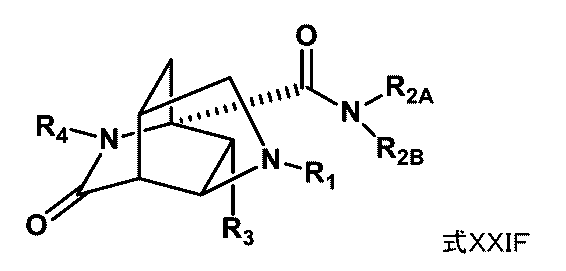
により表される化合物もしくはそのエナンチオマーまたはそれらの塩またはそれらの溶媒和物として例示することができる。式XXIF中、
R1、R3およびR4は各々独立して、水素、必要に応じて置換されたアルキル、必要に応じて置換されたアルケニル、必要に応じて置換されたアルキニル、必要に応じて置換されたシクロアルキル、必要に応じて置換されたヘテロシクロアルキル、必要に応じて置換されたアリール、必要に応じて置換されたヘテロアリール、または必要に応じて置換されたカルボニルであり、
R2AおよびR2Bは各々独立して、水素、必要に応じて置換されたアルキル、必要に応じて置換されたアルケニル、必要に応じて置換されたアルキニル、必要に応じて置換されたシクロアルキル、必要に応じて置換されたヘテロシクロアルキル、必要に応じて置換されたアリール、必要に応じて置換されたヘテロアリール、もしくは必要に応じて置換されたカルボニルであるか、または、
R2AおよびR2Bは、それらが結合する窒素原子と一緒になって、非アリールヘテロ環もしくはヘテロアリール環を形成し、ここで、前記非アリールヘテロ環および前記ヘテロアリール環は各々独立して、必要に応じて置換されている。
なお、本明細書では、R2AまたはR2Bの一方が水素の場合、本明細書に記載されるR2と同様の定義が採用され得ることが理解される。
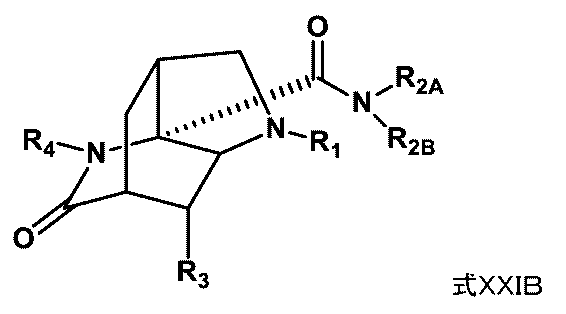
により表される化合物もしくはそのエナンチオマーまたはそれらの塩またはそれらの溶媒和物として例示することができる。式XXIB中のR1、R2a、R2BおよびR3は本明細書に記載される式XXIFの場合と同様に定義される。
R2AおよびR2Bは各々独立して、水素、必要に応じて置換されたアルキル、必要に応じて置換されたシクロアルキル、必要に応じて置換されたヘテロシクロアルキル、必要に応じて置換されたアリール、必要に応じて置換されたヘテロアリール、もしくは必要に応じて置換されたカルボニルであるか、または、
R2AおよびR2Bは、それらが結合する窒素原子と一緒になって、非アリールヘテロ環もしくはヘテロアリール環を形成し、ここで、前記非アリールヘテロ環および前記ヘテロアリール環は各々独立して、必要に応じて置換されている。
R2AおよびR2Bは各々独立して、水素、必要に応じて置換されたC1-12アルキル、必要に応じて置換されたC3-10シクロアルキル、必要に応じて置換された5~10員ヘテロシクロアルキル、必要に応じて置換されたC6-10アリール、必要に応じて置換された5~10員ヘテロアリール、もしくは必要に応じて置換されたカルボニルであるか、または、R2AおよびR2Bは、それらが結合する窒素原子と一緒になって、5~10員非アリールヘテロ環もしくは5~10員ヘテロアリール環を形成し、ここで、前記非アリールヘテロ環および前記ヘテロアリール環は各々独立して、必要に応じて置換されている。
水素、
必要に応じて置換されたアルキル、
必要に応じて置換されたアリールアルキル、
必要に応じて置換されたヘテロアリールアルキル、
必要に応じて置換されたシクロアルキル、
必要に応じて置換されたヘテロシクロアルキル、
必要に応じて置換されたアリール、
ホルミル、
必要に応じて置換されたアルキルカルボニル、
必要に応じて置換されたアルコキシカルボニル、
必要に応じて置換されたアリールカルボニル、
必要に応じて置換されたアリールオキシカルボニル、
必要に応じて置換されたヘテロアリールカルボニル、
必要に応じて置換されたヘテロアリールオキシカルボニル、
必要に応じて置換されたシクロアルキルカルボニル、
必要に応じて置換されたシクロアルキルオキシカルボニル、
必要に応じて置換されたヘテロシクロアルキルカルボニル、
必要に応じて置換されたヘテロシクロアルキルオキシカルボニル、
カルバモイル、
必要に応じて置換されたアルキルカルバモイル、
必要に応じて置換されたアルコキシカルバモイル、
必要に応じて置換されたアリールカルバモイル、
必要に応じて置換されたヘテロアリールカルバモイル、
必要に応じて置換されたシクロアルキルカルバモイル、または
必要に応じて置換されたヘテロシクロアルキルカルバモイルであり、
ここで、R1、R3およびR4の上記基は、
置換基群IIから選択される1個から最大置換可能数までの同一または異なる置換基で必要に応じて置換され、
R2AおよびR2Bは各々独立して、
水素、
必要に応じて置換されたアルキル、
必要に応じて置換されたアリールアルキル、
必要に応じて置換されたシクロアルキル、
必要に応じて置換されたヘテロシクロアルキル、
ホルミル、
必要に応じて置換されたアルキルカルボニル、
必要に応じて置換されたアルコキシカルボニル、
必要に応じて置換されたアリールカルボニル、
必要に応じて置換されたアリールオキシカルボニル、
必要に応じて置換されたヘテロアリールカルボニル、
必要に応じて置換されたヘテロアリールオキシカルボニル、
必要に応じて置換されたシクロアルキルカルボニル、
必要に応じて置換されたシクロアルキルオキシカルボニル、
必要に応じて置換されたヘテロシクロアルキルカルボニル、
必要に応じて置換されたヘテロシクロアルキルオキシカルボニル、
カルバモイル、
必要に応じて置換されたアルキルカルバモイル、
必要に応じて置換されたアルコキシカルバモイル、
必要に応じて置換されたアリールカルバモイル、
必要に応じて置換されたヘテロアリールカルバモイル、
必要に応じて置換されたシクロアルキルカルバモイル、または
必要に応じて置換されたヘテロシクロアルキルカルバモイルであり、
ここで、R2AおよびR2Bの上記基は、置換基群IIから選択される1個から最大置換可能数までの同一または異なる置換基で必要に応じて置換されるか、または、
R2AおよびR2Bは、それらが結合する窒素原子と一緒になって、非アリールヘテロ環もしくはヘテロアリール環を形成し、
ここで、前記非アリールヘテロ環および前記ヘテロアリール環は各々独立して、置換基群IIから選択される1個から最大置換可能数までの同一または異なる置換基で置換されていてもよい。
R2AおよびR2Bは各々独立して、水素、必要に応じて置換されたアルキル、必要に応じて置換されたアリールアルキル、必要に応じて置換されたシクロアルキル、必要に応じて置換されたヘテロシクロアルキル、ホルミル、必要に応じて置換されたアルキルカルボニル、必要に応じて置換されたアルコキシカルボニル、必要に応じて置換されたアリールカルボニル、必要に応じて置換されたアリールオキシカルボニル、必要に応じて置換されたヘテロアリールカルボニル、必要に応じて置換されたヘテロアリールオキシカルボニル、必要に応じて置換されたシクロアルキルカルボニル、必要に応じて置換されたシクロアルキルオキシカルボニル、必要に応じて置換されたヘテロシクロアルキルカルボニル、必要に応じて置換されたヘテロシクロアルキルオキシカルボニル、カルバモイル、必要に応じて置換されたアルキルカルバモイル、必要に応じて置換されたアルコキシカルバモイル、必要に応じて置換されたアリールカルバモイル、必要に応じて置換されたヘテロアリールカルバモイル、必要に応じて置換されたシクロアルキルカルバモイル、または必要に応じて置換されたヘテロシクロアルキルカルバモイルであり、ここで、R2AおよびR2Bの上記基は、置換基群IIから選択される1個から最大置換可能数までの同一または異なる置換基で必要に応じて置換されるか、または、
R2AおよびR2Bは、それらが結合する窒素原子と一緒になって、非アリールヘテロ環もしくはヘテロアリール環を形成し、ここで、前記非アリールヘテロ環および前記ヘテロアリール環は各々独立して、置換基群IIから選択される1個から最大置換可能数までの同一または異なる置換基で置換されていてもよい。
水素、
必要に応じて置換されたC1-12アルキル、
必要に応じて置換されたC6-10アリールC1-12アルキル、
必要に応じて置換された5~10員ヘテロアリールC1-12アルキル、
必要に応じて置換されたC3-10シクロアルキル、
必要に応じて置換された5~10員ヘテロシクロアルキル、
必要に応じて置換されたC6-10アリール、
ホルミル、
必要に応じて置換されたC1-12アルキルカルボニル、
必要に応じて置換されたC1-12アルコキシカルボニル、
必要に応じて置換されたC6-10アリールカルボニル、
必要に応じて置換されたC6-10アリールオキシカルボニル、
必要に応じて置換された5~10員ヘテロアリールカルボニル、
必要に応じて置換された5~10員ヘテロアリールオキシカルボニル、
必要に応じて置換されたC3-10シクロアルキルカルボニル、
必要に応じて置換されたC3-10シクロアルキルオキシカルボニル、
必要に応じて置換された5~10員ヘテロシクロアルキルカルボニル、
必要に応じて置換された5~10員ヘテロシクロアルキルオキシカルボニル、
カルバモイル、
必要に応じて置換されたC1-12アルキルカルバモイル、
必要に応じて置換されたC1-12アルコキシカルバモイル、
必要に応じて置換されたC6-10アリールカルバモイル、
必要に応じて置換された5~10員ヘテロアリールカルバモイル、
必要に応じて置換されたC3-10シクロアルキルカルバモイル、または
必要に応じて置換された5~10員ヘテロシクロアルキルカルバモイルであり、
ここで、R1、R3およびR4の上記基は、置換基群IIIから選択される1個から最大置換可能数までの同一または異なる置換基で必要に応じて置換され、
R2AおよびR2Bは各々独立して、
水素、
必要に応じて置換されたC1-12アルキル、
必要に応じて置換されたC6-10アリールC1-12アルキル、
必要に応じて置換されたC3-10シクロアルキル、
必要に応じて置換された5~10員ヘテロシクロアルキル、
ホルミル、
必要に応じて置換されたC1-12アルキルカルボニル、
必要に応じて置換されたC1-12アルコキシカルボニル、
必要に応じて置換されたC6-10アリールカルボニル、
必要に応じて置換されたC6-10アリールオキシカルボニル、
必要に応じて置換された5~10員ヘテロアリールカルボニル、
必要に応じて置換された5~10員ヘテロアリールオキシカルボニル、
必要に応じて置換されたC3-10シクロアルキルカルボニル、
必要に応じて置換されたC3-10シクロアルキルオキシカルボニル、
必要に応じて置換された5~10員ヘテロシクロアルキルカルボニル、
必要に応じて置換された5~10員ヘテロシクロアルキルオキシカルボニル、
カルバモイル、
必要に応じて置換されたC1-12アルキルカルバモイル、
必要に応じて置換されたC1-12アルコキシカルバモイル、
必要に応じて置換されたC6-10アリールカルバモイル、
必要に応じて置換された5~10員ヘテロアリールカルバモイル、
必要に応じて置換されたC3-10シクロアルキルカルバモイル、もしくは
必要に応じて置換された5~10員ヘテロシクロアルキルカルバモイルであり、
ここで、R2AおよびR2Bの上記基は、置換基群IIIから選択される1個から最大置換可能数までの同一または異なる置換基で必要に応じて置換されるか、または、
R2AおよびR2Bは、それらが結合する窒素原子と一緒になって、5~10員非アリールヘテロ環もしくは5~10員ヘテロアリール環を形成し、
ここで、前記非アリールヘテロ環および前記5~10員ヘテロアリール環は各々独立して、置換基群Vから選択される1個から最大置換可能数までの同一または異なる置換基で置換されていてもよい。
R2AおよびR2Bは各々独立して、水素、必要に応じて置換されたC1-12アルキル、必要に応じて置換されたC6-10アリールC1-12アルキル、必要に応じて置換されたC3-10シクロアルキル、必要に応じて置換された5~10員ヘテロシクロアルキル、ホルミル、必要に応じて置換されたC1-12アルキルカルボニル、必要に応じて置換されたC1-12アルコキシカルボニル、必要に応じて置換されたC6-10アリールカルボニル、必要に応じて置換されたC6-10アリールオキシカルボニル、必要に応じて置換された5~10員ヘテロアリールカルボニル、必要に応じて置換された5~10員ヘテロアリールオキシカルボニル、必要に応じて置換されたC3-10シクロアルキルカルボニル、必要に応じて置換されたC3-10シクロアルキルオキシカルボニル、必要に応じて置換された5~10員ヘテロシクロアルキルカルボニル、必要に応じて置換された5~10員ヘテロシクロアルキルオキシカルボニル、カルバモイル、必要に応じて置換されたC1-12アルキルカルバモイル、必要に応じて置換されたC1-12アルコキシカルバモイル、必要に応じて置換されたC6-10アリールカルバモイル、必要に応じて置換された5~10員ヘテロアリールカルバモイル、必要に応じて置換されたC3-10シクロアルキルカルバモイル、もしくは必要に応じて置換された5~10員ヘテロシクロアルキルカルバモイルであり、ここで、R2AおよびR2Bの上記基は、置換基群IIIから選択される1個から最大置換可能数までの同一または異なる置換基で必要に応じて置換されるか、または、
R2AおよびR2Bは、それらが結合する窒素原子と一緒になって、5~10員非アリールヘテロ環もしくは5~10員ヘテロアリール環を形成し、ここで、前記非アリールヘテロ環および前記5~10員ヘテロアリール環は各々独立して、置換基群Vから選択される1個から最大置換可能数までの同一または異なる置換基で置換されていてもよい。
水素、
必要に応じて置換されたアルキル、
必要に応じて置換されたアリールアルキル、
必要に応じて置換されたヘテロアリールアルキル、
必要に応じて置換されたシクロアルキル、
必要に応じて置換されたヘテロシクロアルキル、
ホルミル、
必要に応じて置換されたアルキルカルボニル、
必要に応じて置換されたアルコキシカルボニル、
必要に応じて置換されたアリールカルボニル、
必要に応じて置換されたアリールオキシカルボニル、
必要に応じて置換されたシクロアルキルカルボニル、
必要に応じて置換されたシクロアルキルオキシカルボニル、
必要に応じて置換されたヘテロシクロアルキルカルボニル、
必要に応じて置換されたヘテロシクロアルキルオキシカルボニル、
カルバモイル、
必要に応じて置換されたアルキルカルバモイル、
必要に応じて置換されたアルコキシカルバモイル、
必要に応じて置換されたアリールカルバモイル、
必要に応じて置換されたヘテロアリールカルバモイル、
必要に応じて置換されたシクロアルキルカルバモイル、または
必要に応じて置換されたヘテロシクロアルキルカルバモイルであり、
ここで、R1およびR4の上記基は、置換基群IIIから選択される1個から最大置換可能数までの同一または異なる置換基で必要に応じて置換されている。
水素、
必要に応じて置換されたC1-12アルキル、
必要に応じて置換されたC6-10アリールC1-12アルキル、
必要に応じて置換された5~10員ヘテロアリールC1-12アルキル、
必要に応じて置換されたC3-10シクロアルキル、
必要に応じて置換された5~10員ヘテロシクロアルキル、
ホルミル、
必要に応じて置換されたC1-12アルキルカルボニル、
必要に応じて置換されたC1-12アルコキシカルボニル、
必要に応じて置換されたC6-10アリールカルボニル、
必要に応じて置換されたC6-10アリールオキシカルボニル、
必要に応じて置換されたC3-10シクロアルキルカルボニル、
必要に応じて置換されたC3-10シクロアルキルオキシカルボニル、
必要に応じて置換された5~10員ヘテロシクロアルキルカルボニル、
必要に応じて置換された5~10員ヘテロシクロアルキルオキシカルボニル、
カルバモイル、
必要に応じて置換されたC1-12アルキルカルバモイル、
必要に応じて置換されたC1-12アルコキシカルバモイル、
必要に応じて置換されたC6-10アリールカルバモイル、
必要に応じて置換された5~10員ヘテロアリールカルバモイル、
必要に応じて置換されたC3-10シクロアルキルカルバモイル、または
必要に応じて置換された5~10員ヘテロシクロアルキルカルバモイルであり、
ここで、R1およびR4の上記基は、置換基群IIIから選択される1個から最大置換可能数までの同一または異なる置換基で必要に応じて置換されている。
水素、
必要に応じて置換されたアルキル、
必要に応じて置換されたアリールアルキル、
必要に応じて置換されたヘテロアリールアルキル、
必要に応じて置換されたヘテロシクロアルキル、
ホルミル、
必要に応じて置換されたアルキルカルボニル、
必要に応じて置換されたアルコキシカルボニル、
必要に応じて置換されたアリールカルボニル、または
必要に応じて置換されたアリールオキシカルボニルであり、
ここで、R1およびR4の上記基は、置換基群IIIから選択される1個から最大置換可能数までの同一または異なる置換基で必要に応じて置換されている。
水素、
必要に応じて置換されたC1-12アルキル、
必要に応じて置換されたC6-10アリールC1-12アルキル、
必要に応じて置換された5~10員ヘテロアリールC1-12アルキル、
必要に応じて置換された5~10員ヘテロシクロアルキル、
ホルミル、
必要に応じて置換されたC1-12アルキルカルボニル、
必要に応じて置換されたC1-12アルコキシカルボニル、
必要に応じて置換されたC6-10アリールカルボニル、
必要に応じて置換されたC6-10アリールオキシカルボニルであり、
ここで、R1およびR4の上記基は、置換基群IIIから選択される1個から最大置換可能数までの同一または異なる置換基で必要に応じて置換されている。
水素、
必要に応じて置換されたC1-12アルキル、
必要に応じて置換されたC6-10アリールC1-6アルキル、
必要に応じて置換された5~10員ヘテロアリールC1-6アルキル、
必要に応じて置換された5~10員ヘテロシクロアルキル、
ホルミル、
必要に応じて置換されたC1-12アルキルカルボニル、
必要に応じて置換されたC1-12アルコキシカルボニル、
必要に応じて置換されたC6-10アリールカルボニル、
必要に応じて置換されたC6-10アリールオキシカルボニルであり、
ここで、R1およびR4の上記基は、置換基群IIIから選択される1個から最大置換可能数までの同一または異なる置換基で必要に応じて置換されている。
水素;
アルキル;
ヒドロキシ、置換オキシ、ホルミル、置換カルボニル、アミノ、置換アミノ、およびシクロアルキル、および置換シクロアルキルからなる群より選択される1個から最大置換可能数までの同一または異なる置換基で置換されているアルキル;
アリールアルキル;
ハロゲン、アルキル、置換アルキル、ヒドロキシ、置換オキシ、アミノ、置換アミノ、およびニトロからなる群より選択される1個から最大置換可能数までの同一または異なる置換基で置換されているアリールアルキル;
ヘテロアリールアルキル;
ハロゲン、アルキル、置換アルキル、ヒドロキシ、置換オキシ、アミノ、置換アミノ、およびニトロからなる群より選択される1個から最大置換可能数までの同一または異なる置換基で置換されているヘテロアリールアルキル;
シクロアルキル;
置換シクロアルキル;
ヘテロシクロアルキル;
置換ヘテロシクロアルキル;または
置換カルボニルであり、ここで、前記置換オキシ、置換カルボニル、置換アミノ、置換シクロアルキル、置換ヘテロシクロアルキル、および置換アルキルは各々独立して、置換基群IVから選択される1個から最大置換可能数までの同一または異なる置換基を有する。
アルキル、
ヒドロキシ、置換オキシ、ホルミル、置換カルボニル、アミノ、置換アミノ、およびシクロアルキル、および置換シクロアルキルからなる群より選択される1個から最大置換可能数までの同一または異なる置換基で置換されているアルキル、
アリールアルキル、
ハロゲン、アルキル、置換アルキル、ヒドロキシ、置換オキシ、アミノ、置換アミノ、およびニトロからなる群より選択される1個から最大置換可能数までの同一または異なる置換基で置換されているアリールアルキル、
シクロアルキル、置換シクロアルキル、ヘテロシクロアルキル、置換ヘテロシクロアルキル、または置換カルボニルであり、ここで、前記置換オキシ、置換カルボニル、置換アミノ、置換シクロアルキル、置換ヘテロシクロアルキル、および置換アルキルは各々独立して、置換基群IVから選択される1個から最大置換可能数までの同一または異なる置換基を有する。
水素;
アルキル;
ヒドロキシ、アルコキシ、ハロアルコキシ、ホルミル、カルボキシ、カルバモイル、アルキルカルボニル、アルコキシカルボニル、アミノ、アミジノアミノ、アルコキシカルボニル置換されたアミジノアミノ、アルコキシカルボニルアミノ、シクロアルキル、およびハロシクロアルキルからなる群より選択される1個から最大置換可能数までの同一または異なる置換基で置換されているアルキル;
アリールアルキル;
ハロゲン、アルキル、ハロアルキル、ヒドロキシ、アルコキシ、ハロアルコキシ、アリールアルコキシ、アミノ、アルキルアミノ、(アルキル)2アミノ、シクロアルキルカルボニルアミノ、およびニトロからなる群より選択される1個から最大置換可能数までの同一または異なる置換基で置換されているアリールアルキル;
ヘテロアリールアルキル;
ハロゲン、アルキル、ハロアルキル、ヒドロキシ、アルコキシ、ハロアルコキシ、アリールアルコキシ、アミノ、アルキルアミノ、(アルキル)2アミノ、シクロアルキルカルボニルアミノ、およびニトロからなる群より選択される1個から最大置換可能数までの同一または異なる置換基で置換されているヘテロアリールアルキル;
シクロアルキル;
ハロシクロアルキル;
ヘテロシクロアルキル;
アルキルカルボニル;
アリールアルキルカルボニル;
アルコキシカルボニル;
アリールカルボニル;または
アリールオキシカルボニルである。
アルキル、
ヒドロキシ、アルコキシ、ハロアルコキシ、ホルミル、カルボキシ、カルバモイル、アルキルカルボニル、アルコキシカルボニル、アミノ、アミジノアミノ、アルコキシカルボニル置換されたアミジノアミノ、アルコキシカルボニルアミノ、シクロアルキル、およびハロシクロアルキルからなる群より選択される1個から最大置換可能数までの同一または異なる置換基で置換されているアルキル、
アリールアルキル、
ハロゲン、アルキル、ハロアルキル、ヒドロキシ、アルコキシ、ハロアルコキシ、アミノ、アルキルアミノ、(アルキル)2アミノ、シクロアルキルカルボニルアミノ、およびニトロからなる群より選択される1個から最大置換可能数までの同一または異なる置換基で置換されているアリールアルキル、
シクロアルキル、ハロシクロアルキル、ヘテロシクロアルキル、アルキルカルボニル、アリールアルキルカルボニル、アルコキシカルボニル、アリールカルボニル、またはアリールオキシカルボニルである。
水素;
C1-12アルキル;
C1-12アルコキシ、C1-12ハロアルコキシ、ホルミル、カルボキシ、カルバモイル、C1-12アルキルカルボニル、C1-12アルコキシカルボニル、C1-12ハロアルコキシカルボニル、アミジノアミノ、C1-12アルコキシカルボニル置換されたアミジノアミノ、C1-12アルコキシカルボニルアミノ、ヒドロキシ、C3-10シクロアルキル、およびC3-10ハロシクロアルキルからなる群より選択される1個から最大置換可能数までの同一または異なる置換基で置換されているC1-12アルキル;
C6-10アリールC1-12アルキル;
ハロゲン、C1-12アルキル、C1-12ハロアルキル、ヒドロキシ、C1-12アルコキシ、C1-12ハロアルコキシ、C6-10アリールC1-12アルコキシ、アミノ、C1-12アルキルアミノ、(C1-12アルキル)2アミノ、C3-10シクロアルキルカルボニルアミノ、ニトロ、およびヒドロキシからなる群より選択される1個から最大置換可能数までの同一または異なる置換基で置換されているC6-10アリールC1-12アルキル;
5~10員ヘテロアリールC1-12アルキル;
ハロゲン、C1-12アルキル、C1-12ハロアルキル、ヒドロキシ、C1-12アルコキシ、C1-12ハロアルコキシ、C6-10アリールC1-12アルコキシ、アミノ、C1-12アルキルアミノ、(C1-12アルキル)2アミノ、C3-10シクロアルキルカルボニルアミノ、ニトロ、およびヒドロキシからなる群より選択される1個から最大置換可能数までの同一または異なる置換基で置換されている5~10員ヘテロアリールC1-12アルキル;
C3-10シクロアルキル;
5~10員ヘテロシクロアルキル;
C1-12アルキルカルボニル;
C6-10アリールC1-12アルキルカルボニル;
C1-12アルコキシカルボニル;
C6-10アリールカルボニル;または
C6-10アリールオキシカルボニルである。
水素;
C1-12アルキル;
C1-6アルコキシ、C1-6ハロアルコキシ、ホルミル、カルボキシ、カルバモイル、C1-6アルキルカルボニル、C1-6アルコキシカルボニル、C1-6ハロアルコキシカルボニル、アミジノアミノ、C1-6アルコキシカルボニル置換されたアミジノアミノ、C1-6アルコキシカルボニルアミノ、ヒドロキシ、C3-10シクロアルキル、およびC3-10ハロシクロアルキルからなる群より選択される1個から最大置換可能数までの同一または異なる置換基で置換されているC1-12アルキル;
C6-10アリールC1-6アルキル;
ハロゲン、C1-6アルキル、C1-6ハロアルキル、ヒドロキシ、C1-6アルコキシ、C1-6ハロアルコキシ、C6-10アリールC1-6アルコキシ、アミノ、C1-6アルキルアミノ、(C1-6アルキル)2アミノ、C3-10シクロアルキルカルボニルアミノ、ニトロ、およびヒドロキシからなる群より選択される1個から最大置換可能数までの同一または異なる置換基で置換されているC6-10アリールC1-6アルキル;
ハロゲン、C1-6アルキル、C1-6ハロアルキル、ヒドロキシ、C1-6アルコキシ、C1-6ハロアルコキシ、C6-10アリールC1-6アルコキシ、アミノ、C1-6アルキルアミノ、(C1-6アルキル)2アミノ、C3-10シクロアルキルカルボニルアミノ、ニトロ、およびヒドロキシからなる群より選択される1個から最大置換可能数までの同一または異なる置換基で置換されている5~10員ヘテロアリールC1-6アルキル;
C3-10シクロアルキル;
5~10員ヘテロシクロアルキル;
C1-6アルキルカルボニル;
C6-10アリールC1-6アルキルカルボニル;
C1-6アルコキシカルボニル;
C6-10アリールカルボニル;または
C6-10アリールオキシカルボニルである。
C1-12アルキル、
C1-6アルコキシ、C1-6ハロアルコキシ、ホルミル、カルボキシ、カルバモイル、C1-6アルキルカルボニル、C1-6アルコキシカルボニル、C1-6ハロアルコキシカルボニル、アミジノアミノ、C1-6アルコキシカルボニル置換されたアミジノアミノ、C1-6アルコキシカルボニルアミノ、ヒドロキシ、およびC3-10シクロアルキル、およびC3-10ハロシクロアルキルからなる群より選択される1個から最大置換可能数までの同一または異なる置換基で置換されているC1-12アルキル、
C6-10アリールC1-6アルキル、
ハロゲン、C1-6アルキル、C1-6ハロアルキル、ヒドロキシ、C1-6アルコキシ、C1-6ハロアルコキシ、アミノ、C1-6アルキルアミノ、(C1-6アルキル)2アミノ、C3-10シクロアルキルカルボニルアミノ、ニトロ、およびヒドロキシからなる群より選択される1個から最大置換可能数までの同一または異なる置換基で置換されているC6-10アリールC1-6アルキル、
C3-10シクロアルキル、5~10員ヘテロシクロアルキル、C1-6アルキルカルボニル、C6-10アリールC1-6アルキルカルボニル、C1-6アルコキシカルボニル、C6-10アリールカルボニル、またはC6-10アリールオキシカルボニルである。
アルキル、
ヒドロキシ、置換オキシ、置換カルボニル、アミノ、置換アミノ、シクロアルキル、および置換シクロアルキルからなる群より選択される1個から最大置換可能数までの同一または異なる置換基で置換されているアルキル、
アリールアルキル、
ハロゲン、アルキル、置換アルキル、ヒドロキシ、および置換オキシからなる群より選択される1個から最大置換可能数までの同一または異なる置換基で置換されているアリールアルキル、
アリール、または
置換アリールであり、ここで、前記置換オキシ、置換カルボニル、置換アミノ、置換シクロアルキル、置換アルキル、および置換アリールは各々独立して、置換基群IVから選択される1個から最大置換可能数までの同一または異なる置換基を有する。
アルキル、
ヒドロキシ、アルコキシ、ハロアルコキシ、トリアルキルシリルオキシ、カルボキシ、カルバモイル、アルコキシカルボニル、ハロアルコキシカルボニル、アミノ、アミジノアミノ、アルコキシカルボニル置換されたアミジノアミノ、アルコキシカルボニルアミノ、ハロアルコキシカルボニルアミノ、シクロアルキル、およびハロシクロアルキルからなる群より選択される1個から最大置換可能数までの同一または異なる置換基で置換されているアルキル、
アリールアルキル、
ハロゲン、アルキル、ハロアルキル、ヒドロキシ、アルコキシ、およびハロアルコキシからなる群より選択される1個から最大置換可能数までの同一または異なる置換基で置換されているアリールアルキル、または
アリールである。
C1-12アルキル、
ヒドロキシ、C1-6アルコキシ、C1-6ハロアルコキシ、トリC1-6アルキルシリルオキシ、カルボキシ、カルバモイル、C1-6アルコキシカルボニル、C1-6ハロアルコキシカルボニル、アミノ、アミジノアミノ、C1-6アルコキシカルボニル置換されたアミジノアミノ、C1-6アルコキシカルボニルアミノ、C1-6ハロアルコキシカルボニルアミノ、C3-10シクロアルキル、およびC3-10ハロシクロアルキルからなる群より選択される1個から最大置換可能数までの同一または異なる置換基で置換されているC1-12アルキル、
C6-10アリールC1-6アルキル、
ハロゲン、C1-6アルキル、C1-6ハロアルキル、ヒドロキシ、C1-6アルコキシ、およびC1-6ハロアルコキシからなる群より選択される1個から最大置換可能数までの同一または異なる置換基で置換されているC6-10アリールC1-6アルキル、または
C6-10アリールである。
アルキル、
ヒドロキシ、置換オキシ、アミノ、置換アミノ、シクロアルキル、および置換シクロアルキルからなる群より選択される1個から最大置換可能数までの同一または異なる置換基で置換されているアルキル、
アリールアルキル、
ハロゲン、アルキル、置換アルキル、ヒドロキシ、および置換オキシからなる群より選択される1個から最大置換可能数までの同一または異なる置換基で置換されているアリールアルキル、
シクロアルキル、
置換シクロアルキル、ヘテロシクロアルキル、もしくは置換ヘテロシクロアルキルであり、
ここで、前記置換オキシ、置換アミノ、置換アルキル、置換シクロアルキル、および置換ヘテロシクロアルキルは各々独立して、置換基群IVから選択される1個から最大置換可能数までの同一または異なる置換基を有するか、または、
R2AおよびR2Bは、それらが結合する窒素原子と一緒になって、非アリールヘテロ環を形成し、ここで、前記非アリールヘテロ環は、置換基群VIから選択される1個または最大置換可能数までの同一または異なる置換基で置換されていてもよい。
アルキル、
ヒドロキシ、アルコキシ、カルボキシ、アルコキシカルボニル、アミノ、アミジノアミノ、アルコキシカルボニル置換されたアミジノアミノ、アルコキシカルボニルアミノ、シクロアルキル、およびハロシクロアルキルからなる群より選択される1個から最大置換可能数までの同一または異なる置換基で置換されているアルキル、
アリールアルキル、
ハロゲン、アルキル、ハロアルキル、ヒドロキシ、アルコキシ、およびハロアルコキシからなる群より選択される1個から最大置換可能数までの同一または異なる置換基で置換されているアリールアルキル、
シクロアルキル、
アルキル置換されたシクロアルキル、もしくはヘテロシクロアルキルであるか、または、R2AおよびR2Bは、それらが結合する窒素原子と一緒になって、非アリールヘテロ環を形成し、ここで、前記非アリールヘテロ環は、置換基群VIから選択される1個または最大置換可能数までの同一または異なる置換基で置換されていてもよい。
水素;
C1-12アルキル;
ヒドロキシ、C1-12アルコキシ、カルボキシ、C1-12アルコキシカルボニル、アミノ、アミジノアミノ、C1-12アルコキシカルボニル置換されたアミジノアミノ、およびC1-12アルコキシカルボニルアミノ、C3-10シクロアルキル、およびC3-10ハロシクロアルキルからなる群より選択される1個から最大置換可能数までの同一または異なる置換基で置換されているC1-12アルキル;
C6-10アリールC1-12アルキル;ハロゲン、C1-12アルキル、C1-12ハロアルキル、ヒドロキシ、C1-12アルコキシ、およびC1-12ハロアルコキシからなる群より選択される1個から最大置換可能数までの同一または異なる置換基で置換されているC6-10アリールC1-12アルキル;
C3-10シクロアルキル;
C1-12アルキル置換されたC3-10シクロアルキル;もしくは
5~10員ヘテロシクロアルキルであるか、または、
R2AおよびR2Bは、それらが結合する窒素原子と一緒になって、5~6員非アリールヘテロ環を形成し、ここで、前記非アリールヘテロ環は、置換基群VIから選択される1個または最大置換可能数までの同一または異なる置換基で置換されていてもよい。
C1-12アルキル、
ヒドロキシ、C1-6アルコキシ、カルボキシ、C1-6アルコキシカルボニル、アミノ、アミジノアミノ、C1-6アルコキシカルボニル置換されたアミジノアミノ、およびC1-6アルコキシカルボニルアミノ、C3-10シクロアルキル、およびC3-10ハロシクロアルキルからなる群より選択される1個から最大置換可能数までの同一または異なる置換基で置換されているC1-12アルキル、
C6-10アリールC1-6アルキル、
ハロゲン、C1-6アルキル、C1-6ハロアルキル、ヒドロキシ、C1-6アルコキシ、およびC1-6ハロアルコキシからなる群より選択される1個から最大置換可能数までの同一または異なる置換基で置換されているC6-10アリールC1-6アルキル、
C3-10シクロアルキル、
C1-6アルキル置換されたC3-10シクロアルキル、もしくは5~10員ヘテロシクロアルキルであるか、または、
R2AおよびR2Bは、それらが結合する窒素原子と一緒になって、5~6員非アリールヘテロ環を形成し、ここで、前記非アリールヘテロ環は、置換基群VIから選択される1個または最大置換可能数までの同一または異なる置換基で置換されていてもよい。
R2Bは、イソプロピル、イソブチル、sec-ブチル、ペンチル、イソペンチル、ヘキシル、ヘプチル、アミジノアミノプロピル、(tert-ブトキシカルボニル置換されたアミジノアミノ)プロピル、(tert-ブトキシカルボニル)エチル、tert-ブトキシエチル、メトキシブチル、カルボキシエチル、ヒドロキシエチル、(tert-ブトキシカルボニルアミノ)プロピル、シクロペンチルメチル、シクロヘキシルメチル、シクロへプチルメチル、(1,2,3,4-テトラヒドロナフタレニル)メチル、2,2,6,6-テトラメチルピペリジニル、ベンジル、フェニルエチル、ナフタレニルメチル、フルオロベンジル、クロロベンジル、(フルオロフェニル)エチル、メチルベンジル、tert-ブトキシベンジル、ヒドロキシベンジル、β-ヒドロキシフェネチル、α-ヒドロキシメチルフェネチル、シクロペンチル、シクロヘキシル、もしくはメチルシクロヘキシルであるか、または、R2AおよびR2Bは、それらが結合する窒素原子と一緒になって、ピロリジン環を形成する。
R2AおよびR2Bは、それらが結合する窒素原子と一緒になって、ピロリジン環を形成する。

により表される化合物もしくはそのエナンチオマーまたはそれらの塩またはそれらの溶媒和物として例示することができる。式IF中、
R1およびR2は各々独立して、必要に応じて置換されたアルキル、必要に応じて置換されたシクロアルキル、または必要に応じて置換されたヘテロシクロアルキルであり、
R3は、必要に応じて置換されたアルキル、必要に応じて置換されたアルケニル、必要に応じて置換されたアルキニル、必要に応じて置換されたアリール、必要に応じて置換されたヘテロアリール、必要に応じて置換されたシクロアルキル、または必要に応じて置換されたヘテロシクロアルキルであり、
Xは-NH-である。
R3は、必要に応じて置換されたアルキル、必要に応じて置換されたアルケニル、または必要に応じて置換されたアリールである。
R3は、必要に応じて置換されたアルキル、または必要に応じて置換されたアリールである。
R3は、C1-6アルキル、C6-10アリールC1-6アルキル、C1-6アルキル置換されたC6-10アリールC1-6アルキル、ハロゲン置換されたC6-10アリールC1-6アルキル、C1-6ハロアルコキシ置換されたC6-10アリールC1-6アルキル、C1-6アルコキシ置換されたC6-10アリールC1-6アルキル、ヒドロキシ置換されたC6-10アリールC1-6アルキル、C1-6アルキル置換アミノで置換されたC6-10アリールC1-6アルキル、C6-10アリール、C1-4アルキル置換されたC6-10アリール、またはハロゲン置換されたC6-10アリールである。
R3は、メチル、n-プロピル、イソブチル、イソペンチル、ベンジル、メチルもしくはt-ブチル置換されたベンジル、フルオロもしくはクロロ置換されたベンジル、メトキシもしくはエトキシ置換されたベンジル、トリフルオロメトキシ置換されたベンジル、ヒドロキシ置換されたベンジル、ジメチルアミノ置換されたベンジル、またはフェニルである。
R3は、メチル、エチル、n-プロピル、イソプロピル、イソブチル、イソペンチル、ベンジル、4-メチルベンジル、4-(t-ブチル)ベンジル、4-フルオロベンジル、3-クロロベンジル、4-クロロベンジル、4-メトキシベンジル、4-エトキシベンジル、4-ヒドロキシベンジル、3-ヒドロキシベンジル、4-(ジメチルアミノ)ベンジル、4-(トリフルオロメトキシ)ベンジル、またはフェニルである。
一実施形態において、R1のC3-6シクロアルキルC1-6アルキルにおけるC3-6シクロアルキル基は、シクロプロピル、シクロブチル、シクロペンチル、およびシクロヘキシルからなる群より選択されてもよく、該C1-6アルキル基は、メチル、エチル、n-プロピル、イソプロピル、n-ブチル、イソブチル、tert-ブチル、sec-ブチル、n-ペンチル、イソペンチル、ネオペンチル、tert-ペンチル、1,2-ジメチルプロピル、n-ヘキシルからなる群より選択されてもよい。
一実施形態において、R1は、シクロプロピルメチル、シクロブチルメチル、シクロペンチルメチル、シクロヘキシルメチル、シクロプロピルエチル、シクロブチルエチル、シクロペンチルエチル、またはシクロヘキシルエチルである。
一実施形態において、R1は、シクロプロピルメチル、またはシクロヘキシルメチルである。
一実施形態において、R3のC3-6シクロアルキルC1-6アルキルにおけるC3-6シクロアルキル基は、シクロプロピル、シクロブチル、シクロペンチル、およびシクロヘキシルからなる群より選択されてもよく、該C1-6アルキル基は、メチル、エチル、n-プロピル、イソプロピル、n-ブチル、イソブチル、tert-ブチル、sec-ブチル、n-ペンチル、イソペンチル、ネオペンチル、tert-ペンチル、1,2-ジメチルプロピル、n-ヘキシルからなる群より選択されてもよい。
一実施形態において、R3は、シクロプロピルメチルである。
一実施形態において、R3は、1-プロペニル、1-ブテニル、1-ペンテニル、1-ヘキセニル、2-メチル-1-プロペニル、2-メチル-1-ブテニル、2-エチル-1-ブテニル、および2-メチル-1-ペンテニルからなる群より選択されてもよい。
一実施形態において、R3は、2-メチル-1-プロペニルである。
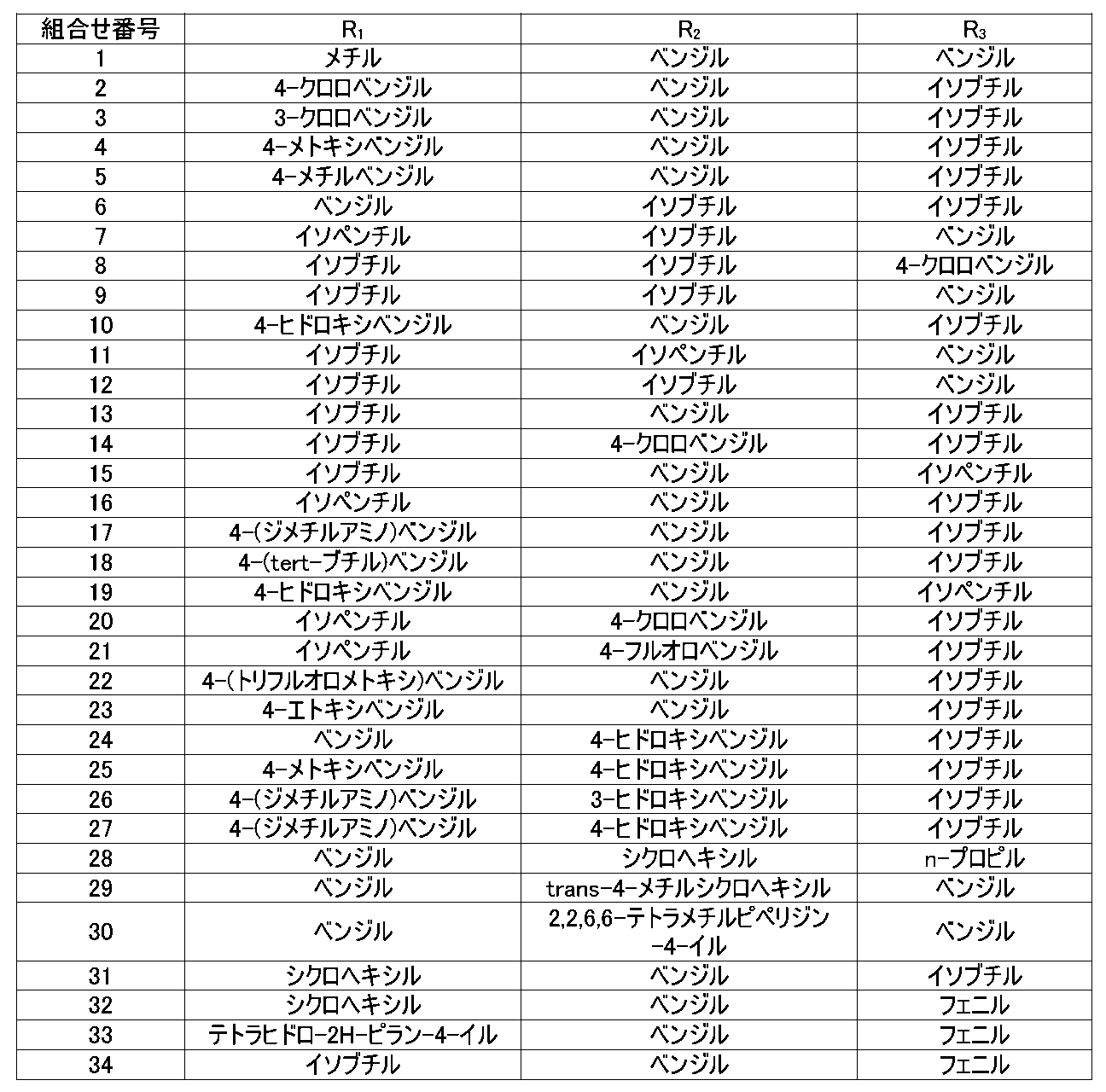

置換基R1、R2およびR3の好ましい組合せ
(R1,R2,R3)=(M1,N1,Q1),(M1,N1,Q2),(M1,N1,Q3),(M1,N1,Q4),(M1,N1,Q5),(M1,N1,Q6),(M1,N2,Q1),(M1,N2,Q2),(M1,N2,Q3),(M1,N2,Q4),(M1,N2,Q5),(M1,N2,Q6),(M1,N3,Q1),(M1,N3,Q2),(M1,N3,Q3),(M1,N3,Q4),(M1,N3,Q5),(M1,N3,Q6),(M1,N4,Q1),(M1,N4,Q2),(M1,N4,Q3),(M1,N4,Q4),(M1,N4,Q5),(M1,N4,Q6),(M1,N5,Q1),(M1,N5,Q2),(M1,N5,Q3),(M1,N5,Q4),(M1,N5,Q5),(M1,N5,Q6),(M1,N6,Q1),(M1,N6,Q2),(M1,N6,Q3),(M1,N6,Q4),(M1,N6,Q5),(M1,N6,Q6),(M1,N7,Q1),(M1,N7,Q2),(M1,N7,Q3),(M1,N7,Q4),(M1,N7,Q5),(M1,N7,Q6),(M1,N8,Q1),(M1,N8,Q2),(M1,N8,Q3),(M1,N8,Q4),(M1,N8,Q5),(M1,N8,Q6),(M1,N9,Q1),(M1,N9,Q2),(M1,N9,Q3),(M1,N9,Q4),(M1,N9,Q5),(M1,N9,Q6),(M1,N10,Q1),(M1,N10,Q2),(M1,N10,Q3),(M1,N10,Q4),(M1,N10,Q5),(M1,N10,Q6),(M2,N1,Q1),(M2,N1,Q2),(M2,N1,Q3),(M2,N1,Q4),(M2,N1,Q5),(M2,N1,Q6),(M2,N2,Q1),(M2,N2,Q2),(M2,N2,Q3),(M2,N2,Q4),(M2,N2,Q5),(M2,N2,Q6),(M2,N3,Q1),(M2,N3,Q2),(M2,N3,Q3),(M2,N3,Q4),(M2,N3,Q5),(M2,N3,Q6),(M2,N4,Q1),(M2,N4,Q2),(M2,N4,Q3),(M2,N4,Q4),(M2,N4,Q5),(M2,N4,Q6),(M2,N5,Q1),(M2,N5,Q2),(M2,N5,Q3),(M2,N5,Q4),(M2,N5,Q5),(M2,N5,Q6),(M2,N6,Q1),(M2,N6,Q2),(M2,N6,Q3),(M2,N6,Q4),(M2,N6,Q5),(M2,N6,Q6),(M2,N7,Q1),(M2,N7,Q2),(M2,N7,Q3),(M2,N7,Q4),(M2,N7,Q5),(M2,N7,Q6),(M2,N8,Q1),(M2,N8,Q2),(M2,N8,Q3),(M2,N8,Q4),(M2,N8,Q5),(M2,N8,Q6),(M2,N9,Q1),(M2,N9,Q2),(M2,N9,Q3),(M2,N9,Q4),(M2,N9,Q5),(M2,N9,Q6),(M2,N10,Q1),(M2,N10,Q2),(M2,N10,Q3),(M2,N10,Q4),(M2,N10,Q5),(M2,N10,Q6),(M3,N1,Q1),(M3,N1,Q2),(M3,N1,Q3),(M3,N1,Q4),(M3,N1,Q5),(M3,N1,Q6),(M3,N2,Q1),(M3,N2,Q2),(M3,N2,Q3),(M3,N2,Q4),(M3,N2,Q5),(M3,N2,Q6),(M3,N3,Q1),(M3,N3,Q2),(M3,N3,Q3),(M3,N3,Q4),(M3,N3,Q5),(M3,N3,Q6),(M3,N4,Q1),(M3,N4,Q2),(M3,N4,Q3),(M3,N4,Q4),(M3,N4,Q5),(M3,N4,Q6),(M3,N5,Q1),(M3,N5,Q2),(M3,N5,Q3),(M3,N5,Q4),(M3,N5,Q5),(M3,N5,Q6),(M3,N6,Q1),(M3,N6,Q2),(M3,N6,Q3),(M3,N6,Q4),(M3,N6,Q5),(M3,N6,Q6),(M3,N7,Q1),(M3,N7,Q2),(M3,N7,Q3),(M3,N7,Q4),(M3,N7,Q5),(M3,N7,Q6),(M3,N8,Q1),(M3,N8,Q2),(M3,N8,Q3),(M3,N8,Q4),(M3,N8,Q5),(M3,N8,Q6),(M3,N9,Q1),(M3,N9,Q2),(M3,N9,Q3),(M3,N9,Q4),(M3,N9,Q5),(M3,N9,Q6),(M3,N10,Q1),(M3,N10,Q2),(M3,N10,Q3),(M3,N10,Q4),(M3,N10,Q5),(M3,N10,Q6),(M4,N1,Q1),(M4,N1,Q2),(M4,N1,Q3),(M4,N1,Q4),(M4,N1,Q5),(M4,N1,Q6),(M4,N2,Q1),(M4,N2,Q2),(M4,N2,Q3),(M4,N2,Q4),(M4,N2,Q5),(M4,N2,Q6),(M4,N3,Q1),(M4,N3,Q2),(M4,N3,Q3),(M4,N3,Q4),(M4,N3,Q5),(M4,N3,Q6),(M4,N4,Q1),(M4,N4,Q2),(M4,N4,Q3),(M4,N4,Q4),(M4,N4,Q5),(M4,N4,Q6),(M4,N5,Q1),(M4,N5,Q2),(M4,N5,Q3),(M4,N5,Q4),(M4,N5,Q5),(M4,N5,Q6),(M4,N6,Q1),(M4,N6,Q2),(M4,N6,Q3),(M4,N6,Q4),(M4,N6,Q5),(M4,N6,Q6),(M4,N7,Q1),(M4,N7,Q2),(M4,N7,Q3),(M4,N7,Q4),(M4,N7,Q5),(M4,N7,Q6),(M4,N8,Q1),(M4,N8,Q2),(M4,N8,Q3),(M4,N8,Q4),(M4,N8,Q5),(M4,N8,Q6),(M4,N9,Q1),(M4,N9,Q2),(M4,N9,Q3),(M4,N9,Q4),(M4,N9,Q5),(M4,N9,Q6),(M4,N10,Q1),(M4,N10,Q2),(M4,N10,Q3),(M4,N10,Q4),(M4,N10,Q5),(M4,N10,Q6),(M5,N1,Q1),(M5,N1,Q2),(M5,N1,Q3),(M5,N1,Q4),(M5,N1,Q5),(M5,N1,Q6),(M5,N2,Q1),(M5,N2,Q2),(M5,N2,Q3),(M5,N2,Q4),(M5,N2,Q5),(M5,N2,Q6),(M5,N3,Q1),(M5,N3,Q2),(M5,N3,Q3),(M5,N3,Q4),(M5,N3,Q5),(M5,N3,Q6),(M5,N4,Q1),(M5,N4,Q2),(M5,N4,Q3),(M5,N4,Q4),(M5,N4,Q5),(M5,N4,Q6),(M5,N5,Q1),(M5,N5,Q2),(M5,N5,Q3),(M5,N5,Q4),(M5,N5,Q5),(M5,N5,Q6),(M5,N6,Q1),(M5,N6,Q2),(M5,N6,Q3),(M5,N6,Q4),(M5,N6,Q5),(M5,N6,Q6),(M5,N7,Q1),(M5,N7,Q2),(M5,N7,Q3),(M5,N7,Q4),(M5,N7,Q5),(M5,N7,Q6),(M5,N8,Q1),(M5,N8,Q2),(M5,N8,Q3),(M5,N8,Q4),(M5,N8,Q5),(M5,N8,Q6),(M5,N9,Q1),(M5,N9,Q2),(M5,N9,Q3),(M5,N9,Q4),(M5,N9,Q5),(M5,N9,Q6),(M5,N10,Q1),(M5,N10,Q2),(M5,N10,Q3),(M5,N10,Q4),(M5,N10,Q5),(M5,N10,Q6),(M6,N1,Q1),(M6,N1,Q2),(M6,N1,Q3),(M6,N1,Q4),(M6,N1,Q5),(M6,N1,Q6),(M6,N2,Q1),(M6,N2,Q2),(M6,N2,Q3),(M6,N2,Q4),(M6,N2,Q5),(M6,N2,Q6),(M6,N3,Q1),(M6,N3,Q2),(M6,N3,Q3),(M6,N3,Q4),(M6,N3,Q5),(M6,N3,Q6),(M6,N4,Q1),(M6,N4,Q2),(M6,N4,Q3),(M6,N4,Q4),(M6,N4,Q5),(M6,N4,Q6),(M6,N5,Q1),(M6,N5,Q2),(M6,N5,Q3),(M6,N5,Q4),(M6,N5,Q5),(M6,N5,Q6),(M6,N6,Q1),(M6,N6,Q2),(M6,N6,Q3),(M6,N6,Q4),(M6,N6,Q5),(M6,N6,Q6),(M6,N7,Q1),(M6,N7,Q2),(M6,N7,Q3),(M6,N7,Q4),(M6,N7,Q5),(M6,N7,Q6),(M6,N8,Q1),(M6,N8,Q2),(M6,N8,Q3),(M6,N8,Q4),(M6,N8,Q5),(M6,N8,Q6),(M6,N9,Q1),(M6,N9,Q2),(M6,N9,Q3),(M6,N9,Q4),(M6,N9,Q5),(M6,N9,Q6),(M6,N10,Q1),(M6,N10,Q2),(M6,N10,Q3),(M6,N10,Q4),(M6,N10,Q5),(M6,N10,Q6),(M7,N1,Q1),(M7,N1,Q2),(M7,N1,Q3),(M7,N1,Q4),(M7,N1,Q5),(M7,N1,Q6),(M7,N2,Q1),(M7,N2,Q2),(M7,N2,Q3),(M7,N2,Q4),(M7,N2,Q5),(M7,N2,Q6),(M7,N3,Q1),(M7,N3,Q2),(M7,N3,Q3),(M7,N3,Q4),(M7,N3,Q5),(M7,N3,Q6),(M7,N4,Q1),(M7,N4,Q2),(M7,N4,Q3),(M7,N4,Q4),(M7,N4,Q5),(M7,N4,Q6),(M7,N5,Q1),(M7,N5,Q2),(M7,N5,Q3),(M7,N5,Q4),(M7,N5,Q5),(M7,N5,Q6),(M7,N6,Q1),(M7,N6,Q2),(M7,N6,Q3),(M7,N6,Q4),(M7,N6,Q5),(M7,N6,Q6),(M7,N7,Q1),(M7,N7,Q2),(M7,N7,Q3),(M7,N7,Q4),(M7,N7,Q5),(M7,N7,Q6),(M7,N8,Q1),(M7,N8,Q2),(M7,N8,Q3),(M7,N8,Q4),(M7,N8,Q5),(M7,N8,Q6),(M7,N9,Q1),(M7,N9,Q2),(M7,N9,Q3),(M7,N9,Q4),(M7,N9,Q5),(M7,N9,Q6),(M7,N10,Q1),(M7,N10,Q2),(M7,N10,Q3),(M7,N10,Q4),(M7,N10,Q5),(M7,N10,Q6),(M8,N1,Q1),(M8,N1,Q2),(M8,N1,Q3),(M8,N1,Q4),(M8,N1,Q5),(M8,N1,Q6),(M8,N2,Q1),(M8,N2,Q2),(M8,N2,Q3),(M8,N2,Q4),(M8,N2,Q5),(M8,N2,Q6),(M8,N3,Q1),(M8,N3,Q2),(M8,N3,Q3),(M8,N3,Q4),(M8,N3,Q5),(M8,N3,Q6),(M8,N4,Q1),(M8,N4,Q2),(M8,N4,Q3),(M8,N4,Q4),(M8,N4,Q5),(M8,N4,Q6),(M8,N5,Q1),(M8,N5,Q2),(M8,N5,Q3),(M8,N5,Q4),(M8,N5,Q5),(M8,N5,Q6),(M8,N6,Q1),(M8,N6,Q2),(M8,N6,Q3),(M8,N6,Q4),(M8,N6,Q5),(M8,N6,Q6),(M8,N7,Q1),(M8,N7,Q2),(M8,N7,Q3),(M8,N7,Q4),(M8,N7,Q5),(M8,N7,Q6),(M8,N8,Q1),(M8,N8,Q2),(M8,N8,Q3),(M8,N8,Q4),(M8,N8,Q5),(M8,N8,Q6),(M8,N9,Q1),(M8,N9,Q2),(M8,N9,Q3),(M8,N9,Q4),(M8,N9,Q5),(M8,N9,Q6),(M8,N10,Q1),(M8,N10,Q2),(M8,N10,Q3),(M8,N10,Q4),(M8,N10,Q5),(M8,N10,Q6),(M9,N1,Q1),(M9,N1,Q2),(M9,N1,Q3),(M9,N1,Q4),(M9,N1,Q5),(M9,N1,Q6),(M9,N2,Q1),(M9,N2,Q2),(M9,N2,Q3),(M9,N2,Q4),(M9,N2,Q5),(M9,N2,Q6),(M9,N3,Q1),(M9,N3,Q2),(M9,N3,Q3),(M9,N3,Q4),(M9,N3,Q5),(M9,N3,Q6),(M9,N4,Q1),(M9,N4,Q2),(M9,N4,Q3),(M9,N4,Q4),(M9,N4,Q5),(M9,N4,Q6),(M9,N5,Q1),(M9,N5,Q2),(M9,N5,Q3),(M9,N5,Q4),(M9,N5,Q5),(M9,N5,Q6),(M9,N6,Q1),(M9,N6,Q2),(M9,N6,Q3),(M9,N6,Q4),(M9,N6,Q5),(M9,N6,Q6),(M9,N7,Q1),(M9,N7,Q2),(M9,N7,Q3),(M9,N7,Q4),(M9,N7,Q5),(M9,N7,Q6),(M9,N8,Q1),(M9,N8,Q2),(M9,N8,Q3),(M9,N8,Q4),(M9,N8,Q5),(M9,N8,Q6),(M9,N9,Q1),(M9,N9,Q2),(M9,N9,Q3),(M9,N9,Q4),(M9,N9,Q5),(M9,N9,Q6),(M9,N10,Q1),(M9,N10,Q2),(M9,N10,Q3),(M9,N10,Q4),(M9,N10,Q5),(M9,N10,Q6),(M10,N1,Q1),(M10,N1,Q2),(M10,N1,Q3),(M10,N1,Q4),(M10,N1,Q5),(M10,N1,Q6),(M10,N2,Q1),(M10,N2,Q2),(M10,N2,Q3),(M10,N2,Q4),(M10,N2,Q5),(M10,N2,Q6),(M10,N3,Q1),(M10,N3,Q2),(M10,N3,Q3),(M10,N3,Q4),(M10,N3,Q5),(M10,N3,Q6),(M10,N4,Q1),(M10,N4,Q2),(M10,N4,Q3),(M10,N4,Q4),(M10,N4,Q5),(M10,N4,Q6),(M10,N5,Q1),(M10,N5,Q2),(M10,N5,Q3),(M10,N5,Q4),(M10,N5,Q5),(M10,N5,Q6),(M10,N6,Q1),(M10,N6,Q2),(M10,N6,Q3),(M10,N6,Q4),(M10,N6,Q5),(M10,N6,Q6),(M10,N7,Q1),(M10,N7,Q2),(M10,N7,Q3),(M10,N7,Q4),(M10,N7,Q5),(M10,N7,Q6),(M10,N8,Q1),(M10,N8,Q2),(M10,N8,Q3),(M10,N8,Q4),(M10,N8,Q5),(M10,N8,Q6),(M10,N9,Q1),(M10,N9,Q2),(M10,N9,Q3),(M10,N9,Q4),(M10,N9,Q5),(M10,N9,Q6),(M10,N10,Q1),(M10,N10,Q2),(M10,N10,Q3),(M10,N10,Q4),(M10,N10,Q5),(M10,N10,Q6),(M11,N1,Q1),(M11,N1,Q2),(M11,N1,Q3),(M11,N1,Q4),(M11,N1,Q5),(M11,N1,Q6),(M11,N2,Q1),(M11,N2,Q2),(M11,N2,Q3),(M11,N2,Q4),(M11,N2,Q5),(M11,N2,Q6),(M11,N3,Q1),(M11,N3,Q2),(M11,N3,Q3),(M11,N3,Q4),(M11,N3,Q5),(M11,N3,Q6),(M11,N4,Q1),(M11,N4,Q2),(M11,N4,Q3),(M11,N4,Q4),(M11,N4,Q5),(M11,N4,Q6),(M11,N5,Q1),(M11,N5,Q2),(M11,N5,Q3),(M11,N5,Q4),(M11,N5,Q5),(M11,N5,Q6),(M11,N6,Q1),(M11,N6,Q2),(M11,N6,Q3),(M11,N6,Q4),(M11,N6,Q5),(M11,N6,Q6),(M11,N7,Q1),(M11,N7,Q2),(M11,N7,Q3),(M11,N7,Q4),(M11,N7,Q5),(M11,N7,Q6),(M11,N8,Q1),(M11,N8,Q2),(M11,N8,Q3),(M11,N8,Q4),(M11,N8,Q5),(M11,N8,Q6),(M11,N9,Q1),(M11,N9,Q2),(M11,N9,Q3),(M11,N9,Q4),(M11,N9,Q5),(M11,N9,Q6),(M11,N10,Q1),(M11,N10,Q2),(M11,N10,Q3),(M11,N10,Q4),(M11,N10,Q5),(M11,N10,Q6),(M12,N1,Q1),(M12,N1,Q2),(M12,N1,Q3),(M12,N1,Q4),(M12,N1,Q5),(M12,N1,Q6),(M12,N2,Q1),(M12,N2,Q2),(M12,N2,Q3),(M12,N2,Q4),(M12,N2,Q5),(M12,N2,Q6),(M12,N3,Q1),(M12,N3,Q2),(M12,N3,Q3),(M12,N3,Q4),(M12,N3,Q5),(M12,N3,Q6),(M12,N4,Q1),(M12,N4,Q2),(M12,N4,Q3),(M12,N4,Q4),(M12,N4,Q5),(M12,N4,Q6),(M12,N5,Q1),(M12,N5,Q2),(M12,N5,Q3),(M12,N5,Q4),(M12,N5,Q5),(M12,N5,Q6),(M12,N6,Q1),(M12,N6,Q2),(M12,N6,Q3),(M12,N6,Q4),(M12,N6,Q5),(M12,N6,Q6),(M12,N7,Q1),(M12,N7,Q2),(M12,N7,Q3),(M12,N7,Q4),(M12,N7,Q5),(M12,N7,Q6),(M12,N8,Q1),(M12,N8,Q2),(M12,N8,Q3),(M12,N8,Q4),(M12,N8,Q5),(M12,N8,Q6),(M12,N9,Q1),(M12,N9,Q2),(M12,N9,Q3),(M12,N9,Q4),(M12,N9,Q5),(M12,N9,Q6),(M12,N10,Q1),(M12,N10,Q2),(M12,N10,Q3),(M12,N10,Q4),(M12,N10,Q5),(M12,N10,Q6),(M13,N1,Q1),(M13,N1,Q2),(M13,N1,Q3),(M13,N1,Q4),(M13,N1,Q5),(M13,N1,Q6),(M13,N2,Q1),(M13,N2,Q2),(M13,N2,Q3),(M13,N2,Q4),(M13,N2,Q5),(M13,N2,Q6),(M13,N3,Q1),(M13,N3,Q2),(M13,N3,Q3),(M13,N3,Q4),(M13,N3,Q5),(M13,N3,Q6),(M13,N4,Q1),(M13,N4,Q2),(M13,N4,Q3),(M13,N4,Q4),(M13,N4,Q5),(M13,N4,Q6),(M13,N5,Q1),(M13,N5,Q2),(M13,N5,Q3),(M13,N5,Q4),(M13,N5,Q5),(M13,N5,Q6),(M13,N6,Q1),(M13,N6,Q2),(M13,N6,Q3),(M13,N6,Q4),(M13,N6,Q5),(M13,N6,Q6),(M13,N7,Q1),(M13,N7,Q2),(M13,N7,Q3),(M13,N7,Q4),(M13,N7,Q5),(M13,N7,Q6),(M13,N8,Q1),(M13,N8,Q2),(M13,N8,Q3),(M13,N8,Q4),(M13,N8,Q5),(M13,N8,Q6),(M13,N9,Q1),(M13,N9,Q2),(M13,N9,Q3),(M13,N9,Q4),(M13,N9,Q5),(M13,N9,Q6),(M13,N10,Q1),(M13,N10,Q2),(M13,N10,Q3),(M13,N10,Q4),(M13,N10,Q5),(M13,N10,Q6),(M14,N1,Q1),(M14,N1,Q2),(M14,N1,Q3),(M14,N1,Q4),(M14,N1,Q5),(M14,N1,Q6),(M14,N2,Q1),(M14,N2,Q2),(M14,N2,Q3),(M14,N2,Q4),(M14,N2,Q5),(M14,N2,Q6),(M14,N3,Q1),(M14,N3,Q2),(M14,N3,Q3),(M14,N3,Q4),(M14,N3,Q5),(M14,N3,Q6),(M14,N4,Q1),(M14,N4,Q2),(M14,N4,Q3),(M14,N4,Q4),(M14,N4,Q5),(M14,N4,Q6),(M14,N5,Q1),(M14,N5,Q2),(M14,N5,Q3),(M14,N5,Q4),(M14,N5,Q5),(M14,N5,Q6),(M14,N6,Q1),(M14,N6,Q2),(M14,N6,Q3),(M14,N6,Q4),(M14,N6,Q5),(M14,N6,Q6),(M14,N7,Q1),(M14,N7,Q2),(M14,N7,Q3),(M14,N7,Q4)
,(M14,N7,Q5),(M14,N7,Q6),(M14,N8,Q1),(M14,N8,Q2),(M14,N8,Q3),(M14,N8,Q4),(M14,N8,Q5),(M14,N8,Q6),(M14,N9,Q1),(M14,N9,Q2),(M14,N9,Q3),(M14,N9,Q4),(M14,N9,Q5),(M14,N9,Q6),(M14,N10,Q1),(M14,N10,Q2),(M14,N10,Q3),(M14,N10,Q4),(M14,N10,Q5),(M14,N10,Q6),(M15,N1,Q1),(M15,N1,Q2),(M15,N1,Q3),(M15,N1,Q4),(M15,N1,Q5),(M15,N1,Q6),(M15,N2,Q1),(M15,N2,Q2),(M15,N2,Q3),(M15,N2,Q4),(M15,N2,Q5),(M15,N2,Q6),(M15,N3,Q1),(M15,N3,Q2),(M15,N3,Q3),(M15,N3,Q4),(M15,N3,Q5),(M15,N3,Q6),(M15,N4,Q1),(M15,N4,Q2),(M15,N4,Q3),(M15,N4,Q4),(M15,N4,Q5),(M15,N4,Q6),(M15,N5,Q1),(M15,N5,Q2),(M15,N5,Q3),(M15,N5,Q4),(M15,N5,Q5),(M15,N5,Q6),(M15,N6,Q1),(M15,N6,Q2),(M15,N6,Q3),(M15,N6,Q4),(M15,N6,Q5),(M15,N6,Q6),(M15,N7,Q1),(M15,N7,Q2),(M15,N7,Q3),(M15,N7,Q4),(M15,N7,Q5),(M15,N7,Q6),(M15,N8,Q1),(M15,N8,Q2),(M15,N8,Q3),(M15,N8,Q4),(M15,N8,Q5),(M15,N8,Q6),(M15,N9,Q1),(M15,N9,Q2),(M15,N9,Q3),(M15,N9,Q4),(M15,N9,Q5),(M15,N9,Q6),(M15,N10,Q1),(M15,N10,Q2),(M15,N10,Q3),(M15,N10,Q4),(M15,N10,Q5),(M15,N10,Q6)

により表される化合物もしくはそのエナンチオマーまたはそれらの塩またはそれらの溶媒和物として例示することができる。式IB中のR1、R2およびR3は式IFの場合と同様に定義され、Xは-NH-である。
本開示の化合物には、置換基の種類によっては、互変異性体、幾何異性体等の立体異性体および光学異性体が存在しうるが、本開示はそれらも含む。即ち、本開示の化合物において不斉炭素原子が一つ以上存在する場合には、ジアステレオマーや光学異性体が存在するが、これらのジアステレオマーや光学異性体の混合物や単離されたものも本開示の化合物に含まれる。
本開示の組成物および方法は、それを必要とする個体を処置するために利用することができる。特定の実施形態では、個体は、哺乳動物、例えばヒトなど、または非ヒト哺乳動物である。動物、例えばヒトなどに投与された場合、組成物または化合物は、好ましくは、例えば、本開示の化合物と、薬学的に許容される担体とを含む医薬組成物として投与される。薬学的に許容される担体は、当技術分野で周知であり、例えば、水溶液、例えば、水もしくは緩衝生理食塩水など、または他の溶媒もしくはビヒクル、例えば、グリコール、グリセロール、油、例えば、オリーブ油など、または注射用の有機エステルが挙げられる。好ましい実施形態では、このような医薬組成物がヒトへの投与、特に侵襲経路の投与のためである場合(すなわち、例えば、上皮バリアを介した輸送または拡散を回避する注射またはインプランテーションなどの経路)、水溶液はパイロジェンを含まない、またはパイロジェンを実質的に含まない。賦形剤は、例えば、剤の遅延放出を実行するように、または1つもしくは複数の細胞、組織または器官を選択的にターゲットとするよう選択することができる。医薬組成物は、単位剤形、例えば、錠剤、カプセル剤(スプリンクルカプセル剤およびゼラチンカプセル剤を含む)、顆粒剤、再構成用に凍結乾燥されたもの、散剤、液剤、シロップ剤、坐剤、または注射などであり得る。組成物はまた、経皮的送達システム、例えば、皮膚パッチ中に存在することもできる。組成物はまた、局所的投与に対して適切な液剤、例えば点眼剤などの中に存在することもできる。
本開示はまた、狂犬病を予防または治療する方法であって、その予防または治療を必要とする被験体に、式IF、式IB、式XXIF、もしくは式XXIBの化合物またはその薬学的に許容される塩またはそれらの溶媒和物、あるいはそれを含む医薬組成物を投与する工程を含む、方法を提供する。一実施形態において、狂犬病を予防または治療する方法は、治療有効量の、その予防または治療を必要とする被験体に、式IF、式IB、式XXIF、もしくは式XXIBの化合物またはその薬学的に許容される塩またはそれらの溶媒和物、あるいはそれを含む医薬組成物を投与する工程を含む。
本開示の一つの実施形態において、狂犬病を予防または治療するための医薬の製造のための、式IF、式IB、XXIF、もしくはXXIBの化合物またはその薬学的に許容される塩またはそれらの溶媒和物の使用を提供する。
以下に、本開示の化合物の製造法について、例を挙げて説明するが、本開示はもとよりこれらに限定されるものではない。
化合物IIIの合成
化合物IIIは、例えば下記製造法によって製造することができる。
(1)経路1-1 化合物VIIと化合物VIIIからの合成

(2)経路1-2 アミンの保護を経由する化合物VIIと化合物VIIIからの合成

(3)経路1-3 化合物XIと化合物XIIからの合成

ここで、XLは求核置換反応における脱離基を表し、その例としては、ハロゲン(例えば、塩素、臭素、ヨウ素)、硫酸エステル(-OSO3H等)、スルホニル-O-基(例えば、メタンスルホニル-O-、トルエンスルホニル-O-等)が挙げられる。
(4)経路1-4 化合物XIと化合物XIIIからの合成

(5)経路1-5 化合物VIIと化合物XIVからの合成

ここで、化合物III中のR1を-CH2-R1’で表すことができる場合には、化合物III中のR1を-CH2-R1’に置き換えて、化合物IIIを化合物III’として表すことができる。
式中、R1は、本明細書項1または項A1に定義されるとおりであり、「Protect」はアミノ基の保護基である。アミノ基の保護基の例としては、エトキシカルボニル基、tert-ブトキシカルボニル基、アセチル基、ベンゾイル基、トリフルオロアセチル基、ベンジルオキシカルボニル基、3-もしくは4-クロロベンジルオキシカルボニル基、トリフェニルメチル基、メタンスルホニル基、p-トルエンスルホニル基、トリメチルシリル基、ベンジルオキシカルボニル基、3-もしくは4-クロロベンジルオキシカルボニル基、ベンジルスルホニル基、ベンジル基、4-ニトロベンジル基、4-メトキシベンジル基、メチル基、エチル基等が挙げられる。
化合物Vの合成
式Vの化合物は、例えば下記製造法によって製造することができる。
(1)経路2-1 化合物XVIと化合物XVIIからの合成

式中、R8はアルコキシ、アリールオキシ、ヒドロキシまたはハロゲンを表す。この合成は、当業者に公知の種々の反応によって達成される。R2がアリールの場合、化合物Vを、C. W. Cheung, M. L. Ploeger, and X. Hu, Nature Communications 2017, 8, 14878に記載の方法に従って合成してもよい。
(2)経路2-2 化合物XVIIIからの合成

式中、R2は、本明細書項1または項A1に定義されるとおりである。
化合物VIの合成
式VIの化合物は、例えば下記製造法によって化合物IIIと化合物IVから製造することができる。
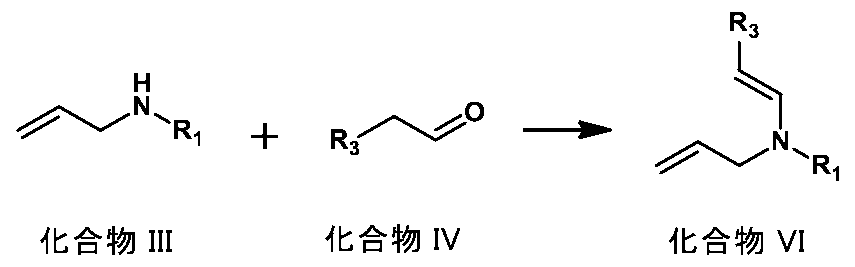
式中、R1およびR3は、本明細書項1または項A1に定義されるとおりである。
式IIFの化合物および式IIBの化合物-経路1
式IIFの化合物および式IIBの化合物は、例えば、公知の方法(例えば、Bioorg. Med. Chem. 23 (2015) 2629-2635、Tetrahedron 63 (2007) 6004-6014、Eur. J. Org. Chem. 2009, 2185-2189およびEur. J. Org. Chem. 2011, 2354-2359に記載される方法等)に準じて、三成分からワンポット合成により製造することができる。
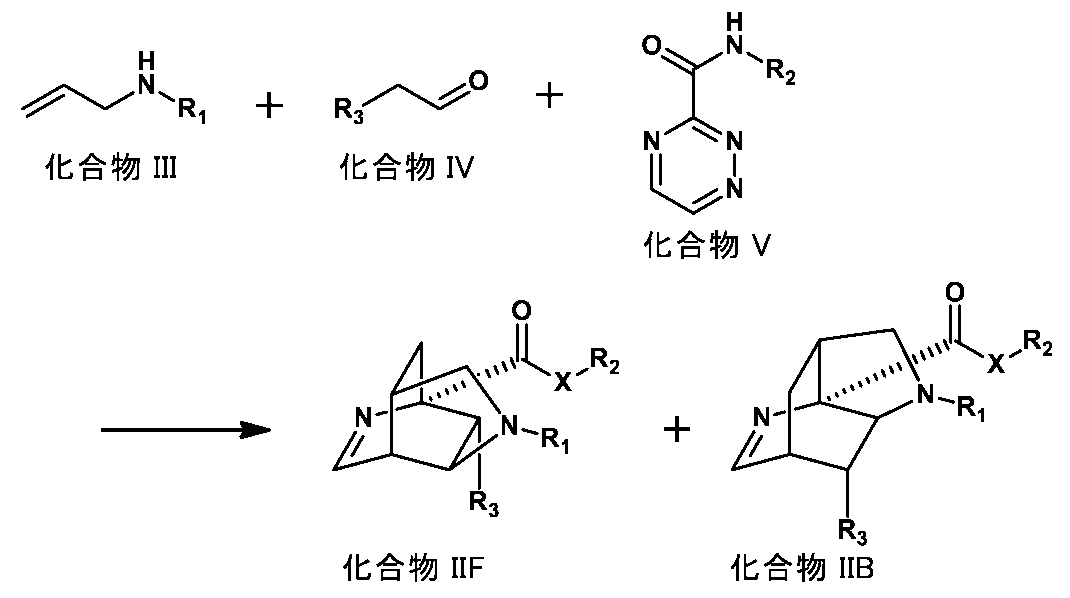
式中、R1、R2、およびR3は、本明細書項1または項A1に定義されるとおりであり、Xは-NH-である。
式IIFの化合物および式IIBの化合物-経路2
式IIFの化合物および式IIBの化合物は、例えば、下記のように二成分から製造することができる。
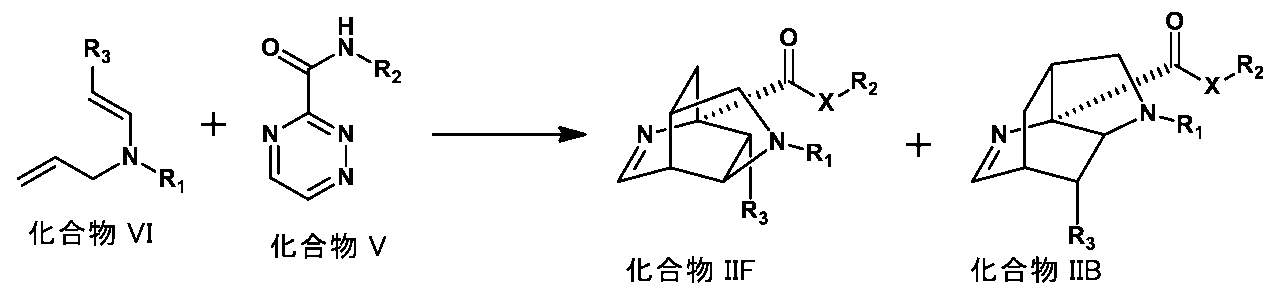
式中、R1、R2、およびR3は、本明細書項1または項A1に定義されるとおりであり、Xは-NH-である。
化合物IFおよび化合物IBの合成
ステップ6-1
イミンの酸化
化合物IF(即ち、式IFの化合物)または化合物IB(即ち、式IBの化合物)は、例えば、公知の方法(例えば、RSC Advances, 2012, 2, 5536-5538およびTetrahedron Lett. 50 (2009) 3436-3438に記載される方法等)に準じて、下記のように酸化することにより化合物IIF(即ち、式IIFの化合物)または化合物IIB(即ち、式IIBの化合物)から製造することができる。下記式中のXは-NH-である。
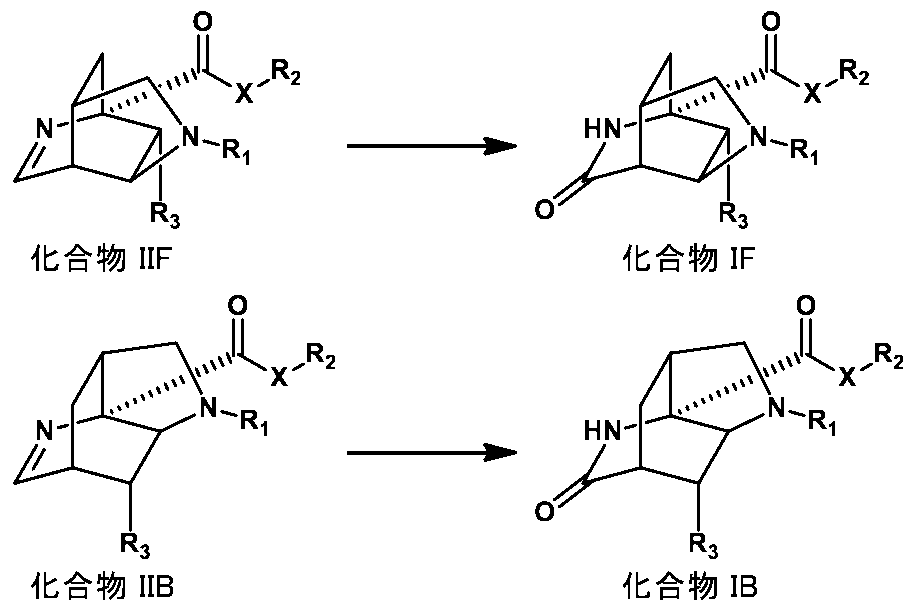
化合物V’の合成
式V’の化合物は、例えば下記製造法によって製造することができる。
(1)経路7-1 化合物XVIと化合物XVII’からの合成
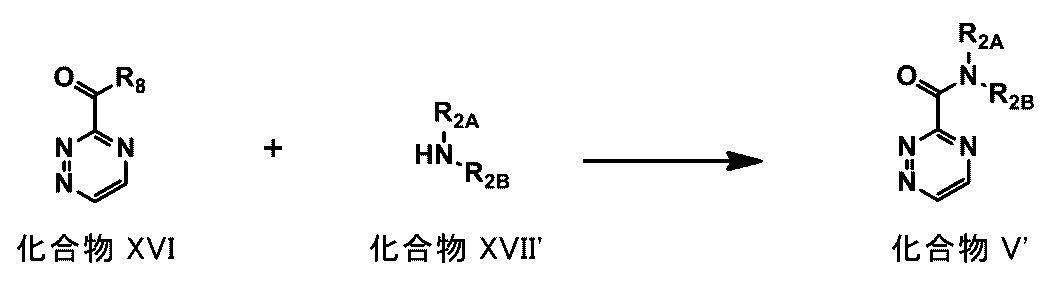
式V’の化合物は、合成スキーム2の経路2-1と同様の条件下で合成することができる。R8はアルコキシ、アリールオキシ、ヒドロキシまたはハロゲンを表す。
(2)経路7-2 化合物XVIII’からの合成
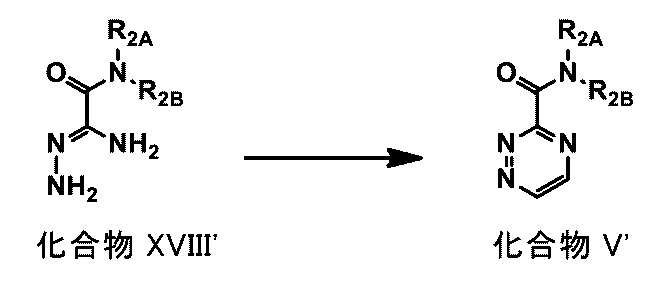
式中、R2は、本明細書項1または項A1に定義されるとおりである。
式XXIIFの化合物および式XXIIBの化合物-経路1
式XXIIFの化合物および式XXIIBの化合物は、例えば、公知の方法(例えば、Bioorg. Med. Chem. 23 (2015) 2629-2635、Tetrahedron 63 (2007) 6004-6014、Eur. J. Org. Chem. 2009, 2185-2189およびEur. J. Org. Chem. 2011, 2354-2359に記載される方法等)に準じて、三成分からワンポット合成により製造することができる。
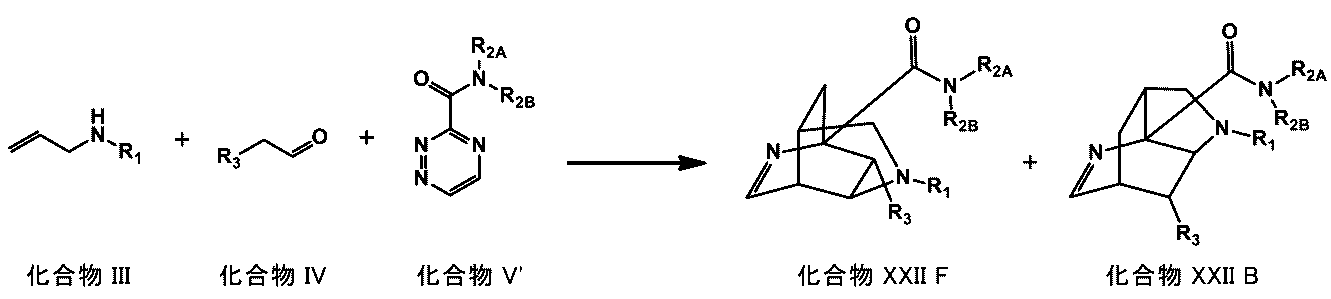
式中、R1、R2A、R2B、およびR3は、本明細書項1または項A1に定義されるとおりである。
式XXIIFの化合物および式XXIIBの化合物-経路2
式XXIIFの化合物および式XXIIBの化合物は、例えば、下記のように二成分から製造することができる。
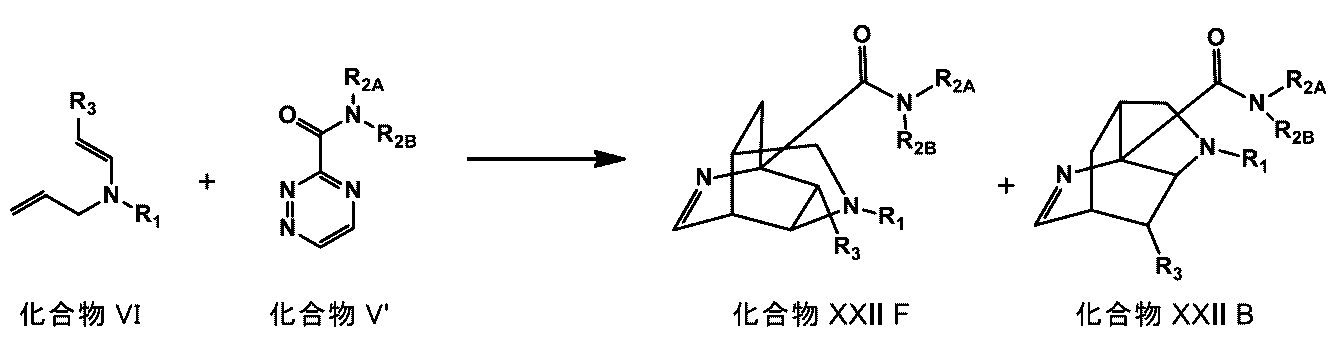
イミンの酸化による化合物XXIFおよび化合物XXIBの合成
化合物XXIF(即ち、式XXIFの化合物)または化合物XXIB(即ち、式XXIBの化合物)は、例えば、公知の方法(例えば、RSC Advances, 2012, 2, 5536-5538およびTetrahedron Lett. 50 (2009) 3436-3438に記載される方法等)に準じて、下記のように酸化することにより化合物XXIIF(即ち、式XXIIFの化合物)または化合物XXIIB(即ち、式XXIIBの化合物)から製造することができる。
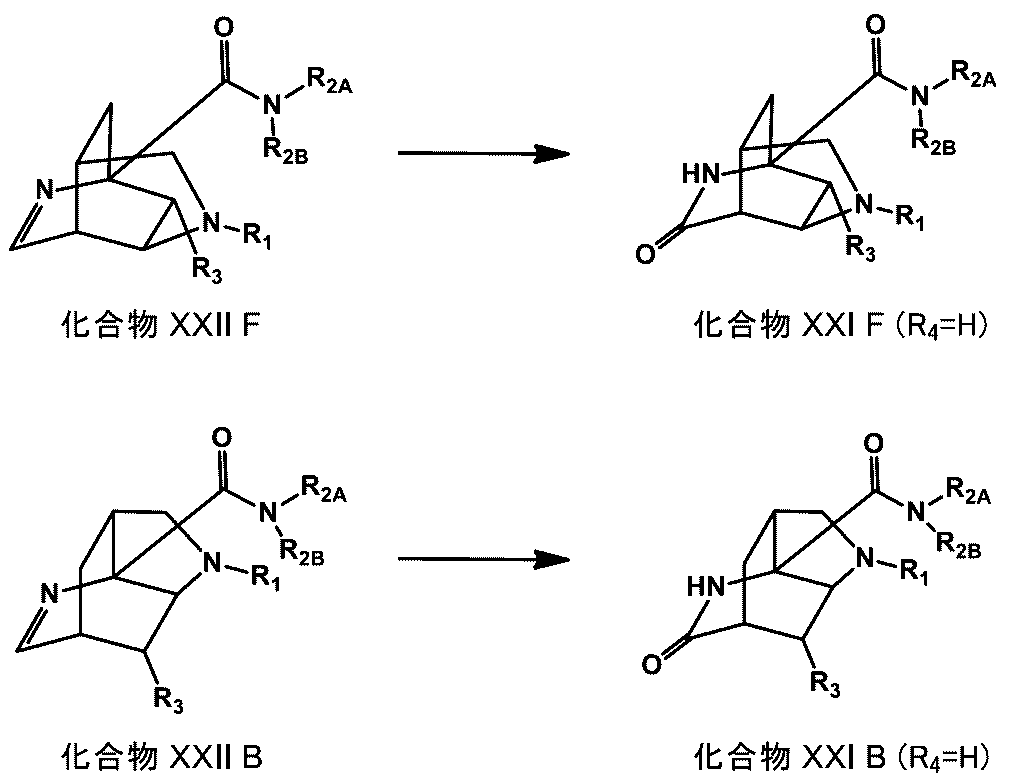
中間体XXIIIFおよびXXIIIBの合成
中間体XXIIIFおよびXXIIIBはそれぞれ、例えば、下記のように製造することができる。

ここで、XLは求核置換反応における脱離基を表し、その例としては、ハロゲン(例えば、塩素、臭素、ヨウ素)、硫酸エステル(-SO3H)、スルホニル-O-基(例えば、メタンスルホニル-O-、トルエンスルホニル-O-等)が挙げられる。
R4が水素でない化合物XXIFおよびXXIBの合成
R4が水素でない化合物XXIFおよび化合物XXIBはそれぞれ、例えば、中間体化合物XXIIIFおよびXXIIIBから下記のように製造することができる。
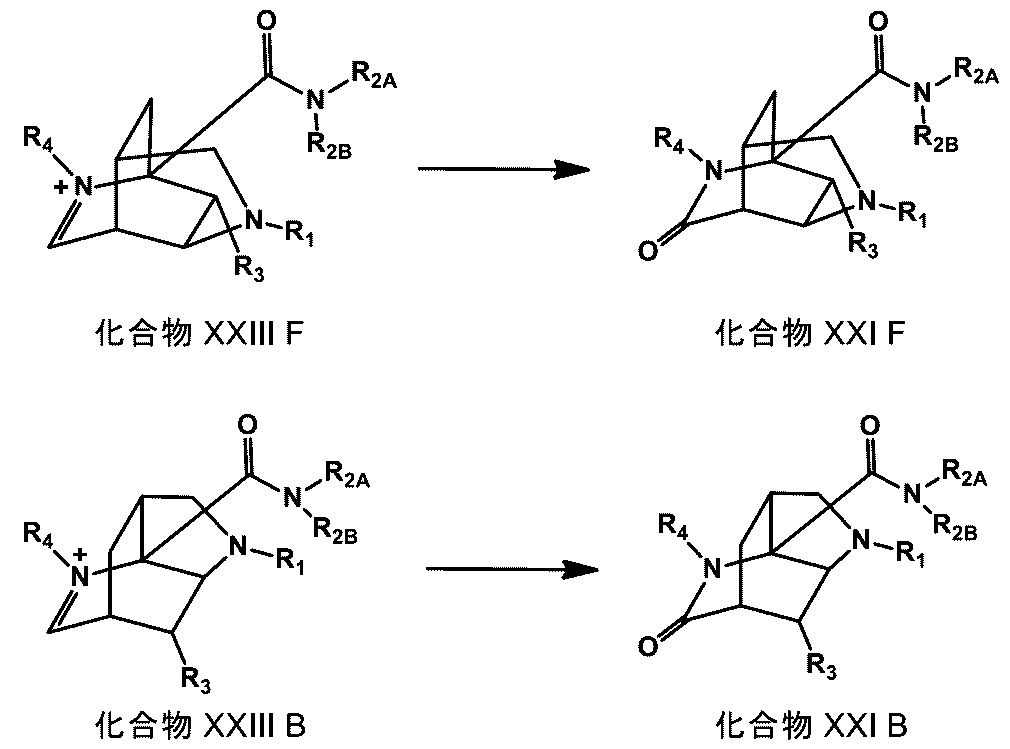
適切な化学反応条件に供することにより、R1、R2A、R2B、R3、およびR4において種々の基を有する化合物XXIF、XXIB、XXIIF、XXIIBを合成することができる。
R1の変換を経由する化合物XXIFおよびXXIBの合成
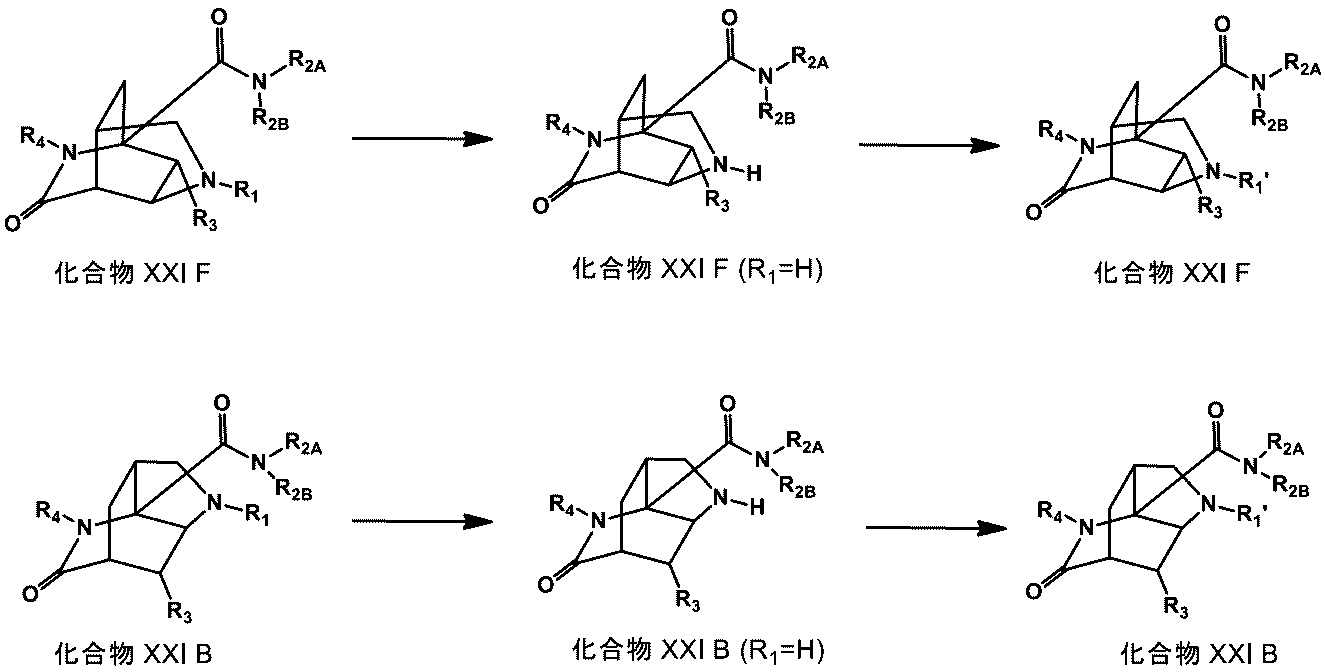
化合物XXIF、XXIB、XXIIF、XXIIBのR1における基は、適切な化学反応により水素に変換することができ、水素をさらに異なるR1’に変換することができる。
一つの局面において、本開示は、リッサウイルス(Lyssavirus)属ウイルスの感染および/またはウイルス感染により引き起こされる疾患、障害または症状を治療、予防または管理するための医薬(組成物)を提供する。このような医薬または医薬組成物は、個々の単回単位剤形の調製に使用することができる。本開示の医薬組成物および剤形は、本開示の化合物またはその医薬として許容し得る塩、溶媒和物もしくは立体異性体、および必要に応じてさらなる活性物質を含有する。本開示の医薬組成物および剤形は更に、1種以上の担体、賦形剤または希釈剤を含有することができる。
大きい治療係数を示す化合物が好ましい。毒性副作用を示す化合物を使用することができるが、非感染細胞への可能性のある損傷を最小化し、それにより副作用を減少させるために、そのような化合物を罹患組織部位へ標的化する送達システムのデザインは慎重に行われなければならない。
溶出条件:流速1.5mL/min,移動相a=0.05%(v/v)トリフルオロ酢酸水溶液、移動相b=0.05%(v/v)トリフルオロ酢酸含有アセトニトリル

溶出条件:流速1.5mL/min、移動相a=0.05%(v/v)トリフルオロ酢酸水溶液、移動相b=0.05%(v/v)トリフルオロ酢酸含有アセトニトリル

溶出条件:流速1.5mL/min、移動相a=5mM NH4HCO3含有水/アセトニトリル=900/100(v/v)、移動相b=5mM NH4HCO3含有水/アセトニトリル=100/900 (v/v)

溶出条件:流速1.27mL/min、移動相a=0.05%(v/v)トリフルオロ酢酸水溶液、移動相b=0.05%(v/v)トリフルオロ酢酸含有アセトニトリル
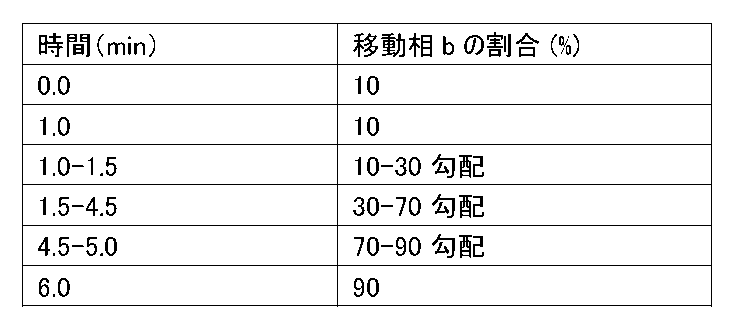
溶出条件:流速1.27mL/min、移動相a=0.05%(v/v)トリフルオロ酢酸水溶液、移動相b=0.05%(v/v)トリフルオロ酢酸含有アセトニトリル
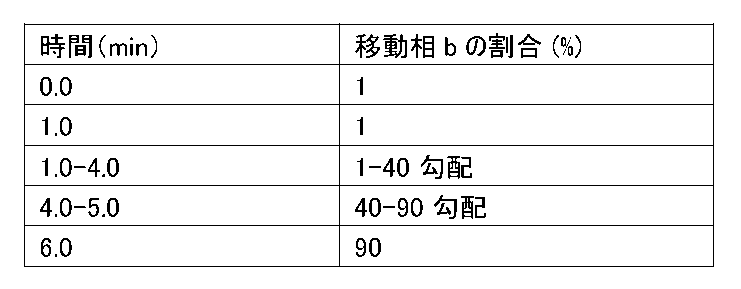
溶出条件:流速2mL/min、移動相a=0.1%(v/v)トリフルオロ酢酸水溶液、移動相b=0.1%(v/v)トリフルオロ酢酸含有アセトニトリル

溶出条件:流速0.6mL/min、移動相a=0.1%(v/v)ギ酸水溶液、移動相b=0.1%(v/v)ギ
酸含有アセトニトリル

溶出条件:流速1.27mL/min, 移動相a=0.05%(v/v)トリフルオロ酢酸水溶液、移動相b=0.05%(v/v)トリフルオロ酢酸含有アセトニトリル
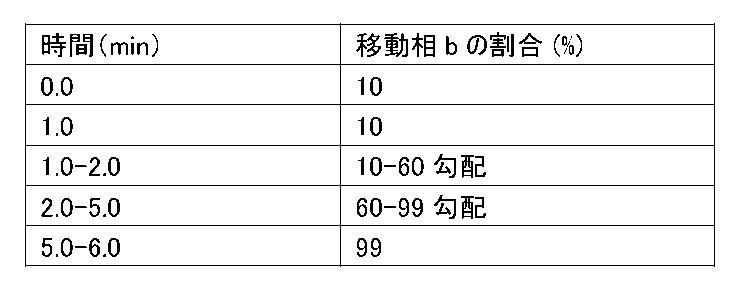
s:一重線
d:二重線
t:三重線
m:多重線
dd:二重線の二重線
J:カップリング定数(coupling constant)
Hz:ヘルツ(Hertz)
δ:化学シフト
min:分
RT:保持時間
CDCl3:重クロロホルム
Me:メチル
Et:エチル
Pr:プロピル
i-Pr:イソプロピル
i-Bu:イソブチル
s-Buおよびsec-Bu:第二級ブチル
tBuおよびtBuおよびtert-Bu:第三級ブチル
i-Pnt:イソペンチル
Hxy:n-ヘキシル
Ac:アセチル
Bz:ベンゾイル
Bnzl:ベンジル
3-Me-Bnzl:3-メチルベンジル
4-Me-Bnzl:4-メチルベンジル
4-tBu-Bnzl:4-(tert-ブチル)ベンジル
3-MeO-Bnzl:3-メトキシベンジル
4-MeO-Bnzl:4-メトキシベンジル
4-OH-Bnzl:4-ヒドロキシベンジル
3-F-Bnzl:3-フルオロベンジル
4-F-Bnzl:4-フルオロベンジル
3-Cl-Bnzl:3-クロロベンジル
4-Cl-Bnzl:4-クロロベンジル
3,4-Cl2-Bnzl:3,4-ジクロロベンジル
4-tBuO-Bnzl:4-(tert-ブトキシ)ベンジル
4-Nt-Bnzl:4-ニトロベンジル
Cbx-Eおよび2-Cbx-Et:2-カルボキシエチル
Cbm-M:2-アミノ-2-オキソエチル、またはカルバモイルメチル
Cbm-E:3-アミノ-3-オキソプロピル、または2-カルバモイルエチル
tBOC-E:2-(tert-ブトキシカルボニル)エチル、または3-(tert-ブトキシ)-3-オキソプロピル
Gun-Prおよび3-Gun-Pr:3-グアニジノプロピル
Hdr-M:ヒドロキシメチル
Hdr-Eおよび2-OH-Et:2-ヒドロキシエチル
tBuO-Eおよび2-OtBu-Et:2-(tert-ブトキシ)エチル
Ph-Et:2-フェニルエチル
Ph-Pr:3-フェニルプロピル
Ph-Bu:4-フェニルブチル
Np-Mおよび1-Npm:ナフタレン-1-イルメチル
2-Npm:ナフタレン-2-イルメチル
Np-E:2-(ナフタレン-1-イル)エチル
6-Me-Indm:6-メチル-1H-インドール-3-イルメチル
Boc-6-Me-Indm:1-tert-ブトキシカルボニル-6-メチル-1H-インドール-3-イルメチル
6-F-Indm:6-フルオロ-1H-インドール-3-イルメチル
Boc-6-F-Indm:1-tert-ブトキシカルボニル-6-フルオロ-1H-インドール-3-イルメチル
Cpm:シクロペンチルメチル
Chm:シクロヘキシルメチル
Chepm:シクロへプチルメチル
BocおよびtBOCおよびtBOC:tert-ブトキシカルボニル
TBSO-Eおよび2-OTBS-Et:2-(tert-ブチルジメチルシリルオキシ)エチル
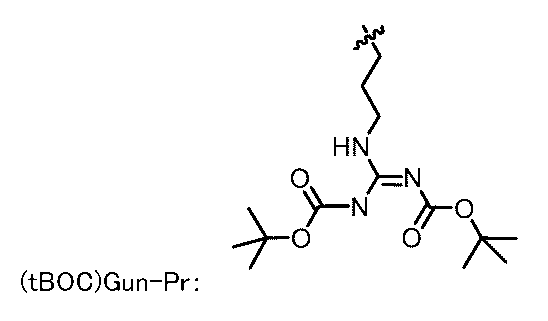
N-シクロヘキシル-1,2,4-トリアジン-3-カルボキサミドの合成
N-(trans-4-メチルシクロヘキシル)-1,2,4-トリアジン-3-カルボキサミド
N-(2,2,6,6-テトラメチルピペリジン-4-イル)-1,2,4-トリアジン-3-カルボキサミド
N-ベンジル-1,2,4-トリアジン-3-カルボキサミド
N-イソブチル-1,2,4-トリアジン-3-カルボキサミド
N-イソペンチル-1,2,4-トリアジン-3-カルボキサミド
N-(4-クロロベンジル)-1,2,4-トリアジン-3-カルボキサミド
N-(4-フルオロベンジル)-1,2,4-トリアジン-3-カルボキサミド
N-(3-ヒドロキシベンジル)-1,2,4-トリアジン-3-カルボキサミド
N-(4-ヒドロキシベンジル)-1,2,4-トリアジン-3-カルボキサミド
4-メチルペンタナールの合成
5-メチルヘキサナール
N-ベンジルプロパ-2-エン-1-アミンの合成
N-(シクロヘキシルメチル)プロパ-2-エン-1-アミンの合成
N-イソブチルプロパ-2-エン-1-アミン
N-アリル-3-メチルブタン-1-アミン
N-アリルテトラヒドロ-2H-ピラン-4-アミンの合成
4-((アリルアミノ)メチル)フェノール
N-(4-(トリフルオロメトキシ)ベンジル)プロパ-2-エン-1-アミン
N-(4-エトキシベンジル)プロパ-2-エン-1-アミン
N-アリル-3-メチルブタン-1-アミン
(3S*,3aS*,6R*,7R*,7aS*)-N-ベンジル-7-イソブチル-1-(4-メトキシベンジル)-1,2,3,6,7,7a-ヘキサヒドロ-3aH-3,6-メタノピロロ[3,2-b]ピリジン-3a-カルボキサミド(II-6)及び(3S*,3aR*,6S*,7R*,7aR*)-N-ベンジル-7-イソブチル-1-(4-メトキシベンジル)-1,2,3,3a,7,7a-ヘキサヒドロ-6H-3,6-メタノピロロ[3,2-c]ピリジン-6-カルボキサミド(II-5)の合成
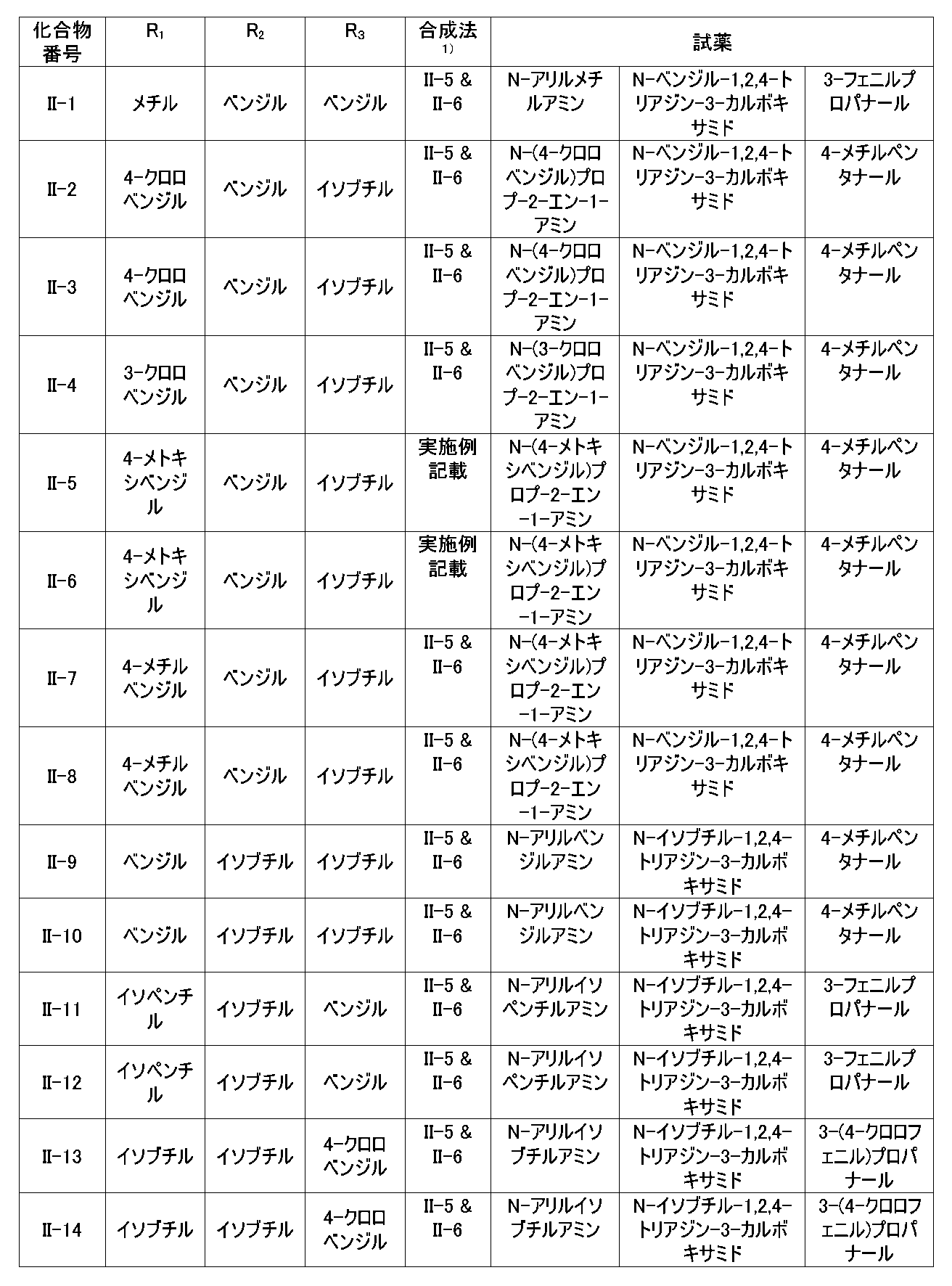

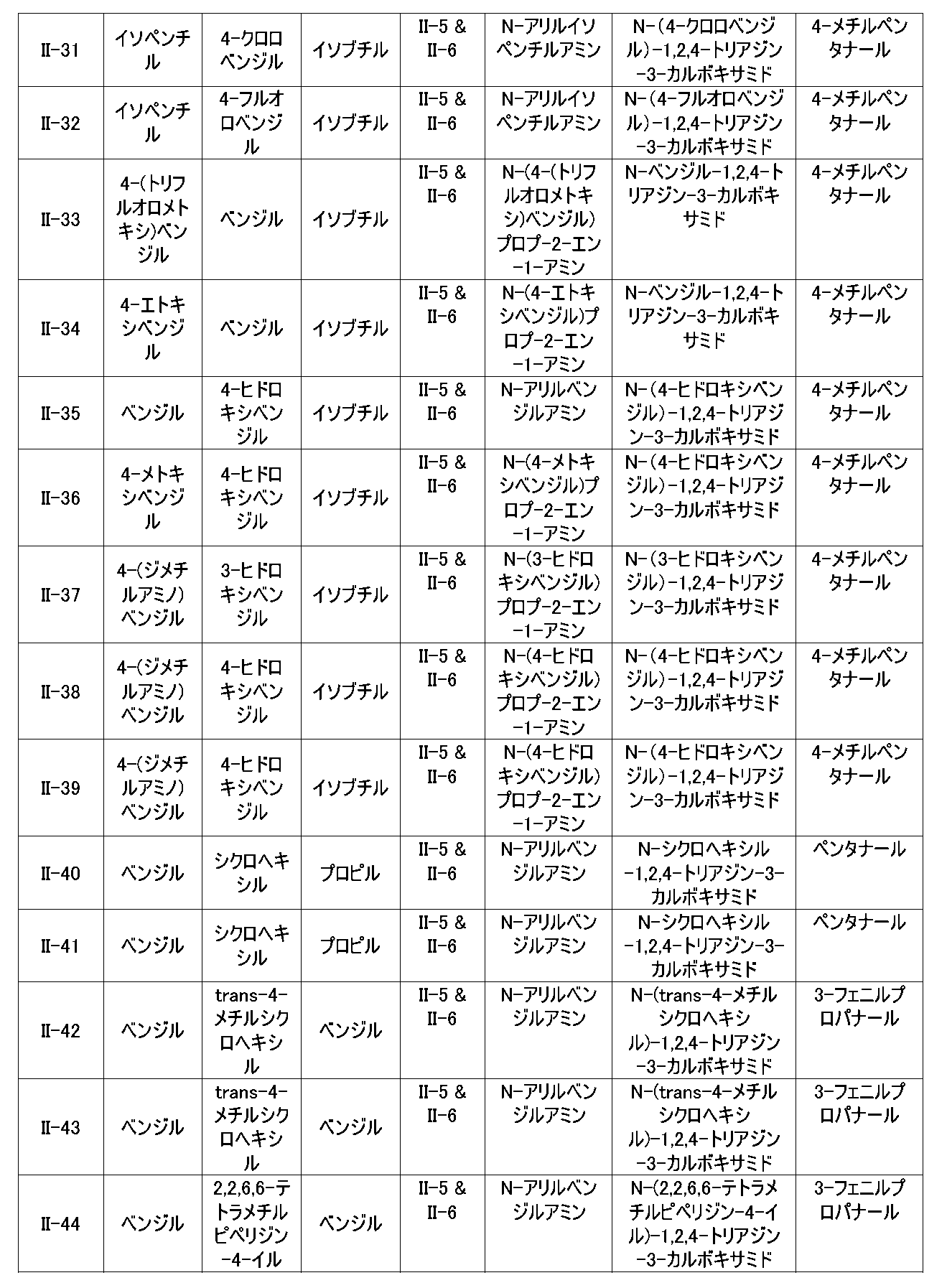
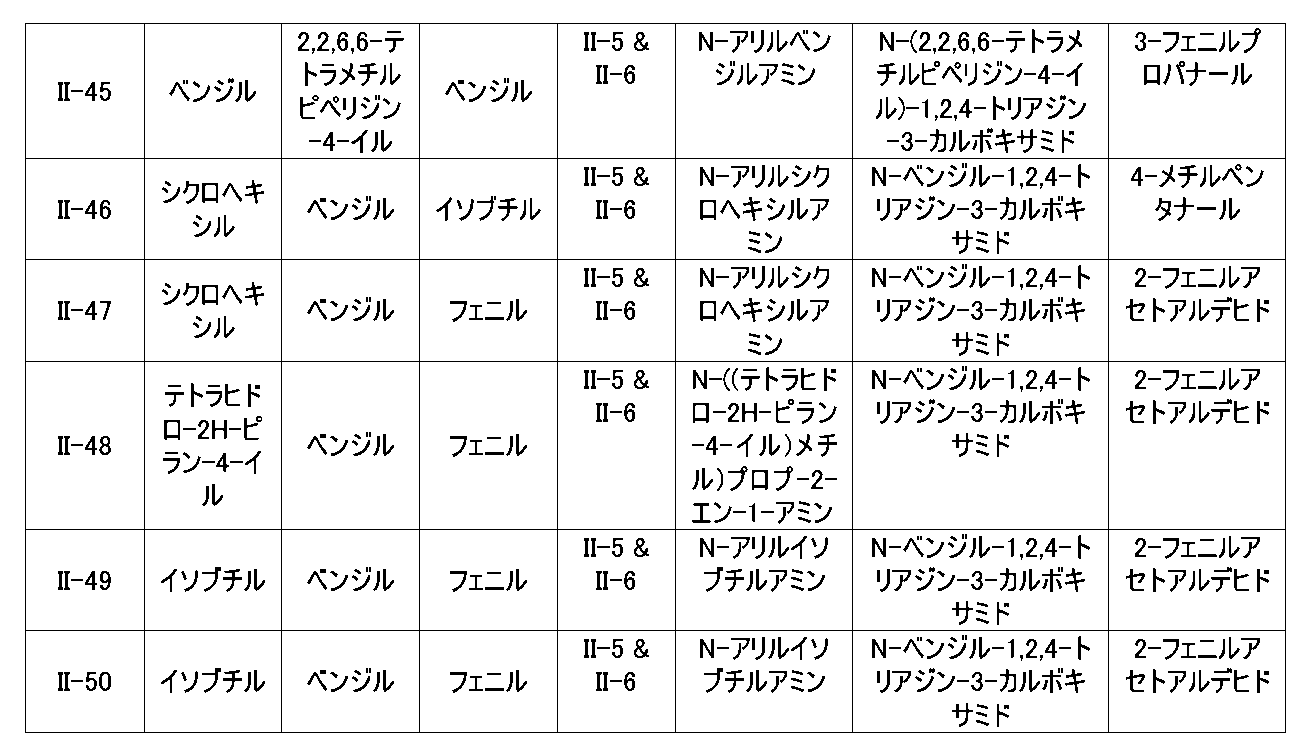
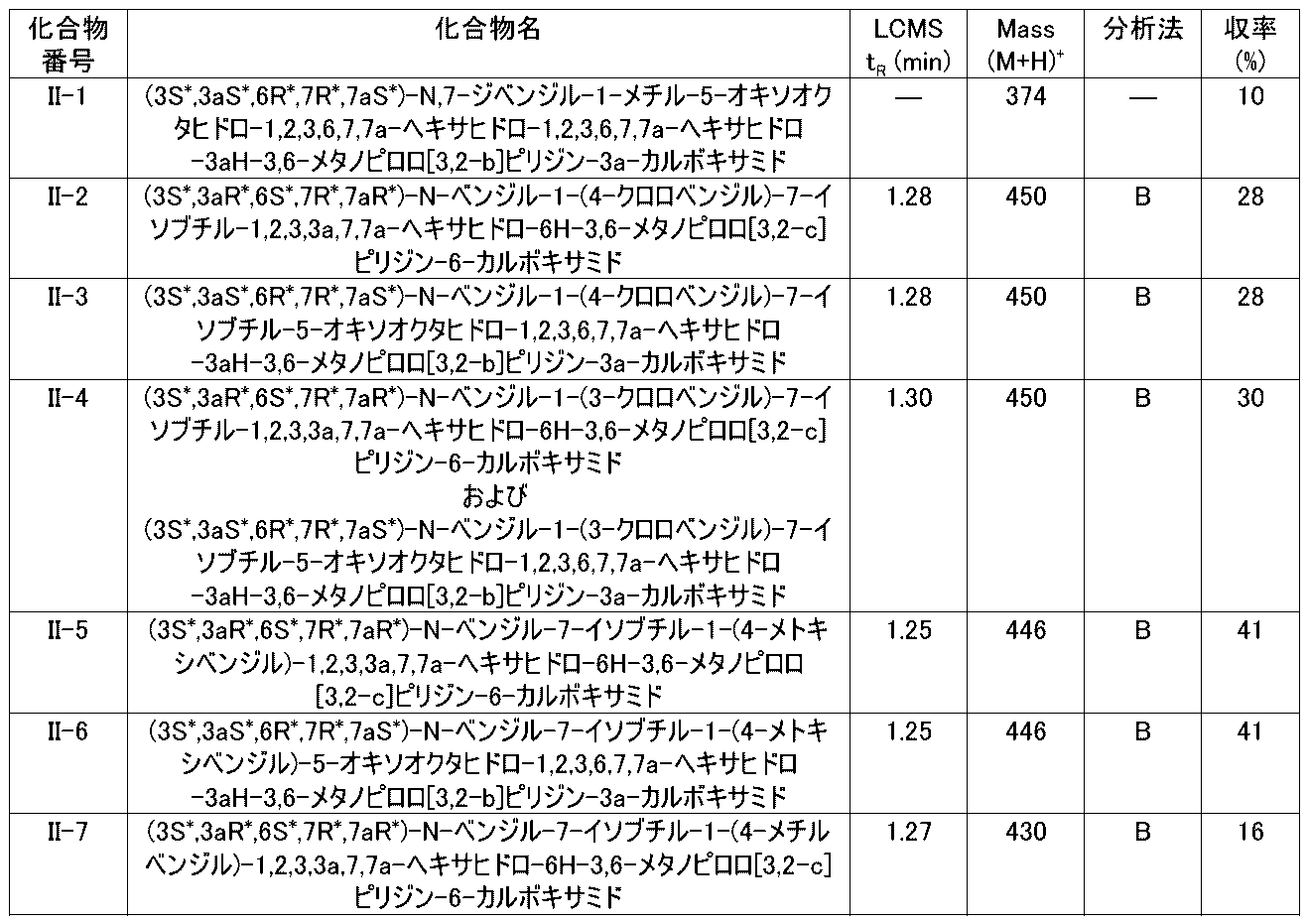
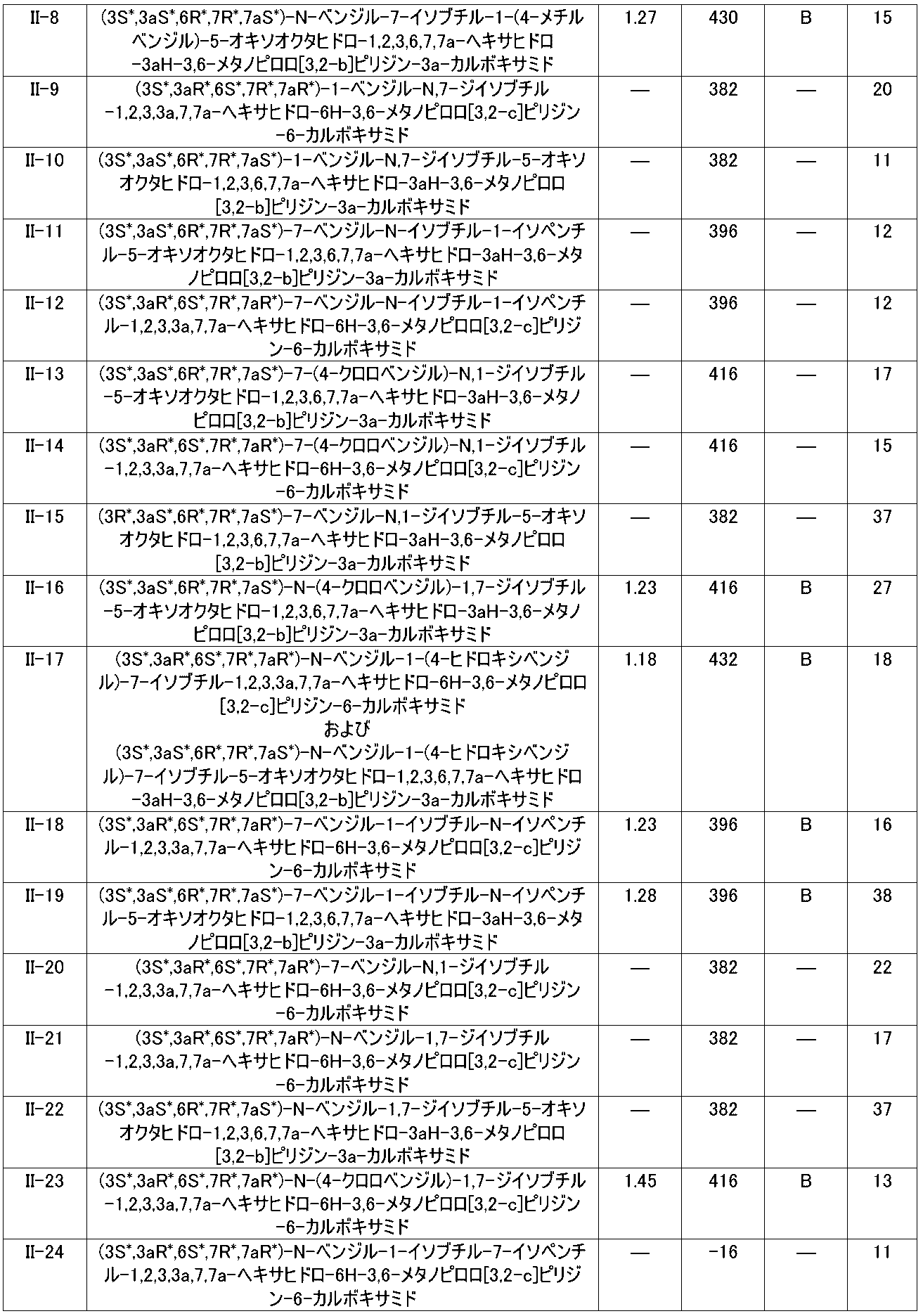

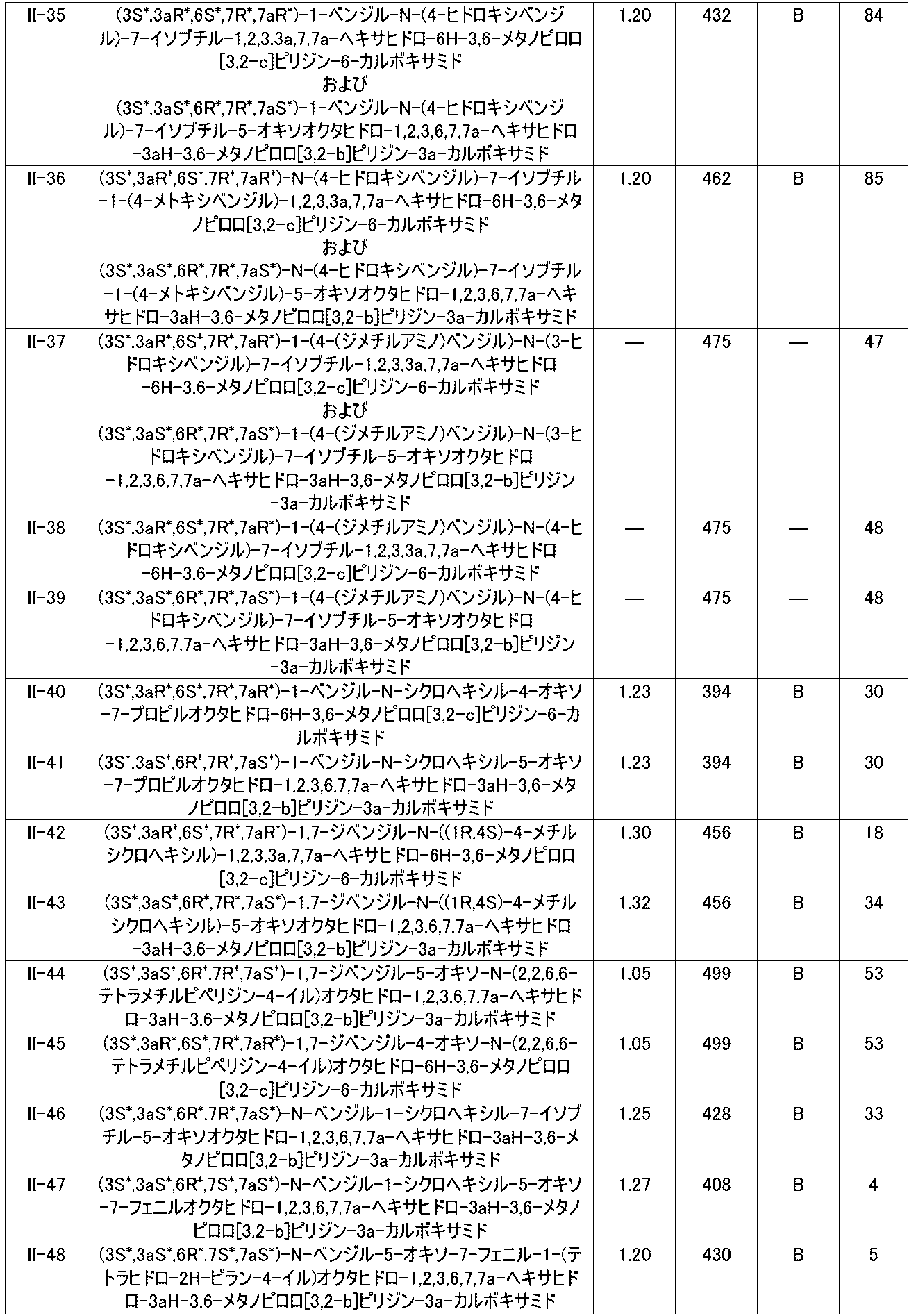

(3S*,3aS*,6R*,7R*,7aS*)-N-ベンジル-7-イソブチル-1-(4-メトキシベンジル)-5-オキソオクタヒドロ-3aH-3,6-メタノピロロ[3,2-b]ピリジン-3a-カルボキサミド(I-6)及び(3S*,3aR*,6S*,7R*,7aR*)-N-ベンジル-7-イソブチル-1-(4-メトキシベンジル)-4-オキソオクタヒドロ-6H-3,6-メタノピロロ[3,2-c]ピリジン-6-カルボキサミド(I-5)の合成
I-5: 1H-NMRスペクトル (400 MHz, CDCl3) δ(ppm):0.51(3H, d), 0.65(3H, d), 0.72-0.85(1H, m), 0.87-0.93(1H, m), 1.68-1.76(3H, m), 2.17(1H, dd), 2.58-2.70(3H, m), 2.92(1H, d), 2.94(1H, d), 3.60(1H, d), 3.72(1H, d), 3.79(3H, s), 4.40(1H, dd), 4.55(1H, dd), 5.97(1H, br), 6.81-6.83(2H, m), 7.00(1H, s), 7.19-7.21(2H, m), 7.25-7.35(5H, m).
I-6: 1H-NMRスペクトル (400 MHz, CDCl3) δ(ppm):0.91(3H, d), 0.93(3H, d), 0.93-1.00(1H, m), 1.20-1.27(1H, m), 1.65-1.76(3H, m), 2.22(1H, m), 2.28(1H, t), 2.38(1H, dd), 2.48(1H, s), 2.87(1H, s), 3.24(1H, dd), 3.58(1H, d), 3.77(1H, d), 3.77(3H, s), 4.46(2H, m), 6.63(2H, m), 6.78(2H, m), 6.90(1H, s), 7.24-7.38(5H, m), 9.71(1H, t).
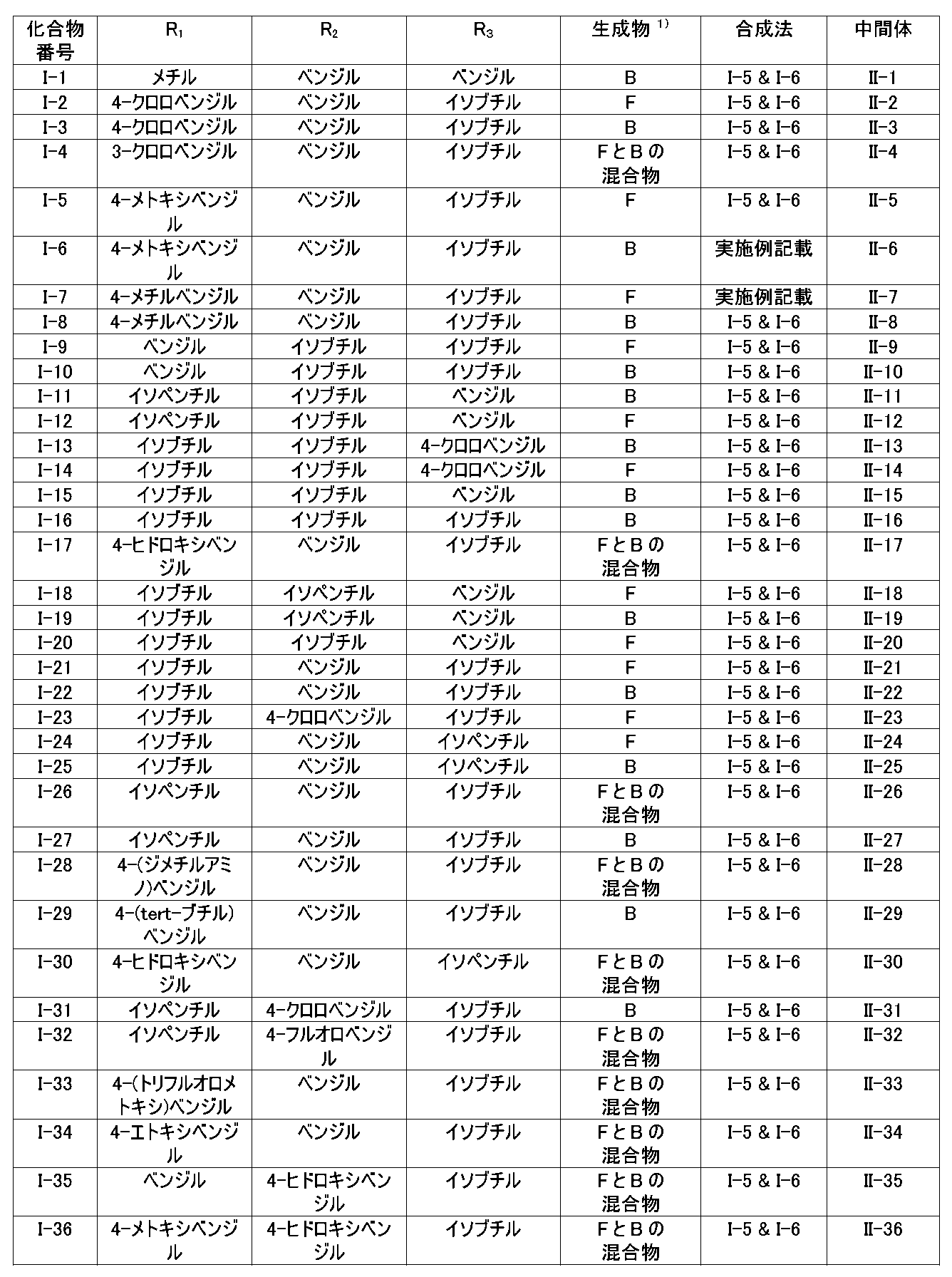
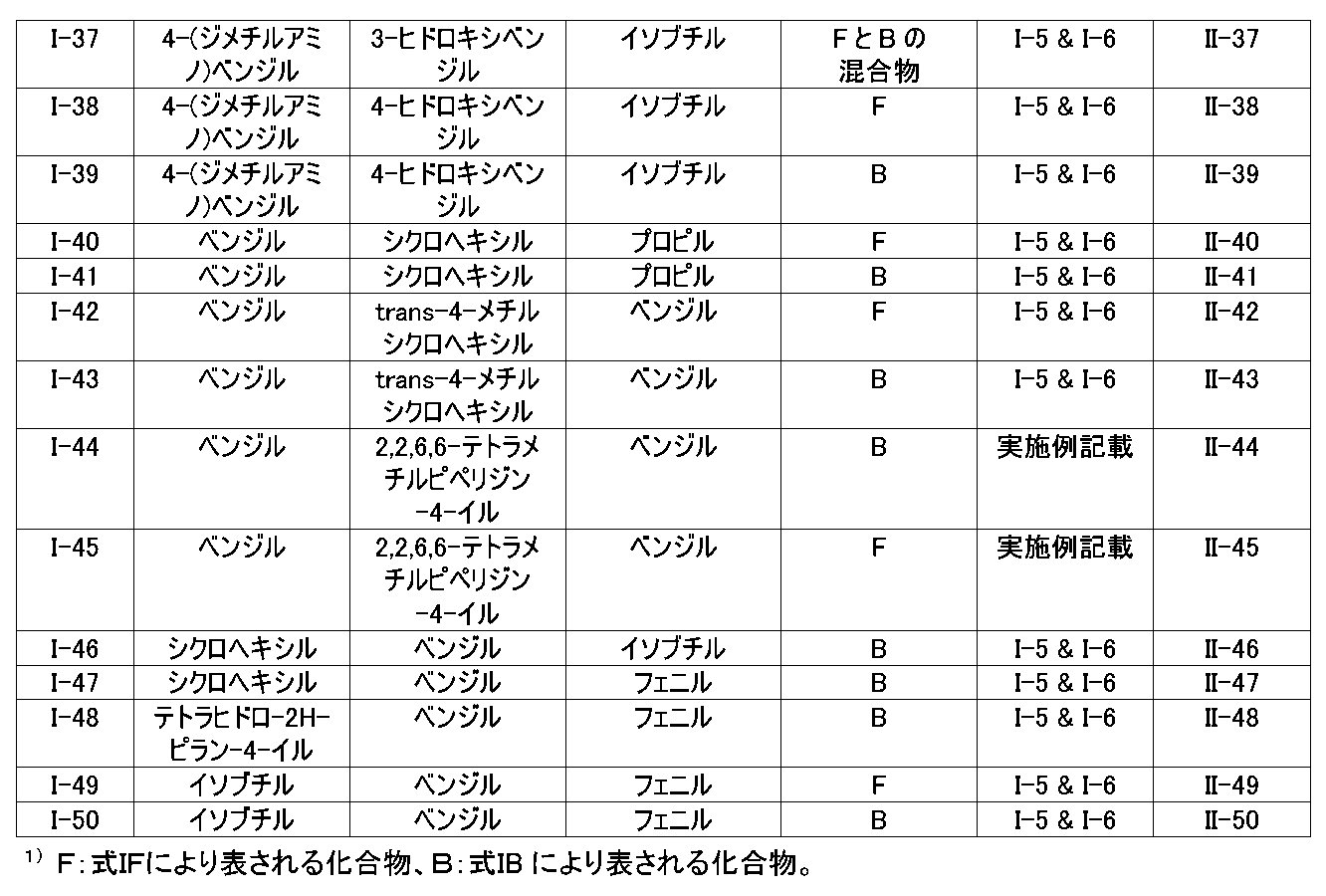
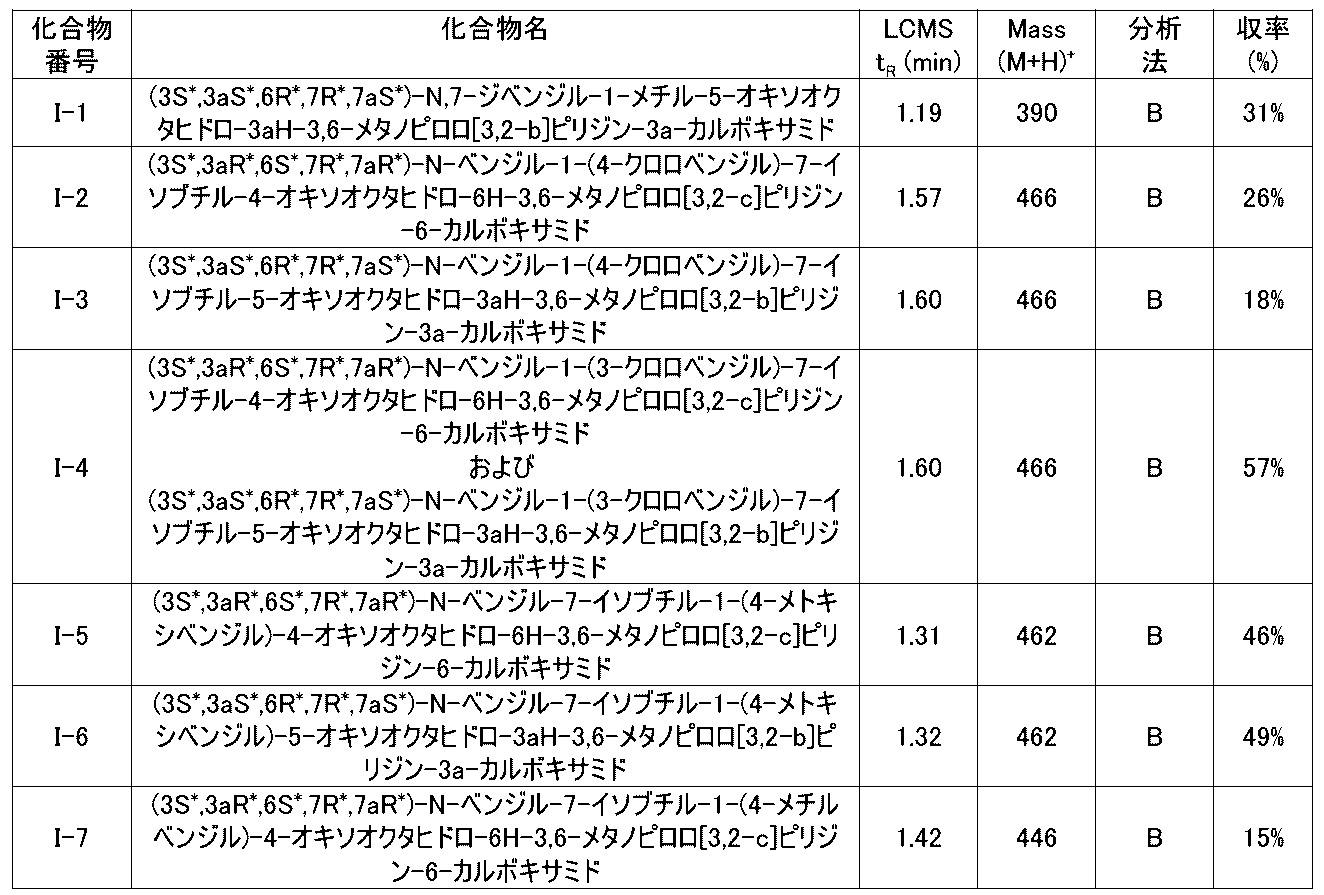

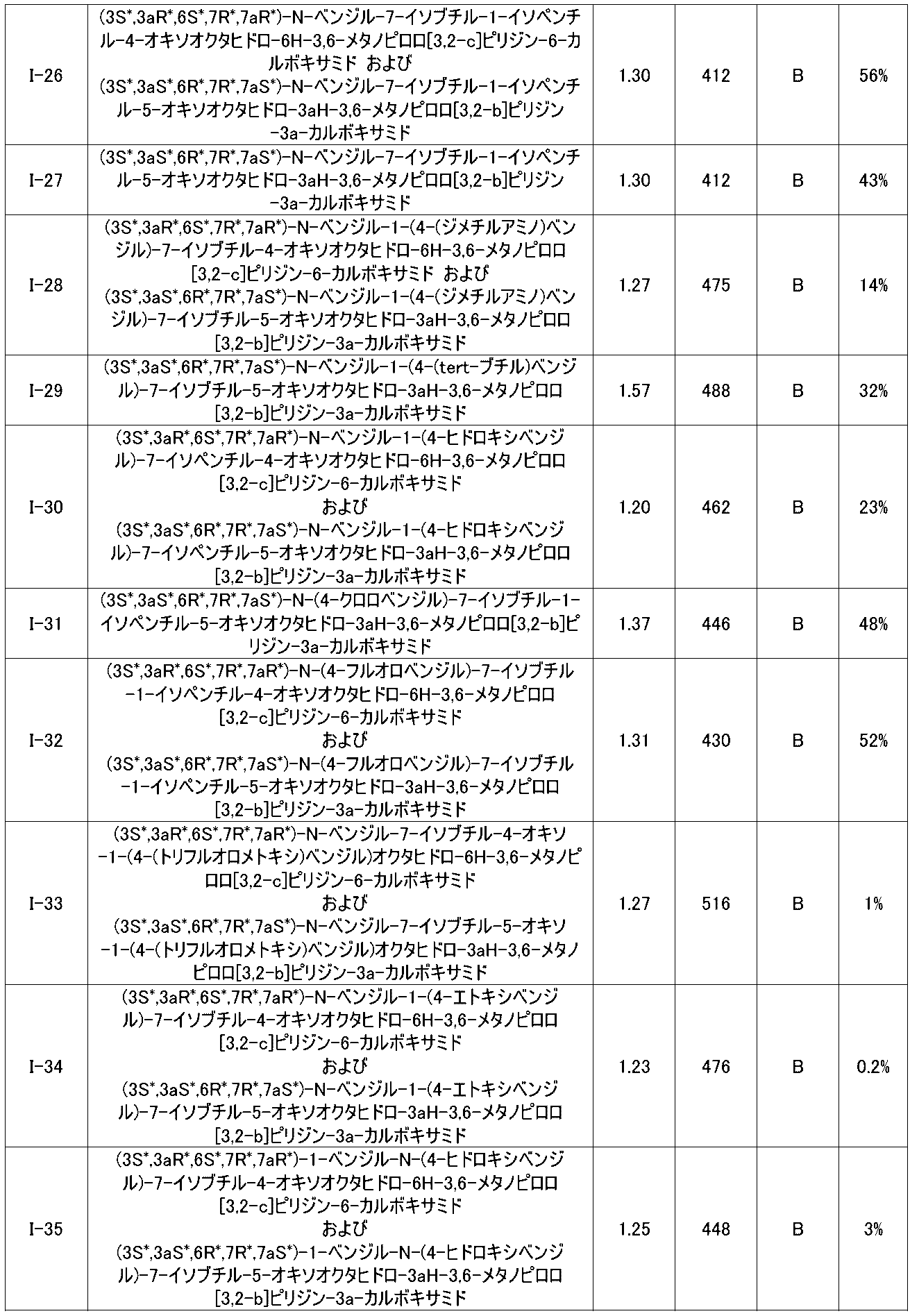

tert-ブチル 3-((3S*,3aS*,6R*,7R*,7aS*)-3a-(ベンジルカルバモイル)-4-メチル-1-(4-ニトロベンジル)-5-オキソオクタヒドロ-1H-3,6-メタノピロロ[3,2-b]ピリジン-7-イル)プロパノエート(IB-358)の合成
tert-ブチル 3-((3S*,3aR*,6S*,7R*,7aR*)-6-(ベンジルカルバモイル)-1-(4-ニトロベンジル)-2,2,3a,6,7,7a-ヘキサヒドロ-1H-3,6-メタノピロロ[3,2-c]ピリジン-7-イル)プロパノエート(F体)及びtert-ブチル 3-((3S*,3aS*,6R*,7R*,7aS*)-3a-ベンジルカルバモイル)-1-(4-ニトロベンジル)-2,2,3a,6,7,7a-ヘキサヒドロ-1H-3,6-メタノピロロ[3,2-b]ピリジン-7-イル)プロパノエート(B体)の合成
ヨウ化 (3S*,3aS*,6R*,7R*,7aS*)-3a-(ベンジルカルバモイル)-7-(3-(tert-ブトキシ)-3-オキソプロピル)-4-メチル-1-(4-ニトロベンジル)-2,3,3a,6,7,7a-ヘキサヒドロ-1H-3,6-メタノピロロ[3,2-b]ピリジン-4-イウムの合成
tert-ブチル 3-((3S*,3aS*,6R*,7R*,7aS*)-3a-(ベンジルカルバモイル)-4-メチル-1-(4-ニトロベンジル)-5-オキソオクタヒドロ-1H-3,6-メタノピロロ[3,2-b]ピリジン-7-イル)プロパノエート(IB-358)の合成
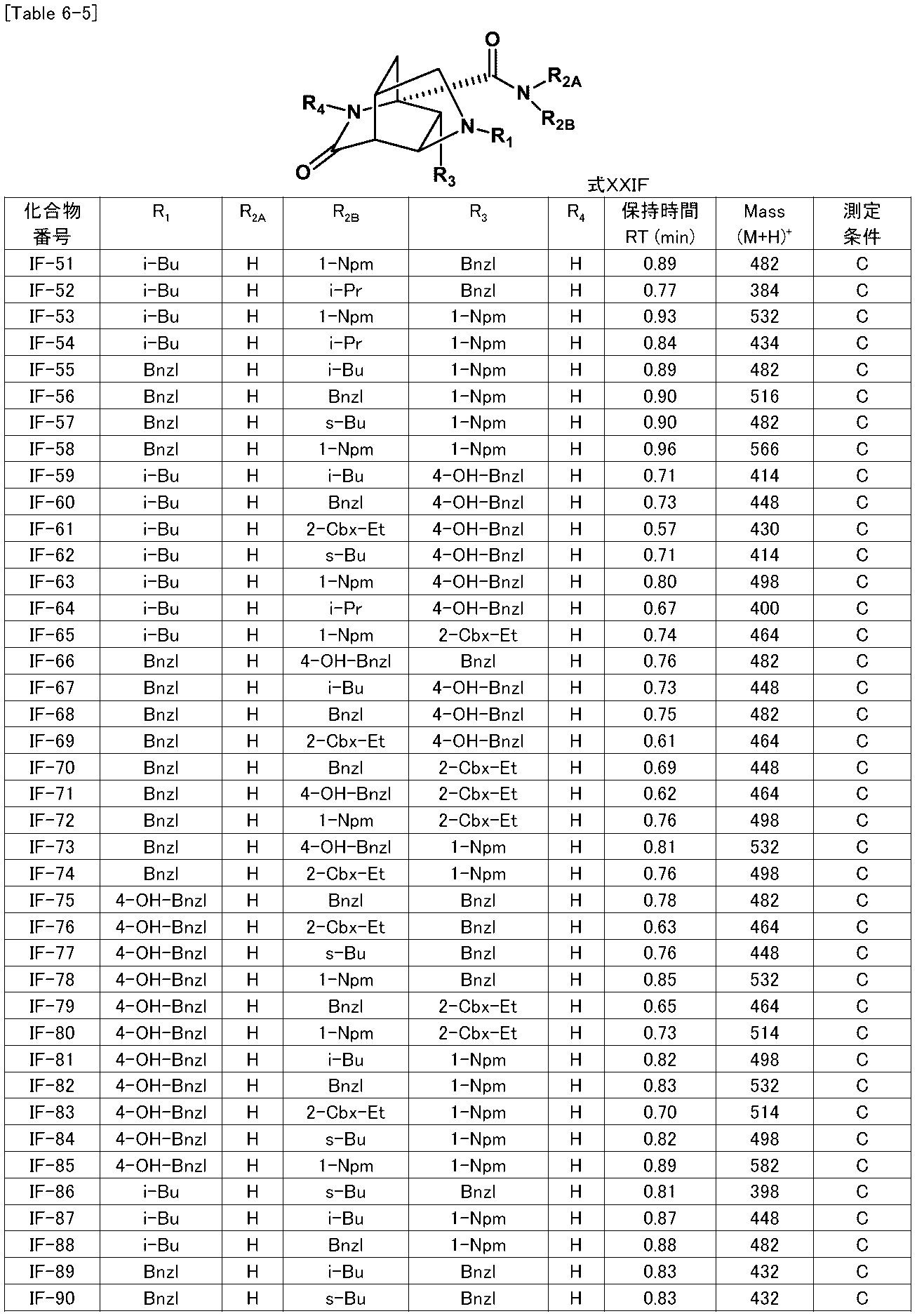


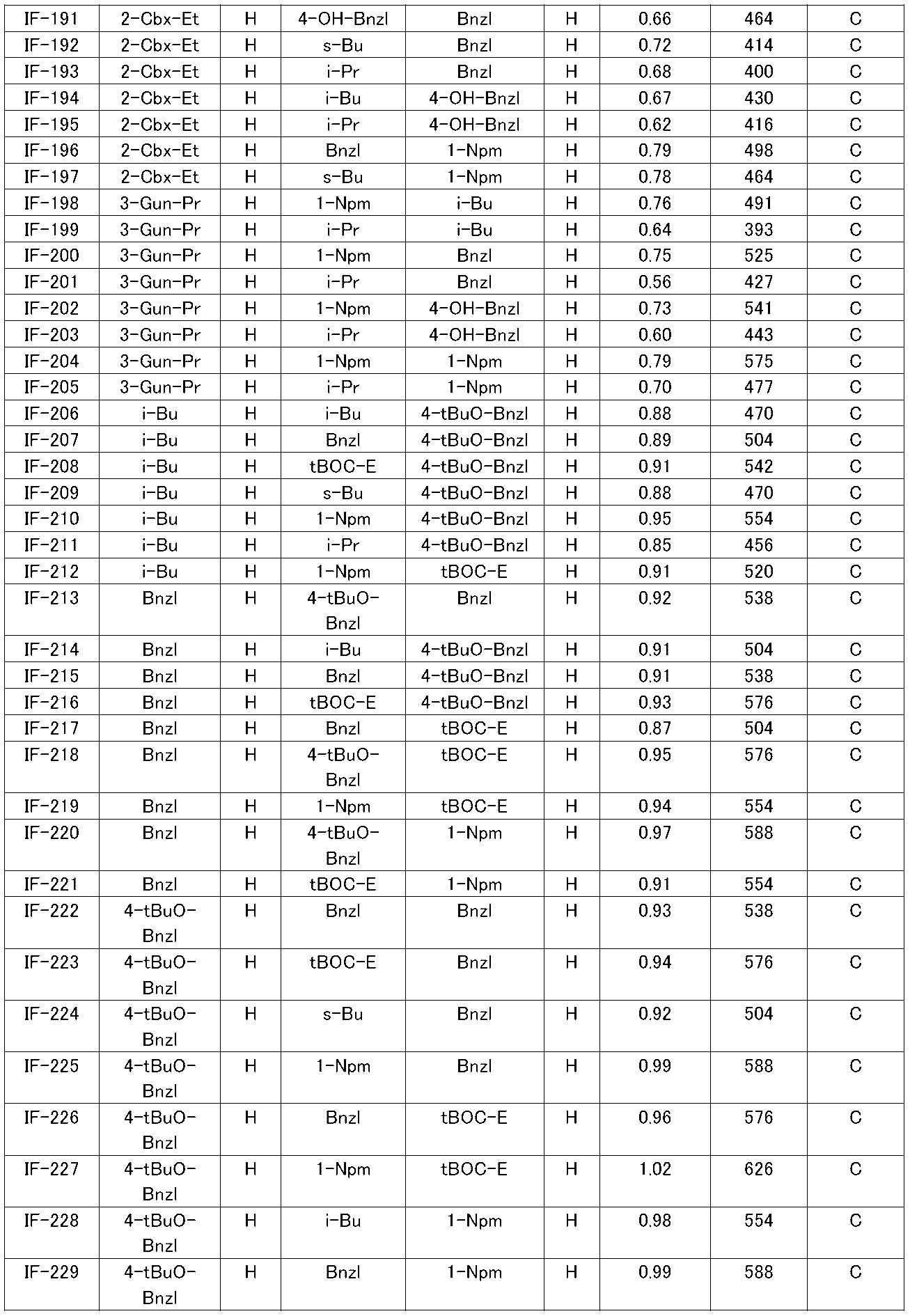

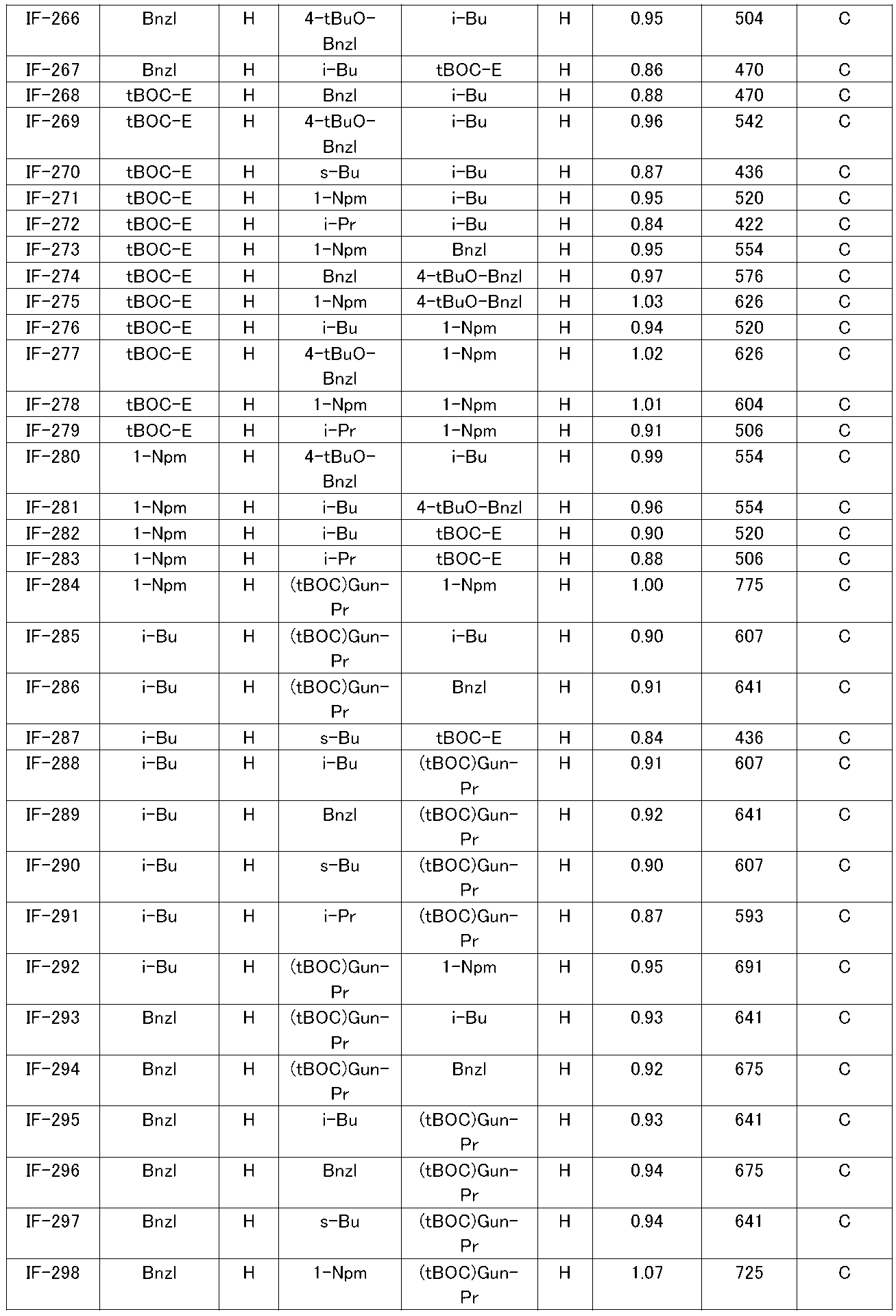

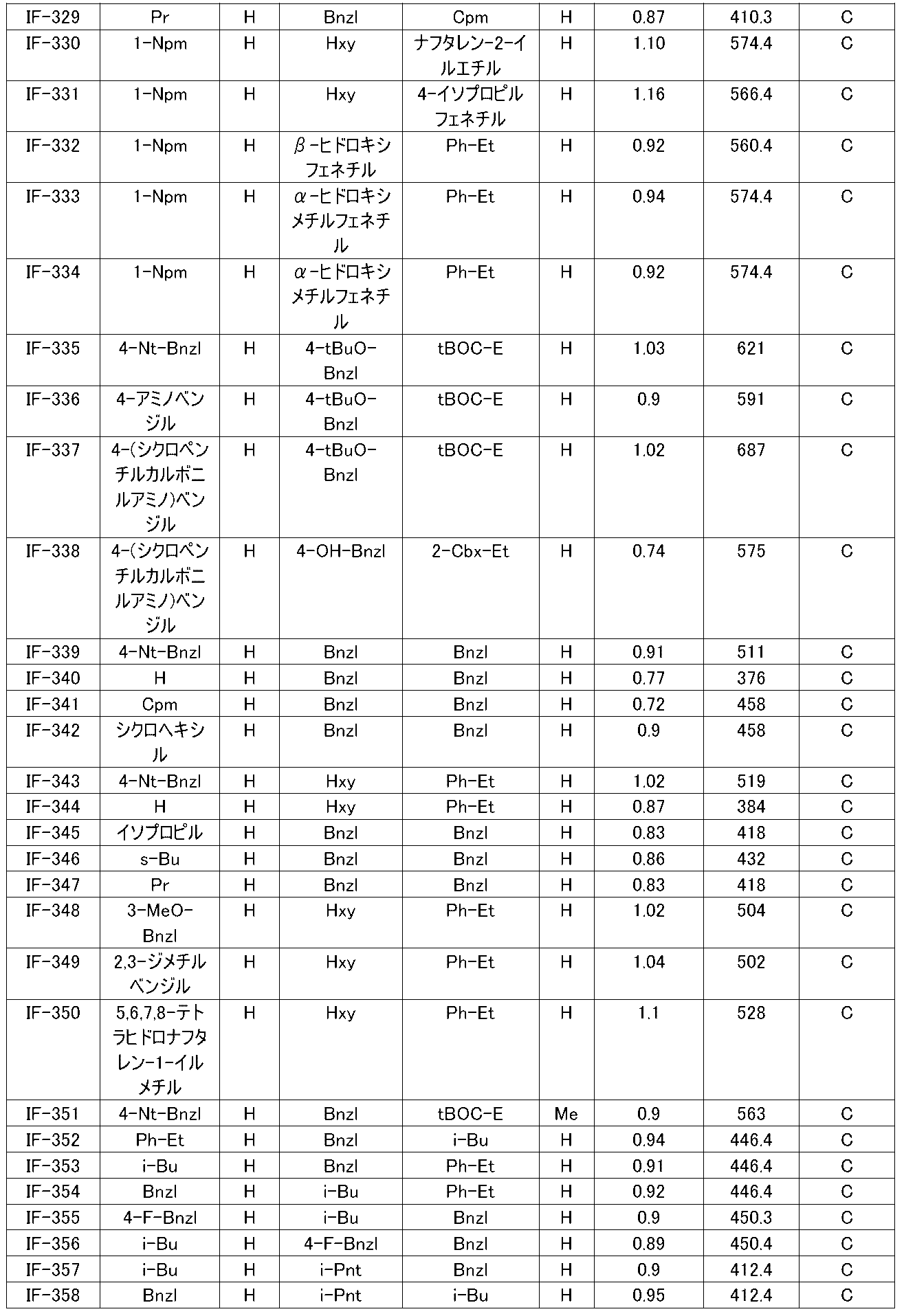
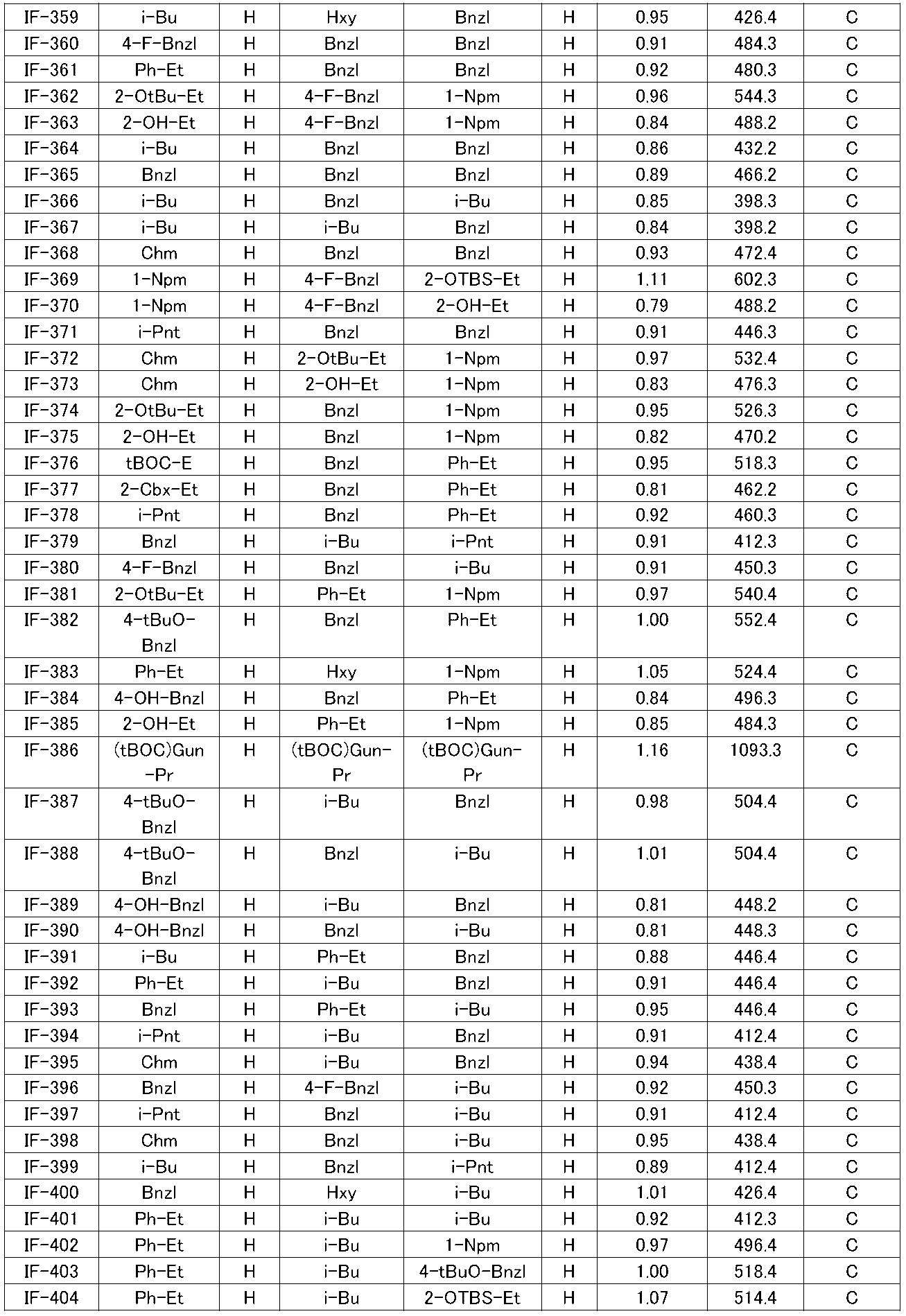
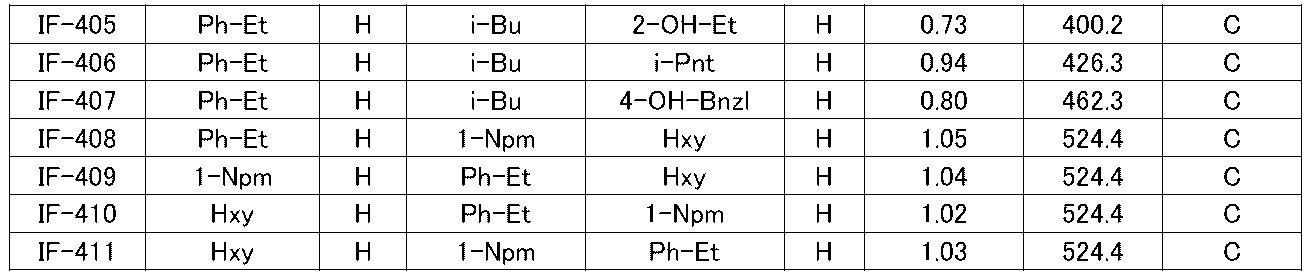
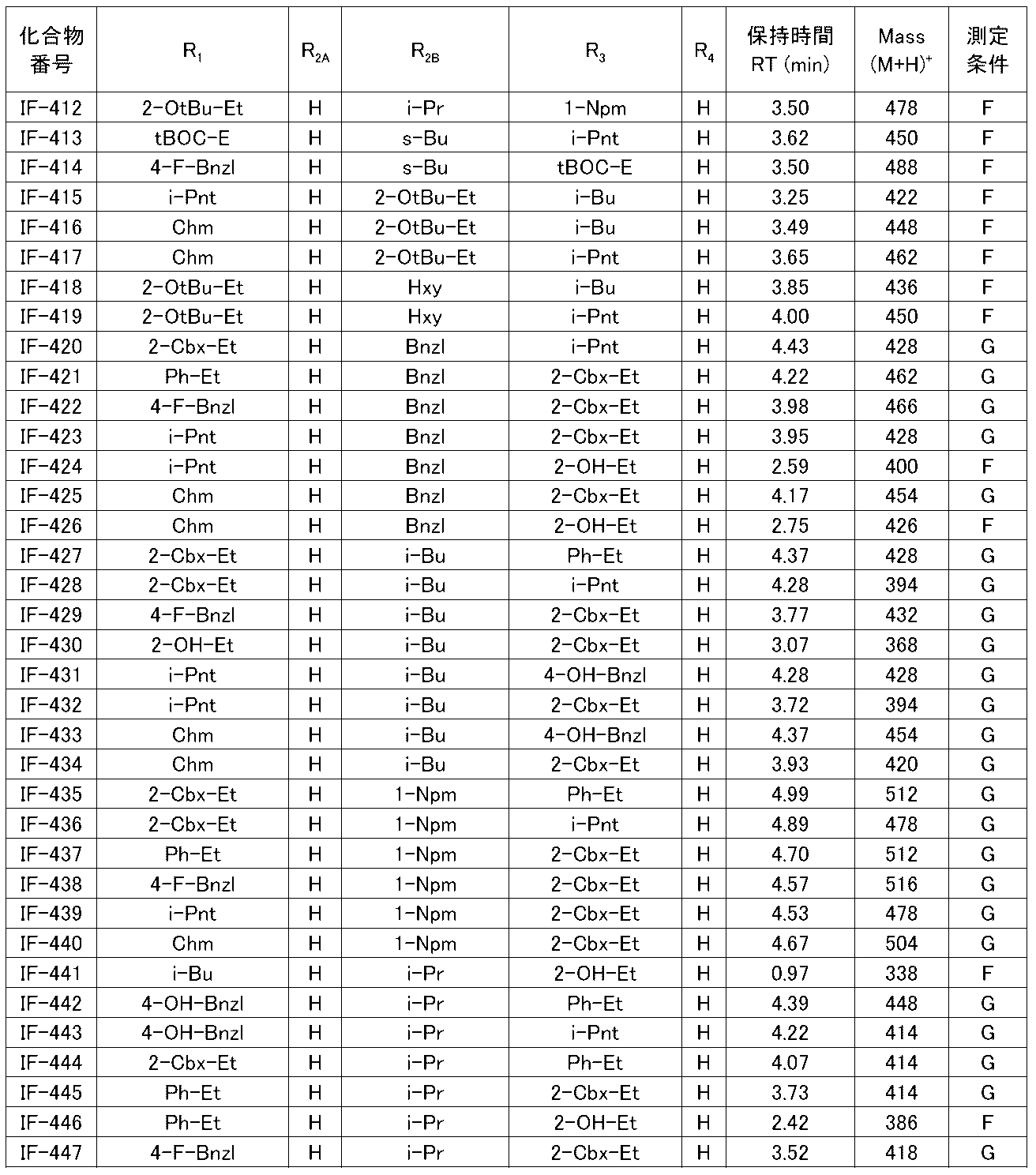
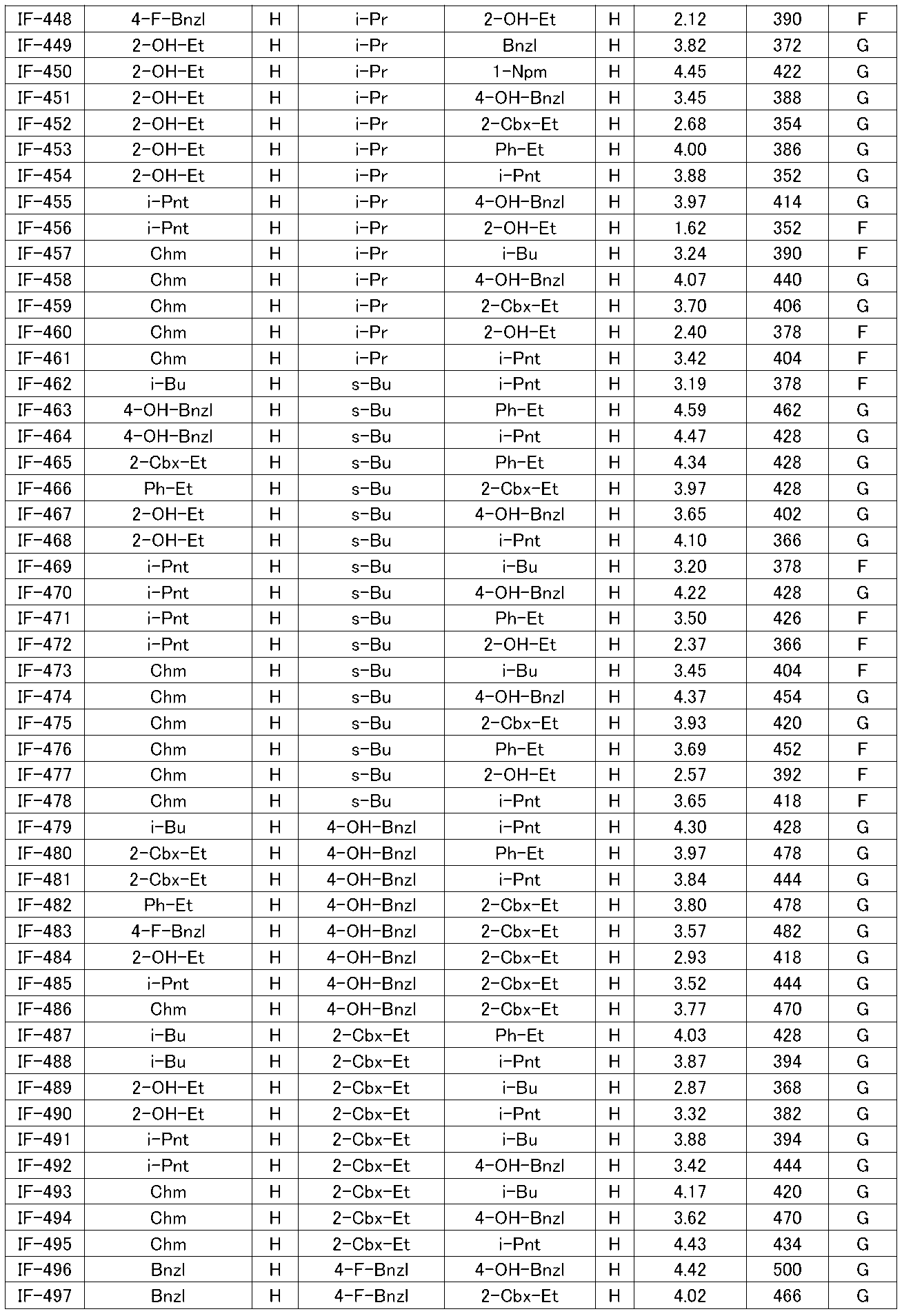


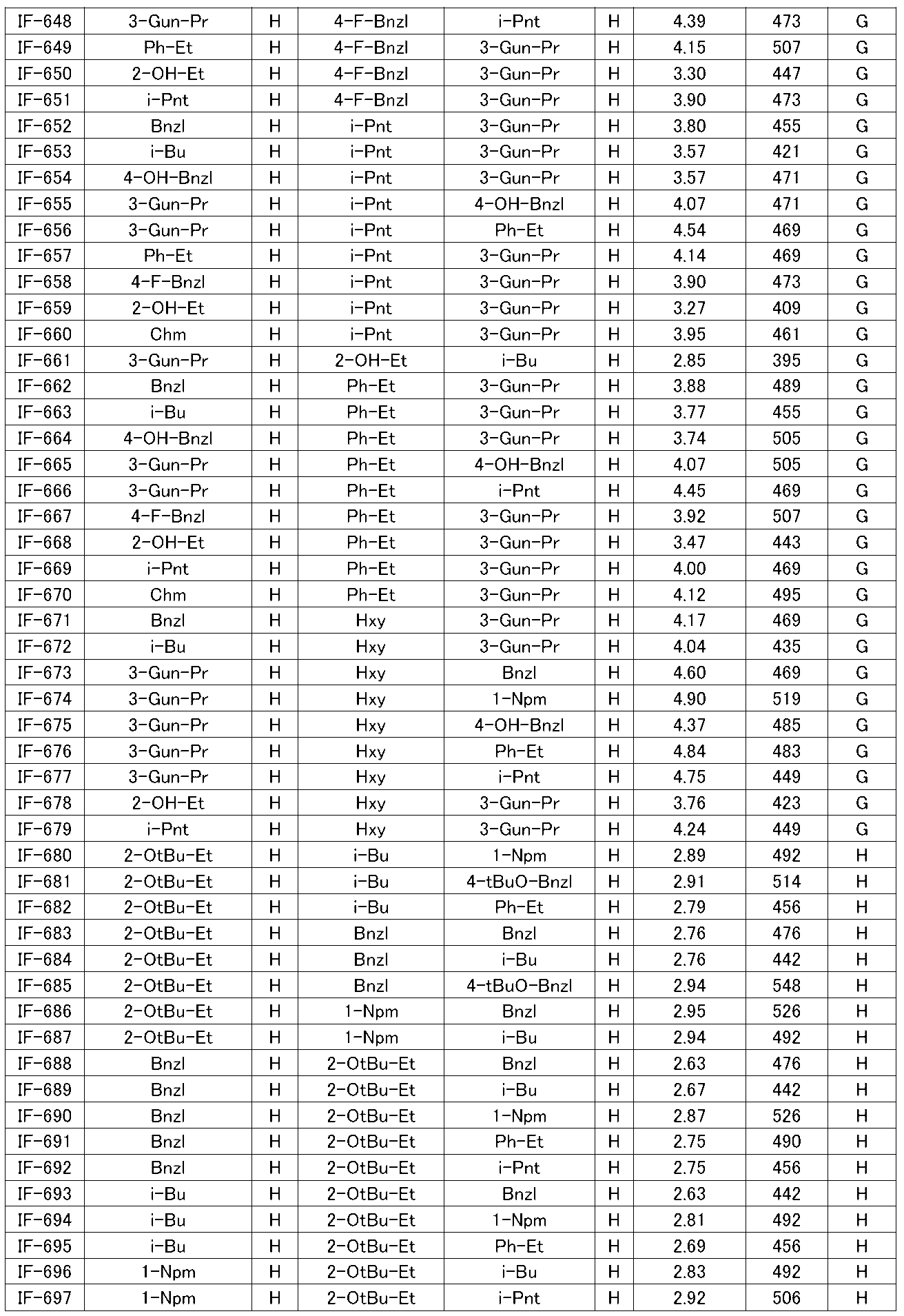


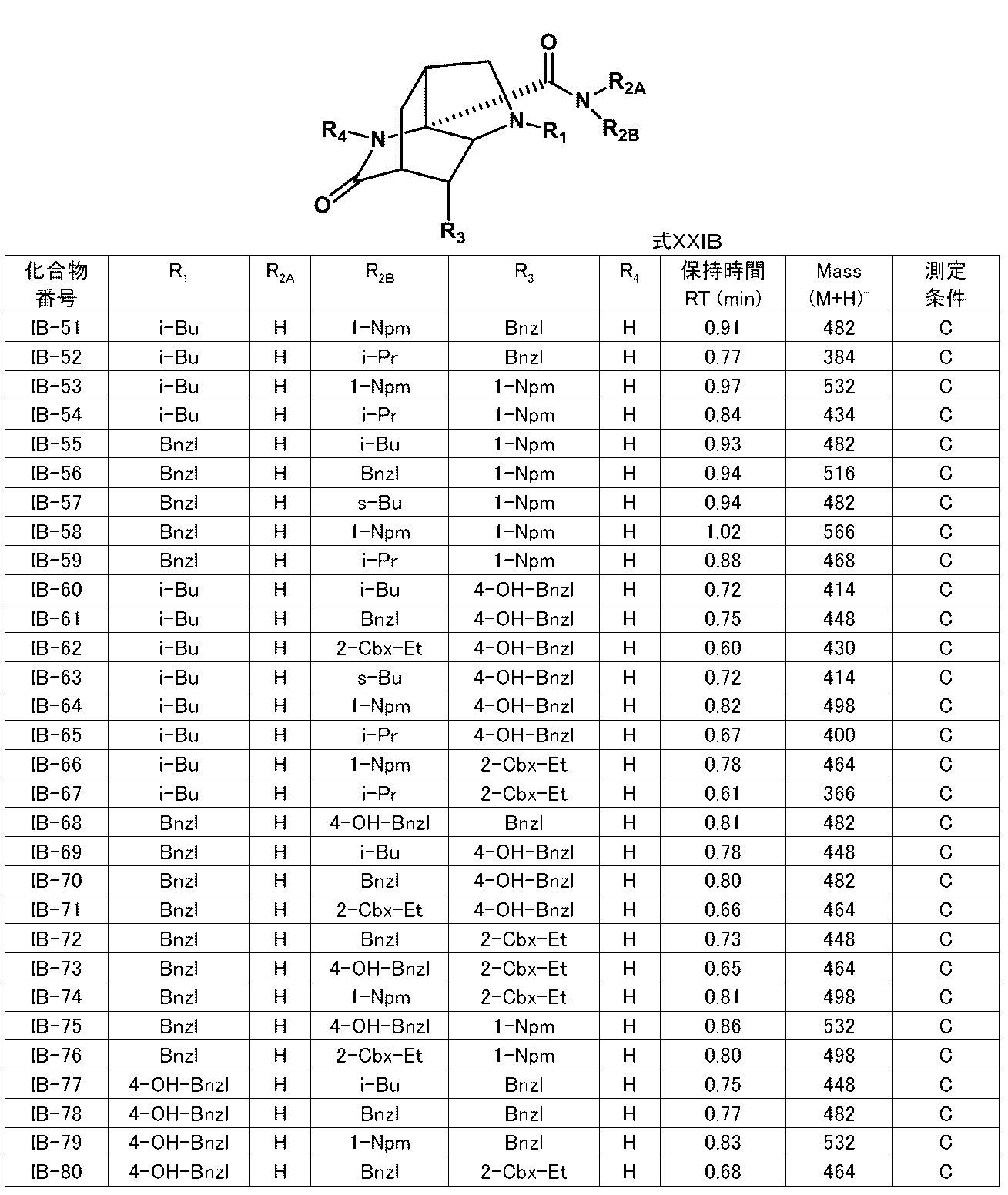
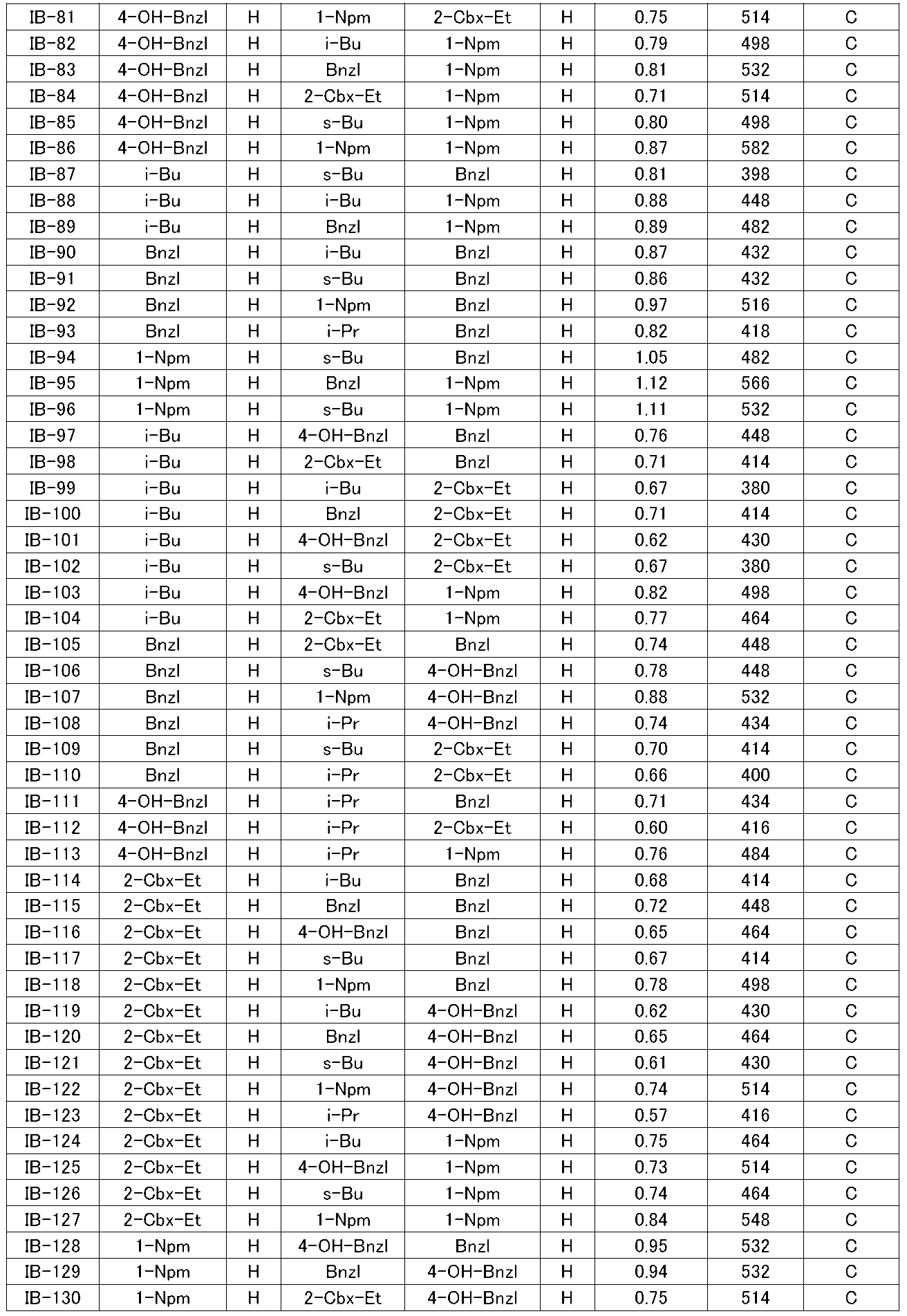
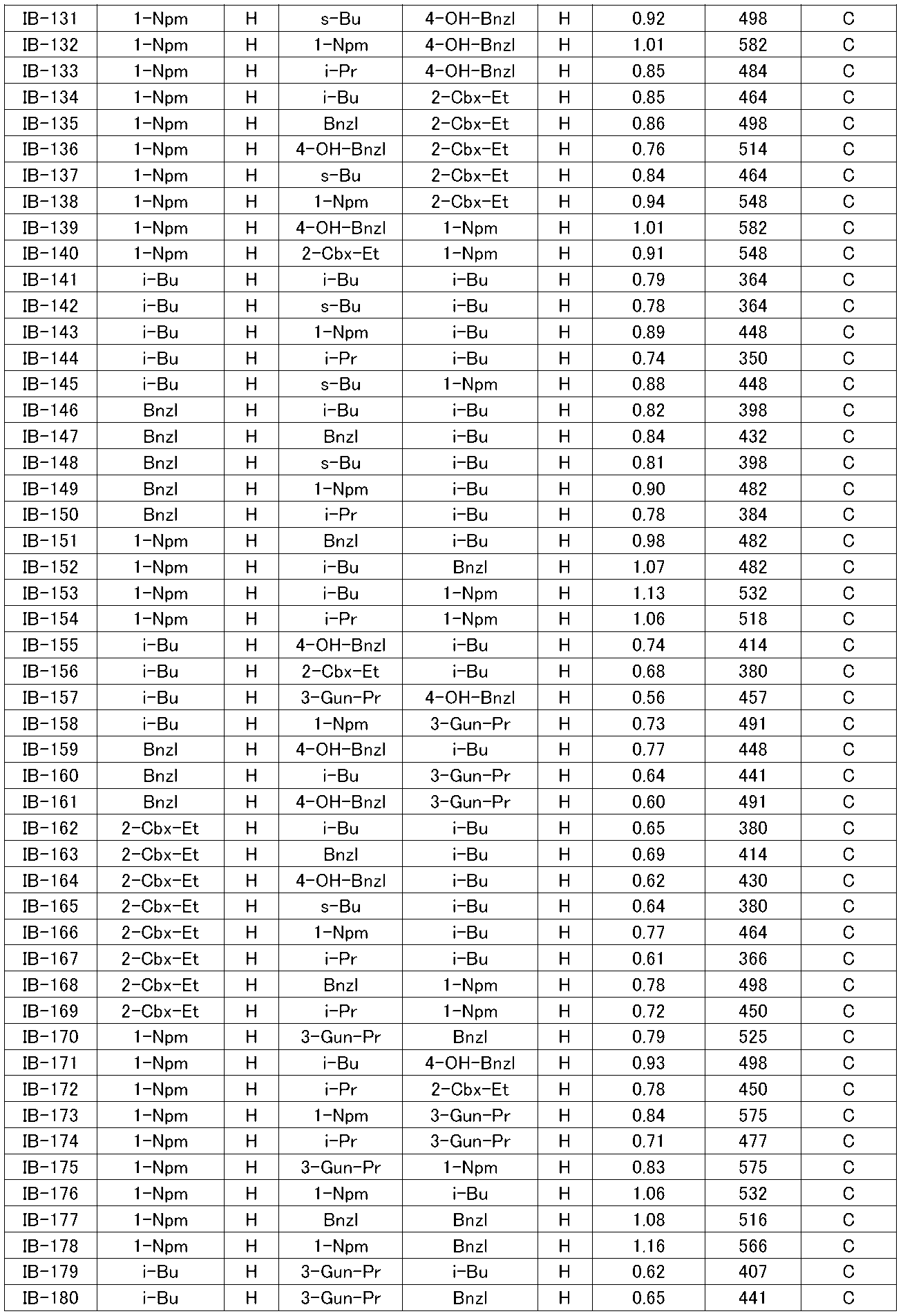

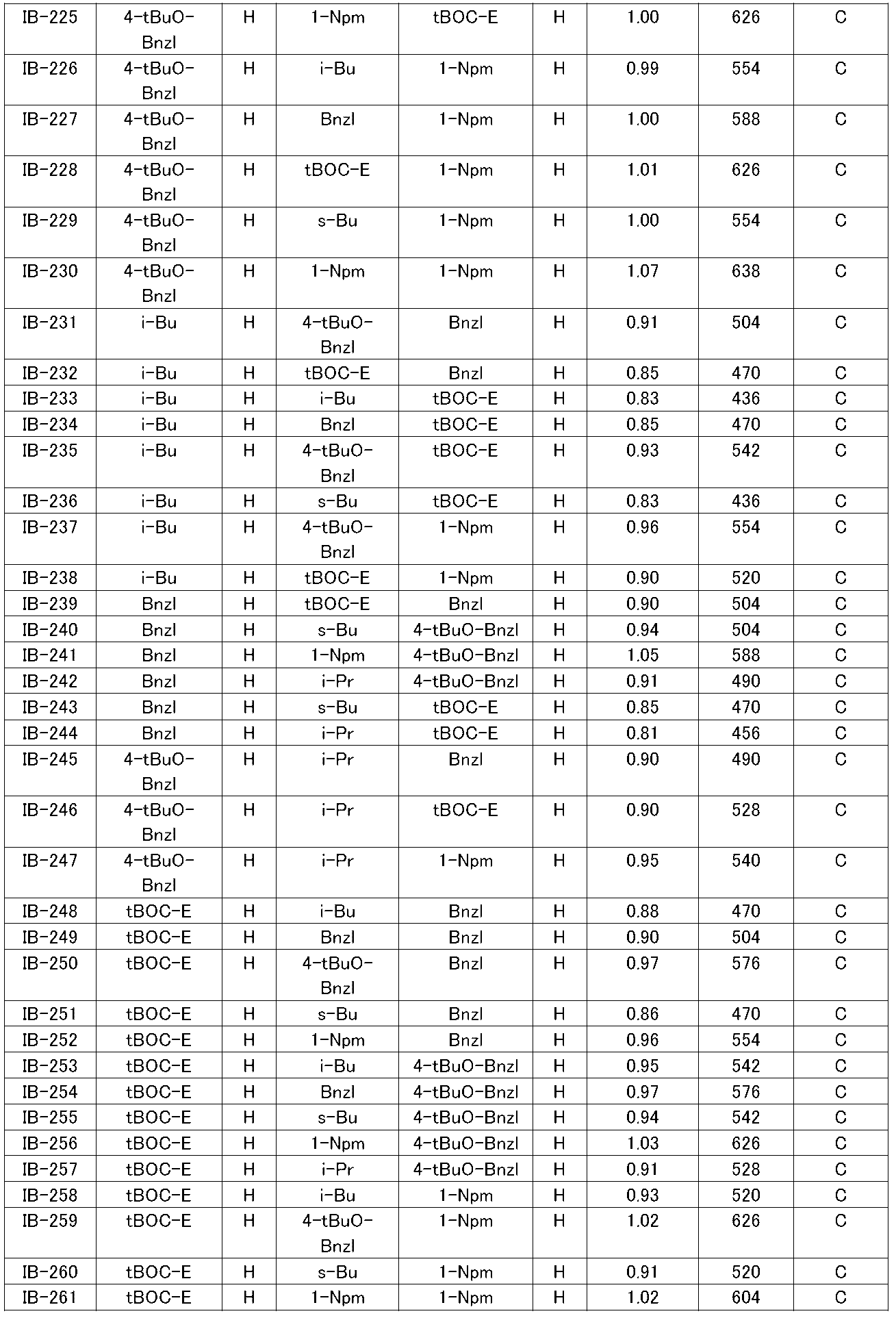
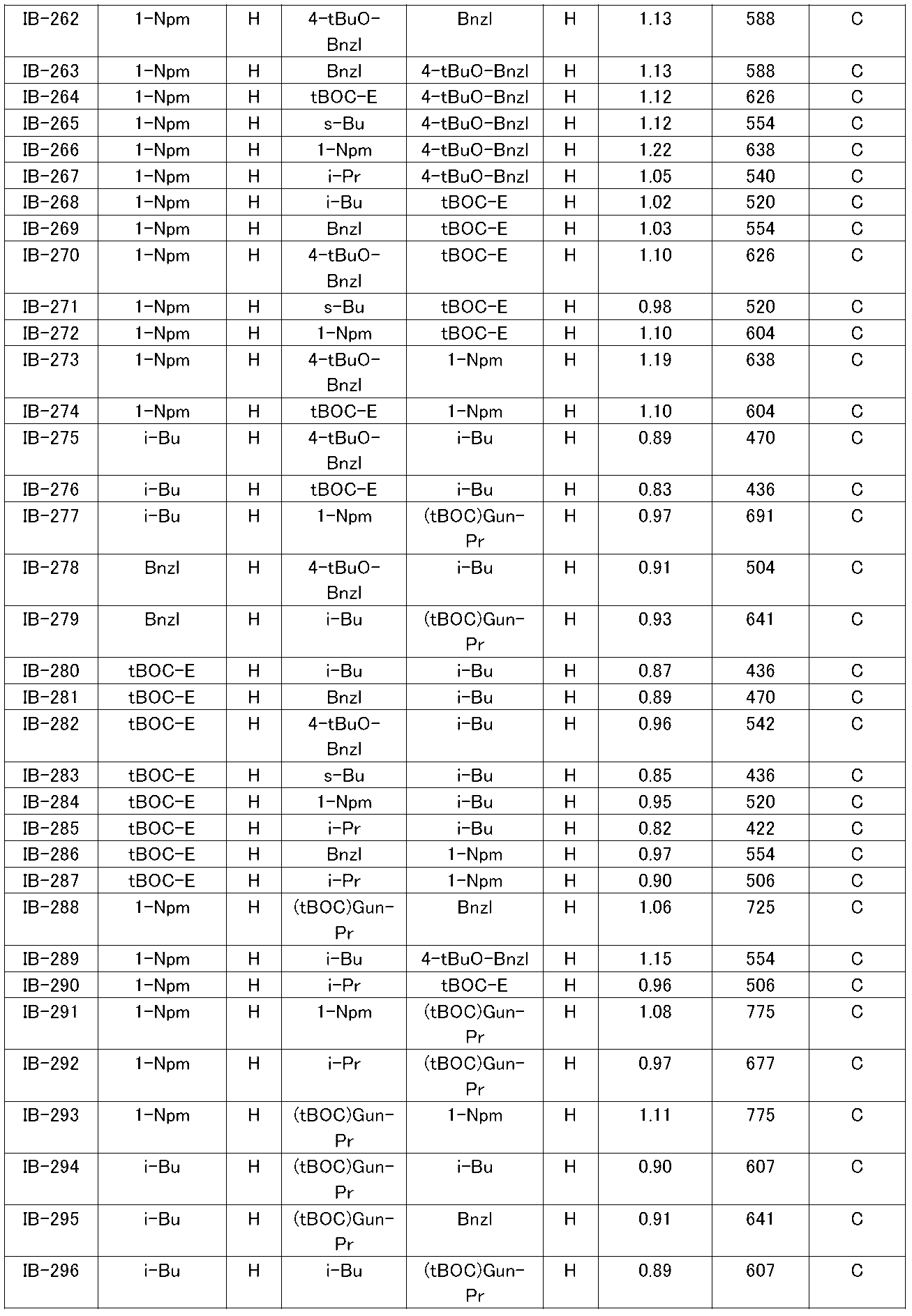

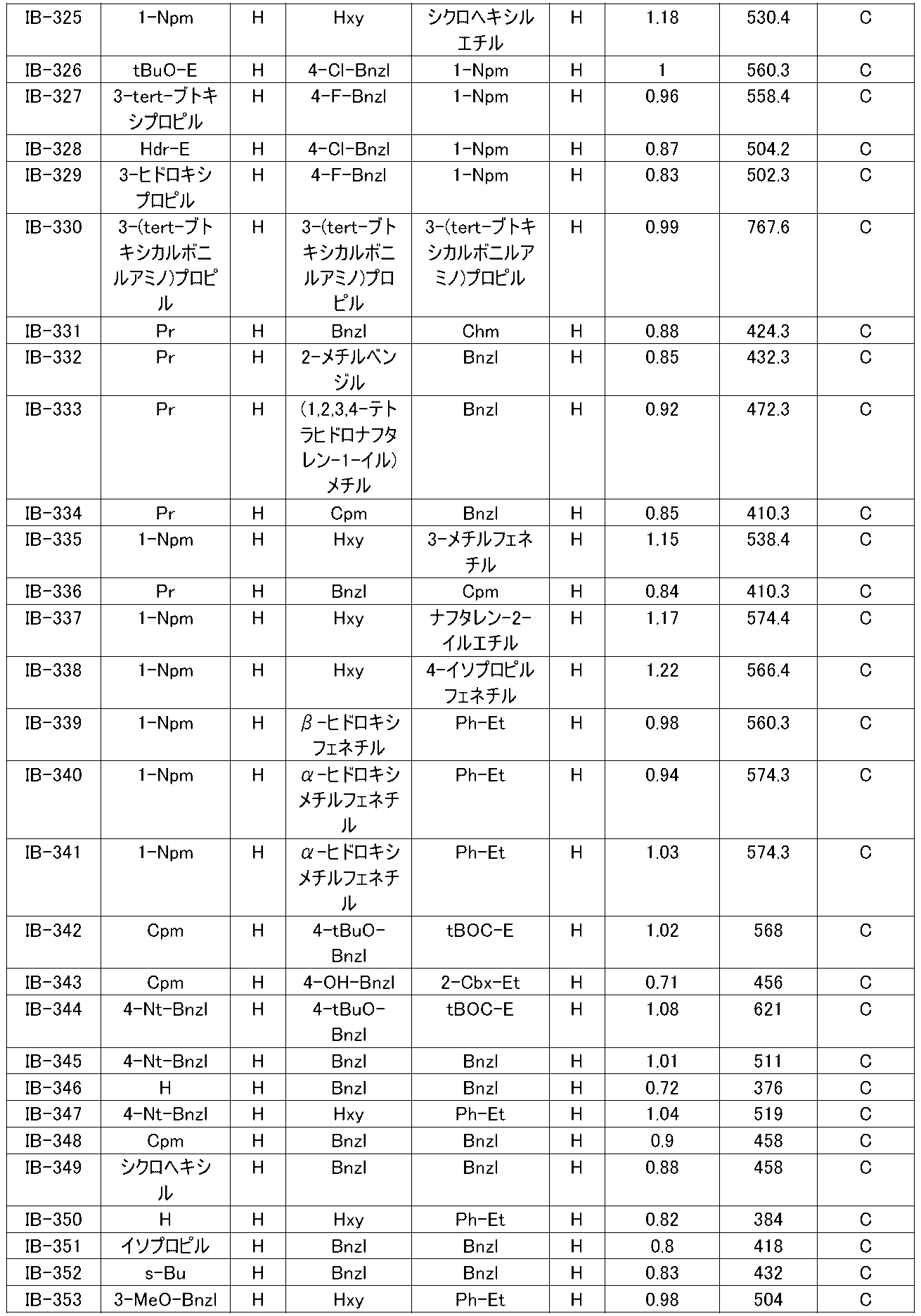
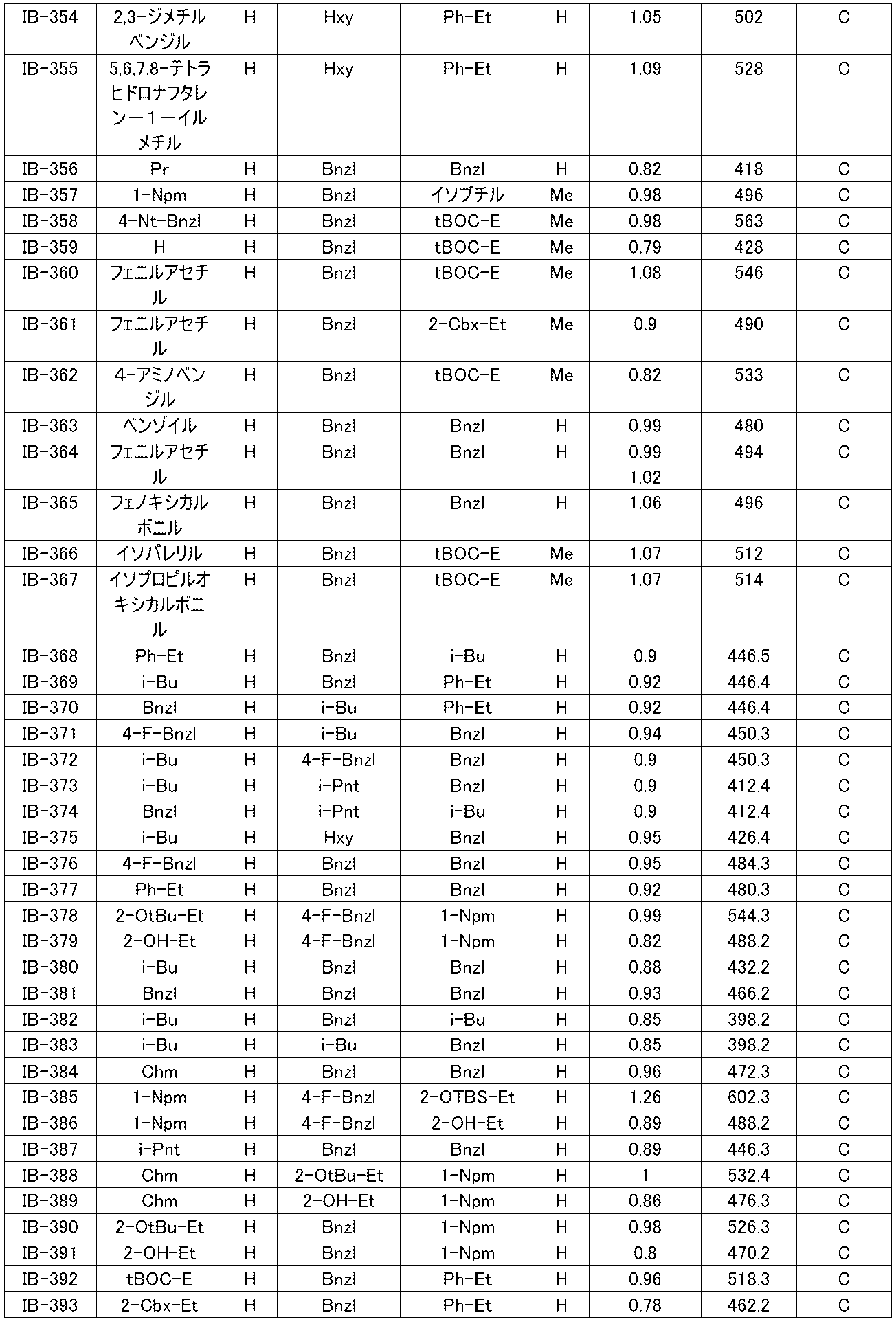
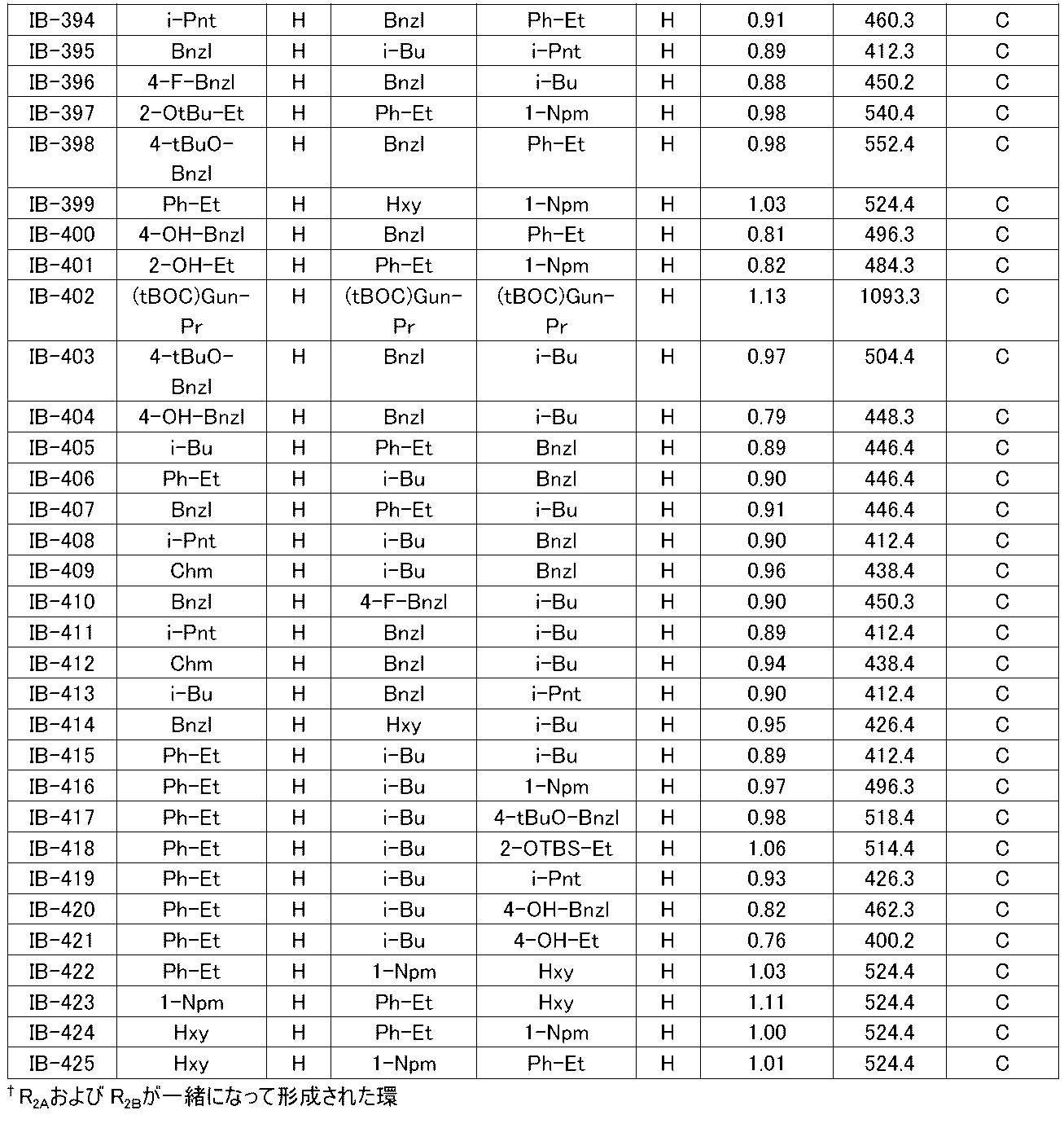
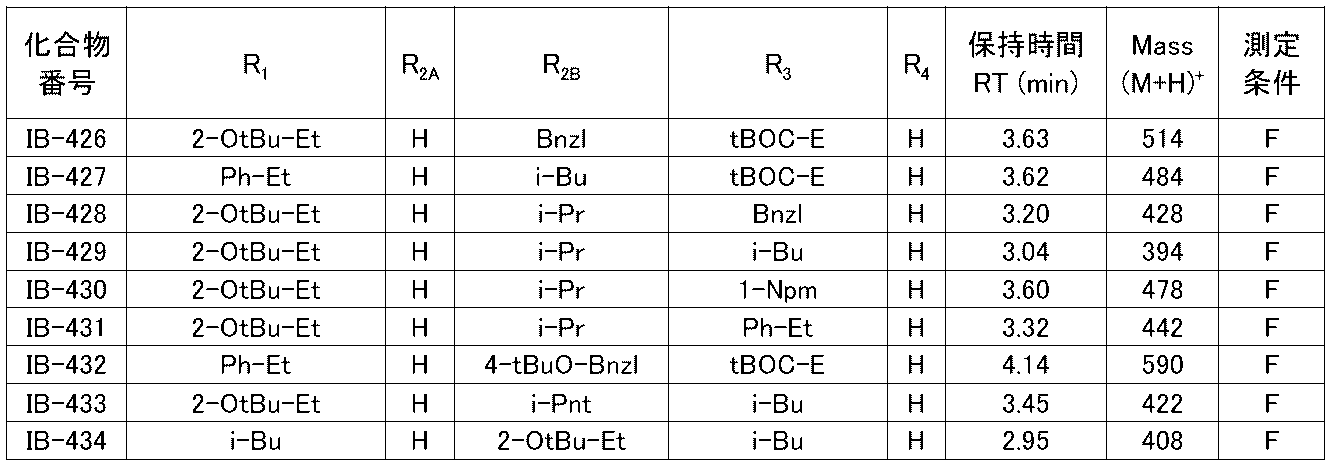
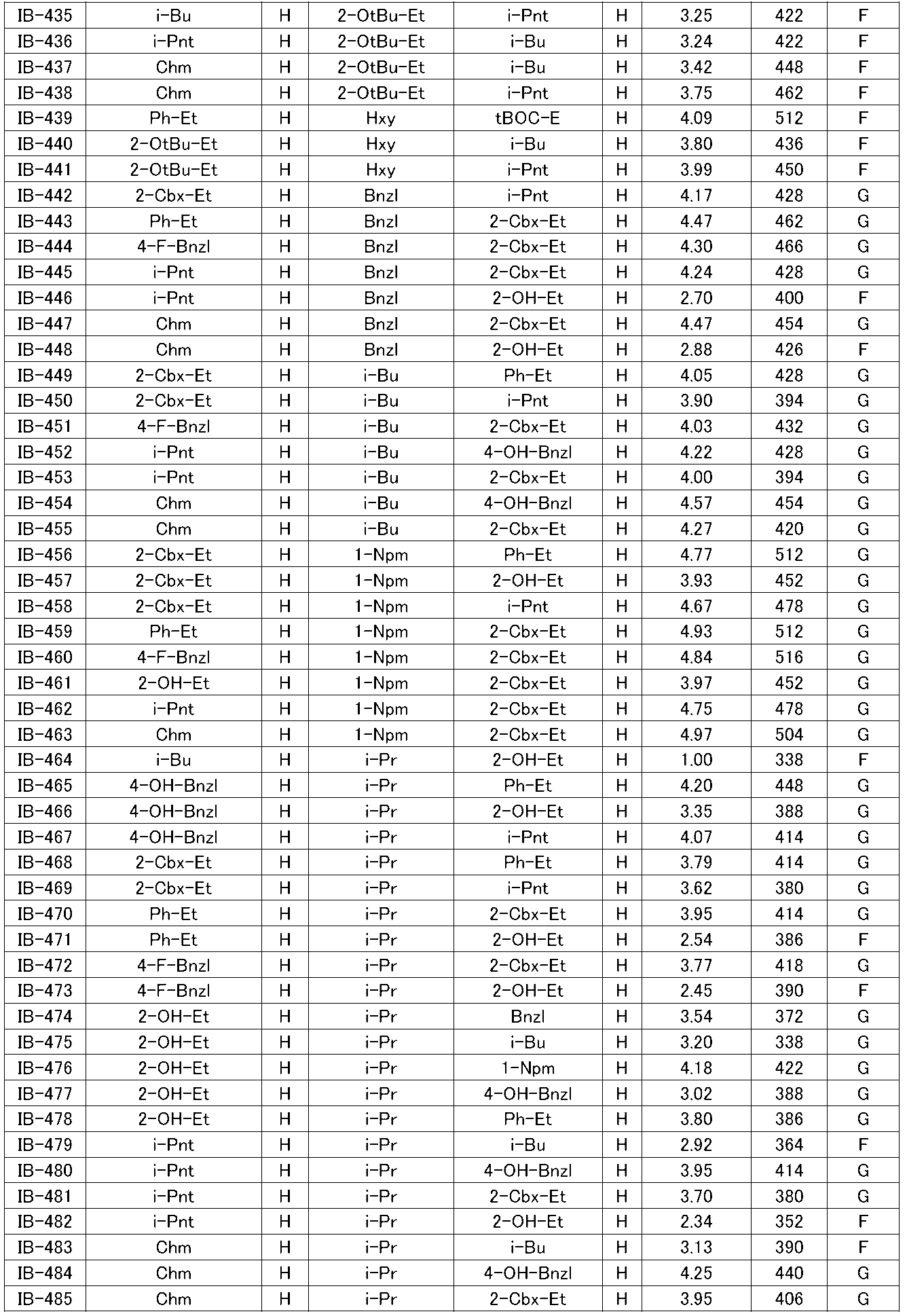


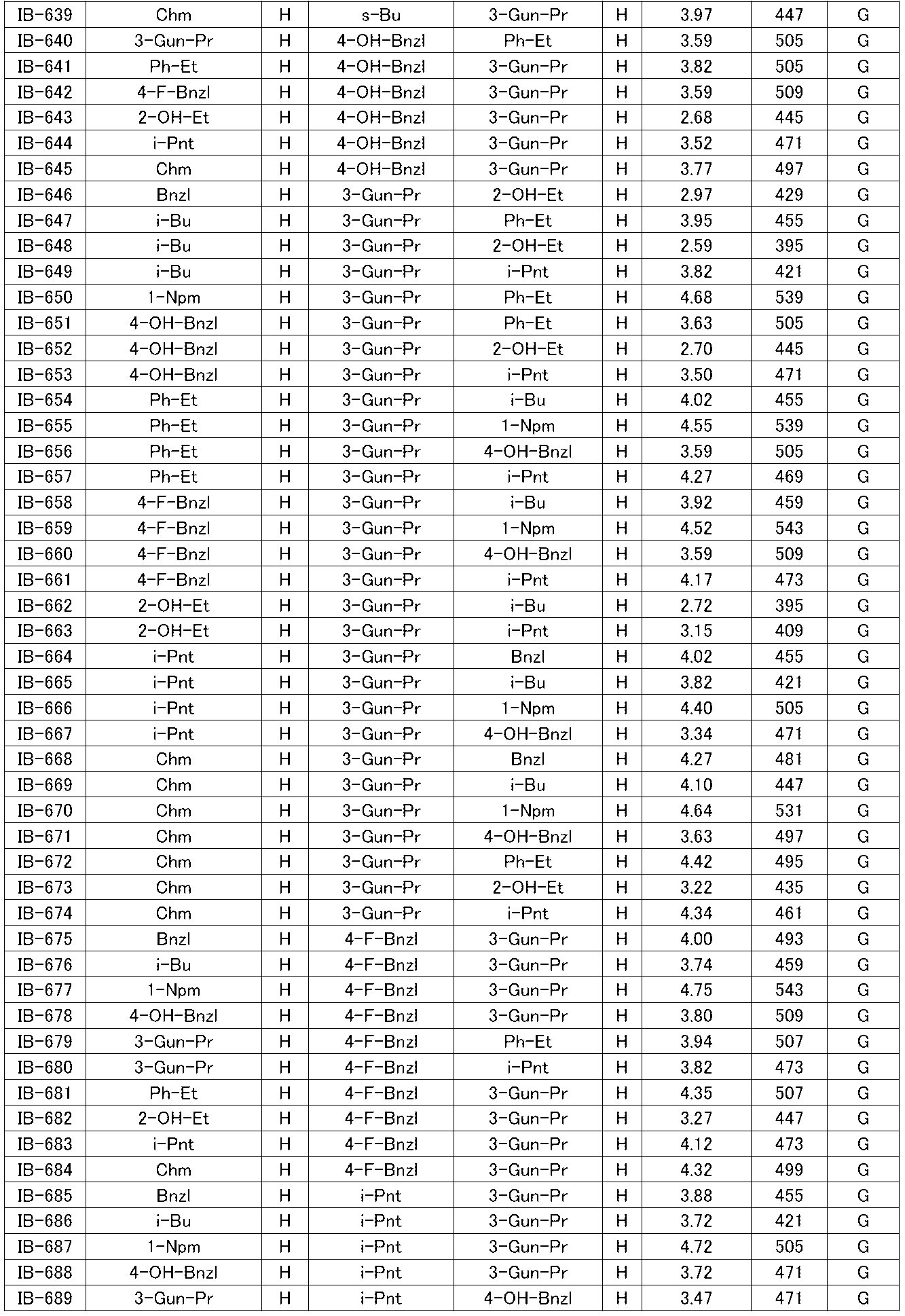
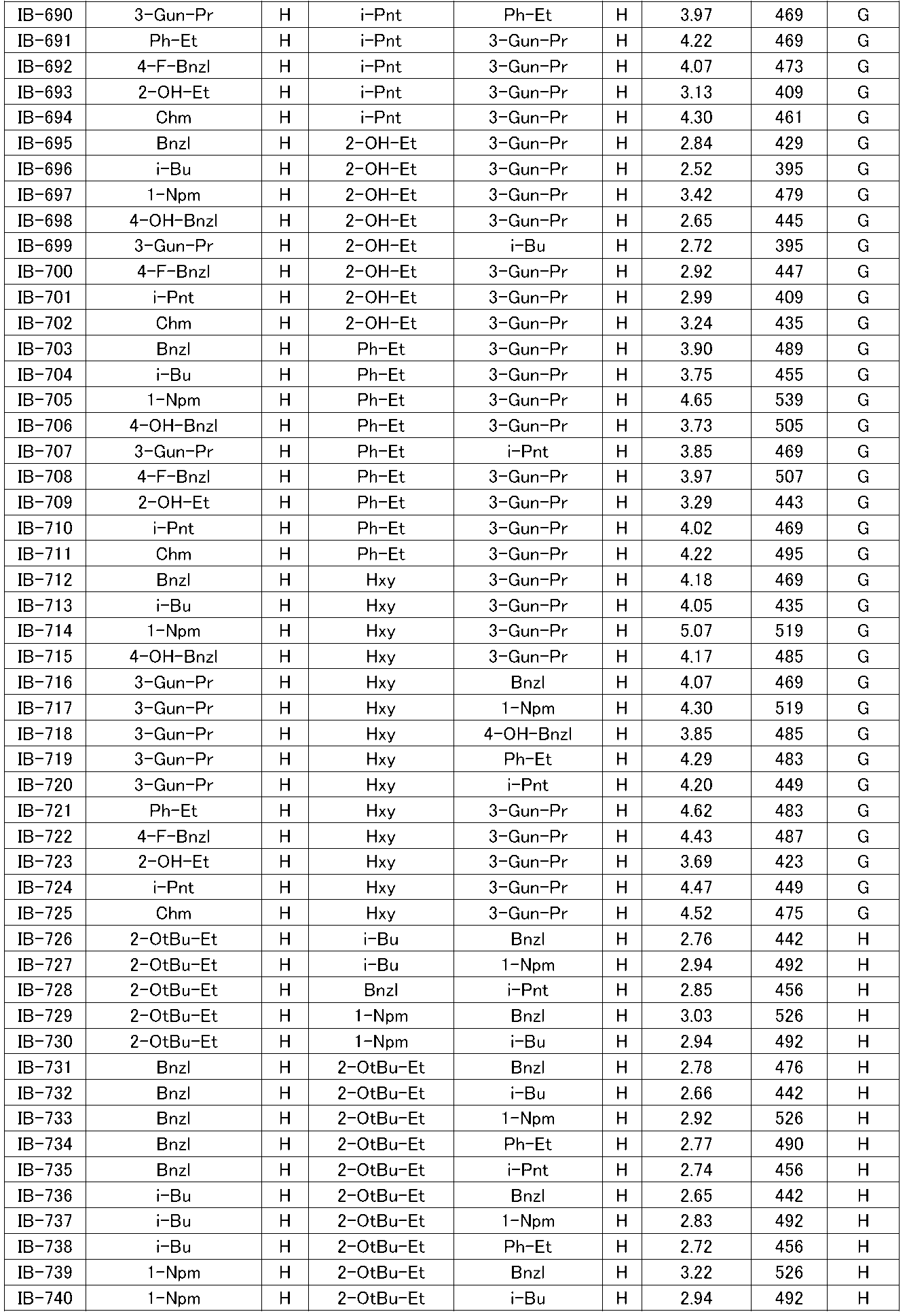
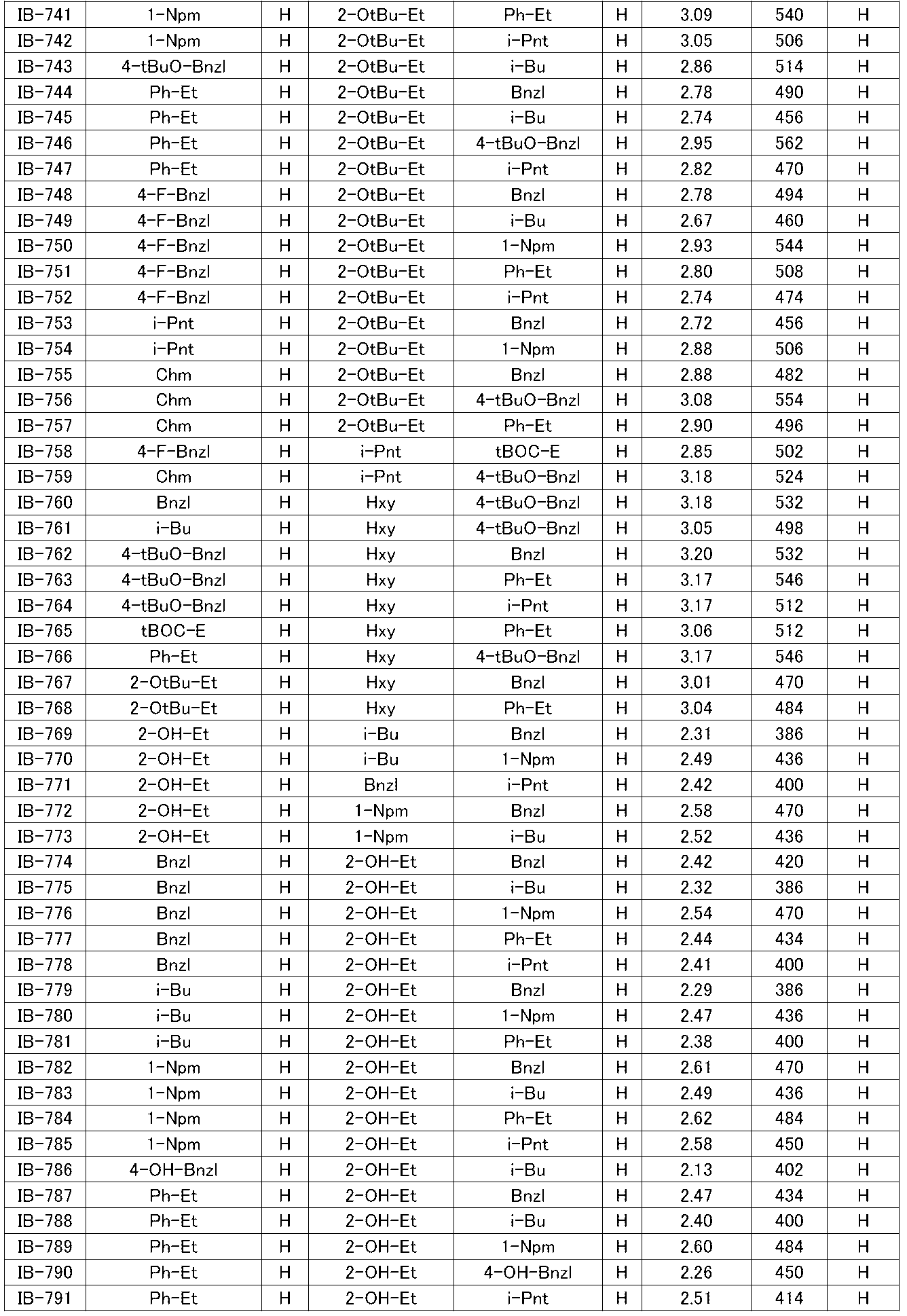


(1)N-(2,2,6,6-テトラメチルピペリジン-4-イル)-1,2,4-トリアジン-3-カルボキサミドの合成
エチル 1,2,4-トリアジン-3-カルボキシレート200 mgをメタノール2.5 mLに溶解し、4-アミノ-2,2,6,6-テトラメチルピリジン204 mgを加えた後、室温で12時間攪拌する。メタノールを減圧下に留去し、得られた残渣をCHROMATOREX Q-PACK SI30 SIZE 20(クロロホルム:メタノール=100%:0%から80%:20%)で精製し、N-(2,2,6,6-テトラメチルピペリジン-4-イル)-1,2,4-トリアジン-3-カルボキサミド(124 mg, 収率:36%)を得た。
N-(2,2,6,6-テトラメチルピペリジン-4-イル)-1,2,4-トリアジン-3-カルボキサミド80 mgのクロロホルム溶液2 mLに、4Aモレキュラーシーブス335 mg、N-アリルベンジルアミン112 mg、3-フェニルプロパナール102 mgを加え、12時間加熱還流する。モレキュラーシーブスをろ過しクロロホルムで2回洗浄する。合わせた有機層を減圧留去し、得られた残渣をCHROMATOREX Q-PACK SI30 SIZE20(ヘキサン:酢酸エチル=75%:25%から0%:100%)に続けてCHROMATOREX Q-PACK DNH30 SIZE10(ヘキサン:酢酸エチル=100%:0%から50%:50%)で精製し、標記化合物(II-44)及び(II-45)を約1:1の混合物(1H NMRにより定量)として得た(80.3 mg, 収率:53%,[M+1]+=499)を得た。
II-44及びII-45の混合物20 mgのトルエン溶液0.16 mLにトリフルオロ酢酸6.1 μL、2,3-ジメチル-2-ブテン23.8 μL、5 M亜塩素酸ナトリウム水溶液 12 μL、5 Mリン酸二水素ナトリウム水溶液28.1 μLを加え、室温で1時間激しく攪拌する。反応混合物に酢酸エチル1.0 mLを加え、有機層を飽和炭酸水素ナトリウム水 0.5 mL、5%チオ硫酸ナトリウム水溶液0.5 mL、飽和食塩水0.5 mLで順次洗浄し、無水硫酸ナトリウムで乾燥後、ろ過する。ろ液から酢酸エチルを減圧留去し、トルエンを含む残渣をCHROMATOREX Q-PACK DNH30 SIZE 10(ヘキサン:酢酸エチル=100%:0%から0%:100%)で精製し、標記化合物(I-44)(5.6 mg, 収率:27.0 %,RT=1.15分(B法),[M+1]+=515)及び(I-45)(2.7 mg, 収率:13.2%,RT=1.05分(B法),[M+1]+=515)を得た。
(1)N-(ピリジン-4-イル)メチル-1,2,4-トリアジン-3-カルボキサミドの合成
エチル 1,2,4-トリアジン-3-カルボキシレートをメタノールに溶解し、4-アミノピリジンを加えた後、室温で攪拌する。メタノールを減圧下に留去し、得られた残渣をカラムクロマトグラフィーで精製する。目的物のフラクションを濃縮し、標記化合物を得る。
N-(ピリジン-4-イル)メチル-1,2,4-トリアジン-3-カルボキサミドのクロロホルム溶液に、4Aモレキュラーシーブス、4-メチルペンタナール、N-イソブチルプロパ-2-エン-1-アミンを加え、加熱還流する。モレキュラーシーブスをろ過しクロロホルムで2回洗浄する。合わせた有機層を減圧留去し、得られた残渣を精製し、標記化合物を混合物として得る。
(3S*,3aS*,6R*,7R*,7aS*)-N-(ピリジン-4-イル)メチル-1,7-ジイソブチル-1,2,3,6,7,7a-ヘキサヒドロ-3aH-3,6-メタノピロロ[3,2-b]ピリジン-3a-カルボキサミド及び(3S*,3aR*,6S*,7R*,7aR*)-N-(ピリジン-4-イル)メチル-1,7-ジイソブチル-1,2,3,3a,7,7a-ヘキサヒドロ-6H-3,6-メタノピロロ[3,2-c]ピリジン-6-カルボキサミドの混合物のトルエン溶液にトリフルオロ酢酸、2,3-ジメチル-2-ブテン、5 M亜塩素酸ナトリウム水溶液、5 Mリン酸二水素ナトリウム水溶液を加え、室温で激しく攪拌する。反応混合物に酢酸エチルを加え、有機層を水、5%チオ硫酸ナトリウム水溶液、飽和食塩水で順次洗浄し、無水硫酸ナトリウムで乾燥後、ろ過する。ろ液から酢酸エチルを減圧留去し、トルエンを含む残渣をカラムで精製し、標記化合物を得る。
(3S*,3aS*,6R*,7R*,7aS*)-N-(ピリジン-3-イル)メチル-1,7-ジイソブチル-1,2,3,6,7,7a-ヘキサヒドロ-3aH-3,6-メタノピロロ[3,2-b]ピリジン-3a-カルボキサミド、(3S*,3aR*,6S*,7R*,7aR*)-N-(ピリジン-3-イル)メチル-1,7-ジイソブチル-1,2,3,3a,7,7a-ヘキサヒドロ-6H-3,6-メタノピロロ[3,2-c]ピリジン-6-カルボキサミド、
(3S*,3aS*,6R*,7R*,7aS*)-N-(ピリジン-2-イル)メチル-1,7-ジイソブチル-1,2,3,6,7,7a-ヘキサヒドロ-3aH-3,6-メタノピロロ[3,2-b]ピリジン-3a-カルボキサミド、(3S*,3aR*,6S*,7R*,7aR*)-N-(ピリジン-2-イル)メチル-1,7-ジイソブチル-1,2,3,3a,7,7a-ヘキサヒドロ-6H-3,6-メタノピロロ[3,2-c]ピリジン-6-カルボキサミド、
(3S*,3aS*,6R*,7R*,7aS*)-N-(2-チエニル)メチル-1,7-ジイソブチル-1,2,3,6,7,7a-ヘキサヒドロ-3aH-3,6-メタノピロロ[3,2-b]ピリジン-3a-カルボキサミド、
(3S*,3aR*,6S*,7R*,7aR*)-N-(2-チエニル)メチル-1,7-ジイソブチル-1,2,3,3a,7,7a-ヘキサヒドロ-6H-3,6-メタノピロロ[3,2-c]ピリジン-6-カルボキサミド、
(3S*,3aS*,6R*,7R*,7aS*)-N-(3-チエニル)メチル-1,7-ジイソブチル-1,2,3,6,7,7a-ヘキサヒドロ-3aH-3,6-メタノピロロ[3,2-b]ピリジン-3a-カルボキサミド、および
(3S*,3aR*,6S*,7R*,7aR*)-N-(3-チエニル)メチル-1,7-ジイソブチル-1,2,3,3a,7,7a-ヘキサヒドロ-6H-3,6-メタノピロロ[3,2-c]ピリジン-6-カルボキサミド。
上記実施例において、DMSOにて10 mMストックとして調製された各被検化合物は、まず100 μMもしくは40 μMとなるように10%牛胎仔血清添加イーグル培地(以下、培地)で希釈し、それから目的の終濃度となるようにさらに培地で希釈を行い、その希釈液50 μlを96穴プレートの各穴に滴下した。さらにその各穴に、Gaussia Luciferase(GLuc)を発現する組換え狂犬病ウイルス1088株(1088/GLuc)4×102感染単位およびNeuro-2a細胞4×104個を含む培地50 μlを添加し、多連式マイクロプレートミキサーNS-4P(アズワン社製)にて30秒間振盪後、37℃かつ5%CO2存在下で3日間培養した。培養後、プレートの各穴にルシフェラーゼの基質となるセレンテラジン25 μlを滴下し、直ちに発光プレートリーダー LuMate(Awareness Technology社製)に装填して10秒間の振盪を行った後、相対発光量(RLU)の測定を行った。
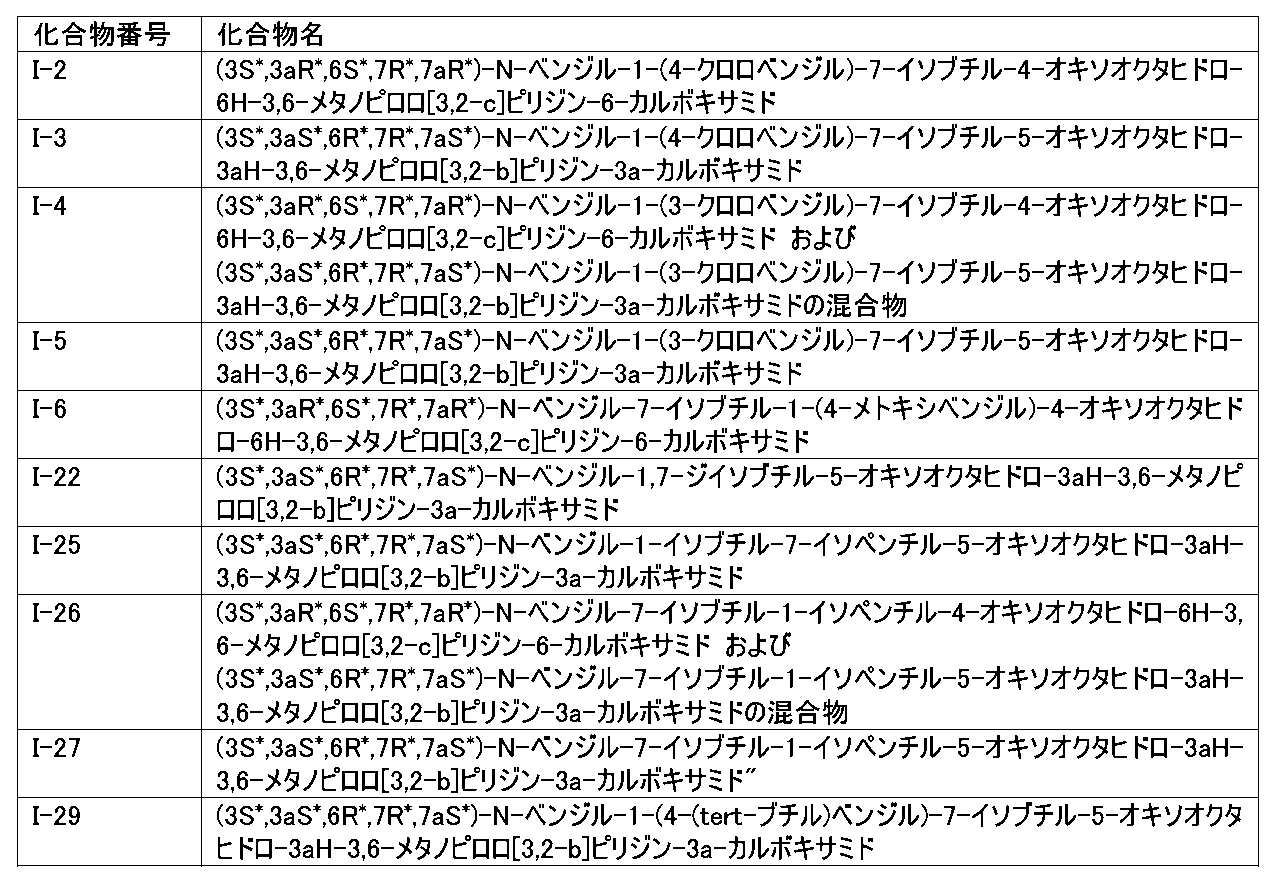
下表は、式IF、式IB、式XXIFまたは式XXIBの化合物の抗狂犬病活性を示す。IC50が5μM以下であればA、5μM超かつ10μM以下であればB、10μM超かつ30μM以下であればCと分類する。naは、該当なしを意味する。

以上のように、本開示の好ましい実施形態を用いて本開示を例示してきたが、本開示は、特許請求の範囲によってのみその範囲が解釈されるべきであることが理解される。本明細書において引用した特許、特許出願および他の文献は、その内容自体が具体的に本明細書に記載されているのと同様にその内容が本明細書に対する参考として援用されるべきであることが理解される。本出願は、日本国で2019年6月3日に出願された特願2019-103958号および2020年2月14日に出願された特願2020-23653号に対して優先権主張を伴うものであり、その内容は全てが参照として援用される。
Claims (22)
- 式XXIF:
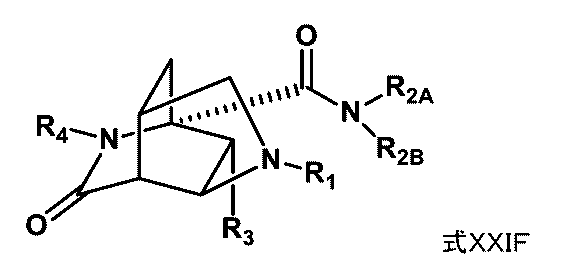
により表される化合物もしくはそのエナンチオマーまたはそれらの塩またはそれらの溶媒和物であって、式中、
R1、R3およびR4は各々独立して、
水素、
必要に応じて置換された炭化水素基、
必要に応じて置換された複素環、
必要に応じて置換されたカルボニル、もしくは
必要に応じて置換された官能基であり、
R2AおよびR2Bは各々独立して、
水素、
必要に応じて置換された炭化水素基、
必要に応じて置換された複素環、
必要に応じて置換されたカルボニル、もしくは
必要に応じて置換された官能基であるか、または、
R2AおよびR2Bは、それらが結合する窒素原子と一緒になって、複素環を形成し、ここで、前記複素環は各々独立して、必要に応じて置換されている、
化合物もしくはそのエナンチオマーまたはそれらの塩またはそれらの溶媒和物。 - 式XXIB:
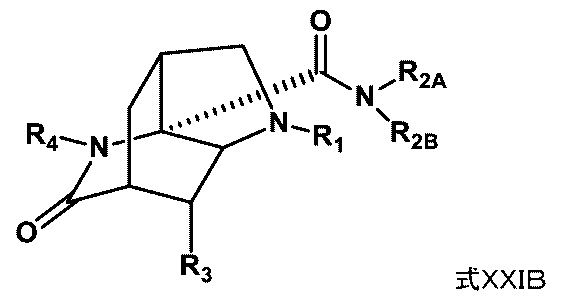
により表される化合物もしくはそのエナンチオマーまたはそれらの塩またはそれらの溶媒和物であって、式中、
R1、R3およびR4は各々独立して、
水素、
必要に応じて置換された炭化水素基、
必要に応じて置換された複素環、
必要に応じて置換されたカルボニル、または
必要に応じて置換された官能基であり、
R2AおよびR2Bは各々独立して、
水素、
必要に応じて置換された炭化水素基、
必要に応じて置換された複素環、
必要に応じて置換されたカルボニル、もしくは
必要に応じて置換された官能基であるか、または、
R2AおよびR2Bは、それらが結合する窒素原子と一緒になって、複素環を形成し、ここで、前記複素環は各々独立して、必要に応じて置換されている、
化合物もしくはそのエナンチオマーまたはそれらの塩またはそれらの溶媒和物。 - R1、R3およびR4の前記アルキル、アルケニル、アルキニル、シクロアルキル、ヘテロシクロアルキル、アリール、ヘテロアリール、およびカルボニルは各々独立して、置換基群Iから選択される1個から最大置換可能数までの同一または異なる置換基で必要に応じて置換されており、
R2AおよびR2Bの前記アルキル、アルケニル、アルキニル、シクロアルキル、ヘテロシクロアルキル、アリール、ヘテロアリール、カルボニル、ならびに前記非アリールヘテロ環および前記ヘテロアリール環は各々独立して、置換基群Iから選択される1個から最大置換可能数までの同一または異なる置換基で必要に応じて置換されている、
上記請求項のいずれか一項に記載の化合物もしくはそのエナンチオマーまたはそれらの塩またはそれらの溶媒和物。 - R1、R3およびR4は各々独立して、
水素、
必要に応じて置換されたアルキル、
必要に応じて置換されたシクロアルキル、
必要に応じて置換されたヘテロシクロアルキル、
必要に応じて置換されたアリール、
必要に応じて置換されたヘテロアリール、または
必要に応じて置換されたカルボニルであり、
R2AおよびR2Bは各々独立して、
水素、
必要に応じて置換されたアルキル、
必要に応じて置換されたシクロアルキル、
必要に応じて置換されたヘテロシクロアルキル、
必要に応じて置換されたアリール、
必要に応じて置換されたヘテロアリール、もしくは
必要に応じて置換されたカルボニルであるか、または、
R2AおよびR2Bは、それらが結合する窒素原子と一緒になって、非アリールヘテロ環もしくはヘテロアリール環を形成し、
ここで、前記非アリールヘテロ環および前記ヘテロアリール環は各々独立して、必要に応じて置換されている、
上記請求項のいずれか一項に記載の化合物もしくはそのエナンチオマーまたはそれらの塩またはそれらの溶媒和物。 - R1、R3およびR4は各々独立して、
水素、
必要に応じて置換されたアルキル、
必要に応じて置換されたアリールアルキル、
必要に応じて置換されたヘテロアリールアルキル、
必要に応じて置換されたシクロアルキル、
必要に応じて置換されたヘテロシクロアルキル、
必要に応じて置換されたアリール、
ホルミル、
必要に応じて置換されたアルキルカルボニル、
必要に応じて置換されたアルコキシカルボニル、
必要に応じて置換されたアリールカルボニル、
必要に応じて置換されたアリールオキシカルボニル、
必要に応じて置換されたヘテロアリールカルボニル、
必要に応じて置換されたヘテロアリールオキシカルボニル、
必要に応じて置換されたシクロアルキルカルボニル、
必要に応じて置換されたシクロアルキルオキシカルボニル、
必要に応じて置換されたヘテロシクロアルキルカルボニル、
必要に応じて置換されたヘテロシクロアルキルオキシカルボニル、
カルバモイル、
必要に応じて置換されたアルキルカルバモイル、
必要に応じて置換されたアルコキシカルバモイル、
必要に応じて置換されたアリールカルバモイル、
必要に応じて置換されたヘテロアリールカルバモイル、
必要に応じて置換されたシクロアルキルカルバモイル、または
必要に応じて置換されたヘテロシクロアルキルカルバモイルであり、
ここで、R1、R3およびR4の上記基は、
置換基群IIから選択される1個から最大置換可能数までの同一または異なる置換基で必要に応じて置換され、
R2AおよびR2Bは各々独立して、
水素、
必要に応じて置換されたアルキル、
必要に応じて置換されたアリールアルキル、
必要に応じて置換されたシクロアルキル、
必要に応じて置換されたヘテロシクロアルキル、
ホルミル、
必要に応じて置換されたアルキルカルボニル、
必要に応じて置換されたアルコキシカルボニル、
必要に応じて置換されたアリールカルボニル、
必要に応じて置換されたアリールオキシカルボニル、
必要に応じて置換されたヘテロアリールカルボニル、
必要に応じて置換されたヘテロアリールオキシカルボニル、
必要に応じて置換されたシクロアルキルカルボニル、
必要に応じて置換されたシクロアルキルオキシカルボニル、
必要に応じて置換されたヘテロシクロアルキルカルボニル、
必要に応じて置換されたヘテロシクロアルキルオキシカルボニル、
カルバモイル、
必要に応じて置換されたアルキルカルバモイル、
必要に応じて置換されたアルコキシカルバモイル、
必要に応じて置換されたアリールカルバモイル、
必要に応じて置換されたヘテロアリールカルバモイル、
必要に応じて置換されたシクロアルキルカルバモイル、または
必要に応じて置換されたヘテロシクロアルキルカルバモイルであり、
ここで、R2AおよびR2Bの上記基は、置換基群IIから選択される1個から最大置換可能数までの同一または異なる置換基で必要に応じて置換されるか、または、
R2AおよびR2Bは、それらが結合する窒素原子と一緒になって、非アリールヘテロ環もしくはヘテロアリール環を形成し、
ここで、前記非アリールヘテロ環および前記ヘテロアリール環は各々独立して、置換基群IIから選択される1個から最大置換可能数までの同一または異なる置換基で置換されていてもよい、
上記請求項のいずれか一項に記載の化合物もしくはそのエナンチオマーまたはそれらの塩またはそれらの溶媒和物。 - R1およびR4は各々独立して、
水素、
必要に応じて置換されたアルキル、
必要に応じて置換されたアリールアルキル、
必要に応じて置換されたヘテロアリールアルキル、
必要に応じて置換されたシクロアルキル、
必要に応じて置換されたヘテロシクロアルキル、
ホルミル、
必要に応じて置換されたアルキルカルボニル、
必要に応じて置換されたアルコキシカルボニル、
必要に応じて置換されたアリールカルボニル、
必要に応じて置換されたアリールオキシカルボニル、
必要に応じて置換されたシクロアルキルカルボニル、
必要に応じて置換されたシクロアルキルオキシカルボニル、
必要に応じて置換されたヘテロシクロアルキルカルボニル、
必要に応じて置換されたヘテロシクロアルキルオキシカルボニル、
カルバモイル、
必要に応じて置換されたアルキルカルバモイル、
必要に応じて置換されたアルコキシカルバモイル、
必要に応じて置換されたアリールカルバモイル、
必要に応じて置換されたヘテロアリールカルバモイル、
必要に応じて置換されたシクロアルキルカルバモイル、または
必要に応じて置換されたヘテロシクロアルキルカルバモイルであり、
ここで、R1およびR4の上記基は、置換基群IIIから選択される1個から最大置換可能数までの同一または異なる置換基で必要に応じて置換されている、
上記請求項のいずれか一項に記載の化合物もしくはそのエナンチオマーまたはそれらの塩またはそれらの溶媒和物。 - R1およびR4は各々独立して、
水素、
必要に応じて置換されたアルキル、
必要に応じて置換されたアリールアルキル、
必要に応じて置換されたヘテロアリールアルキル、
必要に応じて置換されたヘテロシクロアルキル、
ホルミル、
必要に応じて置換されたアルキルカルボニル、
必要に応じて置換されたアルコキシカルボニル、
必要に応じて置換されたアリールカルボニル、または
必要に応じて置換されたアリールオキシカルボニルであり、
ここで、R1およびR4の上記基は、置換基群IIIから選択される1個から最大置換可能数までの同一または異なる置換基で必要に応じて置換されている、
上記請求項のいずれか一項に記載の化合物もしくはそのエナンチオマーまたはそれらの塩またはそれらの溶媒和物。 - R1は、
水素;
アルキル;
ヒドロキシ、置換オキシ、ホルミル、置換カルボニル、アミノ、置換アミノ、およびシクロアルキル、および置換シクロアルキルからなる群より選択される1個から最大置換可能数までの同一または異なる置換基で置換されているアルキル;
アリールアルキル;
ハロゲン、アルキル、置換アルキル、ヒドロキシ、置換オキシ、アミノ、置換アミノ、およびニトロからなる群より選択される1個から最大置換可能数までの同一または異なる置換基で置換されているアリールアルキル;
ヘテロアリールアルキル;
ハロゲン、アルキル、置換アルキル、ヒドロキシ、置換オキシ、アミノ、置換アミノ、およびニトロからなる群より選択される1個から最大置換可能数までの同一または異なる置換基で置換されているヘテロアリールアルキル;
シクロアルキル;
置換シクロアルキル;
ヘテロシクロアルキル;
置換ヘテロシクロアルキル;または
置換カルボニルであり、ここで、前記置換オキシ、置換カルボニル、置換アミノ、置換シクロアルキル、置換ヘテロシクロアルキル、および置換アルキルは各々独立して、置換基群IVから選択される1個から最大置換可能数までの同一または異なる置換基を有する、
上記請求項のいずれか一項に記載の化合物もしくはそのエナンチオマーまたはそれらの塩またはそれらの溶媒和物。 - R3は、
アルキル;
ヒドロキシ、置換オキシ、置換カルボニル、アミノ、置換アミノ、シクロアルキル、および置換シクロアルキルからなる群より選択される1個から最大置換可能数までの同一または異なる置換基で置換されているアルキル;
アリールアルキル;
ハロゲン、アルキル、置換アルキル、ヒドロキシ、および置換オキシからなる群より選択される1個から最大置換可能数までの同一または異なる置換基で置換されているアリールアルキル;
アリール;または
置換アリールであり、ここで、前記置換オキシ、置換カルボニル、置換アミノ、置換シクロアルキル、置換アルキル、および置換アリールは各々独立して、置換基群IVから選択される1個から最大置換可能数までの同一または異なる置換基を有する、
上記請求項のいずれか一項に記載の化合物もしくはそのエナンチオマーまたはそれらの塩またはそれらの溶媒和物。 - R2AおよびR2Bは各々独立して、
水素;
アルキル;
ヒドロキシ、置換オキシ、アミノ、置換アミノ、シクロアルキル、および置換シクロアルキルからなる群より選択される1個から最大置換可能数までの同一または異なる置換基で置換されているアルキル;
アリールアルキル;
ハロゲン、アルキル、置換アルキル、ヒドロキシ、および置換オキシからなる群より選択される1個から最大置換可能数までの同一または異なる置換基で置換されているアリールアルキル;
シクロアルキル;
置換シクロアルキル;
ヘテロシクロアルキル;もしくは
置換ヘテロシクロアルキルであり、ここで、前記置換オキシ、置換アミノ、置換アルキル、置換シクロアルキル、および置換ヘテロシクロアルキルは各々独立して、置換基群IVから選択される1個から最大置換可能数までの同一または異なる置換基を有するか、または、
R2AおよびR2Bは、それらが結合する窒素原子と一緒になって、非アリールヘテロ環を形成し、ここで、前記非アリールヘテロ環は、置換基群VIから選択される1個または最大置換可能数までの同一または異なる置換基で置換されていてもよい、
上記請求項のいずれか一項に記載の化合物もしくはそのエナンチオマーまたはそれらの塩またはそれらの溶媒和物。 - R4は、水素、アルキル、または置換アルキルであり、ここで、前記置換アルキルは、ハロゲン、カルボキシ、カルバモイル、アミノ、アルキルアミノ、アリール、ニトロアリール、およびアルコキシカルボニルアミノからなる群より選択される1個または最大置換可能数までの同一または異なる置換基を有する、
上記請求項のいずれか一項に記載の化合物もしくはそのエナンチオマーまたはそれらの塩またはそれらの溶媒和物。 - R1は、水素、メチル、プロピル、イソプロピル、イソブチル、sec-ブチル、イソペンチル、ヘキシル、アミジノアミノプロピル、(tert-ブトキシカルボニル置換されたアミジノアミノ)プロピル、tert-ブトキシエチル、tert-ブトキシプロピル、tert-ブトキシカルボニルエチル、カルボキシエチル、ヒドロキシエチル、ヒドロキシプロピル、tert-ブトキシカルボニルアミノプロピル、シクロペンチルメチル、シクロヘキシルメチル、シクロヘプチルメチル、5,6,7,8-テトラヒドロナフタレニルメチル、ベンジル、フェニルエチル、ナフタレニルメチル、フルオロベンジル、クロロベンジル、メチルベンジル、ジメチルベンジル、tert-ブチルベンジル、メトキシベンジル、エトキシベンジル、tert-ブトキシベンジル、トリフルオロメチルベンジル、(トリフルオロメトキシ)ベンジル、ベンジルオキシベンジル、アミノベンジル、(ジメチルアミノ)ベンジル、(シクロペンチルカルボニルアミノ)ベンジル、6-メチル-1H-インドール-3-イルメチル、6-フルオロ-1H-インドール-3-イルメチル、1-tert-ブトキシカルボニル-6-メチル-1H-インドール-3-イルメチル、1-tert-ブトキシカルボニル-6-フルオロ-1H-インドール-3-イルメチル、ニトロベンジル、ヒドロキシベンジル、シクロヘキシル、イソバレリル、フェニルアセチル、ベンゾイル、イソプロピルオキシカルボニル、フェノキシカルボニル、またはテトラヒドロ-2H-ピラニルである、
上記請求項のいずれか一項に記載の化合物もしくはそのエナンチオマーまたはそれらの塩またはそれらの溶媒和物。 - R1は、アルキル、置換アリールアルキル、または置換ヘテロアリールアルキルであり、
R2Aは、水素であり、R2Bは、アルキル、アリールアルキル、置換アリールアルキル、または置換されていてもよいシクロアルキルアルキルであり、
R3は、アルキルであり、
R4は、水素である、
上記請求項のいずれか一項に記載の化合物もしくはそのエナンチオマーまたはそれらの塩またはそれらの溶媒和物。 - 前記化合物は、化合物番号I-1~I-50、II-1~II-50、IF-51~IF-800、およびIB-51~IB-832からなる群より選択される化合物である、
上記請求項のいずれか一項に記載の化合物もしくはそのエナンチオマーまたはそれらの塩またはそれらの溶媒和物。 - 上記請求項のいずれか一項に記載の化合物またはその薬学的に許容される塩を含有する、リッサウイルス属ウイルスに対する抗ウイルス剤。
- 前記リッサウイルス属ウイルスは狂犬病ウイルスを含む、上記請求項のいずれか一項に記載の抗ウイルス剤。
- 上記請求項のいずれか一項に記載の化合物またはその薬学的に許容される塩を含有する医薬。
- 狂犬病の予防薬または治療薬である、
上記請求項のいずれか一項に記載の医薬。 - 上記請求項のいずれか一項に記載の化合物またはその薬学的に許容される塩及び薬学的に許容される担体を含有する医薬組成物。
- 上記請求項のいずれか一項に記載の化合物またはその薬学的に許容される塩及び薬学的に許容される担体を含有する、狂犬病を予防または治療するための医薬組成物。
- 狂犬病を予防または治療するための方法であって、予防または治療が必要な患者に、治療上の有効量の上記請求項のいずれか一項に記載の化合物またはその薬学的に許容される塩、上記請求項のいずれか一項に記載の抗ウイルス剤、上記請求項のいずれか一項に記載の医薬、あるいは上記請求項のいずれか一項に記載の医薬組成物を投与することを特徴とする、方法。
- 狂犬病を予防または治療するための医薬を製造するための、上記請求項のいずれか一項に記載の化合物またはその薬学的に許容される塩、あるいは上記請求項のいずれか一項に記載の抗ウイルス剤の使用。
Priority Applications (4)
| Application Number | Priority Date | Filing Date | Title |
|---|---|---|---|
| EP20818114.9A EP3978076A4 (en) | 2019-06-03 | 2020-06-03 | CYCLIC AMIDE COMPOUNDS FOR THE TREATMENT OF RABIES AND METHOD THEREOF |
| CN202080041303.1A CN113874375A (zh) | 2019-06-03 | 2020-06-03 | 用于治疗狂犬病的环状酰胺化合物及其方法 |
| JP2020547016A JP6890865B1 (ja) | 2019-06-03 | 2020-06-03 | 狂犬病治療のための環状アミド化合物およびその方法 |
| US17/596,101 US12310955B2 (en) | 2019-06-03 | 2020-06-03 | Cyclic amide compounds for rabies treatment and method thereof |
Applications Claiming Priority (4)
| Application Number | Priority Date | Filing Date | Title |
|---|---|---|---|
| JP2019103958 | 2019-06-03 | ||
| JP2019-103958 | 2019-06-03 | ||
| JP2020023653 | 2020-02-14 | ||
| JP2020-023653 | 2020-02-14 |
Publications (1)
| Publication Number | Publication Date |
|---|---|
| WO2020246503A1 true WO2020246503A1 (ja) | 2020-12-10 |
Family
ID=73653201
Family Applications (1)
| Application Number | Title | Priority Date | Filing Date |
|---|---|---|---|
| PCT/JP2020/021940 Ceased WO2020246503A1 (ja) | 2019-06-03 | 2020-06-03 | 狂犬病治療のための環状アミド化合物およびその方法 |
Country Status (5)
| Country | Link |
|---|---|
| US (1) | US12310955B2 (ja) |
| EP (1) | EP3978076A4 (ja) |
| JP (3) | JP6890865B1 (ja) |
| CN (1) | CN113874375A (ja) |
| WO (1) | WO2020246503A1 (ja) |
Cited By (2)
| Publication number | Priority date | Publication date | Assignee | Title |
|---|---|---|---|---|
| CN112839944A (zh) * | 2018-08-16 | 2021-05-25 | 株式会社大分大学先端医学研究所 | 用于治疗狂犬病的化合物及其方法 |
| WO2022124341A1 (ja) * | 2020-12-09 | 2022-06-16 | 株式会社大分大学先端医学研究所 | 新規ペプチド擬態化合物および設計 |
Families Citing this family (1)
| Publication number | Priority date | Publication date | Assignee | Title |
|---|---|---|---|---|
| EP3978076A4 (en) | 2019-06-03 | 2023-02-22 | Irimajiri Therapeutics Inc. | CYCLIC AMIDE COMPOUNDS FOR THE TREATMENT OF RABIES AND METHOD THEREOF |
Citations (27)
| Publication number | Priority date | Publication date | Assignee | Title |
|---|---|---|---|---|
| US3536809A (en) | 1969-02-17 | 1970-10-27 | Alza Corp | Medication method |
| US3598123A (en) | 1969-04-01 | 1971-08-10 | Alza Corp | Bandage for administering drugs |
| US3845770A (en) | 1972-06-05 | 1974-11-05 | Alza Corp | Osmatic dispensing device for releasing beneficial agent |
| US3916899A (en) | 1973-04-25 | 1975-11-04 | Alza Corp | Osmotic dispensing device with maximum and minimum sizes for the passageway |
| US4008719A (en) | 1976-02-02 | 1977-02-22 | Alza Corporation | Osmotic system having laminar arrangement for programming delivery of active agent |
| US4172896A (en) | 1978-06-05 | 1979-10-30 | Dainippon Pharmaceutical Co., Ltd. | Methane-sulfonamide derivatives, the preparation thereof and composition comprising the same |
| US5059595A (en) | 1989-03-22 | 1991-10-22 | Bioresearch, S.P.A. | Pharmaceutical compositions containing 5-methyltetrahydrofolic acid, 5-formyltetrahydrofolic acid and their pharmaceutically acceptable salts in controlled-release form active in the therapy of organic mental disturbances |
| US5073543A (en) | 1988-07-21 | 1991-12-17 | G. D. Searle & Co. | Controlled release formulations of trophic factors in ganglioside-lipsome vehicle |
| US5120548A (en) | 1989-11-07 | 1992-06-09 | Merck & Co., Inc. | Swelling modulated polymeric drug delivery device |
| US5354556A (en) | 1984-10-30 | 1994-10-11 | Elan Corporation, Plc | Controlled release powder and process for its preparation |
| US5358970A (en) | 1993-08-12 | 1994-10-25 | Burroughs Wellcome Co. | Pharmaceutical composition containing bupropion hydrochloride and a stabilizer |
| US5427798A (en) | 1992-08-14 | 1995-06-27 | Burroughs Wellcome Co. | Controlled sustained release tablets containing bupropion |
| US5541231A (en) | 1993-07-30 | 1996-07-30 | Glaxo Wellcome Inc. | Stabilized Pharmaceutical |
| US5591767A (en) | 1993-01-25 | 1997-01-07 | Pharmetrix Corporation | Liquid reservoir transdermal patch for the administration of ketorolac |
| US5639476A (en) | 1992-01-27 | 1997-06-17 | Euro-Celtique, S.A. | Controlled release formulations coated with aqueous dispersions of acrylic polymers |
| US5674533A (en) | 1994-07-07 | 1997-10-07 | Recordati, S.A., Chemical And Pharmaceutical Company | Pharmaceutical composition for the controlled release of moguisteine in a liquid suspension |
| US5731000A (en) | 1993-07-30 | 1998-03-24 | Glaxo Wellcome Inc. | Stabilized pharmaceutical composition containing bupropion |
| US5733566A (en) | 1990-05-15 | 1998-03-31 | Alkermes Controlled Therapeutics Inc. Ii | Controlled release of antiparasitic agents in animals |
| US6110973A (en) | 1998-01-29 | 2000-08-29 | Sepracor | Methods for treating obesity and weight gain using optically pure (-)-bupropion |
| US6583124B2 (en) | 1997-07-29 | 2003-06-24 | Alcon Manufacturing, Ltd. | Ophthalmic compositions containing galactomannan polymers and borate |
| US20050004074A1 (en) | 2003-07-01 | 2005-01-06 | Allergan, Inc. | Inhibition of irritating side effects associated with use of a topical ophthalmic medication |
| US20050031697A1 (en) | 2003-08-07 | 2005-02-10 | Allergan, Inc. | Compositions for delivery of therapeutics into the eyes and methods for making and using same |
| US20050059744A1 (en) | 2003-09-12 | 2005-03-17 | Allergan, Inc. | Methods and compositions for the treatment of pain and other alpha 2 adrenergic-mediated conditions |
| US20050080056A1 (en) | 1999-09-16 | 2005-04-14 | Gerald Horn | Ophthalmic formulations including selective alpha 1 antagonists |
| JP2019103958A (ja) | 2017-12-08 | 2019-06-27 | 大平 猛 | 帯電したナノバブル分散液、その製造方法、及び製造装置、並びにそのナノバブル分散液を用いて微生物及び植物の成長の速度を制御する方法 |
| JP2020023653A (ja) | 2018-08-09 | 2020-02-13 | 三洋化成工業株式会社 | ポリウレタン樹脂組成物 |
| WO2020036211A1 (ja) * | 2018-08-16 | 2020-02-20 | 株式会社大分大学先端医学研究所 | 狂犬病の治療のための化合物およびその方法 |
Family Cites Families (5)
| Publication number | Priority date | Publication date | Assignee | Title |
|---|---|---|---|---|
| FR2755326A1 (fr) | 1996-10-25 | 1998-04-30 | Philips Electronics Nv | Dispositif de conversion analogique/numerique a dynamique d'entree regulee |
| EP1237546A2 (en) | 1999-10-01 | 2002-09-11 | Institute of Molecular and Cell Biology | Dihydroorotate dehydrogenase inhibitors for the treatment of viral-mediated diseases |
| US11059817B2 (en) * | 2015-09-23 | 2021-07-13 | The Regents Of The University Of California | Potent antiviral pyrazolopyridine compounds |
| US11180498B2 (en) | 2017-09-27 | 2021-11-23 | The Regents Of The University Of California | Substituted pyrrolo[2,3-b]pyridines, pyrazolo[3,4-d]pyrimidines and [1,2,3]triazolo[4,5-b]pyridines as potent antivirals |
| EP3978076A4 (en) | 2019-06-03 | 2023-02-22 | Irimajiri Therapeutics Inc. | CYCLIC AMIDE COMPOUNDS FOR THE TREATMENT OF RABIES AND METHOD THEREOF |
-
2020
- 2020-06-03 EP EP20818114.9A patent/EP3978076A4/en active Pending
- 2020-06-03 JP JP2020547016A patent/JP6890865B1/ja active Active
- 2020-06-03 WO PCT/JP2020/021940 patent/WO2020246503A1/ja not_active Ceased
- 2020-06-03 US US17/596,101 patent/US12310955B2/en active Active
- 2020-06-03 CN CN202080041303.1A patent/CN113874375A/zh active Pending
-
2021
- 2021-05-19 JP JP2021084638A patent/JP2021121618A/ja active Pending
-
2025
- 2025-11-04 JP JP2025185335A patent/JP2026016715A/ja active Pending
Patent Citations (27)
| Publication number | Priority date | Publication date | Assignee | Title |
|---|---|---|---|---|
| US3536809A (en) | 1969-02-17 | 1970-10-27 | Alza Corp | Medication method |
| US3598123A (en) | 1969-04-01 | 1971-08-10 | Alza Corp | Bandage for administering drugs |
| US3845770A (en) | 1972-06-05 | 1974-11-05 | Alza Corp | Osmatic dispensing device for releasing beneficial agent |
| US3916899A (en) | 1973-04-25 | 1975-11-04 | Alza Corp | Osmotic dispensing device with maximum and minimum sizes for the passageway |
| US4008719A (en) | 1976-02-02 | 1977-02-22 | Alza Corporation | Osmotic system having laminar arrangement for programming delivery of active agent |
| US4172896A (en) | 1978-06-05 | 1979-10-30 | Dainippon Pharmaceutical Co., Ltd. | Methane-sulfonamide derivatives, the preparation thereof and composition comprising the same |
| US5354556A (en) | 1984-10-30 | 1994-10-11 | Elan Corporation, Plc | Controlled release powder and process for its preparation |
| US5073543A (en) | 1988-07-21 | 1991-12-17 | G. D. Searle & Co. | Controlled release formulations of trophic factors in ganglioside-lipsome vehicle |
| US5059595A (en) | 1989-03-22 | 1991-10-22 | Bioresearch, S.P.A. | Pharmaceutical compositions containing 5-methyltetrahydrofolic acid, 5-formyltetrahydrofolic acid and their pharmaceutically acceptable salts in controlled-release form active in the therapy of organic mental disturbances |
| US5120548A (en) | 1989-11-07 | 1992-06-09 | Merck & Co., Inc. | Swelling modulated polymeric drug delivery device |
| US5733566A (en) | 1990-05-15 | 1998-03-31 | Alkermes Controlled Therapeutics Inc. Ii | Controlled release of antiparasitic agents in animals |
| US5639476A (en) | 1992-01-27 | 1997-06-17 | Euro-Celtique, S.A. | Controlled release formulations coated with aqueous dispersions of acrylic polymers |
| US5427798A (en) | 1992-08-14 | 1995-06-27 | Burroughs Wellcome Co. | Controlled sustained release tablets containing bupropion |
| US5591767A (en) | 1993-01-25 | 1997-01-07 | Pharmetrix Corporation | Liquid reservoir transdermal patch for the administration of ketorolac |
| US5541231A (en) | 1993-07-30 | 1996-07-30 | Glaxo Wellcome Inc. | Stabilized Pharmaceutical |
| US5731000A (en) | 1993-07-30 | 1998-03-24 | Glaxo Wellcome Inc. | Stabilized pharmaceutical composition containing bupropion |
| US5358970A (en) | 1993-08-12 | 1994-10-25 | Burroughs Wellcome Co. | Pharmaceutical composition containing bupropion hydrochloride and a stabilizer |
| US5674533A (en) | 1994-07-07 | 1997-10-07 | Recordati, S.A., Chemical And Pharmaceutical Company | Pharmaceutical composition for the controlled release of moguisteine in a liquid suspension |
| US6583124B2 (en) | 1997-07-29 | 2003-06-24 | Alcon Manufacturing, Ltd. | Ophthalmic compositions containing galactomannan polymers and borate |
| US6110973A (en) | 1998-01-29 | 2000-08-29 | Sepracor | Methods for treating obesity and weight gain using optically pure (-)-bupropion |
| US20050080056A1 (en) | 1999-09-16 | 2005-04-14 | Gerald Horn | Ophthalmic formulations including selective alpha 1 antagonists |
| US20050004074A1 (en) | 2003-07-01 | 2005-01-06 | Allergan, Inc. | Inhibition of irritating side effects associated with use of a topical ophthalmic medication |
| US20050031697A1 (en) | 2003-08-07 | 2005-02-10 | Allergan, Inc. | Compositions for delivery of therapeutics into the eyes and methods for making and using same |
| US20050059744A1 (en) | 2003-09-12 | 2005-03-17 | Allergan, Inc. | Methods and compositions for the treatment of pain and other alpha 2 adrenergic-mediated conditions |
| JP2019103958A (ja) | 2017-12-08 | 2019-06-27 | 大平 猛 | 帯電したナノバブル分散液、その製造方法、及び製造装置、並びにそのナノバブル分散液を用いて微生物及び植物の成長の速度を制御する方法 |
| JP2020023653A (ja) | 2018-08-09 | 2020-02-13 | 三洋化成工業株式会社 | ポリウレタン樹脂組成物 |
| WO2020036211A1 (ja) * | 2018-08-16 | 2020-02-20 | 株式会社大分大学先端医学研究所 | 狂犬病の治療のための化合物およびその方法 |
Non-Patent Citations (17)
| Title |
|---|
| "Introduction to Pharmaceutical Dosage Forms", 1985, LEA FEBIGER |
| "Remington's Pharmaceutical Sciences", 1990, MACK PUBLISHING |
| BIOORG. MED. CHEM., vol. 23, 2015, pages 2629 - 2635 |
| C. W. CHEUNGM. L. PLOEGERX. HU, NATURE COMMUNICATIONS, vol. 8, 2017, pages 14878 |
| CRAVEN PHILIP; AIMON ANTHONY; DOW MARK; FLEURY-BREGEOT NICOLAS; GUILLEUX RACHEL; MORGENTIN REMY; ROCHE DIDIER; KALLIOKOSKI TUOMO; : "Design, synthesis and decoration of molecular scaffolds for exploitation in the production of alkaloid-like libraries", BIOORGANIC & MEDICINAL CHEMISTRY, vol. 23, no. 11, 2015, pages 2629 - 2635, XP029226477 * |
| EUR. J. ORG. CHEM., 2009, pages 2185 - 2189 |
| EUR. J. ORG. CHEM., 2011, pages 2354 - 2359 |
| ISSELBACHER ET AL., HARRISON'S PRINCIPLES OF INTERNAL MEDICINE, 1996 |
| PETER G. M. WUTS: "Greene's Protective Groups in Organic Synthesis", 2014, JOHN WILEY & SONS, INC. |
| R. C. LAROCK: "Comprehensive Organic Transformations", 1999, JOHN WILEY AND SONS, INC. |
| RSC ADVANCES, vol. 2, 2012, pages 5536 - 5538 |
| SARAH MURRISON; SUSHIL K MAURYA; CHRISTIAN EINZINGER; BEN MCKEEVER-ABBAS; STUART WARRINER; ADAM NELSON: "Synthesis of Skeletally Diverse Alkaloid-Like Small Molecules", EUROPEAN JOURNAL OF ORGANIC CHEMISTRY, 2011, pages 2354 - 2359, XP055687632 * |
| See also references of EP3978076A4 |
| TETRAHEDRON LETT, vol. 50, 2009, pages 3436 - 3438 |
| TETRAHEDRON LETT., vol. 50, 2009, pages 3436 - 3438 |
| TETRAHEDRON, vol. 63, 2007, pages 6004 - 6014 |
| WILLIAM J. BROMLEY, MAIRI GIBSON, STUART LANG, STEVEN A. RAW,, ADRIAN C. WHITWOOD AND RICHARD J. K. TAYLOR: "Tandem inverse electron demand Diels–Alder, retro-Diels–Alder and intramolecular Diels–Alder sequences: one-pot synthesis of diaza-polycycles", TETRAHEDRON, vol. 63, no. 26, 2007, pages 6004 - 6014, XP022093121 * |
Cited By (5)
| Publication number | Priority date | Publication date | Assignee | Title |
|---|---|---|---|---|
| CN112839944A (zh) * | 2018-08-16 | 2021-05-25 | 株式会社大分大学先端医学研究所 | 用于治疗狂犬病的化合物及其方法 |
| EP3838901A4 (en) * | 2018-08-16 | 2022-04-06 | Oita University Institute of Advanced Medicine, Inc. | RABIES TREATMENT LINK AND RABIES TREATMENT METHODS |
| CN112839944B (zh) * | 2018-08-16 | 2022-08-05 | 株式会社大分大学先端医学研究所 | 用于治疗狂犬病的化合物及其方法 |
| US11780841B2 (en) | 2018-08-16 | 2023-10-10 | Irimajiri Therapeutics Inc. | 3,6-methano-1H-pyrrolo[3,2-b]pyridine and 3,6-methano-1H-pyrrolo[3,2-c]pyridine compounds and medicaments using same |
| WO2022124341A1 (ja) * | 2020-12-09 | 2022-06-16 | 株式会社大分大学先端医学研究所 | 新規ペプチド擬態化合物および設計 |
Also Published As
| Publication number | Publication date |
|---|---|
| EP3978076A4 (en) | 2023-02-22 |
| EP3978076A1 (en) | 2022-04-06 |
| US12310955B2 (en) | 2025-05-27 |
| JP2021121618A (ja) | 2021-08-26 |
| JPWO2020246503A1 (ja) | 2021-09-13 |
| JP6890865B1 (ja) | 2021-06-18 |
| CN113874375A (zh) | 2021-12-31 |
| US20220331300A1 (en) | 2022-10-20 |
| JP2026016715A (ja) | 2026-02-03 |
Similar Documents
| Publication | Publication Date | Title |
|---|---|---|
| JP2026016715A (ja) | 狂犬病治療のための環状アミド化合物およびその方法 | |
| JP7564528B2 (ja) | 狂犬病の治療のための化合物およびその方法 | |
| CA3113463A1 (en) | Nitroxoline prodrug and use thereof | |
| BR112021012428A2 (pt) | Derivado de dihidropirazolopirazinona tendo atividade inibitória de mgat2 | |
| KR20020016846A (ko) | 4차 암모늄 유도체, 이의 제조 방법 및 약제학적 용도 | |
| EP4613282A1 (en) | Cyclic peptide derivative composition for treating or preventing central nervous system injury/disease | |
| JP2023084946A (ja) | 生理活性を有する新規化合物 | |
| JP2022091476A (ja) | 新規含窒素三環性骨格化合物およびその使用 | |
| JP2023084944A (ja) | 生理活性を有する新規化合物 | |
| JP2025028962A (ja) | 化合物およびそれを利用した医薬 | |
| HK40066598A (zh) | 用於治疗狂犬病的环状酰胺化合物及其方法 | |
| EP1314726A1 (en) | Novel ester or amide derivatives | |
| US20260035407A1 (en) | Cyclic peptide derivative, method for producing same, and composition | |
| WO2024071371A1 (ja) | 複素環式化合物 | |
| WO2025169981A1 (ja) | 脳機能を改善するための環状ペプチド誘導体組成物 | |
| TW202130619A (zh) | 硝羥喹啉前藥及其用途 | |
| JP2023542455A (ja) | 3-デオキシ-2-ケトアルドン酸窒素含有誘導体、その製造方法及びその使用 | |
| HK40053743A (en) | Compound for treatment of rabies and method for treatment of rabies | |
| JPWO2002018344A1 (ja) | 新規なエステル又はアミド誘導体 |
Legal Events
| Date | Code | Title | Description |
|---|---|---|---|
| ENP | Entry into the national phase |
Ref document number: 2020547016 Country of ref document: JP Kind code of ref document: A |
|
| 121 | Ep: the epo has been informed by wipo that ep was designated in this application |
Ref document number: 20818114 Country of ref document: EP Kind code of ref document: A1 |
|
| NENP | Non-entry into the national phase |
Ref country code: DE |
|
| ENP | Entry into the national phase |
Ref document number: 2020818114 Country of ref document: EP Effective date: 20220103 |
|
| WWG | Wipo information: grant in national office |
Ref document number: 17596101 Country of ref document: US |