WO2020262496A1 - アクリルゴム組成物およびゴム架橋物 - Google Patents
アクリルゴム組成物およびゴム架橋物 Download PDFInfo
- Publication number
- WO2020262496A1 WO2020262496A1 PCT/JP2020/024913 JP2020024913W WO2020262496A1 WO 2020262496 A1 WO2020262496 A1 WO 2020262496A1 JP 2020024913 W JP2020024913 W JP 2020024913W WO 2020262496 A1 WO2020262496 A1 WO 2020262496A1
- Authority
- WO
- WIPO (PCT)
- Prior art keywords
- group
- carbon atoms
- acrylic rubber
- substituent
- general formula
- Prior art date
- Legal status (The legal status is an assumption and is not a legal conclusion. Google has not performed a legal analysis and makes no representation as to the accuracy of the status listed.)
- Ceased
Links
- DNXBWPDLPHOESJ-UHFFFAOYSA-N CC(C)(c1ccccc1)c(cc1)cc2c1Nc1ccc(C(C)(C)c3ccccc3)cc1S2(=O)=O Chemical compound CC(C)(c1ccccc1)c(cc1)cc2c1Nc1ccc(C(C)(C)c3ccccc3)cc1S2(=O)=O DNXBWPDLPHOESJ-UHFFFAOYSA-N 0.000 description 1
- 0 O=C(c1ccc(*c(cc2)ccc2-c2ccccc2)cc1C1=O)N1c(cc1)ccc1Nc1ccccc1 Chemical compound O=C(c1ccc(*c(cc2)ccc2-c2ccccc2)cc1C1=O)N1c(cc1)ccc1Nc1ccccc1 0.000 description 1
Classifications
-
- C—CHEMISTRY; METALLURGY
- C09—DYES; PAINTS; POLISHES; NATURAL RESINS; ADHESIVES; COMPOSITIONS NOT OTHERWISE PROVIDED FOR; APPLICATIONS OF MATERIALS NOT OTHERWISE PROVIDED FOR
- C09K—MATERIALS FOR MISCELLANEOUS APPLICATIONS, NOT PROVIDED FOR ELSEWHERE
- C09K3/00—Materials not provided for elsewhere
- C09K3/10—Materials in mouldable or extrudable form for sealing or packing joints or covers
- C09K3/1006—Materials in mouldable or extrudable form for sealing or packing joints or covers characterised by the chemical nature of one of its constituents
-
- C—CHEMISTRY; METALLURGY
- C08—ORGANIC MACROMOLECULAR COMPOUNDS; THEIR PREPARATION OR CHEMICAL WORKING-UP; COMPOSITIONS BASED THEREON
- C08F—MACROMOLECULAR COMPOUNDS OBTAINED BY REACTIONS ONLY INVOLVING CARBON-TO-CARBON UNSATURATED BONDS
- C08F220/00—Copolymers of compounds having one or more unsaturated aliphatic radicals, each having only one carbon-to-carbon double bond, and only one being terminated by only one carboxyl radical or a salt, anhydride ester, amide, imide or nitrile thereof
- C08F220/02—Monocarboxylic acids having less than ten carbon atoms; Derivatives thereof
- C08F220/10—Esters
- C08F220/12—Esters of monohydric alcohols or phenols
- C08F220/14—Methyl esters, e.g. methyl (meth)acrylate
-
- C—CHEMISTRY; METALLURGY
- C08—ORGANIC MACROMOLECULAR COMPOUNDS; THEIR PREPARATION OR CHEMICAL WORKING-UP; COMPOSITIONS BASED THEREON
- C08F—MACROMOLECULAR COMPOUNDS OBTAINED BY REACTIONS ONLY INVOLVING CARBON-TO-CARBON UNSATURATED BONDS
- C08F220/00—Copolymers of compounds having one or more unsaturated aliphatic radicals, each having only one carbon-to-carbon double bond, and only one being terminated by only one carboxyl radical or a salt, anhydride ester, amide, imide or nitrile thereof
- C08F220/02—Monocarboxylic acids having less than ten carbon atoms; Derivatives thereof
- C08F220/10—Esters
- C08F220/12—Esters of monohydric alcohols or phenols
- C08F220/16—Esters of monohydric alcohols or phenols of phenols or of alcohols containing two or more carbon atoms
- C08F220/18—Esters of monohydric alcohols or phenols of phenols or of alcohols containing two or more carbon atoms with acrylic or methacrylic acids
- C08F220/1804—C4-(meth)acrylate, e.g. butyl (meth)acrylate, isobutyl (meth)acrylate or tert-butyl (meth)acrylate
-
- C—CHEMISTRY; METALLURGY
- C08—ORGANIC MACROMOLECULAR COMPOUNDS; THEIR PREPARATION OR CHEMICAL WORKING-UP; COMPOSITIONS BASED THEREON
- C08F—MACROMOLECULAR COMPOUNDS OBTAINED BY REACTIONS ONLY INVOLVING CARBON-TO-CARBON UNSATURATED BONDS
- C08F222/00—Copolymers of compounds having one or more unsaturated aliphatic radicals, each having only one carbon-to-carbon double bond, and at least one being terminated by a carboxyl radical and containing at least one other carboxyl radical in the molecule; Salts, anhydrides, esters, amides, imides, or nitriles thereof
- C08F222/04—Anhydrides, e.g. cyclic anhydrides
-
- C—CHEMISTRY; METALLURGY
- C08—ORGANIC MACROMOLECULAR COMPOUNDS; THEIR PREPARATION OR CHEMICAL WORKING-UP; COMPOSITIONS BASED THEREON
- C08K—Use of inorganic or non-macromolecular organic substances as compounding ingredients
- C08K5/00—Use of organic ingredients
- C08K5/0008—Organic ingredients according to more than one of the "one dot" groups of C08K5/01 - C08K5/59
- C08K5/005—Stabilisers against oxidation, heat, light, ozone
-
- C—CHEMISTRY; METALLURGY
- C08—ORGANIC MACROMOLECULAR COMPOUNDS; THEIR PREPARATION OR CHEMICAL WORKING-UP; COMPOSITIONS BASED THEREON
- C08K—Use of inorganic or non-macromolecular organic substances as compounding ingredients
- C08K5/00—Use of organic ingredients
- C08K5/16—Nitrogen-containing compounds
- C08K5/17—Amines; Quaternary ammonium compounds
- C08K5/18—Amines; Quaternary ammonium compounds with aromatically bound amino groups
-
- C—CHEMISTRY; METALLURGY
- C08—ORGANIC MACROMOLECULAR COMPOUNDS; THEIR PREPARATION OR CHEMICAL WORKING-UP; COMPOSITIONS BASED THEREON
- C08K—Use of inorganic or non-macromolecular organic substances as compounding ingredients
- C08K5/00—Use of organic ingredients
- C08K5/16—Nitrogen-containing compounds
- C08K5/34—Heterocyclic compounds having nitrogen in the ring
- C08K5/3412—Heterocyclic compounds having nitrogen in the ring having one nitrogen atom in the ring
- C08K5/3415—Five-membered rings
-
- C—CHEMISTRY; METALLURGY
- C08—ORGANIC MACROMOLECULAR COMPOUNDS; THEIR PREPARATION OR CHEMICAL WORKING-UP; COMPOSITIONS BASED THEREON
- C08K—Use of inorganic or non-macromolecular organic substances as compounding ingredients
- C08K5/00—Use of organic ingredients
- C08K5/16—Nitrogen-containing compounds
- C08K5/34—Heterocyclic compounds having nitrogen in the ring
- C08K5/3412—Heterocyclic compounds having nitrogen in the ring having one nitrogen atom in the ring
- C08K5/3415—Five-membered rings
- C08K5/3417—Five-membered rings condensed with carbocyclic rings
-
- C—CHEMISTRY; METALLURGY
- C08—ORGANIC MACROMOLECULAR COMPOUNDS; THEIR PREPARATION OR CHEMICAL WORKING-UP; COMPOSITIONS BASED THEREON
- C08K—Use of inorganic or non-macromolecular organic substances as compounding ingredients
- C08K5/00—Use of organic ingredients
- C08K5/36—Sulfur-, selenium-, or tellurium-containing compounds
- C08K5/37—Thiols
- C08K5/372—Sulfides, e.g. R-(S)x-R'
- C08K5/3725—Sulfides, e.g. R-(S)x-R' containing nitrogen
-
- C—CHEMISTRY; METALLURGY
- C08—ORGANIC MACROMOLECULAR COMPOUNDS; THEIR PREPARATION OR CHEMICAL WORKING-UP; COMPOSITIONS BASED THEREON
- C08K—Use of inorganic or non-macromolecular organic substances as compounding ingredients
- C08K5/00—Use of organic ingredients
- C08K5/36—Sulfur-, selenium-, or tellurium-containing compounds
- C08K5/41—Compounds containing sulfur bound to oxygen
-
- C—CHEMISTRY; METALLURGY
- C08—ORGANIC MACROMOLECULAR COMPOUNDS; THEIR PREPARATION OR CHEMICAL WORKING-UP; COMPOSITIONS BASED THEREON
- C08K—Use of inorganic or non-macromolecular organic substances as compounding ingredients
- C08K5/00—Use of organic ingredients
- C08K5/36—Sulfur-, selenium-, or tellurium-containing compounds
- C08K5/45—Heterocyclic compounds having sulfur in the ring
- C08K5/46—Heterocyclic compounds having sulfur in the ring with oxygen or nitrogen in the ring
-
- C—CHEMISTRY; METALLURGY
- C08—ORGANIC MACROMOLECULAR COMPOUNDS; THEIR PREPARATION OR CHEMICAL WORKING-UP; COMPOSITIONS BASED THEREON
- C08L—COMPOSITIONS OF MACROMOLECULAR COMPOUNDS
- C08L33/00—Compositions of homopolymers or copolymers of compounds having one or more unsaturated aliphatic radicals, each having only one carbon-to-carbon double bond, and only one being terminated by only one carboxyl radical, or of salts, anhydrides, esters, amides, imides or nitriles thereof; Compositions of derivatives of such polymers
- C08L33/04—Homopolymers or copolymers of esters
- C08L33/06—Homopolymers or copolymers of esters of esters containing only carbon, hydrogen and oxygen, which oxygen atoms are present only as part of the carboxyl radical
- C08L33/08—Homopolymers or copolymers of acrylic acid esters
-
- F—MECHANICAL ENGINEERING; LIGHTING; HEATING; WEAPONS; BLASTING
- F16—ENGINEERING ELEMENTS AND UNITS; GENERAL MEASURES FOR PRODUCING AND MAINTAINING EFFECTIVE FUNCTIONING OF MACHINES OR INSTALLATIONS; THERMAL INSULATION IN GENERAL
- F16J—PISTONS; CYLINDERS; SEALINGS
- F16J15/00—Sealings
- F16J15/02—Sealings between relatively-stationary surfaces
- F16J15/06—Sealings between relatively-stationary surfaces with solid packing compressed between sealing surfaces
- F16J15/10—Sealings between relatively-stationary surfaces with solid packing compressed between sealing surfaces with non-metallic packing
- F16J15/102—Sealings between relatively-stationary surfaces with solid packing compressed between sealing surfaces with non-metallic packing characterised by material
-
- F—MECHANICAL ENGINEERING; LIGHTING; HEATING; WEAPONS; BLASTING
- F16—ENGINEERING ELEMENTS AND UNITS; GENERAL MEASURES FOR PRODUCING AND MAINTAINING EFFECTIVE FUNCTIONING OF MACHINES OR INSTALLATIONS; THERMAL INSULATION IN GENERAL
- F16J—PISTONS; CYLINDERS; SEALINGS
- F16J15/00—Sealings
- F16J15/16—Sealings between relatively-moving surfaces
- F16J15/34—Sealings between relatively-moving surfaces with slip-ring pressed against a more or less radial face on one member
- F16J15/3496—Sealings between relatively-moving surfaces with slip-ring pressed against a more or less radial face on one member use of special materials
-
- C—CHEMISTRY; METALLURGY
- C08—ORGANIC MACROMOLECULAR COMPOUNDS; THEIR PREPARATION OR CHEMICAL WORKING-UP; COMPOSITIONS BASED THEREON
- C08L—COMPOSITIONS OF MACROMOLECULAR COMPOUNDS
- C08L2201/00—Properties
- C08L2201/08—Stabilised against heat, light or radiation or oxydation
-
- C—CHEMISTRY; METALLURGY
- C09—DYES; PAINTS; POLISHES; NATURAL RESINS; ADHESIVES; COMPOSITIONS NOT OTHERWISE PROVIDED FOR; APPLICATIONS OF MATERIALS NOT OTHERWISE PROVIDED FOR
- C09K—MATERIALS FOR MISCELLANEOUS APPLICATIONS, NOT PROVIDED FOR ELSEWHERE
- C09K2200/00—Chemical nature of materials in mouldable or extrudable form for sealing or packing joints or covers
- C09K2200/06—Macromolecular organic compounds, e.g. prepolymers
- C09K2200/0642—Copolymers containing at least three different monomers
Definitions
- the present invention relates to an acrylic rubber composition and a rubber crosslinked product obtained by cross-linking the acrylic rubber composition.
- Acrylic rubber has excellent heat resistance, cold resistance, oil resistance, etc., so it is widely used for rubber members such as hoses, seals, and gaskets in fields related to automobiles.
- Patent Document 1 discloses an acrylic rubber composition obtained by blending acrylic rubber with a novel condensed heterocyclic compound as an antiaging agent. According to Patent Document 1, it is said that a rubber crosslinked product having high heat resistance and capable of suppressing deterioration of physical properties such as elongation even when exposed to high temperature conditions for a long time can be provided. However, further improvement has been desired in order to sufficiently satisfy the recent demand for heat resistance of acrylic rubber. Further, Patent Document 1 does not disclose the cold resistance of the obtained rubber crosslinked product at all.
- the present invention has been made in view of the above circumstances, and an object of the present invention is to provide an acrylic rubber composition capable of providing a rubber crosslinked product having greatly improved heat resistance while realizing excellent cold resistance.
- the present inventor uses an acrylic rubber having a specific monomer composition, and uses an acrylic rubber having such a specific monomer composition.
- an acrylic rubber composition containing an acrylic rubber and an antiaging agent, wherein the acrylic rubber contains 15 to 55% by weight of the methacrylic acid alkyl ester monomer unit (a).
- the acid ester monomer unit (b) contains 44.5 to 84.5% by weight, and the carboxyl group-containing monomer unit (c) contains 0.5 to 4% by weight.
- Acrylic which is at least one of the compounds represented by (1) to (4) and whose content of the antioxidant is 0.1 to 5 parts by weight with respect to 100 parts by weight of the acrylic rubber.
- a rubber composition is provided.
- Ra and R b each independently have a substituent.
- R 1 , R 2 and R 3 each independently have a hydrogen atom or a substituent. It represents an organic group having 1 to 20 carbon atoms.
- N and m each independently represent an integer of 0 to 2, and either n or m is not 0, and n and / or m is 2.
- R c and R d each independently represent an organic group having 1 to 30 carbon atoms which may have a substituent.
- X 3 and X 4 are independent of each other.
- a 1 and A 2 each independently represent an aromatic group which may have a substituent having 1 to 30 carbon atoms.
- R 1a and R 1c are independently hydrogen atoms or organic groups having 1 to 30 carbon atoms which may have a substituent.
- R 1b independently represents a hydrogen atom or an alkyl group having 1 to 6 carbon atoms.
- the organic groups having 1 to 30 carbon atoms constituting R 1a and R 1c are ⁇ O ⁇ and ⁇ .
- R 1d independently represents a hydrogen atom or an alkyl group having 1 to 6 carbon atoms.
- R 8 represents a hydrogen atom, a halogen atom, and a substituent.
- R 1e and R 1f each independently have a substituent.
- At least one linking group selected from the group consisting of-and -C ( O)-may be intervened, but -O- or -S- is interposed adjacent to each other in an amount of two or more.
- R 1b and R 1d are independently hydrogen atoms or alkyl groups having 1 to 6 carbon atoms. Represents.
- a 3 and A 4 each independently represent an arylene group having 6 to 18 carbon atoms which may have a substituent, and A 5 and A 6 are independent of each other. It represents an organic group having a cyclic imide structure which may have a substituent.
- the content of the anti-aging agent is preferably 0.3 to 3.5 parts by weight with respect to 100 parts by weight of the acrylic rubber.
- the acrylic rubber has, as the methacrylic acid alkyl ester monomer unit (a), a methyl methacrylate unit, an ethyl methacrylate unit, an n-propyl methacrylate unit, and an n-butyl methacrylate. It preferably contains at least one selected from the group consisting of units, n-pentyl methacrylate units, and n-hexyl methacrylate units.
- the acrylic rubber has, as the acrylic acid ester monomer unit (b), a methyl acrylate unit, an ethyl acrylate unit, an n-butyl acrylate unit, and 2-methoxy acrylate. It preferably contains at least one selected from the group consisting of ethyl units.
- the compound represented by the general formula (1) is preferably a compound represented by the following general formula (9).
- each of R a and R b independently, .Z a and Z b represents an organic group having 1 to 30 carbon atoms which may have a substituent each independently , Represents a chemical single bond or -SO 2-
- the compound represented by the general formula (2) is preferably a compound represented by the following general formula (13).
- R c and R d each independently represent an organic group having 1 to 30 carbon atoms which may have a substituent.
- the compound represented by the general formula (3) is preferably a compound represented by the following general formula (14).
- R 11 to R 19 are independently hydrogen atoms, alkyl groups having 1 to 10 carbon atoms, halogen-substituted alkyl groups having 1 to 10 carbon atoms, halogen atoms, and cyano groups. Alternatively, it is a nitro group.
- R 1e represents an organic group having 1 to 30 carbon atoms which may independently have a substituent.
- R 1d independently represents a hydrogen atom or an alkyl group having 1 to 6 carbon atoms.
- the compound represented by the general formula (4) is preferably a compound represented by the following general formula (24).
- R 32 to R 39 are independently hydrogen atoms, alkyl groups having 1 to 30 carbon atoms, alkenyl groups having 1 to 30 carbon atoms, -OR 44 , and -OC.
- the acrylic rubber composition of the present invention preferably further contains 0.05 to 20 parts by weight of a cross-linking agent with respect to 100 parts by weight of the acrylic rubber.
- a rubber crosslinked product obtained by cross-linking the above acrylic rubber composition is provided.
- the rubber crosslinked product of the present invention is preferably a hose material or a sealing material.
- an acrylic rubber composition capable of providing a rubber crosslinked product having an excellent balance of heat resistance and cold resistance, and a rubber crosslinked product obtained by cross-linking the acrylic rubber composition.
- the acrylic rubber composition of the present invention is an acrylic rubber composition containing an acrylic rubber and an antioxidant, and the acrylic rubber is a methacrylic acid alkyl ester monomer unit (a) 15 to 55% by weight.
- the acrylic acid ester monomer unit (b) contains 44.5 to 84.5% by weight, and the carboxyl group-containing monomer unit (c) contains 0.5 to 4% by weight.
- Acrylic rubber composition is an acrylic rubber composition containing an acrylic rubber and an antioxidant, and the acrylic rubber is a methacrylic acid alkyl ester monomer unit (a) 15 to 55% by weight.
- the acrylic acid ester monomer unit (b) contains 44.5 to 84.5% by weight, and the carboxyl group-containing monomer unit (c) contains 0.5 to 4% by weight.
- the acrylic rubber used in the present invention contains a methacrylic acid alkyl ester monomer unit (a) 15 to 55% by weight, an acrylic acid ester monomer unit (b) 44.5 to 84.5% by weight, and a carboxyl group-containing unit.
- the unit of measure (c) contains 0.5 to 4% by weight.
- the methacrylic acid alkyl ester monomer forming the methacrylic acid alkyl ester monomer unit (a) is not particularly limited, but an ester of alkanol having 1 to 8 carbon atoms and methacrylic acid is preferable, and specifically, Methyl methacrylate, ethyl methacrylate, n-propyl methacrylate, isopropyl methacrylate, n-butyl methacrylate, isobutyl methacrylate, n-pentyl methacrylate, isopentyl methacrylate, n-hexyl methacrylate, n-octyl methacrylate, Examples thereof include 2-ethylhexyl methacrylate and cyclohexyl methacrylate.
- a linear alkyl ester of methacrylic acid and an alkyl methacrylate ester having an alkyl group having 1 to 7 carbon atoms are preferable, and methyl methacrylate, ethyl methacrylate, n-propyl methacrylate, n-butyl methacrylate, and the like.
- N-Pentyl methacrylate and n-hexyl methacrylate are more preferred, and methyl methacrylate, ethyl methacrylate, and n-butyl methacrylate are particularly preferred. These can be used alone or in combination of two or more.
- the acrylic rubber used in the present invention has, as the methacrylic acid alkyl ester monomer unit (a), a methyl methacrylate unit, an ethyl methacrylate unit, an n-propyl methacrylate unit, an n-butyl methacrylate unit, and n methacrylate.
- the obtained rubber crosslinked product can be made particularly excellent in heat resistance when it is made into a rubber crosslinked product.
- the content of the methacrylic acid alkyl ester monomer unit (a) in the acrylic rubber used in the present invention is 15 to 55% by weight, preferably 16 to 49.9% by weight, and more preferably 18 to 18 to 4% by weight. It is 44.8% by weight, more preferably 20 to 39.5% by weight. If the content of the methacrylic acid alkyl ester monomer unit (a) is too small, the obtained rubber crosslinked product will be inferior in heat resistance, while the content of the methacrylic acid alkyl ester monomer unit (a) will be high. If it is too much, the obtained rubber crosslinked product will be inferior in cold resistance.
- the acrylic acid ester monomer forming the acrylic acid ester monomer unit (b) is not particularly limited, and examples thereof include an acrylic acid alkyl ester monomer and an acrylic acid alkoxyalkyl ester monomer. Can be done.
- the acrylic acid alkyl ester monomer is not particularly limited, but an ester of alkanol having 1 to 8 carbon atoms and acrylic acid is preferable, and specifically, methyl acrylate, ethyl acrylate, n-propyl acrylate, Examples thereof include isopropyl acrylate, n-butyl acrylate, isobutyl acrylate, n-hexyl acrylate, 2-ethylhexyl acrylate, and cyclohexyl acrylate.
- methyl acrylate, ethyl acrylate, and n-butyl acrylate are preferable, ethyl acrylate and n-butyl acrylate are more preferable, and n-butyl acrylate is particularly preferable. These can be used alone or in combination of two or more.
- the acrylic acid alkoxyalkyl ester monomer is not particularly limited, but an ester of an alkoxyalkyl alcohol having 2 to 8 carbon atoms and acrylic acid is preferable, and specifically, methoxymethyl acrylate, ethoxymethyl acrylate, and acrylic.
- examples thereof include 2-methoxyethyl acid, 2-ethoxyethyl acrylate, 2-propoxyethyl acrylate, 2-butoxyethyl acrylate, 3-methoxypropyl acrylate, and 4-methoxybutyl acrylate.
- 2-ethoxyethyl acrylate and 2-methoxyethyl acrylate are preferable, and 2-methoxyethyl acrylate is particularly preferable. These can be used alone or in combination of two or more.
- the acrylic rubber used in the present invention is selected from the group consisting of methyl acrylate unit, ethyl acrylate unit, n-butyl acrylate unit, and 2-methoxyethyl acrylate unit as the acrylic acid ester monomer unit (b). It is preferable to contain at least one selected from the group consisting of ethyl acrylate units, n-butyl acrylate units, and 2-methoxyethyl acrylate units.
- an acrylic rubber composition containing acrylic rubber containing such a monomer unit the obtained rubber crosslinked product can be made particularly excellent in heat resistance when it is made into a rubber crosslinked product.
- the content of the acrylic acid ester monomer unit (b) in the acrylic rubber used in the present invention is 44.5 to 84.5% by weight, preferably 49.5 to 83.4% by weight. It is more preferably 54.5 to 81.3% by weight, still more preferably 59.5 to 79.0% by weight. If the content of the acrylic acid ester monomer unit (b) is too small, the obtained rubber crosslinked product will be inferior in cold resistance, while the content of the acrylic acid ester monomer unit (b) is too large. The obtained crosslinked rubber product is inferior in heat resistance.
- the carboxyl group-containing monomer forming the carboxyl group-containing monomer unit (c) is not particularly limited, but for example, ⁇ , ⁇ -ethylenically unsaturated carboxylic acid can be preferably used.
- ⁇ , ⁇ -ethylenically unsaturated carboxylic acid examples include ⁇ , ⁇ -ethylenically unsaturated monocarboxylic acid having 3 to 12 carbon atoms, ⁇ , ⁇ -ethylenically unsaturated dicarboxylic acid having 4 to 12 carbon atoms, and the like.
- Examples thereof include a monoester of ⁇ , ⁇ -ethylenically unsaturated dicarboxylic acid having 4 to 12 carbon atoms and alkanol having 1 to 8 carbon atoms.
- the acrylic rubber can have a carboxyl group as a cross-linking point, which makes it resistant to a rubber cross-linked product. It is preferable because the compression set can be further enhanced.
- Examples of the ⁇ , ⁇ -ethylenically unsaturated monocarboxylic acid having 3 to 12 carbon atoms include acrylic acid, methacrylic acid, ⁇ -ethylacrylic acid, crotonic acid, and cinnamic acid.
- Examples of the ⁇ , ⁇ -ethylenically unsaturated dicarboxylic acid having 4 to 12 carbon atoms include butendioic acids such as fumaric acid and maleic acid; itaconic acid; citraconic acid; chloromaleic acid; and the like.
- Examples of monoesters of ⁇ , ⁇ -ethylenic unsaturated dicarboxylic acid having 4 to 12 carbon atoms and alkanol having 1 to 8 carbon atoms include monomethyl fumarate, monoethyl fumarate, mono n-butyl fumarate, and maleic acid.
- Itaconic acid monochain alkyl esters such as monomethyl, monoethyl maleate, monon-butyl maleate; monocyclopentyl fumarate, monocyclohexyl fumarate, monocyclohexenyl fumarate, monocyclopentyl maleate, monocyclohexyl maleate, maleic acid
- examples thereof include butenedioic acid monoesters having an alicyclic structure such as monocyclohexenyl; itaconic acid monoesters such as monomethyl itaconic acid, monoethyl itaconic acid, monon-butyl itaconic acid, and monocyclohexyl itaconic acid.
- ⁇ , ⁇ -ethylenically unsaturated carboxylic acid is preferable, and a monoester of ⁇ , ⁇ -ethylenically unsaturated dicarboxylic acid having 4 to 12 carbon atoms and alkanol having 1 to 8 carbon atoms is preferable. Is more preferable, and a butendionic acid monochain alkyl ester and a butendionic acid monoester having an alicyclic structure are particularly preferable. Specific preferred examples include mono-butyl fumarate, mono-n-butyl maleate, monocyclohexyl fumarate, monocyclohexyl maleate and the like, with mono n-butyl maleate being particularly preferred.
- These ⁇ , ⁇ -ethylenically unsaturated carboxylic acid monomers can be used alone or in combination of two or more.
- the dicarboxylic acid also includes those existing as anhydrides.
- the content of the carboxyl group-containing monomer unit (c) is 0.5 to 4% by weight, preferably 0.6 to 3.5% by weight, and more preferably 0.7 to 3.0% by weight. %. If the content of the carboxyl group-containing monomer unit (c) is too small, the obtained rubber crosslinked product will be inferior in compression permanent strain resistance, while the content of the carboxyl group-containing monomer unit (c). If the amount is too large, the obtained rubber crosslinked product will be inferior in heat resistance.
- the acrylic rubber used in the present invention is required in addition to the methacrylic acid alkyl ester monomer unit (a), the acrylic acid ester monomer unit (b), and the carboxyl group-containing monomer unit (c). Alternatively, it may have other copolymerizable monomeric units.
- the other copolymerizable monomer is not particularly limited, and is, for example, a crosslinkable monomer other than a methacrylate alkoxyalkyl ester monomer and a carboxyl group-containing monomer, an aromatic vinyl monomer, and ⁇ . , ⁇ -Ethenyl unsaturated nitrile monomer, monomer having two or more (meth) acryloyloxy groups (hereinafter, may be referred to as "polyfunctional (meth) acrylic monomer”), olefin-based single Quantities include ⁇ , ⁇ -ethylenic unsaturated dicarboxylic acid diester monomers, vinyl ester compounds, vinyl ether compounds and the like.
- the methacrylate alkoxyalkyl ester monomer is not particularly limited, but an ester of an alkoxyalkyl alcohol having 2 to 8 carbon atoms and methacrylic acid is preferable, and specifically, methoxymethyl methacrylate, ethoxymethyl methacrylate, and methacryl are preferable.
- examples thereof include 2-methoxyethyl acid, 2-ethoxyethyl methacrylate, 2-propoxyethyl methacrylate, 2-butoxyethyl methacrylate, 3-methoxypropyl methacrylate, and 4-methoxybutyl methacrylate.
- 2-ethoxyethyl methacrylate and 2-methoxyethyl methacrylate are preferable. These can be used alone or in combination of two or more.
- the crosslinkable monomer other than the carboxyl group-containing monomer is not particularly limited, and examples thereof include a monomer having an epoxy group; a monomer having a halogen atom; a diene monomer; and the like. These crosslinkable monomers may be used alone or in combination of two or more.
- the monomer having an epoxy group is not particularly limited, and examples thereof include an epoxy group-containing (meth) acrylic acid ester and an epoxy group-containing ether.
- epoxy group-containing (meth) acrylic acid ester examples include glycidyl (meth) acrylic acid.
- Specific examples of the epoxy group-containing ether include allyl glycidyl ether and vinyl glycidyl ether. Among these, glycidyl methacrylate and allyl glycidyl ether are preferable. These epoxy group-containing monomers may be used alone or in combination of two or more.
- the monomer having a halogen atom is not particularly limited, and for example, an unsaturated alcohol ester of a halogen-containing saturated carboxylic acid, a (meth) acrylic acid haloalkyl ester, a (meth) acrylic acid haloacyloxyalkyl ester, and a (meth) acrylic.
- unsaturated alcohol esters of halogen-containing saturated carboxylic acids include vinyl chloroacetate, vinyl 2-chloropropionate, and allyl chloroacetate.
- Specific examples of the (meth) acrylic acid haloalkyl ester include chloromethyl (meth) acrylic acid, 1-chloroethyl (meth) acrylic acid, 2-chloroethyl (meth) acrylic acid, and 1,2-dichloroethyl (meth) acrylic acid. , 2-Chloropropyl (meth) acrylic acid, 3-chloropropyl (meth) acrylic acid, and 2,3-dichloropropyl (meth) acrylic acid.
- (meth) acrylic acid haloacyloxyalkyl ester examples include (meth) acrylic acid 2- (chloroacetoxy) ethyl, (meth) acrylic acid 2- (chloroacetoxy) propyl, and (meth) acrylic acid 3- (chloro). Examples thereof include acetoxy) propyl and 3- (hydroxychloroacetoxy) propyl (meth) acrylate.
- (meth) acrylic acid (haloacetylcarbamoyloxy) alkyl ester examples include 2- (chloroacetylcarbamoyloxy) ethyl (meth) acrylic acid and 3- (chloroacetylcarbamoyloxy) propyl (meth) acrylic acid.
- halogen-containing unsaturated ether examples include chloromethyl vinyl ether, 2-chloroethyl vinyl ether, 3-chloropropyl vinyl ether, 2-chloroethyl allyl ether, 3-chloropropyl allyl ether and the like.
- halogen-containing unsaturated ketone examples include 2-chloroethyl vinyl ketone, 3-chloropropyl vinyl ketone, 2-chloroethyl allyl ketone and the like.
- halomethyl group-containing aromatic vinyl compound examples include p-chloromethylstyrene, m-chloromethylstyrene, o-chloromethylstyrene, and p-chloromethyl- ⁇ -methylstyrene.
- Specific examples of the halogen-containing unsaturated amide include N-chloromethyl (meth) acrylamide.
- haloacetyl group-containing unsaturated monomer examples include 3- (hydroxychloroacetoxy) propylallyl ether and p-vinylbenzylchloroacetic acid ester.
- vinyl halide compound examples include vinyl chloride, vinylidene chloride, allyl chloride and the like.
- unsaturated alcohol esters of halogen-containing saturated carboxylic acids and halogen-containing unsaturated ethers are preferable, vinyl acetate and 2-chloroethyl vinyl ether are more preferable, and vinyl chloroacetate is even more preferable.
- halogen atom-containing monomers may be used alone or in combination of two or more.
- Examples of the diene monomer include a conjugated diene monomer and a non-conjugated diene monomer.
- Specific examples of the conjugated diene monomer include 1,3-butadiene, isoprene, and piperylene.
- Specific examples of the non-conjugated diene monomer include ethylidene norbornene, dicyclopentadiene, dicyclopentadienyl (meth) acrylate, and 2-dicyclopentadienyl ethyl (meth) acrylate. ..
- the monomer having an epoxy group the monomer having a halogen atom, and the diene monomer, as a crosslinkable monomer other than the carboxyl group-containing monomer, other crosslinks are required as necessary.
- a sex monomer may be used.
- the above-mentioned monomer having an epoxy group, the monomer having a halogen atom, and the diene monomer can be used alone or in combination of two or more.
- aromatic vinyl monomer examples include styrene, ⁇ -methylstyrene, divinylbenzene and the like.
- ⁇ , ⁇ -ethylenically unsaturated nitrile monomer examples include acrylonitrile and methacrylonitrile.
- polyfunctional (meth) acrylic monomer examples include ethylene glycol di (meth) acrylate and propylene glycol di (meth) acrylate.
- the olefin-based monomer examples include ethylene, propylene, 1-butene, 1-octene and the like.
- the ⁇ , ⁇ -ethylenically unsaturated dicarboxylic acid diester monomer is not particularly limited, and for example, ⁇ , ⁇ -ethylenically unsaturated dicarboxylic acid having 4 to 12 carbon atoms and an alcohol having 1 to 8 carbon atoms are used. Diester can be mentioned. The two organic groups of the diester may be the same or different. Specific examples of the ⁇ and ⁇ -ethylenic unsaturated dicarboxylic acid diesters include dimethyl maleate, diethyl maleate, dipropyl maleate, din-butyl maleate, diisobutyl maleate, dicyclopentyl maleate, dicyclohexyl maleate, and malein.
- Maleic acid diesters such as dibenzyl acid and diphenyl maleate; dimethyl fumarate, diethyl fumarate, dipropyl fumarate, din-butyl fumarate, diisobutyl fumarate, dicyclopentyl fumarate, dicyclohexyl fumarate, dibenzyl fumarate, fumarate Fumaric acid diesters such as diphenyl; citraconic acid diesters such as dimethyl citraconate, diethyl citraconate, dipropyl citraconate, din-butyl citraconate, dibenzyl citraconate, diphenyl citraconate; dimethyl itaconate, diethyl itacone, diitaconate Itaconic acid diesters such as n-butyl, diisobutyl itaconate, dicyclohexyl itaconate, dibenzyl itaconate, diphenyl itaconate; dimethyl mesa
- vinyl ester compound examples include vinyl acetate, vinyl propionate, vinyl pivalate, vinyl benzoate, vinyl cinnamic acid and the like.
- vinyl ether compound examples include ethyl vinyl ether and n-butyl vinyl ether.
- styrene, acrylonitrile, methacrylonitrile, ethylene and vinyl acetate are preferable, and acrylonitrile, methacrylonitrile, ethylene and vinyl acetate are more preferable.
- the content of the other copolymerizable monomer unit in the acrylic rubber is usually 40% by weight or less, preferably 30% by weight or less, more preferably 15% by weight or less, still more preferably 5% by weight or less. In particular, it is preferably 0% by weight. That is, the acrylic rubber used in the present invention is substantially composed of only the methacrylic acid alkyl ester monomer unit (a), the acrylic acid ester monomer unit (b), and the carboxyl group-containing monomer unit (c). It is preferable that
- the acrylic rubber used in the present invention can be obtained by polymerizing the above-mentioned monomer.
- any of an emulsion polymerization method, a suspension polymerization method, a massive polymerization method, and a solution polymerization method can be used, but conventionally known acrylic rubber is used from the viewpoint of ease of control of the polymerization reaction.
- the emulsion polymerization may be a batch type, a semi-batch type, or a continuous type.
- the polymerization is usually carried out in a temperature range of 0 to 70 ° C, preferably 5 to 50 ° C. All of the above-mentioned monomers may not necessarily be supplied to the reaction site from the beginning of the reaction, and may be continuous or continuously over the entire reaction time in consideration of the copolymerization reactivity ratio, reaction conversion rate, etc. It may be added intermittently, or may be introduced in a batch or in a divided manner in the middle or the latter half.
- the charging ratio of each of the above-mentioned monomers in the polymerization reaction may be adjusted according to the reactivity of each monomer, but the polymerization reaction often proceeds almost quantitatively.
- the charging ratio may be determined according to the monomer unit composition of the acrylic rubber to be produced. After polymerization, solid acrylic rubber is obtained through solidification and drying.
- the weight average molecular weight (Mw) of the acrylic rubber used in the present invention is not particularly limited, but is preferably 50,000 to 5,000,000, more preferably 100,000 to 4,000,000, and even more preferably 150. It is 000 to 3,500,000.
- the weight average molecular weight of acrylic rubber can be measured as a polystyrene-equivalent value by, for example, gel permeation chromatography.
- the Mooney viscosity (ML1 + 4, 100 ° C.) (polymer Mooney) of the acrylic rubber used in the present invention is not particularly limited, but is preferably 10 to 80, more preferably 20 to 70, and even more preferably 25 to 60.
- the acrylic rubber composition of the present invention contains an anti-aging agent in addition to the acrylic rubber described above.
- At least one of the compounds represented by the following general formulas (1) to (4) is used as the anti-aging agent.
- an acrylic rubber having the above-mentioned specific monomer composition is used as the acrylic rubber, and by combining this with an anti-aging agent represented by the following general formulas (1) to (4). While achieving excellent cold resistance, the effect of improving heat resistance by the anti-aging agents represented by the following general formulas (1) to (4) can be dramatically enhanced. As a result, the obtained rubber crosslinked product can be made to have greatly improved heat resistance while realizing excellent cold resistance.
- the details of the compounds represented by the following general formulas (1) to (4) will be described.
- Ra and R b each independently represent an organic group having 1 to 30 carbon atoms which may have a substituent.
- the organic groups having 1 to 30 carbon atoms constituting Ra and R b include methyl group, ethyl group, n-propyl group, isopropyl group, n-butyl group, isobutyl group, sec-butyl group and t-butyl group.
- N-pentyl group n-hexyl group, n-heptyl group, n-octyl group, n-nonyl group, n-decyl group and other alkyl groups having 1 to 30 carbon atoms; cyclopropyl group, cyclopentyl group, cyclohexyl group.
- Cycloalkyl group having 3 to 30 carbon atoms such as cycloheptyl group and cyclooctyl group; aryl group having 6 to 30 carbon atoms such as phenyl group, biphenyl group, naphthyl group and anthranyl group; methoxy group, ethoxy group, n-
- An alkoxy group having 1 to 30 carbon atoms such as a propoxy group, an isopropoxy group, an n-butoxy group, an isobutoxy group, a sec-butoxy group, a t-butoxy group, an n-pentyloxy group and an n-hexyloxy group; Be done.
- organic groups constituting Ra and R b described above may have a substituent, and the position of the substituent may be any position.
- the substituent of the organic group includes halogen atoms such as a fluorine atom, a chlorine atom and a bromine atom; and 1 to 10 carbon atoms such as a methoxy group, an ethoxy group and an isopropoxy group.
- halogen atoms such as a fluorine atom, a chlorine atom and a bromine atom
- 1 to 10 carbon atoms such as a methoxy group, an ethoxy group and an isopropoxy group.
- a halogen atom such as a fluorine atom, a chlorine atom or a bromine atom; an alkoxy group having 1 to 10 carbon atoms such as a methoxy group, an ethoxy group or an isopropoxy group; Group; cyano group; alkyl group having 1 to 10 carbon atoms such as methyl group, ethyl group, t-butyl group; and the like.
- halogen atoms such as a fluorine atom, a chlorine atom and a bromine atom; a nitro group; a cyano group; and the like can be mentioned.
- the carbon number of the organic group does not include the carbon number of the substituent. That is, the organic groups constituting Ra and R b may have the number of carbon atoms excluding the carbon atoms contained in the substituents in the range of 1 to 30.
- the organic group constituting Ra and R b is a methoxyethyl group
- the organic group has 2 carbon atoms. That is, in this case, since the methoxy group is a substituent, the carbon number of the organic group is obtained by excluding the carbon number of the methoxy group which is the substituent.
- Ra and R b each independently have a linear or branched alkyl group having 1 to 20 carbon atoms and a substituent which may have a substituent. It is preferably a phenyl group which may have a substituent and a naphthyl group which may have a substituent, and may have a linear or branched alkyl group having 2 to 8 carbon atoms and a substituent which may have a substituent. A phenyl group which may be present is more preferable.
- Preferred specific examples of the organic group constituting R a and R b include ⁇ -methylbenzyl group, ⁇ , ⁇ -dimethylbenzyl group, t-butyl group, phenyl group, 4-methylphenyl group and the like. Among these, ⁇ , ⁇ -dimethylbenzyl group or 4-methylphenyl group is particularly preferable. It should be noted that these can be independent of each other.
- Z a and Z b are each independently a chemical single bond or -SO 2- , and a chemical single bond is preferable.
- X 1 and X 2 are independently each of an alkyl group having 1 to 10 carbon atoms, a cyano group, a nitro group, which may have a hydrogen atom, a halogen atom, and a substituent.
- halogen atom constituting X 1 and X 2 examples include a fluorine atom, a chlorine atom, a bromine atom and the like.
- Alkyl groups having 1 to 10 carbon atoms which may have a substituent include methyl group, ethyl group, propyl group, isopropyl group, n-butyl group, isobutyl group and t.
- -Butyl group, n-pentyl group, n-hexyl group, n-heptyl group, n-octyl group, n-nonyl group, n-decyl group and the like can be mentioned.
- halogen atoms such as fluorine atom, chlorine atom and bromine atom; methoxy group, ethoxy group, n-propoxy group, isopropoxy group, n-butoxy group and t-butoxy.
- alkoxy group such as a group; a nitro group; and a cyano group.
- R 1 , R 2 and R 3 each independently represent a hydrogen atom or an organic group having 1 to 20 carbon atoms which may have a substituent, and all of R 1 , R 2 and R 3 are hydrogen atoms. Is preferable.
- Organic groups having 1 to 20 carbon atoms which may have substituents constituting R 1 , R 2 and R 3 include methyl group, ethyl group and n-propyl group as organic groups having 1 to 20 carbon atoms. , Isobutyl group, n-butyl group, isobutyl group, t-butyl group, n-pentyl group, n-hexyl group, n-heptyl group, n-octyl group, n-nonyl group, n-decyl group and the like.
- Examples of the substituent of the organic group constituting R 1 , R 2 and R 3 include the same as those listed as the substituent of the organic group constituting R a and R b described above.
- both X 1 and X 2 are hydrogen atoms from the viewpoint of availability and the like.
- n and m each independently represent an integer of 0 to 2, and either n or m is not 0. It is preferable that n and m are independently 0 or 1 (one of n and m is not 0), and it is more preferable that n and m are 1. Further, when n and / or m is 2, the two R a together and two R b each other, be the same as each other or may be different.
- the compound represented by the general formula (1) is preferably any of the compounds represented by the following general formulas (5) to (12). (In the general formulas (5) to (12), Ra , R b , Z a and Z b are the same as those in the general formula (1).)
- the compounds represented by the above formulas (5) to (12) are more preferable, and the above general formulas (9) and (10) are more preferable.
- ) Is more preferable, and the compound represented by the above general formula (9) is particularly preferable.
- -Z a- R a and -Z b- R b are independently ⁇ -methylbenzyl group, ⁇ , ⁇ -dimethylbenzyl group, and t-butyl group, respectively.
- Phenylsulfonyl group, or 4-methylphenylsulfonyl group is more preferred, and ⁇ , ⁇ -dimethylbenzyl group is particularly preferred.
- the compound represented by the general formula (1) can be synthesized, for example, according to the method described in International Publication No. 2011/093443.
- a compound in which Y 1 is S can be obtained, and then the obtained compound can be oxidized to produce the compound.
- the compound in which Y 1 is a single bond can be produced by applying a known method for producing a carbazole-based compound.
- R c and R d each independently represent an organic group having 1 to 30 carbon atoms which may have a substituent, and may have a substituent.
- 1 to 30 aromatic or cyclic aliphatic groups are preferred.
- the aromatic group having 1 to 30 carbon atoms is not particularly limited, and for example, an aromatic hydrocarbon group such as a phenyl group, a biphenyl group, a naphthyl group, a phenanthryl group or an anthranyl group, a frill group, a pyrrolyl group or a thienyl group , Aromatic heterocyclic groups such as pyridyl group and thiazolyl group.
- the cyclic aliphatic group having 1 to 30 carbon atoms is not particularly limited, and examples thereof include a cyclopropyl group, a cyclobutyl group, a cyclopentyl group, and a cyclohexyl group.
- phenyl group and 4-methylphenyl group are preferable as R c and R d , respectively.
- the organic groups constituting R c and R d described above may have a substituent, and the position of the substituent can be any position.
- Examples of such a substituent include a halogen atom such as a fluorine atom, a chlorine atom and a bromine atom; an alkoxy group having 1 to 10 carbon atoms such as a methoxy group, an ethoxy group and an isopropoxy group; a nitro group; a cyano group; a methyl group.
- a halogen atom such as a fluorine atom, a chlorine atom and a bromine atom
- an alkoxy group having 1 to 10 carbon atoms such as a methoxy group, an ethoxy group and an isopropoxy group
- a nitro group such as an a cyano group
- An alkyl group having 1 to 10 carbon atoms such as an ethyl group and a t-butyl group; and the like can be mentioned.
- the carbon number of the organic group does not include the carbon number of the substituent.
- X 3 and X 4 are independently hydrogen atom, halogen atom, methyl group, ethyl group, n-propyl group, isopropyl group, n-butyl group, isobutyl group and sec-. It may have a substituent such as a butyl group, a t-butyl group, an n-pentyl group, an n-hexyl group, an n-heptyl group, an n-octyl group, an n-nonyl group, an n-decyl group, etc.
- R 4 , R 5 and R 6 each independently represent a hydrogen atom or an organic group having 1 to 20 carbon atoms which may have a substituent, and a plurality of X 3 and a plurality of X 3 and a plurality of organic groups.
- X 3 and X 4 all hydrogen atoms are preferable.
- the substituent of the alkyl group having 1 to 10 carbon atoms which may have the substituent of X 3 and X 4 the alkyl having 1 to 30 carbon atoms which may have the substituent of Ra and R b. The same as exemplified as the substituent of the group can be mentioned.
- R c and R d are independently aromatic groups having 1 to 30 carbon atoms and may have a substituent.
- a compound representing a cyclic aliphatic group, X 3 and X 4 representing a hydrogen atom, and p and q representing 1 is preferably selected, and the compound is represented by the following general formula (13). Is even more preferable.
- the compound represented by the above general formula (2) can be produced by applying a known production method. For example, it can be synthesized by using the reaction method described in International Publication No. 2011/058918.
- a 1 and A 2 each independently represent an aromatic group which may have a substituent having 1 to 30 carbon atoms.
- R 7 , R 9 , and R 10 independently have a hydrogen atom, a halogen atom, and an alkyl group having 1 to 10 carbon atoms, which may have a substituent, a cyano group, a nitro group, and ⁇ OR 1a , respectively.
- R 1a and R 1c each independently represent a hydrogen atom or an organic group having 1 to 30 carbon atoms which may have a substituent.
- R 1b independently represents a hydrogen atom or an alkyl group having 1 to 6 carbon atoms.
- R 1d independently represents a hydrogen atom or an alkyl group having 1 to 6 carbon atoms.
- R 1e and R 1f each independently represent an organic group having 1 to 30 carbon atoms which may have a substituent.
- R 1b and R 1d each independently represent a hydrogen atom or an alkyl group having 1 to 6 carbon atoms.
- a 1 is a phenylene group which may have a substituent having 1 to 30 carbon atoms
- a 2 is 1 to 30 carbon atoms. It is a phenyl group which may have 30 substituents
- R 7 , R 9 and R 10 are hydrogen atoms
- R 1b is a hydrogen atom or an alkyl group having 1 to 6 carbon atoms
- R 1e and R 1f are compounds which are organic groups having 1 to 30 carbon atoms which may independently have a substituent. Can be selected.
- R 1e a diarylamine compound which is a phenyl group which may have a substituent having 1 to 18 carbon atoms or a naphthyl group which may have a substituent having 1 to 18 carbon atoms can be selected. ..
- R 1e is an alkyl group having 1 to 10 carbon atoms which may have a substituent, or an aromatic group having 4 to 30 carbon atoms which may have a substituent, and constitutes R 1e .
- the substituents include a halogen atom, an alkyl group having 1 to 10 carbon atoms, an aralkyl group having 1 to 20 carbon atoms, an aromatic group having 6 to 30 carbon atoms, a cyano group, a nitro group, and a sulfo group.
- R, R, R', and R ′′ is an independent hydrogen atom, an alkyl group having 1 to 8 carbon atoms, or a phenyl group, and A 1 and A 2 are independent carbons which may have a substituent.
- a 1 and A 2 It is an aromatic group having a number of 6 to 30, and examples of the substituent constituting A 1 and A 2 include an alkyl group having 1 to 10 carbon atoms, a halogen-substituted alkyl group having 1 to 10 carbon atoms, a halogen atom and a cyano group.
- a diarylamine compound which is a nitro group that is, a phthalimide group-containing diarylamine compound having an ester group at the 4-position represented by the following general formula (14) can be selected.
- R 11 to R 19 are independently hydrogen atoms, alkyl groups having 1 to 10 carbon atoms, halogen-substituted alkyl groups having 1 to 10 carbon atoms, halogen atoms, cyano groups, or It is a nitro group.
- R 1e is an organic group having 1 to 30 carbon atoms which may have a substituent, and examples of the organic group having 1 to 30 carbon atoms constituting R 1e include an alkyl group and a cycloalkyl group.
- Many aliphatic groups and aromatic groups such as aryl groups, arylalkyl groups, alkylaryl groups, arylalkylaryl groups and alkoxy groups can be selected, but from the viewpoint of heat resistance, aromatic groups, particularly phenyl groups or naphthyl groups It is preferable to select.
- R 1e is an aromatic group having 1 to 20 carbon atoms which may have a substituent.
- R 1e has a phenyl group or a substituent having 1 to 18 carbon atoms, which may have a substituent having 1 to 18 carbon atoms.
- the ester structure, which is a naphthyl group which may be used, is most preferable because a more excellent effect of improving heat resistance can be obtained.
- the compound represented by the above general formula (3) can be produced by applying a known production method. For example, it can be synthesized by using the reaction method described in Japanese Patent No. 5732673.
- a 3 and A 4 each independently represent an arylene group which has carbon atoms of 6 to 18 have a substituent
- a 5 and A 6 are each independently Represents an organic group having a cyclic imide structure which may have a substituent.
- a 3 and A 4 are each independently an arylene group which has carbon atoms of 6 to 18 have a substituent, it may preferably have a substituent It is a good arylene group having 6 to 10 carbon atoms, more preferably a phenylene group which may have a substituent, and even more preferably a 1,4-phenylene group, which particularly has a better antiaging effect. than that achieved, neither of a 3 and a 4, and particularly preferably a 1,4-phenylene group.
- the substituents include halogen atoms such as fluorine atom, chlorine atom and bromine atom; alkoxy groups having 1 to 10 carbon atoms such as methoxy group, ethoxy group and isopropoxy group; nitro group; cyano group; methyl group and ethyl. Examples thereof include an alkyl group having 1 to 10 carbon atoms such as a group and a t-butyl group; and the like.
- the general formula (4), A 5 and A 6 are each independently an organic group having a good cyclic imide structure may have a substituent, the following general formula (15) or (16 ) Is preferably an organic group.
- D represents a ring having 6 to 18 carbon atoms which may have a substituent, and preferably represents a ring having 6 to 10 carbon atoms which may have a substituent.
- D may be either monocyclic or polycyclic.
- R 20 and R 21 independently represent an alkyl group having 1 to 30 carbon atoms, an alkenyl group having 1 to 30 carbon atoms, or an aromatic group having 6 to 12 carbon atoms. Further, r represents 0 or 1, and is preferably 0.
- R 20 and R 21 independently represent an alkyl group having 1 to 30 carbon atoms, an alkenyl group having 1 to 30 carbon atoms, or an aromatic group having 6 to 12 carbon atoms.
- R 20 and R 21 independently represent an alkyl group having 1 to 30 carbon atoms, an alkenyl group having 1 to 30 carbon atoms, or an aromatic group having 6 to 12 carbon atoms.
- the organic groups constituting R 22 , R 23 , and R 1h described above may have a substituent.
- the substituent includes a halogen atom such as a fluorine atom, a chlorine atom and a bromine atom; an alkoxy group having 1 to 10 carbon atoms such as a methoxy group, an ethoxy group and an isopropoxy group; a nitro group; a cyano group.
- a phenyl group which may have a substituent such as a phenyl group, a 4-methylphenyl group, a 2-chlorophenyl group; and the like can be mentioned. Further, s represents 0 or 1, and is preferably 0.
- the following general formulas (17) to (22) are effective in that they exert a more excellent antiaging effect. It is preferably any of the organic groups represented by.
- R 24 to R 29 are independently hydrogen atoms, alkyl groups having 1 to 30 carbon atoms, alkenyl groups having 1 to 30 carbon atoms, and —OR 30.
- R 24 to R 29 are each independently preferably a hydrogen atom or an alkyl group having 1 to 30 carbon atoms, more preferably a hydrogen atom or an alkyl group having 1 to 20 carbon atoms, and hydrogen. It is particularly preferably an atom or an alkyl group having 1 to 10 carbon atoms. When a plurality of R 24 to R 29 exist, they may be the same or different from each other.
- the general formulas (17), (18), (20) or (21) from the viewpoint of further enhancing the antiaging effect.
- the organic group represented by the above general formula (17), (18), or (21) is more preferable, and the organic group represented by the above general formula (18) is particularly preferable. ..
- the compound represented by the general formula (4) is preferably any of the compounds represented by the following general formulas (23) to (26).
- R 32 to R 43 are independently hydrogen atoms, alkyl groups having 1 to 30 carbon atoms, alkenyl groups having 1 to 30 carbon atoms, -OR 44 , and-.
- R 44 , and R 44 and R 45 are independently alkyls with 1 to 30 carbon atoms.
- R 32 to R 43 are each independently preferably a hydrogen atom or an alkyl group having 1 to 30 carbon atoms, more preferably a hydrogen atom or an alkyl group having 1 to 20 carbon atoms, and hydrogen. It is particularly preferably an atom or an alkyl group having 1 to 10 carbon atoms.
- a 3 and A 4 are the same as the above general formula (4).
- the compound represented by the general formula (24) is particularly preferable from the viewpoint of further enhancing the anti-aging effect.
- the compound represented by the above general formula (4) can be produced by applying a known production method. For example, it can be synthesized using the reaction method described in International Publication No. 2018/159459.
- the acrylic rubber composition of the present invention is a compound represented by the above general formulas (1) to (4) in addition to the compounds represented by the above general formulas (1) to (4) as an antiaging agent.
- Other anti-aging agents may be further contained.
- Other anti-aging agents are not particularly limited, but are 2,6-di-t-butyl-p-cresol, 2,6-di-t-butyl-4-ethylphenol, 2,6-di-t-.
- Phenolic anti-aging agents phenyl- ⁇ -naphthylamine, octylated diphenylamine, 4,4'-bis ( ⁇ , ⁇ -dimethylbenzyl) diphenylamine, p- (p-toluenesulfonylamide) diphenylamine, p-isopropoxy.
- Diphenylamine bis (phenyl-isopropylidene) -4,4-diphenylamine, N, N'-diphenyl-ethylenediamine, N, N'-diphenyl-propylenediamine, N, N'- Diphenyl-p-phenylenediamine, N-isopropyl-N'-phenyl-p-phenylenediamine, N, N'-di-2-naphthyl-p-phenyldiamine, N-cyclohexyl-N'-phenyl-p- Phenylenediamine, N-Phenyl-N'-(3-methacryloyloxy-2-hydroxypropyl) -p-phenylenediamine, N, N'-bis (1-methylheptyl) -p-phenylenediamine, N, N- Bis (1,4-dimethylpentyl) -p-phenylenediamine, 4- ( ⁇ -pheny
- the content of the anti-aging agent in the acrylic rubber composition of the present invention is 0.1 to 5 parts by weight, preferably 0.3 to 3.5 parts by weight, more preferably 0.3 to 3.5 parts by weight, based on 100 parts by weight of the acrylic rubber. Is 0.4 to 3 parts by weight, more preferably 0.9 to 2.8 parts by weight. When the content of the anti-aging agent is within the above range, the heat resistance of the obtained rubber crosslinked product can be made more excellent.
- the acrylic rubber composition of the present invention may further contain a cross-linking agent.
- the acrylic rubber composition of the present invention can be crosslinked (crosslinkable acrylic rubber composition) by containing a crosslinking agent, and can be crosslinked by heating or the like to obtain a rubber crosslinked product. Can be done.
- the cross-linking agent is not particularly limited, and is, for example, a polyvalent amine compound such as a diamine compound and a carbonate thereof; sulfur; a sulfur donor; a triazinethiol compound; an ammonium organic carboxylic acid salt; a metal salt of dithiocarbamic acid; a polyvalent carboxylic acid.
- Conventionally known cross-linking agents such as acid; quaternary onium salt; imidazole compound; isocyanuric acid compound; organic peroxide; can be used.
- the presence or absence of a cross-linkable monomer unit of acrylic rubber and the cross-linking property are used. It may be appropriately selected according to the type of the body unit.
- These cross-linking agents may be used alone or in combination of two or more.
- the polyvalent amine compound and its carbonate are not particularly limited, but a polyvalent amine compound having 4 to 30 carbon atoms and a carbonate thereof are preferable.
- examples of such a polyvalent amine compound and its carbonate include an aliphatic polyvalent amine compound, a carbonate thereof, and an aromatic polyvalent amine compound.
- compounds having a non-conjugated nitrogen-carbon double bond such as guanidine compounds are not included.
- the aliphatic polyvalent amine compound and its carbonate are not particularly limited, and examples thereof include hexamethylenediamine, hexamethylenediamine carbamate, and N, N'-dicinnamylidene-1,6-hexanediamine. Of these, hexamethylenediamine carbamate is preferable.
- the aromatic polyvalent amine compound is not particularly limited, and for example, 4,4'-methylenedianiline, p-phenylenediamine, m-phenylenediamine, 4,4'-diaminodiphenyl ether, 3,4'-diaminodiphenyl ether.
- 4,4'-(m-phenylenediisopropyridene) dianiline, 4,4'-(p-phenylenediisopropyriden) dianiline, 2,2'-bis [4- (4-aminophenoxy) phenyl] propane examples thereof include 4,4'-diaminobenzanilide, 4,4'-bis (4-aminophenoxy) biphenyl, m-xylylenediamine, p-xylylenediamine, and 1,3,5-benzenetriamine.
- 2,2'-bis [4- (4-aminophenoxy) phenyl] propane is preferable.
- Examples of the sulfur donor include dipentamethylene thiuram hexasulfide and triethyl thiuram disulfide.
- Examples of the triazinethiol compound include 1,3,5-triazine-2,4,6-trithiol, 6-anilino-1,3,5-triazine-2,4-dithiol and 6-dibutylamino-1,3. , 5-Triazine-2,4-dithiol, 6-diallylamino-1,3,5-triazine-2,4-dithiol, and 6-octylamino-1,3,5-triazine-2,4-dithiol, etc. Of these, 1,3,5-triazine-2,4,6-trithiol is preferable.
- ammonium carboxylic acid salt examples include ammonium benzoate and ammonium adipate.
- metal salt of dithiocarbamate include zinc dimethyldithiocarbamate.
- polyvalent carboxylic acid examples include tetradecanedioic acid.
- quaternary onium salt examples include cetyltrimethylammonium bromide and the like.
- imidazole compound examples include 2-methylimidazole and the like.
- isocyanuric acid compound examples include ammonium isocyanurate.
- the blending amount thereof is preferably 0.05 to 20 parts by weight, more preferably 0.1 parts by weight, based on 100 parts by weight of the acrylic rubber. It is up to 15 parts by weight, more preferably 0.3 to 12 parts by weight.
- the content of the cross-linking agent is within the above range, cross-linking is sufficiently performed, and when a rubber cross-linked product is obtained, the obtained rubber cross-linked product can be made excellent in mechanical properties.
- a compounding agent usually used in the rubber processing field can be blended.
- a compounding agent include a reinforcing filler such as carbon black and silica; a non-reinforcing filler such as calcium carbonate and clay; a cross-linking accelerator; a light stabilizer; a plasticizer; a processing aid; a lubricant; Adhesives; fillers; flame retardants; fungicides; antistatic agents; colorants; silane coupling agents; crosslink retardants; etc.
- the blending amount of these blending agents is not particularly limited as long as the purpose and effect of the present invention are not impaired, and an amount suitable for the blending purpose can be appropriately blended.
- the Mooney viscosity (ML1 + 4, 100 ° C.) (compound Mooney) of the acrylic rubber composition of the present invention is not particularly limited, but is preferably 20 to 100, more preferably 30 to 90, and even more preferably 35 to 80.
- the Mooney viscosity of the acrylic rubber composition is in the above range, the processability of the acrylic rubber composition can be improved, and the tensile strength of the obtained acrylic rubber crosslinked product can be further increased.
- the method for preparing the acrylic rubber composition of the present invention is not particularly limited, but a method of mixing the acrylic rubber and the anti-aging agent together with various compounding agents added as needed is preferable.
- the mixing method is not particularly limited, and examples thereof include a method of kneading using a kneader such as a roll, an intermix, a kneader, a Banbury mixer, and a screw mixer. Further, the mixing may be carried out in a solvent.
- each component excluding the cross-linking agent and the heat-unstable cross-linking aid is kneaded with a mixer such as Banbury mixer, lavender mixer, intermixer, and kneader, and rolled. It can be prepared by secondary kneading by adding a cross-linking agent or a heat-unstable cross-linking aid to the above.
- the acrylic rubber composition of the present invention can be obtained.
- the acrylic rubber composition of the present invention contains an acrylic rubber having the above-mentioned specific monomer composition and an anti-aging agent, and in particular, as an anti-aging agent, the above general formulas (1) to (4). ), At least one of the compounds represented by) is used.
- an acrylic rubber having the above-mentioned specific monomer composition is used as the acrylic rubber, and the anti-aging agent represented by the above general formulas (1) to (4) is combined with this.
- the effect of improving the heat resistance of the anti-aging agents represented by the above general formulas (1) to (4) can be dramatically enhanced.
- the rubber crosslinked product to be obtained can be made to have greatly improved heat resistance while realizing excellent cold resistance.
- a rubber cross-linked product when a cross-linking agent is blended with the acrylic rubber composition of the present invention, a rubber cross-linked product can be obtained by cross-linking the cross-linking agent.
- the rubber crosslinked product is produced by molding and crosslinking an acrylic rubber composition containing a crosslinking agent.
- the method for molding and cross-linking the acrylic rubber composition is not particularly limited, but for example, using a uniaxial or multi-screw extruder, the crosslinkable rubber composition is extruded into a molded product, and then heated for cross-linking.
- a method using an extruder or an injection molding machine is preferable, and a method using an extruder is particularly preferable.
- Whether molding and cross-linking are performed at the same time or cross-linking is performed after molding is not particularly limited, and may be selected according to the molding method, the vulcanization method, the size of the molded product, and the like.
- the molding temperature at the time of molding and cross-linking the acrylic rubber composition is preferably 15 to 220 ° C, more preferably 20 to 200 ° C.
- the crosslinking temperature is preferably 100 ° C. or higher, more preferably 120 ° C. to 250 ° C.
- the cross-linking time may be arbitrarily selected in the range of 1 minute to 5 hours.
- a method usually used for cross-linking rubber such as electric heating, steam heating, oven heating, UHF (ultra high frequency) heating, and hot air heating may be appropriately selected.
- the heating temperature is preferably 100 to 220 ° C., more preferably 130 to 210 ° C., and the heating time is preferably 30 minutes to 10 hours, more preferably 1 to 5 hours. ..
- the rubber crosslinked product thus obtained is obtained by using the acrylic rubber composition of the present invention described above, it is a rubber crosslinked product having an excellent balance of heat resistance and cold resistance. Therefore, the rubber cross-linked product thus obtained utilizes its characteristics to provide O-rings, packings, diaphragms, oil seals, shaft seals, bearing seals, mechanical seals, well head seals, seals for electrical and electronic equipment, etc.
- seals such as seals for pneumatic equipment; cylinder head gasket attached to the joint between the cylinder block and cylinder head, rocker cover gasket attached to the joint between the rocker cover and cylinder head, oil pan and cylinder block or transmission
- types of seals such as oil pan gaskets mounted on the joint with the case, fuel cell separator gaskets mounted between a pair of housings that sandwich a unit cell with a positive electrode, electrolyte plate, and negative electrode, and a hard disk drive top cover gasket.
- ⁇ Cold resistance test> As a cold resistance test, a low temperature elastic recovery test (TR test) was performed according to JIS K6261. Specifically, by punching out a test piece prepared in the same manner as the test piece used for the evaluation of the above-mentioned normal physical properties as a test piece, the grips at both ends are a square of 6.5 mm, and the parallel parts between the grips are formed. , A test piece for a cold resistance test having a length of 100.0 ⁇ 0.2 mm, a width of 2.0 ⁇ 0.2 mm, and a thickness of 2.0 ⁇ 0.2 mm was prepared.
- the prepared test piece for the cold test is frozen, and the recoverability of the stretched test piece is measured by continuously raising the temperature, and the temperature at which the recovery rate becomes 10% (hereinafter referred to as TR10). ) Was asked.
- TR10 the higher the value of TR10, the better the cold resistance.
- reaction solution was returned to room temperature, 48 ml of acetic acid and 85.34 g (752.7 mmol) of 30% hydrogen peroxide solution were added, and the reaction was further carried out at 80 ° C. for 2 hours. After returning the reaction solution to room temperature, it was added to 630 ml of methanol. The precipitated crystals were filtered and rinsed with 320 ml of methanol to obtain 85.7 g of an antiaging agent represented by the above formula (A) as a compound of white crystals in a yield of 73%. The structure was identified by 1 1 H-NMR.
- Step 1 Synthesis of the intermediate represented by the equation (B-1)
- reaction solution was returned to room temperature, 1000 ml of distilled water and 500 ml of saturated brine were added, and the mixture was extracted with 500 ml of ethyl acetate.
- the structure was identified by 1 1 H-NMR.
- Step 2 Synthesis of anti-aging agent represented by formula (B) 8.00 g (19.34 mmol) of the intermediate represented by the above formula (B-1) is added to a two-mouth reactor and dissolved in 50 ml of THF. I let you. To this solution was added 150 ml of acetic acid and 11.08 g (96.71 mmol) of 30% hydrogen peroxide solution, and the mixture was reacted at 80 ° C. for 2 hours. Then, the reaction solution was returned to room temperature, 500 ml of distilled water and 500 ml of saturated brine were added, and the mixture was extracted with 500 ml of ethyl acetate.
- Step 1 Synthesis of the intermediate represented by the equation (C-1)
- Step 2 Synthesis of antiaging agent represented by the above formula (C) An intermediate represented by the above formula (C-1) is placed in a four-port reactor equipped with a cooler, a thermometer and a dropping funnel in a nitrogen stream. 10 g (0.028 mol) of the body, 5.7 g (0.033 mol) of 4-hydroxybiphenyl, and 400 mg (0.0033 mol) of N, N-dimethyl-4-aminopyridine were dissolved in 150 ml of N-methylpyrrolidone. At room temperature, 6.4 g (0.033 mol) of 1-ethyl-3- (3-dimethylaminopropyl) carbodiimide hydrochloride (WSC) was added to this solution.
- WSC 1-ethyl-3- (3-dimethylaminopropyl) carbodiimide hydrochloride
- the reaction was carried out at room temperature for 14 hours. After completion of the reaction, the reaction solution was poured into water to precipitate a solid. The precipitated solid was suction filtered. The obtained solid was re-dissolved in 100 ml of N-methylpyrrolidone and gradually added to 1 liter of methanol to precipitate the solid. The precipitated solid was suction filtered and the filtrate was washed with methanol. Further again, the obtained solid was dissolved in 100 ml of N-methylpyrrolidone and gradually added to 1 liter of methanol to precipitate the solid. The precipitated solid was suction filtered and the filtrate was washed with methanol.
- the obtained precipitate was washed with 120 cc of methanol, suspended in 140 cc of N-methylpyrrolidinone, heated to 100 ° C. and dissolved. After cooling this solution to room temperature, 280 cc of methanol is added to filter out the precipitate, and the obtained precipitate is washed with 130 cc of methanol and dried under reduced pressure to prevent aging represented by the above formula (D).
- the agent was obtained in 18.53 g and a yield of 80%.
- the structure was identified by 1 1 H-NMR.
- Example 1 Using a Banbury mixer, 100 parts of acrylic rubber ( ⁇ -1) obtained in Production Example 1 above, FEF carbon black (trade name "Seast SO”, manufactured by Tokai Carbon Co., Ltd., filler, "Seast” is a registered trademark. ) 60 parts, stearic acid (trade name “Stearic acid Sakura”, manufactured by Nichiyu Co., Ltd., lubricant) 1 part, ester wax (trade name "Greg G-8205", manufactured by Dainippon Ink and Chemicals Co., Ltd., lubricant) 1 1.5 parts of the antioxidant represented by the formula (A) obtained in Production Example 15 were added, and the mixture was mixed at 50 ° C. for 5 minutes.
- FEF carbon black trade name "Seast SO", manufactured by Tokai Carbon Co., Ltd., filler, "Seast” is a registered trademark.
- stearic acid trade name "Stearic acid Sakura", manufactured by Nichiyu Co., Ltd., lubricant
- ester wax trade name
- Example 2 An acrylic rubber composition was obtained in the same manner as in Example 1 except that the acrylic rubber ( ⁇ -2) obtained in Production Example 2 was used instead of the acrylic rubber ( ⁇ -1), and evaluated in the same manner. Was done. The results are shown in Table 2.
- Example 3 An acrylic rubber composition was obtained in the same manner as in Example 1 except that the acrylic rubber ( ⁇ -3) obtained in Production Example 3 was used instead of the acrylic rubber ( ⁇ -1), and evaluated in the same manner. Was done. The results are shown in Table 2.
- Example 4 An acrylic rubber composition was obtained in the same manner as in Example 1 except that the acrylic rubber ( ⁇ -4) obtained in Production Example 4 was used instead of the acrylic rubber ( ⁇ -1), and evaluated in the same manner. Was done. The results are shown in Table 2.
- Example 5 instead of the acrylic rubber ( ⁇ -1), the acrylic rubber ( ⁇ -5) obtained in Production Example 5 is used, and the amount of the antiaging agent represented by the formula (A) obtained in Production Example 15 used.
- Acrylic rubber composition was obtained in the same manner as in Example 1 except that the amount was changed to 0.5 part, and the evaluation was carried out in the same manner. The results are shown in Table 2.
- Example 6 and 7 Except that the amount of the antioxidant represented by the formula (A) obtained in Production Example 15 was changed to 1.5 parts (Example 6) and 2.5 parts (Example 7), respectively. An acrylic rubber composition was obtained in the same manner as in Example 5, and the evaluation was carried out in the same manner. The results are shown in Table 2.
- Example 8 Except that 2.5 parts of the anti-aging agent represented by the formula (B) obtained in Production Example 16 was used in place of the anti-aging agent represented by the formula (A) obtained in Production Example 15. An acrylic rubber composition was obtained in the same manner as in Example 5, and the evaluation was carried out in the same manner. The results are shown in Table 2.
- Example 10 Except that 2.5 parts of the antioxidant represented by the formula (D) obtained in Production Example 18 was used instead of the antioxidant represented by the formula (A) obtained in Production Example 15. An acrylic rubber composition was obtained in the same manner as in Example 5, and the evaluation was carried out in the same manner. The results are shown in Table 2.
- Example 11 An acrylic rubber composition was obtained in the same manner as in Example 1 except that the acrylic rubber ( ⁇ -6) obtained in Production Example 6 was used instead of the acrylic rubber ( ⁇ -1). Evaluation was performed. The results are shown in Table 2.
- Example 12 An acrylic rubber composition was obtained in the same manner as in Example 1 except that the acrylic rubber ( ⁇ -7) obtained in Production Example 7 was used instead of the acrylic rubber ( ⁇ -1). Evaluation was performed. The results are shown in Table 2.
- Examples 13 to 16 Acrylic rubber in the same manner as in Example 1 except that the acrylic rubbers ( ⁇ -10) to ( ⁇ -13) obtained in Production Examples 10 to 13 were used instead of the acrylic rubber ( ⁇ -1). The composition was obtained and evaluated in the same manner. The results are shown in Table 3.
- an acrylic rubber composition containing an acrylic rubber and an antioxidant wherein the acrylic rubber is a methacrylic acid alkyl ester monomer unit (a) 15 to 55% by weight. , Acrylic acid ester monomer unit (b) 44.5 to 84.5% by weight, and carboxyl group-containing monomer unit (c) 0.5 to 4% by weight, and the anti-aging agent is generally used. It is at least one of the compounds represented by the formulas (1) to (4), and the content of the antioxidant is 0.1 to 5 parts by weight with respect to 100 parts by weight of the acrylic rubber.
- the crosslinked rubber product obtained by using the acrylic rubber composition was one in which the heat resistance was greatly improved while realizing excellent cold resistance (Examples 1 to 16).
- Example 1 the crosslinked rubber product obtained by using the acrylic rubber composition
- Table 2 shows that acrylic rubber having the above-mentioned specific monomer composition can be used as an antiaging agent in the above general formulas (1) to (1). It has been confirmed that by combining with the compound represented by 4), the effect of improving the heat resistance by using the compounds represented by the above general formulas (1) to (4) can be dramatically enhanced. it can.
- the monomer composition of the acrylic rubber is defined in the present invention.
- the effect of improving heat resistance is low even when combined with the compounds represented by the above general formulas (1) to (4) as an antiaging agent.
- the heat resistance of the obtained rubber crosslinked product itself was also inferior.
- Comparative Example 12 in which the acrylic rubber containing too much methacrylic acid alkyl ester monomer unit was used the obtained crosslinked rubber had a certain degree of improvement in heat resistance. On the other hand, it was inferior in cold resistance.
Landscapes
- Chemical & Material Sciences (AREA)
- Organic Chemistry (AREA)
- Medicinal Chemistry (AREA)
- Health & Medical Sciences (AREA)
- Chemical Kinetics & Catalysis (AREA)
- Polymers & Plastics (AREA)
- Engineering & Computer Science (AREA)
- General Engineering & Computer Science (AREA)
- Materials Engineering (AREA)
- Mechanical Engineering (AREA)
- Compositions Of Macromolecular Compounds (AREA)
- Addition Polymer Or Copolymer, Post-Treatments, Or Chemical Modifications (AREA)
- Sealing Material Composition (AREA)
Abstract
Description
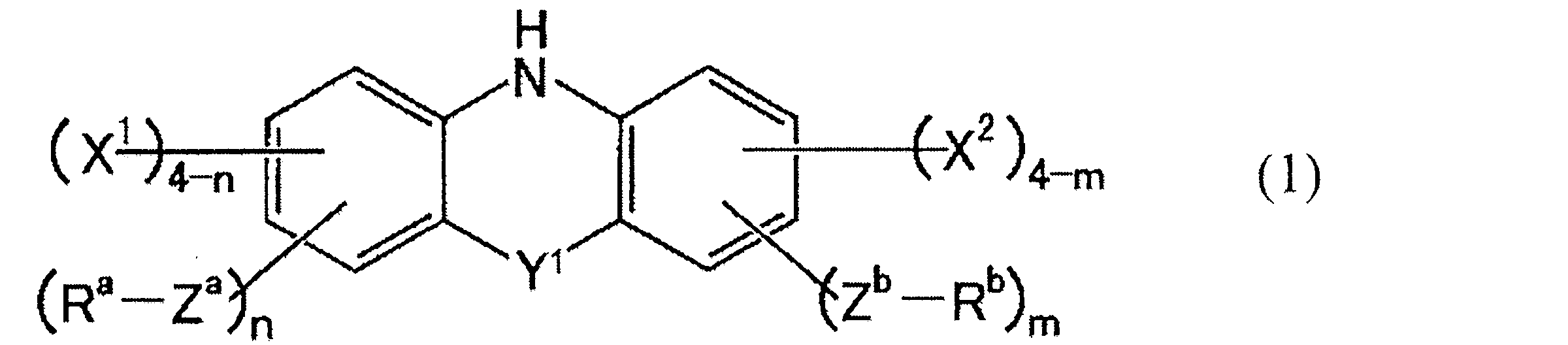

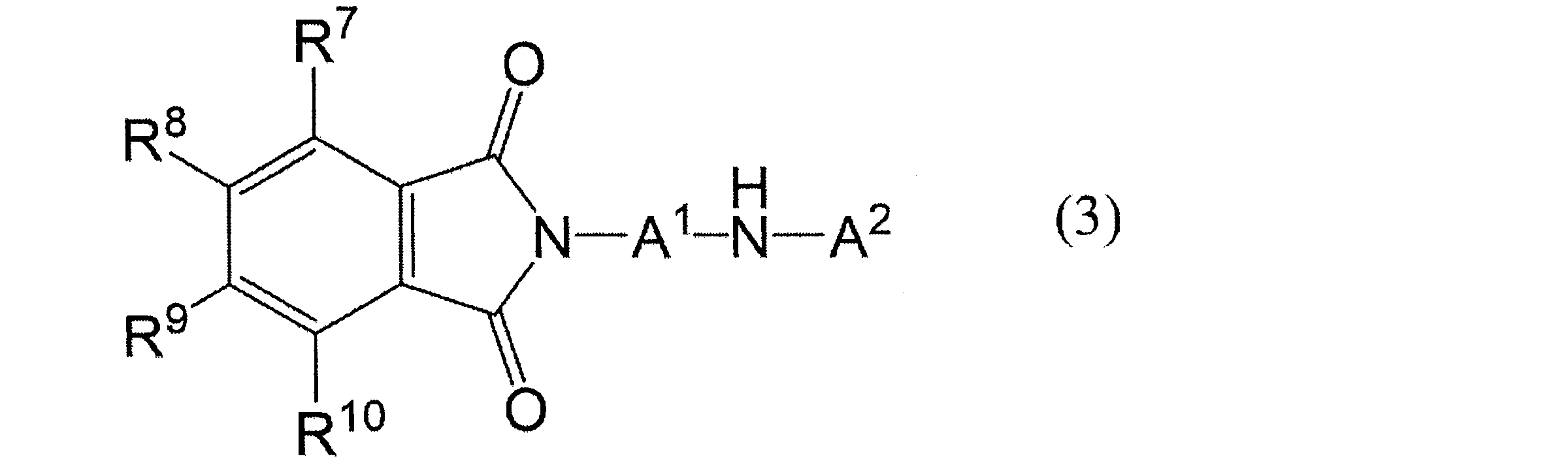

本発明のアクリルゴム組成物において、前記アクリルゴムが、前記メタクリル酸アルキルエステル単量体単位(a)として、メタクリル酸メチル単位、メタクリル酸エチル単位、メタクリル酸n-プロピル単位、メタクリル酸n-ブチル単位、メタクリル酸n-ペンチル単位、およびメタクリル酸n-ヘキシル単位からなる群より選択される少なくとも1種を含有することが好ましい。
本発明のアクリルゴム組成物において、前記アクリルゴムが、前記アクリル酸エステル単量体単位(b)として、アクリル酸メチル単位、アクリル酸エチル単位、アクリル酸n-ブチル単位、およびアクリル酸2-メトキシエチル単位からなる群より選択される少なくとも1種を含有することが好ましい。
本発明のアクリルゴム組成物において、前記一般式(1)で表される化合物が、下記一般式(9)で表される化合物であることが好ましい。
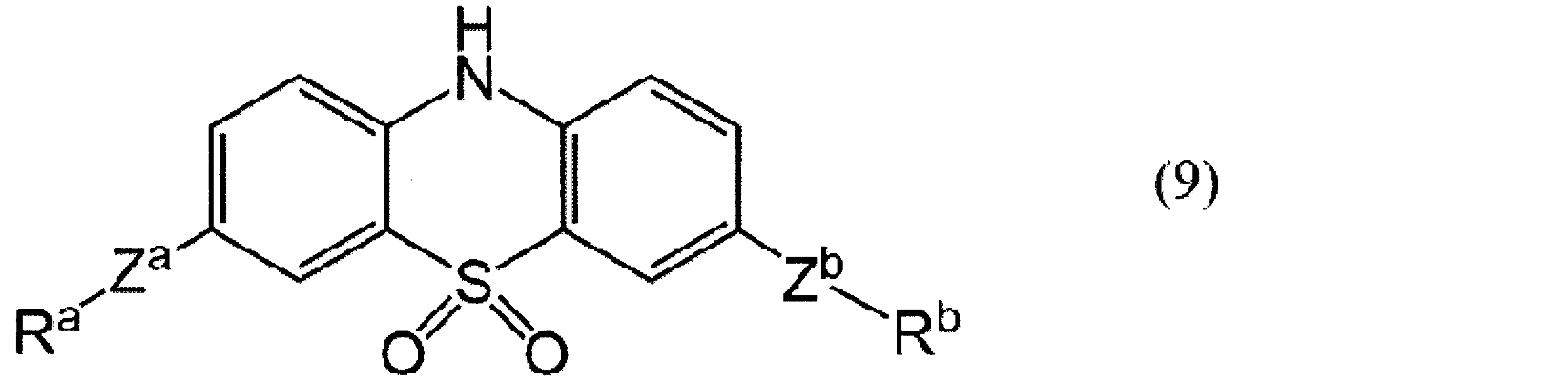
本発明のアクリルゴム組成物において、前記一般式(2)で表される化合物が、下記一般式(13)で表される化合物であることが好ましい。

本発明のアクリルゴム組成物において、前記一般式(3)で表される化合物が、下記一般式(14)で表される化合物であることが好ましい。
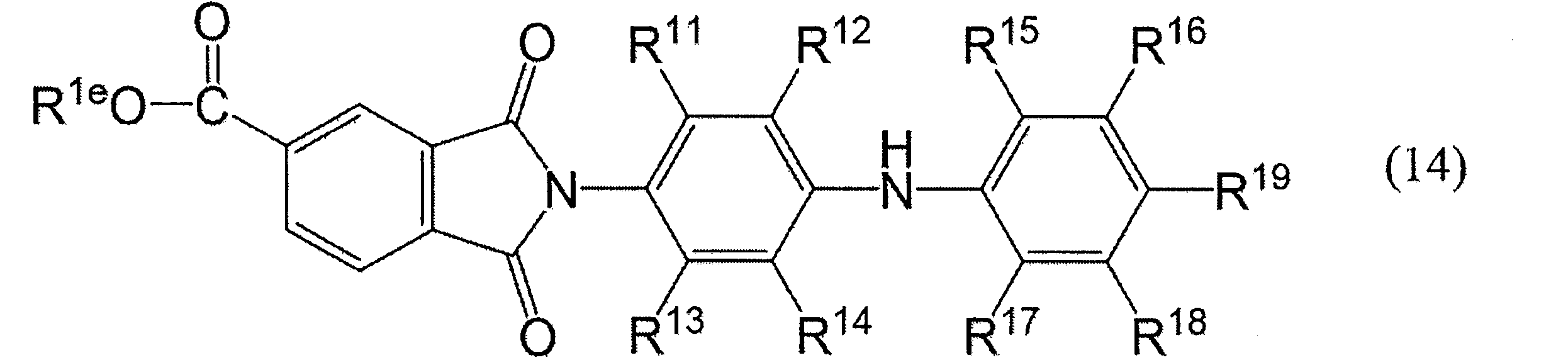
本発明のアクリルゴム組成物において、前記一般式(4)で表される化合物が、下記一般式(24)で表される化合物であることが好ましい。
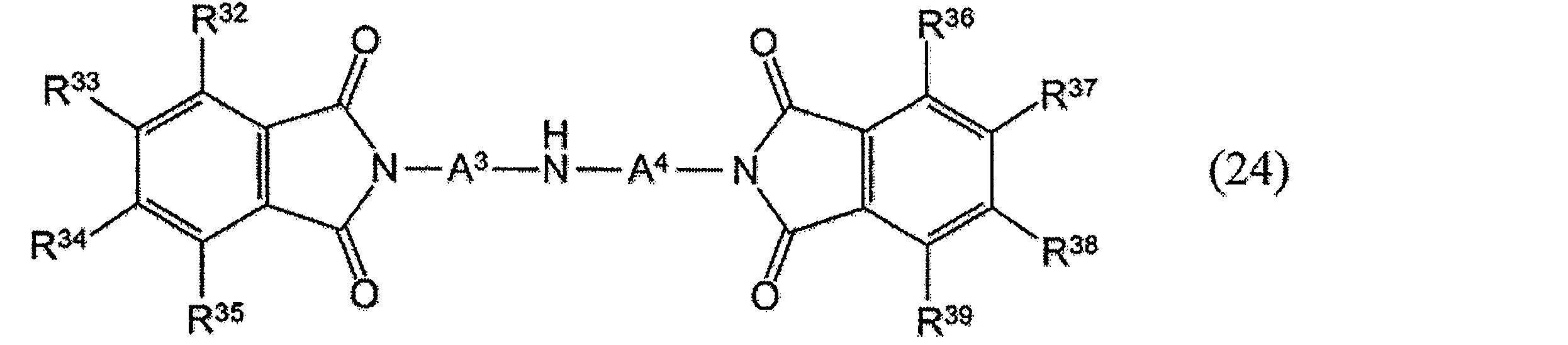
本発明のアクリルゴム組成物は、前記アクリルゴム100重量部に対し、0.05~20重量部の架橋剤をさらに含有することが好ましい。
本発明のアクリルゴム組成物は、アクリルゴムと、老化防止剤とを含有するアクリルゴム組成物であって、前記アクリルゴムが、メタクリル酸アルキルエステル単量体単位(a)15~55重量%、アクリル酸エステル単量体単位(b)44.5~84.5重量%、およびカルボキシル基含有単量体単位(c)0.5~4重量%を含有し、前記老化防止剤が、後述する一般式(1)~(4)で表される化合物のうち、少なくとも1種であり、前記老化防止剤の含有量が、前記アクリルゴム100重量部に対して、0.1~5重量部であるアクリルゴム組成物である。
本発明で用いるアクリルゴムは、メタクリル酸アルキルエステル単量体単位(a)15~55重量%、アクリル酸エステル単量体単位(b)44.5~84.5重量%、およびカルボキシル基含有単量体単位(c)0.5~4重量%を含有するものである。
炭素数4~12のα,β-エチレン性不飽和ジカルボン酸としては、たとえば、フマル酸、マレイン酸などのブテンジオン酸;イタコン酸;シトラコン酸;クロロマレイン酸;などが挙げられる。
炭素数4~12のα,β-エチレン性不飽和ジカルボン酸と炭素数1~8のアルカノールとのモノエステルとしては、たとえば、フマル酸モノメチル、フマル酸モノエチル、フマル酸モノn-ブチル、マレイン酸モノメチル、マレイン酸モノエチル、マレイン酸モノn-ブチルなどのブテンジオン酸モノ鎖状アルキルエステル;フマル酸モノシクロペンチル、フマル酸モノシクロヘキシル、フマル酸モノシクロヘキセニル、マレイン酸モノシクロペンチル、マレイン酸モノシクロヘキシル、マレイン酸モノシクロヘキセニルなどの脂環構造を有するブテンジオン酸モノエステル;イタコン酸モノメチル、イタコン酸モノエチル、イタコン酸モノn-ブチル、イタコン酸モノシクロヘキシルなどのイタコン酸モノエステル;などが挙げられる。
エポキシ基含有エーテルの具体例としては、アリルグリシジルエーテルおよびビニルグリシジルエーテルなどが挙げられる。これらの中でも、メタクリル酸グリシジルおよびアリルグリシジルエーテルが好ましい。これらエポキシ基を有する単量体は、1種単独で、または2種以上を併せて使用することができる。
(メタ)アクリル酸ハロアルキルエステルの具体例としては、(メタ)アクリル酸クロロメチル、(メタ)アクリル酸1-クロロエチル、(メタ)アクリル酸2-クロロエチル、(メタ)アクリル酸1,2-ジクロロエチル、(メタ)アクリル酸2-クロロプロピル、(メタ)アクリル酸3-クロロプロピル、および(メタ)アクリル酸2,3-ジクロロプロピルなどが挙げられる。
(メタ)アクリル酸ハロアシロキシアルキルエステルの具体例としては、(メタ)アクリル酸2-(クロロアセトキシ)エチル、(メタ)アクリル酸2-(クロロアセトキシ)プロピル、(メタ)アクリル酸3-(クロロアセトキシ)プロピル、および(メタ)アクリル酸3-(ヒドロキシクロロアセトキシ)プロピルなどが挙げられる。
(メタ)アクリル酸(ハロアセチルカルバモイルオキシ)アルキルエステルの具体例としては、(メタ)アクリル酸2-(クロロアセチルカルバモイルオキシ)エチル、および(メタ)アクリル酸3-(クロロアセチルカルバモイルオキシ)プロピルなどが挙げられる。
ハロゲン含有不飽和エーテルの具体例としては、クロロメチルビニルエーテル、2-クロロエチルビニルエーテル、3-クロロプロピルビニルエーテル、2-クロロエチルアリルエーテル、および3-クロロプロピルアリルエーテルなどが挙げられる。
ハロゲン含有不飽和ケトンの具体例としては、2-クロロエチルビニルケトン、3-クロロプロピルビニルケトン、および2-クロロエチルアリルケトンなどが挙げられる。
ハロメチル基含有芳香族ビニル化合物の具体例としては、p-クロロメチルスチレン、m-クロロメチルスチレン、o-クロロメチルスチレン、およびp-クロロメチル-α-メチルスチレンなどが挙げられる。
ハロゲン含有不飽和アミドの具体例としては、N-クロロメチル(メタ)アクリルアミドなどが挙げられる。
ハロアセチル基含有不飽和単量体の具体例としては、3-(ヒドロキシクロロアセトキシ)プロピルアリルエーテル、p-ビニルベンジルクロロ酢酸エステルなどが挙げられる。
ハロゲン化ビニル化合物の具体例としては、塩化ビニル、塩化ビニリデン、塩化アリルなどが挙げられる。
共役ジエン単量体の具体例としては、1,3-ブタジエン、イソプレン、およびピペリレンなどを挙げることができる。
非共役ジエン単量体の具体例としては、エチリデンノルボルネン、ジシクロペンタジエン、(メタ)アクリル酸ジシクロペンタジエニル、および(メタ)アクリル酸2-ジシクロペンタジエニルエチルなどを挙げることができる。
α,β-エチレン性不飽和ニトリル単量体の具体例としては、アクリロニトリル、メタクリロニトリルなどが挙げられる。
多官能(メタ)アクリル単量体の具体例としては、エチレングリコールジ(メタ)アクリレート、プロピレングリコールジ(メタ)アクリレートなどが挙げられる。
オレフィン系単量体の具体例としては、エチレン、プロピレン、1-ブテン、および1-オクテンなどが挙げられる。
α、β-エチレン性不飽和ジカルボン酸ジエステル単量体としては、特に限定されないが、たとえば、炭素数4~12のα、β-エチレン性不飽和ジカルボン酸と炭素数1~8のアルコールとのジエステルが挙げられる。ジエステルの2つの有機基は同一であっても、異なっていてもよい。α、β-エチレン性不飽和ジカルボン酸ジエステルの具体例としては、マレイン酸ジメチル、マレイン酸ジエチル、マレイン酸ジプロピル、マレイン酸ジn-ブチル、マレイン酸ジイソブチル、マレイン酸ジシクロペンチル、マレイン酸ジシクロヘキシル、マレイン酸ジベンジル、マレイン酸ジフェニルなどのマレイン酸ジエステル;フマル酸ジメチル、フマル酸ジエチル、フマル酸ジプロピル、フマル酸ジn-ブチル、フマル酸ジイソブチル、フマル酸ジシクロペンチル、フマル酸ジシクロヘキシル、フマル酸ジベンジル、フマル酸ジフェニルなどのフマル酸ジエステル;シトラコン酸ジメチル、シトラコン酸ジエチル、シトラコン酸ジプロピル、シトラコン酸ジn-ブチル、シトラコン酸ジベンジル、シトラコン酸ジフェニルなどのシトラコン酸ジエステル;イタコン酸ジメチル、イタコン酸ジエチル、イタコン酸ジn-ブチル、イタコン酸ジイソブチル、イタコン酸ジシクロヘキシル、イタコン酸ジベンジル、イタコン酸ジフェニルなどのイタコン酸ジエステル;メサコン酸ジメチル、メサコン酸ジエチル、メサコン酸ジプロピル、メサコン酸ジn-ブチル、メサコン酸ジベンジル、メサコン酸ジフェニルなどのメサコン酸ジエステル;2-ペンテン二酸ジメチル、2-ペンテン二酸ジエチル、2-ペンテン二酸ジプロピル、2-ペンテン二酸ジn-ブチル、2-ペンテン二酸ジベンジル、2-ペンテン二酸ジフェニルなどの2-ペンテン二酸ジエステル;アセチレンジカルボン酸ジシクロヘキシルなどが挙げられる。
ビニルエステル化合物の具体例としては、酢酸ビニル、プロピオン酸ビニル、ピバリン酸ビニル、安息香酸ビニル、および桂皮酸ビニルなどが挙げられる。
ビニルエーテル化合物の具体例としては、エチルビニルエーテル、およびn-ブチルビニルエーテルなどが挙げられる。
以下、下記一般式(1)~(4)で表される化合物の詳細について、説明する。
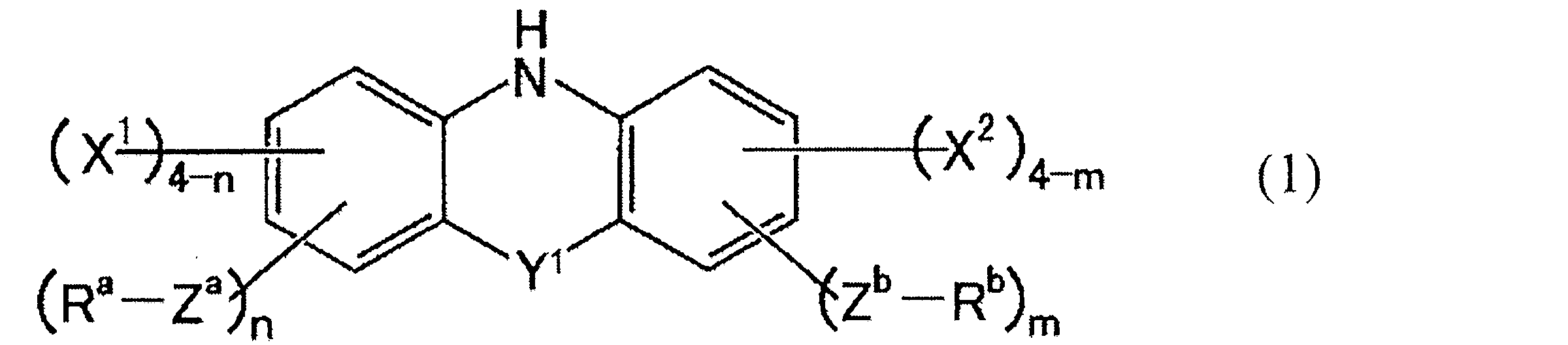
RaおよびRbを構成する炭素数1~30の有機基としては、メチル基、エチル基、n-プロピル基、イソプロピル基、n-ブチル基、イソブチル基、sec-ブチル基、t-ブチル基、n-ペンチル基、n-ヘキシル基、n-ヘプチル基、n-オクチル基、n-ノニル基、n-デシル基等の炭素数1~30のアルキル基;シクロプロピル基、シクロペンチル基、シクロヘキシル基、シクロヘプチル基、シクロオクチル基等の炭素数3~30のシクロアルキル基;フェニル基、ビフェニル基、ナフチル基、アントラニル基等の炭素数6~30のアリール基;メトキシ基、エトキシ基、n-プロポキシ基、イソプロポキシ基、n-ブトキシ基、イソブトキシ基、sec-ブトキシ基、t-ブトキシ基、n-ペンチルオキシ基、n-ヘキシルオキシ基等の炭素数1~30のアルコキシ基;等が挙げられる。
前記有機基がシクロアルキル基およびアリール基である場合には、フッ素原子、塩素原子、臭素原子等のハロゲン原子;メトキシ基、エトキシ基、イソプロポキシ基等の炭素数1~10のアルコキシ基;ニトロ基;シアノ基;メチル基、エチル基、t-ブチル基等の炭素数1~10のアルキル基;等が挙げられる。
また、前記有機基がアルコキシ基の場合には、フッ素原子、塩素原子、臭素原子等のハロゲン原子;ニトロ基;シアノ基;等が挙げられる。
このようなRaおよびRbを構成する有機基の好ましい具体例としては、α-メチルベンジル基、α,α-ジメチルベンジル基、t-ブチル基、フェニル基、または4-メチルフェニル基などが挙げられ、これらのなかでも、α,α-ジメチルベンジル基、または4-メチルフェニル基が特に好ましい。なお、これらは、それぞれ独立したものとすることができる。
置換基を有していてもよい炭素数1~10のアルキル基の炭素数1~10のアルキル基としては、メチル基、エチル基、プロピル基、イソプロピル基、n-ブチル基、イソブチル基、t-ブチル基、n-ペンチル基、n-ヘキシル基、n-ヘプチル基、n-オクチル基、n-ノニル基、n-デシル基等が挙げられる。
また、nおよび/またはmが2のとき、2個のRa同士および2個のRb同士は、互いに同一であっても、異なっていてもよい。
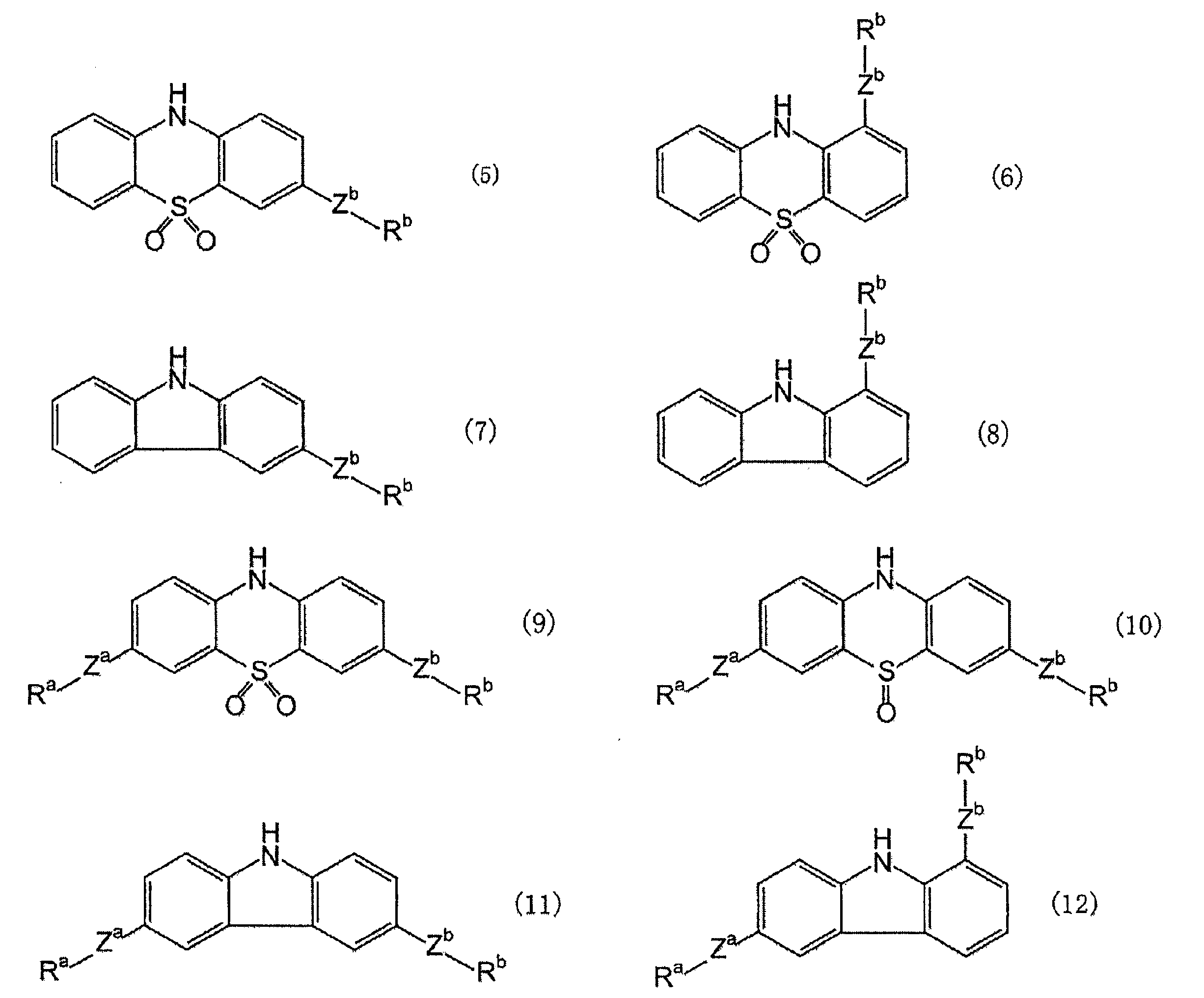
また、上記式(5)~(12)中、-Za-Ra、-Zb-Rbがそれぞれ独立して、α-メチルベンジル基、α,α-ジメチルベンジル基、t-ブチル基、フェニルスルホニル基、または4-メチルフェニルスルホニル基である化合物がさらに好ましく、α,α-ジメチルベンジル基である化合物が特に好ましい。

炭素数1~30の芳香族基としては、特に限定されないが、たとえば、フェニル基、ビフェニル基、ナフチル基、フェナンスリル基、アントラニル基などの芳香族炭化水素基や、フリル基、ピロリル基、チエニル基、ピリジル基、チアゾリル基などの芳香族複素環基が挙げられる。
炭素数1~30の環状脂肪族基としては、特に限定されないが、たとえば、シクロプロピル基、シクロブチル基、シクロペンチル基、シクロヘキシル基などが挙げられる。なかでも、RcおよびRdとしては、それぞれ独立して、フェニル基および4-メチルフェニル基が好ましい。
また、上述したRcおよびRdを構成する有機基は、置換基を有していてもよく、該置換基の位置としては、任意の位置とすることができる。このような置換基としては、フッ素原子、塩素原子、臭素原子などのハロゲン原子;メトキシ基、エトキシ基、イソプロポキシ基などの炭素数1~10のアルコキシ基;ニトロ基;シアノ基;メチル基、エチル基、t-ブチル基などの炭素数1~10のアルキル基;などが挙げられる。
また、上記一般式(2)において、RcおよびRdを構成する有機基が、置換基を有する場合、有機基の炭素数には、該置換基の炭素数を含まないものとする。
X3およびX4の置換基を有してもよい炭素数1~10のアルキル基の置換基としては、RaおよびRbの置換基を有していてもよい炭素数1~30のアルキル基の置換基として例示したのと同じのものが挙げられる。




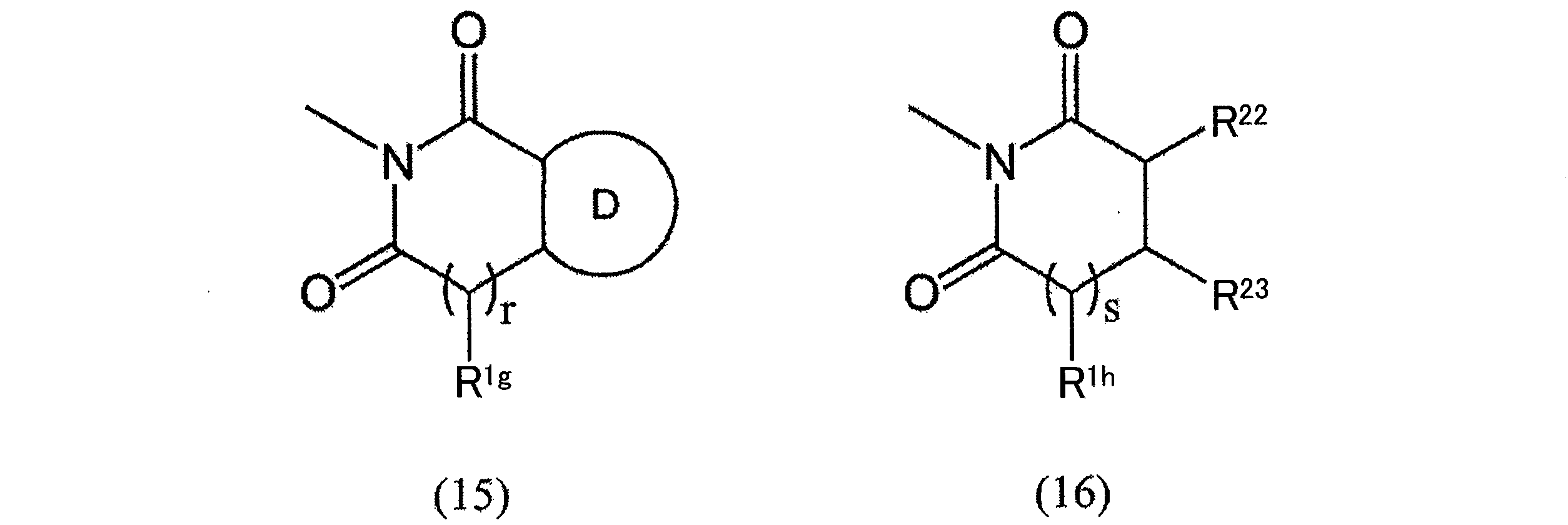
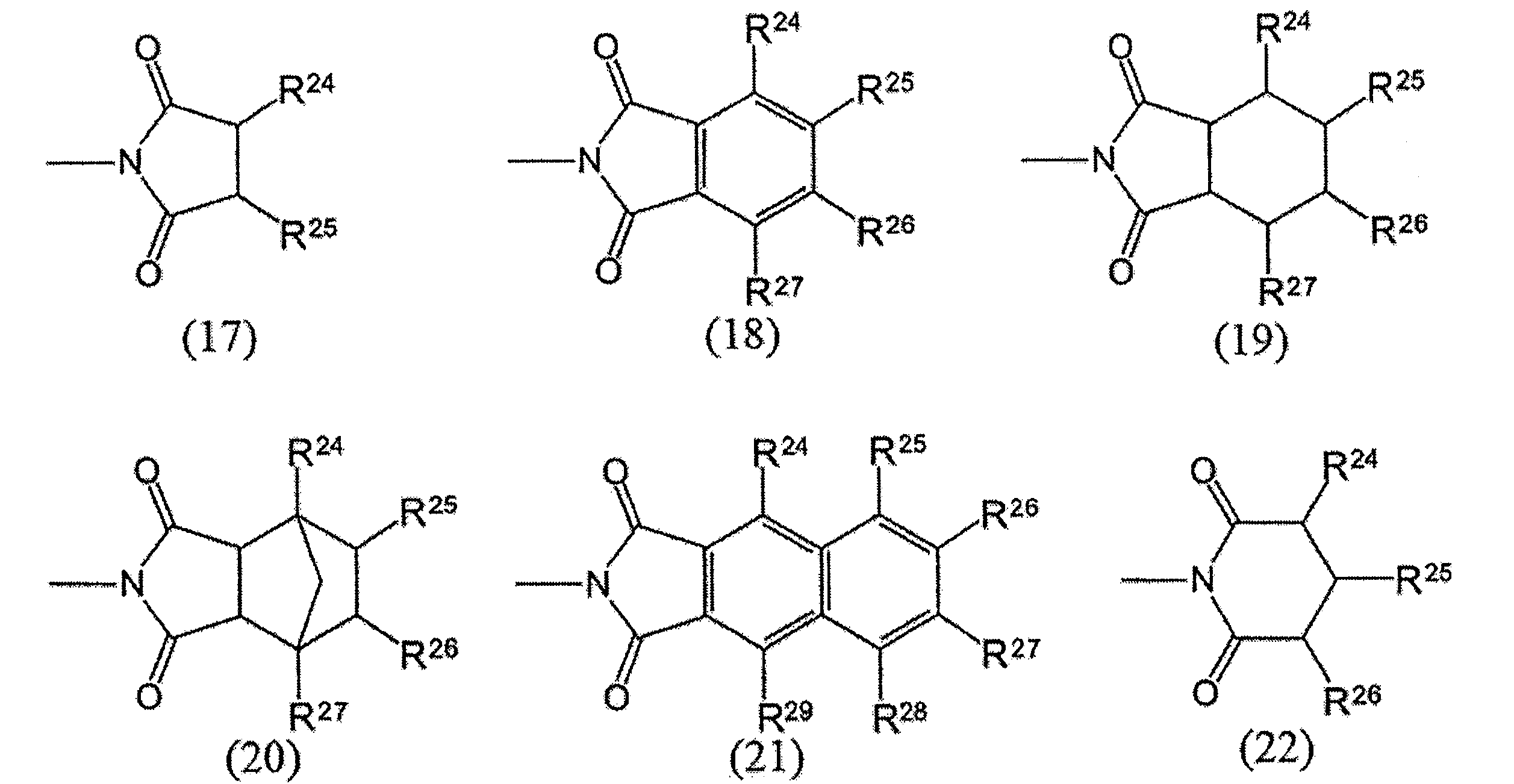
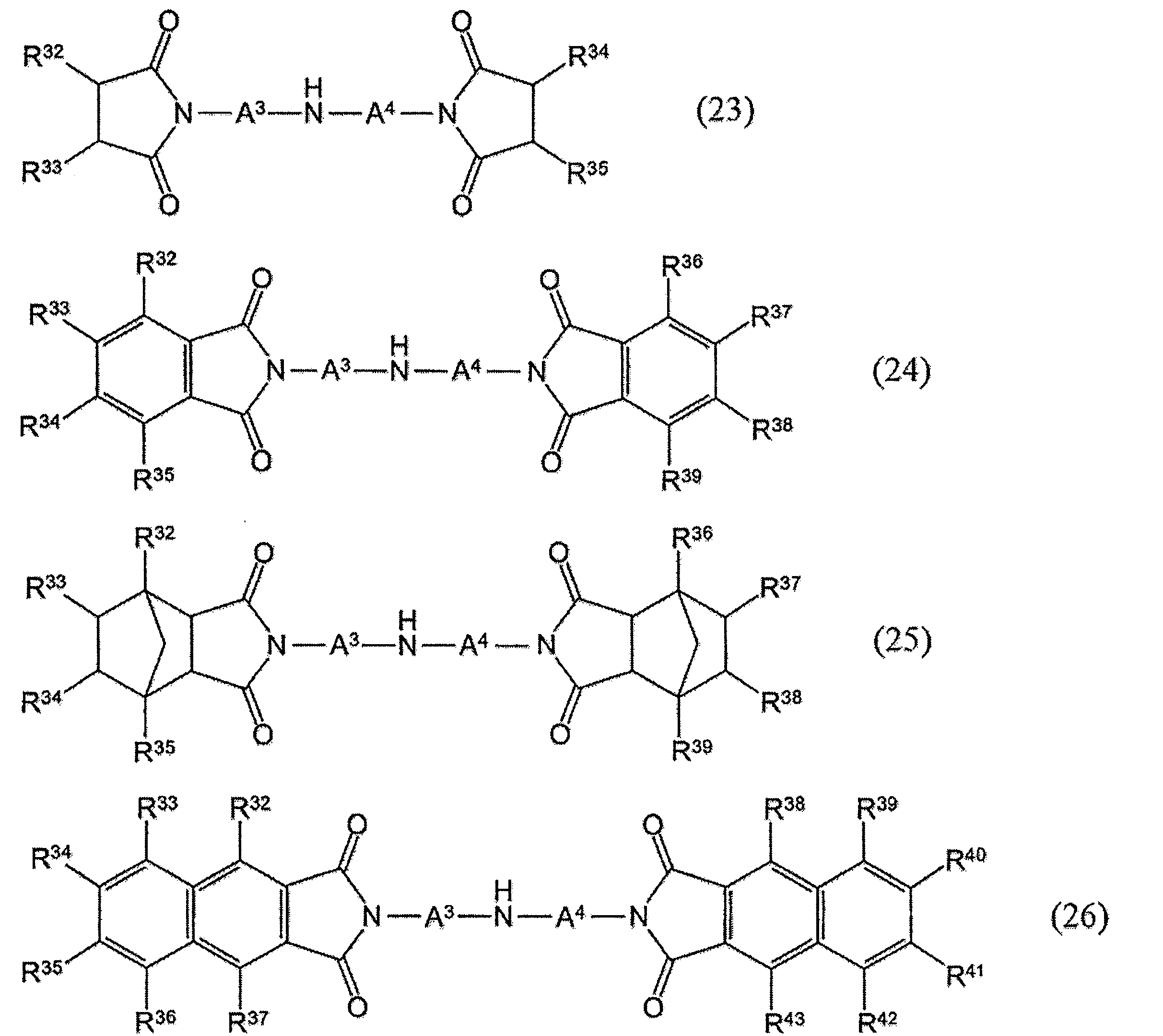
トリアジンチオール化合物としては、たとえば、1,3,5-トリアジン-2,4,6-トリチオール、6-アニリノ-1,3,5-トリアジン-2,4-ジチオール、6-ジブチルアミノ-1,3,5-トリアジン-2,4-ジチオール、6-ジアリルアミノ-1,3,5-トリアジン-2,4-ジチオール、および6-オクチルアミノ-1,3,5-トリアジン-2,4-ジチオールなどが挙げられるが、これらの中でも、1,3,5-トリアジン-2,4,6-トリチオールが好ましい。
ジチオカルバミン酸金属塩としては、たとえば、ジメチルジチオカルバミン酸亜鉛などが挙げられる。
多価カルボン酸としては、たとえば、テトラデカン二酸などが挙げられる。
四級オニウム塩としては、たとえば、セチルトリメチルアンモニウムブロマイドなどが挙げられる。
イミダゾール化合物としては、たとえば、2-メチルイミダゾールなどが挙げられる。
イソシアヌル酸化合物としては、たとえば、イソシアヌル酸アンモニウムなどが挙げられる。
本発明のアクリルゴム組成物の調製方法は、特に限定されないが、アクリルゴムと、老化防止剤とを、必要に応じて添加される各種配合剤とともに混合する方法が好適である。
ゴム架橋物は、架橋剤を配合したアクリルゴム組成物を成形し、架橋することにより製造される。アクリルゴム組成物の成形および架橋方法としては、特に限定されないが、たとえば、一軸や多軸の押出機を使用して、架橋性ゴム組成物を押し出して成形体とした後、加熱して架橋する方法;射出成形機、押出ブロー成形機、トランスファー成形機、プレス成形機などを使用して金型により成形し、成形と同時に成形時の加熱で架橋する方法;などが挙げられる。これらの方法のうちでも、押出機または射出成形機を用いる方法が好ましく、押出機を用いる方法が特に好ましい。成形と架橋を同時に行うか、あるいは、成形後に架橋するかは特に限定されず、成形方法、加硫方法、成形体の大きさなどに応じて選択すればよい。
測定温度100℃におけるアクリルゴム組成物のムーニー粘度(コンパウンドムーニー)をJIS K6300に従って測定した。
実施例および比較例で得られたアクリルゴム組成物を、縦15cm、横15cm、深さ0.2cmの金型に入れ、プレス圧10MPaで加圧しながら、170℃で20分間プレスすることによりシート状のゴム架橋物を得た。得られたシート状のゴム架橋物を、ギヤー式オーブンに入れ、170℃で4時間熱処理を行った。次いで、シート状のゴム架橋物をダンベル型3号形で打ち抜いて試験片を作製した。この試験片を用いて、JIS K6251に従い、引張強さ(MPa)および伸び(%)を測定した。また、この試験片について、JIS K6253に従い、デュロメーター硬さ試験機(タイプA)を用いて硬さを測定した。
上記常態物性の評価に用いた試験片と同様にして作製した試験片を、ギヤー式オーブン中で、温度200℃の環境下に336時間置いた後、伸び(加熱後の残存伸び)を測定し、得られた測定結果から、下記式に従って伸び変化率ΔE(%)を算出した。伸びは、JIS K6251に従って測定した。伸び変化率ΔE(%)の絶対値が小さい方が、耐熱老化性に優れる。
伸び変化率ΔE(%)=100×{(加熱後の残存伸び(%)-加熱前における伸び(%))/加熱前における伸び(%)}
耐寒性試験として、JIS K6261に準じて低温弾性回復試験(TR試験)を行った。具体的には、試験片として、上記常態物性の評価に用いた試験片と同様にして作製した試験片を打ち抜くことにより、両端のつかみ部が6.5mmの正方形で、つかみ間の平行部分が、長さ100.0±0.2mm、幅2.0±0.2mm、厚さ2.0±0.2mmの耐寒性試験用の試験片を作製した。そして、作製した寒性試験用の試験片を凍結させ、温度を連続的に上昇させることによって伸長されていた試験片の回復性を測定し、回復率が10%になる温度(以下、TR10という)を求めた。TR10の値が低い方が、耐寒性に優れる。
温度計、攪拌装置を備えた重合反応器に、水200部、ラウリル硫酸ナトリウム3部、アクリル酸n-ブチル74.5部、メタクリル酸メチル24部およびマレイン酸モノn-ブチル1.5部を仕込み、減圧脱気および窒素置換を2度行って酸素を十分に除去した。その後、クメンハイドロパーオキサイド0.005部およびホルムアルデヒドスルホキシル酸ナトリウム0.002部を加えて常圧下、温度30℃で乳化重合を開始し、重合転化率95%に達するまで反応を継続し、重合停止剤を添加して重合を停止した。次いで、得られた乳化重合液を塩化カルシウム水溶液で凝固させ、水洗、乾燥してアクリルゴム(α-1)を得た。
重合に用いる単量体の種類、および使用量を変更した以外は、製造例1と同様にして、表1に示す単量体組成を有するアクリルゴム(α-2)~(α-14)を製造した。

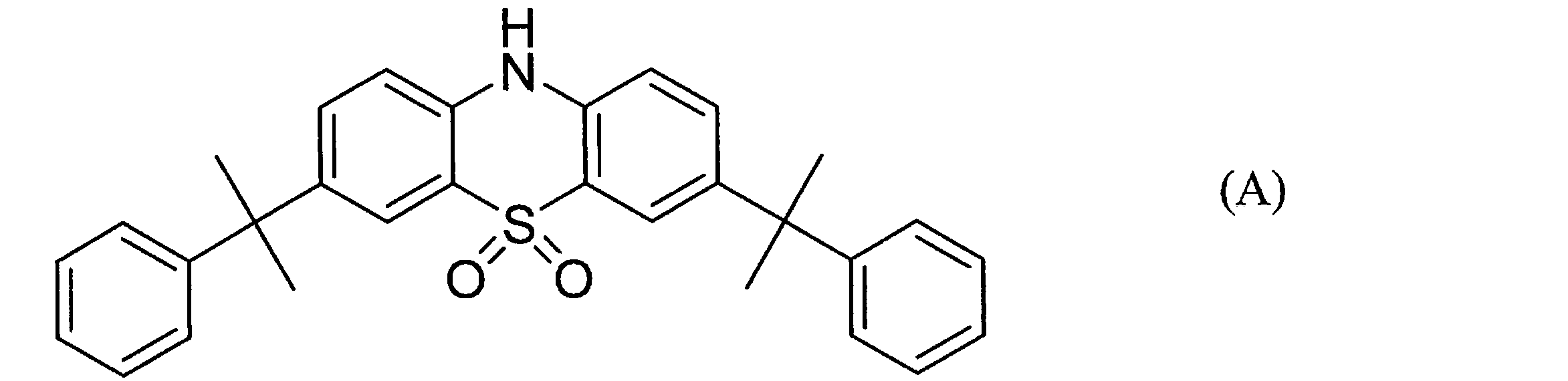


2つ口反応器に上記式(B-1)で表される中間体8.00g(19.34mmol)を加えて、THF50mlに溶解させた。この溶液に酢酸150mlと30%過酸化水素水11.08g(96.71mmol)を加えて80℃にて2時間反応させた。その後、反応液を室温に戻して蒸留水500ml、飽和食塩水500mlを加え、酢酸エチル500mlで抽出した。有機層を硫酸ナトリウムで乾燥させ、ロータリーエバポレーターで濃縮した後、シリカゲルカラムクロマトグラフィー(ヘキサン:テトラヒドロフラン=1:1)により精製することで、融点が225℃である上記式(B)で表される老化防止剤を8.35g、収率90%で得た。構造は1H-NMRで同定した。1H-NMR(500MHz、DMSO-d6、TMS、δppm):δ2.36(s,6H),7.26(d,4H,J=9.0Hz),7.40(d,4H,J=8.0Hz),7.78-7.80(m,8H),9.44(s、1H)。


冷却器、温度計および滴下漏斗を備えた4つ口反応器に窒素気流中、上記式(C-1)で表される中間体10g(0.028mol)、4-ヒドロキシビフェニル5.7g(0.033mol)、およびN,N-ジメチル-4-アミノピリジン400mg(0.0033mol)をN-メチルピロリドン150mlに溶解した。この溶液に室温下にて、1-エチル-3-(3-ジメチルアミノプロピル)カルボジイミド塩酸塩(WSC)6.4g(0.033mol)を加えた。その後、室温下にて14時間反応を行った。反応終了後、反応液を水に投入し、固体を析出させた。析出した固体を吸引ろ過した。得られた固体をN-メチルピロリドン100mlに再度溶解させ、メタノール1リットルに徐々に投入し固体を析出させた。析出した固体を吸引ろ過し、ろ物をメタノールで洗浄した。さらに再度、得られた固体をN-メチルピロリドン100mlに溶解させ、メタノール1リットルに徐々に投入し固体を析出させた。析出した固体を吸引ろ過し、ろ物をメタノールで洗浄した。得られたろ物を真空乾燥機で乾燥させ、黄色固体として上記式(C)で表される老化防止剤を12.1g得た(収率:85%)。構造は1H-NMRで同定した。1H-NMR(500MHz、DMF-d7、TMS、δppm):6.92(t、1H、J=7.5Hz)、7.25(d、2H、J=7.5Hz)、7.29-7.33(m、4H)、7.41-7.44(m、3H)、7.52(t、2H、J=8.0Hz)、7.57(d、2H、J=9.0Hz)、7.77(dd、2H、J=1.0Hz、8.5Hz)、7.87(d、2H、J=11.5Hz)、8.22(d、1H、J=13.5Hz)、8.49(s、1H)、8.58-8.59(m、1H)、8.71(dd、1H、J=1.5Hz、7.5Hz)。

バンバリーミキサーを用いて、上記製造例1で得られたアクリルゴム(α-1)100部に、FEFカーボンブラック(商品名「シーストSO」、東海カーボン社製、充填剤、「シースト」は登録商標)60部、ステアリン酸(商品名「ステアリン酸さくら」、日油株式会社製、滑剤)1部、エステル系ワックス(商品名「グレッグG-8205」、大日本インキ化学工業社製、滑剤)1部、製造例15で得られた式(A)で表される老化防止剤1.5部を添加して、50℃で5分間混合した。次いで、得られた混合物を50℃のロールに移して、2,2-ビス[4-(4-アミノフェノキシ)フェニル]プロパン(商品名「BAPP」、和歌山精化工業社製、架橋剤)1部、および1,3-ジ-o-トリルグアニジン(商品名「ノクセラーDT」、大内新興化学工業社製、架橋促進剤、「ノクセラー」は登録商標)2部を配合して、混練することにより、アクリルゴム組成物を得た。得られたアクリルゴム組成物について、上述した方法によりムーニー粘度(ML1+4,100℃)を測定した。また、得られたアクリルゴム組成物を用いて上述した方法によりゴム架橋物の試験片を得て、常態物性(引張強さ、伸び、硬さ)、耐熱老化試験、および耐寒性試験の各評価を行った。結果を表2に示す。
製造例15で得られた式(A)で表される老化防止剤1.5部に代えて、4,4’-ビス(α,α-ジメチルベンジル)ジフェニルアミン(商品名「ノクラックCD」、大内新興化学工業社製、老化防止剤、「ノクラック」は登録商標)2部を使用した以外は、実施例1と同様にして、アクリルゴム組成物を得て、同様に評価を行った。結果を表2に示す。
アクリルゴム(α-1)に代えて、製造例2で得られたアクリルゴム(α-2)を使用した以外は、実施例1と同様にして、アクリルゴム組成物を得て、同様に評価を行った。結果を表2に示す。
製造例15で得られた式(A)で表される老化防止剤1.5部に代えて、4,4’-ビス(α,α-ジメチルベンジル)ジフェニルアミン(商品名「ノクラックCD」、大内新興化学工業社製、老化防止剤、「ノクラック」は登録商標)2部を使用した以外は、実施例2と同様にして、アクリルゴム組成物を得て、同様に評価を行った。結果を表2に示す。
アクリルゴム(α-1)に代えて、製造例3で得られたアクリルゴム(α-3)を使用した以外は、実施例1と同様にして、アクリルゴム組成物を得て、同様に評価を行った。結果を表2に示す。
製造例15で得られた式(A)で表される老化防止剤1.5部に代えて、4,4’-ビス(α,α-ジメチルベンジル)ジフェニルアミン(商品名「ノクラックCD」、大内新興化学工業社製、老化防止剤、「ノクラック」は登録商標)2部を使用した以外は、実施例3と同様にして、アクリルゴム組成物を得て、同様に評価を行った。結果を表2に示す。
アクリルゴム(α-1)に代えて、製造例4で得られたアクリルゴム(α-4)を使用した以外は、実施例1と同様にして、アクリルゴム組成物を得て、同様に評価を行った。結果を表2に示す。
製造例15で得られた式(A)で表される老化防止剤1.5部に代えて、4,4’-ビス(α,α-ジメチルベンジル)ジフェニルアミン(商品名「ノクラックCD」、大内新興化学工業社製、老化防止剤、「ノクラック」は登録商標)2部を使用した以外は、実施例4と同様にして、アクリルゴム組成物を得て、同様に評価を行った。結果を表2に示す。
アクリルゴム(α-1)に代えて、製造例5で得られたアクリルゴム(α-5)を使用し、製造例15で得られた式(A)で表される老化防止剤の使用量を0.5部に変更した以外は、実施例1と同様にして、アクリルゴム組成物を得て、同様に評価を行った。結果を表2に示す。
製造例15で得られた式(A)で表される老化防止剤の使用量を、それぞれ1.5部(実施例6)および2.5部(実施例7)に変更した以外は、実施例5と同様にして、アクリルゴム組成物を得て、同様に評価を行った。結果を表2に示す。
製造例15で得られた式(A)で表される老化防止剤に代えて、製造例16で得られた式(B)で表される老化防止剤2.5部を使用した以外は、実施例5と同様にして、アクリルゴム組成物を得て、同様に評価を行った。結果を表2に示す。
製造例15で得られた式(A)で表される老化防止剤に代えて、製造例17で得られた式(C)で表される老化防止剤2.5部を使用した以外は、実施例5と同様にして、アクリルゴム組成物を得て、同様に評価を行った。結果を表2に示す。
製造例15で得られた式(A)で表される老化防止剤に代えて、製造例18で得られた式(D)で表される老化防止剤2.5部を使用した以外は、実施例5と同様にして、アクリルゴム組成物を得て、同様に評価を行った。結果を表2に示す。
製造例15で得られた式(A)で表される老化防止剤0.5部に代えて、4,4’-ビス(α,α-ジメチルベンジル)ジフェニルアミン(商品名「ノクラックCD」、大内新興化学工業社製、老化防止剤、「ノクラック」は登録商標)2部を使用した以外は、実施例5と同様にして、アクリルゴム組成物を得て、同様に評価を行った。結果を表2に示す。
アクリルゴム(α-1)に代えて、製造例6で得られたアクリルゴム(α-6)をそれぞれ使用した以外は、実施例1と同様にして、アクリルゴム組成物を得て、同様に評価を行った。結果を表2に示す。
製造例15で得られた式(A)で表される老化防止剤1.5部に代えて、4,4’-ビス(α,α-ジメチルベンジル)ジフェニルアミン(商品名「ノクラックCD」、大内新興化学工業社製、老化防止剤、「ノクラック」は登録商標)2部を使用した以外は、実施例11と同様にして、アクリルゴム組成物を得て、同様に評価を行った。結果を表2に示す。
アクリルゴム(α-1)に代えて、製造例7で得られたアクリルゴム(α-7)をそれぞれ使用した以外は、実施例1と同様にして、アクリルゴム組成物を得て、同様に評価を行った。結果を表2に示す。
製造例15で得られた式(A)で表される老化防止剤1.5部に代えて、4,4’-ビス(α,α-ジメチルベンジル)ジフェニルアミン(商品名「ノクラックCD」、大内新興化学工業社製、老化防止剤、「ノクラック」は登録商標)2部を使用した以外は、実施例12と同様にして、アクリルゴム組成物を得て、同様に評価を行った。結果を表2に示す。
アクリルゴム(α-1)に代えて、製造例8で得られたアクリルゴム(α-8)を使用した以外は、実施例1と同様にして、アクリルゴム組成物を得て、同様に評価を行った。結果を表3に示す。
製造例15で得られた式(A)で表される老化防止剤1.5部に代えて、4,4’-ビス(α,α-ジメチルベンジル)ジフェニルアミン(商品名「ノクラックCD」、大内新興化学工業社製、老化防止剤、「ノクラック」は登録商標)2部を使用した以外は、比較例8と同様にして、アクリルゴム組成物を得て、同様に評価を行った。結果を表3に示す。
アクリルゴム(α-1)に代えて、製造例9で得られたアクリルゴム(α-9)を使用した以外は、実施例1と同様にして、アクリルゴム組成物を得て、同様に評価を行った。結果を表3に示す。
製造例15で得られた式(A)で表される老化防止剤1.5部に代えて、4,4’-ビス(α,α-ジメチルベンジル)ジフェニルアミン(商品名「ノクラックCD」、大内新興化学工業社製、老化防止剤、「ノクラック」は登録商標)2部を使用した以外は、比較例10と同様にして、アクリルゴム組成物を得て、同様に評価を行った。結果を表3に示す。
アクリルゴム(α-1)に代えて、製造例10~13で得られたアクリルゴム(α-10)~(α-13)をそれぞれ使用した以外は、実施例1と同様にして、アクリルゴム組成物を得て、同様に評価を行った。結果を表3に示す。
アクリルゴム(α-1)に代えて、製造例14で得られたアクリルゴム(α-14)を使用した以外は、実施例1と同様にして、アクリルゴム組成物を得て、同様に評価を行った。結果を表3に示す。
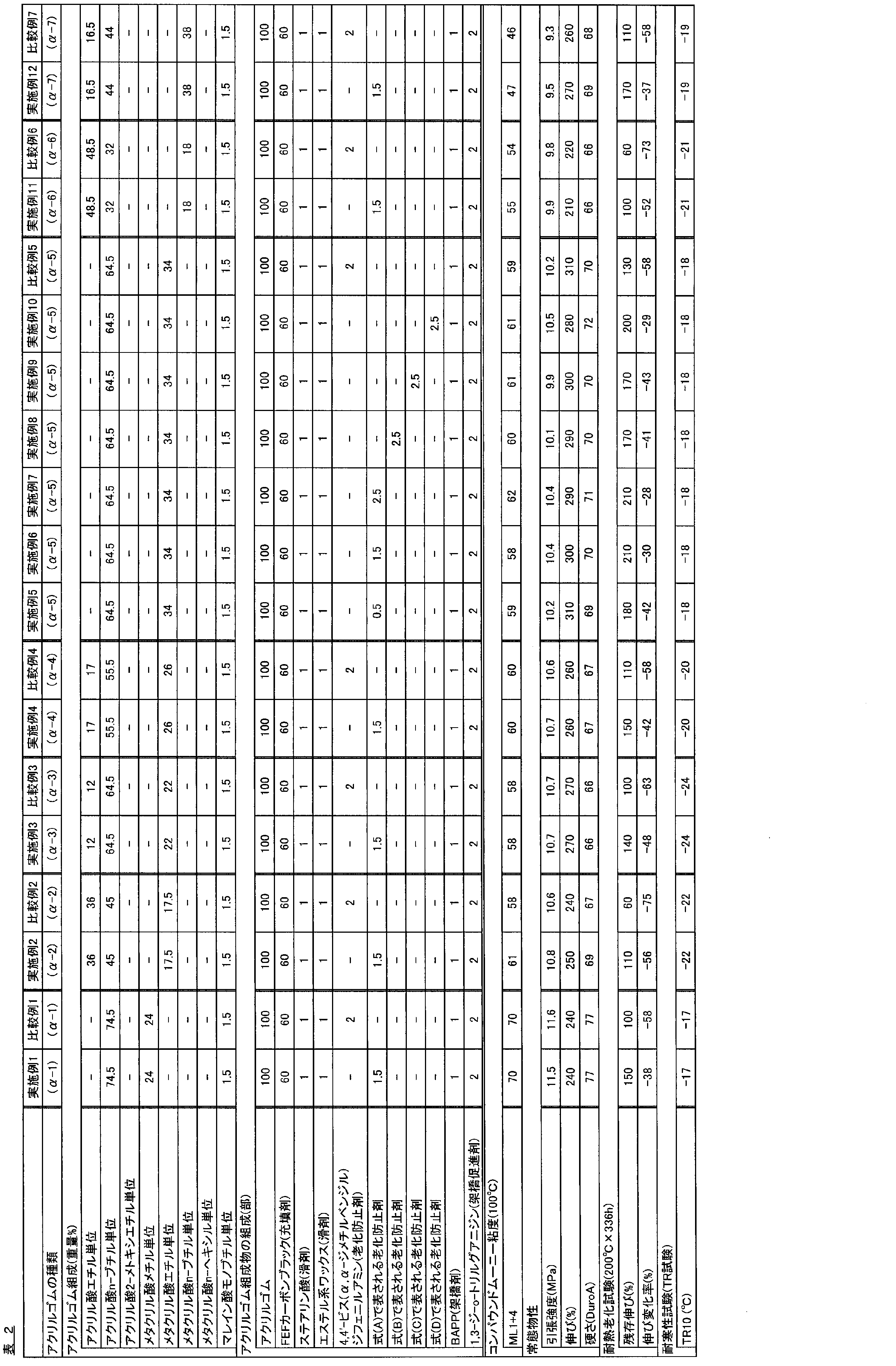
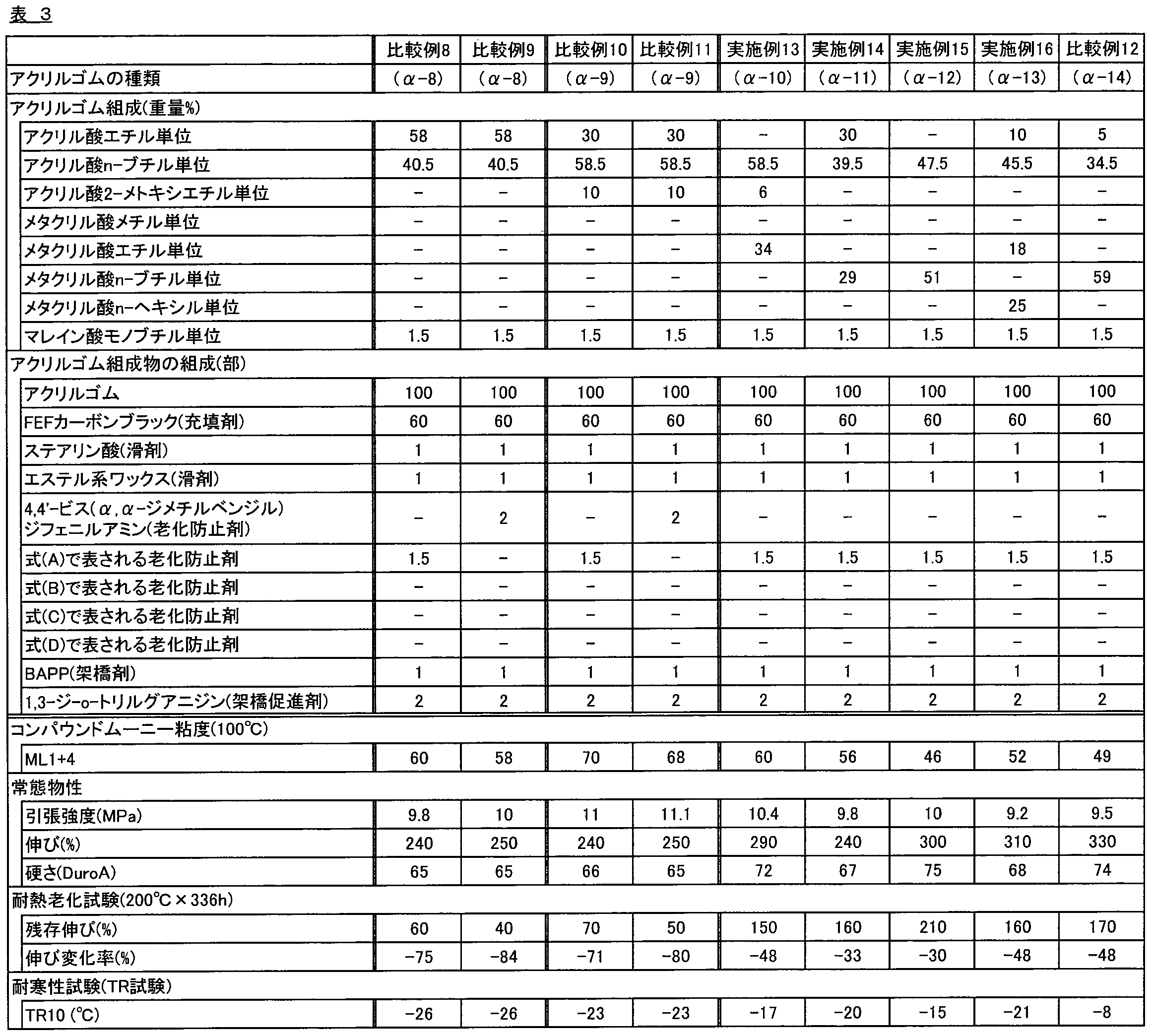
特に、表2に示すように、実施例1と比較例1とを比較することにより、上述した特定の単量体組成を有するアクリルゴムを、老化防止剤としての上記一般式(1)~(4)で表される化合物と組み合わせることにより、上記一般式(1)~(4)で表される化合物を用いることによる耐熱性の向上効果を飛躍的に高めることができるものであることが確認できる。そして、このことは、実施例2と比較例2との比較、実施例3と比較例3との比較、実施例4と比較例4との比較、実施例5~10と比較例5との比較、実施例11と比較例6との比較、実施例12と比較例7との比較からも同様に確認できるものである。
また、表3に示すように、アクリルゴムとして、メタクリル酸アルキルエステル単量体単位の含有量が多過ぎるものを用いた比較例12においては、得られるゴム架橋物は、耐熱性が一定程度向上したものである一方で、耐寒性に劣るものであった。
Claims (11)
- アクリルゴムと、老化防止剤とを含有するアクリルゴム組成物であって、
前記アクリルゴムが、
メタクリル酸アルキルエステル単量体単位(a)15~55重量%、
アクリル酸エステル単量体単位(b)44.5~84.5重量%、および
カルボキシル基含有単量体単位(c)0.5~4重量%
を含有し、
前記老化防止剤が、下記一般式(1)~(4)で表される化合物のうち、少なくとも1種であり、
前記老化防止剤の含有量が、前記アクリルゴム100重量部に対して、0.1~5重量部であるアクリルゴム組成物。
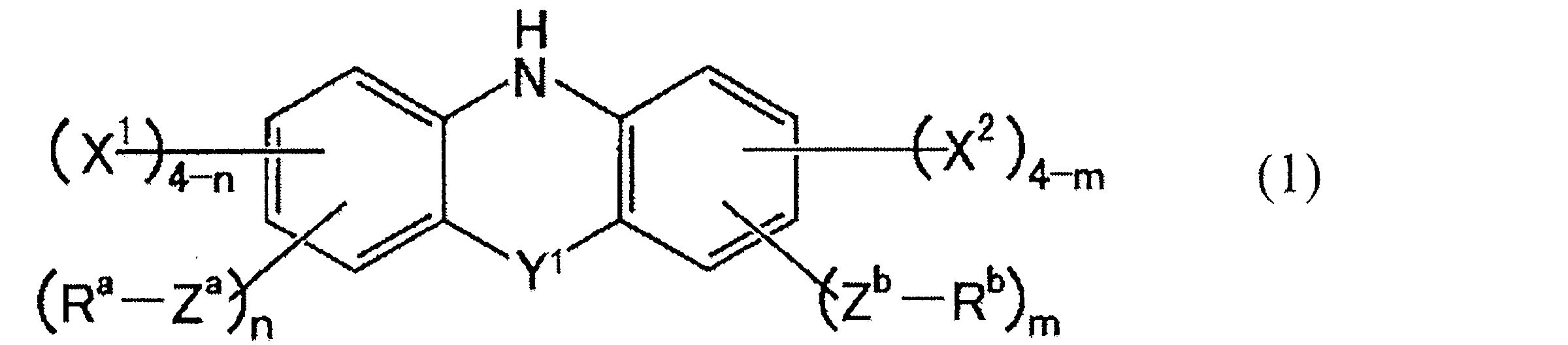
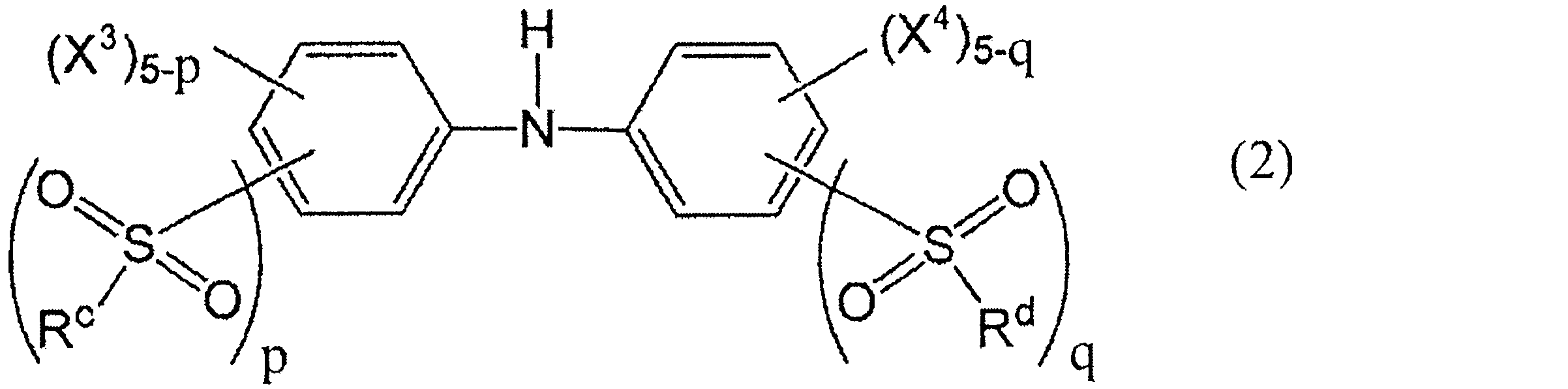


- 前記老化防止剤の含有量が、前記アクリルゴム100重量部に対し、0.3~3.5重量部である請求項1に記載のアクリルゴム組成物。
- 前記アクリルゴムが、前記メタクリル酸アルキルエステル単量体単位(a)として、メタクリル酸メチル単位、メタクリル酸エチル単位、メタクリル酸n-プロピル単位、メタクリル酸n-ブチル単位、メタクリル酸n-ペンチル単位、およびメタクリル酸n-ヘキシル単位からなる群より選択される少なくとも1種を含有する請求項1または2に記載のアクリルゴム組成物。
- 前記アクリルゴムが、前記アクリル酸エステル単量体単位(b)として、アクリル酸メチル単位、アクリル酸エチル単位、アクリル酸n-ブチル単位、およびアクリル酸2-メトキシエチル単位からなる群より選択される少なくとも1種を含有する請求項1~3のいずれかに記載のアクリルゴム組成物。
- 前記一般式(1)で表される化合物が、下記一般式(9)で表される化合物である請求項1~4のいずれかに記載のアクリルゴム組成物。
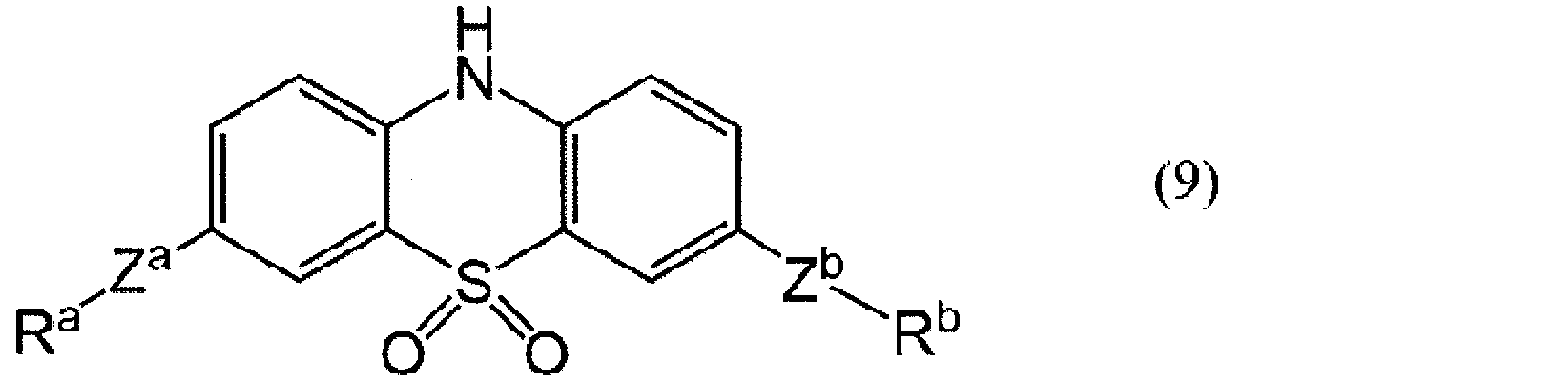
- 前記一般式(2)で表される化合物が、下記一般式(13)で表される化合物である請求項1~5のいずれかに記載のアクリルゴム組成物。

- 前記一般式(3)で表される化合物が、下記一般式(14)で表される化合物である請求項1~6のいずれかに記載のアクリルゴム組成物。
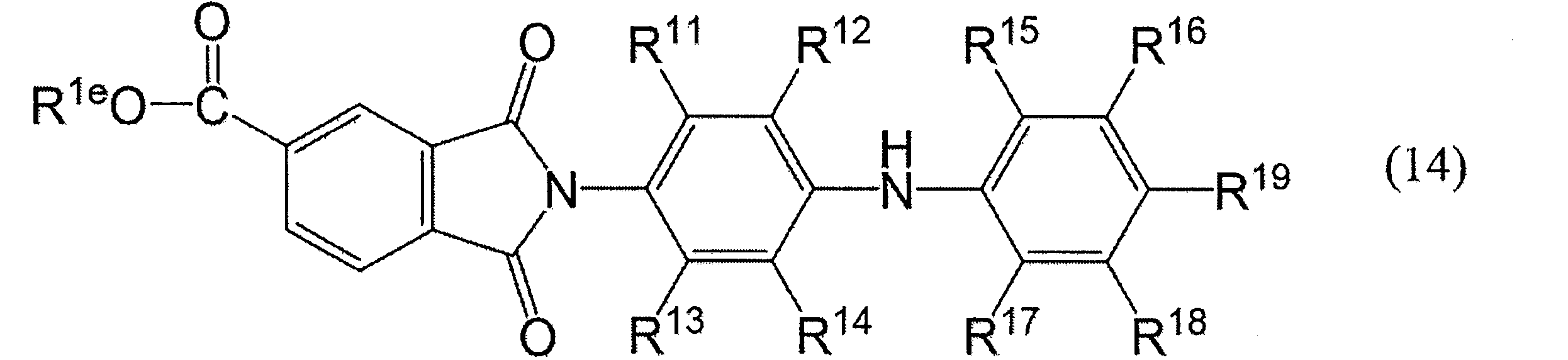
- 前記一般式(4)で表される化合物が、下記一般式(24)で表される化合物である請求項1~7のいずれかに記載のアクリルゴム組成物。
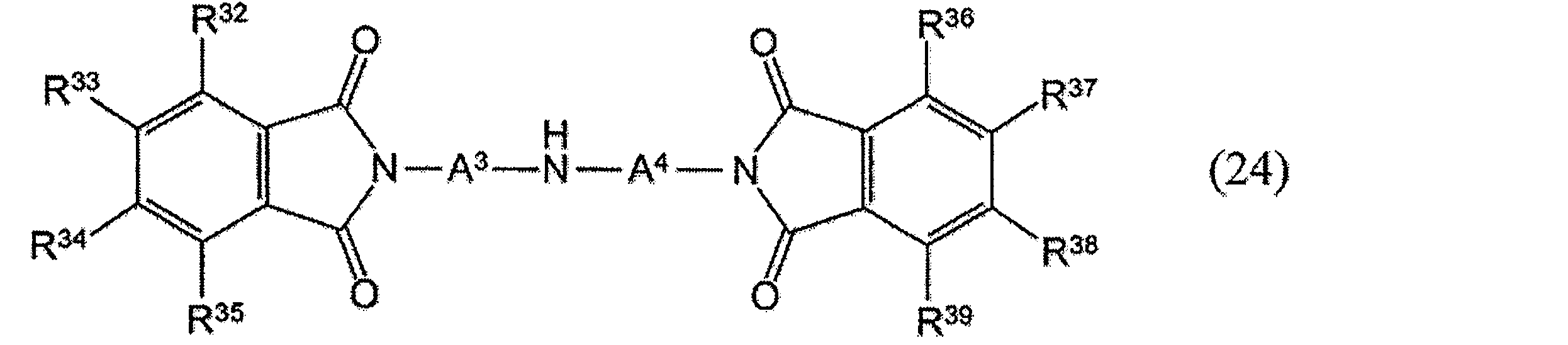
- 前記アクリルゴム100重量部に対し、0.05~20重量部の架橋剤をさらに含有する請求項1~8のいずれかに記載のアクリルゴム組成物。
- 請求項9に記載のアクリルゴム組成物を架橋してなるゴム架橋物。
- ホース材またはシール材である請求項10に記載のゴム架橋物。
Priority Applications (5)
| Application Number | Priority Date | Filing Date | Title |
|---|---|---|---|
| JP2021527708A JP7505492B2 (ja) | 2019-06-28 | 2020-06-24 | アクリルゴム組成物およびゴム架橋物 |
| EP20831190.2A EP3992236A4 (en) | 2019-06-28 | 2020-06-24 | Acrylic rubber composition and rubber crosslinked product |
| CN202080044780.3A CN114008134A (zh) | 2019-06-28 | 2020-06-24 | 丙烯酸橡胶组合物和橡胶交联物 |
| KR1020217041740A KR102862179B1 (ko) | 2019-06-28 | 2020-06-24 | 아크릴 고무 조성물 및 고무 가교물 |
| US17/623,024 US12466907B2 (en) | 2019-06-28 | 2020-06-24 | Acrylic rubber composition and rubber crosslinked product |
Applications Claiming Priority (2)
| Application Number | Priority Date | Filing Date | Title |
|---|---|---|---|
| JP2019-122128 | 2019-06-28 | ||
| JP2019122128 | 2019-06-28 |
Publications (1)
| Publication Number | Publication Date |
|---|---|
| WO2020262496A1 true WO2020262496A1 (ja) | 2020-12-30 |
Family
ID=74061690
Family Applications (1)
| Application Number | Title | Priority Date | Filing Date |
|---|---|---|---|
| PCT/JP2020/024913 Ceased WO2020262496A1 (ja) | 2019-06-28 | 2020-06-24 | アクリルゴム組成物およびゴム架橋物 |
Country Status (6)
| Country | Link |
|---|---|
| US (1) | US12466907B2 (ja) |
| EP (1) | EP3992236A4 (ja) |
| JP (1) | JP7505492B2 (ja) |
| KR (1) | KR102862179B1 (ja) |
| CN (1) | CN114008134A (ja) |
| WO (1) | WO2020262496A1 (ja) |
Cited By (2)
| Publication number | Priority date | Publication date | Assignee | Title |
|---|---|---|---|---|
| JP2022186670A (ja) * | 2021-06-03 | 2022-12-15 | デンカ株式会社 | アクリルゴム組成物及びその架橋物 |
| JPWO2022259720A1 (ja) * | 2021-06-11 | 2022-12-15 |
Families Citing this family (1)
| Publication number | Priority date | Publication date | Assignee | Title |
|---|---|---|---|---|
| US20230013290A1 (en) * | 2019-12-05 | 2023-01-19 | Denka Company Limited | Acrylic rubber, acrylic rubber composition and crosslinked product of same |
Citations (6)
| Publication number | Priority date | Publication date | Assignee | Title |
|---|---|---|---|---|
| JPS5732673B2 (ja) | 1976-06-14 | 1982-07-12 | ||
| WO2011002038A1 (ja) * | 2009-06-30 | 2011-01-06 | 日本ゼオン株式会社 | 新規なジアリールアミン化合物、並びに、老化防止剤、ポリマー組成物、ゴム架橋物、及び、その成形品、並びに、ジアリールアミン化合物の製造方法 |
| WO2011058918A1 (ja) | 2009-11-13 | 2011-05-19 | 日本ゼオン株式会社 | ジフェニルアミン系化合物、及び老化防止剤、並びにポリマー組成物 |
| WO2011093443A1 (ja) | 2010-01-29 | 2011-08-04 | 日本ゼオン株式会社 | 縮合複素環化合物及び組成物 |
| WO2016002936A1 (ja) * | 2014-07-04 | 2016-01-07 | 日本ゼオン株式会社 | アクリルゴム、アクリルゴム組成物、アクリルゴム架橋物及びシール部材 |
| WO2018159459A1 (ja) | 2017-03-03 | 2018-09-07 | 日本ゼオン株式会社 | ジアリールアミン系化合物、老化防止剤、およびポリマー組成物 |
Family Cites Families (4)
| Publication number | Priority date | Publication date | Assignee | Title |
|---|---|---|---|---|
| WO2009099113A1 (ja) * | 2008-02-05 | 2009-08-13 | Denki Kagaku Kogyo Kabushiki Kaisha | アクリルゴム |
| JP5712937B2 (ja) * | 2010-01-29 | 2015-05-07 | 日本ゼオン株式会社 | アクリルゴム組成物およびゴム架橋物 |
| JP2015137322A (ja) | 2014-01-23 | 2015-07-30 | 日本ゼオン株式会社 | 架橋性アクリルゴム組成物およびゴム架橋物 |
| JP6244935B2 (ja) * | 2014-01-23 | 2017-12-13 | 日本ゼオン株式会社 | アクリルゴム組成物およびゴム架橋物 |
-
2020
- 2020-06-24 KR KR1020217041740A patent/KR102862179B1/ko active Active
- 2020-06-24 WO PCT/JP2020/024913 patent/WO2020262496A1/ja not_active Ceased
- 2020-06-24 US US17/623,024 patent/US12466907B2/en active Active
- 2020-06-24 EP EP20831190.2A patent/EP3992236A4/en active Pending
- 2020-06-24 JP JP2021527708A patent/JP7505492B2/ja active Active
- 2020-06-24 CN CN202080044780.3A patent/CN114008134A/zh active Pending
Patent Citations (6)
| Publication number | Priority date | Publication date | Assignee | Title |
|---|---|---|---|---|
| JPS5732673B2 (ja) | 1976-06-14 | 1982-07-12 | ||
| WO2011002038A1 (ja) * | 2009-06-30 | 2011-01-06 | 日本ゼオン株式会社 | 新規なジアリールアミン化合物、並びに、老化防止剤、ポリマー組成物、ゴム架橋物、及び、その成形品、並びに、ジアリールアミン化合物の製造方法 |
| WO2011058918A1 (ja) | 2009-11-13 | 2011-05-19 | 日本ゼオン株式会社 | ジフェニルアミン系化合物、及び老化防止剤、並びにポリマー組成物 |
| WO2011093443A1 (ja) | 2010-01-29 | 2011-08-04 | 日本ゼオン株式会社 | 縮合複素環化合物及び組成物 |
| WO2016002936A1 (ja) * | 2014-07-04 | 2016-01-07 | 日本ゼオン株式会社 | アクリルゴム、アクリルゴム組成物、アクリルゴム架橋物及びシール部材 |
| WO2018159459A1 (ja) | 2017-03-03 | 2018-09-07 | 日本ゼオン株式会社 | ジアリールアミン系化合物、老化防止剤、およびポリマー組成物 |
Non-Patent Citations (1)
| Title |
|---|
| See also references of EP3992236A4 |
Cited By (4)
| Publication number | Priority date | Publication date | Assignee | Title |
|---|---|---|---|---|
| JP2022186670A (ja) * | 2021-06-03 | 2022-12-15 | デンカ株式会社 | アクリルゴム組成物及びその架橋物 |
| JPWO2022259720A1 (ja) * | 2021-06-11 | 2022-12-15 | ||
| WO2022259720A1 (ja) * | 2021-06-11 | 2022-12-15 | 株式会社大阪ソーダ | アクリル共重合体、アクリル共重合体含有組成物及びアクリル共重合体架橋物 |
| EP4353756A4 (en) * | 2021-06-11 | 2025-06-11 | Osaka Soda Co., Ltd. | ACRYLIC COPOLYMER, COMPOSITION CONTAINING AN ACRYLIC COPOLYMER AND CROSSLINKED ACRYLIC COPOLYMER |
Also Published As
| Publication number | Publication date |
|---|---|
| KR20220029574A (ko) | 2022-03-08 |
| US20220315684A1 (en) | 2022-10-06 |
| JP7505492B2 (ja) | 2024-06-25 |
| KR102862179B1 (ko) | 2025-09-18 |
| EP3992236A1 (en) | 2022-05-04 |
| EP3992236A4 (en) | 2023-07-26 |
| CN114008134A (zh) | 2022-02-01 |
| US12466907B2 (en) | 2025-11-11 |
| JPWO2020262496A1 (ja) | 2020-12-30 |
Similar Documents
| Publication | Publication Date | Title |
|---|---|---|
| JP5712937B2 (ja) | アクリルゴム組成物およびゴム架橋物 | |
| JP5732673B2 (ja) | 新規なジアリールアミン化合物、並びに、老化防止剤、ポリマー組成物、ゴム架橋物、及び、その成形品、並びに、ジアリールアミン化合物の製造方法 | |
| CN110337431B (zh) | 二芳基胺系化合物、抗老化剂以及聚合物组合物 | |
| JP7505492B2 (ja) | アクリルゴム組成物およびゴム架橋物 | |
| JP7480782B2 (ja) | アクリルゴム、アクリルゴム組成物、およびゴム架橋物 | |
| JP6020254B2 (ja) | アクリルゴム組成物の製造方法 | |
| WO2017170042A1 (ja) | アクリル重合体組成物 | |
| WO2020153173A1 (ja) | アクリルゴム組成物およびゴム架橋物 | |
| EP4130131B1 (en) | Acrylic rubber composition and rubber crosslinked product | |
| WO2017170043A1 (ja) | アクリル重合体組成物 | |
| WO2017170044A1 (ja) | アクリル重合体組成物 | |
| WO2017170041A1 (ja) | アクリル重合体組成物 |
Legal Events
| Date | Code | Title | Description |
|---|---|---|---|
| 121 | Ep: the epo has been informed by wipo that ep was designated in this application |
Ref document number: 20831190 Country of ref document: EP Kind code of ref document: A1 |
|
| ENP | Entry into the national phase |
Ref document number: 2021527708 Country of ref document: JP Kind code of ref document: A |
|
| NENP | Non-entry into the national phase |
Ref country code: DE |
|
| WWE | Wipo information: entry into national phase |
Ref document number: 2020831190 Country of ref document: EP |
|
| WWG | Wipo information: grant in national office |
Ref document number: 17623024 Country of ref document: US |