WO2020262585A1 - 樹脂組成物、樹脂シート、積層体、樹脂組成物層付き半導体ウェハ、樹脂組成物層付き半導体搭載用基板、及び半導体装置 - Google Patents
樹脂組成物、樹脂シート、積層体、樹脂組成物層付き半導体ウェハ、樹脂組成物層付き半導体搭載用基板、及び半導体装置 Download PDFInfo
- Publication number
- WO2020262585A1 WO2020262585A1 PCT/JP2020/025148 JP2020025148W WO2020262585A1 WO 2020262585 A1 WO2020262585 A1 WO 2020262585A1 JP 2020025148 W JP2020025148 W JP 2020025148W WO 2020262585 A1 WO2020262585 A1 WO 2020262585A1
- Authority
- WO
- WIPO (PCT)
- Prior art keywords
- group
- compound
- resin composition
- formula
- represented
- Prior art date
- Legal status (The legal status is an assumption and is not a legal conclusion. Google has not performed a legal analysis and makes no representation as to the accuracy of the status listed.)
- Ceased
Links
- 0 CC*(Cc(cc1)ccc1-c1ccc(CC)cc1)=C Chemical compound CC*(Cc(cc1)ccc1-c1ccc(CC)cc1)=C 0.000 description 6
- HIDBROSJWZYGSZ-UHFFFAOYSA-N O=C(C=CC1=O)N1c1ccccc1 Chemical compound O=C(C=CC1=O)N1c1ccccc1 HIDBROSJWZYGSZ-UHFFFAOYSA-N 0.000 description 4
- NAEJIUKUFIHRKT-UHFFFAOYSA-N CC(C)(c(cc1)cc(C2)c1OCN2c1ccccc1)c(cc1)cc(C2)c1OCN2c1ccccc1 Chemical compound CC(C)(c(cc1)cc(C2)c1OCN2c1ccccc1)c(cc1)cc(C2)c1OCN2c1ccccc1 NAEJIUKUFIHRKT-UHFFFAOYSA-N 0.000 description 2
Classifications
-
- C—CHEMISTRY; METALLURGY
- C08—ORGANIC MACROMOLECULAR COMPOUNDS; THEIR PREPARATION OR CHEMICAL WORKING-UP; COMPOSITIONS BASED THEREON
- C08F—MACROMOLECULAR COMPOUNDS OBTAINED BY REACTIONS ONLY INVOLVING CARBON-TO-CARBON UNSATURATED BONDS
- C08F290/00—Macromolecular compounds obtained by polymerising monomers on to polymers modified by introduction of aliphatic unsaturated end or side groups
- C08F290/02—Macromolecular compounds obtained by polymerising monomers on to polymers modified by introduction of aliphatic unsaturated end or side groups on to polymers modified by introduction of unsaturated end groups
- C08F290/06—Polymers provided for in subclass C08G
-
- C—CHEMISTRY; METALLURGY
- C08—ORGANIC MACROMOLECULAR COMPOUNDS; THEIR PREPARATION OR CHEMICAL WORKING-UP; COMPOSITIONS BASED THEREON
- C08F—MACROMOLECULAR COMPOUNDS OBTAINED BY REACTIONS ONLY INVOLVING CARBON-TO-CARBON UNSATURATED BONDS
- C08F2/00—Processes of polymerisation
- C08F2/38—Polymerisation using regulators, e.g. chain terminating agents, e.g. telomerisation
-
- C—CHEMISTRY; METALLURGY
- C08—ORGANIC MACROMOLECULAR COMPOUNDS; THEIR PREPARATION OR CHEMICAL WORKING-UP; COMPOSITIONS BASED THEREON
- C08F—MACROMOLECULAR COMPOUNDS OBTAINED BY REACTIONS ONLY INVOLVING CARBON-TO-CARBON UNSATURATED BONDS
- C08F2/00—Processes of polymerisation
- C08F2/44—Polymerisation in the presence of compounding ingredients, e.g. plasticisers, dyestuffs, fillers
-
- C—CHEMISTRY; METALLURGY
- C08—ORGANIC MACROMOLECULAR COMPOUNDS; THEIR PREPARATION OR CHEMICAL WORKING-UP; COMPOSITIONS BASED THEREON
- C08F—MACROMOLECULAR COMPOUNDS OBTAINED BY REACTIONS ONLY INVOLVING CARBON-TO-CARBON UNSATURATED BONDS
- C08F222/00—Copolymers of compounds having one or more unsaturated aliphatic radicals, each having only one carbon-to-carbon double bond, and at least one being terminated by a carboxyl radical and containing at least one other carboxyl radical in the molecule; Salts, anhydrides, esters, amides, imides, or nitriles thereof
- C08F222/36—Amides or imides
- C08F222/40—Imides, e.g. cyclic imides
-
- C—CHEMISTRY; METALLURGY
- C08—ORGANIC MACROMOLECULAR COMPOUNDS; THEIR PREPARATION OR CHEMICAL WORKING-UP; COMPOSITIONS BASED THEREON
- C08F—MACROMOLECULAR COMPOUNDS OBTAINED BY REACTIONS ONLY INVOLVING CARBON-TO-CARBON UNSATURATED BONDS
- C08F4/00—Polymerisation catalysts
- C08F4/28—Oxygen or compounds releasing free oxygen
- C08F4/32—Organic compounds
-
- C—CHEMISTRY; METALLURGY
- C08—ORGANIC MACROMOLECULAR COMPOUNDS; THEIR PREPARATION OR CHEMICAL WORKING-UP; COMPOSITIONS BASED THEREON
- C08G—MACROMOLECULAR COMPOUNDS OBTAINED OTHERWISE THAN BY REACTIONS ONLY INVOLVING UNSATURATED CARBON-TO-CARBON BONDS
- C08G14/00—Condensation polymers of aldehydes or ketones with two or more other monomers covered by at least two of the groups C08G8/00 - C08G12/00
- C08G14/02—Condensation polymers of aldehydes or ketones with two or more other monomers covered by at least two of the groups C08G8/00 - C08G12/00 of aldehydes
- C08G14/04—Condensation polymers of aldehydes or ketones with two or more other monomers covered by at least two of the groups C08G8/00 - C08G12/00 of aldehydes with phenols
- C08G14/12—Chemically modified polycondensates
-
- C—CHEMISTRY; METALLURGY
- C08—ORGANIC MACROMOLECULAR COMPOUNDS; THEIR PREPARATION OR CHEMICAL WORKING-UP; COMPOSITIONS BASED THEREON
- C08G—MACROMOLECULAR COMPOUNDS OBTAINED OTHERWISE THAN BY REACTIONS ONLY INVOLVING UNSATURATED CARBON-TO-CARBON BONDS
- C08G73/00—Macromolecular compounds obtained by reactions forming a linkage containing nitrogen with or without oxygen or carbon in the main chain of the macromolecule, not provided for in groups C08G12/00 - C08G71/00
- C08G73/06—Polycondensates having nitrogen-containing heterocyclic rings in the main chain of the macromolecule
- C08G73/22—Polybenzoxazoles
-
- C—CHEMISTRY; METALLURGY
- C08—ORGANIC MACROMOLECULAR COMPOUNDS; THEIR PREPARATION OR CHEMICAL WORKING-UP; COMPOSITIONS BASED THEREON
- C08K—Use of inorganic or non-macromolecular organic substances as compounding ingredients
- C08K3/00—Use of inorganic substances as compounding ingredients
- C08K3/01—Use of inorganic substances as compounding ingredients characterized by their specific function
- C08K3/013—Fillers, pigments or reinforcing additives
-
- C—CHEMISTRY; METALLURGY
- C08—ORGANIC MACROMOLECULAR COMPOUNDS; THEIR PREPARATION OR CHEMICAL WORKING-UP; COMPOSITIONS BASED THEREON
- C08K—Use of inorganic or non-macromolecular organic substances as compounding ingredients
- C08K3/00—Use of inorganic substances as compounding ingredients
- C08K3/34—Silicon-containing compounds
- C08K3/36—Silica
-
- C—CHEMISTRY; METALLURGY
- C08—ORGANIC MACROMOLECULAR COMPOUNDS; THEIR PREPARATION OR CHEMICAL WORKING-UP; COMPOSITIONS BASED THEREON
- C08K—Use of inorganic or non-macromolecular organic substances as compounding ingredients
- C08K5/00—Use of organic ingredients
- C08K5/16—Nitrogen-containing compounds
- C08K5/34—Heterocyclic compounds having nitrogen in the ring
- C08K5/3442—Heterocyclic compounds having nitrogen in the ring having two nitrogen atoms in the ring
- C08K5/3445—Five-membered rings
-
- C—CHEMISTRY; METALLURGY
- C08—ORGANIC MACROMOLECULAR COMPOUNDS; THEIR PREPARATION OR CHEMICAL WORKING-UP; COMPOSITIONS BASED THEREON
- C08K—Use of inorganic or non-macromolecular organic substances as compounding ingredients
- C08K5/00—Use of organic ingredients
- C08K5/16—Nitrogen-containing compounds
- C08K5/34—Heterocyclic compounds having nitrogen in the ring
- C08K5/3442—Heterocyclic compounds having nitrogen in the ring having two nitrogen atoms in the ring
- C08K5/3445—Five-membered rings
- C08K5/3447—Five-membered rings condensed with carbocyclic rings
-
- C—CHEMISTRY; METALLURGY
- C08—ORGANIC MACROMOLECULAR COMPOUNDS; THEIR PREPARATION OR CHEMICAL WORKING-UP; COMPOSITIONS BASED THEREON
- C08L—COMPOSITIONS OF MACROMOLECULAR COMPOUNDS
- C08L35/00—Compositions of homopolymers or copolymers of compounds having one or more unsaturated aliphatic radicals, each having only one carbon-to-carbon double bond, and at least one being terminated by a carboxyl radical, and containing at least one other carboxyl radical in the molecule, or of salts, anhydrides, esters, amides, imides or nitriles thereof; Compositions of derivatives of such polymers
-
- H—ELECTRICITY
- H10—SEMICONDUCTOR DEVICES; ELECTRIC SOLID-STATE DEVICES NOT OTHERWISE PROVIDED FOR
- H10W—GENERIC PACKAGES, INTERCONNECTIONS, CONNECTORS OR OTHER CONSTRUCTIONAL DETAILS OF DEVICES COVERED BY CLASS H10
- H10W72/00—Interconnections or connectors in packages
- H10W72/071—Connecting or disconnecting
- H10W72/073—Connecting or disconnecting of die-attach connectors
-
- H—ELECTRICITY
- H10—SEMICONDUCTOR DEVICES; ELECTRIC SOLID-STATE DEVICES NOT OTHERWISE PROVIDED FOR
- H10W—GENERIC PACKAGES, INTERCONNECTIONS, CONNECTORS OR OTHER CONSTRUCTIONAL DETAILS OF DEVICES COVERED BY CLASS H10
- H10W74/00—Encapsulations, e.g. protective coatings
- H10W74/10—Encapsulations, e.g. protective coatings characterised by their shape or disposition
-
- H—ELECTRICITY
- H10—SEMICONDUCTOR DEVICES; ELECTRIC SOLID-STATE DEVICES NOT OTHERWISE PROVIDED FOR
- H10W—GENERIC PACKAGES, INTERCONNECTIONS, CONNECTORS OR OTHER CONSTRUCTIONAL DETAILS OF DEVICES COVERED BY CLASS H10
- H10W74/00—Encapsulations, e.g. protective coatings
- H10W74/40—Encapsulations, e.g. protective coatings characterised by their materials
-
- H—ELECTRICITY
- H10—SEMICONDUCTOR DEVICES; ELECTRIC SOLID-STATE DEVICES NOT OTHERWISE PROVIDED FOR
- H10W—GENERIC PACKAGES, INTERCONNECTIONS, CONNECTORS OR OTHER CONSTRUCTIONAL DETAILS OF DEVICES COVERED BY CLASS H10
- H10W74/00—Encapsulations, e.g. protective coatings
- H10W74/40—Encapsulations, e.g. protective coatings characterised by their materials
- H10W74/47—Encapsulations, e.g. protective coatings characterised by their materials comprising organic materials, e.g. plastics or resins
-
- C—CHEMISTRY; METALLURGY
- C08—ORGANIC MACROMOLECULAR COMPOUNDS; THEIR PREPARATION OR CHEMICAL WORKING-UP; COMPOSITIONS BASED THEREON
- C08K—Use of inorganic or non-macromolecular organic substances as compounding ingredients
- C08K2201/00—Specific properties of additives
- C08K2201/002—Physical properties
- C08K2201/003—Additives being defined by their diameter
-
- C—CHEMISTRY; METALLURGY
- C08—ORGANIC MACROMOLECULAR COMPOUNDS; THEIR PREPARATION OR CHEMICAL WORKING-UP; COMPOSITIONS BASED THEREON
- C08K—Use of inorganic or non-macromolecular organic substances as compounding ingredients
- C08K2201/00—Specific properties of additives
- C08K2201/002—Physical properties
- C08K2201/005—Additives being defined by their particle size in general
-
- C—CHEMISTRY; METALLURGY
- C08—ORGANIC MACROMOLECULAR COMPOUNDS; THEIR PREPARATION OR CHEMICAL WORKING-UP; COMPOSITIONS BASED THEREON
- C08K—Use of inorganic or non-macromolecular organic substances as compounding ingredients
- C08K5/00—Use of organic ingredients
- C08K5/04—Oxygen-containing compounds
- C08K5/14—Peroxides
-
- H—ELECTRICITY
- H10—SEMICONDUCTOR DEVICES; ELECTRIC SOLID-STATE DEVICES NOT OTHERWISE PROVIDED FOR
- H10W—GENERIC PACKAGES, INTERCONNECTIONS, CONNECTORS OR OTHER CONSTRUCTIONAL DETAILS OF DEVICES COVERED BY CLASS H10
- H10W74/00—Encapsulations, e.g. protective coatings
- H10W74/01—Manufacture or treatment
- H10W74/012—Manufacture or treatment of encapsulations on active surfaces of flip-chip devices, e.g. forming underfills
-
- H—ELECTRICITY
- H10—SEMICONDUCTOR DEVICES; ELECTRIC SOLID-STATE DEVICES NOT OTHERWISE PROVIDED FOR
- H10W—GENERIC PACKAGES, INTERCONNECTIONS, CONNECTORS OR OTHER CONSTRUCTIONAL DETAILS OF DEVICES COVERED BY CLASS H10
- H10W74/00—Encapsulations, e.g. protective coatings
- H10W74/10—Encapsulations, e.g. protective coatings characterised by their shape or disposition
- H10W74/15—Encapsulations, e.g. protective coatings characterised by their shape or disposition on active surfaces of flip-chip devices, e.g. underfills
-
- H—ELECTRICITY
- H10—SEMICONDUCTOR DEVICES; ELECTRIC SOLID-STATE DEVICES NOT OTHERWISE PROVIDED FOR
- H10W—GENERIC PACKAGES, INTERCONNECTIONS, CONNECTORS OR OTHER CONSTRUCTIONAL DETAILS OF DEVICES COVERED BY CLASS H10
- H10W74/00—Encapsulations, e.g. protective coatings
- H10W74/40—Encapsulations, e.g. protective coatings characterised by their materials
- H10W74/47—Encapsulations, e.g. protective coatings characterised by their materials comprising organic materials, e.g. plastics or resins
- H10W74/473—Encapsulations, e.g. protective coatings characterised by their materials comprising organic materials, e.g. plastics or resins containing a filler
Definitions
- the present invention relates to a resin composition, a resin sheet, a laminate using a resin composition, a semiconductor wafer with a resin composition layer, a substrate for mounting a semiconductor with a resin composition layer, and a semiconductor device. Specifically, the present invention relates to a resin composition useful as an underfill material.
- a semiconductor chip (hereinafter, may be abbreviated as "chip") is mounted on a semiconductor mounting substrate (hereinafter, may be abbreviated as "board”).
- flip-chip mounting is attracting attention as a method of doing so.
- a general method is to join the chip and the substrate, then fill the gap between the chip and the substrate with an underfill material and cure it.
- the pitch of the electrodes arranged on the chip has become narrower and the gap between the electrodes has become narrower, and workability has not deteriorated due to the longer filling of the underfill material.
- the occurrence of poor filling such as filling has become a problem.
- a method is being studied in which a pre-applied underfill material is supplied to a chip or a substrate, and then the chip and the substrate are joined and the underfill material is filled at the same time.
- the underfill material is a member that comes into direct contact with the chip and the substrate, an important characteristic required of the underfill material is that the chip, the substrate, and the underfill material are used in an environment where a semiconductor device is manufactured and used.
- the unfilled portion between the underfill and the underfill is suppressed (hereinafter, may be referred to as "low void property"), and the chip and the substrate and the underfill material have good adhesiveness (hereinafter, "chip”). It may be abbreviated as “adhesiveness”).
- chip adhesiveness
- the transparency of the underfill material is also required for the visibility of the alignment make on the chip and the substrate.
- Patent Document 1 describes a pre-applied underfill material using a radically polymerizable monomer as a main resin. This Patent Document 1 describes the formulation of a silane coupling agent for the purpose of improving the adhesiveness with a chip.
- Patent Document 2 describes an underfill material containing an epoxy resin, an imidazole compound, and a maleimide compound.
- Patent Document 3 describes a pre-applied underfill material using an epoxy compound and a flux component containing a carboxyl group, and mentions adhesion.
- Patent Document 4 describes a resin composition containing a maleimide compound, an epoxy resin, and an epoxy resin curing agent as essential components, and describes that high adhesion was obtained in the resin composition after thermosetting. ..
- Patent Document 5 describes printed wiring which is a thermosetting resin composition used for forming an insulating layer in a printed wiring substrate and contains a maleimide compound, a benzoxazine compound, and an inorganic filler having a specific structure. There is a description about the resin composition for a substrate.
- Patent Document 6 describes an adhesive for electronic parts containing an aliphatic epoxy compound and a benzoxazine compound as a curing main agent and containing a phenolic curing agent.
- Patent Document 7 contains a thermosetting compound, a polymer having a functional group capable of reacting with the thermosetting compound, and a thermosetting agent, and has a melt viscosity at a bonding temperature of 10 Pa ⁇ s to 15000 Pa ⁇ s.
- an adhesive composition having a gel time of 10 seconds or more at a bonding temperature and a gel time of 1 second to 10 seconds at 240 ° C.
- Patent Document 8 describes a method for manufacturing a semiconductor device using a sheet-shaped thermosetting resin composition.
- Patent Document 9 describes at least one resin component selected from a phenoxy resin, a polyimide resin, a polyamideimide resin, a polyamide resin, and an acrylic resin, an epoxy resin, a thermal radical polymerizable substance, and a thermal radical generator in a specific amount.
- a resin component selected from a phenoxy resin, a polyimide resin, a polyamideimide resin, a polyamide resin, and an acrylic resin, an epoxy resin, a thermal radical polymerizable substance, and a thermal radical generator in a specific amount.
- the underfill insulating film including.
- the melt viscosity ⁇ * 1 at 120 ° C. when the temperature is raised from 60 ° C. to 10 ° C./min is 2 ⁇ 10 2 Pa ⁇ s.
- the description of the underfill insulating film for the gang bonding process, which is ⁇ 2 ⁇ 10 4 Pa ⁇ s and has a melt viscosity ⁇ * 2 at 140 ° C. of 3 ⁇ 10 2 Pa ⁇ s to 3 ⁇ 10 5 Pa ⁇ s. is there.
- Patent Document 11 describes an uncured underfill material that is arranged between a semiconductor chip and a circuit board and fixes the semiconductor chip to the circuit board when cured, and comprises a specific amount of acrylic polymer, an acrylic monomer, and the like. There is a description of an underfill material containing a specific amount of maleimide compound.
- Patent Document 12 includes an epoxy resin having a number average molecular weight of 600 or less, a phenol resin having a number average molecular weight of more than 500, and a resin component containing an elastomer, and the contents of the epoxy resin and the phenol resin in the resin components are respectively. There is a description of an underfill adhesive film that is included in a specific amount.
- the purpose is to remove the metal oxide film that hinders the joining from the joint to obtain a good metal bond.
- a flux component derived from a carboxylic acid or the like may be added to the pre-applied underfill material.
- Patent Document 2 Since the material described in Patent Document 2 acts only on the polyimide passivation film, there is a problem that the applicable range is narrow.
- Patent Document 5 does not describe the flux activity, nor does it describe the flux component. Therefore, the resin composition described in Patent Document 5 has a problem that a good metal bond cannot be obtained.
- Patent Document 6 although the adhesiveness of the epoxy compound is high, there is a problem that the epoxy compound also reacts with the flux component and sufficient flux activity cannot be obtained to obtain a good metal bond.
- Patent Document 7 contains a thermosetting agent having flaxability, but in Examples, an epoxy compound and a polymer containing an epoxy group are used, and both react at a temperature lower than the bonding temperature. It is difficult to obtain sufficient flux activity.
- Patent Document 8 also describes that an epoxy resin is suitable as the thermosetting resin contained in the thermosetting resin composition, but as described above, the epoxy compound also reacts with the flux component. There is also a problem that sufficient flux activity cannot be obtained in order to obtain a good metal bond.
- the conventional underfill material has a problem that good permeability cannot be obtained as described in paragraph [0002] of Patent Document 9 and paragraph [0002] of Patent Document 10, for example. Further, in the conventional underfill material, for example, as described in paragraph [0016] of Patent Document 11 and paragraph [0026] of Patent Document 12, it is necessary to control the tack property in order to secure the handleability. Has the problem.
- the present invention has been made in view of such problems, and has an excellent balance of low void property, chip adhesiveness, tack property, permeability, and flux activity, and is excellent in a resin composition, a resin sheet, a laminate, and a resin.
- An object of the present invention is to provide a semiconductor wafer with a composition layer, a substrate for mounting a semiconductor with a resin composition layer, and a semiconductor device.
- the present inventors include a specific bismaleimide compound (A), a specific radically polymerizable resin or compound (B), and a curing accelerator (C).
- A a specific bismaleimide compound
- B a specific radically polymerizable resin or compound
- C a curing accelerator
- the present invention includes the following contents.
- the radically polymerizable resin or compound (B) containing (B) and a curing accelerator (C) is selected from a citraconimide group, a vinyl group, a maleimide group, a (meth) acryloyl group, and an allyl group.
- Q 1 represents a linear or branched alkylene group having 1 to 16 carbon atoms
- Q 2 represents a linear or branched alkenylene group having 2 to 16 carbon atoms
- a linear or branched alkylene group having 1 to 16 carbon atoms, or .Q 3 showing a linear or branched alkenylene group having 2 to 16 carbon atoms are each independently a hydrogen atom, It represents 16 linear or branched alkyl groups or linear or branched alkenyl groups having 2 to 16 carbon atoms.
- N 1 independently represents an integer of 1 to 10).
- the radically polymerizable resin or compound (B) is represented by 2,2-bis [4- (4-maleimide phenoxy) phenyl] propane, a maleimide compound represented by the following formula (2), or the following formula (3).
- R 1 independently represents a hydrogen atom or a methyl group, and n 2 represents an integer of 1 to 10.
- n 3 represents an integer from 1 to 30).
- R 2 independently represents a hydrogen atom, a methyl group, or an ethyl group
- R 3 independently represents a hydrogen atom or a methyl group.
- R 4 independently represents a hydrogen atom, an alkyl group having 1 to 5 carbon atoms, or a phenyl group, and l independently represents an integer of 1 to 3 and n 4 Indicates an integer from 1 to 10.
- R 5 and R 7 each independently represent a hydrocarbon group in which 8 or more atoms are linearly linked, and R 6 is an independently substituted or unsubstituted ring. Indicates a cyclic hydrocarbon group which may contain a heteroatom having 4 to 10 atoms, and n 5 represents an integer of 1 to 10).
- R 8 independently represents an alkylene group
- R 9 independently represents an alkylene group, a group represented by the following formula (8), and the formula "-SO 2- ". It represents a group represented, a group represented by "-CO-", a group represented by the following formula (9), an oxygen atom, or a single bond, and n 6 represents an integer of 1 to 10).
- Z is a hydrocarbon group having an alkylene group or an aromatic ring and having 6 to 30 carbon atoms, and n 7 is an integer of 0 to 5).
- R 21 is a linear or branched alkylene group having 1 to 40 carbon atoms, a cyclic hydrocarbon group having 3 to 20 carbon atoms constituting the ring, and a cyclic hydrocarbon group. Indicates at least one selected from an oxygen atom, a group represented by the formula "-NH-", a sulfur atom, and a group represented by the formula "-SO 2- ").
- n 8 represents an integer of 1 to 10
- m1 represents an integer of 8 to 40
- n 9 represents an integer of 1 to 10
- m2 represents an integer of 8 to 40
- n 10 represents an integer of 1 to 10
- m3 represents an integer of 8 to 40
- the thermal radical polymerization initiator (D) is dicumyl peroxide, di (2-tert-butylperoxyisopropyl) benzene, 1,1,3,3-tetramethylbutylhydroperoxide, 2,5-dimethyl-2.
- the resin composition according to any one of [4] to [7] which comprises at least one selected from, 5-bis (tert-butylperoxy) hexin-3, and tert-butyl hydroperoxide.
- the content of the bismaleimide compound (A) is 1 part by mass to 99 parts by mass with respect to 100 parts by mass in total of the bismaleimide compound (A) and the radically polymerizable resin or compound (B). 1] The resin composition according to any one of [8]. [10] The content of the curing accelerator (C) is 0.05 parts by mass to 10 parts by mass with respect to 100 parts by mass in total of the bismaleimide compound (A) and the radically polymerizable resin or compound (B). , The resin composition according to any one of [1] to [9].
- thermosetting compound (F) other than the bismaleimide compound (A) and the radically polymerizable resin or compound (B).
- thermosetting compound (F) has a molecular weight of 400 or more.
- thermosetting compound (F) contains a benzoxazine compound.
- the benzoxazine compound is a compound represented by the following formula (14), a compound represented by the following formula (15), a compound represented by the following formula (16), and a compound represented by the following formula (17).
- the resin composition according to [13] which comprises at least one selected from.
- R 10 represents an aryl group, an aralkyl group, an alkenyl group, an alkyl group, or a cycloalkyl group
- R 11 is a hydrogen atom, an aryl group, an aralkyl group, an alkenyl group, an alkyl group, or a cyclo. It represents an alkyl group or a 1 to 4 valent organic group represented by the following general formulas (a) to (t), and n 11 represents an integer of 1 to 4).
- R 12 represents a hydrogen atom, an aryl group, an aralkyl group, an alkenyl group, an alkyl group, or a cycloalkyl group
- R 13 is an aryl group, an aralkyl group, an alkenyl group, an alkyl group, or a cyclo. It represents an alkyl group or a monovalent to tetravalent organic group represented by the following general formulas (a) to (t), and n 12 represents an integer of 1 to 4).
- R 14 represents a phenyl group which may have an alkyl group, a cycloalkyl group, or a substituent).
- R 15 represents an alkyl group, a cycloalkyl group, or a phenyl group which may have a substituent).
- Ra represents an aryl group, an aralkyl group, an alkenyl group, an alkyl group, or a cycloalkyl group
- R b is a hydrogen atom, an aryl group, an aralkyl group, an alkenyl group, Indicates an alkyl group or a cycloalkyl group).
- the benzoxazine compound comprises at least one selected from a compound represented by the following formula (18), a compound represented by the following formula (19), and a compound represented by the following formula (20) [13. ] Or the resin composition according to [14].
- R 16 independently represents a hydrogen atom, an aryl group, an aralkyl group, an alkenyl group, an alkyl group, or a cycloalkyl group, and o independently represents an integer of 1 to 4, respectively.
- R 17 each independently represents a hydrogen atom, an aryl group, an aralkyl group, an allyl group, an alkyl group, or a cycloalkyl group, p each independently represents an integer of 1 to 4, and T 1 is ,
- An alkylene group a group represented by the following formula (8), a group represented by the formula "-SO 2- ", a group represented by "-CO-", an oxygen atom, or a single bond).
- R 18 independently represents a hydrogen atom, an aryl group, an aralkyl group, an alkenyl group, an alkyl group, or a cycloalkyl group, and q independently represents an integer of 1 to 3, respectively.
- R 19 each independently represents a hydrogen atom, an aryl group, an aralkyl group, an alkenyl group, an alkyl group, or a cycloalkyl group, r each independently represents an integer of 1 to 5, and T 2 is ,
- An alkylene group a group represented by the following formula (8), a group represented by the formula "-SO 2- ", a group represented by "-CO-", an oxygen atom, or a single bond).
- Z is a hydrocarbon group having an alkylene group or an aromatic ring and having 6 to 30 carbon atoms, and n 7 is an integer of 0 to 5).
- R 20 independently represents a hydrogen atom or a hydrocarbon group having 1 to 4 carbon atoms).
- the compound represented by the formula (18) includes a compound represented by the following formula (21) and / or a compound represented by the following formula (22), and the compound represented by the formula (19)
- the resin according to [15] which comprises at least one selected from the compound represented by the following formula (23), the compound represented by the following formula (24), and the compound represented by the following formula (25). Composition.
- thermosetting compound (F) is 1 part by mass to 99 parts by mass with respect to 100 parts by mass in total of the bismaleimide compound (A) and the radically polymerizable resin or compound (B).
- the inorganic filler (G) contains at least one selected from silica, aluminum hydroxide, alumina, boehmite, boron nitride, aluminum nitride, magnesium oxide, and magnesium hydroxide. Resin composition.
- the content of the organic compound (H) having a flux function is 1 part by mass to 60 parts by mass with respect to 100 parts by mass in total of the bismaleimide compound (A) and the radically polymerizable resin or compound (B).
- [26] The resin composition according to any one of [1] to [25], which is used for a pre-applied underfill material.
- a laminate comprising a support base material and a layer containing the resin composition according to any one of [1] to [26] laminated on the support base material.
- a resin composition comprising a semiconductor mounting substrate and the laminate according to claim 28 laminated on the semiconductor mounting substrate, and a layer containing the resin composition laminated on the semiconductor mounting substrate. Substrate for mounting semiconductors with layers.
- a semiconductor device comprising the semiconductor wafer with the resin composition layer according to [29] and / or the semiconductor mounting substrate with the resin composition layer according to [30].
- a resin composition a resin sheet, a laminate, a semiconductor wafer with a resin composition layer, and a resin composition layer having an excellent balance of low void property, chip adhesiveness, tack property, permeability, and flux activity.
- a substrate for mounting a semiconductor and a semiconductor device can be obtained.
- the present embodiment a mode for carrying out the present invention (hereinafter, simply referred to as “the present embodiment”) will be described. It should be noted that the following embodiments are examples for explaining the present invention, and the present invention is not limited to the present embodiment.
- the resin composition contains a specific bismaleimide compound (A), a specific radically polymerizable resin or compound (B), and a curing accelerator (C).
- the resin composition is preferably for an underfill material, and more preferably for a pre-applied underfill material, from the viewpoint of more effectively and surely exerting the action and effect according to the present invention.
- Another aspect of this embodiment is a resin composition further containing a thermosetting compound (F).
- Another aspect of this embodiment is a resin composition further containing an inorganic filler (G).
- Another aspect of this embodiment is a resin composition further containing an organic compound (H) having a flux function.
- (meth) acryloyl means both “acryloyl” and the corresponding "methacrylic”
- (meth) acrylic means “acrylic” and the corresponding "methacrylic”. Meaning both, “(meth) acrylate” means both “acrylate” and its corresponding "methacrylate”, and “(meth) allyl” means both “allyl” and its corresponding “methacrylic”. means.
- the resin composition of the present embodiment contains a structural unit represented by the formula (1) and maleimide groups at both ends of the molecular chain, other than the bismaleimide compound (A) and the bismaleimide compound (A). , A radically polymerizable resin or compound (B) and a curing accelerator (C), and the radically polymerizable resin or compound (B) contains a citraconimide group, a vinyl group, a maleimide group, and a (meth) acryloyl group. And at least one selected from allyl groups.
- the resin composition of the present embodiment is suitable for the underfill material used for flip-chip mounting of chips, and is more suitable for the pre-applied underfill material used for flip-chip mounting of chips.
- the resin composition of the present embodiment may contain at least one of a thermosetting compound (F), an inorganic filler (G), and an organic compound (H) having a flux function.
- the bismaleimide compound (A) represented by the formula (1) has a flexible skeleton, has a low viscosity, and has a radical polymerizable resin or compound (B) described later and a curing accelerator described later. Together with (C), it has a maleimide group that undergoes good radical polymerization. Therefore, radical polymerization can be suitably performed, and even after the polymerization, a flexible structure can be formed together with the radically polymerizable resin or the compound (B).
- the bismaleimide compound (A) since the bismaleimide compound (A) has many aliphatic skeletons, it is excellent in light transmittance. Further, when the resin composition has a low viscosity, for example, when the resin composition is applied to the underfill material, the mobility of the polar functional group that contributes to the adhesiveness between the chip and the substrate and the underfill material is improved. However, the underfill material can easily follow the unevenness existing on the chip surface, and the embedding property of the underfill material is improved. As a result, a good chemical bond is formed between the polar functional group contained in the underfill material and the silanol group of the chip, so that the underfill material has low void property, low tack property, and unevenness of the chip.
- the resin composition of the present embodiment contains the structural unit represented by the formula (1) and maleimide groups at both ends of the molecular chain, and contains the bismaleimide compound (A) (component (A)) according to the present embodiment. Also referred to as).
- Q 1 represents a linear or branched alkylene group having 1 to 16 carbon atoms or a linear or branched alkenylene group having 2 to 16 carbon atoms.
- Q 2 represents a linear or branched alkylene group having 1 to 16 carbon atoms or a linear or branched alkenylene group having 2 to 16 carbon atoms.
- Q 3 independently represents a hydrogen atom, a linear or branched alkyl group having 1 to 16 carbon atoms, or a linear or branched alkenyl group having 2 to 16 carbon atoms.
- n 1 each independently represents an integer of 1 to 10.
- the bismaleimide compound (A) contains a structural unit represented by the formula (1), it is extremely excellent in permeability and flux activity. Further, since it has a radical polymerization-reactive maleimide group at the terminal, in the curing process, the maleimide group and the polymerizable functional group in the radically polymerizable resin or compound (B) described later, that is, the citraconimide group, the vinyl group, and the maleimide Reactions with groups, (meth) acryloyl groups, and allyl groups are likely to proceed.
- the resin composition of the present embodiment contains the radically polymerizable resin or compound (B) described later, the curing accelerator (C) described later, and the bismaleimide compound (A) according to the present embodiment. As described above, it has low void property and excellent chip adhesion. As described above, the resin composition of the present embodiment is suitable for underfill materials because it has an excellent balance of low void property, chip adhesiveness, tackiness, permeability, and flux activity, and is suitable for pre-applied underfill materials. Can be more preferably used.
- a resin having an epoxy group produces a polar group having water absorption after the reaction, but the bismaleimide compound (A) according to the present embodiment does not generate a polar group having water absorption. Therefore, a cured product having low water absorption (wetness) and high insulation reliability can be obtained.
- the bismaleimide compound (A) is not particularly limited as long as it exerts the effect of the present invention, but the mass average molecular weight is preferably 100 to 5000 from the viewpoint that a suitable viscosity can be obtained and an increase in the viscosity of the varnish can be suppressed. , 300-4500, more preferably.
- the "mass average molecular weight” means the polystyrene standard equivalent mass average molecular weight by the gel permeation chromatography (GPC) method.
- Q 1 contains a linear or branched alkylene group having 1 to 16 carbon atoms or a linear or branched alkenylene group having 2 to 16 carbon atoms.
- Q 1 is preferably a linear or branched alkylene group, and more preferably a linear alkylene group, from the viewpoint that a suitable viscosity can be obtained and an increase in the viscosity of the varnish can be controlled.
- the number of carbon atoms of the alkylene group is preferably 2 to 14, more preferably 4 to 12, from the viewpoint that a more suitable viscosity can be obtained and the increase in the viscosity of the varnish can be further controlled.
- Examples of the linear or branched alkylene group include methylene group, ethylene group, propylene group, 2,2-dimethylpropylene group, butylene group, pentylene group, hexylene group, heptylene group, octylene group, nonylene group and decylene.
- the number of carbon atoms of the alkenylene group is preferably 2 to 14 and more preferably 4 to 12 from the viewpoint that a more suitable viscosity can be obtained and the increase in the viscosity of the varnish can be further controlled.
- the linear or branched alkenylene group include a vinylene group, a 1-methylvinylene group, an arylene group, a propenylene group, an isopropenylene group, a 1-butenylene group, a 2-butenylene group, a 1-pentenylene group, and 2 -Pentenylene group, isopentylene group, cyclopentenylene group, cyclohexenylene group, dicyclopentadienylene group and the like can be mentioned.
- Q 2 represents a linear or branched alkylene group having 1 to 16 carbon atoms or a linear or branched alkenylene group having 2 to 16 carbon atoms.
- the Q 2, suitable viscosity is obtained, from viewpoint of controlling viscosity increase of the varnish is preferably a linear or branched alkylene group, more preferably a linear alkylene group.
- the number of carbon atoms of the alkylene group is preferably 2 to 14, more preferably 4 to 12, from the viewpoint that a more suitable viscosity can be obtained and the increase in the viscosity of the varnish can be further controlled.
- the linear or branched alkylene group the above-mentioned Q 2 can be referred to.
- the number of carbon atoms of the alkenylene group is preferably 2 to 14 and more preferably 4 to 12 from the viewpoint that a more suitable viscosity can be obtained and the increase in the viscosity of the varnish can be further controlled.
- the linear or branched alkenylene group the above-mentioned Q 2 can be referred to.
- Q 1 and Q 2 may be the same or different, but are preferably the same because the bismaleimide compound (A) can be more easily synthesized.
- Q 3 independently contains a hydrogen atom, a linear or branched alkyl group having 1 to 16 carbon atoms, or a linear or branched alkenyl group having 2 to 16 carbon atoms.
- Q 3 is preferably a hydrogen atom or a linear or branched alkyl group having 1 to 16 carbon atoms independently from the viewpoint that a suitable viscosity can be obtained and the increase in the viscosity of the varnish can be controlled.
- the group 1 to 5 (Q 3 ) is a linear or branched alkyl group having 1 to 16 carbon atoms, and the remaining group (Q 3 ) is a hydrogen atom.
- the group (Q 3 ) of 1 to 3 is a linear or branched alkyl group having 1 to 16 carbon atoms, and the remaining group (Q 3 ) is a hydrogen atom.
- the number of carbon atoms of the alkyl group is preferably 2 to 14, more preferably 4 to 12, from the viewpoint that a more suitable viscosity can be obtained and the increase in the viscosity of the varnish can be more controlled.
- linear or branched alkyl group examples include methyl group, ethyl group, n-propyl group, isopropyl group, n-butyl group, 2-butyl group, isobutyl group, tert-butyl group and n-pentyl group.
- the number of carbon atoms of the alkenyl group is preferably 2 to 14, more preferably 4 to 12, from the viewpoint that a more suitable viscosity can be obtained and the increase in the viscosity of the varnish can be more controlled.
- Examples of the linear or branched alkenyl group include a vinyl group, an allyl group, a 4-pentenyl group, an isopropenyl group, and an isopentyl group.
- n 1 independently represents an integer of 1 to 10.
- the bismaleimide compound (A) has maleimide groups at both ends of the molecular chain.
- both ends mean both ends in the molecular chain of the bismaleimide compound (A), and for example, the structural unit represented by the formula (1) is the molecular chain of the bismaleimide compound (A).
- the maleimide group is at the end of the molecular chain of Q 1 , at the end of the molecular chain at the N atom of the maleimide ring, or at both ends.
- the bismaleimide compound (A) may have a maleimide group in addition to both ends of the molecular chain.
- the maleimide group is represented by the formula (26), and the N atom is bonded to the molecular chain of the bismaleimide compound (A).
- the maleimide groups bonded to the bismaleimide compound (A) may be all the same or different, but it is preferable that the maleimide groups at both ends of the molecular chain are the same.
- Q 4 independently represents a hydrogen atom or a linear or branched alkyl group having 1 to 4 carbon atoms. Both of Q 4 are preferably hydrogen atoms from the viewpoint of being preferably cured. The number of carbon atoms of the alkyl group is preferably 1 to 3 and more preferably 1 to 2 from the viewpoint of preferably curing. As the linear or branched alkyl group, the above-mentioned Q 3 can be referred to.
- Examples of such a bismaleimide compound (A) include a maleimide compound represented by the formula (27).
- a represents an integer from 1 to 10.
- a is preferably an integer of 1 to 6 from the viewpoint that a more suitable viscosity can be obtained and the increase in the viscosity of the varnish can be more controlled.
- the bismaleimide compound (A) a commercially available product can also be used.
- a commercially available product for example, MIZ-001 manufactured by Nippon Kayaku Co., Ltd. (trade name, a maleimide compound represented by the formula (27), and a mixture in which a in the formula (27) is 1 to 6 (integer)).
- the content of the bismaleimide compound (A) is not particularly limited, but a cured product containing the bismaleimide compound as a main component can be obtained, and the curability is further improved.
- the bismaleimide compound (A) can be used alone or in admixture of two or more.
- the bismaleimide compound (A) can be produced by a known method.
- a monomer containing 1,2,4,5-cyclohexanetetracarboxylic acid dianhydride, a diamine containing dimerdiamine and the like, and a maleimide compound are usually prepared at 80 ° C. to 250 ° C., preferably 100 ° C. to 200 ° C.
- a heavy addition reaction is carried out to obtain a heavy adduct, and then usually at a temperature of 60 ° C. to 120 ° C., preferably 80 ° C. to 100 ° C.
- the bismaleimide compound (A) can be obtained by subjecting the heavy adduct to an imidization reaction, that is, a dehydration ring closure reaction, usually for 0.1 hours to 2 hours, preferably 0.1 hours to 0.5 hours. ..
- Dimer diamine is obtained, for example, by a reductive amination reaction of dimer acid, and the amineization reaction is described in a known method such as a reduction method using ammonia and a catalyst (for example, JP-A-9-12712). It can be done by the method of).
- Dimer acid is a dibasic acid obtained by dimerizing unsaturated fatty acids by an intermolecular polymerization reaction or the like. Although it depends on the synthesis conditions and purification conditions, it usually contains a small amount of monomeric acid, trimer acid and the like in addition to dimer acid.
- the double bond remains in the obtained molecule, but in the present embodiment, the double bond existing in the molecule is reduced to become a saturated dibasic acid by the hydrogenation reaction, which is also a dimer acid.
- Dimer acid is obtained, for example, by polymerizing unsaturated fatty acids using Lewis acid and Bronsted acid as catalysts.
- the dimer acid can be produced by a known method (for example, the method described in JP-A-9-12712).
- unsaturated fatty acids include crotonic acid, myristoleic acid, palmitoleic acid, oleic acid, elaidic acid, baxenoic acid, gadrain acid, eicosaenoic acid, erucic acid, nervonic acid, linoleic acid, pinolenic acid, and eleostearic acid.
- the unsaturated fatty acid usually has 4 to 24 carbon atoms, preferably 14 to 20 carbon atoms.
- the diamine-containing monomer is previously dissolved in an organic solvent or dispersed in a slurry in an inert atmosphere such as argon or nitrogen to form a diamine-containing monomer solution. It is preferable to do so. Then, 1,2,4,5-cyclohexanetetracarboxylic dianhydride can be added to the monomer solution containing the diamine after being dissolved in an organic solvent or dispersed in a slurry, or in a solid state. preferable.
- An arbitrary bismaleimide compound (A) can be obtained by preparing the number of moles of 1,2,4,5-cyclohexanetetracarboxylic dianhydride and the total number of moles of the diamine-containing monomer and the maleimide compound. be able to.
- the solvent is not particularly limited, and is, for example, amides such as N, N-dimethylformamide, N, N-dimethylacetamide, and N-methyl-2-pyrrolidone; acetone, methyl ethyl ketone, methyl isobutyl ketone, cyclohexanone, and isophorone.
- Ketones such as ⁇ -butyrolactone, ⁇ -valerolactone, ⁇ -valerolactone, ⁇ -caprolactone, ⁇ -caprolactone, ⁇ -methyl- ⁇ -butyrolactone, ethyl lactate, methyl acetate, ethyl acetate, and esters such as butyl acetate.
- Classes; aliphatic alcohols having 1 to 10 carbon atoms such as methanol, ethanol, and propanol; aromatic group-containing phenols such as phenol and cresol; aromatic group-containing alcohols such as benzyl alcohol; ethylene glycol, and propylene.
- Glycols such as glycols, or monoethers or diethers of these glycols with methanol, ethanol, butanol, hexanol, octanol, benzyl alcohol, phenol, cresol, etc., or glycol ethers such as esters of these monoethers.
- Classes; cyclic ethers such as dioxane and tetrahydrofuran; cyclic carbonates such as ethylene carbonate and propylene carbonate; aromatic hydrocarbons such as aliphatic and toluene, and xylene; aprotonic polar solvents such as dimethyl sulfoxide. Be done. These solvents may be used alone or in combination of two or more, if necessary.
- the catalyst is not particularly limited, but for example, a tertiary amine and a dehydration catalyst can be used.
- a tertiary amine a heterocyclic tertiary amine is preferable, and examples thereof include pyridine, picoline, quinoline, and isoquinoline.
- the dehydration catalyst is not particularly limited, and examples thereof include acetic anhydride, propionic anhydride, n-butyric anhydride, benzoic acid anhydride, and trifluoroacetic anhydride.
- the amount of the catalyst added is not particularly limited. It is preferably double molar to 10.0 times molar equivalent.
- this solution may be used as a bismaleimide compound (A) solution, or a poor solvent may be added to the reaction solvent to make the bismaleimide compound (A) a solid substance.
- the poor solvent is not particularly limited, but for example, water, methyl alcohol, ethyl alcohol, 2-propyl alcohol, ethylene glycol, triethylene glycol, 2-butyl alcohol, 2-pentyl alcohol, 2-hexyl alcohol, cyclopentyl alcohol, etc. Included are cyclohexyl alcohols, phenols, and t-butyl alcohols.
- the resin composition of the present embodiment contains a radically polymerizable resin or compound (B) (also referred to as a component (B)) other than the bismaleimide compound (A) according to the present embodiment.
- the radically polymerizable resin or compound (B) according to the present embodiment contains at least one selected from a citraconimide group, a vinyl group, a maleimide group, a (meth) acryloyl group, and an allyl group.
- the radically polymerizable resin or compound (B) according to the present embodiment is not particularly limited as long as it shows reactivity with the bismaleimide compound (A) according to the present embodiment together with the curing accelerator described later.
- the radically polymerizable resin or compound (B) preferably does not exhibit reactivity with the organic compound (H) having a flux function described later.
- These radically polymerizable resins or compounds (B) can be used alone or in admixture of two or more.
- the radically polymerizable resin or compound (B) having a citraconimide group as a polymerizable functional group has one or more citraconimide groups in the molecule and is other than the bismaleimide compound (A) according to the present embodiment. It is not particularly limited as long as it is a resin or a compound.
- the radically polymerizable resin or compound (B) having a vinyl group as a polymerizable functional group has one or more vinyl groups in the molecule and is a resin other than the bismaleimide compound (A) according to the present embodiment.
- a resin it is not particularly limited. Examples thereof include ethyl vinyl ether, propyl vinyl ether, hydroxyethyl vinyl ether, ethylene glycol divinyl ether, and vinyl ethers of bifunctional phenylene ether oligomers having a vinyl group.
- the resin or compound (B) having a vinyl group can be used alone or in admixture of two or more.
- the radically polymerizable resin or compound (B) according to the present embodiment has excellent reactivity with the bismaleimide compound (A) according to the present embodiment, it has low void property, chip adhesiveness, and tackiness. It is more preferable to contain a maleimide group in the molecule from the viewpoint of further having good insulating reliability and heat resistance.
- the radically polymerizable resin or compound (B) containing a maleimide group is preferable is not clear, but the present inventors presume as follows. That is, the addition reaction between the radically polymerizable resin or compound (B) containing a maleimide group and the bismaleimide compound (A) exhibits higher reactivity than the polymerization reaction between the bismaleimide compounds (A). As this addition reaction proceeds, the maleimide group of the bismaleimide compound (A) partially loses its function of polymerizing with another bismaleimide compound (A).
- the radical polymerizable resin or compound (B) containing a maleimide group since the functional group capable of reacting with the maleimide group is mainly a secondary amino group, the radical polymerizable resin or compound (B) containing a maleimide group is also used. , Lose the ability to cause an addition reaction with another maleimide compound (A). As a result, the proportion of the high molecular weight compound formed by the polymerization of the maleimide compounds (A) can be suppressed to a low level, so that the melt viscosity of the resin composition can be lowered and the time during which the resin composition has a low viscosity can be extended. Can have time.
- the viscosity of the resin composition increases, and for example, when the resin composition is applied to the underfill material, the minimum melt viscosity required for the underfill material cannot be reached. Reducing the viscosity of the resin composition improves the mobility of the polar functional groups that contribute to the adhesiveness between the chip and the substrate and the underfill material, making it easier for the underfill material to follow the irregularities existing on the chip surface. The embedding property of the underfill material is improved.
- the radically polymerizable resin or compound (B) containing a maleimide group is not particularly limited as long as it is a resin or compound having one or more maleimide groups in the molecule.
- the radically polymerizable resin or compound (B) containing a maleimide group can be used alone or in admixture of two or more.
- Maleimide compound represented by the formula (12), maleimide compound represented by the formula (13), and the like are in the form of a prepolymer obtained by polymerizing a maleimide compound, a prepolymer obtained by polymerizing a maleimide compound with another compound such as an amine compound, or the like. It can also be contained in the resin composition according to the present embodiment.
- Maleimide compound Maleimide compound represented by the formula (3), Maleimide compound represented by the formula (4), Maleimide compound represented by the formula (5), Maleimide compound represented by the formula (6), Formula ( The maleimide compound represented by 7), the maleimide compound represented by the formula (10), the maleimide compound represented by the formula (11), the maleimide compound represented by the formula (12), and the maleimide compound represented by the formula (13).
- Maleimide compounds are preferable, 2,2-bis [4- (4-maleimide phenoxy) phenyl] propane, maleimide compounds represented by the formula (2), maleimide compounds represented by the formula (3), formula (4).
- the maleimide compound represented by the formula (11), the maleimide compound represented by the formula (12), and the maleimide compound represented by the formula (13) are more preferable, and 2,2-bis (4- (4-maleimide) Phenoxy) phenyl) propane, a maleimide compound represented by the formula (2), a maleimide compound represented by the formula (4), and a maleimide compound represented by the formula (5) are more preferable.
- As the maleimide compound represented by the formula (4) bis- (3-ethyl-5-methyl-4-maleimidephenyl) methane is preferable.
- R 1 independently represents a hydrogen atom or a methyl group, and is preferably a hydrogen atom from the viewpoint of more effectively and surely exerting the action and effect according to the present embodiment.
- n 2 represents an integer of 1 to 10. The upper limit of n 2 is preferably 7 from the viewpoint of solubility in an organic solvent.
- n 3 represents an integer from 1 to 30. From the viewpoint of more effectively and surely exerting the action and effect according to the present embodiment, n 3 is preferably an integer of 7 to 30, and more preferably an integer of 7 to 18.
- R 2 independently represents a hydrogen atom, a methyl group, or an ethyl group.
- R 3 independently represents a hydrogen atom or a methyl group.
- R 4 independently represents a hydrogen atom, an alkyl group having 1 to 5 carbon atoms, or a phenyl group
- l independently represents an integer of 1 to 3
- n 4 is an integer of 1 to 3.
- the alkyl group having 1 to 5 carbon atoms include a methyl group, an ethyl group, an n-propyl group, an isopropyl group, an n-butyl group, an isobutyl group, a sec-butyl group, a t-butyl group and an n-pentyl group. And neopentyl groups.
- R 5 and R 7 each independently represent a hydrocarbon group in which 8 or more atoms are linearly linked.
- R 6 represents a cyclic hydrocarbon group, each independently substituted or unsubstituted, which may contain a heteroatom having 4 to 10 atoms constituting the ring.
- n 5 represents an integer from 1 to 10. Examples of the hydrocarbon group in which 8 or more atoms are linearly linked in both R 5 and R 7 include a substituted or unsubstituted divalent hydrocarbon group having 8 or more carbon atoms.
- the substituted or unsubstituted divalent hydrocarbon group is not particularly limited, and is, for example, a substituted or unsubstituted linear aliphatic hydrocarbon group, a substituted or unsubstituted branched aliphatic hydrocarbon group, and a substituted.
- an unsubstituted cyclic aliphatic hydrocarbon group can be mentioned.
- an octylene group, a nonamethylene group, a decamethylene group, a dodecamethylene group, a hexadecamethylene group, and an octadecamethylene group can be mentioned.
- the cyclic hydrocarbon group which may contain a substituted or unsubstituted heteroatom having 4 to 10 atoms constituting the ring includes, for example, a substituted or unsubstituted cyclic hydrocarbon group having 4 atoms constituting the ring.
- a ring group can be mentioned.
- the number of atoms constituting the ring is the number of atoms connected in a ring, and does not include the number of atoms such as substituents on the side chain.
- Examples of the group of the alicyclic moiety in the substituted or unsubstituted alicyclic group include a divalent or divalent or higher, cyclobutyl group, cyclopentyl group, cyclohexyl group, cyclooctyl group, and cyclodecyl group.
- the substituent is an alkyl group
- the alkyl group is not particularly limited, but an alkyl group having 1 to 10 carbon atoms is preferable, and an alkyl group having 3 to 10 carbon atoms is more preferable.
- alkyl group having 1 to 10 carbon atoms examples include a methyl group, an ethyl group, an n-propyl group, an isopropyl group, an n-butyl group, an isobutyl group, a sec-butyl group, a t-butyl group and an n-pentyl group. Examples thereof include neopentyl group, n-hexyl group, texyl group, n-heptyl group, n-octyl group, n-ethylhexyl group, n-nonyl group, and n-decyl group.
- the number of alkyl groups substituted with an alkyl group may be one or two or more.
- R 8 independently represents an alkylene group.
- R 9 is an alkylene group, a group represented by the formula (8), a group represented by the formula "-SO 2- ", a group represented by "-CO-", and a group represented by the formula (9), respectively. Indicates a group, oxygen atom, or single bond represented.
- n 6 represents an integer from 1 to 10.
- the alkylene groups in R 8 and R 9 are both as described above.
- Z is a hydrocarbon group having 6 to 30 carbon atoms and having an alkylene group or an aromatic ring.
- n 7 represents an integer from 0 to 5.
- n 7 is preferably an integer of 1 to 3, and more preferably 1 or 2.
- the hydrocarbon group having an alkylene group and an aromatic ring and having 6 to 30 carbon atoms is as described above.
- R 21 is a linear or branched alkylene group having 1 to 40 carbon atoms, a cyclic hydrocarbon group which may contain a heteroatom having 3 to 20 carbon atoms constituting the ring, and oxygen. Indicates at least one selected from an atom, a group represented by the formula "-NH-", a sulfur atom, and a group represented by the formula "-SO 2- ".
- Examples of the linear or branched alkylene group having 1 to 40 carbon atoms include a methylene group, an ethylene group, a propylene group, a 2,2-dimethylpropylene group, a butylene group, a pentylene group, a hexylene group and a heptylene group.
- Octylene group nonylene group, decylene group, dodecylene group, undecylene group, tridecylene group, tetradecylene group, pentadecylene group, hexadecylene group, octadecylene group, neopentylene group, dimethylbutylene group, methylhexylene group, ethylhexylene group, dimethylhexylene Group, trimethylhexylene group, methylheptylene group, dimethylheptylene group, trimethylheptylene group, tetramethylheptylene group, ethylheptylene group, methyloctylene group, methylnonylene group, methyldecylene group, methyldodecylene group, methylundecylene group, Examples thereof include a methyltridecylene group, a methyltetradecylene group, a methylpentadecylene group,
- n 8 represents an integer of 1 to 10
- m 1 represents an integer of 8 to 40.
- n 8 is preferably an integer of 1 to 8.
- m1 is preferably an integer of 8 to 32.
- n 9 represents an integer of 1 to 10
- m2 represents an integer of 8 to 40.
- n 9 is preferably an integer from 1 to 9.
- m2 is preferably an integer of 8 to 32.
- n 10 represents an integer of 1 to 10
- m3 represents an integer of 8 to 40.
- n 10 is preferably an integer from 1 to 9.
- m3 is preferably an integer of 8 to 32.
- the radical polymerizable resin or compound (B) having a maleimide group has the formula (5) from the viewpoint that voids can be reduced and good flexibility can be obtained because good solubility in an organic solvent can be obtained.
- ) Is preferable, and 2,2-bis (4- (4-maleimidephenoxy) phenyl) propane and maleimide represented by the formula (2) are further preferable together with the maleimide compound represented by the formula (5). It is more preferable to contain the compound and at least one maleimide compound selected from the maleimide compound represented by the formula (4), and the maleimide compound represented by (5), 2,2-bis (4- (4). -It is more preferable to contain all of the maleimide phenoxy) phenyl) propane, the maleimide compound represented by the formula (2), and the maleimide compound represented by the formula (4).
- the radically polymerizable resin or compound (B) having a maleimide group a commercially available product may be used, and as 2,2-bis (4- (4-maleimide phenoxy) phenyl) propane, for example, KAI Kasei ( BMI-80 (trade name) manufactured by BMI Co., Ltd. can be mentioned.
- KAI Kasei BMI-80 (trade name) manufactured by BMI Co., Ltd.
- Examples of the maleimide compound represented by the formula (2) include BMI-2300 manufactured by Daiwa Kasei Kogyo Co., Ltd. (trade name, R 1 in the formula (2) are all hydrogen atoms, and n 2 is 1 to 1 to It is a mixture of 3).
- the maleimide compound represented by the formula (3) include BMI-1000P manufactured by KAI Kasei Co., Ltd.
- maleimide compound represented by the formula (5) for example, MIR-3000-70MT manufactured by Nippon Kayaku Co., Ltd. (trade name, R 4 in the formula (5) are all hydrogen atoms, and n 4 is It is a mixture of 1 to 10).
- Examples of the maleimide compound represented by the formula (6) include Designer Moleculars inc. BMI-3000 (trade name) and BMI-5000 (trade name) manufactured by BMI-5000 (trade name) can be mentioned.
- Examples of the maleimide compound represented by the formula (7) include Designer Moleculars inc. BMI-6000 manufactured by BMI-6000 (trade name) can be mentioned.
- Examples of the maleimide compound represented by the formula (10) include BMI-TMH (trade name) manufactured by Daiwa Kasei Kogyo Co., Ltd. and MAHD (trade name) manufactured by Evonik Industries.
- Examples of the maleimide compound represented by the formula (11) include Designer Moleculars inc. BMI-689 (trade name) manufactured by the manufacturer can be mentioned.
- Examples of the maleimide compound represented by the formula (12) include Designer Moleculars inc. BMI-1500 (trade name) manufactured by the manufacturer can be mentioned.
- Examples of the maleimide compound represented by the formula (13) include Designer Moleculars inc. BMI-1700 (trade name) manufactured by the manufacturer can be mentioned.
- the content of the radically polymerizable resin or the compound (B) is not particularly limited, but a cured product containing the bismaleimide compound (A) as a main component can be obtained, and the curability 1 part by mass to 99 parts by mass with respect to a total of 100 parts by mass of the bismaleimide compound (A) and the radically polymerizable resin or compound (B) from the viewpoint of further improving and obtaining further low void property. It is preferably parts by mass, more preferably 5 parts by mass to 97 parts by mass, further preferably 10 parts by mass to 95 parts by mass, and even more preferably 15 parts by mass to 90 parts by mass. , 20 parts by mass to 85 parts by mass is even more preferable.
- the resin composition of the present embodiment contains a radical polymerizable resin having a maleimide group or a maleimide compound represented by the formula (5) as the compound (B), it is not particularly limited, but is good for organic solvents.
- the formula (1) is based on 100 parts by mass of the total of the bismaleimide compound (A) and the radically polymerizable resin or compound (B) having a maleimide group according to the present embodiment.
- the maleimide compound represented by 5) is preferably contained in an amount of 5 parts by mass or more and 70 parts by mass or less, and more preferably 10 parts by mass to 60 parts by mass.
- the radical polymerizable resin or compound (B) having a maleimide group is a maleimide compound represented by the formula (5), 2,2-bis (4- (4-maleimidephenoxy) phenyl. )
- a maleimide compound represented by the formula (2), and a maleimide compound represented by the formula (4) propane, propane, a maleimide compound represented by the formula (2), and a maleimide compound represented by the formula (4) are contained, the case is not particularly limited, but is better while having excellent tackiness and permeability.
- the bismaleimide compound (A) and the radical polymerizable resin or compound (B) having a maleimide group according to the present embodiment can be obtained from the viewpoints of excellent flexibility, further low void property, and further excellent chip adhesion.
- the maleimide compound represented by the formula (2) by 1 part to 5 parts by mass
- the formula (4) It is more preferable that the maleimide compound represented is contained in an amount of 1 part to 10 parts by mass, respectively.
- the radically polymerizable resin or compound (B) having a (meth) acryloyl group as a polymerizable functional group is not particularly limited as long as it is a compound having one or more (meth) acryloyl groups in the molecule.
- methyl (meth) acrylate, ethyl (meth) acrylate, isopropyl (meth) acrylate, isobutyl (meth) acrylate, ethylene glycol di (meth) acrylate, diethylene glycol di (meth) acrylate, trimethylolpropane tri (meth) acrylate, Tetramethylolmethane Tetra (meth) acrylate, 2-hydroxy-1,3-di (meth) acryloxipropane, 2,2-bis [4-((meth) acryloxymethoxy) phenyl] propane, 2,2-bis [4-((Meta) acryloxypolyethoxy) phenyl] Propane, dicyclopentenyl (meth) acrylate, tricyclodecanyl (meth) acrylate, tris ((meth) acryloyloxyethyl) isocyanurate, and urethane (meth) ) Acrylate can be mentioned
- the radically polymerizable resin or compound (B) having an allyl group as a polymerizable functional group is not particularly limited as long as it is a resin or compound having one or more allyl groups in the molecule.
- a resin or compound having one or more allyl groups in the molecule For example, tri (meth) allyl cyanurate, tri (meth) allyl isocyanurate, tri (meth) allyl trimellitate, tetra (meth) allyl pyromeritate, and pentaerythritol tri (meth) allyl ether.
- the resin or compound (B) having an allyl group can be used alone or in admixture of two or more.
- the resin composition of the present embodiment contains a curing accelerator.
- the curing rate can be adjusted, and a resin composition having appropriate moldability can be obtained.
- the curing accelerator of the present embodiment is not particularly limited as long as it is a compound capable of accelerating the curing of the bismaleimide compound (A) and the radically polymerizable resin or the compound (B) according to the present embodiment.
- the curing accelerator (C) can be used alone or in combination of two or more.
- the curing accelerator of the present embodiment is not particularly limited, and examples thereof include a thermal radical polymerization initiator (D), an imidazole compound (E), and tertiary amines such as triethylamine and tributylamine.
- a thermal radical polymerization initiator (D) an imidazole compound (E)
- tertiary amines such as triethylamine and tributylamine.
- the content of the curing accelerator (C) is not particularly limited, but the bismaleimide compound (A) according to the present embodiment and the radical polymerization according to the present embodiment can be obtained from the viewpoint of obtaining a good curing rate.
- the content is preferably 0.05 parts by mass to 10 parts by mass, and more preferably 0.05 parts by mass to 8 parts by mass with respect to 100 parts by mass of the total of the sex resin or the compound (B).
- the thermal radical polymerization initiator (D) is thermally polymerized with the maleimide group in the bismaleimide compound (A) according to the present embodiment and the radically polymerizable resin or the compound (B) according to the present embodiment.
- the compound is not particularly limited as long as it is a compound that releases an active substance (radical) capable of polymerizing a sex functional group, and a known thermal radical initiator can be used.
- the thermal radical polymerization initiator (D) can be used alone or in combination of two or more.
- the 10-hour half-life temperature of the thermal radical polymerization initiator (D) is not particularly limited, but is preferably 100 ° C. or higher, and more preferably 110 ° C. or higher from the viewpoint of manufacturability. ..
- the temperature of the solvent removing step during production can be increased, so that the thermal radical polymerization initiator (D) preferably satisfies the 10-hour half-life temperature in the above range.
- thermal radical polymerization initiator examples include dicumyl peroxide, di (2-tert-butylperoxyisopropyl) benzene, 1,1,3,3-tetramethylbutylhydroperoxide, 2,5-dimethyl-2, 5-bis (tert-butylperoxy) hexin-3, benzoyl peroxide, di-t-butyl peroxide, methyl ethyl ketone peroxide, and cyclohexanone peroxide ketone peroxide; 1,1-di (t-butyl peroxide) Peroxyketal of cyclohexane and 2,2-di (4,4-di (t-butylperoxy) cyclohexyl) propane; tert-butylhydroperoxide, p-menthanehydroperoxide, diisopropylbenzenehydroperoxide, cumene Hydroperoxide, and t-butyl hydroperoxide hydroperoxid
- an organic peroxide is preferable, and a peroxyester, a peroxyketal, a dialkyl peroxide, and an organic peroxide having a hydroperoxide skeleton are more preferable from the viewpoint of obtaining a good curing rate.
- Dicumyl peroxide, di (2-tert-butylperoxyisopropyl) benzene, 1,1,3,3-tetramethylbutylhydroperoxide, 2,5-dimethyl-2,5-bis (tert-butylperoxy) hexine -3 and tert-butyl hydroperoxide are more preferred from the viewpoint of manufacturability.
- the content of the thermal radical polymerization initiator (D) is not particularly limited, but the bismaleimide compound (A) and the present embodiment according to the present embodiment can be obtained from the viewpoint of obtaining a good curing rate.
- the radically polymerizable resin or compound (B) according to the embodiment is preferably contained in an amount of 0.05 parts by mass to 10 parts by mass, and preferably 0.05 parts by mass to 8 parts by mass with respect to a total of 100 parts by mass. More preferred.
- the imidazole compound (E) is not particularly limited and is known as long as it is an imidazole compound capable of accelerating the curing of the bismaleimide compound (A) and the radically polymerizable resin or the compound (B) according to the present embodiment. Imidazole compounds can be used.
- the imidazole compound (E) can be used alone or in admixture of two or more.
- Examples of the imidazole compound (E) include 2-ethyl-4-methylimidazole, 2-phenyl-4-methylimidazole, 1-benzyl-2-phenylimidazole, 2,4,5-triphenylimidazole, triethylamine and tri. Examples thereof include tertiary amines such as butylamine and derivatives thereof. Of these, 2-ethyl-4-methylimidazole is preferable because the curing rate can be easily adjusted.
- the content of the imidazole compound (E) is not particularly limited, but the bismaleimide compound (A) and the present embodiment according to the present embodiment can be easily adjusted from the viewpoint of easy adjustment of the curing rate.
- the radically polymerizable resin or compound (B) according to the above is preferably contained in an amount of 0.05 parts by mass to 10 parts by mass, more preferably 0.05 parts by mass to 8 parts by mass with respect to a total of 100 parts by mass. ..
- the resin composition of the present embodiment is not particularly limited, but the bismaleimide compound (A) according to the present embodiment and the radically polymerizable resin or compound according to the present embodiment (from the viewpoint that the curing rate can be easily adjusted. It is preferable to further contain a thermosetting compound (F) other than B).
- a thermosetting compound (F) other than B As the thermosetting compound (F) according to the present embodiment, any known compound can be used as long as it is a compound that is reactive with the bismaleimide compound (A) and the radically polymerizable resin or the compound (B) according to the present embodiment. It can be used and is not particularly limited.
- the thermosetting compound (F) preferably does not exhibit reactivity with the organic compound (H) having a flux function described later.
- the molecular weight of the thermosetting compound (F) is not particularly limited, but is preferably 400 or more from the viewpoint of preventing voids due to volatilization of the thermosetting compound (F) during flip chip mounting. On the other hand, from the viewpoint of obtaining more sufficient flux activity, the molecular weight of the thermosetting compound (F) is preferably 10,000 or less.
- thermosetting compound (F) examples include, but are not limited to, a compound having an alkenyl group, a compound having a (meth) acryloyl group, and a benzoxazine compound.
- thermosetting compounds (F) it is preferable to contain a benzoxazine compound from the viewpoint of obtaining excellent flame retardancy, heat resistance, adhesiveness, and solubility in an organic solvent.
- thermosetting compounds (F) can be used alone or in admixture of two or more.
- the compound having an alkenyl group is a compound having one or more carbon-carbon double bonds in the molecule, and is not particularly limited as long as it is other than the radical polymerizable resin or the compound (B) according to the present embodiment.
- a compound having a vinyl group and a compound having a (meth) allyl group can be mentioned.
- Examples of the compound having a vinyl group include divinylbenzene, divinylnaphthalene, styrene, and styrene derivatives. These compounds having a vinyl group can be used alone or in admixture of two or more.
- the benzoxazine compound is not particularly limited as long as it has an oxazine ring as a basic skeleton.
- the benzoxazine compound also includes a compound having a polycyclic oxazine skeleton such as a naphthoxazine compound.
- the benzoxazine compound does not generate volatile by-products by heating, and the benzoxazine ring is ring-opened and polymerized to be suitably cured.
- the cured product is excellent in heat resistance, water resistance, and flame retardancy.
- the benzoxazine compound produces a phenolic hydroxyl group and a tertiary amino group which are polar groups during ring-opening polymerization, high chip adhesiveness and substrate adhesiveness can be expected.
- the benzoxazine compound may be used alone or in admixture of two or more.
- the benzoxazine compound is at least selected from a compound represented by the formula (14), a compound represented by the formula (15), a compound represented by the formula (16), and a compound represented by the formula (17). It is preferable to include one type.
- the benzoxazine compound may contain an oligomer or the like produced by polymerizing a monomer.
- R 10 represents an aryl group, an aralkyl group, an alkenyl group, an alkyl group, or a cycloalkyl group.
- R 11 represents a hydrogen atom, an aryl group, an aralkyl group, an alkenyl group, an alkyl group, a cycloalkyl group, or a monovalent to tetravalent organic group represented by the general formulas (a) to (t).
- n 11 represents an integer from 1 to 4.
- Both R 10 and R 11 are preferably aryl groups having 6 to 18 carbon atoms.
- Examples of such an aryl group include a phenyl group, a naphthyl group, an indenyl group, a biphenyl group, and an anthryl group. Of these, a phenyl group is more preferable.
- These aryl groups have one or more lower alkyl groups having 1 to 4 carbon atoms, preferably 1 to 3 carbon atoms. Examples of the aryl group having such a lower alkyl group include a tolyl group, a xsilyl group, and a methylnaphthyl group.
- the aralkyl group is preferably a benzyl group and a phenethyl group. These have one or more lower alkyl groups having 1 to 4 carbon atoms on the phenyl group, preferably 1 to 3 carbon atoms.
- Examples of the alkenyl group for both R 10 and R 11 include a vinyl group, a (meth) allyl group, a propenyl group, a butenyl group, and a hexenyl group.
- a vinyl group, an allyl group, and a propenyl group are preferable, and an allyl group is more preferable.
- an alkyl group having 1 to 20 carbon atoms is preferable, and an alkyl group having 1 to 10 carbon atoms is more preferable.
- the alkyl group having 3 or more carbon atoms may be linear or branched.
- methyl group, ethyl group, n-propyl group, isopropyl group, n-butyl group, isobutyl group, sec-butyl group, t-butyl group, n-pentyl group, neopentyl group, n-hexyl group, texyl group examples thereof include an n-heptyl group, an n-octyl group, an n-ethylhexyl group, an n-nonyl group, and an n-decyl group.
- Examples of the cycloalkyl group for both R 10 and R 11 include a cyclopentyl group, a cyclohexyl group, and a cycloheptyl group. It is preferably a cyclohexyl group.
- R 12 represents a hydrogen atom, an aryl group, an aralkyl group, an alkenyl group, an alkyl group, or a cycloalkyl group.
- R 13 represents an aryl group, an aralkyl group, an alkenyl group, an alkyl group, a cycloalkyl group, or a monovalent to tetravalent organic group represented by the general formulas (a) to (t).
- n 12 represents an integer from 1 to 4.
- R 12 and R 13 the aryl group, aralkyl group, alkenyl group, alkyl group, and cycloalkyl group are as described above.
- R 14 represents a phenyl group which may have an alkyl group, a cycloalkyl group, or a substituent.
- the alkyl group and cycloalkyl group in R 14 are as described above.
- phenyl group which may have a substituent examples include an unsubstituted phenyl group; a 4-methylphenyl group, a 3-methoxyphenyl group, a 4-cyclohexylphenyl group, and a monosubstituted phenyl group of a 4-methoxyphenyl group.
- R 15 represents a phenyl group which may have an alkyl group, a cycloalkyl group, or a substituent.
- Ra represents an aryl group, an aralkyl group, an alkenyl group, an alkyl group, or a cycloalkyl group.
- R b represents a hydrogen atom, an aryl group, an aralkyl group, an alkenyl group, an alkyl group, or a cycloalkyl group.
- R a and R b the aryl group, aralkyl group, alkenyl group, alkyl group, and cycloalkyl group are as described above.
- the benzoxazine compound is represented by the compound represented by the formula (18), the compound represented by the formula (19), and the compound represented by the formula (20) from the viewpoint of obtaining excellent flame retardancy and heat resistance. From the viewpoint of solvent solubility, it is preferable to contain at least one selected from the above compounds.
- R 16 independently represents a hydrogen atom, an aryl group, an aralkyl group, an alkenyl group, an alkyl group, or a cycloalkyl group.
- o represents an integer of 1 to 4 independently of each other.
- Each of R 17 independently represents a hydrogen atom, an aryl group, an aralkyl group, an alkenyl group, an alkyl group, or a cycloalkyl group.
- p represents an integer of 1 to 4 independently of each other.
- T 1 represents an alkylene group, a group represented by the formula (8), a group represented by the formula "-SO 2- ", a group represented by "-CO-", an oxygen atom, or a single bond.
- R 16 and R 17 the aryl group, aralkyl group, alkenyl group, alkyl group, and cycloalkyl group are as described above.
- alkylene group in T 1 a linear or branched alkylene group is preferable.
- the linear alkylene group include methylene group, ethylene group, propylene group, butylene group, pentylene group, hexylene group, heptylene group, octylene group, nonylene group, decanylene group, trimethylene group, tetramethylene group and pentamethylene group.
- Examples include groups, hexamethylene groups, and octadecylene groups.
- Examples of the branched alkylene group include -C (CH 3 ) 2- , -CH (CH 3 )-, -CH (CH 2 CH 3 )-, and -C (CH 3 ) (CH 2 CH 3 ).
- the alkylethylene groups of CH (CH 3 )-,-C (CH 3 ) 2 CH 2- , -CH (CH 2 CH 3 ) CH 2- , and -C (CH 2 CH 3 ) 2- CH 2- are listed. Be done.
- R 18 independently represents a hydrogen atom, an aryl group, an aralkyl group, an alkenyl group, an alkyl group, or a cycloalkyl group.
- q represents an integer of 1 to 3 independently of each other.
- R 19 each independently represents a hydrogen atom, an aryl group, an aralkyl group, an alkenyl group, an alkyl group, or a cycloalkyl group.
- r each independently represents an integer of 1 to 5.
- T 2 represents an alkylene group, a group represented by the formula (8), a group represented by the formula "-SO 2- ", a group represented by "-CO-", an oxygen atom, or a single bond.
- R 18 and R 19 the aryl group, aralkyl group, alkenyl group, alkyl group, and cycloalkyl group are as described above.
- the alkylene group at T 2 is as described above.
- Z is a hydrocarbon group having 6 to 30 carbon atoms having an alkylene group or an aromatic ring.
- n 7 represents an integer from 0 to 5.
- n 7 is preferably an integer of 1 to 3, and more preferably 1 or 2.
- the alkylene group in Z is as described above.
- hydrocarbon group having an aromatic ring and having 6 to 30 carbon atoms examples include benzene, biphenyl, naphthalene, anthracene, fluorene, phenalene train, indacene, terphenyl, acenaphtylene, and a compound having aromaticity of phenalene.
- examples thereof include a divalent group obtained by removing two hydrogen atoms from the nucleus.
- R 20 independently represents a hydrogen atom or a hydrocarbon group having 1 to 4 carbon atoms.
- the compound represented by the formula (18) is represented by the compound represented by the formula (21) and / or from the viewpoint that excellent flame retardancy and heat resistance can be obtained. It preferably contains the compound represented by the formula (22). Further, in the resin composition of the present embodiment, the compound represented by the formula (19) is represented by the compound represented by the formula (23) and the compound represented by the formula (24) because the resin composition of the present embodiment has excellent solubility in an organic solvent. It is preferable to contain at least one selected from the compounds to be used and the compounds represented by the formula (25). Among these, the resin composition of the present embodiment contains a compound represented by the formula (21) from the viewpoint of obtaining more excellent flame retardancy, heat resistance, and solubility in an organic solvent. Is more preferable.
- benzoxazine compound a commercially available compound may be used, for example, Pd-type benzoxazine (manufactured by Shikoku Kasei Kogyo Co., Ltd., 3,3'-(methylene-1,4-diphenylene) bis (3,4).
- benzoxazine compounds can be used alone or in admixture of two or more.
- the content of the thermosetting compound (F) is not particularly limited, but has good chip adhesiveness and flexibility. Therefore, it is preferably 1 part by mass to 99 parts by mass with respect to 100 parts by mass in total of the bismaleimide compound (A) according to the present embodiment and the radically polymerizable resin or compound (B) according to the present embodiment. It is more preferably 5 parts by mass to 80 parts by mass, and further preferably 10 parts by mass to 60 parts by mass.
- the resin composition of the present embodiment preferably further contains an inorganic filler (G) in order to improve flame resistance, improve thermal conductivity, and reduce the coefficient of thermal expansion.
- an inorganic filler G
- the flame resistance and thermal conductivity of the resin composition and the like can be improved, and the coefficient of thermal expansion can be reduced.
- the average particle size of the inorganic filler (G) is not particularly limited, but when the resin composition of the present embodiment is used as an underfill material, preferably as a pre-applied underfill material, the electrodes arranged on the chip From the viewpoint of narrowing the pitch and narrowing the gap between the electrodes, 3 ⁇ m or less is preferable, and 1 ⁇ m or less is more preferable.
- the lower limit of the average particle size is not particularly limited, but is, for example, 10 nm.
- the "average particle size" of the inorganic filler (G) means the median diameter of the inorganic filler (G).
- the median diameter refers to the volume of particles on the larger particle size side and the volume of particles on the smaller particle size side when the particle size distribution of the powder is divided into two based on a certain particle size. However, it means a particle size that occupies 50% of the total powder.
- the average particle size (median diameter) of the inorganic filler (G) is measured by a wet laser diffraction / scattering method.
- the inorganic filler (G) is not particularly limited, but for example, silica such as natural silica, molten silica, amorphous silica, and hollow silica; aluminum compounds such as boehmite, aluminum hydroxide, alumina, and aluminum nitride; magnesium oxide.
- silica such as natural silica, molten silica, amorphous silica, and hollow silica
- aluminum compounds such as boehmite, aluminum hydroxide, alumina, and aluminum nitride
- magnesium oxide magnesium oxide
- Magnesium compounds such as magnesium hydroxide; calcium compounds such as calcium carbonate and calcium sulfate; molybdenum compounds such as molybdenum oxide and zinc molybdate; boron nitride; barium sulfate; talc such as natural talc and calcined talc; mica
- glasses such as short fibrous glass, spherical glass, and fine powder glass (eg, E glass, T glass, D glass).
- metal particles of, for example, gold, silver, nickel, copper, tin alloy, and palladium are used as the inorganic filler (G). May be used.
- the inorganic filler (G) includes silica, aluminum hydroxide, alumina, boehmite, boron nitride, and aluminum nitride.
- Magnesium oxide, and magnesium hydroxide are preferable, silica, alumina, and boron nitride are more preferable, and silica is further preferable.
- Examples of silica include SFP-120MC (trade name) manufactured by Denka Co., Ltd., SFP-130MC (trade name), 0.3 ⁇ m SX-CM1 (trade name) manufactured by Admatex Co., Ltd., and 0.3 ⁇ m SX-.
- EM1 (trade name), 0.3 ⁇ m SV-EM1 (trade name), SC1050-MLQ (trade name), SC2050-MNU (trade name), SC2050-MTX (trade name), 2.2 ⁇ m SC6103-SQ (trade name), SE2053-SQ (trade name), YA050C-MJE (trade name), YA050C-MJF (trade name), and YA050C-MJA (trade name) can be mentioned.
- These inorganic fillers (G) can be used alone or in admixture of two or more.
- silane coupling agent is not particularly limited as long as it is a silane coupling agent generally used for surface treatment of inorganic substances.
- vinylsilane-based silane coupling agents such as vinyltrimethoxysilane and ⁇ -methacryloxipropyltrimethoxysilane
- phenylaminosilane-based silane coupling agents such as N-phenyl-3-aminopropyltrimethoxysilane
- trimethoxyphenyl Phenylsilane-based silane coupling agents such as silane; imidazole silane-based silane coupling agents can be mentioned.
- These silane coupling agents can be used alone or in admixture of two or more.
- the content of the inorganic filler (G) is not particularly limited, but the flame resistance of the resin composition is improved and the thermal expansion rate is reduced.
- the bismaleimide compound (A) according to the present embodiment and the radically polymerizable resin according to the present embodiment is preferably 500 parts by mass or less, and more preferably 300 parts by mass or less, based on 100 parts by mass of the total of the compound (B).
- the content thereof is preferably 10 parts by mass or more, more preferably 20 parts by mass or more, and further preferably 50 parts by mass or more.
- the resin composition of the present embodiment preferably further contains an organic compound (B) having a flux function in order to develop flux activity during flip-chip mounting.
- the organic compound (H) having a flux function is not particularly limited as long as it is an organic compound having one or more acidic moieties in the molecule.
- the acidic moiety for example, a phosphoric acid group, a phenolic hydroxyl group, a carboxyl group, and a sulfonic acid group are preferable, and the resin composition of the present embodiment is used as an underfill material, preferably as a pre-applied underfill material.
- a phenolic hydroxyl group or a carboxyl group is more preferable from the viewpoint of more effectively preventing migration and corrosion of metals such as solder and copper constituting the joint.
- the organic compound (H) having a flux function one type can be used alone or two or more types can be appropriately mixed and used.
- the organic compound (H) having a flux function is not particularly limited, but the acid dissociation constant pKa is preferably 3.8 to 15.0 in order to sufficiently remove the oxide film at the junction, and the varnish and the varnish From the viewpoint of achieving both storage stability and flux activity of the resin laminate, it is more preferably 4.0 to 14.0.
- the organic compound (H) having a flux function in the resin composition of the present embodiment is not particularly limited, but is volatilized before the flux activity is developed during flip chip mounting, that is, the oxide film at the junction is removed.
- the molecular weight is preferably 200 or more, and more preferably 250 or more. In order to have motility as an acid and obtain sufficient flux activity, the molecular weight is preferably 8000 or less, more preferably 1000 or less, and further preferably 500 or less.
- the organic compound (H) having a flux function is not particularly limited, and for example, abietic acid, neoavietic acid, dehydroabietic acid, pimalic acid, isopimaric acid, palastolic acid, diphenolic acid, dihydroabietic acid, tetrahydroabietic acid. , Rosinic acid-modified resin such as rosin-modified maleic acid resin, N, N'-bis (salicylidene) -1,2-propanediamine, N, N'-bis (salicylidene) -1,3-propanediamine, and phenol lid. Rin is mentioned.
- the organic compound (H) having these flux functions is preferable from the viewpoint of excellent solvent solubility and storage stability.
- dehydroabietic acid diphenolic acid, and dihydroabietic acid
- Tetrahydroabietic acid rosin-modified maleic acid-modified resin
- rosin-modified maleic acid-modified resin such as rosin-modified maleic acid resin, N, N'-bis (salicylidene) -1,2-propanediamine, and N, N'-bis (salicylidene) -1,3-propane.
- Diamine is more preferred.
- Logic acid-modified resins such as dehydroabietic acid, dihydroabietic acid, and rosin-modified maleic acid resin, N, N'-bis (salicylidene) -1,2-propanediamine, and N, N'-bis (salicylidene) -1, Since 3-propanediamine has relatively low reactivity, it hardly reacts with the bismaleimide compound (A) according to the present embodiment and the radically polymerizable resin or compound (B) according to the present embodiment, and is oxidized. It is more preferable from the viewpoint of maintaining sufficient flux activity required for removing the film.
- the organic compound (H) having a flux function a commercially available compound may be used, for example, Marquid No. 32 (manufactured by Arakawa Chemical Industry Co., Ltd., (trade name), acid value: 140 or less), Marquid No. 31 ( Examples thereof include Arakawa Chemical Industry Co., Ltd., (trade name) acid value: 200 or less), and Marquid No33 (manufactured by Arakawa Chemical Industry Co., Ltd., (trade name) acid value: 290 to 320).
- Marquid No. 32 manufactured by Arakawa Chemical Industry Co., Ltd., (trade name), acid value: 140 or less
- Marquid No. 31 examples thereof include Arakawa Chemical Industry Co., Ltd., (trade name) acid value: 200 or less
- Marquid No33 manufactured by Arakawa Chemical Industry Co., Ltd., (trade name) acid value: 290 to 320.
- the content of the organic compound (H) having a flux function is not particularly limited, but the flux activity of the resin composition and the lamination From the viewpoint of achieving both flexibility, which is one of the important properties when forming and using a body, the bismaleimide compound (A) according to the present embodiment and the radically polymerizable resin or compound (B) according to the present embodiment. ), It is preferably 1 part by mass to 60 parts by mass, more preferably 5 parts by mass to 50 parts by mass, and further preferably 10 parts by mass to 45 parts by mass. ..
- a curing accelerator (C) such as a bismaleimide compound (A), a radically polymerizable resin or compound (B), a thermal radical polymerization initiator (D) and an imidazole compound (E), and heat
- a curing accelerator (C) such as a bismaleimide compound (A), a radically polymerizable resin or compound (B), a thermal radical polymerization initiator (D) and an imidazole compound (E), and heat
- a curing accelerator (C) such as a bismaleimide compound (A), a radically polymerizable resin or compound (B), a thermal radical polymerization initiator (D) and an imidazole compound (E), and heat
- the curable compound (F) the inorganic filler (G), and the organic compound (H) having a flux function
- one or more other components may be contained.
- the other components are not particularly limited, but examples thereof include flexibility-imparting components.
- the flexibility-imparting component is not particularly limited as long as it is a component capable of imparting flexibility to the layer containing the resin composition, but for example, the bismaleimide compound (A) and radicals according to the present embodiment.
- thermoplastic polymer compounds such as IR), butadiene rubber (BR), (meth) acrylonitrile butadiene rubber (NBR), polyurethane, polypropylene, (meth) acrylic oligomer, (meth) acrylic polymer, and silicone resin.
- IR butadiene rubber
- NBR acrylonitrile butadiene rubber
- polyurethane polyurethane
- polypropylene polypropylene
- acrylic oligomer polypropylene
- acrylic polymer silicone resin
- the resin composition of the present embodiment may contain a silane coupling agent as another component for the purpose of improving the adhesiveness at the interface between the resin and the inorganic filler and improving the heat absorption and heat resistance.
- a silane coupling agent examples include vinyltrimethoxysilane and vinylsilane-based silane coupling agents such as ⁇ -methacryloxipropyltrimethoxysilane; and phenylaminosilane-based silanes such as N-phenyl-3-aminopropyltrimethoxysilane.
- Coupling agents; phenylsilane-based silane coupling agents such as trimethoxyphenylsilane; imidazole silane-based silane coupling agents can be mentioned.
- silane coupling agents can be used alone or in admixture of two or more.
- a silane coupling agent when used, its content is not particularly limited, but from the viewpoint of improving moisture absorption and heat resistance and reducing the amount of volatilization when the flip chip is mounted, the bismaleimide compound (A) according to the present embodiment and The amount is preferably 0.05 parts by mass to 20 parts by mass with respect to 100 parts by mass in total of the radically polymerizable resin or compound (B).
- the resin composition of the present embodiment may also contain a wetting dispersant as another component for the purpose of improving the manufacturability of the laminate and the dispersibility of the filler.
- the wet dispersant is not particularly limited as long as it is a wet dispersant generally used for paints and the like.
- Disperbyk registered trademark
- -110 trademark
- -111 trade name
- -180 trade name
- 161 trade name
- BYK-W996 trade name
- Product name -W9010 (product name), and -W903 (product name).
- These wet dispersants can be used alone or in admixture of two or more.
- a wet dispersant When a wet dispersant is used, its content is not particularly limited, but from the viewpoint of improving the manufacturability of the laminate, it is 0.1 with respect to 100 parts by mass of the inorganic filler (G) according to the present embodiment. It is preferably 5 parts by mass to 5 parts by mass, and more preferably 0.5 parts by mass to 3 parts by mass. When two or more kinds of wet dispersants are used in combination, it is preferable that the total amount thereof satisfies the above ratio.
- the resin composition of the present embodiment may contain various additives for various purposes as long as the desired properties are not impaired.
- Additives include, for example, UV absorbers, antioxidants, photopolymerization initiators, optical brighteners, photosensitizers, dyes, pigments, thickeners, lubricants, defoamers, leveling agents, brighteners, etc. Examples include flame retardant agents and ion trapping agents.
- a photopolymerization initiator include an alkylphenone-based photopolymerization initiator; an acylphosphine oxide-based photopolymerization initiator; and a titanocene-based photopolymerization initiator.
- additives may be used alone or in admixture of two or more.
- the content of the other additives is not particularly limited, but usually, the total mass of the bismaleimide compound (A) and the radically polymerizable resin or the compound (B) according to the present embodiment is 100 mass. It is 0.01 part by mass to 10 parts by mass with respect to each part.
- the resin composition of the present embodiment has an excellent balance of low void property, chip adhesiveness, tack property, permeability, and flux activity.
- the resin composition of the present embodiment is used as an underfill material used in the form of a laminate, preferably as a pre-applied underfill material, it has low void property, chip adhesiveness, tackiness, permeability, and flux activity. In addition, it has excellent bondability and insulation reliability.
- the resin composition of the present embodiment is more useful as an underfill material because it has various excellent characteristics, and is further useful as a pre-applied underfill material. The laminated body will be described later.
- the resin composition of the present embodiment includes a curing accelerator (C) such as a bismaleimide compound (A), a radically polymerizable resin or compound (B), a thermosetting initiator (D) and an imidazole compound (E). If necessary, it is prepared by appropriately mixing a thermosetting compound (F), an inorganic filler (G), an organic compound (H) having a flux function, and other components. If necessary, these components may be dissolved or dispersed in an organic solvent in the form of a varnish.
- the varnish of the resin composition of the present embodiment can be suitably used as a varnish for producing the laminate of the present embodiment as described below.
- the organic solvent is not particularly limited as long as each of the above components can be suitably dissolved or dispersed and the desired effect of the resin composition of the present embodiment is not impaired.
- the organic solvent include alcohols such as methanol, ethanol, and propanol; ketones such as acetone, methyl ethyl ketone (hereinafter, may be abbreviated as “MEK”), and ketones such as methyl isobutyl ketone; dimethylacetamide, and dimethylformamide.
- Amidos such as; aromatic hydrocarbons such as toluene and xylene.
- the resin sheet of the present embodiment contains the resin composition of the present embodiment.
- the resin sheet of the present embodiment has a support base material and a resin layer arranged on one side or both sides of the support base material, and the resin layer contains the resin composition of the present embodiment. ..
- This resin sheet is also referred to as a laminated resin sheet.
- the method for producing the resin sheet can be carried out according to a conventional method, and is not particularly limited. For example, it can be obtained by applying a solution of the resin composition of the present embodiment in a solvent to a supporting base material and drying it.
- the supporting base material is not particularly limited, and is, for example, an organic film such as a polyethylene film, a polypropylene film, a polycarbonate film, a polyethylene terephthalate film, an ethylene tetrafluoroethylene copolymer film, and a polyimide film; A release film coated with a release agent on the surface; a conductor foil such as a copper foil and an aluminum foil; a plate-like film such as a glass plate, a SUS plate, and an FRP.
- an organic film such as a polyethylene film, a polypropylene film, a polycarbonate film, a polyethylene terephthalate film, an ethylene tetrafluoroethylene copolymer film, and a polyimide film
- a release film coated with a release agent on the surface a conductor foil such as a copper foil and an aluminum foil
- a plate-like film such as a glass plate, a SUS plate, and an FRP.
- the coating method is not particularly limited, but for example, a method in which a solution prepared by dissolving the resin composition of the present embodiment in a solvent is coated on a supporting substrate with a bar coater, a die coater, a doctor blade, a baker applicator, or the like. Can be mentioned.
- the single-layer resin sheet is formed by molding the resin composition of the present embodiment into a sheet shape.
- the method for producing the single-layer resin sheet can be carried out according to a conventional method, and is not particularly limited.
- a solution prepared by dissolving the resin composition of the present embodiment in a solvent is applied onto a supporting base material and dried, and then the supporting base material is peeled off or etched from the resin sheet. There is a way to do it.
- a solution prepared by dissolving the resin composition of the present embodiment in a solvent is supplied into a mold having a sheet-like cavity and dried to form a sheet, so that a supporting base material is not used.
- a single layer resin sheet can also be obtained.
- the drying conditions for removing the solvent are not particularly limited, but the solvent tends to remain in the resin composition at a low temperature, and the resin composition at a high temperature. It is preferable to use the temperature of 20 ° C. to 170 ° C. for 1 minute to 90 minutes because the curing of the product proceeds.
- the thickness of the resin layer of the resin sheet or the single-layer resin sheet of the present embodiment can be adjusted by the concentration of the solution of the resin composition of the present embodiment and the thickness of the coating, and is not particularly limited, but is generally coated. As the thickness of the resin increases, the solvent tends to remain during drying, so 0.1 ⁇ m to 500 ⁇ m is preferable.
- the resin sheet or single-layer resin sheet of the present embodiment can be used, for example, for manufacturing an insulating layer of a semiconductor wafer, a semiconductor mounting substrate, and a printed wiring board.
- the laminate of the present embodiment includes a support base material and a layer containing the resin composition of the present embodiment laminated on the support base material. Such a laminate is obtained by spreading the resin composition of the present embodiment on a supporting base material.
- the supporting base material is not particularly limited, but a polymer film can be used.
- polymer film examples include polyvinyl chloride, polyvinylidene chloride, polyethylene, polypropylene, polybutene, polybutadiene, ethylene-propylene copolymer, polymethylpentene, ethylene-vinyl acetate copolymer, and ethylene-vinyl alcohol copolymer.
- Vinyl-based resins such as coalescing; polyester-based resins such as polyethylene terephthalate, polyethylene naphthalate, and polybutylene terephthalate; polyurethane-based resins; polyimide-based resins; films containing polyamide-based resins and the like, and mold release on the surface of these films.
- An example is a release film coated with an agent.
- polyester-based resin, polyimide-based resin, and polyamide-based resin are preferable, and polyethylene terephthalate, which is a kind of polyester-based resin, is more preferable.
- the thickness of the support base material is not particularly limited, but it is easier to manufacture the laminate, for example, the stability of the coating thickness when the resin composition is applied to the support base material and the transportability of the laminate. From this point of view, it is preferably 10 ⁇ m to 100 ⁇ m.
- the lower limit of the thickness of the supporting base material is more preferably 10 ⁇ m or more, further preferably 20 ⁇ m or more, and further preferably 25 ⁇ m or more from the viewpoint of ensuring the yield when manufacturing the laminate. More preferred.
- the upper limit of the thickness of the support base material is 80 ⁇ m or less from the viewpoint of the fact that the support base material does not finally exist as a component of the semiconductor device and is peeled off in the middle of the process and the manufacturing cost of the laminate. It is more preferably 50 ⁇ m or less.
- the method for producing the laminate of the present embodiment by forming a layer containing the resin composition of the present embodiment (hereinafter, also simply referred to as “resin composition layer”) on the supporting base material is not particularly limited. ..
- a varnish in which the resin composition of the present embodiment is dissolved or dispersed in an organic solvent is applied to the surface of a supporting base material, heated and / or dried under reduced pressure, and the solvent is used. Is used to solidify the resin composition of the present embodiment to form a resin composition layer.
- the drying conditions are not particularly limited, but the content ratio of the organic solvent to the resin composition layer is usually 10 parts by mass or less, preferably 5 parts by mass or less, based on the total amount (100 parts by mass) of the resin composition layer.
- the conditions for achieving such drying also differ depending on the type and amount of the organic solvent in the varnish. For example, in the case of a varnish containing 10 parts by mass to 650 parts by mass of methyl ethyl ketone with respect to a total of 100 parts by mass of the bismaleimide compound (A) and the radically polymerizable resin or compound (B) according to the present embodiment, under 1 atm.
- the thickness of the resin composition layer in the laminate of the present embodiment is not particularly limited, but from the viewpoint of better removing volatile substances having a relatively low molecular weight when the resin composition layer is dried, and its function as a laminate.
- the range of 5 ⁇ m to 500 ⁇ m is preferable, and the range of 10 ⁇ m to 100 ⁇ m is more preferable, from the viewpoint of more effectively and surely playing.
- the semiconductor wafer with the resin composition layer of the present embodiment includes the semiconductor wafer and the laminate of the present embodiment laminated on the semiconductor wafer, and the layer containing the resin composition is laminated on the semiconductor wafer.
- the semiconductor mounting substrate with the resin composition layer of the present embodiment includes the semiconductor mounting substrate and the laminate of the present embodiment laminated on the semiconductor mounting substrate, and the layer containing the resin composition is formed. It is laminated on a semiconductor mounting substrate.
- the method for producing the semiconductor wafer with the resin composition layer of the present embodiment is not particularly limited, but for example, the lamination of the present embodiment is performed on the surface of the semiconductor wafer on which the electrodes are formed, that is, the surface on which the semiconductor wafer is bonded to the substrate. It is obtained by laminating the resin composition layers of the body so as to face each other.
- the method for producing the semiconductor mounting substrate with the resin composition layer of the present embodiment is not particularly limited.
- the resin composition of the laminate of the present embodiment is formed on the chip mounting side surface of the semiconductor mounting substrate. It is obtained by laminating the layers so that they face each other.
- the method of bonding the laminate of the present embodiment to the semiconductor wafer or the semiconductor mounting substrate is not particularly limited, but a vacuum pressurizing laminator can be preferably used. In this case, a method of pressurizing the laminated body of the present embodiment via an elastic body such as rubber and bonding them together is preferable.
- the lamination conditions as long as conditions that are commonly used in the art, but are not limited to, for example, a temperature of 50 °C ⁇ 140 °C, 1kgf / cm 2 ⁇ 11kgf / cm 2 in the range of the contact pressure, and 20hPa It is carried out under the following atmospheric decompression.
- the laminated body may be smoothed by hot pressing with a metal plate.
- the laminating step and the smoothing step can be continuously performed by a commercially available vacuum pressurizing laminator. In either case, the support base material of the laminate attached to the semiconductor wafer or the semiconductor mounting substrate is removed before the chip is flip-chip mounted.
- the semiconductor device of the present embodiment includes a semiconductor wafer with a resin composition layer of the present embodiment and / or a substrate for mounting a semiconductor with a resin composition layer of the present embodiment.
- the method for manufacturing the semiconductor device of the present embodiment is not particularly limited, but for example, the semiconductor wafer with the resin composition layer of the present embodiment is thinned by means such as grinding and individualized by a dicing saw or the like.
- An example is a method of forming a chip with a resin composition layer and mounting the chip on a semiconductor mounting substrate. Further, the chip may be mounted on the semiconductor mounting substrate with the resin composition layer of the present embodiment.
- a flip chip bonder compatible with the thermocompression bonding method should be preferably used. Can be done. Further, in the present embodiment, the case where the chip is flip-chip mounted on the semiconductor mounting substrate is described for convenience, but the object to which the resin composition of the present embodiment is applied while the chip is flip-chip mounted is a semiconductor. It is also possible to use a board other than the mounting board.
- the resin composition of the present embodiment is a chip laminate that connects chips via a junction between the semiconductor wafer and the chip when mounting the chip on the semiconductor wafer, a TSV (Through Silicon Via), or the like. It is also possible to use it for the joint between the chips, and in either case, the effect of the present invention can be obtained.
- Example 2 76.2 parts by mass (53.3 parts by mass in terms of non-volatile content) of the maleimide compound (MIR-3000-70MT (trade name)) represented by the formula (5) is 57.1 parts by mass (40.
- a varnish was prepared in the same manner as in Example 1 except that 33.3 parts by mass of the bismaleimide compound (A) (MIZ-001 (trade name)) was changed to 46.6 parts by mass. did. Using this varnish, a laminate having a resin composition layer thickness of 30 ⁇ m was obtained in the same manner as in Example 1.
- Example 3 76.2 parts by mass (53.3 parts by mass in terms of non-volatile content) of the maleimide compound (MIR-3000-70MT (trade name)) represented by the formula (5) is 38.1 parts by mass (26. 7 parts by mass), and the varnish was prepared in the same manner as in Example 1 except that 33.3 parts by mass of the bismaleimide compound (A) (MIZ-001 (trade name)) was changed to 59.9 parts by mass. did. Using this varnish, a laminate having a resin composition layer thickness of 30 ⁇ m was obtained in the same manner as in Example 1.
- Example 4 86.6 parts by mass of the maleimide compound (MIR-3000-70MT (trade name)) represented by the formula (5) was not blended, and 33.3 parts by mass of the bismaleimide compound (A) (MIZ-001 (trade name)) was added.
- a varnish was prepared in the same manner as in Example 1 except that the weight was changed to parts. Using this varnish, a laminate having a resin composition layer thickness of 30 ⁇ m was obtained in the same manner as in Example 1.
- Example 5 76.2 parts by mass (53.3 parts by mass in terms of non-volatile content) of the maleimide compound (MIR-3000-70MT (trade name)) represented by the formula (5) is 109.6 parts by mass (76. 7 parts by mass), and the varnish was prepared in the same manner as in Example 1 except that 33.3 parts by mass of the bismaleimide compound (A) (MIZ-001 (trade name)) was changed to 9.9 parts by mass. did. Using this varnish, a laminate having a resin composition layer thickness of 30 ⁇ m was obtained in the same manner as in Example 1.
- Example 6 6.6.2 parts by mass (53.3 parts by mass in terms of non-volatile content) of the maleimide compound (MIR-3000-70MT (trade name)) represented by the formula (5) to 23.9 parts by mass (16. 7 parts by mass), and the varnish was prepared in the same manner as in Example 1 except that 33.3 parts by mass of the bismaleimide compound (A) (MIZ-001 (trade name)) was changed to 69.9 parts by mass. did. Using this varnish, a laminate having a resin composition layer thickness of 30 ⁇ m was obtained in the same manner as in Example 1.
- Example 2 (2) Transmittance
- the laminate obtained in Example 1 was cut into a width of 5 cm and a length of 5 cm to prepare a sample.
- the transmittance of this sample at 624 nm was measured at room temperature with a spectrocolorimeter (SD6000 (trade name), manufactured by JASCO Corporation).
- SD6000 trade name
- the case where the transmittance at 624 nm was 80% or more was designated as A, and the case where the transmittance was less than 80% was designated as B.
- samples were similarly prepared for the laminates obtained in Examples 2 to 6 and Comparative Example 1, and the transmittance was evaluated. The results are shown in Table 1.
- the transmittance is 80% or more, it is possible to read the alignment make on the substrate to which the laminate is attached and the semiconductor chip, and a laminate that can be aligned at the time of lamination can be obtained.
- Example 3 Void The laminate obtained in Example 1 was cut into a square of 8 mm ⁇ 8 mm, and 15 ⁇ m in the pad portion of the semiconductor mounting substrate (WALTS-KIT MB50-012JY (trade name) manufactured by Waltz Co., Ltd.). The resin composition layer in the laminated body after cutting was laminated on the copper circuit surface and laminated. Then, the polyethylene terephthalate film in the laminate was peeled off. After that, using a flip chip bonder (LFB-2301 (trade name), manufactured by Shinkawa Co., Ltd.), copper and solder were used under the conditions of stage temperature 70 ° C, bond head temperature 260 ° C, load 50N, and time 6 seconds.
- LLB-2301 flip chip bonder
- the resin composition layer on the peeled surface was thermocompression-bonded onto a semiconductor chip having a Cu pillar as an electrode, and mounted.
- ⁇ -SDS ultrasonic precision flaw detection image processing device
- Example 2 (4) Chip Adhesiveness
- the laminate obtained in Example 1 was cut into a square of 8 mm ⁇ 8 mm, and in the pad portion of a semiconductor mounting substrate (WALTS-KIT MB50-012JY (trade name) manufactured by Waltz Co., Ltd.).
- the resin composition layer in the laminated body after cutting was laminated on the copper circuit surface of 15 ⁇ m, and laminated.
- the polyethylene terephthalate film in the laminate was peeled off.
- using a flip chip bonder (LFB-2301 (trade name), manufactured by Shinkawa Co., Ltd.)
- copper and solder were used under the conditions of stage temperature 70 ° C, bond head temperature 260 ° C, load 50N, and time 6 seconds.
- the resin composition layer on the peeled surface was thermocompression-bonded onto a semiconductor chip having a Cu pillar as an electrode, and mounted.
- a cross section of the central portion of the mounted sample (semiconductor chip / resin composition layer / evaluation substrate) is cut out, and a scanning electron microscope (JCM-6000Plus (trade name), manufactured by JEOL Ltd.) is used.
- JCM-6000Plus (trade name), manufactured by JEOL Ltd.) is used.
- peeling at the interface between the semiconductor chip and the resin composition layer was confirmed.
- the peeling ratio is less than 1% with respect to the entire interface between the semiconductor chip and the resin composition layer, it is designated as A, when it is 1% or more and less than 20%, it is designated as B, and when it is 20% or more, it is designated as C. evaluated.
- samples were similarly prepared for the laminates obtained in Examples 2 to 6 and Comparative Example 1, and the peeling rate was evaluated. The results are shown in Table 1. When the peeling rate is less than 1%, a laminate
- Example 1 Flexibility Evaluation The laminate obtained in Example 1 was cut into a width of 10 mm and a length of 20 cm to prepare a sample. At room temperature, wrap the sample around a stainless steel round bar (stainless steel round bar, manufactured by Esco Co., Ltd.) with an outer diameter of 20 mm so that the supporting base material (polyethylene terephthalate film) of this sample is on the inside, and then hold it for 10 seconds. , Rewound and spread the sample. After repeating this operation 10 times, the presence or absence of cracks in the resin composition layer of the sample was visually confirmed, and the flexibility was evaluated. The case where no cracks were observed was A (good flexibility), the case where cracks were partially observed was B, and the case where cracks were observed on the entire surface was C. Further, samples were prepared in the same manner for the laminates obtained in Examples 2 to 6 and Comparative Example 1, and the flexibility was evaluated. The results are shown in Table 1.
- the resin composition of the present embodiment has an excellent balance of low void property, chip adhesiveness, tack property, permeability, and flux activity, a resin sheet, a laminate, a semiconductor wafer, a semiconductor mounting substrate, and a semiconductor device It is preferably used as a material of the above, particularly suitable as an underfill material, and more suitable as a pre-applied underfill material. Further, since the resin composition of the present embodiment has excellent flux activity, it can be used for a long period of time in a laminate obtained by bonding a chip and a substrate, bonding a chip and a semiconductor wafer, and bonding a chip and a chip. It is possible to give high reliability that can withstand.
Landscapes
- Chemical & Material Sciences (AREA)
- Health & Medical Sciences (AREA)
- Chemical Kinetics & Catalysis (AREA)
- Medicinal Chemistry (AREA)
- Polymers & Plastics (AREA)
- Organic Chemistry (AREA)
- General Chemical & Material Sciences (AREA)
- Engineering & Computer Science (AREA)
- Materials Engineering (AREA)
- Addition Polymer Or Copolymer, Post-Treatments, Or Chemical Modifications (AREA)
- Structures Or Materials For Encapsulating Or Coating Semiconductor Devices Or Solid State Devices (AREA)
- Compositions Of Macromolecular Compounds (AREA)
- Wire Bonding (AREA)
- Laminated Bodies (AREA)
- Phenolic Resins Or Amino Resins (AREA)
Abstract
Description
下記式(1)で表される構成単位と、分子鎖の両末端にマレイミド基と、を含む、ビスマレイミド化合物(A)と、前記ビスマレイミド化合物(A)以外の、ラジカル重合性樹脂又は化合物(B)と、硬化促進剤(C)と、を含み、前記ラジカル重合性樹脂又は化合物(B)が、シトラコンイミド基、ビニル基、マレイミド基、(メタ)アクリロイル基、及びアリル基から選ばれる少なくとも1種を含む、樹脂組成物。

前記ラジカル重合性樹脂又は化合物(B)が、マレイミド基を含む、[1]に記載の樹脂組成物。
前記ラジカル重合性樹脂又は化合物(B)が、2,2-ビス[4-(4-マレイミドフェノキシ)フェニル]プロパン、下記式(2)で表されるマレイミド化合物、下記式(3)で表されるマレイミド化合物、下記式(4)で表されるマレイミド化合物、下記式(5)で表されるマレイミド化合物、下記式(6)で表される化合物、下記式(7)で表される化合物、下記式(10)で表される化合物、下記式(11)で表される化合物、下記式(12)で表される化合物、及び下記式(13)で表される化合物から選ばれる少なくとも1種を含む、[1]又は[2]に記載の樹脂組成物。








前記硬化促進剤(C)が、熱ラジカル重合開始剤(D)及びイミダゾール化合物(E)から選ばれる少なくとも1種を含む、[1]~[3]のいずれかに記載の樹脂組成物。
[5]
前記熱ラジカル重合開始剤(D)の10時間半減期温度が、100℃以上である、[4]に記載の樹脂組成物。
[6]
前記熱ラジカル重合開始剤(D)が、有機過酸化物を含む、[4]又は[5]に記載の樹脂組成物。
[7]
前記熱ラジカル重合開始剤(D)が、パーオキシエステル、パーオキシケタール、ジアルキルパーオキサイド、又はハイドロパーオキサイド骨格を有する、[4]~[6]のいずれかに記載の樹脂組成物。
[8]
前記熱ラジカル重合開始剤(D)が、ジクミルパーオキサイド、ジ(2-tert-ブチルペルオキシイソプロピル)ベンゼン、1,1,3,3-テトラメチルブチルハイドロパーオキサイド、2,5-ジメチル-2,5-ビス(tert-ブチルペルオキシ)ヘキシン-3、及びtert―ブチルハイドロパーオキサイドから選ばれる少なくとも1種を含む、[4]~[7]のいずれかに記載の樹脂組成物。
[9]
前記ビスマレイミド化合物(A)の含有量が、前記ビスマレイミド化合物(A)及び前記ラジカル重合性樹脂又は化合物(B)の合計100質量部に対して、1質量部~99質量部である、[1]~[8]のいずれかに記載の樹脂組成物。
[10]
前記硬化促進剤(C)の含有量が、前記ビスマレイミド化合物(A)及び前記ラジカル重合性樹脂又は化合物(B)の合計100質量部に対して、0.05質量部~10質量部である、[1]~[9]のいずれかに記載の樹脂組成物。
前記ビスマレイミド化合物(A)及び前記ラジカル重合性樹脂又は化合物(B)以外の、熱硬化性化合物(F)を更に含む、[1]~[10]のいずれかに記載の樹脂組成物。
[12]
前記熱硬化性化合物(F)が、400以上の分子量を有する、[11]に記載の樹脂組成物。
[13]
前記熱硬化性化合物(F)が、ベンゾオキサジン化合物を含む、[11]又は[12]に記載の樹脂組成物。
[14]
前記ベンゾオキサジン化合物が、下記式(14)で表される化合物、下記式(15)で表される化合物、下記式(16)で表される化合物、及び下記式(17)で表される化合物から選ばれる少なくとも1種を含む、[13]に記載の樹脂組成物。




前記ベンゾオキサジン化合物が、下記式(18)で表される化合物、下記式(19)で表される化合物、及び下記式(20)で表される化合物から選ばれる少なくとも1種を含む、[13]又は[14]に記載の樹脂組成物。

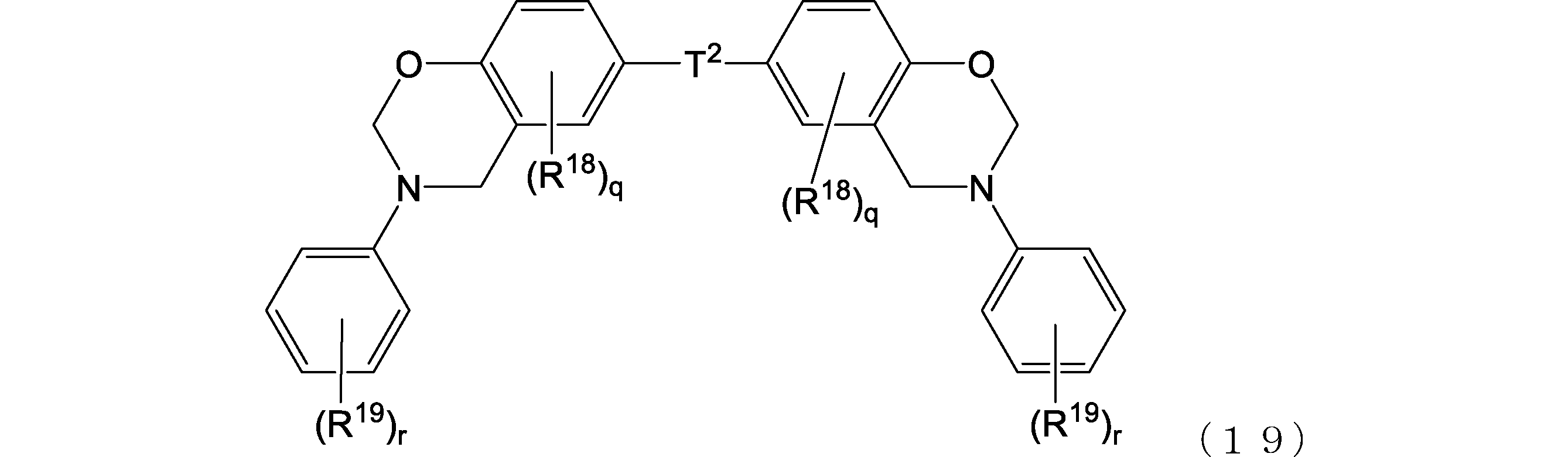


前記式(18)で表される化合物が、下記式(21)で表される化合物、及び/又は下記式(22)で表される化合物を含み、前記式(19)で表される化合物が、下記式(23)で表される化合物、下記式(24)で表される化合物、及び下記式(25)で表される化合物から選ばれる少なくとも1種を含む、[15]に記載の樹脂組成物。


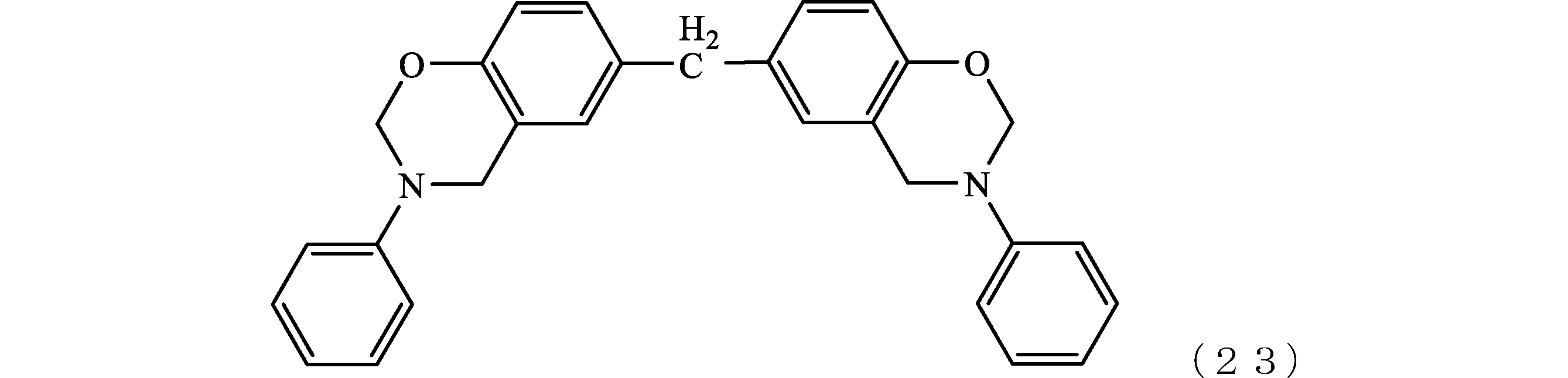


前記熱硬化性化合物(F)の含有量が、前記ビスマレイミド化合物(A)及び前記ラジカル重合性樹脂又は化合物(B)の合計100質量部に対して、1質量部~99質量部である、[11]~[16]のいずれかに記載の樹脂組成物。
[18]
無機充填材(G)を更に含む、[1]~[17]のいずれかに記載の樹脂組成物。
[19]
前記無機充填材(G)の平均粒子径が、3μm以下である、[18]に記載の樹脂組成物。
[20]
前記無機充填材(G)が、シリカ、水酸化アルミニウム、アルミナ、ベーマイト、窒化ホウ素、窒化アルミニウム、酸化マグネシウム、及び水酸化マグネシウムから選ばれる少なくとも1種を含む、[18]又は[19]に記載の樹脂組成物。
前記無機充填材(G)が、シリカである、[18]~[20]のいずれかに記載の樹脂組成物。
[22]
前記無機充填材(G)の含有量が、前記ビスマレイミド化合物(A)及び前記ラジカル重合性樹脂又は化合物(B)の合計100質量部に対して、500質量部以下である、[16]~[19]のいずれかに記載の樹脂組成物。
[23]
フラックス機能を有する有機化合物(H)を更に含む、[1]~[22]のいずれかに記載の樹脂組成物。
[24]
前記フラックス機能を有する有機化合物(H)の含有量が、前記ビスマレイミド化合物(A)及び前記ラジカル重合性樹脂又は化合物(B)の合計100質量部に対して、1質量部~60質量部である、[23]に記載の樹脂組成物。
[25]
アンダーフィル材用である、[1]~[24]のいずれかに記載の樹脂組成物。
プリアプライドアンダーフィル材用である、[1]~[25]のいずれかに記載の樹脂組成物。
[27]
[1]~[26]のいずれかに記載の樹脂組成物を含む、樹脂シート。
[28]
支持基材と、前記支持基材上に積層された[1]~[26]のいずれかに記載の樹脂組成物を含む層と、を備える積層体。
[29]
半導体ウェハと、前記半導体ウェハに積層された[28]に記載の積層体と、を備え、前記樹脂組成物を含む層が、前記半導体ウェハに積層された、樹脂組成物層付き半導体ウェハ。
[30]
半導体搭載用基板と、前記半導体搭載用基板に積層された請求項28に記載の積層体と、を備え、前記樹脂組成物を含む層が、前記半導体搭載用基板に積層された、樹脂組成物層付き半導体搭載用基板。
[29]に記載の樹脂組成物層付き半導体ウェハ、及び/又は[30]に記載の樹脂組成物層付き半導体搭載用基板を備える、半導体装置。
本実施形態の樹脂組成物は、式(1)で表される構成単位と、分子鎖の両末端にマレイミド基と、を含む、ビスマレイミド化合物(A)と、ビスマレイミド化合物(A)以外の、ラジカル重合性樹脂又は化合物(B)と、硬化促進剤(C)と、を含み、ラジカル重合性樹脂又は化合物(B)が、シトラコンイミド基、ビニル基、マレイミド基、(メタ)アクリロイル基、及びアリル基から選ばれる少なくとも1種を含む。本実施形態の樹脂組成物は、チップのフリップチップ実装に使用されるアンダーフィル材に好適であり、チップのフリップチップ実装に使用されるプリアプライドアンダーフィル材により好適である。
本実施形態の樹脂組成物は、熱硬化性化合物(F)、無機充填材(G)、及びフラックス機能を有する有機化合物(H)の少なくともいずれか一つを含んでいてもよい。
本実施形態の樹脂組成物は、式(1)で表される構成単位と、分子鎖の両末端にマレイミド基と、を含む、本実施形態に係るビスマレイミド化合物(A)(成分(A)とも称す)を含む。

このように本実施形態の樹脂組成物は、低ボイド性、チップ接着性、タック性、透過性、及びフラックス活性のバランスに優れるため、アンダーフィル材用に好適であり、プリアプライドアンダーフィル材用により好適に用いることができる。また、例えば、エポキシ基を有する樹脂では反応後に吸水性を有する極性基を生じるが、本実施形態に係るビスマレイミド化合物(A)であれば、吸水性を有する極性基が発生しない。そのため、吸水(湿)性が低く、絶縁信頼性の高い硬化物が得られる。
ビスマレイミド化合物(A)の式(1)中、Q1は、炭素数1~16の直鎖状若しくは分岐状のアルキレン基、又は炭素数2~16の直鎖状若しくは分岐状のアルケニレン基を示す。Q1としては、好適な粘度が得られ、ワニスの粘度上昇が制御できる点から、直鎖状若しくは分岐状のアルキレン基であることが好ましく、直鎖状のアルキレン基であることがより好ましい。
アルキレン基の炭素数としては、より好適な粘度が得られ、ワニスの粘度上昇をより制御できる点から、2~14であることが好ましく、4~12であることがより好ましい。
直鎖状若しくは分岐状のアルキレン基としては、例えば、メチレン基、エチレン基、プロピレン基、2,2-ジメチルプロピレン基、ブチレン基、ペンチレン基、ヘキシレン基、ヘプチレン基、オクチレン基、ノニレン基、デシレン基、ドデシレン基、ウンデシレン基、トリデシレン基、テトラデシレン基、ペンタデシレン基、ヘキサデシレン基、オクタデシレン基、ネオペンチレン基、ジメチルブチレン基、メチルヘキシレン基、エチルヘキシレン基、ジメチルヘキシレン基、トリメチルヘキシレン基、メチルヘプチレン基、ジメチルヘプチレン基、トリメチルヘプチレン基、テトラメチルヘプチレン基、エチルヘプチレン基、メチルオクチレン基、メチルノニレン基、メチルデシレン基、メチルドデシレン基、メチルウンデシレン基、メチルトリデシレン基、メチルテトラデシレン基、メチルペンタデシレン基、及びメチルヘキサデシレン基が挙げられる。
アルケニレン基の炭素数としては、より好適な粘度が得られ、ワニスの粘度上昇をより制御できる点から、2~14であることが好ましく、4~12であることがより好ましい。
直鎖状若しくは分岐状のアルケニレン基としては、例えば、ビニレン基、1-メチルビニレン基、アリレン基、プロペニレン基、イソプロペニレン基、1-ブテニレン基、2-ブテニレン基、1-ペンテニレン基、2-ペンテニレン基、イソペンチレン基、シクロペンテニレン基、シクロヘキセニレン基、及びジシクロペンタジエニレン基等が挙げられる。
アルキレン基の炭素数としては、より好適な粘度が得られ、ワニスの粘度上昇をより制御できる点から、2~14であることが好ましく、4~12であることがより好ましい。
直鎖状若しくは分岐状のアルキレン基としては、前記のQ2が参照できる。
アルケニレン基の炭素数としては、より好適な粘度が得られ、ワニスの粘度上昇をより制御できる点から、2~14であることが好ましく、4~12であることがより好ましい。
直鎖状若しくは分岐状のアルケニレン基としては、前記のQ2が参照できる。
アルキル基の炭素数としては、より好適な粘度が得られ、ワニスの粘度上昇がより制御できる点から、2~14であることが好ましく、4~12であることがより好ましい。
直鎖状若しくは分岐状のアルキル基としては、例えば、メチル基、エチル基、n-プロピル基、イソプロピル基、n-ブチル基、2-ブチル基、イソブチル基、tert-ブチル基、n-ペンチル基、2-ペンチル基、tert-ペンチル基、2-メチルブチル基、3-メチルブチル基、2,2-ジメチルプロピル基、n-ヘキシル基、2-ヘキシル基、3-ヘキシル基、2-メチルペンチル基、3-メチルペンチル基、4-メチルペンチル基、及び2-メチルペンタン-3-イル基が挙げられる。
アルケニル基の炭素数としては、より好適な粘度が得られ、ワニスの粘度上昇がより制御できる点から、2~14であることが好ましく、4~12であることがより好ましい。
直鎖状若しくは分岐状のアルケニル基としては、例えば、ビニル基、アリル基、4-ペンテニル基、イソプロペニル基、及びイソペンチル基が挙げられる。
本実施形態において、マレイミド基は、式(26)で表され、N原子がビスマレイミド化合物(A)の分子鎖に結合している。また、ビスマレイミド化合物(A)に結合されるマレイミド基は、全て同一であっても異なっていてもよいが、分子鎖の両末端のマレイミド基は同一であることが好ましい。

アルキル基の炭素数としては、好適に硬化する点から、1~3であることが好ましく、1~2であることがより好ましい。
直鎖状若しくは分岐状のアルキル基としては、前記のQ3が参照できる。

本実施形態に係るビスマレイミド化合物(A)は、公知の方法により製造することができる。例えば、1,2,4,5-シクロヘキサンテトラカルボン酸二無水物と、ダイマージアミン等を含むジアミンを含むモノマーと、マレイミド化合物とを、通常80℃~250℃、好ましくは100℃~200℃の温度において、通常0.5時間~50時間、好ましくは1時間~20時間、重付加反応させて重付加物を得る、その後、通常60℃~120℃、好ましくは80℃~100℃の温度において、通常0.1時間~2時間、好ましくは0.1時間~0.5時間、重付加物をイミド化反応、すなわち、脱水閉環反応させることで、ビスマレイミド化合物(A)を得ることができる。
1,2,4,5-シクロヘキサンテトラカルボン酸二無水物のモル数と、ジアミンを含むモノマー及びマレイミド化合物との全量のモル数とを調製することで、任意のビスマレイミド化合物(A)を得ることができる。
触媒の添加量は、特に限定されないが、例えば、イミド化剤を、アミド基に対して、0.5倍モル~5.0倍モル当量、脱水触媒を、アミド基に対して、0.5倍モル~10.0倍モル当量とすることが好ましい。
本実施形態の樹脂組成物は、本実施形態に係るビスマレイミド化合物(A)以外の、ラジカル重合性樹脂又は化合物(B)(成分(B)とも称す)を含む。本実施形態に係るラジカル重合性樹脂又は化合物(B)は、シトラコンイミド基、ビニル基、マレイミド基、(メタ)アクリロイル基、及びアリル基から選ばれる少なくとも1種を含む。本実施形態に係るラジカル重合性樹脂又は化合物(B)は、後述の硬化促進剤と共に、本実施形態に係るビスマレイミド化合物(A)と反応性を示せば特に限定されない。ラジカル重合性樹脂又は化合物(B)としては、後述のフラックス機能を有する有機化合物(H)と反応性を示さないことが好ましい。これらラジカル重合性樹脂又は化合物(B)は、1種又は2種以上を混合して使用することができる。
例えば、N-フェニルマレイミド、N-ヒドロキシフェニルマレイミド、ビス(4-マレイミドフェニル)メタン、4,4-ジフェニルメタンビスマレイミド、ビス(3,5-ジメチル-4-マレイミドフェニル)メタン、ビス(3-エチル-5-メチル-4-マレイミドフェニル)メタン、ビス(3,5-ジエチル-4-マレイミドフェニル)メタン、フェニルメタンマレイミド、o-フェニレンビスマレイミド、m-フェニレンビスマレイミド、p-フェニレンビスマレイミド、p-フェニレンビスシトラコンイミド、2,2-ビス(4-(4-マレイミドフェノキシ)-フェニル)プロパン、3,3-ジメチル-5,5-ジエチル-4,4-ジフェニルメタンビスマレイミド、4-メチル-1,3-フェニレンビスマレイミド、1,6-ビスマレイミド-(2,2,4-トリメチル)ヘキサン、4,4-ジフェニルエーテルビスマレイミド、4,4-ジフェニルスルフォンビスマレイミド、1,3-ビス(3-マレイミドフェノキシ)ベンゼン、1,3-ビス(4-マレイミドフェノキシ)ベンゼン、ポリフェニルメタンマレイミド、ノボラック型マレイミド化合物、ビフェニルアラルキル型マレイミド化合物、2,2-ビス(4-(4-マレイミドフェノキシ)フェニル)プロパン、1,2-ビス(マレイミド)エタン、1,4-ビス(マレイミド)ブタン、1,6-ビス(マレイミド)ヘキサン、N,N'-1,3-フェニレンジマレイミド、N,N'-1,4-フェニレンジマレイミド、N-フェニルマレイミド、式(2)で表されるマレイミド化合物、式(3)で表されるマレイミド化合物、式(4)で表されるマレイミド化合物、式(5)で表されるマレイミド化合物、式(6)で表されるマレイミド化合物、式(7)で表されるマレイミド化合物、式(10)で表されるマレイミド化合物、式(11)で表されるマレイミド化合物、式(12)で表されるマレイミド化合物、及び式(13)で表されるマレイミド化合物などが挙げられる。マレイミド基を有するラジカル重合性樹脂又は化合物(B)は、マレイミド化合物を重合して得られるプレポリマー、及びマレイミド化合物をアミン化合物等の他の化合物と重合して得られるプレポリマー等の形で、本実施形態に係る樹脂組成物に含有させることもできる。



式(4)中、R3は、各々独立に、水素原子又はメチル基を示す。

炭素数1~5のアルキル基としては、例えば、メチル基、エチル基、n-プロピル基、イソプロピル基、n-ブチル基、イソブチル基、sec-ブチル基、t-ブチル基、n-ペンチル基、及びネオペンチル基が挙げられる。

R5及びR7共に、8以上の原子が直鎖状に連結した炭化水素基としては、例えば、8以上の炭素原子を有する、置換又は非置換の2価の炭化水素基が挙げられる。置換又は非置換の2価の炭化水素基としては、特に限定されないが、例えば、置換又は非置換の直鎖状脂肪族炭化水素基、置換又は非置換の分岐状脂肪族炭化水素基、及び置換又は非置換の環状脂肪族炭化水素基が挙げられる。例えば、オクチレン基、ノナメチレン基、デカメチレン基、ドデカメチレン基、ヘキサデカメチレン基、及びオクタデカメチレン基が挙げられる。
R6において、置換又は非置換の、環を構成する原子数が4~10のヘテロ原子を含んでもよい環状炭化水素基としては、例えば、置換又は非置換の、環を構成する原子数が4~10である脂環基、置換又は非置換の、環を構成する原子数が4~10である芳香族基、及び置換又は非置換の、環を構成する原子数が4~10である複素環基が挙げられる。なお、環を構成する原子数とは、環状に連結している原子の数であって、側鎖の置換基等の原子数は含まれない。置換又は非置換の脂環基における脂環部分の基としては、例えば、2価又は2価以上の、シクロブチル基、シクロペンチル基、シクロヘキシル基、シクロオクチル基、及びシクロデシル基が挙げられる。また、置換基がアルキル基である場合、アルキル基としては、特に限定されないが、炭素数1~10のアルキル基が好ましく、炭素数3~10のアルキル基がより好ましい。炭素数1~10のアルキル基としては、例えば、メチル基、エチル基、n-プロピル基、イソプロピル基、n-ブチル基、イソブチル基、sec-ブチル基、t-ブチル基、n-ペンチル基、ネオペンチル基、n-ヘキシル基、テキシル基、n-へプチル基、n-オクチル基、n-エチルヘキシル基、n-ノニル基、及びn-デシル基が挙げられる。アルキル基置換のアルキル基は、1つでもよく、2以上であってもよい。
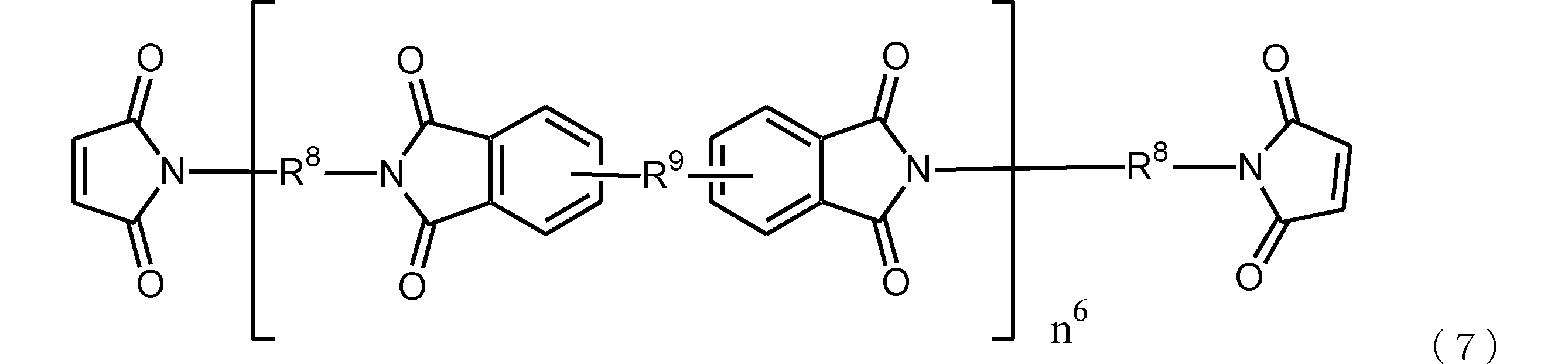
R8及びR9における、アルキレン基は、共に前記のとおりである。

Zにおいて、アルキレン基及び芳香族環を有する炭素数6~30の炭化水素基については、前記のとおりである。


炭素原子数1~40の直鎖状又は分岐状のアルキレン基としては、例えば、メチレン基、エチレン基、プロピレン基、2,2-ジメチルプロピレン基、ブチレン基、ペンチレン基、ヘキシレン基、ヘプチレン基、オクチレン基、ノニレン基、デシレン基、ドデシレン基、ウンデシレン基、トリデシレン基、テトラデシレン基、ペンタデシレン基、ヘキサデシレン基、オクタデシレン基、ネオペンチレン基、ジメチルブチレン基、メチルヘキシレン基、エチルヘキシレン基、ジメチルヘキシレン基、トリメチルヘキシレン基、メチルヘプチレン基、ジメチルヘプチレン基、トリメチルヘプチレン基、テトラメチルヘプチレン基、エチルヘプチレン基、メチルオクチレン基、メチルノニレン基、メチルデシレン基、メチルドデシレン基、メチルウンデシレン基、メチルトリデシレン基、メチルテトラデシレン基、メチルペンタデシレン基、メチルヘキサデシレン基、エイコシレン基、及びトリアコンレン基が挙げられる。
環を構成する炭素数が3~20のヘテロ原子を含んでもよい環状炭化水素基としては、前記のとおりである。


本実施形態の樹脂組成物において、マレイミド基を有するラジカル重合性樹脂又は化合物(B)が、式(5)で表されるマレイミド化合物、2,2-ビス(4-(4-マレイミドフェノキシ)フェニル)プロパン、式(2)で表されるマレイミド化合物、及び式(4)で表されるマレイミド化合物を含む場合には、特に限定されないが、優れたタック性及び透過性を有しながら、より良好な可撓性、より一層の低ボイド性、及びより一層優れたチップ接着性が得られる点から、本実施形態に係るビスマレイミド化合物(A)及びマレイミド基を有するラジカル重合性樹脂又は化合物(B)の合計100質量部に対して、ビスマレイミド化合物(A)を15質量部~65質量部、式(5)で表されるマレイミド化合物を5質量部~82質量部、2,2-ビス(4-(4-マレイミドフェノキシ)フェニル)プロパンを1質量部~10質量部、式(2)で表されるマレイミド化合物を1質量部~10質量部、及び式(4)で表されるマレイミド化合物を1質量部~10質量部でそれぞれ含むことが好ましく、ビスマレイミド化合物(A)を22質量部~65質量部、式(5)で表されるマレイミド化合物を5質量部~75質量部、2,2-ビス(4-(4-マレイミドフェノキシ)フェニル)プロパンを1質量部~15質量部、式(2)で表されるマレイミド化合物を1質量部~5質量部、及び式(4)で表されるマレイミド化合物を1質量部~10質量部でそれぞれ含むことがより好ましい。
本実施形態の樹脂組成物は、硬化促進剤を含む。樹脂組成物が硬化促進剤を含むと、硬化速度を調整でき、また、適度な成形性を有する樹脂組成物が得られる。本実施形態の硬化促進剤は、本実施形態に係るビスマレイミド化合物(A)及びラジカル重合性樹脂又は化合物(B)の硬化を促進できる化合物であれば、特に限定されない。硬化促進剤(C)は、1種又は2種以上を混合して使用することができる。
本実施形態に係る熱ラジカル重合開始剤(D)は、熱により、本実施形態に係るビスマレイミド化合物(A)におけるマレイミド基、及び本実施形態に係るラジカル重合性樹脂又は化合物(B)の重合性官能基を重合させることができる活性物質(ラジカル)を放出する化合物であれば特に限定されず、公知の熱ラジカル開始剤を用いることができる。熱ラジカル重合開始剤(D)は、1種又は2種以上を混合して使用することができる。
本実施形態に係るイミダゾール化合物(E)は、本実施形態に係るビスマレイミド化合物(A)及びラジカル重合性樹脂又は化合物(B)の硬化を促進できるイミダゾール化合物であれば、特に限定されず、公知のイミダゾール化合物を用いることができる。イミダゾール化合物(E)は、1種又は2種以上を混合して使用することができる。
本実施形態の樹脂組成物には、特に限定されないが、硬化速度の調整が容易である点から、本実施形態に係るビスマレイミド化合物(A)及び本実施形態に係るラジカル重合性樹脂又は化合物(B)以外の熱硬化性化合物(F)を更に含むことが好ましい。本実施形態に係る熱硬化性化合物(F)としては、本実施形態に係るビスマレイミド化合物(A)及びラジカル重合性樹脂又は化合物(B)と反応性を示す化合物であれば、公知の化合物を用いることができ、特に限定されない。熱硬化性化合物(F)としては、後述のフラックス機能を有する有機化合物(H)と反応性を示さないことが好ましい。


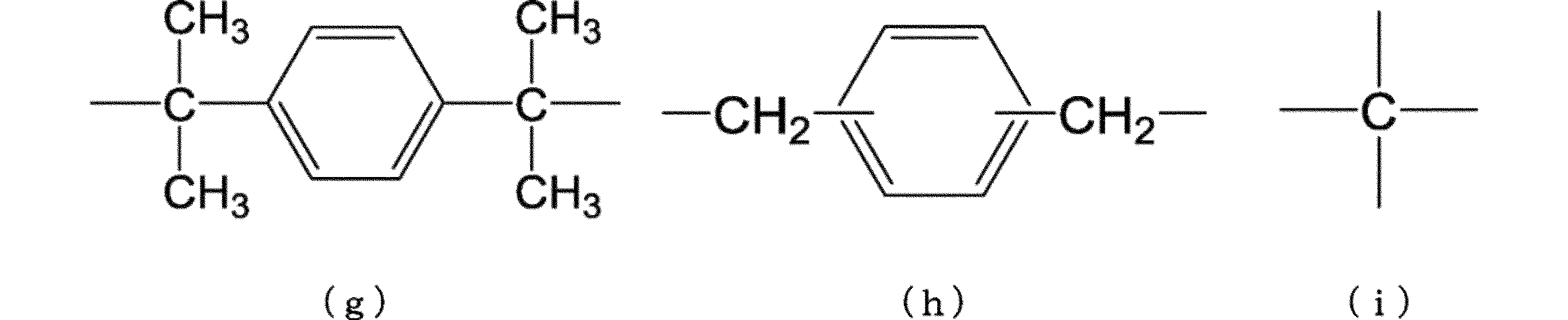
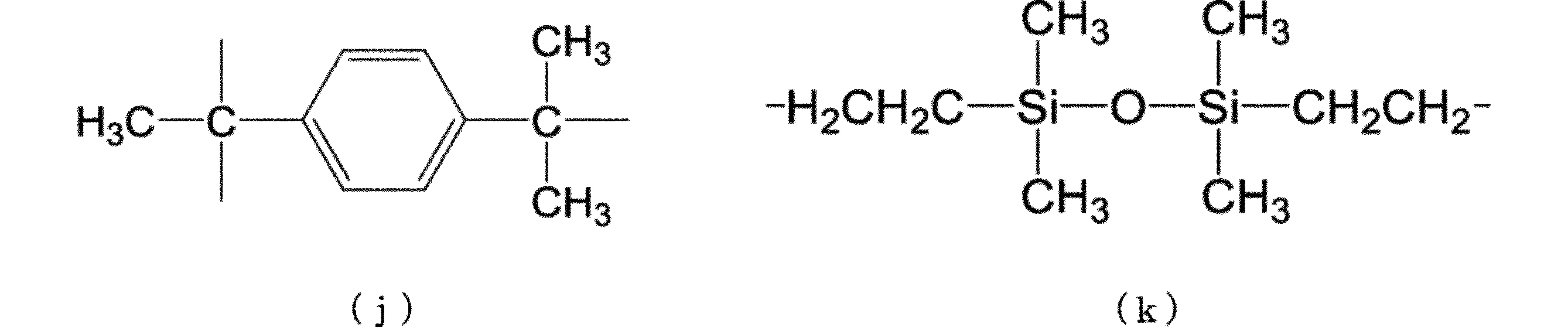





本実施形態の樹脂組成物には、耐燃性の向上、熱伝導率の向上、及び熱膨張率の低減のため、無機充填材(G)を更に含むことが好ましい。無機充填材を使用することにより、樹脂組成物等の耐燃性、及び熱伝導率を向上させ、熱膨張率を低減することができる。
シランカップリング剤としては、一般に無機物の表面処理に使用されているシランカップリング剤であれば、特に限定されない。例えば、ビニルトリメトキシシラン、及びγ-メタアクリロキシプロピルトリメトキシシラン等のビニルシラン系シランカップリング剤;N-フェニル-3-アミノプロピルトリメトキシシラン等のフェニルアミノシラン系シランカップリング剤;トリメトキシフェニルシラン等のフェニルシラン系シランカップリング剤;イミダゾールシラン系シランカップリング剤が挙げられる。これらのシランカップリング剤は、1種を単独で又は2種以上を適宜混合して使用することができる。
本実施形態の樹脂組成物には、フリップチップ実装中においてフラックス活性を発現させるため、フラックス機能を有する有機化合物(B)を更に含むことが好ましい。フラックス機能を有する有機化合物(H)は、分子中に1個以上の酸性部位を有する有機化合物であれば、特に限定されない。酸性部位としては、例えば、リン酸基、フェノール性水酸基、カルボキシル基、及びスルホン酸基が好ましく、本実施形態の樹脂組成物を、アンダーフィル材として、好適にはプリアプライドアンダーフィル材として用いた半導体装置において、接合部を構成するはんだや銅等の金属のマイグレーション、及び腐食をより有効に防止する観点から、フェノール性水酸基又はカルボキシル基がより好ましい。フラックス機能を有する有機化合物(H)は、1種を単独で又は2種以上を適宜混合して使用することができる。
本実施形態の樹脂組成物では、ビスマレイミド化合物(A)、ラジカル重合性樹脂又は化合物(B)、熱ラジカル重合開始剤(D)及びイミダゾール化合物(E)等の硬化促進剤(C)、熱硬化性化合物(F)、無機充填材(G)、及びフラックス機能を有する有機化合物(H)の他に、その他の成分を1種又は2種以上含んでいてもよい
シランカップリング剤を使用する場合、その含有量は、特に限定されないが、吸湿耐熱性の向上、及びフリップチップ実装時の揮発量の低減観点から、本実施形態に係るビスマレイミド化合物(A)及びラジカル重合性樹脂又は化合物(B)の合計100質量部に対して、0.05質量部~20質量部であることが好ましい。
湿潤分散剤を使用する場合、その含有量は、特に限定されないが、積層体の製造性向上の観点からは、本実施形態に係る無機充填材(G)100質量部に対して、0.1質量部~5質量部とすることが好ましく、0.5質量部~3質量部とすることがより好ましい。なお、2種以上の湿潤分散剤を併用する場合には、これらの合計量が前記比率を満たすことが好ましい。
本実施形態の樹脂組成物において、その他の添加剤の含有量は、特に限定されないが、通常、本実施形態に係るビスマレイミド化合物(A)及びラジカル重合性樹脂又は化合物(B)の合計100質量部に対して、それぞれ0.01質量部~10質量部である。
本実施形態の樹脂組成物は、低ボイド性、チップ接着性、タック性、透過性、及びフラックス活性のバランスに優れる。本実施形態の樹脂組成物を、積層体の形態で使用するアンダーフィル材、好適にはプリアプライドアンダーフィル材として用いた場合、低ボイド性、チップ接着性、タック性、透過性、及びフラックス活性のバランスに優れ、加えて、接合性及び絶縁信頼性にも優れる。このように、本実施形態樹脂組成物は、各種の優れた特徴を有することから、アンダーフィル材としてより有用であり、プリアプライドアンダーフィル材として更に有用である。なお、積層体については、後述する。
本実施形態の樹脂シートは、本実施形態の樹脂組成物を含む。具体的には、本実施形態の樹脂シートは、支持基材と、支持基材の片面又は両面に配された樹脂層と、を有し、樹脂層が、本実施形態の樹脂組成物を含む。この樹脂シートを積層樹脂シートとも称す。樹脂シートの製造方法は、常法に従って行うことができ、特に限定されない。例えば、本実施形態の樹脂組成物を溶剤に溶解させた溶液を支持基材に塗布して乾燥することで得ることができる。
本実施形態の樹脂組成物を支持基材上に塗布することにより、低ボイド性、チップ接着性、タック性、透過性、及びフラックス活性のバランスに優れる、樹脂組成物を含む層を有する積層体を提供することができる。本実施形態の積層体は、支持基材と、支持基材上に積層された本実施形態の樹脂組成物を含む層と、を備える。このような積層体は、本実施形態の樹脂組成物が、支持基材に展着されて得られる。支持基材としては、特に限定されないが、高分子フィルムを使用することができる。高分子フィルムとしては、例えば、ポリ塩化ビニル、ポリ塩化ビニリデン、ポリエチレン、ポリプロピレン、ポリブテン、ポリブタジエン、エチレン-プロピレン共重合体、ポリメチルペンテン、エチレン-酢酸ビニル共重合体、及びエチレン-ビニルアルコール共重合体などのビニル系樹脂;ポリエチレンテレフタレート、ポリエチレンナフタレート、及びポリブチレンテレフタレート等のポリエステル系樹脂;ポリウレタン系樹脂;ポリイミド系樹脂;ポリアミド系樹脂等を含有するフィルム、並びにこれらのフィルムの表面に離型剤を塗布した離型フィルムが挙げられる。これらの中でも、ポリエステル系樹脂、ポリイミド系樹脂、及びポリアミド系樹脂が好ましく、ポリエステル系樹脂の一種である、ポリエチレンテレフタレートがより好ましい。
本実施形態の樹脂組成物層付き半導体ウェハは、半導体ウェハと、その半導体ウェハに積層された本実施形態の積層体とを備え、樹脂組成物を含む層が、半導体ウェハに積層される。また、本実施形態の樹脂組成物層付き半導体搭載用基板は、半導体搭載用基板と、その半導体搭載用基板に積層された本実施形態の積層体とを備え、樹脂組成物を含む層が、半導体搭載用基板に積層される。
本実施形態の半導体装置は、本実施形態の樹脂組成物層付き半導体ウェハ、及び/又は本実施形態の樹脂組成物層付き半導体搭載用基板を備える。本実施形態の半導体装置を製造する方法は、特に限定されないが、例えば、本実施形態の樹脂組成物層付き半導体ウェハを研削等の手段で薄化、及びダイシングソー等による個片化を行い、樹脂組成物層付きチップとし、これを半導体搭載用基板に搭載する手法が挙げられる。また、本実施形態の樹脂組成物層付き半導体搭載用基板に、チップを搭載してもよい。樹脂組成物層付きチップを半導体搭載用基板に搭載する方法、及び半導体チップを樹脂組成物層付き半導体搭載用基板に搭載する方法では、熱圧着工法に対応したフリップチップボンダを好適に使用することができる。また、本実施形態ではチップを半導体搭載用基板にフリップチップ実装する場合を便宜的に説明しているが、チップをフリップチップ実装しつつ、本実施形態の樹脂組成物を適用する対象は、半導体搭載用基板以外とすることも可能である。例えば、本実施形態の樹脂組成物は、半導体ウェハ上へチップを搭載する際の半導体ウェハとチップとの接合部や、TSV(Through Silicon Via)等を経由してチップ間接続を行うチップ積層体の、各チップ間の接合部に使用することも可能であり、いずれの場合も本発明の効果を得ることができる。
(実施例1)
ビスマレイミド化合物(A)として、MIZ-001(日本化薬(株)製、(商品名)、式(27)で表されるマレイミド化合物であり、式(27)中のaが1~6(整数)の混合物である)33.3質量部、ラジカル重合性樹脂又は化合物(B)として、ビス-(3-エチル-5-メチル-4-マレイミドフェニル)メタン(BMI-70(商品名)、ケイ・アイ化成(株)製)のメチルエチルケトン(MEK)溶液(不揮発分50質量%)13.4質量部(不揮発分換算で6.7質量部)、2,2-ビス(4-(4-マレイミドフェノキシ)フェニル)プロパン(BMI-80(商品名)、ケイ・アイ化成(株)製)のMEK溶液(不揮発分50質量%)8.0質量部(不揮発分換算で4.0質量部)、式(2)で表されるノボラック型マレイミド化合物(BMI-2300(商品名)、大和化成工業社製、不飽和イミド基当量186g/eq.)2.7質量部、式(5)で表されるマレイミド化合物(MIR-3000-70MT(商品名)、日本化薬(株)製、不揮発分70質量%)76.2質量部(不揮発分換算で53.3質量部)、熱硬化性化合物(F)として、P-d型ベンゾオキサジン(四国化成工業(株)製)のMEK溶液(不揮発分50質量%)66.6質量部(不揮発分換算で33.3質量部)、フラックス機能を有する化合物(H)として、ロジン変性マレイン酸樹脂(マルキードNo32(商品名)、荒川化学工業(株)製)のMEK溶液(不揮発分100質量%)26.7質量部、無機充填材(G)として、スラリーシリカ(YA050C-MJE(商品名)、固形分50質量%、平均粒子径:50nm、(株)アドマテックス製)266.6質量部(不揮発分換算で133.3質量部)、熱ラジカル重合開始剤(D)として、ビス(1-メチル-1-フェニルエチル)ペルオキシド(ジクミルパーオキサイド、キシダ化学(株)製、10時間半減期温度:116.4℃)1.5質量部、イミダゾール化合物(E)として、2-エチル-4-メチルイミダゾール(2E4MZ、四国化成工業(株)製)4.0質量部を混合し、高速攪拌装置を用いて40分間撹拌して、ワニスを得た(MEK量:202.8質量部)。このワニスを、表面に離型剤をコートした厚さ38μmのポリエチレンテレフタレートフィルム(TR1-38(商品名、支持基材)、ユニチカ(株)製)に塗布し、1気圧下、100℃で5分間加熱乾燥して、樹脂組成物層の厚さが30μmである積層体を得た。
式(5)で表されるマレイミド化合物(MIR-3000-70MT(商品名))76.2質量部(不揮発分換算で53.3質量部)を57.1質量部(不揮発分換算で40.0質量部)に変更し、ビスマレイミド化合物(A)(MIZ-001(商品名))33.3質量部を46.6質量部に変更した以外は、実施例1と同様にしてワニスを調製した。このワニスを用いて、実施例1と同様にして、樹脂組成物層の厚さが30μmである積層体を得た。
式(5)で表されるマレイミド化合物(MIR-3000-70MT(商品名))76.2質量部(不揮発分換算で53.3質量部)を38.1質量部(不揮発分換算で26.7質量部)に変更し、ビスマレイミド化合物(A)(MIZ-001(商品名))33.3質量部を59.9質量部に変更した以外は、実施例1と同様にしてワニスを調製した。このワニスを用いて、実施例1と同様にして、樹脂組成物層の厚さが30μmである積層体を得た。
式(5)で表されるマレイミド化合物(MIR-3000-70MT(商品名))を配合せず、ビスマレイミド化合物(A)(MIZ-001(商品名))33.3質量部を86.6質量部に変更した以外は、実施例1と同様にしてワニスを調製した。このワニスを用いて、実施例1と同様にして、樹脂組成物層の厚さが30μmである積層体を得た。
式(5)で表されるマレイミド化合物(MIR-3000-70MT(商品名))76.2質量部(不揮発分換算で53.3質量部)を109.6質量部(不揮発分換算で76.7質量部)に変更し、ビスマレイミド化合物(A)(MIZ-001(商品名))33.3質量部を9.9質量部に変更した以外は、実施例1と同様にしてワニスを調製した。このワニスを用いて、実施例1と同様にして、樹脂組成物層の厚さが30μmである積層体を得た。
式(5)で表されるマレイミド化合物(MIR-3000-70MT(商品名))76.2質量部(不揮発分換算で53.3質量部)を23.9質量部(不揮発分換算で16.7質量部)に変更し、ビスマレイミド化合物(A)(MIZ-001(商品名))33.3質量部を69.9質量部に変更した以外は、実施例1と同様にしてワニスを調製した。このワニスを用いて、実施例1と同様にして、樹脂組成物層の厚さが30μmである積層体を得た。
ビスマレイミド化合物(A)(MIZ-001(商品名))33.3質量部の代わりに、式(3)で表されるマレイミド化合物(BMI-1000P(商品名)、ケイ・アイ化成(株)製)33.3質量部を配合した以外は、実施例1と同様にしてワニスを調製した。このワニスを用いて、実施例1と同様にして、樹脂組成物層の厚さが30μmである積層体を得た。
ビスマレイミド化合物(A)(MIZ-001(商品名))33.3質量部の代わりに、式(28)で表されるビスマレイミド化合物(BMI-3000(商品名)、Designer Molecules inc製、nが1~20の範囲にある混合物)33.3質量部を配合した以外は、実施例1と同様にして配合し、ワニスを作製した。その後、実施例1と同様にして、積層体を作製しようとしたが、ワニス粘度が高く、成形性が悪いために、均一な厚さの樹脂組成物層を有する積層体を成形できなかった。

(1)タック性
実施例1で得られた積層体を幅2.5cm×長さ5cmに切り出し、サンプルを作製した。室温にて、このサンプルの樹脂組成物層の面に対して、SUS製の錘(底面積10cm2(=2cm×5cm)、重量500g、(株)村上衡器社製)を30秒間乗せ、その後、錘を持ち上げた際に、張り付きがない場合をA(タック性なし)と評価し、張り付いた場合をC(タック性あり)と評価した。実施例2~6及び比較例1で得られた積層体に対しても、同様にサンプルを作成し、タック性を評価した。それらの結果を表1に示す。
実施例1で得られた積層体を幅5cm×長さ5cmに切り出し、サンプルを作製した。このサンプルの624nmでの透過率を、分光色彩計(SD6000(商品名)、日本分光(株)製)にて、室温下で測定した。624nmでの透過率が80%以上の場合をAとし、80%未満の場合をBとした。また、実施例2~6及び比較例1で得られた積層体に対しても、同様にサンプルを作成し、透過率を評価した。それらの結果を表1に示す。透過率が80%以上であると、積層体を張り付けた基板、及び半導体チップにおけるアライメントメークを読み取ることが可能となり、積層する際の位置合わせが可能な積層体が得られる。
実施例1で得られた積層体を8mm×8mmの正方形に切断し、半導体搭載用基板((株)ウォルツ製WALTS-KIT MB50-0102JY(商品名))のパッド部分における15μmの銅回路面に対して、切断後の積層体における樹脂組成物層を積層し、ラミネートした。その後、積層体におけるポリエチレンテレフタレートフィルムを剥離した。その後、フリップチップボンダ(LFB-2301(商品名)、(株)新川製)を用いて、ステージ温度70℃、ボンドヘッド温度260℃、荷重50N、及び時間6秒の条件で、銅とはんだで構成されるCuピラーを電極に持つ半導体チップ上に、剥離面の樹脂組成物層を熱圧着し、実装を行った。実装後のサンプル(半導体チップ/樹脂組成物層/評価用基板)を超音波精密探傷画像処理装置(μ-SDS(商品名)、(株)KJTD製)を用いて、半導体チップ実装部の範囲における樹脂組成物層のボイドの有無を確認した。ボイドの割合が、半導体チップ実装部の範囲における樹脂組成物層全体に対して、10%未満の場合をAとし、10%以上30%未満を場合Bとし、30%以上の場合をCとして、評価した。また、実施例2~6及び比較例1で得られた積層体に対しても、同様にサンプルを作成し、ボイドの割合を評価した。それらの結果を表1に示す。ボイドの割合が10%未満であると、絶縁信頼性が高い積層体が得られる。
実施例1で得られた積層体を8mm×8mmの正方形に切断し、半導体搭載用基板((株)ウォルツ製WALTS-KIT MB50-0102JY(商品名))のパッド部分における15μmの銅回路面に対して、切断後の積層体における樹脂組成物層を積層し、ラミネートした。その後、積層体におけるポリエチレンテレフタレートフィルムを剥離した。その後、フリップチップボンダ(LFB-2301(商品名)、(株)新川製)を用いて、ステージ温度70℃、ボンドヘッド温度260℃、荷重50N、及び時間6秒の条件で、銅とはんだで構成されるCuピラーを電極に持つ半導体チップ上に、剥離面の樹脂組成物層を熱圧着し、実装を行った。実装後のサンプル(半導体チップ/樹脂組成物層/評価用基板)の中央部の断面を切り出し、走査型電子顕微鏡(JCM―6000Plus(商品名)、日本電子(株)製)を用いて、その断面において、半導体チップと樹脂組成物層との界面における剥離を確認した。剥離の割合が、半導体チップと樹脂組成物層との界面全体に対して、1%未満の場合をAとし、1%以上20%未満の場合をBとして、20%以上の場合をCとして、評価した。また、実施例2~6及び比較例1で得られた積層体に対しても、同様にサンプルを作成し、剥離の割合を評価した。それらの結果を表1に示す。剥離の割合が1%未満であると、絶縁信頼性が高い積層体が得られる。
実施例1で得られた積層体を幅10mm×長さ20cmに切り出し、サンプルを作製した。室温において、このサンプルの支持基材(ポリエチレンテレフタレートフィルム)が内側になるように、外径が20mmのステンレス製丸棒(ステンレス丸棒、(株)エスコ製)に巻きつけ、10秒間保持した後、巻き戻して、サンプルを広げた。この操作を10回繰り返した後、サンプルの樹脂組成物層のクラックの有無を目視で確認し、可撓性の評価を行った。クラックの発生が全く認められない場合をA(屈曲性良好)、クラックの発生が一部に認められる場合をB、全面にクラックが認められる場合をCとした。また、実施例2~6及び比較例1で得られた積層体に対しても、同様にサンプルを作成し、可撓性を評価した。それらの結果を表1に示す。

Claims (31)
- 下記式(1)で表される構成単位と、分子鎖の両末端にマレイミド基と、を含む、ビスマレイミド化合物(A)と、
前記ビスマレイミド化合物(A)以外の、ラジカル重合性樹脂又は化合物(B)と、
硬化促進剤(C)と、
を含み、
前記ラジカル重合性樹脂又は化合物(B)が、シトラコンイミド基、ビニル基、マレイミド基、(メタ)アクリロイル基、及びアリル基から選ばれる少なくとも1種を含む、樹脂組成物。

- 前記ラジカル重合性樹脂又は化合物(B)が、マレイミド基を含む、請求項1に記載の樹脂組成物。
- 前記ラジカル重合性樹脂又は化合物(B)が、2,2-ビス[4-(4-マレイミドフェノキシ)フェニル]プロパン、下記式(2)で表されるマレイミド化合物、下記式(3)で表されるマレイミド化合物、下記式(4)で表されるマレイミド化合物、下記式(5)で表されるマレイミド化合物、下記式(6)で表される化合物、下記式(7)で表される化合物、下記式(10)で表される化合物、下記式(11)で表される化合物、下記式(12)で表される化合物、及び下記式(13)で表される化合物から選ばれる少なくとも1種を含む、請求項1又は2に記載の樹脂組成物。

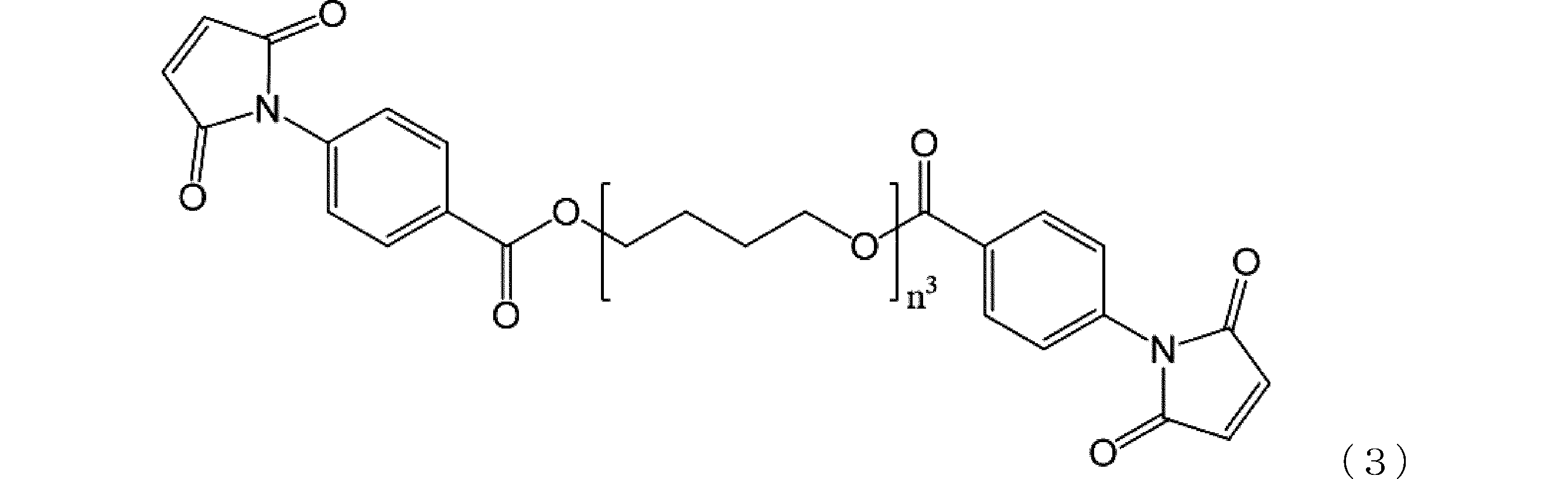


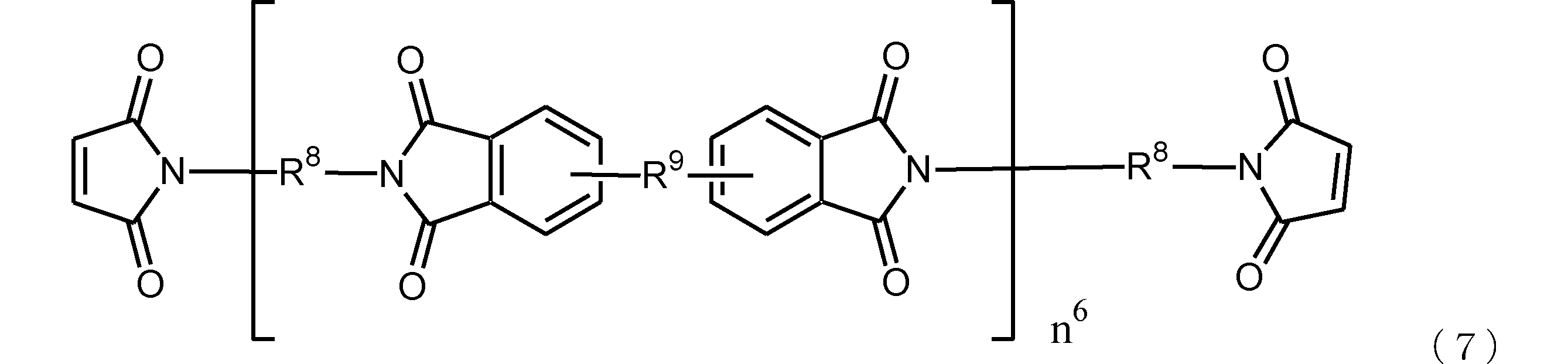


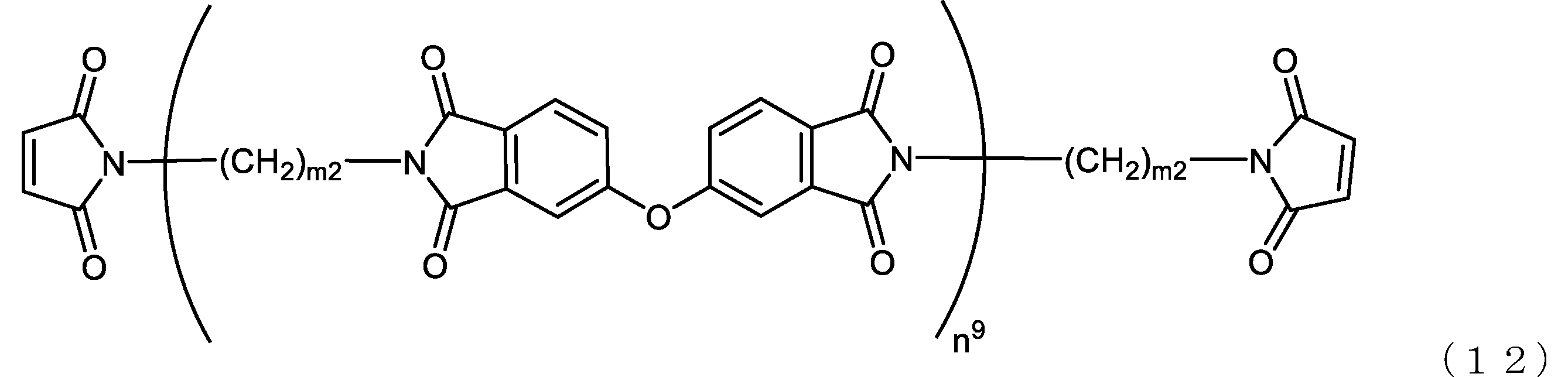

- 前記硬化促進剤(C)が、熱ラジカル重合開始剤(D)及びイミダゾール化合物(E)から選ばれる少なくとも1種を含む、請求項1~3のいずれか一項に記載の樹脂組成物。
- 前記熱ラジカル重合開始剤(D)の10時間半減期温度が、100℃以上である、請求項4に記載の樹脂組成物。
- 前記熱ラジカル重合開始剤(D)が、有機過酸化物を含む、請求項4又は5に記載の樹脂組成物。
- 前記熱ラジカル重合開始剤(D)が、パーオキシエステル、パーオキシケタール、ジアルキルパーオキサイド、又はハイドロパーオキサイド骨格を有する、請求項4~6のいずれか一項に記載の樹脂組成物。
- 前記熱ラジカル重合開始剤(D)が、ジクミルパーオキサイド、ジ(2-tert-ブチルペルオキシイソプロピル)ベンゼン、1,1,3,3-テトラメチルブチルハイドロパーオキサイド、2,5-ジメチル-2,5-ビス(tert-ブチルペルオキシ)ヘキシン-3、及びtert―ブチルハイドロパーオキサイドから選ばれる少なくとも1種を含む、請求項4~7のいずれか一項に記載の樹脂組成物。
- 前記ビスマレイミド化合物(A)の含有量が、前記ビスマレイミド化合物(A)及び前記ラジカル重合性樹脂又は化合物(B)の合計100質量部に対して、1質量部~99質量部である、請求項1~8のいずれか一項に記載の樹脂組成物。
- 前記硬化促進剤(C)の含有量が、前記ビスマレイミド化合物(A)及び前記ラジカル重合性樹脂又は化合物(B)の合計100質量部に対して、0.05質量部~10質量部である、請求項1~9のいずれか一項に記載の樹脂組成物。
- 前記ビスマレイミド化合物(A)及び前記ラジカル重合性樹脂又は化合物(B)以外の、熱硬化性化合物(F)を更に含む、請求項1~10のいずれか一項に記載の樹脂組成物。
- 前記熱硬化性化合物(F)が、400以上の分子量を有する、請求項11に記載の樹脂組成物。
- 前記熱硬化性化合物(F)が、ベンゾオキサジン化合物を含む、請求項11又は12に記載の樹脂組成物。
- 前記ベンゾオキサジン化合物が、下記式(14)で表される化合物、下記式(15)で表される化合物、下記式(16)で表される化合物、及び下記式(17)で表される化合物から選ばれる少なくとも1種を含む、請求項13に記載の樹脂組成物。





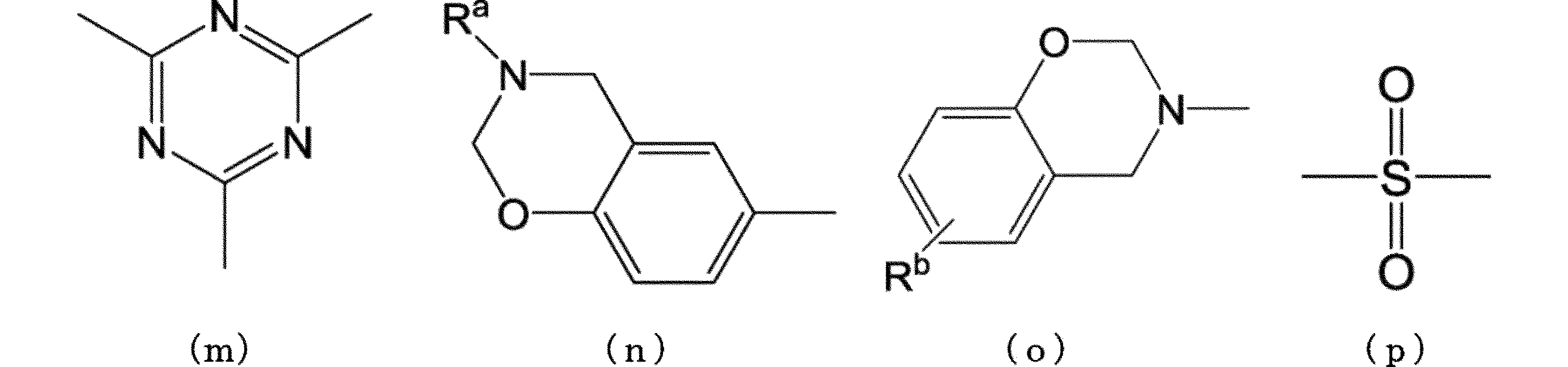


- 前記ベンゾオキサジン化合物が、下記式(18)で表される化合物、下記式(19)で表される化合物、及び下記式(20)で表される化合物から選ばれる少なくとも1種を含む、請求項13又は14に記載の樹脂組成物。


- 前記式(18)で表される化合物が、下記式(21)で表される化合物、及び/又は下記式(22)で表される化合物を含み、
前記式(19)で表される化合物が、下記式(23)で表される化合物、下記式(24)で表される化合物、及び下記式(25)で表される化合物から選ばれる少なくとも1種を含む、
請求項15に記載の樹脂組成物。


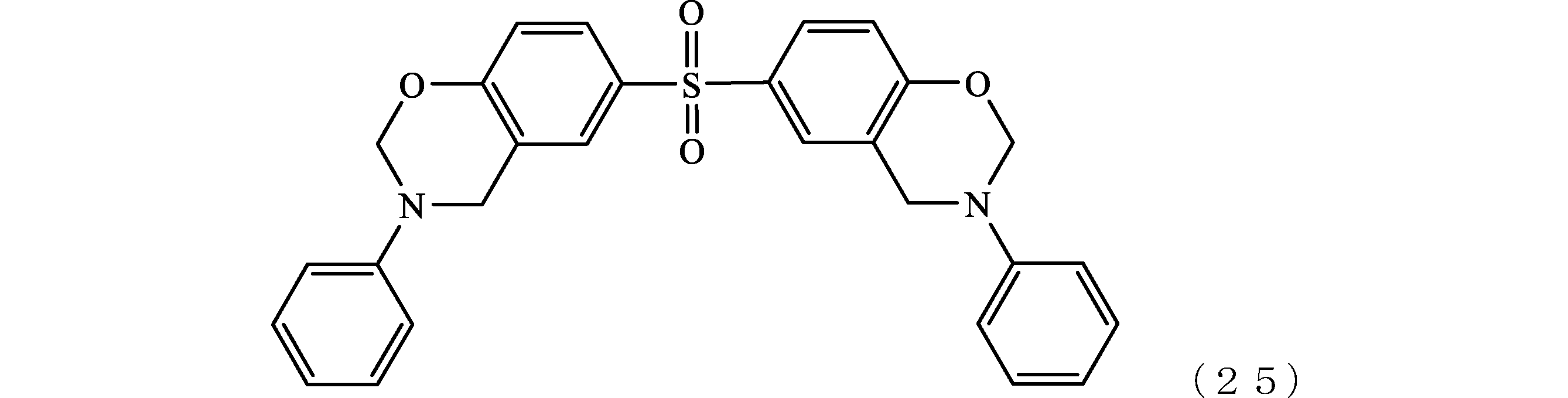
- 前記熱硬化性化合物(F)の含有量が、前記ビスマレイミド化合物(A)及び前記ラジカル重合性樹脂又は化合物(B)の合計100質量部に対して、1質量部~99質量部である、請求項11~16のいずれか一項に記載の樹脂組成物。
- 無機充填材(G)を更に含む、請求項1~17のいずれか一項に記載の樹脂組成物。
- 前記無機充填材(G)の平均粒子径が、3μm以下である、請求項18に記載の樹脂組成物。
- 前記無機充填材(G)が、シリカ、水酸化アルミニウム、アルミナ、ベーマイト、窒化ホウ素、窒化アルミニウム、酸化マグネシウム、及び水酸化マグネシウムから選ばれる少なくとも1種を含む、請求項18又は19に記載の樹脂組成物。
- 前記無機充填材(G)が、シリカである、請求項18~20のいずれか一項に記載の樹脂組成物。
- 前記無機充填材(G)の含有量が、前記ビスマレイミド化合物(A)及び前記ラジカル重合性樹脂又は化合物(B)の合計100質量部に対して、500質量部以下である、請求項16~19のいずれか一項に記載の樹脂組成物。
- フラックス機能を有する有機化合物(H)を更に含む、請求項1~22のいずれか一項に記載の樹脂組成物。
- 前記フラックス機能を有する有機化合物(H)の含有量が、前記ビスマレイミド化合物(A)及び前記ラジカル重合性樹脂又は化合物(B)の合計100質量部に対して、1質量部~60質量部である、請求項23に記載の樹脂組成物。
- アンダーフィル材用である、請求項1~24のいずれか一項に記載の樹脂組成物。
- プリアプライドアンダーフィル材用である、請求項1~25のいずれか一項に記載の樹脂組成物。
- 請求項1~26のいずれか一項に記載の樹脂組成物を含む、樹脂シート。
- 支持基材と、
前記支持基材上に積層された請求項1~26のいずれか一項に記載の樹脂組成物を含む層と、
を備える積層体。 - 半導体ウェハと、
前記半導体ウェハに積層された請求項28に記載の積層体と、を備え、
前記樹脂組成物を含む層が、前記半導体ウェハに積層された、
樹脂組成物層付き半導体ウェハ。 - 半導体搭載用基板と、
前記半導体搭載用基板に積層された請求項28に記載の積層体と、を備え、
前記樹脂組成物を含む層が、前記半導体搭載用基板に積層された、
樹脂組成物層付き半導体搭載用基板。 - 請求項29に記載の樹脂組成物層付き半導体ウェハ、及び/又は請求項30に記載の樹脂組成物層付き半導体搭載用基板を備える、半導体装置。
Priority Applications (5)
| Application Number | Priority Date | Filing Date | Title |
|---|---|---|---|
| KR1020217036049A KR102887439B1 (ko) | 2019-06-28 | 2020-06-26 | 수지 조성물, 수지 시트, 적층체, 수지 조성물층 부착 반도체 웨이퍼, 수지 조성물층 부착 반도체 탑재용 기판, 및 반도체 장치 |
| EP20831989.7A EP3992221A4 (en) | 2019-06-28 | 2020-06-26 | RESIN COMPOSITION, RESIN FILM, LAYER PRODUCT, SEMICONDUCTOR WAFER WITH RESIN COMPOSITION LAYER, SUBSTRATE WITH RESIN COMPOSITION LAYER FOR SEMICONDUCTOR MOUNTING, AND SEMICONDUCTOR DEVICE |
| US17/620,999 US12534559B2 (en) | 2019-06-28 | 2020-06-26 | Resin composition, resin sheet, laminate, semiconductor wafer with resin composition layer, substrate for mounting semiconductor with resin composition layer, and semiconductor device |
| JP2020556985A JP6930670B2 (ja) | 2019-06-28 | 2020-06-26 | 樹脂組成物、樹脂シート、積層体、樹脂組成物層付き半導体ウェハ、樹脂組成物層付き半導体搭載用基板、及び半導体装置 |
| CN202080047538.1A CN114144467B (zh) | 2019-06-28 | 2020-06-26 | 树脂组合物、树脂片、层叠体、带树脂组合物层的半导体晶圆、基板和半导体装置 |
Applications Claiming Priority (2)
| Application Number | Priority Date | Filing Date | Title |
|---|---|---|---|
| JP2019-122395 | 2019-06-28 | ||
| JP2019122395 | 2019-06-28 |
Publications (1)
| Publication Number | Publication Date |
|---|---|
| WO2020262585A1 true WO2020262585A1 (ja) | 2020-12-30 |
Family
ID=74060189
Family Applications (1)
| Application Number | Title | Priority Date | Filing Date |
|---|---|---|---|
| PCT/JP2020/025148 Ceased WO2020262585A1 (ja) | 2019-06-28 | 2020-06-26 | 樹脂組成物、樹脂シート、積層体、樹脂組成物層付き半導体ウェハ、樹脂組成物層付き半導体搭載用基板、及び半導体装置 |
Country Status (7)
| Country | Link |
|---|---|
| US (1) | US12534559B2 (ja) |
| EP (1) | EP3992221A4 (ja) |
| JP (2) | JP6930670B2 (ja) |
| KR (1) | KR102887439B1 (ja) |
| CN (1) | CN114144467B (ja) |
| TW (1) | TWI848139B (ja) |
| WO (1) | WO2020262585A1 (ja) |
Cited By (4)
| Publication number | Priority date | Publication date | Assignee | Title |
|---|---|---|---|---|
| WO2022264985A1 (ja) * | 2021-06-15 | 2022-12-22 | 三菱瓦斯化学株式会社 | 樹脂組成物、樹脂シート、多層プリント配線板、及び半導体装置 |
| WO2023063280A1 (ja) * | 2021-10-15 | 2023-04-20 | 三菱瓦斯化学株式会社 | フィルム状アンダーフィル材、及び、フィルム状アンダーフィル材用樹脂組成物、並びに、フィルム状アンダーフィル材を用いた樹脂組成物層付き半導体チップの製造方法、樹脂組成物層付き半導体チップ搭載用基板の製造方法、及び、半導体装置の製造方法 |
| JP2024007227A (ja) * | 2022-07-05 | 2024-01-18 | パナソニックIpマネジメント株式会社 | 硬化物の製造方法、熱硬化性樹脂組成物、プリプレグ及び樹脂付きフィルム |
| CN120842773A (zh) * | 2025-07-04 | 2025-10-28 | 浙江化讯半导体材料有限公司 | 一种激光释放层材料及其制备方法和应用 |
Families Citing this family (2)
| Publication number | Priority date | Publication date | Assignee | Title |
|---|---|---|---|---|
| KR102896548B1 (ko) * | 2020-03-18 | 2025-12-08 | 도레이 카부시키가이샤 | 감광성 수지 조성물, 감광성 시트, 경화막, 경화막의 제조 방법, 전자 부품, 안테나 소자, 반도체 패키지 및 표시 장치 |
| JP7330333B1 (ja) | 2022-07-22 | 2023-08-21 | 四国化成工業株式会社 | ビスマレイミド樹脂組成物およびプリプレグ |
Citations (16)
| Publication number | Priority date | Publication date | Assignee | Title |
|---|---|---|---|---|
| JPH0912712A (ja) | 1995-06-27 | 1997-01-14 | Lion Corp | ダイマージアミン由来のポリアミド樹脂及び該ポリアミドを含有する合成樹脂製光学用材料 |
| JP2003141936A (ja) * | 2001-11-02 | 2003-05-16 | Mitsubishi Gas Chem Co Inc | 透明導電性フィルム |
| JP2003221443A (ja) | 2002-01-30 | 2003-08-05 | Dainippon Ink & Chem Inc | 熱硬化性樹脂組成物 |
| JP2006245242A (ja) | 2005-03-02 | 2006-09-14 | Nitto Denko Corp | 半導体装置の製造方法 |
| JP2011157529A (ja) | 2010-02-03 | 2011-08-18 | Sekisui Chem Co Ltd | 接着剤組成物、半導体装置の製造方法、及び、半導体装置 |
| JP2011245675A (ja) * | 2010-05-25 | 2011-12-08 | Toyobo Co Ltd | 積層体、電気回路付加積層板、半導体付加積層体およびその製造方法 |
| JP2013008800A (ja) | 2011-06-23 | 2013-01-10 | Sekisui Chem Co Ltd | 電子部品用接着剤 |
| JP2013112730A (ja) | 2011-11-28 | 2013-06-10 | Nitto Denko Corp | シート状封止組成物及び半導体装置の製造方法 |
| JP2014001289A (ja) * | 2012-06-18 | 2014-01-09 | Nippon Steel & Sumikin Chemical Co Ltd | 半導体封止用樹脂組成物 |
| JP2014203964A (ja) | 2013-04-04 | 2014-10-27 | 日東電工株式会社 | アンダーフィル用接着フィルム、裏面研削用テープ一体型アンダーフィル用接着フィルム、ダイシングテープ一体型アンダーフィル用接着フィルム及び半導体装置 |
| JP2016196548A (ja) | 2015-04-03 | 2016-11-24 | 住友ベークライト株式会社 | プリント配線基板用樹脂組成物、プリプレグ、樹脂基板、金属張積層板、プリント配線基板、および半導体装置 |
| WO2018056466A1 (ja) * | 2016-09-26 | 2018-03-29 | 日立化成株式会社 | 樹脂組成物、半導体用配線層積層体及び半導体装置 |
| JP2018160566A (ja) | 2017-03-23 | 2018-10-11 | 三井化学東セロ株式会社 | ギャングボンディングプロセス用アンダーフィル絶縁フィルム |
| JP2018195823A (ja) | 2017-05-16 | 2018-12-06 | デクセリアルズ株式会社 | アンダーフィル材、アンダーフィルフィルム、及びこれを用いた半導体装置の製造方法 |
| JP2019029599A (ja) | 2017-08-03 | 2019-02-21 | 三井化学東セロ株式会社 | 生産性に優れたギャングボンディングプロセス用アンダーフィル絶縁フィルム |
| JP2019122395A (ja) | 2013-03-06 | 2019-07-25 | グラクソスミスクライン・リミテッド・ライアビリティ・カンパニーGlaxoSmithKline LLC | 宿主細胞および使用方法 |
Family Cites Families (13)
| Publication number | Priority date | Publication date | Assignee | Title |
|---|---|---|---|---|
| WO2008130894A1 (en) * | 2007-04-16 | 2008-10-30 | Designer Molecules, Inc. | Low temperature curing acrylate and maleimide based formulations and methods for use thereof |
| WO2009069688A1 (ja) * | 2007-11-30 | 2009-06-04 | Mitsui Chemicals, Inc. | ポリイミド系複合材料およびそのフィルム |
| US20130026660A1 (en) | 2011-07-29 | 2013-01-31 | Namics Corporation | Liquid epoxy resin composition for semiconductor encapsulation, and semiconductor device using the same |
| KR101924049B1 (ko) | 2011-11-02 | 2018-12-03 | 헨켈 아이피 앤드 홀딩 게엠베하 | 전자 부품용 접착제 |
| CN103145988B (zh) * | 2013-02-28 | 2014-11-05 | 中山大学 | 一种聚酰亚胺低聚物及液态感光阻焊油墨 |
| TWI491671B (zh) * | 2013-05-21 | 2015-07-11 | Elite Material Co Ltd | Low dielectric halogen-free resin compositions and circuit boards for which they are used |
| US11161979B2 (en) * | 2014-07-18 | 2021-11-02 | Mitsubishi Gas Chemical Company, Inc. | Resin composition, prepreg, metallic foil-clad laminate, and printed wiring board |
| WO2016052323A1 (ja) | 2014-09-30 | 2016-04-07 | 東レ株式会社 | ディスプレイ用支持基板、それを用いたカラーフィルターおよびその製造方法、有機el素子およびその製造方法、ならびにフレキシブル有機elディスプレイ |
| JP6877731B2 (ja) * | 2015-12-11 | 2021-05-26 | ユニチカ株式会社 | オリゴイミド組成物 |
| JP2019511587A (ja) * | 2016-02-04 | 2019-04-25 | ヘンケル アイピー アンド ホールディング ゲゼルシャフト ミット ベシュレンクテル ハフツング | 剥離可能接着剤及びその高温使用 |
| CN109312140B (zh) * | 2016-05-31 | 2022-03-29 | 三菱瓦斯化学株式会社 | 树脂组合物、层叠体、带有树脂组合物层的半导体晶圆、带有树脂组合物层的半导体搭载用基板和半导体装置 |
| US11339251B2 (en) * | 2016-07-05 | 2022-05-24 | Showa Denko Materials Co., Ltd. | Resin composition, resin film, laminate, multilayer printed wiring board and method for producing multilayer printed wiring board |
| US20210301133A1 (en) | 2017-06-24 | 2021-09-30 | Designer Molecules, Inc. | Curable polyimides |
-
2020
- 2020-06-26 EP EP20831989.7A patent/EP3992221A4/en active Pending
- 2020-06-26 CN CN202080047538.1A patent/CN114144467B/zh active Active
- 2020-06-26 WO PCT/JP2020/025148 patent/WO2020262585A1/ja not_active Ceased
- 2020-06-26 KR KR1020217036049A patent/KR102887439B1/ko active Active
- 2020-06-26 JP JP2020556985A patent/JP6930670B2/ja active Active
- 2020-06-26 US US17/620,999 patent/US12534559B2/en active Active
- 2020-06-29 TW TW109121911A patent/TWI848139B/zh active
-
2021
- 2021-04-30 JP JP2021077677A patent/JP2021138953A/ja active Pending
Patent Citations (16)
| Publication number | Priority date | Publication date | Assignee | Title |
|---|---|---|---|---|
| JPH0912712A (ja) | 1995-06-27 | 1997-01-14 | Lion Corp | ダイマージアミン由来のポリアミド樹脂及び該ポリアミドを含有する合成樹脂製光学用材料 |
| JP2003141936A (ja) * | 2001-11-02 | 2003-05-16 | Mitsubishi Gas Chem Co Inc | 透明導電性フィルム |
| JP2003221443A (ja) | 2002-01-30 | 2003-08-05 | Dainippon Ink & Chem Inc | 熱硬化性樹脂組成物 |
| JP2006245242A (ja) | 2005-03-02 | 2006-09-14 | Nitto Denko Corp | 半導体装置の製造方法 |
| JP2011157529A (ja) | 2010-02-03 | 2011-08-18 | Sekisui Chem Co Ltd | 接着剤組成物、半導体装置の製造方法、及び、半導体装置 |
| JP2011245675A (ja) * | 2010-05-25 | 2011-12-08 | Toyobo Co Ltd | 積層体、電気回路付加積層板、半導体付加積層体およびその製造方法 |
| JP2013008800A (ja) | 2011-06-23 | 2013-01-10 | Sekisui Chem Co Ltd | 電子部品用接着剤 |
| JP2013112730A (ja) | 2011-11-28 | 2013-06-10 | Nitto Denko Corp | シート状封止組成物及び半導体装置の製造方法 |
| JP2014001289A (ja) * | 2012-06-18 | 2014-01-09 | Nippon Steel & Sumikin Chemical Co Ltd | 半導体封止用樹脂組成物 |
| JP2019122395A (ja) | 2013-03-06 | 2019-07-25 | グラクソスミスクライン・リミテッド・ライアビリティ・カンパニーGlaxoSmithKline LLC | 宿主細胞および使用方法 |
| JP2014203964A (ja) | 2013-04-04 | 2014-10-27 | 日東電工株式会社 | アンダーフィル用接着フィルム、裏面研削用テープ一体型アンダーフィル用接着フィルム、ダイシングテープ一体型アンダーフィル用接着フィルム及び半導体装置 |
| JP2016196548A (ja) | 2015-04-03 | 2016-11-24 | 住友ベークライト株式会社 | プリント配線基板用樹脂組成物、プリプレグ、樹脂基板、金属張積層板、プリント配線基板、および半導体装置 |
| WO2018056466A1 (ja) * | 2016-09-26 | 2018-03-29 | 日立化成株式会社 | 樹脂組成物、半導体用配線層積層体及び半導体装置 |
| JP2018160566A (ja) | 2017-03-23 | 2018-10-11 | 三井化学東セロ株式会社 | ギャングボンディングプロセス用アンダーフィル絶縁フィルム |
| JP2018195823A (ja) | 2017-05-16 | 2018-12-06 | デクセリアルズ株式会社 | アンダーフィル材、アンダーフィルフィルム、及びこれを用いた半導体装置の製造方法 |
| JP2019029599A (ja) | 2017-08-03 | 2019-02-21 | 三井化学東セロ株式会社 | 生産性に優れたギャングボンディングプロセス用アンダーフィル絶縁フィルム |
Non-Patent Citations (1)
| Title |
|---|
| See also references of EP3992221A4 |
Cited By (10)
| Publication number | Priority date | Publication date | Assignee | Title |
|---|---|---|---|---|
| WO2022264985A1 (ja) * | 2021-06-15 | 2022-12-22 | 三菱瓦斯化学株式会社 | 樹脂組成物、樹脂シート、多層プリント配線板、及び半導体装置 |
| JPWO2022264985A1 (ja) * | 2021-06-15 | 2022-12-22 | ||
| JP7302760B2 (ja) | 2021-06-15 | 2023-07-04 | 三菱瓦斯化学株式会社 | 樹脂組成物、樹脂シート、多層プリント配線板、及び半導体装置 |
| CN117529509A (zh) * | 2021-06-15 | 2024-02-06 | 三菱瓦斯化学株式会社 | 树脂组合物、树脂片、多层印刷电路板、及半导体装置 |
| TWI836473B (zh) * | 2021-06-15 | 2024-03-21 | 日商三菱瓦斯化學股份有限公司 | 樹脂組成物、樹脂片、多層印刷配線板、及半導體裝置 |
| EP4321541A4 (en) * | 2021-06-15 | 2024-06-05 | Mitsubishi Gas Chemical Company, Inc. | RESIN COMPOSITION, RESIN SHEET, MULTILAYER PRINTED CIRCUIT BOARD, AND SEMICONDUCTOR DEVICE |
| US12221523B2 (en) | 2021-06-15 | 2025-02-11 | Mitsubishi Gas Chemical Company, Inc. | Resin composition, resin sheet, multilayer printed wiring board, and semiconductor device |
| WO2023063280A1 (ja) * | 2021-10-15 | 2023-04-20 | 三菱瓦斯化学株式会社 | フィルム状アンダーフィル材、及び、フィルム状アンダーフィル材用樹脂組成物、並びに、フィルム状アンダーフィル材を用いた樹脂組成物層付き半導体チップの製造方法、樹脂組成物層付き半導体チップ搭載用基板の製造方法、及び、半導体装置の製造方法 |
| JP2024007227A (ja) * | 2022-07-05 | 2024-01-18 | パナソニックIpマネジメント株式会社 | 硬化物の製造方法、熱硬化性樹脂組成物、プリプレグ及び樹脂付きフィルム |
| CN120842773A (zh) * | 2025-07-04 | 2025-10-28 | 浙江化讯半导体材料有限公司 | 一种激光释放层材料及其制备方法和应用 |
Also Published As
| Publication number | Publication date |
|---|---|
| EP3992221A4 (en) | 2023-06-21 |
| US20220380508A1 (en) | 2022-12-01 |
| CN114144467A (zh) | 2022-03-04 |
| JP2021138953A (ja) | 2021-09-16 |
| JP6930670B2 (ja) | 2021-09-01 |
| TW202108698A (zh) | 2021-03-01 |
| KR20220031543A (ko) | 2022-03-11 |
| TWI848139B (zh) | 2024-07-11 |
| CN114144467B (zh) | 2023-05-23 |
| JPWO2020262585A1 (ja) | 2021-09-13 |
| KR102887439B1 (ko) | 2025-11-18 |
| US12534559B2 (en) | 2026-01-27 |
| EP3992221A1 (en) | 2022-05-04 |
Similar Documents
| Publication | Publication Date | Title |
|---|---|---|
| JP6930670B2 (ja) | 樹脂組成物、樹脂シート、積層体、樹脂組成物層付き半導体ウェハ、樹脂組成物層付き半導体搭載用基板、及び半導体装置 | |
| JP7253151B2 (ja) | 樹脂組成物、積層体、樹脂組成物層付き半導体ウェハ、樹脂組成物層付き半導体搭載用基板、及び半導体装置 | |
| JP7565016B2 (ja) | フィルム、積層体、フィルム層付き半導体ウェハ、フィルム層付き半導体搭載用基板、及び半導体装置 | |
| WO2023063282A1 (ja) | 樹脂組成物、積層体、樹脂組成物層付き半導体チップ、樹脂組成物層付き半導体チップ搭載用基板、及び半導体装置 | |
| CN109312140B (zh) | 树脂组合物、层叠体、带有树脂组合物层的半导体晶圆、带有树脂组合物层的半导体搭载用基板和半导体装置 | |
| JP2024015839A (ja) | 樹脂組成物、積層体、樹脂組成物層付き半導体チップ、樹脂組成物層付き半導体チップ搭載用基板、及び半導体装置 | |
| JP7515788B2 (ja) | フィルム、積層体、フィルム層付き半導体ウェハ、フィルム層付き半導体搭載用基板、及び半導体装置 | |
| JP2023122840A (ja) | 樹脂組成物、積層体、樹脂組成物層付き半導体チップ、樹脂組成物層付き半導体チップ搭載用基板、及び半導体装置 | |
| JP7515787B2 (ja) | フィルム、積層体、フィルム層付き半導体ウェハ、フィルム層付き半導体搭載用基板、及び半導体装置 | |
| WO2023063277A1 (ja) | 樹脂組成物、積層体、樹脂組成物層付き半導体チップ、樹脂組成物層付き半導体チップ搭載用基板、及び半導体装置 | |
| JP2023122842A (ja) | 樹脂組成物、積層体、樹脂組成物層付き半導体チップ、樹脂組成物層付き半導体チップ搭載用基板、及び半導体装置 |
Legal Events
| Date | Code | Title | Description |
|---|---|---|---|
| ENP | Entry into the national phase |
Ref document number: 2020556985 Country of ref document: JP Kind code of ref document: A |
|
| 121 | Ep: the epo has been informed by wipo that ep was designated in this application |
Ref document number: 20831989 Country of ref document: EP Kind code of ref document: A1 |
|
| NENP | Non-entry into the national phase |
Ref country code: DE |
|
| WWE | Wipo information: entry into national phase |
Ref document number: 2020831989 Country of ref document: EP |
|
| WWG | Wipo information: grant in national office |
Ref document number: 17620999 Country of ref document: US |