WO2020263888A1 - Cannabinoid conjugate molecules - Google Patents

Cannabinoid conjugate molecules Download PDF

Info

Publication number
WO2020263888A1
WO2020263888A1 PCT/US2020/039234 US2020039234W WO2020263888A1 WO 2020263888 A1 WO2020263888 A1 WO 2020263888A1 US 2020039234 W US2020039234 W US 2020039234W WO 2020263888 A1 WO2020263888 A1 WO 2020263888A1
Authority
WO
WIPO (PCT)
Prior art keywords
component
group
substituents
independently selected
linear
Prior art date
Legal status (The legal status is an assumption and is not a legal conclusion. Google has not performed a legal analysis and makes no representation as to the accuracy of the status listed.)
Ceased
Application number
PCT/US2020/039234
Other languages
French (fr)
Inventor
Paul HERSHBERGER
Philip ARLEN
Current Assignee (The listed assignees may be inaccurate. Google has not performed a legal analysis and makes no representation or warranty as to the accuracy of the list.)
Diverse Biotech Inc
Original Assignee
Diverse Biotech Inc
Priority date (The priority date is an assumption and is not a legal conclusion. Google has not performed a legal analysis and makes no representation as to the accuracy of the date listed.)
Filing date
Publication date
Application filed by Diverse Biotech Inc filed Critical Diverse Biotech Inc
Priority to AU2020307555A priority Critical patent/AU2020307555A1/en
Priority to EP20833129.8A priority patent/EP3986388A4/en
Priority to JP2021576827A priority patent/JP2022539523A/en
Priority to CA3145109A priority patent/CA3145109A1/en
Priority to US17/622,382 priority patent/US20220273805A1/en
Publication of WO2020263888A1 publication Critical patent/WO2020263888A1/en
Priority to IL289303A priority patent/IL289303A/en
Anticipated expiration legal-status Critical
Priority to JP2024188911A priority patent/JP2025010243A/en
Ceased legal-status Critical Current

Links

Classifications

    • A—HUMAN NECESSITIES
    • A61—MEDICAL OR VETERINARY SCIENCE; HYGIENE
    • A61K—PREPARATIONS FOR MEDICAL, DENTAL OR TOILETRY PURPOSES
    • A61K47/00—Medicinal preparations characterised by the non-active ingredients used, e.g. carriers or inert additives; Targeting or modifying agents chemically bound to the active ingredient
    • A61K47/50—Medicinal preparations characterised by the non-active ingredients used, e.g. carriers or inert additives; Targeting or modifying agents chemically bound to the active ingredient the non-active ingredient being chemically bound to the active ingredient, e.g. polymer-drug conjugates
    • A61K47/51—Medicinal preparations characterised by the non-active ingredients used, e.g. carriers or inert additives; Targeting or modifying agents chemically bound to the active ingredient the non-active ingredient being chemically bound to the active ingredient, e.g. polymer-drug conjugates the non-active ingredient being a modifying agent
    • A61K47/54—Medicinal preparations characterised by the non-active ingredients used, e.g. carriers or inert additives; Targeting or modifying agents chemically bound to the active ingredient the non-active ingredient being chemically bound to the active ingredient, e.g. polymer-drug conjugates the non-active ingredient being a modifying agent the modifying agent being an organic compound
    • A61K47/55—Medicinal preparations characterised by the non-active ingredients used, e.g. carriers or inert additives; Targeting or modifying agents chemically bound to the active ingredient the non-active ingredient being chemically bound to the active ingredient, e.g. polymer-drug conjugates the non-active ingredient being a modifying agent the modifying agent being an organic compound the modifying agent being also a pharmacologically or therapeutically active agent, i.e. the entire conjugate being a codrug
    • A—HUMAN NECESSITIES
    • A61—MEDICAL OR VETERINARY SCIENCE; HYGIENE
    • A61K—PREPARATIONS FOR MEDICAL, DENTAL OR TOILETRY PURPOSES
    • A61K31/00—Medicinal preparations containing organic active ingredients
    • A61K31/658—Medicinal preparations containing organic active ingredients o-phenolic cannabinoids, e.g. cannabidiol, cannabigerolic acid, cannabichromene or tetrahydrocannabinol
    • A—HUMAN NECESSITIES
    • A61—MEDICAL OR VETERINARY SCIENCE; HYGIENE
    • A61K—PREPARATIONS FOR MEDICAL, DENTAL OR TOILETRY PURPOSES
    • A61K45/00—Medicinal preparations containing active ingredients not provided for in groups A61K31/00 - A61K41/00
    • A61K45/06—Mixtures of active ingredients without chemical characterisation, e.g. antiphlogistics and cardiaca
    • A—HUMAN NECESSITIES
    • A61—MEDICAL OR VETERINARY SCIENCE; HYGIENE
    • A61K—PREPARATIONS FOR MEDICAL, DENTAL OR TOILETRY PURPOSES
    • A61K47/00—Medicinal preparations characterised by the non-active ingredients used, e.g. carriers or inert additives; Targeting or modifying agents chemically bound to the active ingredient
    • A61K47/50—Medicinal preparations characterised by the non-active ingredients used, e.g. carriers or inert additives; Targeting or modifying agents chemically bound to the active ingredient the non-active ingredient being chemically bound to the active ingredient, e.g. polymer-drug conjugates
    • A61K47/51—Medicinal preparations characterised by the non-active ingredients used, e.g. carriers or inert additives; Targeting or modifying agents chemically bound to the active ingredient the non-active ingredient being chemically bound to the active ingredient, e.g. polymer-drug conjugates the non-active ingredient being a modifying agent
    • A61K47/54—Medicinal preparations characterised by the non-active ingredients used, e.g. carriers or inert additives; Targeting or modifying agents chemically bound to the active ingredient the non-active ingredient being chemically bound to the active ingredient, e.g. polymer-drug conjugates the non-active ingredient being a modifying agent the modifying agent being an organic compound
    • A61K47/545—Heterocyclic compounds
    • A—HUMAN NECESSITIES
    • A61—MEDICAL OR VETERINARY SCIENCE; HYGIENE
    • A61P—SPECIFIC THERAPEUTIC ACTIVITY OF CHEMICAL COMPOUNDS OR MEDICINAL PREPARATIONS
    • A61P35/00—Antineoplastic agents
    • A—HUMAN NECESSITIES
    • A61—MEDICAL OR VETERINARY SCIENCE; HYGIENE
    • A61K—PREPARATIONS FOR MEDICAL, DENTAL OR TOILETRY PURPOSES
    • A61K2300/00—Mixtures or combinations of active ingredients, wherein at least one active ingredient is fully defined in groups A61K31/00 - A61K41/00

Definitions

  • This disclosure relates generally to multifunctional therapeutics.
  • This disclosure describes multifunctional conjugate molecules comprising at least one therapeutic agent component and at least one cannabinoid component covalently attached by a linker:
  • embodiments of the disclosed conjugate molecules are designed to deliver more than one therapeutic benefit via more than one mechanism of action; this is achieved when the covalent binding of the therapeutic agent component to its target enables the release of the cannabinoid at or near the site of the therapeutic agent’s action, which can then effect a second therapeutic benefit. That is, these conjugate molecules are designed to deliver the therapeutic benefits of each of their components. In other embodiments, the therapeutic agent component and the cannabinoid component are released to provide their respective therapeutic benefits via functionality of the linker.
  • ROS reactive oxygen species
  • ROS are generated intracellularly and include superoxide (O 2 ⁇ - ). hydrogen peroxide (H2O2), and highly destructive hydroxyl radicals (OH ⁇ ) ⁇
  • H2O2 hydrogen peroxide
  • OH ⁇ highly destructive hydroxyl radicals
  • the species O 2 ⁇ - and H2O2 can be enzymatically eradicated by the activity of superoxide dismutases and catalases/peroxidases, respectively.
  • Apoptosis is a tightly regulated and highly conserved process of cell death during which a cell undergoes self-destruction (Kerr et al. Br. J. Cancer 26, 239-57, 1972). Apoptosis can be triggered by a variety of extrinsic and intrinsic signals, including ROS (reviewed in Redza-Dutordoir & Averill-Bates, Biochem. Biophys. Acta 1863, 2977-92, 2016). Exposure to xenobiotics such as antibiotics and chemotherapeutic drugs can also trigger apoptosis, and is often mediated by ROS.
  • Cannabmoids have demonstrated their ability to promote ROS production.
  • Cannabidiol is anon-toxic and non-psychoactive cannabinoid that has been shown to have anti-tumor activity in multiple cancer types (Massi etal. , J. Pharmacol. Exp. Ther. 308, 838-45, e-pub 2003). Activation of the endogenous cannabinoid type 1 (CB1) and type 2 (CB2) receptors has been shown to inhibit tumor progression (Velasco etal. , Nat. Rev. Cancer 12, 436- 44, 2012). CBD has been reported to inhibit human GBM viability in culture, an effect that was reversed in the presence of the ROS scavenger a-tocopherol/vitamin E (Velasco et al. , 2012).
  • CBD-dependent production of ROS has been shown to accompany a reduction in glutathione (Massi et al., Cell. Mol. Sci. 63, 2057-66, 2006), an important anti-oxidant that prevents damage to cellular components by ROS.
  • the source of CBD-dependent stress in part originated in the mitochondria and led to activation of multiple caspases involved in intrinsic and extrinsic pathways of apoptosis.
  • Further studies analyzing CBD-treated GBM tumor tissue revealed that inhibition of lipoxygenase signaling played a role in CBD anti-tumor activity (McAllister etal., J. Neuroimmune Pharmacol. 10, 255-67, 2015).
  • the indirect modulation of the endocannabinoid system by CBD may be attributed to the observed anti-tumor activity.
  • Cannabigerol is another non-psychotropic cannabinoid that interacts with specific targets involved in carcinogenesis and has shown potent anti-tumor activity (Guindon &
  • CBG CBG
  • CBD CBD
  • CBG Conjugate Molecules
  • Conjugate molecules comprise at least one therapeutic agent component covalently linked, directly or via a linker, to at least one cannabinoid component.
  • a therapeutic agent component is covalently atached directly to a hydroxy or carboxylic acid group of a cannabinoid component.
  • cannabinoid conjugate components comprise a therapeutic agent component and a cannabinoid component atached by means of a linker which is covalently atached at one end to the therapeutic agent component and at the other end to a hydroxy or carboxylic acid group of the cannabinoid component.
  • the hydroxy group is an“aromatic hydroxy group;” i.e., a hydroxy group bonded directly to an aromatic hydrocarbon.
  • the hydroxy group is an“aliphatic hydroxy group;” i.e., a hydroxy group bound to a carbon that is not part of an aromatic ring.
  • conjugate molecules contain only one therapeutic agent component.
  • conjugate molecules can contain two or more therapeutic agent components, which can be the same or different.
  • the two or more linkers can be the same or different and, independently, the two or more therapeutic agent components can be the same or different.
  • the two or more hydroxy groups can be aliphatic or the two or more hydroxy groups can be aromatic, or, for example, a first hydroxy group can be aliphatic and a second hydroxy group can be aromatic.
  • conjugate molecules can contain two therapeutic agent components which are both attached to a single linker.
  • the two therapeutic agent components can be the same or different.
  • a conjugate molecule can contain an additional cannabinoid component.
  • Conjugate molecules can have one or more centers of asymmetry and can therefore be prepared either as a mixture of isomers (e.g., a racemic or diasteromeric mixture) or in an enantiomerically or diasteromerically pure form. Such forms include, but are not limited to, diastereomers, enantiomers, and atropisomers. Conjugate molecules can also include alkenes and can therefore be prepared either as a mixture of double bond isomers or independently as either an E or Z isomer. Isotopic variants of conjugate molecules can also be prepared.
  • Conjugate molecules can form salts.“Pharmaceutically acceptable salts” are those salts which retain at least some of the biological activity of the free (non-salt) compound and which can be administered as drugs or pharmaceuticals to an individual. Such salts, for example, include: (1) acid addition salts, formed with inorganic acids such as hydrochloric acid, hydrobromic acid, sulfuric acid, nitric acid, phosphoric acid, and the like; or formed with organic acids such as acetic acid, oxalic acid, propionic acid, succinic acid, maleic acid, tartaric acid and the like; (2) salts formed when an acidic proton present in the parent compound either is replaced by a metal ion, e.g. , an alkali metal ion, an alkaline earth metal ion, or an aluminum ion; or coordinates with an organic base. Acceptable organic bases include ethanolamine,
  • Acceptable inorganic bases include aluminum hydroxide, calcium hy droxide, potassium hydroxide, sodium carbonate, sodium hydroxide, and the like.
  • Further examples of pharmaceutically acceptable salts include those listed in Berge et al , Pharmaceutical Salts, /. Pharm. Sci 1977 Jan; 66(1): 1-19..
  • C1-C3 linear or branched alkyl means“methyl, ethyl, propyl, and isopropyl.”
  • C1-C8 linear or branched alkyl means“methyl, ethyl, C3, C4, C5, C6, C7, and C8 linear alkyl and C3, C4, C5, C6, C7, and C8 branched alkyl.”
  • Cl -C3 linear or branched heteroalkyl means“a linear or branched heteroalkyl containing 1, 2, or 3 carbon atoms.”
  • C1-C8 linear or branched heteroalkyl means“each of a Cl, C2, C3, C4, C5, C6, C7, and C8 linear heteroalkyl and Cl, C2, C3, C4, C5, C6, C7, and C8 branched heteroalkyl.”
  • C1-C12 linear or branched heteroalkyl means each of a Cl, C2, C3, C4, C5, C6, C7, C8, C9, CIO, Cl l, and C12 linear heteroalkyl and Cl, C2, C3, C4, C5, C6, C7, C8, C9, CIO,
  • C1-C24 linear or branched heteroalkyl means each of a Cl, C2, C3, C4, C5, C6, C7, C8, C9, CIO, Cl l, C12, C13, C14, C15, C16, C17, C18, C19, C20, C21, C22, C23, and C24 linear heteroalkyl and Cl, C2, C3, C4, C5, C6, C7, C8, C9, CIO, Cl l, C12, C13, C14, C15, C16, C17, C18, C19, C20, C21, C22, C23, and C24 branched heteroalkyl.”
  • Cl -C6 linear or branched alkoxyl means“a linear or branched alkoxyl containing 1 , 2, 3, 4, 5, or C carbon atoms.”
  • C1-C6 linear or branched alkylamino means“a linear or branched alkylamino containing 1, 2, 3, 4, 5, or 6 carbon atoms.”
  • C1-C6 linear or branched dialkylamino means“each linear or branched dialkylamino in which each alkyl independently contains 1, 2, 3, 4, 5, or 6 carbon atoms.”
  • 6- 10-membered aromatic means“each of a 6-, 7-, 8-, 9-, and 10-membered aromatic.”
  • “5- to 10-membered heteroaromatic” means“each of a 6-, 7-, 8-, 9-, and 10-membered heteroaromatic.”
  • “3- to 9-membered cycloheteroalkyl” means“each of a 3-, 4-, 5-, 6-, 7-, 8-, and 9- membered cycloheteroalkyl.
  • C3-C6 cycloalkyl means“C3, C4, C5, and C6 cycloalkyl.”
  • Halide means“Cl, Br, and I.”
  • R7 is H or is C1-C3 linear or branched alkyl or C1-C3 linear or branched heteroalkyl comprising an 0, N, or S atom;
  • R7 is H or is C1-C3 linear or branched alkyl or C1-C3 linear or branched heteroalkyl comprising an 0, N, or S atom;
  • A“therapeutic agent component” as used in this disclosure is a therapeutic moiety or portion of a therapeutic agent that is present in a conjugate molecule and covalently attached to a linker.
  • a number of therapeutic agents can be used to provide a therapeutic agent component of a conjugate molecule.
  • the therapeutic agent component is an epoxide.
  • An example of how a cannabinoid could be released from a conjugate molecule upon binding of an epoxide to a target is shown below.
  • the target s molecular structure is understood to contain nucleophilic groups such as NH, OH, and SH capable of reacting with the epoxide agent.
  • Epoxide components of a conjugate molecule have the following structure: in which R a is absent or is C1-C3 linear or branched alkyl or C1-C3 linear or branched heteroalkyl comprising a 0, N, or S atom.
  • Carfilzomib is an example of an epoxide.
  • the therapeutic agent component is an aziridine.
  • An example of how a cannabinoid could be released from a conjugate molecule upon binding of an aziridine to a target is shown below.
  • the target’s molecular structure is understood to contain nucleophilic groups such as NH, OH, and SH capable of reacting with the aziridine agent
  • Aziridine components of a conjugate molecule have the following structure:
  • R a is absent or is C1-C3 linear or branched alkyl or C1-C3 linear or branched heteroalkyl comprising a 0, N, or S atom; and Rb is R or -PS(NR C IR C 2), wherein Rci and R C 2 independently are C1-C6 linear or branched alkyl or C1-C6 cycloalkyl, and wherein R is selected from the group consisting of:
  • R is selected from the group consisting of:
  • C1-C6 linear or branched alkyl (i) C1-C6 linear or branched alkyl; and (ii) C1-C6 linear or branched heteroalkyl containing 1 or 2 heteroatoms independently selected from 0, N, and S, optionally substituted with 1-6 fluorine atoms (i.e., 1, 2, 3, 4, 5, or 6 fluorine atoms) and/or 1 or 2 substituents selected from the Group One Substituents and halide; and , optionally substituted with 1-3 substituents independently selected from
  • the therapeutic agent component is a sulfonate.
  • a cannabinoid could be released from a conjugate molecule upon binding of a sulfonate to a target are shown below.
  • the target’s molecular structure is understood to contain nucleophilic groups such as NH, OH, and SH capable of reacting with the sulfonate agent. While these examples utilize a NH2 group such as from a lysine residue in both Steps 1 and 2, it is understood that the second step may use an entirely different nucleophilic group on the target to attack the link and release the cannabinoid.
  • Sulfonate components of a conjugate molecule have the following structure: in which Rd is either (a) C1-C8 linear or branched alkyl, optionally substituted with (i) up to 9 fluorine atoms; and/or (ii) up to three substituents independently selected from the Group One Substituents; or (b) phenyl, optionally substituted with up to three substituents independently selected from the group consisting of C1-C6 linear or branched alkyl, optionally substituted with (i) up to 6 fluorine atoms and/or 1 or 2 substituents independently selected from the Group Two Substituents.
  • the therapeutic agent component is a halide.
  • Examples of how a cannabinoid could be released from a conjugate molecule upon binding of a halide to a target are shown below.
  • the target’s molecular structure is understood to contain nucleophilic groups such as NH, OH, and SH capable of reacting with the halide agent. While these examples utilize a NH2 group such as from a lysine residue in both Steps 1 and 2, it is understood that the second step may use an entirely different nucleophilic group on the target to attack the link and release the cannabinoid.
  • Halide components of a conjugate molecule have the structure , in which X is Cl, Br, or I.
  • the therapeutic agent component is temozolomide or an analog of temozolomide, which is a DNA methylating / alkylating agent:
  • a cannabinoid may be released from a conjugate molecule upon binding of a temozolomide analog component to a target.
  • the target s molecular structure is understood to contain nucleophilic groups such as NH, OH, and SH capable of reacting with the alkylating agent. While this example uses an NH2 group such as from a guanine system in both Steps 1 and 2, it is understood that the second step may use an entirely different nucleophilic group on the target to attack the link and release the cannabinoid.
  • temozolomide analog components of a conjugate molecule have
  • conjugate molecule have the structure some embodiments, temozolomide analog components of a conjugate molecule have the structure:
  • R x and R y independently are H or C1-C3 linear or branched alkyl.
  • R x is H and R y is H. In some embodiments, R x is C1-C3 linear or branched alkyl and R y is H. In some embodiments, both R x and R y are independently selected from C1-C3 linear or branched alkyl.
  • the therapeutic agent component is 5-fluorouracil (alone or as part of a 5-fluorouracil-containing product, such as VERRUCA HERMAL (5-fluorouracil, salicylic acid) or an analog of 5-fluorouracil:
  • Examples of how a cannabinoid can be released from a conjugate molecule upon binding of a 5-fluorouracil analog component to a target are shown below.
  • the target’s molecular structure is understood to contain nucleophilic groups such as NH, OH, and SH capable of reacting at the 6-position of the uracil system, or the 6-position of its FdUMP metabolite. It is understood that the nucleophilic group attaching to the 6-position may be different from the nucleophilic group that reacts with the release the cannabinoid in Step 2.
  • the therapeutic agent component marks the bond covalently attaching the therapeutic agent component to the linker.
  • the therapeutic agent component i some embodiments, the
  • the therapeutic agent component i some embodiments, the therapeutic agent
  • two cannabinoid components can be covalently attached via linkers to the therapeutic agent component.
  • the two cannabinoid components can be the same or can be different; and, independently, the two linkers can be the same or different.
  • the therapeutic agent component i the therapeutic agent component i .
  • the therapeutic agent component i some embodiments, the therapeutic agent component i some embodiments, the
  • two cannabinoid components can be covalently attached via linkers to the therapeutic agent component.
  • the two cannabinoid components can be the same or can be different; and, independently, the two linkers can be the same or different.
  • the therapeutic agent component is diclofenac or an analog of diclofenac:
  • a diclofenac component has the structure
  • a diclofenac component has the structure some
  • a diclofenac component has the structure
  • Conjugates comprising a diclofenac component can be administered alone or, for example, as part of a diclofenac-containing product, such as MOBIZOX ® (diclofenac, paracetamol, and chlozoxazone), SOLARAZE ® (diclofenac sodium), VOLTAREN ® (diclofenac sodium), VOLITRA ® (benzyl alcohol, capsaicin, diclofenac diethylamine, linseed oil, menthol, methyl salicylate), VOLITRA ® MR (diclofenac, thiocolchicoside), VOLITRA ® PLUS
  • the therapeutic agent component is celecoxib (e.g. , CELEBREX ® ) or an analog of celecoxib:
  • a celecoxib component has the structure
  • the therapeutic agent component is gemcitabine (e.g. ,
  • a gemcitabine component has the structure
  • a gemcitabine component has the structure some embodiments, a gemcitabine component has the structure some embodiments, a gemcitabine component has the structure some embodiments, a gemcitabine component has the structure some embodiments, a gemcitabine component has the structure some embodiments, a gemcitabme component has the structure some
  • a gemcitabme component has the structure
  • the therapeutic agent component is or emtricitabine (e.g., DESCOVY ® , BIKTARVY ® , EMTRIVA ® ) or an analog of emtricitabine:
  • an emtricitabine component has the structure
  • an emtricitabine component has the structure some
  • an emtricitabine component has the structure
  • the therapeutic agent component is entecavir (e.g., BARACLUDE ® ) or an analog of entecavir:
  • an entecavir component has the structure:
  • the therapeutic agent component is axitinib (e.g, INLYTA ® ) or an analog of axitinib:
  • an axitinib component has the structure
  • the therapeutic agent component is batimastat or an analog of batimastat:
  • a batimastat component has the structure
  • the therapeutic agent component is bosutinib (e.g., BOSULIF ® ) or an analog of bosutinib:
  • a bosutinib component has the structure
  • the therapeutic agent component is cnzotinib (e.g, XALKORI ® ) or an analog of crizotinib:
  • a crizotinib component has the structure
  • the therapeutic agent component is erlotinib (e.g., TARCEVA ® ) or an analog of erlotinib:
  • an erlotinib component has the structure
  • the therapeutic agent component is gefitinib (e.g, IRESSA ® ) or an analog of gefitinib:
  • a gefitinib component has the structure
  • the therapeutic agent component is everolimus (e.g.,
  • an everolimus component has the structure
  • an everolimus component has the stmcture
  • the therapeutic agent component is temsirolimus (e.g., temsirolimus).
  • a temsirolimus component has one of the following structures, in which each arrow indicates a point where a linker as described below can be attached.
  • the therapeutic agent component is ganetespib or an analog of ganetespib:
  • a ganetespib component has the structure In some embodiments, a ganetespib component has the structure In some
  • a ganetespib component has the structure . In some . In some
  • a ganetespib component has the structure
  • the therapeutic agent component is glasdegib (e.g. ,
  • a glasdegib component has the structure
  • the therapeutic agent component is imatinib (e.g.. GLEEVEC ® ) or an analog of imatinib: imatinib
  • an imatinib component has the structure
  • an imatinib component has the
  • an imatinib component has the
  • the therapeutic agent component is lapatinib (e.g., TYKERB ® ) or an analog of lapatinib: lapatinib
  • a lapatinib component has the structure
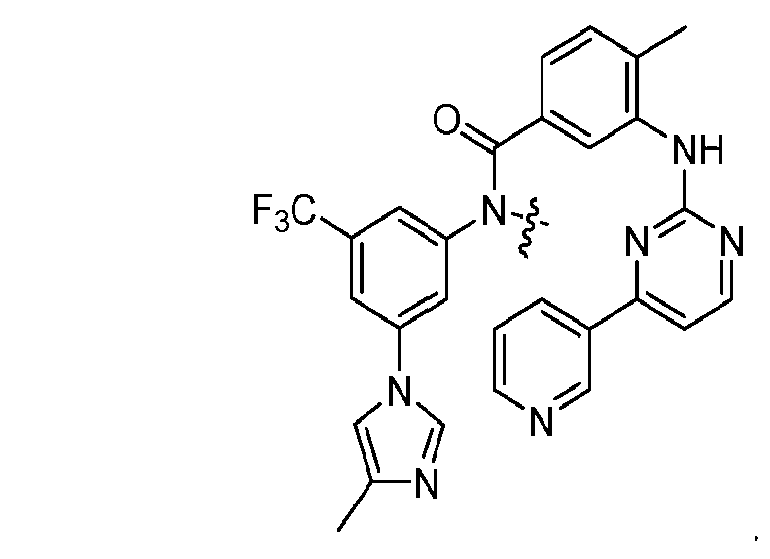
  • a nilotinib component has the structure
  • a nilotinib component has the structure
  • a nilotinib component has the structure
  • the therapeutic agent component is pazopanib (e.g., OPDIVO®, VOTRIENT®) or an analog of pazopanib:
  • a pazopanib component has the structure
  • pazopanib component has the structure
  • the therapeutic agent component is lummespib or an analog of luminespib:
  • the therapeutic agent component is ruxolitinib (e.g., JAKAFI ® ) or an analog of ruxolitinib:
  • a ruxolitinib component has the structure
  • the therapeutic agent component is saridegib (e.g., ODOMZO ® ) or an analog of saridegib:
  • a saridegib component has the structure
  • the therapeutic agent component is sunitinib (e.g., SUTENT ® ) or an analog of sunitinib:
  • a sunitinib component has the structure:
  • a sunitinib component has the structure
  • the therapeutic agent component is trametinib (e.g, MEKINIST ® ) or an analog of trametinib:
  • a trametinib component has the structure
  • a trametinib component has the structure
  • a trametinib component has the structure
  • the therapeutic agent component is warfarin e.g, COUMADIN ® , JANTOVEN ® ) or an analog of warfarin:
  • a warfarin component has the structure
  • the therapeutic agent component is daclatasvir (e.g.,
  • daclatasvir is a symmetrical drug, many multi-conjugate structures are envisioned with up to at least four cannabinoid components linked to the parent drug.
  • a daclatasvir component has a cannabinoid component linked at one or more of sites (a), (b), (c), (d), (e), and (f), illustrated below, in any combination:
  • a cannabinoid component is linked at site (a).
  • a cannabinoid component is linked at site (a) and site (b). In some embodiments, a cannabinoid component is linked at site (a) and site (c). In some embodiments, a cannabinoid component is linked at site (a) and site (d). In some embodiments, a cannabinoid component is linked at site (a) and site (e). In some embodiments, a cannabinoid component is linked at site (a) and site (f).
  • a cannabinoid component is linked at site (a), site (b), and site (c). In some embodiments, a cannabinoid component is linked at site (a), site (b), and site (d). In some embodiments, a cannabinoid component is linked at site (a), site (b), and site (e). In some embodiments, a cannabinoid component is linked at site (a), site (b), and site (f).
  • a cannabinoid component is linked at site (a), site (c), and site (d). In some embodiments, a cannabinoid component is linked at site (a), site (c), and site (e). In some embodiments, a cannabinoid component is linked at site (a), site (c), and site (f) ⁇
  • a cannabinoid component is linked at site (a), site (d), and site (e). In some embodiments, a cannabinoid component is linked at site (a), site (d), and site (f).
  • a cannabinoid component is linked at site (a), site (e), and site (f).
  • a cannabinoid component is linked at site (a), site (b), site (c), and site (d). In some embodiments, a cannabinoid component is linked at site (a), site (b), site (c), and site (e). In some embodiments, a cannabinoid component is linked at site (a), site (b), site
  • a cannabinoid component is linked at site (a), site (d), site (d), and site (e). In some embodiments, a cannabinoid component is linked at site (a), site (d), site (d), and site (f).
  • a cannabinoid component is linked at site (a), site (d), site (e), and site (1).
  • a cannabinoid component is linked at site (a), site (b), site (c), site
  • a cannabinoid component is linked at site (a), site (b), site (c), site (d), and site (f).
  • a cannabinoid component is linked at site (a), site (b), site (c), site (d), site (e), and site (f).
  • a cannabinoid component is linked at site (b).
  • a cannabinoid component is linked at site (b) and site (c). In some embodiments, a cannabinoid component is linked at site (b) and site (d). In some embodiments, a cannabinoid component is linked at site (b) and site (e). In some embodiments, a cannabinoid component is linked at site (b) and site (f). [125] In some embodiments, a cannabinoid component is linked at site (b), site (c), and site (d). In some embodiments, a cannabinoid component is linked at site (b), site (c), and site (e). In some embodiments, a cannabinoid component is linked at site (b), site (c), and site (f).
  • a cannabinoid component is linked at site (b), site (d), and site (e). In some embodiments, a cannabinoid component is linked at site (b), site (d), and site (f).
  • a cannabinoid component is linked at site (b), site (e), and site (f).
  • a cannabinoid component is linked at site (b), site (c), site (d), and site (e). In some embodiments, a cannabinoid component is linked at site (b), site (c), site (d), and site (f).
  • a cannabinoid component is linked at site (b), site (d), site (e), and site (f).
  • a cannabinoid component is linked at site (b), site (c), site (d), site (e), and site (f).
  • a cannabinoid component is linked at site (c).
  • a cannabinoid component is linked at site (c) and site (d). In some embodiments, a cannabinoid component is linked at site (c) and site (e). In some embodiments, a cannabinoid component is linked at site (c) and site (f).
  • a cannabinoid component is linked at site (c), site (d), and site (e). In some embodiments, a cannabinoid component is linked at site (c), site (d), and site (f).
  • a cannabinoid component is linked at site (c), site (e), and site (f).
  • a cannabinoid component is linked at site (c), site (d), site (e), and site (f).
  • a cannabinoid component is linked at site (d).
  • a cannabinoid component is linked at site (d) and site (e). In some embodiments, a cannabinoid component is linked at site (d) and site (f).
  • a cannabinoid component is linked at site (d), site (e), and site (f).
  • a cannabinoid component is linked at site (e).
  • a cannabinoid component is linked at site (e) and site (f).
  • a cannabinoid component is linked at site (f).
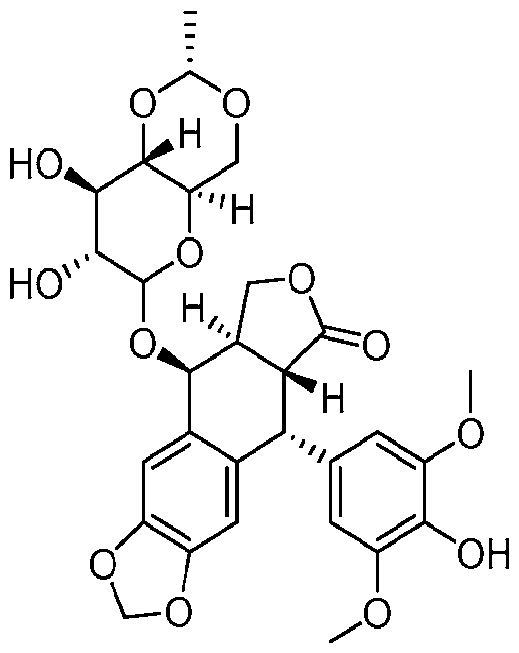
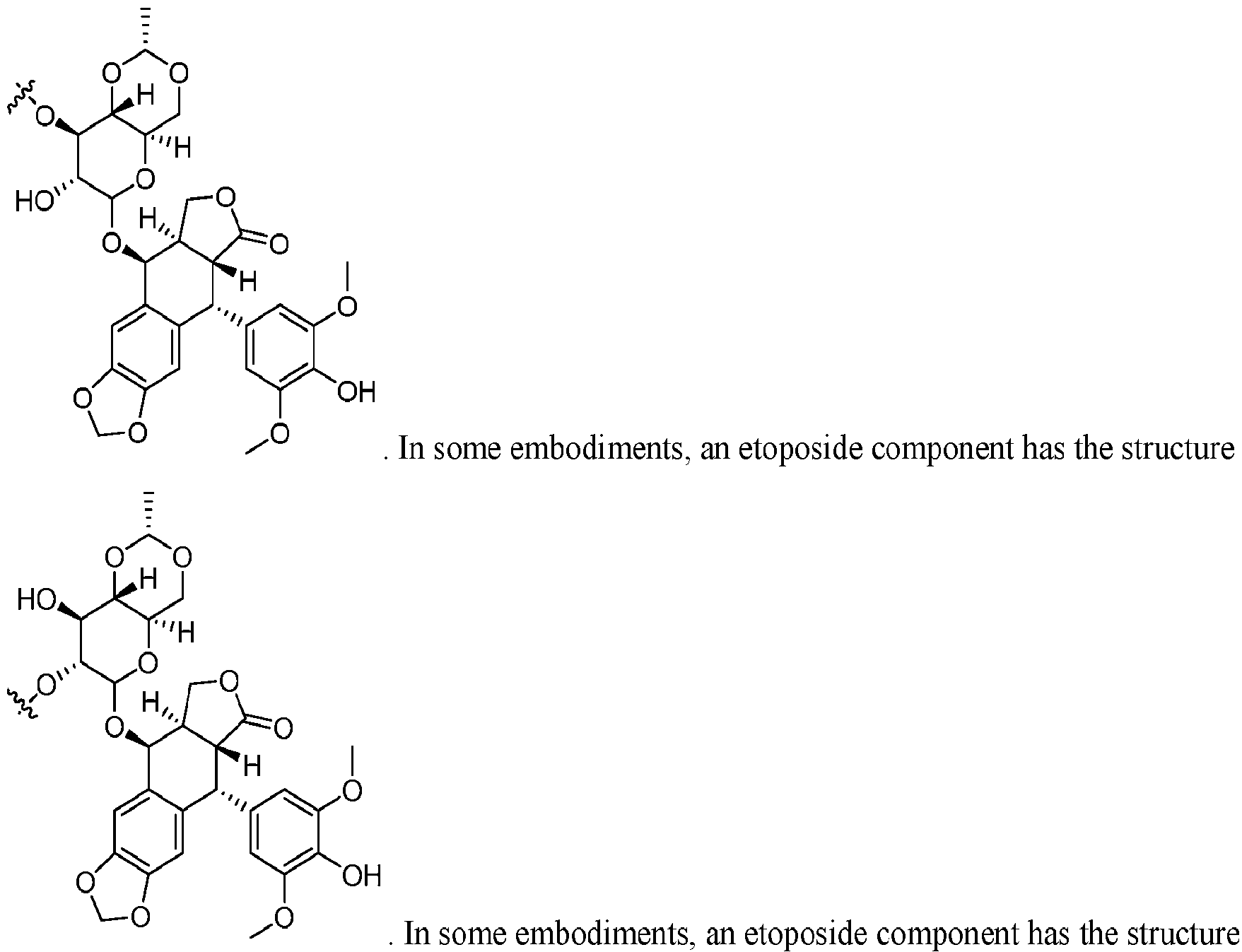
  • the therapeutic agent component is etoposide (e.g. , ETOPOPHOS®, TOPOSAR®) or an analog of etoposide:
  • an etoposide component has the structure
  • the therapeutic agent component is atazanavir (e.g, REYATAZ ® ) or an analog of atazanavir:
  • Either or both carbamates in atazanavir may be linked to a cannabinoid component in addition to the OH group or, potentially, the NH hydrazinyl group.
  • a cannabinoid component in addition to the OH group or, potentially, the NH hydrazinyl group.
  • Atazanavir component has the structure
  • an atazanavir component has the structure
  • an atazanavir component has the structure
  • the therapeutic agent component is pravastatin (e.g., PRAVACHOL ® ) or an analog of pravastatin:
  • a pravastatin component has one of the
  • the therapeutic agent component is dasatinib (e.g., SPRYCEL®) or an analog of dasatinib:
  • a dasatinib component has the structure
  • component has the structure some embodiments
  • a dasatinib component has the structure some embodiments, a dasatinib component has the structure
  • a dasatinib component has
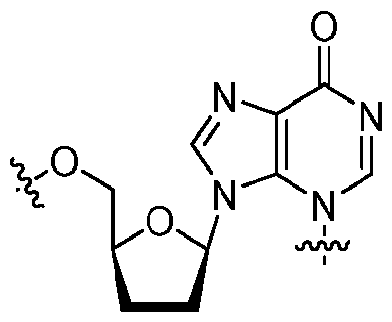
  • the therapeutic agent component is didanosine (e.g., VIDEX ® ) or an analog of didanosine:
  • a didanosine component has the structure
  • a didanosine component has the structure
  • a didanosine component has the structure
  • the therapeutic agent component is stavudine (e.g. , ZERIT ® ) or an analog of stavudine:
  • a stavudine component has the structure .
  • a stavudine component has the structure some
  • a stavudine component has the structure
  • each cannabinoid component can be the same or different, and, when linkers are used, each linker can be the same or different.
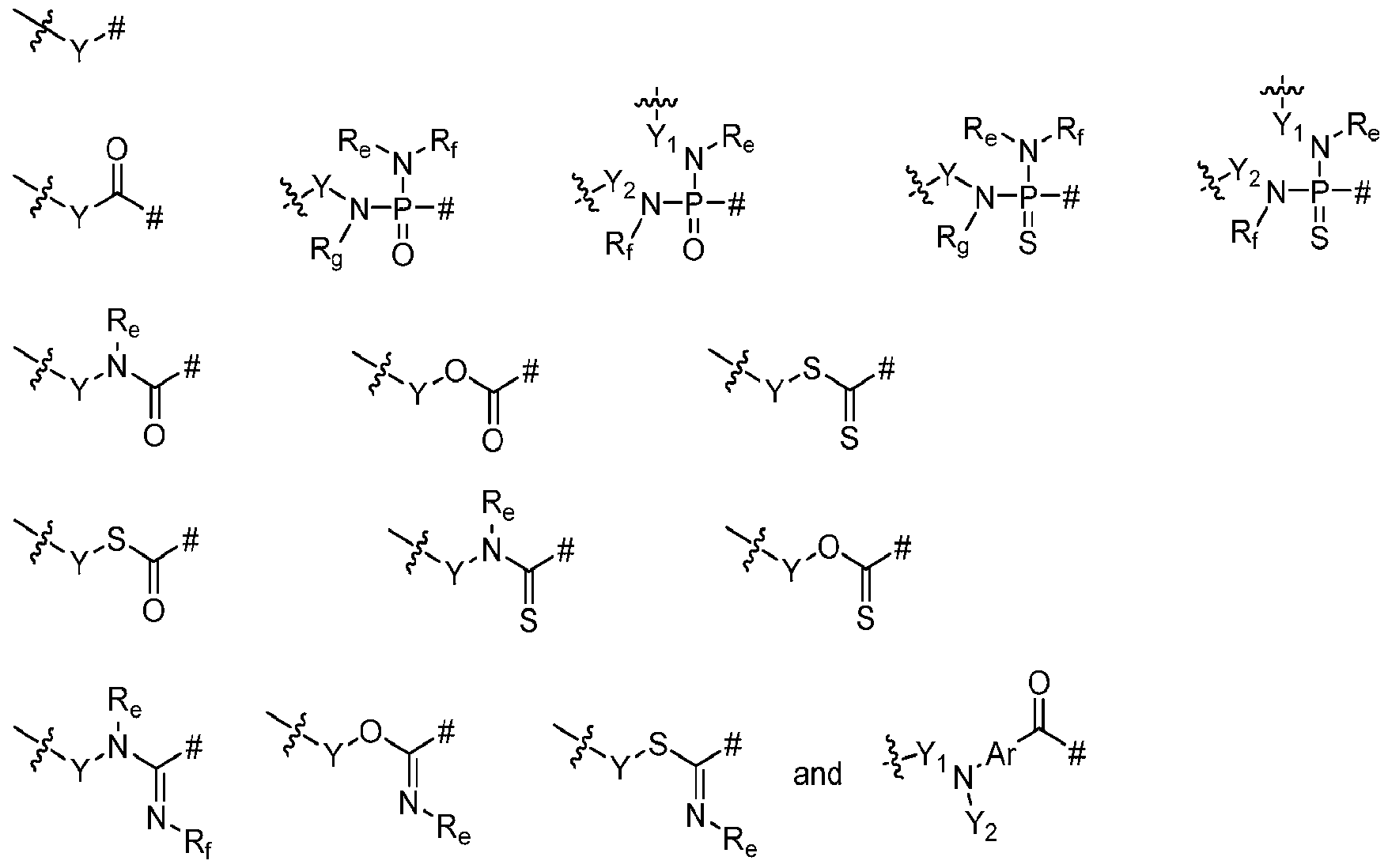
  • linkers used to connect a therapeutic agent component and a cannabinoid component are typically two to 10 atoms in length and are functionalized to facilitate release of the cannabinoid. In some embodiments, this release may occur
  • linkers can be used in the conjugate molecules. Examples are shown below.
  • ⁇ marks a bond attaching the linker to the therapeutic agent component
  • # indicates a site of covalent attachment to the cannabinoid component
  • Y, Yi, and Y2 independently are absent or Y, Yi, and Y2 independently are selected from the group consisting of:
  • Ar is either:
  • R e , R f , and R g independently are R as defined above.
  • linkers include self-cleaving linkers such as acid-labile linkers and protease-labile linkers, linkers comprising negatively charged groups, linkers comprising sugar moieties, and others.
  • acid-labile linkers include acetals, hydrazones (including acylhydrazones, hydrazines), imines, esters, linkers containing disulfide bonds, and linkers containing pH- sensitive chelators. See, e.g., Vlahov & Leamon, Bioconjug. Chem. 23, 1357-69, 2012); Xiao et al. , Nanoscale 4, 7185-93, 2012; Abu et al, Eur. J. Cancer 48, 2054-65, 2011; DiJoseph et ak, Clin Cancer Res.
  • protease-labile linkers include linkers comprising a valine-citrulline bond, b- glucuronic acid-based linkers, and imides. See, e.g., Weinstain et al, Chem. Commun. (Camb.) 46, 553-55, 2010; Shao et al., Cancer 118, 2986-96, 2010; Liang et al, J. Controlled Release 160, 618-29, 2012; Barthel et al., J. Med. Chem. 55, 6595-607, 2012; Nolting, Methods Mol. Biol. 1045, 71-100, 2013; Erickson, Cancer Res.
  • linkers comprising negatively charged groups are disclosed, for example, in Leamon et al., J. Pharm. Exp. Ther. 336, 336-43, 2011.
  • linkers containing sugar moieties are disclosed, for example in Mikuni et al., Biol. Pharm. Bull. 31, 1155-58, 2008.
  • linkers include thioether-based linkers and N-succinimidyl-4-(N - maleimidylmethyl) cyclohexane- 1-carboxy late (SMCC) linker (see, e.g. Juarez-Hemandez et al., ACS Med. Chem. Lett. 3, 799-803, 2012) and linkers comprising an acetamide moiety and linkers comprising sulfur-containing amides or esters (Davaran et al, J. Pharm. Pharmacol. 55, 513-17, 2003).
  • SMCC N-succinimidyl-4-(N - maleimidylmethyl) cyclohexane- 1-carboxy late
  • A“cannabinoid component” as used in this disclosure is that portion of the cannabinoid that is present in the conjugate molecule and covalently attached to the linker, as shown in the examples below.
  • the cannabinoid component can be provided by any cannabinoid that contains a hydroxy
  • the cannabinoid can be a naturally occurring molecule, either isolated or synthesized, or a modified version of a naturally occurring molecule. See, for example, Morales etai, Frontiers in Pharmacology June 2017 review, 1-18. [166] Examples of cannabinoids include, but are not limited to, cannabigerols,
  • cannabichromenes cannabidiols, tetrahydrocannabinols, cannabicyclols, cannabielsoins, cannabinols, cannabinodiols, cannabitriols, dehydrocannabifurans, cannabifurans,
  • cannabigerols include cannabigerolic acid (CBGA), cannabigerolic acid monomethylether (CBGAM), cannabigerol (CBG), cannabigerol monomethyleither (CBGM), cannabigerovarinic acid (CBGVA), and cannabigerovarin (CBGV).
  • cannabichromenes examples include cannabichromenic acid (CBC), cannabichromene (CBC), cannabichromevarinic acid (CBCVA), and cannabichromevarin (CBCV).
  • CBC cannabichromenic acid
  • CBC cannabichromene
  • CBCVA cannabichromevarinic acid
  • CBCV cannabichromevarin
  • cannabidiols include cannabidiolic acid (CBDA), cannabidiol (CBD), cannabidiol monomethylether (CBDM), cannabidiol-C4 (CBD-C4), cannabidivarinic acid (CBDVA), cannabidivarin (CBDV), and cannabidiorcol (CBD-Ci).
  • tetrahydrocannabinols include D-9-tetrahydrocannabinolic acid A (THCA- A), D-9-tetrahydrocannabinolic acid B (THCA-B), D-9-tetrahydrocannabinol (THC), D-9- tetrahydrocannabinolic acid-C4 (THCA-C4), A-9-tetrahydrocannabinol-C4 (THC4), D-9- tetrahydrocannabivarinic acid (THCVA), D-9-tetrahydrocannabivarin (THCV), D-9- tetrahydrocannabiorcolic acid (THCA-Ci), D-9-tetrahydrocannabiorcol (THC-Ci), D-7 -cis- tetrahydrocannabivarin, D-8-tetrahydrocannabinolic acid (A 8 -THCA), and D-8- tetrahydrocannabinolic
  • cannabicyclols examples include cannabicyclolic acid (CBLA), cannabicyclol (CBL), and cannabicyclovarin (CBLV).
  • cannabielsoins include cannabielsoic acid A (CBEA-A), cannabielsoic acid B (CBEA-B), and cannabielsoin (CBE).
  • Examples of cannabinols and cannabinodiols include cannabinolic acid (CBNA), cannabinol (CBN), cannabinol-C4 (CBN-Cr), cannabivarin (CBV), cannabinol-C2 (CBN-C2), cannabiorcol (CBN-Ci), cannabinodiol (CBND), and cannabinodivarin (CBVD).
  • cannabitriols examples include cannabitriol (CBT), 10-ethoxy-9-hydroxy-A-6a- tetrahydrocannabinol, cannabitriolvarin (CBTV), and ethoxy-cannabitriolvarin (CBTYE).
  • Cannabifurans include dehydrocannabifuran (DCBF) and cannabifuran (CBF).
  • DCBF dehydrocannabifuran
  • CBF cannabifuran
  • cannabinoids include cannabichromanon (CBCN), 10-oxo-A-6a- tetrahydrocannabinol (OTHC), cannabiripsol (CBR), and trihydroxy -D-9-tetrahydrocannabinol (triOH-THC).
  • the cannabinoid component is provided by cannabidiol.
  • a second therapeutic agent component can be covalently attached to the second hydroxyl group by means of a second linker such that the conjugate molecule contains a first therapeutic agent component and a second therapeutic agent component covalently attached to the cannabinoid component by means of a first linker and a second linker, respectively.
  • Conjugate molecules in which at least one of the linkers is R2 0 or R2 s can comprise a second therapeutic agent covalently attached to the linker rather than to the cannabinoid component.
  • first therapeutic agent component is covalently attached at Y2.
  • the first therapeutic agent component is covalently attached at Yi.
  • the therapeutic agent components can be the same or different.
  • Conjugate molecules in which the therapeutic agent components i example, can have a cannabinoid component covalently attached at both nitrogen atoms.
  • the two cannabinoid components are the same. In some embodiments, the two cannabinoid components are different. Examples of Conjugate Molecules
  • CBN is a cannabinoid component.
  • stereochemistry is generally not shown in examples as a reminder that all stereoisomers are allowed. Examples that show stereochemistry do not exclude other isomers. Examples shown include linkers derived from ester, carbonate, and carbamate functionalities. Additional linkers as described above can also be used.
  • conjugate molecules comprising axitinib components conjugate molecules comprising crizotinib components
  • conjugate molecules comprising erlotinib components
  • conjugate molecules comprising imatinib components
  • conjugate molecules comprising navitoclax components
  • conjugate molecules comprising nilotinib components
  • conjugate molecules comprising saridegib components
  • conjugate molecules comprising dasatinib components conjugate molecules comprising didanosine components
  • conjugate molecules comprising stavudine components
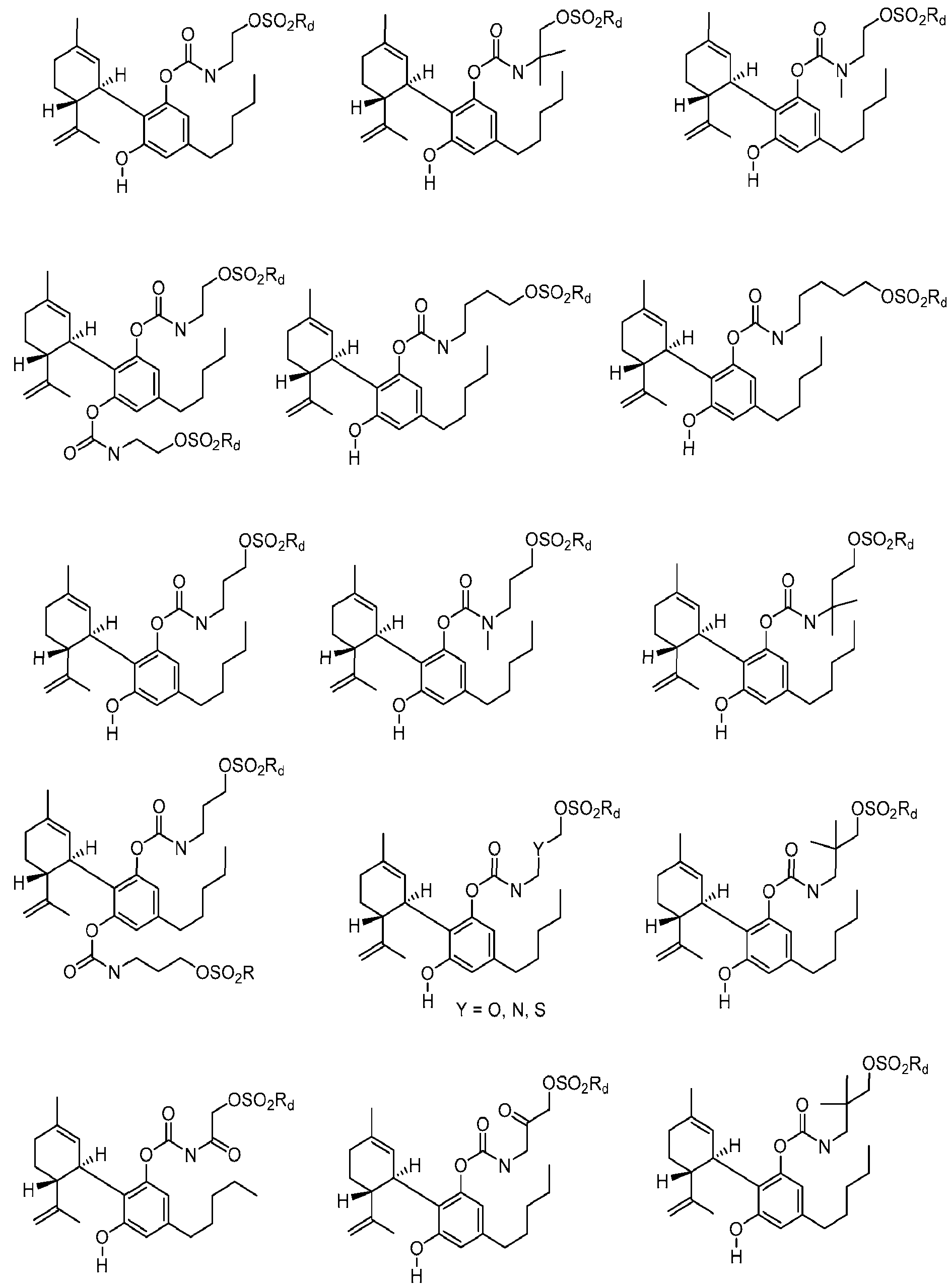
  • conjugate molecules containing epoxide, aziridine, sulfonate, or halide components using a variety of linker types are shown below.
  • the cannabinoid component is a cannabidiol component linked to a single therapeutic agent moiety.
  • “X” in some of the examples represents a halide (Cl, Br, or I).
  • One or more conjugate molecules can be provided in a pharmaceutical composition together with a pharmaceutically acceptable vehicle.
  • the “pharmaceutically acceptable vehicle” can comprise one or more substances which do not affect the biological activities of the conjugate molecules and, when administered to a patient, do not cause an adverse reaction. Excipients, such as calcium carbonate, calcium phosphate, various sugars and types of starch, cellulose derivatives, and gelatin can be included.
  • Pharmaceutically acceptable vehicles for liquid compositions include, but are not limited to, water, saline, polyalkylene glycols (e.g, polyethylene glycol), vegetable oils, and hydrogenated naphthalenes. Controlled release, for example, can be achieved using biocompatible, biodegradable polymers of lactide or copolymers of lactide/glycolide or poly oxy ethylene/poly oxypropylene.
  • compositions can be prepared as solids, semi-solids, or liquid forms, such as tablets, capsules, powders, granules, ointments, solutions, suspensions, emulsions, suppositories, injections, inhalants, gels, microspheres, aerosols, and mists.
  • Liquid pharmaceutical compositions can be lyophilized. Lyophilized compositions can be provided in a kit with a suitable liquid, typically water for injection (WFI) for use in reconstituting the composition.
  • WFI water for injection
  • Typical administration routes include, but are not limited to, oral, topical, transdermal, inhalation, parenteral, sublingual, buccal, rectal, vaginal, and intranasal.
  • the dose of a pharmaceutical composition can be based on the doses typically used for the particular therapeutic agent(s) which provide the therapeutic agent component(s) of a conjugate molecule. These doses are well know n in the art.
  • conjugate molecules have a variety of therapeutic uses depending on which therapeutic agent component(s) are included in a conjugate molecule.
  • “Treat” as used in this disclosure means reducing or inhibiting the progression of one or more symptoms of the disorder or disease for which the conjugate molecule is administered, such as inflammation or pain.
  • conjugate molecules are particularly useful for treating proliferative disorders, including cancer.
  • treatment of cancer may include inhibiting the progression of a cancer, for example, by reducing proliferation of neoplastic or pre-neoplastic cells; destroying neoplastic or pre-neoplastic cells; or inhibiting metastasis or decreasing the size of a tumor.
  • Cancers that can be treated include, but are not limited to, multiple myeloma (including systemic light chain amyloidosis and Waldenstrom’s
  • myeloproliferative neoplasms gastrointestinal malignancies (e.g., esophageal, esophagogastric junction, gallbladder, gastric, colon, pancreatic, hepatobiliary anal, and rectal cancers), leukemias (e.g., acute myeloid, acute myelogenous, chronic myeloid, chronic myelogenous, acute lymphocytic, acute lymphoblastic, chronic lymphocytic, and hairy cell leukemia), Hodgkin lymphoma, non-Hodgkin’s lymphomas (e.g., B-cell lymphoma, hairy cell leukemia, primary cutaneous B-cell lymphoma, and T-cell lymphoma), lung cancer (e.g., small cell and non-small cell lung cancers), basal cell carcinoma, plasmacytoma, breast cancer, bladder cancer, kidney cancer, neuroendocrine tumors, adrenal tumors, bone cancer, soft tissue sarcoma,
  • Conjugate molecules described herein can be administered in conjunction with one or more other cancer therapies such as chemotherapies, immunotherapies, tumor-treating fields (TTF; e.g, OPTUNE ® system), radiation therapies (XRT), and other therapies (e.g., hormones, autologous bone marrow transplants, stem cell reinfusions).“In conjunction with” includes administration together with, before, or after administration of the one or more other cancer therapies.
  • cancer therapies such as chemotherapies, immunotherapies, tumor-treating fields (TTF; e.g, OPTUNE ® system), radiation therapies (XRT), and other therapies (e.g., hormones, autologous bone marrow transplants, stem cell reinfusions).
  • TTF tumor-treating fields
  • XRT radiation therapies
  • other therapies e.g., hormones, autologous bone marrow transplants, stem cell reinfusions.
  • Chemotherapies include, but are not limited to, FOLFOX (leucovorin calcium, fluorouracil, oxaliplatin), FOLFIRI (leucovorin calcium, fluorouracil, irinotecan), FOLFIRINOX
  • irinotecan e.g, CAMPTOSAR @
  • capecitabine e.g, XELODA ®
  • gemcitabine e.g, GEMZAR ®
  • paclitaxel e.g.,
  • ABRAXANE ® dexamethasone
  • lenalidomide e.g., REVLIMID ®
  • pomalidomide e.g,
  • POMALYST ® cyclophosphamide
  • regorafenib e.g, STIVARGA ®
  • erlotinib e.g,
  • TARCEVA ® ixazomib (e.g., NINLARO ® ), bevacizumab (e.g., AVASTIN ® ), bortezomib (e.g.,
  • VELCADE ® VELCADE ® , NEOMIB ®
  • cetuximab e.g, ERBITUX ®
  • daratumumab e.g, DARZALEX ®
  • elotumumab e.g, EMPLICITITM
  • carfilzomib e.g, KYPROLIS ®
  • palbociclib e.g,
  • IBRANCE ® fulvestrant
  • carboplatin e.g., cisplatin
  • taxol e.g, ABRAXANE ®
  • nab paclitaxel e.g, ABRAXANE ®
  • 5-fluorouracil e.g, RVD (lenalidomide, bortezomib, dexamethasone)
  • pomolidamide e.g, POMALYST ®
  • temozolomide e.g, TEMODAR ®
  • PCV procarbazine, lomustine, vincristine
  • methotrexate e.g, TREXALL ® , RASUVO ® , XATMEP ®
  • carmustine e.g., BICNU ® , GLIADEL WAFER ®
  • etoposide e.g, ETOPOPHOS ® , TOPOSAR ®
  • sunitinib e.g, SUTENT ®
  • everolimus e.g, ZORTRESS ® , AFINITOR ®
  • rituximab e.g, RITUXAN ® , MABTHERA ®
  • R-MPV vincristine, procarbazine, rituximab
  • cytarabine e.g, DEPOCYT ® ,
  • Immunotherapies include, but are not limited to, checkpoint inhibitors, including monoclonal antibodies such as ipilimumab (e.g, YERVOY ® ), nivolumab (e.g, OPDIVO ® ), pembrolizumab (e.g, KEYTRUDA ® ); cytokines; cancer vaccines; and adoptive cell transfer.
  • checkpoint inhibitors including monoclonal antibodies such as ipilimumab (e.g, YERVOY ® ), nivolumab (e.g, OPDIVO ® ), pembrolizumab (e.g, KEYTRUDA ® ); cytokines; cancer vaccines; and adoptive cell transfer.
  • one or more conjugate molecules described above are administered to a patient with a cancer, including any of those cancers listed above.
  • the patient has colon cancer, rectal cancer, pancreatic cancer, multiple myeloma, or glioblastoma multiforme and the conjugate molecule(s) are administered in conjunction with an additional therapy appropriate for the particular cancer.
  • conjugate molecules can be used to treat these and other disorders in the same way the therapeutic agent components of the molecules are used, and these methods are well known.
  • conjugate molecules containing entecavir, emtricitabine, daclatasvir, atazanavir, didanosine, and/or stavudine can be used to treat viral infections;
  • conjugate molecules containing diclofenac or celecoxib components can be used as anti-inflammatory agents;
  • conjugate molecules containing a warfarin component can be used as anticoagulants; and conjugate molecules containing pravastatin components can be used to treat cardiovascular disorders.
  • cannabinoid can be delivered directly to the site of action of the therapeutic agent, where the released cannabinoid can provide further therapeutic benefits.
  • the therapeutic benefits and potential benefits of cannabinoids are well known. For example, see Dzierzanowski, Cancers 11, 129-41, 2019 (oncology and palliative care); Urits et al ., Pain Ther. 8, 41-51, 2019 (pain); Hillen et al ., Ther. Adv. Drug Safety 10, 1-23 2019 (neuropsychiatric symptoms in dementia).
  • Epoxide carbamate linked compounds are synthesized as follows. A cannabinoid (CBD in this example) is reacted with phosgene (or a suitable phosgene surrogate) and an
  • Epoxide carbonate linked compounds are synthesized as follows. A cannabinoid (CBD in this example) is reacted with phosgene (or a suitable phosgene surrogate) and a hydroxy epoxide ([556-52-5] in this example) under standard basic conditions to form the desired carbonate linked product.
  • CBD cannabinoid
  • phosgene or a suitable phosgene surrogate
  • a hydroxy epoxide [556-52-5] in this example
  • Epoxide ester linked compounds are synthesized as follows.
  • a cannabinoid CBD in this example
  • CBD is esterified under standard conditions, in this example with the epoxy acid building block [86310-98-7] to give the desired product.
  • Epoxide imidate linked compounds are synthesized as follows. A cannabinoid (CBD in this example) is reacted with an imidocarbonyl chloride (in this case [5652-90-4]) and a hydroxyepoxide ([556-52-5] in this example) under standard basic conditions to form the desired imidate linked product.
  • CBD cannabinoid
  • imidocarbonyl chloride in this case [5652-90-4]
  • a hydroxyepoxide [556-52-5] in this example
  • Epoxide isourea linked compounds are synthesized as follows. A cannabinoid (CBD in this example) is reacted with an imidocarbonyl chloride (in this case [5652-90-4]) and an aminoepoxide ([5689-75-8] in this example) under standard basic conditions to form the desired isourea linked product.
  • CBD cannabinoid
  • imidocarbonyl chloride in this case [5652-90-4]
  • aminoepoxide [5689-75-8] in this example
  • Epoxide phosphorodiamide linked compounds are synthesized as follows. Using conditions similar to those referenced in the Scheme, N,N-Dimethylphosphoramidodichloridate ([677-43-0]) is reacted with an aminoepoxide ([5689-75-8] in this example). The adduct is then reacted with a cannabinoid (CBD in this example) under standard basic conditions to form the desired product.
  • CBD cannabinoid
  • Epoxide S-alkyl thiocarbonate linked compounds are synthesized as follows. A cannabinoid (CBD in this example) is reacted with phosgene (or a suitable phosgene surrogate) and a thiol-epoxide ([45357-98-0] in this example) under standard basic conditions to form the desired S-alkyl thiocarbonate linked product.
  • CBD cannabinoid
  • phosgene or a suitable phosgene surrogate
  • thiol-epoxide [45357-98-0] in this example
  • Epoxide thiocarbamate linked compounds are synthesized as follows. A cannabinoid (CBD in this example) is reacted with thiophosgene (or a suitable thiophosgene surrogate) and an aminoepoxide ([5689-75-8] in this example) under standard basic conditions to form the desired thiocarbamate linked product.
  • CBD cannabinoid
  • thiophosgene or a suitable thiophosgene surrogate
  • aminoepoxide [5689-75-8] in this example
  • Epoxide thiocarbonate linked compounds are synthesized as follows. A cannabinoid (CBD in this example) is reacted with thiophosgene (or a suitable thiophosgene surrogate) and a hydroxyepoxide ([556-52-5] in this example) under standard basic conditions to form the desired thiocarbonate linked product.
  • CBD cannabinoid
  • thiophosgene or a suitable thiophosgene surrogate
  • a hydroxyepoxide [556-52-5] in this example
  • Epoxide thioimidate linked compounds are synthesized as follows. A cannabinoid (CBD in this example) is reacted with an imidocarbonyl chloride (in this case [5652-90-4]) and a thiol- epoxide ([45357-98-0] in this example) under standard basic conditions to form the desired thioimidate linked product.
  • Epoxide thiophosphinodiamide linked compounds are synthesized as follows. Using conditions similar to those referenced in the Scheme, dimethylphosphoramidothioic di chloride ([1498-65-3]) is reacted with an aminoepoxide ([5689-75-8] in this example). The adduct is then reacted with a cannabinoid (CBD in this example) under standard basic conditions, to form the desired product.
  • CBD cannabinoid
  • Epoxide xanthate linked compounds are synthesized as follows. A cannabinoid (CBD in this example) is reacted with thiophosgene (or a suitable thiophosgene surrogate) and a thiol- epoxide ([45357-98-0] in this example) under standard basic conditions to form the desired xanthate linked product.
  • CBD cannabinoid
  • thiophosgene or a suitable thiophosgene surrogate
  • a thiol- epoxide [45357-98-0] in this example
  • Aziridine carbamate linked compounds are synthesized as follows.
  • a cannabinoid (CBD in this example) is reacted with phosgene (or a suitable phosgene surrogate) and an
  • Aziridine carbonate linked compounds are synthesized as follows.
  • a cannabinoid (CBD in this example) is reacted with phosgene (or a suitable phosgene surrogate) and a
  • Aziridine ester linked compounds are synthesized as follows.
  • the previously reported hydroxymethyl building block [126587-35-7] is treated with base, in this example sodium hydride, to generate the aziridinyl intermediate.
  • base in this example sodium hydride
  • Removal of the BOC protecting group followed by alkylation of the resulting amine gives the alkyl aziridine-ester intermediate.
  • Standard hydrolysis of the ester gives the carboxylic acid precursor, which is esterified with the cannabinoid under standard esterification conditions to give the desired product.
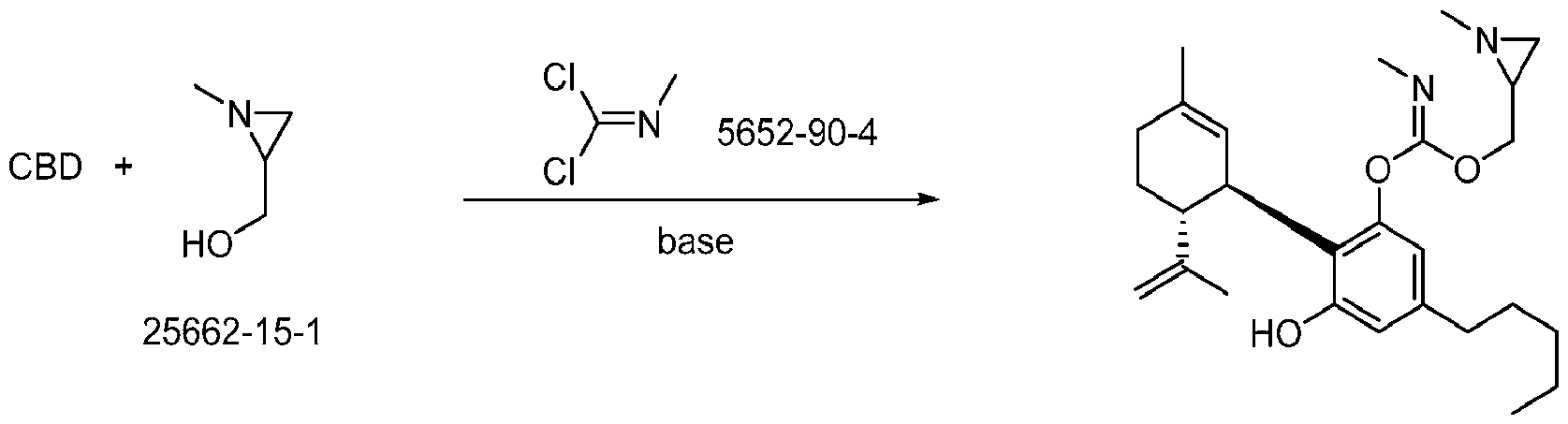
  • Aziridine imidate linked compounds are synthesized as follows.
  • a cannabinoid (CBD in this example) is reacted with an imidocarbonyl chloride (in this case [5652-90-4]) and a hydroxyaziridme ([25662-15-1] in this example) under standard basic conditions to form the desired imidate linked product.
  • CBD cannabinoid
  • an imidocarbonyl chloride in this case [5652-90-4]
  • a hydroxyaziridme [25662-15-1] in this example
  • Aziridine isourea linked compounds are synthesized as follows.
  • a cannabinoid (CBD in this example) is reacted with an imidocarbonyl chloride (in this case [5652-90-4]) and an aminoaziridine ([88714-40-3] in this example) under standard basic conditions to form the desired isourea linked product.
  • CBD cannabinoid
  • an imidocarbonyl chloride in this case [5652-90-4]
  • an aminoaziridine [88714-40-3] in this example
  • Aziridine phosphorodiamide linked compounds are synthesized as follows. Using conditions similar to those referenced in the Scheme, N,N-Dimethylphosphoramidodichloridate ([677-43-0]) is reacted with an aminoaziridine ([88714-40-3] in this example). The adduct is then reacted with a cannabinoid (CBD in this example) under standard basic conditions to form the desired product.
  • CBD cannabinoid
  • Aziridine thiocarbamate linked compounds are synthesized as follows. A cannabinoid (CBD in this example) is reacted with thiophosgene (or a suitable thiophosgene surrogate) and an aminoaziridine ([88714-40-3] in this example) under standard basic conditions to form the desired thiocarbamate linked product.
  • CBD cannabinoid
  • thiophosgene or a suitable thiophosgene surrogate
  • aminoaziridine [88714-40-3] in this example
  • Aziridine thiocarbonate linked compounds are synthesized as follows. A cannabinoid (CBD in this example) is reacted with thiophosgene (or a suitable thiophosgene surrogate) and a hydroxyaziridme ([25662-15-1] in this example) under standard basic conditions to form the desired thiocarbonate linked product.
  • CBD cannabinoid
  • thiophosgene or a suitable thiophosgene surrogate
  • a hydroxyaziridme [25662-15-1] in this example
  • Aziridine thiophosphinodiamide linked compounds are synthesized as follows. Using conditions similar to those referenced in the Scheme, dimethylphosphoramidothioic dichloride ([1498-65-3]) is reacted with an aminoaziridine ([88714-40-3] in this example). The adduct is then reacted with a cannabinoid (CBD in this example) under standard basic conditions, to form the desired product.
  • CBD cannabinoid
  • Sulfonate carbamate linked compounds are synthesized as follows.
  • a cannabinoid (CBD in this example) is reacted with phosgene (or a suitable phosgene surrogate) and an amino- alcohol ([156-87-6] in this example) under standard basic conditions to form the carbamate linked intermediate.
  • Sulfonate carbonate linked compounds are synthesized as follows.
  • a di compound, in this case 1,3 -propanediol [13392-69-3] is reacted with a sulfonyl chloride, in this case tosyl chloride, to give the monosulfonate intermediate.
  • Reaction of the remaining hydroxyl group in this intermediate with phosgene (or a suitable surrogate) and a cannabinoid (CBD in this example) under standard basic conditions forms the desired carbonate linked product.
  • phosgene or a suitable surrogate
  • CBD cannabinoid
  • Sulfonate ester linked compounds are synthesized as follows.
  • a hydroxyacid starting material in this case [13392-69-3] is esterified under referenced conditions for selective esterification of an aromatic OH in the presence of an aliphatic OH.
  • the ester linked intermediate then undergoes sulfonylation, in this case with mesyl chloride, under referenced conditions to give the desired product.
  • Sulfonate imidate linked compounds are synthesized as follows.
  • a diol compound, in this case 1,3-propanediol [13392-69-3] is reacted with a sulfonyl chloride, in this case tosyl chloride, to give the monosulfonate intermediate.
  • Reaction of the remaining hydroxyl group in this intermediate with an imidocarbonyl chloride (in this case [5652-90-4]) under standard basic conditions forms the desired imidate linked product.
  • Sulfonate isourea linked compounds are synthesized as follows.
  • a cannabinoid CBD in this example
  • CBD cannabinoid
  • an imidocarbonyl chloride in this case [5652-90-4]
  • an amino- alcohol [156-87-6] in this example
  • Sulfonylation in this case with mesyl chloride, under referenced conditions (see sulfonate ester above) gives the desired product.
  • Sulfonate phosphorodiamide linked compounds are synthesized as follows. Using conditions similar to those referenced in the epoxide phosphorodiamide Scheme, N,N- Dimethylphosphoramidodichloridate ([677-43-0]) is reacted with a cannabinoid (CBD in this example) and an amino-alcohol ([156-87-6] in this example). The adduct then undergoes sulfonylation, in this case with mesyl chloride, under referenced conditions (see sulfonate ester above) gives the desired product.
  • CBD cannabinoid
  • amino-alcohol [156-87-6] in this example
  • Sulfonate S-alkyl thiocarbonate linked compounds are synthesized as follows. A cannabinoid (CBD in this example) is reacted with phosgene (or a suitable phosgene surrogate) and a thiol-alcohol ([19721-22-3] in this example) under standard basic conditions, to form the S-alkyl thiocarbonate linked intermediate. Sulfonylation, in this case with tosyl chloride, gives the desired product.
  • CBD cannabinoid
  • phosgene or a suitable phosgene surrogate
  • a thiol-alcohol [19721-22-3] in this example
  • Sulfonate thiocarbamate linked compounds are synthesized as follows. A cannabinoid (CBD in this example) is reacted with thiophosgene (or a suitable thiophosgene surrogate) and an amino-alcohol ([156-87-6] in this example) under standard basic conditions to form the thiocarbamate linked intermediate. Sulfonylation, in this case with mesyl chloride, under referenced conditions (see sulfonate ester above) gives the desired product.
  • CBD cannabinoid
  • thiophosgene or a suitable thiophosgene surrogate
  • amino-alcohol [156-87-6] in this example
  • Sulfonate thiocarbonate linked compounds are synthesized as follows.
  • a diol compound, in this case 1,3-propanediol [13392-69-3] is reacted with a sulfonyl chloride, in this case tosyl chloride, to give the monosulfonate intermediate.
  • Reaction of the remaining hydroxyl group in this intermediate with thiophosgene (or a suitable thiophosgene surrogate) and a cannabinoid (CBD in this example) under standard basic conditions forms the desired thiocarbonate linked product.
  • thiophosgene or a suitable thiophosgene surrogate
  • CBD cannabinoid
  • Sulfonate thioimidate linked compounds are synthesized as follows.
  • a cannabinoid CBD in this example
  • CBD cannabinoid
  • an imidocarbonyl chloride in this case [5652-90-4]
  • a thiol- alcohol [19721-22-3] in this example
  • Sulfonylation in this case with tosyl chloride, under referenced conditions (see sulfonate ester above) gives the desired product.
  • Sulfonate thiophosphinodiamide linked compounds are synthesized as follows. Using conditions similar to those referenced in the epoxide thiophosphinodiamide Scheme, dimethylphosphoramidothioic di chloride ([1498-65-3]) is reacted with a cannabmoid (CBD in this example) and an amino-alcohol ([156-87-6] in this example). Sulfonylation of the adduct, in this case with mesyl chloride, under referenced conditions (see sulfonate ester above) gives the desired product.
  • Sulfonate xanthate linked compounds are synthesized as follows.
  • a cannabinoid CBD in this example
  • thiophosgene or a suitable thiophosgene surrogate
  • a thiol- alcohol [19721-22-3] in this example
  • Sulfonylation in this case with mesyl chloride, under referenced conditions (see sulfonate ester above) gives the desired product.
  • Halide carbamate linked compounds are synthesized as follows. A cannabinoid (CBD in this example) is reacted with phosgene (or a suitable phosgene surrogate) and an aminohalide ([18370-81-5] in this example) under standard basic conditions to form the desired carbamate linked product.
  • CBD cannabinoid
  • phosgene or a suitable phosgene surrogate
  • aminohalide [18370-81-5] in this example
  • Halide carbonate linked compounds are synthesized as follows. A cannabinoid (CBD in this example) is reacted with phosgene (or a suitable phosgene surrogate) and a hydroxyalkyl halide ([627-18-9] in this example) under standard basic conditions to form the desired carbonate linked product.
  • CBD cannabinoid
  • phosgene or a suitable phosgene surrogate
  • a hydroxyalkyl halide [627-18-9] in this example
  • Halide ester linked compounds are synthesized as follows.
  • a cannabinoid (CBD in this example) is esterified under standard conditions, in this example with the haloalkyl acid building block [2067-33-6] to give the desired product.
  • Halide imidate linked compounds are synthesized as follows. A cannabinoid (CBD in this example) is reacted with an imidocarbonyl chloride (in this case [5652-90-4]) and a
  • Halide isourea linked compounds are synthesized as follows. A cannabinoid (CBD in this example) is reacted with an imidocarbonyl chloride (in this case [5652-90-4]) and an aminoalkyl halide ([18370-81-5] in this example) under standard basic conditions to form the desired isourea linked product.
  • CBD cannabinoid
  • imidocarbonyl chloride in this case [5652-90-4]
  • aminoalkyl halide [18370-81-5] in this example
  • Halide phosphorodiamide linked compounds are synthesized as follows. Using conditions similar to those referenced in the epoxide phosphorodiamide Scheme, N,N- Dimethylphosphoramidodichloridate ([677-43-0]) is reacted with a cannabinoid (CBD in this example) and an aminoalkyl halide ([18370-81-5] in this example) to form the desired product.
  • CBD cannabinoid
  • aminoalkyl halide [18370-81-5] in this example
  • Halide S-alkyl thiocarbonate linked compounds are synthesized as follows. A cannabinoid (CBD in this example) is reacted with phosgene (or a suitable phosgene surrogate) and a haloalkyl thiol ([75694-39-2] in this example) under standard basic conditions, to form the desired S -alkyl thiocarbonate linked product.
  • CBD cannabinoid
  • phosgene or a suitable phosgene surrogate
  • a haloalkyl thiol [75694-39-2] in this example
  • Halide thiocarbamate linked compounds are synthesized as follows. A cannabinoid (CBD in this example) is reacted with thiophosgene (or a suitable thiophosgene surrogate) and an aminoalkyl halide ([18370-81-5] in this example) under standard basic conditions to form the desired thiocarbamate linked product.
  • CBD cannabinoid
  • thiophosgene or a suitable thiophosgene surrogate
  • aminoalkyl halide [18370-81-5] in this example
  • Halide thiocarbonate linked compounds are synthesized as follows. A cannabinoid (CBD in this example) is reacted with thiophosgene (or a suitable thiophosgene surrogate) and a hydroxy alkyl halide ([627-18-9] in this example) under standard basic conditions to form the desired thiocarbonate linked product.
  • CBD cannabinoid
  • thiophosgene or a suitable thiophosgene surrogate
  • a hydroxy alkyl halide [627-18-9] in this example
  • Halide thioimidate linked compounds are synthesized as follows. A cannabinoid (CBD in this example) is reacted with an imidocarbonyl chloride (in this case [5652-90-4]) and a haloalkyl thiol ([75694-39-2] in this example) under standard basic conditions to form the desired thioimidate linked product.
  • CBD cannabinoid
  • imidocarbonyl chloride in this case [5652-90-4]
  • a haloalkyl thiol [75694-39-2] in this example
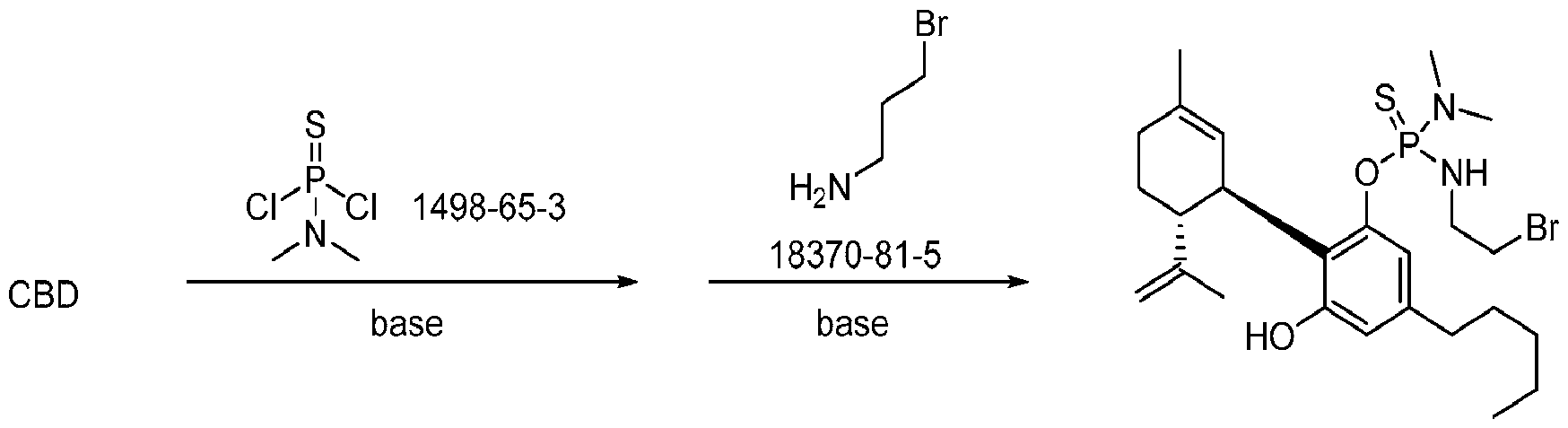
  • Halide thiophosphinodiamide linked compounds are synthesized as follows. Using conditions similar to those referenced in the epoxide thiophosphinodiamide Scheme, dimethylphosphoramidothioic di chloride ([1498-65-3]) is reacted with a cannabmoid (CBD in this example) and an aminoalkyl halide ([18370-81-5] in this example) to form the desired product.
  • CBD cannabmoid
  • aminoalkyl halide [18370-81-5] in this example
  • Halide xanthate linked compounds are synthesized as follows. A cannabinoid (CBD in this example) is reacted with thiophosgene (or a suitable thiophosgene surrogate) and a haloalkyl thiol ([75694-39-2] in this example) under standard basic conditions to form the desired xanthate linked product.
  • CBD cannabinoid
  • thiophosgene or a suitable thiophosgene surrogate
  • a haloalkyl thiol [75694-39-2] in this example
  • Ester compounds linked to the 5-fluorouracil component at the 1 -position are synthesized as follows.
  • the known building block [6214-60-4] is reacted with a cannabinoid (CBD) under standard esterification conditions to give the product.
  • CBD cannabinoid
  • Carbonate compounds linked to the 5-fluorouracil component at the 1 -position are synthesized as follows.
  • the building block [106206-99-9] is reacted with phosgene (or a suitable surrogate) and CBD under standard basic conditions to give the product.
  • Carbamate compounds linked to the 5-fluorouracil component at the 1 -position are synthesized as follows.
  • the building block [1339797-10-2] is reacted with phosgene (or a suitable surrogate) and CBD under standard basic conditions to give the product
  • Ester compounds linked to the 5-fluorouracil component at the 3-position are synthesized as follows.
  • the known building block [905265-53-4] is reacted with a cannabinoid (CBD) under standard esterification conditions to give the product.
  • CBD cannabinoid
  • Carbonate compounds linked to the 5-fluorouracil component at the 3-position are synthesized as follows.
  • the building block [948036-30-4] is reacted with phosgene (or a suitable surrogate) and CBD under standard basic conditions to give the product.

Landscapes

  • Health & Medical Sciences (AREA)
  • Chemical & Material Sciences (AREA)
  • Medicinal Chemistry (AREA)
  • Pharmacology & Pharmacy (AREA)
  • Life Sciences & Earth Sciences (AREA)
  • Animal Behavior & Ethology (AREA)
  • General Health & Medical Sciences (AREA)
  • Public Health (AREA)
  • Veterinary Medicine (AREA)
  • Epidemiology (AREA)
  • Engineering & Computer Science (AREA)
  • Bioinformatics & Cheminformatics (AREA)
  • Chemical Kinetics & Catalysis (AREA)
  • General Chemical & Material Sciences (AREA)
  • Nuclear Medicine, Radiotherapy & Molecular Imaging (AREA)
  • Organic Chemistry (AREA)
  • Pharmaceuticals Containing Other Organic And Inorganic Compounds (AREA)
  • Medicinal Preparation (AREA)
  • Medicines That Contain Protein Lipid Enzymes And Other Medicines (AREA)
  • Acyclic And Carbocyclic Compounds In Medicinal Compositions (AREA)

Abstract

This disclosure provides multifunctional conjugate molecules in which at least one therapeutic agent is covalently attached to a cannabinoid by means of a linker. The disclosed conjugate molecules are designed to deliver therapeutic benefits of components of the conjugate molecules and can be used to treat cancer and other disorders.

Description

CANNABINOID CONJUGATE MOLECULES
[01] Each reference cited in this disclosure is incorporated by reference herein in its entirety.
TECHNICAL FIELD
[02] This disclosure relates generally to multifunctional therapeutics.
DETAILED DESCRIPTION
[03] This disclosure describes multifunctional conjugate molecules comprising at least one therapeutic agent component and at least one cannabinoid component covalently attached by a linker:
Figure imgf000002_0001
[04] In contrast to traditional prodrugs, embodiments of the disclosed conjugate molecules are designed to deliver more than one therapeutic benefit via more than one mechanism of action; this is achieved when the covalent binding of the therapeutic agent component to its target enables the release of the cannabinoid at or near the site of the therapeutic agent’s action, which can then effect a second therapeutic benefit. That is, these conjugate molecules are designed to deliver the therapeutic benefits of each of their components. In other embodiments, the therapeutic agent component and the cannabinoid component are released to provide their respective therapeutic benefits via functionality of the linker.
[05] For example, the formation of reactive oxygen species (ROS) is a by-product of the normal process of respiration in an oxygen-rich environment (Storz & Imlay, Curr. Opin.
Microbiol. 2, 188-94, 1999). There is significant evidence in the literature for the role endogenous ROS plays in mutagenesis, as well as its contribution to the mutational burden experienced by microbes during periods of oxidative stress (reviewed in Dwyer etal. , Curr.
Opin. Microbiol. 12, 482-89, 2009). In fact, bacteria have evolved several enzymatic mechanisms to combat ROS toxicity (Imlay, Ann. Rev. Biochem. 77, 755-76, 2008).
[06] ROS are generated intracellularly and include superoxide (O2 · - ). hydrogen peroxide (H2O2), and highly destructive hydroxyl radicals (OH · )· The species O2 · - and H2O2 can be enzymatically eradicated by the activity of superoxide dismutases and catalases/peroxidases, respectively.
[07] Excess intracellular levels of ROS cause damage to proteins, nucleic acids, lipids, membranes, and organelles, which can lead to activation of cell death processes such as apoptosis. Apoptosis is a tightly regulated and highly conserved process of cell death during which a cell undergoes self-destruction (Kerr et al. Br. J. Cancer 26, 239-57, 1972). Apoptosis can be triggered by a variety of extrinsic and intrinsic signals, including ROS (reviewed in Redza-Dutordoir & Averill-Bates, Biochem. Biophys. Acta 1863, 2977-92, 2016). Exposure to xenobiotics such as antibiotics and chemotherapeutic drugs can also trigger apoptosis, and is often mediated by ROS.
[08] Cannabmoids have demonstrated their ability to promote ROS production.
Cannabidiol (CBD) is anon-toxic and non-psychoactive cannabinoid that has been shown to have anti-tumor activity in multiple cancer types (Massi etal. , J. Pharmacol. Exp. Ther. 308, 838-45, e-pub 2003). Activation of the endogenous cannabinoid type 1 (CB1) and type 2 (CB2) receptors has been shown to inhibit tumor progression (Velasco etal. , Nat. Rev. Cancer 12, 436- 44, 2012). CBD has been reported to inhibit human GBM viability in culture, an effect that was reversed in the presence of the ROS scavenger a-tocopherol/vitamin E (Velasco et al. , 2012).
[09] CBD-dependent production of ROS has been shown to accompany a reduction in glutathione (Massi et al., Cell. Mol. Sci. 63, 2057-66, 2006), an important anti-oxidant that prevents damage to cellular components by ROS. The source of CBD-dependent stress in part originated in the mitochondria and led to activation of multiple caspases involved in intrinsic and extrinsic pathways of apoptosis. Further studies analyzing CBD-treated GBM tumor tissue revealed that inhibition of lipoxygenase signaling played a role in CBD anti-tumor activity (McAllister etal., J. Neuroimmune Pharmacol. 10, 255-67, 2015). In addition, the indirect modulation of the endocannabinoid system by CBD may be attributed to the observed anti-tumor activity.
[10] Cannabigerol (CBG) is another non-psychotropic cannabinoid that interacts with specific targets involved in carcinogenesis and has shown potent anti-tumor activity (Guindon &
Hohmann, Br. J. Pharmacol. 163, 1447-63, 2011). Mechanistically, CBG, similar to CBD, appears to influence the inflammatory microenvironment that is important in the initiation and progression of cancer (Mantovani et al, Nature 454, 436-44, 2008; Solinas et al, Cancer
Metastasis Rev. 29, 243-48, 2010). Moreover, CBG was also able to exert pro-apoptotic effects by selectively increasing ROS production in colorectal cancer cells but not in healthy colonic cells (Borrelli et al, Carcinogenesis 35, 2787-97, 2014). Conjugate Molecules
[11] Conjugate molecules comprise at least one therapeutic agent component covalently linked, directly or via a linker, to at least one cannabinoid component.
[12] In some embodiments, a therapeutic agent component is covalently atached directly to a hydroxy or carboxylic acid group of a cannabinoid component. In some embodiments, cannabinoid conjugate components comprise a therapeutic agent component and a cannabinoid component atached by means of a linker which is covalently atached at one end to the therapeutic agent component and at the other end to a hydroxy or carboxylic acid group of the cannabinoid component. In some embodiments, the hydroxy group is an“aromatic hydroxy group;” i.e., a hydroxy group bonded directly to an aromatic hydrocarbon. In some
embodiments, the hydroxy group is an“aliphatic hydroxy group;” i.e., a hydroxy group bound to a carbon that is not part of an aromatic ring.
[13] In some embodiments, conjugate molecules contain only one therapeutic agent component. In other embodiments, for example, when a cannabinoid component has at least two hydroxy groups, or at least one hy droxy group and at least one carboxylic acid group, or at least two carboxylic acid groups, conjugate molecules can contain two or more therapeutic agent components, which can be the same or different.
[14] In some embodiments, in which therapeutic agent components are atached via a linker, the two or more linkers can be the same or different and, independently, the two or more therapeutic agent components can be the same or different. Also independently, when a cannabinoid component contains two or more hydroxy groups, the two or more hydroxy groups can be aliphatic or the two or more hydroxy groups can be aromatic, or, for example, a first hydroxy group can be aliphatic and a second hydroxy group can be aromatic.
[15] In some embodiments using particular types of linkers described below, conjugate molecules can contain two therapeutic agent components which are both attached to a single linker. The two therapeutic agent components can be the same or different.
[16] In some embodiments, a conjugate molecule can contain an additional cannabinoid component.
[17] Conjugate molecules can have one or more centers of asymmetry and can therefore be prepared either as a mixture of isomers (e.g., a racemic or diasteromeric mixture) or in an enantiomerically or diasteromerically pure form. Such forms include, but are not limited to, diastereomers, enantiomers, and atropisomers. Conjugate molecules can also include alkenes and can therefore be prepared either as a mixture of double bond isomers or independently as either an E or Z isomer. Isotopic variants of conjugate molecules can also be prepared.
[18] Conjugate molecules can form salts.“Pharmaceutically acceptable salts” are those salts which retain at least some of the biological activity of the free (non-salt) compound and which can be administered as drugs or pharmaceuticals to an individual. Such salts, for example, include: (1) acid addition salts, formed with inorganic acids such as hydrochloric acid, hydrobromic acid, sulfuric acid, nitric acid, phosphoric acid, and the like; or formed with organic acids such as acetic acid, oxalic acid, propionic acid, succinic acid, maleic acid, tartaric acid and the like; (2) salts formed when an acidic proton present in the parent compound either is replaced by a metal ion, e.g. , an alkali metal ion, an alkaline earth metal ion, or an aluminum ion; or coordinates with an organic base. Acceptable organic bases include ethanolamine,
diethanolamine, triethanolamine and the like. Acceptable inorganic bases include aluminum hydroxide, calcium hy droxide, potassium hydroxide, sodium carbonate, sodium hydroxide, and the like. Further examples of pharmaceutically acceptable salts include those listed in Berge et al , Pharmaceutical Salts, /. Pharm. Sci 1977 Jan; 66(1): 1-19..
Definitions
[19] The following definitions apply to the descriptions of the“Therapeutic Agent
Component(s)” and“Linkers” in the sections below and to the descriptions of“Group One Substituents” and“Group Two Substituents.”
[20] “C1-C3 linear or branched alkyl” means“methyl, ethyl, propyl, and isopropyl.”
[21] “C1-C8 linear or branched alkyl” means“methyl, ethyl, C3, C4, C5, C6, C7, and C8 linear alkyl and C3, C4, C5, C6, C7, and C8 branched alkyl.”
[22] “Cl -C3 linear or branched heteroalkyl” means“a linear or branched heteroalkyl containing 1, 2, or 3 carbon atoms.”
[23] “C1-C8 linear or branched heteroalkyl” means“each of a Cl, C2, C3, C4, C5, C6, C7, and C8 linear heteroalkyl and Cl, C2, C3, C4, C5, C6, C7, and C8 branched heteroalkyl.”
[24] “C1-C12 linear or branched heteroalkyl” means each of a Cl, C2, C3, C4, C5, C6, C7, C8, C9, CIO, Cl l, and C12 linear heteroalkyl and Cl, C2, C3, C4, C5, C6, C7, C8, C9, CIO,
Cl 1, and C12 branched heteroalkyl.” [25] “C1-C24 linear or branched heteroalkyl” means each of a Cl, C2, C3, C4, C5, C6, C7, C8, C9, CIO, Cl l, C12, C13, C14, C15, C16, C17, C18, C19, C20, C21, C22, C23, and C24 linear heteroalkyl and Cl, C2, C3, C4, C5, C6, C7, C8, C9, CIO, Cl l, C12, C13, C14, C15, C16, C17, C18, C19, C20, C21, C22, C23, and C24 branched heteroalkyl.”
[26] “Cl -C6 linear or branched alkoxyl” means“a linear or branched alkoxyl containing 1 , 2, 3, 4, 5, or C carbon atoms.”
[27] “C1-C6 linear or branched alkylamino” means“a linear or branched alkylamino containing 1, 2, 3, 4, 5, or 6 carbon atoms.”
[28] “C1-C6 linear or branched dialkylamino” means“each linear or branched dialkylamino in which each alkyl independently contains 1, 2, 3, 4, 5, or 6 carbon atoms.”
[29] “6- 10-membered aromatic” means“each of a 6-, 7-, 8-, 9-, and 10-membered aromatic.”
[30] “5- to 10-membered heteroaromatic” means“each of a 6-, 7-, 8-, 9-, and 10-membered heteroaromatic.”
[31] “3- to 9-membered cycloheteroalkyl” means“each of a 3-, 4-, 5-, 6-, 7-, 8-, and 9- membered cycloheteroalkyl.
[32] “C3-C6 cycloalkyl” means“C3, C4, C5, and C6 cycloalkyl.”
[33] “Halide” means“Cl, Br, and I.”
[34] “Group One Substituents” is a group of substituents consisting of:
(a) -OH;
(b) -NH2;
(c) =0;
(d) =S;
(e) =NR7, where R7 is H or is C1-C3 linear or branched alkyl or C1-C3 linear or branched heteroalkyl comprising an 0, N, or S atom;
(f) -C(0)0R4, wherein R4 is H or C1-C3 linear or branched alkyl;
(g) -C(0)NR5R6, wherein R5 and R6 independently are H or C1-C6 linear or branched alkyl;
(h) halide;
(i) C1-C6 linear or branched alkoxyl;
0 C1-C6 linear or branched alkylamino; (k) C1-C6 linear or branched dialkylamino;
(l) 6- to 10-membered aromatic, optionally substituted with 1, 2, 3, or 4 substituents independently selected from
(i) phenyl;
(ii) halide;
(iii) cyano;
(iv) C1-C6 linear or branched alkyl, optionally substituted with
(1) 1, 2, 3, 4, 5, 6, 7, 8, or 9 fluorine atoms; and/or
(2) 1, 2, or 3 substituents independently selected from the Group Two Substituents; and
(v) C1-C6 linear or branched heteroalkyl containing 1, 2, or 3 atoms independently selected from 0, N, and S and optionally substituted with
(1) 1, 2, 3, 4, 5, 6, 7, 8, or 9 fluorine atoms; and/or
(2) 1, 2, or 3 substituents independently selected from the Group Two Substituents;
(m) 5- to 10-membered heteroaromatic, optionally substituted with 1, 2, 3, or 4 substituents independently selected from
(i) phenyl;
(ii) halide;
(iii) cyano;
(iv) C1-C6 linear or branched alkyl, optionally substituted with
(1) 1, 2, 3, 4, 5, 6, 7, 8, or 9 fluorine atoms; and/or
(2) 1, 2, or 3 substituents independently selected from the Group Two Substituents; and
(v) C1-C6 linear or branched heteroalkyl containing 1, 2, or 3 atoms independently selected from 0, N, and S and optionally substituted with
(1) 1, 2, 3, 4, 5, 6, 7, 8, or 9 fluorine atoms; and/or
(2) 1, 2, or 3 substituents independently selected from the Group Two Substituents;
(n) 3- to 9-membered cycloheteroalkyl having 1, 2, or 3 heteroatoms independently selected from 0, N, and S, optionally substituted with 1, 2, 3, or 4 substituents independently selected from
(i) phenyl;
(ii) halide;
(iii) cyano;
(iv) C1-C6 linear or branched alkyl, optionally substituted with
(1) 1, 2, 3, 4, 5, 6, 7, 8, or 9 fluorine atoms; and/or
(2) 1, 2, or 3 substituents independently selected from the Group Two Substituents; and (v) C1-C6 linear or branched heteroalkyl containing 1, 2, or 3 atoms independently selected from 0, N, and S and optionally substituted with
(1) 1, 2, 3, 4, 5, 6, 7, 8, or 9 fluorine atoms; and/or
(2) 1, 2, or 3 substituents independently selected from the Group Two Substituents; and
(o) C3-C6 cycloalkyl, optionally substituted with 1, 2, 3, or 4 substituents independently selected from
(i) phenyl;
(ii) halide;
(iii) cyano;
(iv) C1-C6 linear or branched alkyl, optionally substituted with
(1) 1, 2, 3, 4, 5, 6, 7, 8, or 9 fluorine atoms; and/or
(2) 1, 2, or 3 substituents independently selected from the Group Two Substituents; and
(v) C1-C6 linear or branched heteroalkyl containing 1, 2, or 3 atoms independently selected from 0, N, and S and optionally substituted with
(1) 1, 2, 3, 4, 5, 6, 7, 8, or 9 fluorine atoms; and/or
(2) 1, 2, or 3 substituents independently selected from the Group Two Substituents.
[35] “Group Two Substituents” is a group of substituents consisting of:
(a) -OH;
(b) -NH2;
(c) =0;
(d) =S;
(e) =NR7, where R7 is H or is C1-C3 linear or branched alkyl or C1-C3 linear or branched heteroalkyl comprising an 0, N, or S atom;
(f) -C(0)0R4, wherein R4 is H or C1-C3 linear or branched alkyl;
(g) -C(0)NR5R6, wherein R5 and R6 independently are H or C1-C6 linear or branched alkyl;
(h) halide;
(i) cyano;
0 trifluoromethyl;
(k) C1-C6 linear or branched alkoxyl;
(l) C1-C6 linear or branched alkylamino;
(m) C1-C6 linear or branched dialkylamino;
(n) 6- to 10-membered aromatic; and
(o) 5- to 10-membered heteroaromatic comprising 1, 2, 3, 4, 5, or 6 heteroatoms independently selected from 0, N, and S. [36] The definitions above apply to the descriptions that follow. For example, the phrase Ri is H or C1-C3 linear or branched alkyl” should be read as describing each of five sets of embodiments in which R.4 is H, Ri is methyl, R4 is ethyl, R4 is propyl, and R.4 is isopropyl, respectively.
Therapeutic Agent Component(s)
[37] A“therapeutic agent component” as used in this disclosure is a therapeutic moiety or portion of a therapeutic agent that is present in a conjugate molecule and covalently attached to a linker. A number of therapeutic agents can be used to provide a therapeutic agent component of a conjugate molecule.
Epoxides
[38] In some embodiments, the therapeutic agent component is an epoxide. An example of how a cannabinoid could be released from a conjugate molecule upon binding of an epoxide to a target is shown below. The target’s molecular structure is understood to contain nucleophilic groups such as NH, OH, and SH capable of reacting with the epoxide agent.
Figure imgf000009_0001
[39] Epoxide components of a conjugate molecule have the following structure:
Figure imgf000009_0002
in which Ra is absent or is C1-C3 linear or branched alkyl or C1-C3 linear or branched heteroalkyl comprising a 0, N, or S atom. Carfilzomib is an example of an epoxide.
Aziridines
[40] In some embodiments, the therapeutic agent component is an aziridine. An example of how a cannabinoid could be released from a conjugate molecule upon binding of an aziridine to a target is shown below. The target’s molecular structure is understood to contain nucleophilic groups such as NH, OH, and SH capable of reacting with the aziridine agent
Figure imgf000010_0001
[41] Aziridine components of a conjugate molecule have the following structure:
Figure imgf000010_0002
[42] in which wherein Ra is absent or is C1-C3 linear or branched alkyl or C1-C3 linear or branched heteroalkyl comprising a 0, N, or S atom; and Rb is R or -PS(NRCIRC2), wherein Rci and RC2 independently are C1-C6 linear or branched alkyl or C1-C6 cycloalkyl, and wherein R is selected from the group consisting of:
(a) H;
(b) C1-C8 linear or branched alkyl, optionally substituted with
(1) 1, 2, 3, 4, 5, 6, 7, 8, or 9 fluorine atoms; and/or
(2) 1, 2, or 3 substituents independently selected from the Group One Substituents;
(c) C1-C8 linear or branched heteroalkyl containing 1, 2, or 3 heteroatoms independently selected from 0, N, and S and optionally substituted with
(1) 1, 2, 3, 4, 5, 6, 7, 8, or 9 fluorine atoms; and/or
(2) 1, 2, or 3 substituents independently selected from the Group One Substituents;
(d) phenyl, optionally substituted with 1, 2, or 3 substituents independently selected from the group consisting of:
(1) C1-C6 linear or branched alkyl, optionally substituted with
(i) 1, 2, 3, 4, 5, or 6 fluorine atoms; and/or
(ii) 1 or 2 substituents independently selected from the Group Two Substituents; and (2) C1-C6 linear or branched heteroalkyl containing 1 or 2 heteroatoms independently selected from 0, N, and S and optionally substituted with
(i) 1, 2, 3, 4, 5, or 6 fluorine atoms; and/or
(ii) 1 or 2 substituents independently selected from the Group One Substituents;
(e) a 6- to 10-membered aromatic, optionally substituted with 1, 2, 3, or 4 substituents independently selected from the group consisting of:
(1) phenyl;
(2) halide;
(3) cyano;
(4) C1-C6 linear or branched alkyl, optionally substituted with
(i) 1, 2, 3, 4, 5, 6, 7, 8, or 9 fluonne atoms; and/or
(ii) 1, 2, or 3 substituents independently selected from the Group Two Substituents, and
(5) C1-C6 linear or branched heteroalkyl containing 1, 2, or 3 atoms independently selected from 0, N, and S and optionally substituted with
(i) 1, 2, 3, 4, 5, 6, 7, 8, or 9 fluonne atoms; and/or
(ii) 1, 2, or 3 substituents independently selected from the Group Two Substituents;
(f) 5- to 10-membered heteroaromatic comprising 1, 2, 3, 4, 5, or 6 heteroatoms independently selected from 0, N, and S and optionally substituted with 1, 2, 3, or 4 substituents independently selected from
(1) phenyl;
(2) halide;
(3) cyano;
(4) tnfluoromethyl;
(5) C1-C6 linear or branched alkyl optionally substituted with
(i) 1, 2, 3, 4, 5, 6, 7, 8, or 9 fluonne atoms; and/or (ii) 1, 2, or 3 substituents independently selected from the Group Two Substituents; and
(6) C1-C6 linear or branched heteroalkyl containing 1, 2, or 3 atoms independently selected from 0, N, and S and optionally substituted with
(i) 1, 2, 3, 4, 5, 6, 7, 8, or 9 fluorine atoms; and/or
(ii) 1, 2, or 3 substituents independently selected from the Group Two Substituents;
(g)
Figure imgf000012_0001
optionally substituted with 1. 2. or 3 substituents independently selected from the group consisting of:
(1) C1-C6 linear or branched alkyl, optionally substituted with
(i) 1, 2, 3, 4, 5, or 6 fluorine atoms; and/or
(ii) 1, 2, or 3 substituents independently selected from the Group Two Substituents;
(h) 3- to 9-membered cycloheteroalkyl having 1, 2, or 3 heteroatoms independently selected from 0, N, and S and optionally substituted with 1, 2, or 3 substituents independently selected from the group consisting of:
(1) C1-C6 linear or branched alkyl, optionally substituted with
(i) 1, 2, 3, 4, 5, 6, 7, 8, or 9 fluonne atoms; and/or
(ii) 1, 2, or 3 substituents independently selected from the Group Two Substituents,
(2) C1-C6 linear or branched heteroalkyl, optionally substituted with
(i) 1, 2, 3, 4, 5, 6, 7, 8, or 9 fluonne atoms and/or
(ii) 1, 2, or 3 substituents independently selected from the Group Two Substituents,
(3) phenyl, optionally substituted with 1, 2, or 3 substituents independently selected from the Group Two Substituents, and
(4) 5- to 10-membered heteroaromatic, optionally substituted with 1, 2, or 3 substituents independently selected from the Group Two Substituents; and (i) C3-C6 cycloalkyl, optionally substituted with 1, 2, or 3 substituents independently selected from:
(1) C1-C6 linear or branched alkyl, optionally substituted -with
(i) 1, 2, 3, 4, 5, 6, 7, 8, or 9 fluorine atoms; and/or
(ii) 1, 2, or 3 substituents independently selected from the Group Two Substituents,
(2) C1-C6 linear or branched heteroalkyl, optionally substituted with
(i) 1, 2, 3, 4, 5, 6, 7, 8, or 9 fluorine atoms; and/or
(ii) 1, 2, or 3 substituents independently selected from the Group Two Substituents,
(3) phenyl, optionally substituted with 1, 2, or 3 substituents
independently selected from Group Two Substituents; and
(4) 5- to 10-membered heteroaromatic, optionally substituted with 1, 2, or 3 substituents independently selected from the Group Two Substituents.
[43] In some embodiments, R is selected from the group consisting of:
(a) H;
(b) C1-C6 linear or branched alkyl, optionally substituted with
(i) up to 9 fluorine atoms (i.e., 1, 2, 3, 4, 5, 6, 7, 8, or 9 fluorine atoms); and/or
(ii) up to three substituents (i.e., 1, 2, or 3) selected from Group One Substituents;
(c) C1-C6 linear or branched heteroalkyl containing 1-3 heteroatoms (1, 2, or 3) independently selected from 0, N, and S, optionally substituted with
(i) up to 9 fluorine atoms; and/or
(ii) up to three substituents selected from the Group One Substituents;
(d) phenyl, optionally substituted with 1-3 (i.e., 1, 2, or 3) substitutents independently selected from the group consisting of:
(i) C1-C6 linear or branched alkyl; and (ii) C1-C6 linear or branched heteroalkyl containing 1 or 2 heteroatoms independently selected from 0, N, and S, optionally substituted with 1-6 fluorine atoms (i.e., 1, 2, 3, 4, 5, or 6 fluorine atoms) and/or 1 or 2 substituents selected from the Group One Substituents and halide; and
Figure imgf000014_0001
, optionally substituted with 1-3 substituents independently selected from
(i) C1-C6 linear or branched alkyl; and
(ii) C1-C6 linear or branched heteroalkyl containing 1 or 2 heteroatoms independently selected from 0, N, and S, optionally substituted with 1-6 fluorine atoms and/or 1 or 2 substituents selected from the Group One Substituents.
Sulfonates
[44] In some embodiments, the therapeutic agent component is a sulfonate. Examples of how a cannabinoid could be released from a conjugate molecule upon binding of a sulfonate to a target are shown below. The target’s molecular structure is understood to contain nucleophilic groups such as NH, OH, and SH capable of reacting with the sulfonate agent. While these examples utilize a NH2 group such as from a lysine residue in both Steps 1 and 2, it is understood that the second step may use an entirely different nucleophilic group on the target to attack the link and release the cannabinoid.
Figure imgf000015_0001
H
Alpha-keto sulfonate
with Carbamate Link
[45] Sulfonate components of a conjugate molecule have the following structure:
Figure imgf000015_0002
in which Rd is either (a) C1-C8 linear or branched alkyl, optionally substituted with (i) up to 9 fluorine atoms; and/or (ii) up to three substituents independently selected from the Group One Substituents; or (b) phenyl, optionally substituted with up to three substituents independently selected from the group consisting of C1-C6 linear or branched alkyl, optionally substituted with (i) up to 6 fluorine atoms and/or 1 or 2 substituents independently selected from the Group Two Substituents.
Halides
[46] In some embodiments, the therapeutic agent component is a halide. Examples of how a cannabinoid could be released from a conjugate molecule upon binding of a halide to a target are shown below. The target’s molecular structure is understood to contain nucleophilic groups such as NH, OH, and SH capable of reacting with the halide agent. While these examples utilize a NH2 group such as from a lysine residue in both Steps 1 and 2, it is understood that the second step may use an entirely different nucleophilic group on the target to attack the link and release the cannabinoid.
Figure imgf000016_0001
Alpha-Chloro Ketone
with Carbamate Link
[47] Halide components of a conjugate molecule have the structure
Figure imgf000016_0002
, in which X is Cl, Br, or I.
Temozolomide and Temozolomide Analogs
[48] In some embodiments, the therapeutic agent component is temozolomide or an analog of temozolomide, which is a DNA methylating / alkylating agent:
Figure imgf000016_0003
Temozolomide
[49] An example of how a cannabinoid may be released from a conjugate molecule upon binding of a temozolomide analog component to a target is shown below. The target’s molecular structure is understood to contain nucleophilic groups such as NH, OH, and SH capable of reacting with the alkylating agent. While this example uses an NH2 group such as from a guanine system in both Steps 1 and 2, it is understood that the second step may use an entirely different nucleophilic group on the target to attack the link and release the cannabinoid.
Figure imgf000017_0001
[50] In some embodiments, temozolomide analog components of a conjugate molecule have
the structure
Figure imgf000017_0002
. In some embodiments, temozolomide analog components of a
conjugate molecule have the structure
Figure imgf000017_0003
some embodiments, temozolomide analog components of a conjugate molecule have the structure:
Figure imgf000017_0004
in which Rx and Ry independently are H or C1-C3 linear or branched alkyl. In some
embodiments, Rx is H and Ry is H. In some embodiments, Rx is C1-C3 linear or branched alkyl and Ry is H. In some embodiments, both Rx and Ry are independently selected from C1-C3 linear or branched alkyl.
5-Fluorouracil and 5-Fluorouracil Analogs
[51] In some embodiments, the therapeutic agent component is 5-fluorouracil (alone or as part of a 5-fluorouracil-containing product, such as VERRUCA HERMAL (5-fluorouracil, salicylic acid) or an analog of 5-fluorouracil:
Figure imgf000018_0001
5-fluorouracil
[52] Examples of how a cannabinoid can be released from a conjugate molecule upon binding of a 5-fluorouracil analog component to a target are shown below. The target’s molecular structure is understood to contain nucleophilic groups such as NH, OH, and SH capable of reacting at the 6-position of the uracil system, or the 6-position of its FdUMP metabolite. It is understood that the nucleophilic group attaching to the 6-position may be different from the nucleophilic group that reacts with the release the cannabinoid in Step 2.
Figure imgf000018_0002
Figure imgf000019_0001
[53] In some embodiments, the therapeutic agent component
Figure imgf000019_0002
marks the bond covalently attaching the therapeutic agent component to the linker. In some
embodiments, the therapeutic agent component i
Figure imgf000019_0003
some embodiments, the
therapeutic agent component i
Figure imgf000019_0004
some embodiments, the therapeutic agent
component i
Figure imgf000019_0005
these embodiments, two cannabinoid components can be covalently attached via linkers to the therapeutic agent component. The two cannabinoid components can be the same or can be different; and, independently, the two linkers can be the same or different.
[54] In some embodiments, the therapeutic agent component i
Figure imgf000019_0006
,
or NR. In some embodiments, the therapeutic agent component i
Figure imgf000019_0007
some embodiments, the therapeutic agent component i
Figure imgf000020_0001
some embodiments, the
therapeutic agent component
Figure imgf000020_0002
which Gi and G2 independently are selected from 0, S, and NR; in these embodiments, two cannabinoid components can be covalently attached via linkers to the therapeutic agent component. The two cannabinoid components can be the same or can be different; and, independently, the two linkers can be the same or different.
[55] In some embodiments, the therapeutic agent component is diclofenac or an analog of diclofenac:
Figure imgf000020_0003
[56] In some embodiments, a diclofenac component has the structure
Figure imgf000020_0004
some embodiments, a diclofenac component has the structure
Figure imgf000020_0005
some
embodiments, a diclofenac component has the structure
Figure imgf000020_0006
[57] Conjugates comprising a diclofenac component can be administered alone or, for example, as part of a diclofenac-containing product, such as MOBIZOX® (diclofenac, paracetamol, and chlozoxazone), SOLARAZE® (diclofenac sodium), VOLTAREN® (diclofenac sodium), VOLITRA® (benzyl alcohol, capsaicin, diclofenac diethylamine, linseed oil, menthol, methyl salicylate), VOLITRA® MR (diclofenac, thiocolchicoside), VOLITRA® PLUS
(diclofenac dethylamine, linseed oil, methyl salicylate, menthol, eucalyptus oil), VOLITRA® S (diclofenac sodium ip, serratiopeptidase), FLEXURA® D (diclofenac potassium bp, metaxalone), MOBISWIFT® D (diclofenac, methoxolone), THIOACT® D (thiocochicoside, diclofenac sodium F).
[58] In some embodiments, the therapeutic agent component is celecoxib (e.g. , CELEBREX®) or an analog of celecoxib:
Figure imgf000021_0001
celecoxib
[59] In some embodiments, a celecoxib component has the structure
Figure imgf000021_0002
[60] In some embodiments, the therapeutic agent component is gemcitabine (e.g. ,
GEMZAR®) or an analog of gemcitabine:
Figure imgf000021_0003
[61] In some embodiments, a gemcitabine component has the structure
Figure imgf000022_0001
some embodiments, a gemcitabine component has the structure
Figure imgf000022_0002
some embodiments, a gemcitabine component has the structure
Figure imgf000022_0003
some embodiments, a gemcitabine component has the structure
Figure imgf000022_0004
some embodiments, a gemcitabine component has the structure
Figure imgf000022_0005
some embodiments, a gemcitabme component has the structure
Figure imgf000023_0001
some
embodiments, a gemcitabme component has the structure
Figure imgf000023_0002
[62] In some embodiments, the therapeutic agent component is or emtricitabine (e.g., DESCOVY®, BIKTARVY®, EMTRIVA®) or an analog of emtricitabine:
Figure imgf000023_0003
emtricitabine
[63] In some embodiments, an emtricitabine component has the structure
Figure imgf000024_0001
some embodiments, an emtricitabine component has the structure
Figure imgf000024_0002
some
embodiments, an emtricitabine component has the structure
Figure imgf000024_0003
[64] In some embodiments, the therapeutic agent component is entecavir (e.g., BARACLUDE®) or an analog of entecavir:
Figure imgf000024_0004
entecavir [65] In some embodiments an entecavir component has the structure:
Figure imgf000025_0001
[66] In some embodiments, the therapeutic agent component is axitinib (e.g, INLYTA®) or an analog of axitinib:
Figure imgf000025_0002
[67] In some embodiments, an axitinib component has the structure
Figure imgf000025_0003
[68] In some embodiments, the therapeutic agent component is batimastat or an analog of batimastat:
Figure imgf000025_0004
[69] In some embodiments, a batimastat component has the structure
Figure imgf000026_0001
[70] In some embodiments, the therapeutic agent component is bosutinib (e.g., BOSULIF®) or an analog of bosutinib:
Figure imgf000026_0002
bosutinib
[71] In some embodiments, a bosutinib component has the structure
Figure imgf000026_0003
[72] In some embodiments, the therapeutic agent component is cnzotinib (e.g, XALKORI®) or an analog of crizotinib:
Figure imgf000026_0004
[73] In some embodiments, a crizotinib component has the structure
the structure
[74] In some embodiments, the therapeutic agent component is erlotinib (e.g., TARCEVA®) or an analog of erlotinib:
OMe
[75] In some embodiments, an erlotinib component has the structure
[76] In some embodiments, the therapeutic agent component is gefitinib (e.g, IRESSA®) or an analog of gefitinib:
[77] In some embodiments, a gefitinib component has the structure
[78] In some embodiments, the therapeutic agent component is everolimus (e.g,
ZORTRESS®, AFINITOR DISPERZ®, AFINITOR®) or an analog of everolimus:
[79] In some embodiments, an everolimus component has the structure
embodiments, an everolimus component has the stmcture
the structure
[80] In some embodiments, the therapeutic agent component is temsirolimus (e.g,
TORISEL®) or an analog of temsirolimus:
[81] In some embodiments, a temsirolimus component has one of the following structures, in which each arrow indicates a point where a linker as described below can be attached.
Figure imgf000032_0001
Figure imgf000033_0001
Figure imgf000034_0001
Figure imgf000035_0001
Figure imgf000036_0001
[82] In some embodiments, the therapeutic agent component is ganetespib or an analog of ganetespib:
Figure imgf000036_0002
ganetespib
Figure imgf000037_0004
some embodiments, a ganetespib component has the structure
Figure imgf000037_0003
In some
Figure imgf000037_0002
embodiments, a ganetespib component has the structure . In some
Figure imgf000037_0001
. In some
embodiments, a ganetespib component has the structure
Figure imgf000038_0001
[84] In some embodiments, the therapeutic agent component is glasdegib (e.g. ,
GLASDEGIB®) or an analog of glasdegib:
Figure imgf000038_0002
[85] In some embodiments, a glasdegib component has the structure
Figure imgf000038_0003
[86] In some embodiments, the therapeutic agent component is imatinib (e.g.. GLEEVEC®) or an analog of imatinib: imatinib
[87] In some embodiments, an imatinib component has the structure
Figure imgf000039_0003
In some embodiments, an imatinib component has the
Figure imgf000039_0002
. In some embodiments, an imatinib component has the
struct
Figure imgf000039_0001
[88] In some embodiments, the therapeutic agent component is lapatinib (e.g., TYKERB®) or an analog of lapatinib:
Figure imgf000040_0001
lapatinib
[89] In some embodiments a lapatinib component has the structure
Figure imgf000040_0002
In some embodiments a lapatinib component has the
Figure imgf000040_0003
Figure imgf000042_0004
[93] In some embodiments, a nilotinib component has the structure
Figure imgf000042_0003
In some embodiments, a nilotinib component has the structure
Figure imgf000042_0002
. In some embodiments, a nilotinib component has the structure
Figure imgf000042_0001
[94] In some embodiments, the therapeutic agent component is pazopanib (e.g., OPDIVO®, VOTRIENT®) or an analog of pazopanib:
Figure imgf000042_0005
[95] In some embodiments, a pazopanib component has the structure
Figure imgf000043_0001
. In some embodiments, a pazopanib component
has the structure
Figure imgf000043_0002
In some embodiments, a
pazopanib component has the structure
Figure imgf000043_0003
[96] In some embodiments, the therapeutic agent component is lummespib or an analog of luminespib:
Figure imgf000043_0004
Figure imgf000046_0004
[100] In some embodiments, the therapeutic agent component is ruxolitinib (e.g., JAKAFI®) or an analog of ruxolitinib:
Figure imgf000046_0001
ruxolitinib
[101] In some embodiments, a ruxolitinib component has the structure
Figure imgf000046_0002
[102] In some embodiments, the therapeutic agent component is saridegib (e.g., ODOMZO®) or an analog of saridegib:
Figure imgf000046_0003
[103] In some embodiments, a saridegib component has the structure
Figure imgf000047_0001
[104] In some embodiments, the therapeutic agent component is sunitinib (e.g., SUTENT®) or an analog of sunitinib:
Figure imgf000047_0002
sunitinib
[105] In some embodiments, a sunitinib component has the structure:
Figure imgf000047_0003
. In some embodiments, a sunitinib component has the structure
Figure imgf000048_0001
[106] In some embodiments, the therapeutic agent component is trametinib (e.g, MEKINIST®) or an analog of trametinib:
Figure imgf000049_0001
[107] In some embodiments, a trametinib component has the structure
In some embodiments, a trametinib component has the structure
Figure imgf000049_0002
[108] In some embodiments, the therapeutic agent component is warfarin e.g, COUMADIN®, JANTOVEN®) or an analog of warfarin:
Figure imgf000049_0003
[109] In some embodiments, a warfarin component has the structure
Figure imgf000050_0001
[110] In some embodiments, the therapeutic agent component is daclatasvir (e.g.,
DAKLINZA®) or an analog of daclatasvir:
Figure imgf000050_0002
daclatasvir
[111] As daclatasvir is a symmetrical drug, many multi-conjugate structures are envisioned with up to at least four cannabinoid components linked to the parent drug. In some embodiments, a daclatasvir component has a cannabinoid component linked at one or more of sites (a), (b), (c), (d), (e), and (f), illustrated below, in any combination:
Figure imgf000050_0003
[112] In some embodiments, a cannabinoid component is linked at site (a).
[113] In some embodiments, a cannabinoid component is linked at site (a) and site (b). In some embodiments, a cannabinoid component is linked at site (a) and site (c). In some embodiments, a cannabinoid component is linked at site (a) and site (d). In some embodiments, a cannabinoid component is linked at site (a) and site (e). In some embodiments, a cannabinoid component is linked at site (a) and site (f).
[114] In some embodiments, a cannabinoid component is linked at site (a), site (b), and site (c). In some embodiments, a cannabinoid component is linked at site (a), site (b), and site (d). In some embodiments, a cannabinoid component is linked at site (a), site (b), and site (e). In some embodiments, a cannabinoid component is linked at site (a), site (b), and site (f).
[115] In some embodiments, a cannabinoid component is linked at site (a), site (c), and site (d). In some embodiments, a cannabinoid component is linked at site (a), site (c), and site (e). In some embodiments, a cannabinoid component is linked at site (a), site (c), and site (f)·
[116] In some embodiments, a cannabinoid component is linked at site (a), site (d), and site (e). In some embodiments, a cannabinoid component is linked at site (a), site (d), and site (f).
[117] In some embodiments, a cannabinoid component is linked at site (a), site (e), and site (f).
[118] In some embodiments, a cannabinoid component is linked at site (a), site (b), site (c), and site (d). In some embodiments, a cannabinoid component is linked at site (a), site (b), site (c), and site (e). In some embodiments, a cannabinoid component is linked at site (a), site (b), site
(c), and site (f).
[119] In some embodiments, a cannabinoid component is linked at site (a), site (d), site (d), and site (e). In some embodiments, a cannabinoid component is linked at site (a), site (d), site (d), and site (f).
[120] In some embodiments, a cannabinoid component is linked at site (a), site (d), site (e), and site (1).
[121] In some embodiments, a cannabinoid component is linked at site (a), site (b), site (c), site
(d), and site (e). In some embodiments, a cannabinoid component is linked at site (a), site (b), site (c), site (d), and site (f).
[122] In some embodiments, a cannabinoid component is linked at site (a), site (b), site (c), site (d), site (e), and site (f).
[123] In some embodiments, a cannabinoid component is linked at site (b).
[124] In some embodiments, a cannabinoid component is linked at site (b) and site (c). In some embodiments, a cannabinoid component is linked at site (b) and site (d). In some embodiments, a cannabinoid component is linked at site (b) and site (e). In some embodiments, a cannabinoid component is linked at site (b) and site (f). [125] In some embodiments, a cannabinoid component is linked at site (b), site (c), and site (d). In some embodiments, a cannabinoid component is linked at site (b), site (c), and site (e). In some embodiments, a cannabinoid component is linked at site (b), site (c), and site (f).
[126] In some embodiments, a cannabinoid component is linked at site (b), site (d), and site (e). In some embodiments, a cannabinoid component is linked at site (b), site (d), and site (f).
[127] In some embodiments, a cannabinoid component is linked at site (b), site (e), and site (f).
[128] In some embodiments, a cannabinoid component is linked at site (b), site (c), site (d), and site (e). In some embodiments, a cannabinoid component is linked at site (b), site (c), site (d), and site (f).
[129] In some embodiments, a cannabinoid component is linked at site (b), site (d), site (e), and site (f).
[130] In some embodiments, a cannabinoid component is linked at site (b), site (c), site (d), site (e), and site (f).
[131] In some embodiments, a cannabinoid component is linked at site (c).
[132] In some embodiments, a cannabinoid component is linked at site (c) and site (d). In some embodiments, a cannabinoid component is linked at site (c) and site (e). In some embodiments, a cannabinoid component is linked at site (c) and site (f).
[133] In some embodiments, a cannabinoid component is linked at site (c), site (d), and site (e). In some embodiments, a cannabinoid component is linked at site (c), site (d), and site (f).
[134] In some embodiments, a cannabinoid component is linked at site (c), site (e), and site (f).
[135] In some embodiments, a cannabinoid component is linked at site (c), site (d), site (e), and site (f).
[136] In some embodiments, a cannabinoid component is linked at site (d).
[137] In some embodiments, a cannabinoid component is linked at site (d) and site (e). In some embodiments, a cannabinoid component is linked at site (d) and site (f).
[138] In some embodiments, a cannabinoid component is linked at site (d), site (e), and site (f).
[139] In some embodiments, a cannabinoid component is linked at site (e). [140] In some embodiments, a cannabinoid component is linked at site (e) and site (f).
[141] In some embodiments, a cannabinoid component is linked at site (f).
[142] In some embodiments, the therapeutic agent component is etoposide (e.g. , ETOPOPHOS®, TOPOSAR®) or an analog of etoposide:
Figure imgf000053_0001
etoposide
[143] In some embodiments, an etoposide component has the structure
Figure imgf000053_0002
,
Figure imgf000054_0001
Figure imgf000055_0002
[144] In some embodiments, the therapeutic agent component is atazanavir (e.g, REYATAZ®) or an analog of atazanavir:
Figure imgf000055_0001
[145] Either or both carbamates in atazanavir may be linked to a cannabinoid component in addition to the OH group or, potentially, the NH hydrazinyl group. In some embodiments, an
atazanavir component has the structure
Figure imgf000056_0001
an atazanavir component has the structure
Figure imgf000056_0002
Figure imgf000056_0003
some embodiments, an atazanavir component has the structure
Figure imgf000057_0001
e srucure
[146] In some embodiments, the therapeutic agent component is pravastatin (e.g., PRAVACHOL®) or an analog of pravastatin:
Figure imgf000058_0001
[147] Any or all of the three hydroxyl groups and the carboxylic acid group can be linked to a cannabinoid component. In some embodiments, a pravastatin component has one of the
Figure imgf000058_0002
Figure imgf000059_0001
[148] In some embodiments, the therapeutic agent component is dasatinib (e.g., SPRYCEL®) or an analog of dasatinib:
Figure imgf000059_0002
dasatinib
[149] In some embodiments, a dasatinib component has the structure
Figure imgf000059_0003
, component has the structure
Figure imgf000060_0001
some embodiments,
a dasatinib component has the structure
Figure imgf000060_0002
some embodiments, a dasatinib component has the structure
Figure imgf000060_0003
some embodiments, a dasatinib component has
the structure
Figure imgf000060_0004
some embodiments, a dasatinib
component has the structure
Figure imgf000060_0005
[150] In some embodiments, the therapeutic agent component is didanosine (e.g., VIDEX®) or an analog of didanosine:
Figure imgf000061_0001
[151] In some embodiments, a didanosine component has the structure
Figure imgf000061_0002
In some embodiments, a didanosine component has the structure
Figure imgf000061_0003
embodiments, a didanosine component has the structure
Figure imgf000061_0004
[152] In some embodiments, the therapeutic agent component is stavudine (e.g. , ZERIT®) or an analog of stavudine:
Figure imgf000061_0005
stavudine [153] In some embodiments, a stavudine component has the structure
Figure imgf000062_0001
. In
some embodiments, a stavudine component has the structure
Figure imgf000062_0002
some
embodiments, a stavudine component has the structure
Figure imgf000062_0003
[154] Additional therapeutic agents can be conjugated as described above. Examples are shown in Table 1.
Table 1.
Figure imgf000063_0001
Figure imgf000064_0001
Figure imgf000065_0001
Figure imgf000066_0001
Figure imgf000067_0001
Figure imgf000068_0001
Figure imgf000069_0001
Figure imgf000070_0001
Figure imgf000071_0001
[155] In any of the embodiments described above in which two or more cannabinoid components can be attached, each cannabinoid component can be the same or different, and, when linkers are used, each linker can be the same or different.
Linkers
[156] In some embodiments, linkers used to connect a therapeutic agent component and a cannabinoid component are typically two to 10 atoms in length and are functionalized to facilitate release of the cannabinoid. In some embodiments, this release may occur
approximately when the therapeutic agent engages its biological target.
[157] A variety of linkers can be used in the conjugate molecules. Examples are shown below.
Figure imgf000072_0001
in which ^ marks a bond attaching the linker to the therapeutic agent component, # indicates a site of covalent attachment to the cannabinoid component, and in which: Y, Yi, and Y2 independently are absent or Y, Yi, and Y2 independently are selected from the group consisting of:
(a) Cl -Cl 2 linear or branched alkyl, optionally substituted with
(1) 1, 2, 3, 4, 5, 6, 7, 8, or 9 fluorine atoms; and/or
(2) 1, 2, or 3 substituents selected from the Group One Substituents;
(b) C2-C12 linear or branched alkenyl, optionally substituted with
(1) 1, 2, 3, 4, 5, 6, 7, 8, or 9 fluorine atoms; and/or
(2) 1, 2, or 3 substituents selected from the Group One Substituents;
(c) Cl -Cl 2 linear or branched heteroalkyl containing 1, 2, 3, or 4 heteroatoms independently selected from 0, N, and S, optionally substituted with
(1) 1, 2, 3, 4, 5, 6, 7, 8, or 9 fluorine atoms; and/or
(2) 1, 2, or 3 substituents selected from the Group One Substituents;
(d) a 6- to 10-membered aromatic, optionally substituted with 1, 2, 3, or 4 substituents independently selected from the group consisting of:
(1) phenyl,
(2) halide,
(3) C1-C6 linear or branched alkyl, optionally substituted with
(i) 1, 2, 3, 4, 5, 6, 7, 8, or 9 fluorine atoms; and/or
(ii) 1, 2, or 3 substituents independently selected from the
Group Two Substituents, and
(4) C1-C6 linear or branched heteroalkyl containing 1, 2, or 3 atoms independently selected from 0, N, and S and optionally substituted with
(i) 1, 2, 3, 4, 5, 6, 7, 8, or 9 fluorine atoms; and/or
(ii) 1, 2, or 3 substituents independently selected from the
Group Two Substituents; (e) a 6- to 10-membered heteroaromatic comprising 1, 2, 3, 4, 5, or 6 heteroatoms independently selected from 0, N, and S and optionally substituted with 1, 2, 3, or 4 substituents independently selected from
(1) phenyl,
(2) halide,
(3) tnfluoromethyl,
(4) C1-C6 linear or branched alkyl, optionally substituted with
(i) 1, 2, 3, 4, 5, 6, 7, 8, or 9 fluorine atoms; and/or
(ii) 1, 2, or 3 substituents independently selected from the Group Two Substituents, and
(5) C1-C6 linear or branched heteroalkyl containing 1, 2, or 3 atoms independently selected from 0, N, and S and optionally substituted with
(i) 1, 2, 3, 4, 5, 6, 7, 8, or 9 fluorine atoms; and/or
(ii) 1, 2, or 3 substituents independently selected from the Group Two Substituents; and
(i) a C1-C24 linear or branched heteroalkyl containing 1, 2, 3, 4, 5, 6, 7, or 8 heteroatoms independently selected from 0, N, and S, optionally substituted with
(i) 1, 2, 3, 4, 5, 6, 7, 8, or 9 fluorine atoms; and/or
(ii) 1, 2, 3, 4, 5, or 6 substituents selected from the Group One Substituents;
Ar is either:
(a) a 6- to 10-membered aromatic, optionally substituted with 1, 2, 3, or 4 substituents independently selected from the group consisting of:
(1) phenyl,
(2) halide,
(3) C1-C6 linear or branched alkyl, optionally substituted with
(i) 1, 2, 3, 4, 5, 6, 7, 8, or 9 fluorine atoms; and/or
(ii) 1, 2, or 3 substituents independently selected from the Group Two Substituents; or
(b) a 6- to 10-membered heteroaromatic comprising 1, 2, 3, 4, 5, or 6 heteroatoms independently selected from 0, N, and S and optionally substituted with 1, 2, 3, or 4 substituents independently selected from (1) phenyl,
(2) halide,
(3) trifluoromethyl,
(4) C1-C6 linear or branched alkyl, optionally substituted with
(i) 1, 2, 3, 4, 5, 6, 7, 8, or 9 fluorine atoms; and/or
(ii) 1, 2, or 3 substituents independently selected from the
Group Two Substituents, and
(5) C1-C6 linear or branched heteroalkyl containing 1, 2, or 3 atoms independently selected from 0, N, and S and optionally substituted with
(i) 1, 2, 3, 4, 5, 6, 7, 8, or 9 fluorine atoms; and/or
(ii) 1, 2, or 3 substituents independently selected from the Group Two Substituents; and
Re, Rf, and Rg independently are R as defined above.
[158] In other embodiments, a number of other types of linkers can be used. These linkers include self-cleaving linkers such as acid-labile linkers and protease-labile linkers, linkers comprising negatively charged groups, linkers comprising sugar moieties, and others.
[159] Examples of acid-labile linkers include acetals, hydrazones (including acylhydrazones, hydrazines), imines, esters, linkers containing disulfide bonds, and linkers containing pH- sensitive chelators. See, e.g., Vlahov & Leamon, Bioconjug. Chem. 23, 1357-69, 2012); Xiao et al. , Nanoscale 4, 7185-93, 2012; Abu et al, Eur. J. Cancer 48, 2054-65, 2011; DiJoseph et ak, Clin Cancer Res. 12, 242-49, 2006; Kale & Torchilin, Bioconjugate Chemistry 18, 363-70, 2007; Sawant et al., Bioconjugate Chemistry 17, 943-49, 2006; Reddy et al, Sci. Rep. 8, 8943, 2018.
[160] Examples of protease-labile linkers include linkers comprising a valine-citrulline bond, b- glucuronic acid-based linkers, and imides. See, e.g., Weinstain et al, Chem. Commun. (Camb.) 46, 553-55, 2010; Shao et al., Cancer 118, 2986-96, 2010; Liang et al, J. Controlled Release 160, 618-29, 2012; Barthel et al., J. Med. Chem. 55, 6595-607, 2012; Nolting, Methods Mol. Biol. 1045, 71-100, 2013; Erickson, Cancer Res. 66, 4426-33, 2006; Jeffrey et al., Bioconjugate Chem. 17, 831-40, 2006; Dubowchik et al., Bioconjugate Chem. 13, 855-69, 2002; Mhidia et al., Org. Lett. 12, 3982-85, 2010.
[161] Examples of linkers comprising negatively charged groups are disclosed, for example, in Leamon et al., J. Pharm. Exp. Ther. 336, 336-43, 2011. [162] Examples of linkers containing sugar moieties are disclosed, for example in Mikuni et al., Biol. Pharm. Bull. 31, 1155-58, 2008.
[163] Other types of linkers include thioether-based linkers and N-succinimidyl-4-(N - maleimidylmethyl) cyclohexane- 1-carboxy late (SMCC) linker (see, e.g. Juarez-Hemandez et al., ACS Med. Chem. Lett. 3, 799-803, 2012) and linkers comprising an acetamide moiety and linkers comprising sulfur-containing amides or esters (Davaran et al, J. Pharm. Pharmacol. 55, 513-17, 2003).
Cannabinoid Component
[164] A“cannabinoid component” as used in this disclosure is that portion of the cannabinoid that is present in the conjugate molecule and covalently attached to the linker, as shown in the examples below.
Figure imgf000076_0001
[165] The cannabinoid component can be provided by any cannabinoid that contains a hydroxy
Figure imgf000076_0002
group to which the linker can be attached or to which a therapeutic agent component can be
or a carboxylic acid to which a linker can be connected by way of an ester,
Figure imgf000076_0003
amide, or thioester bond. The cannabinoid can be a naturally occurring molecule, either isolated or synthesized, or a modified version of a naturally occurring molecule. See, for example, Morales etai, Frontiers in Pharmacology June 2017 review, 1-18. [166] Examples of cannabinoids include, but are not limited to, cannabigerols,
cannabichromenes, cannabidiols, tetrahydrocannabinols, cannabicyclols, cannabielsoins, cannabinols, cannabinodiols, cannabitriols, dehydrocannabifurans, cannabifurans,
cannabichromanons, and cannabiripsols.
[167] Examples of cannabigerols include cannabigerolic acid (CBGA), cannabigerolic acid monomethylether (CBGAM), cannabigerol (CBG), cannabigerol monomethyleither (CBGM), cannabigerovarinic acid (CBGVA), and cannabigerovarin (CBGV).
[168] Examples of cannabichromenes include cannabichromenic acid (CBC), cannabichromene (CBC), cannabichromevarinic acid (CBCVA), and cannabichromevarin (CBCV).
[169] Examples of cannabidiols include cannabidiolic acid (CBDA), cannabidiol (CBD), cannabidiol monomethylether (CBDM), cannabidiol-C4 (CBD-C4), cannabidivarinic acid (CBDVA), cannabidivarin (CBDV), and cannabidiorcol (CBD-Ci).
[170] Examples of tetrahydrocannabinols include D-9-tetrahydrocannabinolic acid A (THCA- A), D-9-tetrahydrocannabinolic acid B (THCA-B), D-9-tetrahydrocannabinol (THC), D-9- tetrahydrocannabinolic acid-C4 (THCA-C4), A-9-tetrahydrocannabinol-C4 (THC-C4), D-9- tetrahydrocannabivarinic acid (THCVA), D-9-tetrahydrocannabivarin (THCV), D-9- tetrahydrocannabiorcolic acid (THCA-Ci), D-9-tetrahydrocannabiorcol (THC-Ci), D-7 -cis- tetrahydrocannabivarin, D-8-tetrahydrocannabinolic acid (A8-THCA), and D-8- tetrahydrocannabinol (A8-THC).
[171] Examples of cannabicyclols include cannabicyclolic acid (CBLA), cannabicyclol (CBL), and cannabicyclovarin (CBLV).
[172] Examples of cannabielsoins include cannabielsoic acid A (CBEA-A), cannabielsoic acid B (CBEA-B), and cannabielsoin (CBE).
[173] Examples of cannabinols and cannabinodiols include cannabinolic acid (CBNA), cannabinol (CBN), cannabinol-C4 (CBN-Cr), cannabivarin (CBV), cannabinol-C2 (CBN-C2), cannabiorcol (CBN-Ci), cannabinodiol (CBND), and cannabinodivarin (CBVD).
[174] Examples of cannabitriols include cannabitriol (CBT), 10-ethoxy-9-hydroxy-A-6a- tetrahydrocannabinol, cannabitriolvarin (CBTV), and ethoxy-cannabitriolvarin (CBTYE).
[175] Cannabifurans include dehydrocannabifuran (DCBF) and cannabifuran (CBF). [176] Examples of other cannabinoids include cannabichromanon (CBCN), 10-oxo-A-6a- tetrahydrocannabinol (OTHC), cannabiripsol (CBR), and trihydroxy -D-9-tetrahydrocannabinol (triOH-THC).
[177] In some embodiments, the cannabinoid component is provided by cannabidiol.
Conjugate Molecules Comprising Two Therapeutic Agent Components
[178] In some embodiments, in which the cannabinoid component has two hydroxyl groups, a second therapeutic agent component can be covalently attached to the second hydroxyl group by means of a second linker such that the conjugate molecule contains a first therapeutic agent component and a second therapeutic agent component covalently attached to the cannabinoid component by means of a first linker and a second linker, respectively.
Yi ,R
N 1 VR Y2 N-P-# Ys N-P-#
[179] Conjugate molecules in which at least one of the linkers is R2 0 or R2 s can comprise a second therapeutic agent covalently attached to the linker rather than to the cannabinoid component. In some embodiments, first therapeutic agent component is covalently attached at Y2. In some embodiments, the first therapeutic agent component is covalently attached at Yi.
[180] In conjugate molecules comprising two therapeutic agent components, the therapeutic agent components can be the same or different.
Conjugate Molecules Comprising Two Cannabinoid Components
[181] Conjugate molecules in which the therapeutic agent components i
Figure imgf000078_0001
Figure imgf000078_0002
example, can have a cannabinoid component covalently attached at both nitrogen atoms. In some embodiments, the two cannabinoid components are the same. In some embodiments, the two cannabinoid components are different. Examples of Conjugate Molecules
[182] In the examples below,“CBN” is a cannabinoid component. Cannabinoid
stereochemistry is generally not shown in examples as a reminder that all stereoisomers are allowed. Examples that show stereochemistry do not exclude other isomers. Examples shown include linkers derived from ester, carbonate, and carbamate functionalities. Additional linkers as described above can also be used.
conjugate molecules comprising temozolomide analog components
Figure imgf000079_0001
Figure imgf000080_0001
conjugate molecules comprising diclofenac components
Figure imgf000081_0001
conjugate molecules comprising celecoxib components
Figure imgf000081_0002
conjugate molecules comprising gemcitabine components
Figure imgf000082_0001
conjugate molecules comprising axitinib components
Figure imgf000082_0002
Figure imgf000083_0001
conjugate molecules comprising crizotinib components
Figure imgf000084_0001
conjugate molecules comprising erlotinib components
Figure imgf000084_0002
conjugate molecules comprising everolimus components
Figure imgf000085_0001
conjugate molecules comprising ganetespib components
conjugate molecules comprising glasdegib components
Figure imgf000086_0001
conjugate molecules comprising imatinib components
Figure imgf000086_0002
conjugate molecules comprising lapatinib components
Figure imgf000087_0001
conjugate molecules comprising navitoclax components
Figure imgf000087_0002
conjugate molecules comprising nilotinib components
Figure imgf000087_0003
Figure imgf000088_0001
Figure imgf000089_0001
conjugate molecules comprising saridegib components
Figure imgf000090_0001
conjugate molecules comprising sunitinib components
Figure imgf000091_0001
Figure imgf000092_0001
Figure imgf000093_0001
Figure imgf000094_0001
conjugate molecules comprising pravastatin components
Figure imgf000095_0001
conjugate molecules comprising dasatinib components
Figure imgf000095_0002
Figure imgf000096_0001
conjugate molecules comprising didanosine components
Figure imgf000096_0002
conjugate molecules comprising stavudine components
Figure imgf000096_0003
Examples of Conjugate Molecules Containing Epoxide, Aziridine, Sulfonate, or Halide Components
[183] Examples of conjugate molecules containing epoxide, aziridine, sulfonate, or halide components using a variety of linker types are shown below. For simplicity, the cannabinoid component is a cannabidiol component linked to a single therapeutic agent moiety.“X” in some of the examples represents a halide (Cl, Br, or I).
Figure imgf000097_0001
Figure imgf000098_0001
Figure imgf000099_0001
Figure imgf000100_0001
Carbonate linkers
Figure imgf000101_0001
Figure imgf000102_0001
Figure imgf000103_0001
Figure imgf000104_0001
Figure imgf000105_0001
Figure imgf000106_0001
Figure imgf000107_0001
Figure imgf000108_0001
Figure imgf000109_0001
Figure imgf000110_0001
Figure imgf000111_0001
Figure imgf000112_0001
Figure imgf000113_0001
Figure imgf000114_0001
Figure imgf000115_0001
Figure imgf000116_0001
Figure imgf000117_0001
Figure imgf000118_0001
Figure imgf000119_0001
Pharmaceutical Compositions, Routes of Administration, and Dosages
[184] One or more conjugate molecules, which can be the same or different, can be provided in a pharmaceutical composition together with a pharmaceutically acceptable vehicle. The “pharmaceutically acceptable vehicle” can comprise one or more substances which do not affect the biological activities of the conjugate molecules and, when administered to a patient, do not cause an adverse reaction. Excipients, such as calcium carbonate, calcium phosphate, various sugars and types of starch, cellulose derivatives, and gelatin can be included. Pharmaceutically acceptable vehicles for liquid compositions include, but are not limited to, water, saline, polyalkylene glycols (e.g, polyethylene glycol), vegetable oils, and hydrogenated naphthalenes. Controlled release, for example, can be achieved using biocompatible, biodegradable polymers of lactide or copolymers of lactide/glycolide or poly oxy ethylene/poly oxypropylene.
[185] Methods of preparing pharmaceutical compositions are well known. Pharmaceutical compositions can be prepared as solids, semi-solids, or liquid forms, such as tablets, capsules, powders, granules, ointments, solutions, suspensions, emulsions, suppositories, injections, inhalants, gels, microspheres, aerosols, and mists. Liquid pharmaceutical compositions can be lyophilized. Lyophilized compositions can be provided in a kit with a suitable liquid, typically water for injection (WFI) for use in reconstituting the composition.
[186] Typical administration routes include, but are not limited to, oral, topical, transdermal, inhalation, parenteral, sublingual, buccal, rectal, vaginal, and intranasal.
[187] The dose of a pharmaceutical composition can be based on the doses typically used for the particular therapeutic agent(s) which provide the therapeutic agent component(s) of a conjugate molecule. These doses are well know n in the art.
Therapeutic Methods
[188] The disclosed conjugate molecules have a variety of therapeutic uses depending on which therapeutic agent component(s) are included in a conjugate molecule.“Treat” as used in this disclosure means reducing or inhibiting the progression of one or more symptoms of the disorder or disease for which the conjugate molecule is administered, such as inflammation or pain.
[189] In come embodiments, conjugate molecules are particularly useful for treating proliferative disorders, including cancer. For example, treatment of cancer may include inhibiting the progression of a cancer, for example, by reducing proliferation of neoplastic or pre-neoplastic cells; destroying neoplastic or pre-neoplastic cells; or inhibiting metastasis or decreasing the size of a tumor. Cancers that can be treated include, but are not limited to, multiple myeloma (including systemic light chain amyloidosis and Waldenstrom’s
macroglobulinemia/lymphoplasmocytic lymphoma), myelodysplastic syndromes,
myeloproliferative neoplasms, gastrointestinal malignancies (e.g., esophageal, esophagogastric junction, gallbladder, gastric, colon, pancreatic, hepatobiliary anal, and rectal cancers), leukemias (e.g., acute myeloid, acute myelogenous, chronic myeloid, chronic myelogenous, acute lymphocytic, acute lymphoblastic, chronic lymphocytic, and hairy cell leukemia), Hodgkin lymphoma, non-Hodgkin’s lymphomas (e.g., B-cell lymphoma, hairy cell leukemia, primary cutaneous B-cell lymphoma, and T-cell lymphoma), lung cancer (e.g., small cell and non-small cell lung cancers), basal cell carcinoma, plasmacytoma, breast cancer, bladder cancer, kidney cancer, neuroendocrine tumors, adrenal tumors, bone cancer, soft tissue sarcoma, head and neck cancer, thymoma, thymic carcinoma, cervical cancer, uterine cancers, ovarian cancer (e.g., Fallopian tube and primary peritoneal cancers), vaginal cancer, vulvar cancer, penile cancer, testicular cancer, prostate cancer, melanoma (e.g., cutaneous and uveal melanomas), non melanoma skin cancers (e.g, basal cell skin cancer, dermatofibrosarcoma protuberans, Merkel cell carcinoma, and squamous cell skin cancer), malignant pleural mesothelioma, central nervous system (CNS) cancers (e.g., astrocytoma, oligodendroglioma, anaplastic glioma, glioblastoma, intra-cranial ependymoma, spinal ependymoma, medulloblastoma, CNS lymphoma, spinal cord tumor, meningioma, brain metastases, leptomeningeal metastases, metastatic spine tumors), and occult primary cancers (i.e., cancers of unknown origin).
[190] Conjugate molecules described herein can be administered in conjunction with one or more other cancer therapies such as chemotherapies, immunotherapies, tumor-treating fields (TTF; e.g, OPTUNE® system), radiation therapies (XRT), and other therapies (e.g., hormones, autologous bone marrow transplants, stem cell reinfusions).“In conjunction with” includes administration together with, before, or after administration of the one or more other cancer therapies.
[191] Chemotherapies include, but are not limited to, FOLFOX (leucovorin calcium, fluorouracil, oxaliplatin), FOLFIRI (leucovorin calcium, fluorouracil, irinotecan), FOLFIRINOX
(leucovorin calcium, fluorouracil, irinotecan, oxaliplatin), irinotecan (e.g, CAMPTOSAR@), capecitabine (e.g, XELODA®), gemcitabine (e.g, GEMZAR®), paclitaxel (e.g.,
ABRAXANE®), dexamethasone, lenalidomide (e.g., REVLIMID®), pomalidomide (e.g,
POMALYST®), cyclophosphamide, regorafenib (e.g, STIVARGA®), erlotinib (e.g,
TARCEVA®), ixazomib (e.g., NINLARO®), bevacizumab (e.g., AVASTIN®), bortezomib (e.g.,
VELCADE®, NEOMIB®), cetuximab (e.g, ERBITUX®), daratumumab (e.g, DARZALEX®), elotumumab (e.g, EMPLICITI™), carfilzomib (e.g, KYPROLIS®), palbociclib (e.g,
IBRANCE®), fulvestrant (e.g., FASLODEX®), carboplatin, cisplatin, taxol, nab paclitaxel (e.g, ABRAXANE®), 5-fluorouracil, RVD (lenalidomide, bortezomib, dexamethasone),
pomolidamide (e.g, POMALYST®), temozolomide (e.g, TEMODAR®), PCV (procarbazine, lomustine, vincristine), methotrexate (e.g, TREXALL®, RASUVO®, XATMEP®), carmustine (e.g., BICNU®, GLIADEL WAFER®), etoposide (e.g, ETOPOPHOS®, TOPOSAR®), sunitinib (e.g, SUTENT®), everolimus (e.g, ZORTRESS®, AFINITOR®), rituximab (e.g, RITUXAN®, MABTHERA®), R-MPV (vincristine, procarbazine, rituximab), cytarabine (e.g, DEPOCYT®, CYTOSAR-U®), thiotepa (e.g, TEPADINA®), busulfan (e.g, BUSULFEX®, MYLERAN®), TBC (thiotepa, busulfan, cyclophosphamide), ibrutinib (e.g, IMBRUVICA®), topotecan (e.g, HYCAMTIN®), pemetrexed (e.g, ALIMTA®), vemurafemb (e.g, ZELBORAF®), cobimetinib (e.g, COTELLIC®), dabrafenib (e.g, TAFINLAR®), trametinib (e.g, MEKINIST®), alectinib (e.g, ALECENSA®), lapatinib (e.g, TYKERB®), neratinib (e.g, NERLYNX®), ceritinib (e.g, ZYKADIA®), brigatinib (e.g, ALUNBRIG®), afatimb (e.g, GILOTRIF®, GIOTRIF®), gefitinib (e.g, IRESSA®), osimertinib (e.g, TAGRISSO®, TAGRIX®), and crizotinib (e.g, XALKORI®).
[192] Immunotherapies include, but are not limited to, checkpoint inhibitors, including monoclonal antibodies such as ipilimumab (e.g, YERVOY®), nivolumab (e.g, OPDIVO®), pembrolizumab (e.g, KEYTRUDA®); cytokines; cancer vaccines; and adoptive cell transfer.
[193] In some embodiments, one or more conjugate molecules described above are administered to a patient with a cancer, including any of those cancers listed above. In some embodiments, as described below, the patient has colon cancer, rectal cancer, pancreatic cancer, multiple myeloma, or glioblastoma multiforme and the conjugate molecule(s) are administered in conjunction with an additional therapy appropriate for the particular cancer.
[194] The disclosed conjugate molecules can be used to treat these and other disorders in the same way the therapeutic agent components of the molecules are used, and these methods are well known. For example conjugate molecules containing entecavir, emtricitabine, daclatasvir, atazanavir, didanosine, and/or stavudine can be used to treat viral infections; conjugate molecules containing diclofenac or celecoxib components can be used as anti-inflammatory agents; conjugate molecules containing a warfarin component can be used as anticoagulants; and conjugate molecules containing pravastatin components can be used to treat cardiovascular disorders. An advantage of conjugate molecules, however, is that the cannabinoid can be delivered directly to the site of action of the therapeutic agent, where the released cannabinoid can provide further therapeutic benefits. The therapeutic benefits and potential benefits of cannabinoids are well known. For example, see Dzierzanowski, Cancers 11, 129-41, 2019 (oncology and palliative care); Urits et al ., Pain Ther. 8, 41-51, 2019 (pain); Hillen et al ., Ther. Adv. Drug Safety 10, 1-23 2019 (neuropsychiatric symptoms in dementia).
EXAMPLES
[195] The following procedures for synthesizing various types and classes of compounds are general representative procedures for building in the primary functionality of the compounds. The reagent system, reaction conditions, and protecting group strategy may vary for any specific analog. Specific building blocks vary in accordance with the specific desired product. The bromide compounds may be synthesized as corresponding chloride or iodide compounds. The procedures below show cannabidiol (CBD) as a representative cannabinoid, although other cannabinoids containing hydroxyl groups may be substituted to generate alternative analogs.
Example 1. Epoxide-Containing Conjugate Molecules
[196] Epoxide carbamate linked compounds are synthesized as follows. A cannabinoid (CBD in this example) is reacted with phosgene (or a suitable phosgene surrogate) and an
aminoepoxide ([5689-75-8] in this example) under standard basic conditions to form the desired carbamate linked product. [197] Epoxide carbonate linked compounds are synthesized as follows. A cannabinoid (CBD in this example) is reacted with phosgene (or a suitable phosgene surrogate) and a hydroxy epoxide ([556-52-5] in this example) under standard basic conditions to form the desired carbonate linked product.
Phosgene / base
CBD +
Figure imgf000124_0001
556-52-5
Figure imgf000124_0002
[198] Epoxide ester linked compounds are synthesized as follows. A cannabinoid (CBD in this example) is esterified under standard conditions, in this example with the epoxy acid building block [86310-98-7] to give the desired product.
Figure imgf000124_0003
[199] Epoxide imidate linked compounds are synthesized as follows. A cannabinoid (CBD in this example) is reacted with an imidocarbonyl chloride (in this case [5652-90-4]) and a hydroxyepoxide ([556-52-5] in this example) under standard basic conditions to form the desired imidate linked product.
Figure imgf000124_0004
[200] Epoxide isourea linked compounds are synthesized as follows. A cannabinoid (CBD in this example) is reacted with an imidocarbonyl chloride (in this case [5652-90-4]) and an aminoepoxide ([5689-75-8] in this example) under standard basic conditions to form the desired isourea linked product.
Figure imgf000125_0001
[201] Epoxide phosphorodiamide linked compounds are synthesized as follows. Using conditions similar to those referenced in the Scheme, N,N-Dimethylphosphoramidodichloridate ([677-43-0]) is reacted with an aminoepoxide ([5689-75-8] in this example). The adduct is then reacted with a cannabinoid (CBD in this example) under standard basic conditions to form the desired product.
0
II
Journal of the Chemical Society, 1769-72; 1950
C ^CI
Figure imgf000125_0002
C.,l/R I._NH
677-43-0 5689-75-8
Canadian Journal of Chemistry, 64(9), 1702-8; 1986 base
CBD
Figure imgf000125_0003
Figure imgf000125_0004
[202] Epoxide S-alkyl thiocarbonate linked compounds are synthesized as follows. A cannabinoid (CBD in this example) is reacted with phosgene (or a suitable phosgene surrogate) and a thiol-epoxide ([45357-98-0] in this example) under standard basic conditions to form the desired S-alkyl thiocarbonate linked product.
Figure imgf000126_0001
[203] Epoxide thiocarbamate linked compounds are synthesized as follows. A cannabinoid (CBD in this example) is reacted with thiophosgene (or a suitable thiophosgene surrogate) and an aminoepoxide ([5689-75-8] in this example) under standard basic conditions to form the desired thiocarbamate linked product.
Figure imgf000126_0002
[204] Epoxide thiocarbonate linked compounds are synthesized as follows. A cannabinoid (CBD in this example) is reacted with thiophosgene (or a suitable thiophosgene surrogate) and a hydroxyepoxide ([556-52-5] in this example) under standard basic conditions to form the desired thiocarbonate linked product.
Figure imgf000126_0003
[205] Epoxide thioimidate linked compounds are synthesized as follows. A cannabinoid (CBD in this example) is reacted with an imidocarbonyl chloride (in this case [5652-90-4]) and a thiol- epoxide ([45357-98-0] in this example) under standard basic conditions to form the desired thioimidate linked product. CBD +
Figure imgf000127_0001
Figure imgf000127_0002
base
45357-98-0
Figure imgf000127_0003
[206] Epoxide thiophosphinodiamide linked compounds are synthesized as follows. Using conditions similar to those referenced in the Scheme, dimethylphosphoramidothioic di chloride ([1498-65-3]) is reacted with an aminoepoxide ([5689-75-8] in this example). The adduct is then reacted with a cannabinoid (CBD in this example) under standard basic conditions, to form the desired product.
Figure imgf000127_0004
l 4y«-DD-J 5689-75-8
Canadian Journal of Chemistry, 64(9), 1702-8; 1986 base
CBD
Figure imgf000127_0005
Figure imgf000127_0006
[207] Epoxide xanthate linked compounds are synthesized as follows. A cannabinoid (CBD in this example) is reacted with thiophosgene (or a suitable thiophosgene surrogate) and a thiol- epoxide ([45357-98-0] in this example) under standard basic conditions to form the desired xanthate linked product.
Thiophosgene I base
CBD +
Figure imgf000127_0007
45357-98-0
Figure imgf000127_0008
Example 2. Aziridine-Containing Conjugate Molecules
[208] Aziridine carbamate linked compounds are synthesized as follows. A cannabinoid (CBD in this example) is reacted with phosgene (or a suitable phosgene surrogate) and an
aminoaziridine ([88714-40-3] in this example) under standard basic conditions to form the desired carbamate linked product.
Figure imgf000128_0001
[209] Aziridine carbonate linked compounds are synthesized as follows. A cannabinoid (CBD in this example) is reacted with phosgene (or a suitable phosgene surrogate) and a
hydroxyaziridme ([25662-15-1] in this example) under standard basic conditions to form the desired carbonate linked product.
Figure imgf000128_0002
[210] Aziridine ester linked compounds are synthesized as follows. The previously reported hydroxymethyl building block [126587-35-7] is treated with base, in this example sodium hydride, to generate the aziridinyl intermediate. Removal of the BOC protecting group followed by alkylation of the resulting amine gives the alkyl aziridine-ester intermediate. Standard hydrolysis of the ester gives the carboxylic acid precursor, which is esterified with the cannabinoid under standard esterification conditions to give the desired product.
Figure imgf000129_0002
[211] Aziridine imidate linked compounds are synthesized as follows. A cannabinoid (CBD in this example) is reacted with an imidocarbonyl chloride (in this case [5652-90-4]) and a hydroxyaziridme ([25662-15-1] in this example) under standard basic conditions to form the desired imidate linked product.
Figure imgf000129_0001
[212] Aziridine isourea linked compounds are synthesized as follows. A cannabinoid (CBD in this example) is reacted with an imidocarbonyl chloride (in this case [5652-90-4]) and an aminoaziridine ([88714-40-3] in this example) under standard basic conditions to form the desired isourea linked product.
Figure imgf000130_0001
[213] Aziridine phosphorodiamide linked compounds are synthesized as follows. Using conditions similar to those referenced in the Scheme, N,N-Dimethylphosphoramidodichloridate ([677-43-0]) is reacted with an aminoaziridine ([88714-40-3] in this example). The adduct is then reacted with a cannabinoid (CBD in this example) under standard basic conditions to form the desired product.
Figure imgf000130_0002
[214] Aziridine thiocarbamate linked compounds are synthesized as follows. A cannabinoid (CBD in this example) is reacted with thiophosgene (or a suitable thiophosgene surrogate) and an aminoaziridine ([88714-40-3] in this example) under standard basic conditions to form the desired thiocarbamate linked product. Thiophosgene / base
CBD +
Figure imgf000131_0001
88714-40-3
Figure imgf000131_0002
[215] Aziridine thiocarbonate linked compounds are synthesized as follows. A cannabinoid (CBD in this example) is reacted with thiophosgene (or a suitable thiophosgene surrogate) and a hydroxyaziridme ([25662-15-1] in this example) under standard basic conditions to form the desired thiocarbonate linked product.
Figure imgf000131_0003
[216] Aziridine thiophosphinodiamide linked compounds are synthesized as follows. Using conditions similar to those referenced in the Scheme, dimethylphosphoramidothioic dichloride ([1498-65-3]) is reacted with an aminoaziridine ([88714-40-3] in this example). The adduct is then reacted with a cannabinoid (CBD in this example) under standard basic conditions, to form the desired product.
PCT/US20/39234 08 September 2020 (08.09.2020)
WO 2020/263888 P
Journal of the Chemical Society, 1769-72; 1950
Figure imgf000132_0002
Figure imgf000132_0001
1498-65-3 88714-40-3
Canadian Journal of Chemistry, 64(9), 1702-8; 1986 base
CBD
Figure imgf000132_0003
Figure imgf000132_0004
[217] Sulfonate carbamate linked compounds are synthesized as follows. A cannabinoid (CBD in this example) is reacted with phosgene (or a suitable phosgene surrogate) and an amino- alcohol ([156-87-6] in this example) under standard basic conditions to form the carbamate linked intermediate. Reaction with a sulfonyl chloride, in this case mesyl chloride, gives the desired product.
Figure imgf000132_0005
[218] Sulfonate carbonate linked compounds are synthesized as follows. A di compound, in this case 1,3 -propanediol [13392-69-3] is reacted with a sulfonyl chloride, in this case tosyl chloride, to give the monosulfonate intermediate. Reaction of the remaining hydroxyl group in this intermediate with phosgene (or a suitable surrogate) and a cannabinoid (CBD in this example) under standard basic conditions forms the desired carbonate linked product.
Figure imgf000133_0001
[219] Sulfonate ester linked compounds are synthesized as follows. A hydroxyacid starting material, in this case [13392-69-3], is esterified under referenced conditions for selective esterification of an aromatic OH in the presence of an aliphatic OH. The ester linked intermediate then undergoes sulfonylation, in this case with mesyl chloride, under referenced conditions to give the desired product.
Figure imgf000133_0002
[220] Sulfonate imidate linked compounds are synthesized as follows. A diol compound, in this case 1,3-propanediol [13392-69-3] is reacted with a sulfonyl chloride, in this case tosyl chloride, to give the monosulfonate intermediate. Reaction of the remaining hydroxyl group in this intermediate with an imidocarbonyl chloride (in this case [5652-90-4]) under standard basic conditions forms the desired imidate linked product.
Figure imgf000134_0001
[221] Sulfonate isourea linked compounds are synthesized as follows. A cannabinoid (CBD in this example) is reacted with an imidocarbonyl chloride (in this case [5652-90-4]) and an amino- alcohol ([156-87-6] in this example) under standard basic conditions to form the isourea linked intermediate. Sulfonylation, in this case with mesyl chloride, under referenced conditions (see sulfonate ester above) gives the desired product.
Figure imgf000134_0002
[222] Sulfonate phosphorodiamide linked compounds are synthesized as follows. Using conditions similar to those referenced in the epoxide phosphorodiamide Scheme, N,N- Dimethylphosphoramidodichloridate ([677-43-0]) is reacted with a cannabinoid (CBD in this example) and an amino-alcohol ([156-87-6] in this example). The adduct then undergoes sulfonylation, in this case with mesyl chloride, under referenced conditions (see sulfonate ester above) gives the desired product.
Figure imgf000135_0001
[223] Sulfonate S-alkyl thiocarbonate linked compounds are synthesized as follows. A cannabinoid (CBD in this example) is reacted with phosgene (or a suitable phosgene surrogate) and a thiol-alcohol ([19721-22-3] in this example) under standard basic conditions, to form the S-alkyl thiocarbonate linked intermediate. Sulfonylation, in this case with tosyl chloride, gives the desired product.
Figure imgf000135_0002
[224] Sulfonate thiocarbamate linked compounds are synthesized as follows. A cannabinoid (CBD in this example) is reacted with thiophosgene (or a suitable thiophosgene surrogate) and an amino-alcohol ([156-87-6] in this example) under standard basic conditions to form the thiocarbamate linked intermediate. Sulfonylation, in this case with mesyl chloride, under referenced conditions (see sulfonate ester above) gives the desired product.
Figure imgf000136_0001
[225] Sulfonate thiocarbonate linked compounds are synthesized as follows. A diol compound, in this case 1,3-propanediol [13392-69-3] is reacted with a sulfonyl chloride, in this case tosyl chloride, to give the monosulfonate intermediate. Reaction of the remaining hydroxyl group in this intermediate with thiophosgene (or a suitable thiophosgene surrogate) and a cannabinoid (CBD in this example) under standard basic conditions forms the desired thiocarbonate linked product.
Figure imgf000136_0002
[226] Sulfonate thioimidate linked compounds are synthesized as follows. A cannabinoid (CBD in this example) is reacted with an imidocarbonyl chloride (in this case [5652-90-4]) and a thiol- alcohol ([19721-22-3] in this example) under standard basic conditions to form the thioimidate linked intermediate. Sulfonylation, in this case with tosyl chloride, under referenced conditions (see sulfonate ester above) gives the desired product.
Figure imgf000137_0002
[227] Sulfonate thiophosphinodiamide linked compounds are synthesized as follows. Using conditions similar to those referenced in the epoxide thiophosphinodiamide Scheme, dimethylphosphoramidothioic di chloride ([1498-65-3]) is reacted with a cannabmoid (CBD in this example) and an amino-alcohol ([156-87-6] in this example). Sulfonylation of the adduct, in this case with mesyl chloride, under referenced conditions (see sulfonate ester above) gives the desired product.
Figure imgf000137_0001
[228] Sulfonate xanthate linked compounds are synthesized as follows. A cannabinoid (CBD in this example) is reacted with thiophosgene (or a suitable thiophosgene surrogate) and a thiol- alcohol ([19721-22-3] in this example) under standard basic conditions to form the xanthate linked intermediate. Sulfonylation, in this case with mesyl chloride, under referenced conditions (see sulfonate ester above) gives the desired product.
Figure imgf000138_0001
[229] Halide carbamate linked compounds are synthesized as follows. A cannabinoid (CBD in this example) is reacted with phosgene (or a suitable phosgene surrogate) and an aminohalide ([18370-81-5] in this example) under standard basic conditions to form the desired carbamate linked product.
Figure imgf000138_0002
[230] Halide carbonate linked compounds are synthesized as follows. A cannabinoid (CBD in this example) is reacted with phosgene (or a suitable phosgene surrogate) and a hydroxyalkyl halide ([627-18-9] in this example) under standard basic conditions to form the desired carbonate linked product.
Figure imgf000139_0001
[231] Halide ester linked compounds are synthesized as follows. A cannabinoid (CBD in this example) is esterified under standard conditions, in this example with the haloalkyl acid building block [2067-33-6] to give the desired product.
Figure imgf000139_0002
[232] Halide imidate linked compounds are synthesized as follows. A cannabinoid (CBD in this example) is reacted with an imidocarbonyl chloride (in this case [5652-90-4]) and a
hydroxyalkyl halide ([627-18-9] in this example) under standard basic conditions to form the desired imidate linked product.
Figure imgf000140_0001
[233] Halide isourea linked compounds are synthesized as follows. A cannabinoid (CBD in this example) is reacted with an imidocarbonyl chloride (in this case [5652-90-4]) and an aminoalkyl halide ([18370-81-5] in this example) under standard basic conditions to form the desired isourea linked product.
Figure imgf000140_0002
[234] Halide phosphorodiamide linked compounds are synthesized as follows. Using conditions similar to those referenced in the epoxide phosphorodiamide Scheme, N,N- Dimethylphosphoramidodichloridate ([677-43-0]) is reacted with a cannabinoid (CBD in this example) and an aminoalkyl halide ([18370-81-5] in this example) to form the desired product.
Figure imgf000140_0003
[235] Halide S-alkyl thiocarbonate linked compounds are synthesized as follows. A cannabinoid (CBD in this example) is reacted with phosgene (or a suitable phosgene surrogate) and a haloalkyl thiol ([75694-39-2] in this example) under standard basic conditions, to form the desired S -alkyl thiocarbonate linked product.
Figure imgf000141_0001
[236] Halide thiocarbamate linked compounds are synthesized as follows. A cannabinoid (CBD in this example) is reacted with thiophosgene (or a suitable thiophosgene surrogate) and an aminoalkyl halide ([18370-81-5] in this example) under standard basic conditions to form the desired thiocarbamate linked product.
Figure imgf000141_0002
[237] Halide thiocarbonate linked compounds are synthesized as follows. A cannabinoid (CBD in this example) is reacted with thiophosgene (or a suitable thiophosgene surrogate) and a hydroxy alkyl halide ([627-18-9] in this example) under standard basic conditions to form the desired thiocarbonate linked product.
Figure imgf000141_0003
[238] Halide thioimidate linked compounds are synthesized as follows. A cannabinoid (CBD in this example) is reacted with an imidocarbonyl chloride (in this case [5652-90-4]) and a haloalkyl thiol ([75694-39-2] in this example) under standard basic conditions to form the desired thioimidate linked product.
Figure imgf000142_0001
[239] Halide thiophosphinodiamide linked compounds are synthesized as follows. Using conditions similar to those referenced in the epoxide thiophosphinodiamide Scheme, dimethylphosphoramidothioic di chloride ([1498-65-3]) is reacted with a cannabmoid (CBD in this example) and an aminoalkyl halide ([18370-81-5] in this example) to form the desired product.
Figure imgf000142_0002
[240] Halide xanthate linked compounds are synthesized as follows. A cannabinoid (CBD in this example) is reacted with thiophosgene (or a suitable thiophosgene surrogate) and a haloalkyl thiol ([75694-39-2] in this example) under standard basic conditions to form the desired xanthate linked product.
Figure imgf000143_0003
[241] Compounds linked to the temozolomide component are synthesized as follows. The iodo acid [7425-27-6] is reacted with a cannabinoid (CBD) under standard esterification conditions to give the iodo ester intermediate. Following conditions (see Scheme) similar to those published for the synthesis of temozolomide from iodomethane, the desired compound is produced by N- alkylation of [108030-65-5]
Figure imgf000143_0001
[242] Ester compounds linked to the 5-fluorouracil component at the 1 -position are synthesized as follows. The known building block [6214-60-4] is reacted with a cannabinoid (CBD) under standard esterification conditions to give the product.
Figure imgf000143_0002
[243] Carbonate compounds linked to the 5-fluorouracil component at the 1 -position are synthesized as follows. The building block [106206-99-9] is reacted with phosgene (or a suitable surrogate) and CBD under standard basic conditions to give the product.
Figure imgf000144_0001
[244] Carbamate compounds linked to the 5-fluorouracil component at the 1 -position are synthesized as follows. The building block [1339797-10-2] is reacted with phosgene (or a suitable surrogate) and CBD under standard basic conditions to give the product
Figure imgf000144_0002
[245] Ester compounds linked to the 5-fluorouracil component at the 3-position are synthesized as follows. The known building block [905265-53-4] is reacted with a cannabinoid (CBD) under standard esterification conditions to give the product.
Figure imgf000145_0001
[246] Carbonate compounds linked to the 5-fluorouracil component at the 3-position are synthesized as follows. The building block [948036-30-4] is reacted with phosgene (or a suitable surrogate) and CBD under standard basic conditions to give the product.
Figure imgf000145_0002

Claims

1. A conjugate molecule, or a pharmaceutically acceptable salt thereof comprising a first therapeutic agent component and a first cannabinoid component, wherein the first therapeutic agent component is covalently attached, either directly or via a linker to a first linker, to the first cannabinoid component; and wherein:
(A) the first therapeutic agent component is selected from the group consisting of:
Figure imgf000146_0001
wherein R is absent or is C1-C3 linear or branched alkyl or Cl-
C3 linear or branched heteroalkyl comprising an 0. N, or S atom;
Figure imgf000146_0002
, wherein Ra is as defined above and Rb is R or -PS(NRciRc2), wherein Rci and Rc2 independently are C1-C6 linear or branched alkyl or C1-C6 cycloalkyl, and wherein R is selected from the group consisting of:
(a) H;
(b) C1-C8 linear or branched alkyl, optionally substituted with
(1) 1, 2, 3, 4, 5, 6, 7, 8, or 9 fluorine atoms; and/or
(2) 1, 2, or 3 substituents independently selected from the Group One Substituents;
(c) C1-C8 linear or branched heteroalkyl containing 1, 2, or 3 heteroatoms independently selected from 0, N, and S and optionally substituted with
(1) 1, 2, 3, 4, 5, 6, 7, 8, or 9 fluorine atoms; and/or
(2) 1, 2, or 3 substituents independently selected from the Group One Substituents;
(d) phenyl, optionally substituted with 1, 2, or 3 substituents
independently selected from the group consisting of:
(1) C1-C6 linear or branched alkyl, optionally substituted with
(i) 1, 2, 3, 4, 5, or 6 fluonne atoms; and/or
(ii) 1 or 2 substituents independently selected from the Group Two Substituents; and
(2) C1-C6 linear or branched heteroalkyl containing 1 or 2 heteroatoms independently selected from 0, N, and S and optionally substituted with (i) 1, 2, 3, 4, 5, or 6 fluonne atoms; and/or
(ii) 1 or 2 substituents independently selected from the
Group One Substituents;
(e) a 6- to 10-membered aromatic, optionally substituted with 1, 2, 3, or 4 substituents independently selected from the group consisting of:
(1) phenyl;
(2) halide;
(3) cyano;
(4) C1-C6 linear or branched alkyl, optionally substituted with
(i) 1, 2, 3, 4, 5, 6, 7, 8, or 9 fluorine atoms; and/or
(ii) 1, 2, or 3 substituents independently selected from the
Group Two Substituents, and
(5) C1-C6 linear or branched heteroalkyl containing 1, 2, or 3 atoms independently selected from 0, N, and S and optionally substituted with
(i) 1, 2, 3, 4, 5, 6, 7, 8, or 9 fluorine atoms; and/or
(ii) 1, 2, or 3 substituents independently selected from the
Group Two Substituents;
(f) 5- to 10-membered heteroaromatic comprising 1, 2, 3, 4, 5, or 6 heteroatoms independently selected from 0, N, and S and optionally substituted with 1, 2, 3, or 4 substituents independently selected from
(1) phenyl;
(2) halide;
(3) cyano;
(4) trifluoromethyl;
(5) C1-C6 linear or branched alkyl optionally substituted with
(i) 1, 2, 3, 4, 5, 6, 7, 8, or 9 fluorine atoms; and/or
(ii) 1, 2, or 3 substituents independently selected from the
Group Two Substituents; and
(6) C1-C6 linear or branched heteroalkyl containing 1, 2, or 3 atoms independently selected from 0, N, and S and optionally substituted with
(i) 1, 2, 3, 4, 5, 6, 7, 8, or 9 fluorine atoms; and/or
(ii) 1, 2, or 3 substituents independently selected from the
Group Two Substituents;
Figure imgf000147_0001
independently selected from the group consisting of:
(1) C1-C6 linear or branched alkyl, optionally substituted with
(i) 1, 2, 3, 4, 5, or 6 fluonne atoms; and/or
(ii) 1, 2, or 3 substituents independently selected from the
Group Two Substituents; (h) 3- to 9-membered cycloheteroalkyl having 1, 2, or 3 heteroatoms independently selected from 0, N, and S and optionally substituted with 1, 2, or 3 substituents independently selected from the group consisting of:
(1) C1-C6 linear or branched alkyl, optionally substituted with
(i) 1, 2, 3, 4, 5, 6, 7, 8, or 9 fluorine atoms; and/or
(ii) 1, 2, or 3 substituents independently selected from the
Group Two Substituents,
(2) C1-C6 linear or branched heteroalkyl, optionally substituted with
(i) 1, 2, 3, 4, 5, 6, 7, 8, or 9 fluorine atoms and/or
(ii) 1, 2, or 3 substituents independently selected from the
Group Two Substituents,
(3) phenyl, optionally substituted with 1, 2, or 3 substituents independently selected from the Group Two Substituents, and
(4) 5- to 10-membered heteroaromatic, optionally substituted with 1, 2, or 3 substituents independently selected from the Group Two Substituents; and
(i) C3-C6 cycloalkyl, optionally substituted with 1, 2, or 3 substituents independently selected from:
(1) C1-C6 linear or branched alkyl, optionally substituted with
(i) 1, 2, 3, 4, 5, 6, 7, 8, or 9 fluorine atoms; and/or
(ii) 1, 2, or 3 substituents independently selected from the
Group Two Substituents,
(2) C1-C6 linear or branched heteroalkyl, optionally substituted with
(i) 1, 2, 3, 4, 5, 6, 7, 8, or 9 fluorine atoms; and/or
(ii) 1, 2, or 3 substituents independently selected from the
Group Two Substituents,
(3) phenyl, optionally substituted with 1, 2, or 3 substituents independently selected from Group Two Substituents; and
(4) 5- to 10-membered heteroaromatic, optionally substituted with 1, 2, or 3 substituents independently selected from the Group Two Substituents;
Group One Substituents is a group of substituents consisting of:
(a) -OH;
(b) -NH2;
(c) =0;
(d) =S; (e) =NR7, where R7 is H or is C1-C3 linear or branched alkyl or C1-C3 linear or branched heteroalkyl comprising an 0. N, or S atom;
(f) -C(0)0R , wherein R4 is H or C1-C3 linear or branched alkyl;
(g) -C(0)NR5R6, wherein R5 and Re independently are H or C1-C6 linear or branched alkyl;
(h) halide;
(i) C1-C6 linear or branched alkoxyl;
0 C1-C6 linear or branched alkylamino;
(k) C1-C6 linear or branched dialkylamino;
(l) 6- to 10-membered aromatic, optionally substituted with 1, 2, 3, or 4 substituents independently selected from
(1) phenyl;
(ii) halide;
(iii) cyano;
(iv) C1-C6 linear or branched alkyl, optionally substituted with
(1) 1, 2, 3, 4, 5, 6, 7, 8, or 9 fluorine atoms; and/or
(2) 1, 2, or 3 substituents independently selected from the
Group Two Substituents; and
(v) C1-C6 linear or branched heteroalkyl containing 1, 2, or 3 atoms independently selected from 0, N, and S and optionally substituted with
(1) 1, 2, 3, 4, 5, 6, 7, 8, or 9 fluorine atoms; and/or
(2) 1, 2, or 3 substituents independently selected from the
Group Two Substituents;
(m) 5- to 10-membered heteroaromatic, optionally substituted with 1, 2, 3, or 4 substituents independently selected from
(1) phenyl;
(ii) halide;
(iii) cyano;
(iv) C1-C6 linear or branched alkyl, optionally substituted with
(1) 1, 2, 3, 4, 5, 6, 7, 8, or 9 fluorine atoms; and/or
(2) 1, 2, or 3 substituents independently selected from the
Group Two Substituents; and
(v) C1-C6 linear or branched heteroalkyl containing 1, 2, or 3 atoms independently selected from 0, N, and S and optionally substituted with
(1) 1, 2, 3, 4, 5, 6, 7, 8, or 9 fluorine atoms; and/or
(2) 1, 2, or 3 substituents independently selected from the
Group Two Substituents; (n) 3- to 9-membered cycloheteroalkyl having 1, 2, or 3 heteroatoms independently selected from 0, N. and S, optionally substituted with 1, 2, 3, or 4 substituents independently selected from
(i) phenyl;
(ii) halide;
(iii) cyano;
(iv) C1-C6 linear or branched alkyl, optionally substituted with
(1) 1, 2, 3, 4, 5, 6, 7, 8, or 9 fluorine atoms; and/or
(2) 1, 2, or 3 substituents independently selected from the
Group Two Substituents; and
(v) C1-C6 linear or branched heteroalkyl containing 1, 2, or 3 atoms independently selected from 0, N, and S and optionally substituted with
(1) 1, 2, 3, 4, 5, 6, 7, 8, or 9 fluorine atoms; and/or
(2) 1, 2, or 3 substituents independently selected from the
Group Two Substituents; and
(o) C3-C6 cycloalkyl, optionally substituted with 1, 2, 3, or 4 substituents independently selected from
(i) phenyl;
(ii) halide;
(iii) cyano;
(iv) C1-C6 linear or branched alkyl, optionally substituted with
(1) 1, 2, 3, 4, 5, 6, 7, 8, or 9 fluorine atoms; and/or
(2) 1, 2, or 3 substituents independently selected from the
Group Two Substituents; and
(v) C1-C6 linear or branched heteroalkyl containing 1, 2, or 3 atoms independently selected from 0, N, and S and optionally substituted with
(1) 1, 2, 3, 4, 5, 6, 7, 8, or 9 fluorine atoms; and/or
(2) 1, 2, or 3 substituents independently selected from the
Group Two Substituents;
Group Two Substituents is a group of substituents consisting of:
(a) -OH;
(b) -NH2;
(c) =0;
Figure imgf000150_0001
linear or branched alkyl or C1-C3 linear or branched heteroalkyl comprising an 0, N, or S atom;
(i) -C(0)0R(, wherein R4 is H or C1-C3 linear or branched alkyl; (g) -C(0)NR5R6, wherein R5 and R6 independently are H or C1-C6 linear or branched alkyl;
(h) halide;
(i) cyano;
0 trifluoromethyl;
(k) C1-C6 linear or branched alkoxyl;
(l) C1-C6 linear or branched alkylamino;
(m) C1-C6 linear or branched dialkylamino;
(n) 6- to 10-membered aromatic; and
(0) 5- to 10-membered heteroaromatic comprising 1, 2, 3, 4, 5, or 6 heteroatoms independently selected from 0, N, and S;
Figure imgf000151_0001
(a) C1-C8 linear or branched alkyl, optionally substituted with
(i) 1, 2, 3, 4, 5, 6, 7, 8, or 9 fluorine atoms; and/or
(ii) 1, 2, or 3 substituents independently selected from the Group One Substituents; or
(b) phenyl, optionally substituted with 1, 2, or 3 substituents independently selected from the group consisting of C1-C6 linear or branched alkyl, optionally substituted with
(i) 1, 2, 3, 4, 5, or 6 fluorine atoms; and/or
(ii) 1 or 2 substituents independently selected from the Group Two Substituents;
Figure imgf000151_0002
, wherein X is Cl, Br, or I;
Figure imgf000152_0001
wherein Rx and Ry independently are H or C1-C3 linear or branched alkyl;
Figure imgf000152_0002
dently are selected from the group consisting of 0, S, and NR; and
(7) a therapeutic agent component selected from the group consisting of a diclofenac component, a celecoxib component, a gemcitabine component, an entecavir component, an emtricitabine component, an axitinib component, a batimastat component, a bosutinib component, a crizotinib component, an erlotinib component, a gefitinib component, an erlotinib component, an everolimus component, a temsirolimus component, a ganetespib component, a glasdeib component, an imatinib component, a lapatinib component, a navitoclax component, a nilotinib component, a pazopanib component, a component, a luminespib component, an obatoclax component, a ruxolitinib component, a saridegib component, a sunitinib component, a trametinib component, a warfarin component, a daclatasvir component, an etoposide component, an atazanavir component, a pravastatin component, a dasatinib component, a didanosine component, and a stavudine component; and (B) the first linker is selected from the group consisting of:
Figure imgf000153_0001
in which ^ marks a bond attaching the Type (lb) linker to the therapeutic agent component, # indicates a site of covalent attachment to the cannabinoid component, and in which:
Y, Yi, and Y2 independently are absent or Y, Yi, and Y2 independently are selected from the group consisting of:
(a) Cl -Cl 2 linear or branched alkyl, optionally substituted with
(1) 1, 2, 3, 4, 5, 6, 7, 8, or 9 fluorine atoms; and/or
(2) 1, 2, or 3 substituents selected from the Group One Substituents;
(b) C2-C12 linear or branched alkenyl, optionally substituted with
(1) 1, 2, 3, 4, 5, 6, 7, 8, or 9 fluorine atoms; and/or
(2) 1, 2, or 3 substituents selected from the Group One Substituents;
(c) Cl -Cl 2 linear or branched heteroalkyl containing 1, 2, 3, or 4 heteroatoms independently selected from O, N, and S, optionally substituted with
(1) 1, 2, 3, 4, 5, 6, 7, 8, or 9 fluorine atoms; and/or
(2) 1, 2, or 3 substituents selected from the Group One Substituents;
(d) a 6- to 10-membered aromatic, optionally substituted with 1, 2, 3, or 4 substituents independently selected from the group consisting of:
(1) phenyl, (2) halide,
(3) C1-C6 linear or branched alkyl, optionally substituted with
(i) 1, 2, 3, 4, 5, 6, 7, 8, or 9 fluonne atoms; and/or
(ii) 1, 2, or 3 substituents independently selected from the Group Two Substituents, and
(4) C1-C6 linear or branched heteroalkyl containing 1, 2, or 3 atoms independently selected from 0, N, and S and optionally substituted with
(i) 1, 2, 3, 4, 5, 6, 7, 8, or 9 fluonne atoms; and/or
(ii) 1, 2, or 3 substituents independently selected from the Group Two Substituents;
(e) a 6- to 10-membered heteroaromatic comprising 1, 2, 3, 4, 5, or 6 heteroatoms independently selected from 0, N, and S and optionally substituted with 1, 2, 3, or 4 substituents independently selected from
(1) phenyl,
(2) halide,
(3) trifluoromethyl,
(4) C1-C6 linear or branched alkyl, optionally substituted with
(i) 1, 2, 3, 4, 5, 6, 7, 8, or 9 fluonne atoms; and/or
(ii) 1, 2, or 3 substituents independently selected from the Group Two Substituents, and
(5) C1-C6 linear or branched heteroalkyl containing 1, 2, or 3 atoms independently selected from 0, N, and S and optionally substituted with
(i) 1, 2, 3, 4, 5, 6, 7, 8, or 9 fluorine atoms; and/or
(ii) 1, 2, or 3 substituents independently selected from the Group Two Substituents; and
(f) a C1-C24 linear or branched heteroalkyl containing 1, 2, 3, 4, 5, 6, 7, or 8 heteroatoms independently selected from 0, N, and S, optionally substituted with
(i) 1, 2, 3, 4, 5, 6, 7, 8, or 9 fluorine atoms; and/or
(ii) 1, 2. 3, 4, 5, or 6 substituents selected from the Group One Substituents; and
(2) Ri, R2, and R3 independently are R as defined above.
2. The conjugate molecule of claim 1, wherein the first therapeutic agent component is covalently attached to the first cannabinoid component via a first linker.
3. The conjugate molecule of claim 1, wherein the first linker is covalently attached to a first carboxylic acid group of the first cannabinoid component.
4. The conjugate molecule of claim 2, wherein the first therapeutic agent component is covalently attached to a first hydroxy group of the first cannabmoid component.
5. The conjugate molecule of claim 1, wherein the first therapeutic agent component is covalently attached to a first carboxylic acid group of the first cannabinoid component.
6. The conjugate molecule of claim 1, wherein the first therapeutic agent component is covalently attached to a first hydroxy group of the first cannabmoid component.
7. The conjugate molecule of any of claims 1-6, further comprising a second therapeutic agent component covalently attached to the first cannabinoid component.
8. The conjugate molecule of claim 7, wherein the second therapeutic agent component is:
(a) covalently attached to a first hydroxy group of the first cannabinoid component;
(b) covalently attached to a second hydroxy group of the first cannabinoid component;
(c) covalently attached to a first carboxylic acid group of the first cannabinoid component;
(d) covalently attached to a second carboxylic acid group of the first cannabinoid component;
(e) covalently attached to the first cannabinoid component via a second linker to a first hydroxy group of the first cannabinoid component;
(f) covalently attached to the first cannabinoid component via a second linker to a second hydroxy group of the first cannabinoid component;
(g) covalently attached to the first cannabinoid component via a second linker to a first carboxylic acid group of the first cannabinoid component; or
(h) covalently attached to the first cannabinoid component via a second linker to a second carboxylic acid group of the first cannabinoid component.
9. The conjugate molecule of any of claims 5-8, wherein the second therapeutic agent component
Figure imgf000156_0001
10. The conjugate molecule of any of claims 5-8, wherein the second therapeutic agent component i
Figure imgf000156_0002
11. The conjugate molecule of any of claims 5-8, wherein the second therapeutic agent
-S— OSOjR,
component is 2r'd
12. The conjugate molecule of any of claims 5-8, wherein the second therapeutic agent component i
Figure imgf000156_0003
13. The conjugate molecule of any of claims 5-8, wherein the second therapeutic agent
component
Figure imgf000156_0004
14. The conjugate molecule of any of claims 5-8, wherein the second therapeutic agent
Figure imgf000157_0001
15. The conjugate molecule of any of claims 5-8, wherein the second therapeutic agent component is selected from the group consisting of a therapeutic agent component selected from the group consisting of a diclofenac component, a celecoxib component, a gemcitabine component, an entecavir component, an emtricitabine component, an axitinib component, a batimastat component, a bosutinib component, a crizotimb component, an erlotinib component, a gefitinib component, an erlotinib component, an everolimus component, a temsirolimus component, a ganetespib component, a glasdeib component, an imatinib component, a lapatinib component, a navitoclax component, a nilotinib component, a pazopanib component, a component, a lummespib component, an obatoclax component, a ruxolitinib component, a saridegib component, a sunitinib component, a trametinib component, a warfarin component, a daclatasvir component, an etoposide component, an atazanavir component, a pravastatin component, a dasatinib component, a didanosine component, and a stavudine component.
16. The conjugate molecule of any of claims 1-15, wherein first and second linkers independently are selected from the group consisting of:
Figure imgf000158_0001
17. The conjugate molecule of claim 16, wherein the first linker is selected from the
group consisting
Figure imgf000158_0002
18. The conjugate molecule of claim 16 or claim 17, wherein the first therapeutic agent component is covalently attached at Yi.
19. The conjugate molecule of claim 16 or claim 17, wherein the first therapeutic agent component is covalently attached at Y2.
20. The conjugate molecule of claim 16 or claim 17, wherein the first therapeutic agent component is covalently attached at Y 1 and wherein a further therapeutic agent component is covalently attached at Y2.
21. The conjugate molecule of claim 20, wherein the further therapeutic agent
component is selected from the group consisting of:
Figure imgf000158_0003
Figure imgf000159_0001
component selected from the group consisting of a diclofenac component, a celecoxib component, a gemcitabine component, an entecavir component, an emtricitabine component, an axitinib component, a batimastat component, a bosutinib component, a crizotinib component, an erlotinib component, a gefitinib component, an erlotinib component, an everolimus component, a temsirolimus component, a ganetespib component, a glasdeib component, an imatinib component, a lapatinib component, a navitoclax component, a nilotinib component, a pazopanib component, a component, a luminespib component, an obatoclax component, a ruxobtinib component, a saridegib component, a sunitinib component, a trametinib component, a warfarin component, a daclatasvir component, an etoposide component, an atazanavir component, a pravastatin component, a dasatinib component, a didanosine component, and a stavudine component.
22. The conjugate molecule of any of claims 1-21, wherein the first therapeutic agent
component i
Figure imgf000159_0002
, wherein the conjugate molecule further comprises a second cannabinoid component.
23. The conjugate molecule of any of claims 1-22, wherein the first cannabinoid component is provided by a cannabinoid selected from the group consisting of a cannabigerol, a cannabichromene, a cannabidiol, a tetrahydrocannabinol a cannabicyclol, a cannabielsoin, a cannabinol. a cannabinodiol. a cannabitriol, a dehy drocannabi furan. a cannabifuran. a cannabichromanon, and a cannabiripsol, or an active metabolite thereof.
24. The conjugate molecule of claim 23, wherein the first cannabinoid component is a cannabidiol component.
25. The conjugate molecule of claim 22, wherein the second cannabinoid component is provided by a cannabinoid selected from the group consisting of a cannabigerol, a cannabichromene, a cannabidiol, a tetrahydrocannabinol, a cannabicyclol, a cannabielsoin, a cannabinol, a cannabinodiol, a cannabitriol, a dehydrocannabifuran, a cannabifuran, a cannabichromanon, and a cannabiripsol, or an active metabolite thereof.
26. The conjugate molecule of claim 25, wherein the second cannabinoid component is a cannabidiol component.
27. A pharmaceutically acceptable salt of the conjugate molecule of any of claims 1-26.
28. A pharmaceutical composition comprising a conjugate molecule of any of claims 1- 26, or a pharmaceutically acceptable salt thereof, and a pharmaceutically acceptable vehicle.
29. The pharmaceutical composition of claim 28, which comprises a racemic mixture of conjugate molecules.
30. The pharmaceutical composition of claim 28, which comprises a single enantiomer of the conjugate molecule.
31. The pharmaceutical composition of claim 28, which comprises a mixture of diastereomers of the conjugate molecule.
32. The pharmaceutical composition of claim 28, which comprises a mixture of double bond isomers of the conjugate molecule.
33. The pharmaceutical composition of claim 28, which comprises a Z-double bond isomer of the conjugate molecule.
34. The pharmaceutical composition of claim 28, which comprises a E-double bond isomer of the conjugate molecule.
35. The pharmaceutical composition of claim 28, which comprises an isotopic variant of the conjugate molecule.
36. A method of treating a hyperproliferative disorder, comprising administering to a patient in need thereof a conjugate molecule of any of claims 1-26 or a pharmaceutically acceptable salt thereof.
37. The method of claim 36, wherein the hyperproliferative disorder is a cancer.
38. The method of claim 38, wherein the conjugate molecule is administered in conjunction with a second cancer therapy.
PCT/US2020/039234 2019-06-24 2020-06-24 Cannabinoid conjugate molecules Ceased WO2020263888A1 (en)

Priority Applications (7)

Application Number Priority Date Filing Date Title
AU2020307555A AU2020307555A1 (en) 2019-06-24 2020-06-24 Cannabinoid conjugate molecules
EP20833129.8A EP3986388A4 (en) 2019-06-24 2020-06-24 Cannabinoid conjugate molecules
JP2021576827A JP2022539523A (en) 2019-06-24 2020-06-24 cannabinoid conjugate molecule
CA3145109A CA3145109A1 (en) 2019-06-24 2020-06-24 Cannabinoid conjugate molecules
US17/622,382 US20220273805A1 (en) 2019-06-24 2020-06-24 Cannabinoid Conjugate Molecules
IL289303A IL289303A (en) 2019-06-24 2021-12-23 Conjugated cannabinoid molecules
JP2024188911A JP2025010243A (en) 2019-06-24 2024-10-28 Cannabinoid-conjugated molecules

Applications Claiming Priority (6)

Application Number Priority Date Filing Date Title
US201962865699P 2019-06-24 2019-06-24
US62/865,699 2019-06-24
US201962899674P 2019-09-12 2019-09-12
US62/899,674 2019-09-12
US202062960066P 2020-01-12 2020-01-12
US62/960,066 2020-01-12

Publications (1)

Publication Number Publication Date
WO2020263888A1 true WO2020263888A1 (en) 2020-12-30

Family

ID=74059800

Family Applications (1)

Application Number Title Priority Date Filing Date
PCT/US2020/039234 Ceased WO2020263888A1 (en) 2019-06-24 2020-06-24 Cannabinoid conjugate molecules

Country Status (7)

Country Link
US (1) US20220273805A1 (en)
EP (1) EP3986388A4 (en)
JP (2) JP2022539523A (en)
AU (1) AU2020307555A1 (en)
CA (1) CA3145109A1 (en)
IL (1) IL289303A (en)
WO (1) WO2020263888A1 (en)

Cited By (10)

* Cited by examiner, † Cited by third party
Publication number Priority date Publication date Assignee Title
WO2021243467A1 (en) * 2020-06-05 2021-12-09 London Pharmaceuticals And Research Corporation Cannabinoid-hyaluronic acid bioconjugates
US20220259233A1 (en) * 2019-07-12 2022-08-18 Canopy Growth Corporation Cannabinoid derivatives
US20230002425A1 (en) * 2020-01-08 2023-01-05 Chengdu Baiyu Pharmaceutical Co., Ltd. Cannabidiol derivatives, preparation method thereof and use thereof
WO2023003968A1 (en) 2021-07-20 2023-01-26 Enveric Biosciences, Inc. Compositions for topical treatment of radiation dermatitis
US11660348B1 (en) 2022-02-01 2023-05-30 Akos Biosciences, Inc. Cannabinoid conjugate molecules
WO2023154264A1 (en) 2022-02-11 2023-08-17 Akos Biosciences, Inc. Compositions for topical treatment of radiation dermatitis
EP4045023A4 (en) * 2019-10-15 2023-09-13 Diverse Biotech, Inc. Conjugate molecules
US20230293700A1 (en) * 2022-02-01 2023-09-21 Akos Biosciences, Inc Cannabinoid conjugate molecules
EP3986389A4 (en) * 2019-06-24 2023-10-11 Diverse Biotech, Inc. CANNABINOID CONJUGATE MOLECULES
WO2023239694A1 (en) * 2022-06-08 2023-12-14 Diverse Biotech, Inc. Cannabinoid conjugate molecules comprising an avermectin component

Citations (5)

* Cited by examiner, † Cited by third party
Publication number Priority date Publication date Assignee Title
WO1995020567A1 (en) * 1994-01-28 1995-08-03 University Of Kentucky Research Foundation Codrugs as a method of controlled drug delivery
US5847128A (en) * 1998-05-29 1998-12-08 Virginia Commonwealth University Water soluble derivatives of cannabinoids
US20080176885A1 (en) * 2006-10-10 2008-07-24 University Of Kentucky Novel synergistic opioid-cannabinoid codrug for pain management
US8293786B2 (en) * 2007-07-30 2012-10-23 Alltranz Inc. Prodrugs of cannabidiol, compositions comprising prodrugs of cannabidiol and methods of using the same
US9533942B2 (en) * 2009-08-31 2017-01-03 Zynerba Pharmaceuticals, Inc. Use of cannabidiol prodrugs in topical and transdermal administration with microneedles

Family Cites Families (9)

* Cited by examiner, † Cited by third party
Publication number Priority date Publication date Assignee Title
JP3996659B2 (en) * 1995-10-25 2007-10-24 千寿製薬株式会社 Angiogenesis inhibitor
PT1022276E (en) * 1997-09-04 2003-10-31 Nippon Chemiphar Co EPOXYSUCCINAMIDE DERIVATIVES
US8420602B2 (en) * 2004-09-14 2013-04-16 Landon C. G. Miller Endocannabinoid conjugate and a pharmaceutical composition for treatment of neuronal disorders
IE20070928A1 (en) * 2007-12-21 2009-09-30 Giuliani Int Ltd Multi target ligands
US8829043B2 (en) * 2008-02-08 2014-09-09 Nektar Therapeutics Oligome-cannabinoid conjugates
US10384997B2 (en) * 2016-11-15 2019-08-20 Teewinot Technologies Limited Bio-stable cannabinoid compounds and methods for enhancing their physiological concentration
EA202090116A1 (en) * 2017-07-18 2020-05-14 ВИРИФАРМ ЭНТЕРПРАЙЗЕС, ЭлЭлСи COMPOSITIONS CONTAINING CONJUGATES OF CANNABINOID ANALOGUE AND METHODS OF APPLICATION
JP2021513553A (en) * 2018-02-13 2021-05-27 ビートルバング ファーマ リミテッド Cannabinoid derivatives and their conjugates and their use
MX2020012800A (en) * 2018-05-31 2021-03-25 Corbus Pharmaceuticals Inc Cannabinoids and uses thereof.

Patent Citations (5)

* Cited by examiner, † Cited by third party
Publication number Priority date Publication date Assignee Title
WO1995020567A1 (en) * 1994-01-28 1995-08-03 University Of Kentucky Research Foundation Codrugs as a method of controlled drug delivery
US5847128A (en) * 1998-05-29 1998-12-08 Virginia Commonwealth University Water soluble derivatives of cannabinoids
US20080176885A1 (en) * 2006-10-10 2008-07-24 University Of Kentucky Novel synergistic opioid-cannabinoid codrug for pain management
US8293786B2 (en) * 2007-07-30 2012-10-23 Alltranz Inc. Prodrugs of cannabidiol, compositions comprising prodrugs of cannabidiol and methods of using the same
US9533942B2 (en) * 2009-08-31 2017-01-03 Zynerba Pharmaceuticals, Inc. Use of cannabidiol prodrugs in topical and transdermal administration with microneedles

Non-Patent Citations (1)

* Cited by examiner, † Cited by third party
Title
See also references of EP3986388A4 *

Cited By (16)

* Cited by examiner, † Cited by third party
Publication number Priority date Publication date Assignee Title
EP3986389A4 (en) * 2019-06-24 2023-10-11 Diverse Biotech, Inc. CANNABINOID CONJUGATE MOLECULES
US20220259233A1 (en) * 2019-07-12 2022-08-18 Canopy Growth Corporation Cannabinoid derivatives
US12252503B2 (en) 2019-07-12 2025-03-18 Canopy Growth Corporation Cannabinoid derivatives
US11877988B2 (en) 2019-10-15 2024-01-23 Diverse Biotech, Inc. Conjugate molecules
EP4045023A4 (en) * 2019-10-15 2023-09-13 Diverse Biotech, Inc. Conjugate molecules
US12121584B2 (en) 2019-10-15 2024-10-22 Diverse Biotech, Inc. Conjugate molecules
US20230002425A1 (en) * 2020-01-08 2023-01-05 Chengdu Baiyu Pharmaceutical Co., Ltd. Cannabidiol derivatives, preparation method thereof and use thereof
US12545694B2 (en) * 2020-01-08 2026-02-10 Chengdu Baiyu Pharmaceutical Co., Ltd. Cannabidiol derivatives, preparation method thereof and use thereof
WO2021243467A1 (en) * 2020-06-05 2021-12-09 London Pharmaceuticals And Research Corporation Cannabinoid-hyaluronic acid bioconjugates
WO2023003968A1 (en) 2021-07-20 2023-01-26 Enveric Biosciences, Inc. Compositions for topical treatment of radiation dermatitis
US11660348B1 (en) 2022-02-01 2023-05-30 Akos Biosciences, Inc. Cannabinoid conjugate molecules
US11883499B2 (en) 2022-02-01 2024-01-30 Akos Biosciences, Inc. Cannabinoid conjugate molecules
US11944686B2 (en) 2022-02-01 2024-04-02 Akos Biosciences, Inc. Cannabinoid conjugate molecules
US20230293700A1 (en) * 2022-02-01 2023-09-21 Akos Biosciences, Inc Cannabinoid conjugate molecules
WO2023154264A1 (en) 2022-02-11 2023-08-17 Akos Biosciences, Inc. Compositions for topical treatment of radiation dermatitis
WO2023239694A1 (en) * 2022-06-08 2023-12-14 Diverse Biotech, Inc. Cannabinoid conjugate molecules comprising an avermectin component

Also Published As

Publication number Publication date
EP3986388A4 (en) 2024-02-21
AU2020307555A1 (en) 2022-02-24
JP2025010243A (en) 2025-01-20
EP3986388A1 (en) 2022-04-27
CA3145109A1 (en) 2020-12-30
US20220273805A1 (en) 2022-09-01
IL289303A (en) 2022-02-01
JP2022539523A (en) 2022-09-12

Similar Documents

Publication Publication Date Title
AU2020307555A1 (en) Cannabinoid conjugate molecules
TWI855000B (en) Sting agonist compound
CN116457344B (en) Low molecular weight protein degradation agent and application thereof
CN103687853B (en) New double aminoquinoline compounds and its pharmaceutical composition of preparation and their purposes
US11084829B2 (en) Ubiquitin-specific-processing protease 7 (USP7) modulators and uses thereof
CA2506308A1 (en) Combination administration of an indolinone with a chemotherapeutic agent for cell proliferation disorders
RU2021103727A (en) PHARMACEUTICAL COMPOSITIONS AND METHODS FOR COMBATING CARDIOTOXICITY CAUSED BY CHEMOTHERAPY
JP2022552373A (en) conjugate molecule
WO2005016326A2 (en) Analogs of thalidomide as potential angiogenesis inhibitors
EA200600892A1 (en) NEW QUINOLINE DERIVATIVES
JP2022539523A5 (en)
WO2020263893A1 (en) Cannabinoid conjugate molecules
TW201141846A (en) Dimeric IAP inhibitors
EP2586441A1 (en) Combination of egcg or methylated egcg and a pde inhibitor
US12453711B2 (en) Platinum complex anti-neoplastic agents comprising a cannabinoid ligand
JP7755347B2 (en) Novel compounds and compositions for targeted treatment of renal cancer
Wang et al. Synthesis and antitumor activity evaluations of albumin-binding prodrugs of CC-1065 analog
US12502392B2 (en) DRG-MDM2-6 for use as a novel mouse double minute 2 (MDM2) inhibitor
WO2018057834A1 (en) Combinatory treatment strategies of cancer based on rna polymerase i inhibition
US20230073261A1 (en) Drg-mdm2-1 for use as a novel mouse double minute 2 (mdm2) inhibitor
US20230071340A1 (en) Drg-mdm2-4 for use as a novel mouse double minute 2 (mdm2) inhibitor
US20230063449A1 (en) Drg-mdm2-5 for use as a novel mouse double minute 2 (mdm2) inhibitor
WO2016111957A1 (en) Chloroquinoline triazole compounds, composition and uses
CN119528889A (en) Covalent targeting of RhoA for cancer therapy
WO2021167571A1 (en) Drg-mdm2-2 for use as a novel mouse double minute 2 (mdm2) inhibitor

Legal Events

Date Code Title Description
121 Ep: the epo has been informed by wipo that ep was designated in this application

Ref document number: 20833129

Country of ref document: EP

Kind code of ref document: A1

ENP Entry into the national phase

Ref document number: 3145109

Country of ref document: CA

ENP Entry into the national phase

Ref document number: 2021576827

Country of ref document: JP

Kind code of ref document: A

NENP Non-entry into the national phase

Ref country code: DE

ENP Entry into the national phase

Ref document number: 2020833129

Country of ref document: EP

Effective date: 20220124

ENP Entry into the national phase

Ref document number: 2020307555

Country of ref document: AU

Date of ref document: 20200624

Kind code of ref document: A