WO2021005862A1 - 光活性化アデニル酸シクラーゼ - Google Patents
光活性化アデニル酸シクラーゼ Download PDFInfo
- Publication number
- WO2021005862A1 WO2021005862A1 PCT/JP2020/016461 JP2020016461W WO2021005862A1 WO 2021005862 A1 WO2021005862 A1 WO 2021005862A1 JP 2020016461 W JP2020016461 W JP 2020016461W WO 2021005862 A1 WO2021005862 A1 WO 2021005862A1
- Authority
- WO
- WIPO (PCT)
- Prior art keywords
- amino acid
- protein
- photoactivated
- seq
- oapac
- Prior art date
- Legal status (The legal status is an assumption and is not a legal conclusion. Google has not performed a legal analysis and makes no representation as to the accuracy of the status listed.)
- Ceased
Links
Images

Classifications
-
- C—CHEMISTRY; METALLURGY
- C12—BIOCHEMISTRY; BEER; SPIRITS; WINE; VINEGAR; MICROBIOLOGY; ENZYMOLOGY; MUTATION OR GENETIC ENGINEERING
- C12N—MICROORGANISMS OR ENZYMES; COMPOSITIONS THEREOF; PROPAGATING, PRESERVING, OR MAINTAINING MICROORGANISMS; MUTATION OR GENETIC ENGINEERING; CULTURE MEDIA
- C12N9/00—Enzymes; Proenzymes; Compositions thereof; Processes for preparing, activating, inhibiting, separating or purifying enzymes
- C12N9/88—Lyases (4.)
-
- C—CHEMISTRY; METALLURGY
- C12—BIOCHEMISTRY; BEER; SPIRITS; WINE; VINEGAR; MICROBIOLOGY; ENZYMOLOGY; MUTATION OR GENETIC ENGINEERING
- C12Y—ENZYMES
- C12Y406/00—Phosphorus-oxygen lyases (4.6)
- C12Y406/01—Phosphorus-oxygen lyases (4.6.1)
- C12Y406/01001—Aodenylate cyclase (4.6.1.1)
Definitions
- the present invention relates to photoactivated adenylate cyclase.
- an optical probe for example, an enzyme or an ion channel
- a target site for example, in a specific tissue or a cell
- light is applied to the optical probe. Irradiate to artificially control biological functions.
- Photoactivated adenylate cyclase is known as a photoprobe.
- Photoactivated adenylate cyclase is a protein that is activated by light to produce cyclic adenosine monophosphate (cAMP), and has a BLUF (sensor of Blue Light Using FAD) domain and a cyclase catalytic domain.
- the BLUF domain is a domain to which FAD or FMN binds and is involved in the sensing of blue light using FAD.
- the cyclase catalytic domain is the domain that converts ATP to cAMP.
- the PAC gene has been found in various organisms (eg, Non-Patent Document 1).
- Photoactivated adenylate cyclase which is derived from the genus Oscillatoria of the cyanobacteria, is a homodimer that can be easily expressed in human cells, and its crystal structure has been disclosed. In addition, mammals It is an optical probe for cAMP regulation suitable for medical application because it has good expression compatibility with cell lines.
- the photoactivation efficiency of the wild-type OaPAC protein is low, and strong light irradiation is required for the photoactivation of the OaPAC protein. Therefore, a living body expressing a wild-type OaPAC protein may cause photodamage by light irradiation.
- the present invention has been made in view of the above problems, and an object of the present invention is to provide a novel photoactivated adenylate cyclase having a higher photoactivation efficiency than a wild-type OaPAC protein.
- the present inventors have found that the photoactivation efficiency of the OaPAC protein is improved by deleting a specific number of amino acid residues from the C-terminal of the wild-type OaPAC protein, and complete the present invention. It came to. Since the C-terminus of the OaPAC protein is a completely different site from the BLUF domain and the cyclase-catalyzed domain that have been considered to be important for exerting PAC activity, the C-terminus of the OaPAC protein and its vicinity are photoactivated. Our findings that it affects efficiency are surprising.
- the present invention relates to the following [1] to [5].
- a protein having photoactivated adenylate cyclase activity which has the amino acid sequence of SEQ ID NO: 1 in which amino acid residues 1 to 18 are deleted from the C-terminal, or 90% or more sequence identity with the amino acid sequence.
- [4] A vector containing the nucleic acid according to the above [3].
- [5] A transformant into which the vector according to the above [4] has been introduced.
- the present invention also relates to the following [6] and [7].
- [6] The method for producing a protein according to the above [1] or [2], which comprises culturing the transformant according to the above [5].
- [7] The photoactivated adenylate cyclase is derived from the genus Oscillatoria, which comprises deleting amino acid residues 1 to 18 from the C-terminal of the photoactivated adenylate cyclase, and the photoactivation efficiency of the adenylate cyclase. How to improve.
- a novel photoactivated adenylate cyclase having higher photoactivation efficiency than the wild-type OaPAC protein is provided.
- a photoactivated adenylate cyclase having a wide variety of photoactivation efficiencies is provided. Since the desirable light intensity of the irradiation light used for photoactivation differs depending on how the photoactivated adenylate cyclase is used, variations in photoactivation efficiency are required. For example, when cultured cells into which photoactivated adenylate cyclase has been introduced are handled on a mast in a normal laboratory, if the photoactivation efficiency of photoactivated adenylate cyclase is too high, light irradiation is performed with a predetermined light source. Adenylate cyclase may be photoactivated in the ceiling lights in the room before.
- OaPAC Oa-366 protein
- bPAC photoactivated adenylate cyclase
- Euglena gracilis ⁇ chain of photoactivated adenylate cyclase of Euglena gracilis
- Alignment of amino acid sequences with a portion (PAC ⁇ C).
- the amino acid residues in white surrounded by a red frame are the amino acid residues conserved in the photoactivated adenylate cyclase of various organisms. It is a graph which shows the photoactivation efficiency of a wild type and a mutant type OaPAC protein.
- the protein according to one embodiment of the present invention has photoactivated adenylate cyclase activity (hereinafter referred to as PAC activity), and the amino acid of SEQ ID NO: 1 in which amino acid residues 1 to 18 are deleted from the C-terminal. It consists of a sequence or an amino acid sequence having 90% or more sequence identity with the sequence.
- the photoactivated adenylate cyclase activity as used herein refers to the adenylate cyclase activity exerted (that is, activated) by light irradiation.
- the amino acid sequence of SEQ ID NO: 1 is the amino acid sequence of the wild-type OaPAC protein (Oa-366 protein) of the cyanobacterial Oscillatoria acuminata .
- the C-terminus refers to the terminus of both ends of the protein, whichever ends with a free carboxy group.
- the C-terminal amino acid residue of the amino acid sequence of SEQ ID NO: 1 consisting of 366 amino acid residues is the leucine residue which is the 366th amino acid residue.
- the proteins according to the present embodiment are 1 to 18, 2 to 18, 3 to 18, 5 to 18, 6 to 18, 8 to 18, 9 from the C-terminal of the amino acid sequence of SEQ ID NO: 1. It may consist of an amino acid sequence obtained by deleting ⁇ 18 or 5-7 amino acid residues, or an amino acid sequence having 90% or more sequence identity thereof.
- the number of amino acid residues deleted from the C-terminus of the amino acid sequence of SEQ ID NO: 1 is 1, 2, 3, 4, 5, 6, 7, 8, 9, 10, 11, 12, 13, 14, 15 , 16, 17, or more, at 18, 17, 16, 15, 14, 13, 12, 11, 10, 9, 8, 7, 6, 5, 4, 3, 2 or less. It may be there.
- the photoactivation efficiency of proteins is particularly high when the number of amino acid residues deleted from the C-terminus is 8-18.
- the photoactivation efficiency of the protein is when the number of deleted amino acid residues is 8 to 18 or 1 to 4.
- Photoactivated adenylate cyclase having moderate photoactivation efficiency has not been known in other organisms in the past, and therefore, the amino acid sequence of SEQ ID NO: 1 in which 5 to 7 amino acid residues are deleted from the C-terminal.
- a protein consisting of an amino acid sequence having 90% or more sequence identity with this is extremely useful.
- the protein according to the present embodiment may consist of the amino acid sequence of SEQ ID NO: 2, SEQ ID NO: 3, SEQ ID NO: 4, SEQ ID NO: 5, SEQ ID NO: 6, or SEQ ID NO: 7. These amino acid sequences are 364th to 366th, 361st to 366th, 358th to 366th, 355th to 366th, 352nd to 366th, and 349th to 366th, respectively, from the amino acid sequence of SEQ ID NO: 1. It is an amino acid sequence obtained by deleting the amino acid residue of.
- the protein according to the present embodiment may consist of an amino acid sequence having 90% or more sequence identity with any of the amino acid sequences of SEQ ID NO: 2 to SEQ ID NO: 7.
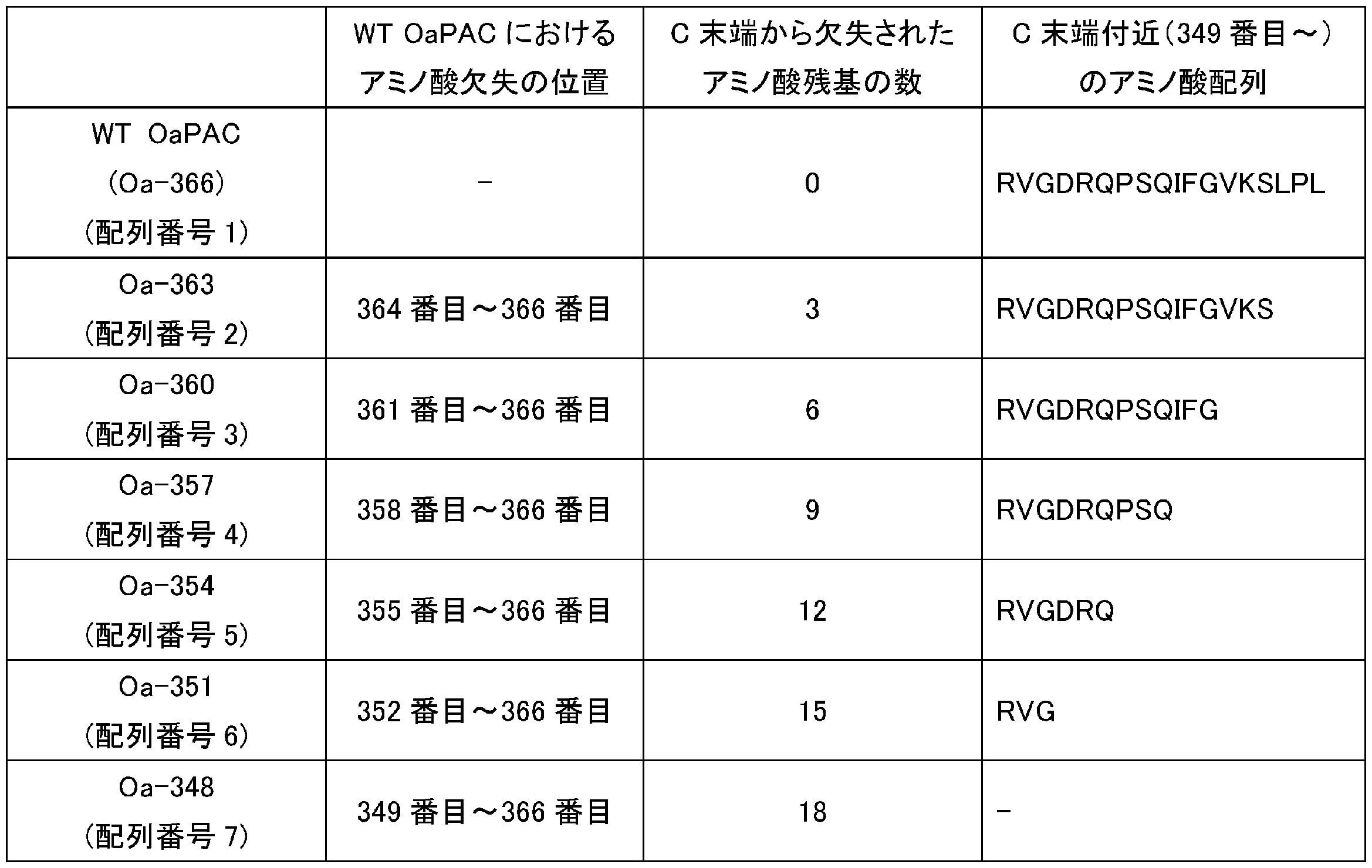
- SEQ ID NOs: 1 to 7 Details of the amino acid sequences of SEQ ID NOs: 1 to 7 are shown in Table 1.
- the proteins consisting of the amino acid sequences of SEQ ID NO: 1, SEQ ID NO: 2, SEQ ID NO: 3, SEQ ID NO: 4, SEQ ID NO: 5, SEQ ID NO: 6, and SEQ ID NO: 7 are referred to as Oa-366 protein, Oa-363 protein, and Oa, respectively.
- sequence identity may be 90%, 91%, 92%, 93%, 94%, 95%, 96%, 97%, 98%, 99%, or more.
- the amino acid sequence of SEQ ID NO: 1 in which the amino acid residues 1 to 18 according to the present embodiment are deleted from the C-terminal has a higher photoactivation efficiency (that is, higher efficiency of PAC activity) as compared with the wild-type OaPAC protein. ), More specifically, amino acid residue substitutions and deletions, as long as they do not impair the high photoactivation efficiency compared to the wild-type photoactivated adenylate cyclase derived from Oscillatoria acuminata . It may further have one or more mutations selected from the group consisting of insertions and additions.
- a mutation that adds the same amino acid residue as the amino acid residue deleted from the C-terminal of the amino acid sequence of SEQ ID NO: 1 to the C-terminal is photoactivated by deleting the amino acid residue from the C-terminal.
- Such mutations are not preferred as they negate the increase in efficiency.
- the number of amino acid residues after the amino acid residue corresponding to the 348th amino acid residue in the amino acid sequence having 90% or more sequence identity with the lost amino acid sequence of SEQ ID NO: 1 is consistent. It may or may not match.
- FIG. 1 shows the amino acid sequences of the OaPAC (Oa-366) protein, the photoactivated adenylate cyclase (bPAC) of Beggiatoa sp , and a part of the ⁇ chain (PAC ⁇ C) of the photoactivated adenylate cyclase of Euglena gracilis. Alignment.
- the amino acid residues in white surrounded by a red frame are amino acid residues conserved in photoactivated adenylate cyclase of various organisms. Since conserved amino acid residues are important for exerting PAC activity, these amino acid residues are not mutated in this embodiment.
- the protein according to the present embodiment includes Leu4, Tyr6, Ile7, Ser8, Ser15, Ile22, Asn30, Asn34, Thr36, Gly37, Leu39, Leu40, Gly44, Ph46, Gln48, Leu50, Glu51 of the amino acid sequence of SEQ ID NO: 1.
- the amino acid residue corresponding to the undeleted amino acid residue among the 349th to 366th amino acid residues of the amino acid sequence of SEQ ID NO: 1 is replaced with another amino acid residue. It may or may not be substituted, and the type of substitution may be conservative substitution.
- an amino acid residue having an aliphatic side chain may be replaced with a glycine, alanine, valine, leucine or isoleucine residue
- an amino acid residue having an aliphatic-hydroxyl side chain may be replaced with a serine or threonine residue.
- Amino acid residues with aromatic side chains may be replaced with phenylalanine, tyrosine, tryptophan or histidine residues, and amino acid residues with basic side chains may be replaced with lysine, arginine or histidine residues.
- the amino acid residue having an acidic side chain may be replaced with an aspartic acid or glutamic acid residue, and the amino acid residue having an amide-containing side chain may be replaced with an asparagine or glutamine residue, which contains sulfur.
- Amino acid residues with side chains may be replaced with cysteine or methionine.
- the photoactivation efficiency of the protein according to the present embodiment is usually used to evaluate the PAC activity of photoactivated adenylate cyclase by a method commonly used to evaluate enzyme activity, more specifically. It can be evaluated by the method. For example, since the protein according to the present embodiment produces cAMP by photoactivation, the photoactivation efficiency can be evaluated based on the amount of cAMP produced by light irradiation.
- the method for evaluating the photoactivation efficiency based on the amount of cAMP is not particularly limited, and the photoactivation efficiency is determined by preparing cells expressing, for example, the protein according to the present embodiment and the cAMP reporter protein. The amount of cAMP produced in the cell can be evaluated by monitoring it via the amount of luminescence of the reporter protein.
- the reporter protein of cAMP is not particularly limited and can be appropriately selected depending on the type of cell.
- the reporter protein may be a protein obtained by using a commercially available product such as pGloSensor 22F cAMP plasmid (Promega Co., Ltd.).
- pGloSensor 22F cAMP is a modified luciferase in which a cAMP-binding domain is inserted inside a firefly luciferase, and when cAMP binds to the cAMP-binding domain, the structure changes and reacts with luciferin to increase the amount of luminescence.
- the protein according to the present embodiment can be obtained, for example, by introducing a vector containing a nucleic acid encoding the protein into a host cell and culturing the obtained transformant. Details of nucleic acids, vectors, and transformants will be described later.
- the culturing method is not particularly limited, and the type of medium and the culturing conditions can be appropriately selected or adjusted according to the type of host cells.
- the nucleic acid according to one embodiment of the present invention encodes the protein according to the above embodiment.
- the nucleic acid consisting of the nucleotide sequence of SEQ ID NO: 8 was obtained by optimizing the codon of the wild-type OaPAC gene for mammals, and encodes the wild-type OaPAC protein (Oa-366 protein).
- the nucleic acid according to the present embodiment may be, for example, a nucleic acid obtained by deleting a specific nucleotide from the base sequence of the wild-type OaPAC gene or the base sequence of SEQ ID NO: 8, and 90% or more of this. It may be a nucleic acid consisting of a base sequence having sequence identity.
- the deleted nucleotide is 1 to 18 consecutive amino acid residues counting from the C-terminal amino acid residue of the wild-type OaPAC protein (Oa-366 protein) (however, the C-terminal amino acid residue is counted as 1). ) May be a nucleotide encoding.
- the vector according to one embodiment of the present invention contains the nucleic acid according to the above embodiment.
- the vector into which the nucleic acid is incorporated may be any vector as long as it can express the protein encoded by the nucleic acid in the host cell.
- the vector may be, for example, a transient vector or a stable expression vector, and may be a plasmid vector or a viral vector.
- the vector incorporating the nucleic acid can contain various sequences such as restriction enzyme sites, control sequences for expression of the inserted gene, antibiotic resistance genes, sequences for selection of transformants, and the like.
- a commercially available product such as a pEBMulti-Hygro vector (Fujifilm Wako Pure Chemical Industries, Ltd.) can be used as a pEBMulti-Hygro vector (Fujifilm Wako Pure Chemical Industries, Ltd.) can be used.
- the transformant according to the present embodiment can be obtained by introducing the vector according to the above embodiment into a host cell.
- the transformant is not limited to the transformed prokaryotic cell, but refers to any cell into which a foreign gene has been introduced.
- the host cell is not particularly limited, and may be a prokaryotic cell such as Escherichia coli or Bacillus subtilis, or a eukaryotic cell such as yeast or animal cell.
- the animal cell may be, for example, a mammalian cell, more specifically a mouse cell or a human cell.
- the method of introducing the vector is not limited, and a transient or stable transformation or transfection method commonly used in genetic engineering can be appropriately selected depending on the type of host cell.
- OaPAC gene (Oa-366 gene; SEQ ID NO: 8) having a codon optimized for mammals was synthesized.
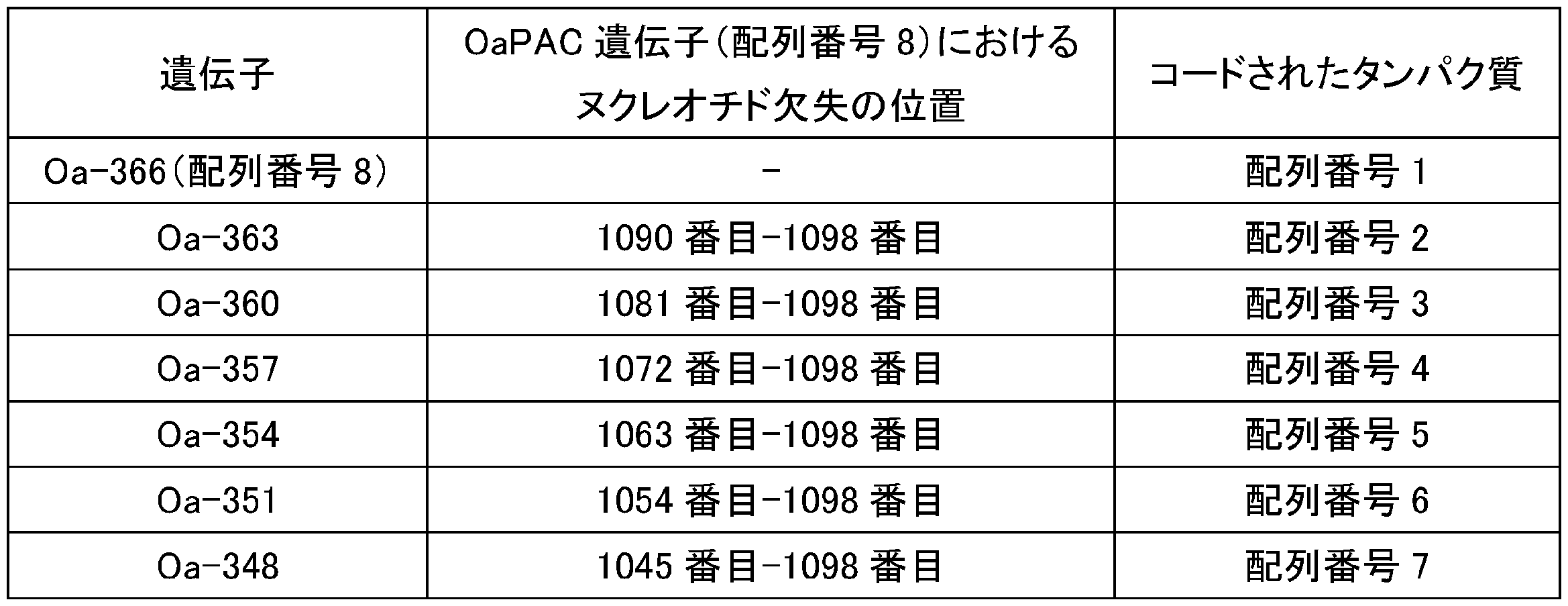
- a specific nucleotide is deleted from the base sequence of Oa-366 using a general gene recombination technique, and mutant OaPAC genes Oa-363, Oa-360, Oa-357, Oa-354, Oa. -351 and Oa-348 were obtained.
- the positions of the deleted nucleotides are shown in Table 2.
- the Oa-366 gene was integrated into pEBMulti-Hygro (Fujifilm Wako Pure Chemical Industries, Ltd.) together with the 2A and RFP genes, and the bicistronic expression construct of the Oa-366 gene and RFP gene was pEBMulti-Hygro-RFP-2A-Oa-366.
- Got 2A is a 2A-peptide for equally expressing a mutant OaPAC gene and an RFP gene
- the RFP gene is a gene encoding a mutant Rudolph-RFP (ATUM) of a red fluorescent protein. Expression constructs were similarly prepared for other mutant OaPAC genes.
- OaPAC-expressing cells Each of the OaPAC-expressing constructs was applied to Ingenio (registered trademark) Electroporation kit with 0.4 cm proteins (Myrus Bio) and Gene Pulser electroporation system (Bio-Rad Laboratories Co., Ltd., application conditions: It was introduced into GloSensor-22F cAMP expression HEK293 by electroporation using 260 V, 950 ⁇ F) to obtain HEK293 expressing wild or mutant OaPAC protein and GloSensor-22F cAMP protein. Since the degree of expression of OaPAC protein is equal to the degree of expression of RFP protein due to the action of 2A-peptide, the degree of expression of OaPAC protein was confirmed by the fluorescence intensity of RFP.
- Ingenio registered trademark
- Electroporation kit with 0.4 cm proteins Myrus Bio
- Gene Pulser electroporation system Bio-Rad Laboratories Co., Ltd., application conditions: It was introduced into GloSensor-22F c
- the OaPAC expression HEK293, light intensity 1.5 ⁇ 10 ⁇ mol / m 2 /s,6.1 ⁇ 10 ⁇ mol/m 2 /s,1.1 ⁇ 10 2 ⁇ mol / m 2 /s,4.5 ⁇ 10 2 ⁇ mol / m 2 /s,1.5 ⁇ 10 3 ⁇ mol / m 2 / s, and 5.7 ⁇ 10 3 ⁇ mol / m 2 / s of the blue light was irradiated respectively 20 seconds. Light irradiation at the next intensity was carried out after waiting for the increase in activity due to the current light irradiation to completely subside.
- the emission of GloSensor-22F cAMP emitted from HEK293 was captured by an EM-CCD camera, and the emission intensity was quantified from the obtained image using ImageJ software (http://imagej.nih.gov/ij).
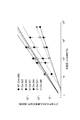
- FIG. 2 is a graph showing the photoactivation efficiency of wild-type and mutant OaPAC proteins.
- the numerical value on the vertical axis specifically represents the amount of light emitted from GloSensor-22F cAMP, but since this is a numerical value that is uniquely dependent on the concentration of cAMP produced by the light-activated OaPAC protein, The title of the axis was written as the activity (relative value) of the enzyme activated by light.
- Oa-357 protein and Oa-354 protein obtained by deleting amino acid residues 9, 12, 15, and 18, respectively, from the C-terminal of the amino acid sequence of SEQ ID NO: 1.
- Oa-351 protein, and Oa-348 protein showed particularly high photoactivation efficiency as compared with the wild type OaPAC protein (Oa-366 protein).
- the photoactivation efficiency of the Oa-363 protein obtained by deleting three amino acid residues from the C-terminal was clearly improved as compared with the wild-type OaPAC protein, but the above four OaPACs were observed. It was relatively low compared to.
- the Oa-360 protein obtained by deleting 6 amino acid residues from the C-terminus of the amino acid sequence of SEQ ID NO: 1 is compared with the moderate but wild-type OaPAC protein among the mutant OaPAC proteins. It showed high photoactivation efficiency.
- the desired light intensity of the irradiation light used for photoactivation differs depending on how the OaPAC protein is used, variations in photoactivation efficiency are required. Therefore, it can be said that any of the above mutant proteins is useful.
Landscapes
- Chemical & Material Sciences (AREA)
- Organic Chemistry (AREA)
- Life Sciences & Earth Sciences (AREA)
- Health & Medical Sciences (AREA)
- Wood Science & Technology (AREA)
- Zoology (AREA)
- Bioinformatics & Cheminformatics (AREA)
- Engineering & Computer Science (AREA)
- Genetics & Genomics (AREA)
- Biochemistry (AREA)
- General Health & Medical Sciences (AREA)
- General Engineering & Computer Science (AREA)
- Medicinal Chemistry (AREA)
- Molecular Biology (AREA)
- Biomedical Technology (AREA)
- Biotechnology (AREA)
- Microbiology (AREA)
- Micro-Organisms Or Cultivation Processes Thereof (AREA)
- Peptides Or Proteins (AREA)
- Enzymes And Modification Thereof (AREA)
Abstract
本発明の一実施形態に係るタンパク質は、光活性化アデニル酸シクラーゼ活性を有し、1~18のアミノ酸残基がC末端から欠失された配列番号1のアミノ酸配列、又はこれと90%以上の配列同一性を有するアミノ酸配列からなる。本発明によれば、野生型のOaPACタンパク質と比べて高い光活性化効率を有する、新規の光活性化アデニル酸シクラーゼを提供することができる。
Description
本発明は、光活性化アデニル酸シクラーゼに関する。
近年、光遺伝学を用いて、生体機能を光によりコントロールする手法が、医学及び生理学の分野で盛んに利用されている。この手法では、光照射により生体内で生理機能を発揮する光プローブ(例えば、酵素又はイオンチャネル)を生体内の標的部位(例えば、特定の組織中又は細胞中)に配置し、光プローブに光を照射して生体機能を人為的にコントロールする。
光プローブとして、光活性化アデニル酸シクラーゼ(PAC)が知られている。光活性化アデニル酸シクラーゼは、光により活性化されて環状アデノシン一リン酸(cAMP)を産生するタンパク質であり、BLUF(sensor of Blue Light Using FAD)ドメイン及びシクラーゼ触媒ドメインを有する。BLUFドメインは、FAD又はFMNが結合するドメインであり、FADを利用した青色光の感知に関与する。シクラーゼ触媒ドメインは、ATPをcAMPに変換するドメインである。PAC遺伝子は様々な生物において見つかっている(例えば、非特許文献1)。藍色細菌のユレモ属に由来する光活性化アデニル酸シクラーゼ(OaPAC)は、ヒト細胞において容易に発現させることができるホモ2量体であり、かつその結晶構造が開示されており、加えて哺乳類細胞系との発現の相性が良いことから、メディカル応用に適するcAMP調節用光プローブである。
Isekiら、Nature,VOL.415,pp.1047-1051、2002年2月28日
野生型のOaPACタンパク質の光活性化効率は低く、OaPACタンパク質の光活性化には強い光の照射が必要である。そのため、野生型のOaPACタンパク質を発現させた生体は、光照射により光障害を生じる可能性がある。
本発明は上記課題に鑑みてなされたものであり、野生型のOaPACタンパク質と比べて高い光活性化効率を有する、新規の光活性化アデニル酸シクラーゼを提供することを目的とする。
検討の結果、本発明者らは、野生型のOaPACタンパク質のC末端からアミノ酸残基を特定数欠失させることにより、OaPACタンパク質の光活性化効率が向上することを見いだし、本発明を完成させるに至った。OaPACタンパク質のC末端は、PAC活性の発揮のために重要であると考えられてきたBLUFドメイン及びシクラーゼ触媒ドメインとは全く異なる部位であることから、OaPACタンパク質のC末端及びその近辺が光活性化効率に影響を与えるとの本発明者らの知見は、驚くべきものである。
本発明は、以下の[1]~[5]に関する。
[1]光活性化アデニル酸シクラーゼ活性を有するタンパク質であって、1~18のアミノ酸残基がC末端から欠失された配列番号1のアミノ酸配列、又はこれと90%以上の配列同一性を有するアミノ酸配列からなる、タンパク質。
[2]配列番号1のアミノ酸配列のC末端から欠失されたアミノ酸残基の数が5~7である、上記[1]に記載のタンパク質。
[3]上記[1]又は[2]に記載のタンパク質をコードする、核酸。
[4]上記[3]に記載の核酸を含む、ベクター。
[5]上記[4]に記載のベクターが導入された、形質転換体。
[1]光活性化アデニル酸シクラーゼ活性を有するタンパク質であって、1~18のアミノ酸残基がC末端から欠失された配列番号1のアミノ酸配列、又はこれと90%以上の配列同一性を有するアミノ酸配列からなる、タンパク質。
[2]配列番号1のアミノ酸配列のC末端から欠失されたアミノ酸残基の数が5~7である、上記[1]に記載のタンパク質。
[3]上記[1]又は[2]に記載のタンパク質をコードする、核酸。
[4]上記[3]に記載の核酸を含む、ベクター。
[5]上記[4]に記載のベクターが導入された、形質転換体。
また、本発明は、以下の[6]及び[7]にも関する。
[6]上記[5]に記載の形質転換体を培養することを含む、上記[1]又は[2]に記載のタンパク質の製造方法。
[7]1~18のアミノ酸残基を光活性化アデニル酸シクラーゼのC末端から欠失させることを含み、上記光活性化アデニル酸シクラーゼはユレモ属に由来する、アデニル酸シクラーゼの光活性化効率を向上させる方法。
[6]上記[5]に記載の形質転換体を培養することを含む、上記[1]又は[2]に記載のタンパク質の製造方法。
[7]1~18のアミノ酸残基を光活性化アデニル酸シクラーゼのC末端から欠失させることを含み、上記光活性化アデニル酸シクラーゼはユレモ属に由来する、アデニル酸シクラーゼの光活性化効率を向上させる方法。
本発明によれば、野生型のOaPACタンパク質と比べて高い光活性化効率を有する、新規の光活性化アデニル酸シクラーゼが提供される。
また、本発明によれば、広いバリエーションの光活性化効率を有する光活性化アデニル酸シクラーゼが提供される。光活性化に用いられる照射光の望ましい光強度は光活性化アデニル酸シクラーゼの利用の仕方により異なるため、光活性化効率にはバリエーションが求められる。例えば、光活性化アデニル酸シクラーゼを導入した培養細胞を、通常の実験室においてシャーレ上で扱う場合、光活性化アデニル酸シクラーゼの光活性化効率が高すぎると、所定の光源で光照射を行う前に室内の天井灯でアデニル酸シクラーゼが光活性化されてしまう可能性がある。一方、光が届きにくい、生体深部の細胞に光活性化アデニル酸シクラーゼを導入した場合、光活性化アデニル酸シクラーゼの光活性化効率が低いと、光活性化に十分な強度の光が細胞まで届かず、光活性化アデニル酸シクラーゼを活性化することができない可能性がある。本発明によれば、様々な状況に対応できる広いバリエーションの光活性化効率を有する光活性化アデニル酸シクラーゼが提供されるため、上記のような様々な状況に対応することができる。
本発明の一実施形態に係るタンパク質は、光活性化アデニル酸シクラーゼ活性(以下、PAC活性という。)を有し、1~18のアミノ酸残基がC末端から欠失された配列番号1のアミノ酸配列、又はこれと90%以上の配列同一性を有するアミノ酸配列からなる。本明細書における光活性化アデニル酸シクラーゼ活性とは、光照射により発揮される(すなわち、活性化される)アデニル酸シクラーゼ活性を指す。配列番号1のアミノ酸配列は、藍色細菌オスキラトリア・アクミナータ(Oscillatoria acuminata)の野生型のOaPACタンパク質(Oa-366タンパク質)のアミノ酸配列である。本明細書において、C末端とは、タンパク質の両末端のうちフリーなカルボキシ基で終端している側の、最末端を指す。例えば、366アミノ酸残基からなる配列番号1のアミノ酸配列のC末端のアミノ酸残基は、366番目のアミノ酸残基であるロイシン残基である。
より具体的には、本実施形態に係るタンパク質は、配列番号1のアミノ酸配列のC末端から、1~18、2~18、3~18、5~18、6~18、8~18、9~18若しくは5~7のアミノ酸残基を欠失させて得られるアミノ酸配列、又はこれと90%以上の配列同一性を有するアミノ酸配列からなってよい。配列番号1のアミノ酸配列のC末端から欠失されたアミノ酸残基の数は、1、2、3、4、5、6、7、8、9、10、11、12、13、14、15、16、17、又はそれ以上であってよく、18、17、16、15、14、13、12、11、10、9、8、7、6、5、4、3、2又はそれ以下であってよい。C末端から欠失されたアミノ酸残基の数が8~18である場合、タンパク質の光活性化効率は特に高い。一方、C末端から欠失されたアミノ酸残基の数が5~7である場合、タンパク質の光活性化効率は、欠失されたアミノ酸残基の数が8~18又は1~4である場合と比べて中程度である。中程度の光活性化効率を有する光活性化アデニル酸シクラーゼは、従来、他の生物でも知られていないため、5~7のアミノ酸残基がC末端から欠失された配列番号1のアミノ酸配列、又はこれと90%以上の配列同一性を有するアミノ酸配列からなるタンパク質の有用性は極めて高い。
本実施形態に係るタンパク質は、配列番号2、配列番号3、配列番号4、配列番号5、配列番号6、又は配列番号7のアミノ酸配列からなってもよい。これらのアミノ酸配列は、配列番号1のアミノ酸配列からそれぞれ364番目~366番目、361番目~366番目、358番目~366番目、355番目~366番目、352番目~366番目、及び349番目~366番目のアミノ酸残基を欠失させて得られるアミノ酸配列である。本実施形態に係るタンパク質は、配列番号2~配列番号7のいずれかのアミノ酸配列と90%以上の配列同一性を有するアミノ酸配列からなってもよい。配列番号1~配列番号7のアミノ酸配列の詳細を表1に示す。以下、配列番号1、配列番号2、配列番号3、配列番号4、配列番号5、配列番号6、及び配列番号7のアミノ酸配列からなるタンパク質を、それぞれOa-366タンパク質、Oa-363タンパク質、Oa-360タンパク質、Oa-357タンパク質、Oa-354タンパク質、Oa-351タンパク質、及びOa-348タンパク質ともいう。
上記配列同一性は、具体的には、90%、91%、92%、93%、94%、95%、96%、97%、98%、99%、又はそれ以上であってもよい。本実施形態に係る上記1~18のアミノ酸残基がC末端から欠失された配列番号1のアミノ酸配列は、野生型のOaPACタンパク質と比べて高い光活性化効率(すなわち、高いPAC活性の効率)を損なわない範囲で、より具体的には、Oscillatoria acuminataに由来する野生型の光活性化アデニル酸シクラーゼと比べて高い光活性化効率を損なわない範囲で、アミノ酸残基の置換、欠失、挿入、及び付加からなる群より選ばれる1以上の変異をさらに有してもよい。例えば、配列番号1のアミノ酸配列のC末端から欠失させたアミノ酸残基と同一のアミノ酸残基をC末端に付加する変異は、C末端からアミノ酸残基を欠失させたことによる光活性化効率の向上を打ち消してしまうため、そのような変異は好ましくない。1~18のアミノ酸残基がC末端から欠失された配列番号1のアミノ酸配列の348番目のアミノ酸残基より後のアミノ酸残基の数と、1~18のアミノ酸残基がC末端から欠失された配列番号1のアミノ酸配列と90%以上の配列同一性を有するアミノ酸配列の、上記348番目のアミノ酸残基に対応するアミノ酸残基より後のアミノ酸残基の数とは、一致してもよいし、一致しなくてもよい。
図1は、OaPAC(Oa-366)タンパク質と、Beggiatoa spの光活性化アデニル酸シクラーゼ(bPAC)と、Euglena gracilisの光活性化アデニル酸シクラーゼのα鎖の一部(PACαC)と、のアミノ酸配列のアライメントである。図1において、赤枠で囲まれた白字のアミノ酸残基は、種々の生物の光活性化アデニル酸シクラーゼにおいて保存されたアミノ酸残基である。保存アミノ酸残基はPAC活性を発揮するうえで重要であるため、本実施形態において、これらのアミノ酸残基は変異されていない。すなわち、本実施形態に係るタンパク質は、配列番号1のアミノ酸配列のLeu4、Tyr6、Ile7、Ser8、Ser15、Ile22、Asn30、Asn34、Thr36、Gly37、Leu39、Leu40、Gly44、Phe46、Gln48、Leu50、Glu51、Gly52、Tyr61、Ile64、Asp67、Arg69、His70、Arg85、Glu99、Pro107、Leu112、Ser118、Leu122、Glu123、Tyr125、Glu137、Asn139、Pro140、Pro145、Val148、Glu149、Asp156、Ile157、Phe160、Glu165、Lys166、Glu171、Val172、Asn177、Cys183、Thr184、Ile187、Gly191、Gly192、Glu193、Val194、Lys196、Ile198、Gly199、Asp200、Cys201、Val202、Ala204、Phe206、Asp212、Ala214、Ile221、Leu228、Arg229、Gly244、Gly246、Leu247、Gly250、Val252、Ile253、Gly258、Ser259、Gly269、Glu279、Ala280、Leu281、Thr282、Arg283、Ala288、Val295、Gly315、Tyr323、Leu337、及びLeu347に対応するアミノ酸残基に、変異を有さない。
本実施形態に係るタンパク質において、配列番号1のアミノ酸配列の349番目~366番目のアミノ酸残基のうち欠失されなかったアミノ酸残基に対応するアミノ酸残基は、他のアミノ酸残基に置換されていても、置換されていなくてもよく、置換の種類は保存的置換であってよい。例えば、脂肪族側鎖を有するアミノ酸残基は、グリシン、アラニン、バリン、ロイシン又はイソロイシン残基に置換されてよく、脂肪族-ヒドロキシル側鎖を有するアミノ酸残基は、セリン又はスレオニン残基に置換されてよく、芳香族側鎖を有するアミノ酸残基は、フェニルアラニン、チロシン、トリプトファン又はヒスチジン残基に置換されてよく、塩基性側鎖を有するアミノ酸残基は、リジン、アルギニン又はヒスチジン残基に置換されてよく、酸性側鎖を有するアミノ酸残基は、アスパラギン酸又はグルタミン酸残基に置換されてよく、アミド含有側鎖を有するアミノ酸残基は、アスパラギン又はグルタミン残基に置換されてよく、硫黄含有側鎖を有するアミノ酸残基は、システイン又はメチオニンに置換されてよい。
本実施形態に係るタンパク質の光活性化効率は、酵素活性を評価するために通常使用される方法によって、より具体的には、光活性化アデニル酸シクラーゼのPAC活性を評価するために通常使用される方法によって、評価することができる。例えば、本実施形態に係るタンパク質は光活性化によりcAMPを産生するため、光照射により産生されたcAMPの量に基づいて光活性化効率を評価することができる。cAMPの量に基づいて光活性化効率を評価する方法は特に限定されず、光活性化効率は、例えば、本実施形態に係るタンパク質と、cAMPのレポータータンパク質と、を発現する細胞を準備し、細胞内で産生されたcAMPの量をレポータータンパク質の発光量を介してモニターすることにより、評価することができる。cAMPのレポータータンパク質は特に限定されず、細胞の種類に応じて適宜選択することができる。レポータータンパク質は、例えば、pGloSensor 22F cAMP Plasmid(プロメガ株式会社)等の市販品を利用して得られるタンパク質であってよい。pGloSensor 22F cAMPは、ホタルルシフェラーゼの内部にcAMP結合ドメインを挿入した改変型ルシフェラーゼであり、cAMP結合ドメインにcAMPが結合すると構造が変化してルシフェリンと反応し、発光量が増加する。
本実施形態に係るタンパク質は、例えば、該タンパク質をコードする核酸を含むベクターを宿主細胞に導入し、得られた形質転換体を培養することにより得られる。核酸、ベクター、及び形質転換体の詳細は、後述する。培養方法は特に限定されず、培地の種類及び培養条件は宿主細胞の種類に応じて適宜選択又は調整できる。
本発明の一実施形態に係る核酸は、上記実施形態に係るタンパク質をコードする。配列番号8の塩基配列からなる核酸は、野生型のOaPAC遺伝子のコドンを哺乳類に最適化することにより得られたものであり、野生型のOaPACタンパク質(Oa-366タンパク質)をコードする。本実施形態に係る核酸は、例えば、野生型のOaPAC遺伝子の塩基配列又は配列番号8の塩基配列から特定のヌクレオチドを欠失させることにより得られた核酸であってよく、これと90%以上の配列同一性を有する塩基配列からなる核酸であってよい。欠失させたヌクレオチドは、野生型のOaPACタンパク質(Oa-366タンパク質)のC末端のアミノ酸残基から数えて1~18の連続するアミノ酸残基(ただし、C末端のアミノ酸残基を1と数える)をコードするヌクレオチドであってよい。
本発明の一実施形態に係るベクターは、上記実施形態に係る核酸を含む。核酸を組み込むベクターは、核酸にコードされているタンパク質を宿主細胞内で発現させることができるベクターであればどのようなベクターであってもよい。ベクターは、例えば、一過性ベクター又は安定的発現ベクターであってよく、プラスミドベクター又はウイルスベクターであってよい。核酸を組み込むベクターは、制限酵素部位、挿入された遺伝子の発現のための制御配列、抗生物質耐性遺伝子、形質転換体の選別のための配列等、種々の配列を含むことができる。核酸を組み込むベクターとしては、例えば、pEBMulti-Hygroベクター(富士フイルム和光純薬株式会社)等の市販品を利用することができる。
本実施形態に係る形質転換体は、上記実施形態に係るベクターを宿主細胞に導入することにより得ることができる。本明細書において、形質転換体は、形質転換された原核細胞に限られず、外来遺伝子が導入されたあらゆる細胞を指す。すなわち、宿主細胞は特に限定されず、大腸菌、枯草菌等の原核細胞であっても、酵母、動物細胞等の真核細胞であってもよい。動物細胞は、例えば、哺乳動物細胞であってよく、より具体的には、マウス細胞又はヒト細胞であってよい。ベクターの導入方法は限定されず、遺伝子工学的に常用される、一過性又は安定的なトランスフォーメーション又はトランスフェクションの方法を、宿主細胞の種類に応じて適宜選択することができる。
(1)OaPAC発現コンストラクトの作製
哺乳類に最適化されたコドンを有するOaPAC遺伝子(Oa-366遺伝子;配列番号8)を合成した。また、一般的な遺伝子組み換え技術を利用してOa-366の塩基配列から特定のヌクレオチドを欠失させ、変異型OaPAC遺伝子であるOa-363、Oa-360、Oa-357、Oa-354、Oa-351及びOa-348を得た。欠失させたヌクレオチドの位置を表2に示す。
哺乳類に最適化されたコドンを有するOaPAC遺伝子(Oa-366遺伝子;配列番号8)を合成した。また、一般的な遺伝子組み換え技術を利用してOa-366の塩基配列から特定のヌクレオチドを欠失させ、変異型OaPAC遺伝子であるOa-363、Oa-360、Oa-357、Oa-354、Oa-351及びOa-348を得た。欠失させたヌクレオチドの位置を表2に示す。
Oa-366遺伝子を2A及びRFP遺伝子とともにpEBMulti-Hygro(富士フイルム和光純薬株式会社)に組み込み、Oa-366遺伝子及びRFP遺伝子のバイシストロニックな発現コンストラクトpEBMulti-Hygro-RFP-2A-Oa-366を得た。2Aとは、変異型OaPAC遺伝子及びRFP遺伝子を均等に発現させるための2A-ペプチドであり、RFP遺伝子は、赤色蛍光タンパク質の変異種Rudolph-RFP(ATUM社)をコードする遺伝子である。その他の変異型OaPAC遺伝子についても同様に発現コンストラクトを作成した。
(2)cAMPレポーター発現細胞株の樹立
GloSensor(商標)-22F cAMP遺伝子(プロメガ株式会社)を哺乳類発現ベクターpEBMulti-Neo(富士フイルム和光純薬株式会社)に組み込んだ。得られたpEBMulti-Neo-GloSensor-22F cAMPプラスミドを、FuGENE(登録商標) HD(プロメガ株式会社)を用いたリポフェクションによりヒト胎児腎臓細胞HEK293(株式会社ケー・エー・シー)に導入し、GloSensor-22F cAMPを安定的に発現する細胞株を樹立した。
GloSensor(商標)-22F cAMP遺伝子(プロメガ株式会社)を哺乳類発現ベクターpEBMulti-Neo(富士フイルム和光純薬株式会社)に組み込んだ。得られたpEBMulti-Neo-GloSensor-22F cAMPプラスミドを、FuGENE(登録商標) HD(プロメガ株式会社)を用いたリポフェクションによりヒト胎児腎臓細胞HEK293(株式会社ケー・エー・シー)に導入し、GloSensor-22F cAMPを安定的に発現する細胞株を樹立した。
(3)OaPAC発現細胞の調製
OaPAC発現コンストラクトのそれぞれを、Ingenio(登録商標)Electroporation kit with 0.4cmcuvettes(マイラス・バイオ社)及びGene Pulserエレクトロポレーションシステム(バイオ・ラッド ラボラトリーズ株式会社、印加条件:260V,950μF)を用いた電気穿孔法によりGloSensor-22F cAMP発現HEK293に導入し、野生型又は変異型のOaPACタンパク質とGloSensor-22F cAMPタンパク質とを発現するHEK293を得た。なお、2A-ペプチドの働きによりOaPACタンパク質の発現の度合いはRFPタンパク質の発現の度合いと等しいため、OaPACタンパク質の発現の度合いは、RFPの蛍光強度により確認した。
OaPAC発現コンストラクトのそれぞれを、Ingenio(登録商標)Electroporation kit with 0.4cmcuvettes(マイラス・バイオ社)及びGene Pulserエレクトロポレーションシステム(バイオ・ラッド ラボラトリーズ株式会社、印加条件:260V,950μF)を用いた電気穿孔法によりGloSensor-22F cAMP発現HEK293に導入し、野生型又は変異型のOaPACタンパク質とGloSensor-22F cAMPタンパク質とを発現するHEK293を得た。なお、2A-ペプチドの働きによりOaPACタンパク質の発現の度合いはRFPタンパク質の発現の度合いと等しいため、OaPACタンパク質の発現の度合いは、RFPの蛍光強度により確認した。
(4)OaPACの光活性化
OaPAC発現HEK293を、35mm培養皿(BioCoat(商標)コラーゲンI、コーニング社)に播種し、2mLの培地(DMEM high glucose with 10%FBS and 4mM L-glutamine、サーモフィッシャー・サイエンティフィック社)で培養した。細胞に光を照射する数時間前に培地をCO2非依存性培地(サーモフィッシャー・サイエンティフィック社)に交換し、終濃度0.12mg/mLでGloSensor cAMP Reagent(プロメガ株式会社)を添加した。数時間後、EM-CCDカメラ(ImagEM C9100-23B、浜松ホトニクス株式会社)及び青色LED(LXML-PR01-0425、ルクシオン・レベル、フィリップス・ルミレッズ社)を取り付けた倒立蛍光顕微鏡(Eclipse TE-300、株式会社ニコン)を用いて、暗室にて以下の照射実験を行った。
OaPAC発現HEK293を、35mm培養皿(BioCoat(商標)コラーゲンI、コーニング社)に播種し、2mLの培地(DMEM high glucose with 10%FBS and 4mM L-glutamine、サーモフィッシャー・サイエンティフィック社)で培養した。細胞に光を照射する数時間前に培地をCO2非依存性培地(サーモフィッシャー・サイエンティフィック社)に交換し、終濃度0.12mg/mLでGloSensor cAMP Reagent(プロメガ株式会社)を添加した。数時間後、EM-CCDカメラ(ImagEM C9100-23B、浜松ホトニクス株式会社)及び青色LED(LXML-PR01-0425、ルクシオン・レベル、フィリップス・ルミレッズ社)を取り付けた倒立蛍光顕微鏡(Eclipse TE-300、株式会社ニコン)を用いて、暗室にて以下の照射実験を行った。
OaPAC発現HEK293に、光強度1.5×10μmol/m2/s、6.1×10μmol/m2/s、1.1×102μmol/m2/s、4.5×102μmol/m2/s、1.5×103μmol/m2/s、及び5.7×103μmol/m2/sの青色光をそれぞれ20秒間照射した。次の強度での光照射は、現在の光照射による活性上昇が完全に鎮静化するのを待って実施した。HEK293から発せられたGloSensor-22F cAMPの発光をEM-CCDカメラで捉え、得られた画像から、ImageJ software(http://imagej.nih.gov/ij)を用いて発光強度を定量した。
図2は、野生型及び変異型OaPACタンパク質の光活性化効率を示すグラフである。縦軸の数値は、具体的にはGloSensor-22F cAMPの発光量を表すものだが、これは光で活性化されたOaPACタンパク質により産生されたcAMPの濃度に一義的に依存する数値であるので、軸のタイトルは、光で活性化された酵素の活性(相対値)と記した。図2に示されるように、それぞれ9、12、15、及び18のアミノ酸残基を配列番号1のアミノ酸配列のC末端から欠失させることにより得られた、Oa-357タンパク質、Oa-354タンパク質、Oa-351タンパク質、及びOa-348タンパク質は、野生型のOaPACタンパク質(Oa-366タンパク質)と比べて特に高い光活性化効率を示した。一方、3つのアミノ酸残基をC末端から欠失させることにより得られたOa-363タンパク質の光活性化効率は、野生型のOaPACタンパク質と比べると明らかに改善されていたものの、上記4つのOaPACと比べると比較的低かった。6つのアミノ酸残基を配列番号1のアミノ酸配列のC末端から欠失させることにより得られたOa-360タンパク質は、変異型OaPACタンパク質の中では中程度の、しかし野生型のOaPACタンパク質と比べると高い、光活性化効率を示した。上述のとおり、光活性化に用いられる照射光の望ましい光強度はOaPACタンパク質の利用の仕方により異なるため、光活性化効率にはバリエーションが求められる。したがって、上記変異型タンパク質のいずれもが有用であるといえる。
Claims (8)
- 光活性化アデニル酸シクラーゼ活性を有するタンパク質であって、
1~18のアミノ酸残基がC末端から欠失された配列番号1のアミノ酸配列、又はこれと90%以上の配列同一性を有するアミノ酸配列からなる、タンパク質。 - 配列番号1のアミノ酸配列のC末端から欠失されたアミノ酸残基の数が5~7である、請求項1に記載のタンパク質。
- 請求項1に記載のタンパク質をコードする、核酸。
- 請求項3に記載の核酸を含む、ベクター。
- 請求項4に記載のベクターが導入された、形質転換体。
- 請求項2に記載のタンパク質をコードする、核酸。
- 請求項6に記載の核酸を含む、ベクター。
- 請求項7に記載のベクターが導入された、形質転換体。
Priority Applications (3)
| Application Number | Priority Date | Filing Date | Title |
|---|---|---|---|
| US17/624,373 US12509674B2 (en) | 2019-07-11 | 2020-04-14 | Photoactivated adenylyl cyclase |
| EP20837089.0A EP3998334A4 (en) | 2019-07-11 | 2020-04-14 | Photoactivated adenylate cyclase |
| CN202080028220.9A CN114040968B (zh) | 2019-07-11 | 2020-04-14 | 光活化腺苷酸环化酶 |
Applications Claiming Priority (2)
| Application Number | Priority Date | Filing Date | Title |
|---|---|---|---|
| JP2019-129374 | 2019-07-11 | ||
| JP2019129374A JP7340372B2 (ja) | 2019-07-11 | 2019-07-11 | 光活性化アデニル酸シクラーゼ |
Publications (1)
| Publication Number | Publication Date |
|---|---|
| WO2021005862A1 true WO2021005862A1 (ja) | 2021-01-14 |
Family
ID=74113953
Family Applications (1)
| Application Number | Title | Priority Date | Filing Date |
|---|---|---|---|
| PCT/JP2020/016461 Ceased WO2021005862A1 (ja) | 2019-07-11 | 2020-04-14 | 光活性化アデニル酸シクラーゼ |
Country Status (6)
| Country | Link |
|---|---|
| US (1) | US12509674B2 (ja) |
| EP (1) | EP3998334A4 (ja) |
| JP (1) | JP7340372B2 (ja) |
| CN (1) | CN114040968B (ja) |
| TW (1) | TWI863990B (ja) |
| WO (1) | WO2021005862A1 (ja) |
Families Citing this family (1)
| Publication number | Priority date | Publication date | Assignee | Title |
|---|---|---|---|---|
| WO2024191852A2 (en) * | 2023-03-10 | 2024-09-19 | MaineHealth | Methods and system for optogenetic stimulation of adipocytes |
Family Cites Families (4)
| Publication number | Priority date | Publication date | Assignee | Title |
|---|---|---|---|---|
| CN103898160A (zh) | 2012-12-25 | 2014-07-02 | 中国科学院深圳先进技术研究院 | 表达光敏感型腺苷酸环化酶的重组载体、其应用、构建方法及脱髓鞘疾病的治疗系统 |
| JP6615504B2 (ja) * | 2015-06-16 | 2019-12-04 | 国立大学法人滋賀医科大学 | 高血圧症の予防又は治療用医薬 |
| WO2018140456A1 (en) * | 2017-01-24 | 2018-08-02 | Northwestern University | Active low molecular weight variants of angiotensin converting enzyme 2 (ace2) |
| WO2019071048A1 (en) * | 2017-10-04 | 2019-04-11 | The Broad Institute, Inc. | SYSTEMS, METHODS AND COMPOSITIONS FOR TARGETED NUCLEIC ACID EDITION |
-
2019
- 2019-07-11 JP JP2019129374A patent/JP7340372B2/ja active Active
-
2020
- 2020-04-14 CN CN202080028220.9A patent/CN114040968B/zh active Active
- 2020-04-14 US US17/624,373 patent/US12509674B2/en active Active
- 2020-04-14 EP EP20837089.0A patent/EP3998334A4/en active Pending
- 2020-04-14 WO PCT/JP2020/016461 patent/WO2021005862A1/ja not_active Ceased
- 2020-05-08 TW TW109115350A patent/TWI863990B/zh active
Non-Patent Citations (4)
| Title |
|---|
| CRASNIER, DUMAY V, DANCHIN A: "The catalytic domain of Escherichia coli K-12 adenylate cyclase as revealed by deletion analysis of the cya gene", MOLECULAR & GENERAL GENETICS, vol. 243, no. 4, 1 January 1994 (1994-01-01), DE , pages 409 - 416, XP009532845, ISSN: 0026-8925, DOI: 10.1007/BF00280471 * |
| HIRANO, M. ET AL.: "The C-terminal region affects the activity of photoactivated adenylyl cyclase from oscillatoria acuminata", SCIENTIFIC REPORTS, vol. 9, no. 20262, 30 December 2019 (2019-12-30), pages 1 - 8, XP055789546 * |
| ISEKI ET AL., NATURE, vol. 415, 28 February 2002 (2002-02-28), pages 1047 - 1051 |
| OHKI MIO, SUGIYAMA KANAKO, KAWAI FUMIHIRO, TANAKA HITOMI, NIHEI YUUKI, UNZAI SATORU, TAKEBE MASUMI, MATSUNAGA SHIGERU, ADACHI SHIN: "Structural insight intophotoactivation of an adenylate cyclase from a photosynthetic cyanobacterium", PROC. NATL. ACAD. SCI. U.S.A., vol. 113, 2016, pages 6659 - 6664, XP055789528 * |
Also Published As
| Publication number | Publication date |
|---|---|
| TW202117010A (zh) | 2021-05-01 |
| US20220356460A1 (en) | 2022-11-10 |
| EP3998334A4 (en) | 2023-07-12 |
| US12509674B2 (en) | 2025-12-30 |
| CN114040968A (zh) | 2022-02-11 |
| JP7340372B2 (ja) | 2023-09-07 |
| TWI863990B (zh) | 2024-12-01 |
| EP3998334A1 (en) | 2022-05-18 |
| JP2021013322A (ja) | 2021-02-12 |
| CN114040968B (zh) | 2024-11-22 |
Similar Documents
| Publication | Publication Date | Title |
|---|---|---|
| JP6294368B2 (ja) | 直交tRNA−アミノアシルtRNAシンテターゼ対を生産するための方法及び組成物 | |
| US9115184B2 (en) | Light-inducible system for regulating protein stability | |
| CN110373404B (zh) | 一种酶突变体 | |
| KR101544650B1 (ko) | 광합성 산물의 생산성을 향상시킨 조류 및 그의 이용 | |
| CN111378708B (zh) | 一种体外无细胞蛋白合成体系及其应用 | |
| CN112673101A (zh) | 荧光素生物合成酶及其用途 | |
| CN113748205A (zh) | 用于改进的基因编辑的组合物和方法 | |
| JP7340372B2 (ja) | 光活性化アデニル酸シクラーゼ | |
| KR101833896B1 (ko) | 플라빈 기반 형광 단백질 변이체 | |
| CN113336854B (zh) | 一种精氨酸荧光探针及其制备方法和应用 | |
| JP2006508678A (ja) | 水性の生物種からの蛍光タンパク質 | |
| WO2008094316A2 (en) | Novel branchiostoma derived fluorescent proteins | |
| US20240262878A1 (en) | Photoactivatable gasdermin proteins | |
| CN119836475A (zh) | 在长波长的光照射下发挥功能的光开关蛋白 | |
| KR102198460B1 (ko) | 생물 발광 유도용 재조합 플라스미드 | |
| CN117946221A (zh) | 一种烟酰胺腺嘌呤二核苷酸光学探针及其制备方法和应用 | |
| WO2025254590A1 (en) | Diguanylate cyclase variants and methods of their use | |
| EP3988562A1 (en) | Flavin mononucleotide-binding protein variants having improved fluorescence intensity derived from arabidopsis thaliana | |
| US20260043011A1 (en) | Luminescent Protein | |
| US7183106B1 (en) | Bacterial inosine 5′-monophosphate dehydrogenase (“IMPDH”) DNA as a dominant selectable marker in mammals and other eukaryotes | |
| CN118879778A (zh) | 一种在哺乳动物细胞中定点插入乳酰化赖氨酸的系统及其应用 | |
| WO2023145850A1 (ja) | 藻類、暗所における藻類の生育を改善する方法、暗所における生育が改善した藻類の製造方法、暗所活性型クリプトクロム、及び暗所活性型クリプトクロムをコードするポリヌクレオチド | |
| Baumschlager et al. | Enhancing the performance of Magnets photosensors | |
| EP3505625B1 (en) | Modified luciferase | |
| JP2023057064A (ja) | ロドプシンの新規変異体 |
Legal Events
| Date | Code | Title | Description |
|---|---|---|---|
| 121 | Ep: the epo has been informed by wipo that ep was designated in this application |
Ref document number: 20837089 Country of ref document: EP Kind code of ref document: A1 |
|
| ENP | Entry into the national phase |
Ref document number: 2020837089 Country of ref document: EP Effective date: 20220211 |
|
| WWG | Wipo information: grant in national office |
Ref document number: 17624373 Country of ref document: US |