WO2021006035A1 - 野菜加熱処理物含有食品及びその製造方法、並びに野菜の不快味の低減方法 - Google Patents
野菜加熱処理物含有食品及びその製造方法、並びに野菜の不快味の低減方法 Download PDFInfo
- Publication number
- WO2021006035A1 WO2021006035A1 PCT/JP2020/024643 JP2020024643W WO2021006035A1 WO 2021006035 A1 WO2021006035 A1 WO 2021006035A1 JP 2020024643 W JP2020024643 W JP 2020024643W WO 2021006035 A1 WO2021006035 A1 WO 2021006035A1
- Authority
- WO
- WIPO (PCT)
- Prior art keywords
- vegetables
- vegetable
- mass
- dimethylthiophene
- food
- Prior art date
- Legal status (The legal status is an assumption and is not a legal conclusion. Google has not performed a legal analysis and makes no representation as to the accuracy of the status listed.)
- Ceased
Links
Classifications
-
- A—HUMAN NECESSITIES
- A23—FOODS OR FOODSTUFFS; TREATMENT THEREOF, NOT COVERED BY OTHER CLASSES
- A23L—FOODS, FOODSTUFFS OR NON-ALCOHOLIC BEVERAGES, NOT OTHERWISE PROVIDED FOR; PREPARATION OR TREATMENT THEREOF
- A23L5/00—Preparation or treatment of foods or foodstuffs, in general; Food or foodstuffs obtained thereby; Materials therefor
- A23L5/10—General methods of cooking foods, e.g. by roasting or frying
- A23L5/11—General methods of cooking foods, e.g. by roasting or frying using oil
- A23L5/12—Processes other than deep-frying or float-frying using cooking oil in direct contact with the food
-
- A—HUMAN NECESSITIES
- A23—FOODS OR FOODSTUFFS; TREATMENT THEREOF, NOT COVERED BY OTHER CLASSES
- A23L—FOODS, FOODSTUFFS OR NON-ALCOHOLIC BEVERAGES, NOT OTHERWISE PROVIDED FOR; PREPARATION OR TREATMENT THEREOF
- A23L19/00—Products from fruits or vegetables; Preparation or treatment thereof
-
- A—HUMAN NECESSITIES
- A23—FOODS OR FOODSTUFFS; TREATMENT THEREOF, NOT COVERED BY OTHER CLASSES
- A23L—FOODS, FOODSTUFFS OR NON-ALCOHOLIC BEVERAGES, NOT OTHERWISE PROVIDED FOR; PREPARATION OR TREATMENT THEREOF
- A23L19/00—Products from fruits or vegetables; Preparation or treatment thereof
- A23L19/03—Products from fruits or vegetables; Preparation or treatment thereof consisting of whole pieces or fragments without mashing the original pieces
-
- A—HUMAN NECESSITIES
- A23—FOODS OR FOODSTUFFS; TREATMENT THEREOF, NOT COVERED BY OTHER CLASSES
- A23L—FOODS, FOODSTUFFS OR NON-ALCOHOLIC BEVERAGES, NOT OTHERWISE PROVIDED FOR; PREPARATION OR TREATMENT THEREOF
- A23L19/00—Products from fruits or vegetables; Preparation or treatment thereof
- A23L19/09—Mashed or comminuted products, e.g. pulp, purée, sauce, or products made therefrom, e.g. snacks
-
- A—HUMAN NECESSITIES
- A23—FOODS OR FOODSTUFFS; TREATMENT THEREOF, NOT COVERED BY OTHER CLASSES
- A23L—FOODS, FOODSTUFFS OR NON-ALCOHOLIC BEVERAGES, NOT OTHERWISE PROVIDED FOR; PREPARATION OR TREATMENT THEREOF
- A23L27/00—Spices; Flavouring agents or condiments; Artificial sweetening agents; Table salts; Dietetic salt substitutes; Preparation or treatment thereof
- A23L27/20—Synthetic spices, flavouring agents or condiments
- A23L27/205—Heterocyclic compounds
- A23L27/2052—Heterocyclic compounds having oxygen or sulfur as the only hetero atoms
-
- A—HUMAN NECESSITIES
- A23—FOODS OR FOODSTUFFS; TREATMENT THEREOF, NOT COVERED BY OTHER CLASSES
- A23L—FOODS, FOODSTUFFS OR NON-ALCOHOLIC BEVERAGES, NOT OTHERWISE PROVIDED FOR; PREPARATION OR TREATMENT THEREOF
- A23L29/00—Foods or foodstuffs containing additives; Preparation or treatment thereof
- A23L29/03—Organic compounds
- A23L29/055—Organic compounds containing sulfur as heteroatom
-
- A—HUMAN NECESSITIES
- A23—FOODS OR FOODSTUFFS; TREATMENT THEREOF, NOT COVERED BY OTHER CLASSES
- A23V—INDEXING SCHEME RELATING TO FOODS, FOODSTUFFS OR NON-ALCOHOLIC BEVERAGES AND LACTIC OR PROPIONIC ACID BACTERIA USED IN FOODSTUFFS OR FOOD PREPARATION
- A23V2002/00—Food compositions, function of food ingredients or processes for food or foodstuffs
Definitions
- the present invention relates to a food containing a heat-treated vegetable product, a method for producing the same, and a method for reducing the unpleasant taste of vegetables.
- vegetables are desired by consumers who want to take them positively because of their unique rich taste and high nutritional value.
- content of vegetables is increased due to the green odor and unpleasant taste peculiar to vegetables. , There was a problem that the taste of consumers decreased.
- Patent Document 1 discloses an onion extract that can impart a rich sweetness and richness originally obtained when an onion is heated to a food by cooking under specific conditions.
- Patent Document 2 discloses a flavoring composition that gives a flavor peculiar to spice vegetables and a mellow cooking feeling.
- JP-A-2010-142147 Japanese Unexamined Patent Publication No. 2003-000181
- An object of the present invention is to provide a food containing a heat-treated vegetable product and a method for producing the same, which not only imparts a cooking sensation to vegetables but also reduces unpleasant taste.
- 3,4-dimethylthiophene, 2,4-dimethylthiophene, and furfural may be directly used, or a substance containing these specific components may be used.
- the content (x) of 3,4-dimethylthiophene is 0.00035 mg / kg or more and 3 mg / kg or less.
- the content (y) of 2,4-dimethylthiophene is 0.00015 mg / kg or more and 3 mg / kg or less.
- the content (z) of furfural is 0.1 mg / kg or more and 10 mg / kg or less.
- Item 2 Item 2. The food according to Item 1, further satisfying the following (d).
- (D) The following equation 1 is satisfied.
- step (2) The method for producing a food product according to any one of Items 6 to 8, wherein in step (2), the obtained vegetable heat-treated product is heated until it satisfies the above (a) to (c).
- step (2) the obtained vegetable heat-treated product is heated until it satisfies the above (a) to (c).
- Item 8 The method for producing a food product according to any one of Items 6 to 9, further comprising adding the above.
- item 11 A method for reducing the unpleasant taste of vegetables, which comprises adjusting the composition of a food containing a heat-treated vegetable product so as to satisfy the following (a) to (c).
- the content (x) of 3,4-dimethylthiophene is 0.00035 mg / kg or more and 3 mg / kg or less.
- the content (y) of 2,4-dimethylthiophene is 0.00015 mg / kg or more and 3 mg / kg or less.
- the content (z) of furfural is 0.1 mg / kg or more and 10 mg / kg or less.
- the vegetable heat-treated product not only imparts a cooking sensation, but also by a simple means of containing 3,4-dimethylthiophene, 2,4-dimethylthiophene, and furfural in specific concentration ranges. It is possible to produce foods containing a heat-treated vegetable product, which has greatly enhanced consumer taste, which enables reduction of unpleasant taste.
- the "cooking feeling” means a good taste of vegetables including a natural sweet flavor and a heated flavor generated by heating vegetables.
- "unpleasant taste” means a general term for flavors that are unpleasant when eating vegetables, such as the greenish taste / aroma of vegetables and the pungent taste / aroma that sticks to the nose of vegetables.
- the first aspect of the present invention is a food containing a vegetable heat-treated product containing a predetermined amount of 3,4-dimethylthiophene, 2,4-dimethylthiophene, and furfural (specific component) (hereinafter, appropriately referred to as "the present invention”.
- the present invention (Abbreviated as "food containing a heat-treated vegetable product” or simply “food of the present invention”).
- the food containing the vegetable heat-treated product of the present invention may be a food containing only the vegetable heat-treated product, or may be a food containing other materials, ingredients, etc. in addition to the vegetable heat-treated product.
- the food product of the present invention includes a heat-treated product of vegetables.
- the heating time of the vegetable heat-treated product is not particularly limited, but it is preferable to simultaneously contain components other than the specific components generated when the vegetables are heated because the cooking feeling is enhanced and the unpleasant taste is reduced.
- heating it is preferable to use equipment with a capacity that can uniformly heat the vegetables to be heated so that uneven heating does not easily occur in each part. Details of the heat treatment will be described later.
- the vegetables to be heat-treated are not particularly limited, and for example, Jerusalem artichoke, carrot, gobo, rutabaga, and beet (preferably beet (beet root): improved so that the root of beet is edible.
- These vegetables may be one kind or a mixture of two or more kinds.
- the target vegetables are not limited to fresh products, and processed products such as frozen products, dried products rehydrated, and salted products are also preferably used as long as they are processed vegetables containing the same amount of water as fresh products. be able to.
- Vegetables of the genus Allium are particularly suitable for reducing the unpleasant taste according to the present invention, and vegetables of the genus Allium include onions, leeks, leeks, and garlic.
- vegetables can be used not only in solid form such as whole or diced, but also in the state of being processed into finely crushed matter, puree, paste, etc.
- the vegetable heat-treated food containing the present invention contains predetermined amounts of 3,4-dimethylthiophene, 2,4-dimethylthiophene, and furfural (specific component), respectively.
- the lower limit of the content (x) of 3,4-dimethylthiophene in the food of the present invention is usually 0.00035 mg / kg or more, preferably 0.0004 mg / kg or more. If the content (x) of 3,4-dimethylthiophene is less than the above lower limit, the vegetable flavor may not be sufficiently felt.
- the upper limit of the content (x) of 3,4-dimethylthiophene in the food of the present invention is usually 3 mg / kg or less, preferably 1 mg / L or less.
- a pungent odor derived from vegetables may be strongly felt and discomfort may occur.
- the lower limit of the content (y) of 2,4-dimethylthiophene in the food of the present invention is usually 0.00015 mg / kg or more, preferably 0.0002 mg / kg or more. If the content (y) of 2,4-dimethylthiophene is less than the above lower limit, the taste of vegetables may not be sufficiently felt.
- the upper limit of the content (y) of 2,4-dimethylthiophene in the food of the present invention is usually 3 mg / kg or less, preferably 1 mg / kg or less.
- the pungent odor of vegetables may be strongly felt.
- the lower limit of the content (z) of furfural in the food of the present invention is usually 0.1 mg / kg or more, preferably 0.2 mg / kg or more. If the content (z) of furfural is less than the lower limit, a good flavor that reinforces the cooking sensation may not be sufficiently imparted.
- the upper limit of the content (z) of furfural in the food of the present invention is usually 10 mg / kg or less, particularly preferably 5 mg / kg or less, and further preferably 1 mg / kg or less.
- the content (z) of fulfural exceeds the above upper limit, the scent of fulfural itself is strongly felt, and an unnatural sweetness may occur.
- the lower limit of the value of z is usually 0.0005 or more, and more preferably 0.001 or more. If the value of (x + y) / z is lower than the lower limit, the vegetable flavor may not be sufficiently felt.
- the upper limit of the value of (x + y) / z is usually 10 or less, more preferably 7 or less, and further preferably 3 or less. If the value of (x + y) / z exceeds the upper limit, a good cooking feeling of the vegetable heat-treated product may not be obtained, or the pungent taste of the vegetables may not be sufficiently suppressed.
- the contents of 3,4-dimethylthiophene, 2,4-dimethylthiophene, and furfural in foods containing heat-treated vegetables can be measured by gas chromatography / mass spectrometry (GC / MS).
- the food product of the present invention is characterized by containing 3,4-dimethylthiophene, 2,4-dimethylthiophene, and furfural (specific component) in a predetermined content range, respectively, and not only imparts a cooking sensation. , Reduction of unpleasant taste is compatible.
- the method for incorporating 3,4-dimethylthiophene, 2,4-dimethylthiophene, and furfural (specific component) in the food of the present invention is not limited to these, but each specific component is used alone.
- Examples thereof include a method of adding as a substance and a method of adjusting each specific component within a specific concentration range by heating during the production of the vegetable heat-treated product. Above all, the latter method is preferable because it is possible to simultaneously contain other aroma components involved in reducing the unpleasant taste of vegetables.
- the vegetable heat-treated food containing the present invention may contain any material or ingredient in addition to the vegetables and specific ingredients (3,4-dimethylthiophene, 2,4-dimethylthiophene, and furfural).
- the type thereof is not particularly limited. Examples include plant-derived ingredients such as spices and herbs, sugars, high-sweetness sweeteners, amino acid-based seasonings, nucleic acid-based seasonings, organic acid-based seasonings, flavor ingredients, flavor seasonings, alcoholic beverages, and flavor oils.
- Flavors such as spice extracts, viscosity regulators, stabilizers, pH regulators, additives such as colorants, salts such as sodium chloride, oils, water and the like.
- These materials and components may be one kind, but two or more kinds may be any combination and ratio.
- the content of these materials and components is not particularly limited and can be appropriately determined according to the intended use and the like.
- the mode of the food containing the vegetable heat-treated product of the present invention is not limited, but the food containing the vegetable-added vegetable heat-treated product as the main ingredient (the food of the first aspect) and a plurality of vegetable heat-treated products are used. It is roughly classified into foods contained as a part of ingredients (foods of the second aspect). Examples of the latter include pasta sauces, dressings, and steak sauces that take full advantage of the vegetable flavor.
- the lower limit of the ratio of the vegetable heat-treated product to the food of the present invention is usually 80% by mass or more, particularly It can be 90% by mass or more. If the proportion of the processed vegetable product is less than the above lower limit, the flavor of the vegetables may be insufficient and the taste may be unsatisfactory. On the other hand, there is no limit to the upper limit of the ratio of the heat-treated vegetable product to the food of the present invention, and it can be, for example, 100% by mass.
- the blending amount of the vegetable heat-treated product in the food of the present invention also depends on the type of food. Unlike, but not limited to, it can be, for example:
- the lower limit of the ratio of the heat-treated vegetable product to the food of the present invention is usually 1.5% by mass or more, and above all, 2.5% by mass or more. If the proportion of the processed vegetable product is less than the above lower limit, the flavor of the vegetables may be insufficient and the taste may be unsatisfactory.
- the upper limit of the ratio of the heat-treated vegetable product to the food of the present invention is usually 20% by mass or less, and above all, 15% by mass or less. If the number of processed vegetable products exceeds the above upper limit, the heated odor of vegetables may be too strong and the unpleasant taste may be emphasized.
- the second aspect of the present invention relates to the above-mentioned method for producing a food containing a heat-treated vegetable product of the present invention (hereinafter, appropriately abbreviated as "the production method of the present invention").
- the production method of the present invention includes preparing a vegetable heat-treated product by heat-treating vegetables.
- the heat treatment of vegetables can be carried out by a usual method, but it is desirable to carry out the following steps (1) and (2) in order. By going through these steps, the specific component can be easily adjusted to a suitable balance.
- heating at the above-mentioned "predetermined heating temperature” means that heating is preferably continued for the time shown below under the condition that the center temperature of the vegetables to be heat-treated becomes such "predetermined heating temperature”. Means. However, even if the product temperature falls outside the temperature range during heating, the heat treatment is continued for about several minutes (for example, within 5 minutes, preferably within 3 minutes).
- a step of adjusting 3,4-dimethylthiophene, 2,4-dimethylthiophene, and furfural (specific component) to the specific concentration, and optionally other materials and components used are added.
- a mixing step may be added.
- the "predetermined heating temperature" of the vegetables is not limited, but is usually in the range of 70 ° C. or higher, particularly 80 ° C. or higher, and usually 120 ° C. or lower, particularly 110 ° C. or lower. Is preferable.
- the heating time of the vegetables is not limited, but is, for example, 30 minutes or more, particularly 40 minutes or more, and 120 minutes or less, particularly 110 minutes or less. It is preferable to heat at the heating temperature of. Further, it is preferable to heat the vegetables until the mass of the vegetables is usually 30% by mass or more, particularly 35% by mass or more, and usually 70% by mass or less, particularly 65% by mass or less, based on the mass before heating.
- step (1) it is preferable to heat under reduced pressure and / or under ventilation in order to promote volatilization of the aroma component of vegetables.
- the step (1) in order to promote the volatilization of water from the vegetables, it is preferable to add a predetermined amount of sodium chloride to the vegetables before and / or during the implementation of this step.
- the amount of sodium chloride added is not limited, but is usually 1% by mass or more, particularly 1.5% by mass or more, and usually 10% by mass or less, particularly 7% by mass or less, based on the mass of vegetables before heating. Is preferable.
- the sodium chloride a refined product of sodium chloride may be used, or a mixture such as an edible salt containing sodium chloride may be used.
- a mixture such as an edible salt containing sodium chloride may be used.
- rock salt or the like containing a large amount of impurities other than sodium chloride it is preferable to adjust the addition amount in consideration of the content of sodium chloride.
- the amount of oil added is not limited, but is usually 1% by mass or more, particularly 2.5% by mass or more, and usually 10% by mass with respect to the mass of vegetables before heating. % Or less, particularly preferably 7.5% by mass or less.
- the type of oil is not particularly limited, and sesame oil, rapeseed oil, soybean oil, palm fractionated oil (PMF), cottonseed oil, corn oil, sunflower oil, saflower oil, olive oil, flaxseed oil, rice oil, camellia oil, etc.
- sesame oil, rapeseed oil, soybean oil, palm fractionated oil (PMF) cottonseed oil, corn oil, sunflower oil, saflower oil, olive oil, flaxseed oil, rice oil, camellia oil, etc.
- Ebisu sesame oil, grape seed oil, peanut oil, almond oil, avocado oil, salad oil, canola oil and the like are preferably used.
- the "predetermined heating temperature" of the vegetables is not limited, but is usually in the range of 70 ° C. or higher, particularly 80 ° C. or higher, and usually 120 ° C. or lower, particularly 110 ° C. or lower. Is preferable.
- the heating time of the vegetables is not limited, but for example, over a period of 9 minutes or more, particularly 12 minutes or more, and 50 minutes or less, particularly 40 minutes or less, the above-mentioned "predetermined”. It is preferable to perform heating at the "heating temperature”. In addition, when the concentration of specific components (3,4-dimethylthiophene, 2,4-dimethylthiophene, and furfural) is adjusted by heating vegetables without adding them from the outside (in the case of the first method described later).
- the equipment for heat-treating the vegetable heat-treated product is not particularly limited as long as it can be heated at a constant temperature and can be agitated so that the steps (1) and (2) can be carried out. Further, it is more preferable that the device can be equipped with a device capable of promoting volatilization of heated steam by blowing air and / or reducing the pressure.
- a cylindrical process tank in which the heating temperature and stirring speed can be controlled is preferable from the viewpoint of productivity.
- Leonider KH / Kajiwara Co., Ltd. can be mentioned.
- these specific components are added before or during the vegetable heating step in the steps (1) and / or (2). It may be heated together with the vegetables, or may be added to the vegetable heat-treated product and mixed after the completion of the vegetable heating step in the steps (1) and / or (2).
- a third aspect of the present invention relates to a method of reducing the unpleasant taste of vegetables.
- Such a method includes heat-treating vegetables to obtain a food containing a heat-treated vegetable product of the present invention by carrying out the above-mentioned production method of the present invention. The details are as described above for the vegetable heat-treated food containing the present invention and the method for producing the same.
- Comparative Example b6 1. 1. 62% by mass of tomato paste (Brix value 15), 1.0% by mass of salt, 1.6% by mass of soybean oil and tomato sauce prepared with water as the balance were stirred and mixed. 2. 2. The raw material (500 g) was heated while stirring (set temperature: 95 ° C., kept warm for 5 minutes after reaching the temperature), and the tomato sauce for which stirring was completed was filled in a pouch to prepare a sample of Comparative Example b6. ..
- Example a7 to a10 1.
- a predetermined amount of Example a1 was added to 62% by mass of tomato paste (Brix value 15), 1.0% by mass of salt, and 1.6% of soybean oil (1.5% by mass for Example a7, and Example a8).
- 2. Warming while stirring 500 g of the raw material (set temperature: 95 ° C., keeping warm for 5 minutes after reaching the set temperature), filling the pouch with the tomato sauce for which stirring has been completed, and in Examples a7 to a10. It was used as a sample.
- the samples of each Example and Comparative Example were subjected to the following pretreatments 1 to 6 to prepare measurement samples.
- 1. From the samples of each Example and Comparative Example, 10 g was collected as a measurement sample. However, when only the vegetable heat-treated product was used as the sample, ion-exchanged water was added so as to correspond to the mass of the vegetables before heating. (For example, when a vegetable heat-treated product having a concentration rate of 50% is used as a measurement sample, a sample obtained by adding 5 g of water to 5 g of the sample is used as the measurement sample.) 2. 2. Ion-exchanged water was added to the measurement sample subjected to the above-mentioned treatment 1 to prepare the sample so that the total mass was 100 g. 3. 3. 3.
- the measurement sample was filtered through a filter paper (No. 2), and a 20 mL headspace vial (flat bottom) was filled with a filtrate. 4.
- PDMS Twister (thickness 0.5 mm, length 10 mm) (GESTEL) was placed in a vial and shaken for 60 minutes to adsorb the components. After 5.60 minutes, the filtrate was removed and the PDMS Twister was rinsed with ion-exchanged water. 6. After rinsing, the water was wiped off with a Kimwipe to prepare a sample for measurement.
- DB-WAX length 30 m, inner diameter 250 ⁇ m, film thickness 0.25 ⁇ m, for Agilent
- DB-5 length 10 m, inner diameter 180 ⁇ m
- a film thickness of 0.4 ⁇ m for LTM (Agilent) was used.
- Helium was used as the carrier gas.
- furfural was measured by one-dimensional analysis, and 3,4-dimethylthiophene and 2,4-dimethylthiophene were measured by two-dimensional analysis.
- ⁇ CIS4 Hold at 10 ° C for 0.5 minutes, then raise to 240 ° C at 720 ° C / min.
- ⁇ TDU2 Hold at 30 ° C for 0.2 minutes, then raise to 240 ° C at 720 ° C / min.
- Each measurement sample is included in each sample in consideration of dilution with water by calculating the concentration of the measurement sample from the area of the quantitative ion of the standard substance of the specific component shown in Table 2 below in the selective ion detection (SIM) mode. The content concentration of the specific component was calculated.
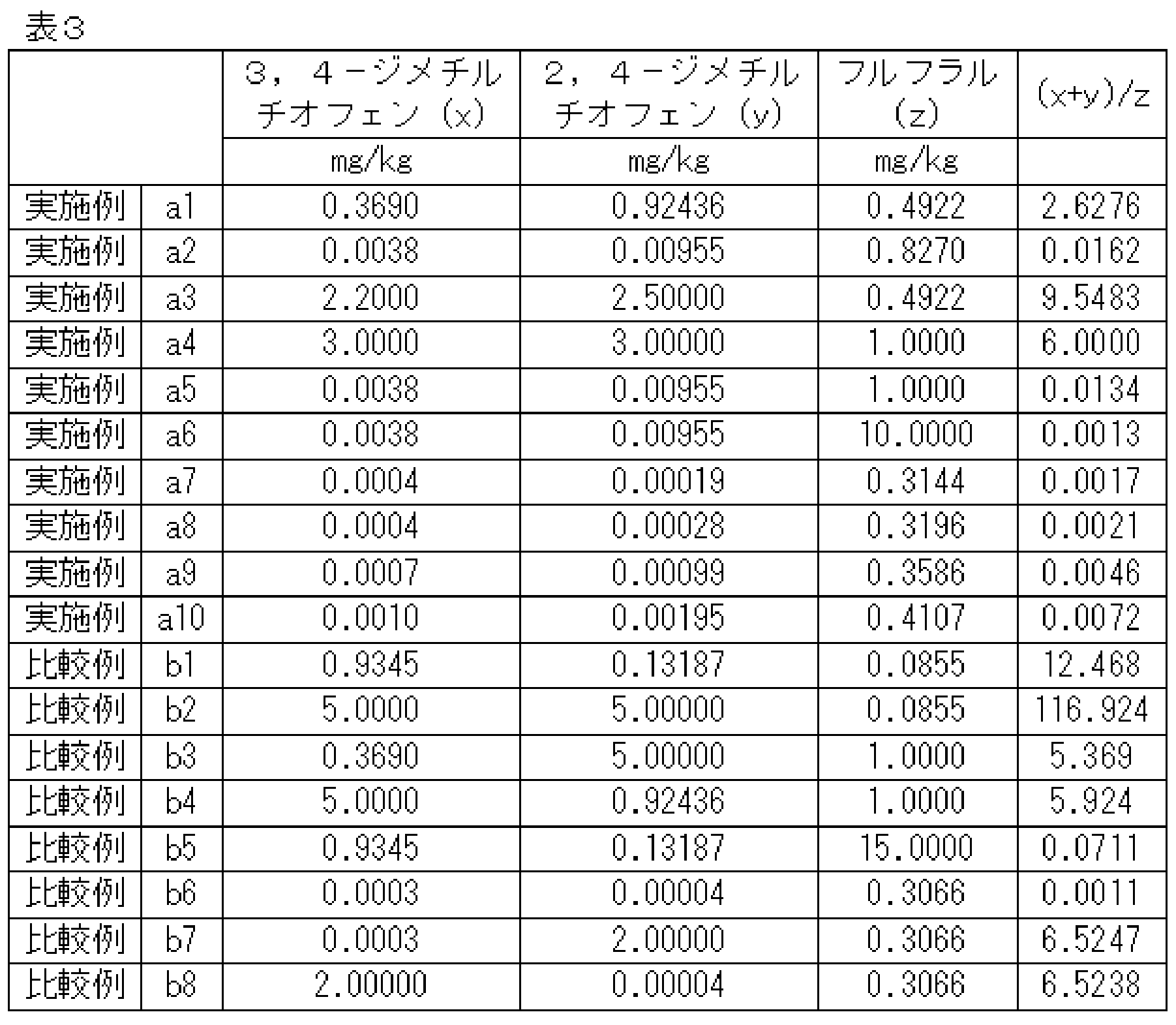
- Table 3 shows the measurement results of the contents of 3,4-dimethylthiophene, 2,4-dimethylthiophene, and furfural, which are specific components of each Example and Comparative Example.
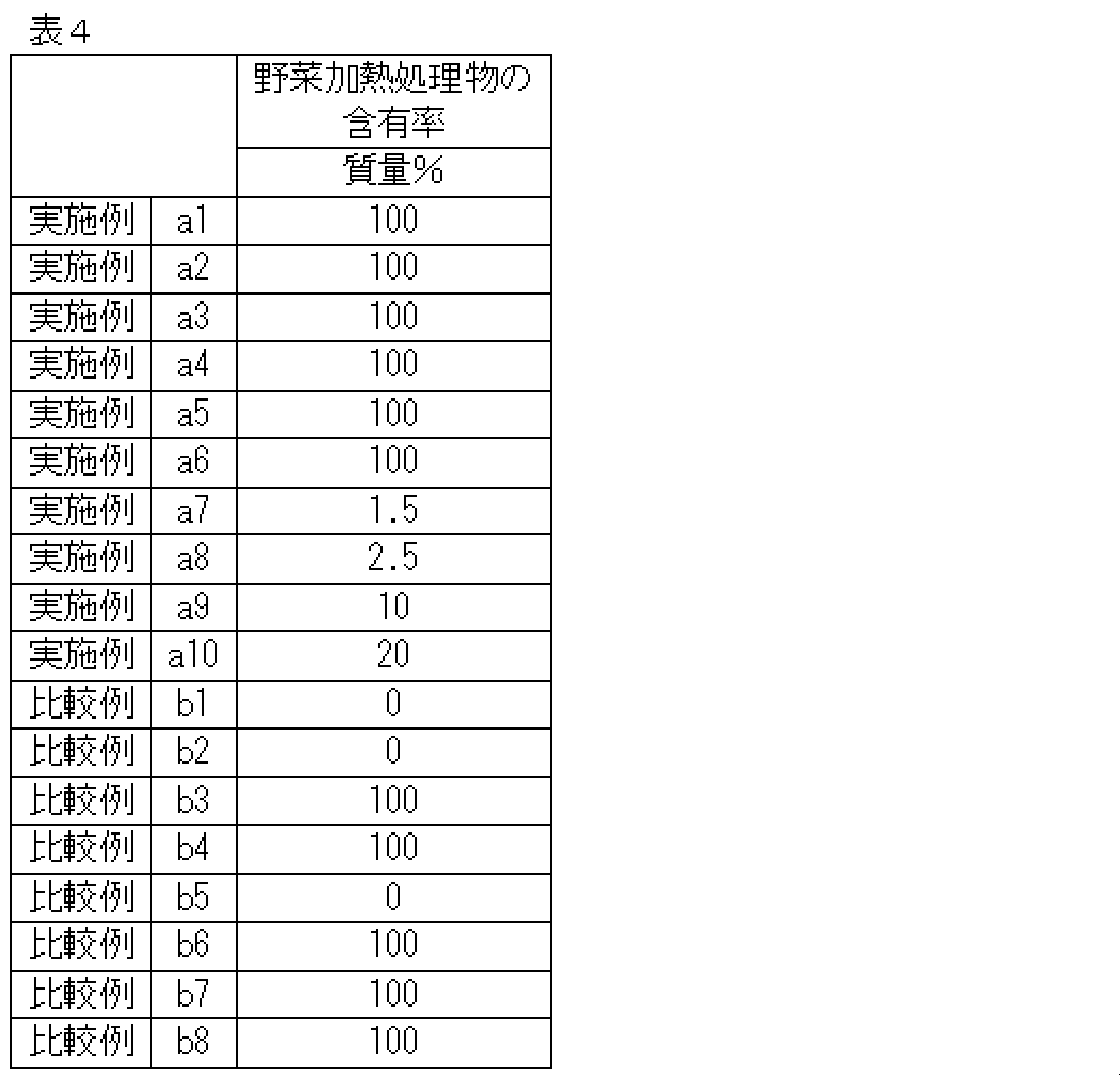
- Table 4 below shows the measurement results of the content of heat-treated vegetables in each example and comparative example.
- the sensory inspectors conducted the following A) and B) identification training, and selected those with particularly excellent results.
- a taste identification test that accurately identifies each taste sample from a total of seven samples prepared one by one and added with two distilled waters.
- a concentration difference identification test that accurately discriminates the concentration differences between five types of aqueous salt solutions and acetic acid aqueous solutions with slightly different concentrations.
- the items of the sensory test are as follows.
- Cooking feeling of vegetables 5 It is preferable that the cooking feeling is sufficiently felt. 4 It is preferable to feel the cooking feeling. 3 You can feel the cooking feeling. 2 It is not preferable because the cooking feeling is slightly felt. 1 It is not preferable because the cooking feeling is not felt at all.
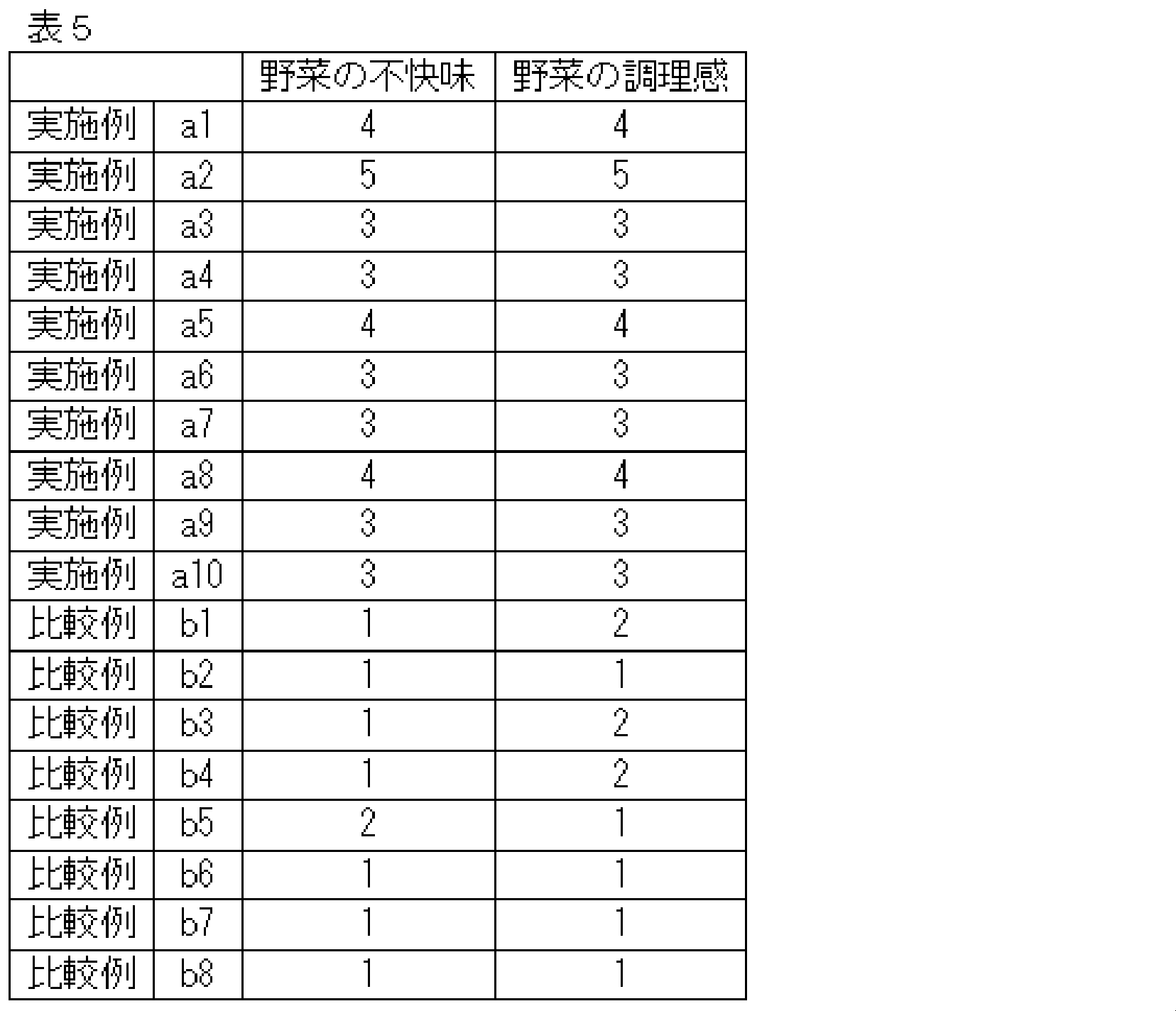
- the results of the sensory test are shown in Table 5 below.
- the score in the table is the average of the scores of the six sensory inspectors, rounded to the first decimal place.
- the unpleasant taste of vegetables and the cooking feeling of vegetables satisfied the standard values of 3 points or more, but in the comparative examples, the points were 2 points or less and did not satisfy the standard values.
- a food containing a heat-treated vegetable product which not only gives a feeling of cooking vegetables but also reduces unpleasant taste, is provided, which is extremely useful in the food field.
Landscapes
- Chemical & Material Sciences (AREA)
- Health & Medical Sciences (AREA)
- Nutrition Science (AREA)
- Life Sciences & Earth Sciences (AREA)
- Engineering & Computer Science (AREA)
- Food Science & Technology (AREA)
- Polymers & Plastics (AREA)
- Oil, Petroleum & Natural Gas (AREA)
- Preparation Of Fruits And Vegetables (AREA)
- Seasonings (AREA)
- Coloring Foods And Improving Nutritive Qualities (AREA)
- General Preparation And Processing Of Foods (AREA)
Abstract
野菜の調理感が付与されているのみならず、不快味も低減された野菜加熱処理物含有食品を提供する。斯かる野菜加熱処理物含有食品は、以下の(a)~(c)を満たす。 (a)3,4-ジメチルチオフェンの含有量(x)が0.00035mg/kg以上3mg/kg以下である。 (b)2,4-ジメチルチオフェンの含有量(y)が0.00015mg/kg以上3mg/kg以下である。 (c)フルフラルの含有量(z)が0.1mg/kg以上10mg/kg以下である。
Description
本発明は、野菜加熱処理物含有食品及びその製造方法、並びに野菜の不快味の低減方法に関する。
一般に野菜は、特有の豊かなや味やその高い栄養価から、積極的に摂取したいという消費者から望まれている反面、野菜特有の青臭さや不快味によって、調味食品中の含有量を増やすと、消費者の嗜好性が低下するという課題があった。
これまでに、野菜の不快味の低減に関しては、様々な研究報告がなされている。例えば、特許文献1では、特定の条件で加熱調理することにより、本来タマネギを加熱した時に得られる濃厚な甘味とコク味を食品に付与できるタマネギエキスが開示されている。また、特許文献2では、香辛野菜特有の風味やまろやかな調理感を与える香味料組成物が開示されている。
しかし、何れの技術も、野菜に加熱処理による調理感を付与することは可能ではあるが、不快味の低減には十分ではないという問題点があった。
本発明は、野菜に調理感を付与するだけでなく、不快味の低減を可能とした、野菜加熱処理物を含有する食品及びその製造方法を提供することを目的とする。
我々は様々な検討を行った結果、野菜加熱処理物に、3,4-ジメチルチオフェン、2,4-ジメチルチオフェン、及びフルフラルを各々特定の濃度範囲で含ませることによって、調理感を付与するだけでなく、野菜の不快味が低減され、消費者の嗜好性が大きく高まった野菜加熱処理物含有食品が製造可能なことを見出した。
なお、野菜加熱処理物に上記成分を含有させる手段としては、3,4-ジメチルチオフェン、2,4-ジメチルチオフェン、及びフルフラル(特定成分)を直接、又はこれらの特定成分を含有する物質を、加熱前、加熱中、又は加熱後の野菜に添加する方法だけでなく、野菜加熱処理物の製造時の加熱によって、3,4-ジメチルチオフェン、2,4-ジメチルチオフェン、及びフルフラルを各々特定の濃度範囲内に調整する方法を用いることも可能である。
即ち、本発明の要旨は以下に存する。
[項1]
野菜加熱処理物を含有する食品であって、以下の(a)~(c)を満たす食品。
(a)3,4-ジメチルチオフェンの含有量(x)が0.00035mg/kg以上3mg/kg以下である。
(b)2,4-ジメチルチオフェンの含有量(y)が0.00015mg/kg以上3mg/kg以下である。
(c)フルフラルの含有量(z)が0.1mg/kg以上10mg/kg以下である。
[項2]
更に以下の(d)を満たす、項1に記載の食品。
(d)下記式1を満たす。
10≧(x+y)/z≧0.0005 (式1)
[項3]
野菜がネギ属である、項1又は2に記載の食品。
[項4]
ネギ属が、タマネギ、ネギ、セイヨウネギ、及びニンニクから選択される1種ないし2種以上である、項3に記載の食品。
[項5]
前記野菜加熱処理物の含有率が1.5質量%以上である、項1~4の何れか一項に記載の食品。
[項6]
項1~5の何れか一項に記載の食品を製造する方法であって、下記ステップ(1)及び(2)を含む方法。
(1)野菜を攪拌しながら70℃以上120℃以下で、前記野菜の質量が加熱前質量の30質量%以上70質量%以下となるまで加熱する。
(2)前記(1)の加熱後の野菜に対し、油を野菜の加熱前質量の1質量%以上10質量%以下の範囲で添加し、攪拌しながら70℃以上120℃以下で加熱する。
[項7]
前記ステップ(1)が、減圧処理及び/又は送風処理を含む、項6に記載の食品の製造方法。
[項8]
前記ステップ(1)の前又は間に、野菜の加熱前質量の1%以上10%以下の塩化ナトリウムを野菜に添加することを更に含む、項6又は7に記載の食品の製造方法。
[項9]
前記ステップ(2)において、得られる野菜加熱処理物が前記(a)~(c)を満たすまで加熱を行う、項6~8の何れか一項に記載の食品の製造方法。
[項10]
前記ステップ(1)及び/又は(2)の加熱前、加熱中、又は加熱後の野菜に対して、3,4-ジメチルチオフェン、2,4-ジメチルチオフェン、及びフルフラルから選択される1又は2以上を添加することを更に含む、項6~9の何れか一項に記載の食品の製造方法。
[項11]
野菜の不快味を低減する方法であって、野菜加熱処理物を含有する食品の組成を、以下の(a)~(c)を満たすように調整することを含む方法。
(a)3,4-ジメチルチオフェンの含有量(x)が0.00035mg/kg以上3mg/kg以下である。
(b)2,4-ジメチルチオフェンの含有量(y)が0.00015mg/kg以上3mg/kg以下である。
(c)フルフラルの含有量(z)が0.1mg/kg以上10mg/kg以下である。
[項1]
野菜加熱処理物を含有する食品であって、以下の(a)~(c)を満たす食品。
(a)3,4-ジメチルチオフェンの含有量(x)が0.00035mg/kg以上3mg/kg以下である。
(b)2,4-ジメチルチオフェンの含有量(y)が0.00015mg/kg以上3mg/kg以下である。
(c)フルフラルの含有量(z)が0.1mg/kg以上10mg/kg以下である。
[項2]
更に以下の(d)を満たす、項1に記載の食品。
(d)下記式1を満たす。
10≧(x+y)/z≧0.0005 (式1)
[項3]
野菜がネギ属である、項1又は2に記載の食品。
[項4]
ネギ属が、タマネギ、ネギ、セイヨウネギ、及びニンニクから選択される1種ないし2種以上である、項3に記載の食品。
[項5]
前記野菜加熱処理物の含有率が1.5質量%以上である、項1~4の何れか一項に記載の食品。
[項6]
項1~5の何れか一項に記載の食品を製造する方法であって、下記ステップ(1)及び(2)を含む方法。
(1)野菜を攪拌しながら70℃以上120℃以下で、前記野菜の質量が加熱前質量の30質量%以上70質量%以下となるまで加熱する。
(2)前記(1)の加熱後の野菜に対し、油を野菜の加熱前質量の1質量%以上10質量%以下の範囲で添加し、攪拌しながら70℃以上120℃以下で加熱する。
[項7]
前記ステップ(1)が、減圧処理及び/又は送風処理を含む、項6に記載の食品の製造方法。
[項8]
前記ステップ(1)の前又は間に、野菜の加熱前質量の1%以上10%以下の塩化ナトリウムを野菜に添加することを更に含む、項6又は7に記載の食品の製造方法。
[項9]
前記ステップ(2)において、得られる野菜加熱処理物が前記(a)~(c)を満たすまで加熱を行う、項6~8の何れか一項に記載の食品の製造方法。
[項10]
前記ステップ(1)及び/又は(2)の加熱前、加熱中、又は加熱後の野菜に対して、3,4-ジメチルチオフェン、2,4-ジメチルチオフェン、及びフルフラルから選択される1又は2以上を添加することを更に含む、項6~9の何れか一項に記載の食品の製造方法。
[項11]
野菜の不快味を低減する方法であって、野菜加熱処理物を含有する食品の組成を、以下の(a)~(c)を満たすように調整することを含む方法。
(a)3,4-ジメチルチオフェンの含有量(x)が0.00035mg/kg以上3mg/kg以下である。
(b)2,4-ジメチルチオフェンの含有量(y)が0.00015mg/kg以上3mg/kg以下である。
(c)フルフラルの含有量(z)が0.1mg/kg以上10mg/kg以下である。
本発明によれば、野菜加熱処理物に3,4-ジメチルチオフェン、2,4-ジメチルチオフェン、及びフルフラルを各々特定の濃度範囲で含有させるという簡易な手段によって、調理感を付与するだけでなく、不快味の低減を可能とした、消費者の嗜好性が大きく高まった野菜加熱処理物含有食品の製造が可能となる。
ここで、「調理感」とは、野菜の加熱によって生じる自然な甘い風味や加熱風味などを含んだ野菜の良好な呈味のことを意味する。また、「不快味」とは、野菜の青臭い味/香りや野菜の鼻につく刺激味/香りなど野菜を食べる際に不快に感じる風味を総称した風味のことを意味する。
以下、本発明を具体的な実施の形態に即して詳細に説明する。但し、本発明は以下の実施の形態に束縛されるものではなく、本発明の趣旨を逸脱しない範囲において、任意の形態で実施することが可能である。
なお、以下の記載では、3,4-ジメチルチオフェン、2,4-ジメチルチオフェン、及びフルフラルを総称して「特定成分」という場合がある。
[野菜加熱処理物含有食品]
本発明の第1の側面は、3,4-ジメチルチオフェン、2,4-ジメチルチオフェン、及びフルフラル(特定成分)をそれぞれ所定量含有する、野菜加熱処理物を含有する食品(以下適宜「本発明の野菜加熱処理物含有食品」或いは単に「本発明の食品」と略称する。)に関する。本発明の野菜加熱処理物含有食品は、野菜加熱処理物のみからなる食品であってもよく、野菜加熱処理物に加えて他の材料や成分等を含む食品であってもよい。
本発明の第1の側面は、3,4-ジメチルチオフェン、2,4-ジメチルチオフェン、及びフルフラル(特定成分)をそれぞれ所定量含有する、野菜加熱処理物を含有する食品(以下適宜「本発明の野菜加熱処理物含有食品」或いは単に「本発明の食品」と略称する。)に関する。本発明の野菜加熱処理物含有食品は、野菜加熱処理物のみからなる食品であってもよく、野菜加熱処理物に加えて他の材料や成分等を含む食品であってもよい。
・野菜加熱処理物:
本発明の食品は、野菜の加熱処理物を含む。野菜加熱処理物の加熱時間には特に限定はないが、加熱を行った際に生じる特定成分以外の成分も同時に含有させる方が、調理感が増強され不快味が低減するため好適である。加熱を行う場合は、部位ごとの加熱ムラが生じにくいように、加熱する野菜を均一に加熱できる容量の設備を用いるのが好ましい。加熱処理の詳細については後述する。
本発明の食品は、野菜の加熱処理物を含む。野菜加熱処理物の加熱時間には特に限定はないが、加熱を行った際に生じる特定成分以外の成分も同時に含有させる方が、調理感が増強され不快味が低減するため好適である。加熱を行う場合は、部位ごとの加熱ムラが生じにくいように、加熱する野菜を均一に加熱できる容量の設備を用いるのが好ましい。加熱処理の詳細については後述する。
・野菜類:
本発明において、加熱処理の対象となる野菜類には特に限定がなく、例えば、ダイコン、ニンジン、ゴボウ、ルタバガ、ビート(好適にはビーツ(ビートルート):ビートの根を食用とするために改良された品種)、パースニップ、カブ、サツマイモ、キャッサバ、ヤーコン、タロイモ、サトイモ、コンニャクイモ、レンコン、ジャガイモ、ムラサキイモ、キクイモ、クワイ、エシャロット、ニンニク、ラッキョウ、ユリネ、カタクリ、ケール、ヤムイモ、ヤマノイモ、ナガイモ、タマネギ、アスパラガス、ウド、キャベツ、レタス、ホウレンソウ、ハクサイ、アブラナ、コマツナ、チンゲンサイ、ニラ、ネギ、ノザワナ、セイヨウネギ、フキ、ミズナ、トマト、ナス、カボチャ、ピーマン、キュウリ、ミョウガ、カリフラワー、ブロッコリー、ニガウリ、オクラ、アーティチョーク、ズッキーニ、てんさい、ショウガ、シソ、パプリカなどが挙げられる。これらの野菜類は、一種であってもよく、二種以上混合物であってもよい。対象となる野菜類は、生鮮品だけに限定されず、生鮮品と同等の水分を含有する野菜加工品であれば、冷凍品、乾燥品の水戻し、塩蔵品などの加工品も好適に用いることができる。
本発明において、加熱処理の対象となる野菜類には特に限定がなく、例えば、ダイコン、ニンジン、ゴボウ、ルタバガ、ビート(好適にはビーツ(ビートルート):ビートの根を食用とするために改良された品種)、パースニップ、カブ、サツマイモ、キャッサバ、ヤーコン、タロイモ、サトイモ、コンニャクイモ、レンコン、ジャガイモ、ムラサキイモ、キクイモ、クワイ、エシャロット、ニンニク、ラッキョウ、ユリネ、カタクリ、ケール、ヤムイモ、ヤマノイモ、ナガイモ、タマネギ、アスパラガス、ウド、キャベツ、レタス、ホウレンソウ、ハクサイ、アブラナ、コマツナ、チンゲンサイ、ニラ、ネギ、ノザワナ、セイヨウネギ、フキ、ミズナ、トマト、ナス、カボチャ、ピーマン、キュウリ、ミョウガ、カリフラワー、ブロッコリー、ニガウリ、オクラ、アーティチョーク、ズッキーニ、てんさい、ショウガ、シソ、パプリカなどが挙げられる。これらの野菜類は、一種であってもよく、二種以上混合物であってもよい。対象となる野菜類は、生鮮品だけに限定されず、生鮮品と同等の水分を含有する野菜加工品であれば、冷凍品、乾燥品の水戻し、塩蔵品などの加工品も好適に用いることができる。
特に本発明による不快味の低減に好適な野菜類としては、ネギ属の野菜が挙げられ、ネギ属の野菜類としては、タマネギ、ネギ、セイヨウネギ、ニンニクが挙げられる。
また、野菜類については丸ごと、角切りなどの固形状のものだけでなく、微粉砕物やピューレ、ペーストなどに加工した状態でも用いることができる。
・特定成分含有量:
本発明の野菜加熱処理物含有食品は、3,4-ジメチルチオフェン、2,4-ジメチルチオフェン、及びフルフラル(特定成分)をそれぞれ所定量含有する。
本発明の野菜加熱処理物含有食品は、3,4-ジメチルチオフェン、2,4-ジメチルチオフェン、及びフルフラル(特定成分)をそれぞれ所定量含有する。
本発明の食品における3,4-ジメチルチオフェンの含有量(x)の下限は、通常0.00035mg/kg以上、好ましくは0.0004mg/kg以上である。3,4-ジメチルチオフェンの含有量(x)が前記下限よりも少ないと、野菜の風味が十分に感じられない場合がある。
本発明の食品における3,4-ジメチルチオフェンの含有量(x)の上限は、通常3mg/kg以下、好ましくは1mg/L以下である。3,4-ジメチルチオフェンの含有量(x)が前記上限を超えると、野菜由来の刺激臭を強く感じ、不快感が生じる場合がある。
本発明の食品における2,4-ジメチルチオフェンの含有量(y)の下限は、通常0.00015mg/kg以上、好ましくは0.0002mg/kg以上である。2,4-ジメチルチオフェンの含有量(y)が前記下限よりも少ないと、野菜の呈味が十分に感じられない場合がある。
本発明の食品における2,4-ジメチルチオフェンの含有量(y)の上限は、通常3mg/kg以下、好ましくは1mg/kg以下である。2,4-ジメチルチオフェンの含有量(y)が前記上限を超えると、野菜の刺激臭が強く感じられる場合がある。
本発明の食品におけるフルフラルの含有量(z)の下限は、通常0.1mg/kg以上、好ましくは0.2mg/kg以上とすることが好ましい。フルフラルの含有量(z)が前記下限よりも少ないと、調理感を補強する良好な風味が十分に付与されない場合がある。
一方、本発明の食品におけるフルフラルの含有量(z)の上限は、通常10mg/kg以下、中でも5mg/kg以下、更には1mg/kg以下とすることが好ましい。フルフラルの含有量(z)が前記上限を超えると、フルフラル自体の香りが強く感じられ、不自然な甘味が生じる場合がある。
本発明の食品における3,4-ジメチルチオフェンの含有量(x)及び2,4-ジメチルチオフェンの含有量(y)の和と、フルフラルの含有量(z)との比、即ち(x+y)/zの値の下限は、通常0.0005以上、中でも0.001以上であることが好ましい。(x+y)/zの値が前記下限よりも低いと、野菜の風味が十分に感じられない場合がある。
一方、前記(x+y)/zの値の上限は、通常10以下、中でも7以下、更には3以下であることが好ましい。(x+y)/zの値が前記上限を超えると、野菜加熱処理物の良好な調理感が得られない場合や、野菜の刺激味が十分に抑制できない場合がある。
本発明において、野菜加熱処理物含有食品における3,4-ジメチルチオフェン、2,4-ジメチルチオフェン、及びフルフラルの含有量は、ガスクロマトグラフィー/質量分析法(GC/MS)を用いて測定できる。
本発明の食品は、3,4-ジメチルチオフェン、2,4-ジメチルチオフェン、及びフルフラル(特定成分)を、それぞれ所定含有率の範囲で含有することを特徴とし、調理感を付与するだけでなく、不快味の低減が両立されている。
本発明の食品に、3,4-ジメチルチオフェン、2,4-ジメチルチオフェン、及びフルフラル(特定成分)を含有させる方法としては、これらに限定されるものではないが、各特定成分をそれぞれ単独の物質として添加する方法と、野菜加熱処理物の製造時の加熱によって、各特定成分をそれぞれ各々特定の濃度範囲内に調整する方法とが挙げられる。中でも後者の方法の方が、野菜の不快味低減に関与する他の香気成分を同時に含有させることが可能となるため好ましい。
・その他の材料・成分:
本発明の野菜加熱処理物含有食品は、野菜及び特定成分(3,4-ジメチルチオフェン、2,4-ジメチルチオフェン、及びフルフラル)の他に、任意の材料や成分を含有していてもよい。本発明の食品が野菜加熱処理物以外の材料や成分を含有する場合、その種類には特に制限はない。例としては、スパイス、ハーブなどの植物由来の原料や、糖類、高甘味度甘味料、アミノ酸系調味料、核酸系調味料、有機酸系調味料、風味原料、旨味調味料、酒類、香味オイル、フレーバー、香辛料抽出物などの呈味・風味成分、粘度調整剤、安定剤、pH調整剤、着色料などの添加剤、塩化ナトリウム等の塩、油、水等が挙げられる。これらの材料や成分は1種でもよいが、2種以上を任意の組み合わせ及び比率とすることもできる。これらの材料や成分の含有量は特に限定はされず、用途等に応じて適宜決定することができる。
本発明の野菜加熱処理物含有食品は、野菜及び特定成分(3,4-ジメチルチオフェン、2,4-ジメチルチオフェン、及びフルフラル)の他に、任意の材料や成分を含有していてもよい。本発明の食品が野菜加熱処理物以外の材料や成分を含有する場合、その種類には特に制限はない。例としては、スパイス、ハーブなどの植物由来の原料や、糖類、高甘味度甘味料、アミノ酸系調味料、核酸系調味料、有機酸系調味料、風味原料、旨味調味料、酒類、香味オイル、フレーバー、香辛料抽出物などの呈味・風味成分、粘度調整剤、安定剤、pH調整剤、着色料などの添加剤、塩化ナトリウム等の塩、油、水等が挙げられる。これらの材料や成分は1種でもよいが、2種以上を任意の組み合わせ及び比率とすることもできる。これらの材料や成分の含有量は特に限定はされず、用途等に応じて適宜決定することができる。
・食品の態様:
本発明の野菜加熱処理物含有食品の態様は、制限されるものではないが、野菜加野菜加熱処理物を主材料とする食品(第1の態様の食品)と、野菜加熱処理物を複数の材料の一部として含む食品(第2の態様の食品)とに大別される。後者の例としては、野菜の風味が十分に活かせる、パスタソース、ドレッシング、ステーキソースが挙げられる。
本発明の野菜加熱処理物含有食品の態様は、制限されるものではないが、野菜加野菜加熱処理物を主材料とする食品(第1の態様の食品)と、野菜加熱処理物を複数の材料の一部として含む食品(第2の態様の食品)とに大別される。後者の例としては、野菜の風味が十分に活かせる、パスタソース、ドレッシング、ステーキソースが挙げられる。
本発明の食品が野菜加熱処理物を主材料とする食品(第1の態様の食品)である場合、本発明の食品に対する野菜加熱処理物の比率の下限は、例えば通常80質量%以上、中でも90質量%以上とすることができる。野菜加熱物処理物の割合が前記下限より少ないと、野菜の風味が不十分で満足できない味となる場合がある。一方、本発明の食品に対する野菜加熱処理物の比率の上限には制限はなく、例えば100質量%とすることができる。
本発明の食品が野菜加熱処理物を複数の材料の一部として含む食品(第2の態様の食品)である場合、本発明の食品における野菜加熱処理物の配合量は、食品の種類によっても異なり、制限されるものではないが、例えば以下のとおりとすることができる。本発明の食品に対する野菜加熱処理物の比率の下限は、例えば通常1.5質量%以上、中でも2.5質量%以上とすることができる。野菜加熱物処理物の割合が前記下限より少ないと、野菜の風味が不十分で満足できない味となる場合がある。一方、本発明の食品に対する野菜加熱処理物の比率の上限は、例えば通常20質量%以下、中でも15質量%以下とすることができる。野菜加熱物処理物が前記上限より多いと、野菜の加熱臭が強すぎて不快味が強調されてしまう場合がある。
[野菜加熱処理物含有食品の製造方法]
本発明の第2の側面は、前記の本発明の野菜加熱処理物含有食品を製造する方法(以下適宜「本発明の製造方法」と略称する。)に関する。
本発明の第2の側面は、前記の本発明の野菜加熱処理物含有食品を製造する方法(以下適宜「本発明の製造方法」と略称する。)に関する。
本発明の製造方法は、野菜を加熱処理することにより、野菜加熱処理物を調製することを含む。野菜の加熱処理は、通常行われる方法で実施することができるが、下記のステップ(1)及び(2)を順に実施することが望ましい。これらのステップを経ることによって、前記特定成分を容易に好適なバランスに調整することができる。
(1)野菜を攪拌しながら、所定の加熱温度で、野菜の質量が加熱前質量に対し一定の比率以下となるまで加熱する。なお、前記「所定の加熱温度」で加熱するとは、加熱処理対象の野菜の中心温度が斯かる「所定の加熱温度」となる条件で、好ましくは以下に示す時間に亘って加熱を継続することを意味する。但し、加熱中に当該温度帯を外れた品温となった場合も、数分程度(例えば5分以内、好ましくは3分以内)であれば、当該加熱処理が継続されているものとする。
(2)前記(1)の加熱後の野菜に対し、油を野菜の加熱前質量に対し一定の比率の範囲となるように添加し、攪拌しながら所定温度で加熱する。
更に、必要に応じて、3,4-ジメチルチオフェン、2,4-ジメチルチオフェン、及びフルフラル(特定成分)を各々前記特定濃度に調節する工程や、任意により用いられる他の材料や成分を添加・混合する工程を加えてもよい。
・ステップ(1):
前記ステップ(1)において、野菜の「所定の加熱温度」は、制限されるものではないが、通常70℃以上、中でも80℃以上、また、通常120℃以下、中でも110℃以下の範囲とすることが好ましい。
前記ステップ(1)において、野菜の「所定の加熱温度」は、制限されるものではないが、通常70℃以上、中でも80℃以上、また、通常120℃以下、中でも110℃以下の範囲とすることが好ましい。
前記ステップ(1)において、野菜の加熱時間は、制限されるものではないが、例えば30分以上、中でも40分以上、また、120分以内、中でも110分以内の時間に亘って、前記「所定の加熱温度」で加熱を行うことが好ましい。また、野菜の質量が、加熱前質量に対し通常30質量%以上、中でも35質量%以上、また、通常70質量%以下、中でも65質量%以下となるまで加熱を行うことが好ましい。
前記ステップ(1)では、野菜の香気成分の揮発を促進するため、加熱を減圧下及び/又は送風下で行うことが好ましい。
前記ステップ(1)では、野菜から水分の揮発を促進するため、本ステップの実施前及び/又は実施中に、野菜に対して所定量の塩化ナトリウムを添加することが好ましい。塩化ナトリウムの添加量は、限定されるものではないが、例えば野菜の加熱前質量に対し通常1質量%以上、中でも1.5質量%以上、また、通常10質量%以下、中でも7質量%以下とすることが好ましい。
本発明において、塩化ナトリウムとしては、塩化ナトリウムの精製品を用いてもよく、塩化ナトリウムを含む食用塩等の混合物を用いてもよい。但し、塩化ナトリウム以外の不純物を大量に含む岩塩などを用いる際は、塩化ナトリウムの含有量を考慮してその添加量を調整することが好ましい。
・ステップ(2):
一方、前記ステップ(2)において、油の添加量は、限定されるものではないが、例えば野菜の加熱前質量に対し通常1質量%以上、中でも2.5質量%以上、また、通常10質量%以下、中でも7.5質量%以下とすることが好ましい。
一方、前記ステップ(2)において、油の添加量は、限定されるものではないが、例えば野菜の加熱前質量に対し通常1質量%以上、中でも2.5質量%以上、また、通常10質量%以下、中でも7.5質量%以下とすることが好ましい。
本発明において、油の種類にはとくに限定はなく、ごま油、菜種油、大豆油、パーム分別油(PMF)、綿実油、コーン油、ひまわり油、サフラワー油、オリーブ油、亜麻仁油、米油、椿油、荏胡麻油、グレープシードオイル、ピーナッツオイル、アーモンドオイル、アボカドオイル、サラダ油、キャノーラ油などが好適に用いられる。
前記ステップ(2)において、野菜の「所定の加熱温度」は、制限されるものではないが、通常70℃以上、中でも80℃以上、また、通常120℃以下、中でも110℃以下の範囲とすることが好ましい。
前記ステップ(2)において、野菜の加熱時間は制限されるものではないが、例えば9分以上、中でも12分以上、また、50分以内、中でも40分以内の時間に亘って、前記「所定の加熱温度」で加熱を行うことが好ましい。また、特定成分(3,4-ジメチルチオフェン、2,4-ジメチルチオフェン、及びフルフラル)を外部から添加せず、野菜の加熱によってその濃度を調整する場合(後述する第1の手法の場合)には、少なくとも得られる野菜加熱処理物の特定成分(3,4-ジメチルチオフェン、2,4-ジメチルチオフェン、及びフルフラル)の各含有量が食品中でそれぞれ前記所定範囲となるように加熱を行う。
野菜加熱処理物の加熱処理を行う設備は、前記ステップ(1)及び(2)を実施できるよう、一定温度で加熱でき、且つ、攪拌することが可能であれば、特に制約はない。また、上記装置には送風及び/または減圧により加熱蒸気の揮発を促進できる装置が付帯できることがさらに好ましい。但し、野菜加熱処理物の大規模な生産を行う場合には、生産性の観点で、加熱温度と攪拌速度が制御可能な円筒状のプロセスタンクが好適である、斯かるプロセスタンクの一例として、レオニーダーKH/株式会社カジワラを挙げることができる。
・特定成分の濃度調整:
本発明の食品に3,4-ジメチルチオフェン、2,4-ジメチルチオフェン、及びフルフラル(特定成分)を各々前記特定の濃度範囲で含有させる手法としては、前記ステップ(1)及び(2)における野菜の加熱工程によって、これらの特定成分を各々前記特定の濃度範囲内に調整する手法(第1の手法)と、これらの特定成分(又はこれらの特定成分を含有する物質)を、加熱前、加熱中、又は加熱後の野菜に添加する手法(第2の手法)とが挙げられる。前者の第1の手法の場合、通常は前記ステップ(1)及び(2)を前記好適な条件で実施することによって、前記特定成分を容易に好適なバランスに調整することができる。後者の第2の手法の場合、これらの特定成分(又はこれらの特定成分を含有する物質)は、前記ステップ(1)及び/又は(2)における野菜の加熱工程の前又は間に加えて、野菜と一緒に加熱してもよく、前記ステップ(1)及び/又は(2)における野菜の加熱工程の終了後、野菜加熱処理物に加えて混合してもよい。
本発明の食品に3,4-ジメチルチオフェン、2,4-ジメチルチオフェン、及びフルフラル(特定成分)を各々前記特定の濃度範囲で含有させる手法としては、前記ステップ(1)及び(2)における野菜の加熱工程によって、これらの特定成分を各々前記特定の濃度範囲内に調整する手法(第1の手法)と、これらの特定成分(又はこれらの特定成分を含有する物質)を、加熱前、加熱中、又は加熱後の野菜に添加する手法(第2の手法)とが挙げられる。前者の第1の手法の場合、通常は前記ステップ(1)及び(2)を前記好適な条件で実施することによって、前記特定成分を容易に好適なバランスに調整することができる。後者の第2の手法の場合、これらの特定成分(又はこれらの特定成分を含有する物質)は、前記ステップ(1)及び/又は(2)における野菜の加熱工程の前又は間に加えて、野菜と一緒に加熱してもよく、前記ステップ(1)及び/又は(2)における野菜の加熱工程の終了後、野菜加熱処理物に加えて混合してもよい。
・他の材料や成分の添加・混合:
本発明の食品が、野菜加熱処理物に加えて、任意により用いられる他の材料や成分を含む場合には、斯かる他の材料や成分を野菜に対して添加・混合すればよい。斯かる他の材料や成分は、前記ステップ(1)及び/又は(2)における野菜の加熱工程の前又は間に加えて、野菜と一緒に加熱してもよく、前記ステップ(1)及び/又は(2)における野菜の加熱工程の終了後、野菜加熱処理物に加えて混合してもよい。一方、本発明の食品が、野菜加熱処理物以外の材料や成分を含まない場合は、斯かる工程は不要である。
本発明の食品が、野菜加熱処理物に加えて、任意により用いられる他の材料や成分を含む場合には、斯かる他の材料や成分を野菜に対して添加・混合すればよい。斯かる他の材料や成分は、前記ステップ(1)及び/又は(2)における野菜の加熱工程の前又は間に加えて、野菜と一緒に加熱してもよく、前記ステップ(1)及び/又は(2)における野菜の加熱工程の終了後、野菜加熱処理物に加えて混合してもよい。一方、本発明の食品が、野菜加熱処理物以外の材料や成分を含まない場合は、斯かる工程は不要である。
[野菜の不快味を低減する方法]
本発明の第3の側面は、野菜の不快味を低減する方法に関する。斯かる方法は、前述の本発明の製造方法を実施することにより、野菜を加熱処理して、本発明の野菜加熱処理物含有食品とすることを含む。その詳細については、本発明の野菜加熱処理物含有食品及びその製造方法について前述したとおりである。
本発明の第3の側面は、野菜の不快味を低減する方法に関する。斯かる方法は、前述の本発明の製造方法を実施することにより、野菜を加熱処理して、本発明の野菜加熱処理物含有食品とすることを含む。その詳細については、本発明の野菜加熱処理物含有食品及びその製造方法について前述したとおりである。
次に実施例を参照しながら本発明をより詳細に説明する。以下の実施例はあくまでも例示目的で示すものであり、如何なる意味でも本発明を限定するものではない。
[食品試料の調製]
実施例としてa1~a10、比較例としてb1~b8の食品の試料を調製した。その内訳を下記表1に示す。
実施例としてa1~a10、比較例としてb1~b8の食品の試料を調製した。その内訳を下記表1に示す。
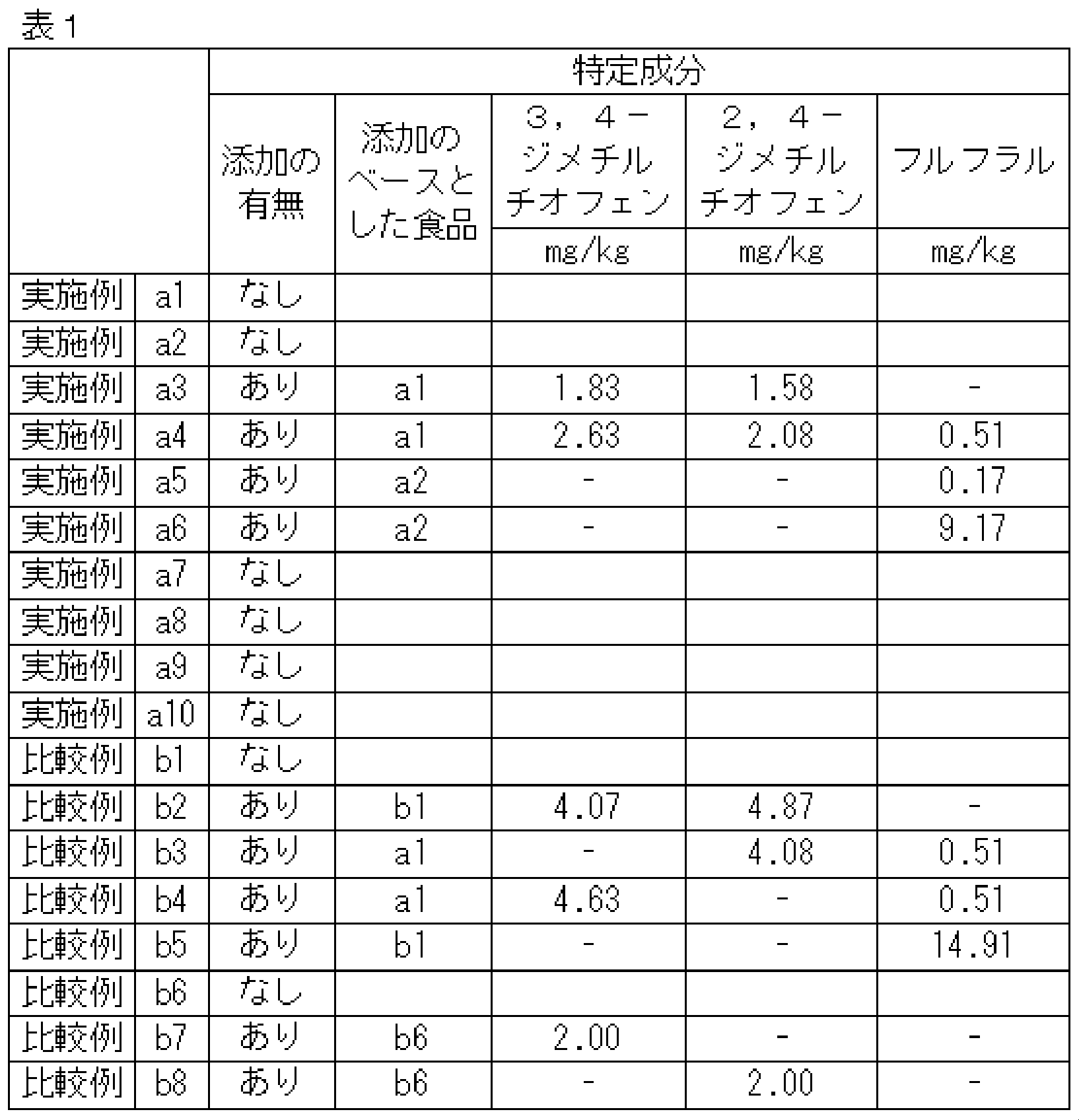
なお、特定成分の添加を伴わない実施例及び比較例の試料に関しては、以下のように調製した。
・実施例a1及びa2の調製:
1.冷凍たまねぎ(10mm角に切断してから冷凍)50kg、食塩2kgをプロセスタンク(PC-5150、φ594mm、Soren社)に投入した。
2.その後、右記条件にて加熱をした。加熱中は蓋を閉じて送風処理を行うことにより、野菜の香気成分の揮発を強制的に促進させた。
品温:100℃
攪拌速度:30rpm
上記の条件を質量:25kgになるまで60分間継続した。
この段階で、一部検体を分取し、実施例a1の試料とした。
3.野菜の質量が25kg(食塩の量は差し引いて測定した)になった時点で、油(オリーブオイル)3kgを投入した。
4.その後、右記条件にて加熱をした。加熱中は特に送風処理は行わず、蓋を開けることによりに香気成分を揮発させた。
温度:100℃
攪拌スピード30rpm
上記の条件は、質量:20kgになるまで20分間継続した。
5.野菜の質量が20kg(油、食塩の量は差し引いて測定した)になったら、加熱をやめ、水20kgを投入した。なお、この作業の間も攪拌は継続させた。この検体を一部分取し、実施例a2の試料とした。
1.冷凍たまねぎ(10mm角に切断してから冷凍)50kg、食塩2kgをプロセスタンク(PC-5150、φ594mm、Soren社)に投入した。
2.その後、右記条件にて加熱をした。加熱中は蓋を閉じて送風処理を行うことにより、野菜の香気成分の揮発を強制的に促進させた。
品温:100℃
攪拌速度:30rpm
上記の条件を質量:25kgになるまで60分間継続した。
この段階で、一部検体を分取し、実施例a1の試料とした。
3.野菜の質量が25kg(食塩の量は差し引いて測定した)になった時点で、油(オリーブオイル)3kgを投入した。
4.その後、右記条件にて加熱をした。加熱中は特に送風処理は行わず、蓋を開けることによりに香気成分を揮発させた。
温度:100℃
攪拌スピード30rpm
上記の条件は、質量:20kgになるまで20分間継続した。
5.野菜の質量が20kg(油、食塩の量は差し引いて測定した)になったら、加熱をやめ、水20kgを投入した。なお、この作業の間も攪拌は継続させた。この検体を一部分取し、実施例a2の試料とした。
・比較例b1の調製:
実施例a1及びa2の試料の調製に用いた冷凍タマネギ(10mm角に切断してから冷凍)を、そのまま比較例b1の試料とした。
実施例a1及びa2の試料の調製に用いた冷凍タマネギ(10mm角に切断してから冷凍)を、そのまま比較例b1の試料とした。
・比較例b6の調製:
1.トマトペースト(Brix値15)62質量%、食塩1.0質量%、大豆油1.6質量%及び残部を水で調製したトマトソースを攪拌混合した。
2.上記原料500gを攪拌しながら加温を行い(設定温度:95℃、温度に達した後、5分間保温する)、攪拌が完了したトマトソースをパウチに充填して、比較例b6の試料とした。
1.トマトペースト(Brix値15)62質量%、食塩1.0質量%、大豆油1.6質量%及び残部を水で調製したトマトソースを攪拌混合した。
2.上記原料500gを攪拌しながら加温を行い(設定温度:95℃、温度に達した後、5分間保温する)、攪拌が完了したトマトソースをパウチに充填して、比較例b6の試料とした。
・実施例a7~a10の調製:
1.トマトペースト(Brix値15)62質量%、食塩1.0質量%、及び大豆油1.6%に、所定量の実施例a1を(実施例a7については1.5質量%、実施例a8については2.5質量%、実施例a9については10質量%、実施例a10については20質量%となるように)加え、残部として水を加え、攪拌混合してトマトソースを調製した。
2.上記原料500gを攪拌しながら加温を行い(設定温度:95℃、前記設定温度に達した後、5分間保温する)、攪拌が完了したトマトソースをパウチに充填して実施例a7~a10の試料とした。
1.トマトペースト(Brix値15)62質量%、食塩1.0質量%、及び大豆油1.6%に、所定量の実施例a1を(実施例a7については1.5質量%、実施例a8については2.5質量%、実施例a9については10質量%、実施例a10については20質量%となるように)加え、残部として水を加え、攪拌混合してトマトソースを調製した。
2.上記原料500gを攪拌しながら加温を行い(設定温度:95℃、前記設定温度に達した後、5分間保温する)、攪拌が完了したトマトソースをパウチに充填して実施例a7~a10の試料とした。
・特定成分の添加:
また、特定成分の添加を伴う実施例及び比較例の試料に関しては、特定成分の添加を伴わない実施例及び比較例の試料に対して、特定成分として以下の物質を用い、エタノールで高濃度に希釈した特定成分を、上記表1に記載した濃度となるように添加することで調製した。
・3,4-ジメチルチオフェン(Thiophene,3,4-dimethyl-:CAS No.632-15-5、Combi-Blocks社製)
・2,4-ジメチルチオフェン(Thiophene,2,4-dimethyl-:CAS No.638-00-6、富士フィルムワコーケミカル社製)
・フルフラル(Furfural:CAS No.98-01-1、東京化成工業社製)
また、特定成分の添加を伴う実施例及び比較例の試料に関しては、特定成分の添加を伴わない実施例及び比較例の試料に対して、特定成分として以下の物質を用い、エタノールで高濃度に希釈した特定成分を、上記表1に記載した濃度となるように添加することで調製した。
・3,4-ジメチルチオフェン(Thiophene,3,4-dimethyl-:CAS No.632-15-5、Combi-Blocks社製)
・2,4-ジメチルチオフェン(Thiophene,2,4-dimethyl-:CAS No.638-00-6、富士フィルムワコーケミカル社製)
・フルフラル(Furfural:CAS No.98-01-1、東京化成工業社製)
[特定成分の測定]
特定成分である3,4-ジメチルチオフェン、2,4-ジメチルチオフェン、及びフルフラルの含有量の測定は、ガスクロマトグラフィー/質量分析装置(GC/MS)を用いて以下の方法で実施した。
特定成分である3,4-ジメチルチオフェン、2,4-ジメチルチオフェン、及びフルフラルの含有量の測定は、ガスクロマトグラフィー/質量分析装置(GC/MS)を用いて以下の方法で実施した。
まず、各実施例及び比較例の試料に対し、以下の1~6の前処理を行って、測定検体を調製した。
1.各実施例及び比較例の試料から、10gを測定試料として採取した。ただし、野菜加熱処理物のみを検体に用いる際は、加熱前の野菜の質量に相当するようにイオン交換水を添加した。(例えば濃縮率が50%の野菜加熱処理物を測定試料とする場合は、検体5gに水5gを添加したものを測定試料とした。)
2.前記1の処理を行った測定試料にイオン交換水を添加して、総質量が100gとなるように調製した。
3.希釈後、測定試料を濾紙(No.2)にてろ過し、20mLヘッドスペースバイアル(平底)へろ液を入れた。
4.バイアルに、PDMS Twister(膜厚0.5mm、長さ10mm)(GERSTEL社)を入れ、60分間振とうして、成分を吸着させた。
5.60分後、ろ液を取り除き、PDMS Twisterをイオン交換水ですすいだ。
6.すすぎ後、水分をキムワイプでふき取り、測定検体とした。
1.各実施例及び比較例の試料から、10gを測定試料として採取した。ただし、野菜加熱処理物のみを検体に用いる際は、加熱前の野菜の質量に相当するようにイオン交換水を添加した。(例えば濃縮率が50%の野菜加熱処理物を測定試料とする場合は、検体5gに水5gを添加したものを測定試料とした。)
2.前記1の処理を行った測定試料にイオン交換水を添加して、総質量が100gとなるように調製した。
3.希釈後、測定試料を濾紙(No.2)にてろ過し、20mLヘッドスペースバイアル(平底)へろ液を入れた。
4.バイアルに、PDMS Twister(膜厚0.5mm、長さ10mm)(GERSTEL社)を入れ、60分間振とうして、成分を吸着させた。
5.60分後、ろ液を取り除き、PDMS Twisterをイオン交換水ですすいだ。
6.すすぎ後、水分をキムワイプでふき取り、測定検体とした。
・測定の手法:
調製された測定検体を用い、ゲステル社1次元2次元切替GC-MS(GC部:HP7890 Series GC SystemにLTM series IIを連結(ともにAgilent社製)、注入口:TDU2/CIS4(ゲステル社)、オートサンプラー:MPS(ゲステル社))を用いて、特定成分の測定を行った。
調製された測定検体を用い、ゲステル社1次元2次元切替GC-MS(GC部:HP7890 Series GC SystemにLTM series IIを連結(ともにAgilent社製)、注入口:TDU2/CIS4(ゲステル社)、オートサンプラー:MPS(ゲステル社))を用いて、特定成分の測定を行った。
なお、キャピラリーカラムとしては、一次元カラムとしてDB-WAX(長さ30m、内径250μm、膜厚0.25μm、LTM用)(Agilent社)、二次元カラムとしてDB-5(長さ10m、内径180μm、膜厚0.4μm、LTM用)(Agilent社)を使用した。キャリアガスとしてはヘリウムを用いた。
特定成分のうち、フルフラルの測定は一次元分析、3,4-ジメチルチオフェン及び2,4-ジメチルチオフェンの測定はそれぞれ二次元分析で行った。注入は、上記前処理を行ったPDMS Twister各1個を用い、注入条件は何れも以下の条件で行った。
・CIS4:
10℃で0.5分保持、その後720℃/分で240℃まで昇温。
・TDU2:
30℃で0.2分保持、その後720℃/分で240℃まで昇温。
・CIS4:
10℃で0.5分保持、その後720℃/分で240℃まで昇温。
・TDU2:
30℃で0.2分保持、その後720℃/分で240℃まで昇温。
3,4-ジメチルチオフェン及び2,4-ジメチルチオフェンの測定は、上記注入条件で一次元カラムに注入を行った後、保持時間が12分から16分の間でバックフラッシュを行い、特定成分を二次元カラムに導入して分離を行い、SIM分析に供した。なお、DB-WAX(一次元カラム)及びDB-5(二次元カラム)のカラムオーブン条件はそれぞれ以下のとおりとした。
・DB-WAX(一次元カラム):
40℃で3分保持、その後5℃/分で昇温、測定開始から41.5分で打ち切り。
・DB-5(二次元カラム):
40℃で16.5分保持、その後20℃/分で240℃まで昇温、15分保持。
・DB-WAX(一次元カラム):
40℃で3分保持、その後5℃/分で昇温、測定開始から41.5分で打ち切り。
・DB-5(二次元カラム):
40℃で16.5分保持、その後20℃/分で240℃まで昇温、15分保持。
フルフラルの測定は、上記注入条件で注入を行った後、一次元カラムで分離を行い、SIM分析に供した。なお、DB-WAX(一次元カラム)のカラムオーブン条件は以下のとおりとした。
・DB-WAX(一次元カラム):
40℃で3分保持、その後5℃/分で240℃まで昇温、7分保持。
・DB-WAX(一次元カラム):
40℃で3分保持、その後5℃/分で240℃まで昇温、7分保持。
各測定検体は、選択イオン検出(SIM)モードにより、下記表2に示す特定成分の標準物質の定量イオンの面積から測定検体の濃度を算出し、水での希釈を考慮して各試料に含まれる特定成分の含有濃度を算出した。
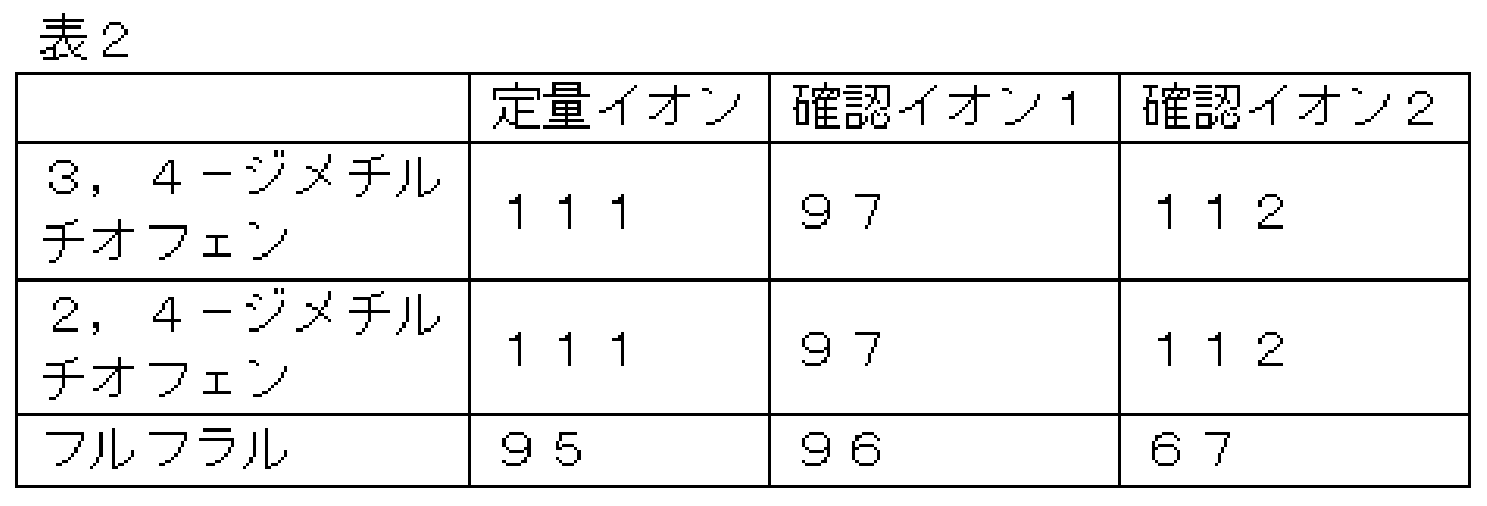
なお、ピークシグナルとベースノイズの比(S/N比)が10未満のピークについては、ノイズが大きく定量が困難であったため、不検出(ND)とした。
各実施例及び比較例の特定成分である3,4-ジメチルチオフェン、2,4-ジメチルチオフェン、及びフルフラルの含有量の測定結果を下記表3に示す。
[野菜加熱処理物含有率]
野菜加熱処理物の含量は、加熱処理を行った野菜類について質量計(大容量の場合はロードセルLC-1205(A&D製)、小容量の場合は精密はかりHT-120(A&D製))を用いて当該野菜類の質量を測定し、他の配合原料との質量比を算出した。
野菜加熱処理物の含量は、加熱処理を行った野菜類について質量計(大容量の場合はロードセルLC-1205(A&D製)、小容量の場合は精密はかりHT-120(A&D製))を用いて当該野菜類の質量を測定し、他の配合原料との質量比を算出した。
各実施例及び比較例の野菜加熱処理物含有率の測定結果を下記表4に示す。
[官能評価]
各サンプルの評価は以下の条件で行った。各評価は以下の訓練を行った官能検査員6名で実施した。
各サンプルの評価は以下の条件で行った。各評価は以下の訓練を行った官能検査員6名で実施した。
官能検査員は、下記A)及びB)の識別訓練を実施し、特に成績が優秀な者を選定した。
A)五味(甘味:砂糖の味、酸味:酒石酸の味、旨み:グルタミン酸ナトリウムの味、塩味:塩化ナトリウムの味、苦味:カフェインの味)について、各成分の閾値に近い濃度の水溶液を各1つずつ作製し、これに蒸留水2つを加えた計7つのサンプルから、それぞれの味のサンプルを正確に識別する味質識別試験。
B)濃度がわずかに異なる5種類の食塩水溶液、酢酸水溶液の濃度差を正確に識別する濃度差識別試験。
A)五味(甘味:砂糖の味、酸味:酒石酸の味、旨み:グルタミン酸ナトリウムの味、塩味:塩化ナトリウムの味、苦味:カフェインの味)について、各成分の閾値に近い濃度の水溶液を各1つずつ作製し、これに蒸留水2つを加えた計7つのサンプルから、それぞれの味のサンプルを正確に識別する味質識別試験。
B)濃度がわずかに異なる5種類の食塩水溶液、酢酸水溶液の濃度差を正確に識別する濃度差識別試験。
官能検査の項目は以下とした。
・野菜の不快味:
5 不快味が全く感じられず好ましい
4 不快味がわずかにしか感じられず好ましい
3 不快味がやや感じられる
2 不快味が感じられて好ましくない
1 不快味を強く感じ好ましくない
5 不快味が全く感じられず好ましい
4 不快味がわずかにしか感じられず好ましい
3 不快味がやや感じられる
2 不快味が感じられて好ましくない
1 不快味を強く感じ好ましくない
・野菜の調理感
5 調理感が十分に感じられ好ましい。
4 調理感が感じられ好ましい。
3 調理感が感じられる。
2 調理感がわずかにしか感じられず好ましくない。
1 調理感が全く感じられず好ましくない。
5 調理感が十分に感じられ好ましい。
4 調理感が感じられ好ましい。
3 調理感が感じられる。
2 調理感がわずかにしか感じられず好ましくない。
1 調理感が全く感じられず好ましくない。
官能検査の結果を下記表5に示す。表中の点数は、官能検査員6名の評点の平均を求め、小数第一位を四捨五入した値である。実施例は全般に渡って、野菜の不快味、野菜の調理感が3点以上と基準値を満たしたが、比較例は全般に渡って2点以下となり基準値を満たさなかった。
本発明によれば、野菜の調理感が付与されているのみならず、不快味も低減された野菜加熱処理物含有食品が提供されるので、食品分野において極めて有用である。
Claims (11)
- 野菜加熱処理物を含有する食品であって、以下の(a)~(c)を満たす食品。
(a)3,4-ジメチルチオフェンの含有量(x)が0.00035mg/kg以上3mg/kg以下である。
(b)2,4-ジメチルチオフェンの含有量(y)が0.00015mg/kg以上3mg/kg以下である。
(c)フルフラルの含有量(z)が0.1mg/kg以上10mg/kg以下である。 - 更に以下の(d)を満たす、請求項1に記載の食品。
(d)下記式1を満たす。
10≧(x+y)/z≧0.0005 (式1) - 野菜がネギ属である、請求項1又は2に記載の食品。
- ネギ属が、タマネギ、ネギ、セイヨウネギ、及びニンニクから選択される1種ないし2種以上である、請求項3に記載の食品。
- 前記野菜加熱処理物の含有率が1.5質量%以上である、請求項1~4の何れか一項に記載の食品。
- 請求項1~5の何れか一項に記載の食品を製造する方法であって、下記ステップ(1)及び(2)を含む方法。
(1)野菜を攪拌しながら70℃以上120℃以下で、前記野菜の質量が加熱前質量の30質量%以上70質量%以下となるまで加熱する。
(2)前記(1)の加熱後の野菜に対し、油を野菜の加熱前質量の1質量%以上10質量%以下の範囲で添加し、攪拌しながら70℃以上120℃以下で加熱する。 - 前記ステップ(1)が、減圧処理及び/又は送風処理を含む、請求項6に記載の食品の製造方法。
- 前記ステップ(1)の前又は間に、野菜の加熱前質量の1%以上10%以下の塩化ナトリウムを野菜に添加することを更に含む、請求項6又は7に記載の食品の製造方法。
- 前記ステップ(2)において、得られる野菜加熱処理物が前記(a)~(c)を満たすまで加熱を行う、請求項6~8の何れか一項に記載の食品の製造方法。
- 前記ステップ(1)及び/又は(2)の加熱前、加熱中、又は加熱後の野菜に対して、3,4-ジメチルチオフェン、2,4-ジメチルチオフェン、及びフルフラルから選択される1又は2以上を添加することを更に含む、請求項6~9の何れか一項に記載の食品の製造方法。
- 野菜の不快味を低減する方法であって、野菜加熱処理物を含有する食品の組成を、以下の(a)~(c)を満たすように調整することを含む方法。
(a)3,4-ジメチルチオフェンの含有量(x)が0.00035mg/kg以上3mg/kg以下である。
(b)2,4-ジメチルチオフェンの含有量(y)が0.00015mg/kg以上3mg/kg以下である。
(c)フルフラルの含有量(z)が0.1mg/kg以上10mg/kg以下である。
Priority Applications (1)
| Application Number | Priority Date | Filing Date | Title |
|---|---|---|---|
| EP20837796.0A EP3997987B1 (en) | 2019-07-11 | 2020-06-23 | Food product containing heated vegetable substance, cooked vegetable processed substance-containing food product, method for producing the same, and method for reducing undesirable taste of vegetable |
Applications Claiming Priority (2)
| Application Number | Priority Date | Filing Date | Title |
|---|---|---|---|
| JP2019-129276 | 2019-07-11 | ||
| JP2019129276A JP7560845B2 (ja) | 2019-07-11 | 2019-07-11 | 野菜加熱処理物含有食品及びその製造方法、並びに野菜の不快味の低減方法 |
Publications (1)
| Publication Number | Publication Date |
|---|---|
| WO2021006035A1 true WO2021006035A1 (ja) | 2021-01-14 |
Family
ID=74102097
Family Applications (1)
| Application Number | Title | Priority Date | Filing Date |
|---|---|---|---|
| PCT/JP2020/024643 Ceased WO2021006035A1 (ja) | 2019-07-11 | 2020-06-23 | 野菜加熱処理物含有食品及びその製造方法、並びに野菜の不快味の低減方法 |
Country Status (4)
| Country | Link |
|---|---|
| US (1) | US20210007375A1 (ja) |
| EP (1) | EP3997987B1 (ja) |
| JP (2) | JP7560845B2 (ja) |
| WO (1) | WO2021006035A1 (ja) |
Citations (3)
| Publication number | Priority date | Publication date | Assignee | Title |
|---|---|---|---|---|
| JP2003000181A (ja) | 2001-06-21 | 2003-01-07 | Ogawa & Co Ltd | 香味料組成物 |
| JP2004267128A (ja) * | 2003-03-10 | 2004-09-30 | Pokka Corp | 新規ローストオニオン |
| JP2010142147A (ja) | 2008-12-17 | 2010-07-01 | Kaneka Corp | タマネギエキスおよびタマネギエキスの製造方法並びにそれを用いた食品 |
Family Cites Families (17)
| Publication number | Priority date | Publication date | Assignee | Title |
|---|---|---|---|---|
| JPH0687731B2 (ja) * | 1985-09-06 | 1994-11-09 | ハウス食品株式会社 | 焙煎玉ねぎの製造法 |
| JPH06104031B2 (ja) * | 1986-09-25 | 1994-12-21 | 三共食品株式会社 | 低水分油いため玉ねぎ加工品の製法 |
| US6059962A (en) * | 1998-09-09 | 2000-05-09 | Bp Amoco Corporation | Multiple stage sulfur removal process |
| WO2000036933A1 (en) * | 1998-12-18 | 2000-06-29 | The Nutrasweet Company | USE OF N-NEOHEXYL-α-ASPARTYL-L-PHENYLALANINE METHYL ESTER AS A FLAVOR MODIFIER |
| US20020169090A1 (en) * | 2000-07-19 | 2002-11-14 | Foley Peter Robert | Cleaning composition |
| PT103657B (pt) * | 2007-02-12 | 2009-08-25 | Univ Do Porto | Processo de enriquecimento aromático de uma bebida obtida por desalcoolização |
| US20110318459A1 (en) * | 2010-06-25 | 2011-12-29 | Eapen George | Flavouring compositions and methods for making same |
| US9617608B2 (en) * | 2011-10-10 | 2017-04-11 | Virdia, Inc. | Sugar compositions |
| EP2958436B1 (en) * | 2013-02-19 | 2018-03-28 | Nestec S.A. | Coffee scenting |
| US9994884B2 (en) * | 2013-03-15 | 2018-06-12 | Healthier Choices Management Corp. | Processes and methods of manufacture of arecoline |
| BR112015021025A8 (pt) * | 2013-03-15 | 2019-11-26 | Intercontinental Great Brands Llc | método para aprimorar o sabor e a textura de um componente de farelo e gérmen moído, componente de farelo e gérmen, farinha de grão integral, produto assado e método para produzir uma farinha de grão integral com sabor e textura aprimorados |
| JP2015149896A (ja) * | 2014-02-10 | 2015-08-24 | 日清フーズ株式会社 | ネギ属植物ペーストおよびその製造方法 |
| EP3134507A4 (en) * | 2014-04-22 | 2017-12-13 | Enchi Corporation | Integrated cellulosic ethanol production process |
| US20170196253A1 (en) * | 2014-07-03 | 2017-07-13 | Eetbe, Inc. | Textured ingestible products |
| CA3222886A1 (en) * | 2014-08-21 | 2016-02-25 | Perfect Day, Inc. | Compositions comprising a casein and methods of producing the same |
| HK1258535A1 (zh) * | 2016-03-29 | 2019-11-15 | Access Business Group International Llc | 用於激活受试者的抗氧化系统的营养补充剂及相关方法 |
| WO2020098950A1 (en) * | 2018-11-16 | 2020-05-22 | Symrise Ag | Dry onion preparation i |
-
2019
- 2019-07-11 JP JP2019129276A patent/JP7560845B2/ja active Active
-
2020
- 2020-02-11 US US16/787,784 patent/US20210007375A1/en not_active Abandoned
- 2020-06-23 WO PCT/JP2020/024643 patent/WO2021006035A1/ja not_active Ceased
- 2020-06-23 EP EP20837796.0A patent/EP3997987B1/en active Active
-
2024
- 2024-09-12 JP JP2024158079A patent/JP2024163290A/ja active Pending
Patent Citations (3)
| Publication number | Priority date | Publication date | Assignee | Title |
|---|---|---|---|---|
| JP2003000181A (ja) | 2001-06-21 | 2003-01-07 | Ogawa & Co Ltd | 香味料組成物 |
| JP2004267128A (ja) * | 2003-03-10 | 2004-09-30 | Pokka Corp | 新規ローストオニオン |
| JP2010142147A (ja) | 2008-12-17 | 2010-07-01 | Kaneka Corp | タマネギエキスおよびタマネギエキスの製造方法並びにそれを用いた食品 |
Non-Patent Citations (4)
| Title |
|---|
| CAS , no. 638-00-6 |
| See also references of EP3997987A4 |
| TOKITOMO, YUKIKO: "Flavor Constituents of Roasted Onions of Different Cultivars, and Comparison of their Aroma Patterns", NIPPON SHOKUHIN KAGAKU KAISHI, vol. 42, no. 12, 1995, pages 1003 - 1011, XP009514335, DOI: 10.3136/nskkk.42.1003 * |
| TOKITOMO, YUKIKO: "Volatile Components of Cooked Onions", NIPPON SHOKUHIN KAGAKU KOGAKU KAISHI, vol. 42, no. 4, 1995, pages 279 - 287, XP055748442, DOI: 10.3136/nskkk.42.279 * |
Also Published As
| Publication number | Publication date |
|---|---|
| EP3997987A1 (en) | 2022-05-18 |
| JP2021013320A (ja) | 2021-02-12 |
| JP2024163290A (ja) | 2024-11-21 |
| EP3997987B1 (en) | 2025-09-03 |
| EP3997987A4 (en) | 2023-07-26 |
| JP7560845B2 (ja) | 2024-10-03 |
| US20210007375A1 (en) | 2021-01-14 |
Similar Documents
| Publication | Publication Date | Title |
|---|---|---|
| JP5996732B1 (ja) | 煮込料理用調味料、煮込調理方法、加熱料理用調味料 | |
| JP6545408B1 (ja) | 穀物加工食品用改良剤 | |
| JP6633368B2 (ja) | 酸性液状調味料 | |
| JP6610662B2 (ja) | 香料組成物 | |
| WO2021177204A1 (ja) | 容器詰め飴色玉ねぎ調味料及びその製造方法 | |
| JP6037451B2 (ja) | 味噌調味材、これを使用した調味ソース、及びこれらの製造方法 | |
| JP7070881B2 (ja) | トマト加熱処理物及びトマトベース飲食品、ならびにその製造方法 | |
| TWI683629B (zh) | 香料組成物 | |
| TWI777020B (zh) | 置入密閉容器之含有食材之液狀調味料及其製造方法 | |
| JP7085903B2 (ja) | 酸性液状調味料 | |
| JP2014003928A (ja) | 容器に充填・密封された加熱殺菌処理済食品及びその製造方法 | |
| WO2021006035A1 (ja) | 野菜加熱処理物含有食品及びその製造方法、並びに野菜の不快味の低減方法 | |
| JP6098814B2 (ja) | 味噌調味材及びその製造方法、並びに調味ソース及びその製造方法 | |
| JP6563205B2 (ja) | 低分子エステル類を含む醤油様調味料又は醤油の風味改善剤 | |
| TW201906541A (zh) | 添加食材之乳化液狀調味料 | |
| JP7538653B2 (ja) | トマトソースの製造方法 | |
| JP7217909B1 (ja) | 液体調味料及びその製造方法 | |
| TWI853010B (zh) | 具有濃厚味之含有青菜固形物之調味食品及其製法、以及對含有青菜固形物之調味食品賦予濃厚味之方法 | |
| JP6244494B1 (ja) | 野菜エキス組成物、調味料及び食品 | |
| JP2014003926A (ja) | 容器に充填・密封された加熱殺菌処理済食品及びその製造方法 | |
| JPH08187058A (ja) | 液状調味料 | |
| JP2017093329A (ja) | 具材浸漬用調味料 | |
| KR20170014748A (ko) | 갈비용 소스의 제조방법 | |
| Iancu et al. | New Usage of Capsicum (Capsicum annuum) in the Food Industry. Sweet Products | |
| JP2018174753A (ja) | カレー風味食品およびカレー風味調味料 |
Legal Events
| Date | Code | Title | Description |
|---|---|---|---|
| 121 | Ep: the epo has been informed by wipo that ep was designated in this application |
Ref document number: 20837796 Country of ref document: EP Kind code of ref document: A1 |
|
| ENP | Entry into the national phase |
Ref document number: 2020837796 Country of ref document: EP Effective date: 20220211 |
|
| WWG | Wipo information: grant in national office |
Ref document number: 2020837796 Country of ref document: EP |