WO2021010264A1 - バイオサーファクタント産生組換え微生物 - Google Patents
バイオサーファクタント産生組換え微生物 Download PDFInfo
- Publication number
- WO2021010264A1 WO2021010264A1 PCT/JP2020/026760 JP2020026760W WO2021010264A1 WO 2021010264 A1 WO2021010264 A1 WO 2021010264A1 JP 2020026760 W JP2020026760 W JP 2020026760W WO 2021010264 A1 WO2021010264 A1 WO 2021010264A1
- Authority
- WO
- WIPO (PCT)
- Prior art keywords
- strain
- lipase
- mel
- seq
- expression vector
- Prior art date
- Legal status (The legal status is an assumption and is not a legal conclusion. Google has not performed a legal analysis and makes no representation as to the accuracy of the status listed.)
- Ceased
Links
Images





Classifications
-
- C—CHEMISTRY; METALLURGY
- C12—BIOCHEMISTRY; BEER; SPIRITS; WINE; VINEGAR; MICROBIOLOGY; ENZYMOLOGY; MUTATION OR GENETIC ENGINEERING
- C12P—FERMENTATION OR ENZYME-USING PROCESSES TO SYNTHESISE A DESIRED CHEMICAL COMPOUND OR COMPOSITION OR TO SEPARATE OPTICAL ISOMERS FROM A RACEMIC MIXTURE
- C12P19/00—Preparation of compounds containing saccharide radicals
- C12P19/44—Preparation of O-glycosides, e.g. glucosides
-
- C—CHEMISTRY; METALLURGY
- C07—ORGANIC CHEMISTRY
- C07K—PEPTIDES
- C07K14/00—Peptides having more than 20 amino acids; Gastrins; Somatostatins; Melanotropins; Derivatives thereof
- C07K14/37—Peptides having more than 20 amino acids; Gastrins; Somatostatins; Melanotropins; Derivatives thereof from fungi
- C07K14/39—Peptides having more than 20 amino acids; Gastrins; Somatostatins; Melanotropins; Derivatives thereof from fungi from yeasts
-
- C—CHEMISTRY; METALLURGY
- C12—BIOCHEMISTRY; BEER; SPIRITS; WINE; VINEGAR; MICROBIOLOGY; ENZYMOLOGY; MUTATION OR GENETIC ENGINEERING
- C12N—MICROORGANISMS OR ENZYMES; COMPOSITIONS THEREOF; PROPAGATING, PRESERVING, OR MAINTAINING MICROORGANISMS; MUTATION OR GENETIC ENGINEERING; CULTURE MEDIA
- C12N15/00—Mutation or genetic engineering; DNA or RNA concerning genetic engineering, vectors, e.g. plasmids, or their isolation, preparation or purification; Use of hosts therefor
- C12N15/09—Recombinant DNA-technology
- C12N15/11—DNA or RNA fragments; Modified forms thereof; Non-coding nucleic acids having a biological activity
- C12N15/52—Genes encoding for enzymes or proenzymes
-
- C—CHEMISTRY; METALLURGY
- C12—BIOCHEMISTRY; BEER; SPIRITS; WINE; VINEGAR; MICROBIOLOGY; ENZYMOLOGY; MUTATION OR GENETIC ENGINEERING
- C12N—MICROORGANISMS OR ENZYMES; COMPOSITIONS THEREOF; PROPAGATING, PRESERVING, OR MAINTAINING MICROORGANISMS; MUTATION OR GENETIC ENGINEERING; CULTURE MEDIA
- C12N15/00—Mutation or genetic engineering; DNA or RNA concerning genetic engineering, vectors, e.g. plasmids, or their isolation, preparation or purification; Use of hosts therefor
- C12N15/09—Recombinant DNA-technology
- C12N15/63—Introduction of foreign genetic material using vectors; Vectors; Use of hosts therefor; Regulation of expression
- C12N15/79—Vectors or expression systems specially adapted for eukaryotic hosts
- C12N15/80—Vectors or expression systems specially adapted for eukaryotic hosts for fungi
- C12N15/81—Vectors or expression systems specially adapted for eukaryotic hosts for fungi for yeasts
- C12N15/815—Vectors or expression systems specially adapted for eukaryotic hosts for fungi for yeasts for yeasts other than Saccharomyces
-
- C—CHEMISTRY; METALLURGY
- C12—BIOCHEMISTRY; BEER; SPIRITS; WINE; VINEGAR; MICROBIOLOGY; ENZYMOLOGY; MUTATION OR GENETIC ENGINEERING
- C12N—MICROORGANISMS OR ENZYMES; COMPOSITIONS THEREOF; PROPAGATING, PRESERVING, OR MAINTAINING MICROORGANISMS; MUTATION OR GENETIC ENGINEERING; CULTURE MEDIA
- C12N9/00—Enzymes; Proenzymes; Compositions thereof; Processes for preparing, activating, inhibiting, separating or purifying enzymes
- C12N9/14—Hydrolases (3)
- C12N9/16—Hydrolases (3) acting on ester bonds (3.1)
- C12N9/18—Carboxylic ester hydrolases (3.1.1)
- C12N9/20—Triglyceride splitting, e.g. by means of lipase
-
- C—CHEMISTRY; METALLURGY
- C12—BIOCHEMISTRY; BEER; SPIRITS; WINE; VINEGAR; MICROBIOLOGY; ENZYMOLOGY; MUTATION OR GENETIC ENGINEERING
- C12R—INDEXING SCHEME ASSOCIATED WITH SUBCLASSES C12C - C12Q, RELATING TO MICROORGANISMS
- C12R2001/00—Microorganisms ; Processes using microorganisms
- C12R2001/645—Fungi ; Processes using fungi
-
- C—CHEMISTRY; METALLURGY
- C12—BIOCHEMISTRY; BEER; SPIRITS; WINE; VINEGAR; MICROBIOLOGY; ENZYMOLOGY; MUTATION OR GENETIC ENGINEERING
- C12Y—ENZYMES
- C12Y301/00—Hydrolases acting on ester bonds (3.1)
- C12Y301/01—Carboxylic ester hydrolases (3.1.1)
- C12Y301/01003—Triacylglycerol lipase (3.1.1.3)
-
- C—CHEMISTRY; METALLURGY
- C40—COMBINATORIAL TECHNOLOGY
- C40B—COMBINATORIAL CHEMISTRY; LIBRARIES, e.g. CHEMICAL LIBRARIES
- C40B40/00—Libraries per se, e.g. arrays, mixtures
- C40B40/04—Libraries containing only organic compounds
- C40B40/06—Libraries containing nucleotides or polynucleotides, or derivatives thereof
- C40B40/08—Libraries containing RNA or DNA which encodes proteins, e.g. gene libraries
Definitions
- Lipase is an enzyme that breaks the ester bonds of triglycerides that make up fats and oils such as vegetable fats and oils and decomposes them into fatty acids and glycerin. Lipase is possessed by many organisms and is used not only for in vivo reactions but also for many industrial purposes.
- Biosurfactant is a natural surfactant produced by microorganisms, has high biodegradability, low environmental load, and has various beneficial physiological functions. Therefore, when used in the food industry, cosmetics industry, pharmaceutical industry, chemical industry, environmental industry, etc., it is meaningful in realizing an environment-friendly society.
- Biosurfactants are classified into five types: glycolipid type, acylpeptide type, phospholipid type, fatty acid type and polymer type. Of these, glycolipid-based surfactants have been the most studied. Examples of such glycolipid-based biosurfactants include mannoseyl erythritol (hereinafter, also referred to as ME) in which erythritol is glycosidic bonded to mannose, and mannosyl erythritol lipid (hereinafter, also referred to as MEL) in which fatty acid is ester-bonded. , Ramnolipid, ustyrazine acid, trehalose lipid, sophorose lipid and the like are known.
- ME mannoseyl erythritol
- MEL mannosyl erythritol lipid
- Ramnolipid, ustyrazine acid, trehalose lipid, sophorose lipid and the like are known.
- Non-Patent Documents 1 and 2 35 g / L (production rate: 0.3 g / L / h, production rate: 0.3 g / L / h, from 5% by mass of soybean oil using Candida sp. B-7 strain in 5 days, It has been reported that it is possible to produce MEL (raw material yield: 70% by mass).
- Non-Patent Documents 3 and 4 describe 38 g / L (production rate: 0.2 g / L / h, raw material) from 8% by mass soybean oil using Candida antarctica T-34 strain in 8 days. It has been reported that it is possible to produce MEL (yield: 48% by mass).
- Non-Patent Document 5 110 g / L (production rate: 0.2 g) from 25% by mass of peanut oil 24 days later by sequential infusion of Candida antarctica T-34 strain three times at 6-day intervals. It has been reported that it is possible to produce MEL (/ L / h, raw material yield: 44% by mass).
- Non-Patent Document 6 50 g / L (production rate: 0.25 g / L / h, production rate: 0.25 g / L / h, of 10% by mass of vegetable oil and fat by batch culture method using Candida sp.
- FIG. 1 shows the structural formulas of MEL in which hydrogen atoms, acetyl groups, and fatty acid residues having 3 to 18 carbon atoms are represented by R 1 to R 5 .
- the structure in which R 1 and R 2 are fatty acid residues and R 3 and R 4 are acetyl groups is MEL-A, and the structure in which R 3 is a hydrogen atom and R 4 is an acetyl group is MEL-B.
- a structure in which R 3 is an acetyl group and R 4 is a hydrogen atom is defined as MEL-C
- a structure in which R 3 and R 4 are hydrogen atoms is defined as MEL-D.
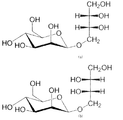
- the structure of the obtained ME differs as shown in FIGS. 2 (a) and 2 (b) depending on whether the hydroxymethyl group of erythritol bonded to mannose is derived from the carbon at the 1-position or the carbon at the 4-position. ..
- the Candida antarctica T-34 strain produces a compound having 4-O- ⁇ -D-mannopyranosyl-erythritol as a sugar skeleton shown in FIG. 2 (a).
- the obtained 4-O- ⁇ -D-mannopyranosyl-erythritol Lipid is also referred to as 4-O- ⁇ -MEL.
- Pseudozaima tsukubaensis 1E5 strain produces 70 g / L (production rate: 0.4 g / L / h, raw material yield: 35 mass%) of 1-O- ⁇ -MEL-B from 20 mass% olive oil in 7 days. It has been reported that this is possible (see Non-Patent Document 7), and it is sold as a cosmetic material.
- Patent Document 1 discloses that a biosurfactant-producing microorganism is transformed with a lipase gene.
- One challenge is to provide a means for further improvement of such means.
- Item 1 A mannosylerythritol lipid-producing microorganism transformed with an expression vector having a gene encoding lipase under the control of the E5Pgap promoter or the E5Ptef promoter.
- Item 2 Item 2.
- Item 3 Item 2.
- Item 4 Item 3.
- Item 5 An expression vector having a gene encoding lipase under the control of the E5Pgap promoter or the E5Ptef promoter.
- Item 6 Item 5.
- the expression vector according to Item 5 wherein the gene encoding lipase is derived from a microorganism of the genus Pseudozyma.
- Item 7 Item 5.
- Item 8 Item 3.
- Item 9 A method for producing mannosyl erythritol lipid production using the mannosyl erythritol lipid-producing microorganism according to any one of Items 1 to 4.
- Item 10 A method for producing mannosyl erythritol lipid production, which comprises culturing the mannosyl erythritol lipid-producing microorganism according to any one of Items 1 to 4 in a medium containing vegetable oil.
- MEL The structure of MEL is shown.
- the structures of 4-O- ⁇ -D-mannopyranosyl-erythritol (a) and 1-O- ⁇ -D-mannopyranosyl-erythritol (b) are shown.
- the structure of the expression vector pUC T _neo :: PaLIPA is shown.
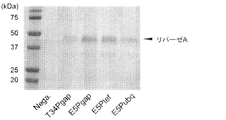
- the results of detecting lipase in the culture supernatant by the SDS-PAGE method when the exogenous lipase-introduced strain and the control were cultured are shown.
- the results of measuring the cell growth amount (a) and lipase activity (b) of the exogenous lipase-introduced strain and the control are shown.
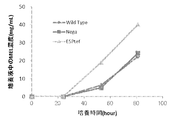
- the results of HPLC measurement of the cell growth amount (a) of the exogenous lipase-introduced strain and the control and the production of MEL are shown.
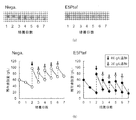
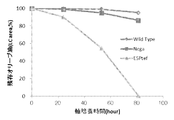
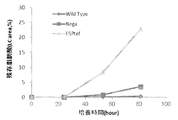
- the results of measuring the consumption of raw material fats and oils by the exogenous lipase-introduced strain and the control by thin layer chromatography (a) and HPLC (b) are shown.
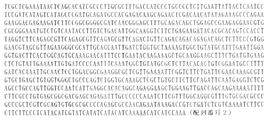
- the nucleotide sequence of Pgap derived from Pseudozaima tsukubaensis is shown.
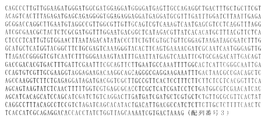
- the nucleotide sequence of Ptef derived from Pseudozaima tsukubaensis is shown.
- the nucleotide sequence of Pubq derived from Pseudozaima tsukubaensis is shown.
- the mannosyl erythritol-producing microorganism is transformed with a gene encoding lipase under the control of a specific promoter.
- the particular promoter is preferably a highly expressed promoter suitable for the host.
- the specific promoter is preferably a promoter derived from a microorganism belonging to the genus Pseudozyma, more preferably a promoter derived from Pseudozyma tsukubaensis.
- the particular promoter is the promoter of the glyceraldehyde triphosphate dehydrogenase gene (Pgap), the promoter of the elongation factor EF-1 (Ptef), or the promoter of the ubiquitin gene (Pubq) of the Pseudozaima genus microorganism. Is preferable.
- the particular promoter is preferably Pgap or Ptef, more preferably Ptef.
- the nucleotide sequence of Pgap derived from Pseudozaima tsukubaensis is shown in FIG. 8 (SEQ ID NO: 1).
- the nucleotide sequence of Ptef derived from Pseudozaima tsukubaensis is shown in FIG. 9 (SEQ ID NO: 2).
- the nucleotide sequence of Pubq derived from Pseudozaima tsukubaensis is shown in FIG. 10 (SEQ ID NO: 3).
- Highly expressed promoters can be selected by analysis of expression frequency by RNA sequence.
- the specific promoter preferably has a base sequence of any one of SEQ ID NOs: 1 to 3 or a base sequence having 80% or more identity with the base sequence.
- the identity is preferably 85% or more, 90% or more, 95% or more, 96% or more, 97% or more, 98% or more, or 99% or more.
- Such promoters can be obtained by any method. For example, it can be produced by using a genetic engineering method and a chemical synthesis method (for example, a liquid phase method and a solid phase method).
- the promoter refers to substitutions, deletions, insertions, additions and / or inversions of one or several bases in the nucleotide sequences of SEQ ID NOs: 1-3 (hereinafter collectively referred to as "mutations"). It may be a sequence having promoter activity.
- “several” is not limited as long as the promoter activity is maintained, but is, for example, a number corresponding to less than about 20% of the total sequence, preferably a number corresponding to less than about 15%, and further. It is preferably a number corresponding to less than about 10%, even more preferably a number corresponding to less than about 5%, and most preferably a number corresponding to less than about 1%.
- 2 to 100 pieces preferably 2 to 80 pieces, more preferably 2 to 60 pieces, still more preferably 2 to 40 pieces, still more preferably 2 to 20 pieces, still more preferably. It is 2 to 15, more preferably 2 to 10, and particularly preferably 2 to 5.
- the lipase used for the recombination of the microorganism is not particularly limited as long as it is expressed in the microorganism and exhibits lipase activity (that is, functions), and can be arbitrarily selected. Therefore, the origin of lipase may be any of microorganisms, plants and animals.
- the preferred lipase in one embodiment is of microbial origin.
- the preferred microorganisms from which lipases are derived are the genera Pseudozyma, Ustilago, Sparisorium, MELanopsichium, Moesziomyces, and Kurtumanomyces.
- Preferred Pseudozyma genus microorganisms are Pseudozyma antarctica (Moesziomyces antarcticus), Pseudozyma aphidis (Moesziomyces aphidis), Pseudozyma hubeiensis, and Pseudozyma tsukubaensis.
- Preferred Ustilago microorganisms are Ustilago hordei and Ustilago maydis.
- Preferred Sporisorium genus microorganisms are Sporisorium reilianum and Sporisorium scitamineum.
- a preferred MELanopsichium genus microorganism is MELanopsichium pennsylvanicum.
- a preferred microorganism of the genus Kurtzmanomyces is Kurtzmanomyces sp. I-11.
- the lipase preferably has the amino acid sequence of any of SEQ ID NOs: 5 to 13 or an amino acid sequence having 80% or more identity with the amino acid sequence.
- the identity is preferably 85% or more, 90% or more, 95% or more, 96% or more, 97% or more, 98% or more, or 99% or more.
- a lipase can be obtained by any method. For example, it can be produced by using a genetic engineering method and a chemical synthesis method (for example, a liquid phase method and a solid phase method).
- the nucleic acid encoding lipase can also be obtained by using an arbitrary method (for example, a genetic engineering method and a chemical method).
- SEQ ID NO: 5 is the amino acid sequence of Lipase A derived from P. antarctica T-34.
- SEQ ID NO: 6 is the amino acid sequence of the lipase derived from Pseudozyma aphidis DSM70725.
- SEQ ID NO: 7 is the amino acid sequence of lipase derived from Pseudozyma hubeiensis SY62.
- SEQ ID NO: 8 is the amino acid sequence of the lipase derived from Ustilago hordei.
- SEQ ID NO: 9 is the amino acid sequence of the lipase derived from Ustilago maydis 521.
- SEQ ID NO: 10 is the amino acid sequence of the lipase derived from Sparisorium reilianum SRZ2.
- SEQ ID NO: 11 is the amino acid sequence of lipase derived from Sporisorium scitamineum.
- SEQ ID NO: 12 is the amino acid sequence of the lipase derived from Melanopsichium pennsylvanicum 4.
- SEQ ID NO: 13 is the amino acid sequence of the lipase derived from Kurtzmanomyces sp. I-11.
- the preferred lipase in one embodiment is LIP-A from P. antarctica T-34.
- the P. antarctica T-34 is also referred to as the "Moesziomyces antarcticus T-34".
- P. aphidis is also called “Moesziomyces aphidis”.
- Amino acid sequence and base sequence identity can be calculated using commercially available analysis tools available on the Internet or using software such as FASTA, BLAST, PSI-BLAST, SSEARCH, etc.
- FASTA Altschul et al.
- BLAST Altschul et al.
- PSI-BLAST PSI-BLAST
- SSEARCH SSEARCH
- the main initial conditions commonly used for BLAST searches are as follows. That is, in Advanced BLAST 2.1, blastp is used for the program, Expect value is 10, Filter is all OFF, BLOSUM62 is used for Matrix, and Gap presence cost, Per default gap cost, and Lambda ratio are 11, 1, 0.85, respectively.
- the value (%) of the identity of the amino acid sequence or the base sequence can be calculated by setting (default value) and setting various other parameters to the default value and performing a search.
- the lipase is a substitution, deletion, insertion, addition and / or inversion of one or several amino acids in the amino acid sequences of SEQ ID NOs: 5 to 13 (hereinafter collectively referred to as "these are collectively referred to as”. It may be a polypeptide having a lipase activity, consisting of an amino acid sequence that has been “mutated”.
- “several” is not limited as long as the lipase activity is maintained, but is, for example, a number corresponding to less than about 20% of all amino acids, preferably a number corresponding to less than about 15%, and further.
- amino acid substitution is not particularly limited, but conservative amino acid substitution is preferable from the viewpoint of not significantly affecting lipase.
- Constant amino acid substitution means substituting an amino acid residue with an amino acid residue having a side chain having similar properties.
- Amino acid residues depending on their side chain, are basic side chains (eg lysine, arginine, histidine), acidic side chains (eg aspartic acid, glutamate), uncharged polar side chains (eg glycine, asparagine, glutamine, serine, threonine, tyrosine).
- Cysteine non-polar side chains (eg alanine, valine, leucine, isoleucine, proline, phenylalanine, methionine, tryptophan), ⁇ -branched side chains (eg threonine, valine, isoleucine), aromatic side chains (eg tyrosine, phenylalanine, It is classified into several families, such as tryptophan (histidine).
- Conservative amino acid substitutions are preferably substitutions between amino acid residues within the same family.
- One or several mutations can be treated with restriction enzymes, treatment with exonuclease, DNA ligase, etc., and known methods such as position-specific mutation introduction method (Molecular Cloning, Third Edition, Chapter 13, Cold Spring Harbor Laboratory Press, New York). Can be introduced using.
- the variant can also be obtained by other methods such as ultraviolet irradiation.
- Variants also include naturally occurring variants (eg, single nucleotide polymorphisms), such as when based on individual differences in lipase-bearing microorganisms, species or genus differences.
- the mutation is preferably present at a site that does not affect the active site or substrate binding site of FGDH.
- the base sequence encoding the amino acid sequence of SEQ ID NO: 5 is shown in SEQ ID NO: 14.
- the nucleotide sequence encoding the amino acid sequence of SEQ ID NO: 6 is shown in SEQ ID NO: 15.
- the nucleotide sequence encoding the amino acid sequence of SEQ ID NO: 7 is shown in SEQ ID NO: 16.
- the nucleotide sequence encoding the amino acid sequence of SEQ ID NO: 8 is shown in SEQ ID NO: 17.
- the nucleotide sequence encoding the amino acid sequence of SEQ ID NO: 9 is shown in SEQ ID NO: 18.
- the nucleotide sequence encoding the amino acid sequence of SEQ ID NO: 10 is shown in SEQ ID NO: 19.
- the nucleotide sequence encoding the amino acid sequence of SEQ ID NO: 11 is shown in SEQ ID NO: 20.
- the nucleotide sequence encoding the amino acid sequence of SEQ ID NO: 12 is shown in SEQ ID NO: 21.
- the nucleotide sequence encoding the amino acid sequence of SEQ ID NO: 13 is shown in SEQ ID NO: 22.
- composition of the expression vector is arbitrary as long as it has a gene encoding lipase under the control of a specific promoter as described above.
- an expression vector may have multiple genes encoding lipase under the control of a particular promoter.
- the plurality of genes encoding lipase may be homologous or heterologous to each other.
- the expression vector may contain multiple cassettes consisting of genes encoding lipases under the control of a particular promoter.
- the plurality of genes encoding lipase contained in the expression vector may be the same or different from each other.
- the specific promoters contained in each cassette may be the same or different from each other.
- the mannosyl erythritol lipid-producing microorganism is transformed with an expression vector having a gene encoding the above lipase under the above promoter.
- the host microorganism to be transformed is not particularly limited as long as it is a microorganism capable of producing mannosylerythritol lipid (MEL-producing microorganism), and can be arbitrarily selected and used.
- MEL-producing microorganism microorganism capable of producing mannosylerythritol lipid
- Examples of microorganisms capable of producing mannosyl erythritol lipid include microorganisms belonging to the genus Pseudozyma.
- microorganisms capable of producing the preferred mannosyl erythritol lipids include Pseudozyma tsukubaensis, Pseudozaima antarctica, Pseudozaima lugurosa, Pseudozaima aphidis, Pseudozaima paraantarctica, Pseudozaima hubayensis. It is a microorganism to which it belongs.
- Preferred MEL-producing strains contained in the Tsukubaensis species include NBRC1940 strain, KM-160 strain, 1D9 strain, 1D10 strain, 1D11 strain, 1E5 strain, and JCM16987 strain.
- 1-O- ⁇ -MEL-B produced by Pseudozaima tsukubaensis has higher hydration than 4-O- ⁇ -MEL-B and is useful in water-based applications.
- the means for introducing the nucleic acid encoding lipase into the host cell is arbitrary and is not particularly limited.
- the nucleic acid can be incorporated into a vector suitable for the host and introduced into the host cell by any method.
- a vector is a nucleic acid molecule (carrier) capable of transporting a nucleic acid molecule incorporated therein into a cell.
- the transformation may be transient or stable transformation. In one embodiment, the transformation is preferably a stable transformation.
- the type and structure of the vector are not particularly limited as long as they can be replicated and expressed in the host cell.
- the type of vector can be appropriately selected depending on the type of host cell.
- Specific examples of the vector include a plasmid vector, a cosmid vector, a phage vector, a virus vector (adenovirus vector, an adeno-associated virus vector, a retrovirus vector, a herpesvirus vector, etc.) and the like.
- the preferred vector in one embodiment is a plasmid vector.
- Examples of plasmid vectors for the genus Pseudozaima include pUXV1 ATCC 77463, pUXV2 ATCC 77464, pUXV5 ATCC 77468, pUXV6 ATCC 77469, pUXV7 ATCC 77470, pUXV8 ATCC 77471, pUXV3 ATCC 77465, pU2X1 ATCC 77466, pU2X1 , PUXV1-neo, pPAX1-neo, pPAA1-neo, pUC_neo, pUC T _neo and the like can be exemplified.
- the preferred vectors are pUXV1-neo, pPAX1-neo, pPAA1-neo, pUC_neo and pUC T _neo.
- an expression vector containing a selectable marker can also be used. Insertion of nucleic acid into vector, insertion of selectable marker gene, insertion of promoter, etc. are performed using standard recombinant DNA technology (see, for example, Molecular Cloning, Third Edition, 1.84, Cold Spring Harbor Laboratory Press, New York). be able to.
- the method of introducing the vector into the host cell is arbitrary, and can be appropriately selected depending on the type of the host cell and the vector.
- the vector introduction method can be carried out by, for example, electroporation, calcium phosphate co-precipitation method, lipofection, microinjection, lithium acetate method and the like.
- the method for introducing the vector into the host cell is preferably to unify the plasmid vector by restriction enzyme treatment before introducing the vector. As a result, stable transformation can be achieved by incorporating the introduced gene into the genomic gene.
- Whether or not a recombinant microorganism was obtained by introducing nucleic acid can be confirmed by any method. For example, it can be confirmed that a desired recombinant microorganism has been obtained by confirming the presence or absence of lipase activity imparted by the introduction of an exogenous nucleic acid. Confirmation of lipase activity can be performed by any method.
- Recombinant microorganisms can produce mannosyl erythritol lipids more efficiently by having lipase activity and mannosyl erythritol lipid production ability.
- the type of mannosyl erythritol lipid produced by the recombinant microorganism is not particularly limited and can be appropriately selected depending on the intended purpose.
- the preferred MELs are 1-O- ⁇ -MEL-B and 4-O- ⁇ -MEL-B, more preferably 1-O- ⁇ -MEL-B.
- 4-O- ⁇ -MEL-B may be any of MEL-A, MEL-B, MEL-C, and MEL-D.
- MEL production using recombinant microorganisms can be performed by any method. For example, it can be carried out by culturing the recombinant microorganism in a medium suitable for the production of MEL.
- vegetable oil when producing MEL using recombinant microorganisms, it is preferable to add vegetable oil to the medium.
- the type of vegetable oil is not particularly limited, and can be appropriately selected according to the type of target MEL and the like.
- soybean oil, olive oil, rapeseed oil, safflower oil, sesame oil, palm oil, sunflower oil, coconut oil, cocoa butter, castor oil and the like can be mentioned.
- the preferred fat and oil in one embodiment is olive oil.
- the culture conditions for recombinant microorganisms are not particularly limited.
- the recombinant microorganism belongs to the genus Pseudozaima, it can be cultured for 3 to 7 days under the conditions of pH 5 to 8, preferably pH 6, temperature 20 to 35 ° C., preferably 22 to 28 ° C.
- MEL can be recovered from the culture medium according to a conventional method.
- MEL production medium Prepared by dissolving 5 g of yeast extract, 3 g of sodium nitrate, 0.3 g of potassium dihydrogen phosphate, 0.3 g of magnesium sulfate / heptahydrate, and 20 g of glycerol in 1 L of deionized water.
- RNA sequence analysis 2-1 Strain culture The above Pseudozyma tsukubaensis 1E5 strain was inoculated into 30 mL of a medium containing 4% olive oil added to MEL medium, and cultured at 25 ° C. for 2 days with shaking.
- RNA was purified with the Oligotex-dT30 ⁇ super> mRNA purification kit (Takara) to obtain mRNA. The purity and amount of the obtained mRNA were confirmed with a spectrophotometer.
- RNA library The extracted mRNA was processed using the NEBNext Ultra RNA Library Prep Kit for Illumina (New England BioLabs) and NEBNext Multiplex Oligos for Illumina (New England BioLabs) according to the manual attached to the kit to create a library. ..
- SEQ ID NO: 5 is a nucleotide sequence encoding lipase A of the Pseudozyma antarctica T-34 strain.
- SEQ ID NO: 23 a forward primer in which a sequence homologous sequence with the vector of 15 bp is added upstream of the start codon
- SEQ ID NO: 23 a reverse primer in which the sequence homologous sequence with the vector is added downstream of the stop codon
- the gene was amplified using the genomic DNA of the Pseudozyma antarctica T-34 strain obtained in the above as a template.
- the amplified gene contains the expression vector pUC T _neo (Ustilago maydis-derived replication initiation site (UARS)), the G418 resistance gene, and the gap terminator derived from the Pseudozyma antarctica T-34 strain, which was cleaved at the SmaI site. ) was linked using an in-fusion cloning kit (Takara).
- a gap promoter (T34Pgap or E5Pgap, SEQ ID NOs: 4 and 1) was added to the upstream of the sequence.
- Amplification was performed using a forward primer (SEQ ID NOs: 25 and 26) and a reverse primer (SEQ ID NOs: 27 and 28) in which the XbaI site was added downstream of the sequence.
- the tef promoter (E5Ptef, SEQ ID NO: 2) and the ubq promoter (E5Pubq, SEQ ID NO: 3) are forwarded by adding a sequence homologous to the vector 15 bp upstream of the sequence.
- Amplification was performed using a primer (SEQ ID NOs: 29 and 30) and a reverse primer (SEQ ID NOs: 31 and 32) in which a sequence homologous to the vector of 15 bp was added downstream of the sequence.
- transformant 3-2 The gene expression vector pUC T _neo :: PaLIPA, which expresses the lipase A gene under the control of any of the T34Pgap, E5Pgap, E5Ptef, and E5Pubq promoters obtained in the above, was linearized by restriction enzyme SsPI treatment and electroporated. Pseudozyma tsukubaensis 1E5 strain was transformed by the poration method.
- the insert-free vector pUC T _neo was linearized by the restriction enzyme SspI treatment and then introduced into the Pseudozyma tsukubaensis 1E5 strain by the electroporation method. G418 was used for selection of transformants.
- T34P gap is a pUC T _neo :: PaLIPA (T34Pgap) -introduced strain
- E5P gap is a pUC T _neo :: PaLIPA (E5Pgap) -introduced strain
- E5 Ptef is a pUC T _neo: : PaLIPA (E5Ptef) -introduced strain
- E5Pubq indicates pUC T _neo :: PaLIPA (E5Pubq) -introduced strain, respectively.
- the strain into which the expression vector using the three promoters E5Pgap, E5Ptef, and E5Pubq derived from Pseudozyma tsukubaensis 1E5 strain was introduced is a control or T34Pgap derived from Pseudozyma antarctica T-34 strain.
- the band derived from lipase A was detected more densely than the strain into which the expression vector was introduced, and it was confirmed that the expression level of lipase in the culture supernatant was improved.
- the lipase activity in the culture supernatant of each transformant was measured using Lipase Activity Assay Kit (Cayman Chemical).
- the amount of enzyme required to consume 1 nmol of substrate per minute was set to 1 Unit (Fig. 5 (b)).
- the strain into which the expression vector using the three promoters E5Pgap, E5Ptef, and E5Pubq derived from Pseudozyma tsukubaensis 1E5 strain was introduced is a control or T34Pgap derived from Pseudozyma antarctica T-34 strain. It was confirmed that the lipase activity was significantly improved as compared with the strain into which the expression vector using the above was introduced.
- the wild-type 1E5 strain and the transformants (Nega and E5Ptef) prepared in 4 above were cultured in 100 mL of glycerol-added YM medium at 25 ° C. for 1 day with shaking to obtain a preculture solution. Then, 60 mL of the preculture solution was inoculated into 6 L / 10 L of the medium containing 15% olive oil added to the MEL medium, and cultured at 25 ° C. for 3 days. An equal amount of ethyl acetate was added to the obtained culture solution, and the mixture was sufficiently stirred, and then the ethyl acetate layer was separated. The MEL contained in the ethyl acetate layer was quantified using high performance liquid chromatography (HPLC). In addition, the area area ratio obtained by HPLC was also measured for changes in the amounts of residual olive oil and fatty acids.
- HPLC high performance liquid chromatography
- the strain into which the expression vector using the E5Ptef promoter was introduced showed high MEL productivity as compared with the wild strain and the Nega strain. From the proportion of olive oil remaining in the culture broth shown in FIG. 12, it was found that the E5Ptef-introduced strain had a much faster decomposition rate of olive oil than the wild strain and Nega. Further, as shown in FIG. 13, the fatty acid production rate is high in the E5 Ptef-introduced strain so as to be linked with the residual olive oil in FIG. These results indicate that the E5Ptef-introduced strain promotes the decomposition of olive oil, rapidly produces fatty acids that serve as substrates for MEL, and proceeds to MEL synthesis.
Landscapes
- Life Sciences & Earth Sciences (AREA)
- Health & Medical Sciences (AREA)
- Chemical & Material Sciences (AREA)
- Genetics & Genomics (AREA)
- Engineering & Computer Science (AREA)
- Organic Chemistry (AREA)
- Wood Science & Technology (AREA)
- Zoology (AREA)
- Bioinformatics & Cheminformatics (AREA)
- General Engineering & Computer Science (AREA)
- Biotechnology (AREA)
- Biomedical Technology (AREA)
- General Health & Medical Sciences (AREA)
- Biochemistry (AREA)
- Microbiology (AREA)
- Molecular Biology (AREA)
- Mycology (AREA)
- Biophysics (AREA)
- Plant Pathology (AREA)
- Physics & Mathematics (AREA)
- Medicinal Chemistry (AREA)
- General Chemical & Material Sciences (AREA)
- Chemical Kinetics & Catalysis (AREA)
- Gastroenterology & Hepatology (AREA)
- Proteomics, Peptides & Aminoacids (AREA)
- Micro-Organisms Or Cultivation Processes Thereof (AREA)
- Preparation Of Compounds By Using Micro-Organisms (AREA)
Abstract
Description
E5Pgapプロモーター又はE5Ptefプロモーターの制御下にリパーゼをコードする遺伝子を有する発現ベクターで形質転換されている、マンノシルエリスリトールリピッド産生微生物。
項2
マンノシルエリスリトールリピッド産生微生物がシュードザイマ属微生物である、項1に記載のマンノシルエリスリトールリピッド産生微生物。
項3
リパーゼをコードする遺伝子がシュードザイマ属微生物由来である、項1又は2に記載のマンノシルエリスリトールリピッド産生微生物。
項4
マンノシルエリスリトールリピッド産生微生物がシュードザイマ・ツクバエンシスである、項1~3のいずれかに記載のマンノシルエリスリトールリピッド産生微生物。
項5
E5Pgapプロモーター又はE5Ptefプロモーターの制御下にリパーゼをコードする遺伝子を有する発現ベクター。
項6
リパーゼをコードする遺伝子がシュードザイマ属微生物由来である、項5に記載の発現ベクター。
項7
マンノシルエリスリトールリピッド産生微生物を形質転換するための発現ベクターである、項5又は6に記載の発現ベクター。
項8
項5~7のいずれかに記載の発現ベクターでマンノシルエリスリトールリピッド産生微生物を形質転換することを含む、項1に記載のマンノシルエリスリトールリピッド産生微生物を製造する方法。
項9
項1~4のいずれかに記載のマンノシルエリスリトールリピッド産生微生物を用いて、マンノシルエリスリトールリピッド産生を製造する方法。
項10
項1~4のいずれかに記載のマンノシルエリスリトールリピッド産生微生物を植物油脂を含む培地で培養することを含む、マンノシルエリスリトールリピッド産生を製造する方法。
・使用菌体
シュードザイマ・ツクバエンシス(Pseudozyma tsukubaensis)1E5株(寄託番号JCM16987)
・mRNA
シュードザイマ・ツクバエンシス(Pseudozyma tsukubaensis)1E5株・ゲノムDNA
シュードザイマ・ツクバエンシス(Pseudozyma tsukubaensis)1E5株シュードザイマ・アンタークティカ(Pseudozyma antarctica)T-34株(寄託番号KM-34)・プラスミド
発現ベクターpUCT_neo
・培地
グリセロール添加YM培地:脱イオン水1Lに、酵母エキス3g、麦芽エキス3g、ペプトン5g、グルコース10g、グリセロール50gを溶かして調製した。
MEL生産培地:脱イオン水1Lに、酵母エキス5g、硝酸ナトリウム3g、リン酸二水素カリウム0.3g、硫酸マグネシウム・七水和物0.3g、グリセロール20gを溶かして調製した。
2-1.菌株の培養
上記シュードザイマ・ツクバエンシス1E5株をMEL培地に4%オリーブ油を添加した培地30mLに接種し、25℃で2日間振とう培養した。
上記菌体培養液に含まれる菌体を回収し、液体窒素で凍結し、ISOGEN(NIPPON GENE)で処理した後、Total RNAを含む水層を回収した。回収した水層をフェノール及びクロロホルムで処理し、Total RNAを抽出した。得られたTotal RNAの純度と量は分光光度計で確認した。
抽出したTotal RNAをOligotex-dT30〈super〉mRNA purification kit(Takara)で精製し、mRNAを得た。得られたmRNAの純度と量は分光光度計で確認した。
抽出したmRNAをNEBNext Ultra RNA Library Prep Kit for Illumina(New England BioLabs)、及びNEBNext Multiplex Oligos for Illumina(New England BioLabs)を用いてキットに添付のマニュアル通りに処理し、ライブラリを作成した。
作成したライブラリをMiSeq Reagent Kits v2(Illumina)を用いてシーケンス解析に供した。シーケンサーにはMiSeq(Illumina)を使用した。
シーケンス解析で得られたデータを、該微生物のタンパク質をコードする遺伝子配列にbowtie2を用いてマッピングした。約15%程度のシーケンス解析データを、タンパク質遺伝子配列に帰属させることができた。この結果を、マッピングデータの変換ツールであるBEDtoolsや、プログラム言語Perlを用いたテキスト処理を実施することにより、各タンパク質遺伝子についてマッピングされた数を集計し、それぞれの遺伝子の発現量の元データとした。また、各タンパク質遺伝子では塩基数が異なるため、長い遺伝子ほど多くのマッピング数が得られるので、遺伝子間で比較する際には、マッピング数が発現の違いを反映しない。この影響をなくすためにマッピング数を遺伝子長で補正し、1 kbp当たりのマッピング数に計算処理した。解析の結果、gapプロモーター、tefプロモーターおよびubqプロモーターを高発現プロモーターとして選抜した。
3-1.ゲノムDNAの抽出
上記シュードザイマ・ツクバエンシス1E5株及びシュードザイマ・アンタークティカT-34株の菌体培養液に含まれる菌体を回収し、液体窒素で凍結し、フェノールおよびクロロホルムで処理しゲノムDNAを抽出した。得られたゲノムDNAの純度と量は分光光度計で確認した。
配列番号5に示す遺伝子を発現する発現ベクターを次の手順で構築した。配列番号5は、シュードザイマ・アンタークティカT-34株のリパーゼAをコードする塩基配列である。まず、配列番号5を参照して、開始コドンの上流にベクターとの相同配列15bpを付加したフォワードプライマー(配列番号23)、および終止コドンの下流にベクターとの相同配列15bpを付加したリバースプライマー(配列番号24)を調製した。これらを用いて、上記3-1.で得られたシュードザイマ・アンタークティカT-34株のゲノムDNAをテンプレートに遺伝子の増幅を行った。増幅した遺伝子を、SmaIサイトで切断した発現ベクターpUCT_neo(糸状菌(Ustilago maydis)由来の複製開始点(UARS)、G418耐性遺伝子、シュードザイマ・アンタークティカT-34株由来のgapターミネーターを含む)に、In-fusion cloning kit(Takara)を用いて連結した。次に、シュードザイマ・アンタークティカT-34株、またはシュードザイマ・ツクバエンシス1E5株のゲノムDNAをテンプレートとし、gapプロモーター(T34PgapまたはE5Pgap、配列番号4及び1)を配列の上流にSalIサイトを付加したフォワードプライマー(配列番号25及び26)、および配列の下流にXbaIサイトを付加したリバースプライマー(配列番号27及び28)を用いて増幅した。同様に、シュードザイマ・ツクバエンシス1E5株のゲノムDNAをテンプレートとし、tefプロモーター(E5Ptef、配列番号2)及びubqプロモーター(E5Pubq、配列番号3)を配列の上流にベクターとの相同配列15bpを付加したフォワードプライマー(配列番号29及び30)、及び配列の下流にベクターとの相同配列15bpを付加したリバースプライマー(配列番号31及び32)を用いて増幅した。増幅したプロモーターを、SalIサイト及びXbaIサイトで切断したリパーゼAを導入したpUCT_neoに、Ligation High ver.2(Toyobo、T34Pgap及びE5Pgap)またはIn-fusion cloning kit(Takara、E5Ptef及びE5Pubq)を用いて連結し、T34Pgap、E5Pgap、E5Ptef、E5Pubqのいずれのプロモーターの制御下でリパーゼA遺伝子が発現される遺伝子発現ベクターpUCT_neo::PaLIPAを構築した。発現ベクターの構造を図3に示す。
Fwd:(リパーゼA増幅用、配列番号23)CTCTAGAGGATCCCCATGCGAGTGTCCTTGCGCRvs:(リパーゼA増幅用、配列番号24)GTAGGGAGCGTACCCCTAAGGCGGTGTGATGGGFwd:(T-34Pgap増幅用、配列番号25)GTAGTCGACGTCGCCTCGGAAAGATCFwd:(E5Pgap増幅用、配列番号26)CAGGTCGACATCCGCTCTCTCTTCRvs:(T-34Pgap増幅用、配列番号27)CTGTCTAGAGATGATGGATGGGGAGTGTGRvs:(E5Pgap増幅用、配列番号28)TCCTCTAGATAATTTTTGGGATGAGFwd:(E5Ptef増幅用、配列番号29)ATGCCTGCAGGTCGACGAAATAACTCAGCACATCGCCCTTGFwd:(E5Pubq増幅用、配列番号30)
ATGCCTGCAGGTCGACTTGTTGGAAGATGGGATG
Rvs:(E5Ptef増幅用、配列番号31)
ATGGGGATCCTCTAGATGATGTTTTTGATGTATGATATGRvs:(E5Pubq増幅用、配列番号32)
ATGGGGATCCTCTAGATCACGATTTTGCTAACCAG
上記3-2.で得られたT34Pgap、E5Pgap、E5Ptef、E5Pubqのいずれのプロモーターの制御下でリパーゼA遺伝子が発現される遺伝子発現ベクターpUCT_neo::PaLIPAを制限酵素SsPI処理で直線化したものを用いて、エレクトロポレーション法にてシュードザイマ・ツクバエンシス1E5株を形質転換した。また、コントロールとしてインサートを含まないベクターpUCT_neoも同様に、制限酵素SspI処理で直線化した後、エレクトロポレーション法にてシュードザイマ・ツクバエンシス1E5株に導入した。形質転換体の選別には、G418を使用した。
各形質転換体をグリセロール添加YM培地2mLで25℃、2日間振とう培養し、前培養液を得た。次いで、前培養液1mLをMEL培地に1%オリーブ油を添加した培地20mLに接種し、25℃で3日間振とう培養した。得られた菌体培養液を遠心し、培養上清を得た。培養上清をAny kDTMMini-PROTEAN(商標) TGXTMPrecast Protein Gels(BioRad)とMini-PROTEAN(商標) Tetra Vertical Electrophoresis Cell(BioRad)を用いて泳動した後、SimplyBlueTMSafeStain(Invitrogen)でタンパク質を染色し、リパーゼを検出した(図4)。
各形質転換体をグリセロール添加YM培地2mLで25℃、2日間振とう培養し、前培養液を得た。次いで、前培養液1mLをMEL培地に1%オリーブ油を添加した培地20mLに接種し、25℃で3日間振とう培養した。得られた菌体培養液を遠心し、培養上清を得た。遠心後に菌体を回収し、乾燥させた後に重量を測定し、増殖を評価したところ、形質転換体間で増殖量に有意な差は見られなかった(図5(a))。
各形質転換体をグリセロール添加YM培地2mLで25℃、2日間振とう培養し、前培養液を得た。次いで、前培養液1mLをMEL培地に6%オリーブ油を添加した培地20mLに接種し、25℃で7日間振とう培養した。培養3日目及び5日目に6%オリーブ油を追加した(添加油脂量合計18%)。得られた菌体培養液に等量の酢酸エチルを添加し、十分撹拌した後、酢酸エチル層を分取した。残った水層にメタノールを加えた後遠心し、沈殿した菌体を回収して乾燥させた後に重量を測定したところ、形質転換体間で増殖量に有意な差は見られなかった(図6(a))。酢酸エチル層に含まれるMELは高速液体クロマトグラフィー(HPLC)を用いて定量した(図6(b))。
各形質転換体をグリセロール添加YM培地2mLで25℃、2日間振とう培養し、前培養液を得た。次いで、前培養液1mLをMEL培地に6%オリーブ油を添加した培地20mLに接種し、25℃で7日間振とう培養した。培養2日目に6%オリーブ油を、3、4、5、6日目に3%オリーブ油を追加した(添加油脂量合計24%)。得られた菌体培養液に等量の酢酸エチルを添加し、十分撹拌した後、酢酸エチル層を分取した。酢酸エチル層に含まれる残存油脂は薄層クロマトグラフィー(TLC)及び高速液体クロマトグラフィー(HPLC)を用いて定量した(図7(a、b))。
Claims (10)
- E5Pgapプロモーター又はE5Ptefプロモーターの制御下にリパーゼをコードする遺伝子を有する発現ベクターで形質転換されている、マンノシルエリスリトールリピッド産生微生物。
- マンノシルエリスリトールリピッド産生微生物がシュードザイマ属微生物である、請求項1に記載のマンノシルエリスリトールリピッド産生微生物。
- リパーゼをコードする遺伝子がシュードザイマ属微生物由来である、請求項1又は2に記載のマンノシルエリスリトールリピッド産生微生物
- マンノシルエリスリトールリピッド産生微生物がシュードザイマ・ツクバエンシスである、請求項1~3のいずれかに記載のマンノシルエリスリトールリピッド産生微生物
- E5Pgapプロモーター又はE5Ptefプロモーターの制御下にリパーゼをコードする遺伝子を有する発現ベクター。
- リパーゼをコードする遺伝子がシュードザイマ属微生物由来である、請求項5に記載の発現ベクター。
- マンノシルエリスリトールリピッド産生微生物を形質転換するための発現ベクターである、請求項5又は6に記載の発現ベクター。
- 請求項5~7のいずれかに記載の発現ベクターでマンノシルエリスリトールリピッド産生微生物を形質転換することを含む、請求項1に記載のマンノシルエリスリトールリピッド産生微生物を製造する方法。
- 請求項1~4のいずれかに記載のマンノシルエリスリトールリピッド産生微生物を用いて、マンノシルエリスリトールリピッド産生を製造する方法。
- 請求項1~4のいずれかに記載のマンノシルエリスリトールリピッド産生微生物を植物油脂を含む培地で培養することを含む、マンノシルエリスリトールリピッド産生を製造する方法。
Priority Applications (4)
| Application Number | Priority Date | Filing Date | Title |
|---|---|---|---|
| JP2021533006A JP7541314B2 (ja) | 2019-07-18 | 2020-07-08 | バイオサーファクタント産生組換え微生物 |
| CN202080049665.5A CN114096656B (zh) | 2019-07-18 | 2020-07-08 | 产生生物表面活性剂的重组微生物 |
| US17/626,475 US12241106B2 (en) | 2019-07-18 | 2020-07-08 | Biosurfactant-producing recombinant microorganism |
| EP20841145.4A EP4001423A4 (en) | 2019-07-18 | 2020-07-08 | RECOMBINANT BIOSURFACTANT-PRODUCING MICROORGANISMS |
Applications Claiming Priority (2)
| Application Number | Priority Date | Filing Date | Title |
|---|---|---|---|
| JP2019-133055 | 2019-07-18 | ||
| JP2019133055 | 2019-07-18 |
Publications (1)
| Publication Number | Publication Date |
|---|---|
| WO2021010264A1 true WO2021010264A1 (ja) | 2021-01-21 |
Family
ID=74210747
Family Applications (1)
| Application Number | Title | Priority Date | Filing Date |
|---|---|---|---|
| PCT/JP2020/026760 Ceased WO2021010264A1 (ja) | 2019-07-18 | 2020-07-08 | バイオサーファクタント産生組換え微生物 |
Country Status (5)
| Country | Link |
|---|---|
| US (1) | US12241106B2 (ja) |
| EP (1) | EP4001423A4 (ja) |
| JP (1) | JP7541314B2 (ja) |
| CN (1) | CN114096656B (ja) |
| WO (1) | WO2021010264A1 (ja) |
Cited By (2)
| Publication number | Priority date | Publication date | Assignee | Title |
|---|---|---|---|---|
| CN115232801A (zh) * | 2022-07-07 | 2022-10-25 | 河南工业大学 | 一种耐高温碱性脂肪酶及其制备方法和应用 |
| US12297473B2 (en) | 2019-08-26 | 2025-05-13 | National Institute Of Advanced Industrial Science And Technology | Production of monoacyl MEL |
Families Citing this family (1)
| Publication number | Priority date | Publication date | Assignee | Title |
|---|---|---|---|---|
| CN115873729B (zh) * | 2022-09-27 | 2024-04-19 | 中国海洋大学 | 产mel的蚜虫莫氏黑粉xad01工程菌株及其应用 |
Citations (3)
| Publication number | Priority date | Publication date | Assignee | Title |
|---|---|---|---|---|
| JP2011182740A (ja) * | 2010-03-10 | 2011-09-22 | National Institute Of Advanced Industrial Science & Technology | 新規微生物及びそれを用いる糖型バイオサーファクタントの製造方法 |
| WO2017208791A1 (ja) * | 2016-06-03 | 2017-12-07 | 国立研究開発法人産業技術総合研究所 | バイオサーファクタント産生組み換え微生物 |
| JP2018113946A (ja) * | 2017-01-20 | 2018-07-26 | 国立研究開発法人産業技術総合研究所 | Mel−dの製造方法 |
Family Cites Families (9)
| Publication number | Priority date | Publication date | Assignee | Title |
|---|---|---|---|---|
| WO2000029604A1 (en) | 1998-11-18 | 2000-05-25 | The University Of Akron | Production of biological materials by simultaneous aerobic and anaerobic respiration |
| JP4735971B2 (ja) * | 2006-01-13 | 2011-07-27 | 独立行政法人産業技術総合研究所 | マンノシルエリスリトールリピッドの生産方法 |
| JP5622190B2 (ja) | 2010-03-05 | 2014-11-12 | 独立行政法人産業技術総合研究所 | 新規微生物及びそれを用いる糖型バイオサーファクタントの製造方法 |
| US20120276247A1 (en) * | 2011-04-29 | 2012-11-01 | Uwe Bornscheuer | Lipase Variants |
| JP6413117B2 (ja) | 2013-01-09 | 2018-10-31 | 国立研究開発法人農業・食品産業技術総合研究機構 | 高効率な異種タンパク質の製造方法 |
| CN103589764B (zh) | 2013-11-05 | 2015-06-17 | 浙江大学 | 一种甘露糖赤藓糖醇脂的生产方法 |
| JP6517067B2 (ja) | 2015-03-31 | 2019-05-22 | 株式会社クボタ | オイルリング式すべり軸受 |
| JP6849183B2 (ja) | 2016-09-29 | 2021-03-24 | 国立研究開発法人産業技術総合研究所 | モノアシル型mel |
| CN114269942A (zh) | 2019-08-26 | 2022-04-01 | 国立研究开发法人产业技术综合研究所 | 单酰基型mel的制备 |
-
2020
- 2020-07-08 US US17/626,475 patent/US12241106B2/en active Active
- 2020-07-08 EP EP20841145.4A patent/EP4001423A4/en active Pending
- 2020-07-08 JP JP2021533006A patent/JP7541314B2/ja active Active
- 2020-07-08 WO PCT/JP2020/026760 patent/WO2021010264A1/ja not_active Ceased
- 2020-07-08 CN CN202080049665.5A patent/CN114096656B/zh active Active
Patent Citations (3)
| Publication number | Priority date | Publication date | Assignee | Title |
|---|---|---|---|---|
| JP2011182740A (ja) * | 2010-03-10 | 2011-09-22 | National Institute Of Advanced Industrial Science & Technology | 新規微生物及びそれを用いる糖型バイオサーファクタントの製造方法 |
| WO2017208791A1 (ja) * | 2016-06-03 | 2017-12-07 | 国立研究開発法人産業技術総合研究所 | バイオサーファクタント産生組み換え微生物 |
| JP2018113946A (ja) * | 2017-01-20 | 2018-07-26 | 国立研究開発法人産業技術総合研究所 | Mel−dの製造方法 |
Non-Patent Citations (12)
| Title |
|---|
| "Molecular Cloning, Third Edition", vol. 1, COLD SPRING HARBOR LABORATORY PRESS, pages: 84 |
| D. KITAMOTO, S. AKIBA, C. HIOKI , T. TABUCHI, BIOL. CHEM., vol. 54, 1990, pages 31 |
| D. KITAMOTOK. FIJISHIROH. YANAGISHITAT. NAKANET. NAKAHARA, BIOTECHNOL. LETT., vol. 14, 1992, pages 305 |
| D. KITAMOTOK. HANEISHIT. NAKAHARAT. TABUCHI, AGRIC. BIOL. CHEM., vol. 54, no. 37, 1990 |
| H. KAWASAKI, T. NAKAHARA, M. OOGAKI T. TABUCHI, FERMENT. TECHNOL., vol. 61, 1983, pages 143 |
| KIM, HEIDAI ITOHORU KATSURAGIYOSHIKI TANI, THE ABSTRACTS OF THE YEAR 1998 CONVENTION OF THE SOCIETY FOR FERMENTATION AND BIOENGINEERING, JAPAN, pages 195 |
| MORITA, TOMOTAKE ET AL.: "Isolation of basidiomycetous yeast Pseudozyma tsukubaensis and production of glycolipid biosurfactant, a diastereomer type of mannosylerythritol lipid-B", APPL MICRIBIOL BIOTECHNOL, vol. 88, 21 July 2010 (2010-07-21), pages 679 - 688, XP019841760 * |
| SAIKA, AZUSA ET AL.: "Enhanced production of a diastereomer type of mannosylerythritol lipid-B by the basidiomycetous yeast Pseudozyma tsukubaensis expressing lipase genes from Pseudozyma antarctica", APPL MICROBIOL BIOTECHNOL, vol. 101, 26 October 2017 (2017-10-26), pages 8345 - 8352, XP036366908 * |
| SAIKA, AZUSA ET AL.: "Identification of the gene PtMAT1 encoding acetyltransferase from the diastereomer type of mannosylerythritol lipid-B producer Pseudozyma tsukubaensis", JOURNAL OF BIOSCIENCE AND BIOENGINEERING, vol. 126, no. 6, 20 July 2018 (2018-07-20), pages 676 - 681, XP085523509 * |
| See also references of EP4001423A4 |
| T. MORITAM. TAKASHIMAT. FUKUOKAM. KONISHIT. IMURAD. KITAMOTO, APPL. MICROBIOL. BIOTECHNOL., vol. 88, 2010, pages 679 |
| T. NAKAHARA, H. KAWASAKI, T. SUGISAWA, Y. TAKAMORI , T. TABUCHI, J. FERMENT. TECHNOL., vol. 61, no. 19, pages 1983 |
Cited By (3)
| Publication number | Priority date | Publication date | Assignee | Title |
|---|---|---|---|---|
| US12297473B2 (en) | 2019-08-26 | 2025-05-13 | National Institute Of Advanced Industrial Science And Technology | Production of monoacyl MEL |
| CN115232801A (zh) * | 2022-07-07 | 2022-10-25 | 河南工业大学 | 一种耐高温碱性脂肪酶及其制备方法和应用 |
| CN115232801B (zh) * | 2022-07-07 | 2024-03-12 | 河南工业大学 | 一种耐高温碱性脂肪酶及其制备方法和应用 |
Also Published As
| Publication number | Publication date |
|---|---|
| EP4001423A4 (en) | 2023-08-09 |
| US20220282296A1 (en) | 2022-09-08 |
| EP4001423A1 (en) | 2022-05-25 |
| CN114096656B (zh) | 2024-06-07 |
| CN114096656A (zh) | 2022-02-25 |
| JP7541314B2 (ja) | 2024-08-28 |
| JPWO2021010264A1 (ja) | 2021-01-21 |
| US12241106B2 (en) | 2025-03-04 |
Similar Documents
| Publication | Publication Date | Title |
|---|---|---|
| JP6967229B2 (ja) | バイオサーファクタント産生組み換え微生物 | |
| AU2013367325B2 (en) | Acyl-ACP thioesterase | |
| JP7261815B2 (ja) | ネルボン酸を生産する組換え酵母菌株およびその使用 | |
| EP1275711B1 (de) | Lipase/Acyltransferase aus Candida parapsilosis | |
| JP2020072747A (ja) | 改善されたエステルシンターゼ特性を有する酵素変種 | |
| JP2007525969A (ja) | 油性酵母における遺伝子発現のためのグリセルアルデヒド−3−リン酸脱水素酵素およびホスホグリセリン酸ムターゼプロモーター | |
| US10260077B2 (en) | Increasing lipid production in oleaginous yeast | |
| JP7541314B2 (ja) | バイオサーファクタント産生組換え微生物 | |
| WO2011077931A1 (ja) | チオエステラーゼ改変体を用いた脂肪酸含有脂質の製造方法 | |
| US9926540B2 (en) | Myrmecia incisa reisigl diacylglycerol acyltransferase gene sequence and use thereof | |
| US20130059351A1 (en) | Thioesterase and a Method of Producing Fatty Acids or Lipids Using the Thioesterase | |
| CN112469813A (zh) | 用于产生甲基丙烯酸酯的方法 | |
| US9828613B2 (en) | Acyl-ACP thioesterase | |
| AU2015356285A1 (en) | Method of producing lipid using acyl-acp thioesterase | |
| KR20160111947A (ko) | 재조합 미생물의 생산 방법 | |
| US9334510B2 (en) | Method of producing lipids using a thioesterase variant | |
| JP2011172526A (ja) | 酵母宿主 | |
| JP6675759B2 (ja) | マンノース転移酵素遺伝子、組換えベクター、形質転換体、1−O−β−マンノシルエリスリトールリピッドの製造方法 | |
| JP6723002B2 (ja) | 油脂の製造方法 | |
| JP4943678B2 (ja) | 細胞の脂肪酸組成を改変する方法およびその利用 | |
| JP3878293B2 (ja) | ショ糖脂肪酸エステラーゼ | |
| KR20170087710A (ko) | 메탄올 생산을 위한 재조합 미생물 및 이를 이용한 메탄올 제조방법 | |
| JP2012196175A (ja) | バイオディーゼル燃料の製造方法 |
Legal Events
| Date | Code | Title | Description |
|---|---|---|---|
| 121 | Ep: the epo has been informed by wipo that ep was designated in this application |
Ref document number: 20841145 Country of ref document: EP Kind code of ref document: A1 |
|
| ENP | Entry into the national phase |
Ref document number: 2021533006 Country of ref document: JP Kind code of ref document: A |
|
| NENP | Non-entry into the national phase |
Ref country code: DE |
|
| ENP | Entry into the national phase |
Ref document number: 2020841145 Country of ref document: EP Effective date: 20220218 |
|
| WWG | Wipo information: grant in national office |
Ref document number: 17626475 Country of ref document: US |