WO2021013250A1 - 杂环酰胺类化合物及其制备方法和应用 - Google Patents
杂环酰胺类化合物及其制备方法和应用 Download PDFInfo
- Publication number
- WO2021013250A1 WO2021013250A1 PCT/CN2020/104506 CN2020104506W WO2021013250A1 WO 2021013250 A1 WO2021013250 A1 WO 2021013250A1 CN 2020104506 W CN2020104506 W CN 2020104506W WO 2021013250 A1 WO2021013250 A1 WO 2021013250A1
- Authority
- WO
- WIPO (PCT)
- Prior art keywords
- cancer
- compound
- alkyl
- group
- optionally substituted
- Prior art date
- Legal status (The legal status is an assumption and is not a legal conclusion. Google has not performed a legal analysis and makes no representation as to the accuracy of the status listed.)
- Ceased
Links
- 0 CC(*C1CCCCC1)C1*C*CC1 Chemical compound CC(*C1CCCCC1)C1*C*CC1 0.000 description 8
- OIDQBESNTIMTSZ-XPOYPMEASA-N CC[n]1nc(C)cc1C(/N=C(/Nc1cc(C(N)=O)c2)\N(C/C=C/CN(c(c(N3)cc(C(N)=O)c4)c4OCCCO[C@H]([C@H]4O)[C@@H](OC)O[C@H](CO)[C@H]4O)/C3=N/C(c3cc(C)n[n]3CC)=O)c1c2OC)=O Chemical compound CC[n]1nc(C)cc1C(/N=C(/Nc1cc(C(N)=O)c2)\N(C/C=C/CN(c(c(N3)cc(C(N)=O)c4)c4OCCCO[C@H]([C@H]4O)[C@@H](OC)O[C@H](CO)[C@H]4O)/C3=N/C(c3cc(C)n[n]3CC)=O)c1c2OC)=O OIDQBESNTIMTSZ-XPOYPMEASA-N 0.000 description 2
- CVBXNYUCEGYVEI-SHYULPOJSA-N CCN/C(/C(/N=C(/Nc1cc(C(N)=O)c2)\N(C/C=C/CN(c(c(OCCCOC([C@H](CCC(O)=O)N)=O)cc(C(N)=O)c3)c3N3)/C3=N/C(c3cc(C)n[n]3CC)=O)c1c2OC)=O)=C\C(C)=N Chemical compound CCN/C(/C(/N=C(/Nc1cc(C(N)=O)c2)\N(C/C=C/CN(c(c(OCCCOC([C@H](CCC(O)=O)N)=O)cc(C(N)=O)c3)c3N3)/C3=N/C(c3cc(C)n[n]3CC)=O)c1c2OC)=O)=C\C(C)=N CVBXNYUCEGYVEI-SHYULPOJSA-N 0.000 description 1
- SRMRVFUYNJXTRL-FLXGOCGUSA-N CC[n]1nc(C)cc1C(/N=C(/Nc1cc(C(N)=O)c2)\N(C/C=C/CN(c(c(OCCCOC(CC[C@@H](C(O)=O)N)=O)cc(C(N)=O)c3)c3N3)/C3=N/C(c3cc(C)n[n]3CC)=O)c1c2OC)=O Chemical compound CC[n]1nc(C)cc1C(/N=C(/Nc1cc(C(N)=O)c2)\N(C/C=C/CN(c(c(OCCCOC(CC[C@@H](C(O)=O)N)=O)cc(C(N)=O)c3)c3N3)/C3=N/C(c3cc(C)n[n]3CC)=O)c1c2OC)=O SRMRVFUYNJXTRL-FLXGOCGUSA-N 0.000 description 1
- QVNMYDNBFAJTOV-FLXGOCGUSA-N CC[n]1nc(C)cc1C(/N=C(/Nc1cc(C(N)=O)c2)\N(C/C=C/CN(c(c(OCCCOC([C@H](CCC(N)=O)N)=O)cc(C(N)=O)c3)c3N3)/C3=N/C(c3cc(C)n[n]3CC)=O)c1c2OC)=O Chemical compound CC[n]1nc(C)cc1C(/N=C(/Nc1cc(C(N)=O)c2)\N(C/C=C/CN(c(c(OCCCOC([C@H](CCC(N)=O)N)=O)cc(C(N)=O)c3)c3N3)/C3=N/C(c3cc(C)n[n]3CC)=O)c1c2OC)=O QVNMYDNBFAJTOV-FLXGOCGUSA-N 0.000 description 1
- ZMBUXWZYOICWKW-MXINKLCTSA-N CC[n]1nc(C)cc1C(/N=C(/Nc1cc(C(N)=O)c2)\N(C/C=C/CN(c(c(OCCCOC([C@H](CO)N)=O)cc(C(N)=O)c3)c3N3)/C3=N/C(c3cc(C)n[n]3CC)=O)c1c2OC)=O Chemical compound CC[n]1nc(C)cc1C(/N=C(/Nc1cc(C(N)=O)c2)\N(C/C=C/CN(c(c(OCCCOC([C@H](CO)N)=O)cc(C(N)=O)c3)c3N3)/C3=N/C(c3cc(C)n[n]3CC)=O)c1c2OC)=O ZMBUXWZYOICWKW-MXINKLCTSA-N 0.000 description 1
- OLYJDJQJRPIBCR-OWXWMANNSA-N CC[n]1nc(C)cc1C(/N=C(/Nc1cc(C(N)=O)c2)\N(C/C=C/CN(c(c(OCCOC([C@H](C(C)C)N)=O)cc(C(N)=O)c3)c3N3)/C3=N/C(c3cc(C)n[n]3CC)=O)c1c2OC)=O Chemical compound CC[n]1nc(C)cc1C(/N=C(/Nc1cc(C(N)=O)c2)\N(C/C=C/CN(c(c(OCCOC([C@H](C(C)C)N)=O)cc(C(N)=O)c3)c3N3)/C3=N/C(c3cc(C)n[n]3CC)=O)c1c2OC)=O OLYJDJQJRPIBCR-OWXWMANNSA-N 0.000 description 1
- TTZRUTMITIDLTM-LLDZFCKUSA-N CC[n]1nc(C)cc1C(/N=C1/N(C/C=C/CN(c(c(OCCCO[C@H]2C(/C=[O]\C)O[C@H](CO[S-](C(C)C)C(C)C)[C@H]2O[Si+](C(C)C)(C(C)C)OC)cc(C(N)=O)c2)c2N2)/C2=N/C(c2cc(C)n[n]2CC)=O)c(c(OC)cc(C(N)=O)c2)c2N1)=O Chemical compound CC[n]1nc(C)cc1C(/N=C1/N(C/C=C/CN(c(c(OCCCO[C@H]2C(/C=[O]\C)O[C@H](CO[S-](C(C)C)C(C)C)[C@H]2O[Si+](C(C)C)(C(C)C)OC)cc(C(N)=O)c2)c2N2)/C2=N/C(c2cc(C)n[n]2CC)=O)c(c(OC)cc(C(N)=O)c2)c2N1)=O TTZRUTMITIDLTM-LLDZFCKUSA-N 0.000 description 1
- HOVAGTYPODGVJG-ZFYZTMLRSA-N CO[C@H]([C@@H]([C@H]1O)O)O[C@H](CO)[C@H]1O Chemical compound CO[C@H]([C@@H]([C@H]1O)O)O[C@H](CO)[C@H]1O HOVAGTYPODGVJG-ZFYZTMLRSA-N 0.000 description 1
- VVSWDMJYIDBTMV-BTZLDLHRSA-N CO[C@H]([C@@H]([C@H]1O)O)O[C@H]2[C@H]1OC(c1ccccc1)OC2 Chemical compound CO[C@H]([C@@H]([C@H]1O)O)O[C@H]2[C@H]1OC(c1ccccc1)OC2 VVSWDMJYIDBTMV-BTZLDLHRSA-N 0.000 description 1
Images
Classifications
-
- A—HUMAN NECESSITIES
- A61—MEDICAL OR VETERINARY SCIENCE; HYGIENE
- A61P—SPECIFIC THERAPEUTIC ACTIVITY OF CHEMICAL COMPOUNDS OR MEDICINAL PREPARATIONS
- A61P29/00—Non-central analgesic, antipyretic or antiinflammatory agents, e.g. antirheumatic agents; Non-steroidal antiinflammatory drugs [NSAID]
-
- C—CHEMISTRY; METALLURGY
- C07—ORGANIC CHEMISTRY
- C07H—SUGARS; DERIVATIVES THEREOF; NUCLEOSIDES; NUCLEOTIDES; NUCLEIC ACIDS
- C07H15/00—Compounds containing hydrocarbon or substituted hydrocarbon radicals directly attached to hetero atoms of saccharide radicals
- C07H15/02—Acyclic radicals, not substituted by cyclic structures
- C07H15/04—Acyclic radicals, not substituted by cyclic structures attached to an oxygen atom of the saccharide radical
-
- A—HUMAN NECESSITIES
- A61—MEDICAL OR VETERINARY SCIENCE; HYGIENE
- A61P—SPECIFIC THERAPEUTIC ACTIVITY OF CHEMICAL COMPOUNDS OR MEDICINAL PREPARATIONS
- A61P31/00—Antiinfectives, i.e. antibiotics, antiseptics, chemotherapeutics
-
- A—HUMAN NECESSITIES
- A61—MEDICAL OR VETERINARY SCIENCE; HYGIENE
- A61P—SPECIFIC THERAPEUTIC ACTIVITY OF CHEMICAL COMPOUNDS OR MEDICINAL PREPARATIONS
- A61P35/00—Antineoplastic agents
-
- A—HUMAN NECESSITIES
- A61—MEDICAL OR VETERINARY SCIENCE; HYGIENE
- A61P—SPECIFIC THERAPEUTIC ACTIVITY OF CHEMICAL COMPOUNDS OR MEDICINAL PREPARATIONS
- A61P35/00—Antineoplastic agents
- A61P35/02—Antineoplastic agents specific for leukemia
-
- A—HUMAN NECESSITIES
- A61—MEDICAL OR VETERINARY SCIENCE; HYGIENE
- A61P—SPECIFIC THERAPEUTIC ACTIVITY OF CHEMICAL COMPOUNDS OR MEDICINAL PREPARATIONS
- A61P37/00—Drugs for immunological or allergic disorders
-
- C—CHEMISTRY; METALLURGY
- C07—ORGANIC CHEMISTRY
- C07D—HETEROCYCLIC COMPOUNDS
- C07D403/00—Heterocyclic compounds containing two or more hetero rings, having nitrogen atoms as the only ring hetero atoms, not provided for by group C07D401/00
- C07D403/14—Heterocyclic compounds containing two or more hetero rings, having nitrogen atoms as the only ring hetero atoms, not provided for by group C07D401/00 containing three or more hetero rings
-
- C—CHEMISTRY; METALLURGY
- C07—ORGANIC CHEMISTRY
- C07D—HETEROCYCLIC COMPOUNDS
- C07D417/00—Heterocyclic compounds containing two or more hetero rings, at least one ring having nitrogen and sulfur atoms as the only ring hetero atoms, not provided for by group C07D415/00
- C07D417/14—Heterocyclic compounds containing two or more hetero rings, at least one ring having nitrogen and sulfur atoms as the only ring hetero atoms, not provided for by group C07D415/00 containing three or more hetero rings
-
- C—CHEMISTRY; METALLURGY
- C07—ORGANIC CHEMISTRY
- C07D—HETEROCYCLIC COMPOUNDS
- C07D471/00—Heterocyclic compounds containing nitrogen atoms as the only ring hetero atoms in the condensed system, at least one ring being a six-membered ring with one nitrogen atom, not provided for by groups C07D451/00 - C07D463/00
- C07D471/02—Heterocyclic compounds containing nitrogen atoms as the only ring hetero atoms in the condensed system, at least one ring being a six-membered ring with one nitrogen atom, not provided for by groups C07D451/00 - C07D463/00 in which the condensed system contains two hetero rings
- C07D471/04—Ortho-condensed systems
-
- C—CHEMISTRY; METALLURGY
- C07—ORGANIC CHEMISTRY
- C07D—HETEROCYCLIC COMPOUNDS
- C07D471/00—Heterocyclic compounds containing nitrogen atoms as the only ring hetero atoms in the condensed system, at least one ring being a six-membered ring with one nitrogen atom, not provided for by groups C07D451/00 - C07D463/00
- C07D471/02—Heterocyclic compounds containing nitrogen atoms as the only ring hetero atoms in the condensed system, at least one ring being a six-membered ring with one nitrogen atom, not provided for by groups C07D451/00 - C07D463/00 in which the condensed system contains two hetero rings
- C07D471/10—Spiro-condensed systems
-
- C—CHEMISTRY; METALLURGY
- C07—ORGANIC CHEMISTRY
- C07D—HETEROCYCLIC COMPOUNDS
- C07D487/00—Heterocyclic compounds containing nitrogen atoms as the only ring hetero atoms in the condensed system, not provided for by groups C07D451/00 - C07D477/00
- C07D487/02—Heterocyclic compounds containing nitrogen atoms as the only ring hetero atoms in the condensed system, not provided for by groups C07D451/00 - C07D477/00 in which the condensed system contains two hetero rings
- C07D487/04—Ortho-condensed systems
-
- C—CHEMISTRY; METALLURGY
- C07—ORGANIC CHEMISTRY
- C07D—HETEROCYCLIC COMPOUNDS
- C07D491/00—Heterocyclic compounds containing in the condensed ring system both one or more rings having oxygen atoms as the only ring hetero atoms and one or more rings having nitrogen atoms as the only ring hetero atoms, not provided for by groups C07D451/00 - C07D459/00, C07D463/00, C07D477/00 or C07D489/00
- C07D491/02—Heterocyclic compounds containing in the condensed ring system both one or more rings having oxygen atoms as the only ring hetero atoms and one or more rings having nitrogen atoms as the only ring hetero atoms, not provided for by groups C07D451/00 - C07D459/00, C07D463/00, C07D477/00 or C07D489/00 in which the condensed system contains two hetero rings
- C07D491/10—Spiro-condensed systems
- C07D491/107—Spiro-condensed systems with only one oxygen atom as ring hetero atom in the oxygen-containing ring
-
- C—CHEMISTRY; METALLURGY
- C07—ORGANIC CHEMISTRY
- C07H—SUGARS; DERIVATIVES THEREOF; NUCLEOSIDES; NUCLEOTIDES; NUCLEIC ACIDS
- C07H1/00—Processes for the preparation of sugar derivatives
-
- C—CHEMISTRY; METALLURGY
- C07—ORGANIC CHEMISTRY
- C07H—SUGARS; DERIVATIVES THEREOF; NUCLEOSIDES; NUCLEOTIDES; NUCLEIC ACIDS
- C07H15/00—Compounds containing hydrocarbon or substituted hydrocarbon radicals directly attached to hetero atoms of saccharide radicals
- C07H15/26—Acyclic or carbocyclic radicals, substituted by hetero rings
Definitions
- the present invention relates to a compound represented by formula (IA), its optical isomers and pharmacologically acceptable salts, and the application of the compound as a STING agonist.
- STING is activated in three ways: 1) By combining exogenous (3', 3') cyclic dinucleotides (c-diGMP, c-diAMP and c-GAMP) released by invading bacteria or archaea ) Activation, which shows that STING has the role of innate immune activation in anti-infection; 2) activation by binding (2'3') cyclic guanosine monophosphate adenosine monophosphate (2', 3'c-GAMP) It is produced by the cyclic GMP-AMP dinucleotide synthase (cGAS) in the presence of exogenous double-stranded DNA (for example, released by invading bacteria, viruses or protozoa) or self-DNA in mammals.
- Source cyclic dinucleotide which shows that STING can be induced by endogenous or exogenous DNA to activate innate immunity; 3) It is activated by binding synthetic ligands.
- STING acts as a sensor of DNA in the cytoplasm, and its activation can lead to the activation of the downstream IRF3 and NF- ⁇ B pathways to activate the immune system.
- the activation of the NF- ⁇ B pathway leads to the activation of a series of inflammatory cytokines downstream, and the activation of the IRF3 pathway leads to the activation of type I interferons (IFN- ⁇ / ⁇ ), dendritic cells, cytotoxic cells, NK cells, etc.
- IFN- ⁇ / ⁇ type I interferons
- DNA in the human body usually does not activate the STING protein, because under normal circumstances DNA can only exist in the nucleus (except for mitochondrial DNA). But if DNA leaks into the cytoplasm, it will activate STING and trigger an immune response. Recently, it has been found that radiotherapy and chemotherapy can also activate STING, which may also be caused by DNA leakage in dead tumor cells.
- the present invention provides a compound represented by formula (I A), its optical isomers and pharmacologically acceptable salts thereof,
- L 1 is selected from -O-, -NH- and single bond
- R 1 is selected from H and C 1-6 alkyl, the C 1-6 alkyl is optionally substituted with 1, 2 or 3 R;
- R 2 and R 3 are each independently selected from H, C 3-6 cycloalkyl, 5 to 6 membered heterocycloalkyl and 5 to 6 membered heteroaryl, the C 3-6 cycloalkyl, 5 to 6 membered heterocycloalkyl or 5 to 6 membered heteroaryl The group is optionally substituted with 1, 2 or 3 R;
- ring A is selected from 4-10 members Heterocycloalkyl and C 3-10 cycloalkyl;
- n is selected from 0, 1, 2, 3, 4, 5 and 6;
- n is selected from 1, 2, 3, 4, 5 and 6;
- R 5 is independently selected from halogen, N 3 , OH, SH, NH 2 , CN, C 1-6 alkyl, C 1-6 alkoxy, C 1-6 alkylthio, C 1- 6 alkylamino group and a 5 to 6-membered heterocyclic group -L 3 -, said C 1-6 alkoxy Group, C 1-6 alkoxy group, C 1-6 alkylthio group or C 1-6 alkylamino group is optionally substituted by 1, 2 or 3 R, the 5- to 6-membered heterocycloalkyl group -L 3- Optionally substituted by 1, 2, 3 or 4 R;
- L 3 is selected from -O-, -S-, -NH- and -CH 2 -;
- R 6 and R 7 are each independently selected from H, halogen, N 3 , OH, SH, NH 2 , CN, C 1-6 alkyl, C 1-6 alkoxy, C 1-6 alkylthio and C 1-6 alkylamino, the C 1-6 alkyl, C 1-6 alkoxy, C 1- 6 alkylthio or C 1-6 alkylamino is optionally substituted with 1, 2 or 3 R;
- R 8 is selected from H, halogen, N 3 , OH, SH, NH 2 , CN, And C 1-6 alkyl, the C 1-6 alkyl is optionally substituted with 1, 2 or 3 R;
- R 3 and R 8 are joined together to form a 5- to 6-membered heterocyclic ring
- R 9 and R 12 are each independently selected from H and C 1-6 alkyl, and the C 1-6 alkyl is optionally substituted with 1, 2 or 3 R;
- R 10 , R 11 , R 13 , and R 14 are each independently selected from H, halogen, N 3 , OH, SH, NH 2 , CN and C 1-6 alkyl, and the C 1-6 alkyl is optionally 1, 2 or 3 R substitutions;
- R 9 and R 13 are joined together to form a carbon chain containing 3 to 7 carbon atoms
- T is selected from N or CH;
- R is independently selected from H, halogen, N 3 , OH, SH, NH 2 , CN, C 1-6 alkyl, C 1- 6 alkoxy, C 1-6 alkylthio, C 1-6 alkylamino, 5 to 6-membered heterocycloalkyl, phenyl, and 5-10 membered heteroaryl,
- the C 1-6 alkyl group, C 1-6 alkoxy group, C 1-6 alkylthio group, C 1-6 alkylamino group, 5-6 membered heterocycloalkyl group, phenyl group or 5-10 membered heteroaryl group The group is optionally substituted with 1, 2 or 3 R';
- R' is selected from H, F, Cl, Br, I, OH, NH 2 and CH 3 ;
- the 5 to 6 membered heterocycloalkyl, 5 to 6 membered heteroaryl, 5 to 10 membered heterocycloalkyl or 5 to 10 membered heteroaryl includes 1, 2 or 3 independently selected from -O-,- NH-, -S- and N heteroatoms or heteroatom groups.
- the above-mentioned compound, its optical isomer and its pharmacologically acceptable salt are selected from
- L 1 is selected from -O-, -NH- and single bond
- R 1 is selected from H and C 1-6 alkyl, the C 1-6 alkyl is optionally substituted with 1, 2 or 3 R;
- R 2 and R 3 are each independently selected from H, C 3-6 cycloalkyl, 5 to 6 membered heterocycloalkyl and 5 to 6 membered heteroaryl, the C 3-6 cycloalkyl, 5 to 6 membered heterocycloalkyl or 5 to 6 membered heteroaryl The group is optionally substituted with 1, 2 or 3 R;
- n is selected from 0, 1, 2, 3, 4, 5 and 6;
- n is selected from 1, 2, 3, 4, 5 and 6;
- R 5 is independently selected from halogen, N 3 , OH, SH, NH 2 , CN, C 1-6 alkyl, C 1-6 alkoxy, C 1-6 alkylthio, C 1- 6 alkylamino group and a 5 to 6-membered heterocyclic group -L 3 -, said C 1-6 alkoxy Group, C 1-6 alkoxy, C 1-6 alkylthio, C 1-6 alkylamino is optionally substituted with 1, 2 or 3 R, the 5- to 6-membered heterocycloalkyl-L 3- Optionally substituted by 1, 2, 3 or 4 R;
- L 3 is selected from -O-, -S-, -NH- and -CH 2 -;
- R 6 and R 7 are each independently selected from H, halogen, N 3 , OH, SH, NH 2 , CN, C 1-6 alkyl, C 1-6 alkoxy, C 1-6 alkylthio and C 1-6 alkylamino, the C 1-6 alkyl, C 1-6 alkoxy, C 1- 6 alkylthio or C 1-6 alkylamino is optionally substituted with 1, 2 or 3 R;
- R 9 is each independently selected from H and C 1-6 alkyl, the C 1-6 alkyl is optionally substituted with 1, 2 or 3 R;
- R 13 is each independently selected from H, halogen, N 3 , OH, SH, NH 2 , CN and C 1-6 alkyl, the C 1-6 alkyl is optionally substituted with 1, 2 or 3 R;
- R 9 and R 13 are joined together to form a carbon chain containing 3 to 7 carbon atoms
- R is independently selected from H, halogen, N 3 , OH, SH, NH 2 , CN, C 1-6 alkyl, C 1- 6 alkoxy, C 1-6 alkylthio, C 1-6 alkylamino, 5 to 6-membered heterocycloalkyl, phenyl, and 5-10 membered heteroaryl,
- the C 1-6 alkyl group, C 1-6 alkoxy group, C 1-6 alkylthio group, C 1-6 alkylamino group, 5-6 membered heterocycloalkyl group, phenyl group or 5-10 membered heteroaryl group The group is optionally substituted with 1, 2 or 3 R';
- R' is selected from H, F, Cl, Br, I, OH, NH 2 and CH 3 ;
- the 5 to 6 membered heterocycloalkyl, 5 to 6 membered heteroaryl, 5 to 10 membered heterocycloalkyl or 5 to 10 membered heteroaryl includes 1, 2 or 3 independently selected from -O-,- NH-, -S- and N heteroatoms or heteroatom groups.
- the above-mentioned compound, its optical isomer and its pharmacologically acceptable salt are selected from
- L 1 is selected from -O-, -NH- and single bond
- R 1 is selected from H and C 1-6 alkyl, the C 1-6 alkyl is optionally substituted with 1, 2 or 3 R;
- R 2 and R 3 are each independently selected from H, C 3-6 cycloalkyl, 5 to 6 membered heterocycloalkyl and 5 to 6 membered heteroaryl, the C 3-6 cycloalkyl, 5 to 6 membered heterocycloalkyl or 5 to 6 membered heteroaryl The group is optionally substituted with 1, 2 or 3 R;
- n is selected from 0, 1, 2, 3, 4, 5 and 6;
- n is selected from 1, 2, 3, 4, 5 and 6;
- R 5 is independently selected from halogen, N 3 , OH, SH, NH 2 , CN, C 1-6 alkyl, C 1-6 alkoxy, C 1-6 alkylthio, C 1- 6 alkylamino group and a 5 to 6-membered heterocyclic group -L 3 -, said C 1-6 alkoxy Group, C 1-6 alkoxy, C 1-6 alkylthio, C 1-6 alkylamino is optionally substituted with 1, 2 or 3 R, the 5- to 6-membered heterocycloalkyl-L 3- Optionally substituted by 1, 2, 3 or 4 R;
- L 3 is selected from -O-, -S-, -NH- and -CH 2 -;
- R 6 and R 7 are each independently selected from H, halogen, N 3 , OH, SH, NH 2 , CN, C 1-6 alkyl, C 1-6 alkoxy, C 1-6 alkylthio and C 1-6 alkylamino, the C 1-6 alkyl, C 1-6 alkoxy, C 1- 6 alkylthio or C 1-6 alkylamino is optionally substituted with 1, 2 or 3 R;
- R is independently selected from H, halogen, N 3 , OH, SH, NH 2 , CN, C 1-6 alkyl, C 1- 6 alkoxy, C 1-6 alkylthio, C 1-6 alkylamino, 5 to 6-membered heterocycloalkyl, phenyl, and 5-10 membered heteroaryl,
- the C 1-6 alkyl group, C 1-6 alkoxy group, C 1-6 alkylthio group, C 1-6 alkylamino group, 5-6 membered heterocycloalkyl group, phenyl group or 5-10 membered heteroaryl group The group is optionally substituted with 1, 2 or 3 R';
- R' is selected from H, F, Cl, Br, I, OH, NH 2 and CH 3 ;
- the 5 to 6 membered heterocycloalkyl, 5 to 6 membered heteroaryl, 5 to 10 membered heterocycloalkyl or 5 to 10 membered heteroaryl includes 1, 2 or 3 independently selected from -O-,- NH-, -S- and N heteroatoms or heteroatom groups.
- the above R is independently selected from H, halogen, N 3 , OH, SH, NH 2 , CN, C 1-3 alkyl, C 1-3 alkoxy, C 1-3 alkylthio, C 1-3 alkylamino, morpholinyl, phenyl, imidazolyl, and indolyl, the C 1-3 Alkyl, C 1-3 alkoxy, C 1-3 alkylthio, C 1-3 alkylamino, morpholinyl, phenyl, imidazolyl or indolyl are optionally substituted by 1, 2 or 3 R' Instead, other variables are as defined in the present invention.
- the above-mentioned R is independently selected from H, F, Cl, Br, I, N 3 , OH, SH, NH 2 , CN, Me, Other variables are as defined in the present invention.
- R 1 is selected from H, Me, Other variables are as defined in the present invention.
- the above-mentioned ring A is selected from tetrahydro-2H-pyranyl, tetrahydrofuranyl, morpholinyl, 2,7-diazaspiro[4.5]decyl and 2-oxa6- Azaspiro[3.3]heptanyl, other variables are as defined in the present invention.
- the above R 5 is independently selected from halogen, N 3 , OH, SH, NH 2 , CN, C 1-3 alkyl, C 1-3 alkoxy, C 1-3 alkylthio, C 1-3 alkylamino, morpholinyl-L 3 -and tetrahydro-2H-pyranyl-L 3- ,
- the C 1-3 alkyl group, C 1-3 alkoxy group, C 1-3 alkylthio group or C 1-3 alkylamino group is optionally substituted by 1, 2 or 3 R
- the morpholino group is- L 3 -or tetrahydro-2H-pyranyl-L 3 -is optionally substituted with 1, 2, 3 or 4 R, and other variables are as defined in the present invention.
- R 5 is independently selected from F, Cl, Br, I, N 3 , OH, SH, NH 2 , CN, -CH 2 NH 2 , Other variables are as defined in the present invention.
- R 4 is selected from Other variables are as defined in the present invention.
- R 6 and R 7 are each independently selected from H, halogen, N 3 , OH, SH, NH 2 , CN, C 1-3 alkyl, C 1-3 alkoxy, C 1-3 alkylthio and C 1-3 alkylamino, the C 1-3 alkyl, C 1-3 alkoxy, C 1- 3 alkylthio or C 1-3 alkylamino is optionally substituted with 1, 2 or 3 R, and other variables are as defined in the present invention.
- R 6 and R 7 are independently selected from H, F, Cl, Br, I, N 3 , OH, SH, NH 2 , CN, Me, Other variables are as defined in the present invention.
- the present invention also provides compounds of the following formula, their optical isomers and their pharmacologically acceptable salts, which are selected from
- the present invention also provides a pharmaceutical composition.
- the aforementioned pharmaceutical composition comprises a compound as described above or a pharmaceutically acceptable salt thereof.
- the above-mentioned pharmaceutical composition further comprises one or more pharmaceutically acceptable carriers, diluents or excipients.
- the present invention also proposes the use of the aforementioned compound or its pharmaceutically acceptable salt or the aforementioned pharmaceutical composition in the preparation of a medicine for preventing or treating STING-mediated diseases.
- the aforementioned STING-mediated diseases include those selected from cancer, inflammation, infectious diseases, or immune-related diseases.
- the above-mentioned cancer is selected from adrenal cortical cancer, anal cancer, anorectal cancer, anal canal cancer, appendix cancer, cerebellar astrocytoma, brain astrocytoma, basal cell carcinoma, skin cancer (non- Melanoma), biliary tract cancer, extrahepatic cholangiocarcinoma, intrahepatic cholangiocarcinoma, bladder cancer, bone and joint cancer, osteosarcoma, malignant fibrous histiocytoma, brain cancer, brain tumor, brainstem glioma, ependymoma, Medulloblastoma, visual pathway and hypothalamic glioma, breast cancer, bronchial adenoma, nervous system cancer, nervous system lymphoma, central nervous system cancer, central nervous system lymphoma, cervical cancer, chronic lymphocytic leukemia , Chronic myelogenous leukemia, leukemia, chronic myeloprolif
- the above-mentioned STING-mediated disease is selected from head and neck cancer.
- the above-mentioned STING-mediated disease is selected from breast cancer.
- the above-mentioned STING-mediated disease is selected from colorectal cancer.
- the above-mentioned STING-mediated disease is selected from melanoma.
- the above-mentioned STING-mediated disease is selected from lymphoma.
- the above-mentioned STING-mediated disease is selected from bladder cancer.
- the above-mentioned STING-mediated disease is selected from skin squamous cell carcinoma.
- the above-mentioned STING-mediated disease is selected from ovarian cancer.
- the above-mentioned STING-mediated disease is selected from gastric cancer.
- the above-mentioned STING-mediated disease is selected from esophageal cancer.
- the above-mentioned STING-mediated disease is selected from prostate cancer.
- the present invention also proposes the use of the aforementioned compound or its pharmaceutically acceptable salt or the aforementioned pharmaceutical composition in the preparation of a drug for preventing or treating STING-mediated tumor complications. use.
- the above-mentioned STING-mediated tumor complications are selected from malignant pleural fluid.
- the above-mentioned STING-mediated tumor complications are selected from ascites.
- the present invention also proposes a method for treating STING-mediated diseases.
- the aforementioned method comprises administering a therapeutically effective amount of the aforementioned compound or a pharmaceutically acceptable salt thereof or a therapeutically effective amount of the aforementioned pharmaceutical composition to a patient suffering from a STING-mediated disease.
- pharmaceutically acceptable refers to those compounds, materials, compositions and/or dosage forms that are within the scope of reliable medical judgment and are suitable for use in contact with human and animal tissues , Without excessive toxicity, irritation, allergic reactions or other problems or complications, commensurate with a reasonable benefit/risk ratio.
- pharmaceutically acceptable salt refers to a salt of the compound of the present invention, which is prepared from a compound with specific substituents discovered in the present invention and a relatively non-toxic acid or base.
- the base addition salt can be obtained by contacting the neutral form of the compound with a sufficient amount of base in a pure solution or a suitable inert solvent.
- Pharmaceutically acceptable base addition salts include sodium, potassium, calcium, ammonium, organic amine or magnesium salt or similar salts.
- the acid addition salt can be obtained by contacting the neutral form of the compound with a sufficient amount of acid in a pure solution or a suitable inert solvent.
- Examples of pharmaceutically acceptable acid addition salts include inorganic acid salts including, for example, hydrochloric acid, hydrobromic acid, nitric acid, carbonic acid, hydrogen carbonate, phosphoric acid, monohydrogen phosphate, dihydrogen phosphate, sulfuric acid, Hydrogen sulfate, hydroiodic acid, phosphorous acid, etc.; and organic acid salts, the organic acid includes such as acetic acid, propionic acid, isobutyric acid, maleic acid, malonic acid, benzoic acid, succinic acid, suberic acid, Similar acids such as fumaric acid, lactic acid, mandelic acid, phthalic acid, benzenesulfonic acid, p-toluenesulfonic acid, citric acid, tartaric acid and methanesulfonic acid; also include salts of amino acids (such as arginine, etc.) , And salts of organic acids such as glucuronic acid. Certain specific compounds of the present invention contain basic and acidic
- the pharmaceutically acceptable salt of the present invention can be synthesized from the parent compound containing acid or base by conventional chemical methods. Generally, such salts are prepared by reacting these compounds in free acid or base form with a stoichiometric amount of appropriate base or acid in water or an organic solvent or a mixture of both.
- the compounds of the present invention may exist in specific geometric or stereoisomeric forms.
- the present invention contemplates all such compounds, including cis and trans isomers, (-)- and (+)-enantiomers, (R)- and (S)-enantiomers, diastereomers Isomers, (D)-isomers, (L)-isomers, and racemic mixtures and other mixtures, such as enantiomers or diastereomer-enriched mixtures, all of these mixtures belong to this Within the scope of the invention.
- Additional asymmetric carbon atoms may be present in substituents such as alkyl. All these isomers and their mixtures are included in the scope of the present invention.
- wedge-shaped solid line keys And wedge-shaped dashed key Represents the absolute configuration of a solid center, with a straight solid line key And straight dashed key Indicates the relative configuration of the three-dimensional center, using wavy lines Represents a wedge-shaped solid line key Or wedge-shaped dotted key Or use wavy lines Represents a straight solid line key And straight dashed key
- the compound of the present invention may be specific.
- tautomer or “tautomeric form” means that at room temperature, the isomers of different functional groups are in dynamic equilibrium and can be transformed into each other quickly. If tautomers are possible (such as in solution), the chemical equilibrium of tautomers can be reached.
- proton tautomers also called prototropic tautomers
- proton migration such as keto-enol isomerization and imine-ene Amine isomerization.
- Valence isomers include some recombination of bonding electrons to carry out mutual transformation.
- keto-enol tautomerization is the tautomerism between two tautomers of pentane-2,4-dione and 4-hydroxypent-3-en-2-one.
- the terms “enriched in one isomer”, “enriched in isomers”, “enriched in one enantiomer” or “enriched in enantiomers” refer to one of the isomers or pairs of
- the content of the enantiomer is less than 100%, and the content of the isomer or enantiomer is greater than or equal to 60%, or greater than or equal to 70%, or greater than or equal to 80%, or greater than or equal to 90%, or greater than or equal to 95%, or 96% or greater, or 97% or greater, or 98% or greater, or 99% or greater, or 99.5% or greater, or 99.6% or greater, or 99.7% or greater, or 99.8% or greater, or greater than or equal 99.9%.
- the term “isomer excess” or “enantiomeric excess” refers to the difference between the relative percentages of two isomers or two enantiomers. For example, if the content of one isomer or enantiomer is 90%, and the content of the other isomer or enantiomer is 10%, the isomer or enantiomer excess (ee value) is 80% .
- optically active (R)- and (S)-isomers and D and L isomers can be prepared by chiral synthesis or chiral reagents or other conventional techniques. If you want to obtain an enantiomer of a compound of the present invention, it can be prepared by asymmetric synthesis or derivatization with chiral auxiliary agents, in which the resulting diastereomeric mixture is separated and the auxiliary group is cleaved to provide pure The desired enantiomer.
- the molecule when the molecule contains a basic functional group (such as an amino group) or an acidic functional group (such as a carboxyl group), it forms a diastereomeric salt with a suitable optically active acid or base, and then passes through a conventional method known in the art The diastereoisomers are resolved, and then the pure enantiomers are recovered.
- the separation of enantiomers and diastereomers is usually accomplished through the use of chromatography, which employs a chiral stationary phase and is optionally combined with chemical derivatization (for example, the formation of amino groups from amines). Formate).
- the compounds of the present invention may contain unnatural proportions of atomic isotopes on one or more of the atoms constituting the compound.
- compounds can be labeled with radioisotopes, such as tritium ( 3 H), iodine-125 ( 125 I), or C-14 ( 14 C).
- deuterated drugs can be formed by replacing hydrogen with heavy hydrogen. The bond formed by deuterium and carbon is stronger than the bond formed by ordinary hydrogen and carbon. Compared with undeuterated drugs, deuterated drugs have reduced toxic side effects and increased drug stability. , Enhance the efficacy, extend the biological half-life of drugs and other advantages. All changes in the isotopic composition of the compounds of the present invention, whether radioactive or not, are included in the scope of the present invention. "Optional" or “optionally” means that the event or condition described later may but not necessarily occur, and the description includes a situation in which the event or condition occurs and a situation in which the event or condition does not occur.
- substituted means that any one or more hydrogen atoms on a specific atom are replaced by substituents, and can include deuterium and hydrogen variants, as long as the valence of the specific atom is normal and the substituted compound is stable of.
- oxygen it means that two hydrogen atoms are replaced. Oxygen substitution will not occur on aromatic groups.
- optionally substituted means that it can be substituted or unsubstituted. Unless otherwise specified, the type and number of substituents can be arbitrary on the basis that they can be chemically realized.
- any variable such as R
- its definition in each case is independent.
- the group may optionally be substituted with up to two Rs, and R has independent options in each case.
- combinations of substituents and/or variants thereof are only permitted if such combinations result in stable compounds.
- linking group When the number of a linking group is 0, such as -(CRR)0-, it means that the linking group is a single bond.
- the middle linking group L is -MW-, at this time -MW- can be formed by connecting benzene ring and cyclopentane in the same direction as the reading order from left to right It is also possible to connect the benzene ring and cyclopentane in the opposite direction to the reading order from left to right. Combinations of the linking groups, substituents, and/or variants thereof are only permitted if such combinations result in stable compounds.
- the number of atoms in a ring is generally defined as the number of ring members.
- “5-6 membered ring” refers to a “ring” in which 5-6 atoms are arranged around.
- 5- to 6-membered heterocyclic ring means a saturated or unsaturated cyclic group composed of 5 to 6 ring atoms, and 1, 2, 3 or 4 ring atoms are independently selected from O, S and N heteroatoms, the rest are carbon atoms, where nitrogen atoms are optionally quaternized, and nitrogen and sulfur heteroatoms may optionally be oxidized (ie, NO and S(O)p, p is 1 or 2). It includes monocyclic and bicyclic ring systems, where the bicyclic ring system includes spiro, fused, and bridged rings.
- a heteroatom may occupy the connection position of the heterocycloalkyl group with the rest of the molecule.
- the 5-6 membered heterocycle includes 5-membered and 6-membered heterocycles. Examples of 5-6 membered heterocycles include but are not limited to Wait.
- C 1-6 alkyl is used to indicate a linear or branched saturated hydrocarbon group composed of 1 to 6 carbon atoms.
- the C 1-6 alkyl group includes C 1-5 , C 1-4 , C 1-3 , C 1-2 , C 2-6 , C 2-4 , C 6 and C 5 alkyl groups, etc.; it may Is monovalent (such as methyl), divalent (such as methylene) or multivalent (such as methine).
- C 1-6 alkyl groups include, but are not limited to, methyl (Me), ethyl (Et), propyl (including n-propyl and isopropyl), butyl (including n-butyl, isobutyl) , S-butyl and t-butyl), pentyl (including n-pentyl, isopentyl and neopentyl), hexyl, etc.
- C 1-3 alkyl is used to indicate a linear or branched saturated hydrocarbon group composed of 1 to 3 carbon atoms.
- the C 1-3 alkyl group includes C 1-2 and C 2-3 alkyl groups, etc.; it can be monovalent (such as methyl), divalent (such as methylene) or multivalent (such as methine) .
- Examples of C 1-3 alkyl include, but are not limited to, methyl (Me), ethyl (Et), propyl (including n-propyl and isopropyl), and the like.
- C 1-6 alkoxy refers to those alkyl groups containing 1 to 6 carbon atoms attached to the rest of the molecule through an oxygen atom.
- the C 1-6 alkoxy group includes C 1-4 , C 1-3 , C 1-2 , C 2-6 , C 2-4 , C 6 , C 5 , C 4 and C 3 alkoxy etc. .
- C 1- 6 alkoxy groups include, but are not limited to, methoxy, ethoxy, propoxy (including n-propoxy and isopropoxy), butoxy (including n- butoxy, isobutoxy Oxy, s-butoxy and t-butoxy), pentoxy (including n-pentoxy, isopentoxy and neopentoxy), hexoxy and the like.
- C 1-3 alkoxy refers to those alkyl groups containing 1 to 3 carbon atoms attached to the rest of the molecule through an oxygen atom.
- the C 1-3 alkoxy group includes C 1-2 , C 2-3 , C 3 and C 2 alkoxy groups and the like.
- Examples of C 1-3 alkoxy include but are not limited to methoxy, ethoxy, propoxy (including n-propoxy and isopropoxy) and the like.
- C 1-6 alkylamino refers to those alkyl groups containing 1 to 6 carbon atoms attached to the rest of the molecule through an amino group.
- the C 1-6 alkylamino group includes C 1-4 , C 1-3 , C 1-2 , C 2-6 , C 2-4 , C 6 , C 5 , C 4 , C 3 and C 2 alkylamino group Wait.
- C 1-6 alkylamino examples include, but are not limited to -NHCH 3 , -N(CH 3 ) 2 , -NHCH 2 CH 3 , -N(CH 3 )CH 2 CH 3 , -N(CH 2 CH 3 )( CH 2 CH 3 ), -NHCH 2 CH 2 CH 3 , -NHCH 2 (CH 3 ) 2 , -NHCH 2 CH 2 CH 2 CH 3 and so on.
- C 1-3 alkylamino means those alkyl groups containing 1 to 3 carbon atoms attached to the rest of the molecule through an amino group.
- the C 1-3 alkylamino group includes C 1-2 , C 3 and C 2 alkylamino groups and the like.
- Examples of C 1-3 alkylamino groups include, but are not limited to, -NHCH 3 , -N(CH 3 ) 2 , -NHCH 2 CH 3 , -N(CH 3 )CH 2 CH 3 , -NHCH 2 CH 2 CH 3 ,- NHCH 2 (CH 3 ) 2 and so on.
- C 1-6 alkylthio refers to those alkyl groups containing 1 to 6 carbon atoms that are attached to the rest of the molecule through a sulfur atom.
- the C 1-6 alkylthio group includes C 1-4 , C 1-3 , C 1-2 , C 2-6 , C 2-4 , C 6 , C 5 , C 4 , C 3 and C 2 alkane Sulfur-based etc.
- Example C 1- 6 alkylthio include, but are not limited to, -SCH 3, -SCH 2 CH 3, -SCH 2 CH 2 CH 3, -SCH 2 (CH 3) 2 and the like.
- C 1-3 alkylthio refers to those alkyl groups containing 1 to 3 carbon atoms attached to the rest of the molecule through a sulfur atom.
- the C 1-3 alkylthio group includes C 1-3 , C 1-2 and C 3 alkylthio groups and the like.
- Examples of C 1-3 alkylthio include, but are not limited to, -SCH 3 , -SCH 2 CH 3 , -SCH 2 CH 2 CH 3 , -SCH 2 (CH 3 ) 2 and the like.
- C 1-6 alkylamino refers to those alkyl groups containing 1 to 6 carbon atoms attached to the rest of the molecule through an amino group.
- the C 1-6 alkylamino group includes C 1-4 , C 1-3 , C 1-2 , C 2-6 , C 2-4 , C 6 , C 5 , C 4 , C 3 and C 2 alkylamino group Wait.
- C 1-6 alkylamino examples include, but are not limited to -NHCH 3 , -N(CH 3 ) 2 , -NHCH 2 CH 3 , -N(CH 3 )CH 2 CH 3 , -N(CH 2 CH 3 )( CH 2 CH 3 ), -NHCH 2 CH 2 CH 3 , -NHCH 2 (CH 3 ) 2 , -NHCH 2 CH 2 CH 2 CH 3 and so on.
- C 1-4 alkylamino refers to those alkyl groups containing 1 to 4 carbon atoms attached to the rest of the molecule through an amino group.
- the C 1-4 alkylamino group includes C 1-3 , C 1-2 , C 2-4 , C 4 , C 3 and C 2 alkylamino group and the like.
- C 1-4 alkylamino groups include but are not limited to -NHCH 3 , -N(CH 3 ) 2 , -NHCH 2 CH 3 , -N(CH 3 )CH 2 CH 3 , -N(CH 2 CH 3 )( CH 2 CH 3 ), -NHCH 2 CH 2 CH 3 , -NHCH 2 (CH 3 ) 2 , -NHCH 2 CH 2 CH 2 CH 3 and so on.
- C 1-3 alkylamino means those alkyl groups containing 1 to 3 carbon atoms attached to the rest of the molecule through an amino group.
- the C 1-3 alkylamino group includes C 1-2 , C 3 and C 2 alkylamino groups and the like.
- Examples of C 1-3 alkylamino groups include, but are not limited to, -NHCH 3 , -N(CH 3 ) 2 , -NHCH 2 CH 3 , -N(CH 3 )CH 2 CH 3 , -NHCH 2 CH 2 CH 3 ,- NHCH 2 (CH 3 ) 2 and so on.
- the term "5-6 membered heterocycloalkyl" by itself or in combination with other terms means a saturated cyclic group consisting of 5 to 6 ring atoms, with 1, 2, 3 or 4 ring atoms Are heteroatoms independently selected from O, S and N, and the rest are carbon atoms, wherein nitrogen atoms are optionally quaternized, and nitrogen and sulfur heteroatoms can be optionally oxidized (ie, NO and S(O) p , p Is 1 or 2). It includes monocyclic and bicyclic ring systems, where the bicyclic ring system includes spiro, fused, and bridged rings.
- a heteroatom may occupy the connection position of the heterocycloalkyl group with the rest of the molecule.
- the 5-6 membered heterocycloalkyl group includes 5- and 6-membered heterocycloalkyl groups.
- 5-6 membered heterocycloalkyl examples include, but are not limited to, pyrrolidinyl, pyrazolidinyl, imidazolidinyl, tetrahydrothienyl (including tetrahydrothiophen-2-yl and tetrahydrothiophen-3-yl, etc.) , Tetrahydrofuranyl (including tetrahydrofuran-2-yl, etc.), tetrahydropyranyl, piperidinyl (including 1-piperidinyl, 2-piperidinyl and 3-piperidinyl, etc.), piperazinyl (including 1 -Piperazinyl and 2-piperazinyl, etc.), morpholinyl (including 3-morpholinyl and 4-morpholinyl, etc.), dioxanyl, dithiaalkyl, isoxazolidinyl, isothiazole Alkyl, 1,2-oxazinyl, 1,2-thiazinyl, etc
- C 6-10 aromatic ring and “C 6-10 aryl” can be used interchangeably in the present invention.
- C 6-10 aromatic ring or “C 6-10 aryl” means A cyclic hydrocarbon group composed of 6 to 10 carbon atoms with a conjugated ⁇ -electron system, which can be a monocyclic, fused bicyclic or fused tricyclic system, in which each ring is aromatic. It can be monovalent, divalent or multivalent, and C 6-10 aryl groups include C 6-9 , C 9 , C 10 and C 6 aryl groups and the like. Examples of C 6-10 aryl groups include, but are not limited to, phenyl, naphthyl (including 1-naphthyl, 2-naphthyl, etc.).
- 5-10 membered heteroaryl ring and “5-10 membered heteroaryl group” can be used interchangeably in the present invention.
- the term “5-10 membered heteroaryl group” means a ring consisting of 5 to 10 A cyclic group composed of atoms with a conjugated ⁇ -electron system, wherein 1, 2, 3 or 4 ring atoms are heteroatoms independently selected from O, S and N, and the rest are carbon atoms. It can be a monocyclic, fused bicyclic or fused tricyclic system, where each ring is aromatic.
- the nitrogen and sulfur heteroatoms can be optionally oxidized (ie NO and S(O) p , p is 1 or 2).
- the 5-10 membered heteroaryl group can be attached to the rest of the molecule through a heteroatom or carbon atom.
- the 5-10 membered heteroaryl groups include 5-8 membered, 5-7 membered, 5-6 membered, 5 membered and 6 membered heteroaryl groups and the like.
- Examples of the 5-10 membered heteroaryl include, but are not limited to, pyrrolyl (including N-pyrrolyl, 2-pyrrolyl, 3-pyrrolyl, etc.), pyrazolyl (including 2-pyrazolyl and 3-pyrrolyl, etc.) Azolyl, etc.), imidazolyl (including N-imidazolyl, 2-imidazolyl, 4-imidazolyl and 5-imidazolyl, etc.), oxazolyl (including 2-oxazolyl, 4-oxazolyl and 5- Oxazolyl, etc.), triazolyl (1H-1,2,3-triazolyl, 2H-1,2,3-triazolyl, 1H-1,2,4-triazolyl and 4H-1, 2,4-triazolyl, etc.), tetrazolyl, isoxazolyl (3-isoxazolyl, 4-isoxazolyl and 5-isoxazolyl, etc.), thiazolyl (including 2-thi
- C n-n+m or C n -C n+m includes any specific case of n to n+m carbons, for example, C 1-6 includes C 1 , C 2 , C 3 , C 4.
- C 5 and C 6 also include any range from n to n+m, for example, C 1-6 includes C 1-3 , C 1-6 , C 1-4 , C 3-6 , C 3- 5, C 2- 5 C 1-5 and the like;
- n to n + m-membered membered ring represents an atom number n to n + m, for example, 5-6 membered ring comprising a 5-membered ring and a 6-membered ring .
- treatment refers to the administration of one or more drug substances, particularly the compound of formula (I) described herein and/or pharmaceutically acceptable compounds thereof, to an individual suffering from a disease or having symptoms of the disease
- the salt is used to cure, alleviate, alleviate, change, treat, ameliorate, improve or affect the disease or the symptoms of the disease.
- prevention refers to the administration of one or more drug substances, especially the compound of formula (IA) or formula (I) described herein, and/or its pharmaceutically Acceptable salt to prevent individuals from suffering from the disease.
- the terms “treating”, “contacting” and “reacting” refer to the addition or mixing of two or more reagents under appropriate conditions to produce the indicated and/or desired product. It should be understood that the reaction to produce the shown and/or desired product may not necessarily come directly from the combination of the two reagents initially added, that is, one or more intermediates may be present in the mixture. The body ultimately leads to the formation of the indicated and/or desired product.
- the term "effective amount” as used in the present invention refers to an amount generally sufficient to produce a beneficial effect on an individual.
- Conventional methods such as modeling, dose escalation studies, or clinical trials
- conventional influencing factors such as the method of administration, the pharmacokinetics of the compound, the severity and course of the disease, the individual's medical history, the individual's health, the individual The degree of response to the drug, etc.
- the compounds of the present invention can be prepared by a variety of synthetic methods well known to those skilled in the art, including the specific embodiments listed below, the embodiments formed by combining them with other chemical synthesis methods, and those well known to those skilled in the art Equivalent alternatives, preferred implementations include but are not limited to the embodiments of the present invention.
- aq stands for water
- CDCl 3 stands for deuterated chloroform
- CD 3 OD stands for deuterated methanol
- DMSO-d 6 stands for deuterated dimethyl sulfoxide
- Bz stands for benzoyl
- TBS stands for tert-butyl Group dimethylsilyl.
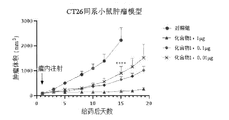
- Figure 1 is a graph showing the pharmacodynamic evaluation results of compound 1 on CT-26 colon cancer syngeneic mouse model.
- compound 1-2 (7.5g, 32.52mmol) was dissolved in dichloromethane (100mL), and a dichloromethane solution of boron tribromide (40.74g, 162.62mmol, 15.67) was added dropwise to the system. mL) (1.0M dichloromethane solution), after the addition, the reaction is stirred for 24h. The reaction system was poured into ice water (1200 mL), stirred for 30 min, filtered, and the solid was dried under vacuum to obtain crude product 1-3, which was directly used in the next reaction without further purification.
- compound 1-16 (220mg, 245.26 ⁇ mol) was dissolved in methanol (4mL), an aqueous solution (1mL) of sodium dithionite (427.01mg, 2.45mmol) was added, and then ammonia (910.00mg, 7.01mmol, 1mL, 27% aqueous solution), the reaction was heated to 15°C and stirred for 1h.
- the system was diluted by adding methanol (10 mL) and ethyl acetate (100 mL). Washed with saturated brine (30 mL x 3), the organic phase was dried over anhydrous sodium sulfate, filtered, and the filtrate was concentrated under reduced pressure to obtain crude product 1-17, which was directly used in the next reaction without further purification.
- compound 1-17 (408mg, 250.88 ⁇ mol) was dissolved in N,N-dimethylformamide (4mL), and compound 1-12 (0.4M 1,4-dioxane solution) was added dropwise , 1.57mL), then add 1-ethyl-(3-dimethylaminopropyl) carbodiimide hydrochloride (120mg, 627.21 ⁇ mol) and triethylamine (127mg, 1.25mmol), the reaction is heated to Stir at 15°C for 16h. The system was quenched with water (2 mL), and diluted with ethyl acetate (100 mL).
- compound 2-1 (680mg, 1.07mmol) was dissolved in methanol (10mL) and tetrahydrofuran (5mL), an aqueous solution (5mL) of sodium dithionite (1.87g, 10.75mmol) was added, and then ammonia ( 3.36g, 26.87mmol, 3.7mL, 28% aqueous solution), the system was heated to 15°C and stirred for 1h.
- compound 2-2 600mg, 963.41 ⁇ mol was dissolved in N,N-dimethylformamide (15mL), and compound 1-12 (0.4M 1,4-dioxane) was added dropwise within 30 min. Ring solution, 6.02mL), then add 1-ethyl-(3-dimethylaminopropyl)carbodiimide hydrochloride (461mg, 2.41mmol) and triethylamine (487mg, 4.82mmol, 670 ⁇ L) The reaction was heated to 15°C and stirred for 16h. The system was quenched with water (10mL), concentrated under reduced pressure to remove the solvent.
- compound 2-4 (36mg, 166.49 ⁇ mol) was dissolved in dichloromethane (6mL), and N-Boc-L-valine (65mg, 83.24 ⁇ mol), 1-ethyl-(3 -Dimethylaminopropyl)carbodiimide hydrochloride (24mg, 124.87 ⁇ mol) and N,N-dimethylaminopyridine (2mg, 16.65 ⁇ mol), the reaction was heated to 15°C and stirred for 20h.
- compound 3-4 (2.0g, 4.48mmol) was dissolved in tetrahydrofuran (20mL), and 9-boronbicyclo[3.3.1]nonane (26.9mL, 0.5mol/L) was added.
- compound 3-7 (220mg, 0.24mmol) was dissolved in a mixed solution of tetrahydrofuran and methanol (16mL, 5/1v/v), and sodium dithionite (1.06g, 6.07mmol) in water ( 4.0mL) solution and 28% ammonia solution (1.58g, 12.14mmol), stirred at this temperature for 3min, heated to 22°C and stirred for 2h.
- compound 1-8 (40g, 141.6mmol) was dissolved in acetonitrile (800mL), and triethylamine (200mL, 1.42mol) and trimethylchlorosilane (50mL, 394.0mmol) were added in sequence, and stirred at room temperature for 3h .
- the system was filtered, the filtrate was concentrated to dryness under reduced pressure, n-heptane (800 mL) was added, stirred for 30 min, filtered, and the filtrate was concentrated to dryness to obtain crude product 4-4, which was directly used in the next reaction without further purification.
- compound 4-5 (1.0g, 2.48mmol) was dissolved in N,N-dimethylformamide (10mL), sodium hydride (149mg, 3.73mmol, 60%) was added, and stirred for 0.5 h, add (3-bromopropoxy)-tert-butyldimethylsilane (1.88g, 7.42mmol), warm to room temperature and continue stirring for 8h.
- the system was quenched with water (20mL), diluted with n-heptane (30mL), separated, the organic phase was washed with water (10mL), dried over anhydrous sodium sulfate, and concentrated under reduced pressure to obtain compound 4-6 without further purification Used directly in the next reaction.
- compound 4-6 (1.92 g, 3.34 mmol) was dissolved in 1.0 M tetrabutylammonium fluoride solution in tetrahydrofuran (5 mL), and stirred at room temperature for 1 h.
- the system was concentrated under reduced pressure to remove the solvent, water (20mL) was added, filtered, the filter cake was added to a mixed solvent of methanol (8mL) and water (16mL) to be slurried, filtered, and the filter cake was dried to obtain 4-7, which was used directly without further purification In the next step.
- compound 4-9 400mg, 0.61mmol
- compound 4-3 495mg, 1.15mmol
- sodium bicarbonate 107mg, 1.27mmol
- N, N-Diisopropylethylamine 784mg, 6.07mmol
- compound 4-10 (195mg, 0.192mmol) and 28% ammonia (997mg, 7.68mmol) were dissolved in tetrahydrofuran/methanol solution (12mL, 4/1v/v), and sodium hydrosulfite (669mg, 3.84mmol) in water (3mL) and stirred at 0°C for 30min. Warm to room temperature and continue stirring for 2h.
- compound 5-1 (10.9g, 59.8mmol) was dissolved in N,N-dimethylformamide (200mL), iodosuccinimide (16.0g, 71.8mmol) was added, and the reaction was heated Stir at 90°C for 72h.
- diisopropyl azodicarboxylate (11.2g, 55.5mmol, 11.0mL) and triphenylphosphine (14.6g, 55.5mmol) were dissolved in tetrahydrofuran (250mL), stirred for 30min, and added 4-pentane Alkyn-1-ol (4.67 g, 55.5 mmol), stirring was continued for 30 min, compound 5-4 (10 g, 46.3 mmol) was added, and the reaction was warmed to room temperature and stirred for 16 h.
- compound 5-5 (6g, 21.3mmol) and compound (7.86g, 25.5mmol) were dissolved in toluene (60mL), and cuprous chloride (105mg, 1.06mmol) and tri-o-tolylphosphine were added in sequence.
- Palladium (304mg, 0.42mmol), 1,10-phenanthroline (1.15g, 6.38mmol) and cesium carbonate (13.9g, 42.5mmol) were reacted at 100°C and stirred for 16h.
- compound 1-5 350mg, 0.54mmol
- compound 5-12 (1.02g, 0.82mmol) was dissolved in methanol (20mL), and sodium hydrosulfite (1.71g, 9.80mmol) in water (4.0ml) and 28% ammonia (3.18 g, 24.5mmol), the reaction was stirred at room temperature for 3h.
- compound 6-1 (2.9g, 12.1mmol) was dissolved in N,N-dimethylformamide (40mL), and (2-bromoethoxy)-tert-butyldimethylsilane was added in sequence (2g, 9.2mmol), potassium carbonate (2.6g, 18.5mmol), the reaction was heated to 100°C and stirred for 3h.
- the reaction system was diluted with ethyl acetate (50mL), washed with water (30mL x 3), dried over anhydrous sodium sulfate, filtered, and the filtrate was concentrated under reduced pressure.
- the reaction system was cooled to room temperature, filtered, the filter residue was washed with ethanol (3mL), the crude product was stirred in ethyl acetate (10mL) for 10 min, filtered, the solid was washed with ethyl acetate (5mL), ethanol (2mL), and dried in vacuo to obtain the compound 6-3, used in the next reaction without further purification.
- compound 6-3 (1.93g, 2.5mmol) was dissolved in methanol (20mL) and tetrahydrofuran (20mL), and sodium hydrosulfite (4.3g, 24.6mmol) in water (10.0ml) solution and 28 % Ammonia (8.5 mL, 61.6 mmol), the reaction was stirred at room temperature for 20 min. Add water (100 mL) to the system, extract with ethyl acetate (50 mL x 5), combine the organic phases, wash with saturated brine (50 mL), dry with anhydrous sodium sulfate, filter, and concentrate the filtrate under reduced pressure to obtain crude product 6-4. It was used directly in the next reaction without further purification.
- Fluorescence polarization assay is used to detect the affinity of compounds to human STING protein. There is a certain amount of fluorescein-labeled c-di-GMP and different concentrations of the test compound in the reaction system. When the C-terminal protein of recombinant human STING is added, the two small molecules competitively bind to the protein. The bound fluorescein-labeled c-di-GMP rotates slowly in the liquid phase, and the detected fluorescence polarization degree is also higher at this time. The degree of fluorescence polarization is inversely related to the concentration and affinity of the test compound. We can accurately know the affinity of the test compound to human STING by detecting the size of the polarized light in the reaction system.
- the soluble human STING protein sequence used in the experiment was cut from the C-terminal part of the human wild-type endoplasmic reticulum binding protein STING, ranging from 140 amino acids to 379 amino acids.
- Human STING protein has a variety of alleles with different sequences, and different alleles have different affinities for CDN (Yi, et.al., "Single Nucleotide Polymorphisms of Human STING can affect innate immune response to cyclic DINucleotides" PLOS ONE.2013, 8(10), e77846). Wild-type STING sequences (G230, R232, R293) accounted for about 57.9% of the total.
- the N-terminal of the recombinant STING protein is the 6His-SUMO sequence to facilitate the correct folding and purification of the protein. After protease excision, the C-terminal STING is used for FP testing.
- the FP test uses a 384-well plate, with a final concentration of 30 nM of fluorescein-labeled c-di-GMP, 10 ⁇ M of human STING protein, and different concentrations of reference compound or test compound added to each well of 10 ⁇ l reaction system. Centrifuge at 1000g for 1 minute, incubate in the dark at room temperature for 30 minutes, and read the plate with Envision.
- the compound of the present invention shows a higher affinity for human wild-type STING protein than the endogenous 2'3'-cGAMP.
- the THP1-Dual TM cells used in the test are constructed by stably integrating two inducible reporter genes in the human monocyte cell line THP1.
- the promoter sequence composition of the secreted embryonic alkaline phosphatase (SEAP) reporter gene includes a basic IFN- ⁇ promoter and 5 upstream copies of NF- ⁇ B co-expression transcriptional response element (NF- ⁇ B consensus transcriptional response element) And 3 copies of c-Rel binding site.
- Secreted luciferase (Lucia) reporter gene is driven by five interferon (IFN)-stimulated response elements and a basic promoter of ISG54. This makes it possible to study the two main downstream signal transduction pathways of STING at the same time: study the NF KB pathway by detecting the activity of SEAP; and study the IRF pathway by evaluating the activity of Lucia Lucia luciferase.
- IFN interferon
- the compound of the present invention has a strong ability to promote beta interferon activation.
- This experiment used CT-26 colon cancer syngeneic mouse model to evaluate the efficacy of the compound.
Landscapes
- Chemical & Material Sciences (AREA)
- Organic Chemistry (AREA)
- Health & Medical Sciences (AREA)
- General Health & Medical Sciences (AREA)
- Life Sciences & Earth Sciences (AREA)
- Veterinary Medicine (AREA)
- Medicinal Chemistry (AREA)
- Nuclear Medicine, Radiotherapy & Molecular Imaging (AREA)
- General Chemical & Material Sciences (AREA)
- Pharmacology & Pharmacy (AREA)
- Chemical Kinetics & Catalysis (AREA)
- Animal Behavior & Ethology (AREA)
- Public Health (AREA)
- Engineering & Computer Science (AREA)
- Biochemistry (AREA)
- Biotechnology (AREA)
- Genetics & Genomics (AREA)
- Molecular Biology (AREA)
- Oncology (AREA)
- Hematology (AREA)
- Rheumatology (AREA)
- Pain & Pain Management (AREA)
- Bioinformatics & Cheminformatics (AREA)
- Immunology (AREA)
- Crystallography & Structural Chemistry (AREA)
- Communicable Diseases (AREA)
- Pharmaceuticals Containing Other Organic And Inorganic Compounds (AREA)
- Nitrogen Condensed Heterocyclic Rings (AREA)
- Saccharide Compounds (AREA)
- Plural Heterocyclic Compounds (AREA)
Abstract
本发明公开了式(ⅠA)所示化合物、其光学异构体及其药效上可接受的盐,以及该化合物作为STING激动剂的应用。
Description
本申请主张如下优先权:
CN 201910676596.X,申请日:2019年07月25日;
CN 202010695694.0,申请日:2020年07月17日。
本发明涉及式(ⅠA)所示化合物、其光学异构体及其药效上可接受的盐,以及该化合物作为STING激动剂的应用。
长久以来,科研人员一直试图通过激活病人的免疫系统,使他们自身的免疫系统能够有效地对抗肿瘤,完全清除肿瘤细胞。但肿瘤自发缓解的概率极低,因此绝大多数病人也无法因此获益。上世纪六七十年代,出现了通过卡介苗注射,非特异性的强化免疫系统功能等治疗方法。八十年代,能够活化T细胞以及NK细胞的干扰素和IL-2也被尝试应用于癌症的治疗,但这些方法依然有非常多的局限性,诸如外源细胞因子在血液中的半寿期非常短,这必须采用频繁给药和高剂量予以补偿。非特异性活化免疫系统导致正常组织的炎症反应,细胞因子风暴等,因此很多疗法的毒副作用非常强。作为在体中触发具有特异性治疗有益性细胞因子产生的免疫调节剂,以STING为靶标的疗法为解决这一困境带来了曙光。
目前己知人STING以三种方式激活:1)通过结合正在侵入的细菌或古细菌释放的外源(3’,3’)环状二核苷酸(c-diGMP、c-diAMP和c-GAMP)激活,这显示了STING具有在抗感染中先天免疫活化的作用;2)通过结合(2’3’)环状鸟苷单磷酸腺苷单磷酸酯(2’,3’c-GAMP)激活,它是由环状GMP-AMP二核苷酸合成酶(cGAS)在外源双链DNA(例如由正在侵入的细菌、病毒或原虫释放的)或哺乳动物中的自我DNA存在时诱导产生的内源环状二核苷酸,这显示了STING具有受内源或外源DNA诱导活化先天免疫的作用;3)通过结合合成性配体活化。
STING作为细胞质中DNA的感受器,它的活化可导致下游IRF3和NF-κB两条通路的激活以激活免疫系统。NF-κB通路激活导致下游一系列致炎症细胞因子的活化,而IRF3通路的激活,导致了一型干扰素(IFN-α/β)的激活,树突状细胞,细胞毒性细胞,NK细胞等的活化,从而发挥出抗肿瘤作用。
人体内的DNA通常不会激活STING蛋白,因为正常情况下DNA仅能够存在于细胞核之内(线粒体DNA除外)。但如果DNA泄漏到胞浆之中,则会活化STING,引发免疫反应。最近发现放疗以及化疗同样能够激活STING,这可能也是由于死亡的肿瘤细胞内的DNA泄漏导致STING被激活。
发明内容
在本发明的一方面,本发明提出了式(Ⅰ A)所示化合物、其光学异构体及其药效上可接受的盐,

其中,
L
1选自-O-、-NH-和单键;
R
1选自H和C
1-6烷基,所述C
1-6烷基任选被1、2或3个R取代;
R
2、R
3分别独立地选自H、
 C
3-6环烷基、5~6元杂环烷基和5~6元杂芳基,所述C
3-6环烷基、5~6元杂环烷基或5~6元杂芳基任选被1、2或3个R取代;
C
3-6环烷基、5~6元杂环烷基和5~6元杂芳基,所述C
3-6环烷基、5~6元杂环烷基或5~6元杂芳基任选被1、2或3个R取代;
L
2选自单键、-O-、-S-、-NH-和-NHC(=O)-;
R
4选自
 和C
1-6烷基-C(=O)-,所述C
1-6烷基-C(=O)-任选被1、2或3个R取代;环A选自4~10元杂环烷基和C
3-10环烷基;
和C
1-6烷基-C(=O)-,所述C
1-6烷基-C(=O)-任选被1、2或3个R取代;环A选自4~10元杂环烷基和C
3-10环烷基;
n选自0、1、2、3、4、5和6;
m选自1、2、3、4、5和6;
R
5分别独立地选自卤素、N
3、OH、SH、NH
2、CN、
 C
1-6烷基、C
1-6烷氧基、C
1-6烷硫基、C
1-
6烷氨基和5~6元杂环烷基-L
3-,所述C
1-6烷基、C
1-6烷氧基、C
1-6烷硫基或C
1-6烷氨基任选被1、2或3个R取代,所述5~6元杂环烷基-L
3-任选被1、2、3或4个R取代;
C
1-6烷基、C
1-6烷氧基、C
1-6烷硫基、C
1-
6烷氨基和5~6元杂环烷基-L
3-,所述C
1-6烷基、C
1-6烷氧基、C
1-6烷硫基或C
1-6烷氨基任选被1、2或3个R取代,所述5~6元杂环烷基-L
3-任选被1、2、3或4个R取代;
L
3选自-O-、-S-、-NH-和-CH
2-;
R
6、R
7分别独立地选自H、卤素、N
3、OH、SH、NH
2、CN、
 C
1-6烷基、C
1-6烷氧基、C
1-6烷硫基和C
1-6烷氨基,所述C
1-6烷基、C
1-6烷氧基、C
1-6烷硫基或C
1-6烷氨基任选被1、2或3个R取代;
C
1-6烷基、C
1-6烷氧基、C
1-6烷硫基和C
1-6烷氨基,所述C
1-6烷基、C
1-6烷氧基、C
1-6烷硫基或C
1-6烷氨基任选被1、2或3个R取代;
R
8选自H、卤素、N
3、OH、SH、NH
2、CN、
 和C
1-6烷基,所述C
1-6烷基任选被1、2或3个R取代;
和C
1-6烷基,所述C
1-6烷基任选被1、2或3个R取代;
或者,R
3与R
8连接在一起,形成一个5~6元杂环;
R
9、R
12分别独立地选自H和C
1-6烷基,所述C
1-6烷基任选被1、2或3个R取代;
R
10、R
11、R
13、R
14分别独立地选自H、卤素、N
3、OH、SH、NH
2、CN和C
1-6烷基,所述C
1-6烷基任选被1、2或3个R取代;
或者,R
9与R
13连接在一起,形成一个含3~7个碳原子的碳链;
T选自N或CH;
R分别独立地选自H、卤素、N
3、OH、SH、NH
2、CN、
 C
1-6烷基、C
1-
6烷氧基、C
1-6烷硫基、C
1-6烷氨基、5~6元杂环烷基、苯基和5~10元杂芳基,所述C
1-6烷基、C
1-6烷氧基、C
1-6烷硫基、C
1-6烷氨基、5~6元杂环烷基、苯基或5~10元杂芳基任选被1、2或3个R’取代;
C
1-6烷基、C
1-
6烷氧基、C
1-6烷硫基、C
1-6烷氨基、5~6元杂环烷基、苯基和5~10元杂芳基,所述C
1-6烷基、C
1-6烷氧基、C
1-6烷硫基、C
1-6烷氨基、5~6元杂环烷基、苯基或5~10元杂芳基任选被1、2或3个R’取代;
R’选自H、F、Cl、Br、I、OH、NH
2和CH
3;
所述5~6元杂环烷基、5~6元杂芳基、5~10元杂环烷基或5~10元杂芳基包含1、2或3个独立选自-O-、-NH-、-S-和N的杂原子或杂原子团。
在本发明的一些方案中,上述化合物、其光学异构体及其药效上可接受的盐,其选自

其中,
L
1选自-O-、-NH-和单键;
R
1选自H和C
1-6烷基,所述C
1-6烷基任选被1、2或3个R取代;
R
2、R
3分别独立地选自H、
 C
3-6环烷基、5~6元杂环烷基和5~6元杂芳基,所述C
3-6环烷基、5~6元杂环烷基或5~6元杂芳基任选被1、2或3个R取代;
C
3-6环烷基、5~6元杂环烷基和5~6元杂芳基,所述C
3-6环烷基、5~6元杂环烷基或5~6元杂芳基任选被1、2或3个R取代;
L
2选自单键、-O-、-S-、-NH-和-NHC(=O)-;
R
4选自
 和C
1-6烷基-C(=O)-,所述C
1-6烷基-C(=O)-任选被1、2或3个R取代;环A选自5~10元杂环烷基和C
3-10环烷基;
和C
1-6烷基-C(=O)-,所述C
1-6烷基-C(=O)-任选被1、2或3个R取代;环A选自5~10元杂环烷基和C
3-10环烷基;
n选自0、1、2、3、4、5和6;
m选自1、2、3、4、5和6;
R
5分别独立地选自卤素、N
3、OH、SH、NH
2、CN、
 C
1-6烷基、C
1-6烷氧基、C
1-6烷硫基、C
1-
6烷氨基和5~6元杂环烷基-L
3-,所述C
1-6烷基、C
1-6烷氧基、C
1-6烷硫基、C
1-6烷氨基任选被1、2或3个R取代,所述5~6元杂环烷基-L
3-任选被1、2、3或4个R取代;
C
1-6烷基、C
1-6烷氧基、C
1-6烷硫基、C
1-
6烷氨基和5~6元杂环烷基-L
3-,所述C
1-6烷基、C
1-6烷氧基、C
1-6烷硫基、C
1-6烷氨基任选被1、2或3个R取代,所述5~6元杂环烷基-L
3-任选被1、2、3或4个R取代;
L
3选自-O-、-S-、-NH-和-CH
2-;
R
6、R
7分别独立地选自H、卤素、N
3、OH、SH、NH
2、CN、
 C
1-6烷基、C
1-6烷氧基、C
1-6烷硫基和C
1-6烷氨基,所述C
1-6烷基、C
1-6烷氧基、C
1-6烷硫基或C
1-6烷氨基任选被1、2或3个R取代;
C
1-6烷基、C
1-6烷氧基、C
1-6烷硫基和C
1-6烷氨基,所述C
1-6烷基、C
1-6烷氧基、C
1-6烷硫基或C
1-6烷氨基任选被1、2或3个R取代;
R
9分别独立地选自H和C
1-6烷基,所述C
1-6烷基任选被1、2或3个R取代;
R
13分别独立地选自H、卤素、N
3、OH、SH、NH
2、CN和C
1-6烷基,所述C
1-6烷基任选被1、2或3个R取代;
或者,R
9与R
13连接在一起,形成一个含3~7个碳原子的碳链;
R分别独立地选自H、卤素、N
3、OH、SH、NH
2、CN、
 C
1-6烷基、C
1-
6烷氧基、C
1-6烷硫基、C
1-6烷氨基、5~6元杂环烷基、苯基和5~10元杂芳基,所述C
1-6烷基、C
1-6烷氧基、C
1-6烷硫基、C
1-6烷氨基、5~6元杂环烷基、苯基或5~10元杂芳基任选被1、2或3个R’取代;
C
1-6烷基、C
1-
6烷氧基、C
1-6烷硫基、C
1-6烷氨基、5~6元杂环烷基、苯基和5~10元杂芳基,所述C
1-6烷基、C
1-6烷氧基、C
1-6烷硫基、C
1-6烷氨基、5~6元杂环烷基、苯基或5~10元杂芳基任选被1、2或3个R’取代;
R’选自H、F、Cl、Br、I、OH、NH
2和CH
3;
所述5~6元杂环烷基、5~6元杂芳基、5~10元杂环烷基或5~10元杂芳基包含1、2或3个独立选自-O-、-NH-、-S-和N的杂原子或杂原子团。
在本发明的一些方案中,上述化合物、其光学异构体及其药效上可接受的盐,其选自

其中,
L
1选自-O-、-NH-和单键;
R
1选自H和C
1-6烷基,所述C
1-6烷基任选被1、2或3个R取代;
R
2、R
3分别独立地选自H、
 C
3-6环烷基、5~6元杂环烷基和5~6元杂芳基,所述C
3-6环烷基、5~6元杂环烷基或5~6元杂芳基任选被1、2或3个R取代;
C
3-6环烷基、5~6元杂环烷基和5~6元杂芳基,所述C
3-6环烷基、5~6元杂环烷基或5~6元杂芳基任选被1、2或3个R取代;
L
2选自单键、-O-、-S-、-NH-和-NHC(=O)-;
R
4选自
 和C
1-6烷基-C(=O)-,所述C
1-6烷基-C(=O)-任选被1、2或3个R取代;环A选自5~10元杂环烷基和C
3-10环烷基;
和C
1-6烷基-C(=O)-,所述C
1-6烷基-C(=O)-任选被1、2或3个R取代;环A选自5~10元杂环烷基和C
3-10环烷基;
n选自0、1、2、3、4、5和6;
m选自1、2、3、4、5和6;
R
5分别独立地选自卤素、N
3、OH、SH、NH
2、CN、
 C
1-6烷基、C
1-6烷氧基、C
1-6烷硫基、C
1-
6烷氨基和5~6元杂环烷基-L
3-,所述C
1-6烷基、C
1-6烷氧基、C
1-6烷硫基、C
1-6烷氨基任选被1、2或3个R取代,所述5~6元杂环烷基-L
3-任选被1、2、3或4个R取代;
C
1-6烷基、C
1-6烷氧基、C
1-6烷硫基、C
1-
6烷氨基和5~6元杂环烷基-L
3-,所述C
1-6烷基、C
1-6烷氧基、C
1-6烷硫基、C
1-6烷氨基任选被1、2或3个R取代,所述5~6元杂环烷基-L
3-任选被1、2、3或4个R取代;
L
3选自-O-、-S-、-NH-和-CH
2-;
R
6、R
7分别独立地选自H、卤素、N
3、OH、SH、NH
2、CN、
 C
1-6烷基、C
1-6烷氧基、C
1-6烷硫基和C
1-6烷氨基,所述C
1-6烷基、C
1-6烷氧基、C
1-6烷硫基或C
1-6烷氨基任选被1、2或3个R取代;
C
1-6烷基、C
1-6烷氧基、C
1-6烷硫基和C
1-6烷氨基,所述C
1-6烷基、C
1-6烷氧基、C
1-6烷硫基或C
1-6烷氨基任选被1、2或3个R取代;
R分别独立地选自H、卤素、N
3、OH、SH、NH
2、CN、
 C
1-6烷基、C
1-
6烷氧基、C
1-6烷硫基、C
1-6烷氨基、5~6元杂环烷基、苯基和5~10元杂芳基,所述C
1-6烷基、C
1-6烷氧基、C
1-6烷硫基、C
1-6烷氨基、5~6元杂环烷基、苯基或5~10元杂芳基任选被1、2或3个R’取代;
C
1-6烷基、C
1-
6烷氧基、C
1-6烷硫基、C
1-6烷氨基、5~6元杂环烷基、苯基和5~10元杂芳基,所述C
1-6烷基、C
1-6烷氧基、C
1-6烷硫基、C
1-6烷氨基、5~6元杂环烷基、苯基或5~10元杂芳基任选被1、2或3个R’取代;
R’选自H、F、Cl、Br、I、OH、NH
2和CH
3;
所述5~6元杂环烷基、5~6元杂芳基、5~10元杂环烷基或5~10元杂芳基包含1、2或3个独立选自-O-、-NH-、-S-和N的杂原子或杂原子团。
在本发明的一些方案中,上述R分别独立地选自H、卤素、N
3、OH、SH、NH
2、CN、

 C
1-3烷基、C
1-3烷氧基、C
1-3烷硫基、C
1-3烷氨基、吗啉基、苯基、咪唑基和吲 哚基,所述C
1-3烷基、C
1-3烷氧基、C
1-3烷硫基、C
1-3烷氨基、吗啉基、苯基、咪唑基或吲哚基任选被1、2或3个R’取代,其他变量如本发明所定义。
C
1-3烷基、C
1-3烷氧基、C
1-3烷硫基、C
1-3烷氨基、吗啉基、苯基、咪唑基和吲 哚基,所述C
1-3烷基、C
1-3烷氧基、C
1-3烷硫基、C
1-3烷氨基、吗啉基、苯基、咪唑基或吲哚基任选被1、2或3个R’取代,其他变量如本发明所定义。
在本发明的一些方案中,上述R分别独立地选自H、F、Cl、Br、I、N
3、OH、SH、NH
2、CN、Me、

 其他变量如本发明所定义。
在本发明的一些方案中,上述R
1选自H、Me、

 其他变量如本发明所定义。
在本发明的一些方案中,上述结构单元
 选自H、
选自H、
 其他变量如本发明所定义。
在本发明的一些方案中,上述环A选自四氢-2H-吡喃基、四氢呋喃基、吗啉基、2,7-二氮杂螺[4.5]癸烷基和2-氧杂6-氮杂螺[3.3]庚烷基,其他变量如本发明所定义。
在本发明的一些方案中,上述R
5分别独立地选自卤素、N
3、OH、SH、NH
2、CN、
 C
1-3烷基、C
1-3烷氧基、C
1-3烷硫基、C
1-3烷氨基、吗啉基-L
3-和四氢-2H-吡喃基-L
3-,所述C
1-3烷基、C
1-3烷氧基、C
1-3烷硫基或C
1-3烷氨基任选被1、2或3个R取代,所述吗啉基-L
3-或四氢-2H-吡喃基-L
3-任选被1、2、3或4个R取代,其他变量如本发明所定义。
C
1-3烷基、C
1-3烷氧基、C
1-3烷硫基、C
1-3烷氨基、吗啉基-L
3-和四氢-2H-吡喃基-L
3-,所述C
1-3烷基、C
1-3烷氧基、C
1-3烷硫基或C
1-3烷氨基任选被1、2或3个R取代,所述吗啉基-L
3-或四氢-2H-吡喃基-L
3-任选被1、2、3或4个R取代,其他变量如本发明所定义。
在本发明的一些方案中,上述R
5分别独立地选自F、Cl、Br、I、N
3、OH、SH、NH
2、CN、-CH
2NH
2、
 其他变量如本发明所定义。
在本发明的一些方案中,上述结构单元
 选自
选自


 其他变量如本发明所定义。
在本发明的一些方案中,上述结构单元
 选自
选自


 其他变量如本发明所定义。
在本发明的一些方案中,上述R
4选自


 其他变量如本发明所定义。
在本发明的一些方案中,上述R
6、R
7分别独立地选自H、卤素、N
3、OH、SH、NH
2、CN、
 C
1-3烷基、C
1-3烷氧基、C
1-3烷硫基和C
1-3烷氨基,所述C
1-3烷基、C
1-3烷氧基、C
1-3烷硫基或C
1-3烷氨基任选被1、2或3个R取代,其他变量如本发明所定义。
C
1-3烷基、C
1-3烷氧基、C
1-3烷硫基和C
1-3烷氨基,所述C
1-3烷基、C
1-3烷氧基、C
1-3烷硫基或C
1-3烷氨基任选被1、2或3个R取代,其他变量如本发明所定义。
在本发明的一些方案中,上述R
6、R
7分别独立地选自H、F、Cl、Br、I、N
3、OH、SH、NH
2、CN、Me、
 其他变量如本发明所定义。
在本发明的一些方案中,上述结构单元
 选自-CH
2-、
选自-CH
2-、

 其他变量如本发明所定义。
在本发明的另一方面,本发明还提出了下式化合物、其光学异构体及其药效上可接受的盐,其选自


在本发明的再一方面,本发明还提出了一种药物组合物。在本发明的一些方案中,上述药物组合物包含如前面所述化合物或其药学上可药用盐。
在本发明的一些方案中,上述药物组合物进一步包含一种或多种药学上可接受的载体、稀释剂或赋形剂。
在本发明的再一方面,本发明还提出了根据前面所述化合物或其可药用盐或根据前面所述的药物组合物在制备用于预防或治疗STING介导的疾病的药物的用途。
在本发明的一些方案中,上述STING介导的疾病包括选自癌症、炎症、感染性疾病或免疫相关疾病。
在本发明的一些方案中,上述癌症选自肾上腺皮质癌、肛门癌、肛门直肠癌、肛管癌、阑尾癌、小脑星形细胞瘤、脑星形细胞瘤、基底细胞癌、皮肤癌(非黑色素瘤)、胆道癌、肝外胆管癌、肝内胆管癌、膀胱癌、骨关节癌、骨肉瘤、恶性纤维组织细胞瘤、脑癌、脑肿瘤、脑干胶质瘤、室管膜瘤、成神经管细胞瘤、视觉通路和下丘脑神经胶质瘤、乳腺癌、支气管腺瘤、神经系统癌、神经系统淋巴瘤、中枢神经系统癌、中枢神经系统淋巴瘤、宫颈癌、慢性淋巴细胞白血病、慢性粒细胞白血病白血病、慢性骨髓增生性疾病、结肠癌、结直肠癌、皮肤T细胞淋巴瘤、淋巴肿瘤、蕈样真菌病、Sezary综合征、子宫内膜癌、食管癌、颅外生殖细胞肿瘤、性腺外生殖细胞肿瘤、眼癌、眼内黑色素瘤、视网膜母细胞瘤、胆囊癌、胃癌、胃肠道类癌、胃肠道间质瘤(GIST)、生殖细胞肿瘤、卵巢生殖细胞瘤、头颈癌、肝细胞癌、霍奇金淋巴瘤、胰岛细胞瘤、卡波西肉瘤、肾癌、喉癌、急性淋巴细胞白血病、急性髓性白血病、毛细胞白血病、唇和口腔腔癌、肝癌、肺癌、非小细胞肺癌、小细胞肺癌、非霍奇金淋巴瘤、原发性中枢神经系统淋巴瘤、Waldenstroem巨球蛋白血症、黑色素瘤、间皮瘤、转移性鳞癌、舌癌、多发性内分泌肿瘤综合征、骨髓增生异常综合征、多发性骨髓瘤、鼻咽癌、神经母细胞瘤、口咽癌、卵巢癌、卵巢上皮癌、卵巢低恶性潜能肿瘤、胰腺癌、胰岛细胞胰腺癌、鼻窦和鼻腔癌、甲状旁腺癌、阴茎癌、咽癌、嗜铬细胞瘤、松果体瘤、垂体瘤、浆细胞肿瘤、胸膜肺母细胞瘤、前列腺癌、直肠癌、肾盂和输尿管移行细胞癌、视网膜母细胞瘤、横纹肌肉瘤、唾液腺癌、尤文家族肉瘤、卡波西肉瘤、滑膜肉瘤、子宫癌、子宫肉瘤、小肠癌、软组织肉瘤、鳞状细胞癌、幕上原始神经外胚层肿瘤、睾丸癌、咽喉癌、胸腺瘤、尿道癌、子宫内膜异位症、阴道癌、外阴癌、恶性胸水或威尔姆氏肿瘤。
在本发明的一些方案中,上述STING介导的疾病选自头颈癌。
在本发明的一些方案中,上述STING介导的疾病选自乳腺癌。
在本发明的一些方案中,上述STING介导的疾病选自结直肠癌。
在本发明的一些方案中,上述STING介导的疾病选自黑色素瘤。
在本发明的一些方案中,上述STING介导的疾病选自淋巴癌。
在本发明的一些方案中,上述STING介导的疾病选自膀胱癌。
在本发明的一些方案中,上述STING介导的疾病选自皮肤鳞状细胞癌。
在本发明的一些方案中,上述STING介导的疾病选自卵巢癌。
在本发明的一些方案中,上述STING介导的疾病选自胃癌。
在本发明的一些方案中,上述STING介导的疾病选自食道癌。
在本发明的一些方案中,上述STING介导的疾病选自前列腺癌。
在本发明的再一方面,本发明还提出了根据前面所述化合物或其可药用盐或根据前面所述的药物组合物在制备用于预防或治疗STING介导的肿瘤并发症的药物的用途。
在本发明的一些方案中,上述STING介导的肿瘤并发症选自恶性胸水。
在本发明的一些方案中,上述STING介导的肿瘤并发症选自腹水。
在本发明的再一方面,本发明还提出了一种治疗STING介导的疾病的方法。在本发明的一些方案中,上述方法包含对患有STING介导的疾病的患者施用治疗有效量的前面所述化合物或其可药用盐或治疗有效量的前面所述的药物组合物。
定义和说明
除非另有说明,本文所用的下列术语和短语旨在具有下列含义。一个特定的术语或短语在没有特别定义的情况下不应该被认为是不确定的或不清楚的,而应该按照普通的含义去理解。当本文中出现商品名时,意在指代其对应的商品或其活性成分。
这里所采用的术语“药学上可接受的”,是针对那些化合物、材料、组合物和/或剂型而言,它们在可靠的医学判断的范围之内,适用于与人类和动物的组织接触使用,而没有过多的毒性、刺激性、过敏性反应或其它问题或并发症,与合理的利益/风险比相称。
术语“药学上可接受的盐”是指本发明化合物的盐,由本发明发现的具有特定取代基的化合物与相对无毒的酸或碱制备。当本发明的化合物中含有相对酸性的功能团时,可以通过在纯的溶液或合适的惰性溶剂中用足够量的碱与这类化合物的中性形式接触的方式获得碱加成盐。药学上可接受的碱加成盐包括钠、钾、钙、铵、有机胺或镁盐或类似的盐。当本发明的化合物中含有相对碱性的官能团时,可以通过在纯的溶液或合适的惰性溶剂中用足够量的酸与这类化合物的中性形式接触的方式获得酸加成盐。药学上可接受的酸加成盐的实例包括无机酸盐,所述无机酸包括例如盐酸、氢溴酸、硝酸、碳酸,碳酸氢根,磷酸、磷酸一氢根、磷酸二氢根、硫酸、硫酸氢根、氢碘酸、亚磷酸等;以及有机酸盐,所述有机酸包括如乙酸、丙酸、异丁酸、马来酸、丙二酸、苯甲酸、琥珀酸、辛二酸、反丁烯二酸、乳酸、扁桃酸、邻苯二甲酸、苯磺酸、对甲苯磺酸、柠檬酸、酒石酸和甲磺酸等类似的酸;还包括氨基酸(如精氨酸等)的盐,以及如葡糖醛酸等有机酸的盐。本发明的某些特定的化合物含有碱性和酸性的官能团,从而可以被转换成任一碱或酸加成盐。
本发明的药学上可接受的盐可由含有酸根或碱基的母体化合物通过常规化学方法合成。一般情况下,这样的盐的制备方法是:在水或有机溶剂或两者的混合物中,经由游离酸或碱形式的这些化合物与化学计量的适当的碱或酸反应来制备。
本发明的化合物可以存在特定的几何或立体异构体形式。本发明设想所有的这类化合物,包括顺式和反式异构体、(-)-和(+)-对映体、(R)-和(S)-对映体、非对映异构体、(D)-异构体、(L)-异构体,及其外消旋混合物和其他混合物,例如对映异构体或非对映体富集的混合物,所有这些混合物都属于本发明的范围之内。烷基等取代基中可存在另外的不对称碳原子。所有这些异构体以及它们的混合物,均包括在本发明的范围之内。
除非另有说明,用楔形实线键
 和楔形虚线键
 表示一个立体中心的绝对构型,用直形实线键
 和直形虚线键
 表示立体中心的相对构型,用波浪线
 表示楔形实线键
 或楔形虚线键
 或用波浪线
或用波浪线
 表示直形实线键
 和直形虚线键

本发明的化合物可以存在特定的。除非另有说明,术语“互变异构体”或“互变异构体形式”是指在室 温下,不同官能团异构体处于动态平衡,并能很快的相互转化。若互变异构体是可能的(如在溶液中),则可以达到互变异构体的化学平衡。例如,质子互变异构体(proton tautomer)(也称质子转移互变异构体(prototropic tautomer))包括通过质子迁移来进行的互相转化,如酮-烯醇异构化和亚胺-烯胺异构化。价键异构体(valence tautomer)包括一些成键电子的重组来进行的相互转化。其中酮-烯醇互变异构化的具体实例是戊烷-2,4-二酮与4-羟基戊-3-烯-2-酮两个互变异构体之间的互变。
除非另有说明,术语“富含一种异构体”、“异构体富集”、“富含一种对映体”或者“对映体富集”指其中一种异构体或对映体的含量小于100%,并且,该异构体或对映体的含量大于等于60%,或者大于等于70%,或者大于等于80%,或者大于等于90%,或者大于等于95%,或者大于等于96%,或者大于等于97%,或者大于等于98%,或者大于等于99%,或者大于等于99.5%,或者大于等于99.6%,或者大于等于99.7%,或者大于等于99.8%,或者大于等于99.9%。
除非另有说明,术语“异构体过量”或“对映体过量”指两种异构体或两种对映体相对百分数之间的差值。例如,其中一种异构体或对映体的含量为90%,另一种异构体或对映体的含量为10%,则异构体或对映体过量(ee值)为80%。
可以通过的手性合成或手性试剂或者其他常规技术制备光学活性的(R)-和(S)-异构体以及D和L异构体。如果想得到本发明某化合物的一种对映体,可以通过不对称合成或者具有手性助剂的衍生作用来制备,其中将所得非对映体混合物分离,并且辅助基团裂开以提供纯的所需对映异构体。或者,当分子中含有碱性官能团(如氨基)或酸性官能团(如羧基)时,与适当的光学活性的酸或碱形成非对映异构体的盐,然后通过本领域所公知的常规方法进行非对映异构体拆分,然后回收得到纯的对映体。此外,对映异构体和非对映异构体的分离通常是通过使用色谱法完成的,所述色谱法采用手性固定相,并任选地与化学衍生法相结合(例如由胺生成氨基甲酸盐)。本发明的化合物可以在一个或多个构成该化合物的原子上包含非天然比例的原子同位素。例如,可用放射性同位素标记化合物,比如氚(
3H),碘-125(
125I)或C-14(
14C)。又例如,可用重氢取代氢形成氘代药物,氘与碳构成的键比普通氢与碳构成的键更坚固,相比于未氘化药物,氘代药物有降低毒副作用、增加药物稳定性、增强疗效、延长药物生物半衰期等优势。本发明的化合物的所有同位素组成的变换,无论放射性与否,都包括在本发明的范围之内。“任选”或“任选地”指的是随后描述的事件或状况可能但不是必需出现的,并且该描述包括其中所述事件或状况发生的情况以及所述事件或状况不发生的情况。
术语“被取代的”是指特定原子上的任意一个或多个氢原子被取代基取代,可以包括重氢和氢的变体,只要特定原子的价态是正常的并且取代后的化合物是稳定的。当取代基为氧(即=O)时,意味着两个氢原子被取代。氧取代不会发生在芳香基上。术语“任选被取代的”是指可以被取代,也可以不被取代,除非另有规定,取代基的种类和数目在化学上可以实现的基础上可以是任意的。
当任何变量(例如R)在化合物的组成或结构中出现一次以上时,其在每一种情况下的定义都是独立的。因此,例如,如果一个基团被0-2个R所取代,则所述基团可以任选地至多被两个R所取代,并且每种情况下的R都有独立的选项。此外,取代基和/或其变体的组合只有在这样的组合会产生稳定的化合物的情况下才是被允许的。
当一个连接基团的数量为0时,比如-(CRR)0-,表示该连接基团为单键。
当其中一个变量选自单键时,表示其连接的两个基团直接相连,比如A-L-Z中L代表单键时表示该结构实际上是A-Z。
当所列举的连接基团没有指明其连接方向,其连接方向是任意的,例如,
 中连接基团L为-M-W-,此时-M-W-既可以按与从左往右的读取顺序相同的方向连接苯环和环戊烷构成
 也可以按照与从左往右的读取顺序相反的方向连接苯环和环戊烷构成
 所述连接基团、取代基和/或其变体的组合只有在这样的组合会产生稳定的化合物的情况下才是被允许的。
除非另有规定,环上原子的数目通常被定义为环的元数,例如,“5-6元环”是指环绕排列5-6个原子的“环”。
除非另有规定,“5~6元杂环”其表示由5至6个环原子组成的饱和或者不饱和环状基团,其1、2、3或4个环原子为独立选自O、S和N的杂原子,其余为碳原子,其中氮原子任选地被季铵化,氮和硫杂原子可任选被氧化(即NO和S(O)p,p是1或2)。其包括单环和双环体系,其中双环体系包括螺环、并环和桥环。此外,就该“5-6元杂环”而言,杂原子可以占据杂环烷基与分子其余部分的连接位置。所述5-6元杂环包括5元和6元杂环。5-6元杂环的实例包括但不限于
 等。
等。
除非另有规定,术语“C
1-6烷基”用于表示直链或支链的由1至6个碳原子组成的饱和碳氢基团。所述C
1-6烷基包括C
1-5、C
1-4、C
1-3、C
1-2、C
2-6、C
2-4、C
6和C
5烷基等;其可以是一价(如甲基)、二价(如亚甲基)或者多价(如次甲基)。C
1-6烷基的实例包括但不限于甲基(Me)、乙基(Et)、丙基(包括n-丙基和异丙基)、丁基(包括n-丁基,异丁基,s-丁基和t-丁基)、戊基(包括n-戊基,异戊基和新戊基)、己基等。
除非另有规定,术语“C
1-3烷基”用于表示直链或支链的由1至3个碳原子组成的饱和碳氢基团。所述C
1-3烷基包括C
1-2和C
2-3烷基等;其可以是一价(如甲基)、二价(如亚甲基)或者多价(如次甲基)。C
1-3烷基的实例包括但不限于甲基(Me)、乙基(Et)、丙基(包括n-丙基和异丙基)等。
除非另有规定,术语“C
1-6烷氧基”表示通过一个氧原子连接到分子的其余部分的那些包含1至6个碳原子的烷基基团。所述C
1-6烷氧基包括C
1-4、C
1-3、C
1-2、C
2-6、C
2-4、C
6、C
5、C
4和C
3烷氧基等。C
1-
6烷氧基的实例包括但不限于甲氧基、乙氧基、丙氧基(包括正丙氧基和异丙氧基)、丁氧基(包括n-丁氧基、异丁氧基、s-丁氧基和t-丁氧基)、戊氧基(包括n-戊氧基、异戊氧基和新戊氧基)、己氧基等。
除非另有规定,术语“C
1-3烷氧基”表示通过一个氧原子连接到分子的其余部分的那些包含1至3个碳原子的烷基基团。所述C
1-3烷氧基包括C
1-2、C
2-3、C
3和C
2烷氧基等。C
1-3烷氧基的实例包括但不限于甲氧基、乙氧基、丙氧基(包括正丙氧基和异丙氧基)等。
除非另有规定,术语“C
1-6烷氨基”表示通过氨基连接到分子的其余部分的那些包含1至6个碳原子的烷基基团。所述C
1-6烷氨基包括C
1-4、C
1-3、C
1-2、C
2-6、C
2-4、C
6、C
5、C
4、C
3和C
2烷氨基等。C
1-6烷氨基的实例包括但不限于-NHCH
3、-N(CH
3)
2、-NHCH
2CH
3、-N(CH
3)CH
2CH
3、-N(CH
2CH
3)(CH
2CH
3)、-NHCH
2CH
2CH
3、-NHCH
2(CH
3)
2、-NHCH
2CH
2CH
2CH
3等。
除非另有规定,术语“C
1-3烷氨基”表示通过氨基连接到分子的其余部分的那些包含1至3个碳原子的烷基基团。所述C
1-3烷氨基包括C
1-2、C
3和C
2烷氨基等。C
1-3烷氨基的实例包括但不限于-NHCH
3、-N(CH
3)
2、-NHCH
2CH
3、-N(CH
3)CH
2CH
3、-NHCH
2CH
2CH
3、-NHCH
2(CH
3)
2等。
除非另有规定,术语“C
1-6烷硫基”表示通过硫原子连接到分子的其余部分的那些包含1至6个碳原子的烷基基团。所述C
1-6烷硫基包括C
1-4、C
1-3、C
1-2、C
2-6、C
2-4、C
6、C
5、C
4、C
3和C
2烷硫基等。C
1-
6烷硫基的实例包括但不限于-SCH
3、-SCH
2CH
3、-SCH
2CH
2CH
3、-SCH
2(CH
3)
2等等。
除非另有规定,术语“C
1-3烷硫基”表示通过硫原子连接到分子的其余部分的那些包含1至3个碳原子的烷基基团。所述C
1-3烷硫基包括C
1-3、C
1-2和C
3烷硫基等。C
1-3烷硫基的实例包括但不限于-SCH
3、 -SCH
2CH
3、-SCH
2CH
2CH
3、-SCH
2(CH
3)
2等。
除非另有规定,术语“C
1-6烷氨基”表示通过氨基连接到分子的其余部分的那些包含1至6个碳原子的烷基基团。所述C
1-6烷氨基包括C
1-4、C
1-3、C
1-2、C
2-6、C
2-4、C
6、C
5、C
4、C
3和C
2烷氨基等。C
1-6烷氨基的实例包括但不限于-NHCH
3、-N(CH
3)
2、-NHCH
2CH
3、-N(CH
3)CH
2CH
3、-N(CH
2CH
3)(CH
2CH
3)、-NHCH
2CH
2CH
3、-NHCH
2(CH
3)
2、-NHCH
2CH
2CH
2CH
3等。
除非另有规定,术语“C
1-4烷氨基”表示通过氨基连接到分子的其余部分的那些包含1至4个碳原子的烷基基团。所述C
1-4烷氨基包括C
1-3、C
1-2、C
2-4、C
4、C
3和C
2烷氨基等。C
1-4烷氨基的实例包括但不限于-NHCH
3、-N(CH
3)
2、-NHCH
2CH
3、-N(CH
3)CH
2CH
3、-N(CH
2CH
3)(CH
2CH
3)、-NHCH
2CH
2CH
3、-NHCH
2(CH
3)
2、-NHCH
2CH
2CH
2CH
3等。
除非另有规定,术语“C
1-3烷氨基”表示通过氨基连接到分子的其余部分的那些包含1至3个碳原子的烷基基团。所述C
1-3烷氨基包括C
1-2、C
3和C
2烷氨基等。C
1-3烷氨基的实例包括但不限于-NHCH
3、-N(CH
3)
2、-NHCH
2CH
3、-N(CH
3)CH
2CH
3、-NHCH
2CH
2CH
3、-NHCH
2(CH
3)
2等。
除非另有规定,术语“5-6元杂环烷基”本身或者与其他术语联合分别表示由5至6个环原子组成的饱和环状基团,其1、2、3或4个环原子为独立选自O、S和N的杂原子,其余为碳原子,其中氮原子任选地被季铵化,氮和硫杂原子可任选被氧化(即NO和S(O)
p,p是1或2)。其包括单环和双环体系,其中双环体系包括螺环、并环和桥环。此外,就该“5-6元杂环烷基”而言,杂原子可以占据杂环烷基与分子其余部分的连接位置。所述5-6元杂环烷基包括5元和6元杂环烷基。5-6元杂环烷基的实例包括但不限于吡咯烷基、吡唑烷基、咪唑烷基、四氢噻吩基(包括四氢噻吩-2-基和四氢噻吩-3-基等)、四氢呋喃基(包括四氢呋喃-2-基等)、四氢吡喃基、哌啶基(包括1-哌啶基、2-哌啶基和3-哌啶基等)、哌嗪基(包括1-哌嗪基和2-哌嗪基等)、吗啉基(包括3-吗啉基和4-吗啉基等)、二噁烷基、二噻烷基、异噁唑烷基、异噻唑烷基、1,2-噁嗪基、1,2-噻嗪基、六氢哒嗪基、高哌嗪基或高哌啶基等。
除非另有规定,本发明术语“C
6-10芳环”和“C
6-10芳基”可以互换使用,术语“C
6-10芳环”或“C
6-10芳基”表示由6至10个碳原子组成的具有共轭π电子体系的环状碳氢基团,它可以是单环、稠合双环或稠合三环体系,其中各个环均为芳香性的。其可以是一价、二价或者多价,C
6-10芳基包括C
6-9、C
9、C
10和C
6芳基等。C
6-10芳基的实例包括但不限于苯基、萘基(包括1-萘基和2-萘基等)。
除非另有规定,本发明术语“5-10元杂芳环”和“5-10元杂芳基”可以互换使用,术语“5-10元杂芳基”是表示由5至10个环原子组成的具有共轭π电子体系的环状基团,其1、2、3或4个环原子为独立选自O、S和N的杂原子,其余为碳原子。其可以是单环、稠合双环或稠合三环体系,其中各个环均为芳香性的。其中氮原子任选地被季铵化,氮和硫杂原子可任选被氧化(即NO和S(O)
p,p是1或2)。5-10元杂芳基可通过杂原子或碳原子连接到分子的其余部分。所述5-10元杂芳基包括5-8元、5-7元、5-6元、5元和6元杂芳基等。所述5-10元杂芳基的实例包括但不限于吡咯基(包括N-吡咯基、2-吡咯基和3-吡咯基等)、吡唑基(包括2-吡唑基和3-吡唑基等)、咪唑基(包括N-咪唑基、2-咪唑基、4-咪唑基和5-咪唑基等)、噁唑基(包括2-噁唑基、4-噁唑基和5-噁唑基等)、三唑基(1H-1,2,3-三唑基、2H-1,2,3-三唑基、1H-1,2,4-三唑基和4H-1,2,4-三唑基等)、四唑基、异噁唑基(3-异噁唑基、4-异噁唑基和5-异噁唑基等)、噻唑基(包括2-噻唑基、4-噻唑基和5-噻唑基等)、呋喃基(包括2-呋喃基和3-呋喃基等)、噻吩基(包括2-噻吩基和3-噻吩基等)、吡啶基(包括2-吡啶基、3-吡啶基和4-吡啶基等)、吡嗪基、嘧啶基(包括2-嘧啶基和4-嘧啶基等)、苯并噻唑基(包括5-苯并噻唑基等)、嘌呤基、苯并咪唑基(包括2-苯并咪唑基等)、苯并噁唑基、吲哚基(包括5-吲哚基等)、异喹啉基(包括1-异喹啉基和5-异喹啉基等)、喹喔啉基(包括2-喹喔啉基和5-喹喔啉基等)或喹啉基(包括3-喹啉基和6-喹啉基等)。
除非另有规定,C
n-n+m或C
n-C
n+m包括n至n+m个碳的任何一种具体情况,例如C
1-6包括C
1、C
2、C
3、C
4、C
5和C
6,也包括n至n+m中的任何一个范围,例如C
1-6包括C
1-3、C
1-6、C
1-4、C
3-6、C
3-5、C
2-
5和C
1-5等;同理,n元至n+m元表示环上原子数为n至n+m个,例如5-6元环包括5元环和6元环。
本发明所用的术语“治疗”指给患有疾病或者具有所述疾病的症状的个体施用一种或多种药物物质、特别是本文所述的式(I)化合物和/或其药学上可接受的盐,用以治愈、缓解、减轻、改变、医治、改善、改进或影响所述疾病或者所述疾病的症状。本文所用的术语“预防”指给具有易患所述疾病的体质的个体施用一种或多种药物物质、特别是本文所述的式(IA)或式(I)化合物和/或其药学上可接受的盐,用以防止个体罹患该疾病。当涉及化学反应时,术语“处理”、“接触”和“反应”指在适当的条件下加入或混合两种或更多种试剂,以产生所示的和/或所需的产物。应当理解的是,产生所示的和/或所需的产物的反应可能不一定直接来自最初加入的两种试剂的组合,即,在混合物中可能存在生成的一个或多个中间体,这些中间体最终导致了所示的和/或所需的产物的形成。
本发明所用的术语“有效量”指通常足以对个体产生有益效果的量。可以通过常规方法(例如建模、剂量递增研究或临床试验)结合常规影响因素(例如给药方式、化合物的药代动力学、疾病的严重程度和病程、个体的病史、个体的健康状况、个体对药物的响应程度等)来确定本发明的化合物的有效量。
本发明的化合物可以通过本领域技术人员所熟知的多种合成方法来制备,包括下面列举的具体实施方式、其与其他化学合成方法的结合所形成的实施方式以及本领域技术上人员所熟知的等同替换方式,优选的实施方式包括但不限于本发明的实施例。
本发明采用下述缩略词:aq代表水;CDCl
3代表氘代氯仿;CD
3OD代表氘代甲醇;DMSO-d
6代表氘代二甲亚砜;Bz代表苯甲酰基;TBS代表叔丁基二甲基硅基。
图1为化合物1对CT-26结肠癌同系小鼠模型的药效评价结果图。
下面通过实施例对本申请进行详细描述,但并不意味着存在对本申请而言任何不利的限制。本文已经详细地描述了本申请,其中也公开了其具体实施例方式,对本领域的技术人员而言,在不脱离本申请精神和范围的情况下针对本申请具体实施方式进行各种变化和改进将是显而易见的。
实施例1:化合物1的制备
步骤1:化合物1-2的制备

化合物1-1(8g,32.57mmol)溶于氨的甲醇溶液(7M,70.00mL)中,体系于封管中加热至50℃搅拌反应20h。反应液过滤,所得固体用石油醚洗涤,真空干燥,得粗品1-2,不经进一步纯化直接用于下一步反应。
1H NMR(400MHz,DMSO-d
6)δ8.30(br s,1H),8.05(d,J=2.0Hz,1H),7.88(d,J=2.0Hz,1H),7.80(br s,1H),4.02(s,3H).
步骤2:化合物1-3的制备

15℃,氮气保护条件下,化合物1-2(7.5g,32.52mmol)溶于二氯甲烷(100mL)中,体系中滴加入三溴化硼的二氯甲烷溶液(40.74g,162.62mmol,15.67mL)(1.0M的二氯甲烷溶液),加毕,搅拌反应24h。反应体系倾入冰水(1200mL)中,搅拌30min,过滤,固体真空干燥得粗品1-3,不经进一步纯化直接用于下一步反应。
1H NMR(400MHz,DMSO-d
6)δ8.19(br s,1H),7.92(d,J=1.6Hz,1H),7.20(d,J=1.6Hz,1H),7.68(s,1H).
步骤3:化合物1-4的制备

化合物1-3(1.5g,6.93mmol)和(3-溴丙氧基)-叔丁基二甲基硅烷(2.28g,9.00mmol)溶于N,N-二甲基甲酰胺(20mL)中,加入碳酸钾(1.91g,13.85mmol)。反应升温至100℃搅拌2h。反应体系倾入水(150mL)中,过滤收集固体,固体粗品经硅胶柱层析纯化(石油醚/乙酸乙酯(v/v)=1/0~1/1),得化合物1-4。
1H NMR(400MHz,DMSO-d
6)δ8.31(br s,1H),8.05(s,1H),7.89(s 1H),7.80(br s,1H),4.31-4.28(m,2H),3.81-3.78(m,2H),1.99-1.96(m,2H),0.84(s,9H),0.03(s,6H).
步骤4:化合物1-5的制备

化合物1-2(2g,8.67mmol)溶于乙醇(15mL)中,依次加入反式-(4-氨基-2-丁烯基)氨基甲酸叔丁酯(1.94g,10.41mmol)和二异丙基乙基胺(3.36g,26.02mmol,4.53mL)。反应于封管中升温至100℃搅拌24h。反应体系过滤,固体真空干燥得粗品1-5,不经进一步纯化直接用于下一步反应。
MS(ESI)m/z(M+H)
+=676.2.
1H NMR(400MHz,DMSO-d
6)δ8.15(s,1H),7.99(s,1H),7.73–7.70(m,1H),7.51(s,1H),7.30(s,1H),5.49(s,2H),4.05(s,2H),3.98(s,3H),3.44(s,2H),1.31(s,9H).
步骤5:化合物1-6的制备

化合物1-5(2.8g,7.36mmol)溶于1,4-二氧六环(30mL)中,加入氯化氢的1,4-二氧六环溶液(4.0M,20mL)。反应于15℃搅拌2h。反应体系减压浓缩,得粗品1-6,不经进一步纯化直接用于下一步反应。
步骤6:化合物1-8的制备

化合物1-7(5g,25.75mmol),苯甲醛缩二甲醇(7.05g,46.35mmol,6.98mL)溶于N,N-二甲基甲酰胺(50mL)中,加入对甲苯磺酸(644mg,2.58mmol),反应于45℃搅拌2h。加入三乙胺调节溶液pH=8,反应体系减压浓缩得粗品,固体粗品经硅胶柱层析纯化(石油醚/乙酸乙酯(v/v)=1/0~0/1),得化合物1-8。
步骤7:化合物1-9的制备

0℃条件下,化合物1-8(5.6g,15.87mmol)溶于N,N-二甲基甲酰胺(60mL)中,依次加入咪唑(1.62g,23.81mmol)和叔丁基二甲基氯硅烷(2.87g,19.04mmol)。升温至15℃搅拌16h。加水(200mL)淬灭反应,乙酸乙酯(80mL x 3)萃取,合并有机相,经无水硫酸钠干燥,过滤,滤液浓缩,固体粗品经硅胶柱层析纯化(石油醚/乙酸乙酯(v/v)=1/0~4/1),得化合物1-9。
1H NMR(400MHz,CDCl
3)δ7.58-7.45(m,2H),7.41-7.32(m,3H),5.51(s,1H),4.81(d,J=4.0Hz,1H),4.28(dd,J=4.0,9.6Hz,1H),3.96-3.87(m,1H),3.82-3.72(m,2H),3.60(dt,J=4.0,8.4Hz,1H),3.50-3.36(m,4H),2.12(d,J=8.0Hz,1H),0.88(s,9H),0.11(s,3H),0.03(s,3H)
步骤8:化合物1-11的制备

化合物1-10(1g,6.49mmol)溶于二氯甲烷(20mL)中,依次加入N,N-二甲基甲酰胺(0.1mL)和草酰氯(906mg,7.14mmol,624μL)。反应于15℃搅拌1h。体系减压浓缩,得粗品1-11。不经进一步纯化直接用于下一步反应。
步骤9:化合物1-12的制备

0℃条件下,化合物1-11(1.12g,6.49mmol)溶于丙酮(10mL)中,加入硫氰化钾(693mg,7.14mmol)的丙酮(25mL)溶液,该温度下搅拌1h。加入石油醚(30mL),减压浓缩至1/3体积。重复该过程3次,过滤除去溶剂,固体用石油醚洗涤,然后经硅胶柱层析纯化(石油醚/乙酸乙酯(v/v)=1/0~9/1),得化合物1-12。
1H NMR(400MHz,DMSO-d
6)δ6.71(s,1H),4.50-4.45(m,2H),2.27(s,3H),1.40-1.36(m,3H).
步骤10:化合物1-13的制备

化合物1-4(300mg,771.37μmol)溶于四氢呋喃(4mL)中,加入四丁基氟化铵的四氢呋喃溶液(1.0M,1.54mL)。反应于15℃搅拌1h。体系中加入乙酸乙酯(100mL)稀释,用饱和食盐水(50mL x 3)洗涤,有机相经无水硫酸钠干燥,过滤,滤液减压浓缩,粗品经硅胶柱层析纯化(二氯甲烷/甲醇(v/v)=1/0~9/1),得化合物1-13。
1H NMR(400MHz,DMSO-d
6)δ8.31(s,1H),8.05(s,1H),7.90(s,1H),7.78(s,1H),4.65-46.2(m,1H),4.32-4.29(m,2H),3.63-3.59(m,2H),1.96-1.93(m,2H).
步骤11:化合物1-14的制备

化合物1-13(0.2g,728.18μmol)溶于四氢呋喃(2mL)中,依次加入三乙胺(221mg,2.18mmol,304.06μL)和甲烷磺酰氯(209mg,1.82mmol,141μL)。反应于15℃搅拌0.5h。体系中加水(1mL)淬灭反应,乙酸乙酯(100mL)稀释,用饱和食盐水(50mL x 3)洗涤,有机相经无水硫酸钠干燥,过滤,滤液减压浓缩,得粗品1-14,不经进一步纯化直接用于下一步反应。
1H NMR(400MHz,DMSO-d
6)δ8.30(m,1H),8.06(s,1H),7.90(s,1H),7.80(s,1H),4.42-4.39(m,2H),4.35-4.32(m,2H),3.19(s,1H),2.24-2.21(m,2H).
步骤12:化合物1-15的制备

化合物1-14(1.5g,3.78mmol)溶于N,N-二甲基甲酰胺(40mL)中,依次加入氢化钠(756.46mg,18.91mmol,60%纯度)、化合物1-9(1.40g,3.97mmol)。反应于15℃搅拌2h。体系中加甲醇(10mL)淬灭反应,加乙酸乙酯(100mL)稀释,用饱和食盐水(30mL x 3)洗涤,有机相经无水硫酸钠干燥,过滤,滤液减压浓缩,粗品经硅胶柱层析纯化(二氯甲烷/甲醇(v/v)=1/0~50/3),得化合物1-15。
MS(ESI)m/z(M+H)
+=675.1.
步骤13:化合物1-16的制备

化合物1-15(240mg,367μmol)溶于乙醇(4mL)中,依次加入化合物1-6(206mg,735μmol)、二异丙基乙基胺(475mg,3.67mmol,610μL)和碳酸氢钠(62mg,734.85μmol)。反应于150℃微波条件下搅拌3h。反应液减压浓缩,粗品经硅胶柱层析纯化(二氯甲烷/甲醇(v/v)=1/0~5/1),得化合物1-16。
MS(ESI)m/z(M+H)
+=897.4.
步骤14:化合物1-17的制备

0℃条件下,化合物1-16(220mg,245.26μmol)溶于甲醇(4mL)中,加入连二亚硫酸钠(427.01mg,2.45mmol)的水溶液(1mL),然后加入氨水(910.00mg,7.01mmol,1mL,27%水溶液),反应升温至15℃搅拌1h。体系中加入甲醇(10mL)和乙酸乙酯(100mL)稀释。用饱和食盐水(30mL x 3)洗涤,有机相经无水硫酸钠干燥,过滤,滤液减压浓缩,得粗品1-17,不经进一步纯化直接用于下一步反应。
MS(ESI)m/z(M+H)
+=837.3.
步骤15:化合物1-18的制备

0℃条件下,化合物1-17(408mg,250.88μmol)溶于N,N-二甲基甲酰胺(4mL)中,滴加入化合物1-12(0.4M的1,4-二氧六环溶液,1.57mL),然后加1-乙基-(3-二甲基氨基丙基)碳酰二亚胺盐酸盐(120mg,627.21μmol)和三乙胺(127mg,1.25mmol),反应升温至15℃搅拌16h。体系中加水(2mL)淬灭,加乙酸乙酯(100mL)稀释。用饱和食盐水(30mL x 4)洗涤,有机相经无水硫酸钠干燥,过滤,滤液减压浓缩,粗品经高效制备硅胶板层析纯化(二氯甲烷/甲醇(v/v)=10/1),得化合物1-18。
MS(ESI)m/z(M+H)
+=580.5.
步骤16:化合物1的制备

0℃条件下,化合物1-18(120mg,103.51μmol)溶于二氯甲烷(2mL)中,加入三氟乙酸(1.23g,10.80mmol,800μL)(80%水溶液),反应升温至15℃搅拌2h。体系减压浓缩,粗品经高效制备液相分离(分离条件:色谱柱:Boston Green ODS 150*30mm*5μm;流动相:[水(0.075%的三氟乙酸溶液)-乙腈];乙腈%:18%-48%),得化合物1(HPLC保留时间8.53min)。
MS(ESI)m/z(M+H)
+=957.1
1H NMR(400MHz,DMSO-d
6)δ12.83(br s,2H),7.97(br s,2H),7.64(d,J=5.6Hz,2H),7.36(br d,J=8.4Hz,2H),7.32(br d,J=5.2Hz,2H),7.25-6.91(m,2H),6.52(s,2H),5.82(br d,J=4.0Hz,2H),4.92(br d,J=10.2Hz,4H),4.65(d,J=3.6Hz,1H),4.52(br d,J=7.2Hz,4H),4.08(br s,2H),3.75(s,3H),3.27(br d,J=8.0Hz,2H),3.18(s,4H),3.11-2.92(m,3H),2.11(d,J=1.6Hz,6H),
实施例2:化合物2的制备
步骤1:化合物2-1的制备

化合物1-6(1.5g,4.74mmol)和化合物1-4(2.03g,5.21mmol)溶于正丁醇(20mL)中,加入二异丙基乙基胺(1.84g,14.21mmol,2.5mL),反应于封管中升温至120℃搅拌24h。反应液过滤,滤饼干燥,粗品经高效制备硅胶板层析纯化(二氯甲烷/甲醇(v/v)=1/0~10/1),得化合物2-1。
MS(ESI)m/z(M+Na)
+=655.1.
步骤2:化合物2-2的制备

0℃条件下,化合物2-1(680mg,1.07mmol)溶于甲醇(10mL)和四氢呋喃(5mL)中,加入连二硫酸 钠(1.87g,10.75mmol)的水溶液(5mL),然后加入氨水(3.36g,26.87mmol,3.7mL,28%的水溶液),体系升温至15℃搅拌1h。反应液滤除固体,滤液加水(50mL)稀释,用乙酸乙酯(100mL x 3)萃取,合并有机相,经无水硫酸钠干燥,过滤,滤液减压浓缩得粗品2-2,不经进一步纯化直接用于下一步反应。MS(ESI)m/z(M+H)
+=573.1.
步骤3:化合物2-3的制备

0℃条件下,化合物2-2(600mg,963.41μmol)溶于N,N-二甲基甲酰胺(15mL)中,30min内滴加入化合物1-12(0.4M的1,4-二氧六环溶液,6.02mL),然后加入1-乙基-(3-二甲基氨基丙基)碳酰二亚胺盐酸盐(461mg,2.41mmol)和三乙胺(487mg,4.82mmol,670μL),反应升温至15℃搅拌16h。体系中加水(10mL)淬灭,减压浓缩除去溶剂,残渣溶于二氯甲烷(180mL)和甲醇(20mL)混合溶液中,用饱和食盐水(50mL x 3)洗涤,有机相经无水硫酸钠干燥,过滤,滤液减压浓缩,粗品经高效制备硅胶板层析纯化(二氯甲烷/甲醇(v/v)=20/1),得化合物2-3。
MS(ESI)m/z(M+H)
+=895.4.
步骤4:化合物2-4的制备

化合物2-3(550mg,614.46μmol)溶于四氢呋喃(8mL)中,依次加入乙酸(554mg,9.22mmol,527.14μL)和四丁基氟化铵(1.0M的四氢呋喃溶液,3.69mL)。反应升温至20℃搅拌20h。过滤除去固体,滤液加水(50mL)稀释,用二氯甲烷和甲醇混合溶液(二氯甲烷/甲醇(v/v)=10/1,60mL x 4)萃取,有机相经无水硫酸钠干燥,过滤,滤液减压浓缩,粗品经快速硅胶柱层析纯化(二氯甲烷/甲醇(v/v)=1/0~10/1),得化合物2-4。
MS(ESI)m/z(M+H)
+=781.3.
步骤5:化合物2-5的制备

0℃条件下,化合物2-4(36mg,166.49μmol)溶于二氯甲烷(6mL)中,依次加入N-Boc-L-缬氨酸(65mg,83.24μmol)、1-乙基-(3-二甲基氨基丙基)碳酰二亚胺盐酸盐(24mg,124.87μmol)和N,N-二甲基氨基吡啶(2mg,16.65μmol),反应升温至15℃搅拌20h。体系中加乙酸乙酯(100mL)稀释,有机相用饱和食盐水(20mL x 2)洗涤,经无水硫酸钠干燥,过滤,滤液减压浓缩,粗品经快速硅胶柱层析纯化(二氯甲烷/甲醇(v/v)=1/0~5/1),得化合物2-5。
MS(ESI)m/z(M+H)
+=980.6.
步骤6:化合物2的制备

化合物2-5(85mg,42.25μmol)溶于1,4-二氧六环(2mL)中,加入氯化氢的1,4-二氧六环溶液(4.0M,528.17μL),反应于15℃搅拌1h。体系减压浓缩,粗品经高效制备液相分离(分离条件:色谱柱:Xtimate C18 150*40mm*10μm;流动相:[水(0.2%的三氟乙酸溶液)-乙腈];乙腈%:20%-50%),得化合物2(HPLC保留时间6.98min)。
MS(ESI)m/z(M+H)
+=880.2.
1H NMR(400MHz,DMSO-d
6)δ8.51(s,0.3H),7.59(s,1H),7.56(s,1H),7.30(s,1H),7.27(s,1H),6.59(s,1H),6.56(s,1H),5.86-5.83(m,2H),5.04-5.00(m,4H),4.62-4.56(m,4H),4.21-4.20(m,2H),4.05-4.02(m,2H),3.76(s,1H),3.52-3.51(m,4H),2.20(s,3H),2.19(s,3H),2.07-2.05(m,1H),1.97–1.94(m,1H),1.36–1.31(m,6H),0.96–0.94(m,3H),0.92–0.90(m,3H).
实施例3:化合物3的制备
步骤1:化合物3-3的制备

化合物3-1(10g,60.9mmol)溶于吡啶(30mL)中,加入3-2(23g,73.1mmol),室温搅拌3h。体系中加乙酸乙酯(800mL)稀释,有机相用饱和食盐水(400mL x 2)洗涤,经无水硫酸钠干燥,过滤,滤液减压浓缩,粗品经快速硅胶柱层析纯化(石油醚/乙酸乙酯(v/v)=1/0~1/9),得化合物3-3。
1H NMR(400MHz,Chloroform-d)δ4.82(s,1H),4.50(t,J=5.3Hz,1H),4.09–3.98(m,3H),3.75(dd,J=10.5,8.7Hz,1H),3.32(s,3H),2.97(s,1H),1.09–1.02(m,28H).
步骤2:化合物3-4的制备

氮气保护条件下,化合物3-3(11g,27.1mmol)溶于四氢呋喃(150mL)中,依次加入烯丙基甲基碳酸酯(4.72g,40.65mmol)、三(二亚苄基丙酮)二钯(1.24g,1.36mmol)、1,1'-双(二苯基膦)二茂铁(2.31g,5.42mmol),反应升温至80℃并搅拌3h,反应体系冷至室温,过滤,滤液减压浓缩至干,粗品经快速硅胶柱层析纯化(石油醚/乙酸乙酯(v/v)=1/0~9/1),得化合物3-4。
1H NMR(400MHz,Chloroform-d)δ5.92(ddt,J=16.6,10.8,5.4Hz,1H),5.35–5.24(m,1H),5.18(d,J=10.3Hz,1H),4.76(s,1H),4.46(dd,J=7.8,4.2Hz,1H),4.36(dd,J=13.1,5.2Hz,1H),4.16(dd,J=13.2,5.8Hz,1H),4.07–3.97(m,2H),3.87(dd,J=11.9,5.7Hz,1H),3.77(d,J=4.3Hz,1H),3.32(s,3H),1.13–0.99(m,28H).
步骤3:化合物3-5的制备

氮气保护条件下,化合物3-4(2.0g,4.48mmol)溶于四氢呋喃(20mL)中,加入9-硼双环[3.3.1]壬烷(26.9mL,0.5mol/L)。室温下搅拌16h,降温至0℃,加入1.0M的氢氧化钠水溶液(28mL),缓慢滴加过氧化氢溶液(28mL,30%的水溶液),体系升温至室温搅拌3h。加入饱和硫代硫酸钠溶液(50mL)淬灭反应,二氯甲烷(300mL)萃取,有机相经无水硫酸钠干燥,过滤,滤液减压浓缩至干,粗品经快速硅胶柱层析纯化(石油醚/乙酸乙酯(v/v)=1/0~3/2),得化合物3-5。
1H NMR(400MHz,Chloroform-d)δ4.77(s,1H),4.48(dd,J=7.7,4.5Hz,1H),4.01–3.72(m,8H),3.70(d,J=4.5Hz,1H),3.33(s,3H),1.95–1.86(m,1H),1.78–1.65(m,1H),1.10–1.03(m,28H).
步骤4:化合物3-6的制备

氮气保护条件下,化合物3-5(859mg,1.85mmol)、1-3(440mg,2.03mmol)、三苯基磷(630mg,2.4mmol)溶于二氯甲烷(45mL)中,滴加入偶氮二甲酸二异丙酯(486mg,2.4mmol),反应于室温搅拌2h。体系中加入饱和氯化铵溶液(100mL)淬灭,经二氯甲烷(200mL)萃取,有机相用无水硫酸钠干燥,过滤,滤液浓缩,粗品经快速硅胶柱层析纯化(石油醚/二氯甲烷(v/v)=1/0~7/3),得化合物3-6。
MS(ESI)m/z(M-31)
+=631.4
1H NMR(400MHz,Chloroform-d)δ7.76(d,J=1.8Hz,1H),7.67(d,J=1.9Hz,1H),7.14(d,J=2.2Hz,1H),4.73(s,1H),4.47(dd,J=7.6,4.3Hz,1H),4.31(td,J=6.2,1.7Hz,2H),4.09–3.94(m,3H),3.87–3.76(m,2H),3.71(d,J=4.3Hz,1H),3.30(s,3H),2.18–2.13(m,2H),2.01(s,1H),1.51–1.41(m,1H),1.40–1.21(m,4H),1.11–0.96(m,28H).
步骤5:化合物3-7的制备

氮气保护条件下,化合物3-6(510mg,0.77mmol)、化合物1-6(414mg,1.31mmol)溶于正丁醇(6mL)中,依次加入碳酸氢钠(123mg,1.46mmol)、N,N-二异丙基乙胺(995mg,7.70mmol),反应于微波管中加热至140℃微波反应4h。体系冷至室温,减压浓缩除去溶剂,粗品经快速硅胶柱层析纯化(二氯甲烷/甲醇(v/v)=1/0~9/1),得化合物3-7。
MS(ESI)m/z(M+H)
+=907.6
步骤6:化合物3-8的制备

0℃条件下,化合物3-7(220mg,0.24mmol)溶于四氢呋喃和甲醇的混合溶液(16mL,5/1v/v)中,依次滴加入连二亚硫酸钠(1.06g,6.07mmol)的水(4.0mL)溶液和28%的氨水溶液(1.58g,12.14mmol),该温度下搅拌3min,升温至22℃搅拌2h。体系中加入饱和氯化钠溶液(30mL),经乙酸乙酯(100mL)萃取,有机相用无水硫酸钠干燥,过滤,滤液减压浓缩至干,粗品经快速硅胶柱层析纯化(二氯甲烷/甲醇(v/v)=1/0~9/1),得化合物3-8。
MS(ESI)m/z(M+H)
+=847.4
步骤7:化合物3-9的制备

化合物3-8(80mg,0.094mmol)溶于甲醇(10mL)中,加入溴化氰(10mg,0.094mmol),室温下搅拌16h。体系减压浓缩得粗品3-9。
MS(ESI)m/z(M+H)
+=897.4
步骤8:化合物3-10的制备

化合物3-9(100mg,0.11mmol)溶于N-甲基吡咯烷酮(10mL)中,依次加入1-乙基-3-甲基吡唑-5-羧酸(86mg,0.56mmol)、1-(3-二甲氨基丙基)-3-乙基碳二亚胺盐酸盐(53.5mg,0.28mmol)、1-羟基苯并三唑(38mg,0.28mmol)和三乙胺(113mg,1.12mmol),室温下搅拌65h。体系加入水(20mL)淬灭反应,经二氯甲烷(60mL)萃取,有机相经无水硫酸钠干燥,过滤,滤液减压浓缩至干,粗品经快速硅胶柱层析纯化(二氯甲烷/甲醇(v/v)=1/0~9/1),得化合物3-10。
MS(ESI)m/z(M+H)
+=1169
步骤9:化合物3的制备

化合物3-10(73mg,0.062mmol)溶于四氢呋喃(5mL)中,加入四丁基氟化铵(1.0mL,1.0mol/L的四氢呋喃溶液),室温下搅拌2h。体系减压浓缩至干,粗品经高效液相色谱纯化(分离条件:色谱柱:Xtimate
 C18 250*21.2mm 10μm;流动相:[水(10mM碳酸氢铵)-乙腈];流速:30mL/min),得化合物3(HPLC保留时间3.76min)。
MS(ESI)m/z(M+H)
+=927.4
1H NMR(400MHz,DMSO-d
6)δ12.79(s,2H),7.96(s,2H),7.63(dd,J=3.5,1.2Hz,2H),7.39–7.22(m,4H),6.50(s,2H),5.87–5.76(m,2H),4.91(dd,J=10.1,4.2Hz,4H),4.79(d,J=6.8Hz,1H),4.69(d,J=1.6Hz,1H),4.62(t,J=5.6Hz,1H),4.51(q,J=7.1Hz,4H),4.08(t,J=6.4Hz,2H),3.93(q,J=5.6Hz,1H),3.77–3.71(m,4H),3.67–3.43(m,5H),3.19(s,3H),2.10(d,J=1.3Hz,6H),1.82–1.81(m,2H),1.26(t,J=7.1Hz,6H).
实施例4:化合物4的制备
步骤1:化合物4-1的制备

0℃条件下,化合物1-3(2.6g,12.0mmol)、3-(4-吗啉)-1-丙醇(2.44g,16.8mmol)、三苯基磷(4.72g,18.0mmol)溶于二氯甲烷(50mL)中,滴加偶氮二甲酸二异丙酯(3.64g,16.8mmol),反应升温至室温搅拌4h。体系中加入水(100mL)淬灭,经二氯甲烷(200mL)萃取,有机相经无水硫酸钠干燥,过滤,滤液减压浓缩至干,粗品经快速硅胶柱层析纯化(二氯甲烷/甲醇(v/v)=1/0~9/1),得化合物3-10。
MS(ESI)m/z(M+H)
+=344.0
步骤2:化合物4-2的制备

化合物4-1(1.6g,4.66mmol)、(4-氨基丁-2-烯-1-基)氨基甲酸叔丁酯(1.06g,5.69mmol)、N,N-二异丙基乙胺(1.57g,12.12mmol)溶于乙醇(20mL)中,反应于封管中加热至120℃搅拌42h。体系冷至室温,减压浓缩除去溶剂,粗品经快速硅胶柱层析纯化(二氯甲烷/甲醇(v/v)=1/0~9/1),得化合物3-10。
MS(ESI)m/z(M+H)
+=494.2
步骤3:化合物4-3的制备

化合物4-2(1.6g,3.24mmol)溶于甲醇(18mL)中,加入氯化氢的二氧六环溶液(5mL,4.0mol/L),反应于室温下搅拌2h。体系减压浓缩除去溶剂,依次加入甲醇(10mL)、石油醚(100mL),搅拌10min,过滤,滤饼干燥得化合物4-3。
MS(ESI)m/z(M+H)
+=394.0
步骤4:化合物4-4的制备

氮气保护条件下,化合物1-8(40g,141.6mmol)溶于乙腈(800mL)中,依次加入三乙胺(200mL,1.42mol)和三甲基氯硅烷(50mL,394.0mmol),室温搅拌3h。体系过滤,滤液减压浓缩至干,加入正庚烷(800mL),搅拌30min,过滤,滤液浓缩至干,得粗品4-4,不经进一步纯化直接用于下一步反应。
步骤5:化合物4-5的制备

化合物4-4(5.0g,11.7mmol)溶于二氯甲烷(100mL)中,依次加入4A分子筛(5.0g)、对茴香醛(1.91g,14.0mmol)和三乙基硅烷(1.64g,14.1mmol),室温搅拌30min,然后反应降温至-78℃,滴加入三氟甲磺酸三甲基硅酯(0.78g,3.51mmol),搅拌6h,滴加入1.0M四丁基氟化铵的四氢呋喃溶液(14.1mL,14.1mmol),反应于室温搅拌8h。体系过滤,滤液经饱和食盐水(100mL)洗涤,无水硫酸钠干燥,过滤,滤液减压浓缩,粗品经甲醇(35mL)和水(25mL)混合溶剂打浆纯化,得化合物4-5,不经进一步纯化直接用于下一步反应。
步骤6:化合物4-6的制备

0℃,氮气保护条件下,化合物4-5(1.0g,2.48mmol)溶于N,N-二甲基甲酰胺(10mL)中,加入氢化钠(149mg,3.73mmol,60%),搅拌0.5h,加入(3-溴丙氧基)-叔丁基二甲基硅烷(1.88g,7.42mmol),升温至室温继续搅拌8h。体系中加入水(20mL)淬灭,加入正庚烷(30mL)稀释,分液,有机相经水(10mL)洗涤,无水硫酸钠干燥,减压浓缩得化合物4-6,不经进一步纯化直接用于下一步反应。
MS(ESI)m/z(M+Na)
+=597.3
步骤7:化合物4-7的制备

氮气保护条件下,化合物4-6(1.92g,3.34mmol)溶于1.0M四丁基氟化铵的四氢呋喃溶液(5mL)中,室温搅拌1h。体系减压浓缩除去溶剂,加入水(20mL),过滤,滤饼加入到甲醇(8mL)和水(16mL)的混合溶剂中打浆,过滤,滤饼干燥得4-7,不经进一步纯化直接用于下一步反应。
MS(ESI)m/z(M+Na)
+=483.3
步骤8:化合物4-8的制备

化合物4-7(2.0g,4.34mmol)溶于四氢呋喃(40mL)中,依次加入三乙胺(1.32g,13.0mmol)、甲基磺酰氯(995mg,8.69mmol),室温下搅拌2h。体系加水(20mL)淬灭,经乙酸乙酯(40mL)萃取,有机相经饱和食盐水(40mL)洗涤,无水硫酸钠干燥,过滤,滤液减压浓缩得粗品4-8。
MS(ESI)m/z(M+18)
+=556.0
步骤9:化合物4-9的制备

化合物4-8(2.5g,4.65mmol)和化合物1-3(1.08g,5.02mmol)溶于N,N-二甲基甲酰胺(30mL)中,加入碳酸钾(1.28g,9.3mmol),反应升温至60℃搅拌2h。体系冷至室温,加水(30mL)淬灭,经乙酸乙酯(60mL)萃取,有机相经饱和食盐水(40mL)洗涤,无水硫酸钠干燥,过滤,滤液减压浓缩,粗品经快速硅胶柱层析纯化(石油醚/乙酸乙酯(v/v)=1/0~4/1),得化合物4-9。
MS(ESI)m/z(M+H)
+=659.0
步骤10:化合物4-10的制备

氮气保护条件下,化合物4-9(400mg,0.61mmol)和化合物4-3(495mg,1.15mmol)溶于正丁醇(7mL)中,依次加入碳酸氢钠(107mg,1.27mmol)、N,N-二异丙基乙胺(784mg,6.07mmol),反应微波加热至140℃搅拌4h。体系冷却至室温,减压浓缩除去溶剂,粗品经快速硅胶柱层析纯化(二氯甲烷/甲醇(v/v)=1/0~9/1),得化合物4-10。
MS(ESI)m/z(M+H)
+=1016.4
步骤11:化合物4-11的制备

0℃条件下,化合物4-10(195mg,0.192mmol)和28%的氨水(997mg,7.68mmol)溶于四氢呋喃/甲醇溶液(12mL,4/1v/v)中,加入连二亚硫酸钠(669mg,3.84mmol)的水(3mL)溶液,0℃下搅拌30min。升温至室温继续搅拌2h。体系中加入水(30mL),经乙酸乙酯(120mL)萃取,有机相经饱和食盐水(60mL)洗涤,无水硫酸钠干燥,过滤,滤液减压浓缩,粗品经快速硅胶柱层析纯化(二氯甲烷/甲醇(v/v)=1/0~4/1),得化合物4-11。
MS(ESI)m/z(M+H)
+=956.4
步骤12:化合物4-12的制备

化合物4-11(40mg,0.04mmol)溶于甲醇(10mL)中,加入溴化氰(4.2mg,0.04mmol),室温下搅拌3h,减压浓缩除去溶剂,得粗品4-12。
MS(ESI)m/z(M+H)
+=1006.4
步骤13:化合物4-13的制备

化合物4-12(53mg,0.053mmol)溶于N-甲基吡咯烷酮(3mL)中,依次加入1-乙基-3-甲基吡唑-5-羧酸(49mg,0.32mmol)、1-(3-二甲氨基丙基)-3-乙基碳二亚胺盐酸盐(25mg,0.13mmol)、1-羟基苯并三唑(18mg,0.13mol)和三乙胺(64mg,0.64mmol),室温下搅拌42h。体系加水(20mL)淬灭,经二氯甲烷(60mL)萃取,有机相经无水硫酸钠干燥,过滤,滤液减压浓缩,粗品经快速硅胶柱层析纯化(二氯甲烷/甲 醇(v/v)=1/0~17/3),得化合物4-13。
MS(ESI)m/z(M+H)
+=1278.6
步骤14:化合物4的制备

化合物4-13(10mg,0.008mmol)溶于二氯甲烷(3mL)中,加入三氟乙酸(0.2mL),室温下搅拌2h。减压浓缩除去溶剂,粗品经高效液相色谱纯化(分离条件:色谱柱:
 C18 250*21.2mm 10μm;流动相:[水(10mM碳酸氢铵)-乙腈];流速:30mL/min),得化合物4(HPLC保留时间3.53min)。
HPLC分析:色谱柱:Waters XBridge 4.6*100mm,3.5μm;流动相:[水(10mM碳酸氢铵)-乙腈];B%:5%-95%,7min)
MS(ESI)m/z(M+H)
+=1070.4
1H NMR(400MHz,DMSO-d
6)δ12.81(s,2H),7.95(s,2H),7.66–7.61(m,2H),7.33(s,2H),7.26(d,J=9.9Hz,2H),6.56(s,1H),6.51(s,1H),5.80(s,2H),4.94–4.91(s,6H),4.62–4.61(m,1H),4.58–4.43(m,5H),3.99(s,2H),3.90(t,J=6.3Hz,2H),3.63–3.60(m,2H),3.46–3.44(m,5H),3.17–3.15(m,2H),3.15–2.54(m,3H),2.54–2.11(m,11H),1.73–1.53(m,5H),1.32-1.26(m,6H).
实施例5:化合物5的制备
步骤1:化合物5-1的制备

化合物1-10(10g,64.9mmol)溶于二氯甲烷(80mL)中,依次加入草酰氯(16.5g,129.7mmol,11.0mL)和2滴N,N-二甲基甲酰胺,室温下搅拌2h,减压浓缩除去溶剂,所得粗品溶于乙醇(80g,1.75mol,103mL)中,室温搅拌1h。体系减压浓缩,加入乙酸乙酯(400mL)溶解,有机相经饱和食盐水(100mL x 2)洗涤,无水硫酸钠干燥,过滤,滤液减压浓缩得粗品5-1,不经进一步纯化直接用于下一步反应。
MS(ESI)m/z(M+H)
+=183.0.
1H NMR(400MHz,CDCl
3)δ6.59(s,1H),4.53-4.49(m,2H),4.39-4.22(m,2H),2.26(s,3H),1.47-1.28(m,6H).
步骤2:化合物5-2的制备

氮气保护条件下,化合物5-1(10.9g,59.8mmol)溶于N,N-二甲基甲酰胺(200mL)中,加入碘代丁二酰亚胺(16.0g,71.8mmol),反应升温至90℃搅拌72h。体系冷至室温,加入乙酸乙酯(400mL)稀释,有机相经饱和硫代硫酸钠溶液(100mL x 2)、饱和食盐水(100mL x 2)洗涤,无水硫酸钠干燥,过滤,滤 液减压浓缩,粗品经快速硅胶柱层析纯化(石油醚/乙酸乙酯(v/v)=1/0~7/3),得化合物5-2。
MS(ESI)m/z(M+H)
+=308.9.
1H NMR(400MHz,CDCl
3)δ4.53(q,J=7.2Hz,2H),4.40(q,J=7.2Hz,2H),2.28(s,3H),1.66-1.38(m,6H).
步骤3:化合物5-4的制备

化合物5-3(20g,158.6mmol)溶于二甲亚砜(800mL)中,加入碳酸氢钾(19.1g,190.3mmol),搅拌30min,加入溴化苄(27.1g,158.6mmol,18.8mL),继续搅拌4h。体系中加入乙酸乙酯(1000mL)稀释,有机相经饱和碳酸氢钠溶液(300mL x 2)、饱和食盐水(300mL x 2)洗涤,无水硫酸钠干燥,过滤,滤液减压浓缩,粗品经打浆纯化(石油醚/乙酸乙酯(v/v)=20/1,120mL),得化合物5-4。
MS(ESI)m/z(M+H)
+=216.9.
1H NMR(400MHz,CDCl
3)δ11.26(br s,1H),8.23-7.95(m,5H),7.91(s,1H),6.00(s,2H),2.98(s,3H).
步骤4:化合物5-5的制备

0℃条件下,偶氮二甲酸二异丙酯(11.2g,55.5mmol,11.0mL)和三苯基膦(14.6g,55.5mmol)溶于四氢呋喃(250mL)中,搅拌30min,加入4-戊炔-1-醇(4.67g,55.5mmol),继续搅拌30min,加入化合物5-4(10g,46.3mmol),反应升温至室温搅拌16h。体系经乙酸乙酯(500mL)稀释,有机相依次经饱和碳酸氢钠溶液(100mL x 2)、饱和食盐水(100mL x 2)洗涤,无水硫酸钠干燥,过滤,滤液减压浓缩,粗品经快速硅胶柱层析纯化(石油醚/乙酸乙酯(v/v)=1/0~7/3),得化合物5-5。
MS(ESI)m/z(M+H)
+=283.0.
1H NMR(400MHz,CDCl
3)δ7.50-7.31(m,5H),6.66(s,1H),5.31(s,2H),4.59(t,J=7.2Hz,2H),2.27(s,3H),2.21-2.19(m,2H),2.08-1.95(m,2H),1.96(t,J=2.4Hz,1H).
步骤5:化合物5-6的制备

氮气保护条件下,化合物5-5(6g,21.3mmol)和化合物(7.86g,25.5mmol)溶于甲苯(60mL)中,依次加入氯化亚铜(105mg,1.06mmol)、三邻甲苯基膦钯(304mg,0.42mmol)、1,10-邻菲咯啉(1.15g,6.38mmol)和碳酸铯(13.9g,42.5mmol),反应于100℃搅拌16h。体系经乙酸乙酯(500mL)稀释,有机相依次经饱和饱和食盐水(100mL x 3)洗涤,无水硫酸钠干燥,过滤,滤液减压浓缩,粗品经快速硅胶柱层析纯化(石油醚/乙酸乙酯(v/v)=1/0~7/3),得化合物5-6。
MS(ESI)m/z(M+H)
+=463.1.
1H NMR(400MHz,CDCl
3)δ7.50-7.33(m,5H),6.66(s,1H),5.29(s,2H),4.64(t,J=7.2Hz,2H),4.55-4.43(m,2H),4.37(q,J=7.2Hz,2H),2.48(t,J=7.2Hz,2H),2.28(s,3H),2.26(s,3H),2.14(q,J=7.2Hz,2H), 1.40-1.37(m,6H).
步骤6:化合物5-7的制备

化合物5-6(7.2g,15.6mmol)溶于乙醇(130mL)中,加入钯炭(740mg,10%湿),反应于氢气氛(15psi)下搅拌18h。滤除催化剂,减压浓缩除去溶剂得粗品5-7,不经进一步纯化直接用于下一步反应。
MS(ESI)m/z(M+H)
+=377.1.
1H NMR(400MHz,CDCl
3)δ6.70(s,1H),4.50(q,J=7.2Hz,4H),4.34(q,J=7.2Hz,2H),2.60(br t,J=7.6Hz,2H),2.30(s,3H),2.20(s,3H),1.85(q,J=7.2Hz,2H),1.58-1.44(m,2H),1.40-1.34(m,8H).
步骤7:化合物5-8的制备

化合物1-5(3.5g,9.2mmol)溶于乙酸(30ml)中,加入锌粉(3.01g,46.0mmol),反应升温至40℃搅拌4h。体系冷至至室温,过滤,滤液减压浓缩除去溶剂,加入水(5ml)溶解,加入饱和碳酸氢钠溶液调节pH至7~8,乙酸乙酯萃取(600mL)萃取,有机相经无水硫酸钠干燥,过滤,滤液减压浓缩,粗品经快速硅胶柱层析纯化(二氯甲烷/甲醇(v/v)=1/0~23/2),得化合物5-8。
MS(ESI)m/z(M+H)
+=351.2
步骤8:化合物5-9的制备

化合物5-8(2.08g,5.94mmol)溶于甲醇(25mL)中,加入溴化氰(629mg,5.94mmol)。室温下搅拌62h。过滤,滤饼用石油醚(100mL)打浆纯化,过滤,滤饼真空干燥,得化粗品5-9,不经进一步纯化直接用于下一步反应。
MS(ESI)m/z(M+H)
+=376.2
步骤9:化合物5-10的制备

化合物5-9(2.3g,6.13mmol)溶于N-甲基吡咯烷酮(30mL)中,依次加入化合物5-7(2.19g,5.82mmol)、1-(3-二甲氨基丙基)-3-乙基碳二亚胺盐酸盐(1.75g,9.19mmol)、1-羟基苯并三唑(1.49g,11.0mmol)和三乙胺(3.1g,30.6mmol),室温下搅拌60h。体系加入乙酸乙酯(800mL)萃取,有机相用饱和食盐水(400mL)洗涤,无水硫酸钠干燥,过滤,滤液减压浓缩,粗品经快速硅胶柱层析纯化(二氯甲烷/甲醇(v/v) =1/0~93/7),得化合物5-10。
MS(ESI)m/z(M+H)
+=734.6
步骤10:化合物5-11的制备

化合物5-10(3.2g,4.36mmol)溶于甲醇(20mL)中,加入氯化氢的甲醇溶液(10mL,4.0mol/L),室温下搅拌2h。减压浓缩除去溶剂,得粗品5-11。
MS(ESI)m/z(M+H)
+=634.5
步骤11:化合物5-12的制备

氮气保护条件下,化合物1-5(350mg,0.54mmol)和化合物5-11(646mg,0.96mmol)溶于正丁醇(3.0mL)中,依次加入碳酸氢钠(86mg,1.02mmol)和N,N-二异丙基乙胺(693mg,5.36mmol),反应升温至140℃微波反应4h。体系冷却至室温,减压浓缩除去溶剂,粗品经快速硅胶柱层析纯化(二氯甲烷/甲醇(v/v)=1/0~9/1),得化合物5-12。
MS(ESI)m/z(M+H)
+=1250.5
步骤11:化合物5-13的制备

0℃条件下,化合物5-12(1.02g,0.82mmol)溶于甲醇(20mL)中,依次加入连二亚硫酸钠(1.71g,9.80mmol)的水(4.0ml)溶液和28%的氨水(3.18g,24.5mmol),反应于室温下搅拌3h。体系中加入水(50mL), 经乙酸乙酯(200mL)萃取,有机相经饱和食盐水(100mL)洗涤,无水硫酸钠干燥,过滤,滤液减压浓缩,粗品经快速硅胶柱层析纯化(二氯甲烷/甲醇(v/v)=1/0~9/1),得化合物5-13。
MS(ESI)m/z(M+H)
+=1220.8
步骤12:化合物5-14的制备

化合物5-13(445mg,0.36mmol)溶于甲醇(15mL)中,加入溴化氰(38.7mg,0.36mmol)。室温下搅拌16h。减压浓缩除去溶剂,得粗品5-14。
MS(ESI)m/z(M+H)
+=1245.8
步骤13:化合物5-15的制备

化合物5-14(339mg,0.27mmol)溶于甲醇(6.0mL)中,滴加氢氧化钠溶液(2.0mL,2.0mol/L),室温下搅拌16h。体系用稀盐酸(1.0mol/L)将pH调节至5.0,经乙酸乙酯(90mL)萃取,有机相用饱和食盐水(50mL)洗涤,无水硫酸钠干燥,过滤,滤液减压浓缩得粗品5-15。
MS(ESI)m/z(M+H)
+=1217.8
步骤14:化合物5-16的制备

化合物5-15(307mg,0.25mmol)溶于N-甲基吡咯烷酮(12mL)中,依次加入1-(3-二甲氨基丙基)-3-乙基碳二亚胺盐酸盐(72.2mg,0.38mmol)、1-羟基苯并三唑(61.3mg,0.45mol)和三乙胺(128mg,1.26mmol),反应于室温下搅拌24h。体系减压浓缩除去溶剂,粗品经快速硅胶柱层析纯化(二氯甲烷/甲醇(v/v)=1/0~9/1),得化合物5-16。
MS(ESI)m/z(M+H)
+=1200.2
步骤15:化合物5的制备

化合物5-16(207mg,0.17mmol)溶于二氯甲烷(6mL)中,加入三氟乙酸(1.0mL),室温下搅拌2h。体系减压浓缩除去溶剂,粗品经高效液相色谱纯化(分离条件:色谱柱:
 C18 250*21.2mm 10μm;流动相:[水(10mM碳酸氢铵)-乙腈];流速:30mL/min),得化合物5(HPLC保留时间3.74min)。HPLC分析:色谱柱:Waters XBridge 4.6*100mm,3.5um;流动相:[水(10mM碳酸氢铵)-乙腈];B%:5%-95%,7min;
MS(ESI)m/z(M+H)
+=996.8
1H NMR(400MHz,DMSO-d
6)δ12.89(s,2H),7.99(s,2H),7.66(d,J=1.3Hz,2H),7.45–7.24(m,4H),6.50(s,1H),5.68–5.66(m,2H),4.96–4.81(m,6H),4.64–4.63(m,3H),4.46–4.42(m,3H),3.99(s,2H),3.48–3.41(m,3H),3.17(s,3H),3.08–2.95(m,2H),2.71–2.69(m,2H),2.16(s,3H),2.08(s,3H),1.76–1.74(m,6H),1.49–1.47(m,4H),1.33–1.27(m,6H).
实施例6:化合物6的制备
步骤1:化合物6-1的制备

氮气保护条件下,化合物6-1(2.9g,12.1mmol)溶于N,N-二甲基甲酰胺(40mL)中,依次加入(2-溴乙氧基)-特丁基二甲基硅烷(2g,9.2mmol)、碳酸钾(2.6g,18.5mmol),反应升温至100℃搅拌3h。反应体系加入乙酸乙酯(50mL)稀释,经水(30mL x 3)洗涤,无水硫酸钠干燥,过滤,滤液减压浓缩,粗品经快速硅胶柱层析纯化(乙酸乙酯/石油醚(v/v)=0/1~2/5),得化合物6-2。
MS(ESI)m/z(M+H)
+=375.1
步骤2:化合物6-3的制备

化合物1-6(1.5g,4.7mmol)溶于丁醇(25mL)中,加入碳酸氢钠(1g,11.9mmol)、二异丙基乙基胺(4.5mL,25.84mmol),搅拌10min,然后加入化合物6-2(2.3g,6.1mmol),反应于封管中升温至120℃搅拌48h。反应体系冷至室温,过滤,滤渣用乙醇(3mL)洗涤,粗品于乙酸乙酯(10mL)中搅拌10min,过滤,固体经乙酸乙酯(5mL)、乙醇(2mL)洗涤,真空干燥,得化合物6-3,不经进一步纯化直接用于下一步反应。
MS(ESI)m/z(M+H)
+=619.3
步骤3:化合物6-4的制备

0℃条件下,化合物6-3(1.93g,2.5mmol)溶于甲醇(20mL)和四氢呋喃(20mL)中,依次加入连二亚硫酸钠(4.3g,24.6mmol)的水(10.0ml)溶液和28%的氨水(8.5mL,61.6mmol),反应于室温下搅拌20min。体系中加入水(100mL),经乙酸乙酯(50mL x 5)萃取,合并有机相,经饱和食盐水(50mL)洗涤,无水硫酸钠干燥,过滤,滤液减压浓缩得粗品6-4,不经进一步纯化直接用于下一步反应。
MS(ESI)m/z(M+H)
+=559.4
步骤4:化合物6-5的制备

化合物6-4(1.9g,2.9mmol)溶于甲醇(100mL)中,加入溴化氰(1.5g,14.2mmol)。15℃条件下搅拌2h。体系过滤,收集固体,经甲醇/乙酸乙酯(v/v=1:1,5mL x 4)洗涤,得粗品6-5,不经进一步纯化直接用于下一步反应。
MS(ESI)m/z(M+H)
+=609.4
1H NMR(400MHz,DMSO-d
6)δ8.72(br s,4H),8.13(br s,2H),7.56-7.51(m,2H),7.44-7.34(m,4H),5.98-5.69(m,2H),5.03-4.81(m,4H),4.17-4.08(m,2H),3.82-3.71(m,5H),0.84-0.76(m,9H),-0.01--0.08(m,6H).
步骤5:化合物6-6的制备

化合物6-5(1.1g,7.2mmol)溶于N,N-二甲基甲酰胺(15mL)中,加入三乙胺(1.2mL,8.9mmol)、O-(7-氮杂苯并三唑-1-基)-N,N,N',N'-四甲基脲六氟磷酸盐(2.8g,7.2mmol),搅拌1h,加入1-乙基-3-甲基吡唑-5-羧酸(1.25g,1.8mmol),继续搅拌12h。体系加氢氧化钠水溶液(5M,10mL,50mmol)淬灭,搅拌3h,减压浓缩除去溶剂,加入乙酸乙酯(50mL)和水(50mL),滤除固体,有机相经水(15mL x 2)洗涤,无水硫酸钠干燥,过滤,滤液减压浓缩,粗品经快速硅胶柱层析纯化(二氯甲烷/甲醇(v/v)=1/0~5/1),得化合物6-6。
MS(ESI)m/z(M+H)
+=881.4
步骤6:化合物6-7的制备

化合物6-6(0.4g,454umol)溶于四氢呋喃(3mL)中,加入四丁基氟化铵(1M的四氢呋喃溶液,1.6mL,1.6mmol)和乙酸(0.1mL,1.8mmol)。15℃条件下搅拌18h。体系过滤,收集固体,经乙酸乙酯(3mL x 3)洗涤,得粗品6-7,不经进一步纯化直接用于下一步反应。
MS(ESI)m/z(M+H)
+=767.3
步骤7:化合物6-8的制备

化合物6-7(265mg,345.6umol)溶于N,N-二甲基甲酰胺(15mL)和四氢呋喃(15mL)中,加入三乙胺(150uL,1.1mmol),搅拌10min,继续加入甲磺酰氯(80uL,1.0mmol),反应于15℃搅拌2h。反应体系加入水(80mL)淬灭,经二氯甲烷/甲醇(v/v=10:1,30mL x 4)萃取,合并有机相,无水硫酸钠干燥,过滤,滤液减压浓缩,粗品经乙腈/异丙醚(v/v=1/1,6mL)打浆纯化,得化合物6-8。
1H NMR(400MHz,DMSO-d
6)δ8.05-7.89(m,2H),7.66(d,J=17.4Hz,2H),7.42-7.27(m,4H),6.49(d,J=16.6Hz,2H),5.87-5.75(m,2H),5.11-4.86(m,4H),4.55-4.41(m,8H),4.35-4.29(m,2H),3.78-3.70(m,3H),3.16(s,3H),2.10-2.07(m,6H),1.28-1.21(m,6H).
步骤8:化合物6-10的制备

化合物6-8(110mg,130.2umol)溶于乙腈(5mL)中,加入碳酸钾(84.6mg,612.2umol)、碘化钾(42.3mg,254.9umol)和化合物6-9(143.9mg,598.5umol),反应升温至60℃搅拌1h,然后升温至80℃搅拌8h。反应体系冷至室温,加入乙酸乙酯(30mL)和水(30mL),分液,水相经乙酸乙酯(30mL x 3)萃取,合并有机相,经无水硫酸钠干燥,过滤,滤液减压浓缩,得粗品6-10,不经进一步纯化直接用于下一步反应。
MS(ESI)m/z(M+H)
+=989.5
步骤9:化合物6的制备

化合物6-10(0.2g,202.2umol)溶于乙酸乙酯(5mL)中,加入氯化氢的乙酸乙酯溶液(4M,8mL,32mmol),室温下搅拌1.5h。体系减压浓缩除去溶剂,粗品经高效液相色谱纯化(分离条件:色谱柱:
 C18 150x 40mm x 10μm;流动相:[水(0.225%三氟乙酸溶液)-乙腈],B%:10%-40%,;流速:30mL/min),得化合物5(HPLC保留时间8.22min)。
HPLC分析:色谱柱:YMCpack-ODS AQ 150*4.6MM 5um;流动相:[水(0.225%三氟乙酸溶液)-乙腈];B%:5%-95%)
MS(ESI)m/z(M+H)
+=889.2
1H NMR(400MHz,CD
3OD)δ8.53(s,1H),7.59(s,1H),7.52(s,1H),7.27(s,1H),7.23(s,1H),6.61(s,1H),6.53(s,1H),5.89-5.78(m,2H),5.02-4.95(m,4H),4.66-4.51(m,4H),4.03-3.90(m,2H),3.73(s,3H),3.29-3.20(m,2H),3.18-3.10(m,1H),3.00(d,J=12.0Hz,1H),2.52-2.35(m,3H),2.34-2.25(m,1H),2.21(s,3H),2.18(s,3H),2.16-1.98(m,2H),1.90-1.69(m,2H),1.61-1.39(m,4H),1.39-1.27(m,6H).
实施例6:化合物7的制备
步骤1:化合物7-1的制备

化合物2-4(100mg,128.07umol)溶于四氢呋喃(15mL)中,加入三乙胺(155mg,1.54mmol,214uL)、, 甲磺酰氯(147mg,1.28mmol,99uL),反应于15℃搅拌1h。反应体系加入水(0.5mL)淬灭,减压浓缩除去溶剂,残渣溶于水(10mL)中,经二氯甲烷/甲醇(v/v=10:1,50mL x 4)萃取,合并有机相,无水硫酸钠干燥,过滤,滤液减压浓缩,粗品经乙酸乙酯(3mL)打浆纯化,得化合物7-1。
MS(ESI)m/z(M+H)
+=859.4.
步骤2:化合物7-2的制备

化合物7-1(60mg,69.86umol)溶于乙腈(1mL)中,加入化合物7-2(80mg,419.13umol)、碳酸钾(77mg,558.84umol)、碘化钾(1mg,6.99umol),反应升温至50℃搅拌1h,然后升温至60℃搅拌2h。反应体系冷至室温,滤除固体,滤液加水(30mL)稀释,经乙酸乙酯(50mL x 3)和二氯甲烷/甲醇(v/v=10:1,50mL x 3)萃取,合并有机相,经无水硫酸钠干燥,过滤,滤液减压浓缩,粗品经高效液相色谱纯化(分离条件:色谱柱:Boston Green ODS 150*30mm*5um;流动相:[水(0.2%三氟乙酸溶液)-乙腈],B%:18%-48%,;流速:35mL/min),得化合物5(HPLC保留时间7.00min)。
HPLC分析:色谱柱:YMCpack-ODS AQ 150*4.6MM 5um;流动相:[水(0.225%三氟乙酸溶液)-乙腈];B%:5%-95%)
MS(ESI)m/z(M+H)
+=781.3.
1H NMR(400MHz,CD
3OD-d
4)δ8.46(s,1H),7.59(s,1H),7.56(s,1H),7.27(s,1H),7.20(s,1H),6.61(s,1H),6.56(s,1H),5.81(s,2H),4.99(s,4H),4.68(s,4H),4.66-4.54(m,4H),3.96-3.80(m,2H),3.71(s,3H),3.46(s,4H),2.63-2.48(m,2H),2.21(s,3H),2.19(s,3H),1.64-1.49(m,2H),1.41-1.23(m,6H).
实验例1:STING体外结合测试实验
荧光偏振测试法(fluorescence polarization assay,FP assay)被用于检测化合物对人STING蛋白的亲和力。反应体系中有一定量的荧光素标记的c-di-GMP和不同浓度的待测化合物,当加入重组人STING的C端蛋白,两种小分子与蛋白竞争性结合。结合态的荧光素标记的c-di-GMP在液相中转动较慢,此时检测到的荧光偏振程度也较高。荧光偏振程度与待测化合物浓度,亲和力呈反比关系。我们通过检测反应系中偏振光的大小,就可以精确地得知待测化合物对人STING的亲和力。
实验中用到的可溶性人STING蛋白序列是截取自人野生型内质网结合蛋白STING的C端部分,从140氨基酸至379氨基酸。人STING蛋白有多种序列差异的等位基因,不同等位基因对CDN亲和力不同(Yi,et.al.,“Single Nucleotide Polymorphisms of Human STING can affect innate immune response to cyclic dinucleotides"PLOS ONE.2013,8(10),e77846)。野生型STING序列(G230,R232,R293)约占了总体的57.9%。重组STING蛋白的N端是6His-SUMO序列,以利于蛋白正确折叠及纯化,经蛋白酶切除,C端STING用于FP测试。
FP测试使用384孔板,在每孔10μl反应体系中加有终浓度30nM的荧光素标记的c-di-GMP,10μM的人STING蛋白,和不同浓度的参照化合物或待测化合物。1000g离心1分钟,室温避光孵育30分钟, 用Envision读板。
如上所述的STING体外结合测定实验结果如表1所示。
表1
| 化合物编号 | FP亲和力测试IC 50(μM) |
| ML RR-S2 CDA(ADU-S100) | 4.2 |
| 化合物1 | 0.4 |
| 化合物2 | 1.7 |
| 化合物3 | 3.7 |
| 化合物4 | 1.6 |
| 化合物5 | 1.5 |
| 化合物6 | 2.2 |
| 化合物7 | 3.8 |
结论:在FP亲和力测试中,本发明化合物显示了高于内源性2'3'-cGAMP的对人野生型STING蛋白的亲和力。
实验例2:THP-dual体外结合测试实验
测试所用THP1-Dual
TM细胞(InvivoGen目录代码:thpd-nfis),是通过在人单核细胞系THP1中稳定整合两个诱导型报告基因构建。分泌型胚胎碱性磷酸酶(SEAP)报告基因的启动子序列组成包括一个IFN-β的基本启动子和上游的5个拷贝的NF-κB共表达转录应答元件(NF-κB consensus transcriptional response element)和3个拷贝的c-Rel结合位点。分泌性萤光素酶(Lucia)报告基因由5个干扰素刺激反应元件(interferon(IFN)-stimulated response elements)和一个ISG54的基本启动子驱动。从而使得同时研究STING的两个主要下游信号传导途径成为可能:通过检测SEAP活性研究NF KB途径:和通过评估Lucia荧光素酶的活性研究IRF途径。
向96孔板的每个孔添加20μL参照或待测化合物,随后添加180μl含THP1-Dual
TM细胞的无FBS的RPMI-1640培养液液(大约90,000个细胞/孔)。将平板在37℃在5%CO
2下孵育30分钟后,1000rpm离心10分钟,弃上清,用200μl/孔RPMI-1640洗两次,添加200μl/孔RPMI-1640培养18小时。使用根据制造商的说明制备及使用的QUANTI-Luc
TM定量IFN-α/β的活性。
如上所述的THP-dual体外结合测定结果如表2所示。
表2
| 化合物编号 | EC 50(μM) |
| ML RR-S2 CDA(ADU-S100) | 18.2 |
| 化合物1 | 0.021 |
| 化合物2 | 0.008 |
| 化合物3 | 0.04 |
| 化合物4 | 0.52 |
| 化合物5 | 0.06 |
| 化合物6 | 2.10 |
| 化合物7 | 0.08 |
结论:在人单核细胞系THP-1中,本发明化合物具有很强的促β干扰素激活的能力。
实验例3:药效评价实验
本实验通过CT-26结肠癌同系小鼠模型进行化合物药效评价。将3E5个CT-26结肠癌细胞(ATCC- CRL-2638)接种于6-8周龄的Balb/C小鼠(上海灵畅生物)皮下,当肿瘤体积达到100mm
3后随机分组,每组6只。分组后的第1天进行瘤内给药。化合物1每组的给药剂量分别为1μg每只小鼠,0.1μg每只小鼠和0.01μg每只小鼠。开始给药后进行肿瘤体积的测量,一周三次。肿瘤体积的计算公式为:V=0.5a×b
2,a和b分别表示肿瘤的长径和短径。每个点为肿瘤体积的平均值和标准误(SEM)。对照组(生理盐水)与给药组的组间差异采用two-way ANOVA进行统计学分析(第15天的统计学差异如,Prism8,****p<0.0001)。
结论:与对照组相比,给药组小鼠肿瘤增长速度明显变慢。化合物1对小鼠肿瘤生长的抑制作用呈现出剂量依赖性。
Claims (35)
- 式(ⅠA)所示化合物、其光学异构体及其药效上可接受的盐,
 其中,L 1选自-O-、-NH-和单键;R 1选自H和C 1-6烷基,所述C 1-6烷基任选被1、2或3个R取代;R 2、R 3分别独立地选自H、C 3-6环烷基、5~6元杂环烷基和5~6元杂芳基,所述C 3-6环烷基、5~6元杂环烷基或5~6元杂芳基任选被1、2或3个R取代;
 L 2选自单键、-O-、-S-、-NH-和-NHC(=O)-;R 4选自和C 1-6烷基-C(=O)-,所述C 1-6烷基-C(=O)-任选被1、2或3个R取代;环A选自4~10元杂环烷基和C 3-10环烷基;
 n选自0、1、2、3、4、5和6;m选自1、2、3、4、5和6;R 5分别独立地选自卤素、N 3、OH、SH、NH 2、CN、C 1-6烷基、C 1-6烷氧基、C 1-6烷硫基、C 1- 6烷氨基和5~6元杂环烷基-L 3-,所述C 1-6烷基、C 1-6烷氧基、C 1-6烷硫基或C 1-6烷氨基任选被1、2或3个R取代,所述5~6元杂环烷基-L 3-任选被1、2、3或4个R取代;
 L 3选自-O-、-S-、-NH-和-CH 2-;R 6、R 7分别独立地选自H、卤素、N 3、OH、SH、NH 2、CN、C 1-6烷基、C 1-6烷氧基、C 1-6烷硫基和C 1-6烷氨基,所述C 1-6烷基、C 1-6烷氧基、C 1-6烷硫基或C 1-6烷氨基任选被1、2或3个R取代;
 R 8选自H、卤素、N 3、OH、SH、NH 2、CN、和C 1-6烷基,所述C 1-6烷基任选被1、2或3个R取代;
 或者,R 3与R 8连接在一起,形成一个5~6元杂环;R 9、R 12分别独立地选自H和C 1-6烷基,所述C 1-6烷基任选被1、2或3个R取代;R 10、R 11、R 13、R 14分别独立地选自H、卤素、N 3、OH、SH、NH 2、CN和C 1-6烷基,所述C 1-6烷基任选被1、2或3个R取代;或者,R 9与R 13连接在一起,形成一个含3~7个碳原子的碳链;T选自N或CH;R分别独立地选自H、卤素、N 3、OH、SH、NH 2、CN、C 1-6烷基、C 1- 6烷氧基、C 1-6烷硫基、C 1-6烷氨基、5~6元杂环烷基、苯基和5~10元杂芳基,所述C 1-6烷基、C 1-6烷氧基、C 1-6烷硫基、C 1-6烷氨基、5~6元杂环烷基、苯基或5~10元杂芳基任选被1、2或3个R’取代;
 R’选自H、F、Cl、Br、I、OH、NH 2和CH 3;所述5~6元杂环烷基、5~6元杂芳基、5~10元杂环烷基或5~10元杂芳基包含1、2或3个独立选自-O-、-NH-、-S-和N的杂原子或杂原子团。
 - 根据权利要求1所述化合物、其光学异构体及其药效上可接受的盐,其选自
 其中,L 1选自-O-、-NH-和单键;R 1选自H和C 1-6烷基,所述C 1-6烷基任选被1、2或3个R取代;R 2、R 3分别独立地选自H、C 3-6环烷基、5~6元杂环烷基和5~6元杂芳基,所述C 3-6环烷基、5~6元杂环烷基或5~6元杂芳基任选被1、2或3个R取代;
 L 2选自单键、-O-、-S-、-NH-和-NHC(=O)-;R 4选自和C 1-6烷基-C(=O)-,所述C 1-6烷基-C(=O)-任选被1、2或3个R取代;
 环A选自5~10元杂环烷基和C 3-10环烷基;n选自0、1、2、3、4、5和6;m选自1、2、3、4、5和6;R 5分别独立地选自卤素、N 3、OH、SH、NH 2、CN、C 1-6烷基、C 1-6烷氧基、C 1-6烷硫基、C 1- 6烷氨基和5~6元杂环烷基-L 3-,所述C 1-6烷基、C 1-6烷氧基、C 1-6烷硫基、C 1-6烷氨基任选被1、2或3个R取代,所述5~6元杂环烷基-L 3-任选被1、2、3或4个R取代;
 L 3选自-O-、-S-、-NH-和-CH 2-;R 6、R 7分别独立地选自H、卤素、N 3、OH、SH、NH 2、CN、C 1-6烷基、C 1-6烷氧基、C 1-6烷硫基和C 1-6烷氨基,所述C 1-6烷基、C 1-6烷氧基、C 1-6烷硫基或C 1-6烷氨基任选被1、2或3个R取代; R 9分别独立地选自H和C 1-6烷基,所述C 1-6烷基任选被1、2或3个R取代;
 R 13分别独立地选自H、卤素、N 3、OH、SH、NH 2、CN和C 1-6烷基,所述C 1-6烷基任选被1、2或3个R取代;或者,R 9与R 13连接在一起,形成一个含3~7个碳原子的碳链;R分别独立地选自H、卤素、N 3、OH、SH、NH 2、CN、C 1-6烷基、C 1- 6烷氧基、C 1-6烷硫基、C 1-6烷氨基、5~6元杂环烷基、苯基和5~10元杂芳基,所述C 1-6烷基、C 1-6烷氧基、C 1-6烷硫基、C 1-6烷氨基、5~6元杂环烷基、苯基或5~10元杂芳基任选被1、2或3个R’取代;
 R’选自H、F、Cl、Br、I、OH、NH 2和CH 3;所述5~6元杂环烷基、5~6元杂芳基、5~10元杂环烷基或5~10元杂芳基包含1、2或3个独立选自-O-、-NH-、-S-和N的杂原子或杂原子团。
 - 根据权利要求1或2所述化合物、其光学异构体及其药效上可接受的盐,其中,R分别独立地选自H、卤素、N 3、OH、SH、NH 2、CN、C 1-3烷基、C 1-3烷氧基、C 1-3烷硫基、C 1-3烷氨基、吗啉基、苯基、咪唑基和吲哚基,所述C 1-3烷基、C 1-3烷氧基、C 1-3烷硫基、C 1-3烷氨基、吗啉基、苯基、咪唑基或吲哚基任选被1、2或3个R’取代。

- 根据权利要求3所述化合物、其光学异构体及其药效上可接受的盐,其中,R分别独立地选自H、F、Cl、Br、I、N 3、OH、SH、NH 2、CN、Me、


- 根据权利要求1或2任意一项所述化合物、其光学异构体及其药效上可接受的盐,其中,R 1选自H、Me、

- 根据权利要求5所述化合物、其光学异构体及其药效上可接受的盐,其中,结构单元选自H、


- 根据权利要求1或2所述化合物、其光学异构体及其药效上可接受的盐,其中,环A选自四氢-2H-吡喃基、四氢呋喃基、吗啉基、2,7-二氮杂螺[4.5]癸烷基和2-氧杂6-氮杂螺[3.3]庚烷基。
- 根据权利要求1或2所述化合物、其光学异构体及其药效上可接受的盐,其中,R 5分别独立地选自卤素、N 3、OH、SH、NH 2、CN、C 1-3烷基、C 1-3烷氧基、C 1-3烷硫基、C 1-3烷氨基、吗啉基-L 3-和四氢-2H-吡喃基-L 3-,所述C 1-3烷基、C 1-3烷氧基、C 1-3烷硫基或C 1-3烷氨基任选被1、2或3个R取 代,所述吗啉基-L 3-或四氢-2H-吡喃基-L 3-任选被1、2、3或4个R取代。

- 根据权利要求8所述化合物、其光学异构体及其药效上可接受的盐,其中,R 5分别独立地选自F、Cl、Br、I、N 3、OH、SH、NH 2、CN、-CH 2NH 2、

- 根据权利要求9所述化合物、其光学异构体及其药效上可接受的盐,其中,结构单元选自


- 根据权利要求10所述化合物、其光学异构体及其药效上可接受的盐,其中,结构单元选自


- 根据权利要求1、2或11所述化合物、其光学异构体及其药效上可接受的盐,其中,R 4选自


- 根据权利要求1或2所述化合物、其光学异构体及其药效上可接受的盐,其中,R 6、R 7分别独立地选自H、卤素、N 3、OH、SH、NH 2、CN、C 1-3烷基、C 1-3烷氧基、
 C 1-3烷硫基和C 1-3烷氨基,所述C 1-3烷基、C 1-3烷氧基、C 1-3烷硫基或C 1-3烷氨基任选被1、2或3个R取代。
 - 根据权利要求13所述化合物、其光学异构体及其药效上可接受的盐,其中,R 6、R 7分别独立地选自H、F、Cl、Br、I、N 3、OH、SH、NH 2、CN、Me、

- 根据权利要求1或13所述化合物、其光学异构体及其药效上可接受的盐,其中,结构单元选自-CH 2-、


- 下式化合物、其光学异构体及其药效上可接受的盐,其选自


- 一种药物组合物,其中,所述药物组合物包含如权利要求1~16任意一项所述化合物或其药学上可药用盐。
- 根据权利要求17所述的药物组合物,其中,所述药物组合物进一步包含一种或多种药学上可接受的载体、稀释剂或赋形剂。
- 根据权利要求1~16任意一项所述化合物或其可药用盐或根据权利要求17或18所述的药物组合物在制备用于预防或治疗STING介导的疾病的药物的用途。
- 根据权利要求19所述的用途,其中,所述STING介导的疾病包括选自癌症、炎症、感染性疾病或免疫相关疾病。
- 根据权利要求20所述用途,其中,所述癌症选自肾上腺皮质癌、肛门癌、肛门直肠癌、肛管癌、阑尾癌、小脑星形细胞瘤、脑星形细胞瘤、基底细胞癌、皮肤癌(非黑色素瘤)、胆道癌、肝外胆管癌、肝内胆管癌、膀胱癌、骨关节癌、骨肉瘤、恶性纤维组织细胞瘤、脑癌、脑肿瘤、脑干胶质瘤、室管膜瘤、成神经管细胞瘤、视觉通路和下丘脑神经胶质瘤、乳腺癌、支气管腺瘤、神经系统癌、神经系统淋巴瘤、中枢神经系统癌、中枢神经系统淋巴瘤、宫颈癌、慢性淋巴细胞白血病、慢性粒细胞白血病白血病、慢性骨髓增生性疾病、结肠癌、结直肠癌、皮肤T细胞淋巴瘤、淋巴肿瘤、蕈样真菌病、Sezary综合征、子宫内膜癌、食管癌、颅外生殖细胞肿瘤、性腺外生殖细胞肿瘤、眼癌、眼内黑色素瘤、视网膜母细胞瘤、胆囊癌、胃癌、胃肠道类癌、胃肠道间质瘤(GIST)、生殖细胞肿瘤、卵巢生殖细胞瘤、头颈癌、肝细胞癌、霍奇金淋巴瘤、胰岛细胞瘤、卡波西肉瘤、肾癌、喉癌、急性淋巴细胞白血病、急性髓性白血病、毛细胞白血病、唇和口腔腔癌、肝癌、肺癌、非小细胞肺癌、小细胞肺癌、非霍奇金淋巴瘤、原发性中枢神经系统淋巴瘤、Waldenstroem巨球蛋白血症、黑色素瘤、间皮瘤、转移性鳞癌、舌癌、多发性内分泌肿瘤综合征、骨髓增生异常综合征、多发性骨髓瘤、鼻咽癌、神经母细胞瘤、口咽癌、卵巢癌、卵巢上皮癌、卵巢低恶性潜能肿瘤、胰腺癌、胰岛细胞胰腺癌、鼻窦和鼻腔癌、甲状旁腺癌、阴茎癌、咽癌、嗜铬细胞瘤、松果体瘤、垂体瘤、浆细胞肿瘤、胸膜肺母细胞瘤、前列腺癌、直肠癌、肾盂和输尿管移行细胞癌、视网膜母细胞瘤、横纹肌肉瘤、唾液腺癌、尤文家族肉瘤、卡波西肉瘤、滑膜肉瘤、子宫癌、子宫肉瘤、小肠癌、软组织肉瘤、鳞状细胞癌、幕上原始神经外胚层肿瘤、睾丸癌、咽喉癌、 胸腺瘤、尿道癌、子宫内膜异位症、阴道癌、外阴癌、恶性胸水或威尔姆氏肿瘤。
- 根据权利要求19所述用途,其中,所述STING介导的疾病选自头颈癌。
- 根据权利要求19所述用途,其中,所述STING介导的疾病选自乳腺癌。
- 根据权利要求19所述用途,其中,所述STING介导的疾病选自结直肠癌。
- 根据权利要求19所述用途,其中,所述STING介导的疾病选自黑色素瘤。
- 根据权利要求19所述用途,其中,所述STING介导的疾病选自淋巴癌。
- 根据权利要求19所述用途,其中,所述STING介导的疾病选自膀胱癌。
- 根据权利要求19所述用途,其中,所述STING介导的疾病选自皮肤鳞状细胞癌。
- 根据权利要求19所述用途,其中,所述STING介导的疾病选自卵巢癌。
- 根据权利要求19所述用途,其中,所述STING介导的疾病选自胃癌。
- 根据权利要求19所述用途,其中,所述STING介导的疾病选自食道癌。
- 根据权利要求19所述用途,其中,所述STING介导的疾病选自前列腺癌。
- 根据权利要求1~16任意一项所述化合物或其可药用盐或根据权利要求17或18所述的药物组合物在制备用于预防或治疗STING介导的肿瘤并发症的药物的用途。
- 根据权利要求33所述的用途,所述STING介导的肿瘤并发症选自恶性胸水。
- 根据权利要求33所述的用途,所述STING介导的肿瘤并发症选自腹水。
Priority Applications (4)
| Application Number | Priority Date | Filing Date | Title |
|---|---|---|---|
| US17/629,522 US20220267364A1 (en) | 2019-07-25 | 2020-07-24 | Heterocyclic amide compound, preparation method therefor and use thereof |
| CN202080053824.9A CN114174285B (zh) | 2019-07-25 | 2020-07-24 | 杂环酰胺类化合物及其制备方法和应用 |
| EP20844297.0A EP4006024A4 (en) | 2019-07-25 | 2020-07-24 | HETEROCYCLIC AMIDE COMPOUND, PROCESS THEREOF AND USE THEREOF |
| JP2022505379A JP7474319B2 (ja) | 2019-07-25 | 2020-07-24 | ヘテロ環式アミド化合物及びその製造方法並びに使用 |
Applications Claiming Priority (4)
| Application Number | Priority Date | Filing Date | Title |
|---|---|---|---|
| CN201910676596.X | 2019-07-25 | ||
| CN201910676596 | 2019-07-25 | ||
| CN202010695694.0 | 2020-07-17 | ||
| CN202010695694 | 2020-07-17 |
Publications (1)
| Publication Number | Publication Date |
|---|---|
| WO2021013250A1 true WO2021013250A1 (zh) | 2021-01-28 |
Family
ID=74192532
Family Applications (1)
| Application Number | Title | Priority Date | Filing Date |
|---|---|---|---|
| PCT/CN2020/104506 Ceased WO2021013250A1 (zh) | 2019-07-25 | 2020-07-24 | 杂环酰胺类化合物及其制备方法和应用 |
Country Status (6)
| Country | Link |
|---|---|
| US (1) | US20220267364A1 (zh) |
| EP (1) | EP4006024A4 (zh) |
| JP (1) | JP7474319B2 (zh) |
| CN (2) | CN112300227B (zh) |
| TW (1) | TWI902699B (zh) |
| WO (1) | WO2021013250A1 (zh) |
Cited By (7)
| Publication number | Priority date | Publication date | Assignee | Title |
|---|---|---|---|---|
| WO2021206158A1 (ja) | 2020-04-10 | 2021-10-14 | 小野薬品工業株式会社 | がん治療方法 |
| US11155567B2 (en) | 2019-08-02 | 2021-10-26 | Mersana Therapeutics, Inc. | Sting agonist compounds and methods of use |
| WO2022155518A1 (en) * | 2021-01-15 | 2022-07-21 | Seagen Inc. | Immunomodulatory antibody-drug conjugates |
| WO2022177307A1 (ko) * | 2021-02-17 | 2022-08-25 | 한국화학연구원 | 벤즈이미다졸 유도체를 유효 성분으로 포함하는 인터페론 유전자 자극제 조성물 |
| US12156870B2 (en) | 2020-04-02 | 2024-12-03 | Mersana Therapeutics, Inc. | Antibody drug conjugates comprising sting agonists |
| WO2025029832A2 (en) | 2023-07-31 | 2025-02-06 | Sutro Biopharma, Inc. | Sting agonist compounds and conjugates |
| WO2025250831A1 (en) | 2024-05-30 | 2025-12-04 | Astellas Pharma Inc. | Sting agonist immunostimulatory antibody drug conjugates |
Families Citing this family (2)
| Publication number | Priority date | Publication date | Assignee | Title |
|---|---|---|---|---|
| KR20250040871A (ko) * | 2023-09-15 | 2025-03-25 | 삼진제약주식회사 | Sting(인터페론 유전자 자극인자) 활성화제로서의 헤테로 고리 유도체 및 이를 포함하는 약학적 조성물 |
| CN121717814A (zh) * | 2024-09-24 | 2026-03-24 | 上海交通大学 | 一类羟基苯并咪唑二聚体及其制备方法和用途 |
Citations (2)
| Publication number | Priority date | Publication date | Assignee | Title |
|---|---|---|---|---|
| WO2017175147A1 (en) * | 2016-04-07 | 2017-10-12 | Glaxosmithkline Intellectual Property Development Limited | Heterocyclic amides useful as protein modulators |
| WO2019069275A1 (en) * | 2017-10-05 | 2019-04-11 | Glaxosmithkline Intellectual Property Development Limited | STING AGONIST ADMINISTRATION METHODS |
Family Cites Families (5)
| Publication number | Priority date | Publication date | Assignee | Title |
|---|---|---|---|---|
| JP6762030B2 (ja) * | 2014-11-20 | 2020-09-30 | 国立研究開発法人医薬基盤・健康・栄養研究所 | 異なる核酸アジュバントの組み合わせによる、新規Th1誘導性アジュバントおよびその用途 |
| CN110016025B (zh) * | 2018-01-08 | 2021-08-06 | 成都先导药物开发股份有限公司 | 一种免疫调节剂 |
| CN111655682B (zh) * | 2018-08-29 | 2024-05-31 | 杭州阿诺生物医药科技有限公司 | 一种高活性sting蛋白激动剂化合物 |
| WO2020214858A1 (en) * | 2019-04-17 | 2020-10-22 | Avidea Technologies, Inc. | Compositions and methods of manufacturing star polymers for ligand display and/or drug delivery |
| BR112022019919A2 (pt) * | 2020-04-02 | 2023-02-14 | Mersana Therapeutics Inc | Conjugado de anticorpo-fármaco compreendendo agonistas de sting |
-
2020
- 2020-07-24 US US17/629,522 patent/US20220267364A1/en active Pending
- 2020-07-24 JP JP2022505379A patent/JP7474319B2/ja active Active
- 2020-07-24 CN CN202010727314.7A patent/CN112300227B/zh active Active
- 2020-07-24 WO PCT/CN2020/104506 patent/WO2021013250A1/zh not_active Ceased
- 2020-07-24 EP EP20844297.0A patent/EP4006024A4/en active Pending
- 2020-07-24 TW TW109125104A patent/TWI902699B/zh active
- 2020-07-24 CN CN202080053824.9A patent/CN114174285B/zh active Active
Patent Citations (2)
| Publication number | Priority date | Publication date | Assignee | Title |
|---|---|---|---|---|
| WO2017175147A1 (en) * | 2016-04-07 | 2017-10-12 | Glaxosmithkline Intellectual Property Development Limited | Heterocyclic amides useful as protein modulators |
| WO2019069275A1 (en) * | 2017-10-05 | 2019-04-11 | Glaxosmithkline Intellectual Property Development Limited | STING AGONIST ADMINISTRATION METHODS |
Non-Patent Citations (1)
| Title |
|---|
| See also references of EP4006024A4 |
Cited By (11)
| Publication number | Priority date | Publication date | Assignee | Title |
|---|---|---|---|---|
| US11155567B2 (en) | 2019-08-02 | 2021-10-26 | Mersana Therapeutics, Inc. | Sting agonist compounds and methods of use |
| US11939343B2 (en) | 2019-08-02 | 2024-03-26 | Mersana Therapeutics, Inc. | Sting agonist compounds and methods of use |
| US12156870B2 (en) | 2020-04-02 | 2024-12-03 | Mersana Therapeutics, Inc. | Antibody drug conjugates comprising sting agonists |
| US12440576B2 (en) | 2020-04-02 | 2025-10-14 | Mersana Therapeutics, Inc. | Antibody drug conjugates comprising sting agonists |
| WO2021206158A1 (ja) | 2020-04-10 | 2021-10-14 | 小野薬品工業株式会社 | がん治療方法 |
| WO2022155518A1 (en) * | 2021-01-15 | 2022-07-21 | Seagen Inc. | Immunomodulatory antibody-drug conjugates |
| EP4277904A1 (en) * | 2021-01-15 | 2023-11-22 | Seagen Inc. | Immunomodulatory antibody-drug conjugates |
| WO2022177307A1 (ko) * | 2021-02-17 | 2022-08-25 | 한국화학연구원 | 벤즈이미다졸 유도체를 유효 성분으로 포함하는 인터페론 유전자 자극제 조성물 |
| WO2025029832A2 (en) | 2023-07-31 | 2025-02-06 | Sutro Biopharma, Inc. | Sting agonist compounds and conjugates |
| WO2025029832A3 (en) * | 2023-07-31 | 2025-04-17 | Sutro Biopharma, Inc. | Sting agonist compounds and conjugates |
| WO2025250831A1 (en) | 2024-05-30 | 2025-12-04 | Astellas Pharma Inc. | Sting agonist immunostimulatory antibody drug conjugates |
Also Published As
| Publication number | Publication date |
|---|---|
| CN114174285B (zh) | 2023-10-31 |
| US20220267364A1 (en) | 2022-08-25 |
| JP2022542162A (ja) | 2022-09-29 |
| EP4006024A4 (en) | 2024-01-03 |
| CN112300227B (zh) | 2023-11-28 |
| JP7474319B2 (ja) | 2024-04-24 |
| TW202115035A (zh) | 2021-04-16 |
| TWI902699B (zh) | 2025-11-01 |
| CN112300227A (zh) | 2021-02-02 |
| EP4006024A1 (en) | 2022-06-01 |
| CN114174285A (zh) | 2022-03-11 |
Similar Documents
| Publication | Publication Date | Title |
|---|---|---|
| CN112300227B (zh) | 杂环酰胺类化合物及其制备方法和应用 | |
| CN111356680B (zh) | Nlrp3炎性体的选择性抑制剂 | |
| WO2020259432A1 (zh) | Kras-g12c抑制剂 | |
| CN117800989A (zh) | 一类含环外双键、多取代甲基醚结构的化合物及其应用 | |
| WO2021023154A1 (zh) | 四并环类化合物及其制备方法和应用 | |
| WO2018121228A1 (zh) | 一种具有axl抑制活性的化合物及其制备和应用 | |
| JP2022508786A (ja) | 環状ジヌクレオチド化合物及びその使用 | |
| CN106458964B (zh) | 卤素取代杂环化合物的盐 | |
| WO2020156363A1 (zh) | 一种免疫调节剂 | |
| CN107735401B (zh) | 取代二氢吡咯并吡唑衍生物 | |
| CN108570038B (zh) | 二氢喹喔啉类溴结构域识别蛋白抑制剂及制备方法和用途 | |
| IL210514A (en) | Pyridino-pyridinone derivatives, their preparation and medical use | |
| WO2022161479A1 (zh) | 适用于抗体-药物偶联物的毒素分子 | |
| CN115677730A (zh) | 8-氧-3-氮杂二环[3.2.1]辛烷类化合物或其盐及其制备方法和用途 | |
| KR102750159B1 (ko) | Rip-1 키나아제 억제제인 바이사이클릭 화합물 및 이의 응용 | |
| CN110407854B (zh) | 新的四环化合物 | |
| WO2023246837A1 (zh) | 一类具有嘧啶并六元环结构的化合物、包含其的药物组合物及其应用 | |
| HK40061722B (zh) | 杂环酰胺类化合物及其制备方法和应用 | |
| JP2017532299A (ja) | Ftl3およびjakの阻害剤としての大環状n−アリール−2−アミノ−4−アリール−ピリミジンポリエーテルの誘導体 | |
| HK40061722A (zh) | 杂环酰胺类化合物及其制备方法和应用 | |
| CN111655712B (zh) | 作为肿瘤免疫类的化合物及其应用 | |
| WO2022257960A1 (zh) | 用于治疗ep2、ep4受体介导的疾病的双环化合物 | |
| CN102443009A (zh) | 并环激酶抑制剂 | |
| WO2020177765A1 (zh) | Iap抑制剂与免疫检查点抑制剂的组合 | |
| CN111349132B (zh) | 肿瘤免疫类化合物及其应用 |
Legal Events
| Date | Code | Title | Description |
|---|---|---|---|
| 121 | Ep: the epo has been informed by wipo that ep was designated in this application |
Ref document number: 20844297 Country of ref document: EP Kind code of ref document: A1 |
|
| ENP | Entry into the national phase |
Ref document number: 2022505379 Country of ref document: JP Kind code of ref document: A |
|
| NENP | Non-entry into the national phase |
Ref country code: DE |
|
| ENP | Entry into the national phase |
Ref document number: 2020844297 Country of ref document: EP Effective date: 20220225 |