WO2021013257A1 - Crispr多靶标检测方法及其试剂盒 - Google Patents
Crispr多靶标检测方法及其试剂盒 Download PDFInfo
- Publication number
- WO2021013257A1 WO2021013257A1 PCT/CN2020/104588 CN2020104588W WO2021013257A1 WO 2021013257 A1 WO2021013257 A1 WO 2021013257A1 CN 2020104588 W CN2020104588 W CN 2020104588W WO 2021013257 A1 WO2021013257 A1 WO 2021013257A1
- Authority
- WO
- WIPO (PCT)
- Prior art keywords
- nucleic acid
- detection system
- container
- guide rna
- cas protein
- Prior art date
- Legal status (The legal status is an assumption and is not a legal conclusion. Google has not performed a legal analysis and makes no representation as to the accuracy of the status listed.)
- Ceased
Links
Images
Classifications
-
- C—CHEMISTRY; METALLURGY
- C12—BIOCHEMISTRY; BEER; SPIRITS; WINE; VINEGAR; MICROBIOLOGY; ENZYMOLOGY; MUTATION OR GENETIC ENGINEERING
- C12Q—MEASURING OR TESTING PROCESSES INVOLVING ENZYMES, NUCLEIC ACIDS OR MICROORGANISMS; COMPOSITIONS OR TEST PAPERS THEREFOR; PROCESSES OF PREPARING SUCH COMPOSITIONS; CONDITION-RESPONSIVE CONTROL IN MICROBIOLOGICAL OR ENZYMOLOGICAL PROCESSES
- C12Q1/00—Measuring or testing processes involving enzymes, nucleic acids or microorganisms; Compositions therefor; Processes of preparing such compositions
- C12Q1/68—Measuring or testing processes involving enzymes, nucleic acids or microorganisms; Compositions therefor; Processes of preparing such compositions involving nucleic acids
- C12Q1/6876—Nucleic acid products used in the analysis of nucleic acids, e.g. primers or probes
-
- C—CHEMISTRY; METALLURGY
- C12—BIOCHEMISTRY; BEER; SPIRITS; WINE; VINEGAR; MICROBIOLOGY; ENZYMOLOGY; MUTATION OR GENETIC ENGINEERING
- C12Q—MEASURING OR TESTING PROCESSES INVOLVING ENZYMES, NUCLEIC ACIDS OR MICROORGANISMS; COMPOSITIONS OR TEST PAPERS THEREFOR; PROCESSES OF PREPARING SUCH COMPOSITIONS; CONDITION-RESPONSIVE CONTROL IN MICROBIOLOGICAL OR ENZYMOLOGICAL PROCESSES
- C12Q1/00—Measuring or testing processes involving enzymes, nucleic acids or microorganisms; Compositions therefor; Processes of preparing such compositions
- C12Q1/68—Measuring or testing processes involving enzymes, nucleic acids or microorganisms; Compositions therefor; Processes of preparing such compositions involving nucleic acids
- C12Q1/6813—Hybridisation assays
- C12Q1/6816—Hybridisation assays characterised by the detection means
- C12Q1/6823—Release of bound markers
-
- C—CHEMISTRY; METALLURGY
- C12—BIOCHEMISTRY; BEER; SPIRITS; WINE; VINEGAR; MICROBIOLOGY; ENZYMOLOGY; MUTATION OR GENETIC ENGINEERING
- C12N—MICROORGANISMS OR ENZYMES; COMPOSITIONS THEREOF; PROPAGATING, PRESERVING, OR MAINTAINING MICROORGANISMS; MUTATION OR GENETIC ENGINEERING; CULTURE MEDIA
- C12N15/00—Mutation or genetic engineering; DNA or RNA concerning genetic engineering, vectors, e.g. plasmids, or their isolation, preparation or purification; Use of hosts therefor
- C12N15/09—Recombinant DNA-technology
- C12N15/11—DNA or RNA fragments; Modified forms thereof; Non-coding nucleic acids having a biological activity
- C12N15/111—General methods applicable to biologically active non-coding nucleic acids
-
- C—CHEMISTRY; METALLURGY
- C12—BIOCHEMISTRY; BEER; SPIRITS; WINE; VINEGAR; MICROBIOLOGY; ENZYMOLOGY; MUTATION OR GENETIC ENGINEERING
- C12N—MICROORGANISMS OR ENZYMES; COMPOSITIONS THEREOF; PROPAGATING, PRESERVING, OR MAINTAINING MICROORGANISMS; MUTATION OR GENETIC ENGINEERING; CULTURE MEDIA
- C12N9/00—Enzymes; Proenzymes; Compositions thereof; Processes for preparing, activating, inhibiting, separating or purifying enzymes
- C12N9/14—Hydrolases (3)
- C12N9/16—Hydrolases (3) acting on ester bonds (3.1)
- C12N9/22—Ribonucleases [RNase]; Deoxyribonucleases [DNase]
-
- C—CHEMISTRY; METALLURGY
- C12—BIOCHEMISTRY; BEER; SPIRITS; WINE; VINEGAR; MICROBIOLOGY; ENZYMOLOGY; MUTATION OR GENETIC ENGINEERING
- C12Q—MEASURING OR TESTING PROCESSES INVOLVING ENZYMES, NUCLEIC ACIDS OR MICROORGANISMS; COMPOSITIONS OR TEST PAPERS THEREFOR; PROCESSES OF PREPARING SUCH COMPOSITIONS; CONDITION-RESPONSIVE CONTROL IN MICROBIOLOGICAL OR ENZYMOLOGICAL PROCESSES
- C12Q1/00—Measuring or testing processes involving enzymes, nucleic acids or microorganisms; Compositions therefor; Processes of preparing such compositions
- C12Q1/68—Measuring or testing processes involving enzymes, nucleic acids or microorganisms; Compositions therefor; Processes of preparing such compositions involving nucleic acids
- C12Q1/6844—Nucleic acid amplification reactions
-
- C—CHEMISTRY; METALLURGY
- C12—BIOCHEMISTRY; BEER; SPIRITS; WINE; VINEGAR; MICROBIOLOGY; ENZYMOLOGY; MUTATION OR GENETIC ENGINEERING
- C12Q—MEASURING OR TESTING PROCESSES INVOLVING ENZYMES, NUCLEIC ACIDS OR MICROORGANISMS; COMPOSITIONS OR TEST PAPERS THEREFOR; PROCESSES OF PREPARING SUCH COMPOSITIONS; CONDITION-RESPONSIVE CONTROL IN MICROBIOLOGICAL OR ENZYMOLOGICAL PROCESSES
- C12Q1/00—Measuring or testing processes involving enzymes, nucleic acids or microorganisms; Compositions therefor; Processes of preparing such compositions
- C12Q1/68—Measuring or testing processes involving enzymes, nucleic acids or microorganisms; Compositions therefor; Processes of preparing such compositions involving nucleic acids
- C12Q1/6844—Nucleic acid amplification reactions
- C12Q1/6851—Quantitative amplification
-
- C—CHEMISTRY; METALLURGY
- C12—BIOCHEMISTRY; BEER; SPIRITS; WINE; VINEGAR; MICROBIOLOGY; ENZYMOLOGY; MUTATION OR GENETIC ENGINEERING
- C12Q—MEASURING OR TESTING PROCESSES INVOLVING ENZYMES, NUCLEIC ACIDS OR MICROORGANISMS; COMPOSITIONS OR TEST PAPERS THEREFOR; PROCESSES OF PREPARING SUCH COMPOSITIONS; CONDITION-RESPONSIVE CONTROL IN MICROBIOLOGICAL OR ENZYMOLOGICAL PROCESSES
- C12Q1/00—Measuring or testing processes involving enzymes, nucleic acids or microorganisms; Compositions therefor; Processes of preparing such compositions
- C12Q1/68—Measuring or testing processes involving enzymes, nucleic acids or microorganisms; Compositions therefor; Processes of preparing such compositions involving nucleic acids
- C12Q1/6844—Nucleic acid amplification reactions
- C12Q1/686—Polymerase chain reaction [PCR]
-
- C—CHEMISTRY; METALLURGY
- C12—BIOCHEMISTRY; BEER; SPIRITS; WINE; VINEGAR; MICROBIOLOGY; ENZYMOLOGY; MUTATION OR GENETIC ENGINEERING
- C12N—MICROORGANISMS OR ENZYMES; COMPOSITIONS THEREOF; PROPAGATING, PRESERVING, OR MAINTAINING MICROORGANISMS; MUTATION OR GENETIC ENGINEERING; CULTURE MEDIA
- C12N15/00—Mutation or genetic engineering; DNA or RNA concerning genetic engineering, vectors, e.g. plasmids, or their isolation, preparation or purification; Use of hosts therefor
- C12N15/09—Recombinant DNA-technology
- C12N15/11—DNA or RNA fragments; Modified forms thereof; Non-coding nucleic acids having a biological activity
-
- C—CHEMISTRY; METALLURGY
- C12—BIOCHEMISTRY; BEER; SPIRITS; WINE; VINEGAR; MICROBIOLOGY; ENZYMOLOGY; MUTATION OR GENETIC ENGINEERING
- C12N—MICROORGANISMS OR ENZYMES; COMPOSITIONS THEREOF; PROPAGATING, PRESERVING, OR MAINTAINING MICROORGANISMS; MUTATION OR GENETIC ENGINEERING; CULTURE MEDIA
- C12N2310/00—Structure or type of the nucleic acid
- C12N2310/10—Type of nucleic acid
- C12N2310/20—Type of nucleic acid involving clustered regularly interspaced short palindromic repeats [CRISPR]
Definitions
- the present invention relates to the field of biotechnology. Specifically, the present invention relates to a CRISPR multi-target detection method and its kit.
- Cas12 and Cas13 proteins can be used for nucleic acid detection based on their bypass (or trans) cleavage activity, that is, under the guidance of an artificially designed guide RNA, they bind to nucleic acid fragments of a specific sequence, and then cut single-stranded nucleic acid probes This produces a detectable signal.
- the difference between Cas12 and Cas13 is that Cas13 protein binds to RNA targets and cleaves RNA probes, while Cas12 binds to DNA targets and cleaves single-stranded DNA probes.
- RNA reporter probe used in the Cas13 detection process has a greater risk of being degraded by RNase, which results in a higher background signal value of the detection system.
- the Cas12-based detection method has advantages because it does not require in vitro transcription or RNA reporter probes.
- the methods and techniques for simultaneously detecting multiple existing targets in one detection system are very important for the expanded application of in vitro diagnostics.
- a multi-target detection method has been developed based on the Cas13 protein. The key is to take advantage of the different bypass cleavage activities of Cas13 proteins from different species for different RNA reporter probes.
- Cas12 there is no research report on this characteristic of Cas12; therefore, it is necessary to develop a new method that uses Cas protein for multi-target nucleic acid detection.
- the purpose of the present invention is to provide a multi-target detection method and kit based on CRISPR-Cas protein.
- a detection system for detecting target nucleic acid molecules comprising:
- the guide RNA-reporter nucleic acid composite probes have the structure shown in formula Ia, Ib, Ic or Id,
- Z1 is the first stem-loop structure region
- Z2 is no or nucleic acid linking region
- Z3 is the guide RNA region
- Z5 is a single-stranded nucleic acid to be cleaved with a detectable label, wherein the detectable label presents different detection states when the single-stranded nucleic acid to be cleaved is cut and uncut, and thus is detected;
- Z3 and Z5 form a complementary paired double-stranded structural region; and when the target nucleic acid exists in the detection system, Z3 and Z5 do not form the complementary paired structure. Double-stranded structure region;
- Z4 is none, or a chemical bond or connecting zone used to connect Z3 and Z5;
- n is a positive integer n ⁇ 1;
- Cas protein which is a Cas protein with bypass single-stranded nucleic acid cleavage activity.
- the Cas protein is selected from the following group: Cas12 type, Cas13a type, Cas13b type, Cas14 type, Cas ⁇ , or a combination thereof.
- the guide RNA-reporter nucleic acid composite probe has a structure as shown in Formula Ia or Ib.
- the guide RNA-reporter nucleic acid composite probe has a structure shown in Formula Ic or Formula Id.
- the Cas12 type is selected from the following group: Cas12a, Cas12b, Cas12d, Cas12g, Cas12i, or a combination thereof.
- the guide RNA-reporter nucleic acid composite probe has a structure of formula IIa:
- Z1, Z2, Z3, Z4 and Z5 are as described above,
- the "Z1-Z2-Z3" in formula Ia, formula IIa, formula Ic, formula Ib and "Z3-Z2-Z1" in formula Id are from 5'to 3' direction.
- the guide RNA-reporter nucleic acid composite probe has a structure of formula IIc:
- Z1, Z2, Z3, Z4 and Z5 are as described above,
- the complementary paired double-stranded structural region includes a double-stranded structural region formed by partial or complete complementary pairing of Z3 and Z5.
- the complementary paired double-stranded structural region is a double-stranded structural region formed by all complementary pairings of Z3 and Z5.
- the Z1, Z2, and Z3 are used to guide the Cas protein to bind to the target nucleic acid.
- the Z1 is used to bind or anchor Cas protein.
- the guide RNA region guides the Cas protein to bind to the target nucleic acid through complementary pairing with the target nucleic acid.
- Z3, Z4, and Z5 form a second stem-loop structure region, where Z4 is a loop region (including simple structure and complex structure loop region).
- said Z1 is substantially or entirely composed of RNA.
- the Z3 is substantially or entirely composed of RNA.
- the guide RNA-reporter nucleic acid composite probe is single-stranded.
- the stem-loop structure in Z1 is a crRNA (or CRISPR RNA) stem-loop structure.
- the length of Z1 is 10-300 nt, preferably 19-100 nt, and more preferably 19-91 nt.
- the Z2 is a nucleic acid linking region without or with a length of 0-20 nt.
- the detectable label is a fluorescent group
- Z5 has a fluorescent group
- the Z4 and/or Z5 also has a quenching group, if and only if the single strand is to be cleaved
- the fluorescent signal emitted by the fluorescent group can be detected;
- the fluorescent groups are different from each other so that they can be distinguished.
- the detectable label is a fluorescent group
- Z5 has a quenching group
- the Z4 and/or Z5 also has a fluorescent group, if and only if the When the single-stranded nucleic acid to be cut is cleaved, the fluorescent signal emitted by the fluorescent group can be detected.
- the detectable label is a fluorescent group, wherein the fluorescent group is located in any zone of Z5, Z4 and Z3, and the quenching group is located in any zone of Z5, Z4 and Z3 Section, when and only when the single-stranded nucleic acid to be cleaved is cleaved, the fluorescent signal emitted by the fluorescent group can be detected.
- the fluorescent group and the quenching group are not located at Z3 at the same time.
- the Z3 contains a nucleic acid sequence that can guide the Cas protein to specifically bind to a target nucleic acid molecule.
- the length of Z3 is 15-50nt, preferably 16-40nt, more preferably 16-34nt.
- the Z1, Z2 and Z3 are all RNA nucleic acid sequences.
- the Z4 is a DNA and/or RNA nucleic acid sequence.
- the Z5 is a DNA single-stranded nucleic acid sequence, or an RNA single-stranded nucleic acid sequence, or a nucleic acid sequence of both RNA and DNA.
- the Z5 contains nucleotides based on natural bases, or nucleotides based on natural bases and non-natural bases.
- the nucleotides include ribonucleic acid, deoxyribonucleic acid, peptide nucleic acid, or a combination thereof.
- the natural base is selected from the following group: A, T, C, G, U, and I.
- the length of the Z5 is 3-50 nt, preferably 4-30 nt, more preferably 6-12 nt.
- the labels carried in the Z5 are a fluorescent group and a quenching group.
- the fluorescent group and the quenching group are independently located at the 5'end, 3'end and/or middle of the Z5.
- each guide RNA-reporter nucleic acid composite probe has different fluorescent groups and different or the same quenching groups between each pair.
- the detection system also contains m target nucleic acid molecules to be detected, where m is a positive integer and m ⁇ n.
- the target nucleic acid molecule includes a target nucleic acid molecule derived from the group consisting of plants, animals, insects, microorganisms, viruses, or combinations thereof.
- the target nucleic acid is artificially synthesized or naturally occurring nucleic acid.
- the target nucleic acid includes wild-type or mutant nucleic acid.
- the target nucleic acid molecule is target DNA or RNA.
- the target DNA includes DNA without reverse transcription or DNA obtained by reverse transcription or amplification of RNA (for example, cDNA, etc.).
- the target RNA includes RNA that has not been transcribed or is transcribed from DNA.
- the detection includes: qualitative detection or quantitative detection.
- the detection system further contains (c) buffer.
- the detection system further contains the target nucleic acid molecule to be detected.
- the detection system further contains reagents for nucleic acid amplification reactions.
- the detection system further contains:
- the concentration of the target nucleic acid molecule to be detected in the system to be detected is 1 ⁇ 10 -9 nM to 1 ⁇ 10 3 nM; preferably 1 ⁇ 10 -8 nM to 1 ⁇ 10 2 nM.
- the concentration of the target nucleic acid molecule to be detected in the detection system is 1 to 1 ⁇ 10 15 copies/ml, preferably 1 to 10 10 copies/ml, more preferably 1 To 10 5 copies/ml.
- the concentration of the target nucleic acid molecule to be detected in the detection system is 1 to 1000 copies/ml, preferably 1 to 100 copies/ml, more preferably 1 to 10 copies/ml. Ml.
- the molar ratio of each guide RNA-reporter nucleic acid composite probe to the corresponding target nucleic acid molecule is 1:1 to 10 14 :1, preferably 10:1 to 10 5 :1, more preferably 20:1 to 10 3 :1.
- the Cas protein is selected from the group consisting of Cas12a, Cas12b, Cas12d, Cas12g, Cas12i, Cas13a, Cas13b, Cas14 and Cas ⁇ .
- the Cas12a protein is selected from the group consisting of FnCas12a, AsCas12a, LbCas12a, Lb5Cas12a, HkCas12a, OsCas12a, TsCas12a, BbCas12a, BoCas12a and Lb4Cas12a.
- the Cas12a protein is LbCas12a or FnCas12a.
- the Cas12b protein is selected from the group consisting of AaCas12b, AacCas12b, AapCas12b, AbCas12b, AkCas12b, AmCas12b, BhCas12b, BsCas12b, EbCas12b and LsCas12b.
- the Cas12g protein is Cas12g1.
- the Cas12i protein is Cas12i1 or Cas12i2.
- the Cas13a protein is selected from the group consisting of LshCas13a, LwaCas13a, LbaCas13a, LseCas13a, LbmCas13a, LbnCas13a, CamCas13a, CgaCas13a, Cga2Cas13a, PprCas13a, LweCas13a, Lwa2Cas13a, Rbf13Casa13, CasabuCas13a, RbfCas13a, RbfCas13a, LbnCas13a, Cga2Cas13a, PprCas13a, LweCas13a, Lwa2Cas13a, Rbf13Casa13, CasbuCas13a, Rbf13a, LbnCas13a.
- the Cas13b protein is selected from the group consisting of BzoCas13b, PinCas13b, PbuCas13b, AspCas13b, PsmCas13b, RanCas13b, PauCas13b, PsaCas13b, Pin2Cas13b, CcaCas13b, PguCas13b, PspCas13b, PigCas13b and Pin.
- the Cas14 protein is selected from the group consisting of Cas14a, Cas14b, Cas14c, Cas14d, Cas14e, Cas14f, Cas14g, Cas14h and Cas14u.
- the Cas ⁇ protein is selected from the group consisting of Cas ⁇ -1, Cas ⁇ -2 and Cas ⁇ -3.
- n is a positive integer between 2 and 200; preferably, n is a positive integer between 2 and 100; more preferably, n is a positive integer between 2 and 20; more preferably Ground, n is a positive integer between 2-10.
- kits for detecting a target nucleic acid molecule comprising:
- Z1 is the first stem-loop structure region
- Z2 is no or nucleic acid linking region
- Z3 is the guide RNA region
- Z5 is a single-stranded nucleic acid to be cleaved with a detectable label, wherein the detectable label presents different detection states when the single-stranded nucleic acid to be cleaved is cut and uncut, and thus is detected;
- Z3 and Z5 form a complementary paired double-stranded structural region; and when the target nucleic acid exists in the detection system, Z3 and Z5 do not form the complementary paired structure. Double-stranded structure region;
- Z4 is none, or a chemical bond or connecting zone used to connect Z3 and Z5;
- n is a positive integer n ⁇ 1;
- the second container and the Cas protein in the second container, the Cas protein is a Cas protein with bypass single-stranded nucleic acid cleavage activity
- the target nucleic acid molecule is target DNA and/or target RNA.
- first container, the second container and the third container may be the same container or different containers.
- the kit further includes:
- the detection is used to simultaneously detect two or more different target nucleic acid molecules.
- the detection system further contains reagents for nucleic acid amplification reactions.
- the fourth container, the fifth container and the sixth container may be the same container or different containers.
- two, more or all of the first container to the sixth container may be the same container or different containers.
- a method for detecting target nucleic acid molecules in a sample which includes the following steps:
- the guide RNA-reporter nucleic acid composite probe is cleaved by the Cas protein, which means that there is a corresponding target nucleic acid molecule in the sample; and the guide RNA-reporter nucleic acid composite probe is not cleaved by the Cas protein, it means that There is no corresponding target nucleic acid molecule in the sample.
- the sample to be tested includes a sample that has not been amplified and a sample that has undergone amplification (or nucleic acid amplification).
- the sample to be tested is a sample obtained through amplification.
- the nucleic acid amplification method is selected from the following group: PCR amplification, LAMP amplification, RPA amplification, ligase chain reaction, branched DNA amplification, NASBA, SDA, transcription-mediated amplification Increase, rolling circle amplification, HDA, SPIA, NEAR, TMA and SMAP2.
- the PCR includes high temperature PCR, normal temperature PCR, or low temperature PCR.
- the detection in step (ii) includes fluorescence detection.
- the fluorescence detection method uses a microplate reader or a fluorescence spectrophotometer or a fluorescence quantitative PCR instrument for detection.
- the method is an in vitro detection method.
- the sample is an in vitro or ex vivo sample.
- the method is non-diagnostic and non-therapeutic.
- the method is diagnostic.
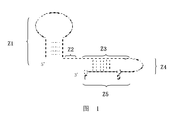
- Figure 1 shows a schematic diagram of the guide RNA-reporter nucleic acid composite probe (Formula Ia).
- F represents a fluorescent group (or other detectable label)
- Q is a quenching group (or other quenching functional group for quenching the F signal).
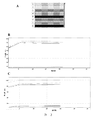
- FIG. 2 shows the results of CRISPR multi-target detection.
- Figure 2A shows the colors of 8 different samples
- Figure 2B is the Green channel: FAM fluorescence is detected, and the detected target sequence is DNMT1-3 sites
- Figure 2C is the Orange channel: ROX fluorescence is detected, and the detected target sequence is detected. Is the sry site).
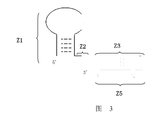
- FIG 3 shows a schematic diagram of another guide RNA-reporter nucleic acid composite probe (formula Ib).
- F represents a fluorescent group (or other detectable label)
- Q is a quenching group (or other quenching functional group for quenching the F signal).
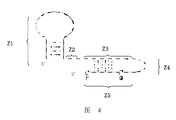
- FIG 4 shows a schematic diagram of another guide RNA-reporter nucleic acid composite probe (formula Ic).
- F represents a fluorescent group (or other detectable label)
- Q is a quenching group (or other quenching functional group for quenching the F signal).
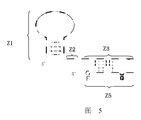
- FIG. 5 shows a schematic diagram of another guide RNA-reporter nucleic acid composite probe (formula Id).
- F represents a fluorescent group (or other detectable label)
- Q is a quenching group (or other quenching functional group for quenching the F signal).
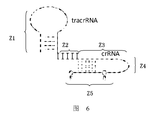
- Figure 6 shows the structure of the guide RNA-reporter nucleic acid composite probe in Example 2 or Example 3.
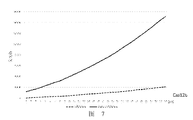
- Figure 7 shows the results of the Cas12b multi-target detection test.
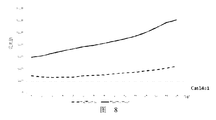
- Figure 8 shows the results of the Cas14a1 multi-target detection test.
- the inventors developed a method based on CRISPR technology that can simultaneously detect multiple target nucleic acid molecules in the same detection system for the first time.
- the present inventors developed a guide RNA-reporter nucleic acid composite probe in which the first stem-loop structure region of RNA, the guide RNA region, the connecting region, and the fluorescent group and quenching group are connected in series.
- CRISPR refers to clustered regularly spaced short palindromic repeats (clustered regularly interspaced short palindromic repeats), which are part of the immune system of many prokaryotes.
- Cas protein refers to CRISPR-associated protein, which is a related protein in the CRISPR system.
- Cas12a (formerly known as “Cpf1”) refers to a crRNA-dependent endonuclease, which is a V-A type enzyme in the CRISPR system classification.
- Cas12b and “C2c1” are used interchangeably and refer to the sgRNA-dependent endonuclease, which is a V-B type enzyme in the CRISPR system classification.
- Cas12c and “C2c3” are used interchangeably and refer to tracrRNA:crRNA (or sgRNA)-dependent endonuclease, which is a V-C type enzyme in the CRISPR system classification.
- Cas12d and “CasY” are used interchangeably and refer to scoutRNA:crRNA-dependent endonuclease, which is a V-D type enzyme in the CRISPR system classification.
- Cas12g refers to a tracrRNA:crRNA (or sgRNA) dependent RNase, which is a V-G type enzyme in the CRISPR system classification.
- Cas12i refers to a crRNA-dependent endonuclease, which is a type V-I enzyme in the CRISPR system classification.
- Cas13a and C2c2 are used interchangeably and refer to crRNA-dependent endonucleases, which are type VI-A enzymes in the CRISPR system classification.
- Cas13b refers to a crRNA-dependent endonuclease, which is a VI-B type enzyme in the CRISPR system classification.
- Cas14 refers to a tracrRNA:crRNA (or sgRNA) dependent endonuclease, which is a V-F type enzyme in the CRISPR system classification.
- Cas ⁇ and Cas12j are used interchangeably and refer to crRNA-dependent endonucleases, which belong to the V-type enzyme in the CRISPR system classification.
- PCR refers to "polymerase chain reaction", a method used to amplify large amounts of DNA fragments of interest.
- guide RNA-reporter nucleic acid composite probe of the present invention As used herein, the terms "guide RNA-reporter nucleic acid composite probe of the present invention”, “composite probe of the present invention”, and “probe of the present invention” are used interchangeably and refer to the target nucleic acid described in the present invention.
- Molecular probes include guide RNA-reporter nucleic acid composite probes with Ia or Ib. It should be understood that the term also includes different forms of pairing, partial pairing or no pairing formed between Z3 and Z5 in the composite probe. For example, formula IIa is the state where Z3 and Z5 in the composite probe of formula Ia of the present invention form a pair.
- a guide RNA-reporter nucleic acid composite probe with a novel structure is provided.
- a representative composite probe has the structure shown in formula Ia,
- Z1, Z2, Z3, Z4, and Z5 are as described above.
- Z1, Z2, Z3, Z4, and Z5 are as described above.
- the composite probe of formula Ic or formula Id is used in conjunction with the Cas protein of Cas13b type.
- the labels carried in the Z5 are a fluorescent group and a quenching group, and the fluorescent group and the quenching group are each independently located at the 5'end of the nucleic acid probe , 3'end and/or middle.
- RNA-reporter nucleic acid composite probe the structure of a representative guide RNA-reporter nucleic acid composite probe is shown in Figure 1.
- a DNA sequence is added to the 3'end of the guide RNA, a quenching group (Q) is added in the middle, and a fluorescent group (F) is added to the 3'end.
- Q quenching group
- F fluorescent group
- the sequence of the composite probe not only functions as a guide RNA, but also functions as a fluorescent probe.
- the terminal sequence (Z5) of the DNA is complementary to a part of the sequence base (Z3) of the guide RNA to form a hairpin structure.
- the composite probe of the present invention binds to the Cas12a protein and binds to the target sequence.
- the hairpin structure (that is, the pairing structure of Z3 and Z5 will untie) will open, and the side of Cas12a will be activated Pathway single-stranded DNA cleavage activity, thereby cleaving the DNA part of the composite probe (such as Z5), causing the fluorescent group to be separated from the quenching group, thereby causing the quenching group to lose its quenching function and emit fluorescence.
- the Cas12 bypass cleavage activity activated by other targets will not affect the unbound target.
- the composite probes are chopped and will not interfere with each other.
- reaction system for detecting one or more (especially simultaneous detection of multiple) target nucleic acid molecules, the reaction system comprising:
- n kinds of the guide RNA-reporter nucleic acid composite probes of the present invention preferably, n is 2-500 or 2-200;
- Cas protein which is a Cas protein with bypass single-stranded nucleic acid cleavage activity.
- the detection system provided by the present invention can detect m target nucleic acid molecules to be detected, where m is a positive integer and m ⁇ n.
- the detection includes: qualitative detection or quantitative detection.
- the detection system further contains:
- the concentration of the target nucleic acid molecule to be detected in the system to be detected is 1 ⁇ 10 -9 nM to 1 ⁇ 10 3 nM; preferably 1 ⁇ 10 -8 nM to 1 ⁇ 10 2 nM.
- the concentration of the target nucleic acid molecule to be detected in the detection system is 1 to 1 ⁇ 10 15 copies/ml, preferably 1 to 10 10 copies/ml, more preferably 1 To 10 5 copies/ml.
- the concentration of the target nucleic acid molecule to be detected in the detection system is 1 to 1000 copies/ml, preferably 1 to 100 copies/ml, more preferably 1 to 10 copies/ml. Ml.
- the molar ratio of each guide RNA-reporter nucleic acid composite probe to the corresponding target nucleic acid molecule is 1:1 to 10 14 :1, preferably 10:1 to 10 5 :1, more preferably 20:1 to 10 3 :1.
- a kit for detecting one or more target nucleic acid molecules (especially detecting multiple simultaneously) is provided, and the kit includes:
- n a positive integer of 2-500 or 2-200
- the second container and the Cas protein in the second container, the Cas protein is a Cas protein with bypass single-stranded nucleic acid cleavage activity
- the detection system further contains reagents for nucleic acid amplification reactions. That is, in the detection system of the present invention, the target nucleic acid molecule can be amplified, and the amplified target nucleic acid molecule can be detected, which has the function of signal amplification.
- the fourth container, the fifth container, and the sixth container may be the same container or different containers.
- two, more or all of the first container to the sixth container may be the same container or different containers.
- a method for simultaneously detecting multiple target nucleic acid molecules in a sample which includes the following steps:
- the guide RNA-reporter nucleic acid composite probe is cleaved by the Cas protein, which means that there is a corresponding target nucleic acid molecule in the sample; and the guide RNA-reporter nucleic acid composite probe is not cleaved by the Cas protein, it means that There is no corresponding target nucleic acid molecule in the sample.
- the sample to be tested includes unamplified samples and amplified (or nucleic acid amplified) samples, and may also include untranscribed samples and transcribed samples.
- the nucleic acid amplification method is selected from the group consisting of PCR amplification, LAMP amplification, RPA amplification, ligase chain reaction, branched DNA amplification, NASBA, SDA, transcription mediator Guided amplification, rolling circle amplification, HDA, SPIA, NEAR, TMA and SMAP2.
- the PCR includes high temperature PCR, normal temperature PCR, and/or low temperature PCR.
- the detection in step (ii) includes fluorescence detection.
- the fluorescence detection method uses a microplate reader or a fluorescence spectrophotometer for detection.
- the method is an in vitro detection method.
- the sample is an in vitro or ex vivo sample.
- the method is non-diagnostic and non-therapeutic.
- the multi-target detection method of the present invention realizes the detection of multiple target nucleic acid molecules at the same time with extremely high sensitivity in the same detection system, and can detect nucleic acid molecules (such as DNA) with a concentration of 10 -17 M.
- Multi-purpose It can detect different nucleic acid samples, including DNA samples and RNA samples.
- the structure of the guide RNA-reporter nucleic acid composite probe is shown in Figure 1.
- two kinds of probes are designed and synthesized, the sequence is as follows:
- the target sequence needs to be amplified.
- PCR or any other amplification method can be used.
- isothermal LAMP amplification is used.
- LAMP amplification reaction After heating male saliva at 95°C for 10 minutes, it serves as a template. The total volume of each reaction system is 20 ⁇ L, and two types of primers are added to respectively amplify the gene DNMT1-3 on the autosomes and the gene sry unique to the male Y chromosome (see primer table 2 for sequence). The specific primer amounts are 1.6 ⁇ M FIP and BIP, 0.2 ⁇ M F3 and B3, 0.4 ⁇ M LoopF and LoopB.
- the kit used for the LAMP reaction is LAMP Kit (NEB).
- the LAMP reaction program is 65°C for 40 minutes. The above products are called DNM and sry.
- IS6110-1 fragment was amplified using the Mycobacterium tuberculosis genome as a template, and the amplified product was called IS-1.
- Probes add 0.5 ⁇ L each (3 probes of 10 ⁇ M)
- Figure 2B is the Green channel, which detects FAM fluorescence against the DNM target.
- the samples that can detect significant rising curves are samples 2, 5, 6 and 8, respectively;
- Figure 2C is the Orange channel, which is The ROX fluorescence of the sry target was detected, and samples 4, 6, 7 and 8 could be detected with a significant rising curve.
- the structure of the guide RNA-reporter nucleic acid composite probe is shown in Figure 6, which consists of tracrRNA and crRNA reporter nucleic acid probes.
- Figure 6 the structure of the guide RNA-reporter nucleic acid composite probe is shown in Figure 6, which consists of tracrRNA and crRNA reporter nucleic acid probes.
- two kinds of probes are designed and synthesized, the sequence is as follows:
- the transcription template was prepared by annealing T7-crRNA-F with the synthetic oligonucleotide Cas12b_tracrRNA (Table 3). Specifically, the paired oligonucleotides (4 ⁇ M) were annealed in 1 ⁇ PCR buffer (Transgen Biotech) with a total volume of 50 ⁇ L, and then an annealing procedure was performed: initial denaturation at 95°C for 5 minutes, and then cooling from 95°C to At 20°C, use a thermal cycler to reduce 1°C per minute. T7 high-yield transcription kit was used to synthesize tracrRNA, and the reaction was carried out at 37°C overnight (about 16h). Use DNase I to process template DNA, then use RNA purification and concentration kit to purify RNA, and quantify it with NanoDrop 2000C, and store it in a refrigerator at -80°C.
- Cas12b_tracrRNA SEQ ID NO: 23
- the target sequence needs to be amplified.
- PCR or any other amplification method can be used.
- the PCR amplification method is used.
- PCR reaction separately extract Salmonella genomic DNA and E. coli O157 genomic DNA as templates for PCR amplification.
- the total volume of each reaction system is 20 ⁇ L, and two types of primers are added to respectively amplify the specific fragments in Salmonella (product named SE) and E. coli O157 (product named O157) (see primer table 4 for sequence) .
- the PCR reaction program is 95°C for 2 minutes, and then 35 cycles of 98°C for 10s, 60°C for 15s, and 72°C for 10s. After the PCR is completed, the product is directly used in the Cas12b reaction.
- reaction samples There are two reaction samples, the difference is that the added template is different, they are the PCR amplification products of SE and O157 respectively, and the reaction system with sterile water is used as a negative control.
- the fluorescence quantitative PCR instrument used in this reaction is ABI StepOne Plus, and the detected signal is FAM fluorescence.
- the result is shown in Figure 7.
- the FAM fluorescence signal of the reaction group added with the SE template is very low, while the FAM fluorescence signal of the reaction group added with the O157 template increases rapidly , And the signal intensity of the SE group formed a significant difference.
- results of ROX fluorescence detection using a microplate reader show that the O157 template cannot activate the cleavage of the SE reporter nucleic acid probe, while the SE template can activate the cleavage of the SE reporter nucleic acid probe.
- the above results show that once the corresponding target exists in the detection system, the corresponding fluorescent signal can be detected, which is consistent with the expected result; on the contrary, the existence of a certain target can be judged according to the type of the detected fluorescent signal.
- the structure of the guide RNA-reporter nucleic acid composite probe is shown in Figure 6, which consists of tracrRNA and crRNA reporter nucleic acid probes.
- Figure 6 the structure of the guide RNA-reporter nucleic acid composite probe is shown in Figure 6, which consists of tracrRNA and crRNA reporter nucleic acid probes.
- two kinds of probes are designed and synthesized, the sequence is as follows:
- tracrRNA with Cas14a1 was synthesized and cloned into the pUC57 vector. Then use T7-crRNA-F and Cas14a-tracr-R primer pair (Table 6) for amplification, and the amplified product is purified and used to transcribe tracrRNA.
- the tracrRNA was synthesized using 200ng transcription template and T7 high-yield transcription kit, and the reaction was carried out overnight (about 16h) at 37°C.
- Use DNase I to process template DNA, then use RNA purification and concentration kit to purify RNA, and quantify it with NanoDrop 2000C, and store it in a refrigerator at -80°C.
- Synthetic Cas14a1 tracrRNA sequence with T7 promoter (SEQ ID NO: 32):
- Tris buffer solution 50mM Tris-HCl[pH 8.3], 75mM KCl, 3mM MgCl 2
- Tris buffer solution 50mM Tris-HCl[pH 8.3], 75mM KCl, 3mM MgCl 2
- an annealing reaction is performed on a PCR machine. Initial denaturation at 85°C for 5 minutes, then cooling from 85°C to 25°C, using a thermal cycler to reduce 3°C every minute.
- the complex probe after annealing can be used in the cleavage reaction of Cas14 to detect the target nucleic acid.
- the target sequence needs to be amplified.
- PCR or any other amplification method can be used.
- the PCR amplification method is used.
- PCR reaction separately extract Salmonella genomic DNA and E. coli O157 genomic DNA as templates for PCR amplification.
- the total volume of each reaction system is 20 ⁇ L, and two types of primers are added for amplification. In each pair of primers, the 5'end of one of them is phosphorylated.
- the above-mentioned primer pairs were used to amplify the specific fragment in Salmonella (product named SE-ps) and the specific fragment in E. coli O157 (product named O157-ps) (see primer table 6 for the sequence).
- SE-ps specific fragment in Salmonella
- E. coli O157-ps product named O157-ps
- the PCR reaction program is 95°C for 2 minutes, and then 35 cycles of 98°C for 10s, 60°C for 15s, and 72°C for 10s. After the PCR is completed, the product is directly used in the Cas14 reaction.
- reaction buffer of 10*Cas14 is: 250mM NaCl, 200mM HEPES, pH 7.5, 10mM DTT, 50% glycerol, and 50mM MgCl 2 .
- reaction samples There are 2 reaction samples, the difference is that the added template is different, they are the PCR amplification products of SE-ps and O157-ps, and the reaction system with sterile water is used as a negative control.
- the fluorescence quantitative PCR instrument used in this reaction is ABI StepOne Plus, and the detected signal is FAM fluorescence.
- the results are shown in Figure 8. After subtracting the background signal (that is, adding sterile water as a template), the FAM fluorescence signal of the reaction group added with the SE-ps template is lower, while the FAM fluorescence signal of the reaction group added with the O157-ps template The signal grows very fast, which is significantly different from the signal strength of the SE-ps group. Based on the above results, it can be inferred that the SE-ps template cannot activate the cleavage of the O157-ps reporter nucleic acid probe, while the O157-ps template can activate the cleavage of the O157-ps reporter nucleic acid probe.
- results of ROX fluorescence detection using a microplate reader show that the O157-ps template cannot activate the cleavage of the SE-ps reporter nucleic acid probe, while the SE-ps template can activate the cleavage of the SE-ps reporter nucleic acid probe.
- the above results show that once the corresponding target exists in the detection system, the corresponding fluorescent signal can be detected, which is consistent with the expected result; on the contrary, the existence of a certain target can be judged according to the type of the detected fluorescent signal.
Landscapes
- Chemical & Material Sciences (AREA)
- Life Sciences & Earth Sciences (AREA)
- Organic Chemistry (AREA)
- Health & Medical Sciences (AREA)
- Engineering & Computer Science (AREA)
- Wood Science & Technology (AREA)
- Zoology (AREA)
- Proteomics, Peptides & Aminoacids (AREA)
- Genetics & Genomics (AREA)
- Molecular Biology (AREA)
- Bioinformatics & Cheminformatics (AREA)
- General Engineering & Computer Science (AREA)
- Biotechnology (AREA)
- General Health & Medical Sciences (AREA)
- Biochemistry (AREA)
- Microbiology (AREA)
- Physics & Mathematics (AREA)
- Analytical Chemistry (AREA)
- Biophysics (AREA)
- Immunology (AREA)
- Biomedical Technology (AREA)
- Chemical Kinetics & Catalysis (AREA)
- Medicinal Chemistry (AREA)
- Plant Pathology (AREA)
- Measuring Or Testing Involving Enzymes Or Micro-Organisms (AREA)
Abstract
Description


| 引物名称 | 序列(5’-3’) | SEQ ID NO: |
| SE-F | TGTCACCGTGGTCCAGTTTA | 25 |
| SE-R | CGACAAGACCATCACCAATG | 26 |
| O157-F3 | gatgggaacgattatatcgaagg | 27 |
| O157-R2 | cctgacagaatattataagctccg | 28 |

| 引物名称 | 序列(5’-3’) | SEQ ID NO: |
| SE-F | tgtcaccgtggtccagttta | 25 |
| SE-R-ps | c*g*a*c*aagaccatcaccaatg | 33 |
| O157-F-ps | c*a*g*t*agggaagcgaacagag | 34 |
| O157-R2 | cctgacagaatattataagctccg | 28 |
Claims (10)
- 一种用于检测靶标核酸分子的检测体系,其特征在于,所述检测体系包含:(a)n种向导RNA-报告核酸复合探针,所述的向导RNA-报告核酸复合探针具有如式Ia、Ib、Ic或Id所示结构,Z1-Z2-Z3-Z4-Z5 (式Ia)
 Z5-Z4-Z3-Z2-Z1 (式Ic)
 其中,Z1为第一茎环结构区;Z2为无或核酸连接区;Z3为向导RNA区;Z5为带可检测标记的单链待切割核酸,其中,所述的可检测标记在所述单链待切割核酸被切割和未被切割的情况下,呈现不同的检测状态从而被检测出;其中,当靶标核酸不存在于所述检测体系时,Z3与Z5形成一互补配对的双链结构区;而当靶标核酸存在于所述检测体系时,Z3与Z5不形成所述的互补配对的双链结构区;Z4为无、或用于连接Z3和Z5的化学键或连接区;为碱基互补配对的氢键;
 并且,n为n≥1的正整数;和(b)Cas蛋白,所述Cas蛋白是具有旁路单链核酸切割活性的Cas蛋白。
 - 如权利要求1所述的检测体系,其特征在于,所述的Cas蛋白选自下组:Cas12型、Cas13a型、Cas13b型、Cas14型、或其组合。
- 如权利要求1所述的检测体系,其特征在于,所述体系中:(i)n≥2,并且n为正整数;(ii)所述的可检测标记为荧光基团,并且Z5带有荧光基团,而所述Z4和/或Z5中还带有淬灭基团,当且仅当所述的单链待切割核酸被切割时,可检测到荧光基团所发出的荧光信号;和/或(iii)在所述的n种向导RNA-报告核酸复合探针中,所述的荧光基团两两不同,从而可被区分。
- 如权利要求1所述的检测体系,其特征在于,所述Z3中包含可以引导所述Cas蛋白特异性结合靶标核酸分子的核酸序列。
- 如权利要求1所述的检测体系,其特征在于,所述Z5为DNA单链核酸序列,或者RNA单链核酸序列,或同时具有RNA和DNA的核酸序列。
- 如权利要求1所述的检测体系,其特征在于,所述的检测包括:定性检测或定量检测。
- 一种用于检测靶标核酸分子的试剂盒,其特征在于,所述试剂盒包括:i)第一容器以及位于第一容器内的n种具有如式Ia、Ib、Ic或Id所示结构的向导RNA-报告核酸复合探针,Z1-Z2-Z3-Z4-Z5 (式Ia)
 Z5-Z4-Z3-Z2-Z1 (式Ic)
 其中,Z1为第一茎环结构区;Z2为无或核酸连接区;Z3为向导RNA区;Z5为带可检测标记的单链待切割核酸,其中,所述的可检测标记在所述单链待切割核酸被切割和未被切割的情况下,呈现不同的检测状态从而被检测出;其中,当靶标核酸不存在于所述检测体系时,Z3与Z5形成一互补配对的双链结构区;而当靶标核酸存在于所述检测体系时,Z3与Z5不形成所述的互补配对的双链结构区;Z4为无、或用于连接Z3和Z5的化学键或连接区;为碱基互补配对的氢键;
 并且,n为n≥1的正整数;ii)第二容器以及位于第二容器内的Cas蛋白,所述Cas蛋白是具有旁路单链核酸切割活性的Cas蛋白;iii)任选的第三容器以及位于第三容器中的缓冲液。
 - 如权利要求7所述的试剂盒,其特征在于,所述试剂盒还包括:iv)第四容器以及位于第四容器内的用于扩增靶标DNA的聚合酶;v)任选的第五容器以及位于第五容器内的用于反转录的反转录酶和/或用于转录的转录酶;vii)第六容器以及位于第六容器内的用于扩增反应和/或反转录反应的dNTPs和/或用于转录反应的NTPs。
- 一种检测样本中的靶标核酸分子的方法,其特征在于,包括以下步骤:(i)提供如权利要求2所述的用于同时检测多种靶标核酸分子的检测体系,并且所述的检测体系还含有待检测的样本;和(ii)检测所述检测体系中的向导RNA-报告核酸复合探针是否被Cas蛋白进行切割,所述的切割为针对单链核酸的旁路(或反式)切割;其中,所述向导RNA-报告核酸复合探针被Cas蛋白切割,则表示所述样本中存在对应的靶标核酸分子;而所述向导RNA-报告核酸复合探针不被Cas蛋白切割,则表示所述样本中不存在对应的靶标核酸分子。
- 如权利要求9所述的方法,其特征在于,所述的待检测的样本是经过扩增而获得的样本。
Priority Applications (3)
| Application Number | Priority Date | Filing Date | Title |
|---|---|---|---|
| EP20843278.1A EP4006170B1 (en) | 2019-07-24 | 2020-07-24 | Crispr multi-target detection method and test kit therefor |
| CN202080052987.5A CN114174535B (zh) | 2019-07-24 | 2020-07-24 | Crispr多靶标检测方法及其试剂盒 |
| US17/629,545 US20220267847A1 (en) | 2019-07-24 | 2020-07-24 | Crispr multi-target detection method and test kit therefor |
Applications Claiming Priority (2)
| Application Number | Priority Date | Filing Date | Title |
|---|---|---|---|
| CN201910673246.8A CN112301101B (zh) | 2019-07-24 | 2019-07-24 | Crispr多靶标检测方法及其试剂盒 |
| CN201910673246.8 | 2019-07-24 |
Publications (1)
| Publication Number | Publication Date |
|---|---|
| WO2021013257A1 true WO2021013257A1 (zh) | 2021-01-28 |
Family
ID=74193334
Family Applications (1)
| Application Number | Title | Priority Date | Filing Date |
|---|---|---|---|
| PCT/CN2020/104588 Ceased WO2021013257A1 (zh) | 2019-07-24 | 2020-07-24 | Crispr多靶标检测方法及其试剂盒 |
Country Status (4)
| Country | Link |
|---|---|
| US (1) | US20220267847A1 (zh) |
| EP (1) | EP4006170B1 (zh) |
| CN (2) | CN112301101B (zh) |
| WO (1) | WO2021013257A1 (zh) |
Cited By (4)
| Publication number | Priority date | Publication date | Assignee | Title |
|---|---|---|---|---|
| CN113686934A (zh) * | 2021-08-13 | 2021-11-23 | 广东海洋大学 | 一种CRISPR/Cas12a-RCA电化学传感器检测体系及其应用 |
| CN114480384A (zh) * | 2021-06-30 | 2022-05-13 | 山东舜丰生物科技有限公司 | 一种基于crispr技术检测口蹄疫病毒的方法 |
| CN114836521A (zh) * | 2022-04-18 | 2022-08-02 | 福州大学 | 一种基于CRISPR-Cas系统检测四环素的荧光生物传感器 |
| WO2025140682A1 (zh) * | 2023-12-30 | 2025-07-03 | 江苏为真生物医药技术股份有限公司 | 用于核酸检测的核酸分子、检测产品及方法 |
Families Citing this family (9)
| Publication number | Priority date | Publication date | Assignee | Title |
|---|---|---|---|---|
| CN113789365B (zh) * | 2020-08-28 | 2022-11-22 | 山东舜丰生物科技有限公司 | 基于crispr技术进行多重核酸检测的方法 |
| CN113234801B (zh) * | 2021-05-15 | 2023-05-02 | 浙江微景生物科技有限公司 | 一种CRISPR_Cas系统免标记核酸检测方法及试剂盒 |
| CN115808521B (zh) * | 2022-07-21 | 2025-05-06 | 北京宝盈同汇生物技术有限公司 | 一种基于crispr系统的核酸双指标快速检测试纸条及工作方法 |
| CN115404268B (zh) * | 2022-10-11 | 2023-04-07 | 芜湖森爱驰生物科技有限公司 | 一种sry基因检测探针和试剂盒 |
| CN118275664A (zh) * | 2022-12-30 | 2024-07-02 | 上海吐露港生物科技有限公司 | 基于拆分Cas蛋白的非核酸靶标检测方法及应用 |
| CN116355743A (zh) * | 2023-04-27 | 2023-06-30 | 浙江大学 | Crispr与等温扩增协同增敏的核酸检测方法和系统 |
| CN117126925B (zh) * | 2023-08-07 | 2024-06-07 | 中科枢密生物技术(武汉)有限公司 | 一种能够长期稳定保存的Crispr-Cas核酸检测试剂盒 |
| CN118308356B (zh) * | 2024-03-26 | 2025-04-08 | 广州市宝创生物技术有限公司 | CRISPR-Cas13a系统的非连续靶标激活模式和应用 |
| CN118620997B (zh) * | 2024-08-08 | 2024-12-20 | 南方医科大学皮肤病医院(广东省皮肤病医院、广东省皮肤性病防治中心、中国麻风防治研究中心) | 基于Cas13的非核酸扩增检测RNA的方法、试剂盒和应用 |
Citations (4)
| Publication number | Priority date | Publication date | Assignee | Title |
|---|---|---|---|---|
| US20140212869A1 (en) * | 2013-01-25 | 2014-07-31 | Agilent Technologies, Inc. | Nucleic Acid Proximity Assay Involving the Formation of a Three-way junction |
| US20150211058A1 (en) * | 2014-01-29 | 2015-07-30 | Agilent Technologies, Inc. | CAS9-based Isothermal Method of Detection of Specific DNA Sequence |
| WO2019011022A1 (zh) * | 2017-07-14 | 2019-01-17 | 上海吐露港生物科技有限公司 | 一种Cas蛋白的用途及靶标核酸分子的检测方法和试剂盒 |
| CN109312336A (zh) * | 2016-02-23 | 2019-02-05 | 阿克生物公司 | 用于靶标检测的方法和组合物 |
Family Cites Families (5)
| Publication number | Priority date | Publication date | Assignee | Title |
|---|---|---|---|---|
| JP5958034B2 (ja) * | 2012-04-11 | 2016-07-27 | 富士レビオ株式会社 | 分子ビーコン型プローブを用いた標的核酸の検出方法 |
| EP3183358B1 (en) * | 2014-08-19 | 2020-10-07 | President and Fellows of Harvard College | Rna-guided systems for probing and mapping of nucleic acids |
| WO2018226575A1 (en) * | 2017-06-05 | 2018-12-13 | The Board Of Trustees Of The Leland Stanford Junior University | Ribonucleoprotein-based imaging and detection |
| CN108220400A (zh) * | 2018-01-02 | 2018-06-29 | 武汉启丰生物技术有限公司 | 一种基于CRISPR-Cas10核酸蛋白复合物的快捷核酸检测定量法 |
| CN109837273B (zh) * | 2018-09-17 | 2021-06-29 | 东南大学 | 一种crispr辅助dna靶向富集方法及其应用 |
-
2019
- 2019-07-24 CN CN201910673246.8A patent/CN112301101B/zh active Active
-
2020
- 2020-07-24 CN CN202080052987.5A patent/CN114174535B/zh active Active
- 2020-07-24 US US17/629,545 patent/US20220267847A1/en active Pending
- 2020-07-24 WO PCT/CN2020/104588 patent/WO2021013257A1/zh not_active Ceased
- 2020-07-24 EP EP20843278.1A patent/EP4006170B1/en active Active
Patent Citations (4)
| Publication number | Priority date | Publication date | Assignee | Title |
|---|---|---|---|---|
| US20140212869A1 (en) * | 2013-01-25 | 2014-07-31 | Agilent Technologies, Inc. | Nucleic Acid Proximity Assay Involving the Formation of a Three-way junction |
| US20150211058A1 (en) * | 2014-01-29 | 2015-07-30 | Agilent Technologies, Inc. | CAS9-based Isothermal Method of Detection of Specific DNA Sequence |
| CN109312336A (zh) * | 2016-02-23 | 2019-02-05 | 阿克生物公司 | 用于靶标检测的方法和组合物 |
| WO2019011022A1 (zh) * | 2017-07-14 | 2019-01-17 | 上海吐露港生物科技有限公司 | 一种Cas蛋白的用途及靶标核酸分子的检测方法和试剂盒 |
Non-Patent Citations (6)
| Title |
|---|
| ALEXANDRA EAST-SELETSKY; MITCHELL R O’CONNELL; SPENCER C KNIGHT; DAVID BURSTEIN; JAMIE H D CATE; ROBERT TJIAN; JENNIFER A DOUDNA: "Two Distinct RNase Activities of CRISPR-C2c2 Enable Guide RNA Processing and RNA Detection", NATURE, vol. 538, 7624, 13 October 2016 (2016-10-13), pages 270 - 273, XP055719305, ISSN: 0028-0836, DOI: 10.1038/nature19802 * |
| FANG, RUI ET AL: "New Method of Genome Editing Derived From CRISPR/Cas9", PROGRESS IN BIOCHEMISTRY AND BIOPHYSICS, vol. 40, no. 8, 31 August 2013 (2013-08-31), pages 691 - 702, XP055320441, ISSN: 0496-3490, DOI: 10.3724/SP.J.1206.2013.00215 * |
| JONATHAN S GOOTENBERG; OMAR O ABUDAYYEH; JEONG WOOK LEE; PATRICK ESSLETZBICHLER; AARON J DY; JULIA JOUNG; VANESSA VERDINE; NINA DO: "Nucleic acid detection with CRISPR-Cas13a/C2c2", SCIENCE, vol. 356, no. 2336, 28 April 2017 (2017-04-28), pages 438 - 442, XP055481345, ISSN: 0036-8075, DOI: 10.1126/science.aam9321 * |
| LI JUN, ZHANG YI, CHEN KUN-LING, SHAN QI-WEI, WANG YAN-PENG, LIANG ZHEN, GAO CAI-XIA: "CRISPR/Cas: a novel way of RNA-guided genome editing", HEREDITAS, vol. 35, no. 11, 14 October 2013 (2013-10-14), pages 1265 - 1273, XP055775588, ISSN: 0253-9772, DOI: 10.3724/SP.J.1005.2013.01265 * |
| SAMBROOK ET AL.: "Molecular Cloning: A Laboratory Manual", 1989, COLD SPRING HARBOR LABORATORY PRESS |
| See also references of EP4006170A4 |
Cited By (5)
| Publication number | Priority date | Publication date | Assignee | Title |
|---|---|---|---|---|
| CN114480384A (zh) * | 2021-06-30 | 2022-05-13 | 山东舜丰生物科技有限公司 | 一种基于crispr技术检测口蹄疫病毒的方法 |
| CN114480384B (zh) * | 2021-06-30 | 2024-03-08 | 山东舜丰生物科技有限公司 | 一种基于crispr技术检测口蹄疫病毒的方法 |
| CN113686934A (zh) * | 2021-08-13 | 2021-11-23 | 广东海洋大学 | 一种CRISPR/Cas12a-RCA电化学传感器检测体系及其应用 |
| CN114836521A (zh) * | 2022-04-18 | 2022-08-02 | 福州大学 | 一种基于CRISPR-Cas系统检测四环素的荧光生物传感器 |
| WO2025140682A1 (zh) * | 2023-12-30 | 2025-07-03 | 江苏为真生物医药技术股份有限公司 | 用于核酸检测的核酸分子、检测产品及方法 |
Also Published As
| Publication number | Publication date |
|---|---|
| CN112301101B (zh) | 2024-07-19 |
| CN114174535B (zh) | 2025-05-09 |
| CN114174535A (zh) | 2022-03-11 |
| CN112301101A (zh) | 2021-02-02 |
| EP4006170A1 (en) | 2022-06-01 |
| US20220267847A1 (en) | 2022-08-25 |
| EP4006170A4 (en) | 2023-08-30 |
| EP4006170B1 (en) | 2026-02-11 |
Similar Documents
| Publication | Publication Date | Title |
|---|---|---|
| WO2021013257A1 (zh) | Crispr多靶标检测方法及其试剂盒 | |
| CN110551800B (zh) | 一种耐高温Cas蛋白的用途及靶标核酸分子的检测方法和试剂盒 | |
| CN101506384B (zh) | 专一性寡核苷酸和其在核酸扩增与检测中的用途 | |
| US20230002811A1 (en) | Application of cas protein, method for detecting target nucleic acid molecule and kit | |
| JP2009506788A (ja) | 核酸の等温増幅のための方法、組成物及びキット | |
| US10704087B2 (en) | Cooperative primers, probes, and applications thereof | |
| KR20110106922A (ko) | 단일 세포 핵산 분석 | |
| CN106574304B (zh) | 基于链侵入的dna扩增方法 | |
| EP3055430B1 (en) | Method for the detection of target nucleic acid sequences | |
| WO2022121754A1 (zh) | 一种检测一种或多种聚合酶活性的方法 | |
| US12258620B2 (en) | Allele-specific design of cooperative primers for improved nucleic acid variant genotyping | |
| HK40062186A (zh) | Crispr多靶标检测方法及其试剂盒 | |
| WO2022120914A1 (zh) | 一种检测样品中一种或多种核酸分子扩增产物长度的方法 | |
| KR102894467B1 (ko) | SARS-CoV-2 변이를 검출하는 방법 | |
| WO2012046140A1 (en) | Enzyme mixture | |
| CN106661626A (zh) | 用于单核细胞增多性李斯特菌检测的序列和它们的用法 | |
| CN118765333A (zh) | 用于核酸扩增的方法和组合物 | |
| KR20240058025A (ko) | 대장균의 o110, o113, o167 또는 o116 혈청형 신속 동정용 프라이머 세트 및 이를 이용한 대장균의 혈청형 동정 방법 | |
| CN119923476A (zh) | 用于通过环介导等温扩增(lamp)检测单核苷酸多态性(snp)的方法和试剂盒 | |
| HK40029609B (zh) | 一种cas蛋白的用途及靶标核酸分子的检测方法和试剂盒 | |
| HK1227444B (zh) | 检测靶核酸序列的方法 | |
| HK1227444A1 (zh) | 检测靶核酸序列的方法 | |
| WO2013140339A1 (en) | Positive control for pcr |
Legal Events
| Date | Code | Title | Description |
|---|---|---|---|
| 121 | Ep: the epo has been informed by wipo that ep was designated in this application |
Ref document number: 20843278 Country of ref document: EP Kind code of ref document: A1 |
|
| NENP | Non-entry into the national phase |
Ref country code: DE |
|
| ENP | Entry into the national phase |
Ref document number: 2020843278 Country of ref document: EP Effective date: 20220224 |
|
| WWG | Wipo information: grant in national office |
Ref document number: 202080052987.5 Country of ref document: CN |
|
| WWG | Wipo information: grant in national office |
Ref document number: 2020843278 Country of ref document: EP |