WO2021014804A1 - 品質予測モデル生成方法、品質予測モデル、品質予測方法、金属材料の製造方法、品質予測モデル生成装置および品質予測装置 - Google Patents
品質予測モデル生成方法、品質予測モデル、品質予測方法、金属材料の製造方法、品質予測モデル生成装置および品質予測装置 Download PDFInfo
- Publication number
- WO2021014804A1 WO2021014804A1 PCT/JP2020/022637 JP2020022637W WO2021014804A1 WO 2021014804 A1 WO2021014804 A1 WO 2021014804A1 JP 2020022637 W JP2020022637 W JP 2020022637W WO 2021014804 A1 WO2021014804 A1 WO 2021014804A1
- Authority
- WO
- WIPO (PCT)
- Prior art keywords
- metal material
- quality
- quality prediction
- prediction model
- predetermined range
- Prior art date
- Legal status (The legal status is an assumption and is not a legal conclusion. Google has not performed a legal analysis and makes no representation as to the accuracy of the status listed.)
- Ceased
Links
Images





Classifications
-
- G—PHYSICS
- G05—CONTROLLING; REGULATING
- G05B—CONTROL OR REGULATING SYSTEMS IN GENERAL; FUNCTIONAL ELEMENTS OF SUCH SYSTEMS; MONITORING OR TESTING ARRANGEMENTS FOR SUCH SYSTEMS OR ELEMENTS
- G05B19/00—Program-control systems
- G05B19/02—Program-control systems electric
- G05B19/418—Total factory control, i.e. centrally controlling a plurality of machines, e.g. direct or distributed numerical control [DNC], flexible manufacturing systems [FMS], integrated manufacturing systems [IMS] or computer integrated manufacturing [CIM]
- G05B19/41885—Total factory control, i.e. centrally controlling a plurality of machines, e.g. direct or distributed numerical control [DNC], flexible manufacturing systems [FMS], integrated manufacturing systems [IMS] or computer integrated manufacturing [CIM] characterised by modeling, simulation of the manufacturing system
-
- G—PHYSICS
- G05—CONTROLLING; REGULATING
- G05B—CONTROL OR REGULATING SYSTEMS IN GENERAL; FUNCTIONAL ELEMENTS OF SUCH SYSTEMS; MONITORING OR TESTING ARRANGEMENTS FOR SUCH SYSTEMS OR ELEMENTS
- G05B19/00—Program-control systems
- G05B19/02—Program-control systems electric
- G05B19/418—Total factory control, i.e. centrally controlling a plurality of machines, e.g. direct or distributed numerical control [DNC], flexible manufacturing systems [FMS], integrated manufacturing systems [IMS] or computer integrated manufacturing [CIM]
-
- B—PERFORMING OPERATIONS; TRANSPORTING
- B21—MECHANICAL METAL-WORKING WITHOUT ESSENTIALLY REMOVING MATERIAL; PUNCHING METAL
- B21B—ROLLING OF METAL
- B21B37/00—Control devices or methods specially adapted for metal-rolling mills or the work produced thereby
-
- C—CHEMISTRY; METALLURGY
- C21—METALLURGY OF IRON
- C21D—MODIFYING THE PHYSICAL STRUCTURE OF FERROUS METALS; GENERAL DEVICES FOR HEAT TREATMENT OF FERROUS OR NON-FERROUS METALS OR ALLOYS; MAKING METAL MALLEABLE, e.g. BY DECARBURISATION OR TEMPERING
- C21D11/00—Process control or regulation for heat treatments
-
- C—CHEMISTRY; METALLURGY
- C21—METALLURGY OF IRON
- C21D—MODIFYING THE PHYSICAL STRUCTURE OF FERROUS METALS; GENERAL DEVICES FOR HEAT TREATMENT OF FERROUS OR NON-FERROUS METALS OR ALLOYS; MAKING METAL MALLEABLE, e.g. BY DECARBURISATION OR TEMPERING
- C21D8/00—Modifying the physical properties of ferrous metals or ferrous alloys by deformation combined with, or followed by, heat treatment
- C21D8/02—Modifying the physical properties of ferrous metals or ferrous alloys by deformation combined with, or followed by, heat treatment during manufacturing of plates or strips
- C21D8/0221—Modifying the physical properties of ferrous metals or ferrous alloys by deformation combined with, or followed by, heat treatment during manufacturing of plates or strips characterised by the working steps
-
- G—PHYSICS
- G01—MEASURING; TESTING
- G01N—INVESTIGATING OR ANALYSING MATERIALS BY DETERMINING THEIR CHEMICAL OR PHYSICAL PROPERTIES
- G01N33/00—Investigating or analysing materials by specific methods not covered by groups G01N1/00 - G01N31/00
- G01N33/20—Metals
-
- G—PHYSICS
- G05—CONTROLLING; REGULATING
- G05B—CONTROL OR REGULATING SYSTEMS IN GENERAL; FUNCTIONAL ELEMENTS OF SUCH SYSTEMS; MONITORING OR TESTING ARRANGEMENTS FOR SUCH SYSTEMS OR ELEMENTS
- G05B13/00—Adaptive control systems, i.e. systems automatically adjusting themselves to have a performance which is optimum according to some preassigned criterion
- G05B13/02—Adaptive control systems, i.e. systems automatically adjusting themselves to have a performance which is optimum according to some preassigned criterion electric
- G05B13/0265—Adaptive control systems, i.e. systems automatically adjusting themselves to have a performance which is optimum according to some preassigned criterion electric the criterion being a learning criterion
-
- G—PHYSICS
- G05—CONTROLLING; REGULATING
- G05B—CONTROL OR REGULATING SYSTEMS IN GENERAL; FUNCTIONAL ELEMENTS OF SUCH SYSTEMS; MONITORING OR TESTING ARRANGEMENTS FOR SUCH SYSTEMS OR ELEMENTS
- G05B19/00—Program-control systems
- G05B19/02—Program-control systems electric
- G05B19/418—Total factory control, i.e. centrally controlling a plurality of machines, e.g. direct or distributed numerical control [DNC], flexible manufacturing systems [FMS], integrated manufacturing systems [IMS] or computer integrated manufacturing [CIM]
- G05B19/41875—Total factory control, i.e. centrally controlling a plurality of machines, e.g. direct or distributed numerical control [DNC], flexible manufacturing systems [FMS], integrated manufacturing systems [IMS] or computer integrated manufacturing [CIM] characterised by quality surveillance of production
-
- G—PHYSICS
- G06—COMPUTING OR CALCULATING; COUNTING
- G06F—ELECTRIC DIGITAL DATA PROCESSING
- G06F30/00—Computer-aided design [CAD]
- G06F30/20—Design optimisation, verification or simulation
- G06F30/27—Design optimisation, verification or simulation using machine learning, e.g. artificial intelligence, neural networks, support vector machines [SVM] or training a model
-
- G—PHYSICS
- G06—COMPUTING OR CALCULATING; COUNTING
- G06N—COMPUTING ARRANGEMENTS BASED ON SPECIFIC COMPUTATIONAL MODELS
- G06N20/00—Machine learning
-
- G—PHYSICS
- G06—COMPUTING OR CALCULATING; COUNTING
- G06Q—INFORMATION AND COMMUNICATION TECHNOLOGY [ICT] SPECIALLY ADAPTED FOR ADMINISTRATIVE, COMMERCIAL, FINANCIAL, MANAGERIAL OR SUPERVISORY PURPOSES; SYSTEMS OR METHODS SPECIALLY ADAPTED FOR ADMINISTRATIVE, COMMERCIAL, FINANCIAL, MANAGERIAL OR SUPERVISORY PURPOSES, NOT OTHERWISE PROVIDED FOR
- G06Q10/00—Administration; Management
- G06Q10/04—Forecasting or optimisation specially adapted for administrative or management purposes, e.g. linear programming or "cutting stock problem"
-
- G—PHYSICS
- G06—COMPUTING OR CALCULATING; COUNTING
- G06Q—INFORMATION AND COMMUNICATION TECHNOLOGY [ICT] SPECIALLY ADAPTED FOR ADMINISTRATIVE, COMMERCIAL, FINANCIAL, MANAGERIAL OR SUPERVISORY PURPOSES; SYSTEMS OR METHODS SPECIALLY ADAPTED FOR ADMINISTRATIVE, COMMERCIAL, FINANCIAL, MANAGERIAL OR SUPERVISORY PURPOSES, NOT OTHERWISE PROVIDED FOR
- G06Q50/00—Information and communication technology [ICT] specially adapted for implementation of business processes of specific business sectors, e.g. utilities or tourism
- G06Q50/04—Manufacturing
-
- C—CHEMISTRY; METALLURGY
- C21—METALLURGY OF IRON
- C21D—MODIFYING THE PHYSICAL STRUCTURE OF FERROUS METALS; GENERAL DEVICES FOR HEAT TREATMENT OF FERROUS OR NON-FERROUS METALS OR ALLOYS; MAKING METAL MALLEABLE, e.g. BY DECARBURISATION OR TEMPERING
- C21D8/00—Modifying the physical properties of ferrous metals or ferrous alloys by deformation combined with, or followed by, heat treatment
- C21D8/02—Modifying the physical properties of ferrous metals or ferrous alloys by deformation combined with, or followed by, heat treatment during manufacturing of plates or strips
- C21D8/0221—Modifying the physical properties of ferrous metals or ferrous alloys by deformation combined with, or followed by, heat treatment during manufacturing of plates or strips characterised by the working steps
- C21D8/0226—Hot rolling
-
- C—CHEMISTRY; METALLURGY
- C21—METALLURGY OF IRON
- C21D—MODIFYING THE PHYSICAL STRUCTURE OF FERROUS METALS; GENERAL DEVICES FOR HEAT TREATMENT OF FERROUS OR NON-FERROUS METALS OR ALLOYS; MAKING METAL MALLEABLE, e.g. BY DECARBURISATION OR TEMPERING
- C21D8/00—Modifying the physical properties of ferrous metals or ferrous alloys by deformation combined with, or followed by, heat treatment
- C21D8/02—Modifying the physical properties of ferrous metals or ferrous alloys by deformation combined with, or followed by, heat treatment during manufacturing of plates or strips
- C21D8/0221—Modifying the physical properties of ferrous metals or ferrous alloys by deformation combined with, or followed by, heat treatment during manufacturing of plates or strips characterised by the working steps
- C21D8/0236—Cold rolling
-
- C—CHEMISTRY; METALLURGY
- C21—METALLURGY OF IRON
- C21D—MODIFYING THE PHYSICAL STRUCTURE OF FERROUS METALS; GENERAL DEVICES FOR HEAT TREATMENT OF FERROUS OR NON-FERROUS METALS OR ALLOYS; MAKING METAL MALLEABLE, e.g. BY DECARBURISATION OR TEMPERING
- C21D9/00—Heat treatment, e.g. annealing, hardening, quenching or tempering, adapted for particular articles; Furnaces therefor
- C21D9/46—Heat treatment, e.g. annealing, hardening, quenching or tempering, adapted for particular articles; Furnaces therefor for sheet metals
-
- G—PHYSICS
- G05—CONTROLLING; REGULATING
- G05B—CONTROL OR REGULATING SYSTEMS IN GENERAL; FUNCTIONAL ELEMENTS OF SUCH SYSTEMS; MONITORING OR TESTING ARRANGEMENTS FOR SUCH SYSTEMS OR ELEMENTS
- G05B2219/00—Program-control systems
- G05B2219/30—Nc systems
- G05B2219/32—Operator till task planning
- G05B2219/32194—Quality prediction
-
- G—PHYSICS
- G05—CONTROLLING; REGULATING
- G05B—CONTROL OR REGULATING SYSTEMS IN GENERAL; FUNCTIONAL ELEMENTS OF SUCH SYSTEMS; MONITORING OR TESTING ARRANGEMENTS FOR SUCH SYSTEMS OR ELEMENTS
- G05B2219/00—Program-control systems
- G05B2219/30—Nc systems
- G05B2219/32—Operator till task planning
- G05B2219/32339—Object oriented modeling, design, analysis, implementation, simulation language
-
- G—PHYSICS
- G05—CONTROLLING; REGULATING
- G05B—CONTROL OR REGULATING SYSTEMS IN GENERAL; FUNCTIONAL ELEMENTS OF SUCH SYSTEMS; MONITORING OR TESTING ARRANGEMENTS FOR SUCH SYSTEMS OR ELEMENTS
- G05B2219/00—Program-control systems
- G05B2219/30—Nc systems
- G05B2219/45—Nc applications
- G05B2219/45234—Thin flat workpiece, sheet metal machining
-
- G—PHYSICS
- G06—COMPUTING OR CALCULATING; COUNTING
- G06F—ELECTRIC DIGITAL DATA PROCESSING
- G06F2119/00—Details relating to the type or aim of the analysis or the optimisation
- G06F2119/18—Manufacturability analysis or optimisation for manufacturability
-
- G—PHYSICS
- G06—COMPUTING OR CALCULATING; COUNTING
- G06N—COMPUTING ARRANGEMENTS BASED ON SPECIFIC COMPUTATIONAL MODELS
- G06N20/00—Machine learning
- G06N20/20—Ensemble learning
-
- Y—GENERAL TAGGING OF NEW TECHNOLOGICAL DEVELOPMENTS; GENERAL TAGGING OF CROSS-SECTIONAL TECHNOLOGIES SPANNING OVER SEVERAL SECTIONS OF THE IPC; TECHNICAL SUBJECTS COVERED BY FORMER USPC CROSS-REFERENCE ART COLLECTIONS [XRACs] AND DIGESTS
- Y02—TECHNOLOGIES OR APPLICATIONS FOR MITIGATION OR ADAPTATION AGAINST CLIMATE CHANGE
- Y02P—CLIMATE CHANGE MITIGATION TECHNOLOGIES IN THE PRODUCTION OR PROCESSING OF GOODS
- Y02P90/00—Enabling technologies with a potential contribution to greenhouse gas [GHG] emissions mitigation
- Y02P90/02—Total factory control, e.g. smart factories, flexible manufacturing systems [FMS] or integrated manufacturing systems [IMS]
Definitions
- the present invention relates to a quality prediction model generation method, a quality prediction model, a quality prediction method, a metal material manufacturing method, a quality prediction model generation device, and a quality prediction device.
- the distance between a plurality of past observation conditions stored in the performance database and the desired requirement condition is calculated, and the observation data (actual data) is calculated from the calculated distance.
- the observation data actual data
- a method of calculating the weight of the above creating a function that fits the vicinity of the requirement condition from the calculated weight, and predicting the quality for the requirement condition using the created function (see, for example, Patent Documents 1 to 8). ..
- the quality for any requirement is calculated from the data stored in the performance database.
- This actual database stores actual values of multiple manufacturing conditions and actual values of quality of metal materials manufactured under these manufacturing conditions, and these manufacturing conditions and qualities are one metal.
- a representative value such as one average value is stored for each material.
- the actual values of the manufacturing conditions of each process are finely collected in the longitudinal direction of the metal material by the sensor.
- the actual values of the manufacturing conditions collected in this way are not effectively utilized, there is a limit to the improvement of the prediction accuracy of the quality of the metal material.
- the present invention has been made in view of the above, and is a quality prediction model generation method, a quality prediction model, a quality prediction method, a method for manufacturing a metal material, which can predict quality for arbitrary manufacturing conditions with high accuracy. It is an object of the present invention to provide a quality prediction model generator and a quality prediction device.
- the quality prediction model generation method is a quality prediction model generation method for a metal material manufactured through one or a plurality of steps, and each step.
- the first collection step of collecting the production conditions of the metal material for each predetermined range, and the quality of the metal material produced through each of the steps are evaluated and collected for each predetermined range.
- a storage step in which the second collection step, the production conditions of the respective steps, and the quality of the metal material produced under the production conditions are stored in association with each predetermined range, and each of the stored steps are stored.
- the predetermined range is determined based on the moving distance of the metal material according to the transport direction in each step.
- the storage step before the storage step, the presence or absence of replacement of the tail end of the metal material in each step and the table of the metal material in each step.
- the storage step includes a third collection step of collecting at least one of the presence or absence of replacement of the back surface and the cutting position of the metal material in each step, and the storage step is the tip end of the metal material in each step.
- the predetermined range is specified in consideration of the presence / absence of replacement, the presence / absence of replacement of the front and back surfaces, and at least one of the cutting positions, and the manufacturing conditions of each step and the metal material manufactured under these manufacturing conditions.
- the quality is stored in association with each of the predetermined ranges.
- the storage step evaluates the volume of the metal material from the tip.
- the predetermined range is specified, and the production conditions of each step and the quality of the metal material produced under the production conditions are stored in association with each other for each predetermined range.
- the model generation step includes linear regression, local regression, principal component regression, PLS regression, neural network, recurrent tree, random forest, and XGBost. Is used to generate the quality prediction model.
- the quality prediction model according to the present invention is generated by the above-mentioned quality prediction model generation method in order to solve the above-mentioned problems and achieve the object.
- the quality prediction method according to the present invention is manufactured under arbitrary manufacturing conditions by using the quality prediction model generated by the above-mentioned quality prediction model generation method. Predict the quality of metal materials for each predetermined range.
- the manufacturing method of the metal material according to the present invention fixes the manufacturing conditions determined during the manufacturing process, and by the above-mentioned quality prediction method, under the fixed manufacturing conditions.
- the quality of the metal material produced in the above is predicted for each predetermined range, and the manufacturing conditions of the subsequent processes are changed based on the prediction result.
- the quality of all the predetermined ranges including the change in the manufacturing conditions over the entire length of the metal material to be manufactured is controlled in advance. It is changed to be within the range.
- the quality prediction model generation device is a quality prediction model generation device for a metal material manufactured through one or a plurality of steps, and each step.
- a means for collecting the production conditions of the metal material for each predetermined range a means for evaluating and collecting the quality of the metal material produced through each of the steps for each predetermined range, and the above. From the means for storing the manufacturing conditions of each step and the quality of the metal material manufactured under the manufacturing conditions in association with each predetermined range, and the manufacturing conditions for each predetermined range in each of the stored steps.
- the quality prediction device is manufactured under arbitrary manufacturing conditions using the quality prediction model generated by the quality prediction model generation device described above. Predict the quality of metal materials for each predetermined range.
- the metal for any manufacturing condition is obtained.
- the quality of the material can be predicted with higher accuracy than before.
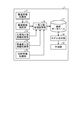
- FIG. 1 is a block diagram showing a configuration of a quality prediction model generation device and a quality prediction device according to an embodiment of the present invention.
- FIG. 2 is a flowchart showing the flow of the quality prediction model generation method and the quality prediction method according to the embodiment of the present invention.
- FIG. 3 is a diagram showing an example of performance data collected by the manufacturing performance collection unit 11 in the quality prediction model generation method according to the embodiment of the present invention.
- FIG. 4 is a diagram showing an example of performance data edited by the manufacturing performance editing unit 12 in the quality prediction model generation method according to the embodiment of the present invention.
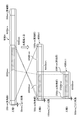
- FIG. 5 is a diagram showing an example of a case where a metal material is manufactured through a plurality of steps in the quality prediction model generation method according to the embodiment of the present invention.
- FIG. 1 is a block diagram showing a configuration of a quality prediction model generation device and a quality prediction device according to an embodiment of the present invention.
- FIG. 2 is a flowchart showing the flow of the quality prediction model generation method and the
- FIG. 6 is a diagram showing an example of a metal material in each step in the quality prediction model generation method according to the embodiment of the present invention.
- FIG. 7 is a diagram showing an example of actual data edited by the integrated process actual result editing unit in the quality prediction model generation method according to the embodiment of the present invention.
- FIG. 8 is a diagram schematically showing the configuration of the performance database of the prior art and the present invention.
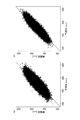
- FIG. 9 is a diagram showing prediction errors of the conventional method and the method of the present invention in predicting the tensile strength of a high-workability, high-strength cold-rolled steel sheet.
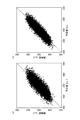
- FIG. 10 is a diagram showing prediction errors of the conventional method and the method of the present invention in predicting the hardness of the front and back surfaces of a thick steel sheet.
- FIG. 11 is a diagram showing the error rate of the conventional method and the method of the present invention in predicting front and back defects of a hot-dip galvanized steel sheet.
- the quality prediction device is a device for predicting the quality of a metal material manufactured through one or a plurality of steps (processes).
- the metal material in the present embodiment include steel products, semi-finished products such as slabs, and products such as steel plates manufactured by rolling the slabs.
- the quality prediction device 1 is specifically realized by a general-purpose information processing device such as a personal computer or a workstation.
- a processor including a CPU (Central Processing Unit) and a RAM (Random Access Memory)
- the main component is a memory (main storage unit) consisting of a ROM (Read Only Memory) and the like.
- the quality prediction device 1 includes a manufacturing record collecting unit 11, a manufacturing record editing unit 12, a front-end replacement record collecting unit 13, a front-back replacement record collecting unit 14, and a cutting record collecting unit. It includes 15, an integrated process result editing unit 16, a result database 17, a model generation unit 18, and a prediction unit 19.
- the quality prediction model generation device according to the present embodiment is composed of elements of the quality prediction device 1 excluding the prediction unit 19. In the following, the quality prediction model generation device will also be described in the description of the quality prediction device 1.
- a sensor (not shown) is connected to the manufacturing record collection unit 11.
- the manufacturing record collecting unit 11 collects the manufacturing record of each process according to the measurement cycle of this sensor, and outputs the manufacturing record to the integrated process record editing unit 16.
- the above-mentioned “manufacturing record” includes the manufacturing conditions of each process and the quality of the metal material manufactured through each process. Further, the above-mentioned “manufacturing conditions” include the components of the metal material in each process, temperature, pressure, plate thickness, plate passing speed, and the like. In addition, the above-mentioned “quality of metal material” includes tensile strength, defect mixing rate (number of defects expressed per unit length), and the like.
- the manufacturing conditions of each process collected by the manufacturing record collecting unit 11 include not only the measured values of the manufacturing conditions measured by the sensor but also the set values of the manufacturing conditions set in advance. That is, depending on the process, the sensor may not be installed. In such a case, the set value is collected as the manufacturing result instead of the actual value.
- the manufacturing record collection unit 11 collects the manufacturing conditions of each process for each predetermined range of predetermined metal materials. In addition, the manufacturing record collecting unit 11 evaluates and collects the quality of the metal material manufactured through each process for each of the predetermined ranges described above.
- the above-mentioned "predetermined range” indicates, for example, a certain range in the longitudinal direction of the metal material when the metal material is a slab or a steel plate. This predetermined range is determined based on the moving distance (passing speed) of the metal material according to the transport direction in each step. The specific processing contents by the manufacturing record collecting unit 11 will be described later (see FIG. 2).
- the manufacturing record data of each process (hereinafter referred to as “actual data”) is provided by this one manufacturing record collecting unit 11.
- a plurality of manufacturing record collecting units 11 may be provided according to the number of each process, and the actual data of each process may be collected by separate manufacturing record collecting units 11.
- the manufacturing record editing unit 12 edits the actual data of each process input from the manufacturing record collecting unit 11. That is, the manufacturing record editing unit 12 edits the record data collected by the manufacturing record collecting unit 11 in units of time into the record data in units of length of the metal material, and outputs the data to the integrated process record editing unit 16.
- the specific processing contents by the manufacturing record editorial department 12 will be described later (see FIG. 2).
- a material charging machine (not shown) for charging metal materials in each process is connected to the tip-tail replacement record collecting unit 13. Whether or not the tail end of the metal material has been replaced (reversed) when the metal material is charged from the front-end process to the back-end process through this material charging machine. The actual data is collected for each metal material. Then, the tail end replacement result collecting unit 13 outputs the result data regarding the presence / absence of the replacement of the tip end of the metal material to the integrated process result editing unit 16.
- the material charging machine described above is connected to the front / back replacement record collecting unit 14.
- the front / back surface replacement record collecting unit 14 determines whether the front and back surfaces of the metal material have been replaced (reversed) when the metal material is charged from the front-end process to the back-end process through this material charging machine. Actual data is collected for each metal material. Then, the front / back surface replacement result collecting unit 14 outputs the actual data regarding the presence / absence of replacement of the front and back surfaces of the metal material to the integrated process result editing unit 16.
- a cutting machine (not shown) for cutting the tip end and the tail end of the metal material is connected to the cutting record collecting unit 15.
- the cutting record collecting unit 15 collects actual data such as the cutting position (distance from the tip of the metal material at the time of cutting) and the number of cuttings (hereinafter referred to as "cutting position") of the metal material. Collect for each. Then, the cutting result collecting unit 15 outputs the actual data regarding the cutting position of the metal material to the integrated process actual result editing unit 16.
- only one of the front and back replacement record collection unit 13, the front and back surface replacement record collection unit 14, and the cutting record collection unit 15 may be provided, or the number of each process. A plurality may be provided according to the above.
- the integrated process performance editing unit 16 edits the performance data input from the manufacturing performance editing department 12, the front and tail replacement performance collection unit 13, the front and back replacement performance collection unit 14, and the cutting performance collection unit 15.
- the integrated process result editing unit 16 stores the manufacturing conditions of each process and the quality of the metal material manufactured under these manufacturing conditions in the result database 17 in association with each predetermined range.
- the integrated process result editing unit 16 specifies a predetermined range in consideration of whether or not the front and tail ends of the metal material are replaced, whether or not the front and back surfaces are replaced, and the cutting position in each process. Then, the integrated process result editing unit 16 determines the manufacturing conditions of each process and the quality of the metal material manufactured under these manufacturing conditions, whether or not the tip and tail ends of the metal material are replaced in each process, and the front and back surfaces. The presence / absence of replacement and the cutting position can be distinguished, and the results are stored in the performance database 17 in association with each predetermined range.
- the integrated process result editing unit 16 evaluates the volume from the tip of the metal material and specifies a predetermined range when, for example, each process is a rolling process and the shape of the metal material is deformed by passing through each process. , The manufacturing conditions of each process and the quality of the metal material manufactured under these manufacturing conditions are associated with each predetermined range and stored in the performance database 17. The actual data edited by the integrated process actual result editing unit 16 is accumulated in the actual result database 17.
- the model generation unit 18 generates a quality prediction model that predicts the quality of the metal material for each predetermined range from the manufacturing conditions for each predetermined range in each process stored in the performance database 17.
- the model generation unit 18 uses, for example, XGBost as a machine learning method.
- XGBost as a machine learning method.
- various other methods such as linear regression, local regression, principal component regression, PLS regression, neural network, recurrent tree, and random forest can be used.
- the prediction unit 19 predicts the quality of the metal material manufactured under arbitrary manufacturing conditions for each predetermined range by using the quality prediction model generated by the model generation unit 18. For example, when the metal material to be predicted is a slab, the quality of the entire slab is predicted by the conventional method, but in the present embodiment, the quality within a predetermined range in the length direction of the slab can be predicted.
- the quality prediction method and the quality prediction model generation method according to the present embodiment will be described with reference to FIGS. 2 to 7.
- the quality prediction method according to the present embodiment performs the processes of steps S1 to S6 shown in FIG. Further, in the quality prediction model generation method according to the present embodiment, the processes of steps S1 to S5 excluding step S6 shown in the figure are performed.
- the manufacturing record collection unit 11 collects record data regarding the manufacturing conditions and quality of each process (step S1).
- the manufacturing record collection unit 11 collects the manufacturing condition and quality record data of each process for each metal material and for each process.
- the actual data collected by the manufacturing actual collection unit 11 is, for example, as shown in the table of FIG. 3, data in which actual values (or installation values) of a plurality of manufacturing conditions are arranged for each time.
- the actual data shown in the figure shows the time t 1 , t 2 ..., the speed of the metal material (plate passing speed) v 1 , v 2 ... at the time, and a plurality of manufacturing conditions measured by the sensor at the time. It has items consisting of x 1 1 , x 1 2 ..., x 2 1 , x 2 2 ...
- the actual data collected in the final process includes items related to the quality of the metal material in addition to the items shown in the figure.
- the front and back end replacement record collection unit 13, the front and back surface replacement record collection unit 14, and the cutting record collection unit 15 determine whether or not the front and tail ends of the metal material are replaced in each process, and the front and back surfaces of the metal material in each process. Actual data regarding the presence / absence of replacement and the cutting position of the metal material in each process are collected (step S2).
- the manufacturing record editing unit 12 converts the record data collected by the manufacturing record collecting unit 11 into units of length of the metal material (step S3). That is, the manufacturing record editing unit 12 converts the record data collected in time units as shown in FIG. 3 into the record data in length units of the metal material as shown in FIG.
- a method of converting the actual data of FIG. 3 into the actual data of FIG. 4 will be described.
- the manufacturing record editorial department 12 calculates the position of the metal material at each time in FIG. 3 by utilizing the property that the distance is obtained by multiplying the time and the speed (passing speed).
- the manufacturing record editorial department 12 has the property that the record data is recorded when the metal material passes through the sensors installed in each process, and the missing value is recorded when the metal material does not pass. Utilize to detect the tip of a metal material.
- the manufacturing record editing unit 12 creates the record data corresponding to the position from the tip to the tail of the metal material, except when the metal material has not passed through the sensor.
- the manufacturing record editing unit 12 creates record data in units of length of the metal material as shown in FIG.
- the integrated process result editing unit 16 aligns and combines the result data of all processes in units of length of the metal material (step S4).
- the integrated process record editing unit 16 includes the record data of the length unit of the metal material created by the manufacturing record editing section 12, the tip-end replacement record collecting section 13, the front-back replacement record collecting section 14, and the cutting record collecting section 15. Based on the actual data on the presence / absence of replacement of the tip and tail ends of the metal material, the presence / absence of replacement of the front and back surfaces of the metal material, the cutting position of the metal material, etc. collected by the above, multiple manufacturing conditions for the metal material in all processes. And the actual quality data is aligned and combined in units of length of the metal material on the exit side of the final process.
- the integrated process results editorial unit 16 associates the manufacturing conditions of each process with the quality of the metal material manufactured under these manufacturing conditions for each predetermined range in the length direction of the metal material, and the results Save in database 17.
- the integrated process result editing unit 16 will be described.
- Steps 1 to 3 are, for example, rolling steps, and the length of the material in the longitudinal direction increases with each step.
- the material A is divided into the material A1 and the material A2 when moving from the step 1 to the step 2, and the material A1 becomes the material A11 and the material A12 when moving from the step 2 to the step 3. It is divided.
- FIG. 6 shows an image of the material of each process, and is a diagram focusing on the part B of FIG.
- the manufacturing record collecting unit 11 collects the actual data of M1 items of, for example, X 1 1 to X 1 M 1 every 50 mm in the range of the length of 5300 mm from the tip to the tail end.
- the tip portion of 0 mm (tip) to 250 mm is cut off by the cutting record collecting unit 15, the material A1 is taken at 250 mm to 3300 mm, the material A2 is taken at 3300 mm to 4950 mm, and the material A2 is taken at 4950 mm to 5300 mm (4950 mm to 5300 mm).
- Actual data is collected with the tail end of the tail end truncated.
- the manufacturing record collecting unit 11 collects the actual data of M2 items of, for example, X 2 1 to X 2 M 2 every 100 mm in the range of the length from the tip to the tail end of 68000 mm.
- the tip portion of 0 mm (tip) to 500 mm is cut off by the cutting record collecting unit 15, the material A11 is taken at 500 mm to 34500 mm, the material A12 is taken at 34500 mm to 66800 mm, and the material A12 is taken at 66800 mm to 68000 mm (66800 mm to 68000 mm). Actual data is collected with the tail end of the tail end truncated.
- the manufacturing record collecting unit 11 collects the actual data of M3 items of, for example, X 3 1 to X 3 M 3 every 500 mm in the range of the length from the tip to the tail end of 65,000 mm. Further, in the material A11, the tip portion of 0 mm (tip) to 2500 mm is cut off by the cutting record collecting unit 15, the material A11 is taken at 2500 mm to 59700 mm, and the tail end portion of 59700 mm to 65000 mm (tail end) is cut off. Actual data is collected.
- the integrated process result editing unit 16 is finely collected in the longitudinal direction by a sensor (not shown) while considering actual data such as whether or not the front and tail ends of the metal material are replaced, whether or not the front and back surfaces are replaced, and the cutting position in each process.
- a sensor not shown
- actual data such as whether or not the front and tail ends of the metal material are replaced, whether or not the front and back surfaces are replaced, and the cutting position in each process.
- step 3 the steps 2 and 1 are performed. Scale the material length (see broken line in the figure).
- the integrated process result editing unit 16 specifies the position where each metal material is taken while considering the tip portion and the tail end portion cut off in each process, and in each predetermined range of the metal material in the final process, a predetermined range.
- the quality of the above is associated with the manufacturing conditions of all the processes in the predetermined range, and stored in the performance database 17.
- the shaded portion where the material A11 is taken in the final step, step 3 is specified by tracing back to the material A1 in step 2 and the material A in step 1.
- the model generation unit 18 generates a quality prediction model that predicts the quality of the metal material for each predetermined range from the manufacturing conditions for each predetermined range in each process (step S4). Subsequently, the prediction unit 19 predicts the quality of the metal material manufactured under arbitrary manufacturing conditions for each predetermined range by using the quality prediction model generated by the model generation unit 18 (step S5).
- the quality prediction model generation method the quality prediction model, the quality prediction method, the quality prediction model generation device, and the quality prediction device according to the present embodiment as described above, the manufacturing conditions of each process and the manufacturing conditions under these manufacturing conditions.
- the quality prediction model generation device By generating a quality prediction model in which the quality of the manufactured metal material is associated with each predetermined range, the quality of the metal material for any manufacturing condition can be predicted with higher accuracy than before.
- the actual data of a plurality of manufacturing conditions (and quality) of all the processes are collected in each process.
- the metal materials are aligned and joined in units of length on the exit side of the final process. Therefore, since the quality is predicted by effectively utilizing the actual data of the manufacturing conditions that are finely collected in the longitudinal direction of the metal material by the sensor, the quality can be predicted with higher accuracy than before.
- the quality prediction method according to the present embodiment is applied to the method for manufacturing a metal material, for example, the following processing is performed. First, the production conditions determined during the production of the metal material are fixed, and then the quality of the metal material produced under the fixed production conditions is predicted for each predetermined range by the quality prediction method according to the present embodiment. Then, based on the prediction result, the manufacturing conditions of the subsequent process are changed. In addition, the change in manufacturing conditions is such that the quality of all predetermined ranges included over the entire length of the metal material to be manufactured falls within a predetermined control range.
- the quality prediction method according to the present embodiment to the metal material manufacturing method in this way, the final quality of the metal material can be predicted in the middle of manufacturing, and the manufacturing conditions are changed accordingly. Therefore, the quality of the metal material to be manufactured is improved.
- the quality prediction method according to the present embodiment is applied to the prediction of the tensile strength of a high-workability, high-strength cold-rolled steel sheet, which is a kind of cold-rolled thin steel sheet.
- the objective variable (quality) of quality prediction in this embodiment is the tensile strength of the product (highly workable, high-strength cold-rolled steel sheet), and the explanatory variable (manufacturing condition) is the chemical composition of the metal material in the smelting process and casting.
- Metal material temperature in the process metal material temperature in the heating process, metal material temperature in the hot rolling process, metal material temperature in the cooling process, metal material temperature in the cold rolling process, metal material temperature in the annealing process And so on.
- each manufacturing condition and quality are predicted from a conventional performance database (see FIG. 8A) in which a representative value such as an average value is stored for each product.
- the prediction results were compared between the case of predicting from the quality prediction model generated from the performance database of the quality prediction method according to the present embodiment (see FIG. 8B).
- the number of samples in the performance database was 40,000, the number of explanatory variables was 45, and the prediction method used was local regression.
- the prediction error by the quality prediction method according to the present embodiment is compared with the prediction error by the conventional quality prediction method (see FIG. 9A). Then, it was confirmed that the root mean square error (RMSE: Root Mean Square Error) can be reduced by 23%.
- RMSE Root Mean Square Error
- the quality prediction method according to the present embodiment was applied to the prediction of the hardness of the front and back surfaces of a thick steel sheet.
- the objective variable is the hardness of the front and back surfaces of the product
- the explanatory variables are the chemical composition of the smelting process, the front and back temperature of the casting process, the front and back temperature of the heating process, the front and back temperature of the rolling process, and the front and back surfaces of the cooling process. Temperature etc.
- the quality prediction method according to the present embodiment was applied to the prediction of front and back defects of a hot-dip galvanized steel sheet, which is a kind of cold-rolled thin steel sheet.
- the objective variable is the presence or absence of defects on the front and back surfaces of the product, and the explanatory variables are the chemical composition of the smelting process, the front and back temperature of the casting process, the meniscus flow velocity, the mold molten metal level, the front and back temperature of the heating process, and hot rolling.
- the front and back temperature of the cooling process Depending on the front and back temperature of the process, the front and back temperature of the cooling process, the acid concentration of the pickling process, the acid temperature, the front and back temperature of the cold pressure process, the front and back temperature of the annealing process, the amount of plating attached in the plating process, the degree of alloying, etc. is there.
- the quality prediction method according to the present embodiment is applied to the tensile strength prediction of a high-strength cold-rolled steel sheet, which is a kind of cold-rolled thin steel sheet, and based on the prediction result, the manufacturing conditions of the subsequent processes are changed.
- the cooling temperature after annealing which is the manufacturing condition at the final stage of the cold rolling process, is obtained at the stage during manufacturing where the actual values of the manufacturing conditions before the final stage of the steelmaking process, hot rolling process and rolling process are obtained. An example of changing is described.
- this embodiment Based on the actual value of the manufacturing conditions before the final stage of the steelmaking process, hot rolling process and cold rolling process, and the reference value of the cooling temperature after annealing, which is the manufacturing condition of the final stage of the cold rolling process, this embodiment The predicted tensile strength values at each position of the total length of the product predicted using the quality prediction method are shown below.
- the amount of change in the tensile strength at each position of the total length of the product predicted by using the quality prediction method according to the present embodiment is shown as follows.
- y LL and y UL are the control lower limit and the control upper limit of the tensile strength, respectively, and ⁇ * is the optimum solution of this optimization problem.
- This optimization problem can be solved by a mathematical programming method such as a branch-and-bound method. By changing the cooling temperature after the annealing temperature by ⁇ * , it is possible to obtain a cold-rolled steel sheet in which the tensile strength of the entire length does not deviate from the control range, that is, the quality is not defective over the entire length.
- the actual data stored in the actual database of the quality prediction method according to the present embodiment includes the presence / absence of replacement of the front end and the presence / absence of replacement of the front and back surfaces in each predetermined range of the metal material in the final process. While considering the actual data such as the cutting position, it becomes possible to retroactively combine the precise actual data of the hardness or the presence or absence of defects and the manufacturing conditions of all processes. Then, since the predicted value under arbitrary manufacturing conditions is calculated based on the quality prediction model generated from the performance database constructed in this way, it is possible to predict the quality of the metal material with high accuracy.
- the quality prediction model generation method, the quality prediction model, the quality prediction method, the metal material manufacturing method, the quality prediction model generation device and the quality prediction device according to the present invention are concretely described by the embodiments and examples for carrying out the invention.
- the gist of the present invention is not limited to these descriptions, and must be broadly interpreted based on the description of the scope of claims. Needless to say, various changes, modifications, etc. based on these descriptions are also included in the gist of the present invention.
- the integrated process result editing unit 16 specifies a predetermined range in consideration of whether or not the front and tail ends of the metal material are replaced, whether or not the front and back surfaces are replaced, and the cutting position in each process.
- the replacement of the tip and tail of the metal material, the replacement of the front and back surfaces of the metal material, and the cutting of the metal material do not necessarily include all of them. Therefore, the integrated process result editing unit 16 considers at least one of the actual data of the presence / absence of replacement of the leading end of the metal material, the presence / absence of replacement of the front and back surfaces of the metal material, and the actual data of the cutting position of the metal material.
- a predetermined range may be specified.
Landscapes
- Engineering & Computer Science (AREA)
- Physics & Mathematics (AREA)
- General Physics & Mathematics (AREA)
- Chemical & Material Sciences (AREA)
- Theoretical Computer Science (AREA)
- Evolutionary Computation (AREA)
- Software Systems (AREA)
- Artificial Intelligence (AREA)
- General Engineering & Computer Science (AREA)
- Medical Informatics (AREA)
- Computer Vision & Pattern Recognition (AREA)
- Health & Medical Sciences (AREA)
- Automation & Control Theory (AREA)
- Manufacturing & Machinery (AREA)
- Business, Economics & Management (AREA)
- Mechanical Engineering (AREA)
- Quality & Reliability (AREA)
- Life Sciences & Earth Sciences (AREA)
- Materials Engineering (AREA)
- Thermal Sciences (AREA)
- Geometry (AREA)
- Crystallography & Structural Chemistry (AREA)
- Organic Chemistry (AREA)
- Metallurgy (AREA)
- Computer Hardware Design (AREA)
- General Health & Medical Sciences (AREA)
- Human Resources & Organizations (AREA)
- Strategic Management (AREA)
- Economics (AREA)
- Data Mining & Analysis (AREA)
- Computing Systems (AREA)
- Mathematical Physics (AREA)
- Immunology (AREA)
- Biochemistry (AREA)
- Analytical Chemistry (AREA)
- Medicinal Chemistry (AREA)
- Food Science & Technology (AREA)
- Pathology (AREA)
- Marketing (AREA)
- Tourism & Hospitality (AREA)
Abstract
Description


11 製造実績収集部
12 製造実績編集部
13 先尾端入替実績収集部
14 表裏面入替実績収集部
15 切断実績収集部
16 一貫工程実績編集部
17 実績データベース
18 モデル生成部
19 予測部
Claims (11)
- 一つまたは複数の工程を経て製造される金属材料の品質予測モデル生成方法であって、
各工程の製造条件を、予め定めた前記金属材料の所定範囲ごとに収集する第一の収集ステップと、
前記各工程を経て製造される前記金属材料の品質を、前記所定範囲ごとに評価して収集する第二の収集ステップと、
前記各工程の製造条件と、この製造条件の下で製造される前記金属材料の品質とを、前記所定範囲ごとに関連付けて保存する保存ステップと、
保存した前記各工程における前記所定範囲ごとの製造条件から、前記金属材料の前記所定範囲ごとの品質を予測する品質予測モデルを生成するモデル生成ステップと、
を含む品質予測モデル生成方法。 - 前記所定範囲は、前記各工程における搬送方向に応じた前記金属材料の移動距離に基づいて決定される請求項1に記載の品質予測モデル生成方法。
- 前記保存ステップの前に、前記各工程における前記金属材料の先尾端の入れ替えの有無と、前記各工程における前記金属材料の表裏面の入れ替えの有無と、前記各工程における前記金属材料の切断位置と、の少なくとも一以上を収集する第三の収集ステップを含み、
前記保存ステップは、前記各工程における前記金属材料の先尾端の入れ替えの有無、表裏面の入れ替えの有無および切断位置の少なくとも一以上を考慮して前記所定範囲を特定し、前記各工程の製造条件と、この製造条件の下で製造される前記金属材料の品質とを、前記所定範囲ごとに関連付けて保存する請求項1または請求項2に記載の品質予測モデル生成方法。 - 前記各工程を経ることにより前記金属材料の形状が変形する場合、
前記保存ステップは、前記金属材料の先端からの体積を評価して前記所定範囲を特定し、前記各工程の製造条件と、この製造条件の下で製造される前記金属材料の品質とを、前記所定範囲ごとに関連付けて保存する請求項1または請求項2に記載の品質予測モデル生成方法。 - 前記モデル生成ステップは、線形回帰、局所回帰、主成分回帰、PLS回帰、ニューラルネットワーク、回帰木、ランダムフォレスト、XGBoostを含む機械学習を用いて前記品質予測モデルを生成する請求項1または請求項2に記載の品質予測モデル生成方法。
- 請求項1から請求項5のいずれか一項に記載された品質予測モデル生成方法によって生成された品質予測モデル。
- 請求項1から請求項5のいずれか一項に記載された品質予測モデル生成方法によって生成された品質予測モデルを用いて、任意の製造条件の下で製造される金属材料の品質を所定範囲ごとに予測する品質予測方法。
- 製造途中で確定した製造条件を固定し、請求項7に記載された品質予測方法によって、前記固定した製造条件の下で製造される金属材料の品質を所定範囲ごとに予測し、その予測結果に基づいて、その後の工程の製造条件を変更する金属材料の製造方法。
- 前記製造条件の変更は、製造される金属材料の全長に亘り含まれる全ての前記所定範囲ごとの品質が、予め定められた管理範囲内に入るように変更される請求項8に記載の金属材料の製造方法。
- 一つまたは複数の工程を経て製造される金属材料の品質予測モデル生成装置であって、
各工程の製造条件を、予め定めた前記金属材料の所定範囲ごとに収集する手段と、
前記各工程を経て製造される前記金属材料の品質を、前記所定範囲ごとに評価して収集する手段と、
前記各工程の製造条件と、この製造条件の下で製造される前記金属材料の品質とを、前記所定範囲ごとに関連付けて保存する手段と、
保存した前記各工程における前記所定範囲ごとの製造条件から、前記金属材料の前記所定範囲ごとの品質を予測する品質予測モデルを生成する手段と、
を備える品質予測モデル生成装置。 - 請求項10に記載された品質予測モデル生成装置によって生成された品質予測モデルを用いて、任意の製造条件の下で製造される金属材料の品質を所定範囲ごとに予測する品質予測装置。
Priority Applications (7)
| Application Number | Priority Date | Filing Date | Title |
|---|---|---|---|
| MX2022000808A MX2022000808A (es) | 2019-07-22 | 2020-06-09 | Metodo de generacion de modelo de prediccion de calidad, modelo de prediccion de calidad, metodo de prediccion de calidad, metodo de fabricacion de material de metal, dispositivo de generacion de modelo de prediccion de calidad y dispositivo de prediccion de calidad. |
| JP2021534591A JP7207547B2 (ja) | 2019-07-22 | 2020-06-09 | 品質予測モデル生成方法、品質予測モデル、品質予測方法、金属材料の製造方法、品質予測モデル生成装置および品質予測装置 |
| KR1020257004051A KR20250023602A (ko) | 2019-07-22 | 2020-06-09 | 품질 예측 모델 생성 방법, 품질 예측 모델, 품질 예측 방법, 금속 재료의 제조 방법, 품질 예측 모델 생성 장치 및 품질 예측 장치 |
| KR1020217040258A KR102939974B1 (ko) | 2019-07-22 | 2020-06-09 | 품질 예측 모델 생성 방법, 품질 예측 모델, 품질 예측 방법, 금속 재료의 제조 방법, 품질 예측 모델 생성 장치 및 품질 예측 장치 |
| EP20844507.2A EP4006670A4 (en) | 2019-07-22 | 2020-06-09 | METHOD FOR CREATING QUALITY PREDICTION MODEL, QUALITY PREDICTION MODEL, QUALITY PREDICTION METHOD, METHOD FOR MANUFACTURING METAL MATERIAL, DEVICE FOR CREATING QUALITY PREDICTION MODEL, AND QUALITY PREDICTION DEVICE |
| US17/621,801 US20220261520A1 (en) | 2019-07-22 | 2020-06-09 | Quality prediction model generation method, quality prediction model, quality prediction method, metal material manufacturing method, quality prediction model generation device, and quality prediction device |
| CN202080051295.9A CN114144738B (zh) | 2019-07-22 | 2020-06-09 | 品质预测模型生成方法、品质预测模型、品质预测方法、金属材料的制造方法、品质预测模型生成装置以及品质预测装置 |
Applications Claiming Priority (2)
| Application Number | Priority Date | Filing Date | Title |
|---|---|---|---|
| JP2019134701 | 2019-07-22 | ||
| JP2019-134701 | 2019-07-22 |
Publications (1)
| Publication Number | Publication Date |
|---|---|
| WO2021014804A1 true WO2021014804A1 (ja) | 2021-01-28 |
Family
ID=74193371
Family Applications (1)
| Application Number | Title | Priority Date | Filing Date |
|---|---|---|---|
| PCT/JP2020/022637 Ceased WO2021014804A1 (ja) | 2019-07-22 | 2020-06-09 | 品質予測モデル生成方法、品質予測モデル、品質予測方法、金属材料の製造方法、品質予測モデル生成装置および品質予測装置 |
Country Status (8)
| Country | Link |
|---|---|
| US (1) | US20220261520A1 (ja) |
| EP (1) | EP4006670A4 (ja) |
| JP (1) | JP7207547B2 (ja) |
| KR (2) | KR102939974B1 (ja) |
| CN (1) | CN114144738B (ja) |
| MX (1) | MX2022000808A (ja) |
| TW (1) | TWI759770B (ja) |
| WO (1) | WO2021014804A1 (ja) |
Cited By (10)
| Publication number | Priority date | Publication date | Assignee | Title |
|---|---|---|---|---|
| JP2022108117A (ja) * | 2021-01-12 | 2022-07-25 | 日本製鉄株式会社 | 予測装置、学習装置、予測プログラム、及び学習プログラム |
| JP2023028244A (ja) * | 2021-08-19 | 2023-03-03 | Jfeスチール株式会社 | 品質不良要因抽出方法および品質不良要因抽出装置 |
| JP2023028245A (ja) * | 2021-08-19 | 2023-03-03 | Jfeスチール株式会社 | 操業条件提示方法および操業条件提示装置 |
| JP2023028246A (ja) * | 2021-08-19 | 2023-03-03 | Jfeスチール株式会社 | 品質予測モデルの作成方法、品質予測方法、操業条件提示方法、品質予測モデルの作成装置、品質予測装置および操業条件提示装置 |
| EP4276550A1 (en) * | 2022-05-12 | 2023-11-15 | Primetals Technologies Austria GmbH | Method and computer system for controlling a process of a metallurgical plant |
| JP2024011327A (ja) * | 2022-07-14 | 2024-01-25 | 日本製鉄株式会社 | 予測装置、学習装置、予測プログラム、及び学習プログラム |
| EP4324946A4 (en) * | 2021-06-25 | 2024-10-30 | JFE Steel Corporation | METHOD FOR PREDICTING NON-PLATING DEFECT OF STEEL SHEET, METHOD FOR REDUCING DEFECT OF STEEL SHEET, METHOD FOR MANUFACTURING HOT-DIP GALVANIZED STEEL SHEET, AND METHOD FOR GENERATING STEEL SHEET NON-PLATING DEFECT PREDICTION MODEL |
| JP7715316B1 (ja) * | 2024-04-08 | 2025-07-30 | Jfeスチール株式会社 | 金属材料の品質予測モデル生成方法、金属材料の品質予測方法、金属材料の製造方法、品質予測モデル生成方法、データ加工方法、金属材料の品質予測モデル生成装置、金属材料の品質予測装置およびデータ加工装置 |
| WO2025215895A1 (ja) * | 2024-04-08 | 2025-10-16 | Jfeスチール株式会社 | 金属材料の品質予測モデル生成方法、金属材料の品質予測方法、金属材料の製造方法、品質予測モデル生成方法、データ加工方法、金属材料の品質予測モデル生成装置、金属材料の品質予測装置およびデータ加工装置 |
| TWI916183B (zh) | 2024-04-08 | 2026-02-21 | 日商杰富意鋼鐵股份有限公司 | 金屬材料品質預測模型生成方法、金屬材料品質預測方法、金屬材料的製造方法、品質預測模型生成方法、資料處理方法、金屬材料的品質預測模型生成裝置、金屬材料的品質預測裝置及資料處理裝置 |
Families Citing this family (6)
| Publication number | Priority date | Publication date | Assignee | Title |
|---|---|---|---|---|
| EP4292722A4 (en) * | 2021-04-05 | 2024-07-03 | JFE Steel Corporation | Roundness prediction method for steel pipe, roundness control method, manufacturing method, method for generating roundness prediction model, and roundness prediction device |
| CN114595623A (zh) * | 2021-12-30 | 2022-06-07 | 华能上海燃机发电有限责任公司 | 一种基于XGBoost算法的机组设备基准值预测方法及系统 |
| CN117631613A (zh) * | 2022-08-24 | 2024-03-01 | 上海宝信软件股份有限公司 | 工艺流程和工序预测模型可配置的炼铁一体化配料方法 |
| EP4339715A1 (de) * | 2022-09-13 | 2024-03-20 | Siempelkamp Maschinen- und Anlagenbau GmbH | Verfahren zum erzeugen eines mathematischen modells zum vorhersagen von zumindest einem qualitätsmerkmal einer baustoffplatte |
| CN116757031B (zh) * | 2023-06-15 | 2024-02-09 | 中南大学 | 影响金属-金属胶接性能的多因素的分析方法及装置 |
| WO2025115302A1 (ja) | 2023-11-27 | 2025-06-05 | Jfeスチール株式会社 | 品質予測モデル生成方法、金属材料の品質予測方法、金属材料の製造方法、金属材料の製造条件提示方法、品質予測モデル生成装置、金属材料の品質予測装置、金属材料の製造条件提示装置及び金属材料の製造システム |
Citations (11)
| Publication number | Priority date | Publication date | Assignee | Title |
|---|---|---|---|---|
| JP2003195929A (ja) * | 2001-12-28 | 2003-07-11 | Jfe Steel Kk | コイル材の先後端不良部除去方法およびそのシステム |
| JP2004355189A (ja) | 2003-05-28 | 2004-12-16 | Jfe Steel Kk | 結果予測装置 |
| JP2006309709A (ja) | 2005-03-30 | 2006-11-09 | Jfe Steel Kk | 結果予測装置、制御装置及び品質設計装置 |
| JP2008112288A (ja) | 2006-10-30 | 2008-05-15 | Jfe Steel Kk | 予測式作成装置、結果予測装置、品質設計装置、予測式作成方法及び製品の製造方法 |
| JP2009230412A (ja) | 2008-03-21 | 2009-10-08 | Jfe Steel Corp | 結果予測装置、及び、これを用いた製品品質予測方法 |
| JP2013080458A (ja) * | 2011-09-21 | 2013-05-02 | Nippon Steel & Sumitomo Metal | 品質予測装置、操業条件決定方法、品質予測方法、コンピュータプログラムおよびコンピュータ読み取り可能な記憶媒体 |
| JP2014013560A (ja) | 2012-06-04 | 2014-01-23 | Jfe Steel Corp | 結果予測装置および結果予測方法 |
| JP2014071858A (ja) | 2012-10-02 | 2014-04-21 | Jfe Steel Corp | 結果予測方法及び結果予測装置 |
| JP2014071859A (ja) | 2012-10-02 | 2014-04-21 | Jfe Steel Corp | 結果予測方法及び結果予測装置 |
| JP2017120638A (ja) | 2015-12-24 | 2017-07-06 | Jfeスチール株式会社 | 結果予測装置及び結果予測方法 |
| JP2019074969A (ja) * | 2017-10-17 | 2019-05-16 | 新日鐵住金株式会社 | 品質予測装置及び品質予測方法 |
Family Cites Families (56)
| Publication number | Priority date | Publication date | Assignee | Title |
|---|---|---|---|---|
| US6411945B1 (en) * | 1996-08-08 | 2002-06-25 | Bridgestone Corporation | Method and apparatus for designing multi-component material, optimization analyzer and storage medium using learning process |
| TW567132B (en) | 2000-06-08 | 2003-12-21 | Mirle Automation Corp | Intelligent control method for injection molding machine |
| JP2002157282A (ja) * | 2000-11-20 | 2002-05-31 | Toshiba Corp | 工数見積り方法及びその装置並びに記憶媒体 |
| JP4495960B2 (ja) * | 2003-12-26 | 2010-07-07 | キヤノンItソリューションズ株式会社 | プロセスと品質との関係についてのモデル作成装置 |
| TWI267012B (en) * | 2004-06-03 | 2006-11-21 | Univ Nat Cheng Kung | Quality prognostics system and method for manufacturing processes |
| CN1913984B (zh) * | 2004-10-14 | 2012-10-10 | 东芝三菱电机产业系统株式会社 | 轧制、锻造或矫正生产线的材质控制方法及其装置 |
| KR100709000B1 (ko) * | 2005-10-04 | 2007-04-18 | 주식회사 포스코 | 스테인레스강 주편 품질 온라인 예측 시스템 및 이를이용한 예지방법 |
| JP4681426B2 (ja) * | 2005-11-15 | 2011-05-11 | 新日本製鐵株式会社 | 製造プロセスにおける操業と品質の関連解析装置、方法、コンピュータプログラム、及びコンピュータ読み取り可能な記録媒体 |
| WO2007080688A1 (ja) * | 2006-01-13 | 2007-07-19 | Jfe Steel Corporation | 予測式作成装置及び予測式作成方法 |
| JP4966826B2 (ja) * | 2007-11-09 | 2012-07-04 | 株式会社日立製作所 | 巻取温度制御装置および制御方法 |
| US8137483B2 (en) * | 2008-05-20 | 2012-03-20 | Fedchun Vladimir A | Method of making a low cost, high strength, high toughness, martensitic steel |
| JP5516390B2 (ja) * | 2010-12-24 | 2014-06-11 | 新日鐵住金株式会社 | 品質予測装置、品質予測方法、プログラムおよびコンピュータ読み取り可能な記録媒体 |
| EP2520992B1 (en) * | 2011-05-02 | 2014-04-16 | Autoform Engineering GmbH | Method and computer system for characterizing a sheet metal part |
| JP5382104B2 (ja) * | 2011-12-20 | 2014-01-08 | Jfeスチール株式会社 | パネル評価方法 |
| US9275334B2 (en) * | 2012-04-06 | 2016-03-01 | Applied Materials, Inc. | Increasing signal to noise ratio for creation of generalized and robust prediction models |
| GB201302743D0 (en) * | 2013-02-18 | 2013-04-03 | Rolls Royce Plc | Method and system for designing a material |
| CA2927074C (en) * | 2013-10-10 | 2022-10-11 | Scoperta, Inc. | Methods of selecting material compositions and designing materials having a target property |
| US9274036B2 (en) * | 2013-12-13 | 2016-03-01 | King Fahd University Of Petroleum And Minerals | Method and apparatus for characterizing composite materials using an artificial neural network |
| DE102014224461A1 (de) * | 2014-01-22 | 2015-07-23 | Sms Siemag Ag | Verfahren zur optimierten Herstellung von metallischen Stahl- und Eisenlegierungen in Warmwalz- und Grobblechwerken mittels eines Gefügesimulators, -monitors und/oder -modells |
| US20160034614A1 (en) * | 2014-08-01 | 2016-02-04 | GM Global Technology Operations LLC | Materials property predictor for cast aluminum alloys |
| KR101889668B1 (ko) * | 2014-09-10 | 2018-08-17 | 도시바 미쓰비시덴키 산교시스템 가부시키가이샤 | 압연 시뮬레이션 장치 |
| CN106794499B (zh) * | 2014-10-10 | 2018-10-12 | 杰富意钢铁株式会社 | 材料特性值推定方法、材料特性值推定装置、及钢带的制造方法 |
| CN107430352B (zh) * | 2015-03-25 | 2020-01-21 | Asml荷兰有限公司 | 量测方法、量测设备和器件制造方法 |
| GB2536939A (en) * | 2015-04-01 | 2016-10-05 | Isis Innovation | Method for designing alloys |
| WO2017025373A1 (en) * | 2015-08-12 | 2017-02-16 | Asml Netherlands B.V. | Inspection apparatus, inspection method and manufacturing method |
| US11144842B2 (en) * | 2016-01-20 | 2021-10-12 | Robert Bosch Gmbh | Model adaptation and online learning for unstable environments |
| JP6253860B1 (ja) * | 2016-03-28 | 2017-12-27 | 三菱電機株式会社 | 品質管理装置、品質管理方法及び品質管理プログラム |
| JP6630640B2 (ja) * | 2016-07-12 | 2020-01-15 | 株式会社日立製作所 | 材料創成装置、および材料創成方法 |
| US20200024712A1 (en) * | 2016-09-30 | 2020-01-23 | Uacj Corporation | Device for predicting aluminum product properties, method for predicting aluminum product properties, control program, and storage medium |
| US10830747B2 (en) * | 2016-10-26 | 2020-11-10 | Northwestern University | System and method for predicting fatigue strength of alloys |
| US10281902B2 (en) * | 2016-11-01 | 2019-05-07 | Xometry, Inc. | Methods and apparatus for machine learning predictions of manufacture processes |
| TWI625615B (zh) * | 2016-11-29 | 2018-06-01 | 財團法人工業技術研究院 | 預測模型建立方法及其相關預測方法與電腦程式產品 |
| EP3361315A1 (en) * | 2017-02-09 | 2018-08-15 | ASML Netherlands B.V. | Inspection apparatus and method of inspecting structures |
| IL270977B2 (en) * | 2017-05-31 | 2024-01-01 | Asml Netherlands Bv | Methods and apparatus for predicting performance of a measurement method, measurement method and apparatus |
| JP2017201321A (ja) * | 2017-06-29 | 2017-11-09 | 日本電子材料株式会社 | プローブカード用ガイド板およびプローブカード用ガイド板の製造方法 |
| US12346834B2 (en) * | 2018-01-22 | 2025-07-01 | International Business Machines Corporation | Free-form production based on causal predictive models |
| JP6888577B2 (ja) * | 2018-03-30 | 2021-06-16 | オムロン株式会社 | 制御装置、制御方法、及び制御プログラム |
| US12066417B2 (en) * | 2018-06-29 | 2024-08-20 | Nec Corporation | Learning model generation support apparatus, learning model generation support method, and computer-readable recording medium |
| US11347910B1 (en) * | 2018-07-25 | 2022-05-31 | Hexagon Manufacturing Intelligence, Inc. | Computerized prediction for determining composite material strength |
| KR20210036962A (ko) * | 2018-08-28 | 2021-04-05 | 에이에스엠엘 네델란즈 비.브이. | 최적의 계측 안내 시스템들 및 방법들 |
| WO2020056405A1 (en) * | 2018-09-14 | 2020-03-19 | Northwestern University | Data-driven representation and clustering discretization method and system for design optimization and/or performance prediction of material systems and applications of same |
| US11494587B1 (en) * | 2018-10-23 | 2022-11-08 | NTT DATA Services, LLC | Systems and methods for optimizing performance of machine learning model generation |
| US12190032B2 (en) * | 2018-10-30 | 2025-01-07 | Showa Denko K.K. | Material design device, material design method, and material design program |
| JP6963119B2 (ja) * | 2018-10-31 | 2021-11-05 | 昭和電工株式会社 | 熱力学的平衡状態の予測装置、予測方法、及び予測プログラム |
| JP7056592B2 (ja) * | 2019-01-17 | 2022-04-19 | Jfeスチール株式会社 | 金属材料の製造仕様決定方法、製造方法、および製造仕様決定装置 |
| WO2020152750A1 (ja) * | 2019-01-21 | 2020-07-30 | Jfeスチール株式会社 | 金属材料の設計支援方法、予測モデルの生成方法、金属材料の製造方法、及び設計支援装置 |
| US11915105B2 (en) * | 2019-02-05 | 2024-02-27 | Imagars Llc | Machine learning to accelerate alloy design |
| EP3987271A1 (en) * | 2019-06-24 | 2022-04-27 | Nanyang Technological University | Machine learning techniques for estimating mechanical properties of materials |
| CN114341858B (zh) * | 2019-09-06 | 2025-08-26 | 株式会社力森诺科 | 材料设计装置、材料设计方法及材料设计程序 |
| JP2021174385A (ja) * | 2020-04-28 | 2021-11-01 | 三菱重工業株式会社 | モデル最適化装置、モデル最適化方法、及びプログラム |
| EP3916496B1 (en) * | 2020-05-29 | 2025-01-01 | ABB Schweiz AG | An industrial process model generation system |
| JP7479251B2 (ja) * | 2020-09-08 | 2024-05-08 | 株式会社日立製作所 | 計算機システムおよび情報処理方法 |
| JP7687831B2 (ja) * | 2021-03-01 | 2025-06-03 | 株式会社Uacj | 合金材料の特性を予測する製造支援システム、予測モデルを生成する方法およびコンピュータプログラム |
| JP7190615B1 (ja) * | 2021-03-17 | 2022-12-15 | 昭和電工株式会社 | 材料特性予測方法及びモデル生成方法 |
| JP7468466B2 (ja) * | 2021-06-21 | 2024-04-16 | Jfeスチール株式会社 | 冷間圧延機の圧延条件設定方法、冷間圧延方法、鋼板の製造方法、冷間圧延機の圧延条件設定装置、及び冷間圧延機 |
| TWI834520B (zh) * | 2022-10-31 | 2024-03-01 | 黃金洲 | 用於分析白袍效應關聯度的模型之建立方法及其運算裝置以及白袍效應關聯度分析方法及其運算裝置 |
-
2020
- 2020-06-09 KR KR1020217040258A patent/KR102939974B1/ko active Active
- 2020-06-09 KR KR1020257004051A patent/KR20250023602A/ko active Pending
- 2020-06-09 WO PCT/JP2020/022637 patent/WO2021014804A1/ja not_active Ceased
- 2020-06-09 JP JP2021534591A patent/JP7207547B2/ja active Active
- 2020-06-09 MX MX2022000808A patent/MX2022000808A/es unknown
- 2020-06-09 US US17/621,801 patent/US20220261520A1/en active Pending
- 2020-06-09 CN CN202080051295.9A patent/CN114144738B/zh active Active
- 2020-06-09 EP EP20844507.2A patent/EP4006670A4/en active Pending
- 2020-06-19 TW TW109120768A patent/TWI759770B/zh active
Patent Citations (11)
| Publication number | Priority date | Publication date | Assignee | Title |
|---|---|---|---|---|
| JP2003195929A (ja) * | 2001-12-28 | 2003-07-11 | Jfe Steel Kk | コイル材の先後端不良部除去方法およびそのシステム |
| JP2004355189A (ja) | 2003-05-28 | 2004-12-16 | Jfe Steel Kk | 結果予測装置 |
| JP2006309709A (ja) | 2005-03-30 | 2006-11-09 | Jfe Steel Kk | 結果予測装置、制御装置及び品質設計装置 |
| JP2008112288A (ja) | 2006-10-30 | 2008-05-15 | Jfe Steel Kk | 予測式作成装置、結果予測装置、品質設計装置、予測式作成方法及び製品の製造方法 |
| JP2009230412A (ja) | 2008-03-21 | 2009-10-08 | Jfe Steel Corp | 結果予測装置、及び、これを用いた製品品質予測方法 |
| JP2013080458A (ja) * | 2011-09-21 | 2013-05-02 | Nippon Steel & Sumitomo Metal | 品質予測装置、操業条件決定方法、品質予測方法、コンピュータプログラムおよびコンピュータ読み取り可能な記憶媒体 |
| JP2014013560A (ja) | 2012-06-04 | 2014-01-23 | Jfe Steel Corp | 結果予測装置および結果予測方法 |
| JP2014071858A (ja) | 2012-10-02 | 2014-04-21 | Jfe Steel Corp | 結果予測方法及び結果予測装置 |
| JP2014071859A (ja) | 2012-10-02 | 2014-04-21 | Jfe Steel Corp | 結果予測方法及び結果予測装置 |
| JP2017120638A (ja) | 2015-12-24 | 2017-07-06 | Jfeスチール株式会社 | 結果予測装置及び結果予測方法 |
| JP2019074969A (ja) * | 2017-10-17 | 2019-05-16 | 新日鐵住金株式会社 | 品質予測装置及び品質予測方法 |
Non-Patent Citations (1)
| Title |
|---|
| See also references of EP4006670A4 |
Cited By (14)
| Publication number | Priority date | Publication date | Assignee | Title |
|---|---|---|---|---|
| JP7610102B2 (ja) | 2021-01-12 | 2025-01-08 | 日本製鉄株式会社 | 予測装置、学習装置、予測プログラム、及び学習プログラム |
| JP2022108117A (ja) * | 2021-01-12 | 2022-07-25 | 日本製鉄株式会社 | 予測装置、学習装置、予測プログラム、及び学習プログラム |
| EP4324946A4 (en) * | 2021-06-25 | 2024-10-30 | JFE Steel Corporation | METHOD FOR PREDICTING NON-PLATING DEFECT OF STEEL SHEET, METHOD FOR REDUCING DEFECT OF STEEL SHEET, METHOD FOR MANUFACTURING HOT-DIP GALVANIZED STEEL SHEET, AND METHOD FOR GENERATING STEEL SHEET NON-PLATING DEFECT PREDICTION MODEL |
| US12595543B2 (en) | 2021-06-25 | 2026-04-07 | Jfe Steel Corporation | Steel-sheet non-plating defect prediction method, steel-sheet defect reduction method, hot-dip galvanized steel sheet manufacturing method, and steel-sheet non-plating defect prediction model generation method |
| JP2023028246A (ja) * | 2021-08-19 | 2023-03-03 | Jfeスチール株式会社 | 品質予測モデルの作成方法、品質予測方法、操業条件提示方法、品質予測モデルの作成装置、品質予測装置および操業条件提示装置 |
| JP7484845B2 (ja) | 2021-08-19 | 2024-05-16 | Jfeスチール株式会社 | 品質予測モデルの作成方法、品質予測方法、操業条件提示方法、品質予測モデルの作成装置、品質予測装置および操業条件提示装置 |
| JP7544000B2 (ja) | 2021-08-19 | 2024-09-03 | Jfeスチール株式会社 | 品質不良要因抽出方法および品質不良要因抽出装置 |
| JP2023028245A (ja) * | 2021-08-19 | 2023-03-03 | Jfeスチール株式会社 | 操業条件提示方法および操業条件提示装置 |
| JP2023028244A (ja) * | 2021-08-19 | 2023-03-03 | Jfeスチール株式会社 | 品質不良要因抽出方法および品質不良要因抽出装置 |
| EP4276550A1 (en) * | 2022-05-12 | 2023-11-15 | Primetals Technologies Austria GmbH | Method and computer system for controlling a process of a metallurgical plant |
| JP2024011327A (ja) * | 2022-07-14 | 2024-01-25 | 日本製鉄株式会社 | 予測装置、学習装置、予測プログラム、及び学習プログラム |
| JP7715316B1 (ja) * | 2024-04-08 | 2025-07-30 | Jfeスチール株式会社 | 金属材料の品質予測モデル生成方法、金属材料の品質予測方法、金属材料の製造方法、品質予測モデル生成方法、データ加工方法、金属材料の品質予測モデル生成装置、金属材料の品質予測装置およびデータ加工装置 |
| WO2025215895A1 (ja) * | 2024-04-08 | 2025-10-16 | Jfeスチール株式会社 | 金属材料の品質予測モデル生成方法、金属材料の品質予測方法、金属材料の製造方法、品質予測モデル生成方法、データ加工方法、金属材料の品質予測モデル生成装置、金属材料の品質予測装置およびデータ加工装置 |
| TWI916183B (zh) | 2024-04-08 | 2026-02-21 | 日商杰富意鋼鐵股份有限公司 | 金屬材料品質預測模型生成方法、金屬材料品質預測方法、金屬材料的製造方法、品質預測模型生成方法、資料處理方法、金屬材料的品質預測模型生成裝置、金屬材料的品質預測裝置及資料處理裝置 |
Also Published As
| Publication number | Publication date |
|---|---|
| MX2022000808A (es) | 2022-02-16 |
| KR20220007653A (ko) | 2022-01-18 |
| EP4006670A1 (en) | 2022-06-01 |
| KR102939974B1 (ko) | 2026-03-16 |
| JPWO2021014804A1 (ja) | 2021-11-04 |
| CN114144738B (zh) | 2025-03-25 |
| US20220261520A1 (en) | 2022-08-18 |
| JP7207547B2 (ja) | 2023-01-18 |
| TWI759770B (zh) | 2022-04-01 |
| EP4006670A4 (en) | 2022-09-14 |
| TW202113521A (zh) | 2021-04-01 |
| CN114144738A (zh) | 2022-03-04 |
| KR20250023602A (ko) | 2025-02-18 |
Similar Documents
| Publication | Publication Date | Title |
|---|---|---|
| JP7207547B2 (ja) | 品質予測モデル生成方法、品質予測モデル、品質予測方法、金属材料の製造方法、品質予測モデル生成装置および品質予測装置 | |
| JP7251687B2 (ja) | 品質異常解析方法、金属材料の製造方法および品質異常解析装置 | |
| JP4383493B2 (ja) | 780MPa以上のTSを持つハイテン出荷鋼板の材質情報提供方法及び材質情報利用方法 | |
| JP7283499B2 (ja) | 製造仕様決定支援装置、製造仕様決定支援方法、コンピュータプログラムおよびコンピュータ読み取り可能な記録媒体 | |
| CN106345823B (zh) | 基于热轧钢卷生产流程的在线实时预测机械性能的方法 | |
| JP2005315703A (ja) | 鋼材の材質予測方法 | |
| CN110989540A (zh) | 用于优化工业过程的产品特性和生产成本的方法 | |
| KR20230141955A (ko) | 중간 금속 제품(들)의 그룹으로부터의 최종 금속 제품(들)의 그룹의 제조를 제어하기 위한 방법 및 전자 장치, 관련 컴퓨터 프로그램, 제조 방법 및 설비 | |
| Tschimpke et al. | Statistical methods for predicting of the quality of aluminum ingots | |
| Alves de Campos et al. | Empirical estimation of metal powder bed fusion technological improvement rate | |
| TWI916223B (zh) | 金屬材料的品質預測模型生成方法、金屬材料的品質預測方法、金屬材料的品質影響因子推估方法、金屬材料的製造方法、品質預測模型生成方法、金屬材料的品質預測模型生成裝置、金屬材料的品質預測裝置及金屬材料的品質影響因子推估裝置 | |
| JP7715316B1 (ja) | 金属材料の品質予測モデル生成方法、金属材料の品質予測方法、金属材料の製造方法、品質予測モデル生成方法、データ加工方法、金属材料の品質予測モデル生成装置、金属材料の品質予測装置およびデータ加工装置 | |
| JP5577581B2 (ja) | 厚鋼板の温度履歴による材質保証システム | |
| JP4926883B2 (ja) | 出荷鋼板の材質情報提供方法及び出荷鋼板の材質情報利用方法 | |
| WO2025215895A1 (ja) | 金属材料の品質予測モデル生成方法、金属材料の品質予測方法、金属材料の製造方法、品質予測モデル生成方法、データ加工方法、金属材料の品質予測モデル生成装置、金属材料の品質予測装置およびデータ加工装置 | |
| TWI916183B (zh) | 金屬材料品質預測模型生成方法、金屬材料品質預測方法、金屬材料的製造方法、品質預測模型生成方法、資料處理方法、金屬材料的品質預測模型生成裝置、金屬材料的品質預測裝置及資料處理裝置 | |
| TW202540911A (zh) | 金屬材料的品質預測模型生成方法、金屬材料的品質預測方法、金屬材料的品質影響因子推估方法、金屬材料的製造方法、品質預測模型生成方法、金屬材料的品質預測模型生成裝置、金屬材料的品質預測裝置及金屬材料的品質影響因子推估裝置 | |
| JP5577583B2 (ja) | 厚鋼板のオンライン材質保証システム | |
| WO2026048122A1 (ja) | 金属材料の品質予測モデル生成方法、金属材料の品質予測方法、金属材料の品質影響要因推定方法、金属材料の製造方法、金属材料の品質予測モデル生成装置、金属材料の品質予測装置および金属材料の品質影響要因推定装置 | |
| Xu et al. | Empirical validation of size effects in sub-sized tensile specimens for nuclear structural materials | |
| TW202609480A (zh) | 金屬材料的品質預測模型生成方法、金屬材料的品質預測方法、金屬材料的品質影響因子推定方法、金屬材料的製造方法、金屬材料的品質預測模型生成裝置、金屬材料的品質預測裝置及金屬材料的品質影響因子推定裝置 | |
| CN120782032A (zh) | 一种成品带钢性能预测方法、装置、设备和介质 | |
| TW202546570A (zh) | 製造條件決定方法、金屬材料的製造方法及製造條件決定裝置 | |
| CN121030173A (zh) | 一种厚板可制造性分析方法、计算机存储介质及程序产品 |
Legal Events
| Date | Code | Title | Description |
|---|---|---|---|
| 121 | Ep: the epo has been informed by wipo that ep was designated in this application |
Ref document number: 20844507 Country of ref document: EP Kind code of ref document: A1 |
|
| ENP | Entry into the national phase |
Ref document number: 2021534591 Country of ref document: JP Kind code of ref document: A |
|
| ENP | Entry into the national phase |
Ref document number: 20217040258 Country of ref document: KR Kind code of ref document: A |
|
| NENP | Non-entry into the national phase |
Ref country code: DE |
|
| ENP | Entry into the national phase |
Ref document number: 2020844507 Country of ref document: EP Effective date: 20220222 |
|
| WWD | Wipo information: divisional of initial pct application |
Ref document number: 1020257004051 Country of ref document: KR |
|
| WWP | Wipo information: published in national office |
Ref document number: 1020257004051 Country of ref document: KR |
|
| WWG | Wipo information: grant in national office |
Ref document number: 202080051295.9 Country of ref document: CN |