WO2021019476A1 - Methods of identifying t cell receptors - Google Patents
Methods of identifying t cell receptors Download PDFInfo
- Publication number
- WO2021019476A1 WO2021019476A1 PCT/IB2020/057176 IB2020057176W WO2021019476A1 WO 2021019476 A1 WO2021019476 A1 WO 2021019476A1 IB 2020057176 W IB2020057176 W IB 2020057176W WO 2021019476 A1 WO2021019476 A1 WO 2021019476A1
- Authority
- WO
- WIPO (PCT)
- Prior art keywords
- dpb1
- drb1
- amino acid
- dqb1
- seq
- Prior art date
- Legal status (The legal status is an assumption and is not a legal conclusion. Google has not performed a legal analysis and makes no representation as to the accuracy of the status listed.)
- Ceased
Links
Classifications
-
- G—PHYSICS
- G01—MEASURING; TESTING
- G01N—INVESTIGATING OR ANALYSING MATERIALS BY DETERMINING THEIR CHEMICAL OR PHYSICAL PROPERTIES
- G01N33/00—Investigating or analysing materials by specific methods not covered by groups G01N1/00 - G01N31/00
- G01N33/48—Biological material, e.g. blood, urine; Haemocytometers
- G01N33/50—Chemical analysis of biological material, e.g. blood, urine; Testing involving biospecific ligand binding methods; Immunological testing
- G01N33/53—Immunoassay; Biospecific binding assay; Materials therefor
- G01N33/569—Immunoassay; Biospecific binding assay; Materials therefor for microorganisms, e.g. protozoa, bacteria, viruses
- G01N33/56966—Animal cells
- G01N33/56977—HLA or MHC typing
-
- A—HUMAN NECESSITIES
- A61—MEDICAL OR VETERINARY SCIENCE; HYGIENE
- A61K—PREPARATIONS FOR MEDICAL, DENTAL OR TOILETRY PURPOSES
- A61K40/00—Cellular immunotherapy
- A61K40/10—Cellular immunotherapy characterised by the cell type used
- A61K40/11—T-cells, e.g. tumour infiltrating lymphocytes [TIL] or regulatory T [Treg] cells; Lymphokine-activated killer [LAK] cells
-
- A—HUMAN NECESSITIES
- A61—MEDICAL OR VETERINARY SCIENCE; HYGIENE
- A61K—PREPARATIONS FOR MEDICAL, DENTAL OR TOILETRY PURPOSES
- A61K40/00—Cellular immunotherapy
- A61K40/30—Cellular immunotherapy characterised by the recombinant expression of specific molecules in the cells of the immune system
- A61K40/32—T-cell receptors [TCR]
-
- C—CHEMISTRY; METALLURGY
- C12—BIOCHEMISTRY; BEER; SPIRITS; WINE; VINEGAR; MICROBIOLOGY; ENZYMOLOGY; MUTATION OR GENETIC ENGINEERING
- C12N—MICROORGANISMS OR ENZYMES; COMPOSITIONS THEREOF; PROPAGATING, PRESERVING, OR MAINTAINING MICROORGANISMS; MUTATION OR GENETIC ENGINEERING; CULTURE MEDIA
- C12N5/00—Undifferentiated human, animal or plant cells, e.g. cell lines; Tissues; Cultivation or maintenance thereof; Culture media therefor
- C12N5/06—Animal cells or tissues; Human cells or tissues
- C12N5/0602—Vertebrate cells
- C12N5/0634—Cells from the blood or the immune system
- C12N5/0636—T lymphocytes
-
- G—PHYSICS
- G01—MEASURING; TESTING
- G01N—INVESTIGATING OR ANALYSING MATERIALS BY DETERMINING THEIR CHEMICAL OR PHYSICAL PROPERTIES
- G01N33/00—Investigating or analysing materials by specific methods not covered by groups G01N1/00 - G01N31/00
- G01N33/48—Biological material, e.g. blood, urine; Haemocytometers
- G01N33/50—Chemical analysis of biological material, e.g. blood, urine; Testing involving biospecific ligand binding methods; Immunological testing
- G01N33/53—Immunoassay; Biospecific binding assay; Materials therefor
- G01N33/543—Immunoassay; Biospecific binding assay; Materials therefor with an insoluble carrier for immobilising immunochemicals
- G01N33/554—Immunoassay; Biospecific binding assay; Materials therefor with an insoluble carrier for immobilising immunochemicals the carrier being a biological cell or cell fragment, e.g. bacteria, yeast cells
-
- G—PHYSICS
- G01—MEASURING; TESTING
- G01N—INVESTIGATING OR ANALYSING MATERIALS BY DETERMINING THEIR CHEMICAL OR PHYSICAL PROPERTIES
- G01N2333/00—Assays involving biological materials from specific organisms or of a specific nature
- G01N2333/435—Assays involving biological materials from specific organisms or of a specific nature from animals; from humans
- G01N2333/705—Assays involving receptors, cell surface antigens or cell surface determinants
- G01N2333/70503—Immunoglobulin superfamily, e.g. VCAMs, PECAM, LFA-3
- G01N2333/7051—T-cell receptor (TcR)-CD3 complex
-
- G—PHYSICS
- G01—MEASURING; TESTING
- G01N—INVESTIGATING OR ANALYSING MATERIALS BY DETERMINING THEIR CHEMICAL OR PHYSICAL PROPERTIES
- G01N2333/00—Assays involving biological materials from specific organisms or of a specific nature
- G01N2333/435—Assays involving biological materials from specific organisms or of a specific nature from animals; from humans
- G01N2333/705—Assays involving receptors, cell surface antigens or cell surface determinants
- G01N2333/70503—Immunoglobulin superfamily, e.g. VCAMs, PECAM, LFA-3
- G01N2333/70539—MHC-molecules, e.g. HLA-molecules
Definitions
- the present disclosure provides methods of identifying MHC class II-specific T cell receptors ("TCRs"). BACKGROUND OF THE DISCLOSURE
- T cell therapies are at the forefront of immunotherapeutic development, and adoptive transfer of antitumor T cells has been shown to induce clinical responses in cancer patients. Though many T cell therapies target mutated tumor antigens, the vast majority of neoantigens are not shared and are unique to each patient.
- non-mutated antigens outnumber mutated antigens by multiple orders of magnitude.
- the elucidation of T cell epitopes derived from shared antigens may facilitate the robust development of efficacious and safe adoptive T cell therapies that are readily available to a larger cohort of cancer patients.
- the sheer number of non-mutated antigens and the high polymorphism of HLA genes may have hampered comprehensive analyses of the specificity of antitumor T cell responses toward non-mutated antigens. SUMMARY OF THE DISCLOSURE
- Certain aspects of the present disclosure are directed to a method of identifying an MHC class II-specific T cell receptor (TCR) comprising contacting a T cell with a complex comprising an MHC class II molecule and a peptide; wherein the T cell expresses CD4 and one or more TCRs; wherein the MHC class II molecule comprises an alpha chain and a beta chain, wherein the MHC class II molecule has a higher affinity for CD4 than a naturally occurring MHC class II molecule has for the CD4; and wherein the MHC class II-specific TCR specifically binds the complex comprising the MHC class II molecule and the peptide.
- TCR MHC class II-specific T cell receptor
- the beta chain of the MHC class II molecule comprises an amino acid sequence having one or more mutations relative to a wild-type beta chain of a MHC class II molecule.
- the alpha chain of the MHC class II molecule comprises an amino acid sequence having one or more mutations relative to a wild-type alpha chain of a MHC class II molecule.
- the one or more mutations comprise a substitution mutation.
- the MHC class II molecule is an HLA-DP, HLA-DQ, or HLA-DR allele, or any combination thereof.
- the beta chain of the HLA class II molecule is an HLA-DP allele
- the alpha chain of the HLA class II molecule is an HLA-DP allele
- the beta chain of the HLA class II molecule is a DP1, DP2, DP3, DP4, DP5, DP6, DP8, or DP9 allele.
- the beta chain of the MHC class II molecule comprises an HLA allele selected from the group consisting of DPB1*01, DPB1*02, DPB1*03, DPB1*04, DPB1*05, DPB1*06, DPB1*08, DPB1*09, DPB1*10, DPB1*100, DPB1*101, DPB1*102, DPB1*103, DPB1*104, DPB1*105, DPB1*106, DPB1*107, DPB1*108, DPB1*109, DPB1*110, DPB1*111, DPB1*112, DPB1*113, DPB1*114, DPB1*115, DPB1*116, DPB1*117, DPB1*118, DPB1*119, DPB1*11, DPB1*120, DPB1*121, DPB1*122, DPB1*123, DPB1*124, DPB1*125, DPB1*126, D
- the alpha chain of the MHC class II molecule comprises an HLA- DPA1*01, HLA-DPA1*02, HLA-DPA1*03, or HLA-DPA1*04 allele.
- the beta chain of the MHC class II molecule comprises an amino acid other than leucine at a position corresponding to amino acid residue 112 of SEQ ID NO: 1. In some aspects, the beta chain of the MHC class II molecule comprises an amino acid other than valine at a position corresponding to amino acid residue 141 of SEQ ID NO: 1.
- Certain aspects of the present disclosure are directed to a method of identifying a MHC class II-specific T cell receptor (TCR) comprising contacting a T cell with a complex comprising an MHC class II molecule and a peptide; wherein the T cell expresses CD4 and one or more TCRs; wherein the MHC class II molecule comprises an alpha chain and a beta chain, wherein the beta chain of the MHC class II molecule comprises (i) an amino acid other than leucine at a position corresponding to amino acid residue 112 of SEQ ID NO: 1, (ii) an amino acid other than valine at a position corresponding to amino acid residue 141 of SEQ ID NO: 1, or (iii) both (i) and (ii); and wherein the MHC class II-specific TCR specifically binds the complex comprising the MHC class II molecule and the peptide.
- TCR MHC class II-specific T cell receptor
- the MHC class II molecule has a higher affinity for CD4 than a naturally occurring MHC class II molecule has for CD4.
- the amino acid other than leucine at a position corresponding to amino acid residue 112 of SEQ ID NO: 1 comprises a hydrophobic side chain.
- the amino acid other than leucine at a position corresponding to amino acid residue 112 of SEQ ID NO: 1 is selected from the group consisting of an alanine, a valine, an isoleucine, a methionine, a phenylalanine, a tyrosine, and a tryptophan.
- the amino acid other than leucine at a position corresponding to amino acid residue 112 of SEQ ID NO: 1 is a tryptophan.
- the amino acid other than valine at a position corresponding to amino acid residue 141 of SEQ ID NO: 1 comprises a hydrophobic side chain.
- the amino acid other than valine at a position corresponding to amino acid residue 141 of SEQ ID NO: 1 is selected from an alanine, an isoleucine, a leucine, a methionine, a phenylalanine, a tyrosine, and a tryptophan.
- the amino acid other than valine at a position corresponding to amino acid residue 141 of SEQ ID NO: 1 is a methionine.
- the beta chain of the HLA class II molecule is an HLA-DQ allele
- the alpha chain of the HLA class II molecule is an HLA-DQ allele
- the beta chain of the HLA class II molecule comprises a DQ2, DQ3, DQ4, DQ5, or DQ6 allele
- the beta chain of the MHC class II molecule comprises an HLA-DQB1*02, HLA-DQB1*03, HLA-DQB1*04, HLA-DQB1*05, or HLA-DQB1*06 allele.
- the alpha chain of the MHC class II molecule comprises an HLA-DQA1*01, HLA- DQA1*02, HLA-DQA1*03, HLA-DQA1*04, HLA-DQA1*05, or HLA-DQA1*06 allele.
- the beta chain of the MHC class II molecule comprises (a) an amino acid other than leucine at a position corresponding to amino acid residue 114 of SEQ ID NO: 11; (b) an amino acid other than valine at a position corresponding to amino acid residue 143 of SEQ ID NO: 11; and (c) at least three of: (i) an amino acid other than asparagine at a position corresponding to amino acid residue 110 of SEQ ID NO: 11, (ii) an amino acid other than isoleucine at a position corresponding to amino acid residue 116 of SEQ ID NO: 11, (iii) an amino acid other than serine at a position corresponding to amino acid residue 118 of SEQ ID NO: 11, and (iv) an amino acid other than proline at a position corresponding to amino acid residue 146 of SEQ ID NO: 11.
- the beta chain of the MHC class II molecule comprises (a) an amino acid other than leucine at a position corresponding to amino acid residue 114 of SEQ ID NO: 11; (b) an amino acid other than valine at a position corresponding to amino acid residue 143 of SEQ ID NO: 11; (c) an amino acid other than asparagine at a position corresponding to amino acid residue 110 of SEQ ID NO: 11; (d) an amino acid other than isoleucine at a position corresponding to amino acid residue 116 of SEQ ID NO: 11; (e) an amino acid other than serine at a position corresponding to amino acid residue 118 of SEQ ID NO: 11; and (f) an amino acid other than proline at a position corresponding to amino acid residue 146 of SEQ ID NO: 11.
- the amino acid other than leucine at a position corresponding to amino acid residue 114 of SEQ ID NO: 11 comprises a hydrophobic side chain.
- the amino acid other than leucine at a position corresponding to amino acid residue 114 of SEQ ID NO: 11 is selected from the group consisting of an alanine, a valine, an isoleucine, a methionine, a phenylalanine, a tyrosine, and a tryptophan.
- the amino acid other than leucine at a position corresponding to amino acid residue 114 of SEQ ID NO: 11 is a tryptophan.
- the amino acid other than valine at a position corresponding to amino acid residue 143 of SEQ ID NO: 11 comprises a hydrophobic side chain.
- the amino acid other than valine at a position corresponding to amino acid residue 143 of SEQ ID NO: 11 is selected from an alanine, an isoleucine, a leucine, a methionine, a phenylalanine, a tyrosine, and a tryptophan.
- the amino acid other than valine at a position corresponding to amino acid residue 143 of SEQ ID NO: 11 is a methionine.
- the beta chain of the MHC class II molecule comprises an amino acid other than asparagine at a position corresponding to amino acid residue 110 of SEQ ID NO: 11.
- the amino acid other than asparagine at a position corresponding to amino acid residue 110 of SEQ ID NO: 11 is selected from a serine, a threonine, and a glutamine.
- the amino acid other than asparagine at a position corresponding to amino acid residue 110 of SEQ ID NO: 11 is a glutamine.
- the beta chain of the MHC class II molecule comprises an amino acid other than isoleucine at a position corresponding to amino acid residue 116 of SEQ ID NO: 11.
- the amino acid other than isoleucine at a position corresponding to amino acid residue 116 of SEQ ID NO: 11 is selected from an alanine, a valine, a leucine, a methionine, a phenylalanine, a tyrosine, and a tryptophan.
- the amino acid other than isoleucine at a position corresponding to amino acid residue 116 of SEQ ID NO: 11 is valine.
- the beta chain of the MHC class II molecule comprises an amino acid other than serine at a position corresponding to amino acid residue 118 of SEQ ID NO: 11.
- the amino acid other than serine at a position corresponding to amino acid residue 118 of SEQ ID NO: 11 is selected from an arginine, a histidine, and a lysine.
- the amino acid other than serine at a position corresponding to amino acid residue 118 of SEQ ID NO: 11 is a histidine.
- the beta chain of the MHC class II molecule comprises an amino acid other than proline at a position corresponding to amino acid residue 146 of SEQ ID NO: 11.
- the amino acid other than proline at a position corresponding to amino acid residue 146 of SEQ ID NO: 11 is selected from a serine, a threonine, an asparagine, and a glutamine.
- the amino acid other than proline at a position corresponding to amino acid residue 146 of SEQ ID NO: 11 is a glutamine.
- the beta chain of the HLA class II molecule is an HLA-DR allele
- the alpha chain of the HLA class II molecule is an HLA-DR allele, of (iii) both (i) and (ii).
- the beta chain of the HLA class II molecule comprises a DR2, DR3, DR4, DR5, DR6, DR7, DR8, DR9, DR10, DR11, DR12, DR13, DR14, DR15, or DR16 allele.
- the beta chain of the MHC class II molecule comprises an HLA allele selected from the group consisting of DRB1*01, DRB1*03, DRB1*04, DRB1*07, DRB1*08, DRB1*09, DRB1*10, DRB1*11, DRB1*12, DRB1*13, DRB1*14, DRB1*15, and DRB1*16.
- the alpha chain of the MHC class II molecule comprises an HLA-DRA1*01 allele.
- the beta chain comprises: (a) an amino acid other than leucine at a position corresponding to amino acid residue 114 of SEQ ID NO: 19; (b) an amino acid other than valine at a position corresponding to amino acid residue 143 of SEQ ID NO: 19; and (c) at least two of: (i) an amino acid other than serine at a position corresponding to amino acid residue 118 of SEQ ID NO: 19, (ii) an amino acid other than lysine at a position corresponding to amino acid residue 139 of SEQ ID NO: 19, (iii) an amino acid other than glycine at a position corresponding to amino acid residue 146 of SEQ ID NO: 19, (iv) an amino acid other than threonine at a position corresponding to amino acid residue 157 of SEQ ID NO: 19, (v) an amino acid other than threonine at a position corresponding to amino acid residue 163 of SEQ ID NO: 19, and (vi) an amino acid other than valine at
- the beta chain comprises: (c) at least three of: (i) an amino acid other than serine at a position corresponding to amino acid residue 118 of SEQ ID NO: 19, (ii) an amino acid other than lysine at a position corresponding to amino acid residue 139 of SEQ ID NO: 19, (iii) an amino acid other than glycine at a position corresponding to amino acid residue 146 of SEQ ID NO: 19, (iv) an amino acid other than threonine at a position corresponding to amino acid residue 157 of SEQ ID NO: 19, (v) an amino acid other than threonine at a position corresponding to amino acid residue 163 of SEQ ID NO: 19, and (vi) an amino acid other than valine at a position corresponding to amino acid residue 164 of SEQ ID NO: 19.
- the beta chain comprises: (c) at least four of: (i) an amino acid other than serine at a position corresponding to amino acid residue 118 of SEQ ID NO: 19, (ii) an amino acid other than lysine at a position corresponding to amino acid residue 139 of SEQ ID NO: 19, (iii) an amino acid other than glycine at a position corresponding to amino acid residue 146 of SEQ ID NO: 19, (iv) an amino acid other than threonine at a position corresponding to amino acid residue 157 of SEQ ID NO: 19, (v) an amino acid other than threonine at a position corresponding to amino acid residue 163 of SEQ ID NO: 19, and (vi) an amino acid other than valine at a position corresponding to amino acid residue 164 of SEQ ID NO: 19.
- the beta chain comprises: (a) an amino acid other than leucine at a position corresponding to amino acid residue 114 of SEQ ID NO: 19, (b) an amino acid other than valine at a position corresponding to amino acid residue 143 of SEQ ID NO: 19, (c) an amino acid other than serine at a position corresponding to amino acid residue 118 of SEQ ID NO: 19, and (d) an amino acid other than threonine at a position corresponding to amino acid residue 157 of SEQ ID NO: 19.
- the beta chain comprises: (a) an amino acid other than leucine at a position corresponding to amino acid residue 114 of SEQ ID NO: 19, (b) an amino acid other than valine at a position corresponding to amino acid residue 143 of SEQ ID NO: 19, (c) an amino acid other than serine at a position corresponding to amino acid residue 118 of SEQ ID NO: 19, (d) an amino acid other than lysine at a position corresponding to amino acid residue 139 of SEQ ID NO: 19, (e) an amino acid other than glycine at a position corresponding to amino acid residue 146 of SEQ ID NO: 19, (f) an amino acid other than threonine at a position corresponding to amino acid residue 157 of SEQ ID NO: 19, (g) an amino acid other than threonine at a position corresponding to amino acid residue 163 of SEQ ID NO: 19, and (h) an amino acid other than valine at a position corresponding to amino acid residue 164 of SEQ ID NO:
- the amino acid other than leucine at a position corresponding to amino acid residue 114 of SEQ ID NO: 19 comprises a hydrophobic side chain.
- the amino acid other than leucine at a position corresponding to amino acid residue 114 of SEQ ID NO: 19 is selected from the group consisting of an alanine, a valine, an isoleucine, a methionine, a phenylalanine, a tyrosine, and a tryptophan.
- the amino acid other than leucine at a position corresponding to amino acid residue 114 of SEQ ID NO: 19 is a tryptophan.
- the amino acid other than valine at a position corresponding to amino acid residue 143 of SEQ ID NO: 19 comprises a hydrophobic side chain.
- the amino acid other than valine at a position corresponding to amino acid residue 143 of SEQ ID NO: 19 is selected from an alanine, an isoleucine, a leucine, a methionine, a phenylalanine, a tyrosine, and a tryptophan.
- the amino acid other than valine at a position corresponding to amino acid residue 143 of SEQ ID NO: 19 is a methionine.
- the beta chain of the MHC class II molecule comprises an amino acid other than serine at a position corresponding to amino acid residue 118 of SEQ ID NO: 19.
- the amino acid other than serine at a position corresponding to amino acid residue 118 of SEQ ID NO: 19 is selected from an arginine, a histidine, and a lysine.
- the amino acid other than serine at a position corresponding to amino acid residue 118 of SEQ ID NO: 19 is a histidine.
- the beta chain of the MHC class II molecule comprises an amino acid other than lysine at a position corresponding to amino acid residue 139 of SEQ ID NO: 19.
- the amino acid other than lysine at a position corresponding to amino acid residue 139 of SEQ ID NO: 19 is selected from a serine, a threonine, and a glutamine.
- the amino acid other than lysine at a position corresponding to amino acid residue 139 of SEQ ID NO: 19 is a threonine.
- the beta chain of the MHC class II molecule comprises an amino acid other than glycine at a position corresponding to amino acid residue 146 of SEQ ID NO: 19.
- the amino acid other than glycine at a position corresponding to amino acid residue 146 of SEQ ID NO: 19 is selected from a serine, an asparagine, a threonine, and a glutamine.
- the amino acid other than glycine at a position corresponding to amino acid residue 146 of SEQ ID NO: 19 is a glutamine.
- the beta chain of the MHC class II molecule comprises an amino acid other than threonine at a position corresponding to amino acid residue 157 of SEQ ID NO: 19.
- the amino acid other than threonine at a position corresponding to amino acid residue 157 of SEQ ID NO: 19 is selected from an alanine, a valine, an isoleucine, a leucine, a methionine, a phenylalanine, a tyrosine, and a tryptophan.
- the amino acid other than threonine at a position corresponding to amino acid residue 157 of SEQ ID NO: 19 is an isoleucine.
- the beta chain of the MHC class II molecule comprises an amino acid other than threonine at a position corresponding to amino acid residue 163 of SEQ ID NO: 19.
- the amino acid other than threonine at a position corresponding to amino acid residue 163 of SEQ ID NO: 19 is selected from an alanine, a valine, an isoleucine, a leucine, a methionine, a phenylalanine, a tyrosine, and a tryptophan.
- the amino acid other than threonine at a position corresponding to amino acid residue 163 of SEQ ID NO: 19 is a methionine.
- the beta chain of the MHC class II molecule comprises an amino acid other than valine at a position corresponding to amino acid residue 164 of SEQ ID NO: 19.
- the amino acid other than valine at a position corresponding to amino acid residue 164 of SEQ ID NO: 19 is selected from a serine, an asparagine, a threonine, and a glutamine.
- the amino acid other than valine at a position corresponding to amino acid residue 164 of SEQ ID NO: 19 is a threonine.
- the beta chain comprises: (a) a tryptophan at a position corresponding to amino acid residue 114 of SEQ ID NO: 19, (b) a methionine at a position corresponding to amino acid residue 143 of SEQ ID NO: 19, (c) a histidine at a position corresponding to amino acid residue 118 of SEQ ID NO: 19, and (d) an isoleucine at a position corresponding to amino acid residue 157 of SEQ ID NO: 19.
- the naturally occurring MHC class II molecule comprises: (a) a leucine at a position corresponding to amino acid residue 112 of SEQ ID NO: 1 or amino acid residue 114 of SEQ ID NO: 11 or 19, (b) a valine at a position corresponding to amino acid residue 141 of SEQ ID NO: 1 or amino acid residue 143 of SEQ ID NO: 11 or 19, or (c) both (a) and (b).
- the naturally occurring MHC class II molecule comprises: (a) a leucine at a position corresponding to amino acid residue 112 of SEQ ID NO: 1 or amino acid residue 114 of SEQ ID NO: 11 or 19, (b) a valine at a position corresponding to amino acid residue 141 of SEQ ID NO: 1 or amino acid residue 143 of SEQ ID NO: 11 or 19, (c) an asparagine at a position corresponding to amino acid residue 110 of SEQ ID NO: 11; (d) an isoleucine at a position corresponding to amino acid residue 116 of SEQ ID NO: 11; (e) a serine at a position corresponding to amino acid residue 118 of SEQ ID NO: 11 or 19; and (f) a proline at a position corresponding to amino acid residue 146 of SEQ ID NO: 11 (g) a lysine at a position corresponding to amino acid residue 139 of SEQ ID NO: 19, (h) a glycine at a position
- the MHC class II molecule is a dimer. In some aspects, the MHC class II molecule is a trimer. In some aspects, the MHC class II molecule is a tetramer. In some aspects, the peptide comprises a fragment of a protein. In some aspects, the protein is expressed by a diseased cell. In some aspects, the protein is expressed by a tumor cell.
- the peptide comprises at least about 10 amino acids. In some aspects, the peptide comprises about 10 to about 100 amino acids, about 10 to about 90 amino acids, about 10 to about 80 amino acids, about 10 to about 70 amino acids, about 10 to about 60 amino acids, about 10 to about 50 amino acids, about 10 to about 40 amino acids, about 10 to about 30 amino acids, about 10 to about 25 amino acids, about 10 to about 20 amino acids, about 10 to about 15 amino acids, about 15 to about 100 amino acids, 20 to about 100 amino acids, 25 to about 100 amino acids, 30 to about 100 amino acids, 35 to about 100 amino acids, 40 to about 100 amino acids, 50 to about 100 amino acids, 60 to about 100 amino acids, 70 to about 100 amino acids, 80 to about 100 amino acids, or 90 to about 100 amino acids.
- the peptide comprises about 10 amino acids, about 11 amino acids, about 12 amino acids, about 13 amino acids, about 14 amino acids, about 15 amino acids, about 16 amino acids, about 17 amino acids, about 18 amino acids, about 19 amino acids, about 20 amino acids, about 25 amino acids, about 30 amino acids, about 35 amino acids, about 40 amino acids, about 45 amino acids, about 50 amino acids, about 55 amino acids, about 60 amino acids, about 65 amino acids, about 70 amino acids, about 75 amino acids, about 80 amino acids, about 85 amino acids, about 90 amino acids, about 95 amino acids, or about 100 amino acids.
- the MHC class II molecule is expressed on the surface of an antigen presenting cell.
- the T cell is obtained from a human subject.
- the T cell is a tumor infiltrating lymphocyte (TIL).
- the MHC class II molecule has an affinity for CD4 that is at least about 2-fold, at least about 3-fold, at least about 4-fold, at least about 5-fold, at least about 6-fold, at least about 7-fold, at least about 8-fold, at least about 9-fold, at least about 10-fold, at least about 15-fold, at least about 20-fold, at least about 25-fold, at least about 30-fold, at least about 35-fold, at least about 40-fold, at least about 45-fold, at least about 50-fold, at least about 60-fold, at least about 70-fold, at least about 80-fold, at least about 90-fold, at least about 100-fold, at least about 200-fold, at least about 300-fold, at least about 400-fold, at least about 500-fold, or at least about 100-fold higher than the binding affinity of a naturally occurring MHC class II molecule to CD4.
- the method further comprises selecting the T cell that is bound by the MHC class II molecule. In some aspects, the method further comprises isolating the TCR that is bound to the MHC class II molecule. In some aspects, the method further comprises sequencing the TCR. In some aspects, the method further comprises cloning the TCR. In some aspects, the method further comprises recombinantly expressing the TCR in a host cell.
- the MHC class II molecule binds CD4 with a KD of less than about 100 ⁇ M, less than about 50 ⁇ M, less than about 20 ⁇ M, or less than about 10 ⁇ M. In some aspects, the MHC class II molecule binds CD4 with a K D of about 14 ⁇ M or less. In some aspects, the MHC class II molecule binds CD4 with a KD of about 8.9 ⁇ M or less.
- FIGs.1A-1V are graphical representations of data illustrating that affinity-matured DP4 L112W/V141M molecules exhibit an enhanced CD4 binding ability.
- FIGs.1A-1F are histograms showing the results of HLA class II-null K562 cells stably expressing the wild-type DPa chain (DPA1*01:03) transduced with blank, wild-type, or mutant DPb chain (DPB1*04:01) harboring L112W, V114M, V141M, and M158I substitutions (DP4 L112W/V114M/V141M/M158I ) and stained with an anti-class II mAb and soluble CD4 (sCD4).
- DPA1*01:03 wild-type DPa chain
- DPA1*04 mutant DPb chain
- FIG.1G is a bar graph summarizing the binding affinity for sCD4 (MFI; y-axis) of all possible DP4 reversion mutants, which were similarly expressed and stained with sCD4 as FIGs. 1A-1F.
- FIG. 1H shows the affinity between DP4 L112W/V141M and CD4 as quantified by steady state analysis.
- FIG.1I shows the results of an IL- 2 EPISPOT assay of DP4/WT1 TCR, clone 9-transduced Jurkat 76 and Jurkat 76/CD4 cells stimulated by wild-type DP4 or DP4 L112W/V141M -expressing aAPCs pulsed with graded concentrations of the DP4/WT1 peptide.
- FIGs. 1J-1W are histograms representing staining of K562 cells expressing DP L112W/V141M alleles (as indicated) with an anti-class II mAb and sCD4. Open histograms represent the isotype control staining. *P ⁇ 0.05 by Student’s t-test.
- FIGs. 1X-1AA are histograms showing wild-type DP4 and DP4L112W/V141M molecules on the surface of K562 cells that were detected with the indicated anti-HLA class II antibodies. Staining of control cells devoid of Class II expression is shown in solid gray.
- FIGs.1AB-1BH are histograms showing aAPCs expressing the indicated DP4 or class II parental cells that were stained with sCD4 at the indicated concentrations.
- FIG.1BI shows the quantification of aAPCs expressing wild-type DP4 or DP4 L112W/V141M at the indicated concentrations.
- FIG.1BJ is a biolayer interferometry sensogram showing the interaction of biotinylated wild-type DP4 (ligand) with sCD4 (analyte) over a range of concentrations.
- FIG.1BK is a biolayer interferometry sensogram showing the interaction of biotinylated DP4 L112W/V141M (ligand) with sCD4 (analyte) over a range of concentrations.
- Experiments in FIGs.1BJ and 1BI were performed in parallel. All data are representative of two independent experiments.
- FIGs.2A-2D are ribbon diagrams of a model structure of DP4 L112W/V141M and the human CD4 complex.
- FIGs.2A-2B are two orientations of the ternary complex model structure of DPA1*01:03, DPB1*04:01, and CD4, as indicated. The DPB1*04:01-CD4 binding interface is enclosed in a dashed square (FIG.2B).
- FIGs.2C-2D provide close-up views of the CD4 binding interface of wild-type DP4 (FIG.2C) and DP4 L112W/V141M (FIG.2D). The side chains of interacting residues are shown as ball-and-stick representations (FIGs.2C-2D).
- FIGs.3A-3P are graphical representations of data illustrating that DP4 L112W/V141M dimers stain cognate TCRs expressed in human primary CD4 + T cells.
- Primary T cells were transduced with either DP4/ MAGE-A3 243-258 (R12C9; FIGs.3E-3H), DP4/ WT1 328-348 (clone 9; FIGs.3I-3L), or DP4/ NY-ESO-1157-170 (5B8; FIGs.3M-3P) TCR and stained with the indicated DP4 L112W/V141M dimers (FIGs.3B-3D, 3F-3H, 3J-3L, and 3N-3P).
- FIGs.4A-4D are scatter plots illustrating costaining of R12C9-transduced CD4 + T cells stained with DP4 L112W/V141M dimer and an anti-Vb22 mAb. Note that R12C9 expresses Vb22.
- FIGs.4E-4H are scatter plots illustrating costaining of Clone 9-transduced CD4 + T cells double- stained with DP4 L112W/V141M dimer and an anti-NGFR mAb. Note that clone 9 and DNGFR genes are fused with P2A.
- FIGs.5A-5P are scatter plots illustrating costaining of Clone 9- (FIGs.5A-5H) and 5B8- (FIGs.5I-5P) transduced primary T cells stained with 5 mg/ml conventional wild-type DP4 tetramers and DP4 L112W/V141M dimers. At least 2 independent experiments were performed.
- FIGs.6A-6F are bar graphs illustrating the results of comprehensive screening with DP4 L112W/V141M dimers, which identified an array of novel DP4-restricted tumor-associated antigens.
- Peripheral CD4 + T cells were purified from six DP4 + melanoma patients and stimulated with DP4-expressing aAPCs individually pulsed with 196 distinct peptides derived from tumor- associated antigens and stained with cognate DP4 L112W/V141M dimers.
- the results using the 30 peptides with the highest positivity values are shown in FIGs.6A-6B.
- the results for the remaining 166 peptides are shown in FIGs.6C-6F.
- FIGs. 7A-7L are graphical representations of DP4 L112W/V141M dimer staining of peptide-specific CD4 + T cells from melanoma patients.
- Primary CD4 + T cells were purified from six DP4 + melanoma patients and stimulated with DP4-expressing aAPCs individually pulsed with 196 distinct peptides derived from tumor-associated antigens and stained with cognate DP4 L112W/V141M dimers as shown in Figs.6A-6F. Examples of DP4 L112W/V141M dimer staining are shown. *P ⁇ 0.05 by Student’s t-test. n.s., not significant. At least 2 independent experiments were performed.
- FIGs.8A-8X are graphical representations of data illustrating that DP4-restricted TCRs isolated from DP4 L112W/V141M dimer-positive cells and reconstituted in human TCR-defective CD4 + T cells were functional in a DP4-restricted and antigen-specific manner.
- 03-CCND1219-238 FIGs. 8A-8D
- 05-HSD17B12225-244 and 09-HSD17B12225-244 FIGs. 8E-8J
- 05-LGSN296-315 FIGs. 8K-8N
- 03-MAGE-A2 108-127 and 06-MAGE-A2 108-127 FIGs.
- FIGs.9A-9G are bar graphs illustrating the results of IL-2 EPISPOT assays of 03- CCND1219-238 (FIG. 9A), 05-HSD17B12225-244 (FIG. 9B), 09-HSD17B12225-244 (FIG. 9C), 05- LGSN296-315 (FIG.9D), 03-MAGE-A2108-127 (FIG.9E), 06-MAGE-A2108-127 (FIG.9F), and 05- MUC5AC 4922-4941 (FIG.9G) were stimulated by aAPCs pulsed with the respective peptides in IL- 2 ELISPOT assays.
- DP4/WT1 (clone 9) TCR was used as a negative control. At least 2 independent experiments were performed. *, P ⁇ 0.05 by Student’s t-test. Bars and error bars represent the mean ⁇ SD of results in triplicate experiments.
- FIGs.10A-10Q are graphical representations of data showing that DP4-restricted TCRs isolated from DP4 L112W/V141M dimer-positive cells and reconstituted in human primary CD4 + T cells were functional in a DP4-restricted and antigen-specific manner.03-CCND1219-238 (FIGs.
- FIGs. 11A-11E present data showing that DP4-restricted TCRs cloned from melanoma patients recognized peptides endogenously processed and presented by K562-based aAPCs.
- FIGs. 11A-11B are images of gel chromatography showing CCDN1 (FIG. 11A) and MAGE-A2 (FIG.11B) endogenously expressed in K562-derived aAPC cells.
- FIGs.11C-11D are bar graphs showing the results of IFN-g ELISPOT assays of human primary T cells retrovirally transduced with 03-CCND1219-238 (FIG.11C) or 06-MAGE-A2108-127 (FIG.11D) and stimulated with peptide-unpulsed HLA-null or DP4-aAPCs (FIGs. 11C-11D).
- FIG. 11C are bar graphs showing the results of IFN-g ELISPOT assays of human primary T cells retrovirally transduced with 03-CCND1219-238 (FIG.11C) or 06-MAGE-A2108-127 (FIG.11D) and stimulated with peptide-unpulsed HLA-null or DP4-aAPCs (FIGs. 11C-11D).
- FIG.11C are bar graphs showing the results of IFN-g ELISPOT assays of human primary T cells retrovirally transduced with 03-CCND
- 11E is a bar graph showing the results of an IFN-g ELISPOT assay of human primary T cells retrovirally transduced with 05-MUC5AC4922-4941 TCR and stimulated with MUC5AC4914-4949 minigene-transduced and peptide-unpulsed HLA-null or DP4-aAPCs. At least 2 independent experiments were performed. *, P ⁇ 0.05 by Student’s t-test. Bars and error bars represent the mean ⁇ SD of results in triplicate experiments.
- FIGs. 12A-12E present data showing that 06-MAGE-A2108-127 TCR recognizes melanoma cell lines in a DP4- and MAGE-A2-dependent manner.
- FIG.12A is an image of western blot showing endogenous MAGE-A2 expression in K562 cells and the indicated melanoma cell lines.
- FIGs.12B-12E are bar graphs showing data from IFN-g ELISPOT assays of primary human T cells transduced with 06-MAGE-A2108-127 TCR stimulated with SK-MEL-21 (DP4 + MAGE-A2-; FIG 12B) or SK-MEL-37 (DP4 + MAGE-A2 + ; FIG 12C) and SK-MEL-28 (DP4- MAGE-A2 + ; FIG 12D) and Me275 (DP4- MAGE-A2 + ; FIG 12E) transduced with DP4.
- FIGs. 13A-13Q are histograms comparing expression levels of wild-type HLADP*04:01 and derivatives thereof in K562 cells stained with the anti-HLA class II mAb clone 9-49. Open histograms represent the isotype control staining.
- FIGs. 14A-14F provide data illustrating the enhanced CD4 binding ability of modified DQ molecules.
- FIG.14A is a table comparing the amino acid sequences of DPB1*04:01, DQB1*05:01, and DQB1*05:01 L114W/V143M+4reps , with mutated amino acids underlined.
- FIGs.14B and 14C are graphical representations of data of class II-deficient K562 cells stably expressing wild-type DQ5 (DQA1*01:01/DQB1*05:01), DQ5 L114W/V143M , DQ5 L114W/V143M+4reps , wild-type DP4, or DP4 L112W/V141M stained with sCD4, as shown in FIG.14A.
- FIG.14D shows the CD4 binding ability of a series of K562 derivatives individually expressing DQ5 L114W/V143M+4reps mutants with a single amino acid reversal at one of the four positions, similarly stained with sCD4.
- FIG.14D shows the CD4 binding ability of a series of K562 derivatives individually expressing DQ5 L114W/V143M+4reps mutants with a single amino acid reversal at one of the four positions, similarly stained with sCD4.
- FIG. 14E is a table listing the amino acid sequences of DPB1*04:01, DQB1*02:01, DQB1*04:02 and DQB1*06:01 with replaced amino acids underlined. Note that unlike DQB1*05:01, DQB1*02:01, DQB1*04:02 and DQB1*06:01 encode Val at position 116, similar to DPB1*04:01, which codes for Val at position 114.
- FIG.14F provides graphical representations of data showing that the L114W/V143M+3reps replacements in the b chains enhanced the binding of DQ2, DQ4, and DQ6 to CD4. At least 2 independent experiments were performed. *, P ⁇ 0.05 by Student’s t-test. Bars and error bars represent the mean ⁇ SD of results in triplicate experiments.
- FIGs.15A-15B are graphical representations illustrating that affinity-matured DQ dimers detected cognate TCRs expressed in human primary CD4+ T cells.
- DQ5 (DQA1*01:01- DQB1*05:01)-restricted DDX3Y-specific TCR (E6) (FIG. 15A) and DQ6 (DQA1*01:02- DQB1*06:02)-restricted influenza virus HA-specific TCR (DM2) (FIG.15B) were reconstituted in human primary CD4+ T cells and stained by DQ5 L114W/V143M+4reps and DQ6 L114W/V143M+3reps dimers, respectively. At least 2 independent experiments were performed.
- FIGs. 16A-16Q are graphical representations of histograms illustrating the comparable expression levels of HLA class II genes.
- HLA-DQ and their derivatives were reconstituted in K562 cells and stained with anti-HLA class II monoclonal antibodies.
- the surface expression of each DQ2, DQ5, and DQ6 allele was detected using the anti-HLA class II monoclonal antibody clone 9-49(I3) (DQ5 and DQ6) or the anti-class II monoclonal antibody clone T ⁇ 39 (DQ2 and DQ4).
- Open histograms represent the isotype control staining.
- FIGs. 17A-17F provide data illustrating the enhanced CD4 binding ability of modified DR molecules.
- FIG.17A is a table comparing the amino acid sequences of DPB1*04:01, DRB1*01:01, and DRB1*01:01 L114W/V143M+6reps , with mutated amino acids underlined.
- FIGs.17B and 17C are graphical representations of data of class II-deficient K562 cells stably transduced with wild-type DR1 (DRA1*01:01/DRB1*01:01), DR1 L114W/V143M , DR1 L114W/V143M+6reps , wild-type DP4, or DP4 L112W/V141M and stained with sCD4.
- FIGs.17D-17E show the CD4 binding ability of a series of K562 derivatives individually expressing DR1 L114W/V143M+6reps mutants with a single amino acid reversal at one of the six positions (FIG.
- FIG.17F is a table listing the amino acid sequences of DPB1*04:01 and DRB1 alleles of DR3, DR4, DR7, DR10, DR11, and DR13 were compared along with those of DRB1 L114W/V143M+6reps and DRB1 L114W/V143M+2reps , with mutated amino acids underlined.
- FIGs.17M-17N are biolayer interferometry sensorgrams showing the interaction of biotinylated HLA-DR1 (ligand) with soluble CD4 (analyte) over a range of concentrations.
- FIG. 17O is a graph showing the affinity between DR1 L114W/V143M+2reps and CD4 as quantified by steady-state analysis. All data are representative of two independent experiments.
- FIGs.18A-18D are graphical representations illustrating that affinity-matured DR dimers detected cognate TCRs are expressed in human primary CD4+ T cells.
- DR1-restricted TCRs HA1.7 and SB95
- DR7-restricted TCR SD334
- DR11- restricted TCR F24
- DR11-restricted F24-transduced CD4 + T cells were stained with the DR11 L114W/V143M+2reps dimer and an anti-Vb 22 mAb (FIG.18D). Note that F24 expresses Vb22. At least 2 independent experiments were performed.
- FIGs.19A-19D are drawings of model structures of HLA-DR1 L114W/V143M+2reps and the human CD4 complex.
- FIG.19A provides an overview ribbon model of the ternary complex model structure of DRA1*01:01, DRB1*01:01, and CD4, as indicated.
- FIGs.19B-19D provide close-up views of four mutated residues: L114W and V143M (FIG.19B), S118H (FIG.19C) and T157I (FIG.19D) in wild-type DR1 (left) and mutated DR1 L114W/V143M+2reps (right), as illustrated using ball-and-stick representation.
- FIGs. 20A-20II are graphical representations of histograms illustrating the comparable expression levels of HLA class II genes.
- HLA-DR and their derivatives were reconstituted in K562 cells and stained with anti-HLA class II monoclonal antibodies.
- the surface expression of all DR alleles was detected using the anti-HLA class II monoclonal antibody clone 9-49(I3).
- Open histograms represent the isotype control staining.
- FIGs. 21A-21D are graphical representations of data showing comparison of DP4 L112W/V141M dimers and dextramers for the staining of endogenous TRPC1578-597-specific CD4 + T cells.
- Endogenous (non-transduced) TRPC1578-597-specific CD4 + T cells were expanded from a melanoma patient by stimulation with peptide-pulsed and irradiated DP4 + artificial APCs and stained with DP4 L112W/V141M TRPC1578-597 dimers (FIG.21B) or a TRPC1578-597 dextramer (FIG. 21D).
- the corresponding CLIP multimers were used as controls (FIGs.21A and 21C).
- FIGs. 22A-22F are graphical representations of data showing comparison of DP4 L112W/V141M d and conventional DP4 tetramers and dextramers for the staining of endogenous NY-ESO-1 157-170 -specific T cells.
- CD4 + T cells were purified from DP4 + healthy donor No. 4 and stimulated once with NY-ESO-1157-170-pulsed and irradiated DP4 + artificial APCs.
- Expanded CD4 + T cells were individually stained as indicated by three different DP4 multimers (DP4 L112W/V141M dimers (FIG.22B), DP4 tetramers (FIG.22D), or DP4 dextramers (FIG.22F)).
- FIGs.23A-23Y are graphical representations of data showing pathogen-specific CD4 + T cells subjected to ex vivo staining with DP4 L112W/V141M dimers.
- Memory CD4 + T cells were purified from five DP4 + donors and subjected to ex vivo staining with the DP4 L112W/V141M dimers for the following pathogen-associated peptides without in vitro stimulation: TT948-968 (FIGs.23F- 23J), HSV-2-UL21283-302 (FIGs. 23K-23O), Flu-HA527-546 (FIGs.23P-23T), and RSV-GP162-175 (FIGs.23U-23Y).
- the CLIP peptide was used as a negative control (FIGs.23A-23E).
- FIGs.24A-24W are graphical representations of data showing endogenous RSV- GP162-175-specific CD4 + T cell clones successfully established from DP4 L112W/V141M dimer + cells.
- Memory CD4 + T cells were purified from DP4 + Donor No.06 and subjected to ex vivo staining with DP4 L112W/V141M RSV-GP 162-175 dimers without in vitro stimulation. Dimer + CD4 + T cells were then cloned by limiting dilution.
- FIGs.24A-24V are graphical representations of representative dimer staining data of 10 dimer-positive and 1 dimer-negative single-cell clones.
- FIG. 24W is a bar grapsh showing antigen-specific IL-2 production in RSV-GP162-175 dimer + single-cell clones.
- FIGs. 25A-25S are graphical representations of data showing endogenous DP4 TT 948-968 -specific CD4 + T cell clones successfully established from DP4 L112W/V141M dimer + cells.
- Memory CD4 + T cells were purified from DP4 + Donor No.04 and subjected to ex vivo staining with DP4 L112W/V141M TT948-968 dimers without in vitro stimulation. Dimer + CD4 + T cells were then cloned by limiting dilution.
- FIGs.25A-25R are graphical representations of representative dimer staining data of 8 dimer-positive and 1 dimer-negative single-cell clones.
- FIG.25S is a bar grapsh showing antigen-specific IL-2 production in TT 948-968 dimer + single-cell clones.
- FIGs.26A-26NN are graphical representations of DP4 multimer staining of RSV- GP (FIGs.26A-26P) and TT (FIGs.26O-26NN) dimer + single-cell clones.
- RSV-GP dimer + single- cell clones c6, c12, c26, and c39
- DP4 L112W/V141M RSV-GP 162-175 dimers FIGS.26B, 26D, 26F, and 26H
- wild-type DP4 dextramers FIGs.26J, 26L, 26N, and 26P).
- TT dimer + single-cell clones (c2, c4, c6, and c9) were individually stained with three different DP4 TT 948-968 multimers (DP4 L112W/V141M dimers (FIGs. 26R, 26T, 26V, and 26X), wild-type DP4 tetramers (FIGs.26Z, 26BB, 26DD, and 26FF), and wild-type DP4 dextramers (FIGs.26HH, 26JJ, 26LL, and 26NN).
- FIGs. 27A-27L are graphical representations showing that DQ5 L114W/V143M+4reps dimers robustly stained E6-transduced CD4 + T cells.
- E6 was reconstituted in CD4 + T cells, which were then stained with wild-type DQ5 (FIGs.27D and 27J), DQ5 L114W/V143M (FIGs.27E and 27K), and DQ5 L114W/V143M+4reps (FIGs. 27F and 27L) CLIP control dimers (FIGs.4D-4F) and dimers specific to DDX3Y171-190 (FIGs.27J-27L). Control cells not transduced with a TCR are shown in FIGs.27A-27C and 27G-27I.
- FIGs.28A-28H are graphical representations showing cloning of DQ5-restricted TCR using affinity matured dimer.
- Primary CD4 + T cells were purified from a DQ5.1 + melanoma patient and stimulated with irradiated GPC3138-157-pulsed aAPCs expressing DQ5.1. Two weeks later, stimulated CD4 + T cells were stained with cognate GPC3138-157- DQ5L114W/V143M+4reps dimers (FIGs.28A-28B).
- the GPC3 specific TCR was reconstituted in TCR-defective Jurkat 76/CD4 cells, and stained by the respective DQ5 L114W/V143M+4reps dimers (FIG. 28C (E6/Control); FIG. 28D (E6/GPC3138-157); FIG. 28E (DQ5-06-GPC3138-157/Control); and FIG. 28F (DQ5-06-GPC3138- 157 /GPC3 138-157 )).
- Jurkat 76/CD4 cells expressing the GPC3 specific TCR were stimulated by DQ5- K562 cells pulsed with the respective peptides in IL-2 ELISPOT assays (FIG.28G).
- FIGs. 29A-29L are graphical representations showing influenza virus hemagglutinin-specific peripheral CD4 + T cells subjected to ex vivo staining with DR1 L114W/V143M+2reps dimers.
- Memory CD4 + T cells were purified from two DR1 + donors (No.07 (FIGs. 29A-29F) and No. 08 (FIGs.
- FIGs. 30A-30X are graphical representations showing DR1 L114W/V143M+6reps and DR1 L114W/V143M+2reps dimers robustly stained HA1.7-transduced CD4 + T cells.
- HA1.7 was reconstituted in primary CD4 + T cells, which were then stained with wild-type DR1 (FIGs.30I and 30M), DR1 L114W/V143M (FIGs. 30J and 30N), DR1 L114W/V143M+6reps (FIGs. 30K and 30O), and DRl L114W/vl43M+2reps (FIGs.
- FIGs. 30I-30L transduced TCR
- FIG. 30M-30P transduced TCR
- FIGS. 30A-30H CLIP dimers used as negative controls
- HA1.7 was reconstituted in primary CD4 + T cells, which were then stained with DRl L114W/vl43M+2reps dimer (FIGs. 300-30T) or a wild-type DR1 dextramer (FIGs. 30U-30X) specific to FIU-HA306-318.
- FIGs. 31A-31P are graphical representations showing data for cloning of DR1- restricted TCRs using affinity matured dimer.
- Primary CD4 + T cells were purified from two DR1 + melanoma patients and stimulated with irradiated HSD17B12 225-244 -pulsed (FIG. 3 IB) and LY6K99-ii8-pulsed (FIG. 3 ID) aAPCs expressing DR1. Two weeks later, stimulated CD4 + T cells were stained with cognate DRl L114W/vl43M+2reps dimers (FIGs. 31 A- 3 ID).
- the DR1 -restricted TCRs were reconstituted in primary CD4 + T cells, and stained by the respective dimer (FIGs. 3 IE-31M).
- Primary CD4 + T cells expressing the DR1 -restricted DR1-07-HSD17B12225-244 (FIG. 3 IN) and DRI-O8-LY6K99-118 (FIG. 310) TCRs were stimulated by DR1-K562 cells pulsed with HSD17B 12225-244 (FIG. 3 IN) and LY6K99-118 (FIG. 310) peptides, respectively, in IL-2 ELISPOT assays.
- the present disclosure is directed to methods of identifying MHC class II-specific
- TCRs comprising contacting a T cell with a complex comprising an MHC class II molecule and a peptide, wherein the MHC class II molecule has a higher affinity for CD4 than a naturally occurring MHC class II molecule has for CD4.
- the MHC class II molecule comprises an alpha chain and a beta chain, wherein the beta chain of the MHC class II molecule comprises an amino acid sequence having one or more mutations relative to a wild-type beta chain of a MHC class II molecule.
- a or “an” entity refers to one or more of that entity; for example, “a nucleotide sequence,” is understood to represent one or more nucleotide sequences.
- the terms “a” (or “an”), “one or more,” and “at least one” can be used interchangeably herein.
- administering refers to the physical introduction of an agent to a subject, using any of the various methods and delivery systems known to those skilled in the art.
- exemplary routes of administration for the formulations disclosed herein include intravenous, intramuscular, subcutaneous, intraperitoneal, spinal or other parenteral routes of administration, for example by injection or infusion.
- parenteral administration means modes of administration other than enteral and topical administration, usually by injection, and includes, without limitation, intravenous, intramuscular, intraarterial, intrathecal, intralymphatic, intralesional, intracapsular, intraorbital, intracardiac, intradermal, intraperitoneal, transtracheal, subcutaneous, subcuticular, intraarticular, subcapsular, subarachnoid, intraspinal, epidural and intrasternal injection and infusion, as well as in vivo electroporation.
- the formulation is administered via a non-parenteral route, e.g., orally.
- non-parenteral routes include a topical, epidermal or mucosal route of administration, for example, intranasally, vaginally, rectally, sublingually or topically.
- Administering can also be performed, for example, once, a plurality of times, and/or over one or more extended periods.
- T cell receptor refers to a heteromeric cell- surface receptor capable of specifically interacting with a target antigen.
- TCR includes but is not limited to naturally occurring and non-naturally occurring TCRs; full-length TCRs and antigen binding portions thereof; chimeric TCRs; TCR fusion constructs; and synthetic TCRs. In human, TCRs are expressed on the surface of T cells, and they are responsible for T cell recognition and targeting of antigen presenting cells.
- Antigen presenting cells display fragments of foreign proteins (antigens) complexed with the major histocompatibility complex (MHC; also referred to herein as complexed with an HLA molecule, e.g., an HLA class II molecule).
- MHC major histocompatibility complex
- a TCR recognizes and binds to the peptide:HLA complex and recruits CD8 (for MHC Class I molecules) or CD4 (for MHC class II molecules), activating the TCR.
- CD8 for MHC Class I molecules
- CD4 for MHC class II molecules
- a TCR can comprise two chains, an alpha chain and a beta chain (or less commonly a gamma chain and a delta chain), interconnected by disulfide bonds.
- Each chain comprises a variable domain (alpha chain variable domain and beta chain variable domain) and a constant region (alpha chain constant region and beta chain constant region).
- the variable domain is located distal to the cell membrane, and the variable domain interacts with an antigen.
- the constant region is located proximal to the cell membrane.
- a TCR can further comprises a transmembrane region and a short cytoplasmic tail.
- variable region encompasses the transmembrane region and the cytoplasmic tail, when present, as well as the traditional "constant region.”
- the variable domains can be further subdivided into regions of hypervariability, termed complementarity determining regions (CDRs), interspersed with regions that are more conserved, termed framework regions (FR).
- CDRs complementarity determining regions
- FR framework regions
- Each alpha chain variable domain and beta chain variable domain comprises three CDRs and four FRs: FR1, CDR1, FR2, CDR2, FR3, CDR3, FR4.
- Each variable domain contains a binding domain that interacts with an antigen. Though all three CDRs on each chain are involved in antigen binding, CDR3 is believed to be the primary antigen binding region, while CDR1 and CDR2 are believed to primarily recognize the HLA molecule.
- TCR also includes an antigen-binding fragment or an antigen-binding portion of any TCR disclosed herein, and includes a monovalent and a divalent fragment or portion, and a single chain TCR.
- TCR is not limited to naturally occurring TCRs bound to the surface of a T cell.
- TCR further refers to a TCR described herein that is expressed on the surface of a cell other than a T cell (e.g., a cell that naturally expresses or that is modified to express CD4, as described herein), or a TCR described herein that is free from a cell membrane (e.g., an isolated TCR or a soluble TCR).
- An "antigen binding molecule,” “portion of a TCR,” or “TCR fragment” refers to any portion of an TCR less than the whole.
- An antigen binding molecule can include the antigenic CDRs.
- an "antigen” refers to any molecule, e.g., a peptide, that provokes an immune response or is capable of being bound by a TCR.
- An "epitope,” as used herein, refers to a portion of a polypeptide that provokes an immune response or is capable of being bound by a TCR.
- the immune response may involve either antibody production, or the activation of specific immunologically-competent cells, or both.
- any macromolecule including virtually all proteins or peptides, can serve as an antigen.
- An antigen and/or an epitope can be endogenously expressed, i.e. expressed by genomic DNA, or can be recombinantly expressed.
- an antigen and/or an epitope can be specific to a certain tissue, such as a diseased cell, e.g., a cancer cell, or it can be broadly expressed.
- fragments of larger molecules can act as antigens.
- antigens are tumor antigens.
- An epitope can be present in a longer polypeptide (e.g., in a protein), or an epitope can be present as a fragment of a longer polypeptide.
- an epitope is complexed with a major histocompatibility complex (MHC; also referred to herein as complexed with an HLA molecule, e.g., an HLA class 1 molecule).
- MHC major histocompatibility complex
- autologous refers to any material derived from the same individual to which it is later to be re-introduced.
- an autologous T cell therapy comprises administering to a subject a T cell that was isolated from the same subject.
- allogeneic refers to any material derived from one individual which is then introduced to another individual of the same species.
- an allogeneic T cell transplantation comprises administering to a subject a T cell that was obtained from a donor other than the subject.
- CCND1 G1/S-specific cyclin-D1," "B-cell lymphoma 1 protein,” “BCL-1,” or “PRAD1,” as used herein, refers to a human regulatory component of the cyclin D1-CDK4 (DC) complex that phosphorylates and inhibits members of the retinoblastoma (RB) protein family including RB1 and regulates the cell-cycle during G1/S transition. Phosphorylation of RB1 allows dissociation of the transcription factor E2F from the RB/E2F complex and the subsequent transcription of E2F target genes which are responsible for the progression through the G1 phase. CCND1 is also involved in hypophosphorylation of RB1 in early G1 phase.
- Cyclin D-CDK4 complexes are major integrators of various mitogenenic and antimitogenic signals.
- CCND1 is also a substrate for SMAD3, phosphorylating SMAD3 in a cell-cycle-dependent manner and repressing its transcriptional activity.
- CCND1 is also a component of the ternary complex, cyclin D1/CDK4/CDKN1B, required for nuclear translocation and activity of the cyclin D-CDK4 complex, and CCND1 exhibits transcriptional corepressor activity with INSM1 on the NEUROD1 and INS promoters in a cell cycle-independent manner. Mutations, amplification, and overexpression of CCND1, which alter cell cycle progression, are observed frequently in a variety of tumors and may contribute to tumorigenesis.
- CCND1 refers to not only the full-length canonical sequence, but also variants and fragments thereof.
- the amino acid sequence of CCND1 (SEQ ID NO: 27) is provided in Table 1A (UniProtKB– P24385).
- MUC5AC or "mucin 5AC,” as used herein, refers to a human gel-forming glycoprotein of gastric and respiratory tract epithelia that protects the mucosa from infection and chemical damage by binding to inhaled microorganisms and particles that are subsequently removed by the mucocilary system.
- MUC5AC refers to not only the full-length canonical sequence, but also variants and fragments thereof.
- the amino acid sequence of MUC5AC (SEQ ID NO: 28) is provided in Table 1B (UniProtKB– P98088).
- MAGE-A2 refers to a human protein primarily expressed by tumor cells. MAGE-A2 reduces p53/TP53 transactivation function through recruitment of HDAC3 to p53/TP53 transcription sites. MAGE-A2 represses p73/TP73 activity. In vitro, MAGE-A2 promotes cell viability in melanoma cell lines. MAGE-A2 is expressed in many tumors of several types, such as melanoma, head and neck squamous cell carcinoma, lung carcinoma, and breast carcinoma. However, in healthy tissue, MAGE-A2 is only expressed in the testes.
- MAGE-A2 refers to not only the full-length sequence, but also variants and fragments thereof.
- the amino acid sequence of MAGE-A2 (SEQ ID NO: 29) is provided in Table 1C (UniProtKB– P43356).
- HLA refers to the human leukocyte antigen.
- HLA genes encode the major histocompatibility complex (MHC) proteins in humans. MHC proteins are expressed on the surface of cells, and are involved in activation of the immune response.
- HLA class II genes encode MHC class II proteins which are expressed on the surface of professional antigen presenting cells (APCs).
- APCs professional antigen presenting cells
- professional APCs include monocytes, macrophages, dendritic cells (DCs), and B lymphocytes.
- Some endothelial and epithelial cells can also express MHC class II molecules after inflammatory signals are activated. Humans lacking functional MHC class II molecules are extremely susceptible to an array of infectious diseases and typically die at a young age.
- an "HLA class II molecule” or “MHC class II molecule” refers to a protein product of a wild-type or variant HLA class II gene encoding an MHC class II molecule. Accordingly, "HLA class II molecule” and “MHC class II molecule” are used interchangeably herein.
- a typical MHC Class II molecule comprises two protein chains: an alpha chain and a beta chain. In general, naturally occurring alpha chains and beta chains each comprise a transmembrane domain, which anchors the alpha/beta chain to the cell surface, and an extracellular domain, which carries the antigen and interacts with a TCR and/or CD4 expressed on a T cell.
- Both the MHC Class II alpha and beta chains are encoded by the HLA gene complex.
- the HLA complex is located within the 6p21.3 region on the short arm of human chromosome 6 and contains more than 220 genes of diverse function.
- the HLA gene complex is highly variant, with over 20,000 HLA alleles and related alleles, including over 250 MHC class II alpha chain alleles and 5,000 MHC class II beta chain alleles, known in the art, encoding thousands of MHC class II proteins (see, e.g., hla.alleles.org, last visited May 20, 2019, which is incorporated by reference herein in its entirety).
- DP4 is the most frequently found allele in many ethnic groups.
- HLA-DP HLA-DP
- HLA- DQ HLA-DR
- HLA-DO and HLA-DM encode proteins that associate with the MHC class II molecule and support its configuration and function.
- the MHC class II molecule When the MHC class II molecule is complexed with an antigen peptide, the 10-30 amino acid long antigen peptide binds the peptide-binding groove and is presented extracellularly to CD4+ cells. Both the alpha- and beta-chains fold into two separate domains; alpha-1 and alpha- 2 for the alpha polypeptide, and beta-1 and beta-2 for the beta polypeptide. The open-ended peptide-binding groove which holds the presented antigen is found between the alpha-1 and beta- 1 domains.
- TCR T cell receptor
- the beta chain of the MHC class II molecule weakly interacts (K D > 2 mM) with CD4 expressed on the surface of the T cell.
- the canonical CD4 amino acid sequence (UniProt - P01730) is provided in Table 2 (SEQ ID NO: 10). Table 2. Human CD4 Amino Acid Sequence
- autologous refers to any material derived from the same individual to which it is later to be re-introduced.
- an autologous T cell therapy comprises administering to a subject a T cell that was isolated from the same subject.
- allogeneic refers to any material derived from one individual which is then introduced to another individual of the same species.
- an allogeneic T cell transplantation comprises administering to a subject a T cell that was obtained from a donor other than the subject.
- a "cancer” refers to a broad group of various diseases characterized by the uncontrolled growth of abnormal cells in the body. Unregulated cell division and growth results in the formation of malignant tumors that invade neighboring tissues and may also metastasize to distant parts of the body through the lymphatic system or bloodstream.
- a “cancer” or “cancer tissue” can include a tumor. Examples of cancers that can be treated by the methods of the present invention include, but are not limited to, cancers of the immune system including lymphoma, leukemia, and other leukocyte malignancies.
- the methods of the present invention can be used to reduce the tumor size of a tumor derived from, for example, bone cancer, renal cancer, prostate cancer, breast cancer, colon cancer, lung cancer, cutaneous or intraocular malignant melanoma, pancreatic cancer, skin cancer, cancer of the head or neck, cutaneous or intraocular malignant melanoma, uterine cancer, ovarian cancer, rectal cancer, cancer of the anal region, stomach cancer, testicular cancer, uterine cancer, carcinoma of the fallopian tubes, carcinoma of the endometrium, carcinoma of the cervix, carcinoma of the vagina, carcinoma of the vulva, Hodgkin's Disease, non-Hodgkin's lymphoma (NHL), primary mediastinal large B cell lymphoma (PMBC), diffuse large B cell lymphoma (DLBCL), follicular lymphoma (FL), transformed follicular lymphoma, splenic marginal zone lymphoma (SMZL), cancer of the e
- NHL
- a refractory cancer refers to a cancer that is not amendable to surgical intervention, and the cancer is either initially unresponsive to chemo- or radiation therapy or the cancer becomes unresponsive over time.
- an "anti-tumor effect” as used herein refers to a biological effect that can present as a decrease in tumor volume, a decrease in the number of tumor cells, a decrease in tumor cell proliferation, a decrease in the number of metastases, an increase in overall or progression-free survival, an increase in life expectancy, or amelioration of various physiological symptoms associated with the tumor.
- An anti-tumor effect can also refer to the prevention of the occurrence of a tumor, e.g., a vaccine.
- progression-free survival which can be abbreviated as PFS, as used herein refers to the time from the treatment date to the date of disease progression per the revised IWG Response Criteria for Malignant Lymphoma or death from any cause.
- Disease progression or “progressive disease,” which can be abbreviated as PD, as used herein, refers to a worsening of one or more symptom associated with a particular disease.
- disease progression for a subject afflicted with a cancer can include an increase in the number or size of one or more malignant lesions, tumor metastasis, and death.
- a "cytokine,” as used herein, refers to a non-antibody protein that is released by one cell in response to contact with a specific antigen, wherein the cytokine interacts with a second cell to mediate a response in the second cell.
- a cytokine can be endogenously expressed by a cell or administered to a subject. Cytokines may be released by immune cells, including macrophages, B cells, T cells, and mast cells to propagate an immune response. Cytokines can induce various responses in the recipient cell.
- Cytokines can include homeostatic cytokines, chemokines, pro- inflammatory cytokines, effectors, and acute-phase proteins.
- homeostatic cytokines including interleukin (IL) 7 and IL-15, promote immune cell survival and proliferation, and pro- inflammatory cytokines can promote an inflammatory response.
- homeostatic cytokines include, but are not limited to, IL-2, IL-4, IL-5, IL-7, IL-10, IL-12p40, IL-12p70, IL-15, and interferon (IFN) gamma.
- pro-inflammatory cytokines include, but are not limited to, IL-1a, IL-1b, IL-6, IL-13, IL-17a, tumor necrosis factor (TNF)-alpha, TNF-beta, fibroblast growth factor (FGF) 2, granulocyte macrophage colony-stimulating factor (GM-CSF), soluble intercellular adhesion molecule 1 (sICAM-1), soluble vascular adhesion molecule 1 (sVCAM-1), vascular endothelial growth factor (VEGF), VEGF-C, VEGF-D, and placental growth factor (PLGF).
- TNF tumor necrosis factor
- FGF fibroblast growth factor
- GM-CSF granulocyte macrophage colony-stimulating factor
- sICAM-1 soluble intercellular adhesion molecule 1
- sVCAM-1 soluble vascular adhesion molecule 1
- VEGF vascular endothelial growth factor
- VEGF-C vascular endot
- effectors include, but are not limited to, granzyme A, granzyme B, soluble Fas ligand (sFasL), and perforin.
- acute phase-proteins include, but are not limited to, C-reactive protein (CRP) and serum amyloid A (SAA).
- chemokines are a type of cytokine that mediates cell chemotaxis, or directional movement.
- chemokines include, but are not limited to, IL-8, IL-16, eotaxin, eotaxin- 3, macrophage-derived chemokine (MDC or CCL22), monocyte chemotactic protein 1 (MCP-1 or CCL2), MCP-4, macrophage inflammatory protein 1a (MIP-1a, MIP-1a), MIP-1b (MIP-1b), gamma-induced protein 10 (IP-10), and thymus and activation regulated chemokine (TARC or CCL17).
- MDC macrophage-derived chemokine
- MCP-1 or CCL2 monocyte chemotactic protein 1
- MCP-4 macrophage inflammatory protein 1a
- MIP-1a MIP-1a
- MIP-1b MIP-1b
- IP-10 gamma-induced protein 10
- TARC or CCL17 thymus and
- analytes and cytokines of the present invention include, but are not limited to chemokine (C-C motif) ligand (CCL) 1, CCL5, monocyte-specific chemokine 3 (MCP3 or CCL7), monocyte chemoattractant protein 2 (MCP-2 or CCL8), CCL13, IL-1, IL-3, IL- 9, IL-11, IL-12, IL-14, IL-17, IL-20, IL-21, granulocyte colony-stimulating factor (G-CSF), leukemia inhibitory factor (LIF), oncostatin M (OSM), CD154, lymphotoxin (LT) beta, 4-1BB ligand (4-1BBL), a proliferation-inducing ligand (APRIL), CD70, CD153, CD178, glucocorticoid- induced TNFR-related ligand (GITRL), tumor necrosis factor superfamily member 14 (TNFSF14), OX40L, TNF
- a “therapeutically effective amount,” “effective dose,” “effective amount,” or “therapeutically effective dosage” of a drug or therapeutic agent is any amount of the drug that, when used alone or in combination with another therapeutic agent, protects a subject against the onset of a disease or promotes disease regression evidenced by a decrease in severity of disease symptoms, an increase in frequency and duration of disease symptom-free periods, or a prevention of impairment or disability due to the disease affliction.
- the ability of a therapeutic agent to promote disease regression can be evaluated using a variety of methods known to the skilled practitioner, such as in human subjects during clinical trials, in animal model systems predictive of efficacy in humans, or by assaying the activity of the agent in in vitro assays.
- infection refers to any type of invasion of one or more tissue of the body by a foreign agent.
- infection includes without limitation infection by a virus (including viroids and prions), a bacterium, a fungus, a parasite, and any combination thereof.
- NK cells include natural killer (NK) cells, T cells, or B cells.
- NK cells are a type of cytotoxic (cell toxic) lymphocyte that represent a major component of the inherent immune system. NK cells reject tumors and cells infected by viruses. It works through the process of apoptosis or programmed cell death. They were termed“natural killers” because they do not require activation in order to kill cells.
- T-cells play a major role in cell- mediated-immunity (no antibody involvement).
- T-cell receptors (TCR) differentiate T cells from other lymphocyte types. The thymus, a specialized organ of the immune system, is primarily responsible for the T cell’s maturation.
- T-cells There are six types of T-cells, namely: Helper T-cells (e.g., CD4+ cells), Cytotoxic T-cells (also known as TC, cytotoxic T lymphocyte, CTL, T-killer cell, cytolytic T cell, CD8+ T-cells or killer T cell), Memory T-cells ((i) stem memory TSCM cells, like naive cells, are CD45RO-, CCR7+, CD45RA+, CD62L+ (L-selectin), CD27+, CD28+ and IL- 7Ra+, but they also express large amounts of CD95, IL-2Rb, CXCR3, and LFA-1, and show numerous functional attributes distinctive of memory cells); (ii) central memory TCM cells express L-selectin and the CCR7, they secrete IL-2, but not IFNg or IL-4, and (iii) effector memory T EM cells, however, do not express L-selectin or CCR7 but produce
- B-cells play a principal role in humoral immunity (with antibody involvement).
- a B cell makes antibodies and antigens and performs the role of antigen-presenting cells (APCs) and turns into memory B-cells after activation by antigen interaction.
- APCs antigen-presenting cells
- immature B-cells are formed in the bone marrow, where its name is derived from.
- modified and mutated when used herein to refer to a nucleotide or amino acid sequence, refers to a change in the sequence relative to a wild-type sequence or a specified reference sequence.
- modified and mutated do not require a step in a process for making the modified or mutated sequence (e.g., the modified beta chain sequence), unless otherwise specified. Rather, these terms indicate that there is a variation in the modified or mutated sequence relative to a reference sequence, e.g., a wild-type sequence.
- a DP beta chain comprising a substitution mutation at a position corresponding to amino acid residue 112 of SEQ ID NO: 1 does not require that a wild-type DP beta chain has been physically altered to arrive at the recited DP beta chain; but rather that, when properly aligned, the recited DP beta chain comprises an amino acid residue at the recited position (residue 112) that is different from the amino acid residue at the corresponding position in a wild-type or reference DP beta chain.
- any amino acid means any known amino acid.
- Amino acids are organic compounds comprising (i) an amine (-NH2) functional group, (ii) a carboxyl (- COOH)_functional group, and (iii) a side chain (R group), wherein the side chain is specific to each amino acid. This includes but is not limited to any naturally occurring amino acid, as well as any modifications and variants thereof. There are about 500 naturally occurring amino acids, 20 of which are encoded by the genetic code.
- Amino acids with positively charged side chains include arginine (Arg; R), histidine (His, H), and lysine (Lys; K).
- Amino acids with a negatively charged side chain include aspartic acid (Asp; D) and glutamic acid (Glu; E).
- Amino acids with a polar uncharged side chain include serine (Ser; S), threonine (Thr; T), glutamine (Gln; Q), and asparagine (Asn; N).
- Amino acids with a hydrophobic side chain include alanine (Ala; A), isoleucine (Ile; I), leucine (Leu; L), methionine (Met; M), phenylalanine (Phe; F), valine (Val; V), Tryptophan (Trp; W), Tyrosine (Tyr; Y).
- Tryptophan (Trp; W), tyrosine (Tyr; Y), and methionine (Met; M) can also be classified as polar and/or amphipathic, in that these amino acids can often be found at the surface of proteins or lipid membranes. Additional amino acids include cysteine (Cys; C), selenocysteine (Sec; U), glycine (Gly; G) and proline (Pro; P).
- a position corresponding to is used as a means to identify a particular amino acid residue, e.g., a specific amino acid position, in a polynucleotide or a particular nucleic acid, e.g., a specific nucleic acid position, in a polypeptide.
- the position can be determined by properly aligning the sequence in question with the referenced sequence.
- a person of skill in the art would readily understand how to align to sequences to determine the relative position.
- various alignment tools are available online, including, without limitation, "Clustal Omega Multiple Sequence Alignment," available at www.ebi.ac.uk (last visited May 25, 2019).
- the term "genetically engineered” or “engineered” refers to a method of modifying the genome of a cell, including, but not limited to, deleting a coding or non-coding region or a portion thereof or inserting a coding region or a portion thereof.
- the cell that is modified is a lymphocyte, e.g., a T cell or a modified cell that expresses CD4, which can either be obtained from a patient or a donor.
- the cell can be modified to express an exogenous construct, such as, e.g., a T cell receptor (TCR) disclosed herein, which is incorporated into the cell's genome.
- TCR T cell receptor
- the cell is modified to express CD4.
- an "immune response” refers to the action of a cell of the immune system (for example, T lymphocytes, B lymphocytes, natural killer (NK) cells, macrophages, eosinophils, mast cells, dendritic cells and neutrophils) and soluble macromolecules produced by any of these cells or the liver (including Abs, cytokines, and complement) that results in selective targeting, binding to, damage to, destruction of, and/or elimination from a vertebrate's body of invading pathogens, cells or tissues infected with pathogens, cancerous or other abnormal cells, or, in cases of autoimmunity or pathological inflammation, normal human cells or tissues.
- a cell of the immune system for example, T lymphocytes, B lymphocytes, natural killer (NK) cells, macrophages, eosinophils, mast cells, dendritic cells and neutrophils
- soluble macromolecules produced by any of these cells or the liver (including Abs, cytokines, and complement) that results
- immunotherapy refers to the treatment of a subject afflicted with, or at risk of contracting or suffering a recurrence of, a disease by a method comprising inducing, enhancing, suppressing or otherwise modifying an immune response.
- immunotherapy include, but are not limited to, T cell therapies.
- T cell therapy can include adoptive T cell therapy, tumor-infiltrating lymphocyte (TIL) immunotherapy, autologous cell therapy, engineered autologous cell therapy (eACT), and allogeneic T cell transplantation.
- T cells used in an immunotherapy described herein can come from any source known in the art.
- T cells can be differentiated in vitro from a hematopoietic stem cell population, or T cells can be obtained from a subject.
- T cells can be obtained from, e.g., peripheral blood mononuclear cells, bone marrow, lymph node tissue, cord blood, thymus tissue, tissue from a site of infection, ascites, pleural effusion, spleen tissue, and tumors.
- the T cells can be derived from one or more T cell lines available in the art.
- T cells can also be obtained from a unit of blood collected from a subject using any number of techniques known to the skilled artisan, such as FICOLLTM separation and/or apheresis. Additional methods of isolating T cells for a T cell therapy are disclosed in U.S. Patent Publication No.2013/0287748, which is herein incorporated by references in its entirety.
- An immunotherapy can also comprise administering a modified cell to a subject, wherein the modified cell expresses CD4 and a TCR disclosed herein. In some aspects, the modified cell is not a T cell.
- a "patient” as used herein includes any human who is afflicted with a cancer (e.g., a lymphoma or a leukemia).
- a cancer e.g., a lymphoma or a leukemia.
- subject and patient are used interchangeably herein.
- peptide refers to a compound comprised of amino acid residues covalently linked by peptide bonds.
- a protein or peptide must contain at least two amino acids, and no limitation is placed on the maximum number of amino acids that can comprise a protein's or peptide's sequence.
- Polypeptides include any peptide or protein comprising two or more amino acids joined to each other by peptide bonds.
- the term refers to both short chains, which also commonly are referred to in the art as peptides, oligopeptides and oligomers, for example, and to longer chains, which generally are referred to in the art as proteins, of which there are many types.
- Polypeptides include, for example, biologically active fragments, substantially homologous polypeptides, oligopeptides, homodimers, heterodimers, variants of polypeptides, modified polypeptides, derivatives, analogs, fusion proteins, among others.
- the polypeptides include natural peptides, recombinant peptides, synthetic peptides, or a combination thereof.
- stimulation refers to a primary response induced by binding of a stimulatory molecule with its cognate ligand, wherein the binding mediates a signal transduction event.
- a "stimulatory molecule” is a molecule on a T cell, e.g., the T cell receptor (TCR)/CD4 complex, that specifically binds with a cognate stimulatory ligand present on an antigen present cell.
- a "stimulatory ligand” is a ligand that when present on an antigen presenting cell (e.g., an aAPC, a dendritic cell, a B-cell, and the like) can specifically bind with a stimulatory molecule on a T cell, thereby mediating a primary response by the T cell, including, but not limited to, activation, initiation of an immune response, proliferation, and the like.
- Stimulatory ligands include, but are not limited to, an MHC Class II molecule loaded with a peptide, an anti-CD4 antibody, a superagonist anti-CD2 antibody, a superagonist anti-CD28 antibody, and a superagonist anti-CD3 antibody.
- conditioning and “pre-conditioning” are used interchangeably herein and indicate preparing a patient in need of a T cell therapy for a suitable condition.
- Conditioning includes, but is not limited to, reducing the number of endogenous lymphocytes, removing a cytokine sink, increasing a serum level of one or more homeostatic cytokines or pro- inflammatory factors, enhancing an effector function of T cells administered after the conditioning, enhancing antigen presenting cell activation and/or availability, or any combination thereof prior to a T cell therapy.
- conditioning comprises increasing a serum level of one or more cytokines, e.g., interleukin 7 (IL-7), interleukin 15 (IL-15), interleukin 10 (IL-10), interleukin 5 (IL-5), gamma-induced protein 10 (IP-10), interleukin 8 (IL-8), monocyte chemotactic protein 1 (MCP-1), placental growth factor (PLGF), C-reactive protein (CRP), soluble intercellular adhesion molecule 1 (sICAM-1), soluble vascular adhesion molecule 1 (sVCAM-1), or any combination thereof.
- cytokines e.g., interleukin 7 (IL-7), interleukin 15 (IL-15), interleukin 10 (IL-10), interleukin 5 (IL-5), gamma-induced protein 10 (IP-10), interleukin 8 (IL-8), monocyte chemotactic protein 1 (MCP-1), placental growth factor (PLGF), C-reactive protein (CRP), soluble intercellular
- Treatment or “treating” of a subject refers to any type of intervention or process performed on, or the administration of an active agent to, the subject with the objective of reversing, alleviating, ameliorating, inhibiting, slowing down or preventing the onset, progression, development, severity or recurrence of a symptom, complication or condition, or biochemical indicia associated with a disease.
- treatment or “treating” includes a partial remission.
- treatment or “treating” includes a complete remission.
- the terms "about” or “comprising essentially of” refer to a value or composition that is within an acceptable error range for the particular value or composition as determined by one of ordinary skill in the art, which will depend in part on how the value or composition is measured or determined, i.e., the limitations of the measurement system.
- “about” or “comprising essentially of” can mean within 1 or more than 1 standard deviation per the practice in the art.
- “about” or “comprising essentially of” can mean a range of up to 10% (i.e., ⁇ 10%).
- about 3mg can include any number between 2.7 mg and 3.3 mg (for 10%).
- any concentration range, percentage range, ratio range or integer range is to be understood to include the value of any integer within the recited range and, when appropriate, fractions thereof (such as one-tenth and one-hundredth of an integer), unless otherwise indicated.
- the present disclosure is directed to methods of identifying MHC class II-specific TCRs comprising contacting a T cell with a complex comprising (i) an HLA class II molecule with enhanced CD4 binding and (ii) a peptide, e.g., an epitope.
- the T cell expresses CD4.
- the T cell expresses one or more TCRs.
- the MHC class II-specific TCR specifically binds the complex comprising the MHC class II molecule and the peptide.
- the MHC class II molecule comprises an alpha chain and a beta chain, wherein the alpha chain, the beta chain, or both the alpha chain and the beta chain comprises an amino acid sequence having one or more mutations relative to a wild-type alpha chain and/or beta chain of a MHC class II molecule.
- the alpha chain comprises an amino acid sequence having one or more mutations relative to a wild-type alpha chain of a MHC class II molecule.
- the beta chain comprises an amino acid sequence having one or more mutations relative to a wild-type beta chain of a MHC class II molecule.
- the alpha chain comprises an amino acid sequence having one or more mutations relative to a wild-type alpha chain of a MHC class II molecule
- the beta chain comprises an amino acid sequence having one or more mutations relative to a wild-type beta chain of a MHC class II molecule.
- the one or more mutations comprises a substitution mutation. In some aspects, the one or more mutations comprises a deletion mutation. In some aspects, the one or more mutations comprises an insertion mutation. In some aspects, the one or more mutations comprises a substitution of a single amino acid with one or more heterologous amino acids. In some aspects, the one or more mutations comprises the substitution of a single amino acid with a different amino acid. In some aspects, the one or more mutations comprises the substation of a single amino acid with 2 different amino acids, 3 different amino acids, 4 different amino acids, 5 different amino acids, or more than 5 different amino acids. [0142] In some aspects, the MHC class II molecule is a dimer. In some aspects, the MHC class II molecule is a trimer. In some aspects, the MHC class II molecule is a tetramer.
- Certain aspects of the present disclosure are directed to methods of enriching a target population of T cells obtained from a human subject.
- the method comprises contacting the T cells with an HLA class II molecule disclosed herein.
- the method comprises contacting the T cells with a cell, e.g., an APC, disclosed herein.
- the enriched population of T cells comprises a higher number of T cells capable of binding the HLA class II molecule relative to the number of T cells capable of binding the HLA class II molecule prior to the contacting.
- Some aspects of the present disclosure are directed to a method of selecting a T cell capable of targeting a diseased cell, e.g., a tumor cell.
- the method comprises contacting a population of isolated T cells in vitro with a complex comprising an MHC class II molecule disclosed herein and a fragment of a polypeptide, e.g. an antigen expressed by a diseased cell, e.g., a tumor-expressed polypeptide, e.g., an epitope.
- the T cells used in the methods disclosed herein are obtained from a human subject.
- the T cells obtained from the human subject can be any T cells disclosed herein.
- the T cells obtained from the human subject are tumor infiltrating lymphocytes (TIL).
- the method further comprises selecting the T cell that is bound by the MHC class II molecule. In some aspects, the method further comprises administering to the human subject the enriched T cells. In some aspects, the subject is preconditioned prior to receiving the T cells, as described herein.
- the method further comprises isolating the TCR that is bound to the MHC class II molecule. In some aspects, the method further comprises sequencing the TCR. In some aspects, the method further comprises cloning the TCR. In some aspects, the method further comprises recombinantly expressing the TCR, or a modified variant thereof, in a host cell. In some aspects, the host cell is an immune cell, e.g., a T cell. In some aspects, the method further comprises administering the host cell to a subject. In some aspects, the subject has a cancer, and the host cell comprising the TCR treats the cancer in the subject. II.A.
- HLA human leukocyte antigen
- MHC major histocompatibility complex
- Class II MHC molecules are present as transmembrane glycoproteins on the surface of professional antigen presenting cells (APCs). Intact class II molecules consist of an alpha chain and a beta chain. Three loci in the HLA complex encode MHC class II proteins: HLA-DP, HLA- DQ, and HLA-DR. T cells that express CD4 molecules react with class II MHC molecules. These lymphocytes often have effector and helper functions and activate a response to eliminate self-cells infected with intracellular pathogens or to destroy extracellular parasites and help other T cells such as CD8 T cells.
- APCs professional antigen presenting cells
- CD4 binds to the nonpolymorphic part of the alpha-2 and beta-2 domains of the alpha and beta chains of an MHC class II molecule respectively.
- the HLA class II alpha and beta chains are selected from an HLA- DP, HLA-DQ, and HLA-DR allele.
- the HLA class II beta chain is an HLA-DP allele.
- the HLA class II alpha chain is an HLA-DP allele.
- the HLA class II beta chain is an HLA-DQ allele.
- the HLA class II alpha chain is an HLA-DQ allele.
- the HLA class II beta chain is an HLA-DR allele.
- the HLA class II alpha chain is an HLA-DR allele. II.A.1. HLA-DP Molecules
- HLA-DP alleles are known in the art, and any of the known alleles can be used in the methods of present disclosure. Examples of HLA-DP alpha chain and beta chain alleles are shown in Table 3. An updated list of HLA alleles is available at hla.alleles.org/ (last visited on February 27, 2019).
- Table 3 DP Beta chain and alpha chain amino acid and nucleotide sequences.
- the HLA class II molecule comprises a DP beta chain, wherein the DP beta chain comprises an amino acid other than leucine at a position corresponding to amino acid residue 112 of SEQ ID NO: 1. Any amino acid other than leucine can be present at the position corresponding to amino acid residue 112 of SEQ ID NO: 1.
- the amino acid other than leucine is an amino acid comprising a hydrophobic side chain.
- the amino acid other than leucine at the position corresponding to amino acid residue 112 of SEQ ID NO: 1 is an amino acid selected from an alanine, a valine, an isoleucine, a methionine, a phenylalanine, a tyrosine, and a tryptophan.
- the amino acid other than leucine at the position corresponding to amino acid residue 112 of SEQ ID NO: 1 is an alanine.
- the amino acid other than leucine at the position corresponding to amino acid residue 112 of SEQ ID NO: 1 is a valine.
- the amino acid other than leucine at the position corresponding to amino acid residue 112 of SEQ ID NO: 1 is an isoleucine. In certain aspects, the amino acid other than leucine at the position corresponding to amino acid residue 112 of SEQ ID NO: 1 is a methionine. In certain aspects, the amino acid other than leucine at the position corresponding to amino acid residue 112 of SEQ ID NO: 1 is a phenylalanine. In certain aspects, the amino acid other than leucine at the position corresponding to amino acid residue 112 of SEQ ID NO: 1 is a tyrosine. In certain aspects, the amino acid other than leucine at the position corresponding to amino acid residue 112 of SEQ ID NO: 1 is a tryptophan.
- the amino acid other than leucine at the position corresponding to amino acid residue 112 of SEQ ID NO: 1 consists of more than one amino acid, e.g., two amino acids, three amino acids, four amino acids, five amino acids, or more. In some aspects at least one of the more than one amino acids comprises a hydrophobic side chain. In certain aspects, the amino acid other than leucine at the position corresponding to amino acid residue 112 of SEQ ID NO: 1 consists of a series, e.g., at least 2, at least 3, at least 4, or at least 5, amino acids, wherein each of the series of amino acids comprises a hydrophobic side chain.
- the HLA class II molecule comprises a DP beta chain, wherein the DP beta chain comprises an amino acid other than valine at a position corresponding to amino acid residue 141 of SEQ ID NO: 1. Any amino acid other than valine can be present at the position corresponding to amino acid residue 141 of SEQ ID NO: 1.
- the amino acid other than valine is an amino acid comprising a hydrophobic side chain.
- the amino acid other than valine at the position corresponding to amino acid residue 141 of SEQ ID NO: 1 is an amino acid selected from an alanine, an isoleucine, a leucine, a methionine, a phenylalanine, a tyrosine, and a tryptophan.
- the amino acid other than valine at the position corresponding to amino acid residue 141 of SEQ ID NO: 1 is an alanine.
- the amino acid other than valine at the position corresponding to amino acid residue 141 of SEQ ID NO: 1 is an isoleucine.
- the amino acid other than valine at the position corresponding to amino acid residue 141 of SEQ ID NO: 1 is a leucine. In certain aspects, the amino acid other than valine at the position corresponding to amino acid residue 141 of SEQ ID NO: 1 is a methionine. In certain aspects, the amino acid other than valine at the position corresponding to amino acid residue 141 of SEQ ID NO: 1 is a phenylalanine. In certain aspects, the amino acid other than valine at the position corresponding to amino acid residue 141 of SEQ ID NO: 1 is a tyrosine. In certain aspects, the amino acid other than valine at the position corresponding to amino acid residue 141 of SEQ ID NO: 1 is a tryptophan.
- the amino acid other than valine at the position corresponding to amino acid residue 141 of SEQ ID NO: 1 consists of more than one amino acid, e.g., two amino acids, three amino acids, four amino acids, five amino acids, or more. In some aspects at least one of the more than one amino acids comprises a hydrophobic side chain. In certain aspects, the amino acid other than valine at the position corresponding to amino acid residue 141 of SEQ ID NO: 1 consists of a series, e.g., at least 2, at least 3, at least 4, or at least 5, amino acids, wherein each of the series of amino acids comprises a hydrophobic side chain.
- the MHC class II molecule comprises a DP beta chain comprising more than one substitution mutation relative to the wild-type DP beta chain.
- the DP beta chain comprises at least two mutations, at least three mutations, at least four mutations, at least five mutations, at least six mutations, at least seven mutations, at least eight mutations, at least nine mutations, or at least ten mutations relative to the wild-type DP beta chain.
- the DP beta chain comprises an amino acid other than leucine at a position corresponding to amino acid residue 112 of SEQ ID NO: 1 and an amino acid other than valine at a position corresponding to amino acid residue 141 of SEQ ID NO: 1.
- the amino acid other than leucine at the position corresponding to amino acid residue 112 of SEQ ID NO: 1 is an amino acid comprising a hydrophobic side chain.
- the amino acid other than leucine at the position corresponding to amino acid residue 112 of SEQ ID NO: 1 is selected from an alanine, a valine, an isoleucine, a methionine, a phenylalanine, a tyrosine, and a tryptophan; and (ii) the amino acid other than valine at a position corresponding to amino acid residue 141 of SEQ ID NO: 1 is selected from an alanine, an isoleucine, a leucine, a methionine, a phenylalanine, a tyrosine, and a tryptophan.
- the amino acid other than leucine at the position corresponding to amino acid residue 112 of SEQ ID NO: 1 is a tryptophan; and (ii) the amino acid other than valine at a position corresponding to amino acid residue 141 of SEQ ID NO: 1 is selected from an alanine, an isoleucine, a leucine, a methionine, a phenylalanine, a tyrosine, and a tryptophan.
- the amino acid other than leucine at the position corresponding to amino acid residue 112 of SEQ ID NO: 1 is selected from an alanine, a valine, an isoleucine, a methionine, a phenylalanine, a tyrosine, and a tryptophan; and (ii) the amino acid other than valine at a position corresponding to amino acid residue 141 of SEQ ID NO: 1 is a methionine.
- amino acid other than leucine at the position corresponding to amino acid residue 112 of SEQ ID NO: 1 is a tryptophan; and (ii) the amino acid other than valine at a position corresponding to amino acid residue 141 of SEQ ID NO: 1 is a methionine.
- the DP beta chain further comprises an amino acid other than valine at a position corresponding to amino acid residue 114 of SEQ ID NO: 1.
- the amino acid other than valine at the position corresponding to amino acid residue 114 of SEQ ID NO: 1 is selected from an alanine, an isoleucine, a leucine, a methionine, a phenylalanine, a tyrosine, and a tryptophan.
- the amino acid other than valine at a position corresponding to amino acid residue 114 of SEQ ID NO: 1 is a methionine.
- the DP beta chain further comprises an amino acid other than methionine at a position corresponding to amino acid residue 158 of SEQ ID NO: 1.
- the amino acid other than methionine at the position corresponding to amino acid residue 158 of SEQ ID NO: 1 is selected from an alanine, a valine, an isoleucine, a methionine, a phenylalanine, a tyrosine, and a tryptophan.
- the amino acid other than methionine at a position corresponding to amino acid residue 158 of SEQ ID NO: 1 is an isoleucine.
- the DP beta chain comprises (i) an amino acid other than leucine at a position corresponding to amino acid residue 112 of SEQ ID NO: 1, and (ii) an amino acid other than valine at a position corresponding to amino acid residue 114 of SEQ ID NO: 1. In some aspects, the DP beta chain comprises (i) an amino acid other than leucine at a position corresponding to amino acid residue 112 of SEQ ID NO: 1, and (ii) an amino acid other than methionine at a position corresponding to amino acid residue 158 of SEQ ID NO: 1.
- the DP beta chain comprises (i) a tryptophan at a position corresponding to amino acid residue 112 of SEQ ID NO: 1, and (ii) a methionine at a position corresponding to amino acid residue 114 of SEQ ID NO: 1.
- the DP beta chain comprises (i) a tryptophan at a position corresponding to amino acid residue 112 of SEQ ID NO: 1, and (ii) a isoleucine at a position corresponding to amino acid residue 158 of SEQ ID NO: 1.
- the DP beta chain comprises (i) an amino acid other than valine at a position corresponding to amino acid residue 141 of SEQ ID NO: 1, and (ii) an amino acid other than valine at a position corresponding to amino acid residue 114 of SEQ ID NO: 1. In some aspects, the DP beta chain comprises (i) an amino acid other than valine at a position corresponding to amino acid residue 141 of SEQ ID NO: 1, and (ii) an amino acid other than methionine at a position corresponding to amino acid residue 158 of SEQ ID NO: 1.
- the DP beta chain comprises (i) a methionine at a position corresponding to amino acid residue 141 of SEQ ID NO: 1, and (ii) an amino acid other than valine at a position corresponding to amino acid residue 114 of SEQ ID NO: 1.
- the DP beta chain comprises (i) a methionine at a position corresponding to amino acid residue 141 of SEQ ID NO: 1, and (ii) a isoleucine at a position corresponding to amino acid residue 158 of SEQ ID NO: 1.
- the DP beta chain comprises (i) an amino acid other than leucine at a position corresponding to amino acid residue 112 of SEQ ID NO: 1, (ii) an amino acid other than valine at a position corresponding to amino acid residue 141 of SEQ ID NO: 1, (iii) an amino acid other than valine at a position corresponding to amino acid residue 114 of SEQ ID NO: 1, and (iv) an amino acid other than methionine at a position corresponding to amino acid residue 158 of SEQ ID NO: 1.
- the DP beta chain comprises (i) a tryptophan at a position corresponding to amino acid residue 112 of SEQ ID NO: 1, (ii) a methionine at a position corresponding to amino acid residue 141 of SEQ ID NO: 1, (iii) a methionine at a position corresponding to amino acid residue 114 of SEQ ID NO: 1, and (iv) a isoleucine at a position corresponding to amino acid residue 158 of SEQ ID NO: 1.
- the DP beta chain comprises a valine at a position corresponding to amino acid residue 114 SEQ ID NO: 1. In some aspects, the DP beta chain comprises a methionine at a position corresponding to amino acid residue 158 corresponding to SEQ ID NO: 1. In some aspects, the DP beta chain comprises (i) an amino acid other than leucine at a position corresponding to amino acid residue 112 of SEQ ID NO: 1, (ii) an amino acid other than valine at a position corresponding to amino acid residue 141 of SEQ ID NO: 1, and (iii) a valine at a position corresponding to amino acid residue 114 SEQ ID NO: 1.
- the DP beta chain comprises (i) an amino acid other than leucine at a position corresponding to amino acid residue 112 of SEQ ID NO: 1, (ii) an amino acid other than valine at a position corresponding to amino acid residue 141 of SEQ ID NO: 1, and (iii) a methionine at a position corresponding to amino acid residue 158 corresponding to SEQ ID NO: 1.
- the DP beta chain comprises (i) an amino acid other than leucine at a position corresponding to amino acid residue 112 of SEQ ID NO: 1, (ii) an amino acid other than valine at a position corresponding to amino acid residue 141 of SEQ ID NO: 1, (iii) a valine at a position corresponding to amino acid residue 114 SEQ ID NO: 1, and (iv) a methionine at a position corresponding to amino acid residue 158 corresponding to SEQ ID NO: 1.
- the DP beta chain comprises (i) a tryptophan at a position corresponding to amino acid residue 112 of SEQ ID NO: 1, (ii) a methionine at a position corresponding to amino acid residue 141 of SEQ ID NO: 1, and (iii) a valine at a position corresponding to amino acid residue 114 SEQ ID NO: 1.
- the DP beta chain comprises (i) a tryptophan at a position corresponding to amino acid residue 112 of SEQ ID NO: 1, (ii) a methionine at a position corresponding to amino acid residue 141 of SEQ ID NO: 1, and (iii) a methionine at a position corresponding to amino acid residue 158 corresponding to SEQ ID NO: 1.
- the DP beta chain comprises (i) a tryptophan at a position corresponding to amino acid residue 112 of SEQ ID NO: 1, (ii) a methionine at a position corresponding to amino acid residue 141 of SEQ ID NO: 1, (iii) a valine at a position corresponding to amino acid residue 114 SEQ ID NO: 1, and (iv) a methionine at a position corresponding to amino acid residue 158 corresponding to SEQ ID NO: 1.
- the DP beta chain comprises (i) a tryptophan at a position corresponding to amino acid residue 112 of SEQ ID NO: 1, (ii) a methionine at a position corresponding to amino acid residue 141 of SEQ ID NO: 1, (iii) a methionine at a position corresponding to amino acid residue 114 of SEQ ID NO: 1, and (iv) a isoleucine at a position corresponding to amino acid residue 158 of SEQ ID NO: 1.
- a DP beta chain described herein has an increased affinity for a CD4 protein as compared to a reference HLA class II molecule.
- the reference HLA class II molecule is an HLA class II molecule having a wild-type DP beta chain.
- the reference HLA class II molecule is an HLA class II molecule having a DP beta chain comprising (i) a leucine at a position corresponding to amino acid residue 112 of SEQ ID NO: 1 and/or (ii) a valine at a position corresponding to amino acid residue 141 of SEQ ID NO: 1.
- the increased affinity for CD4 is at least about 1.5-fold, at least about 2-fold, at least about 3-fold, at least about 4-fold, at least about 5-fold, at least about 6-fold, at least about 7-fold, at least about 8-fold, at least about 9-fold, at least about 10-fold, at least about 15-fold, at least about 20-fold, at least about 25-fold, at least about 30-fold, at least about 35-fold, at least about 40-fold, at least about 45-fold, at least about 50-fold, at least about 75-fold, at least about 100-fold, at least about 200-fold, at least about 300-fold, at least about 400-fold, at least about 500-fold, at least about 1000-fold, at least about 1500-fold, at least about 2000-fold, at least about 2500-fold, at least about 3000-fold, at least about 3500-fold, at least about 4000-fold, at least about 4500-fold, or at least about 4000-fold greater than the affinity of the reference HLA class II molecule for CD
- the increased affinity for CD4 is at least about 1.5-fold to at least about 5000-fold, 1.5-fold to at least about 4000-fold, 1.5-fold to at least about 3000-fold, 1.5-fold to at least about 2000-fold, 1.5-fold to at least about 1000-fold, 10-fold to at least about 5000-fold, 10-fold to at least about 4000-fold, 10-fold to at least about 3000-fold, 10-fold to at least about 2000-fold, 10-fold to at least about 1000-fold, 10-fold to at least about 900-fold, 10-fold to at least about 800-fold, 10-fold to at least about 700-fold, 10-fold to at least about 600-fold, 10-fold to at least about 500-fold, 10-fold to at least about 400-fold, 10-fold to at least about 300-fold, 10-fold to at least about 200-fold, 10-fold to at least about 100-fold, 100-fold to at least about 5000-fold, 100-fold to at least about 4000-fold, 100-fold to at least about 3000-fold, 100-fold to at least about 3000-fold, 100-
- the DP beta chain comprises an allele selected from DPB1*01, DPB1*02, DPB1*03, DPB1*04, DPB1*05, DPB1*06, DPB1*08, DPB1*09, DPB1*10, DPB1*100, DPB1*101, DPB1*102, DPB1*103, DPB1*104, DPB1*105, DPB1*106, DPB1*107, DPB1*108, DPB1*109, DPB1*11, DPB1*110, DPB1*111, DPB1*112, DPB1*113, DPB1*114, DPB1*115, DPB1*116, DPB1*117, DPB1*118, DPB1*119, DPB1*120, DPB1*121, DPB1*122, DPB1*123, DPB1*124, DPB1*125, DPB1*126, DPB1*127, DPB1*128, DPB
- the DP beta chain comprises an HLA-DPB1*01, HLA-DPB1*02, HLA-DPB1*03, HLA- DPB1*04, HLA-DPB1*05, HLA-DPB1*06, HLA-DPB1*08, or HLA-DPB1*09 allele.
- the DP beta chain comprises an HLA-DPB1*04 allele.
- the DP beta chain comprises an HLA-DPB1*04:01 allele.
- the MHC class II molecule comprises a DP beta chain comprising an amino acid sequence having at least about 70%, at least about 75%, at least about 80%, at least about 85%, at least about 90%, at least about 95%, at least about 96%, at least about 97%, at least about 98%, at least about 99%, or about 100% sequence identity to SEQ ID NO: 3, wherein the DP beta chain comprises a tryptophan at a position corresponding to amino acid residue 112 of SEQ ID NO: 1, and wherein the DP beta chain comprises a methionine at a position corresponding to amino acid residue 141 of SEQ ID NO: 1.
- the MHC class II molecule comprises a DP beta chain comprising an amino acid sequence having at least about 70%, at least about 75%, at least about 80%, at least about 85%, at least about 90%, at least about 95%, at least about 96%, at least about 97%, at least about 98%, at least about 99%, or about 100% sequence identity to SEQ ID NO: 3, wherein the DP beta chain comprises (i) a tryptophan at a position corresponding to amino acid residue 112 of SEQ ID NO: 1, (ii) a methionine at a position corresponding to amino acid residue 141 of SEQ ID NO: 1, (iii) a valine at a position corresponding to amino acid residue 114 SEQ ID NO: 1, and (iv) a methionine at a position corresponding to amino acid residue 158 corresponding to SEQ ID NO: 1.
- the MHC class II molecule comprises a DP beta chain comprising an amino acid sequence set forth in SEQ ID NO: 3.
- the MHC class II molecule further comprises an alpha chain.
- the alpha chain is a wild-type alpha chain.
- the alpha chain is a DP alpha chain. Any DP alpha chain can be used in the compositions and methods of the present disclosure.
- the DP alpha chain comprises an HLA- DPA1*01, HLA-DPA1*02, HLA-DPA1*03, or HLA-DPA1*04 allele.
- the DP alpha chain comprises an HLA-DPA1*01 allele.
- the DP alpha chain comprises an HLA-DPA1*02 allele.
- the DP alpha chain comprises an HLA-DPA1*03 allele.
- the DP alpha chain comprises an HLA-DPA1*04 allele.
- the DP alpha chain is selected from DPA1*01:03:01:01, DPA1*01:03:01:02, DPA1*01:03:01:03, DPA1*01:03:01:04, DPA1*01:03:01:05, DPA1*01:03:01:06, DPA1*01:03:01:07, DPA1*01:03:01:08, DPA1*01:03:01:09, DPA1*01:03:01:10, DPA1*01:03:01:11, DPA1*01:03:01:12, DPA1*01:03:01:13, DPA1*01:03:01:14, DPA1*01:03:01:15, DPA1*01:03:01:16, DPA1*01:03:01:17, DPA1*01:03:01:18Q, DPA1*01:03:01:19, DPA1*01:03:01:01:01:01:
- the MHC class II molecule comprises a DP alpha chain comprising an amino acid sequence having at least about 70%, at least about 75%, at least about 80%, at least about 85%, at least about 90%, at least about 95%, at least about 96%, at least about 97%, at least about 98%, at least about 99%, or about 100% sequence identity to SEQ ID NO: 6.
- the MHC class II molecule comprises a DP alpha chain comprising an amino acid sequence having at least about 70%, at least about 75%, at least about 80%, at least about 85%, at least about 90%, at least about 95%, at least about 96%, at least about 97%, at least about 98%, at least about 99%, or about 100% sequence identity to SEQ ID NO: 8.
- the MHC class II molecule comprises a DP alpha chain comprising an amino acid sequence set forth in SEQ ID NO: 6.
- the MHC class II molecule comprises a DP alpha chain comprising an amino acid sequence set forth in SEQ ID NO: 8.
- HLA-DQ alleles are known in the art, and any of the known alleles can be used in the present disclosure. Examples of HLA-DQ alpha chain and beta chain alleles are shown in Table 4. An updated list of HLA alleles is available at hla.alleles.org/ (last visited on July 10, 2019).
- Table 4 DQ Beta chain and alpha chain amino acid and nucleotide sequences.
- the HLA class II molecule comprises a DQ beta chain, wherein the DQ beta chain comprises an amino acid other than leucine at a position corresponding to amino acid residue 114 of SEQ ID NO: 11. Any amino acid other than leucine can be present at the position corresponding to amino acid residue 114 of SEQ ID NO: 11.
- the amino acid other than leucine is an amino acid comprising a hydrophobic side chain.
- the amino acid other than leucine at the position corresponding to amino acid residue 114 of SEQ ID NO: 11 is an amino acid selected from an alanine, a valine, an isoleucine, a methionine, a phenylalanine, a tyrosine, and a tryptophan.
- the amino acid other than leucine at the position corresponding to amino acid residue 114 of SEQ ID NO: 11 is an alanine.
- the amino acid other than leucine at the position corresponding to amino acid residue 114 of SEQ ID NO: 11 is a valine.
- the amino acid other than leucine at the position corresponding to amino acid residue 114 of SEQ ID NO: 11 is an isoleucine. In certain aspects, the amino acid other than leucine at the position corresponding to amino acid residue 114 of SEQ ID NO: 11 is a methionine. In certain aspects, the amino acid other than leucine at the position corresponding to amino acid residue 114 of SEQ ID NO: 11 is a phenylalanine. In certain aspects, the amino acid other than leucine at the position corresponding to amino acid residue 114 of SEQ ID NO: 11 is a tyrosine.
- the amino acid other than leucine at the position corresponding to amino acid residue 114 of SEQ ID NO: 11 is a tryptophan.
- the amino acid other than leucine at the position corresponding to amino acid residue 114 of SEQ ID NO: 11 consists of more than one amino acid, e.g., two amino acids, three amino acids, four amino acids, five amino acids, or more. In some aspects at least one of the more than one amino acids comprises a hydrophobic side chain.
- the amino acid other than leucine at the position corresponding to amino acid residue 114 of SEQ ID NO: 11 consists of a series, e.g., at least 2, at least 3, at least 4, or at least 5, amino acids, wherein each of the series of amino acids comprises a hydrophobic side chain.
- the HLA class II molecule comprises a DQ beta chain, wherein the DQ beta chain comprises an amino acid other than valine at a position corresponding to amino acid residue 143 of SEQ ID NO: 11. Any amino acid other than valine can be present at the position corresponding to amino acid residue 143 of SEQ ID NO: 11.
- the amino acid other than valine is an amino acid comprising a hydrophobic side chain.
- the amino acid other than valine at the position corresponding to amino acid residue 143 of SEQ ID NO: 11 is an amino acid selected from an alanine, an isoleucine, a leucine, a methionine, a phenylalanine, a tyrosine, and a tryptophan.
- the amino acid other than valine at the position corresponding to amino acid residue 143 of SEQ ID NO: 11 is an alanine.
- the amino acid other than valine at the position corresponding to amino acid residue 143 of SEQ ID NO: 11 is an isoleucine.
- the amino acid other than valine at the position corresponding to amino acid residue 143 of SEQ ID NO: 11 is a leucine. In certain aspects, the amino acid other than valine at the position corresponding to amino acid residue 143 of SEQ ID NO: 11 is a methionine. In certain aspects, the amino acid other than valine at the position corresponding to amino acid residue 143 of SEQ ID NO: 11 is a phenylalanine. In certain aspects, the amino acid other than valine at the position corresponding to amino acid residue 143 of SEQ ID NO: 11 is a tyrosine. In certain aspects, the amino acid other than valine at the position corresponding to amino acid residue 143 of SEQ ID NO: 11 is a tryptophan.
- the amino acid other than valine at the position corresponding to amino acid residue 143 of SEQ ID NO: 11 consists of more than one amino acid, e.g., two amino acids, three amino acids, four amino acids, five amino acids, or more. In some aspects at least one of the more than one amino acids comprises a hydrophobic side chain. In certain aspects, the amino acid other than valine at the position corresponding to amino acid residue 143 of SEQ ID NO: 11 consists of a series, e.g., at least 2, at least 3, at least 4, or at least 5, amino acids, wherein each of the series of amino acids comprises a hydrophobic side chain.
- the HLA class II molecule comprises a DQ beta chain, wherein the DQ beta chain comprises an amino acid other than asparagine at a position corresponding to amino acid residue 110 of SEQ ID NO: 11. Any amino acid other than asparagine can be present at the position corresponding to amino acid residue 110 of SEQ ID NO: 11.
- the amino acid other than asparagine is an amino acid comprising a polar uncharged side chain.
- the amino acid other than asparagine at the position corresponding to amino acid residue 110 of SEQ ID NO: 11 is an amino acid selected from a serine, a threonine, and a glutamine.
- the amino acid other than asparagine at the position corresponding to amino acid residue 110 of SEQ ID NO: 11 is a serine. In certain aspects, the amino acid other than asparagine at the position corresponding to amino acid residue 110 of SEQ ID NO: 11 is a threonine. In certain aspects, the amino acid other than asparagine at the position corresponding to amino acid residue 110 of SEQ ID NO: 11 is a glutamine.
- the amino acid other than asparagine at the position corresponding to amino acid residue 110 of SEQ ID NO: 11 consists of more than one amino acid, e.g., two amino acids, three amino acids, four amino acids, five amino acids, or more. In some aspects at least one of the more than one amino acids comprises a polar uncharged side chain. In certain aspects, the amino acid other than asparagine at the position corresponding to amino acid residue 110 of SEQ ID NO: 11 consists of a series, e.g., at least 2, at least 3, at least 4, or at least 5, amino acids, wherein each of the series of amino acids comprises a polar uncharged side chain.
- the HLA class II molecule comprises a DQ beta chain, wherein the DQ beta chain comprises an amino acid other than isoleucine at a position corresponding to amino acid residue 116 of SEQ ID NO: 11. Any amino acid other than isoleucine can be present at the position corresponding to amino acid residue 116 of SEQ ID NO: 11.
- the amino acid other than isoleucine is an amino acid comprising a hydrophobic side chain.
- the amino acid other than isoleucine at the position corresponding to amino acid residue 116 of SEQ ID NO: 11 is an amino acid selected from an alanine, a valine, a leucine, a methionine, a phenylalanine, a tyrosine, and a tryptophan.
- the amino acid other than isoleucine at the position corresponding to amino acid residue 116 of SEQ ID NO: 11 is an alanine.
- the amino acid other than isoleucine at the position corresponding to amino acid residue 116 of SEQ ID NO: 11 is a valine.
- the amino acid other than isoleucine at the position corresponding to amino acid residue 116 of SEQ ID NO: 11 is a leucine. In certain aspects, the amino acid other than isoleucine at the position corresponding to amino acid residue 116 of SEQ ID NO: 11 is a methionine. In certain aspects, the amino acid other than isoleucine at the position corresponding to amino acid residue 116 of SEQ ID NO: 11 is a phenylalanine. In certain aspects, the amino acid other than isoleucine at the position corresponding to amino acid residue 116 of SEQ ID NO: 11 is a tyrosine. In certain aspects, the amino acid other than isoleucine at the position corresponding to amino acid residue 116 of SEQ ID NO: 11 is a tryptophan.
- the amino acid other than isoleucine at the position corresponding to amino acid residue 116 of SEQ ID NO: 11 consists of more than one amino acid, e.g., two amino acids, three amino acids, four amino acids, five amino acids, or more. In some aspects at least one of the more than one amino acids comprises a hydrophobic side chain. In certain aspects, the amino acid other than isoleucine at the position corresponding to amino acid residue 116 of SEQ ID NO: 11 consists of a series, e.g., at least 2, at least 3, at least 4, or at least 5, amino acids, wherein each of the series of amino acids comprises a hydrophobic side chain.
- the HLA class II molecule comprises a DQ beta chain, wherein the DQ beta chain comprises an amino acid other than serine at a position corresponding to amino acid residue 118 of SEQ ID NO: 11. Any amino acid other than serine can be present at the position corresponding to amino acid residue 118 of SEQ ID NO: 11.
- the amino acid other than serine is an amino acid comprising an electrically charged side chain.
- the amino acid other than serine at the position corresponding to amino acid residue 118 of SEQ ID NO: 11 is an amino acid selected from an arginine, a histidine, and a lysine.
- the amino acid other than serine at the position corresponding to amino acid residue 118 of SEQ ID NO: 11 is an arginine. In certain aspects, the amino acid other than serine at the position corresponding to amino acid residue 118 of SEQ ID NO: 11 is a histidine. In certain aspects, the amino acid other than serine at the position corresponding to amino acid residue 118 of SEQ ID NO: 11 is a lysine.
- the amino acid other than serine at the position corresponding to amino acid residue 118 of SEQ ID NO: 11 consists of more than one amino acid, e.g., two amino acids, three amino acids, four amino acids, five amino acids, or more. In some aspects at least one of the more than one amino acids comprises an electrically charged side chain. In certain aspects, the amino acid other than serine at the position corresponding to amino acid residue 118 of SEQ ID NO: 11 consists of a series, e.g., at least 2, at least 3, at least 4, or at least 5, amino acids, wherein each of the series of amino acids comprises an electrically charged side chain.
- the HLA class II molecule comprises a DQ beta chain, wherein the DQ beta chain comprises an amino acid other than proline at a position corresponding to amino acid residue 146 of SEQ ID NO: 11. Any amino acid other than proline can be present at the position corresponding to amino acid residue 146 of SEQ ID NO: 11.
- the amino acid other than proline is an amino acid comprising a polar uncharged side chain.
- the amino acid other than proline at the position corresponding to amino acid residue 146 of SEQ ID NO: 11 is an amino acid selected from a serine, a threonine, an asparagine, and a glutamine.
- the amino acid other than proline at the position corresponding to amino acid residue 146 of SEQ ID NO: 11 is a serine. In certain aspects, the amino acid other than proline at the position corresponding to amino acid residue 146 of SEQ ID NO: 11 is a threonine. In certain aspects, the amino acid other than proline at the position corresponding to amino acid residue 146 of SEQ ID NO: 11 is an asparagine. In certain aspects, the amino acid other than proline at the position corresponding to amino acid residue 146 of SEQ ID NO: 11 is a glutamine.
- the amino acid other than proline at the position corresponding to amino acid residue 146 of SEQ ID NO: 11 consists of more than one amino acid, e.g., two amino acids, three amino acids, four amino acids, five amino acids, or more. In some aspects at least one of the more than one amino acids comprises a polar uncharged side chain. In certain aspects, the amino acid other than proline at the position corresponding to amino acid residue 146 of SEQ ID NO: 11 consists of a series, e.g., at least 2, at least 3, at least 4, or at least 5, amino acids, wherein each of the series of amino acids comprises a polar uncharged side chain.
- the MHC class II molecule comprises a DQ beta chain comprising more than one substitution mutation relative to the wild-type DQ beta chain.
- the DQ beta chain comprises at least two mutations, at least three mutations, at least four mutations, at least five mutations, at least six mutations, at least seven mutations, at least eight mutations, at least nine mutations, or at least ten mutations relative to the wild-type DQ beta chain.
- the DQ beta chain comprises an amino acid other than leucine at a position corresponding to amino acid residue 114 of SEQ ID NO: 11 and an amino acid other than valine at a position corresponding to amino acid residue 143 of SEQ ID NO: 11.
- the DQ beta chain comprises an amino acid other than leucine at a position corresponding to amino acid residue 114 of SEQ ID NO: 11; an amino acid other than valine at a position corresponding to amino acid residue 143 of SEQ ID NO: 11; and at least three of: (i) an amino acid other than asparagine at a position corresponding to amino acid residue 110 of SEQ ID NO: 11, (ii) an amino acid other than isoleucine at a position corresponding to amino acid residue 116 of SEQ ID NO: 11, (iii) an amino acid other than serine at a position corresponding to amino acid residue 118 of SEQ ID NO: 11, and (iv) an amino acid other than proline at a position corresponding to amino acid residue 146 of SEQ ID NO: 11.
- the DQ beta chain comprises (i) an amino acid other than leucine at a position corresponding to amino acid residue 114 of SEQ ID NO: 11; (ii) an amino acid other than valine at a position corresponding to amino acid residue 143 of SEQ ID NO: 11; (iii) an amino acid other than asparagine at a position corresponding to amino acid residue 110 of SEQ ID NO: 11; (iv) an amino acid other than isoleucine at a position corresponding to amino acid residue 116 of SEQ ID NO: 11; (v) an amino acid other than serine at a position corresponding to amino acid residue 118 of SEQ ID NO: 11; and (vi) an amino acid other than proline at a position corresponding to amino acid residue 146 of SEQ ID NO: 11.
- the amino acid other than leucine at the position corresponding to amino acid residue 114 of SEQ ID NO: 11, (ii) the amino acid other than valine at a position corresponding to amino acid residue 143 of SEQ ID NO: 11, or each of the amino acid other than leucine at the position corresponding to amino acid residue 114 of SEQ ID NO: 11 and the amino acid other than valine at a position corresponding to amino acid residue 143 of SEQ ID NO: 11 is an amino acid comprising a hydrophobic side chain.
- the amino acid other than leucine at the position corresponding to amino acid residue 114 of SEQ ID NO: 11 is selected from an alanine, a valine, an isoleucine, a methionine, a phenylalanine, a tyrosine, and a tryptophan;
- the amino acid other than valine at a position corresponding to amino acid residue 143 of SEQ ID NO: 11 is selected from an alanine, an isoleucine, a leucine, a methionine, a phenylalanine, a tyrosine, and a tryptophan;
- the amino acid other than asparagine at a position corresponding to amino acid residue 110 of SEQ ID NO: 11 is selected from a serine, a threonine, and a glutamine;
- the amino acid other than leucine at the position corresponding to amino acid residue 114 of SEQ ID NO: 11 is a tryptophan;
- the amino acid other than valine at a position corresponding to amino acid residue 143 of SEQ ID NO: 11 is selected from an alanine, an isoleucine, a leucine, a methionine, a phenylalanine, a tyrosine, and a tryptophan.
- the amino acid other than leucine at the position corresponding to amino acid residue 114 of SEQ ID NO: 11 is selected from an alanine, a valine, an isoleucine, a methionine, a phenylalanine, a tyrosine, and a tryptophan; and (ii) the amino acid other than valine at a position corresponding to amino acid residue 143 of SEQ ID NO: 11 is a methionine.
- amino acid other than leucine at the position corresponding to amino acid residue 114 of SEQ ID NO: 11 is a tryptophan; and (ii) the amino acid other than valine at a position corresponding to amino acid residue 143 of SEQ ID NO: 11 is a methionine.
- the amino acid other than leucine at the position corresponding to amino acid residue 114 of SEQ ID NO: 11 is a tryptophan;
- the amino acid other than valine at a position corresponding to amino acid residue 143 of SEQ ID NO: 11 is a methionine;
- the amino acid other than asparagine at a position corresponding to amino acid residue 110 of SEQ ID NO: 11 is a glutamine;
- the amino acid other than isoleucine at a position corresponding to amino acid residue 116 of SEQ ID NO: 11 is a valine;
- the amino acid other than serine at a position corresponding to amino acid residue 118 of SEQ ID NO: 11 is a histidine; and
- the amino acid other than proline at a position corresponding to amino acid residue 146 of SEQ ID NO: 11 is a glutamine.
- a DQ beta chain described herein has an increased affinity for a CD4 protein as compared to a reference HLA class II molecule.
- the reference HLA class II molecule is an HLA class II molecule having a wild-type DQ beta chain.
- the reference HLA class II molecule is an HLA class II molecule having a DQ beta chain comprising (i) a leucine at a position corresponding to amino acid residue 114 of SEQ ID NO: 11 and/or (ii) a valine at a position corresponding to amino acid residue 143 of SEQ ID NO: 11.
- the reference HLA class II molecule is an HLA class II molecule having a DQ beta chain comprising (i) a leucine at a position corresponding to amino acid residue 114 of SEQ ID NO: 11, (ii) a valine at a position corresponding to amino acid residue 143 of SEQ ID NO: 11, (iii) an asparagine at a position corresponding to amino acid residue 110 of SEQ ID NO: 11, (iv) an isoleucine at a position corresponding to amino acid residue 116 of SEQ ID NO: 11, (iii) a serine at a position corresponding to amino acid residue 118 of SEQ ID NO: 11, and/or (iv) a proline at a position corresponding to amino acid residue 146 of SEQ ID NO: 11.
- the increased affinity for CD4 is at least about 1.5-fold, at least about 2-fold, at least about 3-fold, at least about 4-fold, at least about 5-fold, at least about 6-fold, at least about 7-fold, at least about 8-fold, at least about 9-fold, at least about 10-fold, at least about 15-fold, at least about 20-fold, at least about 25-fold, at least about 30-fold, at least about 35-fold, at least about 40-fold, at least about 45-fold, at least about 50-fold, at least about 75-fold, at least about 100-fold, at least about 200-fold, at least about 300-fold, at least about 400-fold, at least about 500-fold, at least about 1000-fold, at least about 1500-fold, at least about 2000-fold, at least about 2500-fold, at least about 3000-fold, at least about 3500-fold, at least about 4000-fold, at least about 4500-fold, or at least about 4000-fold greater than the affinity of the reference HLA class II molecule for CD
- the increased affinity for CD4 is at least about 1.5-fold to at least about 5000-fold, 1.5-fold to at least about 4000-fold, 1.5-fold to at least about 3000-fold, 1.5-fold to at least about 2000-fold, 1.5-fold to at least about 1000-fold, 10-fold to at least about 5000-fold, 10-fold to at least about 4000-fold, 10-fold to at least about 3000-fold, 10-fold to at least about 2000-fold, 10-fold to at least about 1000-fold, 10-fold to at least about 900-fold, 10-fold to at least about 800-fold, 10-fold to at least about 700-fold, 10-fold to at least about 600-fold, 10-fold to at least about 500-fold, 10-fold to at least about 400-fold, 10-fold to at least about 300-fold, 10-fold to at least about 200-fold, 10-fold to at least about 100-fold, 100-fold to at least about 5000-fold, 100-fold to at least about 4000-fold, 100-fold to at least about 3000-fold, 100-fold to at least about 3000-fold, 100-
- the DQ beta chain comprises an allele selected from an HLA- DQB1*02, an HLA-DQB1*03, an HLA-DQB1*04, an HLA-DQB1*05, and an HLA-DQB1*06 allele.
- the DQ beta chain comprises an HLA-DQB1*05 allele.
- the DQ beta chain comprises an HLA-DQB1*05:01 allele.
- the DQ beta chain comprises an allele selected from DQB1*02:01:01, DQB1*02:01:02, DQB1*02:01:03, DQB1*02:01:04, DQB1*02:01:05, DQB1*02:01:06, DQB1*02:01:07, DQB1*02:01:08, DQB1*02:01:09, DQB1*02:01:10, DQB1*02:01:11, DQB1*02:01:12, DQB1*02:01:13, DQB1*02:01:14, DQB1*02:01:15, DQB1*02:01:16, DQB1*02:01:17, DQB1*02:01:18, DQB1*02:01:19, DQB1*02:01:20, DQB1*02:01:21, DQB1*
- the MHC class II molecule comprises a DQ beta chain comprising an amino acid sequence having at least about 70%, at least about 75%, at least about 80%, at least about 85%, at least about 90%, at least about 95%, at least about 96%, at least about 97%, at least about 98%, at least about 99%, or about 100% sequence identity to SEQ ID NO: 13, wherein the DQ beta chain comprises a tryptophan at a position corresponding to amino acid residue 114 of SEQ ID NO: 11, and wherein the DQ beta chain comprises a methionine at a position corresponding to amino acid residue 143 of SEQ ID NO: 11.
- the MHC class II molecule comprises a DQ beta chain comprising an amino acid sequence having at least about 70%, at least about 75%, at least about 80%, at least about 85%, at least about 90%, at least about 95%, at least about 96%, at least about 97%, at least about 98%, at least about 99%, or about 100% sequence identity to SEQ ID NO: 13, wherein the DQ beta chain comprises (i) a tryptophan at a position corresponding to amino acid residue 114 of SEQ ID NO: 11, (ii) a methionine at a position corresponding to amino acid residue 143 of SEQ ID NO: 11, (iii) a glutamine at a position corresponding to amino acid residue 110 of SEQ ID NO: 11; (iv) a valine at a position corresponding to amino acid residue 116 of SEQ ID NO: 11; (v) a histidine at a position corresponding to amino acid residue 118 of SEQ ID NO: 11; and (vi) a glutamine at a
- the MHC class II molecule further comprises an alpha chain.
- the alpha chain is a wild-type alpha chain.
- the alpha chain is a DQ alpha chain. Any DQ alpha chain can be used in the compositions and methods of the present disclosure.
- the DQ alpha chain comprises an HLA- DQA1*01, HLA-DQA1*02, HLA-DQA1*03, HLA-DQA1*04, HLA-DQA1*05, or HLA- DQA1*06 allele.
- the DQ alpha chain comprises an HLA-DQA1*01 allele.
- the DQ alpha chain comprises an HLA-DQA1*02 allele. In certain aspects, the DQ alpha chain comprises an HLA-DQA1*03 allele. In certain aspects, the DQ alpha chain comprises an HLA-DQA1*04 allele. In certain aspects, the DQ alpha chain comprises an HLA-DQA1*05 allele. In certain aspects, the DQ alpha chain comprises an HLA-DQA1*06 allele.
- the DQ alpha chain is selected from DQA1*01:01:01:01, DQA1*01:01:01:02, DQA1*01:01:01:03, DQA1*01:01:05, DQA1*01:01:06, DQA1*01:01:02, DQA1*01:01:03, DQA1*01:01:04, DQA1*01:01:05, DQA1*01:02:01:01, DQA1*01:02:01:02, DQA1*01:02:01:03, DQA1*01:02:01:04, DQA1*01:02:01:05, DQA1*01:02:01:06, DQA1*01:02:01:07, DQA1*01:02:01:08, DQA1*01:02:01:09, DQA1*01:02:01:10, DQA1*01:02:01:11, DQA1*01:
- the MHC class II molecule comprises a DQ alpha chain comprising an amino acid sequence having at least about 70%, at least about 75%, at least about 80%, at least about 85%, at least about 90%, at least about 95%, at least about 96%, at least about 97%, at least about 98%, at least about 99%, or about 100% sequence identity to SEQ ID NO: 16.
- the MHC class II molecule comprises a DQ alpha chain comprising an amino acid sequence having at least about 70%, at least about 75%, at least about 80%, at least about 85%, at least about 90%, at least about 95%, at least about 96%, at least about 97%, at least about 98%, at least about 99%, or about 100% sequence identity to SEQ ID NO: 18.
- the MHC class II molecule comprises a DQ alpha chain comprising an amino acid sequence set forth in SEQ ID NO: 16.
- the MHC class II molecule comprises a DQ alpha chain comprising an amino acid sequence set forth in SEQ ID NO: 18.
- HLA-DR alleles are known in the art, and any of the known alleles can be used in the present disclosure. Examples of HLA-DR alpha chain and beta chain alleles are shown in Table 5. An updated list of HLA alleles is available at hla.alleles.org/ (last visited on July 10, 2019).
- Table 5 DR Beta chain and alpha chain amino acid and nucleotide sequences.
- the HLA class II molecule comprises a DR beta chain, wherein the DR beta chain comprises an amino acid other than leucine at a position corresponding to amino acid residue 114 of SEQ ID NO: 19. Any amino acid other than leucine can be present at the position corresponding to amino acid residue 114 of SEQ ID NO: 19.
- the amino acid other than leucine is an amino acid comprising a hydrophobic side chain.
- the amino acid other than leucine at the position corresponding to amino acid residue 114 of SEQ ID NO: 19 is an amino acid selected from an alanine, a valine, an isoleucine, a methionine, a phenylalanine, a tyrosine, and a tryptophan.
- the amino acid other than leucine at the position corresponding to amino acid residue 114 of SEQ ID NO: 19 is an alanine.
- the amino acid other than leucine at the position corresponding to amino acid residue 114 of SEQ ID NO: 19 is a valine.
- the amino acid other than leucine at the position corresponding to amino acid residue 114 of SEQ ID NO: 19 is an isoleucine. In certain aspects, the amino acid other than leucine at the position corresponding to amino acid residue 114 of SEQ ID NO: 19 is a methionine. In certain aspects, the amino acid other than leucine at the position corresponding to amino acid residue 114 of SEQ ID NO: 19 is a phenylalanine. In certain aspects, the amino acid other than leucine at the position corresponding to amino acid residue 114 of SEQ ID NO: 19 is a tyrosine. In certain aspects, the amino acid other than leucine at the position corresponding to amino acid residue 114 of SEQ ID NO: 19 is a tryptophan.
- the amino acid other than leucine at the position corresponding to amino acid residue 114 of SEQ ID NO: 19 consists of more than one amino acid, e.g., two amino acids, three amino acids, four amino acids, five amino acids, or more. In some aspects at least one of the more than one amino acids comprises a hydrophobic side chain. In certain aspects, the amino acid other than leucine at the position corresponding to amino acid residue 114 of SEQ ID NO: 19 consists of a series, e.g., at least 2, at least 3, at least 4, or at least 5, amino acids, wherein each of the series of amino acids comprises a hydrophobic side chain.
- the HLA class II molecule comprises a DR beta chain, wherein the DR beta chain comprises an amino acid other than valine at a position corresponding to amino acid residue 143 of SEQ ID NO: 19. Any amino acid other than valine can be present at the position corresponding to amino acid residue 143 of SEQ ID NO: 19.
- the amino acid other than valine is an amino acid comprising a hydrophobic side chain.
- the amino acid other than valine at the position corresponding to amino acid residue 143 of SEQ ID NO: 19 is an amino acid selected from an alanine, an isoleucine, a leucine, a methionine, a phenylalanine, a tyrosine, and a tryptophan.
- the amino acid other than valine at the position corresponding to amino acid residue 143 of SEQ ID NO: 19 is an alanine.
- the amino acid other than valine at the position corresponding to amino acid residue 143 of SEQ ID NO: 19 is an isoleucine.
- the amino acid other than valine at the position corresponding to amino acid residue 143 of SEQ ID NO: 19 is a leucine. In certain aspects, the amino acid other than valine at the position corresponding to amino acid residue 143 of SEQ ID NO: 19 is a methionine. In certain aspects, the amino acid other than valine at the position corresponding to amino acid residue 143 of SEQ ID NO: 19 is a phenylalanine. In certain aspects, the amino acid other than valine at the position corresponding to amino acid residue 143 of SEQ ID NO: 19 is a tyrosine. In certain aspects, the amino acid other than valine at the position corresponding to amino acid residue 143 of SEQ ID NO: 19 is a tryptophan.
- the amino acid other than valine at the position corresponding to amino acid residue 143 of SEQ ID NO: 19 consists of more than one amino acid, e.g., two amino acids, three amino acids, four amino acids, five amino acids, or more. In some aspects at least one of the more than one amino acids comprises a hydrophobic side chain. In certain aspects, the amino acid other than valine at the position corresponding to amino acid residue 143 of SEQ ID NO: 19 consists of a series, e.g., at least 2, at least 3, at least 4, or at least 5, amino acids, wherein each of the series of amino acids comprises a hydrophobic side chain.
- the HLA class II molecule comprises a DR beta chain, wherein the DR beta chain comprises an amino acid other than serine at a position corresponding to amino acid residue 118 of SEQ ID NO: 19. Any amino acid other than serine can be present at the position corresponding to amino acid residue 118 of SEQ ID NO: 19.
- the amino acid other than serine is an amino acid comprising an electrically charged side chain.
- the amino acid other than serine at the position corresponding to amino acid residue 118 of SEQ ID NO: 19 is an amino acid selected from an arginine, a histidine, and a lysine.
- the amino acid other than serine at the position corresponding to amino acid residue 118 of SEQ ID NO: 19 is an arginine. In certain aspects, the amino acid other than serine at the position corresponding to amino acid residue 118 of SEQ ID NO: 19 is a histidine. In certain aspects, the amino acid other than serine at the position corresponding to amino acid residue 118 of SEQ ID NO: 19 is a lysine.
- the amino acid other than serine at the position corresponding to amino acid residue 118 of SEQ ID NO: 19 consists of more than one amino acid, e.g., two amino acids, three amino acids, four amino acids, five amino acids, or more. In some aspects at least one of the more than one amino acids comprises an electrically charged side chain. In certain aspects, the amino acid other than serine at the position corresponding to amino acid residue 118 of SEQ ID NO: 19 consists of a series, e.g., at least 2, at least 3, at least 4, or at least 5, amino acids, wherein each of the series of amino acids comprises an electrically charged side chain.
- the HLA class II molecule comprises a DR beta chain, wherein the DR beta chain comprises an amino acid other than threonine at a position corresponding to amino acid residue 157 of SEQ ID NO: 19. Any amino acid other than threonine can be present at the position corresponding to amino acid residue 157 of SEQ ID NO: 19.
- the amino acid other than threonine is an amino acid comprising a hydrophobic side chain.
- the amino acid other than threonine at the position corresponding to amino acid residue 157 of SEQ ID NO: 19 is an amino acid selected an alanine, a valine, an isoleucine, a leucine, a methionine, a phenylalanine, a tyrosine, and a tryptophan.
- the amino acid other than threonine at the position corresponding to amino acid residue 157 of SEQ ID NO: 19 is an alanine.
- the amino acid other than threonine at the position corresponding to amino acid residue 157 of SEQ ID NO: 19 is a valine.
- the amino acid other than threonine at the position corresponding to amino acid residue 157 of SEQ ID NO: 19 is an isoleucine. In certain aspects, the amino acid other than threonine at the position corresponding to amino acid residue 157 of SEQ ID NO: 19 is a leucine. In certain aspects, the amino acid other than threonine at the position corresponding to amino acid residue 157 of SEQ ID NO: 19 is a methionine. In certain aspects, the amino acid other than threonine at the position corresponding to amino acid residue 157 of SEQ ID NO: 19 is a phenylalanine.
- the amino acid other than threonine at the position corresponding to amino acid residue 157 of SEQ ID NO: 19 is a tyrosine. In certain aspects, the amino acid other than threonine at the position corresponding to amino acid residue 157 of SEQ ID NO: 19 is a tryptophan.
- the amino acid other than threonine at the position corresponding to amino acid residue 157 of SEQ ID NO: 19 consists of more than one amino acid, e.g., two amino acids, three amino acids, four amino acids, five amino acids, or more. In some aspects at least one of the more than one amino acids comprises a hydrophobic side chain. In certain aspects, the amino acid other than threonine at the position corresponding to amino acid residue 157 of SEQ ID NO: 19 consists of a series, e.g., at least 2, at least 3, at least 4, or at least 5, amino acids, wherein each of the series of amino acids comprises a hydrophobic side chain.
- the HLA class II molecule comprises a DR beta chain, wherein the DR beta chain comprises an amino acid other than lysine at a position corresponding to amino acid residue 139 of SEQ ID NO: 19. Any amino acid other than lysine can be present at the position corresponding to amino acid residue 139 of SEQ ID NO: 19.
- the amino acid other than lysine is an amino acid comprising a polar uncharged side chain.
- the amino acid other than lysine at the position corresponding to amino acid residue 139 of SEQ ID NO: 19 is an amino acid selected from a serine, a threonine, and a glutamine.
- the amino acid other than lysine at the position corresponding to amino acid residue 139 of SEQ ID NO: 19 is a serine. In certain aspects, the amino acid other than lysine at the position corresponding to amino acid residue 139 of SEQ ID NO: 19 is a threonine. In certain aspects, the amino acid other than lysine at the position corresponding to amino acid residue 139 of SEQ ID NO: 19 is a glutamine.
- the amino acid other than lysine at the position corresponding to amino acid residue 139 of SEQ ID NO: 19 consists of more than one amino acid, e.g., two amino acids, three amino acids, four amino acids, five amino acids, or more. In some aspects at least one of the more than one amino acids comprises a polar uncharged side chain. In certain aspects, the amino acid other than lysine at the position corresponding to amino acid residue 139 of SEQ ID NO: 19 consists of a series, e.g., at least 2, at least 3, at least 4, or at least 5, amino acids, wherein each of the series of amino acids comprises a polar uncharged side chain.
- the HLA class II molecule comprises a DR beta chain, wherein the DR beta chain comprises an amino acid other than glycine at a position corresponding to amino acid residue 146 of SEQ ID NO: 19. Any amino acid other than glycine can be present at the position corresponding to amino acid residue 146 of SEQ ID NO: 19.
- the amino acid other than glycine is an amino acid comprising a polar uncharged side chain.
- the amino acid other than glycine at the position corresponding to amino acid residue 146 of SEQ ID NO: 19 is an amino acid selected from a serine, an asparagine, a threonine, and a glutamine.
- the amino acid other than glycine at the position corresponding to amino acid residue 146 of SEQ ID NO: 19 is a serine. In certain aspects, the amino acid other than glycine at the position corresponding to amino acid residue 146 of SEQ ID NO: 19 is an asparagine. In certain aspects, the amino acid other than glycine at the position corresponding to amino acid residue 146 of SEQ ID NO: 19 is a threonine. In certain aspects, the amino acid other than glycine at the position corresponding to amino acid residue 146 of SEQ ID NO: 19 is a glutamine.
- the amino acid other than glycine at the position corresponding to amino acid residue 146 of SEQ ID NO: 19 consists of more than one amino acid, e.g., two amino acids, three amino acids, four amino acids, five amino acids, or more. In some aspects at least one of the more than one amino acids comprises a polar uncharged side chain. In certain aspects, the amino acid other than glycine at the position corresponding to amino acid residue 146 of SEQ ID NO: 19 consists of a series, e.g., at least 2, at least 3, at least 4, or at least 5, amino acids, wherein each of the series of amino acids comprises a polar uncharged side chain.
- the HLA class II molecule comprises a DR beta chain, wherein the DR beta chain comprises an amino acid other than threonine at a position corresponding to amino acid residue 163 of SEQ ID NO: 19. Any amino acid other than threonine can be present at the position corresponding to amino acid residue 163 of SEQ ID NO: 19.
- the amino acid other than threonine is an amino acid comprising a hydrophobic side chain.
- the amino acid other than threonine at the position corresponding to amino acid residue 163 of SEQ ID NO: 19 is an amino acid selected from an alanine, a valine, an isoleucine, a leucine, a methionine, a phenylalanine, a tyrosine, and a tryptophan.
- the amino acid other than threonine at the position corresponding to amino acid residue 163 of SEQ ID NO: 19 is an alanine.
- the amino acid other than threonine at the position corresponding to amino acid residue 163 of SEQ ID NO: 19 is a valine.
- the amino acid other than threonine at the position corresponding to amino acid residue 163 of SEQ ID NO: 19 is an isoleucine. In certain aspects, the amino acid other than threonine at the position corresponding to amino acid residue 163 of SEQ ID NO: 19 is a leucine. In certain aspects, the amino acid other than threonine at the position corresponding to amino acid residue 163 of SEQ ID NO: 19 is a methionine. In certain aspects, the amino acid other than threonine at the position corresponding to amino acid residue 163 of SEQ ID NO: 19 is a phenylalanine.
- the amino acid other than threonine at the position corresponding to amino acid residue 163 of SEQ ID NO: 19 is a tyrosine. In certain aspects, the amino acid other than threonine at the position corresponding to amino acid residue 163 of SEQ ID NO: 19 is a tryptophan.
- the amino acid other than threonine at the position corresponding to amino acid residue 163 of SEQ ID NO: 19 consists of more than one amino acid, e.g., two amino acids, three amino acids, four amino acids, five amino acids, or more. In some aspects at least one of the more than one amino acids comprises a hydrophobic side chain. In certain aspects, the amino acid other than threonine at the position corresponding to amino acid residue 163 of SEQ ID NO: 19 consists of a series, e.g., at least 2, at least 3, at least 4, or at least 5, amino acids, wherein each of the series of amino acids comprises a hydrophobic side chain.
- the HLA class II molecule comprises a DR beta chain, wherein the DR beta chain comprises an amino acid other than valine at a position corresponding to amino acid residue 164 of SEQ ID NO: 19. Any amino acid other than valine can be present at the position corresponding to amino acid residue 164 of SEQ ID NO: 19.
- the amino acid other than valine is an amino acid comprising a polar uncharged side chain.
- the amino acid other than valine at the position corresponding to amino acid residue 164 of SEQ ID NO: 19 is an amino acid selected from a serine, an asparagine, a threonine, and a glutamine.
- the amino acid other than valine at the position corresponding to amino acid residue 164 of SEQ ID NO: 19 is a serine. In certain aspects, the amino acid other than valine at the position corresponding to amino acid residue 164 of SEQ ID NO: 19 is an asparagine. In certain aspects, the amino acid other than valine at the position corresponding to amino acid residue 164 of SEQ ID NO: 19 is a threonine. In certain aspects, the amino acid other than valine at the position corresponding to amino acid residue 164 of SEQ ID NO: 19 is a glutamine.
- the amino acid other than valine at the position corresponding to amino acid residue 164 of SEQ ID NO: 19 consists of more than one amino acid, e.g., two amino acids, three amino acids, four amino acids, five amino acids, or more. In some aspects at least one of the more than one amino acids comprises a polar uncharged side chain. In certain aspects, the amino acid other than valine at the position corresponding to amino acid residue 164 of SEQ ID NO: 19 consists of a series, e.g., at least 2, at least 3, at least 4, or at least 5, amino acids, wherein each of the series of amino acids comprises a polar uncharged side chain.
- the MHC class II molecule comprises a DR beta chain comprising more than one substitution mutation relative to the wild-type DR beta chain.
- the DR beta chain comprises at least two mutations, at least three mutations, at least four mutations, at least five mutations, at least six mutations, at least seven mutations, at least eight mutations, at least nine mutations, or at least ten mutations relative to the wild-type DR beta chain.
- the DR beta chain comprises an amino acid other than leucine at a position corresponding to amino acid residue 114 of SEQ ID NO: 19 and an amino acid other than valine at a position corresponding to amino acid residue 143 of SEQ ID NO: 19.
- the DR beta chain comprises (a) an amino acid other than leucine at a position corresponding to amino acid residue 114 of SEQ ID NO: 19, (b) an amino acid other than valine at a position corresponding to amino acid residue 143 of SEQ ID NO: 19, (c) an amino acid other than serine at a position corresponding to amino acid residue 118 of SEQ ID NO: 19, and (d) an amino acid other than threonine at a position corresponding to amino acid residue 157 of SEQ ID NO: 19.
- the DR beta chain comprises an amino acid other than leucine at a position corresponding to amino acid residue 114 of SEQ ID NO: 19; an amino acid other than valine at a position corresponding to amino acid residue 143 of SEQ ID NO: 19; and at least two of: (i) an amino acid other than serine at a position corresponding to amino acid residue 118 of SEQ ID NO: 19, (ii) an amino acid other than lysine at a position corresponding to amino acid residue 139 of SEQ ID NO: 19, (iii) an amino acid other than glycine at a position corresponding to amino acid residue 146 of SEQ ID NO: 19, (iv) an amino acid other than threonine at a position corresponding to amino acid residue 157 of SEQ ID NO: 19, (v) an amino acid other than threonine at a position corresponding to amino acid residue 163 of SEQ ID NO: 19, and (vi) an amino acid other than valine at a position corresponding to amino acid residue
- the DR beta chain comprises an amino acid other than leucine at a position corresponding to amino acid residue 114 of SEQ ID NO: 19; an amino acid other than valine at a position corresponding to amino acid residue 143 of SEQ ID NO: 19; and at least three of: (i) an amino acid other than serine at a position corresponding to amino acid residue 118 of SEQ ID NO: 19, (ii) an amino acid other than lysine at a position corresponding to amino acid residue 139 of SEQ ID NO: 19, (iii) an amino acid other than glycine at a position corresponding to amino acid residue 146 of SEQ ID NO: 19, (iv) an amino acid other than threonine at a position corresponding to amino acid residue 157 of SEQ ID NO: 19, (v) an amino acid other than threonine at a position corresponding to amino acid residue 163 of SEQ ID NO: 19, and (vi) an amino acid other than valine at a position corresponding to amino acid residue
- the DR beta chain comprises an amino acid other than leucine at a position corresponding to amino acid residue 114 of SEQ ID NO: 19; an amino acid other than valine at a position corresponding to amino acid residue 143 of SEQ ID NO: 19; and at least four of: (i) an amino acid other than serine at a position corresponding to amino acid residue 118 of SEQ ID NO: 19, (ii) an amino acid other than lysine at a position corresponding to amino acid residue 139 of SEQ ID NO: 19, (iii) an amino acid other than glycine at a position corresponding to amino acid residue 146 of SEQ ID NO: 19, (iv) an amino acid other than threonine at a position corresponding to amino acid residue 157 of SEQ ID NO: 19, (v) an amino acid other than threonine at a position corresponding to amino acid residue 163 of SEQ ID NO: 19, and (vi) an amino acid other than valine at a position corresponding to amino acid residue
- the DR beta chain comprises (a) an amino acid other than leucine at a position corresponding to amino acid residue 114 of SEQ ID NO: 19, (b) an amino acid other than valine at a position corresponding to amino acid residue 143 of SEQ ID NO: 19, (c) an amino acid other than serine at a position corresponding to amino acid residue 118 of SEQ ID NO: 19, and (d) an amino acid other than threonine at a position corresponding to amino acid residue 157 of SEQ ID NO: 19; and at least one of: (i) an amino acid other than lysine at a position corresponding to amino acid residue 139 of SEQ ID NO: 19, (ii) an amino acid other than glycine at a position corresponding to amino acid residue 146 of SEQ ID NO: 19, (iii) an amino acid other than threonine at a position corresponding to amino acid residue 163 of SEQ ID NO: 19, and (iv) an amino acid other than valine at a position
- the DR beta chain comprises (a) an amino acid other than leucine at a position corresponding to amino acid residue 114 of SEQ ID NO: 19, (b) an amino acid other than valine at a position corresponding to amino acid residue 143 of SEQ ID NO: 19, (c) an amino acid other than serine at a position corresponding to amino acid residue 118 of SEQ ID NO: 19, and (d) an amino acid other than threonine at a position corresponding to amino acid residue 157 of SEQ ID NO: 19; and at least two of: (i) an amino acid other than lysine at a position corresponding to amino acid residue 139 of SEQ ID NO: 19, (ii) an amino acid other than glycine at a position corresponding to amino acid residue 146 of SEQ ID NO: 19, (iii) an amino acid other than threonine at a position corresponding to amino acid residue 163 of SEQ ID NO: 19, and (iv) an amino acid other than valine at a position
- the DR beta chain comprises (a) an amino acid other than leucine at a position corresponding to amino acid residue 114 of SEQ ID NO: 19, (b) an amino acid other than valine at a position corresponding to amino acid residue 143 of SEQ ID NO: 19, (c) an amino acid other than serine at a position corresponding to amino acid residue 118 of SEQ ID NO: 19, and (d) an amino acid other than threonine at a position corresponding to amino acid residue 157 of SEQ ID NO: 19; and at least three of: (i) an amino acid other than lysine at a position corresponding to amino acid residue 139 of SEQ ID NO: 19, (ii) an amino acid other than glycine at a position corresponding to amino acid residue 146 of SEQ ID NO: 19, (iii) an amino acid other than threonine at a position corresponding to amino acid residue 163 of SEQ ID NO: 19, and (iv) an amino acid other than valine at a position
- the DR beta chain comprises (a) an amino acid other than leucine at a position corresponding to amino acid residue 114 of SEQ ID NO: 19; (b) an amino acid other than valine at a position corresponding to amino acid residue 143 of SEQ ID NO: 19; (c) an amino acid other than serine at a position corresponding to amino acid residue 118 of SEQ ID NO: 19, (d) an amino acid other than lysine at a position corresponding to amino acid residue 139 of SEQ ID NO: 19, (e) an amino acid other than glycine at a position corresponding to amino acid residue 146 of SEQ ID NO: 19, (f) an amino acid other than threonine at a position corresponding to amino acid residue 157 of SEQ ID NO: 19, (g) an amino acid other than threonine at a position corresponding to amino acid residue 163 of SEQ ID NO: 19, and (h) an amino acid other than valine at a position corresponding to amino acid residue 164 of S
- the DR beta chain comprises (a) a tryptophan at a position corresponding to amino acid residue 114 of SEQ ID NO: 19, (b) a methionine at a position corresponding to amino acid residue 143 of SEQ ID NO: 19, (c) a histidine at a position corresponding to amino acid residue 118 of SEQ ID NO: 19, and (d) an isoleucine at a position corresponding to amino acid residue 157 of SEQ ID NO: 19.
- the amino acid other than leucine at the position corresponding to amino acid residue 114 of SEQ ID NO: 19 (ii) the amino acid other than valine at a position corresponding to amino acid residue 143 of SEQ ID NO: 19, or each of the amino acid other than leucine at the position corresponding to amino acid residue 114 of SEQ ID NO: 19 and the amino acid other than valine at a position corresponding to amino acid residue 143 of SEQ ID NO: 19 is an amino acid comprising a hydrophobic side chain.
- the amino acid other than leucine at the position corresponding to amino acid residue 114 of SEQ ID NO: 19 is selected from an alanine, a valine, an isoleucine, a methionine, a phenylalanine, a tyrosine, and a tryptophan;
- the amino acid other than valine at a position corresponding to amino acid residue 143 of SEQ ID NO: 19 is selected from an alanine, an isoleucine, a leucine, a methionine, a phenylalanine, a tyrosine, and a tryptophan;
- the amino acid other than serine at a position corresponding to amino acid residue 118 of SEQ ID NO: 19 is selected from an arginine, a histidine, and a lysine; and/or (iv) the amino acid other than threonine at a position corresponding to amino acid residue
- the amino acid other than leucine at the position corresponding to amino acid residue 114 of SEQ ID NO: 19 is selected from an alanine, a valine, an isoleucine, a methionine, a phenylalanine, a tyrosine, and a tryptophan;
- the amino acid other than valine at a position corresponding to amino acid residue 143 of SEQ ID NO: 19 is selected from an alanine, an isoleucine, a leucine, a methionine, a phenylalanine, a tyrosine, and a tryptophan;
- the amino acid other than serine at a position corresponding to amino acid residue 118 of SEQ ID NO: 19 is selected from an arginine, a histidine, and a lysine;
- a DR beta chain described herein has an increased affinity for a CD4 protein as compared to a reference HLA class II molecule.
- the reference HLA class II molecule is an HLA class II molecule having a wild-type DR beta chain.
- the reference HLA class II molecule is an HLA class II molecule having a DR beta chain comprising (i) a leucine at a position corresponding to amino acid residue 114 of SEQ ID NO: 19 and/or (ii) a valine at a position corresponding to amino acid residue 143 of SEQ ID NO: 19.
- the reference HLA class II molecule is an HLA class II molecule having a DR beta chain comprising (i) a leucine at a position corresponding to amino acid residue 114 of SEQ ID NO: 19, (ii) a valine at a position corresponding to amino acid residue 143 of SEQ ID NO: 19, (iii) a serine at a position corresponding to amino acid residue 118 of SEQ ID NO: 19, and (iv) a threonine at a position corresponding to amino acid residue 157 of SEQ ID NO: 19.
- the increased affinity for CD4 is at least about 1.5-fold, at least about 2-fold, at least about 3-fold, at least about 4-fold, at least about 5-fold, at least about 6-fold, at least about 7-fold, at least about 8-fold, at least about 9-fold, at least about 10-fold, at least about 15-fold, at least about 20-fold, at least about 25-fold, at least about 30-fold, at least about 35-fold, at least about 40-fold, at least about 45-fold, at least about 50-fold, at least about 75-fold, at least about 100-fold, at least about 200-fold, at least about 300-fold, at least about 400-fold, at least about 500-fold, at least about 1000-fold, at least about 1500-fold, at least about 2000-fold, at least about 2500-fold, at least about 3000-fold, at least about 3500-fold, at least about 4000-fold, at least about 4500-fold, or at least about 4000-fold greater than the affinity of the reference HLA class II molecule for CD
- the increased affinity for CD4 is at least about 1.5-fold to at least about 5000-fold, 1.5-fold to at least about 4000-fold, 1.5-fold to at least about 3000-fold, 1.5-fold to at least about 2000-fold, 1.5-fold to at least about 1000-fold, 10-fold to at least about 5000-fold, 10-fold to at least about 4000-fold, 10-fold to at least about 3000-fold, 10-fold to at least about 2000-fold, 10-fold to at least about 1000-fold, 10-fold to at least about 900-fold, 10-fold to at least about 800-fold, 10-fold to at least about 700-fold, 10-fold to at least about 600-fold, 10-fold to at least about 500-fold, 10-fold to at least about 400-fold, 10-fold to at least about 300-fold, 10-fold to at least about 200-fold, 10-fold to at least about 100-fold, 100-fold to at least about 5000-fold, 100-fold to at least about 4000-fold, 100-fold to at least about 3000-fold, 100-fold to at least about 3000-fold, 100-
- the DR beta chain comprises an allele selected from an HLA- DRB1*01, an HLA-DRB1*03, an HLA-DRB1*04, an HLA-DRB1*06, an HLA-DRB1*07, an HLA-DRB1*08, an HLA-DRB1*09, an HLA-DRB1*10, an HLA-DRB1*11, an HLA-DRB1*12, an HLA-DRB1*13, an HLA-DRB1*14, an HLA-DRB1*15, or an HLA-DRB1*16 allele.
- the DR beta chain comprises an HLA-DRB1*01 allele.
- the DR beta chain comprises an HLA-DRB1*01:01 allele.
- the DR beta chain comprises an allele selected from DRB1*01:01:01, DRB1*01:01:02, DRB1*01:01:03, DRB1*01:01:04, DRB1*01:01:05, DRB1*01:01:06, DRB1*01:01:07, DRB1*01:01:08, DRB1*01:01:09, DRB1*01:01:10, DRB1*01:01:11, DRB1*01:01:12, DRB1*01:01:13, DRB1*01:01:14, DRB1*01:01:15, DRB1*01:01:16, DRB1*01:01:17, DRB1*01:01:18, DRB1*01:01:19, DRB1*01:01:20, DRB1*01:01:21, DRB1*01:01:22, DRB1*01:01:23, DRB1*01:
- the MHC class II molecule comprises a DR beta chain comprising an amino acid sequence having at least about 70%, at least about 75%, at least about 80%, at least about 85%, at least about 90%, at least about 95%, at least about 96%, at least about 97%, at least about 98%, at least about 99%, or about 100% sequence identity to SEQ ID NO: 21, wherein the DR beta chain comprises (i) a tryptophan at a position corresponding to amino acid residue 114 of SEQ ID NO: 19, (ii) a methionine at a position corresponding to amino acid residue 143 of SEQ ID NO: 19, (iii) a histidine at a position corresponding to amino acid residue 118 of SEQ ID NO: 19; and (iv) an isoleucine at a position corresponding to amino acid residue 157 of SEQ ID NO: 19.
- the MHC class II molecule comprises a DR beta chain comprising an amino acid sequence having at least about 70%, at least about 75%, at least about 80%, at least about 85%, at least about 90%, at least about 95%, at least about 96%, at least about 97%, at least about 98%, at least about 99%, or about 100% sequence identity to SEQ ID NO: 21, wherein the DR beta chain comprises (i) a tryptophan at a position corresponding to amino acid residue 114 of SEQ ID NO: 19, (ii) a methionine at a position corresponding to amino acid residue 143 of SEQ ID NO: 19, (iii) a histidine at a position corresponding to amino acid residue 118 of SEQ ID NO: 19; (iv) an isoleucine at a position corresponding to amino acid residue 157 of SEQ ID NO: 19; (v) a threonine at a position corresponding to amino acid residue 139 of SEQ ID NO: 19; (vi) a DR beta
- the MHC class II molecule further comprises an alpha chain.
- the alpha chain is a wild-type alpha chain.
- the alpha chain is a DR alpha chain. Any DR alpha chain can be used in the compositions and methods of the present disclosure.
- the DR alpha chain comprises an HLA- DRA1*01 allele.
- the DR alpha chain is selected from DRA*01:01:01:01, DRA*01:01:01:02, DRA*01:01:01:03, DRA*01:01:02, DRA*01:02:01, DRA*01:02:02, DRA*01:02:03, and any combination thereof.
- the MHC class II molecule comprises a DR alpha chain comprising an amino acid sequence having at least about 70%, at least about 75%, at least about 80%, at least about 85%, at least about 90%, at least about 95%, at least about 96%, at least about 97%, at least about 98%, at least about 99%, or about 100% sequence identity to SEQ ID NO: 24.
- the MHC class II molecule comprises a DR alpha chain comprising an amino acid sequence having at least about 70%, at least about 75%, at least about 80%, at least about 85%, at least about 90%, at least about 95%, at least about 96%, at least about 97%, at least about 98%, at least about 99%, or about 100% sequence identity to SEQ ID NO: 26.
- the MHC class II molecule comprises a DR alpha chain comprising an amino acid sequence set forth in SEQ ID NO: 24.
- the MHC class II molecule comprises a DR alpha chain comprising an amino acid sequence set forth in SEQ ID NO: 26.
- the beta chain and/or the alpha chain further comprises a signal peptide.
- Any signal peptide known in the art can be used in the compositions and methods disclosed herein.
- the beta chain signal peptide is the same as the alpha signal peptide.
- the beta chain signal peptide is different from the alpha signal peptide.
- the signal peptide is derived from a native signal peptide. In some aspects, the signal peptide is derived from a naturally occurring DP beta chain signal peptide. In some aspects, the signal peptide comprises a naturally occurring DP beta chain signal peptide. In some aspects, the signal peptide is derived from a naturally occurring DP alpha chain signal peptide. In some aspects, the signal peptide comprises a naturally occurring DP alpha chain signal peptide.
- the signal peptide is derived from a naturally occurring DQ beta chain signal peptide. In some aspects, the signal peptide comprises a naturally occurring DQ beta chain signal peptide. In some aspects, the signal peptide is derived from a naturally occurring DQ alpha chain signal peptide. In some aspects, the signal peptide comprises a naturally occurring DQ alpha chain signal peptide.
- the signal peptide is derived from a naturally occurring DR beta chain signal peptide. In some aspects, the signal peptide comprises a naturally occurring DR beta chain signal peptide. In some aspects, the signal peptide is derived from a naturally occurring DR alpha chain signal peptide. In some aspects, the signal peptide comprises a naturally occurring DR alpha chain signal peptide.
- the signal peptide is derived from a fibroin light chain (FibL) signal peptide.
- the signal peptide comprises SEQ ID NO: 9.
- the signal peptide is synthetic.
- the beta chain and/or the alpha chain further comprises a transmembrane domain.
- the transmembrane domain can be any length and of any origin. In some aspects, the transmembrane domain is at least about 1 to at least about 50 amino acid in length. In some aspects, the transmembrane domain is derived from a naturally occurring transmembrane domain. In some aspects, the transmembrane domain comprises a naturally occurring transmembrane domain. In some aspects, the transmembrane domain is derived from a naturally occurring HLA transmembrane domain. In some aspects, the transmembrane domain comprises a naturally occurring HLA transmembrane domain.
- the transmembrane domain is derived from a naturally occurring DP beta chain transmembrane domain. In some aspects, the transmembrane domain comprises a naturally occurring DP beta chain transmembrane domain. In some aspects, the transmembrane domain is derived from a naturally occurring DP alpha chain transmembrane domain. In some aspects, the transmembrane domain comprises a naturally occurring DP alpha chain transmembrane domain.
- the transmembrane domain is derived from a naturally occurring DQ beta chain transmembrane domain. In some aspects, the transmembrane domain comprises a naturally occurring DQ beta chain transmembrane domain. In some aspects, the transmembrane domain is derived from a naturally occurring DQ alpha chain transmembrane domain. In some aspects, the transmembrane domain comprises a naturally occurring DQ alpha chain transmembrane domain.
- the transmembrane domain is derived from a naturally occurring DR beta chain transmembrane domain. In some aspects, the transmembrane domain comprises a naturally occurring DR beta chain transmembrane domain. In some aspects, the transmembrane domain is derived from a naturally occurring DR alpha chain transmembrane domain. In some aspects, the transmembrane domain comprises a naturally occurring DR alpha chain transmembrane domain.
- the beta chain and/or the alpha chain further comprises one or more leucine zipper (LZip) sequences.
- LZip leucine zipper
- Any LZip sequence known in the art can be used in the compositions and methods disclosed herein.
- the beta chain and/or the alpha chain comprises an acidic LZip (aLZip), a basic LZip (bLZip), or both.
- the one or more LZip sequences are derived from a naturally occurring LZip sequence.
- the one or more LZip sequences comprise a naturally occurring LZip sequence.
- the one or more LZip sequences are synthetic.
- the one or more LZip sequences comprise the LZip sequences set forth in SEQ ID NO: 4, 7, 14, 17, 22,or 25.
- the beta chain and/or the alpha chain useful for the disclosure further comprises a linker.
- Any linker known in the art can be used in the compositions and methods disclosed herein.
- the linker comprises a Gly/Ser linker.
- the linker comprises an amino acid sequence selected from GlySer, Gly2Ser, Gly3Ser, and Gly4Ser.
- the linker is positioned at the N-terminus of the extracellular domain of the alpha chain or the beta chain.
- the linker is positioned at the C-terminus of the extracellular domain of the alpha chain or the beta chain.
- the linker is positioned between the extracellular domain of the alpha chain or the beta chain and the transmembrane domain. In some aspects, the linker is positioned between the extracellular domain of the alpha chain or the beta chain and the one or more LZip sequences. In some aspects, the linker is positioned between the extracellular domain of the alpha chain or the beta chain and the signal peptide.
- a linker of any length can be used in the compositions and methods disclosed herein.
- the linker is at least one amino acid in length.
- the linker is at least about 1 to at least about 100, at least about 1 to at least about 90, at least about 1 to at least about 80, at least about 1 to at least about 70, at least about 1 to at least about 60, at least about 1 to at least about 50, at least about 1 to at least about 40, at least about 1 to at least about 30, at least about 1 to at least about 20, at least about 1 to at least about 15, at least about 1 to at least about 14, at least about 1 to at least about 13, at least about 1 to at least about 12, at least about 1 to at least about 11, at least about 1 to at least about 10, at least about 1 to at least about 9, at least about 1 to at least about 8, at least about 1 to at least about 7, at least about 1 to at least about 6, at least about 1 to at least about 5, at least about 1 to at least about 4, at least about 1 to at least about 3 amino acids in
- the linker is at least about 1, at least about 2, at least about 3, at least about 4, at least about 5, at least about 6, at least about 7, at least about 8, at least about 9, at least about 10, at least about 11, at least about 12, at least about 13, at least about 14, at least about 15, at least about 20, at least about 30, at least about 40, at least about 50, at least about 60, at least about 70, at least about 80, at least about 90, at least about 100 amino acids in length.
- the linker is about 3 amino acids in length. In certain aspects, the linker is about 4 amino acids in length. In certain aspects, the linker is about 5 amino acids in length. II.B.
- the MHC class II molecule used in the methods of the present disclosure is linked to or associated with a membrane of a cell. Accordingly, some aspects of the present disclosure are directed to a method of identifying an MHC class II- specific TCR comprising contacting a T cell with a cell, wherein the cell comprises a complex comprising an MHC class II molecule disclosed herein and a peptide, e.g., an epitope.
- the beta chain of the MHC class II molecule is linked or associated with a membrane of a cell.
- the alpha chain of the MHC class II molecule is linked or associated with a membrane of a cell.
- the alpha chain and the beta chain of the MHC class II molecule are linked or associated with a membrane of a cell.
- the cell is a mammalian cell. In some aspects, the cell is an insect cell. In some aspects, the cell is derived from a healthy cell, e.g., a health fibroblast cell. In some aspects the cell is derived from a tumor cell.
- Non-limiting examples of cells that are useful in the present disclosure include K562 cells, T2 cells, HEK293 cells, HEK293T cells, A375 cells, SK-MEL-28 cells, Me275 cells, COS cells, fibroblast cells, tumor cells, or any combination thereof.
- the cell is any cell disclosed in Hasan et al., Adv. Genet. Eng.4(3):130 (2015), which is incorporated by reference herein in its entirety.
- the cell is a professional APC. In certain aspects, the cell is a macrophage, a B cell, a dendritic cell, or any combination thereof.
- the cell lacks endogenous expression of one or more MHC class II allele. In some aspects the cell lacks endogenous expression of an HLA-DP allele. In some aspects the cell lacks endogenous expression of an HLA-DP alpha chain allele. In some aspects the cell lacks endogenous expression of an HLA-DP beta chain allele. II.C. Soluble MHC Class II Molecules
- the MHC class II molecule used in the methods disclosed herein is not associated with a membrane of a cell, e.g., the MHC class II molecule is in a soluble form.
- a soluble MHC class II molecule includes any MHC class II molecule or a portion thereof, described herein, that is not associated with a cell membrane.
- the MHC class II molecule or portion thereof is unbound to any membrane.
- the MHC class II molecule or portion thereof is bound to an inert particle.
- the MHC class II molecule or portion thereof is bound to the membrane of an extracellular vesicle.
- the MHC class II molecule is bound to an artificial membrane or an artificial surface, e.g., the surface of an array plate.
- any inert particle known in the art can be used in the compositions and methods of the present disclosure.
- the inert particle is a bead.
- the bead is a glass bead, a latex bead, a metal bead, or any combination thereof.
- the inert particle is a nanoparticle (NP). Any NP known in the art can be used in the compositions and methods of the present disclosure.
- the nanoparticle is selected from a pegylated iron oxide, chitosan, dextrane, gelatin, alginate, liposome, starch, branched polymer, carbon-based carrier, polylactic acid, poly(cyano)acrylate, polyethyleinemine, block copolymer, polycaprolactone, SPIONS, USPIONS, Cd/Zn-selenide, or silica nanoparticle.
- the nanoparticle is a pegylated iron oxide nanoparticle.
- Nonlimiting examples of nanoparticles useful in the compositions and methods disclosed herein include those set forth in De Jong and Borm, Int. J. Nanomedicine 3(2):133-49 (2008) and Umeshappa et al., Nat. Commun. 10(1):2150 (May 14, 2019), each of which is incorporated by reference herein in its entirety.
- the MHC class II molecule comprises a fragment of a full length MHC class II molecule, wherein one or more amino acids of the transmembrane domain of the alpha chain and/or the transmembrane domain of the beta chain are deleted.
- the MHC class II molecule comprises the extracellular domain of the alpha chain (e.g., as set forth in SEQ ID NO: 6) and/or the extracellular domain of the beta chain (e.g., as set forth in SEQ ID NO: 1 or 3).
- the MHC class II molecule comprises the extracellular domain of the alpha chain (e.g., as set forth in SEQ ID NO: 16) and/or the extracellular domain of the beta chain (e.g., as set forth in SEQ ID NO: 11 or 13). In some aspects, the MHC class II molecule comprises the extracellular domain of the alpha chain (e.g., as set forth in SEQ ID NO: 24) and/or the extracellular domain of the beta chain (e.g., as set forth in SEQ ID NO: 19 or 21).
- the MHC class II molecule comprises a DP alpha chain comprising an amino acid sequence having at least about 80%, at least about 85%, at least about 90%, at least about 95%, at least about 96%, at least about 97%, at least about 98%, or at least about 99% sequence identity to SEQ ID NO: 6.
- the MHC class II molecule comprises a DP alpha chain comprising an amino acid sequence set forth in SEQ ID NO: 6.
- the MHC class II molecule comprises a DQ alpha chain comprising an amino acid sequence having at least about 80%, at least about 85%, at least about 90%, at least about 95%, at least about 96%, at least about 97%, at least about 98%, or at least about 99% sequence identity to SEQ ID NO: 16.
- the MHC class II molecule comprises a DQ alpha chain comprising an amino acid sequence set forth in SEQ ID NO: 16.
- the MHC class II molecule comprises a DR alpha chain comprising an amino acid sequence having at least about 80%, at least about 85%, at least about 90%, at least about 95%, at least about 96%, at least about 97%, at least about 98%, or at least about 99% sequence identity to SEQ ID NO: 24.
- the MHC class II molecule comprises a DR alpha chain comprising an amino acid sequence set forth in SEQ ID NO: 24.
- the MHC class II molecule comprises a DP beta chain comprising an amino acid sequence having at least about 80%, at least about 85%, at least about 90%, at least about 95%, at least about 96%, at least about 97%, at least about 98%, or at least about 99% sequence identity to SEQ ID NO: 1.
- the MHC class II molecule comprises a DP beta chain comprising an amino acid sequence set forth in SEQ ID NO: 1.
- the MHC class II molecule comprises a DP beta chain comprising an amino acid sequence having at least about 80%, at least about 85%, at least about 90%, at least about 95%, at least about 96%, at least about 97%, at least about 98%, or at least about 99% sequence identity to SEQ ID NO: 3.
- the MHC class II molecule comprises a DP beta chain comprising an amino acid sequence set forth in SEQ ID NO: 3.
- the MHC class II molecule comprises a DP beta chain comprising an amino acid sequence having at least about 80%, at least about 85%, at least about 90%, at least about 95%, at least about 96%, at least about 97%, at least about 98%, or at least about 99% sequence identity to SEQ ID NO: 4.
- the MHC class II molecule comprises a DP beta chain comprising an amino acid sequence set forth in SEQ ID NO: 4.
- the MHC class II molecule comprises a DP beta chain comprising an amino acid sequence having at least about 80%, at least about 85%, at least about 90%, at least about 95%, at least about 96%, at least about 97%, at least about 98%, or at least about 99% sequence identity to SEQ ID NO: 5. In some aspects, the MHC class II molecule comprises a DP beta chain comprising an amino acid sequence set forth in SEQ ID NO: 5.
- the MHC class II molecule comprises a DQ beta chain comprising an amino acid sequence having at least about 80%, at least about 85%, at least about 90%, at least about 95%, at least about 96%, at least about 97%, at least about 98%, or at least about 99% sequence identity to SEQ ID NO: 11.
- the MHC class II molecule comprises a DQ beta chain comprising an amino acid sequence set forth in SEQ ID NO: 11.
- the MHC class II molecule comprises a DQ beta chain comprising an amino acid sequence having at least about 80%, at least about 85%, at least about 90%, at least about 95%, at least about 96%, at least about 97%, at least about 98%, or at least about 99% sequence identity to SEQ ID NO: 13.
- the MHC class II molecule comprises a DQ beta chain comprising an amino acid sequence set forth in SEQ ID NO: 13.
- the MHC class II molecule comprises a DQ beta chain comprising an amino acid sequence having at least about 80%, at least about 85%, at least about 90%, at least about 95%, at least about 96%, at least about 97%, at least about 98%, or at least about 99% sequence identity to SEQ ID NO: 14. In some aspects, the MHC class II molecule comprises a DQ beta chain comprising an amino acid sequence set forth in SEQ ID NO: 14.
- the MHC class II molecule comprises a DQ beta chain comprising an amino acid sequence having at least about 80%, at least about 85%, at least about 90%, at least about 95%, at least about 96%, at least about 97%, at least about 98%, or at least about 99% sequence identity to SEQ ID NO: 15.
- the MHC class II molecule comprises a DQ beta chain comprising an amino acid sequence set forth in SEQ ID NO: 15.
- the MHC class II molecule comprises a DR beta chain comprising an amino acid sequence having at least about 80%, at least about 85%, at least about 90%, at least about 95%, at least about 96%, at least about 97%, at least about 98%, or at least about 99% sequence identity to SEQ ID NO: 19.
- the MHC class II molecule comprises a DR beta chain comprising an amino acid sequence set forth in SEQ ID NO: 19.
- the MHC class II molecule comprises a DR beta chain comprising an amino acid sequence having at least about 80%, at least about 85%, at least about 90%, at least about 95%, at least about 96%, at least about 97%, at least about 98%, or at least about 99% sequence identity to SEQ ID NO: 21.
- the MHC class II molecule comprises a DR beta chain comprising an amino acid sequence set forth in SEQ ID NO: 21.
- the MHC class II molecule comprises a DR beta chain comprising an amino acid sequence having at least about 80%, at least about 85%, at least about 90%, at least about 95%, at least about 96%, at least about 97%, at least about 98%, or at least about 99% sequence identity to SEQ ID NO: 22. In some aspects, the MHC class II molecule comprises a DR beta chain comprising an amino acid sequence set forth in SEQ ID NO: 22.
- the MHC class II molecule comprises a DR beta chain comprising an amino acid sequence having at least about 80%, at least about 85%, at least about 90%, at least about 95%, at least about 96%, at least about 97%, at least about 98%, or at least about 99% sequence identity to SEQ ID NO: 23.
- the MHC class II molecule comprises a DR beta chain comprising an amino acid sequence set forth in SEQ ID NO: 23. II.D. Nucleic Acid Molecules and Vectors
- nucleic acid molecule encoding an MHC class II molecule disclosed herein.
- the nucleic acid molecule encodes an MHC class II beta chain disclosed herein.
- the nucleic acid molecule encoding the MHC class II beta chain comprises a nucleotide sequence having at least about 50%, at least about 55%, at least about 60%, at least about 65%, at least about 70%, at least about 75%, at least about 80%, at least about 85%, at least about 90%, at least about 95%, at least about 96%, at least about 97%, at least about 98%, or at least about 99% sequence identity with a sequence set forth in SEQ ID NO: 2, 12, or 20.
- the nucleic acid molecule encodes an MHC class II alpha chain disclosed herein.
- the nucleic acid molecule encoding the MHC class II alpha chain comprises a nucleotide sequence having at least about 50%, at least about 55%, at least about 60%, at least about 65%, at least about 70%, at least about 75%, at least about 80%, at least about 85%, at least about 90%, at least about 95%, at least about 96%, at least about 97%, at least about 98%, or at least about 99% sequence identity with a sequence set forth in SEQ ID NO: 7, 17, or 25.
- the nucleic acid molecule encodes both an MHC class II alpha chain disclosed herein and an MHC class II beta chain disclosed herein.
- the sequence encoding the MHC class II alpha chain is under the control of the same promoter as the sequence encoding the MHC class II beta chain.
- the sequence encoding the MHC class II alpha chain is under the control of a first promoter, and the sequence encoding the MHC class II beta chain is under the control of a second promoter.
- the present disclosure is directed to a first nucleic acid molecule encoding an MHC class II beta chain disclosed herein and a second nucleic acid molecule encoding an MHC class II alpha chain disclosed herein.
- the vector is a viral vector.
- the vector is a viral particle or a virus.
- the vector is a mammalian vector.
- the vector is a bacterial vector.
- the vector is a retroviral vector.
- the vector is an adenoviral vector, a lentivirus, a Sendai virus, a baculoviral vector, an Epstein Barr viral vector, a papovaviral vector, a vaccinia viral vector, a herpes simplex viral vector, or an adeno associated virus (AAV) vector.
- the vector is an AAV vector.
- the vector is a lentivirus.
- the vector is an adenoviral vector.
- the vector is a Sendai virus.
- the vector is a hybrid vector.
- hybrid vectors that can be used in the present disclosure can be found in Huang and Kamihira, Biotechnol. Adv. 31(2):208-23 (2103), which is incorporated by reference herein in its entirety.
- the methods disclosed herein further comprise treating a cancer in a subject in need thereof.
- the method further comprises administering a TCR identified using the methods disclosed herein to a subject in need thereof, wherein the subject has a cancer.
- the method comprises administering a cell to the subject, wherein the cell comprises a TCR identified using the methods disclosed herein.
- the cell is a T cell.
- the cancer is selected from melanoma, bone cancer, renal cancer, prostate cancer, breast cancer, colon cancer, lung cancer, cutaneous or intraocular malignant melanoma, pancreatic cancer, skin cancer, cancer of the head or neck, uterine cancer, ovarian cancer, rectal cancer, cancer of the anal region, stomach cancer, testicular cancer, uterine cancer, carcinoma of the fallopian tubes, carcinoma of the endometrium, carcinoma of the cervix, carcinoma of the vagina, carcinoma of the vulva, Hodgkin's Disease, non-Hodgkin's lymphoma (NHL), primary mediastinal large B cell lymphoma (PMBC), diffuse large B cell lymphoma (DLBCL), follicular lymphoma (FL), transformed follicular lymphoma, splenic marginal zone lymphoma (SMZL), cancer of the esophagus, cancer of the small intestine, cancer of the endocrine system, cancer of
- the cancer is relapsed. In some aspects, the cancer is refractory. In some aspects, the cancer is advanced. In some aspects, the cancer is metastatic.
- the methods disclosed herein treat a cancer in a subject.
- the methods disclosed herein reduce the severity of one or more symptom of the cancer.
- the methods disclosed herein reduce the size or number of a tumor derived from the cancer.
- the methods disclosed herein increase the overall survival of the subject, relative to a subject not provided the methods disclosed herein.
- the methods disclosed herein increase the progressive-free survival of the subject, relative to a subject not provided the methods disclosed herein.
- the methods disclosed herein lead to a partial response in the subject.
- the methods disclosed herein lead to a complete response in the subject.
- Certain aspects of the present disclosure are directed to methods of treating an infection in a subject in need thereof, comprising administering to the subject an HLA class II molecule disclosed herein, a nucleic acid molecule disclosed herein, a vector disclosed herein, or a cell disclosed herein.
- infections include infection by a virus (including viroids and prions), a bacterium, a fungus, a parasite, or any combination thereof.
- the virus is herpesvirus, HIV, papvavirus, measles virus, rubella virus, human papillomavirus (HPV), human T-lymphotropic virus 1, Epstein-Barr virus, hepatitis A virus, hepatitis B virus, hepatitis C virus, influenza virus, norovirus, and any combination thereof.
- the bacterium is selected from Streptococcus, Staphylococcus, and E. coli.
- the bacterial infection is selected from Brucellosis, Campylobacter infections, Cat-scratch disease, Cholera, Escherichia coli, Gonorrhea, Klebsiella, Enterobacter, Serratia, Legionella infections, Meningococcal infection, Pertussis, Plague, Pseudomonas infection, Salmonella infection, Shigellosis, Typhoid fever, Tularemia, Anthrax, Diphtheria, Enterococcal infection, Erysipelothricosis, Listeriosis, Nocardiosis, Pneumococcal infection, Staphylococcal infection, Streptococcal infection, and any combination thereof.
- the parasite infection is selected from pinworm, trichomononiasis, toxoplasmosis, giardiasis, cryptosporidiosis, malaria, hookwork, ringworm, tapeworm, fluke, and any combination thereof.
- the fungal infection is selected from Candida, Malassezia furfur, dermatophytes (e.g., Epidermophyton, Microsporum, and Trichophyton), or any combination thereof.
- the methods disclosed herein comprise treating a cancer or an infection in a subject in need thereof, comprising administering to the subject a cell described herein, wherein the cell comprises an MHC class II molecule disclosed herein, a nucleic acid molecule disclosed herein, a vector disclosed herein, or any combination thereof.
- the cell is obtained from the subject. In some aspects, the cell is obtained from a donor other than the subject.
- Peripheral mononuclear cells were obtained via density gradient centrifugation (Ficoll-Paque PLUS, GE Healthcare Life Sciences, Marlborough, MA).
- the K562 cell line is an erythroleukemic cell line with defective HLA class I/II expression.
- K562-based artificial APCs aAPCs individually expressing various HLA class II genes as a single HLA allele in conjunction with CD80 and CD83 have been reported previously (Butler et al., PloS One 7, e30229 (2012).
- the Jurkat 76 cell line is a T cell leukemic cell line lacking endogenous TCR, CD4, and CD8 expression.
- Jurkat 76/CD4 cells were generated by retrovirally transducing the human CD4 gene.
- SK-MEL-21, SK-MEL-28, SK-MEL-37 and Me275 are melanoma cell lines.
- HEK293T cells and melanoma cell lines were grown in DMEM supplemented with 10% FBS and 50 mg/ml gentamicin (Thermo Fisher Scientific, Waltham, MA).
- the K562 and Jurkat 76 cell lines were cultured in RPMI 1640 supplemented with 10% FBS and 50 mg/ml gentamicin.
- Novel TCR genes were cloned via 5’-rapid amplification of cDNA ends (RACE) PCR using SMARTer RACE 5’/3’ Kit (Takara Bio, Shiga, Japan) and sequenced as previously described. All genes were cloned into the pMX retroviral vector and transduced into cell lines using the 293GPG and PG13 cell-based retrovirus system.
- PE-conjugated anti-class II (9-49 (I3)
- APC-Cy7-conjugated anti-CD4 RPA-T4, Biolegend, San Diego, CA
- FITC-conjugated anti-NGFR ME20.4, Biolegend, San Diego, CA
- PE-conjugated anti-His tag AD1.1.10, Abcam, Cambridge, MA
- FITC-conjugated anti-Vb22 IMMU 546, Beckman Coulter, Brea, CA).
- Biotinylated DP4/NY-ESO1157-170 and DP4/WT1329-348 monomers were multimerized using PE-conjugated streptavidin (Thermo Fisher Scientific, Waltham, MA) according to the manufacturer’s instructions.
- Dead cells were distinguished with the LIVE/DEAD Fixable Near-IR Dead Cell Stain Kit 465 (Thermo Fisher Scientific, Waltham, MA).
- Stained cells were analyzed with Canto II or LSRFortessa X-20 (BD Biosciences, Franklin Lakes, NJ). Cell sorting was conducted using a FACS Aria II (BD Biosciences, Franklin Lakes, NJ). Data analysis was performed using FlowJo software (Tree Star, Ashland, OR).
- anti-b-actin C4, Santa Cruz Biotechnology, Santa Cruz, CA
- rabbit polyclonal anti-MAGE-A2 Abcam, Cambridge, MA
- anti-CCND1 EPR2241, Abcam, Cambridge, MA
- HRP-conjugated goat anti- mouse IgG H+L secondary antibody
- HRP-conjugated anti-rabbit IgG H+L secondary antibody
- CD3 + and CD4 + T cells were purified using the Pan T Cell Isolation Kit (Miltenyi Biotec, Bergisch Gladbach, Germany) and CD4 + T Cell Isolation Kit (Miltenyi Biotec, Bergisch Gladbach, Germany), respectively. Purified T cells were stimulated with aAPC/mOKT3 irradiated with 200 Gy at an E:T ratio of 20:1. Starting the following day, activated T cells were retrovirally transduced with the cloned TCR genes via centrifugation for 1 hour at 1,000 ⁇ g at 32°C for 3 consecutive days or using a Retronectin-coated plate (Takara Bio, Shiga, Japan). On the following day, 100 IU/ml IL-2 and 10 ng/ml IL-15 were added to the TCR-transduced T cells. The culture medium was replenished every 2-3 days.
- the soluble CD4 (sCD4) gene was generated by fusing the human CD4 extracellular domain with a 6xHis tag via a GS linker.
- HEK293T cells were retrovirally transduced with the sCD4 gene, and the culture supernatant containing the sCD4 monomer was harvested.
- sCD4 was dimerized with a PE-labeled anti-6xHis tag mAb (AD1.1.10, Abcam, Cambridge, MA) and used.
- HLA class II-expressing K562 cells were stained with dimerized sCD4 in the presence of goat serum for 30 min at room temperature.
- the surface HLA class II expression in K562- derived cells individually expressing various class II genes was as demonstrated in Figs.13A-13Q.
- Multisite-directed random mutations were inserted into the DPB1*04:01 cDNA by using PCR and the following primer sets: forward: 5’- CACCACAACNNNCTTNNNTGCCACGTG-3’ (SEQ ID NO: 30) and reverse: 5’- CACGTGGCANNNAAGNNNGTTGTGGTG-3’ (SEQ ID NO: 31) for L112 and V114; forward: 5’- ACAGCTGGGGTCNNNTCCACCAACCTG-3’ (SEQ ID NO: 32) and reverse: 5’- CAGGTTGGTGGANNNGACCCCAGCTGT-3’ (SEQ ID NO: 33) for V141; forward: 5’- CAGATCNNNGTGNNNCTGGAAATGACC-3’ (SEQ ID NO: 34) and reverse: 5’- GGTCATTTCCAGNNNCACNNNGATCTG-3’ (SEQ ID NO: 35) for L156 and M158.
- N stands for any nucleotide.
- the resultant PCR fragments were fused to each other to construct a mutant full-length DPB1*04:01 cDNA expression library carrying random mutations at the positions L112, V114, V141, L156, and M158.
- K562 cells stably expressing the DPA1*01:03 gene were infected with recombinant retroviruses produced using the packaging cell line 293GPG at a transduction efficiency of less than 30%.
- the infected K562 cells were stained with soluble CD4 dimer, and the dimer-positive cells were collected using a flow cytometry cell sorter.
- the mutant DPB1*04:01 gene was cloned from the collected cells and retrovirally transduced into K562 cells along with the wild-type DPA1*01:03 gene as described above.
- the extracellular domain of the wild-type class II a gene was fused with an acidic leucine zipper via a GGGS linker followed by a 6xHis tag via a GS linker (see SEQ ID NO: 8).
- the ectodomain of the class II b gene carrying mutations was similarly linked with a basic leucine zipper via a GGGS linker (see SEQ ID NO: 4).
- HEK293T cells were transfected with the a and b genes using the 293GPG cell-based retrovirus system and cultured in DMEM supplemented with 10% FBS and 50 mg/ml gentamicin.
- HEK293T cells stably secreting soluble DP4 L112W/V141M protein were grown until confluent, and the medium was changed to serum-free 293 SFM II medium (Thermo Fisher Scientific, Waltham, MA). After forty-eight hours, the conditioned medium was harvested and concentrated using Amicon Ultra filters (molecular weight cut-off (MWCO) 10 kDa) (MilliporeSigma, Burlington, MA). The soluble HLA class II-containing supernatant was then mixed with 100 mg/ml peptide of interest for 20-24 hours at 37°C for in vitro peptide exchange. Monomer that was not subjected to peptide exchange was used as a control.
- MWCO molecular weight cut-off
- the concentration of the monomer was measured by specific ELISA using a nickel-coated plate (XPressBio, Frederick, MD) and an anti-His tag biotinylated mAb (AD1.1.10, R&D Systems, Minneapolis, MN). Soluble HLA class II monomer was dimerized using PE-conjugated anti-His mAb (AD1.1.10, Abcam, Cambridge, MA) at a 2:1 molar ratio for 1.5 hours at 4°C for staining. [0305] Stimulation of DP4-restricted antigen-specific CD4 + T cells
- CD4 + T cells were purified using a CD4 + T Cell Isolation Kit (Miltenyi Biotec, Bergisch Gladbach, Germany). Purified T cells were stimulated with DP4-expressing aAPCs pulsed with DP4-restricted peptides at 10 mg/ml and irradiated at 200 Gy at an E:T ratio of 20:1. After forty-eight hours, 10 IU/ml IL-2 and 10 ng/ml IL-15 were added to the CD4 + T cells. The culture medium supplemented with IL-2 (10 IU/ml) and IL-15 (10 ng/ml) was replenished every 2-3 days. After 2 weeks of stimulation, the T cells were subjected to DP4 L112W/V141M dimer staining.
- Cytokine ELISPOT assays were performed as previously reported (see, e.g., Yamashita et al., Nat. Commun.8:15244 (2017); and Anczurowski et al., Sci. Rep.8:4804 (2016)).
- HLA-DP4 and human CD4 complex model structures were predicted based on structures from PDB IDs 3S5L and 3T0E using Swiss-Model workspace for quaternary structure prediction.
- Buffer was exchanged to HBS-EP (GE Healthcare Life Sciences, Marlborough, MA) using 10 kDa MWCO MINI Dialyzer (Thermo Fisher Scientific, Waltham, MA). The purity of the recombinant CD4 protein was consistently >90%, as confirmed by SDS- PAGE.
- the recombinant DP4 protein consisted of extracellular domains of DPA1*01:03, and the wild-type DPB1*04:01 or L112W/V141M mutant.
- DPA1*01:03 was followed by an acid leucine zipper, a GS linker and a 10x histidine tag, while wild-type and mutant DPB1 was followed by a basic leucine zipper, a GS linker, and a biotinylation sequence (GLNDIFEAQKIEWHE; SEQ ID NO: 265).
- Both DPA and DPB genes were stably expressed in A375-BirA cells, which were transduced with the codon-optimized BirA gene encoding a leader sequence at the 5’ end and an ER retention KDEL motif at the 3’ end.
- Recombinant DP4 protein was purified from the supernatant with TALON metal affinity resin (Takara Bio, Shiga, Japan). Eluted protein was concentrated using Vivaspin 500 spin column (GE Healthcare Life Sciences, Marlborough, MA) with a 10 kDa MWCO, and reconstituted to working volume in PBS.
- Binding for wild-type DP4 and DP4 L112W/V141M with CD4 was measured by the Octet Red system (ForteBio, Fremont, CA). Experiments were performed at 25°C using a 96-well OptiPlate (Perkin Elmer, Waltham, MA), with a 200-ml sample volume and constant shaking at 1,000 rpm. The biotinylated recombinant DP4 was loaded onto streptavidin-coated biosensors (ForteBio, Fremont, CA) until saturation, followed by baseline measurement in the HBS-EP buffer.
- a cDNA expression library was generated of the DPB1*04:01 (DP4b) gene carrying random mutations at L112, V114, V141, L156, and M158, which corresponds to L114, V116, V143, L158, and M160 of the DR1b chain, respectively, and coexpressed the library along with the wild-type DPA1*01:03 (DPa) gene in class II-deficient K562 cells.
- DPa wild-type DPA1*01:03
- mutant DP4 molecules consisting of the wild-type DPa chain and cloned mutant DP4b chain carrying L112W, V114M, V141M, and M158I substitutions (DP4 L112W/V114M/V141M/M158I ) indeed showed enhanced binding to sCD4 compared with the wild-type DP4 molecules, excluding the possibility that enhanced CD4 binding was an artifact of screening processes (FIGs.1A-1F).
- the observed affinity between CD4 and DP4 L112W/V141M is higher than that between human CD8 and HLA class I ( ⁇ 200 ⁇ M) and is comparable to that between mouse CD8 and mouse MHC Class I ( ⁇ 10 ⁇ M).
- aAPCs artificial APCs
- DP4/WT1 TCR clone 9-transduced CD4- and CD4 + Jurkat 76 T cells as responder cells.
- DP4 L112W/V141M carrying aAPCs demonstrated enhanced T cell stimulatory activity in a CD4-dependent manner (FIG.1I).
- the frequency of antigen-specific CD4 + T cells is generally very low in the periphery; therefore, primary CD4 + T cells isolated from six DP4 + melanoma patients were stimulated only once with DP4-aAPCs individually pulsed with the 196 peptides and stained with cognate DP4 L112W/V141M dimers. To avoid potential in vitro priming, weak stimulatory conditions were utilized. As shown in FIGs.6A-6F, 103 predicted DP4 peptides were immunogenic, at least in vitro.
- CD4 In contrast to CD8, the role and function of CD4 as a coreceptor has yet to be fully elucidated. This lack of information exists mainly because the binding between CD4 and class II is exceptionally weak, which significantly limits research on the role of the association between CD4 and class II.
- an affinity-matured form of HLA-DP4 i.e., DP4 L112W/V141M
- DP4 L112W/V141M dimer technology was developed, which introduces robustness and rigorousness in the detection of DP4-restricted antigen-specific CD4 + T cells.
- DP4-restricted antitumor T cell responses were comprehensively studied in vitro and multiple DP4-restricted immunogenic peptides and cognate TCR genes were identified.
- HLA-DP4 is the most prevalent HLA allele in many ethnic groups and belongs to the DP 84Gly group.
- DP 84Gly molecules such as DP4 constitutively present peptides derived from endogenous sources regardless of the invariant chain and HLA-DM expression. The improved presentation of endogenous peptides via class II is correlated with improved survival of cancer patients.
- a first-in- human class II-restricted TCR gene therapy indeed targeted a DP4-restricted MAGE-A3 peptide (see, e.g., Yao et al., J. Immunother.39:191-201 (2016)).
- the DP 84Gly genotype acts as a risk allele for anti-neutrophil cytoplasmic autoantibody-associated vasculitis.
- DP4 molecules which can constitutively present peptides derived from endogenous tumor- associated antigens, may induce more clinically relevant antitumor responses than other class II molecules, serving as a protective class II allele.
- the present examples detail multiple mutations in the b-chain but not the a-chain because the b-chain has a more direct interaction with CD4 than the a chain. It is possible that additional mutations of the a- and/or b-chains can further enhance the binding between class II and CD4. However, the use of such soluble class II molecules with excessive CD4 binding capabilities may cause nonspecific staining of CD4 + T cells, thereby having a detrimental effect.
- CD4 + T cells play a critical role in the development of autoimmune diseases and protection against pathogenic infections and cancers.
- the novel HLA class II multimer technology described herein may better facilitate the study of HLA class II-restricted CD4 + T cell responses across HLA-DP alleles.
- Peripheral mononuclear cells were obtained via density gradient centrifugation (Ficoll-Paque PLUS, GE Healthcare Life Sciences, Marlborough, MA).
- the K562 cell line is an erythroleukemic cell line with defective HLA class I/II expression.
- A375 is melanoma cell lines.
- HEK293T cells and A375 cells were grown in DMEM supplemented with 10% FBS and 50 mg/ml gentamicin (Thermo Fisher Scientific, Waltham, MA).
- the K562 and Jurkat 76 cell lines were cultured in RPMI 1640 supplemented with 10% FBS and 50 mg/ml gentamicin.
- Synthetic peptides were purchased from Genscript (Piscataway, NJ) and dissolved at 50 mg/ml in DMSO.
- PE-conjugated anti-class II (9-49 (I3), Beckman Coulter, Brea, CA; Tü39), APC-Cy7-conjugated anti-CD4 (RPA- T4, Biolegend, San Diego, CA) and PE-conjugated anti-His tag (AD1.1.10, Abcam, Cambridge, MA).
- Dead cells were distinguished with the LIVE/DEAD Fixable Near-IR Dead Cell Stain Kit 465 (Thermo Fisher Scientific, Waltham, MA). Stained cells were analyzed with Canto II or LSRFortessa X-20 (BD Biosciences, Franklin Lakes, NJ). Cell sorting was conducted using a FACS Aria II (BD Biosciences, Franklin Lakes, NJ). Data analysis was performed using FlowJo software (Tree Star, Ashland, OR).
- CD3 + and CD4 + T cells were purified using the Pan T Cell Isolation Kit (Miltenyi Biotec, Bergisch Gladbach, Germany) and CD4 + T Cell Isolation Kit (Miltenyi Biotec, Bergisch Gladbach, Germany), respectively. Purified T cells were stimulated with aAPC/mOKT3 irradiated with 200 Gy at an E:T ratio of 20:1. Starting the following day, activated T cells were retrovirally transduced with the cloned TCR genes via centrifugation for 1 hour at 1,000 ⁇ g at 32°C for 3 consecutive days or using a Retronectin-coated plate (Takara Bio, Shiga, Japan). On the following day, 100 IU/ml IL-2 and 10 ng/ml IL-15 were added to the TCR-transduced T cells. The culture medium was replenished every 2-3 days.
- soluble CD4 The soluble CD4 (sCD4) gene was generated by fusing the human CD4 extracellular domain with a 6xHis tag via a GS linker. HEK293T cells were retrovirally transduced with the sCD4 gene, and the culture supernatant containing the sCD4 monomer was harvested. sCD4 was dimerized with a PE-labeled anti-6xHis tag mAb (AD1.1.10, Abcam, Cambridge, MA) and used. HLA class II-expressing K562 cells were stained with dimerized sCD4 in the presence of goat serum for 30 min at room temperature. The surface HLA class II expression in K562- derived cells individually expressing various class II genes was as demonstrated in Figs.16A-16Q.
- the extracellular domain of the wild-type class II a gene was fused with an acidic leucine zipper via a GGGS linker followed by a 6xHis tag via a GS linker (see SEQ ID NO: 18).
- the ectodomain of the class II b gene carrying mutations was similarly linked with a basic leucine zipper via a GGGS linker (see SEQ ID NO: 14).
- HEK293T cells and A375 cells were transfected with the a and b genes using the 293GPG cell-based retrovirus system and cultured in DMEM supplemented with 10% FBS and 50 mg/ml gentamicin.
- Monomer that was not subjected to peptide exchange was used as a control.
- concentration of the monomer was measured by specific ELISA using a nickel-coated plate (XPressBio, Frederick, MD) and an anti- His tag biotinylated mAb (AD1.1.10, R&D Systems, Minneapolis, MN).
- Soluble HLA class II monomer was dimerized using PE-conjugated anti-His mAb (AD1.1.10, Abcam, Cambridge, MA) at a 2:1 molar ratio for 1.5 hours at 4°C for staining.
- Affinity enhanced DQ molecules were generated by introducing L114W/V143M mutations, to determine if these substitutions could improve the binding of HLA-DQ molecules such as DQ5 (DQA1*01:01-DQB1*05:01) to CD4.
- DQB1*05:01 encodes four different amino acids at positions 110, 116, 118, and 146 in addition to 114 and 143.
- K562 cells expressing DQ5 L114W/V143M+4reps but not DQ5 L114W/V143M , DQ5 4reps , or wild-type DQ5 demonstrated enhanced CD4 binding (FIGs. 14B-14C).
- a series of K562 cells individually expressing various DQ5 L114W/V143M+4reps mutants with a single amino acid reversal at one of the four positions lacked the enhanced CD4 binding capability (FIG.14D).
- DQb chains such as DQB1*02:01, 04:02, and 06:01 encode distinct amino acids at positions 110, 118, and 146 but not at 116 (FIG.14E). Unlike DQB1*05:01, DQB1*02:01, 04:02, and 06:01 encode Val at position 116, similar to DPB1*04:01, which codes for Val at position 114.
- Example 7 Affinity-matured DQ dimers specifically and robustly stained cognate TCRs [0350] The ability of the affinity-matured DQ dimers carrying the mutations described in example 2 were evaluated for the ability to identify antigen-specific CD4 + T cells.
- the present examples detail multiple mutations in the b-chain but not the a-chain because the b-chain has a more direct interaction with CD4 than the a chain. It is possible that additional mutations of the a- and/or b-chains can further enhance the binding between class II and CD4. However, the use of such soluble class II molecules with excessive CD4 binding capabilities may cause nonspecific staining of CD4 + T cells, thereby having a detrimental effect.
- CD4 + T cells play a critical role in the development of autoimmune diseases and protection against pathogenic infections and cancers.
- the novel HLA class II multimer technology described herein may better facilitate the study of HLA class II-restricted CD4 + T cell responses across HLA-DQ alleles.
- Peripheral mononuclear cells were obtained via density gradient centrifugation (Ficoll-Paque PLUS, GE Healthcare Life Sciences, Marlborough, MA).
- the K562 cell line is an erythroleukemic cell line with defective HLA class I/II expression.
- K562-based artificial APCs aAPCs individually expressing various HLA class II genes as a single HLA allele in conjunction with CD80 and CD83 have been reported previously (Butler et al., PloS One 7, e30229 (2012).
- HEK293T cells were grown in DMEM supplemented with 10% FBS and 50 mg/ml gentamicin (Thermo Fisher Scientific, Waltham, MA).
- the K562 cells were cultured in RPMI 1640 supplemented with 10% FBS and 50 mg/ml gentamicin.
- Synthetic peptides were purchased from Genscript (Piscataway, NJ) and dissolved at 50 mg/ml in DMSO.
- PE-conjugated anti-class II (9-49 (I3)
- APC-Cy7-conjugated anti-CD4 RPA-T4, Biolegend, San Diego, CA
- PE-conjugated anti-His tag AD1.1.10, Abcam, Cambridge, MA
- FITC-conjugated anti-Vb22 IMMU 546, Beckman Coulter, Brea, CA
- Dead cells were distinguished with the LIVE/DEAD Fixable Near-IR Dead Cell Stain Kit 465 (Thermo Fisher Scientific, Waltham, MA).
- Stained cells were analyzed with Canto II or LSRFortessa X-20 (BD Biosciences, Franklin Lakes, NJ). Cell sorting was conducted using a FACS Aria II (BD Biosciences, Franklin Lakes, NJ). Data analysis was performed using FlowJo software (Tree Star, Ashland, OR).
- TCR transduction into primary T cells [0360] CD4 + T cells were purified using the CD4 + T Cell Isolation Kit (Miltenyi Biotec, Bergisch Gladbach, Germany). Purified T cells were stimulated with aAPC/mOKT3 irradiated with 200 Gy at an E:T ratio of 20:1. Starting the following day, activated T cells were retrovirally transduced with the cloned TCR genes via centrifugation for 1 hour at 1,000 ⁇ g at 32°C for 3 consecutive days or using a Retronectin-coated plate (Takara Bio, Shiga, Japan). On the following day, 100 IU/ml IL-2 and 10 ng/ml IL-15 were added to the TCR-transduced T cells. The culture medium was replenished every 2-3 days.
- the soluble CD4 (sCD4) gene was generated by fusing the human CD4 extracellular domain with a 6xHis tag via a GS linker.
- HEK293T cells were retrovirally transduced with the sCD4 gene, and the culture supernatant containing the sCD4 monomer was harvested.
- sCD4 was dimerized with a PE-labeled anti-6xHis tag mAb (AD1.1.10, Abcam, Cambridge, MA) and used.
- HLA class II-expressing K562 cells were stained with dimerized sCD4 in the presence of goat serum for 30 min at room temperature.
- the surface HLA class II expression in K562- derived cells individually expressing various class II genes was as demonstrated in Figs.20A-20II.
- the extracellular domain of the wild-type class II a gene was fused with an acidic leucine zipper via a GGGS linker followed by a 6xHis tag via a GS linker (see SEQ ID NO: 26).
- the ectodomain of the class II b gene carrying mutations was similarly linked with a basic leucine zipper via a GGGS linker (see SEQ ID NO: 22).
- HEK293T cells were transfected with the a and b genes using the 293GPG cell-based retrovirus system and cultured in DMEM supplemented with 10% FBS and 50 mg/ml gentamicin.
- HEK293T cells stably secreting soluble DR1 L114W/V143M+2reps , DR7 L114W/V143M+2reps and DR11 L114W/V143M+2reps (which possesses the S118H/T157I replacements (2reps) in addition to L114W/V143M) protein were grown until confluent, and the after forty-eight hours, the medium was harvested. The soluble HLA class II-containing supernatant was then mixed with 100 mg/ml peptide of interest for 20-24 hours at 37°C for in vitro peptide exchange. Monomer that was not subjected to peptide exchange was used as a control.
- the concentration of the monomer was measured by specific ELISA using a nickel-coated plate (XPressBio, Frederick, MD) and an anti- His tag biotinylated mAb (AD1.1.10, R&D Systems, Minneapolis, MN). Soluble HLA class II monomer was dimerized using PE-conjugated anti-His mAb (AD1.1.10, Abcam, Cambridge, MA) at a 2:1 molar ratio for 1.5 hours at 4°C for staining. [0365] HLA class II dimer staining
- HLA-DR1 and human CD4 complex model structures were predicted based on structures from PDB IDs 3S5L and 3T0E using Swiss-Model workspace for quaternary structure prediction.
- Buffer was exchanged to HBS-EP (GE Healthcare Life Sciences, Marlborough, MA) using 10 kDa MWCO MINI Dialyzer (Thermo Fisher Scientific, Waltham, MA). The purity of the recombinant CD4 protein was consistently >90%, as confirmed by SDS- PAGE.
- the recombinant DR1 protein consisted of extracellular domains of DRA1*01:01, and the wild-type DRB1*01:01 or L114W/V143M+2reps mutant.
- DRA1*01:01 was followed by an acid leucine zipper, a GS linker and a 10x histidine tag, while wild-type and mutant DRB1 was followed by a basic leucine zipper, a GS linker, and a biotinylation sequence (GLNDIFEAQKIEWHE; SEQ ID NO: 264).
- Both DRA and DRB genes were stably expressed in A375-BirA cells, which were transduced with the codon-optimized BirA gene encoding a leader sequence at the 5’ end and an ER retention KDEL motif at the 3’ end.
- Recombinant DR1 protein was purified from the supernatant with TALON metal affinity resin (Takara Bio, Shiga, Japan). Eluted protein was concentrated using Vivaspin 500 spin column (GE Healthcare Life Sciences, Marlborough, MA) with a 10 kDa MWCO, and reconstituted to working volume in PBS.
- Binding for wild-type DR1 and DR1 L114W/V143M+2reps with CD4 was measured by the Octet Red system (ForteBio, Fremont, CA). Experiments were performed at 25°C using a 96-well OptiPlate (Perkin Elmer, Waltham, MA), with a 200-ml sample volume and constant shaking at 1,000 rpm. The biotinylated recombinant DR1 was loaded onto streptavidin-coated biosensors (ForteBio, Fremont, CA) until saturation, followed by baseline measurement in the HBS-EP buffer.
- Affinity enhanced DR molecules were generated by introducing L114W/V143M mutations, to determine if these substitutions could improve the binding of HLA-DR molecules such as DR1 allele (DRA1*01:01-DRB1*01:01) to CD4.
- DRB1*01:01 encodes six different amino acids at positions 118, 139, 146, 157, 163 and 164 in addition to 114 and 143 (FIG.17A).
- DR1 L114W/V143M+6reps showed enhanced CD4 binding compared with DR1 L114W/V143M and wild-type DR1 (FIGs.17B and 17C).
- DRb chains such as DRB1*03:01, 04:01, 07:01, 10:01, 11:01, and 13:01 encode different amino acids at positions 118, 139, 146, 157, 163, and 164 in addition to 114 and 143 (FIG. 17F).
- Example 10 Affinity-matured DR dimers specifically and robustly stained cognate TCRs
- the ability of the affinity-matured DR dimers carrying the mutations described in example 2 were evaluated for the ability to identify antigen-specific CD4 + T cells.
- the present examples detail multiple mutations in the b-chain but not the a-chain because the b-chain has a more direct interaction with CD4 than the a chain. It is possible that additional mutations of the a- and/or b-chains can further enhance the binding between class II and CD4. However, the use of such soluble class II molecules with excessive CD4 binding capabilities may cause nonspecific staining of CD4 + T cells, thereby having a detrimental effect.
- CD4 + T cells play a critical role in the development of autoimmune diseases and protection against pathogenic infections and cancers.
- the novel HLA class II multimer technology described herein may better facilitate the study of HLA class II-restricted CD4 + T cell responses across HLA-DR alleles.
- Example 11 [0383] DP4 multimer staining of endogenous (untransduced) antigen specific CD4 + T cells was analyzed.
- the DP4 L112W/V141M dimers showed markedly improved staining of endogenous (untransduced) NY-ESO-1157-170-specific CD4 + T cells (FIGs.22A-22B; Table 9) compared with conventional tetramers (FIGs.22C-22D) or dextramers (FIGs.22E-22F).
- single-cell clones were established by limiting dilution from RSV-GP162-175 and TT948-968 dimer + cells.
- RSV-GP and TT dimer + single-cell clones were individually stained with three different DP4 multimers (DP4 L112W/V141M dimers, wild-type DP4 tetramers, or wild-type DP4 dextramers)
- the DP4 L112W/V141M dimers showed better staining of RSV-GP- (c12 and c39) and TT-specific clones (c2 and c9) than the conventional wild-type DP4 RSV-GP dextramers and wild-type DP4 TT tetramers and dextramers (FIGs.26A-26NN).
- Wild-type DQ5 and DQ5 L114W/V143M dimers (Table 10) and DQ5 L114W/V143M+4reps dimers were produced and their staining of TCR-transduced CD4 + T cells was compared.
- the wild- type DQ5 dimers could not detect E6-transduced CD4 + T cells.
- the DQ5 L114W/V143M dimers showed only weak staining of the E6-transduced CD4 + T cells compared to the DQ5 L114W/V143M+4reps dimers, which instead showed robust staining (FIGs.27A-27L).
- Wild-type DR1, DR1 L114W/V143M and DR1 L114W/V143M+6reps dimers and DR1 L114W/V143M+2reps dimers were produced and their staining of TCR-transduced CD4 + T cells was compared. Both wild-type DR1 and DR1 L114W/V143M dimers detected very little of the cognate TCR (HA1.7) on CD4 + T cells, while DR1 L114W/V143M+2reps and DR1 L114W/V143M+6reps dimers showed similar robust staining.
- DR1 L114W/V143M+2reps dimers stained HA1.7-transduced CD4 + T cells more robustly and with better separation than the wild-type DR1 dextramer (FIGs.30A-30X).
- DR1- restricted TCR genes specific to HSD17B12225-244 and LY6K99-118 were cloned from dimer + CD4 + T cells in vitro expanded in a peptide-specific manner.
- Peripheral mononuclear cells were obtained via density gradient centrifugation.
- K562-based artificial antigen presenting cells (aAPCs) individually expressing various HLA class II genes as a single HLA allele in conjunction with CD80 and CD83 have been reported previously (see Butler, M.O. et al., PLoS One 7, e30229 (2012)).
- the Jurkat 76 cell line is a T cell leukemic cell line lacking endogenous TCR, CD4, and CD8 expression (see. Heemskerk, M.H. et al., Blood 102, 3530-3540 (2003)).
- Jurkat 76/CD4 cells were generated by retrovirally transducing the human CD4 gene.
- A375 cells are a melanoma cell line.
- HEK293T cells and A375 cells were grown in DMEM supplemented with 10% FBS and 50 ⁇ g/ml gentamicin.
- the Jurkat 76 cell line was cultured in RPMI 1640 supplemented with 10% FBS and 50 ⁇ g/ml gentamicin.
- Synthetic peptides were dissolved at 50 mg/ml in DMSO.
- the following antibodies were used for flow cytometry analysis: APC-Cy7-conjugated anti-CD4 (RPA-T4, BIOLEGEND, San Diego, CA; see Wooldridge, L. et al., Eur J Immunol 36, 1847-1855 (2006)) and PE- conjugated anti-His tag (AD1.1.10, ABCAM, Cambridge, MA).
- Dead cells were distinguished with the LIVE/DEAD Fixable Aqua Dead Cell Stain Kit. Stained cells were analyzed with FACSCanto II or LSRFortessa X-20. Cell sorting was conducted using a FACSAria II. Data analysis was performed using FlowJo software (version 9.9.6).
- Novel TCR genes were cloned via 5’-rapid amplification of cDNA ends (RACE) PCR and sequenced as previously described (see, e.g., Nakatsugawa, M. et al., Sci Rep 6, 23821 (2016); Nakatsugawa, M. et al., J Immunol 194, 3487-3500 (2015); Ochi, T. et al., Cancer Immunol Res 3, 1070-1081 (2015); each of which is incorporated by reference herein in its entirety). All genes were cloned into the pMX retroviral vector and transduced into cell lines using the 293GPG and PG13 cell-based retrovirus system (see, e.g., Hirano, N.
- HEK293T cells were transfected with the a and b genes using the 293GPG cell- based retrovirus system (see Hirano, N. et al., Blood 107, 1528-1536 (2006); Butler, M.O. et al., Clin Cancer Res 13, 1857-1867 (2007); Hirano, N. et al., Blood 108, 2662-2668 (2006)) and cultured in DMEM supplemented with 10% FBS and 50 ⁇ g/ml gentamicin.
- HEK293T cells stably secreting soluble DP4 L112W/V141M protein were grown until confluent, and the medium was changed to serum-free 293 SFM II medium (Thermo Fisher Scientific, Waltham, MA).
- A375 cells were transfected with the a and b genes using the 293GPG cell-based retrovirus system (see, e.g., Hirano, N. et al., Blood 107, 1528-1536 (2006); Butler, M.O. et al.. Clin Cancer Res 13, 1857-1867 (2007); and Hirano, N. et al., Blood 108, 2662-2668 (2006); each of which is incorporated by reference herein in its entirety) and cultured in DMEM supplemented with 10% FBS and 50 ⁇ g/ml gentamicin.
- the conditioned medium was harvested and concentrated using Amicon Ultra filters (molecular weight cut-off (MWCO) 10 kDa) (MilliporeSigma, Burlington, MA).
- MWCO molecular weight cut-off
- the soluble HLA class II-containing supernatant was then mixed with 100 ⁇ g/ml peptide of interest for 20-24 hours at 37°C for in vitro peptide exchange.
- the concentration of the monomer was measured by specific ELISA using a nickel-coated plate and an anti-His tag biotinylated mAb. Soluble HLA class II monomer was dimerized using a PE-conjugated anti-His mAb at a 2:1 molar ratio for 1.5 hours at 4°C for staining.
- CD4 + T cells were purified and stimulated with DP4-expressing aAPCs pulsed with DP4-restricted peptides at 10 ⁇ g/ml and irradiated at 200 Gy at an E:T ratio of 20:1. After forty- eight hours, 10 IU/ml IL-2 and 10 ng/ml IL-15 were added to the CD4 + T cells. The culture medium supplemented with IL-2 (10 IU/ml) and IL-15 (10 ng/ml) was replenished every 2-3 days. After 2 weeks of stimulation, the T cells were subjected to DP4 L112W/V141M dimer staining.
- CD4 + T cells were purified and then stimulated with DQ5-expressing aAPCs pulsed with GPC3138-157 at 10 ⁇ g/ml and irradiated at 200 Gy at an E:T ratio of 20:1. After forty-eight hours, 10 IU/ml IL-2 and 10 ng/ml IL-15 were added to the CD4 + T cells. The culture medium supplemented with IL-2 (10 IU/ml) and IL-15 (10 ng/ml) was replenished every 2-3 days. Two weeks later, the T cells were subjected to DQ5 L114W/V143M+4reps dimer staining.
- CD4 + T cells were purified and then stimulated with DR1-expressing aAPCs pulsed with DR1-restricted peptides at 10 ⁇ g/ml and irradiated at 200 Gy at an E:T ratio of 20:1. After forty-eight hours, 10 IU/ml IL-2 and 10 ng/ml IL-15 were added to the CD4 + T cells. The culture medium supplemented with IL-2 (10 IU/ml) and IL-15 (10 ng/ml) was replenished every 2-3 days. Two weeks later, the T cells were subjected to DR1 L114W/V143M+2reps dimer staining.
- CD4 + T cells were purified and pretreated with 50 nM dasatinib for 30 min at 37°C. The cells were stained with 5-15 ⁇ g/ml class II dimers for 4-5 hours at room temperature. After washing, cell surface molecules were counterstained with an APC-Cy7- conjugated anti-CD4 mAb. The absolute counts of the dimer + cells were determined by flow cytometry.
- DP4 L112W/V141M dimer + single- cell clones were generated by limiting dilution as previously described (see Su, L.F. et al., Immunity 38, 373-383 (2013)). Briefly, memory CD4 + T cells were purified and stained with DP4 L112W/V141M dimers without dasatinib pretreatment. The dimer + cells were sorted and then stimulated with 5 ⁇ g/ml PHA-P and PBMCs from multiple allogeneic donors irradiated at 20 Gy in a 96-well plate.
- the culture medium was supplemented and replenished after 1 week of stimulation with IL-2 (100 IU/ml) and IL-15 (10 ng/ml). Two weeks later, single-cell clones were stained with DP4 L112W/V141M dimers.
- Cytokine ELISPOT assays were performed as previously reported (see, e.g., Yamashita, Y. et al., Nat Commun 8, 15244 (2017); and Anczurowski, M. et al., Sci Rep 8, 4804 (2016)); each of which is incorporated by reference herein in its entirety).
Landscapes
- Health & Medical Sciences (AREA)
- Life Sciences & Earth Sciences (AREA)
- Immunology (AREA)
- Engineering & Computer Science (AREA)
- Biomedical Technology (AREA)
- Molecular Biology (AREA)
- Chemical & Material Sciences (AREA)
- Cell Biology (AREA)
- Hematology (AREA)
- Urology & Nephrology (AREA)
- Microbiology (AREA)
- General Health & Medical Sciences (AREA)
- Biotechnology (AREA)
- Biochemistry (AREA)
- Medicinal Chemistry (AREA)
- Physics & Mathematics (AREA)
- Analytical Chemistry (AREA)
- Food Science & Technology (AREA)
- General Physics & Mathematics (AREA)
- Pathology (AREA)
- Zoology (AREA)
- Tropical Medicine & Parasitology (AREA)
- Mycology (AREA)
- Virology (AREA)
- Organic Chemistry (AREA)
- Bioinformatics & Cheminformatics (AREA)
- Genetics & Genomics (AREA)
- Wood Science & Technology (AREA)
- Veterinary Medicine (AREA)
- Animal Behavior & Ethology (AREA)
- Epidemiology (AREA)
- Public Health (AREA)
- General Engineering & Computer Science (AREA)
- Peptides Or Proteins (AREA)
- Medicines That Contain Protein Lipid Enzymes And Other Medicines (AREA)
- Measuring Or Testing Involving Enzymes Or Micro-Organisms (AREA)
- Micro-Organisms Or Cultivation Processes Thereof (AREA)
- Preparation Of Compounds By Using Micro-Organisms (AREA)
Abstract
Description


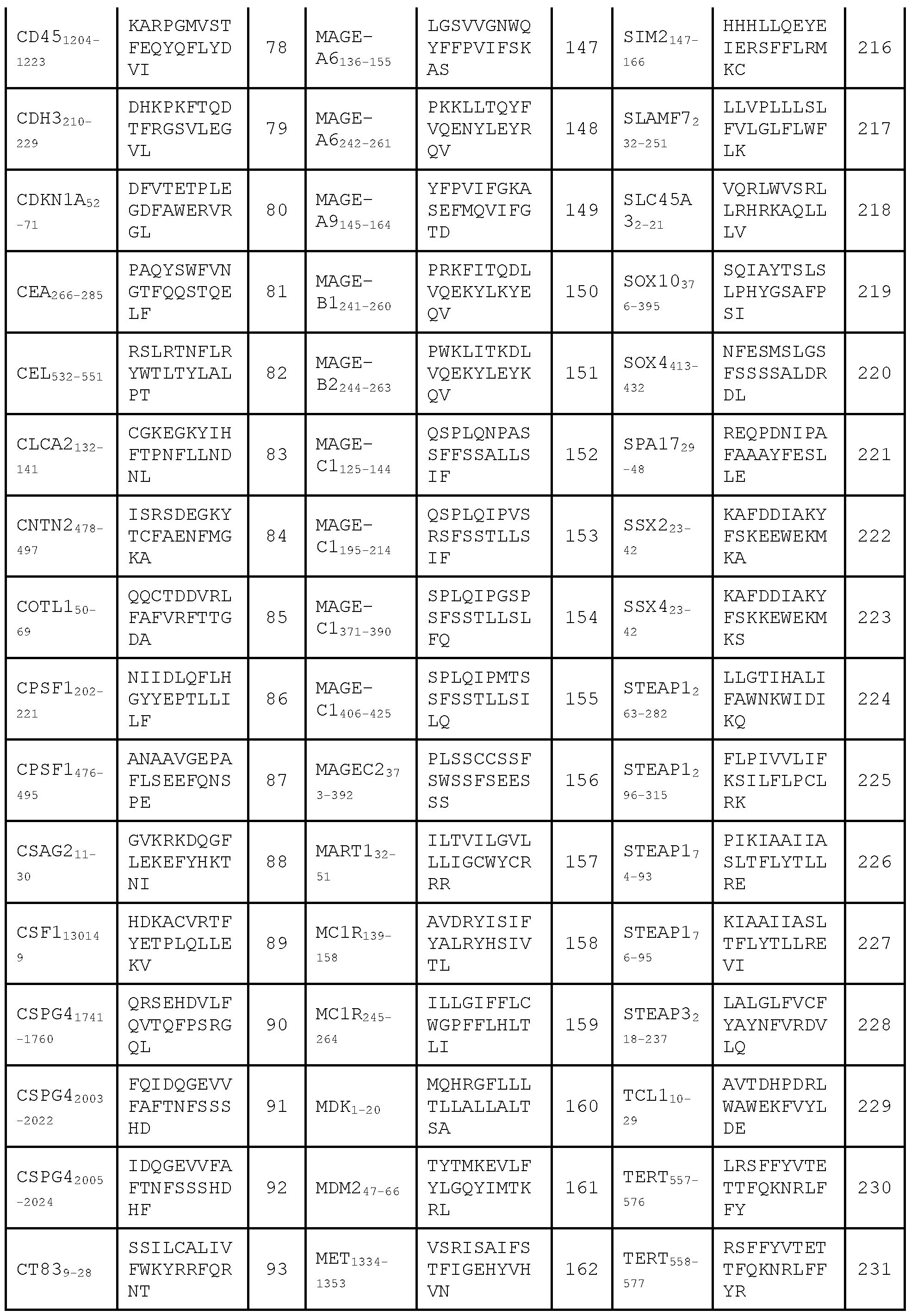


Claims
Priority Applications (10)
| Application Number | Priority Date | Filing Date | Title |
|---|---|---|---|
| EP20848442.8A EP4004546A4 (en) | 2019-07-30 | 2020-07-29 | METHODS FOR IDENTIFYING T-CELL RECEPTORS |
| MX2022001204A MX2022001204A (en) | 2019-07-30 | 2020-07-29 | METHODS FOR IDENTIFYING T LYMPHOCYTE RECEPTORS. |
| AU2020321710A AU2020321710A1 (en) | 2019-07-30 | 2020-07-29 | Methods of identifying T cell receptors |
| US17/631,818 US20220291215A1 (en) | 2019-07-30 | 2020-07-29 | Methods of identifying t cell receptors |
| KR1020227006937A KR20220052941A (en) | 2019-07-30 | 2020-07-29 | T Cell Receptor Identification Method |
| CA3146290A CA3146290A1 (en) | 2019-07-30 | 2020-07-29 | Methods of identifying t cell receptors |
| JP2022506465A JP7724203B2 (en) | 2019-07-30 | 2020-07-29 | Methods for identifying T cell receptors |
| CN202080063987.5A CN114761802B (en) | 2019-07-30 | 2020-07-29 | Methods for identifying T cell receptors |
| IL290226A IL290226A (en) | 2019-07-30 | 2022-01-30 | Methods of identifying t cell receptors |
| JP2025130081A JP2025166836A (en) | 2019-07-30 | 2025-08-04 | Methods for identifying T cell receptors |
Applications Claiming Priority (4)
| Application Number | Priority Date | Filing Date | Title |
|---|---|---|---|
| US201962880492P | 2019-07-30 | 2019-07-30 | |
| US62/880,492 | 2019-07-30 | ||
| US202063029103P | 2020-05-22 | 2020-05-22 | |
| US63/029,103 | 2020-05-22 |
Publications (1)
| Publication Number | Publication Date |
|---|---|
| WO2021019476A1 true WO2021019476A1 (en) | 2021-02-04 |
Family
ID=74228602
Family Applications (1)
| Application Number | Title | Priority Date | Filing Date |
|---|---|---|---|
| PCT/IB2020/057176 Ceased WO2021019476A1 (en) | 2019-07-30 | 2020-07-29 | Methods of identifying t cell receptors |
Country Status (11)
| Country | Link |
|---|---|
| US (1) | US20220291215A1 (en) |
| EP (1) | EP4004546A4 (en) |
| JP (2) | JP7724203B2 (en) |
| KR (1) | KR20220052941A (en) |
| CN (1) | CN114761802B (en) |
| AU (1) | AU2020321710A1 (en) |
| CA (1) | CA3146290A1 (en) |
| IL (1) | IL290226A (en) |
| MX (1) | MX2022001204A (en) |
| TW (1) | TW202118779A (en) |
| WO (1) | WO2021019476A1 (en) |
Cited By (1)
| Publication number | Priority date | Publication date | Assignee | Title |
|---|---|---|---|---|
| EP4004032A4 (en) * | 2019-07-30 | 2024-02-21 | University Health Network | MHC CLASS II MOLECULES AND METHODS OF USE |
Families Citing this family (3)
| Publication number | Priority date | Publication date | Assignee | Title |
|---|---|---|---|---|
| CN113795583B (en) | 2019-03-04 | 2026-03-27 | 大学健康网络 | T-cell receptors and their usage |
| WO2021019473A1 (en) | 2019-07-30 | 2021-02-04 | University Health Network | Mhc class ii molecules and methods of use thereof |
| CN118662607A (en) * | 2023-03-15 | 2024-09-20 | 中国科学院上海巴斯德研究所 | Protein for inhibiting excessive inflammatory response and its application |
Family Cites Families (2)
| Publication number | Priority date | Publication date | Assignee | Title |
|---|---|---|---|---|
| JP2012120488A (en) * | 2010-12-09 | 2012-06-28 | Univ Of Tokyo | New-stabilized recombinant mhc protein |
| MX2020003117A (en) * | 2017-09-20 | 2020-08-20 | Us Health | HLA CLASS II RESTRICTED T CELL RECEPTORS AGAINST MUTATED RAS. |
-
2020
- 2020-07-29 WO PCT/IB2020/057176 patent/WO2021019476A1/en not_active Ceased
- 2020-07-29 CA CA3146290A patent/CA3146290A1/en active Pending
- 2020-07-29 JP JP2022506465A patent/JP7724203B2/en active Active
- 2020-07-29 KR KR1020227006937A patent/KR20220052941A/en active Pending
- 2020-07-29 AU AU2020321710A patent/AU2020321710A1/en active Pending
- 2020-07-29 US US17/631,818 patent/US20220291215A1/en active Pending
- 2020-07-29 CN CN202080063987.5A patent/CN114761802B/en active Active
- 2020-07-29 TW TW109125671A patent/TW202118779A/en unknown
- 2020-07-29 MX MX2022001204A patent/MX2022001204A/en unknown
- 2020-07-29 EP EP20848442.8A patent/EP4004546A4/en active Pending
-
2022
- 2022-01-30 IL IL290226A patent/IL290226A/en unknown
-
2025
- 2025-08-04 JP JP2025130081A patent/JP2025166836A/en active Pending
Non-Patent Citations (4)
| Title |
|---|
| HUANG B. ET AL.: "Analysis of the contact sites on the CD 4 molecule with class II MHC molecule: co-ligand versus co-receptor function", THE JOURNAL OF IMMUNOLOGY, vol. 158, 1997, pages 216 - 225, XP055789364 * |
| JANEWAY C.A., PORTOLES P., TITE J.P., ROJO J., SAIZAWA K., JONES B.: "Recognition of MHC Class II Antigens by the CD4: T Cell Receptor Complex", H-2 ANTIGENS, vol. 144, 30 November 1986 (1986-11-30), Boston, MA, pages 441 - 449, XP009533827, ISBN: 978-1-4757-0766-3, DOI: 10.1007/978-1-4757-0764-9_44 * |
| See also references of EP4004546A4 * |
| WEBER ET AL.: "Class II-restricted T cell receptor engineered in vitro for higher affinity retains peptide specificity and function", PNAS, vol. 102, no. 52, 27 December 2005 (2005-12-27), pages 19033 - 19038, XP002449077, DOI: 10.1073/pnas.0507554102 * |
Cited By (1)
| Publication number | Priority date | Publication date | Assignee | Title |
|---|---|---|---|---|
| EP4004032A4 (en) * | 2019-07-30 | 2024-02-21 | University Health Network | MHC CLASS II MOLECULES AND METHODS OF USE |
Also Published As
| Publication number | Publication date |
|---|---|
| MX2022001204A (en) | 2022-05-03 |
| IL290226A (en) | 2022-03-01 |
| JP2022542445A (en) | 2022-10-03 |
| KR20220052941A (en) | 2022-04-28 |
| CA3146290A1 (en) | 2021-02-04 |
| AU2020321710A1 (en) | 2022-03-03 |
| JP7724203B2 (en) | 2025-08-15 |
| TW202118779A (en) | 2021-05-16 |
| CN114761802B (en) | 2026-04-28 |
| EP4004546A1 (en) | 2022-06-01 |
| EP4004546A4 (en) | 2024-10-09 |
| CN114761802A (en) | 2022-07-15 |
| JP2025166836A (en) | 2025-11-06 |
| US20220291215A1 (en) | 2022-09-15 |
Similar Documents
| Publication | Publication Date | Title |
|---|---|---|
| JP7724203B2 (en) | Methods for identifying T cell receptors | |
| JP7811541B2 (en) | MHC class II molecules and methods of use thereof | |
| JP7748284B2 (en) | T cell receptors and methods of use thereof | |
| US12590139B2 (en) | MHC class II molecules and methods of use thereof | |
| US12624082B2 (en) | T cell receptors and methods of use thereof | |
| WO2021019477A1 (en) | T cell receptors and methods of use thereof | |
| TWI881991B (en) | Mhc class ii molecules and methods of use thereof |
Legal Events
| Date | Code | Title | Description |
|---|---|---|---|
| 121 | Ep: the epo has been informed by wipo that ep was designated in this application |
Ref document number: 20848442 Country of ref document: EP Kind code of ref document: A1 |
|
| ENP | Entry into the national phase |
Ref document number: 3146290 Country of ref document: CA |
|
| WWE | Wipo information: entry into national phase |
Ref document number: 290226 Country of ref document: IL |
|
| ENP | Entry into the national phase |
Ref document number: 2022506465 Country of ref document: JP Kind code of ref document: A |
|
| NENP | Non-entry into the national phase |
Ref country code: DE |
|
| REG | Reference to national code |
Ref country code: BR Ref legal event code: B01A Ref document number: 112022001705 Country of ref document: BR |
|
| ENP | Entry into the national phase |
Ref document number: 20227006937 Country of ref document: KR Kind code of ref document: A |
|
| ENP | Entry into the national phase |
Ref document number: 2020321710 Country of ref document: AU Date of ref document: 20200729 Kind code of ref document: A |
|
| ENP | Entry into the national phase |
Ref document number: 2020848442 Country of ref document: EP Effective date: 20220228 |
|
| REG | Reference to national code |
Ref country code: BR Ref legal event code: B01E Ref document number: 112022001705 Country of ref document: BR Free format text: APRESENTAR A TRADUCAO SIMPLES DA FOLHA DE ROSTO DA CERTIDAO DE DEPOSITO DAS PRIORIDADES US 62/88,492 DE 30/07/2019 E US 63/029,103 DE 22/05/2020 OU DECLARACAO CONTENDO, OBRIGATORIAMENTE, TODOS OS DADOS IDENTIFICADORES DESTAS CONFORME O ART. 15 DA PORTARIA 39/2021. OS DOCUMENTOS APRESENTADOS NAO ESTAO TRADUZIDOS E AS DECLARACOES NAO CONTEM OS DADOS IDENTIFICADORES DAS PRIORIDADES. |
|
| ENP | Entry into the national phase |
Ref document number: 112022001705 Country of ref document: BR Kind code of ref document: A2 Effective date: 20220128 |
|
| WWW | Wipo information: withdrawn in national office |
Ref document number: 784967 Country of ref document: NZ |