WO2021029049A1 - 端末及び通信方法 - Google Patents
端末及び通信方法 Download PDFInfo
- Publication number
- WO2021029049A1 WO2021029049A1 PCT/JP2019/031981 JP2019031981W WO2021029049A1 WO 2021029049 A1 WO2021029049 A1 WO 2021029049A1 JP 2019031981 W JP2019031981 W JP 2019031981W WO 2021029049 A1 WO2021029049 A1 WO 2021029049A1
- Authority
- WO
- WIPO (PCT)
- Prior art keywords
- random access
- access procedure
- step random
- base station
- terminal
- Prior art date
- Legal status (The legal status is an assumption and is not a legal conclusion. Google has not performed a legal analysis and makes no representation as to the accuracy of the status listed.)
- Ceased
Links
Images





Classifications
-
- H—ELECTRICITY
- H04—ELECTRIC COMMUNICATION TECHNIQUE
- H04W—WIRELESS COMMUNICATION NETWORKS
- H04W74/00—Wireless channel access
- H04W74/08—Non-scheduled access, e.g. ALOHA
- H04W74/0833—Random access procedures, e.g. with 4-step access
- H04W74/0841—Random access procedures, e.g. with 4-step access with collision treatment
-
- H—ELECTRICITY
- H04—ELECTRIC COMMUNICATION TECHNIQUE
- H04W—WIRELESS COMMUNICATION NETWORKS
- H04W52/00—Power management, e.g. Transmission Power Control [TPC] or power classes
- H04W52/04—Transmission power control [TPC]
- H04W52/18—TPC being performed according to specific parameters
- H04W52/24—TPC being performed according to specific parameters using SIR [Signal to Interference Ratio] or other wireless path parameters
- H04W52/242—TPC being performed according to specific parameters using SIR [Signal to Interference Ratio] or other wireless path parameters taking into account path loss
-
- H—ELECTRICITY
- H04—ELECTRIC COMMUNICATION TECHNIQUE
- H04W—WIRELESS COMMUNICATION NETWORKS
- H04W52/00—Power management, e.g. Transmission Power Control [TPC] or power classes
- H04W52/04—Transmission power control [TPC]
- H04W52/30—Transmission power control [TPC] using constraints in the total amount of available transmission power
- H04W52/36—Transmission power control [TPC] using constraints in the total amount of available transmission power with a discrete range or set of values, e.g. step size, ramping or offsets
- H04W52/367—Power values between minimum and maximum limits, e.g. dynamic range
-
- H—ELECTRICITY
- H04—ELECTRIC COMMUNICATION TECHNIQUE
- H04W—WIRELESS COMMUNICATION NETWORKS
- H04W74/00—Wireless channel access
- H04W74/08—Non-scheduled access, e.g. ALOHA
- H04W74/0833—Random access procedures, e.g. with 4-step access
-
- H—ELECTRICITY
- H04—ELECTRIC COMMUNICATION TECHNIQUE
- H04W—WIRELESS COMMUNICATION NETWORKS
- H04W74/00—Wireless channel access
- H04W74/08—Non-scheduled access, e.g. ALOHA
- H04W74/0833—Random access procedures, e.g. with 4-step access
- H04W74/0836—Random access procedures, e.g. with 4-step access with 2-step access
-
- H—ELECTRICITY
- H04—ELECTRIC COMMUNICATION TECHNIQUE
- H04W—WIRELESS COMMUNICATION NETWORKS
- H04W74/00—Wireless channel access
- H04W74/08—Non-scheduled access, e.g. ALOHA
- H04W74/0833—Random access procedures, e.g. with 4-step access
- H04W74/0838—Random access procedures, e.g. with 4-step access using contention-free random access [CFRA]
Definitions
- the present invention relates to a terminal and a communication method in a wireless communication system.
- Non-Patent Document 1 NR (New Radio) (also called “5G”), which is the successor system to LTE (Long Term Evolution), the requirements are a large-capacity system, high-speed data transmission speed, low delay, and simultaneous operation of many terminals. Techniques that satisfy connection, low cost, power saving, etc. are being studied (for example, Non-Patent Document 1).
- Random access is executed for synchronization establishment or scheduling request between terminals and base stations.
- CBRA Contention-based random access
- CFRA Contention-free random access
- the present invention has been made in view of the above points, and an object of the present invention is to control a random access procedure according to radio quality.
- a transmitter that transmits a first message including a random access preamble in a two-step random access procedure or a four-step random access procedure to a base station, and a second message that is a response to the first message.
- the radio quality in the communication between the receiving unit that receives the message from the base station and the base station satisfies the first condition
- the two-step random access procedure is executed, and the radio quality in the communication with the base station is the same. If the first condition is not met, a terminal with a control unit that executes a 4-step random access procedure is provided.
- the random access procedure can be controlled according to the radio quality.
- LTE Long Term Evolution
- LTE-Advanced LTE-Advanced and later methods (eg, NR) unless otherwise specified.
- SS Synchronization signal
- PSS Primary SS
- SSS Secondary SS
- PBCH Physical broadcast channel
- PRACH Physical
- NR-SS NR-SS
- NR-PBCH Physical broadcast channel
- PRACH Physical
- the duplex system may be a TDD (Time Division Duplex) system, an FDD (Frequency Division Duplex) system, or other system (for example, Flexible Duplex, etc.). Method may be used.
- TDD Time Division Duplex
- FDD Frequency Division Duplex
- Method may be used.
- "configuring" the radio parameter or the like may mean that a predetermined value is set in advance (Pre-configure), or the base station 10 or The radio parameter notified from the terminal 20 may be set.
- FIG. 1 is a diagram for explaining a wireless communication system according to an embodiment of the present invention.
- the wireless communication system according to the embodiment of the present invention includes a base station 10 and a terminal 20 as shown in FIG.
- FIG. 1 shows one base station 10 and one terminal 20, this is an example, and there may be a plurality of each.
- the base station 10 is a communication device that provides one or more cells and performs wireless communication with the terminal 20.
- the physical resources of the radio signal are defined in the time domain and the frequency domain, the time domain may be defined by the number of OFDM symbols, and the frequency domain may be defined by the number of subcarriers or the number of resource blocks.
- the base station 10 transmits a synchronization signal and system information to the terminal 20. Synchronous signals are, for example, NR-PSS and NR-SSS.
- the system information is transmitted by, for example, NR-PBCH, and is also referred to as broadcast information. As shown in FIG.
- the base station 10 transmits a control signal or data to the terminal 20 by DL (Downlink), and receives the control signal or data from the terminal 20 by UL (Uplink). Both the base station 10 and the terminal 20 can perform beamforming to transmit and receive signals. Further, both the base station 10 and the terminal 20 can apply MIMO (Multiple Input Multiple Output) communication to DL or UL. Further, both the base station 10 and the terminal 20 may communicate via SCell (Secondary Cell) and PCell (Primary Cell) by CA (Carrier Aggregation).
- SCell Secondary Cell
- PCell Primary Cell
- the terminal 20 is a communication device having a wireless communication function such as a smartphone, a mobile phone, a tablet, a wearable terminal, and a communication module for M2M (Machine-to-Machine). As shown in FIG. 1, the terminal 20 receives a control signal or data from the base station 10 by DL and transmits the control signal or data to the base station 10 by UL, so that various types provided by the wireless communication system are provided. Use communication services.
- M2M Machine-to-Machine
- terminal 20 transmits a random access preamble or UE (User Equipment) identifier to base station 10 as a UL signal. Then, the base station 10 transmits information for performing random access response and collision resolution to the terminal 20 as a DL signal.
- UE User Equipment
- FIG. 2 is a sequence diagram for explaining an example (1) of the random access procedure.
- An example of a random access procedure shown in FIG. 2 is a collision-type random access procedure.
- the terminal 20 transmits a random access preamble to the base station 10.
- the base station 10 transmits a random access response to the terminal 20 (S12).
- the terminal 20 performs the transmission scheduled by the random access response to the base station 10 (S13).
- information identifying the terminal 20 is transmitted.
- the base station 10 transmits information for performing collision resolution to the terminal 20 (S14). If the conflict resolution is successful, the random access procedure is successful and complete.
- FIG. 3 is a sequence diagram for explaining an example (2) of the random access procedure.
- An example of a random access procedure shown in FIG. 3 is a non-collision type random access procedure.
- the base station 10 allocates the random access preamble to the terminal 20.
- the terminal 20 transmits the assigned random access preamble to the base station 10 (S22).
- the base station 10 transmits a random access response to the terminal 20.
- FIG. 4 is a sequence diagram for explaining an example of a 4-step random access procedure.
- An example of the random access procedure shown in FIG. 4 is a collision type random access procedure as in FIG. 2, and is a 4-step random access procedure.
- the terminal 20 transmits a random access preamble to the base station 10 as Msg1.
- the base station 10 transmits a random access response to the terminal 20 as Msg2 (S32).
- the terminal 20 transmits the UE identifier to the base station 10 as Msg3 (S33).
- the base station 10 transmits information for performing collision resolution as Msg4 to the terminal 20. If the conflict resolution is successful, the random access procedure is successful and complete.
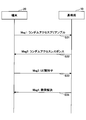
- FIG. 5 is a sequence diagram for explaining an example of a two-step random access procedure.
- An example of a random access procedure shown in FIG. 5 is a collision-type random access procedure, which is a two-step random access procedure.
- a two-step random access procedure is being considered to complete the random access procedure in a short period of time.
- the terminal 20 transmits a random access preamble and a PUSCH (Physical Uplink Shared Channel) as MsgA to the base station 10.
- PUSCH Physical Uplink Shared Channel
- the contents corresponding to Msg1 and Msg3 in the 4-step random access procedure may be transmitted via PUSCH.
- the base station 10 transmits MsgB to the terminal 20 (S42).
- MsgB may include content corresponding to Msg2 and Msg4 in a 4-step random access procedure. If the conflict resolution is successful, the random access procedure is successful and complete. By adopting the 2-step random access procedure, effects such as low delay and reduction of power consumption are expected.
- the random access preamble in the 4-step random access procedure is classified into two groups, group A and group B.
- Group B is used to notify base station 10 of possible sizes of Msg3.
- the random access preamble group B is used when the size of Msg3 is larger than the predetermined threshold value and the path loss is smaller than the predetermined threshold value.
- SIB System Information Block
- a plurality of PUSCH settings related to MsgA may be supported.
- the maximum number of settings, which parameters are shared, how different settings are notified, and whether PUSCH resources related to different MsgA overlap in the time domain and frequency domain are conventionally defined. Absent. For notification of different settings, for example, it is assumed that different RO (RACHoccasion) is used, different preamble groups are used, or UCI (Uplink Control Information) is used.
- the network is set to, for example, the RO set in the 2-step random access procedure and the RO set in the 4-step random access procedure. And may be separated.
- the network for example, shares the RO set in the 2-step random access procedure and the RO set in the 4-step random access procedure to preamble the 2-step random access procedure and the 4-step random access procedure preamble. May be separated.
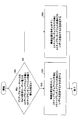
- FIG. 6 is a flowchart for explaining an example of a random access procedure according to the embodiment of the present invention.
- the base station 10 may be able to set one condition for selecting a 2-step random access procedure or a 4-step random access procedure to be based on radio quality.
- step S51 the terminal 20 determines whether the RO, preamble format, or RACH reception target power is instructed by the base station 10 to be set differently in the 2-step random access procedure and the 4-step random access procedure. If the settings are different (YES in S51), the process proceeds to step S52, and if the settings are the same (YES in S52), the process proceeds to step S53.
- step S52 the terminal 20 determines which of the two-step random access procedure and the four-step random access procedure is to be set on the condition of radio quality. If the RO, preamble format or RACH receive target power is set differently in the 2-step random access procedure and the 4-step random access procedure, the preamble used for the 2-step random access procedure and the preamble used for the 4-step random access procedure Due to the different performances, radio quality can be a condition for choosing between a 2-step random access procedure and a 4-step random access procedure.
- step S53 the terminal 20 determines which of the two-step random access procedure and the four-step random access procedure is to be set without the condition of radio quality. If the RO, preamble format or RACH receive target power is the same in the 2-step random access procedure and the 4-step random access procedure, the preamble used for the 2-step random access procedure and the preamble used for the 4-step random access procedure The radio quality does not have to be a condition for selecting a 2-step random access procedure and a 4-step random access procedure because the performance of the two-step random access procedure is equivalent.
- the base station 10 detects only the preamble, it switches from the 2-step random access procedure to the 4-step random access procedure and transmits a random access response (Msg2).
- the conditions related to radio quality in step S52 may be defined as 1) -3) below.
- the radio quality may be defined by RSRP (Reference Signal Received Power), RSRQ (Reference Signal Received Quality) or SINR (Signal to Interference plus Noise power Ratio).
- a threshold such as rsrp-Throshold2 RACH may be set. If RSRP, RSRQ or SINR is greater than the threshold, a 2-step random access procedure may be selected, and if RSRP, RSRQ or SINR is below the threshold, a 4-step random access procedure may be selected.
- the reference signal for measuring RSRP, RSRQ or SINR may be SSB (Synchronization Signal Block) in collision-type random access.
- the reference signal for measuring RSRP, RSRQ or SINR may be SSB or CSI-RS (Channel State Information Reference Signal) in non-collision type random access, and which one is used is set from the upper layer. May be good.
- Path loss if it is smaller than P CMAX -msgApuschReceivedTargetPower- (msgApusch-DeltaPreamble) , 2 steps random access procedure may be selected. If the path loss is P CMAX -msgApuschReceivedTargetPower- (msgApusch-DeltaPreamble) above, four steps random access procedure may be selected.
- PCMAX is the maximum transmit power of the cell that executes the random access procedure.
- the msgApushReceivedTargetPower is the PUSCH receive target power set for the two-step random access procedure and may be referred to as the pushReceivedTargetPower.
- msgApush-DeltaPreamble is a newly introduced parameter and may have another name.
- msgApush-DeltaPlay is an offset with respect to the received target power set in the 2-step random access procedure.
- msgApushReceivedTargetPower msgApresumbleReceivedTargetPower + delta_msgAPUSCH.
- delta_msgAPUSCH is the relative offset of the PUSCH receive target power set in the 2-step random access procedure. If delta_msgAPUSCH is not set, the parameter delta_preamble_msg3 of the 4-step random access procedure may be used in place of delta_msgAPUSCH.
- the msgApre-ReceivedTargetPower is the reception target power of the preamble set for the two-step random access procedure, and may be described as the preambleReceivedTragetPower.
- Path loss if it is smaller than P CMAX -msgApreambleReceivedTargetPower- (msgApusch-DeltaPreamble) , 2 steps random access procedure may be selected. If the path loss is P CMAX -msgApreambleReceivedTargetPower- (msgApusch-DeltaPreamble) above, four steps random access procedure may be selected.
- FIG. 7 is a flowchart for explaining an example of a random access procedure according to the embodiment of the present invention. As shown in FIG. 7, in a two-step random access procedure, the preamble group may be divided with reference to radio quality.
- step S61 the terminal 20 determines whether or not the radio quality satisfies the condition described in FIG. If the radio quality satisfies the condition (YES in S61), the process proceeds to step S62, and if the radio quality does not satisfy the condition (NO in S61), the process proceeds to step S63.
- step S62 the terminal 20 executes a two-step random access procedure and proceeds to step S64.
- step S63 the terminal 20 executes the 4-step random access procedure and ends the flow.
- step S64 the terminal 20 determines whether or not a preamble group for the 2-step random access procedure is set from the upper layer. If it is set (YES in S64), the process proceeds to step S65, and if it is not set (NO in S64), the process proceeds to step S67.
- the preamble group used in the two-step random access procedure may be defined as "group C”.
- step S65 the terminal 20 determines whether or not the condition for selecting the preamble of the preamble group for the two-step random access procedure is satisfied.
- the conditions for selecting the preamble of the preamble group for the two-step random access procedure may be defined as 1) -3) below based on the radio quality such as path loss.
- PUSCH size MsgA is a larger than ra-MsgAPuschSizeGroupA, and, P CMAX -msgApuschReceivedTargetPower- (msgApusch-DeltaPreamble ) path loss than -messagePowerOffsetGroupC the preamble group for 2 steps random access procedure if it is small Select a preamble.
- messagePowerOffsetGroupC is an offset value corresponding to group C of the preamble.
- the preamble group A and the preamble group B used for the 4-step random access procedure may be used. Further, the RO used for the 2-step random access procedure and the RO used for the 4-step random access procedure may be separated in order to distinguish between the 2-step random access procedure and the 4-step random access procedure.
- a preamble group for a 2-step random access procedure that is not used for the 4-step random access procedure may be set.
- the RO may be shared by the 2-step random access procedure and the 4-step random access procedure, or may be separated.
- MSGA is a larger than ra-MsgAPuschSizeGroupA, and preamble for 2 steps random access procedure to be used when the path loss than P CMAX -msgApreambleReceivedTargetPower- (msgApusch-DeltaPreamble) -messagePowerOffsetGroupC is a small Select a group preamble.
- the preamble of the preamble group for the 2-step random access procedure may be selected depending on the conditions or combinations of conditions a) -d) below.
- MsgAPUSCH MCS and / or TBS
- Spatial filter (beam) of MsgAPUSCH c) Time domain and / or frequency domain resources of MsgAPUSCH
- Purpose of 2-step random access procedure eg, BFR (Beam failure recovery), UL synchronization, SI request, etc.
- step S65 when the preamble of the preamble group for the 2-step random access procedure is used as described above (YES in S65), the process proceeds to step S66, and the preamble of the preamble group for the 2-step random access procedure is not used (YES in S65). NO) of S65, the process proceeds to step S67.
- step S66 the terminal 20 selects the preamble of the preamble group for the 2-step random access procedure.
- the preamble group for the two-step random access procedure is, for example, group C.
- step S67 the terminal 20 selects a normal preamble.
- the normal preamble is, for example, a preamble included in Group A.
- step S68 the terminal 20 transmits the selected preamble.
- the terminal 20 can select whether to execute the 2-step random access procedure or the 4-step random access procedure based on the radio quality.
- the terminal 20 can select a preamble group for the two-step random access procedure based on conditions including radio quality.
- the random access procedure can be controlled according to the radio quality.
- the base station 10 and the terminal 20 include a function of carrying out the above-described embodiment.
- the base station 10 and the terminal 20 may each have only a part of the functions in the embodiment.
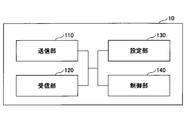
- FIG. 8 is a diagram showing an example of the functional configuration of the base station 10. As shown in FIG. 8, the base station 10 has a transmission unit 110, a reception unit 120, a setting unit 130, and a control unit 140.
- the functional configuration shown in FIG. 8 is only an example. Any function classification and name of the functional unit may be used as long as the operation according to the embodiment of the present invention can be executed.
- the transmission unit 110 includes a function of generating a signal to be transmitted to the terminal 20 side and transmitting the signal wirelessly.
- the receiving unit 120 includes a function of receiving various signals transmitted from the terminal 20 and acquiring information of, for example, a higher layer from the received signals. Further, the transmission unit 110 has a function of transmitting NR-PSS, NR-SSS, NR-PBCH, DL / UL control signal, DL / UL data signal, etc. to the terminal 20.
- the setting unit 130 stores preset setting information and various setting information to be transmitted to the terminal 20 in the storage device, and reads the setting information from the storage device as needed.
- the content of the setting information is, for example, a setting related to random access.
- the control unit 140 executes a 2-step random access procedure or a 4-step random access procedure with the terminal 20 as described in the embodiment.
- the function unit related to signal transmission in the control unit 140 may be included in the transmission unit 110, and the function unit related to signal reception in the control unit 140 may be included in the reception unit 120.
- FIG. 9 is a diagram showing an example of the functional configuration of the terminal 20.
- the terminal 20 has a transmitting unit 210, a receiving unit 220, a setting unit 230, and a control unit 240.
- the functional configuration shown in FIG. 9 is only an example. Any function classification and name of the functional unit may be used as long as the operation according to the embodiment of the present invention can be executed.
- the transmission unit 210 creates a transmission signal from the transmission data and wirelessly transmits the transmission signal.
- the receiving unit 220 wirelessly receives various signals and acquires a signal of a higher layer from the received signal of the physical layer. Further, the receiving unit 220 has a function of receiving NR-PSS, NR-SSS, NR-PBCH, DL / UL / SL control signals and the like transmitted from the base station 10. Further, for example, the transmission unit 210 connects the other terminal 20 to PSCCH (Physical Sidelink Control Channel), PSCH (Physical Sidelink Shared Channel), PSDCH (Physical Sidelink Discovery Channel), PSBCH (Physical Sidelink Broadcast Channel) as D2D communication. Etc. are transmitted, and the receiving unit 120 receives the PSCCH, PSCH, PSDCH, PSBCH, etc. from the other terminal 20.
- PSCCH Physical Sidelink Control Channel
- PSCH Physical Sidelink Shared Channel
- PSDCH Physical Sidelink Discovery Channel
- PSBCH Physical Sidelink Broad
- the setting unit 230 stores various setting information received from the base station 10 or the terminal 20 by the receiving unit 220 in the storage device, and reads it out from the storage device as needed.
- the setting unit 230 also stores preset setting information.
- the content of the setting information is, for example, a setting related to random access.
- the control unit 240 executes a 2-step random access procedure or a 4-step random access procedure with the base station 10 as described in the embodiment.
- the function unit related to signal transmission in the control unit 240 may be included in the transmission unit 210, and the function unit related to signal reception in the control unit 240 may be included in the reception unit 220.
- each functional block may be realized by using one device that is physically or logically connected, or directly or indirectly (for example, by two or more devices that are physically or logically separated). , Wired, wireless, etc.) and may be realized using these plurality of devices.
- the functional block may be realized by combining the software with the one device or the plurality of devices.
- Functions include judgment, decision, judgment, calculation, calculation, processing, derivation, investigation, search, confirmation, reception, transmission, output, access, solution, selection, selection, establishment, comparison, assumption, expectation, and assumption.
- broadcasting notifying, communicating, forwarding, configuring, reconfiguring, allocating, mapping, assigning, etc., but only these. I can't.
- a functional block that functions transmission is called a transmitting unit (transmitting unit) or a transmitter (transmitter).
- transmitting unit transmitting unit
- transmitter transmitter
- the base station 10, the terminal 20, and the like in one embodiment of the present disclosure may function as a computer that processes the wireless communication method of the present disclosure.
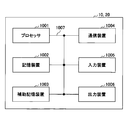
- FIG. 10 is a diagram showing an example of the hardware configuration of the base station 10 and the terminal 20 according to the embodiment of the present disclosure.
- the above-mentioned base station 10 and terminal 20 are physically configured as a computer device including a processor 1001, a storage device 1002, an auxiliary storage device 1003, a communication device 1004, an input device 1005, an output device 1006, a bus 1007, and the like. May be good.
- the word “device” can be read as a circuit, device, unit, etc.
- the hardware configuration of the base station 10 and the terminal 20 may be configured to include one or more of the devices shown in the figure, or may be configured not to include some of the devices.
- the processor 1001 For each function of the base station 10 and the terminal 20, the processor 1001 performs an operation by loading predetermined software (program) on the hardware such as the processor 1001 and the storage device 1002, and controls the communication by the communication device 1004. It is realized by controlling at least one of reading and writing of data in the storage device 1002 and the auxiliary storage device 1003.
- the processor 1001 operates, for example, an operating system to control the entire computer.
- the processor 1001 may be composed of a central processing unit (CPU: Central Processing Unit) including an interface with a peripheral device, a control device, an arithmetic unit, a register, and the like.
- CPU Central Processing Unit
- control unit 140, control unit 240, and the like may be realized by the processor 1001.
- the processor 1001 reads a program (program code), a software module, data, or the like from at least one of the auxiliary storage device 1003 and the communication device 1004 into the storage device 1002, and executes various processes according to these.
- a program program that causes a computer to execute at least a part of the operations described in the above-described embodiment is used.
- the control unit 140 of the base station 10 shown in FIG. 8 may be realized by a control program stored in the storage device 1002 and operated by the processor 1001.
- the control unit 240 of the terminal 20 shown in FIG. 9 may be realized by a control program stored in the storage device 1002 and operated by the processor 1001.
- Processor 1001 may be implemented by one or more chips.
- the program may be transmitted from the network via a telecommunication line.
- the storage device 1002 is a computer-readable recording medium, for example, by at least one of ROM (Read Only Memory), EPROM (Erasable Programmable ROM), EPROM (Electrically Erasable Programmable ROM), RAM (Random Access Memory), and the like. It may be configured.
- the storage device 1002 may be referred to as a register, a cache, a main memory (main storage device), or the like.
- the storage device 1002 can store a program (program code), a software module, or the like that can be executed to implement the communication method according to the embodiment of the present disclosure.
- the auxiliary storage device 1003 is a computer-readable recording medium, and is, for example, an optical disk such as a CD-ROM (Compact Disc ROM), a hard disk drive, a flexible disk, an optical magnetic disk (for example, a compact disk, a digital versatile disk, Blu).
- -It may be composed of at least one of a ray (registered trademark) disk), a smart card, a flash memory (for example, a card, a stick, a key drive), a floppy (registered trademark) disk, a magnetic strip and the like.
- the storage medium described above may be, for example, a database, server or other suitable medium containing at least one of the storage device 1002 and the auxiliary storage device 1003.
- the communication device 1004 is hardware (transmission / reception device) for communicating between computers via at least one of a wired network and a wireless network, and is also referred to as, for example, a network device, a network controller, a network card, a communication module, or the like.
- the communication device 1004 includes, for example, a high frequency switch, a duplexer, a filter, a frequency synthesizer, and the like in order to realize at least one of frequency division duplex (FDD: Frequency Division Duplex) and time division duplex (TDD: Time Division Duplex). It may be composed of.
- FDD Frequency Division Duplex
- TDD Time Division Duplex
- the transmission / reception unit may be physically or logically separated from each other in the transmission unit and the reception unit.
- the input device 1005 is an input device (for example, a keyboard, a mouse, a microphone, a switch, a button, a sensor, etc.) that receives an input from the outside.
- the output device 1006 is an output device (for example, a display, a speaker, an LED lamp, etc.) that outputs to the outside.
- the input device 1005 and the output device 1006 may have an integrated configuration (for example, a touch panel).
- each device such as the processor 1001 and the storage device 1002 is connected by a bus 1007 for communicating information.
- the bus 1007 may be configured by using a single bus, or may be configured by using a different bus for each device.
- the base station 10 and the terminal 20 are hardware such as a microprocessor, a digital signal processor (DSP: Digital Signal Processor), an ASIC (Application Specific Integrated Circuit), a PLD (Programmable Logic Device), and an FPGA (Field Programmable Gate Array). It may be configured to include, and a part or all of each functional block may be realized by the hardware. For example, processor 1001 may be implemented using at least one of these hardware.
- DSP Digital Signal Processor
- ASIC Application Specific Integrated Circuit
- PLD Programmable Logic Device
- FPGA Field Programmable Gate Array
- the transmission unit that transmits the first message including the random access preamble in the 2-step random access procedure or the 4-step random access procedure to the base station, and the first.
- the radio quality of the communication between the receiving unit that receives the second message, which is the response to the first message, from the base station and the base station satisfies the first condition
- the two-step random access procedure is executed.
- a terminal having a control unit that executes a 4-step random access procedure is provided.
- the terminal 20 can select whether to execute the 2-step random access procedure or the 4-step random access procedure based on the radio quality. That is, the random access procedure can be controlled according to the radio quality.
- the control unit When the random access opportunity, the preamble format or the random access reception target power is set differently between the 2-step random access procedure and the 4-step random access procedure, the control unit performs 2-step random based on the first condition. You may decide whether to perform the access procedure or the 4-step random access procedure. With this configuration, the terminal 20 can determine which one to execute based on the radio quality only when the settings of the 2-step random access procedure and the 4-step random access procedure are different.
- the first condition is that the path loss in communication with the base station is from the maximum transmission power of the cell that executes the random access procedure to the reception target power of the physical uplink shared channel set for the two-step random access procedure. 2. It may be less than the value obtained by subtracting the offset with respect to the received target power set in the 2-step random access procedure.
- the terminal 20 can select whether to execute the 2-step random access procedure or the 4-step random access procedure based on the radio quality.
- the control unit may select a preamble of a preamble group for a two-step random access procedure when the radio quality in communication with the base station satisfies the second condition.
- the terminal 20 can select a preamble group for a two-step random access procedure based on conditions including radio quality.
- the second condition is that the path loss in communication with the base station is from the maximum transmission power of the cell executing the random access procedure to the reception target power of the physical uplink shared channel set for the two-step random access procedure. It may be less than the value obtained by subtracting the offset with respect to the received target power set in the 2-step random access procedure and the offset corresponding to the preamble group for the 2-step random access procedure.
- the terminal 20 can select a preamble group for a two-step random access procedure based on conditions including radio quality.
- the reception procedure for receiving the second message from the base station and the radio quality in the communication with the base station satisfy the first condition, the two-step random access procedure is executed to communicate with the base station.
- the radio quality in the above does not satisfy the first condition, a communication method is provided in which the terminal executes a control procedure for executing a 4-step random access procedure.
- the terminal 20 can select whether to execute the 2-step random access procedure or the 4-step random access procedure based on the radio quality. That is, the random access procedure can be controlled according to the radio quality.
- the boundary of the functional unit or the processing unit in the functional block diagram does not always correspond to the boundary of the physical component.
- the operation of the plurality of functional units may be physically performed by one component, or the operation of one functional unit may be physically performed by a plurality of components. With respect to the processing procedure described in the embodiment, the order of processing may be changed as long as there is no contradiction.
- the base station 10 and the terminal 20 have been described with reference to functional block diagrams, but such devices may be implemented in hardware, software, or a combination thereof.
- the software operated by the processor of the base station 10 according to the embodiment of the present invention and the software operated by the processor of the terminal 20 according to the embodiment of the present invention are random access memory (RAM), flash memory, and read-only memory, respectively. It may be stored in (ROM), EPROM, EEPROM, registers, hard disk (HDD), removable disk, CD-ROM, database, server or any other suitable storage medium.
- information notification includes physical layer signaling (for example, DCI (Downlink Control Information), UCI (Uplink Control Information)), higher layer signaling (for example, RRC (Radio Resource Control) signaling, MAC (Medium Access Control) signaling, etc. Broadcast information (MIB (Master Information Block), SIB (System Information Block)), other signals, or a combination thereof may be used.
- RRC signaling may be referred to as an RRC message, for example, RRC. It may be a connection setup (RRCConnectionSetup) message, an RRC connection reconfiguration (RRCConnectionReconfiguration) message, or the like.
- Each aspect / embodiment described in the present disclosure includes LTE (Long Term Evolution), LTE-A (LTE-Advanced), SUPER 3G, IMT-Advanced, 4G (4th generation mobile communication system), and 5G (5th generation mobile communication).
- system FRA (Future Radio Access), NR (new Radio), W-CDMA (registered trademark), GSM (registered trademark), CDMA2000, UMB (Ultra Mobile Broadband), IEEE 802.11 (Wi-Fi (registered trademark)) )), LTE 802.16 (WiMAX®), LTE 802.20, UWB (Ultra-WideBand), Bluetooth®, and other systems that utilize suitable systems and have been extended based on these. It may be applied to at least one of the next generation systems. Further, a plurality of systems may be applied in combination (for example, a combination of at least one of LTE and LTE-A and 5G).
- the specific operation performed by the base station 10 in the present specification may be performed by its upper node (upper node).
- various operations performed for communication with the terminal 20 are performed by the base station 10 and other network nodes other than the base station 10 (for example, it is clear that it can be done by at least one of (but not limited to, MME or S-GW).
- MME mobile phone
- S-GW network node
- the information, signals, etc. described in the present disclosure can be output from the upper layer (or lower layer) to the lower layer (or upper layer). Input / output may be performed via a plurality of network nodes.
- the input / output information and the like may be stored in a specific location (for example, memory) or may be managed using a management table. Input / output information and the like can be overwritten, updated, or added. The output information and the like may be deleted. The input information or the like may be transmitted to another device.
- the determination in the present disclosure may be made by a value represented by 1 bit (0 or 1), by a boolean value (Boolean: true or false), or by comparing numerical values (for example). , Comparison with a predetermined value).
- Software is an instruction, instruction set, code, code segment, program code, program, subprogram, software module, whether called software, firmware, middleware, microcode, hardware description language, or another name.
- Applications, software applications, software packages, routines, subroutines, objects, executable files, execution threads, procedures, features, etc. should be broadly interpreted to mean.
- software, instructions, information, etc. may be transmitted and received via a transmission medium.
- a transmission medium For example, a website that uses at least one of wired technology (coaxial cable, fiber optic cable, twist pair, digital subscriber line (DSL: Digital Subscriber Line), etc.) and wireless technology (infrared, microwave, etc.) When transmitted from a server, or other remote source, at least one of these wired and wireless technologies is included within the definition of transmission medium.
- the information, signals, etc. described in this disclosure may be represented using any of a variety of different techniques.
- data, instructions, commands, information, signals, bits, symbols, chips, etc. that may be referred to throughout the above description are voltages, currents, electromagnetic waves, magnetic fields or magnetic particles, light fields or photons, or any of these. It may be represented by a combination of.
- a channel and a symbol may be a signal (signaling).
- the signal may be a message.
- the component carrier CC: Component Carrier
- CC Component Carrier
- system and “network” used in this disclosure are used interchangeably.
- the information, parameters, etc. described in the present disclosure may be expressed using absolute values, relative values from predetermined values, or using other corresponding information. It may be represented.
- the radio resource may be one indicated by an index.
- base station Base Station
- wireless base station base station
- base station device fixed station
- NodeB nodeB
- eNodeB eNodeB
- GNB nodeB
- access point “ transmission point ”,“ reception point ”,“ transmission / reception point (transmission / reception point) ”,“ cell ”,“ sector ”
- Terms such as “cell group,” “carrier,” and “component carrier” can be used interchangeably.
- Base stations are sometimes referred to by terms such as macrocells, small cells, femtocells, and picocells.
- the base station can accommodate one or more (for example, three) cells.
- a base station accommodates multiple cells, the entire coverage area of the base station can be divided into multiple smaller areas, each smaller area being a base station subsystem (eg, a small indoor base station (RRH:)).
- Communication services can also be provided by (Remote Radio Head).
- the term "cell” or “sector” is a part or all of the coverage area of at least one of the base station and the base station subsystem that provides the communication service in this coverage. Point to.
- MS Mobile Station
- UE User Equipment
- Mobile stations can be subscriber stations, mobile units, subscriber units, wireless units, remote units, mobile devices, wireless devices, wireless communication devices, remote devices, mobile subscriber stations, access terminals, mobile terminals, wireless, depending on the trader. It may also be referred to as a terminal, remote terminal, handset, user agent, mobile client, client, or some other suitable term.
- At least one of the base station and the mobile station may be called a transmitting device, a receiving device, a communication device, or the like. At least one of the base station and the mobile station may be a device mounted on the mobile body, the mobile body itself, or the like.
- the moving body may be a vehicle (for example, a car, an airplane, etc.), an unmanned moving body (for example, a drone, an autonomous vehicle, etc.), or a robot (manned or unmanned type). ) May be.
- at least one of the base station and the mobile station includes a device that does not necessarily move during communication operation.
- at least one of the base station and the mobile station may be an IoT (Internet of Things) device such as a sensor.
- IoT Internet of Things
- the base station in the present disclosure may be read by the user terminal.
- the communication between the base station and the user terminal is replaced with the communication between a plurality of terminals 20 (for example, it may be called D2D (Device-to-Device), V2X (Vehicle-to-Everything), etc.).
- D2D Device-to-Device
- V2X Vehicle-to-Everything
- Each aspect / embodiment of the present disclosure may be applied to the configuration.
- the terminal 20 may have the function of the base station 10 described above.
- words such as "up” and “down” may be read as words corresponding to communication between terminals (for example, "side”).
- the uplink, downlink, and the like may be read as side channels.
- the user terminal in the present disclosure may be read as a base station.
- the base station may have the functions of the user terminal described above.
- determining and “determining” used in this disclosure may include a wide variety of actions.
- “Judgment” and “decision” are, for example, judgment (judging), calculation (calculating), calculation (computing), processing (processing), derivation (deriving), investigation (investigating), search (looking up, search, inquiry). It may include (eg, searching in a table, database or another data structure), ascertaining as “judgment” or “decision”.
- judgment and “decision” are receiving (for example, receiving information), transmitting (for example, transmitting information), input (input), output (output), and access. (Accessing) (for example, accessing data in memory) may be regarded as “judgment” or “decision”.
- judgment and “decision” mean that “resolving”, “selecting”, “choosing”, “establishing”, “comparing”, etc. are regarded as “judgment” and “decision”. Can include. That is, “judgment” and “decision” may include that some action is regarded as “judgment” and “decision”. Further, “judgment (decision)” may be read as “assuming”, “expecting”, “considering” and the like.
- connection means any direct or indirect connection or connection between two or more elements, and each other. It can include the presence of one or more intermediate elements between two “connected” or “combined” elements.
- the connection or connection between the elements may be physical, logical, or a combination thereof.
- connection may be read as "access”.
- the two elements use at least one of one or more wires, cables and printed electrical connections, and, as some non-limiting and non-comprehensive examples, the radio frequency domain. Can be considered to be “connected” or “coupled” to each other using electromagnetic energies having wavelengths in the microwave and light (both visible and invisible) regions.
- the reference signal can also be abbreviated as RS (Reference Signal), and may be called a pilot (Pilot) depending on the applicable standard.
- RS Reference Signal
- Pilot Pilot
- references to elements using designations such as “first”, “second”, etc. as used in this disclosure does not generally limit the quantity or order of those elements. These designations can be used in the present disclosure as a convenient way to distinguish between two or more elements. Thus, references to the first and second elements do not mean that only two elements can be adopted, or that the first element must somehow precede the second element.
- the wireless frame may be composed of one or more frames in the time domain. Each one or more frames in the time domain may be referred to as a subframe. Subframes may further consist of one or more slots in the time domain.
- the subframe may have a fixed time length (eg, 1 ms) that is independent of numerology.
- the numerology may be a communication parameter that applies to at least one of the transmission and reception of a signal or channel.
- Numerology includes, for example, subcarrier spacing (SCS: SubCarrier Spacing), bandwidth, symbol length, cyclic prefix length, transmission time interval (TTI: Transmission Time Interval), number of symbols per TTI, wireless frame configuration, transmitter / receiver.
- SCS subcarrier spacing
- TTI Transmission Time Interval
- At least one of a specific filtering process performed in the frequency domain, a specific windowing process performed by the transmitter / receiver in the time domain, and the like may be indicated.
- the slot may be composed of one or more symbols (OFDM (Orthogonal Frequency Division Multiplexing) symbols, SC-FDMA (Single Carrier Frequency Division Multiple Access) symbols, etc.) in the time domain. Slots may be time units based on new melody.
- OFDM Orthogonal Frequency Division Multiplexing
- SC-FDMA Single Carrier Frequency Division Multiple Access
- the slot may include a plurality of mini slots. Each minislot may consist of one or more symbols in the time domain. Further, the mini slot may be called a sub slot. A minislot may consist of a smaller number of symbols than the slot.
- a PDSCH (or PUSCH) transmitted in time units larger than the minislot may be referred to as a PDSCH (or PUSCH) mapping type A.
- the PDSCH (or PUSCH) transmitted using the minislot may be referred to as PDSCH (or PUSCH) mapping type B.
- the wireless frame, subframe, slot, mini slot and symbol all represent the time unit when transmitting a signal.
- the radio frame, subframe, slot, minislot and symbol may have different names corresponding to each.
- one subframe may be called a transmission time interval (TTI), a plurality of consecutive subframes may be called TTI, and one slot or one minislot may be called TTI.
- TTI transmission time interval
- the unit representing TTI may be called a slot, a mini slot, or the like instead of a subframe.
- TTI refers to, for example, the minimum time unit of scheduling in wireless communication.
- the base station schedules each terminal 20 to allocate radio resources (frequency bandwidth that can be used in each terminal 20, transmission power, etc.) in TTI units.
- the definition of TTI is not limited to this.
- the TTI may be a transmission time unit such as a channel-encoded data packet (transport block), a code block, or a code word, or may be a processing unit such as scheduling or link adaptation.
- the time interval for example, the number of symbols
- the transport block, code block, code word, etc. may be shorter than the TTI.
- one or more TTIs may be the minimum time unit for scheduling. Further, the number of slots (number of mini-slots) constituting the minimum time unit of the scheduling may be controlled.
- a TTI having a time length of 1 ms may be referred to as a normal TTI (TTI in LTE Rel. 8-12), a normal TTI, a long TTI, a normal subframe, a normal subframe, a long subframe, a slot, or the like.
- TTIs shorter than normal TTIs may be referred to as shortened TTIs, short TTIs, partial TTIs (partial or fractional TTIs), shortened subframes, short subframes, minislots, subslots, slots, and the like.
- the long TTI (for example, normal TTI, subframe, etc.) may be read as a TTI having a time length of more than 1 ms, and the short TTI (for example, shortened TTI, etc.) is less than the TTI length of the long TTI and 1 ms. It may be read as a TTI having the above TTI length.
- the resource block (RB) is a resource allocation unit in the time domain and the frequency domain, and may include one or a plurality of continuous subcarriers in the frequency domain.
- the number of subcarriers contained in the RB may be the same regardless of the numerology, and may be, for example, 12.
- the number of subcarriers contained in the RB may be determined based on numerology.
- the time domain of RB may include one or more symbols, and may have a length of 1 slot, 1 mini slot, 1 subframe, or 1 TTI.
- Each 1TTI, 1 subframe, etc. may be composed of one or a plurality of resource blocks.
- one or more RBs include a physical resource block (PRB: Physical RB), a sub-carrier group (SCG: Sub-Carrier Group), a resource element group (REG: Resource Element Group), a PRB pair, an RB pair, and the like. May be called.
- PRB Physical resource block
- SCG Sub-Carrier Group
- REG Resource Element Group
- PRB pair an RB pair, and the like. May be called.
- the resource block may be composed of one or a plurality of resource elements (RE: Resource Element).
- RE Resource Element
- 1RE may be a radio resource area of 1 subcarrier and 1 symbol.
- Bandwidth part (which may also be called partial bandwidth) may represent a subset of consecutive common resource blocks (RBs) for a certain neurology in a carrier.
- the common RB may be specified by the index of the RB with respect to the common reference point of the carrier.
- PRBs may be defined in a BWP and numbered within that BWP.
- the BWP may include a BWP for UL (UL BWP) and a BWP for DL (DL BWP).
- UL BWP UL BWP
- DL BWP DL BWP
- One or more BWPs may be set in one carrier for the UE.
- At least one of the configured BWPs may be active, and the UE may not expect to send or receive a given signal / channel outside the active BWP.
- “cell”, “carrier” and the like in this disclosure may be read as “BWP”.
- the above-mentioned structures such as wireless frames, subframes, slots, mini slots and symbols are merely examples.
- the number of subframes contained in a wireless frame the number of slots per subframe or wireless frame, the number of minislots contained within a slot, the number of symbols and RBs contained in a slot or minislot, included in the RB.
- the number of subcarriers, the number of symbols in the TTI, the symbol length, the cyclic prefix (CP: Cyclic Prefix) length, and other configurations can be changed in various ways.
- the term "A and B are different” may mean “A and B are different from each other”.
- the term may mean that "A and B are different from C”.
- Terms such as “separate” and “combined” may be interpreted in the same way as “different”.
- the notification of predetermined information (for example, the notification of "being X") is not limited to the explicit one, but is performed implicitly (for example, the notification of the predetermined information is not performed). May be good.
- MsgA or Msg1 is an example of the first message.
- MsgB or Msg2 is an example of the second message.
- RO is an example of a random access opportunity.
- PUSCH is an example of a physical uplink shared channel.
- Base station 110 Transmission unit 120 Reception unit 130 Setting unit 140 Control unit 20 Terminal 210 Transmission unit 220 Reception unit 230 Setting unit 240 Control unit 1001 Processor 1002 Storage device 1003 Auxiliary storage device 1004 Communication device 1005 Input device 1006 Output device
Landscapes
- Engineering & Computer Science (AREA)
- Computer Networks & Wireless Communication (AREA)
- Signal Processing (AREA)
- Mobile Radio Communication Systems (AREA)
Abstract
Description
図5に示されるランダムアクセス手順の例は、衝突型ランダムアクセス手順であり、2ステップランダムアクセス手順である。2ステップランダムアクセス手順は、短期間でランダムアクセス手順を完了するために検討されている。ステップS41において、端末20は、MsgAとしてランダムアクセスプリアンブル及びPUSCH(Physical Uplink Shared Channel)を基地局10に送信する。例えば、PUSCHを介して、4ステップランダムアクセス手順におけるMsg1及びMsg3に相当する内容が送信されてもよい。続いて、基地局10は、MsgBを端末20に送信する(S42)。例えば、MsgBは、4ステップランダムアクセス手順におけるMsg2及びMsg4に相当する内容を含んでもよい。衝突解決が成功すると、ランダムアクセス手順は成功して完了する。2ステップランダムアクセス手順を採用することにより、低遅延及び消費電力削減等の効果が期待される。
b)MsgAPUSCHの、空間フィルタ(ビーム)
c)MsgAPUSCHの、時間領域及び/又は周波数領域のリソース
d)2ステップランダムアクセス手順の目的(例えば、BFR(Beam failure recovery)、UL同期、SI要求等)
次に、これまでに説明した処理及び動作を実行する基地局10及び端末20の機能構成例を説明する。基地局10及び端末20は上述した実施例を実施する機能を含む。ただし、基地局10及び端末20はそれぞれ、実施例の中の一部の機能のみを備えることとしてもよい。
図8は、基地局10の機能構成の一例を示す図である。図8に示されるように、基地局10は、送信部110と、受信部120と、設定部130と、制御部140とを有する。図8に示される機能構成は一例に過ぎない。本発明の実施の形態に係る動作を実行できるのであれば、機能区分及び機能部の名称はどのようなものでもよい。
図9は、端末20の機能構成の一例を示す図である。図9に示されるように、端末20は、送信部210と、受信部220と、設定部230と、制御部240とを有する。図9に示される機能構成は一例に過ぎない。本発明の実施の形態に係る動作を実行できるのであれば、機能区分及び機能部の名称はどのようなものでもよい。
上記実施形態の説明に用いたブロック図(図8及び図9)は、機能単位のブロックを示している。これらの機能ブロック(構成部)は、ハードウェア及びソフトウェアの少なくとも一方の任意の組み合わせによって実現される。また、各機能ブロックの実現方法は特に限定されない。すなわち、各機能ブロックは、物理的又は論理的に結合した1つの装置を用いて実現されてもよいし、物理的又は論理的に分離した2つ以上の装置を直接的又は間接的に(例えば、有線、無線などを用いて)接続し、これら複数の装置を用いて実現されてもよい。機能ブロックは、上記1つの装置又は上記複数の装置にソフトウェアを組み合わせて実現されてもよい。
以上、説明したように、本発明の実施の形態によれば、2ステップランダムアクセス手順又は4ステップランダムアクセス手順におけるランダムアクセスプリアンブルを含む第1のメッセージを基地局に送信する送信部と、前記第1のメッセージに対する応答である第2のメッセージを前記基地局から受信する受信部と、前記基地局との通信における無線品質が第1の条件を満たす場合、2ステップランダムアクセス手順を実行し、前記基地局との通信における無線品質が前記第1の条件を満たさない場合、4ステップランダムアクセス手順を実行する制御部とを有する端末が提供される。
以上、本発明の実施の形態を説明してきたが、開示される発明はそのような実施形態に限定されず、当業者は様々な変形例、修正例、代替例、置換例等を理解するであろう。発明の理解を促すため具体的な数値例を用いて説明がなされたが、特に断りのない限り、それらの数値は単なる一例に過ぎず適切な如何なる値が使用されてもよい。上記の説明における項目の区分けは本発明に本質的ではなく、2以上の項目に記載された事項が必要に応じて組み合わせて使用されてよいし、ある項目に記載された事項が、別の項目に記載された事項に(矛盾しない限り)適用されてよい。機能ブロック図における機能部又は処理部の境界は必ずしも物理的な部品の境界に対応するとは限らない。複数の機能部の動作が物理的には1つの部品で行われてもよいし、あるいは1つの機能部の動作が物理的には複数の部品により行われてもよい。実施の形態で述べた処理手順については、矛盾の無い限り処理の順序を入れ替えてもよい。処理説明の便宜上、基地局10及び端末20は機能的なブロック図を用いて説明されたが、そのような装置はハードウェアで、ソフトウェアで又はそれらの組み合わせで実現されてもよい。本発明の実施の形態に従って基地局10が有するプロセッサにより動作するソフトウェア及び本発明の実施の形態に従って端末20が有するプロセッサにより動作するソフトウェアはそれぞれ、ランダムアクセスメモリ(RAM)、フラッシュメモリ、読み取り専用メモリ(ROM)、EPROM、EEPROM、レジスタ、ハードディスク(HDD)、リムーバブルディスク、CD-ROM、データベース、サーバその他の適切な如何なる記憶媒体に保存されてもよい。
110 送信部
120 受信部
130 設定部
140 制御部
20 端末
210 送信部
220 受信部
230 設定部
240 制御部
1001 プロセッサ
1002 記憶装置
1003 補助記憶装置
1004 通信装置
1005 入力装置
1006 出力装置
Claims (6)
- 2ステップランダムアクセス手順又は4ステップランダムアクセス手順におけるランダムアクセスプリアンブルを含む第1のメッセージを基地局に送信する送信部と、
前記第1のメッセージに対する応答である第2のメッセージを前記基地局から受信する受信部と、
前記基地局との通信における無線品質が第1の条件を満たす場合、2ステップランダムアクセス手順を実行し、前記基地局との通信における無線品質が前記第1の条件を満たさない場合、4ステップランダムアクセス手順を実行する制御部とを有する端末。 - 前記制御部は、ランダムアクセス機会、プリアンブルフォーマット又はランダムアクセス受信ターゲット電力が、2ステップランダムアクセス手順と4ステップランダムアクセス手順とで異なる設定である場合、前記第1の条件に基づいて、2ステップランダムアクセス手順又は4ステップランダムアクセス手順のいずれを実行するか決定する請求項1記載の端末。
- 前記第1の条件は、前記基地局との通信におけるパスロスが、ランダムアクセス手順を実行するセルの最大送信電力から、2ステップランダムアクセス手順向けに設定される物理上りリンク共有チャネルの受信ターゲット電力と、2ステップランダムアクセス手順に設定する受信ターゲット電力に対するオフセットとを減じた値未満である請求項1記載の端末。
- 前記制御部は、前記基地局との通信における無線品質が第2の条件を満たす場合、2ステップランダムアクセス手順用のプリアンブルグループのプリアンブルを選択する請求項3記載の端末。
- 前記第2の条件は、前記基地局との通信におけるパスロスが、ランダムアクセス手順を実行するセルの最大送信電力から、2ステップランダムアクセス手順向けに設定される物理上りリンク共有チャネルの受信ターゲット電力と、2ステップランダムアクセス手順に設定する受信ターゲット電力に対するオフセットと、2ステップランダムアクセス手順用のプリアンブルグループに対応するオフセットとを減じた値未満である請求項4記載の端末。
- 2ステップランダムアクセス手順又は4ステップランダムアクセス手順におけるランダムアクセスプリアンブルを含む第1のメッセージを基地局に送信する送信手順と、
前記第1のメッセージに対する応答である第2のメッセージを前記基地局から受信する受信手順と、
前記基地局との通信における無線品質が第1の条件を満たす場合、2ステップランダムアクセス手順を実行し、前記基地局との通信における無線品質が前記第1の条件を満たさない場合、4ステップランダムアクセス手順を実行する制御手順とを端末が実行する通信方法。
Priority Applications (6)
| Application Number | Priority Date | Filing Date | Title |
|---|---|---|---|
| CN201980099171.5A CN114208327A (zh) | 2019-08-14 | 2019-08-14 | 终端以及通信方法 |
| ES19941026T ES3024140T3 (en) | 2019-08-14 | 2019-08-14 | Terminal and communication method |
| JP2021539776A JP7343591B2 (ja) | 2019-08-14 | 2019-08-14 | 端末及び通信方法 |
| US17/633,312 US20220287108A1 (en) | 2019-08-14 | 2019-08-14 | Terminal and communication method |
| EP19941026.7A EP4017161B1 (en) | 2019-08-14 | 2019-08-14 | Terminal and communication method |
| PCT/JP2019/031981 WO2021029049A1 (ja) | 2019-08-14 | 2019-08-14 | 端末及び通信方法 |
Applications Claiming Priority (1)
| Application Number | Priority Date | Filing Date | Title |
|---|---|---|---|
| PCT/JP2019/031981 WO2021029049A1 (ja) | 2019-08-14 | 2019-08-14 | 端末及び通信方法 |
Publications (1)
| Publication Number | Publication Date |
|---|---|
| WO2021029049A1 true WO2021029049A1 (ja) | 2021-02-18 |
Family
ID=74569632
Family Applications (1)
| Application Number | Title | Priority Date | Filing Date |
|---|---|---|---|
| PCT/JP2019/031981 Ceased WO2021029049A1 (ja) | 2019-08-14 | 2019-08-14 | 端末及び通信方法 |
Country Status (6)
| Country | Link |
|---|---|
| US (1) | US20220287108A1 (ja) |
| EP (1) | EP4017161B1 (ja) |
| JP (1) | JP7343591B2 (ja) |
| CN (1) | CN114208327A (ja) |
| ES (1) | ES3024140T3 (ja) |
| WO (1) | WO2021029049A1 (ja) |
Cited By (2)
| Publication number | Priority date | Publication date | Assignee | Title |
|---|---|---|---|---|
| WO2023013355A1 (en) * | 2021-08-05 | 2023-02-09 | Sharp Kabushiki Kaisha | User equipments and communication methods |
| JP2023021569A (ja) * | 2021-08-02 | 2023-02-14 | シャープ株式会社 | 端末装置、および、通信方法 |
Families Citing this family (5)
| Publication number | Priority date | Publication date | Assignee | Title |
|---|---|---|---|---|
| WO2020168538A1 (en) * | 2019-02-22 | 2020-08-27 | Qualcomm Incorporated | Random access channel occasion configuration |
| US12363757B2 (en) * | 2019-09-26 | 2025-07-15 | Beijing Xiaomi Mobile Software Co., Ltd. | Method and apparatus for frequency domain configuration of random access occasion, and storage medium |
| WO2021144156A1 (en) * | 2020-01-15 | 2021-07-22 | Sony Group Corporation | Communications device, infrastructure equipment and methods |
| GB2592061A (en) * | 2020-02-14 | 2021-08-18 | Nec Corp | Communication system |
| WO2022193303A1 (zh) * | 2021-03-19 | 2022-09-22 | 北京小米移动软件有限公司 | 一种随机接入方法、随机接入装置及存储介质 |
Citations (1)
| Publication number | Priority date | Publication date | Assignee | Title |
|---|---|---|---|---|
| US20180139787A1 (en) * | 2016-11-14 | 2018-05-17 | Qualcomm Incorporated | Two step random-access channel (rach) procedure in millimeter wave (mmw) |
Family Cites Families (10)
| Publication number | Priority date | Publication date | Assignee | Title |
|---|---|---|---|---|
| WO2015137632A1 (en) * | 2014-03-11 | 2015-09-17 | Lg Electronics Inc. | Method for allocating temporary identifier to terminal in random access procedure in wireless communication system and apparatus tehrefor |
| RU2693269C1 (ru) * | 2015-09-25 | 2019-07-01 | Телефонактиеболагет Лм Эрикссон (Пабл) | Способы, обеспечивающие предоставления восходящего канала, в том числе конфигурацию во временной области, и соответствующие беспроводные терминалы и сетевые узлы |
| US11057931B2 (en) * | 2016-03-31 | 2021-07-06 | Ntt Docomo, Inc. | User terminal, radio base station and radio communication method |
| WO2018124026A1 (ja) * | 2016-12-27 | 2018-07-05 | 株式会社Nttドコモ | ユーザ端末、無線基地局及び無線通信方法 |
| KR102505734B1 (ko) * | 2017-01-13 | 2023-03-03 | 모토로라 모빌리티 엘엘씨 | 캐리어 주파수에서 경합 기반 랜덤 액세스를 수행하기 위한 방법 및 장치 |
| WO2019031889A1 (ko) * | 2017-08-09 | 2019-02-14 | 엘지전자 주식회사 | 랜덤 접속 과정을 수행하는 방법 및 이를 위한 장치 |
| US11711851B2 (en) * | 2018-11-02 | 2023-07-25 | FG Innovation Company Limited | Two-step random access procedure in next generation wireless networks |
| EP3879883A4 (en) * | 2018-11-30 | 2021-12-01 | Guangdong Oppo Mobile Telecommunications Corp., Ltd. | METHOD AND DEVICE FOR SELECTING RANDOM ACCESS METHOD, CHIP AND COMPUTER PROGRAM |
| ES2963113T3 (es) * | 2019-03-29 | 2024-03-25 | Beijing Xiaomi Mobile Software Co Ltd | Método y dispositivo de acceso aleatorio, y medio de almacenamiento legible por ordenador |
| WO2020227858A1 (en) * | 2019-05-10 | 2020-11-19 | Qualcomm Incorporated | Supporting random access type selection by a user equipment |
-
2019
- 2019-08-14 WO PCT/JP2019/031981 patent/WO2021029049A1/ja not_active Ceased
- 2019-08-14 US US17/633,312 patent/US20220287108A1/en not_active Abandoned
- 2019-08-14 ES ES19941026T patent/ES3024140T3/es active Active
- 2019-08-14 JP JP2021539776A patent/JP7343591B2/ja active Active
- 2019-08-14 EP EP19941026.7A patent/EP4017161B1/en active Active
- 2019-08-14 CN CN201980099171.5A patent/CN114208327A/zh active Pending
Patent Citations (1)
| Publication number | Priority date | Publication date | Assignee | Title |
|---|---|---|---|---|
| US20180139787A1 (en) * | 2016-11-14 | 2018-05-17 | Qualcomm Incorporated | Two step random-access channel (rach) procedure in millimeter wave (mmw) |
Non-Patent Citations (2)
| Title |
|---|
| "Random Access Resource selection procedure for 2-step RACH", 3GPP TSG RAN WG2 #106 R2-1907925, 3 May 2019 (2019-05-03), XP051712181 * |
| SAMSUNG: "Procedure for Two-step RACH", 3GPP TSG RAN WG1 #97 RL-1906906, 3 May 2019 (2019-05-03), XP051708941 * |
Cited By (3)
| Publication number | Priority date | Publication date | Assignee | Title |
|---|---|---|---|---|
| JP2023021569A (ja) * | 2021-08-02 | 2023-02-14 | シャープ株式会社 | 端末装置、および、通信方法 |
| JP7742734B2 (ja) | 2021-08-02 | 2025-09-22 | シャープ株式会社 | 端末装置、および、通信方法 |
| WO2023013355A1 (en) * | 2021-08-05 | 2023-02-09 | Sharp Kabushiki Kaisha | User equipments and communication methods |
Also Published As
| Publication number | Publication date |
|---|---|
| CN114208327A (zh) | 2022-03-18 |
| JPWO2021029049A1 (ja) | 2021-02-18 |
| ES3024140T3 (en) | 2025-06-03 |
| US20220287108A1 (en) | 2022-09-08 |
| EP4017161B1 (en) | 2025-04-02 |
| JP7343591B2 (ja) | 2023-09-12 |
| EP4017161A1 (en) | 2022-06-22 |
| EP4017161A4 (en) | 2023-04-19 |
Similar Documents
| Publication | Publication Date | Title |
|---|---|---|
| JP7343591B2 (ja) | 端末及び通信方法 | |
| WO2020194638A1 (ja) | ユーザ装置及び基地局装置 | |
| JPWO2020090097A1 (ja) | ユーザ装置及び基地局装置 | |
| JP7305756B2 (ja) | 端末、基地局、通信システム及び通信方法 | |
| JP7073529B2 (ja) | 端末、基地局及び通信方法 | |
| JP7209022B2 (ja) | 端末、基地局、通信方法、及び通信システム | |
| WO2021090462A1 (ja) | 端末及び通信方法 | |
| WO2021199415A1 (ja) | 端末及び通信方法 | |
| WO2021070397A1 (ja) | 端末及び通信方法 | |
| WO2021049014A1 (ja) | 端末及び通信方法 | |
| WO2021044603A1 (ja) | 端末及び通信方法 | |
| JPWO2020174947A1 (ja) | 端末及び通信方法 | |
| WO2021149246A1 (ja) | 端末、基地局及び通信方法 | |
| WO2020194746A1 (ja) | ユーザ装置及び基地局装置 | |
| WO2020157986A1 (ja) | ユーザ装置及び基地局装置 | |
| WO2020246185A1 (ja) | 端末及び基地局 | |
| WO2021149110A1 (ja) | 端末及び通信方法 | |
| WO2021070396A1 (ja) | 端末及び通信方法 | |
| WO2020171182A1 (ja) | ユーザ装置及び基地局装置 | |
| WO2021005763A1 (ja) | 基地局装置、端末、及び送信方法 | |
| JPWO2020170445A1 (ja) | ユーザ装置及び基地局装置 | |
| JP7221374B2 (ja) | 端末、基地局及び通信方法 | |
| WO2021172338A1 (ja) | 端末及び通信方法 | |
| WO2021075513A1 (ja) | 端末及び測定方法 | |
| WO2021161476A1 (ja) | 端末及び通信方法 |
Legal Events
| Date | Code | Title | Description |
|---|---|---|---|
| 121 | Ep: the epo has been informed by wipo that ep was designated in this application |
Ref document number: 19941026 Country of ref document: EP Kind code of ref document: A1 |
|
| ENP | Entry into the national phase |
Ref document number: 2021539776 Country of ref document: JP Kind code of ref document: A |
|
| NENP | Non-entry into the national phase |
Ref country code: DE |
|
| ENP | Entry into the national phase |
Ref document number: 2019941026 Country of ref document: EP Effective date: 20220314 |
|
| WWG | Wipo information: grant in national office |
Ref document number: 202117061202 Country of ref document: IN |
|
| WWG | Wipo information: grant in national office |
Ref document number: 2019941026 Country of ref document: EP |