WO2021039523A1 - 車両監視装置および車両監視方法 - Google Patents
車両監視装置および車両監視方法 Download PDFInfo
- Publication number
- WO2021039523A1 WO2021039523A1 PCT/JP2020/031228 JP2020031228W WO2021039523A1 WO 2021039523 A1 WO2021039523 A1 WO 2021039523A1 JP 2020031228 W JP2020031228 W JP 2020031228W WO 2021039523 A1 WO2021039523 A1 WO 2021039523A1
- Authority
- WO
- WIPO (PCT)
- Prior art keywords
- vehicle
- credit score
- frame
- monitoring
- activity
- Prior art date
- Legal status (The legal status is an assumption and is not a legal conclusion. Google has not performed a legal analysis and makes no representation as to the accuracy of the status listed.)
- Ceased
Links
Images







Classifications
-
- G—PHYSICS
- G06—COMPUTING OR CALCULATING; COUNTING
- G06F—ELECTRIC DIGITAL DATA PROCESSING
- G06F21/00—Security arrangements for protecting computers, components thereof, programs or data against unauthorised activity
- G06F21/50—Monitoring users, programs or devices to maintain the integrity of platforms, e.g. of processors, firmware or operating systems
- G06F21/55—Detecting local intrusion or implementing counter-measures
- G06F21/552—Detecting local intrusion or implementing counter-measures involving long-term monitoring or reporting
-
- H—ELECTRICITY
- H04—ELECTRIC COMMUNICATION TECHNIQUE
- H04W—WIRELESS COMMUNICATION NETWORKS
- H04W4/00—Services specially adapted for wireless communication networks; Facilities therefor
- H04W4/30—Services specially adapted for particular environments, situations or purposes
- H04W4/40—Services specially adapted for particular environments, situations or purposes for vehicles, e.g. vehicle-to-pedestrians [V2P]
-
- B—PERFORMING OPERATIONS; TRANSPORTING
- B60—VEHICLES IN GENERAL
- B60W—CONJOINT CONTROL OF VEHICLE SUB-UNITS OF DIFFERENT TYPE OR DIFFERENT FUNCTION; CONTROL SYSTEMS SPECIALLY ADAPTED FOR HYBRID VEHICLES; ROAD VEHICLE DRIVE CONTROL SYSTEMS FOR PURPOSES NOT RELATED TO THE CONTROL OF A PARTICULAR SUB-UNIT
- B60W40/00—Estimation or calculation of non-directly measurable driving parameters for road vehicle drive control systems not related to the control of a particular sub unit, e.g. by using mathematical models
- B60W40/08—Estimation or calculation of non-directly measurable driving parameters for road vehicle drive control systems not related to the control of a particular sub unit, e.g. by using mathematical models related to drivers or passengers
- B60W40/09—Driving style or behaviour
-
- B—PERFORMING OPERATIONS; TRANSPORTING
- B60—VEHICLES IN GENERAL
- B60W—CONJOINT CONTROL OF VEHICLE SUB-UNITS OF DIFFERENT TYPE OR DIFFERENT FUNCTION; CONTROL SYSTEMS SPECIALLY ADAPTED FOR HYBRID VEHICLES; ROAD VEHICLE DRIVE CONTROL SYSTEMS FOR PURPOSES NOT RELATED TO THE CONTROL OF A PARTICULAR SUB-UNIT
- B60W40/00—Estimation or calculation of non-directly measurable driving parameters for road vehicle drive control systems not related to the control of a particular sub unit, e.g. by using mathematical models
- B60W40/12—Estimation or calculation of non-directly measurable driving parameters for road vehicle drive control systems not related to the control of a particular sub unit, e.g. by using mathematical models related to parameters of the vehicle itself, e.g. tyre models
-
- B—PERFORMING OPERATIONS; TRANSPORTING
- B60—VEHICLES IN GENERAL
- B60W—CONJOINT CONTROL OF VEHICLE SUB-UNITS OF DIFFERENT TYPE OR DIFFERENT FUNCTION; CONTROL SYSTEMS SPECIALLY ADAPTED FOR HYBRID VEHICLES; ROAD VEHICLE DRIVE CONTROL SYSTEMS FOR PURPOSES NOT RELATED TO THE CONTROL OF A PARTICULAR SUB-UNIT
- B60W50/00—Details of control systems for road vehicle drive control not related to the control of a particular sub-unit, e.g. process diagnostic or vehicle driver interfaces
- B60W50/08—Interaction between the driver and the control system
- B60W50/14—Means for informing the driver, warning the driver or prompting a driver intervention
-
- G—PHYSICS
- G06—COMPUTING OR CALCULATING; COUNTING
- G06F—ELECTRIC DIGITAL DATA PROCESSING
- G06F21/00—Security arrangements for protecting computers, components thereof, programs or data against unauthorised activity
- G06F21/10—Protecting distributed programs or content, e.g. vending or licensing of copyrighted material ; Digital rights management [DRM]
- G06F21/12—Protecting executable software
- G06F21/14—Protecting executable software against software analysis or reverse engineering, e.g. by obfuscation
-
- G—PHYSICS
- G06—COMPUTING OR CALCULATING; COUNTING
- G06F—ELECTRIC DIGITAL DATA PROCESSING
- G06F21/00—Security arrangements for protecting computers, components thereof, programs or data against unauthorised activity
- G06F21/50—Monitoring users, programs or devices to maintain the integrity of platforms, e.g. of processors, firmware or operating systems
- G06F21/55—Detecting local intrusion or implementing counter-measures
-
- G—PHYSICS
- G07—CHECKING-DEVICES
- G07C—TIME OR ATTENDANCE REGISTERS; REGISTERING OR INDICATING THE WORKING OF MACHINES; GENERATING RANDOM NUMBERS; VOTING OR LOTTERY APPARATUS; ARRANGEMENTS, SYSTEMS OR APPARATUS FOR CHECKING NOT PROVIDED FOR ELSEWHERE
- G07C5/00—Registering or indicating the working of vehicles
- G07C5/08—Registering or indicating performance data other than driving, working, idle, or waiting time, with or without registering driving, working, idle or waiting time
- G07C5/0808—Diagnosing performance data
-
- H—ELECTRICITY
- H04—ELECTRIC COMMUNICATION TECHNIQUE
- H04L—TRANSMISSION OF DIGITAL INFORMATION, e.g. TELEGRAPHIC COMMUNICATION
- H04L12/00—Data switching networks
- H04L12/28—Data switching networks characterised by path configuration, e.g. LAN [Local Area Networks] or WAN [Wide Area Networks]
- H04L12/40—Bus networks
- H04L12/40006—Architecture of a communication node
-
- H—ELECTRICITY
- H04—ELECTRIC COMMUNICATION TECHNIQUE
- H04L—TRANSMISSION OF DIGITAL INFORMATION, e.g. TELEGRAPHIC COMMUNICATION
- H04L63/00—Network architectures or network communication protocols for network security
- H04L63/14—Network architectures or network communication protocols for network security for detecting or protecting against malicious traffic
- H04L63/1408—Network architectures or network communication protocols for network security for detecting or protecting against malicious traffic by monitoring network traffic
- H04L63/1416—Event detection, e.g. attack signature detection
-
- H—ELECTRICITY
- H04—ELECTRIC COMMUNICATION TECHNIQUE
- H04L—TRANSMISSION OF DIGITAL INFORMATION, e.g. TELEGRAPHIC COMMUNICATION
- H04L63/00—Network architectures or network communication protocols for network security
- H04L63/14—Network architectures or network communication protocols for network security for detecting or protecting against malicious traffic
- H04L63/1408—Network architectures or network communication protocols for network security for detecting or protecting against malicious traffic by monitoring network traffic
- H04L63/1425—Traffic logging, e.g. anomaly detection
-
- H—ELECTRICITY
- H04—ELECTRIC COMMUNICATION TECHNIQUE
- H04W—WIRELESS COMMUNICATION NETWORKS
- H04W12/00—Security arrangements; Authentication; Protecting privacy or anonymity
- H04W12/12—Detection or prevention of fraud
- H04W12/121—Wireless intrusion detection systems [WIDS]; Wireless intrusion prevention systems [WIPS]
- H04W12/122—Counter-measures against attacks; Protection against rogue devices
-
- B—PERFORMING OPERATIONS; TRANSPORTING
- B60—VEHICLES IN GENERAL
- B60W—CONJOINT CONTROL OF VEHICLE SUB-UNITS OF DIFFERENT TYPE OR DIFFERENT FUNCTION; CONTROL SYSTEMS SPECIALLY ADAPTED FOR HYBRID VEHICLES; ROAD VEHICLE DRIVE CONTROL SYSTEMS FOR PURPOSES NOT RELATED TO THE CONTROL OF A PARTICULAR SUB-UNIT
- B60W50/00—Details of control systems for road vehicle drive control not related to the control of a particular sub-unit, e.g. process diagnostic or vehicle driver interfaces
- B60W50/08—Interaction between the driver and the control system
- B60W50/14—Means for informing the driver, warning the driver or prompting a driver intervention
- B60W2050/143—Alarm means
-
- B—PERFORMING OPERATIONS; TRANSPORTING
- B60—VEHICLES IN GENERAL
- B60W—CONJOINT CONTROL OF VEHICLE SUB-UNITS OF DIFFERENT TYPE OR DIFFERENT FUNCTION; CONTROL SYSTEMS SPECIALLY ADAPTED FOR HYBRID VEHICLES; ROAD VEHICLE DRIVE CONTROL SYSTEMS FOR PURPOSES NOT RELATED TO THE CONTROL OF A PARTICULAR SUB-UNIT
- B60W50/00—Details of control systems for road vehicle drive control not related to the control of a particular sub-unit, e.g. process diagnostic or vehicle driver interfaces
- B60W50/08—Interaction between the driver and the control system
- B60W50/14—Means for informing the driver, warning the driver or prompting a driver intervention
- B60W2050/146—Display means
-
- B—PERFORMING OPERATIONS; TRANSPORTING
- B60—VEHICLES IN GENERAL
- B60W—CONJOINT CONTROL OF VEHICLE SUB-UNITS OF DIFFERENT TYPE OR DIFFERENT FUNCTION; CONTROL SYSTEMS SPECIALLY ADAPTED FOR HYBRID VEHICLES; ROAD VEHICLE DRIVE CONTROL SYSTEMS FOR PURPOSES NOT RELATED TO THE CONTROL OF A PARTICULAR SUB-UNIT
- B60W2540/00—Input parameters relating to occupants
- B60W2540/10—Accelerator pedal position
-
- B—PERFORMING OPERATIONS; TRANSPORTING
- B60—VEHICLES IN GENERAL
- B60W—CONJOINT CONTROL OF VEHICLE SUB-UNITS OF DIFFERENT TYPE OR DIFFERENT FUNCTION; CONTROL SYSTEMS SPECIALLY ADAPTED FOR HYBRID VEHICLES; ROAD VEHICLE DRIVE CONTROL SYSTEMS FOR PURPOSES NOT RELATED TO THE CONTROL OF A PARTICULAR SUB-UNIT
- B60W2540/00—Input parameters relating to occupants
- B60W2540/12—Brake pedal position
-
- B—PERFORMING OPERATIONS; TRANSPORTING
- B60—VEHICLES IN GENERAL
- B60W—CONJOINT CONTROL OF VEHICLE SUB-UNITS OF DIFFERENT TYPE OR DIFFERENT FUNCTION; CONTROL SYSTEMS SPECIALLY ADAPTED FOR HYBRID VEHICLES; ROAD VEHICLE DRIVE CONTROL SYSTEMS FOR PURPOSES NOT RELATED TO THE CONTROL OF A PARTICULAR SUB-UNIT
- B60W2540/00—Input parameters relating to occupants
- B60W2540/18—Steering angle
-
- B—PERFORMING OPERATIONS; TRANSPORTING
- B60—VEHICLES IN GENERAL
- B60W—CONJOINT CONTROL OF VEHICLE SUB-UNITS OF DIFFERENT TYPE OR DIFFERENT FUNCTION; CONTROL SYSTEMS SPECIALLY ADAPTED FOR HYBRID VEHICLES; ROAD VEHICLE DRIVE CONTROL SYSTEMS FOR PURPOSES NOT RELATED TO THE CONTROL OF A PARTICULAR SUB-UNIT
- B60W2756/00—Output or target parameters relating to data
- B60W2756/10—Involving external transmission of data to or from the vehicle
-
- G—PHYSICS
- G06—COMPUTING OR CALCULATING; COUNTING
- G06F—ELECTRIC DIGITAL DATA PROCESSING
- G06F2221/00—Indexing scheme relating to security arrangements for protecting computers, components thereof, programs or data against unauthorised activity
- G06F2221/03—Indexing scheme relating to G06F21/50, monitoring users, programs or devices to maintain the integrity of platforms
- G06F2221/034—Test or assess a computer or a system
-
- H—ELECTRICITY
- H04—ELECTRIC COMMUNICATION TECHNIQUE
- H04L—TRANSMISSION OF DIGITAL INFORMATION, e.g. TELEGRAPHIC COMMUNICATION
- H04L12/00—Data switching networks
- H04L12/28—Data switching networks characterised by path configuration, e.g. LAN [Local Area Networks] or WAN [Wide Area Networks]
- H04L12/40—Bus networks
- H04L2012/40208—Bus networks characterized by the use of a particular bus standard
- H04L2012/40215—Controller Area Network CAN
-
- H—ELECTRICITY
- H04—ELECTRIC COMMUNICATION TECHNIQUE
- H04L—TRANSMISSION OF DIGITAL INFORMATION, e.g. TELEGRAPHIC COMMUNICATION
- H04L67/00—Network arrangements or protocols for supporting network services or applications
- H04L67/01—Protocols
- H04L67/12—Protocols specially adapted for proprietary or special-purpose networking environments, e.g. medical networks, sensor networks, networks in vehicles or remote metering networks
-
- H—ELECTRICITY
- H04—ELECTRIC COMMUNICATION TECHNIQUE
- H04W—WIRELESS COMMUNICATION NETWORKS
- H04W4/00—Services specially adapted for wireless communication networks; Facilities therefor
- H04W4/30—Services specially adapted for particular environments, situations or purposes
- H04W4/40—Services specially adapted for particular environments, situations or purposes for vehicles, e.g. vehicle-to-pedestrians [V2P]
- H04W4/48—Services specially adapted for particular environments, situations or purposes for vehicles, e.g. vehicle-to-pedestrians [V2P] for in-vehicle communication
Definitions
- the present disclosure relates to a vehicle monitoring device and a vehicle monitoring method for monitoring an in-vehicle network system composed of one or more electronic control units (hereinafter, ECU (Electronic Control Unit)).
- ECU Electronic Control Unit
- in-vehicle network There are many standards for in-vehicle networks, but one of the most mainstream in-vehicle networks is a standard called Controller Area Network (hereinafter, CAN (registered trademark, the same applies hereinafter)). Further, with the spread of autonomous driving or connected cars, in-vehicle Ethernet (registered trademark, the same applies hereinafter) is becoming more and more popular in order to cope with an increase in traffic of an in-vehicle network.
- CAN Controller Area Network
- in-vehicle Ethernet registered trademark, the same applies hereinafter
- Non-Patent Document 1 discloses a method of preventing unauthorized control by communication of an unauthorized node by using encrypted communication used in conventional Internet Protocol (IP) communication. Further, Patent Document 1 discloses a method of detecting abnormal communication of an in-vehicle network and blocking an illegal frame.
- IP Internet Protocol
- Non-Patent Document 1 uses encrypted communication, encryption / decryption processing by a transmitting / receiving node is required, which causes overhead.
- key management used for encrypted communication becomes important, control of the ECU is deprived, and when a legitimate key is used, illegal control by illegal frame transmission becomes possible.
- Patent Document 1 is a coping method when an illegal frame is transmitted by an attacker, and does not prevent the occurrence of an attack. As described above, there is room for improvement in the safety of the in-vehicle network.
- the present disclosure provides a vehicle monitoring device and a vehicle monitoring method that can further enhance the safety of the in-vehicle network.
- the vehicle monitoring device is a vehicle monitoring device that monitors an in-vehicle network system including one or more electronic control units, and includes a frame receiving unit that receives a frame flowing through the in-vehicle network system and the frame. Detects and detects suspicious behavior different from normal driving behavior based on the frame received by the receiving unit and vehicle data including information about one or more frames received by the frame receiving unit before the reception of the frame.
- a credit score calculation unit for calculating a credit score indicating the possibility that reverse engineering has been performed on a vehicle equipped with the in-vehicle network system based on the result is provided.
- the vehicle monitoring method is a vehicle monitoring method for monitoring an in-vehicle network system including one or more electronic control units, and is a reception step for receiving a frame flowing through the in-vehicle network system and the reception step.
- a suspicious behavior different from the normal driving behavior is detected based on the frame received in the above frame and vehicle data including information about one or more frames received before the reception of the frame, and the in-vehicle network is based on the detection result. It includes a credit score calculation step to calculate a credit score indicating the possibility that reverse engineering has been performed on the vehicle equipped with the system.
- the safety of the in-vehicle network can be further enhanced.
- FIG. 1 is a diagram showing an overall configuration of an in-vehicle network system according to the first embodiment.
- FIG. 2 is a diagram showing the configuration of the ECU according to the first embodiment.
- FIG. 3 is a diagram showing a gateway configuration according to the first embodiment.
- FIG. 4A is a diagram showing an example of the credit score in the first embodiment.
- FIG. 4B is a diagram showing an example of vehicle data according to the first embodiment.
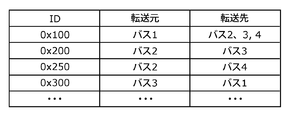
- FIG. 5 is a diagram showing an example of a forwarding rule according to the first embodiment.
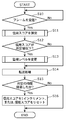
- FIG. 6 is a flowchart showing the processing of the gateway according to the first embodiment.
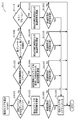
- FIG. 7 is a flowchart for calculating the credit score of the gateway according to the first embodiment.
- FIG. 1 is a diagram showing an overall configuration of an in-vehicle network system according to the first embodiment.
- FIG. 2 is a diagram showing the configuration of the ECU according to the first embodiment.
- FIG. 3 is a diagram showing a gateway configuration according to the
- FIG. 8 is a flowchart of changing the monitoring level of the gateway according to the first embodiment.
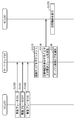
- FIG. 9 is a diagram showing an operation sequence of the gateway according to the first embodiment.
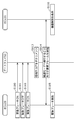
- FIG. 10 is a diagram showing an operation sequence of the gateway according to the first embodiment.
- FIG. 11A is a diagram showing an example of display contents to be notified to the driver in the first embodiment.
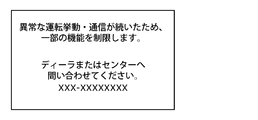
- FIG. 11B is a diagram showing another example of the display content to be notified to the driver in the first embodiment.
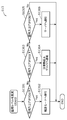
- FIG. 12 is a flowchart showing the processing of the gateway according to the second embodiment.
- FIG. 13 is a flowchart for calculating the suspicious score of the gateway according to the second embodiment.
- FIG. 14 is a flowchart of changing the monitoring level of the gateway according to the second embodiment.
- Patent Document 1 and Non-Patent Document 1 have room for improvement from the viewpoint of enhancing the safety of the in-vehicle network.
- the reverse engineering by the attacker can be hindered or the target vehicle can be monitored intensively as a sign of the occurrence of the attack. It can be linked to actions such as grasping the details of the attack.
- the inventors of the present application have diligently studied a vehicle monitoring device or the like capable of grasping the activity of an attacker at the investigation stage of the in-vehicle network, and devised a vehicle monitoring device or the like described below.
- the inventors of the present application monitor a frame in an in-vehicle network, capture an unusual vehicle behavior generated by an attacker's reverse engineer, and calculate the possibility that the vehicle is a reverse engineer. We found that it is possible to grasp the activities of attackers at the investigation stage of in-vehicle networks.
- the vehicle monitoring device is a vehicle monitoring device that monitors an in-vehicle network system including one or more electronic control units, and includes a frame receiving unit that receives a frame flowing through the in-vehicle network system and the frame. Detects and detects suspicious behavior different from normal driving behavior based on the frame received by the receiving unit and vehicle data including information about one or more frames received by the frame receiving unit before the reception of the frame.
- a credit score calculation unit for calculating a credit score indicating the possibility that reverse engineering has been performed on a vehicle equipped with the in-vehicle network system based on the result is provided.
- the vehicle monitoring device can grasp the attacker's activity in the investigation stage for the in-vehicle network before performing the illegal control of the vehicle based on the credit score, so that the safety of the in-vehicle network of the vehicle is further enhanced. be able to.
- the suspicious behavior is detected as a passive monitoring activity when any of the connection of the monitoring device, the error frame, the momentary interruption of the network, and the battery removal is detected, and the credit score calculation unit performs the passive monitoring activity.
- the credit score may be reduced.
- the vehicle monitoring device can grasp the passive monitoring activity based on the credit score, so that the safety of the vehicle-mounted network of the vehicle can be further enhanced.
- either the number of button operations in the vehicle or the number of detections of abnormal driving behavior within a predetermined first time is equal to or greater than a predetermined number, or the activation interval of the driving support function is a predetermined value. If it is less than, it is detected as an active monitoring activity, and the driving support function is any of automatic parking support, auto cruise control, emergency braking, and lane keep assist, and the abnormal driving behavior is the accelerator opening, The amount of change in the braking pressure and the steering angle within a predetermined time is equal to or greater than a predetermined value, and the credit score calculation unit may reduce the credit score when the active monitoring activity is detected.
- the suspicious behavior is detected as an injection activity when either the reception amount of the frame or the reception amount of the diagnostic command is equal to or more than a predetermined number within the predetermined first time, and the credit score calculation unit , The credit score may be reduced when the injection activity is detected.
- the suspicious behavior is detected as a refinement activity when either the reception amount of the update command or the reception amount of the frame of the same attribute is equal to or more than a predetermined number within the predetermined first time, and the same attribute is detected.
- the frame is a frame in which any one or a combination of two or more of the identifier, IP address, MAC address, and port number included in the frame is the same, and the credit score calculation unit is the refinement. The credit score may be reduced when ment activity is detected.
- the vehicle monitoring device further includes a monitoring level changing unit, and when the credit score becomes less than a predetermined value, the monitoring level changing unit of the vehicle is based on the value of the credit score.
- a monitoring level changing unit when the credit score becomes less than a predetermined value, the monitoring level changing unit of the vehicle is based on the value of the credit score.
- the suspicious behavior may have a plurality of types indicating each stage of the reverse engineering, and the credit score calculation unit may calculate a credit score for each of the plurality of types of the suspicious behavior.
- the vehicle monitoring device can grasp the stage (phase) of the attacker's activity in the investigation stage of the in-vehicle network before performing the fraud control of the vehicle based on a plurality of types of credit scores.
- the safety of the in-vehicle network can be further enhanced.
- the plurality of types of the suspicious behavior include at least two of a passive monitoring activity, an active monitoring activity, an injection activity, and a refinement activity
- the passive monitoring activity is an action for acquiring the vehicle data.
- the active monitoring activity is an operation for trying to acquire the vehicle data during a specific function operation or a specific situation of the vehicle
- the injection activity is for trying to inject a frame into the in-vehicle network system.
- the refinement activity may be an action for attempting injection of a frame for improving the accuracy of the frame injected into the in-vehicle network system.
- the vehicle monitoring device can acquire the stage of the reverse engineering activity currently being performed in more detail, so that the safety of the vehicle-mounted network of the vehicle can be further enhanced.
- the suspicious behavior is detected as the passive monitoring activity when any of the connection of the monitoring device, the error frame, the momentary interruption of the network, and the removal of the battery is detected, and the driving support within the predetermined first time.
- the number of times the function is activated the number of times the button is operated in the vehicle, and the number of times abnormal driving behavior is detected is equal to or greater than a predetermined number
- the active monitoring activity is detected, and the frame is detected within a predetermined first time.
- the number of receptions or the number of receptions of the diagnostic command is equal to or greater than the predetermined number, it is detected as the injection activity, and either the number of receptions of the update command or the number of receptions of frames of the same attribute within the predetermined first time. Is detected as the refinement when is equal to or greater than a predetermined number.
- the vehicle monitoring device further includes a monitoring level changing unit, and the monitoring level changing unit has a credit score corresponding to each of the plurality of types of the suspicious behavior and the plurality of types of the suspicious behavior. Based on the value, one or more of limiting some functions of the vehicle, alerting the driver of the vehicle, and notifying neighboring vehicles or servers of the credit score may be executed.
- the credit score calculation unit may increase the credit score when the predetermined second time elapses or when the predetermined first operation is executed on the vehicle. Further, the credit score calculation unit may reset the credit score when a predetermined third time elapses or a predetermined second operation is executed on the vehicle.
- the credit score can be automatically corrected when the driver of the vehicle (a normal driver who is not an attacker) drives a vehicle whose credit score is lowered. Therefore, the vehicle monitoring device can more reliably grasp the activity of the attacker at the investigation stage of the in-vehicle network.
- the vehicle monitoring method is a vehicle monitoring method for monitoring an in-vehicle network system including one or more electronic control units, which includes a reception step for receiving a frame flowing through the in-vehicle network system and the reception. Suspicious behavior different from normal driving behavior is detected based on the frame received in the step and vehicle data including information about one or more frames received before the reception of the frame, and the vehicle-mounted vehicle is based on the detection result. It includes a credit score calculation step of calculating a credit score indicating the possibility that reverse engineering has been performed on a vehicle equipped with a network system.
- the vehicle monitoring method it is possible to calculate the suspicion of reverse engineering an in-vehicle network system, and it is effective to grasp a more suspicious vehicle.
- each figure is a schematic view and is not necessarily exactly illustrated. Further, in each figure, substantially the same configuration may be designated by the same reference numerals, and duplicate description may be omitted or simplified.
- a vehicle monitoring device and a vehicle monitoring method in a vehicle equipped with an in-vehicle network in which a plurality of electronic control units (ECUs) communicate with each other will be described. More specifically, based on the frame flowing through the in-vehicle network system, a credit score indicating the degree of fraudulent vehicle behavior caused by the attacker performing reverse engineering is calculated, and the vehicle monitoring function is calculated according to the calculated credit score.
- in-vehicle network security technology that changes the above will be described.
- FIG. 1 is a diagram showing an overall configuration of an in-vehicle network system according to the present embodiment.
- the in-vehicle network system includes ECUs 10, 11, 20, 21, 30, 31, 40, 41, a diagnostic port 50, and a gateway 60.
- the ECU 10 and the ECU 11 are connected to the bus 1
- the ECU 20 and the ECU 21 are connected to the bus 2
- the ECU 30 and the ECU 31 are connected to the bus 3
- the ECU 40 and the ECU 41 are connected to the bus 4.
- the diagnostic port 50 is connected to the bus 5.
- the gateway 60 is connected to all buses.
- Each ECU is connected to each other by a controller Area Network (CAN) and communicates with a frame.
- Each bus may be domain-separated for each function of the vehicle 200, for example.
- a powertrain system ECU is arranged on the bus 1, and communication related to engine control and the like is performed.
- a chassis-type ECU is arranged on the bus 2, and communication for realizing steering control or brake control is performed.
- an information system ECU is arranged on the bus 3, and car navigation and infotainment system communication are performed.
- a body-based ECU is arranged on the bus 4, and communication is performed to control the air conditioner or the power window by pressing a button of the passenger.
- the gateway 60 receives information on all buses, and if necessary, transfers the received frames to another bus. For example, when a frame for diagnosis is flowing on the bus 5, a process of transferring the frame to the buses 1 to 4 is performed.
- the gateway 60 is an example of a vehicle monitoring device.
- the gateway 60 performs processing in an in-vehicle network system composed of one or more ECUs.
- each bus is realized by CAN, but the communication protocol is not limited to this.
- it may be CAN-FD (CAN with FlexRay Data Rate), FlexRay (registered trademark, the same applies hereinafter), Ethernet, or the communication protocol may be different for each bus.
- FIG. 2 is a diagram showing a configuration of the ECU 10 according to the present embodiment.
- the ECU 11, ECU 20, ECU 21, ECU 30, ECU 31, ECU 40, and ECU 41 have the same configuration as the ECU 10, but the sensors or actuators to which they are connected are different, so that the functions to be realized are different.
- the ECU 10 is realized by a computer including, for example, a processor, a memory, a communication interface, and the like. As shown in FIG. 2, the ECU 10 has a communication unit 100 and a host unit 101.
- the communication unit 100 connects to the bus 1 and transmits / receives frames flowing through the bus 1. It can be said that the communication unit 100 transmits and receives frames flowing through the in-vehicle network system.
- the communication unit 100 is realized by a communication controller, a transceiver, or the like.
- the host unit 101 is a part that performs the main processing of the ECU 10, and is realized by a CPU (Central Processing Unit) and a memory.
- the host unit 101 interprets the frame received from the communication unit 100 and executes processing according to the communication content (interpretation result).
- the ECU 10 is an ECU that controls an engine.
- the cruise control function receives a frame for requesting an increase in vehicle speed from another ECU
- the host unit 101 of the ECU 10 controls to increase the engine speed so that the desired vehicle speed is obtained.
- the host unit 101 of the ECU 10 performs a process such as transmitting a frame to notify another ECU.
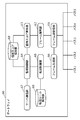
- FIG. 3 is a diagram showing a configuration of the gateway 60 in the present embodiment.
- the gateway 60 is realized by a computer including, for example, a processor, a memory, a communication interface, and the like.
- the gateway 60 includes a frame transmission / reception unit 61, a frame interpretation unit 62, a credit score calculation unit 63, a monitoring control unit 64, a transfer control unit 65, a frame generation unit 66, and server communication. It has a unit 67, a credit score holding unit 68, and a forwarding rule holding unit 69.
- the frame transmission / reception unit 61 is a communication interface connected to buses 1 to 5, and is realized by a communication controller, a transceiver, or the like.
- the frame transmission / reception unit 61 transfers the frame received by each bus to the frame interpretation unit 62. Further, the frame transmission / reception unit 61 transmits a frame in accordance with a transmission request from the frame generation unit 66.
- the frame transmission / reception unit 61 is an example of a frame reception unit.
- the frame interpretation unit 62 interprets the frame transferred from the frame transmission / reception unit 61, and performs processing according to the frame. Further, the frame transmission / reception unit 61 notifies the credit score calculation unit 63 of the received frame.
- the credit score calculation unit 63 calculates the credit score of the vehicle 200 based on the frame notified from the frame interpretation unit 62 and the vehicle information (vehicle data) held in the credit score holding unit 68, and calculates the credit score.
- the credit score and vehicle information of the vehicle 200 stored in the holding unit 68 are updated.
- the credit score calculation unit 63 calculates the degree to which the vehicle 200 is used differently than usual as a credit score.
- the credit score calculation unit 63 calculates the credit score in order to catch a sign that the attacker is working for the purpose of reverse engineering the vehicle 200 in particular.
- the credit score is, for example, an index indicating the possibility that reverse engineering is being performed (for example, the suspicion that an attacker is reverse engineering). Further, the credit score is, for example, an index capable of determining the possibility that reverse engineering is being performed. Further, the credit score can be said to be an index indicating, for example, that the vehicle 200 is used in a vehicle 200 that is not performed or is unlikely to be performed by a normal driver.
- the reverse engineering in the present specification is to analyze an in-vehicle network system. Therefore, it can be said that the credit score is, for example, an index indicating the possibility that the in-vehicle network system of the vehicle 200 is being analyzed or the degree of analysis.
- the credit score calculation unit 63 performs normal operation based on the frame received by the frame transmission / reception unit 61 and the vehicle data related to one or more frames received by the frame transmission / reception unit 61 before the reception of the frame.
- a suspicious behavior different from the behavior is detected, and a credit score indicating the possibility that reverse engineering is being performed on the vehicle 200 equipped with the in-vehicle network system is calculated based on the detection result of the suspicious behavior. It can be said that the credit score calculation unit 63 updates the credit score before receiving the frame based on the frame received by the frame transmission / reception unit 61 and the vehicle data.
- the credit score calculation unit 63 calculates the credit score based on the time series data of the frames including the frames received by the frame transmission / reception unit 61.
- the credit score calculation unit 63 calculates the current credit score based on, for example, the currently received frame and the frame received in the past (frame included in the vehicle data).
- the normal driving behavior is a driving behavior that is assumed to be possible when a driver who does not perform reverse engineering drives the vehicle 200.
- the driving behavior here includes the behavior of the driving state when the vehicle 200 is running (for example, the emergency brake activation interval shown in FIG. 4B described later) and the behavior in the internal processing of the vehicle 200 (for example, described later). Both of the error frame occurrence intervals shown in FIG. 4B, etc.) are included.
- the following exemplifies what kind of suspicious behavior the credit score is reduced, but the suspicious behavior is not limited to the following.
- the high ratio of the stopped time to the ignition time may be a sign that some kind of investigation is being conducted on the stopped vehicle 200. Therefore, the credit score calculation unit 63 reduces the credit score.
- the driving support function of the vehicle 200 for example, one or more of emergency braking, cruise control, automatic parking support, etc.
- the attacker may be illegal. Since there is a possibility that the log acquisition of the vehicle-mounted network is performed in order to analyze the frame that causes the control, the credit score calculation unit 63 reduces the credit score.
- the driving support function may include a lane keep assist function (lane departure prevention support function).
- the credit score calculation unit 63 reduces the credit score because there is a possibility that the attacker has acquired the log for the in-vehicle network analysis even when the button is repeatedly pressed.
- the credit score calculation unit 63 reduces the credit score. ..
- the credit score calculation unit 63 reduces the credit score.
- the attacker when the amount of diagnostic commands flowing through the in-vehicle network exceeds a predetermined amount, the attacker repeatedly investigates the effect on the vehicle 200 when the diagnostic command is injected, or erases the failure code caused by the effect of the attack trial.
- the credit score calculation unit 63 reduces the credit score because it may have been damaged.
- the credit score calculation unit 63 credits the credit score calculation unit 63 according to the number of frames for updating, the frequency of battery voltage drop or battery removal, the number of packets including IP addresses or port numbers that are not normally observed, and the like. The score can be reduced.
- the credit score calculation unit 63 holds the calculated credit score in the non-volatile memory, and when a predetermined time (an example of a predetermined second time) elapses (for example, every other day), the credit score is set to a predetermined value (for example, every other day). For example, it may be increased by 1).
- the credit score calculation unit 63 may also perform a process of recovering the credit score so as to appropriately detect the vehicle 200 in which the activity of reducing the credit score is repeatedly observed.
- the credit score calculation unit 63 may increase the credit score by a predetermined value when a predetermined operation (an example of a predetermined first operation) is executed on the vehicle 200.
- the predetermined first operation may be, for example, an operation of turning on the ignition, or another operation.
- the credit score calculation unit 63 notifies the monitoring control unit 64 of the received frame.
- the monitoring control unit 64 determines the processing for the notified frame based on the credit score held in the credit score holding unit 68.
- the monitoring control unit 64 changes, for example, the monitoring level indicating the level of monitoring for reverse engineering based on the credit score.
- the monitoring control unit 64 is an example of a monitoring level changing unit.
- the monitoring control unit 64 discards the notified frame or notifies the transfer control unit 65 of the degenerate mode notification frame in order to enter the degenerate mode.
- the degenerate mode notification frame is a notification indicating that a frame for giving a notification indicating that the degenerate mode is entered is transmitted to another ECU. Further, in order to notify that the credit score has decreased, the monitoring and control unit 64 notifies the server communication unit 67 of the vehicle log (vehicle data) and the credit score.
- the vehicle log may include information on frames observed in the in-vehicle network.
- the transfer control unit 65 notifies the frame generation unit 66 to transfer the notified frame based on the transfer rule held in the transfer rule holding unit 69.
- the frame generation unit 66 makes a transmission request for the frame notified from the transfer control unit 65 to the frame transmission / reception unit 61.
- the server communication unit 67 notifies the server of the content notified from the monitoring / control unit 64, receives the notification from the server, and notifies the monitoring / control unit 64 of the content.
- the credit score holding unit 68 stores the credit score of the vehicle 200 and the data for calculating the credit score. Details of the information stored in the credit score holding unit 68 will be described later with reference to FIGS. 4A and 4B.
- the transfer rule holding unit 69 stores the rules used for frame transfer. The details of the transfer rule will be described later with reference to FIG.
- the components of the gateway 60 may be possessed by an external device (for example, a server device) of the vehicle 200.
- the vehicle 200 transmits the received frame and vehicle data to an external device.
- the external device calculates the credit score based on the frame from the vehicle 200 and the vehicle data and transmits it to the vehicle 200.
- FIG. 4A is a diagram showing an example of a credit score according to the present embodiment.
- FIG. 4B is a diagram showing an example of vehicle data in the present embodiment.
- the credit score and vehicle data are stored in the credit score holding unit 68.
- the vehicle data may also be used to calculate the credit score.
- the items shown in FIG. 4B are items that can be determined to be suspicious behavior.
- FIG. 4A shows that the credit score is 80.
- the credit score takes a value of 0 to 100, and the initial value is 100. That is, FIG. 4A shows an example in which the credit score having an initial value of 100 is reduced to 80 due to the detection of suspicious behavior. Note that 80 shown in FIG. 4A indicates, for example, the current credit score.
- the current value and the previous value are stored as the data after the ignition is turned on.
- the previous value stores data for the period from when the ignition was turned on last time to when it was turned off.
- the stop time ratio indicating the ratio at which the speed of the vehicle 200 is 0 km / h
- the emergency brake activation interval indicating the interval at which the emergency brake is turned on after the emergency brake is turned on
- the cruise control activation interval indicating the interval at which the emergency brake is turned on next.
- Automatic parking support activation interval Sudden accelerator detection interval indicating the interval at which the frame indicating the accelerator opening of 100% is received, Sudden braking detection interval, Sudden handle detection interval, Error frame occurrence interval indicating the interval at which the error frame is received, Buttons that control message momentary interruption time, battery voltage drop or battery removal, diagnostic command reception count, update command reception count, air conditioner or light in the vehicle, etc. are pressed within a unit time (for example, 1 minute). Information on the number of times the button has been pressed continuously and whether or not a third-party device is connected is stored.
- the activation interval means the activation time interval
- the detection interval means the detection time interval.
- the third party device is an example of a monitoring device.
- the number of times of reception is an example of the amount of reception
- the number of times of continuous button pressing is an example of the number of operations.
- the amount of reception is not limited to the number of receptions, and may be the amount of data.
- FIG. 4B may be the amount of data of the diagnostic command (total amount of data in the predetermined first time) instead of the number of times the diagnostic command is received.
- FIG. 4B shows that the stopped time ratio was 70% this time and 50% last time as the stored vehicle data.
- the emergency brake activation interval is 60 seconds this time, whereas it is "-" last time, indicating that the emergency brake has not been activated more than once this time.
- the activation interval of cruise control is "-" this time, which indicates that it has not been activated more than once this time, whereas the previous time it has been activated at 1000 second intervals.
- the automatic parking support activation interval is "-" last time, while the automatic parking support activation interval is activated at 30-second intervals this time, indicating that the automatic parking assistance has not been activated twice or more.
- the sudden accelerator detection interval is "-" both this time and the previous time, indicating that two or more sudden accelerators have not been detected.
- the sudden brake detection interval and the sudden steering wheel detection interval are both "-" both last time and this time, indicating that the corresponding frame has not been received more than once. Sudden accelerator, sudden braking, and sudden steering are examples of abnormal driving behavior.
- the error frame occurrence interval is 1 second interval this time, and "-" last time. This time, the corresponding frame is received at 1-second intervals, whereas the previous time, it indicates that the corresponding frame was not received more than once. Further, the message interruption time is 3 seconds this time, and 0 seconds (that is, less than 1 second) last time.
- this time it indicates that the battery voltage drop was detected, and the previous time it indicates that the battery voltage drop was not detected. It shows that the number of times the diagnostic command is received and the number of times the update command is received are 0 both last time and this time.
- the item related to the time interval shown in FIG. 4B may be the number of activations or the number of detections within a predetermined first time.
- the items related to the number of times shown in FIG. 4B are the previous reception time or the time of pressing, and the time interval based on the current reception time or the pressing time. There may be.
- the credit score calculation unit 63 may calculate the credit score using either the time interval or the number of times in the item shown in FIG. 4B.
- the vehicle data includes, for example, frame information for each item observed in the vehicle-mounted network.
- the vehicle data includes, for example, time information indicating a frame reception time or information indicating a frame reception amount. It can be said that the vehicle data includes, for example, information about one or more frames received by the frame transmission / reception unit 61 before (in the past) before the present.
- the vehicle data shown in FIG. 4B is an example of log information. In addition, vehicle data is also described as vehicle log or vehicle information.
- the credit score and the vehicle data are held in plain text, but may be encrypted and held.
- FIG. 5 is an example of a transfer rule in the present embodiment.
- the forwarding rule holding unit 69 stores a table (forwarding rule) in which the forwarding source and the forwarding destination are stored for each frame ID.
- FIG. 5 shows that the transfer source of the frame having the ID of 0x100 is bus 1, and the frame is transferred to buses 2, 3, and 4.
- the transfer source of the frame having the ID of 0x200 is the bus 2, which indicates that the frame is transferred to the bus 3
- the transfer source of the frame having the ID of 0x250 is the bus 2, which is transferred to the bus 4. It is shown that the transfer source of the frame having the ID of 0x300 is the bus 3, and the frame is transferred to the bus 1.
- FIG. 6 is a flowchart showing the processing of the gateway 60 in the present embodiment.
- the gateway 60 determines whether or not a frame is being received (S10).
- the gateway 60 calculates the credit score (S11). If the frame has not been received (No in S10), the gateway 60 waits until the frame is received.
- the gateway 60 After calculating the credit score, the gateway 60 confirms whether or not the calculated credit score is equal to or less than a predetermined value (S12).
- the monitoring control unit 64 determines whether or not the credit score calculated by the credit score calculation unit 63 is equal to or less than a predetermined value.
- the gateway 60 changes the monitoring level (S13) and executes the transfer process (S14).
- the gateway 60 executes the transfer process without changing the monitoring level (S14).
- the credit score calculation unit 63 of the gateway 60 determines whether or not a predetermined time has elapsed (S15).
- the predetermined time is, for example, the elapsed time since the determination of Yes in the previous step S15, but is not limited to this, and may be the elapsed time since the credit score was reset, or the credit score is It may be the operation time after being reset.
- the credit score calculation unit 63 increments the credit score by 1 or resets the credit score (S16), and ends the process.
- the credit score is incremented by 1
- the credit score calculation unit 63 stores the credit score incremented by 1 in the current credit score in the credit score holding unit 68. Further, when resetting the credit score, the credit score calculation unit 63 stores the initial value (for example, 100) of the credit score in the credit score holding unit 68 regardless of the current credit score.
- the credit score calculation unit 63 ends the process without changing the credit score.
- the determination in step S15 is not limited to the determination based on a predetermined time, and may be performed by executing a predetermined operation on the vehicle 200.
- the predetermined operation may be, for example, an operation indicating that the process of step S16 is executed (for example, an operation for a button), or an operation for turning on or off the ignition.
- the operation for incrementing the credit score is an example of a predetermined first operation
- the operation for resetting the credit score is an example of a predetermined second operation.
- the credit score may be reset after being incremented multiple times. That is, the time when the credit score is reset (an example of a predetermined third time) may be longer than the time when the credit score is incremented (an example of a predetermined second time).
- FIG. 7 is a flowchart for calculating the credit score of the gateway 60 according to the present embodiment. Specifically, FIG. 7 is a flowchart showing details of the process of calculating the credit score in step S11 of FIG.
- the items determined as suspicious behavior are the number of times a diagnostic command or update command is received, the reception interval of a command for turning on the driving support function (for example, the activation interval of the emergency brake), and sudden braking and sudden braking.
- the detection interval of the steering wheel and the sudden accelerator will be described.
- the gateway 60 confirms whether or not the received frame is a diagnostic command or an update command (S1101).
- the credit score calculation unit 63 determines whether or not the received frame is a diagnostic command or an update command.
- the credit score calculation unit 63 updates the number of times the corresponding command is received (S1102).
- the credit score calculation unit 63 increments, for example, the number of times the corresponding command received in the credit score holding unit 68 is received by 1.
- the gateway 60 determines whether or not the number of times the corresponding command is received is a predetermined value or more (for example, 100 times or more) (S1103).
- the credit score calculation unit 63 determines, for example, whether or not the number of times the updated command is received is equal to or greater than a predetermined value.
- the predetermined value used in the determination in step S1103 is stored in advance in the credit score holding unit 68.
- the gateway 60 decrements the credit score by 1 (S1104) and ends the process. If the number of times the corresponding command is received within the predetermined first time is smaller than the predetermined value (No in S1103), the gateway 60 ends the process. That is, the credit score calculation unit 63 updates the credit score when the number of times the corresponding command is received is equal to or greater than the predetermined value, and does not update the credit score when the number of times the corresponding command is received is smaller than the predetermined value.
- the predetermined first time may be, for example, the time used for the determination in step S15, or the dedicated time used for the determination process shown in FIG. 7.
- the predetermined first time is stored in advance in, for example, the credit score holding unit 68. The same applies to the other predetermined first time used in the description of FIG. 7.
- the credit score calculation unit 63 reduces the credit score when the suspicious behavior is greater than or equal to the predetermined number of times the diagnosis command or the update command is received within the predetermined first time.
- the credit score calculation unit 63 detects the suspicious behavior as an injection activity when the number of times of receiving the diagnostic command is equal to or more than the predetermined number within the predetermined first time, and when the injection activity is detected, the credit score calculation unit 63 detects the suspicious behavior. It can also be said to reduce the credit score.
- the suspicious behavior detected as the injection activity is not limited to the number of times the diagnostic command is received, and may be, for example, the number of times a frame is received within a predetermined first time.
- the credit score calculation unit 63 detects the suspicious behavior as a refinement activity when the number of times the update command is received is equal to or more than the predetermined number within the predetermined first time, and when the refinement activity is detected. In addition, the credit score may be reduced.
- the suspicious behavior detected as a refinement activity is not limited to the number of times the update command is received is not limited to the predetermined number of times or more. For example, the number of times the frame of the same attribute is received within the predetermined first time is the predetermined number of times or more. It may be that.
- a frame with the same attribute is a frame in which any one of the identifier, IP address, MAC address, and port number included in the frame, or a combination of two or more of them is the same.
- the attribute is information for specifying the frame, and is an identifier, an IP address, a MAC address, a port number, etc. included in the frame.
- step S1101 when the received frame is not a diagnostic command or an update command (No in S1101), the gateway 60 confirms whether or not the received frame is a command for turning on the driving support function (S1105). It can be said that the credit score calculation unit 63 proceeds to step S1105 when the suspicious behavior is not detected as an injection activity or a refinement activity.
- the gateway 60 starts from the time when the function was turned ON last time (for example, the time when the ON command was received).
- the elapsed time of is updated (S1106).
- the credit score calculation unit 63 acquires the time when the frame of the driving support function ON command was last received from the credit score holding unit 68, and elapses based on the acquired time and the time when the frame determined to be Yes in step S1105 is received. Update the time.
- the credit score calculation unit 63 sets, for example, the elapsed time as the time difference between the two times.
- the gateway 60 confirms whether or not the updated elapsed time is less than a predetermined value (for example, less than 5 minutes) (S1107).
- the credit score calculation unit 63 determines whether or not the updated elapsed time is less than a predetermined value.
- the predetermined value used in the determination in step S1107 is stored in advance in the credit score holding unit 68.
- the gateway 60 decrements the credit score by 1 (S1104) and ends.
- the gateway 60 ends the process without doing anything in particular. That is, the credit score calculation unit 63 updates the credit score when the elapsed time is less than the predetermined value, and does not update the credit score when the elapsed time is equal to or more than the predetermined value.
- the credit score calculation unit 63 reduces the credit score when the suspicious behavior is less than the predetermined value at the activation interval of the driving support function within the predetermined first time.
- the credit score calculation unit 63 may determine Yes in step S1107 when the number of times the driving support function is activated is equal to or greater than the predetermined number within the predetermined first time.
- the number of times the driving support function is activated may be the number of times the driving support function is activated or the number of times the driving support function ON command is received.
- the credit score calculation unit 63 determines that the elapsed time within the predetermined first hour is less than the predetermined value, or the number of times the driving support function is activated within the predetermined first hour is equal to or greater than the predetermined number.
- the suspicious behavior may be detected as an active monitoring activity, and the credit score may be reduced when the active monitoring activity is detected.
- the suspicious behavior detected as an active monitoring activity is not limited to that related to the driving support function, and for example, the number of button operations in the vehicle (for example, the number of continuous button presses shown in FIG. 4B) within a predetermined first time is predetermined. It may be more than the number of times.
- step S1105 if the received frame is not a driving support function ON command (No in S1105), the gateway 60 confirms whether or not any of sudden braking, sudden steering, and sudden accelerator is detected from the received frame. (S1108).
- the credit score calculation unit 63 determines whether or not the received frame is a sudden brake, a sudden steering wheel, or a sudden accelerator.
- the gateway 60 updates the elapsed time from the previous detection time (S1109).
- the credit score calculation unit 63 acquires the time of the previous reception of any of the frames of sudden braking, sudden steering, and sudden accelerator from the credit score holding unit 68, and receives the acquired time and the frame determined to be Yes in step S1108. Update the elapsed time based on the time.
- the credit score calculation unit 63 sets, for example, the elapsed time as the time difference between the two times.
- the elapsed time is an example of the detection interval.
- the gateway 60 confirms whether the elapsed time is less than a predetermined value (for example, less than 5 minutes) (S1110).
- the credit score calculation unit 63 determines whether or not the updated elapsed time is less than a predetermined value.
- the predetermined value used in the determination in step S1110 is stored in advance in the credit score holding unit 68.
- the gateway 60 decrements the credit score by 1 (S1104) and ends.
- the gateway 60 ends without doing anything in particular. That is, the credit score calculation unit 63 updates the credit score when the elapsed time is less than the predetermined value, and does not update the credit score when the elapsed time is equal to or more than the predetermined value.
- the elapsed time of any one of sudden braking, sudden steering, and sudden acceleration (an example of abnormal driving behavior) within the predetermined first time is less than the predetermined value. In some cases, it can be said to reduce the credit score.
- the credit score calculation unit 63 detects the suspicious behavior as an active monitoring activity when the elapsed time of any of the brake, the sudden steering wheel, and the sudden accelerator is less than the predetermined value within the predetermined first time. It can also be said that the credit score is reduced when active monitoring activity is detected.
- the suspicious behavior may be that the number of detections of abnormal driving behavior within a predetermined first time is equal to or greater than a predetermined value.
- the abnormal driving behavior may be that the accelerator opening, the brake pressure, and the amount of change in the steering angle within a predetermined time are equal to or more than a predetermined value.
- step S1108 when the received frame does not detect any of sudden braking, sudden steering, and sudden accelerator (No in S1108), the gateway 60 confirms whether or not the received frame is an error frame (S1111).
- the credit score calculation unit 63 determines whether or not the received frame is an error frame.
- the gateway 60 ends the process without doing anything.
- the gateway 60 updates the elapsed time from the previous detection time (S1112).
- the credit score calculation unit 63 acquires the time when the error frame was last received from the credit score holding unit 68, and updates the elapsed time based on the acquired time and the time when the frame determined to be Yes in step S1111 is received.
- the credit score calculation unit 63 sets, for example, the elapsed time as the time difference between the two times.
- the elapsed time is an example of the occurrence interval.
- the gateway 60 confirms whether the elapsed time is less than a predetermined value (for example, less than 5 minutes) (S1113).
- the credit score calculation unit 63 determines whether or not the updated elapsed time is less than a predetermined value.
- the predetermined value used in the determination in step S1113 is stored in advance in the credit score holding unit 68.
- the gateway 60 decrements the credit score by 1 (S1104) and ends.
- the gateway 60 ends without doing anything. That is, the credit score calculation unit 63 updates the credit score when the elapsed time is less than the predetermined value, and does not update the credit score when the elapsed time is equal to or more than the predetermined value.
- the credit score calculation unit 63 reduces the credit score when the suspicious behavior is less than the elapsed time of the error frame within the predetermined first time.
- the credit score calculation unit 63 detects the suspicious behavior as a passive monitoring activity when the elapsed time of the error frame is equal to or longer than the predetermined value within the predetermined first time, and when the passive monitoring activity is detected. In addition, it can be said that the credit score is reduced.
- the suspicious behavior detected as a passive monitoring activity may be that an error frame is detected.
- Suspicious behavior detected as a passive monitoring activity can be either a connection to a third-party device (an example of a monitoring device), a network interruption (eg, a message interruption), a low battery voltage, or a battery removal. It may have been detected, or the elapsed time of any of the above may be less than a predetermined value.
- the suspicious behavior detected as the passive monitoring activity may be that the stop time ratio (for example, the ratio of the stopped time to the predetermined first time) is equal to or more than the predetermined ratio.
- the credit score calculation unit 63 may make at least one determination in steps S1101, S1105, S1108 and S1111 shown in FIG. 7.
- the credit score calculation unit 63 may be able to detect at least one of passive monitoring activity, active monitoring activity, injection activity, and refinement activity as suspicious behavior, for example.
- FIG. 8 is a flowchart of changing the monitoring level of the gateway 60 in the present embodiment. Specifically, FIG. 8 is a flowchart showing details of the process of changing the monitoring level in step S13 of FIG. The operation shown in FIG. 8 is executed by, for example, the monitoring control unit 64.
- step S12 when the credit score is equal to or less than a predetermined value (Yes in S12), the gateway 60 determines whether or not the credit score is 30 or less (S1301).
- the monitoring control unit 64 determines, for example, whether or not the credit score calculated in step S11 is equal to or less than a predetermined value.
- the predetermined value used in the determination in step S1301 is stored in advance in the credit score holding unit 68.
- the credit score 30 is an example of the first threshold value.
- the gateway 60 shifts to the degenerate mode (S1302).
- the degenerate mode is a mode in which some or all of the driving support functions are disabled.
- the gateway 60 notifies other ECUs, displays a notification (warning) to the driver that the function has been invalidated, or the gateway 60 displays. Stops the transfer of some frames. After that, the gateway 60 ends the process.
- the transition to the degenerate mode is an example of limiting the functions of the vehicle 200.
- the gateway 60 may also notify neighboring vehicles or servers of the current credit score.
- shifting to the degenerate mode may be to enable the intrusion detection system.
- Enabling an intrusion detection system is an example of enhancing monitoring of an in-vehicle network.
- the gateway 60 limits the function of the vehicle 200, alerts the driver of the vehicle 200, notifies the neighboring vehicle or the server of the credit score, and strengthens the monitoring of the in-vehicle network. All you have to do is execute the above.
- the gateway 60 determines whether or not the credit score is 50 or less (S1303). It can be said that the monitoring control unit 64 determines in step S1303 whether or not the credit score is greater than 30 and less than or equal to 50.
- the credit score of 50 is an example of a second threshold.
- the gateway 60 sends a frame for alerting the driver to an ECU that controls a display such as an instrument cluster, thereby transmitting the driver.
- the credit score or the vehicle log is notified to the server (S1304), and the process is terminated.
- step S1304 either the driver's attention or the server may be notified. Further, the gateway 60 may notify the neighboring vehicle of the credit score in step S1304.
- the gateway 60 confirms whether the credit score is 80 or less (S1305). It can be said that the monitoring control unit 64 determines in step S1305 whether or not the credit score is greater than 50 and equal to or less than 80.
- the credit score 80 is an example of a third threshold value.
- the gateway 60 When the credit score is 80 or less (Yes in S1305), the gateway 60 notifies the server of the credit score (S1306).
- the gateway 60 ends the process without doing anything. Even if No in step S1305, the server may be notified.
- the monitoring control unit 64 limits the functions of the vehicle 200, alerts the driver of the vehicle 200, and neighbors vehicles based on the value of the credit score. Alternatively, notify the server of the credit score or strengthen the monitoring of the in-vehicle network at least one of them.
- the monitoring control unit 64 executes any one or more of the above so as to increase the monitoring level when the credit score becomes low, for example.
- the monitoring control unit 64 executes an operation corresponding to the first monitoring level, and the second threshold value is larger than the first threshold value and larger than the first threshold value.
- the operation corresponding to the second monitoring level lower than the first monitoring level is executed, and the credit score is larger than the second threshold value and larger than the second threshold value. If it is below the threshold value, the operation corresponding to the third monitoring level, which is lower than the second monitoring level, is executed.
- the first threshold is, for example, a value larger than the minimum value of the credit score (for example, 0)
- the third threshold is, for example, a value lower than the initial value of the credit score (for example, 100).
- the operations corresponding to the first threshold value to the third threshold value and the first monitoring level to the third monitoring level are stored in advance in the credit score holding unit 68.
- FIG. 9 is a diagram showing an operation sequence of the gateway 60 according to the present embodiment. Specifically, FIG. 9 is a diagram showing an operation sequence when the credit score at the gateway 60 is 51 and the credit score is 50 or less due to suspicious driving behavior. It is assumed that the ECU 20 is an ECU that transmits a frame instructing an emergency brake, and the ECU 30 is an ECU that controls a display.
- the ECU 20 transmits a frame requesting the emergency brake ON (S100), and the gateway 60 receives the transmitted frame requesting the emergency brake ON.
- the ECU that controls the brake also receives the transmitted frame requesting the emergency brake to be turned on and activates the emergency brake, but the illustration is omitted.
- the ECU 20 transmits a frame requesting the emergency brake OFF (S101) after the transmission of the emergency brake ON frame is completed, and the gateway 60 receives the transmitted frame requesting the emergency brake OFF.
- the ECU 20 again transmits a frame requesting the emergency brake ON (S102), and the gateway 60 receives the transmitted frame requesting the emergency brake ON.
- step S103 Decrease the credit score by 1 (S103).
- the process of step S103 corresponds to the process of step S1104 executed after the determination of Yes in step S1107 shown in FIG. 7.
- step S104 corresponds to the process of step S1304 shown in FIG.
- the ECU 30 receives a frame for displaying a warning to the driver and displays the warning on the display (S105).
- the content displayed on the display is, for example, the display shown in FIG. 11A.
- FIG. 11A is a diagram showing an example of display contents to be notified to the driver in the present embodiment.
- step S105 information indicating that an abnormal behavior has been detected and a response method (for example, notifying the center) are displayed.
- the gateway 60 notifies the server of the vehicle log including the credit score (S106).
- FIG. 10 is a diagram showing an operation sequence of the gateway 60 according to the present embodiment. Specifically, FIG. 10 is an operation sequence when the credit score at the gateway 60 is 31, and the credit score is 30 or less due to suspicious driving behavior. It is assumed that the ECU 20 and the ECU 30 have the same roles as those described in FIG.
- the ECU 20 transmits a frame requesting the emergency brake ON (S110), and the gateway 60 receives the transmitted frame requesting the emergency brake ON.
- the ECU 20 transmits a frame requesting the emergency brake OFF (S111) after the transmission of the frame for requesting the emergency brake OFF is completed, and the gateway 60 receives the transmitted frame requesting the emergency brake OFF.
- the ECU 20 again transmits a frame requesting the emergency brake ON (S112), and the gateway 60 receives the transmitted frame requesting the emergency brake ON.
- step S113 When the time (an example of the detection interval) from the reception of the frame requesting the emergency brake ON in step S110 to the reception of the frame requesting the emergency brake ON in step S112 is shorter than the predetermined value (for example, 5 minutes) of the gateway 60. , Decrease the credit score by 1 (S113).
- the process of step S113 corresponds to the process of step S1104 executed after the determination of Yes in step S1107 shown in FIG. 7.
- step S144 corresponds to the process of step S1302 shown in FIG.
- the ECU 20 receives the transmitted degenerate mode request frame, and invalidates the transmission of the frame requesting the subsequent emergency brake ON (S115).
- the ECU 30 receives the transmitted degenerate mode request frame and displays the display to notify that the function is restricted (S116).
- the display content of the display is, for example, a display as shown in FIG. 11B.
- FIG. 11B is a diagram showing another example of the display content to be notified to the driver in the present embodiment. As shown in FIG. 11B, in step S116, information indicating that the abnormal behavior has continued, information indicating that some functions have been restricted, and contact information are displayed.
- a credit score is calculated for an activity in which an attacker suspects a reverse engineering activity of an in-vehicle network system.
- the gateway 60 further determines the response based on the credit score.
- the gateway 60 can grasp a suspicious vehicle on the server side and identify the vehicle as a priority monitoring target.
- the gateway 60 can interfere with reverse engineering activities by partially restricting the functions of the vehicle for a more suspicious vehicle. As a result, the gateway 60 can enhance the safety of the in-vehicle network system.
- the initial value of the credit score is, for example, 0.
- the credit score whose score increases when suspicious behavior is detected will be described as suspicious score in distinction from the first embodiment.
- FIG. 12 is a flowchart showing the processing of the gateway 60 in the present embodiment. Note that each of steps S20, 24, 25 and 26 shown in FIG. 12 corresponds to each of steps S10, 14, 15 and 16 shown in FIG. 6, and the description thereof will be omitted or simplified below.
- the gateway 60 determines whether or not a frame is being received (S20).
- the gateway 60 calculates various suspicious scores (S21). If the frame has not been received (No in S20), the gateway 60 waits until the frame is received.
- the gateway 60 determines whether or not any of the calculated suspicious scores is equal to or higher than a predetermined value (S22).
- the gateway 60 changes the monitoring level (S23).
- the gateway 60 performs the transfer process (S24) and proceeds to step S25.
- FIG. 13 is a flowchart for calculating the suspicious score of the gateway 60 according to the present embodiment. Specifically, FIG. 13 is a flowchart showing details of the suspicious score calculation process in step S21 of FIG.
- the gateway 60 when receiving a frame, the gateway 60 detects a connection of a third-party device (an example of a monitoring device) to the diagnostic port 50, detects an error frame, detects a network interruption, and a battery. It is determined whether or not any of the removal detections has occurred (S2101). Further, the gateway 60 may determine in step S2101 whether or not the stop time ratio is equal to or greater than a predetermined ratio.
- a third-party device an example of a monitoring device
- the gateway 60 detects the suspicious behavior as a passing monitoring activity, increases the passive monitoring score by 1 (S2102), and ends the process.
- the passing monitoring activity is, for example, an action for acquiring vehicle data in an in-vehicle network system.
- the passive monitoring score indicates a suspicious score for passive monitoring activities among reverse engineering activities for in-vehicle network systems. That is, the passive monitoring score indicates that the passive monitoring activity is likely to be performed, and a high passive monitoring score indicates that the passive monitoring activity is likely to be performed on the vehicle 200. .. It can be said that the credit score calculation unit 63 updates the passive monitoring score before receiving the frame in step S2102 based on the frame received by the frame transmission / reception unit 61 and the vehicle data.
- the gateway 60 further determines whether or not the driving support function such as emergency braking is ON or abnormal operation such as sudden braking is repeatedly detected (No). S2103). For example, in step S2103, the gateway 60 determines whether or not the number of times the driving support function is activated or the number of times the abnormal driving behavior is detected within a predetermined first time is equal to or greater than a predetermined number. Further, the gateway 60 may determine whether or not any of the number of times the driving support function is activated, the number of times the buttons in the vehicle are operated, or the number of times the abnormal driving behavior is detected is a predetermined number or more.
- the gateway 60 detects the suspicious behavior as an active monitoring activity, increases the active monitoring score by 1 (S2104), and ends the process.
- the active monitoring activity is, for example, an operation for acquiring vehicle data of an in-vehicle network during a specific function operation or a specific situation of the vehicle 200.
- the active monitoring score indicates a suspicious score for active monitoring activities among reverse engineering activities for in-vehicle network systems. That is, the active monitoring score indicates that the active monitoring activity is likely to be performed, and a high active monitoring score indicates that the active monitoring activity is likely to be performed on the vehicle 200. .. It can be said that the credit score calculation unit 63 updates the active monitoring score before receiving the frame based on the frame received by the frame transmission / reception unit 61 and the vehicle data in step S2104.
- the gateway 60 further determines whether the number of received frames or the number of received diagnostic commands is greater than a predetermined threshold value (S2105).
- the number of receptions is an example of the amount of reception.
- the gateway 60 detects the suspicious behavior as an injection activity, increases the injection score by 1 (S2106), and ends the process.
- the injection activity is, for example, an action for attempting to inject a frame into an in-vehicle network system. In other words, the injection activity indicates that the attacker is attempting to inject an illegal frame.
- the injection score indicates the suspicious score for the injection activity among the reverse engineering activities for the in-vehicle network system. That is, the injection score indicates the possibility that the injection activity is being performed, and a high injection score indicates that the vehicle 200 is likely to be the injection activity. It can be said that the credit score calculation unit 63 updates the injection score before receiving the frame based on the frame received by the frame transmission / reception unit 61 and the vehicle data in step S2106.
- the gateway 60 When both reception times are equal to or less than the threshold value in step S2105 (No in S2105), the gateway 60 further determines whether or not the number of receptions of the update command or the same ID frame exceeds a predetermined threshold value (S2107).
- the same ID frame is an example of being a frame having the same attribute.
- the determination may be made based on the number of receptions of frames having the same attribute.
- the number of receptions is an example of the amount of reception.
- the gateway 60 detects the suspicious behavior as a refinement activity and increases the refinement score by 1 (S2108). , End the process.
- the refinement activity is, for example, an action for trying to inject a frame to improve the accuracy of the frame to be injected into the in-vehicle network system. In other words, the refinement activity shows that the attack content of the attacker is more sophisticated than the injection activity.
- the refinement score indicates the suspicious score for the refinement activity among the reverse engineering activities for the in-vehicle network system. That is, the refinement score indicates that the refinement activity is being carried out, and a high refinement score indicates that the refinement activity is likely to be carried out for the vehicle 200. .. It can be said that the credit score calculation unit 63 updates the refinement score before receiving the frame in step S2108 based on the frame received by the frame transmission / reception unit 61 and the vehicle data.
- step S2107 If the update command or the number of receptions of the same ID frame is equal to or less than a predetermined threshold value in step S2107 (No in S2107), the credit score calculation unit 63 ends without doing anything.
- connection detection of the third-party device can be detected from the fact that a specific diagnostic command flows from the diagnostic port 50.
- the detection of the error frame can be detected by the error counter of the gateway 60 or the error interrupt processing.
- the network momentary interruption detection can be detected when the frame reception time is always held and the difference between the time when the previous frame was received and the current time exceeds a predetermined threshold value at the time of frame reception.
- the detection of battery removal can be detected by detecting that the power supply to the gateway 60 was cut off and the power supply was cut off last time when the power was supplied again.
- the gateway 60 (specifically, the credit score calculation unit 63) is a passive monitoring activity, an active monitoring activity, an injection activity, and a refinement activity indicating each stage of reverse engineering.
- the suspicious score is calculated.
- Passive monitoring activities, active monitoring activities, injection activities and refinement activities are examples of multiple types that indicate each stage of reverse engineering. That is, the suspicious behavior has a plurality of types.
- the credit score calculation unit 63 calculates the suspicious score for each of the plurality of types of suspicious behavior.
- the plurality of types may include two or more types.
- the plurality of types of suspicious behavior may include, for example, at least two of passive monitoring activity, active monitoring activity, injection activity and refinement activity.
- the credit score calculation unit 63 may make at least two determinations in steps S2101, S2103, S2105 and S2107 shown in FIG.
- the credit score calculation unit 63 may detect, for example, at least two of passive monitoring activity, active monitoring activity, injection activity, and refinement activity as suspicious behavior.
- reverse engineering activity is progressing in the order of refinement activity, injection activity, active monitoring activity and passive monitoring activity, that is, the analysis of the in-vehicle network is progressing in this order.
- FIG. 14 is a flowchart of changing the monitoring level of the gateway 60 in the present embodiment. Specifically, FIG. 14 is a flowchart showing details of the monitoring level change process in step S23 of FIG. The operation shown in FIG. 14 is executed by, for example, the monitoring control unit 64.
- the gateway 60 determines whether or not the refinement score is greater than 3 (S2301).
- Reference numeral 3 denotes a fourth threshold value for determining whether or not the refinement activity may be performed, and is stored in advance in, for example, the credit score holding unit 68.
- the fourth threshold value is not limited to 3.
- the gateway 60 transmits a request frame for shifting to the degenerate mode to each ECU, and notifies the server of vehicle data including each suspicious score (S2302). , End the process.
- the gateway 60 further determines whether or not the injection score is greater than 3 (S2303).
- Reference numeral 3 denotes a fifth threshold value for determining whether or not the injection activity may be performed, and is stored in advance in, for example, the credit score holding unit 68.
- the fifth threshold value is not limited to 3.
- the gateway 60 limits some functions of the vehicle 200, notifies the server of vehicle data including each suspicious score (S2304), and ends the process. ..
- the gateway 60 further determines whether or not the active monitoring score is greater than 3 (S2305).
- Reference numeral 3 denotes a sixth threshold value for determining whether or not an active monitoring activity may be performed, and is stored in advance in, for example, the credit score holding unit 68.
- the sixth threshold value is not limited to 3.
- the gateway 60 sends a frame to alert the driver and notifies the server of vehicle data including each suspicious score (S2306). End the process.
- Reference numeral 3 denotes a seventh threshold value for determining whether or not a passive monitoring activity may be performed, and is stored in advance in, for example, the credit score holding unit 68.
- the seventh threshold value is not limited to 3.
- the gateway 60 notifies the server of vehicle data including each suspicious score (S2308), and ends the process.
- the gateway 60 ends without doing anything.
- the monitoring control unit 64 is one of the functions of the vehicle 200 based on the plurality of types of suspicious behavior and the value of the suspicious score (an example of the credit score) corresponding to each of the plurality of types of suspicious behavior.
- One or more of the unit limitation, the alerting to the driver of the vehicle 200, and the notification of the credit score to the neighboring vehicle or the server are executed.
- the monitoring control unit 64 may execute the monitoring enhancement of the in-vehicle network.
- the monitoring control unit 64 for example, restricts some of the functions of the vehicle 200, alerts the driver of the vehicle 200, to a nearby vehicle or a server so as to increase the monitoring level as the stage of the reverse engineering activity progresses. Perform any one or more of the credit score notification and the in-vehicle network monitoring enhancement.
- the monitoring control unit 64 executes the operation corresponding to the fourth monitoring level. Further, when the injection score is larger than the fifth threshold value and the refinement score is equal to or lower than the fourth threshold value, the monitoring control unit 64 corresponds to the fifth monitoring level, which is lower than the fourth monitoring level. Perform the action to be performed. Further, when the active monitoring score is larger than the sixth threshold value, the refinement score is equal to or less than the fourth threshold value, and the injection score is equal to or less than the fifth threshold value, the monitoring control unit 64 has a fifth monitoring level. The operation corresponding to the sixth monitoring level, which is the lower monitoring level, is executed.
- the passive monitoring score is larger than the seventh threshold value
- the refinement score is equal to or less than the fourth threshold value
- the injection score is equal to or less than the fifth threshold value
- the active monitoring score is equal to or less than the sixth threshold value.
- the fourth threshold value is, for example, a value larger than the minimum value of the refinement score (for example, 0 and an initial value) and equal to or less than the maximum value of the refinement score (for example, 100).
- the fifth threshold value is, for example, a value larger than the minimum value of the injection score (for example, 0 and an initial value) and equal to or less than the maximum value of the injection score (for example, 100).
- the sixth threshold value is, for example, a value larger than the minimum value of the active monitoring score (for example, 0 and an initial value) and equal to or less than the maximum value of the active monitoring score (for example, 100).
- the seventh threshold value is, for example, a value larger than the minimum value of the passive monitoring score (for example, 0 and an initial value) and equal to or less than the maximum value of the passive monitoring score (for example, 100).
- the operations corresponding to the fourth monitoring level to the seventh monitoring level are stored in advance in the credit score holding unit 68.
- a suspicious score is calculated according to the phase of the activity for the activity in which the attacker suspects the reverse engineering activity of the in-vehicle network system.
- the gateway 60 can perform more focused monitoring on the vehicle 200 suspected of having advanced the attack phase. This makes it possible to further enhance the safety of the in-vehicle network system.
- the bus is CAN, but the communication protocol is not limited to CAN, for example, CAN-FD (CAN with FlexRay Data Rate), FlexRay, Ethernet may be used.
- CAN-FD CAN with FlexRay Data Rate
- FlexRay Ethernet
- the server communication unit exists as a component of the gateway, but the server communication unit does not have to be an essential component of the gateway. For example, there may be other devices that communicate with the server, and the gateway may make notifications via such devices.
- the credit score calculation unit is a component of the gateway, but it does not necessarily have to be a component of the gateway.
- it may be a component of another ECU, or the credit score calculation unit may function as an application on a virtual machine.
- the credit score can take a value of 0 to 100, but the value that the credit score can take is not limited to this, for example, it may be in 10 steps of 0 to 10, or reverse. Anything can be used as long as the level of suspicion of engineering is shown in stages.
- the credit score decreases when suspicious behavior is observed, assuming that the initial value of the credit score is 100, but the credit score does not have to be the suspicious score. As such, the score may increase when observing suspicious behavior.
- the credit score can be anything as long as it indicates the level of suspicion of reverse engineering in stages.
- the condition for decreasing the credit score is shown, but there may be a condition for increasing the credit score.
- the credit score may increase every day (an example of a predetermined second hour), or the credit score may increase when the ignition is turned on. Further, for example, the credit score may be reset every day (an example of a predetermined third hour).
- the credit score may be reset by the diagnostic command, or the credit score may be reset based on the notification from the server. This makes it possible for a legitimate driver to recover to a normal credit score even if the credit score drops as a result of accidentally repeating suspicious behavior.
- the credit score is reduced by 1 when the condition for reducing the credit score is met, but the amount of decrease in the credit score is not limited to 1.
- the amount of decrease may be changed according to the observed suspicious behavior, or the amount of decrease may be increased by repeatedly observing the suspicious behavior.
- the credit score can be further reduced for suspicious behavior that is unlikely to be observed in normal use, and it becomes easier to identify the suspicious vehicle, which is effective.
- the conditions for reducing the credit score are treated in the same manner, but the phases may be classified and the credit score may be calculated for each phase.
- passive monitoring in which an attacker simply attempts to log an in-vehicle network
- active monitoring in which an attacker attempts to acquire an in-vehicle network log during a specific function of a vehicle or in a specific situation
- an attacker in-vehicle network It may be graded into injection, which attempts to inject frames into the log, and refinement, where the attacker attempts a more sophisticated attack.
- Passive monitoring is based on, for example, detecting the connection of a third-party device to a diagnostic port, momentary interruption of the network to connect to a monitoring device (an example of a monitoring device), battery removal, error frame detection count or detection interval, etc. Can be judged.
- Active monitoring can be determined based on, for example, the interval and amount of use of the driving support function, the number of times a button placed in the vehicle is pressed per unit time, the frequency of extreme accelerator, brake, and steering wheel operations observed. ..
- the injection can be determined by the reception amount or reception interval of the frame, the reception amount or reception interval of the diagnostic command, and the like.
- the refinement can be determined by an increase in the reception amount or a change in the reception interval for a frame having the same ID, a reception amount or a reception interval of the update command, and the like.
- the credit score holding unit holds the current value and the previous value of the vehicle data used for calculating the credit score, but the credit score is reduced in the past instead of the previous value. Achievements may be saved. For example, the score may be retained in the amount deducted in the past week. Then, when the credit score calculation unit stores the record of the score deducted in the past in the credit score holding unit, the credit score decreases when the suspicious behavior with the record of the score deducted in the past is observed. The amount may be greater than the amount of decrease in credit score when suspicious behavior is observed with no record of deductions in the past or the amount of deductions is small, or a preset amount of decrease. This is effective because it can be determined that reverse engineering is more likely to be performed when suspicious behavior is repeatedly observed.
- the credit score is notified to the server, but the notification destination is not limited to the server, and the credit score may be notified to the neighboring vehicle or the roadside machine by V2X communication. As a result, it is possible to detect a suspicious vehicle even for a vehicle whose internet connection is blocked and the credit score cannot be notified to the server, which is effective in improving security.
- the credit score is calculated based on the log of the in-vehicle network frame, but the credit score of the neighboring vehicle may be used to calculate the credit score of the own vehicle.
- the credit score calculation unit determines that, for example, when a plurality of vehicles having a credit score of a predetermined value or less exist in a predetermined area for a predetermined period of time, it is highly possible that the attacker also uses his / her own vehicle as an analysis target vehicle. The score may be corrected (eg reduced).
- the credit score calculation unit is, for example, when a plurality of vehicles (also referred to as other vehicles) whose credit scores for each of a plurality of types of suspicious behavior are equal to or less than a predetermined value exist in a predetermined area for a predetermined period of time.
- the credit score of the own vehicle may be corrected (for example, decreased) according to the type of suspicious behavior in which is less than or equal to a predetermined value.
- the credit score calculation unit may reduce the credit score in the own vehicle of the same type of suspicious behavior as the type of suspicious behavior that is equal to or less than a predetermined value in another vehicle.
- the score is calculated in the order of the passive monitoring score, the active monitoring score, the injection score, and the refinement score, but the order of processing is limited. is not it.
- the order of determination processing of each suspicious score when the monitoring level is changed is not limited. For example, the order of the processes may be reversed, or the score may be calculated, the monitoring level may be changed, or the like after all the determination processes are executed.
- the vehicle log may be notified to the server on a regular basis, or the notification frequency or the notification amount to the server may be changed according to the value of the credit score (suspicious score). As a result, it is effective to realize focused monitoring by notifying a more detailed vehicle log from a suspicious vehicle.
- the vehicle log may include not only the credit score (suspicious score) of the vehicle but also the information acquired from the frame flowing through the in-vehicle network system. For example, it may be vehicle sensor information such as vehicle speed or steering angle, or may include vehicle data stored in the credit score holding unit, which is the basis for changing the credit score.
- the score is calculated when the frame is received, but it is not necessary to calculate the score when the frame is received.
- the score may be calculated periodically by the built-in timer.
- the threshold value of the score is set when the monitoring level is changed, but the threshold value is not limited to the value shown in the present embodiment.
- the threshold may be set higher (or lower) to increase the sensitivity of detecting and responding to suspicious vehicles, or it may be set to decrease the sensitivity.
- the threshold value may be dynamically changed according to the situation in reverse engineering (for example, the speed of change of credit score, the stage of reverse engineering, etc.).
- the refinement score is increased based on the received amount of the same ID frame, but in Ethernet, the received amount of the frame of the same port number, the same IP address, and the MAC address is used. May be good.
- the received amount of the same flow defined by the combination of these header information may be used. Further, the received amount may be either the number of received packets or the received data size.
- the calculation condition of the credit score (suspicious score) or the processing content according to the score may be held as a separate rule.
- the credit score (suspicious score) is stored in the non-volatile memory and is retained even after the ignition is turned off, but it is not retained in the non-volatile memory and is retained for each ignition. It may be reset. As a result, the non-volatile memory becomes unnecessary, and the vehicle monitoring device can be realized at low cost.
- server notification, vehicle function restriction, notification to the driver, etc. are performed according to the value of the credit score (suspicious score), but the response method is limited to these. Absent.
- an intrusion detection system may exist in the vehicle-mounted network and the intrusion detection system may be enabled. As a result, it is not necessary to operate the intrusion detection system in normal times, which saves power and is effective.
- the in-vehicle network log storage may be started. This makes it possible to retain the in-vehicle network log when suspicious behavior occurs, which is effective in reducing memory usage.
- the notification amount and notification frequency of the in-vehicle network log to the server may be changed.
- the mode is not set especially when calculating the credit score, but there may be a mode for calculating the credit score.
- a test mode may be provided in order to prevent a low credit score from being calculated.
- the credit score is set so that it is difficult to decrease for abnormal behavior.
- the test mode may be activated by authenticating with the server, and the vehicle in the test mode may have the credit score known on the server.
- the security measures in the in-vehicle network mounted on the automobile have been described, but the scope of application of the gateway in the above embodiment is not limited to this.
- the gateway may be applied not only to automobiles but also to mobility of construction machinery, agricultural machinery, ships, railways, airplanes, and the like.
- the gateway of the above embodiment can be applied as a cyber security measure in a mobility network and a mobility network system.
- the gateway of the above embodiment may be applied to a communication network used in an industrial control system such as a factory or a building, a communication network for controlling an embedded device, or the like.
- Each device in the above embodiment is specifically a computer system composed of a microprocessor, a ROM, a RAM, a hard disk unit, a display unit, a keyboard, a mouse, and the like.
- Computer programs are recorded in the RAM or hard disk unit.
- Each device achieves its function by operating the microprocessor according to a computer program.
- a computer program is configured by combining a plurality of instruction codes indicating commands to a computer in order to achieve a predetermined function.
- a part or all of the components constituting each device in the above embodiment may be composed of one system LSI (Large Scale Integration: large-scale integrated circuit).
- a system LSI is an ultra-multifunctional LSI manufactured by integrating a plurality of components on a single chip, and specifically, is a computer system including a microprocessor, ROM, RAM, and the like. .. A computer program is recorded in the RAM. The system LSI achieves its function by operating the microprocessor according to the computer program.
- each part of the component components constituting each of the above devices may be individually integrated into one chip, or may be integrated into one chip so as to include a part or all of them.
- system LSI Although it is referred to as a system LSI here, it may be referred to as an IC, an LSI, a super LSI, or an ultra LSI due to the difference in the degree of integration. Further, the method of making an integrated circuit is not limited to LSI, and may be realized by a dedicated circuit or a general-purpose processor. An FPGA (Field Programmable Gate Array) that can be programmed after the LSI is manufactured, or a reconfigurable processor that can reconfigure the connection and settings of the circuit cells inside the LSI may be used.
- FPGA Field Programmable Gate Array
- Some or all of the components constituting each of the above devices may be composed of an IC card or a single module that can be attached to and detached from each device.
- An IC card or module is a computer system composed of a microprocessor, ROM, RAM, and the like.
- the IC card or module may include the above-mentioned super multifunctional LSI.
- the microprocessor operates according to a computer program, the IC card or module achieves its function. This IC card or this module may have tamper resistance.
- the present disclosure may be the method shown above. Further, it may be a computer program that realizes these methods by a computer, or it may be a digital signal composed of a computer program.
- the present disclosure also describes computer programs or recording media capable of computer-readable digital signals, such as flexible disks, hard disks, CD-ROMs, MOs, DVDs, DVD-ROMs, DVD-RAMs, and BDs (Blu-ray®). ) It may be recorded on a Disc), a semiconductor memory, or the like. Further, it may be a digital signal recorded on these recording media.
- a computer program or a digital signal may be transmitted via a telecommunication line, a wireless or wired communication line, a network typified by the Internet, data broadcasting, or the like.
- the present disclosure is a computer system including a microprocessor and a memory, in which the memory records the above-mentioned computer program, and the microprocessor may operate according to the computer program.
- This disclosure is useful for mobility where an attacker may perform reverse engineering activities.
Landscapes
- Engineering & Computer Science (AREA)
- Computer Security & Cryptography (AREA)
- Theoretical Computer Science (AREA)
- Software Systems (AREA)
- Physics & Mathematics (AREA)
- Computer Hardware Design (AREA)
- General Engineering & Computer Science (AREA)
- Signal Processing (AREA)
- Computer Networks & Wireless Communication (AREA)
- General Physics & Mathematics (AREA)
- Automation & Control Theory (AREA)
- Transportation (AREA)
- Mechanical Engineering (AREA)
- Computing Systems (AREA)
- Mathematical Physics (AREA)
- Multimedia (AREA)
- Technology Law (AREA)
- Human Computer Interaction (AREA)
- Small-Scale Networks (AREA)
Abstract
Description
本開示の実施の形態等の説明に先立ち、本開示の基礎に至った経緯について説明する。
以下、複数の電子制御ユニット(ECU)が通信する車載ネットワーク(車載ネットワークシステム)を搭載した車両における、車両監視装置および車両監視方法について説明する。より具体的には、車載ネットワークシステムに流れるフレームに基づいて、攻撃者がリバースエンジニアリングを実施することによる車両挙動の不正度を表す信用スコアを算出し、算出した信用スコアに応じて車両の監視機能を変更する車載ネットワークセキュリティ技術について説明する。
図1は、本実施の形態における車載ネットワークシステムの全体構成を示す図である。図1に示すように、車載ネットワークシステムは、ECU10、11、20、21、30、31、40、41と、診断ポート50と、ゲートウェイ60とを備える。
図2は、本実施の形態におけるECU10の構成を示す図である。なお、ECU11、ECU20、ECU21、ECU30、ECU31、ECU40、ECU41は、ECU10と同様の構成であるが、それぞれ接続されるセンサまたはアクチュエータが異なるので、実現する機能が異なる。
図3は、本実施の形態におけるゲートウェイ60の構成を示す図である。ゲートウェイ60は、例えばプロセッサ、メモリ、通信インタフェース等を備えるコンピュータにより実現される。
図4Aは、本実施の形態における信用スコアの一例を示す図である。図4Bは、本実施の形態における車両データの一例を示す図である。信用スコアおよび車両データは、信用スコア保持部68に格納されている。また、車両データは、信用スコアの算出に用いられてもよい。また、図4Bに示す項目は、不審挙動と判定されうる項目である。
図5は、本実施の形態における転送ルールの一例である。転送ルール保持部69は、同図に示すようにフレームのIDごとに、転送元および転送先が格納されたテーブル(転送ルール)を格納している。
図6は、本実施の形態におけるゲートウェイ60の処理を示すフローチャートである。
図7は、本実施の形態におけるゲートウェイ60の信用スコア算出のフローチャートである。具体的には、図7は、図6のステップS11の信用スコアを算出する処理の詳細を示すフローチャートである。なお、図7では、不審挙動として判定される項目が、診断コマンドまたはアップデートコマンドの受信回数、運転支援機能をONするコマンドの受信間隔(例えば、緊急ブレーキの発動間隔)、および、急ブレーキ、急ハンドル、急アクセルの検知間隔である例について説明する。
図8は、本実施の形態におけるゲートウェイ60の監視レベル変更のフローチャートである。具体的には、図8は、図6のステップS13の監視レベルを変更する処理の詳細を示すフローチャートである。なお、図8に示す動作は、例えば、監視制御部64により実行される。
図9は、本実施の形態におけるゲートウェイ60の動作シーケンスを示す図である。具体的には、図9は、ゲートウェイ60における信用スコアが51であった時に、不審な運転挙動によって信用スコアが50以下となった場合の動作シーケンスを示す図である。ECU20は、緊急ブレーキを指示するフレームを送信するECUであり、ECU30はディスプレイの制御を行うECUであるとする。
図10は、本実施の形態におけるゲートウェイ60の動作シーケンスを示す図である。具体的には、図10は、ゲートウェイ60における信用スコアが31であった時に、不審な運転挙動によって信用スコアが30以下となった場合の動作シーケンスである。ECU20と、ECU30は、図9で説明した役割と同様であるとする。
実施の形態1に係るゲートウェイ60(車両監視装置の一例)では、攻撃者による車載ネットワークシステムのリバースエンジニアリング活動が疑われる活動に対して、信用スコアを算出する。ゲートウェイ60は、さらに信用スコアに基づいて、対応を決定する。ゲートウェイ60は、サーバへ通知を行うことによって、サーバ側において疑わしい車両が把握され、当該車両を重点的な監視対象と特定することが可能となる。また、ゲートウェイ60は、より疑わしい車両に対しては車両の機能を一部制限することでリバースエンジニアリング活動を妨害することが可能となる。これにより、ゲートウェイ60は、車載ネットワークシステムの安全性を高めることができる。
以下、複数の電子制御ユニット(ECU)が通信する車載ネットワーク(車載ネットワークシステム)を搭載した車両200における、車両監視方法について説明する。なお、本実施の形態は、実施の形態1と同様の車載ネットワークシステム構成のため、車載ネットワークシステムの全体構成を示す図を省略し、実施の形態1と異なるゲートウェイの処理フローチャートのみを説明する。
図12は、本実施の形態におけるゲートウェイ60の処理を示すフローチャートである。なお、図12に示すステップS20、24、25および26のそれぞれは、図6に示すステップS10、14、15および16のそれぞれに対応し、以下では説明を省略または簡略化する。
図13は、本実施の形態におけるゲートウェイ60の不審スコア算出のフローチャートである。具体的には、図13は、図12のステップS21の不審スコア算出処理の詳細を示すフローチャートである。
図14は、本実施の形態におけるゲートウェイ60の監視レベル変更のフローチャートである。具体的には、図14は、図12のステップS23の監視レベル変更処理の詳細を示すフローチャートである。なお、図14に示す動作は、例えば、監視制御部64により実行される。
実施の形態2に係るゲートウェイ60(車両監視装置の一例)では、攻撃者による車載ネットワークシステムのリバースエンジニアリング活動が疑われる活動に対して、活動のフェーズに応じて不審スコアを算出する。ゲートウェイ60は、さらに各種不審スコアの値に基づいて対応方法を決定することで、より攻撃フェーズの進んだことが疑われる車両200に対して、より重点的な監視を行うことが可能となり、これにより車載ネットワークシステムの安全性をさらに高めることができる。
なお、本開示を上記各実施の形態に基づいて説明してきたが、本開示は、上記各実施の形態に限定されないのはもちろんである。以下のような場合も本開示に含まれる。
10、11、20、21、30、31、40、41 ECU
50 診断ポート
60 ゲートウェイ
61 フレーム送受信部
62 フレーム解釈部
63 信用スコア算出部
64 監視制御部
65 転送制御部
66 フレーム生成部
67 サーバ通信部
68 信用スコア保持部
69 転送ルール保持部
100 通信部
101 ホスト部
200 車両
Claims (13)
- 1以上の電子制御ユニットを備える車載ネットワークシステムを監視する車両監視装置であって、
前記車載ネットワークシステムに流れるフレームを受信するフレーム受信部と、
前記フレーム受信部で受信した前記フレームと当該フレームの受信より前に前記フレーム受信部で受信した1以上のフレームに関する情報を含む車両データとに基づいて通常の運転挙動とは異なる不審挙動を検知し、検知結果に基づいて前記車載ネットワークシステムを搭載する車両に対してリバースエンジニアリングが行われている可能性を示す信用スコアを算出する信用スコア算出部と、を備える、
車両監視装置。 - 前記不審挙動は、監視装置の接続、エラーフレーム、ネットワークの瞬断、バッテリー取り外しのいずれかが検知された場合に、パッシブモニタリング活動として検知され、
前記信用スコア算出部は、前記パッシブモニタリング活動が検知された場合に、前記信用スコアを減少させる、
請求項1に記載の車両監視装置。 - 前記不審挙動は、所定の第1時間内における、車内のボタンの操作回数、異常な運転挙動の検知回数のいずれかが所定数以上である、または、運転支援機能の発動間隔が所定値未満である場合に、アクティブモニタリング活動として検知され、
前記運転支援機能は、自動駐車支援、オートクルーズコントロール、緊急ブレーキ、レーンキープアシストのいずれかであり、
前記異常な運転挙動は、アクセル開度、ブレーキ圧、所定時間内における操舵角の変化量が所定値以上であることであり、
前記信用スコア算出部は、前記アクティブモニタリング活動が検知された場合に、前記信用スコアを減少させる、
請求項1または2に記載の車両監視装置。 - 前記不審挙動は、所定の第1時間内における、前記フレームの受信量、診断コマンドの受信量のいずれかが所定数以上である場合に、インジェクション活動として検知され、
前記信用スコア算出部は、前記インジェクション活動が検知された場合に、前記信用スコアを減少させる、
請求項1~3のいずれか1項に記載の車両監視装置。 - 前記不審挙動は、所定の第1時間内における、アップデートコマンドの受信量、同一属性のフレームの受信量のいずれかが所定数以上である場合に、リファインメント活動として検知され、
前記同一属性のフレームとは、前記フレームに含まれる識別子、IPアドレス、MACアドレス、ポート番号のいずれか、または、いずれか2つ以上の組み合わせが同一であるフレームであり、
前記信用スコア算出部は、前記リファインメント活動が検知された場合に、前記信用スコアを減少させる、
請求項1~4のいずれか1項に記載の車両監視装置。 - 前記車両監視装置は、さらに、監視レベル変更部を備え、
前記監視レベル変更部は、前記信用スコアが所定の値未満となった場合に、前記信用スコアの値に基づいて、前記車両の機能の制限、前記車両の運転者への注意喚起、近隣車両またはサーバへの信用スコアの通知、および、前記車載ネットワークシステムの監視強化のいずれか1つ以上を実行する、
請求項1~5のいずれか1項に記載の車両監視装置。 - 前記不審挙動は、前記リバースエンジニアリングの各段階を示す複数の種類を有し、
前記信用スコア算出部は、前記不審挙動の前記複数の種類のそれぞれにおいて信用スコアを算出する、
請求項1に記載の車両監視装置。 - 前記不審挙動の前記複数の種類は、パッシブモニタリング活動、アクティブモニタリング活動、インジェクション活動、リファインメント活動の少なくとも2つを含み、
前記パッシブモニタリング活動は、前記車両データを取得するための行動であり、
前記アクティブモニタリング活動は、前記車両の特定機能動作中または特定状況における前記車両データを取得しようとするための動作であり、
前記インジェクション活動は、前記車載ネットワークシステムへのフレームの注入を試行するための行動であり、
前記リファインメント活動は、前記車載ネットワークシステムに注入されるフレームの精度を向上させるためのフレームの注入を試行するための行動である、
請求項7に記載の車両監視装置。 - 前記不審挙動は、監視装置の接続、エラーフレーム、ネットワークの瞬断、バッテリー取り外しのいずれかが検知された場合に、前記パッシブモニタリング活動として検知され、所定の第1時間内における、運転支援機能の発動回数、車内のボタンの操作回数、異常な運転挙動の検知回数、のいずれかが所定数以上である場合に前記アクティブモニタリング活動として検知され、所定の第1時間内における、前記フレームの受信回数、診断コマンドの受信回数のいずれかが所定数以上である場合に前記インジェクション活動として検知され、所定の第1時間内における、アップデートコマンドの受信回数、同一属性のフレームの受信回数のいずれかが所定数以上である場合に前記リファインメントとして検知される、
請求項8に記載の車両監視装置。 - 前記車両監視装置は、さらに、監視レベル変更部を備え、
前記監視レベル変更部は、前記不審挙動の前記複数の種類と、前記不審挙動の前記複数の種類のそれぞれに対応する信用スコアの値とに基づいて、前記車両の一部機能の制限、前記車両の運転者への注意喚起、および、近隣車両またはサーバへの信用スコアの通知のいずれか1つ以上を実行する、
請求項7~9のいずれか1項に記載の車両監視装置。 - 前記信用スコア算出部は、所定の第2時間が経過するまたは前記車両に対して所定の第1操作が実行されると、前記信用スコアを上昇させる、
請求項1~10のいずれか1項に記載の車両監視装置。 - 前記信用スコア算出部は、所定の第3時間が経過するまたは前記車両に対して所定の第2操作が実行されると、前記信用スコアをリセットする、
請求項1~11のいずれか1項に記載の車両監視装置。 - 1以上の電子制御ユニットを備える車載ネットワークシステムを監視する車両監視方法であって、
前記車載ネットワークシステムに流れるフレームを受信する受信ステップと、
前記受信ステップで受信した前記フレームと当該フレームの受信より前に受信した1以上のフレームに関する情報を含む車両データとに基づいて通常の運転挙動とは異なる不審挙動を検知し、検知結果に基づいて前記車載ネットワークシステムを搭載する車両に対してリバースエンジニアリングが行われている可能性を示す信用スコアを算出する信用スコア算出ステップとを含む、
車両監視方法。
Priority Applications (4)
| Application Number | Priority Date | Filing Date | Title |
|---|---|---|---|
| CN202080009672.2A CN113348683B (zh) | 2019-08-30 | 2020-08-19 | 车辆监视装置以及车辆监视方法 |
| EP20859607.2A EP4024250A4 (en) | 2019-08-30 | 2020-08-19 | Vehicle monitoring device and vehicle monitoring method |
| JP2021517062A JP7558157B2 (ja) | 2019-08-30 | 2020-08-19 | 車両監視装置および車両監視方法 |
| US17/380,209 US11995181B2 (en) | 2019-08-30 | 2021-07-20 | Vehicle surveillance device and vehicle surveillance method |
Applications Claiming Priority (2)
| Application Number | Priority Date | Filing Date | Title |
|---|---|---|---|
| PCT/JP2019/034263 WO2021038869A1 (ja) | 2019-08-30 | 2019-08-30 | 車両監視装置および車両監視方法 |
| JPPCT/JP2019/034263 | 2019-08-30 |
Related Child Applications (1)
| Application Number | Title | Priority Date | Filing Date |
|---|---|---|---|
| US17/380,209 Continuation US11995181B2 (en) | 2019-08-30 | 2021-07-20 | Vehicle surveillance device and vehicle surveillance method |
Publications (1)
| Publication Number | Publication Date |
|---|---|
| WO2021039523A1 true WO2021039523A1 (ja) | 2021-03-04 |
Family
ID=74685330
Family Applications (2)
| Application Number | Title | Priority Date | Filing Date |
|---|---|---|---|
| PCT/JP2019/034263 Ceased WO2021038869A1 (ja) | 2019-08-30 | 2019-08-30 | 車両監視装置および車両監視方法 |
| PCT/JP2020/031228 Ceased WO2021039523A1 (ja) | 2019-08-30 | 2020-08-19 | 車両監視装置および車両監視方法 |
Family Applications Before (1)
| Application Number | Title | Priority Date | Filing Date |
|---|---|---|---|
| PCT/JP2019/034263 Ceased WO2021038869A1 (ja) | 2019-08-30 | 2019-08-30 | 車両監視装置および車両監視方法 |
Country Status (5)
| Country | Link |
|---|---|
| US (1) | US11995181B2 (ja) |
| EP (1) | EP4024250A4 (ja) |
| JP (1) | JP7558157B2 (ja) |
| CN (1) | CN113348683B (ja) |
| WO (2) | WO2021038869A1 (ja) |
Cited By (1)
| Publication number | Priority date | Publication date | Assignee | Title |
|---|---|---|---|---|
| EP4072065A1 (en) * | 2021-04-07 | 2022-10-12 | Yazaki Corporation | In-vehicle system for abnormality detection |
Families Citing this family (11)
| Publication number | Priority date | Publication date | Assignee | Title |
|---|---|---|---|---|
| JP7439669B2 (ja) * | 2020-07-14 | 2024-02-28 | 株式会社デンソー | ログ分析装置 |
| EP4208992B1 (en) * | 2020-09-03 | 2025-08-20 | Marvell Asia Pte Ltd | Safety extension for precision time protocol (ptp) |
| CN114132342B (zh) * | 2021-11-24 | 2023-09-22 | 重庆长安汽车股份有限公司 | 一种自动驾驶系统的监控方法 |
| US12507069B2 (en) * | 2021-12-20 | 2025-12-23 | Honda Motor Co., Ltd. | Communication monitoring device and communication monitoring method |
| US11968075B2 (en) * | 2022-01-14 | 2024-04-23 | Juniper Networks, Inc. | Application session-specific network topology generation for troubleshooting the application session |
| US11991046B2 (en) * | 2022-01-17 | 2024-05-21 | Juniper Networks, Inc. | Determining an organizational level network topology |
| US11878707B2 (en) * | 2022-03-11 | 2024-01-23 | International Business Machines Corporation | Augmented reality overlay based on self-driving mode |
| US12430345B2 (en) * | 2023-04-26 | 2025-09-30 | Invisible Holdings Llc | Aggregation of global story based on analyzed data |
| US20250039255A1 (en) * | 2023-07-27 | 2025-01-30 | Research & Business Foundation Sungkyunkwan University | Device and method for merging data frames for vehicle network system, and storage medium storing instructions to perform method for merging data frames |
| CN118072530B (zh) * | 2024-02-19 | 2024-11-12 | 安徽大学 | 一种用于高速公路的车辆异常行为监测系统 |
| EP4651449A1 (en) * | 2024-05-16 | 2025-11-19 | Harman Becker Automotive Systems GmbH | Driving behavior monitoring system |
Citations (3)
| Publication number | Priority date | Publication date | Assignee | Title |
|---|---|---|---|---|
| JP5664799B2 (ja) | 2011-12-22 | 2015-02-04 | トヨタ自動車株式会社 | 通信システム及び通信方法 |
| JP2017111796A (ja) * | 2015-12-16 | 2017-06-22 | パナソニック インテレクチュアル プロパティ コーポレーション オブ アメリカPanasonic Intellectual Property Corporation of America | セキュリティ処理方法及びサーバ |
| WO2019030763A1 (en) * | 2017-08-10 | 2019-02-14 | Argus Cyber Security Ltd. | SYSTEM AND METHOD FOR DETECTING THE OPERATION OF A COMPONENT CONNECTED TO AN ONBOARD NETWORK |
Family Cites Families (32)
| Publication number | Priority date | Publication date | Assignee | Title |
|---|---|---|---|---|
| JPS5664799U (ja) | 1979-10-23 | 1981-05-30 | ||
| US9262873B2 (en) * | 2011-09-23 | 2016-02-16 | Omnitracs, Llc | Systems and methods for processing vehicle data to report performance data interchangeably |
| JP5978582B2 (ja) * | 2011-09-28 | 2016-08-24 | 住友電気工業株式会社 | 車両用検知装置、異常検知方法および異常検知プログラム |
| JP5522160B2 (ja) | 2011-12-21 | 2014-06-18 | トヨタ自動車株式会社 | 車両ネットワーク監視装置 |
| EP2991876A4 (en) * | 2013-05-03 | 2016-12-28 | Clever Devices | METHOD AND APPARATUS FOR PROVIDING RATING RELATING TO PROBLEMS AFFECTING VEHICLE ELEMENTS |
| GB2520987B (en) * | 2013-12-06 | 2016-06-01 | Cyberlytic Ltd | Using fuzzy logic to assign a risk level profile to a potential cyber threat |
| US10824720B2 (en) * | 2014-03-28 | 2020-11-03 | Tower-Sec Ltd. | Security system and methods for identification of in-vehicle attack originator |
| US10798114B2 (en) * | 2015-06-29 | 2020-10-06 | Argus Cyber Security Ltd. | System and method for consistency based anomaly detection in an in-vehicle communication network |
| JP6525825B2 (ja) * | 2015-08-31 | 2019-06-05 | 国立大学法人名古屋大学 | 通信装置 |
| WO2017119027A1 (ja) * | 2016-01-08 | 2017-07-13 | パナソニック インテレクチュアル プロパティ コーポレーション オブ アメリカ | 不正検知方法、監視電子制御ユニット及び車載ネットワークシステム |
| JP6684690B2 (ja) * | 2016-01-08 | 2020-04-22 | パナソニック インテレクチュアル プロパティ コーポレーション オブ アメリカPanasonic Intellectual Property Corporation of America | 不正検知方法、監視電子制御ユニット及び車載ネットワークシステム |
| WO2018168291A1 (ja) * | 2017-03-13 | 2018-09-20 | パナソニック インテレクチュアル プロパティ コーポレーション オブ アメリカ | 情報処理方法、情報処理システム、及びプログラム |
| JP6956624B2 (ja) | 2017-03-13 | 2021-11-02 | パナソニック インテレクチュアル プロパティ コーポレーション オブ アメリカPanasonic Intellectual Property Corporation of America | 情報処理方法、情報処理システム、及びプログラム |
| US11288403B2 (en) * | 2017-05-08 | 2022-03-29 | Bae Systems Information And Electronic Systems Integration Inc. | System and method for cryptographic verification of vehicle authenticity |
| US10652256B2 (en) * | 2017-06-20 | 2020-05-12 | International Business Machines Corporation | Real-time active threat validation mechanism for vehicle computer systems |
| JP6891671B2 (ja) * | 2017-06-29 | 2021-06-18 | 富士通株式会社 | 攻撃検知装置および攻撃検知方法 |
| US10841329B2 (en) * | 2017-08-23 | 2020-11-17 | International Business Machines Corporation | Cognitive security for workflows |
| JP7003544B2 (ja) * | 2017-09-29 | 2022-01-20 | 株式会社デンソー | 異常検知装置、異常検知方法、プログラム及び通信システム |
| US10701102B2 (en) * | 2017-10-03 | 2020-06-30 | George Mason University | Hardware module-based authentication in intra-vehicle networks |
| US10887349B2 (en) * | 2018-01-05 | 2021-01-05 | Byton Limited | System and method for enforcing security with a vehicle gateway |
| WO2019142180A1 (en) * | 2018-01-16 | 2019-07-25 | C2A-Sec, Ltd. | Intrusion anomaly monitoring in a vehicle environment |
| CN110494330B (zh) | 2018-01-22 | 2022-08-05 | 松下电器(美国)知识产权公司 | 车辆监视装置、不正当检测服务器、以及控制方法 |
| US11785029B2 (en) * | 2018-03-05 | 2023-10-10 | British Telecommunications Public Limited Company | Vehicular network security |
| US20190312892A1 (en) * | 2018-04-05 | 2019-10-10 | Electronics And Telecommunications Research Institute | Onboard cybersecurity diagnostic system for vehicle, electronic control unit, and operating method thereof |
| WO2019227076A1 (en) * | 2018-05-25 | 2019-11-28 | Securethings U.S., Inc. | Cybersecurity on a controller area network in a vehicle |
| CA3074874C (en) * | 2018-07-24 | 2020-10-13 | Enigmatos Ltd. | Message source detection in a vehicle bus system |
| US11711384B2 (en) * | 2018-08-27 | 2023-07-25 | Lear Corporation | Method and system for detecting message injection anomalies |
| US11539782B2 (en) * | 2018-10-02 | 2022-12-27 | Hyundai Motor Company | Controlling can communication in a vehicle using shifting can message reference |
| US20200216027A1 (en) * | 2019-01-04 | 2020-07-09 | Byton North America Corporation | Detecting vehicle intrusion using command pattern models |
| US10965709B2 (en) * | 2019-04-15 | 2021-03-30 | Qualys, Inc. | Domain-specific language simulant for simulating a threat-actor and adversarial tactics, techniques, and procedures |
| US11368471B2 (en) * | 2019-07-01 | 2022-06-21 | Beijing Voyager Technology Co., Ltd. | Security gateway for autonomous or connected vehicles |
| US11546353B2 (en) * | 2019-07-18 | 2023-01-03 | Toyota Motor North America, Inc. | Detection of malicious activity on CAN bus |
-
2019
- 2019-08-30 WO PCT/JP2019/034263 patent/WO2021038869A1/ja not_active Ceased
-
2020
- 2020-08-19 WO PCT/JP2020/031228 patent/WO2021039523A1/ja not_active Ceased
- 2020-08-19 JP JP2021517062A patent/JP7558157B2/ja active Active
- 2020-08-19 EP EP20859607.2A patent/EP4024250A4/en active Pending
- 2020-08-19 CN CN202080009672.2A patent/CN113348683B/zh active Active
-
2021
- 2021-07-20 US US17/380,209 patent/US11995181B2/en active Active
Patent Citations (3)
| Publication number | Priority date | Publication date | Assignee | Title |
|---|---|---|---|---|
| JP5664799B2 (ja) | 2011-12-22 | 2015-02-04 | トヨタ自動車株式会社 | 通信システム及び通信方法 |
| JP2017111796A (ja) * | 2015-12-16 | 2017-06-22 | パナソニック インテレクチュアル プロパティ コーポレーション オブ アメリカPanasonic Intellectual Property Corporation of America | セキュリティ処理方法及びサーバ |
| WO2019030763A1 (en) * | 2017-08-10 | 2019-02-14 | Argus Cyber Security Ltd. | SYSTEM AND METHOD FOR DETECTING THE OPERATION OF A COMPONENT CONNECTED TO AN ONBOARD NETWORK |
Non-Patent Citations (2)
| Title |
|---|
| "Car Hackers Handbook: In-Vehicle System Mechanism / Analysis / Security [Car Hack Club Translation]; 1st ed, 1st pr.", vol. 1, 30 November 2016, O'REILLY JAPAN INC, JP, ISBN: 978-4-87311-823-9, article SMITH, CRAIG: "Passage; Car Hackers Handbook [Car Hack Club Translation]", pages: 73 - 98, XP009528937 * |
| See also references of EP4024250A4 |
Cited By (2)
| Publication number | Priority date | Publication date | Assignee | Title |
|---|---|---|---|---|
| EP4072065A1 (en) * | 2021-04-07 | 2022-10-12 | Yazaki Corporation | In-vehicle system for abnormality detection |
| US12089048B2 (en) | 2021-04-07 | 2024-09-10 | Yazaki Corporation | In-vehicle system including abnormality detection unit configured to recognize lower lever control unit as unauthorized by monitoring plurality of elements of lower level control unit |
Also Published As
| Publication number | Publication date |
|---|---|
| CN113348683A (zh) | 2021-09-03 |
| US20210349977A1 (en) | 2021-11-11 |
| US11995181B2 (en) | 2024-05-28 |
| CN113348683B (zh) | 2025-08-01 |
| WO2021038869A1 (ja) | 2021-03-04 |
| EP4024250A1 (en) | 2022-07-06 |
| EP4024250A4 (en) | 2022-10-26 |
| JPWO2021039523A1 (ja) | 2021-03-04 |
| JP7558157B2 (ja) | 2024-09-30 |
Similar Documents
| Publication | Publication Date | Title |
|---|---|---|
| WO2021039523A1 (ja) | 車両監視装置および車両監視方法 | |
| JP7410223B2 (ja) | 不正検知サーバ、及び、方法 | |
| JP6956844B2 (ja) | 不正制御抑止方法、不正制御抑止装置及び車載ネットワークシステム | |
| JP7231559B2 (ja) | 異常検知電子制御ユニット、車載ネットワークシステム及び異常検知方法 | |
| JP7641900B2 (ja) | 侵入経路分析装置および侵入経路分析方法 | |
| US11522878B2 (en) | Can communication based hacking attack detection method and system | |
| US10666615B2 (en) | Method for detecting, blocking and reporting cyber-attacks against automotive electronic control units | |
| US10326793B2 (en) | System and method for guarding a controller area network | |
| WO2021039851A1 (ja) | 異常車両検出サーバおよび異常車両検出方法 | |
| KR101966345B1 (ko) | Can 통신 기반 우회 공격 탐지 방법 및 시스템 | |
| CN106031098A (zh) | 不正常帧应对方法、不正常检测电子控制单元以及车载网络系统 | |
| CN108028784A (zh) | 不正常检测方法、监视电子控制单元以及车载网络系统 | |
| CN113556271B (zh) | 非法控制抑止方法、非法控制抑止装置和车载网络系统 | |
| KR101721035B1 (ko) | 차량 침입 탐지 장치 및 방법 | |
| CN115333938B (zh) | 一种车辆安全防护控制方法及相关设备 | |
| CN121084325A (zh) | 一种车辆安全防护系统及其控制方法 | |
| WO2022091786A1 (ja) | 情報処理装置、監視方法、プログラム及びセキュリティシステム |
Legal Events
| Date | Code | Title | Description |
|---|---|---|---|
| ENP | Entry into the national phase |
Ref document number: 2021517062 Country of ref document: JP Kind code of ref document: A |
|
| 121 | Ep: the epo has been informed by wipo that ep was designated in this application |
Ref document number: 20859607 Country of ref document: EP Kind code of ref document: A1 |
|
| NENP | Non-entry into the national phase |
Ref country code: DE |
|
| ENP | Entry into the national phase |
Ref document number: 2020859607 Country of ref document: EP Effective date: 20220330 |
|
| WWG | Wipo information: grant in national office |
Ref document number: 202080009672.2 Country of ref document: CN |