[032] A compound of formula (I)
may be prepared formula (II) (below) with XR
3, where X is I, by refluxing in an appropriate organic solvent, such as methanol or THF, under an inert atmosphere.
In a preferred embodiment, XR
3 is ICH
3 or ICH
2CH
3. When R
4 or R
6 are hydroxyl they can be converted to esters, ‐OC(O)R
5, or carbonate esters, ‐OC(O)OR
5, as is known in the art. Hydroxyl groups may be introduced by hydrolysis of a corresponding ester. Other pharmaceutically acceptable salts may be prepared by anion exchange techniques known in the art to exchange the iodide anion for a desired pharmaceutically acceptable anion. For example, the iodide anion may be exchanged using an anion exchange resin. [033] Methods of Treatment and Therapeutic Uses [034] In one embodiment, the compounds of formula (I), the methods, and the pharmaceutical compositions of the invention are used to regulate the activity of a neurotransmitter receptor by
administering a therapeutically effective dose of a compound formula (I). Methods of the invention administer a therapeutically effective amount of a compound of formula (I) to prevent or treat a psychological disorder such as those discussed below. Compounds of formula (I) may be administered neat or as a pharmaceutical composition comprising a compound of formula (I) as discussed below. [035] Compounds of formula (I) may be used to prevent and/or treat a psychological disorder. The invention provides a method for preventing and/or treating a psychological disorder by administering to a subject in need thereof a therapeutically effective amount of a compound of formula (I), including the preferred embodiments discussed above. The psychological disorder may be chosen from depression, psychotic disorder, schizophrenia, schizophreniform disorder (acute schizophrenic episode); schizoaffective disorder; bipolar I disorder (mania, manic disorder, manic‐depressive psychosis); bipolar II disorder; major depressive disorder; major depressive disorder with psychotic feature (psychotic depression); delusional disorders (paranoia); Shared Psychotic Disorder (Shared paranoia disorder); Brief Psychotic disorder (Other and Unspecified Reactive Psychosis); Psychotic disorder not otherwise specified (Unspecified Psychosis); paranoid personality disorder; schizoid personality disorder; schizotypal personality disorder; anxiety disorder; social anxiety disorder; substance‐induced anxiety disorder; selective mutism; panic disorder; panic attacks; agoraphobia; attention deficit syndrome, post‐ traumatic stress disorder (PTSD), premenstrual dysphoric disorder (PMDD), and premenstrual syndrome (PMS). [036] Compounds of formula (I) may be used to prevent and/or treat a brain disorder. The invention provides a method for preventing and/or treating a brain disorder by administering to a subject in need thereof a therapeutically effective amount of a compound of formula (I), including the preferred embodiments discussed above. The brain disorder may be chosen from Huntington's disease, Alzheimer's disease, dementia, and Parkinson's disease. [037] Compounds of formula (I) may be used to prevent and/or treat developmental disorders, delirium, dementia, amnestic disorders and other cognitive disorders, psychiatric disorders due to a somatic condition, drug‐related disorders, schizophrenia and other psychotic disorders, mood disorders, anxiety disorders, somatoform disorders, factitious disorders, dissociative disorders, eating disorders, sleep disorders, impulse control disorders, adjustment disorders, or personality disorders. The invention provides a method for preventing and/or treating these disorders by administering to a subject in need thereof a therapeutically effective amount of a compound of formula (I), including the preferred embodiments discussed above.
[038] A compound of formula (I) according to the invention may be used to prevent and/or treat inflammation and/or pain, such as, for example, inflammation and/or pain associated with inflammatory skeletal or muscular diseases or conditions. Accordingly the invention relates to a method for preventing and/or treating inflammation and/or pain by administering to a subject in need thereof a therapeutically effective amount of a compound of formula (I), including the preferred embodiments discussed herein. Generally speaking, treatable “pain” includes nociceptive, neuropathic, and mix‐type. A method of the invention may reduce or alleviate the symptoms associated with inflammation, including, but not limited to, treating localized manifestation of inflammation characterized by acute or chronic swelling, pain, redness, increased temperature, or loss of function in some cases. A method of the invention may reduce or alleviate the symptoms of pain regardless of the cause of the pain, including, but not limited to, reducing pain of varying severity, i.e. mild, moderate and severe pain, acute pain and chronic pain. A method of the invention is effective in treating joint pain, muscle pain, tendon pain, burn pain, and pain caused by inflammation such as rheumatoid arthritis. Skeletal or muscular diseases or conditions which may be treated include, but are not limited to, musculoskeletal sprains, musculoskeletal strains, tendinopathy, peripheral radiculopathy, osteoarthritis, joint degenerative disease, polymyalgia rheumatica, juvenile arthritis, gout, ankylosing spondylitis, psoriatic arthritis, systemic lupus erythematosus, costochondritis, tendonitis, bursitis, such as the common lateral epicondylitis (tennis elbow), medial epicondylitis (pitchers elbow) and trochanteric bursitis, temporomandibular joint syndrome, and fibromyalgia. [039] Compositions [040] The invention relates to compositions comprising, consisting essentially of, or consisting of an effective amount of a compound of formula (I), including its preferred embodiments discussed above, and an excipient. In another embodiment of the invention, the invention also relates to pharmaceutical compositions comprising, consisting essentially of, or consisting of a therapeutically effective amount of a compound of formula (I) according to the invention, including its preferred embodiments discussed above, and a pharmaceutically acceptable excipient (also known as a pharmaceutically acceptable carrier). As discussed above, a compound of formula (I) according to the invention may be, for example, therapeutically useful to prevent and/or treat the psychological disorders, brain disorders, pain and inflammation as well as the other disorders discussed above. [041] A composition or a pharmaceutical composition of the invention may be in any form which contains a compound of formula (I) according to the invention. The composition may be, for example, a tablet, capsule, liquid suspension, injectable, topical, or transdermal. The compositions generally
contain, for example, about 1% to about 99% by weight of a compound of formula (I) and, for example, 99% to 1% by weight of at least one suitable pharmaceutically acceptable excipient. In one embodiment, the composition may be between about 5% and about 75% by weight of a compound of formula (I) with the rest being at least one suitable pharmaceutically acceptable excipient or at least one other adjuvant, as discussed below. [042] Published US applications US 2018/0221396 A1 and US 2019/0142851 A1 disclose compositions comprising a combination of a first purified psilocybin derivative with a serotonergic drug, a second purified psilocybin derivative, with one or two purified cannabinoids or with a purified terpene. Various ratios of these components in the composition are also disclosed. The disclosures of US 2018/0221396 A1 and US 2019/0142851 A1 are incorporated herein by reference. According to this invention, a compound of formula (I) of the invention, and the preferred embodiments described herein, may be used as the “first purified psilocybin derivative” in the compositions described in US 2018/0221396 A1 and US 2019/0142851 A1. Accordingly, this invention provides a composition comprising as a first component: a compound of formula (I) of the disclosure; and as a second component selected from (a) a sertonergic drug, (b) a purified psilocybin derivative, (c) one or two purified cannabinoids and (d) a purified terpene; with the rest being at least one suitable pharmaceutical excipient or at least one other adjuvant, as discussed below. Such a composition may be a pharmaceutical composition wherein the components are present individually in therapeutic effective amounts or by combination in a therapeutically effective amount to treat a disease, disorder or condition as described herein. [043] A serotonergic drug refers to a compound that binds to, blocks, or otherwise influences (e.g., via an allosteric reaction) activity at a serotonin receptor as described in paragraphs [0245]‐[0253] of US 2018/0221396 A1 and [0305]‐[0311] US 2019/0142851 A1 as well as the disclosed preferred embodiments, incorporated here by reference. Some exemplary serotonergic drugs include the following molecules: 6‐Allyl‐N,N‐diethyl‐NL, N,N‐Dibutyl‐T, N,N‐Diethyl‐T, N,N‐Diisopropyl‐T, 5‐ Methyoxy‐alpha‐methyl‐T, N,N‐Dimethyl‐T, 2,alpha‐Dimethyl‐T, alpha,N‐Dimethyl‐T, N,N‐Dipropyl‐T, N‐ Ethyl‐N‐isopropyl‐T, alpha‐Ethyl‐T, 6,N,N‐Triethyl‐NL, 3,4‐Dihydro‐7‐methoxy‐1‐methyl‐C, 7‐Methyoxy‐1‐ methyl‐C, N,N‐Dibutyl‐4‐hydroxy‐T, N,N‐Diethyl‐4‐hydroxy‐T, N,N‐Diisopropyl‐4‐hydroxy‐T, N,N‐ Dimethyl‐4‐hydroxy‐T, N,N‐Dimethyl‐5‐hydroxy‐T, N, N‐Dipropyl‐4‐hydroxy‐T, N‐Ethyl‐4‐hydroxy‐N‐ methyl‐T, 4‐Hydroxy‐N‐isopropyl‐N‐methyl‐T, 4‐Hydroxy‐N‐methyl‐N‐propyl‐T, 4‐Hydroxy‐N,N‐ tetramethylene‐T Ibogaine, N,N‐Diethyl‐L, N‐Butyl‐N‐methyl‐T, N,N‐Diisopropyl‐4,5‐methylenedioxy‐T, N,N‐Diisopropyl‐5,6‐methylenedioxy‐T, N,N‐Dimethyl‐4,5‐methylenedioxy‐T, N,N‐Dimethyl‐5,6‐ methylenedioxy‐T, N‐Isopropyl‐N‐methyl‐5,6‐methylenedioxy‐T, N,N‐Diethyl‐2‐methyl‐T, 2,N,N‐
Trimethyl‐T, N‐Acetyl‐5‐methoxy‐T, N,N‐Diethyl‐5‐methoxy‐T, N,N‐Diisopropyl‐5‐methoxy‐T, 5‐Methoxy‐ N,N‐dimethyl‐T, N‐Isopropyl‐4‐methoxy‐N‐methyl‐T, N‐Isopropyl‐5‐methoxy‐N‐methyl‐T, 5,6‐ Dimethoxy‐N‐isopropyl‐N‐methyl‐T, 5‐Methoxy‐N‐methyl‐T, 5‐Methoxy‐N,N‐tetramethylene‐T, 6‐ Methoxy‐1‐methyl‐1,2,3,4‐tetrahydro‐C, 5‐Methoxy‐2,N,N‐trimethyl‐T, N,N‐Dimethyl‐5‐methylthio‐T, N‐ Isopropyl‐N‐methyl‐T, alpha‐Methyl‐T, N‐Ethyl‐T, N‐Methyl‐T, 6‐Propyl‐N L, N,N‐Tetramethylene‐T, Tryptamine, and 7‐Methoxy‐1‐methyl‐1,2,3,4‐tetrahydro‐C, alpha,N‐Dimethyl‐5‐methoxy‐T. For additional information regarding these compounds See Shulgin, A. T., & Shulgin, A. (2016). Tihkal: The Continuation. Berkeley, Calif.: Transform Press. In one embodiment, a serotonergic drug is chosen from alprazolam, amphetamine, aripiprazole, azapirone, a barbiturate, bromazepam, bupropion, buspirone, a cannabinoid, chlordiazepoxide, citalopram, clonazepam, clorazepate, dextromethorphan, diazepam, duloxetine, escitalopram, fluoxetine, flurazepam, fluvoxamine, lorazepam, lysergic acid diethylamide, lysergamide, 3,4‐methylenedioxymethamphetamine, milnacipran, mirtazapine, naratriptan, paroxetine, pethidine, phenethylamine, psicaine, oxazepam, reboxetine, serenic, serotonin, sertraline, temazepam, tramadol, triazolam, a tryptamine, venlafaxine, vortioxetine, and/or derivatives thereof. [044] Exemplary psilocybin derivatives include but are not limited to psilocybin itself and the psilocybin derivates described in paragraphs [0081]‐[0109] of US 2018/0221396 A1 and [082]‐[0110] US 2019/0142851 A1 as well as the disclosed preferred embodiments, incorporated here by reference. In one embodiment, the compositions disclosed herein comprise one or more purified psilocybin derivatives chosen from: [3‐(2‐Dimethylaminoethyl)‐1H‐indol‐4‐yl] dihydrogen phosphate, 4‐ hydroxytryptamine, 4‐hydroxy‐N,N‐dimethyltryptamine, [3‐(2‐methylaminoethyl)‐1H‐indol‐4‐yl] dihydrogen phosphate, 4‐hydroxy‐N‐methyltryptamine, [3‐(aminoethyl)‐1H‐indol‐4‐yl] dihydrogen phosphate, [3‐(2‐trimethylaminoethyl)‐1H‐indol‐4‐yl] dihydrogen phosphate, and 4‐hydroxy‐N,N,N‐ trimethyltryptamine. [045] Exemplary cannabinoids include but are not limited to the cannabinoids described in paragraphs [0111]‐[0159] of US 2018/0221396 A1 and [0112]‐[0160] US 2019/0142851 A1 as well as the disclosed preferred embodiments, incorporated here by reference. Examples of cannabinoids within the context of this disclosure include the following molecules: Cannabichromene (CBC), Cannabichromenic acid (CBCA), Cannabichromevarin (CBCV), Cannabichromevarinic acid (CBCVA), Cannabicyclol (CBL), Cannabicyclolic acid (CBLA), Cannabicyclovarin (CBLV), Cannabidiol (CBD), Cannabidiol monomethylether (CBDM), Cannabidiolic acid (CBDA), Cannabidiorcol (CBD‐C1), Cannabidivarin (CBDV), Cannabidivarinic acid (CBDVA), Cannabielsoic acid B (CBEA‐B), Cannabielsoin (CBE), Cannabielsoin acid A (CBEA‐A), Cannabigerol (CBG), Cannabigerol monomethylether (CBGM), Cannabigerolic acid (CBGA),
Cannabigerolic acid monomethylether (CBGAM), Cannabigerovarin (CBGV), Cannabigerovarinic acid (CBGVA), Cannabinodiol (CBND), Cannabinodivarin (CBDV), Cannabinol (CBN), Cannabinol methylether (CBNM), Cannabinol‐C2 (CBN‐C2), Cannabinol‐C4 (CBN‐C4), Cannabinolic acid (CBNA), Cannabiorcool (CBN‐C1), Cannabivarin (CBV), Cannabitriol (CBT), Cannabitriolvarin (CBTV), 10‐Ethoxy‐9‐hydroxy‐delta‐ 6a‐tetrahydrocannabinol, Cannbicitran (CBT), Cannabiripsol (CBR), 8,9‐Dihydroxy‐delta‐6a‐ tetrahydrocannabinol, Delta‐8‐tetrahydrocannabinol (.DELTA.8‐THC), Delta‐8‐tetrahydrocannabinolic acid (.DELTA.8‐THCA), Delta‐9‐tetrahydrocannabinol (THC), Delta‐9‐tetrahydrocannabinol‐C4 (THC‐C4), Delta‐9‐tetrahydrocannabinolic acid A (THCA‐A), Delta‐9‐tetrahydrocannabinolic acid B (THCA‐B), Delta‐ 9‐tetrahydrocannabinolic acid‐C4 (THCA‐C4), Delta‐9‐tetrahydrocannabiorcol (THC‐C1), Delta‐9‐ tetrahydrocannabiorcolic acid (THCA‐C1), Delta‐9‐tetrahydrocannabivarin (THCV), Delta‐9‐ tetrahydrocannabivarinic acid (THCVA), 10‐Oxo‐delta‐6a‐tetrahydrocannabinol (OTHC), Cannabichromanon (CBCF), Cannabifuran (CBF), Cannabiglendol, Delta‐9‐cis‐tetrahydrocannabinol (cis‐ THC), Tryhydroxy‐delta‐9‐tetrahydrocannabinol (triOH‐THC), Dehydrocannabifuran (DCBF), and 3,4,5,6‐ Tetrahydro‐7‐hydroxy‐alpha‐alpha‐2‐trimethyl‐9‐n‐propyl‐2,6‐metha‐ no‐2H‐1‐benzoxocin‐5‐methanol. In one embodiment, the purified cannabinoid is chosen from THC, THCA, THCV, THCVA, CBC, CBCA, CBCV, CBCVA, CBD, CBDA, CBDV, CBDVA, CBG, CBGA, CBGV, or CBGVA. [046] Exemplary terpenes include but are not limited to the terpenes described in paragraphs [0160]‐ [0238] of US 2018/0221396 A1 and [0161]‐[0300] US 2019/0142851 A1 as well as the disclosed preferred embodiments, incorporated here by reference. In one embodiment, a purified terpene is chosen from acetanisole, acetyl cedrene, anethole, anisole, benzaldehyde, bornyl acetate, borneol, cadinene, cafestol, caffeic acid, camphene, camphor, capsaicin, carene, carotene, carvacrol, carvone, alpha‐caryophyllene, beta‐caryophyllene, caryophyllene oxide, cedrene, cedrene epoxide, cecanal, cedrol, cembrene, cinnamaldehyde, cinnamic acid, citronellal, citronellol, cymene, eicosane, elemene, estragole, ethyl acetate, ethyl cinnamate, ethyl maltol, eucalyptol/1,8‐cineole, eudesmol, eugenol, euphol, farnesene, farnesol, fenchone, geraniol, geranyl acetate, guaia‐1(10),11‐diene, guaiacol, guaiol, guaiene, gurjunene, herniarin, hexanaldehyde, hexanoic acid, humulene, ionone, ipsdienol, isoamyl acetate, isoamyl alcohol, isoamyl formate, isoborneol, isomyrcenol, isoprene, isopulegol, isovaleric acid, lavandulol, limonene, gamma‐linolenic acid, linalool, longifolene, lycopene, menthol, methyl butyrate, 3‐ mercapto‐2‐methylpentanal, beta‐mercaptoethanol, mercaptoacetic acid, methyl salicylate, methylbutenol, methyl‐2‐methylvalerate, methyl thiobutyrate, beta‐myrcene, gamma‐muurolene, nepetalactone, nerol, nerolidol, neryl acetate, nonanaldehyde, nonanoic acid, ocimene, octanal, octanoic acid, pentyl butyrate, phellandrene, phenylacetaldehyde, phenylacetic acid, phenylethanethiol,
phytol, pinene, propanethiol, pristimerin, pulegone, retinol, rutin, sabinene, squalene, taxadiene, terpineol, terpine‐4‐ol, terpinolene, thujone, thymol, umbelliferone, undecanal, verdoxan, or vanillin. In one embodiment, a purified terpene is chosen from bornyl acetate, alpha‐bisabolol, borneol, camphene, camphor, carene, beta‐caryophyllene, cedrene, cymene, elemene, eucalyptol, eudesmol, farnesene, fenchol, geraniol, guaiacol, humulene, isoborneol, limonene, linalool, menthol, beta‐myrcene, nerolidol, ocimene, phellandrene, phytol, pinene, pulegone, sabinene, terpineol, terpinolene, or valencene. [047] A “therapeutically effective amount” of a compound of formula (I) according to the invention is generally in the range of about 0.1 to about 100 mg daily (oral dose), of about 0.1 to about 50 mg daily (oral dose) of about 0.25 to about 25 mg daily (oral dose), of about 0.1 to about 5 mg daily (oral dose) or of about 0.5 to about 2.5 mg daily (oral dose). The actual amount required for treatment of any particular patient may depend upon a variety of factors including, for example, the disease being treated and its severity; the specific pharmaceutical composition employed; the age, body weight, general health, sex, and diet of the patient; the mode of administration; the time of administration; the route of administration; and the rate of excretion; the duration of the treatment; any drugs used in combination or coincidental with the specific compound employed; and other such factors well known in the medical arts. These factors are discussed in Goodman and Gilman’s “The Pharmacological Basis of Therapeutics,” Tenth Edition, A. Gilman, J. Hardman and L. Limbird, eds., McGraw‐Hill Press, 155‐173 (2001), which is incorporated herein by reference. A compound of formula (I) according to the invention and pharmaceutical compositions containing it may be used in combination with other agents that are generally administered to a patient being treated for psychological and other disorders discussed above. They may also be co‐formulated with one or more of such agents in a single pharmaceutical composition. [048] Depending on the type of pharmaceutical composition, the pharmaceutically acceptable carrier may be chosen from any one or a combination of carriers known in the art. The choice of the pharmaceutically acceptable carrier depends upon the pharmaceutical form and the desired method of administration to be used. Preferred carriers include those that do not substantially alter the salt of ritonavir or produce undesirable biological effects or otherwise interact in a deleterious manner with any other component(s) of the pharmaceutical composition. [049] The pharmaceutical compositions of the invention may be prepared by methods know in the pharmaceutical formulation art, for example, see Remington’s Pharmaceutical Sciences, 18th Ed., (Mack Publishing Company, Easton, Pa., 1990), which is incorporated herein by reference. In a solid dosage form, a compound of formula (I) may be admixed with at least one pharmaceutically acceptable
excipient such as, for example, sodium citrate or dicalcium phosphate or (a) fillers or extenders, such as, for example, starches, lactose, sucrose, glucose, mannitol, and silicic acid, (b) binders, such as, for example, cellulose derivatives, starch, alignates, gelatin, polyvinylpyrrolidone, sucrose, and gum acacia, (c) humectants, such as, for example, glycerol, (d) disintegrating agents, such as, for example, agar‐agar, calcium carbonate, potato or tapioca starch, alginic acid, croscarmellose sodium, complex silicates, and sodium carbonate, (e) solution retarders, such as, for example, paraffin, (f) absorption accelerators, such as, for example, quaternary ammonium compounds, (g) wetting agents, such as, for example, cetyl alcohol, and glycerol monostearate, magnesium stearate and the like, (h) adsorbents, such as, for example, kaolin and bentonite, and (i) lubricants, such as, for example, talc, calcium stearate, magnesium stearate, solid polyethylene glycols, sodium lauryl sulfate, or mixtures thereof. In the case of capsules, tablets, and pills, the dosage forms may also comprise buffering agents. [050] Excipients or pharmaceutically acceptable adjuvants known in the pharmaceutical formulation art may also be used in the pharmaceutical compositions of the invention. These include, but are not limited to, preserving, wetting, suspending, sweetening, flavoring, perfuming, emulsifying, and dispensing agents. Prevention of the action of microorganisms may be ensured by inclusion of various antibacterial and antifungal agents, for example, parabens, chlorobutanol, phenol, sorbic acid, and the like. It may also be desirable to include isotonic agents, for example, sugars, sodium chloride, and the like. If desired, a pharmaceutical composition of the invention may also contain minor amounts of auxiliary substances such as wetting or emulsifying agents, pH buffering agents, antioxidants, and the like, such as, for example, citric acid, sorbitan monolaurate, triethanolamine oleate, butylated hydroxytoluene, etc. [051] Solid dosage forms as described above may be prepared with coatings and shells, such as enteric coatings and others well known in the art. They may contain pacifying agents and can also be of such composition that they release the active compound or compounds in a certain part of the intestinal tract in a delayed manner. Non‐limiting examples of embedded compositions that may be used are polymeric substances and waxes. The active compounds may also be in microencapsulated form, if appropriate, with one or more of the above‐mentioned excipients. [052] Suspensions, in addition to the active compounds, may contain suspending agents, such as, for example, ethoxylated isostearyl alcohols, polyoxyethylene sorbitol and sorbitan esters, microcrystalline cellulose, aluminum metahydroxide, bentonite, agar‐agar and tragacanth, or mixtures of these substances, and the like.
[053] Solid dosage forms for oral administration, which includes capsules, tablets, pills, powders, and granules, may be used. In such solid dosage forms, the active compound may be mixed with at least one inert, pharmaceutically acceptable excipient (also known as a pharmaceutically acceptable carrier). [054] Administration of a compound of formula (I) in pure form or in an appropriate pharmaceutical composition may be carried out via any of the accepted modes of administration or agents for serving similar utilities. Thus, administration may be, for example, orally, buccally, nasally, parenterally (intravenous, intramuscular, or subcutaneous), topically, transdermally, intravaginally, intravesically, or intrasystemically, in the form of solid, semi‐solid, lyophilized powder, or liquid dosage forms, such as, for example, tablets, suppositories, pills, soft elastic and hard gelatin capsules, powders, solutions, suspensions, or aerosols, or the like, such as, for example, in unit dosage forms suitable for simple administration of precise dosages. One route of administration may be oral administration, using a convenient daily dosage regimen that can be adjusted according to the degree of severity of the disease‐ state to be treated. [055] Examples [056] Example 1: 4‐Acetoxy‐N,N,N‐trimethyltryptammonium Iodide (4‐AcO‐TMT iodide) [057] 4‐acetoxy‐N,N‐dimethyltryptammine (4‐AcO‐DMT) fumarate was stirred in a 1:1 solution of methanol and iodomethane and heated to reflux for four hours. Solvent is removed in vacuo, and a white powder is obtained after triturating and washing the resulting residue with tetrahydrofuran.
1H NMR (400 MHz, D
2O): d 7.46 (d, J = 8.1 Hz, 1H, ArH), 7.33 (s, 1H, ArH), 7.27 (t, J = 8.0 Hz, 1H, ArH), 6.90 (d, J = 7.8 Hz, 1H, ArH), 3.63 (t, J = 7.5 Hz, 2H, CH
2), 3.27 (t, J = 8.6 Hz, 2H, CH
2), 3.21 (s, 9H, NCH
3), 2.47 (s, 3H, C(O)CH
3). Unit Cell: a = 7.8459(9) Å, b = 9.8098(12) Å, c = 11.0823(12) Å, a = 90°, b = 101.069(3)°, g = 90°, V = 837.10(17) Å
3. [058] Second Preparation of 4‐AcO‐TMT iodide: 250 mg of 4‐acetoxy‐N,N‐dimethyltryptammonium (4‐ AcO‐DMT) fumarate was dissolved in 10 mL of methanol in a 50 mL round bottom flask, and 10 mL of iodomethane was then added. The mixture was stirred for 24 hours under an atmosphere of dinitrogen. The solvent was removed in vacuo. The resulting powder was washed with diethyl ether and filtered to yield 313 mg of yellow powder. This powder was dissolved in 75 mL of acetone. The solution was heated with stirring and reduced in volume to 40 mL. The mixture was cooled in an ice bath, yielding a white precipitate. The powder was filtered to yield 142 mg of white powder (53.01% yield).
1 , D
2O): d 7.46 (d, J = 8.6 Hz, 1 H, ArH), 7.34 (s, 1 H, ArH), 7.22 (t, J = 7.8 Hz, 1 H, ArH), 6.95 (d, J = 8.3 Hz, 1H, ArH) 3.63 (t, J = 7.9 Hz, 2 H, CH
2), 3.28 (t, J = 8.0 Hz, 2 H, CH
2), 3.21 (s, 9 H, CH
3), 2.47 (s, 3 H, C(O)CH
3);
13C NMR (100 MHz, D
2O): d 174.32 (C=O), 143.59 (ArC), 139.28 (ArC), 125.82 (ArC), 123.01
(ArC), 119.11 (ArC), 112.92 (ArC), 111.13 (ArC), 107.32 (ArC), 67.64 (NCH
2), 53.73 (NCH
3), 21.25 (CH
2), 20.48 (C(O)CH
3). Elemental analysis calcd. for C
15H
21N
2O
2I: C 46.40, H 5.45, N 7.22; Found: C 46.17, H 5.35, N 7.11. [059] X‐Ray data collection and refinement details for 4‐AcO‐TMT iodide: Crystals suitable for X‐ray diffraction studies were grown from the slow evaporation of an aqueous solution. All operations were performed on a Bruker D8 Venture CMOS diffractometer, using Mo Ka radiation with a TRIUMPH monochromator at a temperature of 298 K. Data collection was carried out using the Bruker APEX3 software. Cell refinement and data reduction were performed with the SAINT program. The structure solution was done with SHELXS and structure refinement was performed with SHELXL. Further refinement and molecular graphics were generated using the OLEX2 and Mercury CSD software. [060] All non‐hydrogen atoms were refined anisotropically (XL) by full matrix least squares on F
2. Hydrogen atom H1 was found from a Fourier difference map, and refined with a fixed distance of 0.87 Å. Isotropic displacement parameters were set to 1.20 times U
eq of the parent N atoms. The remaining hydrogen atoms were placed in calculated positions and then refined with a riding model with C–H lengths of 0.93 Å (sp
2), 0.96 Å (CH
3) and 0.97 Å (CH
2) with isotropic displacement parameters set to 1.20 (sp
2 and CH
2) and 1.50 (CH
3) times U
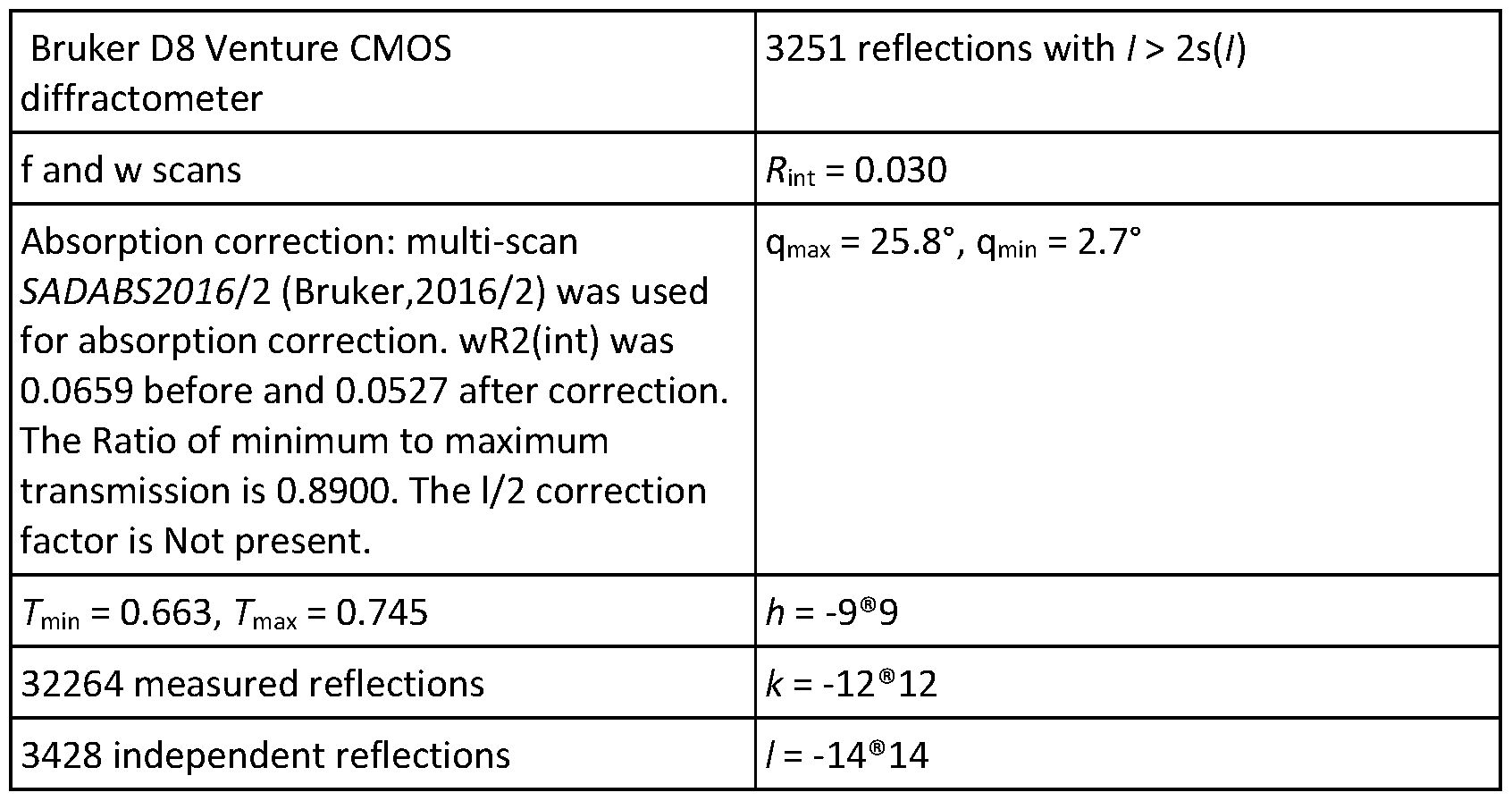
eq of the parent C atom. Further details are in Table 1. FIG. 1 is the fully labelled displacement ellipsoid representation (50%) of the asymmetric unit of 4‐AcO‐TMT iodide.
[061] FIG. 2 is a simulated x‐ray powder diffraction (XRPD) pattern of crystalline 4‐Acetoxy‐N,N,N‐ trimethyltryptammonium Iodide (4‐AcO‐TMT iodide) from its single crystal data. Crystalline 4‐Acetoxy‐ N,N,N‐trimethyltryptammonium Iodide (4‐AcO‐TMT iodide) may be characterized by the XRPD peaks at 8.1, 14.6 and 19.8 °2q ± 0.2°2q as well as by an XRPD pattern substantially similar to FIG. 2. [062] Example 2: 4‐Hydroxy‐N,N,N‐trimethyltryptammonium (4‐HO‐TMT) Iodide [063] 4‐acetoxy‐N,N,N‐trimethyltryptammonium (4‐AcO‐TMT) iodide was stirred in a 1:1 solution of water and acetic acid in air for 12 hours. Solvent is removed in vacuo, and a white powder is obtained after triturating and washing the resulting residue with tetrahydrofuran.
1H NMR (400 MHz, D
2O): d 7.18 (s, 1H, ArH), 7.12‐7.06 (m, 2H, ArH), 6.57 (dd, J = 6.0, 2.4 Hz, 1H, ArH), 3.62 (t, J = 7.8 Hz, 2H, CH
2), 3.37 (t, J = 8.1 Hz 2H, CH
2), 3.19 (s, 9H, NCH
3). Unit Cell: a = 11.3057(9) Å, b = 11.2370(10) Å, c = 12.7785(10) Å, a = 90°, b = 113.087(2)°, g = 90°, V = 1493.4(2) Å
3. [064] Second preparation of 4‐HO‐TMT iodide: 95 mg of 4‐AcO TMT iodide was dissolved in 4 mL of deionized (DI) water in a 50 mL round bottom flask. 20 mL of acetic acid was added to the mixture, and it was refluxed under an atmosphere of dinitrogen for 2 days. Solvent was removed in vacuo to obtain a green/blue oil. 3 mL of methanol and 20 mL of ethyl acetate were added to the green/blue oil, leaving a green/blue powder that was removed via filtration. Solvent was removed in vacuo. The resulting oil was dissolved n 5 mL of ethanol, and 30 mL of pentane was added to generate a precipitate. The resulting powder was isolated via filtration to give 53.1 g (60% yield) to give an off‐white powder.
1H NMR (400 MHz, D
2O): d 7.19 (s, 1 H, ArH), 7.12‐7.07 (m, 2 H, ArH), 6.56 (dd, J = 5.9, 2.5 Hz, 1 H, ArH), 3.66‐3.62 (m, 2 H, CH
2), 3.40‐3.36 (m, 2 H, CH
2), 3.20 (s, 9 H, CH
3);
13C NMR (100 MHz, D
2O): d 150.62 (ArC), 139.37 (ArC), 123.89 (ArC), 123.86 (ArC), 116.56 (ArC), 108.72 (ArC), 105.23 (ArC), 104.43 (ArC), 68.20 (NCH
2), 53.59 (NCH
3), 21.20 (CH
2). Elemental analysis calcd. For C
13H
19N
2OI: C 45.10, H 5.53, N 8.09; Found: C 44.84, H 5.23, N 7.98.
[065] X‐Ray data collection and refinement details for 4‐HO‐TMT iodide: Crystals suitable for X‐ray diffraction studies were grown from the slow evaporation of an aqueous solution. All operations were performed on a Bruker D8 Venture CMOS diffractometer, using Mo Ka radiation with a TRIUMPH monochromator at a temperature of 200 K. Data collection was carried out using the Bruker APEX3 software. Cell refinement and data reduction were performed with the SAINT program. The structure solution was done with SHELXS and structure refinement was performed with SHEXL. Further refinement and molecular graphics were generated using the OLEX2 and Mercury CSD software. [066] All non‐hydrogen atoms were refined anisotropically (XL) by full matrix least squares on F
2. Hydrogen atom H1 and H1A were found from a Fourier difference map, and refined with a fixed distance of 0.86 Å and 0.85 Å respectively. Isotropic displacement parameters were set to 1.20 times U
eq of the parent N atom, and 1.50 times U
eq of the parent O atom. The remaining hydrogen atoms were placed in calculated positions and then refined with a riding model with C–H lengths of 0.95 Å (sp
2), 0.98 Å (CH
2) and 0.99 Å (CH
3) with isotropic displacement parameters set to 1.20 (sp
2 and CH
2) and 1.50 (CH
3) times U
eq of the parent C atom. Further details are in Table 2. FIG. 3 is the fully labelled displacement ellipsoid representation (50%) of the asymmetric unit of 4‐HO‐TMTI.
[067] FIG. 4 is a simulated x‐ray powder diffraction (XRPD) pattern of crystalline 4‐Hydroxy‐N,N,N‐ trimethyltryptammonium Iodide (4‐HO‐TMT iodide) from its single crystal data. Crystalline 4‐Hydroxy‐ N,N,N‐trimethyltryptammonium Iodide (4‐HO‐TMT iodide) may be characterized by the XRPD peaks at 17.0, 18.1 and19.5 °2q ± 0.2°2q as well as by an XRPD pattern substantially similar to FIG. 4. [068] Example 3: Cellular Assays [069] Cellular assays were performed by Eurofins CEREP SA, Celle‐Lévescault, France. All receptors were separately expressed in HEK‐293 cells. Cell membrane homogenates (30 µg protein) are incubated for 60 min (5‐HT
1A, 5‐HT
2A, 5‐HT
2B) or 120 min (5‐HT
3) at 22°C with radiolabeled ligand in the absence or presence of the test compound in a buffer containing 50 mM Tris‐HCl (pH 7.4), 5 mM MgCl
2, 10 µM pargyline and 0.1% ascorbic acid. For 5‐HT3, the buffer contained 50 mM Tris‐HCl (pH 7.4), 5 mM MgCl
2, and 1mM EDTA. Binding was reported as the K
i for the inhibition of binding of well‐characterized orthosteric ligands. The ligands used for each receptor were: 5‐HT
1A: [
3H] 8‐OH‐DPAT 5‐HT
2A: [
125I] (±)DOI 5‐HT
2B: [
125I] (±)DOI 5‐HT
3: [
3H] BRL 43694 [070] Nonspecific binding was determined in the presence of 1 µM unlabeled ligand listed above. Following incubation, the samples were filtered rapidly under vacuum through glass fiber filters (GF/B, Packard) presoaked with 0.3% PEI and rinsed several times with ice‐cold 50 mM Tris‐HCl using a 96‐ sample cell harvester (Unifilter, Packard). The filters were dried then counted for radioactivity in a scintillation counter (Topcount, Packard) using a scintillation cocktail (Microscint 0, Packard). The results are expressed as a percent inhibition of the control radioligand specific binding. [071] The IC
50 values and Hill coefficients (nH) were determined by non‐linear regression analysis of the competition curves generated with mean replicate values using Hill equation curve fitting Y=D+[ (A‐ D) / (1+(C/C
50)
nH) ] where Y = specific binding, A = left asymptote of the curve, D = right asymptote of the curve, C = compound concentration, C
50 = IC
50, and nH = slope factor.
[072] Analysis was performed using software developed at Cerep (Hill software) and validated by comparison with data generated by the commercial software SigmaPlot® 4.0 for Windows® (© 1997 by SPSS Inc.). The inhibition constants (K
i) were calculated using the Cheng Prusoff equation: K
i= IC
50 (1+L/K
D), where L = concentration of radioligand in the assay, and K
D = affinity of the radioligand for the receptor. A scatchard plot was used to determine the K
D. [073] The results in terms of inhibition constants (K
i) are shown in Table 3. The aeruginascin active metabolite, 4‐HO‐TMTI, shows activity at 5‐HT
1A, 5‐HT
2A and 5‐HT
2B. Counter to the prevailing theory that aeruginascin should function as a powerful 5‐HT
3 agonist, there is no activity observed at this receptor. The aeruginascin functional analogue, 4‐AcO‐TMTI shows no activity at any of the receptors. For comparison, psilocybin, the pro‐drug of psilocin, shows no activity at 5‐HT
1A, 5‐HT
2A, nor 5‐HT
3, but does show itself to be a potent 5‐HT
2B agonist. Psilocin, its active metabolite, shows activity at 5‐HT
1A and 5‐HT
2A that is more active though comparable to 4‐HO‐TMTI. (Roth et al.) It is significantly more potent than 4‐HO‐TMTI at the 5‐HT
2B receptor, and in fact, psilocybin is more active at this receptor as well.
[074] Example 4: N,N‐di‐methyl‐N‐propyl‐tryptammonium (DMPT) iodide [075] N,N‐di‐methyl‐N‐propyl‐tryptammonium (DMPT) iodide was prepared by mixing 101 mg of a commercial sample of N‐methyl‐N‐propyl‐tryptamine (The Indole Shop) and 4 mL of methyl iodide in 4 mL of methanol. The mixture was refluxed for twelve hours under an atmosphere of nitro‐gen. The solvent was removed in vacuo, and the remaining residue was recrystallized from ethanol to yield colorless single crystals suitable for X‐ray diffraction studies. The product was also characterized by nuclear magnetic resonance.
1H NMR (400 MHz, D
2O): d 7.69 (d, J = 8.0 Hz, 1 H, ArH), 7.55 (d, J = 8.2 Hz, 1 H, ArH), 7.33‐7.28 (m, 2 H, ArH), 7.22 (t, J = 7.0 Hz, 1 H, ArH), 3.60 (m, 2 H, CH
2), 3.36 (m, 4 H, CH
2), 3.17 (s, 6 H, CH
3), 1.82 (m, 2 H, CH
2), 0.97 (t, J = 7.0 Hz, 3 H, CH
3). [076] The molecular structure of crystalline DMPT iodide is shown in FIG. 5. Crystal data, data collection and structure refinement details are summarized in Table 4. The asymmetric unit contains one N,N‐di‐methyl‐N‐n‐propyl tryptammonium (C
15H
23N
2 +) cation and one iodide anion. The indole ring
of the cation is near, planar with a mean deviation from planarity of 0.011 A. The ethyl‐ammonium arm is turned away from the plane with a C7—C8—C9—C10 torsion angle of 89.1 (4)°. The DMPT cation and the iodide anion are held together in the asymmetric unit via N(1)–H(1)∙∙∙I(1) hydrogen bonds, between the indole nitrogen and the iodide. The packing of crystalline DMPT iodide is shown in FIG. 6. [077] Crystal data, data collection and structure refinement details are summarized in Table 4.
C S
[078] FIG. 7 is a simulated x‐ray powder diffraction (XRPD) pattern of crystalline N,N‐dimethyl‐N‐ propyl (DMPT) iodide from its single crystal data. Crystalline N,N‐dimethyl‐N‐propyl (DMPT) iodide may be characterized by the XRPD peaks at 8.0, 17. 9 and 23.3 °2q ± 0.2°2q as well as by an XRPD pattern substantially similar to FIG. 7. [079] Example 5: N,N‐di‐methyl‐N‐allyl‐tryptammonium (DMALT) iodide [080] N,N‐di‐methyl‐N‐allyl‐tryptammonium (DMALT) iodide was prepared by mixing 101 mg of a commercial sample of N‐allyl‐N‐methyl‐tryptamine (The Indole Shop) with 4 mL of methyl iodide in 4 mL of methanol. The mixture was refluxed for twelve hours under an atmosphere of nitrogen. The solvent was removed in vacuo, and the remaining residue was recrystallized from acetone to yield colorless crystals suitable for X‐ray diffraction studies. The product was also characterized by nuclear magnetic resonance.
1H NMR (400 MHz, D
2O): d 7.69 (d, J = 7.8 Hz, 1 H, ArH), 7.55 (d, J = 8.2 Hz, 1 H, ArH), 7.32‐ 7.28 (m, 1 H, ArH), 7.22 (t, J = 7.2 Hz, 1 H, ArH), 6.13‐6.03 (m, 1 H, CH), 5.77‐5.71 (m, 2 H, CH
2), 4.04 (d, J = 7.3 Hz, 1 H, CH
2), 3.61‐3.56 (m, 2 H, CH
2), 3.37‐3.32 (m, 2 H, CH
2), 3.17 (s, 6 H, CH
3). [081] The molecular structure of crystalline DMALT iodide is shown in FIG. 8. The asymmetric unit contains one N‐allyl‐N,N‐di‐methyl‐tryptammonium (C
15H
21N
2 +) cation and one iodide anion. The indole ring of the cation is near planar, with a mean deviation from planarity of 0.013 Å. The ethyl‐ammonium arm is turned away from the plane with a C7–C8–C9–C10 torsion angle of 101.9 (9)°. The allyl group is disordered over two orientations with a 0.30 (4) to 0.70 (4) occupancy ratio for C14, C15 and C14A, C15A, respectively. The DMALT structure is very similar to that of DMPT, with the ions held together in the asymmetric unit through N(1)–H(1)∙∙∙I(1) hydrogen bonds. The packing of crystalline DMALT iodide is shown in FIG. 9. [082] Crystal data, data collection and structure refinement details are summarized in Table 6.
Computer programs: APEX3 (Bruker, 2018), SAINT (Bruker, 2018), SHELXT2014 (Sheldrick, 2015a), SHELXL2018 (Sheldrick, 2015b), Olex2 (Dolomanov et al., 2009), publCIF (Westrip, 2010).


[083] FIG. 10 is a simulated x‐ray powder diffraction (XRPD) pattern of crystalline N,N‐dimethyl‐N‐allyl (DMALT) iodide from its single crystal data. Crystalline N,N‐dimethyl‐N‐allyl (DMALT) iodide may be characterized by the XRPD peaks at 12.0, 18.5 and 23.4 °2q ± 0.2°2q as well as by an XRPD pattern substantially similar to FIG.10. [084] Example 6: 4‐acetoxy‐N,N‐dimethyl‐N‐ethyltryptammonium (4‐AcO‐DMET) iodide [085] Synthesis: 300 mg of 4‐acetoxy‐N,N‐dimethyl‐ tryptammonium (4‐AcO‐DMT) fumarate was dissolved in 30 mL of tetrahydrofuran, and 6 mL of iodoethane was added. The mixture was refluxed overnight under an atmosphere of nitrogen. This resulted in the precipitation of a white powder from the yellow solution. The precipitate was isolated via vacuum filtration to give white powder, which was washed with diethyl ether to yield 303 mg of pure product (91% yield).
1H NMR (400 MHz, D
2O): d 7.46 (dd, J = 8.2, 0.7 Hz, 1 H, ArH), 7.33 (s, 1 H, ArH), 7.25 (t, J = 7.9 Hz, 1 H, ArH), 6.90 (dd, J = 7.7, 0.7 Hz, 1 H, ArH), 3.58‐3.54 (m, 2 H, CH
2), 3.46 (q, J = 7.3 Hz, 2 H, CH
2), 3.25‐3.20 (m, 2 H, CH
2), 3.12 (s, 6 H, CH
3), 2.47 (s, 3 H, (CO)CH
3), 1.38‐1.35 (m, 3 H, CH
3);
13C NMR (100 MHz, D
2O): d 174.3(CO), 143.6 (ArC), 139.2(ArC), 125.7 (ArC), 123.0 (ArC), 119.1 (ArC), 112.9 (ArC), 111.1 (ArC), 107.4 (ArC), 64.6 (AkC), 60.6 (AkC), 50.7 (AkC), 21.3 (AkC), 19.9 (AkC), 8.1 (AkC). [086] 4‐AcO‐DMET iodide was recrystallized by slow evaporation of an ethanol solution to yield crystals suitable for X‐ray diffraction studies. Crystal data, data collection and structure refinement details are summarized in Table 8. FIG. 11 shows the molecular structure of crystalline 4‐AcO‐DMET iodide hemihydrate showing the atomic labelling. Displacement ellipsoids are drawn at the 50% probability level. There are two distinct tryptammonium cations and two iodides in the asymmetric unit. The solvate water molecule is modeled at 50% occupancy. Table 8 Crystal data
Data collection
Refinement
[087] FIG. 12 is a simulated x‐ray powder diffraction (XRPD) pattern of crystalline 4‐acetoxy‐N,N‐ dimethyl‐N‐ethyltryptammonium (4‐AcO‐DMET) iodide hemihydrate from its single crystal data.
Crystalline 4‐acetoxy‐N,N‐dimethyl‐N‐ethyltryptammonium (4‐AcO‐DMET) iodide hemihydrate may be characterized by the XRPD peaks at 11.4, 14.6 and 19.2 °2q ± 0.2°2q as well as by an XRPD pattern substantially similar to FIG. 12. [088] Example 7: 4‐hydroxy‐N,N‐dimethyl‐N‐ethyltryptammonium (4‐HO‐DMET) iodide [089] Synthesis: 150 mg of 4‐AcO‐DMET iodide was dissolved in 2 mL of DI water, and 10 mL of acetic acid was added. The mixture was refluxed overnight under an atmosphere of nitrogen. The solvent was removed via distillation, yielding an orange sticky oil. The oil was dissolved in a small volume of tetrahydrofuran and acetone. Hexanes was added to the solution, producing a white precipitate. The powder was isolated via vacuum filtration to give 90 mg (67% yield) of pure product.
1H NMR (400 MHz, D
2O): d 7.19 (s, 1 H, ArH), 7.12‐7.07 (m, 2 H, ArH), 6.59‐6.54 (m, 1 H, ArH), 3.60‐3.56 (m, 2 H, CH
2), 3.46 (q, J = 7.3 Hz, 2 H, CH
2), 3.35‐3.31 (m, 2 H, CH
2), 3.12 (s, 6 H, CH
3), 1.39 (t, J = 7.3 Hz, 3 H, CH
3);
13C NMR (100 MHz, D
2O): d 150.6 (ArC), 139.3(ArC), 123.9 (ArC), 116.6 (ArC), 108.8 (ArC), 105.2 (ArC), 104.4 (ArC), 65.0 (AkC), 60.3 (AkC), 50.7 (AkC), 20.7 (AkC), 8.0 (AkC). [090] Example 8: 4‐acetoxy‐N,N‐dimethyl‐N‐n‐propyltryptammonium (4‐AcO‐DMPT) iodide [091] Synthesis: 323 mg of 4‐AcO‐DMT fumarate was dissolved in 30 mL of tetrahydrofuran, and 6 mL of 1‐iodopropane was added. The mixture was refluxed overnight under an atmosphere of nitrogen. This resulted in the precipitation of a white powder from the yellow solution. The precipitate was isolated via vacuum filtration to give a white powder, which was washed with diethyl ether to yield 314 mg of pure product (85% yield).
1H NMR (400 MHz, D
2O): d 7.46 (dd, J = 8.2, 0.5 Hz, 1 H, ArH), 7.33 (s, 1 H, ArH), 7.26 (t, J = 7.9 Hz, 1 H, ArH), 6.90 (d, J = 7.7 Hz, 1 H, ArH), 3.61‐3.57 (m, 2 H, CH
2), 3.35‐3.29 (m, 2 H, CH
2), 3.27‐3.21 (m, 2 H, CH
2), 3.14 (s, 6 H, CH
3), 2.47 (s, 3 H, (CO)CH
3), 1.81‐1.72 (m, 2 H, CH
2), 0.91 (t, J = 7.3 Hz, 3 H, CH
3);
13C NMR (100 MHz, D
2O): d 174.3(CO), 143.6 (ArC), 139.3(ArC), 125.8 (ArC), 123.0 (ArC), 119.1 (ArC), 112.9 (ArC), 111.1 (ArC), 107.5 (ArC), 66.4 (AkC), 65.1 (AkC), 51.3 (AkC), 21.3 (AkC), 20.1 (AkC), 16.3 (AkC), 10.4 (AkC). [092] 4‐AcO‐DMPT iodide was recrystallized by slow evaporation of an ethanol solution to yield crystals suitable for X‐ray diffraction studies. Crystal data, data collection and structure refinement details are summarized in Table 9. FIG. 13 shows the molecular structure of crystalline 4‐AcO‐DMPT iodide showing the atomic labelling. Displacement ellipsoids are drawn at the 50% probability level. Dashed bonds indicate a disordered component in the structure. Table 9 Crystal data
Data collection
Refinement


[093] FIG. 14 is a simulated x‐ray powder diffraction (XRPD) pattern of crystalline 4‐acetoxy‐N,N‐ dimethyl‐N‐n‐propyltryptammonium (4‐AcO‐DMPT) iodide from its single crystal data. Crystalline 4‐ acetoxy‐N,N‐dimethyl‐N‐n‐propyltryptammonium (4‐AcO‐DMPT) iodide may be characterized by the XRPD peaks at 11.5, 16.7 and 19.8 °2q ± 0.2°2q as well as by an XRPD pattern substantially similar to FIG. 14. [094] Example 9: 4‐hydroxy‐N,N‐dimethyl‐N‐n‐propyltryptammonium (4‐HO‐DMPT) iodide [095] Synthesis: 200 mg of 4‐AcO‐DMPT iodide was dissolved in 3 mL of deionized (DI) water, and 10 mL of acetic acid was added. The mixture was refluxed overnight under an atmosphere of nitrogen. The solvent was removed via distillation, yielding an orange sticky oil. The oil was dissolved in a small volume of tetrahydrofuran and acetone. Hexanes was then added to the solution, producing a light green precipitate. This powder was isolated via vacuum filtration and washed with diethyl ether to give 157 mg (87% yield) of pure product.
1H NMR (400 MHz, D
2O): d 7.17 (s, 1 H, ArH), 7.12‐7.07 (m, 2 H, ArH), 6.57‐ 6.55 (m, 1 H, ArH), 3.57‐3.53 (m, 2 H, CH
2), 3.32‐3.26 (m, 4 H, CH
2), 3.11 (s, 6 H, CH
3), 1.85‐1.75 (m, 2 H, CH
2), 0.95 (t, J = 7.3 Hz, 3 H, CH
3);
13C NMR (100 MHz, D
2O): d 150.6 (ArC), 139.3(ArC), 123.9 (ArC), 116.7 (ArC), 108.9 (ArC), 105.2 (ArC), 104.4 (ArC), 66.1 (AkC), 65.4 (AkC), 51.3 (AkC), 20.8 (AkC), 16.2 (AkC), 10.4 (AkC). [096] 4‐HO‐DMPT iodide was recrystallized by slow evaporation of an ethanol solution to yield crystals suitable for X‐ray diffraction studies. Crystal data, data collection and structure refinement details are summarized in Table 10. FIG. 15 shows the molecular structure of 4‐HO‐DMPT iodide showing the atomic labelling. Displacement ellipsoids are drawn at the 50% probability level. Table 10 Crystal data
Data collection
Refinement
[097] FIG. 16 is a simulated x‐ray powder diffraction (XRPD) pattern of crystalline 4‐hydroxy‐N,N‐ dimethyl‐N‐n‐propyltryptammonium (4‐HO‐DMPT) iodide from its single crystal data. Crystalline 4‐ hydroxy‐N,N‐dimethyl‐N‐n‐propyltryptammonium (4‐HO‐DMPT) iodide may be characterized by the XRPD peaks at 12.5, 18.9 and 19.9 °2q ± 0.2°2q as well as by an XRPD pattern substantially similar to FIG. 16. [098] Example 10: 4‐acetoxy‐N,N‐dimethyl‐N‐isopropyltryptammonium (4‐AcO‐DMiPT) iodide [099] Synthesis: 320 mg of 4‐AcO‐DMT fumarate was dissolved in 30 mL of tetrahydrofuran, and 12 mL of 2‐iodopropane was added. The mixture was refluxed overnight under an atmosphere of nitrogen. A mixture of orange/yellow solid and yellow liquid was obtained. The liquid was decanted and the remaining solid was triturated with ethyl acetate to yield a white powder. The powder was isolated via vacuum filtration to give 151 mg of pure product (41% yield).
1H NMR (400 MHz, D
2O): d 7.46 (dd, J = 8.2, 0.7 Hz, 1 H, ArH), 7.33 (s, 1 H, ArH), 7.26 (t, J = 7.9 Hz, 1 H, ArH), 6.89 (dd, J = 7.7, 0.6 Hz, 1 H, ArH), 3.86‐3.76 (sep, J = 6.6 Hz, 1 H, CH), 3.57‐3.53 (m, 2 H, CH
2), 3.26‐3.22 (m, 2 H, CH
2), 3.07 (s, 6 H, CH
3), 2.47 (s, 3 H, (CO)CH
3), 1.41 (d, J = 6.6 Hz, 6 H, CH
3);
13C NMR (100 MHz, D
2O): d 174.2(CO), 143.6 (ArC), 139.2 (ArC), 125.7 (ArC), 123.0 (ArC), 119.1 (ArC), 113.0 (ArC), 111.1 (ArC), 107.5 (ArC), 66.0 (AkC), 63.5 (AkC), 48.1 (AkC), 21.3 (AkC), 19.7 (AkC), 16.2 (AkC). References Bradley, R. J. & Johnston, V. S. (1970). Origin and Mechanism of Hallucinations, edited by W. Keup, pp. 333–344. New York: Plenum Press. Cameron, L. P. & Olson, D. E. (2018). ACS Chem. Neurosci. 9, 2344‐2357. Carhart‐Harris, R. L. & Goodwin, G. M. (2017). Neuropsychopharmacology, 42, 2105‐2113. Dinis‐Oliveira, R. J. (2017). Drug Metab. Rev. 49, 84–91. Johnson, M. W. & Griffiths, R. R. (2017). Neurotherapeutics 14, 734–740. McKenna, D. J., Repke, D. B., Lo, L. & Peroutka, S. J. (1990). Neuropharmacology, 29, 193–198. Nichols, D. E. (2012). WIREs Membr. Transp. Signal. 1, 559–579. Repke, D. B., Grotjahn, D. B. & Shulgin, A. T. (1985). J. Med. Chem. 28, 892–896. C. Lenz, J. Wick and D. Hoffmeister, J. Nat. Prod., 2017, 80, 2835‐2838. A. M. Sherwood, A. L. Halberstadt, A. K. Klein, J. D. McCorvy, K. W. Kaylo, R. B. Kargbo and P. Meisenheimer, J. Nat. Prod., Article ASAP, DOI: 10.1021/acs.jnatprod.9b01061. N. Jensen, J. Gartz and H. Laatsch, Planta Med., 2006, 72, 665‐666. J. Gartz, Int. J. Crude Drug Res., 1989, 27, 141‐144. B. L. Roth, W. K. Kroeze, S. Patel and E. Lopez, The Neuroscientist, 2000, 6, 252‐262.