WO2021065251A1 - Câble métallique - Google Patents
Câble métallique Download PDFInfo
- Publication number
- WO2021065251A1 WO2021065251A1 PCT/JP2020/031952 JP2020031952W WO2021065251A1 WO 2021065251 A1 WO2021065251 A1 WO 2021065251A1 JP 2020031952 W JP2020031952 W JP 2020031952W WO 2021065251 A1 WO2021065251 A1 WO 2021065251A1
- Authority
- WO
- WIPO (PCT)
- Prior art keywords
- wire rope
- lubricant
- strands
- strand
- rope
- Prior art date
- Legal status (The legal status is an assumption and is not a legal conclusion. Google has not performed a legal analysis and makes no representation as to the accuracy of the status listed.)
- Ceased
Links
Images




Classifications
-
- D—TEXTILES; PAPER
- D07—ROPES; CABLES OTHER THAN ELECTRIC
- D07B—ROPES OR CABLES IN GENERAL
- D07B1/00—Constructional features of ropes or cables
- D07B1/06—Ropes or cables built-up from metal wires, e.g. of section wires around a hemp core
-
- D—TEXTILES; PAPER
- D07—ROPES; CABLES OTHER THAN ELECTRIC
- D07B—ROPES OR CABLES IN GENERAL
- D07B1/00—Constructional features of ropes or cables
- D07B1/14—Ropes or cables with incorporated auxiliary elements, e.g. for marking, extending throughout the length of the rope or cable
- D07B1/141—Ropes or cables with incorporated auxiliary elements, e.g. for marking, extending throughout the length of the rope or cable comprising liquid, pasty or powder agents, e.g. lubricants or anti-corrosive oils or greases
- D07B1/144—Ropes or cables with incorporated auxiliary elements, e.g. for marking, extending throughout the length of the rope or cable comprising liquid, pasty or powder agents, e.g. lubricants or anti-corrosive oils or greases for cables or cable components built-up from metal wires
-
- C—CHEMISTRY; METALLURGY
- C07—ORGANIC CHEMISTRY
- C07F—ACYCLIC, CARBOCYCLIC OR HETEROCYCLIC COMPOUNDS CONTAINING ELEMENTS OTHER THAN CARBON, HYDROGEN, HALOGEN, OXYGEN, NITROGEN, SULFUR, SELENIUM OR TELLURIUM
- C07F11/00—Compounds containing elements of Groups 6 or 16 of the Periodic Table
-
- D—TEXTILES; PAPER
- D07—ROPES; CABLES OTHER THAN ELECTRIC
- D07B—ROPES OR CABLES IN GENERAL
- D07B1/00—Constructional features of ropes or cables
- D07B1/06—Ropes or cables built-up from metal wires, e.g. of section wires around a hemp core
- D07B1/0673—Ropes or cables built-up from metal wires, e.g. of section wires around a hemp core having a rope configuration
- D07B1/068—Ropes or cables built-up from metal wires, e.g. of section wires around a hemp core having a rope configuration characterised by the strand design
-
- D—TEXTILES; PAPER
- D07—ROPES; CABLES OTHER THAN ELECTRIC
- D07B—ROPES OR CABLES IN GENERAL
- D07B1/00—Constructional features of ropes or cables
- D07B1/16—Ropes or cables with an enveloping sheathing or inlays of rubber or plastics
- D07B1/162—Ropes or cables with an enveloping sheathing or inlays of rubber or plastics characterised by a plastic or rubber enveloping sheathing
-
- D—TEXTILES; PAPER
- D07—ROPES; CABLES OTHER THAN ELECTRIC
- D07B—ROPES OR CABLES IN GENERAL
- D07B7/00—Details of, or auxiliary devices incorporated in, rope- or cable-making machines; Auxiliary apparatus associated with such machines
- D07B7/02—Machine details; Auxiliary devices
- D07B7/12—Machine details; Auxiliary devices for softening, lubricating or impregnating ropes, cables, or component strands thereof
-
- C—CHEMISTRY; METALLURGY
- C10—PETROLEUM, GAS OR COKE INDUSTRIES; TECHNICAL GASES CONTAINING CARBON MONOXIDE; FUELS; LUBRICANTS; PEAT
- C10M—LUBRICATING COMPOSITIONS; USE OF CHEMICAL SUBSTANCES EITHER ALONE OR AS LUBRICATING INGREDIENTS IN A LUBRICATING COMPOSITION
- C10M107/00—Lubricating compositions characterised by the base-material being a macromolecular compound
- C10M107/40—Lubricating compositions characterised by the base-material being a macromolecular compound containing nitrogen
- C10M107/44—Macromolecular compounds obtained otherwise than by reactions only involving carbon-to-carbon unsaturated bonds
-
- C—CHEMISTRY; METALLURGY
- C10—PETROLEUM, GAS OR COKE INDUSTRIES; TECHNICAL GASES CONTAINING CARBON MONOXIDE; FUELS; LUBRICANTS; PEAT
- C10M—LUBRICATING COMPOSITIONS; USE OF CHEMICAL SUBSTANCES EITHER ALONE OR AS LUBRICATING INGREDIENTS IN A LUBRICATING COMPOSITION
- C10M135/00—Lubricating compositions characterised by the additive being an organic non-macromolecular compound containing sulfur, selenium or tellurium
- C10M135/12—Thio-acids; Thiocyanates; Derivatives thereof
- C10M135/14—Thio-acids; Thiocyanates; Derivatives thereof having a carbon-to-sulfur double bond
- C10M135/18—Thio-acids; Thiocyanates; Derivatives thereof having a carbon-to-sulfur double bond thiocarbamic type, e.g. containing the groups
-
- C—CHEMISTRY; METALLURGY
- C10—PETROLEUM, GAS OR COKE INDUSTRIES; TECHNICAL GASES CONTAINING CARBON MONOXIDE; FUELS; LUBRICANTS; PEAT
- C10M—LUBRICATING COMPOSITIONS; USE OF CHEMICAL SUBSTANCES EITHER ALONE OR AS LUBRICATING INGREDIENTS IN A LUBRICATING COMPOSITION
- C10M137/00—Lubricating compositions characterised by the additive being an organic non-macromolecular compound containing phosphorus
- C10M137/02—Lubricating compositions characterised by the additive being an organic non-macromolecular compound containing phosphorus having no phosphorus-to-carbon bond
- C10M137/04—Phosphate esters
- C10M137/10—Thio derivatives
-
- C—CHEMISTRY; METALLURGY
- C10—PETROLEUM, GAS OR COKE INDUSTRIES; TECHNICAL GASES CONTAINING CARBON MONOXIDE; FUELS; LUBRICANTS; PEAT
- C10M—LUBRICATING COMPOSITIONS; USE OF CHEMICAL SUBSTANCES EITHER ALONE OR AS LUBRICATING INGREDIENTS IN A LUBRICATING COMPOSITION
- C10M141/00—Lubricating compositions characterised by the additive being a mixture of two or more compounds covered by more than one of the main groups C10M125/00 - C10M139/00, each of these compounds being essential
- C10M141/08—Lubricating compositions characterised by the additive being a mixture of two or more compounds covered by more than one of the main groups C10M125/00 - C10M139/00, each of these compounds being essential at least one of them being an organic sulfur-, selenium- or tellurium-containing compound
-
- C—CHEMISTRY; METALLURGY
- C10—PETROLEUM, GAS OR COKE INDUSTRIES; TECHNICAL GASES CONTAINING CARBON MONOXIDE; FUELS; LUBRICANTS; PEAT
- C10M—LUBRICATING COMPOSITIONS; USE OF CHEMICAL SUBSTANCES EITHER ALONE OR AS LUBRICATING INGREDIENTS IN A LUBRICATING COMPOSITION
- C10M169/00—Lubricating compositions characterised by containing as components a mixture of at least two types of ingredient selected from base-materials, thickeners or additives, covered by the preceding groups, each of these compounds being essential
- C10M169/04—Mixtures of base-materials and additives
-
- C—CHEMISTRY; METALLURGY
- C10—PETROLEUM, GAS OR COKE INDUSTRIES; TECHNICAL GASES CONTAINING CARBON MONOXIDE; FUELS; LUBRICANTS; PEAT
- C10M—LUBRICATING COMPOSITIONS; USE OF CHEMICAL SUBSTANCES EITHER ALONE OR AS LUBRICATING INGREDIENTS IN A LUBRICATING COMPOSITION
- C10M2201/00—Inorganic compounds or elements as ingredients in lubricant compositions
- C10M2201/06—Metal compounds
- C10M2201/065—Sulfides; Selenides; Tellurides
- C10M2201/066—Molybdenum sulfide
-
- C—CHEMISTRY; METALLURGY
- C10—PETROLEUM, GAS OR COKE INDUSTRIES; TECHNICAL GASES CONTAINING CARBON MONOXIDE; FUELS; LUBRICANTS; PEAT
- C10M—LUBRICATING COMPOSITIONS; USE OF CHEMICAL SUBSTANCES EITHER ALONE OR AS LUBRICATING INGREDIENTS IN A LUBRICATING COMPOSITION
- C10M2217/00—Organic macromolecular compounds containing nitrogen as ingredients in lubricant compositions
- C10M2217/04—Macromolecular compounds from nitrogen-containing monomers obtained otherwise than by reactions only involving carbon-to-carbon unsaturated bonds
- C10M2217/044—Polyamides
- C10M2217/0443—Polyamides used as base material
-
- C—CHEMISTRY; METALLURGY
- C10—PETROLEUM, GAS OR COKE INDUSTRIES; TECHNICAL GASES CONTAINING CARBON MONOXIDE; FUELS; LUBRICANTS; PEAT
- C10M—LUBRICATING COMPOSITIONS; USE OF CHEMICAL SUBSTANCES EITHER ALONE OR AS LUBRICATING INGREDIENTS IN A LUBRICATING COMPOSITION
- C10M2219/00—Organic non-macromolecular compounds containing sulfur, selenium or tellurium as ingredients in lubricant compositions
- C10M2219/06—Thio-acids; Thiocyanates; Derivatives thereof
- C10M2219/062—Thio-acids; Thiocyanates; Derivatives thereof having carbon-to-sulfur double bonds
- C10M2219/066—Thiocarbamic type compounds
- C10M2219/068—Thiocarbamate metal salts
-
- C—CHEMISTRY; METALLURGY
- C10—PETROLEUM, GAS OR COKE INDUSTRIES; TECHNICAL GASES CONTAINING CARBON MONOXIDE; FUELS; LUBRICANTS; PEAT
- C10M—LUBRICATING COMPOSITIONS; USE OF CHEMICAL SUBSTANCES EITHER ALONE OR AS LUBRICATING INGREDIENTS IN A LUBRICATING COMPOSITION
- C10M2223/00—Organic non-macromolecular compounds containing phosphorus as ingredients in lubricant compositions
- C10M2223/02—Organic non-macromolecular compounds containing phosphorus as ingredients in lubricant compositions having no phosphorus-to-carbon bonds
- C10M2223/04—Phosphate esters
- C10M2223/045—Metal containing thio derivatives
-
- C—CHEMISTRY; METALLURGY
- C10—PETROLEUM, GAS OR COKE INDUSTRIES; TECHNICAL GASES CONTAINING CARBON MONOXIDE; FUELS; LUBRICANTS; PEAT
- C10M—LUBRICATING COMPOSITIONS; USE OF CHEMICAL SUBSTANCES EITHER ALONE OR AS LUBRICATING INGREDIENTS IN A LUBRICATING COMPOSITION
- C10M2227/00—Organic non-macromolecular compounds containing atoms of elements not provided for in groups C10M2203/00, C10M2207/00, C10M2211/00, C10M2215/00, C10M2219/00 or C10M2223/00 as ingredients in lubricant compositions
- C10M2227/06—Organic compounds derived from inorganic acids or metal salts
- C10M2227/066—Organic compounds derived from inorganic acids or metal salts derived from Mo or W
-
- C—CHEMISTRY; METALLURGY
- C10—PETROLEUM, GAS OR COKE INDUSTRIES; TECHNICAL GASES CONTAINING CARBON MONOXIDE; FUELS; LUBRICANTS; PEAT
- C10N—INDEXING SCHEME ASSOCIATED WITH SUBCLASS C10M RELATING TO LUBRICATING COMPOSITIONS
- C10N2030/00—Specified physical or chemical properties which is improved by the additive characterising the lubricating composition, e.g. multifunctional additives
- C10N2030/02—Pour-point; Viscosity index
-
- C—CHEMISTRY; METALLURGY
- C10—PETROLEUM, GAS OR COKE INDUSTRIES; TECHNICAL GASES CONTAINING CARBON MONOXIDE; FUELS; LUBRICANTS; PEAT
- C10N—INDEXING SCHEME ASSOCIATED WITH SUBCLASS C10M RELATING TO LUBRICATING COMPOSITIONS
- C10N2040/00—Specified use or application for which the lubricating composition is intended
- C10N2040/32—Wires, ropes or cables lubricants
-
- C—CHEMISTRY; METALLURGY
- C10—PETROLEUM, GAS OR COKE INDUSTRIES; TECHNICAL GASES CONTAINING CARBON MONOXIDE; FUELS; LUBRICANTS; PEAT
- C10N—INDEXING SCHEME ASSOCIATED WITH SUBCLASS C10M RELATING TO LUBRICATING COMPOSITIONS
- C10N2050/00—Form in which the lubricant is applied to the material being lubricated
- C10N2050/015—Dispersions of solid lubricants
- C10N2050/02—Dispersions of solid lubricants dissolved or suspended in a carrier which subsequently evaporates to leave a lubricant coating
-
- D—TEXTILES; PAPER
- D07—ROPES; CABLES OTHER THAN ELECTRIC
- D07B—ROPES OR CABLES IN GENERAL
- D07B1/00—Constructional features of ropes or cables
- D07B1/06—Ropes or cables built-up from metal wires, e.g. of section wires around a hemp core
- D07B1/0673—Ropes or cables built-up from metal wires, e.g. of section wires around a hemp core having a rope configuration
-
- D—TEXTILES; PAPER
- D07—ROPES; CABLES OTHER THAN ELECTRIC
- D07B—ROPES OR CABLES IN GENERAL
- D07B1/00—Constructional features of ropes or cables
- D07B1/06—Ropes or cables built-up from metal wires, e.g. of section wires around a hemp core
- D07B1/0693—Ropes or cables built-up from metal wires, e.g. of section wires around a hemp core having a strand configuration
-
- D—TEXTILES; PAPER
- D07—ROPES; CABLES OTHER THAN ELECTRIC
- D07B—ROPES OR CABLES IN GENERAL
- D07B2201/00—Ropes or cables
- D07B2201/10—Rope or cable structures
- D07B2201/1012—Rope or cable structures characterised by their internal structure
- D07B2201/1014—Rope or cable structures characterised by their internal structure characterised by being laid or braided from several sub-ropes or sub-cables, e.g. hawsers
-
- D—TEXTILES; PAPER
- D07—ROPES; CABLES OTHER THAN ELECTRIC
- D07B—ROPES OR CABLES IN GENERAL
- D07B2201/00—Ropes or cables
- D07B2201/10—Rope or cable structures
- D07B2201/1012—Rope or cable structures characterised by their internal structure
- D07B2201/102—Rope or cable structures characterised by their internal structure including a core
-
- D—TEXTILES; PAPER
- D07—ROPES; CABLES OTHER THAN ELECTRIC
- D07B—ROPES OR CABLES IN GENERAL
- D07B2201/00—Ropes or cables
- D07B2201/10—Rope or cable structures
- D07B2201/104—Rope or cable structures twisted
- D07B2201/1048—Rope or cable structures twisted using regular lay, i.e. the wires or filaments being parallel to rope axis
-
- D—TEXTILES; PAPER
- D07—ROPES; CABLES OTHER THAN ELECTRIC
- D07B—ROPES OR CABLES IN GENERAL
- D07B2201/00—Ropes or cables
- D07B2201/20—Rope or cable components
- D07B2201/2015—Strands
- D07B2201/2024—Strands twisted
- D07B2201/2027—Compact winding
- D07B2201/2028—Compact winding having the same lay direction and lay pitch
-
- D—TEXTILES; PAPER
- D07—ROPES; CABLES OTHER THAN ELECTRIC
- D07B—ROPES OR CABLES IN GENERAL
- D07B2201/00—Ropes or cables
- D07B2201/20—Rope or cable components
- D07B2201/2015—Strands
- D07B2201/2036—Strands characterised by the use of different wires or filaments
- D07B2201/2037—Strands characterised by the use of different wires or filaments regarding the dimension of the wires or filaments
-
- D—TEXTILES; PAPER
- D07—ROPES; CABLES OTHER THAN ELECTRIC
- D07B—ROPES OR CABLES IN GENERAL
- D07B2201/00—Ropes or cables
- D07B2201/20—Rope or cable components
- D07B2201/2015—Strands
- D07B2201/2042—Strands characterised by a coating
- D07B2201/2044—Strands characterised by a coating comprising polymers
-
- D—TEXTILES; PAPER
- D07—ROPES; CABLES OTHER THAN ELECTRIC
- D07B—ROPES OR CABLES IN GENERAL
- D07B2201/00—Ropes or cables
- D07B2201/20—Rope or cable components
- D07B2201/2015—Strands
- D07B2201/2046—Strands comprising fillers
-
- D—TEXTILES; PAPER
- D07—ROPES; CABLES OTHER THAN ELECTRIC
- D07B—ROPES OR CABLES IN GENERAL
- D07B2201/00—Ropes or cables
- D07B2201/20—Rope or cable components
- D07B2201/2047—Cores
- D07B2201/2052—Cores characterised by their structure
- D07B2201/2059—Cores characterised by their structure comprising wires
- D07B2201/2061—Cores characterised by their structure comprising wires resulting in a twisted structure
-
- D—TEXTILES; PAPER
- D07—ROPES; CABLES OTHER THAN ELECTRIC
- D07B—ROPES OR CABLES IN GENERAL
- D07B2201/00—Ropes or cables
- D07B2201/20—Rope or cable components
- D07B2201/2083—Jackets or coverings
- D07B2201/2087—Jackets or coverings being of the coated type
-
- D—TEXTILES; PAPER
- D07—ROPES; CABLES OTHER THAN ELECTRIC
- D07B—ROPES OR CABLES IN GENERAL
- D07B2205/00—Rope or cable materials
- D07B2205/30—Inorganic materials
- D07B2205/3021—Metals
- D07B2205/3025—Steel
-
- D—TEXTILES; PAPER
- D07—ROPES; CABLES OTHER THAN ELECTRIC
- D07B—ROPES OR CABLES IN GENERAL
- D07B2205/00—Rope or cable materials
- D07B2205/50—Lubricants
- D07B2205/502—Oils
-
- D—TEXTILES; PAPER
- D07—ROPES; CABLES OTHER THAN ELECTRIC
- D07B—ROPES OR CABLES IN GENERAL
- D07B2205/00—Rope or cable materials
- D07B2205/50—Lubricants
- D07B2205/507—Solid lubricants
Definitions
- the technology disclosed herein relates to wire rope.
- the core portion (cable core portion) of a wire rope (cable) twisted by a plurality of strands is impregnated with a lubricant (impregnated oil) that is in a soft solid state or a low flow state at room temperature, and the core portion is impregnated.
- a lubricant impregnated oil
- Molybdenum disulfide which has good lubricity, may be used as a lubricant.
- molybdenum disulfide is a solid powder, it tends to be difficult to uniformly disperse it in the solid or liquid oil that constitutes the lubricant.
- molybdenum disulfide is unevenly distributed on the wire rope, so that a friction singular point is generated in which the wires constituting the wire rope are rubbed in the portion where the molybdenum disulfide is not arranged. As a result, the wire may be damaged or broken at the friction singularity. Under such circumstances, the wire rope is required to be further improved in durability.
- This specification discloses a technique capable of solving the above-mentioned problems.
- the wire rope disclosed in the present specification includes a rope body having a strand formed of a plurality of strands twisted to each other, and a lubricant interposed between the plurality of strands constituting the strand.
- a resin layer that covers the outer periphery of the rope body together with the lubricant is provided, and the lubricant contains a sulfur-containing organic molybdenum compound.
- the lubricant intervening between the plurality of strands constituting the strand can be retained between the strands without leaking from the wire rope. Therefore, the effect of the lubricant can be maintained for a long period of time.
- the lubricant contains a sulfur-containing organic molybdenum compound that is easily dispersed uniformly in solid or liquid oil as compared with molybdenum disulfide which is a solid powder. Therefore, the dispersibility of the sulfur-containing organic molybdenum compound in the lubricant can be improved. In such a lubricant, the sulfur-containing organic molybdenum compound is likely to be uniformly arranged between the strands.
- the sulfur-containing organic molybdenum compound contained in the lubricant can generate molybdenum disulfide by, for example, frictional heat generated by sliding a wire rope. Therefore, molybdenum disulfide can be uniformly generated between the strands, and the generation of friction singularities where friction between the strands occurs between the strands where the molybdenum disulfide is not arranged can be suppressed. .. As a result, the occurrence of breakage or breakage of the wire is suppressed, and the durability of the wire rope can be improved. Therefore, according to this wire rope, the effect of the lubricant on the wire rope can be maintained for a long period of time, and the durability of the wire rope can be improved.
- the lubricant may be configured to be liquid at room temperature.
- the lubricant is a liquid at room temperature, the dispersibility of the sulfur-containing organic molybdenum compound in the lubricant can be improved more effectively.
- the uniformity of the coating when the strands constituting the strands are coated with the lubricant can be more effectively improved, and the friction singularity in the strands. Can be suppressed more effectively. Therefore, according to this wire rope, the durability of the wire rope can be improved more effectively.
- the viscosity at room temperature of the lubricant 100 mm 2 / s or more, may be configured at most 14100mm 2 / s.
- the viscosity of the lubricant at room temperature is relatively low. Therefore, the dispersibility of the sulfur-containing organic molybdenum compound in the lubricant can be improved more effectively. Therefore, according to this wire rope, the durability of the wire rope can be improved more effectively.
- the rope body may have a core strand as the strand.
- the lubricant is interposed between a plurality of strands constituting the core strand, the durability of the core strand itself can be improved.
- the durability of the core strand greatly contributes to the durability of the wire rope. Therefore, according to this wire rope, the durability of the wire rope can be improved more effectively.
- the core strand may be a Warrington twist.
- a closed space is formed by each of the three strands constituting the core strand in the cross section of the wire rope.
- the rope body may have a structure as the strand and further, a plurality of side strands twisted around the core strand.
- the lubricant is interposed between a plurality of strands constituting the side strand, the durability of the side strand itself can be improved.
- the durability of the side strands contributes to the durability of the wire rope. Therefore, according to this wire rope, the durability of the wire rope can be improved more effectively.
- the sulfur-containing organic molybdenum compound may be composed of at least one of molybdenum dialkyldithiocarbamate and molybdenum dialkyldithiophosphate.
- Molybdenum dialkyldithiocarbamate and molybdenum dialkyldithiophosphate tend to easily produce molybdenum disulfide due to the frictional heat of the wire rope. Therefore, according to this wire rope, the durability of the wire rope can be improved more effectively.
- molybdenum dialkyldithiocarbamate and molybdenum dialkyldithiophosphate are easy to synthesize and tend to be easily available on the market.
- the wire rope disclosed in the present specification includes a rope body having a strand formed of a plurality of strands twisted to each other, and a lubricant interposed between the plurality of strands constituting the strand.
- a resin layer that covers the outer periphery of the rope body together with the lubricant may be provided, and the lubricant may contain a sulfur-free organic molybdenum compound and a sulfur-containing organic compound.
- the lubricant contains a sulfur-free organic molybdenum compound and a sulfur-containing organic compound, which are more likely to be uniformly dispersed in solid or liquid oil than molybdenum disulfide which is a solid powder. doing. Therefore, the dispersibility of the sulfur-free organic molybdenum compound and the sulfur-containing organic compound in the lubricant can be improved. In such a lubricant, the sulfur-free organic molybdenum compound and the sulfur-containing organic compound are likely to be uniformly arranged between the strands.
- the sulfur-free organic molybdenum compound and the sulfur-containing organic compound contained in the lubricant can generate molybdenum disulfide by, for example, frictional heat generated by sliding a wire rope. Therefore, molybdenum disulfide can be uniformly generated between the strands, and the generation of friction singularities where friction between the strands occurs between the strands where the molybdenum disulfide is not arranged can be suppressed. .. As a result, the occurrence of breakage or breakage of the wire is suppressed, and the durability of the wire rope can be improved. Therefore, according to this wire rope, the effect of the lubricant on the wire rope can be maintained for a long period of time, and the durability of the wire rope can be improved.
- the lubricant may be a liquid at room temperature.
- the lubricant is a liquid at room temperature, the dispersibility of the sulfur-free organic molybdenum compound and the sulfur-containing organic compound in the lubricant can be improved more effectively.
- the uniformity of the coating when the strands constituting the strands are coated with the lubricant can be more effectively improved, and the friction singularity in the strands. Can be suppressed more effectively. Therefore, according to this wire rope, the durability of the wire rope can be improved more effectively.
- the viscosity at room temperature of the lubricant 100 mm 2 / s or more, may be configured at most 14100mm 2 / s.
- the viscosity of the lubricant at room temperature is relatively low. Therefore, the dispersibility of the sulfur-free organic molybdenum compound and the sulfur-containing organic compound in the lubricant can be improved more effectively. Therefore, according to this wire rope, the durability of the wire rope can be improved more effectively.
- the rope body may have a core strand as the strand.
- the durability of the core strand since the lubricant is interposed between a plurality of strands constituting the core strand, the durability of the core strand itself can be improved.
- the durability of the core strand greatly contributes to the durability of the wire rope. Therefore, according to this wire rope, the durability of the wire rope can be improved more effectively.
- the core strand may be a Warrington twist.
- a closed space is formed by each of the three strands constituting the core strand in the cross section of the wire rope.
- the rope body may have a structure as the strand and further, a plurality of side strands twisted around the core strand.
- the durability of the side strand itself can be improved.
- the durability of the side strands contributes to the durability of the wire rope. Therefore, according to this wire rope, the durability of the wire rope can be improved more effectively.
- the technique disclosed in the present specification can be realized in various forms, for example, a wire rope, a method for manufacturing a wire rope, and the like.
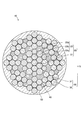
- FIG. 1 is a cross-sectional perspective view schematically showing the configuration of the wire rope 10 in the first embodiment
- FIG. 2 is an explanatory view showing the cross-sectional configuration thereof.
- the wire rope 10 can be used for various purposes (for example, a wire rope for a wind regulator for an automobile, a wire rope for a sliding door, a wire rope for power transmission in an industrial field, a wire rope for a window opening / closing device related to construction).
- the wire rope 10 includes a rope body 15, a lubricant 40, and a resin layer 50.
- the rope body 15 has a core strand 20 and a plurality of (more specifically, eight) side strands 30.
- the illustration of the lubricant 40 is omitted.
- the core strand 20 may refer to the core strand 21 and the side strands 23a, 23b, 23c (hereinafter, the side strands 23a, 23b, 23c are collectively referred to as "side strand 23", and the core strand 21 and the side strand 20
- the strands 23 and the strands 23 are sometimes collectively referred to as “strand wires 21 and 23”) and have a three-layer structure in which they are twisted together. That is, in the core strand 20, one core wire 21 is used as the first layer, six side wires 23a are used as the second layer, and six side wires 23b and 23c are used as the third layer. have.
- each of the six side strands 23a is arranged around the core strand 21 along the circumferential direction of the core strand 21.
- Each of the six side strands 23b is arranged around the side strands 23a between two adjacent side strands 23a.
- Each of the six side strands 23c is arranged between two adjacent side strands 23b.
- the core strand 20 is formed by twisting a total of 19 strands 21 and 23 by Warrington.
- materials for forming the core wire 21 and the side wire 23 constituting the core strand 20 for example, stainless alloy (SUS302, SUS304, SUS316, etc.), nickel-titanium alloy, nickel-chromium alloy, cobalt.
- Alloys, tungsten, hard steel wire materials (SWRH62A, SWRH62B, SWRH72A, SWRH72B, SWRH82A, SWRH82B, etc.) and the like can be mentioned.
- the material for forming the core wire 21 and the side wire 23 is preferably the material for the hard steel wire, and more preferably SWRH62A.
- the materials for forming the plurality of side strands 23 may be of the same type or different types.
- the core strand 20 is an example of a strand in the claims, and the strands 21 and 23 constituting the core strand 20 are an example of the strands in the claims.
- each side strand 30 the core wire 31 and the side wire 33 (hereinafter, the core wire 31 and the side wire 33 may be collectively referred to as "wires 31, 33”) are twisted to each other. It has a two-layer structure. Specifically, each side strand 30 includes one core wire 31 and six side wires 33 arranged around the core wire 31. In the present embodiment, each side strand 30 is formed by twisting a total of seven strands 31 and 33, respectively.
- materials for forming the core wire 31 and the side wire 33 constituting the side strand 30 for example, stainless alloy (SUS302, SUS304, SUS316, etc.), nickel-titanium alloy, nickel-chromium alloy, cobalt.
- the material for forming the core wire 31 and the side wire 33 is preferably the material for the hard steel wire, and more preferably SWRH62A.
- the materials for forming the plurality of side strands 33 may be of the same type or different types.
- the material for forming the strands 21 and 23 constituting the core strand 20 and the material for forming the strands 31 and 33 constituting the respective side strands 30 may be of the same type or different types. There may be.
- the side strand 30 is an example of a strand in the claims, and the strands 31 and 33 constituting the side strand 30 are an example of the strands in the claims.
- the rope body 15 is formed by twisting eight side strands 30 on the outer circumference of the core strand 20. In any cross section of the rope body 15, the side strands 30 are in contact with each other, and the core strand 20 and the side strands 30 are in contact with each other.
- the twisting direction of the strands 21 and 23 of the core strand 20 is Z twist
- the twisting direction of the strands 31 and 33 of the side strand 30 is S twist
- the core strand 20 The twisting direction of the side strand 30 with respect to is Z twist.
- the rope body 15 has a core strand 20 formed by twisting the 19 strands 21 and 23 with Warrington, and a side formed by the seven strands 31 and 33.
- a W (19) + 8 ⁇ 7 structure composed of the strand 30 is adopted.
- some of the side strands 30 are not in contact with the core strand 20, but the side strands 30 have at least one cross section of the rope body 15 (a cross section different from the cross section shown in FIG. 2). In the surface), it is in contact with the core strand 20.
- the wire rope 10 includes the lubricant 40.
- the lubricant 40 is interposed between the strands 21 and 23 constituting the core strand 20. Further, the lubricant 40 is also interposed between at least a part of the strands 31 and 33 constituting the side strand 30. Specifically, the outer periphery of each of the strands 21 and 23 and at least a part of the strands 31 and 33 are coated with the lubricant 40.
- the lubricant 40 contains a sulfur-containing organic molybdenum compound.
- the sulfur-containing organic molybdenum compound any conventionally known sulfur-containing organic molybdenum compound can be used and is not particularly limited.
- the sulfur-containing organic molybdenum compound for example, molybdenum dialkyldithiocarbamate (MoDTC), molybdenum dialkyldithiophosphate (MoDTP), or the like can be used. From the viewpoint of versatility, the sulfur-containing organic molybdenum compound is more preferably molybdenum dialkyldithiocarbamate (MoDTC) or molybdenum dialkyldithiophosphate (MoDTP).
- molybdenum dialkyldithiocarbamate for example, molybdenum dibutyldithiocarbamate sulfide, molybdenum dipentyldithiocarbamate sulfide, molybdenum dihexyldithiocarbamate sulfide, molybdenum diheptyl dithiocarbamate sulfide, molybdenum dioctyldithiocarbamate sulfide, dinonyl dithiocarbamate sulfide
- molybdenum sulfide decyldithiocarbamate molybdenum sulfide diundecyldithiocarbamate
- molybdenum didodecyldithiocarbamate molybdenum ditridecyldithiocarbamate and the like.
- molybdenum dialkyldithiophosphate for example, molybdenum diisopropyl dithiophosphate, molybdenum diisobutyl dithiophosphate, molybdenum dipropyl dithiophosphate, molybdenum dibutyl dithiophosphate, molybdenum dipentyl dithiophosphate, molybdenum dihexyl dithiophosphate, molybdenum diheptyl dithiophosphate or Molybdenum diphenyldithiophosphate can be mentioned.
- the sulfur-containing organic molybdenum compound may be used alone or in combination of two or more.
- the lubricant 40 may be a lubricating oil containing a sulfur-containing organic molybdenum compound in the base oil.
- the base oil any conventionally known base oil can be used and is not particularly limited.
- the base oil for example, animal and vegetable oils, mineral oils, synthetic oils and the like can be used.
- the base oil can be used alone or in combination of two or more.
- the lubricant 40 appropriately contains an antioxidant, an anti-wear agent, an extreme pressure agent, an anti-friction agent, a metal deactivator, a cleaning agent, a dispersant, a viscosity index improver, a rust preventive, a foam eliminating agent and the like. You may be doing it.
- the content of the sulfur-containing organic molybdenum compound in the lubricant 40 is, for example, 1% by weight or more and 20% by weight or less. If the content is less than 1% by weight, the amount of molybdenum disulfide produced by thermal decomposition is reduced, so that the durability tends to be difficult to improve. Further, when the content exceeds 20% by weight, the amount of molybdenum disulfide produced increases, so that a large amount of solid powder is deposited between the strands, and as a result, the adsorptivity of the lubricant 40 to the surface of the strands -The retention property tends to decrease, the lubricity between the strands is impaired, and the durability tends to decrease.
- the content is more preferably 3% by weight or more and 15% by weight or less, and further preferably 5% by weight or more and 10% by weight or less.
- the content of the molybdenum metal in the lubricant 40 is, for example, 25 ppm or more and 1000 ppm or less.
- the lubricant 40 is a liquid at room temperature.
- the "normal temperature” is, for example, 5 to 30 ° C, preferably 15 to 25 ° C.
- Lubricant 40 for example, a viscosity at room temperature, 100 mm 2 / s or more, or less 14100mm 2 / s. If the viscosity is less than 100 mm 2 / s, the lubricant tends to leak out in the rope before coating. Further, when the viscosity exceeds 14100 mm 2 / s, the lubricant tends to be difficult to penetrate (penetrate) between the strands.
- the viscosity in view of the durability, more preferably, 100 mm 2 / s or more, or less 8150mm 2 / s, more preferably, 100 mm 2 / s or more, or less 2200 mm 2 / s.
- the viscosity can be measured by, for example, JIS K 2283 (glass capillary viscometer).
- the "viscosity at room temperature” means the viscosity obtained when the temperature of the lubricant is set to an arbitrary temperature value within the temperature range and measured. At the time of measurement, the temperature of the lubricant can be set to any one temperature value within the temperature range.
- the content of the lubricant 40 in the wire rope 10 is, for example, 1% by weight or more and 4% by weight or less with respect to the weight of the wire rope 10 having a length of 1 m. If the content is less than 1% by weight, the lubricity between the strands is impaired, and thus the durability tends to be lowered. Further, when the content exceeds 4% by weight, the lubricant 40 is exposed to a high temperature and evaporates when the resin to be the resin layer 50 is coated on the rope body 15, and bubbles tend to be generated in the resin layer 50. is there.
- the content is more preferably 1% by weight or more and 3% by weight or less, and further preferably 1% by weight or more and 2% by weight or less from the viewpoint of workability, durability and yield.
- the content of the lubricant 40 in the wire rope 10 can be measured by the following method. First, the wire rope 10 is cut out by 1 m and its weight (hereinafter, also referred to as “weight before degreasing treatment”) is measured. The cut out wire rope 10 is degreased and its weight (hereinafter, also referred to as "weight after degreasing treatment”) is measured. The content of the lubricant 40 in the wire rope 10 can be determined by subtracting the weight after the degreasing treatment from the weight before the degreasing treatment.
- the wire rope 10 includes a resin layer 50.
- it includes a resin layer 50 that covers the outer circumference of the rope body 15 together with the lubricant 40.
- the resin layer 50 is further arranged between the core strand 20 and the side strand 30, between the strands 21 and 23 constituting the core strand 20, and between the strands 31 and 33 constituting the side strand 30. May be.
- the coating thickness of the resin layer 50 is, for example, 0.05 mm or more and 5 mm or less. If the coating thickness is less than 0.05 mm, cracks or coating tears occur in the resin layer 50, the lubricant 40 leaks from the cracks, and durability tends to be difficult to improve. Further, if the coating thickness exceeds 5 mm, the flexibility of the wire rope 10 tends to be impaired. From the viewpoint of durability and flexibility, the coating thickness is more preferably 0.1 mm or more and 3 mm or less, and further preferably 0.15 mm or more and 2 mm or less. Further, in the cross section of the wire rope 10, the ratio of the coating thickness of the resin layer 50 to the diameter of the wire rope 10 is, for example, 1% or more and 30% or less.
- the coating thickness ratio is more preferably 5% or more and 25% or less, and further preferably 10% or more and 20% or less.
- the "coating thickness of the resin layer 50" refers to the outermost side strand 33 of the side strands 30 constituting the side strand 30 in the cross section of the wire rope 10. It means the length between the outer circumference and the outer circumference of the wire rope 10.
- any conventionally known resin can be used as the material for forming the resin layer 50, and is not particularly limited.
- a material for forming the resin layer 50 for example, a thermoplastic resin such as a polyamide resin, a polyacetal resin, a polycarbonate resin, a polyester resin, a polypropylene resin, a polyethylene resin, a polyvinyl chloride resin, or various elastomer resins. Can be used.
- the resin is more preferably a polyamide-based resin from the viewpoint of ensuring the durability and flexibility of the wire rope 10.
- a polyamide-based resin for example, a polyamide 6 resin, a polyamide 11 resin, a polyamide 12 resin, a polyamide 66 resin, or the like can be used.
- the polyamide-based resin is more preferably a petroleum-derived polyamide-based resin, and even more preferably a polyamide 12 resin.
- the resin may be used alone or in combination of two or more.
- the material for forming the resin layer 50 is preferably polyamide 12 from the viewpoint of workability, durability, and flexibility. It is a resin.
- A-2. Manufacturing method of wire rope 10 Next, an example of a method for manufacturing the wire rope 10 will be described. First, a core strand 20 in which the lubricant 40 is interposed between the strands 21 and 23 and a side strand 30 are prepared.
- An example of a method for producing the core strand 20 in which the lubricant 40 is interposed between the strands 21 and 23 is as follows. Lubricant 40 is applied to the strands 21 and 23 constituting the core strand 20, and Warrington is twisted. On the other hand, the strand 33 is twisted around the strand 31 constituting the side strand 30. After that, the side strands 30 are twisted around the core strand 20 in which the lubricant 40 is interposed between the strands 21 and 23, so that the rope body 15 (specifically, the lubricant 40 is the strands 21 and 23). A rope body 15) composed of a core strand 20 interposed between them and a side strand 30 is produced.
- a coating film (resin layer 50) can be formed by a pressure-type extrusion coating method. Specifically, first, the resin (for example, polyamide) forming the resin layer 50 is melted to prepare a molten resin and pressurize it. A resin layer 50 is formed on the rope body 15 by passing the rope body 15 through the pressurized molten resin and then cooling the rope body 15.
- the wire rope 10 having the above-described configuration is manufactured by the above manufacturing method.
- the wire rope 10 includes a rope body 15, a lubricant 40, and a resin layer 50.
- the rope body 15 has a core strand 20 and a side strand 30.
- the core strand 20 is formed of a plurality of strands 21 and 23 twisted together.
- the side strand 30 is formed of a plurality of strands 31 and 33 twisted together.
- the lubricant 40 is interposed between the plurality of strands 21 and 23 constituting the core strand 20 and at least a part of the plurality of strands 31 and 33 constituting the side strand 30.
- the resin layer 50 covers the outer circumference of the rope body 15 together with the lubricant 40.
- the lubricant 40 has a sulfur-containing organic molybdenum compound.
- the lubricant 40 interposed between the plurality of strands 21, 23, 31, 33 constituting the core strand 20 and the side strand 30 leaks from the wire rope 10. It can be retained between the strands 21, 23, 31 and 33 without causing the wire to stay. Therefore, the effect of the lubricant 40 can be maintained for a long period of time.
- the lubricant 40 contains a sulfur-containing organic molybdenum compound that is easily dispersed uniformly in solid or liquid oil as compared with molybdenum disulfide which is a solid powder. .. Therefore, the dispersibility of the sulfur-containing organic molybdenum compound in the lubricant 40 can be improved.
- the sulfur-containing organic molybdenum compound is likely to be uniformly arranged between the strands 21, 23, 31 and 33.
- the sulfur-containing organic molybdenum compound contained in the lubricant 40 can generate molybdenum disulfide by, for example, frictional heat generated by sliding the wire rope 10. Therefore, molybdenum disulfide can be uniformly generated between the strands 21, 23, 31, and 33, and the strands 21 in the strands 21, 23, 31, 33 where the molybdenum disulfide is not arranged. , 23, 31, 33 can suppress the generation of friction singular points where friction occurs.
- the occurrence of breakage or disconnection of the strands 21, 23, 31, 33 can be suppressed, and the durability of the wire rope 10 can be improved. Therefore, according to the wire rope 10 of the present embodiment, the effect of the lubricant 40 can be maintained for a long period of time in the wire rope 10, and the durability of the wire rope 10 can be improved.
- the lubricant 40 is a liquid at room temperature. Therefore, the dispersibility of the sulfur-containing organic molybdenum compound in the lubricant 40 can be improved more effectively. Further, since the lubricant 40 is liquid at room temperature, the uniformity of the coating when the strands 21, 23, 31, 33 constituting the core strand 20 and the side strand 30 are coated with the lubricant 40 is more effective. The occurrence of the friction singularity in the strands 21, 23, 31, 33 can be suppressed more effectively. Therefore, the durability of the wire rope 10 can be improved more effectively.
- the viscosity at room temperature of the lubricant 40 100 mm 2 / s or more, or less 14100mm 2 / s.
- the viscosity of the lubricant 40 at room temperature is relatively low. Therefore, the dispersibility of the sulfur-containing organic molybdenum compound in the lubricant 40 can be improved more effectively. Therefore, the durability of the wire rope 10 can be improved more effectively.
- the rope body 15 has a core strand 20. Since the lubricant 40 is interposed between the plurality of strands 21 and 23 constituting the core strand 20, the durability of the core strand 20 itself can be improved. The durability of the core strand 20 greatly contributes to the durability of the wire rope 10. Therefore, the durability of the wire rope 10 can be improved more effectively.
- the core strand 20 is a Warrington twist.
- each of the three strands constituting the core strand 20 forms a closed space.
- the lubricant 40 arranged in one space is difficult to move to another space.
- the lubricant 40 arranged in one space tends to stay in the one space. Therefore, the durability of the wires 21 and 23 can be easily maintained without the coating of the lubricants of the wires 21 and 23 constituting the core strand 20 being lost. Therefore, the durability of the wire rope 10 can be improved more effectively.
- the rope body 15 has a plurality of side strands 30 twisted around the core strand 20. Since the lubricant 40 is interposed between the plurality of strands 31 and 33 constituting the side strand 30, the durability of the side strand 30 itself can be improved. The durability of the side strand 30 contributes to the durability of the wire rope 10. Therefore, the durability of the wire rope 10 can be improved more effectively.
- the sulfur-containing organic molybdenum compound is molybdenum dialkyldithiocarbamate or molybdenum dialkyldithiophosphate.
- Molybdenum dialkyldithiocarbamate and molybdenum dialkyldithiophosphate tend to easily generate molybdenum disulfide due to the frictional heat of the wire rope 10. Therefore, the durability of the wire rope 10 can be improved more effectively.
- molybdenum dialkyldithiocarbamate and molybdenum dialkyldithiophosphate are easy to synthesize and tend to be easily available on the market.
- FIG. 3 is an explanatory diagram showing the result of the performance evaluation
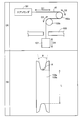
- FIG. 4 is an explanatory diagram showing the evaluation method of the performance evaluation.
- the wire rope A is a wire rope having the same configuration as the wire rope 10 of the first embodiment described above.
- the wire rope X1 is a wire rope having a structure in which a lubricant different from the lubricant 40 is used in the wire rope 10 of the first embodiment described above.
- the wire rope X2 is a wire rope having a structure in which the resin layer 50 is not provided in the wire rope 10.
- the wire rope X3 is a wire rope having a structure in which a lubricant different from the lubricant 40 is used in the wire rope 10 and the resin layer 50 is not provided.
- the detailed configurations of the wire ropes A and X1 to X3 are as follows.
- FIG. 4A shows a measuring device for measuring the durability of the wire rope.
- a wire rope 10 (specifically, wire rope A) having a total length of 1000 mm is fixed to an air cylinder 101.
- the wire rope 10 extending from the air cylinder 101 was arranged so as to be in a state of being inverted by 180 ° by the pulley 103a and then inverted by 90 ° by the pulley 103b.
- the wire rope 10 is passed through a through hole formed in the stopper 105.
- the other end of the wire rope 10 is connected to a 10 kg weight 107.
- the wire rope 10 slides in the grooves of the pulleys 103a and 103b (see FIG. 4B) as the air cylinder 101 reciprocates in the direction D1.
- the pulley 103a rotates in the direction D2
- the pulley 103b rotates in the direction D3.
- the weight 107 connected to the wire rope 10 reciprocates (rises and falls) in the direction D4.
- FIG. 4B is a partially enlarged view of the side surfaces of the pulleys 103a and 103b.
- the detailed configuration of the pulleys 103a and 103b is as follows. ⁇ Pulley 103a. 103b> ⁇ Groove diameter L: 25 mm ⁇ Groove angle ⁇ : 30 ° -Radius of curvature R at the bottom of the groove: 0.9 mm -Material: Polyacetal resin
- the durability of the wire rope 10 was measured under the following conditions. First, the air cylinder 101 pulled the wire rope 10 in the direction in which the weight 107 was raised, and the weight 107 aubbed against the stopper 105 to hold the wire rope 10 in a state where the tension was 490 N for 0.5 seconds. After that, the wire rope 10 was moved in the direction in which the weight 107 descended. This ascending and descending reciprocating motion was defined as one reciprocating motion. Here, the reciprocating stroke of the wire rope 10 is 150 mm, and the reciprocating speed is 20 reciprocating / minute. As an evaluation of the durability of the wire rope 10, the number of round trips until the wire rope 10 broke was measured under the above conditions.
- FIG. 3 shows the measurement results of durability (that is, the number of round trips until the wire rope 10 breaks, hereinafter also referred to as “durability number”) for the wire ropes A, X1 to X3.
- durability number that is, the number of round trips until the wire rope 10 breaks, hereinafter also referred to as “durability number” for the wire ropes A, X1 to X3.
- the durability of the wire rope X3 using the oil S2 as the lubricant and not providing the resin layer 50 was 41,196 times.
- the durability of the wire rope X2 in which the oil S1 was used as the lubricant 40 and the resin layer 50 was not provided was 49,775 times.
- the difference between the two endurance times was 8,579 times, showing an increase rate of about 120%.
- the wire rope X2 is different from the wire rope X3 in that the oil S1 is used as the lubricant 40. Therefore, it is considered that the difference in the number of durability and the rate of increase are caused by changing the
- the durability of the wire rope X1 provided with the oil S2 as the lubricant and the resin layer 50 was 67,012 times.
- the difference in the number of times of durability between the two was 25,816 times, showing an increase rate of about 163%.
- the wire rope X1 is different from the wire rope X3 in that the resin layer 50 is provided. Therefore, it is considered that the difference in the number of durability and the rate of increase are due to the provision of the resin layer 50.
- the durability of the wire rope A using the oil S1 as the lubricant 40 and having the resin layer 50 was 140,037 times, which was a very high value.
- the durability of the wire rope A was 73,025 times higher than that of the wire rope X1 which was different from the wire rope A in that the oil S2 was used as the lubricant 40, showing an increase rate of about 209%.
- the difference in the number of durability and the rate of increase are due to the comparison between the wire rope X2 and the wire rope X3, that is, the change of the lubricant 40 of the wire rope X3 having no resin layer 50 from the oil S2 to the oil S1.
- the durability of the wire rope A was 90,262 times more than that of the wire rope X2, which is different from the wire rope A in that the resin layer 50 was not provided, and showed an increase rate of about 281%.
- the difference in the number of durability and the rate of increase are compared with the wire rope X1 and the wire rope X3, that is, the difference in the number of durability (25) due to the provision of the resin layer 50 on the wire rope X3 using the oil S2 as the lubricant 40. , 816 times) and the rate of increase (about 163%) showed remarkable values.
- the wire rope A exhibited a high durability frequency and an increase rate by providing both the oil S1 as the lubricant 40 and the resin layer 50.
- the oil S1 as the lubricant 40 is liquid at room temperature, so that the lubricant 40 makes the strands 21, 23, 31, 33 (particularly, the strands 21 and 23 constituting the core strand 20) uniform.
- the effect is that the rope body 15 composed of the core strand 20 and the side strand 30 is covered with the resin layer 50, so that the oil S1 does not leak from the wire rope 10 and the strands 21 and 23. , 31 and 33, it is considered that the effect of the oil S1 as the lubricant 40 can be maintained. Furthermore, it was confirmed that molybdenum disulfide was produced from the sulfur-containing organic molybdenum compound contained in the oil S1 by repeating the friction between the strands 21, 23, 31, and 33. As a result, it was considered that the wire rope A realized a further low friction state.
- the wire rope in the second embodiment is different from the wire rope 10 of the first embodiment in that the lubricant contains a sulfur-free organic molybdenum compound and a sulfur-containing organic compound.
- the description of the same configuration as the wire rope 10 of the first embodiment described above will be omitted as appropriate.
- the wire rope of the present embodiment contains a sulfur-free organic molybdenum compound (that is, an organic molybdenum compound containing no sulfur as a constituent element) and a sulfur-containing organic compound as a lubricant.
- a sulfur-free organic molybdenum compound any conventionally known sulfur-free organic molybdenum compound can be used and is not particularly limited.
- the sulfur-free organic molybdenum compound for example, a molybdenum-amine complex, a molybdenum-succinic acid imide complex, a molybdenum salt of an organic acid, a molybdenum salt of an alcohol, or the like can be used.
- the sulfur-free organic molybdenum compound is more preferably a molybdenum-amine complex, a molybdenum salt of an organic acid or a molybdenum salt of an alcohol.
- the sulfur-free organic molybdenum compound may be used alone or in combination of two or more.
- any conventionally known sulfur-containing organic compound can be used and is not particularly limited.
- the sulfur-containing organic compound for example, thiadiazole, olefin sulfide, fat and oil sulfide, sulfide ester, polysulfide and the like can be used.
- the sulfur-containing organic compound is more preferably an olefin sulfide, thiadiazole or fat sulfide, and even more preferably thiadiazole.
- the sulfur-containing organic compound may be used alone or in combination of two or more.
- the lubricant of the present embodiment may be a lubricant containing a sulfur-free organic molybdenum compound and a sulfur-containing organic compound in the base oil, similarly to the lubricant 40 of the first embodiment. Further, the lubricant of the present embodiment is the same as the lubricant 40 of the first embodiment, that is, an antioxidant, an anti-wear agent, an extreme pressure agent, a friction modifier, a metal deactivator, a cleaning agent, a dispersant, and a viscosity. An index improver, a rust preventive, a foam eliminating agent and the like may be appropriately contained.
- the wire rope of the present embodiment can be manufactured by the same method as the wire rope 10 of the first embodiment described above. That is, in the method for producing a wire rope of the present embodiment, instead of the lubricant 40 of the first embodiment, the lubricant of the second embodiment, that is, the base oil contains a sulfur-free organic molybdenum compound and a sulfur-containing organic compound. Use oil in which the compound is dissolved.
- the lubricant interposed between the plurality of strands constituting the core strand and the side strand stays between the strands without leaking from the wire rope. Can be made to. Therefore, the effect of the lubricant can be maintained for a long period of time.
- the lubricant is a sulfur-free organic molybdenum compound and a sulfur-containing organic compound, which are more likely to be uniformly dispersed in solid or liquid oil than molybdenum disulfide which is a solid powder. And is contained. Therefore, the dispersibility of the sulfur-free organic molybdenum compound and the sulfur-containing organic compound in the lubricant can be improved.
- the sulfur-free organic molybdenum compound and the sulfur-containing organic compound are likely to be uniformly arranged between the strands.
- the sulfur-free organic molybdenum compound and the sulfur-containing organic compound contained in the lubricant can generate molybdenum disulfide by, for example, frictional heat generated by sliding a wire rope. Therefore, molybdenum disulfide can be uniformly generated between the strands, and the generation of friction singularities where friction between the strands occurs between the strands where the molybdenum disulfide is not arranged can be suppressed. ..
- the occurrence of breakage or breakage of the wire is suppressed, and the durability of the wire rope can be improved. Therefore, according to the wire rope of the present embodiment, the effect of the lubricant can be maintained for a long period of time, and the durability of the wire rope can be improved.
- FIG. 5 is an explanatory view showing a cross-sectional configuration of the wire rope 10A according to the third embodiment.
- the same configurations as those of the wire rope 10 of the first embodiment described above will be appropriately described by adding the same reference numerals.
- the wire rope 10A includes a rope body 15A, a lubricant 40, and a resin layer 50.
- the wire rope 10A differs from the wire rope 10 of the first embodiment mainly in that the rope body 15A is formed of a plurality of (more specifically, eight) side strands 30. That is, the rope body 15A does not have the core strand 20.
- the rope body 15A is formed by twisting eight side strands 30 together. In any cross section of the rope body 15A, the side strands 30 are in contact with each other. Since each configuration of the side strand 30 of the present embodiment is the same as each configuration of the side strand 30 of the first embodiment, the description thereof will be omitted.
- the wire rope 10A includes the lubricant 40.
- the lubricant 40 is interposed between at least a part of the strands 31 and 33 constituting the side strand 30.
- the lubricant 40 is also arranged inside the rope body 15A (more specifically, inside the side strand 30 in the radial direction of the rope body 15A).
- at least a part of the strands 31 and 33 is coated with the lubricant 40. Since the configurations of the lubricant 40 and the resin layer 50 of the present embodiment are the same as the configurations of the lubricant 40 and the resin layer 50 of the first embodiment, the description thereof will be omitted.
- the wire rope 10A also includes the resin layer 50, so that the lubricant 40 interposed between the plurality of strands 31 and 33 constituting the side strands 30 is provided. , Can be retained between the strands 31 and 33 without leaking from the wire rope 10A. Therefore, the effect of the lubricant 40 can be maintained for a long period of time in the wire rope 10A, and the durability of the wire rope 10A can be improved.
- FIG. 6 is an explanatory view showing a cross-sectional configuration of the wire rope 10B in the fourth embodiment.
- the same configurations as those of the wire ropes 10 and 10A of the above-described embodiment will be appropriately described by adding the same reference numerals.
- the wire rope 10B includes a rope body 15B, a lubricant 40, and a resin layer 50.
- the wire rope 10B is different from the wire rope 10 of the first embodiment in that the method of twisting the core strand 20B constituting the rope body 15B is not the Warrington twist.
- the rope body 15B has a core strand 20B and a plurality of (more specifically, eight) side strands 30.
- the core strand 20B has a three-layer structure in which the core strand 21 and the side strands 23B (specifically, the side strands 23a and 23b) are twisted together. That is, the core strand 20B has one core wire 21 as the first layer, six side wires 23a as the second layer, and six side wires 23b each as the third layer. doing.
- each of the six side strands 23a is arranged around the core strand 21 along the circumferential direction of the core strand 21.
- Each of the six side strands 23b is arranged around the side strands 23a between two adjacent side strands 23a.
- the core strand 20B is formed by twisting a total of 13 strands 21 and 23B in parallel.
- the rope body 15B of the present embodiment is formed by twisting eight side strands 30 to each other on the outer circumference of the core strand 20B.
- the side strands 30 are in contact with each other, and the core strands 20B and the side strands 30 are in contact with each other.
- some of the side strands 30 are not in contact with the core strand 20B, but the side strands 30 have at least one cross section of the rope body 15B (a cross section different from the cross section shown in FIG. 6). In the surface), it is in contact with the core strand 20B.
- the wire rope 10B includes the lubricant 40.
- the lubricant 40 is interposed between the strands 21 and 23B constituting the core strand 20B. Further, the lubricant 40 is also interposed between at least a part of the strands 31 and 33 constituting the side strand 30. Specifically, the outer periphery of each of the strands 21 and 23B and at least a part of the strands 31 and 33 are coated with the lubricant 40. Since the configurations of the lubricant 40 and the resin layer 50 of the present embodiment are the same as the configurations of the lubricant 40 and the resin layer 50 of the first embodiment, the description thereof will be omitted.
- the wire rope 10B includes the resin layer 50, so that the wire rope 10B is between the plurality of strands 21, 23B, 31, and 33 constituting the core strand 20B and the side strand 30.
- the lubricant 40 interposed in the wire rope 10B can be retained between the wires 21, 23B, 31, and 33 without leaking from the wire rope 10B. Therefore, the effect of the lubricant 40 can be maintained for a long period of time in the wire rope 10B, and the durability of the wire rope 10B can be improved.
- FIG. 7 is an explanatory view showing a cross-sectional configuration of the wire rope 10C according to the fifth embodiment.
- the same configurations as those of the wire ropes 10, 10A and 10B of the above-described embodiment will be appropriately described by adding the same reference numerals.
- the wire rope 10C of the fifth embodiment includes a rope body 15C, a lubricant 40, and a resin layer 50.
- the wire rope 10C of the fifth embodiment is different from the wire rope 10 of the first embodiment in that the rope body 15C is mainly formed from the core strand 20. That is, the rope body 15C does not have the side strands 30.
- the rope body 15C is formed by the core strand 20. More specifically, the core strand 20 is formed by twisting a total of 19 strands 21 and 23 by Warrington. Since each configuration of the core strand 20 of the present embodiment is the same as each configuration of the core strand 20 of the first embodiment, the description thereof will be omitted.
- the wire rope 10C includes the lubricant 40.
- the lubricant 40 is interposed between at least a part of the strands 21 and 23 constituting the core strand 20. Specifically, at least a part of the strands 21 and 23 is coated with the lubricant 40. Since the configurations of the lubricant 40 and the resin layer 50 of the present embodiment are the same as the configurations of the lubricant 40 and the resin layer 50 of the first embodiment, the description thereof will be omitted.
- the wire rope 10C also includes the resin layer 50, so that the lubricant 40 interposed between the plurality of strands 21 and 23 constituting the core strand 20 can be provided. , Can be retained between the strands 21 and 23 without leaking from the wire rope 10C. Therefore, the effect of the lubricant 40 can be maintained for a long period of time in the wire rope 10C, and the durability of the wire rope 10C can be improved.
- FIG. 8 is an explanatory view showing a cross-sectional configuration of the wire rope 10D in the sixth embodiment.
- the same configurations as the configurations of the wire ropes 10, 10A, 10B, and 10C of the above-described embodiment will be appropriately described by adding the same reference numerals.
- the wire rope 10D includes a rope body 15D, a lubricant 40, and a resin layer 50.
- the wire rope 10D is different from the wire rope 10B of the fourth embodiment in that the rope body 15D is mainly formed from the core strand 20B. That is, the rope body 15D does not have the side strands 30.
- the rope body 15D is formed by the core strand 20B. More specifically, the core strand 20B is formed by twisting a total of 13 strands 21 and 23B in parallel. Since each configuration of the core strand 20B of the present embodiment is the same as each configuration of the core strand 20B of the fourth embodiment, the description thereof will be omitted.
- the wire rope 10D includes the lubricant 40.
- the lubricant 40 is interposed between at least a part of the strands 21 and 23B constituting the core strand 20B. Specifically, at least a part of the strands 21 and 23B is coated with the lubricant 40. Since the configurations of the lubricant 40 and the resin layer 50 of the present embodiment are the same as the configurations of the lubricant 40 and the resin layer 50 of the fourth embodiment, the description thereof will be omitted.
- the wire rope 10D includes the resin layer 50, so that the lubricant 40 interposed between the plurality of strands 21 and 23B constituting the core strand 20B is provided. It can be retained between the strands 21 and 23B without leaking from the wire rope 10D. Therefore, the effect of the lubricant 40 can be maintained for a long period of time in the wire rope 10D, and the durability of the wire rope 10D can be improved.
- the configuration of the wire rope 10 in the first embodiment is merely an example and can be variously deformed.
- the number of side strands 30 in the wire rope 10 of the above embodiment, the number of strands forming the side strands 30 and the core strand 20, and the number of layers can be variously deformed.
- one of the core strand 20 and the side strand 30 may be composed of a single wire.
- the twisting method of the core strand 20 is not limited to the Warrington twist, and other parallel twists such as seal twist, filler twist, Warrington seal twist, cross twist, and the like. The twisting method may be used.
- the twisting method of the side strands 30 is not limited to parallel twisting, and may be another twisting method such as cross twisting. Further, the material of each member in the wire rope 10 of the above embodiment is merely an example and can be variously deformed.
- the lubricant 40 may be solid or semi-solid at room temperature, and the viscosity of the lubricant 40 at room temperature is less than 100 mm 2 / s and more than 14100 mm 2 / s. It may be.
Landscapes
- Chemical & Material Sciences (AREA)
- Oil, Petroleum & Natural Gas (AREA)
- Organic Chemistry (AREA)
- Ropes Or Cables (AREA)
- Chemical Kinetics & Catalysis (AREA)
- General Chemical & Material Sciences (AREA)
- Lubricants (AREA)
Abstract
La présente invention améliore la durabilité d'un câble métallique. Un câble métallique selon la présente invention comprend : un corps principal de câble qui comprend un brin qui est constitué d'une pluralité de filaments qui sont torsadés l'un avec l'autre ; un lubrifiant qui est interposé parmi la pluralité de filaments qui constituent le brin ; et une couche de résine qui recouvre la circonférence externe du corps principal de câble conjointement avec le lubrifiant. Le lubrifiant contient un composé de molybdène organique contenant du soufre.
Priority Applications (3)
| Application Number | Priority Date | Filing Date | Title |
|---|---|---|---|
| EP20871044.2A EP4039879A4 (fr) | 2019-10-01 | 2020-08-25 | Câble métallique |
| CN202080066676.4A CN114514349A (zh) | 2019-10-01 | 2020-08-25 | 钢丝绳 |
| US17/689,249 US20220186433A1 (en) | 2019-10-01 | 2022-03-08 | Wire rope |
Applications Claiming Priority (2)
| Application Number | Priority Date | Filing Date | Title |
|---|---|---|---|
| JP2019181415A JP7405553B2 (ja) | 2019-10-01 | 2019-10-01 | ワイヤロープ |
| JP2019-181415 | 2019-10-01 |
Related Child Applications (1)
| Application Number | Title | Priority Date | Filing Date |
|---|---|---|---|
| US17/689,249 Continuation US20220186433A1 (en) | 2019-10-01 | 2022-03-08 | Wire rope |
Publications (1)
| Publication Number | Publication Date |
|---|---|
| WO2021065251A1 true WO2021065251A1 (fr) | 2021-04-08 |
Family
ID=75269973
Family Applications (1)
| Application Number | Title | Priority Date | Filing Date |
|---|---|---|---|
| PCT/JP2020/031952 Ceased WO2021065251A1 (fr) | 2019-10-01 | 2020-08-25 | Câble métallique |
Country Status (5)
| Country | Link |
|---|---|
| US (1) | US20220186433A1 (fr) |
| EP (1) | EP4039879A4 (fr) |
| JP (1) | JP7405553B2 (fr) |
| CN (1) | CN114514349A (fr) |
| WO (1) | WO2021065251A1 (fr) |
Cited By (1)
| Publication number | Priority date | Publication date | Assignee | Title |
|---|---|---|---|---|
| JP2024000675A (ja) * | 2022-06-21 | 2024-01-09 | 小松マテーレ株式会社 | 防護柵用ワイヤー |
Families Citing this family (1)
| Publication number | Priority date | Publication date | Assignee | Title |
|---|---|---|---|---|
| JP2024107817A (ja) * | 2023-01-30 | 2024-08-09 | パナソニックIpマネジメント株式会社 | 撚線及びロボット |
Citations (6)
| Publication number | Priority date | Publication date | Assignee | Title |
|---|---|---|---|---|
| JPS5141273A (fr) * | 1974-08-13 | 1976-04-07 | Aer Corp | |
| JPH08120579A (ja) | 1994-10-25 | 1996-05-14 | Tokyo Seiko Co Ltd | コントロールケーブル |
| JP2008231293A (ja) | 2007-03-22 | 2008-10-02 | Japan Energy Corp | 潤滑剤組成物およびこれを用いた潤滑システム |
| JP2012512310A (ja) * | 2008-12-17 | 2012-05-31 | シェブロン・オロナイト・カンパニー・エルエルシー | 潤滑油組成物 |
| JP2017088749A (ja) * | 2015-11-11 | 2017-05-25 | 株式会社Adeka | 潤滑油組成物及びその製造方法 |
| CN107987927A (zh) * | 2016-10-26 | 2018-05-04 | 中国石油化工股份有限公司 | 一种钢丝绳油组合物 |
Family Cites Families (9)
| Publication number | Priority date | Publication date | Assignee | Title |
|---|---|---|---|---|
| JPS52165947U (fr) * | 1976-04-02 | 1977-12-15 | ||
| US4563870A (en) * | 1983-11-07 | 1986-01-14 | United States Steel Corporation | Lubricated wire rope |
| US4606183A (en) * | 1984-11-20 | 1986-08-19 | Amsted Industries Incorporated | Lubricated and thermoplastic impregnated wire rope |
| US7137483B2 (en) * | 2000-03-15 | 2006-11-21 | Hitachi, Ltd. | Rope and elevator using the same |
| JP4809543B2 (ja) * | 2001-05-16 | 2011-11-09 | 古河電気工業株式会社 | 防食耐熱送電線 |
| JP2004237299A (ja) * | 2003-02-04 | 2004-08-26 | Nippon Steel & Sumikin Welding Co Ltd | ガスシールドアーク溶接用ワイヤ |
| JP5024605B2 (ja) * | 2007-03-20 | 2012-09-12 | Dic株式会社 | 硬化性樹脂組成物、その硬化物、新規フェノール樹脂及びその製造方法 |
| JP2011046462A (ja) * | 2009-08-26 | 2011-03-10 | Toshiba Elevator Co Ltd | エレベータ装置およびエレベータ用ワイヤロープ |
| WO2012021134A1 (fr) * | 2010-08-13 | 2012-02-16 | Otis Elevator Company | Élément support de charge muni d'un revêtement protecteur et procédé associé |
-
2019
- 2019-10-01 JP JP2019181415A patent/JP7405553B2/ja active Active
-
2020
- 2020-08-25 EP EP20871044.2A patent/EP4039879A4/fr not_active Withdrawn
- 2020-08-25 CN CN202080066676.4A patent/CN114514349A/zh active Pending
- 2020-08-25 WO PCT/JP2020/031952 patent/WO2021065251A1/fr not_active Ceased
-
2022
- 2022-03-08 US US17/689,249 patent/US20220186433A1/en not_active Abandoned
Patent Citations (6)
| Publication number | Priority date | Publication date | Assignee | Title |
|---|---|---|---|---|
| JPS5141273A (fr) * | 1974-08-13 | 1976-04-07 | Aer Corp | |
| JPH08120579A (ja) | 1994-10-25 | 1996-05-14 | Tokyo Seiko Co Ltd | コントロールケーブル |
| JP2008231293A (ja) | 2007-03-22 | 2008-10-02 | Japan Energy Corp | 潤滑剤組成物およびこれを用いた潤滑システム |
| JP2012512310A (ja) * | 2008-12-17 | 2012-05-31 | シェブロン・オロナイト・カンパニー・エルエルシー | 潤滑油組成物 |
| JP2017088749A (ja) * | 2015-11-11 | 2017-05-25 | 株式会社Adeka | 潤滑油組成物及びその製造方法 |
| CN107987927A (zh) * | 2016-10-26 | 2018-05-04 | 中国石油化工股份有限公司 | 一种钢丝绳油组合物 |
Non-Patent Citations (1)
| Title |
|---|
| See also references of EP4039879A4 |
Cited By (1)
| Publication number | Priority date | Publication date | Assignee | Title |
|---|---|---|---|---|
| JP2024000675A (ja) * | 2022-06-21 | 2024-01-09 | 小松マテーレ株式会社 | 防護柵用ワイヤー |
Also Published As
| Publication number | Publication date |
|---|---|
| JP7405553B2 (ja) | 2023-12-26 |
| US20220186433A1 (en) | 2022-06-16 |
| JP2021055230A (ja) | 2021-04-08 |
| EP4039879A1 (fr) | 2022-08-10 |
| EP4039879A4 (fr) | 2023-11-01 |
| CN114514349A (zh) | 2022-05-17 |
Similar Documents
| Publication | Publication Date | Title |
|---|---|---|
| WO2021065251A1 (fr) | Câble métallique | |
| CN103451981B (zh) | 混合芯绳索 | |
| US5475973A (en) | Rope with corrosion resistance and bending endurance characteristics | |
| US3874158A (en) | Wire rope with plastic impregnated lubricated core | |
| US20180281177A1 (en) | Robot And Gear Unit | |
| RU2015116251A (ru) | Гибридный трос | |
| CN204780423U (zh) | 一种四方十二股防扭钢丝绳 | |
| JP6424296B2 (ja) | エレベータ用ワイヤロープ | |
| JP3975044B2 (ja) | 多層ストランド型ワイヤロープ | |
| JPH01188714A (ja) | 遠隔制御組立体 | |
| US20130160599A1 (en) | Control cable | |
| JP2006283259A (ja) | ワイヤロープおよびコントロールケーブル | |
| WO2017026368A1 (fr) | Dispositif d'étanchéité et dispositif de palier à roulement | |
| KR20040024283A (ko) | 와이어 로프용 합성수지 코팅 코어 | |
| KR101261810B1 (ko) | 와이어로프 중심 | |
| JP2818631B2 (ja) | コントロールインナーケーブル | |
| US4563870A (en) | Lubricated wire rope | |
| CN206741961U (zh) | 一种石油平台用柔性抗扭曲卷筒电缆 | |
| JP2005076135A (ja) | 操作用ワイヤロープと、操作用ワイヤロープを用いて成る操作装置 | |
| RU174518U1 (ru) | Стальной прядевый канат с полимерным материалом | |
| KR20230137162A (ko) | 와이어 로프 | |
| JPH0293113A (ja) | コントロールケーブル | |
| KR0124043B1 (ko) | 와이어로프 중심 | |
| Holdmeyer | Wire rope | |
| JP2004124342A (ja) | インナーワイヤーロープ |
Legal Events
| Date | Code | Title | Description |
|---|---|---|---|
| 121 | Ep: the epo has been informed by wipo that ep was designated in this application |
Ref document number: 20871044 Country of ref document: EP Kind code of ref document: A1 |
|
| NENP | Non-entry into the national phase |
Ref country code: DE |
|
| ENP | Entry into the national phase |
Ref document number: 2020871044 Country of ref document: EP Effective date: 20220502 |