WO2021067698A1 - Edible pongamia compositions, and methods of preparing and using thereof - Google Patents
Edible pongamia compositions, and methods of preparing and using thereof Download PDFInfo
- Publication number
- WO2021067698A1 WO2021067698A1 PCT/US2020/053945 US2020053945W WO2021067698A1 WO 2021067698 A1 WO2021067698 A1 WO 2021067698A1 US 2020053945 W US2020053945 W US 2020053945W WO 2021067698 A1 WO2021067698 A1 WO 2021067698A1
- Authority
- WO
- WIPO (PCT)
- Prior art keywords
- pongamia
- ppm
- composition
- equal
- less
- Prior art date
- Legal status (The legal status is an assumption and is not a legal conclusion. Google has not performed a legal analysis and makes no representation as to the accuracy of the status listed.)
- Ceased
Links
Classifications
-
- A—HUMAN NECESSITIES
- A23—FOODS OR FOODSTUFFS; TREATMENT THEREOF, NOT COVERED BY OTHER CLASSES
- A23J—PROTEIN COMPOSITIONS FOR FOODSTUFFS; WORKING-UP PROTEINS FOR FOODSTUFFS; PHOSPHATIDE COMPOSITIONS FOR FOODSTUFFS
- A23J1/00—Obtaining protein compositions for foodstuffs; Bulk opening of eggs and separation of yolks from whites
- A23J1/14—Obtaining protein compositions for foodstuffs; Bulk opening of eggs and separation of yolks from whites from leguminous or other vegetable seeds; from press-cake or oil-bearing seeds
- A23J1/142—Obtaining protein compositions for foodstuffs; Bulk opening of eggs and separation of yolks from whites from leguminous or other vegetable seeds; from press-cake or oil-bearing seeds by extracting with organic solvents
-
- A—HUMAN NECESSITIES
- A23—FOODS OR FOODSTUFFS; TREATMENT THEREOF, NOT COVERED BY OTHER CLASSES
- A23K—FODDER
- A23K10/00—Animal feeding-stuffs
- A23K10/30—Animal feeding-stuffs from material of plant origin, e.g. roots, seeds or hay; from material of fungal origin, e.g. mushrooms
-
- A—HUMAN NECESSITIES
- A23—FOODS OR FOODSTUFFS; TREATMENT THEREOF, NOT COVERED BY OTHER CLASSES
- A23K—FODDER
- A23K20/00—Accessory food factors for animal feeding-stuffs
- A23K20/10—Organic substances
- A23K20/105—Aliphatic or alicyclic compounds
-
- A—HUMAN NECESSITIES
- A23—FOODS OR FOODSTUFFS; TREATMENT THEREOF, NOT COVERED BY OTHER CLASSES
- A23K—FODDER
- A23K20/00—Accessory food factors for animal feeding-stuffs
- A23K20/10—Organic substances
- A23K20/111—Aromatic compounds
-
- A—HUMAN NECESSITIES
- A23—FOODS OR FOODSTUFFS; TREATMENT THEREOF, NOT COVERED BY OTHER CLASSES
- A23K—FODDER
- A23K20/00—Accessory food factors for animal feeding-stuffs
- A23K20/10—Organic substances
- A23K20/142—Amino acids; Derivatives thereof
- A23K20/147—Polymeric derivatives, e.g. peptides or proteins
-
- A—HUMAN NECESSITIES
- A23—FOODS OR FOODSTUFFS; TREATMENT THEREOF, NOT COVERED BY OTHER CLASSES
- A23K—FODDER
- A23K20/00—Accessory food factors for animal feeding-stuffs
- A23K20/10—Organic substances
- A23K20/163—Sugars; Polysaccharides
-
- A—HUMAN NECESSITIES
- A23—FOODS OR FOODSTUFFS; TREATMENT THEREOF, NOT COVERED BY OTHER CLASSES
- A23K—FODDER
- A23K50/00—Feeding-stuffs specially adapted for particular animals
- A23K50/70—Feeding-stuffs specially adapted for particular animals for birds
- A23K50/75—Feeding-stuffs specially adapted for particular animals for birds for poultry
-
- A—HUMAN NECESSITIES
- A23—FOODS OR FOODSTUFFS; TREATMENT THEREOF, NOT COVERED BY OTHER CLASSES
- A23L—FOODS, FOODSTUFFS OR NON-ALCOHOLIC BEVERAGES, NOT OTHERWISE PROVIDED FOR; PREPARATION OR TREATMENT THEREOF
- A23L33/00—Modifying nutritive qualities of foods; Dietetic products; Preparation or treatment thereof
- A23L33/10—Modifying nutritive qualities of foods; Dietetic products; Preparation or treatment thereof using additives
- A23L33/125—Modifying nutritive qualities of foods; Dietetic products; Preparation or treatment thereof using additives containing carbohydrate syrups; containing sugars; containing sugar alcohols; containing starch hydrolysates
-
- A—HUMAN NECESSITIES
- A23—FOODS OR FOODSTUFFS; TREATMENT THEREOF, NOT COVERED BY OTHER CLASSES
- A23L—FOODS, FOODSTUFFS OR NON-ALCOHOLIC BEVERAGES, NOT OTHERWISE PROVIDED FOR; PREPARATION OR TREATMENT THEREOF
- A23L33/00—Modifying nutritive qualities of foods; Dietetic products; Preparation or treatment thereof
- A23L33/10—Modifying nutritive qualities of foods; Dietetic products; Preparation or treatment thereof using additives
- A23L33/16—Inorganic salts, minerals or trace elements
-
- A—HUMAN NECESSITIES
- A23—FOODS OR FOODSTUFFS; TREATMENT THEREOF, NOT COVERED BY OTHER CLASSES
- A23L—FOODS, FOODSTUFFS OR NON-ALCOHOLIC BEVERAGES, NOT OTHERWISE PROVIDED FOR; PREPARATION OR TREATMENT THEREOF
- A23L33/00—Modifying nutritive qualities of foods; Dietetic products; Preparation or treatment thereof
- A23L33/10—Modifying nutritive qualities of foods; Dietetic products; Preparation or treatment thereof using additives
- A23L33/17—Amino acids, peptides or proteins
- A23L33/185—Vegetable proteins
-
- A—HUMAN NECESSITIES
- A23—FOODS OR FOODSTUFFS; TREATMENT THEREOF, NOT COVERED BY OTHER CLASSES
- A23C—DAIRY PRODUCTS, e.g. MILK, BUTTER OR CHEESE; MILK OR CHEESE SUBSTITUTES; PREPARATION THEREOF
- A23C9/00—Milk preparations; Milk powder or milk powder preparations
- A23C9/12—Fermented milk preparations; Treatment using microorganisms or enzymes
- A23C9/13—Fermented milk preparations; Treatment using microorganisms or enzymes using additives
- A23C9/1315—Non-milk proteins or fats; Seeds, pulses, cereals or soja; Fatty acids, phospholipids, mono- or diglycerides or derivatives therefrom; Egg products
-
- A—HUMAN NECESSITIES
- A23—FOODS OR FOODSTUFFS; TREATMENT THEREOF, NOT COVERED BY OTHER CLASSES
- A23C—DAIRY PRODUCTS, e.g. MILK, BUTTER OR CHEESE; MILK OR CHEESE SUBSTITUTES; PREPARATION THEREOF
- A23C9/00—Milk preparations; Milk powder or milk powder preparations
- A23C9/152—Milk preparations; Milk powder or milk powder preparations containing additives
- A23C9/1526—Amino acids; Peptides; Protein hydrolysates; Nucleic acids; Derivatives thereof
-
- A—HUMAN NECESSITIES
- A23—FOODS OR FOODSTUFFS; TREATMENT THEREOF, NOT COVERED BY OTHER CLASSES
- A23V—INDEXING SCHEME RELATING TO FOODS, FOODSTUFFS OR NON-ALCOHOLIC BEVERAGES AND LACTIC OR PROPIONIC ACID BACTERIA USED IN FOODSTUFFS OR FOOD PREPARATION
- A23V2002/00—Food compositions, function of food ingredients or processes for food or foodstuffs
-
- Y—GENERAL TAGGING OF NEW TECHNOLOGICAL DEVELOPMENTS; GENERAL TAGGING OF CROSS-SECTIONAL TECHNOLOGIES SPANNING OVER SEVERAL SECTIONS OF THE IPC; TECHNICAL SUBJECTS COVERED BY FORMER USPC CROSS-REFERENCE ART COLLECTIONS [XRACs] AND DIGESTS
- Y02—TECHNOLOGIES OR APPLICATIONS FOR MITIGATION OR ADAPTATION AGAINST CLIMATE CHANGE
- Y02P—CLIMATE CHANGE MITIGATION TECHNOLOGIES IN THE PRODUCTION OR PROCESSING OF GOODS
- Y02P60/00—Technologies relating to agriculture, livestock or agroalimentary industries
- Y02P60/80—Food processing, e.g. use of renewable energies or variable speed drives in handling, conveying or stacking
- Y02P60/87—Re-use of by-products of food processing for fodder production
Definitions
- the present disclosure relates generally to compositions obtained from pongamia oilseeds, and more specifically to pongamia compositions having an optimized nutritional composition, achieved by subjecting pongamia oilseeds to certain processing steps.
- Such pongamia compositions may be suitable as food or food ingredients to humans and other nonruminant animals, such as poultry, swine, canines and felines.
- Millettia pinnata also known as Pongamia pinnata or Pongamia glabra, or more colloquially as pongamia or karanja, is tree that is common throughout Asia and may provide a major source for future plant-based protein.
- Pongamia trees use one-tenth of the land as required for soybean plants to produce the same amount of beans.
- Pongamia trees can grow on degraded soil, and allow for avoidance of deforestation issues created by soybeans.
- Pongamia also produces much larger amounts of protein and vegetable oil per acre than soybean.
- Pongamia seedcake the byproduct of oil extraction from pongamia oil seeds, offers a potential renewable source of protein, carbohydrates and fibers for use in foodstuffs comparable to soy.
- pongamia oilseeds also have other components that are known in the art to have disagreeable taste and odor, including karanjin and pongamol. It is desirable to minimize the amount of karanjin and pongamol in the seedcake for use as a viable food source.
- compositions obtained by processing pongamia oilseeds under certain conditions to obtain a composition suitable for consumption by humans and other animals are provided herein.
- a pongamia composition comprising: karanjin or pongamol, or both; tannins; digestible proteins; carbohydrates; antioxidants; and minerals.
- the composition has: (i) a karanjin content, if present, of less than or equal to 100 ppm; (ii) a pongamol content, if present, of less than or equal to 100 ppm; and
- composition is in the form of meal. In certain variations, the composition is in the form of flour.
- the method comprises: heating pongamia oilseeds at a temperature between 25°C and 200°C for a suitable time to provide heated oilseeds; dehulling the treated oilseeds to produce dehulled oilseeds; mechanically pressing the dehulled oilseeds to produce a deoiled seedcake; combining the deoiled seedcake with solvent to provide an extraction mixture, wherein the solvent comprises alkyl alkanoate or alcohol, or any combination thereof; and separating the extraction mixture into a miscella and the pongamia composition.
- the mechanical pressing is performed by an expeller or an expander.
- the pongamia compositions provided herein are formulated into feed compositions, suitable for feeding to humans and other non-ruminant animals.
- a method comprising feeding any of the pongamia compositions described herein to a non-ruminant animal.
- feed compositions that comprise the pongamia compositions provided herein.
- a poultry feed comprising: a base feed; and any of the pongamia compositions described herein.
- a poultry feed comprising: corn; a soybean supplement; and any of the pongamia compositions described herein.
- a food composition wherein the food composition is a confection, condiment, cereal composition, baked good, baking good, cooking adjuvant, dairy product, dietary supplement, tabletop sweetener composition beverage, or other beverage product.
- FIG. 1 depicts an exemplary process for preparing an edible pongamia composition.
- Pongamia Compositions [0016] In some aspects, provided herein are edible compositions obtained from processing pongamia oilseeds to maximize removal certain anti-nutritional components therein, such as karanjin, pongamol and tannins, while optimizing the nutritional balance of other components therein, such as digestible proteins, carbohydrates, antioxidants, and minerals.
- the components of the pongamia compositions described herein are referring to components endogenous to the pongamia oilseed from which the composition is obtained.
- Pongamia oilseeds are known to contain high concentrations of a class of flavonoids possessing a furan ring, known as furanoflavonoids, most notably karanjin and pongamol.
- Furanoflavonoids may be further identified by sub-classes including, for example, flavones, flavonols (e.g., karanjin) and dibenzoylmethanes (e.g., pongamol).
- Karanjin (left) and pongamol (right) have the following structures, respectively: [0019]
- an edible pongamia composition comprising: karanjin or pongamol, or both; tannins; digestible proteins; carbohydrates; antioxidants; and minerals.
- the composition has: (i) a karanjin content, if present, of less than or equal to 100 ppm; (ii) a pongamol content, if present, of less than or equal to 100 ppm; and (iii) a tannin content of less than or equal to 0.5% w/w.
- the karanjin content and/or pongamol content (where present) is independently less than or equal to 90 ppm, less than or equal to 80 ppm, less than or equal to 70 ppm, less than or equal to 60 ppm, less than or equal to 50 ppm, less than or equal to 40 ppm, less than or equal to 30 ppm, less than or equal to 20 ppm, less than or equal to 10 ppm, less than or equal to 5 ppm, less than or equal to 2 ppm, less than or equal to 1 ppm, or less than or equal to 0.5 ppm, or less than or equal to 0.1 ppm.
- the pongamia composition has a karanjin concentration and/or a pongamol concentration on the order of single digit parts-per-million, or fractional amounts thereof. In some embodiments, the pongamia composition has a karanjin concentration and/or a pongamol concentration of at least 0.001 ppm, at least 0.01 ppm, or at least 0.1 ppm.
- the pongamia composition has a karanjin content and/or pongamol content of between 0.001 ppm and 100 ppm, between 0.001 ppm and 90 ppm, between 0.001 ppm and 80 ppm, between 0.001 ppm and 70 ppm, between 0.001 ppm and 60 ppm, between 0.001 ppm and 50 ppm, between 0.001 ppm and 40 ppm, between 0.001 ppm and 30 ppm, between 0.001 ppm and 20 ppm, between 0.001 ppm and 10 ppm, between 0.001 ppm and 5 ppm, between 0.001 ppm and 2 ppm, between 0.001 ppm and 1 ppm, 0.001 ppm and 0.5 ppm, between 0.001 ppm and 0.1 ppm, between 0.01 ppm and 100 ppm, between 0.01 ppm and 90 ppm, between 0.01 ppm and
- the pongamia composition may have trace concentrations of karanjin and/or pongamol, on the order of parts-per-billion (ppb) or parts- per-trillion (ppt).
- the pongamia compositions described herein may comprise trace amounts of karanjin and/or pongamol that are non-detectable by the alkyl alkanoate-based microwave-assisted solvent extraction analytical methods described herein.
- the pongamia compositions of the present disclosure may have very low tannin content to the level of being non-detectable.
- the tannin content is less than or equal to 0.4% w/w, or less than or equal to 0.3% w/w.
- the tannin content is less than or equal to 0.2% w/w, less than or equal to 0.1% w/w, less than or equal to 0.01% w/w, or less than or equal to 0.001% w/w.
- the tannin content of the pongamia compositions is at least 0.001% w/w, at least 0.01% w/w, or at least 0.01% w/w.
- the tannin content is between 0.001% w/w and 0.4% w/w, between 0.001% w/w and 0.3% w/w, between 0.001% w/w and 0.2% w/w, between 0.001% w/w and 0.1% w/w, between 0.001% w/w and 0.01% w/w, between 0.01% w/w and 0.4% w/w, between 0.01% w/w and 0.3% w/w, between 0.01% w/w and 0.2% w/w, between 0.01% w/w and 0.1% w/w, between 0.1% w/w and 0.4% w/w, between 0.1% w/w and 0.3% w/w, between 0.1% w/w and 0.2% w/w, between 0.2% w/w and 0.4% w/w, between 0.2% w/w and 0.3% w/w, or between 0.3% w/w and 0.4% w/w.
- the composition further comprises other furanoflavonoids that may be present in the pongamia oilseeds from which the pongamia composition was obtained.
- furanoflavonoids may include, for example, lanceolatin, kanjone, pongaglabrone, pongaglabol, ovalifolin, sanaganone, pinnatin, gamatin, pongone, glabone, karanjonol, pongapin, pachycarin, pongaglabol methyl ether, isopongaglabol, methoxyisopongaglabol, pongol methyl ether, millettocalyxin, 6-methoxyisopongaglabol, pongamoside A, pongamoside B, ponganone XI, pongamoside C, glabra I, ovalitenone, ponganone IX, and pongarotene.
- the pongamia composition has a balance of digestible proteins, carbohydrates, antioxidants, and minerals to increase bioavailability in humans and other non-ruminant animals.
- the pongamia composition is in the form of meal. In other variations of the foregoing, the pongamia composition is in the form of flour.
- the pongamia compositions of the present disclosure may have (i) a karanjin content, if present, of less than or equal to 100 ppm; (ii) a pongamol content, if present, of less than or equal to 100 ppm; and (iii) a tannin content of less than or equal to 0.5% w/w.
- the pongamia compositions of the present disclosure may have (i) a karanjin content, if present, of less than or equal to 100 ppm, less than or equal to 90 ppm, less than or equal to 80 ppm, less than or equal to 70 ppm, less than or equal to 60 ppm, less than or equal to 50 ppm, less than or equal to 40 ppm, less than or equal to 30 ppm, less than or equal to 20 ppm, less than or equal to 10 ppm, less than or equal to 5 ppm, less than or equal to 2 ppm, less than or equal to 1 ppm, or less than or equal to 0.5 ppm, or less than or equal to 0.1 ppm; (ii) a pongamol content, if present, of less than or equal to 100 ppm, less than or equal to 90 ppm, less than or equal to 80 ppm, less than or equal to 70 ppm, less than or equal to 60 ppm;
- the tannin content is less than or equal to 0.2% w/w, less than or equal to 0.1% w/w, less than or equal to 0.01% w/w, or less than or equal to 0.001% w/w.
- the pongamia compositions of the present disclosure may have (i) a karanjin content, if present, of less than or equal to 100 ppm; (ii) a pongamol content, if present, of less than or equal to 100 ppm; and (iii) a tannin content of less than or equal to 0.5% w/w, the pongamia compositions may be further characterized by various organoleptic properties, such as taste, palatability, and sensory acceptability.
- color may be indicative of, or a proxy for, the tannin content in the pongamia compositions.
- the pongamia compositions described herein may color characteristics as determined by a ultra-violet-visible light spectral absorption profile or visual comparison to suitable color standard (card) (e.g., USDA color standard).
- suitable color standard e.g., USDA color standard.
- the pongamia composition is white.
- providing the oilseeds may further include removing and/or separating the oilseeds from the pods, or shells.
- the removal of the oilseeds from their pods or shells may involve manual removal or mechanical cracking to open the pods.
- the separation of oilseeds from their pods or shells may involve manual separation, sieving/screening, or aerodynamic separation (e.g., weight classification by aspiration).
- the pongamia oilseeds are heated at a suitable temperature for a suitable amount of time in step 104, thereby providing treated pongamia oilseeds.
- the thermal treatment may help to promote the disintegration of the membrane binding the oilseeds to their hulls and, consequently, may facilitate the downstream removal of the hulls from the treated oilseeds.
- the temperature and duration of the thermal treatment may influence the compatibility of the downstream dehulled oilseeds with the mechanical pressing process.
- the oilseeds are heated at a temperature of at least 25°C, at least 30°C, at least 35°C, at least 40°C, at least 50°C, at least 60°C, at least 70°C, at least 75°C, at least 80°C, at least 90°C, at least 100°C, at least 110°C, at least 120°C, at least 125°C, at least 130°C, at least 140°C, at least 150°C, at least 160°C, at least 170°C, at least 175°C, at least 180°C, or at least 190°C.
- the oil seeds are heated at a temperature of less than or equal to 200°C, less than or equal to 190°C, less than or equal to 180°C, less than or equal to 170°C, less than or equal to 160°C, less than or equal to 150°C, less than or equal to 140°C, less than or equal to 130°C, less than or equal to 125°C, less than or equal to 120°C, less than or equal to 110°C, less than or equal to 100°C, less than or equal to 90°C, less than or equal to 80°C, or less than or equal to 75°C.
- the oilseeds are heated at a temperature between 25°C and 200°C, between 30°C and 200°C, between 60°C and 200°C, between 60°C and 180°C, between 60°C and 150°C, between 60°C and 120°C, between 80°C and 200°C, between 80°C and 180°C, between 80°C and 150°C, between 80°C and 120°C, between 100°C and 200°C, between 100°C and 180°C, between 100°C and 150°C, between 100°C and 120°C, between 120°C and 200°C, between 120°C and 180°C, between 120°C and 150°C, between 150°C and 200°C, between 150°C and 180°C, or between 180°C and 200°C.
- the oilseeds are heated for a period of time of at least 5 minutes, at least 10 minutes, at least 15 minutes, at least 20 minutes, at least 25 minutes, at least 30 minutes, at least 45 minutes, at least 1 hour, at least 90 minutes, at least 120 minutes, at least 150 minutes or at least 180 minutes.
- the oil seeds are heated for a period of time of less than or equal to 1 day, less than or equal to 20 hours, less than or equal to 15 hours, less than or equal to 10 hours, less than or equal to 5 hours, less than or equal to 4 hours, less than or equal to 180 minutes, less than or equal to 120 minutes, less than or equal to 90 minutes, less than or equal to 60 minutes, less than or equal to 45 minutes, less than or equal to 30 minutes, less than or equal to 25 minutes, less than or equal to 20 minutes, less than or equal to 15 minutes, or less than or equal to 10 minutes.
- the oilseeds are heated for a period of time between 5 minutes and 3 hours, between 5 minutes and 2 hours, between 5 minutes and 90 minutes, between 5 minutes and 1 hour, between 5 minutes and 30 minutes, between 5 minutes and 15 minutes, between 15 minutes and 3 hours, between 15 minutes and 2 hours, between 15 minutes and 90 minutes, between 15 minutes and 1 hour, between 15 minutes and 30 minutes, between 30 minutes and 3 hours, between 30 minutes and 2 hours, between 30 minutes and 90 minutes, between 30 minutes and 1 hour, or between 30 minutes and 45 minutes.
- Suitable temperatures and/or residence times for the thermal treatment may encompass any combination of time and temperature as described herein.
- the oilseeds are heated at a temperature between 25°C and 200°C for a period of time between 5 minutes and 3 hours.
- the oilseeds are heated for a period of time between 5 minutes and 3 hours, between 5 minutes and 2 hours, between 5 minutes and 90 minutes, between 5 minutes and 1 hour, between 5 minutes and 30 minutes, between 5 minutes and 15 minutes, between 15 minutes and 3 hours, between 15 minutes and 2 hours, between 15 minutes and 90 minutes, between 15 minutes and 1 hour, between 15 minutes and 30 minutes, between 30 minutes and 3 hours, between 30 minutes and 2 hours, between 30 minutes and 90 minutes, between 30 minutes and 1 hour, or between 30 minutes and 45 minutes, at a temperature of between 25°C and 200°C, between 30°C and 200°C, between 60°C and 200°C, between 60°C and 180°C, between 60°C and 150°C, between 60°C and 120°C, between 80°C and 200°C, between 80°C and 180°C, between 80°C and 150°C, between 80°C and 120°C, between 100°C and 200°C, between
- 100°C and 180°C between 100°C and 150°C, between 100°C and 120°C, between 120°C and 200°C, between 120°C and 180°C, between 120°C and 150°C, between 150°C and 200°C, between 150°C and 180°C, or between 180°C and 200°C.
- the treated oilseeds are then dehulled in step 106. Any suitable techniques known in the art to remove the hulls from the oilseeds may be employed. For example, in some variations, the treated oilseeds are subjected to abrasive force in order to remove the hulls. In certain variations, dehulling may be carried out with an attrition mill or an impeller, or mechanical equivalent. In one variation, the dehulling step does not utilize wet removal methods, such as blanching, alkaline and/or aqueous dissolution. In certain embodiments, the pongamia oilseeds undergo thermal treatment prior to hull removal.
- such thermal treatment is a dry dehulling process, which is distinguished from a wet dehulling process that may involve, for example, blanching.
- the pongamia oilseeds subjected to the thermal treatment and the oilseeds and pongamia composition obtained therefrom as described herein may be characterized by their moisture content.
- the treated oilseeds obtained from the thermal treatment have a moisture content of less than or equal to 20% w/w, less than or equal to 17% w/w, less than or equal to 15% w/w, less than or equal to 12% w/w, less than or equal to 10% w/w, or less than or equal to 8% w/w, without further drying.
- the treated oilseeds obtained from the thermal treatment have a moisture content of between 5% w/w and 20% w/w, between 5% w/w and 17% w/w, between 5% w/w and 15% w/w, between 5% w/w and 12% w/w, between 5% w/w and 10% w/w, between 5% w/w and 8% w/w, between 8% w/w and 20% w/w, between 8% w/w and 17% w/w, between 8% w/w and 15% w/w, between 8% w/w and 12% w/w, between 8% w/w and 10% w/w, between 10% w/w and 20% w/w, between 10% w/w and 17% w/w, between 10% w/w and 15% w/w, between 10% w/w and 12% w/w, between 10% w/w and 20% w/w, between 10% w/w and 17% w/
- the treated oilseeds obtained from the thermal treatment may be dried in order to control the moisture content prior to mechanical processing to remove oil and obtain a deoiled seedcake (or presscake).
- the dehulled oilseeds may be described by any number of characteristics, including for example the weight percentage of oilseeds that are dehulled, the tannin content, the moisture content, or the particle size distribution. In some embodiments, the percentage of oilseeds that are dehulled may be quantified by visual inspection of the covered and uncovered surface area of the oilseeds.
- the dehulled oilseeds has between 40% w/w and 100% w/w, between 40% and 80% w/w, or between 40% and 70% w/w of oilseeds having less than 50% of the total surface area covered by hull.
- the dehulled oilseeds have an average tannin content of less than or equal to 0.5% w/w, less than or equal to 0.4 % w/w, or less than or equal to 0.3% w/w.
- the dehulled oilseeds have an average tannin content of less than or equal to 0.2% w/w, less than or equal to 0.1% w/w, less than or equal to 0.01% w/w, or less than or equal to 0.001% w/w.
- the dehulled oilseeds have an average tannin content of at least 0.001% w/w, at least 0.01% w/w, or at least 0.01% w/w.
- the tannin content is between 0.001% w/w and 0.4% w/w, between 0.001% w/w and 0.3% w/w, between 0.001% w/w and 0.2% w/w, between 0.001% w/w and 0.1% w/w, between 0.001% w/w and 0.01% w/w, between 0.01% w/w and 0.4% w/w, between 0.01% w/w and 0.3% w/w, between 0.01% w/w and 0.2% w/w, between 0.01% w/w and 0.1% w/w, between 0.1% w/w and 0.4% w/w, between 0.1% w/w and 0.3% w/w, between 0.1% w/w and 0.2% w/w, between 0.01% w/w and 0.1% w
- removing the hulls from the treated pongamia oilseeds results in a mixture comprising dehulled oilseeds and detached hulls.
- the method may further comprise separating the detached hulls from the dehulled oilseeds.
- the method further comprises separating the dehulled oilseeds from the detached hulls by hand separation, by sieving or screening, or aerodynamic separation (i.e., weight classification by aspiration).
- the dehulled oilseeds are mechanically pressed to remove oil and to provide a deoiled seedcake (or presscake).
- the dehulled oilseeds are mechanically pressed using an expeller press.
- the dehulled oilseeds are mechanically pressed using an expander. In still other variations, the dehulled oilseeds are mechanically pressed using an extruder. One or more iterations of the mechanical pressing step may be applied to the dehulled oilseeds and/or resulting deoiled seedcake to provide the final deoiled seedcake used in the subsequent solvent extraction step. In other embodiments, the deoiled seedcake may be further cracked, prior to solvent extraction, to provide a deoiled seedcake having a certain particle size distribution. [0037] The deoiled seedcake may be described by other attributes including, for example, karanjin concentration, oil content, moisture content, and particle size distribution.
- the deoiled seedcake has a karanjin concentration of at least 200 ppm, or at least 500 ppm.
- the deoiled seedcake has 8-40% oil by weight, 10-35% oil by weight, or 8-30% oil by weight.
- the deoiled seedcake undergoes solvent extraction.
- the deoiled seedcake is combined with the solvent in an extractor.
- the deoiled seedcake and the solvent undergoes mixing, agitating, or stirring in an extractor.
- heat may be applied in the solvent extraction step.
- the solvent comprises alkyl alkanoate or alcohol, or any combination thereof.
- the solvent comprises alcohol.
- Alcohol solvent may include, for example, methanol, propanol, ethanol, butanol, or pentanol.
- the solvent comprises alkyl alkanoate.
- the alkyl of the alkyl alkanoate is methyl, ethyl, propyl, or butyl.
- the solvent comprises a methyl alkanoate, an ethyl alkanoate, a propyl alkanoate, or a butyl alkanoate, or any combinations thereof.
- the alkanoate of the alkyl alkanoate is methanoate, ethanoate, propionate, butanoate, or pentanoate.
- the solvent comprises an alkyl methanoate, an alkyl ethanoate, an alkyl propionate, an alkyl butanoate, an alkyl pentanoate, or any combination thereof.
- the solvent comprises an alkyl ethanoate.
- the solvent comprises ethyl acetate.
- Alkyl alkanoate solvent may include, for example, methyl methanoate, methyl ethanoate, methyl propanoate, methyl butanoate, methyl pentanoate, ethyl methanoate, ethyl ethanoate, ethyl propanoate, ethyl butanoate, ethyl pentanoate, propyl methanoate, propyl ethanoate, propyl propanoate, propyl butanoate, propyl pentanoate, butyl methanoate, butyl ethanoate, butyl propanoate, butyl butanoate, and butyl pentanoate, and any combinations thereof.
- the solvent comprises an alkyl alkanoate solvent selected from the group consisting of methyl ethanoate, methyl propanoate, methyl butanoate, ethyl methanoate, ethyl ethanoate, ethyl propanoate, ethyl butanoate, propyl methanoate, propyl ethanoate, propyl propanoate, propyl butanoate, butyl methanoate, butyl ethanoate, butyl propanoate, and butyl butanoate.
- alkyl alkanoate solvent selected from the group consisting of methyl ethanoate, methyl propanoate, methyl butanoate, ethyl methanoate, ethyl ethanoate, ethyl propanoate, ethyl butanoate, propyl methanoate, propyl ethanoate, butyl propanoate,
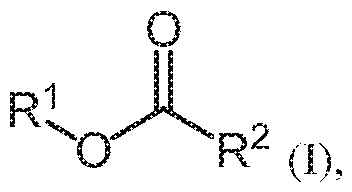
- the solvent comprises an alkyl alkanoate of formula (I): wherein R 1 is a C 1 -C 4 alkyl; and R 2 is hydrogen or a C 1 -C 4 alkyl.
- R 1 is a C 1 -C 4 alkyl.
- R 2 is hydrogen or a C 1 - C 4 alkyl.
- R 1 and R 2 are independently C 1 -C 4 alkyl.
- R 1 is C 1 -C 4 alkyl and R 2 is hydrogen.
- R 1 is a C 1 -C 4 alkyl
- R 1 is CH 3 -, CH 3 CH 2 -, CH 3 CH 2 CH 2 -, (CH 3 ) 2 CH-, CH 3 CH 2 CH 2 CH 2 -, CH3CH2(CH3)CH-, (CH3)2CHCH2-, or (CH3)3C-.
- R 2 is hydrogen.
- R 2 is a C1-C4 alkyl.
- R 2 is a C1-C4 alkyl
- R 2 is CH 3 -, CH 3 CH 2 -, CH 3 CH 2 CH 2 -, (CH 3 ) 2 CH-, CH 3 CH 2 CH 2 CH 2 -, CH 3 CH 2 (CH 3 )CH-, (CH 3 ) 2 CHCH 2 -, or (CH 3 ) 3 C-.
- R 2 is hydrogen, CH 3 -, CH 3 CH 2 -, or CH 3 CH 2 CH 2 -.
- R 1 is CH 3 CH 2 - and R 2 is CH 3 -.
- R 1 is CH 3 CH 2 - or CH 3 CH 2 CH 2 CH 2 -, and R 2 is hydrogen.
- R 1 is CH 3 CH 2 CH 2 - and R 2 is CH 3 CH 2 CH 2 - or CH 3 CH 2 CH 2 CH 2 -. In other variations, R 1 is a C 1 -C 3 alkyl. In yet other variations, R 1 is methyl, ethyl, n-propyl, or isopropyl. In certain variations, R 1 is ethyl. In some variations, R 1 is a C 2 -C 4 alkyl. In certain variations, R 1 is ethyl, n-propyl, isopropyl, n-butyl, sec-butyl, isobutyl, or t-butyl.
- R 2 is hydrogen or a C 1 - C 3 alkyl. In certain variations, R 2 is methyl, ethyl, n-propyl, or isopropyl. In certain variations, R 2 is methyl. In yet other variations, R 1 is ethyl and R 2 is methyl. In still other variations, R 2 is hydrogen, ethyl or n-propyl. In yet further variations R 1 is ethyl, n-propyl, or n-butyl, and R 2 is hydrogen, methyl, ethyl, or n-propyl. In certain variations, R 2 is methyl. In yet other variations, R 1 is ethyl and R 2 is methyl.
- the solvent is prepared in situ.
- an alkyl alkanoate may be prepared by mixing the corresponding alcohol with the corresponding carboxylic acid.
- the alkyl alkanoate of formula (I) is prepared in situ by mixing an alcohol R 1 -OH with a carboxylic acid R 2 -COOH, wherein R 1 and R 2 are as defined above.
- the alkyl alkanoate is ethyl acetate
- the ethyl acetate is prepared in situ by mixing ethanol with acetic acid.
- the alkyl alkanoate is prepared in situ prior to the combination of the alkyl alkanoate solvent with the deoiled seedcake.
- the alkyl alkanoate is prepared in situ with the deoiled seedcake.
- the method comprises combining the deoiled seedcake with a solvent comprising ethyl acetate and the ethyl acetate is prepared in situ, the method comprises mixing the deoiled seedcake with ethanol and acetic acid.
- the solvent extraction step produces an extraction mixture, which then undergoes separation in step 120 to produce a miscella and the pongamia compositions described herein.
- the miscella contains the liquid fraction of the extraction mixture (e.g. , oil, solvent and any soluble compounds), whereas the pongamia composition largely is composed of the residual insoluble solid material (or meal) that remains from the deoiled seedcake.
- Any suitable solid-liquid separation methods may be employed for this separation step, including, for example, filtration and decanting.
- the miscella comprises a mixture of extracted oil, karanjin, pongamol, other furanoflavonoids, and solvent.
- the miscella has a karanjin concentration of equal to or greater than 4000 ppm.
- the miscella has a karanjin concentration of equal to or greater than 4000 ppm as measured by the method described above.
- the miscella may be characterized by oil content, water content, moisture content, solids content, or other characteristics known in the art.
- process 100 may include one or more additional steps.
- the resulting pongamia composition may contain residual levels of the solvent.
- the method may include a dry heating or toasting step to reduce the level of residual solvent.
- the extraction mixture is irradiated with microwave irradiation after the combining step and prior to the separating step.
- the determination of concentrations of karanjin, pongamol and other furanoflavanoids in the pongamia composition following treatment can be earned out by microwave-assisted solvent extraction with a suitable alkyl alkanoate solvent to obtain an alkyl alkanoate extract, which may then be subjected to various liquid chromatography and/or mass spectrometry techniques (such as HPLC/MS) to quantify the concentrations of karanjin, pongamol and other furanoflavanoids in the extract as a proxy for the pongamia composition.
- Suitable alkyl alkanoate solvents include the alkyl alkanoate solvents described above, such as an alkyl alkanoate solvent selected from the group consisting of methyl methanoate, methyl ethanoate, methyl propanoate, methyl butanoate, methyl pentanoate, ethyl methanoate, ethyl ethanoate, ethyl propanoate, ethyl butanoate, ethyl pentanoate, propyl methanoate, propyl ethanoate, propyl propanoate, propyl butanoate, propyl pentanoate, butyl methanoate, butyl ethanoate, butyl propanoate, butyl pentanoate, butyl methanoate, butyl ethanoate, butyl propanoate, butyl butanoate, and butyl pentanoate, and any combinations
- the method further comprises analyzing the solvent extract.
- the step of analyzing the solvent extract involves measuring concentrations of karanjin and pongamol in the solvent extract, which serve as proxy measurements for the concentrations of karanjin and pongamol originally present in the pongamia composition.
- the method comprises measuring concentrations of karanjin and pongamol in the solvent extract.
- the method comprises measuring individual concentrations of one or more furanoflavonoids in the solvent extract.
- the method comprises measuring a karanjin concentration in the solvent extract.
- the method comprises measuring a pongamol concentration in the solvent extract.
- the measurement of the concentrations of karanjin, pongamol and other furanoflavonoids in the solvent extract may be performed using analytical separation and detection techniques known in the art.
- the concentrations of karanjin, pongamol and other furanoflavonoids are determined by high-performance liquid chromatography (HPLC).
- HPLC-MS HPLC-mass spectrometry
- the concentrations of karanjin, pongamol and other furanoflavonoids are determined by HPLC-tandem mass spectrometry (HPLC-MS/MS). In some embodiments, the concentrations of karanjin, pongamol and other furanoflavonoids are determined by HPLC-ultraviolet-visible spectrophotometry (HPLC-UV-vis).
- HPLC-UV-vis HPLC-ultraviolet-visible spectrophotometry
- the analytical methods as described herein may be referred to as a “microwave-assisted alkyl alkanoate solvent extraction analytical method”.
- the extraction may be referred to more specifically by the particular alkyl alkanoate being used.
- the method of analyzing may be referred to as a “microwave-assisted ethyl acetate extraction analytical method”.
- microwave-assisted alkyl alkanoate solvent extraction analytical method includes embodiments in which the alkyl alkanoate solvent contains at least one alkyl alkanoate solvent and optionally one or more co-solvents that are not alkyl alkanoates.
- “microwave-assisted ethyl acetate extraction analytical method” may refer to the use of an alkyl alkanoate solvent containing ethyl acetate and optionally one or more co-solvents.
- the pongamia compositions described herein may be used as food or food ingredients suitable for feeding to humans and other animals. In some aspects, provided are methods for feeding any of the pongamia compositions described herein to an animal.
- the animal is a human.
- the animal is a non-ruminant.
- “non-ruminant’ should be understood to include animals possessing a single-chambered stomach (i.e., monogastric). Examples of non-ruminant animals include, for example, poultry, swine, non-ruminant cattle, canines, felines, mice, and fish. In certain variations, the animal is poultry. In one variation, the animal is a chicken.
- the pongamia compositions described herein may be used as a standalone feed or food. In another aspect, the pongamia compositions described herein may be utilized as feed ingredients or food ingredients within a larger feed or food composition.
- a food composition comprising any of the pongamia compositions as described herein.
- the food composition is a foodstuff (e.g., confection, condiment, cereal composition, baked good, bating good, cooking adjuvant, dairy product, dietary supplement, and tabletop sweetener composition), beverage, or other beverage product (e.g., beverage mix or concentrate).
- the food composition is a grain product or pasta (e.g., health bar, grain-based bar), meat product (e.g., meat patty containing pongamia composition), dairy product (e.g., flavored milk drink, milkshake, protein shake, milk-based meal replacements, yogurt), plant protein products (e.g., egg products or analogs, meat alternatives or analogs), processed fruits and fruit juices (e.g., fruit juice, nectars, fruit-flavored drinks, fruit smoothies), processed vegetables and vegetable juices (e.g., vegetable juices and smoothies), soups and soup mixes (e.g., prepared soups, dry soup mixes, condensed soups), or snack foods (e.g., chips, popcorn, extruded snacks).
- dairy product e.g., flavored milk drink, milkshake, protein shake, milk-based meal replacements, yogurt
- plant protein products e.g., egg products or analogs, meat alternatives or analogs
- processed fruits and fruit juices e.g., fruit juice, nectar
- an animal feed comprising any of the pongamia compositions described herein.
- a poultry feed comprising: a base feed; and any of the pongamia compositions described herein.
- a suitable base feed for the feed compositions as described herein may be any non-pongamia-derived feedstock known in the ait as forage or fodder, including, for example, hay, straw, silage, grains, legumes, food scraps and byproducts of food processing as suitable for the specific non-ruminant animal.
- the base feed may comprise one or more feeds selected from the group consisting of wheat feed, corn feed, barley feed, oat feed, soymeal, cottonseed meal, safflower seed meal, sunflower seed meal, peanut meal, groundnut meal, and hay.
- the base feed comprises wheat feed, corn feed, soymeal or any combination thereof.
- a poultry feed comprising: com; a soybean supplement; and any of the pongamia compositions described herein, which is incorporated as a pongamia supplement.
- the pongamia supplement and the soybean supplement are present in a weight ratio of between 1:1 and 1:25.
- an article of manufacture such as a container comprising the pongamia compositions as described herein, or the feed comprising the pongamia compositions as described herein; and a label containing instructions for use of such pongamia compositions or feed.
- a kit comprising the pongamia compositions as described herein, or the feed comprising the pongamia compositions as described herein; and a package insert containing instructions for use of such pongamia compositions or feed.
- EXAMPLES The presently disclosed subject matter will be better understood by reference to the following Examples, which are provided as exemplary of the invention, and not by way of limitation.
- Example A - Measurement Protocols Example A1: Microwave-Assisted Extraction Method (MAE) for Determination of Concentrations of Karanjin, Pongamol and Other Furanoflavanoids
- MAE Microwave-Assisted Extraction Method
- the following example describes a general protocol for the measurement of karanjin and pongamol concentrations in a pongamia sample.
- HPLC instrumentation HPLC analysis is conducted with a mobile phase consisting of: Solvent A (0.1% Formic acid in HPLC water) and Solvent B (0.1% Formic acid in acetonitrile). The injection volume is 2 ⁇ L and the flow rate was 0.75 mL/minute. The column is a C18 5 ⁇ m, 50 x 2mm HPLC column. All HPLC analyses are conducted in negative ion mode.
- the MS parameters are: curtain gas, 30 psi; collision gas, 4 psi; nebulizer gas (GS1), 50 psi; drying gas (GS2), 50 psi; ion spray voltage, 5000; temperature, 500 oC; declustering potential (DP), 51 V; entrance potential, 10V; collision energy (CE), 60 eV for karanjin and 30 eV for pongamol.
- MS/MS quantification of karanjin and pongamol in extract Multiple reaction monitoring (MRM) ion transitions are monitored for both karanjin and pongamol. The level of karanjin and pongamol present in the extracted samples is calculated using Analyst version 1.6.3. Briefly, the peak area of karanjin and pongamol in the extraction samples is compared with the peak area of the calibration standards to determine the parts per million of karanjin and pongamol.
- Hull Removal Percentage A representative sample of oilseeds to be evaluated for percentage of hull removal is taken. The oilseeds and fragments thereof are sorted into two distinct groups based upon visual assessment of whether the individual oilseed or fragment has retained 50% or greater of its original hull covering. The two groups of oilseeds are separately weighed. The percentage of successful hull removal is calculated as the weight of oilseeds having less than 50% of the original hull covering intact over the sum of the weights for both groups of oilseeds, multiplied by 100%.
- Tannin Content The measurement protocol of tannin content in pongamia oilseeds and downstream pongamia products (e.g., deoiled seedcake ) was carried out in accordance with ISO standard protocol for determination of tannin content in sorghum (ISO 9648, UV spectrophotometric method).
- ISO 9648 UV spectrophotometric method.
- the sample to be tested is shaken with dimethylformamide.
- the dimethylformamide mixture is centrifuged, and the supernatant isolated.
- Ferric ammonium citrate and ammonia are added to an aliquot of the supernatant liquid.
- the absorbance of the solution is determined by UV spectrophotometric measurement at 525 nm, and the tannic content determined using a calibration curve prepared using tannic acid.
- Total ash The total ash content is determined by placing the seedcake samples (2g) into a crucible, dying the samples in an oven, ashing the samples in a muffle furnace at 600 ⁇ , and measuring the weight of the ash (AOAC 942.05 reference method).
- Total moisture content Total protein content is determined by placing the seedcake samples (2g) into a crucible, dying the samples in an oven, ashing the samples in a muffle furnace at 600 ⁇ , and measuring the weight of the ash (AOAC 942.05 reference method).
- the total moisture content is determined by heating a weighed sample at 130 ⁇ for 2 hours in a forced draft oven, and determining the difference in sample weight, with the percentage difference calculated as moisture content (AOCS BA 2A- 38 reference method).
- Total fat content The total fat content was determined by solvent extraction under reflux with petroleum ether (AOCS BA3-38 reference method, modified).
- Total carbohydrate Total carbohydrate content is calculated as the remaining percentage of the pongamia seedcake (100%) less the sum of the total ash content (%), total protein content (%), total moisture content (%), and total fat (%).
- Example B Large-Scale Extraction Methods
- Example B1 Preparation of Dehulled, Deoiled Pongamia Composition Thermomechanical Treatment
- Pongamia pods were harvested and the oilseeds were removed from the pods.
- the isolated oilseeds were then subjected to various heat treatments at different temperatures (60 ⁇ , 120 ⁇ , 150 ⁇ , and 180 ⁇ ) for different durations of time (5-180 minutes).
- the thermal treatment was achieved by placing the pongamia oilseeds into aluminum baking trays (49.7cm x 29.5cm x 8.1 cm) with perforated bases at 75% capacity and placing the filled trays in a forced convection oven pre-heated to the indicated temperature.
- the oilseeds were removed from the impact huller and placed into a multi-aspirator (Kice 6E-6 Aspirator, 5 hp fan, cyclone, rotary airlock, 6” ducting) to separate hulls from the dehulled oilseeds.
- a multi-aspirator Karl Fischer 6E-6 Aspirator, 5 hp fan, cyclone, rotary airlock, 6” ducting
- the percentage of dehulled oilseeds obtained from the procedure was assessed according to the protocol described in Example A2 above.
- the tannin content of the dehulled test samples was also determined by the protocol described in Example A2 above.
- Table 1 shows the results of percentage of pongamia oilseeds dehulled and measured tannin content of the dehulled seeds for the fourteen trials and large-scale trial conducted.
- Dehulled, deoiled seedcake (trial number 013) was extracted with ethyl acetate in an immersion extractor (3-hour residence time, 5:1 solvent: feed ratio). After solvent extraction and removal of the miscella, the resulting ethyl acetate-extracted pongamia meal was analyzed for karanjin concentration, pongamol concentration and oil content as described in the protocols for Examples A1 and A3 above. The resulting ethyl acetate-extracted pongamia meal was measured as having 17 ppm karanjin, 10 ppm pongamol, and 0.80% residual oil.
Landscapes
- Life Sciences & Earth Sciences (AREA)
- Chemical & Material Sciences (AREA)
- Polymers & Plastics (AREA)
- Engineering & Computer Science (AREA)
- Food Science & Technology (AREA)
- Zoology (AREA)
- Animal Husbandry (AREA)
- Health & Medical Sciences (AREA)
- Mycology (AREA)
- Proteomics, Peptides & Aminoacids (AREA)
- Birds (AREA)
- Nutrition Science (AREA)
- Molecular Biology (AREA)
- Physiology (AREA)
- Botany (AREA)
- Biotechnology (AREA)
- Biochemistry (AREA)
- Inorganic Chemistry (AREA)
- Medicines Containing Plant Substances (AREA)
- Coloring Foods And Improving Nutritive Qualities (AREA)
- Fodder In General (AREA)
- Feed For Specific Animals (AREA)
- Beans For Foods Or Fodder (AREA)
Abstract
Description



Claims
Priority Applications (7)
| Application Number | Priority Date | Filing Date | Title |
|---|---|---|---|
| EP20870766.1A EP4037491A4 (en) | 2019-10-03 | 2020-10-02 | EDIBLE PONGAMI COMPOSITIONS AND METHOD FOR THE PRODUCTION AND USE THEREOF |
| AU2020358833A AU2020358833A1 (en) | 2019-10-03 | 2020-10-02 | Edible pongamia compositions, and methods of preparing and using thereof |
| MX2022003861A MX2022003861A (en) | 2019-10-03 | 2020-10-02 | EDIBLE COMPOSITIONS OF PONGAMIA AND METHODS OF PREPARATION AND USE THEREOF. |
| CA3153204A CA3153204A1 (en) | 2019-10-03 | 2020-10-02 | Edible pongamia compositions, and methods of preparing and using thereof |
| CN202080083432.7A CN114745965A (en) | 2019-10-03 | 2020-10-02 | Edible buffalo peel composition, preparation method and application thereof |
| JP2022520492A JP7828885B2 (en) | 2019-10-03 | 2020-10-02 | Edible Pongamia composition, method for preparing the same, and method for using the same. |
| US17/765,646 US20220369662A1 (en) | 2019-10-03 | 2020-10-02 | Edible pongamia compositions, and methods of preparing and using thereof |
Applications Claiming Priority (2)
| Application Number | Priority Date | Filing Date | Title |
|---|---|---|---|
| US201962910315P | 2019-10-03 | 2019-10-03 | |
| US62/910,315 | 2019-10-03 |
Publications (1)
| Publication Number | Publication Date |
|---|---|
| WO2021067698A1 true WO2021067698A1 (en) | 2021-04-08 |
Family
ID=75337549
Family Applications (1)
| Application Number | Title | Priority Date | Filing Date |
|---|---|---|---|
| PCT/US2020/053945 Ceased WO2021067698A1 (en) | 2019-10-03 | 2020-10-02 | Edible pongamia compositions, and methods of preparing and using thereof |
Country Status (12)
| Country | Link |
|---|---|
| US (1) | US20220369662A1 (en) |
| EP (1) | EP4037491A4 (en) |
| JP (1) | JP7828885B2 (en) |
| CN (1) | CN114745965A (en) |
| AR (1) | AR120140A1 (en) |
| AU (1) | AU2020358833A1 (en) |
| CA (1) | CA3153204A1 (en) |
| MX (1) | MX2022003861A (en) |
| PY (1) | PY2060518A (en) |
| TW (1) | TWI901603B (en) |
| UY (1) | UY38904A (en) |
| WO (1) | WO2021067698A1 (en) |
Cited By (2)
| Publication number | Priority date | Publication date | Assignee | Title |
|---|---|---|---|---|
| US12052994B2 (en) | 2019-02-03 | 2024-08-06 | Terviva, Inc. | Methods for controlling black sigatoka in bananas using pongamia oil and formulations thereof |
| US12610971B2 (en) | 2018-10-04 | 2026-04-28 | TerViva BioEnergy, Inc. | Pongamia compositions, methods of preparing and analyzing thereof, and uses thereof |
Families Citing this family (1)
| Publication number | Priority date | Publication date | Assignee | Title |
|---|---|---|---|---|
| WO2025126871A1 (en) * | 2023-12-14 | 2025-06-19 | 株式会社J-オイルミルズ | Pongamia depodding apparatus and pongamia depodding method |
Family Cites Families (3)
| Publication number | Priority date | Publication date | Assignee | Title |
|---|---|---|---|---|
| PL3193627T5 (en) * | 2014-09-18 | 2023-12-04 | Dsm Ip Assets B.V. | Method for producing an oil seed protein mix |
| FR3039063B1 (en) * | 2015-07-22 | 2017-07-21 | Biosynthis Sarl | PROCESS FOR ENRICHING PONGAMOL WITH KARANJA OIL |
| UY38401A (en) * | 2018-10-04 | 2020-04-30 | Terviva Bioenergy Inc | PONGAMIA COMPOSITIONS, ITS PREPARATION AND ANALYSIS METHODS AND THEIR USES |
-
2020
- 2020-09-30 TW TW109134316A patent/TWI901603B/en active
- 2020-10-02 MX MX2022003861A patent/MX2022003861A/en unknown
- 2020-10-02 JP JP2022520492A patent/JP7828885B2/en active Active
- 2020-10-02 CN CN202080083432.7A patent/CN114745965A/en active Pending
- 2020-10-02 AU AU2020358833A patent/AU2020358833A1/en active Pending
- 2020-10-02 UY UY0001038904A patent/UY38904A/en unknown
- 2020-10-02 US US17/765,646 patent/US20220369662A1/en active Pending
- 2020-10-02 AR ARP200102735A patent/AR120140A1/en unknown
- 2020-10-02 WO PCT/US2020/053945 patent/WO2021067698A1/en not_active Ceased
- 2020-10-02 PY PY202002060518A patent/PY2060518A/en unknown
- 2020-10-02 CA CA3153204A patent/CA3153204A1/en active Pending
- 2020-10-02 EP EP20870766.1A patent/EP4037491A4/en active Pending
Non-Patent Citations (5)
| Title |
|---|
| NARAYAN, DUTTA ET AL.: "Use of Pongamia glabra (karanj) and Azadirachta indica (neem) seed cakes for feeding livestock", BIOFUEL CO-PRODUCTS AS LIVESTOCK FEED - OPPORTUNITIES AND CHALLENGES, 2012, pages 379 - 402, XP055909705 * |
| NATANAM R., KADIRVEL R., CHANDRASEKARAN D.: "Chemical composition of karanja (Pongamia glabra Vent [P. pinnata]) kernel and cake as animal feed", INDIAN JOURNAL OF ANIMAL NUTRITION, vol. 6, no. 3, 30 November 1988 (1988-11-30), IN , pages 270 - 273, XP009535161, ISSN: 0970-3209 * |
| See also references of EP4037491A4 * |
| SZALAY, J.: "What are Flavonoids?", LIVE SCIENCE, 20 October 2015 (2015-10-20), XP055817595, Retrieved from the Internet <URL:https://www.livescience.com/52524-flavonoids.html> [retrieved on 20201120] * |
| USHARANI, KV ET AL.: "Pongamia pinnata (L.): Composition and advantages in agriculture: A review", JOURNAL OF PHARMACOGNOSY AND PHYTOCHEMISTRY, vol. 8, no. 3, 24 April 2019 (2019-04-24), pages 2181 - 2187, XP055817598, ISSN: 2278-4136 * |
Cited By (2)
| Publication number | Priority date | Publication date | Assignee | Title |
|---|---|---|---|---|
| US12610971B2 (en) | 2018-10-04 | 2026-04-28 | TerViva BioEnergy, Inc. | Pongamia compositions, methods of preparing and analyzing thereof, and uses thereof |
| US12052994B2 (en) | 2019-02-03 | 2024-08-06 | Terviva, Inc. | Methods for controlling black sigatoka in bananas using pongamia oil and formulations thereof |
Also Published As
| Publication number | Publication date |
|---|---|
| JP7828885B2 (en) | 2026-03-12 |
| CN114745965A (en) | 2022-07-12 |
| CA3153204A1 (en) | 2021-04-08 |
| UY38904A (en) | 2021-04-30 |
| JP2022550582A (en) | 2022-12-02 |
| EP4037491A1 (en) | 2022-08-10 |
| TW202126180A (en) | 2021-07-16 |
| TWI901603B (en) | 2025-10-21 |
| MX2022003861A (en) | 2022-06-08 |
| PY2060518A (en) | 2022-02-25 |
| US20220369662A1 (en) | 2022-11-24 |
| EP4037491A4 (en) | 2023-11-08 |
| AR120140A1 (en) | 2022-02-02 |
| AU2020358833A1 (en) | 2022-04-21 |
Similar Documents
| Publication | Publication Date | Title |
|---|---|---|
| KR102790758B1 (en) | Pea proteins with improved flavor, production methods, and industrial uses | |
| Bhat et al. | Composition and functional properties of raw and electron beam-irradiated Mucuna pruriens seeds | |
| Zuwariah et al. | Comparison of amino acid and chemical composition of jackfruit seed flour treatment | |
| Holse et al. | Chemical composition of marama bean (Tylosema esculentum)—A wild African bean with unexploited potential | |
| JP7828885B2 (en) | Edible Pongamia composition, method for preparing the same, and method for using the same. | |
| TWI842750B (en) | Pongamia compositions, methods of preparing and analyzing thereof, and uses thereof | |
| Ojinnaka et al. | Nutritional and sensory properties of cashew nut-wheat based cookies | |
| Shimelis et al. | Effect of microwave heating on solubility and digestibility of proteins and reduction of antinutrients of selected common bean (Phaseolus vulgaris L.) varieties grown in Ethiopia. | |
| US20200268014A1 (en) | Protein ingredient made from oilseeds of sunflowers or rape, and the production thereof | |
| De Schutter et al. | Soybeans: full-fat | |
| Suwannatrai et al. | The analysis of nutritional value, total phenolic and flavonoid contents, and antioxidant activities from the ethanolic extracts of the roasted broken brown rice powder | |
| Agbaje et al. | Effect of fermentation methods on the mineral, amino and fatty acids composition of Cyperus esculentus | |
| Shashego | Soaking time and temperature on condensed tannin and phytic acid of soybean products | |
| Singh et al. | Cooking characteristics, chemical composition and protein quality of newly developed genotypes of pigeonpea (Cajanus cajan L) | |
| EA048402B1 (en) | EDIBLE PONGAMIA COMPOSITIONS, METHODS OF THEIR PRODUCTION AND APPLICATION | |
| RU2159047C1 (en) | Method of producing brew dregs based feed additive for farm animals and poultry | |
| AlGhamdi et al. | Effect of traditional household processing techniques on phenolic compounds, antioxidants activity and γ-aminobutyric acid of cowpea (Vigna unguiculata) pods. | |
| Nwokolo | African breadfruit (Treculia africana Decne) and Polynesian breadfruit (Artocarpus altilis Fosberg) | |
| Tananuwong et al. | Macadamia flours: Nutritious ingredients for baked goods | |
| Joshi et al. | Processing mediated changes on protein digestibility and iron bioavailability of selected underutilized millet and legume | |
| Ch et al. | Development of soybean chips incorporated with moringa leaf powder and tomato powder | |
| Adebayo | Evaluation of flour blends made from high quality protein maize and soursop seed flours | |
| Yusuf et al. | Growth performance and nutrient utilisation of Clarias gariepinus fed on sweet orange peels (Citrus sinensis) as carbohydrate source | |
| Ani | African Journal of Biochemistry Research Effect of fermentation methods on the mineral, amino and fatty acids composition of Cyperus esculentus | |
| RU2801965C2 (en) | Pongamia compositions, methods of their production and analysis, as well as their application |
Legal Events
| Date | Code | Title | Description |
|---|---|---|---|
| 121 | Ep: the epo has been informed by wipo that ep was designated in this application |
Ref document number: 20870766 Country of ref document: EP Kind code of ref document: A1 |
|
| ENP | Entry into the national phase |
Ref document number: 3153204 Country of ref document: CA |
|
| ENP | Entry into the national phase |
Ref document number: 2022520492 Country of ref document: JP Kind code of ref document: A |
|
| NENP | Non-entry into the national phase |
Ref country code: DE |
|
| REG | Reference to national code |
Ref country code: BR Ref legal event code: B01A Ref document number: 112022005983 Country of ref document: BR |
|
| ENP | Entry into the national phase |
Ref document number: 2020358833 Country of ref document: AU Date of ref document: 20201002 Kind code of ref document: A |
|
| ENP | Entry into the national phase |
Ref document number: 2020870766 Country of ref document: EP Effective date: 20220503 |
|
| ENP | Entry into the national phase |
Ref document number: 112022005983 Country of ref document: BR Kind code of ref document: A2 Effective date: 20220329 |