WO2021080020A1 - 核酸送達促進剤 - Google Patents
核酸送達促進剤 Download PDFInfo
- Publication number
- WO2021080020A1 WO2021080020A1 PCT/JP2020/040071 JP2020040071W WO2021080020A1 WO 2021080020 A1 WO2021080020 A1 WO 2021080020A1 JP 2020040071 W JP2020040071 W JP 2020040071W WO 2021080020 A1 WO2021080020 A1 WO 2021080020A1
- Authority
- WO
- WIPO (PCT)
- Prior art keywords
- sirna
- cationic oligopeptide
- group
- pancreatic cancer
- shrna
- Prior art date
- Legal status (The legal status is an assumption and is not a legal conclusion. Google has not performed a legal analysis and makes no representation as to the accuracy of the status listed.)
- Ceased
Links
- 0 CC(C(**)NC)=O Chemical compound CC(C(**)NC)=O 0.000 description 1
- ZAKBGYDMXORTQT-SDHOMARFSA-N CC(C)(C([C@H](CCN=O)NC([C@H](CCN)NCC(CNC(CNC(CNC([C@H](CCC(O)=O)NC(c(cc1)ccc1NCc(cn1)nc2c1N=C(N)NC2=O)=O)=O)=O)=O)=O)=O)=O)N Chemical compound CC(C)(C([C@H](CCN=O)NC([C@H](CCN)NCC(CNC(CNC(CNC([C@H](CCC(O)=O)NC(c(cc1)ccc1NCc(cn1)nc2c1N=C(N)NC2=O)=O)=O)=O)=O)=O)=O)=O)N ZAKBGYDMXORTQT-SDHOMARFSA-N 0.000 description 1
Images






Classifications
-
- A—HUMAN NECESSITIES
- A61—MEDICAL OR VETERINARY SCIENCE; HYGIENE
- A61K—PREPARATIONS FOR MEDICAL, DENTAL OR TOILETRY PURPOSES
- A61K31/00—Medicinal preparations containing organic active ingredients
- A61K31/70—Carbohydrates; Sugars; Derivatives thereof
- A61K31/7088—Compounds having three or more nucleosides or nucleotides
- A61K31/7105—Natural ribonucleic acids, i.e. containing only riboses attached to adenine, guanine, cytosine or uracil and having 3'-5' phosphodiester links
-
- C—CHEMISTRY; METALLURGY
- C12—BIOCHEMISTRY; BEER; SPIRITS; WINE; VINEGAR; MICROBIOLOGY; ENZYMOLOGY; MUTATION OR GENETIC ENGINEERING
- C12N—MICROORGANISMS OR ENZYMES; COMPOSITIONS THEREOF; PROPAGATING, PRESERVING, OR MAINTAINING MICROORGANISMS; MUTATION OR GENETIC ENGINEERING; CULTURE MEDIA
- C12N15/00—Mutation or genetic engineering; DNA or RNA concerning genetic engineering, vectors, e.g. plasmids, or their isolation, preparation or purification; Use of hosts therefor
- C12N15/09—Recombinant DNA-technology
- C12N15/11—DNA or RNA fragments; Modified forms thereof; Non-coding nucleic acids having a biological activity
- C12N15/113—Non-coding nucleic acids modulating the expression of genes, e.g. antisense oligonucleotides; Antisense DNA or RNA; Triplex- forming oligonucleotides; Catalytic nucleic acids, e.g. ribozymes; Nucleic acids used in co-suppression or gene silencing
-
- A—HUMAN NECESSITIES
- A61—MEDICAL OR VETERINARY SCIENCE; HYGIENE
- A61K—PREPARATIONS FOR MEDICAL, DENTAL OR TOILETRY PURPOSES
- A61K31/00—Medicinal preparations containing organic active ingredients
- A61K31/33—Heterocyclic compounds
- A61K31/395—Heterocyclic compounds having nitrogen as a ring hetero atom, e.g. guanethidine or rifamycins
- A61K31/495—Heterocyclic compounds having nitrogen as a ring hetero atom, e.g. guanethidine or rifamycins having six-membered rings with two or more nitrogen atoms as the only ring heteroatoms, e.g. piperazine or tetrazines
- A61K31/505—Pyrimidines; Hydrogenated pyrimidines, e.g. trimethoprim
- A61K31/519—Pyrimidines; Hydrogenated pyrimidines, e.g. trimethoprim ortho- or peri-condensed with heterocyclic rings
-
- A—HUMAN NECESSITIES
- A61—MEDICAL OR VETERINARY SCIENCE; HYGIENE
- A61K—PREPARATIONS FOR MEDICAL, DENTAL OR TOILETRY PURPOSES
- A61K31/00—Medicinal preparations containing organic active ingredients
- A61K31/70—Carbohydrates; Sugars; Derivatives thereof
- A61K31/7088—Compounds having three or more nucleosides or nucleotides
- A61K31/713—Double-stranded nucleic acids or oligonucleotides
-
- A—HUMAN NECESSITIES
- A61—MEDICAL OR VETERINARY SCIENCE; HYGIENE
- A61K—PREPARATIONS FOR MEDICAL, DENTAL OR TOILETRY PURPOSES
- A61K47/00—Medicinal preparations characterised by the non-active ingredients used, e.g. carriers or inert additives; Targeting or modifying agents chemically bound to the active ingredient
- A61K47/06—Organic compounds, e.g. natural or synthetic hydrocarbons, polyolefins, mineral oil, petrolatum or ozokerite
- A61K47/22—Heterocyclic compounds, e.g. ascorbic acid, tocopherol or pyrrolidones
-
- A—HUMAN NECESSITIES
- A61—MEDICAL OR VETERINARY SCIENCE; HYGIENE
- A61K—PREPARATIONS FOR MEDICAL, DENTAL OR TOILETRY PURPOSES
- A61K47/00—Medicinal preparations characterised by the non-active ingredients used, e.g. carriers or inert additives; Targeting or modifying agents chemically bound to the active ingredient
- A61K47/30—Macromolecular organic or inorganic compounds, e.g. inorganic polyphosphates
- A61K47/42—Proteins; Polypeptides; Degradation products thereof; Derivatives thereof, e.g. albumin, gelatin or zein
-
- A—HUMAN NECESSITIES
- A61—MEDICAL OR VETERINARY SCIENCE; HYGIENE
- A61K—PREPARATIONS FOR MEDICAL, DENTAL OR TOILETRY PURPOSES
- A61K47/00—Medicinal preparations characterised by the non-active ingredients used, e.g. carriers or inert additives; Targeting or modifying agents chemically bound to the active ingredient
- A61K47/50—Medicinal preparations characterised by the non-active ingredients used, e.g. carriers or inert additives; Targeting or modifying agents chemically bound to the active ingredient the non-active ingredient being chemically bound to the active ingredient, e.g. polymer-drug conjugates
- A61K47/51—Medicinal preparations characterised by the non-active ingredients used, e.g. carriers or inert additives; Targeting or modifying agents chemically bound to the active ingredient the non-active ingredient being chemically bound to the active ingredient, e.g. polymer-drug conjugates the non-active ingredient being a modifying agent
- A61K47/54—Medicinal preparations characterised by the non-active ingredients used, e.g. carriers or inert additives; Targeting or modifying agents chemically bound to the active ingredient the non-active ingredient being chemically bound to the active ingredient, e.g. polymer-drug conjugates the non-active ingredient being a modifying agent the modifying agent being an organic compound
- A61K47/545—Heterocyclic compounds
-
- A—HUMAN NECESSITIES
- A61—MEDICAL OR VETERINARY SCIENCE; HYGIENE
- A61K—PREPARATIONS FOR MEDICAL, DENTAL OR TOILETRY PURPOSES
- A61K47/00—Medicinal preparations characterised by the non-active ingredients used, e.g. carriers or inert additives; Targeting or modifying agents chemically bound to the active ingredient
- A61K47/50—Medicinal preparations characterised by the non-active ingredients used, e.g. carriers or inert additives; Targeting or modifying agents chemically bound to the active ingredient the non-active ingredient being chemically bound to the active ingredient, e.g. polymer-drug conjugates
- A61K47/51—Medicinal preparations characterised by the non-active ingredients used, e.g. carriers or inert additives; Targeting or modifying agents chemically bound to the active ingredient the non-active ingredient being chemically bound to the active ingredient, e.g. polymer-drug conjugates the non-active ingredient being a modifying agent
- A61K47/54—Medicinal preparations characterised by the non-active ingredients used, e.g. carriers or inert additives; Targeting or modifying agents chemically bound to the active ingredient the non-active ingredient being chemically bound to the active ingredient, e.g. polymer-drug conjugates the non-active ingredient being a modifying agent the modifying agent being an organic compound
- A61K47/55—Medicinal preparations characterised by the non-active ingredients used, e.g. carriers or inert additives; Targeting or modifying agents chemically bound to the active ingredient the non-active ingredient being chemically bound to the active ingredient, e.g. polymer-drug conjugates the non-active ingredient being a modifying agent the modifying agent being an organic compound the modifying agent being also a pharmacologically or therapeutically active agent, i.e. the entire conjugate being a codrug
- A61K47/551—Medicinal preparations characterised by the non-active ingredients used, e.g. carriers or inert additives; Targeting or modifying agents chemically bound to the active ingredient the non-active ingredient being chemically bound to the active ingredient, e.g. polymer-drug conjugates the non-active ingredient being a modifying agent the modifying agent being an organic compound the modifying agent being also a pharmacologically or therapeutically active agent, i.e. the entire conjugate being a codrug one of the codrug's components being a vitamin, e.g. niacinamide, vitamin B3, cobalamin, vitamin B12, folate, vitamin A or retinoic acid
-
- A—HUMAN NECESSITIES
- A61—MEDICAL OR VETERINARY SCIENCE; HYGIENE
- A61K—PREPARATIONS FOR MEDICAL, DENTAL OR TOILETRY PURPOSES
- A61K47/00—Medicinal preparations characterised by the non-active ingredients used, e.g. carriers or inert additives; Targeting or modifying agents chemically bound to the active ingredient
- A61K47/50—Medicinal preparations characterised by the non-active ingredients used, e.g. carriers or inert additives; Targeting or modifying agents chemically bound to the active ingredient the non-active ingredient being chemically bound to the active ingredient, e.g. polymer-drug conjugates
- A61K47/51—Medicinal preparations characterised by the non-active ingredients used, e.g. carriers or inert additives; Targeting or modifying agents chemically bound to the active ingredient the non-active ingredient being chemically bound to the active ingredient, e.g. polymer-drug conjugates the non-active ingredient being a modifying agent
- A61K47/62—Medicinal preparations characterised by the non-active ingredients used, e.g. carriers or inert additives; Targeting or modifying agents chemically bound to the active ingredient the non-active ingredient being chemically bound to the active ingredient, e.g. polymer-drug conjugates the non-active ingredient being a modifying agent the modifying agent being a protein, peptide or polyamino acid
- A61K47/64—Drug-peptide, drug-protein or drug-polyamino acid conjugates, i.e. the modifying agent being a peptide, protein or polyamino acid which is covalently bonded or complexed to a therapeutically active agent
- A61K47/645—Polycationic or polyanionic oligopeptides, polypeptides or polyamino acids, e.g. polylysine, polyarginine, polyglutamic acid or peptide TAT
- A61K47/6455—Polycationic oligopeptides, polypeptides or polyamino acids, e.g. for complexing nucleic acids
-
- A—HUMAN NECESSITIES
- A61—MEDICAL OR VETERINARY SCIENCE; HYGIENE
- A61P—SPECIFIC THERAPEUTIC ACTIVITY OF CHEMICAL COMPOUNDS OR MEDICINAL PREPARATIONS
- A61P1/00—Drugs for disorders of the alimentary tract or the digestive system
- A61P1/18—Drugs for disorders of the alimentary tract or the digestive system for pancreatic disorders, e.g. pancreatic enzymes
-
- A—HUMAN NECESSITIES
- A61—MEDICAL OR VETERINARY SCIENCE; HYGIENE
- A61P—SPECIFIC THERAPEUTIC ACTIVITY OF CHEMICAL COMPOUNDS OR MEDICINAL PREPARATIONS
- A61P35/00—Antineoplastic agents
-
- A—HUMAN NECESSITIES
- A61—MEDICAL OR VETERINARY SCIENCE; HYGIENE
- A61P—SPECIFIC THERAPEUTIC ACTIVITY OF CHEMICAL COMPOUNDS OR MEDICINAL PREPARATIONS
- A61P35/00—Antineoplastic agents
- A61P35/04—Antineoplastic agents specific for metastasis
-
- C—CHEMISTRY; METALLURGY
- C07—ORGANIC CHEMISTRY
- C07K—PEPTIDES
- C07K14/00—Peptides having more than 20 amino acids; Gastrins; Somatostatins; Melanotropins; Derivatives thereof
-
- C—CHEMISTRY; METALLURGY
- C07—ORGANIC CHEMISTRY
- C07K—PEPTIDES
- C07K7/00—Peptides having 5 to 20 amino acids in a fully defined sequence; Derivatives thereof
-
- C—CHEMISTRY; METALLURGY
- C07—ORGANIC CHEMISTRY
- C07K—PEPTIDES
- C07K7/00—Peptides having 5 to 20 amino acids in a fully defined sequence; Derivatives thereof
- C07K7/02—Linear peptides containing at least one abnormal peptide link
-
- C—CHEMISTRY; METALLURGY
- C12—BIOCHEMISTRY; BEER; SPIRITS; WINE; VINEGAR; MICROBIOLOGY; ENZYMOLOGY; MUTATION OR GENETIC ENGINEERING
- C12N—MICROORGANISMS OR ENZYMES; COMPOSITIONS THEREOF; PROPAGATING, PRESERVING, OR MAINTAINING MICROORGANISMS; MUTATION OR GENETIC ENGINEERING; CULTURE MEDIA
- C12N2310/00—Structure or type of the nucleic acid
- C12N2310/10—Type of nucleic acid
- C12N2310/14—Type of nucleic acid interfering nucleic acids [NA]
-
- C—CHEMISTRY; METALLURGY
- C12—BIOCHEMISTRY; BEER; SPIRITS; WINE; VINEGAR; MICROBIOLOGY; ENZYMOLOGY; MUTATION OR GENETIC ENGINEERING
- C12N—MICROORGANISMS OR ENZYMES; COMPOSITIONS THEREOF; PROPAGATING, PRESERVING, OR MAINTAINING MICROORGANISMS; MUTATION OR GENETIC ENGINEERING; CULTURE MEDIA
- C12N2310/00—Structure or type of the nucleic acid
- C12N2310/10—Type of nucleic acid
- C12N2310/14—Type of nucleic acid interfering nucleic acids [NA]
- C12N2310/141—MicroRNAs, miRNAs
-
- C—CHEMISTRY; METALLURGY
- C12—BIOCHEMISTRY; BEER; SPIRITS; WINE; VINEGAR; MICROBIOLOGY; ENZYMOLOGY; MUTATION OR GENETIC ENGINEERING
- C12N—MICROORGANISMS OR ENZYMES; COMPOSITIONS THEREOF; PROPAGATING, PRESERVING, OR MAINTAINING MICROORGANISMS; MUTATION OR GENETIC ENGINEERING; CULTURE MEDIA
- C12N2310/00—Structure or type of the nucleic acid
- C12N2310/30—Chemical structure
- C12N2310/31—Chemical structure of the backbone
- C12N2310/315—Phosphorothioates
-
- C—CHEMISTRY; METALLURGY
- C12—BIOCHEMISTRY; BEER; SPIRITS; WINE; VINEGAR; MICROBIOLOGY; ENZYMOLOGY; MUTATION OR GENETIC ENGINEERING
- C12N—MICROORGANISMS OR ENZYMES; COMPOSITIONS THEREOF; PROPAGATING, PRESERVING, OR MAINTAINING MICROORGANISMS; MUTATION OR GENETIC ENGINEERING; CULTURE MEDIA
- C12N2310/00—Structure or type of the nucleic acid
- C12N2310/30—Chemical structure
- C12N2310/32—Chemical structure of the sugar
- C12N2310/321—2'-O-R Modification
-
- C—CHEMISTRY; METALLURGY
- C12—BIOCHEMISTRY; BEER; SPIRITS; WINE; VINEGAR; MICROBIOLOGY; ENZYMOLOGY; MUTATION OR GENETIC ENGINEERING
- C12N—MICROORGANISMS OR ENZYMES; COMPOSITIONS THEREOF; PROPAGATING, PRESERVING, OR MAINTAINING MICROORGANISMS; MUTATION OR GENETIC ENGINEERING; CULTURE MEDIA
- C12N2310/00—Structure or type of the nucleic acid
- C12N2310/30—Chemical structure
- C12N2310/34—Spatial arrangement of the modifications
- C12N2310/344—Position-specific modifications, e.g. on every purine, at the 3'-end
-
- C—CHEMISTRY; METALLURGY
- C12—BIOCHEMISTRY; BEER; SPIRITS; WINE; VINEGAR; MICROBIOLOGY; ENZYMOLOGY; MUTATION OR GENETIC ENGINEERING
- C12N—MICROORGANISMS OR ENZYMES; COMPOSITIONS THEREOF; PROPAGATING, PRESERVING, OR MAINTAINING MICROORGANISMS; MUTATION OR GENETIC ENGINEERING; CULTURE MEDIA
- C12N2310/00—Structure or type of the nucleic acid
- C12N2310/30—Chemical structure
- C12N2310/34—Spatial arrangement of the modifications
- C12N2310/346—Spatial arrangement of the modifications having a combination of backbone and sugar modifications
-
- C—CHEMISTRY; METALLURGY
- C12—BIOCHEMISTRY; BEER; SPIRITS; WINE; VINEGAR; MICROBIOLOGY; ENZYMOLOGY; MUTATION OR GENETIC ENGINEERING
- C12N—MICROORGANISMS OR ENZYMES; COMPOSITIONS THEREOF; PROPAGATING, PRESERVING, OR MAINTAINING MICROORGANISMS; MUTATION OR GENETIC ENGINEERING; CULTURE MEDIA
- C12N2310/00—Structure or type of the nucleic acid
- C12N2310/50—Physical structure
- C12N2310/53—Physical structure partially self-complementary or closed
- C12N2310/531—Stem-loop; Hairpin
-
- C—CHEMISTRY; METALLURGY
- C12—BIOCHEMISTRY; BEER; SPIRITS; WINE; VINEGAR; MICROBIOLOGY; ENZYMOLOGY; MUTATION OR GENETIC ENGINEERING
- C12N—MICROORGANISMS OR ENZYMES; COMPOSITIONS THEREOF; PROPAGATING, PRESERVING, OR MAINTAINING MICROORGANISMS; MUTATION OR GENETIC ENGINEERING; CULTURE MEDIA
- C12N2320/00—Applications; Uses
- C12N2320/30—Special therapeutic applications
- C12N2320/32—Special delivery means, e.g. tissue-specific
Definitions
- the present invention relates to a nucleic acid delivery promoter for delivering a nucleic acid molecule such as siRNA into a cell.
- the present invention also relates to agents that can be used for the treatment of diseases and the like by utilizing RNA interference (RNAi).
- RNAi RNA interference
- the present invention relates to a nucleic acid preparation having an antitumor effect on pancreatic cancer and capable of effectively suppressing tumor growth, infiltration, and metastasis of pancreatic cancer, and a pharmaceutical composition containing the same.
- Pancreatic cancer is said to have the worst prognosis of all cancers.
- the cause is that the pancreas is a retroperitoneal organ, which makes early detection difficult, and the motility of pancreatic cancer cells is extremely high, so there is a tendency for peritoneal invasion and metastasis to blood vessels, gastrointestinal tract, nerves, etc. It can be strong.
- RNA interference RNA interference
- SiRNA small interfering RNA
- RNAi RNA interference
- siRNA has a problem in terms of intracellular delivery because of its structure, which is highly anionic and has low cell membrane permeability.
- the present inventors first prepared a siRNA-folic acid-polyethylene glycol (PEG) -chitosan oligosaccharide lactic acid (COL) nanoparticles complex, and promoted the uptake of siRNA into cells by the nanoparticles. We are confirming the effect. It has also been reported that siRNA for mRNA having IGF2BP3 binding ability incorporated into pancreatic cancer cells suppresses infiltration and metastasis of pancreatic cancer (Non-Patent Document 1).
- Non-Patent Document 2 Non-Patent.
- Non-Patent Document 2 Non-Patent.
- Document 3 We are also studying the use of complexes containing vitamin E and cationic sugars for the delivery of RNAi molecules.
- RNAi molecules such as siRNA as a nucleic acid drug to cells
- delivery of RNAi molecules such as siRNA as a nucleic acid drug to cells is a very important issue for enhancing the practicality of the nucleic acid drug.
- issues to be achieved such as not only delivery but also specific delivery to the target cell and not inhibiting the effect of the nucleic acid drug after being taken up into the cell.
- siRNA and shRNA can be specifically delivered into cells having a folic acid receptor by using a complex of folic acid and a cationic oligopeptide. I found it.
- pancreatic cancer cells are targeted, and siRNA or shRNA is effectively taken up by the targeted pancreatic cancer cells, and the expression of a specific RNA is knocked down, so that the tumor grows against pancreatic cancer.
- siRNA or shRNA is effectively taken up by the targeted pancreatic cancer cells, and the expression of a specific RNA is knocked down, so that the tumor grows against pancreatic cancer.
- the present invention provides the following. 1.
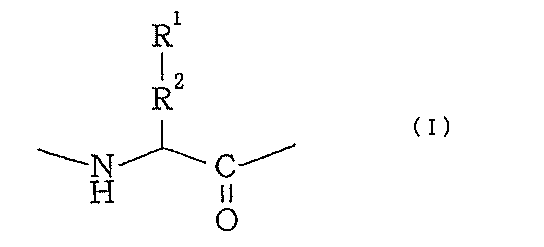
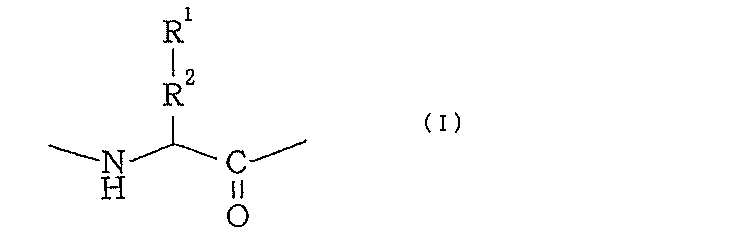
- a delivery promoter of siRNA or shRNA composed of a folic acid-cationic oligopeptide complex, wherein the cationic oligopeptide contains a portion in which at least two consecutive amino acid residues of the following formula (I) are contiguous, and the following formula (The delivery enhancer comprising a cationic oligopeptide site consisting of 8 to 40 amino acids, which is one other amino acid residue that is not contiguous except for the contiguous portion of the amino acid residue of I).
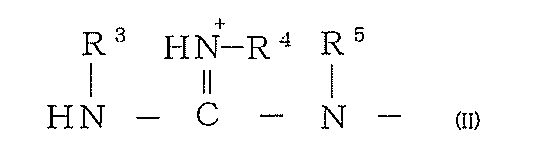
- R 1 is a group represented by the group H 3 N + -CH 2- or the group (II), and in R 2 , R 1 is a group H 3 N + -CH 2- In the case of, it is an alkylene group that does not exist or has 1 to 3 carbon atoms, and if R 1 is a group represented by the formula (II), it is an alkylene group having 1 to 4 carbon atoms. In one cationic oligopeptide, R 1 and R 2 are all the same.
- R 3 , R 4 and R 5 are the same or different, and are hydrogen atoms or methyl groups.
- 3. 3. The cationic oligopeptide sites are L-2,3-diaminopropionic acid (Dap), L-2,4-diaminobutyric acid (Dab), L-ornithine (Orn), L-lysine (Lys), L-2-
- the delivery promoter according to 1 or 2 above which is a homomultimer of amino-3-guanidinopropionic acid (Agp), L-2-amino-4-guanidinobutyric acid (Agb), or L-arginine (Arg).
- An antitumor agent comprising siRNA or shRNA capable of binding to mRNA or snoRNA expressed in pancreatic cancer cells and inhibiting its expression, and a delivery promoter according to any one of 1 to 8 above. 10.
- IGF2BP3 insulin-like growth factor 2 mRNA-binding protein 3
- the antitumor agent according to 9 or 10 wherein the mRNA or snoRNA expressed in pancreatic cancer cells is selected from the group consisting of SNORA18 snoRNA, NUP85 mRNA, WASF2 mRNA, and SNORA22 snoRNA. 12.
- the antitumor agent according to any one of 9 to 11 above which comprises 0.5 to 10 equivalents of a folic acid-cationic oligopeptide complex relative to siRNA or shRNA.
- the siRNA or shRNA contains a modified base, a modified sugar, and / or a modified nucleoside bond.
- the antitumor agent according to 14 above, wherein the modification of the modified sugar is a 2'-OMe modification.
- Formulations containing peptide complexes [In the formula (I), R 1 is a group represented by the group H 3 N + -CH 2- or the group (II), and in R 2 , R 1 is a group H 3 N + -CH 2- In the case of, it is an alkylene group that does not exist or has 1 to 3 carbon atoms, and if R 1 is a group represented by the formula (II), it is an alkylene group having 1 to 4 carbon atoms. In one cationic oligopeptide, R 1 and R 2 are all the same.
- [In formula (II), R 3 , R 4 and R 5 are the same or different, and are hydrogen atoms or methyl groups. ]
- R 1 is a group represented by the group H 3 N + -CH 2- or the group (II), and in R 2 , R 1 is a group H 3 N + -CH 2- In the case of, it is an alkylene group that does not exist or has 1 to 3 carbon atoms, and if R 1 is a group represented by the formula (II), it is an alkylene group having 1 to 4 carbon atoms. In one cationic oligopeptide, R 1 and R 2 are all the same.
- [In formula (II), R 3 , R 4 and R 5 are the same or different, and are hydrogen atoms or methyl groups.
- a pharmaceutical kit for the treatment of pancreatic cancer including. This specification includes the disclosure of Japanese Patent Application No. 2019-194646, which is the basis of the priority of the present application.
- the present invention provides a nucleic acid preparation capable of effectively delivering siRNA or shRNA specifically to pancreatic cancer cells and suppressing tumor growth, infiltration and metastasis of pancreatic cancer.
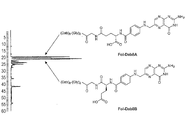
- the HPLC analysis result of the crude product containing Fol-Dab8A and Fol-Dab8B is shown.
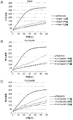
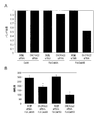
- the effects of 1-3 equivalents of Dab8, Fol-Dab8A and Fol-Dab8B on RNase A resistance of siRNA are shown by changes in fluorescence intensity due to fluorescence resonance energy transfer (FRET).
- FRET fluorescence resonance energy transfer
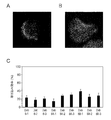
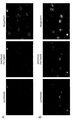
- A A confocal microscope image showing the uptake of siRNA labeled with Alexa488 into S2-013 pancreatic cancer cells in the presence of a folic acid-cationic oligopeptide complex is shown.
- B Confocal microscopic images showing uptake of S2-013 pancreatic cancer cells in the absence of folic acid-cationic oligopeptide complex of siRNA labeled with Alexa488.
- the data show the band amplified by RT-PCR as a relative intensity with the band intensity of 1 in the combination of control siRNA and Dab8.
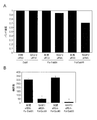
- B Shows the number of infiltrating cells in the Matrigel assay with the combination of scrambled control siRNA or SNORA18 siRNA and folic acid-cationic peptide complex (Fol-Dab8A and Fol-Dab8B).
- A The combined use of a scrambled control siRNA or NUP85 siRNA with a cationic oligopeptide or a folic acid-cationic oligopeptide complex exhibits an effect of suppressing the expression of NUP85.
- the data show the band amplified by RT-PCR as a relative intensity with the band intensity of 1 in the combination of control siRNA and Dab8.
- B Shows the number of infiltrating cells in the Matrigel assay with the combination of scrambled control siRNA or NUP85 siRNA and folic acid-cationic peptide complex (Fol-Dab8A and Fol-Dab8B).
- A Shows the effect of suppressing the expression of WASF2 by the combined use of scrambled control siRNA or WASF2 siRNA and a cationic oligopeptide or a folic acid-cationic oligopeptide complex.
- the data show the band amplified by RT-PCR as a relative intensity with the band intensity of 1 in the combination of control siRNA and Dab8.
- B Shows the number of infiltrating cells in the Matrigel assay with the combination of scrambled control siRNA or WASF2 siRNA and folic acid-cationic peptide complex (Fol-Dab8A and Fol-Dab8B).
- A Shows the effect of suppressing the expression of SNORA22 by the combined use of scrambled control siRNA or SNORA22 siRNA and a cationic oligopeptide or a folic acid-cationic oligopeptide complex.
- the data show the band amplified by RT-PCR as a relative intensity with the band intensity of 1 in the combination of control siRNA and Dab8.
- B Shows the number of infiltrating cells in the Matrigel assay with the combination of scrambled control siRNA or SNORA22 siRNA and folic acid-cationic peptide complex (Fol-Dab8A and Fol-Dab8B).
- Alexa488-labeled SNORA22 siRNA and folic acid-cationic oligopeptide complex were added to the culture medium and incubated overnight for S2-013 pancreatic cancer cells (A) and HPNE normal pancreatic duct epithelial cells (HPNE normal pancreatic duct epithelial cells). It is a confocal microscope image which shows the staining of the folic acid receptor (FOLR1) and SNORA22 siRNA in B).
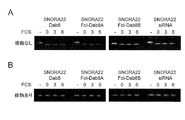
- Serum mixed with unmodified SNORA22 siRNA (A) or chemically modified SNORA22 siRNA (B) with a cationic oligopeptide (Dab8) or a folic acid-cationic oligopeptide complex (Fol-Dab8A or Fol-Dab8B) The stability of siRNA immediately after (0), 3 hours (3) or 6 hours (6) after addition to (10% FCS / PBS) is shown by the results of SDS-PAGE using a non-reducing gel. -: No FCS (PBS only), Control: Each SNORA22 siRNA was added alone.
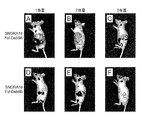
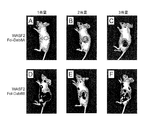
- S2-013 The results of imaging the delivery of chemically modified SNORA22 siRNA to pancreatic cancer tissue of mice carrying human pancreatic cancer organoids derived from pancreatic cancer cells by in vivo imager are shown.
- 1-3 equivalents of Dab8 are added to AC: SNORA22 siRNA
- 1-3 equivalents of Fol-Dab8A is added to DF: SNORA22 siRNA
- Fol is added to GI: SNORA22 siRNA.
- S2-013 Shows antitumor effect by co-administration of SNORA22 siRNA and folic acid-cationic oligopeptide complex on pancreatic cancer tumor in mice carrying human pancreatic cancer organoid derived from pancreatic cancer cells.
- Non-administered control group SNORA22-Dab8: SNORA22 siRNA administered with folic acid-cationic oligopeptide complex
- Scr-Fol-Dab8B Scrambled control siRNA administered
- SNORA22-Fol-Dab8B SNORA22 siRNA A group administered with a folic acid-cationic oligopeptide complex. * Indicates that there is a significant difference at P ⁇ 0.05.
- S2-013 The results of imaging the delivery of chemically modified SNORA18 siRNA to pancreatic cancer tissue of mice carrying human pancreatic cancer organoids derived from pancreatic cancer cells by in vivo imager are shown.
- nucleic acid delivery promoter comprising a folic acid-cationic oligopeptide complex.
- Folic acid is one of the water-soluble B vitamins and has the following structure. It has been reported that folic acid receptors are expressed at high concentrations on the surface of tumor cells. The present inventors have previously reported the intracellular delivery of siRNA using a complex containing folic acid, in which the folic acid receptor is expressed in the pancreatic cancer cell line S2-013 (Oncotarget, 2019, Vol. .10, No. 30, pp. 2869-2886).
- folic acid used to prepare the complex with the cationic oligopeptide in the present invention folic acid having the above structure may be used, and the binding to the cationic oligopeptide and the binding to the folic acid receptor It may be a folate or a folic acid derivative that retains its properties.
- the folic acid molecule has two carbosyl groups, amino groups, imino groups and the like, these functional groups that are not involved in the binding to the cationic oligopeptide are used in the art.
- Known substituents can be added and labeled compounds can be attached to folic acid.
- cationic oligonucleotide that can be used in the present invention, those disclosed in International Publication No. WO2014 / 148620 and Bioorganic & Medicinal Chemistry 21 (2013) 1717-1723 can be appropriately used.
- the cationic oligonucleotide used in the present invention may contain 8 or more amino acid residues having an amino group or a guanidino group.
- the cationic oligopeptide that can be used in the present invention contains at least two contiguous portions of amino acid residues of the following formula (I), and contiguous portions of the amino acid residues of the following formula (I). It can be an oligopeptide consisting of 8-40 amino acids, including a cationic oligopeptide site that is one other amino acid residue that is not contiguous except.
- R 1 is a group represented by the group H 3 N + -CH 2- or the group (II), and in R 2 , R 1 is a group H 3 N + -CH 2- In the case of, it is an alkylene group that does not exist or has 1 to 3 carbon atoms, and if R 1 is a group represented by the formula (II), it is an alkylene group having 1 to 4 carbon atoms. In one cationic oligopeptide, R 1 and R 2 are all the same. ]
- R 3 , R 4 and R 5 are the same or different, and are hydrogen atoms or methyl groups. ]
- amino acid residue of formula (I) is not limited, but specifically, for example, L-2,3-diaminopropionic acid (Dap) and L-2,4-diaminobutyric acid (Dab). ), L-ornithine (Orn), L-lysine (Lys), L-2-amino-3-guanidinopropionic acid (Agp), L-2-amino-4-guanidinobutyric acid (Agb), or L-arginine ( Arg) can be mentioned.
- amino acids having a proline skeleton include, but are not limited to, L-aminoproline and L-guanidinenoproline.
- the cationic oligopeptide site can be a heteromultimer containing the above "other amino acid residues". In another aspect, the cationic oligopeptide site can be a homomultimer without the "other amino acid residues" described above. Considering the convenience of synthesizing the cationic oligopeptide and the stabilizing effect of siRNA and shRNA confirmed by the present inventors, the cationic oligopeptide site is a homomultimer composed of a single amino acid. It is preferable to do so.
- the amino acid as a monomer may be a natural amino acid or an unnatural amino acid.
- the amino acids may be L-type or D-type, and they may be mixed in the oligopeptide molecule.
- cationic oligopeptides include, for example, L-2,3-diaminopropionic acid (Dap), L-2,4-diaminobutyric acid (Dab), L-ornithine (Orn), L-lysine (Lys), L- It may have a homomultimer of 2-amino-3-guanidinopropionic acid (Agp), L-2-amino-4-guanidinobutyric acid (Agb), or L-arginine (Arg) as a partial structure.
- the cationic oligopeptide may be in the form of a salt, and examples of salts that can be preferably used include hydrochlorides, acetates, trifluoroacetates and the like, but the salts are not particularly limited.
- a and type B double-stranded nucleic acids
- DNA / DNA double-stranded nucleic acid it has a B-type double helix structure with a main groove width of 13 to 18 ⁇ .
- the width of the main groove has an A-type double helix structure of 7 to 14 ⁇ and 8 to 15 ⁇ , respectively. Since the present invention is intended to improve the stability of siRNA, it is necessary to use a cationic oligopeptide capable of binding to an RNA / RNA strand having a type A double helix structure.
- the number of amino acid residues constituting the cationic oligopeptide should be 8 to 12 in order to improve the stability of siRNA generally consisting of 21 to 23 bases and shRNA that results in such siRNA. Good.
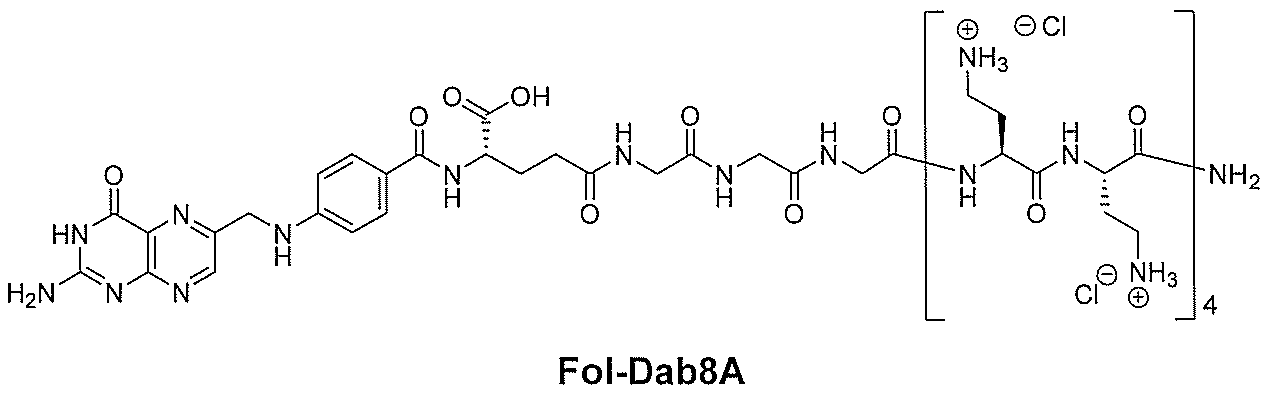
- the cationic oligopeptide site can be an octamer of diaminobutyric acid having the following structure, which was actually examined in the following examples and gave favorable results.
- the bond between folic acid and the cationic oligopeptide is preferably a covalent bond.
- the covalent bond can be a direct or linker-mediated bond to the N-terminus, C-terminus or side chain of the cationic oligopeptide.
- linker those usually used in the art for producing conjugates can be appropriately used, and without particular limitation, a peptide linker composed of amino acids such as glycine and serine can be used. ..
- the peptide linker can be a peptide consisting of 1 to 4 glycine residues.
- a linker consisting of three glycine residues can be mentioned as one that was actually examined in the following examples and gave favorable results.
- the ratio of folic acid to the cationic oligopeptide can be 1: 1 in consideration of the interaction with the folic acid receptor and the interaction with the double-stranded nucleic acid. It is not particularly limited.
- the folic acid molecule has two carboxylic groups
- the following two isomers can be produced when Dab8 having the above structure is bonded via a reaction with the carboxyl group of folic acid.
- these compounds are referred to as Fol-Dab8A and Fol-Dab8B for convenience.
- the linker In the above-mentioned Fol-Dab8A and Fol-Dab8B, three glycines are used as the linker, but the length of the linker can be changed as appropriate.
- the folic acid-cationic oligopeptide complex may be obtained in the form of a salt. Examples of salts that can be preferably used include hydrochlorides, acetates, trifluoroacetates and the like, but are not particularly limited.
- the folic acid-cationic oligopeptide complex enhances the stability of siRNA and shRNA and enables targeted delivery to cells having a folic acid receptor.
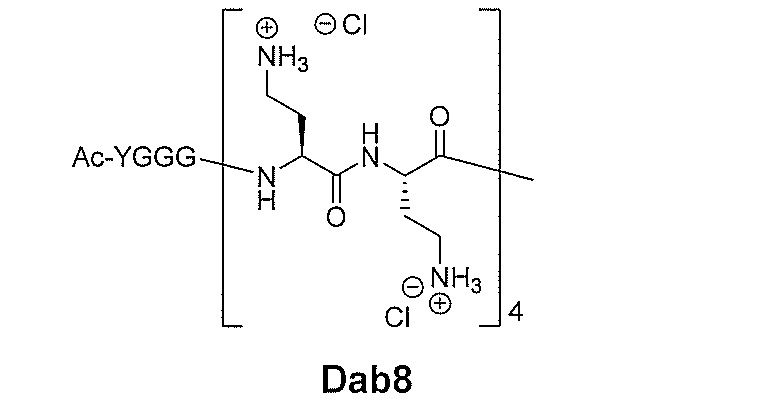
- the cationic oligopeptide Dab8 having no folic acid is used as a control compound showing the effectiveness of Fol-Dab8A and Fol-Dab8B, but tyrosine (tyrosine) for enabling UV detection and quantification.
- the N-terminal is protected by an acetyl group) and 3 glycines are provided at the N-terminal, and in the examples, this is referred to as Dab8 for convenience.
- the nucleic acid delivery promoter of the present invention can promote the delivery of siRNA or shRNA to cells in vitro and in vivo, as demonstrated in Examples.
- the nucleic acid delivery promoter of the present invention can specifically promote delivery to cells that highly express the folic acid receptor, particularly cancer cells.
- the present invention also provides a nucleic acid preparation containing siRNA or shRNA capable of binding to mRNA or snoRNA expressed in pancreatic cancer cells and inhibiting its expression, and the delivery promoter of the present invention.
- the nucleic acid preparation of the present invention can effectively suppress tumor growth, invasion, and metastasis of pancreatic cancer. Therefore, the nucleic acid preparation of the present invention has an action as a tumor growth inhibitor, an infiltration / metastasis inhibitor, and an antitumor agent for pancreatic cancer.
- the siRNA or shRNA and the folic acid-cationic oligopeptide complex can be bound via a further covalent bond, but the negative charge of the siRNA or shRNA and the cation are not mediated by the covalent bond. Due to the interaction provided by the positive charge of the sex oligopeptide, the folic acid-cationic oligopeptide complex can partially enter the main groove of the siRNA or shRNA and have a stable structure, which is stable. It is not intended to be bound by the mechanism of cation effect.
- RNAi molecule It is known that siRNA and shRNA target specific mRNAs and block their translation (expression) by a mechanism called RNA interference.
- the number of bases in the target sequence is not particularly limited and can be selected in the range of 15 to 500 bases.
- SiRNA is a short double-stranded RNA molecule
- shRNA is a hairpin-type RNA that can be processed by a dicer in vivo to produce siRNA.
- siRNA and shRNA may be included and referred to as "RNAi molecule”.
- the siRNA is a double-stranded RNA in which a sense strand that is homologous to the partial base sequence of the target RNA and an antisense strand that can hybridize with the sense strand are hybridized, and usually the 3'end remains OH.
- the 5'end is phosphorylated and the 3'end side may protrude from 1 base to 4 bases.
- the region of the sense strand homologous to the partial base sequence of the target mRNA and the region of the antisense strand capable of hybridizing with the sense strand are bound by the linker region.
- the shRNA may have a 3'end protruding from 1 base to 4 bases or less, and the 3'protruding end may be composed of DNA.
- the shRNA is degraded intracellularly as described above and causes RNA interference in the same manner as siRNA. Therefore, shRNA may be used instead of siRNA.
- the siRNA or shRNA used for the purpose of the present invention is a siRNA or shRNA that can bind to mRNA or SNORNA expressed in pancreatic cancer cells and inhibit its expression.
- mRNA or snoRNA expressed in pancreatic cancer cells is not particularly limited, but may bind to insulin-like growth factor 2 mRNA-binding protein 3 (IGF2BP3).
- IGF2BP3 insulin-like growth factor 2 mRNA-binding protein 3
- human IGF2BP3 is present in the cell membrane process, and various mRNAs are bound to this IGF2BP3 and accumulated in the cell membrane process.
- RNA interference By inhibiting mRNA bound to IGF2BP3 in these cell membrane processes by RNA interference, tumor growth, invasion, and metastasis in pancreatic cancer can be effectively suppressed.
- RNA interference examples include mRNAs of NUP85, WASF2, ARHGEF4, CCDC88A, LAMTOR2, and mTOR. Can be done.
- NUP85 is a protein belonging to the nucleoporin protein family, which is a component of the nuclear pore complex that forms the entrance and exit that regulates the movement of polymers between the cell nucleus and cytoplasm.
- Information such as the amino acid sequence of human NUP85 and the base sequence of mRNA encoding the same is listed in a database such as NCBI as Gene ID: 79902, NCBI reference sequence: NM_024844 and the like.
- Wiskott-Aldrich syndrome a type of primary immunodeficiency, is a disease characterized by thrombocytopenia, eczema, and susceptibility to infection with reduced size.
- Whiscot Aldrich Syndrome Protein Family Member 2 belongs to the Wiscot Aldrich Syndrome Protein Family, which forms a multiprotein complex that connects receptor kinase and actin, and contains the amino acid sequence of human WASF2 and the mRNA encoding it. Information such as the base sequence is listed in a database such as NCBI as Gene ID: 10163, NCBI reference sequence: NM_006990, and the like.
- ARHGEF4 (Rho guanine nucleotide exchange factor 4, Rho guanine nucleotide exchange factor 4) is a protein involved in intracellular processes initiated by stimuli that function through G protein-coupled states. Information such as the amino acid sequence of human ARHGEF4 and the base sequence of mRNA encoding the same is listed in a database such as NCBI as Gene ID: 50649, NCBI reference sequence: NM_015320 and the like.
- CCDC88A (88A containing a coiled coil domain) is a gene encoding a Gildin protein, which is an actin-binding protein.
- Information such as the base sequence of mRNA of human CCDC88A is listed in a database such as NCBI as Gene ID: 55704, NCBI reference sequence: NM_001135597 and the like.
- LAMTOR2 (late endosome / lysosomal adapter, MAPK and mTOR activator 2) is a regulator of Langerhans cell homeostasis and has been reported to be involved in signal transduction and mTOR cascade. Information such as the amino acid sequence of human LAMTOR2 and the base sequence of mRNA encoding the same is listed in a database such as NCBI as Gene ID: 28956, NCBI reference sequence: NM_014017 and the like.
- mTOR (mammalian target of rapamycin kinase, a mammalian target for rapamycin kinase) is a type of protein kinase involved in intracellular signal transduction in mammals and the like. Information such as the amino acid sequence of human mTOR and the base sequence of mRNA encoding the same is listed in a database such as NCBI as Gene ID: 2475, NCBI reference sequence: NM_004958 and the like.
- mRNA is RNA that is transcribed from a gene (DNA) and contains information encoding a protein.
- siRNA which is usually double-stranded, forms a complex called RISC (RNA-Induced-Silencing-Complex) together with a specific protein after the double strand is dissociated.
- RISC RNA-Induced-Silencing-Complex
- RISC recognizes and binds to mRNA having a sequence homologous to the base sequence of the sense strand of siRNA, and cleaves the mRNA by RNaseIII-like enzymatic activity.
- shRNA can give rise to siRNA after processing in the delivered cell and then function similarly.
- snoRNA is a non-coding RNA (small nuclear RNA) existing in the nucleolus, and is a group of RNA molecules having functions such as deriving methylation and pseudouridine formation of ribosomal RNA and other RNAs.
- SNORA18 and SNORA22 which belong to such snoRNA, have a binding ability to IGF2BP3 and are involved in the motility or infiltration of pancreatic cancer cells. It was also found that snoRNA binds to the KH-type splicing regulatory protein (KHSRP) and is localized in the cytoplasmic P-bodies (Oncotarget, 2020, Vol. 11, No. 2, pp). : 131-147). The present inventors have found that siRNA or shRNA for these snoRNAs can also suppress tumor growth, invasion, and metastasis of pancreatic cancer by recognizing, binding to, and knocking down snoRNA.
- KHSRP KH-type splicing regulatory protein
- RNA SNORA18 has been reported as a member of RNA that guides the site of uridine-to-pseudouridine modification. Information such as the base sequence of human SNORA18 is listed in a database such as NCBI as Gene ID: 677805, NCBI reference sequence: NR_002959 and the like.
- RNA SNORA22 has also been reported as a member of RNA that guides the site of uridine-to-pseudouridine modification.
- Information such as the base sequence of human SNORA22 is listed in a database such as NCBI as Gene ID: 677807, NCBI reference sequence: NR_002961 and the like.
- the mRNA or snoRNA expressed in pancreatic cancer cells that can be targeted by siRNA or shRNA in the present invention includes, for example, a group consisting of SNORA18 snoRNA, NUP85 mRNA, WASF2 mRNA, and SNORA22 snoRNA. More selected ones can be mentioned.
- the target mRNA to which siRNA or shRNA can hybridize may include 3'UTR, 5'UTR, exon, intron, coding region, translation initiation region, translation termination region or other nucleic acid region.
- siRNA and shRNA used in the present invention can knock down mRNA or snoRNA and inhibit its function. Therefore, more specifically, the siRNA and shRNA of the present invention consist of a base sequence that is substantially complementary to a specific base sequence of the target RNA. However, siRNA and shRNA may have about 1 to 2 mismatches with respect to the target base sequence. If a person skilled in the art has obtained the base sequence of the target mRNA or snoRNA, it is not homologous to the base sequence of a nucleic acid other than the target sequence and is suitable for inhibiting / knocking down the expression of the target sequence. Regions can be selected to design and synthesize suitable siRNAs and shRNAs with high specificity.
- siRNA has the following conditions: (1) The 5'end of the antisense strand is A or U, RNA interference effect when (2) the 5'end of the sense strand is G or C and (3) 4 or more bases out of 7 bases at the 5'end of the antisense strand are A or U. Is known to be high. Therefore, the siRNA used in the present invention may have such a base sequence, but is not limited thereto. Similarly, the shRNA used in the present invention may, but is not limited to, produce such siRNA after intracellular processing. Determining valid siRNA and shRNA sequences for a target sequence can also be performed using a program available via the internet.
- inhibition / inhibition of expression or knockdown refers to degradation of target mRNA or snoRNA, inhibition / inhibition of translation into a encoded protein. Inhibition increased the amount of target mRNA / snoRNA in cells or cell groups (pancreatic cancer tissue) by 20% or more, 30% or more, 40% or more, 50% or more, 60% or more, 70% or more, 80, as compared with the control. Includes a reduction of% or more, or 90% or more. Inhibition / suppression or knockdown of expression may be determined by any method known in the art, for example, by a method based on RT-PCR.
- the siRNA and shRNA may be composed of only natural (unmodified) nucleotides, but may be partially or completely modified.
- the chemical stability of siRNA and shRNA can be increased by using any of the modifications known in the art. However, it is not desirable that the modification reduces the intended activity of siRNA and shRNA. For example, it is understood that no modifications are used that interfere with the intracellular processing of shRNA. Modifications as unnatural nucleotides can be sugar and / or base modifications.
- Modifications of the sugar include, but are not limited to, bicyclic sugars, 5'-vinyl, 5'-methyl, 4'-S, 2'-F, 2'-OCH 3 (2'-OMe). ), And 2'-O (CH 2 ) 2 OCH 3 substituents and the like.
- Bicyclic sugars are commonly referred to as crosslinked nucleic acids (Bridged Nucleic Acids, BNAs), such as, but not limited to, LNAs (Locked Nucleic Acids®), 2,4-BNA, ENA (ethylene).
- Oxy (4- (CH 2 ) 2- O-2) BNA) and the like can be mentioned, or the sugar may contain deoxyribose in part instead of ribose, in which case one or one of siRNA or DNA and RNA may be mixed in both oligonucleotide strands or the oligonucleotide strand of shRNA.
- siRNA is an RNA / RNA double strand
- shRNA is preferably an RNA strand.
- 2'-OMe modification can be preferably used as the sugar modification.
- a base modification for example, but not limited to Cytosine 5-methylation, 5-fluorolation, 5-bromolation, 5-iodolation, N4-methylation, N6-methylation, 8-bromolation of adenine, N2-methylation, 8-bromolation of guanine, Examples thereof include 5-fluorolation, 5-bromoization, 5-iodolation and 5-hydroxylation of uracil.
- siRNA and shRNA can have sugar and base modifications as described above.
- SiRNAs and shRNAs can also contain modified nucleoside linkages.
- Modified internucleoside bonds are those that exist in place of the naturally occurring phosphodiester bonds, such as phosphorothioate bonds, phosphorodithioate bonds, boranophosphate bonds, phosphorodiamidate bonds and phosphoramidate bonds. possible.
- At least one of the nucleoside linkages of siRNA and shRNA can be a modified nucleoside linkage.
- at least two, three, four, or more nucleoside linkages of siRNA and shRNA can be modified nucleoside linkages.
- the modified internucleoside bond is preferably a phosphorothioate bond.
- nucleotides in the same strand can independently undergo different modifications.
- the same nucleotide can also have a modified nucleoside bond (eg, a phosphorothioate bond) and a modified sugar (eg, a bicyclic sugar).
- the same nucleotide can also have a modified nucleobase (eg, 5-methylcytosine) and further have a modified sugar (eg, 2'-OMe modified, bicyclic sugar, etc.).
- siRNA and shRNA of the present invention can be produced by a method known in the art.
- siRNA and shRNA can be produced by synthesizing using a commercially available automatic nucleic acid synthesizer and then purifying using an ion exchange column, a reverse phase column, or the like.
- siRNA and shRNA can be obtained by ordering from a manufacturer (for example, Gene Design Co., Ltd.) by specifying the nucleic acid base sequence and the modification site and type.
- a labeled compound fluorescent protein, luciferase, etc.
- a purification compound biotin, avidin, His tag peptide, GST tag peptide, FLAG tag peptide, etc.
- the bond may be a direct bond or an indirect bond via another substance, but it is preferably a direct bond such as a covalent bond.
- the antitumor agent of the present invention is, but is not limited to, 0.5 to 10 equivalents, preferably 1 to 5 equivalents, and more preferably 1 to 3 equivalents of a folic acid-cationic oligopeptide with respect to one siRNA or shRNA molecule. It can include a complex.
- the combined use of siRNA or shRNA with a folic acid-cationic oligopeptide complex can significantly suppress tumor growth and infiltration of pancreatic cancer. Since the folic acid-cationic oligopeptide complex of the present invention exerts a sufficient effect only by adding a small amount of about 1 to 3 equivalents to siRNA or shRNA, it is expected to be an extremely useful therapeutic means for pancreatic cancer. Will be done.
- the antitumor agent according to the present invention is not particularly limited as long as the active ingredient is delivered to the pancreatic cancer tissue as the target site, and may be, for example, an injection, a liquid, or a sustained-release agent.
- Water is preferable as the solvent for these preparations, but it is preferable to use physiological saline, PBS, serum albumin solution or the like so that the preparation finally becomes an isotonic solution or a substantially isotonic solution.
- the present invention also provides a pharmaceutical composition containing one or more of the antitumor agents of the present invention.
- the target site of the antitumor agent according to the present invention may be not only the pancreas but also lymph nodes or other organs to which pancreatic cancer cells have metastasized.
- an injection is preferable as the dosage form in order to more reliably deliver the active ingredient to the target site.
- compositions are carriers, excipients, stabilizers, disintegrants, surfactants, binders, lubricants, emulsifiers, suspensions, antioxidants, odorants, fillings commonly used in the pharmaceutical field.
- Agents, solubilizers, coatings, colorants, flavoring agents, preservatives, buffers and the like can be included.
- the pharmaceutical composition can be orally or parenterally administered to the subject.
- Parenteral administration includes, but is not limited to, subcutaneous, intravenous, intraperitoneal, intratumoral, etc. injection or injection, and administration during endoscopic or laparoscopic treatment.
- the dose and frequency of administration of the pharmaceutical composition of the present invention may be appropriately adjusted according to each dosage form, the age, sex, body weight, severity of disease, etc. of the patient.
- the pharmaceutical composition contains 0.001 mg / kg / day to 1 mg / kg / day, 0.005 mg / kg / day to 0.5 mg / kg / day, or 0.01 mg / kg body weight / day of siRNA or shRNA.
- the amount of the folic acid-cationic oligopeptide complex can be determined to be ⁇ 0.1 mg / kg / day, and 0.5 to 10 equivalents can be determined and administered.
- the pharmaceutical composition can be administered once or multiple times, eg, at intervals of 1 day, 2 days, 3 days, 4 days, 5 days, 6 days, 1 week, 2 weeks, 3 weeks, 1 month, etc. Can be administered at.
- Subjects to whom the pharmaceutical composition is administered can be mammals such as primates such as humans and monkeys, and non-primates such as cows, pigs, sheep, horses, cats, dogs, guinea pigs, rats and mice. More preferably, it is a human.
- the subject may be, for example, a pancreatic cancer model animal transplanted with human pancreatic cancer cells, which can be used for evaluation of efficacy in humans.
- the pancreatic cancer model animal is not particularly limited, but for example, a non-human animal transplanted with the cancer organoid described in JP-A-2018-10575 can be used.
- the "organoid” is an organ three-dimensionally produced in vitro, and refers to an aggregate of cells specific to a specific organ. Organoids of various organs have already been produced in this field.
- the "cancer organoid” described in JP-A-2018-110575 is an organoid that reproduces the microenvironment of cancer tissue.
- the research group including the inventor of the present application has modified the method of JP-A-2018-10575 to create a human pancreatic cancer mouse model useful for determining the effect of a pancreatic cancer therapeutic agent (Japanese Patent Application No. 2020-). 078771), this mouse model can also be suitably used for evaluating the efficacy of the antitumor drug and pharmaceutical composition of the present invention on humans.
- the present invention also includes siRNA or ThenRNA that can bind to and inhibit the expression of mRNA or snoRNA expressed in the above-mentioned pancreatic cancer cells, and the above-mentioned folic acid-cationic oligopeptide complex, and tumor growth / invasion of pancreatic cancer. -Provide a combination preparation for suppressing metastasis.
- the siRNA or shRNA and the folic acid-cationic oligopeptide complex are not covalently linked and are not mechanism-constrained, but are the main components of the siRNA or shRNA. It is intended that the folic acid-cationic oligopeptide complex is partially inserted into the groove to stabilize the siRNA or shRNA.
- the siRNA or shRNA and the folic acid-cationic oligopeptide complex do not have to be contained in the same composition in advance. That is, a preparation containing siRNA or shRNA and a preparation containing a folic acid-cationic oligopeptide complex may be prepared separately and combined prior to administration.
- the above two preparations can be administered separately.
- these two formulations are not administered at different times or on different routes of administration, but simultaneously (or sequentially). It is preferable to administer the drug by the same route of administration.
- the present invention also comprises a siRNA or shRNA capable of binding to and inhibiting the expression of mRNA or snoRNA expressed in the above-mentioned pancreatic cancer cells and the above-mentioned folic acid-cationic oligopeptide complex, and a medicament for the treatment of pancreatic cancer.
- a kit can include siRNA or shRNA and a folic acid-cationic oligopeptide complex, as well as instructions for other drugs, carriers, administration methods, etc. that can be administered simultaneously or are suitable for administration.
- Example 1 Synthesis of folic acid-cationic oligopeptide complex
- a folic acid-cationic oligopeptide complex was synthesized as shown below.
- the reagents and analyzers used in this example are as shown below.
- the Fmoc amino acid derivative and the resin as the peptide solid phase synthesis carrier were purchased from Watanabe Chemical Industry Co., Ltd., and folic acid was purchased from Tokyo Kasei Co., Ltd. and used as they were.
- Each peptide chain was synthesized using Fmoc-NH-SAL-PEG resin as a solid-phase carrier using the Fmoc solid-phase synthesis method.
- Fmoc-AA-OH reagent Fmoc-Dab (Boc) -OH, Fmoc-Gly-OH, and Fmoc-Tyr (t-Bu) -OH were used.
- Step 1 Coupling operation>
- an octamer of L-2,4-diaminobutyric acid (Dab8) was synthesized by Fmoc solid-phase synthesis.
- a solid-phase carrier was added to PetiSizer (Hypep Research Institute) so that the introduced amino group became 13 ⁇ mol, washed 5 times with 1.3 mL of dimethylformamide (DMF), and then 1.3 mL of DMF was added to 1 The carrier was allowed to stand for more than an hour to swell the carrier.
- DMF dimethylformamide
- Step 2 Deprotection / resin removal and purification>
- the resin was washed 5 times each with DMF and CHCl 3 , and dried under reduced pressure in a desiccator.
- the resulting resin at room temperature with trifluoroacetic acid (TFA) - triisobutyl pyromellitic pills silane -H 2 O mixed solvent (96.5 / 1.0 / 2.5, v / v / v) in 1 hour 30 minutes Stirring was performed to remove protection and resin.
- TFA trifluoroacetic acid
- silane -H 2 O mixed solvent 96.5 / 1.0 / 2.5, v / v / v
- Stirring was performed to remove protection and resin.
- the resin was removed by filtration, the solvent was vaporized under an argon air stream, and then Et 2 O was added to precipitate the peptide.
- the Et 2 O was vaporized argon stream, the crude product - was obtained (folate cationic oligopeptide).
- the obtained crude product was dissolved in 1 mL of Otsuka distilled water (manufactured by Otsuka Pharmaceutical Factory) and then purified by reverse phase HPLC using the following conditions.
- FIG. 1 shows the results of HPLC analysis of the crude product of Fol-Dab8. Due to the fact that folic acid contains two carboxy groups, folic acid-introduced Dab8 (described as Fol-Dab8) was eluted in two peaks. In the HPLC analysis, the one eluted first was designated as Fol-Dab8A, and the one eluted thereafter was designated as Fol-Dab8B. Each chemical structural formula is shown below.
- the solution separated by HPLC was lyophilized to obtain a yellow powder.
- Purified Fol-Dab8A or Fol-Dab8B is dissolved in Otsuka distilled water, the molar extinction coefficient of folic acid is calculated in advance (molar extinction coefficient at wavelength 368 nm: 7967 L / mol ⁇ cm), and the yield is calculated from the UV absorption of folic acid. did.
- DAb8 is after synthesizing the NH 2 -GGG-dAb8 on a solid support, N end performs a coupling operation of tyrosine protected with an acetyl group, purified by HPLC after the operation of the ⁇ Step 2> As a result, it was obtained as a white powder, and the yield was calculated from the UV absorption of Tyrosine.
- ESI-MS mass spectrometry
- Example 2 Melting temperature (Tm) analysis
- Tm Melting temperature
- a cationic oligopeptide (Dab8) or a folic acid-cationic oligopeptide (Fol-Dab8A or Fol-Dab8B) is added to the annealed RNA double strand, and the melting temperature (Tm value) is measured.
- Tm value melting temperature
- an oligonucleotide pair consisting of the following sequences was used as the siRNA. 5'-r (GUCAUCACACUGAAUACCA) dTdT-3'(SEQ ID NO: 1)
- 5'-r (UGGUAUUCAGUGUGAUGAC) dTdT-3'(SEQ ID NO: 2)
- 144 ⁇ L of a 50 ⁇ M nucleic acid aqueous solution was prepared, kept at 95 ° C. for 5 minutes, and then slowly cooled to 4 ° C. at ⁇ 0.5 ° C./min. This is added to a mixed solution of a pH 7.0 buffer containing 200 mM NaCl, 20 mM Na 2 HPO 4- NaH 2 PO 4 , Otsuka distilled water, and a 0.1 mM peptide aqueous solution, and the final concentration is 10 mM Na 2 HPO 4- NaH 2 Samples were adjusted to PO 4 , 100 mM NaCl, 4 ⁇ M nucleic acid double chain, 0, 4, 8, 12, 16, 20 ⁇ M peptides (0, 1, 2, 3, 4, 5 equivalents, respectively).
- the temperature was raised from 20 ° C. to 95 ° C. at 0.5 ° C./min, the absorbance at 260 nm was measured, and the melting curve was obtained.
- the absorbance at 320 nm was measured to remove background noise, a melting curve was created by subtracting the absorbance at 320 nm from the absorbance at 260 nm, and the Tm value was determined by the median method.
- RNA-degrading enzyme resistance test of the nucleic acid duplex was performed in the presence of a cationic oligopeptide.
- peptides were added to the annealed RNA duplex to form a complex, and the rate of RNA degradation was measured.
- -FAM-r (GUCAUCACACUGAAUACCA) dTdT-3', SEQ ID NO: 1) aqueous solution, 0.1 mM Dabcyl-modified single-stranded RNA with a quenching group at the 3'end (5'-r (UGGUAUUCAGUGUGAUGAC) dTdT-dabcyl- 3', SEQ ID NO: 2)
- Aqueous solutions were mixed in equal amounts to prepare the final concentrations of 10 mM Tris-HCl, 100 mM NaCl, and 10 ⁇ M siRNA. Subsequently, the mixture was kept at 95 ° C. for 5 minutes and then slowly cooled to 4 ° C. at ⁇ 0.5 ° C./min.
- 10 mM Tris-HCl, 100 mM NaCl, 10 ⁇ M siRNA aqueous solution, and 0.1 mM cationic oligopeptide aqueous solution are added to the quartz cell, and the final concentration is 10 mM Tris-HCl, 100 mM NaCl, 10 nM siRNA, 0, 10, 20, 30 nM peptide ( The volume was adjusted to 0, 1, 2, and 3 equivalents, respectively) to 3 mL.
- bovine pancreas-derived RNase A manufactured by Roche was added with stirring at 37 ° C., and the measurement of fluorescence intensity was started to track the change with time (excitation wavelength: 490 nm; measurement wavelength: 520 nm; measurement). Time: 60 minutes).
- RNA duplex When the RNA duplex is dissociated, the fluorescence intensity increases because the distance between the fluorescent group and the quenching group increases. Therefore, when 1 equivalent or more of any of Dab8, Fol-Dab8A, and Fol-Dab8B is added, the fluorescence intensity becomes high. The rate of increase was slower, suggesting that Fol-Dab8A and B, like Dab8, improved the resistance of RNA duplexes to degrading enzymes.
- Pancreatic cancer cell line S2-013 (Medical Cell Resource Center, Cell Bank, Institute of Aging Medicine, Tohoku University, ID: TKG0709) was seeded in a 4-well chamber slide (Thermo Fisher Scientific) at a cell density of 2 x 10 4 cells / well. Then, Dab8, Fol-Dab8A, and Fol-Dab8B were added to the scrambled control siRNA (SEQ ID NOs: 3 and 4) labeled with Alexa647 (Thermo Fisher Scientific) in an amount of 1 to 3 equivalents and cultured for 48 hours.
- the concentration of siRNA was 8.28 ⁇ g / mL, and 25 ⁇ L was used, and the concentration of Dab8, Fol-Dab8A, and Fol-Dab8B was undiluted solution (Dab8: 119.3 ⁇ g / mL, Fol-Dab8A, Fol-Dab8B: 141.2 ⁇ g / mL).
- the amounts corresponding to 1, 2, and 3 equivalents with respect to siRNA are 3.9 ⁇ L, 7.8 ⁇ L, and 11.7 ⁇ L, respectively.
- the hybrid cell count function of the keyence analysis software BZ-X800 Analyzer was used to count the cells into which siRNA was taken up in the presence of Dab8, Fol-Dab8A, and Fol-Dab8B. For the judgment, one-third or more of the cell nuclei were deeply dyed and one with a dark lump around the cell nucleus was measured.
- Example 5 Knockdown effect by folic acid-cationic peptide-added siRNA
- Table 2 shows the siRNA sequences used in this example. As each siRNA, the one in which the sense strand and the antisense strand shown in Table 2 were double-stranded was used as is usually performed in the art.
- 6-well plate (Thermo Fisher Scientific) S2-013 cells were added to the culture medium (1.0 ⁇ 10 5 cells / well), and the cells were collected after 48 hours. A semi-quantitative RT-PCR method was performed using the RNA of the recovered cells, and the knockdown effect of SNORA18, NUP85, WASF2, and SNORA22 on the cells was confirmed.
- RNA obtained from S2-013 cells was reverse transcribed using StrataScript reverse transcriptase (Agilent) and random primers. Appropriate dilutions of each single-stranded cDNA were prepared for subsequent PCR amplification. GAPDH mRNA was used as an internal quantitative control.
- the primer sequences used to amplify SNORA18, NUP85, WASF2 and SNORA22 are listed in Table 3 below.
- the PCR reaction is performed on the TakaRa PCR Thermal Cycler Dice Gradient at 94 ° C for 2 minutes of initial denaturation, followed by 94 ° C for 30 seconds, 58 ° C for 30 seconds, 72 ° C for 1 minute for 21 cycles (for GAPDH) or 25. It was performed in cycles (for SNORA18, NUP85, WASF2 and SNORA22). Scanning and densitometry analysis for band intensity measurements was performed using the Quantity One analysis system (Bio-Rad).
- Example 6 Folic acid-cationic oligopeptide complex + effect of inhibiting cell infiltration by siRNA.
- Each of the scrambled control siRNA, SNORA18 siRNA, NUP85 siRNA, WASF2 siRNA, and SNORA22 siRNA (all used in Example 5) to which the folic acid-cationic oligopeptide complex was added was added to the culture medium of S2-013 cells. A Matrigel infiltration assay was performed 48 hours later.
- Figures 4B, 5B, 6B, and 7B show the upper part of an assay in which a scrambled control siRNA or any of SNORA18 siRNA, NUP85 siRNA, WASF2 siRNA, and SNORA22 siRNA was added to cells with a folic acid-cationic oligopeptide complex. The number of cells that have moved from the chamber to the lower chamber is shown. “*” Indicates that there was a significant difference in P ⁇ 0.05 with respect to the control in the t-test.
- siRNA added to the culture medium of cultured cells in combination with the folic acid-cationic oligopeptide complex is taken up into S2-013 cells and inhibits the expression of snoRNA and mRNA involved in cell infiltration. I was able to confirm that it was there.
- Example 7 Effect on chemically modified siRNA Chemically modified siRNAs were prepared to enhance stability and the effects of the folic acid-cationic oligopeptide complex were investigated. Table 4 shows the sequences of the sense strand and antisense strand of siRNA used in this example. Each contains a chemically modified base and contains a phosphorothioate bond at the 3'end.
- SiRNA (2.5 ⁇ g / mL) labeled with Alexa488 (Thermo Fisher Scientific) in the culture medium (2 ⁇ 10 4 cells / well) of the pancreatic cancer cell line S2-013 in culture, and 1, 2, 3 equivalents of Dab8, Fol-Dab8A, Fol-Dab8B were added.
- a Matrigel infiltration assay was performed.
- the number of cells transferred from the upper chamber to the lower chamber is shown. “*” Indicates that there was a significant difference in P ⁇ 0.05 with respect to the control in the t-test.
- Example 8 Confirmation of uptake of chemically modified siRNA into pancreatic cancer cells 1
- the chemically modified SNORA22 siRNA (SEQ ID NOs: 27 and 28) prepared in Example 7 was labeled with Alexa488 (Thermo Fisher Scientific) and together with the folic acid-cationic oligopeptide complex (Fol-Dab8B, 2 equivalents) in a 4-well chamber (2 equivalents).
- Alexa488 Thermo Fisher Scientific
- folic acid-cationic oligopeptide complex Fol-Dab8B, 2 equivalents
- Folic acid receptor (FOLR1) and siRNA (Alexa488) were observed.
- FIG. 10 shows the introduction efficiency (%) of SNORA22 siRNA into S2-013 pancreatic cancer cells and HPNE normal pancreatic duct epithelial cells in the coexistence of a folic acid-cationic oligopeptide complex (Fol-Dab8B, 2 equivalents).
- the uptake of SNORA22 siRNA into S2-013 pancreatic cancer cells showed a value nearly three times that of normal cells.
- Alexa488-labeled chemically modified SNORA22 siRNA SEQ ID NOs: 27 and 28
- folic acid-cationic oligopeptide complex Fol-Dab8A or Fol-Dab8B, 2 eq
- S2 in a 4-well chamber
- -013 Pancreatic cancer cells were added to the culture medium (2 ⁇ 10 4 cells / well) and incubated overnight, and staining of lysosomes (stained with LysoTracker, Thermo Fisher Scientific) and siRNA (Alexa488) was observed.
- Chemically modified SNORA22 siRNA (SEQ ID NOs: 11 and 12) or chemically modified SNORA22 siRNA (SEQ ID NOs: 27 and 28) and a cationic oligopeptide (Dab8) or a folic acid-cationic oligopeptide complex (Fol-Dab8A or After mixing with Fol-Dab8B) and allowing to stand at room temperature for 15 minutes, 1 ⁇ L was added to PBS or 10% FCS / PBS and mixed (final 20 ⁇ M). As a control, each SNORA22 siRNA was added alone.
- a human pancreatic cancer organoid was prepared using S2-013 pancreatic cancer cells by modifying the method described in JP-A-2018-10575. Specifically, S2-013 pancreatic cancer cells (20 ⁇ 10 4 ), human mesenchymal stem cells MSC (LONZA, 40 ⁇ 10 4 ), and human umbilical vein endothelial cells HUVEC (LONZA, 14 ⁇ 10 4 ). was added to the DMEM / Matrigel mixed solution in a 48-well plate (Thermo Fisher Scientific) and incubated in a CO 2 incubator at 37 ° C. for 30 minutes. Then, 300 ⁇ L / well of DMEM / EGM mixed solution was added, and the mixture was incubated again at 37 ° C. for 24 hours to prepare one pancreatic cancer organoid in each well.
- S2-013 pancreatic cancer cells (20 ⁇ 10 4 ), human mesenchymal stem cells MSC (LONZA, 40 ⁇ 10 4 ), and human umbilical vein end
- the chemically modified SNORA22 siRNA (SEQ ID NOs: 27 and 28, 5 ⁇ g) labeled with Alexa-594 was added to the cationic oligopeptide (Dab8) or the folic acid-cationic oligopeptide complex (Fol-Dab8A or Fol).
- -Dab8B was administered by tail vein injection with 1 eq, 2 eq or 3 eq. Twenty-four hours later, the image was taken in vivo imager.
- Measuring equipment Spectrum In vivo Imaging System (PerkinElmer, Waltham, MA) Measurement conditions: kexc 640nm, kemi 680nm
- Example 12 Confirmation of antitumor effect
- SNORA22 siRNA SEQ ID NOs: 27 and 28, 5 ⁇ g
- a cationic oligopeptide Dab8
- a folic acid-cationic oligopeptide complex Fol-Dab8B, 2 equivalents
- scrambled control siRNAs SEQ ID NOs: 3 and 4
- were administered with the folic acid-cationic oligopeptide complex Fol-Dab8B, 2 eq).
- the non-administered control group Control
- the scrambled control siRNA-administered group Scr-Fol-Dab8B
- the cationic oligo Significant tumor growth inhibitory effect after 8 weeks in the group (SNORA22-Fol-Dab8B) in which SNORA22 siRNA was administered with the folic acid-cationic oligopeptide complex as compared with the group administered with the peptide (SNORA22-Dab8).
- Example 13 In vivo uptake of siRNA 2
- Example 14 In vivo uptake of siRNA 3
- a folic acid-cationic oligopeptide complex Fol-Dab8A or Fol-Dab8B
- the present invention provides a therapeutic means capable of effectively suppressing tumor growth, invasion and metastasis of pancreatic cancer, which is said to have the worst prognosis among cancers.
- the antitumor agent of the present application is effectively delivered specifically to pancreatic cancer cells, and when combined with other anticancer agents and / or anticancer treatments, the therapeutic effect of pancreatic cancer can be dramatically enhanced. All publications, patents and patent applications cited herein are incorporated herein by reference in their entirety.
Landscapes
- Health & Medical Sciences (AREA)
- Life Sciences & Earth Sciences (AREA)
- Chemical & Material Sciences (AREA)
- General Health & Medical Sciences (AREA)
- Engineering & Computer Science (AREA)
- Medicinal Chemistry (AREA)
- Organic Chemistry (AREA)
- Pharmacology & Pharmacy (AREA)
- Animal Behavior & Ethology (AREA)
- Public Health (AREA)
- Veterinary Medicine (AREA)
- Genetics & Genomics (AREA)
- Bioinformatics & Cheminformatics (AREA)
- Molecular Biology (AREA)
- Epidemiology (AREA)
- Biochemistry (AREA)
- Biomedical Technology (AREA)
- General Chemical & Material Sciences (AREA)
- Chemical Kinetics & Catalysis (AREA)
- Proteomics, Peptides & Aminoacids (AREA)
- Nuclear Medicine, Radiotherapy & Molecular Imaging (AREA)
- Biotechnology (AREA)
- Zoology (AREA)
- General Engineering & Computer Science (AREA)
- Wood Science & Technology (AREA)
- Biophysics (AREA)
- Physics & Mathematics (AREA)
- Plant Pathology (AREA)
- Microbiology (AREA)
- Inorganic Chemistry (AREA)
- Oncology (AREA)
- Oil, Petroleum & Natural Gas (AREA)
- Gastroenterology & Hepatology (AREA)
- Pharmaceuticals Containing Other Organic And Inorganic Compounds (AREA)
- Medicines That Contain Protein Lipid Enzymes And Other Medicines (AREA)
- Peptides Or Proteins (AREA)
- Medicinal Preparation (AREA)
Abstract
Description
1. 葉酸-カチオン性オリゴペプチド複合体からなる、siRNA又はshRNAの送達促進剤であって、カチオン性オリゴペプチドが、下記式(I)のアミノ酸残基が少なくとも2個連続する部分を含み、下記式(I)のアミノ酸残基の連続する部分以外は連続しない1個の他のアミノ酸残基である、8~40個のアミノ酸からなるカチオン性オリゴペプチド部位を含む、上記送達促進剤。
3. カチオン性オリゴペプチド部位が、L-2,3-ジアミノプロピオン酸(Dap)、L-2,4-ジアミノ酪酸(Dab)、L-オルニチン(Orn)、L-リジン(Lys)、L-2-アミノ-3-グアニジノプロピオン酸(Agp)、L-2-アミノ-4-グアニジノ酪酸(Agb)、又はL-アルギニン(Arg)のホモ多量体である、上記1又は2記載の送達促進剤。

6. 葉酸-カチオン性オリゴペプチド複合体が、リンカーを介して連結されており、リンカーがペプチドリンカーである、上記5記載の送達促進剤。
7. ペプチドリンカーが、1~4個のグリシン残基からなるペプチドである、上記6記載の送達促進剤。

10. 膵癌細胞で発現するmRNA又はsnoRNAが、インスリン様成長因子2mRNA結合タンパク質3(IGF2BP3)に結合するものである、上記9記載の抗腫瘍剤。
11. 膵癌細胞で発現するmRNA又はsnoRNAが、SNORA18 snoRNA、NUP85 mRNA、WASF2 mRNA、及びSNORA22 snoRNAからなる群より選択される、上記9又は10記載の抗腫瘍剤。
12. siRNA又はshRNAに対して0.5~10当量の葉酸-カチオン性オリゴペプチド複合体を含む、上記9~11のいずれか記載の抗腫瘍剤。
13. siRNAが、RNA/RNA二本鎖である、上記9~12のいずれか記載の抗腫瘍剤。
14. siRNA又はshRNAが、修飾された塩基、修飾された糖、及び/又は改変されたヌクレオシド結合を含む、上記9~13のいずれか記載の抗腫瘍剤。
15.上記修飾された糖の修飾が2’-OMe修飾である、上記14記載の抗腫瘍剤。
16.上記改変されたヌクレオシド結合が、ホスホロチオエート結合である、上記14又は15記載の抗腫瘍剤。
17. 上記9~16のいずれか記載の抗腫瘍剤を含有する医薬組成物。
(a)膵癌細胞で発現するmRNA又はsnoRNAに結合してその発現を阻害し得るsiRNA又はshRNAを含む製剤、及び
(b)下記式(I)のアミノ酸残基が少なくとも2個連続する部分を含み、下記式(I)のアミノ酸残基の連続する部分以外は連続しない1個の他のアミノ酸残基である、8~40個のアミノ酸からなるカチオン性オリゴペプチド部位を含む、葉酸-カチオン性オリゴペプチド複合体を含む製剤:


を含む、組合せ製剤。
(a)膵癌細胞で発現するmRNA又はsnoRNAに結合してその発現を阻害し得るsiRNA又はshRNA、及び
(b)下記式(I)のアミノ酸残基が少なくとも2個連続する部分を含み、下記式(I)のアミノ酸残基の連続する部分以外は連続しない1個の他のアミノ酸残基である、8~40個のアミノ酸からなるカチオン性オリゴペプチド部位を含む、葉酸-カチオン性オリゴペプチド複合体:


を含む、膵癌治療のための医薬キット。
本明細書は本願の優先権の基礎となる日本国特許出願番号2019-194646号の開示内容を包含する。
本発明は、葉酸-カチオン性オリゴペプチド複合体からなる、核酸送達促進剤を提供する。
葉酸は、水溶性ビタミンB群の1種であり、下記の構造を有する。腫瘍細胞表面には葉酸受容体が高濃度に発現していることが報告されている。本発明者等は先に、膵癌細胞株であるS2-013において葉酸受容体が発現しており、葉酸を含む複合体を用いたsiRNAの細胞内送達を報告している(Oncotarget, 2019, Vol.10, No.30, pp.2869-2886)。

本発明において使用可能なカチオン性オリゴヌクレオチドは、国際公開WO2014/148620号、並びにBioorganic & Medicinal Chemistry 21 (2013) 1717-1723に開示されたものを適宜使用することができる。
具体的には、本発明において使用するカチオン性オリゴヌクレオチドは、アミノ基又はグアニジノ基を有するアミノ酸残基を8個以上含むものであり得る。

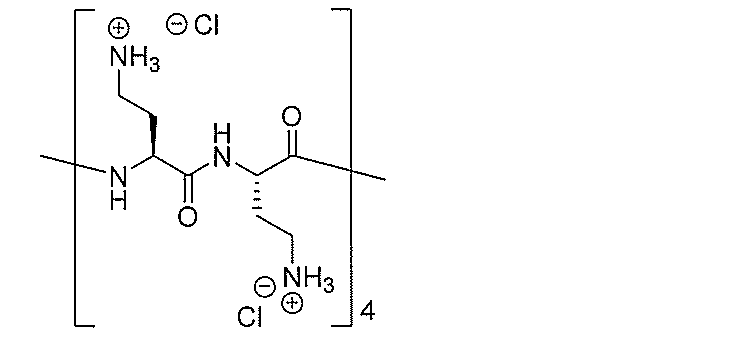
葉酸とカチオン性オリゴペプチドとの結合は、共有結合とすることが好ましい。共有結合は、カチオン性オリゴペプチドのN末端、C末端若しくは側鎖に直接又はリンカーを介した結合とすることができる。


複合体形成に用いたカチオン性オリゴペプチドの種類に応じて、葉酸-カチオン性オリゴペプチド複合体は、塩の形態として得られたものであっても良い。好適に使用できる塩としては、塩酸塩、酢酸塩、トリフルオロ酢酸塩等を挙げることができるが、特に限定するものではない。
葉酸-カチオン性オリゴペプチド複合体とすることで、siRNA及びshRNAの安定性を高めると共に、葉酸受容体を有する細胞への標的化送達が可能となる。
本発明はまた、膵癌細胞で発現するmRNA又はsnoRNAに結合してその発現を阻害し得るsiRNA又はshRNAと、上記本発明の送達促進剤とを含む核酸製剤を提供する。本発明の核酸製剤は、膵癌の腫瘍増大・浸潤・転移を効果的に抑制することができる。従って、本発明の核酸製剤は、膵癌に対する腫瘍増大抑制剤、浸潤・転移抑制剤、抗腫瘍剤としての作用を有する。
siRNA及びshRNAは、RNA干渉と呼ばれるメカニズムにより、特定のmRNAを標的として、その翻訳(発現)を阻止することが知られている。標的配列の塩基数は特に限定されず、15~500塩基の範囲で選択され得る。siRNAは、短鎖二本鎖RNA分子であり、shRNAは、生体内でダイサーによってプロセシングされてsiRNAを生成することができるヘアピン型RNAである。本明細書において、siRNA及びshRNAを含めて「RNAi分子」と記載する場合がある。
NUP85(ヌクレオポリン85)は、細胞核と細胞質の間の高分子の移動を調節する出入口を形成している核膜孔複合体の構成要素となるヌクレオポリン(nucleoporin)タンパク質ファミリーに属するタンパク質である。ヒトNUP85のアミノ酸配列及びこれをコードするmRNAの塩基配列等の情報は、NCBI等のデータベースにGene ID:79902、NCBI参照配列:NM_024844等として収載されている。
原発性免疫不全症の一種であるウィスコット・アルドリッチ症候群は、サイズの減少を伴う血小板減少、湿疹、易感染性を特徴とする疾患である。ウィスコット・アルドリッチ症候群タンパク質ファミリーメンバー2(WASF2)は、受容体キナーゼとアクチンをつなぐ多タンパク質複合体を形成するウィスコット・アルドリッチ症候群タンパク質ファミリーに属し、ヒトWASF2のアミノ酸配列及びこれをコードするmRNAの塩基配列等の情報は、NCBI等のデータベースにGene ID:10163、NCBI参照配列:NM_006990等として収載されている。
ARHGEF4(Rho guanine nucleotide exchange factor 4、Rhoグアニンヌクレオチド交換因子4)は、Gタンパク質共役状態を介して機能する刺激によって開始する細胞内プロセスに関与するタンパク質である。ヒトARHGEF4のアミノ酸配列及びこれをコードするmRNAの塩基配列等の情報は、NCBI等のデータベースにGene ID:50649、NCBI参照配列:NM_015320等として収載されている。
CCDC88A(コイルドコイルドメイン含有88A)は、アクチン結合タンパク質であるGirdinタンパク質をコードする遺伝子である。ヒトCCDC88AのmRNAの塩基配列等の情報は、NCBI等のデータベースにGene ID:55704、NCBI参照配列:NM_001135597等として収載されている。
LAMTOR2(late endosomal/lysosomal adaptor,MAPK and mTOR activator 2)は、ランゲルハンス細胞の恒常性のレギュレーターであり、シグナル伝達及びmTORカスケードに関与していると報告されている。ヒトLAMTOR2のアミノ酸配列及びこれをコードするmRNAの塩基配列等の情報は、NCBI等のデータベースにGene ID:28956、NCBI参照配列:NM_014017等として収載されている。
mTOR(mammalian target of rapamycin kinase、ラパマイシンキナーゼの哺乳動物標的)は、哺乳動物等の細胞内シグナル伝達に関与するタンパク質キナーゼの1種である。ヒトmTORのアミノ酸配列及びこれをコードするmRNAの塩基配列等の情報は、NCBI等のデータベースにGene ID:2475、NCBI参照配列:NM_004958等として収載されている。
本発明者等は、これらのsnoRNAに対するsiRNA又はshRNAも、snoRNAを認識して結合し、ノックダウンすることで、膵癌の腫瘍増大・浸潤・転移を抑制することができることを見出した。
小核小体RNA SNORA18は、ウリジンからシュードウリジンへの修飾部位をガイドするRNAのメンバーとして報告されている。ヒトSNORA18の塩基配列等の情報は、NCBI等のデータベースにGene ID:677805、NCBI参照配列:NR_002959等として収載されている。
小核小体RNA SNORA22も、ウリジンからシュードウリジンへの修飾部位をガイドするRNAのメンバーとして報告されている。ヒトSNORA22の塩基配列等の情報は、NCBI等のデータベースにGene ID:677807、NCBI参照配列:NR_002961等として収載されている。
(1)アンチセンス鎖の5’末端がA又はUであり、
(2)センス鎖の5’末端がG又はCであり、且つ
(3)アンチセンス鎖の5’末端部の7塩基中の4塩基以上はA又はUである
を満たす場合に、RNA干渉効果が高いことが知られている。従って、本発明で使用するsiRNAは、かかる塩基配列を有するものであり得るが、これに限定するものではない。同様に、本発明で使用するshRNAは、細胞内でのプロセシング後にこうしたsiRNAを生じるものであり得るが、これに限定するものではない。
ある標的配列に対して有効なsiRNA配列及びshRNA配列の決定は、インターネットを介して利用可能なプログラムを使用して実施することもできる。
シトシンの5-メチル化、5-フルオロ化、5-ブロモ化、5-ヨード化、N4-メチル化、
アデニンのN6-メチル化、8-ブロモ化、
グアニンのN2-メチル化、8-ブロモ化、
ウラシルの5-フルオロ化、5-ブロモ化、5-ヨード化、5-ヒドロキシル化
などが挙げられる。
siRNA及びshRNAはまた、改変されたヌクレオシド間結合を含むことができる。
本発明はまた、本発明の抗腫瘍剤を1種以上含む医薬組成物を提供する。
本発明に係る抗腫瘍剤の標的部位は、膵臓のみならず、膵癌細胞が転移したリンパ節や他の臓器であってもよい。また、標的部位ヘ有効成分をより確実に送達するために、剤形としては注射剤が好ましい。
本発明はまた、上記の膵癌細胞で発現するmRNA又はsnoRNAに結合してその発現を阻害し得るsiRNA又はshRNAと、上記の葉酸-カチオン性オリゴペプチド複合体とを含む、膵癌の腫瘍増大・浸潤・転移の抑制のための組合せ製剤を提供する。
本発明はまた、上記の膵癌細胞で発現するmRNA又はsnoRNAに結合してその発現を阻害し得るsiRNA又はshRNAと、上記の葉酸-カチオン性オリゴペプチド複合体とを含む、膵癌治療のための医薬キットを提供する。キットには、siRNA又はshRNA及び葉酸-カチオン性オリゴペプチド複合体の他、同時に投与することができるか投与が適切な他の薬剤、担体、投与方法等についての説明書等を含めることができる。
下記に示すようにして葉酸-カチオン性オリゴペプチド複合体を合成した。尚、本実施例において使用した試薬及び分析装置は以下に示す通りである。
Fmocアミノ酸誘導体およびペプチド固相合成担体としての樹脂は渡辺化学工業株式会社より、また、葉酸は東京化成株式会社より購入し、そのまま用いた。各ペプチド鎖はFmoc固相合成法を用い、Fmoc-NH-SAL-PEG樹脂を固相担体として合成した。Fmoc-AA-OH試薬にはFmoc-Dab(Boc)-OH、Fmoc-Gly-OH、Fmoc-Tyr(t-Bu)-OHを使用した。
Varian 910-MS(JASCO)
<紫外可視分光光度計>
V-550(JASCO)
<温度可変紫外可視分光光度計>
UV-1650PC(SIMADZU)
<分光蛍光光度計>
FP-6500(JASCO)
<HPLC>
ポンプ:PU-2080i plus(JASCO)
検出器:UV-2075i plus(JASCO)
低圧グラジエントユニット:LG-2080-02(JASCO)
デガッサ:DG-2080-53(JASCO)
逆相カラム:μ-Bondasphere 150×3.9mm C18 5μm 100Å(Waters), SunFire C18 OBD 5μm 19×150mm(Waters)
まず、Fmoc固相合成により、L-2,4-ジアミノ酪酸の8量体(Dab8)を合成した。PetiSyzer(ハイペップ研究所)に、導入されたアミノ基が13μmolになるように固相担体を加えて、1.3mLのジメチルホルムアミド(DMF)で5回洗浄した後、DMFを1.3mL加えて1時間以上静置し、担体を膨潤させた。
樹脂をDMF及びCHCl3でそれぞれ5回洗浄し、デシケーター中で減圧乾燥した。得られた樹脂を室温でトリフルオロ酢酸(TFA)-トリイソピロピルシラン-H2O混合溶媒(96.5/1.0/2.5, v/v/v)中、1時間30分攪拌し、脱保護・脱樹脂を行った。樹脂を濾去し、溶媒をアルゴン気流下気化させた後、Et2Oを加えてペプチドを沈殿させた。遠心分離機にかけて上澄みを除去する操作を3回繰り返したのち、Et2Oをアルゴン気流下気化させ、粗生成物(葉酸-カチオン性オリゴペプチド)を得た。
得られた粗生成物を1mLの大塚蒸留水(大塚製薬工場製)に溶解した後、以下の条件を用いる逆相HPLCにより精製した。
測定温度:30℃
流速:0.5mL/分

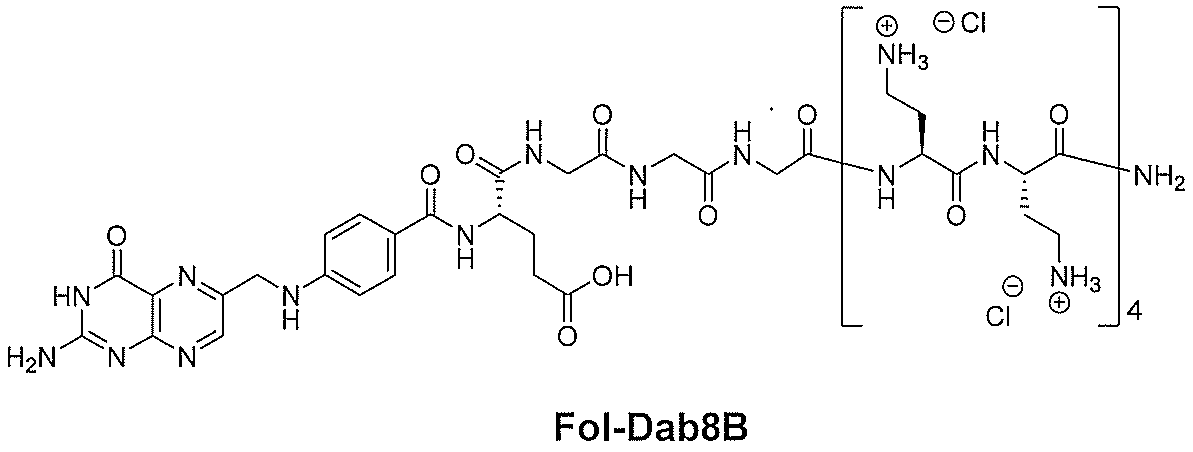
実施例1で合成したカチオン性オリゴペプチド又は葉酸-カチオン性オリゴペプチド複合体の存在下及び非存在下での核酸二重鎖の融解温度を測定した。
5'-r(GUCAUCACACUGAAUACCA)dTdT-3'(配列番号1)
5'-r(UGGUAUUCAGUGUGAUGAC)dTdT-3'(配列番号2)
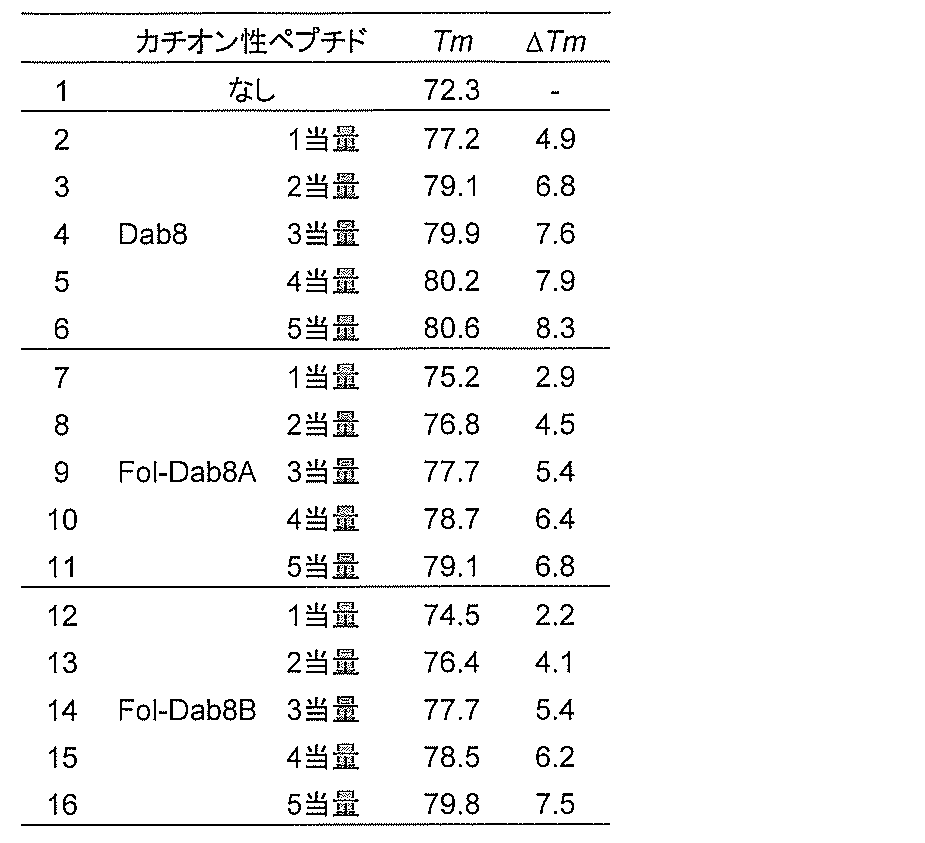
カチオン性オリゴペプチド存在下における核酸二重鎖のRNA分解酵素耐性試験を行った。
本実施例では、アニーリングされたRNA二重鎖に対してペプチドを添加して複合体を形成させ、RNAの分解の速さを測定した。
フローサイトメトリーでは標識が細胞内に取り込まれたものと取り込まれていないものとの識別が困難であるため、膵癌細胞へのsiRNAの取り込みを共焦点顕微鏡を用いて観察した。
カチオン性オリゴペプチド又は葉酸-カチオン性オリゴペプチド複合体の存在下における、SNORA18、NUP85、WASF2、SNORA22それぞれに対するsiRNAのノックダウン効果を検討した。
表2に、本実施例で使用したsiRNAの配列を示す。各siRNAは、当分野で通常行われる通り、表2に示すセンス鎖とアンチセンス鎖とが二本鎖形成したものを使用した。
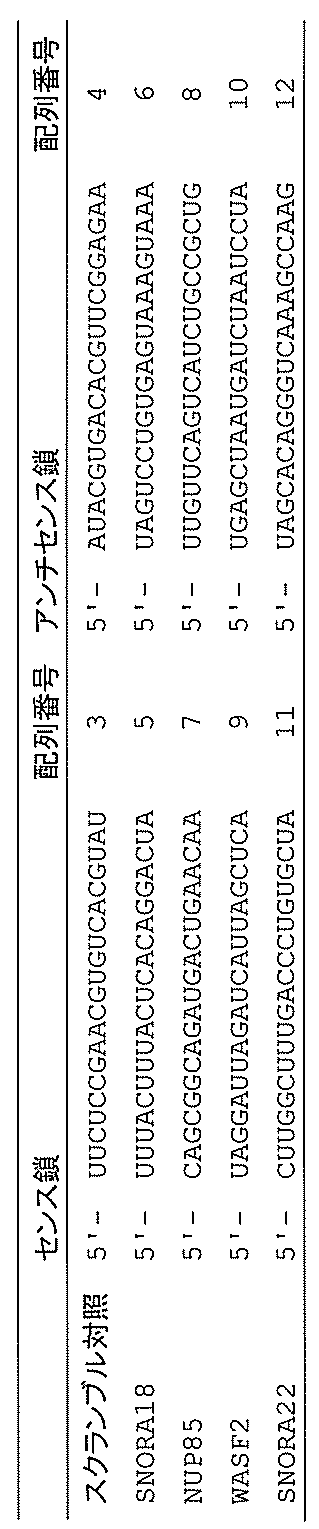
回収した細胞のRNAを用いて半定量RT-PCR法を行い、細胞におけるSNORA18、NUP85、WASF2、SNORA22のノックダウン効果について確認した。

葉酸-カチオン性オリゴペプチド複合体を付加したスクランブル対照siRNA、SNORA18siRNA、NUP85 siRNA、WASF2 siRNA、SNORA22 siRNA(いずれも実施例5で使用したもの)のそれぞれをS2-013細胞の培養液中に添加し、48時間後にマトリゲル浸潤アッセイを行った。
安定性を高めるために化学修飾したsiRNAを作製し、葉酸-カチオン性オリゴペプチド複合体による効果を検討した。
表4に、本実施例で使用したsiRNAのセンス鎖及びアンチセンス鎖の配列を示す。それぞれ化学修飾された塩基を含むと共に、3’末端にホスホロチオエート結合を含む。
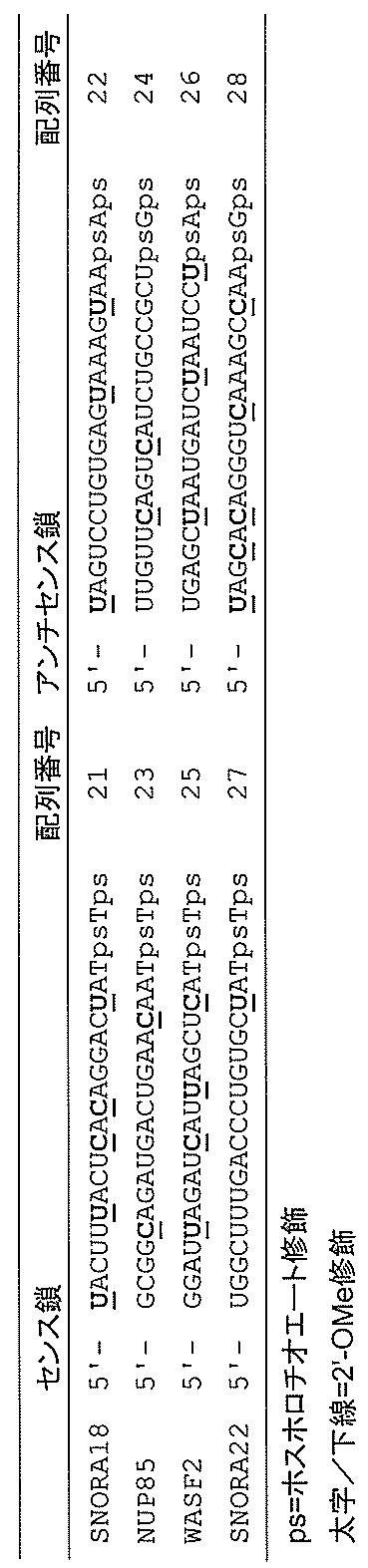
培養中の膵癌細胞株S2-013の培養液中に、スクランブル対照siRNA(配列番号3及び4)、SNORA18 siRNA(配列番号21及び22)、NUP85 siRNA(配列番号23及び24)、WASF2 siRNA(配列番号25及び26)、SNORA22 siRNA(配列番号27及び28)のそれぞれを、2当量のDab8、Fol-Dab8A、Fol-Dab8Bと共に添加した。対照として、対照siRNA、SNORA18 siRNA、NUP85 siRNA、WASF2 siRNA、SNORA22 siRNAのそれぞれを単独でS2-013細胞の培養液中に添加した。
実施例7で作製した化学修飾SNORA22 siRNA(配列番号27及び28)をAlexa488(Thermo Fisher Scientific)で標識し、葉酸-カチオン性オリゴペプチド複合体(Fol-Dab8B、2当量)と共に、4ウェルチャンバー(Thermo Fisher Scientific)中のS2-013膵癌細胞又はHPNE正常膵管上皮細胞(ATCC)の培養液(5×10⁴個/ウェル)中に添加して37℃で一晩インキュベートした後、DNA(DAPI)、葉酸レセプター(FOLR1)及びsiRNA(Alexa488)の染色を観察した。
細胞内にエンドサイトーシスで取り込まれたsiRNAはエンドソーム内に取り込まれてリソソームへ融合することが知られている。本発明のsiRNAとFol-Dab8A又はFol-Dab8Bの複合体がエンドサイトーシスを介して取り込まれているかについて検証するため、リソソームの染色とsiRNAの染色の共焦点顕微鏡画像を取得した。
本実施例では、siRNAの血清中での安定性が化学修飾によって向上するか否かを検討した。
特開2018-110575に記載された方法を改変し、S2-013膵癌細胞を用いてヒト膵癌オルガノイドを作製した。
具体的には、S2-013膵癌細胞(20×104個)、ヒト間葉系幹細胞MSC(LONZA、40×104個)、及びヒト臍帯静脈内皮細胞HUVEC(LONZA、14×104個)を48ウェルプレート(Thermo Fisher Scientific)中のDMEM/マトリゲル混合溶液中に加えて37℃のCO2インキュベータで30分間インキュベートした。
その後、DMEM/EGM混合溶液300μL/ウェルを添加して、再び37℃で24時間インキュベートした、各ウェル内に膵癌オルガノイドを1個ずつ作製した。
測定条件:kexc 640nm、kemi 680nm
尚、本実験から、siRNAの肝臓への移行・蓄積はほとんど観察されず、腎臓から排泄されていることも確認された。
実施例11において作製したヒト膵癌オルガノイドをヌードマウス皮下に移植した1週後から、化学修飾SNORA22 siRNA(配列番号27及び28、5μg)を、週1回の頻度で、カチオン性オリゴペプチド(Dab8、2当量)又は葉酸-カチオン性オリゴペプチド複合体(Fol-Dab8B、2当量)と共に尾静脈注射にて投与し、ノギスを用いて毎週腫瘍体積を計測した(各群n=8)。対照として、スクランブル対照siRNA(配列番号3及び4)を葉酸-カチオン性オリゴペプチド複合体(Fol-Dab8B、2当量)と共に投与した。
実施例11と同様にして、葉酸-カチオン性オリゴペプチド複合体(Fol-Dab8A若しくはFol-Dab8B)と共に投与した場合の化学修飾SNORA18 siRNA(配列番号21及び22)の膵癌担持マウスへの送達をin vivo imagerにて撮影した。
実施例11及び13と同様にして、葉酸-カチオン性オリゴペプチド複合体(Fol-Dab8A若しくはFol-Dab8B)と共に投与した場合の化学修飾WASF2 siRNA(配列番号25及び26)の膵癌担持マウスへの送達をin vivo imagerにて撮影した。
本明細書で引用した全ての刊行物、特許及び特許出願はそのまま引用により本明細書に組み入れられるものとする。
Claims (20)
- 膵癌細胞で発現するmRNA又はsnoRNAに結合してその発現を阻害し得るsiRNA又はshRNAと、葉酸-カチオン性オリゴペプチド複合体からなるsiRNA又はshRNAの送達促進剤とを含む抗腫瘍剤であって、該複合体におけるカチオン性オリゴペプチドが、下記式(I)のアミノ酸残基が少なくとも2個連続する部分を含み、下記式(I)のアミノ酸残基の連続する部分以外は連続しない1個の他のアミノ酸残基である、8~40個のアミノ酸からなるカチオン性オリゴペプチド部位を含む、上記抗腫瘍剤。
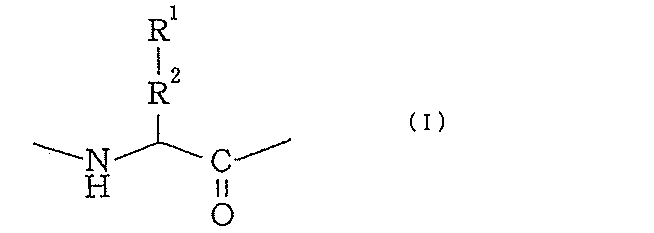

- 葉酸-カチオン性オリゴペプチド複合体からなる、siRNA又はshRNAの送達促進剤であって、カチオン性オリゴペプチドが、下記式(I)のアミノ酸残基が少なくとも2個連続する部分を含み、下記式(I)のアミノ酸残基の連続する部分以外は連続しない1個の他のアミノ酸残基である、8~40個のアミノ酸からなるカチオン性オリゴペプチド部位を含む、上記送達促進剤。


- カチオン性オリゴペプチド部位が、8~12個のアミノ酸からなる、請求項2記載の送達促進剤。
- カチオン性オリゴペプチド部位が、L-2,3-ジアミノプロピオン酸(Dap)、L-2,4-ジアミノ酪酸(Dab)、L-オルニチン(Orn)、L-リジン(Lys)、L-2-アミノ-3-グアニジノプロピオン酸(Agp)、L-2-アミノ-4-グアニジノ酪酸(Agb)、又はL-アルギニン(Arg)のホモ多量体である、請求項2又は3記載の送達促進剤。
- カチオン性オリゴペプチドが、下記の構造を有するジアミノ酪酸の8量体を部分構造として有する、請求項2~4いずれか1項記載の送達促進剤。
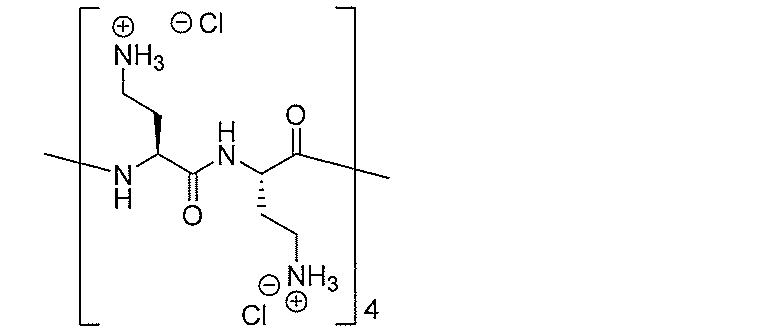
- 葉酸が、カチオン性オリゴペプチドのN末端、C末端若しくは側鎖にリンカーを介して又は介さずに連結されている、請求項2~5のいずれか1項記載の送達促進剤。
- 葉酸-カチオン性オリゴペプチド複合体が、リンカーを介して連結されており、リンカーがペプチドリンカーである、請求項6記載の送達促進剤。
- ペプチドリンカーが、1~4個のグリシン残基からなるペプチドである、請求項7記載の送達促進剤。
- 葉酸-カチオン性オリゴペプチド複合体が、下記の構造を有するFol-Dab8A及び/又はFol-Dab8Bである、請求項5記載の送達促進剤。


- 膵癌細胞で発現するmRNA又はsnoRNAに結合してその発現を阻害し得るsiRNA又はshRNAと、請求項2~9のいずれか1項記載の送達促進剤とを含む、抗腫瘍剤。
- 膵癌細胞で発現するmRNA又はsnoRNAが、インスリン様成長因子2mRNA結合タンパク質3(IGF2BP3)に結合するものである、請求項10記載の抗腫瘍剤。
- 膵癌細胞で発現するmRNA又はsnoRNAが、SNORA18 snoRNA、NUP85 mRNA、WASF2 mRNA、及びSNORA22 snoRNAからなる群より選択される、請求項10又は11記載の抗腫瘍剤。
- siRNA又はshRNAに対して0.5~10当量の葉酸-カチオン性オリゴペプチド複合体を含む、請求項10~12のいずれか1項記載の抗腫瘍剤。
- siRNAが、RNA/RNA二本鎖である、請求項10~13のいずれか1項記載の抗腫瘍剤。
- siRNA又はshRNAが、修飾された塩基、修飾された糖、及び/又は改変されたヌクレオシド結合を含む、請求項10~14のいずれか1項記載の抗腫瘍剤。
- 上記修飾された糖の修飾が2’-OMe修飾である、請求項15記載の抗腫瘍剤。
- 上記改変されたヌクレオシド結合が、ホスホロチオエート結合である、請求項15又は16記載の抗腫瘍剤。
- 請求項10~17のいずれか1項記載の抗腫瘍剤を含有する医薬組成物。
- 以下:
(a)膵癌細胞で発現するmRNA又はsnoRNAに結合してその発現を阻害し得るsiRNA又はshRNAを含む製剤、及び
(b)下記式(I)のアミノ酸残基が少なくとも2個連続する部分を含み、下記式(I)のアミノ酸残基の連続する部分以外は連続しない1個の他のアミノ酸残基である、8~40個のアミノ酸からなるカチオン性オリゴペプチド部位を含む、葉酸-カチオン性オリゴペプチド複合体を含む製剤:
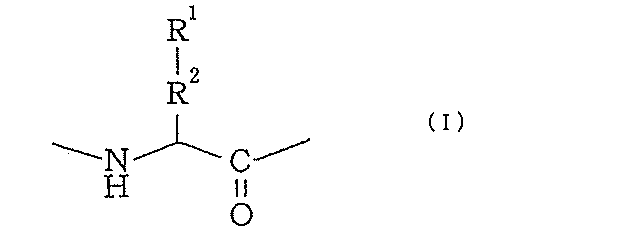
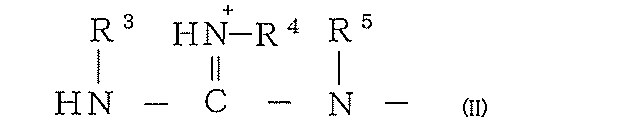
を含む、組合せ製剤。 - 以下:
(a)膵癌細胞で発現するmRNA又はsnoRNAに結合してその発現を阻害し得るsiRNA又はshRNA、及び
(b)下記式(I)のアミノ酸残基が少なくとも2個連続する部分を含み、下記式(I)のアミノ酸残基の連続する部分以外は連続しない1個の他のアミノ酸残基である、8~40個のアミノ酸からなるカチオン性オリゴペプチド部位を含む、葉酸-カチオン性オリゴペプチド複合体:


を含む、膵癌治療のための医薬キット。
Priority Applications (5)
| Application Number | Priority Date | Filing Date | Title |
|---|---|---|---|
| EP20879612.8A EP4049664A4 (en) | 2019-10-25 | 2020-10-26 | NUCLEIC ACID DELIVERY AMPLIFIER |
| CN202080074532.3A CN114599375B (zh) | 2019-10-25 | 2020-10-26 | 核酸递送促进剂 |
| JP2021553596A JP7709164B2 (ja) | 2019-10-25 | 2020-10-26 | 核酸送達促進剤 |
| US17/755,165 US20220380763A1 (en) | 2019-10-25 | 2020-10-26 | Nucleic acid delivery enhancer |
| JP2025107991A JP2025134960A (ja) | 2019-10-25 | 2025-06-26 | 核酸送達促進剤 |
Applications Claiming Priority (2)
| Application Number | Priority Date | Filing Date | Title |
|---|---|---|---|
| JP2019-194646 | 2019-10-25 | ||
| JP2019194646 | 2019-10-25 |
Publications (1)
| Publication Number | Publication Date |
|---|---|
| WO2021080020A1 true WO2021080020A1 (ja) | 2021-04-29 |
Family
ID=75620734
Family Applications (1)
| Application Number | Title | Priority Date | Filing Date |
|---|---|---|---|
| PCT/JP2020/040071 Ceased WO2021080020A1 (ja) | 2019-10-25 | 2020-10-26 | 核酸送達促進剤 |
Country Status (5)
| Country | Link |
|---|---|
| US (1) | US20220380763A1 (ja) |
| EP (1) | EP4049664A4 (ja) |
| JP (2) | JP7709164B2 (ja) |
| CN (1) | CN114599375B (ja) |
| WO (1) | WO2021080020A1 (ja) |
Citations (5)
| Publication number | Priority date | Publication date | Assignee | Title |
|---|---|---|---|---|
| WO2014148620A1 (ja) | 2013-03-21 | 2014-09-25 | 国立大学法人東京医科歯科大学 | 二重鎖核酸結合剤、当該結合剤-二重鎖核酸複合体、当該複合体を含有する医薬品組成物、及び、当該複合体の製造方法 |
| WO2016002844A1 (ja) | 2014-07-04 | 2016-01-07 | 国立大学法人高知大学 | 膵がん細胞浸潤転移阻害剤 |
| JP2018110575A (ja) | 2016-03-16 | 2018-07-19 | 公立大学法人横浜市立大学 | 腫瘍組織再現法 |
| JP2019194646A (ja) | 2018-05-02 | 2019-11-07 | 日産自動車株式会社 | 表示装置 |
| JP2020078771A (ja) | 2018-11-12 | 2020-05-28 | 株式会社クローラル | 流体ノズル |
Family Cites Families (4)
| Publication number | Priority date | Publication date | Assignee | Title |
|---|---|---|---|---|
| EP3604533A1 (en) * | 2008-04-11 | 2020-02-05 | Arbutus Biopharma Corporation | Site-specific delivery of nucleic acids by combining targeting ligands with endosomolytic components |
| EP3378482B1 (en) * | 2015-11-19 | 2024-02-21 | Public University Corporation Nagoya City University | Antitumor drug delivery formulation |
| CN109475640B (zh) * | 2016-06-09 | 2023-03-10 | 库瑞瓦格欧洲公司 | 核酸被运载物的混合载运体 |
| CN109718241A (zh) * | 2017-10-31 | 2019-05-07 | 上海市浦东医院(复旦大学附属浦东医院) | 一种肿瘤的基于核酸的靶向治疗方法 |
-
2020
- 2020-10-26 WO PCT/JP2020/040071 patent/WO2021080020A1/ja not_active Ceased
- 2020-10-26 US US17/755,165 patent/US20220380763A1/en active Pending
- 2020-10-26 CN CN202080074532.3A patent/CN114599375B/zh active Active
- 2020-10-26 JP JP2021553596A patent/JP7709164B2/ja active Active
- 2020-10-26 EP EP20879612.8A patent/EP4049664A4/en active Pending
-
2025
- 2025-06-26 JP JP2025107991A patent/JP2025134960A/ja active Pending
Patent Citations (5)
| Publication number | Priority date | Publication date | Assignee | Title |
|---|---|---|---|---|
| WO2014148620A1 (ja) | 2013-03-21 | 2014-09-25 | 国立大学法人東京医科歯科大学 | 二重鎖核酸結合剤、当該結合剤-二重鎖核酸複合体、当該複合体を含有する医薬品組成物、及び、当該複合体の製造方法 |
| WO2016002844A1 (ja) | 2014-07-04 | 2016-01-07 | 国立大学法人高知大学 | 膵がん細胞浸潤転移阻害剤 |
| JP2018110575A (ja) | 2016-03-16 | 2018-07-19 | 公立大学法人横浜市立大学 | 腫瘍組織再現法 |
| JP2019194646A (ja) | 2018-05-02 | 2019-11-07 | 日産自動車株式会社 | 表示装置 |
| JP2020078771A (ja) | 2018-11-12 | 2020-05-28 | 株式会社クローラル | 流体ノズル |
Non-Patent Citations (12)
| Title |
|---|
| "NCBI", Database accession no. NM_001135597 |
| ALBERTO GABIZON, AVIVA T. HOROWITZ, DORIT GOREN, DINAH TZEMACH, FREDERIKA MANDELBAUM-SHAVIT, MASOUD M. QAZEN, AND SAMUEL ZALIPSKY: "Targeting folate receptor with folate linked to extremities of poly(ethylene glycol)-grafted liposomes: in vitro studies", BIOCONJUGATE CHEM., vol. 10, 1999, pages 289 - 298, XP000804255 * |
| ANNALISA GUARAGNA , ANGELA CHIAVIELLO, CONCETTA PAOLELLA, DANIELE D'ALONZO, GIUSEPPE PALUMBO, GIOVANNI PALUMBO: "Synthesis and evaluation of folate-based chlorambucil delivery systems for tumor-targeted chemotherapy", BIOCONJUGATE CHEM., vol. 23, 2012, pages 84 - 96, XP055820633 * |
| BIOORGANIC & MEDICINAL CHEMISTRY LETTERS, vol. 25, 2015, pages 815 - 819 |
| BIOORGANIC & MEDICINAL CHEMISTRY, vol. 21, 2013, pages 1717 - 1723 |
| BIOORGANIC & MEDICINAL CHEMISTRY, vol. 22, 2014, pages 1394 - 1403 |
| CUI LIN; NAKANO KENJI; OBCHOEI SUMALEE; SETOGUCHI KIYOKO; MATSUMOTO MASAKI; YAMAMOTO TSUYOSHI; OBIKA SATOSHI; SHIMADA KAZUAKI; HIR: "Small nuclear noncoding RNA SNORA23, up-regulated in human pancreatic ductal adenocarcinoma, regulates expression of spectrin repeat- containing nuclear envelope 2 to promote growth and metastasis of xenograft tumors in mice", GASTROENTEROLOGY, vol. 153, 2017, pages 292 - 306, XP085091869 * |
| J. BIOL. CHEM, vol. 290, 2015, pages 11741 - 11748 |
| MOL. BIOL. CELL, vol. 15, 2004, pages 281 - 293 |
| ONCOTARGET, vol. 10, no. 30, 2019, pages 2869 - 2886 |
| ONCOTARGET, vol. 11, no. 2, 2020, pages 131 - 147 |
| See also references of EP4049664A4 |
Also Published As
| Publication number | Publication date |
|---|---|
| EP4049664A1 (en) | 2022-08-31 |
| JP2025134960A (ja) | 2025-09-17 |
| JPWO2021080020A1 (ja) | 2021-04-29 |
| CN114599375A (zh) | 2022-06-07 |
| JP7709164B2 (ja) | 2025-07-16 |
| EP4049664A4 (en) | 2024-01-24 |
| US20220380763A1 (en) | 2022-12-01 |
| CN114599375B (zh) | 2025-02-11 |
Similar Documents
| Publication | Publication Date | Title |
|---|---|---|
| JP7564087B2 (ja) | アンチセンス送達のための三量体ペプチド | |
| TWI761305B (zh) | 抑制Hif2α基因表現之組合物及方法 | |
| JP2013500253A (ja) | 7−エチル−10−ヒドロキシカンプトテシンのマルチアーム型ポリマー性複合体と組み合わせたher2受容体拮抗薬を用いるher2陽性がんの治療方法 | |
| US20120183538A1 (en) | Sparc antisense compositions and uses thereof | |
| JP2024016040A (ja) | 去勢抵抗性前立腺癌 | |
| WO2025016480A1 (zh) | 靶向化学药物及其制备方法、药物组合物、靶向化学药物的应用 | |
| CN115725586A (zh) | 一种靶向ptk7的核酸适配体修饰结构及其偶联药物、制备方法和用途 | |
| RU2753517C2 (ru) | Антисмысловые олигонуклеотиды к hif-1-альфа | |
| KR20140039347A (ko) | 종양선택적 투과기능성을 가지는 펩타이드 및 그 용도 | |
| KR20210010362A (ko) | 멜라노필린 안티센스 올리고뉴클레오티드 | |
| JP7709164B2 (ja) | 核酸送達促進剤 | |
| KR102194594B1 (ko) | 매트릭스메탈로프로티나제-1 안티센스 올리고뉴클레오티드 | |
| KR102304280B1 (ko) | 아세틸코에이카복실라제2 안티센스 올리고뉴클레오티드 | |
| US20250346895A1 (en) | Genetic sequence-carbohydrate conjugates for enhanced liver- and kidney-specific targeting | |
| US20260092085A1 (en) | Synthetic triplex peptide nucleic acid-based inhibitors for cancer therapy | |
| EP4729062A1 (en) | Pharmaceutical composition for preventing or treating targeted cancer comprising brca-specific sirna as active ingredient | |
| JP2025512450A (ja) | アプタマー、複合体及び組成物並びに製造方法及び使用 | |
| HK40109091A (zh) | 核酸寡聚体及其用途 | |
| EP3543233A1 (en) | Novel alkylating agent | |
| CN108697728A (zh) | 核酸寡聚体及其用途 |
Legal Events
| Date | Code | Title | Description |
|---|---|---|---|
| 121 | Ep: the epo has been informed by wipo that ep was designated in this application |
Ref document number: 20879612 Country of ref document: EP Kind code of ref document: A1 |
|
| DPE1 | Request for preliminary examination filed after expiration of 19th month from priority date (pct application filed from 20040101) | ||
| ENP | Entry into the national phase |
Ref document number: 2021553596 Country of ref document: JP Kind code of ref document: A |
|
| NENP | Non-entry into the national phase |
Ref country code: DE |
|
| ENP | Entry into the national phase |
Ref document number: 2020879612 Country of ref document: EP Effective date: 20220525 |
|
| WWG | Wipo information: grant in national office |
Ref document number: 202080074532.3 Country of ref document: CN |