WO2021086689A1 - 4-amino-imidazoquinoline compounds and use thereof - Google Patents
4-amino-imidazoquinoline compounds and use thereof Download PDFInfo
- Publication number
- WO2021086689A1 WO2021086689A1 PCT/US2020/056515 US2020056515W WO2021086689A1 WO 2021086689 A1 WO2021086689 A1 WO 2021086689A1 US 2020056515 W US2020056515 W US 2020056515W WO 2021086689 A1 WO2021086689 A1 WO 2021086689A1
- Authority
- WO
- WIPO (PCT)
- Prior art keywords
- compound
- amino
- alkyl
- imidazo
- hydroxy
- Prior art date
- Legal status (The legal status is an assumption and is not a legal conclusion. Google has not performed a legal analysis and makes no representation as to the accuracy of the status listed.)
- Ceased
Links
Classifications
-
- C—CHEMISTRY; METALLURGY
- C07—ORGANIC CHEMISTRY
- C07D—HETEROCYCLIC COMPOUNDS
- C07D471/00—Heterocyclic compounds containing nitrogen atoms as the only ring hetero atoms in the condensed system, at least one ring being a six-membered ring with one nitrogen atom, not provided for by groups C07D451/00 - C07D463/00
- C07D471/02—Heterocyclic compounds containing nitrogen atoms as the only ring hetero atoms in the condensed system, at least one ring being a six-membered ring with one nitrogen atom, not provided for by groups C07D451/00 - C07D463/00 in which the condensed system contains two hetero rings
- C07D471/04—Ortho-condensed systems
-
- A—HUMAN NECESSITIES
- A61—MEDICAL OR VETERINARY SCIENCE; HYGIENE
- A61K—PREPARATIONS FOR MEDICAL, DENTAL OR TOILETRY PURPOSES
- A61K31/00—Medicinal preparations containing organic active ingredients
- A61K31/33—Heterocyclic compounds
- A61K31/395—Heterocyclic compounds having nitrogen as a ring hetero atom, e.g. guanethidine or rifamycins
- A61K31/435—Heterocyclic compounds having nitrogen as a ring hetero atom, e.g. guanethidine or rifamycins having six-membered rings with one nitrogen as the only ring hetero atom
- A61K31/47—Quinolines; Isoquinolines
- A61K31/4738—Quinolines; Isoquinolines ortho- or peri-condensed with heterocyclic ring systems
- A61K31/4745—Quinolines; Isoquinolines ortho- or peri-condensed with heterocyclic ring systems condensed with ring systems having nitrogen as a ring hetero atom, e.g. phenantrolines
-
- A—HUMAN NECESSITIES
- A61—MEDICAL OR VETERINARY SCIENCE; HYGIENE
- A61P—SPECIFIC THERAPEUTIC ACTIVITY OF CHEMICAL COMPOUNDS OR MEDICINAL PREPARATIONS
- A61P1/00—Drugs for disorders of the alimentary tract or the digestive system
- A61P1/16—Drugs for disorders of the alimentary tract or the digestive system for liver or gallbladder disorders, e.g. hepatoprotective agents, cholagogues, litholytics
-
- A—HUMAN NECESSITIES
- A61—MEDICAL OR VETERINARY SCIENCE; HYGIENE
- A61P—SPECIFIC THERAPEUTIC ACTIVITY OF CHEMICAL COMPOUNDS OR MEDICINAL PREPARATIONS
- A61P31/00—Antiinfectives, i.e. antibiotics, antiseptics, chemotherapeutics
- A61P31/12—Antivirals
-
- A—HUMAN NECESSITIES
- A61—MEDICAL OR VETERINARY SCIENCE; HYGIENE
- A61P—SPECIFIC THERAPEUTIC ACTIVITY OF CHEMICAL COMPOUNDS OR MEDICINAL PREPARATIONS
- A61P35/00—Antineoplastic agents
-
- A—HUMAN NECESSITIES
- A61—MEDICAL OR VETERINARY SCIENCE; HYGIENE
- A61P—SPECIFIC THERAPEUTIC ACTIVITY OF CHEMICAL COMPOUNDS OR MEDICINAL PREPARATIONS
- A61P37/00—Drugs for immunological or allergic disorders
- A61P37/08—Antiallergic agents
Definitions
- the present invention relates generally to Toll-like receptor (TLR) agonists, and more specifically to TLR7 and TLR8 dual agonists.
- TLR Toll-like receptor
- TLRs Toll-like receptors
- TLRs are pathogen recognition receptors which play a critical role in activating both innate and adaptive immunity.
- TLRs have been identified in humans and mice. Some TLRs are found located on the cell surfaces (e.g., TLR 1 , 2, 4, 5 and 6), and some are found located in the endosomal compartments (e.g., TLR 3, 7, 8 and 9). TLRs are expressed on different immune cells, especially monocytes, dendritic cells (DCs) and macrophages.
- DCs dendritic cells
- TLRs results in cytokine secretion (e.g., IFN- ⁇ , TNF-a and IL-12) and increased phagocytosis by macrophages and cytolytic activity by natural killer (NK) cells. TLRs activation also results in enhanced antigen presentation, thus activating an adaptive immune response, including antigen- specific CDS' cytotoxic T lymphocytes.
- cytokine secretion e.g., IFN- ⁇ , TNF-a and IL-12
- NK natural killer
- TLR 7 and/or TLR 8 agonists have been identified in US Patent Nos. 8728486, 9334268, 9884866 and US Patent publication No. 20190062329. There is still a need for developing TLR7 and/or TLR8 agonists, especially TLR 7/8 agonists with improved potency and/or cytokine profile.
- the invention relates to a compound of formula (I) or a pharmaceutically acceptable salt thereof, wherein
- R 1 is hydroxy, hydroxy-C 1-6 -alkyl, C 1-6 -alkoxy, or C 1-6 -alkoxy-C 1-6 -alkyl;
- R 2 is C 1-6 -alkyl, C 1-6 -haloalkyl, C 1-6 -haloalky 1-O-C 1-6 -alkyl, C 1-6 -haloalkyl-S-C 1-6 -alkyl, or hydroxy-C 1-6 -alkyl;
- R 3 is hydrogen, hydroxy, halogen, C 1-6 -alkyl, hydroxy-C 1-6 -alkyl, C 1-6 -haloalkyl, C 1-6 -alkoxy, or C 1-6 -alkoxy-C 1-6 -alkyh wherein the C 1 -e-alkyl, hydroxy-C 1-6 -alkyl, C 1-6 alkoxy, C 1-6 -alkoxy-C 1-6 -alkyl, C 1-6 -haloalkyl and C 1-6 -haloalkyl-S-C 1-6 -alkyl are each independently unsubstituled or substituted with at least one substituent; wherein the substituent is each independently selected from the group consisting of - NH2, aryl, C 1-6 -alkyl and C 1-6 -alkyl-aryl; with the proviso that, when R 1 is 2-hydroxy-2-methy lpropy 1 , R 2 is not methyl, ethyl
- the invention relates to a compound of formula (II) or a pharmaceutically acceptable salt thereof, wherein R 1 and R 2 are as defined above.
- R 1 is hydroxy-C 1-6 -alkyl, orC 1-6 alkoxy-C 1-6 -alkyl .
- R 1 is hydroxymethyl, 2-hydroxyethyl, 3-hydroxypropyl, 4-hydroxybutyl, or 2-hydroxy-2-melhylpropyl.
- R 1 is methoxymethyl, 2-methoxyethyl, ethoxymethyl, or 2- ethoxyethyl.
- R 2 is straight-chain or branched C 1-6 -alkyl.
- R 2 is methyl, ethyl, n-propyl, isopropyl, n-butyl, isobutyl, tert-butyl, n- pentyl, isopentyl, 1-methylbutyl, tert-pentyl, neopentyl, n-hexyl, 3-hexyl, 2-methyl- 1 -pentyl, 3- methyl-1 -pentyl, 4-methyl- 1 -pentyl, 2-methyl-2-pentyl, 3-methyl-2-pentyl, 4-methyl-2-pentyl, 2- methyl-3-pentyl, 3-methyl-3-pentyl, 2,2-dimethyl- 1 -butyl, 2,3-dimethyl- 1 -butyl, 3,3-dimethyl- 1 -butyl, 2-ethyl- 1 -butyl, 2,3-dimethyl-2-butyl, or 3,3-dimethyl-2-
- R 2 is sec-butyl, tert-butyl, or 3 ,3-dimethyl- 1 -butyl.
- R 2 is C 1-6 -monohaloalkyl, C 1-6 -dihaloalkyl or C 1-6 -trihaloalkyl.
- R 2 is trifluoromethyl, 2,2,2-trifluoroethyl, 3,3,3-triluoropropyl, 4,4,4- fluorobutyl, 5,5,5-trifluoropentyl, 6,6,6-tri fluorohexy 1, 3,3,3-trifluoro-2-methylpropyl, 4,4,4- trifluoro-3 -methyl butyl, or 5,5,5-trifluoro-4-methylpentyl.
- R 2 is -CH 2 -CH 2 -O-CH 2 -CF 3 , -CH 2 -CH 2 -O-CH 2 -CH 2 -CF 3 , -CH 2 -O-CH 2 -CF 3 , -CH 2 -O-CH 2 -CH 2 -CF 3 , or -CH 2 -O-CH 2 -CH 2 -CH 2 -CF 3 .
- R 2 is C 1-6 - haloalkyl-0-C 2-6 -alkyl.
- R 2 is -CH 2 -CH 2 -S-CH 2 -CF 3 , -CH 2 -CH 2 -S-CH 2 -CH 2 -CF 3 , -CH 2 -S-CH 2 -CF 3 , -CH 2 -S-CH 2 -CH 2 -CF 3 , or -CH 2 -S-CH 2 -CH 2 -CH 2 -CF 3 .
- R is 2-hydroxyethyl, 3-hydroxypropyl, or 4-hydroxybutyl.
- R3 is C 1-6 -haloalkyl.
- TheC 1-6 -haloalkyl may be a trifluoroalkyl group.
- R 3 is H, OH, F, Cl, Br, I, or Irinuoromelhyl.
- R 1 is 2-hydroxy-2-methylpropyl
- R 2 is n-propyl, isobutyl, n-pentyl, isopentyl, 4-methylpentyl, trifluoromethyl, 2,2,2-trifluoroethyl, 3,3,3-trfluoropropyl, 4,4,4- fluorobutyl, 5,5,5-trilluoropentyl, 6,6,6-trifluorohexyl, 3,3,3-lrinuoro-2-methylpropyl, 4,4,4- trifluoro-3-methylbutyl, 5,5,5-lriiluoio-4-methylpentyl, -CH 2 -S-CH 2 -CF 3 , -CH 2 -S-CH 2 -CH 2 -CF 3 , - CH 2 -S-CH 2 -CH 2 -CH 2 -CF 3 , 2-hydioxyethyl, 3-hydroxypropyl, or 4-hydroxybuty
- R 1 is 2-hydroxy-2-methylpropyl
- R 2 is n-propyl, isobutyl, n-pentyl
- R 1 is 2-hydroxy-2-methylpropyl
- R: is n-propyl, isobutyl, n-pentyl
- a compound of formula (I) is selected from the compounds as listed in Table 2 of the present application.
- a compound of formula (I) according to the invention is selected from the group consisting of:
- a further aspect of the present invention is a process for the manufacture of compounds of formula (I).
- the invention relates to a pharmaceutical composition comprising a compound of formula (I) or a pharmaceutically acceptable salt thereof as defined above, and a pharmaceutically acceptable carrier and/or an adjuvant.
- the invention relates to use of a compound or a pharmaceutically acceptable salt thereof according to the invention in the manufacture of a medicament for treating a viral infection, cancer, an allergic disease or a liver disease in a subject in need thereof.
- the invention also relates to a method of treating a viral infection, cancer, an allergic disease or a liver disease, said method comprising administering a therapeutically effective amount of a compound of formula (I) or a pharmaceutically acceptable salt thereof according to the invention to a subject in need thereof.
- the invention also relates to a compound of formula (I) or a pharmaceutically acceptable salt thereof according to the invention for use in treating a viral infection, cancer, an allergic disease or a liver disease in a subject in need thereof.
- the viral infection is hepatitis C virus (HCV), hepatitis B virus (HBV), hepatitis D virus (HDV), human papillomavirus (HPV), or herpes simplex virus 1 (HSV-1 ), herpes simplex virus 2 (HSV-2) related infection.
- HCV hepatitis C virus
- HBV hepatitis B virus
- HDV hepatitis D virus
- HPV human papillomavirus
- HSV-1 herpes simplex virus 1
- HSV-2 herpes simplex virus 2
- the cancer is selected from the group consisting of esophageal, stomach, colon, rectal, pancreatic, lung, breast, cervix uteri, corpus uteri, ovary, bladder, head and neck, endometrial, osteosarcoma, prostate, and neuroblastoma.
- the cancer is HER 2 positive cancer, or PD-1 positive cancer.
- the allergic disease is allergic rhinitis (AR) or asthma.
- the liver disease is alcoholic fatty liver disease or nonalcoholic fatty liver disease (NAFLD).
- the NAFLD is selected from the group consisting of steatosis, nonalcoholic steatohepatitis (NASH), NASH-related fibrosis, and NASH-related cirrhosis.
- the invention relates to use of a compound or a pharmaceutically acceptable salt thereof according to the invention in the manufacture of a medicament for treating a disease or a condition wherein activation of TLR7 and/or TLR8 provides a benefit in a subject in need thereof.
- the invention relates to use of a compound or a pharmaceutically acceptable salt thereof according to the invention in the manufacture of a medicament for activating immune responses that are effective against a viral infection, a tumor, an allergic disease, or a liver disease in a subject in need thereof.
- Figs. 1 A-C depict the relative IL-6 induction from human PBMCs stimulated with various concentrations of test compounds (compounds 2, 9 and 10) and reference compounds (Ref. 1-3).
- Compound Ref. 1 is resiquimod (aTLR7/8 dual agonist).
- Compound Ref.2 is l-(4-amino-2-butyl- 1H-imidazo
- Compound Ref.3 is VTX2337 (a TLR8 agonist).
- Figs. 2A-C depict the relative IL-12p70 induction from human PBMCs stimulated with various concentrations of test compounds and reference compounds. Test compounds and reference compounds are the same as Figs. 1 A-C.
- Figs. 3 A-C depict the relative IP- 10 induction from human PBMCs stimulated with various concentrations of test compounds and reference compounds. Test compounds and reference compounds are the same as Figs. 1 A-C.
- the article “a” or “an” refers to one or to more than one (i.e. to at least rate) of the grammatical object of the article.
- an element means one element or more than one element.
- use of the term “including” as well as other forms, such as “include”, “includes,” and “included,” is not limiting.
- hydroxy or “hydroxyl” means the group -OH.
- alkyl alone or in combination with other groups, refers to a branched or straight- chain monovalent saturated aliphatic hydrocarbon radical of one to twenty carbon atoms, particularly one to sixteen carbon atoms, more particularly one to ten carbon atoms.
- alkyl also embraces lower alkyl groups as described below.
- lower alkyl or “C 1-6 -alkyl”, alone or in combination, signifies a straight-chain or branched-chain alkyl group with 1 to 6 carbon atoms, in particular a straight or branched-chain alkyl group with 1 to 5 carbon atoms and more particularly a straight or branched-chain alkyl group with 1 to 4 carbon atoms.
- Examples of straight-chain and branchedC 1-6 alkyl groups are methyl, ethyl, n- propyl, isopropyl, n-butyl, isobutyl, tert-butyl, the isomeric pentyls (e.g., n-pentyl, isopentyl, 1- methylbutyl, tert-pentyl, neopentyl), and the isomeric hexyls (e.g., n-hexyl, 3-hexyl, 2-methyl- 1 - pentyl, 3-meihyl-l -pentyl, 4-methyl- 1 -pentyl, 2-methyl-2-penlyl, 3-methyl-2-pentyl, 4-melhyl-2- pentyl, 2-methyl-3-pentyl, 3-methyl-3-penlyl, 2,2-dimethyl- 1 -butyl, 2,3-dimethyl- 1 -butyl,
- hydroxy-C 1-6 -alkyl refers to lower alkyl groups as defined above wherein at least one of the hydrogen atoms of the lower alkyl group is replaced by a hydroxy group.
- hydroxy-C 1-6 -alkyl groups are hydroxymethyl, 2-hydroxyethyl, 3-hydroxypropyl, 4- hydroxybutyl or 2-hydroxy-2-methylpropyl.
- the hydroxy-C 1-6 -alkyl group is 2- hydroxy-2-methylpropyl.
- C 1-6 -alkoxy refers to the group R'- ⁇ -, wherein R' is lower alkyl as defined above.
- Examples of C 1-6 -alkoxy groups are methoxy, ethoxy, n-propoxy, isopropoxy, n-butoxy, isobutoxy, sec-butoxy and tert-butoxy. Preferred are methoxy, ethoxy, or n-propoxy.
- C 1-6 -alkoxy-C 1-6 -alkyl refers to lower alkyl groups as defined above wherein at least one of the hydrogen atoms of the lower alkyl group is replaced by a C 1-6 -alkoxy group as defined above.
- Cw-alkoxy-Cw-alkyl groups of particular interest are meihoxymethyl, 2- methoxyethyl, ethoxymethyl and 2-ethoxyethyl, with ethoxymethyl being of most particular interest.
- halo or “halogen” by themselves or as part of another substituent, unless otherwise staled, refers to a fluorine (F), chlorine (Cl), bromine (Br), or iodine (I) atom. More particularly, halogen refers to fluorine or chlorine. Most particularly, halogen refers to fluorine. Additionally, terms such as “haloalkyl” are meant to include monohaloalkyl and polyhaloalkyl.
- C 1-6 -haloalkyl or “halogen-C 1-6 -alkyl” refers to lower alkyl groups as defined above wherein at least one of the hydrogen atoms of the lower alkyl group is replaced by at least one halogen atom.
- the C 1-6 -haloalkyl group is C 1-6 -monohaloalkyl, C 1-6 -di haloalkyl or C 1 v trihaloalkyl. More particularly, the C 1-6 -haloalkyl group is C 1-6 -trihaloalkyl.
- C 1-6 - haloalkyl groups orparticular interest aretri fluoromethyl, 2,2,2-trifluoroethyl, 3,3,3-trfluoropropyl, 4,4.4-fluorobutyl, 5,5,5-trifluoropentyl, 6,6,6-trifluorohexyl, 3,3,3-trifluoro-2-methylpropyl, 4,4,4- trifluoro-3-methylbutyl and 5,5,5-trifluoro-4-methylpentyl, with 4,4,4-fluorobutyl, 5,5,5- trifluoropentyl or 3,3,3-trifluoro-2-methylpropyl being of more particular interest.
- C 1-6 -haloalkyl-O-C 1-6 -alkyl or “C 1-6 -haloalkoxy-C 1-6 -alkyl” means lower alkyl groups as defined above, wherein one of the hydrogen atoms of the lower alkyl group is replaced by C 1-6 - haloalkoxy group.
- C 1-6 -haloalkyl-O-C 1-6 -alkyl group may be -CH 2 -CH 2 -O-CH 2 -CF 3 , - CH 2 -CH 2 -O-CH 2 -CH 2 -CF 3 , -CH 2 -O-CH 2 CF3, -CH 2 -O-CH 2 -CH 2 -CF 3 , or -CH 2 -O-CH 2 -CH 2 -CH 2 -CF 3 .
- C 1-6 -haloalkyl-S-C 1-6 -alkyl or “C 1-6 -haloalkylthio-C 1-6 -alkyl” means lower alkyl groups as defined above, wherein one of the hydrogen atoms of the lower alkyl group is replaced by C 1-6 -haloalkyllhio group.
- C 1-6 -haloalkyl-SC 1-6 -alkyl group may be -CH 2 -CH 2 -S-CH 2 - CF 3 , -CH 2 -CH 2 -S-CH 2 -CH 2 -CF 3 , -CH 2 -S-CH 2 -CF 3 , -CH 2 -S-CH 2 -CH 2 -CF 3 or -CH 2 -S-CH 2 -CH 2 - CH 2 -CF 3 .
- C 1-6 or “(C 1 -C 6 )”, it means that all integer unit amounts within the range 1 to 6 are specifically disclosed as part of the invention.
- substituted means an atom or a group of atoms replacing a hydrogen atom on the parent molecule.
- aryl means a polyunsaturated, aromatic, hydrocarbon substituent, which can be a single ring or multiple rings (preferably from 1 to 3 rings) that are fused together (i.e., a fused ring aryl) or linked covalently.
- a fused ring aryl refers to multiple rings fused together wherein at least one of the fused rings is an aryl ring.
- compositions of formula (I) can form pharmaceutically acceptable salts.
- pharmaceutically acceptable salts refers to those salts which retain the biological effectiveness and properties of the free bases or free acids, which are not biologically or otherwise undesirable.
- Pharmaceutically acceptable salts include both acid and base addition salts.
- the salts are for example acid addition salts of compounds of formula (I) with physiologically compatible mineral acids, such as hydrochloric acid, hydrobromic acid, nitric acid, carbonic acid, sulfuric acid, sulfurous acid or phosphoric acid; or with organic acids, such as methanesulfonic acid, ethanesulfonic acid, p- toluenesulfonic acid, formic acid, acetic acid, propionic acid, glycolic acid, pyruvic acid, oxalic acid, lactic acid, trifluoroacelic acid, citric acid, fumaric acid, maleic acid, malonic acid, tartaric acid, benzoic acid, cinnamic acid, mandelic acid, embonic acid, succinic acid or salicylic acid.
- physiologically compatible mineral acids such as hydrochloric acid, hydrobromic acid, nitric acid, carbonic acid, sulfuric acid, sulfurous acid or phosphoric acid
- organic acids such as methanesulfonic acid,
- salts derived from an inorganic base include, but are not limited to, the sodium, potassium, lithium, ammonium, calcium, magnesium, zinc, copper, manganese and aluminium salts and the like.
- Salts derived from organic bases include, but are not limited to salts of primary, secondary, and tertiary amines, substituted amines including naturally occurring substituted amines, cyclic amines and basic ion exchange resins, such as isopropylamine, trimethylamine, diethylamine, triethylamine, tripropylamine, ethanolamine, lysine, arginine, histidine, caffeine, procaine, hydrabamine, choline, betaine, elhylendiamine, glucosamine, methylglucamine, theobromine, piperazine, N-ethylpiperidine, piperidine and polyamine resins.
- the compound of formula (I) can also be present in the form of zwiiterions.
- Pharmaceutically acceptable salts of compounds of formula (I) of particular interest are the sodium salts or salts with tertiary amines.
- half maximal effective concentration means the plasma concentration of a particular compound required for obtaining 50% of the maximum of a particular effect in vivo.
- therapeutically effective amount means an amount of a compound of the present invention that, when administered to a subject, (i) treats or prevents the particular disease, condition or disorder, (ii) attenuates, ameliorates or eliminates one or more symptoms of the particular disease, condition, or disorder, or (iii) prevents or delays the onset of one or more symptoms of the particular disease, condition or disorder described herein.
- the therapeutically effective amount will vary depending on the compound, disease state being treated, the severity or the disease treated, the age and relative health of the subject, the route and form of administration, the judgment of the attending medical or veterinary practitioner, and other factors.
- treatment refers to the application or administration of a therapeutic agent, i.e. a compound provided herein, to a patient, or application or administration of a therapeutic agent to an isolated tissue or cell line from a patient (e.g., for diagnosis or ex vivo applications), who has a disease, a symptom of the disease or the potential to develop the disease, with the purpose to heal, alleviate, relieve, alter, remedy, ameliorate, improve or affect the disease, the symptoms of the disease, or the potential to develop the disease.
- a therapeutic agent i.e. a compound provided herein
- an isolated tissue or cell line from a patient (e.g., for diagnosis or ex vivo applications)
- Such treatments may be specifically tailored or modified, based on knowledge obtained from the field of pharmacogenomics.
- ammonia solution may particularly denote a solution having a solvent to which ammonia is added, for example, ammonia may be solved in an aqueous solvent or an organic solvent.
- Ammonia is a compound of nitrogen and hydrogen with the formula NHi.
- An ammonia solution may be a solution of NHj in water.
- a characteristic property of ammonia is its basicity so that it may form an alkaline solution with water, i.e. having a pH value above 7.
- an ammonia solution may a solution ofNHi in methanol.
- HER 2 positive cancer cells have abnormally high levels of HER 2 proteins.
- HER 2 negative cancer cells do not have abnormal levels of HER 2 proteins.
- PD- 1 positive cancer cells have abnormally high levels ofPD-1 proteins.
- PD-1 negative cancer cells do not have abnormal levels of PD-1 proteins.
- the compounds of formula (I) and their pharmaceutically acceptable salts according to the invention may be used as a medicament, in a form of a pharmaceutical composition/formulation suitable for enteral, parenteral or topical route of administration.
- the medicament may be used for systemic (e.g., parenteral) or local (e.g., topical or intralesional injection) administration.
- the routes of administration of the medicament may be topically, parenterally, vaginally, intrauterine, intranasal, or by inhalation.
- Certain tissues may be preferred targets for TLR agonist.
- lymph nodes, spleen, bone marrow, blood, tumor locations and tissues exposed to virus are preferred sites of administration of the TLR agonists of the invention.
- HED animal dose in mg/kg x (animal weight in kg/human weight in kg) 033 .
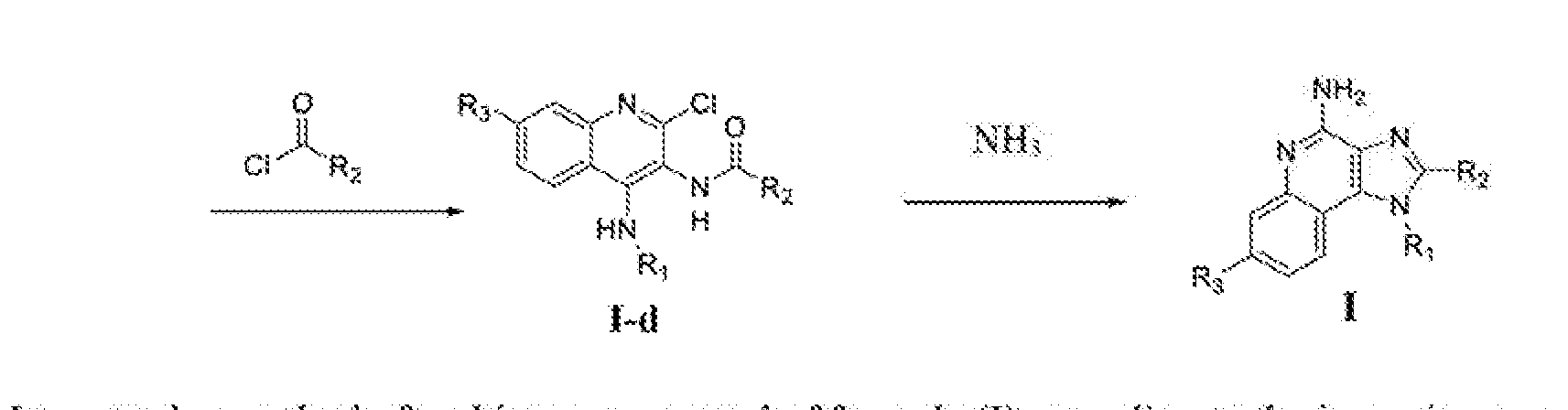
- a method of making a compound of formula (I) according to the invention comprises the steps of:
- the compound of formula (I-b) may be obtained in the presence of a solution of triethylamine (TEA) in dichloromc thane (DCM) at a temperature between 40°C to 60°C, preferably between SO°C to 60°C, or at 50°C for at least 1 hour, preferably for 1 to 4 hours, more preferably for 2 to 3 hours.
- TAA triethylamine
- DCM dichloromc thane
- step (b) the compound of formula (I-b) maybe reduced in the presence of Fe/NH 4 Cl at a temperature between 70°C to 100°C, preferably between 80°C to 90°C, or at 80°C for at least 1 hour, preferably for 1 to 4 hours, more preferably for 2 to 3 hours.
- step (c) the compound of formula (I-c) maybe dissolved in acetonitrile (ACN), and then reacts with Cl-C(0)-R 2 at a temperature between 15°C to 35°C, or at a room temperature for at least 1 hour, preferably for 1 to 5 hours, more preferably for 2 to 4 hours. .
- ACN acetonitrile
- step (d) the desired compound of formula (I) may be obtained in the presence of a solution of NHi in methanol at a temperature between 120°C to 180°C, preferably between 130°C to 160°C, or at150°C for at least 24 hours, preferably for 30 to 50 hours, more preferably for 35 to 40 hours.
- No. 22 was prepared using a procedure similar to the synthesis of Compound No. 9, but using 3- amino-2-chloro-4-((2-hydroxy-2-methylpropy l)amino)quinolin-7-ol instead of Intermediate compound A.
- HEK-Blue hTLR7 cells transfected with secreted embryonic alkaline phosphatase (SEAP) reporter were seeded at 3x 10 4 cell/well. The cells were treated with various concentrations of test compounds (Compound Nos. 1, 2, 9, 10). Two reference compounds were used for comparisons: Ref. 1 (resiquimod, a TLR7/8 dual agonist) and Ref.2 (-(4- amino-2-bulyl- 1H-imidazo
- TLR7/8 dual agonist than resiquimod See Ganapalhi L. et at. (2015), PLOS ONE, 10(8): eO 134640).
- the SEAP reporter is designed specifically for measuring secreted placental AP (alkaline phosphatase) in conditioned cell culture medium from transfected cells.
- the HEK-Blue hTLR7 cells served to measure the bioactivity of TLR7 through SEAP upon NF-KB activation following TLR7 stimulation.
- HEK-Blue hTLR8 cells transfected with SEAP reporter were seeded at 3 x 10 4 cell/well. The cells were treated with various concentrations of test compounds (Compound Nos. 1, 2, 9, 10). Two reference compounds Ref. 1 and Ref. 2 were used for comparisons.
- the HEK-Blue hTLR8 cells served to measure the bioactivity of TLR8 through the SEAP upon NF-KB activation following TLR8 stimulation.
- Table I shows that all the lest compounds exhibited TLR7 and TLR8 dual agonistic activities. Among those. Compound No. 2 was the most potent TLR7/8 dual agonist due to its low EC» of TLR7 and TLR8 agonistic activity. In addition, the ratios of TLR8 EC» and TLR7 EC» of the Compound Nos. 2, 9, 10 were lower than the two reference compounds, which indicates that these compounds could bring advantages of activating TLR7 and TLR8 at a very closed potency ratio and precisely modulating the activation of TLR7 and TLR8.
- Ref. l Resiquimod, a TLR7/8 dual agonist
- Ref. 2 1 -(4-amino-2-butyl-1H-imidazo[4,5-c
- Ref.3 Mololimod or VTX2337, a TLR8 agonist
- Cryopreserved human PBMCs from 4 normal adult volunteers were purchased from EPBMC00 (IMMUNOSPOT®).
- the PBMCs were thawed at 37°C for 10 minutes and centrifuged at 300*g at room temperature for 5 minutes.
- the pelleted PBMCs were transferred to RPMI-1640 medium containing 10% FBS, 1% PSA and incubated at 37°C with 5% C02.
- test compounds and reference compounds were respectively dissolved in DMSO and subsequently 25-fold diluted with PBS to make stock solutions at a concentration of 0.1 mM.
- the preincubated PBMCs were harvested and resuspended in a fresh RPMI- 1640 medium containing 10% FBS and 1% PSA.
- Approximately 1 x 10 5 PBMCs were added to each well of 96- well plates and stimulated with 0, 20 or 1000 nM of test compounds for 24 h at 37°C in a 5% CO2 humidified incubator.
- the culture supernatant was stocked at -20°C for analysis of TLR7- and TLR8-mediated cytokine induction.
- PROCARTAPLEXTM Immunoassay (Invitrogen) was performed to quantify human IL-6, IL-12p70, IP-10 in the culture supernatant according to the manufacturer's instructions. Briefly, the culture supernatant samples were thawed on ice and transferred to a microtiter plate. Magnetic bead-coupled antibodies specific to the target cytokines were added to the samples for analyte capturing. The immobilized target cytokine was specifically detected by biotin-conjugated antibodies and then labelled with streptavidin- Phycoerythrin (PE). The PE-labelled magnetic beads were detected and identified by LUM1NEXTM 200 TM analyzer. Data acquisition, processing and analysis was conducted by using XPONENTTM 3.1 software. The target cytokines were normalized to their baseline cytokine levels and presented as relative cytokines.
- Figs. 1A-1C show the relative IL-6 induction from human PBMCs stimulated with various concentrations of test compounds (Compound Nos. 2, 9 and 10) and reference compounds (Ref. 1-3). Compound Nos. 2, 9 and 10 all showed low IL-6 induction activity, which are similar to Ref. 1 and 3. These results indicated that the compounds of the invention do not over-induce IL-6 expression, which is well-known to play a pathological effect on chronic inflammation and autoimmunity due to dysregulated continual synthesis of IL-6.
- Ref.2 induced high IL-6 expression when treated at a concentration over 100 nM, particular over 1000 nM, which meant that Ref.2 is not suitable for drug development due to a risk of over-inducing 1L-6 expression.
- the low IL-6 induction activity of the compounds of the invention was unexpected.
- Figs. 2A-2C show the relative IL-12p70 induction from human PBMCs stimulated with various concentrations of test compounds (Compound Nos. 2, 9 and 10) and reference compounds (Ref. 1-3).
- Compound Nos. 2, 9 and 10 all showed high IL-12p70 induction activity, wherein the cytokine IL-12 is well known to mediate enhancement of the cytotoxic activity of NK cells and CDS' cytotoxic T cells, and anti-angiogenic activity.
- Figs. 3A-3C show the relative IP- 10 induction from human PBMCs stimulated with various concentrations of test compounds (Compound Nos. 2, 9 and 10) and reference compounds (Ref. 1-3).
- the compounds of the invention could simultaneously activate human TLR7 and TLR8, increase expression of IL-12 and IP- 10 without over-inducing undesired IL-6 expression.
- TLR Toll-like receptor
- TLR7 agonist a TLR7 agonist
- VTX-1463 a TLR8 agonist
- Imiquimod or R837 is an FDA-approved drug used for treating skin basal cell carcinoma, actinic keratosis and external genital warts with many suggested off-label benefits in other disease, such as melanoma.
- Imiquimod also showed bronchodilalor effects in both murine and porcine models of airway hyperresponsiveness (AHR).
- Imiquimod can also promote antiviral defense and protect against virus-induced airway dysfunction. It seems an interesting drug for viral- induced asthma. Resiquimod (a TLR7/8 dual agonist) is effective in suppressing acute asthma. See Aryan et al. (2014), Ini Arch Allergy Immunol., 164: 46-63.
- TLR7 toll-like receptor 7
- UFA unsaturated fatty acid
- NAFLD nonalcoholic fatty liver disease
- TLR7 agonists have been found on the tumor types including, but not limit to, squamous carcinoma, prostate cancer, bladder cancer, breast cancer, melanoma, gliomas, acute myeloid leukemia, breast cancer, T-cell lymphoma, and pancreatic cancer.
- the anti-tumor activities of TLR8 have been found on the tumor types including, but not limit to, gliomas, acute myeloid leukemia, breast cancer, T-cell lymphoma, lymphoma, pancreatic cancer, and colon cancer. See Chi et al (2017) Front Pharmacol ., 8: 304.
- TLR7/8 agonists targets in different diseases, which include but not limited to treatment of viral induced lesions (caused by papilloma virus and Herpes simplex virus), primary tumors, cutaneous metastases, anti-viral (HCV), and chronic lymphocyte leukemia. See Luke et. al. (2009), Pharmacol Rev., 61(2): 177-197.
- TLR7/8 agonists stimulate cells through a Toll-like receptors (TLR) 7 and 8 dependent pathway resulting in activation of immune responses that are effective against viral and tumor lesions.
- Resiquimod is a topical drug for viral skin lesions and skin cancer such as actinic keratosis (AK).
- AK also referred as an intraepithelial SCC
- SCC invasive squamous cell carcinoma
- These compounds may be used for treating a disease or a condition wherein activation of TLR7 and/or TLR8 provides a benefit in a patient, such as for use in treating a viral infection, cancer, and/or an allergic disease, or for use in activating immune responses that are effective against a viral infection, a tumor, and/or an allergic disease in a subject in need thereof.
Landscapes
- Health & Medical Sciences (AREA)
- Chemical & Material Sciences (AREA)
- Organic Chemistry (AREA)
- Life Sciences & Earth Sciences (AREA)
- General Health & Medical Sciences (AREA)
- Veterinary Medicine (AREA)
- Public Health (AREA)
- Medicinal Chemistry (AREA)
- Pharmacology & Pharmacy (AREA)
- Animal Behavior & Ethology (AREA)
- Nuclear Medicine, Radiotherapy & Molecular Imaging (AREA)
- General Chemical & Material Sciences (AREA)
- Chemical Kinetics & Catalysis (AREA)
- Engineering & Computer Science (AREA)
- Bioinformatics & Cheminformatics (AREA)
- Epidemiology (AREA)
- Pulmonology (AREA)
- Immunology (AREA)
- Virology (AREA)
- Communicable Diseases (AREA)
- Oncology (AREA)
- Gastroenterology & Hepatology (AREA)
- Pharmaceuticals Containing Other Organic And Inorganic Compounds (AREA)
Abstract
Description




Claims

Priority Applications (8)
| Application Number | Priority Date | Filing Date | Title |
|---|---|---|---|
| KR1020227017776A KR20220091528A (en) | 2019-10-29 | 2020-10-20 | 4-Amino-imidazoquinoline compounds and uses thereof |
| BR112022008039A BR112022008039A2 (en) | 2019-10-29 | 2020-10-20 | 4-AMINO-IMIDAZOQUINOLINE COMPOUNDS AND RELATED USES |
| CA3152757A CA3152757C (en) | 2019-10-29 | 2020-10-20 | 4-amino-imidazoquinoline compounds and use thereof |
| EP20882313.8A EP4051270A4 (en) | 2019-10-29 | 2020-10-20 | 4-AMINO-IMIDAZOQUINOLINE COMPOUNDS AND USE THEREOF |
| AU2020372832A AU2020372832B2 (en) | 2019-10-29 | 2020-10-20 | 4-Amino-imidazoquinoline compounds and use thereof |
| CN202080074574.7A CN114599360A (en) | 2019-10-29 | 2020-10-20 | 4-Amino-imidazoquinoline compound and use thereof |
| US17/764,193 US20220411421A1 (en) | 2019-10-29 | 2020-10-20 | 4-amino-imidazoquinoline compounds and use thereof |
| JP2022524950A JP7773011B2 (en) | 2019-10-29 | 2020-10-20 | 4-amino-imidazoquinoline compounds and uses thereof |
Applications Claiming Priority (2)
| Application Number | Priority Date | Filing Date | Title |
|---|---|---|---|
| US201962927354P | 2019-10-29 | 2019-10-29 | |
| US62/927,354 | 2019-10-29 |
Publications (1)
| Publication Number | Publication Date |
|---|---|
| WO2021086689A1 true WO2021086689A1 (en) | 2021-05-06 |
Family
ID=75715560
Family Applications (1)
| Application Number | Title | Priority Date | Filing Date |
|---|---|---|---|
| PCT/US2020/056515 Ceased WO2021086689A1 (en) | 2019-10-29 | 2020-10-20 | 4-amino-imidazoquinoline compounds and use thereof |
Country Status (8)
| Country | Link |
|---|---|
| US (1) | US20220411421A1 (en) |
| EP (1) | EP4051270A4 (en) |
| JP (1) | JP7773011B2 (en) |
| KR (1) | KR20220091528A (en) |
| CN (1) | CN114599360A (en) |
| AU (1) | AU2020372832B2 (en) |
| BR (1) | BR112022008039A2 (en) |
| WO (1) | WO2021086689A1 (en) |
Cited By (1)
| Publication number | Priority date | Publication date | Assignee | Title |
|---|---|---|---|---|
| WO2023081237A1 (en) * | 2021-11-03 | 2023-05-11 | Regents Of The University Of Minnesota | Toll-like receptor agonists and antagonists and uses thereof |
Families Citing this family (3)
| Publication number | Priority date | Publication date | Assignee | Title |
|---|---|---|---|---|
| CN116731015B (en) * | 2023-05-18 | 2024-09-27 | 深圳威科森生物医药科技有限公司 | Imidazoloquinoline compound and preparation method, application and composition thereof |
| KR20250019209A (en) | 2023-07-31 | 2025-02-10 | 건국대학교 글로컬산학협력단 | Anti-allergy composition comprising nitrofurazone or nitrofurantoin |
| CN119215159A (en) * | 2024-09-24 | 2024-12-31 | 深圳市格茵莱生物科技有限公司 | Dendritic cell multi-antigen loading immunotherapy |
Citations (12)
| Publication number | Priority date | Publication date | Assignee | Title |
|---|---|---|---|---|
| WO2002046189A2 (en) | 2000-12-08 | 2002-06-13 | 3M Innovative Properties Company | Aryl ether substituted imidazoquinolines |
| WO2004058759A1 (en) | 2002-12-20 | 2004-07-15 | 3M Innovative Properties Company | Aryl / hetaryl substituted imidazoquinolines |
| WO2006028962A2 (en) | 2004-09-02 | 2006-03-16 | 3M Innovative Properties Company | 1-alkoxy 1h-imidazo ring systems and methods |
| WO2012167081A1 (en) | 2011-06-03 | 2012-12-06 | 3M Innovative Properties Company | Hydrazino 1h-imidazoquinolin-4-amines and conjugates made therefrom |
| US8728486B2 (en) | 2011-05-18 | 2014-05-20 | University Of Kansas | Toll-like receptor-7 and -8 modulatory 1H imidazoquinoline derived compounds |
| WO2014201245A1 (en) | 2013-06-12 | 2014-12-18 | The United States Of America, As Represented By The Secretary, Department Of Health And Human Services | Tlr-9 agonist with tlr-7 and/or tlr-8 agonist for treating tumors |
| US20150299194A1 (en) * | 2014-04-22 | 2015-10-22 | Hoffmann-La Roche Inc. | 4-amino-imidazoquinoline compounds |
| US9884866B2 (en) | 2014-09-08 | 2018-02-06 | Regents Of The University Of Minnesota | Immunomodulators and immunomodulator conjugates |
| US20190062329A1 (en) | 2017-08-22 | 2019-02-28 | Dynavax Technologies Corporation | Alkyl chain modified imidazoquinoline tlr7/8 agonist compounds and uses thereof |
| WO2019048036A1 (en) | 2017-09-06 | 2019-03-14 | Biontech Ag | Substituted imidazoquinolines |
| WO2020160054A1 (en) | 2019-02-01 | 2020-08-06 | Canwell Biotech Limited | Imidazoquinoline amine derivatives, pharmaceutical composition, use thereof |
| WO2020252015A1 (en) | 2019-06-10 | 2020-12-17 | Sutro Biopharma, Inc. | Immunomodulator antibody drug conjugates and uses thereof |
Family Cites Families (7)
| Publication number | Priority date | Publication date | Assignee | Title |
|---|---|---|---|---|
| US5266575A (en) * | 1991-11-06 | 1993-11-30 | Minnesota Mining And Manufacturing Company | 2-ethyl 1H-imidazo[4,5-ciquinolin-4-amines |
| US6677348B2 (en) * | 2000-12-08 | 2004-01-13 | 3M Innovative Properties Company | Aryl ether substituted imidazoquinolines |
| US6664265B2 (en) * | 2000-12-08 | 2003-12-16 | 3M Innovative Properties Company | Amido ether substituted imidazoquinolines |
| US20070259881A1 (en) * | 2004-06-18 | 2007-11-08 | Dellaria Joseph F Jr | Substituted Imidazo Ring Systems and Methods |
| ES2667054T3 (en) * | 2008-03-24 | 2018-05-09 | Biontech Ag | New substituted imidazoquinolines |
| EP2471548A1 (en) * | 2010-12-28 | 2012-07-04 | Apeiron Biologics AG | siRNA against Cbl-b and optionally IL2 and IL12 for use in the treatment of cancer |
| US11464854B2 (en) * | 2017-03-23 | 2022-10-11 | Children's Medical Center Corporation | Methods and compositions relating to adjuvants |
-
2020
- 2020-10-20 US US17/764,193 patent/US20220411421A1/en active Pending
- 2020-10-20 CN CN202080074574.7A patent/CN114599360A/en active Pending
- 2020-10-20 WO PCT/US2020/056515 patent/WO2021086689A1/en not_active Ceased
- 2020-10-20 EP EP20882313.8A patent/EP4051270A4/en active Pending
- 2020-10-20 JP JP2022524950A patent/JP7773011B2/en active Active
- 2020-10-20 KR KR1020227017776A patent/KR20220091528A/en active Pending
- 2020-10-20 BR BR112022008039A patent/BR112022008039A2/en unknown
- 2020-10-20 AU AU2020372832A patent/AU2020372832B2/en active Active
Patent Citations (14)
| Publication number | Priority date | Publication date | Assignee | Title |
|---|---|---|---|---|
| WO2002046189A2 (en) | 2000-12-08 | 2002-06-13 | 3M Innovative Properties Company | Aryl ether substituted imidazoquinolines |
| WO2004058759A1 (en) | 2002-12-20 | 2004-07-15 | 3M Innovative Properties Company | Aryl / hetaryl substituted imidazoquinolines |
| WO2006028962A2 (en) | 2004-09-02 | 2006-03-16 | 3M Innovative Properties Company | 1-alkoxy 1h-imidazo ring systems and methods |
| US8728486B2 (en) | 2011-05-18 | 2014-05-20 | University Of Kansas | Toll-like receptor-7 and -8 modulatory 1H imidazoquinoline derived compounds |
| WO2012167081A1 (en) | 2011-06-03 | 2012-12-06 | 3M Innovative Properties Company | Hydrazino 1h-imidazoquinolin-4-amines and conjugates made therefrom |
| WO2014201245A1 (en) | 2013-06-12 | 2014-12-18 | The United States Of America, As Represented By The Secretary, Department Of Health And Human Services | Tlr-9 agonist with tlr-7 and/or tlr-8 agonist for treating tumors |
| US20150299194A1 (en) * | 2014-04-22 | 2015-10-22 | Hoffmann-La Roche Inc. | 4-amino-imidazoquinoline compounds |
| WO2015162075A1 (en) | 2014-04-22 | 2015-10-29 | F. Hoffmann-La Roche Ag | 4-amino-imidazoquinoline compounds |
| US9334268B2 (en) | 2014-04-22 | 2016-05-10 | Hoffman-La Roche Inc. | 4-amino-imidazoquinoline compounds |
| US9884866B2 (en) | 2014-09-08 | 2018-02-06 | Regents Of The University Of Minnesota | Immunomodulators and immunomodulator conjugates |
| US20190062329A1 (en) | 2017-08-22 | 2019-02-28 | Dynavax Technologies Corporation | Alkyl chain modified imidazoquinoline tlr7/8 agonist compounds and uses thereof |
| WO2019048036A1 (en) | 2017-09-06 | 2019-03-14 | Biontech Ag | Substituted imidazoquinolines |
| WO2020160054A1 (en) | 2019-02-01 | 2020-08-06 | Canwell Biotech Limited | Imidazoquinoline amine derivatives, pharmaceutical composition, use thereof |
| WO2020252015A1 (en) | 2019-06-10 | 2020-12-17 | Sutro Biopharma, Inc. | Immunomodulator antibody drug conjugates and uses thereof |
Non-Patent Citations (5)
| Title |
|---|
| CE SHI ET AL., ACS MEDICINAL CHEMISTRY LETTERS, vol. 3, no. 6, June 2012 (2012-06-01), pages 501 - 504 |
| DATABASE Pubchem Compound ANONYMOUS : "1-Hydroxy-2-methylimidazo[4,5-c]quinolin-4-amine", XP055930456, retrieved from NCBI Database accession no. CID 57853775 * |
| IRA MUSMUCA ET AL., J. CHEM. INF. MODEL., vol. 49, 2009, pages 1777 - 1786 |
| See also references of EP4051270A4 |
| SMITH ALYSON J ET AL., VACCINE, vol. 34, no. 36, 9 July 2016 (2016-07-09), pages 4304 - 4312 |
Cited By (1)
| Publication number | Priority date | Publication date | Assignee | Title |
|---|---|---|---|---|
| WO2023081237A1 (en) * | 2021-11-03 | 2023-05-11 | Regents Of The University Of Minnesota | Toll-like receptor agonists and antagonists and uses thereof |
Also Published As
| Publication number | Publication date |
|---|---|
| EP4051270A4 (en) | 2024-02-28 |
| CN114599360A (en) | 2022-06-07 |
| JP2023501163A (en) | 2023-01-18 |
| BR112022008039A2 (en) | 2022-07-12 |
| TW202128687A (en) | 2021-08-01 |
| US20220411421A1 (en) | 2022-12-29 |
| EP4051270A1 (en) | 2022-09-07 |
| AU2020372832B2 (en) | 2024-09-26 |
| KR20220091528A (en) | 2022-06-30 |
| JP7773011B2 (en) | 2025-11-19 |
| CA3152757A1 (en) | 2021-05-06 |
| AU2020372832A1 (en) | 2022-05-12 |
Similar Documents
| Publication | Publication Date | Title |
|---|---|---|
| WO2021086689A1 (en) | 4-amino-imidazoquinoline compounds and use thereof | |
| JP7345182B2 (en) | Treatment of autoimmune diseases | |
| TWI910423B (en) | Jak1 pathway inhibitors for the treatment of cytokine-related disorders | |
| US20140309221A1 (en) | Method of inhibiting hamartoma tumor cells | |
| KR20160029076A (en) | Nuclear transport modulators and uses thereof | |
| WO2012151326A1 (en) | Method of treating cancer and bone cancer pain | |
| TW201420588A (en) | Novel compounds | |
| CN103648500B (en) | Methods and uses of bifunctional enzymatic clamp molecules | |
| US20250346570A1 (en) | Solid forms of (s)-1-((2',6-bis(difluoromethyl)-[2,4'-bipyridin]-5-yl)oxy)-2,4-dimethylpentan-2-amine and methods of their use | |
| US12077535B2 (en) | Derivatives of resiquimod | |
| CN112055706B (en) | Substituted halogenated-quinoline derivatives, preparation methods and applications thereof | |
| WO2017101777A1 (en) | Pyrrolopyrimidine compound salt | |
| JP7039579B2 (en) | 4-Anilino-quinoline compound as an anticancer agent | |
| TWI921313B (en) | 4-amino-imidazoquinoline compounds and use thereof | |
| CA3152757C (en) | 4-amino-imidazoquinoline compounds and use thereof | |
| CN104800204A (en) | Sangsin anti-tumor use | |
| RU2808163C2 (en) | Resiquimod derivatives | |
| WO2011045340A1 (en) | Ido inhibitors and therapeutic uses thereof | |
| HK40027104A (en) | Derivatives of resiquimod | |
| HK40027104B (en) | Derivatives of resiquimod | |
| EA037513B1 (en) | Cyclic dinucleotide compounds and methods of use thereof | |
| HK1194308B (en) | Methods and use of bifunctional enzyme-building clamp-shaped molecules |
Legal Events
| Date | Code | Title | Description |
|---|---|---|---|
| 121 | Ep: the epo has been informed by wipo that ep was designated in this application |
Ref document number: 20882313 Country of ref document: EP Kind code of ref document: A1 |
|
| ENP | Entry into the national phase |
Ref document number: 3152757 Country of ref document: CA |
|
| ENP | Entry into the national phase |
Ref document number: 2022524950 Country of ref document: JP Kind code of ref document: A |
|
| NENP | Non-entry into the national phase |
Ref country code: DE |
|
| REG | Reference to national code |
Ref country code: BR Ref legal event code: B01A Ref document number: 112022008039 Country of ref document: BR |
|
| ENP | Entry into the national phase |
Ref document number: 2020372832 Country of ref document: AU Date of ref document: 20201020 Kind code of ref document: A |
|
| ENP | Entry into the national phase |
Ref document number: 20227017776 Country of ref document: KR Kind code of ref document: A |
|
| ENP | Entry into the national phase |
Ref document number: 2020882313 Country of ref document: EP Effective date: 20220530 |
|
| ENP | Entry into the national phase |
Ref document number: 112022008039 Country of ref document: BR Kind code of ref document: A2 Effective date: 20220427 |