WO2021101903A1 - Dual androgen receptor/akr1c3 inhibitors - Google Patents
Dual androgen receptor/akr1c3 inhibitors Download PDFInfo
- Publication number
- WO2021101903A1 WO2021101903A1 PCT/US2020/060907 US2020060907W WO2021101903A1 WO 2021101903 A1 WO2021101903 A1 WO 2021101903A1 US 2020060907 W US2020060907 W US 2020060907W WO 2021101903 A1 WO2021101903 A1 WO 2021101903A1
- Authority
- WO
- WIPO (PCT)
- Prior art keywords
- compound
- pharmaceutically acceptable
- acceptable salt
- group
- alkyl
- Prior art date
- Legal status (The legal status is an assumption and is not a legal conclusion. Google has not performed a legal analysis and makes no representation as to the accuracy of the status listed.)
- Ceased
Links
- OWGXPXXIRCAHAW-UHFFFAOYSA-N COc(cc1)ccc1C(c(cc1C(Nc2cc(C(F)(F)F)cc(C(F)(F)F)c2)=O)ccc1O)=O Chemical compound COc(cc1)ccc1C(c(cc1C(Nc2cc(C(F)(F)F)cc(C(F)(F)F)c2)=O)ccc1O)=O OWGXPXXIRCAHAW-UHFFFAOYSA-N 0.000 description 1
- NPJMAOFSJNEIRA-UHFFFAOYSA-N COc(cc1)ccc1C(c(cc1C(Nc2ccc(C(F)(F)F)cc2)=O)ccc1O)=O Chemical compound COc(cc1)ccc1C(c(cc1C(Nc2ccc(C(F)(F)F)cc2)=O)ccc1O)=O NPJMAOFSJNEIRA-UHFFFAOYSA-N 0.000 description 1
- SITAJGSOMMDJJZ-UHFFFAOYSA-N COc(cc1)ccc1C(c(cc1C(Nc2cccc(C(F)(F)F)c2)=O)ccc1O)=O Chemical compound COc(cc1)ccc1C(c(cc1C(Nc2cccc(C(F)(F)F)c2)=O)ccc1O)=O SITAJGSOMMDJJZ-UHFFFAOYSA-N 0.000 description 1
- XQPINPNXQMSBFB-UHFFFAOYSA-N COc(cc1)ccc1Oc1c(C(Nc2cc(C(F)(F)F)cc(C(F)(F)F)c2)=O)c(O)ccc1 Chemical compound COc(cc1)ccc1Oc1c(C(Nc2cc(C(F)(F)F)cc(C(F)(F)F)c2)=O)c(O)ccc1 XQPINPNXQMSBFB-UHFFFAOYSA-N 0.000 description 1
- INFPGMYWMDFMPW-UHFFFAOYSA-N COc(cc1)ccc1Oc1c(C(Nc2ccc(C(F)(F)F)cc2)=O)c(O)ccc1 Chemical compound COc(cc1)ccc1Oc1c(C(Nc2ccc(C(F)(F)F)cc2)=O)c(O)ccc1 INFPGMYWMDFMPW-UHFFFAOYSA-N 0.000 description 1
- WQJSBQUFPGBTKB-UHFFFAOYSA-N COc(cc1)ccc1Oc1c(C(Nc2cccc(C(F)(F)F)c2)=O)c(O)ccc1 Chemical compound COc(cc1)ccc1Oc1c(C(Nc2cccc(C(F)(F)F)c2)=O)c(O)ccc1 WQJSBQUFPGBTKB-UHFFFAOYSA-N 0.000 description 1
- QWFFPLLMRQTYOC-UHFFFAOYSA-N COc1ccc(Cc(cc2C(Nc3ccc(C(F)(F)F)cc3)=O)ccc2O)cc1 Chemical compound COc1ccc(Cc(cc2C(Nc3ccc(C(F)(F)F)cc3)=O)ccc2O)cc1 QWFFPLLMRQTYOC-UHFFFAOYSA-N 0.000 description 1
- IPAXWBADGQXOFO-UHFFFAOYSA-N COc1ccc(Cc(cc2C(Nc3cccc(C(F)(F)F)c3)=O)ccc2O)cc1 Chemical compound COc1ccc(Cc(cc2C(Nc3cccc(C(F)(F)F)c3)=O)ccc2O)cc1 IPAXWBADGQXOFO-UHFFFAOYSA-N 0.000 description 1
- AGCJWHVWRJTMQM-UHFFFAOYSA-N Oc(c(C(Nc1cc(C(F)(F)F)cc(C(F)(F)F)c1)=O)c1)ccc1C(c1ccccc1)=O Chemical compound Oc(c(C(Nc1cc(C(F)(F)F)cc(C(F)(F)F)c1)=O)c1)ccc1C(c1ccccc1)=O AGCJWHVWRJTMQM-UHFFFAOYSA-N 0.000 description 1
- CAPRNNHRPSLLIE-UHFFFAOYSA-N Oc(ccc(C(c1ccccc1)=O)c1)c1C(Nc1cccc(C(F)(F)F)c1)=O Chemical compound Oc(ccc(C(c1ccccc1)=O)c1)c1C(Nc1cccc(C(F)(F)F)c1)=O CAPRNNHRPSLLIE-UHFFFAOYSA-N 0.000 description 1
Classifications
-
- C—CHEMISTRY; METALLURGY
- C07—ORGANIC CHEMISTRY
- C07C—ACYCLIC OR CARBOCYCLIC COMPOUNDS
- C07C235/00—Carboxylic acid amides, the carbon skeleton of the acid part being further substituted by oxygen atoms
- C07C235/42—Carboxylic acid amides, the carbon skeleton of the acid part being further substituted by oxygen atoms having carbon atoms of carboxamide groups bound to carbon atoms of six-membered aromatic rings and singly-bound oxygen atoms bound to the same carbon skeleton
- C07C235/44—Carboxylic acid amides, the carbon skeleton of the acid part being further substituted by oxygen atoms having carbon atoms of carboxamide groups bound to carbon atoms of six-membered aromatic rings and singly-bound oxygen atoms bound to the same carbon skeleton with carbon atoms of carboxamide groups and singly-bound oxygen atoms bound to carbon atoms of the same non-condensed six-membered aromatic ring
- C07C235/58—Carboxylic acid amides, the carbon skeleton of the acid part being further substituted by oxygen atoms having carbon atoms of carboxamide groups bound to carbon atoms of six-membered aromatic rings and singly-bound oxygen atoms bound to the same carbon skeleton with carbon atoms of carboxamide groups and singly-bound oxygen atoms bound to carbon atoms of the same non-condensed six-membered aromatic ring with carbon atoms of carboxamide groups and singly-bound oxygen atoms, bound in ortho-position to carbon atoms of the same non-condensed six-membered aromatic ring
- C07C235/64—Carboxylic acid amides, the carbon skeleton of the acid part being further substituted by oxygen atoms having carbon atoms of carboxamide groups bound to carbon atoms of six-membered aromatic rings and singly-bound oxygen atoms bound to the same carbon skeleton with carbon atoms of carboxamide groups and singly-bound oxygen atoms bound to carbon atoms of the same non-condensed six-membered aromatic ring with carbon atoms of carboxamide groups and singly-bound oxygen atoms, bound in ortho-position to carbon atoms of the same non-condensed six-membered aromatic ring having the nitrogen atom of at least one of the carboxamide groups bound to a carbon atom of a six-membered aromatic ring
-
- A—HUMAN NECESSITIES
- A61—MEDICAL OR VETERINARY SCIENCE; HYGIENE
- A61K—PREPARATIONS FOR MEDICAL, DENTAL OR TOILETRY PURPOSES
- A61K45/00—Medicinal preparations containing active ingredients not provided for in groups A61K31/00 - A61K41/00
- A61K45/06—Mixtures of active ingredients without chemical characterisation, e.g. antiphlogistics and cardiaca
-
- A—HUMAN NECESSITIES
- A61—MEDICAL OR VETERINARY SCIENCE; HYGIENE
- A61P—SPECIFIC THERAPEUTIC ACTIVITY OF CHEMICAL COMPOUNDS OR MEDICINAL PREPARATIONS
- A61P35/00—Antineoplastic agents
-
- C—CHEMISTRY; METALLURGY
- C07—ORGANIC CHEMISTRY
- C07C—ACYCLIC OR CARBOCYCLIC COMPOUNDS
- C07C233/00—Carboxylic acid amides
- C07C233/64—Carboxylic acid amides having carbon atoms of carboxamide groups bound to carbon atoms of six-membered aromatic rings
-
- C—CHEMISTRY; METALLURGY
- C07—ORGANIC CHEMISTRY
- C07C—ACYCLIC OR CARBOCYCLIC COMPOUNDS
- C07C233/00—Carboxylic acid amides
- C07C233/64—Carboxylic acid amides having carbon atoms of carboxamide groups bound to carbon atoms of six-membered aromatic rings
- C07C233/67—Carboxylic acid amides having carbon atoms of carboxamide groups bound to carbon atoms of six-membered aromatic rings having the nitrogen atom of at least one of the carboxamide groups bound to a carbon atom of a hydrocarbon radical substituted by singly-bound oxygen atoms
- C07C233/75—Carboxylic acid amides having carbon atoms of carboxamide groups bound to carbon atoms of six-membered aromatic rings having the nitrogen atom of at least one of the carboxamide groups bound to a carbon atom of a hydrocarbon radical substituted by singly-bound oxygen atoms with the substituted hydrocarbon radical bound to the nitrogen atom of the carboxamide group by a carbon atom of a six-membered aromatic ring
-
- C—CHEMISTRY; METALLURGY
- C07—ORGANIC CHEMISTRY
- C07C—ACYCLIC OR CARBOCYCLIC COMPOUNDS
- C07C235/00—Carboxylic acid amides, the carbon skeleton of the acid part being further substituted by oxygen atoms
- C07C235/42—Carboxylic acid amides, the carbon skeleton of the acid part being further substituted by oxygen atoms having carbon atoms of carboxamide groups bound to carbon atoms of six-membered aromatic rings and singly-bound oxygen atoms bound to the same carbon skeleton
-
- C—CHEMISTRY; METALLURGY
- C07—ORGANIC CHEMISTRY
- C07C—ACYCLIC OR CARBOCYCLIC COMPOUNDS
- C07C235/00—Carboxylic acid amides, the carbon skeleton of the acid part being further substituted by oxygen atoms
- C07C235/70—Carboxylic acid amides, the carbon skeleton of the acid part being further substituted by oxygen atoms having carbon atoms of carboxamide groups and doubly-bound oxygen atoms bound to the same carbon skeleton
- C07C235/84—Carboxylic acid amides, the carbon skeleton of the acid part being further substituted by oxygen atoms having carbon atoms of carboxamide groups and doubly-bound oxygen atoms bound to the same carbon skeleton with the carbon atom of at least one of the carboxamide groups bound to a carbon atom of a six-membered aromatic ring
Definitions
- each R 1 is independently selected from the group consisting of –OH, C 1-8 alkyl, C 1-8 alkoxy, and halogen; each R 2 and R 3 is independently selected from the group consisting of –OH, halogen, –NO 2 , –CN, C 1-8 alkyl, C 1-8 alkoxy, C 1-8 haloalkyl, C 2-8 alkenyl, C 2-8 alkynyl, and –N(R a ) 2 ; R 4 is selected from the group consisting of H, ⁇ -aminoacyl; –S(O) 2 N(R a ) 2 , –C(O)N(R a )
- compositions containing one or more compounds as described herein and one or more pharmaceutically acceptable excipients.
- methods for treating a hormone-mediated disease or condition such as cancer, e.g., castration-resistant prostate cancer.
- the methods include administering a therapeutically effective amount of a compound or composition ad described herein to a subject in need thereof, thereby treating the hormone-mediated disease or condition.
- methods for inhibiting an androgen receptor (AR) and/or aldo-keto reductase family 1 member C3 (AKR1C3) are also provided herein.
- FIG.1 shows a Western blot analysis for AR-FL, AR-Vs, and AKR1C3 protein expression after CWR22rv1 cells were treated with compound 1 and compound 2.
- FIG.2 shows a plot of enzymatic activity of LNCaP-AKR1C3 cells treated with either compound 1 or compound 2 over 48 hrs, demonstrating that the compounds inhibit AKR1C3 activity.
- FIG.3 shows a plot of enzymatic activity in LNCaP-AKR1C3 cells treated with increasing doses of compound 1 over 48 hrs, demonstrating that AKR1C3 is inhibited in dose-dependent fashion.
- FIG.4 shows total cell numbers measured after treating C4-2B MDVR cells with either compound 1 or compound 2, demonstrating that the compounds inhibit cell growth.
- FIG.5 shows total cell numbers measured after treating C4-2B MDVR cells with increasing doses of compound 1 over 48 hrs, demonstrating that cell growth is inhibited in dose-dependent fashion.
- FIG.6 shows total cell numbers measured after treating enzalutamide (Enza)- resistant MDVR cells, abiraterone (Abi)-resistant AbiR cells, apalutamide (Apal)-resistant ApalR cells, and darolutamide (Daro)-resistant DaroR cells with the respective anti- androgens Enza (20 ⁇ M), Abi (10 ⁇ M), Apal (20 ⁇ M), Daro (20 ⁇ M) or compound 1 (5 ⁇ M) for 48 hrs.
- FIG.7 shows total cell numbers measured after treating MCF-7 breast cancer cells with increasing doses of compound 1 over 48 hrs, demonstrating that cell growth is inhibited in dose dependent fashion.
- FIG.8 shows total cell numbers measured after treating C4-2B AKR1C3 cells with different compounds over 48 hrs.
- FIG.9A shows the volume of VCaP tumors in mice treated with compound 1 and a vehicle control.
- FIG.9B shows the body weight of mice treated with compound 1 and a vehicle control in the VCaP model.
- FIG.9C shows the levels of prostate specific antigen (PSA) in mice treated with compound 1 and a vehicle control in the VCaP model. Taken together, FIGS.9A-9C show that compound 1 inhibits VCaP tumor growth.
- FIG.10A shows the volume of LuCaP35CR tumors in mice treated with compound 1 and a vehicle control.
- FIG.10B shows the body weight of mice treated with compound 1 and a vehicle control in the LuCaP35CR model.
- FIG.10C shows the levels of prostate specific antigen (PSA) in mice treated with compound 1 and a vehicle control in the LuCaP35CR model.
- FIG.10D shows intratumoral testosterone levels in mice treated with compound 1 and a vehicle control in the LuCaP35CR model. Taken together, FIGS.10A-10D show that compound 1 inhibits LuCaP35CR tumor growth.
- FIG.11 shows that compound 1 inhibits the conversion from androstenedione to testosterone in LuCaP35CR tumors ex vivo.
- FIG.12 shows that compound 1 and compound 5 inhibit AR nuclear translocation in LNCaP cells.
- LNCaP cells cultured in charcoal stripped FBS conditions were treated with DHT and the compounds as indicated. AR expression were visualized by immunofluorescent staining.
- FIG.13A shows an RNAseq heatmap demonstrating that compound 1 and compound 5 inhibit AR activity signature genes in C4-2B MDVR cells.
- FIG.13B shows an RNAseq heatmap demonstrating that compound 1 and compound 5 inhibit AR-V7 activity signature genes in C4-2B MDVR cells.
- FIG.14 shows an RNAseq heatmap demonstrating that compounds 1, 2, 5, and 8 inhibit genes associated with cancer cell proliferation and survival in C4-2B MDVR cells.
- the present invention is based, in part, on the recognition that inhibition of both AR/ARv7 and AKR1C3 would be an ideal strategy for treating hormone-related cancers, such as advanced prostate cancer, and overcoming resistance to current therapies.
- Overexpression of AKR1C3 confers resistance to enzalutamide/abiraterone, while down regulation of AKR1C3 sensitizes cells to enzalutamide/abiraterone treatment.
- overexpression of AKR1C3 has been demonstrated in clinical metastatic prostate cancer.
- a number of new benzamide compounds have been surprisingly found to function as dual inhibitors of AR and AKR1C3.
- the benzamides inhibit both expression and activity of AR/ARv7 and AKR1C3 in prostate cancer cells, as well as the growth of resistant prostate cancer cells. Furthermore, the compounds inhibit enzalutamide-resistant C4-2B MDVR cell growth, abiraterone-resistant cell growth, apalutamide-resistant cell growth, and darolutamide-resistant cell growth.
- alkyl by itself or as part of another substituent, refers to a straight or branched, saturated, aliphatic radical having the number of carbon atoms indicated.
- Alkyl can include any number of carbons, such as C 1-2 , C 1-3 , C 1-4 , C 1-5 , C 1-6 , C 1-7 , C 1-8 , C 1-9 , C 1-10 , C 2-3 , C 2-4 , C 2-5 , C 2-6 , C 3-4 , C 3-5 , C 3-6 , C 4-5 , C 4-6 , and C 5-6 .
- C 1-6 alkyl includes, but is not limited to, methyl, ethyl, propyl, isopropyl, butyl, isobutyl, sec- butyl, tert-butyl, pentyl, isopentyl, hexyl, etc.
- Alkyl can also refer to alkyl groups having up to 20 carbons atoms, such as, but not limited to heptyl, octyl, nonyl, decyl, etc. Alkyl groups can be substituted or unsubstituted. Unless otherwise specified, “substituted alkyl” groups may be substituted with one or more groups selected from halo, hydroxy, amino, alkylamino, amido, acyl, nitro, cyano, and alkoxy. [0029] As used herein, the term “alkoxy,” by itself or as part of another substituent, refers to a group having the formula –OR, wherein R is alkyl as described above.
- alkenyl refers to a straight chain or branched hydrocarbon having at least 2 carbon atoms and at least one double bond.
- Alkenyl can include any number of carbons, such as C 2 , C 2-3 , C 2-4 , C 2-5 , C 2-6 , C 2-7 , C 2-8 , C 2-9 , C 2-10 , C 3 , C 3-4 , C 3-5 , C 3-6 , C 4 , C 4-5 , C 4-6 , C 5 , C 5-6 , and C 6 .
- Alkenyl groups can have any suitable number of double bonds, including, but not limited to, 1, 2, 3, 4, 5 or more.
- alkenyl groups include, but are not limited to, vinyl (ethenyl), propenyl, isopropenyl, 1-butenyl, 2-butenyl, isobutenyl, butadienyl, 1-pentenyl, 2-pentenyl, isopentenyl, 1,3-pentadienyl, 1,4-pentadienyl, 1-hexenyl, 2-hexenyl, 3-hexenyl, 1,3-hexadienyl, 1,4-hexadienyl, 1,5-hexadienyl, 2,4-hexadienyl, or 1,3,5-hexatrienyl.
- Alkenyl groups can be substituted or unsubstituted. Unless otherwise specified, “substituted alkenyl” groups may be substituted with one or more moieties selected from halo, hydroxy, amino, alkylamino, alkoxy, haloalkyl, carboxy, amido, nitro, oxo, and cyano.
- alkynyl by itself or as part of another substituent, refers to either a straight chain or branched hydrocarbon having at least 2 carbon atoms and at least one triple bond.
- Alkynyl can include any number of carbons, such as C 2 , C 2-3 , C 2-4 , C 2-5 , C 2-6 , C 2-7 , C 2-8 , C 2-9 , C 2-10 , C3, C 3-4 , C 3-5 , C 3-6 , C 4 , C 4-5 , C 4-6 , C 5 , C 5-6 , and C 6 .
- alkynyl groups include, but are not limited to, acetylenyl, propynyl, 1-butynyl, 2-butynyl, isobutynyl, sec-butynyl, butadiynyl, 1-pentynyl, 2-pentynyl, isopentynyl, 1,3-pentadiynyl, 1,4-pentadiynyl, 1-hexynyl, 2-hexynyl, 3-hexynyl, 1,3-hexadiynyl, 1,4-hexadiynyl, 1,5-hexadiynyl, 2,4-hexadiynyl, or 1,3,5-hexatriynyl.
- Alkynyl groups can be substituted or unsubstituted. Unless otherwise specified, “substituted alkynyl” groups may be substituted with one or more moieties selected from halo, hydroxy, amino, alkylamino, alkoxy, haloalkyl, carboxy, amido, nitro, oxo, and cyano.
- halo and “halogen” refer to fluorine, chlorine, bromine and iodine.
- haloalkyl by itself or as part of another substituent, refers to an alkyl group where some or all of the hydrogen atoms are replaced with halogen atoms.
- haloalkyl groups can have any suitable number of carbon atoms, such as C 1-6 .
- haloalkyl includes trifluoromethyl, fluoromethyl, etc.
- perfluoro can be used to define a compound or radical where all the hydrogens are replaced with fluorine.
- perfluoromethyl refers to 1,1,1-trifluoromethyl.
- hydroxy refers to the moiety –OH.
- amino refers to a moiety –NR2, wherein each R group is H or alkyl. An amino moiety can be ionized to form the corresponding ammonium cation. “Alkylamino” refers to an amino moiety wherein at least one of the R groups is alkyl.
- ⁇ -aminoacyl refers to a moiety –C(O)CNR'R'', wherein R' and R'' are independently hydrogen, alkyl, alkynyl, aryl, heteroaryl, cycloaclkyl, or heterocyclyl, each of which is optionally substituted with one or more substituents selected from halo, hydroxy, amino, alkylamino, amido, acyl, nitro, cyano, and alkoxy.
- aryl by itself or as part of another substituent, refers to an aromatic ring system having any suitable number of carbon ring atoms and any suitable number of rings.
- Aryl groups can include any suitable number of carbon ring atoms, such as C 6 , C 7 , C 8 , C 9 , C 10 , C 11 , C 12 , C 13 , C 14 , C 15 or C 16 , as well as C 6-10 , C 6-12 , or C 6-14 .
- Aryl groups can be monocyclic, fused to form bicyclic (e.g., benzocyclohexyl) or tricyclic groups, or linked by a bond to form a biaryl group.
- Representative aryl groups include phenyl, naphthyl and biphenyl. Other aryl groups include benzyl, having a methylene linking group.
- aryl groups have from 6 to 12 ring members, such as phenyl, naphthyl or biphenyl. Other aryl groups have from 6 to 10 ring members, such as phenyl or naphthyl. Some other aryl groups have 6 ring members, such as phenyl.
- Aryl groups can be substituted or unsubstituted. Unless otherwise specified, “substituted aryl” groups can be substituted with one or more groups selected from halo, hydroxy, amino, alkylamino, amido, acyl, nitro, cyano, and alkoxy.
- heteroaryl by itself or as part of another substituent, refers to a monocyclic or fused bicyclic or tricyclic aromatic ring assembly containing 5 to 16 ring atoms, where from 1 to 5 of the ring atoms are a heteroatom such as N, O or S. Additional heteroatoms can also be useful, including, but not limited to, B, Al, Si and P. The heteroatoms can be oxidized to form moieties such as, but not limited to, -S(O)- and -S(O) 2 -.
- Heteroaryl groups can include any number of ring atoms, such as C 5-6 , C 3-8 , C 4-8 , C 5-8 , C 6-8 , C 3-9 , C 3-10 , C 3-11 , or C 3-12 , wherein at least one of the carbon atoms is replaced by a heteroatom. Any suitable number of heteroatoms can be included in the heteroaryl groups, such as 1, 2, 3, 4; or 5, or 1 to 2, 1 to 3, 1 to 4, 1 to 5, 2 to 3, 2 to 4, 2 to 5, 3 to 4, or 3 to 5.
- heteroaryl groups can be C 5-8 heteroaryl, wherein 1 to 4 carbon ring atoms are replaced with heteroatoms; or C 5-8 heteroaryl, wherein 1 to 3 carbon ring atoms are replaced with heteroatoms; or C 5-6 heteroaryl, wherein 1 to 4 carbon ring atoms are replaced with heteroatoms; or C 5-6 heteroaryl, wherein 1 to 3 carbon ring atoms are replaced with heteroatoms.
- the heteroaryl group can include groups such as pyrrole, pyridine, imidazole, pyrazole, triazole, tetrazole, pyrazine, pyrimidine, pyridazine, triazine (1,2,3-, 1,2,4- and 1,3,5-isomers), thiophene, furan, thiazole, isothiazole, oxazole, and isoxazole.
- heteroaryl groups can also be fused to aromatic ring systems, such as a phenyl ring, to form members including, but not limited to, benzopyrroles such as indole and isoindole, benzopyridines such as quinoline and isoquinoline, benzopyrazine (quinoxaline), benzopyrimidine (quinazoline), benzopyridazines such as phthalazine and cinnoline, benzothiophene, and benzofuran.
- Other heteroaryl groups include heteroaryl rings linked by a bond, such as bipyridine. Heteroaryl groups can be substituted or unsubstituted.
- substituted heteroaryl groups can be substituted with one or more groups selected from halo, hydroxy, amino, alkylamino, amido, acyl, nitro, cyano, and alkoxy.
- the heteroaryl groups can be linked via any position on the ring.
- pyrrole includes 1-, 2- and 3-pyrrole
- pyridine includes 2-, 3- and 4-pyridine
- imidazole includes 1-, 2-, 4- and 5-imidazole
- pyrazole includes 1-, 3-, 4- and 5-pyrazole
- triazole includes 1-, 4- and 5-triazole
- tetrazole includes 1- and 5-tetrazole
- pyrimidine includes 2-, 4-, 5- and 6- pyrimidine
- pyridazine includes 3- and 4-pyridazine
- 1,2,3-triazine includes 4- and 5-triazine
- 1,2,4-triazine includes 3-, 5- and 6-triazine
- 1,3,5-triazine includes 2-triazine
- thiophene includes 2- and 3-thiophene
- furan includes 2- and 3-furan
- thiazole includes 2-, 4- and 5-thiazole
- isothiazole includes 3-, 4- and 5-isothiazole
- oxazole includes 2-, 4- and 5-
- heteroaryl groups include those having from 5 to 10 ring members and from 1 to 3 ring atoms including N, O or S, such as pyrrole, pyridine, imidazole, pyrazole, triazole, pyrazine, pyrimidine, pyridazine, triazine (1,2,3-, 1,2,4- and 1,3,5-isomers), thiophene, furan, thiazole, isothiazole, oxazole, isoxazole, indole, isoindole, quinoline, isoquinoline, quinoxaline, quinazoline, phthalazine, cinnoline, benzothiophene, and benzofuran.
- N, O or S such as pyrrole, pyridine, imidazole, pyrazole, triazole, pyrazine, pyrimidine, pyridazine, triazine (1,2,3-, 1,2,4- and 1,
- heteroaryl groups include those having from 5 to 8 ring members and from 1 to 3 heteroatoms, such as pyrrole, pyridine, imidazole, pyrazole, triazole, pyrazine, pyrimidine, pyridazine, triazine (1,2,3-, 1,2,4- and 1,3,5-isomers), thiophene, furan, thiazole, isothiazole, oxazole, and isoxazole.
- heteroatoms such as pyrrole, pyridine, imidazole, pyrazole, triazole, pyrazine, pyrimidine, pyridazine, triazine (1,2,3-, 1,2,4- and 1,3,5-isomers), thiophene, furan, thiazole, isothiazole, oxazole, and isoxazole.
- heteroaryl groups include those having from 9 to 12 ring members and from 1 to 3 heteroatoms, such as indole, isoindole, quinoline, isoquinoline, quinoxaline, quinazoline, phthalazine, cinnoline, benzothiophene, benzofuran and bipyridine.
- heteroaryl groups include those having from 5 to 6 ring members and from 1 to 2 ring atoms including N, O or S, such as pyrrole, pyridine, imidazole, pyrazole, pyrazine, pyrimidine, pyridazine, thiophene, furan, thiazole, isothiazole, oxazole, and isoxazole.
- heteroaryl groups include from 5 to 10 ring members and only nitrogen heteroatoms, such as pyrrole, pyridine, imidazole, pyrazole, triazole, pyrazine, pyrimidine, pyridazine, triazine (1,2,3-, 1,2,4- and 1,3,5-isomers), indole, isoindole, quinoline, isoquinoline, quinoxaline, quinazoline, phthalazine, and cinnoline.
- Other heteroaryl groups include from 5 to 10 ring members and only oxygen heteroatoms, such as furan and benzofuran.
- heteroaryl groups include from 5 to 10 ring members and only sulfur heteroatoms, such as thiophene and benzothiophene. Still other heteroaryl groups include from 5 to 10 ring members and at least two heteroatoms, such as imidazole, pyrazole, triazole, pyrazine, pyrimidine, pyridazine, triazine (1,2,3-, 1,2,4- and 1,3,5-isomers), thiazole, isothiazole, oxazole, isoxazole, quinoxaline, quinazoline, phthalazine, and cinnoline.
- cycloalkyl by itself or as part of another substituent, refers to a saturated or partially unsaturated, monocyclic, fused bicyclic or bridged polycyclic ring assembly containing from 3 to 12 ring atoms, or the number of atoms indicated. Cycloalkyl can include any number of carbons, such as C 3-6 , C 4-6 , C 5-6 , C 3-8 , C 4-8 , C 5-8 , C 6-8 , C 3-9 , C 3-10 , C 3-11 , and C 3-12 .
- Saturated monocyclic cycloalkyl rings include, for example, cyclopropyl, cyclobutyl, cyclopentyl, cyclohexyl, and cyclooctyl.
- Saturated bicyclic and polycyclic cycloalkyl rings include, for example, norbornane, [2.2.2] bicyclooctane, decahydronaphthalene and adamantane. Cycloalkyl groups can also be partially unsaturated, having one or more double or triple bonds in the ring.
- Representative cycloalkyl groups that are partially unsaturated include, but are not limited to, cyclobutene, cyclopentene, cyclohexene, cyclohexadiene (1,3- and 1,4-isomers), cycloheptene, cycloheptadiene, cyclooctene, cyclooctadiene (1,3-, 1,4- and 1,5-isomers), norbornene, and norbornadiene.
- exemplary groups include, but are not limited to cyclopropyl, cyclobutyl, cyclopentyl, cyclohexyl, cycloheptyl and cyclooctyl.
- exemplary groups include, but are not limited to cyclopropyl, cyclobutyl, cyclopentyl, and cyclohexyl. Cycloalkyl groups can be substituted or unsubstituted.
- substituted cycloalkyl groups can be substituted with one or more groups selected from halo, hydroxy, amino, alkylamino, amido, acyl, nitro, cyano, and alkoxy.
- heterocyclyl by itself or as part of another substituent, refers to a saturated ring system having from 3 to 12 ring members and from 1 to 4 heteroatoms of N, O and S. Additional heteroatoms can also be useful, including, but not limited to, B, Al, Si and P. The heteroatoms can be oxidized to form moieties such as, but not limited to, -S(O)- and -S(O) 2 -.
- Heterocyclyl groups can include any number of ring atoms, such as, C 3-6 , C 4-6 , C 5-6 , C 3-8 , C 4-8 , C 5-8 , C 6-8 , C 3-9 , C 3-10 , C 3-11 , or C 3-12 , wherein at least one of the carbon atoms is replaced by a heteroatom. Any suitable number of carbon ring atoms can be replaced with heteroatoms in the heterocyclyl groups, such as 1, 2, 3, or 4, or 1 to 2, 1 to 3, 1 to 4, 2 to 3, 2 to 4, or 3 to 4.
- the heterocyclyl group can include groups such as aziridine, azetidine, pyrrolidine, piperidine, azepane, azocane, quinuclidine, pyrazolidine, imidazolidine, piperazine (1,2-, 1,3- and 1,4-isomers), oxirane, oxetane, tetrahydrofuran, oxane (tetrahydropyran), oxepane, thiirane, thietane, thiolane (tetrahydrothiophene), thiane (tetrahydrothiopyran), oxazolidine, isoxazolidine, thiazolidine, isothiazolidine, dioxolane, dithiolane, morpholine, thiomorpholine, dioxane, or dithiane.
- groups such as aziridine, azetidine, pyrrolidine, piperidine, azepan
- heterocyclyl groups can also be fused to aromatic or non-aromatic ring systems to form members including, but not limited to, indoline.
- Heterocyclyl groups can be unsubstituted or substituted.
- the heterocyclyl groups can be linked via any position on the ring.
- aziridine can be 1- or 2-aziridine
- azetidine can be 1- or 2- azetidine
- pyrrolidine can be 1-, 2- or 3-pyrrolidine
- piperidine can be 1-, 2-, 3- or 4-piperidine
- pyrazolidine can be 1-, 2-, 3-, or 4-pyrazolidine
- imidazolidine can be 1-, 2-, 3- or 4-imidazolidine
- piperazine can be 1-, 2-, 3- or 4-piperazine
- tetrahydrofuran can be 1- or 2-tetrahydrofuran
- oxazolidine can be 2-, 3-, 4- or 5-oxazolidine
- isoxazolidine can be 2-, 3-, 4- or 5-isoxazolidine
- thiazolidine can be 2-, 3-, 4- or 5-thiazolidine
- isothiazolidine can be 2-, 3-, 4- or 5- isothiazolidine
- morpholine can be 2-, 3- or 4-morpholine.
- heterocyclyl includes 3 to 8 ring members and 1 to 3 heteroatoms
- representative members include, but are not limited to, pyrrolidine, piperidine, tetrahydrofuran, oxane, tetrahydrothiophene, thiane, pyrazolidine, imidazolidine, piperazine, oxazolidine, isoxazolidine, thiazolidine, isothiazolidine, morpholine, thiomorpholine, dioxane and dithiane.
- Heterocyclyl can also form a ring having 5 to 6 ring members and 1 to 2 heteroatoms, with representative members including, but not limited to, pyrrolidine, piperidine, tetrahydrofuran, tetrahydrothiophene, pyrazolidine, imidazolidine, piperazine, oxazolidine, isoxazolidine, thiazolidine, isothiazolidine, and morpholine.
- the term “amido” refers to a moiety –NRC(O)R or –C(O)NR 2 , wherein each R group is H or alkyl.
- acyl refers to the moiety –C(O)R, wherein each R group is alkyl.
- nitro refers to the moiety –NO 2 .
- cyano refers to a carbon atom triple-bonded to a nitrogen atom (i.e., the moiety –C ⁇ N).
- carboxy refers to the moiety –C(O)OH.
- salt refers to an acid salt or base salt of an active agent such as an androgen receptor inhibitor or an AKR1C3 inhibitor.
- Acid salts of basic active agents include mineral acid salts (e.g., salts formed by using hydrochloric acid, hydrobromic acid, phosphoric acid, and the like), organic acid salts (e.g., salts formed using acetic acid, propionic acid, glutamic acid, citric acid, and the like), and quaternary ammonium salts (e.g., salts formed via reaction of an amine with methyl iodide, ethyl iodide, or the like). It is understood that the pharmaceutically acceptable salts are non-toxic.
- mineral acid salts e.g., salts formed by using hydrochloric acid, hydrobromic acid, phosphoric acid, and the like
- organic acid salts e.g., salts formed using acetic acid, propionic acid, glutamic acid, citric acid, and the like
- quaternary ammonium salts e.g., salts formed via reaction of an amine with methyl iodide,
- Acidic active agents may be contacted with bases to provide base salts such as alkali and alkaline earth metal salts, such as sodium, lithium, potassium, calcium, magnesium, as well as ammonium salts, such as ammonium, trimethyl-ammonium, diethylammonium, and tris-(hydroxymethyl)-methyl-ammonium salts.
- base salts such as alkali and alkaline earth metal salts, such as sodium, lithium, potassium, calcium, magnesium, as well as ammonium salts, such as ammonium, trimethyl-ammonium, diethylammonium, and tris-(hydroxymethyl)-methyl-ammonium salts.
- the neutral forms of the active agents can be regenerated by contacting the salt with a base or acid and isolating the parent compound in the conventional manner if desired.
- the parent form of the compound may differ from various salt forms in certain physical properties, such as solubility in polar solvents, but otherwise the salts forms may be equivalent to the parent form of the compound.
- the excipient is compatible with the other ingredients of the formulation and is not deleterious to the recipient thereof.
- pharmaceutically acceptable excipient refers to a substance that aids the administration of an active agent to a subject.
- Useful pharmaceutical excipients include, but are not limited to, binders, fillers, disintegrants, lubricants, glidants, coatings, sweeteners, flavors and colors.
- effective amount and “therapeutically effective amount” refer to a dose of a compound such as androgen receptor inhibitor, an AKR1C3 inhibitor, or an antiandrogen that produces therapeutic effects for which it is administered.
- cancer is intended to include any member of a class of diseases characterized by the uncontrolled growth of aberrant cells.
- the term includes all known cancers and neoplastic conditions, whether characterized as malignant, benign, recurrent, soft tissue, or solid, and cancers of all stages and grades including advanced, recurrent, pre- and post-metastatic cancers. Additionally, the term includes androgen- independent, castrate-resistant, castration recurrent, hormone-resistant, drug-resistant, and metastatic castrate-resistant cancers.
- prostate cancer e.g., prostate adenocarcinoma
- breast cancers e.g., triple- negative breast cancer, ductal carcinoma in situ, invasive ductal carcinoma, tubular carcinoma, medullary carcinoma, mucinous carcinoma, papillary carcinoma, cribriform carcinoma, invasive lobular carcinoma, inflammatory breast cancer, lobular carcinoma in situ, Paget’s disease, Phyllodes tumors
- gynecological cancers e.g., ovarian, cervical, uterine, vaginal, and vulvar cancers
- lung cancers e.g., non-small cell lung cancer, small cell lung cancer, mesothelioma, carcinoid tumors, lung adenocarcinoma
- digestive and gastrointestinal cancers such as gastric cancer (e.g., stomach cancer), colorectal cancer, gastrointestinal stromal tumors (GIST), gastrointestinal carcinoid tumors, colon cancer, rectal
- a “tumor” comprises one or more cancerous cells.
- antiandrogen and “antiandrogen drug” refer to compounds that alter the androgen pathway by blocking the androgen receptors, competing for binding sites on the cell’s surface, or affecting or mediating androgen production. Antiandrogens are useful for treating several diseases including, but not limited to, prostate cancer. Examples of antiandrogens include, but are not limited to, enzalutamide, abiraterone, bicalutamide, and darolutamide. [0059] As used herein, the terms “about” and “around” indicate a close range around a numerical value when used to modify that specific value.
- any reference to “about X” or “around X” specifically indicates at least the values X, 0.9X, 0.91X, 0.92X, 0.93X, 0.94X, 0.95X, 0.96X, 0.97X, 0.98X, 0.99X, 1.01X, 1.02X, 1.03X, 1.04X, 1.05X, 1.06X, 1.07X, 1.08X, 1.09X, and 1.1X, and values within this range. II.
- AR/AKR1C3 Dual Inhibitors [0060] Provided herein are compounds according to Formula I: or a pharmaceutically acceptable salt thereof, wherein: Z is selected from the group consisting of –CH 2 –, –C(O)–, –O–, –S–, and –NR a –; each R 1 is independently selected from the group consisting of –OH, C 1-8 alkyl, C 1-8 alkoxy, and halogen; each R 2 and R 3 is independently selected from the group consisting of –OH, halogen, –NO 2 , –CN, C 1-8 alkyl, C 1-8 alkoxy, C 1-8 haloalkyl, C 2-8 alkenyl, C 2-8 alkynyl, and –N(R a ) 2 ; R 4 is selected from the group consisting of H, ⁇ -aminoacyl; –S(O) 2 N(R a ) 2 , –C(O)N(R a )
- R 3 is selected from the group consisting of halogen, –NO 2 , C 2-8 alkyl, C 1-8 alkoxy, C 1-8 haloalkyl, C 2-8 alkenyl, C 2-8 alkynyl, and –N(R a ) 2 .
- subscript p may be 1, 2, 3, 4, or 5.
- At least one R 2 or at least one R 3 is selected from the group consisting of –OH,–NO 2 , –CN, C 1-8 alkoxy, C 1-8 haloalkyl, C 2-8 alkenyl, C 2-8 alkynyl, and –N(R a ) 2 .
- subscript n may be 1, 2, or 3 and subscript p may be 1, 2, 3, 4, or 5.
- At least one R 2 or at least one R 3 is selected from the group consisting of –OH,–NO 2 , –CN, C 1-8 alkyl, C 1-8 alkoxy, C 1-8 haloalkyl, C 2-8 alkenyl, C 2-8 alkynyl, and –N(R a ) 2 .
- subscript n may be 1, 2, or 3 and subscript p may be 1, 2, 3, 4, or 5.
- At least one R 2 or at least one R 3 is selected from the group consisting of –OH, C 1-8 alkoxy, C 1-8 haloalkyl, C 2-8 alkenyl, C 2-8 alkynyl, and –N(R a ) 2 , and (ii) at least one R 3 is other than –CF 3 or –NO 2 when subscript n is 1 and R 2 is 4-chloro or 4-(n-butyl).
- subscript n may be 1, 2, or 3 and subscript p may be 1, 2, 3, 4, or 5.
- at least one R 2 or at least one R 3 is selected from the group consisting of –OH, C 2-8 alkyl, C 2-8 alkoxy, C 2-8 alkenyl, C 2-8 alkynyl, and –N(R a ) 2 .
- subscript n may be 1, 2, or 3 and subscript p may be 1, 2, 3, 4, or 5.
- the term “2,3,4-trihydroxy-benzamide” refers to a compound as shown below: wherein R 4 is H.
- the term “5-alkyl-6-hydroxy-benzamide” refers to a compound as shown below: 4 wherein R is H and R 1b is C 1-8 alkyl.
- the term “2-hydroxy-benzamide” refers to a compound as shown below: wherein R 4 is H.
- the term “2,5-dialkyl-6-hydroxy-benzamide” refers to a compound as shown below: wherein R 4 is H and R 1b and R 1e are C 1-8 alkyl.
- compounds of Formula I are provided wherein: if Z is –C(O)– in the para position with respect to –OR 4 and the compound is a 2-hydroxy- benzamide or a 5-alkyl-6-hydroxy-benzamide, subscript n is 1, and R 2 is 4-chloro or 4-(n- butyl), then at least one R 3 is other than –CF 3 or –NO 2 .
- compounds of Formula I are provided wherein: if Z is –C(O)– in the para position with respect to –OR 4 and the compound is a 2-hydroxy- benzamide or a 5-alkyl-6-hydroxy-benzamide, then the compound is other than 5-(4- butylbenzoyl)-2-hydroxy-N-[3-(trifluoromethyl)phenyl]-benzamide or 5-(4-chlorobenzoyl)-2- hydroxy-3-methyl-N-[4-nitro-2-(trifluoromethyl)phenyl]-benzamide.
- Z is –CH 2 –. In some embodiments, Z is –C(O)–.
- Z is –O–.
- compounds of Formula I are provided wherein each R 3 is independently selected from the group consisting of –OH, halogen, –NO 2 , –CN, C 1-8 alkyl, C 1-8 alkoxy, C 1-8 haloalkyl, C 2-8 alkenyl, and C 2-8 alkynyl.
- compounds of Formula I are provided wherein each R 3 is independently selected from the group consisting of C 1-8 haloalkyl, halogen, and –NO 2 .
- compounds according to Formula IIa or a pharmaceutically acceptable salt thereof.
- R 3b and R 3d are independently C 1-8 haloalkyl in compounds of Formula IIa.
- R 3b and R 3d may independently be, e.g., chloromethyl, dichloromethyl, trichloromethyl, fluoromethyl, difluoromethyl, trifluoromethyl, 2,2,2-trichloroethyl, 2,2,2-trifluoroethyl, pentachloroethyl, pentafluoroethyl, 1,1,1,3,3,3-hexachloropropyl, 1,1,1,3,3,3-hexafluoropropyl, or the like.
- R 3b and R 3d are independently selected from the group consisting of –CF 3 and –CCl 3 .
- compounds according Formula IIb: or a pharmaceutically acceptable salt thereof are independently selected from the group consisting of halogen and –NO 2 in compounds of Formula IIb.
- R 3a and R 3c may independently be fluoro, chloro, bromo, iodo, or –NO 2 .
- R 3a is –Cl and R 3c is –NO 2 in compounds of Formula IIb.
- compounds according to Formula IIc or a pharmaceutically acceptable salt thereof.
- R 3 is C 1-8 haloalkyl.
- R 3 may be, e.g., chloromethyl, dichloromethyl, trichloromethyl, fluoromethyl, difluoromethyl, trifluoromethyl, 2,2,2-trichloroethyl, 2,2,2-trifluoroethyl, pentachloroethyl, pentafluoroethyl, 1,1,1,3,3,3-hexachloropropyl, 1,1,1,3,3,3-hexafluoropropyl, or the like.
- R 3 is selected from the group consisting of –CF 3 and –CCl 3 .
- R 2 is selected from the group consisting of C 1-8 alkyl, C 1-8 alkoxy, and C 1-8 haloalkyl in compounds of Formula, I, IIa, IIb, or IIc. In some embodiments, R 2 is selected from the group consisting of C 1-8 alkyl and C 1-8 alkoxy, and R 3 is C 1-8 haloalkyl. [0079] Provided herein are compounds according to Formula IIIa: or a pharmaceutically acceptable salt thereof. [0080] In some embodiments, R 3b and R 3d are independently C 1-8 haloalkyl.
- R 3b and R 3d may independently be, e.g., chloromethyl, dichloromethyl, trichloromethyl, fluoromethyl, difluoromethyl, trifluoromethyl, 2,2,2-trichloroethyl, 2,2,2-trifluoroethyl, pentachloroethyl, pentafluoroethyl, 1,1,1,3,3,3-hexachloropropyl, 1,1,1,3,3,3-hexafluoropropyl, or the like.
- R 3b and R 3d are independently selected from the group consisting of –CF 3 and –CCl 3 .
- R 2 is selected from the group consisting of C 1-8 alkyl, C 1-8 alkoxy, and C 1-8 haloalkyl.
- R 3a and R 3c are independently selected from the group consisting of halogen and –NO 2 .
- R 3a and R 3c may independently be fluoro, chloro, bromo, iodo, or –NO 2 .
- R 3a is –Cl and R 3c is –NO 2 .
- R 2 is selected from the group consisting of C 1-8 alkyl, C 1-8 alkoxy, and C 1-8 haloalkyl.
- R 2c is –OCH 3 in compounds of Formula IIIa, IIIb, or IIIc.
- Z is present in the para position with respect to –OR 4 in compounds of Formula I, IIa, IIb, IIc, IIIa, IIIb, or IIIc.
- Z is present in the ortho position with respect to –C(O)NH– in compounds of Formula I, IIa, IIb, IIc, IIIa, IIIb, or IIIc.
- compounds according to Formula IV, V, or VI wherein R 1 , R 2 , R 3 , R 4 , subscript m, subscript n, and subscript p are defined as described above.
- Compounds according to Formula IV, V, and VI may further contain one or more of the R 2c , R 3a , R 3b , and R 3c groups set forth above.
- R 4 is H or ⁇ -aminoacyl in compounds of Formula I, IIa, IIb, IIc, IIIa, IIIb, IIIc, IV, V, and/or VI. In some embodiments R 4 is selected from the group consisting of L-valinyl and D-valinyl in compounds of Formula I, IIa, IIb, IIc, IIIa, IIIb, IIIc, IV, V, and/or VI. [0089] In some embodiments, compounds of Formula I, IIa, IIb, IIc, IIIa, IIIb, IIIc, IV, V, and/or VI are provided wherein subscript m is 0.
- compounds of Formula I, IIa, IIb, IIc, IV, V, and/or VI are provided wherein subscript n is 1 or 2. In some embodiments, compounds of Formula I, IV, V, and/or VI are provided wherein subscript p is 1 or 2. [0090] In some embodiments, the compound is:
- compounds of Formula I are provided wherein: Z is –CH 2 –; subscript m and subscript n are 0; and at least one R 3 is selected from the group consisting of halogen, –NO 2 , C 1-8 alkoxy, C 1-8 haloalkyl, C 2-8 alkenyl, C 2-8 alkynyl, and –N(R a ) 2 .
- subscript p may be 1, 2, 3, 4, or 5.
- compounds of Formula I are provided wherein: Z is –C(O)– in the para position with respect to –OR 4 ; the compound is a 2-hydroxy-benzamide, a 2,5-dialkyl-6-hydroxy-benzamide, or a 5-alkyl-6-hydroxy-benzamide; and at least one R 2 or at least one R 3 is selected from the group consisting of –OH, C 1-8 alkoxy, C 2-8 alkenyl, C 2-8 alkynyl, and –N(R a ) 2 .
- subscript n may be 1, 2, or 3 and subscript p may be 1, 2, 3, 4, or 5.
- compounds of Formula I are provided wherein: Z is –S– in the para position with respect to –OR 4 ; the compound is a 2,5-dialkyl-6-hydroxy-benzamide or a 5-alkyl-6-hydroxy- benzamide; and at least one R 2 or at least one R 3 is selected from the group consisting of –OH, C 2-8 alkenyl, C 2-8 alkynyl, and –N(R a ) 2 .
- subscript n may be 1, 2, or 3 and subscript p may be 1, 2, 3, 4, or 5.
- Z is –CH 2 –, subscript m is 0, subscript n is 0, subscript p is 1, and R 3 is other than 2-hydroxy, 4-cyano, 3-methyl, and 4-methyl.
- Z is –CH 2 –, subscript m is 1, R 1 is 2-methyl, subscript n is 0, subscript p is 2, a first R 3 is 2-chloro, and a second R 3 is other than 4-chloro.
- Z is –CH 2 –, subscript m is 2, a first R 1 is 2-hydroxy, a second R 1 is 3-hydroxy, subscript n is 1, R 2 is 2-isopropyl, subscript p is 1, and R 3 is other than 2-chloro.
- Z is –S–, and the compound is other than a 2,5-dialkyl-6- hydroxy-2-methyl-benzamide or a 5-alkyl-6-hydroxy-benzamide.
- Z is –C(O)–, and the compound is other than a 2-hydroxy-benzamide, a 2,5-dialkyl-5-hydroxy- benzamide, or a 5-alkyl-6-hydroxy-benzamide.
- each R 3 is independently selected from the group consisting of –OH, halogen, –NO 2 , –CN, C 1-8 alkyl, C 1-8 alkoxy, C 1-8 haloalkyl, C 2-8 alkenyl, and C 2-8 alkynyl.
- the compounds may be prepared using the methods disclosed herein and routine modifications thereof, which will be apparent given the disclosure herein and methods well known in the art.
- Synthetic routes may employ starting materials that are commercially available or those that can be prepared according to known methods, including those described in Fiesers’ Reagents for Organic Synthesis Volumes 1-28 (John Wiley & Sons, 2016), by March (Advanced Organic Chemistry 6 th Ed. John Wiley & Sons, 2007), and by Larock (Comprehensive Organic Transformations 3 rd Ed. John Wiley & Sons, 2018).
- the synthesis of typical compounds described herein may be accomplished as described in the following examples.
- compositions comprising one or more AR/AKR1C3 inhibitors (e.g., one or more compounds according to Formula I, IIa, IIb, IIc, IIIa, IIIb, or IIIc as described above, or pharmaceutically acceptable salts thereof) and a pharmaceutically acceptable excipient.
- AR/AKR1C3 inhibitors e.g., one or more compounds according to Formula I, IIa, IIb, IIc, IIIa, IIIb, or IIIc as described above, or pharmaceutically acceptable salts thereof
- compositions can be prepared by any of the methods well known in the art of pharmacy and drug delivery (see, e.g., Lieberman, Pharmaceutical Dosage Forms (vols.1-3, 1992); Lloyd, The Art, Science and Technology of Pharmaceutical Compounding (1999); and Remington: The Science and Practice of Pharmacy, 21 st Edition, 2005, Hendrickson, Ed., Lippincott, Williams & Wilkins).
- methods of preparing the compositions include the step of bringing one or more AR/AKR1C3 inhibitors into association with a carrier containing one or more accessory ingredients.
- compositions may be prepared, for example, by uniformly and intimately bringing the active ingredient into association with a liquid carrier or a finely divided solid carrier or both, and then, if necessary, shaping the product into the desired formulation.
- the compositions can be conveniently prepared and/or packaged in unit dosage form.
- Pharmaceutically acceptable carriers include any of the standard pharmaceutical carriers, buffers and excipients, including phosphate-buffered saline solution, water, and emulsions (such as an oil/water or water/oil emulsion), and various types of wetting agents and/or adjuvants.
- Preferred pharmaceutical carriers will depend, in part, upon the intended mode of administration of the active agent.
- the pharmaceutical compositions can include a combination of drugs, e.g., compounds according to Formula I, IIa, IIb, IIc, IIIa, IIIb, or IIIc, an combinations thereof, in combination with additional agents such as antiandrogen drugs (including but not limited to enzalutamide, abiraterone, bicalutamide, darolutamide, apalutamide, and the like).
- additional agents such as antiandrogen drugs (including but not limited to enzalutamide, abiraterone, bicalutamide, darolutamide, apalutamide, and the like).
- antiandrogen drugs including but not limited to enzalutamide, abiraterone, bicalutamide, darolutamide, apalutamide, and the like.
- the pharmaceutical compositions include those suitable for topical, parenteral, pulmonary, nasal, rectal, or oral administration. The most suitable route of administration in any given case will depend in part on the nature and severity of the condition being
- compositions include those suitable for systemic (enteral or parenteral) administration.
- Systemic administration includes oral, rectal, sublingual, or sublabial administration.
- Parenteral administration includes, e.g., intravenous, intramuscular, intra-arteriole, intradermal, subcutaneous, intraperitoneal, intraventricular, and intracranial.
- Other modes of delivery include, but are not limited to, the use of liposomal formulations, intravenous infusion, transdermal patches, etc.
- pharmaceutical compositions may be administered intratumorally.
- compositions for pulmonary administration include, but are not limited to, dry powder compositions consisting of the powder of a compound described herein, or a salt thereof, and the powder of a suitable carrier and/or lubricant.
- the compositions for pulmonary administration can be inhaled from any suitable dry powder inhaler device known to a person skilled in the art.
- the pharmaceutical compositions may be in a form suitable for oral use.
- compositions for oral administration include, but are not limited to, tablets, troches, lozenges, aqueous or oily suspensions, dispersible powders or granules, emulsions, hard or soft capsules, syrups, elixirs, solutions, buccal patches, oral gels, chewing gums, chewable tablets, effervescent powders, and effervescent tablets.
- Such compositions can contain one or more agents selected from sweetening agents, flavoring agents, coloring agents, antioxidants, and preserving agents in order to provide pharmaceutically elegant and palatable preparations.
- Tablets generally contain the active ingredients in admixture with non-toxic pharmaceutically acceptable excipients, including: inert diluents, such as cellulose, silicon dioxide, aluminum oxide, calcium carbonate, sodium carbonate, glucose, mannitol, sorbitol, lactose, calcium phosphate, and sodium phosphate; granulating and disintegrating agents, such as corn starch and alginic acid; binding agents, such as polyvinylpyrrolidone (PVP), cellulose, polyethylene glycol (PEG), starch, gelatin, and acacia; and lubricating agents such as magnesium stearate, stearic acid, and talc.
- inert diluents such as cellulose, silicon dioxide, aluminum oxide, calcium carbonate, sodium carbonate, glucose, mannitol, sorbitol, lactose, calcium phosphate, and sodium phosphate
- granulating and disintegrating agents such as corn starch and alginic acid
- the tablets can be uncoated or coated, enterically or otherwise, by known techniques to delay disintegration and absorption in the gastrointestinal tract and thereby provide a sustained action over a longer period.
- a time delay material such as glyceryl monostearate or glyceryl distearate can be employed.
- Tablets can also be coated with a semi-permeable membrane and optional polymeric osmogents according to known techniques to form osmotic pump compositions for controlled release.
- compositions for oral administration can be formulated as hard gelatin capsules wherein the active ingredient is mixed with an inert solid diluent (such as calcium carbonate, calcium phosphate, or kaolin), or as soft gelatin capsules wherein the active ingredients are mixed with water or an oil medium (such as peanut oil, liquid paraffin, or olive oil).
- an inert solid diluent such as calcium carbonate, calcium phosphate, or kaolin
- an oil medium such as peanut oil, liquid paraffin, or olive oil.
- the pharmaceutical compositions can also be in the form of an injectable aqueous or oleaginous solution or suspension.
- Sterile injectable preparations can be formulated using non-toxic parenterally-acceptable vehicles including water, Ringer’s solution, and isotonic sodium chloride solution, and acceptable solvents such as 1,3-butane diol.
- Aqueous suspensions contain the active agents in admixture with excipients suitable for the manufacture of aqueous suspensions.
- excipients include, but are not limited to: suspending agents such as sodium carboxymethylcellulose, methylcellulose, oleagino- propylmethylcellulose, sodium alginate, polyvinyl-pyrrolidone, gum tragacanth and gum acacia; dispersing or wetting agents such as lecithin, polyoxyethylene stearate, and polyethylene sorbitan monooleate; and preservatives such as ethyl, n-propyl, and p- hydroxybenzoate.
- Oily suspensions can be formulated by suspending the active ingredients in a vegetable oil, for example, arachis oil, olive oil, sesame oil or coconut oil, or in a mineral oil such as liquid paraffin.
- the oily suspensions can contain a thickening agent, for example beeswax, hard paraffin, or cetyl alcohol. These compositions can be preserved by the addition of an anti-oxidant such as ascorbic acid. Dispersible powders and granules (suitable for preparation of an aqueous suspension by the addition of water) can contain the active ingredients in admixture with a dispersing agent, wetting agent, suspending agent, or combinations thereof. Additional excipients can also be present. [0107]
- the pharmaceutical compositions can also be in the form of oil-in-water emulsions.
- the oily phase can be a vegetable oil, for example olive oil or arachis oil, or a mineral oil, for example liquid paraffin or mixtures of these.
- Suitable emulsifying agents can be naturally- occurring gums, such as gum acacia or gum tragacanth; naturally-occurring phospholipids, such as soy lecithin; esters or partial esters derived from fatty acids and hexitol anhydrides, such as sorbitan monooleate; and condensation products of said partial esters with ethylene oxide, such as polyoxyethylene sorbitan monooleate.
- Transdermal delivery can be accomplished by means of iontophoretic patches and the like.
- the active ingredients can also be administered in the form of suppositories for rectal administration of the drug.
- compositions can be prepared by mixing the active agents with a suitable non-irritating excipient which is solid at ordinary temperatures but liquid at the rectal temperature and will therefore melt in the rectum to release the drug.
- suitable non-irritating excipient include cocoa butter and polyethylene glycols.
- Controlled release parenteral formulations of the compositions can be made as implants, oily injections, or as particulate systems.
- Banga, A.J., THERAPEUTIC PEPTIDES AND PROTEINS FORMULATION, PROCESSING, AND DELIVERY SYSTEMS, Technomic Publishing Company, Inc., Lancaster, PA, (1995) incorporated herein by reference.
- Particulate systems include microspheres, microparticles, microcapsules, nanocapsules, nanospheres, and nanoparticles.
- Polymers can be used for ion-controlled release of active agents.
- Various degradable and nondegradable polymeric matrices for use in controlled drug delivery are known in the art (Langer R., Accounts Chem. Res., 26:537-542 (1993)).
- the block copolymer, polaxamer 407 exists as a viscous yet mobile liquid at low temperatures but forms a semisolid gel at body temperature. It has shown to be an effective vehicle for formulation and sustained delivery of recombinant interleukin 2 and urease (Johnston et al., Pharm.
- hydroxyapatite has been used as a microcarrier for controlled release of proteins (Ijntema et al., Int. J. Pharm., 112:215-224 (1994)).
- liposomes are used for controlled release as well as drug targeting of the lipid-capsulated drug (Betageri et al., LIPOSOME DRUG DELIVERY SYSTEMS, Technomic Publishing Co., Inc., Lancaster, PA (1993)). Numerous additional systems for controlled delivery of therapeutic proteins are known. See, e.g., U.S. Pat.
- kits for treating an androgen-mediated disease or condition comprising administering to a subject in need thereof a therapeutically effective amount of a compound according to any one of Formula I, IIa, IIb, IIc, IIIa, IIIb, or IIIc or a pharmaceutically acceptable salt thereof, or a therapeutically effective amount of a pharmaceutically acceptable composition as described above, thereby treating the hormone- mediated disease or condition.
- the hormone-mediated disease is a cancer.
- the cancer may be, for example, an androgen-independent cancer, a metastatic cancer, a castrate-resistant cancer, a castration recurrent cancer, a hormone-resistant cancer, a metastatic castrate- resistant cancer, or a combination thereof.
- Compounds according to the present disclosure can be used for treating carcinomas of the breast, prostate, endometrium, or kidney, as well as hepatocellular carcinoma, bladder cancers, renal cancers, gastric cancers, cervical cancers, colon cancers, and lung cancers (e.g., non-small cell lung cancer; NSCLC). These and other cancers are known to express AKR1C3. See, e.g., Guise et al. Cancer Res 2010 (70) (4) 1573-1584.
- the cancer is prostate cancer, breast cancer, ovarian cancer, or liver cancer.
- the method includes administering an antiandrogen agent to the subject.
- the antiandrogen agent is selected from the group consisting of enzalutamide, apalutamide, darolutamide, abiraterone, pharmaceutically acceptable salts thereof, and combinations thereof.
- the compounds and/or pharmaceutical compositions as described herein can be administered at any suitable dose in the methods. In general, the compound and/or composition is administered at a dose ranging from about 0.1 milligrams to about 1000 milligrams per kilogram of a subject’s body weight (i.e., about 0.1-1000 mg/kg).
- the compound and/or composition is administered at a dose ranging from about 1 milligram to about 100 milligrams per kilogram of a subject’s body weight (i.e., about 1-100 mg/kg).
- the dose can be, for example, about 0.1-1000 mg/kg, or about 1-10 mg/kg, or about 10-50 mg/kg, or about 25-50 mg/kg, or about 50-75 mg/kg, or about 1-75- 100 mg/kg, or about 1-500 mg/kg, or about 25-250 mg/kg, or about 50-100 mg/kg.
- the dose can be about 1, 2, 3, 4, 5, 10, 15, 20, 25, 30, 35, 40, 45, 50, 55, 60, 65, 70, 75, 80, 85, 90, 95, 100, 150, 200, 250, 300, 350, 400, 450, 500, 550, 600, 650, 700, 750, 800, 850, 900, 950 or 1000 mg/kg.
- the dosages can be varied depending upon the requirements of the patient, the severity of the disorder being treated, and the particular formulation being administered.
- the dose administered to a patient should be sufficient to result in a beneficial therapeutic response in the patient.
- the size of the dose will also be determined by the existence, nature, and extent of any adverse side-effects that accompany the administration of the drug in a particular patient.
- the total dosage can be divided and administered in portions over a period of time suitable to treat to the cancer or other disease/condition.
- the compounds and/or compositions can be administered for periods of time which will vary depending upon the nature of the particular disorder, its severity, and the overall condition of the subject to whom the compounds and/or compositions are administered. Administration can be conducted, for example, hourly, every 2 hours, three hours, four hours, six hours, eight hours, or twice daily including every 12 hours, or any intervening interval thereof. Administration can be conducted once daily, or once every 36 hours or 48 hours, or once every month or several months.
- a subject can be monitored for changes in his or her condition and for alleviation of the symptoms of the disorder.
- the dosage can either be increased in the event the subject does not respond significantly to a particular dosage level, or the dose can be decreased if an alleviation of the symptoms of the disorder is observed, or if the disorder has been remedied, or if unacceptable side effects are seen with a particular dosage.
- a therapeutically effective amount can be administered to the subject in a treatment regimen comprising intervals of at least 1 hour, or 6 hours, or 12 hours, or 24 hours, or 36 hours, or 48 hours between dosages.
- Administration can be conducted at intervals of at least 72, 96, 120, 144, 168, 192, 216, or 240 hours (i.e., 3, 4, 5, 6, 7, 8, 9, or 10 days).
- the methods further include administration of one or more additional anti-cancer agents.
- anti-cancer agents include, but are not limited to, chemotherapeutic agents (e.g., carboplatin, paclitaxel, pemetrexed, or the like), tyrosine kinase inhibitors (e.g., erlotinib, crizotinib, osimertinib, or the like), poly (ADP-ribose) polymerase inhibitors (e.g., olaparib, rucaparib, and the like), and immunotherapeutic agents (e.g., pembrolizumab, nivolumab, durvalumab, atezolizumab, or the like).
- chemotherapeutic agents e.g., carboplatin, paclitaxel, pemetrexed, or the like
- tyrosine kinase inhibitors e.g., erlotinib, crizotinib, osimertinib, or the like
- the methods include administration of radiotherapy, e.g., external beam radiation; intensity modulated radiation therapy (IMRT); brachytherapy (internal or implant radiation therapy); stereotactic body radiation therapy (SBRT)/stereotactic ablative radiotherapy (SABR); stereotactic radiosurgery (SRS); or a combination of such techniques.
- radiotherapy e.g., external beam radiation; intensity modulated radiation therapy (IMRT); brachytherapy (internal or implant radiation therapy); stereotactic body radiation therapy (SBRT)/stereotactic ablative radiotherapy (SABR); stereotactic radiosurgery (SRS); or a combination of such techniques.
- IMRT intensity modulated radiation therapy
- brachytherapy internal or implant radiation therapy
- SBRT stereotactic body radiation therapy
- SABR stereotactic ablative radiotherapy
- SRS stereotactic radiosurgery
- the cancer is advanced stage cancer.
- the cancer is drug resistant.
- the cancer is antiandrog
- the cancer is castration resistant. In some of these embodiments, the cancer is metastatic and castration resistant. In some of these embodiments, the cancer is enzalutamide resistant. In some of these embodiments, the cancer is enzalutamide and arbiraterone resistant. In some of these embodiments, the cancer is enzalutamide, arbiraterone, darolutamide, and bicalutamide resistant. In some of these embodiments, the cancer is enzalutamide, arbiraterone, bicalutamide, darolutamide, and apalutamide resistant. In other embodiments, the cancer is resistant (e.g., docetaxel, cabazitaxel, paclitaxel).
- the cancer is resistant (e.g., docetaxel, cabazitaxel, paclitaxel).
- treatment comprises inhibiting cancer cell (e.g., prostate, breast, ovarian, or liver cancer cell) growth, inhibiting cancer cell proliferation, inhibiting cancer cell migration, inhibiting cancer cell invasion, ameliorating the symptoms of cancer, reducing the size of a cancer tumor, reducing the number of cancer tumors, reducing the number of cancer cells, inducing cancer cell necrosis, pyroptosis, oncosis, apoptosis, autophagy, or other cell death, or enhancing the therapeutic effects of a composition or pharmaceutical composition comprising a AR/AKR1C3 inhibitor.
- the subject does not have cancer.
- treatment comprises enhancing the therapeutic effects of an antiandrogen drug (e.g., a non-steroidal adrogen recept antagonist or a CYP17A1 inhibitor).
- an antiandrogen drug e.g., a non-steroidal adrogen recept antagonist or a CYP17A1 inhibitor.
- treatment comprises enhancing the therapeutic effects of enzalutamide.
- treatment comprises enhancing the therapeutic effects of abiraterone.
- treatment comprises enhancing the therapeutic effects of apalutamide.
- treatment comprises enhancing the therapeutic effects of bicalutamide.
- the enhancement can be synergistic or additive.
- treatment comprises reversing, reducing, or decreasing cancer cell (e.g., prostate cancer cell, breast cancer cell, ovarian cancer cell, or liver cancer cell) resistance to antiandrogen drugs.
- treatment comprises resensitizing cancer cells (e.g., prostate cancer cells or breast cancer cells) to antiandrogen drugs.
- the antiandrogen drug is a compound selected from the group consisting of a non-steroidal androgen receptor antagonist, a CYP17A1 inhibitor, and a combination thereof.
- the antiandrogen drug is enzalutamide, apalutamide, bicalutamide, and/or abiraterone acetate
- treatment may comprise reversing cancer cell (e.g., prostate, breast, ovarian, or liver cancer cell) resistance to an antiandrogen drug (e.g., a non-steroidal androgen receptor antagonist or CYP17A1 inhibitor); reducing or decreasing cancer cell resistance to an antiandrogen drug; or resensitizing cancer cells to an antiandrogen drug.
- an antiandrogen drug e.g., a non-steroidal androgen receptor antagonist or CYP17A1 inhibitor
- reducing or decreasing cancer cell resistance to an antiandrogen drug or resensitizing cancer cells to an antiandrogen drug.
- treatment comprises reversing cancer cell (e.g., prostate, breast, ovarian, or liver cancer cell) resistance to enzalutamide, apalutamide, bicalutamide, darolutamide, abiraterone acetate, or a combination thereof.
- treatment comprises reducing or decreasing cancer cell resistance to enzalutamide, apalutamide, bicalutamide, darolutamide, abiraterone acetate, or a combination thereof.
- treatment comprises resensitizing cancer cells to enzalutamide, apalutamide, bicalutamide, abiraterone acetate, darolutamide, or a combination thereof.
- the cancer is selected from the group consisting of castration-resistant cancer, metastatic castration-resistant cancer, advanced stage cancer, drug-resistant cancer, antiandrogen-resistant cancer, bicalutamide resistant cancer, enzalutamide-resistant cancer, abiraterone acetate-resistant cancer, apalutamide-resistant cancer, darolutamide-resistant cancer, AR-V1-, AR-V3-, AR-V7-, AR-V9-, and/or AR-V12- induced drug-resistant cancer, AR-V1-, AR-V3-, AR-V7-, AR-V9-, and/or AR-V12-induced antiandrogen drug-resistant cancer, AR-V1-, AR-V3-, AR-V7-, AR-V9-, and/or AR-V12-induced enzalutamide-resistant cancer, AR-V1-, AR-V3-, AR-V7-, AR-V9-, and/or AR-V12- induced enzalutamide
- a test sample is obtained from the subject.
- the test sample can be obtained before and/or after the AR/AKR1C3 inhibitor(s) is administered to the subject.
- suitable samples include blood, serum, plasma, cerebrospinal fluid, tissue, saliva, and urine.
- the sample comprises normal tissue.
- the sample comprises cancer tissue.
- the sample can also be made up of a combination of normal and cancer cells.
- a reference sample is obtained.
- the reference sample can be obtained, for example, from the subject and can comprise normal tissue.
- the reference sample can be also be obtained from a different subject and/or a population of subjects.
- the reference sample is either obtained from the subject, a different subject, or a population of subjects before and/or after the AR/AKR1C3 inhibitor(s) is administered to the subject, and comprises normal tissue.
- the reference sample comprises cancer tissue and is obtained from the subject and/or from a different subject or a population of subjects.
- the level of one or more biomarkers is determined in the test sample and/or reference sample.
- suitable biomarkers include prostate-specific antigen (PSA), alpha-methylacyl-CoA racemase (AMACR), endoglin (CD105), engrailed 2 (EN-2), prostate-specific membrane antigen (PSMA), caveolin-1, interleukin-6 (IL-6), CD147, members of the S100 protein family (e.g., S100A2, S100A4, S100A8, S100A9, S100A11), annexin A3 (ANXA3), human kallikrein-2 (KLK2), TGF- Beta1, beta-microseminoprotein (MSMB), estrogen receptor (ER), progesterone receptor (PgR), HER2, Ki67, cyclin D1, and cyclin E.
- PSA prostate-specific antigen
- AMACR alpha-methylacyl-CoA racemase
- CD105 endoglin
- EN-2 engrailed 2
- PSMA prostate-specific membrane antigen
- caveolin-1 interleukin-6
- IL-6 interleukin-6
- PSA Prostate-specific antigen
- cPSA unbound and complexed
- Conventional laboratory tests can measure unbound and/or total (unbound and complexed) PSA. Elevated PSA levels can be caused by benign prostatic hyperplasia (BPH) and inflammation of the prostate, but can also be caused by prostate cancer.
- BPH benign prostatic hyperplasia
- inflammation of the prostate but can also be caused by prostate cancer.
- Determining PSA levels may also include one or more determinations of PSA velocity (i.e., the change in PSA level over time), PSA doubling time (i.e., how quickly the PSA level doubles), PSA density (i.e., a comparison of the PSA concentration and the volume of the prostate (which can be evaluated, for example, by ultrasound)), and age-specific PSA ranges.
- PSA velocity i.e., the change in PSA level over time
- PSA doubling time i.e., how quickly the PSA level doubles
- PSA density i.e., a comparison of the PSA concentration and the volume of the prostate (which can be evaluated, for example, by ultrasound)
- age-specific PSA ranges i.e., the level of the one or more biomarkers in one or more test samples is compared to the level of the one or more biomarkers in one or more reference samples. Depending on the biomarker, and increase or a decrease relative to a normal control or reference sample can be indicative of
- levels of one or biomarkers in test samples taken before and after the AR/AKR1C3 inhibitor(s) is administered to the subject are compared to the level of the one or more biomarkers in a reference sample that is either normal tissue obtained from the subject, or normal tissue that is obtained from a different subject or a population of subjects.
- the biomarker is serum
- the level of PSA in a test sample obtained from the subject before the AR/AKR1C3 inhibitor(s) is administered to the subject is higher than the level of PSA in the reference sample.
- the level of PSA in a test sample obtained from the subject after administration of the AR/AKR1C3 inhibitor(s) is decreased relative to the level of PSA in a test sample obtained prior to administration.
- the difference in PSA level between a sample obtained from the subject after administration and a reference sample is smaller than a difference between the PSA level in a sample obtained from the subject prior to administration and the reference sample (i.e., administration results in a decrease in PSA in the test sample such that the difference between the level measured in the test sample and the level measured in the reference sample is diminished or eliminated).
- the differences between the reference sample or value and the test sample need only be sufficient to be detected.
- an increased level of a biomarker (e.g., PSA) in the test sample, and hence the presence of cancer or increased risk of cancer is determined when the biomarker levels are at least, e.g., about 1-fold, 2-fold, 3-fold, 4-fold, 5- fold, 6-fold, 7-fold, 8-fold, 9-fold, 10-fold, 11-fold, 12-fold, 13-fold, 14-fold, 15-fold, 16- fold, 17-fold, 18-fold, 19-fold, or 20-fold higher in comparison to a negative control.
- a biomarker e.g., PSA
- a decreased level of a biomarker in the test sample is determined when the biomarker levels are at least, e.g., about 1-fold, 2-fold, 3-fold, 4-fold, 5-fold, 6-fold, 7-fold, 8-fold, 9-fold, 10-fold, 11-fold, 12- fold, 13-fold, 14-fold, 15-fold, 16-fold, 17-fold, 18-fold, 19-fold, or 20-fold lower in comparison to a negative control.
- the biomarker levels can be detected using any method known in the art, including the use of antibodies specific for the biomarkers.
- Exemplary methods include, without limitation, PCR, Western Blot, dot blot, enzyme-linked immunosorbent assay (ELISA), radioimmunoassay (RIA), immunoprecipitation, immunofluorescence, FACS analysis, electrochemiluminescence, and multiplex bead assays (e.g., using Luminex or fluorescent microbeads).
- ELISA enzyme-linked immunosorbent assay
- RIA radioimmunoassay
- immunoprecipitation immunofluorescence
- FACS analysis fluorescence analysis
- electrochemiluminescence electrochemiluminescence
- multiplex bead assays e.g., using Luminex or fluorescent microbeads
- nucleic acid sequencing is employed.
- the presence of decreased or increased levels of one or more biomarkers is indicated by a detectable signal (e.g., a blot, fluorescence, chemiluminescence, color, radioactivity) in an immunoassay or PCR reaction (e.
- This detectable signal can be compared to the signal from a control sample or to a threshold value.
- a decreased presence is detected, and the presence or increased risk of cancer is indicated, when the detectable signal of biomarker(s) in the test sample is at least, e.g., about 1-fold, 2-fold, 3-fold, 4-fold, 5-fold, 6- fold, 7-fold, 8-fold, 9-fold, 10-fold, 11-fold, 12-fold, 13-fold, 14-fold, 15-fold, 16-fold, 17- fold, 18-fold, 19-fold, or 20-fold lower in comparison to the signal of antibodies in the reference sample or the predetermined threshold value.
- an increased presence is detected, and the presence or increased risk of cancer is indicated, when the detectable signal of biomarker(s) in the test sample is at least, e.g., about 1-fold, 2-fold, 3- fold, 4-fold, 5-fold, 6-fold, 7-fold, 8-fold, 9-fold, 10-fold, 11-fold, 12-fold, 13-fold, 14-fold, 15-fold, 16-fold, 17-fold, 18-fold, 19-fold, or 20-fold greater in comparison to the signal of antibodies in the reference sample or the predetermined threshold value.
- Also provided herein is a method for inhibiting an androgen receptor (AR), the method comprising contacting the AR with an effective amount of a compound as described herein (e.g., a compound according to Formula I, IIa, IIb, IIc, IIIa, IIIb, or IIIc) or a salt thereof, thereby inhibiting the AR.
- a compound as described herein e.g., a compound according to Formula I, IIa, IIb, IIc, IIIa, IIIb, or IIIc
- a salt thereof e.g., a compound according to Formula I, IIa, IIb, IIc, IIIa, IIIb, or IIIc
- a method for inhibiting aldo-keto reductase family 1 member C3 comprising contacting the AKR1C3 with an effective amount of a compound as described herein (e.g., a compound according Formula I, IIa, IIb, IIc, IIIa, IIIb, or IIIc) or a salt thereof, thereby inhibiting the AKR1C3.
- Inhibiting the AR or the AKR1C3 generally includes contacting the AR or the AKR1C3 with an amount of the compound sufficient to reduce the activity of the AR or the AKR1C3 as compared to activity of the AR or the AKR1C3 in the absence of the compound.
- contacting the AR or the AKR1C3 with the inhibitor can result in from about 1% to about 99% inhibition (i.e., the activity of the inhibited AR or AKR1C3 ranges from 99% to 1% of the AR activity or AKR1C3 activity in the absence of the compound).
- the level of inhibition can range from about 1% to about 10%, or from about 10% to about 20%, or from about 20% to about 30%, or from about 30% to about 40%, or from about 40% to about 50%, or from about 50% to about 60%, or from about 60% to about 70%, or from about 70% to about 80%, or from about 80% to about 90%, or from about 90% to about 99%.
- kits for preventing or treating cancer in a subject are also provided herein.
- kits are useful for treating any cancer, some non-limiting examples of which include prostate cancer, breast cancer, uterine cancer, ovarian cancer, liver cancer, colorectal cancer, stomach cancer, pancreatic cancer, lung cancer (e.g., mesothelioma, lung adenocarcinoma), esophageal cancer, head and neck cancer, sarcomas, melanomas, thyroid carcinoma, CNS cancers (e.g., neuroblastoma, glioblastoma), chronic lymphocytic leukemia, and any other cancer described herein.
- the kits are also suitable for treating androgen-independent, castrate-resistant, castration recurrent, hormone-resistant, drug-resistant, and metastatic castrate-resistant cancers.
- kits comprise an AR/AKR1C3 inhibitor.
- the kits further comprise a pharmaceutically acceptable carrier.
- the AR/AKR1C3 inhibitor is a compound according to Formulas I, IIa, IIb, IIc, IIIa, IIIb, and/or IIIc.
- the antiandrogen drug is a non-steroidal androgen receptor antagonist, a CYP17A1 inhibitor, or a combination thereof.
- Suitable non-steroidal AR antagonists include bicalutamide (Casodex, Cosudex, Calutide, Kalumid), flutamide, nilutamide, apalutamide (ARN-509, JNJ-56021927), darolutamide, enzalutamide (Xtandi), cimetidine and topilutamide.
- Suitable CYP17A1 inhibitors include abiraterone acetate (Zytiga), ketoconazole, and seviteronel. Any combination of antiandrogen drugs can be used in the kits. [0136] Materials and reagents to carry out the various methods described above can be provided in kits to facilitate execution of the methods.
- kits includes a combination of articles that facilitates a process, assay, analysis, or manipulation.
- the kits may be utilized in a wide range of applications including, for example, diagnostics, prognostics, therapy, and the like.
- Kits can contain chemical reagents as well as other components.
- kits can include, without limitation, instructions to the kit user, apparatus and reagents for sample collection and/or purification, apparatus and reagents for product collection and/or purification, apparatus and reagents for administering AR/AKR1C3 inhibitor(s), apparatus and reagents for determining the level(s) of biomarker(s), sample tubes, holders, trays, racks, dishes, plates, solutions, buffers or other chemical reagents, suitable samples to be used for standardization, normalization, and/or control samples. Kits can also be packaged for convenient storage and safe shipping, for example, in a box having a lid. [0138] In some embodiments, the kits also contain negative and positive control samples for detection of biomarkers.
- suitable biomarkers include prostate-specific antigen (PSA), alpha-methylacyl-CoA racemase (AMACR), endoglin (CD105), engrailed 2 (EN-2), prostate-specific membrane antigen (PSMA), caveolin-1, interleukin-6 (IL-6), CD147, members of the S100 protein family (e.g., S100A2, S100A4, S100A8, S100A9, S100A11), annexin A3 (ANXA3), human kallikrein-2 (KLK2), TGF-Beta1, beta- microseminoprotein (MSMB), estrogen receptor (ER), progesterone receptor (PgR), HER2, Ki67, cyclin D1, and cyclin E.
- PSA prostate-specific antigen
- AMACR alpha-methylacyl-CoA racemase
- CD105 endoglin
- EN-2 engrailed 2
- PSMA prostate-specific membrane antigen
- caveolin-1 interleukin-6
- IL-6 interleuk
- the one or more biomarkers comprises PSA.
- the negative control samples are obtained from individuals or groups of individuals who do not have cancer.
- the positive control samples are obtained from individuals or groups of individuals who have cancer.
- the kits contain samples for the preparation of a titrated curve of one or more biomarkers in a sample, to assist in the evaluation of quantified levels of the one or more biomarkers in a test biological sample.
- N-(3,5-Bis(trifluoromethyl)phenyl)-2-hydroxy-5-(4-methoxybenzoyl)benzamide (8) was prepared as summarized in the following scheme.2-Hydroxybenzoic acid (a) was esterified to yield methyl ester (b). Acylation of (b) afforded benzophenone (e) which was subsequently hydrolyzed to yield benzoic acid (f). Microwave assisted-amidation of (f) afforded compound 8.
- N-(3,5-bis(trifluoromethyl)phenyl)-2-hydroxy-5-(4-methoxybenzyl)benzamide (5) and 5-benzyl-N-(3,5-bis(trifluoromethyl)phenyl)-2-hydroxybenzamide (1) were prepared as summarized in the following scheme. Compound 8 and compound 3 were reduced to afford compound 5 and compound 1, respectively.
- CWR22rv1 cells were treated with the two compounds.
- the cells were treated with 5 ⁇ M compound 1 or 5 ⁇ M compound 2 for 48 hrs.
- cell lysates were collected and analyzed. Analysis was performed using Western blot analysis for AR-FL, AR-Vs, and AKR1C3 protein expression. The results of this analysis is shown in the Western blot images in FIG.1.
- C4-2B MDVR cells were treated with either compound 1 or compound 2 for 48 hrs. The cell number was determined and graphically summarized in FIG.4. Similarly, the dose-dependent inhibition of cell growth was examined. C4-2B MDVR cells were treated with increasing doses of compound 1 for 48 hrs. The cell number was determined at each dose of compound 1 and graphically summarized in FIG.5. Example 5. Inhibition of cancer cell growth with AR/AKR1C3 inhibitors and antiandrogens.
- mice were injected with resistant prostate cancer VCaP cells suspended in matrigel. Once tumors were palpable, mice were divided into two groups: control or 20 mg/kg compound 1 administered I.P.5 days a week for 3 weeks. Tumor volumes were measured twice weekly and mouse weights were monitored. At the end of treatment, tumors and serum were collected for assessment. As seen in FIG.9A, treatment with compound 1 significantly decreased tumor volume but had no effect on mouse body weight compared to control (FIG.9B). Furthermore, serum PSA was significantly decreased in the group treated with compound 1 (FIG.9C).
- the LuCaP35CR PDX model was also employed to investigate the effects of compound 1 in vivo.
- SCID mice were castrated and implanted with LuCaP35CR tissues. Once tumors were palpable, mice were divided into two groups: control or 20 mg/kg compound 1 administered I.P.5 days a week for 3 weeks. Tumor volumes were measured twice weekly and mouse weights were monitored. At the end of treatment, tumors and serum were collected for assessment.
- compound 1 treatment had significantly decreased tumor volumes (FIG.10A) but had no effect on mouse body weight (FIG.10B). Serum PSA was also reduced by treatment with compound 1 in this model (FIG.10C).
- AKR1C3 plays a crucial role in the synthesis of testosterone, by catalyzing the conversion of the adrenal androgens dehydroepiandrosterone (DHEA) and androstenedione (AD) into testosterone.
- DHEA dehydroepiandrosterone
- AD androstenedione
- LUCaP35CX tumors which express high levels of AKR1C3, were digested with 0.1% protease and cultured in medium supplemented with 10% heat-inactivated charcoal-dextran- stripped FBS. After overnight incubation, androstenedione (300 nmol/L) was added with or without compound 1. The supernatants were collected to measure testosterone. Compound 1 showed dose-dependent inhibition of androstenedione conversion to testosterone (FIG.11).
- Example 8 Inhibition of AR and AR-V7 signal pathways and genes associated with cancer cell proliferation and survival [0151] Next, the effects of the new AR/AKR1C3 inhibitors on AR signaling were studied.
- Compound 1 and compound 5 were found to be capable of inhibiting DHT-stimulated AR nuclear expression in LNCaP cells (FIG.12).
- enzalutamide resistant C4-2B MDVR cells which have enhanced expression of AR, AR variants, and AKR1C3 were treated with 5 ⁇ M compound 1, 5 ⁇ M compound 5, or a DMSO control.
- Total RNA was isolated assessed using RNAseq.
- RNAseq analysis revealed that treatment with both compounds greatly reduced expression of genes associated with AR signaling (FIG.13A). Furthermore, these treatments also reduced expression of AR-V7 signature genes (FIG.13B).
- each R 3 is independently selected from the group consisting of –OH, halogen, –NO 2 , –CN, C 1-8 alkyl, C 1-8 alkoxy, C 1-8 haloalkyl, C 2-8 alkenyl, and C 2-8 alkynyl. 7.
- the compound of embodiment 19, or a pharmaceutically acceptable salt thereof, wherein R 2 is selected from the group consisting of C 1-8 alkyl, C 1-8 alkoxy, and C 1-8 haloalkyl 21.
- the compound of embodiment 21, or a pharmaceutically acceptable salt thereof, wherein R 3b and R 3d are independently C 1-8 haloalkyl.
- the compound of embodiment 22, or a pharmaceutically acceptable salt thereof, wherein R 3b and R 3d are independently selected from the group consisting of – CF 3 and –CCl 3 . 24.
- R 3a and R 3c are independently selected from the group consisting of halogen and –NO 2 .
- 26. The compound of embodiment 25, or a pharmaceutically acceptable salt thereof, wherein R 3a is –Cl and R 3c is –NO 2 .
- 27. The compound of embodiment 19 or embodiment 20, having a structure according to Formula IIIc: or a pharmaceutically acceptable salt thereof.
- 28. The compound of embodiment 27, or a pharmaceutically acceptable salt thereof, wherein R 3 is C 1-8 haloalkyl. 29.
- the compound of embodiment 1, or a pharmaceutically acceptable salt thereof wherein: Z is –S– in the para position with respect to –OR 4 ; the compound is a 2,5-dialkyl-6-hydroxy-benzamide or a 5-alkyl-6-hydroxy- benzamide; and at least one R 2 or at least one R 3 is selected from the group consisting of –OH, C 2-8 alkenyl, C 2-8 alkynyl, and –N(R a ) 2 .
- a pharmaceutical composition comprising a compound according to any one of embodiments 1-38, or a pharmaceutically acceptable salt thereof, and a pharmaceutically acceptable excipient. 40.
- a method for treating a hormone-mediated disease or condition comprising administering to a subject in need thereof a therapeutically effective amount of a compound according to any one of embodiments 1-38 or a pharmaceutically acceptable salt thereof, or a therapeutically effective amount of pharmaceutically composition according to embodiment 39, thereby treating the hormone-mediated disease or condition.
- the antiandrogen agent is selected from the group consisting of enzalutamide, apalutamide, darolutamide, abiraterone, pharmaceutically acceptable salts thereof, and combinations thereof.
- a method for inhibiting an androgen receptor (AR) the method comprising contacting the AR with an effective amount of a compound according to any one of embodiments 1-38 or a salt thereof, thereby inhibiting the AR.
- a method for inhibiting aldo-keto reductase family 1 member C3 (AKR1C3) the method comprising contacting the AKR1C3 with an effective amount of a compound according to any one of embodiments 1-38 or a salt thereof, thereby inhibiting the AKR1C3.
Landscapes
- Chemical & Material Sciences (AREA)
- Organic Chemistry (AREA)
- Health & Medical Sciences (AREA)
- General Health & Medical Sciences (AREA)
- Veterinary Medicine (AREA)
- Pharmacology & Pharmacy (AREA)
- Life Sciences & Earth Sciences (AREA)
- Animal Behavior & Ethology (AREA)
- Medicinal Chemistry (AREA)
- Public Health (AREA)
- Epidemiology (AREA)
- Chemical Kinetics & Catalysis (AREA)
- General Chemical & Material Sciences (AREA)
- Nuclear Medicine, Radiotherapy & Molecular Imaging (AREA)
- Pharmaceuticals Containing Other Organic And Inorganic Compounds (AREA)
- Acyclic And Carbocyclic Compounds In Medicinal Compositions (AREA)
- Medicines That Contain Protein Lipid Enzymes And Other Medicines (AREA)
- Organic Low-Molecular-Weight Compounds And Preparation Thereof (AREA)
Abstract
Description


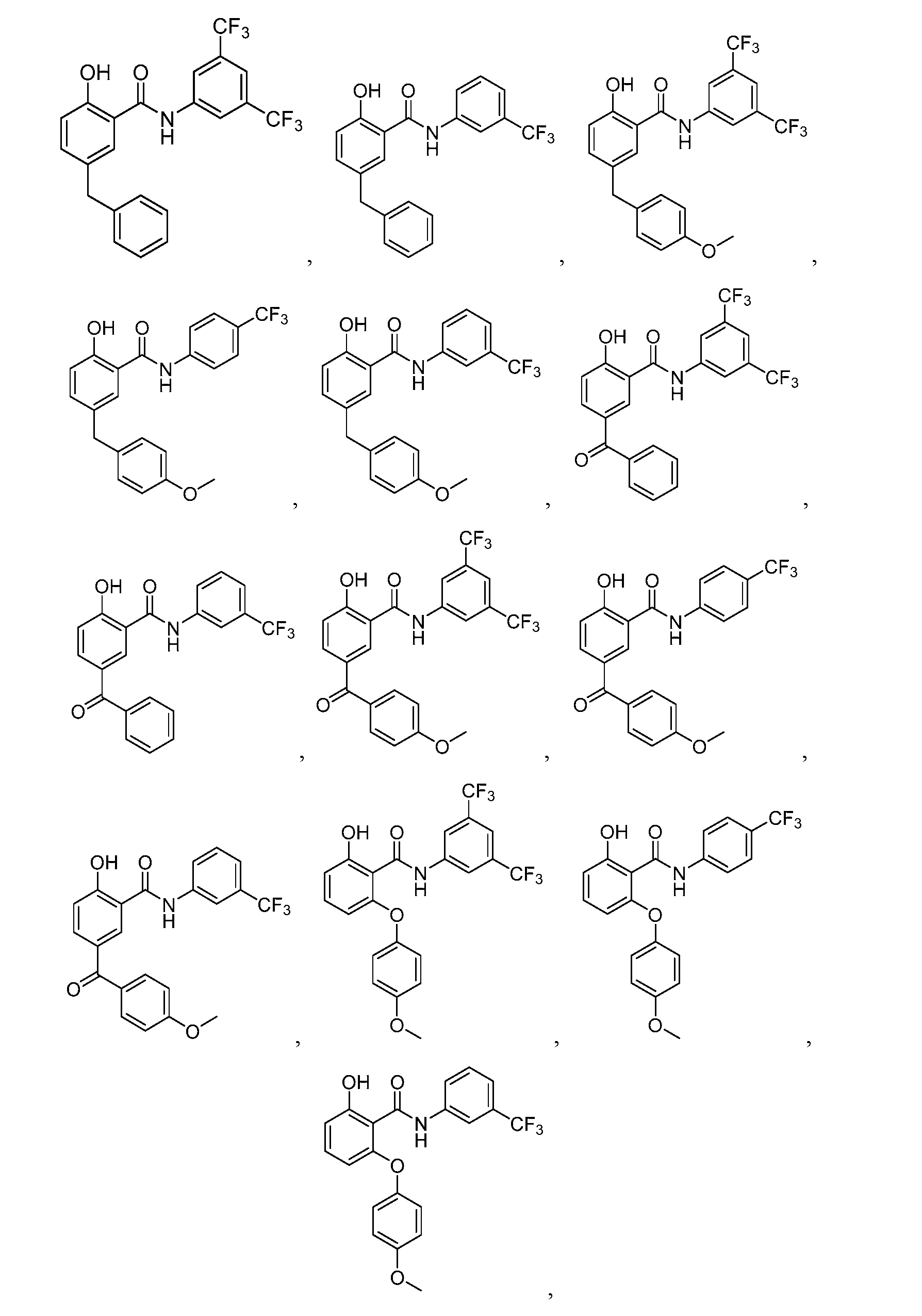
Claims


Priority Applications (5)
| Application Number | Priority Date | Filing Date | Title |
|---|---|---|---|
| BR112022009457A BR112022009457A2 (en) | 2019-11-18 | 2020-11-17 | DUAL ANDROGENIC RECEPTOR/AKR1C3 INHIBITORS |
| JP2022528594A JP7623375B2 (en) | 2019-11-18 | 2020-11-17 | Androgen receptor/AKR1C3 dual inhibitor |
| CN202080080518.4A CN114727975B (en) | 2019-11-18 | 2020-11-17 | Dual androgen receptor/AKR1C3 inhibitor |
| EP20889265.3A EP4061351A4 (en) | 2019-11-18 | 2020-11-17 | DUAL ANDROGEN RECEPTOR/AKR1C3 INHIBITORS |
| US17/745,621 US20230022235A1 (en) | 2019-11-18 | 2022-05-16 | Dual androgen receptor/akr1c3 inhibitors |
Applications Claiming Priority (2)
| Application Number | Priority Date | Filing Date | Title |
|---|---|---|---|
| US201962937136P | 2019-11-18 | 2019-11-18 | |
| US62/937,136 | 2019-11-18 |
Related Child Applications (1)
| Application Number | Title | Priority Date | Filing Date |
|---|---|---|---|
| US17/745,621 Continuation US20230022235A1 (en) | 2019-11-18 | 2022-05-16 | Dual androgen receptor/akr1c3 inhibitors |
Publications (1)
| Publication Number | Publication Date |
|---|---|
| WO2021101903A1 true WO2021101903A1 (en) | 2021-05-27 |
Family
ID=75980035
Family Applications (1)
| Application Number | Title | Priority Date | Filing Date |
|---|---|---|---|
| PCT/US2020/060907 Ceased WO2021101903A1 (en) | 2019-11-18 | 2020-11-17 | Dual androgen receptor/akr1c3 inhibitors |
Country Status (6)
| Country | Link |
|---|---|
| US (1) | US20230022235A1 (en) |
| EP (1) | EP4061351A4 (en) |
| JP (1) | JP7623375B2 (en) |
| CN (1) | CN114727975B (en) |
| BR (1) | BR112022009457A2 (en) |
| WO (1) | WO2021101903A1 (en) |
Citations (20)
| Publication number | Priority date | Publication date | Assignee | Title |
|---|---|---|---|---|
| US4235871A (en) | 1978-02-24 | 1980-11-25 | Papahadjopoulos Demetrios P | Method of encapsulating biologically active materials in lipid vesicles |
| US4501728A (en) | 1983-01-06 | 1985-02-26 | Technology Unlimited, Inc. | Masking of liposomes from RES recognition |
| US4837028A (en) | 1986-12-24 | 1989-06-06 | Liposome Technology, Inc. | Liposomes with enhanced circulation time |
| US4902505A (en) | 1986-07-30 | 1990-02-20 | Alkermes | Chimeric peptides for neuropeptide delivery through the blood-brain barrier |
| US4957735A (en) | 1984-06-12 | 1990-09-18 | The University Of Tennessee Research Corporation | Target-sensitive immunoliposomes- preparation and characterization |
| US5004697A (en) | 1987-08-17 | 1991-04-02 | Univ. Of Ca | Cationized antibodies for delivery through the blood-brain barrier |
| US5019369A (en) | 1984-10-22 | 1991-05-28 | Vestar, Inc. | Method of targeting tumors in humans |
| US5055303A (en) | 1989-01-31 | 1991-10-08 | Kv Pharmaceutical Company | Solid controlled release bioadherent emulsions |
| US5188837A (en) | 1989-11-13 | 1993-02-23 | Nova Pharmaceutical Corporation | Lipsopheres for controlled delivery of substances |
| US5254342A (en) | 1991-09-30 | 1993-10-19 | University Of Southern California | Compositions and methods for enhanced transepithelial and transendothelial transport or active agents |
| US5268164A (en) | 1990-04-23 | 1993-12-07 | Alkermes, Inc. | Increasing blood-brain barrier permeability with permeabilizer peptides |
| US5271961A (en) | 1989-11-06 | 1993-12-21 | Alkermes Controlled Therapeutics, Inc. | Method for producing protein microspheres |
| US5413797A (en) | 1992-03-12 | 1995-05-09 | Alkermes Controlled Therapeutics, Inc. | Controlled release ACTH containing microspheres |
| US5514670A (en) | 1993-08-13 | 1996-05-07 | Pharmos Corporation | Submicron emulsions for delivery of peptides |
| US5534496A (en) | 1992-07-07 | 1996-07-09 | University Of Southern California | Methods and compositions to enhance epithelial drug transport |
| US20060035979A1 (en) * | 1998-06-19 | 2006-02-16 | Smithkline Beecham Corporation | Inhibitors of transcription factor NF-kappaB |
| US8097759B2 (en) * | 2000-12-18 | 2012-01-17 | Institute Of Medicinal Molecular Design, Inc. | Inflammatory cytokine release inhibitor |
| US20140294957A1 (en) * | 2011-04-18 | 2014-10-02 | Maxdelbruck-Centrum Fur Molekulare Medizin | Niclosamide for the treatment of cancer metastasis |
| WO2015065919A1 (en) | 2013-10-28 | 2015-05-07 | The Regents Of The University Of California | Treatment of metastatic prostate cancer |
| US20190060330A1 (en) * | 2016-04-11 | 2019-02-28 | Jumei SHI | Application of 4-hydroxy salicylanilide in preparation of anti-myeloma or anti-lymphoma drugs |
Family Cites Families (7)
| Publication number | Priority date | Publication date | Assignee | Title |
|---|---|---|---|---|
| US3657431A (en) * | 1969-06-25 | 1972-04-18 | Merck & Co Inc | Treating of inflammation with substituted phenylthiosalicylic acids |
| US3773936A (en) * | 1969-06-25 | 1973-11-20 | Merck & Co Inc | Method of treating inflammation with substituted anilino salicylic acids |
| US3652665A (en) * | 1970-04-20 | 1972-03-28 | Merck & Co Inc | Halo-phenoxy salicylic acids |
| GB1493375A (en) * | 1974-09-20 | 1977-11-30 | Ici Ltd | Salicylanilide derivatives |
| CS242022B1 (en) * | 1984-10-12 | 1986-04-17 | Viktor Zikan | Substituted 3-benzyl-5-chlorosalicylic anilides |
| DK1328507T3 (en) * | 2000-10-02 | 2007-07-02 | Univ New York State Res Found | Naphthylsalicylanilides as antimicrobial and anti-inflammatory agents |
| AU2005277223C1 (en) * | 2004-08-20 | 2009-05-21 | The Regents Of The University Of Michigan | Small molecule inhibitors of anti-apoptotic Bcl-2 family members and the uses thereof |
-
2020
- 2020-11-17 EP EP20889265.3A patent/EP4061351A4/en active Pending
- 2020-11-17 JP JP2022528594A patent/JP7623375B2/en active Active
- 2020-11-17 CN CN202080080518.4A patent/CN114727975B/en active Active
- 2020-11-17 BR BR112022009457A patent/BR112022009457A2/en unknown
- 2020-11-17 WO PCT/US2020/060907 patent/WO2021101903A1/en not_active Ceased
-
2022
- 2022-05-16 US US17/745,621 patent/US20230022235A1/en active Pending
Patent Citations (21)
| Publication number | Priority date | Publication date | Assignee | Title |
|---|---|---|---|---|
| US4235871A (en) | 1978-02-24 | 1980-11-25 | Papahadjopoulos Demetrios P | Method of encapsulating biologically active materials in lipid vesicles |
| US4501728A (en) | 1983-01-06 | 1985-02-26 | Technology Unlimited, Inc. | Masking of liposomes from RES recognition |
| US4957735A (en) | 1984-06-12 | 1990-09-18 | The University Of Tennessee Research Corporation | Target-sensitive immunoliposomes- preparation and characterization |
| US5019369A (en) | 1984-10-22 | 1991-05-28 | Vestar, Inc. | Method of targeting tumors in humans |
| US4902505A (en) | 1986-07-30 | 1990-02-20 | Alkermes | Chimeric peptides for neuropeptide delivery through the blood-brain barrier |
| US4837028A (en) | 1986-12-24 | 1989-06-06 | Liposome Technology, Inc. | Liposomes with enhanced circulation time |
| US5004697A (en) | 1987-08-17 | 1991-04-02 | Univ. Of Ca | Cationized antibodies for delivery through the blood-brain barrier |
| US5055303A (en) | 1989-01-31 | 1991-10-08 | Kv Pharmaceutical Company | Solid controlled release bioadherent emulsions |
| US5271961A (en) | 1989-11-06 | 1993-12-21 | Alkermes Controlled Therapeutics, Inc. | Method for producing protein microspheres |
| US5188837A (en) | 1989-11-13 | 1993-02-23 | Nova Pharmaceutical Corporation | Lipsopheres for controlled delivery of substances |
| US5268164A (en) | 1990-04-23 | 1993-12-07 | Alkermes, Inc. | Increasing blood-brain barrier permeability with permeabilizer peptides |
| US5506206A (en) | 1990-04-23 | 1996-04-09 | Alkermes, Inc. | Increasing blood-brain barrier permeability with permeabilizer peptides |
| US5254342A (en) | 1991-09-30 | 1993-10-19 | University Of Southern California | Compositions and methods for enhanced transepithelial and transendothelial transport or active agents |
| US5413797A (en) | 1992-03-12 | 1995-05-09 | Alkermes Controlled Therapeutics, Inc. | Controlled release ACTH containing microspheres |
| US5534496A (en) | 1992-07-07 | 1996-07-09 | University Of Southern California | Methods and compositions to enhance epithelial drug transport |
| US5514670A (en) | 1993-08-13 | 1996-05-07 | Pharmos Corporation | Submicron emulsions for delivery of peptides |
| US20060035979A1 (en) * | 1998-06-19 | 2006-02-16 | Smithkline Beecham Corporation | Inhibitors of transcription factor NF-kappaB |
| US8097759B2 (en) * | 2000-12-18 | 2012-01-17 | Institute Of Medicinal Molecular Design, Inc. | Inflammatory cytokine release inhibitor |
| US20140294957A1 (en) * | 2011-04-18 | 2014-10-02 | Maxdelbruck-Centrum Fur Molekulare Medizin | Niclosamide for the treatment of cancer metastasis |
| WO2015065919A1 (en) | 2013-10-28 | 2015-05-07 | The Regents Of The University Of California | Treatment of metastatic prostate cancer |
| US20190060330A1 (en) * | 2016-04-11 | 2019-02-28 | Jumei SHI | Application of 4-hydroxy salicylanilide in preparation of anti-myeloma or anti-lymphoma drugs |
Non-Patent Citations (17)
| Title |
|---|
| BANGA, A.J.: "THERAPEUTIC PEPTIDES AND PROTEINS: FORMULATION, PROCESSING, AND DELIVERY SYSTEMS", 1995, TECHNOMIC PUBLISHING COMPANY, INC. |
| BETAGERI ET AL.: "LIPOSOME DRUG DELIVERY SYSTEMS", 1993, TECHNOMIC PUBLISHING CO., INC. |
| DATABASE Pubchem Compound 17 September 2005 (2005-09-17), "2-hydroxy-N-phenyl-3-(phenylmethyl)-", XP055828106, retrieved from NCBI Database accession no. 5004151 * |
| FIESERS: "Reagents for Organic Synthesis", vol. 1-28, 2016, JOHN WILEY & SONS |
| GOODMAN: "Gilman's The Pharmacological Basis of Therapeutics", 2006, MCGRAW-HILL |
| GREENWUTS: "Protective Groups in Organic Synthesis", 2007, WILEY-INTERSCIENCE |
| GUISE ET AL., CANCER RES, vol. 70, no. 4, 2010, pages 1573 - 1584 |
| IJNTEMA ET AL., INT. J. PHARM., vol. 112, 1994, pages 215 - 224 |
| JOHNSTON ET AL., PHARM. RES., vol. 9, 1992, pages 425 - 434 |
| LANGER R., ACCOUNTS CHEM. RES., vol. 26, 1993, pages 537 - 542 |
| LAROCK: "Comprehensive Organic Transformations", 2018, JOHN WILEY & SONS |
| LIEBERMAN, PHARMACEUTICAL DOSAGE FORMS, vol. 1-3, 1992 |
| LLOYD, THE ART, SCIENCE AND TECHNOLOGY OF PHARMACEUTICAL COMPOUNDING, 1999 |
| PEC ET AL., J. PARENT. SCI. TECH., vol. 44, no. 2, 1990, pages 58 - 65 |
| PICKAR, DOSAGE CALCULATIONS, 1999 |
| REMINGTON: "The Science and Practice of Pharmacy", 2005, LIPPINCOTT, WILLIAMS & WILKINS |
| See also references of EP4061351A4 |
Also Published As
| Publication number | Publication date |
|---|---|
| EP4061351A1 (en) | 2022-09-28 |
| CN114727975B (en) | 2024-10-29 |
| US20230022235A1 (en) | 2023-01-26 |
| JP2023502991A (en) | 2023-01-26 |
| CN114727975A (en) | 2022-07-08 |
| BR112022009457A2 (en) | 2022-08-16 |
| EP4061351A4 (en) | 2023-12-20 |
| JP7623375B2 (en) | 2025-01-28 |
Similar Documents
| Publication | Publication Date | Title |
|---|---|---|
| JP7466795B2 (en) | 3,4-Dihydro-2,7-naphthyridine-1,6(2H,7H)-diones as MEK inhibitors | |
| CN114026073B (en) | Quinazolin-4-one derivatives for treating BRAF-related diseases and disorders | |
| JP2020521741A (en) | Compounds for the treatment of cancer and methods of their use | |
| JP2018511631A (en) | Fused tricyclic inhibitors of KRAS and methods of use thereof | |
| BRPI0920533A2 (en) | STABILIZED ANTAGONISM FOR THE TREATMENT OF DISORDERS RELATED TO THE Hedgehog Trail | |
| CN109563088B (en) | Multifunctional inhibitors of MEK/PI3K and mTOR/MEK/PI3K and therapeutic uses | |
| BR112020020246A2 (en) | AXL KINASE INHIBITORS AND USE OF THE SAME | |
| JP2021185193A (en) | Indenyl compound, pharmaceutical composition and medical use thereof | |
| JP6933644B2 (en) | Androgen receptor antagonist | |
| US20250073249A1 (en) | Steroid compound, and preparation method therefor and use thereof | |
| US20230000876A1 (en) | Treating cancers with a cyclin-dependent kinase inhibitor | |
| US20230022235A1 (en) | Dual androgen receptor/akr1c3 inhibitors | |
| US20210253628A1 (en) | Compounds, compositions, and methods for treatment of androgen-mediated disease | |
| JP2023526443A (en) | Pharmaceutical composition for prevention or treatment of non-small cell lung cancer associated with RON mutation and method of use thereof | |
| JP2023526442A (en) | Pharmaceutical composition for prevention or treatment of small cell lung cancer associated with RON mutant and method of use thereof | |
| WO2021202540A1 (en) | Hsp70 inhibitors and methods of using same | |
| JP2023526444A (en) | Pharmaceutical composition for prevention or treatment of pancreatic cancer associated with RON mutation and method of use thereof | |
| RU2826000C1 (en) | Proposed 3,4-dihydro-2,7-naphthyridine-1,6(2h,7h)-diones as mek inhibitors | |
| JP7854973B2 (en) | 3,4-dihydro-2,7-naphthyridine-1,6(2H,7H)-dione as a MEK inhibitor | |
| CN115697981B (en) | 2-(3-(2-methyl-6-(p-tolyl)pyridin-3-yl)ureido)benzenesulfonamide and derivatives thereof as inhibitors of carbonic anhydrase IX for the treatment of cancer | |
| US12616753B2 (en) | HSP70 inhibitors and methods of using same | |
| US11390601B2 (en) | Conformationally-restricted analogues of sorafenib and regorafenib as selective kinase inhibitors for cancer treatment | |
| JP2024047569A (en) | 3,4-Dihydro-2,7-naphthyridine-1,6(2H,7H)-diones as MEK inhibitors | |
| BR112023019849B1 (en) | 3,4-DIHYDRO-2,7-NAPHTHYRIDINE-1,6(2H,7H)-DIONES, COMPOSITIONS COMPRISING THEM, USES THEREOF, AND KITS | |
| KR20240043704A (en) | 3,4-dihydro-2,7-naphthyridine-1,6(2h,7h)-diones as mek inhibitors |
Legal Events
| Date | Code | Title | Description |
|---|---|---|---|
| 121 | Ep: the epo has been informed by wipo that ep was designated in this application |
Ref document number: 20889265 Country of ref document: EP Kind code of ref document: A1 |
|
| ENP | Entry into the national phase |
Ref document number: 2022528594 Country of ref document: JP Kind code of ref document: A |
|
| REG | Reference to national code |
Ref country code: BR Ref legal event code: B01A Ref document number: 112022009457 Country of ref document: BR |
|
| NENP | Non-entry into the national phase |
Ref country code: DE |
|
| ENP | Entry into the national phase |
Ref document number: 2020889265 Country of ref document: EP Effective date: 20220620 |
|
| ENP | Entry into the national phase |
Ref document number: 112022009457 Country of ref document: BR Kind code of ref document: A2 Effective date: 20220516 |
|
| WWG | Wipo information: grant in national office |
Ref document number: 202217034637 Country of ref document: IN |