WO2021106334A1 - 鍵生成装置、鍵利用装置、及び鍵生成方法 - Google Patents
鍵生成装置、鍵利用装置、及び鍵生成方法 Download PDFInfo
- Publication number
- WO2021106334A1 WO2021106334A1 PCT/JP2020/035536 JP2020035536W WO2021106334A1 WO 2021106334 A1 WO2021106334 A1 WO 2021106334A1 JP 2020035536 W JP2020035536 W JP 2020035536W WO 2021106334 A1 WO2021106334 A1 WO 2021106334A1
- Authority
- WO
- WIPO (PCT)
- Prior art keywords
- key
- sphere
- arrangement
- point
- conversion
- Prior art date
- Legal status (The legal status is an assumption and is not a legal conclusion. Google has not performed a legal analysis and makes no representation as to the accuracy of the status listed.)
- Ceased
Links
Images
Classifications
-
- G—PHYSICS
- G06—COMPUTING OR CALCULATING; COUNTING
- G06F—ELECTRIC DIGITAL DATA PROCESSING
- G06F21/00—Security arrangements for protecting computers, components thereof, programs or data against unauthorised activity
- G06F21/30—Authentication, i.e. establishing the identity or authorisation of security principals
- G06F21/31—User authentication
- G06F21/32—User authentication using biometric data, e.g. fingerprints, iris scans or voiceprints
-
- H—ELECTRICITY
- H04—ELECTRIC COMMUNICATION TECHNIQUE
- H04L—TRANSMISSION OF DIGITAL INFORMATION, e.g. TELEGRAPHIC COMMUNICATION
- H04L9/00—Cryptographic mechanisms or cryptographic arrangements for secret or secure communications; Network security protocols
- H04L9/06—Cryptographic mechanisms or cryptographic arrangements for secret or secure communications; Network security protocols the encryption apparatus using shift registers or memories for block-wise or stream coding, e.g. DES systems or RC4; Hash functions; Pseudorandom sequence generators
- H04L9/0643—Hash functions, e.g. MD5, SHA, HMAC or f9 MAC
-
- H—ELECTRICITY
- H04—ELECTRIC COMMUNICATION TECHNIQUE
- H04L—TRANSMISSION OF DIGITAL INFORMATION, e.g. TELEGRAPHIC COMMUNICATION
- H04L9/00—Cryptographic mechanisms or cryptographic arrangements for secret or secure communications; Network security protocols
- H04L9/08—Key distribution or management, e.g. generation, sharing or updating, of cryptographic keys or passwords
- H04L9/0861—Generation of secret information including derivation or calculation of cryptographic keys or passwords
-
- H—ELECTRICITY
- H04—ELECTRIC COMMUNICATION TECHNIQUE
- H04L—TRANSMISSION OF DIGITAL INFORMATION, e.g. TELEGRAPHIC COMMUNICATION
- H04L9/00—Cryptographic mechanisms or cryptographic arrangements for secret or secure communications; Network security protocols
- H04L9/08—Key distribution or management, e.g. generation, sharing or updating, of cryptographic keys or passwords
- H04L9/0861—Generation of secret information including derivation or calculation of cryptographic keys or passwords
- H04L9/0866—Generation of secret information including derivation or calculation of cryptographic keys or passwords involving user or device identifiers, e.g. serial number, physical or biometrical information, DNA, hand-signature or measurable physical characteristics
-
- H—ELECTRICITY
- H04—ELECTRIC COMMUNICATION TECHNIQUE
- H04L—TRANSMISSION OF DIGITAL INFORMATION, e.g. TELEGRAPHIC COMMUNICATION
- H04L9/00—Cryptographic mechanisms or cryptographic arrangements for secret or secure communications; Network security protocols
- H04L9/32—Cryptographic mechanisms or cryptographic arrangements for secret or secure communications; Network security protocols including means for verifying the identity or authority of a user of the system or for message authentication, e.g. authorization, entity authentication, data integrity or data verification, non-repudiation, key authentication or verification of credentials
- H04L9/3226—Cryptographic mechanisms or cryptographic arrangements for secret or secure communications; Network security protocols including means for verifying the identity or authority of a user of the system or for message authentication, e.g. authorization, entity authentication, data integrity or data verification, non-repudiation, key authentication or verification of credentials using a predetermined code, e.g. password, passphrase or PIN
- H04L9/3231—Biological data, e.g. fingerprint, voice or retina
-
- H—ELECTRICITY
- H04—ELECTRIC COMMUNICATION TECHNIQUE
- H04L—TRANSMISSION OF DIGITAL INFORMATION, e.g. TELEGRAPHIC COMMUNICATION
- H04L9/00—Cryptographic mechanisms or cryptographic arrangements for secret or secure communications; Network security protocols
- H04L9/32—Cryptographic mechanisms or cryptographic arrangements for secret or secure communications; Network security protocols including means for verifying the identity or authority of a user of the system or for message authentication, e.g. authorization, entity authentication, data integrity or data verification, non-repudiation, key authentication or verification of credentials
- H04L9/3247—Cryptographic mechanisms or cryptographic arrangements for secret or secure communications; Network security protocols including means for verifying the identity or authority of a user of the system or for message authentication, e.g. authorization, entity authentication, data integrity or data verification, non-repudiation, key authentication or verification of credentials involving digital signatures
Definitions
- the present invention relates to a key generation device, a key utilization device, and a key generation method.
- Biometric authentication technology that authenticates individuals based on biometric information such as fingerprints, veins, faces, and irises is widely used.
- the feature data (template) extracted from the user's biometric information is registered in the system at the time of user registration, and the feature data extracted from the user's biometric information is compared with the template again at the time of user authentication. If the distance is close enough, it is judged that the authentication is successful, otherwise it is judged that the authentication is unsuccessful.
- biometric cryptography that generates key data from biometric information and performs processing such as cryptographic authentication, encryption, and signature generation.
- the protection template T is created by converting the feature data X of biometric information and embedding the private key K at the time of registration. After that, the private key K is restored from the newly acquired feature data X'of the biometric information and the protection template T. If the restoration is successful, the private key K can be used for processing such as cryptographic authentication, encryption and decryption, and generation of an electronic signature. In biometric cryptography, it must be difficult enough to recover or estimate X from T (security requirement). Also, if the distance between X'and X is short, and only then, the private key restoration process must be successful.
- Non-Patent Document 1 As a method for realizing biometric encryption, for example, the technique described in Non-Patent Document 1 can be applied when feature data X and X'are represented by bit strings and their proximity is defined by a Hamming distance. A method applicable when the feature data X and X'are expressed as a set and their closeness is defined by
- pattern recognition methods that form the basis of biometrics authentication express feature data as vectors on high-dimensional Euclidean space, and express proximity as Euclidean distance or normalized Euclidean distance (cosine distance or normalized cross-correlation). Includes).
- feature vector extraction and matching methods from facial images using deep learning and feature vector extraction and matching methods such as principal component analysis, discriminant analysis, and phase-limited correlation for various images such as fingerprints, palm prints, and veins are living organisms. It can be regarded as a method of extracting feature vectors of high-dimensional space from information and collating them by Euclidean distance.
- Non-Patent Document 1 cannot be applied to such an Euclidean distance. Therefore, the method described in Non-Patent Document 2 attempts to realize a biometric cipher or a biometric signature approximately based on the Euclidean distance by using a triangular lattice.
- Non-Patent Document 2 has a problem that the authentication accuracy deteriorates rapidly (exponentially) as the dimension becomes larger. Therefore, it is difficult to apply it to actual biometric information and achieve practical authentication accuracy.
- one aspect of the present invention aims to realize highly accurate authentication in biometric encryption and biometric signature based on a feature vector on a high-dimensional Euclidean space.
- the key generator that generates a key from biometric information includes a processor and a memory, and the memory has a first feature vector indicating a feature of the first biometric information and a density of less than 1 and higher than a predetermined value.
- the processor holds the sphere-packed arrangement or the parameter for specifying the sphere-packed arrangement having a density of 1 or more and lower than a predetermined value, and the processor bases the sphere-packed arrangement or the sphere-coated arrangement based on the parameter. Is specified, the first point included in the specified sphere packing arrangement or the sphere coating arrangement is selected, and a predetermined first conversion is performed on the first point to generate a first key. ,
- the template corresponding to the first biometric information is generated based on the first feature vector and the first point.
- One aspect of the present invention can realize highly accurate authentication in biometric encryption and biometric signature based on a feature vector on a high-dimensional Euclidean space.
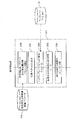
- FIG. 1 It is a block diagram which shows the structural example of the biometric authentication system in Example 1.
- FIG. In the first embodiment it is a flowchart which shows an example of the registration process of a template and verification information. It is a flowchart which shows an example of the authentication process in Example 1.
- FIG. It is a flowchart which shows the detailed example of the key generation process and the template generation process in Example 1.
- FIG. It is a flowchart which shows the detailed example of the key restoration processing in Example 1.
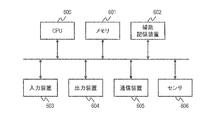
- FIG. It is a block diagram which shows the hardware configuration example of the computer which constitutes each of a key registration terminal, a key use terminal, and a DB server in Example 1.
- the biometric authentication system of this embodiment creates and registers a template from the user's biometric information and verification information for verifying the key, and uses this template and the newly acquired user's biometric information to create a key.
- the key is used for user authentication, data encryption and decryption, and creation of electronic signatures.
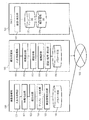
- FIG. 1 is a block diagram showing a configuration example of a biometric authentication system.
- the biometric authentication system includes, for example, one or more key registration terminals 100, one or more key use terminals 110, and a DB (DataBase) server 120 connected to each other by a network 130 such as the Internet.
- DB DataBase
- any two or all of the key registration terminal 100, the key use terminal 110, and the DB server 120 may be mounted in the same device. Also, if all three are mounted in the same device, the network 130 may not be present.
- the key registration terminal 100 creates and registers a template and verification information from the biometric information of the user.
- the key registration terminal 100 is composed of, for example, an input / output processing unit 101 that processes input from a user or another device and output from another device, and biometric information for registration such as a face or vein acquired from the user by a sensor.
- the feature extraction unit 102 that extracts the registration feature data
- the key generation unit 103 that generates the key
- the template generation unit 104 that generates the template from the registration feature data
- the correctness of the key generated by the key use terminal 110 That is, it includes a verification information generation unit 105 that generates verification information for verifying (whether the key generated by the key registration terminal 100 and the key generated by the key use terminal 110 match).
- the key registration terminal 100 has a parameter storage unit 106 that holds parameters for designating the sphere packing arrangement and the sphere coating arrangement, which will be described later.
- the key-using terminal 110 newly acquires the biometric information of the user, restores the key from the acquired biometric information and the template, and performs user authentication, data encryption and decryption, creation of an electronic signature, and the like.
- the key-using terminal 110 has an input / output processing unit 111 that processes inputs from the user and other devices and outputs from other devices, and a feature extraction unit 112 that extracts feature data from biometric information acquired from the user by a sensor.
- a key recovery unit 113 that restores the key from the feature data and the template, a key verification unit 114 that verifies the correctness of the key, and encryption such as authentication, encryption, decryption, and digital signature generation using the key.
- the key registration terminal 100 has a parameter storage unit 116 that holds parameters for designating the sphere packing arrangement and the sphere coating arrangement, which will be described later.
- the DB server 120 registers and manages templates and verification information.
- the DB server 120 includes a registration / search unit 121 that registers and searches templates and verification information. Further, the DB server 120 has a template DB 123 that holds a template and a verification information DB 124 that holds verification information.
- the template DB 123 may be associated with the user ID corresponding to the template and may be retained, or the verification information DB 124 may be associated with and retained the user ID corresponding to the verification information.
- the template DB 123 and the verification information DB 124 may be distributed and managed on separate servers and terminals. By managing in a distributed manner in this way, it is possible to further improve the safety against the risk of leakage. Further, at least one of the template and the verification information may be stored and managed in the key use terminal 110. Further, at least one of the template and the verification information may be stored and managed in a portable medium such as an IC card, a USB memory, a mobile terminal, a paper printed in a two-dimensional code, or a personal management terminal such as a smartphone.
- a portable medium such as an IC card, a USB memory, a mobile terminal, a paper printed in a two-dimensional code, or a personal management terminal such as a smartphone.
- FIG. 6 is a block diagram showing a hardware configuration example of a computer constituting each of the key registration terminal 100, the key use terminal 110, and the DB server 120.
- the computer includes a CPU (Control Processing Unit) 600, a memory 601, an auxiliary storage device 602, an input device 603, an output device 604, a communication device 605, and a sensor 606, which are connected to each other by an internal communication line such as a bus. Has been done. However, the computer constituting the DB server 120 does not have to include the sensor 606.
- the CPU 600 includes a processor and executes a program stored in the memory 601.
- the memory 601 includes a ROM which is a non-volatile storage element and a RAM which is a volatile storage element.
- the ROM stores an invariant program (for example, BIOS) and the like.
- the RAM is a high-speed and volatile storage element such as a DRAM (Dynamic Random Access Memory), and temporarily stores a program executed by a processor and data used when the program is executed.
- the auxiliary storage device 602 is, for example, a large-capacity and non-volatile storage device such as a magnetic storage device (HDD) or a flash memory (SSD), and stores a program executed by the CPU 600 and data used when executing the program. .. That is, the program is read from the auxiliary storage device 602, loaded into the memory 601 and executed by the CPU 600.
- HDD magnetic storage device
- SSD flash memory
- the computer may have an input interface and an output interface.
- the input interface is an interface to which an input device 603 such as a keyboard or a mouse is connected and receives input from an operator.
- the output interface is an interface to which an output device 604 such as a display device or a printer is connected and outputs a program execution result in a format that can be visually recognized by an operator.
- the communication device 605 is a network interface device that controls communication with other devices according to a predetermined protocol.
- the sensor 606 is a sensor (for example, a photographing device, a microphone, etc.) that acquires biological information for identifying a user. The sensor 606 may be connected to the input interface without being included in the computer.
- the program executed by the CPU 600 is provided to the computer from a non-temporary storage device of another device via a removable medium (CD-ROM, flash memory, etc.) or network 130, and is a non-volatile non-volatile storage medium. It is stored in the auxiliary storage device 602. Therefore, the computer may have an interface for reading data from removable media.
- Each device included in the biometric authentication system of the present embodiment is a computer system composed of physically one computer or a plurality of computers logically or physically configured, and is the same computer. It may run on a separate thread above, or it may run on a virtual computer built on multiple physical computer resources.
- the feature extraction unit 102, the key generation unit 103, the template generation unit 104, and the verification information generation unit 105 of the key registration terminal 100 are realized by a program executed by the CPU 600 of the computer constituting the key registration terminal 100.
- the feature extraction unit 112, the key restoration unit 113, the key verification unit 114, and the authentication / encryption / signature unit 115 of the key utilization terminal 110 are realized by a program executed by the CPU 600 of the computer constituting the key utilization terminal 110.
- the registration / search unit 121 of the DB server 120 is realized by a program executed by the CPU 600 of the computer constituting the DB server 120.
- the CPU 600 of the computer constituting the key registration terminal 100 functions as an input / output processing unit 101 by operating according to the input / output processing program loaded in the memory 601 and operates according to the feature extraction program loaded in the memory 601. This functions as a feature extraction unit 102.
- This functions as a feature extraction unit 102.
- the parameter DB 106 of the key registration terminal 100 is composed of a part of the memory 601 included in the computer constituting the key registration terminal 100 or a part of the storage area included in the auxiliary storage device 602.
- the parameter DB 116 of the key-using terminal 110 is composed of a part of the memory 601 included in the computer constituting the key-using terminal 110 or a part of the storage area included in the auxiliary storage device 602.
- the template DB 123 and the verification information DB 124 of the DB server 120 are composed of a part of the memory 601 included in the computer constituting the DB server 120 or a part of the storage area included in the auxiliary storage device 602.
- the information used by each device included in the authentication system may be represented by any data structure regardless of the data structure.
- a properly selected data structure from a table, list, database or queue can store the information.
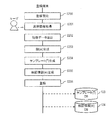
- FIG. 2 is a flowchart showing an example of the template and verification information registration process.
- the input / output processing unit 101 of the key registration terminal 100 starts the registration process according to the operation of the user or the operator (S200).
- the input / output processing unit 101 acquires the user registration biometric information acquired by the sensor 606 of the key registration terminal 100 (S201).
- the input / output processing unit 101 may assign a user ID for identifying the user in the process of acquiring the biometric information for registration.
- the biological information is information that can identify the user obtained from the physical characteristics or behavioral characteristics of the user. Even if the biometric information of the same user is acquired, an error may occur each time (the biometric information may change depending on the shooting angle and noise of the sensor 606, the state of the user's own physical condition, etc.), so the biometric information is fuzzy. It can be said that it is information.
- an image obtained by capturing a part of the body such as the face, hands, fingers, eyes, veins, iris, and retina with light of an arbitrary predetermined wavelength such as visible light, infrared light, near-infrared light, or X-ray.
- the moving image, the voice signal when the user speaks, and the signal information obtained by various physical measurements for the user are all examples of biological information.
- handwritten signatures, gestures, and data obtained by measuring behavior are all examples of biometric information. The same applies to the biometric information for key restoration in the key utilization process described later.
- the feature extraction unit 102 extracts the registration feature data from the registration biometric information acquired in step S201 (S202).
- the feature data for registration is represented in the form of an image, a vector, a signal, or one or more numerical values. The same applies to the feature data for key restoration in the key utilization process described later.
- the key generation unit 103 generates a key sk from the registration feature data extracted in step S202 (S203).
- the key sk may be a bit string having a predetermined length, an integer having a predetermined number of digits, a vector or a matrix having a predetermined dimension, or the like. The details of the process in step S203 will be described later.
- the template generation unit 104 generates the template T from the registration feature data generated in step S202 (S204). Details of the process in step S204 will be described later.
- the process of step S204 may be performed before the process of step S203, or may be performed after the process of step S205.
- the verification information generation unit 105 generates the verification information vk from the key sk generated in step S203 (S205). A detailed example of the process of step S205 will be shown below.
- the verification information generation unit 105 calculates the following (Equation 1) using a predetermined one-way function Hash ().
- Vk Hash (sk) ... (Equation 1)
- Hash Any cryptographic hash function such as SHA256 or SHA3 is an example of Hash ().
- the linear hash function is also an example of Hash ().
- Equation 2 is calculated using the mapping ⁇ to the set of.
- the (sk, vk) pair thus created is the private key and public key in many public key cryptography / digital signature algorithms, such as ElGamal encryption / signature, DSA, Schnorr signature, or their elliptical curve version algorithms. Can be treated as a set.
- the verification information generation unit 105 uses the following verification information generation secret key or the verification information generation parameter (p) in addition to the key sk. (Equation 3) is calculated.
- Vk Enc (sk, p) ... (Equation 3)
- Enc () Any encryption function such as AES or RSA, and a hash function with a key are all examples of Enc ().
- the verification information generation private key or the verification information generation parameter (p) may be set by the verification information generation unit 105 for each user or registered biometric information, or for each key use terminal 110 or biometric authentication system.
- the generation unit 105 may be set or may be preset.
- the set parameter (p) is stored in the parameter DB 106.
- the input / output processing unit 101 registers the template T in the template DB 123 of the DB server 120, and registers the verification information vk in the verification information DB 124 of the DB server 120 (S206).
- the input / output processing unit 101 associates the template T with the user ID and registers it in the template DB 123, and associates the verification information vk with the user ID to the DB server. It is registered in the verification information DB 124 of 120.
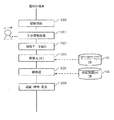
- FIG. 3 is a flowchart showing an example of the authentication process.
- the input / output processing unit 111 of the key-using terminal 110 starts the authentication process according to the operation of the user or the operator (S300).
- the input / output processing unit 111 acquires the user authentication biometric information acquired by the sensor 606 of the key use terminal 110 (S301).
- the input / output processing unit 111 also receives the input of the user ID from the user.
- 1: 1 authentication shall be performed.
- the feature extraction unit 112 extracts the authentication feature data from the authentication biometric information acquired in step S301 (S302).
- the method for extracting the feature data for authentication is the same as the extraction method in step S202.
- the input / output processing unit 111 requests the DB server 120 to search and read the template T corresponding to the user ID acquired in step S301 from the template DB 123, and the registration / search unit 121 of the DB server 120 searches for the template T. Is read and transmitted to the key use terminal 110, and the key restoration unit 113 restores the key sk'from the received template T and the authentication feature data (S303). Details of the process in step S303 will be described later.
- the input / output processing unit 111 requests the DB server 120 to search and read the verification information vk corresponding to the user ID acquired in step S301 from the verification information DB 124, and the registration / search unit 121 of the DB server 120 requests the DB server 120 to search and read the verification information vk.
- step S304 shows a detailed example of the process of step S304.
- step S205 regardless of which method of the first example, the second example, or the third example is used, the method used is previously referred to as the key registration terminal 100 and the key use terminal 110.
- step S205 and when the method of the third example is used, the verification information generation private key or the verification information generation parameter (p) is previously keyed with the key registration terminal 100. It is assumed that it is shared with the user terminal 110.
- the authentication / encryption / signature unit 115 When the authentication / encryption / signature unit 115 performs the authentication process, for example, the authentication / encryption / signature unit 115 generates an electronic signature or a message authentication code (MAC) with sk'as a private key for a predetermined challenge code.
- MAC message authentication code
- the authentication / encryption / signing unit 115 executes encryption processing, for example, the predetermined message data is encrypted using sk'as an encryption key, or the predetermined ciphertext data is decrypted using sk'as a decryption key.
- the authentication / encryption / signature unit 115 executes an electronic signature, for example, the authentication / encryption / signature unit 115 generates an electronic signature for predetermined data using sk'as a signature key.
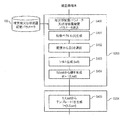
- FIG. 4 is a flowchart showing a detailed example of the key generation process in step S203 and the template generation process in step S204.
- Steps S401 to S404 are processes included in step S203, and steps S405 are processes included in step S204.
- the key generation unit 103 of the key registration terminal 100 reads the sphere packing arrangement parameter or the sphere coating arrangement parameter from the parameter storage unit 106 (S400).
- the sphere packing arrangement parameter is a parameter that specifies a certain sphere packing arrangement
- the sphere coating arrangement parameter is a parameter that specifies a certain sphere coating arrangement.
- i 0,1,2, ... ⁇ of points S_i on the n-dimensional Euclidean space, and is centered on S_i for each point S_i.
- i 0,1,2, ... ⁇ on an n-dimensional Euclidean space, and is centered on S_i for each point S_i.
- a set of n-dimensional hyperspheres having a predetermined radius r covers the entire n-dimensional space without gaps.
- the number of dimensions n is the same as the number of dimensions n of the feature vector described later, and is, for example, about several tens to tens of thousands.
- the sphere packing arrangement or the sphere coating arrangement is also simply referred to as “arrangement”.
- L ⁇ S_i ⁇ has a mathematical lattice structure
- L is called a lattice arrangement. Since the lattice arrangement can be specified by the basis matrix B of the space to which the lattice belongs, the basis matrix B may be used as the sphere packing parameter or the sphere covering arrangement parameter.
- the ratio of the volume of the sphere to the space is called “density”.
- the density of the sphere packing arrangement is greater than 0 and is a value of 1 or less, and the density of the sphere coating arrangement is a value of 1 or more.
- the highest density sphere packing arrangement is called the “closest sphere packing arrangement", and the lowest density (sparse) sphere coating arrangement is called the “most sparse sphere coating arrangement”.
- a method of constructing a sphere-packed arrangement that is not the most dense but dense
- a method of constructing a sphere-packed arrangement that is not the sparsest but is sparse.
- an arrangement called a BW lattice Barnes-Wall lattice is known as a method for constructing a dense sphere-packed arrangement.
- the sphere packing arrangement is less than 1 and higher than the predetermined value (the predetermined value may differ depending on the number of dimensions of the space), or 1 or more and the predetermined value (the dimension of the space).
- a lower density sphere-packed arrangement is used (the predetermined value may vary depending on the number). Therefore, such an arrangement is configured in advance, and parameters for designating the configured arrangement are stored in the parameter storage unit 106 and the parameter storage unit 116.
- Non-Patent Document 2 discloses a method of biometric signature using a triangular lattice.
- the triangular lattice is not dense as a sphere-packed arrangement in a high-dimensional space (n is several tens or more), and is not sparse as a sphere-covered arrangement. Therefore, when an attempt is made to apply a triangular lattice to actual biological information, it causes a large deterioration in accuracy and is not practical.
- t plays the role of an "authentication threshold" in a general biometric authentication system.
- the larger t is, the easier it is for both the person and others to be accepted, and the smaller t is, the more others are. Although it is easy to be rejected, even the person himself / herself is likely to be rejected.
- the sphere filling arrangement parameter or the sphere coating arrangement parameter may also include information on t. Further, when the authentication threshold value t is changed for each user (for example, t is specified by the user when acquiring biometric information in the template registration process), t may be included in the template T.
- X is a vector on the n-dimensional Euclidean space
- a feature vector can be generated from biological information or feature data by using a machine learning method such as deep learning, principal component analysis, and discriminant analysis. Methods such as learning a feature vector extractor are known.
- machine learning method such as deep learning, principal component analysis, and discriminant analysis.
- Methods such as learning a feature vector extractor are known.
- the number of dimensions n of the feature vector needs to be several tens to tens of thousands, and it is necessary to handle a high-dimensional Euclidean space. is there.
- i 0, 1, 2, ... ⁇ Designated by the sphere packing arrangement parameter or the sphere coating arrangement parameter (S402).
- the key generation unit 103 can use, for example, any of the following methods as a specific selection method.
- the key generation unit 103 randomly selects S according to a predetermined distribution defined on L.
- This distribution may be, for example, a discrete normal distribution based on L or a uniform distribution on a predetermined finite subset of L.
- the key generation unit 103 selects the point closest to the registration feature vector X (hereinafter, also referred to as the nearest point of X) in L.
- the key generation unit 103 calculates the integer vector obtained by rounding down, rounding up, or rounding the fractional part of each component of Y as Z.
- the key generation unit 103 makes the absolute value of each component of the difference vector D calculated by the formula 8 described later smaller than that of the method (a). Therefore, when the key generation unit 103 uses the method (b) or (c), the data size of the template T becomes smaller than when the method (a) is used, and efficient recording can be performed.
- the key generation unit 103 generates a value (salt) called salt (S403).
- the key generation unit 103 does not have to perform the process of step S403, and in this case, the salt may not be used for the process described later.
- salt in the subsequent processing may be read as a character string or bit string having a length of 0.
- the key generation unit 103 generates a key sk from the point S and the salt salt (S404). Specifically, the key generation unit 103 calculates sk by calculating the following (Equation 5) using, for example, the one-way function Hash () such as SHA256 or SHA3.
- the key generation unit 103 may calculate the sk using a linear hash function. Further, the key generation unit 103 calculates sk by calculating the following (Equation 6) using an encryption function such as AES or a hash function Enc () with a key and a predetermined parameter (p). May be good.
- the key generation unit 103 may calculate the sk by calculating the following (Equation 7) using the linear function f and the appropriate mapping g.
- step S203 The above is a detailed example of the key generation process in step S203.
- FIG. 5 is a flowchart showing an example of details of the key restoration process in step S303.
- the key restoration unit 113 of the key utilization terminal 110 reads a sphere packing arrangement parameter or a sphere coating arrangement parameter (a parameter in the arrangement used by the key registration terminal 100 in key generation and template generation) from the parameter storage unit 116 (S500). It is assumed that the key registration terminal 100 shares information in advance with the key use terminal 110 indicating whether to use the sphere packing arrangement or the sphere coating arrangement in the key generation and the template generation.
- the key restoration unit 113 searches for the nearest point S'of the point R from the arrangement L (S503).
- the input / output processing unit 111 does not acquire the user ID in step S301.
- the input / output processing unit 111 uses all the templates T of the DB server 120. Obtained from template DB123.
- the input / output processing unit 111 acquires all the verification information from the verification information DB 124 of the DB server 120. Then, for example, the process of step S303 is executed for each of all the templates T, and the process of step S304 is executed for each of all the verification information.
- the authentication system of this embodiment is characterized by using a high density sphere packing arrangement or a low density sphere coating arrangement, which is higher than the conventional biometric cryptography and biometric signature method. It has the effect of achieving authentication accuracy. The reason will be explained below.
- the condition of the authentication feature vector X'accepted as the registrant is defined as the Euclidean distance d (X, X') being equal to or less than a predetermined threshold value r. Will be done. That is, the set of accepted X'(accepting region) is a hypersphere having a radius r centered on X in the n-dimensional space.
- i 0, 1, 2, ... ⁇
- i 0, 1, 2, ... ⁇
- the nearest point of S + X'-X is S, and only in that case, the correct key sk is restored and accepted as the person himself / herself.
- the region (boronoisel of S) in which S is the nearest point in the n-dimensional space is V (S)
- XS + V (S) on the right side of Equation 11 is a region in which V (S) is translated by XS.
- V (S) is a hypersphere having a radius r centered on S
- the right side is a hypersphere having a radius r centered on X.
- the boronoisel for each point S of the arrangement L does not match the hypersphere, and the accuracy deteriorates.
- the larger the mismatch region between the hypersphere and the boronoisel the greater the degree of accuracy deterioration.
- the boronoisels at each point of the sphere packing arrangement regarding the hypersphere of radius r include the hypersphere of radius r from the definition. And the higher the density, the smaller the mismatch region between the boronoisel and the hypersphere, and therefore the degree of accuracy deterioration. Similarly, the boronoisels at each point of the sphere-covered arrangement for a sphere of radius r are included in the sphere of radius r. And the smaller the density, the smaller the mismatch region between the boronoisel and the hypersphere, and therefore the degree of accuracy deterioration.
- the density as the sphere packing arrangement rapidly decreases as the dimension number n becomes 4 or more, and the sphere coating arrangement is used. Density increases rapidly. Therefore, the degree of accuracy deterioration also increases.
- a BW lattice or a Leech lattice has a high density as a sphere packing arrangement even in a higher dimension, and the degree of accuracy deterioration is small.
- the authentication system of this embodiment can realize biometric encryption and biometric signature that achieve high authentication accuracy (that is, high personal acceptance rate and high rejection rate of others).
- the authentication system of the present embodiment generates keys, templates, and verification information based on biometric information, restores the key, verifies the key, and the like, but is not limited to biometric information that identifies humans. Keys, templates, and verification information may be generated, keys may be restored, keys may be verified, and the like based on fuzzy information that identifies an individual (for example, PUF (Physically Unfoldable Function) that identifies a semiconductor device).
- PUF Physical Unfoldable Function
- the present invention is not limited to the above-described embodiment, and includes various modifications.
- the above-described embodiment has been described in detail in order to explain the present invention in an easy-to-understand manner, and is not necessarily limited to the one including all the described configurations. It is also possible to replace a part of the configuration of one embodiment with the configuration of another embodiment, and it is also possible to add the configuration of another embodiment to the configuration of one embodiment. Further, it is possible to add / delete / replace a part of the configuration of each embodiment with another configuration.
- each of the above configurations, functions, processing units, processing means, etc. may be realized by hardware by designing a part or all of them by, for example, an integrated circuit. Further, each of the above configurations, functions, and the like may be realized by software by the processor interpreting and executing a program that realizes each function. Information such as programs, tables, and files that realize each function can be placed in a memory, a hard disk, a recording device such as an SSD (Solid State Drive), or a recording medium such as an IC card, an SD card, or a DVD.
- SSD Solid State Drive
- control lines and information lines indicate those that are considered necessary for explanation, and not all control lines and information lines are necessarily indicated on the product. In practice, it can be considered that almost all configurations are interconnected.
Landscapes
- Engineering & Computer Science (AREA)
- Computer Security & Cryptography (AREA)
- Computer Networks & Wireless Communication (AREA)
- Signal Processing (AREA)
- Theoretical Computer Science (AREA)
- Computer Hardware Design (AREA)
- Software Systems (AREA)
- Physics & Mathematics (AREA)
- General Engineering & Computer Science (AREA)
- General Physics & Mathematics (AREA)
- Power Engineering (AREA)
- Health & Medical Sciences (AREA)
- Life Sciences & Earth Sciences (AREA)
- Biodiversity & Conservation Biology (AREA)
- Biomedical Technology (AREA)
- General Health & Medical Sciences (AREA)
- Collating Specific Patterns (AREA)
Abstract
Description
(式8)及び(式9)より、下記の(式10)が成立する。
Claims (10)
- 生体情報から鍵を生成する鍵生成装置であって、
プロセッサとメモリとを有し、
前記メモリは、
第1の生体情報の特徴を示す第1の特徴ベクトルと、
1未満であって所定値より高い密度の球充填配置、又は1以上であって所定値より低密度の球被覆配置を特定するためのパラメータと、を保持し、
前記プロセッサは、
前記パラメータに基づいて前記球充填配置又は前記球被覆配置を特定し、
前記特定した前記球充填配置又は前記球被覆配置に含まれる第1の点を選択し、
前記第1の点に対して所定の第1変換を施して第1の鍵を生成し、
前記第1の特徴ベクトルと前記第1の点とに基づいて、前記第1の生体情報に対応するテンプレートを生成する、鍵生成装置。 - 請求項1に記載の鍵生成装置であって、
前記パラメータが特定する球充填配置又は前記球被覆配置は、格子配置であり、
前記プロセッサは、
前記格子配置の基底行列の逆行列を前記第1の特徴ベクトルに掛けたベクトルYを算出し、
前記ベクトルYの各成分の小数部分を切り捨て、切り上げ、又は丸め処理をした整数ベクトルZを算出し、
前記基底行列に前記整数ベクトルZを掛けたベクトルを前記第1の点として選択する、鍵生成装置。 - 請求項1に記載の鍵生成装置であって、
前記プロセッサは、前記特定した前記球充填配置又は前記球被覆配置から、所定の分布に従ってランダムに前記第1の点を選択する、鍵生成装置。 - 請求項1に記載の鍵生成装置であって、
前記プロセッサは、
前記特定した前記球充填配置又は前記球被覆配置における前記第1の特徴ベクトルの最近傍点を前記第1の点として選択する、
ことを特徴とする、鍵生成装置。 - 請求項1に記載の鍵生成装置であって、
第1変換は、ハッシュ関数、鍵付きハッシュ関数、暗号化関数、及び線形ハッシュ関数の少なくとも1つによる変換を含む、鍵生成装置。 - 請求項1に記載の鍵生成装置であって、
前記プロセッサは、前記第1の鍵に対して所定の第2変換を施して、前記第1の鍵が復元され場合における前記復元された鍵の正当性を検証するための検証情報を生成する、鍵生成装置。 - 請求項6に記載の鍵生成装置であって、
前記第2変換は、ハッシュ関数、鍵付きハッシュ関数、暗号化関数、及び線形ハッシュ関数の少なくとも1つによる変換を含む、鍵生成装置。 - 生体情報から生成された鍵を利用する鍵利用装置であって、
プロセッサとメモリとを有し、
前記メモリは、
第1の生体情報から生成されたテンプレートと、
前記第1の生体情報から生成された第1の鍵を検証するための検証情報と、
第2の生体情報の特徴を示す第2の特徴ベクトルと、
1未満であって所定値より高密度の球充填配置、又は1以上であって所定値より低密度の球被覆配置を特定するためのパラメータと、を保持し、
前記テンプレートは、前記パラメータに基づいて特定された前記球充填配置又は前記球被覆配置に含まれる第1の点と、前記第1の生体情報の特徴を示す第1の特徴と、に基づいて、生成されたものであり、
前記第1の鍵は、前記第1の点に対して所定の第1変換が施されることによって生成されたものであり、
前記検証情報は、前記第1の鍵に対して所定の第2変換を施すことによって生成されたものであり、
前記プロセッサは、
前記第2の特徴ベクトルと前記テンプレートとから第2の点を算出し、
前記球充填配置又は配置における前記第2の点の最近傍点を第3の点として算出し、
前記第3の点に前記第1変換を施して第2の鍵を生成し、
前記第2の鍵に前記第2変換を施した値と、前記検証情報と、を比較して、前記第1の鍵と前記第2の鍵とが同一の生体の生体情報から生成されたか否かを判定する、鍵利用装置。 - 請求項8に記載の鍵利用装置であって、
前記プロセッサは、前記第2の鍵に前記第2変換を施した値と、前記検証情報と、を比較して、前記第1の鍵と前記第2の鍵とが同一の生体の生体情報から生成されたと判定した場合、前記第2の鍵を用いた、認証処理、暗号化処理、及び署名処理の少なくとも1つを実行する、鍵利用装置。 - 生体情報から鍵を生成する鍵生成装置による鍵生成方法であって、
前記鍵生成装置は、
第1の生体情報の特徴を示す第1の特徴ベクトルと、
1未満であって所定値より高い密度の球充填配置、又は1以上であって所定値より低密度の球被覆配置を特定するためのパラメータと、を保持し、
前記鍵生成方法は、
前記鍵生成装置が、前記パラメータに基づいて前記球充填配置又は前記球被覆配置を特定し、
前記鍵生成装置が、前記特定した前記球充填配置又は前記球被覆配置に含まれる第1の点を選択し、
前記鍵生成装置が、前記第1の点に対して所定の第1変換を施して第1の鍵を生成し、
前記鍵生成装置が、前記第1の特徴ベクトルと前記第1の点とに基づいて、前記第1の生体情報に対応するテンプレートを生成する、鍵生成方法。
Priority Applications (4)
| Application Number | Priority Date | Filing Date | Title |
|---|---|---|---|
| US17/779,202 US12026242B2 (en) | 2019-11-29 | 2020-09-18 | Key generation apparatus, key utilization apparatus, and key generation method |
| KR1020227016509A KR102938183B1 (ko) | 2019-11-29 | 2020-09-18 | 키 생성 장치, 키 이용 장치, 및 키 생성 방법 |
| CN202080080313.6A CN114762287B (zh) | 2019-11-29 | 2020-09-18 | 密钥生成装置、密钥利用装置和密钥生成方法 |
| EP20893777.1A EP4068676B1 (en) | 2019-11-29 | 2020-09-18 | Key generation device, key utilization device, and key generation method |
Applications Claiming Priority (2)
| Application Number | Priority Date | Filing Date | Title |
|---|---|---|---|
| JP2019216479A JP7339866B2 (ja) | 2019-11-29 | 2019-11-29 | 鍵生成装置及び鍵生成方法 |
| JP2019-216479 | 2019-11-29 |
Publications (1)
| Publication Number | Publication Date |
|---|---|
| WO2021106334A1 true WO2021106334A1 (ja) | 2021-06-03 |
Family
ID=76086020
Family Applications (1)
| Application Number | Title | Priority Date | Filing Date |
|---|---|---|---|
| PCT/JP2020/035536 Ceased WO2021106334A1 (ja) | 2019-11-29 | 2020-09-18 | 鍵生成装置、鍵利用装置、及び鍵生成方法 |
Country Status (6)
| Country | Link |
|---|---|
| US (1) | US12026242B2 (ja) |
| EP (1) | EP4068676B1 (ja) |
| JP (1) | JP7339866B2 (ja) |
| KR (1) | KR102938183B1 (ja) |
| CN (1) | CN114762287B (ja) |
| WO (1) | WO2021106334A1 (ja) |
Cited By (1)
| Publication number | Priority date | Publication date | Assignee | Title |
|---|---|---|---|---|
| JP2023023398A (ja) * | 2021-08-05 | 2023-02-16 | 株式会社日立製作所 | 情報処理装置、情報処理システム、及び情報処理方法 |
Families Citing this family (7)
| Publication number | Priority date | Publication date | Assignee | Title |
|---|---|---|---|---|
| EP4482185A4 (en) * | 2022-02-18 | 2025-11-26 | Guangdong Oppo Mobile Telecommunications Corp Ltd | KEY GENERATION METHOD, INFORMATION VERIFICATION METHOD, AND DEVICES |
| US20240121084A1 (en) * | 2022-10-07 | 2024-04-11 | CoinCircle, Inc. | Cryptographic key generation using machine learning |
| US12695606B2 (en) | 2022-11-16 | 2026-07-28 | Nicolas LEOUTSARAKOS | Fault-tolerant access to digital assets without storing sensitive security data for decryption |
| US20240160751A1 (en) * | 2022-11-16 | 2024-05-16 | Nicolas LEOUTSARAKOS | Encrypting access to digital assets without storing sensitive security data for decryption |
| CN116244946B (zh) * | 2023-03-03 | 2026-04-07 | 中国科学院力学研究所 | 一种n维空间超球体填充复合材料建模方法 |
| WO2024248270A1 (ko) * | 2023-06-01 | 2024-12-05 | 삼성전자주식회사 | 생체 정보에 기반하여 사용자를 인증하기 위한 전자 장치 및 방법 |
| JP2025002444A (ja) | 2023-06-22 | 2025-01-09 | 日本電気株式会社 | デジタル署名システムと方法並びにプログラム |
Citations (1)
| Publication number | Priority date | Publication date | Assignee | Title |
|---|---|---|---|---|
| JP2019216479A (ja) | 2019-09-03 | 2019-12-19 | 西尾 実 | 可動式クリップ機能付スマートフォン及びスマートフォンケース |
Family Cites Families (8)
| Publication number | Priority date | Publication date | Assignee | Title |
|---|---|---|---|---|
| US8375218B2 (en) * | 2004-12-07 | 2013-02-12 | Mitsubishi Electric Research Laboratories, Inc. | Pre-processing biometric parameters before encoding and decoding |
| JP5601277B2 (ja) * | 2011-05-06 | 2014-10-08 | 富士通株式会社 | 情報処理装置、情報処理システムおよび検索方法 |
| US11074495B2 (en) * | 2013-02-28 | 2021-07-27 | Z Advanced Computing, Inc. (Zac) | System and method for extremely efficient image and pattern recognition and artificial intelligence platform |
| US9916538B2 (en) * | 2012-09-15 | 2018-03-13 | Z Advanced Computing, Inc. | Method and system for feature detection |
| US20170164878A1 (en) * | 2012-06-14 | 2017-06-15 | Medibotics Llc | Wearable Technology for Non-Invasive Glucose Monitoring |
| US9189686B2 (en) * | 2013-12-23 | 2015-11-17 | King Fahd University Of Petroleum And Minerals | Apparatus and method for iris image analysis |
| US10690766B2 (en) * | 2017-03-06 | 2020-06-23 | Government Of The United States, As Represented By The Secretary Of The Air Force | Biometric authentication using wideband UHF/VHF radar |
| GB201807439D0 (en) * | 2018-05-06 | 2018-06-20 | Univ Newcastle | Authentication of physical object using internal structure |
-
2019
- 2019-11-29 JP JP2019216479A patent/JP7339866B2/ja active Active
-
2020
- 2020-09-18 KR KR1020227016509A patent/KR102938183B1/ko active Active
- 2020-09-18 EP EP20893777.1A patent/EP4068676B1/en active Active
- 2020-09-18 WO PCT/JP2020/035536 patent/WO2021106334A1/ja not_active Ceased
- 2020-09-18 CN CN202080080313.6A patent/CN114762287B/zh active Active
- 2020-09-18 US US17/779,202 patent/US12026242B2/en active Active
Patent Citations (1)
| Publication number | Priority date | Publication date | Assignee | Title |
|---|---|---|---|---|
| JP2019216479A (ja) | 2019-09-03 | 2019-12-19 | 西尾 実 | 可動式クリップ機能付スマートフォン及びスマートフォンケース |
Non-Patent Citations (3)
| Title |
|---|
| DODIS, Y.REYZIN, L.SMITH, A.: "Advances in Cryptology - EUROCRYPT 2004. Lecture Notes in Computer Science", vol. 3027, SPRINGER, article "Fuzzy Extractors: How to Generate Strong Keys from Biometrics and Other Noisy Data" |
| GILKALAYE BABAK POOREBRAHIM; RATTANI AJITA; DERAKHSHANI REZA: "Euclidean-Distance Based Fuzzy Commitment Scheme for Biometric Template Security", 2019 7TH INTERNATIONAL WORKSHOP ON BIOMETRICS AND FORENSICS (IWBF), IEEE, 2 May 2019 (2019-05-02), pages 1 - 6, XP033564374, DOI: 10.1109/IWBF.2019.8739177 * |
| See also references of EP4068676A4 |
Cited By (2)
| Publication number | Priority date | Publication date | Assignee | Title |
|---|---|---|---|---|
| JP2023023398A (ja) * | 2021-08-05 | 2023-02-16 | 株式会社日立製作所 | 情報処理装置、情報処理システム、及び情報処理方法 |
| JP7648469B2 (ja) | 2021-08-05 | 2025-03-18 | 株式会社日立製作所 | 情報処理装置、情報処理システム、及び情報処理方法 |
Also Published As
| Publication number | Publication date |
|---|---|
| JP2021087167A (ja) | 2021-06-03 |
| JP7339866B2 (ja) | 2023-09-06 |
| CN114762287B (zh) | 2024-05-14 |
| KR102938183B1 (ko) | 2026-03-13 |
| CN114762287A (zh) | 2022-07-15 |
| EP4068676A1 (en) | 2022-10-05 |
| EP4068676B1 (en) | 2026-01-21 |
| KR20220082061A (ko) | 2022-06-16 |
| US12026242B2 (en) | 2024-07-02 |
| EP4068676A4 (en) | 2023-12-27 |
| US20220405369A1 (en) | 2022-12-22 |
Similar Documents
| Publication | Publication Date | Title |
|---|---|---|
| JP7339866B2 (ja) | 鍵生成装置及び鍵生成方法 | |
| Liu et al. | Finger vein secure biometric template generation based on deep learning | |
| Kumar et al. | Privacy preserving security using biometrics in cloud computing | |
| JP6821516B2 (ja) | 計算機システム、秘密情報の検証方法、及び計算機 | |
| Olanrewaju et al. | Secure ear biometrics using circular kernel principal component analysis, Chebyshev transform hashing and Bose–Chaudhuri–Hocquenghem error-correcting codes | |
| US20200014540A1 (en) | Biometric signature system and biometric signature method | |
| JP7060449B2 (ja) | 生体認証システム、生体認証方法、及び生体認証プログラム | |
| CN119696800B (zh) | 基于生物特征的数据签名方法、装置、计算机设备和介质 | |
| KR101845192B1 (ko) | 내적 연산 적용을 위한 지문 정보 변경 방법 및 시스템 | |
| JP5753772B2 (ja) | 生体認証システム | |
| Jasmine et al. | A privacy preserving based multi-biometric system for secure identification in cloud environment | |
| KR101838432B1 (ko) | 바이오매트릭스와 함수암호-내적을 이용한 인증 방법 및 시스템 | |
| JP7594986B2 (ja) | 生体認証システム、生体認証サーバ、及び生体認証方法 | |
| JP7061083B2 (ja) | 署名システム、署名方法及びプログラム | |
| JP7021375B2 (ja) | 計算機システム、秘密情報の検証方法、及び計算機 | |
| WO2023127068A1 (ja) | 照合システム、鍵生成装置、照合装置、第1変換装置、第2変換装置、およびそれらの方法 | |
| KR101949579B1 (ko) | 바이오매트릭스를 이용하여 키를 생성하는 방법 및 시스템 | |
| HK40070125A (zh) | 密钥生成装置、密钥利用装置和密钥生成方法 | |
| HK40070125B (en) | Key generation device, key utilization device, and key generation method | |
| JP7320101B2 (ja) | 計算機システム、サーバ、端末、プログラム、及び情報処理方法 | |
| Tamala et al. | Fingerprint minutiae-based cryptographic key generation: Towards secure and usable authentication | |
| Arora et al. | Privacy protection of biometric templates using deep learning | |
| JP7648469B2 (ja) | 情報処理装置、情報処理システム、及び情報処理方法 | |
| JP2025024517A (ja) | 鍵生成方法及び鍵生成システム | |
| JP2025003129A (ja) | 情報処理システム及び電子文書の検証方法 |
Legal Events
| Date | Code | Title | Description |
|---|---|---|---|
| 121 | Ep: the epo has been informed by wipo that ep was designated in this application |
Ref document number: 20893777 Country of ref document: EP Kind code of ref document: A1 |
|
| ENP | Entry into the national phase |
Ref document number: 20227016509 Country of ref document: KR Kind code of ref document: A |
|
| WWE | Wipo information: entry into national phase |
Ref document number: 2022/008608 Country of ref document: TR |
|
| NENP | Non-entry into the national phase |
Ref country code: DE |
|
| ENP | Entry into the national phase |
Ref document number: 2020893777 Country of ref document: EP Effective date: 20220629 |
|
| WWP | Wipo information: published in national office |
Ref document number: 2022/008608 Country of ref document: TR |
|
| WWR | Wipo information: refused in national office |
Ref document number: 1020227016509 Country of ref document: KR |
|
| WWG | Wipo information: grant in national office |
Ref document number: 11202205154R Country of ref document: SG |
|
| WWG | Wipo information: grant in national office |
Ref document number: 2022/008608 Country of ref document: TR |
|
| WWG | Wipo information: grant in national office |
Ref document number: 2020893777 Country of ref document: EP |