WO2021106943A1 - 重合体の硬化に用いる硬化触媒及びその製造方法、湿気硬化型組成物、硬化物の製造方法 - Google Patents
重合体の硬化に用いる硬化触媒及びその製造方法、湿気硬化型組成物、硬化物の製造方法 Download PDFInfo
- Publication number
- WO2021106943A1 WO2021106943A1 PCT/JP2020/043855 JP2020043855W WO2021106943A1 WO 2021106943 A1 WO2021106943 A1 WO 2021106943A1 JP 2020043855 W JP2020043855 W JP 2020043855W WO 2021106943 A1 WO2021106943 A1 WO 2021106943A1
- Authority
- WO
- WIPO (PCT)
- Prior art keywords
- group
- curing catalyst
- metal alkoxide
- curing
- polymer
- Prior art date
- Legal status (The legal status is an assumption and is not a legal conclusion. Google has not performed a legal analysis and makes no representation as to the accuracy of the status listed.)
- Ceased
Links
Classifications
-
- B—PERFORMING OPERATIONS; TRANSPORTING
- B01—PHYSICAL OR CHEMICAL PROCESSES OR APPARATUS IN GENERAL
- B01J—CHEMICAL OR PHYSICAL PROCESSES, e.g. CATALYSIS OR COLLOID CHEMISTRY; THEIR RELEVANT APPARATUS
- B01J21/00—Catalysts comprising the elements, oxides, or hydroxides of magnesium, boron, aluminium, carbon, silicon, titanium, zirconium, or hafnium
- B01J21/06—Silicon, titanium, zirconium or hafnium; Oxides or hydroxides thereof
- B01J21/063—Titanium; Oxides or hydroxides thereof
-
- C—CHEMISTRY; METALLURGY
- C07—ORGANIC CHEMISTRY
- C07C—ACYCLIC OR CARBOCYCLIC COMPOUNDS
- C07C211/00—Compounds containing amino groups bound to a carbon skeleton
- C07C211/62—Quaternary ammonium compounds
- C07C211/63—Quaternary ammonium compounds having quaternised nitrogen atoms bound to acyclic carbon atoms
-
- C—CHEMISTRY; METALLURGY
- C08—ORGANIC MACROMOLECULAR COMPOUNDS; THEIR PREPARATION OR CHEMICAL WORKING-UP; COMPOSITIONS BASED THEREON
- C08L—COMPOSITIONS OF MACROMOLECULAR COMPOUNDS
- C08L101/00—Compositions of unspecified macromolecular compounds
- C08L101/02—Compositions of unspecified macromolecular compounds characterised by the presence of specified groups, e.g. terminal or pendant functional groups
- C08L101/10—Compositions of unspecified macromolecular compounds characterised by the presence of specified groups, e.g. terminal or pendant functional groups containing hydrolysable silane groups
-
- C—CHEMISTRY; METALLURGY
- C08—ORGANIC MACROMOLECULAR COMPOUNDS; THEIR PREPARATION OR CHEMICAL WORKING-UP; COMPOSITIONS BASED THEREON
- C08L—COMPOSITIONS OF MACROMOLECULAR COMPOUNDS
- C08L71/00—Compositions of polyethers obtained by reactions forming an ether link in the main chain; Compositions of derivatives of such polymers
- C08L71/02—Polyalkylene oxides
-
- C—CHEMISTRY; METALLURGY
- C08—ORGANIC MACROMOLECULAR COMPOUNDS; THEIR PREPARATION OR CHEMICAL WORKING-UP; COMPOSITIONS BASED THEREON
- C08L—COMPOSITIONS OF MACROMOLECULAR COMPOUNDS
- C08L83/00—Compositions of macromolecular compounds obtained by reactions forming in the main chain of the macromolecule a linkage containing silicon with or without sulfur, nitrogen, oxygen or carbon only; Compositions of derivatives of such polymers
- C08L83/04—Polysiloxanes
-
- C—CHEMISTRY; METALLURGY
- C08—ORGANIC MACROMOLECULAR COMPOUNDS; THEIR PREPARATION OR CHEMICAL WORKING-UP; COMPOSITIONS BASED THEREON
- C08G—MACROMOLECULAR COMPOUNDS OBTAINED OTHERWISE THAN BY REACTIONS ONLY INVOLVING UNSATURATED CARBON-TO-CARBON BONDS
- C08G77/00—Macromolecular compounds obtained by reactions forming a linkage containing silicon with or without sulfur, nitrogen, oxygen or carbon in the main chain of the macromolecule
- C08G77/04—Polysiloxanes
- C08G77/14—Polysiloxanes containing silicon bound to oxygen-containing groups
- C08G77/16—Polysiloxanes containing silicon bound to oxygen-containing groups to hydroxy groups
-
- C—CHEMISTRY; METALLURGY
- C08—ORGANIC MACROMOLECULAR COMPOUNDS; THEIR PREPARATION OR CHEMICAL WORKING-UP; COMPOSITIONS BASED THEREON
- C08G—MACROMOLECULAR COMPOUNDS OBTAINED OTHERWISE THAN BY REACTIONS ONLY INVOLVING UNSATURATED CARBON-TO-CARBON BONDS
- C08G77/00—Macromolecular compounds obtained by reactions forming a linkage containing silicon with or without sulfur, nitrogen, oxygen or carbon in the main chain of the macromolecule
- C08G77/04—Polysiloxanes
- C08G77/14—Polysiloxanes containing silicon bound to oxygen-containing groups
- C08G77/18—Polysiloxanes containing silicon bound to oxygen-containing groups to alkoxy or aryloxy groups
Definitions
- the present invention relates to a curing catalyst used for curing a polymer, a method for producing the same, a moisture-curable composition, and a method for producing a cured product.
- the one-component moisture-curable rubber composition generally has a high curing rate, and it is not necessary to weigh and mix various additives such as a base polymer, a cross-linking agent, and a catalyst before use. It is superior in terms of workability compared to.
- silicone-based rubbers silicone-based rubbers, modified silicone-based rubbers, urethane-based rubbers, polysulfide-based rubbers, and the like are known.
- An organopolysiloxane composition is widely used as a one-component moisture-curable rubber composition of a silicone-based rubber, and is cured at room temperature to form a rubber elastic body.
- the polymer compound of siloxane having an —Si—O— bond as the main chain, which is crosslinked and polymerized by organosiloxane, has excellent properties such as water repellency, heat resistance, weather resistance, cold resistance, and electrical insulation. Widely used in fields such as civil engineering, electricity, electronics, and automobile industry.
- a one-component moisture-curable rubber composition of a modified silicone rubber there is a composition containing a polymer having a crosslinkable reactive hydrolyzable silicon functional group having a polyether as a main chain.
- the curable composition of this polymer has better storage stability, weather resistance, foaming resistance and discoloration property than that of polyurethane-based rubber, and is superior in curability to the surroundings as compared with polysulfide-based composition. It is less contaminated and non-toxic.
- the reaction mechanism in the process of the silicone-based rubber and the modified silicone-based rubber becoming a cured product is said to be due to the condensation reaction or addition reaction of the reactive hydrolyzable silicon-containing group in the presence of water, and the polymerization proceeds. It is believed that a cured polymer with a three-dimensional network structure is formed. Curing catalysts are used in this reaction to allow the curing to proceed rapidly (Patent Documents 1-5).
- Japanese Unexamined Patent Publication No. 8-41358 Japanese Unexamined Patent Publication No. 60-161457 Special Publication No. 63-42942 Japanese Unexamined Patent Publication No. 2003-147220 Japanese Patent No. 5446265
- Patent Document 1 a combined catalyst of carboxylic acid and amine (Patent Document 1) has been proposed as a moisture-curable composition that does not use such a substance, but it is sufficiently cured at the time of construction. There is a problem that speed cannot be obtained.
- Patent Document 2 and Patent Document 3 propose to use a titanoic acid ester compound such as diisopropoxytitanium bis (alkylacetacetonate) as a catalyst, but it is contained in additives and fillers in the composition. There is a problem that a stable cured product cannot be obtained because the curing speed varies depending on the humidity at the time of construction and it is easily decomposed by the moisture.
- a titanoic acid ester compound such as diisopropoxytitanium bis (alkylacetacetonate)
- Patent Document 4 proposes to use a titanium tetracarboxylic dian compound as a catalyst, but there is a problem that practical satisfaction with respect to the curing rate cannot be obtained.
- Patent Document 5 proposes to use a quaternary ammonium salt as a catalyst, but there is a problem that a sufficient curing rate cannot be obtained at the time of construction.
- an object of the present invention is to provide a curing catalyst having high safety and a practical curing rate.
- the curing catalyst [B] used for curing the polymer [A] having a reactive hydrolyzable silicon-containing group is a metal alkoxide [B1] and ammonium hydroxy.
- the reaction product of the metal alkoxide [B2] is contained, and the metal alkoxide [B1] contains one or both of the titanium compound [B1a] represented by the chemical formula (1) and the other metal alkoxide [B1b], and the other metal.
- the alkoxide [B1b] is an alkoxide of a metal other than titanium, and the ammonium hydroxide [B2] provides a curing catalyst [B] represented by the chemical formula (2).
- the present inventor has found that when a curing catalyst [B] containing a reaction product of a metal alkoxide [B1] and an ammonium hydroxide [B2] is used, the curing rate of the polymer [A] is high. Has been found to be significantly increased, and the present invention has been completed. Since this catalyst does not contain tin, it is highly safe. In addition, it can be manufactured at low cost.
- the curing catalyst [B] of the present invention is used for curing a polymer [A] having a reactive hydrolyzable silicon-containing group.
- the polymer [A] is preferably liquid at room temperature.
- the polymer [A] has at least one reactive hydrolyzable silicon-containing group per molecule at the end of the molecule or in the side chain.
- the reactive hydrolyzable silicon-containing group may be present at the terminal of the polymer [A] molecule, at the side chain, or at both the terminal and the side chain.
- the number of reactive hydrolyzable silicon-containing groups may be at least one per molecule of the polymer [A], but from the viewpoint of curing rate and cured physical properties, the average number of reactive silicon-containing groups is 1.5 or more per molecule. Is preferable.
- a known method can be adopted as a method for binding the reactive hydrolyzable silicon-containing group to the main chain polymer.
- a reactive hydrolyzable silicon-containing group is a group having a silicon atom bonded to a hydrolyzable group (eg, halogen, alkoxy, alkenyloxy, asyloxy, amino, aminooxy, oxime, amide) or a reactive group consisting of a hydroxyl group. It has the property of causing a condensation reaction by using a catalyst or the like as needed in the presence of moisture or a cross-linking agent. Specific examples thereof include a halide silyl group, an alkoxysilyl group, an alkenyloxysilyl group, an asyloxysilyl group, an aminosilyl group, an aminooxysilyl group, an oximsilyl group, and an amidesilyl group.
- the number of reactive hydrolyzable groups bonded to one silicon atom is selected from the range of 1 to 3. Further, the reactive hydrolyzable group bonded to one silicon atom may be one kind or a plurality of kinds. Further, the reactive hydrolyzable group and the non-reactive hydrolyzable group may be bonded to one silicon atom, or the hydrolyzable group and the hydroxyl group may be bonded to one silicon atom.
- the reactive hydrolyzable silicon-containing group an alkoxysilyl group (including a monoalkoxysilyl group, a dialkoxysilyl group, and a trialkoxysilyl group) is particularly preferable because it is easy to handle.
- the trialkoxysilyl group is preferable because it has high activity and good curability can be obtained, and the obtained cured product is excellent in restorability, durability and creep resistance.
- the dialkoxysilyl group and the monoalkoxysilyl group are preferable because they have excellent storage stability and the obtained cured product has high elongation and high strength.
- Examples of the polymer [A] include an organic polymer [A1] and an organopolysiloxane [A2].
- Organic polymer [A1] The main chain of the organic polymer [A1] used in the present invention is one having a carbon atom, for example, an alkylene oxide polymer, a polyester polymer, an ether ester block copolymer, a polymer of an ethylenically unsaturated compound, or a diene. Examples include polymers of system compounds.
- alkylene oxide polymer [CH 2 CH 2 O] n [CH (CH 3 ) CH 2 O] n [CH (C 2 H 5 ) CH 2 O] n [CH 2 CH 2 CH 2 CH 2 O] n Those having one or more kinds of repeating units such as, etc. are exemplified.
- n is the same or different integer of 2 or more.
- alkylene oxide polymers may be used alone or in combination of two or more. Further, a copolymer containing two or more of the above repeating units can also be used.
- polyester polymer examples include carboxylic acids such as acetic acid, propionic acid, maleic acid, phthalic acid, citric acid, pyruvate, and lactic acid and their anhydrides, and their intramolecular and / or intermolecular esters and their substitutes. Examples are those having as a repeating unit.
- ether / ester block copolymer examples include those having both the repeating unit used for the above-mentioned alkylene oxide polymer and the repeating unit used for the above-mentioned polyester polymer as the repeating unit.
- Examples of the polymer of the ethylenically unsaturated compound and the diene compound include homopolymers such as ethylene, propylene, acrylic acid ester, methacrylic acid ester, vinyl acetate, acrylonitrile, styrene, isobutylene, butadiene, isoprene, and chloroprene, or Examples thereof include two or more of these copolymers.
- polybutadiene More specifically, polybutadiene, styrene-butadiene copolymer, acrylonitrile-butadiene copolymer, ethylene-butadiene copolymer, ethylene-propylene copolymer, ethylene-vinyl acetate copolymer, ethylene- (meth) acrylic acid.
- Ester copolymer polyisoprene, styrene-isoprene copolymer, isobutylene-isoprene copolymer, polychloroprene, styrene-chloroprene copolymer, acrylonitrile-chloroprene copolymer, polyisobutylene, polyacrylic acid ester, polymethacrylic acid Examples include esters. These may be used alone or in combination of two or more.
- an organic polymer having a polar group such as a nitrogen-containing characteristic group in the molecule can also be used.
- a nitrogen-containing characteristic group include (thio) urethane group, allophanate group, other N-substituted urethane group, N-substituted allophanate group and other (thio) urethane group-derived bonding group, (thio) urea group, and the like.
- Biling group derived from (thio) urea group such as biuret group, other N-substituted urea group, N, N'-substituted urea group, N-substituted biuret group, N, N'-substituted biuret group, amide group
- Examples include, but are limited to, a binding group derived from an amide group such as an N-substituted amide group, a nitrogen-containing characteristic group represented by a binding group derived from an imino group, a (thio) ester group, a (thio) ether group, and the like. Not done.
- a nitrogen-containing characteristic group is preferable from the viewpoint of high curability, and a (thio) urethane group-derived binding group and a (thio) urea-derived binding group are more preferable from the viewpoint of ease of synthesis. Further, only one nitrogen-containing characteristic group may be contained in the organic polymer [A1], and one or more nitrogen-containing characteristic groups may be further contained.
- the notation of "(thio)" and "N-substitution" is the same as above.
- the toughness of the cured product is improved, and the curability and adhesive strength are enhanced.
- the crosslinkable silicon group is linked to the main chain via a polar group such as a nitrogen-containing characteristic group, the curability is further enhanced.
- the polar groups of the nitrogen-containing characteristic groups are strongly attracted to each other by an interaction such as a hydrogen bond. It is considered that the polar groups of the nitrogen-containing characteristic groups are strongly attracted to each other, so that the molecules of the curable resin are also strongly bound to each other (domain formation), so that the cured product exhibits toughness.
- the crosslinkable silicon groups are also close to each other when the nitrogen-containing characteristic groups form a domain.
- the contact probability between the crosslinkable silicon groups is also improved, and further, the condensation reactivity between the crosslinkable silicon groups is improved by catalytic curing by the polar group in the nitrogen-containing characteristic group.
- Such an organic polymer [A1] can be produced by a known method such as the method described in Japanese Patent Publication No. 61-18569, or is commercially available. ..
- Examples of commercially available products include Kaneka MS Polymer series (MS Polymer S203, MS Polymer S303, MS Polymer S903, MS Polymer S911, MS Polymer SAX520, etc.) and Cyril Series (Cyril Polymer SAT200, Cyril) manufactured by Kaneka Corporation.
- Polymer MA430, Cyril Polymer MAX447, etc.), MA series, SA series, OR series; ES series (ES-GX3440ST, etc.) manufactured by Asahi Glass Co., Ltd., ESGX series, etc. are exemplified.
- the number average molecular weight of the organic polymer [A1] used in the present invention is not particularly limited, but an excessively high molecular weight polymer has a high viscosity, and when it is used as a curable composition, it becomes difficult to use, so 30,000.
- the following is desirable.
- Such an organic polymer can be produced by a known method, but a commercially available product such as Kaneka MS Polymer manufactured by Kaneka Corporation described above may be used.
- the organopolysiloxane [A2] used in the present invention has a main chain composed of a siloxane bond represented by Si—O, and further has an organic group bonded to a silicon atom constituting the siloxane bond.
- an organic group include an alkyl group such as methyl, ethyl, propyl and butyl; a cycloalkyl group such as cyclohexyl; an alkenyl group such as vinyl, isopropenyl and substituted vinyl; an allyl group, crotyl, metallyl and the like.
- Substituent allyl group aryl group such as phenyl, toluyl, xsilyl; aralkyl group such as benzyl, phenylethyl; and group in which all or part of hydrogen atoms of these organic groups are substituted with halogen atom, for example, chloromethyl group, Examples thereof include 3,3,3-trifluoropropyl groups.
- organopolysiloxane [A2] As an organopolysiloxane [A2], (-Si (R) 2- O-) m (In the formula, R is the same or different organic group, and m is an integer of 2 or more.)
- An example has a repeating unit represented by.
- m is the same or different integer of 2 or more.
- the organopolysiloxane [A2] may be composed of a single main chain, or may be composed of two or more types of main chains.
- the organopolysiloxane may be linear or branched, including trifunctional (R'SiO 1.5 ) or tetrafunctional (SiO 2). Also, the physical properties and applications of the cured product, difunctional shaped as needed (R may be combined '2 SiO) and 1 functional type (R' a 3 SiO 0.5) (wherein, R 'is an organic radical ). Further, the hydrolyzable silicon-containing group may be bonded to either the end of the molecule or the middle of the molecular chain.
- the organopolysiloxane is generally represented by Ra SiO 4-a / 2 as an average composition formula (for example, JP-A-2005-194399, JP-A-8-151521, etc.). The above notation followed this.
- the viscosity of the organopolysiloxane [A2] used in the present invention is not particularly limited, but an excessively high viscosity may reduce workability or impair the physical properties of the obtained cured product. It is desirable that the viscosity at ° C. is in the range of 0.025 to 100 Pa ⁇ s.
- Such organopolysiloxanes can be produced by known methods, but are manufactured by GE Toshiba Silicone Co., Ltd. Tosseal Series, Shin-Etsu Chemical Co., Ltd. Sealant Series, and Toray Dow Corning Co., Ltd. Commercially available products such as SH series can be used.
- the curing catalyst [B] contains a reaction product of a metal alkoxide [B1] and an ammonium hydroxide [B2].
- the metal alkoxide [B1] contains one or both of the titanium compound [B1a] and the other metal alkoxide [B1b].
- the titanium compound [B1a] is represented by the chemical formula (1).
- (R 1 -O) n Ti- A 4-n (1) (In the formula, R 1 , substituted or unsubstituted hydrocarbon group having 1 to 10 carbon atoms, n is 1 to 4, and A is a ⁇ -diketone group)
- N is, for example, 1, 1.5, 2, 2.5, 3, 3.5, and 4, and may be within the range between any two of the numerical values exemplified here.
- the substituted or unsubstituted hydrocarbon group represented by R 1 is a substituted or unsubstituted aliphatic or aromatic hydrocarbon group, and an aliphatic hydrocarbon group is preferable.
- the aliphatic hydrocarbon group include saturated or unsaturated hydrocarbon groups.
- As the saturated hydrocarbon group a linear or branched alkyl group is preferable.
- the hydrocarbon group has 1 to 10 carbon atoms, preferably 1 to 6 and even more preferably 1 to 4. Specifically, the number of carbon atoms is, for example, 1, 2, 3, 4, 5, 6, 7, 8, 9, and 10, and is within the range between any two of the numerical values exemplified here. May be good.
- hydrocarbon group examples include methyl, ethyl, propyl, isopropyl, butyl, isobutyl, sec-butyl, tert-butyl, pentyl, hexyl, heptyl, octyl, 2-ethylhexyl, nonyl and decyl.
- the ⁇ -diketone group represented by A includes 2,4-pentandione, 2,4-hexanedione, 2,4-pentadecandione, 2,2,6,6-tetramethyl-3,5-heptandione, 1 1-aryl-1,3-butandione such as -phenyl-1,3-butandione, 1- (4-methoxyphenyl) -1,3-butandione, 1,3-diphenyl-1,3-propanedione, 1, 1,3-Diaryl-1,3-propanedione such as 3-bis (2-pyridyl) -1,3-propanedione, 1,3-bis (4-methoxyphenyl) -1,3-propanedione, 3 -Diketones such as benzyl-2,4-pentandione, ketoesters such as methylacetate, ethylacetate, butylacetate, t-butylacetate, ethyl3-
- titanium compound represented by the chemical formula (1) examples include tetramethoxytitanium, trimethoxyethoxycititanium, trimethoxyisopropoxytitanium, trimethoxybutoxytitanium, dimethoxydiethoxytitanium, dimethoxydiisopropoxytitanium, and dimethoxydi.
- Examples include propoxytitanium, ethoxytributoxytitanium, tetraisopropoxytitanium, triisopropoxybutoxytitanium, diisopropoxydibutoxytitanium, tetrabutoxytitanium, diisopropoxytitanium bis (acetylacetonate), etc.
- Tetraisopropoxytitanium is more preferable from the viewpoint of catalytic activity, compound stability, and handleability.
- the above titanium compound [B1a] may be used alone or in
- metal alkoxide [B1b] is an alkoxide of a metal other than titanium.
- examples of the other metal alkoxide [B1b] include metal alkoxides selected from aluminum, zirconium, zinc, sodium, potassium, lithium, magnesium, and boron.
- the metal alkoxide contained in the metal alkoxide [B1b] may be one kind or two or more kinds.
- the alkoxy group of the other metal alkoxide [B1b] can be represented by the chemical formula (3).
- the description of R 6 in the chemical formula (3) is the same as that of R 1 in the chemical formula (1). * Represents a joint.
- the other metal alkoxide [B1b] has a plurality of ligands, at least one of them may be an alkoxy group, and the rest may be another functional group.
- another functional group include a ⁇ -diketone group and a carboxyl group. The description of the ⁇ -diketone group is the same as that of A in the chemical formula (1).
- Examples of other metal alkoxides [B1b] include aluminum triisopropoxide, zirconium tetrapropoxide, zinc isopropoxide, sodium methylate, potassium methylate, lithium methylate, magnesium ethoxydo, and triethyl borate.
- the metal alkoxide [B1] may contain only the titanium compound [B1a], may contain only the other metal alkoxide [B1b], or may contain both the titanium compound [B1a] and the other metal alkoxide [B1b].
- the ratio of the titanium compound [B1a] in the metal alkoxide [B1] is, for example, 30 to 100% by mass, preferably 50 to 100% by mass. This ratio is, for example, 30, 40, 50, 60, 70, 80, 90, 100% by mass, and may be within the range between any two of the numerical values exemplified here.
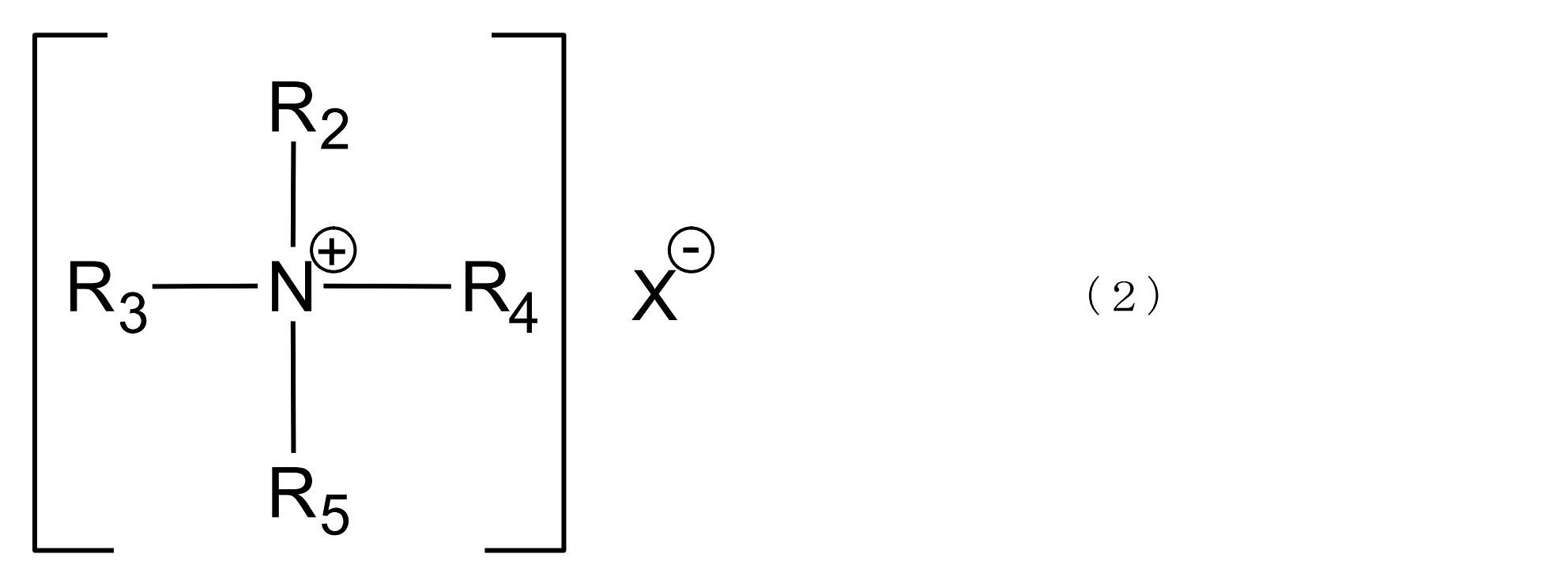
- Ammonium hydroxide [B2] is represented by the following formula.
- R 2 , R 3 , R 4 , and R 5 represent substituted or unsubstituted hydrocarbon groups having 1 to 8 carbon atoms, which are the same or different from each other.
- X represents a hydroxyl group.
- R 2, R 3, R 4 a substituted or unsubstituted hydrocarbon group represented by R 5 is a substituted or unsubstituted, aliphatic or aromatic hydrocarbon group, aliphatic hydrocarbon group is preferred.
- aliphatic hydrocarbon group a linear or branched alkyl group is preferable.
- the hydrocarbon group has 1 to 8 carbon atoms, preferably 1 to 6 and even more preferably 1 to 4. Specifically, the number of carbon atoms is, for example, 1, 2, 3, 4, 5, 6, 7, and 8, and may be within the range between any two of the numerical values exemplified here.
- Examples of the aliphatic hydrocarbon group include saturated hydrocarbon groups such as methyl group, ethyl group, propyl group, isopropyl group, butyl group, isobutyl group, pentyl group, hexyl group, cyclohexyl group, heptyl group and octyl group, and vinyl.
- Examples thereof include an unsaturated hydrocarbon group such as a group, an allyl group, a prenyl group, a crotyl group and a cyclopentadienyl group, and a methyl group, an ethyl group and a butyl group are preferable.
- aromatic hydrocarbon group examples include a phenyl group, a tolyl group, and a benzyl group.
- substituent of the hydrocarbon group examples include a methoxy group, an ethoxy group, a hydroxy group, an acetoxy group and the like.
- Substituted aliphatic or aromatic hydrocarbon groups include alkoxyalkyl groups such as methoxymethyl group, methoxyethyl group, ethoxymethyl group and ethoxyethyl group, hydroxymethyl group, hydroxyethyl group and 3-hydroxypropyl. Examples thereof include a hydroxyalkyl group such as a group and a 2-acetoxyethyl group.
- ammonium hydroxide represented by the chemical formula (2) examples include tetramethylammonium hydroxide, tetraethylammonium hydroxide, tetrapropylammonium hydroxide, trimethylbenzylammonium hydroxide, benzyltriethylammonium hydroxide, and trimethylphenylammonium hydroxide. Do, tris (2-hydroxyethyl) methylammonium hydroxide and the like, and tetramethylammonium hydroxide is particularly preferable.
- reaction product of the metal alkoxide [B1] and the ammonium hydroxide [B2] is, for example, a transparent liquid, and can be obtained by reacting a mixture of both at, for example, 40 to 100 ° C. Specifically, this temperature is, for example, 40, 50, 60, 70, 80, 90, 100 ° C., and may be in the range between any two of the numerical values exemplified here.
- the molar ratio of metal alkoxide [B1] to ammonium hydroxide [B2] in the mixture is, for example, 0.1-100, 0.1, 0.5, 1, 2, 3, 4, 5, 6 , 7, 8, 9, 10, 20, 50, 100, and may be within the range between any two of the numerical values exemplified here.
- the moisture-curable composition of the present invention contains the above-mentioned curing catalyst [B] and polymer [A], and may contain other additives described later, if necessary.
- the moisture-curable composition of the present invention may be prepared by mixing the two under dry conditions, and the mixing form thereof is not particularly limited. Usually, the mixture may be mixed at a temperature of about 15 to 30 ° C. and an atmosphere of 60% RH or less.
- the content of the curing catalyst [B] is 0.1 to 20 parts by weight, and more particularly 0.5 to 10 parts by weight, based on 100 parts by weight of the polymer [A]. 3 to 8 parts by weight is preferable. If the content of the curing catalyst [B] is less than 0.1 parts by weight, the curing performance is insufficient, and if it exceeds 20 parts by weight, the restoration rate of the cured product after curing, physical properties such as weather resistance, and stability during storage. May get worse.
- the content of the curing catalyst [B] is, for example, 0.1, 0.5, 1, 2, 3, 4, 5, 6, 7, with respect to 100 parts by weight of the polymer [A]. It is 8, 9, 10, 11, 12, 13, 14, 15, 16, 17, 18, 19, and 20 parts by mass, and may be within the range between any two of the numerical values exemplified here.
- the filler [C] may be further added to the moisture-curable composition of the present invention.
- the filler include calcium carbonate, kaolin, talc, fumed silica, precipitated silica, silicic anhydride, hydrous silicic acid, clay, calcined clay, glass, bentonite, organic bentonite, silasburn, glass fiber, asbestos, and the like. Examples thereof include glass filament, crushed quartz, diatomaceous earth, aluminum silicate, aluminum hydroxide, zinc oxide, magnesium oxide and titanium dioxide.
- the filler may be used alone or in combination of two or more.
- the addition of the filler improves the handling of the moisture-curable composition. It also acts as a rubber reinforcing agent for the cured product. The biggest merit is that the amount of resin used can be reduced by adding it as a bulking agent, so that the cost can be reduced.
- calcium carbonate and titanium oxide are preferable from the viewpoint of maintaining excellent surface non-tack, 50% modulus, workability, weather resistance, etc. of the curable composition after curing.
- the ratio thereof is preferably 1 to 200 parts by weight, more preferably 50 to 200 parts by weight, based on 100 parts by weight of the polymer [A]. Within the above range, the characteristics after curing are not impaired.
- the moisture-curable composition of the present invention other curing catalysts, curing accelerators, colorants, plasticizers, curing retarders, sagging inhibitors, antiaging agents, solvents and the like are usually added to the curable composition. Additives may be added.
- curing catalysts examples include organic tin compounds such as dibutyltin dilaurate and dibutyltinbis (acetylacetonate), organic aluminum compounds such as aluminumtris (acetylacetonate) and aluminumtris (ethylacetacetate), and zirconiumtetra (acetyl).
- organic tin compounds such as dibutyltin dilaurate and dibutyltinbis (acetylacetonate)
- organic aluminum compounds such as aluminumtris (acetylacetonate) and aluminumtris (ethylacetacetate)
- zirconiumtetra acetyl
- organic zirconium compounds such as zirconite tetrabutyrate
- metal curing catalysts such as 1-amino-2-ethylhexane, 3- (trimethoxysilyl) propylamine, N-2-aminoethyl-3-aminopropyl Trimethoxysilane, N, N, N', N'-tetramethyl-N''-[3- (trimethoxysilyl) propyl] guanidine, 1,5,7-triazabicyclo- [4,4,0]
- Examples thereof include amine compounds such as deca-5-ene and 3-triethoxysilyl-N- (1,3-dimethylbutylidene) propylamine.
- the curing accelerator for example, various known amino group-substituted alkoxysilane compounds or condensates thereof can be used. Specifically, ⁇ -aminopropyltrimethoxysilane, ⁇ -aminopropyltriethoxysilane, N- (trimethoxysilylpropyl) ethylenediamine, ⁇ -aminobutyl (methyl) diethoxysilane, N, N-bis (tri). Examples thereof include methoxysilylpropyl) ethylenediamine and partial hydrolysis of these, which also have the effect of improving the adhesion to the substrate.
- iron oxide, carbon black, phthalocyanine blue, phthalocyanine green, etc. are used as the colorant.
- plasticizer examples include phthalates such as dibutylphthalate, dioctylphthalate, and butylbenzylphthalate; fatty acid carboxylic acid esters such as dioctyl adipate, dioctyl succinate, diisodecyl succinate, and butyl oleate; penta.
- Glycol esters such as erythritol esters; phosphoric acid esters such as trioctyl phosphate and tricresyl phosphate; epoxy plasticizers such as epoxidized soybean oil and benzyl epoxy stearate; chlorinated paraffin and the like are used.
- hydrogenated castor oil silicic anhydride, organic bentonite, colloidal silica, etc. are used as the sagging preventive agent.
- adhesion-imparting agents such as phenol resins and epoxy resins, ultraviolet absorbers, radical chain inhibitors, peroxide decomposition agents, various anti-aging agents, etc. are used.
- the curable composition of the present invention is sufficiently stable at room temperature, so that it has excellent storability, and when it comes into contact with moisture, the curing reaction spontaneously proceeds by the compounded curing catalyst [B].
- the snap time (time until semi-gel and fluidity disappears) and tack free time (time until surface tack disappears) are short, and workability is excellent.
- the curable composition of the present invention can be used as a one-component sealing material. Specifically, it is suitably used for applications such as sealing materials for vehicles such as buildings, ships, and automobiles, adhesives, sealing agents, and sealing materials for waterproofing.
- ⁇ Production Example 1 (Reactive Organism 1)> 85.2 g (0.3 mol) of tetraisopropoxytitanium (manufactured by Tokyo Chemical Industry Co., Ltd.) was placed in a 500 mL 4-necked round bottom flask equipped with a nitrogen introduction tube, and 37% tetrabutylammonium hydroxide (37% tetrabutylammonium hydroxide) was charged with stirring.
- 70 g (0.1 mol) of a methanol solution (“TBAH”) (manufactured by Tokyo Chemical Industry Co., Ltd.) was added dropwise at an internal temperature of 60 ° C. over 30 minutes, and the mixture was stirred as it was for 1 hour.
- TBAH methanol solution
- the chemical shift of 3.37-3.40 in Reaction Product 2 belongs to the ⁇ -hydrogen atom (hydrogen atom of N-CH 2) of the butyl group of TBAH. In the reaction product 2, it was confirmed that the chemical shift of the ⁇ -hydrogen atom was +0.08 ppm as compared with TBAH.
- ⁇ Production Example 8 (Reaction Product 8)> Tetraisopropoxytitanium: 85.2 g (0.3 mol) and 10% lithium methylate (manufactured by Wako Pure Chemical Industries, Ltd.) 38.0 g (0.1 mol) in a 500 mL four-necked round bottom flask equipped with a nitrogen introduction tube. ) was charged, and 70 g (0.1 mol) of a 37% TBAH methanol solution was added dropwise at an internal temperature of 60 ° C. over 30 minutes, and the mixture was stirred as it was for 1 hour.
- Reaction Product 8 Tetraisopropoxytitanium: 85.2 g (0.3 mol) and 10% lithium methylate (manufactured by Wako Pure Chemical Industries, Ltd.) 38.0 g (0.1 mol) in a 500 mL four-necked round bottom flask equipped with a nitrogen introduction tube. ) was charged, and 70 g (0.1 mol) of a 37% TBAH m
- tack-free time (the time required from the end of kneading until the sample did not adhere to the fingertips by lightly touching three points on the surface with a fingertip cleaned with ethyl alcohol) was measured for the obtained moisture-curable composition. ..
- the results of the tack free time measurement are shown in Tables 1 to 3.
- the metal alkoxide [B1] and the ammonium hydroxide [B2] are more concentrated than when the metal alkoxide [B1] and the ammonium hydroxide [B2] are used alone. Significant improvement in activity is observed when the reaction product is used.
- the activity is low in the combination of the metal alkoxide other than the metal alkoxide [B1] and the ammonium hydroxide [B2]. Further, as shown in Comparative Example 5, the combination of the metal alkoxide [B1] and the quaternary ammonium salt other than the ammonium hydroxide [B2] also has low activity.
- MS Polymer SAX520 Cyril Group-Containing Organic Polymer (manufactured by Kaneka Corporation)
- MS Polymer S303 Cyril group-containing organic polymer (manufactured by Kaneka Corporation)
- Tetraisopropoxytitanium manufactured by Tokyo Chemical Industry Co., Ltd.
- Diacetylacetonatotitanium diisopropoxide manufactured in Production Example 11
- Tetrabutylammonium hydroxide 37% tetrabutylammonium hydroxide, manufactured by Tokyo Chemical Industry Co., Ltd.
- Acetic acid Titanium triisopropoxide manufactured in Comparative Production Example 1
- Tetrabutylammonium octylate manufactured in Comparative Production Example 2
- Carlex 300 Calcium carbonate (manufactured by Maruo Calcium Co., Ltd.)
- FR-41 Titanium oxide (manufactured by Furukawa Chemicals Co., Ltd.)
- DINP Plasticizer (J-PLUS Co., Ltd.)
- Disparon 6500 Anti-sauce agent (manufactured by Kusumoto Chemical Co., Ltd.)
- Songsorb 3260P UV absorber (manufactured by SONGWON)
- Sabostab UV-70 Light stabilizer (manufactured by SONGWON)
- Irganox245 Antioxidant (manufactured by BASF Japan Co., Ltd.)
- KBE-1003 Dehydrating agent (manufactured by Shin-Etsu Silicone Industry Co., Ltd.)
- KBM-603 Adhesive-imparting agent (manufactured by Shin-Etsu Silicone Industry Co., Ltd.)
Landscapes
- Chemical & Material Sciences (AREA)
- Organic Chemistry (AREA)
- Chemical Kinetics & Catalysis (AREA)
- Health & Medical Sciences (AREA)
- Medicinal Chemistry (AREA)
- Polymers & Plastics (AREA)
- Engineering & Computer Science (AREA)
- Materials Engineering (AREA)
- Compositions Of Macromolecular Compounds (AREA)
Abstract
Description
シリコーン系ゴムの1液型の湿気硬化型ゴム組成物として、オルガノポリシロキサン組成物が広範囲に使用されており、室温で硬化してゴム弾性体を生成する。オルガノシロキサンが架橋重合した-Si-O-結合を主鎖とするシロキサンの高分子化合物は、撥水性、耐熱性、耐候性、耐寒性、電気絶縁性等の性質に優れていることから建築、土木工業、電気、電子工業、自動車工業等の分野で広く使用されている。
特許文献5では、第4級アンモニウム塩を触媒として使用することが提案されているが、施工時に充分な硬化速度が得られないという問題点がある。
重合体[A]は、反応性加水分解性ケイ素含有基を、分子末端または側鎖に1分子当たり少なくとも1個有する。反応性加水分解性ケイ素含有基は、重合体[A]分子の末端に存在していても、側鎖に存在していてもよく、さらに末端と側鎖の両方に存在していてもよい。反応性加水分解性ケイ素含有基は、重合体[A]の1分子当たり少なくとも1個あればよいが、硬化速度、硬化物性の点からは、1分子当たり平均して1.5個以上あるのが好ましい。反応性加水分解性ケイ素含有基を前記主鎖重合体に結合させる方法としては公知の方法が採用できる。
反応性加水分解性ケイ素含有基がジアルコキシシリル基である重合体[A]と、トリアルコキシシリル基である重合体[A]を併用すると、硬化物の物性と硬化性とのバランスが取れ好ましい。
本発明に用いる有機重合体[A1]の主鎖としては炭素原子を有するもの、例えば、アルキレンオキシド重合体、ポリエステル重合体、エーテル・エステルブロック共重合体、エチレン性不飽和化合物の重合体、ジエン系化合物の重合体などが挙げられる。
〔CH2CH2O〕n
〔CH(CH3)CH2O〕n
〔CH(C2H5)CH2O〕n
〔CH2CH2CH2CH2O〕n
などの繰り返し単位の1種または2種以上を有するものが例示される。ここで、nは同一又は異なって2以上の整数である。これらアルキレンオキシド重合体は単独で用いてもよく、2種以上を併用してもよい。また、上記の繰り返し単位を2種以上含む共重合体も使用できる。
本発明に用いるオルガノポリシロキサン[A2]は、主鎖がSi-Oで表されるシロキサン結合で構成されたものであり、さらにシロキサン結合を構成するケイ素原子に有機基が結合している。このような有機基としては、具体的にはメチル、エチル、プロピル、ブチル等のアルキル基;シクロヘキシル等のシクロアルキル基;ビニル、イソプロペニル、置換ビニル等のアルケニル基;アリル基、クロチル、メタリル等の置換アリル基;フェニル、トルイル、キシリル等のアリール基;ベンジル、フェニルエチル等のアラルキル基;及びこれら有機基の水素原子の全部もしくは一部がハロゲン原子で置換された基、例えばクロロメチル基、3,3,3-トリフルオロプロピル基などが挙げられる。
(-Si(R)2-O-)m
(式中、Rは同一又は異なって有機基、mは2以上の整数を示す。)
で表される繰り返し単位を有するものが例示される。具体例としては、
(-Si(CH3)2-O-)m
(-Si(C2H5)2-O-)m
(-Si(Ph)2-O-)m
(-Si(-CH=CH2)2-O-)m
などの繰り返し単位の1種または2種以上を有するものが例示される。ここでmは同一又は異なって2以上の整数である。オルガノポリシロキサン[A2]は単独の主鎖から構成されていてもよく、あるいは2種以上の主鎖から構成されていてもよい。
なお、オルガノポリシロキサンは一般的に平均組成式としてRaSiO4-a/2で示される(例えば、特開2005-194399号や特開平8-151521号公報等)。上記の表記はこれに従った。
硬化触媒[B]は、金属アルコキシド[B1]とアンモニウムヒドロキシド[B2]の反応生成物を含有する。
金属アルコキシド[B1]は、チタン化合物[B1a]とその他金属アルコキシド[B1b]の一方又は両方を含む。
(R1-O)nTi-A4-n (1)
(式中R1、炭素原子数1~10の置換又は非置換の炭化水素基、nは1~4であり、Aはβジケトン基である)
触媒活性、化合物の安定性、取扱い性の点から、テトライソプロポキシチタンが更に好ましい。
上記のチタン化合物[B1a]は、単独で使用してもよいし、2種以上を併用してもよい。
R6-O-* (3)
アンモニウムヒドロキシド[B2]は、下記式で表される。
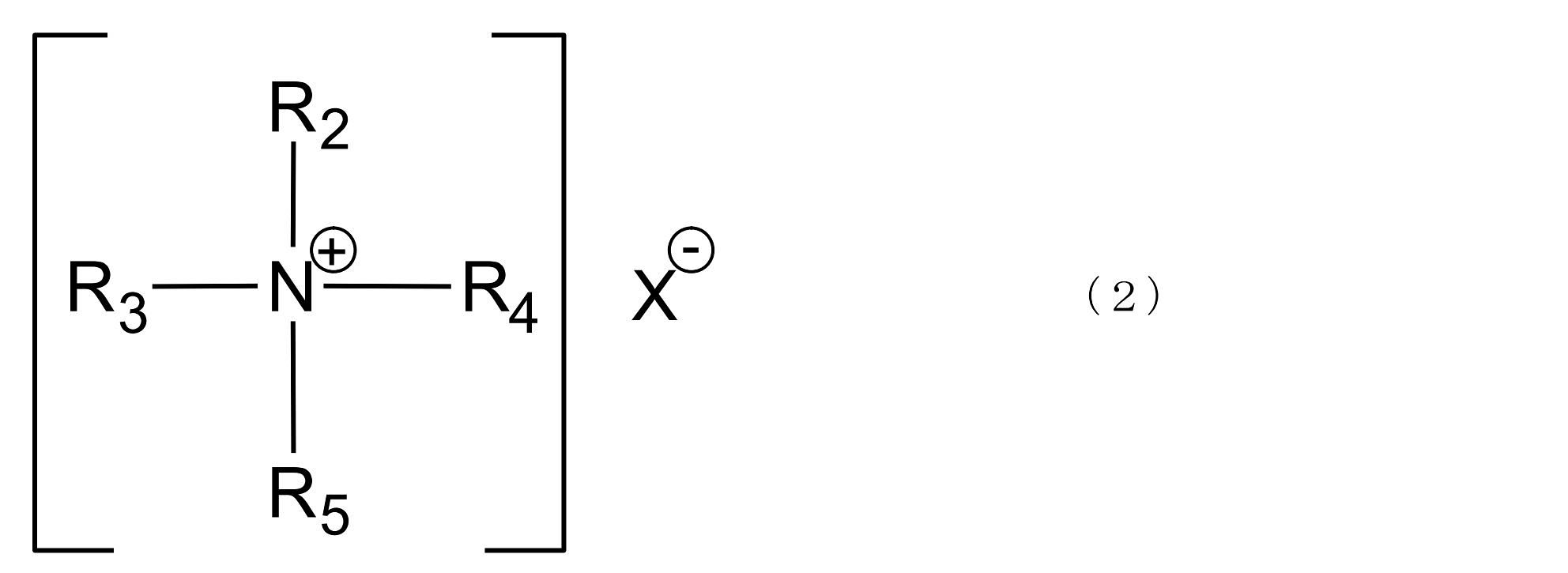
金属アルコキシド[B1]とアンモニウムヒドロキシド[B2]の反応生成物は、例えば透明液体であり、両者の混合物を例えば40~100℃で反応させることによって得ることができる。この温度は、具体的には例えば、40、50、60、70、80、90、100℃であり、ここで例示した数値の何れか2つの間の範囲内であってもよい。混合物中での、アンモニウムヒドロキシド[B2]に対する金属アルコキシド[B1]のモル比は、例えば0.1~100であり、0.1、0.5、1、2、3、4、5、6、7、8、9、10、20、50、100であり、ここで例示した数値の何れか2つの間の範囲内であってもよい。
本発明の湿気硬化型組成物は、上記の硬化触媒[B]と重合体[A]を含み、必要に応じ後述する他の添加剤を含めても良い。本発明の湿気硬化型組成物の調製は、乾燥条件下で両者を混合すればよく、その混合形態は特に限定はない。通常、温度15~30℃程度、60%RH以下の雰囲気下で混合すればよい。
窒素導入管を取り付けた500mL4つ口丸底フラスコに、テトライソプロポキシチタン(東京化成工業(株)製)85.2g(0.3mol)を仕込み、攪拌しながら、37%テトラブチルアンモニウムヒドロキシド(以下、「TBAH」)メタノール溶液(東京化成工業(株)製)70g(0.1mol)を内温60℃で30分かけて滴下し、そのまま1時間攪拌した。その後、減圧濃縮(最終減圧度10mmHg)してイソプロパノールおよびメタノールを留出させて反応生成物1:80gを得さらにイソプロパノールを25 g添加し透明液体を105g得た。
1H NMR (600 MHz CDCl3): δ=3.29-3.33 (m, 8H), δ=1.65-1.70 (m, 8H), δ=1.43-1.49 (m, 8H), δ=1.02 (t, 7.2Hz, 12H), δ=0 (TMS)
1H NMR (600 MHz CDCl3): δ=3.37-3.40 (m, 8H), δ=1.66-1.72 (m, 8H), δ=1.45-1.49 (m, 8H), δ=1.02 (t, 7.2Hz, 12H), δ=0 (TMS)
テトライソプロポキシチタンの代わりに、テトラメトキシチタン(東京化成工業(株)製)を用いた以外は、製造例1と同様の操作を行って、反応生成物2を得た。
1H NMR (600 MHz CDCl3): δ=3.37-3.40(m, 8H), δ=1.66-1.72 (m, 8H), δ=1.45-1.49 (m, 8H), δ=1.02 (t, 7.2Hz, 12H), δ=0 (TMS)
窒素導入管を取り付けた500mL4つ口丸底フラスコに、テトライソプロポキシチタン:85.2g(0.3mol)およびアルミニウムトリイソプロポキシド(東京化成工業(株)製)20.4g(0.1mol)を仕込み、攪拌しながら、37%TBAHメタノール溶液70g(0.1mol)を内温60℃で30分かけて滴下し、そのまま1時間攪拌した。その後、減圧濃縮(最終減圧度10mmHg)してイソプロパノールおよびメタノールを留出させて反応生成物3:92gを得、さらにイソプロパノールを25g添加し透明液体を117g得た。
1H NMR (600 MHz CDCl3): δ=3.36-3.40(m, 8H), δ=1.66-1.72 (m, 8H), δ=1.45-1.49 (m, 8H), δ=1.02 (t, 7.2Hz, 12H), δ=0 (TMS)
窒素導入管を取り付けた500mL4つ口丸底フラスコに、テトライソプロポキシチタン:85.2g(0.3mol)およびジルコニウムテトライソプロポキシド(東京化成工業(株)製)32.7g(0.1mol)を仕込み、攪拌しながら、37%TBAHメタノール溶液70g(0.1mol)を内温60℃で30分かけて滴下し、そのまま1時間攪拌した。その後、減圧濃縮(最終減圧度10mmHg)してイソプロパノールおよびメタノールを留出させて反応生成物4:101gを得、さらにイソプロパノールを25 g添加し透明液体を126g得た。
1H NMR (600 MHz CDCl3): δ=3.36-3.40(m, 8H), δ=1.66-1.72 (m, 8H), δ=1.45-1.49 (m, 8H), δ=1.02 (t, 7.2Hz, 12H), δ=0 (TMS)
窒素導入管を取り付けた500mL4つ口丸底フラスコに、テトライソプロポキシチタン:85.2g(0.3mol)およびジンクジイソプロポキシド(和光純薬工業(株)製)18.3g(0.1mol)を仕込み、攪拌しながら、37%TBAHメタノール溶液70g(0.1mol)を内温60℃で30分かけて滴下し、そのまま1時間攪拌した。その後、減圧濃縮(最終減圧度10mmHg)してイソプロパノールおよびメタノールを留出させて反応生成物5:92gを得、さらにイソプロパノールを25 g添加し透明液体を117g得た。
1H NMR (600 MHz CDCl3): δ=3.36-3.40(m, 8H), δ=1.66-1.72 (m, 8H), δ=1.45-1.49 (m, 8H), δ=1.02 (t, 7.2Hz, 12H), δ=0 (TMS)
窒素導入管を取り付けた500mL4つ口丸底フラスコに、テトライソプロポキシチタン:85.2g(0.3mol)および28%ソジウムメチラート(和光純薬工業(株)製)19.3g(0.1mol)を仕込み、攪拌しながら、37%TBAHメタノール溶液70g(0.1mol)を内温60℃で30分かけて滴下し、そのまま1時間攪拌した。その後、減圧濃縮(最終減圧度10mmHg)してイソプロパノールおよびメタノールを留出させて反応生成物6:85.4gを得、さらにイソプロパノールを25 g添加し透明液体を110g得た。
1H NMR (600 MHz CDCl3): δ=3.37-3.40(m, 8H), δ=1.66-1.72 (m, 8H), δ=1.45-1.49 (m, 8H), δ=1.02 (t, 7.2Hz, 12H), δ=0 (TMS)
窒素導入管を取り付けた500mL4つ口丸底フラスコに、テトライソプロポキシチタン:85.2g(0.3mol)および30%カリウムメチラート(和光純薬工業(株)製)23.3g(0.1mol)を仕込み、攪拌しながら、37%TBAHメタノール溶液70g(0.1mol)を内温60℃で30分かけて滴下し、そのまま1時間攪拌した。その後、減圧濃縮(最終減圧度10mmHg)してイソプロパノールおよびメタノールを留出させて反応生成物7:87gを得、さらにイソプロパノールを25 g添加し透明液体を112g得た。
1H NMR (600 MHz CDCl3): δ=3.37-3.40(m, 8H), δ=1.66-1.72 (m, 8H), δ=1.45-1.49 (m, 8H), δ=1.02 (t, 7.2Hz, 12H), δ=0 (TMS)
窒素導入管を取り付けた500mL4つ口丸底フラスコに、テトライソプロポキシチタン:85.2g(0.3mol)および10%リチウムメチラート(和光純薬工業(株)製)38.0g(0.1mol)を仕込み、攪拌しながら、37%TBAHメタノール溶液70g(0.1mol)を内温60℃で30分かけて滴下し、そのまま1時間攪拌した。その後、減圧濃縮(最終減圧度10mmHg)してイソプロパノールおよびメタノールを留出させて反応生成物8:83.8gを得、さらにイソプロパノールを25 g添加し透明液体を109g得た。
1H NMR (600 MHz CDCl3): δ=3.37-3.40(m, 8H), δ=1.66-1.72 (m, 8H), δ=1.45-1.49 (m, 8H), δ=1.02 (t, 7.2Hz, 12H), δ=0 (TMS)
窒素導入管を取り付けた500mL4つ口丸底フラスコに、テトライソプロポキシチタン:85.2g(0.3mol)およびマグネシウムエトキシド(東京化成工業(株)製)11.4g(0.1mol)を仕込み、攪拌しながら、37%TBAHメタノール溶液70g(0.1mol)を内温60℃で30分かけて滴下し、そのまま1時間攪拌した。その後、減圧濃縮(最終減圧度10mmHg)してイソプロパノールおよびメタノールを留出させて反応生成物9:91.4gを得、さらにイソプロパノールを25 g添加し透明液体を113g得た。
1H NMR (600 MHz CDCl3): δ=3.36-3.40(m, 8H), δ=1.66-1.72 (m, 8H), δ=1.45-1.49 (m, 8H), δ=1.02 (t, 7.2Hz, 12H), δ=0 (TMS)
窒素導入管を取り付けた500mL4つ口丸底フラスコに、テトライソプロポキシチタン:85.2g(0.3mol)およびホウ酸トリエチル(東京化成工業(株)製)14.6g(0.1mol)を仕込み、攪拌しながら、37%TBAHメタノール溶液70g(0.1mol)を内温60℃で30分かけて滴下し、そのまま1時間攪拌した。その後、減圧濃縮(最終減圧度10mmHg)してイソプロパノールおよびメタノールを留出させて反応生成物10:94.6gを得、さらにイソプロパノールを25 g添加し透明液体を115g得た。
1H NMR (600 MHz CDCl3): δ=3.36-3.40(m, 8H), δ=1.66-1.72 (m, 8H), δ=1.45-1.49 (m, 8H), δ=1.02 (t, 7.2Hz, 12H), δ=0 (TMS)
窒素導入管を取り付けた500mL4つ口丸底フラスコに、テトライソプロポキシチタン:71.1g(0.25mol)を仕込み、攪拌しながら、2,4-ペンタンジオン:50.0g(0.50mol)を内温20~50℃の範囲で30分間かけて滴下し、油浴で加熱し内温87~90℃を保ち、そのまま1時間攪拌した。その後、減圧濃縮(最終減圧度14mmHg)してイソプロパノールを留出させて留出物:30g、500mL丸底フラスコ内に赤色濃縮液チタン錯体91gを得た。
窒素導入管を取り付けた1000ml四つ口ナス型フラスコに、テトライソプロポキシチタン200.00g(0.70368mol)、酢酸42.2g(0.703681mol)を量り込み、攪拌機にて充分に混合した。内温110℃付近になるまで撹拌を続けたのち、減圧することでイソプロピルアルコールを留去し、黄色液体の酢酸チタントリイソプロポキシドを196g(98%)で得た。
窒素導入管を取り付けた100ml四つ口ナス型フラスコに、37%テトラブチルアンモニウムヒドロキシドメタノール溶液70g(0.1mol)、オクチル酸14.2g(0.1mol)を量り込み、攪拌機にて充分に混合した。減圧濃縮でメタノールを留去したさせて、無色液体のテトラブチルアンモニウム・オクチル酸塩を80g得た。
上記製造例で得た各成分及び市販の成分を用い、表1~表3に示す配合割合(質量部)で配合し、混練して湿気硬化型組成物を調製した。なお、材料の配合、混練、硬化までの操作は25±1℃、50~60%RHの雰囲気下で行った。
得られた湿気硬化型組成物について、タックフリータイム(エチルアルコールで清浄した指先で、表面の3箇所に軽く触れ、混練終了時から試料が指先に付着しなくなるまでに要した時間)を測定した。タックフリータイムの測定の結果を表1~表3に示す。

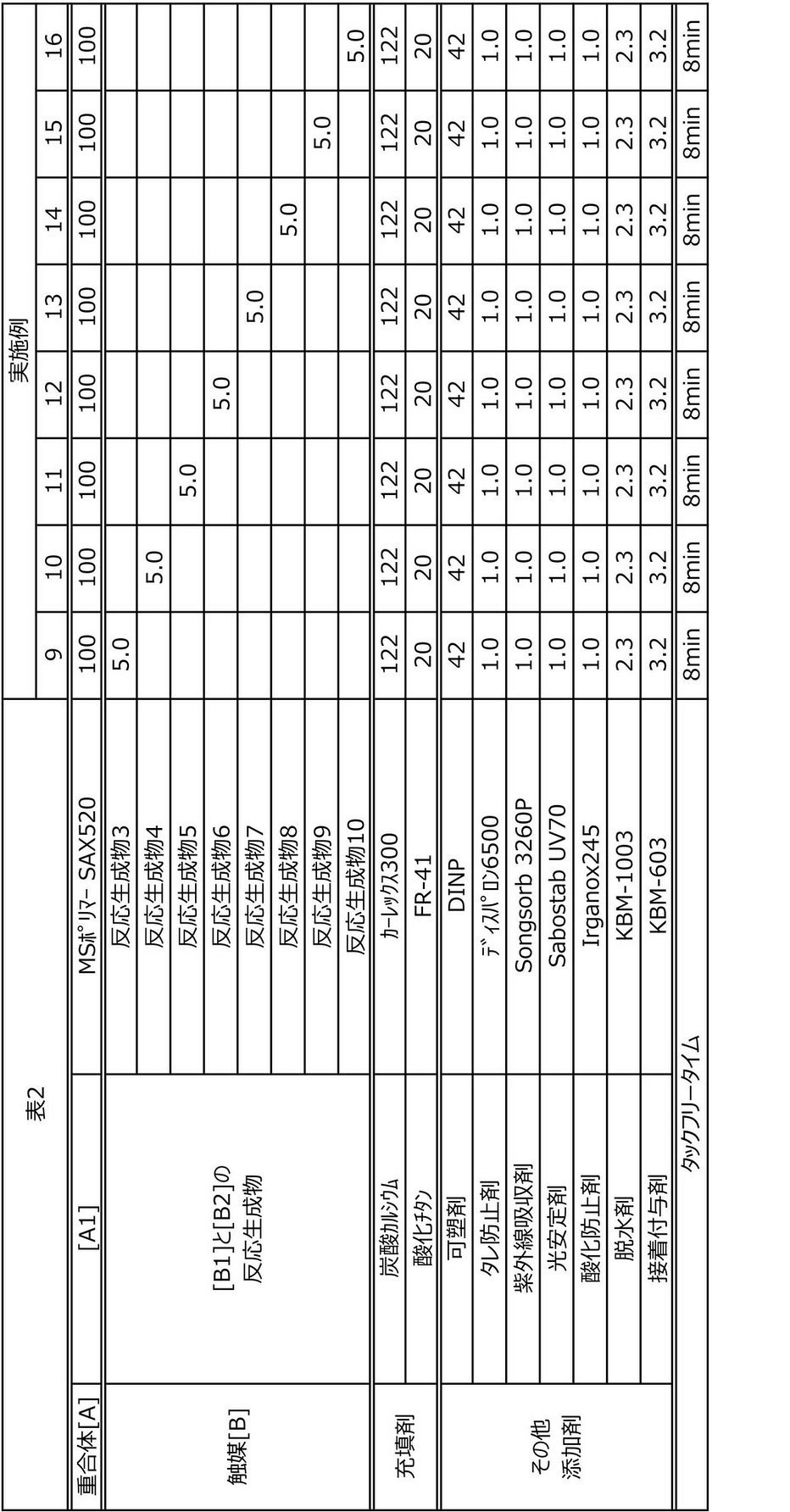
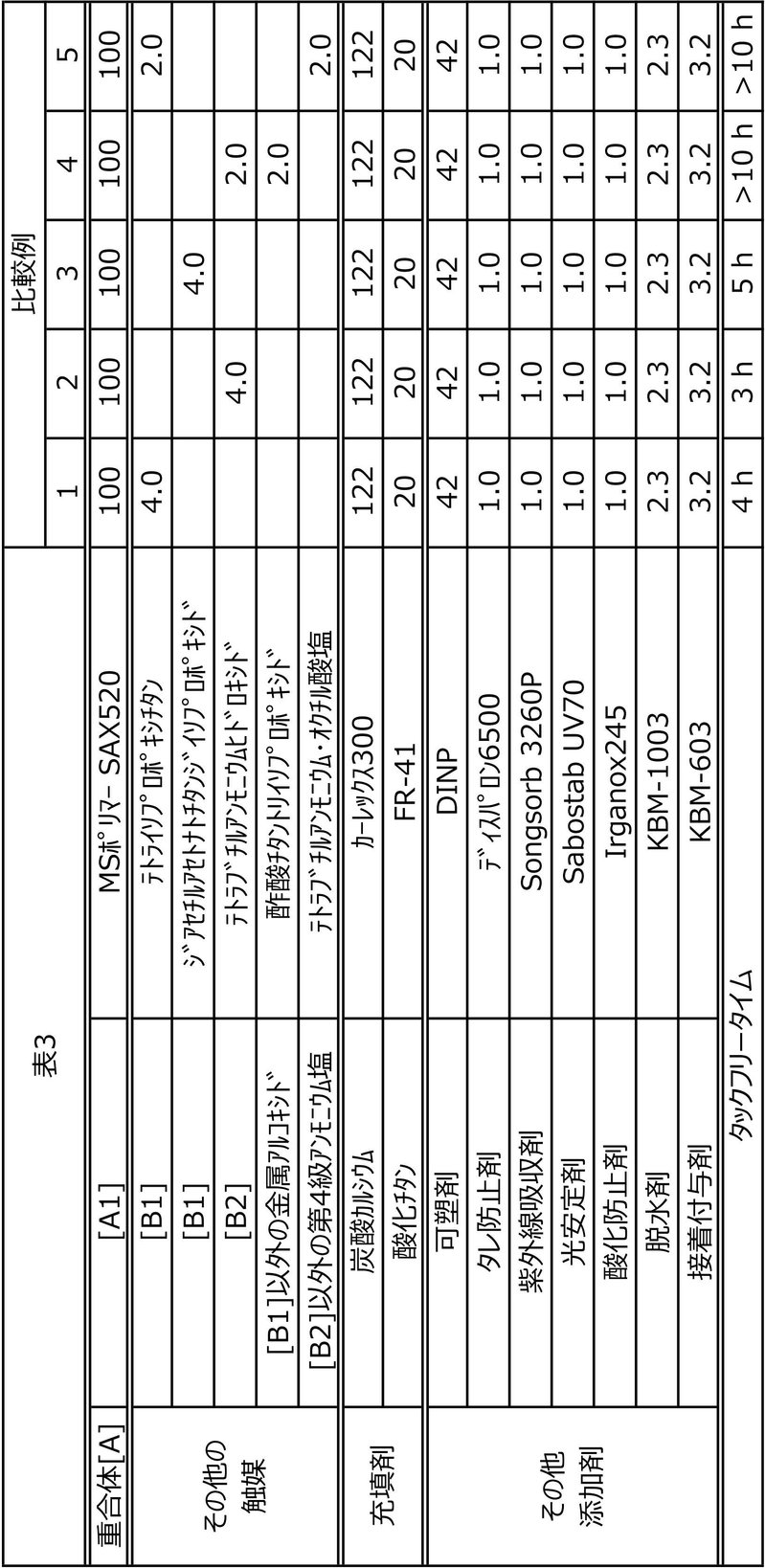
MSポリマー SAX520:シリル基含有有機重合体((株)カネカ製)
MSポリマー S303:シリル基含有有機重合体((株)カネカ製)
反応生成物1~10:製造例1~10で製造したもの
テトライソプロポキシチタン:東京化成工業(株)製 ジアセチルアセトナトチタンジイソプロポキシド:製造例11で製造したもの
テトラブチルアンモニウムヒドロキシド:37%テトラブチルアンモニウムヒドロキシド、東京化成工業(株)製
酢酸チタントリイソプロポキシド:比較製造例1で製造したもの
テトラブチルアンモニウム・オクチル酸塩:比較製造例2で製造したもの
カーレックス300:炭酸カルシウム(丸尾カルシウム(株)製)
FR-41:酸化チタン(古河ケミカルズ(株)製)
DINP:可塑剤(ジェイプラス(株))
ディスパロン6500:タレ止め剤(楠本化学(株)製)
Songsorb 3260P:紫外線吸収剤(SONGWON製)
Sabostab UV-70:光安定化剤(SONGWON製)
Irganox245:酸化防止剤(BASFジャパン(株)製)
KBE-1003:脱水剤(信越シリコーン工業(株)製)
KBM-603:接着付与剤(信越シリコーン工業(株)製)
Claims (10)
- 反応性加水分解性ケイ素含有基を有する重合体[A]の硬化に用いる硬化触媒[B]であって、
前記硬化触媒[B]は、金属アルコキシド[B1]とアンモニウムヒドロキシド[B2]の反応生成物を含有し、
前記金属アルコキシド[B1]は、化学式(1)で表されるチタン化合物[B1a]とその他金属アルコキシド[B1b]の一方又は両方を含み、
前記その他金属アルコキシド[B1b]は、チタン以外の金属のアルコキシドであり、
前記アンモニウムヒドロキシド[B2]は、化学式(2)で表される、硬化触媒[B]。
(R1-O)nTi-A4-n (1)
(式中R1は炭素原子数1~10の置換又は非置換の炭化水素基であり、nは1~4の整数であり、Aはβジケトン基である)
- 請求項1に記載の硬化触媒[B]であって、
前記反応生成物は、前記金属アルコキシド[B1]と前記アンモニウムヒドロキシド[B2]の混合物を40~100℃で反応させて得られる反応生成物である、硬化触媒[B]。 - 請求項2に記載の硬化触媒[B]であって、
前記混合物中での、前記アンモニウムヒドロキシド[B2]に対する前記金属アルコキシド[B1]のモル比は、0.1~100である、硬化触媒[B]。 - 請求項1~請求項3の何れか1つに記載の硬化触媒[B]であって、
前記金属アルコキシド[B1]は、前記チタン化合物[B1a]を含む、硬化触媒[B]。 - 請求項1~請求項4の何れか1つに記載の硬化触媒[B]であって、
前記金属アルコキシド[B1]は、前記チタン化合物[B1a]と前記その他金属アルコキシド[B1b]を含む、硬化触媒[B]。 - 請求項1~請求項5の何れか1つに記載の硬化触媒[B]であって、
前記その他金属アルコキシド[B1b]は、アルミニウム、ジルコニウム、亜鉛、ナトリウム、カリウム、リチウム、マグネシウム、ホウ素から選択される金属のアルコキシドである、硬化触媒[B]。 - 請求項1~請求項6の何れか1つに記載の硬化触媒[B]であって、
前記硬化触媒[B]は、透明液体である、硬化触媒[B]。 - 請求項1~請求項7の何れか1つに記載の硬化触媒[B]と、前記重合体[A]を含む湿気硬化型組成物。
- 請求項8に記載の湿気硬化型組成物を湿気と接触させる工程を備える、硬化物の製造方法。
- 反応性加水分解性ケイ素含有基を有する重合体[A]の硬化に用いる硬化触媒[B]の製造方法であって、
金属アルコキシド[B1]とアンモニウムヒドロキシド[B2]を反応させることによって、その反応性生物として前記硬化触媒[B]を得る工程を備え、
前記金属アルコキシド[B1]は、化学式(1)で表されるチタン化合物[B1a]とその他金属アルコキシド[B1b]の一方又は両方を含み、
前記その他金属アルコキシド[B1b]は、チタン以外の金属のアルコキシドであり、
前記アンモニウムヒドロキシド[B2]は、化学式(2)で表される、硬化触媒[B]の製造方法。
(R1-O)nTi-A4-n (1)
(式中R1は炭素原子数1~10の置換又は非置換の炭化水素基であり、nは1~4の整数であり、Aはβジケトン基である)
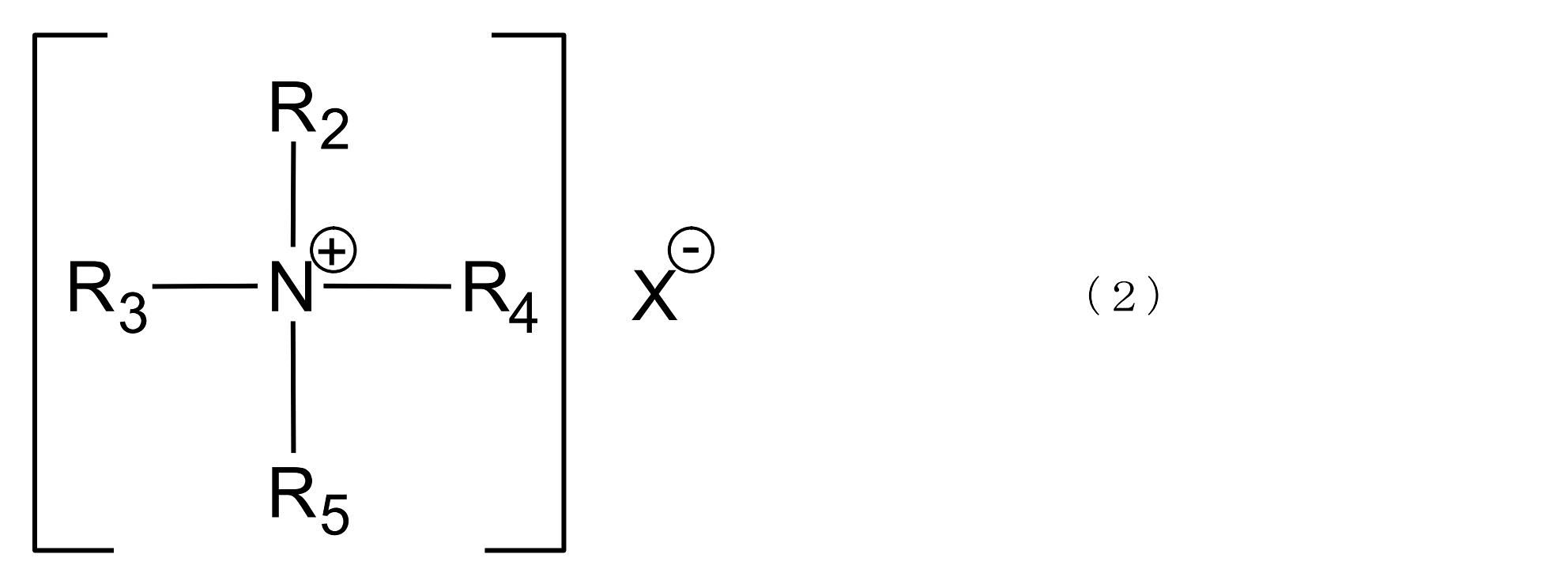
Priority Applications (5)
| Application Number | Priority Date | Filing Date | Title |
|---|---|---|---|
| EP20892466.2A EP4067338B1 (en) | 2019-11-29 | 2020-11-25 | Curing catalyst used for curing of polymer, production method for said curing catalyst, moisture-curable composition, and production method for cured article |
| ES20892466T ES3010480T3 (en) | 2019-11-29 | 2020-11-25 | Curing catalyst used for curing of polymer, production method for said curing catalyst, moisture-curable composition, and production method for cured article |
| JP2021531415A JP7048138B2 (ja) | 2019-11-29 | 2020-11-25 | 湿気硬化型組成物、硬化物の製造方法 |
| US17/776,559 US12285742B2 (en) | 2019-11-29 | 2020-11-25 | Curing catalyst used for curing of polymer, production method for said curing catalyst, moisture-curable composition, and production method for cured article |
| CN202080080623.8A CN114729155B (zh) | 2019-11-29 | 2020-11-25 | 湿气固化型组合物、固化物的制造方法 |
Applications Claiming Priority (2)
| Application Number | Priority Date | Filing Date | Title |
|---|---|---|---|
| JP2019216652 | 2019-11-29 | ||
| JP2019-216652 | 2019-11-29 |
Publications (1)
| Publication Number | Publication Date |
|---|---|
| WO2021106943A1 true WO2021106943A1 (ja) | 2021-06-03 |
Family
ID=76129419
Family Applications (1)
| Application Number | Title | Priority Date | Filing Date |
|---|---|---|---|
| PCT/JP2020/043855 Ceased WO2021106943A1 (ja) | 2019-11-29 | 2020-11-25 | 重合体の硬化に用いる硬化触媒及びその製造方法、湿気硬化型組成物、硬化物の製造方法 |
Country Status (6)
| Country | Link |
|---|---|
| US (1) | US12285742B2 (ja) |
| EP (1) | EP4067338B1 (ja) |
| JP (1) | JP7048138B2 (ja) |
| CN (1) | CN114729155B (ja) |
| ES (1) | ES3010480T3 (ja) |
| WO (1) | WO2021106943A1 (ja) |
Cited By (9)
| Publication number | Priority date | Publication date | Assignee | Title |
|---|---|---|---|---|
| WO2022004513A1 (ja) * | 2020-06-29 | 2022-01-06 | 日東化成株式会社 | 重合体の硬化に用いる硬化触媒及びその製造方法、湿気硬化型組成物、硬化物の製造方法 |
| JPWO2022004509A1 (ja) * | 2020-06-29 | 2022-01-06 | ||
| WO2022004512A1 (ja) * | 2020-06-29 | 2022-01-06 | 日東化成株式会社 | 重合体の硬化に用いる硬化触媒及びその製造方法、湿気硬化型組成物、硬化物の製造方法 |
| WO2022004511A1 (ja) * | 2020-06-29 | 2022-01-06 | 日東化成株式会社 | 重合体の硬化に用いる硬化触媒及びその製造方法、湿気硬化型組成物、硬化物の製造方法 |
| WO2023054700A1 (ja) * | 2021-10-01 | 2023-04-06 | 株式会社カネカ | 硬化性組成物 |
| WO2023054701A1 (ja) * | 2021-10-01 | 2023-04-06 | 株式会社カネカ | 硬化性組成物 |
| EP4174052A4 (en) * | 2020-06-29 | 2023-11-29 | Nitto Kasei Co., Ltd. | CURING CATALYST FOR CURING A POLYMER, PRODUCTION PROCESS FOR SAID CURING CATALYST, MOISTURE CURING COMPOSITION AND PRODUCTION PROCESS FOR HARDENED PRODUCT |
| WO2024029615A1 (ja) * | 2022-08-04 | 2024-02-08 | 株式会社カネカ | 硬化性組成物 |
| WO2024190202A1 (ja) | 2023-03-13 | 2024-09-19 | 株式会社カネカ | 硬化性組成物 |
Citations (7)
| Publication number | Priority date | Publication date | Assignee | Title |
|---|---|---|---|---|
| JP2002249672A (ja) * | 2001-02-23 | 2002-09-06 | Nitto Kasei Co Ltd | 湿気硬化型組成物 |
| JP2003064305A (ja) * | 2001-08-27 | 2003-03-05 | Jsr Corp | 膜形成用組成物の製造方法、膜形成用組成物、膜の形成方法およびシリカ系膜 |
| JP2005320412A (ja) * | 2004-05-07 | 2005-11-17 | Jsr Corp | 膜形成用組成物、絶縁膜の形成方法、絶縁膜、および半導体装置 |
| US20060199886A1 (en) * | 2005-03-02 | 2006-09-07 | Aps Laboratory | Metal phosphate sols, metal nanoparticles, metal-chalcogenide nanoparticles, and nanocomposites made therefrom |
| WO2009093348A1 (ja) * | 2008-01-25 | 2009-07-30 | Nitto Kasei Co., Ltd. | 防汚塗料組成物、該組成物を用いて形成される防汚塗膜、該塗膜を表面に有する塗装物、該塗膜を形成する防汚処理方法、および防汚塗膜形成用キット |
| JP2014114434A (ja) * | 2012-11-14 | 2014-06-26 | Kaneka Corp | 硬化性組成物 |
| CN109608639A (zh) * | 2018-11-30 | 2019-04-12 | 万华化学集团股份有限公司 | 一种有机聚硅氧烷催化剂及其制备方法和应用 |
Family Cites Families (18)
| Publication number | Priority date | Publication date | Assignee | Title |
|---|---|---|---|---|
| US4438039A (en) | 1980-07-02 | 1984-03-20 | General Electric Company | Titanium chelate catalyst for silicone compositions |
| GB8401016D0 (en) | 1984-01-14 | 1984-02-15 | Hagen Perennatorwerk | Organopolysiloxane compositions |
| JP3368057B2 (ja) | 1994-08-01 | 2003-01-20 | 鐘淵化学工業株式会社 | 硬化性組成物 |
| JP3793074B2 (ja) * | 2001-11-15 | 2006-07-05 | 日東化成株式会社 | 湿気硬化型組成物 |
| JP3862267B2 (ja) | 2002-03-29 | 2006-12-27 | 株式会社飾一 | 耐熱性繊維とシロキサンポリマーとからなる複合体 |
| TW200400299A (en) | 2002-03-29 | 2004-01-01 | Du Pont Toray Co Ltd | Compound material composed of heat-resistant fiber and siloxane polymer |
| WO2004050734A1 (en) * | 2002-12-04 | 2004-06-17 | Johnson Matthey Plc | Organometallic catalyst composition and process for polyurethane manufacture using said catalyst |
| JP2005314616A (ja) * | 2004-04-30 | 2005-11-10 | Shin Etsu Chem Co Ltd | シリコーンコーティング組成物及び被覆物品 |
| EP2055741B1 (en) | 2006-08-22 | 2011-09-07 | Asahi Glass Company, Limited | Curable composition |
| CN102766333B (zh) * | 2012-07-17 | 2014-01-22 | 苏州多彩铝业有限责任公司 | 铝卷涂布用硅树脂复合物及其制备和在铝卷上的涂布方法 |
| JP5859466B2 (ja) | 2013-01-08 | 2016-02-10 | 信越化学工業株式会社 | チタン含有レジスト下層膜形成用組成物及びパターン形成方法 |
| DE102013216781A1 (de) | 2013-08-23 | 2015-02-26 | Evonik Industries Ag | Beschichtungsmassen |
| WO2015151788A1 (ja) * | 2014-04-01 | 2015-10-08 | 日東化成株式会社 | 有機重合体又はオルガノポリシロキサン用硬化触媒、湿気硬化型組成物、硬化物及びその製造方法 |
| US10545406B2 (en) | 2015-09-28 | 2020-01-28 | Toray Industries, Inc. | Cured film formed by curing photosensitive resin composition and method for manufacturing same |
| WO2022004513A1 (ja) * | 2020-06-29 | 2022-01-06 | 日東化成株式会社 | 重合体の硬化に用いる硬化触媒及びその製造方法、湿気硬化型組成物、硬化物の製造方法 |
| JP7698322B2 (ja) | 2020-06-29 | 2025-06-25 | 日東化成株式会社 | チタン化合物とアンモニウムヒドロキシドとの複合体の製造方法、組成物の製造方法、エステル化合物の製造方法、及びアンモニウムヒドロキシドの製造方法 |
| CN115461414B (zh) | 2020-06-29 | 2024-06-25 | 日东化成株式会社 | 用于聚合物固化的固化催化剂及其制造方法、湿气固化型组合物、固化物的制造方法 |
| JP2023123884A (ja) | 2020-07-13 | 2023-09-06 | 日東化成株式会社 | 湿気硬化型組成物 |
-
2020
- 2020-11-25 CN CN202080080623.8A patent/CN114729155B/zh active Active
- 2020-11-25 JP JP2021531415A patent/JP7048138B2/ja active Active
- 2020-11-25 US US17/776,559 patent/US12285742B2/en active Active
- 2020-11-25 ES ES20892466T patent/ES3010480T3/es active Active
- 2020-11-25 EP EP20892466.2A patent/EP4067338B1/en active Active
- 2020-11-25 WO PCT/JP2020/043855 patent/WO2021106943A1/ja not_active Ceased
Patent Citations (7)
| Publication number | Priority date | Publication date | Assignee | Title |
|---|---|---|---|---|
| JP2002249672A (ja) * | 2001-02-23 | 2002-09-06 | Nitto Kasei Co Ltd | 湿気硬化型組成物 |
| JP2003064305A (ja) * | 2001-08-27 | 2003-03-05 | Jsr Corp | 膜形成用組成物の製造方法、膜形成用組成物、膜の形成方法およびシリカ系膜 |
| JP2005320412A (ja) * | 2004-05-07 | 2005-11-17 | Jsr Corp | 膜形成用組成物、絶縁膜の形成方法、絶縁膜、および半導体装置 |
| US20060199886A1 (en) * | 2005-03-02 | 2006-09-07 | Aps Laboratory | Metal phosphate sols, metal nanoparticles, metal-chalcogenide nanoparticles, and nanocomposites made therefrom |
| WO2009093348A1 (ja) * | 2008-01-25 | 2009-07-30 | Nitto Kasei Co., Ltd. | 防汚塗料組成物、該組成物を用いて形成される防汚塗膜、該塗膜を表面に有する塗装物、該塗膜を形成する防汚処理方法、および防汚塗膜形成用キット |
| JP2014114434A (ja) * | 2012-11-14 | 2014-06-26 | Kaneka Corp | 硬化性組成物 |
| CN109608639A (zh) * | 2018-11-30 | 2019-04-12 | 万华化学集团股份有限公司 | 一种有机聚硅氧烷催化剂及其制备方法和应用 |
Non-Patent Citations (1)
| Title |
|---|
| See also references of EP4067338A4 * |
Cited By (16)
| Publication number | Priority date | Publication date | Assignee | Title |
|---|---|---|---|---|
| US12479869B2 (en) | 2020-06-29 | 2025-11-25 | Nitto Kasei Co., Ltd. | Curing catalyst used for curing of polymer, method for producing same, moisture-curable composition, and method for producing cured product |
| JP7698322B2 (ja) | 2020-06-29 | 2025-06-25 | 日東化成株式会社 | チタン化合物とアンモニウムヒドロキシドとの複合体の製造方法、組成物の製造方法、エステル化合物の製造方法、及びアンモニウムヒドロキシドの製造方法 |
| WO2022004512A1 (ja) * | 2020-06-29 | 2022-01-06 | 日東化成株式会社 | 重合体の硬化に用いる硬化触媒及びその製造方法、湿気硬化型組成物、硬化物の製造方法 |
| WO2022004509A1 (ja) * | 2020-06-29 | 2022-01-06 | 日東化成株式会社 | チタン化合物とアンモニウムヒドロキシドとの複合体の製造方法、組成物の製造方法、エステル化合物の製造方法、及びアンモニウムヒドロキシドの製造方法 |
| WO2022004511A1 (ja) * | 2020-06-29 | 2022-01-06 | 日東化成株式会社 | 重合体の硬化に用いる硬化触媒及びその製造方法、湿気硬化型組成物、硬化物の製造方法 |
| US12570771B2 (en) | 2020-06-29 | 2026-03-10 | Nitto Kasei Co., Ltd. | Curing catalyst used for curing of polymer, production method for said curing catalyst, mositure-curable composition, and production method for cured product |
| JPWO2022004509A1 (ja) * | 2020-06-29 | 2022-01-06 | ||
| US12516157B2 (en) | 2020-06-29 | 2026-01-06 | Nitto Kasei Co., Ltd. | Curing catalyst used for curing polymer, method for producing same, moisture-curable composition, and method for producing cured product |
| WO2022004513A1 (ja) * | 2020-06-29 | 2022-01-06 | 日東化成株式会社 | 重合体の硬化に用いる硬化触媒及びその製造方法、湿気硬化型組成物、硬化物の製造方法 |
| EP4174052A4 (en) * | 2020-06-29 | 2023-11-29 | Nitto Kasei Co., Ltd. | CURING CATALYST FOR CURING A POLYMER, PRODUCTION PROCESS FOR SAID CURING CATALYST, MOISTURE CURING COMPOSITION AND PRODUCTION PROCESS FOR HARDENED PRODUCT |
| US12460051B2 (en) | 2020-06-29 | 2025-11-04 | Nitto Kasei Co., Ltd. | Curing catalyst used for curing polymer, method for producing same, moisture-curable composition, and method for producing cured product |
| WO2023054701A1 (ja) * | 2021-10-01 | 2023-04-06 | 株式会社カネカ | 硬化性組成物 |
| WO2023054700A1 (ja) * | 2021-10-01 | 2023-04-06 | 株式会社カネカ | 硬化性組成物 |
| WO2024029615A1 (ja) * | 2022-08-04 | 2024-02-08 | 株式会社カネカ | 硬化性組成物 |
| WO2024190202A1 (ja) | 2023-03-13 | 2024-09-19 | 株式会社カネカ | 硬化性組成物 |
| EP4682204A1 (en) | 2023-03-13 | 2026-01-21 | Kaneka Corporation | Curable composition |
Also Published As
| Publication number | Publication date |
|---|---|
| JP7048138B2 (ja) | 2022-04-05 |
| EP4067338A1 (en) | 2022-10-05 |
| EP4067338A4 (en) | 2023-02-08 |
| EP4067338B1 (en) | 2025-01-01 |
| CN114729155B (zh) | 2024-02-13 |
| US20220410135A1 (en) | 2022-12-29 |
| CN114729155A (zh) | 2022-07-08 |
| ES3010480T3 (en) | 2025-04-03 |
| JPWO2021106943A1 (ja) | 2021-12-02 |
| US12285742B2 (en) | 2025-04-29 |
Similar Documents
| Publication | Publication Date | Title |
|---|---|---|
| JP7048138B2 (ja) | 湿気硬化型組成物、硬化物の製造方法 | |
| JP7048139B2 (ja) | 湿気硬化型組成物、硬化物の製造方法 | |
| WO2022004512A1 (ja) | 重合体の硬化に用いる硬化触媒及びその製造方法、湿気硬化型組成物、硬化物の製造方法 | |
| WO2022004513A1 (ja) | 重合体の硬化に用いる硬化触媒及びその製造方法、湿気硬化型組成物、硬化物の製造方法 | |
| WO2022014430A1 (ja) | 湿気硬化型組成物 | |
| WO2022004511A1 (ja) | 重合体の硬化に用いる硬化触媒及びその製造方法、湿気硬化型組成物、硬化物の製造方法 | |
| EP4174052B1 (en) | Curing catalyst used for curing of polymer, production method for said curing catalyst, moisture-curable composition, and production method for cured product | |
| WO2022004509A1 (ja) | チタン化合物とアンモニウムヒドロキシドとの複合体の製造方法、組成物の製造方法、エステル化合物の製造方法、及びアンモニウムヒドロキシドの製造方法 | |
| WO2021075417A1 (ja) | 重合体の硬化に用いる硬化触媒、湿気硬化型組成物、硬化物の製造方法 | |
| WO2022131116A1 (ja) | 重合体の硬化に用いる硬化触媒、湿気硬化型組成物、硬化物の製造方法 | |
| WO2022024988A1 (ja) | 重合体の硬化に用いる硬化触媒及びその製造方法、湿気硬化型組成物、硬化物の製造方法 |
Legal Events
| Date | Code | Title | Description |
|---|---|---|---|
| ENP | Entry into the national phase |
Ref document number: 2021531415 Country of ref document: JP Kind code of ref document: A |
|
| 121 | Ep: the epo has been informed by wipo that ep was designated in this application |
Ref document number: 20892466 Country of ref document: EP Kind code of ref document: A1 |
|
| NENP | Non-entry into the national phase |
Ref country code: DE |
|
| ENP | Entry into the national phase |
Ref document number: 2020892466 Country of ref document: EP Effective date: 20220629 |
|
| WWG | Wipo information: grant in national office |
Ref document number: 17776559 Country of ref document: US |