WO2021111567A1 - 体調異常判定システム、体調異常判定方法、及びコンピュータプログラム - Google Patents
体調異常判定システム、体調異常判定方法、及びコンピュータプログラム Download PDFInfo
- Publication number
- WO2021111567A1 WO2021111567A1 PCT/JP2019/047514 JP2019047514W WO2021111567A1 WO 2021111567 A1 WO2021111567 A1 WO 2021111567A1 JP 2019047514 W JP2019047514 W JP 2019047514W WO 2021111567 A1 WO2021111567 A1 WO 2021111567A1
- Authority
- WO
- WIPO (PCT)
- Prior art keywords
- physical condition
- condition abnormality
- abnormality determination
- determination system
- relationship
- Prior art date
- Legal status (The legal status is an assumption and is not a legal conclusion. Google has not performed a legal analysis and makes no representation as to the accuracy of the status listed.)
- Ceased
Links
Images



Classifications
-
- G—PHYSICS
- G06—COMPUTING OR CALCULATING; COUNTING
- G06V—IMAGE OR VIDEO RECOGNITION OR UNDERSTANDING
- G06V20/00—Scenes; Scene-specific elements
- G06V20/50—Context or environment of the image
- G06V20/59—Context or environment of the image inside of a vehicle, e.g. relating to seat occupancy, driver state or inner lighting conditions
- G06V20/597—Recognising the driver's state or behaviour, e.g. attention or drowsiness
-
- G—PHYSICS
- G16—INFORMATION AND COMMUNICATION TECHNOLOGY [ICT] SPECIALLY ADAPTED FOR SPECIFIC APPLICATION FIELDS
- G16H—HEALTHCARE INFORMATICS, i.e. INFORMATION AND COMMUNICATION TECHNOLOGY [ICT] SPECIALLY ADAPTED FOR THE HANDLING OR PROCESSING OF MEDICAL OR HEALTHCARE DATA
- G16H30/00—ICT specially adapted for the handling or processing of medical images
- G16H30/40—ICT specially adapted for the handling or processing of medical images for processing medical images, e.g. editing
-
- A—HUMAN NECESSITIES
- A61—MEDICAL OR VETERINARY SCIENCE; HYGIENE
- A61B—DIAGNOSIS; SURGERY; IDENTIFICATION
- A61B5/00—Measuring for diagnostic purposes; Identification of persons
- A61B5/0059—Measuring for diagnostic purposes; Identification of persons using light, e.g. diagnosis by transillumination, diascopy, fluorescence
- A61B5/0077—Devices for viewing the surface of the body, e.g. camera, magnifying lens
-
- A—HUMAN NECESSITIES
- A61—MEDICAL OR VETERINARY SCIENCE; HYGIENE
- A61B—DIAGNOSIS; SURGERY; IDENTIFICATION
- A61B5/00—Measuring for diagnostic purposes; Identification of persons
- A61B5/103—Measuring devices for testing the shape, pattern, colour, size or movement of the body or parts thereof, for diagnostic purposes
- A61B5/11—Measuring movement of the entire body or parts thereof, e.g. head or hand tremor or mobility of a limb
- A61B5/1126—Measuring movement of the entire body or parts thereof, e.g. head or hand tremor or mobility of a limb using a particular sensing technique
- A61B5/1128—Measuring movement of the entire body or parts thereof, e.g. head or hand tremor or mobility of a limb using a particular sensing technique using image analysis
-
- A—HUMAN NECESSITIES
- A61—MEDICAL OR VETERINARY SCIENCE; HYGIENE
- A61B—DIAGNOSIS; SURGERY; IDENTIFICATION
- A61B5/00—Measuring for diagnostic purposes; Identification of persons
- A61B5/16—Devices for psychotechnics; Testing reaction times ; Devices for evaluating the psychological state
- A61B5/163—Devices for psychotechnics; Testing reaction times ; Devices for evaluating the psychological state by tracking eye movement, gaze, or pupil change
-
- A—HUMAN NECESSITIES
- A61—MEDICAL OR VETERINARY SCIENCE; HYGIENE
- A61B—DIAGNOSIS; SURGERY; IDENTIFICATION
- A61B5/00—Measuring for diagnostic purposes; Identification of persons
- A61B5/16—Devices for psychotechnics; Testing reaction times ; Devices for evaluating the psychological state
- A61B5/18—Devices for psychotechnics; Testing reaction times ; Devices for evaluating the psychological state for vehicle drivers or machine operators
-
- A—HUMAN NECESSITIES
- A61—MEDICAL OR VETERINARY SCIENCE; HYGIENE
- A61B—DIAGNOSIS; SURGERY; IDENTIFICATION
- A61B5/00—Measuring for diagnostic purposes; Identification of persons
- A61B5/68—Arrangements of detecting, measuring or recording means, e.g. sensors, in relation to patient
- A61B5/6887—Arrangements of detecting, measuring or recording means, e.g. sensors, in relation to patient mounted on external non-worn devices, e.g. non-medical devices
- A61B5/6893—Cars
-
- B—PERFORMING OPERATIONS; TRANSPORTING
- B60—VEHICLES IN GENERAL
- B60W—CONJOINT CONTROL OF VEHICLE SUB-UNITS OF DIFFERENT TYPE OR DIFFERENT FUNCTION; CONTROL SYSTEMS SPECIALLY ADAPTED FOR HYBRID VEHICLES; ROAD VEHICLE DRIVE CONTROL SYSTEMS FOR PURPOSES NOT RELATED TO THE CONTROL OF A PARTICULAR SUB-UNIT
- B60W40/00—Estimation or calculation of non-directly measurable driving parameters for road vehicle drive control systems not related to the control of a particular sub unit, e.g. by using mathematical models
- B60W40/08—Estimation or calculation of non-directly measurable driving parameters for road vehicle drive control systems not related to the control of a particular sub unit, e.g. by using mathematical models related to drivers or passengers
-
- F—MECHANICAL ENGINEERING; LIGHTING; HEATING; WEAPONS; BLASTING
- F16—ENGINEERING ELEMENTS AND UNITS; GENERAL MEASURES FOR PRODUCING AND MAINTAINING EFFECTIVE FUNCTIONING OF MACHINES OR INSTALLATIONS; THERMAL INSULATION IN GENERAL
- F16C—SHAFTS; FLEXIBLE SHAFTS; ELEMENTS OR CRANKSHAFT MECHANISMS; ROTARY BODIES OTHER THAN GEARING ELEMENTS; BEARINGS
- F16C32/00—Bearings not otherwise provided for
- F16C32/04—Bearings not otherwise provided for using magnetic or electric supporting means
- F16C32/0406—Magnetic bearings
- F16C32/044—Active magnetic bearings
- F16C32/0459—Details of the magnetic circuit
- F16C32/0461—Details of the magnetic circuit of stationary parts of the magnetic circuit
- F16C32/0465—Details of the magnetic circuit of stationary parts of the magnetic circuit with permanent magnets provided in the magnetic circuit of the electromagnets
-
- F—MECHANICAL ENGINEERING; LIGHTING; HEATING; WEAPONS; BLASTING
- F25—REFRIGERATION OR COOLING; COMBINED HEATING AND REFRIGERATION SYSTEMS; HEAT PUMP SYSTEMS; MANUFACTURE OR STORAGE OF ICE; LIQUEFACTION SOLIDIFICATION OF GASES
- F25B—REFRIGERATION MACHINES, PLANTS OR SYSTEMS; COMBINED HEATING AND REFRIGERATION SYSTEMS; HEAT PUMP SYSTEMS
- F25B31/00—Compressor arrangements
- F25B31/02—Compressor arrangements of motor-compressor units
- F25B31/026—Compressor arrangements of motor-compressor units with compressor of rotary type
-
- G—PHYSICS
- G06—COMPUTING OR CALCULATING; COUNTING
- G06T—IMAGE DATA PROCESSING OR GENERATION, IN GENERAL
- G06T7/00—Image analysis
- G06T7/70—Determining position or orientation of objects or cameras
- G06T7/73—Determining position or orientation of objects or cameras using feature-based methods
-
- G—PHYSICS
- G06—COMPUTING OR CALCULATING; COUNTING
- G06V—IMAGE OR VIDEO RECOGNITION OR UNDERSTANDING
- G06V10/00—Arrangements for image or video recognition or understanding
- G06V10/40—Extraction of image or video features
- G06V10/62—Extraction of image or video features relating to a temporal dimension, e.g. time-based feature extraction; Pattern tracking
-
- G—PHYSICS
- G06—COMPUTING OR CALCULATING; COUNTING
- G06V—IMAGE OR VIDEO RECOGNITION OR UNDERSTANDING
- G06V10/00—Arrangements for image or video recognition or understanding
- G06V10/70—Arrangements for image or video recognition or understanding using pattern recognition or machine learning
- G06V10/74—Image or video pattern matching; Proximity measures in feature spaces
-
- G—PHYSICS
- G06—COMPUTING OR CALCULATING; COUNTING
- G06V—IMAGE OR VIDEO RECOGNITION OR UNDERSTANDING
- G06V40/00—Recognition of biometric, human-related or animal-related patterns in image or video data
- G06V40/10—Human or animal bodies, e.g. vehicle occupants or pedestrians; Body parts, e.g. hands
- G06V40/16—Human faces, e.g. facial parts, sketches or expressions
- G06V40/168—Feature extraction; Face representation
- G06V40/171—Local features and components; Facial parts ; Occluding parts, e.g. glasses; Geometrical relationships
-
- G—PHYSICS
- G16—INFORMATION AND COMMUNICATION TECHNOLOGY [ICT] SPECIALLY ADAPTED FOR SPECIFIC APPLICATION FIELDS
- G16H—HEALTHCARE INFORMATICS, i.e. INFORMATION AND COMMUNICATION TECHNOLOGY [ICT] SPECIALLY ADAPTED FOR THE HANDLING OR PROCESSING OF MEDICAL OR HEALTHCARE DATA
- G16H40/00—ICT specially adapted for the management or administration of healthcare resources or facilities; ICT specially adapted for the management or operation of medical equipment or devices
- G16H40/60—ICT specially adapted for the management or administration of healthcare resources or facilities; ICT specially adapted for the management or operation of medical equipment or devices for the operation of medical equipment or devices
- G16H40/67—ICT specially adapted for the management or administration of healthcare resources or facilities; ICT specially adapted for the management or operation of medical equipment or devices for the operation of medical equipment or devices for remote operation
-
- G—PHYSICS
- G16—INFORMATION AND COMMUNICATION TECHNOLOGY [ICT] SPECIALLY ADAPTED FOR SPECIFIC APPLICATION FIELDS
- G16H—HEALTHCARE INFORMATICS, i.e. INFORMATION AND COMMUNICATION TECHNOLOGY [ICT] SPECIALLY ADAPTED FOR THE HANDLING OR PROCESSING OF MEDICAL OR HEALTHCARE DATA
- G16H50/00—ICT specially adapted for medical diagnosis, medical simulation or medical data mining; ICT specially adapted for detecting, monitoring or modelling epidemics or pandemics
- G16H50/20—ICT specially adapted for medical diagnosis, medical simulation or medical data mining; ICT specially adapted for detecting, monitoring or modelling epidemics or pandemics for computer-aided diagnosis, e.g. based on medical expert systems
-
- G—PHYSICS
- G16—INFORMATION AND COMMUNICATION TECHNOLOGY [ICT] SPECIALLY ADAPTED FOR SPECIFIC APPLICATION FIELDS
- G16H—HEALTHCARE INFORMATICS, i.e. INFORMATION AND COMMUNICATION TECHNOLOGY [ICT] SPECIALLY ADAPTED FOR THE HANDLING OR PROCESSING OF MEDICAL OR HEALTHCARE DATA
- G16H50/00—ICT specially adapted for medical diagnosis, medical simulation or medical data mining; ICT specially adapted for detecting, monitoring or modelling epidemics or pandemics
- G16H50/30—ICT specially adapted for medical diagnosis, medical simulation or medical data mining; ICT specially adapted for detecting, monitoring or modelling epidemics or pandemics for calculating health indices; for individual health risk assessment
-
- A—HUMAN NECESSITIES
- A61—MEDICAL OR VETERINARY SCIENCE; HYGIENE
- A61B—DIAGNOSIS; SURGERY; IDENTIFICATION
- A61B2576/00—Medical imaging apparatus involving image processing or analysis
- A61B2576/02—Medical imaging apparatus involving image processing or analysis specially adapted for a particular organ or body part
-
- B—PERFORMING OPERATIONS; TRANSPORTING
- B60—VEHICLES IN GENERAL
- B60W—CONJOINT CONTROL OF VEHICLE SUB-UNITS OF DIFFERENT TYPE OR DIFFERENT FUNCTION; CONTROL SYSTEMS SPECIALLY ADAPTED FOR HYBRID VEHICLES; ROAD VEHICLE DRIVE CONTROL SYSTEMS FOR PURPOSES NOT RELATED TO THE CONTROL OF A PARTICULAR SUB-UNIT
- B60W40/00—Estimation or calculation of non-directly measurable driving parameters for road vehicle drive control systems not related to the control of a particular sub unit, e.g. by using mathematical models
- B60W40/08—Estimation or calculation of non-directly measurable driving parameters for road vehicle drive control systems not related to the control of a particular sub unit, e.g. by using mathematical models related to drivers or passengers
- B60W2040/0872—Driver physiology
-
- B—PERFORMING OPERATIONS; TRANSPORTING
- B60—VEHICLES IN GENERAL
- B60W—CONJOINT CONTROL OF VEHICLE SUB-UNITS OF DIFFERENT TYPE OR DIFFERENT FUNCTION; CONTROL SYSTEMS SPECIALLY ADAPTED FOR HYBRID VEHICLES; ROAD VEHICLE DRIVE CONTROL SYSTEMS FOR PURPOSES NOT RELATED TO THE CONTROL OF A PARTICULAR SUB-UNIT
- B60W2420/00—Indexing codes relating to the type of sensors based on the principle of their operation
- B60W2420/40—Photo, light or radio wave sensitive means, e.g. infrared sensors
- B60W2420/403—Image sensing, e.g. optical camera
-
- B—PERFORMING OPERATIONS; TRANSPORTING
- B60—VEHICLES IN GENERAL
- B60W—CONJOINT CONTROL OF VEHICLE SUB-UNITS OF DIFFERENT TYPE OR DIFFERENT FUNCTION; CONTROL SYSTEMS SPECIALLY ADAPTED FOR HYBRID VEHICLES; ROAD VEHICLE DRIVE CONTROL SYSTEMS FOR PURPOSES NOT RELATED TO THE CONTROL OF A PARTICULAR SUB-UNIT
- B60W2540/00—Input parameters relating to occupants
- B60W2540/223—Posture, e.g. hand, foot, or seat position, turned or inclined
-
- B—PERFORMING OPERATIONS; TRANSPORTING
- B60—VEHICLES IN GENERAL
- B60W—CONJOINT CONTROL OF VEHICLE SUB-UNITS OF DIFFERENT TYPE OR DIFFERENT FUNCTION; CONTROL SYSTEMS SPECIALLY ADAPTED FOR HYBRID VEHICLES; ROAD VEHICLE DRIVE CONTROL SYSTEMS FOR PURPOSES NOT RELATED TO THE CONTROL OF A PARTICULAR SUB-UNIT
- B60W2540/00—Input parameters relating to occupants
- B60W2540/225—Direction of gaze
-
- B—PERFORMING OPERATIONS; TRANSPORTING
- B60—VEHICLES IN GENERAL
- B60W—CONJOINT CONTROL OF VEHICLE SUB-UNITS OF DIFFERENT TYPE OR DIFFERENT FUNCTION; CONTROL SYSTEMS SPECIALLY ADAPTED FOR HYBRID VEHICLES; ROAD VEHICLE DRIVE CONTROL SYSTEMS FOR PURPOSES NOT RELATED TO THE CONTROL OF A PARTICULAR SUB-UNIT
- B60W60/00—Drive control systems specially adapted for autonomous road vehicles
- B60W60/001—Planning or execution of driving tasks
- B60W60/0015—Planning or execution of driving tasks specially adapted for safety
- B60W60/0016—Planning or execution of driving tasks specially adapted for safety of the vehicle or its occupants
-
- G—PHYSICS
- G06—COMPUTING OR CALCULATING; COUNTING
- G06T—IMAGE DATA PROCESSING OR GENERATION, IN GENERAL
- G06T2207/00—Indexing scheme for image analysis or image enhancement
- G06T2207/30—Subject of image; Context of image processing
- G06T2207/30196—Human being; Person
- G06T2207/30201—Face
-
- G—PHYSICS
- G06—COMPUTING OR CALCULATING; COUNTING
- G06T—IMAGE DATA PROCESSING OR GENERATION, IN GENERAL
- G06T2207/00—Indexing scheme for image analysis or image enhancement
- G06T2207/30—Subject of image; Context of image processing
- G06T2207/30248—Vehicle exterior or interior
- G06T2207/30268—Vehicle interior
Definitions
- Patent Document 1 discloses a technique for estimating a driver's state from a face position, a face orientation, a line-of-sight direction, and the like obtained by analyzing a face image.
- Patent Document 2 discloses a technique of detecting a face position from a face image and estimating a driver's state using the degree of opening / closing of the eyes, the direction of the line of sight, the direction of the face, and the like.
- One aspect of the method for determining physical condition abnormality of the present invention is to extract a plurality of feature amounts indicating the state of the subject from the image of the subject, accumulate the plurality of feature amounts as time-series data, and accumulate the accumulated features.
- the relationship between each feature amount is calculated from the plurality of feature amounts, and the physical condition abnormality of the subject is determined based on the relationship.
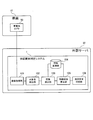
- FIG. 1 is a block diagram showing an overall configuration of a physical condition abnormality determination system according to the first embodiment.
- FIG. 2 is a block diagram showing the overall configuration of the physical condition abnormality determination system according to the modified example.
- the target person detection unit 102 is configured to be able to detect a target person who determines an abnormality in physical condition from the image acquired by the image acquisition unit 101.
- the target person detection unit 102 detects, for example, a region in which the target person is captured (for example, a face area of the target person) from the captured image.
- a region in which the target person is captured for example, a face area of the target person
- the detection result of the target person detection unit 102 is output to the feature extraction unit 103.
- FIG. 4 is a flowchart showing an operation flow of the physical condition abnormality determination system according to the first embodiment.
- the image acquisition unit 101 first acquires an image of the passenger captured by the vehicle interior camera 50 (step S101). Then, the target person detection unit 102 detects the face area from the image of the passenger (step S102). When the feature amount is detected from a region other than the face region, it is sufficient that another region corresponding to the feature amount is detected.
- the physical condition abnormality determination system 1 ends the operation at the timing when the vehicle 10 finishes running, for example.
- the operation may be terminated based on the behavior information of the vehicle (for example, at the timing when the threshold value of the acceleration sensor becomes equal to or less than a predetermined threshold value).
- the above-mentioned feature vectors (1) to (8) are calculated as the relationship between pairs of feature quantities that normally change in the same way. Therefore, according to the above-mentioned feature vector, it is possible to determine a situation in which the movements of the face and the eyes do not correspond due to dizziness, and it is possible to preferably determine the occurrence of motion sickness.
- the physical condition abnormality determination system 1 it is possible to determine the motion sickness of the passenger based on the feature amount extracted from the image of the passenger. it can.
- motion sickness is determined based on the relationship between a plurality of feature quantities, rather than directly using the extracted feature quantities. Therefore, for example, the influence of environmental changes such as individual differences and lighting conditions can be suppressed, and motion sickness can be determined with high accuracy.
- the feature amount which is time-series data, is used, it is possible to consider the change in the feature amount per unit time, unlike the case where the feature amount is extracted from only one image. Therefore, motion sickness can be determined more accurately.
- FIG. 6 is a block diagram showing the overall configuration of the physical condition abnormality determination system according to the second embodiment.
- FIG. 7 is a schematic view showing an in-vehicle configuration of a vehicle to which the physical condition abnormality determination system according to the second embodiment is applied.
- the same components as those shown in FIG. 1 are designated by the same reference numerals.
- the physical condition abnormality determination system 1 includes a determination result output unit 107 in addition to the components (see FIG. 1) of the physical condition abnormality determination system 1 according to the first embodiment. ing.
- the physical condition abnormality determination unit 106 may identify the cause of the passenger's physical condition abnormality from the information indicating the behavior of the vehicle 10.
- the physical condition abnormality determination unit 106 may be configured to be able to acquire information indicating the behavior of the vehicle 10 from a sensor (for example, an acceleration sensor or the like) provided on the vehicle 10 (not shown).
- the physical condition abnormality determination unit 106 may identify the cause of the passenger's physical condition abnormality from the analysis result of the image of the passenger or the like.
- the physical condition abnormality determination unit 106 may be configured to be able to extract a feature amount capable of determining the cause of the physical condition abnormality from an image including the whole body of the passenger.
- a physical condition abnormality cause identification unit (not shown) may identify the cause of the passenger's physical condition abnormality.
- FIG. 8 is a diagram showing an example of a display area of the display unit.
- FIG. 9 is a diagram (No. 1) showing a display example in the display area when motion sickness occurs.
- FIG. 10 is a diagram (No. 2) showing a display example in the display area when motion sickness occurs.
- FIG. 11 is a diagram showing an example of an icon indicating the degree of motion sickness.
- FIG. 12 is a diagram showing another display example in the display area of the display unit.
- voice guidance may be provided in addition to or in place of the display of the display unit 301.
- the passenger icon displayed in the passenger information display area changes according to the degree of motion sickness.
- the facial expression changes according to the degree of motion sickness.
- the shade and color of the icon change according to the degree of motion sickness.
- the type of icon may be increased or decreased according to the degree, for example, in five steps.
- the cause / countermeasure information display area may be displayed as an icon.
- the icons in the figure are icons indicating the cause of motion sickness, and the icons in the upper row are icons indicating "reading”, “sudden braking", and “not looking outside” in order from the left side.
- the icons in the lower row are icons indicating "food and drink”, “sudden start”, and "vibration” in order from the left side.
- these icons are lit.
- the passengers of the vehicle 10 are accurately informed of the current situation by displaying the determination result of motion sickness. be able to.
- the cause and countermeasures for motion sickness it becomes easy to eliminate motion sickness.
- the second embodiment can be applied to motion sickness that occurs in a moving body other than the vehicle 10 and physical condition abnormalities other than motion sickness.
- the control information output unit 108 generates and outputs control information for controlling the vehicle 10 based on the determination result of the physical condition abnormality.
- the control information output from the control information output unit 108 is input to the vehicle control unit 302 of the vehicle 10.
- the vehicle control unit 302 is a control unit capable of controlling each part of the vehicle 10, and executes control according to control information.
- control content executed by the control information output from the control information output unit 108 (in other words, the control content executed by the vehicle control unit 302) will be specifically described.
- control information output unit 108 may output control information for controlling the air conditioning in the vehicle interior. That is, information for changing the state of air in the vehicle interior to a state in which motion sickness is less likely to occur may be output.
- control information output unit 108 sets the position of the movable navigation display unit in the vehicle interior, the movable smartphone holder, etc. so that the outside scenery can be seen in the field of view when the passenger looks at the display screen.
- the control information adjusted to the height may be output. That is, information for changing the passenger's field of view to a state in which motion sickness is less likely to occur may be output.
- the third embodiment can also be applied to motion sickness that occurs in a moving body other than the vehicle 10 and physical condition abnormalities other than motion sickness.
- the fourth embodiment differs from the first to third embodiments already described in some configurations and operations, and the other parts are substantially the same. Therefore, in the following, the parts different from the first to third embodiments will be described in detail, and the description of other overlapping parts will be omitted as appropriate.
- the target person detection unit 102 does not detect the target person (for example, detect the face area of the target person). Therefore, it is preferable that the image acquired by the feature extraction unit 103 includes a region suitable for extracting the feature amount (for example, an image obtained by enlarging the periphery of the face of the subject).
- the imaging range of the vehicle interior camera 50 may be adjusted in advance so as to be an appropriate range, or the function of automatically adjusting the imaging range of the vehicle interior camera 50. May have.
- the feature extraction unit 103 may have a function of automatically detecting a region suitable for extracting the feature amount from the captured image and extracting the feature amount from the region.
- the plurality of feature quantities include any of the feature quantities relating to the position of the pupil, the direction of the face, or the direction of the line of sight of the subject. This is the physical condition abnormality determination system described in item 1.
- the present invention can be appropriately modified within the scope of the claims and within a range not contrary to the gist or idea of the invention that can be read from the entire specification, and the physical condition abnormality determination system, the physical condition abnormality determination method, and the computer accompanied by such changes.
- the program is also included in the technical idea of the present invention.
Landscapes
- Engineering & Computer Science (AREA)
- Health & Medical Sciences (AREA)
- Physics & Mathematics (AREA)
- Life Sciences & Earth Sciences (AREA)
- General Health & Medical Sciences (AREA)
- Medical Informatics (AREA)
- Public Health (AREA)
- Biomedical Technology (AREA)
- Pathology (AREA)
- Theoretical Computer Science (AREA)
- Computer Vision & Pattern Recognition (AREA)
- General Physics & Mathematics (AREA)
- Heart & Thoracic Surgery (AREA)
- Biophysics (AREA)
- Molecular Biology (AREA)
- Surgery (AREA)
- Animal Behavior & Ethology (AREA)
- Veterinary Medicine (AREA)
- Multimedia (AREA)
- Oral & Maxillofacial Surgery (AREA)
- Mechanical Engineering (AREA)
- Epidemiology (AREA)
- Primary Health Care (AREA)
- General Engineering & Computer Science (AREA)
- Databases & Information Systems (AREA)
- Automation & Control Theory (AREA)
- Mathematical Physics (AREA)
- Transportation (AREA)
- Social Psychology (AREA)
- Radiology & Medical Imaging (AREA)
- Psychology (AREA)
- Nuclear Medicine, Radiotherapy & Molecular Imaging (AREA)
- Psychiatry (AREA)
- Data Mining & Analysis (AREA)
- Educational Technology (AREA)
- Hospice & Palliative Care (AREA)
- Developmental Disabilities (AREA)
- Child & Adolescent Psychology (AREA)
- Computing Systems (AREA)
- Thermal Sciences (AREA)
Abstract
Description
第1実施形態に係る体調異常判定システムについて、図1から図5を参照して説明する。以下では、体調異常判定システムが、車両の搭乗者の体調異常(具体的には、乗り物酔い)を判定する装置である場合を例に挙げて説明する。
まず、図1及び図2を参照しながら、第1実施形態に係る体調異常判定システムの全体構成について説明する。図1は、第1実施形態に係る体調異常判定システムの全体構成を示すブロック図である。図2は、変形例に係る体調異常判定システムの全体構成を示すブロック図である。
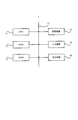
次に、図3を参照しながら、第1実施形態に係る体調異常判定システム1のハードウェア構成について説明する。図3は、第1実施形態に係る体調異常判定システムのハードウェア構成を示すブロック図である。
次に、図4を参照しながら、第1実施形態に係る体調異常判定システム1の動作の流れについて説明する。図4は、第1実施形態に係る体調異常判定システムの動作の流れを示すフローチャートである。
次に、図5を参照しながら、第1実施形態に係る体調異常判定システム1で用いられる特徴ベクトル(即ち、図4のステップS106で生成される特徴量の関係性)について、具体的に説明する。図5は、特徴ベクトルの具体例を示す表である。
次に、第1実施形態に係る体調異常判定システム1によって得られる技術的効果について説明する。
次に、第2実施形態に係る体調異常判定システム1について、図6から図12を参照して説明する。なお、第2実施形態は、既に説明した第1実施形態と一部の構成及び動作が異なるのみであり、その他の部分は概ね同様である。このため、以下では第1実施形態と異なる部分について詳細に説明し、他の重複する部分については説明を適宜省略するものとする。
まず、図6及び図7を参照しながら、第2実施形態に係る体調異常判定システム1の全体構成について説明する。図6は、第2実施形態に係る体調異常判定システムの全体構成を示すブロック図である。図7は、第2実施形態に係る体調異常判定システムが適用される車両の車内構成を示す概略図である。なお、図6では、図1で示した構成要素と同様ものに同一の符号を付している。
次に、図8から図12を参照しながら第2実施形態に係る体調異常判定システム1による表示例(即ち、表示部301の具体的な表示例)について説明する。図8は、表示部の表示領域の一例を示す図である。図9は、車酔い発生時の表示領域における表示例を示す図(その1)である。図10は、車酔い発生時の表示領域における表示例を示す図(その2)である。図11は、車酔いの度合いを示すアイコンの一例を示す図である。図12は、表示部の表示領域における他の表示例を示す図である。
次に、第2実施形態に係る体調異常判定システム1によって得られる技術的効果について説明する。
次に、第3実施形態に係る体調異常判定システム1について、図13を参照して説明する。なお、第3実施形態は、既に説明した第1及び第2実施形態と一部の構成及び動作が異なるのみであり、その他の部分は概ね同様である。このため、以下では第1及び第2実施形態と異なる部分について詳細に説明し、他の重複する部分については説明を適宜省略するものとする。
まず、図13を参照しながら、第3実施形態に係る体調異常判定システム1の全体構成について説明する。図13は、第3実施形態に係る体調異常判定システムの全体構成を示すブロック図である。なお、図13では、図1で示した構成要素と同様ものに同一の符号を付している。
次に、制御情報出力部108から出力される制御情報によって実行される制御内容(言い換えれば、車両制御部302で実行される制御内容)について具体的に説明する。
次に、第3実施形態に係る体調異常判定システム1によって得られる技術的効果について説明する。
次に、第4実施形態に係る体調異常判定システム1について、図14を参照して説明する。なお、第4実施形態は、既に説明した第1から第3及実施形態と一部の構成及び動作が異なるのみであり、その他の部分は概ね同様である。このため、以下では第1から第3実施形態と異なる部分について詳細に説明し、他の重複する部分については説明を適宜省略するものとする。
まず、図14を参照しながら、第4実施形態に係る体調異常判定システム1の全体構成について説明する。図14は、第4実施形態に係る体調異常判定システムの全体構成を示すブロック図である。なお、図14では、図1で示した構成要素と同様ものに同一の符号を付している。
次に、第4実施形態に係る体調異常判定システム1によって得られる技術的効果について説明する。
以上説明した実施形態に関して、更に以下の付記のようにも記載されうるが、以下には限られない。
付記1に記載の体調異常判定システムは、対象者の画像から前記対象者の状態を示す複数の特徴量を抽出する抽出手段と、前記複数の特徴量を時系列データとして蓄積する蓄積手段と、前記蓄積手段に蓄積された前記複数の特徴量から、各特徴量間の関係性を算出する算出手段と、前記関係性に基づいて、前記対象者の体調異常を判定する判定手段とを備えることを特徴とする体調異常判定システムである。
付記2に記載の体調異常判定システムは、前記算出手段は、前記複数の特徴量の単位時間あたりの変化の度合いから、前記関係性を算出することを特徴とする付記1に記載の体調異常判定システムである。
付記3に記載の体調異常判定システムは、前記算出手段は、前記関係性として、異なる特徴量間の相関または比率を算出することを特徴とする付記1又は2に記載の体調異常判定システムである。
付記4に記載の体調異常判定システムは、前記複数の特徴量は、前記対象者の瞳の位置、顔の向き、又は視線方向に関する特徴量を含むことを特徴とする付記1から3のいずれか一項に記載の体調異常判定システムである。
付記5に記載の体調異常判定システムは、前記関係性は、顔位置と瞳の位置との相関、顔向きパン方向と視線水平方向との相関、および顔向きチルト方向と視線垂直方向との相関のうち少なくとも1つを含む、ことを特徴とする付記1から4のいずれか一項に記載の体調異常判定システムである。
付記6に記載の体調異常判定システムは、前記関係性は、顔重心位置と目位置との移動速度の比率、顔向きパン方向と視線水平方向との角速度の比率、および顔向きチルト方向と視線垂直方向との角速度の比率のうち少なくとも1つを含む、ことを特徴とする付記1から5のいずれか一項に記載の体調異常判定システムである。
付記7に記載の体調異常判定システムは、前記判定手段は、前記関係性に基づいて、前記体調異常の度合いを判定して出力することを特徴とする付記1から6のいずれか一項に記載の体調異常判定システムである。
付記8に記載の体調異常判定システムは、前記判定手段の判定結果に応じた前記対象者の前記体調異常に関する情報を、前記対象者及び前記対象者の周囲に存在する人物の少なくとも一方に提示する提示手段を更に備えることを特徴とする付記1から7のいずれか一項に記載の体調異常判定システムである。
付記9に記載の体調異常判定システムは、前記対象者は、車両の搭乗者であり、前記判定手段の判定結果に基づいて、前記体調異常に応じた前記車両の制御を実行するための制御情報を出力する出力手段を更に備えることを特徴とする付記1から8のいずれか一項に記載の体調異常判定システムである。
付記10に記載の体調異常判定システムは、前記体調異常は、乗り物酔いの状態であることを特徴とする付記1から9のいずれか一項に記載の体調異常判定システムである。
付記11に記載の体調異常判定方法は、対象者の画像から前記対象者の状態を示す複数の特徴量を抽出し、前記複数の特徴量を時系列データとして蓄積し、蓄積された前記複数の特徴量から、各特徴量間の関係性を算出し、前記関係性に基づいて、前記対象者の体調異常を判定することを特徴とする体調異常判定方法である。
付記12に記載のコンピュータプログラムは、対象者の画像から前記対象者の状態を示す複数の特徴量を抽出し、前記複数の特徴量を時系列データとして蓄積し、蓄積された前記複数の特徴量から、各特徴量間の関係性を算出し、前記関係性に基づいて、前記対象者の体調異常を判定するようにコンピュータを動作させることを特徴とするコンピュータプログラムである。
10 車両
11 CPU
12 RAM
13 ROM
14 記憶装置
15 入力装置
16 出力装置
17 データバス
20 外部サーバ
50 車室内カメラ
101 画像取得部
102 対象者検出部
103 特徴抽出部
104 特徴蓄積部
105 特徴関係算出部
106 体調異常判定部
107 判定結果出力部
108 制御情報出力部
201,202 搭乗者
301 表示部
302 車両制御部
Claims (12)
- 対象者の画像から前記対象者の状態を示す複数の特徴量を抽出する抽出手段と、
前記複数の特徴量を時系列データとして蓄積する蓄積手段と、
前記蓄積手段に蓄積された前記複数の特徴量から、各特徴量間の関係性を算出する算出手段と、
前記関係性に基づいて、前記対象者の体調異常を判定する判定手段と
を備えることを特徴とする体調異常判定システム。 - 前記算出手段は、前記複数の特徴量の単位時間あたりの変化の度合いから、前記関係性を算出することを特徴とする請求項1に記載の体調異常判定システム。
- 前記算出手段は、前記関係性として、異なる特徴量間の相関または比率を算出する
ことを特徴とする請求項1又は2に記載の体調異常判定システム。 - 前記複数の特徴量は、前記対象者の瞳の位置、顔の向き、又は視線方向に関する特徴量を含むことを特徴とする請求項1から3のいずれか一項に記載の体調異常判定システム。
- 前記関係性は、顔位置と瞳の位置との相関、顔向きパン方向と視線水平方向との相関、および顔向きチルト方向と視線垂直方向との相関のうち少なくとも1つを含む、ことを特徴とする請求項1から4のいずれか一項に記載の体調異常判定システム。
- 前記関係性は、顔重心位置と目位置との移動速度の比率、顔向きパン方向と視線水平方向との角速度の比率、および顔向きチルト方向と視線垂直方向との角速度の比率のうち少なくとも1つを含む、ことを特徴とする請求項1から5のいずれか一項に記載の体調異常判定システム。
- 前記判定手段は、前記関係性に基づいて、前記体調異常の度合いを判定して出力することを特徴とする請求項1から6のいずれか一項に記載の体調異常判定システム。
- 前記判定手段の判定結果に応じた前記対象者の前記体調異常に関する情報を、前記対象者及び前記対象者の周囲に存在する人物の少なくとも一方に提示する提示手段を更に備えることを特徴とする請求項1から7のいずれか一項に記載の体調異常判定システム。
- 前記対象者は、車両の搭乗者であり、
前記判定手段の判定結果に基づいて、前記体調異常に応じた前記車両の制御を実行するための制御情報を出力する出力手段を更に備える
ことを特徴とする請求項1から8のいずれか一項に記載の体調異常判定システム。 - 前記体調異常は、乗り物酔いの状態であることを特徴とする請求項1から9のいずれか一項に記載の体調異常判定システム。
- 対象者の画像から前記対象者の状態を示す複数の特徴量を抽出し、
前記複数の特徴量を時系列データとして蓄積し、
蓄積された前記複数の特徴量から、各特徴量間の関係性を算出し、
前記関係性に基づいて、前記対象者の体調異常を判定する
ことを特徴とする体調異常判定方法。 - 対象者の画像から前記対象者の状態を示す複数の特徴量を抽出し、
前記複数の特徴量を時系列データとして蓄積し、
蓄積された前記複数の特徴量から、各特徴量間の関係性を算出し、
前記関係性に基づいて、前記対象者の体調異常を判定する
ようにコンピュータを動作させることを特徴とするコンピュータプログラム。
Priority Applications (8)
| Application Number | Priority Date | Filing Date | Title |
|---|---|---|---|
| US17/781,586 US12307792B2 (en) | 2019-12-04 | 2019-12-04 | Abnormal physical condition determination system, abnormal physical condition determination method, and computer program |
| AU2019476916A AU2019476916B2 (en) | 2019-12-04 | 2019-12-04 | Abnormal physical condition determination system, abnormal physical condition determination method, and computer program |
| PCT/JP2019/047514 WO2021111567A1 (ja) | 2019-12-04 | 2019-12-04 | 体調異常判定システム、体調異常判定方法、及びコンピュータプログラム |
| JP2021562270A JP7298711B2 (ja) | 2019-12-04 | 2019-12-04 | 体調異常判定システム、体調異常判定システムの作動方法、及びコンピュータプログラム |
| EP19955334.8A EP4070733A4 (en) | 2019-12-04 | 2019-12-04 | SYSTEM, METHOD AND COMPUTER PROGRAM FOR DETERMINING ABNORMAL PHYSICAL CONDITIONS |
| JP2023092541A JP7497774B2 (ja) | 2019-12-04 | 2023-06-05 | 体調異常判定システム、体調異常判定システムの作動方法、コンピュータプログラム、及び車両 |
| US18/500,436 US20240063687A1 (en) | 2019-12-04 | 2023-11-02 | Abnormal physical condition determination system, abnormal physical condition determination method, and computer program |
| JP2024087375A JP7718539B2 (ja) | 2019-12-04 | 2024-05-29 | 車両、車両の制御方法、及びコンピュータプログラム |
Applications Claiming Priority (1)
| Application Number | Priority Date | Filing Date | Title |
|---|---|---|---|
| PCT/JP2019/047514 WO2021111567A1 (ja) | 2019-12-04 | 2019-12-04 | 体調異常判定システム、体調異常判定方法、及びコンピュータプログラム |
Related Child Applications (2)
| Application Number | Title | Priority Date | Filing Date |
|---|---|---|---|
| US17791586 A-371-Of-International | 2022-07-08 | ||
| US18/500,436 Continuation US20240063687A1 (en) | 2019-12-04 | 2023-11-02 | Abnormal physical condition determination system, abnormal physical condition determination method, and computer program |
Publications (1)
| Publication Number | Publication Date |
|---|---|
| WO2021111567A1 true WO2021111567A1 (ja) | 2021-06-10 |
Family
ID=76221570
Family Applications (1)
| Application Number | Title | Priority Date | Filing Date |
|---|---|---|---|
| PCT/JP2019/047514 Ceased WO2021111567A1 (ja) | 2019-12-04 | 2019-12-04 | 体調異常判定システム、体調異常判定方法、及びコンピュータプログラム |
Country Status (5)
| Country | Link |
|---|---|
| US (2) | US12307792B2 (ja) |
| EP (1) | EP4070733A4 (ja) |
| JP (3) | JP7298711B2 (ja) |
| AU (1) | AU2019476916B2 (ja) |
| WO (1) | WO2021111567A1 (ja) |
Cited By (4)
| Publication number | Priority date | Publication date | Assignee | Title |
|---|---|---|---|---|
| JP7099768B1 (ja) | 2021-12-08 | 2022-07-12 | 敦史 園部 | めまいの診断装置並びに遠隔めまい診断プログラム及びシステム |
| CN116763297A (zh) * | 2022-03-17 | 2023-09-19 | 丰田自动车株式会社 | 晕动推测装置、晕动推测方法以及非临时性的存储介质 |
| JP2024078278A (ja) * | 2022-11-29 | 2024-06-10 | トヨタ自動車株式会社 | 車両制御装置 |
| JP2024078277A (ja) * | 2022-11-29 | 2024-06-10 | トヨタ自動車株式会社 | 車両制御装置 |
Citations (6)
| Publication number | Priority date | Publication date | Assignee | Title |
|---|---|---|---|---|
| JP2006040055A (ja) * | 2004-07-28 | 2006-02-09 | Matsushita Electric Ind Co Ltd | 画像表示装置 |
| WO2013008300A1 (ja) * | 2011-07-11 | 2013-01-17 | トヨタ自動車株式会社 | 車両の緊急退避装置 |
| WO2016013090A1 (ja) | 2014-07-24 | 2016-01-28 | 富士通株式会社 | 顔認証装置、顔認証方法および顔認証プログラム |
| WO2017209225A1 (ja) | 2016-06-02 | 2017-12-07 | オムロン株式会社 | 状態推定装置、状態推定方法、及び状態推定プログラム |
| WO2017208529A1 (ja) | 2016-06-02 | 2017-12-07 | オムロン株式会社 | 運転者状態推定装置、運転者状態推定システム、運転者状態推定方法、運転者状態推定プログラム、対象者状態推定装置、対象者状態推定方法、対象者状態推定プログラム、および記録媒体 |
| EP3494874A1 (en) * | 2017-12-05 | 2019-06-12 | Koninklijke Philips N.V. | A system and method for detecting motion sickness |
Family Cites Families (14)
| Publication number | Priority date | Publication date | Assignee | Title |
|---|---|---|---|---|
| JP4164865B2 (ja) | 2003-03-31 | 2008-10-15 | マツダ株式会社 | 自動車用ナビゲーション装置 |
| JP2006034576A (ja) | 2004-07-27 | 2006-02-09 | Matsushita Electric Ind Co Ltd | 乗り物酔い対策装置および乗り物酔い対策方法 |
| JP2015141099A (ja) | 2014-01-29 | 2015-08-03 | アイシン・エィ・ダブリュ株式会社 | ナビゲーション装置、ナビゲーション方法及びプログラム |
| US9533687B2 (en) * | 2014-12-30 | 2017-01-03 | Tk Holdings Inc. | Occupant monitoring systems and methods |
| JP6531719B2 (ja) * | 2016-05-23 | 2019-06-19 | 株式会社デンソー | ドライバ状態検知装置、ドライバ状態検知方法 |
| CN109689642B (zh) | 2016-07-14 | 2022-04-12 | 百时美施贵宝公司 | 经单环杂芳基取代的化合物 |
| JP7012933B2 (ja) | 2017-03-23 | 2022-01-31 | 東芝情報システム株式会社 | 運転支援装置および運転支援システム |
| US11404075B1 (en) * | 2017-11-09 | 2022-08-02 | Amazon Technologies, Inc. | Vehicle voice user interface |
| WO2019131116A1 (ja) | 2017-12-26 | 2019-07-04 | ソニー株式会社 | 情報処理装置、移動装置、および方法、並びにプログラム |
| CN111867459B (zh) | 2018-03-14 | 2024-01-09 | 松下知识产权经营株式会社 | 晕车症估计系统、移动车辆、晕车症估计方法和晕车症估计程序 |
| JP7211441B2 (ja) * | 2019-02-01 | 2023-01-24 | 日本電気株式会社 | 覚醒度推定装置、覚醒度推定方法、及びプログラム |
| US11068069B2 (en) * | 2019-02-04 | 2021-07-20 | Dus Operating Inc. | Vehicle control with facial and gesture recognition using a convolutional neural network |
| JP7302534B2 (ja) * | 2020-06-01 | 2023-07-04 | トヨタ自動車株式会社 | 状態判定装置および状態判定方法 |
| US11636694B2 (en) * | 2020-09-10 | 2023-04-25 | Qualcomm Incorporated | Video-based activity recognition |
-
2019
- 2019-12-04 JP JP2021562270A patent/JP7298711B2/ja active Active
- 2019-12-04 AU AU2019476916A patent/AU2019476916B2/en active Active
- 2019-12-04 EP EP19955334.8A patent/EP4070733A4/en active Pending
- 2019-12-04 US US17/781,586 patent/US12307792B2/en active Active
- 2019-12-04 WO PCT/JP2019/047514 patent/WO2021111567A1/ja not_active Ceased
-
2023
- 2023-06-05 JP JP2023092541A patent/JP7497774B2/ja active Active
- 2023-11-02 US US18/500,436 patent/US20240063687A1/en active Pending
-
2024
- 2024-05-29 JP JP2024087375A patent/JP7718539B2/ja active Active
Patent Citations (6)
| Publication number | Priority date | Publication date | Assignee | Title |
|---|---|---|---|---|
| JP2006040055A (ja) * | 2004-07-28 | 2006-02-09 | Matsushita Electric Ind Co Ltd | 画像表示装置 |
| WO2013008300A1 (ja) * | 2011-07-11 | 2013-01-17 | トヨタ自動車株式会社 | 車両の緊急退避装置 |
| WO2016013090A1 (ja) | 2014-07-24 | 2016-01-28 | 富士通株式会社 | 顔認証装置、顔認証方法および顔認証プログラム |
| WO2017209225A1 (ja) | 2016-06-02 | 2017-12-07 | オムロン株式会社 | 状態推定装置、状態推定方法、及び状態推定プログラム |
| WO2017208529A1 (ja) | 2016-06-02 | 2017-12-07 | オムロン株式会社 | 運転者状態推定装置、運転者状態推定システム、運転者状態推定方法、運転者状態推定プログラム、対象者状態推定装置、対象者状態推定方法、対象者状態推定プログラム、および記録媒体 |
| EP3494874A1 (en) * | 2017-12-05 | 2019-06-12 | Koninklijke Philips N.V. | A system and method for detecting motion sickness |
Non-Patent Citations (2)
| Title |
|---|
| NAGAI RENA : "Imaging technology used in automobiles, High accuracy and low-cost driver and cabin monitoring realized by the latest deep learning", EIZO JOHO INDUSTRIAL, vol. 51, no. 4, 1 August 2019 (2019-08-01), JP , pages 21 - 23, XP009536524, ISSN: 1346-1362 * |
| WADA, T. ET AL.: "Analysis of driver's head tilt using a mathematical model of motion sickness", INTERNATIONAL JOURNAL OF INDUSTRIAL ERGONOMICS, vol. 63, January 2018 (2018-01-01), pages 89 - 97, XP081284518 * |
Cited By (8)
| Publication number | Priority date | Publication date | Assignee | Title |
|---|---|---|---|---|
| JP7099768B1 (ja) | 2021-12-08 | 2022-07-12 | 敦史 園部 | めまいの診断装置並びに遠隔めまい診断プログラム及びシステム |
| JP2023084775A (ja) * | 2021-12-08 | 2023-06-20 | 敦史 園部 | めまいの診断装置並びに遠隔めまい診断プログラム及びシステム |
| CN116763297A (zh) * | 2022-03-17 | 2023-09-19 | 丰田自动车株式会社 | 晕动推测装置、晕动推测方法以及非临时性的存储介质 |
| US12558020B2 (en) | 2022-03-17 | 2026-02-24 | Toyota Jidosha Kabushiki Kaisha | Motion sickness estimation device, motion sickness estimation method, and non-transitory storage medium |
| JP2024078278A (ja) * | 2022-11-29 | 2024-06-10 | トヨタ自動車株式会社 | 車両制御装置 |
| JP2024078277A (ja) * | 2022-11-29 | 2024-06-10 | トヨタ自動車株式会社 | 車両制御装置 |
| JP7816096B2 (ja) | 2022-11-29 | 2026-02-18 | トヨタ自動車株式会社 | 車両制御装置 |
| JP7816097B2 (ja) | 2022-11-29 | 2026-02-18 | トヨタ自動車株式会社 | 車両制御装置 |
Also Published As
| Publication number | Publication date |
|---|---|
| US12307792B2 (en) | 2025-05-20 |
| JP7298711B2 (ja) | 2023-06-27 |
| EP4070733A4 (en) | 2022-11-30 |
| AU2019476916A1 (en) | 2022-06-23 |
| JPWO2021111567A1 (ja) | 2021-06-10 |
| US20230005279A1 (en) | 2023-01-05 |
| EP4070733A1 (en) | 2022-10-12 |
| JP7497774B2 (ja) | 2024-06-11 |
| JP2024103618A (ja) | 2024-08-01 |
| US20240063687A1 (en) | 2024-02-22 |
| JP2023120235A (ja) | 2023-08-29 |
| JP7718539B2 (ja) | 2025-08-05 |
| AU2019476916B2 (en) | 2024-02-22 |
Similar Documents
| Publication | Publication Date | Title |
|---|---|---|
| JP7718539B2 (ja) | 車両、車両の制御方法、及びコンピュータプログラム | |
| JP6573193B2 (ja) | 判定装置、判定方法、および判定プログラム | |
| CN107527000B (zh) | 利用眼睛跟踪来监视驾驶员的集中度的装置和方法 | |
| JP7058800B2 (ja) | 表示制御装置、表示制御方法、及び表示制御プログラム | |
| US20150229885A1 (en) | Method for supplementing a piece of object information assigned to an object and method for selecting objects in surroundings of a vehicle | |
| US11453401B2 (en) | Closed eye determination device | |
| US20170327124A1 (en) | Electronic device and method for determining a state of a driver | |
| CN107031658B (zh) | 基于瞥视方向的自动化车辆人-机界面系统 | |
| WO2017035025A1 (en) | Engagement analytic system and display system responsive to user's interaction and/or position | |
| CN115035499A (zh) | 用于确定注视区域的方法、车辆控制方法及装置 | |
| JPWO2020255238A1 (ja) | 情報処理装置、プログラム及び情報処理方法 | |
| KR20090052413A (ko) | 운전자 시선 대응 전방 화면 디스플레이 장치 및 방법 | |
| JP6365423B2 (ja) | 運転者状態判定方法及びその判定装置 | |
| JP2008079737A (ja) | 集中度評価装置及びこれを用いた車両用表示装置 | |
| JP2016170688A (ja) | 運転支援装置及び運転支援システム | |
| KR102906380B1 (ko) | 운전자의 뇌졸증 전조증상을 검출하기 위한 장치 및 방법 | |
| JP7814968B2 (ja) | 画像表示装置及び画像表示方法 | |
| CN119343281A (zh) | 信息处理装置、信息处理方法以及系统 | |
| JP6582799B2 (ja) | サポート装置及びサポート方法 | |
| JP2005071041A (ja) | 運転者視対象検出装置及び運転者視対象検出システム | |
| EP4478306A1 (en) | Driver distraction from uncertain gaze estimation | |
| US11947721B2 (en) | Vehicle display control apparatus and display processing method | |
| JP7631852B2 (ja) | ドライバ状態推定装置 | |
| JP7438045B2 (ja) | 情報記録装置、情報記録方法及び情報記録システム | |
| JP2025166726A (ja) | 判定装置、判定用コンピュータプログラム及び判定方法 |
Legal Events
| Date | Code | Title | Description |
|---|---|---|---|
| 121 | Ep: the epo has been informed by wipo that ep was designated in this application |
Ref document number: 19955334 Country of ref document: EP Kind code of ref document: A1 |
|
| ENP | Entry into the national phase |
Ref document number: 2021562270 Country of ref document: JP Kind code of ref document: A |
|
| ENP | Entry into the national phase |
Ref document number: 2019476916 Country of ref document: AU Date of ref document: 20191204 Kind code of ref document: A |
|
| NENP | Non-entry into the national phase |
Ref country code: DE |
|
| ENP | Entry into the national phase |
Ref document number: 2019955334 Country of ref document: EP Effective date: 20220704 |
|
| WWG | Wipo information: grant in national office |
Ref document number: 202217031465 Country of ref document: IN |
|
| WWG | Wipo information: grant in national office |
Ref document number: 17781586 Country of ref document: US |