WO2021119218A1 - Alkaline phosphatase polypeptides and methods of use thereof - Google Patents
Alkaline phosphatase polypeptides and methods of use thereof Download PDFInfo
- Publication number
- WO2021119218A1 WO2021119218A1 PCT/US2020/064140 US2020064140W WO2021119218A1 WO 2021119218 A1 WO2021119218 A1 WO 2021119218A1 US 2020064140 W US2020064140 W US 2020064140W WO 2021119218 A1 WO2021119218 A1 WO 2021119218A1
- Authority
- WO
- WIPO (PCT)
- Prior art keywords
- polypeptide
- subject
- alkaline phosphatase
- seq
- administration
- Prior art date
- Legal status (The legal status is an assumption and is not a legal conclusion. Google has not performed a legal analysis and makes no representation as to the accuracy of the status listed.)
- Ceased
Links
Classifications
-
- C—CHEMISTRY; METALLURGY
- C12—BIOCHEMISTRY; BEER; SPIRITS; WINE; VINEGAR; MICROBIOLOGY; ENZYMOLOGY; MUTATION OR GENETIC ENGINEERING
- C12N—MICROORGANISMS OR ENZYMES; COMPOSITIONS THEREOF; PROPAGATING, PRESERVING, OR MAINTAINING MICROORGANISMS; MUTATION OR GENETIC ENGINEERING; CULTURE MEDIA
- C12N9/00—Enzymes; Proenzymes; Compositions thereof; Processes for preparing, activating, inhibiting, separating or purifying enzymes
- C12N9/14—Hydrolases (3)
- C12N9/16—Hydrolases (3) acting on ester bonds (3.1)
-
- A—HUMAN NECESSITIES
- A61—MEDICAL OR VETERINARY SCIENCE; HYGIENE
- A61K—PREPARATIONS FOR MEDICAL, DENTAL OR TOILETRY PURPOSES
- A61K38/00—Medicinal preparations containing peptides
- A61K38/16—Peptides having more than 20 amino acids; Gastrins; Somatostatins; Melanotropins; Derivatives thereof
- A61K38/43—Enzymes; Proenzymes; Derivatives thereof
- A61K38/46—Hydrolases (3)
- A61K38/465—Hydrolases (3) acting on ester bonds (3.1), e.g. lipases, ribonucleases
-
- A—HUMAN NECESSITIES
- A61—MEDICAL OR VETERINARY SCIENCE; HYGIENE
- A61K—PREPARATIONS FOR MEDICAL, DENTAL OR TOILETRY PURPOSES
- A61K47/00—Medicinal preparations characterised by the non-active ingredients used, e.g. carriers or inert additives; Targeting or modifying agents chemically bound to the active ingredient
- A61K47/02—Inorganic compounds
-
- A—HUMAN NECESSITIES
- A61—MEDICAL OR VETERINARY SCIENCE; HYGIENE
- A61K—PREPARATIONS FOR MEDICAL, DENTAL OR TOILETRY PURPOSES
- A61K9/00—Medicinal preparations characterised by special physical form
- A61K9/0012—Galenical forms characterised by the site of application
- A61K9/0019—Injectable compositions; Intramuscular, intravenous, arterial, subcutaneous administration; Compositions to be administered through the skin in an invasive manner
-
- A—HUMAN NECESSITIES
- A61—MEDICAL OR VETERINARY SCIENCE; HYGIENE
- A61P—SPECIFIC THERAPEUTIC ACTIVITY OF CHEMICAL COMPOUNDS OR MEDICINAL PREPARATIONS
- A61P19/00—Drugs for skeletal disorders
- A61P19/08—Drugs for skeletal disorders for bone diseases, e.g. rachitism, Paget's disease
-
- C—CHEMISTRY; METALLURGY
- C07—ORGANIC CHEMISTRY
- C07K—PEPTIDES
- C07K2319/00—Fusion polypeptide
- C07K2319/20—Fusion polypeptide containing a tag with affinity for a non-protein ligand
-
- C—CHEMISTRY; METALLURGY
- C07—ORGANIC CHEMISTRY
- C07K—PEPTIDES
- C07K2319/00—Fusion polypeptide
- C07K2319/30—Non-immunoglobulin-derived peptide or protein having an immunoglobulin constant or Fc region, or a fragment thereof, attached thereto
-
- C—CHEMISTRY; METALLURGY
- C07—ORGANIC CHEMISTRY
- C07K—PEPTIDES
- C07K2319/00—Fusion polypeptide
- C07K2319/33—Fusion polypeptide fusions for targeting to specific cell types, e.g. tissue specific targeting, targeting of a bacterial subspecies
-
- C—CHEMISTRY; METALLURGY
- C12—BIOCHEMISTRY; BEER; SPIRITS; WINE; VINEGAR; MICROBIOLOGY; ENZYMOLOGY; MUTATION OR GENETIC ENGINEERING
- C12Y—ENZYMES
- C12Y301/00—Hydrolases acting on ester bonds (3.1)
- C12Y301/03—Phosphoric monoester hydrolases (3.1.3)
- C12Y301/03001—Alkaline phosphatase (3.1.3.1)
Definitions
- HPP Hypophosphatasia
- TNSALP tissue-nonspecific alkaline phosphatase
- HPP exhibits a remarkable range of symptoms and severity, from premature tooth loss to almost complete absence of bone mineralization in utero.
- the presentation of HPP varies markedly among patients and also varies markedly between patient ages. Many patients with HPP display skeletal changes, short stature, chronic pain, painful lower limbs, muscle weakness, gait disturbance, and premature, atraumatic tooth loss.
- Asfotase alfa (STRENSIQ ® , Alexion Pharmaceuticals, Inc.), a recombinantly produced enzyme replacement therapy (ERT) that includes a soluble fragment of TNSALP, is the first ERT available to HPP patients. Asfotase alfa has shown transformative effects on the most severe form of HPP as evidenced by improvements in bone mineralization and density, as well as respiratory and motor function, cognitive development, and muscle strength (Whyte et al., New Engl. J. Med. 366:904-913, 2012). While the safety and therapeutic benefits of asfotase alfa have been demonstrated, compliance with multiple injection regimens can be a challenge, particularly among pediatric patients.
- a polypeptide including a recombinant alkaline phosphatase having at least one mutation relative to a naturally occurring alkaline phosphatase.
- the mutation may improve at least one activity or pharmacokinetic (PK) property relative to the naturally occurring alkaline phosphatase without the at least one mutation.
- PK pharmacokinetic
- the naturally occurring alkaline phosphatase may be a tissue non-specific alkaline phosphatase (TNSALP), placental alkaline phosphatase (PALP), germ line alkaline phosphatase (GALP), or intestinal alkaline phosphatase (IALP).
- TNSALP tissue non-specific alkaline phosphatase
- POP placental alkaline phosphatase
- GALP germ line alkaline phosphatase
- IALP intestinal alkaline phosphatase
- the TNSALP may be a mammalian TNSALP (e.g., human, gorilla, mouse, rabbit, chimp, cynomolgus macaque, rhesus macaque, orangutan, baboon, rat, bovine, goat, or llama TNSALP).
- the polypeptide may have at least 85% (e.g., 90%, 95%, 97%, 99%, or 100%) sequence identity to amino
- At least one mutation may be selected from the group consisting of E108X, M384X, L385X, N213X, and N286X relative to SEQ ID NO: 1 , and X is any amino acid.
- the at least one mutation may be selected from the group consisting of E108S, E108T, E108Q, E108M, E108K, E108L,
- the recombinant alkaline phosphatase may have at least two, three, four, or five mutations selected from the group consisting of E108S, E108T, E108Q, E108M, E108K, E108L, M384R, L385T, N213Q, and N286Q relative to SEQ ID NO: 1 .
- the recombinant alkaline phosphatase may have E108M, N213Q, and N286Q mutations relative to SEQ ID NO: 1 .
- the recombinant alkaline phosphatase may not have an E108A mutation relative to SEQ ID NO: 1 .
- the at least one mutation in the ALPs described herein that improves at least one activity or pharmacokinetic (PK) property may be present within a specified region of the enzyme.
- the mutation may be present in the ectodomain of an alkaline phosphatase.
- the mutation may be present in the crown domain, the catalytic domain, or the dimerization domain.
- the mutation may be present in the GPI anchor domain, if included.
- the polypeptide may include a mutation that is present within amino acids 1-491 or 1-486 of a human TNSALP or an analogous ALP position based on alignment and/or sequence homology.
- the polypeptide may have a mutation within positions 1-491 , 1-486, 25-475, 25-240, 50-400, 50-350, and/or 100-300 relative to SEQ ID NO: 1.
- the polypeptide may have a mutation within positions 100-125, 100-110, 200-225, 210-220, 275-300, 280-290, 425-450, and/or 425-435 relative to SEQ ID NO: 1 .
- the polypeptide may have a mutation between positions 108, 213, 286, and/or 429 relative to SEQ ID NO: 1.
- the mutation is within the sequence of the ALP and the mutation is not a stretch of nonnatural amino acids present at the N- or C-terminal domain of the ALP.
- the naturally occurring alkaline phosphatase may be an IALP (e.g., a mammalian IALP, such as gorilla, chimp, cynomolgus macaque, rhesus macaque, rat, bovine, goat, llama, or human IALP).
- the polypeptide may have at least 85% (e.g., 90%, 95%, 97%, 99%, or 100%) sequence identity to amino acids 1-486 of SEQ ID NO: 4.
- the recombinant alkaline phosphatase may have a W245X mutation relative to SEQ ID NO: 4, where X is any naturally occurring conserved amino acid from a different species.
- the recombinant alkaline phosphatase may have a W245R mutation relative to SEQ ID NO: 4.
- the recombinant alkaline phosphatase may have a C481X mutation relative to SEQ ID NO: 4, where X is any non-thiol containing amino acid.
- the recombinant alkaline phosphatase may have a C481G mutation relative to SEQ ID NO: 4.
- the recombinant alkaline phosphatase may have a mutation at a consensus N-linked glycosylation site.
- a consensus N-linked glycosylation site includes a motif having the sequence asparagine-X-Z, where X is any amino acid except P, and Z is any amino acid except S or T.
- the asparagine site may be mutated to a glutamine residue.
- the recombinant alkaline phosphatase may have a mutation selected from the group consisting of S429Q, S429H, S429E, and S429D relative to SEQ ID NO: 4.
- the recombinant alkaline phosphatase may have a mutation selected from the group consisting of S428R, S428Q, and S428D relative to SEQ ID NO: 4.
- the recombinant alkaline phosphatase may have at least 80%, 85%, 90%, 95%, 99%, or 100% sequence identity to at least 50 (e.g., at least 100, 150, 200, 250, 300, 350, 400, 450, or more) amino acids of the sequence of any one of SEQ ID NOs: 7-223, 247, and 262-264.
- At least one activity improved by the mutation may be selected form the group consisting of increased catalytic activity, increased temperature stability, increased zinc binding, maintenance of activity in a zinc depleted buffer, maintenance of activity at a pH of 5.0 - 7.5, decreased dimerization, decreased aggregation, and increased manufacturability.
- the increased catalytic activity may include increased hydrolysis of pyridoxal 5-phosphate and/or pyrophosphate.
- the increased catalytic activity may be about 2-fold to about 30-fold better than the activity of the naturally occurring alkaline phosphatase.
- the at least one PK property improved by the mutation may be selected from the group consisting of increased substrate specificity, increased activity against a native substrate, increased activity against an artificial substrate, decreased Km for a native substrate, and increased area under the curve (AUC) per dose.
- exemplary artificial substrates are 4-methylumbelliferyl phosphate (4-MUP), umbelliferone phosphate, and paranitrophenyl phosphate (pNPP), and exemplary native substrates are pyridoxal-5’-phosphate, PLP, and PEA.
- the polypeptide may further include a region Y, where Y is an amino acid sequence of at least one amino acid.
- Y may be a fragment crystallizable region (Fc).
- the Fc region may include lgG1 , lgG2, lgG3, or lgG4, or a chimera thereof.
- the Fc region may include an lgG2/4 chimera.
- the Fc region may include the sequence of SEQ ID NO: 253 or have at least 85% (e.g., 90%, 95%, 97%, 99%, or 100%) sequence identity thereto.
- the polypeptide may further include a bone targeting moiety.
- a polypeptide including an ALP, a bone targeting moiety, and a Y region can have the structure Z-ALP-Y-Xn, where Y is an amino acid sequence of at least one amino acid; Z is absent or is an amino acid sequence of at least one amino acid;
- the polypeptide may have the structure Y-ALP-Z-Xn, or any topological permutations thereof (e.g., Xn-Y-ALP-Z and Y-Xn-ALP-Z).
- the polypeptide may include or consist of the an amino acid sequence having at least 85% (e.g., at least 90%, 95%, 97%, 99%, or 100%) sequence identity to any one of SEQ ID NOs: 7-223, 247, and 262-264 (e.g., any one of SEQ ID NOs: 72, 123, 155, or 177).
- the polypeptide may include or consist of the sequence of any one of SEQ ID NOs: 72, 123, 155, or 177.
- the polypeptide may include any sALP catalytic domain, Fc IgG isotype, or bone targeting moiety listed in Table 1 , and topological permutations thereof.
- the polypeptide may include or consist of an amino acid sequence having at least 85% (e.g., at least 90%, 95%, 97%, 99%, or 100%) sequence identity to SEQ ID NO: 123.
- the polypeptide may include or consist of SEQ ID NO: 123.
- the polypeptide may include or consist of an amino acid sequence having at least 85% (e.g., at least 90%, 95%, 97%, 99%, or 100%) sequence identity to SEQ ID NO: 177.
- the polypeptide may include or consist of SEQ ID NO: 177.
- the polypeptide may include or consist of an amino acid sequence having at least 85% (e.g., 90%, 95%, 97%, 99%, or 100%) sequence identity to SEQ ID NO: 260 or 261.
- the polypeptide may include or consist of the sequence of SEQ ID NO: 260.
- the polypeptide may include or consist of the sequence of SEQ ID NO: 261.
- the polypeptide may include a secretion signal peptide.
- the polypeptide may include or consist of an amino acid sequence having at least 85% (e.g., 90%, 95%, 97%, 99%, or 100%) sequence identity to SEQ ID NO: 263 or 264.
- the polypeptide may include or consist of the sequence of SEQ ID NO: 263.
- the polypeptide may include or consist of the sequence of SEQ ID NO: 264.
- the polypeptide is a dimer.
- the polypeptide may be a monomer.
- a polypeptide including an alkaline phosphatase and a fragment crystallizable (Fc) region, wherein the Fc region is an lgG2/4 chimera.
- the Fc region may include the sequence of SEQ ID NO: 253 or have at least 85% (e.g., 90%, 95%, 97%, 99%, or 100%) sequence identity thereto.
- the recombinant alkaline phosphatase may be selected from the group consisting of TNSALP, IALP, placental alkaline phosphatase (PALP), and germ line alkaline phosphatase (GALP).
- the recombinant alkaline phosphatase may be a mammalian alkaline phosphatase (e.g., human, gorilla, mouse, rabbit, chimp, cynomolgus macaque, rhesus macaque, orangutan, baboon, rat, bovine, goat, or llama alkaline phosphatase).
- the recombinant alkaline phosphatase may include the sequence of any one of SEQ ID NOs: 1-6 or a fragment thereof.
- the recombinant alkaline phosphatase may include amino acids 1-491 of SEQ ID NO: 1 or amino acids 1-486 of SEQ ID NO: 4.
- the bone targeting moiety may include (DAD)3 or (DDS)3.
- the VHH bone targeting moiety may include one or more substitutions.
- at least one (e.g., two or three) complementary determining region (CDR) of the VHH may be substituted with at least one (e.g., 2 to 30, e.g., 5 or 7) glutamate or aspartate residue.
- CDR complementary determining region
- polypeptides described herein are post-translationally modified (e.g., glycosylated orsialylated).
- polynucleotide encoding the polypeptide of any of the above aspects, a vector containing the polynucleotide, and a cell (e.g., a mammalian cell, such as a CHO cell or an HEK293 cell) containing the polynucleotide or the vector.
- the polynucleotide may encode an amino acid sequence having at least 85% (e.g., 90%, 95%, 97%, 99%, or 100%) sequence identity to any one of SEQ ID NOs: 7-223, 247, and 262-264 (e.g., any one of SEQ ID NOs: 72, 123, 155, or 177).
- the polynucleotide may have at least 85% (e.g., 90%, 95%, 97%, 99%, or 100%) sequence identity to any one of SEQ ID NOs: 265-268.
- the polynucleotide may include or consist of any one of SEQ ID NOs: 265-268.
- the polynucleotide may include or consist of SEQ ID NO: 265.
- the polynucleotide may include or consist of SEQ ID NO: 266.
- the polynucleotide may include or consist of SEQ ID NO: 267.
- the polynucleotide may include or consist of SEQ ID NO: 268.
- polypeptide is not or does not include the sequence of SEQ ID NO: 269.
- the alkaline phosphatase does not include the alkaline phosphatase of asfotase alfa (e.g., amino acids 1-485) of SEQ ID NO: 269.
- the polypeptide is not a polypeptide with the amino acid sequence of SEQ ID NO: 269 and does not include the alkaline phosphatase of asfotase alfa (e.g., amino acids 1- 485) of SEQ ID NO: 269.
- a cell e.g., a mammalian cell, such as a CHO cell or an HEK293 cell
- culturing the transformed cell under conditions suitable for expressing the polynucleotide, wherein the culturing results in expression of the polypeptide; and isolating the polypeptide.
- composition containing the polypeptide of any of the above aspects and a pharmaceutically acceptable carrier.
- the pharmaceutically acceptable carrier may include sodium chloride and/or sodium phosphate.
- the composition may include about 150 mM sodium chloride and/or about 25 mM sodium phosphate at a pH of about 7.4.
- the composition may be formulated at a dosage of from about 0.1 mg/ml_ to about 10 mg/ml_.
- the composition may be formulated in a volume of about 0.1 ml_ to about 50 ml_ (e.g., about 0.1 to about 10 ml_).
- the polypeptide may be administered in an amount and for a duration sufficient to treat the disease or to alleviate one or more symptoms thereof.
- the treating may enhance bone formation in the subject.
- the polypeptide may be used to treat muscle weakness.
- the polypeptide may be administered at a dosage of from about 0.01 mg/kg to about 60 mg/kg (e.g., from about 0.1 mg/kg to about 50 mg/kg, e.g., from about 0.1 mg/kg to about 20 mg/kg, e.g., from about 0.1 mg/kg to about 10 mg/kg).
- the polypeptide may be administered once per day, week, month, or year (e.g., once per week).
- the polypeptide may be administered at a dosage of from about 0.01 mg/kg/week to about 20 mg/kg/week (e.g., from about 0.1 mg/kg/week to about 10 mg/kg/week).
- the polypeptide may be administered for at least one day, one week, one month, one year, or longer.
- the polypeptide may be administered subcutaneously, intravenously, intramuscularly, sublingually, intrathecally, or intradermally.
- the polypeptide, or a composition containing the polypeptide may be administered by subcutaneous administration.
- the subject may be a human subject, such as a neonate, a child, an adolescent, or an adult.
- the subject Prior to administration of the recombinant polypeptide, the subject may be characterized as having an average walking distance in six minutes of about 350 meters or less. Administration of the recombinant polypeptide may promote an increase in an average walking distance in six minutes by the subject of at least 100 meters or more. The subject may exhibit an average walking distance in six minutes of about 500 meters or more after administration of the recombinant polypeptide (e.g., after a treatment period of time for 1 month to 1 year).
- the subject may exhibit decreased reliance on an assistive mobility device (e.g., walker, a wheelchair, braces, crutches, and orthotics) after administration of the recombinant polypeptide.
- an assistive mobility device e.g., walker, a wheelchair, braces, crutches, and orthotics
- the subject Prior to administration of the recombinant polypeptide, the subject may be characterized as having a plasma PPi concentration of about 4.5 mM or greater.
- Administration of the recombinant polypeptide may promote a median decrease in PPi concentration in a plasma sample from the subject of at least about 1 mM.
- the subject may exhibit a plasma PPi concentration of about 2 mM to about 5 mM after administration of the recombinant polypeptide.
- the subject is 0 to 14 days of age and, prior to administration of the recombinant polypeptide, is characterized as having a plasma ALP concentration of about 90 U/L or less; the subject is 15 days to less than 1 year of age and, prior to administration of the recombinant polypeptide, is characterized as having a plasma ALP concentration of about 134 U/L or less; the subject is about 1 year to less than 10 years of age and, prior to administration of the recombinant polypeptide, is characterized as having a plasma ALP concentration of about 156 U/L or less; the subject is about 10 years to about 13 years of age and, prior to administration of the recombinant polypeptide, is characterized as having a plasma ALP concentration of about 141 U/L or less; the subject is female and about 13 years to about 15 years of age and, prior to administration of the recombinant polypeptide, is characterized as having a plasma ALP concentration of about 62 U/L or less; the subject is male and
- Administration of the recombinant polypeptide may promote a median increase in ALP concentration in a plasma sample from the subject of at least about 100 U/L or greater.
- the subject is 0 to 14 days of age and, after administration of the recombinant polypeptide, is characterized as having a plasma ALP concentration of about 273 U/L or greater; the subject is 15 days to less than 1 year of age and, after administration of the recombinant polypeptide, is characterized as having a plasma ALP concentration of about 518 U/L or greater; the subject is about 1 year to less than about 10 years of age and, after administration of the recombinant polypeptide, is characterized as having a plasma ALP concentration of about 369 U/L or greater; the subject is about 10 years to about 13 years of age and, after administration of the recombinant polypeptide, is characterized as having a plasma ALP concentration of about 460 U/L or greater; the subject is female and about 13 years to about 15 years of age and, after administration of the recombinant polypeptide, is characterized as having a plasma ALP concentration of about 280 U/L or greater; the subject is male and about 13 years
- the subject Prior to administration of the recombinant polypeptide, the subject may be characterized as having an average Bruininks-Oseretsky Test of Motor Proficiency 2nd Edition (BOT-2) strength score of about 10 or less. Prior to administration of the recombinant polypeptide, the subject may be characterized as having an average BOT-2 running speed and agility score of about 5 or less. Administration of the recombinant polypeptide may result in an average BOT-2 strength score of the subject of about 10 or more. Administration of the recombinant polypeptide may result in an average BOT-2 running speed and agility score of the subject of about 5 or more.
- BOT-2 Motor Proficiency 2nd Edition
- the subject Prior to administration of the recombinant polypeptide, the subject may be characterized as having an average Childhood Health Assessment Questionnaire (CHAQ) index score of about 0.8 or more. Administration of the recombinant polypeptide may result in an average CHAQ index score of the subject of about 0.5 or less.
- CHAQ Childhood Health Assessment Questionnaire
- the subject Prior to administration of the recombinant polypeptide, the subject may be characterized as having an average Pediatric Outcomes Data Collection Instrument (PODCI) score of about 40 or less. Administration of the recombinant polypeptide may result in an average PODCI score of the subject of about 40 or more.
- PODCI Pediatric Outcomes Data Collection Instrument
- the subject Prior to administration of the recombinant polypeptide, the subject may be characterized as having an average Muscle Strength Grade of less than about 5. Administration of the recombinant polypeptide results in an average increase in a Muscle Strength Grade of the subject of about 1 or more.
- the subject Prior to administration of the recombinant polypeptide, the subject may be characterized as having an average Hand Held Dynamometry (HHD) value of less than about 80% of a predicted HHD value.
- HHD Hand Held Dynamometry
- Administration of the recombinant polypeptide may result in an average HHD value of the subject of about 80% or more of a predicted HHD value.
- the HHD value may represent the grip strength, knee flexion, knee extension, hip flexion, hip extension, or hip abduction of the subject.
- the invention features a method for determining an activity (e.g., binding activity) of a polypeptide described herein that includes a sALP or sALP fusion polypeptide (e.g., a polypeptide having the sequence of any one of SEQ ID NOs: 7-223, 247, and 262-264 or a variant thereof with at least 85% sequence identity thereto and/or at least one amino acid mutation relative to a naturally occurring ALP, as described herein).
- the method may include providing a bone homogenate, e.g., derived from a bone (e.g., a femur, such as a bone from, e.g., a mammal (e.g., a mouse or a human)).
- the bone homogenate may be obtained by taking bone tissue and treating the tissue, e.g., with a collagenase to remove connective tissue.
- the bone may be purified, e.g.., by removing marrow and/or other contaminants.
- the bone may be homogenized, e.g., by grinding, crushing, and/or slicing the bone, e.g., until the bone tissue is homogenized.
- the bone homogenate then may be resuspended in a liquid, e.g., in PBS, for use in a subsequent assay.
- a polypeptide as described herein may be incubated with the homogenate, e.g., for at least 1 minute,
- the sample may be then be vortexed and/or centrifuged to obtain a fraction of protein in the supernatant or bound to the bone homogenate.
- the ratio of bound versus unbound protein can subsequently be measured and quantified to determine binding affinity by the polypeptide for the homogenate.
- a noun represents one or more of the particular noun.
- a mammalian cell represents “one or more mammalian cells.”
- bone-targeting moiety means an amino acid sequence of at least 3 amino acid residues in length having a sufficient affinity to bone matrix such that the bone-targeting moiety, taken alone, has an in vivo binding affinity to the bone matrix that is at least about 1 x 10 5 M or better (e.g., about 10 6 M, about 10 7 M, about 10 8 M, about 10 9 M, or better).
- BPI-SF Pain Inventory-Short Form
- HPP Hematomase
- the BPI-SF is a self-reported pain measure described in Cleeland & Ryan ( Ann Acad Med Singapore, 23(2), 129-138; 1994), hereby incorporated by reference in its entirety.
- the BPI-SF is a questionnaire designed to assess the severity of pain and the impact of pain on daily functions.
- the BPI-SF consists of 11 items that utilize a numeric rating scale to assess pain severity (4 items) and pain interference (7 items) in the 24 hours prior to questionnaire administration.
- the BPI-SF questionnaire provides information on the intensity of pain and degree to which the pain interferes with daily functions of the patient (e.g., a HPP patient of about 13 years of age or older) on a numeric rating scale from 0 (no pain) to 10 (severe pain or significant interference caused by pain); lower scores indicate better quality of life outcomes and reduced pain.
- BPI-SF scores of the HPP adolescents and adults are a composite of 11 pain assessments.
- Bruininks-Oseretsky Test of Motor Proficiency 2 nd Edition and “BOT-2,” as used herein, refer to the second edition of a standardized test of gross and fine motor performance for a patient having HPP, e.g., a child having HPP of about 5 years of age to about 12 years of age, an adolescent having HPP of about 13 years of age to about 17 years of age, or an adult having HPP of greater than about 18 years of age or older.
- the BOT-2 is administered individually to assess gross and fine motor skills of a range of patients.
- the BOT-2 can be used to evaluate physical impairments and mobility restrictions in patients having HPP, e.g., children having HPP of about 5 years of age to about 12 years of age, adolescents having HPP of about 13 years of age to about 17 years of age, or adults having HPP of greater than about 18 years of age or older.
- the BOT-2 provides composite BOT-2 scores in the following exemplary areas: strength, running speed and agility, fine motor precision, fine motor integration, manual dexterity, bilateral coordination, balance, and upper-limb coordination.
- a BOT-2 strength total score can be determined by having a patient perform sit-ups, v-ups, standing long jump, wall sit, and push-ups.
- a running speed and agility total score can be determined by having a patient step over a balance beam or perform a shuttle run, two- legged side hop, or one-legged side hop.
- Both BOT-2 total strength and BOT-2 running speed and agility total scores range from 0 to 25, in which a score of about 10 to 25 is considered representative of healthy subjects.
- catalytically competent refers to a sALP that hydrolyzes the bone mineralization inhibitor inorganic pyrophosphate (PPi) to provide inorganic phosphate (Pi), thereby decreasing the extracellular concentrations of PPi.
- PPi bone mineralization inhibitor inorganic pyrophosphate
- the catalytically competent sALP improves skeletal mineralization in bone by regulating the concentration of PPi.
- CHAQ Childhood Health Assessment Questionnaire
- CHAQ Chronic Health Assessment Questionnaire
- the CHAQ may be administered by interview or self-report for children greater than 8 years of age.
- the CHAQ includes eight sub-scales for dressing/grooming, arising, eating, walking, hygiene, reach, grip, and activities.
- the range of scores within each category is from 0 to 3, in which a score of 0 indicates without any difficulty; a score of 1 indicates with some difficulty; a score of 2 indicates with much difficulty; and a score of 3 indicates that the patient is unable to perform the activity.
- the CHAQ index may also be used to determine the presence and severity of pain.
- EuroQol five dimension questionnaire and “EQ-5D,” as used herein, refer to a questionnaire that is used to assess the health state (e.g., mobility, self-care, ability to perform usual activities of school, work, or housework, ability to perform ADLs (e.g., dressing, toileting, and cooking), experience of pain or discomfort, and anxiety or depression) of patients, such as children having HPP of about 5 years of age to about 12 years of age, adolescents having HPP of about 13 years of age to about 17 years of age, or adults having HPP of greater than about 18 years of age or older.
- EQ-5D index see Reenan & Oppe (EQ-5D-3L User Guide Version 5.1 , 2015), hereby incorporated by reference in its entirety.
- the EQ-5D may be self-administered, administered by a clinician, or in an interview.
- the EQ-5D questionnaire includes the following five dimensions that characterize the health state of the HPP patient: mobility, self-care, ability to perform ADLs, incidence of pain or discomfort, and anxiety or depression.
- the EQ-5D may be used in combination with at least one physical assessment, such as the 6MWT, to categorize an HPP patient as having a health state of level I indicating no problems with physiological condition, level II indicating some problems with physiological condition, level III indicating extreme problems with physiological condition, or level IV indicating the most extreme problems of physiological condition.
- the EQ-5D can also be used as part of the analysis to assess the transition of an HPP patient from one health state to another health state, such as from a health state of IV to III, IV to II, IV to I, III to II, III to I, or II to I.
- the Child Health Utility Index -9D (CHU-9D) can also be used to assess health status in HPP patients.
- Stevens Appl Health Econ Health Policy. 9(3): 157-69, 2011
- PCT Publication No. WO 2018/191254 hereby incorporated by reference in its entirety.
- efficacy means the Emax value of a compound in a dose-response assay.
- Fc means a fragment crystallizable region of an immunoglobulin, e.g., lgG1 , lgG2, lgG3, or lgG4, including the CH2 and CH3 domains of the immunoglobulin heavy chain. Fc may also include any portion of the hinge region joining the Fab and Fc regions.
- the Fc can be derived from any mammal, including human, and may be post-translationally modified (e.g., by glycosylation or sialylation).
- Fc can be the fragment crystallizable region of human lgG1 having the amino acid sequence of SEQ ID NO: 259, or Fc can be the fragment crystallizable region of human lgG2/4 of SEQ ID NO: 253.
- fragment is meant a portion of a polypeptide or polynucleotide that contains, preferably, at least 10%, 20%, 30%, 40%, 50%, 60%, 70%, 75%, 80%, 85%, 90%, 95%, 96%, 97%, 98%, 99%, or more of the entire length of the reference polynucleotide or polypeptide.
- a fragment may contain, e.g., 10, 15, 20, 25, 30, 35, 40, 45, 50, 55, 60, 65, 70, 75, 80, 85, 90, 95, 100, 110, 120, 130, 140,
- Hand Held Dynamometry and “HHD” as used interchangeably herein refer to a method to measure the grip and muscle strength of subjects, in particular, subjects having HPP of about 13 years of age or older.
- a dynamometer can be used to assess grip strength, knee flexion, knee extension, hip flexion, hip extension, and hip abduction of a subject having HPP.
- knee flexion and extension and also hip flexion, extension, and abduction of a subject having HPP of about 13 years of age or older can be measured using, e.g., a MICROFET2TM Dynamometer, while grip strength of the subject can be measured using, e.g., a JAMAR® Grip Dynamometer.
- the administrator holds the dynamometer stationary, and the subject exerts a maximal force against the dynamometer.
- Peak force data is collected in pounds, then converted to Newtons (N).
- Torque values are then calculated using limb length in N-meters. The torque value can then be compared to the value of, e.g., a normal subject of about the same age, the same gender, and/or the same height, and expressed as a percentage value to generate the HHD score of the subject.
- the term “health state,” as used herein, refers to the characterized physiological condition of a patient having HPP, such as a child having HPP of about 5 years of age to about 12 years of age, an adolescent having HPP of about 13 years of age to about 17 years of age, or an adult having HPP of greater than about 18 years of age or older.
- the health state of the HPP patient can be characterized with at least one physical assessment selected from one or more of the following metrics: 6MWT, BOT-2, BSID-III, and gait analysis, and at least one quality of life assessment selected from one or more of the following metrics: EQ-5D, CHAQ, PODCI, CHU-9D, SF-36, SF-12, and PedsQL.
- the health state of the HPP patient is characterized by, e.g., the 6MWT in combination with the EQ-5D.
- the HPP patient may be identified as having a health state of level I indicating no problems with physiological condition, level II indicating some problems with physiological condition, level III indicating extreme problems with physiological condition, or level IV indicating the most extreme problems of physiological condition.
- the metric(s) can be used to assess transition of the HPP patient from one health state to another health state after, e.g., treatment with an sALP as described herein, such as a transition from a health state of IV to III, IV to II, IV to I, III to II, III to I, or II to I after administration of the sALP.
- HPP hyperphosphatasia and “HPP,” as used herein, refer to a rare, heritable skeletal disorder caused by, e.g., one or more loss-of-function mutations in the ALPL (alkaline phosphatase, liver/bone/kidney) gene, which encodes tissue-nonspecific alkaline phosphatase (TNSALP).
- ALPL alkaline phosphatase, liver/bone/kidney
- TNSALP tissue-nonspecific alkaline phosphatase
- HPP may be further characterized as infantile HPP, childhood HPP, perinatal HPP (e.g., benign perinatal HPP or lethal perinatal HPP), odonto-HPP, adolescent HPP, or adult HPP.
- Childhood HPP describes a patient having HPP that is about 5 years of age to about 12 years
- adolescent HPP describes a patient having HPP that is about 13 years of age to about 17 years
- adult HPP describes a patient having HPP that is about 18 years of age or older.
- adult HPP refers to a condition or phenotype characterized by the presence of one or more of the following symptoms: elevated blood and/or urine levels of inorganic pyrophosphate (PPi), hypomineralization, hypercalciuria, one or more skeletal deformities, hypotonia, muscle weakness, rheumatoid complications, waddling gait, ambulatory difficulties, bone pain, pain, bone fracture, calcium pyrophosphate dihydrate crystal deposition, pseudogout, arthritis, pyrophosphate arthropathy, chondrocalcinosis, calcific periarthritis, and pseudofracture.
- PPi inorganic pyrophosphate
- adolescent HPP refers to a condition or phenotype characterized by the presence of one or more of the following symptoms: elevated blood or urine levels of PPi, PEA, or PLP; osteomalacia, one or more skeletal deformities, hypotonia, muscle weakness, rheumatoid complications, arthritis, pseudogout, waddling gait, ambulatory difficulties, bone pain, pain, premature loss of teeth, hypomineralization, pulmonary hypoplasia, respiratory insufficiency, seizures, hypercalciuria, short stature, and growth delay.
- Childhood HPP refers to refers to a condition or phenotype characterized by the presence of one or more of the following symptoms: elevated blood or urine levels of PPi, PEA, or PLP; rickets, rachitic ribs, one or more skeletal deformities, hypotonia, muscle weakness, rheumatoid complications, arthritis, pseudogout, waddling gait, ambulatory difficulties, bone pain, pain, premature loss of teeth, hypomineralization, delayed motor development, seizures, hypercalciuria, short stature, bone fracture, pseudofracture, and growth delay.
- Lower Extremity Function Scale and “LEFS” as used interchangeably herein refer to a method to measure the functional disability in the lower extremities of patients, in particular, patients having HPP (e.g., patients of about 13 years of age or older).
- the LEFS is a self-reported measure described in Binkley et al. ( Phys Ther. 79:371-83, 1999), hereby incorporated by reference in its entirety.
- Total LEFS scores range from 0 to 80 with higher scores indicative of better lower extremity functioning.
- a LEFS score change of about 9 points is considered a clinically meaningful change.
- a licensed physical therapist can administer the LEFS to HPP patients (e.g., HPP patients of about 13 years of age or older) in interview format.
- Higher LEFS scores are indicative of improved lower extremity functioning including transitional movements (e.g., getting out of bath or rolling in bed), locomotion (e.g., walking or running on uneven ground), climbing stairs, and squatting.
- the LEFS can be used to evaluate the functional impairment of one or both lower extremities of an HPP patient, including the ability to monitor the patient overtime and evaluate the effectiveness of asfotase alfa treatment.
- nucleic acid means a polymeric molecule, e.g., RNA or DNA, having a sequence of two or more covalently bonded, naturally occurring or modified, nucleotides.
- the nucleic acid molecule may be, e.g., single or double stranded, and may include modified or unmodified nucleotides, or mixtures or combinations thereof.
- Various salts, mixed salts, and free acid forms of nucleic acid molecules are also included.
- PODCI Physical Outcomes Data Collection Instrument
- Plint et al. J . Pediatr. Orthop. 23(6): 788-790, 2003
- the questionnaire may be completed by the patient or by a parent/guardian of the patient with knowledge of the patient’s condition.
- the eight scales generated from the PODCI include the following: 1) the upper extremity and physical function scale to measure difficulty encountered in performing daily personal care and student activities; 2) the transfer and basic mobility scale to measure difficulty experienced in performing routine motion and motor activities in daily activities; 3) the sports/physical functioning scale to measure difficulty or limitations encountered in participating in more active activities or sports; 4) the pain/comfort scale to measure the level of pain experienced during the past week; 5) the treatment expectations scale to measure the long term expectations of treatment; 6) the happiness scale to measure overall satisfaction with personal looks and sense of similarity to friends and others of own age; 7) the satisfaction with symptoms scale to measure the patient's acceptance of current limitations should this be a life-long state; and 8) the global functioning scale, which is a general combined scale calculated from the first four scales listed above.
- Standardized scores are generated from a series of questions in the PODCI and converted to a 0 to 100 scale, in which 0 represents significant disability and 100 represents less disability.
- the term “recombinant protein” is known in the art.
- a recombinant protein can be a glycoprotein.
- recombinant protein or a recombinant protein variant made in a CHO cell is glycosylated, with the sugar moieties covalently attached on the protein, and is a glycoprotein.
- the term “recombinant protein” can refer to a protein that can be manufactured using a cell culture system.
- the cells in the cell culture system can be derived from, for example, a mammalian cell, including a human cell, a CHO cell, an insect cell, a yeast cell, or a bacterial cell.
- the cells in the cell culture contain an introduced polynucleotide encoding the recombinant protein of interest (which polynucleotide can be borne on a vector, such as a plasmid vector).
- the polynucleotide encoding the recombinant protein can also contain a heterologous promoter operably linked to a polynucleotide encoding the protein.
- “Six Minute Walk Test” and “6MWT” refer to a physical assessment that is a standardized test to assess walking ability of a patient having HPP (e.g., a child having HPP of about 5 years of age to about 12 years of age, an adolescent having HPP of about 13 years of age to about 17 years of age, or an adult having HPP of greater than about 18 years of age or older).
- walking ability refers to the ability of the patient to lift and set down each foot in turn. See the American Thoracic Society statement: guidelines for the six-minute walk test ( Amer . J. of Respiratory and Critical Care Medicine, 166(1 ): 111-7, 2002, hereby incorporated by reference in its entirety).
- the 6MWT is determined from the distance (e.g., in meters) that a patient walks on a flat, hard surface in a period of six minutes.
- the 6MWT distance can then be compared to the 6MWT distance of the patient at baseline, the 6MWT distance of an untreated subject (e.g., an untreated subject of about the same age, height, and/or gender), or the 6MWT distance of a healthy subject (e.g., a healthy subject of about the same age, height, and/or gender) and expressed as a percentage to determine the 6MWT value.
- an untreated subject e.g., an untreated subject of about the same age, height, and/or gender
- a healthy subject e.g., a healthy subject of about the same age, height, and/or gender
- treating is meant the medical management of a patient with the intent to cure, ameliorate, stabilize, reduce the likelihood of, or prevent a disease condition, such as HPP (e.g., child, adolescent, or adult HPP), or one or more symptoms thereof and/or the management of a patient exhibiting or likely to have a disease condition, such as HPP, e.g., by administering a pharmaceutical composition (e.g., an sALP as described herein).
- a pharmaceutical composition e.g., an sALP as described herein
- This term includes active treatment, that is, treatment directed specifically toward the improvement or associated with the cure of a disease, pathological condition, disorder, or event, and also includes causal treatment, that is, treatment directed toward removal of the cause of the associated disease, pathological condition, disorder, or event.
- this term includes palliative treatment, that is, treatment designed for the relief or improvement of at least one symptom rather than the curing of the disease, pathological condition, disorder, or event; symptomatic treatment, that is, treatment directed toward constitutional symptoms of the associated disease, pathological condition, disorder, or event; preventative treatment, that is, treatment directed to minimizing or partially or completely inhibiting the development of the associated disease, pathological condition, disorder, or event, e.g., in a patient who is not yet ill, but who is susceptible to, or otherwise at risk of, a particular disease, pathological condition, disorder, or event; and supportive treatment, that is, treatment employed to supplement another specific therapy directed toward the improvement of the associated disease, pathological condition, disorder, or event.
- peptide refers to any chain of two or more natural or unnatural amino acid residues, regardless of post-translational modification (e.g., glycosylation, sialylation, or phosphorylation), constituting all or part of a naturally- occurring or non-naturally occurring polypeptide or peptide, as is described herein.
- post-translational modification e.g., glycosylation, sialylation, or phosphorylation
- ALP soluble alkaline phosphatase
- alkaline phosphatase extracellular domain of an alkaline phosphatase
- ALPs include, for example, an alkaline phosphatase lacking a C-terminal GPI signal sequence, and additional variants and analogs thereof which retain alkaline phosphatase activity, e.g., the ability to hydrolyze PPi or other natural or artificial substrates.
- a mature sALP lacks the GPI membrane anchor and the signal peptide, which is cleaved during processing.
- ALP polypeptide is meant any sequence including an ALP sequence, as defined herein.
- Exemplary ALP polypeptides include those having the structure A-ALP-B, wherein each of A and B is absent, or is an amino acid sequence of at least one amino acid (e.g., any ALP fusion polypeptide described herein).
- isolated or “purified” means separated from other naturally accompanying components.
- a compound e.g., protein, polypeptide, polynucleotide, or small molecule
- factor, cell, or other component is considered isolated when it is at least, e.g., 50%, 60%, 70%, 75%, 80%, 85%, 90%, 95%, 96%, 97%, 98%, or even 99%, by weight, free from proteins, antibodies, naturally-occurring organic molecules, and other components with which it is naturally associated.
- the component is at least 75%, 90%, or even 99%, by weight, pure.
- An isolated component may be obtained by chemical synthesis, separation of the factor from natural sources, or production of the component in a recombinant host cell that does not naturally produce the component.
- Proteins and small molecules may be purified by one skilled in the art using standard techniques such as those described by Ausubel et al. ( Current Protocols in Molecular Biology, John Wiley & Sons, New York, 2000).
- the component is preferably at least, e.g., 2, 5, or 10 times as pure as the starting material, as measured using, e.g., polyacrylamide gel electrophoresis, column chromatography, optical density, HPLC analysis, or Western analysis (Ausubel et al., 2000).
- Exemplary methods of purification are column chromatography, filtration, immunoprecipitation, and magnetic bead immunoaffinity purification.
- pharmaceutically acceptable carrier or “pharmaceutically acceptable excipient” meas a carrier or excipient that is physiologically acceptable to the treated patient while retaining the therapeutic properties of the compound with which it is administered.
- pharmaceutically acceptable carrier substance is physiological saline.
- physiologically acceptable carriers and their formulations are known to those skilled in the art and described, for example, in Remington (The Science and Practice of Pharmacy, 22nd Ed., Allen, Ed. 2012).
- composition means a composition containing a polypeptide or polynucleotide as described herein formulated with a pharmaceutically acceptable excipient, and includes those that are manufactured or sold with the approval of a governmental regulatory agency as part of a therapeutic regimen for the treatment or prevention of a disease or event in a patient.
- Pharmaceutical compositions can be formulated, for example, for subcutaneous administration, intravenous administration (e.g., as a sterile solution free of particulate emboli and in a solvent system suitable for intravenous use), for oral administration (e.g., a tablet, capsule, caplet, gelcap, or syrup), or any other formulation described herein, e.g., in unit dosage form.
- subject or “patient” means a mammal, including, but not limited to, a human or non-human mammal, such as a bovine, equine, canine, ovine, or feline.
- mammalian cell is known in the art and can refer to any cell from or derived from any mammal including, for example, a human, a hamster, a mouse, a green monkey, a rat, a pig, a cow, a hamster, or a rabbit.
- the mammalian cell can be an immortalized cell, a differentiated cell, or an undifferentiated cell.
- terapéuticaally effective amount means an amount of a polypeptide or polynucleotide described herein that is sufficient to substantially treat, prevent, delay, suppress, or arrest any symptom of a disease or condition described herein, particularly HPP.
- a therapeutically effective amount of a composition described herein may depend on the severity of the disorder being treated and the condition, weight, and general state of the subject and can be determined by an ordinarily-skilled artisan with consideration of such factors.
- a therapeutically effective amount of a composition described herein can be administered to a subject in a single dose or in multiple doses administered over a period of time.
- polypeptide or nucleic acid sequence is referred to as having “at least X % sequence identity” to a reference sequence, it is meant that at least X percent of the amino acid residues or nucleotides in the polypeptide or nucleic acid are identical to those of the reference sequence when the sequences are optimally aligned.
- An optimal alignment of sequences can be determined in various ways that are within the skill in the art, for instance, the Smith Waterman alignment algorithm (Smith et al., J. Mol. Biol. 147:195-7, 1981) and BLAST (Basic Local Alignment Search Tool; Altschul et al., J. Mol. Biol. 215: 403-10, 1990).
- FIGS. 1A-1D are graphs showing fluorescent Fc-fusion protein (dimeric fusion proteins consisting of N-terminal HA-binding sequences fused to human lgG1 Fc-Katushka 2s fluorescent protein) binding to hydroxyapatite (HA) or bone homogenate.
- FIG. 1A shows fluorescent intensity of fluorescent Fc-fusion proteins bound to CAPTAL ® HA, normalized to untargeted Fc-Katushka 2s sample (FLU002);
- FIG. 1B shows fluorescence intensity of protein suspensions after incubation with HA for 2 hours, representing the total amount of unbound protein after incubation;
- FIG. 1C bound and FIG.
- FIGS. 2A-2B are graphs showing bone targeted (ALP-Fc-Dio) (ALP031 ; SEQ ID NO: 31) and untargeted (ALP-Fc) (ALP086; SEQ ID NO: 222) fusion binding to mouse bone homogenate measured via fluorescent probe. Fluorescent intensities of bone homogenate bound (FIG. 2A) and unbound (FIG. 2B) protein fractions were normalized to the untargeted negative control (ALP-Fc).
- N 3 ⁇ SD.
- FIG. 4 is a set of representative raw fluorescent images of longitudinal whole body in vivo imaging spectrum (IVIS) live animal imaging of ALP-Fc-Dio (ALP031 ; SEQ ID NO: 31) and ALP-Fc (ALP086; SEQ ID NO: 222) treated J:NU mice overtime (24 to 432 hours).
- IVIS imaging spectrum
- FIGS. 5A-5B are graphs showing quantitative data for longitudinal whole body IVIS live animal imaging of mice treated with ALP-Fc-Dio (ALP031 ; SEQ ID NO: 31) or ALP-Fc (ALP086; SEQ ID NO: 222).
- FIG. 5A shows whole body regions of interest drawn and total radiant efficiencies quantitated.
- FIG. 5B shows total radiant efficiencies within spinal regions of interest drawn and radiant efficiencies quantitated and plotted longitudinally throughout the 18-day study.
- N 6 ⁇ SD, *p ⁇ 0.05, **p ⁇ 0.01 Mann-Whitney unpaired t test, two-tailed.
- FIGS. 6A-6B are graphs showing ex vivo fluorescent quantitation of protein accumulation on select tissues (spine, skull, femur, liver, kidney, and spleen) after 18 days.
- FIG. 6A shows raw total radiant efficiencies of tissue specimens from ALP-Fc-Dio (ALP031 ; SEQ ID NO: 31) and ALP-Fc (ALP086; SEQ ID NO: 222) treated mice 18-days post single dose administration.
- FIG. 7 is a graph showing representative 2D fluorescent IVIS images from a longitudinal study in mice administered a single IV dose of fluorescently labeled compounds with untargeted VHH (SEQ ID NO: 248), VHH001 (SEQ ID NO: 249), or VHH002 (SEQ ID NO: 250).
- FIGS. 9A-9C are graphs showing quantitation of ex vivo bone tissues from mice dosed with fluorescently labeled compounds with untargeted VHH (SEQ ID NO: 248), VHH001 (SEQ ID NO:
- FIG. 9A shows spines
- FIG. 9B shows hind limbs
- FIG. 9C shows skulls, which were harvested from all mice from all treatment groups seven days (168 hours) after single dose injections.
- FIGS. 10A-10B are graphs showing multi-dose binding and dissociation of bone targeting proteins in vitro.
- FIG. 10A shows bone homogenate bound protein for VHH001 (SEQ ID NO: 249), VHH002 (SEQ ID NO: 250), and ALP-Fc-Dio (ALP031 ; SEQ ID NO: 31) and
- FIG. 10B shows unbound protein for VHH001 (SEQ ID NO: 249), VHH002 (SEQ ID NO: 250), and ALP-Fc-Dio (ALP031 ; SEQ ID NO: 31).
- FIG. 11 is a graph showing MUP fluorescence intensity generated by sixteen bone-tagged fusion proteins bound to bone homogenate as a function of time (ALP031 (ALP-Fc-D10), ALP086 (ALP-Fc), and ALP202-ALP216, corresponding to SEQ ID NOs: 31 , 222, and 124-138, respectively.
- FIG. 14 is a graph showing binding activity in supernatants, comparing bound and unbound fractions, for various tagged constructs (ALP230-ALP239, ALP242, ALP243, ALP247, ALP248, ALP250, ALP2521 , ALP253, AND ALP254.
- a dashed line indicates baseline bone binding as control. Constructs with either a Ds or ⁇ b bone targeting moiety showed nearly equal bound (B) and unbound (U) components.
- FIGS. 15A-15B are graphs showing pK data showing plasma protein levels in mg/L/dose [(mg/L)/(mg/kg)] vs. hours after dose administration to healthy male C57BL/6 mice via IV route (FIG. 15A) or subcutaneous route (FIG. 15B).
- FIG. 16 is a graph showing Kaplan Meier survival curves of HPP mice treated subcutaneously with PBS daily or ALP201 on daily, every other day, and weekly dosing schedules. Median survival time for HOM PBS QD animals was 21.5 days.
- FIG. 17 is a graph showing mean body weight as a function of time (36 day study) of HPP mice treated with either ALP201 or PBS.
- FIG. 18 is a graph showing hind paw mineralization index at day 11 of HPP mice treated with either ALP201 or PBS.
- FIG. 19 is a graph showing an exemplary progress curve of a 4-methylumbelliferyl phosphate (MUP) hydrolysis assay, with fluorescence plotted versus time, using ALP023 at various concentrations.
- MUP 4-methylumbelliferyl phosphate
- FIG. 20 is a schematic drawing showing an exemplary VHH domain.
- F represents VHH framework regions, and the gray areas represent CDRs H1 , H2, and H3, and end segments, which may be used for positioning or spacing the bone targeting sequences.
- FIG. 21 is a schematic showing an exemplary ALP-Fc-bone tag molecule, with individual domains labeled.
- FIG. 22 is a set of graphs showing saturation curves showing the relationship of increasing pyrophosphate (PPi) levels with rate of pyrophosphate hydrolysis by selected constructs with rate of reaction plotted versus pyrophosphate concentration for ALP201 , ALP259, and asfotase alfa (SEQ ID NO: 269).
- PPi pyrophosphate
- FIG. 23 is a graph showing an exemplary progress curve of an ALP/TPLDH coupled PLP hydrolysis assay, with fluorescence plotted versus time for ALP201 at 10 ng/ml.
- FIG. 24 is a set of graphs showing saturation curves showing the relationship of increasing pyridoxyl-5’phosphate (PLP) levels with rate of PLP hydrolysis by in the ALP/TPLDH coupled assay by selected constructs (ALP201 , ALP259, and asfotase alfa; 10 ng/mL, 10 ng/mL, and 12.5 ng/mL, respectively) with rate of reaction plotted versus PLP concentration in uM.
- PLP pyridoxyl-5’phosphate
- FIG. 25 is a graph showing hind paw mineralization index at day 36/37 of HPP mice treated with either ALP201 , ALP259, asfotase alfa or PBS.
- FIG. 26 is a graph showing tibia length at day 36/37 of HPP mice treated with either ALP201 , asfotase alfa or PBS.
- FIG. 27 is a graph showing femur length at day 36/37 of HPP mice treated with either ALP201 , asfotase alfa or PBS.
- FIG. 28 is a graph showing mouse bone alkaline phosphatase activity levels at day 36/37 of HPP mice treated with either ALP201 , asfotase alfa, or PBS
- FIG. 29 is a graph showing mouse bone alkaline phosphatase activity levels at day 36/37 of Akp2GW HPP mice treated with either ALP201 or ALP259.
- FIG. 30 is a graph showing an exemplary progress curve of a 4-MUP hydrolysis assay performed on HPP mouse femur tissue, with fluorescence (RFU) plotted versus time (sec).
- FIG. 31 is a graph showing day 36/37 body weight of HPP mice treated with either ALP201 , asfotase alfa or PBS.
- polypeptides that include soluble alkaline phosphatases, fragments, fusion proteins thereof, and methods of use thereof, for treating bone mineralization disorders, such as hypophosphatasia (HPP), and symptoms thereof.
- the polypeptides include a soluble alkaline phosphatase (sALP) or fragment thereof, which is derived from a naturally occurring alkaline phosphatase (ALP).
- Alkaline phosphatases include various isozymes that are differentially expressed in different tissues.
- ALP isozymes include tissue non-specific alkaline phosphatase (TNSALP), placental alkaline phosphatase (PALP), germ line alkaline phosphatase (GALP), and intestinal alkaline phosphatase (IALP). Accordingly, featured are proteins derived from these ALP isozymes.
- HPP is a rare, heritable skeletal disease with an incidence of 1 per 100,000 births for the most severe forms of the disease.
- the disorder typically results from loss-of-function mutations in the gene coding for TNSALP.
- HPP exhibits a remarkable range of symptoms and severity, from premature tooth loss to almost complete absence of bone mineralization in utero.
- the presentation of HPP varies markedly among subjects and also varies markedly between subject ages. Many subjects having HPP display skeletal changes, short stature, chronic pain, painful lower limbs, gait disturbance, and premature, atraumatic tooth loss. Due to the loss-of-function mutation in the endogenous TNSALP, a subject with HPP requires functional ALP activity of the polypeptides described herein to restore the native ALP activity and provide normal bone matrix mineralization.
- alkaline phosphatase polypeptides and fusion proteins thereof were systematically examined protein activity, protein stability, and pharmacokinetic properties of alkaline phosphatase polypeptides and fusion proteins thereof by performing site-directed mutagenesis. Variations in the alkaline phosphatase polypeptides and fusion proteins thereof described herein include changes in amino acid residues located in and around the active site of the alkaline phosphatase enzyme, at one or more consensus sites of N-linked glycosylation, in a bone targeting moiety, if included, and/or in the fragment crystallizable (Fc) region, if included.
- Fc fragment crystallizable
- alkaline phosphatase polypeptides and fusion proteins thereof containing one or more of these changes and data showing that the change(s) improve one or more of protein activity, protein stability, and pharmacokinetic properties.
- the alkaline phosphatase polypeptides and fusion proteins thereof are described in more detailed herein.
- polypeptides containing ALPs including naturally occurring ALPs and fragments thereof and ALPs with one or more mutations that improve at least one activity or pharmacokinetic (PK) property relative to the naturally occurring ALP without the at least one mutation.
- PK pharmacokinetic
- the ALP may be a soluble fragment of TNSALP, PALP, GALP, or IALP, or a chimera thereof.
- the ALP may be from any suitable organism, and may be, e.g., a mammalian ALP. Mammalian ALPs include, for example, human, gorilla, mouse, rabbit, chimp, cynomolgus macaque, rhesus macaque, orangutan, baboon, rat, bovine, goat, and llama ALP.
- the ALP is a human ALP, such as human TNSALP or human IALP.
- the ALP may have at least 70%
- sequence identity to any one of SEQ ID NOs: 1-6 (e.g., at least 85% sequence identity to residues 1-491 of SEQ ID NO: 1 or residues 1-486 of SEQ ID NO: 4).
- the ALP may have at least 70% (e.g., 75%, 80%, 85%, 90%, 95%, 97%, 99%, or 100%) sequence identity to a region of at least 50 (e.g., at least 100, 150, 200, 250, 300, 350, 400, 450, or more) amino acids of any one of SEQ ID NOs: 1 -6.
- TNSALP is a membrane-bound protein anchored by a glycolipid moiety at the C-terminus (Swiss-Prot, P05186).
- the glycolipid anchor (GPI) is added post-translationally after the removal of a hydrophobic C-terminal end, which serves both as a temporary membrane anchor and as a signal for the addition of the GPI. While the GPI anchor is located in the cell membrane, the remaining portions of TNSALP are extracellular.
- TNSALP e.g., human TNSALP (hTNSALP)
- hTNSALP human TNSALP
- TNSALP can be engineered to replace the first amino acid of the hydrophobic C-terminal sequence (an alanine) with a stop codon, thereby producing an engineered soluble TNSALP that contains all amino acid residues of the native anchored form of TNSALP, but lacking the GPI membrane anchor.
- the position of the GPI membrane anchor will vary in different ALPs and can include, e.g., the last 10, 12, 14, 16, 18, 20, 21 , 22, 23, 24, 25, 26, 27, 28, 29, 30, 32, 34, 36, 38, 40, 45, 50, or more amino acid residues on the C-terminus of the polypeptide.
- the C-terminal end of the native ALP can be truncated by certain amino acids without affecting ALP activity.
- TNSALP In addition to the C-terminal GPI anchor, TNSALP also has an N-terminal signal peptide sequence.
- the N-terminal signal peptide is present on the protein when it is synthesized, but is cleaved from TNSALP after translocation into the endoplasmic reticulum.
- An exemplary N-terminal signal peptide is MISPFLVLAIGTCLTNS (SEQ ID NO: 251).
- the sALPs described herein include both secreted (i.e., lacking the N-terminal signal) and non-secreted (i.e., having the N-terminal signal) forms thereof.
- secreted i.e., lacking the N-terminal signal
- non-secreted i.e., having the N-terminal signal
- the position of the N-terminal signal peptide will vary in different alkaline phosphatases and can include, for example, the first 5, 8, 10, 11 , 12, 13, 14, 15, 16, 17, 18, 19, 20, 21 , 22, 23, 24, 25, 27, 30, or more amino acid residues on the N-terminus of the polypeptide.
- One of skill in the art can predict the position of a signal sequence cleavage site, e.g., by an appropriate computer algorithm, such as that described in Bendtsen et al. ( J . Mol. Biol. 340(4)783-795, 2004) and available at www.cbs.dtu.dk/services/Sign
- the ALP may include one or more mutations, e.g., a mutation that is a non-naturally occurring mutation.
- the one or more mutations preferably enhance a therapeutic feature of the alkaline phosphatase and/or the bone targeting conjugate.
- the one or more mutations can improve the clearance rate, activity, efficacy, and/or solubility of the bone targeting conjugate.
- the mutation can be an amino acid substitution, or the insertion or deletion of one or more amino acids.
- the one or more mutations may improve at least one activity of pharmacokinetic (PK) property relative to the naturally occurring ALP without the at least one mutation.
- PK pharmacokinetic
- the ALP may have at least one mutation selected from the group consisting of E108X, M384X, L385X, N213X, and N286X relative to SEQ ID NO: 1 , in which X is any amino acid.
- the one or more mutations may include, e.g., E108S, E108T, E108Q, E108M, E108K, E108L, M384R, L385T, N213Q, and N286Q relative to SEQ ID NO: 1.
- the ALP may include more than one (e.g., 2, 3, 4, 5, 6, 7, 8, 9, 10, or more) mutations at different amino acid positions.
- the ALP may include E108M, N213Q, and N286Q mutations relative to SEQ ID NO: 1.
- the ALP e.g., human IALP
- the ALP may have a W245X mutation relative to SEQ ID NO: 4, in which X is any amino acid.
- the ALP may have a W245R mutation relative to SEQ ID NO: 4.
- the ALP may have a C481X mutation relative to SEQ ID NO: 4, in which X is any non-thiol containing amino acid (e.g., C481G).
- the polypeptides described herein may contain an ALP that includes a mutation relative to a naturally occurring ALP that is present within a specified region of the ALP.
- the mutation may be present in the ectodomain of ALP.
- the mutation may be present in the crown domain, the catalytic domain or the dimerization domain of the ALP.
- the mutation may be present in the GPI anchor domain, if included.
- the polypeptide may include a mutation that is present within amino acids 1-491 or 1-486 of a human TNSALP or an analogous ALP position based on alignment and/or sequence homology.
- the polypeptide may have a mutation within positions 1-491 , 1- 486, 25-475, 25-240, 50-400, 50-350, and/or 100-300 relative to SEQ ID NO: 1.
- the polypeptide may have a mutation within positions 100-125, 100-110, 200-225, 210-220, 275-300, 280-290, 425-450, and/or 425-435 relative to SEQ ID NO: 1.
- the polypeptide may have a mutation between positions 108, 213, 286, and/or 429 relative to SEQ ID NO: 1.
- the mutation is within the sequence of the ALP and the mutation is not a stretch of non-natural amino acids present at the N- or C-terminal domain of the ALP.
- the ALP may have a mutation at a consensus N-linked glycosylation site.
- Consensus N- linked glycosylation sites include asparagine-X-Z motifs, in which X is any amino acid except P, and Z is any amino acid except S orT.
- the asparagine may be mutated to a glutamine.
- the ALP may have a S429X mutation relative to SEQ ID NO: 4, wherein X is any amino acid.
- the ALP may have an S429Q, S429H, S429E, or S429D mutation relative to SEQ ID NO:4.
- the ALP may have at least 70% (e.g., 75%, 80%, 85%, 90%, 95%, 97%, 99%, or 100%) sequence identity to a region of at least 50 (e.g., 100, 150, 200, 250, 350, 400, or more) amino acids of any one of SEQ ID NOs: 7-223, 247, and 262-264 and or may include or or more of the mutations discussed above.
- 70% e.g., 75%, 80%, 85%, 90%, 95%, 97%, 99%, or 100% sequence identity to a region of at least 50 (e.g., 100, 150, 200, 250, 350, 400, or more) amino acids of any one of SEQ ID NOs: 7-223, 247, and 262-264 and or may include or or more of the mutations discussed above.
- the mutant ALP may provide improvement in at least one activity of PK property relative to the naturally occurring ALP.
- the mutation may provide one or more of increased catalytic activity, increased temperature stability, increased zinc binding, maintenance of activity in a zinc depleted buffer, maintenance of activity at a pH of 5.0 - 7.5, decreased dimerization, decreased aggregation, and/or increased manufacturability of the ALP.
- the increased catalytic activity may include increased hydrolysis of pyridoxal 5-phosphate and/or pyrophosphate.
- the increased catalytic activity may be at least 2-fold (e.g., 3-fold, 4-fold, 5-fold, 6-fold, 7-fold, 8-fold, 9-fold, 10-fold, 20-fold, 30-fold, 40-fold, 50-fold, e.g., about 2-fold to about 30-fold) better than the activity of the naturally occurring ALP.
- the improved PK property may include one or more of increased substrate specificity, increased activity against a native substrate, increased activity against an artificial substrate, decreased Km for a native substrate, and increased area under the curve (AUC) per dose.
- Artificial ALP substrates include, for example, umbelliferyl phosphate (e.g., 4-methylumbelliferyl phosphate (4- MUP)), umbelliferone phosphate, and paranitrophenyl phosphate (pNPP).
- Native substrates include, for example, pyridoxal-5’-phosphate, PLP, and PEA.
- the ALPs described herein may be in dimeric form. Alternatively, the ALPs may be in a monomeric form.
- the polypeptides described herein may further include a bone targeting moiety.
- a bone targeting moiety is any sequence of amino acids that has a sufficient affinity for bone (e.g., the hydroxyapatite mineral phase of bone).
- the mineral phase of bone contains positively charged regions. Therefore, negatively charged amino acids, such as glutamate or aspartate, may target a polypeptide to bone.
- the bone targeting moiety allows the sALP to localize to bone tissue and remain bound until activity of the sALP diminishes. This allows the sALP to catalyze hydroxyapatite bone formation at the location of native TNSALP.
- the bone targeting moiety may be positioned N-terminal or C-terminal to the ALP.
- the bone targeting moiety may include poly aspartate (Dn), poly glutamate (En), poly (aspartate-alanine- aspartate) (DAD)n, poly (aspartate-aspartate-serine) (DDS)n, poly (aspartate-serine-serine (DSS)n, poly (glutamate-glutamate-serine) (EES)n.
- n can be any integer from 1 to 50 (e.g., 1 to 30, 3 to 30, 3 to 20, 5 to 16, 10 to 16, e.g., 1 , 2, 3, 4, 5, 6, 7, 8, 9, 10, 11 , 12, 13, 14, 15, 16, 17, 18, 19, 20, 21 , 22, 23, 24, 24, 26, 27, 28, 29, 30, 31 , 32, 33, 34, 35, 36, 37, 38, 39, 40, 41 , 42, 43, 44, 45, 46, 47, 48, 49, and 50).
- 1 to 50 e.g., 1 to 30, 3 to 30, 3 to 20, 5 to 16, 10 to 16, e.g., 1 , 2, 3, 4, 5, 6, 7, 8, 9, 10, 11 , 12, 13, 14, 15, 16, 17, 18, 19, 20, 21 , 22, 23, 24, 24, 26, 27, 28, 29, 30, 31 , 32, 33, 34, 35, 36, 37, 38, 39, 40, 41 , 42, 43, 44, 45, 46, 47, 48, 49, and 50).
- the targeting sequence may include Dn, where n is, e.g., 3-9, 17-30, 10-16, or 3-30.
- the targeting sequence may include En, where n is, for example, 3-9, 17-30, 10-16, or 3-30.
- the bone targeting moiety may include a sequence containing both aspartate residues and glutamate residues.
- the targeting moiety can include (DDS)n, where n is 2, 3, 4, 5, 6, 7, 8, 9, or 10.
- the bone targeting moiety may include all or a portion of a bone targeting sequence from statherin, a salivary protein known to bind bone mineral.
- An example of a statherin bone targeting sequence is DDSEEKFLRRIGRFG (SEQ ID NO: 252).
- the bone targeting sequence can include a Dn or En sequence conjugated to a bone targeting sequence from statherin.
- the targeting sequence can be flanked at the N-terminus, the C-terminus, or both by a cysteine residue.
- a cysteine residue can be used for conjugation of the polypeptide to another chemical moiety.
- the bone targeting moiety may include a VHH antibody or fragment thereof that includes a bone targeting sequence.
- the bone targeting sequence may be positioned within and/or at the terminus of a VHH antibody fragment to yield a bone targeted VHH construct.
- a VHH antibody fragment includes all or a portion of the variable domain (VHH) of a heavy chain homodimeric IgG, as is found in camelids (e.g., llama).
- Homodimeric antibodies lack light chains (VL and CL) as well as the first heavy chain constant region (CH1) characteristic of conventional antibodies.
- VHH variable domain of these heavy chain homodimers
- CDRs complementary determining regions
- VHH sequences may include multiple framework (F) regions which flank the three CDR regions.
- VHH sequences include those that are naturally occurring as well as those identified using phage display, such as MA10, MG6 and MG7 (Emelie D. Rodrigues, Single Domain Antibodies in Tissue Engineering, University of Twente, Netherlands, 2014).
- One, two, or all three CDRs or portions thereof, of the VHH may be replaced with a bone targeting sequence.
- the portions of the VHH fragment that do not include a CDR, e.g., the framework (F) regions, may function as a spacer region in the bone targeting moiety.
- bone targeting sequences may be positioned within two or all three of the CDR sequences. As shown schematically in FIG. 20, F represents VHH framework regions, and the gray areas include CDRs H1 , H2, and H3, and end segments, which may be used for positioning or spacing the bone targeting sequences.
- polypeptides described herein may further include an Fc region.
- a sALP can be a fusion polypeptide including an Fc region of an immunoglobulin, e.g., at the N-terminus or C- terminus of the polypeptide.
- An immunoglobulin molecule has a structure that is well known in the art. It includes two light chains ( ⁇ 23 kD each) and two heavy chains ( ⁇ 50-70 kD each) joined by interchain disulfide bonds.
- Immunoglobulins are readily cleaved proteolytically (e.g., by papain cleavage) into Fab (containing the light chain and the VH and CH1 domains of the heavy chain) and Fc (containing the CH2 and CH3 domains of the heavy chain, along with adjoining sequences).
- Useful Fc fragments as described herein include the Fc fragment of any immunoglobulin molecule, including IgG, IgM, IgA, IgD, or IgE, and their various subclasses (e.g., lgG1 , lgG2, lgG3, lgG4, lgA1 , lgA2), from any mammal (e.g., human).
- the Fc fragment may be human lgG1.
- the Fc region may include all or a portion of an Fc fragment of an IgG.
- the IgG can be lgG1 , lgG2, lgG3, or lgG4, or chimeras of two or more IgGs, such lgG2/4. lgG2/4 chimeras are described, e.g., in PCT Publication No. WO 2007/106585, which is hereby incorporated by reference.
- the Fc fragment may increase half-life and circulation time of the polypeptide following administration to a subject.
- the half-life of the polypeptide may be from about 10 to about 100 hours (e.g., about 20, 30, 40, 50, 60, 70, 80, or 90 hours).
- the half-life can vary based on the mode of administration.
- the Fc fragments may include, for example, the CH2 and CH3 domains of the heavy chain and any portion of the hinge region.
- the Fc region can optionally be glycosylated at any appropriate one or more amino acid residues known to those skilled in the art.
- the Fc fragment of the fusion polypeptide has the amino acid sequence of SEQ ID NO: 253 or SEQ ID NO: 259, or has at least 50% (e.g., 55%, 60%, 65%, 70%, 75%, 80%, 81%, 82%, 83%, 84%, 85%, 86%, 87%, 88%, 89%, 90%, 91%, 92%, 93%, 94%, 95%, 96%, 97%, 98%, 99%, or 100%) sequence identity to SEQ ID NO: 253 or SEQ ID NO: 259.
- Engineered, e.g., non-naturally occurring, Fc regions can also be used (see, e.g., International Application Pub. No.
- An Fc fragment as described herein can have 1 , 2, 3, 4, 5, 6, 7, 8, 9, 10, 11 , 12, 13, 14, 15, 16, 17, 18, 19, 20, 25, 30, 35, 40, 50, or more additions, deletions, or substitutions relative to any of the Fc fragments described herein.
- polypeptides described herein may include one or more linkers or spacers of one or more amino acids.
- the polypeptides may also include one or more terminal residues located at the N- or C-terminus of the polypeptide.
- a linker or spacer may include a sequence of one or more (e.g., 2, 3,
- a linker or spacer may be omitted from the polypeptides described herein.
- Linkers can include any suitable amino acid to promote flexibility between adjacent domains or preclude steric interference between domains. Furthermore, linkers or spacers can be used to enhance protein folding, thermal stability, and/or recombinant expression of the polypeptide.
- One or more additional amino acids can be positioned at the N-terminus, the C-terminus, and/or as intervening sequences between any or all of the components of the polypeptides described herein.
- additional amino acids between an Fc region and the bone targeting moiety may be included.
- An exemplary intervening sequence includes one or more glycines or serines, such as GGGGS (SEQ ID NO: 254), which can be positioned between the Fc region and the bone targeting moiety sequence. Longer intervening sequences may be employed to provide additional flexibility in some embodiments.
- the linker includes the sequence of (GGGGA)2GGGGS (SEQ ID NO: 255), (GGGGQ) 2 GGGGS (SEQ ID NO: 256), (GGGPS) 2 GGGGS (SEQ ID NO: 257), or GGGGS(PGGGS) 2 (SEQ ID NO: 258). In some embodiments, the linker does not include the sequence of (GGGGA) 2 GGGGS (SEQ ID NO: 255), (GGGGQ) 2 GGGGS (SEQ ID NO: 256), (GGGPS) 2 GGGGS (SEQ ID NO: 257), or GGGGS(PGGGS) 2 (SEQ ID NO: 258).
- the polypeptides described herein may include one or more of a sALP, a bone targeting moiety, an Fc region, a spacer, and a linker.
- the components of the polypeptides described herein may include any suitable topology arranged from the N-terminus to the C-terminus that provides proper function.
- a polypeptide that includes a bone targeting moiety may be referred to as a bone targeting conjugate, or a bone targeting Fc conjugate.
- a polypeptide that includes a sALP and an Fc region may have the structure N- sALP-Fc-C or N-Fc-sALP-C.
- the polypeptide may further include a linker or spacer of one or more (e.g., 2, 3, 4, 5, 6, 7, 8, 9, 10, or more) amino acids between one or more of these domains.
- a polypeptide may include a sALP and a bone targeting moiety (BTM) and have the structure N-sALP-BTM-C or N-BTM-sALP-C.
- the polypeptide may further include a linker or spacer of one or more (e.g., 2, 3, 4, 5, 6, 7, 8, 9, 10, or more) amino acids between one or more of these domains.
- a polypeptide may include a sALP, an Fc region, and a BTM.
- a polypeptide including all three components may have the structure N-sALP-Fc-BTM-C, N-Fc-BTM-sALP-C, N-BTM-sALP-Fc- C, N-sALP-BTM-Fc-C, N-Fc-sALP-BTM-C, or N-BTM-Fc-sALP-C.
- the polypeptide may further include a linker or spacer of one or more (e.g., 2, 3, 4, 5, 6, 7, 8, 9, 10, or more) amino acids between one or more of these domains.
- the polypeptide may include or consist of an amino acid sequence having at least 85% (e.g., 90%, 95%, 97%, 99%, or 100%) sequence identity to any one of SEQ ID NOs: 7-223, 247, and 262- 264.
- the polypeptide may include or consist of the sequence of any one of SEQ ID NOs: 72, 123, 155, or 177.
- the polypeptide may include or consist of an amino acid sequence having at least 85% (e.g., 90%, 95%, 97%, 99%, or 100%) sequence identity to SEQ ID NO: 123, in which, optionally, the polypeptide contains one or more of the following modifications: E108M, N213Q, and N286Q.
- the polypeptide may include or consists of SEQ ID NO: 123.
- the polypeptide may include or consist of an amino acid sequence having at least 85% (e.g., at least 90%, 95%, 97%, 99%, or 100%) sequence identity to SEQ ID NO: 177.
- the polypeptide may include or consist of SEQ ID NO: 177.
- the polypeptide may include or consist of an amino acid sequence having at least 85% (e.g., 90%, 95%, 97%, 99%, or 100%) sequence identity to SEQ ID NO: 260 or 261.
- the polypeptide may include or consist of the sequence of SEQ ID NO: 260.
- the polypeptide may include or consist of the sequence of SEQ ID NO: 261.
- the polypeptide may include a secretion signal peptide.
- the polypeptide may include or consist of an amino acid sequence having at least 85% (e.g., 90%, 95%, 97%, 99%, or 100%) sequence identity to SEQ ID NO: 263 or 264.
- the polypeptide may include or consist of the sequence of SEQ ID NO: 263.
- the polypeptide may include or consist of the sequence of SEQ ID NO: 264.
- the polypeptide may include any sALP catalytic domain, Fc IgG isotype (e.g., Fc of lgG2/4), or bone targeting moiety listed in Table 1 , and topological permutations thereof.
- the polypeptide may include any single domain listed in Table 1.
- Bone targeting conjugates described herein can exhibit variable binding to bone tissue.
- bone targeted conjugates can exhibit differences in association with bone (binding) and/or dissociation behavior.
- Bone targeting Fc conjugates that include polyD and polyE targeting sequences for example, exhibit high binding affinity to bone tissue, whereas certain bone targeting Fc conjugates that employ a statherin-derived or a VHH sequence as a targeting sequence may exhibit intermediate binding affinity to bone tissue (see, e.g., FIGS. 1 and 14).
- Bone targeting conjugates may exhibit differences in dissociation behavior even if their binding affinities are similar.
- a bone targeting Fc conjugate such as ALP-Fc-Dio (SEQ ID NO: 31) bound to bone tissue may not readily exchange with unbound conjugate in solution, whereas a single domain bone targeted VHH construct that contains polyD or polyE sequences within one or more of its CDRs (e.g., SEQ ID NOs: 249 and 250) may exhibit more mobility to bind and dissociate from bone tissue in the presence of unbound conjugate (see, e.g., FIGS. 10A-10B).
- the bone targeting conjugates described herein can be tuned to meet particular therapeutic needs by selecting targeting sequences and other components so as to alter binding affinity, dissociate rates, residence time and mobility. For example, an active equilibrium binding to the target could ensure that the polypeptide does not block active sites on bone as the strongest binding molecules would. In particular, constructs that bind too strongly to bone would dissociate more slowly. Because catalytic activity of the ALP is dependent upon zinc and magnesium ions, the ALP can be inactivated overtime by loss of these ions. If inactive ALP constructs remain bound to bone, they prevent recruitment of active ALP. Conversely, rapid dissociation of active ALP from bone reduces efficacy by preventing the ALP from maximizing its enzymatic activity. Therefore, a balance of binding is desired.
- Selections can be made among the options described for the targeting sequence (e.g., poly D, poly E, phage display derived sequences, full or partial statherin sequences, full or partial VHH sequences, or combinations thereof) as well as the different topological options (e.g., bone targeting moiety at the N-terminus or C-terminus of the conjugate). This ensures favorable binding kinetics to establish bone binding residence times that increase efficacy and decrease long-term binding of inactive enzyme.
- the targeting sequence e.g., poly D, poly E, phage display derived sequences, full or partial statherin sequences, full or partial VHH sequences, or combinations thereof
- the different topological options e.g., bone targeting moiety at the N-terminus or C-terminus of the conjugate.
- Bone binding residence times can exhibit a range of from about 1 second to about 1 month (e.g., 2 second, 3 seconds, 4 seconds, 5 seconds, 6 seconds 7 seconds, 8 seconds, 9 seconds, 10 seconds, 20 seconds, 30 seconds, 40 seconds, 50 seconds, 1 minutes, 2 minutes, 2 minutes, 4 minutes, 5 minutes, 6 minutes, 7 minutes, 8 minutes, 9 minutes, 10 minutes, 20 minutes, 30 minutes, 40 minutes, 50 minutes, 1 hour, 2 hours, 3 hours, 4 hours, 5 hours, 6 hours, 7 hours, 8 hours, 9 hours, 10 hours, 11 hours, 12 hours, 1 day, 2 days, 3 days, 4 days, 5 days, 6 days, 1 week, 2 weeks, 3 weeks, 1 month).
- 1 month e.g., 2 second, 3 seconds, 4 seconds, 5 seconds, 6 seconds 7 seconds, 8 seconds, 9 seconds, 10 seconds, 20 seconds, 30 seconds, 40 seconds, 50 seconds, 1 minutes, 2 minutes, 2 minutes, 4 minutes, 5 minutes, 6 minutes, 7 minutes, 8 minutes, 9 minutes, 10 minutes, 20 minutes, 30 minutes
- polypeptides described herein may be tested using one or more assays described in more detail below to test for catalytic activity, bone targeting ability, and PK profile.
- Synthetic HA may be used to probe HA binding by the polypeptides described herein.
- bone targeting polypeptides may be diluted, e.g., in bovine serum albumin (BSA) in phosphate buffered saline (PBS) pH 7.4 (1 mL suspension per tube).
- BSA bovine serum albumin
- PBS phosphate buffered saline
- 1 mg synthetic HA may be added, and tubes may be incubated at room temperature for 2 hours with orbital mixing to prevent HA from settling. After incubation, samples may be centrifuged at 16,000 ref for 5 minutes to separate the solid HA-bound fraction from the unbound protein suspension.
- HA-bound fractions can be subsequently washed, e.g., three times with PBS, and the final HA fraction was suspended in 100 pL PBS. Suspended HA-bound fractions and 100 pL unbound protein suspensions are transferred to 96-well black plates (1 fraction per well), and relative protein concentrations can be determined by fluorescent excitation/emission at 488 nm/ 585 nm using a fluorescent plate reader (Spectramax i3x).
- Femurs from male C57BL/6 mice may be stored at -80 °C prior to use. Femurs can be transferred to 2 mL centrifuge tubes (2 femurs per tube) with 1 mL 0.2% (w/w) collagenase type 2 (Worthington) in BS with 1x EDTA-free serine and cysteine proteases inhibitor cocktail (COMPLETETM, Roche). Femurs can be briefly vortexed and incubated at 37 °C with shaking (800 rpm) for 1 hour. Remaining connective tissue can be removed, and femurs can be placed on petri dishes on ice. Bone marrow can be flushed with PBS using needle and syringe.
- Dry bone is massed (typically 30-50 mg per femur) and placed in pre-chilled hard tissue grinding individual disposable beat beaters (PRECELLYS ® , Bertin Instruments) with 0.75 mL PBS with 1x protease inhibitor.
- PRECELLYS ® individual disposable beat beaters
- Femurs can be homogenized using a high-throughput bead mill homogenizer (Bullet Blender, 4 °C, max speed, 4 cycles of 30 second duration). Homogenate can be transferred to 1.5 mL centrifuge tubes and centrifuged at 12,000 x g for 15 minutes at 4 °C to separate bone homogenate from released protein/cell debris. Other methods of isolation of bone homogenate may be used, including slicing and other grinding mechanisms. Bone homogenate may then be resuspended in 0.1% BSA in PBS for use in binding assays.
- BSA high-throughput bead mill homogenizer
- Bone targeting polypeptides can be diluted to 50 nM in PBS with 0.1% BSA and incubated with 3 mg bone homogenate in individual 1.5 ml_ centrifuge tubes (1 ml_ per tube). Samples can be mixed at room temperature for 2 hours before bone homogenate bound and unbound fractions were separated via centrifugation. Bone homogenate fractions can be washed 3 times with PBS, and final homogenate pellet may be suspended in 100 pL PBS. Suspended bone homogenate and 100 pl_ unbound protein suspensions can be quantified for relative fluorescent Fc-fusion concentration using a fluorescent plate reader.
- a multi-dose assay can be developed to rank the relative affinity of bone binding proteins.
- Proteins that efficiently bound bone homogenate were determined by this kinetic protein-on-bone exchange assay. Proteins can be assessed individually (e.g., one protein type per tube), by incubating saturating concentrations (1 mM) of unlabeled bone binding protein with 5 mg bone homogenate in 1.5 ml_ Eppendorf tubes. After 24 hr incubations with unlabeled protein, bone homogenate can be centrifuged (16,000 ref, 5 minutes) to remove excess unbound protein.
- Bone homogenate saturated with a given bone binding protein, can be resuspended in 0.5 mM solutions of the same bone binding protein labeled with an ALEXA FLUOR ® fluorescent probe and allowed to incubate for 1 , 2, 4, 8, and 24 hours before bone homogenate was centrifuged, washed 3x with PBS, and transferred to a 96-well black plate. The supernatant from the first centrifugation can also be collected to quantify the amount of fluorescent protein that remained in suspension (unbound).
- a fluorescent plate reader may be used to quantify the amount of bound and unbound fluorescently-labeled protein at each time point, which allows for a kinetic representation of the unlabeled protein dissociation rate.
- Protein samples may be assayed for ALP activity in solution using 4-methylumbelliferyl phosphate (4-MUP) as an artificial substrate. Hydrolysis of the phosphoester bond in 4-MUP releases the fluorescent compound 4- methylumbelliferone, which is easily detected by a fluorimeter. Product quantitation may be performed using a 4-methylumbelliferone (4-MU) standard curve measured on the same plate, with standard concentrations at 0, 1 25uM, 2.5uM, 5uM, 10uM, and 20uM.
- 4-MU 4-methylumbelliferone
- a 10mM stock solution of 4-MU can be prepared in ethanol and diluted into assay buffer [50mM HEPES pH 7.4, 150mM NaCI, 1 mM MgCI2, 1 mg/mL bovine serum albumin].
- Purified fusion protein samples can be prepared as 0.1 mg/mL solutions in assay buffer, and serially diluted to an appropriate final concentration (e.g., 1 nM) for assay in assay buffer.
- 4-MUP stock solutions were prepared in assay buffer. All solutions may be brought to 37°C prior to initiation of the assay by addition of 4-MUP to the protein sample at a final concentration of 10uM. Production of 4-MU may be measured at an excitation wavelength of 360nm and an emission wavelength of 465nm.
- Bone homogenate fractions can be assayed for ALP activity.
- the bone homogenate fractions can be suspended in 100 pL PBS and transferred to 96-well black plates. 100 pL unbound protein suspensions can also be transferred to separate wells of the 96-well plate. To each well, 100 pL of ALP detection solution (10 pM 4-MUP, 1% BSA) can be added and kinetic fluorescent reading (at 360/465) immediately initiated and run for 20 minutes, with fluorescent intensity emissions collected every 30 seconds. The slope of fluorescence intensity vs. time may represent ALP concentration in each sample fraction.
- MUP activity of the bound and unbound fractions of the tested constructs may be measured via the initial activity slope in the first 5 minutes to preserve linearity.
- Serum samples can be diluted 100-fold to 6,000-fold into assay buffer (50 mM HEPES, 150 mM NaCI, 1mM MgCL, pH 7.4 and 1 mg/mL BSA) to determine pK.
- the diluted samples can be quantitated, and the standard curve can be generated based upon from asfotase alfa of known activity and concentration.
- the slope of fluorescence intensity vs. time may represent the rate of 4- MU production, which corresponded to ALP activity, in each sample fraction as a function of units/mL serum.
- ALEXA FLUOR ® 750 labeled bone targeting proteins and protein fragments e.g., VHH.
- Bone targeting ALP- Fc fusion proteins and bone targeting VHHs can be fluorescently labeled with ALEXA FLUOR ® 750 using Invitrogen SAIVI kit (covalent conjugation via activated succinimidyl esters), and purified in a gel exclusion resin to remove unconjugated fluorophore.
- Purified proteins (suspended in PBS) can be injected into nude mice via tail vein at doses of ⁇ 3 mg/kg.
- mice Female J:NU outbred mice (Jackson Laboratories, Bar Harbor, ME) may receive 3 mg/kg of test article via volume-normalized 100 pL intravenous tail vein injection.
- subjects can be maintained under 2-3% isoflurane anesthesia on the imaging platform (IVIS Spectrum Imaging System, PerkinElmer Inc., Waltham, MA).
- Automatic exposure settings with field of view (FOV) C, F/Stop 2, medium binning and 800nm emission/750nm excitation filters were used for both 2D epi-illumination and 3D trans-illumination acquisitions.
- Ex vivo tissue specimen 2D epi-illumination fluorescent imaging can be acquired under identical conditions less for the exception that all specimens for each tissue type can be simultaneously acquired in a single image. All animal studies are conducted according to provisions of the Animal Welfare Act and the principles of the Guide for the Care and Use of Laboratory Animals.
- Fluorescent imaging analysis can be performed using manufacturer supplied 2D/3D software (Living Image 4.5.1 , Perkin Elmer). Regions of interest (ROIs) of uniform area applied across each set of subjects were manually positioned to account for differences in subject positioning.
- ROIs Regions of interest
- Longitudinal in vivo image color scale ranges can be normalized across all subjects and timepoints; ex vivo specimen color scales may be individually determined to best represent the fluorescent signal for each tissue set.
- the polypeptides described herein may be assayed for activity against the natural substrate pyrophosphate.
- Pyrophosphate hydrolysis can be measured by detection of the product, phosphate anion, using PiBlue assay reagent (BioAssay Systems) which turns bright green upon binding of phosphate.
- Quantitation of phosphate levels in each well can be performed using a standard curve of phosphate solutions made in assay buffer that may be read on the assay plate.
- Sodium pyrophosphate decahydrate (Sigma Chemicals) stock solutions can be prepared in pure water at a concentration of 10mM.
- Purified fusion protein samples were prepared as 0.1mg/mL solutions in assay buffer [50mM HEPES pH 7.4, 150mM NaCI, 1mM MgCI2, 1 mg/mL bovine serum albumin], and serially diluted to an appropriate final concentration for assay in assay buffer.
- Pyrophosphate samples for assay may be prepared by dilution of the stock solution in assay buffer. All solutions were brought to 37°C prior to initiation of the reaction. Protein solutions were added to clear 96-well plates, and the plates were placed in a Jitterbug plate shaker held at 37°C. Initiation of the reaction may be performed by addition of the pyrophosphate solutions to the protein solution.
- the pyrophosphate hydrolysis reaction may be performed at pyrophosphate concentrations of OuM, 1.56uM, 3.12uM, 6.25uM, 12.5uM, 25uM, 50uM, 100uM, 200uM, and 400uM simultaneously in the same plate.
- Eight reaction wells were set up at each pyrophosphate concentration, and the reaction can be stopped by addition of PiBlue reagent (added at an equal volume as the final reaction volume) after 0, 1 , 2, 3, 4, 5, 6, and 7 minutes had elapsed after addition of pyrophosphate to the plate. Addition of PiBlue reagent stops any further reaction by lowering the pH of the detection reagent and inactivating the enzyme.
- a second natural substrate of alkaline phosphatase is pyridoxyl-5’phosphate (PLP).
- PLP pyridoxyl-5’phosphate
- a polypeptide can be assayed for activity against PLP in a coupled assay format, in which pyridoxyl, the product of PLP hydrolysis, is converted to the fluorescent pyridoxolactone, by M. loti tetrametric pyridoxyl dehydrogenase (tPLDH, SEQ ID NO: 246).
- the gene for 6xHis-tagged tPLDH can be synthesized by standard methods and cloned into a bacterial expression plasmid under control of the T7 promoter.
- 6xHis-tagged tPLDH was expressed in BL21(DE3) cells using standard protocols and purified by standard affinity chromatography methods.
- the protein can be concentrated to a concentration of 1900uM using centrifugation concentration, i.e. , Amicon Ultra15 Spin concentrator, and frozen at -80°C until used in the assay.
- Purified fusion protein samples can be prepared as 0.1mg/ml_ solutions in assay buffer [50mM HEPES pH 7.4, 150mM NaCI, 1mM MgCL, 1 mg/ml_ bovine serum albumin]. Final serially diluted samples can be placed in a black 96-well plate, along with pyridoxolactone standards (made in assay buffer).
- NAD + , tPLDH, and PLP solutions (made in assay buffer) can be added in order to final concentrations of 3mM NAD+, 4uM tPLDH, and 3uM PLP and mixed. All solutions are brought to 37°C prior to initiation of the reaction, and the reaction plate can be incubated at 37°C, and fluorescence detected by excitation at 355 nm and emission measured at 445nm. Amount of pyridoxolactone product generated can be calculated using a standard curve generated from measured fluorescence from the pyridoxolactone wells in the plate. Rates of reaction can be calculated by linear regression of the progress curves in units of pmoles pyridoxyl produced / min. Specific activities can be calculated by dividing rates of reaction by the protein concentration used in the assay reaction.
- mice Male C57BL/6 mice (Jackson Labs) between 11-12 weeks of age can be dosed with a single injection at 4-7mg/kg, either into tail vein or subcutaneously, with sample proteins at 1mg/mL in sterile PBS (without calcium or magnesium), and followed for 14-21 days.
- Two intermediate blood draws and one terminal blood draw can be performed on each mouse and staggered in the cohort (4 mice in each of 4 groups, per molecule and per administration type).
- Blood samples (100pL, yielding 50 pL plasma after centrifugation) can be collected into Li/heparinized tubes at 0.25, 1 , 6, 24, 48, 72, 96, 120, 192, 264, 336, and 480 hours. Blood samples can be stored at 4°C until processed into plasma. Plasma samples can be snap frozen in liquid N2 and stored at - 80°C and further quantitated.
- Efficacy can be measured in an in vivo murine HPP model.
- treatment can be initiated at birth and continued for 35 days.
- a polypeptide or vehicle (PBS) can be administered subcutaneously to Akp2GW / ⁇ mice into the scapular region.
- the efficacy endpoints can be evaluated at the end of treatment were the survival, bone mineralization defects, and growth (body weight).
- Body weight can also be evaluated on a daily basis as an indicator of the general well-being of animals.
- Age- and litter-matched PBS-treated WT mice can serve as reference controls. Animals may receive daily subcutaneous injection of polypeptide until day 24. On day 25, the daily subcutaneous dose of the polypeptide may be reduced by half-log of the initial dose and maintained until last treatment dose on day 35.
- compositions comprising
- a polypeptide described herein that includes a sALP or sALP fusion polypeptide can be formulated as a pharmaceutical composition by a variety of methods known in the art.
- a sALP or sALP fusion polypeptide e.g., a polypeptide having the sequence of any one of SEQ ID NOs: 7-223, 247, and 262-264 or a variant thereof with at least 85% sequence identity thereto and/or at least one amino acid mutation relative to a naturally occurring ALP, as described herein
- the route and/or mode of administration may be used to dictate the formulation. The route of administration can depend on a variety of factors, such as the environment and therapeutic goals.
- polypeptides and fusion polypeptides described herein can be formulation for administration by any route known in the art, e.g., subcutaneous (e.g., by subcutaneous injection), intravenously, orally, nasally, intramuscularly, sublingually, intrathecally, or intradermally.
- pharmaceutical compositions can be in the form of a liquid, solution, suspension, pill, capsule, tablet, gelcap, powder, gel, ointment, cream, nebulae, mist, atomized vapor, aerosol, or phytosome.
- compositions including sALPs and sALP fusion polypeptides can be formulated according to standard methods.
- Pharmaceutical formulation is a well-established art, and is further described in, e.g., Remington: The Science and Practice of Pharmacy, 22nd Ed., Allen, Ed. 2012; Ansel et al.
- a sALP composition e.g., a polypeptide having the sequence of any one of SEQ ID NOs: 7-223, 247, and 262-264 or a variant thereof with at least 85% sequence identity thereto and/or at least one amino acid mutation relative to a naturally occurring ALP, as described herein
- a sALP composition can be formulated, for example, as a buffered solution at a suitable concentration and suitable for storage at 2-8°C (e.g., 4°C).
- a composition can also be formulated for storage at a temperature below 0°C (e.g., -20°C or-80°C).
- a composition can further be formulated for storage for up to 2 years (e.g., one month, two months, three months, four months, five months, six months, seven months, eight months, nine months, 10 months, 11 months, 1 year, 11 ⁇ 2 years, or 2 years) at 2-8°C (e.g., 4°C).
- the compositions described herein can be stable in storage for at least 1 year at 2-8°C (e.g., 4°C).
- a composition can be formulated in a suitable volume, e.g., a volume of about 0.1 mL to about 10 mL.
- compositions including sALPs and sALP fusion polypeptides can be in a variety of forms. These forms include, e.g., liquid, semi-solid and solid dosage forms, such as liquid solutions (e.g., injectable and infusible solutions), dispersions or suspensions, tablets, pills, powders, liposomes and suppositories.
- liquid solutions e.g., injectable and infusible solutions
- dispersions or suspensions e.g., tablets, pills, powders, liposomes and suppositories.
- the preferred form depends, in part, on the intended mode of administration and therapeutic application.
- compositions intended for systemic or local delivery can be in the form of injectable or infusible solutions.
- the compositions e.g., a polypeptide having the sequence of any one of SEQ ID NOs: 7-223, 247, and 262-264 or a variant thereof with at least 85% sequence identity thereto and/or at least one amino acid mutation relative to a naturally occurring ALP, as described herein
- a parenteral mode e.g., subcutaneous, intravenous, intraperitoneal, or intramuscular injection.
- Parenteral administration refers to modes of administration other than enteral and topical administration, usually by injection, and include, without limitation, subcutaneous, intradermal, intravenous, intranasal, intraocular, pulmonary, intramuscular, intra-arterial, intrathecal, intracapsular, intraorbital, intracardiac, intradermal, intrapulmonary, intraperitoneal, transtracheal, subcuticular, intraarticular, subcapsular, subarachnoid, intraspinal, epidural, intracerebral, intracranial, intracarotid, and intrasternal injection and infusion.
- Particular routes of administration include intravenous and subcutaneous administration.
- compositions including sALPs and sALP fusion polypeptides can be formulated as a solution, microemulsion, dispersion, liposome, or other ordered structure suitable for stable storage at high concentration.
- Sterile injectable solutions can be prepared by incorporating a composition described herein in the required amount in an appropriate solvent with one or a combination of ingredients enumerated above, as required, followed by filter sterilization.
- dispersions are prepared by incorporating a composition described herein into a sterile vehicle that contains a basic dispersion medium and the required other ingredients from those enumerated above.
- methods for preparation include vacuum drying and freeze-drying that yield a powder of a composition described herein plus any additional desired ingredient (see below) from a previously sterile-filtered solution thereof.
- the proper fluidity of a solution can be maintained, for example, by the use of a coating such as lecithin, by the maintenance of the required particle size in the case of dispersion and by the use of surfactants.
- Prolonged absorption of injectable compositions can be brought about by including in the composition a reagent that delays absorption, for example, monostearate salts, and gelatin.
- compositions described herein can also be formulated in immunoliposome compositions.
- Such formulations can be prepared by methods known in the art such as, e.g., the methods described in Epstein et al. (1985) Proc Natl Acad Sci USA 82:3688; Hwang et al. (1980) Proc Natl Acad Sci USA 77:4030; and U.S. Patent Nos. 4,485,045 and 4,544,545.
- Liposomes with enhanced circulation time are disclosed in, e.g., U.S. Patent No. 5,013,556.
- compositions including sALPs and sALP fusion polypeptides can also be formulated with a carrier that will protect the composition (e.g., a sALP polypeptide or sALP fusion polypeptide) against rapid release, such as a controlled release formulation, including implants and microencapsulated delivery systems.
- a carrier that will protect the composition (e.g., a sALP polypeptide or sALP fusion polypeptide) against rapid release, such as a controlled release formulation, including implants and microencapsulated delivery systems.
- Biodegradable, biocompatible polymers can be used, such as ethylene vinyl acetate, polyanhydrides, polyglycolic acid, collagen, polyorthoesters, and polylactic acid. Many methods for the preparation of such formulations are known in the art. See, e.g., J.R. Robinson (1978) “Sustained and Controlled Release Drug Delivery Systems,” Marcel Dekker, Inc., New York.
- a composition containing a sALP or sALP fusion polypeptide (e.g., a polypeptide having the sequence of any one of SEQ ID NOs: 7-223, 247, and 262-264 or a variant thereof with at least 85% sequence identity thereto and/or at least one amino acid mutation relative to a naturally occurring ALP, as described herein) can be formulated as a solution for injection, which is a clear, colorless to slightly yellow, aqueous solution, pH 7.4.
- the sALP or sALP polypeptide may be formulated at a concentration of 12mg/0.3mL, 18mg/0.45mL, 28mg/0.7mL, 40mg/1 ml, or 80mg/0.8mL.
- the sALP or sALP polypeptide may be formulated with a carrier, such as sodium chloride and/or sodium phosphate (e.g., ⁇ 150 mM NaCI and/or ⁇ 25 mM sodium phosphate, in particular at a pH of ⁇ 7.4).
- a carrier such as sodium chloride and/or sodium phosphate (e.g., ⁇ 150 mM NaCI and/or ⁇ 25 mM sodium phosphate, in particular at a pH of ⁇ 7.4).
- the composition can be formulated as a 40 mg/ml solution for injection, in which each ml of solution contains 40 mg of sALP or sALP polypeptide (e.g., each vial contains 0.3 ml solution and 12 mg of sALP (40 mg/ml), each vial contains 0.45 ml solution and 18 mg of sALP (40 mg/ml), each vial contains 0.7 ml solution and 28 mg of sALP(40 mg/ml), or each vial contains 1 .0 ml solution and 40 mg of sALP or sALP polypeptide (40 mg/ml)).
- each vial contains 0.3 ml solution and 12 mg of sALP (40 mg/ml)
- each vial contains 0.45 ml solution and 18 mg of sALP (40 mg/ml)
- each vial contains 0.7 ml solution and 28 mg of sALP(40 mg/ml)
- each vial contains 1 .0 ml
- a sALP or sALP polypeptide (e.g., a polypeptide having the sequence of any one of SEQ ID NOs: 7-223, 247, and 262-264 or a variant thereof with at least 85% sequence identity thereto and/or at least one amino acid mutation relative to a naturally occurring ALP, as described herein) can be formulated as a solution for injection at a concentration of 100 mg/ml, in which each 1 ml of solution contains 100 mg of sALP or sALP polypeptide (e.g., each vial contains 0.8 ml solution and 80 mg of asfotase alfa (100 mg/ml)).
- the sALP may be formulated such that about 0.1 mg to about 500 mg are present in a volume of about 0.01 mL to about 10 mL.
- compositions When compositions are to be used in combination with a second active agent, the compositions can be co-formulated with the second agent, or the compositions can be formulated separately from the second agent formulation.
- the respective pharmaceutical compositions can be mixed, e.g., just prior to administration, and administered together or can be administered separately, e.g., at the same time or at different times.
- compositions including sALPs and sALP fusion polypeptides can be formulated for administration to a subject or, if administered to a fetus, to a female carrying such fetus, along with intravenous gamma globulin therapy (IVIG), plasmapheresis, plasma replacement, or plasma exchange.
- IVIG intravenous gamma globulin therapy
- Preparations containing a sALP or sALP fusion polypeptide can be provided to a subject having or being prone to a bone mineralization disorder, such as HPP, in combination with pharmaceutically acceptable sterile aqueous or non-aqueous solvents, suspensions or emulsions.
- a bone mineralization disorder such as HPP
- non-aqueous solvents are propylene glycol, polyethylene glycol, vegetable oil, fish oil, and injectable organic esters.
- Aqueous carriers include water, water-alcohol solutions, emulsions or suspensions, including saline and buffered medical parenteral vehicles including sodium chloride solution, Ringer's dextrose solution, dextrose plus sodium chloride solution, Ringer's solution containing lactose, or fixed oils.
- the pharmaceutically acceptable carrier can include sodium chloride and/or sodium phosphate, in which the composition includes, e.g., about 150 mM sodium chloride and/or about 25 mM sodium phosphate, pH 7.4.
- Intravenous vehicles can include fluid and nutrient replenishers, electrolyte replenishers, such as those based upon Ringer's dextrose, and the like.
- Pharmaceutically acceptable salts can be included therein, for example, mineral acid salts such as hydrochlorides, hydrobromides, phosphates, sulfates, and the like; and the salts of organic acids such as acetates, propionates, malonates, benzoates, and the like.
- auxiliary substances such as wetting or emulsifying agents, pH buffering substances, and the like, can be present in such vehicles.
- the sALP polypeptides (e.g., a polypeptide having the sequence of any one of SEQ ID NOs: 7-223, 247, and 262-264 or a variant thereof with at least 85% sequence identity thereto and/or at least one amino acid mutation relative to a naturally occurring ALP, as described herein) described herein can be administered to a subject having or being prone to a bone mineralization disorder, such as HPP, in individual doses ranging, e.g., from 0.01 mg/kg to 500 mg/kg (e.g., from 0.05 mg/kg to 500 mg/kg, from 0.1 mg/kg to 60 mg/kg, from 0.1 mg/kg to 50 mg/kg, from 0.1 mg/kg to 20 mg/kg, from 5 mg/kg to 500 mg/kg, from 0.1 mg/kg to 100 mg/kg, from 10 mg/kg to 100 mg/kg, from 0.1 mg/kg to 50 mg/kg, 0.5 mg/kg to 25 mg/kg, 1.0 mg/kg to 10 mg/kg,
- Exemplary doses of a sALP include, e.g., 0.01 , 0.05, 0.1 , 0.5, 1 , 2, 2.5, 5, 10, 20, 25, 50, 100, 125, 150, 200, 250, or 500 mg/kg; or 1 , 2, 2.5, 5, 10, 20, 25, 50, 100, 125, 150, 200, 250, 500, 750, 900, or 1 ,000 pg/kg.
- the term “about” can be used to modify these dosages by ⁇ 10% of the recited values or range endpoints.
- compositions e.g., a polypeptide having the sequence of any one of SEQ ID NOs: 7-223, 247, and 262-264 or a variant thereof with at least 85% sequence identity thereto and/or at least one amino acid mutation relative to a naturally occurring ALP, as described herein
- compositions in accordance with the present disclosure can be administered to a subject in doses ranging from about 0.001 mg/kg/day to about 500 mg/kg/day, about 0.01 mg/kg/day to about 100 mg/kg/day, or about 0.01 mg/kg/day to about 20 mg/kg/day.
- the sALP compositions can be administered to a subject in a weekly dosage ranging, e.g., from about 0.5 mg/kg/week to about 140 mg/kg/week, e.g., about 0.8 mg/kg/week to about 50 mg/kg/week, or about 1 mg/kg/week to about 10 mg/kg/week (e.g., about 6 or about 9 mg/kg/week).
- the sALP can be administered one or more times per week (e.g., 1 , 2, 3, 4, 5, 6, 7, or more times per week), one or more times every other week, or one or more times per month (e.g., once every 14 days, 15 days 16 days, 17 days, 18 days, 19 days, 20 days, 21 days, 22 days, 23 days, 24 days, 25 days, 26 days, 27 days, 28 days, 29 days, or 30 days).
- times per week e.g., 1 , 2, 3, 4, 5, 6, 7, or more times per week
- one or more times every other week e.g., one or more times per month (e.g., once every 14 days, 15 days 16 days, 17 days, 18 days, 19 days, 20 days, 21 days, 22 days, 23 days, 24 days, 25 days, 26 days, 27 days, 28 days, 29 days, or 30 days).
- the sALP e.g., a polypeptide having the sequence of any one of SEQ ID NOs: 7-223, 247, and 262-264 or a variant thereof with at least 85% sequence identity thereto and/or at least one amino acid mutation relative to a naturally occurring ALP, as described herein
- the sALP can be administered at a dosage of 2 mg/kg three times a week (total dose 6 mg/kg/week), 1 mg/kg six times a week (total dose 6 mg/kg/week), 3 mg/kg three times a week (total dose 9 mg/kg/week), 0.5 mg/kg three times a week (total dose of 1.5 mg/kg/week), or 9.3 mg/kg three times a week (total dose 28 mg/kg/week).
- the dosage may be adapted by the clinician in accordance with conventional factors such as the extent of the disease and different parameters from the subject having or being prone to a bone mineralization disorder, such as HPP.
- 0.1 mg/kg to 9 mg/kg can be administered one time per week.
- compositions including sALPs and sALP fusion polypeptides can be provided in either a single or multiple dosage regimens.
- Doses can be administered, e.g., hourly, bi-hourly, daily, bi-daily, twice a week, three times a week, four times a week, five times a week, six times a week, weekly, biweekly, monthly, bimonthly, or yearly.
- doses can be administered, e.g., twice, three times, four times, five times, six times, seven times, eight times, nine times, ten times, eleven times, or twelve times per day, week, or month.
- the dosing regimen is once weekly.
- the duration of the dosing regimen can be, e.g., 1 , 2, 3, 4, 5, 6, 7, 8, 9, 10, 11 , 12, 13, 14, 15, 16, 17, 18, 19, 20, 21 , 22, 23, 24, 25, 26, 27, 28,
- the amount, frequency, and duration of dosage will be adapted by the clinician in accordance with conventional factors such as the extent of the disease and different parameters from the subject having or being prone to a bone mineralization disorder, such as HPP.
- the dosage of a sALP or sALP fusion polypeptide may be from about 0.1 mg/kg of body weight to about 10 mg/kg of body weight administered subcutaneously or intravenously one or more (e.g., 2, 3, 4, 5, 6, or 7) times per week.
- polypeptide having the sequence of any one of SEQ ID NOs: 7-223, 247, and 262-264 or a variant thereof with at least 85% sequence identity thereto and/or at least one amino acid mutation relative to a naturally occurring ALP, as described herein can be produced by any method known in the art.
- the polynucleotide may encode an amino acid sequence having at least 85% (e.g., 90%, 95%, 97%, 99%, or 100%) sequence identity to any one of SEQ ID NOs: 7-223, 247, and 262-264 (e.g., any one of SEQ ID NOs: 72, 123, 155, or 177).
- the polynucleotide may have at least 85% (e.g., 90%, 95%,
- the polynucleotide may include or consist of any one of SEQ ID NOs: 265-268.
- the polynucleotide may include or consist of SEQ ID NO: 265.
- the polynucleotide may include or consist of SEQ ID NO: 266.
- the polynucleotide may include or consist of SEQ ID NO: 267.
- the polynucleotide may include or consist of SEQ ID NO: 268.
- a polynucleotide encoding the desired fusion polypeptide is generated using molecular cloning methods, and is generally placed within a vector, such as a plasmid or virus.
- the vector is used to transform the polynucleotide into a host cell appropriate for the expression of the fusion polypeptide. Representative methods are disclosed, for example, in Maniatis et al. (Cold Springs Harbor Laboratory, 1989). Many cell types can be used as appropriate host cells, although mammalian cells are preferable because they are able to confer appropriate post-translational modifications (e.g., glycosylation or sialylation).
- Host cells of the present disclosure can include, e.g., Chinese Hamster Ovary (CHO) cell, L cell, C127 cell, 3T3 cell, BHK cell, COS-7 cell or any other suitable host cell known in the art.
- the host cell is a Chinese Hamster Ovary (CHO) cell (e.g., a CHO-DG44 cell) or an HEK293 cell.
- the sALPs and sALP fusion polypeptides can be produced under any conditions suitable to effect expression of the sALP polypeptide in the host cell.
- Such conditions include appropriate selection of a media prepared with components such as a buffer, bicarbonate and/or HEPES, ions like chloride, phosphate, calcium, sodium, potassium, magnesium, iron, carbon sources like simple sugars, amino acids, potentially lipids, nucleotides, vitamins and growth factors like insulin; regular commercially available media like alpha- MEM, DMEM, Ham’s-F12, and IMDM supplemented with 2-4 mM L-glutamine and 5% Fetal bovine serum; regular commercially available animal protein free media like HYCLONETM SFM4CHO, Sigma CHO DHFR-, Cambrex POWERTM CHO CD supplemented with 2-4 mM L-glutamine.
- a media prepared with components such as a buffer, bicarbonate and/or HEPES, ions like chloride, phosphate, calcium, sodium, potassium, magnesium, iron, carbon sources like simple sugars, amino acids, potentially lipids, nucleotides, vitamins and growth factors like insulin
- a bone mineralization disorder such as HPP.
- Other diseases or disorders such as bone fracture, osteoporosis, sclerosteosis, chondrocalcinosis, hypotonia, Duchenne’s muscular dystrophy, tracheobronchomalacia, seizure, neurofibromatosis 1 (NF-1), and craniosynostosis may also be treated by the compositions and methods described herein.
- the subject may have muscle weakness.
- the subject may have a muscle weakness disease, such as calcium pyrophosphate deposition (CPPD) or familial hypophosphatemia.
- CPPD calcium pyrophosphate deposition
- familial hypophosphatemia familial hypophosphatemia
- Such treatment may include administering an alkaline phosphatase, or a polypeptide having alkaline phosphatase activity, to decrease the elevated PPi concentration in such subject.
- a soluble alkaline phosphatase e.g., a polypeptide having the sequence of any one of SEQ ID NOs: 7-223, 247, and 262-264 or a variant thereof with at least 85% sequence identity thereto and/or at least one amino acid mutation relative to a naturally occurring ALP, as described herein
- sALP soluble alkaline phosphatase
- sALP e.g., a polypeptide having the sequence of any one of SEQ ID NOs: 7-223, 247, and 262-264 or a variant thereof with at least 85% sequence identity thereto and/or at least one amino acid mutation relative to a naturally occurring ALP, as described herein
- sALP e.g., a polypeptide having the sequence of any one of SEQ ID NOs: 7-223,
- Subjects may be diagnosed with a bone mineralization disorder (e.g., HPP) prior to administration of an alkaline phosphatase or a polypeptide having alkaline phosphatase activity (e.g., a sALP, e.g., a polypeptide having the sequence of any one of SEQ ID NOs: 7-223, 247, and 262-264 or a variant thereof with at least 85% sequence identity thereto and/or at least one amino acid mutation relative to a naturally occurring ALP, as described herein).
- a bone mineralization disorder e.g., HPP
- a subject having or being prone to a bone mineralization disorder can be a naive subject that has not been previously treated with a sALP (e.g., a polypeptide having the sequence of any one of SEQ ID NOs: 7-223, 247, and 262-264 or a variant thereof with at least 85% sequence identity thereto and/or at least one amino acid mutation relative to a naturally occurring ALP, as described herein).
- a sALP e.g., a polypeptide having the sequence of any one of SEQ ID NOs: 7-223, 247, and 262-264 or a variant thereof with at least 85% sequence identity thereto and/or at least one amino acid mutation relative to a naturally occurring ALP, as described herein.
- the method includes administering an alkaline phosphatase or a polypeptide having alkaline phosphatase activity (e.g., a sALP, e.g., a polypeptide having the sequence of any one of SEQ ID NOs: 7-223, 247, and 262-264 or a variant thereof with at least 85% sequence identity thereto and/or at least one amino acid mutation relative to a naturally occurring ALP, as described herein) to a subject having or being prone to a bone mineralization disorder, such as HPP, in a single or multiple dosages over a period of time.
- a sALP e.g., a polypeptide having the sequence of any one of SEQ ID NOs: 7-223, 247, and 262-264 or a variant thereof with at least 85% sequence identity thereto and/or at least one amino acid mutation relative to a naturally occurring ALP, as described herein
- a sALP such as a polypeptide having the sequence of any one of SEQ ID NOs: 7-223, 247, and 262-264
- PPi inorganic pyrophosphate
- a predetermined biomarker/score for an HPP symptom e.g., muscle weakness
- an average BOT-2 running speed and agility score of less than 5 an average CHAQ index score greater than about 0.8
- an average PODCI score of less than about 40 an average 6MWT of less than about 80% of the predicted 6MWT value
- a Muscle Strength Grade of less than 5
- an average HHD value e.g., an average HHD muscle or grip strength value
- a sALP can be administered to a subject previously determined to have a concentration of PPi in a sample (e.g., a plasma sample) of greater than about 5.71 pM for an infant or child (e.g., a subject less than about 12 years of age); greater than about 4.78 pM for an adolescent (e.g., a subject of about 13 to about 18 years of age); or greater than about 5.82 pM for an adult (e.g., a subject of greater than about 18 years of age).
- a sample e.g., a plasma sample
- the bone mineralization disorder, such as HPP, described herein is caused by an elevated concentration of at least one alkaline phosphatase substrate (e.g., PPi, PLP, PEA, etc.).
- an alkaline phosphatase, or a polypeptide having alkaline phosphatase activity e.g., a sALP, e.g., a polypeptide having the sequence of any one of SEQ ID NOs: 7-223, 247, and 262-264 or a variant thereof with at least 85% sequence identity thereto and/or at least one amino acid mutation relative to a naturally occurring ALP, as described herein
- a sALP e.g., a polypeptide having the sequence of any one of SEQ ID NOs: 7-223, 247, and 262-264 or a variant thereof with at least 85% sequence identity thereto and/or at least one amino acid mutation relative to a naturally occurring ALP, as described herein
- muscle weakness score e.g., using the
- each of the described scores e.g., the BOT-2 strength score, BOT-2 running speed and agility score, the CHAQ index score, the BSID-III scaled score, the PDMS-2 standard score, 6MWT, the 12- POMA-G, a modified performance-oriented mobility assessment (mPOMA-G, such as the one illustrated in Phillips et al.
- mPOMA-G modified performance-oriented mobility assessment
- a sALP e.g., a polypeptide having the sequence of any one of SEQ ID NOs: 7-223, 247, and 262-264 or a variant thereof with at least 85% sequence identity thereto and/or at least one amino acid mutation relative to a naturally occurring ALP, as described herein
- improvements relative to a certain test score demonstrate that the sALP is effective for treating the bone mineralization disorder, such as HPP.
- an alkaline phosphatase or a polypeptide having alkaline phosphatase activity e.g., a sALP, e.g., a polypeptide having the sequence of any one of SEQ ID NOs: 7-223, 247, and 262-264 or a variant thereof with at least 85% sequence identity thereto and/or at least one amino acid mutation relative to a naturally occurring ALP, as described herein
- a subject having or being prone to a bone mineralization disorder such as HPP
- the alkaline phosphatase or a polypeptide having alkaline phosphatase activity treatment is effective at treating, e.g., physical impairments associated with a bone mineralization disorder, such as HPP.
- the dosage and/or frequency of alkaline phosphatase or a polypeptide having alkaline phosphatase activity administration can be changed in order to determine the effective amount of the alkaline phosphatase or a polypeptide having alkaline phosphatase activity for the subject.
- the dosage of the sALP (e.g., a polypeptide having the sequence of any one of SEQ ID NOs: 7-223, 247, and 262-264 or a variant thereof with at least 85% sequence identity thereto and/or at least one amino acid mutation relative to a naturally occurring ALP, as described herein) can be increased from, e.g., from about 0.5-3 mg/kg/week to about 3-6 mg/kg/week or from about 3-6 mg/kg/week to about 6-9 mg/kg/wk.
- an alkaline phosphatase or a polypeptide having alkaline phosphatase activity e.g., a sALP, e.g., a polypeptide having the sequence of any one of SEQ ID NOs: 7-223, 247, and 262-264 or a variant thereof with at least 85% sequence identity thereto and/or at least one amino acid mutation relative to a naturally occurring ALP, as described herein
- a subject having or being prone to a bone mineralization disorder such as HPP
- the alkaline phosphatase or a polypeptide having alkaline phosphatase activity treatment is effective at treating, e.g., physical impairments associated with a bone
- the dosage and/or frequency of alkaline phosphatase or a polypeptide having alkaline phosphatase activity administration can be changed (e.g., increased) in order to determine the effective amount of the alkaline phosphatase or a polypeptide having alkaline phosphatase activity for the subject.
- the dosage of the sALP (e.g., a polypeptide having the sequence of any one of SEQ ID NOs: 7-223, 247, and 262-264 or a variant thereof with at least 85% sequence identity thereto and/or at least one amino acid mutation relative to a naturally occurring ALP, as described herein) can be increased from, e.g., from about 0.5-3 mg/kg/week to about 3-6 mg/kg/week or from about 3-6 mg/kg/week to about 6-9 mg/kg/wk.
- a bone mineralization (such as HPP including, e.g., perinatal HPP, infantile HPP, childhood HPP, and odontohypophosphatasia, an HPP-like disease, CPPD, and familial hypophosphatemia, as described herein) can be treated with an alkaline phosphatase, or a polypeptide having alkaline phosphatase activity, (e.g. a sALP, e.g., a polypeptide having the sequence of any one of SEQ ID NOs: 7-223, 247, and 262-264 or a variant thereof with at least 85% sequence identity thereto and/or at least one amino acid mutation relative to a naturally occurring ALP, as described herein).
- HPP including, e.g., perinatal HPP, infantile HPP, childhood HPP, and odontohypophosphatasia, an HPP-like disease, CPPD, and familial hypophosphatemia, as described herein
- an alkaline phosphatase or a polypeptid
- the methods described herein are also useful for diagnosing a subject having or being prone to a bone mineralization disorder, such as HPP, identifying a subject as having or being prone to a bone mineralization disorder, such as HPP, or testing the efficacy of treatment of a bone mineralization disorder, such as HPP.
- a subject may be diagnosed as having or being prone to a bone mineralization disorder, such as HPP, if the subject is characterized as having certain characteristic biomarkers or metric scores.
- a subject may be treated with an alkaline phosphatase, or a polypeptide having alkaline phosphatase activity, (e.g.
- a sALP e.g., a polypeptide having the sequence of any one of SEQ ID NOs: 7-223, 247, and 262-264 or a variant thereof with at least 85% sequence identity thereto and/or at least one amino acid mutation relative to a naturally occurring ALP, as described herein
- biomarkers may include, e.g., the elevated inorganic pyrophosphate (PPi) concentration and/or the decreased alkaline phosphatase (ALP) in the serum, the bone or muscle tissues, or the urine of the subject.
- Exemplary metrics useful in the methods described herein for determining muscle weakness treatment efficacy may include: (1) the Bruininks-Oseretsky Test of Motor Proficiency 2 nd Edition (BOT-2), (2) the Childhood Health Assessment Questionnaire (CHAQ), (3) the Pediatric Outcomes Data Collection Instrument (PODCI), (4) Bayley Scales of Infant and Toddler Development, 3 rd Edition (BSID-III), (5) the Peabody Developmental Motor Scales, 2nd Edition (PDMS-2), (6) the Six Minute Walk Test (6MWT), (7) the Muscle Strength Grade, and (8) Handheld Dynamometry (HHD), which are described in further detail below.
- a subject having or being prone to a bone mineralization disorder can be identified for treatment with an alkaline phosphatase or a polypeptide having alkaline phosphatase activity (e.g. a sALP, e.g., a polypeptide having the sequence of any one of SEQ ID NOs: 7-223, 247, and 262-264 or a variant thereof with at least 85% sequence identity thereto and/or at least one amino acid mutation relative to a naturally occurring ALP, as described herein) based on a level of bone mineralization.
- a sALP e.g., a polypeptide having the sequence of any one of SEQ ID NOs: 7-223, 247, and 262-264 or a variant thereof with at least 85% sequence identity thereto and/or at least one amino acid mutation relative to a naturally occurring ALP, as described herein
- bone mineralization may be used as a metric to diagnose a patient as having a bone mineralization disorder, such as HPP, or testing the efficacy of a polypeptide described herein.
- a bone mineralization disorder e.g., HPP
- administration of the sALP results in an increase in bone healing in the subject following successful treatment.
- a decrease in bone healing results in loss of bone and includes decreased mineralization that results in the disunion of two or more bones.
- Bone healing and decreased mineralization may be compared to a reference bone.
- Methods for identifying a decrease in bone healing and mineralization are routine and include non-invasive techniques such as radiography and computed tomography (CT).
- CT computed tomography
- images of the relevant area of the subject can be taken before and at one or more time points following the sALP treatment, and the images can be compared to assess treatment efficacy. Decreased bone healing and/or mineralization can be identified as decreased opacity.
- Images can be taken at any time during sALP treatment, and can be timed to be, e.g., 1 , 2, 3, 4, 5, or 6 day(s), week(s), or month(s), or year(s) following initiation of the sALP ERT treatment or when a decrease in efficacy is suspected.
- the decrease in bone healing and/or mineralization in the subject may become detectable at least 1 , 2, 3, 4, 5, 6, 7, 8, 9, 10, 11 , or 12 week(s) or month(s) following initiation of the sALP treatment period.
- the decrease in bone healing and/or mineralization in the subject may in some cases be sustained for at least 1 , 2, 3, 4, 5, 6, 7, 8, 9, 10, 11, or 12 week(s), month(s), or year(s) following initiation of the sALP ERT treatment period.
- An increase in bone healing and mineralization may be used to determine that the sALP efficacy is restored and the bone mineralization disorder (e.g., HPP) is being efficaciously treated following therapy.
- a subject having or being prone to a bone mineralization disorder can be identified for treatment with an alkaline phosphatase or a polypeptide having alkaline phosphatase activity (e.g. a sALP, e.g., a polypeptide having the sequence of any one of SEQ ID NOs: 7-223, 247, and 262-264 or a variant thereof with at least 85% sequence identity thereto and/or at least one amino acid mutation relative to a naturally occurring ALP, as described herein) based on a BMD level.
- a reduction in BMD e.g., relative to a normal subject
- a decrease in BMD can be used to monitor the efficacy of the sALP (e.g., the polypeptide of any one of SEQ ID NOs: 7-223, 247, and 262-264) during the ERT.
- Methods for measuring BMD include, for instance, bone biopsy, dual-energy X-ray absorptiometry (DXA or DEXA), peripheral quantitative CT (pQCT), high-resolution pQCT (HR-pQCT), and quantitative ultrasound (QUS). Measurements can be made by any routine method, including CT Hounsfield measurement, and can use comparison of results to a normative database or control subject. BMD is sometimes reported as a Z-score or a T-score.
- Pre-treatment BMD values can be measured at any time during sALP ERT treatment, and can be timed to be 1 , 2, 3, 4, 5, 6, 7, 8, 9, 10, 11 , or 12 day(s), week(s), month(s), or year(s) following initiation of sALP ERT.
- the BMD value of a reference point after treatment may decrease by, e.g., 0.01%, 0.05%, 0.1%, 0.5%, or 1%.
- the decrease in a BMD value of a reference point after initiation of sALP treatment may also be unchanged or a change is undetectable.
- An increase in BMD may be used to determine that the sALP efficacy is restored and the bone mineralization disorder (e.g., HPP) is being efficaciously treated following therapy.
- the bone mineralization disorder e.g., HPP
- a subject having or being prone to a bone mineralization disorder can be identified for treatment with an alkaline phosphatase or a polypeptide having alkaline phosphatase activity, (e.g. a sALP, e.g., a polypeptide having the sequence of any one of SEQ ID NOs: 7-223, 247, and 262-264 or a variant thereof with at least 85% sequence identity thereto and/or at least one amino acid mutation relative to a naturally occurring ALP, as described herein) by determining the inorganic pyrophosphate (PPi) and/or alkaline phosphatase (ALP) concentrations in a sample, such as a plasma or urine sample, from the subject.
- a sALP e.g., a polypeptide having the sequence of any one of SEQ ID NOs: 7-223, 247, and 262-264 or a variant thereof with at least 85% sequence identity thereto and/or at least one amino acid mutation relative to a naturally occurring ALP,
- any method known to those of skill in the art can be used to quantify the PPi and/or ALP concentrations in a plasma sample or alternatively in a urine sample, as described in detail in Whyte et al., 1995 (J. Clin. Invest. 95(4): 1440-1445), hereby incorporated by reference in its entirety.
- Methods to quantify PPi concentrations in a plasma or urine sample are also described in Cheung et al., 1977 (Anal. Biochem. 83: 61-63), Cook et al., 1978 (Anal. Biochem. 91 : 557-565), and Johnson et al, 1968 (Anal. Biochem. 26: 137-145), which are each hereby incorporated by reference in their entirety.
- an alkaline phosphatase or a polypeptide having alkaline phosphatase activity can be administered to a subject having or being prone to a bone mineralization disorder, such as HPP, previously determined to have a plasma PPi concentration of up to about 6 pM (e.g., about 4.5 pM, about 5 pM, or about 5.5 pM or a plasma PPi concentration within the range of about 4.5 pM to about 6 pM).
- the alkaline phosphatase or the polypeptide having alkaline phosphatase activity is administered to, e.g., an infant or child (e.g., a subject less than about 12 years of age) having a plasma PPi concentration of about 5.71 pM or greater; an adolescent (e.g., a subject of about 13 to about 18 years of age) having a plasma PPi concentration of about 4.78 pM or greater; or an adult (e.g., a subject of greater than about 18 years of age) having a plasma PPi concentration of about 5.82 pM or greater.
- an alkaline phosphatase or a polypeptide having alkaline phosphatase activity can be administered to a subject (e.g., a human) having or being prone to a bone mineralization disorder, such as HPP, previously determined to have a plasma ALP concentration of, e.g., about 90 U/L or less for a subject of 0 to 14 days of age; about 134 U/L or less for a subject of 15 days of age to less than 1 year of age; about 156 U/L or less for a subject of about 1 year of age to less than 10 years of age; about 141 U/L or less for a subject of about 10 years of age to less than about 13 years of age; about 62 U/L or less for a female subject of about 13 years of age to less than about 15 years of age; about 127 U/L or less for a male subject of about 13 years of age to less than about 15 years of age; about 54 U/L or less for a female subject of about 15 years of age to less than
- the plasma PPi concentration and/or plasma ALP concentration of a subject can be compared to the plasma PPi concentration and/or plasma ALP of a normal subject to determine a treatment effect in the subject administered an alkaline phosphatase or a polypeptide having alkaline phosphatase activity (e.g. a sALP, e.g., a polypeptide having the sequence of any one of SEQ ID NOs: 7-223, 247, and 262-264 or a variant thereof with at least 85% sequence identity thereto and/or at least one amino acid mutation relative to a naturally occurring ALP, as described herein).
- a sALP e.g., a polypeptide having the sequence of any one of SEQ ID NOs: 7-223, 247, and 262-264 or a variant thereof with at least 85% sequence identity thereto and/or at least one amino acid mutation relative to a naturally occurring ALP, as described herein.
- the alkaline phosphatase or the polypeptide having alkaline phosphatase activity can be administered for a treatment period of least one year (e.g., at least two years, at least three years, at least four years, at least five years, at least six years, at least seven years, at least eight years, at least nine years, at least ten years, or longer than ten years, such as for the lifetime of the subject).
- the methods can include determining the plasma PPi concentration and/or plasma ALP concentration prior to administering the alkaline phosphatase or the polypeptide having alkaline phosphatase activity to assess an effect in the subject of treatment with the alkaline phosphatase or the polypeptide having alkaline phosphatase activity.
- the methods result in a decrease in PPi and/or an increase in ALP concentration in a sample (e.g., a plasma sample) from a subject (e.g., a human subject) having or being prone to a bone mineralization disorder, such as HPP.
- a sample e.g., a plasma sample
- a subject e.g., a human subject
- a bone mineralization disorder such as HPP.
- treatment with an alkaline phosphatase or a polypeptide having alkaline phosphatase activity e.g.
- a sALP e.g., a polypeptide having the sequence of any one of SEQ ID NOs: 7-223, 247, and 262-264 or a variant thereof with at least 85% sequence identity thereto and/or at least one amino acid mutation relative to a naturally occurring ALP, as described herein
- a sample e.g., a plasma sample
- a sample e.g., a plasma sample
- a sample e.g., a plasma sample
- the subject exhibits a plasma PPi concentration of, e.g., about 2 mM to about 5 mM, about 3 mM to about 5 mM, about 2 mM to about 4 mM, or about 2 mM to about 3 mM after administration of the alkaline phosphatase or the polypeptide having alkaline phosphatase activity.
- treatment with alkaline phosphatase or a polypeptide having alkaline phosphatase activity results in an increase in ALP concentration in a sample (e.g., a plasma sample) from a subject (e.g., a human) having or being prone to a bone mineralization disorder, such as HPP, of 30%, 35%, 40%, 45%, 50%, 55%, 60%, or more than 60%, relative to the subject prior to administration of the alkaline phosphatase or a polypeptide having alkaline phosphatase activity.
- a sample e.g., a plasma sample
- a subject e.g., a human
- a bone mineralization disorder such as HPP
- administration of the alkaline phosphatase or the polypeptide having alkaline phosphatase activity increases the ALP concentration in a sample (e.g., a plasma sample) from the subject to, e.g., about 273 U/L or greater for a subject of 0 to 14 days of age; about 518 U/L or greater for a subject of 15 days of age to less than 1 year of age; about 369 U/L or greater for a of about 1 year of age to less than 10 years of age; about 460 U/L or greater for a subject of about 10 years of age to less than about 13 years of age; about 280 U/L or greater for a female subject of about 13 years of age to less than about 15 years of age; about 517 U/L or greater for a male subject of about 13 years of age to less than about 15 years of age; about 128 U/L or greater for a female subject of about 15 years of age to less than about 17 years of age; about 365 U/L or greater for a male subject
- the decrease in the plasma PPi and/or increase in the ALP concentrations of the subject (e.g., a human) having or being prone to a bone mineralization disorder, such as HPP, can be sustained throughout administration of the alkaline phosphatase or the polypeptide having alkaline phosphatase activity (e.g. a sALP, e.g., a polypeptide having the sequence of any one of SEQ ID NOs: 7-223, 247, and 262-264 or a variant thereof with at least 85% sequence identity thereto and/or at least one amino acid mutation relative to a naturally occurring ALP, as described herein).
- a sALP e.g., a polypeptide having the sequence of any one of SEQ ID NOs: 7-223, 247, and 262-264 or a variant thereof with at least 85% sequence identity thereto and/or at least one amino acid mutation relative to a naturally occurring ALP, as described herein.
- the plasma PPi concentration decreases by about 25% and remains at ⁇ 10% of the decreased plasma PPi concentration during treatment with the sALP and/or the plasma ALP concentration increases by about 50% and remains at ⁇ 10% of the increased plasma ALP concentration during treatment with the alkaline phosphatase or the polypeptide having alkaline phosphatase activity.
- an alkaline phosphatase or a polypeptide having alkaline phosphatase activity e.g. a sALP, e.g., a polypeptide having the sequence of any one of SEQ ID NOs: 7-223, 247, and 262-264 or a variant thereof with at least 85% sequence identity thereto and/or at least one amino acid mutation relative to a naturally occurring ALP, as described herein
- a sALP e.g., a polypeptide having the sequence of any one of SEQ ID NOs: 7-223, 247, and 262-264 or a variant thereof with at least 85% sequence identity thereto and/or at least one amino acid mutation relative to a naturally occurring ALP, as described herein
- the dosage and/or frequency of sALP administration can be changed in order to determine an effective amount of the sALP for the subject.
- the dosage and/or frequency of alkaline phosphatase or a polypeptide having alkaline phosphatase activity administration can be changed in order to determine an effective amount of the alkaline phosphatase or a polypeptide having alkaline phosphatase activity for the subject.
- the dosage of the alkaline phosphatase or a polypeptide having alkaline phosphatase activity can be increased from, e.g., about 0.5 mg/kg/week or about 3.5 mg/kg/week to about 3-6 mg/kg/week or about 6-9 mg/kg/week.
- BOT-2 An exemplary Bruininks-Oseretsky Test of Motor Proficiency 2 nd Edition (BOT-2) is described in Bruininks, R. H. (2005). Bruininks-Oseretsky Test of Motor Proficiency, (BOT-2), Minneapolis, MN: Pearson Assessment, hereby incorporated by reference in its entirety.
- the BOT-2 can be used to evaluate physical impairments and mobility restrictions in a subject having or being prone to a bone mineralization disorder (e.g., HPP) to generate a BOT-2 score for the subject.
- a bone mineralization disorder e.g., HPP
- the BOT-2 includes a range of tests to evaluate physical impairments of a subject, which can be performed with, e.g., a kit including the tests.
- the BOT-2 provides composite BOT-2 scores in the following areas: strength, running speed and agility, fine motor precision, fine motor integration, manual dexterity, bilateral coordination, balance, and upper-limb coordination.
- a subject having or being prone to a bone mineralization disorder, such as HPP can perform sit-ups, v-ups, standing long jump, wall sit, and/or push-ups to determine the BOT-2 strength score.
- a subject having or being prone to a bone mineralization disorder can step over a balance beam and/or perform a shuttle run, two-legged side hop, and/or one-legged side hop to determine the BOT- 2 running speed and agility score.
- a subject having or being prone to a bone mineralization disorder, such as HPP can cut out a circle and/or connect dots to determine the BOT-2 fine motor precision score.
- a subject having or being prone to a bone mineralization disorder, such as HPP can copy a star and/or copy a square to determine the BOT-2 fine motor integration score.
- a subject having or being prone to a bone mineralization disorder can transfer pennies, sort cards, and/or string blocks to determine the manual dexterity score.
- a subject having or being prone to a bone mineralization disorder, such as HPP can tap his or her foot and finger and/or perform jumping jacks to determine the BOT-2 bilateral coordination score.
- a subject having or being prone to a bone mineralization disorder, such as HPP can walk forward on a line and/or stand on one leg on a balance beam to determine the BOT-2 balance score.
- a subject having or being prone to a bone mineralization disorder, such as HPP can throw a ball at a target and/or catch a tossed ball to determine the BOT-2 upper-limb coordination score.
- a subject having or being prone to a bone mineralization disorder could perform tests in one or more of described areas (strength, running speed and agility, fine motor precision, fine motor integration, manual dexterity, bilateral coordination, balance, and upper-limb coordination) to generate a BOT-2 score indicative of physical impairments in the subject.
- a BOT-2 area such subject could perform one or more tests to determine the BOT-2 score of the subject, e.g., the subject could perform one or more of sit-ups, v-ups, standing long jump, wall sit, and push-ups to determine the BOT-2 strength score.
- BOT-2 score e.g., a BOT-2 strength score
- HPP bone mineralization disorder
- Each of the BOT-2 scores (strength, running speed and agility, fine motor precision, fine motor integration, manual dexterity, bilateral coordination, balance, and upper-limb coordination) of the subject having or being prone to a bone mineralization disorder, such as HPP, can be compared to the BOT-2 score of a subject without the bone mineralization disorder, such as HPP, to, e.g., determine a baseline comparison of the BOT-2 score.
- Each of the BOT-2 scores (e.g., strength, running speed and agility, fine motor precision, fine motor integration, manual dexterity, bilateral coordination, balance, and upper-limb coordination) of the subject having or being prone to a bone mineralization disorder, such as HPP, can be compared to the BOT-2 score of other subjects having or being prone to the bone mineralization disorder, such as HPP, to, e.g., provide a relative BOT-2 score for the subject.
- BOT-2 scores range from about 0 to equal to or less than about 25, in which a score of about 10 to about 20 is considered representative of healthy subject (e.g., subject without the bone mineralization disorder, such as HPP).
- a subject with an average BOT-2 score (e.g., strength, running speed and agility, fine motor precision, fine motor integration, manual dexterity, bilateral coordination, balance, and upper- limb coordination scores) of less than about 10 can be treated with an alkaline phosphatase, or a polypeptide having alkaline phosphatase activity, e.g., sALP, e.g., a polypeptide having the sequence of any one of SEQ ID NOs: 7-223, 247, and 262-264 or a variant thereof with at least 85% sequence identity thereto and/or at least one amino acid mutation relative to a naturally occurring ALP, as described herein.
- sALP e.g., a polypeptide having the sequence of any one of SEQ ID NOs: 7-223, 247, and 262-264 or a variant thereof with at least 85% sequence identity thereto and/or at least one amino acid mutation relative to a naturally occurring ALP, as described herein.
- a subject having or being prone to a bone mineralization disorder such as HPP
- a bone mineralization disorder such as HPP
- a BOT-2 strength score of less than 10 e.g., about 0, about 1 , about 2, about 3, about 4, about 5, about 6, about 7, about 8, about 9, or about 10
- a sALP e.g., a polypeptide having the sequence of any one of SEQ ID NOs: 7-223, 247, and 262-264 or a variant thereof with at least 85% sequence identity thereto and/or at least one amino acid mutation relative to a naturally occurring ALP, as described herein
- a sALP e.g., a polypeptide having the sequence of any one of SEQ ID NOs: 7-223, 247, and 262-264 or a variant thereof with at least 85% sequence identity thereto and/or at least one amino acid mutation relative to a naturally occurring ALP, as described herein
- a subject having or being prone to a bone mineralization disorder such as HPP
- a bone mineralization disorder such as HPP
- a BOT-2 running speed and agility score of less than 10 e.g., about 0, about 1 , about 2, about 3, about 4, about 5, about 6, about 7, about 8, about 9, or about 10
- a sALP e.g., a polypeptide having the sequence of any one of SEQ ID NOs: 7-223, 247, and 262-264 or a variant thereof with at least 85% sequence identity thereto and/or at least one amino acid mutation relative to a naturally occurring ALP, as described herein
- a sALP e.g., a polypeptide having the sequence of any one of SEQ ID NOs: 7-223, 247, and 262-264 or a variant thereof with at least 85% sequence identity thereto and/or at least one amino acid mutation relative to a naturally occurring ALP, as described herein
- the methods can result in an improvement in the BOT-2 score (e.g., strength, running speed and agility, fine motor precision, fine motor integration, manual dexterity, bilateral coordination, balance, and/or upper-limb coordination score) of a subject having or being prone to a bone mineralization disorder, such as HPP.
- a bone mineralization disorder such as HPP.
- treatment with an alkaline phosphatase, or a polypeptide having alkaline phosphatase activity, such as a sALP can result in an average increase in the BOT-2 strength score to about 10 to about 20 (e.g. about 10, about 11 , about 12, about 13, about 14, about 15, about 16, about 17, about 18, about 19, or about 20).
- treatment with a sALP can result in an average increase in the BOT-2 running speed and agility score to about 5 to about 20 (e.g. about 5, about 6, about 7, about 8, about 9, about 10, about 11 , about 12, about 13, about 14, about 15, about 16, about 17, about 18, about 19, or about 20).
- the increase in the BOT-2 score can be sustained throughout administration of the alkaline phosphatase, or the polypeptide having alkaline phosphatase activity, such as sALP (e.g., a polypeptide having the sequence of any one of SEQ ID NOs: 7-223, 247, and 262-264 or a variant thereof with at least 85% sequence identity thereto and/or at least one amino acid mutation relative to a naturally occurring ALP, as described herein), e.g., for a period of time.
- sALP e.g., a polypeptide having the sequence of any one of SEQ ID NOs: 7-223, 247, and 262-264 or a variant thereof with at least 85% sequence identity thereto and/or at least one amino acid mutation relative to a naturally occurring ALP, as described herein
- the decrease in physical impairments of muscles after administration of the alkaline phosphatase, or the polypeptide having alkaline phosphatase activity can be sustained throughout administration of the alkaline phosphatase, or the polypeptide having alkaline phosphatase activity.
- the BOT-2 scores (strength, running speed and agility, fine motor precision, fine motor integration, manual dexterity, bilateral coordination, balance, and upper-limb coordination scores) of a subject having or being prone to a bone mineralization disorder, such as HPP, can be used singly or in combination with other metrics for assessing treatment efficacy using an alkaline phosphatase, or a polypeptide having alkaline phosphatase activity, such as sALP (e.g., a polypeptide having the sequence of any one of SEQ ID NOs: 7-223, 247, and 262-264 or a variant thereof with at least 85% sequence identity thereto and/or at least one amino acid mutation relative to a naturally occurring ALP, as described herein), in which improvements relative to a certain test score demonstrate that the alkaline phosphatase, or the polypeptide having alkaline phosphatase activity, is effective for treating muscle impairments associated with the bone mineralization disorder, such as HPP.
- sALP e.
- a sALP described herein when administration of a sALP described herein to a subject having or being prone to a bone mineralization disorder, such as HPP, results in an average increase in the BOT-2 running speed and agility score to about 5 or greater than about 5, in which the subject previously had an average BOT-2 running speed and agility score of less than about 5, then the sALP is considered to be effective at, e.g., treating physical impairments associated with a bone mineralization disorder, such as HPP.
- a subject having or being prone to a bone mineralization disorder such as HPP, could perform one or more tests to determine the BOT-2 score of the subject.
- an alkaline phosphatase, or a polypeptide having alkaline phosphatase activity such as a sALP described herein
- the dosage and/or frequency of administration can be changed in order to determine the effective amount of the alkaline phosphatase, or the polypeptide having alkaline phosphatase activity, for the subject having or being prone to the bone mineralization disorder, such as HPP.
- the dosage of the sALP (e.g., a polypeptide having the sequence of any one of SEQ ID NOs: 7-223, 247, and 262-264 or a variant thereof with at least 85% sequence identity thereto and/or at least one amino acid mutation relative to a naturally occurring ALP, as described herein) can be increased from, e.g., from about 0.5-3 mg/kg/week to about 3-6 mg/kg/week or from about 3-6 mg/kg/week to about 6-9 mg/kg/wk.
- the Childhood Health Assessment Questionnaire can be administered to evaluate the health status of children having a bone mineralization disorder, such as HPP, to generate a CHAQ index score for the child, as is described in Bruce & Fries (J. Rheumatol. 30(1): 167-178, 2003) and Klepper ( Arthritis & Rheumatism, 49: S5-S14, 2003), hereby incorporated by reference in their entirety.
- the CHAQ includes eight categories of questions for dressing/grooming, arising, eating, walking, hygiene, reach, grip, and activities, in which a parent or guardian records the amount of difficulty the child with the bone mineralization disorder, such as HPP, has in performing the respective activities.
- the range of scores within each category is from 0 to 3, in which a score of 0 indicates without any difficulty; a score of 1 indicates with some difficulty; a score of 2 indicates with much difficulty; and a score of 3 indicates that the child is unable to perform the activity.
- a bone mineralization disorder such as HPP
- an average CHAQ index score e.g., indicative of disability in activities of daily living (ADL) and/or pain
- about 0.8 e.g., about 0.8, about 1 , about 1.2, about 1.4, about 1.6, about 1.8, about 2.0, about 2.2, about 2.4, about 2.6, about 2.8, or about 3.0
- sALP e.g., a polypeptide having the sequence of any one of SEQ ID NOs: 7-223, 247, and 262-264 or a variant thereof with at least 85% sequence identity thereto and/or at least one amino acid mutation relative to a naturally occurring ALP, as described herein).
- children with an average CHAQ index score of greater than about 0.8 can be treated by administering an alkaline phosphatase, or a polypeptide having alkaline phosphatase activity, such as sALP (e.g., a polypeptide having the sequence of any one of SEQ ID NOs: 7-223, 247, and 262-264 or a variant thereof with at least 85% sequence identity thereto and/or at least one amino acid mutation relative to a naturally occurring ALP, as described herein) for a period of time, up to the lifetime of the subject.
- sALP e.g., a polypeptide having the sequence of any one of SEQ ID NOs: 7-223, 247, and 262-264 or a variant thereof with at least 85% sequence identity thereto and/or at least one amino acid mutation relative to a naturally occurring ALP, as described herein
- a child having or being prone to a bone mineralization disorder such as HPP, disclosed herein could be asked one or more questions in one or more of the eight categories (dressing/grooming, arising, eating, walking, hygiene, reach, grip, and activities) to arrive at an average CHAQ index score, and if the average CHAQ index score is greater than about 0.8, the child can be treated by administering an alkaline phosphatase, or a polypeptide having alkaline phosphatase activity, such as a sALP.
- an alkaline phosphatase or a polypeptide having alkaline phosphatase activity, such as a sALP.
- the CHAQ index score of a child having or being prone to a bone mineralization disorder, such as HPP, disclosed herein can be compared to the CHAQ index score of children without such bone mineralization disorder, such as HPP, to, e.g., determine the standard deviation of the CHAQ index score. Additionally, the CHAQ index score of a child having or being prone to a bone mineralization disorder, such as HPP, disclosed herein can be compared to the CHAQ index score of other children having or being prone to the bone mineralization disorder, such as HPP, disclosed herein to, e.g., determine the standard deviation of the CHAQ index score.
- the methods can result in an improvement in the CHAQ index score (e.g., indicative of disability in ADL and/or pain) of the child having or being prone to a bone mineralization disorder, such as HPP, disclosed herein.
- a sALP e.g., a polypeptide having the sequence of any one of SEQ ID NOs: 7-223, 247, and 262-264 or a variant thereof with at least 85% sequence identity thereto and/or at least one amino acid mutation relative to a naturally occurring ALP, as described herein
- treatment with a sALP for a period of time, up to the lifetime of the child can result in an average decrease in the CHAQ index score to about 0 to equal to or less than about 0.5 (e.g. about 0, about 0.1 , about 0.2, about 0.4, or about 0.5) in children with an HPP-like disease.
- the decrease in the CHAQ index score of the child having or being prone to a bone mineralization disorder, such as HPP can be sustained throughout administration of the alkaline phosphatase, or the polypeptide having alkaline phosphatase activity, such as sALP (e.g., a polypeptide having the sequence of any one of SEQ ID NOs: 7-223, 247, and 262-264 or a variant thereof with at least 85% sequence identity thereto and/or at least one amino acid mutation relative to a naturally occurring ALP, as described herein), e.g., for a period of time, up to the lifetime of the child.
- sALP e.g., a polypeptide having the sequence of any one of SEQ ID NOs: 7-223, 247, and 262-264 or a variant thereof with at least 85% sequence identity thereto and/or at least one amino acid mutation relative to a naturally occurring ALP, as described herein
- the increase in ADL and/or decrease in pain of the child can be sustained throughout administration of the sALP (e.g., a polypeptide having the sequence of any one of SEQ ID NOs: 7- 223, 247, and 262-264 or a variant thereof with at least 85% sequence identity thereto and/or at least one amino acid mutation relative to a naturally occurring ALP, as described herein), for a period of time, up to the lifetime of the child.
- the sALP e.g., a polypeptide having the sequence of any one of SEQ ID NOs: 7- 223, 247, and 262-264 or a variant thereof with at least 85% sequence identity thereto and/or at least one amino acid mutation relative to a naturally occurring ALP, as described herein
- the CHAQ index score of a child having or being prone to a bone mineralization disorder, such as HPP can be used to assess treatment efficacy using an alkaline phosphatase, or a polypeptide having alkaline phosphatase activity, such as sALP (e.g., a polypeptide having the sequence of any one of SEQ ID NOs: 7-223, 247, and 262-264 or a variant thereof with at least 85% sequence identity thereto and/or at least one amino acid mutation relative to a naturally occurring ALP, as described herein), in which improvements relative to a certain test score demonstrate that the alkaline phosphatase, or the polypeptide having alkaline phosphatase activity, is effective for treating, e.g., disability in activities of daily living (ADL) and pain associated with the bone mineralization disorder, such as HPP.
- ADL disability in activities of daily living
- a child having or being prone to a bone mineralization disorder could be asked one or more questions in one or more of the eight categories (dressing/grooming, arising, eating, walking, hygiene, reach, grip, and activities) to arrive at an average CHAQ index score and to assess treatment efficacy of sALP administration.
- a bone mineralization disorder such as HPP
- the sALP when administration of a sALP described herein to a child having or being prone to a bone mineralization disorder, such as HPP, results in an average decrease in the CHAQ index score to equal to or less than about 0.5, in which the child previously had an average CHAQ index score of greater than about 0.8, then the sALP is effective at treating, e.g., disability in activities of daily living (ADL) and pain associated with a bone mineralization disorder, such as HPP.
- ADL disability in activities of daily living
- the dosage and/or frequency of sALP administration can be changed in order to determine the effective amount of the sALP for the child having or being prone to a bone mineralization disorder, such as HPP.
- the dosage of the sALP (e.g., a polypeptide having the sequence of any one of SEQ ID NOs: 7-223, 247, and 262-264 or a variant thereof with at least 85% sequence identity thereto and/or at least one amino acid mutation relative to a naturally occurring ALP, as described herein) can be increased from, e.g., from about 0.5-3 mg/kg/week to about 3-6 mg/kg/week or from about 3-6 mg/kg/week to about 6-9 mg/kg/wk.
- Certain subjects having or being prone to a bone mineralization disorder can be identified for treatment with an alkaline phosphatase, or a polypeptide having alkaline phosphatase activity, such as a sALP (e.g., a polypeptide having the sequence of any one of SEQ ID NOs: 7-223, 247, and 262-264 or a variant thereof with at least 85% sequence identity thereto and/or at least one amino acid mutation relative to a naturally occurring ALP, as described herein) using the Pediatric Outcomes Data Collection Instrument (PODCI).
- the PODCI can be administered to evaluate the health status of children to generate a PODCI score for the subject, as is described in Plint et al. ( J .
- the PODCI includes eight categories of questions that can be completed by a subject having or being prone to a bone mineralization disorder, such as HPP, or by a parent/guardian of the subject.
- Categories that can be used to determine the PODCI of a subject having or being prone to a bone mineralization disorder, such as HPP include the following: 1) the upper extremity and physical function scale to measure difficulty encountered in performing daily personal care and student activities; 2) the transfer and basic mobility scale to measure difficulty experienced in performing routine motion and motor activities in daily activities; 3) the sports/physical functioning scale to measure difficulty or limitations encountered in participating in more active activities or sports; 4) the pain/comfort scale to measure the level of pain experienced during the past week; 5) the treatment expectations scale to measure the long term expectations of treatment; 6) the happiness scale to measure overall satisfaction with personal looks and sense of similarity to friends and others of own age; 7) the satisfaction with symptoms scale to measure the subject's acceptance of current limitations should this be a life-long state; and 8) the global functioning scale, which is a general combined scale calculated from the first four scales listed above. In each of the categories, a standardized score is determined for the subject having or being prone to a bone mineralization disorder, such as HPP, and then converted to
- a subject having or being prone to a bone mineralization disorder, such as HPP, with an average PODCI score (e.g., indicative of disability in ADL and/or pain) less than about 40 can be treated by administering an alkaline phosphatase, or a polypeptide having alkaline phosphatase activity, such as a sALP (e.g., a polypeptide having the sequence of any one of SEQ ID NOs: 7-223, 247, and 262-264 or a variant thereof with at least 85% sequence identity thereto and/or at least one amino acid mutation relative to a naturally occurring ALP, as described herein).
- a sALP e.g., a polypeptide having the sequence of any one of SEQ ID NOs: 7-223, 247, and 262-264 or a variant thereof with at least 85% sequence identity thereto and/or at least one amino acid mutation relative to a naturally occurring ALP, as described herein).
- a subject with an average PODCI score of less than 40 can be treated by administering a sALP for a period of time, up to the lifetime of the subject.
- a subject having or being prone to a bone mineralization disorder, such as HPP could be asked one or more questions in one or more of the eight scales described above (e.g., transfer and basic mobility, sports/physical functioning, and the pain/comfort scale) to arrive at an average PODCI score, and if the average PODCI score is greater than less than 40, the subject can be treated by administering a sALP.
- the methods described herein can result in an increase in the PODCI score (e.g., indicative of disability in ADL and/or pain) of the subject having or being prone to a bone mineralization disorder, such as HPP.
- a bone mineralization disorder such as HPP.
- treatment with an alkaline phosphatase, or a polypeptide having alkaline phosphatase activity, such as a sALP e.g., a polypeptide having the sequence of any one of SEQ ID NOs: 7-223, 247, and 262-264 or a variant thereof with at least 85% sequence identity thereto and/or at least one amino acid mutation relative to a naturally occurring ALP, as described herein
- treatment with a sALP for a period of time, up to the lifetime of the subject can result in an average increase in the PODCI score to about 40 to about 50 (e.g. about 40, about 41 , about 42, about 43, about 44, about 45, about 46, about 47, about 48, about 49,
- the increase in the PODCI score can be sustained throughout administration of the alkaline phosphatase, or the polypeptide having alkaline phosphatase activity, such as the sALP (e.g., a polypeptide having the sequence of any one of SEQ ID NOs: 7-223, 247, and 262-264 or a variant thereof with at least 85% sequence identity thereto and/or at least one amino acid mutation relative to a naturally occurring ALP, as described herein), e.g., for a period of time, up to the lifetime of the subject having or being prone to a bone mineralization disorder, such as HPP.
- the sALP e.g., a polypeptide having the sequence of any one of SEQ ID NOs: 7-223, 247, and 262-264 or a variant thereof with at least 85% sequence identity thereto and/or at least one amino acid mutation relative to a naturally occurring ALP, as described herein
- the increase in ADL and/or decrease in pain can be sustained throughout administration of the sALP (e.g., a polypeptide having the sequence of any one of SEQ ID NOs: 7-223, 247, and 262-264 or a variant thereof with at least 85% sequence identity thereto and/or at least one amino acid mutation relative to a naturally occurring ALP, as described herein), for a period of time, up to the lifetime of the subject.
- the sALP e.g., a polypeptide having the sequence of any one of SEQ ID NOs: 7-223, 247, and 262-264 or a variant thereof with at least 85% sequence identity thereto and/or at least one amino acid mutation relative to a naturally occurring ALP, as described herein
- the PODCI score of a subject having or being prone to a bone mineralization disorder, such as HPP can be used to assess treatment efficacy using an alkaline phosphatase, or a polypeptide having alkaline phosphatase activity, such as a sALP (e.g., a polypeptide having the sequence of any one of SEQ ID NOs: 7-223, 247, and 262-264 or a variant thereof with at least 85% sequence identity thereto and/or at least one amino acid mutation relative to a naturally occurring ALP, as described herein), in which improvements relative to a certain test score demonstrate that the alkaline phosphatase, or the polypeptide having alkaline phosphatase activity, is effective for treating, e.g., disability in activities of daily living (ADL) and pain associated with the bone mineralization disorder, such as HPP.
- ADL disability in activities of daily living
- a subject having or being prone to a bone mineralization disorder could be asked one or more questions in one or more of the eight scales (the upper extremity and physical function scale, the transfer and basic mobility scale, the sports/physical functioning scale, the pain/comfort scale, the treatment expectations scale, the happiness scale, the satisfaction with symptoms scale, and the global functioning scale) to arrive at an average PODCI score and to assess treatment efficacy of sALP administration.
- the eight scales the upper extremity and physical function scale, the transfer and basic mobility scale, the sports/physical functioning scale, the pain/comfort scale, the treatment expectations scale, the happiness scale, the satisfaction with symptoms scale, and the global functioning scale
- a sALP described herein when administration of a sALP described herein to a subject having or being prone to a bone mineralization disorder, such as HPP, results in an average increase in the PODCI score to about 40 or greater than about 40, in which the subject previously had an average PODCI score of less than about 40, then the sALP is effective at treating, e.g., disability in activities of daily living (ADL) and pain associated with a bone mineralization disorder, such as HPP.
- ADL disability in activities of daily living
- the dosage and frequency of sALP administration can be changed in order to determine the effective amount of the sALP for the subject having or being prone to a bone mineralization disorder, such as HPP.
- the dosage of the sALP (e.g., a polypeptide having the sequence of any one of SEQ ID NOs: 7-223, 247, and 262-264 or a variant thereof with at least 85% sequence identity thereto and/or at least one amino acid mutation relative to a naturally occurring ALP, as described herein) can be increased from, e.g., from about 0.5-3 mg/kg/week to about 3-6 mg/kg/week or from about 3-6 mg/kg/week to about 6-9 mg/kg/wk.
- Bayley Scales of Infant and Toddler Development, 3 rd Edition can be administered to evaluate the health status of a subject having or being prone to a bone mineralization disorder, such as HPP, from birth to generate a BSID-III score for the subject, as is described in Bayley. (2006). Bayley scales of infant and toddler development: administration manual. San Antonio, TX: Harcourt Assessment.
- the BSID-III includes a series of developmental play tasks that can be administered to the subject to determine the raw BSID-III score.
- categories for determining the BSID-III score of a subject having or being prone to a bone mineralization disorder, such as HPP can include prehension, perceptual-motor integration, motor planning and speed, visual tracking, reaching, object grasping, object manipulation, functional hand skills, responses to tactile information, movement of the limbs and torso, static positioning, dynamic movement, balance, and motor planning.
- the BSID- III measurements are then converted to scaled BSID-III scores, which can be used to determine the subject’s performance compared to healthy, age-adjusted subjects.
- the BSID-III scaled score of a subject having or being prone to a bone mineralization disorder, such as HPP, can range from 0 to 14, in which scores of about 7 to about 13 are considered the normal range for a healthy subject.
- a subject having or being prone to a bone mineralization disorder could perform tests in one or more of described categories (prehension, perceptual-motor integration, motor planning and speed, visual tracking, reaching, object grasping, object manipulation, functional hand skills, responses to tactile information, movement of the limbs and torso, static positioning, dynamic movement, balance, and motor planning) as an infant (e.g., at about 3 years of age or less than 3 years of age) to generate a BSID-III score indicative of delayed motor development.
- a bone mineralization disorder such as HPP
- a subject having or being prone to a bone mineralization disorder, such as HPP, with an average BSID-III score in one or more of the described categories (prehension, perceptual-motor integration, motor planning and speed, visual tracking, reaching, object grasping, object manipulation, functional hand skills, responses to tactile information, movement of the limbs and torso, static positioning, dynamic movement, balance, and motor planning) less than about 2 as an infant can be treated by administering a sALP (e.g., a polypeptide having the sequence of any one of SEQ ID NOs: 7-223,
- a subject having or being prone to a bone mineralization disorder, such as HPP, with an average BSID- III score of less than about 2 as an infant can be treated by administering a sALP for a period of time, up to the lifetime of the subject.
- a bone mineralization disorder such as HPP
- the methods can result in an improvement in the average BSID-III score (e.g., indicative of delayed motor development) of the subject having or being prone to a bone mineralization disorder, such as HPP.
- a bone mineralization disorder such as HPP.
- treatment with a sALP e.g., a polypeptide having the sequence of any one of SEQ ID NOs: 7-223, 247, and 262-264 or a variant thereof with at least 85% sequence identity thereto and/or at least one amino acid mutation relative to a naturally occurring ALP, as described herein
- treatment with a sALP for a period of time, up to the lifetime of the subject can result in an average increase in the BSID-III score to greater than about 5 (e.g., about 5, about 6, about 7, about 8, about 9, about 10, about 11 , about 12, or about 13).
- the increase in the BSID-III score can be sustained throughout administration of the alkaline phosphatase, or the polypeptide having alkaline phosphatase activity, such as a sALP (e.g., a polypeptide having the sequence of any one of SEQ ID NOs: 7-223, 247, and 262-264 or a variant thereof with at least 85% sequence identity thereto and/or at least one amino acid mutation relative to a naturally occurring ALP, as described herein), for a period of time, up to the lifetime of the subject having or being prone to a bone mineralization disorder, such as HPP.
- a sALP e.g., a polypeptide having the sequence of any one of SEQ ID NOs: 7-223, 247, and 262-264 or a variant thereof with at least 85% sequence identity thereto and/or at least one amino acid mutation relative to a naturally occurring ALP, as described herein
- the increase in motor development can be sustained throughout administration of the alkaline phosphatase, or the polypeptide having alkaline phosphatase activity, such as a sALP (e.g., a polypeptide having the sequence of any one of SEQ ID NOs: 7-223, 247, and 262-264 or a variant thereof with at least 85% sequence identity thereto and/or at least one amino acid mutation relative to a naturally occurring ALP, as described herein), e.g., for a period of time, up to the lifetime of the subject.
- a sALP e.g., a polypeptide having the sequence of any one of SEQ ID NOs: 7-223, 247, and 262-264 or a variant thereof with at least 85% sequence identity thereto and/or at least one amino acid mutation relative to a naturally occurring ALP, as described herein
- the BSID-III score of a subject having or being prone to a bone mineralization disorder, such as HPP can be used to assess treatment efficacy using an alkaline phosphatase, or a polypeptide having alkaline phosphatase activity, such as a sALP (e.g., a polypeptide having the sequence of any one of SEQ ID NOs: 7-223, 247, and 262-264 or a variant thereof with at least 85% sequence identity thereto and/or at least one amino acid mutation relative to a naturally occurring ALP, as described herein), in which improvements relative to a certain test score demonstrate that the alkaline phosphatase, or the polypeptide having alkaline phosphatase activity, is effective for treating, e.g., delayed motor development associated with the bone mineralization disorder, such as HPP.
- a sALP e.g., a polypeptide having the sequence of any one of SEQ ID NOs: 7-223, 247, and 262-264 or a
- a subject having or being prone to a bone mineralization disorder could perform tests in one or more of described categories (prehension, perceptual-motor integration, motor planning and speed, visual tracking, reaching, object grasping, object manipulation, functional hand skills, responses to tactile information, movement of the limbs and torso, static positioning, dynamic movement, balance, and motor planning) as an infant (e.g., at about three years of age or less having HPP) to arrive at an average BSID-III score and to assess treatment efficacy of sALP administration.
- categories prehension, perceptual-motor integration, motor planning and speed, visual tracking, reaching, object grasping, object manipulation, functional hand skills, responses to tactile information, movement of the limbs and torso, static positioning, dynamic movement, balance, and motor planning
- a sALP when administration of a sALP to a child having or being prone to a bone mineralization disorder, such as HPP, results in an average increase in the BSID-III scaled score to greater than about 5, in which the child previously had an average BSID-III scaled score of less than about 2 as an infant (e.g., at about 3 years of age or less than 3 years of age), then the sALP is effective at treating, e.g., delayed motor development associated with an HPP-like disease.
- a bone mineralization disorder such as HPP
- the dosage and/or frequency of sALP administration can be changed in order to determine the effective amount of the sALP for the child having or being prone to a bone mineralization disorder, such as HPP.
- the dosage of the sALP (e.g., a polypeptide having the sequence of any one of SEQ ID NOs: 7-223, 247, and 262-264 or a variant thereof with at least 85% sequence identity thereto and/or at least one amino acid mutation relative to a naturally occurring ALP, as described herein) can be increased from, e.g., from about 0.5-3 mg/kg/week to about 3-6 mg/kg/week or from about 3-6 mg/kg/week to about 6-9 mg/kg/wk.
- PDMS-2 Peabody Developmental Motor Scales, 2nd Edition
- PDMS-2 can be administered to evaluate the health status of a subject having or being prone to a bone mineralization disorder, such as HPP, from birth to generate a PDMS-2 score for the subject, as is described in van Hartingsveldt et al. ( Occu . Ther. Int. 12(1): 1-13, 2005).
- the PDMS-2 includes six categories of subtests to measure motor skills of the subject, such as a subject having HPP.
- PDMS-2 measurements can be determined from the following subtests: 1) the locomotor subtest to measure a subject’s ability to move from one place to another (measurements include crawling, walking, running, hopping, and jumping forward); 2) the reflexes subtest to measure a subject’s ability to automatically react to environmental events; 3) the stationary subtest to measure a subject’s ability to sustain body control within the center of gravity and retain equilibrium; 4) the object manipulation subtest to measure a subject’s ability to manipulate an object, such as catching, throwing, and kicking a ball; 5) the grasping subtest to measure a subject’s ability to use his or her hands, such as the ability to hold an object with one hand and actions involving the controlled use of the fingers of both hands; and 6) the visual-motor integration subtest to measure a subject’s ability to use his or her visual perceptual skills to perform complex eye-hand coordination tasks, such as reaching and grasping for an object, building with blocks, and copying designs.
- the PDMS-2 measurement can be determined for one or more of these categories for a subject having or being prone to a bone mineralization disorder, such as HPP, and then converted into a PDMS-2 score, such as the PDMS-2 locomotor standard score ranging from 0 to 13, in which the range of healthy subjects (e.g., subjects without the bone mineralization disorder, such as HPP) is from about 7 to about 13.
- a bone mineralization disorder such as HPP
- a subject having or being prone to a bone mineralization disorder, such as HPP, with an average PDMS-score can be treated by administering a sALP (e.g., a polypeptide having the sequence of any one of SEQ ID NOs: 7-223, 247, and 262-264 or a variant thereof with at least 85% sequence identity thereto and/or at least one amino acid mutation relative to a naturally occurring ALP, as described herein).
- a sALP e.g., a polypeptide having the sequence of any one of SEQ ID NOs: 7-223, 247, and 262-264 or a variant thereof with at least 85% sequence identity thereto and/or at least one amino acid mutation relative to a naturally occurring ALP, as described herein.
- the methods described herein can result in an improvement in the PDMS-2 score (e.g., indicative of delayed motor development) of the subject having or being prone to a bone mineralization disorder, such as HPP.
- a bone mineralization disorder such as HPP.
- treatment with an alkaline phosphatase, or a polypeptide having alkaline phosphatase activity, such as a sALP e.g., a polypeptide having the sequence of any one of SEQ ID NOs: 7-223, 247, and 262-264 or a variant thereof with at least 85% sequence identity thereto and/or at least one amino acid mutation relative to a naturally occurring ALP, as described herein
- the increase in the PDMS-2 score can be sustained throughout administration of the alkaline phosphatase, or the polypeptide having alkaline phosphatase activity, such as sALP (e.g., a polypeptide having the sequence of any one of SEQ ID NOs: 7-223, 247, and 262-264 or a variant thereof with at least 85% sequence identity thereto and/or at least one amino acid mutation relative to a naturally occurring ALP, as described herein), for an elongated time, e.g., for a period of time, up to the lifetime of the subject having or being prone to a bone mineralization disorder, such as HPP.
- sALP e.g., a polypeptide having the sequence of any one of SEQ ID NOs: 7-223, 247, and 262-264 or a variant thereof with at least 85% sequence identity thereto and/or at least one amino acid mutation relative to a naturally occurring ALP, as described herein
- the increase in motor development can be sustained throughout administration of the sALP (e.g., a polypeptide having the sequence of any one of SEQ ID NOs: 7-223, 247, and 262-264 or a variant thereof with at least 85% sequence identity thereto and/or at least one amino acid mutation relative to a naturally occurring ALP, as described herein) for a period of time, up to the lifetime of the subject having or being prone to a bone mineralization disorder, such as HPP.
- the sALP e.g., a polypeptide having the sequence of any one of SEQ ID NOs: 7-223, 247, and 262-264 or a variant thereof with at least 85% sequence identity thereto and/or at least one amino acid mutation relative to a naturally occurring ALP, as described herein
- the PDMS-2 score of a subject having or being prone to a bone mineralization disorder, such as HPP can be used to assess treatment efficacy using an alkaline phosphatase, or a polypeptide having alkaline phosphatase activity, such as a sALP (e.g., a polypeptide having the sequence of any one of SEQ ID NOs: 7-223, 247, and 262-264 or a variant thereof with at least 85% sequence identity thereto and/or at least one amino acid mutation relative to a naturally occurring ALP, as described herein), in which improvements relative to a certain test score demonstrate that the alkaline phosphatase, or the polypeptide having alkaline phosphatase activity, is effective for treating, e.g., delayed motor development associated with the bone mineralization disorder, such as HPP.
- a sALP e.g., a polypeptide having the sequence of any one of SEQ ID NOs: 7-223, 247, and 262-264 or a variant
- a child having or being prone to a bone mineralization disorder could perform tests in one or more of described categories (locomotor, reflexes, stationary, object manipulation, grasping, and visual-motor) at about 5 years of age or less than 5 years of age to arrive at an average PDMS-2 score and to assess treatment efficacy of sALP administration.
- a bone mineralization disorder such as HPP
- a sALP when administration of a sALP to a child having or being prone to a bone mineralization disorder, such as HPP, results in an average increase in the PDMS-2 standard score to about 7, in which the child previously had an average PDMS-2 standard score of about 5, then the sALP is effective at treating, e.g., delayed motor development associated with an HPP-like disease.
- the dosage and/or frequency of sALP administration can be changed in order to determine the effective amount of the sALP for the child.
- the dosage of the sALP (e.g., a polypeptide having the sequence of any one of SEQ ID NOs: 7-223, 247, and 262-264 or a variant thereof with at least 85% sequence identity thereto and/or at least one amino acid mutation relative to a naturally occurring ALP, as described herein) can be increased from, e.g., from about 0.5-3 mg/kg/week to about 3-6 mg/kg/week or from about 3-6 mg/kg/week to about 6-9 mg/kg/wk.
- a subject having a bone mineralization disorder such as HPP
- the 6MWT can be used to evaluate walking ability in an adult having a bone mineralization disorder, such as HPP, to generate a 6MWT value for the adult.
- the 6MWT can be performed indoors or outdoors using a flat, straight, enclosed corridor (e.g., of about 30 meters in length) with a hard surface.
- a stopwatch or other timer can be used to track the time and a mechanical counter or other device can be used to determine the distance (e.g., in meters) that the subject having a bone mineralization disorder, such as HPP, walks.
- the length of the corridor can be marked every three meters to determine the number of meters walked by the subject having a bone mineralization disorder, such as HPP, with the turnaround point at 30 meters and the starting line also marked.
- the distance walked by the subject having a bone mineralization disorder, such as HPP, in six minutes can then be compared to the predicted number of meters walked, e.g., by a normal subject of about the same age, the same gender, and/or the same height, and expressed as a percentage value to generate the 6MWT value of the subject.
- the 6MWT value of the subject having a bone mineralization disorder, such as HPP can be compared to the 6MWT value at baseline of the subject. Additionally, the 6MWT value of the subject having a bone mineralization disorder, such as HPP, can be compared to the 6MWT value of a normal subject.
- a subject having a bone mineralization disorder, such as HPP, with an average 6MWT of less than about 80% of the predicted 6MWT value (e.g., relative to a normal subject of about the same age, the same gender, and/or the same height) can be treated with an alkaline phosphatase or a polypeptide having alkaline phosphatase activity (e.g., a sALP, e.g., a polypeptide having the sequence of any one of SEQ ID NOs: 7-223, 247, and 262-264 or a variant thereof with at least 85% sequence identity thereto and/or at least one amino acid mutation relative to a naturally occurring ALP, as described herein), such as by administering an alkaline phosphatase or a polypeptide having alkaline phosphatase activity for a treatment period of at least two weeks (e.g., at least three weeks, at least four weeks, at least five weeks, at least six weeks, at least seven weeks, at least eight weeks, at least
- a subject having a bone mineralization disorder such as HPP, with an average 6MWT of less than about 80% of the predicted 6MWT value (e.g., about 50%, about 55%, about 60%, about 65%, about 70%, or about 75% of the predicted 6MWT value) can be treated with an alkaline phosphatase or a polypeptide having alkaline phosphatase activity for a treatment period of at least two weeks (e.g., at least three weeks, at least four weeks, at least five weeks, at least six weeks, at least seven weeks, at least eight weeks, at least nine weeks, at least ten weeks, at least three months, at least four months, at least five months, at least six months, at least seven months, at least eight months, at least nine months, at least one year, at least two years, at least three years, at least four years, at least five years, at least six years, at least seven years, at least eight years, at least nine years, or the lifetime of the subject; particularly at
- the methods can result in an improvement in the 6MWT value of a subject having a bone mineralization disorder, such as HPP.
- a bone mineralization disorder such as HPP.
- treatment with an alkaline phosphatase or a polypeptide having alkaline phosphatase activity e.g.
- a sALP e.g., a polypeptide having the sequence of any one of SEQ ID NOs: 7-223, 247, and 262-264 or a variant thereof with at least 85% sequence identity thereto and/or at least one amino acid mutation relative to a naturally occurring ALP, as described herein
- treatment with an alkaline phosphatase or a polypeptide having alkaline phosphatase activity for a treatment period of at least two weeks e.g., at least three weeks, at least four weeks, at least five weeks, at least six weeks, at least seven weeks, at least eight weeks, at least nine weeks, at least ten weeks, at least three months, at least four months, at least five months, at least six months, at least seven months, at least eight months, at least nine months, at least one year, at least two years, at least three years, at least four years, at least five years, at least six years, at least seven years, at least eight years, at least nine years, or at least ten years, or the lifetime of
- the increase in the 6MWT value of the subject having a bone mineralization disorder, such as HPP can be sustained throughout administration of the alkaline phosphatase or a polypeptide having alkaline phosphatase activity (e.g., a sALP, e.g., a polypeptide having the sequence of any one of SEQ ID NOs: 7-223, 247, and 262-264 or a variant thereof with at least 85% sequence identity thereto and/or at least one amino acid mutation relative to a naturally occurring ALP, as described herein), e.g., for a treatment period of at least two weeks (e.g., at least three weeks, at least four weeks, at least five weeks, at least six weeks, at least seven weeks, at least eight weeks, at least nine weeks, at least ten weeks, at least three months, at least four months, at least five months, at least six months, at least seven months, at least eight months, at least nine months, at least one year, at least two years, at least three years, at least four
- the 6MWT value increases to greater than about 80% of the predicted 6MWT value of the subject having a bone mineralization disorder, such as HPP, and remains at ⁇ 10% of the increased 6MWT value during treatment with the alkaline phosphatase or a polypeptide having alkaline phosphatase activity.
- the improvement in walking ability of the subject having a bone mineralization disorder can be sustained throughout administration of the alkaline phosphatase or a polypeptide having alkaline phosphatase activity, e.g., for a treatment period of at least two weeks (e.g., at least three weeks, at least four weeks, at least five weeks, at least six weeks, at least seven weeks, at least eight weeks, at least nine weeks, at least ten weeks, at least three months, at least four months, at least five months, at least six months, at least seven months, at least eight months, at least nine months, at least one year, at least two years, at least three years, at least four years, at least five years, at least six years, at least seven years, at least eight years, at least nine years, or at least ten years, or the lifetime of the subject; particularly at least six weeks).
- the subject having a bone mineralization disorder, such as HPP exhibits decreased reliance on an assistive mobility device, such as a walker
- an alkaline phosphatase or a polypeptide having alkaline phosphatase activity e.g. a sALP, e.g., a polypeptide having the sequence of any one of SEQ ID NOs: 7-223, 247, and 262-264 or a variant thereof with at least 85% sequence identity thereto and/or at least one amino acid mutation relative to a naturally occurring ALP, as described herein
- the dosage and/or frequency of alkaline phosphatase or a polypeptide having alkaline phosphatase activity administration can be changed in order to determine the effective amount of the alkaline phosphatase or a polypeptide having alkaline phosphatase activity for the subject having a bone mineralization disorder, such as HPP.
- the dosage of the alkaline phosphatase or a polypeptide having alkaline phosphatase activity can be increased from, e.g., from about 0.1-3 mg/kg/week or about 3-6 mg/kg/week to about 3-6 mg/kg/week or about 6-9 mg/kg/week.
- the grip and muscle strength of a subject having or being prone to a bone mineralization disorder, such as HPP can be assessed using Hand Held Dynamometry (HHD).
- HHD Hand Held Dynamometry
- knee flexion and extension and also hip flexion, extension, and abduction of a subject having or being prone to a bone mineralization disorder, such as HPP can be measured using, e.g., a MICROFET2TM Dynamometer
- grip strength of the subject can be measured using, e.g., a Jamar Grip Dynamometer.
- the administrator holds the dynamometer stationary, and the subject exerts a maximal force against the dynamometer. Peak force data is collected in pounds, then converted to Newtons (N).
- Torque values are then calculated using limb length in N-meters.
- the torque value can then be compared to the torque value of, e.g., a normal subject of about the same age, the same gender, and/or the same height, and expressed as a percentage value to generate the HHD value of the subject.
- a subject having a bone mineralization disorder, such as HPP, with an average HHD value of less than about 80% of the predicted HHD value (e.g., relative to a normal subject of about the same age, the same gender, and/or the same height) can be treated with an alkaline phosphatase or a polypeptide having alkaline phosphatase activity (e.g.
- a sALP e.g., a polypeptide having the sequence of any one of SEQ ID NOs: 7-223, 247, and 262-264 or a variant thereof with at least 85% sequence identity thereto and/or at least one amino acid mutation relative to a naturally occurring ALP, as described herein
- a treatment period of at least two weeks e.g., at least three weeks, at least four weeks, at least five weeks, at least six weeks, at least seven weeks, at least eight weeks, at least nine weeks, at least ten weeks, at least three months, at least four months, at least five months, at least six months, at least seven months, at least eight months, at least nine months, at least one year, at least two years, at least three years, at least four years, at least five years, at least six years, at least seven years, at least eight years, at least nine years, or at least ten years, or the lifetime
- a subject having a bone mineralization disorder such as HPP, with an average HHD of less than about 80% of the predicted HHD value (e.g., about 30%, about 35%, about 40%, about 45%, about 50%, about 55%, about 60%, about 65%, about 70%, or about 75% of the predicted HHD value)
- the methods can result in an improvement in the HHD value of a subject having a bone mineralization disorder, such as HPP.
- a bone mineralization disorder such as HPP.
- treatment with an alkaline phosphatase or a polypeptide having alkaline phosphatase activity e.g.
- a sALP e.g., a polypeptide having the sequence of any one of SEQ ID NOs: 7-223, 247, and 262-264 or a variant thereof with at least 85% sequence identity thereto and/or at least one amino acid mutation relative to a naturally occurring ALP, as described herein
- treatment with an alkaline phosphatase or a polypeptide having alkaline phosphatase activity for a treatment period of at least two weeks e.g., at least three weeks, at least four weeks, at least five weeks, at least six weeks, at least seven weeks, at least eight weeks, at least nine weeks, at least ten weeks, at least three months, at least four months, at least five months, at least six months, at least seven months, at least eight months, at least nine months, at least one year, at least two years, at least three years, at least four years, at least five years, at least six years, at least seven years, at least eight years, at least nine years, or at least ten years, or the lifetime of
- the increase in the HHD value of the subject having a bone mineralization disorder, such as HPP can be sustained throughout administration of the alkaline phosphatase or a polypeptide having alkaline phosphatase activity (e.g. a sALP, e.g., a polypeptide having the sequence of any one of SEQ ID NOs: 7-223, 247, and 262-264 or a variant thereof with at least 85% sequence identity thereto and/or at least one amino acid mutation relative to a naturally occurring ALP, as described herein), e.g., for a treatment period of at least two weeks (e.g., at least three weeks, at least four weeks, at least five weeks, at least six weeks, at least seven weeks, at least eight weeks, at least nine weeks, at least ten weeks, at least three months, at least four months, at least five months, at least six months, at least seven months, at least eight months, at least nine months, at least one year, at least two years, at least three years, at least four years,
- the HHD value increases to greater than about 80% of the predicted HHD value of the subject having a bone mineralization disorder, such as HPP, and remains at ⁇ 10% of the increased HHD value during treatment with the alkaline phosphatase or a polypeptide having alkaline phosphatase activity.
- an alkaline phosphatase or a polypeptide having alkaline phosphatase activity e.g., a sALP, e.g., a polypeptide having the sequence of any one of SEQ ID NOs: 7-223, 247, and 262-264 or a variant thereof with at least 85% sequence identity thereto and/or at least one amino acid mutation relative to a naturally occurring ALP, as described herein
- a sALP e.g., a polypeptide having the sequence of any one of SEQ ID NOs: 7-223, 247, and 262-264 or a variant thereof with at least 85% sequence identity thereto and/or at least one amino acid mutation relative to a naturally occurring ALP, as described herein
- the dosage and/or frequency of alkaline phosphatase or a polypeptide having alkaline phosphatase activity administration can be changed in order to determine the effective amount of the alkaline phosphatase or a polypeptide having alkaline phosphatas
- the dosage of the alkaline phosphatase or a polypeptide having alkaline phosphatase activity can be increased from, e.g., from about 0.1-3 mg/kg/week or about 3-6 mg/kg/week to about 3-6 mg/kg/week or about 6-9 mg/kg/week.
- alkaline phosphatase fusion proteins were designed and tested (see Table 1). Some constructs were generated by standard DNA synthesis techniques, and their sequences were verified by DNA sequencing of the final constructed plasmids. Additional constructs were generated by performing standard site-directed mutagenesis techniques on existing plasmids. Variations in the alkaline phosphatase fusion proteins tested changes in residues located in and around the active site of the enzyme, at consensus sites of N-linked glycosylation, in the bone targeting moieties, and in the isotype of the fragment crystallizable (Fc) region connected to the protein. These constructs were expressed by transiently transfecting Expi293F and ExpiCHO cells as detailed below.
- ALP-Fc Biologically inactive ERT surrogate molecules
- FIG. 21 shows a structural model of ALP-Fc-(Asp)io.
- ALP-Fc (SEQ ID NO: 222) and ALP-Fc-(Asp)io (SEQ ID NO: 31) proteins were transiently transfected using ExpiCHO cells as detailed below.
- VHH Single domain variable heavy chain of heavy chain only (VHH) antibody fragments.
- Bone targeted VHH proteins were designed by replacing complementarity determining regions (CDRs) of untargeted VHH molecules with poly aspartic acid sequences.
- CDRs complementarity determining regions
- Table 3 shows the list of VHH proteins that were assessed for bone binding.
- VHH proteins were transiently transfected using Expi293F cells as detailed below. Table 3: Summary of VHH sequences.
- a ratio of 1 .0 pg plasmid DNA/mL of transfection culture volume was used for all Expi293 transfections and a ratio of 0.8 pg plasmid DNA/ml of transfection culture volume was used for all ExpiCHO transfection. Cultures were maintained at 120 RPM on shakers with a 25.4 mm throw.
- Expi293F cells were cultured in Expi293 Expression Medium (Thermo Fisher) in a humidified 8% CO2 incubator at 37°C. The day prior to transfection, cells were split to 2.5 x 10 6 cells/mL. After 24 hours, stocks were approximately 4 x 10 6 cells/mL and were diluted to 2.5 x 10 6 cells/mL. Expi293 transfections were performed according to the manufacturer’s protocol. The Expi293 Expression System Kit (Thermo Fisher), which contains transfection enhancers and ExpiFectamine 293 transfection reagent, was used for all Expi293 transfections.
- ExpiFectamine 293 transfection reagent and plasmid DNA were separately diluted in OptiMEM media (Thermo Fisher). ExpiFectamine 293 and DNA mixtures were combined and incubated for an additional 10-20 minutes. ExpiFectamine 293-DNA-OptiMEM mixture was then added to cells. Enhancer 1 and Enhancer 2 were added to transfected cultures 16-18 hours post-transfection.
- ExpiCHO-S cells were cultured in ExpiCHO Expression medium (Thermo Fisher) in a humidified 8 % CO2 incubator at 37°C. The day prior to transfection, cells were split to 3-4 x 10 6 cells/mL. After 24 hours, stocks were 7-10 x 10 6 cells/mL and were diluted to 6 x 10 6 cells/mL with the addition of fresh media. ExpiCHO transfections were performed using the ExpiCHO Expression System Kit (Thermo Fisher) according to the manufacturer’s standard protocol. In summary, ExpiFectamine CHO transfection reagent and plasmid DNA were separately diluted in OptiPRO SFM (Thermo Fisher).
- ExpiFectamine CHO and DNA mixtures were immediately combined and incubated for 1-5 minutes.
- ExpiFectamine CHO-DNA-OptiPRO mixture was then added to cells.
- Enhancer and 30 % v/v feed were added 18-22 hours post-transfection.
- Expi293 transfections were harvested on day 4; ExpiCHO transfections were harvested on day 5.
- Cell cultures were centrifuged at 1900 x g for 15 minutes, and the supernatants were sterile filtered through a 0.2 pm disposable membrane filter (polyethersulfone (PES) filter, Fisher Scientific).
- PES polyethersulfone
- ALP201 and ALP213 were expressed in stable cell culture (CHO KS), grown in 5L bioreactors (APPLIKON) from initial seeding with 5.0x10 5 cells/mL, with temperature (36.5°C, with 33°C shift on day 5), agitation (80W/m 2 ), and O2 (on demand, 0 to 0.6 VVM) controls, for 11 days, according to standard procedures.
- CHO KS stable cell culture
- APPLIKON 5L bioreactors
- Fluorescent Fc-fusion proteins possessing a C-terminal His6 tag were purified in batch using Ni-NTA Superflow resin (Qiagen). Cell supernatants were dialyzed against Ni-NTA binding/wash buffer (2.5 M sodium chloride, 0.1 M sodium phosphate, 0.1 M imidazole, buffered to pH 7.4 with sodium hydroxide) for 48 hours at 4°C, using dialysis flasks (Slide-A-LyzerTM, ThermoFisher).
- Ni-NTA Superflow resin was washed and resuspended in Ni-NTA binding/wash buffer prior to incubation with dialyzed supernatants ( ⁇ 8 mg protein per ml_ resin) for 90 minutes with shaking at 4°C.
- Gravity purification columns were sanitized with 0.1 N sodium hydroxide for 1 hour, followed by rinsing with Ni-NTA binding/wash buffer prior to protein loading/elution.
- Dialyzed supernatants containing Ni resin were poured into columns and unbound protein suspension was allowed to flow through resin. Resin- bound protein was washed with 40 column volumes ( ⁇ 200 ml_) Ni-NTA binding/wash buffer.
- Fluorescent Fc-fusion proteins were eluted in 3 fractions by adding 5 ml_ elution buffer (20 mM sodium phosphate pH 7.0, 500 mM imidazole pH 7.5, 500 mM sodium chloride) and allowing 5 minutes of buffer incubation with resin prior to elution into conical tubes. Eluted proteins were buffer exchanged into PBS pH 7.4 using 30 kD MWCO centrifugal filters (Amicon ® ), and final concentrated proteins were filtered. Protein concentrations were quantified using UV/VIS absorbance at 280 nm and 558 nm (maximum Katushka 2s absorbance), and subsequently stored at 4°C protected from light.
- ALP-Fc fusions were purified in batch using protein A resin (MABSELECTTM SURETM, GE Life Sciences). Resin was thoroughly washed and suspended in protein loading buffer (50 mM sodium phosphate, pH 7.5, 100 mM sodium chloride) prior to overnight incubation (at 4°C) with cell supernatants containing expressed target proteins ( ⁇ 10 mg protein per mL resin). Gravity columns were sanitized with sodium hydroxide, rinsed with loading buffer, and loaded with protein A resin/supernatants. Resin-bound proteins were washed with 40 column volumes ( ⁇ 200 mL) loading buffer prior to elution with 50 mM T ris-HCI pH 11.
- Proteins were eluted in 3 mL fractions and immediately neutralized by 1 :1 dilution with loading buffer. Certain samples were additionally purified by strong anion exchange chromatography (CAPTOTM Q IMPRES, 5mL columns; column washing buffer 20mM sodium phosphate buffer, pH 7.4, Buffer A; gradient elution between Buffer A and Buffer B (20mM sodium phosphate, 1M NaCI, pH 7.4) over 12 column volumes starting at 25% Buffer B to 100% Buffer B). Fractions containing ALP-Fc fusions were pooled and either dialyzed into PBS pH 7.4 or buffer exchanged into PBS pH 7.4 using 30 kD MWCO centrifugal filters. Protein concentrations were determined via absorbance at 280 nm and purity was assessed by SDS-PAGE gels. Proteins were filtered and stored at 4°C. Large Scale Protein Purification
- Proteins from stable cell line bioreactor expression were purified similarly to previous samples, except the strong anion exchange chromatography was performed using POROSTM 50HQ columns, with the same buffers at a 0% to 70-75% gradient Buffer B over 13-15 column volumes. Samples were concentrated via UF/DF or dialyzed into PBS, sterile filtered, and stored at 4°C (sample concentration was typically approximately 4-8mg/ml_).
- Alkaline phosphatase activity was routinely measured using an artificial substrate, 4- methylumbelliferyl phosphate (4-MUP). Cleavage of the phosphoester bond on 4-MUP yields a fluorescent product, 4-methylumbelliferrone (4-MU), which can be detected at 360 nm/465 nm excitation/emission.
- 4-MUP 4- methylumbelliferyl phosphate
- Protein samples (supernatant, partially purified, or column purified samples) were assayed for ALP activity in solution using 4-methylumbelliferyl phosphate (4-MUP) as an artificial substrate. Hydrolysis of the phosphoester bond in 4-MUP releases the fluorescent compound 4- methylumbelliferone, which is easily detected by a fluorimeter. Product quantitation was performed using a 4-methylumbelliferone (4-MU) standard curve measured on the same plate, with standard concentrations at 0, 1 25uM, 2.5uM, 5uM, 10uM, and 20uM. A 10mM stock solution of 4-MU was prepared in ethanol and diluted into assay buffer [50mM HEPES pH 7.4, 150mM NaCI, 1mM MgCL,
- fusion protein samples were prepared as 0.1mg/mL solutions in assay buffer, and serially diluted to an appropriate final concentration (usually, approximately 1 nM) for assay in assay buffer.
- 4-MUP stock solutions were prepared in assay buffer. All solutions were brought to 37°C prior to initiation of the assay by addition of 4-MUP to the protein sample at a final concentration of 10uM.
- Bone homogenate fractions were assayed for ALP activity.
- the bone homogenate fractions were suspended in 100 pL PBS and transferred to 96-well black plates. 100 pL unbound protein suspensions were also transferred to separate wells of the 96-well plate.
- 100 pL of ALP detection solution (10 pM 4-MUP, 1% BSA) was added and kinetic fluorescent reading (at 360/465) was immediately initiated and run for 20 minutes, with fluorescent intensity emissions collected every 30 seconds.
- the slope of fluorescence intensity vs. time represented ALP concentration in each sample fraction.
- MUP activity of the bound and unbound fractions of 17 constructs was measured via the initial activity slope in the first 5 minutes to preserve linearity.
- Exemplary progress curves from the MUP hydrolysis assay carried out on bone homogenate with various constructs are shown in FIG. 11 , and the binding activity is tabulated in Table 5.
- MUP activity in Table 5 were quantified as follows: ⁇ 0.2 (-); 0.2 to 0.49 (+); 0.5 to 5.0 (++); >5.0 (+++).
- Table 5 Binding to Bone Homogenate
- Pyrophosphate hydrolysis assay Certain purified alkaline phosphatase fusion proteins were assayed for activity against the natural substrate pyrophosphate. Pyrophosphate hydrolylsis was measured by detection of the product, phosphate anion, using PiBlue assay reagent (BioAssay Systems) which turns bright green upon binding of phosphate. Quantitation of phosphate levels in each well was performed using a standard curve of phosphate solutions made in assay buffer that was read on the assay plate. Sodium pyrophosphate decahydrate (Sigma Chemicals) stock solutions were prepared in pure water at a concentration of 10mM.
- Purified fusion protein samples were prepared as 0.1mg/mL solutions in assay buffer [50mM HEPES pH 7.4, 150mM NaCI, 1mM MgCI2, 1 mg/mL bovine serum albumin], and serially diluted to an appropriate final concentration for assay in assay buffer.
- Pyrophosphate samples for assay were prepared by dilution of the stock solution in assay buffer. All solutions were brought to 37°C prior to initiation of the reaction. Protein solutions were added to clear 96-well plates, and the plates were placed in a Jitterbug plate shaker held at 37°C. Initiation of the reaction was performed by addition of the pyrophosphate solutions to the protein solution.
- the pyrophosphate hydrolysis reaction was performed at pyrophosphate concentrations of OuM, 1.56uM, 3.12uM, 6.25uM, 12.5uM, 25uM, 50uM, 100uM, 200uM, and 400uM simultaneously in the same plate.
- Eight reaction wells were set up at each pyrophosphate concentration, and the reaction was stopped by addition of PiBlue reagent (added at an equal volume as the final reaction volume) after 0, 1 , 2, 3, 4, 5, 6, and 7 minutes had elapsed after addition of pyrophosphate to the plate. Addition of PiBlue reagent stops any further reaction because the low pH of the detection reagent inactivates the enzyme.
- Catalytic efficiency kcat / Km.
- Michaelis-Menten plots detailing pyrophosphate hydrolysis activity of selected compounds is shown in FIG. 22.
- a second natural substrate of alkaline phosphatase is pyridoxyl-5’phosphate (PLP).
- PLP pyridoxyl-5’phosphate
- Certain purified alkaline phosphatase fusion proteins were assayed for activity against PLP in a coupled assay format, in which pyridoxyl, the product of PLP hydrolysis, is converted to the fluorescent pyridoxolactone, by M. loti tetrametric pyridoxyl dehydrogenase (tPLDH, SEQ ID NO: 246).
- tPLDH loti tetrametric pyridoxyl dehydrogenase
- the gene for6xHis-tagged tPLDH was synthesized by standard methods and cloned into a bacterial expression plasmid under control of the T7 promoter.
- 6xHis-tagged tPLDH was expressed in BL21(DE3) cells using standard protocols and purified by standard affinity chromatography methods. The protein was concentrated to a concentration of 1900uM using an Amicon Ultra15 Spin concentrator and frozen at - 80°C until used in the assay. Purified fusion protein samples were prepared as 0.1mg/mL solutions in assay buffer [50mM HEPES pH 7.4, 150mM NaCI, 1mM MgCL, 1 mg/mL bovine serum albumin].
- Rates of reaction are calculated by linear regression of the progress curves in units of umoles pyridoxyl produced / min. Specific activities are calculated by dividing rates of reaction by the protein concentration used in the assay reaction.
- An exemplary progress curve of data generated by this assay is shown in FIG. 23 for ALP201 , 10ng/mL.
- Michaelis-Menten plots detailing pyridoxal-5’-phosphate hydrolysis activity of ALP201 at 10 ng/mL, ALP250 at 10ng/mL, and asfotase alfa at 12.5 ng/mL are shown in FIG. 24.
- Synthetic HA (CAPTAL ® ) was purchased from Plasma-Biotal Ltd. (Derbyshire, UK). In separate 1.5 mL centrifuge tubes, bone targeting fluorescent Fc-fusions were diluted to 50 nM in 0.1% (w/w) bovine serum albumin (BSA) in phosphate buffered saline (PBS) pH 7.4 (1 mL suspension per tube). To each fluorescent Fc-fusion-containing tube, 1 mg synthetic HA was added, and tubes were incubated at room temperature for 2 hours with orbital mixing to prevent HA from settling. After incubation, samples were centrifuged at 16,000 ref for 5 minutes to separate the solid HA-bound fraction from the unbound protein suspension.
- BSA bovine serum albumin
- PBS phosphate buffered saline
- HA-bound fractions were subsequently washed three times with PBS, and the final HA fraction was suspended in 100 pL PBS. Suspended HA-bound fractions and 100 pL unbound protein suspensions were transferred to 96-well black plates (1 fraction per well), and relative protein concentrations were determined by fluorescent excitation/emission at 488 nm/ 585 nm using a fluorescent plate reader (Spectramax i3x).
- fluorescent Fc-fusion proteins were transiently expressed in HEK cells and purified using Ni-NTA resin (see Table 1 for sequence details). Fluorescent Fc-fusion proteins differed only in N-terminal HA-binding sequences to systematically evaluate bone targeting moieties in vitro. In separate tubes, fluorescent Fc-fusion proteins were incubated in suspension with HA in the presence of BSA to prevent nonspecific binding.
- FIG. 1 A shows the fluorescence intensity of the HA-bound fraction for each fluorescent Fc-fusion sample relative to untargeted fluorescent Fc-fusion (FLU002). In addition, unbound protein fractions were collected immediately after incubation with HA (prior to the first wash of HA pellets).
- HA Hydroxyapatite
- ALP- Fc proteins showed even greater non-specific binding to HA, most likely due to the negative charge of the ALP catalytic domain. In some cases, this even led to false identification of some ALP-Fc-X proteins as having HA-binding properties, which was not observed when incubated with bone homogenate. Because of this, bone homogenate was deemed a superior substrate for screening bone binding proteins, and was used for all subsequent in vitro assays.
- Femurs from male C57BL/6 mice were stored at -80 °C prior to use. Femurs were transferred to 2 mL centrifuge tubes (2 femurs per tube) with 1 mL 0.2% (w/w) collagenase type 2 (Worthington) in BS with 1x EDTA-free serine and cysteine proteases inhibitor cocktail (COMPLETETM, Roche). Femurs were briefly vortexed and incubated at 37 °C with shaking (800 rpm) for 1 hour. Remaining connective tissue was removed, and femurs were placed on petri dishes on ice. Bone marrow was flushed with PBS using needle and syringe. Dry bone was massed (typically 30-50 mg per femur) and placed in pre-chilled hard tissue grinding individual disposable beat beaters (PRECELLYS ® ,
- Fluorescent Fc-fusion proteins were diluted to 50 nM in PBS with 0.1% BSA and incubated with 3 mg bone homogenate in individual 1.5 ml_ centrifuge tubes (1 ml_ per tube). Samples were mixed at room temperature for 2 hours before bone homogenate bound and unbound fractions were separated via centrifugation. Bone homogenate fractions were washed 3 times with PBS, and final homogenate pellet was suspended in 100 pL PBS. Suspended bone homogenate and 100 pl_ unbound protein suspensions were quantified for relative fluorescent Fc-fusion concentration using a fluorescent plate reader.
- raw fluorescence data quantifying the total amount of protein bound to HA (Example 2) and bone homogenate showed significantly greater binding of untargeted proteins to an equivalent mass of HA compared to bone homogenate (in some cases as much as 75-fold increase in binding to HA), indicating some nonspecific binding of proteins to HA even in the absence of efficient bone targeting moieties.
- Nonspecific binding to HA was further exacerbated when blocking agent was removed from protein incubations, showing the ability of HA to bind a variety of proteins, including those without specific HA binding moieties.
- HA was less useful in distinguishing moderate HA-binding fusions from untargeted fusions, HA was a suitable substrate for determining highly efficient bone binding proteins.
- Fluorescence intensities for bound and unbound fractions were normalized to untargeted fluorescent Fc-fusion proteins to compare between different targeting moieties (FIGS. 3A-3B). In vitro binding experiments were performed in duplicate ⁇ standard deviation.
- ALP031 ALP-Fc-D10
- ALP086 ALP-Fc proteins
- Alexa Fluor dyes were previously activated with succinimidyl esters or tetrafluorphenyl esters that react with primary amines on proteins. Therefore, fluorescent labeling was not site-directed, and the degree of labeling was between 3-5 moles fluorophore per mole of antibody.
- FIG. 1C Exemplary data for constructs with varying affinities for bone homogenate are shown in FIG. 1C, FIG. 1 D, FIG. 2 and FIG. 3.
- Bone homogenate fractions were assayed for ALP activity using 4-MUP.
- the bone homogenate fractions were suspended in 100 pL PBS and transferred to 96-well black plates. 100 pL unbound protein suspensions were also transferred to separate wells of the 96-well plate.
- 100 pL of ALP detection solution (10 pM 4-MUP, 1% BSA) was added and kinetic fluorescent reading (at 360/465) was immediately initiated and run for 20 minutes, with fluorescent intensity emissions collected every 30 seconds.
- the slope of fluorescence intensity vs. time represented ALP concentration in each sample fraction.
- MUP activity of the bound and unbound fractions of multiple constructs was measured via the initial activity slope in the first 5 minutes to preserve linearity.
- a multi-dose assay was developed to rank the relative affinity of bone binding proteins. For proteins that efficiently bound bone homogenate, relative dissociation rates were determined by this kinetic protein-on-bone exchange assay.
- Proteins were assessed individually (e.g., one protein type per tube), by incubating saturating concentrations (1 pM) of unlabeled bone binding protein with 5 mg bone homogenate in 1.5 mL Eppendorf tubes. After 24 hr incubations with unlabeled protein, bone homogenate was centrifuged (16,000 ref, 5 minutes) to remove excess unbound protein.
- Bone homogenate saturated with a given bone binding protein, was resuspended in 0.5 pM solutions of the same bone binding protein labeled with an ALEXA FLUOR ® fluorescent probe and allowed to incubate for 1 , 2, 4, 8, and 24 hrs before bone homogenate was centrifuged, washed 3x with PBS, and transferred to a 96-well black plate.
- the supernatant from the first centrifugation was also collected to quantify the amount of fluorescent protein that remained in suspension (unbound).
- a fluorescent plate reader was used to quantify the amount of bound and unbound fluorescently-labeled protein at each time point, which allowed for a kinetic representation of the unlabeled protein dissociation rate.
- Bone homogenate was initially saturated with a given protein for 24 hours, washed thoroughly to remove excess unlabeled protein, and finally incubated with the same protein containing a fluorescent label to follow the exchange of the protein saturating the surface of bone homogenate with soluble (fluorescently labeled) protein. Fluorescent signal was normalized to samples that were not pretreated for 24 hours with a saturating concentration of unlabeled protein, representing the maximum potential binding for fluorescently labeled proteins.
- VHH001 (circles) showed immediate equilibration of bound and unbound protein concentrations indicating a rapid exchange rate or low affinity bone homogenate binder.
- VHH002 squares
- ALP031 triangles
- ALP-Fc-(Asp)io and ALP-Fc fusion proteins were fluorescently labeled with commercially available antibody labeling kits (Invitrogen/ThermoFisher).
- ALEXA FLUOR ® dyes were previously activated with succinimidyl esters or tetrafluorphenyl esters that react with primary amines on proteins. Therefore, fluorescent labeling was not site-directed, and the degree of labeling was between 3-5 moles fluorophore per mole of antibody.
- Fractions bound/unbound varied according to an approximate Gaussian distribution as a function of bone tag length.
- ALP-Fc-Dio shows almost no dissociation from bone homogenate once bound, even in the presence of excess soluble fluorescently labeled ALP-Fc-Dio. Therefore, ALP-Fc-Dio showed much greater affinity for bone compared to VHH002 despite having nearly equivalent association (binding) rates. VHH002 and ALP-Fc-Dio efficiently localized to bone and remained in the bone compartment beyond 7 days, but perhaps the mechanism of their localization was quite different. VHH002 demonstrated the ability to dissociate from bone while ALP-Fc-Dio showed a significantly slower dissociation after binding. It is possible that ALP-Fc-Dio molecules remain nearer to the site of initial binding, while VHH002 has more mobility to bind and dissociate throughout the bone tissue.
- mice Male C57BL/6 mice (Jackson Labs) between 11-12 weeks of age were dosed with a single injection at 4-7mg/kg, either into tail vein or subcutaneously, with sample proteins at 1mg/mL in sterile PBS (without calcium or magnesium), and followed for 14-21 days. Two intermediate blood draws and one terminal blood draw (cardiac puncture, CO2 anesthesia) were performed on each mouse and staggered in the cohort (4 mice in each of 4 groups, per molecule and per administration type). Blood samples (100pL, yielding 50 pL plasma after centrifugation) were collected into Li/heparinized tubes at 0.25, 1 , 6, 24, 48, 72, 96, 120, 192, 264, 336, and 480 hours. Blood samples were stored at 4°C until processed into plasma; subsequently, plasma samples snap frozen in liquid N2 and stored at - 80°C.
- the 4-MUP assay used in to determine enzyme specific activity in Example 2 was slightly modified to measure activity in collected samples with unknown alkaline phosphatase concentration. Serum samples were diluted 100-fold to 6,000-fold into assay buffer (50 mM HEPES, 150 mM NaCI, 1mM MgCL, pH 7.4 and 1 mg/mL BSA) to determine active alkaline phosphatase concentration. The diluted samples were quantitated as described in Example 2, except the standard curve was generated based upon observed activity of a reference standard alkaline phosphatase sample of known activity and concentration. The slope of fluorescence intensity vs.
- Akp2GW (-/-) mouse model of HPP The Akp2GW (-/-) mice share the same HPP-inducing TNSALP mutation used in the Akp2 (-/-) mice (Narisawa et al. 1997) that were previously used in the preclinical evaluation of asfotase alfa. In these studies, doses of test articles (ALP201 or vehicle (PBS)) were given subcutaneously into the scapular region, beginning on Day 1 after birth until Day 35.
- test articles ALP201 or vehicle (PBS)
- PBS phosphate buffer saline
- Q1 W once weekly
- Q2D every 2 days
- QD once daily
- U MUP Units of activity in 4-methylumbelliferyl phosphate hydrolysis.
- Table 11 End of Study Bone Mineralization Index Distribution of Hind Paw Bones in Treated Akp2GW (-/-) Mouse Groups
- HOM homozygous knockout
- PBS phosphate buffered saline
- QD every day
- Q2D every 2 days
- Q1 W once weekly
- WT wildtype.
- Mouse plasma samples were collected and prepared at end of study - Day 36 in daily (QD) and weekly (Q1W) dosing groups, and Day 37 in every 2 day (Q2D) dose groups.
- Alkaline phosphatase activity in the plasma samples was assayed using the method outlined in Example 6. Measured rates of reaction in plasma samples were calculated using a standard curve to of known enzyme activity of obtain values for plasma alkaline phosphatase activity values in units of U/mL.
- Concentration in mg/L (measured activity value of U/mL / specific activity of test article in U/mg) * 1000. Distribution of end-of-study plasma activity levels are shown in FIG. 28, with mean values presented in Table 13.
- Mouse femur samples were harvested on day 36/37 of the study, cleaned of excess tissue, snap frozen, and stored at -80°C. Prior to analysis, the femur samples were transferred to dry ice, placed on a sterile, cold petri dish and cleaned to remove any residual connective tissue. With a bone scissor, the ends of the femurs were clipped off, and the shaft transferred into a 0.5 ml_ collection tube (prepared with a single hole punched in the bottom with a 20 gauge syringe needle) on wet ice.
- a ml_ collection tube prepared with a single hole punched in the bottom with a 20 gauge syringe needle
- mice femur shafts were weighed and transferred into 90 microliters of diluent buffer (50mM HEPES pH 7.4, 150mM NaCI, 1 mM MgCh, 1 mg/ml_ BSA) in a 96-well black opaque assay plate. If the mouse femur shaft was too long to fit in the assay well, the femur shaft was cut in half, and both halves placed in the same well.
- diluent buffer 50mM HEPES pH 7.4, 150mM NaCI, 1 mM MgCh, 1 mg/ml_ BSA
- controls included femur shafts from untreated wildtype and AKP2GW (+/-) heterozygous mice that were held at 90°C for 60 minutes prior to assay, effectively heat-killing the alkaline phosphatase activity on these bone samples, which served as negative controls for the assay.
- a standard curve was generated on each plate using a dilution series of an alkaline phosphatase activity reference standard with known specific activity, transferred into the assay plate at final assay concentrations of 0, 1 .25, 2.5, 5, 10, 20, 35, and 50 ng/ml_.
- the plate Prior to assay, the plate was sealed and heated to 37°C for 15 minutes on a Jitterbug heating plate shaker (with no shaking). Once warmed to 37°C, 160ml_ of substrate solution (50mM HEPES pH 7.4, 150mM NaCI, 1 mM MgCh, 1 mg/ml_ BSA, 15.625-156.25mM 4-MUP). Final concentration of 4- MUP in the wells was 10-100uM in a 250uL volume.
- substrate solution 50mM HEPES pH 7.4, 150mM NaCI, 1 mM MgCh, 1 mg/ml_ BSA, 15.625-156.25mM 4-MUP.
- Final concentration of 4- MUP in the wells was 10-100uM in a 250uL volume.
- Activity slopes for all samples were calculated using linear regression in a commercial spreadsheet program (Microsoft Excel). In cases where the activity slope became visibly non-linear over the course of the experiment, linear regression to capture the initial rate of reaction was performed using the initial linear portion of the progress curve for the sample. Individual progress curve slopes were calculated in Relative Fluorescence Units (RFU) / minute. An example of progress curves for this assay is shown in FIG. 30, with the distribution of values from individual subjects plotted in FIG. 28 and FIG. 29.
- tibia and femur lengths were measured using ImageJ software to take analysis points, one at each end of the bone image captured by Faxitron X-Ray so that the length of the longest part of the bone was captured by a straight line connecting the analysis points (ImageJ length).
- mm (ImageJ length from Faxitron 2X magnification JPEG ) / 2
- ALP259 showed 2-fold greater enzymatic activity for pyrophosphate hydrolysis and 4-5-fold greater in vivo half-life after IV administration to C57BL/6 mice than asfotase alfa.
- ALP259 demonstrated roughly 50-fold greater end-of-study accumulation in plasma than asfotase alfa in the AKP2GW (-/-) mouse model of HPP, and 140% of the end-of-study AKP2GW(-/-) bone activity accumulation as ALP201.
- ALP259 demonstrated clear efficacy for bone mineralization in the AKP2GW(-/-) mouse model, with 100% of mice treated with 4.8 mg/kg on a q2d dose interval having normal bone mineralization, relative to ⁇ 20% of untreated mice having a normal bone phenotype.
- ALEXA FLUOR® 750 labeled bone targeting proteins and protein fragments VHH.
- Bone targeting ALP-Fc fusion proteins and bone targeting VHHs were fluorescently labeled with ALEXA FLUOR® 750 using Invitrogen SAIVI kit (covalent conjugation via activated succinimidyl esters), and purified in a gel exclusion resin to remove unconjugated fluorophore.
- Purified proteins (suspended in PBS) were injected into nude mice via tail vein at doses of ⁇ 3 mg/kg.
- mice Female J:NU outbred mice (Jackson Laboratories, Bar Harbor, ME) received 3 mg/kg of test article via volume-normalized 100 pL intravenous tail vein injection.
- IVIS® Spectrum Imaging System PerkinElmer Inc., Waltham, MA.
- FOV field of view
- F/Stop 2D epi-illumination fluorescent imaging was acquired under identical conditions less for the exception that all specimens for each tissue type were simultaneously acquired in a single image. All animal studies were conducted according to provisions of the Animal Welfare Act and the principles of the Guide for the Care and Use of Laboratory Animals.
- Fluorescent imaging analysis was performed using manufacturer supplied 2D/3D software (Living Image 4.5.1 , Perkin Elmer). Regions of interest (ROIs) of uniform area applied across each set of subjects were manually positioned to account for differences in subject positioning.
- ROIs Regions of interest
- ALP-Fc-Dio (SEQ ID NO: 31) maximized the possible signal of bone targeting proteins, and ALP-Fc (SEQ ID NO: 222) showed no binding to bone homogenate, these proteins were utilized as positive and negative control proteins for bone targeting experiments in vivo.
- Intravenous injections of ALEXA FLUOR ® 750-labeled ALF-Fc or ALP-Fc-Dio were administered to nude adolescent mice, and protein biodistribution was tracked in vivo throughout an 18-day study. Two- dimensional I VIS live animal fluorescent imaging was performed on all mice at days 1 , 4, 7, 11 , 15, and 18.
- FIGS. 4 and 5A-5B show the total radiant efficiency of fluorescent protein detected within whole body imaging gates.
- FIG. 5B shows the comparison of the total radiant efficiency of the same treated mice within the spinal region of interest. In the spinal region of interest, statistical differences can be observed between targeted and untargeted ALP-Fc fusions within 4 days, and the difference remained throughout the 18-day study duration.
- FIG. 4 shows representative images from each treatment group at each imaging time point with the color scale indicating the radiant efficiency.
- ALP-Fc-Dio and ALP-Fc showed the two extremes of bone binding characteristics, quantitative binding of protein to bone homogenate, and no specific binding to bone homogenate, respectively.
- In vivo biodistribution studies showed extended retention of ALP031 within bone tissue beyond two weeks after single i.v. injections (FIG. 12, radiant efficiency shown in color scale).
- ALP086 untargeted ALP-Fc was undetectable in vivo between 4 and 7 days post-injection (FIG. 13, radiant efficiency shown in color scale).
- FIG. 8 showed increased whole body fluorescent signal of VHH001- and VHH002- treated mice 24 hours post-injection compared to the untargeted control, and enhanced signal of VHH002 compared to VHH001 .
- signal from VHH001 -treated mice approached baseline levels of the untargeted control, where signal from VHH002-treated mice remained significantly increased throughout the 7 day study.
- This bone targeting behavior was observed in the developed in vitro screening assay, which differentiated untargeted VHH control proteins from intermediate binding of VHH001 and highly efficient binding of VHH002, indicating a verifiable correlation between screening and in vivo bone targeting.
- An adult male subject presents with an elevated inorganic pyrophosphate (PPi) concentration of about 5.82 pM, an average BOT-2 strength score of less than 10.
- the subject is 24 years old and is experiencing painful lower limbs and gait disturbance.
- the subject may be diagnosed with HPP and selected for treatment.
- the subject can be subjected to an X-ray and a bone mineral density test, both of which may show reduced bone mineralization in the legs.
- a pharmaceutical formulation containing the polypeptide of SEQ ID NO: 72 can be formulated at 0.1 mg/mL.
- the formulation can be injected subcutaneously into the subject once a week for 8 weeks at a dosage of 0.1 mg/kg/week.
- the subject can be evaluated for treatment efficacy after the 8 week treatment regimen.
- the subject may notice a reduction in bone pain and normalization of gait.
- the subject can be subjected to follow-up X-rays and bone mineral density tests, which may show normalization of bone mineralization relative to before treatment.
- the PPi concentration of the subject can be reduced to under 5 pM, and his BOT-2 strength score can improve to 12, indicative of a treatment effect by the polypeptide.
- An adolescent female subject presents with an elevated inorganic pyrophosphate (PPi) concentration of about 4.78 pM and an average 6MWT of less than about 70% of the predicted 6MWT value.
- the subject is 14 years old and is experiencing tooth loss and chronic pain.
- the subject may be diagnosed with HPP and selected for treatment.
- the subject can be subjected to an X-ray and a bone mineral density test, both of which may show may bone mineralization in her teeth and femurs.
- a pharmaceutical formulation containing the polypeptide of SEQ ID NO: 123 can be formulated at 0.5 mg/mL.
- the formulation can be injected subcutaneously into the subject once a week for 4 weeks at a dosage of 0.5 mg/kg/week.
- the subject can be evaluated for treatment efficacy after the 4 week treatment regimen.
- the subject may notice a reduction in chronic pain.
- the subject can be subjected to follow-up X-rays and bone mineral density tests, which may show normalization of bone mineralization in her femurs relative to before treatment.
- the PPi concentration of the subject can be reduced to under 4 pM, and her 6MWT score improves to about 85% of the predicted value, indicative of a treatment effect by the polypeptide.
- An adolescent female subject presents with an elevated inorganic pyrophosphate (PPi) concentration of about 4.85 pM and an average 6MWT of less than about 65% of the predicted 6MWT value.
- the subject is 15 years old and is experiencing tooth loss and chronic pain.
- the subject may be diagnosed with HPP and selected for treatment.
- the subject can be subjected to an X-ray and a bone mineral density test, both of which may show may bone mineralization in her teeth and femurs.
- a pharmaceutical formulation containing the polypeptide of SEQ ID NO: 177 can be formulated at 0.7 mg/mL.
- the formulation can be injected subcutaneously into the subject once a week for 6 weeks at a dosage of 0.7 mg/kg/week.
- the subject can be evaluated for treatment efficacy after the 6 week treatment regimen.
- the subject may notice a reduction in chronic pain.
- the subject can be subjected to follow-up X-rays and bone mineral density tests, which may show normalization of bone mineralization in her femurs relative to before treatment.
- the PPi concentration of the subject can be reduced to under 4 pM, and her 6MWT score improves to about 88% of the predicted value, indicative of a treatment effect by the polypeptide.
Landscapes
- Health & Medical Sciences (AREA)
- Chemical & Material Sciences (AREA)
- Life Sciences & Earth Sciences (AREA)
- General Health & Medical Sciences (AREA)
- Engineering & Computer Science (AREA)
- Bioinformatics & Cheminformatics (AREA)
- Medicinal Chemistry (AREA)
- Organic Chemistry (AREA)
- Pharmacology & Pharmacy (AREA)
- Veterinary Medicine (AREA)
- Public Health (AREA)
- Animal Behavior & Ethology (AREA)
- Wood Science & Technology (AREA)
- Epidemiology (AREA)
- Zoology (AREA)
- Genetics & Genomics (AREA)
- Physical Education & Sports Medicine (AREA)
- General Engineering & Computer Science (AREA)
- Biochemistry (AREA)
- Immunology (AREA)
- Rheumatology (AREA)
- Nuclear Medicine, Radiotherapy & Molecular Imaging (AREA)
- Molecular Biology (AREA)
- Biomedical Technology (AREA)
- Biotechnology (AREA)
- Gastroenterology & Hepatology (AREA)
- Microbiology (AREA)
- Orthopedic Medicine & Surgery (AREA)
- Proteomics, Peptides & Aminoacids (AREA)
- Chemical Kinetics & Catalysis (AREA)
- General Chemical & Material Sciences (AREA)
- Dermatology (AREA)
- Inorganic Chemistry (AREA)
- Medicines That Contain Protein Lipid Enzymes And Other Medicines (AREA)
- Enzymes And Modification Thereof (AREA)
- Peptides Or Proteins (AREA)
- Micro-Organisms Or Cultivation Processes Thereof (AREA)
- Medicinal Preparation (AREA)
- Preparation Of Compounds By Using Micro-Organisms (AREA)
Abstract
Description


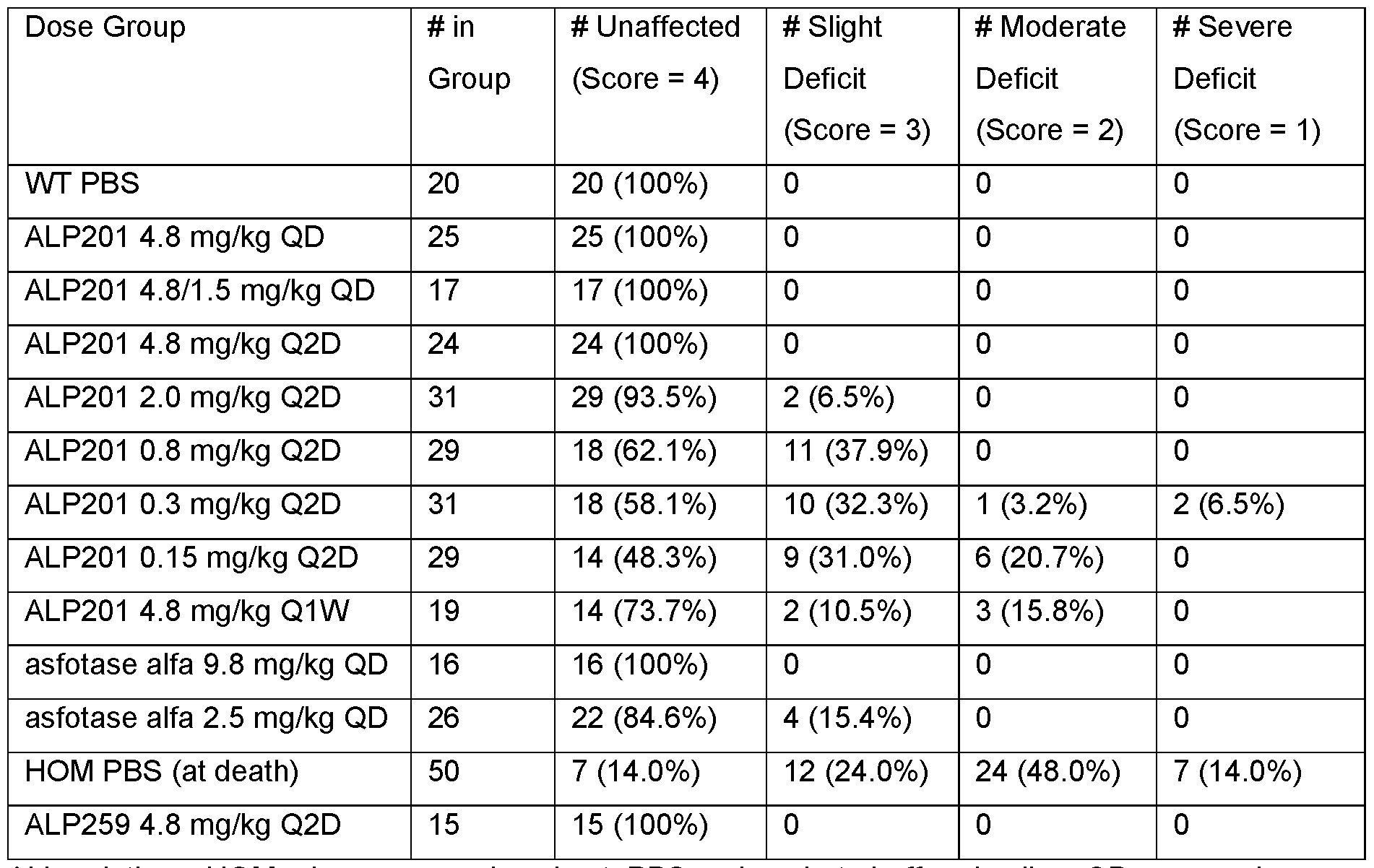


Claims
Priority Applications (13)
| Application Number | Priority Date | Filing Date | Title |
|---|---|---|---|
| AU2020398898A AU2020398898A1 (en) | 2019-12-09 | 2020-12-09 | Alkaline phosphatase polypeptides and methods of use thereof |
| KR1020227023326A KR20220111693A (en) | 2019-12-09 | 2020-12-09 | Alkaline phosphatase polypeptides and methods of using the same |
| CA3161266A CA3161266A1 (en) | 2019-12-09 | 2020-12-09 | Alkaline phosphatase polypeptides and methods of use thereof |
| JP2022534699A JP7796645B2 (en) | 2019-12-09 | 2020-12-09 | Alkaline phosphatase polypeptides and methods of use thereof |
| IL293616A IL293616B2 (en) | 2019-12-09 | 2020-12-09 | Alkaline phosphatase polypeptides and methods of use thereof |
| EP20898477.3A EP4072579A4 (en) | 2019-12-09 | 2020-12-09 | ALKALINE PHOSPHATASE POLYPEPTIDES AND METHODS OF USE THEREOF |
| CN202080085366.7A CN115175692A (en) | 2019-12-09 | 2020-12-09 | Alkaline phosphatase polypeptides and methods of use thereof |
| BR112022011286A BR112022011286A2 (en) | 2019-12-09 | 2020-12-09 | ALKALINE PHOSPHATASE POLYPEPTIDES AND METHODS OF USE THEREOF |
| MX2022007114A MX2022007114A (en) | 2019-12-09 | 2020-12-09 | ALKALINE PHOSPHATASE POLYPEPTIDES AND METHODS OF USE THEREOF. |
| CONC2022/0008677A CO2022008677A2 (en) | 2019-12-09 | 2022-06-22 | Alkaline phosphatase polypeptides and methods of use thereof |
| JP2024215945A JP2025026661A (en) | 2019-12-09 | 2024-12-10 | Alkaline phosphatase polypeptides and methods of use thereof |
| IL325492A IL325492A (en) | 2019-12-09 | 2025-12-21 | Alkaline phosphatase polypeptides and methods of use thereof |
| JP2026001683A JP2026042949A (en) | 2019-12-09 | 2026-01-07 | Alkaline phosphatase polypeptides and methods of use thereof |
Applications Claiming Priority (2)
| Application Number | Priority Date | Filing Date | Title |
|---|---|---|---|
| US201962945431P | 2019-12-09 | 2019-12-09 | |
| US62/945,431 | 2019-12-09 |
Publications (1)
| Publication Number | Publication Date |
|---|---|
| WO2021119218A1 true WO2021119218A1 (en) | 2021-06-17 |
Family
ID=76209432
Family Applications (1)
| Application Number | Title | Priority Date | Filing Date |
|---|---|---|---|
| PCT/US2020/064140 Ceased WO2021119218A1 (en) | 2019-12-09 | 2020-12-09 | Alkaline phosphatase polypeptides and methods of use thereof |
Country Status (12)
| Country | Link |
|---|---|
| US (2) | US12433938B2 (en) |
| EP (1) | EP4072579A4 (en) |
| JP (3) | JP7796645B2 (en) |
| KR (1) | KR20220111693A (en) |
| CN (1) | CN115175692A (en) |
| AU (1) | AU2020398898A1 (en) |
| BR (1) | BR112022011286A2 (en) |
| CA (1) | CA3161266A1 (en) |
| CO (1) | CO2022008677A2 (en) |
| IL (2) | IL293616B2 (en) |
| MX (1) | MX2022007114A (en) |
| WO (1) | WO2021119218A1 (en) |
Cited By (7)
| Publication number | Priority date | Publication date | Assignee | Title |
|---|---|---|---|---|
| US11913039B2 (en) | 2018-03-30 | 2024-02-27 | Alexion Pharmaceuticals, Inc. | Method for producing recombinant alkaline phosphatase |
| WO2024020320A3 (en) * | 2022-07-19 | 2024-04-25 | Rampart Bioscience, Inc. | Non-immunogenic circular, non-viral dna vectors |
| WO2024133763A3 (en) * | 2022-12-21 | 2024-08-29 | Almac Discovery Limited | Alpp-specific variant antigen binding molecules |
| US12083169B2 (en) | 2021-02-12 | 2024-09-10 | Alexion Pharmaceuticals, Inc. | Alkaline phosphatase polypeptides and methods of use thereof |
| US12268733B2 (en) | 2018-08-10 | 2025-04-08 | Alexion Pharmaceuticals, Inc. | Methods of treating neurofibromatosis type 1 and related conditions with alkaline phosphatase |
| US12433938B2 (en) | 2019-12-09 | 2025-10-07 | Alexion Pharmaceuticals, Inc. | Alkaline phosphatase polypeptides and methods of use thereof |
| US12611447B2 (en) | 2020-09-04 | 2026-04-28 | Alexion Pharmaceuticals, Inc. | Methods for treating bone mineralization disorders |
Families Citing this family (3)
| Publication number | Priority date | Publication date | Assignee | Title |
|---|---|---|---|---|
| KR20260005379A (en) * | 2023-05-02 | 2026-01-09 | 알렉시온 파마슈티칼스, 인코포레이티드 | Treatment of muscle weakness using alkaline phosphatase |
| WO2025090786A1 (en) * | 2023-10-24 | 2025-05-01 | Rampart Bioscience, Inc. | Reduced immunogenic gene therapy protocols using circular, extended cruciform containing non-viral vectors |
| WO2026015533A1 (en) * | 2024-07-09 | 2026-01-15 | Alexion Pharmaceuticals, Inc. | Methods of manufacturing recombinant alkaline phosphatases |
Family Cites Families (200)
| Publication number | Priority date | Publication date | Assignee | Title |
|---|---|---|---|---|
| CA1339210C (en) | 1988-05-31 | 1997-08-05 | John Lewicki | Recombinant techniques for production of novel natriuretic and vasodilator peptides |
| US5225538A (en) | 1989-02-23 | 1993-07-06 | Genentech, Inc. | Lymphocyte homing receptor/immunoglobulin fusion proteins |
| US6406697B1 (en) | 1989-02-23 | 2002-06-18 | Genentech, Inc. | Hybrid immunoglobulins |
| US6541610B1 (en) | 1989-09-05 | 2003-04-01 | Immunex Corporation | Fusion proteins comprising tumor necrosis factor receptor |
| WO1991016342A1 (en) | 1990-04-20 | 1991-10-31 | Hisayuki Matsuo | Novel physiologically active peptide originating in hog |
| JP2930380B2 (en) | 1990-07-13 | 1999-08-03 | 壽之 松尾 | New bioactive peptide derived from pig (CNP-53) |
| JP3026351B2 (en) | 1990-07-13 | 2000-03-27 | 壽之 松尾 | Porcine CNP gene and precursor protein |
| JP2977158B2 (en) | 1990-09-07 | 1999-11-10 | 壽之 松尾 | New bird-derived bioactive peptide (chicken CNP) |
| JP2977159B2 (en) | 1990-09-07 | 1999-11-10 | 壽之 松尾 | Frog-derived novel bioactive peptide (frog CNP) |
| JP3026352B2 (en) | 1990-09-11 | 2000-03-27 | 壽之 松尾 | Rat CNP cDNA and precursor protein |
| JP3026354B2 (en) | 1990-09-27 | 2000-03-27 | 壽之 松尾 | Human CNP gene and precursor protein |
| JP2809533B2 (en) | 1991-01-31 | 1998-10-08 | 壽之 松尾 | CNP analog peptide |
| AU662155B2 (en) | 1991-05-10 | 1995-08-24 | Celtrix Pharmaceuticals, Inc. | Targeted delivery of bone growth factors |
| AU6360394A (en) | 1993-03-03 | 1994-09-26 | Mayo Foundation For Medical Education And Research | Vasonatrin peptide and analogs thereof |
| WO1995005455A1 (en) | 1993-08-13 | 1995-02-23 | Rijksuniversiteit Te Groningen | Pharmaceutical composition comprising phosphatase or a derivative thereof |
| US5846932A (en) | 1993-11-12 | 1998-12-08 | Genentech, Inc. | Receptor specific atrial natriuretic peptides |
| PT728147E (en) | 1993-11-12 | 2003-06-30 | Genentech Inc | NATURAL NUTRITIONAL PEPTIDE SPECIFIC DERECEPTOR HEADPHONES |
| US5665704A (en) | 1993-11-12 | 1997-09-09 | Genentech, Inc. | Receptor specific atrial natriuretic peptides |
| US6525022B1 (en) | 1993-11-12 | 2003-02-25 | Genentech, Inc. | Receptor specific atrial natriuretic peptides |
| EP0763061B1 (en) | 1994-06-02 | 2002-10-30 | Forssmann, Wolf-Georg, Prof. Dr. med. | Process and intermediate products for preparing cardiodilatin fragments, and highly purified cardiodilatin fragments |
| JPH0870875A (en) | 1994-09-05 | 1996-03-19 | Tosoh Corp | Recombinant alkaline phosphatase fusion protein |
| US5863782A (en) | 1995-04-19 | 1999-01-26 | Women's And Children's Hospital | Synthetic mammalian sulphamidase and genetic sequences encoding same |
| EP1488802A2 (en) | 1996-06-19 | 2004-12-22 | Diversa Corporation | Thermostabile phosphatases |
| CA2269656A1 (en) | 1996-10-22 | 1998-04-30 | Genentech, Inc. | Receptor specific brain natriuretic peptide (bnp) |
| US6028055A (en) | 1996-10-22 | 2000-02-22 | Genetech, Inc. | Receptor selective BNP |
| CA2280957A1 (en) | 1997-02-14 | 1998-08-20 | Leslie Orgel | Methods and compositions for delivery of therapeutic agents to bone tissue employing conjugates of negatively charged peptide oligomers with therapeutic agents |
| AU757658B2 (en) | 1998-03-09 | 2003-02-27 | Zealand Pharma A/S | Pharmacologically active peptide conjugates having a reduced tendency towards enzymatic hydrolysis |
| CA2245903A1 (en) | 1998-09-28 | 2000-03-28 | Mcgill University | Use of pex in the treatment of metabolic bone diseases |
| CA2260376A1 (en) | 1999-02-11 | 2000-08-11 | Universite De Montreal | New metalloproteases of the neprilysin family |
| CA2262056A1 (en) | 1999-02-24 | 2000-08-24 | Guy Boileau | Composition, methods and reagents for the synthesis of a soluble form of human pex |
| AU2495200A (en) | 1999-03-08 | 2000-09-28 | Genentech Inc. | Compositions and methods for the treatment of tumor |
| JP2002541213A (en) | 1999-04-13 | 2002-12-03 | インヘール セラピューティック システムズ, インコーポレイテッド | Pulmonary administration of dry powder formulations for the treatment of infertility |
| EP1176985A2 (en) | 1999-04-28 | 2002-02-06 | Vectramed, Inc. | Enzymatically activated polymeric drug conjugates |
| US6849714B1 (en) | 1999-05-17 | 2005-02-01 | Conjuchem, Inc. | Protection of endogenous therapeutic peptides from peptidase activity through conjugation to blood components |
| US20040266673A1 (en) | 2002-07-31 | 2004-12-30 | Peter Bakis | Long lasting natriuretic peptide derivatives |
| US6887470B1 (en) | 1999-09-10 | 2005-05-03 | Conjuchem, Inc. | Protection of endogenous therapeutic peptides from peptidase activity through conjugation to blood components |
| JP2000327583A (en) | 1999-05-17 | 2000-11-28 | Medei Sci Puraningu:Kk | Bone-directional hormone derivative |
| EP1623994A3 (en) | 1999-05-17 | 2008-07-16 | ConjuChem Biotechnologies Inc. | Protection of endogenous therapeutic peptides from peptidase activity through conjugation to blood components |
| DE19942230C2 (en) | 1999-09-03 | 2003-09-25 | Wolf-Georg Forssmann | Use of natriuretic peptides as antibiotic substances for the treatment of bacterial infections |
| DE60034478T2 (en) | 1999-11-16 | 2008-01-10 | Genzyme Corp., Cambridge | VECTORS AND TRANSGENES WITH REGULATORY ELEMENTS FOR GENETIC ADMINISTRATION IN LIVER |
| AU2583901A (en) | 1999-12-17 | 2001-06-25 | Ariad Pharmaceuticals, Inc. | Proton pump inhibitors |
| US6407211B1 (en) | 1999-12-17 | 2002-06-18 | Mayo Foundation For Medical Education And Research | Chimeric natriuretic peptides |
| JP4237375B2 (en) | 2000-03-31 | 2009-03-11 | アスビオファーマ株式会社 | Pharmaceutical composition used for treatment or prevention of ischemic disease |
| WO2001080890A2 (en) | 2000-04-26 | 2001-11-01 | Queen's University At Kingston | Formulations and methods of using nitric oxide mimetics against a malignant cell phenotype |
| EP1502604A1 (en) | 2000-04-26 | 2005-02-02 | Cellegy Pharmaceuticals, Inc | Use of nitric oxide mimetics in cancer treatment |
| US20050142217A1 (en) | 2000-04-26 | 2005-06-30 | Adams Michael A. | Formulations and methods of using nitric oxide mimetics against a malignant cell phenotype |
| US7678391B2 (en) | 2000-04-26 | 2010-03-16 | Queen's University At Kingston | Formulations and methods of using nitric oxide mimetics against a malignant cell phenotype |
| US6830885B1 (en) | 2000-08-18 | 2004-12-14 | Phenogene Therapeutiques Inc. | Nucleic acid molecule, method and kit for selecting a nucleic acid having a desired feature |
| AU2001287429B2 (en) | 2000-08-23 | 2005-08-18 | Alexion Pharmaceuticals, Inc. | Method and compositions for promoting osteogenesis |
| US6436386B1 (en) | 2000-11-14 | 2002-08-20 | Shearwater Corporation | Hydroxyapatite-targeting poly (ethylene glycol) and related polymers |
| ES2311560T3 (en) | 2000-12-07 | 2009-02-16 | Eli Lilly And Company | GLP-1 FUSION PROTEINS. |
| JP2002178279A (en) | 2000-12-12 | 2002-06-25 | Ulvac Japan Ltd | Substrate transfer method |
| AU2002255478A1 (en) | 2001-01-10 | 2002-09-12 | Pe Corporation (Ny) | Kits, such as nucleic acid arrays, comprising a majority of human exons or transcripts, for detecting expression and other uses thereof |
| JP2002246704A (en) | 2001-02-16 | 2002-08-30 | Philips Japan Ltd | Electronic device and circuit device |
| IL142118A0 (en) | 2001-03-20 | 2002-03-10 | Prochon Biotech Ltd | Method and composition for treatment of skeletal dysplasias |
| US7888372B2 (en) | 2001-03-23 | 2011-02-15 | National Institutes Of Health (Nih) | Compositions and methods for modulating bone mineral deposition |
| US20020183276A1 (en) | 2001-03-23 | 2002-12-05 | Burnham Institute | Compositions and methods for modulating bone mineral deposition |
| EP1395293B1 (en) | 2001-05-14 | 2009-07-22 | Gbp Ip, Llc | Lentiviral vectors encoding clotting factors for gene therapy |
| DE60230927D1 (en) | 2001-07-16 | 2009-03-05 | Caprotec Bioanalytics Gmbh | FISH CONNECTIONS, THEIR ABDUCTION AND METHOD FOR ANALYZING THE PROTEOM AND COMPLEX COMPOSITIONS |
| BRPI0203172B8 (en) | 2001-09-28 | 2021-05-25 | Nakao Kazuwa | pharmaceutical composition for achondroplasia |
| US20050202442A1 (en) | 2003-12-15 | 2005-09-15 | Morris David W. | Novel therapeutic targets in cancer |
| US7425531B2 (en) | 2001-12-20 | 2008-09-16 | Enobia Pharma Inc. | Bone polypeptide-1 |
| US20080194481A1 (en) | 2001-12-21 | 2008-08-14 | Human Genome Sciences, Inc. | Albumin Fusion Proteins |
| PT1463751E (en) | 2001-12-21 | 2013-08-26 | Human Genome Sciences Inc | ALBUMINE FUSION PROTEINS |
| US20030158132A1 (en) | 2002-01-22 | 2003-08-21 | Genvec, Inc. | Method for enhancing bone density or formation |
| AU2003208228A1 (en) | 2002-03-06 | 2003-09-16 | Cellegy Pharmaceuticals, Inc | Formulations and methods of using nitric oxide mimetics in cancer treatment |
| US20050113286A1 (en) | 2002-03-18 | 2005-05-26 | Schreiner George F. | Methods for treating congestive heart failure |
| US20040077537A1 (en) | 2002-03-18 | 2004-04-22 | Schreiner George F. | Method for treating congestive heart failure |
| IL149562A0 (en) | 2002-05-09 | 2002-11-10 | Prochon Ltd | Fgf variants and methods for use thereof |
| CA2433479A1 (en) | 2002-07-22 | 2004-01-22 | F. Hoffmann-La Roche Ag | Conjugate of a tissue non-specific alkaline phosphatase and dextran, process for its production and use thereof |
| AU2003246500A1 (en) | 2002-07-31 | 2004-02-16 | Conjuchem Biotechnologies Inc. | Long lasting natriuretic peptide derivatives |
| WO2004022579A2 (en) | 2002-09-06 | 2004-03-18 | University Of South Florida | Cellular delivery of natriuretic peptides |
| JP4610025B2 (en) | 2002-11-18 | 2011-01-12 | シン.クス ファーマ、インコーポレイテッド | Polyclonal monoclonal Elisa assay for NT-proBNP detection |
| BR0316560A (en) | 2002-11-26 | 2005-10-04 | Nobex Corp | Natriuretic Compound Conjugate, Pharmaceutical Formulation, Method of Treating a Condition, Method of Preparing the Natriuretic Compound Conjugate, Modified Pro-Polynatriuretic Peptide Conjugate, Natriuretic Peptide Analog, hbnp Analogue, Compound, and Method of Preparing a Compound |
| US7648962B2 (en) | 2002-11-26 | 2010-01-19 | Biocon Limited | Natriuretic compounds, conjugates, and uses thereof |
| WO2004050620A2 (en) | 2002-12-03 | 2004-06-17 | Enobia Pharma | Derivatives of succinic and glutaric acids and analogs thereof useful as inhibitors of phex |
| US20060172929A1 (en) | 2003-01-13 | 2006-08-03 | Gudrun Rappold-Hoerbrand | Use of natriuretic peptides for the treatment of stature disorders related to the shox gene |
| CA2516128A1 (en) | 2003-02-14 | 2004-09-02 | Sagres Discovery, Inc. | Therapeutic targets in cancer |
| US7488713B2 (en) | 2004-03-18 | 2009-02-10 | University Of South Florida | Cancer treatment using C-type natriuretic peptides |
| WO2004094460A2 (en) | 2003-04-17 | 2004-11-04 | Ciphergen Biosystems, Inc. | Polypeptides related to natriuretic peptides and methods of their identification and use |
| JP2007501021A (en) | 2003-05-30 | 2007-01-25 | アレクシオン ファーマシューティカルズ, インコーポレイテッド | Antibodies and fusion proteins containing genetically engineered constant regions |
| CA2570398C (en) | 2003-06-17 | 2020-05-12 | Otago Innovation Limited | Assessment of skeletal growth using measurements of nt-cnp peptides |
| CN101208353B (en) | 2003-06-20 | 2011-12-14 | 梅约医学教育与研究基金会 | Isoforms of brain natriuretic peptide |
| WO2005052593A1 (en) | 2003-10-29 | 2005-06-09 | The University Of Leicester | Detection |
| US7431915B2 (en) | 2003-10-31 | 2008-10-07 | The Regents Of The University Of California | Peptides whose uptake by cells is controllable |
| US8110665B2 (en) | 2003-11-13 | 2012-02-07 | Hanmi Holdings Co., Ltd. | Pharmaceutical composition comprising an immunoglobulin FC region as a carrier |
| WO2005047337A1 (en) | 2003-11-13 | 2005-05-26 | Hanmi Pharmaceutical Co., Ltd. | A pharmaceutical composition comprising an immunoglobulin fc region as a carrier |
| US20060019890A1 (en) | 2004-01-15 | 2006-01-26 | Kapoun Ann M | Method for treating cardiac remodeling following myocardial injury |
| US20080182299A1 (en) | 2004-01-27 | 2008-07-31 | Compugent Ltd. | Novel brain natriuretic peptide variants and methods of use thereof |
| EP1730181A2 (en) | 2004-01-27 | 2006-12-13 | Compugen USA, Inc. | Novel brain natriuretic peptide variants and methods of use thereof |
| ES2527291T3 (en) | 2004-03-11 | 2015-01-22 | Genentech, Inc. | Process for the production of polypeptides |
| EP3620530A1 (en) | 2004-03-31 | 2020-03-11 | Kazuwa Nakao | Composition for increasing body height |
| WO2005094889A1 (en) | 2004-03-31 | 2005-10-13 | Chugai Seiyaku Kabushiki Kaisha | Remedy or preventive for arthritis |
| JP2005292718A (en) | 2004-04-05 | 2005-10-20 | Furukawa Electric Co Ltd:The | Optical waveguide, optical waveguide module, and method for producing optical waveguide |
| PL2348114T3 (en) | 2004-04-21 | 2019-08-30 | Alexion Pharmaceuticals, Inc. | Bone delivery conjugates and method of using same to target proteins to bone |
| SG152290A1 (en) | 2004-05-04 | 2009-05-29 | Univ Singapore | Method for expressing sialylated glycoproteins in mammalian cells and cells thereof |
| WO2005110435A1 (en) | 2004-05-10 | 2005-11-24 | Novacea, Inc. | Prevention of arterial restenosis with active vitamin d compounds |
| US20070081986A1 (en) | 2005-10-07 | 2007-04-12 | Shunji Tomatsu | Beta-glucuronidase with an attached short peptide of acidic amino acids |
| US7972593B2 (en) | 2004-06-10 | 2011-07-05 | Saint Louis University | Delivery of therapeutic agents to the bone |
| US7863238B2 (en) | 2004-06-10 | 2011-01-04 | Saint Louis University | Proteins with an attached short peptide of acidic amino acids |
| US20070081984A1 (en) | 2005-10-11 | 2007-04-12 | Shunji Tomatsu | Compositions and methods for treating hypophosphatasia |
| ATE496060T1 (en) | 2004-07-15 | 2011-02-15 | Univ Queensland | PROTEIN-TYPE COMPOUNDS AND APPLICATIONS THEREOF |
| US20090142347A1 (en) | 2004-09-29 | 2009-06-04 | The Burnham Institute For Medical Research | Tissue-Nonspecific Alkaline Phosphatase (TNAP): a Therapeutic Target for Arterial Calcification |
| CN101068575A (en) | 2004-12-01 | 2007-11-07 | 建新公司 | Methods for targeted delivery of genetic material to the liver |
| EP2510942B1 (en) | 2005-04-07 | 2015-09-02 | Cardiorentis AG | Use of natriuretic peptide for treating heart failure |
| US8008443B2 (en) | 2005-04-26 | 2011-08-30 | Medimmune, Llc | Modulation of antibody effector function by hinge domain engineering |
| US20070042957A1 (en) | 2005-08-19 | 2007-02-22 | Mayo Foundation For Medical Education And Research | Type v phosphodiesterase inhibitors and natriuretic polypeptides |
| US7470668B2 (en) | 2005-08-24 | 2008-12-30 | Enobia Pharma Inc. | Method of use of specific natriuretic peptide receptor c ligands, transgenic non-human mammals expressing specific natriuretic peptide receptor c antagonists and cells thereof |
| JP2009508820A (en) | 2005-09-06 | 2009-03-05 | ゼロス セラピューティクス, インコーポレイテッド | Parathyroid hormone analogs and usage |
| US7803901B2 (en) | 2005-09-16 | 2010-09-28 | Mayo Foundation For Medical Education And Research | Polypeptides with natriuresis activity |
| WO2007041645A2 (en) | 2005-10-03 | 2007-04-12 | Scios Inc. | Oxidized human bnp |
| RU2316334C2 (en) | 2005-12-19 | 2008-02-10 | Медитек Индастриз ЛЛС | Method for activating lost motor functions and determining their recovery effectiveness in central nervous system injury cases |
| US7625564B2 (en) | 2006-01-27 | 2009-12-01 | Novagen Holding Corporation | Recombinant human EPO-Fc fusion proteins with prolonged half-life and enhanced erythropoietic activity in vivo |
| DK1987178T3 (en) | 2006-02-20 | 2015-04-20 | Phylogica Ltd | Process for the construction and screening of peptide structure libraries |
| US8784833B2 (en) | 2006-06-27 | 2014-07-22 | Saint Louis University | Prenatal enzyme replacement therapy for hypophosphatasia |
| CA2656112A1 (en) | 2006-06-30 | 2008-05-08 | Hanje Chen | Bioresponsive polymers |
| BRPI0716416A2 (en) | 2006-08-08 | 2016-10-11 | Mayo Foundation | substantially pure polypeptide between 37 and 47 amino acid in length, isolated nucleic acid, vector: host cell and pharmaceutical composition |
| US7825092B2 (en) | 2006-08-08 | 2010-11-02 | University Of South Florida | Dendroaspis natriuretic peptide for treatment of cancer |
| WO2008030558A2 (en) | 2006-09-08 | 2008-03-13 | Ambrx, Inc. | Modified human plasma polypeptide or fc scaffolds and their uses |
| MX2009002504A (en) | 2006-09-08 | 2009-05-22 | Mayo Foundation | Aquaretic and natriuretic polypeptides lacking vasodilatory activity. |
| AR063384A1 (en) | 2006-10-25 | 2009-01-28 | Amgen Inc | THERAPEUTIC AGENTS BASED ON PEPTIDES DERIVED FROM TOXINS |
| US20100168443A1 (en) | 2006-11-02 | 2010-07-01 | University Of Virginia Patent Foundation | Ethoid-Containing Compounds, Methods for Preparing Ethoid-Containing Compounds, and Methods of Use |
| US8987200B2 (en) | 2006-11-16 | 2015-03-24 | Kai Pharmaceuticals, Inc. | Polycationic calcium modulator peptides for the treatment of hyperparathyroidism and hypercalcemic disorders |
| US20080181903A1 (en) | 2006-12-21 | 2008-07-31 | Pdl Biopharma, Inc. | Conjugate of natriuretic peptide and antibody constant region |
| US20090022728A1 (en) * | 2007-03-09 | 2009-01-22 | Rinat Neuroscience Corporation | Methods of treating ophthalmic diseases |
| WO2008109903A1 (en) | 2007-03-12 | 2008-09-18 | Biomedica Medizinprodukte Gmbh & Co Kg | Diagnosis of septic complications |
| EP1985697A1 (en) | 2007-04-27 | 2008-10-29 | AM-Pharma B.V. | Modified phosphatases |
| KR20080098216A (en) | 2007-05-04 | 2008-11-07 | 한미약품 주식회사 | Sodium excretion peptide drug conjugate using a carrier substance |
| RS53302B (en) | 2007-05-11 | 2014-08-29 | Alexion Pharma Holding | BONE-Focused Alkaline Phosphatase, Supplies, and Methods of Use |
| EP2158318A2 (en) | 2007-05-14 | 2010-03-03 | Biogen Idec MA, Inc. | Single-chain fc (scfc) regions, binding polypeptides comprising same, and methods related thereto |
| US20100310561A1 (en) | 2007-06-06 | 2010-12-09 | Boehringer Ingelheim International Gmbh | Natriuretic fusion proteins |
| US8999337B2 (en) | 2007-06-11 | 2015-04-07 | Abbvie Biotechnology Ltd. | Methods for treating juvenile idiopathic arthritis by inhibition of TNFα |
| WO2009006520A1 (en) | 2007-07-03 | 2009-01-08 | Medimmune, Llc | Hinge domain engineering |
| EP2173773A4 (en) | 2007-07-06 | 2010-07-07 | Theratechnologies Inc | BIFUNCTIONAL FUSION PROTEINS OF ALPHA-MELANOCYTE STIMULATION HORMONE (ALPHA-MSH) AND AURICULAR NATRIURETIC PROTEIN (ANP), AND USES THEREOF IN HYPERTENSION AND ACUTE RENAL INJURY |
| AU2008279379B2 (en) | 2007-07-20 | 2016-03-24 | Mayo Foundation For Medical Education And Research | Natriuretic polypeptides |
| EP2190466A4 (en) | 2007-08-10 | 2011-12-21 | Burnham Inst Medical Research | NON-SPECIFIC TISSUE ALKALINE PHOSPHATASE ACTIVATORS (TNAP) AND USES THEREOF |
| MX2010001684A (en) | 2007-08-15 | 2010-04-21 | Amunix Inc | Compositions and methods for modifying properties of biologically active polypeptides. |
| WO2009039982A2 (en) | 2007-09-11 | 2009-04-02 | Mondobiotech Laboratories Ag | Use of a peptide as a therapeutic agent |
| WO2009039983A2 (en) | 2007-09-11 | 2009-04-02 | Mondobiotech Laboratories Ag | Use of a peptide as a therapeutic agent |
| WO2009033680A2 (en) | 2007-09-11 | 2009-03-19 | Mondobiotech Laboratories Ag | Galanin-like peptide alone or in combination with cyclo-argd as a therapeutic agent |
| US20100184698A1 (en) | 2007-09-11 | 2010-07-22 | Dorian Bevec | Use of a deslorelin and mastoparan as a therapeutic agent |
| WO2009040020A1 (en) | 2007-09-11 | 2009-04-02 | Mondobiotech Laboratories Ag | Amylin as a therapeutic agent |
| EP2185183B1 (en) | 2007-09-11 | 2016-03-16 | Cardiopep Pharma GmbH | Use of natriuretic peptides for treating angioedema syndromes |
| WO2009036448A2 (en) | 2007-09-15 | 2009-03-19 | Mayo Foundation For Medical Education And Research | Natriuretic peptide receptor-c agonists |
| EP2217620A2 (en) | 2007-11-21 | 2010-08-18 | BioMarin Pharmaceutical Inc. | Variants of c-type natriuretic peptide |
| WO2009086126A2 (en) | 2007-12-21 | 2009-07-09 | Mayo Foundation For Medical Education And Research | Natriuretic polypeptides |
| EP2080812A1 (en) | 2008-01-18 | 2009-07-22 | Transmedi SA | Compositions and methods of detecting post-stop peptides |
| KR20130018965A (en) | 2008-05-23 | 2013-02-25 | 다이이찌 산쿄 가부시키가이샤 | Peptides with Plasma Half-Life Extension of Target Peptides |
| KR20110020903A (en) | 2008-06-06 | 2011-03-03 | 메이오 파운데이션 포 메디칼 에쥬케이션 앤드 리써치 | Chimeric Natriuretic Polypeptides and Methods of Inhibiting Cardiac Remodeling |
| WO2009156481A1 (en) | 2008-06-25 | 2009-12-30 | Ascendis Pharma As | Pegylated bnp |
| CN102131822A (en) | 2008-06-26 | 2011-07-20 | 阿塞勒隆制药公司 | Methods for dosing activin-actriia antagonist and monitoring of treated patients |
| US8741842B2 (en) | 2008-07-02 | 2014-06-03 | Mayo Foundation For Medical Education And Research | Chimeric natriuretic polypeptides with unique pharmacologic profiles |
| TWI388570B (en) | 2008-07-23 | 2013-03-11 | 韓美科學有限公司 | Polypeptide complex comprising a non-peptidomimetic polymer having three functional ends |
| US20100093678A1 (en) | 2008-10-10 | 2010-04-15 | The University Of Georgia Research Foundation, Inc | Compositions and methods of the treatment of obesity and osteoporosis |
| US8642550B2 (en) | 2008-10-24 | 2014-02-04 | Mayo Foundation For Medical Education And Research | Chimeric natriuretic peptides without hypotensive inducing capability |
| WO2010078325A2 (en) | 2008-12-29 | 2010-07-08 | Mayo Foundation For Medical Education And Research | Natriuretic polypeptides for reducing or preventing restenosis |
| KR20100084996A (en) | 2009-01-19 | 2010-07-28 | 한미홀딩스 주식회사 | Method for producing physiologically active protein or peptide using immunoglobulin fragment |
| CA2754408A1 (en) | 2009-03-30 | 2010-10-14 | Boehringer Ingelheim International Gmbh | Fusion proteins comprising canine fc portions |
| US20120053123A1 (en) | 2009-05-05 | 2012-03-01 | Mayo Foundation For Medical Education And Research | Natriuretic polypeptides having mutations within their disulfide rings |
| HUE032582T2 (en) | 2009-05-20 | 2017-09-28 | Biomarin Pharm Inc | Variants of C-type natriuretic peptide |
| US8685024B2 (en) | 2010-04-14 | 2014-04-01 | Arrowhead Medical Device Technologies, Llc | Intramedullary fixation device and methods for bone fixation and stabilization |
| EP2563406A4 (en) * | 2010-04-30 | 2013-11-13 | Alexion Pharma Internat Sarl | METHODS, COMPOSITIONS AND KITS FOR THE TREATMENT OF MINERALIZATION DISORDERS OF THE MATRIX |
| EP2658979B1 (en) | 2010-12-27 | 2018-02-14 | Alexion Pharmaceuticals, Inc. | Compositions comprising natriuretic peptides and methods of use thereof |
| SG11201401605QA (en) | 2011-10-19 | 2014-09-26 | Alexion Pharma Holding | Compositions comprising alkaline phosphatase and/or natriuretic peptide and methods of use thereof |
| US20140315809A1 (en) | 2011-11-10 | 2014-10-23 | Kai Pharmaceuticals, Inc. | Calcimimetics and methods for their use |
| US10052366B2 (en) | 2012-05-21 | 2018-08-21 | Alexion Pharmaceuticsl, Inc. | Compositions comprising alkaline phosphatase and/or natriuretic peptide and methods of use thereof |
| KR101380740B1 (en) | 2012-06-29 | 2014-04-11 | 쉐어 휴먼 제네텍 세러피스, 인코포레이티드 | Purification of iduronate-2-sulfatase |
| BR112015001712A2 (en) | 2012-07-25 | 2017-07-04 | Psioxus Therapeutics Ltd | use of s-pindolol for the treatment of cachexia and sarcopenia |
| CN118388581A (en) | 2013-03-08 | 2024-07-26 | 建新公司 | Integrated continuous manufacture of therapeutic protein drug substances |
| US20160097100A1 (en) | 2013-05-17 | 2016-04-07 | Jeffrey Trent | Genetic test to predict patient response to bone morphogenetic protein in arthrodesis |
| EP3425048A1 (en) | 2014-01-24 | 2019-01-09 | AM-Pharma B.V. | Chimeric alkaline phosphatase-like proteins |
| HUE040230T2 (en) | 2014-01-24 | 2019-02-28 | Am Pharma Bv | Downstream processing of an alkaline phosphatase |
| EP3845245B1 (en) | 2014-06-09 | 2025-06-25 | Ultragenyx Pharmaceutical Inc. | The effective and efficient control of serum phosphate for optimal bone formation |
| CN106459222A (en) * | 2014-06-24 | 2017-02-22 | 诺和诺德股份有限公司 | MIC-1 fusion proteins and uses thereof |
| US10822596B2 (en) | 2014-07-11 | 2020-11-03 | Alexion Pharmaceuticals, Inc. | Compositions and methods for treating craniosynostosis |
| US9908932B2 (en) | 2014-10-15 | 2018-03-06 | Alexion Pharmaceuticals, Inc. | Methods of shifting an isoelectric profile of a protein product and uses thereof |
| WO2016090251A1 (en) | 2014-12-05 | 2016-06-09 | Alexion Pharmaceuticals, Inc. | Treating seizure with recombinant alkaline phosphatase |
| US10603361B2 (en) | 2015-01-28 | 2020-03-31 | Alexion Pharmaceuticals, Inc. | Methods of treating a subject with an alkaline phosphatase deficiency |
| KR101867134B1 (en) | 2015-03-23 | 2018-06-12 | 한양대학교 산학협력단 | Cell culture media for production of target material with high yield using mammalian cell, method for culturing cells and production of target material using the cell culture media |
| AU2016308624B2 (en) | 2015-08-17 | 2022-06-23 | Alexion Pharmaceuticals, Inc. | Manufacturing of alkaline phosphatases |
| EP3355904A4 (en) | 2015-09-28 | 2019-06-12 | Alexion Pharmaceuticals, Inc. | IDENTIFICATION OF EFFICIENT POSOLOGICAL REGIMES FOR NON-SPECIFIC TISSUE ALKALINE ENZYME PHOSPHATASE REPLACEMENT HYPOPHOSPHATASE (TNSALP) THERAPY |
| JP2018533571A (en) | 2015-10-30 | 2018-11-15 | アレクシオン ファーマシューティカルズ, インコーポレイテッド | Methods for treating cranial suture early healing disease in a patient |
| EP3426286A4 (en) | 2016-03-08 | 2019-12-04 | Alexion Pharmaceuticals, Inc. | METHODS OF TREATING HYPOPHOSPHATASE IN CHILDREN |
| WO2017173395A1 (en) | 2016-04-01 | 2017-10-05 | Alexion Pharmaceuticals, Inc. | Methods for treating hypophosphatasia in adolescents and adults |
| WO2017171871A1 (en) | 2016-04-01 | 2017-10-05 | Alexion Pharmaceuticals, Inc. | Methods for treating hypophosphatasia in adolescents and adults |
| KR20180125979A (en) | 2016-04-01 | 2018-11-26 | 알렉시온 파마슈티칼스, 인코포레이티드 | Treatment of muscle weakness with alkaline phosphatase |
| US10988744B2 (en) | 2016-06-06 | 2021-04-27 | Alexion Pharmaceuticals, Inc. | Method of producing alkaline phosphatase |
| US20200306350A1 (en) | 2016-06-27 | 2020-10-01 | Alexion Pharmaceuticals, Inc. | Methods for treating hypophosphatasia in children and adolescents |
| JP7018933B2 (en) | 2016-08-18 | 2022-02-14 | アレクシオン ファーマシューティカルズ, インコーポレイテッド | How to treat bronchomalacia |
| EP3592372A4 (en) | 2017-03-09 | 2021-01-13 | Alexion Pharmaceuticals, Inc. | Glycoprotein manufacturing process |
| MX2019011508A (en) | 2017-03-31 | 2019-11-01 | Alexion Pharma Inc | Methods for treating hypophosphatasia (hpp) in adults and adolescents. |
| US20200121767A1 (en) | 2017-04-13 | 2020-04-23 | Alexion Pharmaceuticals, Inc. | Methods for identifying the health state of hypophosphatasia (hpp) patients |
| US20190043501A1 (en) | 2017-08-02 | 2019-02-07 | Elements of Genius, Inc. | Patient-centered assistive system for multi-therapy adherence intervention and care management |
| WO2019164978A1 (en) | 2018-02-21 | 2019-08-29 | Klaritos, Inc. | Methods of performing clinical trials |
| ES3032290T3 (en) | 2018-03-20 | 2025-07-16 | Theriva Biologics Inc | Intestinal alkaline phosphatase formulations |
| US11913039B2 (en) | 2018-03-30 | 2024-02-27 | Alexion Pharmaceuticals, Inc. | Method for producing recombinant alkaline phosphatase |
| JP2022535401A (en) | 2019-06-03 | 2022-08-08 | シンセティック・バイオロジクス・インコーポレイテッド | Alkaline phosphatase preparation and its use |
| MX2022007114A (en) | 2019-12-09 | 2022-07-11 | Alexion Pharma Inc | ALKALINE PHOSPHATASE POLYPEPTIDES AND METHODS OF USE THEREOF. |
| MX2023002673A (en) | 2020-09-04 | 2023-05-12 | Alexion Pharma Inc | Methods for treating bone mineralization disorders. |
| EP4291224A4 (en) | 2021-02-12 | 2025-01-01 | Alexion Pharmaceuticals, Inc. | ALKALINE PHOSPHATASE POLYPEPTIDES AND METHODS OF USE THEREOF |
-
2020
- 2020-12-09 MX MX2022007114A patent/MX2022007114A/en unknown
- 2020-12-09 AU AU2020398898A patent/AU2020398898A1/en active Pending
- 2020-12-09 US US17/117,099 patent/US12433938B2/en active Active
- 2020-12-09 JP JP2022534699A patent/JP7796645B2/en active Active
- 2020-12-09 BR BR112022011286A patent/BR112022011286A2/en unknown
- 2020-12-09 KR KR1020227023326A patent/KR20220111693A/en active Pending
- 2020-12-09 EP EP20898477.3A patent/EP4072579A4/en active Pending
- 2020-12-09 CA CA3161266A patent/CA3161266A1/en active Pending
- 2020-12-09 WO PCT/US2020/064140 patent/WO2021119218A1/en not_active Ceased
- 2020-12-09 IL IL293616A patent/IL293616B2/en unknown
- 2020-12-09 CN CN202080085366.7A patent/CN115175692A/en active Pending
-
2022
- 2022-06-22 CO CONC2022/0008677A patent/CO2022008677A2/en unknown
-
2024
- 2024-12-10 JP JP2024215945A patent/JP2025026661A/en active Pending
-
2025
- 2025-09-11 US US19/326,493 patent/US20260007725A1/en active Pending
- 2025-12-21 IL IL325492A patent/IL325492A/en unknown
-
2026
- 2026-01-07 JP JP2026001683A patent/JP2026042949A/en active Pending
Non-Patent Citations (5)
| Title |
|---|
| DATABASE Nucleotide [online] 17 September 2006 (2006-09-17), "Homo sapiens alkaline phosphatase, liver/bone/kidney (ALPL), mRNA", XP055836874, retrieved from NCBI Database accession no. 000478.2 * |
| KOZLENKOV ALEXEY, LE DU MARIE HELENE, CUNIASSE PHILIPPE, NY TOR, HOYLAERTS MARC F, MILLÁN JOSÉ LUIS: "Residues Determining the Binding Specificity of Uncompetitive Inhibitors to Tissue-Nonspecific Alkaline Phosphatase", JOURNAL OF BONE AND MINERAL RESEARCH, vol. 19, no. 11, 28 June 2004 (2004-06-28), pages 1862 - 1872, XP055836864, DOI: 10.1359/JBMR.040608 * |
| NISHIOKA ET AL.: "Enhancement of drug delivery to bone: Characterization of human tissue- nonspecific alkaline phosphatase tagged with an acidic oligopeptide", MOL GENET METAB., vol. 88, no. 3, July 2006 (2006-07-01), pages 244 - 255, XP024947080, DOI: 10.1016/j.ymgme.2006.02.012 * |
| See also references of EP4072579A4 * |
| ZHANG XIAN-EN, ZHOU YU-HUA, ZHANG ZHI-PING, XU HUI-FANG, SHAO WEN-HAI, CASS ANTHONY E.G.: "Engineering E. coli Alkaline Phosphatase Yields Changes of Catalytic Activity, Thermal Stability and Phosphate Inhibition", BIOCATALYSIS AND BIOTRANSFORMATION, vol. 20, no. 6, 2002, pages 381 - 389, XP055836855, DOI: 10.1080/1024242021000058667 * |
Cited By (10)
| Publication number | Priority date | Publication date | Assignee | Title |
|---|---|---|---|---|
| US11913039B2 (en) | 2018-03-30 | 2024-02-27 | Alexion Pharmaceuticals, Inc. | Method for producing recombinant alkaline phosphatase |
| US12268733B2 (en) | 2018-08-10 | 2025-04-08 | Alexion Pharmaceuticals, Inc. | Methods of treating neurofibromatosis type 1 and related conditions with alkaline phosphatase |
| US12433938B2 (en) | 2019-12-09 | 2025-10-07 | Alexion Pharmaceuticals, Inc. | Alkaline phosphatase polypeptides and methods of use thereof |
| US12611447B2 (en) | 2020-09-04 | 2026-04-28 | Alexion Pharmaceuticals, Inc. | Methods for treating bone mineralization disorders |
| US12083169B2 (en) | 2021-02-12 | 2024-09-10 | Alexion Pharmaceuticals, Inc. | Alkaline phosphatase polypeptides and methods of use thereof |
| EP4291224A4 (en) * | 2021-02-12 | 2025-01-01 | Alexion Pharmaceuticals, Inc. | ALKALINE PHOSPHATASE POLYPEPTIDES AND METHODS OF USE THEREOF |
| WO2024020320A3 (en) * | 2022-07-19 | 2024-04-25 | Rampart Bioscience, Inc. | Non-immunogenic circular, non-viral dna vectors |
| US12473567B2 (en) | 2022-07-19 | 2025-11-18 | Rampart Bioscience, Inc. | Non-immunogenic circular, non-viral DNA vectors |
| US12473568B2 (en) | 2022-07-19 | 2025-11-18 | Rampart Bioscience, Inc. | Non-immunogenic circular, non-viral DNA vectors |
| WO2024133763A3 (en) * | 2022-12-21 | 2024-08-29 | Almac Discovery Limited | Alpp-specific variant antigen binding molecules |
Also Published As
| Publication number | Publication date |
|---|---|
| CO2022008677A2 (en) | 2022-07-19 |
| JP2025026661A (en) | 2025-02-21 |
| JP7796645B2 (en) | 2026-01-09 |
| US12433938B2 (en) | 2025-10-07 |
| IL325492A (en) | 2026-02-01 |
| BR112022011286A2 (en) | 2022-09-06 |
| CN115175692A (en) | 2022-10-11 |
| IL293616A (en) | 2022-08-01 |
| JP2026042949A (en) | 2026-03-11 |
| IL293616B1 (en) | 2026-01-01 |
| IL293616B2 (en) | 2026-05-01 |
| US20210169994A1 (en) | 2021-06-10 |
| KR20220111693A (en) | 2022-08-09 |
| CA3161266A1 (en) | 2021-06-17 |
| JP2023504208A (en) | 2023-02-01 |
| AU2020398898A1 (en) | 2022-07-21 |
| US20260007725A1 (en) | 2026-01-08 |
| EP4072579A1 (en) | 2022-10-19 |
| MX2022007114A (en) | 2022-07-11 |
| EP4072579A4 (en) | 2024-05-01 |
Similar Documents
| Publication | Publication Date | Title |
|---|---|---|
| US20260007725A1 (en) | Alkaline phosphatase polypeptides and methods of use thereof | |
| US11065306B2 (en) | Methods for treating hypophosphatasia in children | |
| US11186832B2 (en) | Treating muscle weakness with alkaline phosphatases | |
| EP3474886B1 (en) | Methods for treating hypophosphatasia in children and adolescents | |
| AU2018243320B2 (en) | Methods for treating hypophosphatasia (HPP) in adults and adolescents | |
| WO2018191254A1 (en) | Methods for identifying the health state of hypophosphatasia (hpp) patients | |
| RU2842282C1 (en) | Polypeptides, which are alkaline phosphatase, and methods of using same | |
| RU2774620C2 (en) | Methods for treatment of hypophosphatasia (hpp) in adults and adolescents | |
| CN121816188A (en) | Treatment of ENPP1 deficiency and ABCC6 deficiency in children | |
| CN116710122A (en) | Treatment of ENPP1 deficiency and ABCC6 deficiency | |
| JP2026516225A (en) | Treatment for muscle weakness caused by alkaline phosphatase | |
| WO2024228791A9 (en) | Treating muscle weakness with alkaline phosphatases |
Legal Events
| Date | Code | Title | Description |
|---|---|---|---|
| 121 | Ep: the epo has been informed by wipo that ep was designated in this application |
Ref document number: 20898477 Country of ref document: EP Kind code of ref document: A1 |
|
| ENP | Entry into the national phase |
Ref document number: 2022534699 Country of ref document: JP Kind code of ref document: A Ref document number: 3161266 Country of ref document: CA |
|
| REG | Reference to national code |
Ref country code: BR Ref legal event code: B01A Ref document number: 112022011286 Country of ref document: BR |
|
| WWE | Wipo information: entry into national phase |
Ref document number: NC2022/0008677 Country of ref document: CO |
|
| WWE | Wipo information: entry into national phase |
Ref document number: 202217037105 Country of ref document: IN |
|
| ENP | Entry into the national phase |
Ref document number: 20227023326 Country of ref document: KR Kind code of ref document: A |
|
| WWE | Wipo information: entry into national phase |
Ref document number: 2022113358 Country of ref document: RU |
|
| NENP | Non-entry into the national phase |
Ref country code: DE |
|
| ENP | Entry into the national phase |
Ref document number: 2020898477 Country of ref document: EP Effective date: 20220711 |
|
| WWP | Wipo information: published in national office |
Ref document number: NC2022/0008677 Country of ref document: CO |
|
| ENP | Entry into the national phase |
Ref document number: 2020398898 Country of ref document: AU Date of ref document: 20201209 Kind code of ref document: A |
|
| ENP | Entry into the national phase |
Ref document number: 112022011286 Country of ref document: BR Kind code of ref document: A2 Effective date: 20220608 |
|
| WWG | Wipo information: grant in national office |
Ref document number: 2022113358 Country of ref document: RU |
|
| WWD | Wipo information: divisional of initial pct application |
Ref document number: 325492 Country of ref document: IL |
|
| WWP | Wipo information: published in national office |
Ref document number: 325492 Country of ref document: IL |
|
| WWG | Wipo information: grant in national office |
Ref document number: 293616 Country of ref document: IL |