WO2021125309A1 - 画像処理装置および方法 - Google Patents
画像処理装置および方法 Download PDFInfo
- Publication number
- WO2021125309A1 WO2021125309A1 PCT/JP2020/047338 JP2020047338W WO2021125309A1 WO 2021125309 A1 WO2021125309 A1 WO 2021125309A1 JP 2020047338 W JP2020047338 W JP 2020047338W WO 2021125309 A1 WO2021125309 A1 WO 2021125309A1
- Authority
- WO
- WIPO (PCT)
- Prior art keywords
- quantization parameter
- quantization
- unit
- correction
- conversion
- Prior art date
- Legal status (The legal status is an assumption and is not a legal conclusion. Google has not performed a legal analysis and makes no representation as to the accuracy of the status listed.)
- Ceased
Links
Images


Classifications
-
- H—ELECTRICITY
- H04—ELECTRIC COMMUNICATION TECHNIQUE
- H04N—PICTORIAL COMMUNICATION, e.g. TELEVISION
- H04N19/00—Methods or arrangements for coding, decoding, compressing or decompressing digital video signals
- H04N19/10—Methods or arrangements for coding, decoding, compressing or decompressing digital video signals using adaptive coding
- H04N19/102—Methods or arrangements for coding, decoding, compressing or decompressing digital video signals using adaptive coding characterised by the element, parameter or selection affected or controlled by the adaptive coding
- H04N19/124—Quantisation
- H04N19/126—Details of normalisation or weighting functions, e.g. normalisation matrices or variable uniform quantisers
-
- H—ELECTRICITY
- H04—ELECTRIC COMMUNICATION TECHNIQUE
- H04N—PICTORIAL COMMUNICATION, e.g. TELEVISION
- H04N19/00—Methods or arrangements for coding, decoding, compressing or decompressing digital video signals
- H04N19/10—Methods or arrangements for coding, decoding, compressing or decompressing digital video signals using adaptive coding
- H04N19/102—Methods or arrangements for coding, decoding, compressing or decompressing digital video signals using adaptive coding characterised by the element, parameter or selection affected or controlled by the adaptive coding
- H04N19/124—Quantisation
-
- H—ELECTRICITY
- H04—ELECTRIC COMMUNICATION TECHNIQUE
- H04N—PICTORIAL COMMUNICATION, e.g. TELEVISION
- H04N19/00—Methods or arrangements for coding, decoding, compressing or decompressing digital video signals
- H04N19/10—Methods or arrangements for coding, decoding, compressing or decompressing digital video signals using adaptive coding
- H04N19/134—Methods or arrangements for coding, decoding, compressing or decompressing digital video signals using adaptive coding characterised by the element, parameter or criterion affecting or controlling the adaptive coding
- H04N19/157—Assigned coding mode, i.e. the coding mode being predefined or preselected to be further used for selection of another element or parameter
-
- H—ELECTRICITY
- H04—ELECTRIC COMMUNICATION TECHNIQUE
- H04N—PICTORIAL COMMUNICATION, e.g. TELEVISION
- H04N19/00—Methods or arrangements for coding, decoding, compressing or decompressing digital video signals
- H04N19/10—Methods or arrangements for coding, decoding, compressing or decompressing digital video signals using adaptive coding
- H04N19/169—Methods or arrangements for coding, decoding, compressing or decompressing digital video signals using adaptive coding characterised by the coding unit, i.e. the structural portion or semantic portion of the video signal being the object or the subject of the adaptive coding
- H04N19/17—Methods or arrangements for coding, decoding, compressing or decompressing digital video signals using adaptive coding characterised by the coding unit, i.e. the structural portion or semantic portion of the video signal being the object or the subject of the adaptive coding the unit being an image region, e.g. an object
- H04N19/176—Methods or arrangements for coding, decoding, compressing or decompressing digital video signals using adaptive coding characterised by the coding unit, i.e. the structural portion or semantic portion of the video signal being the object or the subject of the adaptive coding the unit being an image region, e.g. an object the region being a block, e.g. a macroblock
-
- H—ELECTRICITY
- H04—ELECTRIC COMMUNICATION TECHNIQUE
- H04N—PICTORIAL COMMUNICATION, e.g. TELEVISION
- H04N19/00—Methods or arrangements for coding, decoding, compressing or decompressing digital video signals
- H04N19/10—Methods or arrangements for coding, decoding, compressing or decompressing digital video signals using adaptive coding
- H04N19/169—Methods or arrangements for coding, decoding, compressing or decompressing digital video signals using adaptive coding characterised by the coding unit, i.e. the structural portion or semantic portion of the video signal being the object or the subject of the adaptive coding
- H04N19/184—Methods or arrangements for coding, decoding, compressing or decompressing digital video signals using adaptive coding characterised by the coding unit, i.e. the structural portion or semantic portion of the video signal being the object or the subject of the adaptive coding the unit being bits, e.g. of the compressed video stream
-
- H—ELECTRICITY
- H04—ELECTRIC COMMUNICATION TECHNIQUE
- H04N—PICTORIAL COMMUNICATION, e.g. TELEVISION
- H04N19/00—Methods or arrangements for coding, decoding, compressing or decompressing digital video signals
- H04N19/10—Methods or arrangements for coding, decoding, compressing or decompressing digital video signals using adaptive coding
- H04N19/169—Methods or arrangements for coding, decoding, compressing or decompressing digital video signals using adaptive coding characterised by the coding unit, i.e. the structural portion or semantic portion of the video signal being the object or the subject of the adaptive coding
- H04N19/186—Methods or arrangements for coding, decoding, compressing or decompressing digital video signals using adaptive coding characterised by the coding unit, i.e. the structural portion or semantic portion of the video signal being the object or the subject of the adaptive coding the unit being a colour or a chrominance component
-
- H—ELECTRICITY
- H04—ELECTRIC COMMUNICATION TECHNIQUE
- H04N—PICTORIAL COMMUNICATION, e.g. TELEVISION
- H04N19/00—Methods or arrangements for coding, decoding, compressing or decompressing digital video signals
- H04N19/60—Methods or arrangements for coding, decoding, compressing or decompressing digital video signals using transform coding
-
- H—ELECTRICITY
- H04—ELECTRIC COMMUNICATION TECHNIQUE
- H04N—PICTORIAL COMMUNICATION, e.g. TELEVISION
- H04N19/00—Methods or arrangements for coding, decoding, compressing or decompressing digital video signals
- H04N19/65—Methods or arrangements for coding, decoding, compressing or decompressing digital video signals using error resilience
-
- H—ELECTRICITY
- H04—ELECTRIC COMMUNICATION TECHNIQUE
- H04N—PICTORIAL COMMUNICATION, e.g. TELEVISION
- H04N19/00—Methods or arrangements for coding, decoding, compressing or decompressing digital video signals
- H04N19/10—Methods or arrangements for coding, decoding, compressing or decompressing digital video signals using adaptive coding
- H04N19/102—Methods or arrangements for coding, decoding, compressing or decompressing digital video signals using adaptive coding characterised by the element, parameter or selection affected or controlled by the adaptive coding
- H04N19/12—Selection from among a plurality of transforms or standards, e.g. selection between discrete cosine transform [DCT] and sub-band transform or selection between H.263 and H.264
-
- H—ELECTRICITY
- H04—ELECTRIC COMMUNICATION TECHNIQUE
- H04N—PICTORIAL COMMUNICATION, e.g. TELEVISION
- H04N19/00—Methods or arrangements for coding, decoding, compressing or decompressing digital video signals
- H04N19/70—Methods or arrangements for coding, decoding, compressing or decompressing digital video signals characterised by syntax aspects related to video coding, e.g. related to compression standards
Definitions
- the present disclosure relates to an image processing device and a method, and more particularly to an image processing device and a method capable of controlling the value of a quantization parameter within a desired range.
- a coding method has been proposed in which a predicted residual of a moving image is derived, coefficient-converted, quantized and encoded (see, for example, Non-Patent Document 1 and Non-Patent Document 2). Further, as a coding tool for improving the coding efficiency in RGB444, an adaptive color transformation (ACT (Adaptive Color Transform)) that executes RGB-to-YCgCo conversion on the residual domain has been proposed (for example, non-patent documents). 3).
- ACT Adaptive Color Transform
- Non-Patent Document 3 the conversion of the dynamic range of the signal between the residual before conversion (C0, C1, C2) and the residual after conversion (C0', C1', C2') is considered.
- the process of correcting the quantization parameter qP applied to the residual of each component by (dqPY, dqPCg, dqPCo) (-5, -5, -3) was also proposed.
- Non-Patent Document 1 discloses a method for correcting quantization parameters based on the application of conversion skip and adaptive color conversion.
- Non-Patent Document 1 after the correction of the quantization parameter based on the parameter related to conversion skip is executed, the correction of the quantization parameter based on the parameter related to adaptive color conversion is executed.
- the value of the quantization parameter is clipped within the desired range.
- a predetermined correction amount is added. Therefore, with this method, it is not possible to control the range in which the corrected quantization parameter value can be taken.
- This disclosure has been made in view of such a situation, and makes it possible to control the value of the quantization parameter within a desired range.
- the image processing apparatus of one aspect of the present technology has a quantization parameter correction unit that corrects the quantization parameter based on the parameter related to the adaptive color conversion, and further corrects the quantization parameter based on the parameter related to the conversion skip, and the quantization parameter correction.
- This is an image processing apparatus including a quantization unit that quantizes the coefficient data of the image to be encoded by using the correction quantization parameter that is the quantization parameter corrected by the unit.
- the quantization parameter is corrected based on the parameter related to adaptive color conversion, and further corrected based on the parameter related to conversion skip, and the corrected quantum is the corrected quantization parameter.
- This is an image processing method that quantizes the coefficient data of the image to be encoded by using the conversion parameters.
- the image processing apparatus of another aspect of the present technology has a quantization parameter correction unit that corrects the quantization parameter based on the parameter related to adaptive color conversion, and further corrects the quantization parameter based on the parameter related to conversion skip, and the quantization parameter. It is an image processing apparatus including an inverse quantization unit which dequantizes the quantization coefficient data obtained by quantizing the coefficient data of the image by using the correction quantization parameter which is the quantization parameter corrected by the correction unit. ..
- the image processing method of another aspect of the present technology corrects the quantization parameter based on the parameter related to adaptive color conversion, and further corrects based on the parameter related to conversion skip, and is the corrected quantization parameter.
- This is an image processing method in which the quantization coefficient data of an image is dequantized by using a quantization parameter.
- the quantization parameter is corrected based on the parameter related to adaptive color conversion, and further corrected based on the parameter related to conversion skip, and the corrected quantization parameter is used. Certain corrected quantization parameters are used to quantize the coefficient data of the image to be encoded.
- the quantization parameter is corrected based on the parameter related to adaptive color conversion, and further corrected based on the parameter related to conversion skip, and the corrected quantization parameter.
- the correction quantization parameter is used, and the quantization coefficient data obtained by quantizing the coefficient data of the image is inversely quantized.
- Quantization parameter correction> ⁇ Documents that support technical contents and technical terms>
- the scope disclosed in the present technology is referred to not only in the contents described in the embodiment but also in the contents described in the following non-patent documents and the like known at the time of filing and in the following non-patent documents. The contents of other documents are also included.
- Non-Patent Document 1 (above)
- Non-Patent Document 2 (above)
- Non-Patent Document 3 (above)
- Non-Patent Document 4 Recommendation ITU-T H.264 (04/2017) "Advanced video coding for generic audiovisual services", April 2017
- Non-Patent Document 5 Recommendation ITU-T H.265 (02/18) "High efficiency video coding", february 2018
- the contents described in the above-mentioned non-patent documents are also the basis for determining the support requirements.
- Quad-Tree Block Structure and QTBT (Quad Tree Plus Binary Tree) Block Structure described in the above-mentioned non-patent documents are not directly described in the examples, they are within the disclosure range of the present technology. It shall meet the support requirements of the claims.
- technical terms such as Parsing, Syntax, and Semantics are within the scope of disclosure of the present technology even if they are not directly described in the examples. Meet the support requirements in the range of.
- a "block” (not a block indicating a processing unit) used in the description as a partial area of an image (picture) or a processing unit indicates an arbitrary partial area in the picture unless otherwise specified. Its size, shape, characteristics, etc. are not limited.
- “block” includes TB (Transform Block), TU (Transform Unit), PB (Prediction Block), PU (Prediction Unit), SCU (Smallest Coding Unit), and CU described in the above-mentioned non-patent documents.
- CodingUnit LCU (LargestCodingUnit), CTB (CodingTreeBlock), CTU (CodingTreeUnit), subblock, macroblock, tile, slice, etc., any partial area (processing unit) is included.
- the block size may be specified using the identification information that identifies the size.
- the block size may be specified by the ratio or difference with the size of the reference block (for example, LCU, SCU, etc.).
- the designation of the block size also includes the designation of the range of the block size (for example, the designation of the range of the allowable block size).
- coding includes not only the entire process of converting an image into a bitstream but also a part of the process. For example, it not only includes processing that includes prediction processing, orthogonal transformation, quantization, arithmetic coding, etc., but also includes processing that collectively refers to quantization and arithmetic coding, prediction processing, quantization, and arithmetic coding. Including processing, etc.
- decoding includes not only the entire process of converting a bitstream into an image, but also some processes.
- processing not only includes processing that includes inverse arithmetic decoding, inverse quantization, inverse orthogonal transformation, prediction processing, etc., but also processing that includes inverse arithmetic decoding and inverse quantization, inverse arithmetic decoding, inverse quantization, and prediction processing. Including processing that includes and.
- Non-Patent Document 3 Adaptive Color Transform (ACT), which executes RGB-to-YCgCo conversion on the residual domain, has been proposed as a coding tool for improving the coding efficiency in RGB444.
- the following equation (1) shows the RGB-to-YCgCo conversion.
- the equation (2) shows the inverse transformation (YCgCo-RGB transformation).
- the coefficients C0, C1 and C2 correspond to R, G and B, respectively.
- C0', C1', and C2' correspond to Y, Cg, and Co, respectively.
- this adaptive color conversion can convert an RGB signal into a YCgCo signal equivalent to a YCbCr signal with only a simple shift operation and addition / subtraction.
- the RGB-YCgCo conversion is used to quantize the residuals before conversion (C0, C1, C2) and the quantization parameter qP applied to the residuals of each component for each component.
- Non-Patent Document 1 discloses conversion skip, which is a mode in which orthogonal conversion processing is skipped (omitted). In the present disclosure, the case where the conversion skip is not applied is also referred to as a non-conversion skip.
- Non-Patent Document 1 discloses a method for correcting quantization parameters based on the application of conversion skip and adaptive color conversion.
- the correction of the quantization parameter is controlled depending on whether or not the conversion skip is applied and whether or not the adaptive color conversion is applied. For example, when adaptive color conversion is applicable and conversion skip is applied, the correction of the quantization parameter is executed as in the following equation (3).
- the correction of the quantization parameter is as shown in the following equation (4). Will be executed.
- the lower limit of the quantization parameter is first clipped by the minimum value (QpPrimeTsMin) of the quantization parameter in the case of the conversion skip. After that, the correction amount according to the component to be processed is added to the result of the clip according to the value of cu_act_enabled_flag.
- cu_act_enabled_flag is flag information for each CU indicating whether or not adaptive color conversion is applied. If cu_act_enabled_flag is true (eg "1"), it indicates that adaptive color conversion is applied. If cu_act_enabled_flag is false (eg "0"), it indicates that adaptive color conversion is not applied. That is, after the correction based on the parameter related to the conversion skip is executed, the correction based on the parameter related to the adaptive color conversion is executed.
- the non-conversion skip when the non-conversion skip is applied, as in the case of the equation (3), after the correction based on the parameter related to the conversion skip is executed, it is based on the parameter related to the adaptive color conversion. The correction is performed. However, in this case, the clip processing described above is skipped (omitted) in the correction based on the parameters related to conversion skip. In other words, the lower limit of the quantization parameter is clipped at the minimum value that can be taken based on the specifications of hardware, software, and the like.
- the quantization parameter is corrected based on the parameter related to adaptive color conversion, further corrected based on the parameter related to conversion skip, and the corrected quantization parameter which is the corrected quantization parameter is used.
- the parameter data of the image to be encoded is quantized.
- a quantization parameter correction unit that corrects a quantization parameter based on a parameter related to adaptive color conversion and further corrects a quantization parameter based on a parameter related to conversion skip, and a quantization parameter correction unit thereof.
- a quantization unit for quantizing the coefficient data of the image to be encoded is provided by using the corrected quantization parameter which is the corrected quantization parameter.
- the quantization parameter is corrected based on the parameter related to adaptive color conversion, further corrected based on the parameter related to conversion skip, and the corrected quantization parameter which is the corrected quantization parameter is used. Then, the quantization coefficient data of the image is quantized and the quantization coefficient data is inversely quantized.
- a quantization parameter correction unit that corrects a quantization parameter based on a parameter related to adaptive color conversion and further corrects a quantization parameter based on a parameter related to conversion skip, and a quantization parameter correction unit thereof.
- the corrected quantization parameter which is a corrected quantization parameter
- the coefficient data of the image is provided with an inverse quantization unit that dequantizes the quantized quantization coefficient data.
- the quantization parameter may be corrected by the correction amount according to the component to be processed as the correction based on the parameters related to the adaptive color conversion.
- the quantization parameter correction unit when the quantization parameter correction unit applies adaptive color conversion, the quantization parameter may be corrected by a correction amount according to the processing target component.
- the quantization parameter when the adaptive color conversion is not applied, the quantization parameter may be corrected by setting the correction amount to "0" as a correction based on the parameters related to the adaptive color conversion. In other words, the correction based on the parameters related to the adaptive color conversion may be skipped (omitted).
- the quantization parameter when the quantization parameter correction unit applies adaptive color conversion, the quantization parameter may be corrected by setting the correction amount to “0”.
- the correction amount dqP corresponding to the component identifier cIdx indicating the component to be processed is added to the first correction quantization parameter qP', and the second correction amount dqP is added.
- the corrected quantization parameter qP'' is derived.
- cu_act_enabled_flag is false (for example, "0")
- the same operation is executed with the correction amount dqP set to "0”
- the second correction quantization parameter qP'' is derived.
- the second corrected quantization parameter qP'' derived in this way is used in the quantization process and the inverse quantization process as the corrected quantization parameter qP (that is, the correction result).
- the lower limit of the quantization parameter qP is clipped by QpPrimeTsMin, and then the correction amount dqP corresponding to the component identifier cIdx is added.
- the lower limit of the quantization parameter qP is clipped by QpPrimeTsMin when the conversion skips and the quantization step size ⁇ ⁇ 1 (because the quantization step size ⁇ ⁇ 1), the peak signal-to-noise ratio (PSNR (PSNR) This is to avoid the phenomenon that Peak Signal-to-Noise Ratio)) is reduced.
- PSNR peak signal-to-noise ratio
- the second correction quantization parameter qP'' (that is, the correction quantization parameter qP).
- the quantization parameter smaller than the minimum value of the quantization parameter at the time of conversion skip is used for quantization and inverse quantization (quantization step size ⁇ ⁇ 1).
- the quantization parameter is corrected by the adaptive color conversion, and then the quantization parameter is corrected by the conversion skip. ..
- the lower limit is set by the minimum value QpPrimeTsMin of the quantization parameter at the time of conversion skip. May be clipped (Method 1).
- the quantization parameter correction unit when the quantization parameter correction unit applies conversion skip, the lower limit of the quantization parameter corrected based on the parameters related to adaptive color conversion is set in advance, and the quantum at the time of conversion skip is set. You may clip with the minimum value QpPrimeTsMin of the quantization parameter.
- the quantization step size ⁇ ⁇ 1 can be prevented, so that the reduction of PSNR can be suppressed and the coding efficiency can be suppressed. Can be suppressed.
- the lower limit clip may be omitted.
- the clip of the lower limit of the quantization parameter corrected based on the parameter related to the adaptive color conversion may be omitted.
- the lower limit of the quantization parameter may be clipped at the minimum value that can be taken based on the specifications of the hardware, software, and the like.
- FIG. 2 is a block diagram showing an example of the configuration of a quantization parameter correction device, which is an aspect of an image processing device to which the present technology is applied.
- the quantization parameter correction device 100 shown in FIG. 2 is a device that corrects the quantization parameters used in the quantization processing and the inverse quantization processing of the coefficient data related to the image.
- the quantization parameter correction device 100 corrects the quantization parameter according to, for example, application of adaptive color conversion or conversion skip in image coding or decoding. At that time, the quantization parameter correction device 100 applies the above-mentioned "method 1" to correct the quantization parameter.
- FIG. 2 shows the main things such as the processing unit and the data flow, and not all of them are shown in FIG. That is, in the quantization parameter correction device 100, there may be a processing unit that is not shown as a block in FIG. 2, or there may be a processing or data flow that is not shown as an arrow or the like in FIG.
- the quantization parameter correction device 100 has a first correction unit 101 and a second correction unit 102.
- the first correction unit 101 executes a process related to correction based on parameters related to adaptive color conversion. For example, the first correction unit 101 acquires the CU-level quantization parameter qPx corresponding to the component identifier cIdx indicating the component to be processed. In addition, the first correction unit 101 acquires cu_act_enabled_flag as a parameter related to adaptive color conversion. Further, the first correction unit 101 acquires the correction amount dqPx corresponding to the component identifier cIdx.
- the component identifier cIdx is an identifier indicating the component to be processed.
- the quantization parameter qPx indicates the quantization parameter according to the component.
- the quantization parameter qPx includes the quantization parameter qPy corresponding to the brightness Y, the quantization parameter qPcb corresponding to the color difference Cb, the quantization parameter qPcr corresponding to the color difference Cr, and the quantization parameter qPcbcr corresponding to the color difference CbCr. is there.
- the correction amount dqPx corresponding to each component (Y, Cg, Co) when applying the adaptive color conversion is (-5, -5, -3).
- the first correction unit 101 When cu_act_enabled_flag is true (for example, "1"), the first correction unit 101 adds the correction amount dqPx corresponding to the component identifier cIdx to the CU-level quantization parameter qPx corresponding to the component identifier cIdx, and first Derivation of the corrected quantization parameter qP'. Further, when the cu_act_enabled_flag is false (for example, "0"), the first correction unit 101 adds the correction amount "0" to the CU level quantization parameter qPx corresponding to the component identifier cIdx, and the first correction quantum. Derivation of the quantization parameter qP'. That is, the first correction unit 101 executes the following syntax processing.
- the first correction unit 101 supplies the derived first correction quantization parameter qP'to the second correction unit 102.
- the second correction unit 102 executes a process related to correction based on a parameter related to conversion skip. For example, the second correction unit 102 acquires the first correction quantization parameter qP'supplied from the first correction unit 101. Further, the second correction unit 102 acquires transform_skip_flag [xTbY] [yTbY] [cIdx] corresponding to the component identifier cIdx as a parameter related to conversion skip. Further, the second correction unit 102 acquires the minimum value QpPrimeTsMin of the quantization parameter at the time of conversion skip as a parameter related to conversion skip.
- transform_skip_flag is flag information indicating whether or not to apply transformation skip.
- this transform_skip_flag is true (for example, "1"), it indicates that the transform skip is applied. Further, when transform_skip_flag is false (for example, "0"), it indicates that the non-conversion skip is applied (that is, the transformation skip is not applied).
- the minimum value QpPrimeTsMin of the quantization parameter at the time of conversion skip is set in advance. When signaling (transmitting) this QpPrimeTsMin from the coding side device to the decoding side device, QpPrimeTsMin is signaled using, for example, a parameter set.
- the second correction unit 102 clips the lower limit of the first correction quantization parameter qP'using QpPrimeTsMin and derives the second correction quantization parameter qP''. To do. In other words, when transform_skip_flag is true, the second correction unit 102 sets the larger of QpPrimeTsMin and the first correction quantization parameter qP'in the second correction quantization parameter qP''. Further, when the transform_skip_flag is false (for example, “0”), the second correction unit 102 skips (omits) this clip processing, sets the first correction quantization parameter qP', and sets the second correction quantization parameter qP. Set to''.
- the second correction unit 102 clips the lower limit of the first correction quantization parameter qP'with the minimum value that can be taken based on the specifications of the hardware, software, and the like, and the second correction unit 102 clips the lower limit of the first correction quantization parameter qP'. Derivation of the correction quantization parameter qP'' of. That is, the second correction unit 102 executes the following syntax processing.
- the second correction unit 102 sets the derived second correction quantization parameter qP'' as the correction result (corrected quantization parameter) of the input quantization parameter qP to the outside of the quantization parameter correction device 100. Output.
- the quantization parameter correction device 100 executes a process as shown in the following equation (5) to correct the quantization parameter. Further, in the case of non-conversion skip, the quantization parameter correction device 100 executes a process as shown in the following equation (6) to correct the quantization parameter.
- the quantization parameter correction device 100 has an adaptive color conversion flag (cu_act_enabled_flag), a correction amount dqP corresponding to ACT, a conversion skip flag (transform_skip_flag) corresponding to the component identifier cIdx, and a CU level corresponding to the component identifier cIdx.
- the quantization parameter (qPx) and the minimum value QpPrimeTsMin of the quantization parameter at the time of conversion skip the quantization parameter qP to be applied to the processing target conversion block corresponding to the component identifier cIdx is derived.
- the quantization parameter correction device 100 prevents the quantization step size ⁇ ⁇ 1 in the quantization and the inverse quantization when the adaptive color conversion and the conversion skip are applied. Can be corrected. Therefore, for example, the encoder or decoder can suppress the reduction of PSNR by executing the quantization or the inverse quantization of the coefficient data of the image by using the quantization parameter corrected in this way, and the code can be used. It is possible to suppress the reduction of the conversion efficiency.
- mts_idx may be applied instead of transform_skip_flag to notify whether conversion is skipped or not as one mode of mts_idx. That is, the quantization parameter correction device 100 (second correction unit 102) may acquire mts_idx instead of transform_skip_flag and determine whether or not conversion skip is applied based on the value. In addition, QpPrimeTsMin may be notified for each component (Y, Cb, Cr, CbCr).
- the quantization parameter correction device 100 acquires the QpPrimeTsMin corresponding to the component identifier cIdx, and uses the QpPrimeTsMin corresponding to the component identifier cIdx to lower the lower limit of the first correction quantization parameter qP'. May be clipped.
- step S102 the first correction unit 101 adds the correction amount dqPx corresponding to the component identifier cIdx to the CU level quantization parameter qPx corresponding to the component identifier cIdx, and derives the first correction quantization parameter qP'. To do. That is, the first correction unit 101 executes the calculation of the following equation (7).
- the correction amount dqPx may be set as in the following equation (8) or as in the equation (9).
- step S102 When the process of step S102 is completed, the process proceeds to step S104. If it is determined in step S101 that the condition 1 is not satisfied (that is, the adaptive color conversion is not applied), the process proceeds to step S103.
- step S103 the first correction unit 101 adds the correction amount "0" to the CU level quantization parameter qPx corresponding to the component identifier cIdx, and derives the first correction quantization parameter qP'. That is, the first correction unit 101 executes the calculation of the following equation (10).
- step S103 When the process of step S103 is completed, the process proceeds to step S104.
- step S104 the second correction unit 102 determines whether or not the conversion is skipped by determining whether or not the condition 2 is satisfied.
- step S105 the second correction unit 102 clips the lower limit of the first correction quantization parameter qP'using QpPrimeTsMin, and derives the second correction quantization parameter qP''. That is, the second correction unit 102 executes the calculation of the following equation (11).
- step S105 the quantization parameter correction process is completed. If it is determined in step S104 that the condition 2 is not satisfied (that is, non-conversion skip), the process proceeds to step S106.
- step S106 the second correction unit 102 skips (omitted) this clip processing and sets the first correction quantization parameter qP'to the second correction quantization parameter qP''. That is, the second correction unit 102 executes the calculation of the following equation (12).
- step S106 When the process of step S106 is completed, the quantization parameter correction process is completed.
- the quantization parameter correction device 100 can perform the quantization step size ⁇ ⁇ 1 in the quantization or the inverse quantization when the adaptive color conversion and the conversion skip are applied.
- the quantization parameter can be corrected so that Therefore, for example, the encoder or decoder can suppress the reduction of PSNR by executing the quantization or the inverse quantization of the coefficient data of the image by using the quantization parameter corrected in this way, and the code can be used. It is possible to suppress the reduction of the conversion efficiency.
- Second Embodiment> ⁇ Lower limit control when non-conversion is skipped>
- the clip is omitted as shown in the equation (4).
- cu_act_enabled_flag true (for example, "1")
- the correction amount dqP corresponding to the component identifier cIdx is added to the first correction quantization parameter qP', and the second correction quantization parameter qP'' Is derived.
- the second corrected quantization parameter qP'' (that is, the corrected quantization parameter qP) can be smaller than the minimum value “0” of the quantization parameter. That is, when adaptive color conversion and non-conversion skip are applied, the quantization parameter smaller than the minimum value "0" of the quantization parameter of the non-conversion skip is used for quantization and inverse quantization (quantization step size ⁇ ). ⁇ 1)
- quantization step size ⁇ quantization step size
- the quantization parameter is corrected by the adaptive color conversion, and then the quantization parameter is corrected by the conversion skip. ..
- the minimum value QpPrimeTsMin of the quantization parameter at the time of conversion skip is used.
- the lower limit of the quantization parameter may be clipped, and in the case of non-conversion skip, the lower limit of the quantization parameter may be clipped by the minimum value "0" of the quantization parameter at the time of non-conversion skip (method 2).
- the quantization parameter correction unit when the quantization parameter correction unit does not apply the conversion skip, the lower limit of the quantization parameter corrected based on the parameter related to the adaptive color conversion is set to the minimum value of the preset quantization parameter. You may clip it.
- the minimum value of the quantization parameter may be "0". That is, when the quantization parameter correction unit does not apply the conversion skip, the lower limit of the quantization parameter corrected based on the parameter related to the adaptive color conversion may be clipped by the value "0".
- the quantization step size ⁇ ⁇ 1 can be prevented, so that the reduction of PSNR can be suppressed and the coding can be performed. The reduction in efficiency can be suppressed.
- FIG. 4 is a block diagram showing an example of the configuration of a quantization parameter correction device, which is an aspect of an image processing device to which the present technology is applied.
- the quantization parameter correction device 120 shown in FIG. 4 is the same device as the quantization parameter correction device 100, and corrects the quantization parameters used in the quantization processing and the inverse quantization processing of the coefficient data related to the image. At that time, the quantization parameter correction device 120 applies the above-mentioned "method 2" to correct the quantization parameter.
- FIG. 4 shows the main things such as the processing unit and the data flow, and not all of them are shown in FIG. That is, in the quantization parameter correction device 120, there may be a processing unit that is not shown as a block in FIG. 4, or there may be a processing or data flow that is not shown as an arrow or the like in FIG.
- the quantization parameter correction device 120 has a first correction unit 121 and a second correction unit 122.
- the first correction unit 121 is the same processing unit as the first correction unit 101 of the quantization parameter correction device 100, and executes the same processing. That is, the first correction unit 121 executes the processing related to the correction based on the parameters related to the adaptive color conversion. For example, the first correction unit 121 acquires the CU-level quantization parameter qPx corresponding to the component identifier cIdx indicating the component to be processed. In addition, the first correction unit 121 acquires cu_act_enabled_flag as a parameter related to adaptive color conversion. Further, the first correction unit 121 acquires the correction amount dqPx corresponding to the component identifier cIdx.
- the first correction unit 121 When cu_act_enabled_flag is true (for example, "1"), the first correction unit 121 adds the correction amount dqPx corresponding to the component identifier cIdx to the CU-level quantization parameter qPx corresponding to the component identifier cIdx, and first Derivation of the corrected quantization parameter qP'. Further, when the cu_act_enabled_flag is false (for example, "0"), the first correction unit 121 adds the correction amount "0" to the CU level quantization parameter qPx corresponding to the component identifier cIdx, and the first correction quantum. Derivation of the quantization parameter qP'. That is, the first correction unit 121 executes the following syntax processing.
- the first correction unit 121 supplies the derived first correction quantization parameter qP'to the second correction unit 122.
- the second correction unit 122 executes the processing related to the correction based on the parameter related to the conversion skip, similarly to the second correction unit 102 of the quantization parameter correction device 100. For example, the second correction unit 122 acquires the first correction quantization parameter qP'supplied from the first correction unit 121. Further, the second correction unit 122 acquires transform_skip_flag [xTbY] [yTbY] [cIdx] corresponding to the component identifier cIdx as a parameter related to conversion skip. Further, the second correction unit 122 acquires the minimum value QpPrimeTsMin of the quantization parameter at the time of conversion skip as a parameter related to conversion skip. Further, the second correction unit 122 acquires the minimum value “0” of the quantization parameter at the time of non-conversion skip as a parameter related to conversion skip.
- the second correction unit 122 clips the lower limit of the first correction quantization parameter qP'using QpPrimeTsMin and derives the second correction quantization parameter qP''. To do. In other words, when transform_skip_flag is true, the second correction unit 122 sets the larger of QpPrimeTsMin and the first correction quantization parameter qP'in the second correction quantization parameter qP''.
- the second correction unit 122 clips the lower limit of the quantization parameter by the minimum value "0" of the quantization parameter at the time of non-conversion skip, and the second correction unit 122 Derivation of the correction quantization parameter qP'' of 2.
- the second correction unit 122 sets the larger of the value "0" and the first correction quantization parameter qP'to the second correction quantization parameter qP''. To do. That is, the second correction unit 122 executes the following syntax processing.
- the second correction unit 122 sets the derived second correction quantization parameter qP'' as the correction result (corrected quantization parameter) of the input quantization parameter qP to the outside of the quantization parameter correction device 120. Output.
- the quantization parameter correction device 120 executes a process as shown in the above equation (5) to correct the quantization parameter. Further, in the case of non-conversion skip, the quantization parameter correction device 120 executes a process as shown in the following equation (13) to correct the quantization parameter.
- the quantization parameter correction device 120 has an adaptive color conversion flag (cu_act_enabled_flag), a correction amount dqP corresponding to ACT, a conversion skip flag (transform_skip_flag) corresponding to the component identifier cIdx, and a CU level corresponding to the component identifier cIdx. Processing target conversion corresponding to the component identifier cIdx by referring to the quantization parameter (qPx), the minimum value "0" of the quantization parameter when skipping non-conversion, and the minimum value QpPrimeTsMin of the quantization parameter when skipping conversion. Derivation of the quantization parameter qP applied to the block.
- the quantization parameter correction device 120 does not have a quantization step size ⁇ ⁇ 1 in quantization or inverse quantization even when adaptive color conversion and non-conversion skip are applied.
- Quantization parameters can be corrected. That is, the quantization parameter correction device 120 prevents the quantization step size ⁇ ⁇ 1 in the quantization and the inverse quantization when the adaptive color conversion is applied regardless of whether the conversion skip is applied or not.
- Quantization parameters can be corrected. Therefore, for example, the encoder or decoder can suppress the reduction of PSNR by executing the quantization or the inverse quantization of the coefficient data of the image by using the quantization parameter corrected in this way, and the code can be used. It is possible to suppress the reduction of the conversion efficiency.
- mts_idx may be applied instead of transform_skip_flag to notify whether conversion is skipped or not as one mode of mts_idx. That is, the quantization parameter correction device 120 (second correction unit 122) may acquire mts_idx instead of transform_skip_flag and determine whether or not conversion skip is applied based on the value. In addition, QpPrimeTsMin may be notified for each component (Y, Cb, Cr, CbCr).
- the quantization parameter correction device 120 acquires the QpPrimeTsMin corresponding to the component identifier cIdx, and uses the QpPrimeTsMin corresponding to the component identifier cIdx to lower the lower limit of the first correction quantization parameter qP'. May be clipped.
- the first correction unit 121 of the quantization parameter correction device 120 determines whether or not the condition 1 is satisfied in step S121 to determine whether or not to apply the adaptive color conversion. Is determined. This condition 1 is the same as in the case of the first embodiment (FIG. 3). If it is determined that the condition 1 is satisfied (that is, the adaptive color conversion is applied), the process proceeds to step S122.
- step S122 the first correction unit 121 adds the correction amount dqPx corresponding to the component identifier cIdx to the CU level quantization parameter qPx corresponding to the component identifier cIdx, and derives the first correction quantization parameter qP'. To do.
- This process is executed in the same manner as the process of step S102 of FIG.
- step S122 When the process of step S122 is completed, the process proceeds to step S124. If it is determined in step S121 that the condition 1 is not satisfied (that is, the adaptive color conversion is not applied), the process proceeds to step S123.
- step S123 the first correction unit 121 adds the correction amount "0" to the CU level quantization parameter qPx corresponding to the component identifier cIdx, and derives the first correction quantization parameter qP'. This process is executed in the same manner as the process of step S103 of FIG.
- step S123 When the process of step S123 is completed, the process proceeds to step S124.
- step S124 the second correction unit 122 determines whether or not the conversion is skipped by determining whether or not the condition 2 is satisfied. This condition 2 is the same as in the case of the first embodiment (FIG. 3). If it is determined that the condition 2 is satisfied (that is, the conversion is skipped), the process proceeds to step S125.
- step S125 the second correction unit 122 clips the lower limit of the first correction quantization parameter qP'using QpPrimeTsMin, and derives the second correction quantization parameter qP''. This process is executed in the same manner as the process of step S105 of FIG.
- step S125 the quantization parameter correction process is completed. If it is determined in step S124 that the condition 2 is not satisfied (that is, non-conversion skip is performed), the process proceeds to step S126.
- step S126 the second correction unit 122 clips the lower limit of the first correction quantization parameter qP'using the minimum value “0” of the quantization parameter at the time of non-conversion skip, and second correction quantization. Derivation of the parameter qP''. That is, the second correction unit 122 executes the calculation of the following equation (14).
- step S126 When the process of step S126 is completed, the quantization parameter correction process is completed.
- the quantization parameter correction device 100 can perform the quantization step size ⁇ ⁇ in the quantization or the inverse quantization when the adaptive color conversion and the non-conversion skip are applied.
- the quantization parameter can be corrected so that it does not become 1. Therefore, for example, the encoder or decoder can suppress the reduction of PSNR by executing the quantization or the inverse quantization of the coefficient data of the image by using the quantization parameter corrected in this way, and the code can be used. It is possible to suppress the reduction of the conversion efficiency.
- the upper limit of the quantization parameter may be clipped. For example, as shown in the fourth column from the top of the table shown in FIG. 1, correction of the quantization parameter by adaptive color conversion is performed. Then, the corrected quantization parameter may be clipped with the minimum value and the maximum value of the quantization parameter (method 3).
- the quantization parameter is set in the range of 0 to 63, the minimum value of the quantization parameter is "0", and the maximum value of the quantization parameter is "63 + QpBdOffset".
- QpBdOffset is a correction amount corresponding to the bit depth of the quantization parameter.
- the quantization parameter correction unit clips the upper limit of the quantization parameter corrected based on the parameter related to the adaptive color conversion with the maximum value (63 + QpBdOffset) of the quantization parameter, and sets the lower limit to the quantum. It may be clipped at the minimum value of the quantization parameter (value "0").
- the quantization parameter may be corrected so as to be within a valid value based on the minimum value and the maximum value of the quantization parameter.
- the corrected quantization parameter value falls within the range of the minimum value to the maximum value of the quantization parameter. Therefore, the reduction of PSNR can be suppressed, and the reduction of coding efficiency can be suppressed.
- the clipped quantization parameter may be corrected based on the parameter related to conversion skip.
- the correction based on the parameter related to the conversion skip may be executed in the same manner as in the case of the method 1. That is, in the case of conversion skip, the lower limit of the clipped quantization parameter may be further clipped by the minimum value QpPrimeTsMin of the quantization parameter at the time of conversion skip. Further, in the case of non-conversion skip, this lower limit clip processing may be skipped (omitted).
- the corrected quantization parameter will not be smaller than this QpPrimeTsMin. Therefore, the reduction of PSNR can be suppressed and the reduction of coding efficiency can be suppressed regardless of whether the conversion is skipped or the non-conversion skip is performed.
- the lower limit of the quantization parameter may be clipped by the minimum value (value "0") of the quantization parameter at the time of non-conversion skip. Since the lower limit of the quantization parameter to be clipped is clipped with the value "0" by the clip for the quantization parameter corrected based on the parameter related to the adaptive color conversion described above, the lower limit is also the lower limit in this case as well. The correction result is substantially the same as when the clip is skipped.
- FIG. 6 is a block diagram showing an example of the configuration of a quantization parameter correction device, which is an aspect of an image processing device to which the present technology is applied.
- the quantization parameter correction device 140 shown in FIG. 6 is the same device as the quantization parameter correction device 100, and corrects the quantization parameters used in the quantization processing and the inverse quantization processing of the coefficient data related to the image. At that time, the quantization parameter correction device 140 corrects the quantization parameter by applying the above-mentioned "method 3".
- FIG. 6 shows the main things such as the processing unit and the data flow, and not all of them are shown in FIG. That is, in the quantization parameter correction device 140, there may be a processing unit that is not shown as a block in FIG. 6, or there may be a processing or data flow that is not shown as an arrow or the like in FIG.
- the quantization parameter correction device 140 has a first correction unit 141, a second correction unit 142, and a third correction unit 143.
- the first correction unit 141 is the same processing unit as the first correction unit 101 of the quantization parameter correction device 100, and executes the same processing. That is, the first correction unit 141 executes the processing related to the correction based on the parameters related to the adaptive color conversion. For example, the first correction unit 141 acquires the CU-level quantization parameter qPx corresponding to the component identifier cIdx indicating the component to be processed. In addition, the first correction unit 141 acquires cu_act_enabled_flag as a parameter related to adaptive color conversion. Further, the first correction unit 141 acquires the correction amount dqPx corresponding to the component identifier cIdx.
- the first correction unit 141 When cu_act_enabled_flag is true (for example, "1"), the first correction unit 141 adds the correction amount dqPx corresponding to the component identifier cIdx to the CU-level quantization parameter qPx corresponding to the component identifier cIdx, and first Derivation of the corrected quantization parameter qP'. Further, when the cu_act_enabled_flag is false (for example, "0"), the first correction unit 141 adds the correction amount "0" to the CU level quantization parameter qPx corresponding to the component identifier cIdx, and the first correction quantum. Derivation of the quantization parameter qP'. That is, the first correction unit 141 executes the following syntax processing.
- the first correction unit 141 supplies the derived first correction quantization parameter qP'to the second correction unit 142.
- the second correction unit 142 executes the clip processing for the first correction quantization parameter qP'. For example, the second correction unit 142 acquires the first correction quantization parameter qP'supplied from the first correction unit 141. The second correction unit 142 acquires the correction amount QpBdOffset corresponding to the bit depth.
- the second correction unit 142 clips the upper limit of the first correction quantization parameter qP'with the maximum value of the quantization parameter (63 + QpBdOffset), and sets the lower limit of the first correction quantization parameter qP'the minimum value of the quantization parameter. Clip at (value "0"). By this process, the second correction unit 142 derives the second correction quantization parameter qP''.
- the second correction unit 142 executes the processing as shown in the following equation (15) for the first correction quantization parameter qP', and the second correction quantization parameter qP'' Is derived.
- the second correction unit 142 supplies the derived second correction quantization parameter qP'' to the third correction unit 143.
- the third correction unit 143 executes the processing related to the correction based on the parameter related to the conversion skip, similarly to the second correction unit 102 of the quantization parameter correction device 100. For example, the third correction unit 143 acquires the second correction quantization parameter qP'' supplied from the second correction unit 142. Further, the third correction unit 143 acquires transform_skip_flag [xTbY] [yTbY] [cIdx] corresponding to the component identifier cIdx as a parameter related to conversion skip. Further, the third correction unit 143 acquires the minimum value QpPrimeTsMin of the quantization parameter at the time of conversion skip as a parameter related to conversion skip.
- the third correction unit 143 uses QpPrimeTsMin to clip the lower limit of the second correction quantization parameter qP'', and the third correction quantization parameter qP''''. Is derived. In other words, when transform_skip_flag is true, the third correction unit 143 sets the larger of QpPrimeTsMin and the second correction quantization parameter qP'' to the third correction quantization parameter qP'''. ..
- the third correction unit 143 skips (omits) this clip processing, and sets the second correction quantization parameter qP'' to the third correction. Set to the quantization parameter qP'''.
- the third correction unit 143 clips the lower limit of the first correction quantization parameter qP'with the minimum value that can be taken based on the specifications of hardware, software, etc., and the third correction unit 143 clips the lower limit of the first correction quantization parameter qP'. Derivation of the correction quantization parameter qP'''. That is, the third correction unit 143 executes the following syntax processing.
- the third correction unit 143 uses the derived third correction quantization parameter qP'''' as the correction result (corrected quantization parameter) of the input quantization parameter qP, and sets it outside the quantization parameter correction device 140. Output to.
- the quantization parameter correction device 140 executes a process as shown in the following equation (16) to correct the quantization parameter. Further, in the case of non-conversion skip, the quantization parameter correction device 140 executes a process as shown in the following equation (17) to correct the quantization parameter.
- the quantization parameter correction device 120 has an adaptive color conversion flag (cu_act_enabled_flag), a correction amount dqP corresponding to ACT, a conversion skip flag (transform_skip_flag) corresponding to the component identifier cIdx, and a CU level corresponding to the component identifier cIdx.
- Quantization parameter (qPx) correction amount QpBdOffset corresponding to bit depth, minimum value "0" of quantization parameter, maximum value “63” of quantization parameter before correction by correction amount QpBdOffset corresponding to bit depth, and conversion
- the quantization parameter qP to be applied to the processing target conversion block corresponding to the component identifier cIdx is derived.
- the quantization parameter correction device 140 corrects the quantization parameter by the adaptive color conversion, and then corrects the quantization parameter so as to be within a valid value based on the minimum value and the maximum value of the quantization parameter. .. That is, by making the correction in this way, the value of the quantized parameter after the correction falls within the range of the minimum value to the maximum value of the quantized parameter. Therefore, for example, the encoder or decoder can suppress the reduction of PSNR by executing the quantization or the inverse quantization of the coefficient data of the image by using the quantization parameter corrected in this way, and the code can be used. It is possible to suppress the reduction of the conversion efficiency.
- the lower limit of the quantization parameter is clipped by the minimum value QpPrimeTsMin of the quantization parameter at the time of conversion skip, so that the corrected quantization parameter may be smaller than this QpPrimeTsMin. Absent. Therefore, for example, whether the encoder or decoder uses the quantization parameter corrected in this way to perform quantization or inverse quantization of the coefficient data of the image to skip conversion or non-conversion. Regardless, the reduction of PSNR can be suppressed, and the reduction of coding efficiency can be suppressed.
- mts_idx may be applied instead of transform_skip_flag to notify whether conversion is skipped or not as one mode of mts_idx. That is, the quantization parameter correction device 140 (third correction unit 143) may acquire mts_idx instead of transform_skip_flag and determine whether or not conversion skip is applied based on the value. In addition, QpPrimeTsMin may be notified for each component (Y, Cb, Cr, CbCr).
- the quantization parameter correction device 140 acquires the QpPrimeTsMin corresponding to the component identifier cIdx, and uses the QpPrimeTsMin corresponding to the component identifier cIdx to obtain the second correction quantization parameter qP''.
- the lower limit may be clipped.
- the first correction unit 141 of the quantization parameter correction device 140 determines whether or not the condition 1 is satisfied in step S141 to apply the adaptive color conversion. Is determined. This condition 1 is the same as in the case of the first embodiment (FIG. 3). If it is determined that the condition 1 is satisfied (that is, the adaptive color conversion is applied), the process proceeds to step S142.
- step S142 the first correction unit 141 adds the correction amount dqPx corresponding to the component identifier cIdx to the CU level quantization parameter qPx corresponding to the component identifier cIdx, and derives the first correction quantization parameter qP'. To do.
- This process is executed in the same manner as the process of step S102 of FIG.
- step S142 When the process of step S142 is completed, the process proceeds to step S144. If it is determined in step S141 that the condition 1 is not satisfied (that is, the adaptive color conversion is not applied), the process proceeds to step S143.
- step S143 the first correction unit 141 adds the correction amount "0" to the CU level quantization parameter qPx corresponding to the component identifier cIdx, and derives the first correction quantization parameter qP'. This process is executed in the same manner as the process of step S103 of FIG.
- step S143 When the process of step S143 is completed, the process proceeds to step S144.
- step S144 the second correction unit 142 clips the upper limit of the first correction quantization parameter qP'with the maximum value of the quantization parameter (63 + QpBdOffset), and quantizes the lower limit of the first correction quantization parameter qP'. Clip at the minimum value of the parameter (value "0"). By this process, the second correction unit 142 derives the second correction quantization parameter qP''.
- the second correction unit 142 executes the process as shown in the above equation (15) for the first correction quantization parameter qP', and derives the second correction quantization parameter qP''. To do.
- the process of step S144 proceeds to step S145.
- step S145 the third correction unit 143 determines whether or not the conversion is skipped by determining whether or not the condition 2 is satisfied. This condition 2 is the same as in the case of the first embodiment (FIG. 3). If it is determined that the condition 2 is satisfied (that is, the conversion is skipped), the process proceeds to step S146.
- step S146 the third correction unit 143 clips the lower limit of the second correction quantization parameter qP'' using QpPrimeTsMin and derives the third correction quantization parameter qP'''. This process is executed in the same manner as the process of step S105 of FIG.
- step S146 the quantization parameter correction process is completed. If it is determined in step S145 that condition 2 is not satisfied (that is, non-conversion skip), the process proceeds to step S147.
- step S147 the third correction unit 143 skips (omitted) the clip processing in step S146, and sets the second correction quantization parameter qP'' to the third correction quantization parameter qP'''. This process is executed in the same manner as the process of step S106 of FIG.
- step S147 When the process of step S147 is completed, the quantization parameter correction process is completed.
- the quantization parameter correction device 140 can keep the corrected quantization parameter value within the range of the minimum value to the maximum value of the quantization parameter. .. Therefore, for example, the encoder or decoder can suppress the reduction of PSNR by executing the quantization or the inverse quantization of the coefficient data of the image by using the quantization parameter corrected in this way, and the code can be used. It is possible to suppress the reduction of the conversion efficiency.
- the lower limit of the quantization parameter is clipped by QpPrimeTsMin, so the corrected quantization parameter will not be smaller than this QpPrimeTsMin. Therefore, for example, whether the encoder or decoder uses the quantization parameter corrected in this way to perform quantization or inverse quantization of the coefficient data of the image to skip conversion or non-conversion. Regardless, the reduction of PSNR can be suppressed, and the reduction of coding efficiency can be suppressed.
- the quantization parameter correction process by skipping conversion may be executed as follows. That is, in the case of conversion skip, the lower limit of the first correction quantization parameter qP'is clipped by the minimum value QpPrimeTsMin of the quantization parameter at the time of conversion skip, and the upper limit is clipped by the maximum value of the quantization parameter (63 + QpBdOffset). ) May be clipped. In the case of non-conversion skip, the lower limit of the first correction quantization parameter qP'is clipped by the minimum value "0" of the quantization parameter at the time of non-conversion skip, and the upper limit is the maximum value of the quantization parameter. It may be clipped by (63 + QpBdOffset) (method 4).
- a preset lower limit of the quantization parameter corrected based on a parameter related to adaptive color conversion is applied.
- the upper limit of the quantization parameter which is clipped at the minimum value of the quantization parameter of the above and corrected based on the parameter related to the adaptive color conversion, may be clipped at the preset maximum value of the quantization parameter.
- the maximum value of this quantization parameter may be a value corrected by a correction amount based on the bit depth.
- the maximum value of this quantization parameter may be the sum of the maximum value of the quantization parameter before being corrected by the correction amount based on the bit depth and the correction amount based on the bit depth.
- the quantization parameter correction unit when the quantization parameter correction unit does not apply the conversion skip, the lower limit of the quantization parameter corrected based on the parameter related to the adaptive color conversion is set to the minimum of the preset quantization parameter.
- the upper limit of the quantization parameter clipped by the value and corrected based on the parameter related to the adaptive color conversion may be clipped by the preset maximum value of the quantization parameter.
- the maximum value of this quantization parameter may be a value corrected by a correction amount based on the bit depth.
- the maximum value of this quantization parameter may be the sum of the maximum value of the quantization parameter before being corrected by the correction amount based on the bit depth and the correction amount based on the bit depth.
- the value of the quantized parameter after correction can be obtained as in the case of method 3. That is, the corrected quantization parameter value falls within the range of the minimum value to the maximum value of the quantization parameter. Therefore, the reduction of PSNR can be suppressed, and the reduction of coding efficiency can be suppressed.
- the lower limit of the quantization parameter is clipped by the minimum value QpPrimeTsMin of the quantization parameter at the time of conversion skip, so the corrected quantization parameter will not be smaller than this QpPrimeTsMin. .. Therefore, the reduction of PSNR can be suppressed and the reduction of coding efficiency can be suppressed regardless of whether the conversion is skipped or the non-conversion skip is performed.
- FIG. 8 is a block diagram showing an example of the configuration of a quantization parameter correction device, which is an aspect of an image processing device to which the present technology is applied.
- the quantization parameter correction device 160 shown in FIG. 8 is the same device as the quantization parameter correction device 100, and corrects the quantization parameters used for the quantization processing and the inverse quantization processing of the coefficient data related to the image. At that time, the quantization parameter correction device 160 applies the above-mentioned "method 4" to correct the quantization parameter.
- FIG. 8 shows the main things such as the processing unit and the data flow, and not all of them are shown in FIG. That is, in the quantization parameter correction device 160, there may be a processing unit that is not shown as a block in FIG. 8, or there may be a processing or data flow that is not shown as an arrow or the like in FIG.
- the quantization parameter correction device 160 has a first correction unit 161 and a second correction unit 162.
- the first correction unit 161 is a processing unit similar to the first correction unit 101 of the quantization parameter correction device 100, and executes the same processing. That is, the first correction unit 161 executes the processing related to the correction based on the parameters related to the adaptive color conversion. For example, the first correction unit 161 acquires the CU-level quantization parameter qPx corresponding to the component identifier cIdx indicating the component to be processed. In addition, the first correction unit 161 acquires cu_act_enabled_flag as a parameter related to adaptive color conversion. Further, the first correction unit 161 acquires the correction amount dqPx corresponding to the component identifier cIdx.
- the first correction unit 161 When cu_act_enabled_flag is true (for example, "1"), the first correction unit 161 adds the correction amount dqPx corresponding to the component identifier cIdx to the CU-level quantization parameter qPx corresponding to the component identifier cIdx, and first Derivation of the corrected quantization parameter qP'. Further, when the cu_act_enabled_flag is false (for example, "0"), the first correction unit 161 adds the correction amount "0" to the CU level quantization parameter qPx corresponding to the component identifier cIdx, and the first correction quantum. Derivation of the quantization parameter qP'. That is, the first correction unit 161 executes the following syntax processing.
- the first correction unit 161 supplies the derived first correction quantization parameter qP'to the second correction unit 162.
- the second correction unit 162 executes the processing related to the correction based on the parameter related to the conversion skip, similarly to the second correction unit 102 of the quantization parameter correction device 100. For example, the second correction unit 162 acquires the first correction quantization parameter qP'supplied from the first correction unit 161. Further, the second correction unit 162 acquires transform_skip_flag [xTbY] [yTbY] [cIdx] corresponding to the component identifier cIdx as a parameter related to conversion skip. Further, the second correction unit 162 acquires the minimum value QpPrimeTsMin of the quantization parameter at the time of conversion skip as a parameter related to conversion skip.
- the second correction unit 162 acquires the correction amount QpBdOffset corresponding to the bit depth.
- the second correction unit 162 clips the lower limit of the first correction quantization parameter qP'using QpPrimeTsMin, and uses (63 + QpBdOffset) to perform the first correction. Clip the upper limit of the quantization parameter qP'.
- the second correction unit 162 derives the second correction quantization parameter qP'' from the first correction quantization parameter qP'by such clipping processing.
- the value of the second correction quantization parameter qP'' is limited to the range of (QpPrimeTsMin to (63 + QpBdOffset)) (the value of the second correction quantization parameter qP'' is (QpPrimeTsMin to (QpPrimeTsMin)). 63 + QpBdOffset)) is controlled to be within the range).
- the second correction unit 162 clips the lower limit of the quantization parameter using the value "0", and uses (63 + QpBdOffset) to clip the first lower limit. Clip the upper limit of the correction quantization parameter qP'. That is, the second correction unit 162 clips the upper limit and the lower limit of the first correction quantization parameter qP'with the minimum value and the maximum value of the quantization parameter at the time of non-conversion skip. The second correction unit 162 derives the second correction quantization parameter qP'' from the first correction quantization parameter qP'by such clipping processing.
- the value of the second correction quantization parameter qP'' is limited to the range of (0 to (63 + QpBdOffset)) (the value of the second correction quantization parameter qP'' is (0 to (0 to (0)). 63 + QpBdOffset)) is controlled to be within the range).
- the second correction unit 162 executes the following syntax processing.
- the second correction unit 162 sets the derived second correction quantization parameter qP'' as the correction result (corrected quantization parameter) of the input quantization parameter qP to the outside of the quantization parameter correction device 160. Output.
- the quantization parameter correction device 160 executes a process as shown in the following equation (16) to correct the quantization parameter. Further, in the case of non-conversion skip, the quantization parameter correction device 120 corrects the quantization parameter by executing a process as shown in the above equation (17).
- the quantization parameter correction device 120 has the adaptive color conversion flag (cu_act_enabled_flag), the correction amount dqP corresponding to ACT, the conversion skip flag (transform_skip_flag) corresponding to the component identifier cIdx, and the component, as in the case of the method 3.
- the quantization parameter qP to be applied to the processing target conversion block corresponding to the component identifier cIdx is derived.
- the quantization parameter correction device 160 makes the quantization parameter effective based on the minimum value and the maximum value of the quantization parameter after the correction of the quantization parameter by the adaptive color conversion. Correct so that it fits within the value. Further, in the case of conversion skip, the quantization parameter correction device 160 determines the quantization parameter based on the minimum value and the maximum value of the quantization parameter at the time of conversion skip after correction of the quantization parameter by adaptive color conversion. Correct so that it fits within a valid value. By doing so, the quantization parameter correction device 100 prevents the quantization step size ⁇ ⁇ 1 in the quantization and the inverse quantization when the adaptive color conversion and the conversion skip are applied. Can be corrected.
- the encoder or decoder executes the quantization or inverse quantization of the coefficient data of the image using the quantization parameter corrected in this way, it does not matter whether the conversion is skipped or the non-conversion skip is performed. , The reduction of PSNR can be suppressed, and the reduction of coding efficiency can be suppressed.
- mts_idx may be applied instead of transform_skip_flag to notify whether conversion is skipped or not as one mode of mts_idx. That is, the quantization parameter correction device 160 (second correction unit 162) may acquire mts_idx instead of transform_skip_flag and determine whether or not conversion skip is applied based on the value. In addition, QpPrimeTsMin may be notified for each component (Y, Cb, Cr, CbCr).
- the quantization parameter correction device 160 acquires the QpPrimeTsMin corresponding to the component identifier cIdx, and uses the QpPrimeTsMin corresponding to the component identifier cIdx to lower the lower limit of the first correction quantization parameter qP'. May be clipped.
- the first correction unit 161 of the quantization parameter correction device 160 determines whether or not the condition 1 is satisfied in step S161 to determine whether or not to apply the adaptive color conversion. Is determined. This condition 1 is the same as in the case of the first embodiment (FIG. 3). If it is determined that the condition 1 is satisfied (that is, the adaptive color conversion is applied), the process proceeds to step S162.
- step S162 the first correction unit 161 adds the correction amount dqPx corresponding to the component identifier cIdx to the CU level quantization parameter qPx corresponding to the component identifier cIdx, and derives the first correction quantization parameter qP'. To do.
- This process is executed in the same manner as the process of step S102 of FIG.
- step S162 When the process of step S162 is completed, the process proceeds to step S164. If it is determined in step S161 that the condition 1 is not satisfied (that is, the adaptive color conversion is not applied), the process proceeds to step S163.
- step S163 the first correction unit 161 adds the correction amount “0” to the CU level quantization parameter qPx corresponding to the component identifier cIdx, and derives the first correction quantization parameter qP'. This process is executed in the same manner as the process of step S103 of FIG.
- step S163 When the process of step S163 is completed, the process proceeds to step S164.
- step S164 the second correction unit 162 determines whether or not the conversion is skipped by determining whether or not the condition 2 is satisfied. This condition 2 is the same as in the case of the first embodiment (FIG. 3). If it is determined that the condition 2 is satisfied (that is, the conversion is skipped), the process proceeds to step S165.
- step S165 the second correction unit 162 clips the upper and lower limits of the first correction quantization parameter qP'using (63 + QpBdOffset) and QpPrimeTsMin, and derives the second correction quantization parameter qP''. To do. That is, the second correction unit 162 executes the calculation of the following equation (19).
- step S165 the quantization parameter correction process is completed. If it is determined in step S164 that the condition 2 is not satisfied (that is, non-conversion skip is performed), the process proceeds to step S166.
- step S166 the second correction unit 162 clips the upper limit and the lower limit of the first correction quantization parameter qP'using (63 + QpBdOffset) and the value "0", and the second correction quantization parameter qP'. 'Derived. That is, the second correction unit 162 executes the calculation of the above-mentioned equation (15).
- step S166 When the process of step S166 is completed, the quantization parameter correction process is completed.
- the quantization parameter correction device 100 can perform the quantization step size ⁇ ⁇ 1 in the quantization or the inverse quantization when the adaptive color conversion and the conversion skip are applied.
- the quantization parameter can be corrected so that Therefore, for example, the encoder or decoder can suppress the reduction of PSNR by executing the quantization or the inverse quantization of the coefficient data of the image by using the quantization parameter corrected in this way, and the code can be used. It is possible to suppress the reduction of the conversion efficiency.
- the present technology can be applied to any device, device, system, or the like.
- the present technology can be applied to an image coding device that encodes image data.
- FIG. 10 is a block diagram showing an example of the configuration of an image coding device, which is an aspect of an image processing device to which the present technology is applied.
- the image coding device 300 shown in FIG. 10 is a device that encodes image data of a moving image.
- the image coding apparatus 300 uses a coding method such as VVC (Versatile Video Coding), AVC (Advanced Video Coding), HEVC (High Efficiency Video Coding) described in the above-mentioned non-patent document to obtain image data of a moving image. Encode.
- VVC Very Video Coding
- AVC Advanced Video Coding
- HEVC High Efficiency Video Coding
- FIG. 10 shows the main things such as the processing unit and the data flow, and not all of them are shown in FIG. That is, in the image coding apparatus 300, there may be a processing unit that is not shown as a block in FIG. 10, or there may be a processing or data flow that is not shown as an arrow or the like in FIG. This also applies to other figures for explaining the processing unit and the like in the image coding apparatus 300.
- the image coding device 300 includes a control unit 301, a sorting buffer 311, a calculation unit 312, a conversion quantization unit 313, a coding unit 314, and a storage buffer 315. Further, the image coding device 300 includes an inverse quantization inverse conversion unit 316, an arithmetic unit 317, an in-loop filter unit 318, a frame memory 319, a prediction unit 320, and a rate control unit 321.
- the control unit 301 divides the moving image data held by the sorting buffer 311 into blocks (CU, PU, TU, etc.) of the processing unit based on the block size of the external or predetermined processing unit. Further, the control unit 301 determines the coding parameters (header information Hinfo, prediction mode information Pinfo, conversion information Tinfo, filter information Finfo, etc.) to be supplied to each block based on, for example, RDO (Rate-Distortion Optimization). To do. For example, the control unit 301 can set a conversion skip flag or the like.
- control unit 301 determines the coding parameters as described above, the control unit 301 supplies them to each block. Specifically, it is as follows.
- Header information Hinfo is supplied to each block.
- the prediction mode information Pinfo is supplied to the coding unit 314 and the prediction unit 320.
- the conversion information Tinfo is supplied to the coding unit 314, the conversion quantization unit 313, and the inverse quantization and inverse conversion unit 316.
- the filter information Finfo is supplied to the coding unit 314 and the in-loop filter unit 318.
- ⁇ Sort buffer> Each field (input image) of moving image data is input to the image coding device 300 in the reproduction order (display order).
- the sorting buffer 311 acquires and holds (stores) each input image in its reproduction order (display order).
- the sorting buffer 311 sorts the input images in the coding order (decoding order) or divides the input images into blocks of processing units based on the control of the control unit 301.
- the sorting buffer 311 supplies each input image after processing to the calculation unit 312.
- the calculation unit 312 subtracts the prediction image P supplied from the prediction unit 320 from the image corresponding to the block of the processing unit supplied from the sorting buffer 311 to derive the residual data D, and converts it into a conversion quantum. It is supplied to the chemical unit 313.
- the conversion quantization unit 313 executes a process related to the conversion quantization. For example, the conversion quantization unit 313 acquires the residual data D supplied from the calculation unit 312. Further, the conversion quantization unit 313 acquires the prediction mode information Pinfo and the conversion information Tinfo supplied from the control unit 301. The conversion quantization unit 313 executes the conversion quantization process on the residual data D based on the prediction mode information Pinfo and the conversion information Tinfo, and derives the quantization coefficient data level. In the conversion quantization process, for example, processing such as adaptive color conversion, orthogonal transformation, and quantization is executed.
- the conversion quantization unit 313 supplies the derived quantization coefficient data level to the coding unit 314 and the inverse quantization inverse conversion unit 316.
- the coding unit 314 acquires the quantization coefficient data level (or residual data D) supplied from the conversion quantization unit 313. Further, the coding unit 314 acquires various coding parameters (header information Hinfo, prediction mode information Pinfo, conversion information Tinfo, filter information Finfo, etc.) supplied from the control unit 301. Further, the coding unit 314 acquires information about the filter such as the filter coefficient supplied from the in-loop filter unit 318. In addition, the coding unit 314 acquires information on the optimum prediction mode supplied from the prediction unit 320.
- the coding unit 314 entropi-codes (losslessly codes) the quantization coefficient data level or the residual data D to generate a bit string (coded data).
- the coding unit 314 may apply, for example, CABAC (Context-based Adaptive Binary Arithmetic Code) as this entropy coding.
- the coding unit 314 may apply, for example, CAVLC (Context-based Adaptive Variable Length Code) as this entropy coding.
- CABAC Context-based Adaptive Binary Arithmetic Code
- CAVLC Context-based Adaptive Variable Length Code
- the content of this entropy coding is arbitrary and is not limited to these examples.
- the coding unit 314 derives the residual information Rinfo from the quantization coefficient level, encodes the residual information Rinfo, and generates a bit string.
- the coding unit 314 includes the information about the filter supplied from the in-loop filter unit 318 in the filter information Finfo, and includes the information about the optimum prediction mode supplied from the prediction unit 320 in the prediction mode information Pinfo. Then, the coding unit 314 encodes the various coding parameters (header information Hinfo, prediction mode information Pinfo, conversion information Tinfo, filter information Finfo, etc.) described above to generate a bit string.
- the coding unit 314 multiplexes the bit strings of the various information generated as described above to generate the coded data.
- the coding unit 314 supplies the coded data to the storage buffer 315.
- the storage buffer 315 temporarily holds the coded data obtained in the coding unit 314.
- the storage buffer 315 outputs the held coded data as, for example, a bit stream or the like to the outside of the image coding device 300 at a predetermined timing.
- this coded data is transmitted to the decoding side via an arbitrary recording medium, an arbitrary transmission medium, an arbitrary information processing device, or the like. That is, the storage buffer 315 is also a transmission unit that transmits coded data (bit stream).
- the inverse quantization inverse transformation unit 316 executes the process related to the inverse quantization inverse transformation. For example, the inverse quantization inverse conversion unit 316 acquires the quantization coefficient data level supplied from the conversion quantization unit 313. For example, the inverse quantization inverse conversion unit 316 acquires the conversion information Tinfo supplied from the control unit 301.
- the inverse quantization inverse transformation unit 316 executes the inverse quantization inverse transformation process on the quantization coefficient data level based on the transformation information Tinfo, and derives the residual data D'.
- This inverse quantization inverse transformation process is an inverse process of the transformation quantization process executed in the transformation quantization unit 313. That is, in the inverse quantization inverse transformation process, for example, processes such as inverse quantization, inverse orthogonal transformation, and inverse adaptive color transformation are executed.
- the inverse quantization is an inverse process of quantization executed in the transformation quantization unit 313.
- the inverse orthogonal transformation is an inverse process of the orthogonal transformation executed in the transformation quantization unit 313.
- the inverse adaptive color conversion is an inverse process of the adaptive color conversion executed in the conversion quantization unit 313.
- the processing included in the inverse quantization inverse transformation processing is arbitrary, and some of the above-mentioned processing may be omitted, or processing other than the above-mentioned processing may be included.
- the inverse quantization inverse transformation unit 316 supplies the derived residual data D'to the arithmetic unit 317.
- the inverse quantization inverse conversion unit 316 Since the inverse quantization inverse conversion unit 316 is the same as the inverse quantization inverse conversion unit (described later) on the decoding side, the inverse quantization inverse conversion unit 316 will be described on the decoding side (described later). Can be applied.
- the calculation unit 317 acquires the residual data D'supplied from the inverse quantization inverse conversion unit 316 and the prediction image P supplied from the prediction unit 320.
- the calculation unit 317 adds the residual data D'and the predicted image corresponding to the residual data D'to derive a locally decoded image.
- the calculation unit 317 supplies the derived locally decoded image to the in-loop filter unit 318 and the frame memory 319.
- the in-loop filter unit 318 executes a process related to the in-loop filter process.
- the in-loop filter unit 318 acquires a locally decoded image supplied from the calculation unit 317.
- the in-loop filter unit 318 acquires the filter information Finfo supplied from the control unit 301.
- the in-loop filter unit 318 acquires an input image (original image) supplied from the sorting buffer 311.
- the information input to the in-loop filter unit 318 is arbitrary, and information other than these information may be input. For example, even if the prediction mode, motion information, code amount target value, quantization parameter QP, picture type, block (CU, CTU, etc.) information and the like are input to the in-loop filter unit 318 as necessary. Good.
- the in-loop filter unit 318 appropriately performs a filter process on the locally decoded image based on the filter information Finfo.
- the in-loop filter unit 318 also uses an input image (original image) and other input information for the filter processing, if necessary.
- the in-loop filter unit 318 may apply a bilateral filter as its filter processing.
- the in-loop filter unit 318 may apply a deblocking filter (DBF (DeBlocking Filter)) as its filter processing.
- the in-loop filter unit 318 may apply an adaptive offset filter (SAO (Sample Adaptive Offset)) as its filter processing.
- the in-loop filter unit 318 may apply an adaptive loop filter (ALF (Adaptive Loop Filter)) as its filter processing.
- ALF adaptive Loop Filter
- the in-loop filter unit 318 can apply a plurality of filters among these in combination as a filter process. It should be noted that which filter is applied and which order is applied is arbitrary and can be appropriately selected.
- the in-loop filter unit 318 applies four in-loop filters, a bilateral filter, a deblocking filter, an adaptive offset filter, and an adaptive loop filter, in this order as filter processing.
- the filter processing executed by the in-loop filter unit 318 is arbitrary and is not limited to the above example.
- the in-loop filter unit 318 may apply a Wiener filter or the like.
- the in-loop filter unit 318 supplies the filtered locally decoded image to the frame memory 319.
- the in-loop filter unit 318 supplies information about the filter to the coding unit 314.
- the frame memory 319 executes a process related to storage of data related to an image. For example, the frame memory 319 acquires the locally decoded image supplied from the arithmetic unit 317 and the filtered locally decoded image supplied from the in-loop filter unit 318, and holds (stores) them. Further, the frame memory 319 reconstructs and holds the decoded image for each picture unit using the locally decoded image (stored in the buffer in the frame memory 319). The frame memory 319 supplies the decoded image (or a part thereof) to the prediction unit 320 in response to the request of the prediction unit 320.
- the prediction unit 320 executes a process related to the generation of the prediction image. For example, the prediction unit 320 acquires the prediction mode information Pinfo supplied from the control unit 301. For example, the prediction unit 320 acquires an input image (original image) supplied from the sorting buffer 311. For example, the prediction unit 320 acquires a decoded image (or a part thereof) read from the frame memory 319.
- the prediction unit 320 executes prediction processing such as inter-prediction and intra-prediction using the prediction mode information Pinfo and the input image (original image). That is, the prediction unit 320 refers to the decoded image as a reference image, executes prediction and motion compensation, and generates a prediction image P.
- the prediction unit 320 supplies the generated prediction image P to the calculation unit 312 and the calculation unit 317. Further, the prediction unit 320 supplies information regarding the prediction mode selected by the above processing, that is, the optimum prediction mode, to the coding unit 314 as needed.
- the rate control unit 321 executes a process related to rate control. For example, the rate control unit 321 controls the rate of the quantization operation of the conversion quantization unit 313 based on the code amount of the coded data stored in the storage buffer 315 so that overflow or underflow does not occur.
- Control unit> For example, when the above-mentioned "method 1" is applied, the control unit 301 derives the CU-level quantization parameter qPx corresponding to the component identifier cIdx and supplies it to the conversion quantization unit 313 and the inverse quantization inverse conversion unit 316. To do. The control unit 301 derives cu_act_enabled_flag as a parameter related to adaptive color conversion and supplies it to the conversion quantization unit 313 and the inverse quantization inverse conversion unit 316.
- the control unit 301 derives the correction amount dqPx corresponding to the component identifier cIdx as a parameter related to the adaptive color conversion, and supplies the correction amount dqPx to the conversion quantization unit 313 and the inverse quantization inverse conversion unit 316.
- the control unit 301 derives the transform_skip_flag [xTbY] [yTbY] [cIdx] corresponding to the component identifier cIdx as a parameter related to the conversion skip, and supplies the transform_skip_flag [xTbY] [yTbY] [cIdx] to the transformation quantization unit 313 and the inverse quantization inverse conversion unit 316.
- the control unit 301 derives the minimum value QpPrimeTsMin of the quantization parameter at the time of conversion skip as a parameter related to conversion skip, and supplies it to the conversion quantization unit 313 and the inverse quantization inverse conversion unit 316.
- the control unit 301 also supplies these parameters to the coding unit 314.
- control unit 301 sets the parameters to be supplied when the "method 1" is applied to the conversion quantization unit 313, the inverse quantization inverse conversion unit 316, and the coding unit. Supply to 314.
- control unit 301 supplies the minimum value “0” of the quantization parameter at the time of non-conversion skip to the inverse quantization inverse conversion unit 316 and the coding unit 314 as parameters related to the conversion skip. ..
- control unit 301 sets the parameters to be supplied when the "method 1" is applied to the conversion quantization unit 313, the inverse quantization inverse conversion unit 316, and the coding unit. Supply to 314. In addition to these parameters, the control unit 301 supplies the correction amount QpBdOffset corresponding to the bit depth to the conversion quantization unit 313, the inverse quantization inverse conversion unit 316, and the coding unit 314.
- control unit 301 sets the parameters to be supplied when the "method 3" is applied to the conversion quantization unit 313, the inverse quantization inverse conversion unit 316, and the coding unit. Supply to 314.
- the conversion quantization unit 313 acquires the CU-level quantization parameter qPx corresponding to the component identifier cIdx supplied from the control unit 301. Further, the conversion quantization unit 313 acquires the cu_act_enabled_flag supplied from the control unit 301 as a parameter related to the adaptive color conversion. The conversion quantization unit 313 acquires the correction amount dqPx corresponding to the component identifier cIdx supplied from the control unit 301 as a parameter related to the adaptive color conversion.
- the transformation quantization unit 313 acquires transform_skip_flag [xTbY] [yTbY] [cIdx] corresponding to the component identifier cIdx supplied from the control unit 301 as a parameter related to conversion skip.
- the conversion quantization unit 313 acquires the minimum value QpPrimeTsMin of the quantization parameter at the time of conversion skip, which is supplied from the control unit 301, as a parameter related to the conversion skip.
- the conversion quantization unit 313 executes the conversion quantization process using the acquired parameters.
- the conversion quantization unit 313 acquires the CU-level quantization parameter qPx corresponding to the component identifier cIdx supplied from the control unit 301. Further, the conversion quantization unit 313 acquires the cu_act_enabled_flag supplied from the control unit 301 as a parameter related to the adaptive color conversion. The conversion quantization unit 313 acquires the correction amount dqPx corresponding to the component identifier cIdx supplied from the control unit 301 as a parameter related to the adaptive color conversion.
- the transformation quantization unit 313 acquires transform_skip_flag [xTbY] [yTbY] [cIdx] corresponding to the component identifier cIdx supplied from the control unit 301 as a parameter related to conversion skip.
- the conversion quantization unit 313 acquires the minimum value QpPrimeTsMin of the quantization parameter at the time of conversion skip, which is supplied from the control unit 301, as a parameter related to the conversion skip.
- the conversion quantization unit 313 acquires the minimum value “0” of the quantization parameter at the time of non-conversion skip, which is supplied from the control unit 301, as a parameter related to the conversion skip.
- the conversion quantization unit 313 executes the conversion quantization process using the acquired parameters.
- the conversion quantization unit 313 acquires the CU-level quantization parameter qPx corresponding to the component identifier cIdx supplied from the control unit 301. Further, the conversion quantization unit 313 acquires the cu_act_enabled_flag supplied from the control unit 301 as a parameter related to the adaptive color conversion. The conversion quantization unit 313 acquires the correction amount dqPx corresponding to the component identifier cIdx supplied from the control unit 301 as a parameter related to the adaptive color conversion.
- the transformation quantization unit 313 acquires transform_skip_flag [xTbY] [yTbY] [cIdx] corresponding to the component identifier cIdx supplied from the control unit 301 as a parameter related to conversion skip.
- the conversion quantization unit 313 acquires the minimum value QpPrimeTsMin of the quantization parameter at the time of conversion skip, which is supplied from the control unit 301, as a parameter related to the conversion skip.
- the conversion quantization unit 313 acquires the correction amount QpBdOffset corresponding to the bit depth supplied from the control unit 301 as a parameter related to conversion skip.
- the conversion quantization unit 313 executes the conversion quantization process using the acquired parameters.
- the conversion quantization unit 313 acquires the same parameters as those acquired when the "method 3" is applied.
- the conversion quantization unit 313 executes the conversion quantization process using the acquired parameters.
- FIG. 11 is a block diagram showing a main configuration example of the conversion quantization unit 313 of FIG. As shown in FIG. 11, the conversion quantization unit 313 includes an adaptive color conversion unit 341, an orthogonal transformation unit 342, and a quantization unit 343.
- the adaptive color conversion unit 341 executes processing related to the adaptive color conversion (ALT). For example, the adaptive color conversion unit 341 acquires the residual data res_x (that is, the residual data D in FIG. 10) supplied from the calculation unit 312. The adaptive color conversion unit 341 acquires the cu_act_enabled_flag supplied from the control unit 301. The adaptive color conversion unit 341 executes adaptive color conversion for the residual data res_x based on the value of cu_act_enabled_flag. For example, when cu_act_enabled_flag is true (for example, "1"), the adaptive color conversion unit 341 executes the operation as shown in the above equation (1), and the residual data res_x composed of R, G, and B components.
- ALT adaptive color conversion
- adaptive color conversion coefficient data res_x'consisting of Y, Cg, and Co components is generated.
- the adaptive color conversion unit 341 supplies the generated adaptive color conversion coefficient data res_x'to the orthogonal transformation unit 342.
- Orthogonal conversion unit 342 executes processing related to orthogonal transformation.
- the orthogonal transform unit 342 acquires the adaptive color conversion coefficient data res_x'supplied from the adaptive color conversion unit 341.
- the orthogonal transform unit 342 acquires the conversion information Tinfo and the prediction mode information Pinfo supplied from the control unit 301.
- the orthogonal transform unit 342 can acquire information such as transform_skip_flag, mts_idx, and lfnst_idx as conversion information Tinfo.
- the orthogonal transformation unit 342 performs orthogonal transformation of the adaptive color conversion coefficient data res_x'using the acquired information, and generates orthogonal transformation coefficient data coef_x.
- the orthogonal transformation unit 342 supplies the generated orthogonal transformation coefficient data coef_x to the quantization unit 343.
- the quantization unit 343 executes processing related to quantization. For example, the quantization unit 343 acquires the orthogonal transformation coefficient data coeff_x supplied from the orthogonal transform unit 342. The quantization unit 343 quantizes the orthogonal transformation coefficient data coeff_x and generates the quantization coefficient data qcoef_x. The quantization unit 343 supplies the generated quantization coefficient data qcoef_x (that is, the quantization coefficient data level in FIG. 10) to the coding unit 314 and the inverse quantization inverse conversion unit 316.
- the quantization unit 343 acquires the CU-level quantization parameter qPx corresponding to the component identifier cIdx supplied from the control unit 301. Further, the quantization unit 343 acquires the cu_act_enabled_flag supplied from the control unit 301 as a parameter related to the adaptive color conversion. The quantization unit 343 acquires the correction amount dqPx corresponding to the component identifier cIdx supplied from the control unit 301 as a parameter related to the adaptive color conversion.
- the quantization unit 343 acquires transform_skip_flag [xTbY] [yTbY] [cIdx] corresponding to the component identifier cIdx supplied from the control unit 301 as a parameter related to conversion skip.
- the quantization unit 343 acquires the minimum value QpPrimeTsMin of the quantization parameter at the time of conversion skip supplied from the control unit 301 as a parameter related to conversion skip.
- the quantization unit 343 quantizes the orthogonal transformation coefficient data coeff_x using the acquired parameters, and generates the quantization coefficient data qcoef_x.
- the quantization unit 343 acquires the CU-level quantization parameter qPx corresponding to the component identifier cIdx supplied from the control unit 301. Further, the quantization unit 343 acquires the cu_act_enabled_flag supplied from the control unit 301 as a parameter related to the adaptive color conversion. The quantization unit 343 acquires the correction amount dqPx corresponding to the component identifier cIdx supplied from the control unit 301 as a parameter related to the adaptive color conversion.
- the quantization unit 343 acquires transform_skip_flag [xTbY] [yTbY] [cIdx] corresponding to the component identifier cIdx supplied from the control unit 301 as a parameter related to conversion skip.
- the quantization unit 343 acquires the minimum value QpPrimeTsMin of the quantization parameter at the time of conversion skip supplied from the control unit 301 as a parameter related to conversion skip.
- the quantization unit 343 acquires the minimum value “0” of the quantization parameter at the time of non-conversion skip, which is supplied from the control unit 301, as a parameter related to the conversion skip.
- the quantization unit 343 quantizes the orthogonal transformation coefficient data coeff_x using the acquired parameters, and generates the quantization coefficient data qcoef_x.
- the quantization unit 343 acquires the CU-level quantization parameter qPx corresponding to the component identifier cIdx supplied from the control unit 301. Further, the quantization unit 343 acquires the cu_act_enabled_flag supplied from the control unit 301 as a parameter related to the adaptive color conversion. The quantization unit 343 acquires the correction amount dqPx corresponding to the component identifier cIdx supplied from the control unit 301 as a parameter related to the adaptive color conversion.
- the quantization unit 343 acquires transform_skip_flag [xTbY] [yTbY] [cIdx] corresponding to the component identifier cIdx supplied from the control unit 301 as a parameter related to conversion skip.
- the quantization unit 343 acquires the minimum value QpPrimeTsMin of the quantization parameter at the time of conversion skip supplied from the control unit 301 as a parameter related to conversion skip.
- the quantization unit 343 acquires the correction amount QpBdOffset corresponding to the bit depth supplied from the control unit 301 as a parameter related to conversion skip.
- the quantization unit 343 quantizes the orthogonal transformation coefficient data coeff_x using the acquired parameters, and generates the quantization coefficient data qcoef_x.
- the quantization unit 343 acquires the same parameters as those acquired when the "method 3" is applied.
- the quantization unit 343 quantizes the orthogonal transformation coefficient data coeff_x using the acquired parameters, and generates the quantization coefficient data qcoef_x.
- FIG. 12 is a block diagram showing a main configuration example of the quantization unit 343 of FIG. As shown in FIG. 12, the quantization unit 343 has a quantization parameter correction unit 351 and a quantization processing unit 352.
- the quantization parameter correction unit 351 executes a process related to the correction of the quantization parameter. For example, the quantization parameter correction unit 351 acquires the CU level quantization parameter qPx corresponding to the component identifier cIdx. The quantization parameter correction unit 351 corrects the CU-level quantization parameter qPx corresponding to the component identifier cIdx, and supplies the corrected quantization parameter, which is the corrected quantization parameter, to the quantization processing unit 352.
- the quantization processing unit 352 executes processing related to quantization. For example, the quantization processing unit 352 acquires the orthogonal transformation coefficient data coef_x supplied from the orthogonal transform unit 342. The quantization processing unit 352 acquires the correction quantization parameter supplied from the quantization parameter correction unit 351. The quantization processing unit 352 quantizes the orthogonal transformation coefficient data coef_x using the corrected quantization parameter, and generates the quantization coefficient data qcoef_x. The quantization processing unit 352 supplies the generated quantization coefficient data qcoef_x (that is, the quantization coefficient data level in FIG. 10) to the coding unit 314 and the inverse quantization inverse conversion unit 316.
- the quantization parameter correction unit 351 corrects the quantization parameter based on the parameter related to adaptive color conversion, and further, based on the parameter related to conversion skip. To correct.
- the quantization processing unit 352 quantizes the coefficient data of the image to be encoded by using the correction quantization parameter which is the quantization parameter corrected by the quantization parameter correction unit 351.
- the quantization parameter correction device 100 (FIG. 2) is applied as the quantization parameter correction unit 351. That is, the quantization parameter correction unit 351 acquires the CU level quantization parameter qPx corresponding to the component identifier cIdx supplied from the control unit 301. Further, the quantization parameter correction unit 351 acquires the cu_act_enabled_flag supplied from the control unit 301 as a parameter related to the adaptive color conversion. The quantization parameter correction unit 351 acquires the correction amount dqPx corresponding to the component identifier cIdx supplied from the control unit 301 as a parameter related to the adaptive color conversion.
- the quantization parameter correction unit 351 acquires transform_skip_flag [xTbY] [yTbY] [cIdx] corresponding to the component identifier cIdx supplied from the control unit 301 as a parameter related to conversion skip.
- the quantization parameter correction unit 351 acquires the minimum value QpPrimeTsMin of the quantization parameter at the time of conversion skip supplied from the control unit 301 as a parameter related to conversion skip.
- the quantization parameter correction unit 351 corrects qPx by the method described in the first embodiment using the acquired cu_act_enabled_flag, dqPx, transform_skip_flag [xTbY] [yTbY] [cIdx], and QpPrimeTsMin. That is, the quantization parameter correction unit 351 executes an operation such as the equation (5) or the equation (6) to generate the second correction quantization parameter qP''. The quantization parameter correction unit 351 supplies the generated second correction quantization parameter qP'' to the quantization processing unit 352.
- the quantization parameter correction unit 351 corrects the quantization parameter so that the quantization step size ⁇ ⁇ 1 does not occur in the quantization when the adaptive color conversion and the conversion skip are applied. Can be done. Therefore, when the quantization processing unit 352 quantizes the coefficient data of the image using the quantization parameter corrected in this way, the quantization unit 343 (conversion quantization unit 313) suppresses the reduction of PSNR. be able to. Therefore, the image coding device 300 can suppress the reduction of the coding efficiency.
- the quantization parameter correction device 120 (FIG. 4) is applied as the quantization parameter correction unit 351. That is, the quantization parameter correction unit 351 acquires the CU level quantization parameter qPx corresponding to the component identifier cIdx supplied from the control unit 301. Further, the quantization parameter correction unit 351 acquires the cu_act_enabled_flag supplied from the control unit 301 as a parameter related to the adaptive color conversion. The quantization parameter correction unit 351 acquires the correction amount dqPx corresponding to the component identifier cIdx supplied from the control unit 301 as a parameter related to the adaptive color conversion.
- the quantization parameter correction unit 351 acquires transform_skip_flag [xTbY] [yTbY] [cIdx] corresponding to the component identifier cIdx supplied from the control unit 301 as a parameter related to conversion skip.
- the quantization parameter correction unit 351 acquires the minimum value QpPrimeTsMin of the quantization parameter at the time of conversion skip supplied from the control unit 301 as a parameter related to conversion skip.
- the quantization parameter correction unit 351 acquires the minimum value “0” of the quantization parameter at the time of non-conversion skip, which is supplied from the control unit 301, as a parameter related to the conversion skip.
- the quantization parameter correction unit 351 uses the acquired cu_act_enabled_flag, dqPx, transform_skip_flag [xTbY] [yTbY] [cIdx], QpPrimeTsMin, and the value "0" in a manner as described in the second embodiment. Correct qPx. That is, the quantization parameter correction unit 351 executes an operation such as the equation (5) or the equation (13) to generate the second correction quantization parameter qP''. The quantization parameter correction unit 351 supplies the generated second correction quantization parameter qP'' to the quantization processing unit 352.
- the quantization parameter correction unit 351 prevents the quantization step size ⁇ ⁇ 1 in the quantization when the adaptive color conversion is applied regardless of whether the conversion skip is applied or not.
- the quantization parameter can be corrected. Therefore, when the quantization processing unit 352 quantizes the coefficient data of the image using the quantization parameter corrected in this way, the quantization unit 343 (conversion quantization unit 313) suppresses the reduction of PSNR. be able to. Therefore, the image coding device 300 can suppress the reduction of the coding efficiency.
- the quantization parameter correction device 140 (FIG. 6) is applied as the quantization parameter correction unit 351. That is, the quantization parameter correction unit 351 acquires the CU level quantization parameter qPx corresponding to the component identifier cIdx supplied from the control unit 301. Further, the quantization parameter correction unit 351 acquires the cu_act_enabled_flag supplied from the control unit 301 as a parameter related to the adaptive color conversion. The quantization parameter correction unit 351 acquires the correction amount dqPx corresponding to the component identifier cIdx supplied from the control unit 301 as a parameter related to the adaptive color conversion.
- the quantization parameter correction unit 351 acquires transform_skip_flag [xTbY] [yTbY] [cIdx] corresponding to the component identifier cIdx supplied from the control unit 301 as a parameter related to conversion skip.
- the quantization parameter correction unit 351 acquires the minimum value QpPrimeTsMin of the quantization parameter at the time of conversion skip supplied from the control unit 301 as a parameter related to conversion skip.
- the quantization parameter correction unit 351 acquires a correction amount QpBdOffset corresponding to the bit depth supplied from the control unit 301 as a parameter related to conversion skip.
- the quantization parameter correction unit 351 uses the acquired cu_act_enabled_flag, dqPx, transform_skip_flag [xTbY] [yTbY] [cIdx], QpPrimeTsMin, and QpBdOffset to correct qPx in the manner described in the third embodiment. To do. That is, the quantization parameter correction unit 351 executes an operation such as the equation (16) or the equation (17) to generate the third correction quantization parameter qP'''. The quantization parameter correction unit 351 supplies the generated third correction quantization parameter qP'''to the quantization processing unit 352.
- the value of the quantized parameter after correction falls within the range of the minimum value to the maximum value of the quantized parameter regardless of whether or not the conversion skip is applied.
- the lower limit of the quantization parameter is clipped by the minimum value QpPrimeTsMin of the quantization parameter at the time of conversion skip. That is, the quantization parameter correction unit 351 performs the quantization parameter so that the quantization step size ⁇ ⁇ 1 does not occur in the quantization when the adaptive color conversion is applied regardless of whether the conversion skip is applied or not. Can be corrected.
- the quantization processing unit 352 quantizes the coefficient data of the image using the quantization parameter corrected in this way, the quantization unit 343 (conversion quantization unit 313) suppresses the reduction of PSNR. be able to. Therefore, the image coding device 300 can suppress the reduction of the coding efficiency.
- the quantization parameter correction device 160 (FIG. 8) is applied as the quantization parameter correction unit 351. That is, the quantization parameter correction unit 351 acquires the same parameters as in the case of "Method 3".
- the quantization parameter correction unit 351 uses those parameters (cu_act_enabled_flag, dqPx, transform_skip_flag [xTbY] [yTbY] [cIdx], QpPrimeTsMin, and QpBdOffset) in a manner as described in the fourth embodiment. Correct qPx. That is, the quantization parameter correction unit 351 executes an operation such as the equation (18) or the equation (17) to generate the second correction quantization parameter qP''. The quantization parameter correction unit 351 supplies the generated second correction quantization parameter qP'' to the quantization processing unit 352.
- the quantization parameter correction unit 351 performs the quantization step in the quantization when the adaptive color conversion is applied regardless of whether the conversion skip is applied or not.
- the quantization parameter can be corrected so that the size ⁇ ⁇ 1. Therefore, when the quantization processing unit 352 quantizes the coefficient data of the image using the quantization parameter corrected in this way, the quantization unit 343 (conversion quantization unit 313) suppresses the reduction of PSNR. be able to. Therefore, the image coding device 300 can suppress the reduction of the coding efficiency.
- the coding unit 314 acquires the CU-level quantization parameter qPx corresponding to the component identifier cIdx supplied from the control unit 301. Further, the coding unit 314 acquires the cu_act_enabled_flag supplied from the control unit 301 as a parameter related to the adaptive color conversion. The coding unit 314 acquires the correction amount dqPx corresponding to the component identifier cIdx supplied from the control unit 301 as a parameter related to the adaptive color conversion.
- the coding unit 314 acquires transform_skip_flag [xTbY] [yTbY] [cIdx] corresponding to the component identifier cIdx supplied from the control unit 301 as a parameter related to conversion skip.
- the coding unit 314 acquires the minimum value QpPrimeTsMin of the quantization parameter at the time of conversion skip supplied from the control unit 301 as a parameter related to conversion skip.
- the coding unit 314 encodes those acquired parameters, generates a bit string, and includes the acquired parameters in the coded data.
- this information is signaled. That is, this information is supplied to the decoding side device (decoder or the like). Therefore, the decoding side device can correct the quantization parameter so that the quantization step size ⁇ ⁇ 1 does not occur when the adaptive color conversion and the conversion skip are applied in the decoding process. Therefore, the decoding side device can perform inverse quantization using the quantization parameter corrected in this way in the decoding process. Therefore, the decoding side device can suppress the reduction of PSNR. Therefore, the decoding-side device can realize suppression of reduction in coding efficiency.
- the coding unit 314 acquires the CU-level quantization parameter qPx corresponding to the component identifier cIdx supplied from the control unit 301. Further, the coding unit 314 acquires the cu_act_enabled_flag supplied from the control unit 301 as a parameter related to the adaptive color conversion. The coding unit 314 acquires the correction amount dqPx corresponding to the component identifier cIdx supplied from the control unit 301 as a parameter related to the adaptive color conversion.
- the coding unit 314 acquires transform_skip_flag [xTbY] [yTbY] [cIdx] corresponding to the component identifier cIdx supplied from the control unit 301 as a parameter related to conversion skip.
- the coding unit 314 acquires the minimum value QpPrimeTsMin of the quantization parameter at the time of conversion skip supplied from the control unit 301 as a parameter related to conversion skip.
- the coding unit 314 acquires the minimum value “0” of the quantization parameter at the time of non-conversion skip, which is supplied from the control unit 301, as a parameter related to the conversion skip.
- the coding unit 314 encodes those acquired parameters, generates a bit string, and includes the acquired parameters in the coded data.
- this information is signaled. That is, this information is supplied to the decoding side device (decoder or the like). Therefore, the decoding side device sets the quantization parameter so that the quantization step size ⁇ ⁇ 1 does not occur when the adaptive color conversion is applied regardless of whether or not the conversion skip is applied in the decoding process. It can be corrected. Therefore, the decoding side device can perform inverse quantization using the quantization parameter corrected in this way in the decoding process. Therefore, the decoding side device can suppress the reduction of PSNR. Therefore, the decoding-side device can realize suppression of reduction in coding efficiency.
- the coding unit 314 acquires the CU-level quantization parameter qPx corresponding to the component identifier cIdx supplied from the control unit 301. Further, the coding unit 314 acquires the cu_act_enabled_flag supplied from the control unit 301 as a parameter related to the adaptive color conversion. The coding unit 314 acquires the correction amount dqPx corresponding to the component identifier cIdx supplied from the control unit 301 as a parameter related to the adaptive color conversion.
- the coding unit 314 acquires transform_skip_flag [xTbY] [yTbY] [cIdx] corresponding to the component identifier cIdx supplied from the control unit 301 as a parameter related to conversion skip.
- the coding unit 314 acquires the minimum value QpPrimeTsMin of the quantization parameter at the time of conversion skip supplied from the control unit 301 as a parameter related to conversion skip.
- the coding unit 314 acquires the correction amount QpBdOffset corresponding to the bit depth supplied from the control unit 301 as a parameter related to conversion skip.
- the coding unit 314 encodes those acquired parameters, generates a bit string, and includes the acquired parameters in the coded data.
- this information is signaled. That is, this information is supplied to the decoding side device (decoder or the like). Therefore, the corrected quantization parameter value falls within the range of the minimum value to the maximum value of the quantization parameter regardless of whether or not the conversion skip is applied in the decoding process by the decoding side device. Further, in the case of conversion skip, the lower limit of the quantization parameter is clipped by the minimum value QpPrimeTsMin of the quantization parameter at the time of conversion skip. That is, the decoding side device corrects the quantization parameter so that the quantization step size ⁇ ⁇ 1 does not occur when the adaptive color conversion is applied regardless of whether or not the conversion skip is applied in the decoding process. can do. Therefore, the decoding side device can perform inverse quantization using the quantization parameter corrected in this way in the decoding process. Therefore, the decoding side device can suppress the reduction of PSNR. Therefore, the decoding-side device can realize suppression of reduction in coding efficiency.
- the coding unit 314 acquires the same parameters as in the case of "method 3".
- the coding unit 314 encodes those acquired parameters (cu_act_enabled_flag, dqPx, transform_skip_flag [xTbY] [yTbY] [cIdx], QpPrimeTsMin, and QpBdOffset), generates a bit string, and includes it in the coded data.
- this information is signaled. That is, this information is supplied to the decoding side device (decoder or the like). Therefore, also in this case, the decoding side device does not have the quantization step size ⁇ ⁇ 1 when the adaptive color conversion is applied regardless of whether or not the conversion skip is applied in the decoding process. Quantization parameters can be corrected. Therefore, the decoding side device can perform inverse quantization using the quantization parameter corrected in this way in the decoding process. Therefore, the decoding side device can suppress the reduction of PSNR. Therefore, the decoding-side device can realize suppression of reduction in coding efficiency.
- step S301 the sorting buffer 311 is controlled by the control unit 301 to sort the frame order of the input moving image data from the display order to the coding order.
- step S302 the control unit 301 sets a processing unit (divides a block) for the input image held by the sorting buffer 311.
- step S303 the control unit 301 sets coding parameters (for example, header information Hinfo, prediction mode information Pinfo, conversion information Tinfo, etc.) for the input image held by the sorting buffer 311.
- coding parameters for example, header information Hinfo, prediction mode information Pinfo, conversion information Tinfo, etc.
- step S304 the prediction unit 320 executes prediction processing and generates a prediction image or the like of the optimum prediction mode. For example, in this prediction process, the prediction unit 320 executes intra-prediction to generate a prediction image or the like of the optimum intra-prediction mode, and executes inter-prediction to generate a prediction image or the like of the optimum inter-prediction mode. From them, the optimum prediction mode is selected based on the cost function value and the like.
- step S305 the calculation unit 312 calculates the difference between the input image and the prediction image of the optimum mode selected by the prediction processing in step S304. That is, the calculation unit 312 generates the residual data D between the input image and the predicted image.
- the amount of residual data D thus obtained is smaller than that of the original image data. Therefore, the amount of data can be compressed as compared with the case where the image is encoded as it is.
- step S306 the conversion quantization unit 313 executes the conversion quantization process on the residual data D generated by the process of step S305 by using the coding parameters such as the conversion information Tinfo generated in step S303. And generate the quantization coefficient data level.
- step S307 the inverse quantization inverse conversion unit 316 uses the coding parameters such as the conversion information Tinfo generated in step S303 to inversely quantize the inverse quantization coefficient data level with respect to the quantization coefficient data level generated in step S306. Execute the conversion process and generate the residual data D'.
- This inverse quantization inverse transformation process is the inverse process of the transformation quantization process in step S306.
- the same processing is executed in the decoding side device (image decoding device 400) described later. Therefore, this inverse quantization inverse transformation process will be described as a process of the decoding side device (image decoding device 400). Then, the description can be applied to this inverse quantization inverse transformation process (step S307).
- step S308 the calculation unit 317 locally decodes the residual data D'obtained by the inverse quantization and inverse transformation processing of step S307 by adding the predicted image obtained by the prediction processing of step S304. Generate the decoded image.
- step S309 the in-loop filter unit 318 executes the in-loop filter process on the locally decoded decoded image derived by the process of step S308.
- step S310 the frame memory 319 stores the locally decoded decoded image derived by the process of step S308 and the locally decoded decoded image filtered in step S309.
- step S311 the coding unit 314 encodes the quantization coefficient data level obtained by the conversion quantization process of step S306 to generate the coded data.
- the coding unit 314 encodes various coding parameters (header information Hinfo, prediction mode information Pinfo, conversion information Tinfo). Further, the coding unit 314 derives the residual information RInfo from the quantization coefficient data level and encodes the residual information RInfo.
- step S312 the storage buffer 315 stores the coded data thus obtained and outputs it as a bit stream to the outside of the image coding device 300, for example.
- This bit stream is transmitted to the decoding side device via, for example, a transmission line or a recording medium.
- the rate control unit 321 controls the rate as needed.
- the adaptive color conversion unit 341 adapts the residual data res_x generated by the process of step S305 based on the cu_act_enabled_flag generated in step S303 (FIG. 13) in step S341. Color conversion is performed and adaptive color conversion coefficient data res_x'is generated.
- step S342 the orthogonal transform unit 342 orthogonally transforms the adaptive color conversion coefficient data res_x'generated in step S341 by using the conversion information Tinfo, the prediction mode information Pinfo, etc. generated in step S303 (FIG. 13). , Orthogonal transformation coefficient data coef_x is generated.
- step S343 the quantization unit 343 quantizes the orthogonal transformation coefficient data coef_x generated in step S342 using the conversion information Tinfo and the like generated in step S303 (FIG. 13), and generates the quantization coefficient data qcoef_x. To do.
- step S343 the process returns to FIG.
- the quantization parameter correction unit 351 executes the quantization parameter correction process in step S351, corrects the quantization parameter, and generates the corrected quantization parameter.
- step S352 the quantization processing unit 352 quantizes the orthogonal transformation coefficient data coef_x generated in step S342 (FIG. 14) using the correction quantization parameter generated in step S351, and obtains the quantization coefficient data qcoef_x. Generate.
- step S352 When the process of step S352 is completed, the quantization process is completed, and the process returns to FIG.
- Quantization parameter correction> ⁇ 2.
- First Embodiment> ⁇ 3.
- Second Embodiment> ⁇ 4.
- Third Embodiment> and ⁇ 5.
- the present technique described above can be applied in the fourth embodiment>.
- step S351 the quantization parameter correction unit 351 corrects the quantization parameter based on the parameter related to the adaptive color conversion, and further relates to the conversion skip. Correct based on the parameters.
- step S352 the quantization processing unit 352 quantizes the coefficient data of the image to be encoded by using the corrected quantization parameter which is the corrected quantization parameter.
- the quantization parameter correction unit 351 applies the quantization parameter correction process described with reference to the flowchart of FIG. 3 as the quantization parameter correction process in step S351. That is, the quantization parameter correction unit 351 executes an operation such as the equation (5) or the equation (6) to generate the second correction quantization parameter qP''.
- the quantization parameter correction unit 351 corrects the quantization parameter so that the quantization step size ⁇ ⁇ 1 does not occur in the quantization when the adaptive color conversion and the conversion skip are applied. Can be done. Therefore, when the quantization processing unit 352 quantizes the coefficient data of the image using the quantization parameter corrected in this way, the quantization unit 343 (conversion quantization unit 313) suppresses the reduction of PSNR. be able to. Therefore, the image coding device 300 can suppress the reduction of the coding efficiency.
- the quantization parameter correction unit 351 applies the quantization parameter correction process described with reference to the flowchart of FIG. 5 as the quantization parameter correction process in step S351. That is, the quantization parameter correction unit 351 executes an operation such as the equation (5) or the equation (13) to generate the second correction quantization parameter qP''.
- the quantization parameter correction unit 351 prevents the quantization step size ⁇ ⁇ 1 in the quantization when the adaptive color conversion is applied regardless of whether the conversion skip is applied or not.
- the quantization parameter can be corrected. Therefore, when the quantization processing unit 352 quantizes the coefficient data of the image using the quantization parameter corrected in this way, the quantization unit 343 (conversion quantization unit 313) suppresses the reduction of PSNR. be able to. Therefore, the image coding device 300 can suppress the reduction of the coding efficiency.
- the quantization parameter correction unit 351 applies the quantization parameter correction process described with reference to the flowchart of FIG. 7 as the quantization parameter correction process in step S351. That is, the quantization parameter correction unit 351 executes an operation such as the equation (16) or the equation (17) to generate the third correction quantization parameter qP'''.
- the value of the quantized parameter after correction falls within the range of the minimum value to the maximum value of the quantized parameter regardless of whether or not the conversion skip is applied.
- the lower limit of the quantization parameter is further clipped by the minimum value QpPrimeTsMin of the quantization parameter at the time of conversion skip. That is, the quantization parameter correction unit 351 performs the quantization parameter so that the quantization step size ⁇ ⁇ 1 does not occur in the quantization when the adaptive color conversion is applied regardless of whether the conversion skip is applied or not. Can be corrected.
- the quantization processing unit 352 quantizes the coefficient data of the image using the quantization parameter corrected in this way, the quantization unit 343 (conversion quantization unit 313) suppresses the reduction of PSNR. be able to. Therefore, the image coding device 300 can suppress the reduction of the coding efficiency.
- the quantization parameter correction unit 351 applies the quantization parameter correction process described with reference to the flowchart of FIG. 9 as the quantization parameter correction process in step S351. That is, the quantization parameter correction unit 351 executes an operation such as the equation (18) or the equation (17) to generate the second correction quantization parameter qP''.
- the quantization step size ⁇ ⁇ 1 does not occur in the quantization when the adaptive color conversion is applied regardless of whether the conversion skip is applied or not.
- Quantization parameters can be corrected. Therefore, when the quantization processing unit 352 quantizes the coefficient data of the image using the quantization parameter corrected in this way, the quantization unit 343 (conversion quantization unit 313) suppresses the reduction of PSNR. be able to. Therefore, the image coding device 300 can suppress the reduction of the coding efficiency.
- the coding unit 314 encodes various coding parameters (header information Hinfo, prediction mode information Pinfo, conversion information Tinfo).
- the coding unit 314 encodes the above-mentioned various parameters applied to the correction of the quantization parameter as the coding parameter.
- the encoding unit 314 corresponds to the CU level quantization parameters qPx and cu_act_enabled_flag corresponding to the component identifier cIdx, the correction amount dqPx corresponding to the component identifier cIdx, and the component identifier cIdx.
- the coding unit 314 adds the minimum value "0" of the quantization parameter at the time of non-conversion skip, in addition to the parameter to be encoded when the "method 1" is applied. Is encoded.
- the coding unit 314 encodes a correction amount QpBdOffset corresponding to the bit depth in addition to the parameter to be encoded when "method 1" is applied. To be.
- the decoding side device can suppress the reduction of PSNR. Therefore, the decoding-side device can realize suppression of reduction in coding efficiency.
- Image decoding device> The present technology (various methods) described above can also be applied to an image decoding device that decodes encoded data of image data.
- FIG. 16 is a block diagram showing an example of the configuration of an image decoding device, which is an aspect of an image processing device to which the present technology is applied.
- the image decoding device 400 shown in FIG. 16 is a device that decodes the coded data of the moving image.
- the image decoding apparatus 400 decodes the encoded data of the moving image encoded by the encoding method such as VVC, AVC, HEVC, etc. described in the above-mentioned non-patent document.
- the image decoding device 400 can decode the coded data (bit stream) generated by the image coding device 300 (FIG. 10) described above.
- FIG. 16 shows the main things such as the processing unit and the data flow, and not all of them are shown in FIG. That is, in the image decoding apparatus 400, there may be a processing unit that is not shown as a block in FIG. 16, or there may be a processing or data flow that is not shown as an arrow or the like in FIG. This also applies to other figures illustrating the processing unit and the like in the image decoding apparatus 400.
- the image decoding device 400 includes a control unit 401, a storage buffer 411, a decoding unit 412, an inverse quantization inverse conversion unit 413, an arithmetic unit 414, an in-loop filter unit 415, a sorting buffer 416, and a frame memory. It includes 417 and a prediction unit 418.
- the prediction unit 418 includes an intra prediction unit (not shown) and an inter prediction unit.
- the control unit 401 executes a process related to decoding control. For example, the control unit 401 acquires the coding parameters (header information Hinfo, prediction mode information Pinfo, conversion information Tinfo, residual information Rinfo, filter information Finfo, etc.) included in the bit stream via the decoding unit 412. Further, the control unit 401 can estimate the coding parameters not included in the bit stream. Further, the control unit 401 controls decoding by controlling each processing unit (accumulation buffer 411 to prediction unit 418) of the image decoding device 400 based on the acquired (or estimated) coding parameter.
- the control unit 401 controls decoding by controlling each processing unit (accumulation buffer 411 to prediction unit 418) of the image decoding device 400 based on the acquired (or estimated) coding parameter.
- control unit 401 supplies the header information Hinfo to the inverse quantization inverse conversion unit 413, the prediction unit 418, and the in-loop filter unit 415. Further, the control unit 401 supplies the prediction mode information Pinfo to the inverse quantization inverse conversion unit 413 and the prediction unit 418. Further, the control unit 401 supplies the conversion information Tinfo to the inverse quantization inverse conversion unit 413. Further, the control unit 401 supplies the residual information Rinfo to the decoding unit 412. Further, the control unit 401 supplies the filter information Finfo to the in-loop filter unit 415.
- each coding parameter may be supplied to an arbitrary processing unit.
- other information may be supplied to an arbitrary processing unit.
- Header information Hinfo includes header information such as VPS (Video Parameter Set), SPS (Sequence Parameter Set), PPS (Picture Parameter Set), PH (picture header), and SH (slice header).
- the header information Hinfo includes, for example, image size (width PicWidth, height PicHeight), bit depth (brightness bitDepthY, color difference bitDepthC), color difference array type ChromaArrayType, maximum CU size MaxCUSize and minimum MinCUSize, quadtree division ( Maximum depth MaxQTDepth and minimum depth MinQTDepth of Quad-tree division (also called Quad-tree division) Maximum depth MaxBTDepth and minimum depth MinBTDepth of binary tree division (Binary-tree division), maximum value of conversion skip block MaxTSSize (also called maximum conversion skip block size) ), Information that defines the on / off flag (also called the valid flag) of each coding tool is included.
- the on / off flags of the coding tool included in the header information Hinfo include the on / off flags related to the conversion and quantization processing shown below.
- the on / off flag of the coding tool can also be interpreted as a flag indicating whether or not the syntax related to the coding tool exists in the coded data. Further, when the value of the on / off flag is 1 (true), it indicates that the coding tool can be used. When the value of the on / off flag is 0 (false), it indicates that the coding tool cannot be used. The interpretation of the flag value may be reversed.
- the prediction mode information Pinfo includes, for example, information such as size information PBSize (prediction block size) of the processing target PB (prediction block), intra prediction mode information IPinfo, and motion prediction information MVinfo.
- the intra prediction mode information IPinfo may include, for example, prev_intra_luma_pred_flag, mpm_idx, rem_intra_pred_mode in JCTVC-W1005, 7.3.8.5 Coding Unit syntax, and the brightness intra prediction mode IntraPredModeY derived from the syntax.
- Intra-prediction mode information IPinfo includes, for example, inter-component prediction flag (ccp_flag (cclmp_flag)), multi-class linear prediction mode flag (mclm_flag), color difference sample position type identifier (chroma_sample_loc_type_idx), color difference MPM identifier (chroma_mpm_idx), and , IntraPredModeC, etc. derived from these syntaxes may be included.
- inter-component prediction flag ccp_flag (cclmp_flag)
- mclm_flag multi-class linear prediction mode flag
- chroma_sample_loc_type_idx color difference MPM identifier
- IntraPredModeC IntraPredModeC, etc. derived from these syntaxes may be included.
- the multi-class linear prediction mode flag is information regarding the mode of linear prediction (linear prediction mode information). More specifically, the multi-class linear prediction mode flag (mclm_flag) is flag information indicating whether or not to set the multi-class linear prediction mode. For example, "0" indicates that it is a one-class mode (single class mode) (for example, CCLMP), and "1" indicates that it is a two-class mode (multi-class mode) (for example, MCLMP). ..
- the color difference sample position type identifier (chroma_sample_loc_type_idx) is an identifier that identifies the type of pixel position of the color difference component (also referred to as the color difference sample position type).
- this color difference sample position type identifier (chroma_sample_loc_type_idx) is transmitted (stored in) as information (chroma_sample_loc_info ()) regarding the pixel position of the color difference component.
- the color difference MPM identifier (chroma_mpm_idx) is an identifier indicating which prediction mode candidate in the color difference intra prediction mode candidate list (intraPredModeCandListC) is designated as the color difference intra prediction mode.
- the information included in the prediction mode information Pinfo is arbitrary, and information other than this information may be included.
- the conversion information Tinfo may include, for example, the following information.
- Width size TBWSize and height TBHSize of the conversion block to be processed Each TBWSize having a base of 2 and the radix of TBHSize may be log2TBWSize and log2TBHSize.
- Conversion skip flag (ts_flag) A flag indicating whether to skip the (reverse) primary conversion and the (reverse) secondary conversion.
- the information included in the conversion information Tinfo is arbitrary, and information other than this information may be included.
- the residual information Rinfo (see, for example, 7.3.8.11 Residual Coding syntax of JCTVC-W1005) may contain, for example, the following information.
- cbf (coded_block_flag): Residual data presence / absence flag last_sig_coeff_x_pos: Last non-zero coefficient X coordinate last_sig_coeff_y_pos: Last non-zero coefficient Y coordinate coded_sub_block_flag: Subblock non-zero coefficient presence / absence flag sig_coeff_flag: Non-zero coefficient presence / absence flag gr1_flag: Non-zero coefficient level Flag indicating whether it is greater than 1 (also called GR1 flag)
- gr2_flag Flag indicating whether the level of non-zero coefficient is greater than 2 (also called GR2 flag) sign_flag: A sign indicating the positive or negative of the non-zero coefficient (also called a sign code) coeff_abs_level_remaining: Non-zero coefficient residual level (also called non-zero coefficient residual level)
- the information included in the residual information Rinfo is arbitrary, and information other than this information may be included.
- the filter information Finfo may include, for example, control information regarding each of the following filtering processes.
- Control information for deblocking filter (DBF) Control information for pixel adaptive offset (SAO)
- Control information for adaptive loop filter (ALF) Control information for other linear and nonlinear filters
- a picture to which each filter is applied information for specifying an area in the picture, filter on / off control information for each CU, filter on / off control information for slice and tile boundaries, and the like may be included.
- the information included in the filter information Finfo is arbitrary, and information other than this information may be included.
- the storage buffer 411 acquires and holds (stores) the bit stream input to the image decoding device 400.
- the storage buffer 411 extracts the coded data included in the stored bit stream at a predetermined timing or when a predetermined condition is satisfied, and supplies the coded data to the decoding unit 412.
- the decoding unit 412 executes a process related to image decoding. For example, the decoding unit 412 acquires the coded data supplied from the storage buffer 411, and entropy-decodes (reversibly decodes) the syntax value of each syntax element from the bit string according to the definition of the syntax table. , Derivation of coding parameters.
- This coding parameter may include information such as header information Hinfo, prediction mode information Pinfo, conversion information Tinfo, residual information Rinfo, and filter information Finfo. That is, the decoding unit 412 decodes and parses (analyzes and acquires) this information from the bit stream.
- the decoding unit 412 executes such processing (decoding, parsing, etc.) according to the control of the control unit 401, and supplies the obtained information to the control unit 401.
- the decoding unit 412 decodes the encoded data with reference to the residual information Rinfo. At that time, the decoding unit 412 applies entropy decoding (reversible decoding) such as CABAC or CAVLC. That is, the decoding unit 412 decodes the coded data by a decoding method corresponding to the coding method of the coding process executed by the coding unit 314 of the image coding device 300.
- entropy decoding reversible decoding
- the decoding unit 412 performs arithmetic decoding using a context model on the coded data, and derives the quantization coefficient data level of each coefficient position in each conversion block.
- the decoding unit 412 supplies the derived quantization coefficient data level to the inverse quantization inverse conversion unit 413.
- Inverse quantization and inverse transformation unit 413 executes processing related to inverse quantization and inverse coefficient transformation.
- the inverse quantization inverse transformation unit 413 acquires the quantization coefficient data level supplied from the decoding unit 412.
- Inverse quantization Inverse conversion unit 413 acquires coding parameters such as prediction mode information Pinfo and conversion information Tinfo supplied from control unit 401.
- the inverse quantization inverse transformation unit 413 executes the inverse quantization inverse transformation process on the quantization coefficient data level based on the coding parameters such as the prediction mode information Pinfo and the transformation information Tinfo, and generates the residual data D'. Derived.
- This inverse quantization inverse transformation process is an inverse process of the transformation quantization process executed in the transformation quantization unit 313. That is, in the inverse quantization inverse transformation process, for example, processes such as inverse quantization, inverse orthogonal transformation, and inverse adaptive color transformation are executed.
- the inverse quantization is an inverse process of quantization executed in the transformation quantization unit 313.
- the inverse orthogonal transformation is an inverse process of the orthogonal transformation executed in the transformation quantization unit 313.
- the inverse adaptive color conversion is an inverse process of the adaptive color conversion executed in the conversion quantization unit 313.
- the processing included in the inverse quantization inverse transformation processing is arbitrary, and some of the above-mentioned processing may be omitted, or processing other than the above-mentioned processing may be included.
- the inverse quantization inverse transformation unit 413 supplies the derived residual data D'to the arithmetic unit 414.
- the calculation unit 414 executes a process related to the addition of information related to the image. For example, the calculation unit 414 acquires the residual data D'supplied from the inverse quantization inverse conversion unit 413 and the prediction image supplied from the prediction unit 418. The calculation unit 414 adds the residual data and the predicted image (predicted signal) corresponding to the residual data to derive a locally decoded image. The calculation unit 414 supplies the derived locally decoded image to the in-loop filter unit 415 and the frame memory 417.
- the in-loop filter unit 415 executes a process related to the in-loop filter process. For example, the in-loop filter unit 415 acquires a locally decoded image supplied from the calculation unit 414. The in-loop filter unit 415 acquires the filter information Finfo supplied from the control unit 401. The information input to the in-loop filter unit 415 is arbitrary, and information other than these information may be input.
- the in-loop filter unit 415 appropriately performs a filter process on the locally decoded image based on the filter information Finfo.
- the in-loop filter unit 415 may apply a bilateral filter as its filter processing.
- the in-loop filter unit 415 may apply a deblocking filter (DBF (DeBlocking Filter)) as its filter processing.
- the in-loop filter unit 415 may apply an adaptive offset filter (SAO (Sample Adaptive Offset)) as its filter processing.
- SAO Sample Adaptive Offset
- the in-loop filter unit 415 may apply an adaptive loop filter (ALF (Adaptive Loop Filter)) as its filter processing.
- ALF adaptive Loop Filter
- the in-loop filter unit 415 can apply a plurality of filters among these in combination as a filter process.
- the in-loop filter unit 415 applies four in-loop filters, a bilateral filter, a deblocking filter, an adaptive offset filter, and an adaptive loop filter, in this order as filter processing.
- the in-loop filter unit 415 executes a filter process corresponding to the filter process executed by the coding side device (for example, the in-loop filter unit 318 of the image coding device 300).
- the filter processing executed by the in-loop filter unit 415 is arbitrary and is not limited to the above example.
- the in-loop filter unit 415 may apply a Wiener filter or the like.
- the in-loop filter unit 415 supplies the filtered locally decoded image to the sorting buffer 416 and the frame memory 417.
- the sorting buffer 416 receives the locally decoded image supplied from the in-loop filter unit 415 as an input, and holds (stores) it.
- the sorting buffer 416 reconstructs and holds (stores in the buffer) the decoded image for each picture unit using the locally decoded image.
- the sorting buffer 416 sorts the obtained decoded images from the decoding order to the reproduction order.
- the rearrangement buffer 416 outputs the rearranged decoded image group as moving image data to the outside of the image decoding apparatus 400.
- the frame memory 417 executes a process related to storage of data related to an image. For example, the frame memory 417 acquires a locally decoded image supplied from the arithmetic unit 414, reconstructs the decoded image for each picture unit, and stores the decoded image in the buffer in the frame memory 417.
- the frame memory 417 acquires the in-loop filtered locally decoded image supplied from the in-loop filter unit 415, reconstructs the decoded image for each picture unit, and stores it in the buffer in the frame memory 417. To do.
- the frame memory 417 appropriately supplies the stored decoded image (or a part thereof) to the prediction unit 418 as a reference image.
- the frame memory 417 may store header information Hinfo, prediction mode information Pinfo, conversion information Tinfo, filter information Finfo, etc. related to the generation of the decoded image.
- the prediction unit 418 executes a process related to the generation of the prediction image. For example, the prediction unit 418 acquires the prediction mode information Pinfo supplied from the control unit 401. Further, the prediction unit 418 acquires a decoded image (or a part thereof) read from the frame memory 417. The prediction unit 418 executes the prediction process in the prediction mode adopted at the time of coding based on the prediction mode information Pinfo, and generates a prediction image by referring to the decoded image as a reference image. The prediction unit 418 supplies the generated prediction image to the calculation unit 414.
- the decoding unit 412 parses encoding parameters such as header information Hinfo, prediction mode information Pinfo, conversion information Tinfo, residual information Rinfo, and filter information Finfo from the bit stream.
- the decoding unit 412 decodes the bit stream and parses the parameters used for correcting the quantization parameters supplied from the code-side device (for example, the image coding device 300).
- the decoding unit 412 has a CU-level quantization parameter qPx and cu_act_enabled_flag corresponding to the component identifier cIdx, a correction amount dqPx corresponding to the component identifier cIdx, and a transform_skip_flag corresponding to the component identifier cIdx.
- Parse parameters such as [xTbY] [yTbY] [cIdx] and QpPrimeTsMin, which is the minimum value of the quantization parameter when skipping conversion.
- the decoding unit 412 sets the minimum value “0" of the quantization parameter at the time of non-conversion skip in addition to the parameter to be encoded when the "method 1" is applied. To parse. Further, when “method 3” or “method 4" is applied, the decoding unit 412 parses the correction amount QpBdOffset corresponding to the bit depth in addition to the parameters to be encoded when "method 1" is applied. ..
- control unit 401 acquires the CU-level quantization parameter qPx corresponding to the component identifier cIdx from the decoding unit 412 and supplies it to the inverse quantization inverse conversion unit 413. ..
- the control unit 401 acquires cu_act_enabled_flag as a parameter related to adaptive color conversion from the decoding unit 412 and supplies it to the inverse quantization inverse conversion unit 413.
- the control unit 401 acquires the correction amount dqPx corresponding to the component identifier cIdx as a parameter related to the adaptive color conversion from the decoding unit 412, and supplies the correction amount dqPx to the inverse quantization inverse conversion unit 413.
- the control unit 401 acquires transform_skip_flag [xTbY] [yTbY] [cIdx] corresponding to the component identifier cIdx as a parameter related to conversion skip from the decoding unit 412, and supplies the transform_skip_flag [xTbY] [cIdx] to the inverse quantization inverse conversion unit 413.
- the control unit 401 acquires the minimum value QpPrimeTsMin of the quantization parameter at the time of conversion skip as a parameter related to conversion skip from the decoding unit 412, and supplies it to the inverse quantization inverse conversion unit 413.
- control unit 401 supplies the parameters supplied when the "method 1" is applied to the inverse quantization inverse conversion unit 413.
- the control unit 401 supplies the minimum value “0” of the quantization parameter at the time of non-conversion skip to the inverse quantization inverse conversion unit 413 as a parameter related to the conversion skip.
- control unit 401 supplies the parameters to be supplied when the "method 1" is applied to the inverse quantization inverse conversion unit 413.
- control unit 401 supplies the correction amount QpBdOffset corresponding to the bit depth to the inverse quantization inverse conversion unit 413.
- control unit 401 supplies the parameters to be supplied when the "method 3" is applied to the inverse quantization inverse conversion unit 413.
- the inverse quantization inverse transformation unit 413 acquires the CU level quantization parameter qPx corresponding to the component identifier cIdx supplied from the control unit 401. Further, the inverse quantization inverse conversion unit 413 acquires the cu_act_enabled_flag supplied from the control unit 401 as a parameter related to the adaptive color transformation. The inverse quantization inverse transformation unit 413 acquires the correction amount dqPx corresponding to the component identifier cIdx supplied from the control unit 401 as a parameter related to the adaptive color transformation.
- the inverse quantization inverse transformation unit 413 acquires transform_skip_flag [xTbY] [yTbY] [cIdx] corresponding to the component identifier cIdx supplied from the control unit 401 as a parameter related to conversion skip.
- Inverse quantization Inverse conversion unit 413 acquires the minimum value QpPrimeTsMin of the quantization parameter at the time of conversion skip supplied from the control unit 401 as a parameter related to conversion skip.
- the inverse quantization inverse transformation unit 413 executes the inverse quantization inverse transformation process using those acquired parameters.
- the inverse quantization inverse conversion unit 413 acquires the CU level quantization parameter qPx corresponding to the component identifier cIdx supplied from the control unit 401. Further, the inverse quantization inverse conversion unit 413 acquires the cu_act_enabled_flag supplied from the control unit 401 as a parameter related to the adaptive color transformation. The inverse quantization inverse transformation unit 413 acquires the correction amount dqPx corresponding to the component identifier cIdx supplied from the control unit 401 as a parameter related to the adaptive color transformation.
- the inverse quantization inverse transformation unit 413 acquires transform_skip_flag [xTbY] [yTbY] [cIdx] corresponding to the component identifier cIdx supplied from the control unit 401 as a parameter related to conversion skip.
- Inverse quantization Inverse conversion unit 413 acquires the minimum value QpPrimeTsMin of the quantization parameter at the time of conversion skip supplied from the control unit 401 as a parameter related to conversion skip.
- Inverse quantization Inverse conversion unit 413 acquires the minimum value "0" of the quantization parameter at the time of non-conversion skip, which is supplied from the control unit 401, as a parameter related to conversion skip.
- the inverse quantization inverse transformation unit 413 executes the inverse quantization inverse transformation process using those acquired parameters.
- the inverse quantization inverse conversion unit 413 acquires the CU level quantization parameter qPx corresponding to the component identifier cIdx supplied from the control unit 401. Further, the inverse quantization inverse conversion unit 413 acquires the cu_act_enabled_flag supplied from the control unit 401 as a parameter related to the adaptive color transformation. The inverse quantization inverse transformation unit 413 acquires the correction amount dqPx corresponding to the component identifier cIdx supplied from the control unit 401 as a parameter related to the adaptive color transformation.
- the inverse quantization inverse transformation unit 413 acquires transform_skip_flag [xTbY] [yTbY] [cIdx] corresponding to the component identifier cIdx supplied from the control unit 401 as a parameter related to conversion skip.
- Inverse quantization Inverse conversion unit 413 acquires the minimum value QpPrimeTsMin of the quantization parameter at the time of conversion skip supplied from the control unit 401 as a parameter related to conversion skip.
- the inverse quantization inverse transformation unit 413 acquires the correction amount QpBdOffset corresponding to the bit depth supplied from the control unit 401 as a parameter related to the conversion skip.
- the inverse quantization inverse transformation unit 413 executes the inverse quantization inverse transformation process using those acquired parameters.
- the inverse quantization inverse conversion unit 413 acquires the same parameters as those acquired when the "method 3" is applied.
- the inverse quantization inverse transformation unit 413 executes the inverse quantization inverse transformation process using those acquired parameters.
- FIG. 17 is a block diagram showing a main configuration example of the inverse quantization inverse transformation unit 413 of FIG.
- the inverse quantization inverse conversion unit 413 has an inverse quantization unit 441, an inverse orthogonal transformation unit 442, and an inverse adaptive color transformation unit 443.
- the inverse quantization unit 441 executes the process related to the inverse quantization. For example, the inverse quantization unit 441 acquires the quantization coefficient data qcoeff_x (that is, the quantization coefficient data level in FIG. 16) supplied from the decoding unit 412. The inverse quantization unit 441 inversely quantizes the quantization coefficient data qcoeff_x and generates orthogonal transformation coefficient data coef_x. The inverse quantization unit 441 supplies the generated orthogonal transformation coefficient data coef_x to the inverse orthogonal transform unit 442.
- the quantization coefficient data qcoeff_x that is, the quantization coefficient data level in FIG. 16
- the inverse orthogonal transform unit 442 executes the process related to the inverse orthogonal transform. For example, the inverse orthogonal transform unit 442 acquires the orthogonal transform coefficient data coeff_x supplied from the inverse quantization unit 441. The inverse orthogonal transform unit 442 acquires the conversion information Tinfo and the prediction mode information Pinfo supplied from the control unit 401. For example, the inverse orthogonal transform unit 442 can acquire information such as transform_skip_flag, mts_idx, and lfnst_idx as conversion information Tinfo.
- the inverse orthogonal transform unit 442 inversely transforms the orthogonal transform coefficient data coeff_x using the acquired information, and generates the adaptive color conversion coefficient data res_x'.
- the inverse orthogonal transform unit 442 supplies the generated adaptive color conversion coefficient data res_x'to the inverse adaptive color conversion unit 443.
- the reverse adaptive color conversion unit 443 executes the process related to the reverse adaptive color conversion. For example, the inverse adaptive color conversion unit 443 acquires the adaptive color conversion coefficient data res_x'supplied from the inverse orthogonal transform unit 442. The inverse adaptive color conversion unit 443 acquires the cu_act_enabled_flag supplied from the control unit 401. The inverse adaptive color conversion unit 443 executes adaptive color conversion for the residual data res_x based on the value of cu_act_enabled_flag. For example, when cu_act_enabled_flag is true (for example, "1"), the inverse adaptive color conversion unit 443 executes an operation as shown in the above equation (2), and performs adaptive color conversion composed of Y, Cg, and Co components.
- the residual data res_x (that is, the residual data D in FIG. 10) composed of the components R, G, and B is generated.
- the inverse adaptive color conversion unit 443 supplies the generated residual data res_x to the calculation unit 414.
- the inverse quantization unit 441 acquires the CU-level quantization parameter qPx corresponding to the component identifier cIdx supplied from the control unit 401. Further, the inverse quantization unit 441 acquires the cu_act_enabled_flag supplied from the control unit 401 as a parameter related to the adaptive color conversion. The inverse quantization unit 441 acquires the correction amount dqPx corresponding to the component identifier cIdx supplied from the control unit 401 as a parameter related to the adaptive color conversion.
- the inverse quantization unit 441 acquires transform_skip_flag [xTbY] [yTbY] [cIdx] corresponding to the component identifier cIdx supplied from the control unit 401 as a parameter related to conversion skip.
- the inverse quantization unit 441 acquires the minimum value QpPrimeTsMin of the quantization parameter at the time of conversion skip supplied from the control unit 401 as a parameter related to conversion skip.
- the inverse quantization unit 441 inversely quantizes the quantization coefficient data qcoef_x using the acquired parameters, and generates the orthogonal transformation coefficient data coeff_x.
- the inverse quantization unit 441 acquires the CU-level quantization parameter qPx corresponding to the component identifier cIdx supplied from the control unit 401. To do. Further, the inverse quantization unit 441 acquires the cu_act_enabled_flag supplied from the control unit 401 as a parameter related to the adaptive color conversion. The inverse quantization unit 441 acquires the correction amount dqPx corresponding to the component identifier cIdx supplied from the control unit 401 as a parameter related to the adaptive color conversion.
- the inverse quantization unit 441 acquires transform_skip_flag [xTbY] [yTbY] [cIdx] corresponding to the component identifier cIdx supplied from the control unit 401 as a parameter related to conversion skip.
- the inverse quantization unit 441 acquires the minimum value QpPrimeTsMin of the quantization parameter at the time of conversion skip supplied from the control unit 401 as a parameter related to conversion skip.
- the inverse quantization unit 441 acquires the minimum value “0” of the quantization parameter at the time of non-conversion skip, which is supplied from the control unit 401, as a parameter related to the conversion skip.
- the inverse quantization unit 441 inversely quantizes the quantization coefficient data qcoef_x using the acquired parameters, and generates the orthogonal transformation coefficient data coeff_x.
- the inverse quantization unit 441 acquires the CU-level quantization parameter qPx corresponding to the component identifier cIdx supplied from the control unit 401. To do. Further, the inverse quantization unit 441 acquires the cu_act_enabled_flag supplied from the control unit 401 as a parameter related to the adaptive color conversion. The inverse quantization unit 441 acquires the correction amount dqPx corresponding to the component identifier cIdx supplied from the control unit 401 as a parameter related to the adaptive color conversion.
- the inverse quantization unit 441 acquires transform_skip_flag [xTbY] [yTbY] [cIdx] corresponding to the component identifier cIdx supplied from the control unit 401 as a parameter related to conversion skip.
- the inverse quantization unit 441 acquires the minimum value QpPrimeTsMin of the quantization parameter at the time of conversion skip supplied from the control unit 401 as a parameter related to conversion skip.
- the inverse quantization unit 441 acquires the correction amount QpBdOffset corresponding to the bit depth supplied from the control unit 401 as a parameter related to conversion skip.
- the inverse quantization unit 441 inversely quantizes the quantization coefficient data qcoef_x using the acquired parameters, and generates the orthogonal transformation coefficient data coeff_x.
- the inverse quantization unit 441 acquires the same parameters as those acquired when the "method 3" is applied.
- the inverse quantization unit 441 inversely quantizes the quantization coefficient data qcoef_x using the acquired parameters, and generates the orthogonal transformation coefficient data coeff_x.
- FIG. 18 is a block diagram showing a main configuration example of the inverse quantization unit 441 of FIG. As shown in FIG. 18, the inverse quantization unit 441 has a quantization parameter correction unit 451 and an inverse quantization processing unit 452.
- the quantization parameter correction unit 451 executes a process related to the correction of the quantization parameter. For example, the quantization parameter correction unit 451 acquires the CU level quantization parameter qPx corresponding to the component identifier cIdx. The quantization parameter correction unit 451 corrects the CU-level quantization parameter qPx corresponding to the component identifier cIdx, and supplies the corrected quantization parameter, which is the corrected quantization parameter, to the inverse quantization processing unit 452.
- the dequantization processing unit 452 executes the processing related to the dequantization. For example, the inverse quantization processing unit 452 acquires the quantization coefficient data qcoef_x supplied from the decoding unit 412. The inverse quantization processing unit 452 acquires the correction quantization parameter supplied from the quantization parameter correction unit 451. The inverse quantization processing unit 452 inversely quantizes the quantization coefficient data qcoef_x using the corrected quantization parameter, and generates the orthogonal transformation coefficient data coef_x. The inverse quantization processing unit 452 supplies the generated orthogonal transformation coefficient data coef_x to the inverse orthogonal transformation unit 442.
- the quantization parameter correction unit 451 corrects the quantization parameter based on the parameter related to the adaptive color conversion, and further, the parameter is corrected to the parameter related to conversion skip. Correct based on.
- the inverse quantization processing unit 452 dequantizes the quantization coefficient data in which the coefficient data of the image is quantized by using the correction quantization parameter which is the quantization parameter corrected by the quantization parameter correction unit 451.
- the quantization parameter correction device 100 (FIG. 2) is applied as the quantization parameter correction unit 451. That is, the quantization parameter correction unit 451 acquires the CU level quantization parameter qPx corresponding to the component identifier cIdx supplied from the control unit 401. Further, the quantization parameter correction unit 451 acquires the cu_act_enabled_flag supplied from the control unit 401 as a parameter related to the adaptive color conversion. The quantization parameter correction unit 451 acquires the correction amount dqPx corresponding to the component identifier cIdx supplied from the control unit 401 as a parameter related to the adaptive color conversion.
- the quantization parameter correction unit 451 acquires transform_skip_flag [xTbY] [yTbY] [cIdx] corresponding to the component identifier cIdx supplied from the control unit 401 as a parameter related to conversion skip.
- the quantization parameter correction unit 451 acquires the minimum value QpPrimeTsMin of the quantization parameter at the time of conversion skip supplied from the control unit 401 as a parameter related to conversion skip.
- the quantization parameter correction unit 451 corrects qPx by the method described in the first embodiment using its cu_act_enabled_flag, dqPx, transform_skip_flag [xTbY] [yTbY] [cIdx], and QpPrimeTsMin. That is, the quantization parameter correction unit 451 executes an operation such as the equation (5) or the equation (6) to generate the second correction quantization parameter qP''. The quantization parameter correction unit 451 supplies the generated second correction quantization parameter qP'' to the inverse quantization processing unit 452.
- the quantization parameter correction unit 451 corrects the quantization parameter so that the quantization step size ⁇ ⁇ 1 in the inverse quantization when the adaptive color conversion and the conversion skip are applied. be able to. Therefore, the inverse quantization unit 452 inversely quantizes the quantization coefficient data using the quantization parameter corrected in this way, so that the inverse quantization unit 441 (inverse quantization inverse conversion unit 413) performs PSNR. Can be suppressed. Therefore, the image decoding device 400 can suppress the reduction of the coding efficiency.
- the quantization parameter correction device 100 (FIG. 2) is applied as the quantization parameter correction unit 451. That is, the quantization parameter correction unit 451 acquires the CU level quantization parameter qPx corresponding to the component identifier cIdx supplied from the control unit 401. Further, the quantization parameter correction unit 451 acquires the cu_act_enabled_flag supplied from the control unit 401 as a parameter related to the adaptive color conversion. The quantization parameter correction unit 451 acquires the correction amount dqPx corresponding to the component identifier cIdx supplied from the control unit 401 as a parameter related to the adaptive color conversion.
- the quantization parameter correction unit 451 acquires transform_skip_flag [xTbY] [yTbY] [cIdx] corresponding to the component identifier cIdx supplied from the control unit 401 as a parameter related to conversion skip.
- the quantization parameter correction unit 451 acquires the minimum value QpPrimeTsMin of the quantization parameter at the time of conversion skip supplied from the control unit 401 as a parameter related to conversion skip.
- the quantization parameter correction unit 451 acquires the minimum value “0” of the quantization parameter at the time of non-conversion skip, which is supplied from the control unit 401, as a parameter related to the conversion skip.
- the quantization parameter correction unit 451 uses the cu_act_enabled_flag, dqPx, transform_skip_flag [xTbY] [yTbY] [cIdx], QpPrimeTsMin, and the value "0" in a manner as described in the second embodiment, qPx. To correct. That is, the quantization parameter correction unit 451 executes an operation such as the equation (5) or the equation (13) to generate the second correction quantization parameter qP''. The quantization parameter correction unit 451 supplies the generated second correction quantization parameter qP'' to the inverse quantization processing unit 452.
- the quantization parameter correction unit 451 does not have the quantization step size ⁇ ⁇ 1 in the inverse quantization when the adaptive color conversion is applied regardless of whether the conversion skip is applied or not.
- the quantization parameters can be corrected. Therefore, the inverse quantization unit 452 inversely quantizes the quantization coefficient data using the quantization parameter corrected in this way, so that the inverse quantization unit 441 (inverse quantization inverse conversion unit 413) performs PSNR. Can be suppressed. Therefore, the image decoding device 400 can suppress the reduction of the coding efficiency.
- the quantization parameter correction device 100 (FIG. 2) is applied as the quantization parameter correction unit 451. That is, the quantization parameter correction unit 451 acquires the CU level quantization parameter qPx corresponding to the component identifier cIdx supplied from the control unit 401. Further, the quantization parameter correction unit 451 acquires the cu_act_enabled_flag supplied from the control unit 401 as a parameter related to the adaptive color conversion. The quantization parameter correction unit 451 acquires the correction amount dqPx corresponding to the component identifier cIdx supplied from the control unit 401 as a parameter related to the adaptive color conversion.
- the quantization parameter correction unit 451 acquires transform_skip_flag [xTbY] [yTbY] [cIdx] corresponding to the component identifier cIdx supplied from the control unit 401 as a parameter related to conversion skip.
- the quantization parameter correction unit 451 acquires the minimum value QpPrimeTsMin of the quantization parameter at the time of conversion skip supplied from the control unit 401 as a parameter related to conversion skip.
- the quantization parameter correction unit 451 acquires a correction amount QpBdOffset corresponding to the bit depth supplied from the control unit 401 as a parameter related to conversion skip.
- the quantization parameter correction unit 451 corrects qPx by using the cu_act_enabled_flag, dqPx, transform_skip_flag [xTbY] [yTbY] [cIdx], QpPrimeTsMin, and QpBdOffset as described in the second embodiment. .. That is, the quantization parameter correction unit 451 executes an operation such as the equation (16) or the equation (17) to generate the third correction quantization parameter qP'''. The quantization parameter correction unit 451 supplies the generated third correction quantization parameter qP'''to the inverse quantization processing unit 452.
- the value of the quantized parameter after correction falls within the range of the minimum value to the maximum value of the quantized parameter regardless of whether or not the conversion skip is applied.
- the lower limit of the quantization parameter is clipped by the minimum value QpPrimeTsMin of the quantization parameter at the time of conversion skip. That is, the quantization parameter correction unit 451 quantizes so that the quantization step size ⁇ ⁇ 1 in the inverse quantization when the adaptive color conversion is applied regardless of whether the conversion skip is applied or not. The parameters can be corrected.
- the inverse quantization unit 452 inversely quantizes the quantization coefficient data using the quantization parameter corrected in this way, so that the inverse quantization unit 441 (inverse quantization inverse conversion unit 413) performs PSNR. Can be suppressed. Therefore, the image decoding device 400 can suppress the reduction of the coding efficiency.
- the quantization parameter correction device 160 (FIG. 8) is applied as the quantization parameter correction unit 451. That is, the quantization parameter correction unit 451 acquires the same parameters as in the case of "Method 3".
- the quantization parameter correction unit 451 uses those parameters (cu_act_enabled_flag, dqPx, transform_skip_flag [xTbY] [yTbY] [cIdx], QpPrimeTsMin, and QpBdOffset) in a manner as described in the fourth embodiment. Correct qPx. That is, the quantization parameter correction unit 451 executes an operation such as the equation (18) or the equation (17) to generate the second correction quantization parameter qP''. The quantization parameter correction unit 451 supplies the generated second correction quantization parameter qP'' to the inverse quantization processing unit 452.
- the quantization parameter correction unit 451 quantizes in the inverse quantization when the adaptive color conversion is applied regardless of whether the conversion skip is applied or not.
- the quantization parameter can be corrected so that the step size ⁇ ⁇ 1. Therefore, the inverse quantization unit 452 inversely quantizes the quantization coefficient data using the quantization parameter corrected in this way, so that the inverse quantization unit 441 (inverse quantization inverse conversion unit 413) performs PSNR. Can be suppressed. Therefore, the image decoding device 400 can suppress the reduction of the coding efficiency.
- the description to the inverse quantization inverse transformation unit 413 described in the present embodiment can also be applied to the inverse quantization inverse transformation unit 316 of the image coding apparatus 300.
- the source of the coding parameter is the control unit 301.
- the source of the quantization coefficient data is the conversion quantization unit 313.
- the supply destination of the residual data D' is the calculation unit 317.
- the storage buffer 411 acquires (stores) a bit stream (encoded data) supplied from the outside of the image decoding device 400 in step S401.
- the decoding unit 412 executes the decoding process.
- the decoding unit 412 parses (analyzes and acquires) various coding parameters (for example, header information Hinfo, prediction mode information Pinfo, conversion information Tinfo, etc.) from the bit stream.
- the control unit 401 sets the various coding parameters by supplying the acquired various coding parameters to the various processing units.
- control unit 401 sets the processing unit based on the obtained coding parameter. Further, the decoding unit 412 decodes the bit stream under the control of the control unit 401 to obtain the quantization coefficient data level.
- step S403 the inverse quantization inverse transformation unit 413 executes the inverse quantization inverse transformation process and generates the residual data D'.
- the inverse quantization and inverse transformation processing will be described later.
- step S404 the prediction unit 418 generates a prediction image.
- the prediction unit 418 executes the prediction process by the prediction method specified by the coding side based on the coding parameters and the like set in step S402, and refers to the reference image stored in the frame memory 417. And so on, the predicted image P is generated.
- step S405 the calculation unit 414 adds the residual data D'obtained in step S403 and the predicted image P obtained in step S404 to derive the locally decoded image Rlocal.
- step S406 the in-loop filter unit 415 executes the in-loop filter process on the locally decoded image Rlocal obtained by the process of step S405.
- step S407 the sorting buffer 416 derives the decoded image R using the locally decoded image Rlocal filtered by the process of step S406, and rearranges the order of the decoded image R group from the decoding order to the reproduction order.
- the decoded image R group sorted in the order of reproduction is output as a moving image to the outside of the image decoding device 400.
- step S408 the frame memory 417 stores at least one of the locally decoded image Rlocal obtained by the process of step S405 and the locally decoded image Rlocal filtered by the process of step S406.
- step S408 When the process of step S408 is completed, the image decoding process is completed.
- the inverse quantization unit 441 When the inverse quantization inverse conversion process is started, the inverse quantization unit 441 inversely quantizes the quantization coefficient data qcoef_x in step S441 using the conversion information Tinfo or the like set in step S402 (FIG. 19). , Generate orthogonal transformation coefficient data coef_x. This quantization coefficient data qcoef_x corresponds to the quantization coefficient data level generated in the process of step S402 of FIG.
- step S442 the inverse orthogonal transform unit 442 inversely transforms the orthogonal transform coefficient data coef_x generated in step S441 using the conversion information Tinfo and the like set in step S402 (FIG. 19), and the adaptive color conversion coefficient. Generate data res_x'.
- step S443 the inverse adaptive color conversion unit 443 performs inverse adaptive color conversion of the adaptive color conversion coefficient data res_x'generated in step S442 based on the cu_act_enabled_flag set in step S402 (FIG. 19), and the residual data.
- Generate res_x residual data D').
- step S443 When the process of step S443 is completed, the inverse quantization inverse transformation process is completed, and the process returns to FIG.
- the quantization parameter correction unit 451 executes the quantization parameter correction process in step S451, corrects the quantization parameter, and generates the corrected quantization parameter.
- step S452 the inverse quantization processing unit 452 inversely quantizes the quantization coefficient data qcoef_x using the correction quantization parameter generated in step S451, and generates orthogonal transformation coefficient data coef_x.
- step S452 When the process of step S452 is completed, the inverse quantization process is completed, and the process returns to FIG.
- step S451 the quantization parameter correction unit 451 corrects the quantization parameter based on the parameter related to the adaptive color conversion, and further skips the conversion. Correct based on the parameters related to.
- step S452 the inverse quantization processing unit 452 inversely quantizes the quantization coefficient data in which the coefficient data of the image is quantized by using the corrected quantization parameter which is the corrected quantization parameter.
- the quantization parameter correction unit 451 applies the quantization parameter correction process described with reference to the flowchart of FIG. 3 as the quantization parameter correction process in step S351. That is, the quantization parameter correction unit 451 executes an operation such as the equation (5) or the equation (6) to generate the second correction quantization parameter qP''.
- the quantization parameter correction unit 451 corrects the quantization parameter so that the quantization step size ⁇ ⁇ 1 in the inverse quantization when the adaptive color conversion and the conversion skip are applied. be able to. Therefore, the inverse quantization unit 452 inversely quantizes the quantization coefficient data using the quantization parameter corrected in this way, so that the inverse quantization unit 441 (inverse quantization inverse conversion unit 413) performs PSNR. Can be suppressed. Therefore, the image decoding device 400 can suppress the reduction of the coding efficiency.
- the quantization parameter correction unit 451 applies the quantization parameter correction process described with reference to the flowchart of FIG. 5 as the quantization parameter correction process in step S351. That is, the quantization parameter correction unit 451 executes an operation such as the equation (5) or the equation (13) to generate the second correction quantization parameter qP''.
- the quantization parameter correction unit 451 does not have the quantization step size ⁇ ⁇ 1 in the inverse quantization when the adaptive color conversion is applied regardless of whether the conversion skip is applied or not.
- the quantization parameters can be corrected. Therefore, the inverse quantization unit 452 inversely quantizes the quantization coefficient data using the quantization parameter corrected in this way, so that the inverse quantization unit 441 (inverse quantization inverse conversion unit 413) performs PSNR. Can be suppressed. Therefore, the image decoding device 400 can suppress the reduction of the coding efficiency.
- the quantization parameter correction unit 451 applies the quantization parameter correction process described with reference to the flowchart of FIG. 7 as the quantization parameter correction process in step S351. That is, the quantization parameter correction unit 451 executes an operation such as the equation (16) or the equation (17) to generate the third correction quantization parameter qP'''.
- the value of the quantized parameter after correction falls within the range of the minimum value to the maximum value of the quantized parameter regardless of whether or not the conversion skip is applied.
- the lower limit of the quantization parameter is clipped by the minimum value QpPrimeTsMin of the quantization parameter at the time of conversion skip. That is, the quantization parameter correction unit 451 quantizes so that the quantization step size ⁇ ⁇ 1 in the inverse quantization when the adaptive color conversion is applied regardless of whether the conversion skip is applied or not. The parameters can be corrected.
- the inverse quantization unit 452 inversely quantizes the quantization coefficient data using the quantization parameter corrected in this way, so that the inverse quantization unit 441 (inverse quantization inverse conversion unit 413) performs PSNR. Can be suppressed. Therefore, the image decoding device 400 can suppress the reduction of the coding efficiency.
- the quantization parameter correction unit 451 applies the quantization parameter correction process described with reference to the flowchart of FIG. 9 as the quantization parameter correction process in step S351. That is, the quantization parameter correction unit 451 executes an operation such as the equation (18) or the equation (17) to generate the second correction quantization parameter qP''.
- the quantization parameter can be corrected. Therefore, the inverse quantization unit 452 inversely quantizes the quantization coefficient data using the quantization parameter corrected in this way, so that the inverse quantization unit 441 (inverse quantization inverse conversion unit 413) performs PSNR. Can be suppressed. Therefore, the image decoding device 400 can suppress the reduction of the coding efficiency.
- the decoding unit 412 decodes various coding parameters (header information Hinfo, prediction mode information Pinfo, conversion information Tinfo). Therefore, when the present technology is applied, the decoding unit 412 decodes the above-mentioned various parameters applied to the correction of the quantization parameter. For example, when "method 1" is applied, the decoding unit 412 has a CU-level quantization parameter qPx and cu_act_enabled_flag corresponding to the component identifier cIdx, a correction amount dqPx corresponding to the component identifier cIdx, and a transform_skip_flag corresponding to the component identifier cIdx.
- Decode parameters such as [xTbY] [yTbY] [cIdx] and QpPrimeTsMin, which is the minimum value of the quantization parameter when skipping conversion.
- the coding unit 314 adds the minimum value "0" of the quantization parameter at the time of non-conversion skip, in addition to the parameter to be encoded when the "method 1" is applied. To decrypt.
- the coding unit 314 decodes the correction amount QpBdOffset corresponding to the bit depth in addition to the parameters to be encoded when "method 1" is applied. To do.
- the image decoding device 400 can obtain these signaled information. Therefore, the image decoding device 400 can suppress the reduction of PSNR. Therefore, the image decoding device 400 can realize suppression of reduction in coding efficiency.
- step S403, FIG. 20 in FIG. 19 The description of the inverse quantization inverse transformation process (step S403, FIG. 20 in FIG. 19) described in the present embodiment is the inverse quantization inverse transformation process (step S307) executed in the image coding process (FIG. 13). It can also be applied to.
- FIG. 22 is a block diagram showing a configuration example of computer hardware that executes the above-mentioned series of processes programmatically.
- the CPU Central Processing Unit
- ROM Read Only Memory
- RAM Random Access Memory
- the input / output interface 810 is also connected to the bus 804.
- An input unit 811, an output unit 812, a storage unit 813, a communication unit 814, and a drive 815 are connected to the input / output interface 810.
- the input unit 811 includes, for example, a keyboard, a mouse, a microphone, a touch panel, an input terminal, and the like.
- the output unit 812 includes, for example, a display, a speaker, an output terminal, and the like.
- the storage unit 813 includes, for example, a hard disk, a RAM disk, a non-volatile memory, or the like.
- the communication unit 814 is composed of, for example, a network interface.
- the drive 815 drives a removable medium 821 such as a magnetic disk, an optical disk, a magneto-optical disk, or a semiconductor memory.
- the CPU 801 loads the program stored in the storage unit 813 into the RAM 803 via the input / output interface 810 and the bus 804, and executes the above-described series. Processing is executed.
- the RAM 803 also appropriately stores data and the like necessary for the CPU 801 to execute various processes.
- the program executed by the computer can be recorded and applied to the removable media 821 as a package media or the like, for example.
- the program can be installed in the storage unit 813 via the input / output interface 810 by mounting the removable media 821 in the drive 815.
- This program can also be provided via wired or wireless transmission media such as local area networks, the Internet, and digital satellite broadcasting.
- the program can be received by the communication unit 814 and installed in the storage unit 813.
- this program can be installed in advance in ROM 802 or storage unit 813.
- This technique can be applied to any image coding method or decoding method. That is, as long as it does not contradict the above-mentioned technology, the specifications of various processes related to image coding / decoding such as conversion (inverse transformation), quantization (inverse quantization), coding (decoding), and prediction are arbitrary. It is not limited to the example. In addition, some of these processes may be omitted as long as they do not contradict the present technology described above.
- this technology can be applied to a multi-viewpoint image coding system that encodes a multi-viewpoint image including images of a plurality of viewpoints (views). Further, the present technology can be applied to a multi-viewpoint image decoding system that decodes coded data of a multi-viewpoint image including images of a plurality of viewpoints (views). In that case, the present technology may be applied to the coding and decoding of each viewpoint (view).
- this technique can be applied to a hierarchical image coding (scalable coding) system that encodes a hierarchical image that is layered (layered) so as to have a scalability function for a predetermined parameter.
- this technology can be applied to a hierarchical image decoding (scalable decoding) system that decodes the encoded data of a hierarchical image that has been layered (layered) so as to have a scalability function for a predetermined parameter. it can.
- the present technology may be applied to the coding and decoding of each layer.
- the quantization parameter correction device 100 the quantization parameter correction device 120, the quantization parameter correction device 140, the quantization parameter correction device 160, the image coding device 300, and the image decoding
- the present technology can be applied to any configuration.
- this technology is a transmitter or receiver (for example, a television receiver or mobile phone) for satellite broadcasting, cable broadcasting such as cable TV, distribution on the Internet, and distribution to terminals by cellular communication, or It can be applied to various electronic devices such as devices (for example, hard disk recorders and cameras) that record images on media such as optical disks, magnetic disks, and flash memories, and reproduce images from these storage media.
- devices for example, hard disk recorders and cameras
- a processor as a system LSI (Large Scale Integration) or the like (for example, a video processor), a module using a plurality of processors (for example, a video module), a unit using a plurality of modules (for example, a video unit)
- a processor as a system LSI (Large Scale Integration) or the like
- a module using a plurality of processors for example, a video module
- a unit using a plurality of modules for example, a video unit
- it can be implemented as a configuration of a part of the device, such as a set (for example, a video set) in which other functions are added to the unit.
- this technology can be applied to a network system composed of a plurality of devices.
- the present technology may be implemented as cloud computing that is shared and jointly processed by a plurality of devices via a network.
- this technology is implemented in a cloud service that provides services related to images (moving images) to arbitrary terminals such as computers, AV (AudioVisual) devices, portable information processing terminals, and IoT (Internet of Things) devices. You may try to do it.
- the system means a set of a plurality of components (devices, modules (parts), etc.), and it does not matter whether all the components are in the same housing. Therefore, a plurality of devices housed in separate housings and connected via a network, and a device in which a plurality of modules are housed in one housing are both systems. ..
- Systems, devices, processing departments, etc. to which this technology is applied can be used in any field such as transportation, medical care, crime prevention, agriculture, livestock industry, mining, beauty, factories, home appliances, weather, nature monitoring, etc. .. Moreover, the use is arbitrary.
- this technology can be applied to systems and devices used for providing ornamental contents and the like.
- the present technology can be applied to systems and devices used for traffic such as traffic condition supervision and automatic driving control.
- the present technology can be applied to systems and devices used for security purposes.
- the present technology can be applied to a system or device used for automatic control of a machine or the like.
- the present technology can be applied to systems and devices used for agriculture and livestock industry.
- the present technology can also be applied to systems and devices for monitoring natural conditions such as volcanoes, forests and oceans, and wildlife. Further, for example, the present technology can be applied to systems and devices used for sports.
- the "flag” is information for identifying a plurality of states, and is not only information used for identifying two states of true (1) or false (0), but also three or more states. It also contains information that can identify the state. Therefore, the value that this "flag” can take may be, for example, 2 values of 1/0 or 3 or more values. That is, the number of bits constituting this "flag” is arbitrary, and may be 1 bit or a plurality of bits.
- the identification information (including the flag) is assumed to include not only the identification information in the bitstream but also the difference information of the identification information with respect to a certain reference information in the bitstream. In, the "flag” and “identification information” include not only the information but also the difference information with respect to the reference information.
- various information (metadata, etc.) related to the coded data may be transmitted or recorded in any form as long as it is associated with the coded data.
- the term "associate" means, for example, to make the other data available (linkable) when processing one data. That is, the data associated with each other may be combined as one data or may be individual data.
- the information associated with the coded data (image) may be transmitted on a transmission path different from the coded data (image).
- the information associated with the coded data (image) may be recorded on a recording medium (or another recording area of the same recording medium) different from the coded data (image). Good.
- this "association" may be a part of the data, not the entire data. For example, an image and information corresponding to the image may be associated with each other in an arbitrary unit such as a plurality of frames, one frame, or a part within the frame.
- the embodiment of the present technology is not limited to the above-described embodiment, and various changes can be made without departing from the gist of the present technology.
- the configuration described as one device (or processing unit) may be divided and configured as a plurality of devices (or processing units).
- the configurations described above as a plurality of devices (or processing units) may be collectively configured as one device (or processing unit).
- a configuration other than the above may be added to the configuration of each device (or each processing unit).
- a part of the configuration of one device (or processing unit) may be included in the configuration of another device (or other processing unit). ..
- the above-mentioned program may be executed in any device.
- the device may have necessary functions (functional blocks, etc.) so that necessary information can be obtained.
- each step of one flowchart may be executed by one device, or may be shared and executed by a plurality of devices.
- the plurality of processes may be executed by one device, or may be shared and executed by a plurality of devices.
- a plurality of processes included in one step can be executed as processes of a plurality of steps.
- the processes described as a plurality of steps can be collectively executed as one step.
- the program executed by the computer may have the following characteristics.
- the processing of the steps of writing a program may be performed in chronological order in the order described herein.
- the processes of the steps for writing the program may be executed in parallel.
- the processing of the step of writing the program may be executed individually at a required timing such as when it is called. That is, as long as there is no contradiction, the processing of each step may be executed in an order different from the above-mentioned order.
- the processing of the step for writing this program may be executed in parallel with the processing of other programs.
- the processing of the step of writing this program may be executed in combination with the processing of another program.
- a plurality of technologies related to this technology can be independently implemented independently as long as there is no contradiction.
- any plurality of the present technologies can be used in combination.
- some or all of the techniques described in any of the embodiments may be combined with some or all of the techniques described in other embodiments. It is also possible to carry out a part or all of any of the above-mentioned techniques in combination with other techniques not described above.
- the present technology can also have the following configurations.
- a quantization parameter correction unit that corrects the quantization parameter based on the parameter related to adaptive color conversion, and further corrects the quantization parameter based on the parameter related to conversion skip.
- An image processing apparatus including a quantization unit that quantizes the coefficient data of the image to be encoded by using the correction quantization parameter that is the quantization parameter corrected by the quantization parameter correction unit.
- the quantization parameter correction unit corrects the quantization parameter with a correction amount according to a component to be processed when the adaptive color conversion is applied.
- the quantization parameter correction unit applies the conversion skip set in advance to the lower limit of the quantization parameter corrected based on the parameters related to the adaptive color conversion.
- the image processing apparatus according to any one of (1) to (3), which clips at the minimum value of the quantization parameter in the case.
- the image processing according to (4), wherein the quantization parameter correction unit omits a clip of the lower limit of the quantization parameter corrected based on the parameter related to the adaptive color conversion when the conversion skip is not applied. apparatus.
- the quantization parameter correction unit sets a lower limit of the quantization parameter corrected based on the parameter related to the adaptive color conversion to a preset minimum value of the quantization parameter.
- the image processing apparatus according to any one of (1) to (5). (7) The image processing apparatus according to (6), wherein the minimum value of the quantization parameter is "0". (8)
- the quantization parameter correction unit applies the conversion skip set in advance to the lower limit of the quantization parameter corrected based on the parameters related to the adaptive color conversion.
- the upper limit of the quantization parameter clipped at the minimum value of the quantization parameter in the case and corrected based on the parameter related to the adaptive color conversion is set to the preset maximum value and the bit depth of the quantization parameter.
- the image processing apparatus according to any one of (1) to (7), which is clipped by the sum of the correction amount based on (9)
- the quantization parameter correction unit sets a lower limit of the quantization parameter corrected based on the parameter related to the adaptive color conversion to a preset minimum value of the quantization parameter.
- the upper limit of the quantization parameter clipped with and corrected based on the parameter related to the adaptive color conversion is clipped by the sum of the preset maximum value of the quantization parameter and the correction amount based on the bit depth.
- the image processing apparatus according to (8).
- the quantization parameter is corrected based on the parameter related to adaptive color conversion, and further corrected based on the parameter related to conversion skip.
- a quantization parameter correction unit that corrects the quantization parameter based on the parameter related to adaptive color conversion, and further corrects the quantization parameter based on the parameter related to conversion skip.
- the quantization parameter correction unit corrects the quantization parameter with a correction amount according to the component to be processed when the adaptive color conversion is applied.
- the correction amount is “0” when the adaptive color conversion is not applied.
- the quantization parameter correction unit applies the conversion skip set in advance to the lower limit of the quantization parameter corrected based on the parameters related to the adaptive color conversion.
- the image processing apparatus according to any one of (11) to (13), which clips at the minimum value of the quantization parameter in the case.
- the quantization parameter correction unit omits a clip of the lower limit of the quantization parameter corrected based on the parameter related to the adaptive color conversion when the conversion skip is not applied. apparatus.
- the quantization parameter correction unit sets a lower limit of the quantization parameter corrected based on the parameter related to the adaptive color conversion to a preset minimum value of the quantization parameter.
- the image processing apparatus according to any one of (11) to (15).
- (17) The image processing apparatus according to (16), wherein the minimum value of the quantization parameter is "0".
- the quantization parameter correction unit applies the conversion skip set in advance to the lower limit of the quantization parameter corrected based on the parameters related to the adaptive color conversion.
- the upper limit of the quantization parameter clipped at the minimum value of the quantization parameter in the case and corrected based on the parameter related to the adaptive color conversion is set to the preset maximum value and bit depth of the quantization parameter.
- the image processing apparatus according to any one of (11) to (17), which is clipped by the sum of the correction amount based on the above.
- the quantization parameter correction unit sets a lower limit of the quantization parameter corrected based on the parameter related to the adaptive color conversion to a preset minimum value of the quantization parameter.
- the upper limit of the quantization parameter clipped with and corrected based on the parameter related to the adaptive color conversion is clipped by the sum of the preset maximum value of the quantization parameter and the correction amount based on the bit depth.
- the image processing apparatus according to (18).
- the quantization parameter is corrected based on the parameter related to adaptive color conversion, and further corrected based on the parameter related to conversion skip. An image processing method in which the coefficient data of an image is inversely quantized from the quantization coefficient data obtained by using the corrected quantization parameter which is the corrected quantization parameter.
- Quantization parameter correction device 101 1st correction unit, 102 2nd correction unit, 120 Quantization parameter correction device, 121 1st correction unit, 122 2nd correction unit, 140 Quantization parameter correction device, 141 1st correction unit , 142 2nd correction unit, 143 3rd correction unit, 160 quantization parameter correction device, 161 1st correction unit, 162 2nd correction unit, 300 image coding device, 301 control unit, 313 conversion quantization unit, 314 code Quantization unit, 341 adaptive color conversion unit, 342 orthogonal conversion unit, 343 quantization unit, 351 quantization parameter correction unit, 352 quantization processing unit, 400 image decoding device, 401 control unit, 412 decoding unit, 413 inverse quantization reverse Conversion unit, 441 inverse quantization unit, 442 inverse orthogonal conversion unit, 443 inverse adaptive color conversion unit, 451 quantization parameter correction unit, 452 inverse quantization processing unit
Landscapes
- Engineering & Computer Science (AREA)
- Multimedia (AREA)
- Signal Processing (AREA)
- Compression Or Coding Systems Of Tv Signals (AREA)
Abstract
Description
1.量子化パラメータの補正
2.第1の実施の形態(量子化パラメータ補正装置)
3.第2の実施の形態(量子化パラメータ補正装置)
4.第3の実施の形態(量子化パラメータ補正装置)
5.第4の実施の形態(量子化パラメータ補正装置)
6.第5の実施の形態(画像符号化装置)
7.第6の実施の形態(画像復号装置)
8.付記
<技術内容や技術用語をサポートする文献等>
本技術で開示される範囲は、実施の形態に記載されている内容だけではなく、出願当時において公知である以下の非特許文献等に記載されている内容や以下の非特許文献において参照されている他の文献の内容等も含まれる。
非特許文献2:(上述)
非特許文献3:(上述)
非特許文献4:Recommendation ITU-T H.264 (04/2017) "Advanced video coding for generic audiovisual services", April 2017
非特許文献5:Recommendation ITU-T H.265 (02/18) "High efficiency video coding", february 2018
非特許文献3においては、RGB444における符号化効率を改善する符号化ツールとして、残差ドメイン上でRGB-to-YCgCo変換を実行する適応色変換(ACT(Adaptive Color Transform))が提案された。以下の式(1)は、そのRGB-to-YCgCo変換を示す。また、式(2)は、その逆変換(YCgCo-RGB変換)を示す。式(1)および式(2)において、係数C0, C1, C2は、それぞれ、R, G, Bに対応する。また、C0', C1', C2'は、それぞれ、Y, Cg, Coに対応する。


ところで、非特許文献1には、直交変換処理をスキップ(省略)するモードである変換スキップについて開示されている。本開示においては、変換スキップを適用しない場合を非変換スキップとも称する。
非特許文献1には、変換スキップおよび適応色変換の適用に基づく量子化パラメータの補正方法が開示されている。この方法では、変換スキップを適用するか否かと、適応色変換を適用するか否かに応じて量子化パラメータの補正が制御される。例えば、適応色変換が適用可能であり、かつ、変換スキップが適用される場合、量子化パラメータの補正は以下の式(3)のように実行される。これに対して、適応色変換が適用可能であり、かつ、非変換スキップが適用される場合(つまり、変換スキップが適用されない場合)、量子化パラメータの補正は以下の式(4)のように実行される。


そこで、図1に示される表の1番上の段に示されるように、適応色変換による量子化パラメータの補正を実行してから変換スキップによる量子化パラメータの補正を実行するようにする。
<変換スキップ時の下限制御>
上述したように、非特許文献1に記載の補正方法では、変換スキップが適用される場合、式(3)に示されるように量子化パラメータqPの補正が実行される。つまり、量子化パラメータqPは、まず、変換スキップの際の量子化パラメータの最小値QpPrimeTsMinにより下限がクリップされて、第1の補正量子化パラメータqP'が得られる。この変換スキップの際の量子化パラメータの最小値QpPrimeTsMinは予め設定されている。
上述した本技術は、任意の装置において適用することができる。図2は、本技術を適用した画像処理装置の一態様である量子化パラメータ補正装置の構成の一例を示すブロック図である。図2に示される量子化パラメータ補正装置100は、画像に関する係数データの量子化処理や逆量子化処理に用いられる量子化パラメータを補正する装置である。量子化パラメータ補正装置100は、例えば、画像の符号化や復号における適応色変換や変換スキップの適用に応じて量子化パラメータを補正する。その際、量子化パラメータ補正装置100は、上述した「方法1」を適用して、量子化パラメータを補正する。
qP' = qPx + dqPx
else
qP' = qPx
qP'' = Max(qP', QpPrimeTsMin)
else
qP'' = qP'


次に、この量子化パラメータ補正装置100により実行される量子化パラメータ補正処理の流れの例を、図3のフローチャートを参照して説明する。



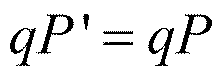


<非変換スキップ時の下限制御>
上述したように、非特許文献1に記載の補正方法では、非変換スキップが適用される場合、式(4)に示されるように、クリップが省略される。そして、cu_act_enabled_flagが真(例えば「1」)の場合、第1の補正量子化パラメータqP'に対して、コンポーネント識別子cIdxに対応する補正量dqPが加算され、第2の補正量子化パラメータqP''が導出される。なお、cu_act_enabled_flagが偽(例えば「0」)の場合、補正量dqPが「0」として同様の演算が実行され、第2の補正量子化パラメータqP''が導出される。このように導出された第2の補正量子化パラメータqP''が、補正後の量子化パラメータqP(つまり補正結果)として、量子化処理や逆量子化処理に利用される。
上述した本技術は、任意の装置において適用することができる。図4は、本技術を適用した画像処理装置の一態様である量子化パラメータ補正装置の構成の一例を示すブロック図である。図4に示される量子化パラメータ補正装置120は、量子化パラメータ補正装置100と同様の装置であり、画像に関する係数データの量子化処理や逆量子化処理に用いられる量子化パラメータを補正する。その際、量子化パラメータ補正装置120は、上述した「方法2」を適用して、量子化パラメータを補正する。
qP' = qPx + dqPx
else
qP' = qPx
qP'' = Max(qP', QpPrimeTsMin)
else
qP'' = Max(qP', 0)


次に、この量子化パラメータ補正装置120により実行される量子化パラメータ補正処理の流れの例を、図5のフローチャートを参照して説明する。

<量子化パラメータの上限制御>
さらに、量子化パラメータの上限をクリップするようにしてもよい。例えば、図1に示される表の上から4番目の段に示されるように、適応色変換による量子化パラメータの補正を実行する。そして、その補正された量子化パラメータに対して、その量子化パラメータの最小値と最大値とでクリップしてもよい(方法3)。
上述した本技術は、任意の装置において適用することができる。図6は、本技術を適用した画像処理装置の一態様である量子化パラメータ補正装置の構成の一例を示すブロック図である。図6に示される量子化パラメータ補正装置140は、量子化パラメータ補正装置100と同様の装置であり、画像に関する係数データの量子化処理や逆量子化処理に用いられる量子化パラメータを補正する。その際、量子化パラメータ補正装置140は、上述した「方法3」を適用して、量子化パラメータを補正する。
qP' = qPx + dqPx
else
qP' = qPx

qP''' = Max(qP'', QpPrimeTsMin)
else
qP''' = qP''


次に、この量子化パラメータ補正装置140により実行される量子化パラメータ補正処理の流れの例を、図7のフローチャートを参照して説明する。
<量子化パラメータの上限制御>
第3の実施の形態において説明した方法3における第1の補正量子化パラメータqP'に対するクリップ処理は、変換スキップに関するパラメータに基づく補正のクリップ処理とまとめてもよい。
上述した本技術は、任意の装置において適用することができる。図8は、本技術を適用した画像処理装置の一態様である量子化パラメータ補正装置の構成の一例を示すブロック図である。図8に示される量子化パラメータ補正装置160は、量子化パラメータ補正装置100と同様の装置であり、画像に関する係数データの量子化処理や逆量子化処理に用いられる量子化パラメータを補正する。その際、量子化パラメータ補正装置160は、上述した「方法4」を適用して、量子化パラメータを補正する。
qP' = qPx + dqPx
else
qP' = qPx
qP'' = Clip3(QpPrimeTsMin, 63+QpBdOffset, qP')
else
qP'' = Clip3(0, 63+QpBdOffset, qP')


次に、この量子化パラメータ補正装置160により実行される量子化パラメータ補正処理の流れの例を、図9のフローチャートを参照して説明する。


<画像符号化装置>
以上において説明した本技術(各種方法)は、任意の装置、デバイス、システム等に適用することができる。例えば、画像データを符号化する画像符号化装置に、本技術を適用することができる。
制御部301は、外部、または予め指定された処理単位のブロックサイズに基づいて、並べ替えバッファ311により保持されている動画像データを処理単位のブロック(CU,PU,TUなど)へ分割する。また、制御部301は、各ブロックへ供給する符号化パラメータ(ヘッダ情報Hinfo、予測モード情報Pinfo、変換情報Tinfo、フィルタ情報Finfoなど)を、例えば、RDO(Rate-Distortion Optimization)に基づいて、決定する。例えば、制御部301は、変換スキップフラグ等を設定することができる。
画像符号化装置300には、動画像データの各フィールド(入力画像)がその再生順(表示順)に入力される。並べ替えバッファ311は、各入力画像をその再生順(表示順)に取得し、保持(記憶)する。並べ替えバッファ311は、制御部301の制御に基づいて、その入力画像を符号化順(復号順)に並べ替えたり、処理単位のブロックに分割したりする。並べ替えバッファ311は、処理後の各入力画像を演算部312に供給する。
演算部312は、並べ替えバッファ311から供給される処理単位のブロックに対応する画像から、予測部320より供給される予測画像Pを減算して、残差データDを導出し、それを変換量子化部313に供給する。
変換量子化部313は、変換量子化に関する処理を実行する。例えば、変換量子化部313は、演算部312から供給される残差データDを取得する。また、変換量子化部313は、制御部301から供給される予測モード情報Pinfoおよび変換情報Tinfoを取得する。変換量子化部313は、その予測モード情報Pinfoおよび変換情報Tinfoに基づいて、その残差データDに対して変換量子化処理を実行し、量子化係数データlevelを導出する。変換量子化処理においては、例えば、適応色変換、直交変換、および量子化等の処理が実行される。もちろん、変換量子化処理に含まれる処理は任意であり、上述した一部の処理が省略されてもよいし、上述した以外の処理が含まれていてもよい。変換量子化部313は、導出した量子化係数データlevelを、符号化部314および逆量子化逆変換部316に供給する。
符号化部314は、変換量子化部313から供給された量子化係数データlevel(または残差データD)を取得する。また、符号化部314は、制御部301から供給される各種符号化パラメータ(ヘッダ情報Hinfo、予測モード情報Pinfo、変換情報Tinfo、フィルタ情報Finfoなど)を取得する。さらに、符号化部314は、インループフィルタ部318から供給されるフィルタ係数等のフィルタに関する情報を取得する。また、符号化部314は、予測部320から供給される最適な予測モードに関する情報を取得する。
蓄積バッファ315は、符号化部314において得られた符号化データを、一時的に保持する。蓄積バッファ315は、所定のタイミングにおいて、保持している符号化データを、例えばビットストリーム等として画像符号化装置300の外部に出力する。例えば、この符号化データは、任意の記録媒体、任意の伝送媒体、任意の情報処理装置等を介して復号側に伝送される。すなわち、蓄積バッファ315は、符号化データ(ビットストリーム)を伝送する伝送部でもある。
逆量子化逆変換部316は、逆量子化逆変換に関する処理を実行する。例えば、逆量子化逆変換部316は、変換量子化部313から供給される量子化係数データlevelを取得する。例えば、逆量子化逆変換部316は、制御部301から供給される変換情報Tinfoを取得する。
演算部317は、逆量子化逆変換部316から供給される残差データD'と、予測部320から供給される予測画像Pを取得する。演算部317は、その残差データD'と、その残差データD'に対応する予測画像とを加算し、局所復号画像を導出する。演算部317は、導出した局所復号画像をインループフィルタ部318およびフレームメモリ319に供給する。
インループフィルタ部318は、インループフィルタ処理に関する処理を実行する。例えば、インループフィルタ部318は、演算部317から供給される局所復号画像を取得する。例えば、インループフィルタ部318は、制御部301から供給されるフィルタ情報Finfoを取得する。例えば、インループフィルタ部318は、並べ替えバッファ311から供給される入力画像(元画像)を取得する。なお、インループフィルタ部318に入力される情報は任意であり、これらの情報以外の情報が入力されてもよい。例えば、必要に応じて、予測モード、動き情報、符号量目標値、量子化パラメータQP、ピクチャタイプ、ブロック(CU、CTU等)の情報等がインループフィルタ部318に入力されるようにしてもよい。
フレームメモリ319は、画像に関するデータの記憶に関する処理を実行する。例えば、フレームメモリ319は、演算部317から供給される局所復号画像や、インループフィルタ部318から供給されるフィルタ処理された局所復号画像を取得し、それを保持(記憶)する。また、フレームメモリ319は、その局所復号画像を用いてピクチャ単位毎の復号画像を再構築し、保持する(フレームメモリ319内のバッファへ格納する)。フレームメモリ319は、予測部320の要求に応じて、その復号画像(またはその一部)を予測部320に供給する。
予測部320は、予測画像の生成に関する処理を実行する。例えば、予測部320は、制御部301から供給される予測モード情報Pinfoを取得する。例えば、予測部320は、並べ替えバッファ311から供給される入力画像(元画像)を取得する。例えば、予測部320は、フレームメモリ319から読み出す復号画像(またはその一部)を取得する。
レート制御部321は、レート制御に関する処理を実行する。例えば、レート制御部321は、蓄積バッファ315に蓄積された符号化データの符号量に基づいて、オーバフローあるいはアンダーフローが発生しないように、変換量子化部313の量子化動作のレートを制御する。
以上のような構成の画像符号化装置300に、<1.量子化パラメータの補正>、<2.第1の実施の形態>、<3.第2の実施の形態>、<4.第3の実施の形態>、および<5.第4の実施の形態>において上述した本技術を適用し得る。
例えば、上述した「方法1」を適用する場合、制御部301は、コンポーネント識別子cIdxに対応するCUレベルの量子化パラメータqPxを導出し、変換量子化部313および逆量子化逆変換部316に供給する。制御部301は、適応色変換に関するパラメータとして、cu_act_enabled_flagを導出し、変換量子化部313および逆量子化逆変換部316に供給する。制御部301は、適応色変換に関するパラメータとして、コンポーネント識別子cIdxに対応する補正量dqPxを導出し、変換量子化部313および逆量子化逆変換部316に供給する。制御部301は、変換スキップに関するパラメータとして、コンポーネント識別子cIdxに対応するtransform_skip_flag[xTbY][yTbY][cIdx]を導出し、変換量子化部313および逆量子化逆変換部316に供給する。制御部301は、変換スキップに関するパラメータとして、変換スキップの際の量子化パラメータの最小値QpPrimeTsMinを導出し、変換量子化部313および逆量子化逆変換部316に供給する。また、制御部301は、それらのパラメータを符号化部314にも供給する。
例えば、上述した「方法1」を適用する場合、変換量子化部313は、制御部301から供給される、コンポーネント識別子cIdxに対応するCUレベルの量子化パラメータqPxを取得する。また変換量子化部313は、適応色変換に関するパラメータとして、制御部301から供給されるcu_act_enabled_flagを取得する。変換量子化部313は、適応色変換に関するパラメータとして、制御部301から供給される、コンポーネント識別子cIdxに対応する補正量dqPxとを取得する。さらに変換量子化部313は、変換スキップに関するパラメータとして、制御部301から供給される、コンポーネント識別子cIdxに対応するtransform_skip_flag[xTbY][yTbY][cIdx]を取得する。変換量子化部313は、変換スキップに関するパラメータとして、制御部301から供給される、変換スキップの際の量子化パラメータの最小値QpPrimeTsMinを取得する。変換量子化部313は、取得したそれらのパラメータを用いて、変換量子化処理を実行する。
図11は、図10の変換量子化部313の主な構成例を示すブロック図である。図11に示されるように、変換量子化部313は、適応色変換部341、直交変換部342、および量子化部343を有する。
図12は、図11の量子化部343の主な構成例を示すブロック図である。図12に示されるように、量子化部343は、量子化パラメータ補正部351および量子化処理部352を有する。
例えば、上述した「方法1」を適用する場合、符号化部314は、制御部301から供給される、コンポーネント識別子cIdxに対応するCUレベルの量子化パラメータqPxを取得する。また符号化部314は、適応色変換に関するパラメータとして、制御部301から供給されるcu_act_enabled_flagを取得する。符号化部314は、適応色変換に関するパラメータとして、制御部301から供給される、コンポーネント識別子cIdxに対応する補正量dqPxとを取得する。さらに符号化部314は、変換スキップに関するパラメータとして、制御部301から供給される、コンポーネント識別子cIdxに対応するtransform_skip_flag[xTbY][yTbY][cIdx]を取得する。符号化部314は、変換スキップに関するパラメータとして、制御部301から供給される、変換スキップの際の量子化パラメータの最小値QpPrimeTsMinを取得する。符号化部314は、取得したそれらのパラメータを符号化し、ビット列を生成し、符号化データに含める。
次に、以上のような画像符号化装置300により実行される各処理の流れについて説明する。最初に、図13のフローチャートを参照して、画像符号化処理の流れの例を説明する。
次に、図14のフローチャートを参照して、図13のステップS306において実行される変換量子化処理の流れの例を説明する。
次に、図15のフローチャートを参照して、図14のステップS343において実行される量子化処理の流れの例を説明する。
なお、図13のステップS311において、符号化部314が、各種符号化パラメータ(ヘッダ情報Hinfo、予測モード情報Pinfo、変換情報Tinfo)を符号化する。本技術を適用する場合、符号化部314は、この符号化パラメータとして、量子化パラメータの補正に適用される上述した各種パラメータを符号化する。例えば、「方法1」が適用される場合、符号化部314は、コンポーネント識別子cIdxに対応するCUレベルの量子化パラメータqPx、cu_act_enabled_flag、コンポーネント識別子cIdxに対応する補正量dqPx、コンポーネント識別子cIdxに対応するtransform_skip_flag[xTbY][yTbY][cIdx]、変換スキップの際の量子化パラメータの最小値QpPrimeTsMin等のパラメータを符号化する。また、「方法2」が適用される場合、符号化部314は、「方法1」が適用される場合に符号化するパラメータに加え、非変換スキップの際の量子化パラメータの最小値「0」を符号化する。さらに、「方法3」または「方法4」が適用される場合、符号化部314は、「方法1」が適用される場合に符号化するパラメータに加え、ビット深度に対応する補正量QpBdOffsetを符号化する。
<画像復号装置>
以上において説明した本技術(各種方法)は、画像データの符号化データを復号する画像復号装置に適用することもできる。
制御部401は、復号の制御に関する処理を実行する。例えば、制御部401は、ビットストリームに含まれる符号化パラメータ(ヘッダ情報Hinfo、予測モード情報Pinfo、変換情報Tinfo、残差情報Rinfo、フィルタ情報Finfoなど)を、復号部412を介して取得する。また、制御部401は、ビットストリームに含まれない符号化パラメータを推定し得る。さらに、制御部401は、取得した(または推定した)符号化パラメータに基づいて、画像復号装置400の各処理部(蓄積バッファ411乃至予測部418)を制御することにより、復号を制御する。
ヘッダ情報Hinfoは、例えば、VPS(Video Parameter Set)、SPS(Sequence ParameterSet)、PPS(Picture Parameter Set)、PH(ピクチャヘッダ)、SH(スライスヘッダ)などのヘッダ情報を含む。ヘッダ情報Hinfoには、例えば、画像サイズ(横幅PicWidth、縦幅PicHeight)、ビット深度(輝度bitDepthY, 色差bitDepthC)、色差アレイタイプChromaArrayType、CUサイズの最大値MaxCUSizeや最小値MinCUSize、4分木分割(Quad-tree分割ともいう)の最大深度MaxQTDepthや最小深度MinQTDepth、2分木分割(Binary-tree分割)の最大深度MaxBTDepthや最小深度MinBTDepth、変換スキップブロックの最大値MaxTSSize(最大変換スキップブロックサイズともいう)、各符号化ツールのオンオフフラグ(有効フラグともいう)などを規定する情報が含まれる。
予測モード情報Pinfoには、例えば、処理対象PB(予測ブロック)のサイズ情報PBSize(予測ブロックサイズ)、イントラ予測モード情報IPinfo、動き予測情報MVinfo等の情報が含まれる。
変換情報Tinfoには、例えば、以下の情報が含まれ得る。
変換スキップフラグ(ts_flag):(逆)プライマリ変換および(逆)セカンダリ変換をスキップか否かを示すフラグである。
スキャン識別子(scanIdx)
量子化パラメータ(qp)
量子化マトリックス(scaling_matrix):例えば、JCTVC-W1005, 7.3.4 Scaling list data syntax
残差情報Rinfo(例えば、JCTVC-W1005の7.3.8.11 Residual Coding syntaxを参照)には、例えば以下の情報が含まれ得る。
last_sig_coeff_x_pos:ラスト非ゼロ係数X座標
last_sig_coeff_y_pos:ラスト非ゼロ係数Y座標
coded_sub_block_flag:サブブロック非ゼロ係数有無フラグ
sig_coeff_flag:非ゼロ係数有無フラグ
gr1_flag:非ゼロ係数のレベルが1より大きいかを示すフラグ(GR1フラグとも呼ぶ)
gr2_flag:非ゼロ係数のレベルが2より大きいかを示すフラグ(GR2フラグとも呼ぶ)
sign_flag:非ゼロ係数の正負を示す符号(サイン符号とも呼ぶ)
coeff_abs_level_remaining:非ゼロ係数の残余レベル(非ゼロ係数残余レベルとも呼ぶ)
フィルタ情報Finfoには、例えば、以下に示す各フィルタ処理に関する制御情報が含まれ得る。
画素適応オフセット(SAO)に関する制御情報
適応ループフィルタ(ALF)に関する制御情報
その他の線形・非線形フィルタに関する制御情報
蓄積バッファ411は、画像復号装置400に入力されたビットストリームを取得し、保持(記憶)する。蓄積バッファ411は、所定のタイミングにおいて、または、所定の条件が整う等した場合、蓄積しているビットストリームに含まれる符号化データを抽出し、復号部412に供給する。
復号部412は、画像の復号に関する処理を実行する。例えば、復号部412は、蓄積バッファ411から供給される符号化データを取得し、シンタックステーブルの定義に沿って、そのビット列から、各シンタックス要素のシンタックス値をエントロピ復号(可逆復号)し、符号化パラメータを導出する。
逆量子化逆変換部413は、逆量子化および逆係数変換に関する処理を実行する。例えば、逆量子化逆変換部413は、復号部412から供給される量子化係数データlevelを取得する。逆量子化逆変換部413は、制御部401から供給される予測モード情報Pinfoや変換情報Tinfo等の符号化パラメータを取得する。
演算部414は、画像に関する情報の加算に関する処理を実行する。例えば、演算部414は、逆量子化逆変換部413から供給される残差データD'と、予測部418から供給される予測画像とを取得する。演算部414は、その残差データとその残差データに対応する予測画像(予測信号)とを加算し、局所復号画像を導出する。演算部414は、導出した局所復号画像を、インループフィルタ部415およびフレームメモリ417に供給する。
インループフィルタ部415は、インループフィルタ処理に関する処理を実行する。例えば、インループフィルタ部415は、演算部414から供給される局所復号画像を取得する。インループフィルタ部415は、制御部401から供給されるフィルタ情報Finfoを取得する。なお、インループフィルタ部415に入力される情報は任意であり、これらの情報以外の情報が入力されてもよい。
並べ替えバッファ416は、インループフィルタ部415から供給された局所復号画像を入力とし、それを保持(記憶)する。並べ替えバッファ416は、その局所復号画像を用いてピクチャ単位毎の復号画像を再構築し、保持する(バッファ内に格納する)。並べ替えバッファ416は、得られた復号画像を、復号順から再生順に並べ替える。並べ替えバッファ416は、並べ替えた復号画像群を動画像データとして画像復号装置400の外部に出力する。
フレームメモリ417は、画像に関するデータの記憶に関する処理を実行する。例えば、フレームメモリ417は、演算部414より供給される局所復号画像を取得し、ピクチャ単位毎の復号画像を再構築して、フレームメモリ417内のバッファへ格納する。
予測部418は、予測画像の生成に関する処理を実行する。例えば、予測部418は、制御部401から供給される予測モード情報Pinfoを取得する。また、予測部418は、フレームメモリ417から読み出す復号画像(またはその一部)を取得する。予測部418は、予測モード情報Pinfoに基づいて符号化の際に採用された予測モードで予測処理を実行し、復号画像を参照画像として参照して予測画像を生成する。予測部418は、生成した予測画像を演算部414に供給する。
以上のような構成の画像復号装置400に、<1.量子化パラメータの補正>、<2.第1の実施の形態>、<3.第2の実施の形態>、<4.第3の実施の形態>、および<5.第4の実施の形態>において上述した本技術を適用し得る。
上述したように復号部412は、ビットストリームから、ヘッダ情報Hinfo、予測モード情報Pinfo、変換情報Tinfo、残差情報Rinfo、フィルタ情報Finfo等の符号化パラメータをパースする。
例えば、上述した「方法1」を適用する場合、制御部401は、復号部412から、コンポーネント識別子cIdxに対応するCUレベルの量子化パラメータqPxを取得し、逆量子化逆変換部413に供給する。制御部401は、復号部412から、適応色変換に関するパラメータとして、cu_act_enabled_flagを取得し、逆量子化逆変換部413に供給する。制御部401は、復号部412から、適応色変換に関するパラメータとして、コンポーネント識別子cIdxに対応する補正量dqPxを取得し、逆量子化逆変換部413に供給する。制御部401は、復号部412から、変換スキップに関するパラメータとして、コンポーネント識別子cIdxに対応するtransform_skip_flag[xTbY][yTbY][cIdx]を取得し、逆量子化逆変換部413に供給する。制御部401は、復号部412から、変換スキップに関するパラメータとして、変換スキップの際の量子化パラメータの最小値QpPrimeTsMinを取得し、逆量子化逆変換部413に供給する。
例えば、上述した「方法1」を適用する場合、逆量子化逆変換部413は、制御部401から供給される、コンポーネント識別子cIdxに対応するCUレベルの量子化パラメータqPxを取得する。また逆量子化逆変換部413は、適応色変換に関するパラメータとして、制御部401から供給されるcu_act_enabled_flagを取得する。逆量子化逆変換部413は、適応色変換に関するパラメータとして、制御部401から供給される、コンポーネント識別子cIdxに対応する補正量dqPxとを取得する。さらに逆量子化逆変換部413は、変換スキップに関するパラメータとして、制御部401から供給される、コンポーネント識別子cIdxに対応するtransform_skip_flag[xTbY][yTbY][cIdx]を取得する。逆量子化逆変換部413は、変換スキップに関するパラメータとして、制御部401から供給される、変換スキップの際の量子化パラメータの最小値QpPrimeTsMinを取得する。逆量子化逆変換部413は、取得したそれらのパラメータを用いて、逆量子化逆変換処理を実行する。
図17は、図16の逆量子化逆変換部413の主な構成例を示すブロック図である。図17に示されるように、逆量子化逆変換部413は、逆量子化部441、逆直交変換部442、および逆適応色変換部443を有する。
図18は、図17の逆量子化部441の主な構成例を示すブロック図である。図18に示されるように、逆量子化部441は、量子化パラメータ補正部451および逆量子化処理部452を有する。
次に、以上のような画像復号装置400により実行される各処理の流れについて説明する。最初に、図19のフローチャートを参照して、画像復号処理の流れの例を説明する。
次に、図20のフローチャートを参照して、図19のステップS403において実行される逆量子化逆変換処理の流れの例を説明する。
次に、図21のフローチャートを参照して、図20のステップS441において実行される逆量子化処理の流れの例を説明する。
なお、図19のステップS402において、復号部412が、各種符号化パラメータ(ヘッダ情報Hinfo、予測モード情報Pinfo、変換情報Tinfo)を復号する。したがって、本技術を適用する場合、復号部412は、量子化パラメータの補正に適用される上述した各種パラメータを復号する。例えば、「方法1」が適用される場合、復号部412は、コンポーネント識別子cIdxに対応するCUレベルの量子化パラメータqPx、cu_act_enabled_flag、コンポーネント識別子cIdxに対応する補正量dqPx、コンポーネント識別子cIdxに対応するtransform_skip_flag[xTbY][yTbY][cIdx]、変換スキップの際の量子化パラメータの最小値QpPrimeTsMin等のパラメータを復号する。また、「方法2」が適用される場合、符号化部314は、「方法1」が適用される場合に符号化するパラメータに加え、非変換スキップの際の量子化パラメータの最小値「0」を復号する。さらに、「方法3」または「方法4」が適用される場合、符号化部314は、「方法1」が適用される場合に符号化するパラメータに加え、ビット深度に対応する補正量QpBdOffsetを復号する。
<コンピュータ>
上述した一連の処理は、ハードウエアにより実行させることもできるし、ソフトウエアにより実行させることもできる。一連の処理をソフトウエアにより実行する場合には、そのソフトウエアを構成するプログラムが、コンピュータにインストールされる。ここでコンピュータには、専用のハードウエアに組み込まれているコンピュータや、各種のプログラムをインストールすることで、各種の機能を実行することが可能な、例えば汎用のパーソナルコンピュータ等が含まれる。
本技術は、任意の画像符号化方式や復号方式に適用することができる。つまり、上述した本技術と矛盾しない限り、変換(逆変換)、量子化(逆量子化)、符号化(復号)、予測等、画像符号化・復号に関する各種処理の仕様は任意であり、上述した例に限定されない。また、上述した本技術と矛盾しない限り、これらの処理の内の一部を省略してもよい。
本技術を適用したシステム、装置、処理部等は、例えば、交通、医療、防犯、農業、畜産業、鉱業、美容、工場、家電、気象、自然監視等、任意の分野に利用することができる。また、その用途も任意である。
なお、本明細書において「フラグ」とは、複数の状態を識別するための情報であり、真(1)または偽(0)の2状態を識別する際に用いる情報だけでなく、3以上の状態を識別することが可能な情報も含まれる。したがって、この「フラグ」が取り得る値は、例えば1/0の2値であってもよいし、3値以上であってもよい。すなわち、この「フラグ」を構成するbit数は任意であり、1bitでも複数bitでもよい。また、識別情報(フラグも含む)は、その識別情報をビットストリームに含める形だけでなく、ある基準となる情報に対する識別情報の差分情報をビットストリームに含める形も想定されるため、本明細書においては、「フラグ」や「識別情報」は、その情報だけではなく、基準となる情報に対する差分情報も包含する。
(1) 量子化パラメータを、適応色変換に関するパラメータに基づいて補正し、さらに、変換スキップに関するパラメータに基づいて補正する量子化パラメータ補正部と、
前記量子化パラメータ補正部により補正された前記量子化パラメータである補正量子化パラメータを用いて、符号化対象の画像の係数データを量子化する量子化部と
を備える画像処理装置。
(2) 前記量子化パラメータ補正部は、前記適応色変換を適用する場合、処理対象コンポーネントに応じた補正量で前記量子化パラメータを補正する
(1)に記載の画像処理装置。
(3) 前記適応色変換を適用しない場合、前記補正量は「0」である
(2)に記載の画像処理装置。
(4) 前記量子化パラメータ補正部は、前記変換スキップを適用する場合、前記適応色変換に関するパラメータに基づいて補正された前記量子化パラメータの下限を、予め設定された、前記変換スキップを適用する場合の前記量子化パラメータの最小値でクリップする
(1)乃至(3)のいずれかに記載の画像処理装置。
(5) 前記量子化パラメータ補正部は、前記変換スキップを適用しない場合、前記適応色変換に関するパラメータに基づいて補正された前記量子化パラメータの下限のクリップを省略する
(4)に記載の画像処理装置。
(6) 前記量子化パラメータ補正部は、前記変換スキップを適用しない場合、前記適応色変換に関するパラメータに基づいて補正された前記量子化パラメータの下限を、予め設定された前記量子化パラメータの最小値でクリップする
(1)乃至(5)のいずれかに記載の画像処理装置。
(7) 前記量子化パラメータの最小値は「0」である
(6)に記載の画像処理装置。
(8) 前記量子化パラメータ補正部は、前記変換スキップを適用する場合、前記適応色変換に関するパラメータに基づいて補正された前記量子化パラメータの下限を、予め設定された、前記変換スキップを適用する場合の前記量子化パラメータの最小値でクリップし、かつ、前記適応色変換に関するパラメータに基づいて補正された前記量子化パラメータの上限を、予め設定された、前記量子化パラメータの最大値とビット深度に基づく補正量との和でクリップする
(1)乃至(7)のいずれかに記載の画像処理装置。
(9) 前記量子化パラメータ補正部は、前記変換スキップを適用しない場合、前記適応色変換に関するパラメータに基づいて補正された前記量子化パラメータの下限を、予め設定された前記量子化パラメータの最小値でクリップし、かつ、前記適応色変換に関するパラメータに基づいて補正された前記量子化パラメータの上限を、予め設定された、前記量子化パラメータの最大値とビット深度に基づく補正量との和でクリップする
(8)に記載の画像処理装置。
(10) 量子化パラメータを、適応色変換に関するパラメータに基づいて補正し、さらに、変換スキップに関するパラメータに基づいて補正し、
補正された前記量子化パラメータである補正量子化パラメータを用いて、符号化対象の画像の係数データを量子化する
画像処理方法。
前記量子化パラメータ補正部により補正された前記量子化パラメータである補正量子化パラメータを用いて、画像の係数データが量子化された量子化係数データを逆量子化する逆量子化部と
を備える画像処理装置。
(12) 前記量子化パラメータ補正部は、前記適応色変換を適用する場合、処理対象コンポーネントに応じた補正量で前記量子化パラメータを補正する
(11)に記載の画像処理装置。
(13) 前記適応色変換を適用しない場合、前記補正量は「0」である
(12)に記載の画像処理装置。
(14) 前記量子化パラメータ補正部は、前記変換スキップを適用する場合、前記適応色変換に関するパラメータに基づいて補正された前記量子化パラメータの下限を、予め設定された、前記変換スキップを適用する場合の前記量子化パラメータの最小値でクリップする
(11)乃至(13)のいずれかに記載の画像処理装置。
(15) 前記量子化パラメータ補正部は、前記変換スキップを適用しない場合、前記適応色変換に関するパラメータに基づいて補正された前記量子化パラメータの下限のクリップを省略する
(14)に記載の画像処理装置。
(16) 前記量子化パラメータ補正部は、前記変換スキップを適用しない場合、前記適応色変換に関するパラメータに基づいて補正された前記量子化パラメータの下限を、予め設定された前記量子化パラメータの最小値でクリップする
(11)乃至(15)のいずれかに記載の画像処理装置。
(17) 前記量子化パラメータの最小値は「0」である
(16)に記載の画像処理装置。
(18) 前記量子化パラメータ補正部は、前記変換スキップを適用する場合、前記適応色変換に関するパラメータに基づいて補正された前記量子化パラメータの下限を、予め設定された、前記変換スキップを適用する場合の前記量子化パラメータの最小値でクリップし、かつ、前記適応色変換に関するパラメータに基づいて補正された前記量子化パラメータの上限を、予め設定された、前記量子化パラメータの最大値とビット深度に基づく補正量との和でクリップする
(11)乃至(17)のいずれかに記載の画像処理装置。
(19) 前記量子化パラメータ補正部は、前記変換スキップを適用しない場合、前記適応色変換に関するパラメータに基づいて補正された前記量子化パラメータの下限を、予め設定された前記量子化パラメータの最小値でクリップし、かつ、前記適応色変換に関するパラメータに基づいて補正された前記量子化パラメータの上限を、予め設定された、前記量子化パラメータの最大値とビット深度に基づく補正量との和でクリップする
(18)に記載の画像処理装置。
(20) 量子化パラメータを、適応色変換に関するパラメータに基づいて補正し、さらに、変換スキップに関するパラメータに基づいて補正し、
補正された前記量子化パラメータである補正量子化パラメータを用いて、画像の係数データが量子化された量子化係数データを逆量子化する
画像処理方法。
Claims (20)
- 量子化パラメータを、適応色変換に関するパラメータに基づいて補正し、さらに、変換スキップに関するパラメータに基づいて補正する量子化パラメータ補正部と、
前記量子化パラメータ補正部により補正された前記量子化パラメータである補正量子化パラメータを用いて、符号化対象の画像の係数データを量子化する量子化部と
を備える画像処理装置。 - 前記量子化パラメータ補正部は、前記適応色変換を適用する場合、処理対象コンポーネントに応じた補正量で前記量子化パラメータを補正する
請求項1に記載の画像処理装置。 - 前記適応色変換を適用しない場合、前記補正量は「0」である
請求項2に記載の画像処理装置。 - 前記量子化パラメータ補正部は、前記変換スキップを適用する場合、前記適応色変換に関するパラメータに基づいて補正された前記量子化パラメータの下限を、予め設定された、前記変換スキップを適用する場合の前記量子化パラメータの最小値でクリップする
請求項1に記載の画像処理装置。 - 前記量子化パラメータ補正部は、前記変換スキップを適用しない場合、前記適応色変換に関するパラメータに基づいて補正された前記量子化パラメータの下限のクリップを省略する
請求項4に記載の画像処理装置。 - 前記量子化パラメータ補正部は、前記変換スキップを適用しない場合、前記適応色変換に関するパラメータに基づいて補正された前記量子化パラメータの下限を、予め設定された前記量子化パラメータの最小値でクリップする
請求項1に記載の画像処理装置。 - 前記量子化パラメータの最小値は「0」である
請求項6に記載の画像処理装置。 - 前記量子化パラメータ補正部は、前記変換スキップを適用する場合、前記適応色変換に関するパラメータに基づいて補正された前記量子化パラメータの下限を、予め設定された、前記変換スキップを適用する場合の前記量子化パラメータの最小値でクリップし、かつ、前記適応色変換に関するパラメータに基づいて補正された前記量子化パラメータの上限を、予め設定された、前記量子化パラメータの最大値とビット深度に基づく補正量との和でクリップする
請求項1に記載の画像処理装置。 - 前記量子化パラメータ補正部は、前記変換スキップを適用しない場合、前記適応色変換に関するパラメータに基づいて補正された前記量子化パラメータの下限を、予め設定された前記量子化パラメータの最小値でクリップし、かつ、前記適応色変換に関するパラメータに基づいて補正された前記量子化パラメータの上限を、予め設定された、前記量子化パラメータの最大値とビット深度に基づく補正量との和でクリップする
請求項8に記載の画像処理装置。 - 量子化パラメータを、適応色変換に関するパラメータに基づいて補正し、さらに、変換スキップに関するパラメータに基づいて補正し、
補正された前記量子化パラメータである補正量子化パラメータを用いて、符号化対象の画像の係数データを量子化する
画像処理方法。 - 量子化パラメータを、適応色変換に関するパラメータに基づいて補正し、さらに、変換スキップに関するパラメータに基づいて補正する量子化パラメータ補正部と、
前記量子化パラメータ補正部により補正された前記量子化パラメータである補正量子化パラメータを用いて、画像の係数データが量子化された量子化係数データを逆量子化する逆量子化部と
を備える画像処理装置。 - 前記量子化パラメータ補正部は、前記適応色変換を適用する場合、処理対象コンポーネントに応じた補正量で前記量子化パラメータを補正する
請求項11に記載の画像処理装置。 - 前記適応色変換を適用しない場合、前記補正量は「0」である
請求項12に記載の画像処理装置。 - 前記量子化パラメータ補正部は、前記変換スキップを適用する場合、前記適応色変換に関するパラメータに基づいて補正された前記量子化パラメータの下限を、予め設定された、前記変換スキップを適用する場合の前記量子化パラメータの最小値でクリップする
請求項11に記載の画像処理装置。 - 前記量子化パラメータ補正部は、前記変換スキップを適用しない場合、前記適応色変換に関するパラメータに基づいて補正された前記量子化パラメータの下限のクリップを省略する
請求項14に記載の画像処理装置。 - 前記量子化パラメータ補正部は、前記変換スキップを適用しない場合、前記適応色変換に関するパラメータに基づいて補正された前記量子化パラメータの下限を、予め設定された前記量子化パラメータの最小値でクリップする
請求項11に記載の画像処理装置。 - 前記量子化パラメータの最小値は「0」である
請求項16に記載の画像処理装置。 - 前記量子化パラメータ補正部は、前記変換スキップを適用する場合、前記適応色変換に関するパラメータに基づいて補正された前記量子化パラメータの下限を、予め設定された、前記変換スキップを適用する場合の前記量子化パラメータの最小値でクリップし、かつ、前記適応色変換に関するパラメータに基づいて補正された前記量子化パラメータの上限を、予め設定された、前記量子化パラメータの最大値とビット深度に基づく補正量との和でクリップする
請求項11に記載の画像処理装置。 - 前記量子化パラメータ補正部は、前記変換スキップを適用しない場合、前記適応色変換に関するパラメータに基づいて補正された前記量子化パラメータの下限を、予め設定された前記量子化パラメータの最小値でクリップし、かつ、前記適応色変換に関するパラメータに基づいて補正された前記量子化パラメータの上限を、予め設定された、前記量子化パラメータの最大値とビット深度に基づく補正量との和でクリップする
請求項18に記載の画像処理装置。 - 量子化パラメータを、適応色変換に関するパラメータに基づいて補正し、さらに、変換スキップに関するパラメータに基づいて補正し、
補正された前記量子化パラメータである補正量子化パラメータを用いて、画像の係数データが量子化された量子化係数データを逆量子化する
画像処理方法。
Priority Applications (6)
| Application Number | Priority Date | Filing Date | Title |
|---|---|---|---|
| JP2021565670A JP7517350B2 (ja) | 2019-12-18 | 2020-12-18 | 画像処理装置および方法 |
| CN202080075250.5A CN114616828B (zh) | 2019-12-18 | 2020-12-18 | 图像处理装置和方法 |
| EP20902904.0A EP4068778A4 (en) | 2019-12-18 | 2020-12-18 | IMAGE PROCESSING DEVICE AND METHOD |
| KR1020227017805A KR20220116152A (ko) | 2019-12-18 | 2020-12-18 | 화상 처리 장치 및 방법 |
| US17/781,732 US12177435B2 (en) | 2019-12-18 | 2020-12-18 | Image processing device and method |
| US18/951,844 US12621452B2 (en) | 2024-11-19 | Image processing device and method |
Applications Claiming Priority (2)
| Application Number | Priority Date | Filing Date | Title |
|---|---|---|---|
| US201962950055P | 2019-12-18 | 2019-12-18 | |
| US62/950,055 | 2019-12-18 |
Related Child Applications (2)
| Application Number | Title | Priority Date | Filing Date |
|---|---|---|---|
| US17/781,732 A-371-Of-International US12177435B2 (en) | 2019-12-18 | 2020-12-18 | Image processing device and method |
| US18/951,844 Continuation US12621452B2 (en) | 2024-11-19 | Image processing device and method |
Publications (1)
| Publication Number | Publication Date |
|---|---|
| WO2021125309A1 true WO2021125309A1 (ja) | 2021-06-24 |
Family
ID=76478790
Family Applications (1)
| Application Number | Title | Priority Date | Filing Date |
|---|---|---|---|
| PCT/JP2020/047338 Ceased WO2021125309A1 (ja) | 2019-12-18 | 2020-12-18 | 画像処理装置および方法 |
Country Status (7)
| Country | Link |
|---|---|
| US (1) | US12177435B2 (ja) |
| EP (1) | EP4068778A4 (ja) |
| JP (1) | JP7517350B2 (ja) |
| KR (1) | KR20220116152A (ja) |
| CN (1) | CN114616828B (ja) |
| TW (1) | TW202139698A (ja) |
| WO (1) | WO2021125309A1 (ja) |
Cited By (5)
| Publication number | Priority date | Publication date | Assignee | Title |
|---|---|---|---|---|
| JP2021106344A (ja) * | 2019-12-26 | 2021-07-26 | Kddi株式会社 | 画像復号装置、画像復号方法及びプログラム |
| JP7026287B1 (ja) | 2019-12-26 | 2022-02-25 | Kddi株式会社 | 画像復号装置、画像復号方法及びプログラム |
| JP7054765B1 (ja) | 2021-12-24 | 2022-04-14 | Kddi株式会社 | 画像復号装置、画像復号方法及びプログラム |
| JP2022091954A (ja) * | 2022-02-14 | 2022-06-21 | Kddi株式会社 | 画像復号装置、画像復号方法及びプログラム |
| JP2022177180A (ja) * | 2022-02-14 | 2022-11-30 | Kddi株式会社 | 画像復号装置、画像復号方法及びプログラム |
Families Citing this family (7)
| Publication number | Priority date | Publication date | Assignee | Title |
|---|---|---|---|---|
| EP4014495A4 (en) | 2019-09-14 | 2022-11-02 | ByteDance Inc. | CHROMINANCE QUANTIFICATION PARAMETER IN VIDEO CODING |
| WO2021072177A1 (en) | 2019-10-09 | 2021-04-15 | Bytedance Inc. | Cross-component adaptive loop filtering in video coding |
| WO2021118977A1 (en) | 2019-12-09 | 2021-06-17 | Bytedance Inc. | Using quantization groups in video coding |
| WO2021121419A1 (en) * | 2019-12-19 | 2021-06-24 | Beijing Bytedance Network Technology Co., Ltd. | Interaction between adaptive color transform and quantization parameters |
| KR102750625B1 (ko) | 2020-01-05 | 2025-01-09 | 두인 비전 컴퍼니 리미티드 | 비디오 코딩을 위한 일반적인 제약 정보 |
| WO2021143896A1 (en) | 2020-01-18 | 2021-07-22 | Beijing Bytedance Network Technology Co., Ltd. | Adaptive colour transform in image/video coding |
| CN116233426B (zh) * | 2021-12-03 | 2024-05-31 | 维沃移动通信有限公司 | 属性量化、反量化方法、装置及设备 |
Family Cites Families (4)
| Publication number | Priority date | Publication date | Assignee | Title |
|---|---|---|---|---|
| GB2501535A (en) * | 2012-04-26 | 2013-10-30 | Sony Corp | Chrominance Processing in High Efficiency Video Codecs |
| TWI627857B (zh) * | 2012-06-29 | 2018-06-21 | 新力股份有限公司 | Image processing device and method |
| AU2016231584A1 (en) * | 2016-09-22 | 2018-04-05 | Canon Kabushiki Kaisha | Method, apparatus and system for encoding and decoding video data |
| US20180159556A1 (en) * | 2016-12-01 | 2018-06-07 | Western Digital Technologies, Inc. | Ecc decoder with multiple decoding modes |
-
2020
- 2020-12-18 TW TW109144933A patent/TW202139698A/zh unknown
- 2020-12-18 EP EP20902904.0A patent/EP4068778A4/en active Pending
- 2020-12-18 US US17/781,732 patent/US12177435B2/en active Active
- 2020-12-18 CN CN202080075250.5A patent/CN114616828B/zh active Active
- 2020-12-18 KR KR1020227017805A patent/KR20220116152A/ko active Pending
- 2020-12-18 WO PCT/JP2020/047338 patent/WO2021125309A1/ja not_active Ceased
- 2020-12-18 JP JP2021565670A patent/JP7517350B2/ja active Active
Non-Patent Citations (12)
| Title |
|---|
| "Recommendation ITU-T H.264", ADVANCED VIDEO CODING FOR GENERIC AUDIOVISUAL SERVICES, April 2017 (2017-04-01) |
| BENJAMIN BROSSJIANLE CHENSHAN LIUYE-KUI WANG: "Versatile Video Coding (Draft 7", JVET-P2001-VE, JOINT VIDEO EXPERTS TEAM (JVET) OF ITU-T SG 16 WP 3 AND ISO/IEC JTC 1/SC 29/WG 11 16TH MEETING: FENEVA, CH, 1 October 2019 (2019-10-01) |
| BROSS, BENJAMIN ET AL.: "Versatile Video Coding (Draft 7", JOINT VIDEO EXPERTS TEAM (JVET) OF ITU-T SG 16 WP 3 AND ISO/IEC JTC 1/SC 29/WG 11, (VERSION 14), 16TH MEETING, no. JVET-P2001, 14 November 2019 (2019-11-14), Geneva, CH, pages 297 - 299, XP030224330 * |
| HIGH EFFICIENCY VIDEO CODING, February 2018 (2018-02-01) |
| JIANLE CHENYAN YESEUNG HWAN KIM: "Algorithm description for Versatile Video Coding and Test Model 7 (VTM 7", JVET-P2002-VL, JOINT VIDEO EXPERTS TEAM (JVET) OF ITU-T SG 16 WP 3 AND ISO/IEC JTC 1/SC 29/WG 11 16TH MEETING: GENEVA, CH, 1 October 2019 (2019-10-01) |
| JUNG, JAE-HONG ET AL.: "QP adjustment in adaptive color transform", JOINT VIDEO EXPERTS TEAM (JVET) OF ITU-T SG 16 WP 3 AND ISO/IEC JTC 1/SC 29/WG 11, 17TH MEETING, no. JVET-Q0241-v3, 11 January 2020 (2020-01-11), Brussels, BE, pages 1 - 5, XP030222960 * |
| NGUYEN, TUNG ET AL.: "Non-CE8: Minimum Allowed QP for Transform Skip Mode", JOINT VIDEO EXPERTS TEAM (JVET) OF ITU-T SG 16 WP 3 AND ISO/IEC JTC 1/SC 29/WG 11, 15TH MEETING, no. JVET-O0405-v1, 25 June 2019 (2019-06-25), Gothenburg, SE, pages 1 - 4, XP030219469 * |
| See also references of EP4068778A4 |
| TSUKUBA, TAKESHI ET AL.: "On QP Adjustment for Adaptive Color Transform", JOINT VIDEO EXPERTS TEAM (JVET) OF ITU-T SG 16 WP 3 AND ISO/IEC JTC 1/SC 29/WG 11, 17TH MEETING, no. JVET-Q0098-v4, 12 January 2020 (2020-01-12), Brussels, BE, pages 1 - 7, XP030222572 * |
| UNNO, KYOHEI ET AL.: "Clipping of minimum QP prime value", JOINT VIDEO EXPERTS TEAM (JVET) OF ITU-T SG 16 WP 3 AND ISO/IEC JTC 1/SC 29/ WG 11, 17TH MEETING, no. JVET-Q0142-v2, 10 January 2020 (2020-01-10), Brussels, BE, pages 1 - 3, XP030222689 * |
| XIAOYU XIUYI-WEN CHENTSUNG-CHUAN MAHONG-JHENG JHUXIANGLIN WANG: "Support of adaptive color transform for 444 video coding in WC", JVET-P0517-RL, JOINT VIDEO EXPERTS TEAM (JVET) OF ITU-T SG 16 WP 3 AND ISO/IEC JTC 1/SC 29/WG 11 16TH MEETING: GENEVA, CH, 1 October 2019 (2019-10-01) |
| XIU, XIAOYU ET AL.: "Support of adaptive color transform for 444 video coding in VVC", JOINT VIDEO EXPERTS TEAM (JVET) OF ITU-T SG 16 WP 3 AND ISO/IEC JTC 1/SC 29/WG 11, 16TH MEETING, no. JVET-P0517, 25 September 2019 (2019-09-25), Geneva, CH, pages 1 - 4, XP030217554 * |
Cited By (12)
| Publication number | Priority date | Publication date | Assignee | Title |
|---|---|---|---|---|
| JP2021106344A (ja) * | 2019-12-26 | 2021-07-26 | Kddi株式会社 | 画像復号装置、画像復号方法及びプログラム |
| JP7001668B2 (ja) | 2019-12-26 | 2022-01-19 | Kddi株式会社 | 画像復号装置、画像復号方法及びプログラム |
| JP7026287B1 (ja) | 2019-12-26 | 2022-02-25 | Kddi株式会社 | 画像復号装置、画像復号方法及びプログラム |
| JP2022059603A (ja) * | 2019-12-26 | 2022-04-13 | Kddi株式会社 | 画像復号装置、画像復号方法及びプログラム |
| US20220174283A1 (en) * | 2019-12-26 | 2022-06-02 | Kddi Corporation | Image decoding device, image decoding method, and program |
| US12301808B2 (en) * | 2019-12-26 | 2025-05-13 | Kddi Corporation | Image decoding device, image decoding method, and program |
| JP7054765B1 (ja) | 2021-12-24 | 2022-04-14 | Kddi株式会社 | 画像復号装置、画像復号方法及びプログラム |
| JP2022078074A (ja) * | 2021-12-24 | 2022-05-24 | Kddi株式会社 | 画像復号装置、画像復号方法及びプログラム |
| JP2022091954A (ja) * | 2022-02-14 | 2022-06-21 | Kddi株式会社 | 画像復号装置、画像復号方法及びプログラム |
| JP7146129B2 (ja) | 2022-02-14 | 2022-10-03 | Kddi株式会社 | 画像復号装置、画像復号方法及びプログラム |
| JP2022177180A (ja) * | 2022-02-14 | 2022-11-30 | Kddi株式会社 | 画像復号装置、画像復号方法及びプログラム |
| JP7317194B2 (ja) | 2022-02-14 | 2023-07-28 | Kddi株式会社 | 画像復号装置、画像復号方法及びプログラム |
Also Published As
| Publication number | Publication date |
|---|---|
| US20250080736A1 (en) | 2025-03-06 |
| JP7517350B2 (ja) | 2024-07-17 |
| CN114616828B (zh) | 2025-04-22 |
| EP4068778A1 (en) | 2022-10-05 |
| KR20220116152A (ko) | 2022-08-22 |
| TW202139698A (zh) | 2021-10-16 |
| EP4068778A4 (en) | 2023-01-11 |
| US20230007255A1 (en) | 2023-01-05 |
| JPWO2021125309A1 (ja) | 2021-06-24 |
| US12177435B2 (en) | 2024-12-24 |
| CN114616828A (zh) | 2022-06-10 |
Similar Documents
| Publication | Publication Date | Title |
|---|---|---|
| JP7517350B2 (ja) | 画像処理装置および方法 | |
| US12563193B2 (en) | Image processing device and method | |
| KR20240018432A (ko) | 화상 처리 장치 및 방법 | |
| JP2026012356A (ja) | 非一時的なコンピュータ読み取り可能な媒体、および、伝送方法 | |
| JP7747236B2 (ja) | 画像処理装置および方法 | |
| KR20240024808A (ko) | 화상 처리 장치 및 방법 | |
| US12501057B2 (en) | Image processing apparatus and method | |
| WO2022044845A1 (ja) | 画像処理装置および方法 | |
| US12621452B2 (en) | Image processing device and method | |
| US20250126260A1 (en) | Image processing device and method | |
| US20220021899A1 (en) | Image encoding apparatus, image encoding method, image decoding apparatus, and image decoding method |
Legal Events
| Date | Code | Title | Description |
|---|---|---|---|
| 121 | Ep: the epo has been informed by wipo that ep was designated in this application |
Ref document number: 20902904 Country of ref document: EP Kind code of ref document: A1 |
|
| ENP | Entry into the national phase |
Ref document number: 2021565670 Country of ref document: JP Kind code of ref document: A |
|
| ENP | Entry into the national phase |
Ref document number: 2020902904 Country of ref document: EP Effective date: 20220629 |
|
| NENP | Non-entry into the national phase |
Ref country code: DE |
|
| WWG | Wipo information: grant in national office |
Ref document number: 202080075250.5 Country of ref document: CN |
|
| WWG | Wipo information: grant in national office |
Ref document number: 202217028979 Country of ref document: IN |