WO2021132047A1 - 光学物品用重合性組成物および光学物品 - Google Patents
光学物品用重合性組成物および光学物品 Download PDFInfo
- Publication number
- WO2021132047A1 WO2021132047A1 PCT/JP2020/047318 JP2020047318W WO2021132047A1 WO 2021132047 A1 WO2021132047 A1 WO 2021132047A1 JP 2020047318 W JP2020047318 W JP 2020047318W WO 2021132047 A1 WO2021132047 A1 WO 2021132047A1
- Authority
- WO
- WIPO (PCT)
- Prior art keywords
- component
- composition
- mass
- optical article
- meth
- Prior art date
- Legal status (The legal status is an assumption and is not a legal conclusion. Google has not performed a legal analysis and makes no representation as to the accuracy of the status listed.)
- Ceased
Links
Images
Classifications
-
- C—CHEMISTRY; METALLURGY
- C08—ORGANIC MACROMOLECULAR COMPOUNDS; THEIR PREPARATION OR CHEMICAL WORKING-UP; COMPOSITIONS BASED THEREON
- C08F—MACROMOLECULAR COMPOUNDS OBTAINED BY REACTIONS ONLY INVOLVING CARBON-TO-CARBON UNSATURATED BONDS
- C08F20/00—Homopolymers and copolymers of compounds having one or more unsaturated aliphatic radicals, each having only one carbon-to-carbon double bond, and only one being terminated by only one carboxyl radical or a salt, anhydride, ester, amide, imide or nitrile thereof
- C08F20/02—Monocarboxylic acids having less than ten carbon atoms, Derivatives thereof
- C08F20/04—Acids, Metal salts or ammonium salts thereof
- C08F20/06—Acrylic acid; Methacrylic acid; Metal salts or ammonium salts thereof
-
- C—CHEMISTRY; METALLURGY
- C08—ORGANIC MACROMOLECULAR COMPOUNDS; THEIR PREPARATION OR CHEMICAL WORKING-UP; COMPOSITIONS BASED THEREON
- C08F—MACROMOLECULAR COMPOUNDS OBTAINED BY REACTIONS ONLY INVOLVING CARBON-TO-CARBON UNSATURATED BONDS
- C08F290/00—Macromolecular compounds obtained by polymerising monomers on to polymers modified by introduction of aliphatic unsaturated end or side groups
- C08F290/02—Macromolecular compounds obtained by polymerising monomers on to polymers modified by introduction of aliphatic unsaturated end or side groups on to polymers modified by introduction of unsaturated end groups
- C08F290/06—Polymers provided for in subclass C08G
- C08F290/062—Polyethers
-
- G—PHYSICS
- G02—OPTICS
- G02B—OPTICAL ELEMENTS, SYSTEMS OR APPARATUS
- G02B1/00—Optical elements characterised by the material of which they are made; Optical coatings for optical elements
- G02B1/04—Optical elements characterised by the material of which they are made; Optical coatings for optical elements made of organic materials, e.g. plastics
- G02B1/041—Lenses
-
- C—CHEMISTRY; METALLURGY
- C08—ORGANIC MACROMOLECULAR COMPOUNDS; THEIR PREPARATION OR CHEMICAL WORKING-UP; COMPOSITIONS BASED THEREON
- C08F—MACROMOLECULAR COMPOUNDS OBTAINED BY REACTIONS ONLY INVOLVING CARBON-TO-CARBON UNSATURATED BONDS
- C08F220/00—Copolymers of compounds having one or more unsaturated aliphatic radicals, each having only one carbon-to-carbon double bond, and only one being terminated by only one carboxyl radical or a salt, anhydride ester, amide, imide or nitrile thereof
- C08F220/02—Monocarboxylic acids having less than ten carbon atoms; Derivatives thereof
- C08F220/10—Esters
-
- C—CHEMISTRY; METALLURGY
- C08—ORGANIC MACROMOLECULAR COMPOUNDS; THEIR PREPARATION OR CHEMICAL WORKING-UP; COMPOSITIONS BASED THEREON
- C08F—MACROMOLECULAR COMPOUNDS OBTAINED BY REACTIONS ONLY INVOLVING CARBON-TO-CARBON UNSATURATED BONDS
- C08F290/00—Macromolecular compounds obtained by polymerising monomers on to polymers modified by introduction of aliphatic unsaturated end or side groups
- C08F290/02—Macromolecular compounds obtained by polymerising monomers on to polymers modified by introduction of aliphatic unsaturated end or side groups on to polymers modified by introduction of unsaturated end groups
- C08F290/06—Polymers provided for in subclass C08G
-
- G—PHYSICS
- G02—OPTICS
- G02B—OPTICAL ELEMENTS, SYSTEMS OR APPARATUS
- G02B5/00—Optical elements other than lenses
- G02B5/20—Filters
- G02B5/22—Absorbing filters
- G02B5/23—Photochromic filters
-
- G—PHYSICS
- G02—OPTICS
- G02C—SPECTACLES; SUNGLASSES OR GOGGLES INSOFAR AS THEY HAVE THE SAME FEATURES AS SPECTACLES; CONTACT LENSES
- G02C7/00—Optical parts
- G02C7/10—Filters, e.g. for facilitating adaptation of the eyes to the dark; Sunglasses
-
- G—PHYSICS
- G02—OPTICS
- G02C—SPECTACLES; SUNGLASSES OR GOGGLES INSOFAR AS THEY HAVE THE SAME FEATURES AS SPECTACLES; CONTACT LENSES
- G02C7/00—Optical parts
- G02C7/10—Filters, e.g. for facilitating adaptation of the eyes to the dark; Sunglasses
- G02C7/102—Photochromic filters
-
- C—CHEMISTRY; METALLURGY
- C08—ORGANIC MACROMOLECULAR COMPOUNDS; THEIR PREPARATION OR CHEMICAL WORKING-UP; COMPOSITIONS BASED THEREON
- C08L—COMPOSITIONS OF MACROMOLECULAR COMPOUNDS
- C08L33/00—Compositions of homopolymers or copolymers of compounds having one or more unsaturated aliphatic radicals, each having only one carbon-to-carbon double bond, and only one being terminated by only one carboxyl radical, or of salts, anhydrides, esters, amides, imides or nitriles thereof; Compositions of derivatives of such polymers
- C08L33/04—Homopolymers or copolymers of esters
- C08L33/06—Homopolymers or copolymers of esters of esters containing only carbon, hydrogen and oxygen, which oxygen atoms are present only as part of the carboxyl radical
- C08L33/062—Copolymers with monomers not covered by C08L33/06
- C08L33/064—Copolymers with monomers not covered by C08L33/06 containing anhydride, COOH or COOM groups, with M being metal or onium-cation
Definitions
- the present invention relates to a polymerizable composition for an optical article and an optical article.
- a photochromic compound is a compound having the property of developing color under irradiation with light in a wavelength range having photoresponsiveness and fading under non-irradiation (photochromic property).
- a method of imparting photochromic properties to an optical article such as a spectacle lens, a coating containing a photochromic compound and a polymerizable compound is provided on a substrate, and the coating is cured to form a cured layer (photochromic layer) having photochromic properties. Examples thereof include a method of forming (see, for example, Patent Document 1).
- the properties desired for an optical article having photochromic properties as described above are that the color density is high when the color is developed by being irradiated with light outdoors and the visible light is excellently transmitted indoors or the like under non-irradiation. Can be mentioned.
- One aspect of the present invention provides a polymerizable composition for an optical article capable of forming a photochromic layer having a high color-developing density when a color is developed by receiving light irradiation and having excellent visible light transmission under non-irradiation.
- Photochromic compounds and Component A Acyclic methacrylate having a molecular weight of 500 or more
- Component B The molecular weight is 400 or less
- the following formula 1 [In Formula 1, R 1 and R 2 each independently represent a hydrogen atom or a methyl group, and m represents an integer of 1 or more. ] (Meta) acrylate represented by Polymerizable composition for optical articles (hereinafter, also simply referred to as “composition”), Regarding.
- the above composition contains the above components A and B.
- the photochromic compound subjected to light irradiation can develop a color at a high concentration. Furthermore, such a photochromic layer can exhibit excellent visible light transmission under non-irradiation.
- a composition for an optical article capable of forming a photochromic layer having a high color-developing density when a color is developed by receiving light irradiation and having excellent visible light transmission under non-irradiation. Can be done. Further, according to one aspect of the present invention, it is possible to provide an optical article having a photochromic layer having a high color-developing density when a color is developed by receiving light irradiation and excellent visible light transmission under non-irradiation.
- the polymerizable composition means a composition containing a polymerizable compound.
- the polymerizable compound is a compound having a polymerizable group.
- the polymerizable composition for an optical article according to one aspect of the present invention is a polymerizable composition used for producing an optical article, and can be a coating composition for an optical article. More specifically, optical It can be a coating composition for forming a photochromic layer of an article.
- the coating composition for an optical article means a composition applied to a base material or the like for the production of an optical article.
- optical article examples include various lenses such as a spectacle lens and a lens for goggles, a visor portion of a sun visor, a shield member of a helmet, and the like.
- a spectacle lens produced by applying the above composition to a lens base material becomes a spectacle lens having a photochromic layer, and can exhibit photochromic properties.
- (meth) acrylate is used in the sense of including acrylate and methacrylate.
- “Acrylate” is a compound having one or more acryloyl groups in one molecule.
- a “methacrylate” is a compound having one or more methacryloyl groups in one molecule.
- the functional number is the number of groups selected from the group consisting of acryloyl groups and methacryloyl groups contained in one molecule.
- methacrylate means a (meth) acryloyl group containing only a methacryloyl group, and a (meth) acryloyl group containing both an acryloyl group and a methacryloyl group is an acrylate.
- the acryloyl group may be contained in the form of an acryloyloxy group, and the methacryloyl group may be contained in the form of a methacryloyloxy group.
- the "(meth) acryloyl group” described below is used in the sense of including an acryloyl group and a methacryloyl group, and the "(meth) acryloyloxy group” includes an acryloyloxy group and a methacryloyloxy group. Used in the sense. Further, unless otherwise specified, the described groups may have a substituent or may be unsubstituted.
- the substituents include an alkyl group (for example, an alkyl group having 1 to 6 carbon atoms), a hydroxyl group, an alkoxy group (for example, an alkoxy group having 1 to 6 carbon atoms), and a halogen atom (for example, a fluorine atom). , Chlorine atom, bromine atom), cyano group, amino group, nitro group, acyl group, carboxy group and the like.
- the "carbon number” shall mean the carbon number of the portion not containing the substituent.
- the composition contains at least component A and component B as a polymerizable compound.
- the component A and the component B will be described below.
- Component A is an acyclic methacrylate having a molecular weight of 500 or more.
- non-cyclic means that it does not include a cyclic structure.
- annular means to include an annular structure.
- the acyclic methacrylate refers to a monofunctional or higher methacrylate that does not contain a cyclic structure.
- Component A can be monofunctional or bifunctional or higher, preferably bifunctional or trifunctional methacrylate, more preferably bifunctional methacrylate.
- polyalkylene glycol dimethacrylate can be mentioned.
- the polyalkylene glycol dimethacrylate is represented by the following formula 2: , R represents an alkylene group, n represents the number of repetitions of the alkoxy group represented by RO, and is 2 or more.
- Examples of the alkylene group represented by R include an ethylene group, a propylene group, and a tetramethylene group.
- n is 2 or more, and can be, for example, 30 or less, 25 or less, or 20 or less.
- Specific examples of the polyalkylene glycol dimethacrylate include polyethylene glycol dimethacrylate, polypropylene glycol dimethacrylate, and polytetramethylene glycol dimethacrylate.
- the molecular weight of component A is 500 or more.
- acyclic bifunctional methacrylate (component A) having a molecular weight of 500 or more together with component B, which will be described in detail later, is a high concentration of light-irradiated photochromic compounds in the photochromic layer formed from the above composition. It is presumed that this is the reason why the photochromic layer can develop color and can exhibit excellent visible light transmittance under non-irradiation.
- the molecular weight of the polymer is the theoretical molecular weight calculated from the structural formula determined by the structural analysis of the compound or the raw material charging ratio at the time of production.
- the molecular weight of the component A is 500 or more, preferably 510 or more, more preferably 520 or more, preferably 550 or more, more preferably 570 or more, and 600 or more. Is even more preferable, 630 or more is more preferable, and 650 or more is even more preferable.
- the molecular weight of the component A is preferably 2000 or less, 1500 or less, 1200 or less, 1000 or less, or 800 or less, for example, from the viewpoint of increasing the hardness of the photochromic layer.
- Component B has a molecular weight of 400 or less and has the following formula 1: It is a (meth) acrylate represented by.
- R 1 and R 2 independently represent a hydrogen atom or a methyl group, and m represents an integer of 1 or more. m is 1 or more, and can be, for example, 10 or less, 9 or less, 8 or less, 7 or less, or 6 or less.
- the molecular weight of the component B is 400 or less, and from the viewpoint of further increasing the color development concentration of the photochromic layer, it is preferably 350 or less, more preferably 300 or less, and further preferably 250 or less. Further, the molecular weight of the component B can be, for example, 100 or more, 150 or more, or 200 or more.
- Component B may contain only an acryloyl group, may contain only a methacryloyl group, or may contain an acryloyl group and a methacryloyl group as the (meth) acryloyl group. In one form, component B preferably contains only an acryloyl group as the (meth) acryloyl group. Specific examples of the component B include 1,9-nonanediol diacrylate, 1,6-hexanediol diacrylate, 1,10-decanediol diacrylate and the like.
- the composition may contain only component A and component B as a polymerizable compound in one form, and may contain one or more other polymerizable compounds in addition to component A and component B in another form. Can be done.
- other polymerizable compounds that may be contained in the above composition will be illustrated.
- the components C and D exemplified below are applied to the composition without significantly affecting the color development of the photochromic layer formed from the above composition under light irradiation and the visible light transmission under non-irradiation. It is a preferable component in that it can contribute to performance improvement such as suitability and adhesion to an adjacent layer.
- the composition may contain an acyclic trifunctional or higher functional (meth) acrylate (component C).
- component C is preferably a trifunctional (meth) acrylate, more preferably a trifunctional or tetrafunctional (meth) acrylate, and even more preferably a trifunctional (meth) acrylate.
- Specific examples of the component C include pentaerythritol tri (meth) acrylate, pentaerythritol tetra (meth) acrylate, dipentaerythritol tetra (meth) acrylate, trimethylolethanetri (meth) acrylate, and trimethylolpropane tri (meth) acrylate.
- component C can be, for example, in the range of 200 to 400, but is not limited to this range.
- the component C may contain only an acryloyl group, may contain only a methacryloyl group, or may contain an acryloyl group and a methacryloyl group as the (meth) acryloyl group.
- the acyclic trifunctional or higher functional (meth) acrylate preferably contains only a methacryloyl group as the (meth) acryloyl group, i.e., a methacrylate.
- the composition may contain a polymerizable compound (component D) having a viscosity of 100 cP (centipores) or less and selected from the group consisting of (meth) acrylate and vinyl ether.
- component D a polymerizable compound having a viscosity of 100 cP (centipores) or less and selected from the group consisting of (meth) acrylate and vinyl ether.
- the "viscosity" in the present invention and the present specification is a value measured by a vibrating viscometer in an air atmosphere at a temperature of 25 ° C.
- the viscosity of component D is 100 cP or less, preferably 70 cP or less, and more preferably 50 cP or less. Further, the viscosity of the component D can be, for example, 5 cP or more or 10 cP or more.
- the (meth) acrylate, which is a form of component D can be monofunctional to trifunctional, and is preferably monofunctional to bifunctional. Further, the (meth) acrylate, which is a form of the component D, can contain an aryl group (for example, a phenyl group), an amide group and the like.
- the "vinyl ether” is a compound having one or more vinyl groups and one or more ether bonds in one molecule, and may have two or more vinyl groups in one molecule. It is preferable to have 2 to 4 of them. The number of ether bonds contained in the vinyl ether is preferably 2 to 4 in one molecule.
- the molecular weight of component D can be, for example, in the range of 150 to 250, but is not limited to this range.
- Specific examples of the component D include 2-phenoxyethyl (meth) acrylate, acrylamide, methoxypolyethylene glycol (meth) acrylate, phenoxypolyethylene glycol (meth) acrylate, stearyl (meth) acrylate, and 1,10-decanediol di (meth).
- the composition may contain one or more polymerizable compounds other than the above-mentioned components as the polymerizable compound.
- the content of the component A is preferably 50.0% by mass or more, preferably 55.0% by mass or more, assuming that the total amount of the polymerizable compound contained in the composition is 100% by mass. More preferably, it is 60.0% by mass or more.
- the component A can be the component that occupies the largest amount among the plurality of polymerizable compounds contained in the composition.
- the content of component A is 90.0% by mass or less, 85.0% by mass or less, 80.0% by mass or less, or 75.0% by mass, assuming that the total amount of the polymerizable compound contained in the composition is 100% by mass. It can be less than or equal to%.
- the composition may contain only one type of component A in one form, and may contain two or more types in the other form. When two or more kinds of component A are contained, the content rate of the above component A is the total content rate of two or more kinds. This point is the same for the content rate of other components.
- the content of component B is preferably 5.0% by mass or more, preferably 10.0% by mass or more, assuming that the total amount of the polymerizable compound contained in the composition is 100% by mass. More preferably, it is more preferably 15.0% by mass or more. From the viewpoint of photoresponsiveness, the content of component B is preferably 30.0% by mass or less, with the total amount of the polymerizable compound contained in the composition being 100% by mass, preferably 25.0% by mass. The following is more preferable.
- the content of the component C may be 0% by mass, 0% by mass or more, more than 0% by mass, and 1.0% by mass with respect to the total amount of the polymerizable compound contained in the composition. As mentioned above, it may be 3.0% by mass or more, 5% by mass or more, or 7% by mass or more.
- the content of the component C can be, for example, 20.0% by mass or less or 15.0% by mass or less with respect to the total amount of the polymerizable compound contained in the composition.
- the content of the component D may be 0% by mass, 0% by mass or more, more than 0% by mass, and 1.0% by mass with respect to the total amount of the polymerizable compound contained in the composition. As mentioned above, it may be 3.0% by mass or more, 5.0% by mass or more, or 7.0% by mass or more.
- the content of the component D can be, for example, 20.0% by mass or less or 15.0% by mass or less with respect to the total amount of the polymerizable compound contained in the composition.
- the content of the polymerizable compound in the above composition can be, for example, 80.0% by mass or more, 85.0% by mass or more, or 90.0% by mass or more, assuming that the total amount of the composition is 100% by mass.
- the content of the polymerizable compound in the above composition is, for example, 99.0% by mass or less, 95.0% by mass or less, 90.0% by mass or less, or 85.0, assuming that the total amount of the composition is 100% by mass. It can be less than or equal to mass%.
- the "total amount of the composition” means the total amount of all the components excluding the solvent for the composition containing the solvent.
- the composition may or may not contain a solvent. When a solvent is contained, any solvent can be used as a usable solvent as long as it does not hinder the progress of the polymerization reaction of the polymerizable composition.
- the composition contains a photochromic compound together with the polymerizable compound.
- a photochromic compound contained in the above composition a known compound exhibiting photochromic properties can be used.
- the photochromic compound can exhibit photochromic properties to, for example, ultraviolet rays.
- examples of the photochromic compound include compounds having a known skeleton exhibiting photochromic properties, such as a flugimid compound, a spirooxazine compound, a chromene compound, and an indeno-condensed naphthopyrane compound.
- the photochromic compound can be used alone or in combination of two or more.
- the content of the photochromic compound in the above composition can be, for example, about 0.1 to 15.0% by mass, assuming that the total amount of the composition is 100% by mass, but the content is not limited to this range.
- the composition may contain one or more of various additives usually contained in the polymerizable composition at an arbitrary content.
- the additive that can be contained in the above composition include a polymerization initiator for advancing the polymerization reaction.
- the polymerization initiator a known polymerization initiator can be used, a radical polymerization initiator is preferable, and it is more preferable that only the radical polymerization initiator is contained as the polymerization initiator.
- a photopolymerization initiator or a thermal polymerization initiator can be used, and the photopolymerization initiator is preferable from the viewpoint of advancing the polymerization reaction in a short time.
- the photoradical polymerization initiator include benzoyl ketals such as 2,2-dimethoxy-1,2-diphenylethane-1-one; 1-hydroxycyclohexylphenylketone, 2-hydroxy-2-methyl-1-phenylpropane-.
- ⁇ -Hydroxyketones such as 1-one, 1- [4- (2-hydroxyethoxy) phenyl] -2-hydroxy-2-methyl-1-propane-1-one; 2-benzyl-2-dimethylamino-1 ⁇ -Aminoketones such as-(4-morpholinophenyl) -butane-1-one, 1,2-methyl-1- [4- (methylthio) phenyl] -2-morpholinopropan-1-one; 1-[ (4-Phenylthio) phenyl] -1,2-octadion-2- (benzoyl) oxime and other oxime esters; bis (2,4,6-trimethylbenzoyl) phenylphosphine oxide, bis (2,6-dimethoxybenzoyl)- Phenyl oxides such as 2,4,4-trimethylpentylphosphenyl oxide, 2,4,6-trimethylbenzoyldiphenylphosphenyl oxide; 2- (
- the substituents of the aryl groups at the two triarylimidazole sites may give the same and symmetric compound, and give different and asymmetric compounds. May be good.
- a thioxanthone compound and a tertiary amine may be combined, such as a combination of diethyl thioxanthone and dimethylaminobenzoic acid.
- ⁇ -hydroxyketone and phosphine oxide are preferable from the viewpoint of curability, transparency and heat resistance.
- the content of the polymerization initiator can be in the range of, for example, 0.1 to 5.0% by mass, assuming that the total amount of the composition is 100% by mass.
- known additives which can be usually added to a composition containing a photochromic compound, such as a surfactant, an antioxidant, a radical trapping agent, a light stabilizer, an ultraviolet absorber, and an antioxidant.
- a photochromic compound such as a surfactant, an antioxidant, a radical trapping agent, a light stabilizer, an ultraviolet absorber, and an antioxidant.
- Antistatic agents, fluorescent dyes, dyes, pigments, fragrances, plasticizers, silane coupling agents and the like can be added in any amount.
- Known compounds can be used as these additives.
- the above composition can be prepared by mixing the various components described above at the same time or in any order in sequence.
- optical article One aspect of the present invention relates to an optical article having a base material and a photochromic layer obtained by curing the above composition.
- a base material and a photochromic layer obtained by curing the above composition.
- the optical article can have a photochromic layer on a substrate selected according to the type of the optical article.
- the spectacle lens base material can be a plastic lens base material or a glass lens base material.
- the glass lens base material can be, for example, a lens base material made of inorganic glass.
- a plastic lens base material is preferable from the viewpoint of being lightweight, hard to break, and easy to handle.
- the plastic lens base material include styrene resins such as (meth) acrylic resins, polycarbonate resins, allyl resins, allyl carbonate resins such as diethylene glycol bisallyl carbonate resin (CR-39), vinyl resins, polyester resins, and polyether resins.
- Urethane resin obtained by reacting an isocyanate compound with a hydroxy compound such as diethylene glycol thiourethane resin obtained by reacting an isocyanate compound with a polythiol compound, and a (thio) epoxy compound having one or more disulfide bonds in the molecule.
- a cured product generally referred to as a transparent resin obtained by curing the curable composition contained therein.
- the lens base material an undyed lens (colorless lens) may be used, or a dyed lens (dyed lens) may be used.
- the refractive index of the lens base material can be, for example, about 1.60 to 1.75.
- the refractive index of the lens base material is not limited to the above range, and may be within the above range or may be vertically separated from the above range.
- the refractive index means the refractive index for light having a wavelength of 500 nm.
- the lens base material may be a lens having a refractive power (so-called prescription lens) or a lens without refractive power (so-called prescription lens).
- the spectacle lens can be various lenses such as a single focus lens, a multifocal lens, and a progressive power lens.
- the type of lens is determined by the surface shapes of both sides of the lens base material.
- the surface of the lens base material may be a convex surface, a concave surface, or a flat surface.
- the surface on the object side is convex and the surface on the eyeball side is concave.
- the photochromic layer can usually be provided on the object-side surface of the lens base material, but may be provided on the eyeball-side surface.
- the photochromic layer of the optical article is formed by applying the composition directly or indirectly on the surface of the base material via one or more other layers, and applying a curing treatment to the applied composition. Can be done.
- the other layer include a primer layer for improving the adhesion between the photochromic layer and the substrate.
- primer layers are known.
- As the coating method a known coating method such as a spin coating method or a dip coating method can be adopted, and the spin coating method is preferable from the viewpoint of coating uniformity.
- the curing treatment can be light irradiation and / or heat treatment, and light irradiation is preferable from the viewpoint of advancing the curing reaction in a short time.
- the curing treatment conditions may be determined according to the types of various components (polymerizable compounds, polymerization initiators, etc. described above) contained in the composition and the composition of the composition.
- the thickness of the photochromic layer thus formed is preferably in the range of, for example, 5 to 80 ⁇ m, and more preferably in the range of 20 to 60 ⁇ m.
- the optical article having the above-mentioned photochromic layer may or may not have one or more functional layers in addition to the photochromic layer.
- the functional layer include layers known as functional layers of optical articles such as a protective layer for improving the durability of the optical article, an antireflection layer, a water-repellent or hydrophilic antifouling layer, and an antifogging layer. Can be done.
- One form of the above optical article is a spectacle lens. Further, as one form of the above optical article, a lens for goggles, a visor (eaves) portion of a sun visor, a shield member of a helmet, and the like can also be mentioned.
- An optical article having an antiglare function can be obtained by applying the above composition on a base material for these optical articles and subjecting the applied composition to a curing treatment to form a photochromic layer.
- One aspect of the present invention relates to spectacles provided with a spectacle lens, which is a form of the optical article.
- the details of the spectacle lens included in the spectacles are as described above.
- the photochromic compound contained in the photochromic layer can exert an antiglare effect like sunglasses by being irradiated with sunlight to develop a color indoors. When it returns, the photochromic compound fades and the permeability can be restored.
- a known technique can be applied to the structure of the frame and the like for the above-mentioned eyeglasses.
- Example 1 ⁇ Preparation of Polymerizable Composition for Optical Articles (Coating Composition for Forming Photochromic Layer)>
- the mixture of the polymerizable compound thus obtained contains a photochromic compound (an indeno-condensed naphthopyrane compound represented by the structural formula described in US Pat. No. 5,645,767) and a photoradical polymerization initiator (bis (2,4,6-trimethyl).
- Benzoyl) Phenylphosphine oxide IGM Resin B.V. Omnirad 819)
- antioxidant bis [3- (3-tert-butyl-4-hydroxy-5-methylphenyl) propionic acid] [ethylene bis (oxy) Ethylene)]
- a light stabilizer bis sebacate (1,2,2,6,6-pentamethyl-4-piperidyl)
- a polymerizable composition for optical articles (coating composition for forming a photochromic layer) was prepared.
- the content of the above components with the total amount of the composition as 100% by mass was 94.90% by mass for the mixture of the above polymerizable compounds, 3.00% by mass for the photochromic compound, and 0.30% by mass for the photoradical polymerization initiator.
- the antioxidant is 0.90% by mass and the light stabilizer is 0.90% by mass.
- the content of component A is 68.0% by mass
- the content of component B is 20.0% by mass
- the content of component C is 12.0% by mass. %.
- a plastic lens base material (trade name EYAS manufactured by HOYA Corporation; center wall thickness 2.5 mm, radius 75 mm, S-4.00) is immersed in a 10 mass% sodium hydroxide aqueous solution (liquid temperature 60 ° C.) for 5 minutes and then pure. It was washed with water and dried. Then, a primer layer was formed on the convex surface (object side surface) of this plastic lens base material. Specifically, a water-based polyurethane resin solution (polycarbonate polyol-based polyurethane emulsion; solid content concentration 38% by mass) is applied to the convex surface of a plastic lens substrate by a spin coating method in an environment of a temperature of 25 ° C.
- the coating composition for forming a photochromic layer prepared above was applied onto the primer layer by a spin coating method. Spin coating was performed by the method described in Japanese Patent Application Laid-Open No. 2005-218994. Then, the composition coated on the primer layer was irradiated with ultraviolet rays (wavelength 405 nm) in a nitrogen atmosphere (oxygen concentration 500 ppm or less), and the composition was cured to form a photochromic layer. The thickness of the formed photochromic layer was 45 ⁇ m. In this way, a spectacle lens having a photochromic layer was produced.
- a spectacle lens was prepared in the same manner as in Example 1 except that 20 parts by mass of neopentyl glycol dimethacrylate (molecular weight 240, not applicable to formula 1) was used instead of 1,9-nonanediol diacrylate of component B. Made.
- the color development density was evaluated by the following method according to JIS T7333: 2005.
- the photochromic layer of each spectacle lens of Examples and Comparative Examples was irradiated with light on the surface of the photochromic layer for 15 minutes (900 seconds) through an aeromas filter using a xenon lamp, and the photochromic in the photochromic layer was irradiated.
- the compound was colored.
- the transmittance (measurement wavelength: 550 nm) at the time of color development was measured by a spectrophotometer manufactured by Otsuka Electronics Co., Ltd.
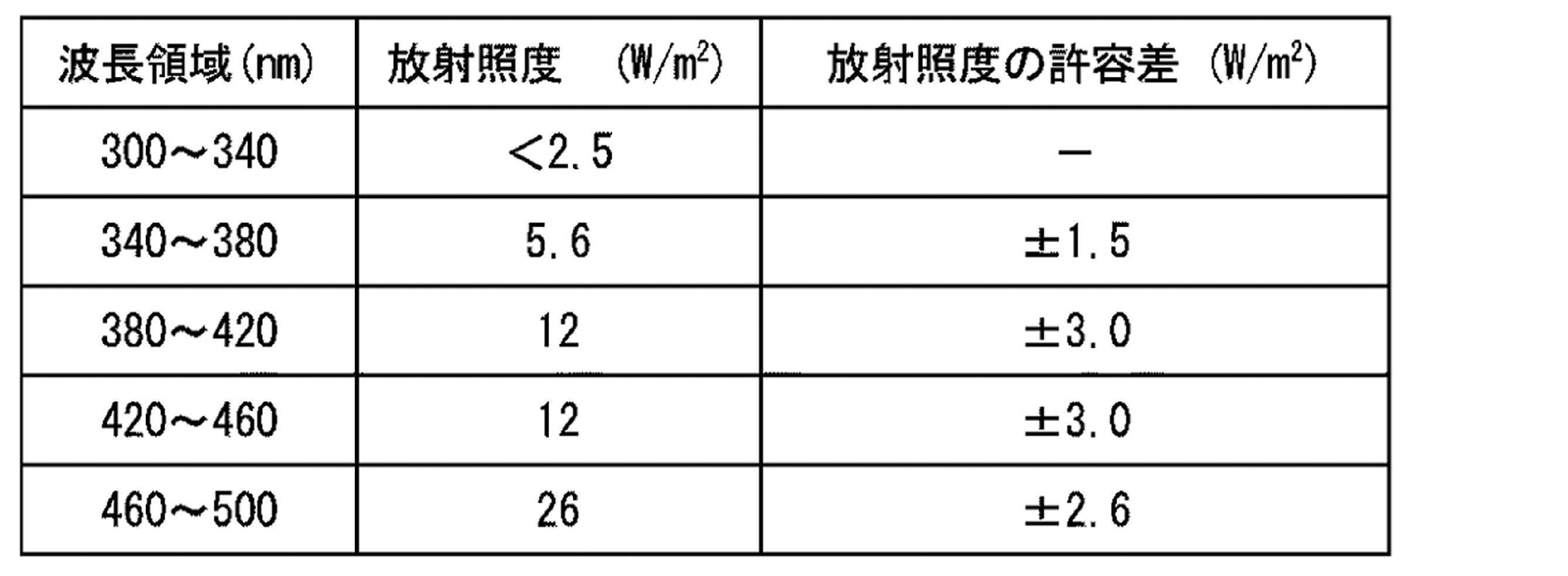
- the light irradiation was carried out so that the irradiance and the permissible difference of the irradiance became the values shown in Table 1 below as specified in JIS T7333: 2005.
- transmittance at the time of color development The smaller the value of the transmittance measured above (hereinafter referred to as "transmittance at the time of color development"), the higher the concentration of the photochromic compound.
- the spectacle lens of Example 1 is excellent in visible light transmission under non-irradiation and has a higher color development density than that of Comparative Example 1.
- Example 2 Example 1 in the preparation of the polymerizable composition for optical articles (coating composition for forming a photochromic layer), except that the content of the photochromic compound was changed to 11.27% by mass with the total amount of the composition being 100% by mass.
- a spectacle lens was produced in the same manner as in the above.
- the content of the above components with the total amount of the composition as 100% by mass was 86.73% by mass for the mixture of the above polymerizable compounds, 11.27% by mass for the photochromic compound, and 0.26% by mass for the photoradical polymerization initiator.
- the antioxidant is 0.87% by mass and the light stabilizer is 0.87% by mass.
- the content of the component A is 61.2% by mass and the content of the component B is 18.0% by mass, assuming that the total amount of the polymerizable compound is 100% by mass.
- the content of the component C is 10.8% by mass, and the content of the component D is 10.0% by mass.
- Example 3 containing the component D and Example 2 not containing the component D had the same color density and visible light transmission under non-irradiation. From this result, it can be said that in Example 3, the component D has no effect on the color development density or the visible light transmission under non-irradiation.
- a plurality of kinds of compositions were prepared in which the amount of the component B was increased to decrease the amount of the component A and the amount of the reduced component B was increased to the amount of the component A.
- An spectacle lens was produced in the same manner as in Example 1 except that a photochromic layer was formed using the composition thus prepared.
- the initial transmittance and the transmittance at the time of color development of the spectacle lens thus produced were measured by the method described above. After measuring the transmittance at the time of color development, measure the time (half-life) required from the time when the light irradiation is stopped until the transmittance (measurement wavelength: 550 nm) becomes [(initial transmittance-transmittance at the time of color development) / 2]. did.
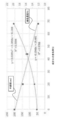
- FIG. 1 shows a graph in which the color development concentration and the half-life are plotted against the content of component B, respectively.
- the scale on the vertical axis on the right side indicates the color development density
- the scale on the vertical axis on the left side indicates the half-life.
- the approximate expression in FIG. 1 is an expression obtained by the method of least squares. From the graph of FIG. 1, it can be said that the higher the content of the component B, the higher the color development density, and the lower the content of the component B, the faster the fading rate, which is one of the indexes showing the photoresponsiveness.
- a polymerizable composition for an optical article containing a photochromic compound, the above-mentioned component A, and the above-mentioned component B is provided.
- composition it is possible to form a high photochromic layer having a high color development density when a color is developed by receiving light irradiation and having excellent visible light transmission under non-irradiation.
- the composition can further contain the component C.
- the composition can further contain the component D.
- the composition can contain 50.0% by mass or more of component A with respect to the total amount of the polymerizable compound contained in the composition.
- the composition can contain 5.0% by mass or more and 30.0% by mass or less of component B with respect to the total amount of the polymerizable compound contained in the composition.
- an optical article having a base material and a photochromic layer obtained by curing the above composition is provided.
- the optical article can be a spectacle lens.
- the optical article can be a goggle lens.
- the optical article can be the visor portion of a sun visor.
- the optical article can be a shield member of a helmet.
- spectacles equipped with the above spectacle lens are provided.
- the present invention is useful in technical fields such as eyeglasses, goggles, sun visors, and helmets.
Landscapes
- Physics & Mathematics (AREA)
- Chemical & Material Sciences (AREA)
- Health & Medical Sciences (AREA)
- Optics & Photonics (AREA)
- General Physics & Mathematics (AREA)
- Medicinal Chemistry (AREA)
- Organic Chemistry (AREA)
- Polymers & Plastics (AREA)
- Chemical Kinetics & Catalysis (AREA)
- Ophthalmology & Optometry (AREA)
- General Health & Medical Sciences (AREA)
- Eyeglasses (AREA)
- Optical Filters (AREA)
- Addition Polymer Or Copolymer, Post-Treatments, Or Chemical Modifications (AREA)
- Macromonomer-Based Addition Polymer (AREA)
Abstract
フォトクロミック化合物と、成分A:分子量500以上の非環状のメタクリレートと、成分B:分子量400以下であって式1で表される(メタ)アクリレートと、を含む光学物品用重合性組成物が提供される。式1中、R1およびR2は、それぞれ独立に水素原子またはメチル基を表し、mは1以上の整数を表す。
Description
本発明は、光学物品用重合性組成物および光学物品に関する。
フォトクロミック化合物は、光応答性を有する波長域の光の照射下で発色し、非照射下では退色する性質(フォトクロミック性)を有する化合物である。眼鏡レンズ等の光学物品にフォトクロミック性を付与する方法としては、フォトクロミック化合物と重合性化合物とを含むコーティングを基材上に設け、このコーティングを硬化させてフォトクロミック性を有する硬化層(フォトクロミック層)を形成する方法が挙げられる(例えば特許文献1参照)。
上記のようなフォトクロミック性を有する光学物品に望まれる性質としては、屋外等で光照射を受けて発色した際の発色濃度が高く、かつ屋内等の非照射下での可視光透過性に優れることが挙げられる。
本発明の一態様は、光照射を受けて発色した際の発色濃度が高く、かつ非照射下での可視光透過性に優れるフォトクロミック層を形成可能な光学物品用重合性組成物を提供する。
本発明の一態様は、
フォトクロミック化合物と、
成分A:分子量500以上の非環状のメタクリレートと、
成分B:分子量400以下であって、下記式1:
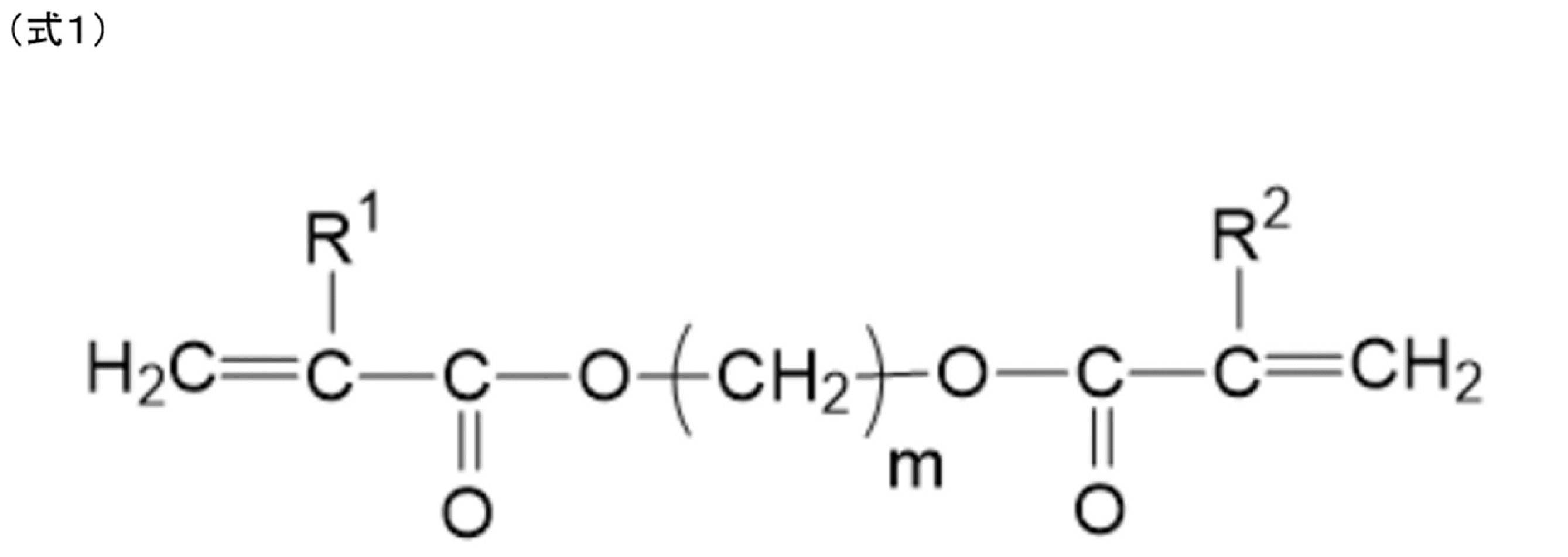
[式1中、R1およびR2は、それぞれ独立に水素原子またはメチル基を表し、mは1以上の整数を表す。]
で表される(メタ)アクリレートと、
を含む、光学物品用重合性組成物(以下、単に「組成物」とも記載する。)、
に関する。
フォトクロミック化合物と、
成分A:分子量500以上の非環状のメタクリレートと、
成分B:分子量400以下であって、下記式1:
で表される(メタ)アクリレートと、
を含む、光学物品用重合性組成物(以下、単に「組成物」とも記載する。)、
に関する。
上記組成物は、上記の成分Aおよび成分Bを含む。これにより、この組成物を硬化させて形成されるフォトクロミック層において、光照射を受けたフォトクロミック化合物が高濃度で発色することができる。更に、かかるフォトクロミック層は、非照射下で優れた可視光透過性を示すことができる。
本発明の一態様によれば、光照射を受けて発色した際の発色濃度が高く、かつ非照射下での可視光透過性に優れるフォトクロミック層を形成可能な光学物品用組成物を提供することができる。また、本発明の一態様によれば、光照射を受けて発色した際の発色濃度が高く、かつ非照射下での可視光透過性に優れるフォトクロミック層を有する光学物品を提供することができる。
[光学物品用重合性組成物]
以下に、本発明の一態様にかかる光学物品用重合性組成物について、更に詳細に説明する。
以下に、本発明の一態様にかかる光学物品用重合性組成物について、更に詳細に説明する。
本発明および本明細書において、重合性組成物とは、重合性化合物を含む組成物をいうものとする。重合性化合物とは、重合性基を有する化合物である。本発明の一態様にかかる光学物品用重合性組成物は、光学物品の製造のために使用される重合性組成物であって、光学物品用コーティング組成物であることができ、より詳しくは光学物品のフォトクロミック層形成用コーティング組成物であることができる。光学物品用コーティング組成物とは、光学物品の製造のために基材等に塗布される組成物を意味する。光学物品としては、眼鏡レンズ、ゴーグル用レンズ等の各種レンズ、サンバイザーのバイザー(ひさし)部分、ヘルメットのシールド部材等を挙げることができる。例えば、上記組成物をレンズ基材に塗布して作製される眼鏡レンズは、フォトクロミック層を有する眼鏡レンズとなり、フォトクロミック性を示すことができる。
本発明および本明細書において、「(メタ)アクリレート」とは、アクリレートとメタクリレートとを包含する意味で用いられる。「アクリレート」とは、1分子中にアクリロイル基を1つ以上有する化合物である。「メタクリレート」とは、1分子中にメタクリロイル基を1つ以上有する化合物である。(メタ)アクリレートについて、官能数は、1分子中に含まれるアクリロイル基およびメタクリロイル基からなる群から選ばれる基の数である。本発明および本明細書では、「メタクリレート」とは、(メタ)アクリロイル基としてメタクリロイル基のみを含むものをいうものとし、(メタ)アクリロイル基としてアクリロイル基とメタクリロイル基の両方を含むものはアクリレートと呼ぶ。アクリロイル基はアクリロイルオキシ基の形態で含まれていてもよく、メタクリロイル基はメタクリロイルオキシ基の形態で含まれていてもよい。以下に記載の「(メタ)アクリロイル基」とは、アクリロイル基とメタクリロイル基とを包含する意味で用いられ、「(メタ)アクリロイルオキシ基」とは、アクリロイルオキシ基とメタクリロイルオキシ基とを包含する意味で用いられる。また、特記しない限り、記載されている基は置換基を有してもよく無置換であってもよい。ある基が置換基を有する場合、置換基としては、アルキル基(例えば炭素数1~6のアルキル基)、水酸基、アルコキシ基(例えば炭素数1~6のアルコキシ基)、ハロゲン原子(例えばフッ素原子、塩素原子、臭素原子)、シアノ基、アミノ基、ニトロ基、アシル基、カルボキシ基等を挙げることができる。また、置換基を有する基について「炭素数」とは、置換基を含まない部分の炭素数を意味するものとする。
<重合性化合物>
上記組成物は、重合性化合物として、少なくとも成分Aおよび成分Bを含む。以下に、成分Aおよび成分Bについて説明する。
上記組成物は、重合性化合物として、少なくとも成分Aおよび成分Bを含む。以下に、成分Aおよび成分Bについて説明する。
(成分A)
成分Aは、分子量500以上の非環状のメタクリレートである。本発明および本明細書において、「非環状」とは、環状構造を含まないことを意味する。これに対し、「環状」とは、環状構造を含むことを意味する。非環状のメタクリレートとは、環状構造を含まない単官能以上のメタクリレートをいうものとする。
成分Aは、分子量500以上の非環状のメタクリレートである。本発明および本明細書において、「非環状」とは、環状構造を含まないことを意味する。これに対し、「環状」とは、環状構造を含むことを意味する。非環状のメタクリレートとは、環状構造を含まない単官能以上のメタクリレートをいうものとする。
成分Aは、単官能または2官能以上のメタクリレートであることができ、2官能または3官能メタクリレートであることが好ましく、2官能メタクリレートであることがより好ましい。成分Aとしては、ポリアルキレングリコールジメタクリレートを挙げることができる。ポリアルキレングリコールジメタクリレートは、下記式2:
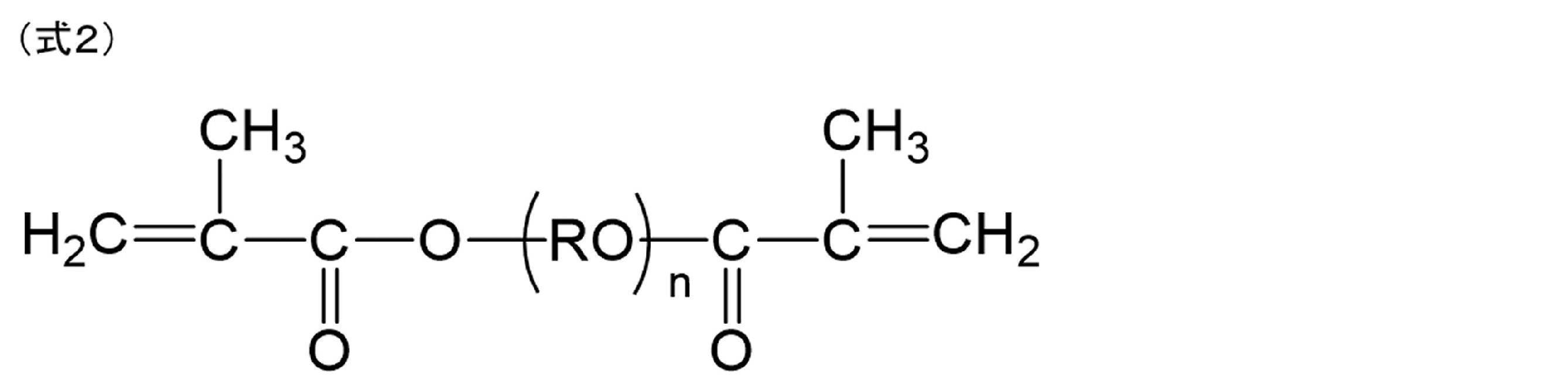
により示すことができ、Rはアルキレン基を表し、nはROで表されるアルコキシ基の繰り返し数を示し、2以上である。Rで表されるアルキレン基としては、エチレン基、プロピレン基、テトラメチレン基等が挙げられる。nは、2以上であり、例えば30以下、25以下または20以下であることができる。ポリアルキレングリコールジメタクリレートの具体例としては、ポリエチレングリコールジメタクリレート、ポリプロピレングリコールジメタクリレート、ポリテトラメチレングリコールジメタクリレート等を挙げることができる。
成分Aの分子量は、500以上である。分子量が500以上の非環状の2官能メタクリレート(成分A)を、詳細を後述する成分Bとともに含むことが、上記組成物から形成されるフォトクロミック層において、光照射を受けたフォトクロミック化合物が高濃度で発色可能であり且つフォトクロミック層が非照射下で優れた可視光透過性を示すことができる理由と推察される。なお本発明および本明細書において、重合体についての分子量は、化合物の構造解析により決定された構造式または製造する際の原料仕込み比から算出した理論分子量を採用している。成分Aの分子量は、500以上であり、510以上であることが好ましく、520以上であることがより好ましく、550以上であることが好ましく、570以上であることがより好ましく、600以上であることが更に好ましく、630以上であることが一層好ましく、650以上であることがより一層好ましい。成分Aの分子量は、フォトクロミック層の高硬度化の観点からは、例えば2000以下、1500以下、1200以下、1000以下、または800以下であることが好ましい。
(成分B)
成分Bは、分子量400以下であって、下記式1:

で表される(メタ)アクリレートである。
成分Bは、分子量400以下であって、下記式1:
式1中、R1およびR2は、それぞれ独立に水素原子またはメチル基を表し、mは1以上の整数を表す。mは、1以上であって、例えば、10以下、9以下、8以下、7以下または6以下であることができる。
成分Bの分子量は、400以下であり、フォトクロミック層の発色濃度をより高める観点からは、350以下であることが好ましく、300以下であることがより好ましく、250以下であることが更に好ましい。また、成分Bの分子量は、例えば、100以上、150以上または200以上であることができる。
成分Bは、(メタ)アクリロイル基として、アクリロイル基のみを含んでもよく、メタクリロイル基のみを含んでもよく、アクリロイル基およびメタクリロイル基を含んでもよい。一形態では、成分Bは、(メタ)アクリロイル基としてアクリロイル基のみを含むことが好ましい。成分Bの具体例としては、1,9-ノナンジオールジアクリレート、1,6-ヘキサンジオールジアクリレート、1,10-デカンジオールジアクリレート等を挙げることができる。
上記組成物は、重合性化合物として、一形態では成分Aおよび成分Bのみを含むことができ、他の一形態では、成分Aおよび成分Bに加えて他の重合性化合物を1種以上含むことができる。以下に、上記組成物に含まれ得る他の重合性化合物を例示する。
(他の重合性化合物)
以下に例示する成分Cおよび成分Dは、上記組成物から形成されるフォトクロミック層の光照射下での発色性および非照射下での可視光透過性に大きな影響を与えることなく、組成物の塗布適性、隣接層との密着性等の性能向上に寄与し得る点で、好ましい成分である。
以下に例示する成分Cおよび成分Dは、上記組成物から形成されるフォトクロミック層の光照射下での発色性および非照射下での可視光透過性に大きな影響を与えることなく、組成物の塗布適性、隣接層との密着性等の性能向上に寄与し得る点で、好ましい成分である。
成分C
上記組成物は、一形態では、非環状の3官能以上の(メタ)アクリレート(成分C)を含むことができる。成分Cは、3~5官能の(メタ)アクリレートであることが好ましく、3官能または4官能の(メタ)アクリレートであることがより好ましく、3官能(メタ)アクリレートであることが更に好ましい。成分Cの具体例としては、例えば、ペンタエリスリトールトリ(メタ)アクリレート、ペンタエリスリトールテトラ(メタ)アクリレート、ジペンタエリスリトールテトラ(メタ)アクリレート、トリメチロールエタントリ(メタ)アクリレート、トリメチロールプロパントリ(メタ)アクリレート、ジトリメチロールプロパンテトラ(メタ)アクリレート、テトラメチロールメタンテトラ(メタ)アクリレート、テトラメチロールメタントリ(メタ)アクリレート等を挙げることができる。成分Cの分子量は、例えば200~400の範囲であることができるが、この範囲に限定されるものではない。成分Cは、(メタ)アクリロイル基として、アクリロイル基のみを含んでもよく、メタクリロイル基のみを含んでもよく、アクリロイル基およびメタクリロイル基を含んでもよい。一形態では、非環状の3官能以上の(メタ)アクリレートは、(メタ)アクリロイル基としてメタクリロイル基のみを含むこと、即ちメタクリレートであることが好ましい。
上記組成物は、一形態では、非環状の3官能以上の(メタ)アクリレート(成分C)を含むことができる。成分Cは、3~5官能の(メタ)アクリレートであることが好ましく、3官能または4官能の(メタ)アクリレートであることがより好ましく、3官能(メタ)アクリレートであることが更に好ましい。成分Cの具体例としては、例えば、ペンタエリスリトールトリ(メタ)アクリレート、ペンタエリスリトールテトラ(メタ)アクリレート、ジペンタエリスリトールテトラ(メタ)アクリレート、トリメチロールエタントリ(メタ)アクリレート、トリメチロールプロパントリ(メタ)アクリレート、ジトリメチロールプロパンテトラ(メタ)アクリレート、テトラメチロールメタンテトラ(メタ)アクリレート、テトラメチロールメタントリ(メタ)アクリレート等を挙げることができる。成分Cの分子量は、例えば200~400の範囲であることができるが、この範囲に限定されるものではない。成分Cは、(メタ)アクリロイル基として、アクリロイル基のみを含んでもよく、メタクリロイル基のみを含んでもよく、アクリロイル基およびメタクリロイル基を含んでもよい。一形態では、非環状の3官能以上の(メタ)アクリレートは、(メタ)アクリロイル基としてメタクリロイル基のみを含むこと、即ちメタクリレートであることが好ましい。
成分D
上記組成物は、一形態では、粘度100cP(センチポアズ)以下であって、(メタ)アクリレートおよびビニルエーテルからなる群から選択される重合性化合物(成分D)を含むことができる。本発明および本明細書における「粘度」は、温度25℃の大気雰囲気中で振動式粘度計によって測定される値である。成分Dの粘度は、100cP以下であり、70cP以下であることが好ましく、50cP以下であることがより好ましい。また、成分Dの粘度は、例えば、5cP以上または10cP以上であることができる。成分Dの一形態である(メタ)アクリレートは、単官能~3官能であることができ、単官能~2官能であることが好ましい。また、成分Dの一形態である(メタ)アクリレートは、アリール基(例えばフェニル基)、アミド基等を含むことができる。本発明および本明細書において、「ビニルエーテル」とは、1分子中に1個以上のビニル基および1個以上のエーテル結合を有する化合物であり、1分子中にビニル基を2個以上有することが好ましく、2~4個有することがより好ましい。また、ビニルエーテルに含まれるエーテル結合の数は、1分子中、2~4個であることが好ましい。成分Dの分子量は、例えば150~250の範囲であることができるが、この範囲に限定されるものではない。成分Dの具体例としては、2-フェノキシエチル(メタ)アクリレート、アクリルアミド、メトキシポリエチレングリコール(メタ)アクリレート、フェノキシポリエチレングリコール(メタ)アクリレート、ステアリル(メタ)アクリレート、1,10-デカンジオールジ(メタ)アクリレート、1,6-ヘキサンジオールジ(メタ)アクリレート、1,9-ノナンジオールジ(メタ)アクリレート、ジプロピレングリコールジ(メタ)アクリレート、トリプロピレングリコールジ(メタ)アクリレート、プロピレングリコールジ(メタ)アクリレート、エチレングリコールジ(メタ)アクリレート、ジエチレングリコールジ(メタ)アクリレート、トリエチレングリコールジ(メタ)アクリレート、トリシクロデカンジメタノールジ(メタ)アクリレート、エトキシ化(Ethoxylated)プロピレングリコールジ(メタ)アクリレート、トリメチロールプロパントリ(メタ)アクリレート、エチル(メタ)アクリレート、ブチル(メタ)アクリレート、イソブチル(メタ)アクリレート、tert-ブチル(メタ)アクリレート、2-エチルヘキシル(メタ)アクリレート、イソデシル(メタ)アクリレート、ドデシル(メタ)アクリレート、トリデシル(メタ)アクリレート、ジエチレングリコールブチルエーテル(メタ)アクリレート、シクロヘキシル(メタ)アクリレート、テトラヒドロフルフリル(メタ)アクリレート、ベンジル(メタ)アクリレート、イソボルニル(メタ)アクリレート、2-(ジメチルアミノ)エチル(メタ)アクリレート、2-(ジエチルアミノ)エチル(メタ)アクリレート、グリシジル(メタ)アクリレート、ポリエチレングリコールジ(メタ)アクリレート、テトラメチレングリコールジ(メタ)アクリレート、ネオペンチルグリコールジ(メタ)アクリレート、ノナメチレングリコールジ(メタ)アクリレート、イソアミル(メタ)アクリレート、エチレングリコールモノビニルエーテル、テトラメチレングリコールモノビニルエーテル、ジエチレングリコールモノビニルエーテル、2-エチルヘキシルビニルエーテル、2-プロペノイックアシッド(Propenoic acid),2-[2-(エテニロキシ)エトキシ]エチルエステル、2-(2-エテノキシエトキシ)エチル2-メチルプロプ-2-エノエート等を挙げることができる。
上記組成物は、一形態では、粘度100cP(センチポアズ)以下であって、(メタ)アクリレートおよびビニルエーテルからなる群から選択される重合性化合物(成分D)を含むことができる。本発明および本明細書における「粘度」は、温度25℃の大気雰囲気中で振動式粘度計によって測定される値である。成分Dの粘度は、100cP以下であり、70cP以下であることが好ましく、50cP以下であることがより好ましい。また、成分Dの粘度は、例えば、5cP以上または10cP以上であることができる。成分Dの一形態である(メタ)アクリレートは、単官能~3官能であることができ、単官能~2官能であることが好ましい。また、成分Dの一形態である(メタ)アクリレートは、アリール基(例えばフェニル基)、アミド基等を含むことができる。本発明および本明細書において、「ビニルエーテル」とは、1分子中に1個以上のビニル基および1個以上のエーテル結合を有する化合物であり、1分子中にビニル基を2個以上有することが好ましく、2~4個有することがより好ましい。また、ビニルエーテルに含まれるエーテル結合の数は、1分子中、2~4個であることが好ましい。成分Dの分子量は、例えば150~250の範囲であることができるが、この範囲に限定されるものではない。成分Dの具体例としては、2-フェノキシエチル(メタ)アクリレート、アクリルアミド、メトキシポリエチレングリコール(メタ)アクリレート、フェノキシポリエチレングリコール(メタ)アクリレート、ステアリル(メタ)アクリレート、1,10-デカンジオールジ(メタ)アクリレート、1,6-ヘキサンジオールジ(メタ)アクリレート、1,9-ノナンジオールジ(メタ)アクリレート、ジプロピレングリコールジ(メタ)アクリレート、トリプロピレングリコールジ(メタ)アクリレート、プロピレングリコールジ(メタ)アクリレート、エチレングリコールジ(メタ)アクリレート、ジエチレングリコールジ(メタ)アクリレート、トリエチレングリコールジ(メタ)アクリレート、トリシクロデカンジメタノールジ(メタ)アクリレート、エトキシ化(Ethoxylated)プロピレングリコールジ(メタ)アクリレート、トリメチロールプロパントリ(メタ)アクリレート、エチル(メタ)アクリレート、ブチル(メタ)アクリレート、イソブチル(メタ)アクリレート、tert-ブチル(メタ)アクリレート、2-エチルヘキシル(メタ)アクリレート、イソデシル(メタ)アクリレート、ドデシル(メタ)アクリレート、トリデシル(メタ)アクリレート、ジエチレングリコールブチルエーテル(メタ)アクリレート、シクロヘキシル(メタ)アクリレート、テトラヒドロフルフリル(メタ)アクリレート、ベンジル(メタ)アクリレート、イソボルニル(メタ)アクリレート、2-(ジメチルアミノ)エチル(メタ)アクリレート、2-(ジエチルアミノ)エチル(メタ)アクリレート、グリシジル(メタ)アクリレート、ポリエチレングリコールジ(メタ)アクリレート、テトラメチレングリコールジ(メタ)アクリレート、ネオペンチルグリコールジ(メタ)アクリレート、ノナメチレングリコールジ(メタ)アクリレート、イソアミル(メタ)アクリレート、エチレングリコールモノビニルエーテル、テトラメチレングリコールモノビニルエーテル、ジエチレングリコールモノビニルエーテル、2-エチルヘキシルビニルエーテル、2-プロペノイックアシッド(Propenoic acid),2-[2-(エテニロキシ)エトキシ]エチルエステル、2-(2-エテノキシエトキシ)エチル2-メチルプロプ-2-エノエート等を挙げることができる。
上記組成物は、一形態では、重合性化合物として、上記成分以外の他の重合性化合物の1種以上を含むこともできる。上記組成物において、成分Aの含有率は、組成物に含まれる重合性化合物の全量を100質量%として、50.0質量%以上であることが好ましく、55.0質量%以上であることがより好ましく、60.0質量%以上であることが更に好ましい。成分Aは、一形態では、組成物に含まれる複数の重合性化合物の中で、最も多くを占める成分であることができる。また、成分Aの含有率は、組成物に含まれる重合性化合物の全量を100質量%として、90.0質量%以下、85.0質量%以下、80.0質量%以下または75.0質量%以下であることができる。上記組成物は、成分Aを、一形態では1種のみ含むことができ、他の一形態では2種以上含むことができる。2種以上の成分Aが含まれる場合、上記の成分Aの含有率は、2種以上の合計含有率である。この点は、他の成分に関する含有率についても同様である。
成分Bについては、本発明者の検討によれば、成分Bの含有率が高くなるほど、光照射下を受けて発色した際の発色濃度は高まる傾向が見られた。他方、本発明者の検討によれば、成分Bの含有率が高くなるほど、光応答性を示す指標の1つである退色速度が遅くなる傾向も見られた。発色濃度の観点からは、成分Bの含有率は、組成物に含まれる重合性化合物の全量を100質量%として、5.0質量%以上であることが好ましく、10.0質量%以上であることがより好ましく、15.0質量%以上であることがより好ましい。また、光応答性の観点からは、成分Bの含有率は、組成物に含まれる重合性化合物の全量を100質量%として、30.0質量%以下であることが好ましく、25.0質量%以下であることがより好ましい。
成分Cについては、組成物に含まれる重合性化合物の全量に対して、成分Cの含有率は、0質量%であってもよく、0質量%以上、0質量%超、1.0質量%以上、3.0質量%以上、5質量%以上または7質量%以上であることもできる。成分Cの含有率は、組成物に含まれる重合性化合物の全量に対して、例えば20.0質量%以下または15.0質量%以下であることができる。
成分Dについては、組成物に含まれる重合性化合物の全量に対して、成分Dの含有率は、0質量%であってもよく、0質量%以上、0質量%超、1.0質量%以上、3.0質量%以上、5.0質量%以上または7.0質量%以上であることもできる。成分Dの含有率は、組成物に含まれる重合性化合物の全量に対して、例えば20.0質量%以下または15.0質量%以下であることができる。
上記組成物における重合性化合物の含有率は、組成物の全量を100質量%として、例えば80.0質量%以上、85.0質量%以上または90.0質量%以上であることができる。また、上記組成物における重合性化合物の含有率は、組成物の全量を100質量%として、例えば、99.0質量%以下、95.0質量%以下、90.0質量%以下または85.0質量%以下であることができる。本発明および本明細書において、含有率に関して、「組成物の全量」とは、溶剤を含む組成物については、溶剤を除く全成分の合計量をいうものとする。上記組成物は、溶剤を含んでもよく、含まなくてもよい。溶剤を含む場合、使用可能な溶剤としては、重合性組成物の重合反応の進行を阻害しないものであれば、任意の溶剤を任意の量で使用することができる。
<フォトクロミック化合物>
上記組成物は、上記重合性化合物とともにフォトクロミック化合物を含む。上記組成物に含まれるフォトクロミック化合物としては、フォトクロミック性を示す公知の化合物を使用することができる。フォトクロミック化合物は、例えば紫外線に対してフォトクロミック性を示すことができる。例えば、フォトクロミック化合物としては、フルギミド化合物、スピロオキサジン化合物、クロメン化合物、インデノ縮合ナフトピラン化合物等のフォトクロミック性を示す公知の骨格を有する化合物を例示できる。フォトクロミック化合物は、1種単独で使用することができ、2種以上を混合して使用することもできる。上記組成物のフォトクロミック化合物の含有率は、組成物の全量を100質量%として、例えば0.1~15.0質量%程度とすることができるが、この範囲に限定されるものではない。
上記組成物は、上記重合性化合物とともにフォトクロミック化合物を含む。上記組成物に含まれるフォトクロミック化合物としては、フォトクロミック性を示す公知の化合物を使用することができる。フォトクロミック化合物は、例えば紫外線に対してフォトクロミック性を示すことができる。例えば、フォトクロミック化合物としては、フルギミド化合物、スピロオキサジン化合物、クロメン化合物、インデノ縮合ナフトピラン化合物等のフォトクロミック性を示す公知の骨格を有する化合物を例示できる。フォトクロミック化合物は、1種単独で使用することができ、2種以上を混合して使用することもできる。上記組成物のフォトクロミック化合物の含有率は、組成物の全量を100質量%として、例えば0.1~15.0質量%程度とすることができるが、この範囲に限定されるものではない。
<他の成分>
上記組成物は、重合性化合物およびフォトクロミック化合物に加えて、重合性組成物に通常含まれ得る各種添加剤の1種以上を任意の含有率で含むことができる。上記組成物に含まれ得る添加剤としては、例えば、重合反応を進行させるための重合開始剤を挙げることができる。
上記組成物は、重合性化合物およびフォトクロミック化合物に加えて、重合性組成物に通常含まれ得る各種添加剤の1種以上を任意の含有率で含むことができる。上記組成物に含まれ得る添加剤としては、例えば、重合反応を進行させるための重合開始剤を挙げることができる。
例えば、重合開始剤としては、公知の重合開始剤を使用することができ、ラジカル重合開始剤が好ましく、重合開始剤としてラジカル重合開始剤のみを含むことがより好ましい。また、重合開始剤としては、光重合開始剤または熱重合開始剤を使用することができ、短時間で重合反応を進行させる観点から光重合開始剤が好ましい。光ラジカル重合開始剤としては、例えば2,2-ジメトキシ-1,2-ジフェニルエタン-1-オン等のベンゾインケタール;1-ヒドロキシシクロヘキシルフェニルケトン、2-ヒドロキシ-2-メチル-1-フェニルプロパン-1-オン、1-[4-(2-ヒドロキシエトキシ)フェニル]-2-ヒドロキシ-2-メチル-1-プロパン-1-オン等のα-ヒドロキシケトン;2-ベンジル-2-ジメチルアミノ-1-(4-モルフォリノフェニル)-ブタン-1-オン、1,2-メチル-1-[4-(メチルチオ)フェニル]-2-モルフォリノプロパン-1-オン等のα-アミノケトン;1-[(4-フェニルチオ)フェニル]-1,2-オクタジオン-2-(ベンゾイル)オキシム等のオキシムエステル;ビス(2,4,6-トリメチルベンゾイル)フェニルホスフィンオキシド、ビス(2,6-ジメトキシベンゾイル)-2,4,4-トリメチルペンチルホスフィンオキシド、2,4,6-トリメチルベンゾイルジフェニルホスフィンオキシド等のホスフィンオキシド;2-(o-クロロフェニル)-4,5-ジフェニルイミダゾール二量体、2-(o-クロロフェニル)-4,5-ジ(メトキシフェニル)イミダゾール二量体、2-(o-フルオロフェニル)-4,5-ジフェニルイミダゾール二量体、2-(o-メトキシフェニル)-4,5-ジフェニルイミダゾール二量体、2-(p-メトキシフェニル)-4,5-ジフェニルイミダゾール二量体等の2,4,5-トリアリールイミダゾール二量体;ベンゾフェノン、N,N’-テトラメチル-4,4’-ジアミノベンゾフェノン、N,N’-テトラエチル-4,4’-ジアミノベンゾフェノン、4-メトキシ-4’-ジメチルアミノベンゾフェノン等のベンゾフェノン化合物;2-エチルアントラキノン、フェナントレンキノン、2-tert-ブチルアントラキノン、オクタメチルアントラキノン、1,2-ベンズアントラキノン、2,3-ベンズアントラキノン、2-フェニルアントラキノン、2,3-ジフェニルアントラキノン、1-クロロアントラキノン、2-メチルアントラキノン、1,4-ナフトキノン、9,10-フェナントラキノン、2-メチル-1,4-ナフトキノン、2,3-ジメチルアントラキノン等のキノン化合物;ベンゾインメチルエーテル、ベンゾインエチルエーテル、ベンゾインフェニルエーテル等のベンゾインエーテル;ベンゾイン、メチルベンゾイン、エチルベンゾイン等のベンゾイン化合物;ベンジルジメチルケタール等のベンジル化合物;9-フェニルアクリジン、1,7-ビス(9、9’-アクリジニルヘプタン)等のアクリジン化合物:N-フェニルグリシン、クマリン等が挙げられる。また、2,4,5-トリアリールイミダゾール二量体において、2つのトリアリールイミダゾール部位のアリール基の置換基は、同一で対称な化合物を与えてもよく、相違して非対称な化合物を与えてもよい。また、ジエチルチオキサントンとジメチルアミノ安息香酸の組み合わせのように、チオキサントン化合物と3級アミンとを組み合わせてもよい。これらの中で、硬化性、透明性および耐熱性の観点から、α-ヒドロキシケトンおよびホスフィンオキシドが好ましい。重合開始剤の含有率は、組成物の全量を100質量%として、例えば0.1~5.0質量%の範囲であることができる。
上記組成物には、更に、フォトクロミック化合物を含む組成物に通常添加され得る公知の添加剤、例えば、界面活性剤、酸化防止剤、ラジカル捕捉剤、光安定化剤、紫外線吸収剤、着色防止剤、帯電防止剤、蛍光染料、染料、顔料、香料、可塑剤、シランカップリング剤等の添加剤を任意の量で添加できる。これら添加剤としては、公知の化合物を使用することができる。
上記組成物は、以上説明した各種成分を同時または任意の順序で順次混合して調製することができる。
[光学物品]
本発明の一態様は、基材と、上記組成物を硬化させたフォトクロミック層と、を有する光学物品に関する。
以下、上記光学物品について、更に詳細に説明する。
本発明の一態様は、基材と、上記組成物を硬化させたフォトクロミック層と、を有する光学物品に関する。
以下、上記光学物品について、更に詳細に説明する。
<基材>
上記光学物品は、光学物品の種類に応じて選択した基材上にフォトクロミック層を有することができる。基材の一例として、眼鏡レンズ基材は、プラスチックレンズ基材またはガラスレンズ基材であることができる。ガラスレンズ基材は、例えば無機ガラス製のレンズ基材であることができる。レンズ基材としては、軽量で割れ難く取扱いが容易であるという観点から、プラスチックレンズ基材が好ましい。プラスチックレンズ基材としては、(メタ)アクリル樹脂をはじめとするスチレン樹脂、ポリカーボネート樹脂、アリル樹脂、ジエチレングリコールビスアリルカーボネート樹脂(CR-39)等のアリルカーボネート樹脂、ビニル樹脂、ポリエステル樹脂、ポリエーテル樹脂、イソシアネート化合物とジエチレングリコールなどのヒドロキシ化合物との反応で得られたウレタン樹脂、イソシアネート化合物とポリチオール化合物とを反応させたチオウレタン樹脂、分子内に1つ以上のジスルフィド結合を有する(チオ)エポキシ化合物を含有する硬化性組成物を硬化した硬化物(一般に透明樹脂と呼ばれる。)を挙げることができる。レンズ基材としては、染色されていないもの(無色レンズ)を用いてもよく、染色されているもの(染色レンズ)を用いてもよい。レンズ基材の屈折率は、例えば、1.60~1.75程度であることができる。ただしレンズ基材の屈折率は、上記範囲に限定されるものではなく、上記の範囲内でも、上記の範囲から上下に離れていてもよい。本発明および本明細書において、屈折率とは、波長500nmの光に対する屈折率をいうものとする。また、レンズ基材は、屈折力を有するレンズ(いわゆる度付レンズ)であってもよく、屈折力なしのレンズ(いわゆる度なしレンズ)であってもよい。
上記光学物品は、光学物品の種類に応じて選択した基材上にフォトクロミック層を有することができる。基材の一例として、眼鏡レンズ基材は、プラスチックレンズ基材またはガラスレンズ基材であることができる。ガラスレンズ基材は、例えば無機ガラス製のレンズ基材であることができる。レンズ基材としては、軽量で割れ難く取扱いが容易であるという観点から、プラスチックレンズ基材が好ましい。プラスチックレンズ基材としては、(メタ)アクリル樹脂をはじめとするスチレン樹脂、ポリカーボネート樹脂、アリル樹脂、ジエチレングリコールビスアリルカーボネート樹脂(CR-39)等のアリルカーボネート樹脂、ビニル樹脂、ポリエステル樹脂、ポリエーテル樹脂、イソシアネート化合物とジエチレングリコールなどのヒドロキシ化合物との反応で得られたウレタン樹脂、イソシアネート化合物とポリチオール化合物とを反応させたチオウレタン樹脂、分子内に1つ以上のジスルフィド結合を有する(チオ)エポキシ化合物を含有する硬化性組成物を硬化した硬化物(一般に透明樹脂と呼ばれる。)を挙げることができる。レンズ基材としては、染色されていないもの(無色レンズ)を用いてもよく、染色されているもの(染色レンズ)を用いてもよい。レンズ基材の屈折率は、例えば、1.60~1.75程度であることができる。ただしレンズ基材の屈折率は、上記範囲に限定されるものではなく、上記の範囲内でも、上記の範囲から上下に離れていてもよい。本発明および本明細書において、屈折率とは、波長500nmの光に対する屈折率をいうものとする。また、レンズ基材は、屈折力を有するレンズ(いわゆる度付レンズ)であってもよく、屈折力なしのレンズ(いわゆる度なしレンズ)であってもよい。
眼鏡レンズは、単焦点レンズ、多焦点レンズ、累進屈折力レンズ等の各種レンズであることができる。レンズの種類は、レンズ基材の両面の面形状により決定される。また、レンズ基材表面は、凸面、凹面、平面のいずれであってもよい。通常のレンズ基材および眼鏡レンズでは、物体側表面は凸面、眼球側表面は凹面である。ただし、本発明は、これに限定されるものではない。フォトクロミック層は、通常、レンズ基材の物体側表面上に設けることができるが、眼球側表面上に設けてもよい。
<フォトクロミック層>
上記光学物品のフォトクロミック層は、基材の表面上に直接または一層以上の他の層を介して間接的に上記組成物を塗布し、塗布された組成物に硬化処理を施すことによって形成することができる。他の層としては、フォトクロミック層と基材との密着性を向上させるためのプライマー層を挙げることができる。そのようなプライマー層は公知である。塗布方法としては、スピンコート法、ディップコート法等の公知の塗布方法を採用することができ、塗布の均一性の観点からはスピンコート法が好ましい。硬化処理は、光照射および/または加熱処理であることができ、短時間で硬化反応を進行させる観点からは光照射が好ましい。硬化処理条件は、上記組成物に含まれる各種成分(先に記載した重合性化合物、重合開始剤等)の種類や上記組成物の組成に応じて決定すればよい。こうして形成されるフォトクロミック層の厚さは、例えば5~80μmの範囲であることが好ましく、20~60μmの範囲であることがより好ましい。
上記光学物品のフォトクロミック層は、基材の表面上に直接または一層以上の他の層を介して間接的に上記組成物を塗布し、塗布された組成物に硬化処理を施すことによって形成することができる。他の層としては、フォトクロミック層と基材との密着性を向上させるためのプライマー層を挙げることができる。そのようなプライマー層は公知である。塗布方法としては、スピンコート法、ディップコート法等の公知の塗布方法を採用することができ、塗布の均一性の観点からはスピンコート法が好ましい。硬化処理は、光照射および/または加熱処理であることができ、短時間で硬化反応を進行させる観点からは光照射が好ましい。硬化処理条件は、上記組成物に含まれる各種成分(先に記載した重合性化合物、重合開始剤等)の種類や上記組成物の組成に応じて決定すればよい。こうして形成されるフォトクロミック層の厚さは、例えば5~80μmの範囲であることが好ましく、20~60μmの範囲であることがより好ましい。
上記のフォトクロミック層を有する光学物品は、フォトクロミック層に加えて一層以上の機能性層を有してもよく、有さなくてもよい。機能性層としては、光学物品の耐久性向上のための保護層、反射防止層、撥水性または親水性の防汚層、防曇層等の光学物品の機能性層として公知の層を挙げることができる。
上記光学物品の一形態は、眼鏡レンズである。また、上記光学物品の一形態としては、ゴーグル用レンズ、サンバイザーのバイザー(ひさし)部分、ヘルメットのシールド部材等を挙げることもできる。これら光学物品用の基材上に上記組成物を塗布し、塗布された組成物に硬化処理を施すことによりフォトクロミック層を形成することによって、防眩機能を有する光学物品を得ることがでる。
[眼鏡]
本発明の一態様は、上記光学物品の一形態である眼鏡レンズを備えた眼鏡に関する。この眼鏡に含まれる眼鏡レンズの詳細については、先に記載した通りである。上記眼鏡は、かかる眼鏡レンズを備えることにより、例えば屋外ではフォトクロミック層に含まれるフォトクロミック化合物が太陽光の照射を受けて発色することでサングラスのように防眩効果を発揮することができ、屋内に戻るとフォトクロミック化合物が退色することで透過性を回復することができる。上記眼鏡について、フレーム等の構成については、公知技術を適用することができる。
本発明の一態様は、上記光学物品の一形態である眼鏡レンズを備えた眼鏡に関する。この眼鏡に含まれる眼鏡レンズの詳細については、先に記載した通りである。上記眼鏡は、かかる眼鏡レンズを備えることにより、例えば屋外ではフォトクロミック層に含まれるフォトクロミック化合物が太陽光の照射を受けて発色することでサングラスのように防眩効果を発揮することができ、屋内に戻るとフォトクロミック化合物が退色することで透過性を回復することができる。上記眼鏡について、フレーム等の構成については、公知技術を適用することができる。
以下、本発明を実施例により更に説明する。ただし本発明は実施例に示す態様に限定されるものではない。
[実施例1]
<光学物品用重合性組成物(フォトクロミック層形成用コーティング組成物)の調製>
プラスチック製容器内で、成分Aであるポリエチレングリコールジメタクリレート(上式2中、n=14、Rはエチレン基、分子量736)68質量部、成分Bである1,9-ノナンジオールジアクリレート(式1中、R1およびR2は水素原子、m=9、分子量268)20質量部および成分Cであるトリメチロールプロパントリメタクリレート(分子量296)12質量部を混合した。
こうして得られた重合性化合物の混合物に、フォトクロミック化合物(米国特許第5645767号明細書に記載の構造式で示されるインデノ縮合ナフトピラン化合物)、光ラジカル重合開始剤(ビス(2,4,6-トリメチルベンゾイル)フェニルホスフィンオキシド(IGM Resin B.V.社製Omnirad819))、酸化防止剤(ビス[3-(3-tert-ブチル-4-ヒドロキシ-5-メチルフェニル)プロピオン酸][エチレンビス(オキシエチレン)])、光安定化剤(セバシン酸ビス(1,2,2,6,6-ペンタメチル-4-ピペリジル))を混合し十分に撹拌した。その後、自転公転方式撹拌脱泡装置で脱泡した。こうして、光学物品用重合性組成物(フォトクロミック層形成用コーティング組成物)を調製した。組成物の全量を100質量%とした上記成分の含有率は、上記重合性化合物の混合物は94.90質量%、フォトクロミック化合物は3.00質量%、光ラジカル重合開始剤は0.30質量%、酸化防止剤は0.90質量%、光安定化剤は0.90質量%である。上記組成物において、重合性化合物の全量を100質量%として、成分Aの含有率は68.0質量%、成分Bの含有率は20.0質量%、成分Cの含有率は12.0質量%である。
<光学物品用重合性組成物(フォトクロミック層形成用コーティング組成物)の調製>
プラスチック製容器内で、成分Aであるポリエチレングリコールジメタクリレート(上式2中、n=14、Rはエチレン基、分子量736)68質量部、成分Bである1,9-ノナンジオールジアクリレート(式1中、R1およびR2は水素原子、m=9、分子量268)20質量部および成分Cであるトリメチロールプロパントリメタクリレート(分子量296)12質量部を混合した。
こうして得られた重合性化合物の混合物に、フォトクロミック化合物(米国特許第5645767号明細書に記載の構造式で示されるインデノ縮合ナフトピラン化合物)、光ラジカル重合開始剤(ビス(2,4,6-トリメチルベンゾイル)フェニルホスフィンオキシド(IGM Resin B.V.社製Omnirad819))、酸化防止剤(ビス[3-(3-tert-ブチル-4-ヒドロキシ-5-メチルフェニル)プロピオン酸][エチレンビス(オキシエチレン)])、光安定化剤(セバシン酸ビス(1,2,2,6,6-ペンタメチル-4-ピペリジル))を混合し十分に撹拌した。その後、自転公転方式撹拌脱泡装置で脱泡した。こうして、光学物品用重合性組成物(フォトクロミック層形成用コーティング組成物)を調製した。組成物の全量を100質量%とした上記成分の含有率は、上記重合性化合物の混合物は94.90質量%、フォトクロミック化合物は3.00質量%、光ラジカル重合開始剤は0.30質量%、酸化防止剤は0.90質量%、光安定化剤は0.90質量%である。上記組成物において、重合性化合物の全量を100質量%として、成分Aの含有率は68.0質量%、成分Bの含有率は20.0質量%、成分Cの含有率は12.0質量%である。
<眼鏡レンズの作製>
プラスチックレンズ基材(HOYA社製商品名EYAS;中心肉厚2.5mm、半径75mm、S-4.00)を10質量%水酸化ナトリウム水溶液(液温60℃)に5分間浸漬処理した後に純水で洗浄し乾燥させた。その後、このプラスチックレンズ基材の凸面(物体側表面)にプライマー層を形成した。詳しくは、水系ポリウレタン樹脂液(ポリカーボネートポリオール系ポリウレタンエマルジョン;固形分濃度38質量%)を温度25℃相対湿度50%の環境においてプラスチックレンズ基材の凸面にスピンコート法により塗布した後、15分間自然乾燥させることにより、厚さ5.5μmのプライマー層を形成した。
上記プライマー層の上に、上記で調製したフォトクロミック層形成用コーティング組成物をスピンコート法により塗布した。スピンコートは、特開2005-218994号公報に記載の方法により行った。その後、プライマー層上に塗布された上記組成物に対して窒素雰囲気中(酸素濃度500ppm以下)で紫外線(波長405nm)を照射し、この組成物を硬化させてフォトクロミック層を形成した。形成されたフォトクロミック層の厚さは45μmであった。
こうして、フォトクロミック層を有する眼鏡レンズを作製した。
プラスチックレンズ基材(HOYA社製商品名EYAS;中心肉厚2.5mm、半径75mm、S-4.00)を10質量%水酸化ナトリウム水溶液(液温60℃)に5分間浸漬処理した後に純水で洗浄し乾燥させた。その後、このプラスチックレンズ基材の凸面(物体側表面)にプライマー層を形成した。詳しくは、水系ポリウレタン樹脂液(ポリカーボネートポリオール系ポリウレタンエマルジョン;固形分濃度38質量%)を温度25℃相対湿度50%の環境においてプラスチックレンズ基材の凸面にスピンコート法により塗布した後、15分間自然乾燥させることにより、厚さ5.5μmのプライマー層を形成した。
上記プライマー層の上に、上記で調製したフォトクロミック層形成用コーティング組成物をスピンコート法により塗布した。スピンコートは、特開2005-218994号公報に記載の方法により行った。その後、プライマー層上に塗布された上記組成物に対して窒素雰囲気中(酸素濃度500ppm以下)で紫外線(波長405nm)を照射し、この組成物を硬化させてフォトクロミック層を形成した。形成されたフォトクロミック層の厚さは45μmであった。
こうして、フォトクロミック層を有する眼鏡レンズを作製した。
[比較例1]
成分Bの1,9-ノナンジオールジアクリレートに代えて、ネオペンチルグリコールジメタクリレート(分子量240、式1に非該当)20質量部を使用した点以外、実施例1と同様の方法で眼鏡レンズを作製した。
成分Bの1,9-ノナンジオールジアクリレートに代えて、ネオペンチルグリコールジメタクリレート(分子量240、式1に非該当)20質量部を使用した点以外、実施例1と同様の方法で眼鏡レンズを作製した。
[評価方法]
(1)非照射下での可視光透過性
以下の発色濃度の測定を行う前の各眼鏡レンズの透過率(測定波長:550nm)を、大塚電子工業社製分光光度計により測定した。こうして測定される透過率(以下、「初期透過率」と記載する。)の値が大きいほど、非照射下での可視光透過性に優れることを意味する。
(1)非照射下での可視光透過性
以下の発色濃度の測定を行う前の各眼鏡レンズの透過率(測定波長:550nm)を、大塚電子工業社製分光光度計により測定した。こうして測定される透過率(以下、「初期透過率」と記載する。)の値が大きいほど、非照射下での可視光透過性に優れることを意味する。
(2)発色濃度
JIS T7333:2005に準じた以下の方法によって発色濃度の評価を行った。
実施例および比較例の各眼鏡レンズのフォトクロミック層に対し、キセノンランプを使用してエアロマスフィルターを介して15分間(900秒)、フォトクロミック層の表面に対して光照射し、フォトクロミック層中のフォトクロミック化合物を発色させた。この発色時の透過率(測定波長:550nm)を大塚電子工業社製分光光度計により測定した。上記光照射は、JIS T7333:2005に規定されているように放射照度および放射照度の許容差が下記表1に示す値となるように行った。
JIS T7333:2005に準じた以下の方法によって発色濃度の評価を行った。
実施例および比較例の各眼鏡レンズのフォトクロミック層に対し、キセノンランプを使用してエアロマスフィルターを介して15分間(900秒)、フォトクロミック層の表面に対して光照射し、フォトクロミック層中のフォトクロミック化合物を発色させた。この発色時の透過率(測定波長:550nm)を大塚電子工業社製分光光度計により測定した。上記光照射は、JIS T7333:2005に規定されているように放射照度および放射照度の許容差が下記表1に示す値となるように行った。
上記で測定される透過率(以下、「発色時透過率」と記載する。)の値が小さいほどフォトクロミック化合物が高濃度に発色していることを意味する。
以上の結果を、表2に示す。

表2に示した結果から、実施例1の眼鏡レンズは、非照射下での可視光透過性に優れ、かつ比較例1と比べて発色濃度が高いことが確認できる。
[実施例2]
光学物品用重合性組成物(フォトクロミック層形成用コーティング組成物)の調製において、組成物の全量を100質量%としたフォトクロミック化合物の含有率を11.27質量%に変更した点以外、実施例1と同様の方法で眼鏡レンズを作製した。
組成物の全量を100質量%とした上記成分の含有率は、上記重合性化合物の混合物は86.73質量%、フォトクロミック化合物は11.27質量%、光ラジカル重合開始剤は0.26質量%、酸化防止剤は0.87質量%、光安定化剤は0.87質量%である。
光学物品用重合性組成物(フォトクロミック層形成用コーティング組成物)の調製において、組成物の全量を100質量%としたフォトクロミック化合物の含有率を11.27質量%に変更した点以外、実施例1と同様の方法で眼鏡レンズを作製した。
組成物の全量を100質量%とした上記成分の含有率は、上記重合性化合物の混合物は86.73質量%、フォトクロミック化合物は11.27質量%、光ラジカル重合開始剤は0.26質量%、酸化防止剤は0.87質量%、光安定化剤は0.87質量%である。
[実施例3]
プラスチック製容器内で、成分Aであるポリエチレングリコールジメタクリレート(上式2中、n=14、Rはエチレン基、分子量736)61.2質量部、成分Bである1,9-ノナンジオールジアクリレート(式1中、R1およびR2は水素原子、m=9、分子量268)18.0質量部、成分Cであるトリメチロールプロパントリメタクリレート(分子量296)10.8質量部および成分Dである2-フェノキシエチルアクリレート(粘度13cP)10.0質量部を混合した。こうして重合性化合物の混合物を調製した点以外、実施例2と同様の方法で眼鏡レンズを作製した。
実施例3で調製したフォトクロミック層形成用コーティング組成物において、重合性化合物の全量を100質量%として、成分Aの含有率は61.2質量%、成分Bの含有率は18.0質量%、成分Cの含有率は10.8質量%、成分Dの含有率は10.0質量%である。
プラスチック製容器内で、成分Aであるポリエチレングリコールジメタクリレート(上式2中、n=14、Rはエチレン基、分子量736)61.2質量部、成分Bである1,9-ノナンジオールジアクリレート(式1中、R1およびR2は水素原子、m=9、分子量268)18.0質量部、成分Cであるトリメチロールプロパントリメタクリレート(分子量296)10.8質量部および成分Dである2-フェノキシエチルアクリレート(粘度13cP)10.0質量部を混合した。こうして重合性化合物の混合物を調製した点以外、実施例2と同様の方法で眼鏡レンズを作製した。
実施例3で調製したフォトクロミック層形成用コーティング組成物において、重合性化合物の全量を100質量%として、成分Aの含有率は61.2質量%、成分Bの含有率は18.0質量%、成分Cの含有率は10.8質量%、成分Dの含有率は10.0質量%である。
実施例2および実施例3の各眼鏡レンズについても、上記と同様の評価を行った。結果を表3に示す。

表3に示したように、成分Dを含む実施例3と成分Dを含まない実施例2は、発色濃度も非照射下での可視光透過性も同様であった。この結果から、実施例3において、成分Dは発色濃度にも非照射下での可視光透過性にも影響を及ぼしていないと言うことができる。
[発色濃度および光応答性に関する検討]
光学物品用重合性組成物(フォトクロミック層形成用コーティング組成物)の調製において、組成物の全量を100質量%としたフォトクロミック化合物の含有率を8.0質量%に増量し、先に記載した重合性化合物の混合物をフォトクロミック化合物を増量した分だけ減量した点以外、実施例1と同様の方法で眼鏡レンズを作製した。ここでフォトクロミック層の形成に使用した組成物において、重合性化合物の全量を100質量%として、成分Bの含有率は、実施例1と同様に20.0質量%である。
更に、上記組成物から、成分Bを増量した分は成分Aを減量し、成分Bを減量した分は成分Aを増量した複数種の組成物を調製した。こうして調製した組成物を用いてフォトクロミック層を形成した点以外、実施例1と同様の方法で眼鏡レンズを作製した。
こうして作製した眼鏡レンズの初期透過率および発色時透過率を、先に記載の方法によって測定した。
発色時透過率の測定後、光照射を止めた時間から透過率(測定波長:550nm)が[(初期透過率-発色時透過率)/2]となるまでに要する時間(半減期)を測定した。実施例1の眼鏡レンズについても、同様に半減期を測定した。こうして測定される半減期の値が小さいほど、退色速度が速く光応答性に優れると判断することができる。
成分Bの含有率に対して、発色濃度および半減期をそれぞれプロットしたグラフを図1に示す。図1中、右側の縦軸の目盛りは発色濃度、左側の縦軸の目盛りは半減期を示している。図1中の近似式は、最小二乗法により得た式である。
図1のグラフから、成分Bの含有率が高くなるほど発色濃度は高まり、成分Bの含有率が低くなるほど光応答性を示す指標の1つである退色速度は速くなると言うことができる。
光学物品用重合性組成物(フォトクロミック層形成用コーティング組成物)の調製において、組成物の全量を100質量%としたフォトクロミック化合物の含有率を8.0質量%に増量し、先に記載した重合性化合物の混合物をフォトクロミック化合物を増量した分だけ減量した点以外、実施例1と同様の方法で眼鏡レンズを作製した。ここでフォトクロミック層の形成に使用した組成物において、重合性化合物の全量を100質量%として、成分Bの含有率は、実施例1と同様に20.0質量%である。
更に、上記組成物から、成分Bを増量した分は成分Aを減量し、成分Bを減量した分は成分Aを増量した複数種の組成物を調製した。こうして調製した組成物を用いてフォトクロミック層を形成した点以外、実施例1と同様の方法で眼鏡レンズを作製した。
こうして作製した眼鏡レンズの初期透過率および発色時透過率を、先に記載の方法によって測定した。
発色時透過率の測定後、光照射を止めた時間から透過率(測定波長:550nm)が[(初期透過率-発色時透過率)/2]となるまでに要する時間(半減期)を測定した。実施例1の眼鏡レンズについても、同様に半減期を測定した。こうして測定される半減期の値が小さいほど、退色速度が速く光応答性に優れると判断することができる。
成分Bの含有率に対して、発色濃度および半減期をそれぞれプロットしたグラフを図1に示す。図1中、右側の縦軸の目盛りは発色濃度、左側の縦軸の目盛りは半減期を示している。図1中の近似式は、最小二乗法により得た式である。
図1のグラフから、成分Bの含有率が高くなるほど発色濃度は高まり、成分Bの含有率が低くなるほど光応答性を示す指標の1つである退色速度は速くなると言うことができる。
最後に、前述の各態様を総括する。
一態様によれば、フォトクロミック化合物と、上記成分Aと、上記成分Bと、を含む、光学物品用重合性組成物が提供される。
上記組成物によれば、光照射を受けて発色した際の発色濃度が高く、かつ非照射下での可視光透過性に優れる高いフォトクロミック層を形成することができる。
一形態では、上記組成物は、上記成分Cを更に含むことができる。
一形態では、上記組成物は、上記成分Dを更に含むことができる。
一形態では、上記組成物は、組成物に含まれる重合性化合物の全量に対して、成分Aを50.0質量%以上含むことができる。
一形態では、上記組成物は、組成物に含まれる重合性化合物の全量に対して、成分Bを5.0質量%以上30.0質量%以下含むことができる。
本発明の一態様によれば、基材と、上記組成物を硬化させたフォトクロミック層と、を有する光学物品が提供される。
一形態では、上記光学物品は、眼鏡レンズであることができる。
一形態では、上記光学物品は、ゴーグル用レンズであることができる。
一形態では、上記光学物品は、サンバイザーのバイザー部分であることができる。
一形態では、上記光学物品は、ヘルメットのシールド部材であることができる。
一態様によれば、上記眼鏡レンズを備えた眼鏡が提供される。
本明細書に記載の各種態様および形態は、任意の組み合わせで2つ以上を組み合わせることができる。
今回開示された実施の形態はすべての点で例示であって制限的なものではないと考えられるべきである。本発明の範囲は上記した説明ではなくて請求の範囲によって示され、請求の範囲と均等の意味および範囲内でのすべての変更が含まれることが意図される。
本発明は、眼鏡、ゴーグル、サンバイザー、ヘルメット等の技術分野において有用である。
Claims (11)
- フォトクロミック化合物と、
成分A:分子量500以上の非環状のメタクリレートと、
成分B:分子量400以下であって、下記式1:

で表される(メタ)アクリレートと、
を含む、光学物品用重合性組成物。 - 成分C:非環状の3官能以上の(メタ)アクリレート、
を更に含む、請求項1に記載の光学物品用重合性組成物。 - 成分D:粘度100cP以下であって、(メタ)アクリレートおよびビニルエーテルからなる群から選択される重合性化合物、
を更に含む、請求項1または2に記載の光学物品用重合性組成物。 - 組成物に含まれる重合性化合物の全量に対して、成分Aを50.0質量%以上含む、請求項1~3のいずか1項に記載の光学物品用重合性組成物。
- 組成物に含まれる重合性化合物の全量に対して、成分Bを5.0質量%以上30.0質量%以下含む、請求項1~4のいずれか1項に記載の光学物品用重合性組成物。
- 基材と、
請求項1~5のいずれか1項に記載の光学物品用重合性組成物を硬化させたフォトクロミック層と、
を有する光学物品。 - 眼鏡レンズである、請求項6に記載の光学物品。
- ゴーグル用レンズである、請求項6に記載の光学物品。
- サンバイザーのバイザー部分である、請求項6に記載の光学物品。
- ヘルメットのシールド部材である、請求項6に記載の光学物品。
- 請求項7に記載の眼鏡レンズを備えた眼鏡。
Priority Applications (3)
| Application Number | Priority Date | Filing Date | Title |
|---|---|---|---|
| CN202080073213.0A CN114630850A (zh) | 2019-12-27 | 2020-12-18 | 光学物品用聚合性组合物及光学物品 |
| EP20907773.4A EP4083095A4 (en) | 2019-12-27 | 2020-12-18 | POLYMERIZABLE COMPOSITION FOR OPTICAL ARTICLES AND OPTICAL ARTICLES |
| US17/706,015 US20220289878A1 (en) | 2019-12-27 | 2022-03-28 | Polymerizable composition for optical article and optical article |
Applications Claiming Priority (2)
| Application Number | Priority Date | Filing Date | Title |
|---|---|---|---|
| JP2019239790A JP7429119B2 (ja) | 2019-12-27 | 2019-12-27 | 光学物品用重合性組成物および光学物品 |
| JP2019-239790 | 2019-12-27 |
Related Child Applications (1)
| Application Number | Title | Priority Date | Filing Date |
|---|---|---|---|
| US17/706,015 Continuation US20220289878A1 (en) | 2019-12-27 | 2022-03-28 | Polymerizable composition for optical article and optical article |
Publications (1)
| Publication Number | Publication Date |
|---|---|
| WO2021132047A1 true WO2021132047A1 (ja) | 2021-07-01 |
Family
ID=76574665
Family Applications (1)
| Application Number | Title | Priority Date | Filing Date |
|---|---|---|---|
| PCT/JP2020/047318 Ceased WO2021132047A1 (ja) | 2019-12-27 | 2020-12-18 | 光学物品用重合性組成物および光学物品 |
Country Status (5)
| Country | Link |
|---|---|
| US (1) | US20220289878A1 (ja) |
| EP (1) | EP4083095A4 (ja) |
| JP (1) | JP7429119B2 (ja) |
| CN (1) | CN114630850A (ja) |
| WO (1) | WO2021132047A1 (ja) |
Cited By (2)
| Publication number | Priority date | Publication date | Assignee | Title |
|---|---|---|---|---|
| JPWO2023190905A1 (ja) * | 2022-03-31 | 2023-10-05 | ||
| JPWO2023190904A1 (ja) * | 2022-03-31 | 2023-10-05 |
Families Citing this family (1)
| Publication number | Priority date | Publication date | Assignee | Title |
|---|---|---|---|---|
| JP2023150015A (ja) * | 2022-03-31 | 2023-10-16 | ホヤ レンズ タイランド リミテッド | 光学物品の製造方法 |
Citations (7)
| Publication number | Priority date | Publication date | Assignee | Title |
|---|---|---|---|---|
| US5645767A (en) | 1994-11-03 | 1997-07-08 | Transitions Optical, Inc. | Photochromic indeno-fused naphthopyrans |
| JP2005218994A (ja) | 2004-02-06 | 2005-08-18 | Hoya Corp | 塗布方法及び眼鏡レンズの製造方法 |
| JP2010536983A (ja) * | 2007-08-24 | 2010-12-02 | エルジー・ケム・リミテッド | フォトクロミックフィルムおよびその製造方法 |
| JP2012520383A (ja) * | 2009-03-16 | 2012-09-06 | カール ツァイス ビジョン オーストラリア ホールディングス リミテッド | 液状注型組成物、製造方法、及びフォトクロミック光学素子 |
| WO2014136804A1 (ja) * | 2013-03-04 | 2014-09-12 | 株式会社トクヤマ | フォトクロミック硬化性組成物、その硬化体及びその硬化体を含む積層体 |
| EP3418347A1 (en) * | 2017-06-21 | 2018-12-26 | Carl Zeiss Vision International GmbH | Photochromic composition, spectacle lens, process for manufacturing a spectacle lens, and spectacle |
| WO2019189855A1 (ja) * | 2018-03-30 | 2019-10-03 | ホヤ レンズ タイランド リミテッド | 光学物品 |
Family Cites Families (5)
| Publication number | Priority date | Publication date | Assignee | Title |
|---|---|---|---|---|
| US20020107350A1 (en) * | 1997-07-07 | 2002-08-08 | Essilor International Compagnie Generale D'optique | Polymerizable monomer compositions, transparent polymer substrates, and optical and ophthalmic articles obtained |
| DE60225579T2 (de) * | 2001-10-12 | 2009-04-02 | Rodenstock Gmbh | Photochrome härtbare zusammensetzung mit hohen brechungsindex und verfahren zu seiner herstellung |
| JP4405827B2 (ja) * | 2004-02-26 | 2010-01-27 | 株式会社トクヤマ | 重合硬化性組成物 |
| JP2017052869A (ja) * | 2015-09-09 | 2017-03-16 | 株式会社トクヤマ | フォトクロミック硬化性組成物、その硬化体、及びその硬化体を含む積層体 |
| WO2019182085A1 (ja) * | 2018-03-23 | 2019-09-26 | 株式会社トクヤマ | フォトクロミック硬化性組成物 |
-
2019
- 2019-12-27 JP JP2019239790A patent/JP7429119B2/ja active Active
-
2020
- 2020-12-18 WO PCT/JP2020/047318 patent/WO2021132047A1/ja not_active Ceased
- 2020-12-18 CN CN202080073213.0A patent/CN114630850A/zh active Pending
- 2020-12-18 EP EP20907773.4A patent/EP4083095A4/en active Pending
-
2022
- 2022-03-28 US US17/706,015 patent/US20220289878A1/en active Pending
Patent Citations (7)
| Publication number | Priority date | Publication date | Assignee | Title |
|---|---|---|---|---|
| US5645767A (en) | 1994-11-03 | 1997-07-08 | Transitions Optical, Inc. | Photochromic indeno-fused naphthopyrans |
| JP2005218994A (ja) | 2004-02-06 | 2005-08-18 | Hoya Corp | 塗布方法及び眼鏡レンズの製造方法 |
| JP2010536983A (ja) * | 2007-08-24 | 2010-12-02 | エルジー・ケム・リミテッド | フォトクロミックフィルムおよびその製造方法 |
| JP2012520383A (ja) * | 2009-03-16 | 2012-09-06 | カール ツァイス ビジョン オーストラリア ホールディングス リミテッド | 液状注型組成物、製造方法、及びフォトクロミック光学素子 |
| WO2014136804A1 (ja) * | 2013-03-04 | 2014-09-12 | 株式会社トクヤマ | フォトクロミック硬化性組成物、その硬化体及びその硬化体を含む積層体 |
| EP3418347A1 (en) * | 2017-06-21 | 2018-12-26 | Carl Zeiss Vision International GmbH | Photochromic composition, spectacle lens, process for manufacturing a spectacle lens, and spectacle |
| WO2019189855A1 (ja) * | 2018-03-30 | 2019-10-03 | ホヤ レンズ タイランド リミテッド | 光学物品 |
Non-Patent Citations (1)
| Title |
|---|
| See also references of EP4083095A4 |
Cited By (6)
| Publication number | Priority date | Publication date | Assignee | Title |
|---|---|---|---|---|
| JPWO2023190905A1 (ja) * | 2022-03-31 | 2023-10-05 | ||
| JPWO2023190904A1 (ja) * | 2022-03-31 | 2023-10-05 | ||
| WO2023190904A1 (ja) * | 2022-03-31 | 2023-10-05 | ホヤ レンズ タイランド リミテッド | 光学物品用重合性組成物および光学物品 |
| WO2023190905A1 (ja) * | 2022-03-31 | 2023-10-05 | ホヤ レンズ タイランド リミテッド | 光学物品用重合性組成物および光学物品 |
| JP7805443B2 (ja) | 2022-03-31 | 2026-01-23 | ホヤ レンズ タイランド リミテッド | 光学物品用重合性組成物および光学物品 |
| JP7805444B2 (ja) | 2022-03-31 | 2026-01-23 | ホヤ レンズ タイランド リミテッド | 光学物品用重合性組成物および光学物品 |
Also Published As
| Publication number | Publication date |
|---|---|
| EP4083095A4 (en) | 2024-02-07 |
| JP7429119B2 (ja) | 2024-02-07 |
| EP4083095A1 (en) | 2022-11-02 |
| US20220289878A1 (en) | 2022-09-15 |
| JP2021107513A (ja) | 2021-07-29 |
| CN114630850A (zh) | 2022-06-14 |
Similar Documents
| Publication | Publication Date | Title |
|---|---|---|
| JP7149892B2 (ja) | 光学物品用コーティング組成物、眼鏡レンズ、眼鏡および眼鏡レンズの製造方法、ならびに光学物品および光学物品の製造方法 | |
| JP7596076B2 (ja) | フォトクロミック物品および眼鏡 | |
| US20220289878A1 (en) | Polymerizable composition for optical article and optical article | |
| US12378347B2 (en) | Polymerizable composition for optical article and optical article | |
| JP7805444B2 (ja) | 光学物品用重合性組成物および光学物品 | |
| JP7308293B2 (ja) | 光学物品の製造方法 | |
| JP7274911B2 (ja) | 光学物品用コーティング組成物、眼鏡レンズ、眼鏡および眼鏡レンズの製造方法、ならびに光学物品および光学物品の製造方法 | |
| WO2021132049A1 (ja) | フォトクロミック物品の保護層形成用重合性組成物、フォトクロミック物品および眼鏡 | |
| JP7805443B2 (ja) | 光学物品用重合性組成物および光学物品 | |
| JP7784356B2 (ja) | フォトクロミック物品およびフォトクロミック物品の製造方法 | |
| US20240124633A1 (en) | Method of producing polymerizable composition and method of producing photochromic article | |
| WO2021132050A1 (ja) | 光学物品および光学物品の製造方法 |
Legal Events
| Date | Code | Title | Description |
|---|---|---|---|
| 121 | Ep: the epo has been informed by wipo that ep was designated in this application |
Ref document number: 20907773 Country of ref document: EP Kind code of ref document: A1 |
|
| NENP | Non-entry into the national phase |
Ref country code: DE |
|
| ENP | Entry into the national phase |
Ref document number: 2020907773 Country of ref document: EP Effective date: 20220727 |