WO2021142349A1 - Method of using genetic markers, snps and/or indels to determine responsiveness to il-10 treatment - Google Patents
Method of using genetic markers, snps and/or indels to determine responsiveness to il-10 treatment Download PDFInfo
- Publication number
- WO2021142349A1 WO2021142349A1 PCT/US2021/012814 US2021012814W WO2021142349A1 WO 2021142349 A1 WO2021142349 A1 WO 2021142349A1 US 2021012814 W US2021012814 W US 2021012814W WO 2021142349 A1 WO2021142349 A1 WO 2021142349A1
- Authority
- WO
- WIPO (PCT)
- Prior art keywords
- snp
- indel
- secretion
- patient
- monocyte
- Prior art date
- Legal status (The legal status is an assumption and is not a legal conclusion. Google has not performed a legal analysis and makes no representation as to the accuracy of the status listed.)
- Ceased
Links
Classifications
-
- A—HUMAN NECESSITIES
- A61—MEDICAL OR VETERINARY SCIENCE; HYGIENE
- A61K—PREPARATIONS FOR MEDICAL, DENTAL OR TOILETRY PURPOSES
- A61K38/00—Medicinal preparations containing peptides
-
- A—HUMAN NECESSITIES
- A61—MEDICAL OR VETERINARY SCIENCE; HYGIENE
- A61P—SPECIFIC THERAPEUTIC ACTIVITY OF CHEMICAL COMPOUNDS OR MEDICINAL PREPARATIONS
- A61P1/00—Drugs for disorders of the alimentary tract or the digestive system
- A61P1/04—Drugs for disorders of the alimentary tract or the digestive system for ulcers, gastritis or reflux esophagitis, e.g. antacids, inhibitors of acid secretion, mucosal protectants
-
- A—HUMAN NECESSITIES
- A61—MEDICAL OR VETERINARY SCIENCE; HYGIENE
- A61P—SPECIFIC THERAPEUTIC ACTIVITY OF CHEMICAL COMPOUNDS OR MEDICINAL PREPARATIONS
- A61P35/00—Antineoplastic agents
-
- C—CHEMISTRY; METALLURGY
- C07—ORGANIC CHEMISTRY
- C07K—PEPTIDES
- C07K14/00—Peptides having more than 20 amino acids; Gastrins; Somatostatins; Melanotropins; Derivatives thereof
- C07K14/435—Peptides having more than 20 amino acids; Gastrins; Somatostatins; Melanotropins; Derivatives thereof from animals; from humans
- C07K14/52—Cytokines; Lymphokines; Interferons
- C07K14/54—Interleukins [IL]
- C07K14/5428—IL-10
-
- C—CHEMISTRY; METALLURGY
- C07—ORGANIC CHEMISTRY
- C07K—PEPTIDES
- C07K16/00—Immunoglobulins [IG], e.g. monoclonal or polyclonal antibodies
- C07K16/18—Immunoglobulins [IG], e.g. monoclonal or polyclonal antibodies against material from animals or humans
- C07K16/28—Immunoglobulins [IG], e.g. monoclonal or polyclonal antibodies against material from animals or humans against receptors, cell surface antigens or cell surface determinants
- C07K16/2803—Immunoglobulins [IG], e.g. monoclonal or polyclonal antibodies against material from animals or humans against receptors, cell surface antigens or cell surface determinants against the immunoglobulin superfamily
- C07K16/283—Immunoglobulins [IG], e.g. monoclonal or polyclonal antibodies against material from animals or humans against receptors, cell surface antigens or cell surface determinants against the immunoglobulin superfamily against Fc-receptors, e.g. CD16, CD32, CD64
-
- C—CHEMISTRY; METALLURGY
- C12—BIOCHEMISTRY; BEER; SPIRITS; WINE; VINEGAR; MICROBIOLOGY; ENZYMOLOGY; MUTATION OR GENETIC ENGINEERING
- C12Q—MEASURING OR TESTING PROCESSES INVOLVING ENZYMES, NUCLEIC ACIDS OR MICROORGANISMS; COMPOSITIONS OR TEST PAPERS THEREFOR; PROCESSES OF PREPARING SUCH COMPOSITIONS; CONDITION-RESPONSIVE CONTROL IN MICROBIOLOGICAL OR ENZYMOLOGICAL PROCESSES
- C12Q1/00—Measuring or testing processes involving enzymes, nucleic acids or microorganisms; Compositions therefor; Processes of preparing such compositions
- C12Q1/68—Measuring or testing processes involving enzymes, nucleic acids or microorganisms; Compositions therefor; Processes of preparing such compositions involving nucleic acids
- C12Q1/6813—Hybridisation assays
- C12Q1/6827—Hybridisation assays for detection of mutation or polymorphism
-
- C—CHEMISTRY; METALLURGY
- C12—BIOCHEMISTRY; BEER; SPIRITS; WINE; VINEGAR; MICROBIOLOGY; ENZYMOLOGY; MUTATION OR GENETIC ENGINEERING
- C12Q—MEASURING OR TESTING PROCESSES INVOLVING ENZYMES, NUCLEIC ACIDS OR MICROORGANISMS; COMPOSITIONS OR TEST PAPERS THEREFOR; PROCESSES OF PREPARING SUCH COMPOSITIONS; CONDITION-RESPONSIVE CONTROL IN MICROBIOLOGICAL OR ENZYMOLOGICAL PROCESSES
- C12Q1/00—Measuring or testing processes involving enzymes, nucleic acids or microorganisms; Compositions therefor; Processes of preparing such compositions
- C12Q1/68—Measuring or testing processes involving enzymes, nucleic acids or microorganisms; Compositions therefor; Processes of preparing such compositions involving nucleic acids
- C12Q1/6869—Methods for sequencing
-
- C—CHEMISTRY; METALLURGY
- C12—BIOCHEMISTRY; BEER; SPIRITS; WINE; VINEGAR; MICROBIOLOGY; ENZYMOLOGY; MUTATION OR GENETIC ENGINEERING
- C12Q—MEASURING OR TESTING PROCESSES INVOLVING ENZYMES, NUCLEIC ACIDS OR MICROORGANISMS; COMPOSITIONS OR TEST PAPERS THEREFOR; PROCESSES OF PREPARING SUCH COMPOSITIONS; CONDITION-RESPONSIVE CONTROL IN MICROBIOLOGICAL OR ENZYMOLOGICAL PROCESSES
- C12Q1/00—Measuring or testing processes involving enzymes, nucleic acids or microorganisms; Compositions therefor; Processes of preparing such compositions
- C12Q1/68—Measuring or testing processes involving enzymes, nucleic acids or microorganisms; Compositions therefor; Processes of preparing such compositions involving nucleic acids
- C12Q1/6876—Nucleic acid products used in the analysis of nucleic acids, e.g. primers or probes
- C12Q1/6883—Nucleic acid products used in the analysis of nucleic acids, e.g. primers or probes for diseases caused by alterations of genetic material
-
- C—CHEMISTRY; METALLURGY
- C12—BIOCHEMISTRY; BEER; SPIRITS; WINE; VINEGAR; MICROBIOLOGY; ENZYMOLOGY; MUTATION OR GENETIC ENGINEERING
- C12Q—MEASURING OR TESTING PROCESSES INVOLVING ENZYMES, NUCLEIC ACIDS OR MICROORGANISMS; COMPOSITIONS OR TEST PAPERS THEREFOR; PROCESSES OF PREPARING SUCH COMPOSITIONS; CONDITION-RESPONSIVE CONTROL IN MICROBIOLOGICAL OR ENZYMOLOGICAL PROCESSES
- C12Q1/00—Measuring or testing processes involving enzymes, nucleic acids or microorganisms; Compositions therefor; Processes of preparing such compositions
- C12Q1/68—Measuring or testing processes involving enzymes, nucleic acids or microorganisms; Compositions therefor; Processes of preparing such compositions involving nucleic acids
- C12Q1/6876—Nucleic acid products used in the analysis of nucleic acids, e.g. primers or probes
- C12Q1/6883—Nucleic acid products used in the analysis of nucleic acids, e.g. primers or probes for diseases caused by alterations of genetic material
- C12Q1/6886—Nucleic acid products used in the analysis of nucleic acids, e.g. primers or probes for diseases caused by alterations of genetic material for cancer
-
- G—PHYSICS
- G01—MEASURING; TESTING
- G01N—INVESTIGATING OR ANALYSING MATERIALS BY DETERMINING THEIR CHEMICAL OR PHYSICAL PROPERTIES
- G01N33/00—Investigating or analysing materials by specific methods not covered by groups G01N1/00 - G01N31/00
- G01N33/48—Biological material, e.g. blood, urine; Haemocytometers
- G01N33/50—Chemical analysis of biological material, e.g. blood, urine; Testing involving biospecific ligand binding methods; Immunological testing
- G01N33/68—Chemical analysis of biological material, e.g. blood, urine; Testing involving biospecific ligand binding methods; Immunological testing involving proteins, peptides or amino acids
- G01N33/6863—Cytokines, i.e. immune system proteins modifying a biological response such as cell growth proliferation or differentiation, e.g. TNF, CNF, GM-CSF, lymphotoxin, MIF or their receptors
- G01N33/6866—Interferon
-
- G—PHYSICS
- G01—MEASURING; TESTING
- G01N—INVESTIGATING OR ANALYSING MATERIALS BY DETERMINING THEIR CHEMICAL OR PHYSICAL PROPERTIES
- G01N33/00—Investigating or analysing materials by specific methods not covered by groups G01N1/00 - G01N31/00
- G01N33/48—Biological material, e.g. blood, urine; Haemocytometers
- G01N33/50—Chemical analysis of biological material, e.g. blood, urine; Testing involving biospecific ligand binding methods; Immunological testing
- G01N33/68—Chemical analysis of biological material, e.g. blood, urine; Testing involving biospecific ligand binding methods; Immunological testing involving proteins, peptides or amino acids
- G01N33/6863—Cytokines, i.e. immune system proteins modifying a biological response such as cell growth proliferation or differentiation, e.g. TNF, CNF, GM-CSF, lymphotoxin, MIF or their receptors
- G01N33/6869—Interleukin
-
- G—PHYSICS
- G16—INFORMATION AND COMMUNICATION TECHNOLOGY [ICT] SPECIALLY ADAPTED FOR SPECIFIC APPLICATION FIELDS
- G16B—BIOINFORMATICS, i.e. INFORMATION AND COMMUNICATION TECHNOLOGY [ICT] SPECIALLY ADAPTED FOR GENETIC OR PROTEIN-RELATED DATA PROCESSING IN COMPUTATIONAL MOLECULAR BIOLOGY
- G16B25/00—ICT specially adapted for hybridisation; ICT specially adapted for gene or protein expression
- G16B25/10—Gene or protein expression profiling; Expression-ratio estimation or normalisation
-
- G—PHYSICS
- G16—INFORMATION AND COMMUNICATION TECHNOLOGY [ICT] SPECIALLY ADAPTED FOR SPECIFIC APPLICATION FIELDS
- G16B—BIOINFORMATICS, i.e. INFORMATION AND COMMUNICATION TECHNOLOGY [ICT] SPECIALLY ADAPTED FOR GENETIC OR PROTEIN-RELATED DATA PROCESSING IN COMPUTATIONAL MOLECULAR BIOLOGY
- G16B30/00—ICT specially adapted for sequence analysis involving nucleotides or amino acids
-
- C—CHEMISTRY; METALLURGY
- C07—ORGANIC CHEMISTRY
- C07K—PEPTIDES
- C07K2317/00—Immunoglobulins specific features
- C07K2317/30—Immunoglobulins specific features characterized by aspects of specificity or valency
- C07K2317/31—Immunoglobulins specific features characterized by aspects of specificity or valency multispecific
-
- C—CHEMISTRY; METALLURGY
- C07—ORGANIC CHEMISTRY
- C07K—PEPTIDES
- C07K2319/00—Fusion polypeptide
-
- C—CHEMISTRY; METALLURGY
- C07—ORGANIC CHEMISTRY
- C07K—PEPTIDES
- C07K2319/00—Fusion polypeptide
- C07K2319/30—Non-immunoglobulin-derived peptide or protein having an immunoglobulin constant or Fc region, or a fragment thereof, attached thereto
-
- C—CHEMISTRY; METALLURGY
- C12—BIOCHEMISTRY; BEER; SPIRITS; WINE; VINEGAR; MICROBIOLOGY; ENZYMOLOGY; MUTATION OR GENETIC ENGINEERING
- C12Q—MEASURING OR TESTING PROCESSES INVOLVING ENZYMES, NUCLEIC ACIDS OR MICROORGANISMS; COMPOSITIONS OR TEST PAPERS THEREFOR; PROCESSES OF PREPARING SUCH COMPOSITIONS; CONDITION-RESPONSIVE CONTROL IN MICROBIOLOGICAL OR ENZYMOLOGICAL PROCESSES
- C12Q2600/00—Oligonucleotides characterized by their use
- C12Q2600/106—Pharmacogenomics, i.e. genetic variability in individual responses to drugs and drug metabolism
-
- C—CHEMISTRY; METALLURGY
- C12—BIOCHEMISTRY; BEER; SPIRITS; WINE; VINEGAR; MICROBIOLOGY; ENZYMOLOGY; MUTATION OR GENETIC ENGINEERING
- C12Q—MEASURING OR TESTING PROCESSES INVOLVING ENZYMES, NUCLEIC ACIDS OR MICROORGANISMS; COMPOSITIONS OR TEST PAPERS THEREFOR; PROCESSES OF PREPARING SUCH COMPOSITIONS; CONDITION-RESPONSIVE CONTROL IN MICROBIOLOGICAL OR ENZYMOLOGICAL PROCESSES
- C12Q2600/00—Oligonucleotides characterized by their use
- C12Q2600/156—Polymorphic or mutational markers
-
- G—PHYSICS
- G01—MEASURING; TESTING
- G01N—INVESTIGATING OR ANALYSING MATERIALS BY DETERMINING THEIR CHEMICAL OR PHYSICAL PROPERTIES
- G01N2333/00—Assays involving biological materials from specific organisms or of a specific nature
- G01N2333/435—Assays involving biological materials from specific organisms or of a specific nature from animals; from humans
- G01N2333/52—Assays involving cytokines
- G01N2333/54—Interleukins [IL]
- G01N2333/5428—IL-10
-
- G—PHYSICS
- G01—MEASURING; TESTING
- G01N—INVESTIGATING OR ANALYSING MATERIALS BY DETERMINING THEIR CHEMICAL OR PHYSICAL PROPERTIES
- G01N2333/00—Assays involving biological materials from specific organisms or of a specific nature
- G01N2333/435—Assays involving biological materials from specific organisms or of a specific nature from animals; from humans
- G01N2333/52—Assays involving cytokines
- G01N2333/555—Interferons [IFN]
- G01N2333/57—IFN-gamma
-
- G—PHYSICS
- G01—MEASURING; TESTING
- G01N—INVESTIGATING OR ANALYSING MATERIALS BY DETERMINING THEIR CHEMICAL OR PHYSICAL PROPERTIES
- G01N2800/00—Detection or diagnosis of diseases
- G01N2800/06—Gastro-intestinal diseases
- G01N2800/065—Bowel diseases, e.g. Crohn, ulcerative colitis, IBS
Definitions
- the various embodiments described in this application relate to the discovery of novel gene expression profiles and single nucleotide polymorphisms (SNP) and/or insertions or deletions of bases (INDEL) profiles that correlate with a subject’s positive receptiveness to Interleukin 10 (IL-10) or IL- 10 based agent treatments.
- Other aspects described in this application include methods of identifying the gene profiles or expression profiles and, SNP and/or INDEL profile(s) indicative of a subject’s responsiveness to IL-10 or an IL-10 based agent, as well as methods of screening for subjects that are more receptive to IL-10 or IL-10 based agent treatment or those subjects that are less responsive or receptive to IL- 10 or IL- 10 based agent treatment.
- This application also describes methods of screening a subject suffering from a cancer indication or suffering from inflammatory disease or disorder and determining, based on certain gene profiles or expression profiles, and SNP and/or INDEL profiles, whether the subject will be receptive to IL-10 or IL-10 based agent treatment.
- this application describes methods of treating patients with cancer or patients with inflammatory disease comprising first examining, determining, or screening a subject for responsiveness or receptiveness to treatment with an IL-10 or IL-10 based agent and if determined to be responsive or receptive to treatment administering to the patient an IL-10 or IL-10 based agent.
- IL-10 is a non-co valent homo-dimeric cytokine with structural similarities to Interferon (IFN ).
- the IL-10 receptor consists of two molecules of the IL10 receptor 1 (IL10R1) and two molecules of the IL-10 receptor 2 (IL10R2). Moore, 2001.
- the IL-10 receptor is expressed on the surface of most hematopoietic cells and most highly expressed on monocytes/macrophages and T -cells.
- IL-10 has been reported to be both an immunosuppressive (Schreiber, 2000) and immunostimulatory cytokine (Mumm, 2011)
- clinical evaluation of IL-10 treatment of Crohn’s patients resulted in an inverse dose response (Fedorak, 2000; Schreiber, 2000)
- treatment of cancer patients with PEGylated IL-10 resulted in dose titratable potent anti-tumor responses. Naing, 2018.
- PEGylated IL-10 anti-tumor response requires endogenous CD8+ T cells and IFN Mumm, 2011. Treatment of tumor bearing animals with PEGylated IL- 10 results in increased intra-tumor CD8+ T cells and increased IFN on a per cell basis.
- variants of the EBV IL-10 homologue were designed that are significantly reduced in their ability to stimulate IFN secretion from activated CD8+ T cells while still retaining their suppressive effects on monocyte/macrophage secretion of pro-inflammatory cytokines. This was accomplished by evaluating 3 differential affinity variants of the EBV IL-10 homologue, termed DV05, DV06, and DV07. U.S. Patent 10,858,412. DV06 exhibits the least CD8+ T cell stimulatory effects alone when fused with the scaffolding diabody technology. Id.
- peripheral blood from patients treated with 10 and 20 micrograms/kg of IL-10 secreted higher neopterin (data not shown) and IFN when stimulated with phytohemagglutinin (PF1A).
- PF1A phytohemagglutinin
- IL-10 While 0.1 - 1 ng/mL IL-10 suppresses macrophage/monocyte responses, CD8+ T cells are stimulated to secrete more IFN at concentrations higher than 10 ng/mL.
- the inventor sought to determine whether patients can be classified/stratified based on their response to IL-10, the monocyte/macrophage and T-cell response assays were used to assess both suppressive and stimulatory responses to IL-10 and to determine whether all human monocytes/macrophages and T cells respond to IL-10 in the same manner.
- the inventor has surprisingly found that there are differential responses in monocytes/macrophages and CD8+ T-cells to IL-10. Further, the inventor has found that the magnitude of response to IL-10 is based on a combination of donor or patient genetic factors that result in differential expression profiles.
- This application describes gene expression profiles and one or more single nucleotide polymorphisms (SNP) and/or insertion or deletion of bases (INDEL) profiles that identifies a subject whose CD8+ T cells are more receptive to an IL-10 or IL-10 based agent treatment. Also described in this application are methods of identifying subjects or individuals, such as those suffering from inflammatory disease, who are more likely to respond to IL-10 or IL-10 based agent reconstitutional treatment.
- SNP single nucleotide polymorphisms
- INDEL insertion or deletion of bases
- the application relates to methods of identifying gene expression profiles and/or SNP and/or INDEL profiles in subjects who have monocyte s/macrophages that phenotypic ally exhibit low induction or secretion of IL-10 (in response to a pro-inflammatory stimulus) and high response to IL-10 (by way of reducing TNF- induction or secretion).
- the gene expression profiles and/or SNP and/or INDEL profiles correlate with a phenotype where a subject’s monocytes/macrophages have low production or secretion of IL-10 (in response to a pro -inflammatory stimulus) and increased reduction of TNF- secretion.
- this application describes methods of treating diseases or disorders with IL-10 or an IL-10 based agent by screening for certain gene expression profiles and/or SNP and/or INDEL profiles in subjects who are identified as positive IL-10 or IL- 10 agent responders and administering a therapeutically effective amount of an IL- 10 or an IL- 10 based agent.
- an embodiment of the present application includes a method of identifying a gene expression profiles and/or genotyping SNP and/or INDEL profiles to obtain a profile indicative of responsiveness to treatment with an IL-10 or an IL-10 based agent and/or combination of IL-10 with EPO, TGF-beta, basic FGF, FGF, PDGF, IL-4, IL-11, or IL-13, the method comprising exposing a cellular sample from a patient to LPS or a derivative thereof or other Toll-like receptor agonists (e.g., CpG) to elicit IL-10 induction or secretion; and/or measuring the levels of TNF- production and the levels of IL-10 induction or secretion from the cellular sample; selecting the patient with the sample exhibiting a dual phenotype of (1) high TNF- reduction (or decreased production of TNF- ) in response to IL-10, IL-10 derivative, or an IL-10 based agent stimulation and (2) low IL-10 induction or secretion,
- An additional embodiment of the present application includes a method of identifying a gene expression profile and/or genotyping a SNP and/or INDEL profile to obtain a profile indicative of T cell responsiveness to treatment with IL- 10, IL- 10 derivatives or an IL- 10 based agent or a combination of IL-10, IL-10 derivatives or an IL-10 based agent with IL-2, IL-7, IL-12, IL-15, IL-26, IL-27, IL-28, IL-29, IFN- based agents, the method comprising exposing a cellular sample from a patient to the above agents and a soluble anti-CD3 at a range of concentrations for a period of time sufficient to illicit the induction of secreted IFN- .
- Those patient samples associated with the phenotype of high IFN- induction from CD8+ T cells in response to IL-10, IL-10 derivatives, or an IL-10 based agent will undergo genetic profiling to obtain gene expression profile and/or SNP and/or INDEL profile.
- the gene expression profile and SNP and/or INDEL profile associated with high IFN- g induction from CD8+ T cells in response to IL-10 will be utilized to select patients for treatment with and IL-10, IL-10 derivatives, or IL-10 based agent and/or combination therapy.
- Another embodiment of the present application includes determining whether a subject is likely or less likely to respond to treatment with IL-10, IL-10 derivative thereof, or IL-10 based agent comprising sequencing nucleotides from a patient for a gene expression profile, and SNP and/or INDEL profile that results in an indication of reduced TNF- production and low IL-10 induction or secretion, wherein the reduced TNF- production is in response to an IL-10 based stimulus and low IL-10 induction or secretion in response to a proinflammatory stimulus.
- inventions of the present application include screening a subject for the presence of a gene expression profile and SNP and/or INDEL profile to determine whether the subject is a candidate receptive to receiving IL- 10, IL- 10 derivative, or IL- 10 based agent treatment.
- Such treatment is for the intended purpose of treating an inflammatory disease, such as but not limited inflammatory bowel disease, Crohn’s disease, or ulcerative colitis.
- Other treatments include any disease or disorder wherein the reduction of monocytes/macrophage inhibition or stimulation is needed.
- the application relates to a method of genotyping a SNP or INDEL to obtain a profile indicative of patient receptiveness to treatment with IL- 10, IL- 10 derivative, or an IL- 10 based agent comprising contacting activated CD8+ T cells obtained from the patient with an amount of IL-10 or an IL-10 based agent to induce secretion of IFN- y; measuring the level of IFN- y secretion; selecting the patient sample exhibiting a phenotype of high and/or medium IFN- y secretion by CD8+ T cells; and sequencing the entire genome from the patient exhibiting the phenotype for the presence of a SNP and/or INDEL profile.
- An embodiment of the present application relates to specific genetic markers that correlate with patient, preferably inflammatory disease patients, responsiveness to IL-10.
- the present application relates to specific expression profile, and/or SNP and/or INDEL proftle(s) that may be useful in identifying select patients who will be more responsive to receiving IL-10 or IL-10 based agent treatments.
- the present application relates to a method for treating a patient suffering from an disease or disorder alleviated by IL-10 or an IL-10 agent comprising genetically profiling a sample obtained from a diseased patient for a SNP / INDEL profile associated with responsiveness to IL-10 or IL-10 based treatment.
- the method of treating includes selecting an expression profile and/or SNP and/or INDEL profile associated with high TNF- reduction in response to stimulation form IL-10, an IL-10 derivative, or an IL-10 agent, and low IL-10 induction in response to LPS stimulation; selecting a patient possessing the expression profile, and/or SNP and/or INDEL profile; and administering to the patient a therapeutically effective amount of an IL-10 or derivative thereof, an IL-10 diabody, or an IL-10 mimetic.
- the present application relates to a method of treating an inflammatory disease comprising administering to a patient in need thereof a therapeutically effective amount of an IL-10, an IL-10 derivative, an IL-10 diabody, an IL-10 minibody, or an IL-10 agent, wherein the patient possess an expression profile, and/or SNP and/or INDEL profile associated with low IL-10 production in response to a proinflammatory stimulus and high responsiveness to IL-10.
- the inflammatory disease or disorder is inflammatory bowel disease (IBD), Crohn’s disease, and/or ulcerative colitis.
- the present application relates to a method of treating cancer comprising administering to a patient in need thereof a therapeutically effective amount of an IL-10 or an IL-10 based agent, wherein the patient possesses a SNP / INDEL profile based on a gene and protein expression profile provided in Table 1.
- the present application relates to a method of determining whether a subject is likely or less likely to respond to treatment with IL-10 or an IL-10 based agent comprising sequencing a patient cellular sample for a SNP or INDEL profile indicative of high and/or intermediate and/or low IFN- g secretion by CD8+ T cells.
- a profile associated with high and/or intermediate IFN- g secretion by CD8+ T cells i.e., high and/or intermediate CD8+ T cell response
- a profile associated with low and/or intermediate IFN- g secretion by CD8+ T cells is indicative of successful treatment of autoimmune diseases or disorders.
- Figure 1 represents the results of exposing varying doses (0.1, 1, 10, and 100 ng/ml) of IL-10 on monocytes/macrophages and measuring the secretion levels of pro- inflammatory cytokines.
- Figure 2 represents the results of exposing varying doses (0.1, 1, 10, and 100 ng/ml) of IL-10 on CD8+ T cells and measuring the secretion levels of IFN- y.
- Figure 3 are schematic representations of various IL-10 variants, such as variants made in EBV IL-10.
- Figure 1A (DV05) is an IL-10 variant comprising a single point mutation at amino acid position 31 (V31L).
- Figure IB (DV06) is an IL-10 variant comprising a single point mutation at amino acid position 75 (A75I).
- Figure 1C (DV07) is an IL-10 variant comprising a two point mutations at amino acid positions 31 and 75 (V31L and A75I).
- Figure 3D assays monocyte/macrophage response to various forms of IL-10, including wild type human IL-10, EBV-IL-10, DV05, DV06, and DV07.
- Figure 4 are a schematic representations of various configurations of IL-10 fusion protein/immunoconjugate/diabody constructs.
- Figures 4(a)-(c) represent a fusion protein complex (i.e., a diabody) where each fusion protein comprises a VH and VL regions obtained from two different antibodies or a VH/VL pair derived from a single antibody where the CDR regions are grafted from a different antibody to enable the diabody to bind to a different protein from that of the original CDR regions associated with the VH/VL, linked to a monomer of IL-10 (which may also be substituted with an IL- 10 variant molecule) via a carboxy terminal linker or an amino terminal linker with (a) a single mutation — e.g., amino acid position 31 — impacting IL- 10 receptor binding; (b) a single mutation — e.g.
- Figures 4(d)-(f) represent a fusion protein complex (i.e., a minibody) where each fusion protein comprises a single VH or VL region obtained from one antibody linked to a monomer of IL-10 (which may also be substituted with an IL-10 variant molecule) via a carboxy terminal linker or an amino terminal linker with (d) a single mutation — e.g., amino acid position 31 — impacting IL-10 receptor binding; (e) a single mutation — e.g., amino acid position 75 — impacting IL-10 receptor binding; and (f) two mutations — e.g., amino acid positions 31 and 75 — impacting IL-10 receptor binding.
- Figure 5 are a schematic representation of various configurations of the IL-10 fusion protein/immunoconjugate/diabody constructs.
- Figures 5(a)-(c) represents a single fusion protein (i.e., minibody) where the monomers of IL-10 (which may also be substituted with an IL-10 variant molecule) are each linked via a carboxy terminal linker or an amino terminal linker to either a VH or VL from the same antibody and the VH and VL are linked together and where the CDR’s from a separate antibody have been grafted into the CDR regions to alter the binding capacity from the original CDR’s to a protein that is expressed in the tissue of interest.
- IL-10 which may also be substituted with an IL-10 variant molecule
- the monomers of IL-10 comprise (a) a single mutation — e.g., amino acid position 31 — impacting IL-10 receptor binding; (b) a single mutation — e.g., amino acid position 75 — impacting IL-10 receptor binding; and (c) two mutations — e.g., amino acid positions 31 and 75 — impacting IL-10 receptor binding.
- Figures 5(d)-(f) represents a single fusion protein where monomers of IL-10 (which may also be substituted with an IL-10 variant molecule) are linked together and each monomer of IL- 10 is further linked via a carboxy terminal linker or an amino terminal linker to a single VH or VL region obtained from one antibody.
- the IL-10 monomers comprise (d) a single mutation — e.g., amino acid position 31 ) impacting IL-10 receptor binding; (e) a single mutation — e.g., amino acid position 75 — impacting IL-10 receptor binding; and (f) two mutations — e.g., amino acid positions 31 and 75) impacting IL-10 receptor binding.
- Figure 6(a) represent the results from an in vitro assay measuring the levels of TNF- production in monocytes/macrophages in response to stimulation by an IL-10 based agent (DhDe:DV05, DhDe:DV06, DhDe:DV07) as compared to IL-10 and viral EBV-IL-10.
- Figure 6(b) represent the results from an in vitro assay measuring the levels of IFN- g production in T-cells in response to stimulation by an IL-10 based agent (DhDe:DV05, DhDe:DV06, DhDe:DV07) as compared to IL-10 and viral EBV-IL-10.
- Figure 7(a) represent the results from an in vitro assay measuring the levels of IL-10 induction by monocytes/macrophages in response to LPS from various donors.
- Figure 7(b) is an in vitro assay measuring the reduction of TNF- by isolated monocytes/macrophages in response to IL-10.
- Figure 7(c) is suppression of TNF- in low producers ofIL-10.
- Figure 7(d) is suppression of TNF- in medium producers of IL-10.
- Figure 8 is a schematic representation of the screening process for determining the gene expression profile and/or SNP and/or INDEL profile in monocytes/macrophages for inflammatory disease.
- Figure 9 represent the results of an in vitro assay measuring the levels of IL-10 induction by monocytes/macrophages in response to LPS in Crohn’s patients and the reduction of TNF- secretion from isolated peripheral blood monocytes/macrophages in response to IL-10 in Crohn’s patients.
- Figure 10A and 10B represent the results from an in vitro assay of the cellular response to IL- 10 in ( Figure 10A) 130 donor monocyte/macrophage samples where the level of TNF- secretion from monocytes/macrophages is measured in response to IL-10; and ( Figure 10B) 129 donor CD8+ T cells samples where the level of IFN- g is measured in response to IL-10.
- Figure 11 represent the repeat assessment of monocyte/macrophages response to IL-10 in three donors (donors 240, 307, and 50720).
- Figure 12 represent the repeat assessment of CD8+ T cell stimulatory response to IL-10 in three donors (donors 240, 307, and 50720).
- Figure 13 represent the results from the gene expression profile analysis demonstrating that there are clusters of genes expressed in CD8+ T cells in low, medium and high responders.
- Figure 14 is a schematic representation of the screening process for determine the gene expression profile and/or SNP and/or INDEL profile in CD8+ T cells for oncology.
- Figure 15 represent the results demonstrating that IL-10 and IL-10 based agent are capable of suppressing pro-inflammatory stimulation (by LPS) of bulk cultures comprising monocyte s/ macrophage s .
- Figure 16 represent the results demonstrating that in the absence of purification, anti-CD3 is ineffective in stimulating CD8+ T cells, demonstrating that CD8+ T cells must be purified to assess response to IL-10 or IL-10 based agent.
- the products (such as the gene expression profile, genetic markers or the SNP and/or INDEL sequences and profiles), methods of determining, genotyping, and identifying, and methods of treating are not limited to the particular methods, procedures, assays, techniques, cell types, and reagents described herein.
- the terms used to describe the particular embodiments in the present application should not be construed to limit the scope of the present application as set forth in the appended claims. Any publications, patents and published patent applications referenced in this application are hereby incorporated by reference in their entirety. Unless otherwise indicated, the embodiments described herein employ conventional methods and techniques of molecular biology, biochemistry, pharmacology, chemistry, and immunology, well known to those skilled in the art.
- the inventor has unexpectedly found that to optimize treatment of certain inflammatory diseases or disorders, such as, for example, Crohn’s disease, inflammatory bowel disease (IBD) or ulcerative colitis; and/or to treat cancer or oncology patients, screening an individual that possesses the correct phenotypic traits, such as low producers of IL- 10 but having an increased response rate to IL-10 would be the most idea subclass of inflammatory patients to treat.
- certain inflammatory diseases or disorders such as, for example, Crohn’s disease, inflammatory bowel disease (IBD) or ulcerative colitis
- IBD inflammatory bowel disease
- ulcerative colitis cancer or oncology patients
- the inventor has unexpectedly found that to optimize treatment of certain oncology disorders, screening an individual that possesses the correct phenotypic traits, such as increased CD8+ T cell production of IFN- in response to IL-10 would be the most ideal subclass of oncology patients to treat.
- the present application relates to gene expression profiles and/or SNP and/or INDEL profiles associated with an increased likelihood of responding to IL-10, IL-10 derivative, or IL- 10 based agent treatment or combination treatment including IL-10, IL-10 derivative, or IL-10 based agent with a secondary cytokine.
- Other aspects of the application include methods of determining or assaying for gene expression profiles and/or SNP and/or INDEL profiles in both healthy subjects and in diseased subjects and comparing the profiles of each to determine the optimal profile that results in the most receptive subjects to IL-10, IL-10 derivative, or IL-10 based agent treatment, or a combination of IL- 10, IL- 10 derivative, or IL- 10 based agent with a second cytokine.
- An aspect of the invention also includes treating a diseased subject who has been identified as possessing the gene expression profile and/or SNP and/or INDEL profile that is most indicative of a positive response to IL-10, IL-10 derivative, or IL-10 based agent treatment, by administering reconstitutional IL-10, IL-10 derivative, or IL-10 based agent.
- the term “about” refers to a deviance of between 0.0001-25% from the indicated number or range of numbers. In one embodiment, the term “about”, refers to a deviance of between 1-10% from the indicated number or range of numbers. In one embodiment, the term “about”, refers to a deviance of up to 25% from the indicated number or range of numbers. In a more specific embodiment, the term “about” refers to a difference of 1-25% in terms of nucleotide sequence homology or amino acid sequence homology when compared to a wild-type sequence.
- a “protein”, “polypeptide” or “peptide” is used interchangeably to refer to a product expressed by a gene.
- a “recombinant protein” is a polypeptide produced by recombinant DNA techniques, where DNA encoding the protein is inserted into a suitable expression vector that is then used to transfect, infect, or transduce a host cell to produce the heterologous protein.
- genotype refers to the specific allelic composition of an entire cell or a certain gene, whereas the term “phenotype” refers to the detectable outward expression of a specific genotype.
- a “polymorphism” is the coexistence of more than one form of a gene or portion thereof.
- a portion of a gene of which there are at least two different forms or two different nucleotide sequences, is referred to as a “polymorphic region of a gene.”
- a polymorphic region can be a single nucleotide, which differs in different alleles.
- interleukin- 10 refers to a protein comprising two subunits non- covalently joined to form a homodimer.
- interleukin- 10 and IL-10 can refer to human IL-10 (“hIL-10”; Genbank Accession No. NP 000563; or U.S. Pat. No. 6,217,857) protein (SEQ ID No: 1) or nucleic acid (SEQ ID No: 2); mouse IL-10 (“mIL-10”; Genbank Accession No: M37897; or U.S. Pat. No.
- EBV-IL10 refers to the EBV homolog of IL-10 protein (SEQ ID No: 3) or the nucleic acid (SEQ ID No: 4).
- CMV-IL10 refers to the CMV homolog of IL-10 protein (SEQ ID No: 5) or the nucleic acid (SEQ ID No: 6).
- wild-type refers to the sequence of the protein (e.g. IL-10 or EBV-IL10) as commonly found in nature in the species of origin of the specific IL-10 in question.
- wild-type or nonative EBV-IL10 would thus correspond to an amino acid sequence that is most commonly found in nature.
- derivative is intended to include any suitable modification of the reference molecule of interest or of an analog thereof, such as sulfation, acetylation, glycosylation, phosphorylation, polymer conjugation, hesylation, or other addition of foreign moieties, so long as the desired biological activity (e.g., anti-inflammation and/or no T cell stimulation) of the reference molecule or the variant is retained.
- desired biological activity e.g., anti-inflammation and/or no T cell stimulation
- variant refers to biologically active derivatives of the reference molecule, that retain a desired activity, such as, for example, anti-inflammatory activity.
- desired activity such as, for example, anti-inflammatory activity.
- variant refers to a compound or compounds having a native polypeptide sequence and structure with one or more amino acid additions, substitutions (that are conservative in nature), and/or deletions, relative to the native molecule.
- a “variant” may include modifications (e.g., additions, substitutions, and/or deletions) that do not destroy the biological activity of the reference molecule.
- These variants may be “homologous” to the reference molecule as defined below.
- the amino acid sequences of such analogs will have a high degree of sequence homology to the reference sequence, e.g., amino acid sequence homology of more than 50%, generally more than 60%-70%, even more particularly 80%-85% or more, such as at least 90%-95% or more, when the two sequences are aligned.
- the analogs will include the same number of amino acids but will include substitutions.
- the variant will retain biological activity that is enhanced, diminished or substantially the same as the native molecule.
- variant IL-10 molecule which is interchangeable with the terms “engineered” IL-10 molecule or IL-10 variant molecule or IL- 10 variant, refers to an IL- 10 molecule or protein that includes one or both modifications to the IL-10 receptor binding domain(s) and/or to the regions responsible for forming an inter-domain angle in the IL-10 molecule or protein.
- an “IL-10 agent” or “IL-10 based agent” is intended to be a collective term used to describe a molecule that differs from the wild type form of IL-10.
- the IL-10 agent will retain certain biological aspects of a fully functioning dimer of IL-10.
- the IL-10 agent includes any non-native form of IL-10 including those molecules that comprises a part, portion, fragment, and/or variant of IL-10.
- An IL-10 agent also includes an engineered fusion protein or chimeric protein wherein native monomers of IL-10 or variant forms of IL-10 (including Epstein Barr viral forms) are conjugated to antibody fragment as described in U.S. Patent 10,858,412.
- an “analog” or “analogs” may include substitutions that are conservative in nature.
- conservative substitutions might include in kind type substitutions such as, but not limited to (1) an acidic substitution between aspartate and glutamate; (2) a basic substitution between any one of lysine, arginine, or histidine; (3) a non-polar substitution between any one of alanine, valine, leucine, isoleucine, proline, phenylalanine, methionine, or tryptophan; and (4) a uncharged polar substitution between any one of glycine, asparagine, glutamine, cysteine, serine threonine, or tyrosine.
- Phenylalanine, tryptophan, and tyrosine are sometimes classified as aromatic amino acids. It is also possible that an isolated replacement of leucine with isoleucine or valine, an aspartate with a glutamate, a threonine with a serine, or a similar conservative replacement of an amino acid with a structurally related amino acid may be made so long as the desired and specific biological activity is intact.
- the polypeptide of interest may include up to about 1-10 conservative or non -conservative amino acid substitutions, or even up to about 15-25 conservative or non-conservative amino acid substitutions, or any integer between 1-50, so long as the desired function of the molecule remains intact.
- One of skill in the art may readily determine regions of the molecule of interest that can tolerate change well known in the art.
- homologous refers to the percent identity between at least two polynucleotide sequences or at least two polypeptide sequences. Sequences are homologous to each other when the sequences exhibit at least about 50%, preferably at least about 75%, more preferably at least about 80%-85%, preferably at least about 90%, and most preferably at least about 95%-98% sequence identity over a defined length of the molecules.
- sequence identity refers to an exact nucleotide -by-nucleotide or amino acid-by- amino acid correspondence. Percent identity can be determined using a variety of methods including but not limited to a direct comparison of the sequence information between two molecules (the reference sequence and a sequence with unknown % identity to the reference sequence) by aligning the sequences, counting the exact number of matches between the two aligned sequences, dividing by the length of the reference sequence, and multiplying the result by 100. Readily available computer programs can be used to aid in the identification of percent identity.
- fragment is intended to include a portion of a molecule of the full-length amino acid or polynucleotide sequence and/or structure.
- a fragment of a polypeptide may include, for example, a C-terminal deletion, an N-terminal deletion, and/or an internal deletion of the native polypeptide.
- Active or functional fragments of a particular protein will generally include at least about 5-10 contiguous amino acid residues of the full-length molecule, preferably at least about 15-25 contiguous amino acid residues of the full-length molecule, and most preferably at least about 20-50 or more contiguous amino acid residues of the full-length molecule, or any integer between 5 amino acids and the full-length sequence, provided that the fragment in question retains biological activity, such as anti-inflammatory activity.
- substantially purified generally refers to isolation of a substance such that the substance comprises the majority percent of the sample in which it resides.
- a substantially purified component comprises 50%, preferably 80%-85%, more preferably 90-95% of the sample.
- isolated is meant, when referring to a polypeptide or a polynucleotide, that the indicated molecule is separate and discrete from the whole organism with which the molecule is found in nature or is present in the substantial absence of other biological macro-molecules of the same type.
- subject refers to a vertebrate, preferably a mammal.
- Mammals include, but are not limited to, murine, rodent, simian, human, farm animals, sport animals, and certain pets.
- administering includes routes of administration which allow the active ingredient of the invention to perform their intended function.
- treat refers to a method of reducing the effects of a disease or condition. Treatment can also refer to a method of reducing the underlying cause of the disease or condition itself rather than just the symptoms.
- the treatment can be any reduction from native levels and can be, but is not limited to, the complete ablation of the disease, condition, or the symptoms of the disease or condition.
- An IL-10 or IL-10 based agent (or derivatives and variants thereof) responsive gene expression profile and/or SNP and/or INDEL profile or an expression profile and/or genetic marker and/or SNP and/or INDEL profile indicative of responsiveness to IL-10 (or an IL-10 agent) is defined as a profile of one or more expressed proteins and/or genetic markers and/or SNP and/or INDEL sequences found in the genome of an individual who is more likely to respond to IL-10 or IL-10 agent treatment.
- a “proinflammatory stimulus” is meant as an agent or condition that induces a proinflammatory response by inflammatory cells, such as macrophages.
- Proinflammatory response is characterized by secretion of one or more proinflammatory molecules, such as TNF-a, IL-1, IL-6, IL-12, IL-23.
- the proinflammatory stimulus may include agents such as bacteria or components thereof, including bacterial cell walls, such as lipopolysaccharide (LPS).
- LPS lipopolysaccharide
- bispecific molecule is intended to include any agent, e.g., a protein, peptide, or protein or peptide complex, which has two different binding specificities.
- multispecific molecule or “heterospecific molecule” is intended to include any agent, e.g., a protein, peptide, or protein or peptide complex, which has more than two different binding specificities.
- response implies any kind of improvement or positive response, either clinical or non-clinical such as, but not limited to, measurable reduction or treatment of a disease or disorder, such as inflammatory disease, reduction tumor size or evidence of disease or disease progression, complete response, partial response, stable disease, increase or elongation of progression free survival, increase or elongation of overall survival, or reduction in toxicity.
- a disease or disorder such as inflammatory disease, reduction tumor size or evidence of disease or disease progression, complete response, partial response, stable disease, increase or elongation of progression free survival, increase or elongation of overall survival, or reduction in toxicity.
- the term “likely to respond,” “increased likelihood of responding,” “higher likelihood” or “increased chance of responding” shall mean that the patient or subject is more likely than not to exhibit at least one measurable improvement or change, in terms of a quantifiable measurement of particular markers, proteins, cytokines, etc., as compared to similarly situated patient or subject who does not have any measurable improvement or change.
- TNF- Tumor Necrosis Factor-alpha
- the term “high” Tumor Necrosis Factor-alpha (TNF- ) reduction or suppression or response or responsiveness in monocytes/macrophages in response to a pro inflammatory stimulus shall mean about 10 to 15% (preferably 12 %) reduction in TNF-a secretion by monocytes/macrophages.
- the term “medium” or “intermediate” TNF- reduction or suppression or response or responsiveness in monocytes/macrophages in response to a pro inflammatory stimulus shall mean about 20 to 30% (preferably 26%) reduction in TNF-a secretion by monocytes/macrophages.
- the term “low” TNF- reduction or suppression or response or responsiveness in monocytes/macrophages in response to a pro inflammatory stimulus shall mean about 40 to 50% (preferably 44%) reduction in TNF-a secretion by monocytes/macrophages.
- high induction or production or secretion of IL-10 in monocytes/macrophages in response to a pro -inflammatory stimulus shall mean about 1550 to 3000 picograms (pg)/ml (preferably 1658 to 2802 pg/ml) at 1 to 100 ng/ml of a pro-inflammatory stimulus (e.g., LPS) respectively, as measured by standard ELISA.
- a pro-inflammatory stimulus e.g., LPS
- immediate or intermediate induction or production or secretion of IL-10 in monocytes/macrophages in response to a pro-inflammatory stimulus shall mean about 630 to 1500 pg/ml (preferably 630 to 1242 pg/ml) at 1 to 100 ng/ml of a pro -inflammatory stimulus (e.g., LPS) respectively, as measured by standard ELISA.
- a pro -inflammatory stimulus e.g., LPS
- low induction or production or secretion of IL-10 in monocytes/macrophages in response to a pro-inflammatory stimulus shall mean about 300 to 615 pg/ml (preferably 318 to 615 pg/ml) at 1 to 100 ng/ml of a pro- inflammatory stimulus (e.g., LPS) respectively, as measured by standard ELISA.
- a pro- inflammatory stimulus e.g., LPS
- IFN- level or secretion or induction or response by CD8+ T cells shall mean an IFN- level of about greater than or equal to 850 pg/ml (preferably 852 to 4277 pg/ml) at 1 to 100 ng/ml of IL-10, IL-10 based agent, or derivatives or variants thereof, stimulation respectively as measured by standard IFN- ELISA.
- IFN- level or secretion or induction or response by CD8+ T cells shall mean an IFN- level of about greater than or equal to 350 to 849 pg/ml (preferably 368 to 842 pg/ml) at 1 to 100 ng/ml IL-10, IL-10 based agent, or derivatives or variants thereof, stimulation respectively as measured by standard IFN- ELISA.
- low IFN- level or secretion or induction by CD8+ T cells shall mean an IFN- level of about greater than or equal to 0 to 349 pg/ml (preferably 0 to 375 pg/ml) at 1 to 100 ng/ml IL-10, IL-10 based agent, or derivatives or variants thereof, stimulation respectively as measured by standard IFN- ELISA
- the gene expression profile and/or SNP and/or INDEL profile(s) is associated with a population of individuals who are phenotypically lower producers of IL-10 and yet have the capacity to respond to suppression or stimulation from IL-10. This includes individuals who phenotypically possess monocytes/macrophages that have (1) low production of IL-10 and (2) high capacity to suppress TNF- (upon stimulation by a pro-inflammatory stimulus); or phenotypically possess CD8+ T cells that, when stimulated by IL-10 (or an IL-10 based agent) to induce high levels of IFN- .
- one embodiment of the present application includes a method for selecting or screening for patients more receptive to IL-10 or IL-10 based agent treatment comprising the examination of gene expression profiles and/or SNP and/or INDEL profiles associated with a higher likelihood of responding to the IL- 10 or IL-10 based agent.
- the present application relates to a kit comprising primers and probes that are useful in determining the presence of the gene expression profiles and/or genetic SNP and/or INDEL profile.
- the inventor devised an in vitro model system to measure IL-10 responsiveness.
- the process of assessing the genetic component in this model system requires a two-tiered approach of (1) gathering response data from a cellular assay followed by (2) a genetic analysis of certain phenotypic traits exhibited in the cellular assay.
- the cellular assay for inflammatory disease involves isolating monocytes/macrophages from both healthy and diseased donors to determine responder profiles in inflammatory disease.
- the monocytes/macrophages from the donors are stimulated and assayed for (1) production or secretion of IL-10 and (2) response to IL-10 measured by the level of TNF- .
- a pro-inflammatory stimulus such as LPS
- LPS a pro-inflammatory stimulus
- monocytes/macrophages are induced to produce IL-10 in response to a pro-inflammatory stimulus, such as LPS.
- Stimulating monocytes/macrophages with a pro-inflammatory stimulus resulted in three different donor populations of low, medium, and high producers or secretors of IL-10.
- a pro-inflammatory cytokine also exhibit differential suppressive responses to IL-10 as measured by the level of TNF-a and resulted inhigh, medium, and low reduction in TNF- secretion (i.e., high, medium, and low responders to IL-10 as measured by the level of TNF- secretion).
- PBMC peripheral blood mononuclear cells
- the cellular assay for oncology involves the isolation of CD 8+ T cells from both health and disease donors and assessing the cells ability to respond to IL-10 or IL-10 based agent stimulation.
- IL-10 or IL-10 based agent administration to CD8+ T cells results in the stimulation of the CD8+ T cells to produce, secrete or induce IFN- secretion.
- the cellular assay involves isolation of CD8+ T cells from PBMC.
- the CD8+ T cells from donors are activated/stimulated by anti-CD3/anti- CD28 and then exposed to an IL-10 or IL-10 based agent. After exposure to an IL-10 or IL-10 based agent, the cells are washed and exposed to soluble anti-CD3 for 4 hours, after which IFN- present in the supernatant is quantified.
- bulk PBMC are exposed to an IL-10 or IL-10 based agent.
- the CD8+ T cells are isolated and exposed to soluble anti- CD3 for 4 hours, after which IFN- present in the supernatant is quantified. It was surprisingly found that assessment of CD8+ T cell response to IL-10 or IL-10 based agent, in this model cellular system, requires isolation prior to activation with anti-CD3/anti-CD28.
- Figure 16
- the data gleaned from both the gene expression signatures and the underlying background genetic mutational data generates a blended data set that permits the identification of common pathways associated with each of the high, medium, and low populations in monocytes/macrophages and in CD8+ T cells.
- an aggregated analysis of various patient samples having different phenotypic traits i.e., high, medium, and low secretors ofTNF- and IL-10 production/secretors in response to a pro-inflammatory stimulus in monocytes/macrophages as well as responders to IL-10 or IL-10 based agents in CD8+ T cells
- genes having a differential expression between high and low, high and medium, and/or medium and low populations whereby the differential gene expression is five, four, three, or two fold different, will be considered genes relevant for identifying, screening, or classifying a patient that is responsive or non-responsive to IL-10 or IL-10 based agent treatment.
- the gene expression signature associated with low production or secretion of IL-10 along with high reduction in TNF- secretion in monocyte s/macrophages (i.e., high response to IL-10 or IL- 10 based agent) following a pro-inflammatory stimulus will be indicative of a patient that will be responsive to IL-10 or IL-10 based agent treatment for inflammatory disease.
- the gene expression signature associated with high response to IL-10 or IL-10 based agent via the secretion or induction of IFN- in CD8+ T cells will be indicative of a patient that will be responsive to IL- 10 or IL- 10 based agent treatment for oncology.
- Tables 3-8 provide a listing of genes expression profiles that are associated with CD8+ T cells that are high responders to IL-10 or IL-10 based agents (Table 3), low responders to IL-10 or IL-10 based agents (Table 4), as measured by IFN- production or secretion; high IL-10 production or secretion (Table 5) or low IL-10 production or secretion (Table 6), high IL- 10 responsiveness as measured by TNF- production (Table 7) or low IL-10 responsiveness (Table 8) as measured by TNF- production, in response to a pro-inflammatory stimulus in monocyte s/ macrophage s .
- the underlying genetic information which examines the gene mutational frequency between the three phenotypic responses in monocytes/macrophages (i.e., high, medium, and low populations for IL- 10 production or secretion and high, medium, and low response to an IL-10 or IL-10 based agent via the secretion of TNF- in response to a pro-inflammatory stimulus) and/or in CD8+ T cells (i.e., high, medium, and low response to an IL- 10 or IL-10 based agent via the secretion or induction of IFN-y), is/are performed.
- monocytes/macrophages i.e., high, medium, and low populations for IL- 10 production or secretion and high, medium, and low response to an IL-10 or IL-10 based agent via the secretion of TNF- in response to a pro-inflammatory stimulus
- CD8+ T cells i.e., high, medium, and low response to an IL- 10 or IL-10 based agent via the secret
- genes that are most differentially mutated between the high and low, high and medium, and/or medium and low populations are examined for SNP and/or INDEL profiles.
- Genes having mutational frequencies that are five, four, three, or two fold different between the high and low, high and medium, and/or medium and low populations, will be considered relevant genes for identifying, screening, or classifying a patient that is responsive or non-responsive to IL-10 or IL-10 based agent treatment.
- Tables 9-10 provide SNP and/or INDEL gene mutational frequencies associated with CD8+ T cells that are high responders to IL-10 or IL-10 based agents (Table 9), low responders to IL-10 or IL-10 based agents (Table 10), as measured by IFN- production or secretion; high IL-10 production or secretion (Table 11) or low IL-10 production or secretion (Table 12), high IL-10 responsiveness as measured by TNF- production (Table 13) or low IL-10 responsiveness (Table 14) as measured by TNF- production, in response to a pro- inflammatory stimulus in monocytes/macrophages.
- the data obtained from both the gene expression signatures and mutational frequency information (collectively referred to as a “hit count”) is blended together and referenced against known and publicly available molecular pathway databases (e.g., Reactome Pathway database) to determine common molecular pathways in which the differential gene expression signatures and the genes having the highest mutational frequency are involved. Commonalities in pathways are determined by a statistical p value.
- tables 3-8 also provides the molecular pathways and the associated gene expression signatures associated with the molecular pathways.
- differential gene expression and screening for gene mutational frequency is conventional and may be accomplished by any means generally known in the art. This may include differential display, direct sequencing of the gene, entire genome sequencing, and/or characterization of an expression product of a gene, such as mRNA, peptide, or proteins.
- the genetic component may include, for example genomic DNA, amplified genomic DNA, cDNA, amplified cDNA, RNA, amplified RNA, or other genetic components known to those of skill in the art.
- the molecular pathway and corresponding gene expression signature are as follows: CD8+ T cells that are high responders to IL-10 or IL-10 based agents (Table 3) and low responders to IL-10 or IL-10 based agents (Table 4), as measured by IFN- production or secretion; high IL-10 production or secretion (Table 5) or low IL-10 production or secretion (Table 6), high IL-10 responsiveness as measured by TNF- production (Table 7) or low IL-10 responsiveness (Table 8) as measured by TNF- production, in response to a pro -inflammatory stimulus in monocytes/macrophages.
- a combination of the gene expression signatures, gene mutational frequencies, and blended common molecular pathways data for each of the high, medium, and low populations is used to determine a standard from which patients will be categorized to determine responsiveness to IL-10 or IL-10 based agent treatment.
- the gene mutational frequency may be any number of differences at the nucleotide level that differs from native or wild-type or generally accepted reference sequences, polynucleotide sequences.
- the gene mutation is/are a SNP and/or INDEL but the gene mutation may also include simple sequence repeats (SSRs), restriction fragment length polymorphisms (RFLPs), and amplified fragment length polymorphisms (AFLPs), Differential gene expression level is determined by hit count analysis of mRNA or qPCR or mRNA profiles.
- the genetic marker may include variability associated with insertions, deletions, duplications, repetitive elements, point mutations, recombination events, or the presence and sequence of transposable elements.
- Molecular markers can be derived from genomic or expressed nucleic acids (e.g., ESTs) and can also refer to nucleic acids used as probes or primer pairs capable of amplifying sequence fragments via the use of PCR-based methods.
- genetic profiles are determined for those subjects that are more likely to respond to IL-10 or IL- 10 based agent response.
- the gene expression signatures, and genetic frequency data associated with both low production or secretion of IL-10 and high responsiveness to IL-10 or IL-10 based agent having the most significant reduction of TNF- secretion will be the standards from which to determine patient most receptive to IL-10 or IL-10 based agent anti inflammatory therapy.
- the gene expression signatures, and genetic frequency data associated with high responsiveness to IL-10 or IL-10 based agent having the most significant production of IFN- secretion will be the standards from which to determine patient most receptive to IL-10 or IL-10 based agent oncology therapy.
- the application relates to a method of determining the likelihood that a patient with an inflammatory disease will respond to IL-10 or IL-10 based agent comprising isolating and analyzing a genetic component from a subject for the presence of a gene expression profile (e.g., assessing mRNA levels) and/or SNP and/or INDEL profile or signature linked to a phenotypic responsiveness to IL-10 or IL-10 based agent treatment.
- the gene expression data relates toa molecular pathway and gene expression profile data found in tables 3-8.
- the application relates to a method of screening a patient for responsiveness to IL- 10 or IL- 10 agent based treatment comprising analyzing a genetic component from the patient for the presence of a SNP and/or INDEL profile linked to a phenotypic trait where inflammatory cells have both low induction of IL-10 and high responsiveness to IL-10 through increased reduction of TNF- in monocytes/macrophages or significant increases in IFN- g secretion by IL-10 or IL-10 agent exposed CD8+ T cells.
- An anti-inflammatory cell may include any cell associated with the inflammatory response. These include, without limitation, monocytes, macrophages, dendritic cells, granulocytes, neutrophils, eosinophils, lymphocytes, plasma cells, and histiocytes.
- the anti-inflammatory cell is a monocyte/ m acrophage .
- An anti-cancer cell may then include any cell associated with targeting and destroying tumor cells. These include, without limitation, monocytes, macrophages, dendritic cells, CD4+ T cells, CD8+ T cells and NK cells. Preferably, the anti-cancer cell is a CD8+ T cell.
- subjects with inflammatory disease are screened, selected, and administered an IL-10 or IL-10 based agent treatment.
- the differential response of inflammatory patients to IL-10 treatment can improved by specifically selecting those patients who exhibit the presently described expression profile and/or genetic marker and/or SNP and/or INDEL profile.
- a selection of patients who are determined to be receptive to IL-10 will improve the chances of success. This is applicable to both oncology and IBD.
- patients determined to possess the expression profiles and/or genetic markers and/or SNP and/or INDEL profile correlative to receptive IL-10 response will be administered IL-10 or an IL-10 based agent.
- an expression profile and/or genetic marker or is utilized for selecting a subject for a treatment described herein the genetic marker or SNP and/or INDEL is measured before and/or during treatment, and the values obtained are used by a clinician to assess probable or likely success, failure, receptive to treatment, not receptive, or continued treatment.
- the IL-10, a composition, or a formulation thereof may include human or viral forms.
- the IL-10 may be any of SEQ ID Nos: 1-8.
- the IL-10 may be further amended to include modifications such as sulfation, acetylation, glycosylation, phosphorylation, polymer conjugation, hesylation, or other addition of foreign moieties, so long as the desired biological activity (e.g., anti inflammation and/or limited to no T cell stimulation for IBD, or potent CD8+ T cell stimulation for oncology) of the reference molecule or the variant is retained.
- the IL-10 may also be a derivative or variant, which refers to an IL-10 amino acid (or nucleic acid) sequence that differs from wild-type IL- 10 anywhere from 1-25% in sequence identity or homology.
- an EBV IL-10 variant molecule is one that differs from wild -type EBV IL- 10 by having one or more amino acid (or nucleotide sequence encoding the amino acid) additions, substitutions and/or deletions.
- an EBV IL-10 variant is one that differs from the wild type sequence of SEQ ID No.: 3 by having about 1% to 25% difference in sequence homology, which amounts to about 1-42 amino acid difference.
- the IL-10 is a functional variant that includes modifications (e.g., additions, substitutions, and/or deletions) that do not destroy the biological activity of the reference molecule.
- modifications e.g., additions, substitutions, and/or deletions
- These variants may be “homologous” to the reference molecule as defined below.
- the amino acid sequences of such analogs will have a high degree of sequence homology to the reference sequence, e.g., amino acid sequence homology of more than 50%, generally more than 60%-70%, even more particularly 80%-85% or more, such as at least 90%-95% or more, when the two sequences are aligned.
- the analogs will include the same number of amino acids but will include substitutions.
- the functional variant will retain biological activity that is enhanced, diminished or substantially the same as the native molecule.
- variant IL-10 molecule which is interchangeable with the terms “engineered” IL-10 molecule or IL-10 variant molecule or IL-10 variant, refers to an IL-10 molecule or protein that includes one or both modifications to the IL-10 receptor binding domain(s) and/or to the regions responsible for forming an inter-domain angle in the IL-10 molecule or protein.
- a variant IL-10 “fusion protein” or “diabody” or “fusion” generally refers to the formation of a fusion protein (or a fusion protein complex) comprising variant IL-10 (in either monomeric form or in homodimeric form) and at least one other protein.
- a variant IL-10 “or a fusion protein thereof’ may be used throughout this description to describe such a variant IL-10 fusion protein.
- the IL-10 fusion protein as described in U.S. Patent 10,858,412 will include a specific modification to the IL-10 portion of the fusion protein.
- the IL-10 portion of the fusion protein will include an EBV IL-10 harboring a V31L substitution in SEQ ID No.:3. This modification has been shown to decrease macrophage response and is designated DV05. (Fig. 3 A).
- the IL- 10 portion of the fusion protein will include an EBV IL-10 harboring a A87I substitution in SEQ ID No.:3. This modification has been shown to decrease T-cell stimulation and is designated DV06. (Fig. 3B).
- the fusion protein is an engineered protein comprising an IL-10 portion, a linker or spacer region, and VH and/or VL portion.
- the linker or spacer can be a random amino acid sequence (such as SSGGGGS (SEQ ID No.: 30, or GGGGSGGGGSGGGGS (SEQ ID No.: 31)), constant region of an antibody, a scFv, a diabody, or a minibody.
- the constant region can be derived from, but not limited to IgGl, IgG2, IgG3, IgG4, IgA, IgM, IgD, or IgE.
- the linker or spacer can be preferably the constant heavy (CF1) region 1, CF12, or CFG.
- the linker of spacer is a random amino acid sequence of SEQ ID Nos: 30 and/or 31.
- the fusion protein may also include at least one monomer of IL-10 or IL-10 variant molecule conjugated at the fusion protein’s N-terminal end, the C-terminal end, or both.
- the fusion protein comprising IL-10 or IL-10 variant may also include at least one cytokine conjugated at the terminal end opposite of the IL-10 or variant IL-10 and includes IL-2, IL-7, IL-15, , IL-26, IL- 27IL-28, IL-29, IL-10, IL-10 variant molecule, IFN- , EPO, TGF-beta, b-FGF, EGF, PDGF, IL-4, IL- 11, IL-13, or any combination thereof.
- the fusion protein comprises two monomeric forms of IL-10 or IL-10 variant molecules conjugated at the N-terminal end of the fusion protein and two IL-10 or IL-10 variant molecules conjugated at the C-terminal end of the fusion protein; the fusion protein comprises two monomeric forms of IL-10 or IL-10 variant molecules conjugated at the N-terminal end of the fusion protein and at least one IL-2 molecules (or other cytokine/growth factor) conjugated at the C-terminal end of the fusion protein; the fusion protein comprises two IL-10 or IL-10 variant molecules conjugated at the N-terminal end of the fusion protein and at least one IL-15 molecules conjugated at the C-terminal end of the fusion protein.
- the C-terminal end of the fusion protein may at least two different cytokines selected from IL-10 or variant IL-10 and includes IL-2, IL-7, IL-15, , IL-26, IL-27, IL-28, IL-29, IL-10, IL-10 variant molecule, IFN- , EPO, TGF-beta, b-FGF, EGF, PDGF, IL-4, IL- 11, IL-13, or any combination thereof.
- the fusion protein is fabricated using a scFv, a diabody, Fab, or any antibody fragment as the base scaffold onto which one monomer or two monomers of IL-10, one monomer or two monomers of a IL-10 variant molecule, IL-2, IL-7, IL-15, IL-26, IL-27, IL-28, IL-29, IFN- , EPO, TGF-beta, basic-FGF, EGF, PDGF, IL-4, IL-11, or IL-13, or combinations thereof are conjugated.
- the scFv, diabody, minibody, Fab, or antibody fragment portion of the fusion protein may have a non-targeting or targeting functionality.
- the ability to target may be dictated by the presence of specific antigen binding modalities, such as the presence of CDR regions.
- CDR regions are derived from monoclonal antibodies developed against specific target proteins, e.g. EGFR, VEGFR, FGFR, PDGFR, Her2Neu, GPC3, MAdCAM, VCAM, ICAM, that are grafted through established molecular biology techniques into the anti -Ebola VH VL that acts as a scaffolding system, by replacing the cognate CDR regions of the anti-Ebola VH VL.
- the fusion protein comprises at least one variable region, having a variable heavy chain (VH) and/or variable light chain (VL), linked to an IL-10 or IL- 10 variant molecule.
- the fusion protein comprises an IL-10 monomer or variant IL-10 monomer linked to at least one variable region of an antibody.
- this fusion protein is a linear contiguous sequence comprising an IL-10 monomer or IL-10 monomer variant molecule linked to a VH, linked to a VL, linked to an IL-10 monomer.
- the variable region of the antibody can be a variable heavy (VH) chain region, a variable light (VL) chain region, or both.
- a first fusion protein comprises a protein sequence having a linear contiguous configuration such that an IL-10 monomer or a variant IL- 10 monomer is conjugated to a variable region’ s (VH or VL or both) carboxy terminal end.
- a second fusion protein may comprise a protein sequence having a linear contiguous configuration such that an IL-10 monomer or a variant IL-10 monomer is linked to a variable region’s (VH or VL or both) amino terminal end.
- a representative example of the first fusion protein described above may include the following configuration: a) NH 2(Ab 1 VL)coo H -(linker)- NH 2(monoIL 10) COO H
- a representative example of the second fusion protein described above may include the following configuration: b) N H 2(monoILl 0)coo H -(linker)-N H2 (Ab IVH)COOH Together, the first (a) and second (b) fusion proteins form a functional protein complex in an anti parallel manner, whereby the terminally linked monomers of IL-10 or variant IL-10 form a functional homodimer and the variable regions together are capable of forming a functional antigen binding site (“ABS”) (see e.g., Figures 4(a)- (f)).
- ABS functional antigen binding site
- the IL-10 monomer or variant IL-10 monomer may be conjugated to at least two variable regions from the same antibody or from two different antibodies.
- the at least two variable regions are a VH and VL.
- An example of such a configuration would include a first fusion protein with a linear contiguous protein sequence of a VH region of a first antibody linked at its carboxy terminal end to an amino terminal end of a VL region of the second antibody subsequently linked to the amino terminal end of a monomer of IL- 10 or a monomer of an IL-10 variant molecule.
- An alternative configuration would include a second fusion protein with a linear contiguous protein sequence of a monomer IL-10 or a monomer of an IL-10 variant molecule linked at its carboxy terminal end to an amino terminal end of a VH region of the second antibody subsequently linked to an amino terminal end of a VL region of the first antibody.
- a representative example of the first fusion protein described above may include the following configuration: a) NH2(Abi-VH)cooH--(bnker)-NH2(Ab2VL)cooH-(linker)-NH2(monoIL10)cooH
- a representative example of the second fusion protein described above may include the following configuration: b) NH2(monoIL10)cooH-(linker)-NH2(Ab2VH)cooH-(bnker)-NH2(Abi-VL)cooH
- first (a) and second (b) fusion proteins form a functional protein complex in an anti parallel manner, whereby the terminally linked monomers of IL-10 or variant IL-10 form a functional homodimer and the variable regions together are capable of forming an ABS (see e.g., Figures 4(a) -
- the fusion protein comprises two monomers of IL-10 or two monomers of variant IL- 10 that are fused together and one or more VH and VL regions.
- Each monomer is individually linked to one or more VH region and/or VL region of an antibody.
- the VH and VL regions may be from the same antibody or from at least two different antibodies.
- the VH or VL region is linked to the amino terminal end of a first monomer which is then linked by its carboxy end to the amino terminal end of a second monomer which is then linked to the amino terminal end of a VL or VH.
- VH or VL regions may be linked to the amino or carboxy terminal ends, wherein the VH or VL regions may be from the same antibody or from a different antibody.
- Representative examples of the fusion protein described above may include the following configurations (see e.g., figures 5 (d) - (f)):
- VL VLCOOH
- the fusion protein comprises two monomers of IL- 10 or two monomers of variant IL-10 located at the opposing terminal ends of the fusion protein and at least one VH and VL region, wherein the VH and VL regions are linked together.
- the VH and VL regions are fused together and each monomer is individually linked to either a VL region or a VH region of a first antibody.
- the IL-10 monomers or the monomers of variant IL- 10 are each individually linked to either a VH or VL of a first antibody.
- a representative example of the fusion protein described above may include the following configurations (see, e.g., figures 5(a)-(c)): a) NH2 (monoIL10)coo H -(linker). NH2 (Abi-VH)coo H -(linker)- NH2 (Abi-VL)coo H -(linker).
- the monomer of IL-10 or the monomer of a variant IL-10 may be linked to the VH or VL sequence through a linker sequence.
- the linker can be a carboxy terminal linker linking a carboxy end of a variable chain region (VH or VL) to an amino terminal end of a monomer of IL-10 or a monomeric IL-10 variant molecule.
- the linker can be an amino terminal linker whereby the carboxy terminal end of a monomeric IL-10 or a monomeric IL-10 variant molecule is linked to the amino terminal end of a variable chain region (VH or VL).
- the fusion protein comprises a monomeric IL-10 molecule or a variant IL- 10 molecule linked to two variable regions from at least two different antibodies, wherein the two variable regions are configured as a VH region from a first antibody linked to a VL region from a second antibody or a VL from the first antibody linked to a VH from the second antibody.
- the fusion protein according to this form may include monomeric IL-10 molecule or a variant thereof including at least one amino acid substitution that increases or decreases affinity to an IL-10 receptor.
- the amino acid substitution impacting IL-10 receptor binding may occur in a human, CMV or EBV IL-10.
- the amino acid substitution may preferably be in an EBV IL-10 and include amino acid substitution at position 31 , 75, or both.
- the amino acid substitutions may include any one or more of a V31 L or A75I substitution or both.
- the IL-10 variant may also include modifications that impact the inter-domain angle.
- the fusion protein comprises a configuration selected from: (a) a VH region of the first antibody linked at its carboxy terminal end to an amino terminal end of a VL region of the second antibody subsequently linked to a carboxy terminal end of a monomer of IL-10 or a variant thereof; or (b) an IL-10 molecule or a variant thereof linked at its carboxy terminal end to an amino terminal end of a VH region of the second antibody subsequently linked to an amino terminal end of a VL region of the first antibody.
- fusion protein configurations include, in one preferred embodiment a sequence of SEQ ID Nos.: 24-28, or 29. These fusion proteins sequences are capable of forming a complex wherein the monomers of IL-10 or monomers of variant IL-10 are capable of forming a homodimer. Such a complex may include and/or configured as a diabody complex.
- the fusion protein may be fashioned as an immunoconjugate comprising a first fusion protein comprising at its amino terminal end a heavy chain variable region (VH) of a first antibody linked to a light chain variable region (VL) of a second antibody further linked to a monomer of IL-10; and a second fusion protein comprising at its amino-terminal end a monomer of IL-10 linked to a VH of the second antibody further linked to a VL of the first antibody, wherein the VH and VL of the first and second antibodies associate into a diabody and the monomers of IL-10 form a functional dimeric IL-10 molecule.
- VH heavy chain variable region
- VL light chain variable region
- an immunoconjugate complex comprises a first fusion protein comprising at its amino terminal end a VH region of a first antibody and a monomeric IL- 10 molecule linked by its carboxy terminal end; and a second fusion protein comprising at its amino terminal end a monomer of IL-10 linked to a VL of the first antibody, wherein the VH region of the first antibody associates with the VL region of first antibody thereby allowing the monomeric IL-10 molecules on each peptide chain to form a functional IL-10 dimer.
- the monomer(s) of IL-10 or monomer(s) variant IL-10 may include, as described above, amino acid modifications that impact IL- 10 receptor binding and/or inter-domain angle.
- an immunoconjugate complex comprises a first fusion protein comprising at its amino terminal end a VH region of a first antibody linked to a monomeric IL- 10 molecule; and a second fusion protein comprising at its amino terminal end a monomer of IL-10 linked to a VL of the first antibody, wherein the VH region of the first antibody associates with the VL region of first antibody thereby allowing the monomeric IL-10 molecules on each peptide chain to form a functional IL-10 dimer.
- the immunoconjugate comprises at its amino terminal end a monomer of a first IL- 10 (or IL- 10 variant molecule) monomer linked to a VH region of a first antibody linked to a VL region of the first antibody linked to a monomer of a second IL-10 (or IL-10 variant molecule), wherein the two IL-10 monomers are able to associate together to form a functional dimer of IL-10.
- the VH and VL regions described are capable of forming an antigen binding site that specifically target an antigen (e.g., receptor, protein, nucleic acid, etc.).
- Chain 1 and Chain 2 which together for a fusion protein complex that creates a functioning IL- 10 (or IL-10 variant molecule) homodimer.
- Representative fusion protein chains i.e., Chain 1 and Chain 2 are described in Table 2:
- the fusion proteins include a VH and VL from at least one antibody.
- the fusion protein may comprises a range of 1 -4 variable regions.
- the variable regions may be from the same antibody or from at least two different antibodies.
- the antibody variable chains can be obtained or derived from a plurality of antibodies (e.g., those targeting proteins, cellular receptors, and/or tumor associated antigens).
- the variable regions are obtained from antibodies that target antigens associated with various diseases (e.g., cancer) or those that are not typically found or rarely found in the serum of a healthy subject, for example variable regions from antibodies directed to EGFR, MadCam, HIV and/or Ebola.
- variable regions are obtained or derived from anti-EGFR, anti-MadCam, anti-HIV (Chan et al, J. Virol, 2018, 92(18):e006411-19) or anti-Ebola (US Published Application 2018/0180614, incorporated by reference in its entirety, especially mAbs described in Tables 2, 3, and 4) antibodies, for example.
- the variable regions are obtained or derived from antibodies capable of enriching the concentration of cytokines, such as IL- 10, to a specific target area so as to enable IL-10 to elicit its biological effect.
- cytokines such as IL- 10
- Such an antibody might include those that target overexpressed or upregulated receptors or antigens in certain diseased regions or those that are specifically expressed in certain impacted areas.
- variable regions might be obtained from antibodies specific for epidermal growth factor receptor (EGFR); CD52; various immune check point targets, such as but not limited to PD-L1, PD-1, TIM3, BTLA, LAG3 or CTLA4; CD20; CD47;GD-2; HER2; GPC3; EpCAM; FAP ; 5T4; Trop2; EDB-FN; TGF Trap; MadCam, 7 integrin subunit; 4 7 integrin; 4 integrin SR-A1; SR-A3; SR-A4; SR-A5; SR-A6; SR-B; dSR-Cl; SR-D1; SR-E1; SR-F1; SR-F2; SR-G; SR-H1; SR-H2; SR-I1; and SR-J1 to name a few.
- EGFR epidermal growth factor receptor
- CD52 various immune check point targets, such as but not limited to PD-L1,
- a monomer of IL-10 e.g., human, CMV, or EBV
- variant IL-10 molecule is conjugated to either the amino terminal end or the carboxy terminal end of a variable region (VH or VL), such that the IL-10 or variant IL-10 molecule is able to dimerize with one another.
- VH or VL variable region
- the fusion protein or fusion protein complex may also have an antigen targeting functionality.
- the fusion protein or fusion protein complex will comprise VH and VL regions that are able to associate together to form an antigen binding site or ABS.
- the IL-10 or IL-10 variant molecule or monomers thereof will be covalently linked to the end comprising the antigen binding site.
- These targeting fusion proteins may comprise at least one functioning variable region or paired VH and VL at one end of the fusion protein such that the fusion protein retains the capacity to target an antigen as well as having a functioning homodimer of an IL-10 or IL-10 variant molecule (see, Figs. 4 (a)-(f) and 5 (a)-(f)).
- variable regions may be further modified (e.g., by addition, subtraction, or substitution) by altering one or more amino acid that reduce antigenicity in a subject.
- the VH and VL pah form a scaffolding onto which CDR regions obtained for a plurality of antibodies can be grafted.
- Such antibody CDR regions include those antibodies known and described above.
- the CDR regions from any antibody may be grafted onto a VH and VL pair such as those described in SEQ ID Nos: 37, 44, or 45 or those fusion proteins that are capable of forming a fusion protein complex such as those described in SEQ ID Nos: 46 and 47; 48 and 49; or 50 and 51.
- the CDR regions in the above described VH and VL scaffolding will include the following number of amino acid positions available for CDR engraftment/insertion (Table 3):
- fusion protein described above may be represented by one of the following general formula:
- IL-10 is human 11-10 (SEQ ID No: 1); EBV IL-10 (SEQ ID No: 3), DV05 (SEQ ID No: 14 or 18), DV06 (SEQ ID No: 15 or 19), or DV07 (SEQ ID No:16 or 20);
- Li is a linker of SEQ ID No: 31 ;
- L 2 is a linker of SEQ ID No: 30;
- Xi is a VH region obtained from a first antibody specific for epidermal growth factor receptor (EGFR); CD52; various immune check point targets, such as but not limited to PD-L1 , PD-1, TIM3, BTLA, LAG3 or CTLA4; CD20; CD47;GD-2; HER2; GPC3; EpCAM; ICAM (ICAM-1, -2, -3, -4, -5), VCAM, FAP ; 5T4; Trop2; EDB-FN; TGF Trap; MadCam, 7 integral subunit; 4 7 integrin; 4 integrin SR-A1; SR-A3; SR-A4; SR- A5; SR-A6; SR-B; dSR-Cl; SR-D1; SR-E1; SR-F1; SR-F2; SR-G; SR-H1; SR-H2; SR-I1; SR-J1; HIV, or Ebola;
- X2 is a VL region obtained from the same antibody as Xi;
- Yi is VH region obtained from a second antibody specific for epidermal growth factor receptor (EGFR); CD52; various immune check point targets, such as but not limited to PD-L1, PD-1, TIM 3, BTLA, LAG3 or CTLA4; CD20; CD47;GD-2; HER2; GPC3; EpCAM; ICAM (ICAM-1, -2, -3, -4, -5), VCAM, FAP ; 5T4; Trop2; EDB-FN; TGF Trap; MadCam, 7 integrin subunit; 4 7 integrin; 4 integrin SR-A1; SR-A3; SR- A4; SR-A5; SR-A6; SR-B; dSR-Cl; SR-D1; SR-E1; SR-F1; SR-F2; SR-G; SR-H1; SR-H2; SR-I1; SR-J1; HIV, or Ebola;
- Y2 is a VL region obtained from the same antibody as Yi; wherein X and Y are obtained from the same or different antibody;
- Z is a cytokine selected from IL-6, IL-4, IL-1, IL-2, IL-3, IL-5, IL-7, IL-8, IL-9, IL 15, IL- 26, IL-27, IL-28, IL-29, GM-CSF, G-CSF, interferons -a, -b, -g, EPO, TGF- , or tumor necrosis factors -a, -b, basic FGF, EGF, PDGF, IL-4, IL-11, or IL-13;
- n is an integer selected from 0-2.
- the substituents of Formula I- VII, above, is preferably selected from the following: IL-10 is preferably DV05, DV06, or DV07; Xi and X2 are preferably an anti-EGFR, anti- PDGFR, anti-FGFR, anti-VEGF, anti-Her2Neu, anti-GPC3, anti-MAdCAM, anti-ICAM-1, -2, -3, -4, anti-VCAM, anti-HIV, or anti-Ebola; YI and Y2 are preferably anti-EGFR, anti-MAdCAM, anti- ICAM-1, -2, -3, -4, anti-VCAM, anti-HIV, or anti-Ebola; Z is selected from IL-2, IL-7, or IL-15; and n is 1.
- the fusion proteins are anyone of SEQ ID Nos: 33-51.
- the presence of a Histidine tag is used in the purification process of the fusion protein and maybe left intact or removed from the final product.
- the VH and VL framework regions of any of the antibodies described above may be substituted with other complementary-determining regions (CDR) regions.
- CDR complementary-determining regions
- the six CDR regions i.e., CDRs 1-3 of both the VH and VL
- an anti-EGFR antibody e.g., cetuximab
- the fusion protein is SEQ ID Nos: 34-36.
- the fusion protein is one having the scaffolding represented by SEQ ID Nos: 37; 44; 45; 46-47; 48-49; or 50-51, where any 6 CDR regions from any antibody may be grafted.
- the CDR regions from the VH and VL regions of an anti-Ebola antibody may be grafted with the CDR regions from an anti-MAdCAM, anti-VCAM, or anti-ICAM-1, -2, -3, -4 antibody, wherein in a preferred embodiment the CDR regions may be grafted into a fusion protein of SEQ ID No: 37.
- the fusion proteins as described in the formulas II and III; formulas IV and V; and formulas VI and VII, above are designed to associate together to form a biologically active homodimer of IL-10 (or variant thereof).
- the fusion proteins described above are designed to either be non-targeting or targeting depending on the pair of VH and VL regions selected and/or the CDR regions engrafted into the VH and VL.
- non-targeting is meant to describe a VH and VL region that is not able to target to a specific antigen located in vivo because the antigen is not present or the antigen binding site (ABS) has been disabled or modified to eliminate the ABS functionality.
- the fusion proteins described above may also include additional amino acid sequences that aid in the recovery or purification of the fusion proteins during the manufacturing process.
- affinity tags such as but not limited to protein A, albumin-binding protein, alkaline phosphatase, FLAG epitope, galactose-binding protein, histidine tags, and any other tags that are well known in the art. See, e.g., Kimple et al (Curr. Protoc. Protein Sci., 2013, 73:Unit 9.9, Table 9.91, incorporated by reference in its entirety).
- the affinity tag is an histidine tag having an amino acid sequence of HHHHHH (SEQ ID No.: 32).
- the affinity tag is a protein A modification that is incorporated into the fusion protein (e.g., into the VH region of the fusion proteins described herein), such as those described in SEQ ID Nos: 34 or 44-51.
- a person of skill in the art will understand that any fusion protein sequence described herein can be modified to incorporate a protein A modification by inserting amino acid point substitutions within the antibody framework regions as described in the art.
- PBMCs were isolated from several healthy donors and diseased patients. The monocytes/macrophages were isolated and tested for (1) induction or production of IL-10 and (2) ability to reduce TNF- secretion in response to IL- 10.
- Peripheral blood monocytes/macrophages are isolated from whole peripheral blood by magnetic bead separation and plated at 2 x 10 1 ’ cells/mL in 200 L in 96 well plates. Isolated peripheral blood monocytes/macrophages (2 x 10 6 ) are also flash frozen and subjected to Next Generation Sequences (NGS) to confirm the gene expression and genetic signature associated with high, medium, or low response to and expression of IL-10. The isolated monocytes/macrophages were stimulated with a pro-inflammatory stimulant, LPS (0, 0.001, 0.01, 0.1, 1, 10, 100 ngs/mL IL-10 and 10 ngs/mL) for 18 hours.
- LPS pro-inflammatory stimulant
- IL-10 IL-10
- Fig. 7(a) LPS stimulated monocyte s/macrophages from donors exhibited varying degrees IL- 10 production, whereby approximately 40% produce high levels (greater than 2000 pg/ml) of IL-10, 28% produce medium levels (approximately 1000 pg/ml) of IL-10, and approximately 32% produced low levels of IL-10 (less than 1000 pg/ml).
- the isolated monocytes/macrophages were also stimulated with LPS (10 ngs/ml) and IL-10 (0, 0.001, 0.01, 0.1, 1, 10, 100 ngs/mL) for 18 hours. After 18 hours, the supernatant is collected and assessed for IL-10 mediated control of inflammatory cytokine secretion.
- IL- 10 differentially reduced the levels of TNF- in the donor pool. Approximately 22% were low responders (IL-10 capable of suppressing about 50% TNF- secretion), 47% were medium responders (IL-10 capable of suppressing about 50-75% TNF- secretion), and 31% were high responders (IL-10 capable of suppressing about greater than 75% TNF- secretion).
- Those patients exhibiting both low production of IL-10 i.e., low and medium IL-10 producer in Fig. 6(a)
- IL-10 i.e., low and medium IL-10 producer in Fig. 6(a)
- IL-10 i.e., low and medium IL-10 producer in Fig. 6(a)
- TNF- secretion i.e. high responders in Fig. 6(b)
- Approximately 50% of the donors are characterized as low / medium IL-10 producers and of the 50% low / medium IL-10 producers, half are high responders. (Fig. 7).
- the population to target would include those patients who have an ability to respond to IL-10 but are unable to endogenously produce high enough levels to treat inflammatory disease.
- Classification of donors exhibiting these two phenotypic traits will possess a genetic signature or make-up (e.g., gene expression profile and/or mutational frequency in form of SNP and/or INDEL signature) that is correlative to a group of patients that are positively receptive to treatment. (Fig. 8).
- the gene expression profiles and mutational frequency of those donors exhibiting these two phenotypic traits are then sequenced and the gene expression profile and/or SNP and/or INDEL profile from these donors are assessed to determine genetic patterns. It is those genetic patterns that will be the profile from which patients suffering from inflammatory disease will be most receptive and responsive to the administration of an IL-10 or IL-10 based agent therapy.
- Monocytes/macrophages from Crohn’s patients were isolated and analyzed using (1) the IL- 10 production assay and (2) TNF- response assays.
- all of the Crohn’s patients are characterized as low producers of IL-10 (i.e., less than 1000 pg/ml) and 75% of Crohn’s patients are characterized as high responders to IL-10 (wherein IL-10 is capable of suppressing about greater than 75% TNF- secretion).
- those patients exhibiting the combined phenotypic traits of low IL-10 induction, production, or secretion and high response to IL-10 would have a genetic make-up similar to those screened from the healthy donor population.
- the genome of these Crohn’s patients are sequenced and the genetic markers (gene expression signature and/or SNP and/or INDEL profile) from these donors are assessed to determine genetic patterns. These patterns are then cross-referenced with those from the healthy donor genetic profiles to result in a profile of potential target patients eligible and responsive to IL-10 reconstitutional therapy.
- the monocytes/macrophage and T-cell response assays were used to assess both suppressive and stimulatory responses to IL-10.
- Multiple fresh donor peripheral blood samples were acquired to assess whether all human monocytes/macrophages and T cells respond to IL- 10 in the same manner.
- CD8+ T cell assay to select donor CD8+ T cells that exhibit differential responses to IL-10 to perform next generation sequencing.
- the results of the expression profiling analysis is provided in Figure 13.
- the data illustrates that there are clear clusters of genes expressed in CD8+ T cells, for example from the non-responding donors.
- monocyctes/macrophages where samples were grouped from high, medium, and low secretion of IL- 10 and high medium, and low response to IL-10 (resulting in a reduction of TNF- secretion) in response to a pro-inflammatory stimulus, LPS.
- SNP single nucleotide polymorphisms
- INDEL RNA insertions or deletions
- the blended data for T-cell high responders illustrated the following combined signatures (Table 3), where the genes identified by Hit Count (HC) (i.e., the mRNA expression level), INDEL (ID), and SNP (SNP) are provided:
- HC Hit Count
- ID INDEL
- SNP SNP
- the blended data for Monocyte/Macrophage Low IL-10 Response illustrated the following combined signatures (Table 8): The genome wide mutational frequencies were also assessed in CD8+ T cells and monocytes /macrophages that correlated to high and low responders to IL-10 in CD8+ T cells; high and low secretors of IL-10 in monocytes/macrophages following pro-inflammatory stimulus; and high and low responders to IL-10 following pro-inflammatory stimulus.
- the following tables 9-14 provide the gene, chromosome, chromosomal position, the reference sequence/nucleotide, and the mutations or alternative sequence (SNP or INDEL).
- Table 9 T Cell High Responder SNP / INDEL Table 9: T Cell High Responder SNP / INDEL
- T Cell Low Responder SNP / INDEL Table 10 T Cell Low Responder SNP / INDEL Table 10: T Cell Low Responder SNP / INDEL Table 10: T Cell Low Responder SNP / INDEL Table 10: T Cell Low Responder SNP / INDEL Table 10: T Cell Low Responder SNP / INDEL Table 10: T Cell Low Responder SNP / INDEL Table 10: T Cell Low Responder SNP / INDEL Table 10: T Cell Low Responder SNP / INDEL Table 10: T Cell Low Responder SNP / INDEL Table 10: T Cell Low Responder SNP / INDEL Table 10: T Cell Low Responder SNP / INDEL Table 10: T Cell Low Responder SNP / INDEL Table 10: T Cell Low Responder SNP / INDEL Table 10: T Cell Low Responder SNP / INDEL Table 10: T Cell Low Responder SNP / INDEL Table 10: T Cell Low Responder SNP / INDEL Table 10:
- Table 11 Monocyte High IL-10 secretion SNP / INDEL Table 11: Monocyte High IL-10 secretion SNP / INDEL Table 11: Monocyte High IL-10 secretion SNP / INDEL Table 11: Monocyte High IL-10 secretion SNP / INDEL Table 11: Monocyte High IL-10 secretion SNP / INDEL Table 11: Monocyte High IL-10 secretion SNP / INDEL Table 11: Monocyte High IL-10 secretion SNP / INDEL Table 11: Monocyte High IL-10 secretion SNP / INDEL Table 11: Monocyte High IL-10 secretion SNP / INDEL Table 11: Monocyte High IL-10 secretion SNP / INDEL Table 11: Monocyte High IL-10 secretion SNP / INDEL Table 11: Monocyte High IL-10 secretion SNP / INDEL Table 11: Monocyte High IL-10 secretion SNP / INDEL Table 11: Monocyte High IL
- Table 12 Monocyte Low IL-10 secretion SNP / INDEL Table 12: Monocyte Low IL-10 secretion SNP / INDEL Table 12: Monocyte Low IL-10 secretion SNP / INDEL Table 12: Monocyte Low IL-10 secretion SNP / INDEL Table 12: Monocyte Low IL-10 secretion SNP / INDEL Table 12: Monocyte Low IL-10 secretion SNP / INDEL Table 12: Monocyte Low IL-10 secretion SNP / INDEL Table 12: Monocyte Low IL-10 secretion SNP / INDEL Table 12: Monocyte Low IL-10 secretion SNP / INDEL Table 12: Monocyte Low IL-10 secretion SNP / INDEL Table 12: Monocyte Low IL-10 secretion SNP / INDEL Table 12: Monocyte Low IL-10 secretion SNP / INDEL Table 12: Monocyte Low IL-10 secretion SNP / INDEL Table 12: Monocyte Low IL
- PEGylated IL-10 (Pegilodecakin) Induces Systemic Immune Activation, CD8 + T Cell Invigoration and Polyclonal T Cell Expansion in Cancer Patients. Cancer Cell.
Landscapes
- Health & Medical Sciences (AREA)
- Life Sciences & Earth Sciences (AREA)
- Chemical & Material Sciences (AREA)
- Organic Chemistry (AREA)
- Proteomics, Peptides & Aminoacids (AREA)
- Engineering & Computer Science (AREA)
- Molecular Biology (AREA)
- Immunology (AREA)
- General Health & Medical Sciences (AREA)
- Genetics & Genomics (AREA)
- Physics & Mathematics (AREA)
- Zoology (AREA)
- Biophysics (AREA)
- Analytical Chemistry (AREA)
- Biochemistry (AREA)
- Biotechnology (AREA)
- Wood Science & Technology (AREA)
- Bioinformatics & Cheminformatics (AREA)
- Medicinal Chemistry (AREA)
- Microbiology (AREA)
- Pathology (AREA)
- General Engineering & Computer Science (AREA)
- Urology & Nephrology (AREA)
- Hematology (AREA)
- Biomedical Technology (AREA)
- Cell Biology (AREA)
- Bioinformatics & Computational Biology (AREA)
- Theoretical Computer Science (AREA)
- Spectroscopy & Molecular Physics (AREA)
- Medical Informatics (AREA)
- Evolutionary Biology (AREA)
- Gastroenterology & Hepatology (AREA)
- Toxicology (AREA)
- Food Science & Technology (AREA)
- General Physics & Mathematics (AREA)
- Public Health (AREA)
- Veterinary Medicine (AREA)
- Animal Behavior & Ethology (AREA)
- Pharmacology & Pharmacy (AREA)
- Nuclear Medicine, Radiotherapy & Molecular Imaging (AREA)
Abstract
Description
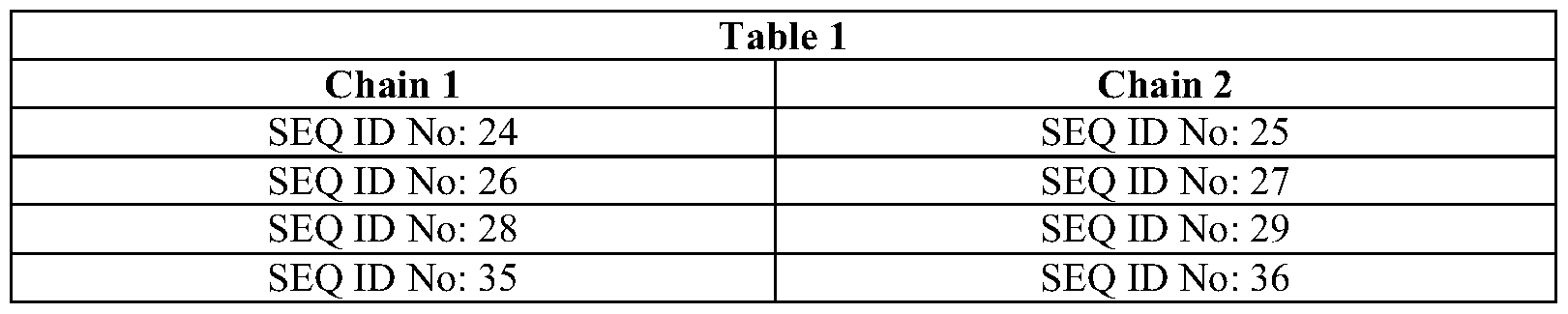


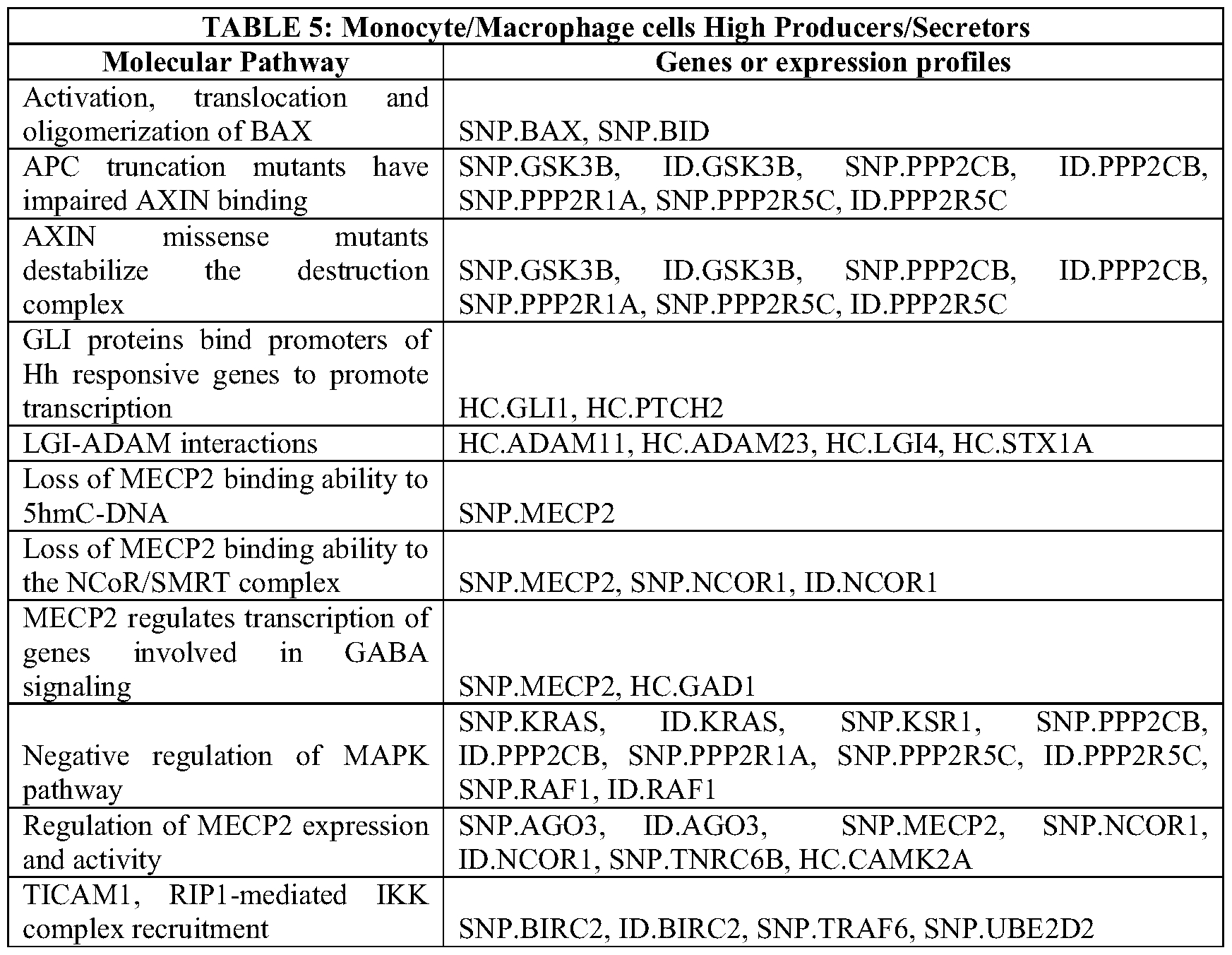


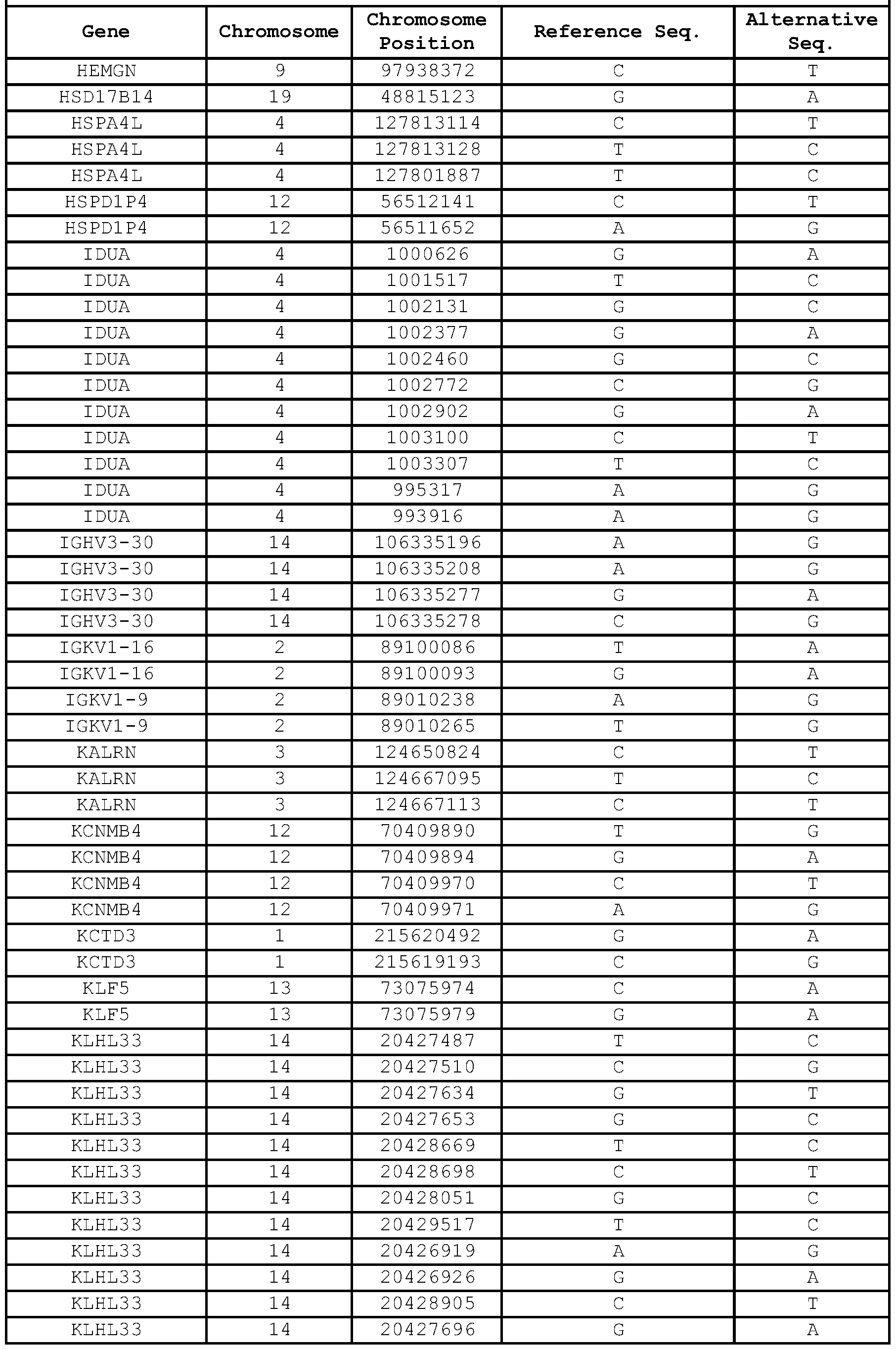


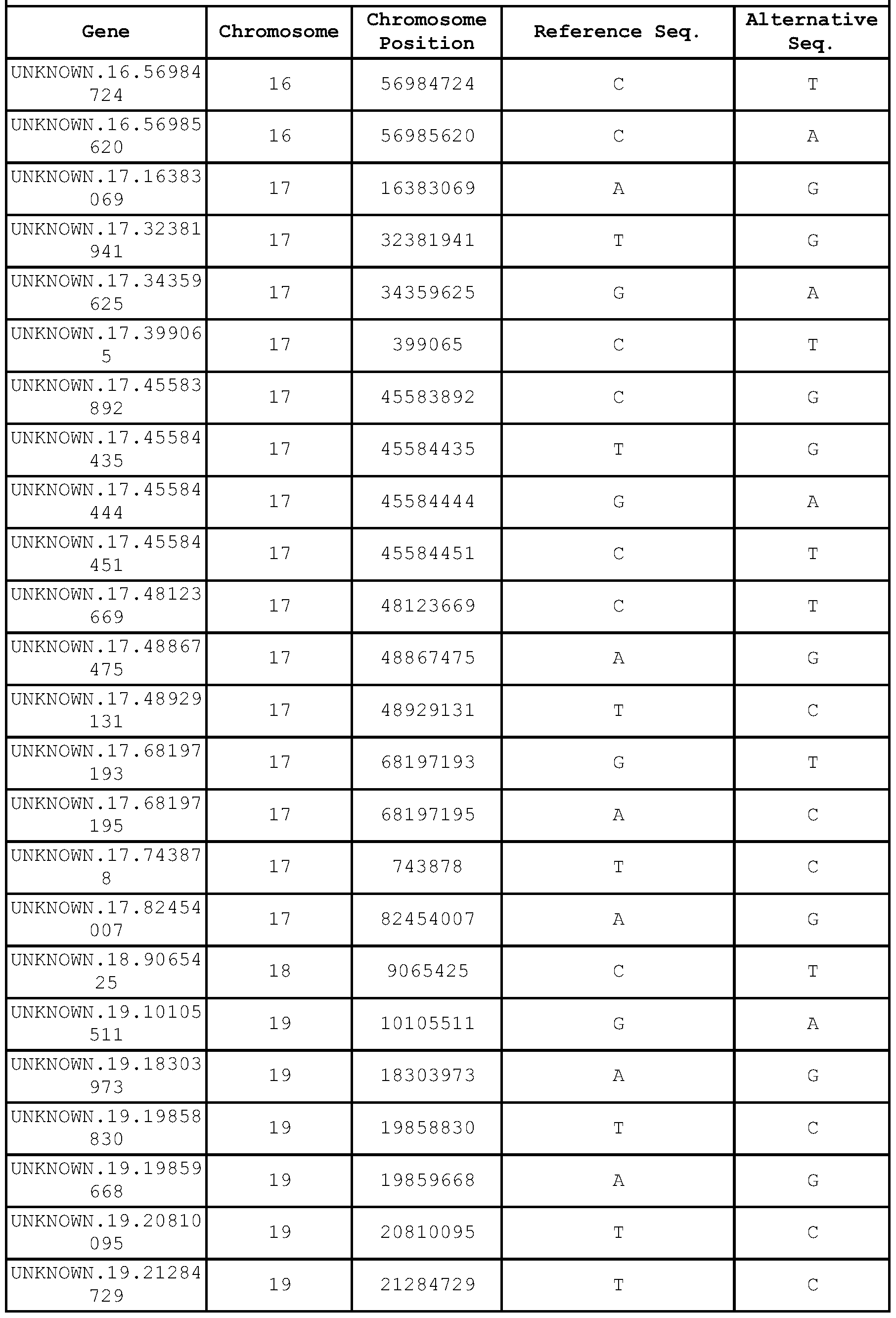


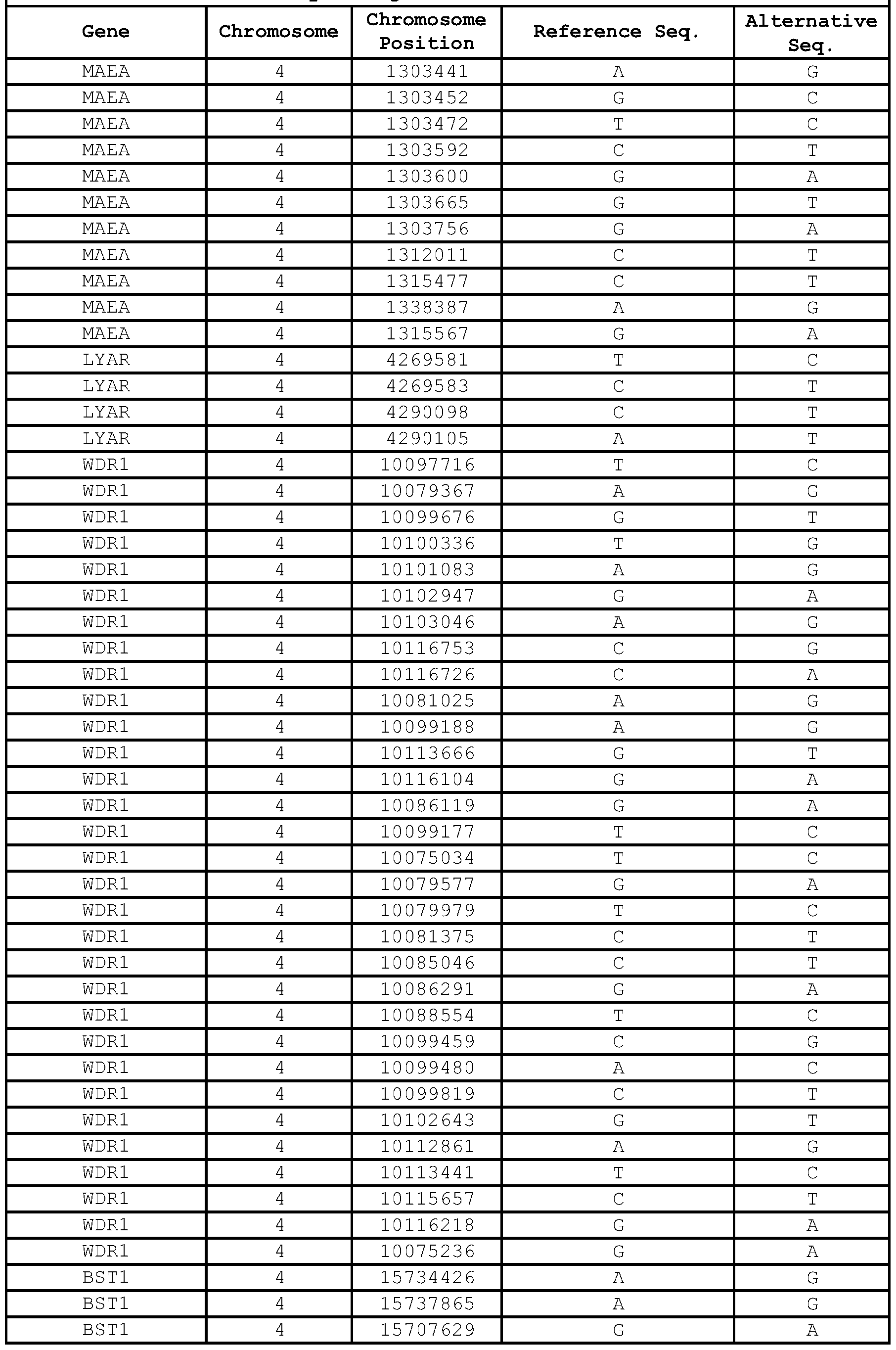


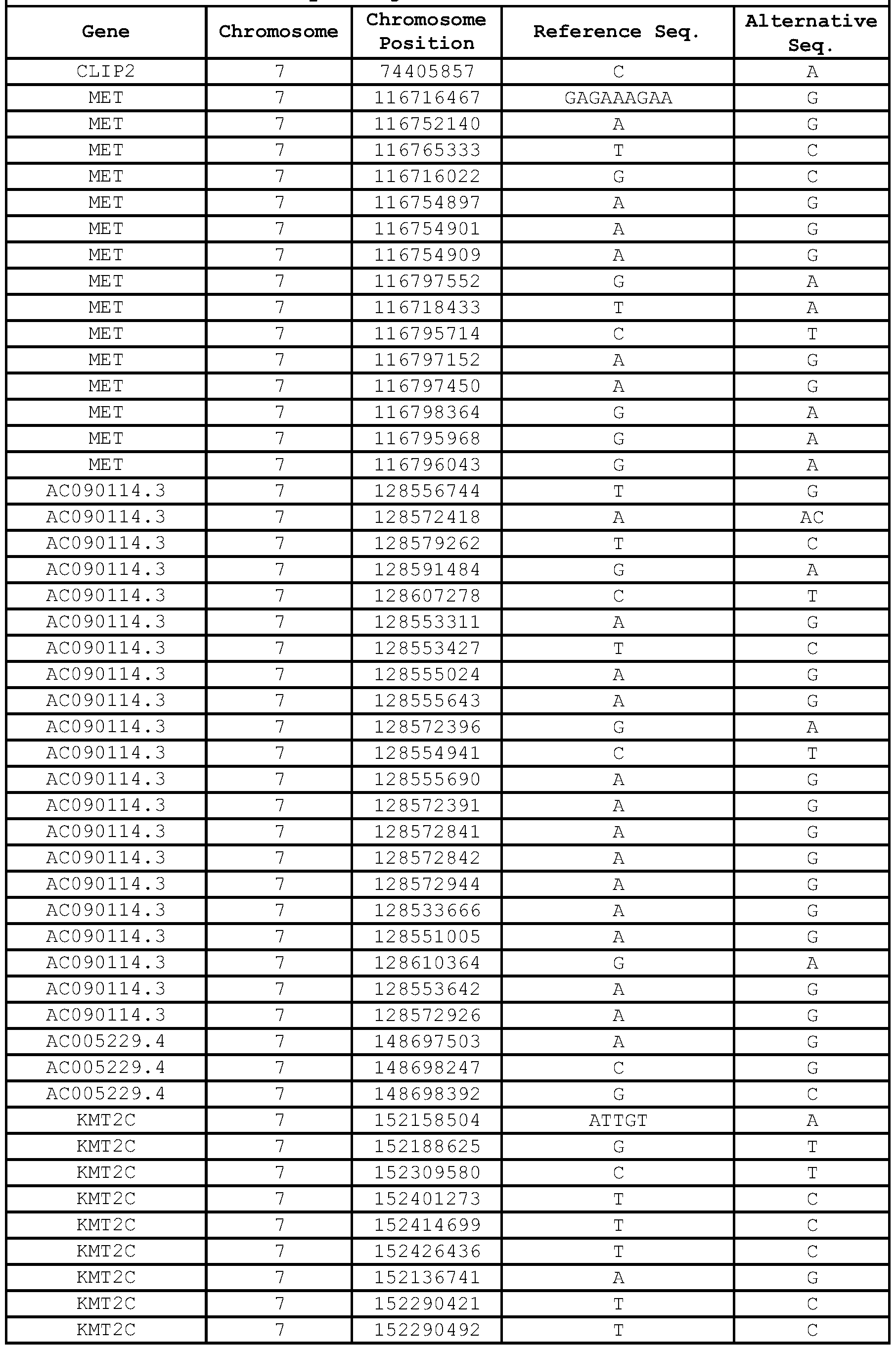


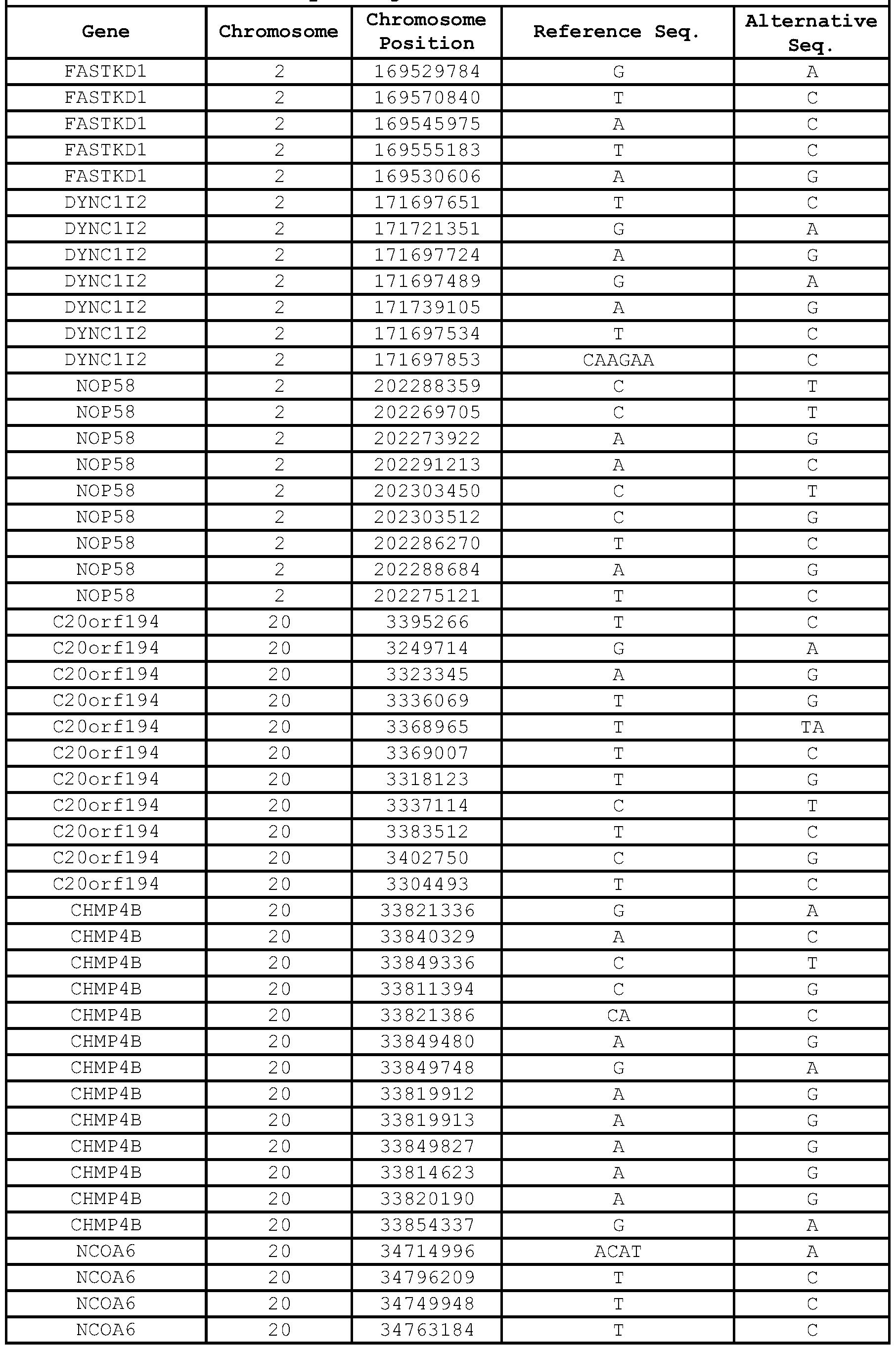


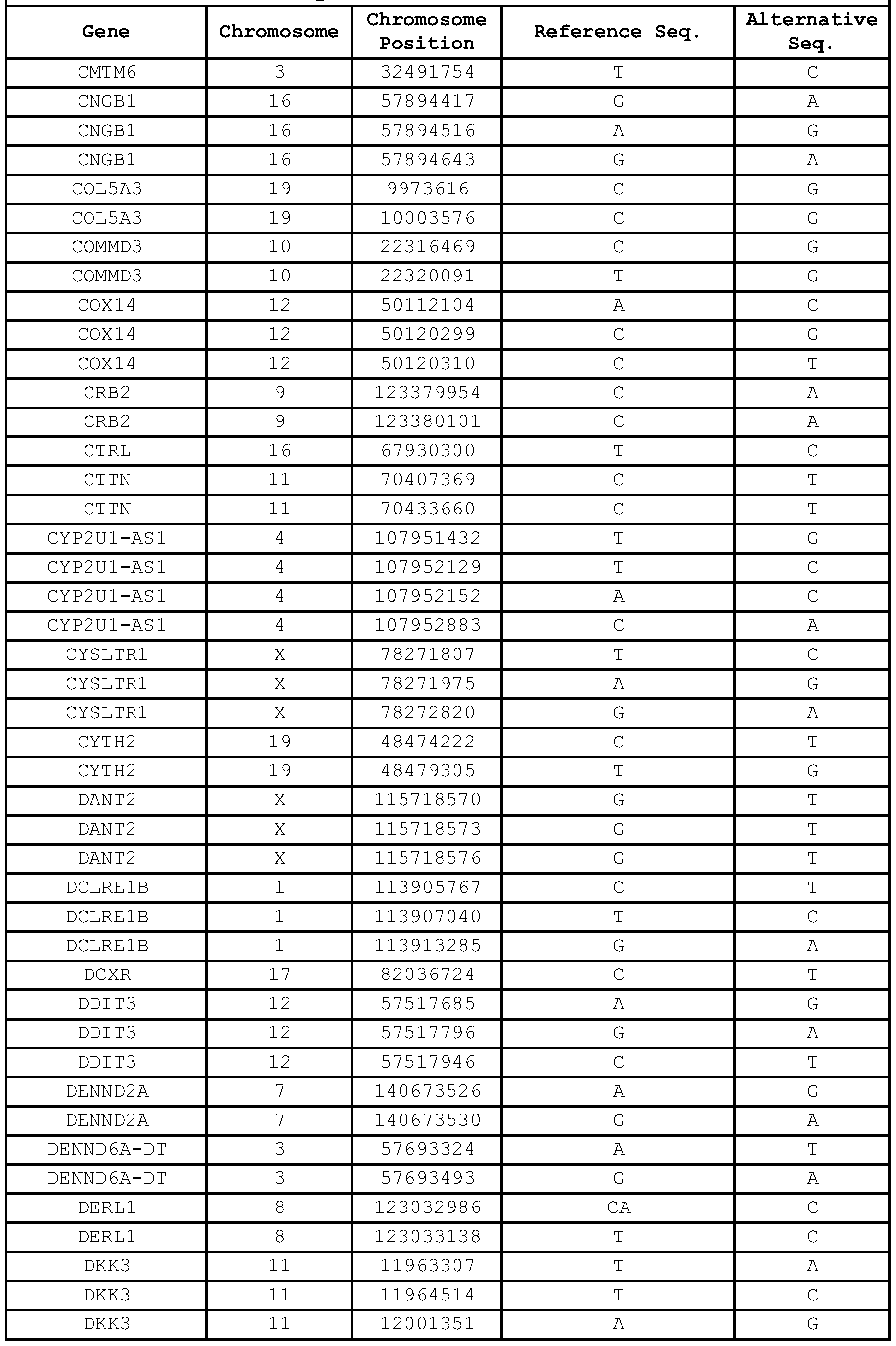


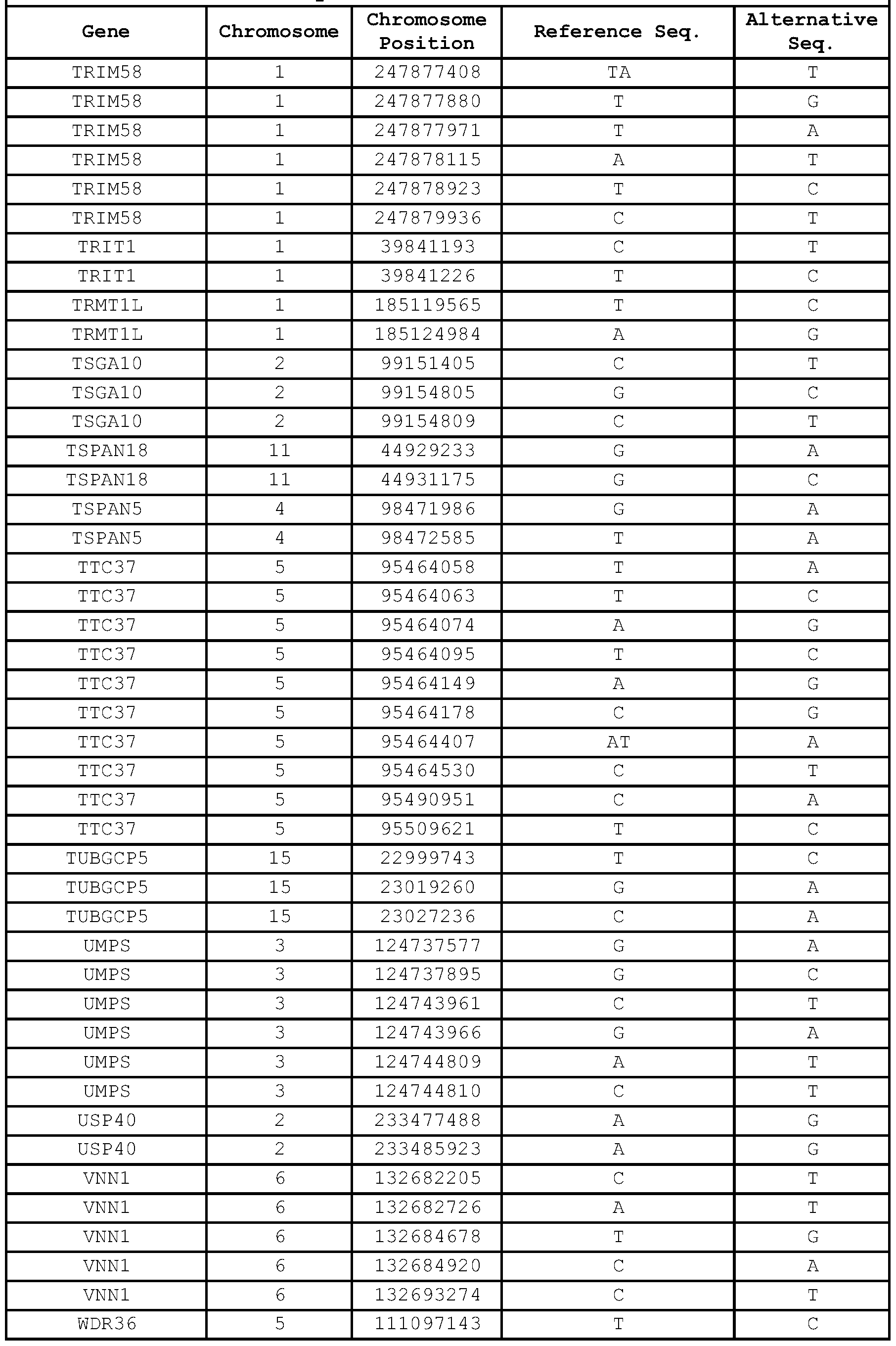


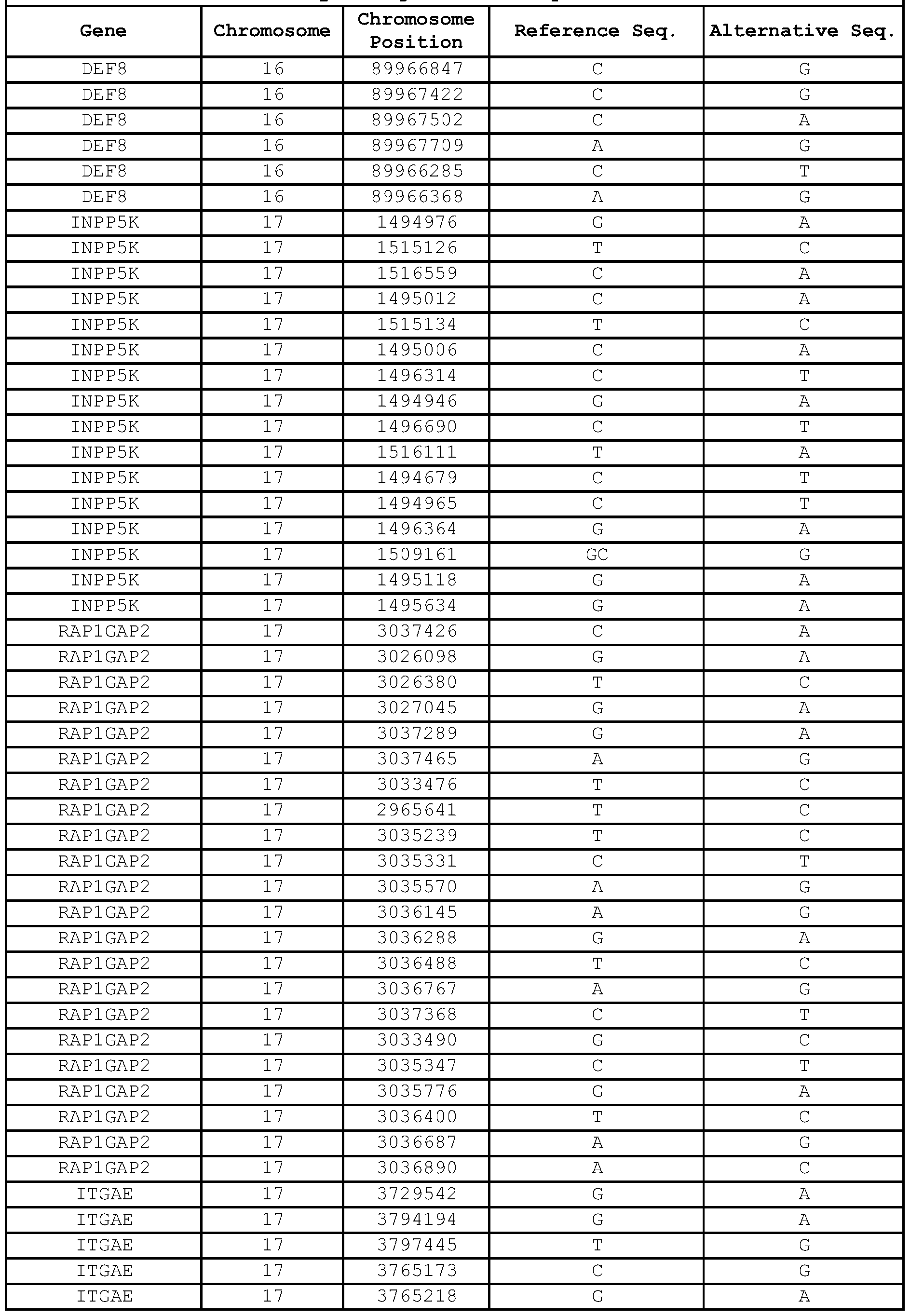


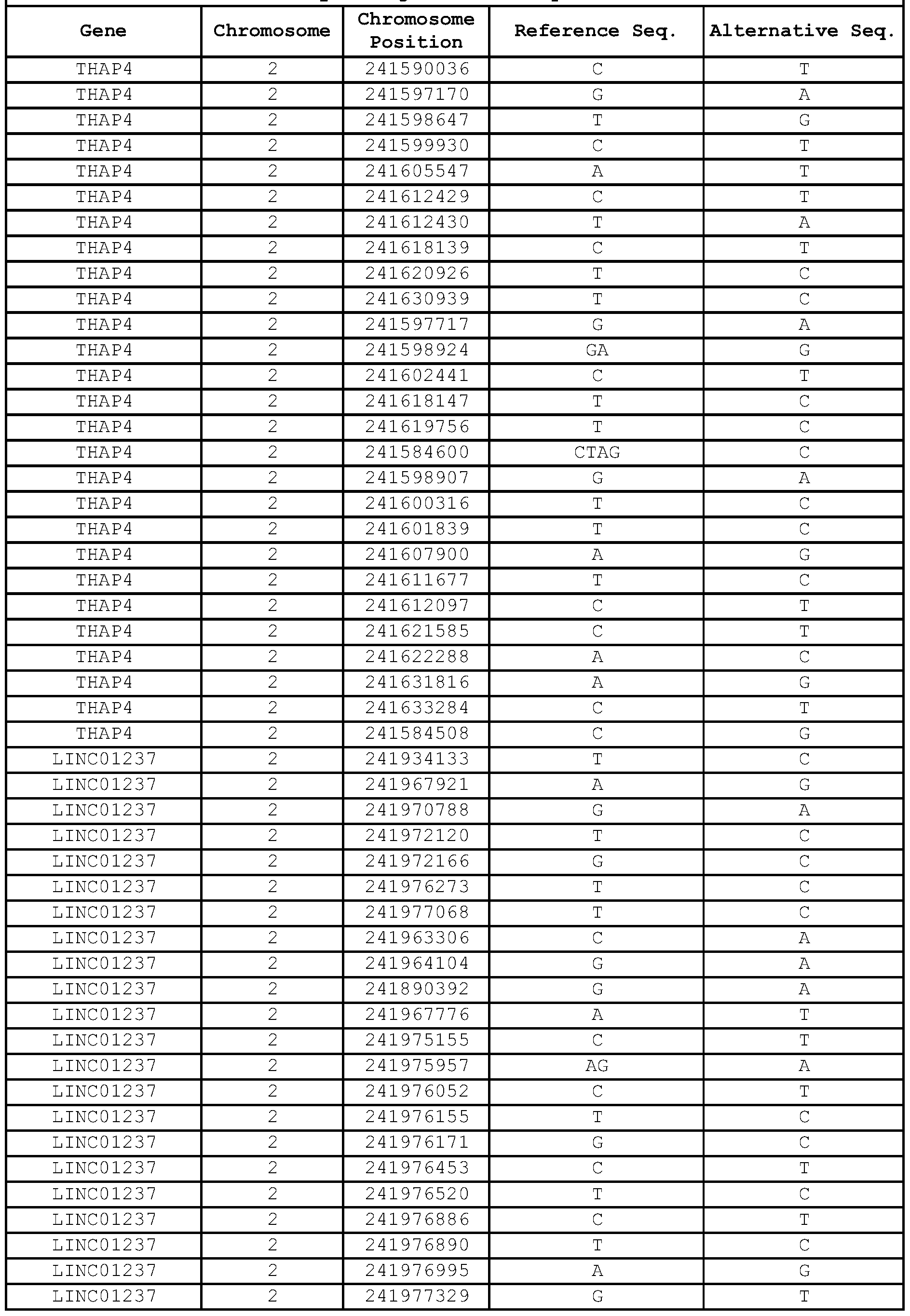


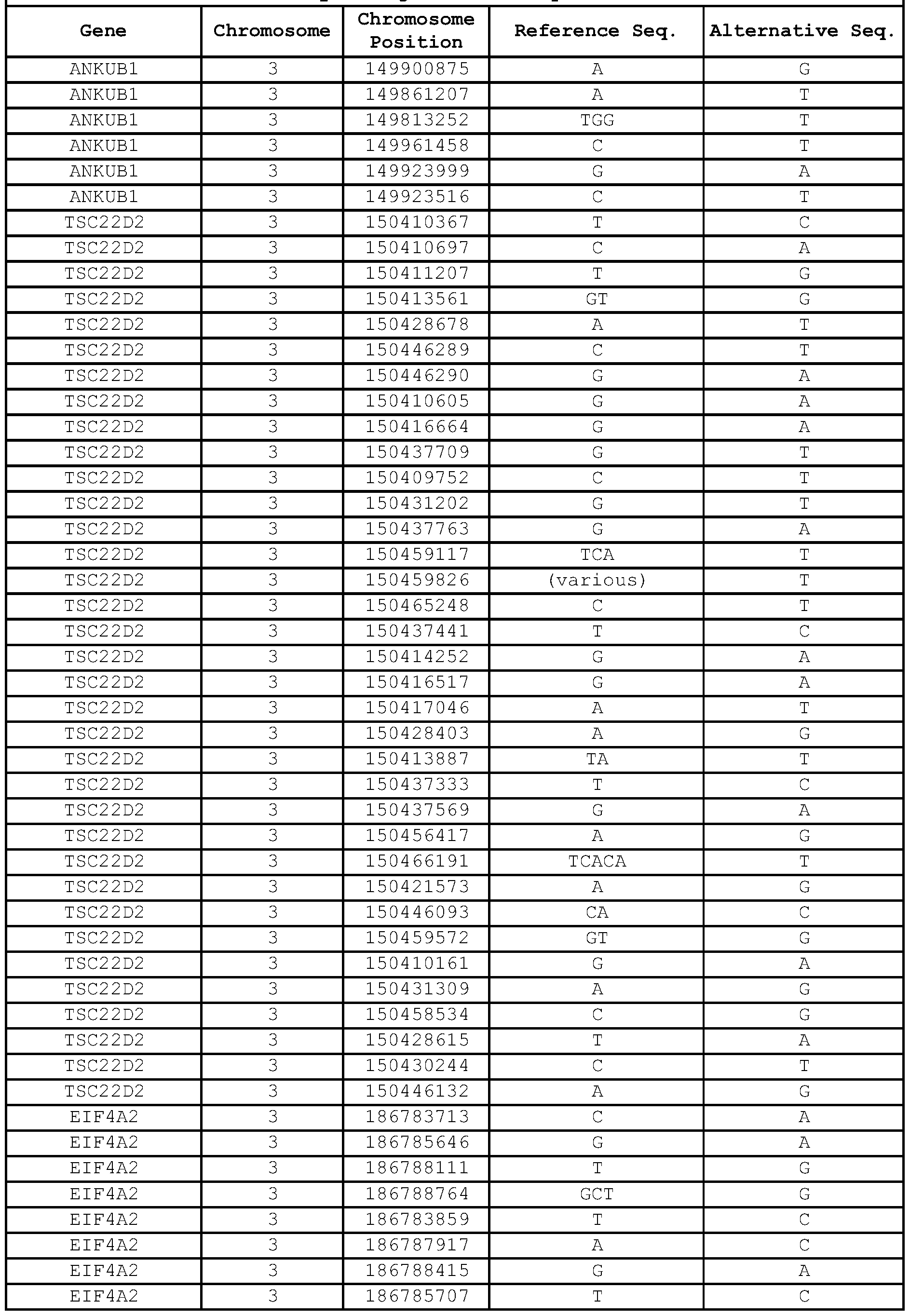


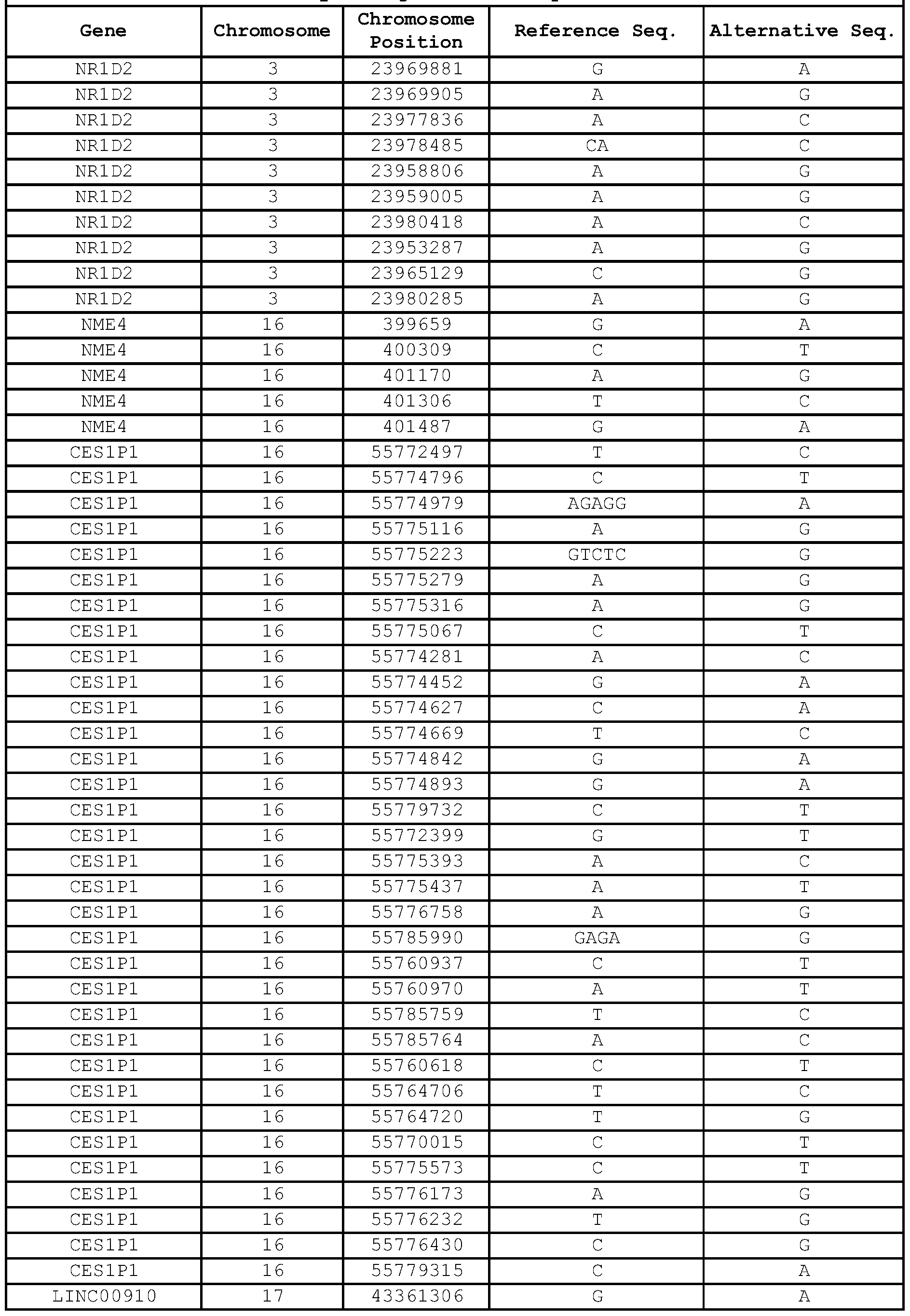


Claims
Priority Applications (8)
| Application Number | Priority Date | Filing Date | Title |
|---|---|---|---|
| MX2022008500A MX2022008500A (en) | 2020-01-09 | 2021-01-08 | Method of using genetic markers, snps and/or indels to determine responsiveness to il-10 treatment. |
| AU2021205408A AU2021205408A1 (en) | 2020-01-09 | 2021-01-08 | Method of using genetic markers, SNPS and/or INDELS to determine responsiveness to IL-10 treatment |
| KR1020227027455A KR20230034928A (en) | 2020-01-09 | 2021-01-08 | Methods for Determining Responsiveness to IL-10 Treatment Using Genetic Markers, SNPs and/or INDELs |
| IL294596A IL294596A (en) | 2020-01-09 | 2021-01-08 | Method for using genetic markers, snps and/or indels to determine response to treatment using il-10 |
| EP21738684.6A EP4087947A4 (en) | 2020-01-09 | 2021-01-08 | Method of using genetic markers, snps and/or indels to determine responsiveness to il-10 treatment |
| CA3164376A CA3164376A1 (en) | 2020-01-09 | 2021-01-08 | Method of using genetic markers, snps and/or indels to determine responsiveness to il-10 treatment |
| CN202180022145.XA CN115298328A (en) | 2020-01-09 | 2021-01-08 | Methods for determining responsiveness to IL-10 treatment using genetic markers, SNPs, and/or INDELs |
| JP2022542162A JP2023510307A (en) | 2020-01-09 | 2021-01-08 | Methods of Using Genetic Markers, SNPs, and/or INDELs to Determine Responsiveness to Treatment with IL-10 |
Applications Claiming Priority (2)
| Application Number | Priority Date | Filing Date | Title |
|---|---|---|---|
| US202062959025P | 2020-01-09 | 2020-01-09 | |
| US62/959,025 | 2020-01-09 |
Publications (1)
| Publication Number | Publication Date |
|---|---|
| WO2021142349A1 true WO2021142349A1 (en) | 2021-07-15 |
Family
ID=76760943
Family Applications (1)
| Application Number | Title | Priority Date | Filing Date |
|---|---|---|---|
| PCT/US2021/012814 Ceased WO2021142349A1 (en) | 2020-01-09 | 2021-01-08 | Method of using genetic markers, snps and/or indels to determine responsiveness to il-10 treatment |
Country Status (10)
| Country | Link |
|---|---|
| US (1) | US20210214782A1 (en) |
| EP (1) | EP4087947A4 (en) |
| JP (1) | JP2023510307A (en) |
| KR (1) | KR20230034928A (en) |
| CN (1) | CN115298328A (en) |
| AU (1) | AU2021205408A1 (en) |
| CA (1) | CA3164376A1 (en) |
| IL (1) | IL294596A (en) |
| MX (1) | MX2022008500A (en) |
| WO (1) | WO2021142349A1 (en) |
Families Citing this family (3)
| Publication number | Priority date | Publication date | Assignee | Title |
|---|---|---|---|---|
| CA3186753A1 (en) * | 2020-07-20 | 2022-01-27 | John Mumm | Dual cytokine fusion proteins comprising il-10 |
| WO2023078245A1 (en) * | 2021-11-02 | 2023-05-11 | 广东菲鹏制药股份有限公司 | Il-10 monomer fusion protein and use thereof |
| CN114480665B (en) * | 2021-12-10 | 2024-09-20 | 广东海洋大学 | A method for detecting and/or evaluating milk quality traits of Chinese Holstein cows |
Citations (1)
| Publication number | Priority date | Publication date | Assignee | Title |
|---|---|---|---|---|
| US20110256091A1 (en) * | 2006-05-08 | 2011-10-20 | Dario Neri | Antibody-Targeted Cytokines for Therapy |
Family Cites Families (5)
| Publication number | Priority date | Publication date | Assignee | Title |
|---|---|---|---|---|
| IL126535A (en) * | 1996-04-12 | 2002-11-10 | Cedars Sinai Medical Center | Diagnosis of ulcerative colitis, and clinical subtypes thereof, using histone h1 |
| DE10211088A1 (en) * | 2002-03-13 | 2003-09-25 | Ugur Sahin | Gene products differentially expressed in tumors and their use |
| GB0212648D0 (en) * | 2002-05-31 | 2002-07-10 | Immunoclin Lab Ltd | Treatment with cytokines |
| WO2015117930A1 (en) * | 2014-02-06 | 2015-08-13 | F. Hoffmann-La Roche Ag | Interleukine 10 immunoconjugates |
| EP3730188B1 (en) * | 2015-08-21 | 2024-07-31 | The Children's Hospital of Philadelphia | Compositions and methods for use in combination for the treatment and diagnosis of autoimmune diseases |
-
2021
- 2021-01-08 EP EP21738684.6A patent/EP4087947A4/en active Pending
- 2021-01-08 WO PCT/US2021/012814 patent/WO2021142349A1/en not_active Ceased
- 2021-01-08 KR KR1020227027455A patent/KR20230034928A/en active Pending
- 2021-01-08 CA CA3164376A patent/CA3164376A1/en active Pending
- 2021-01-08 AU AU2021205408A patent/AU2021205408A1/en not_active Abandoned
- 2021-01-08 IL IL294596A patent/IL294596A/en unknown
- 2021-01-08 MX MX2022008500A patent/MX2022008500A/en unknown
- 2021-01-08 JP JP2022542162A patent/JP2023510307A/en active Pending
- 2021-01-08 CN CN202180022145.XA patent/CN115298328A/en not_active Withdrawn
- 2021-01-08 US US17/145,169 patent/US20210214782A1/en not_active Abandoned
Patent Citations (1)
| Publication number | Priority date | Publication date | Assignee | Title |
|---|---|---|---|---|
| US20110256091A1 (en) * | 2006-05-08 | 2011-10-20 | Dario Neri | Antibody-Targeted Cytokines for Therapy |
Non-Patent Citations (5)
| Title |
|---|
| FRANKE ET AL.: "Sequence variants in IL 10, ARPC2 and multiple other loci contribute to ulcerative colitis susceptibility", NATURE GENETICS, vol. 40, no. 11, November 2008 (2008-11-01), pages 1319 - 1323, XP002521905, DOI: 10.1038/NG.221 * |
| KOSS K, SATSANGI J, FANNING G C, WELSH K I, JEWELL D P: "Cytokine (TNF alpha, LT alpha and IL-10) polymorphisms in inflammatory bowel diseases and normal controls: differential effects on production and allele frequencies", GENES AND IMMUNITY, vol. 1, no. 3, 8 February 2000 (2000-02-08), pages 189 - 190, XP055841170, DOI: 10.1038/sj.gene.6363657 * |
| MUMM ET AL.: "IL -10 Elicits IFNg-Dependent Tumor Immune Surveillance", CANCER CELL, vol. 20, no. 6, 2 November 2011 (2011-11-02), pages 781 - 796, XP028339558, DOI: 10.1016/j.ccr.2011.11.003 * |
| REICH ET AL.: "Promoter Polymorphisms of the Genes Encoding Tumor Necrosis Factor-a and Interleukin-1b are Associated with Different Subtypes of Psoriasis Characterized by Early and Late Disease Onset", THE JOURNAL OF INVESTIGATIVE DERMATOLOGY, vol. 118, no. 1, 1 January 2002 (2002-01-01), pages 155 - 163, XP002231844, DOI: 10.1046/j.0022-202x.2001.01642.x * |
| See also references of EP4087947A4 * |
Also Published As
| Publication number | Publication date |
|---|---|
| IL294596A (en) | 2022-09-01 |
| AU2021205408A1 (en) | 2022-08-18 |
| CA3164376A1 (en) | 2021-07-15 |
| US20210214782A1 (en) | 2021-07-15 |
| CN115298328A (en) | 2022-11-04 |
| KR20230034928A (en) | 2023-03-10 |
| JP2023510307A (en) | 2023-03-13 |
| EP4087947A4 (en) | 2024-05-01 |
| EP4087947A1 (en) | 2022-11-16 |
| MX2022008500A (en) | 2023-03-03 |
Similar Documents
| Publication | Publication Date | Title |
|---|---|---|
| Larochette et al. | IL-26, a cytokine with roles in extracellular DNA-induced inflammation and microbial defense | |
| CN110913871B (en) | Generation of mammalian T cell activation inducible synthetic promoter (SYN+PRO) to improve T cell therapy | |
| Meiron et al. | CXCL12 (SDF-1α) suppresses ongoing experimental autoimmune encephalomyelitis by selecting antigen-specific regulatory T cells | |
| Varzaneh et al. | Cytokines in common variable immunodeficiency as signs of immune dysregulation and potential therapeutic targets–a review of the current knowledge | |
| AU2004293811B2 (en) | IL-23 and its receptor; related reagents and methods | |
| Sarlos et al. | Genetic update on inflammatory factors in ulcerative colitis: Review of the current literature | |
| JP2023036929A (en) | Modified immune cells and uses thereof | |
| Noma et al. | Mendelian susceptibility to mycobacterial diseases: state of the art | |
| WO2021142349A1 (en) | Method of using genetic markers, snps and/or indels to determine responsiveness to il-10 treatment | |
| US20200354424A1 (en) | Xcr1 binding agents and uses thereof | |
| TW201831688A (en) | Method for increasing the amount of interleukin-2 (IL-2) secretion and protein derived from the method | |
| JP2013503204A (en) | B7-H4 fusion protein and methods of use thereof | |
| TW202108609A (en) | T cell receptors recognizing r175h or y220c mutation in p53 | |
| US20230293689A1 (en) | Strengthened receptor for improving immune cell function | |
| WO2005079848A9 (en) | Agonists and antagonists of p28 ebi3 and wsx/tccr for treating immune disorders | |
| K Oh et al. | Biology of the interleukin-9 pathway and its therapeutic potential for the treatment of asthma | |
| CN119452253A (en) | Methods for treating amyotrophic lateral sclerosis | |
| WO2020164465A1 (en) | Adjuvant capable of promoting expansion of immune cells in vivo | |
| Gibeon et al. | Targeting interleukins to treat severe asthma | |
| WO2019152516A1 (en) | Methods and compositions for treating inflammatory or autoimmune diseases or conditions using calcitonin receptor activators | |
| Frigault et al. | Single-cell dynamics of breakthrough toxicities after anakinra prophylaxis for axicabtagene ciloleucel in lymphoma | |
| WO2022106460A2 (en) | Steroid sparing | |
| US20150322519A1 (en) | Biomarkers for psoriasis treatment response | |
| WO2004004668A2 (en) | Immune modulatory activity of human ribonucleases | |
| US11427630B2 (en) | Antibody inhibitors of IL-38 and methods of use thereof for treating or reducing the likelihood of cancer in a subject |
Legal Events
| Date | Code | Title | Description |
|---|---|---|---|
| 121 | Ep: the epo has been informed by wipo that ep was designated in this application |
Ref document number: 21738684 Country of ref document: EP Kind code of ref document: A1 |
|
| ENP | Entry into the national phase |
Ref document number: 2022542162 Country of ref document: JP Kind code of ref document: A |
|
| ENP | Entry into the national phase |
Ref document number: 3164376 Country of ref document: CA |
|
| NENP | Non-entry into the national phase |
Ref country code: DE |
|
| ENP | Entry into the national phase |
Ref document number: 2021738684 Country of ref document: EP Effective date: 20220809 |
|
| ENP | Entry into the national phase |
Ref document number: 2021205408 Country of ref document: AU Date of ref document: 20210108 Kind code of ref document: A |