WO2021145458A1 - 胆汁酸を生成するための組成物 - Google Patents
胆汁酸を生成するための組成物 Download PDFInfo
- Publication number
- WO2021145458A1 WO2021145458A1 PCT/JP2021/001434 JP2021001434W WO2021145458A1 WO 2021145458 A1 WO2021145458 A1 WO 2021145458A1 JP 2021001434 W JP2021001434 W JP 2021001434W WO 2021145458 A1 WO2021145458 A1 WO 2021145458A1
- Authority
- WO
- WIPO (PCT)
- Prior art keywords
- bacterium
- 3βhsdh
- polynucleotide encoding
- subject
- bacteria
- Prior art date
- Legal status (The legal status is an assumption and is not a legal conclusion. Google has not performed a legal analysis and makes no representation as to the accuracy of the status listed.)
- Ceased
Links
Images




Classifications
-
- A—HUMAN NECESSITIES
- A61—MEDICAL OR VETERINARY SCIENCE; HYGIENE
- A61P—SPECIFIC THERAPEUTIC ACTIVITY OF CHEMICAL COMPOUNDS OR MEDICINAL PREPARATIONS
- A61P5/00—Drugs for disorders of the endocrine system
- A61P5/24—Drugs for disorders of the endocrine system of the sex hormones
-
- A—HUMAN NECESSITIES
- A61—MEDICAL OR VETERINARY SCIENCE; HYGIENE
- A61K—PREPARATIONS FOR MEDICAL, DENTAL OR TOILETRY PURPOSES
- A61K35/00—Medicinal preparations containing materials or reaction products thereof with undetermined constitution
- A61K35/66—Microorganisms or materials therefrom
- A61K35/74—Bacteria
-
- A—HUMAN NECESSITIES
- A61—MEDICAL OR VETERINARY SCIENCE; HYGIENE
- A61P—SPECIFIC THERAPEUTIC ACTIVITY OF CHEMICAL COMPOUNDS OR MEDICINAL PREPARATIONS
- A61P17/00—Drugs for dermatological disorders
- A61P17/10—Anti-acne agents
-
- A—HUMAN NECESSITIES
- A61—MEDICAL OR VETERINARY SCIENCE; HYGIENE
- A61P—SPECIFIC THERAPEUTIC ACTIVITY OF CHEMICAL COMPOUNDS OR MEDICINAL PREPARATIONS
- A61P17/00—Drugs for dermatological disorders
- A61P17/14—Drugs for dermatological disorders for baldness or alopecia
-
- A—HUMAN NECESSITIES
- A61—MEDICAL OR VETERINARY SCIENCE; HYGIENE
- A61P—SPECIFIC THERAPEUTIC ACTIVITY OF CHEMICAL COMPOUNDS OR MEDICINAL PREPARATIONS
- A61P25/00—Drugs for disorders of the nervous system
- A61P25/08—Antiepileptics; Anticonvulsants
-
- A—HUMAN NECESSITIES
- A61—MEDICAL OR VETERINARY SCIENCE; HYGIENE
- A61P—SPECIFIC THERAPEUTIC ACTIVITY OF CHEMICAL COMPOUNDS OR MEDICINAL PREPARATIONS
- A61P29/00—Non-central analgesic, antipyretic or antiinflammatory agents, e.g. antirheumatic agents; Non-steroidal antiinflammatory drugs [NSAID]
-
- A—HUMAN NECESSITIES
- A61—MEDICAL OR VETERINARY SCIENCE; HYGIENE
- A61P—SPECIFIC THERAPEUTIC ACTIVITY OF CHEMICAL COMPOUNDS OR MEDICINAL PREPARATIONS
- A61P31/00—Antiinfectives, i.e. antibiotics, antiseptics, chemotherapeutics
- A61P31/04—Antibacterial agents
-
- A—HUMAN NECESSITIES
- A61—MEDICAL OR VETERINARY SCIENCE; HYGIENE
- A61P—SPECIFIC THERAPEUTIC ACTIVITY OF CHEMICAL COMPOUNDS OR MEDICINAL PREPARATIONS
- A61P35/00—Antineoplastic agents
-
- C—CHEMISTRY; METALLURGY
- C12—BIOCHEMISTRY; BEER; SPIRITS; WINE; VINEGAR; MICROBIOLOGY; ENZYMOLOGY; MUTATION OR GENETIC ENGINEERING
- C12N—MICROORGANISMS OR ENZYMES; COMPOSITIONS THEREOF; PROPAGATING, PRESERVING, OR MAINTAINING MICROORGANISMS; MUTATION OR GENETIC ENGINEERING; CULTURE MEDIA
- C12N1/00—Microorganisms; Compositions thereof; Processes of propagating, maintaining or preserving microorganisms or compositions thereof; Processes of preparing or isolating a composition containing a microorganism; Culture media therefor
- C12N1/20—Bacteria; Culture media therefor
-
- C—CHEMISTRY; METALLURGY
- C12—BIOCHEMISTRY; BEER; SPIRITS; WINE; VINEGAR; MICROBIOLOGY; ENZYMOLOGY; MUTATION OR GENETIC ENGINEERING
- C12N—MICROORGANISMS OR ENZYMES; COMPOSITIONS THEREOF; PROPAGATING, PRESERVING, OR MAINTAINING MICROORGANISMS; MUTATION OR GENETIC ENGINEERING; CULTURE MEDIA
- C12N9/00—Enzymes; Proenzymes; Compositions thereof; Processes for preparing, activating, inhibiting, separating or purifying enzymes
- C12N9/0004—Oxidoreductases (1.)
- C12N9/0006—Oxidoreductases (1.) acting on CH-OH groups as donors (1.1)
-
- C—CHEMISTRY; METALLURGY
- C12—BIOCHEMISTRY; BEER; SPIRITS; WINE; VINEGAR; MICROBIOLOGY; ENZYMOLOGY; MUTATION OR GENETIC ENGINEERING
- C12P—FERMENTATION OR ENZYME-USING PROCESSES TO SYNTHESISE A DESIRED CHEMICAL COMPOUND OR COMPOSITION OR TO SEPARATE OPTICAL ISOMERS FROM A RACEMIC MIXTURE
- C12P33/00—Preparation of steroids
- C12P33/06—Hydroxylating
-
- C—CHEMISTRY; METALLURGY
- C12—BIOCHEMISTRY; BEER; SPIRITS; WINE; VINEGAR; MICROBIOLOGY; ENZYMOLOGY; MUTATION OR GENETIC ENGINEERING
- C12Q—MEASURING OR TESTING PROCESSES INVOLVING ENZYMES, NUCLEIC ACIDS OR MICROORGANISMS; COMPOSITIONS OR TEST PAPERS THEREFOR; PROCESSES OF PREPARING SUCH COMPOSITIONS; CONDITION-RESPONSIVE CONTROL IN MICROBIOLOGICAL OR ENZYMOLOGICAL PROCESSES
- C12Q1/00—Measuring or testing processes involving enzymes, nucleic acids or microorganisms; Compositions therefor; Processes of preparing such compositions
- C12Q1/02—Measuring or testing processes involving enzymes, nucleic acids or microorganisms; Compositions therefor; Processes of preparing such compositions involving viable microorganisms
- C12Q1/04—Determining presence or kind of microorganism; Use of selective media for testing antibiotics or bacteriocides; Compositions containing a chemical indicator therefor
- C12Q1/06—Quantitative determination
-
- C—CHEMISTRY; METALLURGY
- C12—BIOCHEMISTRY; BEER; SPIRITS; WINE; VINEGAR; MICROBIOLOGY; ENZYMOLOGY; MUTATION OR GENETIC ENGINEERING
- C12Y—ENZYMES
- C12Y103/00—Oxidoreductases acting on the CH-CH group of donors (1.3)
- C12Y103/01—Oxidoreductases acting on the CH-CH group of donors (1.3) with NAD+ or NADP+ as acceptor (1.3.1)
- C12Y103/01022—3-Oxo-5alpha-steroid 4-dehydrogenase (NADP+) (1.3.1.22), i.e. cortisone alpha-reductase
-
- G—PHYSICS
- G01—MEASURING; TESTING
- G01N—INVESTIGATING OR ANALYSING MATERIALS BY DETERMINING THEIR CHEMICAL OR PHYSICAL PROPERTIES
- G01N33/00—Investigating or analysing materials by specific methods not covered by groups G01N1/00 - G01N31/00
- G01N33/48—Biological material, e.g. blood, urine; Haemocytometers
- G01N33/50—Chemical analysis of biological material, e.g. blood, urine; Testing involving biospecific ligand binding methods; Immunological testing
- G01N33/53—Immunoassay; Biospecific binding assay; Materials therefor
- G01N33/569—Immunoassay; Biospecific binding assay; Materials therefor for microorganisms, e.g. protozoa, bacteria, viruses
- G01N33/56911—Bacteria
-
- C—CHEMISTRY; METALLURGY
- C12—BIOCHEMISTRY; BEER; SPIRITS; WINE; VINEGAR; MICROBIOLOGY; ENZYMOLOGY; MUTATION OR GENETIC ENGINEERING
- C12Y—ENZYMES
- C12Y101/00—Oxidoreductases acting on the CH-OH group of donors (1.1)
- C12Y101/01—Oxidoreductases acting on the CH-OH group of donors (1.1) with NAD+ or NADP+ as acceptor (1.1.1)
- C12Y101/01145—3-Beta-hydroxy-DELTA5-steroid dehydrogenase (1.1.1.145)
-
- C—CHEMISTRY; METALLURGY
- C12—BIOCHEMISTRY; BEER; SPIRITS; WINE; VINEGAR; MICROBIOLOGY; ENZYMOLOGY; MUTATION OR GENETIC ENGINEERING
- C12Y—ENZYMES
- C12Y103/00—Oxidoreductases acting on the CH-CH group of donors (1.3)
- C12Y103/99—Oxidoreductases acting on the CH-CH group of donors (1.3) with other acceptors (1.3.99)
- C12Y103/99005—3-Oxo-5alpha-steroid 4-dehydrogenase (acceptor) (1.3.99.5), i.e. steroid-5alpha-reductase
-
- C—CHEMISTRY; METALLURGY
- C12—BIOCHEMISTRY; BEER; SPIRITS; WINE; VINEGAR; MICROBIOLOGY; ENZYMOLOGY; MUTATION OR GENETIC ENGINEERING
- C12Y—ENZYMES
- C12Y103/00—Oxidoreductases acting on the CH-CH group of donors (1.3)
- C12Y103/99—Oxidoreductases acting on the CH-CH group of donors (1.3) with other acceptors (1.3.99)
- C12Y103/99006—3-Oxo-5-beta-steroid 4-dehydrogenase (1.3.99.6)
-
- Y—GENERAL TAGGING OF NEW TECHNOLOGICAL DEVELOPMENTS; GENERAL TAGGING OF CROSS-SECTIONAL TECHNOLOGIES SPANNING OVER SEVERAL SECTIONS OF THE IPC; TECHNICAL SUBJECTS COVERED BY FORMER USPC CROSS-REFERENCE ART COLLECTIONS [XRACs] AND DIGESTS
- Y02—TECHNOLOGIES OR APPLICATIONS FOR MITIGATION OR ADAPTATION AGAINST CLIMATE CHANGE
- Y02A—TECHNOLOGIES FOR ADAPTATION TO CLIMATE CHANGE
- Y02A50/00—TECHNOLOGIES FOR ADAPTATION TO CLIMATE CHANGE in human health protection, e.g. against extreme weather
- Y02A50/30—Against vector-borne diseases, e.g. mosquito-borne, fly-borne, tick-borne or waterborne diseases whose impact is exacerbated by climate change
Definitions
- the present invention relates to a composition for producing bile acids. More specifically, the present invention relates to a composition containing a bacterium that produces bile acid related to 100 years of life (life span of 100 years or more) or the like as an active ingredient. The present invention also relates to an antibacterial use of the composition against Gram-positive bacteria, a therapeutic or preventive use of prostate cancer and the like.
- the microbiota (a concept that integrates the genes and functions of the bacterial flora) is considered to be an important factor that influences the health condition of the elderly, such as resistance to pathogen infection, immunity, nerve activity, bone density, and digestive and absorptive function.
- Non-Patent Documents 1 to 5 Phenomena of individual disparity and diversity are often found in the bacterial flora of the elderly, which are thought to be associated with aging of immune function, chronic systemic inflammation and senility (Non-Patent Document 6 and). 7).
- Non-Patent Documents 8 and 9 It is known that centenarians who are 100 years old or older are less likely to suffer from diseases such as hypertension, diabetes, obesity and cancer, and thus achieve longevity. Furthermore, many centenarians have survived infectious diseases such as influenza, pulmonary tuberculosis, dysentery, and salmorella, and starvation (Non-Patent Document 10). This suggests that the bacterial flora of centenarians contributes not only to longevity, but also to aging health, resilience and homeostasis (). Non-Patent Documents 6 and 11-13).
- An object of the present invention to be solved is to identify beneficial symbiotic bacteria peculiar to centenarians and to provide a method for preventing or treating pathogenic bacterial infection using the bacteria or the like.
- the present inventors compared the 100-year-old (average 107 years old) with the elderly (85-89 years old) and the young (21-55 years old). Then, it was found that it specifically possesses intestinal bacteria that produce secondary bile acids such as isoalllo lithocholic acid (lithocholic acid, LCA), isoLCA, 3-oxoLCA, allolCA, and 3-oxoalloloLCA. In particular, the biochemical synthetic pathway that induces isoalloloLCA has not been reported so far.
- the present inventors also revealed that the 5AR and 3 ⁇ HSDH are involved not only in the production of isoallolCA but also in the metabolism of testosterone.
- Prostate cancer, etc. by producing metastasis-resistant 3 ⁇ -androstandiol while these enzymes, or the bacteria that produce them, deplete tumor-induced testosterone and 5 ⁇ -dihydrotestosterone (DHT).
- DHT 5 ⁇ -dihydrotestosterone
- the present inventors reduce the risk of infection with pathogenic bacteria, prostate cancer, etc. by specific secondary bile acid metabolites, enzymes involved in their production, and bacteria producing the enzymes. We have found that it is involved in longevity and have completed the present invention.
- the present invention provides the following.
- the present invention also provides for the manufacture of a composition for converting the 3-oxo - ⁇ 4 -LCA 3-Okisoaro LCA, it relates to the use of bacteria with a polynucleotide encoding the 5AR.
- a composition for converting 3-oxoaloloLCA to isoalloloLCA which comprises a bacterium having a polynucleotide encoding 3 ⁇ -hydroxysteroid dehydrogenase (3 ⁇ HSDH) as an active ingredient.
- the present invention also relates to the use of a bacterium having a polynucleotide encoding 3 ⁇ -hydroxysteroid dehydrogenase (3 ⁇ HSDH) to produce a composition for converting 3-oxoaroLCA to isoaroLCA.
- a bacterium having a polynucleotide encoding 3 ⁇ -hydroxysteroid dehydrogenase (3 ⁇ HSDH) to produce a composition for converting 3-oxoaroLCA to isoaroLCA.
- ⁇ 3> as an active ingredient a bacterium having a polynucleotide encoding a bacterial and 3 ⁇ HSDH with polynucleotides encoding 5AR, 3- oxo - [delta 4 compositions for producing Isoaro LCA from -LCA.
- the present invention also relates to the use of 3-oxo - ⁇ 4 -LCA for the manufacture of a composition for producing Isoaro LCA, the bacteria with a polynucleotide encoding bacterial and 3 ⁇ HSDH having a polynucleotide encoding the 5AR Regarding.
- ⁇ 4> as an active ingredient a bacterium having a polynucleotide encoding the polynucleotide and 3 ⁇ HSDH encoding 5AR, 3- oxo - [delta 4 compositions for producing Isoaro LCA from -LCA.
- the present invention also provides 3-oxo - ⁇ 4 -LCA for the manufacture of a composition for producing Isoaro LCA, relates to the use of bacteria with a polynucleotide encoding the polynucleotide and 3 ⁇ HSDH encoding 5AR.
- ⁇ 6> as an active ingredient a bacterium having a polynucleotide encoding 5BR, 3-oxo - ⁇ 4 -LCA the 3-oxo LCA (3-oxoLCA) composition for conversion to.
- the present invention also provides for the manufacture of a composition for converting the 3-oxo - ⁇ 4 -LCA 3-oxo LCA, it relates to the use of bacteria with a polynucleotide encoding 5BR.
- isoaroLCA from isoLCA or 3-oxoLCA containing a bacterium having a polynucleotide encoding 5AR, a polynucleotide encoding 3 ⁇ HSDH, and a polynucleotide encoding 5BR as an active ingredient.
- Composition a bacterium having a polynucleotide encoding 5AR, a polynucleotide encoding 3 ⁇ HSDH, and a polynucleotide encoding 5BR as an active ingredient.
- the present invention also provides 5AR-encoding polynucleotides, 3 ⁇ HSDH-encoding polynucleotides, and 5BR-encoding polynucleotides for producing compositions for producing isoaroLCA from isoLCA or 3-oxoLCA. Regarding the use of bacteria that have.
- composition according to any one of ⁇ 1> to ⁇ 7> which is an antibacterial composition against Gram-positive bacteria.
- An antibacterial composition against Gram-positive bacteria containing at least one enzyme selected from 5AR, 3 ⁇ HSDH, and 5BR as an active ingredient.
- composition according to any one of ⁇ 8> to ⁇ 10> which is a composition for treating or preventing an infectious disease of Gram-positive bacteria.
- composition according to any one of ⁇ 8> to ⁇ 10> which is a composition for treating or preventing an infectious disease of Clostridium difficile.
- ARDS / ALI acute respiratory distress syndrome
- the present invention also comprises antibacterial compositions against Gram-positive bacteria, compositions for treating or preventing infections with Gram-positive bacteria, compositions for treating or preventing infections with Clostridium difficile, or sepsis and For producing a composition for treating or preventing at least one disease selected from the group consisting of ARDS / ALI having sepsis as an underlying disease.
- a bacterium having a polynucleotide encoding a polynucleotide a polynucleotide encoding 5AR, a polynucleotide encoding 3 ⁇ HSDH
- a bacterium having a polynucleotide encoding 5BR a polynucleotide encoding 5BR.
- the present invention also provides for suppressing the growth of Gram-positive bacteria, for treating or preventing Gram-positive bacterial infections, for treating or preventing Clostridium difficile infections, or for sepsis and sepsis.
- Bacteria with a polynucleotide encoding 5AR, a bacterium with a polynucleotide encoding 3 ⁇ HSDH, a bacterium with a polynucleotide encoding 5AR and a bacterium having a polynucleotide encoding 3 ⁇ HSDH, and a polynucleotide encoding 5AR and 3 ⁇ HSDH It relates to the use of at least one bacterium selected from the group consisting of a bacterium having a polynucleotide encoding a polynucleotide, a polynucleotide encoding 5AR, a polynucleotide encoding 3 ⁇ HSDH, and a bacterium having a polynucleotide encoding 5BR.
- the present invention is also selected from the group consisting of suppression of growth of Gram-positive bacteria, treatment or prevention of Gram-positive bacterial infections, treatment or prevention of Clostridium difficile infections, or ARDS / ALI having sepsis and sepsis as underlying diseases.
- Bacteria with a polynucleotide encoding 5AR, a bacterium with a polynucleotide encoding 3 ⁇ HSDH, a bacterium with a polynucleotide encoding 5AR and a bacterium having a polynucleotide encoding 3 ⁇ HSDH, and a polynucleotide encoding 5AR and 3 ⁇ HSDH The present invention relates to at least one bacterium selected from the group consisting of a bacterium having a polynucleotide encoding a polynucleotide, a polynucleotide encoding 5AR, a polynucleotide encoding 3 ⁇ HSDH, and a bacterium having a polynucleotide encoding 5BR.
- the present invention also relates to a bacterium having a polynucleotide encoding 5AR, a bacterium having a polynucleotide encoding 3 ⁇ HSDH, a bacterium having a polynucleotide encoding 5AR, and a bacterium having a polynucleotide encoding 3 ⁇ HSDH, and a poly encoding 5AR.
- At least one bacterium selected from the group consisting of a bacterium having a polynucleotide encoding a nucleotide and a polynucleotide encoding 3 ⁇ HSDH, and a bacterium having a polynucleotide encoding 5AR, a polynucleotide encoding 3 ⁇ HSDH, and a polynucleotide encoding 5BR.
- the present invention also comprises antibacterial compositions against Gram-positive bacteria, compositions for treating or preventing infections with Gram-positive bacteria, compositions for treating or preventing infections with Clostridium difficile, or sepsis and With respect to the use of isoaroLCA or isoLCA to produce a composition for treating or preventing at least one disease selected from the group consisting of ARDS / ALI having sepsis as the underlying disease.
- the present invention also provides for suppressing the growth of Gram-positive bacteria, for treating or preventing Gram-positive bacterial infections, for treating or preventing Clostridium difficile infections, or for sepsis and sepsis.
- ARDS / ALI having as an underlying disease.
- isoaroLCA or isoLCA With respect to the use of isoaroLCA or isoLCA.
- the present invention is also selected from the group consisting of suppression of growth of Gram-positive bacteria, treatment or prevention of Gram-positive bacterial infections, treatment or prevention of Clostridium difficile infections, or sepsis and ARDS / ALI having sepsis as an underlying disease.
- isoaroLCA or isoLCA for use in the treatment or prevention of at least one disease.
- the present invention also administers an effective amount of isoaroLCA or isoLCA to a subject, infection with Clostridium difficile for the treatment or prevention of Gram-positive bacterial infections to suppress the growth of Gram-positive bacteria. It relates to a method for treating or preventing a disease, or for treating or preventing sepsis and at least one disease selected from the group consisting of ARDS / ALI having sepsis as an underlying disease.
- the present invention also comprises antibacterial compositions against Gram-positive bacteria, compositions for treating or preventing infections with Gram-positive bacteria, compositions for treating or preventing infections with Clostridium difficile, or sepsis and At least one enzyme selected from 5AR, 3 ⁇ HSDH, and 5BR for producing a composition for treating or preventing at least one disease selected from the group consisting of ARDS / ALI having sepsis as an underlying disease. Regarding the use of.
- the present invention also provides for suppressing the growth of Gram-positive bacteria, for treating or preventing Gram-positive bacterial infections, for treating or preventing Clostridium difficile infections, or for sepsis and sepsis. It relates to the use of at least one enzyme selected from 5AR, 3 ⁇ HSDH, and 5BR to treat or prevent at least one disease selected from the group consisting of ARDS / ALI having as an underlying disease.
- the present invention is also selected from the group consisting of suppression of growth of Gram-positive bacteria, treatment or prevention of Gram-positive bacterial infections, treatment or prevention of Clostridium difficile infections, or sepsis and ARDS / ALI having sepsis as an underlying disease.
- at least one enzyme selected from 5AR, 3 ⁇ HSDH, and 5BR for use in the treatment or prevention of at least one disease.
- the present invention also administers an effective amount of at least one enzyme selected from 5AR, 3 ⁇ HSDH, and 5BR to a subject to treat or prevent Gram-positive bacterial infections to suppress the growth of Gram-positive bacteria.
- at least one enzyme selected from 5AR, 3 ⁇ HSDH, and 5BR to treat or prevent an infection with Crostridium difficile, or to treat or prevent sepsis and at least one disease selected from the group consisting of ARDS / ALI with sepsis as the underlying disease. , Regarding the method.
- a composition for converting 5 ⁇ -dihydrotestosterone (DHT) to 3 ⁇ -androstenediol which comprises a bacterium having a polynucleotide encoding 3 ⁇ HSDH as an active ingredient.
- the present invention also relates to the use of bacteria having a polynucleotide encoding 3 ⁇ HSDH to produce a composition for converting DHT to 3 ⁇ -androstenediol.
- a composition for producing 3 ⁇ -androstenediol from testosterone which comprises a bacterium having a polynucleotide encoding 5AR and a bacterium having a polynucleotide encoding 3 ⁇ HSDH as active ingredients.
- the present invention also relates to the use of a bacterium having a polynucleotide encoding 5AR and a bacterium having a polynucleotide encoding 3 ⁇ HSDH for producing a composition for producing 3 ⁇ -androstenediol from testosterone.
- a composition for producing 3 ⁇ -androstenediol from testosterone which comprises a bacterium having a polynucleotide encoding 5AR and a polynucleotide encoding 3 ⁇ HSDH as an active ingredient.
- the present invention also relates to the use of bacteria having a polynucleotide encoding 5AR and a polynucleotide encoding 3 ⁇ HSDH for producing a composition for producing 3 ⁇ -androstenediol from testosterone.
- composition containing 3 ⁇ HSDH as an active ingredient for producing 3 ⁇ -androstanediol from DHT is a composition containing 3 ⁇ HSDH as an active ingredient for producing 3 ⁇ -androstanediol from DHT.
- the present invention also relates to the use of 3 ⁇ HSDH for producing compositions for producing 3 ⁇ -androstanediol from DHT.
- composition for producing 3 ⁇ -androstanediol from testosterone which contains 5AR and 3 ⁇ HSDH as active ingredients.
- the present invention also relates to the use of 5AR and 3 ⁇ HSDH to produce compositions for producing 3 ⁇ -androstanediol from testosterone.
- composition disease group according to any one of ⁇ 14> to ⁇ 18>, which is a composition for treating or preventing at least one disease selected from the following disease groups: Prostate cancer, androgenetic alopecia, polycystic ovary syndrome, acne, hirsutism, ovarian endothelial cancer, neuroinflammation, and GABAA receptor-mediated epilepsy.
- the present invention also comprises the production of a composition for treating or preventing at least one disease selected from the disease group.
- the present invention also provides for the treatment or prevention of at least one disease selected from the disease group.
- Bacteria with polynucleotides encoding 3 ⁇ HSDH, bacteria with polynucleotides encoding 5AR, bacteria with polynucleotides encoding 3 ⁇ HSDH, bacteria with polynucleotides encoding 5AR and polynucleotides encoding 3 ⁇ HSDH, and 3 ⁇ HSDH, and 5, The use of at least one substance selected from the group consisting of 5AR and 3 ⁇ HSDH.
- the present invention also encodes a bacterium having a polynucleotide encoding 3 ⁇ HSDH and a bacterium having a polynucleotide encoding 5AR and 3 ⁇ HSDH for use in the treatment or prevention of at least one disease selected from the disease group. It relates to a bacterium having a polynucleotide, a bacterium having a polynucleotide encoding 5AR and a polynucleotide encoding 3 ⁇ HSDH, 3 ⁇ HSDH, and at least one substance selected from the group consisting of 5AR and 3 ⁇ HSDH.
- the present invention also comprises a bacterium having a polynucleotide encoding 3 ⁇ HSDH, a bacterium having a polynucleotide encoding 5AR, a bacterium having a polynucleotide encoding 3 ⁇ HSDH, a polynucleotide encoding 5AR, and a polynucleotide encoding 3 ⁇ HSDH.
- ⁇ 20> An evaluation method for at least one disease selected from the following disease groups.
- Disease group Prostate cancer, androgenetic alopecia, polycystic ovary syndrome, acne, hirsutism, ovarian endothelial cancer, neuroinflammation, and GABAA receptor-mediated epilepsy, (1) A step of quantifying bacteria producing 3 ⁇ HSDH in the feces of a subject, (2) A step of comparing the value obtained by quantifying in step (1) with a corresponding value obtained by quantifying the bacterium of a centenarian, and (3) a result of comparison in step (2). When the quantitative value in the feces of the subject is equal to or higher than the corresponding value, it is determined that the subject is unlikely to suffer from the disease. A step of determining that a subject is likely to have or is likely to suffer from the disease when the quantitative value in the feces of the subject is lower than the corresponding value is included.
- ⁇ 21> A method for preventing or treating at least one disease selected from the following disease groups.
- Disease group Prostate cancer, androgenetic alopecia, polycystic ovary syndrome, acne, hirsutism, ovarian endothelial cancer, neuroinflammation, and GABAA receptor-mediated epilepsy,
- a method for administering a bacterium that produces 3 ⁇ HSDH to the subject determined to have a high possibility of suffering from the disease or having a high possibility of suffering from the disease by the method according to ⁇ 20>.
- ⁇ 22> A method for evaluating the possibility of survival over 100 years old.
- (1) In the feces of the subject, at least one bile acid selected from the group consisting of 3-oxoLCA, isoaroLCA, 3-oxoaroLCA, alloloLCA, 3-oxoLCA and isoLCA is quantified.
- Process, (2) The step of comparing the value obtained by quantifying in step (1) with the corresponding value obtained by quantifying the bile acid of the centenarian, and the result of comparison in step (3) step (2).
- the quantitative value in the feces of the subject is equal to or higher than the corresponding value, it is determined that the subject is likely to survive 100 years or older.
- a method comprising a step of determining that a subject is unlikely to survive over 100 years of age when the quantitative value in the feces of the subject is lower than the corresponding value.
- a method for evaluating the possibility of survival over 100 years old (1) A step of quantifying bacteria producing at least one enzyme selected from 5AR, 3 ⁇ HSDH, and 5BR in the feces of a subject. (2) A step of comparing the value obtained by quantifying in step (1) with a corresponding value obtained by quantifying the bacterium of a centenarian, and (3) a result of comparison in step (2). When the quantitative value in the feces of the subject is equal to or higher than the corresponding value, it is determined that the subject is likely to survive 100 years or older. A method comprising a step of determining that a subject is unlikely to survive over 100 years of age when the quantitative value in the feces of the subject is lower than the corresponding value.
- ⁇ 24> A method to improve the chances of surviving over 100 years old.
- a method for evaluating resistance to Gram-positive bacteria (1) A step of quantifying at least one bile acid selected from the group consisting of 3-oxoLCA and isoaroLCA in the feces of a subject. (2) The step of comparing the value obtained by quantifying in step (1) with the corresponding value obtained by quantifying the bile acid of the centenarian, and the result of comparison in step (3) step (2). When the quantitative value in the feces of the subject is equal to or higher than the corresponding value, the subject is determined to have high resistance to Gram-positive bacteria.
- a method comprising a step of determining that a subject has low resistance to Gram-positive bacteria when the quantitative value in the feces of the subject is lower than the corresponding value.
- a method for evaluating resistance to Gram-positive bacteria (1) A step of quantifying bacteria producing at least one enzyme selected from 5AR, 3 ⁇ HSDH, and 5BR in the feces of a subject. (2) A step of comparing the value obtained by quantifying in step (1) with a corresponding value obtained by quantifying the bacterium of a centenarian, and (3) a result of comparison in step (2). When the quantitative value in the feces of the subject is equal to or higher than the corresponding value, the subject is determined to have high resistance to Gram-positive bacteria. A method comprising a step of determining that a subject has low resistance to Gram-positive bacteria when the quantitative value in the feces of the subject is lower than the corresponding value.
- ⁇ 27> A method of preventing gram-positive bacterial infections. Select from 3-oxoLCA, isoaroLCA, and 5AR, 3 ⁇ HSDH, and 5BR for the subject determined to have low resistance to Gram-positive bacteria by the method according to ⁇ 25> or ⁇ 26>.
- a method for producing isoaroLCA which comprises a step of culturing a bacterium having a polynucleotide encoding 3 ⁇ HSDH in the presence of 3-oxoaroLCA and collecting the isoaroLCA produced in the bacterium and / or the culture thereof. ..
- ⁇ 29> the presence of 3-oxo - ⁇ 4 -LCA, culturing a bacterium comprising the polynucleotide encoding a bacterial and 3 ⁇ HSDH having a polynucleotide encoding the 5AR, produced in bacteria and / or cultures thereof
- a method for producing an isoaro LCA which comprises a step of collecting the isoaro LCA.
- a bacterium having a polynucleotide encoding 5AR, a polynucleotide encoding 3 ⁇ HSDH, and a polynucleotide encoding 5BR is cultivated, and the bacterium and / or a culture thereof.
- a method for producing isoaroLCA which comprises a step of collecting the isoaroLCA produced in.
- a method for producing isoaroLCA which comprises a step of producing isoaroLCA from 3-oxoaroLCA in the presence of 3 ⁇ HSDH and collecting the isoaroLCA.
- ⁇ 33> 5AR and presence of 3BetaHSDH generates Isoaro LCA from 3-oxo - ⁇ 4 -LCA, comprising the step of collecting the Isoaro LCA, manufacturing method of Isoaro LCA.
- a method for producing isoaroLCA which comprises a step of producing isoaroLCA from isoLCA or 3-oxoLCA in the presence of 5AR, 3 ⁇ HSDH and 5BR, and collecting the isoaroLCA.
- bile acids related to Hyakuju can be produced.
- the bile acids, enzymes involved in their production, bacteria producing the enzymes, and the like enable treatment or prevention of infectious diseases of Gram-positive bacteria, prostate cancer, and the like.
- by using the amount of these bacteria in feces as an index, resistance to gram-positive bacterial infections, possibility of developing prostate cancer, etc., and possibility of survival over 100 years old It is also possible to evaluate sex.
- FIG. 1A A PCoA plot of ⁇ -diversity showing the dissimilarity of Bray-Curtis. It is shown that the intestinal flora of younger subjects (elderly and younger) gradually separates from the intestinal flora of centenarians.
- Figures 1A to 1G show the gut microbiota of subjects (Japanese long-lived (centenarian), elderly, and young) based on whole metagenomic shotgun sequencing and de novo assembly analysis. Show features.
- centenarian and elderly subjects There was a significant increase in centenarian and elderly subjects compared to younger subjects, which are dot plots showing the Shannon diversity index (P ⁇ 0.05, linear model). It is a graph which shows the relative abundance (Reactive amount) of 5 bacterial phylums having a large abundance. It is a graph which shows the change of the relative abundance (RelAb) of the intestinal bacterial species (MSPs) among the centenarian, the elderly, and the youth controls, grouped according to the characteristics of old age for the different abundance. It is a graph which shows the change of the relative abundance of Gut microbiota among the centenarian, the elderly, and the adolescent controls, grouped according to the characteristics of young people for the different abundance.
- MSPs intestinal bacterial species
- each feature shows a model representing different relative abundance situations for species belonging to a predetermined trajectory within a group of centenarians, the elderly and young.
- the color scale represents the coefficients from the linear model, and in each comparison shows the increase (“red” under color display) and decrease (“blue” under color display) of the species.
- the Hyakujusha 91 (CE91) that the present inventors have paid attention to is shown by a dotted frame.
- 2A-2G show that the feces of centenarians have significantly higher contents of isoLCA, 3-oxoLCA, allolCA, isoalloloLCA and 3-oxoLLCA.
- a multidimensional scaling plot (MDS) using Spearman's correlation showing differences between individual bile acid analysis results. Each point indicates each individual donor color-coded by age group (centenarian vs. elderly; P 4.27E-9, centenarian vs.
- FIG. 5 is a graph showing the average ratio of CA-based bile acids (having 7 ⁇ - and 12 ⁇ -OH groups) to CDCA-based bile acids (having 7 ⁇ -OH groups). It is a graph which shows the quantitative result of each bile acid compound in feces.
- FIGS. 3B and 3C show the result of the bile acid metabolism using 50 ⁇ M LCA as a substrate by 68 strains derived from CE91.
- CE91 from 68 strain shows the results of the bile acid metabolism as a substrate 3-oxo- ⁇ 4 -LCA of 50 [mu] M, which is a graph.
- FIGS. 3B and 3C the isolated bacteria were cultured under anaerobic conditions in a medium adjusted to pH 9 for 48 hours at 37 ° C.
- the presence or absence of the predicted bile acid metabolizing enzyme gene homologue is shown on the right side of the waffle chart. Homolog was defined as ⁇ 1e-12 E value;> 30% sequence match;> 60% query coverage.
- a graph region lightly colored in red under color display indicates a compound having a trans-type chemical structure, and blue indicates a compound having a cis-type chemical structure.
- P. It is a schematic diagram of the predicted bile acid metabolizing enzyme gene in merdae St3 and Odoribacteraceae St21. Arrows indicate coding sequences. In addition, under color display, they are color-coded based on the identified functions. P. It is a graph which shows the result of the bile acid metabolism assay in the deletion strain of the 5AR, 3 ⁇ HSDH or 5BR gene of merdae St3.
- MIC90 minimum inhibitory concentration
- Arrows indicate shape changes after isoalloloLCA treatment. 12.5 ⁇ M in a 3-oxo- ⁇ 4 -LCA containing WCA medium from CE91 Odoribacteraceae St21, C. innocuum St51 or P.I. C.I. when co-cultured with distasonis St4. It is a graph which shows the result of in vitro growth suppression of Difficile 630 or VRE. CFU when cultured overnight is shown (n 6). It is a figure which shows the MIC90 of isoalloloLCA with respect to a symbiotic strain in WCA medium or BHI medium. It is a dot plot figure which shows the Shannon index about the diversity of the stool culture solution after the secondary bile acid treatment.
- FIGS. 4D and 4F The results of incubating human fecal samples of healthy young donors in improved WCA medium supplemented with 3-oxoLCA or LCA, isoalloloLCA (50 ⁇ M) for 48 hours are shown.
- the data are shown as mean ⁇ standard deviation. *** indicates that P ⁇ 0.001.
- FIG. 4D shows the results of the Mann-Whitney test with Welch correction.
- FIG. 4F shows the results of the Kruskal-Wallis test with the Dunn test. ns indicates that there is no significant difference. Each point shows the result of one microtiter plate in FIG. 4D and the result of stool culture of the donor in FIG. 4F.
- MMSE Mini-mental state examination
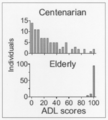
- FIG. 5 is a graph showing relative abundance of species significantly increased in centenarians among centenarians, the elderly, young people, direct relatives of centenarians, and IBD patients.
- FIG. 5 is a graph showing the relative abundance of species significantly reduced in centenarians among centenarians, the elderly, young people, direct relatives of centenarians, and IBD patients.
- FIG. 5 is a graph showing the relative abundance of centenarians and their lineal relatives to species in centenarians, the elderly, young people, lineal relatives of centenarians, and IBD patients.
- centenarians 160
- elderly people 112
- young people 40
- FIGS. 8A-8C the data are shown as mean ⁇ standard deviation. *** P ⁇ 0.001; ** P ⁇ 0.01; * P ⁇ 0.05; One-way ANOVA with Tukey's test. ns indicates that there is no significant difference. It is a scatter diagram which shows the correlation between the pH level in feces and each secondary bile acid by a regression line. Each dot indicates an individual result. The coefficient (r) of Spaarman and its superiority (P) are shown in the samples of centenarians (under color display, orange), elderly people (under color display, blue), and young people (under color display, gray). Calculated separately for the group.
- ns indicates that there is no significant difference.
- the total amount of bile acid in stool is expressed in ⁇ mol / g with respect to the wet weight of stool.
- nd indicates that it has not been detected. It is a graph which shows the result of having analyzed the bile acid metabolism using CDCA as a substrate in in vitro, pH 7 by 68 strains derived from CE91. It is a graph which shows the result of having analyzed the bile acid metabolism using CDCA as a substrate in in vitro, pH 9 by 68 strains derived from CE91.
- FIG. 3A It is a figure which shows the outline of the gene cluster which encodes the bile acid metabolizing enzyme of the Bacteroidetes strain. The result of analysis of the gene cluster of the Bacteroidetes strain isolated from the centenarian (CE91) is shown.
- Gene clusters containing homologs of 5AR color display, magenta color
- 5BR color display, blue
- 3 ⁇ HSDH group 1 color display, green
- 3 ⁇ HSDH group 2 color display, purple
- Gene homologues were defined as having ⁇ 1e- 12E values,> 30% sequence identity, and> 60% query coverage similarity.
- the arrows indicate the coding sequence and are color coded according to the annotated function.
- 3 is a graph showing the results of culturing the Bacteroidetes strain in WCA medium adjusted to pH 9 by adding 3-oxoalloLCA (final concentration 50 ⁇ M) as a substrate and analyzing the metabolism of LCA-related compounds.
- 3 is a graph showing the results of culturing the Bacteroidetes strain in WCA medium adjusted to pH 9 by adding 3-oxoLCA (final concentration 50 ⁇ M) as a substrate and analyzing the metabolism of LCA-related compounds.
- It is a graph which shows the result of culturing the Bacteroidetes strain in the WCA medium adjusted to pH 9 by adding isoLCA (final concentration 50 ⁇ M) as a substrate, and analyzing the metabolism of an LCA-related compound.
- isoLCA final concentration 50 ⁇ M
- the plasmid for making the deletion was prepared by inserting the homologous sequences immediately upstream and downstream of the target gene into the pLGB30 plasmid. The fact that the deletion product could be prepared was confirmed by PCR using primers inside (# 3- # 4) and outside (# 1- # 2) at the homologous sequence site. It is a graph which shows the growth curve of a pathogen at the time of culturing by changing the secondary bile acid concentration. The growth was detected by measuring the absorbance (OD600) of the medium cultured under anaerobic conditions at 37 ° C. using WCA medium.
- the arrowhead indicates the shape change after isoalloloLCA treatment.
- WCA medium and Brain Heart Infusion (BHI) medium containing different concentrations of isoalloloLCA, C.I. Difficile 630, VRE, SDSE, C.I. symbiosum, C.I. scandens, or C.I.
- BHI Brain Heart Infusion
- the dot diagram in the center is a dot diagram showing the correlation between the amount of secondary bile acids in the feces of centenarians and the relative abundance of the corresponding species. Black dots indicate a significant Spearman correlation at FDR P ⁇ 0.05. Wild type (WT) P.I. merdae St3 (“PmWT” in the figure) or 5AR-deficient type ( ⁇ 5AR) P.I. It is a graph which shows the result of having analyzed the metabolism of testosterone in vitro by merdee St3 (“Pm ⁇ 5AR” in the figure). The strain was anaerobically cultured at 37 ° C. for 48 hours in WCA medium adjusted to pH 7. P.
- ⁇ 3-oxo-5 ⁇ -steroid-4-dehydrogenase The 3-oxo-5 ⁇ -steroid-4-dehydrogenase (3-oxo-5-alpha-steroid-4-dehydrogenase, 5AR) according to the present invention is also referred to as 5 ⁇ -reductase (5 ⁇ -reductase), and EC1.3. An enzyme identified by 99.5.
- 5AR according to the present invention, 3-oxo - [delta 4 reaction to convert the -LCA 3-Okisoaro LCA (or converting the 3-Okisoaro LCA 3-oxo - ⁇ 4 -LCA reactions) and / or 5 ⁇ testosterone -An enzyme that has the activity of catalyzing a reaction that converts dihydrotestosterone (DHT) (or a reaction that converts DHT to testosterone).
- DHT dihydrotestosterone
- 5AR according to the present invention is preferably a protein containing an amino acid sequence having high homology with respect to the amino acid sequence set forth in any of SEQ ID NOs: 69 to 89.
- the 5AR according to the present invention may have a natural or non-natural (artificial) mutation introduced into the amino acid sequence set forth in any one of SEQ ID NOs: 69 to 89. That is, the 5AR according to the present invention includes an amino acid sequence in which one or more amino acids are substituted, deleted, added, and / or inserted in the amino acid sequence of 5AR (amino acid sequence shown in SEQ ID NO: 69, etc.). It also contains proteins.
- the term "plurality” is not particularly limited, but is preferably 2 to 150, more preferably 2 to 100, still more preferably 2 to 70, more preferably 2 to 50, still more preferably 2 to. 30, more preferably 2 to 20, still more preferably 2 to 10 (for example, 2 to 9, 2 to 8, 2 to 7, 2 to 6, 2 to 5, 2 to 4) 2 to 3 pieces, 2 pieces).
- 5AR according to the present invention is a protein containing an amino acid sequence encoded by a DNA encoding the amino acid sequence set forth in any one of SEQ ID NOs: 69 to 89 and a DNA that hybridizes under stringent conditions. You may.
- the 3 ⁇ -hydroxysteroid dehydrogenase (3 ⁇ -hydroxysteroid dehydrogenase, 3 ⁇ HSDH) is an enzyme specified by EC 1.1.1.145 and can be two isotypes (3 ⁇ HSDH1 and 3 ⁇ HSDH2), but is preferable. It is 3 ⁇ HSDH2.
- the 3 ⁇ HSDH according to the present invention is a reaction for converting 3-oxoaroLCA to isoaroLCA (or a reaction for converting isoaroLCA to 3-oxoaroLCA), and a reaction for converting 3-oxoaloca to isoLCA (or isoLCA 3).
- 3 ⁇ HSDH1 is preferably a protein containing an amino acid sequence having high homology with respect to the amino acid sequence set forth in any of SEQ ID NOs: 113 to 129.
- 3 ⁇ HSDH2 is preferably a protein containing an amino acid sequence having high homology with respect to the amino acid sequence set forth in any one of SEQ ID NOs: 130 to 141.
- the 3 ⁇ HSDH1 according to the present invention may have a natural or non-natural (artificial) mutation introduced into the amino acid sequence set forth in any of SEQ ID NOs: 113 to 129. That is, the 3 ⁇ HSDH1 according to the present invention contains an amino acid sequence in which one or more amino acids are substituted, deleted, added, and / or inserted in the amino acid sequence of 3 ⁇ HSDH1 (amino acid sequence shown in SEQ ID NO: 113, etc.). It also contains proteins.
- the term "plurality” is not particularly limited, but is preferably 2 to 200, more preferably 2 to 180, still more preferably 2 to 150, more preferably 2 to 100, still more preferably 2 to.
- 70 pieces more preferably 2 to 50 pieces, still more preferably 2 to 30 pieces, more preferably 2 to 20 pieces, still more preferably 2 to 10 pieces (for example, 2 to 9 pieces, 2 to 8 pieces, 2 to 7 pieces). 2 to 6 pieces, 2 to 5 pieces, 2 to 4 pieces, 2 to 3 pieces, 2 pieces).
- the 3 ⁇ HSDH2 according to the present invention may have a natural or non-natural (artificial) mutation introduced into the amino acid sequence set forth in any of SEQ ID NOs: 130 to 141. That is, the 3 ⁇ HSDH2 according to the present invention contains an amino acid sequence in which one or more amino acids are substituted, deleted, added, and / or inserted in the amino acid sequence of 3 ⁇ HSDH2 (amino acid sequence shown in SEQ ID NO: 130, etc.). It also contains proteins.
- the term "plurality” is not particularly limited, but is preferably 2 to 150, more preferably 2 to 100, still more preferably 2 to 70, more preferably 2 to 50, still more preferably 2 to. 30, more preferably 2 to 20, still more preferably 2 to 10 (for example, 2 to 9, 2 to 8, 2 to 7, 2 to 6, 2 to 5, 2 to 4) 2 to 3 pieces, 2 pieces).
- the 3 ⁇ HSDH1 according to the present invention may be a protein containing an amino acid sequence encoded by a DNA encoding the amino acid sequence set forth in any of SEQ ID NOs: 113 to 129 and a DNA hybridizing under stringent conditions. good.
- 3 ⁇ HSDH2 is a protein containing an amino acid sequence encoded by a DNA encoding the amino acid sequence set forth in any one of SEQ ID NOs: 130 to 141 and a DNA that hybridizes under stringent conditions. You may.
- the 3-oxo-5 ⁇ -steroid-4-dehydrogenase (3-oxo-5 ⁇ -steroid 4-dehydrogenase, 5BR) according to the present invention is an enzyme specified by EC1.3.999.6.
- 5BR have activity to catalyze 3-oxo - [delta 4 reaction to convert the -LCA 3-oxo-LCA (or converting the 3-oxo LCA 3-oxo - ⁇ 4 -LCA reaction) It is an enzyme.
- the 5BR according to the present invention is preferably a protein containing an amino acid sequence having high homology with respect to the amino acid sequence set forth in any one of SEQ ID NOs: 90 to 112.
- the 5BR according to the present invention may have a natural or non-natural (artificial) mutation introduced into the amino acid sequence set forth in any one of SEQ ID NOs: 90 to 112. That is, the 5BR according to the present invention includes an amino acid sequence in which one or more amino acids are substituted, deleted, added, and / or inserted in the amino acid sequence of 5BR (amino acid sequence shown in SEQ ID NO: 90, etc.). It also contains proteins.
- the term "plurality” is not particularly limited, but is preferably 2 to 250, more preferably 2 to 200, still more preferably 2 to 150, more preferably 2 to 100, still more preferably 2 to.
- 70 pieces more preferably 2 to 50 pieces, still more preferably 2 to 30 pieces, more preferably 2 to 20 pieces, still more preferably 2 to 10 pieces (for example, 2 to 9 pieces, 2 to 8 pieces, 2 to 7 pieces). 2 to 6 pieces, 2 to 5 pieces, 2 to 4 pieces, 2 to 3 pieces, 2 pieces).
- 5BR is a protein containing an amino acid sequence encoded by a DNA encoding the amino acid sequence set forth in any one of SEQ ID NOs: 90 to 112 and a DNA that hybridizes under stringent conditions. You may.
- high homology is 20% or more (for example, 25% or more, 30% or more, 35% or more, 40% or more, 45% or more, 50% or more, 55% or more). , 60% or more (for example, 65% or more, 70% or more, 75% or more, 85% or more), and 80% or more (for example, 85% or more, 86% or more, 87% or more, 88% or more, 89%). More preferably, 90% or more (for example, 91% or more, 92% or more, 93% or more, 94% or more, 95% or more, 96% or more, 97% or more, 98% or more, 99% or more). It is preferable, and it is particularly preferable that it is 100%.
- “Homology” can mean similarity or identity.
- “homology” may mean, in particular, identity.
- the homology of the amino acid sequence can be determined by using an alignment program such as BLAST (Basic Local Sequence Search Tool at the National Center for Biological Information). For example, amino acid sequence homology includes homology between amino acid sequences calculated using blastp, and more specifically, blastp using default parameters (ie, using default parameters). ) Homology between the calculated amino acid sequences can be mentioned.
- amino acid substitutions and the like are preferably conservative substitutions.
- Constant substitution means substituting with another amino acid residue having a chemically similar side chain.
- a group of amino acid residues having chemically similar amino acid side chains is well known in the art to which the present invention belongs.
- acidic amino acids (aspartic acid / glutamic acid), basic amino acids (lysine, arginine, histidine), neutral amino acids, amino acids having a hydrocarbon chain (glycine, alanine, valine, leucine, isoleucine, proline), hydroxy groups Amino acids with (serine / threonine), amino acids containing sulfur (cysteine / methionine), amino acids with amide group (aspartin / glutamine), amino acids with imino group (proline), amino acids with aromatic group (phenylalanine / tyrosine / It can be classified by tryptophan).
- the "stringent condition” is, for example, a hybridization condition of about “1XSSC, 0.1% SDS, 37 ° C.”, and the stricter condition is "0.5XSSC, 0. Hybridization conditions of about 1% SDS, 42 ° C., and more stringent conditions include hybridization conditions of about 0.2XSSC, 0.1% SDS, 65 ° C.
- sequence numbers that specify various sequences according to the present invention are shown in Tables 1 to 4 below. Furthermore, in Tables 1 to 4, the presence or absence of possession of various enzymes of the bacterial strains (68 species) peculiar to centenarians is also shown.
- the numbers in the items of 16SrDNA to 3 ⁇ HSDH2 indicate the sequence number of the DNA sequence that specifies 16SrDNA and the sequence number of the amino acid sequence that specifies various enzymes. Further, in the item of 16SrDNA to 3 ⁇ HSDH, the black circle indicates that the bacterial strain carries the enzyme, although the sequence information is not disclosed. A hyphen indicates that the bacterial strain does not carry the enzyme.
- enzyme according to the present invention may be directly or indirectly added to "5AR", “3 ⁇ HSDH” and “5BR” (hereinafter, also collectively referred to as “enzyme according to the present invention") according to the present invention.
- the addition is not particularly limited, and may be an addition at the gene level or a chemical addition.
- the site to be added is not particularly limited, and may be either the amino terminal or the carboxyl terminal of the enzyme according to the present invention, or both. Addition at the gene level is achieved by adding a DNA encoding the enzyme according to the present invention to which a reading frame of a DNA encoding another protein is added.
- the "other protein” added in this manner is not particularly limited, and for the purpose of facilitating the purification of the enzyme according to the present invention, the polyhistidine (His-) tag (tag) protein, FLAG-
- a tag protein for purification such as tag protein (registered trademark, Sigma-Aldrich), glutathione-S-transferase (GST) is preferably used, and for the purpose of facilitating the detection of the enzyme according to the present invention,
- a tag protein for detection such as a fluorescent protein such as GFP and a chemically luminescent protein such as luciferase is preferably used.
- the chemical addition may be covalent or non-covalent.
- the “covalent bond” is not particularly limited, and is, for example, an amide bond between an amino group and a carboxyl group, an alkylamine bond between an amino group and an alkyl halide group, a disulfide bond between thiols, a thiol group and a maleimide group or an alkyl halide.
- a thioether bond with a group can be mentioned.
- Examples of the "non-covalent bond” include a biotin-avidin bond.
- a fluorescent dye such as Cy3 or rhodamine is preferably used. Be done.
- the enzyme according to the present invention can be obtained by culturing bacteria or the like that produce each of these enzymes.
- the cultured bacteria or the like are recovered from the medium by filtration, centrifugation or the like, and the recovered bacteria or the like are treated by cell lysis, grinding treatment, pressure crushing or the like, and further, ultrafiltration treatment, salting out, etc.
- examples thereof include a method of purifying and concentrating a protein expressed in bacteria or the like by solvent precipitation such as sulfate precipitation, chromatography (for example, gel chromatography, ion exchange chromatography, affinity chromatography) or the like.
- the purified tag protein When the above-mentioned purified tag protein is added to the enzyme according to the present invention, it can be purified and collected using a substrate to which the tag protein is adsorbed. Further, these purification and concentration methods may be carried out alone or in combination as appropriate and may be carried out in multiple steps.
- the enzyme according to the present invention is not limited to the above biological synthesis, and can also be produced by using the DNA or the like and the cell-free protein synthesis system according to the present invention described later.
- the cell-free protein synthesis system is not particularly limited, and examples thereof include wheat germ-derived, Escherichia coli-derived, rabbit reticulocyte-derived, and insect cell-derived synthetic systems. Further, those skilled in the art can chemically synthesize the enzyme according to the present invention using a commercially available peptide synthesizer or the like.
- the enzyme according to the present invention may be mixed with other components and used.
- the other components are not particularly limited, and examples thereof include sterile water, physiological saline, vegetable oils, surfactants, lipids, solubilizers, buffers, protease inhibitors, and preservatives.
- the polynucleotide according to the present invention may be a natural DNA or RNA as long as it encodes the above-mentioned enzyme according to the present invention, and is a DNA or RNA in which a mutation is artificially introduced into the natural DNA or RNA. It may be a DNA or RNA consisting of an artificially designed nucleotide sequence. Furthermore, the morphology is not particularly limited, and includes cDNA, genomic DNA, mRNA, chemically synthesized DNA, and chemically synthesized RNA. Preparation of these polynucleotides can be carried out by using conventional means for those skilled in the art.
- genomic DNA is extracted from various bacteria to prepare a genomic library (plasmids, phages, cosmids, BACs, PACs, etc. can be used as vectors), and the present invention is developed. It can be prepared by performing colony hybridization or plaque hybridization using a probe prepared based on the nucleotide sequence of the gene encoding such an enzyme. It is also possible to prepare a primer specific to the gene encoding the enzyme according to the present invention and perform PCR using the primer.
- cDNA for example, cDNA is synthesized based on mRNA extracted from various bacteria, and this is inserted into a vector such as ⁇ ZAP to prepare a cDNA library, which is expanded to develop colony high in the same manner as above. It can be prepared by performing hybridization or plaque hybridization, or by performing PCR.
- a mutation encoding the above-mentioned amino acid substitution can be introduced into the DNA thus prepared by a person skilled in the art by using a known part-specific mutation introduction method.
- the part-specific mutagenesis method include the Kunkel method (Kunkel, TA, Proc Natl Acad Sci USA, 1985, Vol. 82, No. 2, pp. 488-492), SOE (splicing-by-overlap).
- SOE splicing-by-overlap
- -Extension) -PCR method Ho, S.N., Hunt, HD, Horton, RM, Pullen, JK, and Peace, LR, Gene, 1989, Vol. 77 , Pages 51-59).
- a person skilled in the art can artificially design a nucleotide sequence encoding the protein into which the above-mentioned amino acid substitution has been introduced, and based on the sequence information, use an automatic nucleic acid synthesizer to obtain the polynucleotide according to the present invention. It can also be chemically synthesized.
- the polynucleotide according to the present invention is an enzyme according to the present invention in which codons are optimized according to the type of the host cell from the viewpoint of further improving the expression efficiency of the enzyme according to the present invention to be encoded.
- the aspect of the DNA encoding the above can also be taken.
- the vector in which the DNA is inserted can be taken so that the above-mentioned polynucleotide can be replicated in the host cell.
- the "vector” exists as a self-replicating vector, that is, an extrachromosomal independent body, and its replication does not depend on chromosomal replication, for example, it can be constructed on the basis of a plasmid.
- the vector may also be one that, when introduced into a host cell, integrates into the genome of the host cell and replicates with the chromosome into which it has been integrated.
- Examples of such a vector include a plasmid and a phage DNA.
- the plasmids include Escherichia coli-derived plasmids (pET22, pBR322, pBR325, pUC118, pUC119, pUC18, pUC19, etc.), yeast-derived plasmids (YEp13, YEp24, YCp50, etc.), Bacillus subtilis-derived plasmids (pUB110, pTP5, etc.).
- Examples of the phage DNA include ⁇ phage (Charon4A, Charon21A, EMBL3, EMBL4, ⁇ gt10, ⁇ gt11, ⁇ ZAP, etc.).
- an insect viral vector such as baculovirus
- an animal viral vector such as a retrovirus or an adenovirus vector
- the procedure and method for constructing the vector according to the present invention those commonly used in the field of genetic engineering can be used. For example, in order to insert the DNA according to the present invention into a vector, first, the purified DNA is cleaved with an appropriate restriction enzyme, inserted into the restriction enzyme site or multicloning site of the appropriate vector, and ligated to the vector. Etc. are adopted.
- the vector according to the present invention may be in the form of an expression vector containing the enzyme according to the present invention encoded by the DNA in a state in which it can be expressed in a host cell.
- a DNA sequence that controls the expression and a transformed host cell are used. It is desirable to include a genetic marker or the like for selection.
- the DNA sequence that controls expression includes a promoter, an enhancer, a splicing signal, a poly A addition signal, a ribosome binding sequence (SD sequence), a terminator, and the like.
- the promoter is not particularly limited as long as it exhibits transcriptional activity in the host cell, and can be obtained as a DNA sequence that controls the expression of a gene encoding a protein that is the same as or different from that of the host cell.
- a DNA sequence that induces expression may be included.
- the expression of the gene located downstream is induced by adding isopropyl- ⁇ -D-thiogalactopyranoside (IPTG).
- IPTG isopropyl- ⁇ -D-thiogalactopyranoside
- IPTG isopropyl- ⁇ -D-thiogalactopyranoside
- lactose operon There is a lactose operon that can be used.
- the gene marker in the present invention may be appropriately selected depending on the method for selecting the transformed host cell, and for example, a gene encoding drug resistance or a gene complementing auxotrophy can be used.
- DNA encoding the enzyme according to the present invention may be inserted into the vector, or a plurality of types of DNA may be inserted into one vector.
- a plurality of types of DNA When inserting a plurality of types of DNA into a vector, it is preferable that these DNAs form an operon when a plurality of types of DNA are inserted into one vector.
- the "operon" is a nucleic acid sequence unit composed of one or a plurality of genes transcribed under the control of the same promoter.
- the "bacterium having a polynucleotide encoding 5AR" according to the present invention is not particularly limited as long as it is a bacterium having the above-mentioned polynucleotide encoding 5AR according to the present invention, and for example, Parabacteroides having the polynucleotide. Goldsteini, Parabacteroides merdee, Bacteroides dorie, Bacteroides thetaiotaomicron, Bacteroides uniformis, Alistopes finegoldii, Alisiteradic.
- Parabacteroides goldsteinii which has a polynucleotide having a very high identity to the nucleotide sequence set forth in SEQ ID NO: 1 or 2.
- Parabacteroides merdae which has a polynucleotide having a very high identity to the nucleotide sequence set forth in SEQ ID NO: 3.
- SEQ ID NO: Bacteroides dorei which has a polynucleotide having a very high identity to the nucleotide sequence set forth in SEQ ID NO: 6 or 7.
- SEQ ID NO: Bacteroides thetaiotaomicron which has a polynucleotide having a very high identity to the nucleotide sequence set forth in 8 or 9.
- Alistopes finegoldii which has a polynucleotide having a very high identity to the nucleotide sequence set forth in SEQ ID NO: 15 or 16.
- Alistopes onderdonkii which has a polynucleotide having a very high identity to the nucleotide sequence of SEQ ID NO: 17 or 18.
- the "bacterium having a polynucleotide encoding 3 ⁇ HSDH” according to the present invention is not particularly limited as long as it is a bacterium having the above-mentioned polynucleotide encoding 3 ⁇ HSDH according to the present invention, and for example, Parabacteroides having the polynucleotide.
- Parabacteroides goldsteinii which has a polynucleotide having a very high identity to the nucleotide sequence set forth in SEQ ID NO: 1 or 2.
- Parabacteroides merdae which has a polynucleotide having a very high identity to the nucleotide sequence set forth in SEQ ID NO: 3.
- SEQ ID NO: Bacteroides dorei which has a polynucleotide having a very high identity to the nucleotide sequence set forth in SEQ ID NO: 6 or 7.
- SEQ ID NO: Bacteroides thetaiotaomicron which has a polynucleotide having a very high identity to the nucleotide sequence set forth in 8 or 9.
- Alistopes finegoldii which has a polynucleotide having a very high identity to the nucleotide sequence set forth in SEQ ID NO: 15 or 16.
- Alistopes onderdonkii which has a polynucleotide having a very high identity to the nucleotide sequence of SEQ ID NO: 17 or 18.
- SEQ ID NO: Corynebacterium striatum which has a polynucleotide having a very high identity to the nucleotide sequence set forth in SEQ ID NO: 29.
- Gordonibacter pamelaea which has a polynucleotide having a very high identity to the nucleotide sequence set forth in SEQ ID NO: 32.
- the "bacteria having a polynucleotide encoding 5AR and a polynucleotide encoding 3 ⁇ HSDH" according to the present invention is a bacterium having the above-mentioned polynucleotide encoding 5AR and a polynucleotide encoding 3 ⁇ HSDH according to the present invention.
- Parabacteroides goldsteinii which has a polynucleotide having a very high identity to the nucleotide sequence set forth in SEQ ID NO: 1 or 2.
- Parabacteroides merdae which has a polynucleotide having a very high identity to the nucleotide sequence set forth in SEQ ID NO: 3.
- SEQ ID NO: Bacteroides dorei which has a polynucleotide having a very high identity to the nucleotide sequence set forth in SEQ ID NO: 6 or 7.
- SEQ ID NO: Bacteroides thetaiotaomicron which has a polynucleotide having a very high identity to the nucleotide sequence set forth in 8 or 9.
- Alistopes finegoldii which has a polynucleotide having a very high identity to the nucleotide sequence set forth in SEQ ID NO: 15 or 16.
- Alistopes onderdonkii which has a polynucleotide having a very high identity to the nucleotide sequence of SEQ ID NO: 17 or 18.
- the "bacteria having a polynucleotide encoding 5BR" according to the present invention is not particularly limited as long as it has the above-mentioned polynucleotide encoding 5BR according to the present invention.
- Parabacteroides goldsteinii and Parabacteroides having the polynucleotide.
- Parabacteroides goldsteinii which has a polynucleotide having a very high identity to the nucleotide sequence set forth in SEQ ID NO: 1 or 2.
- Parabacteroides merdae which has a polynucleotide having a very high identity to the nucleotide sequence set forth in SEQ ID NO: 3.
- SEQ ID NO: Parabacteroides distasonis which has a polynucleotide having a very high identity to the nucleotide sequence set forth in 4 or 5.
- SEQ ID NO: Bacteroides dorei which has a polynucleotide having a very high identity to the nucleotide sequence set forth in SEQ ID NO: 6 or 7.
- Alistopes finegoldii which has a polynucleotide having a very high identity to the nucleotide sequence set forth in SEQ ID NO: 15 or 16.
- Alistopes onderdonkii which has a polynucleotide having a very high identity to the nucleotide sequence of SEQ ID NO: 17 or 18.
- Odoribacter laneus which has a polynucleotide having a very high identity to the nucleotide sequence set forth in SEQ ID NO: 19 or 20.
- SEQ ID NO: Odribacteraceae which has a polynucleotide having a very high identity to the nucleotide sequence set forth in any of 21-24.
- Raoultibacter timonesis which has a polynucleotide having a very high identity to the nucleotide sequence set forth in SEQ ID NO: 30 or 31.
- Christensenellaceae which has a polynucleotide having a very high identity to the nucleotide sequence set forth in SEQ ID NO: 36 or 37.
- Ruminococcaceae which has a polynucleotide having a very high identity to the nucleotide sequence set forth in any of SEQ ID NOs: 40, 41 and 45. Very much for the nucleotide sequence set forth in either Emergencia timonesis, which has a polynucleotide having a very high identity to the nucleotide sequence set forth in SEQ ID NO: 48 or 49, or SEQ ID NO: 58, 61 and 62. Lachnospiraceae with polynucleotides with high identity Can be mentioned.
- the "bacteria having a polynucleotide encoding 5AR and a polynucleotide encoding 3 ⁇ HSDH, and a polynucleotide encoding 5BR" according to the present invention is the above-mentioned polynucleotide encoding 5AR according to the present invention and a poly encoding 3 ⁇ HSDH.
- the nucleotide and as long as it has a polynucleotide encoding a 5BR not particularly limited, for example, with these polynucleotides, Parabacteroides goldsteinii, Parabacteroides merdae, Bacteroides dorei, Bacteroides thetaiotaomicron, Bacteroides uniformis, Alistipes finegoldii, Alistipes onderdonkii, Odoribacter laneus , Or Odoribacteraceae.
- Parabacteroides goldsteinii which has a polynucleotide having a very high identity to the nucleotide sequence set forth in SEQ ID NO: 1 or 2.
- Parabacteroides merdae which has a polynucleotide having a very high identity to the nucleotide sequence set forth in SEQ ID NO: 3.
- SEQ ID NO: Bacteroides dorei which has a polynucleotide having a very high identity to the nucleotide sequence set forth in SEQ ID NO: 6 or 7.
- SEQ ID NO: Bacteroides thetaiotaomicron which has a polynucleotide having a very high identity to the nucleotide sequence set forth in 8 or 9.
- Alistopes finegoldii which has a polynucleotide having a very high identity to the nucleotide sequence set forth in SEQ ID NO: 15 or 16.
- Alistopes onderdonkii which has a polynucleotide having a very high identity to the nucleotide sequence of SEQ ID NO: 17 or 18.
- nucleotide sequence identity is preferably 95% or more (96% or more, 97% or more, 98% or more, 99% or more), and particularly preferably 100%.
- identity can also be determined using an alignment program such as BLAST.
- nucleotide sequence identity includes identity between nucleotide sequences calculated using blastn, more specifically using blastn with default parameters (ie, with default parameters). ) The calculated identity between the nucleotide sequences can be mentioned.
- the bacterium according to the present invention may have a polynucleotide encoding a substrate of each enzyme and / or a transporter of bile acid produced by a reaction catalyzed by each enzyme, in addition to the above-mentioned enzymes. Preferred (see FIG. 12).
- the bacterium according to the present invention is not particularly limited as long as it has a polynucleotide encoding the enzyme according to the present invention, and may be a naturally occurring bacterium, and the above-mentioned DNA or vector according to the present invention. It may be a host cell (transformant) such as a bacterium that is carried by introducing exogenously.
- Bacteria into which the DNA or vector according to the present invention is introduced are not particularly limited, and examples thereof include the above-mentioned enterobacteria and other microorganisms (Escherichia coli, budding yeast, fission yeast, Bacillus subtilis, actinomycetes, filamentous fungi, etc.). Be done. Further, in the present invention, instead of the bacterium, a transformant obtained by introducing the above-mentioned DNA or vector according to the present invention into a cell can also be used. Examples of such cells include plant cells, insect cells, animal cells and the like.
- the introduction of the DNA or vector according to the present invention can also be carried out according to a method commonly used in this field.
- examples of the method for introducing into bacteria such as Escherichia coli include a heat shock method, an electroporation method, a spheroplast method, a lithium acetate method, and a joining method, and as a method for introducing into plant cells, Agrobacterium is used.
- Examples of the method to be used and the particle gun method include a method using baculovirus and an electroporation method as a method of introduction into insect cells, and a method of introduction into animal cells includes a calcium phosphate method, a lipofection method and an electroporation method. Examples include the ration method and the microinjection method.
- the DNA or the like introduced into the bacterium or the cell in this way may be temporarily retained in the bacterium or the like, or may be permanently retained (in the bacterium or the like). For example, it may be retained by being randomly inserted into the genomic DNA, or it may be retained by homologous recombination), and if it is a vector, it can be replicated and retained as an independent body outside the genomic DNA.
- composition of the present invention will be described. As shown in Examples described later, the present inventors have clarified that the above-mentioned bacteria according to the present invention are involved in the production pathway of bile acids involved in Hyakuju and the like. Therefore, the present invention provides a composition of the following aspects. (1) as an active ingredient a bacterium having a polynucleotide encoding the 5AR according to the present invention, the composition for converting the 3-oxo - ⁇ 4 -LCA 3-Okisoaro LCA.
- a composition for converting 3-oxoaroLCA into isoaroLCA which comprises a bacterium having a polynucleotide encoding 3 ⁇ HSDH according to the present invention as an active ingredient.
- a bacterium having a polynucleotide encoding a 5BR according to the present invention as an active ingredient a bacterium having a polynucleotide encoding a 5BR according to the present invention, the composition for converting the 3-oxo - ⁇ 4 -LCA 3-oxo LCA.
- a composition for producing isoaroLCA from oxoLCA isoaroLCA.
- the present invention also provides a composition of the following aspects. (7) The composition according to any one of (1) to (4) and (6) above, which is an antibacterial composition against Gram-positive bacteria. (8) An antibacterial composition against Gram-positive bacteria containing isoaroLCA or isoLCA as an active ingredient. (9) An antibacterial composition against Gram-positive bacteria, which comprises at least one enzyme selected from 5AR according to the present invention, 3 ⁇ HSDH according to the present invention, and 5BR according to the present invention as an active ingredient.
- the present invention also provides a composition of the following aspects.
- a composition for converting 5 ⁇ -dihydrotestosterone (DHT) into 3 ⁇ -androstenediol which comprises a bacterium having a polynucleotide encoding 3 ⁇ HSDH according to the present invention as an active ingredient.
- a composition for producing 3 ⁇ -androstandiol from testosterone which comprises a bacterium having a polynucleotide encoding 5AR according to the present invention and a bacterium having a polynucleotide encoding 3 ⁇ HSDH according to the present invention as active ingredients. thing.
- a composition for producing 3 ⁇ -androstandiol from testosterone which comprises a bacterium having a polynucleotide encoding 5AR according to the present invention and a polynucleotide encoding 3 ⁇ HSDH according to the present invention as an active ingredient.
- compositions for producing 3 ⁇ -androstanediol from testosterone which comprises 5AR according to the present invention and 3 ⁇ HSDH according to the present invention as active ingredients.
- composition disease group according to any one of (10) to (14) above, which is a composition for treating or preventing at least one disease selected from the following disease groups: Prostate cancer, androgenetic alopecia, polycystic ovary syndrome, acne, hirsutism, ovarian endothelial cancer, neuroinflammation, and GABAA receptor-mediated epilepsy.
- the "bacteria” according to the present invention are as described above, but the “bacteria” contained as an active ingredient in the composition of the present invention may be live bacteria or dead cells. It may be both live and dead.
- the "killed cell” include a heat-treated body, a fire-treated body, a steamed body, a radiation ( ⁇ -ray, etc.) irradiation-treated body, an enzyme-treated body, a drug (antibiotic, etc.) treated body, and a chemical substance (formaline, etc.). )
- a processed body and an ultrasonic processed body can be mentioned.
- the form of the bacterium according to the present invention is not particularly limited and may be either liquid or solid, but the dry form (for example, powder form, bacterial powder form, etc.) is handled during production or storage. It is preferable from the viewpoint that it is easy to use.
- the dried product can be prepared by drying a suspension in which the cells are dispersed in a solvent (water or the like).
- the drying method is not particularly limited, and examples thereof include a spray drying method and a freeze drying method.
- the sterilization method is not particularly limited, and the retort sterilization method, UHT sterilization method, air sterilization method, pressure sterilization method, high pressure steam sterilization method, dry heat sterilization method, distribution steam sterilization method, electromagnetic wave sterilization method, electron beam sterilization method, High-frequency sterilization method, radiation sterilization method, ultraviolet sterilization method, ethylene oxide gas sterilization method, hydrogen peroxide plasma sterilization method, chemical sterilization method (alcohol sterilization method, formalin fixation method, electrolyzed water treatment method) and the like can be mentioned.
- surfactant treatment, grinding / crushing treatment, enzyme treatment, fractionation treatment, etc. can be performed before and after the sterilization treatment by heating or the like, or before and after the drying treatment.
- surfactant treatment, grinding / crushing treatment, enzyme treatment, fractionation treatment, etc. can be performed.
- the obtained product can also be contained in the composition of the present invention.
- Bacteria contained as an active ingredient in the composition of the present invention include not only the above-mentioned bacterial cells, but also products of the bacterium (for example, secretory products of the bacterium, metabolites of the bacterium), and constituent substances (of the bacterium itself). Ingredients. So-called bacterial cell components. For example, amino acids, peptides, nucleic acids, sugars, lipids, vitamins, hormones, and their complexes, and complexes of them and phosphorus / sulfur metal elements that compose the bacterium. Etc.).
- the active ingredient contained in the composition of the present invention may be a culture of bacteria according to the present invention.
- the culture may be one containing the bacterium (culture solution containing the grown bacterium, solid medium, etc.), and the form of the culture is not particularly limited and may be either liquid or solid.
- a dry form (for example, a dried culture product) is suitable for this form from the viewpoint of easy handling during production and storage. Those skilled in the art can appropriately prepare such a dried culture product or the like by using the above-mentioned drying method.
- the "enzyme” contained as an active ingredient in the composition of the present invention is as described above.
- the "bile acid” contained as an active ingredient in the composition of the present invention is as described in Examples described later, but as long as it has its activity, it is a pharmacologically acceptable salt, hydrate or solvent. Japanese products are also included.
- Such a pharmacologically acceptable salt is not particularly limited and may be appropriately selected depending on the structure of each compound and the like.
- an acid addition salt for example, hydrochloride, hydrogen bromide, sulfuric acid
- Inorganic acid salts such as salts, hydrogen sulfates, nitrates, carbonates, hydrogen carbonates, phosphates, monohydrogen phosphates, dihydrogen phosphates, acetates, propionates, lactates, citrates, Organic acid salts such as tartrate), base addition salts (for example, alkali metal salts such as sodium salt and potassium salt, alkaline earth metal salts such as calcium salt and magnesium salt, zinc salt, aluminum salt, ammonium salt, tetramethyl Ammonium salts), organic amine addition salts (eg, morpholin, piperidine and other addition salts), amino acid addition salts (eg, lysine, glycine, phenylalanine and other addition salts).
- the hydrate or solvate is not particularly limited, and examples thereof include bile acid or a salt thereof to which 0.1 to 10 molecules of water or a solvent are added.
- the "bile acid" according to the present invention includes all isomers and isomers such as tautomers, geometric isomers, asymmetric carbon-based optical isomers, and stereoisomers as long as they have inhibitory activity. Includes body mixture. Furthermore, the substance undergoes metabolism such as oxidation, reduction, hydrolysis, amination, deamination, hydroxylation, phosphorylation, dehydroxylation, alkylation, dealkylation, and conjugation in vivo, and its inhibitory activity is still present. The present invention also includes compounds that produce the substance by undergoing metabolism such as oxidation, reduction, and hydrolysis in vivo.
- composition of the present invention may be in the form of a pharmaceutical composition (pharmaceutical product, quasi-drug, etc.), a food composition (food or drink, animal feed, etc.), or a reagent used in a model animal experiment or the like.
- composition in the present invention can be formulated by a known pharmaceutical method according to the form of the substance (bile acid, enzyme, bacterium, etc.) which is an active ingredient.
- the substance bile acid, enzyme, bacterium, etc.
- parenterally eg, intestinal tract
- carriers that are pharmacologically or acceptable as food and drink, specifically, physiological saline, sterile water, medium, vegetable oil, solvent, excipients, bases, emulsifiers, suspensions, and surfactants.
- Activators, stabilizers, flavors, fragrances, vehicles, preservatives, binders, diluents, isotonic agents, soothing agents, bulking agents, disintegrants, buffers, coatings, lubricants, colorants , Sweeteners, thickeners, flavoring agents, solubilizing agents or other additives and the like can be appropriately combined.
- the composition of the present invention should be efficiently delivered into the intestinal tract, particularly in the preparation intended for oral administration. It may be combined with a composition that enables it.
- the composition capable of such delivery into the intestinal tract is not particularly limited, and a known composition can be appropriately adopted, for example, a pH-sensitive composition, a composition that suppresses release to the intestinal tract.
- Bioadhesive compositions eg, US Pat. No. 6,368.586
- examples include the polymers described herein), protease inhibitor-containing compositions, and compositions that are specifically degraded by intestinal enzymes.
- composition of the present invention When the composition of the present invention is used as a food composition, for example, in health foods, functional foods, foods for specified health uses, nutritionally functional foods, foods with functional claims, nutritional supplements, foods for the sick, or feeds for animals. possible.
- Functional foods are usually classified into four categories, probiotics, biogenics, prebiotics, and symbiotics, based on their mechanism of action.
- probiotics, biogenics, and symbiotics are classified. It can take the form of tics and prebiotics.
- the food and drink of the present invention can be ingested as the composition as described above, and can also be ingested as various foods and drinks.
- Specific examples of foods and drinks include functional foods, drinks, jelly-like foods, soft drinks, dairy foods, tea foods, alcoholic foods, soups and other liquid foods; yogurt, drinks.
- Products containing oil such as cooking oil, dressing, mayonnaise, margarine; Carbohydrate-containing foods such as rice, noodles and bread; Processed livestock foods such as ham and sausage; Processed marine foods such as kamaboko, dried food and salt; Pickles Processed vegetable foods such as; Semi-solid foods such as jelly; Fermented foods such as miso; Western confectionery, Japanese confectionery, candy, gums, gummy, chilled confectionery, ice confectionery, etc. Retort products; instant foods such as instant soup and instant miso soup, and microwave-compatible foods.
- healthy foods and drinks prepared in the form of powder, granules, tablets, capsules, liquid, paste or jelly can also be mentioned.
- the food and drink according to the present invention can be produced by a production technique known in the art.
- the act of "displaying” includes all acts that inform the consumer of the use, and constitutes an expression that can directly recognize the use or an expression that can recall or infer the use. It may be attached to the product itself, or it may be attached to the container, packaging material or package insert containing the composition. Further, “display” refers to information related to the composition of the present invention, such as leaflets, pamphlets, pops, catalogs, posters, books, storage media such as DVDs, advertisements such as electronic bulletin boards and the Internet, and the like. It may be something that displays / advertises that it is effective.
- the target "Gram-positive bacteria” may be bacteria that are stained dark blue or purple by Gram stain, and are not particularly limited.
- Gram-positive bacteria shown in FIGS. 4A and 4E can be mentioned.
- antibacterial means suppressing the growth of Gram-positive bacteria and / or sterilizing them.
- the compositions (7) to (9) of the present invention can also be used as a composition for treating or preventing an infectious disease of Gram-positive bacteria.
- the "infectious disease” is not particularly limited, and examples thereof include Clostridium difficile infection, sepsis, and acute respiratory distress syndrome (ARDS / ALI) having sepsis as an underlying disease.
- the target diseases are as described above, but for the treatment or prevention of "prostate cancer", as shown in Examples described later, the prostate cancer Inhibition of progression and / or metastasis is also included.
- the present invention also treats or treats Gram-positive bacterial infections by administering to a subject an effective amount of at least one enzyme selected from 5AR according to the invention, 3 ⁇ HSDH according to the invention, and 5BR according to the invention. Regarding how to prevent it.
- the present invention includes a bacterium having a polynucleotide encoding 5AR according to the present invention, a bacterium having a polynucleotide encoding 3 ⁇ HSDH according to the present invention, and a bacterium having a polynucleotide encoding 5AR according to the present invention.
- the present invention relates to a method of treating or preventing a Gram-positive bacterial infection by administering an effective amount of isoaroLCA or isoLCA to a subject.
- a bacterium having a polynucleotide encoding 3 ⁇ HSDH according to the present invention a bacterium having a polynucleotide encoding 5AR according to the present invention and a bacterium having a polynucleotide encoding 3 ⁇ HSDH according to the present invention, and 5AR according to the present invention.
- prevention includes suppression and delay of infection, suppression of onset of cancer and the like, delay and suppression of recurrence thereof.
- Treatment includes not only complete recovery from infectious diseases and cancer, but also alleviation or amelioration of those symptoms, suppression of their progression, and suppression of their recurrence.
- the "subject" in the treatment of the present invention is an animal including humans.
- the animals other than humans are not particularly limited, and various domestic animals, poultry, pets, experimental animals and the like can be targeted. Specific examples include, but are not limited to, pigs, cows, horses, sheep, goats, chickens, ducks, ostriches, ducks, dogs, cats, rabbits, hamsters, mice, rats, monkeys and the like.
- the subject of the present invention may be a person suffering from the above-mentioned infectious diseases and cancer, but it is not necessary to be diagnosed with these diseases, for example, a person who may have suffered from these diseases. Some people feel that they have these diseases. Moreover, even a healthy person can take it on a daily basis for the purpose of preventing these diseases.
- Non-therapeutic use is a concept that does not include medical practice, that is, treatment of the human body by treatment. For example, health promotion and the like can be mentioned.
- the method for administering or ingesting the bacteria, enzyme and bile acid according to the present invention is not particularly limited and may be oral administration or parenteral administration (for example, administration into the intestinal tract).
- oral administration it is preferable that the subject reduces the production of gastric acid by ingesting a proton pump inhibitor (PPI) or the like from the viewpoint of further improving the effect of the bacteria or the like according to the present invention. ..
- PPI proton pump inhibitor
- the above-mentioned aspects of the composition can be preferably used in the administration or ingestion of these substances.
- the dose or ingestion thereof shall be the age, body weight, symptoms of the above-mentioned diseases, health condition, type of composition (pharmaceutical products, foods and drinks, etc.). ), The type of active ingredient and its form, etc., are appropriately selected.
- it may be administered or ingested once or in a plurality of times (for example, twice or three times) per day.
- the period of administration or ingestion may be discontinued depending on the degree of improvement, but from the viewpoint of prevention, administration or ingestion may be continued without discontinuation.
- continuous it may be continued every day or at intervals, but it is preferable to continuously administer or ingest it every day in terms of effect.
- the present invention is a method for evaluating at least one disease selected from the following disease groups.
- Disease group Prostate cancer, androgenetic alopecia, polycystic ovary syndrome, acne, hirsutism, ovarian endothelial cancer, neuroinflammation, and GABAA receptor-mediated epilepsy, (1) A step of quantifying bacteria producing 3 ⁇ HSDH in the feces of a subject, (2) A step of comparing the value obtained by quantifying in step (1) with a corresponding value obtained by quantifying the bacterium of a centenarian, and (3) a result of comparison in step (2).
- a step of determining that a subject is likely to have or is likely to suffer from the disease when the quantitative value in the feces of the subject is lower than the corresponding value is included. Provide a method.
- the present invention is a method for preventing or treating at least one disease selected from the group of diseases. Also provided is a method of administering a bacterium that produces 3 ⁇ HSDH to the subject determined by the method to have a high probability of suffering from the disease or a high possibility of suffering from the disease.
- the present invention is also a method of assessing the likelihood of survival over 100 years of age.
- the quantitative value in the feces of the subject is equal to or higher than the corresponding value, it is determined that the subject is likely to survive 100 years or older.
- Provided is a method including a step of determining that a subject is unlikely to survive over 100 years of age when the quantitative value in the feces of the subject is lower than the corresponding value.
- the present invention is a method for evaluating the possibility of survival over 100 years old.
- a step of quantifying bacteria preferably bacteria producing at least 3 ⁇ HSDH2 that produce at least one enzyme selected from 5AR, 3 ⁇ HSDH, and 5BR in the feces of a subject.
- the quantitative value in the feces of the subject is equal to or higher than the corresponding value, it is determined that the subject is likely to survive 100 years or older.
- a method comprising the step of determining that the subject is unlikely to survive over 100 years of age when the quantitative value in the feces of the subject is lower than the corresponding value.
- the present invention is a method for improving the possibility of survival over 100 years old.
- At least one enzyme selected from 3-oxoLCA, isoaroLCA, and 5AR, 3 ⁇ HSDH, and 5BR was given to the subject who was determined by the above method to be unlikely to survive over 100 years of age.
- Also provided is a method of administering at least one substance selected from the group consisting of producing bacteria (preferably bacteria producing at least 3 ⁇ HSDH2).
- the present invention is also a method for assessing resistance to Gram-positive bacteria.
- the quantitative value in the feces of the subject is equal to or higher than the corresponding value, the subject is determined to have high resistance to Gram-positive bacteria.
- a method comprising a step of determining that a subject has low resistance to Gram-positive bacteria when the quantitative value in the feces of the subject is lower than the corresponding value.
- the present invention is a method for evaluating resistance to Gram-positive bacteria.
- a step of quantifying bacteria preferably bacteria producing at least 3 ⁇ HSDH2 that produce at least one enzyme selected from 5AR, 3 ⁇ HSDH, and 5BR in the feces of a subject.
- the quantitative value in the feces of the subject is equal to or higher than the corresponding value, the subject is determined to have high resistance to Gram-positive bacteria.
- a method comprising a step of determining that a subject has low resistance to Gram-positive bacteria when the quantitative value in the feces of the subject is lower than the corresponding value.
- the present invention is a method for preventing infection with Gram-positive bacteria.
- the subject determined to have low resistance to Gram-positive bacteria is produced with at least one enzyme selected from 3-oxoLCA, isoaroLCA, and 5AR, 3 ⁇ HSDH, and 5BR.
- a method of administering at least one substance selected from the group consisting of bacteria preferably bacteria producing at least 3 ⁇ HSDH2.
- the "subject" in each evaluation method of the present invention is not particularly limited and is the same as the “subject” in the above-mentioned treatment method and the like, but is limited to humans.
- the number of bacteria to be quantified may be at least one, but preferably two or more (for example, three or more and four or more), and more preferably five or more (for example, 6).
- “Quantification of bacteria in feces” does not have to be the amount (number) of the bacteria itself, and can be performed, for example, by measuring the amount of a substance peculiar to the bacteria that reflects the amount (number) of the bacteria. can.
- substances include the bacterium-specific oligonucleotide (for example, 16S rRNA gene and its transcript), the bacterium-specific constituent substance (peptides, nucleic acids, sugars, lipids, and complexes thereof that constitute the bacterium). Etc.), products of the bacterium (eg, secretory products of the bacterium, metabolites of the bacterium).
- PCR RT-PCR, real-time PCR, quantitative PCR
- DNA microarray analysis method DNA microarray analysis method
- Northern blotting next-generation sequencing method (sequencing-by-synthesis, For example, Illumina Solexa Genome Analyzer or Sequencing with Hiseq® 2000), Pyro Sequencing Method (eg, Sequencing with Roche Diagnostex (454) Sequencer GSLX or FLX (so-called 454 Sequencing) )), Rigase reaction sequencing method (for example, Sequencing by SoliD® or 5500 xl manufactured by Life Technology Co., Ltd.), T-RFLP method, bead array method, in situ hybridization, dot blot, RNase protection assay method, It can be quantified using mass analysis, genomic PCR, and southern blotting.
- next-generation sequencing method for example, Illumina Solexa Genome Analyzer or Sequencing with Hiseq® 2000
- Pyro Sequencing Method eg, Sequencing with Roche Diagno
- enzyme-linked immunosorbent assay ELISA method
- CLEIA chemical luminescent enzyme immunoassay
- latex aggregation method antibody array
- immunobrotting immunochromatography
- imaging cytometry flow cytometry
- radio radio
- a method of detection using an antibody such as an immunoassay, an immunoprecipitation method, and an immunohistochemical staining method (immunological method), and a mass analysis method.
- an antibody that binds to each substance is used, and the amount of each substance is determined by contacting the antibody with each substance to which each antibody binds and using the binding property of the antibody to each substance as an index. Detected.
- Mass spectrometry (MS) method is a method in which a sample is ionized using an ion source, and in the analysis unit, the sample is moved in a vacuum and ionized using electromagnetic force or due to a flight time difference according to the mass-charge ratio. It refers to a measurement method using a mass spectrometer that can be separated and detected, and examples of the method of ionization using an ion source include methods such as the EI method, CI method, FD method, FAB method, MALDI method, and ESI method. Can be selected as appropriate.
- a magnetic field deflection type, a quadrupole type, an ion trap type, a time-of-flight (TOF) type, a Fourier transform ion cyclotron resonance type, or the like is appropriately selected.
- tandem mass spectrometry (MS / MS) and triple quadrupole mass spectrometry which are a combination of two or more mass spectrometry methods, can be used.
- SRM Selected reaction monitoring
- MRM Multiple reaction monitoring
- the mass spectrometer may be used alone, or by combining liquid chromatography (LC) and high performance liquid chromatography (HPLC), the target substance can be separated and purified to prepare a sample.
- Such "immunological method” and “mass spectrometry” can also be used for "quantification of enzymes in feces” and “quantification of bile acids in feces”. Further, in “quantification of bile acid in feces”, various types of chromatography (gas chromatography, high performance liquid chromatography, LC / MS, LC-MS / MS, thin layer chromatography, etc.) can be preferably used.
- the value obtained by quantifying in this way may be a relative value as well as an absolute quantity.
- the relative value include a quantitative ratio (so-called numerical value expressed in an arbitrary unit (AU)) based on the measuring method or measuring device used for detection.
- the relative value in the amount of bacteria may be, for example, a value (relative abundance, occupancy rate) indicating the ratio of the bacteria in the entire intestinal flora, as shown in Examples described later. Further, a value calculated based on the amount of reference intestinal bacteria may be used.
- the "reference gut bacterium” according to the present invention may be a bacterium that is stably present in a stool sample and has a small difference in amount between different biological samples.
- the "corresponding value” is a quantitative value in a human individual aged 100 years or older, and may be a value that functions as a cutoff value or a reference value in each method of the present invention.
- a human individual aged 100 years or older The median or average value of each amount of substance detected in the group can be mentioned.
- the "corresponding value” may be a preset quantitative value (fixed value), and it is preferable that the fixed value related to the instruction manual of the kit related to the evaluation method is described.
- the human individual aged 100 years or older to be compared is preferably a person who has the same characteristics of at least one of gender, race, and nationality as the subject.
- Such "comparison” can be performed by a person skilled in the art by appropriately selecting a statistical analysis method suitable for the above detection method.
- Statistical analysis methods include, for example, Mann-Whitney U test, t test, analysis of variance (ANOVA), Kruskal-Wallis test, Wilcoxon test, odds ratio, hazard ratio, Fisher's accurate test, receiver operating characteristic analysis. (ROC analysis), classification tree and determination tree analysis (CART analysis). Normalized or standardized and normalized data can also be used for comparison.
- the amount of substance detected is higher or lower than the corresponding value, and the difference is considered to be statistically significant (for example, P ⁇ 0.05).
- the amount of the detected substance is twice or more (preferably 5 times or more and 10 times or more) or 0.5 times or less (preferably 0.2 times or less, 0.1 times or less) the corresponding value. It can also be mentioned that.
- “equivalent to the corresponding value” means, for example, that the difference between the detected substance amount and the corresponding value is not statistically significant (for example, P> 0.05). Further, for example, the amount of the detected substance is more than 0.5 times and less than 2 times the corresponding value.
- “High probability” and “low probability” are, for example, 80% or more and less than 20%, preferably 90% or more and less than 10%, and more preferably 95%, respectively. More than and less than 5%.
- “high resistance to Gram-positive bacteria” and “low resistance to Gram-positive bacteria” mean, for example, that the probability of being infected with Gram-positive bacteria is 80% or more and less than 20%, respectively.
- the probabilities are preferably 90% or more and less than 10%, and more preferably 95% or more and less than 5%.
- the method of the present invention includes a method of collecting data on the above-mentioned quantitative values for diagnosis by a doctor, a method of presenting the data to a doctor, a method of comparing and analyzing the above-mentioned quantitative values and the corresponding values. It can also be described as a method for assisting a doctor's diagnosis in consideration of the patient's clinical symptoms and / or other test results.
- isoaroLCA comprising the step of culturing a bacterium having a polynucleotide encoding 3 ⁇ HSDH according to the present invention in the presence of 3-oxoaroLCA and collecting the isoaroLCA produced in the bacterium and / or the culture thereof.
- a bacterium having a polynucleotide encoding 5AR according to the present invention and a bacterium having a polynucleotide encoding 3 ⁇ HSDH according to the present invention were cultured, and the bacterium and / or a bacterium thereof A method for producing an isoaro LCA, which comprises a step of collecting the isoaro LCA produced in the culture.
- a bacterium having a polynucleotide encoding 5AR according to the present invention and a polynucleotide encoding 3 ⁇ HSDH according to the present invention was cultivated, and in the bacterium and / or a culture thereof.
- a method for producing an isoaro LCA which comprises a step of collecting the produced isoaro LCA.
- a bacterium having a polynucleotide encoding 5AR according to the present invention, a polynucleotide encoding 3 ⁇ HSDH according to the present invention, and a polynucleotide encoding 5BR according to the present invention is cultured.
- a method for producing an isoaro LCA which comprises a step of collecting the isoaro LCA produced in the bacterium and / or a culture thereof.
- a method for producing isoaroLCA which comprises a step of producing isoaroLCA from 3-oxoaroLCA and collecting the isoaroLCA in the presence of 3 ⁇ HSDH according to the present invention.
- Presence of 3 ⁇ HSDH according to 5AR and the invention according to the present invention generates a Isoaro LCA from 3-oxo - ⁇ 4 -LCA, comprising the step of collecting the Isoaro LCA, manufacturing method of Isoaro LCA.
- a method for producing isoaroLCA which comprises a step of producing isoaroLCA from isoLCA or 3-oxoLCA and collecting the isoaroLCA in the presence of 5AR according to the present invention, 3 ⁇ HSDH according to the present invention and 5BR according to the present invention. ..
- the "bacteria" to be cultured are as described above, but also in the production method of the present invention, instead of the bacteria, a host cell into which the DNA or vector according to the present invention has been introduced externally is also used. be able to.
- the condition for "culturing the bacterium (host cell)" may be any condition as long as the bacterium or the like can produce isoaroLCA, and if it is a person skilled in the art, the temperature and air can be adjusted according to the type of the bacterium and the medium used. With or without addition, oxygen concentration, carbon dioxide concentration, medium pH (for example, pH 7-9), culture temperature (usually 20-40 ° C, preferably 25-37 ° C), culture time, humidity, etc. are appropriately adjusted. Can be adjusted and set.
- the medium may contain a medium that can be assimilated by bacteria or the like, and may contain carbon sources, nitrogen sources, sulfur sources, inorganic salts, metals, peptone, yeast extract, meat extract, casein hydrolyzate, serum and the like. It is mentioned as an inclusion. Further, in such a medium, for example, IPTG for inducing the expression of a polynucleotide encoding the enzyme according to the present invention and an antibiotic corresponding to a drug resistance gene that can be encoded by the vector according to the present invention (for example, ampicillin) are used. ), Or a nutrient (eg, arginine, histidine) corresponding to a gene that complements the auxotrophy that can be encoded by the vector according to the present invention may be added.
- a nutrient eg, arginine, histidine
- the "culture” is a medium containing a proliferated bacterium or the like, a secreted product of the bacterium or the like, and a metabolite of the bacterium or the like, which is obtained by culturing the bacterium or the like in the medium. , Includes their dilutions and concentrates.
- the "enzyme” used in the present invention is as described above, but the conditions for producing isoaroLCA in the presence of the enzyme according to the present invention may be any conditions as long as the production reaction is promoted, and those skilled in the art can use it. If there is, the composition of the reaction solution (for example, buffer solution), the pH of the reaction solution (for example, pH 7 to 9), the reaction temperature (usually 20 to 40 ° C., preferably 25 to 37 ° C.), the reaction time and the like are appropriately adjusted. Can be adjusted and set.
- the reaction solution for example, buffer solution
- the pH of the reaction solution for example, pH 7 to 9
- the reaction temperature usually 20 to 40 ° C., preferably 25 to 37 ° C.
- the reaction time and the like are appropriately adjusted. Can be adjusted and set.
- the collection of isoaroLCA from such bacteria, their cultures, reaction solutions and the like is also not particularly limited, and can be carried out by a known recovery and purification method.
- a collection method include extraction with a solvent and various types of chromatography (gas chromatography, high performance liquid chromatography, LC-MS, LC-MS / MS, thin layer chromatography, etc.). Further, these methods may be carried out alone or in combination as appropriate and may be carried out in multiple steps.
- the time of collection may be appropriately adjusted according to the type of bacteria, enzyme, etc. to be used and may be a time during which isoaroLCA can be produced, but it is usually 1 hour to 14 days, preferably 12 hours to 7 days. It's a day.
- Fecal samples were suspended in PBS containing 20% glycerol and 10 mM EDTA and stored at -80 ° C until use. After thawing, gently place the 100 ⁇ L suspension in 800 ⁇ L TE10 (10 mM Tris-HCl, 10 mM EDTA) buffer containing RNase A (final concentration 100 ⁇ g / mL, Invitrogen) and lysozyme (final concentration 15 mg / mL, Sigma). They were mixed and incubated at 37 ° C. for 1 hour.
- 16S rRNA sequencing was performed using MiSeq according to the Illumina protocol. PCR was performed on the V1-V2 region of the 16S rRNA gene using 27Fmod primer 5'-AGRGTTTGATYMTGGCTCAG-3'(SEQ ID NO: 166) and 338R primer 5'-TGCTGCCTCCCGTAGGAGT-3' (SEQ ID NO: 167). The amplicon ( ⁇ 330bp) obtained from each sample was purified using APPure XP magnetic beads (Beckman Coulter).
- DNA was quantified using Quant-iT Picogreen dsDNA assay kit (Invitrogen) and Infinity M Plex plate reader (Tecan). The purified DNA was stored at ⁇ 20 ° C.
- the two paired end reads were combined using fastq-join program based on the overlapping sequences. Leads that did not match for both universal primers with an average quality value of less than 25 were removed. Both primer sequences were removed, 3000 reads that passed the quality filter were arranged in descending order according to quality value, with a cutoff of 97% for pairwise sequence matching, using the UCLUST program (Edgar 2010) version 5.2.32. Clustering was performed to obtain an operational taxomic unit (OTU).
- OTU operational taxomic unit
- Taxonomy of each OTU by searching for homology to Ribosomal Database Project (RDP) and National Center for Biotechnology Information (NCBI) genome database by GLSEARCH program.
- RDP Ribosomal Database Project
- NCBI National Center for Biotechnology Information
- Reads are mapped to a gene catalog using a BWA [50] subject to a unique and strong mapping with at least 95% sequence identity to the length of the read, using an in-tissue script. It was counted (count catalog) and standardized to transscript-per-milion (TPM matrix). Countmatlix used MSPminer as an input for binning genes into metagenome seed pan genomes (core genes and accessory genes) with default settings [51]. The abundance of all metagenomic species in one sample was then expressed as the median TPM of the top 30 representative core genes output by MSPminer. Assembled genes were annotated with NCBI RefSeq (version May 2018) at the species, genus, and phyla levels, as previously reported [52].
- Phylophlan was used by default to annotate metagenomic species that do not match any of the NCBI RefSeq species [53]. Based on relative abundance at the species level, ⁇ -diversity was calculated using the Shannon index and ⁇ -diversity was calculated using the Bray-Curtis dissimilarity (R vegan package). To identify and annotate homologous proteins with at least 40% sequence match and 80% coverage on the query sequence, C.I. Query the non-redundant gene catalog with USEARCH ublast using the protein in the Sindens bai operon [26] or the protein in the isolates reported here as 5AR, 5BR, 3 ⁇ HSDHI, or 3 ⁇ HSDHII. Executed. The same processing pipeline has been applied to a dataset of gut microbiota in Sardinian longevity over 100 years [8].
- Linear modeling includes covariates of fixed effects, ie gender (male or female) and cohort information (longevity, older or younger than 100 years). Random effects include subject information for one or more samples among a small number of long-lived individuals over 100 years of age.
- PERMANOVA was applied to the Bray-Curtis dissimilarity (as performed by the adonis () function in the vegan package of R) to identify the correlation between gut microbiota composition and cohort and gender information as a whole.
- a pairwise Wilcoxon rank sum test was used to assess the difference in relative abundance of bi-operon homologs among long-lived individuals over 100 years of age compared to elderly and adolescent controls.
- Ammonium acetate acetonitrile (86: 14, v / v) 0.5 minutes, (78:22, v / v) 0.5-5 minutes, (72:28, v / v) 5-28 minutes, (46). : 54, v / v) 28-55 minutes, (2: 98, v / v) 55-66 minutes, (2: 98, v / v) 66 minutes-70 minutes. The total operating time was 70 minutes. The following MS parameters were used as the cation MRM mode to operate LC / ESI-MS / MS.
- ion spray voltage 5,500 V, interface temperature; 500 ° C, curtain gas; 30 psi, collision gas (nitrogen); 9 psi, nebulizing gas; 80 psi, and heats.
- the following MS parameters were used as the anion MRM mode.
- the concentration of short-chain fatty acids in feces was determined by GC-MS (Shimadzu QP2020 system with a flame ionization detector) equipped with PAL RTC autosampler (CTC Analytics). Helium was used as the carrier gas, and a molten silica capillary column 30 mx 0.25 mm coated with a film thickness of 0.25 ⁇ m was used. The inlet temperature was set to 250 ° C. The initial oven temperature was 60 ° C. for 2 minutes and then raised to 330 ° C. at 15 ° C./min. The MS parameters were set as follows.
- the ion source temperature is 200 ° C
- the interface temperature is 280 ° C
- the loop time is 0.3 seconds.
- 50 ⁇ L stool samples prepared with ethanol to concentrations of 0.5 ⁇ g / ⁇ L and 20 ⁇ g / ⁇ L were mixed with 10 ⁇ L acetic acid-d4 (80 ⁇ M).
- acetic acid-d4 80 ⁇ M
- Reagent 10 ⁇ L was added to each stool sample and reacted for 9 hours prior to injection into GC-MS. Samples were analyzed and quantified using LabSolutions Insight GC-MS software (Shimadzu).
- the pH of stool was measured by applying the supernatant of 0.1 mg / ⁇ L stool dispersion suspended in distilled water to a pH meter (Horiba Ltd.). Also, from the same stool suspension, stool ammonia levels were quantified using an enzamatic ammonia ELISA assay kit (Abcam) according to the manufacturer's protocol.
- the isolated strain used universal primers (27Fmod: 5'-AGRGTTTGATYMTGGCTCAG-3'(SEQ ID NO: 166), 1492R: 5'-GGYTACCTTGTTACCGACTT-3' (SEQ ID NO: 168)) for sanger sequencing.
- the 16S rRNA gene region was amplified by PCR and identified using NCBI genome database. Individual isolates in the culture collection named species with 16S rRNA sequence homology> 98.0%, families with homology> 94.5%, and eyes with homology> 86.5%.
- the isolated bacteria were stored frozen at ⁇ 80 ° C. in the optimum medium containing 20% glycerol.
- WCA medium (based on DSMZ 1611 YCFA modified medium) supplemented with a 29% volatile fatty acid solution was used.
- Alistopes finegoldii St16, Campylobacter urealyticus St25, Christianenellaceae St36-37, and Ruminococcaceae St44 are 4% salt solutions (0.2 g / L calcium chloride, 0.2 g / L magnesium phosphate, 0.2 g / L magnesium phosphate, 1 g / L).
- Mixture A (10 mM ammonium acetate, 0.01% formic acid, 20% acetonitrile) and Mixture B (30% acetonitrile, 70% methanol) are used as eluents, and separation is performed by a linear gradient at a flow rate of 0.2 mL / min. I went there.
- the mobile phase composition was gradually changed as follows.
- Genome sequences were determined by whole-genome shotgun sequencing using the PacBio Sequence and Illumina MiSeq sequencers.
- the donor (E. coli MFDpil) and the receptor (P. merdae St3) were grown in LB medium and BHI medium until the OD600 was 0.5, and mixed at a ratio of 1: 1. The mixture was dropped onto a BHI agarose plate and incubated under anaerobic conditions at 37 ° C. for 16 hours. Perfective colonies were formed on BHI agarose plates containing tetracycline (6 ⁇ g / mL).
- the conjugated product was 0.25% (wt / vol) glucose and 50 mg / L L-cysteine, 5 mg / L hemin, 2 .5 ⁇ g / L vitamin K1,2mg / L FeSO 4 ⁇ 7H 2 O, and plated on M9 agarose plates supplemented with 5 [mu] g / L vitamin B12,10mM rhamnose.
- the success or failure of the gene deletion was confirmed by PCR and Sanger sequencing.
- Clostridioides difficile stream 630 (ATCC BAA-1382), Clostridioides difficile VPI 10463 (ATCC 43255), vancomycin-resistant Enterococcus faec equimimilis (ATCC 12394), carbapenemase-resistant Klebsiella pneumoniae (ATCC BAA-1705), and Salmonella enterica subsp. enterica (ATCC 14028) was purchased from the American Type Culture Collection (ATCC).
- Clostridium perfringens JCM 1290T
- Bacillus cereus JCM 2152T
- methicillin-resistant Staphylococcus aureus JCM 16555
- Streptococcus pyogenes JCM 5674T
- Streptococcus sanguinis JCM 5708T
- Proteus mirabilis JCM 1669T
- Proteus vulgaris JCM 2001
- Treg-inducing strains previously reported by the laboratory to which the present inventors belong were also included in the symbiotic fungus panel.
- Hungatella hatchayii, Eubacterium rectale, and Alistopes putridinis isolated from human feces in the laboratory to which the present inventors belong were also used.
- Clostridium HGF2 (innocum) HM287 was obtained through BEI Resources, NIAID, NIH as part of the Human Microbiome Project: Clostridium sp. , Straight HGF2, HM-287.
- a primary suspension adjusted to have an OD600 of 0.63 in WCA medium was prepared.
- a secondary suspension was prepared by diluting 100 ⁇ L of the primary suspension in the medium to a final 2.4 mL.
- a 10 ⁇ L secondary suspension was inoculated into media containing the following bile acids at various concentrations (3.175, 6.25, 12.5, 25, and 50 ⁇ M) to a final 200 ⁇ L.
- Bacterial growth was monitored every 0.5 to 1 hour by shaking at a microplate reader (Sunrise Thermo, Tecan) set at 37 ° C. for 60 seconds before the measurement point and measuring OD600. To determine the minimum inhibitory concentration, 10 ⁇ L of secondary suspension was inoculated into medium containing 0.25 to 50 ⁇ M isoalloloLC to a final 200 ⁇ L.
- EM Electro Microscopy
- Samples were dried using a critical point dryer (CPD300, Leica Biosystems) and coated with osmium to a thickness of approximately 2 nm using a conductive osmium coater (Neoc-ST, Meiwafosis).
- CPD300 critical point dryer
- Neoc-ST conductive osmium coater
- the SEM image was taken with a SU6600 (Hitachi High Tech) and an electron volt of 5 keV.
- Bacterial pellets were prepared by centrifuging 25 mL of bacterial culture (13,000 rpm, 2 minutes) for use in transmission electron microscopy. The pellet was fixed in a 2.5% glutaraldehyde solution at 4 ° C. overnight. After washing with 0.1 M phosphate buffer, the sample was fixed at 1.0% osmium tetroxide at 4 ° C for 2 hours, washed with distilled water, and wrapped in low gelling temperature Type VII-A agarose (Sigma-Aldrich). Buried.
- the sample is dehydrated with a series of solutions that increase the ethanol concentration to absolute ethanol, to acetone (Sigma-Aldrich), n-butyl glycidyl ether (Okenshoji Co., Ltd.), and a stepwise epoxy resin.
- 100% epoxy resin 100 g Epon (trade name) contains 27.0 g MNA, 51.3 g EPOK-812, 21.9 g DDSA and 1.1 mL DMP-30. Okenshoji Co., Ltd.) It was immersed at 4 ° C. for 48 hours. Polymerization of the pure epoxy resin was completed at 60 ° C. for 72 hours.
- an ultrathin film piece (70 nm) was prepared on a copper grid (Veco Specimen Grids, Nissin-EM) and stained with uranyl acetate and lead citrate, respectively, for 10 minutes. ..
- the TEM image was taken with an electron volt of 80-100 keV using JEM-1400plus (JEOL).
- the stool culture was carried out under anaerobic conditions at 37 ° C. for 48 hours in the presence of bile acids (LCA, 3-oxoLCA, isoalloloLCA) having a final concentration of 50 ⁇ M.
- DNA was extracted from the fecal culture as described above for 16S metagenomic sequencing.
- LC-MS / MS Quantification of steroid hormones using LC-MS / MS Parabacteroides merdae St3 and Odoribacteraceae St21-24 strains isolated from CE91, along with 50 ⁇ M testosterone or 5 ⁇ -dihydrotestosterone (DHT), were coated with a gas permeable membrane (Breath-easier TM , Diverside plate). Lab) was anaerobically cultured. 20 ⁇ L of bacterial culture from the logarithmic growth phase to the stationary phase was inoculated into 1 mL of Wilkins-Chalgrain Anaerobe (WCA, Thermo Fisher) medium adjusted to pH 7 (using MOPS buffer, Dojindo). After culturing for 3 hours, 6 hours, 9 hours and 12 hours, each culture supernatant was collected for LC-MS / MS quantification.
- WCA Wilkins-Chalgrain Anaerobe
- sample preparation 40 ⁇ L of culture supernatant was mixed with 160 ⁇ L of deuterium-labeled internal standard material (testosterone-d 3,12.5 nM methanol solution) and 800 ⁇ L of 80% methanol. The sample was sonicated at room temperature for 10 minutes and then passed through a filter having a pore size of 0.45 ⁇ m (Pure Clean for Solvent 0.45 ⁇ m, KURABO). 2 ⁇ L of solution was injected into LC / ESI-MS / MS (ESI probe and Exion LC AD ultra-high precision liquid chromatography system; Triple Quad 6500 + tandem mass spectrometer equipped with SCIEX).
- deuterium-labeled internal standard material testosterone-d 3,12.5 nM methanol solution
- 800 ⁇ L 80% methanol.
- the sample was sonicated at room temperature for 10 minutes and then passed through a filter having a pore size of 0.45 ⁇ m (Pure Clean for Solvent 0.45
- the separation column InertSstein C18 (inner diameter 150 mm ⁇ 2.1 mm, particle size 2 ⁇ m; GL Sciences Inc.) was used at 40 ° C.
- Mixture A (5 mM ammonium formate in distilled water) and Mixture B (5 mM ammonium formate in methanol) were used as gradients and separated by linear gradient elution at a flow rate of 0.2 mL / min.
- the mobile phase composition was gradually changed as follows.
- the total operating time was 30 minutes.
- MS parameters were used to operate the LC-ESI-MS / MS. ion spray voltage; 5,500 V, interface temperature; 500 ° C, curtain gas; 30 psi, collision gas (nitrogen); 9 psi, nebulizing gas; 80 psi, and heat. Samples were taken using Analyst software ver1.71 and analyzed using SCIEX OS-MQ software ver1.7.0.3666606.
- centenarians show signs of mild inflammation as evidenced by elevated levels of serum C-reactive protein and fecal lipocalin [9,12,13], which means that aging is a complete barrier. Consistent with the preconceived notion of having chronic inflammation due to decreased sexuality and immunosenescence (FIGS. 5C and 5D). Nevertheless, the majority of centenarians do not have chronic diseases such as obesity, diabetes, hypertension and cancer, and the prevalence of these diseases is significantly increased compared to the elderly group. Not (FIGS. 5E and 5F, and Table 6).
- the first characteristic group is a taxon whose abundance increased or decreased with age (Fig. 1D).
- msp_161 or Eubacterium siraeum was the most abundant in centenarians, followed by the elderly and then the young.
- Blautia wexlerae showed the opposite tendency, with the youngest being the most, followed by the centenarian, and then the elderly.
- Alisteps shahii was relatively high in both the elderly and centenarian groups compared to the young. Previous findings suggest that the relative abundance of these taxa reflects adaptation to aging and may be related to physical activity, environment, and diet. It was consistent with the study [4-6, 8].
- the second characteristic group is a taxon in which the abundance is similar between centenarians and young people, but different from that of elderly people (Fig. 1E). These species may contribute to the maintenance of youth and may have anti-aging effects. In particular, the unknown Firmicutes (msp_197), Ruminococcus gnavus, and Eggerthella lenta were relatively abundant in both centenarians and young people. Interestingly, the latter two species are involved in bile acid metabolism and may be involved in the biosynthesis of isobile acids in the host intestine [18].
- the third characteristic group is a taxon specific to centenarians, whose abundance is significantly different between centenarians and control groups (elderly and young), and is between the two control groups. It is not positioned (Fig. 1F).
- Fig. 1F Alistimes, Parabacteroides, Clostridium species, and the major archaea in the human intestine, Methanobrevibacter, were particularly abundant in the perennial population compared to the control group.
- One of the most abundant species of centenarians is Clostridium Sindens, which is known to have the relatively rare 7 ⁇ -dehydration ability required to convert primary bile acids to secondary bile acids. Yes [19, 20].
- major butyric acid-producing bacteria such as Faecalibacterium prausnitzii and Eubacterium rectale were selectively depleted in centenarians (Fig. 1F).
- Some bacterial species such as Phascorarctobacterium faecium and Alistopes putridinis, were more abundant in centenarians and their families than in the control group (Fig. 7D).
- the increase in these taxa in centenarians and their direct descendants may be due to heredity, lifestyle, and diet. For example, consumption of cruciferous vegetables has been reported to favor the expansion of the taxa described above [21].
- fecal pH was significantly higher in centenarians than in controls (Fig. 8C), which may be due in part to lower SCFA levels and reduced age-characteristic gastric juice production. There is.
- Primary bile acids are synthesized from hepatic cholesterol, bind to either glycine or taurine, and are secreted into the bile ducts [24,25]. These primary bile acids are then uncoupled by the gut flora and converted to various secondary bile acids [19, 25]. The main biochemical conversion is 7 ⁇ -dehydroxylation of primary bile acids (cholic acid (CA) and chenodeoxycholic acid (CDCA)), thereby causing them to be secondary bile acids (deoxycholic acid (DCA) and lithocholic). Converted to acid (LCA)).
- Bile acid metabolism via the bacterial flora is a plurality of oxidations catalyzed by enzymes encoded by bile acid-induced (bai) operon genes (BaiB, BaiCD, BaiA2, BaiE, BaiF, and BaiH), as shown below. It consists of a reduction reaction [19, 26].
- bile acids undergo oxidation and epimerization to undergo oxo- (keto-), iso- (3 ⁇ -hydroxy) and allo- (5 ⁇ -H-), and cis- and trans. Converted to isomers [25].
- centenarians had lower levels of primary bile acids and associated higher levels of CDCA metabolites (FIGS. 2D-2F).
- levels of iso-LCA, 3-oxoLCA, isoalloloLCA, allo-LCA and 3-oxoalllo-LCA were significantly elevated in centenarians, but this increase was seen between the elderly and young.
- Figs. 2A and 2F concentrations of alloloCA, 3-oxoalllo-LCA and isoalloloLCA were positively correlated with fecal pH (Fig. 8D), and increased levels of these bile acids in perennial individuals were associated with changes in diet and digestive function, and the like. It is suggested that it may reflect the resulting changes in the intestinal metabolome.
- Such an intestinal environment may promote the growth of certain bacterial species and / or the expression of enzymes involved in the production of isoLCA, 3-oxoLCA, and isoalloloLCA.
- colonization of isoLCA-producing bacteria, 3-oxoLCA-producing bacteria, and isoalloloLCA-producing bacteria in the intestine may causally affect other members of the gut flora and their metabolic processes.
- Example 3 Identification of isoLCA-producing bacterial strain, 3-oxoLCA-producing bacterial strain, and isoallolCA-producing bacterial strain
- 3-oxoLCA and isoLCA involves 5BR, 3 ⁇ HSDH and 3 ⁇ HSDH as well as 3-oxoDCA and isoDCA, as shown below.
- a stool sample of CE91 was cultured in various media, bacterial colonies were analyzed by 16S rRNA gene sequencing, and an aggregate of 68 characteristic strains that roughly reproduced the bacterial flora structure of CE91 was prepared. (FIGS. 3A and 8-11).
- Raoulibacter timonensis St30-31 and Lachnospiraceae spp. St57 can also convert LCA to 3-oxoLCA, and these species are E. coli. It was suggested to have 3 ⁇ HSDH as well as lenta.
- 3-oxo- ⁇ 4- LCA was used as a substrate, 3-oxoLCA was found in Hungatella hatchei St54-55 and Lachnospiraceae spp. High levels of accumulation in the culture supernatant of St62 suggested that these strains had 5BR (FIGS. 3C and 11E and 11F).
- isoLCA can be found in Clostridium innocuum St51 and Lachnospiraceae spp. Culture supernatant with 3-oxo- ⁇ 4 since it is generated by high-level from -LCA (FIG. 3C, and FIG. 11E and 11F) in ST58, these strains is suggested that owns 5BR and 3 ⁇ HSDH rice field.
- Parabacteroides disstasonis St4-5 converts LCA to 3-oxo- ⁇ 4 -LCA via 3-oxoLCA (FIGS. 3B and 11C and 11D), and further from 3-oxo- ⁇ - 4- LCA.
- the conversion to isoLCA and LCA (FIGS. 3C and 11E and 11F) was noteworthy, suggesting that these strains carry 3 ⁇ HSDH, 3 ⁇ HSDH and 5BR.
- Bacteroides strains of total 20 (St4,5,8, and St1-24 strains except 14 strains) will become apparent that it is possible to convert 3-oxo- ⁇ 4 -LCA the 3-oxoalloLCA, the 8 strains of which , It has been found that isoalloloLCA can be reliably produced.
- the culture at pH 9 which represents the intestinal environment of centenarians, enhanced the accumulation of 3-oxoalloLCA, isoalloLCA, isoLCA, and 3-oxoLCA compared to the culture at pH7 (Fig. 11A-11F), an alkaline environment may promote the activity or expression of enzymes involved in the production of these bile acids.
- Example 4 Conversion of 3-oxo- ⁇ 4- LCA to isoalloloLCA involving 5AR and 3 ⁇ HSDH
- SDR short-chain dehydrogenase
- Porphyromonas Somerae St14 lacks the putative 5AR and 3 ⁇ HSDH genes, while being able to generate isoalloloLCA from 3-oxoalloLCA (FIG. 13A), suggesting that it carries a strain-specific gene with 3 ⁇ HSDH activity. Will be done.
- E. coli In the presence of LCA, E. coli was used to investigate whether isolates with different genes could metabolize bile acids in a coordinated manner.
- lenta St34 (with 3 ⁇ HSDH, 3 ⁇ HSDH) or P.I. disstasonis St4 (with 3 ⁇ HSDH, 3 ⁇ HSDH, 5BR) and P.I. Co-culture with merdae St3 or Odoribacteraceae St21 (having 5BR, 5AR, 3 ⁇ HSDH) was performed.
- Bacteroides gene group identified above may contribute to the coordinated production of bile acids. At least, it may be involved in the unique composition distribution of bile acids in feces found in Bacteroides.
- Example 5 Bactericidal effect of isoallolCA against gram-positive pathogens Secondary bile acids are used to regulate host metabolism and immune response (including the induction of regulatory T cells, [25, 30-35]) and pathogens in the intestinal tract. It is known to play some biologically important roles, such as prevention of proliferation [36-39]. In particular, DCA, LCA, and isoLCA are known to be involved in inhibiting the growth of Clostridioides difficile, the most urgent antibiotic-resistant strain [36,40,41].
- C.I. Difficile 630 was cultured in the presence of various concentrations of isoLCA, 3-oxoLCA, isoalloloCA, 3-oxololLCA, LCA, DCA, or control group, and growth in vitro was followed over time using optical density measurements. ..
- isoalloloLCA It strongly inhibited the growth of differentialle 630 (FIGS. 4A and 4B, and FIGS. 13A and 13B).
- the minimum inhibitory concentration (MIC90) required to prevent growth of 90% or more in WCA medium was 2.0 ⁇ M, well below the concentrations of other bile acids tested (FIGS. 4A and 4B, as well as).
- FIG. 13A Strong growth inhibition by isoalloloLCa is a toxin-producing C.I. Difficile VPI10463 and vancomycin-resistant Enterococcus faecium (VRE) were also found (FIGS. 4A and 4B, and FIGS. 13A and 13B).
- isoalloloLCA has bactericidal properties, and C.I. Difficile 630 and VRE have been shown to result in morphological and hyperfine structure changes, including cell wall collapse, swelling, and multiple wall penetrations (Fig. 4C). These damage patterns are often observed with ⁇ -lactam antibiotics [42].
- C.I. innocuum St51 isoLCA producing bacterium
- P.I. When co-cultured with distasonis St4 (isoLCA and LCA-producing bacteria), no bacteriostatic effect was observed.
- MRSA methicillin-resistant Staphylococcus aureus
- SDSE Streptococcus dysgalactiae subsp. equisimilis
- Clostridium perfringens Streptococcus pyogenes, Streptococcus sanguinis, and pathogens Gram-positive containing Bacillus cereus, as well as, Klebsiella pneumoniae, Escherichia coli, Salmonella enterica, Proteus vulgaris, and isoalloLCA against pathogens of gram-negative including Proteus mirabilis
- S. Aureus is a well-known skin pathogen, but it often colonizes the intestine and is known to be resistant to most bile acids [43].
- Isoallo LCA is S.M. It strongly inhibited the growth of all Gram-positive pathogens tested, including aureus, with MIC90 values ranging from 0.5 to 3 ⁇ M in WCA medium and 3 to 6.25 ⁇ M in BHI medium (FIGS. 4A and 4B). , And FIGS. 15A and 15B).
- isoallolCA exerts a strong bactericidal / bacteriostatic effect by interfering with the cell wall of bacteria, especially against Gram-positive pathogens.
- isoalloloLCA is described in S.I. It is also suggested that it exerts a preventive and therapeutic effect on skin diseases such as atopic dermatitis using aureus as a pathogen.
- Example 6 Effect of isoallolCA on commensal intestinal flora Since intestinal metabolites encounter not only intestinal pathogens but also symbiotic bacteria, isoallolCA is common in human intestinal flora. We investigated how it affects common bacteria.
- Bacteria constituting a total of 42 general gut microbiota consisting of both Gram-positive and Gram-negative bacteria were selected from the culture collection and cultured in WCA and BHI media while increasing the concentration of isoallolCA.
- IsoalloLCA did not significantly affect the growth of most Gram-negative symbiotic bacteria such as Bacteroides (FIGS. 4E and 16A).
- human fecal flora from young and healthy sample donors was used to assess the effects of isoalloloCA on complex normal gut flora using isoalloloCA, 3-oxoLCA, LCA, or control systems.
- the cells were cultured and the changes in the bacterial flora were analyzed by 16S rRNA gene sequencing.
- IsoalloloCA induces Treg cells, and 3-oxoLCA and isoLCA have been reported to suppress Therper17 (TH17) cells [30], and the accumulation of these bile acids protects against excessive immune response and inflammation. there is a possibility.
- isoallolCA also exerts a very strong antibacterial effect against Gram-positive pathogens.
- Bile acids have been reported to contribute to protection against intestinal pathogenic bacterial infections [36,44,45].
- isoalloloLCA has been shown to function as the most potent antibacterial agent with high specificity against Gram-positive bacteria, including multidrug-resistant pathogens.
- bile acids can be used as biomarkers to monitor health and predict lifespan, regardless of whether an increase in bacteria that produce isoalloloLCA, isoLCA, or 3-oxoLCA contributes to longevity as a result of longevity.
- the bile acid pool was logically manipulated, and ultimately, antibiotic-resistant C.I. It is possible to improve infectious diseases caused by Gram-positive pathogens such as difficile, VRE and MRSA.
- Example 7 Effect the inventors of testosterone metabolism of the intestinal bacteria, as described above, involved in the reduction of 3-oxo- ⁇ 4 -LCA to 3-oxoalloLCA, bacteria and enzymes which they produce (5AR) was found. Further, as shown in (Example 3), human 5AR is known to catalyze the enzymatic reduction of testosterone (testosterone) to 5 ⁇ -dihydrotestosterone (DHT), and it is known to catalyze the enzymatic reduction to 3-oxoalloLCA. Similar to reduction. Therefore, the present inventors focused on this similarity and predicted that the above-mentioned bacterial enzyme may also be involved in the metabolism of testosterone, as shown below.
- Prostate cancer is the fifth leading cause of cancer death in men, with an estimated 1.2 million new cases reported worldwide in 2018 [61].
- Tumor progression in prostate cancer is mediated by androgen receptor (AR) signaling in glandular cells.
- Androgen deprivation therapy is currently used as the primary treatment to reduce testicular androgen levels to suppress prostate cancer cells, but most patients eventually develop hormone-refractory tumors [] 62].
- both testosterone and DHT are ligands for AR, DHT is a more potent androgen that binds AR with high affinity [28]. It has been reported that 3 ⁇ -androstenediol metabolized by 3 ⁇ HSDH activates estrogen receptor ⁇ (ER ⁇ ) without binding to AR and inhibits prostate cancer cell migration by reducing E-cadherin expression. Yes [63,64].
- Odoribacteraceae strain isolated from long-lived individuals over 100 years of age rapidly metabolizes testosterone and DHT to 3 ⁇ -androstenediol. Proved to have the ability.
- Odoribacteraceae strain may have a therapeutic role in prostate cancer by depleting tumor-induced testosterone and DHT, presumably producing transference-resistant 3 ⁇ -androstenediol.
- activation of 3 ⁇ -androstenediol of ER ⁇ has a growth inhibitory effect and a chemotherapy enhancing effect on ovarian endothelial cancer [66], and activation of ER ⁇ in breast cancer cells is generally a disease. It is believed to have an antiproliferative effect on the progression of [67].
- the 3 ⁇ -androstanediol produced by these strains also has the potential for treatment as a neurosteroid [68,69].
- Microbiomes other than the gut inflammaging and age-related diseases. Semin. Immunopathol. (2020). 14. Claesson, M.C. J. et al. Composition, variability, and numeric stability of the intestinal microbiota of the elderly. Proc. Natl. Acad. Sci. U.S. S. A. 108, 4586-4591 (2011). 15. Hirata, T.K. et al. Associations of cardiovascular biomarkers and plasma albumin with exposure existional to the highest ages. Nat. Commun. 11, 1-17 (2020). 16. Bloom, D.I. E. & Cadarette, D.I. Infectious disease threats in the twenty-first century: Strengthening the global response. Front. Immunol. 10, 549 (2019). 17.
- the present invention it is possible to reduce the risk of infection with Gram-positive bacteria, prostate cancer, and the like. Therefore, the present invention is useful in the development of pharmaceuticals for these diseases.
Landscapes
- Health & Medical Sciences (AREA)
- Life Sciences & Earth Sciences (AREA)
- Chemical & Material Sciences (AREA)
- Engineering & Computer Science (AREA)
- Organic Chemistry (AREA)
- General Health & Medical Sciences (AREA)
- Medicinal Chemistry (AREA)
- Bioinformatics & Cheminformatics (AREA)
- Animal Behavior & Ethology (AREA)
- Pharmacology & Pharmacy (AREA)
- Public Health (AREA)
- Veterinary Medicine (AREA)
- Zoology (AREA)
- Wood Science & Technology (AREA)
- General Chemical & Material Sciences (AREA)
- Chemical Kinetics & Catalysis (AREA)
- Microbiology (AREA)
- Molecular Biology (AREA)
- Nuclear Medicine, Radiotherapy & Molecular Imaging (AREA)
- Genetics & Genomics (AREA)
- Biotechnology (AREA)
- Biochemistry (AREA)
- Biomedical Technology (AREA)
- Immunology (AREA)
- General Engineering & Computer Science (AREA)
- Urology & Nephrology (AREA)
- Hematology (AREA)
- Tropical Medicine & Parasitology (AREA)
- Virology (AREA)
- Analytical Chemistry (AREA)
- Physics & Mathematics (AREA)
- Epidemiology (AREA)
- Communicable Diseases (AREA)
- Cell Biology (AREA)
- Food Science & Technology (AREA)
- Pathology (AREA)
- Mycology (AREA)
- General Physics & Mathematics (AREA)
- Oncology (AREA)
- Pain & Pain Management (AREA)
Abstract
Description
5ARをコードするポリヌクレオチドを有する細菌、3βHSDHをコードするポリヌクレオチドを有する細菌、5ARをコードするポリヌクレオチドを有する細菌と3βHSDHをコードするポリヌクレオチドを有する細菌、5ARをコードするポリヌクレオチド及び3βHSDHをコードするポリヌクレオチドを有する細菌、並びに5ARをコードするポリヌクレオチド、3βHSDHをコードするポリヌクレオチド、及び5BRをコードするポリヌクレオチドを有する細菌からなる群から選択される少なくとも1の細菌の使用に関する。
5ARをコードするポリヌクレオチドを有する細菌、3βHSDHをコードするポリヌクレオチドを有する細菌、5ARをコードするポリヌクレオチドを有する細菌と3βHSDHをコードするポリヌクレオチドを有する細菌、5ARをコードするポリヌクレオチド及び3βHSDHをコードするポリヌクレオチドを有する細菌、並びに、5ARをコードするポリヌクレオチド、3βHSDHをコードするポリヌクレオチド、及び5BRをコードするポリヌクレオチドを有する細菌からなる群から選択される少なくとも1の細菌の使用に関する。
5ARをコードするポリヌクレオチドを有する細菌、3βHSDHをコードするポリヌクレオチドを有する細菌、5ARをコードするポリヌクレオチドを有する細菌と3βHSDHをコードするポリヌクレオチドを有する細菌、5ARをコードするポリヌクレオチド及び3βHSDHをコードするポリヌクレオチドを有する細菌、並びに、5ARをコードするポリヌクレオチド、3βHSDHをコードするポリヌクレオチド、及び5BRをコードするポリヌクレオチドを有する細菌からなる群から選択される少なくとも1の細菌に関する。
グラム陽性菌の増殖を抑制するための、グラム陽性菌の感染症を治療若しくは予防するための、クロストリジウム・ディフィシルの感染症を治療若しくは予防するための、又は、敗血症及び敗血症を基礎疾患として有するARDS/ALIからなる群から選択される少なくとも1の疾患を、治療若しくは予防するための、方法に関する。
イソアロLCA又はイソLCAの使用に関する。
本発明はまた、テストステロンから3β-アンドロスタンジオールを生成するための組成物を製造するための、5ARをコードするポリヌクレオチドを有する細菌と3βHSDHをコードするポリヌクレオチドを有する細菌との使用に関する。
疾患群:
前立腺がん、男性ホルモン性脱毛症、多嚢胞性卵巣症候群、にきび、男性型多毛症、卵巣内皮がん、神経炎症、及びGABAA受容体を介したてんかん。
3βHSDHをコードするポリヌクレオチドを有する細菌、5ARをコードするポリヌクレオチドを有する細菌と3βHSDHをコードするポリヌクレオチドを有する細菌、5ARをコードするポリヌクレオチド及び3βHSDHをコードするポリヌクレオチドを有する細菌、3βHSDH、並びに、5AR及び3βHSDHからなる群から選択される少なくとも1の物質の使用に関する。
3βHSDHをコードするポリヌクレオチドを有する細菌、5ARをコードするポリヌクレオチドを有する細菌と3βHSDHをコードするポリヌクレオチドを有する細菌、5ARをコードするポリヌクレオチド及び3βHSDHをコードするポリヌクレオチドを有する細菌、3βHSDH、並びに、5AR及び3βHSDHからなる群から選択される少なくとも1の物質の使用に関する。
疾患群:
前立腺がん、男性ホルモン性脱毛症、多嚢胞性卵巣症候群、にきび、男性型多毛症、卵巣内皮がん、神経炎症、及びGABAA受容体を介したてんかん、
(1)被検者糞便中、3βHSDHを産生する細菌を定量する工程、
(2)工程(1)で定量して得られた値を、百寿者の前記細菌を定量して得られる対応値と比較する工程、及び
(3)工程(2)における比較の結果、
被検者糞便中の前記定量値が、前記対応値と同等又はそれより高い場合に、前記被検者は前記疾患に罹患する可能性は低いと判定し、
被検者糞便中の前記定量値が、前記対応値より低い場合に、前記被検者は前記疾患に罹患する可能性が高い、又は罹患している可能性が高いと判定する工程を、含む方法。
疾患群:
前立腺がん、男性ホルモン性脱毛症、多嚢胞性卵巣症候群、にきび、男性型多毛症、卵巣内皮がん、神経炎症、及びGABAA受容体を介したてんかん、
<20>に記載の方法にて、前記疾患に罹患する可能性が高い、又は罹患している可能性が高いと判定された前記被検者に、3βHSDHを産生する細菌を投与する方法。
(1)被検者糞便中、3-オキソLCA、イソアロLCA、3-オキソアロLCA、アロLCA(alloLCA)、3-オキソLCA及びイソLCAからなる群から選択される少なくとも1の胆汁酸を定量する工程、
(2)工程(1)で定量して得られた値を、百寿者の前記胆汁酸を定量して得られる対応値と比較する工程、及び
(3)工程(2)における比較の結果、
被検者糞便中の前記定量値が、前記対応値と同等又はそれより高い場合に、前記被検者は百歳以上生存する可能性が高いと判定し、
被検者糞便中の前記定量値が、前記対応値より低い場合に、前記被検者は百歳以上生存する可能性が低いと判定する工程を、含む方法。
(1)被検者糞便中、5AR、3βHSDH、及び5BRから選択される少なくとも1の酵素を産生する細菌を定量する工程、
(2)工程(1)で定量して得られた値を、百寿者の前記細菌を定量して得られる対応値と比較する工程、及び
(3)工程(2)における比較の結果、
被検者糞便中の前記定量値が、前記対応値と同等又はそれより高い場合に、前記被検者は百歳以上生存する可能性が高いと判定し、
被検者糞便中の前記定量値が、前記対応値より低い場合に、前記被検者は百歳以上生存する可能性が低いと判定する工程を、含む方法。
<22>又は<23>に記載の方法にて、百歳以上生存する可能性が低いと判定された前記被検者に、3-オキソLCA、イソアロLCA、3-オキソアロLCA、アロLCA、3-オキソLCA及びイソLCA、並びに、5AR、3βHSDH、及び5BRから選択される少なくとも1の酵素を産生する細菌からなる群から選択される少なくとも1を投与する方法。
(1)被検者糞便中、3-オキソLCA及びイソアロLCAからなる群から選択される少なくとも1の胆汁酸を定量する工程、
(2)工程(1)で定量して得られた値を、百寿者の前記胆汁酸を定量して得られる対応値と比較する工程、及び
(3)工程(2)における比較の結果、
被検者糞便中の前記定量値が、前記対応値と同等又はそれより高い場合に、前記被検者はグラム陽性菌に対する抵抗性が高いと判定し、
被検者糞便中の前記定量値が、前記対応値より低い場合に、前記被検者はグラム陽性菌に対する抵抗性が低いと判定する工程を、含む方法。
(1)被検者糞便中、5AR、3βHSDH、及び5BRから選択される少なくとも1の酵素を産生する細菌を定量する工程、
(2)工程(1)で定量して得られた値を、百寿者の前記細菌を定量して得られる対応値と比較する工程、及び
(3)工程(2)における比較の結果、
被検者糞便中の前記定量値が、前記対応値と同等又はそれより高い場合に、前記被検者はグラム陽性菌に対する抵抗性が高いと判定し、
被検者糞便中の前記定量値が、前記対応値より低い場合に、前記被検者はグラム陽性菌に対する抵抗性が低いと判定する工程を、含む方法。
<25>又は<26>に記載の方法にて、グラム陽性菌に対する抵抗性が低いと判定された前記被検者に、3-オキソLCA、イソアロLCA、並びに、5AR、3βHSDH、及び5BRから選択される少なくとも1の酵素を産生する細菌からなる群から選択される少なくとも1を投与する方法。
本発明に係る3-オキソ-5α-ステロイド-4-デヒドロゲナーゼ(3-oxo-5-alpha-steroid-4-dehydrogenase、5AR)は、5α-レダクターゼ(5α-reductase)とも称され、EC1.3.99.5によって特定される酵素である。
本発明に係る3βヒドロキシステロイドデヒドロゲナーゼ(3β-hydroxysteroid dehydrogenase、3βHSDH)は、EC 1.1.1.145によって特定される酵素であり、2種のアイソタイプ(3βHSDH1及び3βHSDH2)であり得るが、好ましくは3βHSDH2である。
本発明に係る3-オキソ-5β-ステロイド-4-デヒドロゲナーゼ(3-oxo-5β-steroid 4-dehydrogenase、5BR)は、EC1.3.99.6によって特定される酵素である。


次に、本発明に係る酵素をコードするポリヌクレオチドについて説明する。本発明に係るポリヌクレオチドは、上述の本発明に係る酵素をコードする限り、天然のDNA又はRNAであってもよく、天然のDNA又はRNAに人為的に変異が導入されたDNA又はRNAであってもよく、人工的に設計されたヌクレオチド配列からなるDNA又はRNAであってもよい。さらに、その形態について特に制限はなく、cDNA、ゲノムDNA、mRNA、化学合成DNA、化学合成RNAが含まれる。これらポリヌクレオチドの調製は、当業者にとって常套手段を利用して行うことが可能である。ゲノムDNAは、例えば、各種細菌からゲノムDNAを抽出し、ゲノミックライブラリー(ベクターとしては、プラスミド、ファージ、コスミド、BAC、PAC等が利用できる)を作製し、これを展開して、本発明にかかる酵素をコードする遺伝子のヌクレオチド配列を基に調製したプローブを用いてコロニーハイブリダイゼーションあるいはプラークハイブリダイゼーションを行うことにより調製することが可能である。また、本発明に係る酵素をコードする遺伝子に特異的なプライマーを作製し、これを利用したPCRを行うことによって調製することも可能である。また、cDNAは、例えば、各種細菌から抽出したmRNAを基にcDNAを合成し、これをλZAP等のベクターに挿入してcDNAライブラリーを作製し、これを展開して、上記と同様にコロニーハイブリダイゼーションあるいはプラークハイブリダイゼーションを行うことにより、また、PCRを行うことにより調製することが可能である。
次に、上述の本発明に係るポリヌクレオチドを有する細菌について説明する。
配列番号:1又は2に記載のヌクレオチド配列に対して極めて高い同一性を有するポリヌクレオチドを有するParabacteroides goldsteinii、
配列番号:3に記載のヌクレオチド配列に対して極めて高い同一性を有するポリヌクレオチドを有するParabacteroides merdae、
配列番号:6又は7に記載のヌクレオチド配列に対して極めて高い同一性を有するポリヌクレオチドを有するBacteroides dorei、
配列番号:8又は9に記載のヌクレオチド配列に対して極めて高い同一性を有するポリヌクレオチドを有するBacteroides thetaiotaomicron、
配列番号:10~13のうちのいずれかに記載のヌクレオチド配列に対して極めて高い同一性を有するポリヌクレオチドを有するBacteroides uniformis、
配列番号:15又は16に記載のヌクレオチド配列に対して極めて高い同一性を有するポリヌクレオチドを有するAlistipes finegoldii、
配列番号:17又は18に記載のヌクレオチド配列に対して極めて高い同一性を有するポリヌクレオチドを有するAlistipes onderdonkii、
配列番号:19又は20に記載のヌクレオチド配列に対して極めて高い同一性を有するポリヌクレオチドを有するOdoribacter laneus、又は
配列番号:21~24のうちのいずれかに記載のヌクレオチド配列に対して極めて高い同一性を有するポリヌクレオチドを有するOdoribacteraceaeが挙げられる。
配列番号:1又は2に記載のヌクレオチド配列に対して極めて高い同一性を有するポリヌクレオチドを有するParabacteroides goldsteinii、
配列番号:3に記載のヌクレオチド配列に対して極めて高い同一性を有するポリヌクレオチドを有するParabacteroides merdae、
配列番号:6又は7に記載のヌクレオチド配列に対して極めて高い同一性を有するポリヌクレオチドを有するBacteroides dorei、
配列番号:8又は9に記載のヌクレオチド配列に対して極めて高い同一性を有するポリヌクレオチドを有するBacteroides thetaiotaomicron、
配列番号:10~13のうちのいずれかに記載のヌクレオチド配列に対して極めて高い同一性を有するポリヌクレオチドを有するBacteroides uniformis、
配列番号:19又は20に記載のヌクレオチド配列に対して極めて高い同一性を有するポリヌクレオチドを有するOdoribacter laneus、
配列番号:21~24のうちのいずれかに記載のヌクレオチド配列に対して極めて高い同一性を有するポリヌクレオチドを有するOdoribacteraceae、
配列番号:4又は5に記載のヌクレオチド配列に対して極めて高い同一性を有するポリヌクレオチドを有するParabacteroides distasonis、
配列番号:15又は16に記載のヌクレオチド配列に対して極めて高い同一性を有するポリヌクレオチドを有するAlistipes finegoldii、
配列番号:17又は18に記載のヌクレオチド配列に対して極めて高い同一性を有するポリヌクレオチドを有するAlistipes onderdonkii、
配列番号:29に記載のヌクレオチド配列に対して極めて高い同一性を有するポリヌクレオチドを有するCorynebacterium striatum、
配列番号:32に記載のヌクレオチド配列に対して極めて高い同一性を有するポリヌクレオチドを有するGordonibacter pamelaeae、
配列番号:33~35のうちのいずれかに記載のヌクレオチド配列に対して極めて高い同一性を有するポリヌクレオチドを有するEggerthella lenta、
配列番号:42、43及び45のうちのいずれかに記載のヌクレオチド配列に対して極めて高い同一性を有するポリヌクレオチドを有するRuminococcaceae、
配列番号:48又は49に記載のヌクレオチド配列に対して極めて高い同一性を有するポリヌクレオチドを有するEmergencia timonensis、又は
配列番号:56~58のうちのいずれかに記載のヌクレオチド配列に対して極めて高い同一性を有するポリヌクレオチドを有するLachnospiraceae
が挙げられる。
配列番号:1又は2に記載のヌクレオチド配列に対して極めて高い同一性を有するポリヌクレオチドを有するParabacteroides goldsteinii、
配列番号:3に記載のヌクレオチド配列に対して極めて高い同一性を有するポリヌクレオチドを有するParabacteroides merdae、
配列番号:6又は7に記載のヌクレオチド配列に対して極めて高い同一性を有するポリヌクレオチドを有するBacteroides dorei、
配列番号:8又は9に記載のヌクレオチド配列に対して極めて高い同一性を有するポリヌクレオチドを有するBacteroides thetaiotaomicron、
配列番号:10~13のうちのいずれかに記載のヌクレオチド配列に対して極めて高い同一性を有するポリヌクレオチドを有するBacteroides uniformis、
配列番号:15又は16に記載のヌクレオチド配列に対して極めて高い同一性を有するポリヌクレオチドを有するAlistipes finegoldii、
配列番号:17又は18に記載のヌクレオチド配列に対して極めて高い同一性を有するポリヌクレオチドを有するAlistipes onderdonkii、
配列番号:19又は20に記載のヌクレオチド配列に対して極めて高い同一性を有するポリヌクレオチドを有するOdoribacter laneus、又は
配列番号:21~24のうちのいずれかに記載のヌクレオチド配列に対して極めて高い同一性を有するポリヌクレオチドを有するOdoribacteraceae
が挙げられる。
配列番号:1又は2に記載のヌクレオチド配列に対して極めて高い同一性を有するポリヌクレオチドを有するParabacteroides goldsteinii、
配列番号:3に記載のヌクレオチド配列に対して極めて高い同一性を有するポリヌクレオチドを有するParabacteroides merdae、
配列番号:4又は5に記載のヌクレオチド配列に対して極めて高い同一性を有するポリヌクレオチドを有するParabacteroides distasonis、
配列番号:6又は7に記載のヌクレオチド配列に対して極めて高い同一性を有するポリヌクレオチドを有するBacteroides dorei、
配列番号:8又は9に記載のヌクレオチド配列に対して極めて高い同一性を有するポリヌクレオチドを有するBacteroides thetaiotaomicron、
配列番号:10~13のうちのいずれかに記載のヌクレオチド配列に対して極めて高い同一性を有するポリヌクレオチドを有するBacteroides uniformis、
配列番号:15又は16に記載のヌクレオチド配列に対して極めて高い同一性を有するポリヌクレオチドを有するAlistipes finegoldii、
配列番号:17又は18に記載のヌクレオチド配列に対して極めて高い同一性を有するポリヌクレオチドを有するAlistipes onderdonkii、
配列番号:19又は20に記載のヌクレオチド配列に対して極めて高い同一性を有するポリヌクレオチドを有するOdoribacter laneus、
配列番号:21~24のうちのいずれかに記載のヌクレオチド配列に対して極めて高い同一性を有するポリヌクレオチドを有するOdoribacteraceae、
配列番号:30又は31に記載のヌクレオチド配列に対して極めて高い同一性を有するポリヌクレオチドを有するRaoultibacter timonensis、
配列番号:36又は37に記載のヌクレオチド配列に対して極めて高い同一性を有するポリヌクレオチドを有するChristensenellaceae、
配列番号:40、41及び45のうちのいずれかに記載のヌクレオチド配列に対して極めて高い同一性を有するポリヌクレオチドを有するRuminococcaceae、
配列番号:48又は49に記載のヌクレオチド配列に対して極めて高い同一性を有するポリヌクレオチドを有するEmergencia timonensis、又は
配列番号:58、61及び62のうちのいずれかに記載のヌクレオチド配列に対して極めて高い同一性を有するポリヌクレオチドを有するLachnospiraceae
が挙げられる。
配列番号:1又は2に記載のヌクレオチド配列に対して極めて高い同一性を有するポリヌクレオチドを有するParabacteroides goldsteinii、
配列番号:3に記載のヌクレオチド配列に対して極めて高い同一性を有するポリヌクレオチドを有するParabacteroides merdae、
配列番号:6又は7に記載のヌクレオチド配列に対して極めて高い同一性を有するポリヌクレオチドを有するBacteroides dorei、
配列番号:8又は9に記載のヌクレオチド配列に対して極めて高い同一性を有するポリヌクレオチドを有するBacteroides thetaiotaomicron、
配列番号:10~13のうちのいずれかに記載のヌクレオチド配列に対して極めて高い同一性を有するポリヌクレオチドを有するBacteroides uniformis、
配列番号:15又は16に記載のヌクレオチド配列に対して極めて高い同一性を有するポリヌクレオチドを有するAlistipes finegoldii、
配列番号:17又は18に記載のヌクレオチド配列に対して極めて高い同一性を有するポリヌクレオチドを有するAlistipes onderdonkii、
配列番号:19又は20に記載のヌクレオチド配列に対して極めて高い同一性を有するポリヌクレオチドを有するOdoribacter laneus、又は
配列番号:21~24のうちのいずれかに記載のヌクレオチド配列に対して極めて高い同一性を有するポリヌクレオチドを有するOdoribacteraceaeが挙げられる。
次に、本発明の組成物について説明する。後述の実施例において示すとおり、百寿等に関与する胆汁酸の生成経路に、上述の本発明に係る細菌が関与することが、本発明者らによって明らかとなった。したがって、本発明は、以下の態様の組成物を提供する。
(1)本発明に係る5ARをコードするポリヌクレオチドを有する細菌を有効成分とする、3-オキソ-Δ4-LCAを3-オキソアロLCAに変換するための組成物。
(2) 本発明に係る3βHSDHをコードするポリヌクレオチドを有する細菌を有効成分とする、3-オキソアロLCAをイソアロLCAに変換するための組成物。
(3) 本発明に係る5ARをコードするポリヌクレオチドを有する細菌と本発明に係る3βHSDHをコードするポリヌクレオチドを有する細菌とを有効成分とする、3-オキソ-Δ4-LCAからイソアロLCAを生成するための組成物。
(4) 本発明に係る5ARをコードするポリヌクレオチド及び本発明に係る3βHSDHをコードするポリヌクレオチドを有する細菌を有効成分とする、3-オキソ-Δ4-LCAからイソアロLCAを生成するための組成物。
(5) 本発明に係る5BRをコードするポリヌクレオチドを有する細菌を有効成分とする、3-オキソ-Δ4-LCAを3-オキソLCAに変換するための組成物。
(6) 本発明に係る5ARをコードするポリヌクレオチド、本発明に係る3βHSDHをコードするポリヌクレオチド、及び本発明に係る5BRをコードするポリヌクレオチドを有する細菌を有効成分とする、イソLCA又は3-オキソLCAからイソアロLCAを生成するための組成物。
(7) グラム陽性菌に対する抗菌用組成物である、前記(1)~(4)及び(6)のうちのいずれか一項に記載の組成物。
(8) イソアロLCA又はイソLCAを有効成分とする、グラム陽性菌に対する抗菌用組成物。
(9) 本発明に係る5AR、本発明に係る3βHSDH、及び本発明に係る5BRから選択される少なくとも1の酵素を有効成分とする、グラム陽性菌に対する抗菌用組成物。
(10) 本発明に係る3βHSDHをコードするポリヌクレオチドを有する細菌を有効成分とする、5α-ジヒドロテストステロン(DHT)を3β-アンドロスタンジオールに変換するための組成物。
(11) 本発明に係る5ARをコードするポリヌクレオチドを有する細菌と本発明に係る3βHSDHをコードするポリヌクレオチドを有する細菌とを有効成分とする、テストステロンから3β-アンドロスタンジオールを生成するための組成物。
(12) 本発明に係る5ARをコードするポリヌクレオチド及び本発明に係る3βHSDHをコードするポリヌクレオチドを有する細菌を有効成分とする、テストステロンから3β-アンドロスタンジオールを生成するための組成物。
(13) 本発明に係る3βHSDHを有効成分とする、DHTから3β-アンドロスタンジオールを生成するための組成物。
(14) 本発明に係る5AR及び本発明に係る3βHSDHを有効成分とする、テストステロンから3β-アンドロスタンジオールを生成するための組成物。
(15) 下記疾患群から選択される少なくとも1の疾患を、治療又は予防するための組成物である、前記(10)~(14)のうちのいずれか一項に記載の組成物
疾患群:
前立腺がん、男性ホルモン性脱毛症、多嚢胞性卵巣症候群、にきび、男性型多毛症、卵巣内皮がん、神経炎症、及びGABAA受容体を介したてんかん。
本発明はまた、本発明に係る5AR、本発明に係る3βHSDH、及び本発明に係る5BRから選択される少なくとも1の酵素の有効量を、対象に投与する、グラム陽性菌の感染症を治療又は予防する方法に関する。
本発明は、下記疾患群から選択される少なくとも1の疾患の評価方法であって、
疾患群:
前立腺がん、男性ホルモン性脱毛症、多嚢胞性卵巣症候群、にきび、男性型多毛症、卵巣内皮がん、神経炎症、及びGABAA受容体を介したてんかん、
(1)被検者糞便中、3βHSDHを産生する細菌を定量する工程、
(2)工程(1)で定量して得られた値を、百寿者の前記細菌を定量して得られる対応値と比較する工程、及び
(3)工程(2)における比較の結果、
被検者糞便中の前記定量値が、前記対応値と同等又はそれより高い場合に、前記被検者は前記疾患に罹患する可能性は低いと判定し、
被検者糞便中の前記定量値が、前記対応値より低い場合に、前記被検者は前記疾患に罹患する可能性が高い、又は罹患している可能性が高いと判定する工程を、含む方法を、提供する。
前記方法にて、前記疾患に罹患する可能性が高い、又は罹患している可能性が高いと判定された前記被検者に、3βHSDHを産生する細菌を投与する方法をも、提供する。
(1)被検者糞便中、3-オキソLCA、イソアロLCA、3-オキソアロLCA、アロLCA、3-オキソLCA及びイソLCAからなる群から選択される少なくとも1の胆汁酸を定量する工程、
(2)工程(1)で定量して得られた値を、百寿者の前記胆汁酸を定量して得られる対応値と比較する工程、及び
(3)工程(2)における比較の結果、
被検者糞便中の前記定量値が、前記対応値と同等又はそれより高い場合に、前記被検者は百歳以上生存する可能性が高いと判定し、
被検者糞便中の前記定量値が、前記対応値より低い場合に、前記被検者は百歳以上生存する可能性が低いと判定する工程を、含む方法を、提供する。
(1)被検者糞便中、5AR、3βHSDH、及び5BRから選択される少なくとも1の酵素を産生する細菌(好ましくは、3βHSDH2を少なくとも産生する細菌)を定量する工程、
(2)工程(1)で定量して得られた値を、百寿者の前記細菌を定量して得られる対応値と比較する工程、及び
(3)工程(2)における比較の結果、
被検者糞便中の前記定量値が、前記対応値と同等又はそれより高い場合に、前記被検者は百歳以上生存する可能性が高いと判定し、
被検者糞便中の前記定量値が、前記対応値より低い場合に、前記被検者は百歳以上生存する可能性が低いと判定する工程を、含む方法をも、提供する。
前記の方法にて、百歳以上生存する可能性が低いと判定された前記被検者に、3-オキソLCA、イソアロLCA、並びに、5AR、3βHSDH、及び5BRから選択される少なくとも1の酵素を産生する細菌(好ましくは、3βHSDH2を少なくとも産生する細菌)からなる群から選択される少なくとも1の物質を投与する方法をも、提供する。
(1)被検者糞便中、3-オキソLCA及びイソアロLCAからなる群から選択される少なくとも1の胆汁酸を定量する工程、
(2)工程(1)で定量して得られた値を、百寿者の前記胆汁酸を定量して得られる対応値と比較する工程、及び
(3)工程(2)における比較の結果、
被検者糞便中の前記定量値が、前記対応値と同等又はそれより高い場合に、前記被検者はグラム陽性菌に対する抵抗性が高いと判定し、
被検者糞便中の前記定量値が、前記対応値より低い場合に、前記被検者はグラム陽性菌に対する抵抗性が低いと判定する工程を、含む方法。
(1)被検者糞便中、5AR、3βHSDH、及び5BRから選択される少なくとも1の酵素を産生する細菌(好ましくは、3βHSDH2を少なくとも産生する細菌)を定量する工程、
(2)工程(1)で定量して得られた値を、百寿者の前記細菌を定量して得られる対応値と比較する工程、及び
(3)工程(2)における比較の結果、
被検者糞便中の前記定量値が、前記対応値と同等又はそれより高い場合に、前記被検者はグラム陽性菌に対する抵抗性が高いと判定し、
被検者糞便中の前記定量値が、前記対応値より低い場合に、前記被検者はグラム陽性菌に対する抵抗性が低いと判定する工程を、含む方法を、提供する。
前記方法にて、グラム陽性菌に対する抵抗性が低いと判定された前記被検者に、3-オキソLCA、イソアロLCA、並びに、5AR、3βHSDH、及び5BRから選択される少なくとも1の酵素を産生する細菌(好ましくは、3βHSDH2を少なくとも産生する細菌)からなる群から選択される少なくとも1の物質を投与する方法をも、提供する。
後述の実施例において示すとおり、本発明者らによって、イソアロLCAを誘導する生化学合成経路が見出された。したがって、本発明は、以下のイソアロLCAの製造方法を提供する。
若年者、高齢者、百歳以上の長寿者、その直系親族、炎症性腸疾患(IBD)患者からの糞便サンプルの収集は、慶應義塾大学医学部倫理委員会に承認された下記プロトコルに従って実施した。
若年健常者ドナー及びIBD患者については、承認番号:20150075に基づく。
高齢者コホートについては、承認番号:20160297(川崎市における高齢者の暮らし方と健康に関する学術調査の一部として)に基づく。
百歳以上の長寿者とその直系親族については、承認番号20022020(全国超百寿者研究[15]の一部として)に基づく。
糞便サンプルを20%グリセロールと10mM EDTAを含むPBSに懸濁し、使用するまで-80℃に保管した。融解後、100μLの懸濁液を、RNase A(終濃度 100μg/mL,Invitrogen)とリゾチーム(終濃度 15mg/mL,Sigma)を含む800μLのTE10(10mM Tris-HCl,10mM EDTA)バッファーに穏やかに混合し、37℃で1時間インキュベーションした。精製アクロモペプチダーゼ(終濃度 2,000U/mL,Wako)を加え、更に37℃で1時間インキュベーションした。SDS(終濃度 1%)とプロテイナーゼ K(終濃度1mg/mL,Roche)を、前記混合液にさらに加え、55℃で1時間インキュベーションした。次いで、フェノール:クロロホルム:イソアミルアルコール(25:24:1 at pH7.9)により、高分子量DNAを抽出し、イソプロパノール(水相と等量)を用いて沈殿させ、1mLの70%エタノールで洗浄し、30μLのTEバッファーで穏やかに懸濁させた。
正確に10mg秤量した凍結乾燥糞便サンプルを、200μLの水に懸濁した。次いで、250μLの糞便懸濁液を、3μLの重水素ラベル化された内部標準及び747μLの0.27N NaOHを含むスクリューキャップのガラスバイアル中にて、1時間超音波をかけることにより、ホモジナイズした(重水素ラベル化された内部標準:d4-CA,d4-GCDCA,d4-TCDCA,d5-CDCA-3S,d4-LCAを各々50μM)。1時間室温でインキュベーションした後、8N HClを用いてpHが8.0になるよう調整し、110μLの0.5M EDTA/0.5M Trisを混合した。そして、当該溶液を15000rpmの遠心処理に供し、その上清を固相抽出カートリッジ(Agilent Bond Elut C18,100mg/3mL,あらかじめ1mLのメタノールと3mLの水で3回処理)に移した。カートリッジを1mLの水で洗浄し、捕捉された胆汁酸を300μLの90%エタノールで溶出した。5μLをLC/ESI-MS/MS(Triple Quad 6500+ tandem mass spectrometer,equipped with an ESI probe and Exion LC AD ultra-high pressure liquid chromatography system;SCIEX)にインジェクションした。分離カラム InertSustain C18(150mm×2.1mm ID,3μm particle size;GL Sciences Inc.)は40℃で使用した。10mMの酢酸アンモニウムとアセトニトリルとの混合溶液を、溶離液として使用し、分離は直線グラジエントにより0.2mL/minの流速で実施した。
移動相組成は、次のように徐々に変化させた。
酢酸アンモニウム:アセトニトリル(86:14,v/v)0.5分、(78:22,v/v)0.5-5分、(72:28,v/v)5-28分、(46:54,v/v)28-55分、(2:98,v/v)55-66分、(2:98,v/v)66分-70分。トータルの稼働時間を70分間とした。
LC/ESI-MS/MSを稼働するために、陽イオンMRMモードとして以下のMSパラメータを使用した。
ion spray voltage;5,500 V,interface temperature; 500℃,curtain gas;30psi,collision gas(nitrogen);9psi,nebulizing gas;80psi,and heater gas;80psi。
陰イオンMRMモードとして、以下のMSパラメータを使用した。
ion spray voltage;-4,500V,interface temperature;500℃,curtain gas;30psi,collision gas(nitrogen);9psi,nebulizing gas;80psi,and heater gas;80psi。
サンプルは、Analyst ソフトウェア ver1.71を用いて取得し、SCIEX OS-MQ ソフトウェア ver1.7.0.36606を用いて解析した。
糞便中の短鎖脂肪酸の濃度は、PAL RTC autosampler(CTC Analytics)を備えたGC-MS(Shimadzu QP2020 system with a flame ionization detector)により決定した。ヘリウムをキャリアガスとして使用し、0.25μmの膜厚でコートされた溶融シリカキャピラリーカラム30mx0.25mmを使用した。注入口温度を250℃とした。初期オーブン温度を60℃、2分とし、それから330℃まで15℃/分で上昇させた。
MSパラメータは次のように設定した。
ion source temperatureは200℃、interface temperatureは280℃、loop timeは0.3秒。
GC-MS測定のために、0.5μg/μLと20μg/μLとの濃度になるようエタノールにて調製した50μLの糞便サンプルを、10μLの酢酸-d4(80μM)と混合した。
PAL RTC autosamplerを用い、4-(4,6-ジメトキシ-1,3,5-トリアジン-2-イル)-4メチルモルフォリニウム(DMT-MM)とn-オクチルアミン(80μMの濃度のそれぞれの試薬10μL)を、それぞれの糞便サンプルに加え、GC-MSへインジェクションする前に9時間反応させた。サンプルは、LabSolutions Insight GC-MS software(Shimadzu)を用いて解析し、定量した。
百十歳以上の長寿者からの糞便サンプル(centenarian 91(CE91)、日本人、女性、年齢>110)を等量(w/v)の20%グリセロールを含むPBSに分散し、液体窒素中で瞬時に冷凍し、使用まで-80℃で保存した。200μLの融解した糞便懸濁液をPBSで段階希釈し、100μLを非選択アガロースプレート(Brucella agar plate with haemin,Vitamin K1,lysed rabbit blood and defibrinated sheep blood(BHK-RS),Kyokuto)と、選択アガロースプレート(グラム陰性細菌に対して:Paramomycin and vancomycin supplemented BHK,Kyokuyo、クロストリジウム細菌に対して:Oxoid Reinforced Clostridial(RC)Agar,Thermofisher)に播種し、嫌気チャンバー(Coy Laboratory Products)内で、嫌気条件下(80% N2,10% H2、及び10% CO2)、37℃で培養した。72時間から10日までインキュベーションした際に出現した個々のコロニーを、ピックアップした。単離した株は、サンガーシーケンシングのために、ユニバーサルプライマー(27Fmod:5’-AGRGTTTGATYMTGGCTCAG-3’(配列番号:166)、1492R:5’-GGYTACCTTGTTACGACTT-3’(配列番号:168))を用いたPCRにて、16SrRNA遺伝子領域を増幅し、NCBI genome databaseを用いて同定した。カルチャーコレクション中の個々の単離菌は、16SrRNAシーケンスの相同性>98.0%で種を、相同性>94.5%で科を、相同性>86.5%で目を命名した。単離菌は、20%のグリセロールを含む最適な培地中、-80℃で冷凍保存した。
胆汁酸代謝をスクリーニングするために、単離した細菌株を、50μMのCDCA、3-oxo-Δ4-LCA又はLCAと共に、ガス透過性膜(Breathe-easierTM,Diversified Biotech)でカバーした96-deep well plate(Treff Lab)中、嫌気性条件で培養した。対数期から静止期の細菌懸濁液20μLを、pH7に調整(MOPSバッファー使用、Dojindo)された、又はpH9に調整(TAPSバッファー使用、Dojindo)されたWilkins-Chalgren Anaerobe(WCA,Thermofisher)培地1mLに植菌した。いくつかの細菌株は、追加の栄養素を添加したRC又はWCA培地中で増殖させた。Ruminococcaceae St42-43及び45、Clostridiales St47、並びにLachnospiraceae St56は、RC培地中で培養した。一方、Phascolarctobacterium faecium St52-53は、コハク酸ナトリウムを添加したRC培地中(20mmol/L)で培養した。Akkermansia muciniphila St26-27の培養においては、塩化アンモニウム(1.0g/L)、L-システイン(1.0g/L)、ビタミンK(0.5mg/L)、ヘミン(5mg/L)及び0.29%揮発性脂肪酸溶液を添加したWCA培地(DSMZ 1611 YCFA modified mediumをベース)を使用した。Alistipes finegoldii St16、Campylobacter ureolyticus St25、Christensenellaceae St36-37、及びRuminococcaceae St44は、4%塩溶液(0.2g/L塩化カルシウム、0.2g/L硫酸マグネシウム、1g/Lリン酸水素二カリウム、1g/Lリン酸二水素カリウム、10g/L炭酸水素ナトリウム、2g/L塩化ナトリウム)、塩化アンモニウム(1.0g/L)、L-システイン(1.0g/L)、ビタミンK(0.5mg/L)、ヘミン(5mg/L)、酢酸ナトリウム(1.0g/L)、ギ酸ナトリウム(0.15g/L)、フマル酸ナトリウム(0.15g/L)、チオグリコール酸ナトリウム(0.3g/L)、1%ATCC vitamin solution、並びに1%ATCC Trace element solutionを添加したWCA培地中で培養した。Methanobrevibacter smithii St67-68の培養においては、上記の改良されたWCA培地に、更に重炭酸ナトリウム(0.25g/L)と硫化ナトリウム(0.05g/L)、ギ酸ナトリウム(1.36g/L)を添加して用いた[54]。嫌気性条件下で37℃、48時間インキュベーションした後、培養上清を回収し、解析のためのサンプル調製まで-20℃で保管した。
移動相組成を次のように徐々に変化させた。
混合液A:B(80:20,v/v)0.1分、(48:52,v/v)0.1-1分、(30:70,v/v)1-27分、(0:100,v/v)27-27.1分、(0:100,v/v)27.1-33分、(80:20,v/v)33-33.1分、(80:20,v/v)33.1-83分。トータル稼働時間は83分間とした。
LC/ESI-MS/MSを稼働するために、次のMSパラメータを使用した。
spray voltage;3000V、heating block temperature;400℃、nebulizing gas flow;3L/min、drying gas flow;15L/min,interface temperature 300℃、collision gas(argon)pressure;230kPa、collision energy;negative(11 to -35eV);and positive(-16 to -19eV) ion modes。
サンプルは、LabSolutions Insight LC-MS software(Shimadzu)を用いて解析し、定量した。
68単離株の抽出ゲノムを断片化した。ゲノム配列は、PacBio SequelとIllumina MiSeqシーケンサーを用い、全ゲノムショットガンシーケンシング法により決定した。Illumina Miseq 2x300bpペアエンドシーケンシングのライブラリーを、TruSeq DNA PCR-Free kit(target length=550bp)を用いて調製し、全てのMiseqのリードは、FASTX-toolkit(v.0.0.13,hannonlab.cshl.edu/fastx_toolkit)を用い、クオリティバリュー>20にてトリミングとフィルタリングを行った。PacBio Sequelのシーケンシングライブラリーを、SMRTbell template prep kit 2.0(target length=10-15kbp)を用い、DNAの断片化をせずに調製した。Sequelによる内部コントロールの除去とアダプタートリミングの後、追加オプション(corOutCoverage=10000,corMinCoverage=0,corMhapSensitivity=high)を設定したCanu(v1.8)を用いて、トリミングされたリードのエラー修正を実行した。フィルターパスしたMiseqのリードと修正されたSequelのリードのde novoハイブリッドアセンブリを、Unicycler(v.0.4.8)により実施した。なお、これには、環状コンティグを生成する重なりと環化のチェックが含まれる。生成したコンティグの遺伝子の予測とゲノムのアノテーションは、Rapid Annotations based on Subsystem Technology(RAST) Prokaryotic Genome Annotation Server[55]とProkka:rapid prokaryotic genome annotation software tool[56]を用いて実施した。なお、特に断りがない限り、デフォルトパラメータを使用した。
P.merdae St3の欠失変異体(Δ5AR、Δ5BR、Δ3βHSDH)は、Bacteroides変異体の作製方法[29]を改良して、作製した。簡潔に説明すると、コーディング領域の両側のおよそ2kbの配列をPCRにより増幅した。なお、この増幅に用いたPCRプライマーの配列等は下記表5を参照のほど。そして、製造元のプロトコルに従い、HiFi DNA Assembly(NEB)を用いて、自殺ベクターpLGB30のPstIとSalIの位置に組み込んだ。1μLの反応液をE.coli MFDpirのエレクトロコンピテントセルに形質転換した。形質転換細胞を、以下のようにして、P.merdae St3と接合させた。

Clostridioides difficile strain 630(ATCC BAA-1382)、Clostridioides difficile VPI 10463(ATCC 43255)、vancomycin-resistant Enterococcus faecium(ATCC 700221)、Streptococcus dysgalactiae subsp.equisimilis(ATCC 12394)、carbapenemase-resistant Klebsiella pneumoniae(ATCC BAA-1705)、及びSalmonella enterica subsp.enterica(ATCC 14028)は、American Type Culture Collection(ATCC)より購入した。
電子顕微鏡法に供するサンプル調製のため、IsoalloLCA添加又は無添加下にて5時間培養した後、細菌の培養液を採取した。走査型電子顕微鏡法に供するため、10-30μLの培養液をNano percolator membrane(JEOL)にスポットし、新しく調製した2.5%グルタルアルデヒド溶液で固定した。4℃一晩固定した後、サンプルは0.1Mリン酸緩衝液(pH7.4,Muto Pure Chemicals)で洗浄し、1.0%四酸化オスミウム(TAAB Laboratories)で4℃2時間固定し、エタノール濃度を増やしていく一連の溶液を用いて処理した。サンプルは、臨界点乾燥機(CPD300,Leica Biosystems)を用いて乾燥し、導電性のオスミウムコーター(Neoc-ST,Meiwafosis)を使って、およそ2nm厚にオスミウムをコートした。SEM画像はSU6600(Hitachi High Tech)を用い、5keVの電子ボルトで撮像した。
ヒト糞便の培養は、96-deep well plates(Treff Lab)中で、若年者と健常者ドナーから得られた糞便サンプルを用いて実施した。ヒト糞便バッチ培養に以前使用した培地[59,60]をベースにした、4%塩溶液(0.2g/L塩化カルシウム、0.2g/L硫酸マグネシウム、1g/Lリン酸水素二カリウム、1g/Lリン酸二水素カリウム、10g/L炭酸水素ナトリウム、2g/L塩化ナトリウム)、塩化アンモニウム(1.0g/L)、L-システイン(1.0g/L)、ビタミンK(0.5mg/L)、ヘミン(5mg/L)、酢酸ナトリウム(1.0g/L)、ギ酸ナトリウム(0.15g/L)、フマル酸ナトリウム(0.15g/L)、チオグリコール酸ナトリウム(0.3g/L)、1% ATCC vitamin solution及び1% ATCC Trace element solutionを添加した、WCA培地1mLに5mgの糞便を加えて、培養に用いた。糞便培養は、終濃度50μMの胆汁酸(LCA、3-oxoLCA、isoalloLCA)の存在下、嫌気性条件、37℃にて48時間行った。16Sメタゲノムシーケンシングのために、糞便培養液から上述のようにDNAを抽出した。
CE91より単離したParabacteroides merdae St3及びOdoribacteraceae St21-24株を、50μMのテストステロン又は5α‐ジヒドロテストステロン(DHT)と共に,ガス透過性膜(Breathe-easierTM,Diversified Biotech)で被覆した96穴プレート(Treff Lab)中で嫌気的に培養した。対数増殖期から定常期までの20μLの細菌培養液を、pHを7に調整した(MOPS緩衝液を使用、Dojindo)Wilkins-Chalgren Anaerobe(WCA、サーモフィッシャー社)培地1mLに接種した。3時間、6時間、9時間及び12時間培養後に、LC‐MS/MS定量のために、各培養上清を採取した。
混合物A:B(60:40、v/v)を0分時点、(100:0、v/v)を20~25分時点、(60:40、v/v)を25.1~30分時点。全運転時間は30分間とした。
LC‐ESI‐MS/MSを操作するために、以下のMSパラメータを使用した。ion spray voltage;5,500 V,interface temperature; 500℃,curtain gas;30psi,collision gas(nitrogen);9psi,nebulizing gas;80psi, and heater gas;80psi。サンプルはAnalystソフトウェア ver1.71を用いて採取し、SCIEX OS-MQソフトウェア ver1.7.0.36606を用いて分析した。
全ての統計解析は、GraphPad Prism software(GraphPad Software,Inc.)を用いて実施した。Tukey検定を伴う一元配置分散分析(パラメトリック)とDunn検定を伴うKruskal-Wallis検定(ノンパラメトリック)を、多重比較のために使用した。二群間の全ての比較のために、Welch’s補正を伴うMann-Whitney検定(ノンパラメトリック)を使用した。Bonferroni補正を伴うWilcoxon signed-rank testの事後検定(ノンパラメトリック)を、群の平均を比較するために使用した。2変数間の相関を調べるために、Spearmanの順位相関を使用した。
3つの年齢層(百寿者(n=160)、高齢者(n=112)、及び若年者(n=44))を解析対象とした。百寿者は、全て、日本百寿者研究の一環として募集され[15]、そのほとんどは介護施設に入居(85%)しており、その他は自宅に居住(9.4%)、医療施設に入院(5.6%)している。百寿者は、日常生活動作(ADL)やミニメンタルステート検査値(MMSE)、赤血球数や血清アルブミン値が低い事が報告されている。

次に、高齢者及び若年者の対照と比較して、百寿者糞便中の代謝物分析結果を評価した。先ず、糞便中の短鎖脂肪酸(SCFA)を分析し、百寿者のプロピオン酸と酪酸の両方のレベルが低下していることが明らかになった(図8A)。その一方で、イソ酪酸やイソ吉草酸等の分岐短鎖脂肪酸、及びアンモニアは、百寿者で上昇していた(図8A及び8B)。


次に、百寿者の細菌叢におけるisoLCA、3-oxoLCA、及びisoalloLCAの生合成に関与する細菌株と酵素の特定を試みた。


予測される生合成経路、特に5BRと3α-/3β-HSDHとが、3-oxo-Δ4-LCAから3-oxoLCAとisoLCAへの変換に関与し、5ARと3βHSDHとが、isoalloLCAの生成に関与するという仮説を検証するため、Miseq及びPacBioを統合的に用い、68株全ての遺伝子をシーケンスした。
二次胆汁酸は、宿主の代謝及び免疫応答の調節(制御性T細胞の誘導を含む、[25,30~35])や腸管における病原菌の増殖の防止[36~39]等、いくつかの生物学的に重要な役割を果たすことが知られている。特に、DCA、LCA、及びisoLCAは、最も緊急対策が必要な抗生物質耐性菌であるClostridioides difficileの増殖の阻害に関与することが知られている[36,40,41]。
腸内代謝物は、腸内の病原菌だけでなく、共生細菌にも遭遇するため、isoalloLCAがヒト腸内細菌叢の一般的な細菌にどのように影響するかを調べた。
これらの結果は、百寿者の腸内細菌叢に見られるBacteroidesとAlistipesの相対的な存在量の増加と一致しており、isoalloLCAが腸内細菌のコミュニティー構造に直接影響を与える可能性があることが示される。
本発明者らは、上述のとおり、3-oxo-Δ4-LCAから3-oxoalloLCAへの還元に関与する、細菌及びそれらが産生する酵素(5AR)を見出した。また、(実施例3)にて示したとおり、ヒトの5ARは、テストステロン(testosterone)から5α-dihydrotestosterone(DHT)への酵素的還元を触媒することが知られており、前記3-oxoalloLCAへの還元に類似している。そこで、本発明者らは、この類似性に着目し、下記に示すとおり、上述の細菌由来の酵素は、テストステロンの代謝にも関与し得るのではないかと予測した。

1.Tindale, L. C., Salema, D. & Brooks-Wilson, A. R. 10-year follow-up of the Super-Seniors Study: Compression of morbidity and genetic factors. BMC Geriatr. 19, 58 (2019).
2.Arai, Y. et al. Inflammation, but not telomere length, predicts successful ageing at extreme old age: A longitudinal study of semi-supercentenarians. EBioMedicine 2, 1549~1558 (2015).
3.Andersen, S. L., Sebastiani, P., Dworkis, D. A., Feldman, L. & Perls, T. T. Health span approximates life span among many supercentenarians: Compression of morbidity at the approximate limit of life span. Journals Gerontol. - Ser. A Biol. Sci. Med. Sci. 67 A, 395~405 (2012).
4.Barcena, C. et al. Healthspan and lifespan extension by fecal microbiota transplantation into progeroid mice. Nat. Med. 25, 1234~1242 (2019).
5.Biagi, E. et al. Gut Microbiota and Extreme Longevity. Curr. Biol. 26, 1480~1485 (2016).
6.Claesson, M. J. et al. Gut microbiota composition correlates with diet and health in the elderly. Nature 488, 178~184 (2012).
7.Rampelli, S. et al. Shotgun metagenomics of gut microbiota in humans with up to extreme longevity and the increasing role of xenobiotic degradation. mSystems 5, e00124-20 (2020).
8.Wu, L. et al. A cross-sectional study of compositional and functional profiles of gut microbiota in Sardinian centenarians. mSystems 4, e00325-19 (2019).
9.Nicoletti, C. Age-associated changes of the intestinal epithelial barrier: Local and systemic implications. Expert Rev. Gastroenterol. Hepatol. 9, 1467~1469 (2015).
10.Huang, Z. & Kraus, V. B. Does lipopolysaccharide-mediated inflammation have a role in OA? Nat. Rev. Rheumatol. 12, 123~129 (2016).
11.Morais, L. H., Schreiber, H. L. & Mazmanian, S. K. The gut microbiota‐brain axis in behaviour and brain disorders. Nat. Rev. Microbiol. (2020).
12.Franceschi, C., Garagnani, P., Parini, P., Giuliani, C. & Santoro, A. Inflammaging: a new immune~metabolic viewpoint for age-related diseases. Nat. Rev. Endocrinol. 14, 576~590 (2018).
13.Santoro, A. et al. Microbiomes other than the gut: inflammaging and age-related diseases. Semin. Immunopathol. (2020).
14.Claesson, M. J. et al. Composition, variability, and temporal stability of the intestinal microbiota of the elderly. Proc. Natl. Acad. Sci. U. S. A. 108, 4586~4591 (2011).
15.Hirata, T. et al. Associations of cardiovascular biomarkers and plasma albumin with exceptional survival to the highest ages. Nat. Commun. 11, 1~17 (2020).
16.Bloom, D. E. & Cadarette, D. Infectious disease threats in the twenty-first century: Strengthening the global response. Front. Immunol. 10, 549 (2019).
17.Lloyd-Price, J. et al. Multi-omics of the gut microbial ecosystem in inflammatory bowel diseases. Nature 569, 655~662 (2019).
18.Devlin, A. S. & Fischbach, M. A. A biosynthetic pathway for a prominent class of microbiota-derived bile acids. Nat. Chem. Biol. 11, 685~690 (2015).
19.Ridlon, J. M., Kang, D.-J. J. & Hylemon, P. B. Bile salt biotransformations by human intestinal bacteria. J. Lipid Res. 47, 241~259 (2006).
20.Kitahara, M., Takamine, F., Imamura, T. & Benno, Y. Assignment of Eubacterium sp. VPI 12708 and related strains with high bile acid 7α-dehydroxylating activity to Clostridium scindens and proposal of Clostridium hylemonae sp. nov., isolated from human faeces. Int. J. Syst. Evol. Microbiol. 50, 971~978 (2000).
21.Li, F., Hullar, M. A. J., Schwarz, Y. & Lampe, J. W. Human gut bacterial communities are altered by addition of cruciferous vegetables to a controlled fruit- and vegetable-free diet. J. Nutr. 139, 1685~1691 (2009).
22.Duncan, S. H. et al. Reduced dietary intake of carbohydrates by obese subjects results in decreased concentrations of butyrate and butyrate-producing bacteria in feces. Appl. Environ. Microbiol. 73, 1073~1078 (2007).
23.David, L. A. et al. Diet rapidly and reproducibly alters the human gut microbiome. Nature 505, 559~563 (2014).
24.De Aguiar Vallim, T. Q., Tarling, E. J. & Edwards, P. A. Pleiotropic roles of bile acids in metabolism. Cell Metab. 17, 657~669 (2013).
25.Wahlstrom, A., Sayin, S. I., Marschall, H.-U. U. & Backhed, F. Intestinal crosstalk between bile acids and microbiota and Its impact on host metabolism. Cell Metab. 24, 41~50 (2016).
26.Funabashi, M. et al. A metabolic pathway for bile acid dehydroxylation by the gut microbiome. Nature 582, 566~570 (2020).
27.Ridlon, J. M., Kang, D. J. & Hylemon, P. B. Isolation and characterization of a bile acid inducible 7α-dehydroxylating operon in Clostridium hylemonae TN271. Anaerobe (2010).
28.Nixon, M., Upreti, R. & Andrew, R. 5α-Reduced glucocorticoids: A story of natural selection. J. Endocrinol. 212, 111~127 (2012).
29.Garcia-Bayona, L. & Comstock, L. E. Streamlined genetic manipulation of diverse bacteroides and parabacteroides isolates from the human gut microbiota. MBio 10, e01762-19 (2019).
30.Hang, S. et al. Bile acid metabolites control TH17 and Treg cell differentiation. Nature 576, 143~148 (2019).
31.Campbell, C. et al. Bacterial metabolism of bile acids promotes generation of peripheral regulatory T cells. Nature 581, 475~479 (2020).
32.Song, X. et al. Microbial bile acid metabolites modulate gut RORγ+ regulatory T cell homeostasis. Nature 577, 410~415 (2020).
33.Brestoff, J. R. & Artis, D. Commensal bacteria at the interface of host metabolism and the immune system. Nat. Immunol. 14, 676~684 (2013).
34.Skelly, A. N., Sato, Y., Kearney, S. & Honda, K. Mining the microbiota for microbial and metabolite-based immunotherapies. Nat. Rev. Immunol. 19, 305~323 (2019).
35.Chen, M. L., Takeda, K. & Sundrud, M. S. Emerging roles of bile acids in mucosal immunity and inflammation. Mucosal Immunol. 12, 851~861 (2019).
36.Buffie, C. G. et al. Precision microbiome reconstitution restores bile acid mediated resistance to Clostridium difficile. Nature 517, 205~208 (2015).
37.Begley, M., Gahan, C. G. M. & Hill, C. The interaction between bacteria and bile. FEMS Microbiol. Rev. 29, 625~651 (2005).
38.Sung, J. Y., Shaffer, E. A. & Costerton, J. W. Antibacterial activity of bile salts against common biliary pathogens - Effects of hydrophobicity of the molecule and in the presence of phospholipids. Dig. Dis. Sci. 38, 2104~2112 (1993).
39.Urdaneta, V. & Casadesus, J. Interactions between bacteria and bile salts in the gastrointestinal and hepatobiliary tracts. Front. Med. 4, 163 (2017).
40.Thanissery, R., Winston, J. A. & Theriot, C. M. Inhibition of spore germination, growth, and toxin activity of clinically relevant C. difficile strains by gut microbiota derived secondary bile acids. Anaerobe 45, 86~100 (2017).
41.Abt, M. C., McKenney, P. T. & Pamer, E. G. Clostridium difficile colitis: Pathogenesis and host defence. Nat. Rev. Microbiol. 14, 609~620 (2016).
42.Cushnie, T. P. T., O’Driscoll, N. H. & Lamb, A. J. Morphological and ultrastructural changes in bacterial cells as an indicator of antibacterial mechanism of action. Cell. Mol. Life Sci. 73, 4471~4492 (2016).
43.Piewngam, P. et al. Pathogen elimination by probiotic Bacillus via signalling interference. Nature 562, 532~537 (2018).
44.Theriot, C. M. et al. Antibiotic-induced shifts in the mouse gut microbiome and metabolome increase susceptibility to Clostridium difficile infection. Nat. Commun. 5, 3114 (2014).
45.Alavi, S. et al. Interpersonal Gut Microbiome Variation Drives Susceptibility and Resistance to Cholera Infection. Cell 181, 1533-1546.e13 (2020).
46.Li, D., Liu, C. M., Luo, R., Sadakane, K. & Lam, T. W. MEGAHIT: An ultra-fast single-node solution for large and complex metagenomics assembly via succinct de Bruijn graph. Bioinformatics 31, 1674~1676 (2015).
47.Hyatt, D. et al. Prodigal: Prokaryotic gene recognition and translation initiation site identification. BMC Bioinformatics 11, 119 (2010).
48.Fu, L., Niu, B., Zhu, Z., Wu, S. & Li, W. CD-HIT: Accelerated for clustering the next-generation sequencing data. Bioinformatics 28, 3150~3152 (2012).
49.Qin, J. et al. A human gut microbial gene catalogue established by metagenomic sequencing. Nature 464, 59~65 (2010).
50.Li, H. & Durbin, R. Fast and accurate short read alignment with Burrows-Wheeler transform. Bioinformatics 25, 1754~1760 (2009).
51.Onate, F. P. et al. MSPminer: Abundance-based reconstitution of microbial pan-genomes from shotgun metagenomic data. Bioinformatics 35, 1544~1552 (2019).
52.Li, J. et al. An integrated catalog of reference genes in the human gut microbiome. Nat. Biotechnol. 32, 834~841 (2014).
53.Segata, N., Bornigen, D., Morgan, X. C. & Huttenhower, C. PhyloPhlAn is a new method for improved phylogenetic and taxonomic placement of microbes. Nat. Commun. 4, 2304 (2013).
54.Khelaifia, S., Raoult, D. & Drancourt, M. A versatile medium for cultivating methanogenic archaea. PLoS One 8, e61563 (2013).
55.Aziz, R. K. et al. The RAST Server: Rapid annotations using subsystems technology. BMC Genomics 9, 75 (2008).
56.Seemann, T. Prokka: Rapid prokaryotic genome annotation. Bioinformatics 30, 2068~2069 (2014).
57.Ferrieres, L. et al. Silent mischief: Bacteriophage Mu insertions contaminate products of Escherichia coli random mutagenesis performed using suicidal transposon delivery plasmids mobilized by broad-host-range RP4 conjugative machinery. J. Bacteriol. 192, 6418~6427 (2010).
58.Atarashi, K. et al. Treg induction by a rationally selected mixture of Clostridia strains from the human microbiota. Nature 500, 232~236 (2013).
59.Quinn, R. A. et al. Global chemical effects of the microbiome include new bile-acid conjugations. Nature 579, 123~129 (2020).
60.McDonald, J. A. K. et al. Evaluation of microbial community reproducibility, stability and composition in a human distal gut chemostat model. J. Microbiol. Methods 95, 167~174 (2013).
61.Bray, F. et al. Global cancer statistics 2018: GLOBOCAN estimates of incidence and mortality worldwide for 36 cancers in 185 countries. CA. Cancer J. Clin. (2018). doi:10.3322/caac.21492
62.Karantanos, T., Corn, P. G. & Thompson, T. C. Prostate cancer progression after androgen deprivation therapy: Mechanisms of castrate resistance and novel therapeutic approaches. Oncogene (2013).
63.Guerini, V. et al. The androgen derivative 5α-androstane-3β,17β-diol inhibits prostate cancer cell migration through activation of the estrogen receptor β subtype. Cancer Res. (2005).
64.Dondi, D. et al. Estrogen receptor β and the progression of prostate cancer: Role of 5α-androstane-3β,17β-diol. Endocr. Relat. Cancer (2010).
65.Karrer-Voegeli, S. et al. Androgen dependence of hirsutism, acne, and alopecia in women retrospective analysis of 228 patients investigated for hyperandrogenism. Medicine (Baltimore). (2009).
66.Pinton, G., Nilsson, S. & Moro, L. Targeting estrogen receptor beta (ERβ) for treatment of ovarian cancer: Importance of KDM6B and SIRT1 for ERβ expression and functionality. Oncogenesis (2018).
67.Zhou, Y. & Liu, X. The role of estrogen receptor beta in breast cancer. Biomarker Research (2020).
68.Reddy, D. S. & Jian, K. The testosterone-derived neurosteroid androstanediol is a positive allosteric modulator of GABAA receptors. J. Pharmacol. Exp. Ther. (2010).
69.Huang, Q., Zhu, H., Fischer, D. F. & Zhou, J. N. An estrogenic effect of 5α-androstane-3β, 17β-diol on the behavioral response to stress and on CRH regulation. Neuropharmacology (2008)。
Claims (31)
- 3-オキソ-5α-ステロイド-4-デヒドロゲナーゼ(5AR)をコードするポリヌクレオチドを有する細菌を有効成分とする、3-オキソ-Δ4-LCAを3-オキソアロLCAに変換するための組成物。
- 3βヒドロキシステロイドデヒドロゲナーゼ(3βHSDH)をコードするポリヌクレオチドを有する細菌を有効成分とする、3-オキソアロLCAをイソアロLCAに変換するための組成物。
- 5ARをコードするポリヌクレオチドを有する細菌と3βHSDHをコードするポリヌクレオチドを有する細菌とを有効成分とする、3-オキソ-Δ4-LCAからイソアロLCAを生成するための組成物。
- 5ARをコードするポリヌクレオチド及び3βHSDHをコードするポリヌクレオチドを有する細菌を有効成分とする、3-オキソ-Δ4-LCAからイソアロLCAを生成するための組成物。
- 3-オキソ-5β-ステロイド-4-デヒドロゲナーゼ(5BR)をコードするポリヌクレオチドを有する細菌。
- 5BRをコードするポリヌクレオチドを有する細菌を有効成分とする、3-オキソ-Δ4-LCAを3-オキソLCAに変換するための組成物。
- 5ARをコードするポリヌクレオチド、3βHSDHをコードするポリヌクレオチド、及び5BRをコードするポリヌクレオチドを有する細菌を有効成分とする、イソLCA又は3-オキソLCAからイソアロLCAを生成するための組成物。
- グラム陽性菌に対する抗菌用組成物である、請求項1~7のうちのいずれか一項に記載の組成物。
- イソアロLCA又はイソLCAを有効成分とする、グラム陽性菌に対する抗菌用組成物。
- 5AR、3βHSDH、及び5BRから選択される少なくとも1の酵素を有効成分とする、グラム陽性菌に対する抗菌用組成物。
- グラム陽性菌の感染症を治療又は予防するための組成物である、請求項8~10のうちのいずれか一項に記載の組成物。
- クロストリジウム・ディフィシルの感染症を治療又は予防するための組成物である、請求項8~10のうちのいずれか一項に記載の組成物。
- 敗血症及び敗血症を基礎疾患として有する急性呼吸窮迫症候群(ARDS/ALI)からなる群から選択される少なくとも1の疾患を、治療又は予防するための組成物である、請求項8~10のうちのいずれか一項に記載の組成物。
- 3βHSDHをコードするポリヌクレオチドを有する細菌を有効成分とする、5α-ジヒドロテストステロン(DHT)を3β-アンドロスタンジオールに変換するための組成物。
- 5ARをコードするポリヌクレオチドを有する細菌と3βHSDHをコードするポリヌクレオチドを有する細菌とを有効成分とする、テストステロンから3β-アンドロスタンジオールを生成するための組成物。
- 5ARをコードするポリヌクレオチド及び3βHSDHをコードするポリヌクレオチドを有する細菌を有効成分とする、テストステロンから3β-アンドロスタンジオールを生成するための組成物。
- 3βHSDHを有効成分とする、DHTから3β-アンドロスタンジオールを生成するための組成物。
- 5AR及び3βHSDHを有効成分とする、テストステロンから3β-アンドロスタンジオールを生成するための組成物。
- 下記疾患群から選択される少なくとも1の疾患を、治療又は予防するための組成物である、請求項14~18のうちのいずれか一項に記載の組成物
疾患群:
前立腺がん、男性ホルモン性脱毛症、多嚢胞性卵巣症候群、にきび、男性型多毛症、卵巣内皮がん、神経炎症、及びGABAA受容体を介したてんかん。 - 下記疾患群から選択される少なくとも1の疾患の評価方法であって、
疾患群:
前立腺がん、男性ホルモン性脱毛症、多嚢胞性卵巣症候群、にきび、男性型多毛症、卵巣内皮がん、神経炎症、及びGABAA受容体を介したてんかん、
(1)被検者糞便中、3βHSDHを産生する細菌を定量する工程、
(2)工程(1)で定量して得られた値を、百寿者の前記細菌を定量して得られる対応値と比較する工程、及び
(3)工程(2)における比較の結果、
被検者糞便中の前記定量値が、前記対応値と同等又はそれより高い場合に、前記被検者は前記疾患に罹患する可能性は低いと判定し、
被検者糞便中の前記定量値が、前記対応値より低い場合に、前記被検者は前記疾患に罹患する可能性が高い、又は罹患している可能性が高いと判定する工程を、含む方法。 - 下記疾患群から選択される少なくとも1の疾患の予防方法又は治療方法であって、
疾患群:
前立腺がん、男性ホルモン性脱毛症、多嚢胞性卵巣症候群、にきび、男性型多毛症、卵巣内皮がん、神経炎症、及びGABAA受容体を介したてんかん、
請求項20に記載の方法にて、前記疾患に罹患する可能性が高い、又は罹患している可能性が高いと判定された前記被検者に、3βHSDHを産生する細菌を投与する方法。 - 百歳以上生存する可能性を評価する方法であって、
(1)被検者糞便中、3-オキソLCA、イソアロLCA、3-オキソアロLCA、アロLCA、3-オキソLCA及びイソLCAからなる群から選択される少なくとも1の胆汁酸を定量する工程、
(2)工程(1)で定量して得られた値を、百寿者の前記胆汁酸を定量して得られる対応値と比較する工程、及び
(3)工程(2)における比較の結果、
被検者糞便中の前記定量値が、前記対応値と同等又はそれより高い場合に、前記被検者は百歳以上生存する可能性が高いと判定し、
被検者糞便中の前記定量値が、前記対応値より低い場合に、前記被検者は百歳以上生存する可能性が低いと判定する工程を、含む方法。 - 百歳以上生存する可能性を評価する方法であって、
(1)被検者糞便中、5AR、3βHSDH、及び5BRから選択される少なくとも1の酵素を産生する細菌を定量する工程、
(2)工程(1)で定量して得られた値を、百寿者の前記細菌を定量して得られる対応値と比較する工程、及び
(3)工程(2)における比較の結果、
被検者糞便中の前記定量値が、前記対応値と同等又はそれより高い場合に、前記被検者は百歳以上生存する可能性が高いと判定し、
被検者糞便中の前記定量値が、前記対応値より低い場合に、前記被検者は百歳以上生存する可能性が低いと判定する工程を、含む方法。 - 百歳以上生存する可能性を向上させる方法であって、
請求項22又は23に記載の方法にて、百歳以上生存する可能性が低いと判定された前記被検者に、3-オキソLCA、イソアロLCA、並びに、5AR、3βHSDH、及び5BRから選択される少なくとも1の酵素を産生する細菌からなる群から選択される少なくとも1を投与する方法。 - グラム陽性菌に対する抵抗性を評価する方法であって、
(1)被検者糞便中、3-オキソLCA及びイソアロLCAからなる群から選択される少なくとも1の胆汁酸を定量する工程、
(2)工程(1)で定量して得られた値を、百寿者の前記胆汁酸を定量して得られる対応値と比較する工程、及び
(3)工程(2)における比較の結果、
被検者糞便中の前記定量値が、前記対応値と同等又はそれより高い場合に、前記被検者はグラム陽性菌に対する抵抗性が高いと判定し、
被検者糞便中の前記定量値が、前記対応値より低い場合に、前記被検者はグラム陽性菌に対する抵抗性が低いと判定する工程を、含む方法。 - グラム陽性菌に対する抵抗性を評価する方法であって、
(1)被検者糞便中、5AR、3βHSDH、及び5BRから選択される少なくとも1の酵素を産生する細菌を定量する工程、
(2)工程(1)で定量して得られた値を、百寿者の前記細菌を定量して得られる対応値と比較する工程、及び
(3)工程(2)における比較の結果、
被検者糞便中の前記定量値が、前記対応値と同等又はそれより高い場合に、前記被検者はグラム陽性菌に対する抵抗性が高いと判定し、
被検者糞便中の前記定量値が、前記対応値より低い場合に、前記被検者はグラム陽性菌に対する抵抗性が低いと判定する工程を、含む方法。 - グラム陽性菌の感染症を予防する方法であって、
請求項25又は26に記載の方法にて、グラム陽性菌に対する抵抗性が低いと判定された前記被検者に、3-オキソLCA、イソアロLCA、並びに、5AR、3βHSDH、及び5BRから選択される少なくとも1の酵素を産生する細菌からなる群から選択される少なくとも1を投与する方法。 - 3-オキソアロLCAの存在下、3βHSDHをコードするポリヌクレオチドを有する細菌を培養し、該細菌及び/又はその培養物において生成されたイソアロLCAを採取する工程を含む、イソアロLCAの製造方法。
- 3-オキソ-Δ4-LCAの存在下、5ARをコードするポリヌクレオチドを有する細菌と3βHSDHをコードするポリヌクレオチドを有する細菌とを培養し、該細菌及び/又はその培養物において生成されたイソアロLCAを採取する工程を含む、イソアロLCAの製造方法。
- 3-オキソ-Δ4-LCAの存在下、5ARをコードするポリヌクレオチドと3βHSDHをコードするポリヌクレオチドとを有する細菌を培養し、該細菌及び/又はその培養物において生成されたイソアロLCAを採取する工程を含む、イソアロLCAの製造方法。
- イソLCA又は3-オキソLCAの存在下、5ARをコードするポリヌクレオチド、3βHSDHをコードするポリヌクレオチド、及び5BRをコードするポリヌクレオチドを有する細菌を培養し、該細菌及び/又はその培養物において生成されたイソアロLCAを採取する工程を含む、イソアロLCAの製造方法。
Priority Applications (6)
| Application Number | Priority Date | Filing Date | Title |
|---|---|---|---|
| US17/793,280 US20240325458A1 (en) | 2020-01-16 | 2021-01-18 | Composition for producing bile acids |
| JP2021571281A JP7703168B2 (ja) | 2020-01-16 | 2021-01-18 | 胆汁酸を生成するための組成物 |
| CN202180022101.7A CN115279889B (zh) | 2020-01-16 | 2021-01-18 | 用于生成胆汁酸的组合物 |
| CA3168123A CA3168123A1 (en) | 2020-01-16 | 2021-01-18 | Composition for producing bile acids |
| AU2021207019A AU2021207019A1 (en) | 2020-01-16 | 2021-01-18 | Composition for producing bile acids |
| EP21741347.5A EP4092103A4 (en) | 2020-01-16 | 2021-01-18 | PROCESS FOR PRODUCING BILE ACIDS |
Applications Claiming Priority (8)
| Application Number | Priority Date | Filing Date | Title |
|---|---|---|---|
| US202062961797P | 2020-01-16 | 2020-01-16 | |
| US62/961,797 | 2020-01-16 | ||
| US202063007708P | 2020-04-09 | 2020-04-09 | |
| US63/007,708 | 2020-04-09 | ||
| US202063028077P | 2020-05-21 | 2020-05-21 | |
| US63/028,077 | 2020-05-21 | ||
| US202063115666P | 2020-11-19 | 2020-11-19 | |
| US63/115,666 | 2020-11-19 |
Publications (1)
| Publication Number | Publication Date |
|---|---|
| WO2021145458A1 true WO2021145458A1 (ja) | 2021-07-22 |
Family
ID=76864663
Family Applications (1)
| Application Number | Title | Priority Date | Filing Date |
|---|---|---|---|
| PCT/JP2021/001434 Ceased WO2021145458A1 (ja) | 2020-01-16 | 2021-01-18 | 胆汁酸を生成するための組成物 |
Country Status (7)
| Country | Link |
|---|---|
| US (1) | US20240325458A1 (ja) |
| EP (1) | EP4092103A4 (ja) |
| JP (1) | JP7703168B2 (ja) |
| CN (1) | CN115279889B (ja) |
| AU (1) | AU2021207019A1 (ja) |
| CA (1) | CA3168123A1 (ja) |
| WO (1) | WO2021145458A1 (ja) |
Cited By (2)
| Publication number | Priority date | Publication date | Assignee | Title |
|---|---|---|---|---|
| JP2024542419A (ja) * | 2021-12-02 | 2024-11-15 | デーエスエム オーストリア ゲーエムベーハー | 組成物中のアピシジン濃度を低下させるための手段及び方法 |
| WO2025182679A1 (ja) * | 2024-02-27 | 2025-09-04 | 国立研究開発法人農業・食品産業技術総合研究機構 | ブタ由来新規微生物 |
Families Citing this family (3)
| Publication number | Priority date | Publication date | Assignee | Title |
|---|---|---|---|---|
| CN117298151A (zh) * | 2023-10-23 | 2023-12-29 | 上海交通大学医学院附属瑞金医院 | 运动后的血浆在抑制结肠癌肿瘤生长的药物制备中的应用 |
| EP4702980A1 (en) * | 2024-08-26 | 2026-03-04 | Instytut Biologii Doswiadczalnej PAN. im. M. Nenckiego | Isolithocholic acid for use in the prevention or treatment of inflammatory diseases of the respiratory system |
| CN121197183B (zh) * | 2025-12-01 | 2026-04-14 | 中国农业科学院饲料研究所 | 3-oxoLCA在降低妊娠母体及其子代的氧化应激和炎症中的应用 |
Citations (5)
| Publication number | Priority date | Publication date | Assignee | Title |
|---|---|---|---|---|
| JPS62262991A (ja) * | 1986-05-08 | 1987-11-16 | Dai Ichi Pure Chem Co Ltd | 3−オキソ−5β−ステロイド−Δ↑4−デヒドロゲナ−ゼの単離精製法 |
| JPS63123400A (ja) * | 1986-11-11 | 1988-05-27 | Dai Ichi Pure Chem Co Ltd | 3−オキソ−5β−ステロイドの定量法及びその定量用試薬 |
| US6368586B1 (en) | 1996-01-26 | 2002-04-09 | Brown University Research Foundation | Methods and compositions for enhancing the bioadhesive properties of polymers |
| JP2012507521A (ja) * | 2008-11-03 | 2012-03-29 | タフツ ユニヴァーシティー | クロストリジウム・ディフィシレ胞子の発芽および伸長を阻害するための方法および組成物 |
| US20180344781A1 (en) * | 2017-06-06 | 2018-12-06 | Muhammed Majeed | Hair care compositions containing extracellular metabolite preparation from bacillus coagulans |
Family Cites Families (15)
| Publication number | Priority date | Publication date | Assignee | Title |
|---|---|---|---|---|
| WO1991017251A1 (en) * | 1990-04-30 | 1991-11-14 | Board Of Regents, The University Of Texas System | STEROID 5α-REDUCTASES |
| AT503486B1 (de) * | 2006-04-11 | 2008-05-15 | Iep Gmbh | Verfahren zur enantioselektiven reduktion von steroiden |
| CA2713156A1 (en) * | 2008-02-04 | 2009-08-13 | Bipar Sciences, Inc. | Methods of diagnosing and treating parp-mediated diseases |
| US20170333447A1 (en) * | 2009-06-18 | 2017-11-23 | Karan Y. Baucom | Hormone delivery system and method |
| EP2470646A4 (en) * | 2009-09-16 | 2013-05-08 | Univ Saskatchewan | BY STEROIDOGENESIS MODIFIED CELLS AND METHODS OF SCREENING TO ENDOCRINE DISRUPTIVE CHEMICALS |
| US20140112985A1 (en) * | 2012-10-22 | 2014-04-24 | Polonez Therapeutics Llc | Method of prevention and treatment of clostridium difficile infection |
| US9884066B2 (en) * | 2013-06-06 | 2018-02-06 | Yissum Research Development Company Of The Hebrew University Of Jerusalem Ltd. | Bile acid-basic amino acid conjugates and uses thereof |
| EP3331896A4 (en) * | 2015-08-07 | 2019-08-14 | Intercept Pharmaceuticals, Inc. | PROCESS FOR THE PRODUCTION OF GALLENIC ACID AND DERIVATIVES THEREOF |
| MX2019009861A (es) * | 2017-02-23 | 2020-07-14 | Intercept Pharmaceuticals Inc | Composiciones farmaceuticas de un derivado de acido biliar y microbioma y usos de las mismas. |
| CN107011404B (zh) * | 2017-06-01 | 2019-05-03 | 江苏佳尔科药业集团有限公司 | 一种以胆酸为原料合成石胆酸的方法 |
| AU2019205296B2 (en) * | 2018-01-05 | 2021-12-23 | Nubiyota Llc | Compositions comprising co-selected microbiota and methods for use thereof |
| AR115921A1 (es) * | 2018-08-10 | 2021-03-10 | Phenex Pharmaceuticals Ag | Ácido isolitocólico o ácido isoalolitocólico y derivados deuterados de los mismos para prevenir y tratar enfermedades asociadas a clostridium difficile |
| CN110643557B (zh) * | 2019-04-23 | 2021-12-31 | 天津科技大学 | 一种基因工程菌的构建及其在高效催化5α-雄烯二酮生产中的应用 |
| JP7713295B2 (ja) * | 2020-10-20 | 2025-07-25 | 林兼産業株式会社 | 5α-レダクターゼ阻害剤及び前立腺肥大抑制剤 |
| WO2022178294A1 (en) * | 2021-02-19 | 2022-08-25 | Finch Therapeutics Holdings Llc | Compositions and methods for providing secondary bile acids to a subject |
-
2021
- 2021-01-18 EP EP21741347.5A patent/EP4092103A4/en active Pending
- 2021-01-18 JP JP2021571281A patent/JP7703168B2/ja active Active
- 2021-01-18 US US17/793,280 patent/US20240325458A1/en not_active Abandoned
- 2021-01-18 CN CN202180022101.7A patent/CN115279889B/zh active Active
- 2021-01-18 WO PCT/JP2021/001434 patent/WO2021145458A1/ja not_active Ceased
- 2021-01-18 CA CA3168123A patent/CA3168123A1/en active Pending
- 2021-01-18 AU AU2021207019A patent/AU2021207019A1/en active Pending
Patent Citations (5)
| Publication number | Priority date | Publication date | Assignee | Title |
|---|---|---|---|---|
| JPS62262991A (ja) * | 1986-05-08 | 1987-11-16 | Dai Ichi Pure Chem Co Ltd | 3−オキソ−5β−ステロイド−Δ↑4−デヒドロゲナ−ゼの単離精製法 |
| JPS63123400A (ja) * | 1986-11-11 | 1988-05-27 | Dai Ichi Pure Chem Co Ltd | 3−オキソ−5β−ステロイドの定量法及びその定量用試薬 |
| US6368586B1 (en) | 1996-01-26 | 2002-04-09 | Brown University Research Foundation | Methods and compositions for enhancing the bioadhesive properties of polymers |
| JP2012507521A (ja) * | 2008-11-03 | 2012-03-29 | タフツ ユニヴァーシティー | クロストリジウム・ディフィシレ胞子の発芽および伸長を阻害するための方法および組成物 |
| US20180344781A1 (en) * | 2017-06-06 | 2018-12-06 | Muhammed Majeed | Hair care compositions containing extracellular metabolite preparation from bacillus coagulans |
Non-Patent Citations (79)
| Title |
|---|
| ABT, M. C.MCKENNEY, P. T.PAMER, E. G.: "Clostridium difficile colitis: Pathogenesis and host defence", NAT. REV. MICROBIOL., vol. 14, 2016, pages 609 - 620 |
| ALAVI, S. ET AL.: "Interpersonal Gut Microbiome Variation Drives Susceptibility and Resistance to Cholera Infection", CELL, vol. 181, 2020, pages 1533 - 1546 |
| ANDERSEN, S. L.SEBASTIANI, P.DWORKIS, D. A.FELDMAN, L.PERLS, T. T.: "Health span approximates life span among many supercentenarians: Compression of morbidity at the approximate limit of life span", JOURNALS GERONTOL. - SER. A BIOL. SCI. MED. SCI., vol. 67 A, 2012, pages 395 - 405 |
| ANDERSEN, S. L.SEBASTIANI, P.DWORKIS, D. A.FELDMAN, L.PERLS, T. T.: "Health span approximates life span among many supercentenarians: Compression of morbidity at the approximate limit of life span", JOURNALS GERONTOL. -SER. A BIOL. SCI. MED. SCI., vol. 67A, 2012, pages 395 - 405 |
| ARAI, Y ET AL.: "Inflammation, but not telomere length, predicts successful ageing at extreme old age: A longitudinal study of semi-supercentenarians", EBIOMEDICINE, vol. 2, 2015, pages 1549 - 1558 |
| ATARASHI, K. ET AL.: "Treg induction by a rationally selected mixture of Clostridia strains from the human microbiota", NATURE, vol. 500, 2013, pages 232 - 236, XP037227993, DOI: 10.1038/nature12331 |
| AZIZ, R. K. ET AL.: "The RAST Server: Rapid annotations using subsystems technology", BMC GENOMICS, vol. 9, 2008, pages 75, XP055721273, DOI: 10.1186/1471-2164-9-75 |
| BARCENA, C. ET AL.: "Healthspan and lifespan extension by fecal microbiota transplantation into progeroid mice", NAT. MED., vol. 25, 2019, pages 1234 - 1242 |
| BEGLEY, M.GAHAN, C. G. M.HILL, C.: "The interaction between bacteria and bile", FEMS MICROBIOL. REV., vol. 29, 2005, pages 625 - 651 |
| BIAGI, E. ET AL.: "Gut Microbiota and Extreme Longevity", CURR. BIOL., vol. 26, 2016, pages 1480 - 1485, XP055683144, DOI: 10.1016/j.cub.2016.04.016 |
| BLOOM, D. E.CADARETTE, D.: "Infectious disease threats in the twenty-first century: Strengthening the global response", FRONT. IMMUNOL., vol. 10, 2019, pages 549 |
| BRAY, F. ET AL.: "Global cancer statistics 2018: GLOBOCAN estimates of incidence and mortality worldwide for 36 cancers in 185 countries", CA. CANCER J. CLIN., 2018 |
| BRESTOFF, J. R.ARTIS, D.: "Commensal bacteria at the interface of host metabolism and the immune system", NAT. IMMUNOL., vol. 14, 2013, pages 676 - 684 |
| BUFFIE, C. G. ET AL.: "Precision microbiome reconstitution restores bile acid mediated resistance to Clostridium difficile", NATURE, vol. 517, 2015, pages 205 - 208, XP055363406, DOI: 10.1038/nature13828 |
| CAMPBELL, C ET AL.: "Bacterial metabolism of bile acids promotes generation of peripheral regulatory T cells", NATURE, vol. 581, 2020, pages 475 - 479, XP037147954, DOI: 10.1038/s41586-020-2193-0 |
| CHEN, M. L.TAKEDA, K.SUNDRUD, M. S.: "Emerging roles of bile acids in mucosal immunity and inflammation", MUCOSAL IMMUNOL., vol. 12, 2019, pages 851 - 861, XP036822597, DOI: 10.1038/s41385-019-0162-4 |
| CLAESSON, M. J. ET AL.: "Composition, variability, and temporal stability of the intestinal microbiota of the elderly", PROC. NATL. ACAD. SCI. U. S. A., vol. 108, 2011, pages 4586 - 4591, XP055432591, DOI: 10.1073/pnas.1000097107 |
| CLAESSON, M. J. ET AL.: "Gut microbiota composition correlates with diet and health in the elderly", NATURE, vol. 488, 2012, pages 178 - 184, XP055669163, DOI: 10.1038/nature11319 |
| CUSHNIE, T. P. T.O'DRISCOLL, N. H.LAMB, A. J.: "Morphological and ultrastructural changes in bacterial cells as an indicator of antibacterial mechanism of action", CELL. MOL. LIFE SCI., vol. 73, 2016, pages 4471 - 4492, XP036082681, DOI: 10.1007/s00018-016-2302-2 |
| DAVID, L. A. ET AL.: "Diet rapidly and reproducibly alters the human gut microbiome", NATURE, vol. 505, 2014 |
| DE AGUIAR VALLIM, T. Q., TARLING, E. J., EDWARDS, P. A.: "Pleiotropic roles of bile acids in metabolism", CELL METAB., vol. 17, 2013, pages 657 - 669 |
| DEVLIN A SLOAN, FISCHBACH MICHAEL A: "A biosynthetic pathway for a prominent class of microbiota-derived bile acids", NATURE CHEMICAL BIOLOGY, vol. 11, no. 9, September 2015 (2015-09-01), pages 685 - 690, XP055842767, ISSN: 1552-4450 * |
| DEVLIN, A. S.FISCHBACH, M. A.: "A biosynthetic pathway for a prominent class of microbiota-derived bile acids", NAT. CHEM. BIOL., vol. 11, 2015, pages 685 - 690, XP055842823, DOI: 10.1038/nchembio.1864 |
| DONDI, D. ET AL.: "Estrogen receptor β and the progression of prostate cancer: Role of 5a-androstane-3β,17β-diol", ENDOCR. RELAT. CANCER, 2010 |
| DUNCAN, S. H. ET AL.: "Reduced dietary intake of carbohydrates by obese subjects results in decreased concentrations of butyrate and butyrate-producing bacteria in feces", APPL. ENVIRON. MICROBIOL., vol. 73, 2007, pages 1073 - 1078 |
| FERRIERES, L. ET AL.: "Silent mischief: Bacteriophage Mu insertions contaminate products of Escherichia coli random mutagenesis performed using suicidal transposon delivery plasmids mobilized by broad-host-range RP4 conjugative machinery", J. BACTERIOL., vol. 192, 2010, pages 6418 - 6427 |
| FRANCESCHI, C.GARAGNANI, P.PARINI, P.GIULIANI, C.SANTORO, A.: "Inflammaging: a new immune to metabolic viewpoint for age-related diseases", NAT. REV. ENDOCRINOL., vol. 14, 2018, pages 576 - 590, XP036624522, DOI: 10.1038/s41574-018-0059-4 |
| FRANCESCHI, C.GARAGNANI, P.PARINI, P.GIULIANI, C.SANTORO, A.: "Inflammaging: a new immune-metabolic viewpoint for age-related diseases", NAT. REV. ENDOCRINOL., vol. 14, 2018, pages 576 - 590, XP036624522, DOI: 10.1038/s41574-018-0059-4 |
| FU, L., NIU, B., ZHU, Z., WU, S., LI, W.: "CD-HIT:Accelerated for clustering the next-generation sequencing data", BIOINFORMATICS, vol. 28, 2012, pages 3150 - 3152 |
| FUNABASHI, M ET AL.: "A metabolic pathway for bile acid dehydroxylation by the gut microbiome", NATURE, vol. 582, 2020, pages 566 - 570, XP037177127, DOI: 10.1038/s41586-020-2396-4 |
| GARCIA-BAYONA, L.COMSTOCK, L. E.: "Streamlined genetic manipulation of diverse bacteroides and parabacteroides isolates from the human gut microbiota", MBIO, vol. 10, 2019, pages e01762 - 19 |
| GUERINI, V. ET AL.: "The androgen derivative 5α-androstane-3β,17β-diol inhibits prostate cancer cell migration through activation of the estrogen receptor β subtype", CANCER RES, 2005 |
| HANG, S ET AL.: "Bile acid metabolites control TH17 and Treg cell differentiation", NATURE, vol. 576, 2019, pages 143 - 148 |
| HIRATA, T. ET AL.: "Associations of cardiovascular biomarkers and plasma albumin with exceptional survival to the highest ages", NAT. COMMUN., vol. 11, 2020, pages 1 - 17 |
| HO, S. N.HUNT, H.D.HORTON, R. M.PULLEN, J. K.PEASE, L. R., GENE, vol. 77, 1989, pages 51 - 59 |
| HONDA KENYA, SATO YUKO, ATARASHI KOJI, PLICHTA DAMIAN, ARAI YASUMICHI, KEARNEY SEAN, SUDA WATARU, SASAKI TAKAHIRO, OKAMOTO SHOKI, : "Identification of unique bile acid-metabolizing bacteria from the microbiome of centenarians", RESEARCH SQUARE, vol. 1, 2 December 2020 (2020-12-02), pages 1 - 36, XP055842775, ISSN: 2693-5015 * |
| HUANG, Q., ZHU, H., FISCHER, D. F., ZHOU, J. N.: "An estrogenic effect of 5α-androstane-3β, 17β-diol on the behavioral response to stress and on CRH regulation", NEUROPHARMACOLOGY, 2008 |
| HUANG, Z.KRAUS, V. B.: "Does lipopolysaccharide-mediated inflammation have a role in OA?", NAT. REV. RHEUMATOL., vol. 12, 2016, pages 123 - 129 |
| HYATT, D. ET AL.: "Prodigal: Prokaryotic gene recognition and translation initiation site identification", BMC BIOINFORMATICS, vol. 11, 2010, pages 119, XP021071474, DOI: 10.1186/1471-2105-11-119 |
| KARANTANOS, T., CORN, P. G., THOMPSON, T. C.: "Prostate cancer progression after androgen deprivation therapy:Mechanisms of castrate resistance and novel therapeutic approaches", ONCOGENE, 2013 |
| KARRER-VOEGELI, S. ET AL.: "Androgen dependence of hirsutism, acne, and alopecia in women retrospective analysis of 228 patients investigated for hyperandrogenism", MEDICINE (BALTIMORE, 2009 |
| KHELAIFIA, S.RAOULT, D.DRANCOURT, M.: "A versatile medium for cultivating methanogenic archaea", PLOS ONE, vol. 8, 2013, pages e61563 |
| KITAHARA, M.TAKAMINE, F.IMAMURA, T.BENNO, Y.: "Assignment of Eubacterium sp. VPI 12708 and related strains with high bile acid 7a-dehydroxylating activity to Clostridium scindens and proposal of Clostridium hylemonae sp. nov., isolated from human faeces", INT. J. SYST. EVOL. MICROBIOL., vol. 50, 2000, pages 971 - 978 |
| KUNKEL, T. A., PROC NATL ACAD SCI USA, vol. 82, 1985, pages 488 - 492 |
| LI, D., LIU, C. M., LUO, R., SADAKANE, K., LAM, T. W.: "MEGAHIT: An ultra-fast single-node solution for large and complex metagenomics assembly via succinct de Bruijn graph", BIOINFORMATICS, vol. 31, 2015, pages 1674 - 1676, XP055469800, DOI: 10.1093/bioinformatics/btv033 |
| LI, F.HULLAR, M. A. J.SCHWARZ, Y.LAMPE, J. W.: "Human gut bacterial communities are altered by addition of cruciferous vegetables to a controlled fruit- and vegetable-free diet", J. NUTR., vol. 139, 2009, pages 1685 - 1691 |
| LI, H.DURBIN, R.: "Fast and accurate short read alignment with Burrows-Wheeler transform", BIOINFORMATICS, vol. 25, 2009, pages 1754 - 1760, XP055553969, DOI: 10.1093/bioinformatics/btp324 |
| LI, J. ET AL.: "An integrated catalog of reference genes in the human gut microbiome", NAT. BIOTECHNOL., vol. 32, 2014, pages 834 - 841 |
| LLOYD-PRICE, J. ET AL.: "Multi-omics of the gut microbial ecosystem in inflammatory bowel diseases", NATURE, vol. 569, 2019, pages 655 - 662, XP036900479, DOI: 10.1038/s41586-019-1237-9 |
| MCDONALD, J. A. K. ET AL.: "Evaluation of microbial community reproducibility, stability and composition in a human distal gut chemostat model", J. MICROBIOL. METHODS, vol. 95, 2013, pages 167 - 174, XP028765594, DOI: 10.1016/j.mimet.2013.08.008 |
| MORAIS, L. H.SCHREIBER, H. L.MAZMANIAN, S. K.: "The gut microbiota-brain axis in behaviour and brain disorders", NAT. REV. MICROBIOL., 2020 |
| MORAIS, L. H.SCHREIBER, H. L.MAZMANIAN, S. K.: "Thegut microbiota-brain axis in behaviour and brain disorders", NAT. REV. MICROBIOL., 2020 |
| NICOLETTI, C: "Age-associated changes of the intestinal epithelial barrier: Local and systemic implications", EXPERT REV. GASTROENTEROL. HEPATOL., vol. 9, 2015, pages 1467 - 1469 |
| NIXON, M.UPRETI, R.ANDREW, R.: "5a-Reduced glucocorticoids: A story of natural selection", J. ENDOCRINOL., vol. 212, 2012, pages 111 - 127 |
| ONATE, F. P. ET AL.: "MSPminer: Abundance-based reconstitution of microbial pan-genomes from shotgun metagenomic data", BIOINFORMATICS, vol. 35, 2019, pages 1544 - 1552 |
| PIEWNGAM, P. ET AL.: "Pathogen elimination by probiotic Bacillus via signalling interference", NATURE, vol. 562, 2018, pages 532 - 537 |
| PINTON, G., NILSSON, S., MORO, L.: "Targeting estrogen receptor beta (ER(3) for treatment of ovarian cancer:Importance of KDM6B and SIRT1 for ERβ expression and functionality", ONCOGENESIS, 2018 |
| QIN, J ET AL.: "A human gut microbial gene catalogue established by metagenomic sequencing", NATURE, vol. 464, 2010, pages 59 - 65, XP008132800, DOI: 10.1038/nature08821 |
| QUINN, R. A. ET AL.: "Global chemical effects of the microbiome include new bile-acid conjugations", NATURE, vol. 579, 2020, pages 123 - 129, XP037061330, DOI: 10.1038/s41586-020-2047-9 |
| RAMPELLI, S. ET AL.: "Shotgun metagenomics of gut microbiota in humans with up to extreme longevity and the increasing role of xenobiotic degradation", MSYSTEMS, vol. 5, 2020, pages e00124 - 20 |
| REDDY, D. S.JIAN, K.: "The testosterone-derived neurosteroid androstanediol is a positive allosteric modulator of GABAA receptors", J. PHARMACOL. EXP. THER., 2010 |
| RIDLON JASON M., KANG DAE-JOONG, HYLEMON PHILLIP B.: "Bile salt biotransformations by human intestinal bacteria", JOURNAL OF LIPID RESEARCH, vol. 47, no. 2, February 2006 (2006-02-01), pages 241 - 259, XP055842764, ISSN: 0022-2275 * |
| RIDLON, J. M.KANG, D. J.HYLEMON, P. B.: "Isolation and characterization of a bile acid inducible 7a-dehydroxylating operon in Clostridium hylemonae TN271", ANAEROBE, 2010 |
| RIDLON, J. M.KANG, D.-J. J.HYLEMON, P. B.: "Bile salt biotransformations by human intestinal bacteria", J. LIPID RES., vol. 47, 2006, pages 241 - 259, XP055842821, DOI: 10.1194/jlr.R500013-JLR200 |
| SANTORO, A. ET AL.: "Microbiomes other than the gut: inflammaging and age-related diseases", SEMIN. IMMUNOPATHOL., 2020 |
| SANTORO, A: "Microbiomes other than the gut:inflammaging and age-related diseases", SEMIN. IMMUNOPATHOL., 2020 |
| See also references of EP4092103A4 |
| SEEMANN, T: "Prokka: Rapid prokaryotic genome annotation", BIOINFORMATICS, vol. 30, 2014, pages 2068 - 2069 |
| SEGATA, N.BORNIGEN, D.MORGAN, X. C.HUTTENHOWER, C.: "PhyloPhlAn is a new method for improved phylogenetic and taxonomic placement of microbes", NAT. COMMUN., vol. 4, 2013, pages 2304 |
| SKELLY, A. N.SATO, Y.KEARNEY, S.HONDA, K.: "Mining the microbiota for microbial and metabolite-based immunotherapies", NAT. REV. IMMUNOL., vol. 19, 2019, pages 305 - 323, XP036771199, DOI: 10.1038/s41577-019-0144-5 |
| SONG, X. ET AL.: "Microbial bile acid metabolites modulate gut RORy+ regulatory T cell homeostasis", NATURE, vol. 577, 2020, pages 410 - 415 |
| SUNG, J. Y.SHAFFER, E. A.COSTERTON, J. W.: "Antibacterial activity of bile salts against common biliary pathogens - Effects of hydrophobicity of the molecule and in the presence of phospholipids", DIG. DIS. SCI., vol. 38, 1993, pages 2104 - 2112 |
| THANISSERY, R.WINSTON, J. A.THERIOT, C. M.: "Inhibition of spore germination, growth, and toxin activity of clinically relevant C. difficile strains by gut microbiota derived secondary bile acids", ANAEROBE, vol. 45, 2017, pages 86 - 100 |
| THERIOT, C. M. ET AL.: "Antibiotic-induced shifts in the mouse gut microbiome and metabolome increase susceptibility to Clostridium difficile infection", NAT. COMMUN., vol. 5, 2014, pages 3114 |
| TINDALE, L. C.SALEMA, D.BROOKS-WILSON, A. R.: "10-year follow-up of the Super-Seniors Study: Compression of morbidity and genetic factors", BMC GERIATR, vol. 19, 2019, pages 58 |
| URDANETA, V.CASADESUS, J.: "Interactions between bacteria and bile salts in the gastrointestinal and hepatobiliary tracts", FRONT. MED., vol. 4, 2017, pages 163 |
| WAHLSTROM, A.SAYIN, S. I.MARSCHALL, H.-U. U.BACKHED, F.: "Intestinal crosstalk between bile acids and microbiota and Its impact on host metabolism", CELL METAB, vol. 24, 2016, pages 41 - 50, XP029638754, DOI: 10.1016/j.cmet.2016.05.005 |
| WU, L. ET AL.: "A cross-sectional study of compositional and functional profiles of gut microbiota in Sardinian centenarians", MSYSTEMS, vol. 4, 2019, pages e00325 - 19 |
| ZHOU, Y.LIU, X.: "The role of estrogen receptor beta in breast cancer", BIOMARKER RESEARCH, 2020 |
Cited By (2)
| Publication number | Priority date | Publication date | Assignee | Title |
|---|---|---|---|---|
| JP2024542419A (ja) * | 2021-12-02 | 2024-11-15 | デーエスエム オーストリア ゲーエムベーハー | 組成物中のアピシジン濃度を低下させるための手段及び方法 |
| WO2025182679A1 (ja) * | 2024-02-27 | 2025-09-04 | 国立研究開発法人農業・食品産業技術総合研究機構 | ブタ由来新規微生物 |
Also Published As
| Publication number | Publication date |
|---|---|
| EP4092103A4 (en) | 2024-05-15 |
| JP7703168B2 (ja) | 2025-07-07 |
| AU2021207019A1 (en) | 2022-09-01 |
| CA3168123A1 (en) | 2021-07-22 |
| EP4092103A1 (en) | 2022-11-23 |
| JPWO2021145458A1 (ja) | 2021-07-22 |
| US20240325458A1 (en) | 2024-10-03 |
| CN115279889B (zh) | 2024-09-10 |
| CN115279889A (zh) | 2022-11-01 |
Similar Documents
| Publication | Publication Date | Title |
|---|---|---|
| Sato et al. | Novel bile acid biosynthetic pathways are enriched in the microbiome of centenarians | |
| JP7703168B2 (ja) | 胆汁酸を生成するための組成物 | |
| Laursen et al. | Bifidobacterium species associated with breastfeeding produce aromatic lactic acids in the infant gut | |
| Zhu et al. | Vaginal Lactobacillus fatty acid response mechanisms reveal a metabolite-targeted strategy for bacterial vaginosis treatment | |
| Kim et al. | Bifidobacterial carbohydrate/nucleoside metabolism enhances oxidative phosphorylation in white adipose tissue to protect against diet-induced obesity | |
| US11865146B2 (en) | Methods and materials for using biomarkers which predict susceptibility to clostridium difficile infection | |
| Delmas et al. | Metabolic adaptation of adherent-invasive Escherichia coli to exposure to bile salts | |
| JP7325106B2 (ja) | リポ多糖制御性腸内細菌及びその用途 | |
| US20210038654A1 (en) | Compositions for modulating gut microflora populations, enhancing drug potency and treating cancer, and methods for making and using same | |
| Buzun et al. | A bacterial sialidase mediates early-life colonization by a pioneering gut commensal | |
| Cho et al. | Phenylpropionic acid produced by gut microbiota alleviates acetaminophen-induced hepatotoxicity | |
| US20230158088A1 (en) | Compositions for modulating gut microflora populations, enhancing drug potency and treating viral infections, and methods for making and using same | |
| Wang et al. | Lactococcus cremoris D2022 alleviates hyperuricemia and suppresses renal inflammation via potential gut-kidney axis | |
| Zhang et al. | Faecalibacterium prausnitzii prevents age-related heart failure by suppressing ferroptosis in cardiomyocytes through butyrate-mediated LCN2 regulation | |
| Sayavedra et al. | Bacterial microcompartments and energy metabolism drive gut colonization by Bilophila wadsworthia | |
| Xu et al. | Adhesion characteristics and dual transcriptomic and proteomic analysis of Lactobacillus reuteri SH23 upon gastrointestinal fluid stress | |
| WO2019197836A1 (en) | Clostridioides difficile | |
| Jo et al. | Unveiling the inhibition mechanism of Clostridioides difficile by Bifidobacterium longum via multiomics approach | |
| EP2758069B1 (en) | Method to predict the presence of inflammation or itaconic acid, irg1 and/or protein irg1 in a subject and pharmaceutical composition for treating or preventing inflammation | |
| Jiang et al. | Protective effect of yak yogurt derived Lactiplantibacillus plantarum DACNJS22 fermented milk on DSS-induced colitis: Insights from in vitro and in vivo studies | |
| Valletta et al. | A robust nanoLC high-resolution mass spectrometry methodology for the comprehensive profiling of lactic acid bacteria in milk kefir | |
| Chen et al. | Succinic acid-driven gut-fat axis orchestrates abdominal fat deposition in chickens via adipocyte-macrophage crosstalk | |
| He et al. | The Gut Commensal Butyricimonas Virosa Modulates Gut Microbiota‐Dependent Thiamine Metabolism and Attenuates Mouse Steatotic Liver Disease | |
| US20220170080A1 (en) | Biomarker composition, diagnostic kit, and method for providing information | |
| Debunne et al. | The quorum sensing peptide EntF* promotes colorectal cancer metastasis in mice: a new factor in the microbiome-host interaction |
Legal Events
| Date | Code | Title | Description |
|---|---|---|---|
| 121 | Ep: the epo has been informed by wipo that ep was designated in this application |
Ref document number: 21741347 Country of ref document: EP Kind code of ref document: A1 |
|
| ENP | Entry into the national phase |
Ref document number: 2021571281 Country of ref document: JP Kind code of ref document: A |
|
| ENP | Entry into the national phase |
Ref document number: 3168123 Country of ref document: CA |
|
| NENP | Non-entry into the national phase |
Ref country code: DE |
|
| ENP | Entry into the national phase |
Ref document number: 2021741347 Country of ref document: EP Effective date: 20220816 |
|
| ENP | Entry into the national phase |
Ref document number: 2021207019 Country of ref document: AU Date of ref document: 20210118 Kind code of ref document: A |