WO2021152944A1 - 歯科用グラスアイオノマーセメント - Google Patents
歯科用グラスアイオノマーセメント Download PDFInfo
- Publication number
- WO2021152944A1 WO2021152944A1 PCT/JP2020/040649 JP2020040649W WO2021152944A1 WO 2021152944 A1 WO2021152944 A1 WO 2021152944A1 JP 2020040649 W JP2020040649 W JP 2020040649W WO 2021152944 A1 WO2021152944 A1 WO 2021152944A1
- Authority
- WO
- WIPO (PCT)
- Prior art keywords
- water
- general formula
- compound represented
- mass
- agent
- Prior art date
- Legal status (The legal status is an assumption and is not a legal conclusion. Google has not performed a legal analysis and makes no representation as to the accuracy of the status listed.)
- Ceased
Links
Classifications
-
- A—HUMAN NECESSITIES
- A61—MEDICAL OR VETERINARY SCIENCE; HYGIENE
- A61K—PREPARATIONS FOR MEDICAL, DENTAL OR TOILETRY PURPOSES
- A61K6/00—Preparations for dentistry
- A61K6/80—Preparations for artificial teeth, for filling teeth or for capping teeth
- A61K6/884—Preparations for artificial teeth, for filling teeth or for capping teeth comprising natural or synthetic resins
- A61K6/887—Compounds obtained by reactions only involving carbon-to-carbon unsaturated bonds
- A61K6/889—Polycarboxylate cements; Glass ionomer cements
-
- A—HUMAN NECESSITIES
- A61—MEDICAL OR VETERINARY SCIENCE; HYGIENE
- A61K—PREPARATIONS FOR MEDICAL, DENTAL OR TOILETRY PURPOSES
- A61K6/00—Preparations for dentistry
- A61K6/70—Preparations for dentistry comprising inorganic additives
- A61K6/71—Fillers
- A61K6/77—Glass
-
- A—HUMAN NECESSITIES
- A61—MEDICAL OR VETERINARY SCIENCE; HYGIENE
- A61K—PREPARATIONS FOR MEDICAL, DENTAL OR TOILETRY PURPOSES
- A61K6/00—Preparations for dentistry
- A61K6/80—Preparations for artificial teeth, for filling teeth or for capping teeth
- A61K6/831—Preparations for artificial teeth, for filling teeth or for capping teeth comprising non-metallic elements or compounds thereof, e.g. carbon
- A61K6/836—Glass
-
- A—HUMAN NECESSITIES
- A61—MEDICAL OR VETERINARY SCIENCE; HYGIENE
- A61K—PREPARATIONS FOR MEDICAL, DENTAL OR TOILETRY PURPOSES
- A61K6/00—Preparations for dentistry
- A61K6/80—Preparations for artificial teeth, for filling teeth or for capping teeth
- A61K6/884—Preparations for artificial teeth, for filling teeth or for capping teeth comprising natural or synthetic resins
- A61K6/887—Compounds obtained by reactions only involving carbon-to-carbon unsaturated bonds
Definitions
- the present invention relates to dental glass ionomer cement.
- the powder liquid type glass ionomer cement generally has a first agent containing ionomer glass powder and a second agent containing a polycarboxylic acid polymer and water.
- ionomer glass powder for example, fluoroaluminosilicate glass powder is known.
- a powder liquid type glass ionomer cement a resin-reinforced glass ionomer cement having a first agent further containing a radically polymerizable monomer is known (see, for example, Patent Document 1).
- One aspect of the present invention is to provide a dental glass ionomer cement having excellent adhesiveness and mechanical strength to a hardened tooth substance.
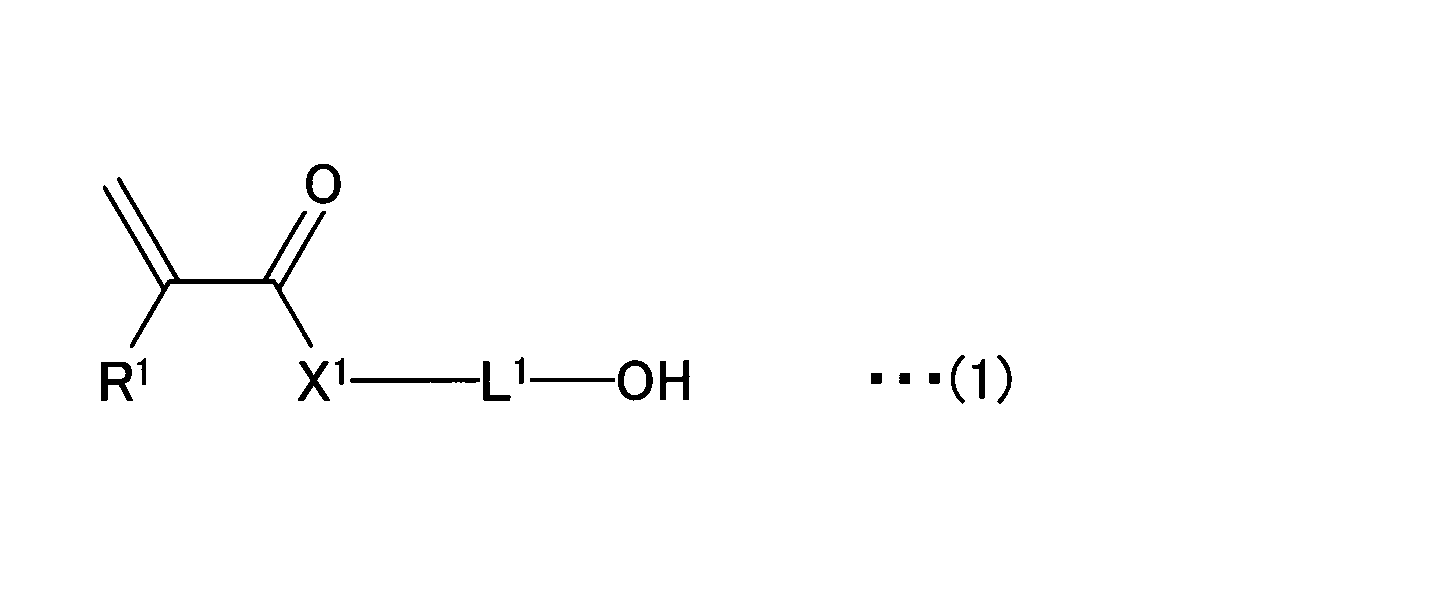
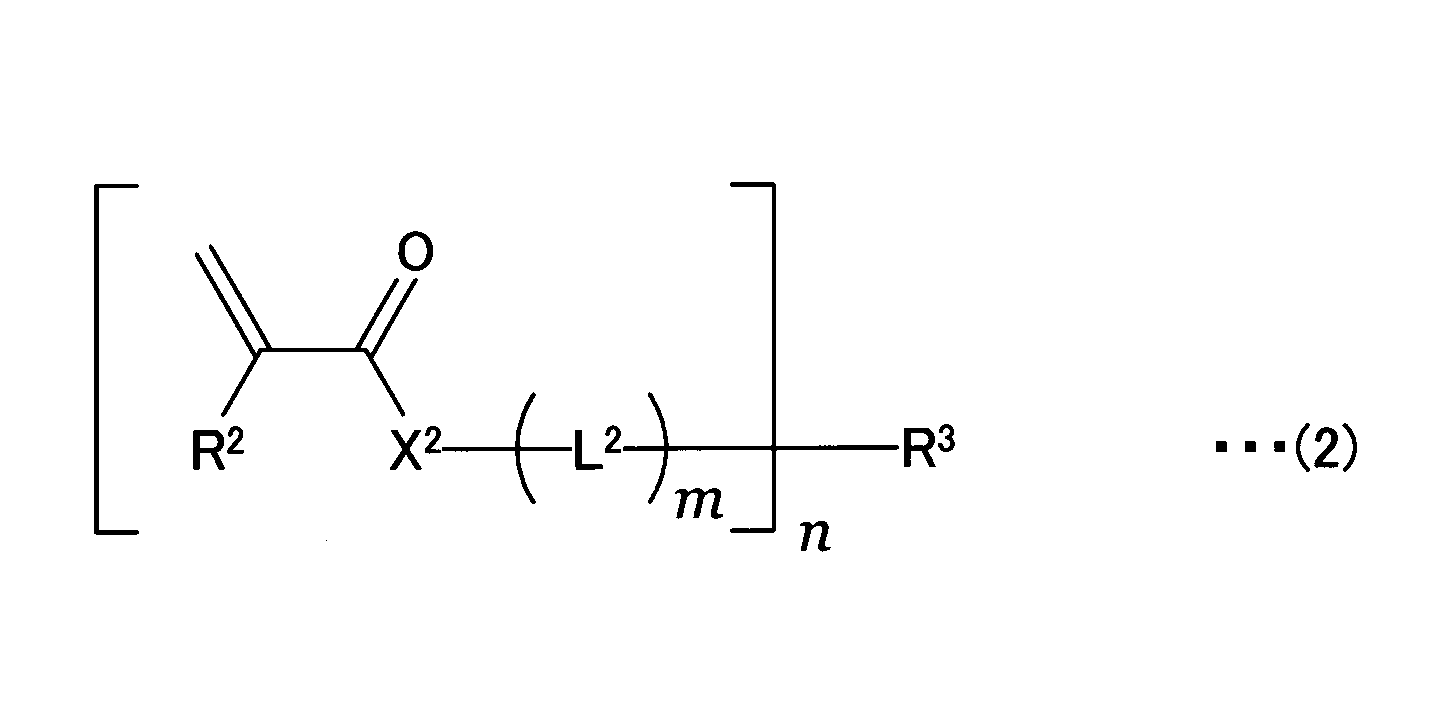
- One aspect of the present invention comprises a first agent containing ionomer glass powder and a second agent containing a polycarboxylic acid polymer and water in dental glass ionomer cement, and the first agent has a general formula (1).
- R 1 is a hydrogen atom or a methyl group
- X 1 is -O- or -NH-
- L 1 is an alkylene group.
- R 2 is a hydrogen atom or a methyl group
- X 2 is an -O- or -NH-
- L 2 is an alkyleneoxy group
- R 3 is an n-valent organic group.
- m is an integer of 1 or more and 42 or less
- n is an integer of 2 or more and 6 or less.
- a dental glass ionomer cement having excellent adhesiveness and mechanical strength to the tooth substance of a cured product.
- the dental glass ionomer cement of the present embodiment has a first agent containing ionomer glass powder and a second agent containing a polycarboxylic acid-based polymer and water.
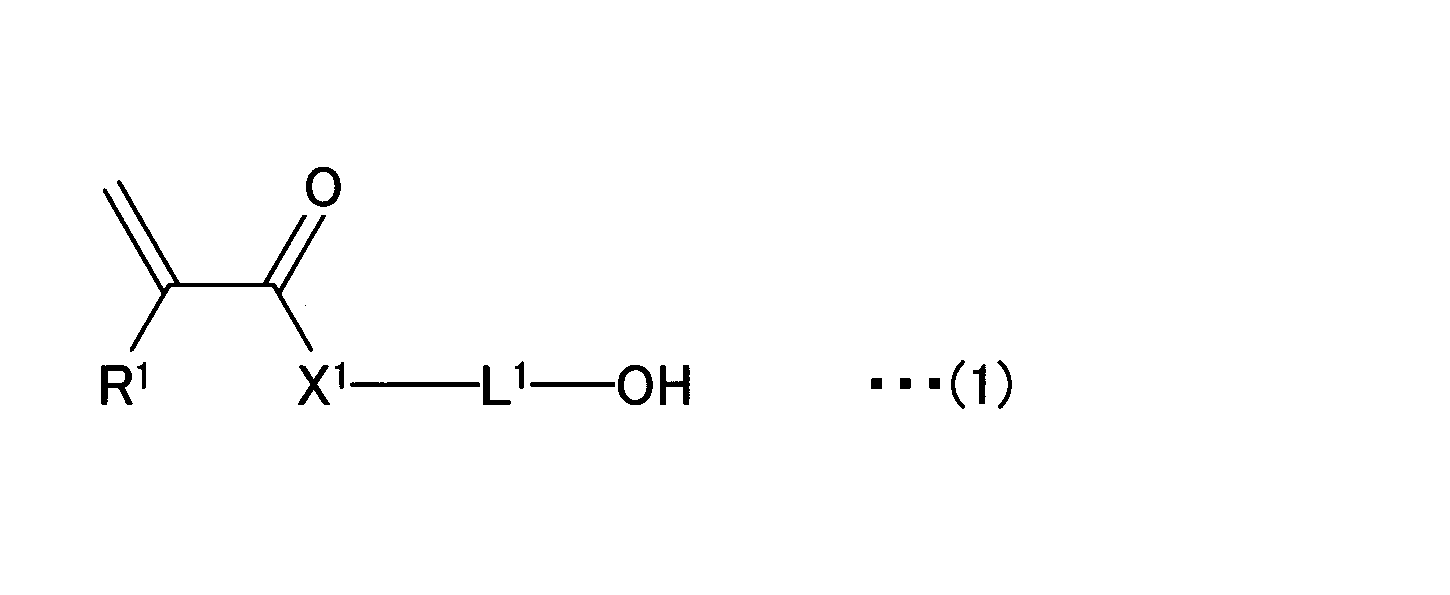
- the first agent is the general formula (1)
- R 1 is a hydrogen atom or a methyl group
- X 1 is -O- or -NH-
- L 1 is an alkylene group.
- R 2 is a hydrogen atom or a methyl group
- X 2 is an -O- or -NH-
- L 2 is an alkyleneoxy group
- R 3 is an n-valent organic group.
- m is an integer of 1 or more and 42 or less
- n is an integer of 2 or more and 6 or less.
- the water-soluble compound means a compound having a solubility in water at 20 ° C. of 10 g / 100 gH 2 O or more.
- the water-soluble compound represented by the general formula (1) is a monofunctional radically polymerizable monomer having a hydroxyl group
- the cured product of the dental glass ionomer cement of the present embodiment has adhesiveness to the dentin. Excellent.
- Examples of the alkylene group in L 1 of the general formula (1) include a methylene group, an ethylene group, a propylene group and the like.
- Examples of the water-soluble compound represented by the general formula (1) include hydroxyethyl acrylate, hydroxypropyl acrylate, hydroxyethyl methacrylate, hydroxypropyl methacrylate, hydroxymethyl acrylamide, hydroxyethyl acrylamide, hydroxypropyl acrylamide and the like. Seeds or more may be used together.
- the water-soluble compound represented by the general formula (2) is a polyfunctional radically polymerizable monomer having no hydroxyl group, the cured product of the dental glass ionomer cement of the present embodiment does not easily absorb water and expand. , Excellent mechanical strength. Further, since the water-soluble compound represented by the general formula (2) has a high affinity with the polycarboxylic acid-based polymer, the cured product of the dental glass ionomer cement of the present embodiment has excellent adhesiveness to the dentin. .. Further, since the water-soluble compound represented by the general formula (2) has a large molecular weight, the shrinkage stress during curing of the dental glass ionomer cement of the present embodiment is reduced, and as a result, the dental glass of the present embodiment is reduced. The hardened product of ionomer cement has excellent adhesion to tooth substance.
- Examples of the alkyleneoxy group in L 2 of the general formula (2) include an ethyleneoxy group and a propyleneoxy group.
- the n-valent organic group in R 3 of the general formula (2) may or may not contain a hetero atom.
- the water-soluble compound represented by the general formula (2) is the general formula (2-1).
- the molecular weight of the water-soluble compound represented by the general formula (2) is preferably 1000 or more.
- the first agent is the general formula (3)
- R 4 is a hydrogen atom or a methyl group
- X 3 is -O- or -NH-
- R 5 is an n-valent organic group
- n is 2 or more and 6 or less. It is an integer.
- the water-insoluble compound represented by the general formula (3) is a polyfunctional radically polymerizable monomer having no hydroxyl group and alkyleneoxy group, the cured product of the dental glass ionomer cement of the present embodiment is Furthermore, water absorption and expansion are less likely to occur, and mechanical strength is improved.
- Examples of the compound represented by the general formula (3) include di-2-methacryloyloxyethyl-2,2,4-triethylhexamethylene dicarbamate, triethylene glycol dimethacrylate, glycerin dimethacrylate, and chemical formula (3-1). )
- the ratio of the mass of the compound represented by the general formula (1) to the total mass of the compounds represented by the general formulas (1) to (3) is preferably 5 to 80%, preferably 10 to 60%. Is even more preferable.
- the dental glass ionomer cement of the present embodiment is used.
- the adhesiveness of the cured product to the dentin is improved, and when it is 80% or less, the mechanical strength of the cured product of the dental glass ionomer cement of the present embodiment is improved.
- the ratio of the mass of the compound represented by the general formula (2) to the total mass of the compounds represented by the general formulas (1) to (3) is preferably 2 to 30%, preferably 5 to 20%. Is even more preferable.
- the ratio of the mass of the compound represented by the general formula (2) to the total mass of the compounds represented by the general formulas (1) to (3) is 2% or more, the dental glass ionomer cement of the present embodiment is used.
- the adhesiveness of the cured product to the dentin is improved, and when it is 30% or less, the mechanical strength of the cured product of the dental glass ionomer cement of the present embodiment is improved.
- the ionomer glass is not particularly limited as long as it can be cured by reacting with a polycarboxylic acid-based polymer, and examples thereof include fluoroaluminosilicate glass.
- the content of aluminum in the fluoroaluminosilicate glass is preferably 20 to 40% by mass, more preferably 20 to 35% by mass, in terms of aluminum oxide (Al 2 O 3).
- the content of silicon in the fluoroaluminosilicate glass is preferably 20 to 50% by mass, more preferably 20 to 45% by mass, in terms of silicon oxide (SiO 2).
- the content of fluorine (F) in the fluoroaluminosilicate glass is preferably 1 to 30% by mass, more preferably 3 to 20% by mass.
- the phosphorus content in the fluoroaluminosilicate glass is preferably 0 to 15% by mass, more preferably 1 to 10% by mass, in terms of phosphorus oxide (V) (P 2 O 5). preferable.
- the content of calcium (Ca) in the fluoroaluminosilicate glass is preferably 0 to 40% by mass, more preferably 0 to 30% by mass, in terms of calcium oxide (CaO).
- the content of strontium (Sr) in the fluoroaluminosilicate glass is preferably 0 to 40% by mass, more preferably 0 to 30% by mass, in terms of strontium oxide (SrO).
- the total content of calcium and strontium in the fluoroaluminosilicate glass is preferably 15 to 40% by mass, preferably 15 to 30% by mass, in terms of calcium oxide (CaO) and strontium oxide (SrO), respectively. It is more preferable to have.
- the ionomer glass powder is preferably surface-treated with a silane coupling agent having a polymerizable group.
- silane coupling agent having a polymerizable group examples include ⁇ -methacryloyloxypropylmethyldimethoxysilane, ⁇ -methacryloyloxypropyltrimethoxysilane, ⁇ -methacryloyloxypropylmethyldiethoxysilane, and ⁇ -methacryloyloxypropyltriethoxysilane. And so on.
- the first agent may further contain a polymerization inhibitor.
- polymerization inhibitor examples include dibutylhydroxytoluene and 6-tert-butyl-2,4-xylenol.
- the polycarboxylic acid-based polymer is not particularly limited, and for example, a homopolymer or a copolymer of ⁇ , ⁇ -unsaturated carboxylic acid can be used.
- Examples of ⁇ , ⁇ -unsaturated carboxylic acids include acrylic acid, methacrylic acid, 2-chloroacrylic acid, 3-chloroacrylic acid, aconitic acid, mesaconic acid, maleic acid, itaconic acid, fumaric acid, glutaconic acid, and citraconic acid. Examples include acid.
- the polycarboxylic acid-based polymer may be a copolymer of ⁇ , ⁇ -unsaturated carboxylic acid and a monomer capable of copolymerizing with ⁇ , ⁇ -unsaturated carboxylic acid.
- Examples of the monomer capable of copolymerizing with ⁇ , ⁇ -unsaturated carboxylic acid include acrylamide, acrylonitrile, methacrylic acid ester, acrylates, vinyl chloride, allyl chloride, vinyl acetate and the like.
- the ratio of ⁇ , ⁇ -unsaturated carboxylic acid to the monomer constituting the polycarboxylic acid-based polymer is preferably 50% by mass or more.
- the polycarboxylic acid-based polymer is preferably a homopolymer or copolymer of acrylic acid or itaconic acid.
- At least a part of the polycarboxylic acid-based polymer may be powder.
- the second agent preferably further contains a filler.
- the filler may be either an organic filler or an inorganic filler, but it is preferably an inorganic filler.
- the material constituting the inorganic filler is not particularly limited as long as it is a material that does not react with the polycarboxylic acid polymer and does not cure, and examples thereof include silica, barium glass, borosilicate glass, titania, and barium sulfate. However, two or more types may be used in combination.
- an organic-inorganic composite filler obtained by polymerizing a composition containing a monomer and an inorganic filler and then pulverizing the composition.
- the filler is preferably surface-treated with a silane coupling agent having a polymerizable group.
- silane coupling agent having a polymerizable group examples include ⁇ -methacryloyloxypropylmethyldimethoxysilane, ⁇ -methacryloyloxypropyltrimethoxysilane, ⁇ -methacryloyloxypropylmethyldiethoxysilane, and ⁇ -methacryloyloxypropyltriethoxysilane. And so on.
- the first agent and / or the second agent preferably further contains a polymerization initiator.
- polymerization initiator examples include sodium benzenesulfinate, L-cysteine hydrochloride and the like.
- the second agent may further contain a pH adjuster.
- Examples of the pH adjuster include tartaric acid and citric acid.
- Second agent (A) 20 parts by mass of the filler (A), 70 parts by mass of a 50 mass% polyacrylic acid aqueous solution, 8 parts by mass of tartaric acid, and 2 parts by mass of L-cysteine hydrochloride were mixed to obtain a paste-like second agent (A).
- ionomer glass powder (A) A raw material composition consisting of 21 parts by mass of aluminum oxide powder, 44 parts by mass of silicic acid anhydride powder, 12 parts by mass of calcium fluoride powder, 14 parts by mass of calcium phosphate powder, and 9 parts by mass of strontium carbonate powder is sufficiently mixed and subjected to high temperature electricity at 1200 ° C. After holding in a furnace for 5 hours to melt, the mixture was cooled to obtain fluoroaluminosilicate glass. Next, the fluoroaluminosilicate glass was pulverized for 10 hours using a ball mill and then passed through a 200 mesh (ASTM) sieve to obtain a fluoroaluminosilicate glass powder (A).
- ASTM 200 mesh
- Ionomer glass powder (B) Ionomer glass powder (except for the raw material composition of 22 parts by mass of aluminum oxide powder, 43 parts by mass of silicic acid anhydride powder, 12 parts by mass of calcium fluoride powder, 15 parts by mass of calcium phosphate powder, and 8 parts by mass of strontium carbonate powder. Ionomer glass powder (B) was obtained in the same manner as in A).
- Ionomer glass powder (C) Ionomer glass powder (except for using a raw material composition consisting of 23 parts by mass of aluminum oxide powder, 41 parts by mass of silicic acid anhydride powder, 10 parts by mass of calcium fluoride powder, 13 parts by mass of calcium phosphate powder, and 13 parts by mass of strontium carbonate powder. Ionomer glass powder (C) was obtained in the same manner as in A).
- the obtained first agent and the second agent were combined to obtain glass ionomer cement.
- HEMA Hydroxyethyl methacrylate
- HEAA Hydroxyethyl acrylamide
- UDMA Di-2-methacryloxyethyl-2,2,4-triethylhexamethylene dicarbamate
- Adhesion of hardened material to tooth substance The adhesiveness of the cured product to the dentin was evaluated using a kneaded product of glass ionomer cement obtained by kneading the first agent and the second agent at a mass ratio of 1: 1 as a sample.
- the labial side of the crown of the cow tooth from which the tooth root was removed was polished with water-resistant abrasive paper # 120 to expose the dentin.
- a fluororesin seal having a hole having a diameter of 3 mm was attached to the dentin to define the adhesion area of the test surface, and then the sample was applied to the test surface.
- a stainless steel round bar having a diameter of 10 mm whose adherend surface was sandblasted in advance was pressed against the test surface, and then pressure-welded with a load of 10 N to obtain a test piece.
- the test piece is immersed in water at 37 ° C.
- a tensile adhesion test is performed.
- the adhesiveness of the cured product to the dentin was evaluated. That is, after setting the test piece on the autograph (manufactured by Shimadzu Corporation), a tensile load was applied perpendicularly to the test surface, and the maximum load until fracture was recorded. The tensile adhesive strength of the test piece was calculated by dividing the maximum load by the adherend area.
- the adhesiveness of the cured product to the dentin was judged according to the following criteria.
- test piece was removed from the mold.
- polishing the test piece with water-resistant abrasive paper # 320 to remove burrs the test piece was stored in water at 37 ° C., and a bending test was carried out 24 hours after the start of producing the test piece.
- the bending strength of the cured product was judged according to the following criteria.
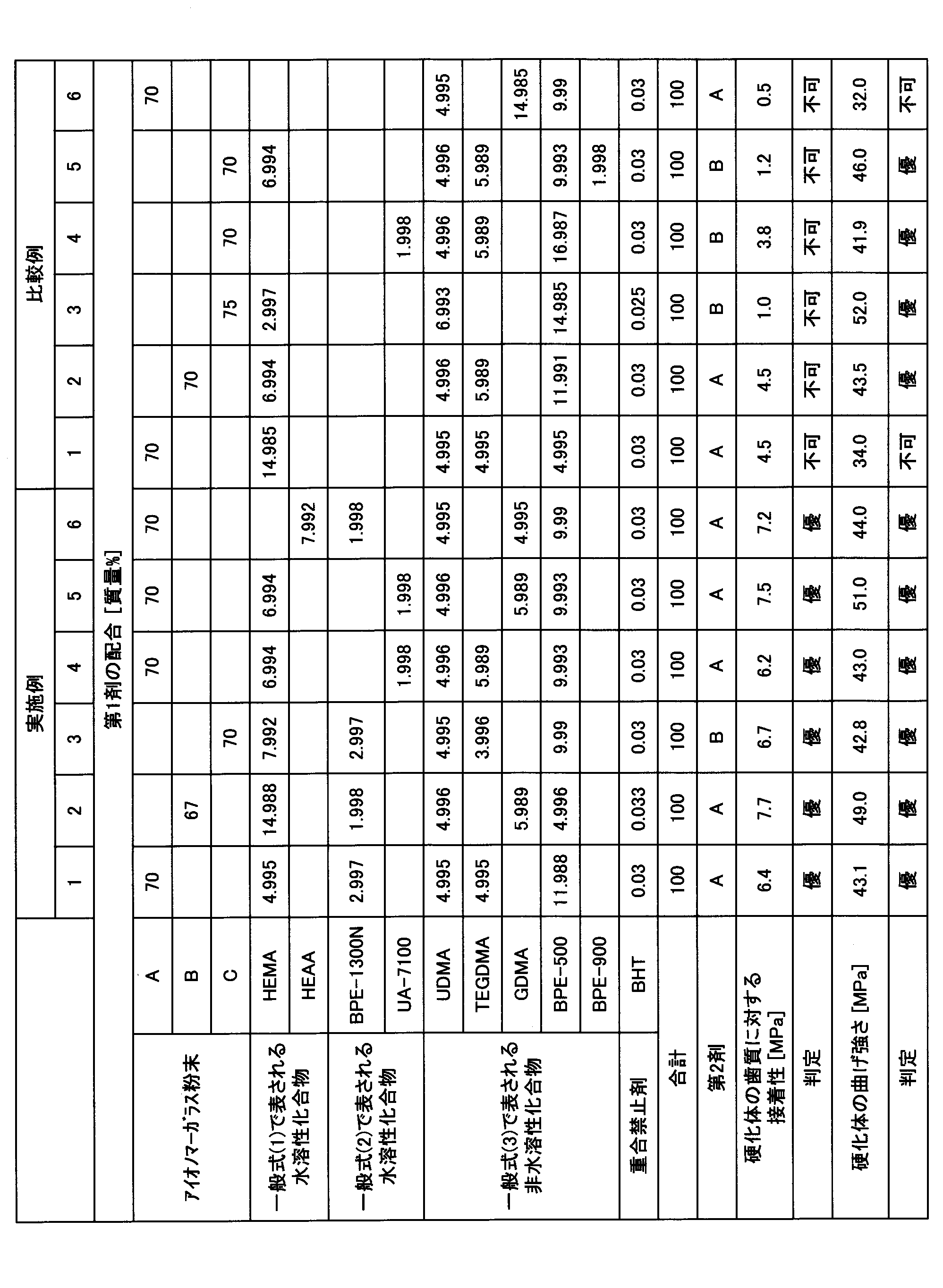
- the glass ionomer cement of Comparative Example 4 has low adhesiveness to the dentin of the cured product because the first agent does not contain the water-soluble compound represented by the general formula (1).
- the first agent of the glass ionomer cement of Comparative Example 6 does not contain any of the water-soluble compound represented by the general formula (1) and the water-soluble compound represented by the general formula (2), the dentin of the cured product. Adhesion to and bending strength is low.
Landscapes
- Health & Medical Sciences (AREA)
- Oral & Maxillofacial Surgery (AREA)
- General Health & Medical Sciences (AREA)
- Epidemiology (AREA)
- Life Sciences & Earth Sciences (AREA)
- Animal Behavior & Ethology (AREA)
- Public Health (AREA)
- Veterinary Medicine (AREA)
- Plastic & Reconstructive Surgery (AREA)
- Chemical & Material Sciences (AREA)
- Inorganic Chemistry (AREA)
- Dental Preparations (AREA)
- Addition Polymer Or Copolymer, Post-Treatments, Or Chemical Modifications (AREA)
Abstract
Description
で表される水溶性化合物と、一般式(2)

で表される水溶性化合物をさらに含む。
本実施形態の歯科用グラスアイオノマーセメントは、アイオノマーガラス粉末を含む第1剤と、ポリカルボン酸系重合体及び水を含む第2剤を有する。
第1剤は、一般式(1)
で表される水溶性化合物と、一般式(2)
で表される水溶性化合物をさらに含む。

で表される化合物、及び/又は、一般式(2-2)

で表される化合物であることが好ましい。

で表される非水溶性化合物をさらに含むことが好ましい。これにより、本実施形態の歯科用グラスアイオノマーセメントの硬化体の機械的強度が向上する。

で表される化合物等が挙げられ、二種以上を併用してもよい。
ポリカルボン酸系重合体としては、特に限定されないが、例えば、α,β-不飽和カルボン酸の単独重合体又は共重合体を用いることができる。
自動乳鉢を用いて、無水ケイ酸粉末100質量部、γ-メタクリロイルオキシプロピルトリメトキシシランの50質量%エタノール溶液2質量部を混合した後、130℃で2時間加熱処理し、フィラー(A)を得た。
フィラー(A)20質量部、50質量%ポリアクリル酸水溶液70質量部、酒石酸8質量部、L-システイン塩酸塩2質量部を混合し、ペースト状の第2剤(A)を得た。
L-システイン塩酸塩の代わりに、ベンゼンスルフィン酸ナトリウムを用いた以外は、第2剤(A)と同様にして、ペースト状の第2剤(B)を得た。
酸化アルミニウム粉末21質量部、無水ケイ酸粉末44質量部、フッ化カルシウム粉末12質量部、リン酸カルシウム粉末14質量部、炭酸ストロンチウム粉末9質量部からなる原料組成物を充分混合し、1200℃の高温電気炉中で5時間保持して溶融させた後、冷却し、フルオロアルミノシリケートガラスを得た。次に、ボールミルを用いて、フルオロアルミノシリケートガラスを10時間粉砕した後、200メッシュ(ASTM)ふるいを通過させ、フルオロアルミノシリケートガラス粉末(A)を得た。
酸化アルミニウム粉末22質量部、無水ケイ酸粉末43質量部、フッ化カルシウム粉末12質量部、リン酸カルシウム粉末15質量部、炭酸ストロンチウム粉末8質量部からなる原料組成物を用いた以外は、アイオノマーガラス粉末(A)と同様にして、アイオノマーガラス粉末(B)を得た。
酸化アルミニウム粉末23質量部、無水ケイ酸粉末41質量部、フッ化カルシウム粉末10質量部、リン酸カルシウム粉末13質量部、炭酸ストロンチウム粉末13量部からなる原料組成物を用いた以外は、アイオノマーガラス粉末(A)と同様にして、アイオノマーガラス粉末(C)を得た。
表1に示す配合[質量%]で、アイオノマーガラス粉末、一般式(1)で表される水溶性化合物、一般式(2)で表される水溶性化合物、一般式(3)で表される非水溶性化合物、重合禁止剤を混合し、ペースト状の第1剤を得た。
HEAA:ヒドロキシエチルアクリルアミド
BPE-1300N:EO変性ビスフェノールAジメタクリレート(一般式(2-2)で表される化合物;m+n=30)(新中村化学工業製)
UA-7100:イソシアヌル酸EO変性トリメタクリレート(一般式(2-1)で表される化合物;l+m+n=27)(新中村化学工業製)
UDMA:ジ-2-メタクリロキシエチル-2,2,4-トリエチルヘキサメチレンジカルバメート
TEGDMA:トリエチレングリコールジメタクリレート
GDMA:グリセリンジメタクリレート
BPE-500:EO変性ビスフェノールAジメタクリレート(一般式(2-2)で表される化合物;m+n=10)(新中村化学工業製)
BPE-900:EO変性ビスフェノールAジメタクリレート(一般式(2-2)で表される化合物;m+n=17)(新中村化学工業製)
BHT:ジブチルヒドロキシトルエン
なお、一般式(1)~(3)で表される化合物の水溶性、非水溶性は、以下のようにして判定した。
蒸留水4g、試料0.4gを20℃で十分攪拌し、30分間静置した後に、目視で観察した。このとき、白濁しておらず、二相に分離していない場合は、水溶性と判定し、白濁している場合又は二相に分離している場合は、非水溶性と判定した。
第1剤と、第2剤を、質量比1:1で練和することにより得られるグラスアイオノマーセメントの練和物を、試料として用いて、硬化体の歯質に対する接着性を評価した。
良:試験片の引っ張り接着強さが5MPa以上6MPa未満である場合
不可:試験片の引っ張り接着強さが5MPa未満である場合
[硬化体の曲げ強さ]
第1剤と、第2剤を、質量比1:1で練和することにより得られるグラスアイオノマーセメントの練和物を、試料として用い、ISO 9917-2:2017 Annex Cに準じて、硬化体の曲げ強さを評価した。
良:試験片の曲げ強さが35MPa以上40MPa未満である場合
不可:試験片の曲げ強さが35MPa未満である場合
表1に、グラスアイオノマーセメントの硬化体の歯質に対する接着性、曲げ強さの評価結果を示す。
Claims (3)
- アイオノマーガラス粉末を含む第1剤と、
ポリカルボン酸系重合体及び水を含む第2剤を有し、
前記第1剤は、一般式(1)

で表される水溶性化合物と、一般式(2)
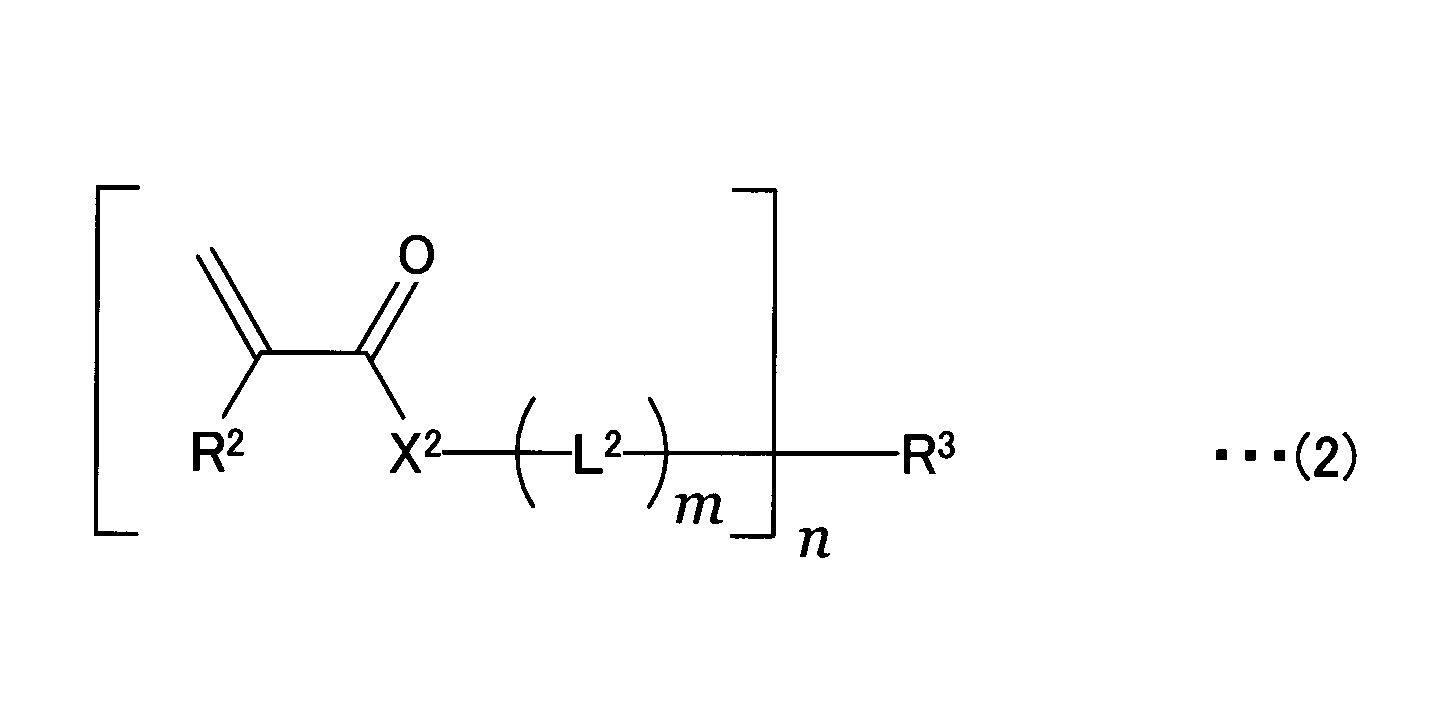
で表される水溶性化合物をさらに含む、歯科用グラスアイオノマーセメント。 - 前記一般式(1)で表される水溶性化合物及び前記一般式(2)で表される水溶性化合物は、それぞれ20℃における水に対する溶解度が10g/100gH2O以上である、請求項1に記載の歯科用グラスアイオノマーセメント。
- 前記一般式(2)で表される水溶性化合物は、一般式(2-1)

で表される化合物、及び/又は、一般式(2-2)

で表される化合物である、請求項1に記載の歯科用グラスアイオノマーセメント。
Priority Applications (3)
| Application Number | Priority Date | Filing Date | Title |
|---|---|---|---|
| US17/759,555 US12502338B2 (en) | 2020-01-31 | 2020-10-29 | Dental glass ionomer cement |
| AU2020426728A AU2020426728B2 (en) | 2020-01-31 | 2020-10-29 | Dental Glass Ionomer Cement |
| EP20917180.0A EP4098241A4 (en) | 2020-01-31 | 2020-10-29 | GLASS IONOMER CEMENT FOR DENTAL USE |
Applications Claiming Priority (2)
| Application Number | Priority Date | Filing Date | Title |
|---|---|---|---|
| JP2020015160A JP7397698B2 (ja) | 2020-01-31 | 2020-01-31 | 歯科用グラスアイオノマーセメント |
| JP2020-015160 | 2020-01-31 |
Publications (1)
| Publication Number | Publication Date |
|---|---|
| WO2021152944A1 true WO2021152944A1 (ja) | 2021-08-05 |
Family
ID=77078913
Family Applications (1)
| Application Number | Title | Priority Date | Filing Date |
|---|---|---|---|
| PCT/JP2020/040649 Ceased WO2021152944A1 (ja) | 2020-01-31 | 2020-10-29 | 歯科用グラスアイオノマーセメント |
Country Status (6)
| Country | Link |
|---|---|
| US (1) | US12502338B2 (ja) |
| EP (1) | EP4098241A4 (ja) |
| JP (1) | JP7397698B2 (ja) |
| AU (1) | AU2020426728B2 (ja) |
| TW (1) | TWI739708B (ja) |
| WO (1) | WO2021152944A1 (ja) |
Citations (5)
| Publication number | Priority date | Publication date | Assignee | Title |
|---|---|---|---|---|
| JPH0347107A (ja) * | 1989-04-06 | 1991-02-28 | Den Mat Inc | 光硬化性イオノマー歯科用セメント |
| JP2003012433A (ja) * | 2001-06-28 | 2003-01-15 | Kuraray Co Ltd | 歯科用セメント組成物 |
| JP2012072072A (ja) | 2010-09-28 | 2012-04-12 | Gc Corp | 歯科用グラスアイオノマーセメント組成物 |
| WO2015045880A1 (ja) * | 2013-09-30 | 2015-04-02 | 株式会社ジーシー | 歯科用グラスアイオノマーセメント組成物 |
| JP2020015160A (ja) | 2018-07-13 | 2020-01-30 | Ntn株式会社 | ロボットの対人保護装置 |
Family Cites Families (13)
| Publication number | Priority date | Publication date | Assignee | Title |
|---|---|---|---|---|
| AU618772B2 (en) * | 1987-12-30 | 1992-01-09 | Minnesota Mining And Manufacturing Company | Photocurable ionomer cement systems |
| US5151453A (en) | 1989-04-06 | 1992-09-29 | Den-Mat Corporation | Light-curable ionomer dental cement |
| US6136885A (en) * | 1996-06-14 | 2000-10-24 | 3M Innovative Proprerties Company | Glass ionomer cement |
| US6613812B2 (en) | 2001-01-03 | 2003-09-02 | 3M Innovative Properties Company | Dental material including fatty acid, dimer thereof, or trimer thereof |
| US6730715B2 (en) * | 2001-07-06 | 2004-05-04 | Pentron Clinical Technologies, Llc | Dental restorative composition, dental restoration, and a method of use thereof |
| JP4132806B2 (ja) * | 2001-12-17 | 2008-08-13 | 株式会社ジーシー | 歯科用ペースト系グラスアイオノマーセメント組成物 |
| JP4794201B2 (ja) | 2005-04-25 | 2011-10-19 | 株式会社松風 | 2ペースト型グラスアイオノマー系セメント |
| TW200936562A (en) * | 2008-02-26 | 2009-09-01 | Far Eastern Textile Ltd | Modified dimethylacrylate monomer, its process of manufacturing and a filling composite resin by using the monomer |
| AR083424A1 (es) * | 2009-10-01 | 2013-02-27 | Septodont Confi Dental Division | Moleculas multifuncionales para aplicaciones de adherencia dental con adhesion mejorada y proceso de preparacion |
| US9408781B2 (en) * | 2013-02-11 | 2016-08-09 | Kerr Corporation | Dental resin modified glass-ionomer composition |
| EP3338756B1 (de) * | 2016-12-21 | 2020-02-26 | VOCO GmbH | Lagerstabiler kunststoffmodifizierter glasionomerzement |
| JP7454327B2 (ja) | 2019-12-24 | 2024-03-22 | 株式会社松風 | 2ペースト型歯科用レジン強化型グラスアイオノマーセメント組成物 |
| KR102861363B1 (ko) | 2019-03-26 | 2025-09-17 | 소후 인코포레이티드 | 2페이스트형 치과용 레진 강화형 글래스 아이오노머 시멘트 조성물 |
-
2020
- 2020-01-31 JP JP2020015160A patent/JP7397698B2/ja active Active
- 2020-10-29 WO PCT/JP2020/040649 patent/WO2021152944A1/ja not_active Ceased
- 2020-10-29 US US17/759,555 patent/US12502338B2/en active Active
- 2020-10-29 EP EP20917180.0A patent/EP4098241A4/en active Pending
- 2020-10-29 AU AU2020426728A patent/AU2020426728B2/en active Active
-
2021
- 2021-01-22 TW TW110102521A patent/TWI739708B/zh active
Patent Citations (5)
| Publication number | Priority date | Publication date | Assignee | Title |
|---|---|---|---|---|
| JPH0347107A (ja) * | 1989-04-06 | 1991-02-28 | Den Mat Inc | 光硬化性イオノマー歯科用セメント |
| JP2003012433A (ja) * | 2001-06-28 | 2003-01-15 | Kuraray Co Ltd | 歯科用セメント組成物 |
| JP2012072072A (ja) | 2010-09-28 | 2012-04-12 | Gc Corp | 歯科用グラスアイオノマーセメント組成物 |
| WO2015045880A1 (ja) * | 2013-09-30 | 2015-04-02 | 株式会社ジーシー | 歯科用グラスアイオノマーセメント組成物 |
| JP2020015160A (ja) | 2018-07-13 | 2020-01-30 | Ntn株式会社 | ロボットの対人保護装置 |
Non-Patent Citations (1)
| Title |
|---|
| See also references of EP4098241A4 |
Also Published As
| Publication number | Publication date |
|---|---|
| AU2020426728A1 (en) | 2022-09-01 |
| US20230099996A1 (en) | 2023-03-30 |
| JP2021123529A (ja) | 2021-08-30 |
| JP7397698B2 (ja) | 2023-12-13 |
| TW202130670A (zh) | 2021-08-16 |
| TWI739708B (zh) | 2021-09-11 |
| EP4098241A1 (en) | 2022-12-07 |
| EP4098241A4 (en) | 2024-02-21 |
| AU2020426728B2 (en) | 2023-12-07 |
| US12502338B2 (en) | 2025-12-23 |
Similar Documents
| Publication | Publication Date | Title |
|---|---|---|
| US9408781B2 (en) | Dental resin modified glass-ionomer composition | |
| US6217644B1 (en) | Dental adhesive set | |
| JP4460285B2 (ja) | グラスアイオノマーセメント | |
| JP2869078B2 (ja) | 光硬化性イオノマーセメント | |
| EP1878418B1 (en) | Dental Cement | |
| US20050165136A1 (en) | Glass-ionomer cements containing amino acids | |
| JPWO2007088628A1 (ja) | 歯科用コンポジットレジンセメント、歯科用プライマー、およびそれらを含む歯科用接着剤キット | |
| JP2011213829A (ja) | ペースト状重合性組成物 | |
| JP6633750B2 (ja) | 歯科用重合性組成物 | |
| JP2004182661A (ja) | 歯科用レジン強化型セメント用前処理剤 | |
| JP2023009286A (ja) | 歯科用グラスアイオノマーセメント液及び歯科用グラスアイオノマーセメント | |
| US20100204421A1 (en) | Initiators in two components, and polymerizable composition using the same | |
| JP7397698B2 (ja) | 歯科用グラスアイオノマーセメント | |
| US20040067359A1 (en) | Glass powder for glass ionomer cement | |
| KR101868873B1 (ko) | 폴리아크릴산계 공중합체를 포함하는 치과용 시멘트 조성물 | |
| JP4926440B2 (ja) | 歯科用グラスアイオノマーセメント液 | |
| JPH09249514A (ja) | 歯科用レジン強化型セメント用前処理剤 | |
| JP7761337B2 (ja) | 歯科用組成物 | |
| JP2011042609A (ja) | 歯質接着性組成物 | |
| WO2015045880A1 (ja) | 歯科用グラスアイオノマーセメント組成物 | |
| JPH05255036A (ja) | 歯科用セメント硬化剤 | |
| JP2005281260A (ja) | 歯科用修復材 | |
| JP2002503218A (ja) | アミノ酸アクリルモノエステルを製造する方法及び同一物を利用する組成物 | |
| JP2010229078A (ja) | 硬化性歯科用組成物 |
Legal Events
| Date | Code | Title | Description |
|---|---|---|---|
| 121 | Ep: the epo has been informed by wipo that ep was designated in this application |
Ref document number: 20917180 Country of ref document: EP Kind code of ref document: A1 |
|
| WWE | Wipo information: entry into national phase |
Ref document number: 2020426728 Country of ref document: AU |
|
| ENP | Entry into the national phase |
Ref document number: 2020426728 Country of ref document: AU Date of ref document: 20201029 Kind code of ref document: A |
|
| NENP | Non-entry into the national phase |
Ref country code: DE |
|
| ENP | Entry into the national phase |
Ref document number: 2020917180 Country of ref document: EP Effective date: 20220831 |