WO2021184200A1 - 通信方法、装置及设备 - Google Patents
通信方法、装置及设备 Download PDFInfo
- Publication number
- WO2021184200A1 WO2021184200A1 PCT/CN2020/079726 CN2020079726W WO2021184200A1 WO 2021184200 A1 WO2021184200 A1 WO 2021184200A1 CN 2020079726 W CN2020079726 W CN 2020079726W WO 2021184200 A1 WO2021184200 A1 WO 2021184200A1
- Authority
- WO
- WIPO (PCT)
- Prior art keywords
- reference signal
- message
- ssb
- information
- availability
- Prior art date
- Legal status (The legal status is an assumption and is not a legal conclusion. Google has not performed a legal analysis and makes no representation as to the accuracy of the status listed.)
- Ceased
Links
Images






Classifications
-
- H—ELECTRICITY
- H04—ELECTRIC COMMUNICATION TECHNIQUE
- H04L—TRANSMISSION OF DIGITAL INFORMATION, e.g. TELEGRAPHIC COMMUNICATION
- H04L5/00—Arrangements affording multiple use of the transmission path
- H04L5/0001—Arrangements for dividing the transmission path
- H04L5/0014—Three-dimensional division
- H04L5/0023—Time-frequency-space
-
- H—ELECTRICITY
- H04—ELECTRIC COMMUNICATION TECHNIQUE
- H04W—WIRELESS COMMUNICATION NETWORKS
- H04W56/00—Synchronisation arrangements
- H04W56/001—Synchronization between nodes
-
- H—ELECTRICITY
- H04—ELECTRIC COMMUNICATION TECHNIQUE
- H04L—TRANSMISSION OF DIGITAL INFORMATION, e.g. TELEGRAPHIC COMMUNICATION
- H04L5/00—Arrangements affording multiple use of the transmission path
- H04L5/003—Arrangements for allocating sub-channels of the transmission path
- H04L5/0048—Allocation of pilot signals, i.e. of signals known to the receiver
- H04L5/0051—Allocation of pilot signals, i.e. of signals known to the receiver of dedicated pilots, i.e. pilots destined for a single user or terminal
-
- H—ELECTRICITY
- H04—ELECTRIC COMMUNICATION TECHNIQUE
- H04L—TRANSMISSION OF DIGITAL INFORMATION, e.g. TELEGRAPHIC COMMUNICATION
- H04L5/00—Arrangements affording multiple use of the transmission path
- H04L5/003—Arrangements for allocating sub-channels of the transmission path
- H04L5/0053—Allocation of signalling, i.e. of overhead other than pilot signals
-
- H—ELECTRICITY
- H04—ELECTRIC COMMUNICATION TECHNIQUE
- H04W—WIRELESS COMMUNICATION NETWORKS
- H04W68/00—User notification, e.g. alerting and paging, for incoming communication, change of service or the like
- H04W68/005—Transmission of information for alerting of incoming communication
-
- H—ELECTRICITY
- H04—ELECTRIC COMMUNICATION TECHNIQUE
- H04W—WIRELESS COMMUNICATION NETWORKS
- H04W76/00—Connection management
- H04W76/20—Manipulation of established connections
-
- H—ELECTRICITY
- H04—ELECTRIC COMMUNICATION TECHNIQUE
- H04L—TRANSMISSION OF DIGITAL INFORMATION, e.g. TELEGRAPHIC COMMUNICATION
- H04L5/00—Arrangements affording multiple use of the transmission path
- H04L5/003—Arrangements for allocating sub-channels of the transmission path
- H04L5/0048—Allocation of pilot signals, i.e. of signals known to the receiver
- H04L5/005—Allocation of pilot signals, i.e. of signals known to the receiver of common pilots, i.e. pilots destined for multiple users or terminals
-
- Y—GENERAL TAGGING OF NEW TECHNOLOGICAL DEVELOPMENTS; GENERAL TAGGING OF CROSS-SECTIONAL TECHNOLOGIES SPANNING OVER SEVERAL SECTIONS OF THE IPC; TECHNICAL SUBJECTS COVERED BY FORMER USPC CROSS-REFERENCE ART COLLECTIONS [XRACs] AND DIGESTS
- Y02—TECHNOLOGIES OR APPLICATIONS FOR MITIGATION OR ADAPTATION AGAINST CLIMATE CHANGE
- Y02D—CLIMATE CHANGE MITIGATION TECHNOLOGIES IN INFORMATION AND COMMUNICATION TECHNOLOGIES [ICT], I.E. INFORMATION AND COMMUNICATION TECHNOLOGIES AIMING AT THE REDUCTION OF THEIR OWN ENERGY USE
- Y02D30/00—Reducing energy consumption in communication networks
- Y02D30/70—Reducing energy consumption in communication networks in wireless communication networks
Definitions
- This application relates to the field of communication technology, and in particular to a communication method, device and equipment.
- the terminal equipment (or user equipment (UE)) in the radio resource control idle state (radio resource control idle, RRC_IDLE) or the RRC inactive state (RRC_INACTIVE) is mainly Two things are done: monitoring paging (Paging) messages and radio resource management (radio resource measurement, RRM) measurement.
- the present application provides a communication method, device and equipment to solve the problem of large power consumption loss caused by terminal equipment monitoring paging messages and performing RRM measurement in the prior art, and not only can be saved to be in the RRC idle state or RRC inactive state
- the power consumption of the stateful terminal equipment for AGC adjustment/time-frequency tracking/RRM measurement/beam management is conducive to improving the processing performance of the terminal equipment, and it also makes the terminal equipment need not re-acquire the RRC connection when the reference signal availability changes.
- the configuration information of the reference signal in the RRC state can reduce the configuration signaling overhead of the RRC idle state/inactive state.
- the present application provides a communication method, including: receiving a first message from a network device, the first message including configuration information of at least one first reference signal; receiving a second message from the network device, the second message is used for Indicate the availability of at least one second reference signal, at least one second reference signal has a QCL relationship with at least one synchronization signal/physical broadcast channel block SSB, and at least one first reference signal includes at least one second reference signal; according to the configuration information and the first The second message is to receive a reference signal whose availability is in an available state among the at least one second reference signal from the network device.
- the terminal device receives the first message from the network device, and the first message includes the configuration information of at least one first reference signal, so that the terminal device can clearly based on the configuration information of the at least one first reference signal Determine the configured reference signal.
- the terminal device receives a second message from the network device, where the second message is used to indicate the available state of the at least one second reference signal, and the at least one second reference signal has a QCL relationship with the at least one SSB.
- the second message is used to indicate the availability of at least one second reference signal that has a QCL relationship with the at least one SSB at the granularity of the SSB or the granularity of the beam/beam direction corresponding to the SSB, that is, to indicate the beam/beam direction corresponding to the at least one SSB more finely
- the availability of the above reference signal allows the terminal device to clarify the availability of the at least one second reference signal in the beam/beam direction corresponding to the at least one SSB.
- the terminal device can receive from the network device the reference signal whose availability is available in the at least one second reference signal, which is beneficial to the terminal device based on
- the usability of the reference signal in the usable state is used for AGC adjustment/time-frequency tracking/RRM measurement/beam management, etc., which solves the problem of terminal equipment failure due to the inconsistent transmission of the reference signal and the variable availability of the reference signal in different beam/beam directions.
- the problem of power consumption for necessary operations saves the power consumption for AGC adjustment/time-frequency tracking/RRM measurement/beam management, etc., improves the processing performance of the terminal device, and also enables the terminal device to change when the reference signal availability changes , There is no need to reacquire the configuration information of the reference signal, which reduces the configuration signaling overhead of the RRC idle state/inactive state.
- the above-mentioned at least one second reference signal may be an existing reference signal in the NR system, and the always on signal is not added, which avoids the addition of an always on signal in the NR system, and satisfies the design of the NR system to reduce the always on signal. in principle.
- the terminal device can also know each paging moment PO of the terminal device in advance, the terminal device can monitor the availability of the at least one second reference signal in the beam/beam direction corresponding to the at least one SSB and each of the paging messages.
- the reference signal that is closest to monitoring the paging message and whose availability is in the available state can be received from the network device in the reference signal, which further reduces the wake-up time of the terminal device and saves the power consumption of the terminal device for unnecessary operations.
- the method further includes: receiving first information from a network device, where the first information is used to determine a correspondence between at least one information bit in the second message and at least one SSB, Or, determine the correspondence between the at least one information bit in the second message and the SSB index corresponding to the at least one SSB, so that the network device uses the "bridge" function of the SSB, based on the information bit in the second message and the SSB/SSB index
- the corresponding relationship between the SSB and the QCL relationship between the SSB and the at least one second reference signal, the corresponding relationship between the at least one information bit in the second message and the at least one second reference signal can be configured so that the network device can pass the first reference signal.
- At least one information bit in the second message indicates the availability of at least one second reference signal, so that the terminal device determines the correspondence between the at least one information bit in the second message and the at least one second reference signal based on the first information, Furthermore, the availability of the at least one second reference signal in the beam/beam direction corresponding to the at least one SSB is determined.
- the method further includes: receiving a third message from the network device, where the third message is used to configure the default availability of at least one second reference signal, so that the terminal device can use the In the case of the information bit indicating the availability of the at least one second reference signal, the availability of the at least one second reference signal can be determined according to the default availability of the at least one second reference signal. Therefore, the network device can configure the default availability of the at least one second reference signal based on the third message, so that the terminal device determines the availability of the at least one second reference signal based on the third message.
- the method further includes: when the second message is not received or the second message does not include information bits for indicating the availability of the at least one second reference signal, according to The information bit used to indicate the availability of at least one second reference signal in the last received second message determines the availability of at least one second reference signal; or, the second message is not received or is not included in the second message
- the information bit used to indicate the availability of at least one second reference signal determine the availability of at least one second reference signal according to the default availability of the at least one second reference signal; or, when the second message or the first reference signal is not received
- the second message does not include information bits for indicating the availability of the at least one second reference signal, it is determined that the availability of the at least one second reference signal is in an unavailable state; or, when the second message or the second message is not received If the information bit used to indicate the availability of the at least one second reference signal is not included in the data, it is determined that the availability of the at least one second reference signal is available; or, the second
- the present application provides a communication method, including: sending a first message to a terminal device, the first message including configuration information of at least one first reference signal; sending a second message to the terminal device, the second message is used for Indicate the availability of at least one second reference signal, at least one second reference signal has a QCL relationship with at least one synchronization signal/physical broadcast channel block SSB, and at least one first reference signal includes at least one second reference signal; sending at least one second reference signal to the terminal device A reference signal whose availability is in the available state among the second reference signals.
- the network device sends a first message to the terminal device, and the first message includes the configuration information of at least one first reference signal, so that the terminal device can clearly based on the configuration information of the at least one first reference signal Determine the configured reference signal.
- the network device sends a second message to the terminal device, where the second message is used to indicate the available state of the at least one second reference signal, and the at least one second reference signal has a QCL relationship with the at least one SSB.
- the second message is used to indicate the availability of at least one second reference signal that has a QCL relationship with the at least one SSB at the granularity of the SSB or the granularity of the beam/beam direction corresponding to the SSB, that is, to indicate the beam/beam direction corresponding to the at least one SSB more finely
- the availability of the above reference signal allows the terminal device to clarify the availability of the at least one second reference signal in the beam/beam direction corresponding to the at least one SSB.
- the network device sends to the terminal device at least one reference signal whose availability is available in the second reference signal, so that the terminal device can obtain information from the network according to the availability of the at least one second reference signal in the beam/beam direction corresponding to the at least one SSB.
- the device receives at least one reference signal whose availability is in the available state among the second reference signals, which is beneficial for the terminal device to perform AGC adjustment/time-frequency tracking/RRM measurement/beam management based on the reference signal whose availability is in the available state.
- the constant transmission and the variable availability of the reference signal in different beams/beam directions lead to the problem of unnecessary power consumption of terminal equipment, which saves the power consumption for AGC adjustment/time-frequency tracking/RRM measurement/beam management, etc.
- the processing performance of the terminal device is improved, and the terminal device does not need to re-acquire the configuration information of the reference signal when the availability of the reference signal changes, which reduces the configuration signaling overhead of the RRC idle state/inactive state.
- the above-mentioned at least one second reference signal may be an existing reference signal in the NR system, and the always on signal is not added, which avoids the addition of an always on signal in the NR system, and satisfies the design of the NR system to reduce the always on signal. in principle.
- the terminal device can know each paging moment PO of the terminal device in advance, the terminal device is made to monitor the availability of the at least one second reference signal in the beam/beam direction corresponding to the at least one SSB and each of the paging messages.
- the reference signal that is closest to monitoring the paging message and whose availability is in the available state can be received from the network device in the reference signal, which further reduces the wake-up time of the terminal device and saves the power consumption of the terminal device for unnecessary operations.
- the method further includes: sending first information to the terminal device, where the first information is used to determine the correspondence between at least one information bit in the second message and the at least one SSB, Or, determine the correspondence between the at least one information bit in the second message and the SSB index corresponding to the at least one SSB, so that the network device uses the "bridge" function of the SSB, based on the information bit in the second message and the SSB/SSB index
- the corresponding relationship between the SSB and the QCL relationship between the SSB and the at least one second reference signal, the corresponding relationship between the at least one information bit in the second message and the at least one second reference signal can be configured so that the network device can pass the first reference signal.
- At least one information bit in the second message indicates the availability of at least one second reference signal, so that the terminal device determines the correspondence between the at least one information bit in the second message and the at least one second reference signal based on the first information, Furthermore, the availability of the at least one second reference signal in the beam/beam direction corresponding to the at least one SSB is determined.
- the method further includes: sending a third message to the terminal device, where the third message is used to configure the default availability of the at least one second reference signal, so that the terminal device can use the In the case of the information bit indicating the availability of the at least one second reference signal, the availability of the at least one second reference signal can be determined according to the default availability of the at least one second reference signal. Therefore, the network device can configure the default availability of the at least one second reference signal based on the third message, so that the terminal device determines the availability of the at least one second reference signal based on the third message.
- the configuration information includes: second information, and the second information is used to determine the QCL relationship between the at least one second reference signal and the at least one SSB, and/or, Determining a QCL relationship between at least one second reference signal and at least one reference signal other than at least one SSB, and at least one reference signal other than at least one SSB has a QCL relationship with at least one SSB, So that the terminal device can determine the QCL relationship between the at least one second reference signal and the at least one SSB based on the second information, so as to adopt the corresponding relationship between the SSB described in the foregoing content and the at least one information bit in the second message, The correspondence between at least one information bit in the second message and at least one second reference signal is determined.
- the second message in the case that the bitmap in the second message is used to indicate the availability of at least one second reference signal, the second message is the SIB1 of the system message or other SIB; or, the second message is the downlink control information DCI carried by the physical downlink control channel PDCCH or the information carried by the physical downlink shared channel PDSCH.
- the number of bitmaps in the second message is n, n is taken to be greater than or equal to 1 and less than N, n and N are positive integers, and the bitmap The bitmap is used to indicate the availability of at least one second reference signal, and the bitmap includes at least one information bit, which provides multiple implementation possibilities of the bitmap in the second message.
- the first bitmap in the second message is in any paging moment PO
- the monitoring timing of each PDCCH is the same, which makes the design simple and convenient.
- the terminal device only needs to obtain the first bitmap on at least one PDCCH monitoring timing in a paging moment PO, and use one of the PDCCH monitoring timings.
- the first bitmap obtained above can determine the availability of at least one second reference signal that has a QCL relationship with all SSBs.
- the first bitmap in the second message is different at each PDCCH monitoring timing in any paging moment PO, so that different first bitmaps indicate the QCL relationship with different SSBs.
- the availability of at least one second reference signal can reduce the number of bits in the first bitmap and save command signaling overhead.
- the second message is the paging DCI carried by the PDCCH
- the number of bits in the first bitmap in the second message in different POs is the same Therefore, the correspondence between the first bitmap in the second message in different POs and the at least one second reference signal is the same, which is convenient for simple design.
- the type of at least one second reference signal includes: tracking reference At least one of the signal TRS, the channel state information reference signal CSI-RS, the synchronization signal/physical broadcast channel block SSB, or the secondary synchronization signal SSS.
- the configuration information is used to configure the maximum number of second reference signals of the same function and the same type according to the function and type of the at least one second reference signal, so as to save configuration information. Let; or, the maximum number of second reference signals of the same function and of the same type is predefined, so as to save configuration signaling.
- the configuration information is used to configure the maximum number of reference signal resource sets to which second reference signals of the same function and type belong according to the function and type of at least one second reference signal.
- the maximum number of reference signal resource sets to which second reference signals of the same function and type belong is predefined, in order to save configuration signaling.
- the second message includes: a first bitmap and a second bitmap, and the information bits in the first bitmap correspond to at least one second reference signal The first function, the information bit in the second bitmap corresponds to the second function of at least one second reference signal.
- the network device uses the "bridge" function of the SSB to build the correspondence between the second message and the at least one second reference signal. Therefore, the number of SSBs actually sent in one SS burst set can affect the number of information bits in the second message.
- the number of bits in the first bitmap in the second message is less than or equal to a synchronization signal/synchronization signal/physical broadcast channel sent in a set of synchronization signals/physical broadcast channel blocks The number of block SSBs.
- the first bitmap includes: at least one information domain field; wherein the number of bits in the information domain field is determined according to information associated with determining the number of SSBs of.
- the first bitmap includes: a first information field field and a second information field field; wherein the number of bits in the first information field field is equal to the configuration of the SSB
- the number of bits in the inOneGroup field in the parameter ssb-PositionsInBurst is equal to the number of bits in the first value
- the number of bits in the second information field field is equal to the number of bits in the groupPresence field in the SSB configuration parameter ssb-PositionsInBurst.
- the first bitmap includes an information field field; wherein, the number of bits in the first bitmap is equal to the number of bits in the inOneGroup field in the SSB configuration parameter ssb-PositionsInBurst equal to the first value Or, the number of bits in the first bitmap is equal to the number of bits in the groupPresence field in the configuration parameter ssb-PositionsInBurst of the SSB that is equal to the second value.
- the number of bits reserved for paging DCI is limited, and the number of bits in the first bitmap may be greater than the number of bits reserved for paging DCI, or it may be less than or equal to that of paging DCI.
- the number of reserved bits Therefore, the present application can set the number of bits of the first bitmap based on the specific conditions of the paging DCI, so that the first bitmap can be carried by the paging DCI.
- the second message is used to indicate that the availability of the at least one second reference signal takes effect within the first time period.
- the first duration includes: at least one paging discontinuous reception DRX cycle; or, one or more of the cycle time windows configured or predefined by the network device Time window; or, in the case that the second message is the paging DCI carried by the PDCCH, a time period before the next PO at the paging moment PO where the second message is located, where the next PO and the second message
- the length of the DRX cycle between the POs or, when the second message is the paging DCI carried by the PDCCH, it is located in a period of time after the next PO of the PO where the second message is located, where the next The duration of one DRX cycle between a PO and the PO where the second message is located; or, in the case where the second message is a paging DCI carried by the PDCCH, it is located a time period after the PO where the second message is located.
- the present application provides a communication device.
- the device may be a terminal device or a chip in the terminal device.
- the device may include an interface unit, and the interface unit may be a transceiver.
- the terminal device may also include a processing unit, and the processing unit may be a processor.
- the terminal device may also include a storage unit, and the storage unit may be a memory; the storage unit is used to store instructions, and the processing unit executes the instructions stored in the storage unit, so that the terminal device executes the first aspect and any one of the possible designs of the first aspect. Corresponding function in.
- the device When the device is a chip in a terminal device, the device may include an interface unit, which may be an input/output interface, a pin, or a circuit.
- the terminal device may also include a processing unit, which may be a processor; the terminal device may also include a storage unit, which may be a memory; the storage unit is used to store instructions, and the processing unit executes the instructions stored in the storage unit to make the terminal device.
- the storage unit can be a storage unit in the chip (for example, a register, a cache, etc.), or it can be located in a terminal device A storage unit outside the chip (for example, read-only memory, random access memory, etc.).
- this application provides a communication device.
- the device may be a network device or a chip in the network device.
- the device may include an interface unit, and the interface unit may be a transceiver.
- the device may also include a processing unit, and the processing unit may be a processor.
- the network device may also include a storage unit, and the storage unit may be a memory; the storage unit is used to store instructions, and the processing unit executes the instructions stored by the storage unit, so that the network device executes any possible design of the second aspect and the second aspect.
- the device may include an interface unit, which may be an input/output interface, a pin, or a circuit.
- the device may also include a processing unit, and the processing unit may be a processor.
- the network device may also include a storage unit, and the storage unit may be a memory; the storage unit is used to store instructions, and the processing unit executes the instructions stored by the storage unit, so that the chip in the network device executes any one of the second aspect and the second aspect.
- the storage unit can be a storage unit in the chip (for example, registers, caches, etc.), or a storage unit outside the chip in a network device (for example, read-only memory, random access memory, etc.). Memory, etc.).
- the present application provides a readable storage medium in which an execution instruction is stored.
- the terminal device executes any one of the first aspect and the first aspect.
- the present application provides a readable storage medium in which an execution instruction is stored.
- the network device executes any one of the second aspect and the second aspect.
- the present application provides a program product.
- the program product includes an execution instruction, and the execution instruction is stored in a readable storage medium.
- At least one processor of the terminal device can read the execution instruction from a readable storage medium, and the execution of the execution instruction by the at least one processor causes the terminal device to implement the first aspect and the communication method in any one of the possible designs of the first aspect.
- the present application provides a program product.
- the program product includes an execution instruction, and the execution instruction is stored in a readable storage medium.
- At least one processor of the network device can read the execution instruction from a readable storage medium, and the execution of the execution instruction by the at least one processor causes the network device to implement the second aspect and the communication method in any one of the possible designs of the second aspect.
- Figure 1 is a schematic diagram of the architecture of a communication system
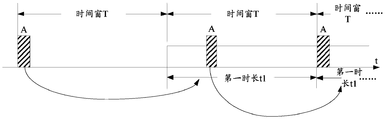
- FIG. 2 is a schematic diagram of the moment when the SSB appears and the paging moment PO in the paging DRX cycle;
- Figure 3 is a schematic diagram of a network device sending CSI-RS and SSB to a terminal device;
- FIG. 4 is a signaling flowchart of a communication method provided by an embodiment of this application.
- FIG. 5 is a schematic diagram of reference signals including CSI-RS and SSB provided by an embodiment of the application;
- FIG. 6 is a schematic diagram of the relationship between the first information bit, the SSB, and the reference signal provided by an embodiment of the application;
- FIG. 7 is a schematic diagram of a bitmap in a second message provided by an embodiment of this application.
- FIG. 8 is a schematic diagram of a bitmap in a second message provided by an embodiment of this application.
- FIG. 9 is a schematic diagram of a reference signal provided by an embodiment of this application.
- FIG. 10 is a schematic diagram of a reference signal provided by an embodiment of this application.
- FIG. 11 is a schematic diagram of the first duration provided by an embodiment of this application.
- FIG. 12 is a schematic diagram of the first duration provided by an embodiment of this application.
- FIG. 13 is a schematic diagram of the first duration provided by an embodiment of this application.
- FIG. 14 is a schematic diagram of the first duration provided by an embodiment of this application.
- FIG. 15 is a schematic diagram of the first duration provided by an embodiment of this application.
- FIG. 16 is a schematic diagram of the first duration provided by an embodiment of this application.
- FIG. 17 is a schematic diagram of the first duration provided by an embodiment of this application.
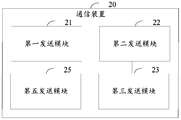
- FIG. 18 is a schematic structural diagram of a communication device provided by an embodiment of this application.
- FIG. 19 is a schematic structural diagram of a communication device provided by an embodiment of this application.
- FIG. 20 is a schematic structural diagram of a communication device provided by an embodiment of this application.
- FIG. 21 is a schematic structural diagram of a communication device provided by an embodiment of this application.
- FIG. 22 is a schematic structural diagram of a communication device provided by an embodiment of this application.
- FIG. 23 is a schematic structural diagram of a communication device provided by an embodiment of this application.
- FIG. 24 is a schematic structural diagram of a communication device provided by an embodiment of this application.
- FIG. 25 is a schematic structural diagram of a terminal device provided by an embodiment of this application.
- FIG. 26 is a schematic structural diagram of a network device provided by an embodiment of this application.
- At least one refers to one or more, and “multiple” refers to two or more.
- And/or describes the association relationship of the associated objects, indicating that there can be three relationships, for example, A and/or B, which can mean: A alone exists, A and B exist at the same time, and B exists alone, where A, B can be singular or plural.
- the character “/” generally indicates that the associated objects before and after are in an “or” relationship.
- the following at least one item (a) or similar expressions refers to any combination of these items, including any combination of a single item (a) or a plurality of items (a).
- At least one of a alone, b alone or c alone can mean: a alone, b alone, c alone, a combination of a and b, a combination of a and c, a combination of b and c, or a combination of a, b and c, where a, b, and c can be single or multiple.
- the terms "first" and "second" are only used for descriptive purposes, and cannot be understood as indicating or implying relative importance.
- wireless communication systems include but are not limited to: Narrow Band-Internet of Things (NB-IoT), Long Term Evolution System (Long Term) Evolution, LTE), the 5th Generation mobile communication technology (5G) system (for example, the new radio system), and the next-generation wireless communication system.
- NB-IoT Narrow Band-Internet of Things
- LTE Long Term Evolution System
- 5G 5th Generation mobile communication technology
- the communication devices involved in this application mainly include network equipment and terminal equipment.
- Network equipment It can be a base station, or an access point, or an access network device, or it can refer to a device in the access network that communicates with terminal equipment through one or more sectors on an air interface.
- the network device can be used to convert received air frames and IP packets into each other, and act as a router between the wireless terminal and the rest of the access network, where the rest of the access network can include an Internet Protocol (IP) network.
- IP Internet Protocol
- the network equipment can also coordinate the attribute management of the air interface.
- the network equipment may be an evolved base station (Evolutional Node B, eNB or eNodeB) in Long Term Evolution (LTE), or a relay station, or a transmitting/receiving point (Tx/Rx Point, TRP), or a 5G network
- Evolutional Node B, eNB or eNodeB Long Term Evolution
- a relay station or a transmitting/receiving point (Tx/Rx Point, TRP)
- Tx/Rx Point TRP
- 5G network 5G network
- the base station in the network such as gNB, etc., or the next-generation network, is not limited here.
- Terminal equipment It can be a wireless terminal or a wired terminal.
- a wireless terminal can be a device that provides voice and/or other business data connectivity to users, a handheld device with wireless connection function, or other processing equipment connected to a wireless modem .
- the wireless terminal can communicate with one or more core networks via the RAN.
- the wireless terminal can be a mobile terminal, such as a mobile phone (or called a "cellular" phone) and a computer with a mobile terminal.
- a mobile phone or called a "cellular" phone
- a computer with a mobile terminal For example, it can be a portable, pocket-sized, Hand-held, computer-built or vehicle-mounted mobile devices that exchange language and/or data with wireless access networks.
- Wireless terminals can also be called systems, subscriber units (Subscriber Unit), subscriber stations (Subscriber Station), mobile stations (Mobile Station), mobile stations (Mobile), remote stations (Remote Station), remote terminals (Remote Terminal), The access terminal (Access Terminal), user terminal (User Terminal), user agent (User Agent), and user equipment (User Device or User Equipment) are not limited here.
- Fig. 1 is a schematic diagram of a communication system architecture.
- the communication system of the present application may include at least one network device and at least one terminal device, and the network device and the terminal device communicate with each other.
- the terminal equipment in the RRC idle state or the RRC inactive state mainly completes the two things of monitoring paging messages and performing RRM measurement.
- the terminal device in order to monitor the paging physical downlink control channel (PDCCH), the terminal device generally performs time/frequency tracking (time/frequency tracking), AGC adjustment (automatic gain control, AGC tuning), or beam selection (beam selection). ) And other operations.
- time/frequency tracking time/frequency tracking
- AGC adjustment automatic gain control, AGC tuning
- beam selection beam selection
- the network device configures the terminal device with a discontinuous reception cycle (DRX cycle).
- DRX cycle a discontinuous reception cycle
- a terminal device can monitor a paging message at a paging occasion (PO), and can enter a sleep state at other moments without monitoring the paging message.
- the paging moment PO of the terminal device is determined by the identification (ID) of the terminal device.
- ID the identification
- different terminal devices may have different paging moments PO for monitoring paging messages.
- the network device can broadcast a reference signal to the terminal device (the reference signal is usually a synchronization signal/physical broadcast channel block (synchronization signal/ physical broadcast channel block (SSB)), so that the terminal device makes AGC adjustment and time-frequency synchronization based on the SSB, so that the terminal device wakes up to monitor the paging message at the paging moment PO corresponding to the terminal device.
- the terminal device may perform operations such as AGC adjustment and time-frequency synchronization based on the primary synchronization signal (PSS) and/or the secondary synchronization signal (SSS) in the SSB.
- PSS primary synchronization signal
- SSS secondary synchronization signal
- the network device sends the synchronization signal/physical broadcast channel block set (SS burst set) to the terminal device in the form of beam-sweeping, such as periodically sending the SS burst set, And the network device also sends a paging message to the terminal device in the form of beam scanning.
- SS burst set synchronization signal/physical broadcast channel block set
- the network device repeatedly sends the SSB/paging message to the terminal device in multiple beams/beam directions, where the beam/beam direction corresponding to the SSB is consistent with the beam/beam direction corresponding to the paging message.
- the beam/beam direction corresponding to the paging message corresponds to the PDCCH monitoring occasion in a paging moment PO.
- the beam/beam direction corresponding to the SSB corresponds to the PDCCH monitoring occurrence in a paging moment PO.
- An SS burst set includes multiple SSBs, and multiple SSBs in an SS burst set have different SSB indexes.
- a paging moment PO is composed of multiple physical downlink control channel monitoring occasions (PDCCH monitoring occasions), that is, the k-th PDCCH Monitoring occurrence corresponds to the k-th actually sent SSB in an SS burst set, k is taken over the total number of PDCCH monitoring occurrences greater than or equal to 1 and less than or equal to, and k is a positive integer.
- the number of beams or beam directions are usually fixed, so the SSB corresponding to one beam and the SSB corresponding to the beam direction of the beam are the same.
- the terminal device Before monitoring the paging message, the terminal device can generally make beam selection based on the reference signal (ie, SSB), and then monitor the paging message on the PDCCH monitoring occasion corresponding to the selected beam/beam direction. If the terminal device does not select the appropriate beam/beam direction in advance, in order to ensure that paging messages are not missed, the terminal device may monitor paging messages on multiple PDCCH monitoring occasions corresponding to multiple beams/beam directions. In this way, AGC adjustment and time-frequency synchronization, beam selection, and monitoring paging messages on multiple PDCCH monitoring occasions will consume large power consumption of the terminal device.
- the reference signal ie, SSB
- the purpose of mobility RRM measurement is to enable terminal equipment in the RRC idle state or RRC inactive state to perform cell selection/cell reselection (cell selection/cell reselection), and to make it in the RRC connected state (RRC_CONNECTED)
- the terminal equipment does cell handover, so that the terminal equipment can maintain better connection performance while moving.
- reference signals used for RRM measurement mainly include two types: SSB and CSI-RS.
- the SSB is a cell-level signal. Therefore, the terminal device can be used in the RRC idle state, the RRC inactive state, or the RRC connected state.
- CSI-RS can only be used by terminal devices in RRC connected state.
- the network device When the terminal device is in the RRC connected state, the network device usually configures the CSI-RS for RRM measurement through RRC signaling, and the terminal device in the RRC connected state specifically adopts SSB and/or CSI-RS and is usually configured by RRC signaling.
- the network device configures additional reference signals according to data transmission service requirements. For example, for a terminal device in the RRC connected state, the network device can be configured with a tracking reference signal (tracking reference signal, TRS) used for the terminal device to perform time-frequency tracking, or it can be configured for the terminal device to perform channel state information (channel state information). , CSI) measurement, CSI reporting, beam measurement (such as layer one-reference signal receiving Power (L1-RSRP) measurement), L1-RSRP reporting, etc.
- TRS tracking reference signal
- TRS tracking reference signal
- CSI channel state information
- CSI channel state information
- CSI reporting such as layer one-reference signal receiving Power (L1-RSRP) measurement
- L1-RSRP layer one-reference signal receiving Power
- CSI-RS can also be configured for the terminal
- the device performs RRM measurement, RRM measurement report (for example, report RSRP/reference signal receiving quality (RSRQ)/signal to interference plus noise ratio (SINR)) and other mobile CSI-RS (CSI-RS) RS for mobility).
- RRM measurement report for example, report RSRP/reference signal receiving quality (RSRQ)/signal to interference plus noise ratio (SINR)
- SINR signal to interference plus noise ratio
- CSI-RS mobile CSI-RS
- the terminal device can only perform RRM measurement based on SSB at present.
- the terminal device performs AGC adjustment, time-frequency synchronization, beam selection, and RRM measurement based on SSB, and SSB is based on SSB.
- For periodic transmission there is a certain periodic interval between the moments when the SSB appears, making the SSB relatively sparse.
- the period range of the SSB includes any one of 5ms, 10ms, 20ms, 40ms, 80ms, or 160ms.
- the terminal device when the terminal device performs RRM measurement based on SSB, if the network device configures the terminal device with the SSB measurement time configuration (SS/PBCH block measurement time configuration window duration, SMTC), then the terminal device will only be in the SMTC window time window (SMTC window). RRM measurement is performed within duration); if the network device does not configure SMTC for the terminal device, the terminal device assumes that the period of the SSB is 5ms.
- SS/PBCH block measurement time configuration window duration SS/PBCH block measurement time configuration window duration
- the terminal equipment will have a large power consumption to monitor paging messages and perform RRM measurements, and the reasons are as follows:
- the paging moment PO when the terminal device monitors the paging message is related to the identification ID of the terminal device, and the SSB is a cell-level broadcast signal, the SSB has a certain periodic interval and is relatively sparse. Therefore, the moment of SSB (or SMTC) may appear.
- the terminal device in the RRC idle/inactive state not only needs to search The PO wakes up when it monitors the paging message at the paging time. It also needs to perform AGC adjustment, time-frequency synchronization or beam selection based on the SSB at the time when the SSB appears (or within the SMTC time window), so that either the terminal device needs to wake up twice or Many times, the terminal device may maintain a longer wake-up time between the above two processes, which is not conducive to the saving of power consumption of the terminal device.
- the terminal equipment Due to the large period of SSB, if the interval between the time when SSB occurs and the paging time PO is large, then at the paging time PO of the terminal equipment, the terminal equipment is based on the beam/beam direction selected by the SSB (ie PDCCH). Monitoring occasions) may undergo major changes due to the movement and rotation of the terminal equipment. Therefore, the terminal equipment still needs to scan and monitor paging messages on multiple beams/beam directions (ie multiple PDCCH monitoring occasions) at the paging moment PO in order to Reaching the requirements of measurement accuracy causes the terminal device to maintain a long wake-up time, which is also not conducive to the saving of power consumption of the terminal device.
- the terminal device may need SSBs in multiple SS burst sets or SSBs with multiple SMTC time windows to perform AGC adjustment, time-frequency tracking or RRM measurement, especially in poor channel conditions or in high frequency bands (such as according to the third generation
- 3rd Generation Partnership Project 3rd Generation Partnership Project
- the terminal equipment in idle state or RRC inactive state is in multiple SMTC time windows of the SSB or adopts multiple SS burst sets to monitor paging messages and perform mobility RRM measurement, which requires the terminal equipment to be in multiple SMTC time windows Or the wake-up state (or light sleep state) is maintained at the moment when multiple SS burst sets occur, which leads to an increase in the number of wake-ups or an increase in the wake-up duration, which is also not conducive to saving the power consumption of the terminal device.
- the period of the SSB is 20 ms, and every two frames has a paging frame (Paging Frame, PF), and the time when the SSB occurs is not aligned with the paging time PO.
- the paging moment of the terminal device is located at PO1.
- the terminal device In order to monitor the paging message at PO1, the terminal device needs to wake up in advance at the time when the SSB appears before PO1. Therefore, the terminal device can perform AGC adjustment, time-frequency tracking, beam selection, or RRM measurement based on the SSB.
- the AGC adjustment may require multiple SSBs. As a result, the terminal device may not be able to complete an RRM measurement for all SSBs in one SS burst set, so The terminal device may continue to perform RRM measurement based on the SSB in an SS burst set after PO1.
- the terminal device needs to wake up multiple times or maintain a long wake-up time, resulting in higher power consumption of the terminal device.
- the network device configures more reference signals for the terminal device to provide more opportunities for the terminal device, which can reduce the wake-up time of the terminal device and save The power consumption of the terminal device.
- the network equipment will configure reference signals (for example, TRS/CSI-RS) other than SSB for the terminal equipment in the RRC connected state.
- the terminal device in the RRC idle state or the RRC inactive state can use the reference signal Perform AGC adjustment/time-frequency tracking/beam selection/RRM measurement in order to save the power consumption of the terminal equipment.
- the design principle of the NR system is to minimize the transmission frequency of the "always on" reference signal, and usually only maintain a relatively low frequency. Less reference signal transmission.
- SSB is the only "always on” signal in the NR system, and the period at which the network device sends the SSB to the terminal device can be configured, and it is not necessary to send the SSB every frame.
- the network equipment Since the reference signal configured for the terminal equipment in the RRC connected state is a reference signal that already exists in the cell, the network equipment does not specifically configure additional reference signals for the terminal equipment in the RRC idle state or the RRC inactive state, which also avoids The "always on" reference signal is added to the NR system.
- the reference signal of the RRC connected state configured by the network device for the terminal device in the RRC idle state or the RRC inactive state may also be configured for multiple terminal devices in the RRC connected state.
- the network devices configure reference signals opposite to each other, that is, the network devices configure the reference signals specifically for different terminal devices. And when the reference signal is no longer needed (for example, the terminal device related to the reference signal is not in the RRC connection state), the network device can release the reference signal and no longer send the reference signal to the terminal device, thereby saving the network device's power. Consumption.
- the network device will send reference signals to different beams/beam directions at different times, and no reference signals need to be sent. Stop sending the reference signal in the beam/beam direction, thereby saving the power consumption of the network equipment.
- an SS burst set includes 4 actually sent SSBs, the indexes of which are SSB0, SSB1, SSB2, and SSB3, respectively.
- a paging moment PO includes 4 PDCCH monitoring occasions (corresponding to 4 beams/beam directions), and each PDCCH monitoring occasion corresponds to an actual transmitted SSB.
- the CSI-RS is a reference signal configured by the network equipment for the terminal equipment in the RRC connected state.
- a CSI-RS resource set includes 4 CSI-RS, and the indexes are CSI-RS0, CSI-RS1, and CSI. -RS2 and CSI-RS3. Each of the 4 CSI-RSs has a quasi co-location (QCL) relationship with one of the 4 SSBs.
- QCL quasi co-location
- the CSI-RS that has a QCL relationship with SSB3 is not available.
- the network device sends the reference signals CSI-RS0, CSI-RS1, and CSI-RS2 to the terminal device, and stops sending the reference signal CSI-RS3 to the terminal device.
- the CSI-RS that has a QCL relationship with SSB0 is not available.
- the network device sends reference signals CSI-RS1, CSI-RS2, and CSI-RS3 to the terminal device, and stops sending the reference signal CSI-RS0 to the terminal device.
- each paging DRX cycle may include multiple paging moments PO, and at each paging moment PO, one or more terminal devices will monitor the paging PDCCH.
- the present application provides a communication method, device, and equipment, which can indicate the availability of the reference signal in the beam/beam direction corresponding to at least one SSB in a more precise manner, so that the terminal device can obtain information from the reference signal.
- Receive a reference signal whose availability is available in the beam/beam direction corresponding to at least one SSB so that the terminal device can perform AGC adjustment, time-frequency tracking, beam selection, or RRM measurement based on the available reference signal, and solve the problem of reference signal
- the inconsistent transmission and the variable availability of reference signals in different beams/beam directions lead to the problem of unnecessary operation of the terminal device and consume power consumption, which saves power consumption for monitoring paging messages and performing RRM measurements.
- the above-mentioned reference signal may be an existing reference signal, which avoids the addition of an always on signal in the NR system, and satisfies the design principle of reducing the always on signal of the NR system.
- the aforementioned reference signal may be a reference signal resource that has been configured for a terminal device in an RRC connected state.
- the aforementioned reference signal may also be a newly added reference signal, for example, a reference signal resource additionally configured for a terminal device in an RRC idle state/inactive state.
- the terminal device can also know the respective paging moments PO of the terminal device, the terminal device can receive from the reference signal that the availability in the beam/beam direction corresponding to at least one SSB is available and is the closest to monitoring the paging message.
- the reference signal of the terminal device avoids unnecessary power consumption by the terminal device, and improves the processing capacity of the terminal device.
- Fig. 4 is a signaling flowchart of a communication method provided by an embodiment of this application. As shown in Fig. 4, the communication method of this application may include:
- a network device sends a first message to a terminal device, where the first message includes configuration information of at least one first reference signal.
- the network device may configure one or more first reference signals for the terminal device.
- the at least one first reference signal may include at least one second reference signal, or may include at least one second reference signal and at least one other reference signal, which is not limited in this application.
- the terminal device may implement at least one of AGC adjustment, time-frequency synchronization, beam management, or RRM measurement based on at least one second reference signal.
- the at least one first reference signal may specifically include an existing reference signal in the RRC idle state or the RRC inactive state, or may include an existing reference signal in the RRC connected state, or may include the signal in the foregoing two cases, or not
- the reference signals that already exist in the system are reference signals that are additionally configured by the network equipment for the terminal equipment in the RRC idle state or the RRC inactive state, which is not limited in this application.
- the network device may use the reference signal that already exists in the NR system as the first reference signal configured for the terminal device. Therefore, in order for the terminal device to obtain the configuration information of the first reference signal, the increase of the always on signal can be avoided.
- the type of the second reference signal configured by the network device for the terminal device may include: TRS, CSI-RS, SSB, or Secondary Synchronization Signal (Secondary Synchronization Signal, At least one of SSS).
- the reference signal configured by the network device for the terminal device may have multiple functions.
- TRS is a type of CSI-RS, used for terminal equipment to perform time-frequency tracking.
- the network device can configure CSI-RS for channel quality measurement.
- CSI-RS For example, a terminal device can receive CSI-RS, and then measure: channel quality indicator (CQI), precoding matrix indicator (PMI), rank indicator (RI), CSI-RS resource Indication (CSI-RS Resource indicator, CRI) or layer indicator (Layer indicator, LI), and then the terminal device reports the obtained measurement result to the network device.
- CQI channel quality indicator
- PMI precoding matrix indicator
- RI rank indicator
- CSI-RS resource Indication CSI-RS Resource indicator, CRI
- Layer indicator Layer indicator
- CSI-RS can be used for beam management.
- the network device can configure whether the terminal device reports the measurement result.
- the network device can configure the terminal device to report L1-RSRP, then the terminal device can receive the reference signal and calculate the L1-RSRP; the network device can also configure the reported amount to NULL, which means that the terminal device does not need to report the beam measurement result.
- CSI-RS can be used for mobility RRM measurement.
- the network device configures the CSI-RS used for RRM measurement for the terminal device through the configuration cell CSI-RS-ResourceConfigMobility.
- the reference signal configured for the terminal device in the RRC connected state in the prior art may have different functions.
- the second reference signal configured by the network device for the terminal device in the RRC idle state or the RRC inactive state may also have one or more functions, which is not limited in this application.
- the function of the second reference signal may include: time-frequency tracking, beam management, radio resource management RRM measurement, automatic gain control AGC adjustment, channel state information CSI calculation, or layer 1 reference signal received power L1-RSRP calculation. At least one.
- the type of the second reference signal configured for the terminal device in the RRC idle state or the RRC inactive state may include, but is not limited to, TRS used for time-frequency tracking or AGC adjustment and CSI-RS used for RRM measurement.
- the terminal device does not need to report the CSI measurement result and the L1-RSRP measurement result in the RRC idle state or the RRC inactive state
- the reference signal used for CSI measurement/reporting and L1-RSRP measurement/reporting can also be used for The terminal device performs other functions, such as AGC adjustment, time-frequency tracking, beam selection, etc.
- the terminal device can cache the calculated CSI/L1-RSRP and other results, and then report the cached result after entering the RRC connected state
- the network equipment can also configure the terminal equipment to report the measured CSI/L1-RSRP, which helps to improve the data between the network equipment and the terminal equipment Transmission performance. Therefore, the type of the second reference signal configured for the terminal device in the RRC idle state or the RRC inactive state may also include: a reference signal used for CSI/L1-RSRP calculation and/or reporting.
- the second reference signal that the network device may configure for the terminal device includes multiple configurations. Therefore, the network device may use multiple methods to obtain the configuration information of the second reference signal. Among them, this application does not limit the specific implementation form of the configuration information of the second reference signal.
- the terminal device may send request information to the network device, where the request information is used to request the network device to configure a certain function or a certain type of second reference signal for the terminal device.
- the terminal device may send the non-access stratum (Non-Access Stratum, NAS) signaling to carry the request information to the network device in the RRC idle state/RRC inactive state.
- the terminal device may send request information to the network device in the RRC connected state before returning to the idle state/inactive state from the RRC connected state.
- Non-Access Stratum Non-Access Stratum
- the network device may configure second reference signals with different functions for the terminal device through different information elements (IE). For example, the network device configures the terminal device with the second reference signal for time-frequency tracking through the non-zero power (NZP)-CSI-RS-ResourceSet IE, or the network device configures the terminal device with the CSI-RS-ResourceConfigMobility IE as the terminal The device is configured with a second reference signal for RRM measurement.
- IE information elements
- the network device generally configures the terminal device with a second reference signal for time-frequency tracking/beam management and RRM measurement through different IEs.
- the terminal device may implement other functions in addition to the function configured by the second reference signal. For example, the terminal device may also perform AGC adjustment/beam selection, etc. based on the second reference signal used for RRM measurement.
- the network device configures the second reference signal used for time-frequency tracking/beam management for the terminal device
- the specific implementation form of the configuration information of the second reference signal will be illustrated by combining two possible embodiments.
- the network device may be configured with multiple second reference signals.
- the configuration information of the second reference signal may include: multiple configuration information elements of the second reference signal, and the configuration of each second reference signal
- the information element may include, but is not limited to: the number of the second reference signal, the time-frequency resource unit mapping mode of the second reference signal, the power control offset of the second reference signal, the scrambling code number of the second reference signal, The time domain period and period offset of the second reference signal, the transmission configuration indicator state ((Transmission Configuration Indicator state, TCI state) of the second reference signal, that is, the QCL source reference signal (QCL source reference signal) indicating the second reference signal signal) and parameters such as the QCL type between the second reference signal and the QCL source reference signal.
- TCI state Transmission Configuration Indicator state
- QCL source reference signal QCL source reference signal
- the network device may also set multiple reference signal resource sets, and each reference signal resource set may be associated with one or more second reference signals, wherein all the second reference signals in each reference resource set
- the functions and types of the reference signals are the same, or, the functions of all the second reference signals in each reference resource set are the same, or the types of all the second reference signals in each reference signal resource set are the same, this application There is no restriction on this.
- the configuration information of the second reference signal may include: configuration information elements of multiple reference signal resource sets, configuration information elements of each reference signal resource set, that is, configuration information of the second reference signal in each reference signal resource set.
- This element may specifically include but is not limited to: reference signal resource set number, second reference signal number, second reference signal function (for example, repetition parameter represents beam management function, time-frequency tracking signal information (trs- Info) parameter indicates time-frequency tracking function) and so on.
- the configuration information element of the reference signal resource set may indicate that the second reference signal associated with the reference signal resource set is TRS, which is used for time-frequency tracking.
- the repetition parameter is configured to be on, it means that all resources associated with the reference signal resource set are sent through the same downlink spatial domain transmission filter in the network device, and all the resources associated with the reference signal resource set The reference signal is sent through the same number of ports, then the configuration information element of the reference signal resource set may indicate that the second reference signal associated with the reference signal resource set is used for beam management, so that the terminal device can perform beam selection.
- the function of the configuration information element of the reference signal resource set is determined by the report configuration associated with the reference signal resource set.
- the report configuration is channel quality indicator (CQI), precoding matrix indicator (PMI), rank indicator (RI), CSI-RS resource indicator (CSI-RS Resource indicator, CRI) ) Or layer indicator (LI), the configuration information element of the reference signal resource set may indicate that the second reference signal associated with the reference signal resource set is used for calculating CSI.
- the configuration information element of the reference signal resource set may indicate that the second reference signal associated with the reference signal resource set is used for beam management.
- the network device Since the terminal device does not need to report the CSI in the RRC idle state or the RRC inactive state, the network device does not need to configure how to report configuration information for the terminal device in the RRC idle state/RRC inactive state.
- the functions of some reference signals need to be determined according to the parameters in the reported configuration information associated with the reference signal. Therefore, in this application, the network device may add additional parameters to the configuration information of the second reference signal to indicate the function of the second reference signal.
- adding one or more parameters in addition to the trs-Info parameter and the repetition parameter indicates a certain function.
- a new parameter for example, L1-RSRP
- the terminal device jointly determines the function of the second reference signal based on the configuration information of the second reference signal and the protocol predefined rules.
- the protocol predefines the function of the second reference signal when the trs-Info parameter and the repetition parameter are defaulted.
- the network device may configure one reference signal resource set to be associated with a second reference signal of one function, or configure multiple reference signal resource sets to be associated with a second reference signal of the same function.
- the second reference signal of any function may be one or more types of reference signals.
- the network device can Limit the number of second reference signals.
- the network device may configure the maximum number of second reference signals of the same function and the same type through configuration information, or configure the maximum number of all second reference signals through configuration information.
- the maximum number of second reference signals of the same function can also be configured through configuration information
- the maximum number of second reference signals of the same type can also be configured through configuration information
- the foregoing at least two methods can be combined to configure the second reference signal quantity.
- the network device may not configure the number of second reference signals through configuration information, but determine the number of second reference signals through protocol provisions.
- the maximum number of second reference signals of the same function and of the same type is predefined, or the maximum number of all second reference signals is predefined, or, the same function
- the maximum number of second reference signals is predefined, or the maximum number of second reference signals of the same type is predefined, or the maximum numbers of the aforementioned at least two methods are both predefined, and this application does not require
- the foregoing manner configures the number of configuration second reference signals. As a result, configuration instructions for network devices are saved.
- the number of second reference signals may also be jointly determined by network equipment and protocol regulations.
- Y is equal to the maximum number of SSB candidates (candidate) A in one SS burst set in the frequency range of the current serving cell.
- Y is equal to the number of SSBs actually sent by the current serving cell in an SS burst set.
- the serving cell is the cell where the terminal device resides in the RRC idle state or the RRC inactive state.
- Y is equal to B1 times the maximum number of SSB candidates (candidate) A in an SS burst set in the frequency range of the current serving cell, or Y is equal to the current service
- the number of second reference signals may be limited in this application, or the second reference signal may belong to (or be associated with)
- the number of reference signal resource sets is limited, or both the number of second reference signals and the number of reference signal resource sets to which the second reference signals belong may be limited.
- the network device may configure the maximum number of reference signal resource sets to which the second reference signal of the same function and type belongs through configuration information.
- the network device may not configure the number of reference signal resource sets through configuration information, but determine the number of reference signal resource sets to which the second reference signal belongs through protocol provisions.
- the maximum number of reference signal resource sets to which second reference signals of the same function and of the same type belong is predefined. As a result, configuration instructions for network devices are saved.
- the number of reference signal resource sets can also be determined jointly by network equipment and protocol regulations.
- the network device only configures one reference signal resource set, so that one reference signal resource set can include all second reference signals with the same function, which saves configuration signaling overhead.
- the network device configuration or protocol stipulates that the value of Z is less than or equal to the number of SSBs actually sent in an SS burst set, or less than or equal to the frequency range of the current serving cell.
- the maximum number of SSB candidates (candidates) in an SS burst set in order to save configuration commands.
- the network device When the network device configures the second reference signal for the RRM measurement of the terminal device, the network device can implement the configuration in a variety of ways. With reference to the following feasible embodiments, specific implementation forms of the configuration information of the second reference signal are illustrated by examples.
- the second reference signal used for RRM measurement is usually configured by one or more information elements (IE).
- IE information elements
- the cell is a cell CSI-RS-Resource-Mobility.
- different second reference signals in the same cell can be associated with the same reference signal resource set, that is, associated with the same cell, and different reference signal resource sets can be distinguished by cell ID/Physical cell ID. .
- the second reference signals in different cells may be associated with the same configuration mobile information element (ConfigMobility IE).
- different second reference signals configured for the same configured mobile cell have the same subcarrier spacing, and different associated cells have the same SSB frequency.
- the network device may also use other manners to configure the second reference signal for the terminal device to obtain the configuration information of the second reference signal, and the present application is not limited to the foregoing implementation manner.
- the network device may also implement other reference signal configurations.
- the network device can obtain the configuration information of the at least one first reference signal.
- the network device after the network device determines the configuration information of the at least one first reference signal, it can send the configuration information of the at least one first reference signal to the terminal device through the first message, so that the terminal device is based on the configuration of the at least one first reference signal Information, timely and accurately learn the configuration of the type and function of the second reference signal in the at least one first reference signal.
- the first message may be a system information (System Information, SI), or may be other messages except SI, such as a paging physical downlink shared channel (PDSCH) scheduled by a PDCCH, This application does not limit this.
- SI System Information
- PDSCH paging physical downlink shared channel
- SI can include master information block (Master Information Block, MIB) and remaining minimum system information (RMSI) (ie: System Information Blocks Type1, SIB1) ), and other system information (Other system information, OSI, that is, other SIBs except SIB1, such as SIB2-SIBn, n>2, n is a positive integer).
- MIB Master Information Block
- RMSI remaining minimum system information
- OSI System Information Blocks Type1, SIB1
- OSI System information
- the network device may carry the configuration information of at least one first reference signal through SIB1, and may also carry the configuration information of at least one first reference signal through OSI. Some one or more of SIB2 to SIB9, or a newly added system message block. The network device may also carry configuration information of at least one first reference signal in both SIB1 and OSI, which is not limited in this application.
- the network device may send the configuration information of at least one first reference signal to the terminal device in a broadcast manner, or may send the configuration information of the at least one first reference signal to the terminal device according to a request message sent from the terminal device.
- the request message is used to request configuration information of at least one first reference signal or configuration information of at least one second reference signal or request a first message.
- the network device may also send at least one first reference signal to the terminal device.
- the configuration information of the reference signal or the first message including the configuration information of the at least one second reference signal is sent.
- the network device periodically sends the first message to the terminal device according to the sending period of the first message or the sending period of the configuration information of at least one first reference signal or the sending period of the configuration information of at least one second reference signal.
- the application does not limit the specific manner in which the network device sends the first message to the terminal device.
- the network device sends a second message to the terminal device, where the second message is used to indicate the availability of at least one second reference signal, and the at least one second reference signal has a QCL relationship with the at least one SSB.
- the network device sends multiple SS burst sets (such as periodically sending SS burst sets) to the terminal device in the form of beam scanning.
- a SS burst set includes multiple SSBs.
- the network device also sends a paging message to the terminal device in the form of beam scanning. That is to say, the beam/beam direction corresponding to the sending SSB and the paging message are usually the same, and one SSB/one paging message corresponds to the same beam/beam direction.
- the beam/beam direction corresponding to the paging message corresponds to the PDCCH monitoring occasion in a paging moment PO. That is, the beam/beam direction corresponding to the SSB corresponds to the PDCCH monitoring occurrence in a paging moment PO.
- the availability of the reference signal may change and is not always available, and at any time, the availability of the reference signal in at least one beam/beam direction may also change.
- the reference signal as the CSI-RS configured by the terminal equipment in the RRC connection state as an example, although the CSI-RS has the advantages of higher frequency domain bandwidth and higher measurement accuracy than SSB, and the CSI-RS is the cell pair in the RRC connection state. Existing resources configured by the terminal device, however, those skilled in the art can understand that the CSI-RS is not always sent.
- the network device may only be in the C-DRX cycle
- the active period (Active time) in the C-DRX cycle sends the CSI-RS used for RRM measurement to the terminal device, and the non-active time in the C-DRX cycle can selectively send the CSI-RS to the terminal device Or choose not to send the CSI-RS resource to the terminal device.
- the terminal device in the RRC idle state or the RRC inactive state still performs RRM measurement at the corresponding time-frequency position, such as measuring the reference signal received power (reference signal received) power, RSRP), resulting in inaccurate RRM measurement results.
- the terminal device performs an unnecessary measurement process, which consumes unnecessary power consumption of the terminal device.
- the network device may send the second message to the terminal device.
- the second message may indicate the availability of at least one second reference signal, and there is a QCL relationship between the at least one second reference signal and the at least one SSB.
- the network device may indicate the availability of at least one second reference signal having a QCL relationship with at least one SSB through a second message, that is, indicate that the at least one second reference signal is in the beam/beam corresponding to the at least one SSB. Availability in beam direction.
- the second message can indicate the availability of at least one second reference signal at the granularity of the beam/beam direction, which is beneficial to more finely indicate at least one of the at least one beam/beam direction.
- the availability of the second reference signal avoids the problem that the terminal device consumes unnecessary power consumption due to unnecessary operations.
- this application does not limit the specific implementation form of the second message.
- at least one information bit (also referred to as a bit (bit)) in the second message is used in this application to indicate the availability of at least one second reference signal.
- this application does not limit the specific bearing manner of at least one information bit in the second message.
- At least one information bit in the second message may be carried in SIB1 of the system message SI or other SIBs, where the other SIBs may be existing OSIs or newly added system message blocks, or may be carried in PDCCH Downlink Control Information (DCI) or information carried by the PDSCH, where the DCI carried by the PDCCH or the information carried by the PDSCH may be information that already exists in the NR system, such as the paging DCI carried by the PDCCH .
- the paging information carried by the paging PDSCH can also carry the newly added information in the NR system, such as the newly introduced PDCCH in the RRC idle state/inactive state, specifically, for example, Wakeup PDCCH (for example, the PDCCH is used for In order to indicate whether there is paging information of the terminal device, etc., this application does not limit this.
- the second message is the SIB1 of the system message SI or other SIBs, where the other SIBs can be the existing OSI or the newly added system message block, or the downlink control information (Downlink Control Information, DCI) carried by the PDCCH ) Or the information carried by the PDSCH, where the DCI carried by the PDCCH or the information carried by the PDSCH can be information that already exists in the NR system, such as paging DCI carried by the PDCCH, or paging information carried by the PDSCH , It can also carry the newly added information in the NR system, such as the newly introduced PDCCH in the RRC idle state/inactive state, specifically, for example, Wakeup PDCCH (for example, the PDCCH is used to indicate whether there is paging information for terminal equipment ), etc., this application does not limit this.
- DCI Downlink Control Information
- the availability of the at least one second reference signal may include: an available state or an unavailable state.
- the available state refers to: it means that the network device will (or may) send the reference signal on the reference signal resource corresponding to the reference signal configured for the terminal device.
- the terminal device may assume that the network device will send the reference signal on the reference signal resource corresponding to the reference signal configured for the terminal device, and the terminal device may receive the reference signal.
- the unavailable state refers to: indicates that the network device does not (or may not) send the reference signal on the reference signal resource corresponding to the reference signal configured for the terminal device.
- the terminal device cannot assume that the network device sends the reference signal on the reference signal resource corresponding to the reference signal configured for the terminal device.
- the network device sends to the terminal device at least one reference signal whose availability is in an available state among the second reference signals.
- the network device can determine the availability of any second reference signal. It is understandable that, for any second reference signal indicated by the second message, if the network device indicates that the second reference signal is available, the network device will send the second reference signal. If the network device indicates that the second reference signal is not available, whether the network device still sends the second reference signal is not limited in this application.
- the network device may send at least one reference signal whose availability is available in the second reference signal to the terminal device, and may also send at least one reference signal whose availability is available in the second reference signal to the terminal device. And the reference signal whose availability is in the unavailable state, which is not limited in this application.
- the remaining part of the reference signal that does not indicate the availability can be pre-defined through the network device configuration or protocol The availability of the remaining reference signals in the at least one second reference signal.
- the terminal device receives, from the network device, a reference signal whose availability is in an available state among the at least one second reference signal according to the configuration information and the second message.
- the network device sends at least one second reference signal to the terminal device on the reference signal resource corresponding to the reference signal configured for the terminal device.
- the network device may send at least one SSB whose availability is available to the terminal device, and at least one SSB whose availability is available is distributed in at least one beam/beam direction, so that the terminal device The SSB can be received from at least one beam/beam direction.
- At least one SSB whose availability is in the available state may also be sent in the form of an SS burst set, that is, each SS burst set includes the at least one SSB whose availability is in the available state.
- the network device may send to the terminal device at least one CSI-RS whose availability is in an available state (such as periodically sending CSI-RS reference signals), and the availability of at least one CSI-RS in the available state is
- One CSI-RS reference signal is distributed in at least one beam/beam direction, so that the terminal device can receive the CSI-RS from at least one beam/beam direction.
- the network device can send at least one SSB and at least one CSI-RS reference signal to the terminal device in the foregoing two manners, which will not be repeated here, so that the terminal The device can receive SSB and CSI-RS from at least one beam/beam direction.
- the terminal device can determine the network based on the configuration information of the at least one first reference signal The type and function configuration of at least one second reference signal configured by the device for the terminal device. Also, because the second message is used to indicate the availability of at least one second reference signal that has a QCL relationship with at least one SSB, in this application, the terminal device can determine that the at least one second reference signal is at least The availability of the beam/beam direction corresponding to an SSB.
- the terminal device can receive from the network device the reference signal that is available in the available state in the beam/beam direction corresponding to the at least one SSB in the at least one second reference signal according to the configuration information and the second message, so as to be in the available state based on the availability.
- AGC adjustment/time-frequency tracking/RRM measurement/beam management, etc. are carried out on the reference signal to avoid unnecessary consumption of power consumption by the terminal equipment.
- the terminal device since the terminal device has learned the availability of the at least one second reference signal in the beam/beam direction corresponding to the at least one SSB, and the terminal device can also learn each paging time PO of the terminal device, the terminal device can On the reference signal resource corresponding to the reference signal configured for the terminal device, the at least one second reference signal received from the network device is available in the available state in the beam/beam direction corresponding to the at least one SSB and is closest to monitoring the paging message Reference signal to perform AGC adjustment/time-frequency tracking/RRM measurement/beam management based on the reference signal whose availability is available.
- the terminal equipment it is not only conducive to the terminal equipment to make the appropriate selection of the reference signal, but not to receive the reference signal whose availability is unavailable in the beam/beam direction corresponding to at least one SSB, and it can also choose to receive the reference signal closest to monitoring the paging message.
- the reference signal of the terminal device avoids unnecessary power consumption by the terminal device, and improves the processing capacity of the terminal device.
- the reference signal closest to monitoring the paging message can be understood as, among the at least one second reference signal whose availability is available, the one closest to the paging moment PO is located before and/or after the paging moment PO Or, it can be understood that, compared with the existing SSB in the system, if there are one or more second reference signals whose availability is available, the second reference signal is closer to the paging time PO, then The terminal device only needs to receive the second reference signal closer to the paging moment PO, thereby avoiding receiving further SSB, reducing the wake-up time of the terminal device, and saving power consumption. If there is no second reference signal whose availability is available, the second reference signal distance paging If the paging time PO is closer, the terminal device still needs to receive the SSB closer to the paging time PO.
- each SS burst set includes four SSBs, and the indexes are SSB0, SSB1, SSB2, and SSB3.
- Each CSI-RS reference signal resource set includes four CSI-RSs, and the indexes are CSI-RS0, CSI-RS1, CSI-RS2, and CSI-RS3.
- the terminal device can determine that in the at least one second reference signal before the first paging moment PO1 in FIG. 5, the second reference signal includes CSI-RS, and CSI-RS0 with QCL relationship with SSB0 is available, CSI-RS1 with QCL relationship with SSB1 is available, CSI-RS2 with QCL relationship with SSB2 is available, and CSI-RS3 with QCL relationship with SSB3 is not available.
- the terminal device determines that the CSI-RS in the CSI-RS reference signal resource set sent by the network device is greater than the SSB in the SS burst set sent by the network device from the first paging moment PO1 is closer.
- the terminal device can receive the CSI-RS in the CSI-RS reference signal resource set but not the SSB in the SS burst set, and the terminal device can receive CSI in the CSI-RS reference signal resource set -At least one of RS0, CSI-RS1, and CSI-RS2 without receiving CSI-RS3, so that terminal equipment can perform AGC adjustment/time-frequency tracking based on at least one of CSI-RS0, CSI-RS1, and CSI-RS2 /RRM measurement/beam management, etc.
- the terminal device determines that the SSB in the SS burst set sent by the network device is longer than the CSI-RS in the CSI-RS reference signal resource set sent by the network device at the second paging moment PO2 is closer. Therefore, the terminal device can receive the SSB in the SS burst set but not the CSI-RS in the CSI-RS reference signal resource set, and the terminal device can receive SSB0, SSB1, SSB2 in the SS burst set. And SSB3, so that the terminal device can perform AGC adjustment/time-frequency tracking/RRM measurement/beam management based on at least one of SSB0, SSB1, SSB2, and SSB3.
- first paging moment PO1 and the second paging moment PO2 belong to the same paging DRX cycle, and the first paging moment PO1 and the second paging moment PO2 For the adjacent paging moment PO, the terminal devices that monitor the paging PDCCH at the first paging moment PO1 and the second paging moment PO2 are different.
- the terminal device can use the reference signal configured for the terminal device in the RRC connected state, avoiding the increase of the always on signal.
- the terminal device can also know the respective paging moments PO of the terminal device, the terminal device can perform AGC based on the reference signal that is closest to the monitoring paging message in the beam/beam direction corresponding to at least one SSB and whose availability is available. Adjustment/time-frequency tracking/RRM measurement/beam management, etc., further reduce unnecessary power consumption of terminal equipment.
- the terminal device does not need to re-acquire the configuration information of the reference signal, and only needs to learn the availability of at least one second reference signal that has been configured according to the second message, which can reduce the RRC idle state/inactive state.
- the reference signal configuration signaling overhead is not need to re-acquire the configuration information of the reference signal, and only needs to learn the availability of at least one second reference signal that has been configured according to the second message, which can reduce the RRC idle state/inactive state.
- a first message is sent to a terminal device through a network device.
- the first message includes configuration information of at least one first reference signal, so that the terminal device can clearly determine the location based on the configuration information of the at least one first reference signal.
- the network device may send a second message to the terminal device, where the second message is used to indicate the availability of the at least one second reference signal, and the at least one second reference signal has a QCL relationship with the at least one SSB.
- the second message is used to indicate the availability of at least one second reference signal that has a QCL relationship with the at least one SSB at the granularity of the SSB or the granularity of the beam/beam direction corresponding to the SSB, that is, to indicate the beam/beam direction corresponding to the at least one SSB more finely
- the availability of the above reference signal allows the terminal device to clarify the availability of the at least one second reference signal in the beam/beam direction corresponding to the at least one SSB.
- the network device sends to the terminal device at least one reference signal whose availability is in an available state among the second reference signals.
- the terminal device may receive from the network device the reference signal whose availability is available in the at least one second reference signal, which is beneficial to the terminal device based on the availability of AGC adjustment/time-frequency tracking/RRM measurement/beam management with reference signals in the available state solves the unnecessary operation of terminal equipment due to the inconsistent transmission of reference signals and the variable availability of reference signals in different beam/beam directions
- the problem of power consumption saves the power consumption for AGC adjustment/time-frequency tracking/RRM measurement/beam management, etc., improves the processing performance of the terminal equipment, and also makes the terminal equipment unnecessary when the reference signal availability changes. Reacquiring the configuration information of the reference signal reduces the configuration signaling overhead of the RRC idle state/inactive state.
- the at least one second reference signal configured by the network device for the terminal device may be a reference signal that already exists in the NR system, and the always on signal is not added, which avoids the addition of an always on signal in the NR system, and satisfies the requirements of the NR system.
- the design principle of reducing the always on signal may be a reference signal that already exists in the NR system, and the always on signal is not added, which avoids the addition of an always on signal in the NR system, and satisfies the requirements of the NR system.
- the terminal device may receive the second reference signal from the network device according to the availability of the at least one second reference signal in the beam/beam direction corresponding to the at least one SSB and each paging moment of the monitoring paging message.
- the reference signal with the most recent call message and availability in the available state further reduces the wake-up time of the terminal device and saves the power consumption of the terminal device for unnecessary operations.
- the SSB and paging messages are sent in beam scanning. form. That is, the beam/beam directions corresponding to the sending SSB and the paging message are usually the same, and one SSB/one paging message corresponds to one beam/beam direction. And the beam/beam direction corresponding to the paging message corresponds to the PDCCH monitoring occasion in a paging moment PO. Therefore, the beam/beam direction corresponding to the SSB corresponds to the PDCCH monitoring occasion in the paging moment PO. .
- the terminal device may assume that the demodulation reference signal (DM-RS) of the paging PDCCH and the paging PDSCH and the associated SSB have a QCL relationship, and the following parameters are: QCL: Delay spread, Doppler spread, Doppler shift, average gain, average delay, or spatial reception parameters (spatial) Rx parameters).
- DM-RS demodulation reference signal
- the terminal device wants to use the reference signal (or reference signal resource) configured by the network device to perform AGC adjustment/time-frequency tracking/beam selection/RRM measurement, the reference signal ( Or the reference signal resource) should have a QCL relationship with the SSB.
- the network device may also configure the QCL relationship between the at least one second reference signal and the SSB in the configuration information, so that The terminal device can determine at least one second reference signal having a QCL relationship with at least one SSB based on the configuration information, and then use the description of the beam/beam direction corresponding to the aforementioned SSB, so that the terminal device can determine at least one second reference signal based on the second message.
- quasi co-location can be configured between different reference signals, or between different reference signal resources, or between different antenna ports (antenna ports). relation. If the two antenna ports have a QCL relationship, it indicates that the large-scale channel fading parameters calculated from one port can infer the large-scale channel fading parameters experienced by the other port, where the large-scale channel fading parameters include at least one of the following parameters : Delay spread, Doppler spread, Doppler shift, average gain, average delay, or spatial Rx parameters ).
- the QCL relationship can usually be configured through the TCI state.
- the TCI state can associate 1 or 2 reference signals other than the reference signal as the QCL source reference signal, and configure the QCL type between the current reference signal antenna port and the source reference signal.
- the NR protocol supports the configuration of 4 QCL types, namely QCL-TypeA, QCL-TypeB, QCL-TypeC, and QCL-TypeD.
- the two reference signals (or reference signal resources) mentioned in this application have a QCL relationship, or QCL, which can indicate the QCL between the two reference signals (or reference signal resources).
- QCL QCL relationship
- the relationship is one or more of QCL-TypeA, QCL-TypeB, QCL-TypeC, or QCL-TypeD.
- the QCL relationship mentioned in this application can also be a QCL relationship in a broader meaning.
- there is a QCL relationship between two reference signals which does not necessarily mean that the two reference signals must have a QCL relationship.
- -One or more QCL types among TypeA, QCL-TypeB, QCL-TypeC or QCL-TypeD are possible.
- there is a QCL-TypeD type between reference signal 1 and reference signal 2 and there is a QCL-TypeD type between reference signal 2 and reference signal 3, and there is no QCL-TypeA, QCL-TypeB, or QCL-TypeA type between reference signal 1 and reference signal 3.
- One or more of QCL-TypeC or QCL-TypeD, but reference signal 1 and reference signal 3 can be considered to have a QCL relationship.
- the terminal device may determine the QCL relationship between the at least one second reference signal and the SSB in multiple ways.
- the configuration information sent by the network device may include: second information, where the second information may configure the QCL relationship between the at least one second reference signal and the SSB by configuring the TCI state of the at least one second reference signal,
- a QCL source reference signal source reference signal
- other parameters in the configuration information may also be used for expression, which is not limited in this application.
- the second information is used to determine the QCL relationship between at least one second reference signal and at least one SSB, or the second information is used to determine at least one second reference signal and at least one other than at least one SSB.
- QCL relationship between reference signals, at least one reference signal other than at least one SSB has a QCL relationship with at least one SSB, or the second information is used to determine at least one second reference signal and at least one SSB
- the QCL relationship between at least one second reference signal and at least one reference signal other than at least one SSB is used to determine the QCL relationship between at least one second reference signal and at least one other reference signal other than at least one SSB.
- the second information can be used to determine that there is a QCL relationship between two reference signals.
- the two reference signals refer to at least one second reference signal and SSB.
- the second information can be used to directly determine the QCL relationship between the at least one second reference signal and the SSB, or it can be used to determine the relationship between the at least one second reference signal and other reference signals by using other reference signals other than the SSB. It has a QCL relationship and other reference signals have a QCL relationship with the SSB to indirectly determine the QCL relationship between the at least one second reference signal and the SSB.
- At least one second reference can also be determined by a combination of the foregoing two methods For the QCL relationship between the signal and the SSB, this application does not limit the specific representation form of the second information.
- the network device may configure the QCL source reference signal of at least one second reference signal as SSB.
- the QCL source reference signal is SSB.
- at least one second reference signal is associated with two QCL source reference signals, at least one of the QCL source reference signals is SSB.
- At least one second reference signal includes reference signal 2, the QCL source reference signal of reference signal 2 does not include SSB but is reference signal 1, and the QCL source reference signal associated with reference signal 1 is SSB, then the reference signal 2 and the reference signal 1 have a certain QCL type, and the reference signal 1 and the SSB have a certain QCL type, that is, the QCL relationship between the reference signal 2 and the SSB having a certain QCL type with the reference signal 1 can be determined.
- the terminal device determines that the reference signal 1 is available, or monitors the reference signal resource of the reference signal 1 (e.g., judgment reference test). The signal strength, SNR, or RSRP of signal 1 is greater than a certain threshold) when the reference signal 1, the terminal device can receive the reference signal 2; otherwise, the terminal device is usually not required to receive the reference signal 2, and the terminal device does not receive the reference signal 2.
- At least one second reference signal used for RRM measurement for example, a reference signal (or reference signal resource) configured by CSI-RS-Resource-Mobility signaling.
- the network device may configure at least one second reference signal (or reference signal resource) to be associated with one SSB, and configure whether the CSI-RS and the associated SSB have a QCL-TypeD relationship.
- all reference signals in the same cell are either configured to be associated SSB, or do not configure the associated SSB.
- the network device can optionally configure a cell number (referred to as the second cell).
- the protocol specifies a default number for the second cell.
- the second cell is the first cell by default, or the serving cell where the terminal device currently resides.
- Manner 2 There is no parameter for configuring the number of the second cell, and the second cell described below is the first cell.
- the number of all second reference signals configured in the first cell is equal to the number of SSBs actually sent in one SS burst set in the second cell, and all second reference signals configured in the first cell
- the number of the second reference signal there is a one-to-one correspondence with the SSB actually sent in one SS burst set in the second cell from small to large (or large to small) according to the SSB index, That is, it has a QCL relationship.
- the specific type of the QCL relationship may be at least one of TypeA, TypeB, TypeC, or TypeD.
- the QCL relationship is TypeD.
- the first cell and the second cell may be the same cell (having the same physical layer cell number), or may be different cells, which is not limited in this application.
- the network device When all the second reference signals in the same cell (referred to as the first cell) are configured with the associated SSB, the network device will also configure the cell number where the associated SSB is located.
- the associated SSB is an SSB that is actually sent in one SS burst set located in the first cell, that is, the cell where the associated SSB is located is also the first cell.
- the second information can also be described as used to determine the QCL relationship between the two reference signal resources.
- the specific implementation process please refer to the above content. I won’t repeat it here.
- the second information can be configured through a network device, can also be defined by a protocol, or can be pre-stored in a terminal device, which is not limited in this application.
- the terminal device can directly determine the second information.
- the terminal device can receive the second information from the network device.
- the terminal device can determine whether there is a QCL relationship between at least one second reference signal and the SSB based on the second information, so that at least one reference signal can be determined based on the corresponding relationship between the SSB and the beam/beam direction described in the foregoing. Availability of the second reference signal in the beam/beam direction corresponding to the at least one SSB.
- the terminal device needs to know the second message and the at least one second reference signal before receiving at least one second reference signal whose availability is available from the network device according to the configuration information and the second message in S104. Correspondence between signals.
- the network device may send first information to the terminal device, where the first information is used to determine that there is a correspondence between at least one information bit in the second message and the at least one SSB, or the first information is used to determine
- the correspondence between at least one information bit in the second message and the SSB index (index) corresponding to at least one SSB enables the network device to use the “bridge” function of the SSB, based on the information bit in the second message and the SSB/SSB index
- the corresponding relationship between (index) and the QCL relationship between the SSB and the at least one second reference signal, the corresponding relationship between the at least one information bit in the second message and the at least one second reference signal can be configured to facilitate the network
- the device indicates the availability of the at least one second reference signal through
- the first information may be set in the configuration information of the at least one first reference signal in the first message, or may be set in other information except the configuration information of the at least one first reference signal in the first message, It can also be set in other messages except the first message, which is not limited in this application. And this application does not limit the specific implementation form of the first information.
- the first information can be used to determine one SSB/one SSB index corresponding to each information bit, and the design is simple, or the first information can be used to determine multiple SSBs/multiple SSBs corresponding to each information bit
- the index (index) saves the signaling overhead of the second message, so as to configure a correspondence between at least one information bit in the second message and at least one SSB.
- this application does not limit the specific implementation form of the information bit determined by the first information, the specific implementation form of the SSB, and the specific implementation form of the SSB index corresponding to the SSB.
- the SSB index mentioned in this application can be found in the following content, which will not be repeated here.
- the first information may be configured by a network device, may also be defined by a protocol, or may be stored in a terminal device in advance, which is not limited in this application.
- the terminal device can directly determine the first information.
- the terminal device can receive the first information from the network device.
- the terminal device can determine the correspondence between the at least one information bit in the second message and the at least one second reference signal based on the first information and the QCL relationship between the SSB and the at least one second reference signal, so that The terminal device determines the availability of the at least one second reference signal in the beam/beam direction corresponding to the at least one SSB.
- the first information is used to determine that the first information bits in the second message correspond to i actually sent SSBs, and there are q+r+1 second reference signals and i actually sent SSBs. (Ie, SSB 1 to SSB i) have a QCL relationship, then the first information bit corresponds to q+r+1 second reference signals that have a QCL relationship with i actually sent SSBs, so that the first information bit can indicate q+ r+1 availability of the second reference signal.
- i and j are positive integers
- q and r are natural numbers
- the number of bits of the first information bit is greater than or equal to 1.
- the network device may also send third information to the terminal device, where the third information is used to configure a correspondence between at least one information bit in the second message and at least one second reference signal. Therefore, the terminal device can determine the correspondence between at least one information bit in the second message and the at least one second reference signal based on the third information without resorting to the "bridge" function of the SSB, so that the network device can be based on the second message At least one information bit in indicates the availability of the at least one second reference signal, so that the terminal device determines the availability of the at least one second reference signal based on the third information.
- the third information may be configured by network equipment, may also be defined by a protocol, or may be pre-stored in a terminal device, which is not limited in this application.
- the terminal device can directly determine the third information.
- the terminal device can receive the third information from the network device.
- the terminal device can determine the correspondence between at least one information bit in the second message and the at least one second reference signal based on the third information, so that the terminal device can determine the availability of the at least one second reference signal.
- the terminal device may not receive an information bit indicating the availability of at least one second reference signal that has a QCL relationship with at least one SSB.
- the terminal device sends the second message, or the network device sends the second message to the terminal device but the terminal device does not receive the second message, or the network device sends the second message to the terminal device, but the terminal device receives the second message but fails to receive it
- the second message is reached, or the network device sends the second message to the terminal device, but the second message received by the terminal device does not include a message indicating the availability of at least one second reference signal that has a QCL relationship with at least one SSB Information bits, this application does not limit this method.
- the second message may be the paging DCI carried by the PDCCH.
- the terminal device detects the paging DCI carried by the PDCCH.
- the paging DCI refers to the Paging-Radio Network Tempory Identity of the terminal device.
- P-RNTI P-RNTI
- the information bit used to indicate the availability of at least one second reference signal that has a QCL relationship with at least one SSB is not received in the paging DCI, that is, the paging DCI does not include information bits used to indicate that it has a QCL relationship with at least one SSB. At least one information bit of the availability of the second reference signal.
- the cyclic redundancy check cyclic redundancy check, CRC
- the network device may send a third message to the terminal device, where the third message is used to configure the default availability of the at least one second reference signal.
- the network device may configure the default availability of at least one second reference signal according to actual conditions.
- the default availability may be that the availability of all second reference signals in each beam/beam direction is unavailable, or it may be that the availability of all second reference signals in each beam/beam direction is available, or, It may be that the availability of all second reference signals in at least one beam/beam direction is unavailable, or it may be that the availability of all second reference signals in at least one beam/beam direction is available, or it may be all
- the availability of at least one second reference signal for the second reference signal is an unavailable state, or it may be that the availability of at least one second reference signal for all second reference signals is an available state, which is not limited in this application.
- the third message includes default availability configuration information for different functions or different types of second reference signals.
- the third message can be configured by a network device, can also be defined by a protocol, or can be stored in a terminal device in advance, which is not limited in this application.
- the terminal device can directly determine the third message.
- the terminal device can receive the third message from the network device.
- the network device can configure the default availability of at least one second reference signal, so that the terminal device does not receive a signal indicating the availability of at least one second reference signal that has a QCL relationship with at least one SSB.
- the availability of at least one second reference signal can be determined based on the third message.
- the first message in addition to using the third message to configure the default availability of at least one second reference signal, can also be used to configure the default availability of at least one second reference signal, which is not limited in this application. .
- the terminal device may also adopt various other methods to determine the at least one second reference signal Availability.
- the terminal device may determine the availability of the at least one second reference signal according to the information bits used to indicate the availability of the at least one second reference signal having a QCL relationship with the at least one SSB in the second message received last time.
- the second message received last time refers to the second message that the terminal device successfully received from the network device before the time when the terminal device received the second message this time and is closest to the time when the second message was received this time. information.
- the terminal device does not receive the information bit used to indicate the availability of the at least one second reference signal having a QCL relationship with the at least one SSB at this time when the second message is received.
- the terminal device may determine that the availability of the at least one second reference signal is an unavailable state.
- the terminal device may determine that the availability of the at least one second reference signal is an available state.
- the terminal device may determine that the availability of at least one reference signal in the at least one second reference signal is an available state.
- the terminal device can determine the availability of at least one second reference signal according to the actual situation and the foregoing manner.
- the specific method used can be determined through the configuration of the network device or the method predefined by the protocol. It should be noted that this application is not limited to the foregoing implementation manners.
- the second reference signal may include multiple types and/or functions, and different second reference signals may have a QCL relationship with different SSBs (or SSB indexes), therefore, in this application, the first At least one information bit in the second message can be represented in the form of a bitmap, and the number of bitmaps in the second message is n, n is greater than or equal to 1 and less than N, n and N are positive integers,
- the bitmap is used to indicate the availability of a reference signal having a QCL relationship with at least one SSB.
- the number N can be configured by the network device, or defined by the protocol, or can be based on the function/type of the second reference signal and the correspondence between at least one information bit in the second message and the at least one second reference signal It is implicitly determined and can also be stored in the terminal device in advance, which is not limited in this application.
- the number n can also be configured by the network device, or defined by the protocol, or pre-stored in the terminal device, or according to the function/type of the reference signal and at least one information bit in the second message and at least one second message. The correspondence between the reference signals is implicitly determined, which is not limited in this application.
- the first bitmap in the second message can be the same at each PDCCH monitoring timing in any paging moment PO, which makes the design simple and Conveniently, the terminal device only needs to obtain the first bitmap at at least one PDCCH monitoring timing in a paging moment PO, and the first bitmap obtained at any one of the PDCCH monitoring timings can be completely determined Availability of at least one second reference signal having a QCL relationship with at least one SSB.
- the first bitmap in the second message may be different at each PDCCH monitoring occasion in any paging moment PO, for example, at any PDCCH monitoring occasion in any paging moment PO
- the number of SSBs and/or the indexes of the SSBs corresponding to the first bitmap are different, so that the different first bitmaps indicate the available status of reference signals that have a QCL relationship with different SSBs.
- the first bit The bitmap does not need to correspond to all SSB indexes, and the number of bits in the first bitmap can be saved, and the overhead of command signaling can be saved.
- the first bitmap described here can be different in each PDCCH monitoring timing in any paging moment PO. It can be that the number of bits in the first bitmap is the same, but different first bitmaps correspond to The reference signals are different, or the reference signals corresponding to different first bitmaps are different, and the number of bits of the different first bitmaps is also different.
- an SS burst set has 4 SSBs sent, and the indexes are SSB0, SSB1, SSB2, and SSB3.
- the network device is configured with 4 second reference signals of CSI-RS, the indexes of which are CSI-RS0, CSI-RS1, CSI-RS2, and CSI-RS3 respectively.
- CSI-RS0 has a QCL relationship with SSB0
- CSI-RS1 has a QCL relationship with SSB1
- CSI-RS2 has a QCL relationship with SSB2
- CSI-RS3 has a QCL relationship with SSB3.
- the first bitmap includes 4 bits, which correspond to 4 SSBs respectively, and further correspond to 4 CSI-RSs of which the 4 SSBs have a QCL relationship respectively.
- the first bitmap sent by the network device at each PDCCH monitoring occasion in any paging moment PO contains 4 bits, and the corresponding relationship with the 4 CSI-RSs is the same.
- the first bitmap contains 3 bits.
- the first bitmap sent by the network equipment at each PDCCH monitoring occasion in any paging moment PO contains 3 bits: the first bitmap sent at the first PDCCH monitoring occasion contains the The 3 bits correspond to SSB3, SSB0, and SSB1 respectively, and then respectively correspond to the 3 CSI-RSs of the 3 SSBs that have a QCL relationship; the 3 bits contained in the first bitmap sent at the second PDCCH monitoring opportunity The bits correspond to SSB0, SSB1, and SSB2 respectively, and then respectively correspond to the 3 CSI-RSs of the 3 SSBs that have a QCL relationship; the 3 bits contained in the first bitmap sent at the third PDCCH monitoring opportunity The bits correspond to SSB1, SSB2, and SSB3 respectively, and then respectively correspond to the 3 CSI-RSs of the 3 SSBs that have a QCL relationship; the 3 bits contained in the first bitmap sent on the fourth PDCCH monitoring opportunity They correspond to
- the number of bits in the first bitmap in the second message at different paging moments PO may be the same, and the first bitmap and the at least one second bitmap The corresponding relationship between the reference signals is also the same, which is convenient and simple to design.
- the first bitmap may be one or more bitmaps, and the first bitmap may include one or more information bits, which is not limited in this application.
- the second message may include multiple implementation forms.
- the second message may include: a first bitmap and a second bitmap, the information bits in the first bitmap correspond to the first function of at least one second reference signal, and the information bits in the second bitmap The information bit corresponds to the second function of at least one second reference signal.
- the first bitmap may be one or more bitmaps
- the second bitmap may be one or more bitmaps
- the information bits in the first bitmap correspond to at least one second reference signal
- the first type, the information bit in the second bitmap corresponds to the second type of at least one second reference signal.
- the first type and the second type can be any type of the second reference signal.
- the first category and the second category may be the same or different, which is not limited in this application.
- the first function may include one or more functions
- the second function may include one or more functions
- the functions of the first function and the second function may be completely the same or partly the same.
- the content is not limited.
- any bitmap includes one or more information bits.
- the following describes the correspondence between the function of at least one second reference signal and the bitmap in combination with several feasible implementation manners.
- At least one second reference signal of the same function is mapped (that is, corresponding) to the same bitmap, and at least one second reference signal of different functions is mapped to different bitmaps.
- one information bit only corresponds to at least one second reference signal of one function.
- the second message includes bitmap 1, bitmap 2, and bitmap 3.
- the bitmap 1 includes K1 bits, and the bitmap 1 corresponds to at least one second reference signal TRS used for time-frequency tracking.
- the bitmap 2 includes K2 bits, and the bitmap 2 corresponds to at least one second reference signal used for beam management (for example, used for the terminal device to calculate L1-RSRP).
- the bitmap 3 includes K3 bits, and the bitmap 3 corresponds to at least one second reference signal CSI-RS used for RRM measurement.
- K1, K2, and K3 are respectively greater than or equal to 0, and when the network device is not configured with at least one second reference signal corresponding to the bitmap, the number of bits in the bitmap is 0.
- different bitmaps corresponding to different reference signal functions have different numbers of bits.
- the mapping relationship between each bitmap and the SSB is different. If the network device configures the mapping relationship between the bitmap and the SSB (that is, the first information), the network device needs to separately configure the corresponding relationship between each bitmap and the SSB.
- different bitmaps corresponding to different reference signal functions have the same number of bits.
- the mapping relationship between each bitmap and SSB is the same, and the network device only needs to configure the mapping relationship between any one of the bitmaps and the SSB, and the mapping relationship between all bitmaps and SSB can be configured.
- the corresponding relationship between each bitmap and the SSB is individually configured to save configuration signaling overhead.
- the reference signal function refers to the function of the second reference signal, and the specific content can be referred to the foregoing description, which will not be repeated here.
- At least one second reference signal of different reference signal functions is mapped to the same bitmap.
- one information bit corresponds to one or more second reference signals with different reference signal functions at the same time.
- the second message may also include a third bitmap, a fourth bitmap, etc.
- the number of bitmaps in the second message is not limited in this application.
- the number of second reference signals (or second reference signal resources) configured by the network device is greater than or equal to the number actually sent in one SS burst set The number of SSBs.
- the number of SSBs actually sent in an SS burst set is S.
- the number of second reference signals configured by the network device is N.
- the network device configures at least one second reference signal and the SSB index k is QCL. Therefore, N ⁇ S.
- the network device uses the "bridge" function of the SSB to build the correspondence between the second message and the at least one second reference signal. Therefore, the number of SSBs actually sent in one SS burst set can affect the number of information bits in the second message.
- the number of bits of the first bitmap in the second message may be less than or equal to the number of SSBs actually sent in one SS burst set.
- the network device can send the SSB to the terminal device in the manner of beam scanning, and the network device can periodically send the SS burst set to the terminal device, and each SS burst set includes one or more SSBs.
- each bitmap such as the second bitmap and the third bitmap in the second message may be less than or equal to the number of actually sent SSBs in one SS burst set.
- the first bitmap may include: at least one information domain field. Among them, this application does not limit the number of information bits in the information field field and the position in the first bitmap.
- the number of bits of at least one information field field is determined according to information associated with determining the number of SSBs, taking into account the influence of the number of SSBs.
- the information associated with determining the number of SSBs may include multiple identification forms, such as the inOneGroup field and the groupPresence field in the configuration parameter ssb-PositionsInBurst of the SSB.
- the first bitmap will be described in combination with several feasible implementations.
- the number of bits of the information field in the first bitmap can be determined based on the inOneGroup field (including 8 bits) and the groupPresence field (including 8 bits).
- the first bitmap may include: a first information field field and a second information field field; wherein the number of bits in the first information field field is equal to the bits in the inOneGroup field in the configuration parameter ssb-PositionsInBurst of the SSB The number of bits equal to the first value, the number of bits in the second information field is equal to the number of bits in the groupPresence field in the SSB configuration parameter ssb-PositionsInBurst equal to the second value, then the number of bits in the first bitmap The number of bits is less than or equal to 16.
- the SSB index corresponding to the k-th information bit of the first information field field in the first order includes one or more of the following indexes: m-1, m+7, m+15, m +23, m+31, m+39, m+47, and m+55.
- the SSB index mentioned here refers to the SSB index of the candidate SSB defined by the protocol.
- the k-th information bit in the first information field in the first order corresponds to the second information bit in the inOneGroup field of the SSB configuration parameter ssb-PositionsInBurst in the first order in which the k-th information bit in the first order is equal to 1.
- the second information bit is the m-th information bit in the first order in the inOneGroup field in the configuration parameter ssb-PositionsInBurst of the SSB, and k and m are positive integers.
- the SSB index corresponding to the g-th information bit of the second information field field in the second order includes one or more of the following indexes: 8(p-1), 8(p-1) +1, 8(p-1)+2, 8(p-1)+3, 8(p-1)+4, 8(p-1)+5, 8(p-1)+6 and 8( p-1)+7.
- the SSB index mentioned here refers to the SSB index of the candidate SSB defined by the protocol.
- the g-th information bit in the second information field field in the second order corresponds to the third information bit in the groupPresence field in the SSB configuration parameter ssb-PositionsInBurst in the second order in which the g-th information bit is equal to 1
- the third information bit is the p-th information bit in the second order in the groupPresence field in the configuration parameter ssb-PositionsInBurst of the SSB, and p and g are positive integers.
- the first value may be 0 or 1.
- the second value can be 0 or 1.
- the first numerical value and the second numerical value may be the same or different.
- the first order can be from high to low, or from low to high.
- the second order can be from high to low, or from low to high.
- the first order and the second order may be the same or different.
- 8 candidate SSB indexes can be determined by one of the information bits in the second information field, and 8 candidate SSB indexes can also be determined by one of the information bits in the first information field.
- These 16 candidates At least one of the SSB indexes is the same, and this same SSB index is the determined SSB index.
- one of the information bits in the second information field field and one of the information bits in the first information field field can uniquely determine an actually sent SSB index, then at least one second information bit that has a QCL relationship with the SSB The reference signal corresponds to these two bits.
- all at least one second reference signal corresponding to these two bits is an available state, or the availability of at least one second reference signal in at least one second reference signal (or reference signal resource) corresponding to these two bits is an available state.
- the SSB index determined by the k-th information bit is: 8(p-1)+m-1.
- the first information field field corresponds to the m-th information bit from the highest bit to the lowest bit in the inOneGroup field.
- the first bitmap may include an information field field; wherein, the number of bits in the information field field is equal to the number of bits in the inOneGroup field in the SSB configuration parameter ssb-PositionsInBurst equal to the first value.
- the number of bits, or the number of bits in the information field is equal to the number of bits in the groupPresence field in the SSB configuration parameter ssb-PositionsInBurst that is equal to the second value.
- the number of bits in the first bitmap is less than or equal to 8.
- the kth information bit from the highest bit to the lowest bit (or from the lowest bit to the highest bit) of the first bitmap corresponds to the kth information bit equal to 1 from the highest bit to the lowest bit in the inOneGroup field.
- inOneGroup The k-th information bit equal to 1 from the highest bit to the lowest bit in the field is the m-th bit in the inOneGroup field, and the first bit bitmap is called from the highest bit to the lowest bit (or from the lowest bit to the highest bit)
- the k-th information bit corresponds to the m-th information bit from the highest bit to the lowest bit in the inOneGroup field.
- the SSB candidate index corresponding to the k-th information bit from the highest bit to the lowest bit (or from the lowest bit to the highest bit) of the first bitmap includes one or more of the following indexes: m-1, m+ 7. m+15, m+23, m+31, m+39, m+47 and m+55.
- the SSB index of the actually sent SSB corresponding to the kth information bit in the first bitmap can be determined through the first bitmap and the groupPresence field, and the kth information bit in the first bitmap is sum
- a second reference signal in a QCL relationship with the determined SSB corresponding to the k-th information bit is in a corresponding relationship.
- the actually sent SSBs in an SS burst set are divided into M groups, and each group contains 1 or Multiple SSB indexes, the M groups of SSB indexes respectively correspond to M bits of the first bitmap, where M can be configured by the network device or specified by the protocol. For example, the maximum value of M can be 8 or 12.
- dividing the SSB actually sent in one SS burst set into M groups may be uniform division, for example, the number of SSB indexes included in each group is the same, or non-uniform division.
- the specific division method can be network configuration or protocol regulations.
- the first bitmap includes one information field field, and the number of bits in the information field is equal to the number equal to 1 in the groupPresence field, and the number of bits in the first bitmap ⁇ 8.
- the information field field is the first bitmap from the highest bit to the lowest bit (or from the lowest bit to the highest bit).
- the gth information bit corresponds to the gth information bit equal to 1 from the highest bit to the lowest bit in the groupPresence field.
- the first bitmap is called from the highest bit to the lowest bit (or from the lowest bit to the lowest bit). Highest bit)
- the gth information bit corresponds to the pth information bit from the highest bit to the lowest bit in the groupPresence field.
- the SSB candidate index corresponding to the g-th information bit from the highest bit to the lowest bit (or from the lowest bit to the highest bit) of the first bitmap includes one or more of the following indexes: 8(p-1) , 8(p-1)+1, 8(p-1)+2, 8(p-1)+3, 8(p-1)+4, 8(p-1)+5, 8(p- 1) +6 and 8(p-1)+7.
- the meaning of the first bitmap may include multiple implementation manners. Below, a variety of feasible implementation manners are used to illustrate the specific meaning of the first bitmap with examples.
- one of the fourth information bits in the first bitmap is set to 1 (or set to 0), it indicates that there is at least one second reference signal in the second reference signal corresponding to the fourth information bit.
- the reference signal is available.
- the terminal device can detect whether the network device sends the second reference signal by detecting (such as detecting signal strength, SNR, or RSRP, etc. parameters) at the corresponding time-frequency position of the second reference signal.
- one of the fourth information bits in the first bitmap is set to 0 (or set to 1), it indicates that the availability of the second reference signal corresponding to the fourth information bit is all unavailable The status or part is available. If the terminal device receives 1 information bit set to 0 from the network device, the terminal device cannot assume that the availability of the second reference signal corresponding to the fourth information bit is available.
- one of the fourth information bits in the first bitmap is set to 1 (or set to 0), it indicates that the availability of all the second reference signals corresponding to the fourth information bit is all available state. If the terminal device receives 1 information bit set to 1 from the network device, the terminal device can assume (may assume) that the availability of the second reference signal corresponding to the fourth information bit is available.
- one of the fourth information bits in the first bitmap is set to 0 (or set to 1), it indicates that the availability of the second reference signal corresponding to the fourth information bit is all unavailable The status or part is available. If the terminal device receives 1 information bit set to 0 from the network device, the terminal device cannot assume that the availability of the second reference signal corresponding to the fourth information bit is available.
- the second reference signal uses SSB as the direct or indirect QCL source reference signal. Therefore, when the number of second reference signals is greater than the number of SSBs, one SSB is the source of multiple second reference signals.
- the QCL source reference signal, or multiple second reference signals have a QCL relationship with the same SSB. Considering that the information bits in the second message are mapped to the SSB, this application can realize that one information bit corresponds to multiple second reference signals associated with one SSB, which can save signaling overhead.
- the second reference signal when the second reference signal includes CSI-RS, before the first paging moment PO1, the second reference signal having a QCL relationship with SSB0 includes CSI-RS0 and CSI-RS1. At this time, CSI -The availability of RS0 and CSI-RS1 are both available, and the beams/beam directions corresponding to CSI-RS0 and CSI-RS1 do not overlap.
- the second reference signal that has a QCL relationship with SSB0 Before the second paging moment PO2, the second reference signal that has a QCL relationship with SSB0 includes CSI-RS0 and CSI-RS1. At this time, the availability of CSI-RS0 is unavailable, and the availability of CSI-RS1 is available Status, and the beams/beam directions corresponding to CSI-RS0 and CSI-RS1 do not overlap.
- the second reference signal having a QCL relationship with SSB0 includes CSI-RS0 and CSI-RS1.
- CSI -The availability of RS0 and CSI-RS1 are both available, and the beams/beam directions corresponding to CSI-RS0 and CSI-RS1 overlap.
- the second reference signal having a QCL relationship with SSB0 includes CSI-RS0 and CSI-RS1.
- the availability of CSI-RS0 is in an unavailable state
- the availability of CSI-RS1 is in an available state.
- the beams/beam directions corresponding to CSI-RS0 and CSI-RS1 overlap.
- the corresponding information bit in the first bitmap indicates at least one The availability of the second reference signal is an available state.
- the second message can be used to indicate that the availability of at least one second reference signal having a QCL relationship with at least one SSB takes effect within the first time period, or it can be used to indicate that the availability of at least one second reference signal having a QCL relationship with at least one SSB takes effect.
- An information bit of the availability of the second reference signal takes effect within the first time period, so that the terminal device determines the availability of the at least one reference signal during the first time period according to the indication of the second message.
- the first duration may include: at least one paging DRX cycle, wherein the interval between two adjacent paging moments PO of the same terminal device is one paging DRX cycle; or, or configured by the network device One or more time windows in the predefined periodic time window; or, when the second message is the paging DCI or the paging PDSCH carried by the PDCCH, it is located at the next paging moment PO where the second message is located A time period before the PO, where the duration of one DRX cycle between the next PO and the PO where the second message is located; or, when the second message is the paging DCI or paging PDSCH carried by the PDCCH, It is located in a time period after the next PO of the PO where the second message is located, where the distance between the next PO and the PO where the second message is located is one DRX cycle; or, when the second message is the search carried by the PDCCH In the case of calling DCI
- the next paging moment PO refers to the next paging moment PO that still belongs to the terminal device that is the nearest to the terminal device to complete monitoring the paging message at the paging moment PO, that is, the paging moment PO where the second message is located.
- the unit of the first duration may be an absolute time, such as seconds (s), milliseconds (ms), etc., or the number of frames, or the number of subframes, or the number of time slots, or a multiple of the paging DRX cycle.
- the first duration can be configured through a network device, or defined by a protocol, or stored in a terminal device in advance, which is not limited in this application.
- the specific representation of the first duration will be described as an example.
- the first duration is represented by t1
- the second message is represented by A.
- the information bit used to indicate the availability of the second reference signal in the second message takes effect within a period of time (that is, the first duration) after the second message.
- the start time of a time period (that is, the first duration) after the second message is the end time of the second message.
- the network device is configured or the time window of the predefined period, and the information bit used for indicating the availability of the second reference signal in the second message takes effect within the time window where the second message is located.
- the information bit used to indicate the availability of the second reference signal in the second message is within the time window where the second message is located, and takes effect after the second message; or takes effect within the entire time window where the second message is located .
- the time window is represented by T. It is understandable that this application includes, but is not limited to, the time when the terminal device receives the second message within a time window.
- the terminal device may receive the second message for indicating the second reference at any time within a time window T.
- the second message of the information bits of the signal availability is indicating the information bits of the signal availability.
- the network device is configured or the time window of the predefined period, and the second message is used to indicate that the second information bit of the second reference signal is available at the next time of the time window where the second message is located. Take effect in the window.
- the time window is represented by T. It is understandable that this application includes, but is not limited to, the time when the terminal device receives the second message within a time window.
- the terminal device may receive the second reference signal for indicating the second message at any time within a time window T. The availability of information bits in the second message.
- the information bit used to indicate the availability of the second reference signal in the second message is at the paging moment where the second message is located. It takes effect after PO and before the next paging moment PO after the paging moment PO where the second message is located. There is an interval of 1 paging DRX cycle between the paging moment PO where the second message is located and the next paging moment PO of the paging moment PO where the second message is located.
- the information bit used to indicate the availability of the second reference signal in the second message is at the paging moment where the second message is located.
- the PO takes effect within a period of time before the next paging time PO. There is an interval of 1 paging DRX cycle between the paging moment PO where the second message is located and the next paging moment PO of the paging moment PO where the second message is located.
- the information bit used to indicate the availability of the second reference signal in the second message is at the paging moment where the second message is located.
- the PO's next paging time will take effect within a period of time after PO. There is an interval of 1 paging DRX cycle between the paging moment PO where the second message is located and the next paging moment PO of the paging moment PO where the second message is located.
- the information bit used to indicate the availability of the second reference signal in the second message is at the paging moment where the second message is located. It takes effect within a period of time after PO and including the next paging moment PO after the paging moment PO where the second message is located. There is an interval of 1 paging DRX cycle between the paging moment PO where the second message is located and the next paging moment PO of the paging moment PO where the second message is located.
- the above time period is determined according to one or more SSBs (or one or more SS burst sets) closest to the paging moment PO.
- a time period before the paging moment PO ie, the first duration
- a period of time is a period of time between the SSB closest to the paging moment PO after the paging moment PO and the paging moment PO
- a period of time including the paging moment PO is a time period between the SSB closest to the paging moment PO before the paging moment PO and the SSB closest to the paging moment PO after the paging moment PO.
- the indication information used to indicate the availability of at least one second reference signal having a QCL relationship with at least one SSB in the second message has an effective time, and the first duration is its effective time, and after the first duration, The previous indication information is no longer valid.
- the network device needs to re-send the indication information for indicating the availability of at least one second reference signal that has a QCL relationship with at least one SSB.
- the terminal device needs to re-receive the indication information to determine the future The availability of at least one second reference signal is determined within the time period.
- the terminal device after the terminal device receives the indication information used to indicate the availability of the at least one second reference signal having a QCL relationship with at least one SSB becomes invalid, for example, after the first time period when the indication information becomes valid, it may appear
- the information bit used to indicate the availability of at least one second reference signal that has a QCL relationship with at least one SSB is not received (for details, please refer to the foregoing content, which will not be repeated here), therefore, four feasible options are used below In the foregoing case, the specific implementation process of the terminal device continuing to use the at least one second reference signal configured by the network device is described.
- the terminal device will follow the last received first time period.
- the information bit used in the second message to indicate the availability of at least one second reference signal that has a QCL relationship with at least one SSB is used to determine the availability of at least one second reference signal for a period of time thereafter (that is, the first duration thereafter), until The terminal device again receives the information bit used to indicate the availability of the at least one second reference signal having a QCL relationship with the at least one SSB.
- the above method saves indication signaling overhead.
- the network device when the availability of at least one second reference signal does not change, the network device does not need to send a second message, or does not need to send information indicating the availability of at least one second reference signal that has a QCL relationship with at least one SSB Bit, only when the availability of part or all of the second reference signal changes, the network device sends an information bit for indicating the availability of at least one second reference signal that has a QCL relationship with at least one SSB (or sends a second message) .
- the network device when the availability of a second reference signal that has a QCL relationship with a certain SSB index changes from an available state to an unavailable state, the network device sends a second message to indicate that the availability of the second reference signal is in an unavailable state.
- Information bits indicate.
- the terminal device assumes that at least for a period of time thereafter.
- the availability of one second reference signal is in an unavailable state until the terminal device again receives an information bit used to indicate the availability of at least one second reference signal having a QCL relationship with at least one SSB.
- the terminal device assumes that at least for a period of time thereafter.
- the availability of one second reference signal is all available until the terminal device again receives an information bit used to indicate the availability of at least one second reference signal having a QCL relationship with at least one SSB.
- the terminal device after the first time period in which the indication information used to indicate the availability of the at least one second reference signal in the second message becomes effective, if the above situation occurs, the terminal device will follow at least The default availability of one second reference signal determines the availability of at least one second reference signal until the terminal device again receives an information bit used to indicate the availability of at least one second reference signal having a QCL relationship with at least one SSB.
- At least one information bit in the second message described in this application corresponds to at least one SSB, or it can be understood that at least one information bit corresponds to at least one SSB index, or at least one information bit corresponds to at least one SSB. At least one SSB corresponding to the index corresponds.
- the SSB index mentioned in this application may be the SSB index defined in the existing protocol, that is, the SSB index represents the index corresponding to all candidate SSBs in an SS burst set, or according to an SS burst set The number of SSBs actually sent in the renamed index.
- the maximum number of candidate SSBs in an SS burst set is 4, and the indexes of the 4 candidate SSBs are SSB 0, SSB 1, SSB 2, and SSB 3.
- the above index is the index defined by the agreement.
- the network device only broadcasts the SSB corresponding to SSB 0 and the SSB corresponding to SSB 2 defined in the protocol, for a total of 2 SSBs, then it is determined that at least one information bit and at least one information bit in the second message
- the terminal device can determine the SSB corresponding to the SSB 0 and the SSB corresponding to the SSB 2 defined in the protocol.
- the terminal device may determine the two actually sent SSBs according to the SSB index renamed in a certain order. For example, the network device can rename the indexes of the two actually sent SSBs as SSB0 and SSB1. When determining the correspondence between at least one information bit in the second message and at least one SSB, the terminal device can follow the renamed SSB. The corresponding SSB and the SSB corresponding to SSB 1 are determined.
- the actually sent SSB corresponding to at least one information bit in the determined second message is the same.
- the network device transmits the medium access control element (MAC CE).
- MAC CE medium access control element
- one MAC CE is used to activate/deactivate a reference signal resource set.
- indicating the availability of at least one second reference signal having a QCL relationship with at least one SSB through at least one information bit or one or more bitmaps in the second message has the following advantages:
- the availability of the reference signal can be indicated with finer granularity in the beam/beam direction corresponding to the SSB, so that the terminal device can clarify the availability of at least one second reference signal in the beam/beam direction corresponding to the at least one SSB;
- At least one information bit corresponds to at least one SSB (or SSB index), and then has a QCL with at least one SSB (or SSB index)
- Corresponding to at least one second reference signal of the relationship can realize the use of a smaller number of bits to indicate the availability of all configured second reference signals, which can save indication signaling overhead compared with MAC CE activation/deactivation in the RRC connected state.
- FIG. 18 is a schematic structural diagram of a communication device provided by an embodiment of this application.
- the communication device 10 of the present application is used to implement operations corresponding to a terminal device or a chip in a terminal device in any of the foregoing method embodiments.
- the communication device 10 may include: a first receiving module 11, a second The receiving module 12 and the third receiving module 13.
- the first receiving module 11 is configured to receive a first message from a network device, where the first message includes configuration information of at least one first reference signal;
- the second receiving module 12 is configured to receive a second message from a network device, the second message is used to indicate the availability of at least one second reference signal, and the at least one second reference signal and at least one synchronization signal/physical broadcast channel block SSB have a QCL
- the at least one first reference signal includes at least one second reference signal
- the third receiving module 13 is configured to receive, according to the configuration information and the second message, a reference signal whose availability is in an available state among the at least one second reference signal from the network device.
- FIG. 19 is a schematic structural diagram of a communication device provided by an embodiment of this application. As shown in FIG. 19, based on the structure shown in FIG. 18, the communication device 10 of this application may further include: a fourth receiving Module 14.
- the fourth receiving module 14 is configured to receive first information from a network device, and the first information is used to determine the correspondence between at least one information bit in the second message and at least one SSB, or to determine at least one information bit in the second message Correspondence between one information bit and the SSB index corresponding to at least one SSB.
- FIG. 20 is a schematic structural diagram of a communication device provided by an embodiment of this application. As shown in FIG. 20, based on the structure shown in FIG. 18, the communication device 10 of this application may further include: a fifth receiving Module 15.
- the fifth receiving module 11 is configured to receive a third message from the network device, and the third message is used to configure the default availability of at least one second reference signal.
- FIG. 21 is a schematic structural diagram of a communication device provided by an embodiment of this application. As shown in FIG. 21, based on the structure shown in FIG. 18, the communication device 10 of this application may further include: a determining module 16 .
- the determining module 16 is configured to: when the second receiving module 12 does not receive the second message or the second message does not include information bits for indicating the availability of at least one second reference signal, according to the second message received last time The information bit used to indicate the availability of at least one second reference signal in determining the availability of at least one second reference signal; or,
- the determining module 16 is configured to, when the second receiving module 12 does not receive the second message or the second message does not include information bits for indicating the availability of the at least one second reference signal, default according to the at least one second reference signal The availability of at least one second reference signal is determined to be available; or,
- the determining module 16 is configured for the second receiving module 12 to determine the availability of at least one second reference signal when the second message is not received or the second message does not include information bits for indicating the availability of the at least one second reference signal Is unavailable; or,
- the determining module 16 is configured for the second receiving module 12 to determine the availability of at least one second reference signal when the second message is not received or the second message does not include information bits for indicating the availability of the at least one second reference signal Is available; or,
- the determining module 16 is configured to determine the presence of the at least one second reference signal when the second message is not received by the second receiving module 12 or the second message does not include information bits for indicating the availability of the at least one second reference signal At least one reference signal whose availability is available.
- the configuration information includes: second information, and the second information is used to determine the QCL relationship between the at least one second reference signal and the at least one SSB, and/or to determine the relationship between the at least one second reference signal and the at least one SSB.
- the second message in the case where the bitmap in the second message is used to indicate the availability of at least one second reference signal, the second message is the SIB1 or other SIB of the system message; or, the second message is the physical downlink The downlink control information DCI carried by the control channel PDCCH or the information carried by the physical downlink shared channel PDSCH.
- the number of bitmaps in the second message is n, n is taken to be greater than or equal to 1 and less than N, n and N are positive integers, and the bitmap is used to indicate the number of at least one second reference signal Availability, the bitmap includes at least one information bit.
- the first bitmap in the second message is the same at each PDCCH monitoring occasion in any paging moment PO Or different.
- the number of bits in the first bitmap in the second message in different POs is the same.
- the type of at least one second reference signal includes: tracking reference signal TRS, channel state information reference signal CSI- At least one of RS, synchronization signal/physical broadcast channel block SSB, or secondary synchronization signal SSS.
- the configuration information is used to configure the maximum number of second reference signals of the same function and of the same type according to the function and type of at least one second reference signal; or, the maximum number of second reference signals of the same function and type of the same function.
- the quantity is predefined.
- the configuration information is used to configure the maximum number of reference signal resource sets to which second reference signals of the same function and of the same type belong according to the function and type of the at least one second reference signal; or, those of the same function and type The maximum number of reference signal resource sets to which the second reference signal belongs is predefined.
- the second message includes: a first bitmap and a second bitmap, the information bits in the first bitmap correspond to the first function of at least one second reference signal, and the second bitmap The information bit corresponds to the second function of at least one second reference signal.
- the number of bits of the first bitmap in the second message is less than or equal to the number of synchronization signals/physical broadcast channel blocks SSB sent in a synchronization signal/physical broadcast channel block set.
- the first bitmap includes: at least one information field field; wherein the number of bits of the information field field is determined according to information associated with determining the number of SSBs.
- the first bitmap includes: a first information domain field and a second information domain field; wherein the number of bits in the first information domain field is equal to the bits in the inOneGroup field in the configuration parameter ssb-PositionsInBurst of the SSB.
- the number of bits equal to the first value, the number of bits in the second information field is equal to the number of bits in the groupPresence field in the SSB configuration parameter ssb-PositionsInBurst, the number of bits equal to the second value; or, the first bitmap It includes an information field; where the number of bits in the first bitmap is equal to the number of bits in the inOneGroup field in the SSB configuration parameter ssb-PositionsInBurst that is equal to the first value, or the bits of the first bitmap The number is equal to the number of bits whose bits in the groupPresence field in the configuration parameter ssb-PositionsInBurst of the SSB are equal to the second value.
- the second message is used to indicate that the availability of the at least one second reference signal takes effect within the first time period.
- the first duration includes: at least one paging discontinuous reception DRX cycle; or, one or more time windows in the cycle time window configured or predefined by the network device; or, the second message is In the case of the paging DCI carried by the PDCCH, it is located a period of time before the next PO at the paging moment PO where the second message is located, where the next PO is separated from the PO where the second message is located
- the duration of a DRX cycle or, in the case that the second message is the paging DCI carried by the PDCCH, it is located in a time period after the next PO of the PO where the second message is located, where the next PO and the The time length of one DRX cycle between the PO where the second message is located; or, in the case where the second message is a paging DCI carried by the PDCCH, it is located a time period after the PO where the second message is located.
- the communication device of the present application can be used to implement the technical solutions of the terminal device or the chip in the terminal device in the method embodiment shown in FIG. Refer to the related description of the method embodiment, which will not be repeated here.
- the modules here can also be replaced with components or circuits.
- FIG. 22 is a schematic structural diagram of a communication device provided by an embodiment of this application.
- the communication device 20 of the present application is used to implement operations corresponding to a network device or a chip in a network device in any of the foregoing method embodiments.
- the communication device 20 may include: a first sending module 21, a second The sending module 22 and the third sending module 23.
- the first sending module 21 is configured to send a first message to a terminal device, where the first message includes configuration information of at least one first reference signal;
- the second sending module 22 is configured to send a second message to the terminal device, the second message is used to indicate the availability of at least one second reference signal, and the at least one second reference signal and the at least one synchronization signal/physical broadcast channel block SSB have a QCL
- the at least one first reference signal includes at least one second reference signal
- the third sending module 23 is configured to send at least one second reference signal to the terminal device.
- FIG. 23 is a schematic structural diagram of a communication device provided by an embodiment of this application. As shown in FIG. 23, based on the structure shown in FIG. 22, the communication device 20 of this application may further include: a fourth transmission Module 24.
- the fourth sending module 24 is configured to send the first information to the terminal device.
- the first information is used to determine the correspondence between at least one information bit in the second message and at least one SSB, or to determine at least one SSB in the second message Correspondence between one information bit and the SSB index corresponding to at least one SSB.
- FIG. 24 is a schematic structural diagram of a communication device provided by an embodiment of this application. As shown in FIG. 24, based on the structure shown in FIG. 22, the communication device 20 of this application may further include: Module 25.
- the fifth sending module 25 is configured to send a third message to the terminal device, and the third message is used to configure the default availability of at least one second reference signal.
- the configuration information includes: second information, and the second information is used to determine the QCL relationship between the at least one second reference signal and the at least one SSB, and/or to determine the relationship between the at least one second reference signal and the at least one SSB.
- the second message in the case where the bitmap in the second message is used to indicate the availability of at least one second reference signal, the second message is the SIB1 or other SIB of the system message; or, the second message is the physical downlink The downlink control information DCI carried by the control channel PDCCH or the information carried by the physical downlink shared channel PDSCH.
- the number of bitmaps in the second message is n, n is taken to be greater than or equal to 1 and less than N, n and N are positive integers, and the bitmap is used to indicate the number of at least one second reference signal Availability, the bitmap includes at least one information bit.
- the first bitmap in the second message is the same at each PDCCH monitoring occasion in any paging moment PO Or different.
- the number of bits in the first bitmap in the second message in different POs is the same.
- the type of at least one second reference signal includes: tracking reference signal TRS, channel state information reference signal CSI- At least one of RS, synchronization signal/physical broadcast channel block SSB, or secondary synchronization signal SSS.
- the configuration information is used to configure the maximum number of second reference signals of the same function and of the same type according to the function and type of at least one second reference signal; or, the maximum number of second reference signals of the same function and of the same type.
- the quantity is predefined.
- the configuration information is used to configure the maximum number of reference signal resource sets to which second reference signals of the same function and of the same type belong according to the function and type of the at least one second reference signal; or, those of the same function and type The maximum number of reference signal resource sets to which the second reference signal belongs is predefined.
- the second message includes: a first bitmap and a second bitmap, the information bits in the first bitmap correspond to the first function of at least one second reference signal, and the second bitmap The information bit corresponds to the second function of at least one second reference signal.
- the number of bits of the first bitmap in the second message is less than or equal to the number of synchronization signals/physical broadcast channel blocks SSBs sent in a synchronization signal/physical broadcast channel block set.
- the first bitmap includes: at least one information field field; wherein the number of bits of the information field field is determined according to information associated with determining the number of SSBs.
- the first bitmap includes: a first information field field and a second information field field; wherein the number of bits in the first information field field is equal to the bits in the inOneGroup field in the configuration parameter ssb-PositionsInBurst of the SSB.
- the number of bits equal to the first value, the number of bits in the second information field is equal to the number of bits in the groupPresence field in the SSB configuration parameter ssb-PositionsInBurst, the number of bits equal to the second value; or, the first bitmap It includes an information field field; where the number of bits in the first bitmap is equal to the number of bits in the inOneGroup field in the SSB configuration parameter ssb-PositionsInBurst that is equal to the first value, or the bits of the first bitmap The number is equal to the number of bits whose bits in the groupPresence field in the configuration parameter ssb-PositionsInBurst of the SSB are equal to the second value.
- the second message is used to indicate that the availability of the at least one second reference signal takes effect within the first time period.
- the first duration includes: at least one paging discontinuous reception DRX cycle; or, one or more time windows in the cycle time window configured or predefined by the network device; or, the second message is In the case of the paging DCI carried by the PDCCH, it is located a time period before the next PO at the paging moment PO where the second message is located, where the next PO and the PO where the second message is located are one DRX cycle away Duration; or, in the case that the second message is the paging DCI carried by the PDCCH, it is a time period after the PO where the second message is located, where the next PO and the PO where the second message is located
- the time interval is one DRX cycle; or, when the second message is a paging DCI carried by the PDCCH, it is located a time period after the PO where the second message is located.
- the communication device of the present application can be used to implement the technical solutions of the network device or the chip in the network device in the method embodiment shown in Figs. Refer to the related description of the method embodiment, which will not be repeated here.
- the modules here can also be replaced with components or circuits.
- the present application may divide the communication device into functional modules according to the foregoing method examples.
- each functional module may be divided corresponding to each function, or two or more functions may be integrated into one processing module.
- the above-mentioned integrated modules can be implemented in the form of hardware or software functional modules. It should be noted that the division of modules in each embodiment of the present application is illustrative, and is only a logical function division, and there may be other division methods in actual implementation.
- FIG. 25 is a schematic structural diagram of a terminal device provided by an embodiment of this application.
- the terminal device may include:
- the memory 31 is used to store program instructions, and the memory 31 may be a flash (flash memory).
- the processor 32 is configured to call and execute program instructions in the memory 31 to implement various steps corresponding to the terminal device or the chip in the terminal device in the communication method of FIG. 1 to FIG. 17. For details, refer to the related description in the foregoing method embodiment.
- the communication interface 33 may include an independent output interface and an input interface, or may be an integrated interface that integrates input and output. Wherein, the output interface is used to output data, and the input interface is used to obtain input data.
- the above output data is the general term output in the above method embodiment, and the input data is the general term input in the above method embodiment.
- the terminal device may be used to execute various steps and/or processes corresponding to the corresponding terminal device or the chip in the terminal device in the foregoing method embodiment.
- FIG. 26 is a schematic structural diagram of a network device provided by an embodiment of the application.
- the network device 40 includes a memory 41 for storing program instructions, and the memory 41 may be a flash (flash memory).
- the processor 42 is configured to call and execute program instructions in the memory 41 to implement various steps corresponding to the network device or the chip in the network device in the communication method of FIG. 1 to FIG. 17. For details, refer to the related description in the foregoing method embodiment.
- the communication interface 43 may include an independent output interface and an input interface, or may be an integrated interface that integrates input and output. Wherein, the output interface is used to output data, and the input interface is used to obtain input data.
- the above output data is the general term output in the above method embodiment, and the input data is the general term input in the above method embodiment.
- the network device may be used to execute various steps and/or processes corresponding to the corresponding network device or the chip in the network device in the foregoing method embodiment.
- the present application also provides a readable storage medium in which an execution instruction is stored.
- an execution instruction is stored.
- the terminal device executes the communication method in the foregoing method embodiment.
- the present application also provides a readable storage medium in which an execution instruction is stored.
- an execution instruction is stored.
- the network device executes the communication method in the foregoing method embodiment.
- the application also provides a program product, which includes an execution instruction, and the execution instruction is stored in a readable storage medium.
- At least one processor of the terminal device can read the execution instruction from a readable storage medium, and the execution of the execution instruction by the at least one processor causes the terminal device to implement the communication method in the foregoing method embodiment.
- the application also provides a program product, which includes an execution instruction, and the execution instruction is stored in a readable storage medium.
- At least one processor of the network device can read the execution instruction from a readable storage medium, and the execution of the execution instruction by the at least one processor causes the network device to implement the communication method in the foregoing method embodiment.
- the present application also provides a chip, which is connected to a memory, or a memory is integrated on the chip, and when the software program stored in the memory is executed, the communication method in the foregoing method embodiment is implemented.
- the computer program product includes one or more computer instructions.
- the computer may be a general-purpose computer, a special-purpose computer, a computer network, or other programmable devices.
- the computer instructions may be stored in a computer-readable storage medium, or transmitted from one computer-readable storage medium to another computer-readable storage medium.
- the computer instructions may be transmitted from a website, computer, server, or data center. Transmission to another website, computer, server or data center via wired (such as coaxial cable, optical fiber, digital subscriber line (DSL)) or wireless (such as infrared, wireless, microwave, etc.).
- the computer-readable storage medium may be any available medium that can be accessed by a computer or a data storage device such as a server or data center integrated with one or more available media.
- the usable medium may be a magnetic medium (for example, a floppy disk, a hard disk, and a magnetic tape), an optical medium (for example, a DVD), or a semiconductor medium (for example, a solid state disk (SSD)).
Landscapes
- Engineering & Computer Science (AREA)
- Signal Processing (AREA)
- Computer Networks & Wireless Communication (AREA)
- Mobile Radio Communication Systems (AREA)
Abstract
Description
Claims (30)
- 一种通信方法,其特征在于,包括:从网络设备接收第一消息,所述第一消息中包括至少一个第一参考信号的配置信息;从所述网络设备接收第二消息,所述第二消息用于指示至少一个第二参考信号的可用性,所述至少一个第二参考信号与至少一个同步信号/物理广播信道块SSB具有QCL关系,所述至少一个第一参考信号包括所述至少一个第二参考信号;根据所述配置信息和所述第二消息,从所述网络设备接收所述至少一个第二参考信号中可用性为可用状态的参考信号。
- 根据权利要求1所述的方法,其特征在于,所述方法还包括:从所述网络设备接收第一信息,所述第一信息用于确定所述第二消息中的至少一个信息比特与所述至少一个SSB之间的对应关系,或者,确定所述第二消息中的至少一个信息比特与所述至少一个SSB对应的SSB索引之间的对应关系。
- 根据权利要求1或2的方法,其特征在于,所述方法还包括:从所述网络设备接收第三消息,所述第三消息用于配置所述至少一个第二参考信号默认的可用性。
- 根据权利要求1-3任一项所述的方法,其特征在于,所述方法还包括:在未接收到所述第二消息或者所述第二消息中未包括用于指示所述至少一个第二参考信号的可用性的信息比特的情况下,根据上一次接收到的第二消息中用于指示所述至少一个第二参考信号的可用性的信息比特,确定所述至少一个第二参考信号的可用性;或者,在未接收到所述第二消息或者所述第二消息中未包括用于指示所述至少一个第二参考信号的可用性的信息比特的情况下,根据所述至少一个第二参考信号默认的可用性,确定所述至少一个第二参考信号的可用性;或者,在未接收到所述第二消息或者所述第二消息中未包括用于指示所述至少一个第二参考信号的可用性的信息比特的情况下,确定所述至少一个第二参考信号的可用性为不可用状态;或者,在未接收到所述第二消息或者所述第二消息中未包括用于指示所述至少一个第二参考信号的可用性的信息比特的情况下,确定所述至少一个第二参考信号的可用性为可用状态;或者,在未接收到所述第二消息或者所述第二消息中未包括用于指示所述至少一个第二参考信号的可用性的信息比特的情况下,确定所述至少一个第二参考信号中存在至少一个可用性为可用状态的参考信号。
- 一种通信方法,其特征在于,包括:向终端设备发送第一消息,所述第一消息中包括至少一个第一参考信号的配置信息;向所述终端设备发送第二消息,所述第二消息用于指示至少一个第二参考信号的可用性,所述至少一个第二参考信号与至少一个同步信号/物理广播信道块SSB具有QCL关系,所述至少一个第一参考信号包括所述至少一个第二参考信号;向所述终端设备发送所述至少一个第二参考信号中可用性为可用状态的参考信号。
- 根据权利要求5所述的方法,其特征在于,所述方法还包括:向所述终端设备发送第一信息,所述第一信息用于确定所述第二消息中的至少一个信 息比特与所述至少一个SSB之间的对应关系,或者,确定所述第二消息中的至少一个信息比特与所述至少一个SSB对应的SSB索引之间的对应关系。
- 根据权利要求5或6所述的方法,其特征在于,所述方法还包括:向所述终端设备发送第三消息,所述第三消息用于配置所述至少一个第二参考信号默认的可用性。
- 一种通信装置,其特征在于,包括:接口单元;所述接口单元,用于从网络设备接收第一消息,所述第一消息中包括至少一个第一参考信号的配置信息;所述接口单元,还用于从所述网络设备接收第二消息,所述第二消息用于指示至少一个第二参考信号的可用性,所述至少一个第二参考信号与至少一个同步信号/物理广播信道块SSB具有QCL关系,所述至少一个第一参考信号包括所述至少一个第二参考信号;所述接口单元,用于根据所述配置信息和所述第二消息,从所述网络设备接收所述至少一个第二参考信号中可用性为可用状态的参考信号。
- 根据权利要求8所述的装置,其特征在于,所述接口单元,还用于从所述网络设备接收第一信息,所述第一信息用于确定所述第二消息中的至少一个信息比特与所述至少一个SSB之间的对应关系,或者,确定所述第二消息中的至少一个信息比特与所述至少一个SSB对应的SSB索引之间的对应关系。
- 根据权利要求8或9所述的装置,其特征在于,所述接口单元,还用于从所述网络设备接收第三消息,所述第三消息用于配置所述至少一个第二参考信号默认的可用性。
- 根据权利要求8-10任一项所述的装置,其特征在于,所述装置还包括:处理单元;所述处理单元,还用于在所述接口单元未接收到所述第二消息或者所述第二消息中未包括用于指示所述至少一个第二参考信号的可用性的信息比特的情况下,根据上一次接收到的第二消息中用于指示所述至少一个第二参考信号的可用性的信息比特,确定所述至少一个第二参考信号的可用性;或者,在所述接口单元未接收到所述第二消息或者所述第二消息中未包括用于指示所述至少一个第二参考信号的可用性的信息比特的情况下,根据所述至少一个第二参考信号默认的可用性,确定所述至少一个第二参考信号的可用性;或者,在所述接口单元未接收到所述第二消息或者所述第二消息中未包括用于指示所述至少一个第二参考信号的可用性的信息比特的情况下,确定所述至少一个第二参考信号的可用性为不可用状态;或者,在所述接口单元未接收到所述第二消息或者所述第二消息中未包括用于指示所述至少一个第二参考信号的可用性的信息比特的情况下,确定所述至少一个第二参考信号的可用性为可用状态;或者,在所述接口单元未接收到所述第二消息或者所述第二消息中未包括用于指示所述至少一个第二参考信号的可用性的信息比特的情况下,确定所述至少一个第二参考信号中存在至少一个可用性为可用状态的参考信号。
- 一种通信装置,其特征在于,包括:接口单元;所述接口单元,用于向终端设备发送第一消息,所述第一消息中包括至少一个第一参 考信号的配置信息;所述接口单元,还用于向所述终端设备发送第二消息,所述第二消息用于指示至少一个第二参考信号的可用性,所述至少一个第二参考信号与至少一个同步信号/物理广播信道块SSB具有QCL关系,所述至少一个第一参考信号包括所述至少一个第二参考信号;所述接口单元,还用于向所述终端设备发送所述至少一个第二考信号中可用性为可用状态的参考信号。
- 根据权利要求12所述的装置,其特征在于,所述接口单元,还用于向所述终端设备发送第一信息,所述第一信息用于确定所述第二消息中的至少一个信息比特与所述至少一个SSB之间的对应关系,或者,确定所述第二消息中的至少一个信息比特与所述至少一个SSB对应的SSB索引之间的对应关系。
- 根据权利要求12或13所述的装置,其特征在于,所述接口单元,还用于向所述终端设备发送第三消息,所述第三消息用于配置所述至少一个第二参考信号默认的可用性。
- 根据权利要求1-7任一项所述的方法或根据权利要求8-14任一项所述的装置,其特征在于,所述配置信息包括:第二信息,所述第二信息用于确定所述至少一个第二参考信号与所述至少一个SSB之间的QCL关系,和/或,确定所述至少一个第二参考信号与至少一个除了所述至少一个SSB之外的其他的参考信号之间的QCL关系,所述至少一个除了所述至少一个SSB之外的其他的参考信号与所述至少一个SSB之间具有QCL关系。
- 根据权利要求1-7、15任一项所述的方法或根据权利要求8-15任一项所述的装置,其特征在于,在所述第二消息中的比特位图用于指示所述至少一个第二参考信号的可用性的情况下,所述第二消息为系统消息的SIB1或者其他SIB;或者,所述第二消息为物理下行控制信道PDCCH所承载的下行控制信息DCI或者物理下行共享信道PDSCH所承载的信息。
- 根据权利要求1-7、15、16任一项所述的方法或根据权利要求8-16任一项所述的装置,其特征在于,所述第二消息中的比特位图的数量为n个,n取遍大于等于1且小于N,n和N为正整数,所述比特位图用于指示至少一个第二参考信号的可用性,所述比特位图包括至少一个信息比特。
- 根据权利要求17所述的方法或装置,其特征在于,在所述第二消息为PDCCH所承载的寻呼DCI的情况下,所述第二消息中的第一比特位图在任意一个寻呼时刻PO中的每个PDCCH监听时机上是相同的或不同的。
- 根据权利要求17或18所述的方法或装置,其特征在于,在所述第二消息为PDCCH所承载的寻呼DCI的情况下,不同PO中所述第二消息中的第一比特位图的比特个数相同。
- 根据权利要求1-7、15-19任一项所述的方法或根据权利要求8-19任一项所述的装置,其特征在于,在终端设备处于无线资源控制RRC空闲态或者无线资源控制RRC非激活态的情况下,所述至少一个第二参考信号的种类包括:追踪参考信号TRS、信道状态信息参考信号CSI-RS、同步信号/物理广播信道块SSB或者辅同步信号SSS中的至少一种。
- 根据权利要求1-7、15-20任一项所述的方法或根据权利要求8-20任一项所述的装置,其特征在于,所述配置信息用于按照所述至少一个第二参考信号的功能和种类配置同一功能和相同种类的第二参考信号的最大数量;或者,同一功能且相同种类的第二参考信号的最大数量为预定义的。
- 根据权利要求1-7、15-21任一项所述的方法或根据权利要求8-21任一项所述的装置,其特征在于,所述配置信息用于按照所述至少一个第二参考信号的功能和种类配置同一功能和相同种类的第二参考信号所属的参考信号资源集合的最大数量;或者,同一功能且相同种类的第二参考信号所属的参考信号资源集合的最大数量为预定义的。
- 根据权利要求1-7、15-22任一项所述的方法或根据权利要求8-22任一项所述的装置,其特征在于,所述第二消息包括:第一比特位图和第二比特位图,所述第一比特位图中的信息比特对应至少一个第二参考信号的第一功能,第二比特位图中的信息比特对应至少一个第二参考信号的第二功能。
- 根据权利要求1-7、15-23任一项所述的方法或根据权利要求8-23任一项所述的装置,其特征在于,所述第二消息中的第一比特位图的比特个数小于等于一个同步信号/物理广播信道块集合中发送的同步信号/物理广播信道块SSB的个数。
- 根据权利要求24所述的方法或装置,其特征在于,所述第一比特位图包括:至少一个信息域字段;其中,所述信息域字段的比特个数是根据与确定SSB的个数关联的信息确定的。
- 根据权利要求25所述的方法或装置,其特征在于,所述第一比特位图包括:第一信息域字段和第二信息域字段;其中,所述第一信息域字段的比特个数等于SSB的配置参数ssb-PositionsInBurst中的inOneGroup域中比特位等于第一数值的比特个数,所述第二信息域字段的比特个数等于SSB的配置参数ssb-PositionsInBurst中的groupPresence域中比特位等于第二数值的比特个数;或者,所述第一比特位图包括一个信息域字段;其中,所述第一比特位图的比特个数等于SSB的配置参数ssb-PositionsInBurst中的inOneGroup域中比特位等于第一数值的比特个数,或者,所述第一比特位图的比特个数等于SSB的配置参数ssb-PositionsInBurst中的groupPresence域中比特位等于第二数值的比特个数。
- 根据权利要求1-7、15-26任一项所述的方法或根据权利要求8-26任一项所述的装置,其特征在于,所述第二消息用于指示所述至少一个第二参考信号的可用性在第一时长内生效。
- 根据权利要求27所述的方法或装置,其特征在于,所述第一时长包括:至少一个寻呼不连续接收DRX周期;或者,网络设备配置的或预定义的周期时间窗中的一个或多个时间窗;或者,在所述第二消息为PDCCH所承载的寻呼DCI的情况下,位于所述第二消息所在的寻呼时刻PO的下一个PO之前的一个时间段,其中,所述下一个PO与所述第二消息所在的PO之间相距一个DRX周期的时长;或者,在所述第二消息为PDCCH所承载的寻呼DCI的情况下,位于所述第二消息所在的PO 的下一个PO之后的一个时间段,其中,所述下一个PO与所述第二消息所在的PO之间相距一个DRX周期的时长;或者,在所述第二消息为PDCCH所承载的寻呼DCI的情况下,位于所述第二消息所在的PO之后的一个时间段。
- 一种可读存储介质,其特征在于,包括:所述可读存储介质中存储有执行指令,当终端设备的至少一个处理器执行该执行指令时,所述终端设备执行权利要求1-4、15-28任一项所述的通信方法;或者,所述可读存储介质中存储有执行指令,当网络设备的至少一个处理器执行该执行指令时,所述网络设备执行权利要求5-7、15-28任一项所述的通信方法。
- 一种通信设备,其特征在于,包括:存储器和处理器;所述存储器用于存储程序指令;所述处理器用于调用所述存储器中存储的程序指令以实现权利要求1-4、15-28任一项所述的通信方法,或者,所述处理器用于调用所述存储器中存储的程序指令以实现权利要求5-7、15-28任一项所述的通信方法。
Priority Applications (4)
| Application Number | Priority Date | Filing Date | Title |
|---|---|---|---|
| EP20925443.2A EP4109800B1 (en) | 2020-03-17 | 2020-03-17 | Communication method and apparatus, and device |
| PCT/CN2020/079726 WO2021184200A1 (zh) | 2020-03-17 | 2020-03-17 | 通信方法、装置及设备 |
| CN202080096410.4A CN115191094B (zh) | 2020-03-17 | 2020-03-17 | 通信方法、装置及设备 |
| US17/945,577 US20230019909A1 (en) | 2020-03-17 | 2022-09-15 | Communication method, apparatus, and device |
Applications Claiming Priority (1)
| Application Number | Priority Date | Filing Date | Title |
|---|---|---|---|
| PCT/CN2020/079726 WO2021184200A1 (zh) | 2020-03-17 | 2020-03-17 | 通信方法、装置及设备 |
Related Child Applications (1)
| Application Number | Title | Priority Date | Filing Date |
|---|---|---|---|
| US17/945,577 Continuation US20230019909A1 (en) | 2020-03-17 | 2022-09-15 | Communication method, apparatus, and device |
Publications (1)
| Publication Number | Publication Date |
|---|---|
| WO2021184200A1 true WO2021184200A1 (zh) | 2021-09-23 |
Family
ID=77769963
Family Applications (1)
| Application Number | Title | Priority Date | Filing Date |
|---|---|---|---|
| PCT/CN2020/079726 Ceased WO2021184200A1 (zh) | 2020-03-17 | 2020-03-17 | 通信方法、装置及设备 |
Country Status (4)
| Country | Link |
|---|---|
| US (1) | US20230019909A1 (zh) |
| EP (1) | EP4109800B1 (zh) |
| CN (1) | CN115191094B (zh) |
| WO (1) | WO2021184200A1 (zh) |
Cited By (8)
| Publication number | Priority date | Publication date | Assignee | Title |
|---|---|---|---|---|
| CN114007254A (zh) * | 2021-10-30 | 2022-02-01 | 哲库科技(北京)有限公司 | Ssb开窗方法及装置、通信设备、存储介质 |
| CN114342492A (zh) * | 2021-11-25 | 2022-04-12 | 北京小米移动软件有限公司 | 终端与网络同步的方法、装置、通信设备及存储介质 |
| WO2023284717A1 (zh) * | 2021-07-14 | 2023-01-19 | 夏普株式会社 | 由用户设备执行的方法以及用户设备 |
| CN116055017A (zh) * | 2021-10-28 | 2023-05-02 | 华为技术有限公司 | 通信方法和装置 |
| WO2023133789A1 (en) | 2022-01-14 | 2023-07-20 | Qualcomm Incorporated | Adaptive reference signal signaling |
| WO2023174423A1 (zh) * | 2022-03-17 | 2023-09-21 | 展讯通信(上海)有限公司 | 参考信号确定方法与装置、终端 |
| WO2023192764A1 (en) * | 2022-04-01 | 2023-10-05 | Qualcomm Incorporated | Techniques for power reduction in single subscriber identity module (ssim) and multi-sim (msim) 5g new radio (nr) standalone (sa) user equipment (ue) devices |
| EP4472120A4 (en) * | 2022-01-25 | 2025-05-14 | Vivo Mobile Communication Co., Ltd. | Method and apparatus for determining effective duration of reference signal, and terminal |
Families Citing this family (13)
| Publication number | Priority date | Publication date | Assignee | Title |
|---|---|---|---|---|
| CN113497690A (zh) * | 2020-04-03 | 2021-10-12 | 展讯通信(上海)有限公司 | 参考信号确定方法、装置、电子设备及存储介质 |
| US11671992B2 (en) * | 2020-04-08 | 2023-06-06 | Apple, Inc | Transmission configuration indicator (TCI) acquisition mechanism for secondary cell activation of a frequency range 2 (FR2) unknown cell |
| US20230155772A1 (en) * | 2020-06-05 | 2023-05-18 | Qualcomm Incorporated | Reference signal orthogonality |
| EP4216474A4 (en) * | 2020-09-16 | 2024-06-05 | Beijing Xiaomi Mobile Software Co., Ltd. | INFORMATION NOTIFICATION METHOD, INFORMATION RECEIVING METHOD, APPARATUS, DEVICE, AND STORAGE MEDIUM |
| KR20220037677A (ko) * | 2020-09-18 | 2022-03-25 | 삼성전자주식회사 | 무선 통신 시스템에서 유휴 모드 참조 신호를 송수신하는 방법 및 장치 |
| WO2022078203A1 (en) * | 2020-10-13 | 2022-04-21 | Huizhou Tcl Cloud Internet Corporation Technology Co., Ltd. | Reference signals in cellular communication networks |
| KR20230088706A (ko) * | 2020-10-16 | 2023-06-20 | 퀄컴 인코포레이티드 | 비연결 모드 ue들을 위한 참조 신호 및 그의 구성 |
| CN115442006A (zh) * | 2021-06-04 | 2022-12-06 | 维沃移动通信有限公司 | 消息传输方法、信号发送方法、装置及通信设备 |
| CN115701196A (zh) * | 2021-07-15 | 2023-02-07 | 展讯半导体(南京)有限公司 | 资源位置确定方法与装置、终端和网络设备 |
| US12096371B2 (en) * | 2022-04-25 | 2024-09-17 | Qualcomm Incorporated | Reference signal resource power offset |
| US12401400B2 (en) * | 2022-11-11 | 2025-08-26 | Nokia Technologies Oy | Early channel state information acquisition for target cell in layer one / layer two inter-cell mobility |
| CN119071887A (zh) * | 2023-06-02 | 2024-12-03 | 华为技术有限公司 | 一种通信方法及装置 |
| CN121713572A (zh) * | 2023-08-11 | 2026-03-20 | 中兴通讯股份有限公司 | 无线通信方法及其设备 |
Citations (3)
| Publication number | Priority date | Publication date | Assignee | Title |
|---|---|---|---|---|
| CN109151988A (zh) * | 2012-10-19 | 2019-01-04 | 黑莓有限公司 | 使用小区作为路径损耗或定时参考 |
| CN110392991A (zh) * | 2017-06-16 | 2019-10-29 | Lg电子株式会社 | 测量同步信号块的方法及其装置 |
| CN110831197A (zh) * | 2018-08-09 | 2020-02-21 | 北京三星通信技术研究有限公司 | 用于rrc空闲态上行传输的方法及设备 |
Family Cites Families (9)
| Publication number | Priority date | Publication date | Assignee | Title |
|---|---|---|---|---|
| WO2014116069A1 (ko) * | 2013-01-25 | 2014-07-31 | 엘지전자 주식회사 | 반송파 결합을 지원하는 무선접속시스템에서 무선 자원 측정 방법 및 이를 지원하는 장치 |
| KR101921710B1 (ko) * | 2017-01-06 | 2019-02-13 | 엘지전자 주식회사 | 무선 통신 시스템에서의 참조 신호 수신 방법 및 이를 위한 장치 |
| CN110299978B (zh) * | 2018-03-23 | 2020-10-02 | 维沃移动通信有限公司 | 信息传输方法、终端及网络设备 |
| US11399356B2 (en) * | 2018-06-26 | 2022-07-26 | Qualcomm Incorporated | Synchronization signal block (SSB)-based positioning measurement signals |
| US11722194B2 (en) * | 2020-01-10 | 2023-08-08 | Qualcomm Incorporated | Reference signal resource indication |
| EP4093112B1 (en) * | 2020-02-06 | 2024-03-27 | Guangdong Oppo Mobile Telecommunications Corp., Ltd. | Reference signal configuration method, network device and terminal device |
| EP4104496A1 (en) * | 2020-02-11 | 2022-12-21 | Nokia Technologies Oy | Methods and apparatuses for beam management reporting |
| KR102927346B1 (ko) * | 2020-02-14 | 2026-02-12 | 지티이 코포레이션 | 무선 통신 시스템에서의 기준 시그널링을 위한 구성 |
| US11637670B2 (en) * | 2020-03-10 | 2023-04-25 | Samsung Electronics Co., Ltd. | Method and apparatus for CSI-RS in RRC_IDLE/inactive state |
-
2020
- 2020-03-17 CN CN202080096410.4A patent/CN115191094B/zh active Active
- 2020-03-17 EP EP20925443.2A patent/EP4109800B1/en active Active
- 2020-03-17 WO PCT/CN2020/079726 patent/WO2021184200A1/zh not_active Ceased
-
2022
- 2022-09-15 US US17/945,577 patent/US20230019909A1/en active Pending
Patent Citations (3)
| Publication number | Priority date | Publication date | Assignee | Title |
|---|---|---|---|---|
| CN109151988A (zh) * | 2012-10-19 | 2019-01-04 | 黑莓有限公司 | 使用小区作为路径损耗或定时参考 |
| CN110392991A (zh) * | 2017-06-16 | 2019-10-29 | Lg电子株式会社 | 测量同步信号块的方法及其装置 |
| CN110831197A (zh) * | 2018-08-09 | 2020-02-21 | 北京三星通信技术研究有限公司 | 用于rrc空闲态上行传输的方法及设备 |
Non-Patent Citations (3)
| Title |
|---|
| CATT: ""UE Power saving scheme for RRM measurements, R1-1812643", 3GPP TSG RAN WG1 MEETING #95, 16 November 2018 (2018-11-16), XP051478885 * |
| See also references of EP4109800A4 * |
| VIVO: ""On UE Power Consumption Reduction in RRM Measurements, R1-1810415", 3GPP TSG RAN WG1 MEETING #94BIS, 12 October 2018 (2018-10-12), XP051517824 * |
Cited By (13)
| Publication number | Priority date | Publication date | Assignee | Title |
|---|---|---|---|---|
| WO2023284717A1 (zh) * | 2021-07-14 | 2023-01-19 | 夏普株式会社 | 由用户设备执行的方法以及用户设备 |
| CN116055017A (zh) * | 2021-10-28 | 2023-05-02 | 华为技术有限公司 | 通信方法和装置 |
| WO2023071465A1 (zh) * | 2021-10-28 | 2023-05-04 | 华为技术有限公司 | 通信方法和装置 |
| JP7767606B2 (ja) | 2021-10-28 | 2025-11-11 | 華為技術有限公司 | 通信方法および装置 |
| JP2024539337A (ja) * | 2021-10-28 | 2024-10-28 | 華為技術有限公司 | 通信方法および装置 |
| CN114007254A (zh) * | 2021-10-30 | 2022-02-01 | 哲库科技(北京)有限公司 | Ssb开窗方法及装置、通信设备、存储介质 |
| CN114342492A (zh) * | 2021-11-25 | 2022-04-12 | 北京小米移动软件有限公司 | 终端与网络同步的方法、装置、通信设备及存储介质 |
| WO2023133789A1 (en) | 2022-01-14 | 2023-07-20 | Qualcomm Incorporated | Adaptive reference signal signaling |
| EP4463968A4 (en) * | 2022-01-14 | 2025-10-01 | Qualcomm Inc | ADAPTIVE REFERENCE SIGNAL SIGNALING |
| EP4472120A4 (en) * | 2022-01-25 | 2025-05-14 | Vivo Mobile Communication Co., Ltd. | Method and apparatus for determining effective duration of reference signal, and terminal |
| WO2023174423A1 (zh) * | 2022-03-17 | 2023-09-21 | 展讯通信(上海)有限公司 | 参考信号确定方法与装置、终端 |
| US12143953B2 (en) | 2022-04-01 | 2024-11-12 | Qualcomm Incorporated | Techniques for power reduction in single subscriber identity module (SSIM) and multi-sim (MSIM) 5G new radio (NR) standalone (SA) user equipment (UE) devices |
| WO2023192764A1 (en) * | 2022-04-01 | 2023-10-05 | Qualcomm Incorporated | Techniques for power reduction in single subscriber identity module (ssim) and multi-sim (msim) 5g new radio (nr) standalone (sa) user equipment (ue) devices |
Also Published As
| Publication number | Publication date |
|---|---|
| EP4109800A4 (en) | 2023-04-26 |
| EP4109800A1 (en) | 2022-12-28 |
| EP4109800B1 (en) | 2026-01-28 |
| CN115191094B (zh) | 2025-04-04 |
| CN115191094A (zh) | 2022-10-14 |
| US20230019909A1 (en) | 2023-01-19 |
Similar Documents
| Publication | Publication Date | Title |
|---|---|---|
| CN115191094B (zh) | 通信方法、装置及设备 | |
| US12156225B2 (en) | Communication method, apparatus, and device for communicating configuration information | |
| US20240015657A1 (en) | Method, device, and system for wake up burst in wireless networks | |
| CN114258065B (zh) | 无线链路监测和波束故障发现测量方法及用户设备 | |
| US20170273135A1 (en) | Methods of managing long inactivity periods in non-full duplex operation | |
| CN112005584A (zh) | 使用唤醒信号的无线设备分组指示 | |
| CN119054347A (zh) | 通信方法、装置、设备、芯片、存储介质、产品及程序 | |
| US12016043B2 (en) | Data transmission method and apparatus | |
| JP7211541B2 (ja) | Ue、無線局、及び方法 | |
| US20240396666A1 (en) | Operating user equipment in 5g nr communications system | |
| JP2025526782A (ja) | 2部分構成のウェイクアップ信号の構造 | |
| WO2024022517A1 (zh) | 发送节能信号的方法、配置方法、装置及设备 | |
| WO2023159472A1 (zh) | 通信方法及终端设备 | |
| US12015983B2 (en) | Method for transmitting power-saving information, terminal device, and network device | |
| US20260066973A1 (en) | Information reception method, information transmission method and apparatuses thereof | |
| CN114503684B (zh) | 信息传输方法以及相关设备 | |
| JP2025526781A (ja) | ウェイクアップ信号の構造 | |
| JP2025526783A (ja) | Rrm測定およびトラッキングをサポートするウェイクアップ信号 | |
| WO2020253969A1 (en) | Csi reporting triggered wake-up | |
| US10708002B2 (en) | Adaptive channel estimation for power optimization for narrow band systems | |
| CN116470999A (zh) | Rs传输方法、装置及存储介质 | |
| US20240357497A1 (en) | Mobility with low-power wake-up signal | |
| US20240381150A1 (en) | Rrm measurement with lp-wus | |
| WO2026065276A1 (zh) | 配置方法以及装置 | |
| WO2024207962A1 (zh) | 一种信道质量测量方法及装置 |
Legal Events
| Date | Code | Title | Description |
|---|---|---|---|
| 121 | Ep: the epo has been informed by wipo that ep was designated in this application |
Ref document number: 20925443 Country of ref document: EP Kind code of ref document: A1 |
|
| ENP | Entry into the national phase |
Ref document number: 2020925443 Country of ref document: EP Effective date: 20220921 |
|
| NENP | Non-entry into the national phase |
Ref country code: DE |
|
| WWG | Wipo information: grant in national office |
Ref document number: 202080096410.4 Country of ref document: CN |
|
| WWG | Wipo information: grant in national office |
Ref document number: 2020925443 Country of ref document: EP |