WO2021187020A1 - 通信装置、制御方法、およびプログラム - Google Patents
通信装置、制御方法、およびプログラム Download PDFInfo
- Publication number
- WO2021187020A1 WO2021187020A1 PCT/JP2021/006723 JP2021006723W WO2021187020A1 WO 2021187020 A1 WO2021187020 A1 WO 2021187020A1 JP 2021006723 W JP2021006723 W JP 2021006723W WO 2021187020 A1 WO2021187020 A1 WO 2021187020A1
- Authority
- WO
- WIPO (PCT)
- Prior art keywords
- communication device
- management frame
- frequency band
- pmf
- ghz band
- Prior art date
- Legal status (The legal status is an assumption and is not a legal conclusion. Google has not performed a legal analysis and makes no representation as to the accuracy of the status listed.)
- Ceased
Links
Images


Classifications
-
- H—ELECTRICITY
- H04—ELECTRIC COMMUNICATION TECHNIQUE
- H04W—WIRELESS COMMUNICATION NETWORKS
- H04W12/00—Security arrangements; Authentication; Protecting privacy or anonymity
- H04W12/08—Access security
-
- H—ELECTRICITY
- H04—ELECTRIC COMMUNICATION TECHNIQUE
- H04W—WIRELESS COMMUNICATION NETWORKS
- H04W36/00—Hand-off or reselection arrangements
- H04W36/06—Reselecting a communication resource in the serving access point
-
- H—ELECTRICITY
- H04—ELECTRIC COMMUNICATION TECHNIQUE
- H04W—WIRELESS COMMUNICATION NETWORKS
- H04W76/00—Connection management
- H04W76/10—Connection setup
-
- H—ELECTRICITY
- H04—ELECTRIC COMMUNICATION TECHNIQUE
- H04L—TRANSMISSION OF DIGITAL INFORMATION, e.g. TELEGRAPHIC COMMUNICATION
- H04L5/00—Arrangements affording multiple use of the transmission path
- H04L5/0091—Signalling for the administration of the divided path, e.g. signalling of configuration information
- H04L5/0096—Indication of changes in allocation
-
- H—ELECTRICITY
- H04—ELECTRIC COMMUNICATION TECHNIQUE
- H04W—WIRELESS COMMUNICATION NETWORKS
- H04W12/00—Security arrangements; Authentication; Protecting privacy or anonymity
- H04W12/03—Protecting confidentiality, e.g. by encryption
- H04W12/037—Protecting confidentiality, e.g. by encryption of the control plane, e.g. signalling traffic
-
- H—ELECTRICITY
- H04—ELECTRIC COMMUNICATION TECHNIQUE
- H04W—WIRELESS COMMUNICATION NETWORKS
- H04W72/00—Local resource management
- H04W72/04—Wireless resource allocation
- H04W72/044—Wireless resource allocation based on the type of the allocated resource
- H04W72/0453—Resources in frequency domain, e.g. a carrier in FDMA
-
- H—ELECTRICITY
- H04—ELECTRIC COMMUNICATION TECHNIQUE
- H04W—WIRELESS COMMUNICATION NETWORKS
- H04W76/00—Connection management
- H04W76/10—Connection setup
- H04W76/19—Connection re-establishment
-
- H—ELECTRICITY
- H04—ELECTRIC COMMUNICATION TECHNIQUE
- H04W—WIRELESS COMMUNICATION NETWORKS
- H04W84/00—Network topologies
- H04W84/02—Hierarchically pre-organised networks, e.g. paging networks, cellular networks, WLAN [Wireless Local Area Network] or WLL [Wireless Local Loop]
- H04W84/10—Small scale networks; Flat hierarchical networks
- H04W84/12—WLAN [Wireless Local Area Networks]
-
- H—ELECTRICITY
- H04—ELECTRIC COMMUNICATION TECHNIQUE
- H04L—TRANSMISSION OF DIGITAL INFORMATION, e.g. TELEGRAPHIC COMMUNICATION
- H04L41/00—Arrangements for maintenance, administration or management of data switching networks, e.g. of packet switching networks
- H04L41/02—Standardisation; Integration
- H04L41/0213—Standardised network management protocols, e.g. simple network management protocol [SNMP]
-
- H—ELECTRICITY
- H04—ELECTRIC COMMUNICATION TECHNIQUE
- H04L—TRANSMISSION OF DIGITAL INFORMATION, e.g. TELEGRAPHIC COMMUNICATION
- H04L41/00—Arrangements for maintenance, administration or management of data switching networks, e.g. of packet switching networks
- H04L41/02—Standardisation; Integration
- H04L41/0246—Exchanging or transporting network management information using the Internet; Embedding network management web servers in network elements; Web-services-based protocols
-
- H—ELECTRICITY
- H04—ELECTRIC COMMUNICATION TECHNIQUE
- H04L—TRANSMISSION OF DIGITAL INFORMATION, e.g. TELEGRAPHIC COMMUNICATION
- H04L41/00—Arrangements for maintenance, administration or management of data switching networks, e.g. of packet switching networks
- H04L41/04—Network management architectures or arrangements
-
- H—ELECTRICITY
- H04—ELECTRIC COMMUNICATION TECHNIQUE
- H04L—TRANSMISSION OF DIGITAL INFORMATION, e.g. TELEGRAPHIC COMMUNICATION
- H04L67/00—Network arrangements or protocols for supporting network services or applications
- H04L67/34—Network arrangements or protocols for supporting network services or applications involving the movement of software or configuration parameters
-
- H—ELECTRICITY
- H04—ELECTRIC COMMUNICATION TECHNIQUE
- H04W—WIRELESS COMMUNICATION NETWORKS
- H04W36/00—Hand-off or reselection arrangements
- H04W36/24—Reselection being triggered by specific parameters
-
- H—ELECTRICITY
- H04—ELECTRIC COMMUNICATION TECHNIQUE
- H04W—WIRELESS COMMUNICATION NETWORKS
- H04W48/00—Access restriction; Network selection; Access point selection
- H04W48/18—Selecting a network or a communication service
Definitions
- the present invention relates to the protection of a frame by a communication device.
- the IEEE802.11 series standard is a wireless communication standard being studied by the IEEE (Institute of Electrical and Electronics Engineers), and is at least one of the IEEE802.11a / b / g / n / ac / ax / be standard. There are two things. When using the 2.4 GHz band and the 5 GHz band as the frequency band, the use of PMF is optional.
- Wi-Fi 6 which is an authentication program compliant with the IEEE802.11ax standard created by Wi-Fi Alliance, it is considered to use the 6 GHz band as a frequency band in addition to the conventional 2.4 GHz band and 5 GHz band. Has been done. Further, it is considered that PMF is indispensable for communication in the 6 GHz band.
- Patent Document 1 discloses that security is set when performing wireless communication.
- the PMF setting is changed when the frequency band to be used is changed from the 2.4 GHz band to the 5 GHz band or from the 5 GHz band to the 2.4 GHz band. I didn't need it. However, when changing from the 6 GHz band, which requires the use of PMF, to another frequency band, if the PMF is not set properly, it is not possible to establish a connection with other communication devices that do not use PMF, and interoperability. May decrease.
- the establishment means for establishing a wireless network in a predetermined frequency band and the frequency band of the wireless network established by the establishment means are changed from the 6 GHz band to another frequency band.
- the Management Frame Protection Cable (MFPC) field contains 1 as a value
- the Management Frame Protection Wireless (MFPR) field contains 0 as a value. It has a generation means for generating a frame and a transmission means for transmitting a management frame generated by the generation means.
- the present invention when the frequency band is changed from the 6 GHz band to another frequency band, interoperability can be improved by transmitting a management frame in which information regarding encryption of the management frame is appropriately set. become able to.
- FIG. 1 shows the configuration of a network in which the communication device 102 according to the present embodiment participates.
- the communication device 102 is an access point (Access Point, AP) having a role of constructing a network 101.
- the network 101 is a wireless network.
- the communication device 103 is a station (Station, STA) having a role of participating in the network 101.
- Each communication device corresponds to the IEEE802.11ax standard, and can execute wireless communication conforming to the IEEE802.11ax standard via the network 101.
- IEEE is an abbreviation for Institute of Electrical and Electronics Engineers.
- Each communication device can communicate in the 2.4 GHz band, the 5 GHz band, and the 6 GHz band.
- the frequency band used by each communication device is not limited to this, and different frequency bands may be used, for example, a 60 GHz band.
- the communication devices 102 and 103 are supposed to perform wireless communication conforming to the IEEE802.11ax standard, but the present invention is not limited to this.
- the communication devices 102 and 103 may perform wireless communication conforming to the IEEE802.11be standard, which is a successor standard of the IEEE802.11ax standard.
- the IEEE802.11be standard as in the IEEE802.11ax standard, communication can be performed in the 2.4 GHz band, the 5 GHz band, and the 6 GHz band.
- the communication devices 102 and 103 are said to correspond to the IEEE802.11ax standard, but in addition to this, they may correspond to at least one of the legacy standards which are the standards prior to the IEEE802.11ax standard.
- the legacy standard is the IEEE802.11a / b / g / n / ac standard.
- the successor standard of the IEEE802.11ax standard may be supported.
- the successor standard is specifically the IEEE802.11be standard. Alternatively, it may correspond to the successor standard of IEEE802.11be or later.
- At least one of the IEEE802.11a / b / g / n / ac / ax / be standards is referred to as an IEEE802.11 series standard.
- the communication devices 102 and 103 may support other communication standards such as Bluetooth (registered trademark), NFC, UWB, Zigbee, and MBOA, in addition to the IEEE802.11 series standard.
- UWB is an abbreviation for Ultra Wide Band
- MBOA is an abbreviation for Multi Band OFDM Alliance.
- OFDM is an abbreviation for Orthogonal Frequency Division Multiplexing.
- NFC is an abbreviation for Near Field Communication.
- UWB includes wireless USB, wireless 1394, Winet and the like. Further, it may correspond to a communication standard of wired communication such as a wired LAN.
- the communication device 102 supports PMF (Protected Management Frame).
- PMF is a function that encrypts and communicates a management frame using PTK (Pairwise Transition Key).
- the encrypted management frame is specifically a Delivery frame, a Dissociation frame, and an Action frame. These management frames are called Robust Management Frames.
- PTK is key information used in unicast communication.
- the communication device 102 can prevent disconnection of the connection due to Dissociation transmitted by pretending to be another communication device, for example.
- the communication device 102 can notify other communication devices of the PMF mode set in the own device by transmitting a management frame including information indicating the PMF mode set in the own device.
- the management frame including the information indicating the mode of the PMF is specifically a Beacon frame, a Probe Response frame, and an Association Response frame.
- the frame format used by the communication device 102 to indicate the information indicating the mode of the PMF will be described with reference to FIGS. 5 and 6 described later.
- the communication device 102 can set three modes as PMF modes.
- the first is a mode called PMF Liquid, which is a mode for connecting only to a communication device that can execute PMF
- the second is a mode called PMF Embedded, which is a mode that can be connected to both a communication device that can execute PMF and a communication device that cannot execute PMF. Is.
- the third mode is a mode called PMF Distributed in which the PMF function of the communication device 102 is disabled.
- the communication device that cannot execute the PMF may be a communication device that does not support the PMF, or may be a communication device that supports the PMF but has the function disabled.
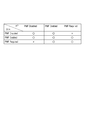
- FIG. 7 shows a correspondence table between the PMF mode and whether or not it can be connected.
- the AP that is PMF Disabled cannot be connected to the STA that is PMF Required that requires PMF.
- the AP that is PMF Embedded can be connected to any STA of PMF Distributed, PMF Embedded, and PMF Required.
- the Robot Management Frame is encrypted and communicated.
- the AP which is PMF Embedded connects to the STA which is PMF Disclosed, the Robust Management Frame is not encrypted.
- the AP that is PMF Required cannot be connected to the STA that is PMF Disabled.
- the STA that can be connected to the AP may differ depending on the PMF mode that is set.
- AP and STA may or may not execute PMF when communicating in the 2.4 GHz band or 5 GHz band. Therefore, even if the frequency band used by the communication device 102 when establishing the network 101 is changed from the 2.4 GHz band to the 5 GHz band, or from the 5 GHz band to the 2.4 GHz band, it is not necessary to change the PMF.
- AP and STA when communicating in the 6 GHz band, AP and STA must execute PMF. Therefore, when the communication device 102 whose PMF setting is Diskled changes the frequency band used when establishing the network 101 to the 6 GHz band, it is connected to another communication device unless the PMF setting is set to Liquid. Can not.
- the frequency band used by the communication device 102 whose PMF setting is set to Embedded is changed to the 6 GHz band, if the PMF setting is not set to Liquid, it will be connected to the communication device which is set to PMF Disabled. There is a risk. Further, when the frequency band used by the communication device 102 is changed from the 6 GHz band to the 2.4 GHz band or the 5 GHz band, the PMF must be set to Enabled to connect to the communication device that is set to PMF Disabled. There is a risk of reduced connectivity. As described above, when the frequency band used by the communication device 102 is changed between the 6 GHz band and the 2.4 GHz band or the 5 GHz band, the user may be inconvenienced if the PMF setting is not set appropriately. ..
- the communication device 102 needs to set an authentication method to be used when constructing a wireless network.
- Specific examples of the authentication method include Open, WPA (Wi-Fi Protected Access), WPA2, and WPA3.
- Open is an authentication method defined as Open System Association in the IEEE802.11 series standard.
- WPA Wi-Fi Protected Access
- WPA2 is the successor standard to WPA and improves security compared to WPA by supporting a new encryption method that was not supported by WPA.
- WPA3 is a successor standard to WPA2 and is a standard with further improved security.
- Wi-Fi 6 which is an authentication program compliant with the IEEE802.11ax standard
- WPA3 is indispensable as an authentication method used for communication in the 6 GHz band.
- Any authentication method may be used in the 2.4 GHz band and the 5 GHz band.
- the communication device 102 needs to make appropriate settings for the authentication method as well as the PMF. For example, if the frequency band used by the communication device 102 is changed from the 6 GHz band to the 2.4 GHz band or the 5 GHz band and the authentication method is left as WPA3 only, the STA that supports only up to WPA2 cannot be connected. There is a risk of inconvenience to the user.
- Specific examples of the communication device 102 include, but are not limited to, a wireless LAN router and a PC.
- the communication device 102 may be any communication device capable of performing wireless communication with another communication device in accordance with the IEEE802.11ax standard.
- Specific examples of the communication device 103 include, but are not limited to, cameras, tablets, smartphones, PCs, mobile phones, video cameras, and the like.
- the communication device 103 may be any communication device capable of executing wireless communication with another communication device in accordance with the IEEE802.11ax standard.
- the network of FIG. 1 is a network composed of one AP and one STA, but the number of APs and STAs is not limited to this.
- FIG. 2 shows the hardware configuration of the communication device 102 according to this embodiment.
- the communication device 102 includes a storage unit 201, a control unit 202, a function unit 203, an input unit 204, an output unit 205, a communication unit 206, and an antenna 207.
- the storage unit 201 is composed of one or more memories such as ROM and RAM, and stores various information such as programs for performing various operations described later and communication parameters for wireless communication.
- ROM is an abbreviation for Read Only Memory
- RAM is an abbreviation for Random Access Memory.
- storage media such as flexible disks, hard disks, optical disks, magneto-optical disks, CD-ROMs, CD-Rs, magnetic tapes, non-volatile memory cards, and DVDs. May be used. Further, the storage unit 201 may include a plurality of memories and the like.
- the control unit 202 is composed of one or more processors such as a CPU and an MPU, and controls the entire communication device 102 by executing a program stored in the storage unit 201.
- the control unit 202 may control the entire communication device 102 in cooperation with the program stored in the storage unit 201 and the OS (Operating System).
- the control unit 202 generates data and signals (wireless frames) to be transmitted in communication with other communication devices.
- the CPU is an abbreviation for Central Processing Unit
- MPU is an abbreviation for Micro Processing Unit.
- the control unit 202 may include a plurality of processors such as a multi-core processor, and the plurality of processors may control the entire communication device 102.
- control unit 202 controls the functional unit 203 to execute a predetermined process.
- the functional unit 203 is hardware for the communication device 102 to execute a predetermined process.
- the data processed by the functional unit 203 may be data stored in the storage unit 201, or may be data communicated with another communication device via the communication unit 206 described later.
- the input unit 204 accepts various operations from the user.
- the output unit 205 outputs various outputs to the user via the monitor screen and the speaker.
- the output unit 205 may operate as a display unit for displaying the screen or as a notification unit for giving various notifications to the user.
- the output by the output unit 205 may be a display on the monitor screen, an audio output by the speaker, a vibration output, or the like.
- both the input unit 204 and the output unit 205 may be realized by one module like a touch panel.
- the input unit 204 and the output unit 205 may be integrated with the communication device 102, may be separate bodies, or may be devices connected to the communication device 102 wirelessly or by wire. ..
- the output unit 205 may operate as a display control unit that causes the display unit of another communication device that communicates with the communication device 102 by wireless communication or wired communication to execute screen display.
- the output unit 205 may operate as an output control unit that causes an output unit such as a speaker of the other communication device to execute audio output in addition to or instead of the screen.
- the input unit 204 may accept the input made by the user via another communication device that communicates with the communication device 102 by wireless communication or wired communication.
- the communication unit 206 controls wireless communication in accordance with the IEEE802.11ax standard. Further, the communication unit 206 may control wireless communication conforming to other IEEE802.11 series standards in addition to the IEEE802.11ax standard, or control wired communication such as a wired LAN. The communication unit 206 controls the antenna 207 to transmit and receive signals for wireless communication generated by the control unit 202. If the communication device 102 supports the NFC standard, the Bluetooth standard, or the like in addition to the IEEE802.11ax standard, wireless communication control conforming to these communication standards may be performed. Further, when the communication device 102 can execute wireless communication conforming to a plurality of communication standards, it may have a configuration in which a communication unit and an antenna corresponding to each communication standard are individually provided.
- the communication device 102 communicates data such as image data, document data, and video data with the communication device 103 via the communication unit 206.
- the antenna 207 may be configured as a separate body from the communication unit 206, or may be configured as one module together with the communication unit 206.
- Antenna 207 is an antenna capable of communication in the 2.4 GHz band, 5 GHz band, and 6 GHz band.
- the communication device 102 has one antenna, but may have different antennas for each frequency band. Further, when the communication device 102 has a plurality of antennas, the communication device 102 may have a communication unit 206 corresponding to each antenna.
- the communication device 103 has the same hardware configuration as the communication device 102.
- FIG. 3 is a flowchart showing a process executed by the communication device 102 reading the computer program stored in the storage unit 201 into the control unit 202 and executing the program when the frequency band to be used is changed.
- the communication device 102 starts the processing of this flowchart based on the instruction from the user to change the frequency band to be used when the frequency band to be used has already been set.
- the instruction from the user may be given directly to the input unit 204 of the communication device 102, or may be given from another device connected to the communication device 102 wirelessly or by wire.
- Another device that connects to the communication device 102 by wire or wirelessly may instruct the display of the setting screen by inputting the IP (Internet Protocol) address of the communication device 102 in the address bar of the browser.
- the communication device 102 may start the processing of this flowchart based on the frequency band change instruction from the application operating on the communication device 102.
- the communication device 102 may start the process of this flowchart based on the change in the operation mode of the communication device 102.
- the communication device 102 may start the processing of this flowchart based on the activation of a predetermined application.
- the communication device 102 acquires the parameters of the wireless network to be constructed in the frequency band to be changed (S301). Specifically, the parameter acquired in this step is at least one of SSID, authentication method, encryption method, key information (PMK, PTK, passphrase, etc.), information on PMF setting, and information on frequency band.
- SSID is an abbreviation for Service Set Identity, and is an identifier for identifying an AP (Communication Device 102).
- the encryption method is a method for encrypting the communication between the AP (communication device 102) and the STA.
- PMK is an abbreviation for Pairwise Master Key and is a master key that is the basis of various keys used in WPA.
- PTK is generated based on PMK.
- the passphrase is information used when encrypting the communication between the AP (communication device 102) and the STA, and only the STA who knows the passphrase set in the AP can use the AP. Can communicate.
- the information regarding the PMF setting is information indicating which of the PMF Liquid, the PMF Disclosed, and the PMF Embedded is set in the communication device 102.
- the information regarding the frequency band is information indicating whether the frequency band in which the communication device 102 constructs the wireless network is the 2.4 GHz band, the 5 GHz band, or the 6 GHz band. In this step, the communication device 102 acquires at least information about the frequency band to be changed.
- the communication device 102 acquires the parameters by inputting the parameters related to the wireless network to be changed from the user.
- the communication device 102 may acquire parameters from the storage unit 201 of its own device.
- the communication device 102 may acquire parameters from another device via wired communication or wireless communication.
- the communication device 102 determines whether or not the frequency band currently used is the 6 GHz band (S302). When the frequency band currently used is not the 6 GHz band, that is, the 2.4 GHz band or the 5 GHz band, the communication device 102 determines No in this step and performs the process of S312. On the other hand, when the frequency band currently used is the 6 GHz band, the communication device 102 determines Yes in this step and performs the process of S303.
- the communication device 102 determines whether or not the frequency band to be switched is the 6 GHz band (S303). If the frequency band is the 6 GHz band among the parameters of the switching destination network acquired in S301, the communication device 102 determines Yes in this step and performs the process of S304. On the other hand, when the frequency band is the 2.4 GHz band or the 5 GHz band among the parameters of the switching destination network acquired in S301, the communication device 102 determines No in this step and performs the process of S317.
- the communication device 102 does not change the PMF setting when both the change destination frequency band and the change source frequency band are in the 6 GHz band (S304). Since the frequency band of the change destination and the frequency band of the change source are both 6 GHz bands, the communication device 102 maintains the PMF Liquid setting. In this case, when transmitting the Beacon, the Probe Response, and the Association Response, the communication device 102 transmits the information indicating the PMF Request. The communication device 102 can notify the PMF information using the frame formats shown in FIGS. 5 and 6.
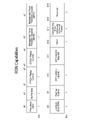
- FIG. 5 shows the frame format of Robust Security Network Element (RSNE).
- the Ethernet is information included in at least one MAC frame body of Beacon, Probe Response, and Association Response transmitted by the communication device 102.
- RSNE includes the Element ID, Length, Version, Group Data Cipher Suite, and Pairwise Cipher Suite Count as fields. RSNE further includes as fields the Pairwise Cipher Suite List, AKM Suite Count, AKM Suite List, RSN Capabilities, and PMKIDCount. RSNE also includes PMKID List and Group Management Cipher Suite as fields. The communication device 102 communicates each field included in the RSNE in order from the Element ID so that the Group Management Cipher Suite is the last. At least one of these fields of RSNE may be omitted, or the order in which any of the fields is communicated may be changed.
- the Element ID is an identifier for identifying the Information Element, and includes identification information indicating that it is RSNE in the present embodiment.
- Length is a field indicating the data length of Element, and in the present embodiment, information indicating the data length of RSNE is included.
- Version is a field indicating version information of the RSN (Robust Security Network) protocol.
- information indicating Version 1 is included.
- Group Data Cipher Suite is a field containing a Cipher selector used in a wireless network to protect a group address frame.
- the Pairwise Cipher Suite Count is a field indicating the number of selectors of the Pairwise Cipher Suite included in the Pairwise Cipher Suite List described later.
- the Pairwise Cipher Suite List is a field that includes one or more Selectors for the Pairwise Cipher Suite.
- the AKM Suite Count is a field indicating the number of AKM Suite selectors included in the AKM Suite List described later.
- AKM Suite List is a field that includes one or more AKM Suite selectors.
- the AKM Suite selector refers to a combination of OUI indicating AKM Suite and type information.
- the AKM Suite refers to a combination of an authentication method, a Key management type, and a Key derivation type.
- the RSN Capabilities will be described with reference to FIG. 6 described later.
- the RSN Capabilities contains information indicating the setting of the PMF of the communication device 102.
- the PMKID Count is a field that includes information indicating the number of PMKIDs included in the PMKID List described later.
- the PMKID List is a field containing information indicating one or more PMKIDs held by the communication device of the source of RSNE as valid with the communication device of the destination.
- the PMKID is an identifier for identifying the PMK.
- the Group Management Cipher Suite is a field containing a Cipher selector used in a wireless network to protect the Robust Management Frame including the group address.
- FIG. 6 shows the frame format of RSN Capabilities.
- RSN Capabilities includes, as fields, Precisionation, No Pairwise, PTKSA Play Counter, and GTKSA Play Counter.
- RSN Capabilities further includes Management Frame Protection Retrieve (MFR) and Management Frame Protection Capable (MFPC) as fields.
- RSN Capabilities further include Joint Multi-Band RSNA, PeeerKey Embedded, SPP A-MSDU Capable, and SPP A-MSDU Liquid as fields.
- RSN Capabilities further includes PBAC and Extended Key ID for Individually Added Frames (EKIIAF) as fields.
- the communication device 102 communicates each field included in the RSN Capabilities in order from the presentation so that the EKIIAF is the last. At least one of these fields of RSN Capabilities may be omitted, or the order in which any of the fields is communicated may be changed.
- the presentation is a field indicating whether or not the device that is the source of the RSNE supports the function of the presentation. Preamination allows the STA to perform AP and RSNA authentication before performing (Re) Association.
- No Pairwise is a field indicating whether or not the WEP (Wired Equivalent Privacy) default key 0 is supported at the same time as the pairwise key.
- WEP Wired Equivalent Privacy
- PTKSA PlayCounter is a field indicating a reply counter for each PTKSA.
- PTKSA is an abbreviation for Pairwise Transition Key Security Association, and refers to the context resulting from the result of 4-way handshake. When the value included in the PTKSA Repeat Counter is 0, it indicates that the reply counter is 1 per PTKSA. Similarly, when the value included in the PTKSA Repeat Counter is 1, it indicates that the reply counter is 2 per PTKSA.
- GTKSA PlayCounter is a field indicating a reply counter for each GTKSA.
- GTKSA is an abbreviation for Group Temporal Key Security Association, and refers to the context that arises from the successful exchange of GTK by either the group key handshake or the 4-way handshake.
- GTK is an abbreviation for Group Temporal Key. Similar to the PTKSA PlayCounter, when the value included in the GTKSA PlayCounter is 0, it indicates that the reply counter is 1 per GTKSA.
- the MFPR is a field indicating whether the transmission device (communication device 102) of the RSN Managements requires the protection of the Robust Management Frame. When 1 is included as a value in the MFPR, it indicates that the transmission device of the RSN Managements requires the protection of the Robust Management Frame. Otherwise, the MFPR contains 0 as a value.
- the MFPC is a field indicating whether or not the transmitting device (communication device 102) of the RSN Managements can execute the protection of the Robust Management Frame.
- the transmission device of the RSN Managements includes 1 as a value in the MFPC when the protection of the Robot Management Frame can be executed. Otherwise, the MFPC contains 0 as a value.
- the Joint Multi-Band RSNA is a field indicating whether or not the transmitting device (communication device 102) of the RSN Capabilities supports the Joint Multi-Band RSNA.
- the PeerKey Enable is a field indicating whether or not the transmission device (communication device 102) of the RSN Capaviities supports the PeerKey handshake.
- the SPP A-MSDU Capable notifies whether the transmitting device (communication device 102) of the RSN Capabilities supports A-MSDUs in which signaling and payload are protected.
- SPP is an abbreviation for Signaling and Payload Protected.
- A-MSDU is an abbreviation for Aggregate MAC Service Data Unit.
- the SPP A-MSDU Liquid is a field indicating whether or not the transmitting device (communication device 102) of the RSN Capabilities requires A-MSDUs in which signaling and payload are protected.
- PBAC is an abbreviation for Protected Block Accrement Capable, and is a field indicating whether or not it is PBAC.
- EKIIAF is a field indicating whether or not the transmitting device (communication device 102) of RSN Capaviities supports a value in the range of 0 to 1 as the key ID of PTKSA and STKSA.
- STKSA is an abbreviation for Station-to-station link (STSL) Transient Key Security Association.
- the communication device 102 can indicate the PMF setting of its own device by using a specific field in the RSN Capabilities included in the RSNE.
- the communication device 102 does not change the PMF setting of its own device in S304. In this case, the PMF setting of the communication device 102 remains PMF Request.
- the communication device 102 may continue the transmission of the Probe Response or the Association Response including the same RSNE in addition to or instead of the Beacon.
- the communication device 102 decides not to change the authentication method (S305). Since the frequency band of the change destination and the frequency band of the change source are both 6 GHz bands, the communication device 102 maintains the setting of the authentication method. In this case, the authentication method used by the communication device 102 remains only WPA3.
- the communication device 102 may continue the transmission of the Probe Response or the Association Response including the same RSNE in addition to or instead of the Beacon.
- the communication device 102 executes the process of S305, the process of this flow ends.
- the communication device 102 does not need to change the PMF setting and the authentication method setting, so these settings are changed. Not done.
- the communication device 102 may start the transmission of the Probe Response or the Association Response including the same RSNE in addition to or instead of the Beacon.
- the communication device 102 improves the interoperability by changing the PMF setting to PMF Embedded. be able to. That is, the communication device 102 can be connected to other communication devices that are PMF Disabled by changing from the setting that other communication devices that are PMF Disabled cannot be connected, and the interoperability is improved. improves. Further, when the frequency band to be used is changed from the 6 GHz band to another band (2.4 GHz band or 5 GHz band), the communication device 102 can change the setting of the authentication method to enable both WPA3 and WPA2. , Interoperability can be improved. That is, the communication device 102 can be connected to other communication devices supporting only WPA2 by changing from the setting that other communication devices supporting only WPA2 cannot be connected, and the interoperability is improved. improves.
- the communication device 102 determines whether or not the communication device 102 has received the PMF Request from the opposite device (S306). Specifically, the communication device 102 determines whether the RSNE included in the Association Request received from the STA (communication device 103) includes the RSN Capabilities indicating PMF Request. When the communication device 102 receives an Association Request including RSNE indicating PMF Request, it determines Yes in this step and performs the process of S307. On the other hand, when the communication device 102 receives an Association Request including RSNE indicating PMF Enable or PMF Disclosed, it determines No in this step and performs the process of S308.
- the communication device 102 changes the PMF setting of its own device to PMF Request (S307). As a result, the communication device 102 can have higher security if the STA can execute the PMF even when the frequency band is changed to the 2.4 GHz band or the 5 GHz band.
- the communication device 102 does not change the PMF setting of its own device (S308). In this case, the communication device 102 leaves the PMF setting of its own device as PMF Available.
- the communication device 102 determines whether or not the authentication method has been received by the WPA3 from the opposite device (S309). Specifically, the communication device 102 determines whether the RSNE included in the Association Request received from the STA (communication device 103) includes the RSN Capabilities including the information indicating WPA3. When the communication device 102 receives the Association Request including the information indicating WPA3, it determines Yes in this step and performs the process of S310. On the other hand, when the communication device 102 receives the Association Request that does not include the information indicating WPA3, that is, includes only the information indicating WPA2, for example, it determines No in this step and performs the process of S311.
- the communication device 102 changes the setting of the authentication method of its own device so that only WPA3 can be set (S310). As a result, the communication device 102 can have higher security if the STA can execute WPA3 even when the frequency band is changed to the 2.4 GHz band or the 5 GHz band.
- the processing of this flow ends.
- the communication device 102 does not change the setting of the authentication method of its own device (S311). In this case, the communication device 102 leaves the setting of the authentication method of its own device as WPA3 / WPA2.
- the communication device 102 performs the process of S311, the process of this flow ends.
- the communication device 102 may skip the processes of S306 to S311.
- the communication device 102 can execute the PMF function regardless of whether WPA2 is used as the authentication method or WPA3 is used.
- WPA2 is used as the authentication method
- the PTK derived by the secure hash algorithm SHA1 is used as the PTK for encrypting the Robust Management Frame.
- WPA3 is used as the authentication method
- PTK is derived by the secure hash algorithm SHA256.
- the communication device 102 changes the PMF setting and the authentication method setting based on the frequency band being changed from the 6 GHz band to another band, but the present invention is not limited to this.
- the communication device 102 does not change the PMF setting even if the frequency band is changed from the 6 GHz band to another band. May be good.
- the communication device 102 may not change the setting of the authentication method in addition to or instead of the setting of the PMF.
- the output unit 205 may be used to warn the user about interoperability.
- the security priority mode is set to invalid, such a communication device 102 executes the process of S317 in FIG.
- the communication device 102 receives the Association Request including the information indicating the PMF Disclosure from the communication device 103, the communication device 102 changes the PMF setting of its own device to PMF Embedded.
- the communication device 102 when the communication device 102 receives the Association Request including the information indicating PMF Request or PMF Enable from the communication device 103, the communication device 102 does not change the PMF setting of its own device as PMF Request.
- the communication device 102 determines whether or not the information indicating WPA3 is received from the opposite device as the authentication method.
- the communication device 102 receives the Association Request that does not include the information indicating WPA3 from the communication device 103 and includes the information indicating WPA2, the communication device 102 changes the setting of the authentication method of its own device to WPA3 / WPA2.
- the communication device 102 when the communication device 102 receives the Association Request including the information indicating WPA3 from the communication device 103, the communication device 102 does not change the setting of the authentication method of its own device as WPA3. In this way, even when the frequency band is changed, the communication device 102 changes the PMF setting or the like according to the setting of the opposite device, so that the opposite device can handle the change. Can maintain high security settings.
- the communication device 102 executes the operation as the AP and the operation as the STA in parallel at the same time, the frequency band of the network constructed as the AP is changed from the 6 GHz band to another band.
- the communication device 102 may use the output unit 205 to warn the user about interoperability.
- the communication device 102 determines whether the frequency band of the switching destination is the 6 GHz band (S312). The processing of this step is the same as that of S303. If the communication device 102 determines Yes in this step, it performs the process of S313, and if it determines No, it performs the process of S315.
- the communication device 102 does not change the PMF setting of its own device when neither the switching source frequency band nor the switching destination frequency band is the 6 GHz band (S313). Specifically, the communication device 102 keeps the PMF setting of its own device as PMF Embedded and does not change it. As a result, the communication device 102 can maintain the interoperability of its own device.
- the communication device 102 does not change the setting of the authentication method of its own device (S314). Specifically, the communication device 102 keeps the setting of the authentication method of its own device as WPA3 / WPA2 and does not change it. As a result, the communication device 102 can maintain the interoperability of its own device.
- the communication device 102 executes the process of S314, the process of this flow ends.
- the communication device 102 changes the PMF setting of its own device when the frequency band of the switching source is not the 6 GHz band but the frequency band of the switching destination is the 6 GHz band (S315). Specifically, the communication device 102 changes the PMF setting of its own device from PMF Embedded to PMF Request. This is because the execution of the PMF function is indispensable in the 6 GHz band.
- the communication device 102 changes the setting of the authentication method of its own device (S316). Specifically, the communication device 102 changes the setting of the authentication method of its own device from WPA3 / WPA2 to WPA3 only. This is because it is essential to use WPA3 as an authentication method in the 6 GHz band.
- the communication device 102 executes the process of S316, the process of this flow ends.
- the communication device 102 interconnects by changing the PMF setting from PMF Liquid to PMF Embedded.
- the sex can be improved.
- the communication device 102 can improve the interoperability by changing the authentication method from the setting in which only WPA3 can be executed to the setting in which both WPA3 and WPA2 can be executed.
- FIG. 4 is a sequence diagram showing an example of processing executed when the communication device 102 changes from a network that uses the 6 GHz band to a network that uses the 2.4 GHz band or the 5 GHz band.
- the communication device 102 starts the processing of this sequence diagram when switching from the already constructed network using the 6 GHz band to the network using the 2.4 GHz band or the 5 GHz band.
- the communication device 102 acquires the parameters of the network to be changed (S401). This process is the same as S301 in FIG. Here, the communication device 102 acquires information indicating that the frequency band of the network to be changed is the 2.4 GHz band or the 5 GHz band.
- the communication device 102 Since the frequency band before the change is the 6 GHz band and the frequency band to be changed is the 2.4 GHz band or the 5 GHz band, the communication device 102 changes the settings of the PMF and the authentication method of its own device (S402). ). This process is the same as S317 in FIG. The communication device 102 changes the PMF setting from PMF Liquid to PMF Embedded, and changes the authentication method from WPA3 only to WPA3 / WPA2.
- the communication device 102 receives an Association Request from the communication device 103, which is an STA (S404).
- the Association Request includes RSNE including the PMF of the communication device 103 and the setting information of the authentication method.
- the communication device 102 changes the PMF and authentication method settings of its own device based on the received PMF and authentication method setting information of the communication device 103 (S405). This process corresponds to the process of S306 to S311 in FIG. The communication device 102 may omit the process of S405.
- the communication device 102 transmits an Association Response to the communication device 103 (S406).
- the Association Response includes an RSNE containing information indicating the PMF of the communication device 102 and the setting of the authentication method.
- the Association Response includes information indicating the changed setting.
- the communication devices 102 and 103 establish a wireless connection (S407).
- the communication devices 102 and 103 communicate the Robust Management Frame based on the PMF setting (S408). If one PMF setting is PMF Embedded and the other PMF setting is PMF Discable, the communication devices 102 and 103 communicate without encrypting the Robust Management Frame. Alternatively, if one PMF setting is PMF Embedded and the other PMF setting is PMF Request, the communication devices 102 and 103 encrypt and communicate with the Robot Management Frame.
- FIG. 4 shows an example of processing when the frequency band used by the communication device 102 is changed from the 6 GHz band to the 2.4 GHz band or the 5 GHz band.
- the communication device 102 can improve the interoperability by appropriately changing the settings of the PMF and the authentication method according to the change of the frequency band.
- the communication device 102 when the frequency band is changed, the communication device 102 changes both the PMF setting and the authentication method setting, but the present invention is not limited to this, and only the PMF setting is changed. You may.
- the communication device 102 transmits the management frame including the setting information of the PMF and the authentication method set based on the frequency band of the change destination network after constructing a new network.
- the communication device 102 may generate a management frame including the setting information of the PMF and the authentication method set based on the frequency band of the network to be changed after constructing a new network. It may be generated before it is done.
- the flowchart of the communication device 102 shown in FIG. 3 may be realized by hardware.
- a dedicated circuit may be generated on the FPGA from a computer program for realizing each step, and this may be used.
- FPGA is an abbreviation for Field Programmable Gate Array.
- a Gate Array circuit may be formed in the same manner as the FPGA and realized as hardware. Further, it may be realized by ASIC (Application Specific Integrated Circuit).
- the present invention supplies a program that realizes one or more functions of the above-described embodiment to a system or device via a network or storage medium, and one or more processors in the computer of the system or device reads and executes the program. It can also be realized by the processing to be performed. It can also be realized by a circuit (for example, ASIC) that realizes one or more functions.
Landscapes
- Engineering & Computer Science (AREA)
- Signal Processing (AREA)
- Computer Networks & Wireless Communication (AREA)
- Computer Security & Cryptography (AREA)
- Mobile Radio Communication Systems (AREA)
Abstract
Description
Claims (14)
- 通信装置であって、
所定の周波数帯域において無線ネットワークを確立する確立手段と、
前記確立手段によって確立された無線ネットワークの周波数帯域が、6GHz帯から他の周波数帯域に切り替えられる場合、Management Frame Protection Capable(MFPC)フィールドに値として1を含み、Management Frame Protection Required(MFPR)フィールドに値として0を含むRobust Security Network Element(RSNE)を含むIEEE802.11シリーズ規格に準拠したマネジメントフレームを生成する生成手段と、
前記生成手段によって生成したマネジメントフレームを送信する送信手段と、
を有することを特徴とする通信装置。 - 前記生成手段は、前記確立手段によって確立された無線ネットワークの周波数帯域が、前記他の周波数帯域から前記6GHz帯に切り替えられる場合、前記MFPCフィールドに値として1を含み、前記MFPRフィールドに値として1を含む前記RSNEを含む前記マネジメントフレームを生成することを特徴とする請求項1に記載の通信装置。
- 前記生成手段は、前記確立手段によって確立された無線ネットワークの周波数帯域が、6GHz帯から他の周波数帯域に切り替えられる場合、AKM Suite ListにWPA(Wi-Fi Protected Access)2のセレクタを含む前記RSNEを含む前記マネジメントフレームを生成することを特徴とする請求項1または2に記載の通信装置。
- 前記生成手段は、前記確立手段によって確立された無線ネットワークの周波数帯域が、前記他の周波数帯域から前記6GHz帯に切り替えられる場合、前記AKM SuiteListにWPA3のセレクタを含む前記RSNEを含む前記マネジメントフレームを生成することを特徴とする請求項3に記載の通信装置。
- 他の通信装置から前記MFPCフィールドに値として0を含み、前記MFPRフィールドに値として0を含む前記RSNEを含む他のマネジメントフレームを受信したかを判定する判定手段をさらに有し、
前記生成手段は、前記確立手段によって確立された無線ネットワークの周波数帯域が、前記6GHz帯から前記他の周波数帯域に切り替えられる場合に、
前記判定手段によって前記他のマネジメントフレームを受信したと判定したことに基づいて、前記MFPCフィールドに値として1を含み、前記MFPRフィールドに値として0を含む前記RSNEを含む前記マネジメントフレームを生成し、前記判定手段によって前記他のマネジメントフレームを受信しなかったと判定したことに基づいて、前記MFPCフィールドに値として1を含み、前記MFPRフィールドに値として1を含む前記RSNEを含む前記マネジメントフレームを生成することを特徴とする請求項1に記載の通信装置。 - 前記判定手段はさらに、AKM Suite ListにWPA3のセレクタを含む前記RSNEを含む前記他のマネジメントフレームを受信したかを判定し、
前記生成手段は、前記確立手段によって確立された無線ネットワークの周波数帯域が、前記6GHz帯から前記他の周波数帯域に切り替えられる場合に、
前記判定手段によって前記他のマネジメントフレームを受信したと判定したことに基づいて、前記AKM Suite ListにWPA2のセレクタを含まずWPA3のセレクタを含む前記RSNEを含む前記マネジメントフレームを生成し、前記判定手段によって前記他のマネジメントフレームを受信しなかったと判定したことに基づいて、前記AKM Suite ListにWPA2のセレクタを含む前記RSNEを含む前記マネジメントフレームを生成することを特徴とする請求項5に記載の通信装置。 - 前記他のマネジメントフレームは、Association Requestであることを特徴とする請求項5または6に記載の通信装置。
- 他の通信装置と、前記MFPCフィールドに値として1を含み、前記MFPRフィールドに値として1を含む前記RSNEを含むマネジメントフレームを通信した場合、該他の通信装置と通信するRobust Management Frameは暗号化されることを特徴とする請求項1から7の何れか1項に記載の通信装置。
- 前記Robust Management Frameは、Deauthenticationフレーム、Disassociationフレーム、およびActionフレームの少なくとも1つであることを特徴とする請求項8に記載の通信装置。
- 前記生成手段によって生成される前記マネジメントフレームは、Beaconフレーム、Probe Responseフレーム、Association Responseフレームの少なくとも一つであることを特徴とする請求項1から9のいずれか1項に記載の通信装置。
- 前記他の周波数帯域は、2.4GHz帯または5GHz帯であることを特徴とする請求項1から10のいずれか1項に記載の通信装置。
- 前記送信手段は、前記他の周波数帯域の無線ネットワークが確立された周波数チャネルにおいて前記生成手段によって生成された前記マネジメントフレームを送信することを特徴とする請求項1から11のいずれか1項に記載の通信装置。
- 通信装置の制御方法であって、
所定の周波数帯域において無線ネットワークを確立する確立工程と、
前記確立工程において確立された無線ネットワークの周波数帯域が、6GHz帯から他の周波数帯域に切り替えられる場合、Management Frame Protection Capable(MFPC)フィールドに値として1を含み、Management Frame Protection Required(MFPR)フィールドに値として0を含むRobust Security Network Element(RSNE)を含むIEEE802.11シリーズ規格に準拠したマネジメントフレームを生成する生成工程と、
前記生成工程において生成したマネジメントフレームを送信する送信工程と、
を有することを特徴とする制御方法。 - コンピュータを請求項1から12のいずれか1項に記載の通信装置の各手段として機能させるためのプログラム。
Priority Applications (7)
| Application Number | Priority Date | Filing Date | Title |
|---|---|---|---|
| CN202180019348.3A CN115316038B (zh) | 2020-03-17 | 2021-02-24 | 通信设备、控制方法和存储介质 |
| KR1020227034539A KR102685310B1 (ko) | 2020-03-17 | 2021-02-24 | 통신 장치, 제어 방법, 및 기억 매체 |
| CN202510227359.0A CN119996145A (zh) | 2020-03-17 | 2021-02-24 | 通信设备、控制方法和存储介质 |
| EP21771205.8A EP4124154A4 (en) | 2020-03-17 | 2021-02-24 | COMMUNICATION DEVICE, CONTROL METHOD AND PROGRAM |
| BR112022016851A BR112022016851A2 (pt) | 2020-03-17 | 2021-02-24 | Dispositivo de comunicação, método de controle e meio de armazenamento |
| US17/932,402 US12250603B2 (en) | 2020-03-17 | 2022-09-15 | Communication device, control method, and storage medium for generating management frames |
| US19/043,230 US20250184840A1 (en) | 2020-03-17 | 2025-01-31 | Communication device, control method, and storage medium |
Applications Claiming Priority (2)
| Application Number | Priority Date | Filing Date | Title |
|---|---|---|---|
| JP2020-046695 | 2020-03-17 | ||
| JP2020046695A JP7566477B2 (ja) | 2020-03-17 | 2020-03-17 | 通信装置、制御方法、およびプログラム |
Related Child Applications (1)
| Application Number | Title | Priority Date | Filing Date |
|---|---|---|---|
| US17/932,402 Continuation US12250603B2 (en) | 2020-03-17 | 2022-09-15 | Communication device, control method, and storage medium for generating management frames |
Publications (1)
| Publication Number | Publication Date |
|---|---|
| WO2021187020A1 true WO2021187020A1 (ja) | 2021-09-23 |
Family
ID=77771983
Family Applications (1)
| Application Number | Title | Priority Date | Filing Date |
|---|---|---|---|
| PCT/JP2021/006723 Ceased WO2021187020A1 (ja) | 2020-03-17 | 2021-02-24 | 通信装置、制御方法、およびプログラム |
Country Status (7)
| Country | Link |
|---|---|
| US (2) | US12250603B2 (ja) |
| EP (1) | EP4124154A4 (ja) |
| JP (1) | JP7566477B2 (ja) |
| KR (1) | KR102685310B1 (ja) |
| CN (2) | CN115316038B (ja) |
| BR (1) | BR112022016851A2 (ja) |
| WO (1) | WO2021187020A1 (ja) |
Cited By (1)
| Publication number | Priority date | Publication date | Assignee | Title |
|---|---|---|---|---|
| EP4529249A4 (en) * | 2022-06-10 | 2025-06-25 | Guangdong Oppo Mobile Telecommunications Corp., Ltd. | WIRELESS COMMUNICATION METHOD AND DEVICE |
Families Citing this family (4)
| Publication number | Priority date | Publication date | Assignee | Title |
|---|---|---|---|---|
| JP7718092B2 (ja) * | 2021-04-16 | 2025-08-05 | ブラザー工業株式会社 | 通信装置及び通信装置のためのコンピュータプログラム |
| WO2022259858A1 (ja) * | 2021-06-09 | 2022-12-15 | キヤノン株式会社 | 通信装置、通信方法、およびプログラム |
| CN117956466A (zh) * | 2022-10-20 | 2024-04-30 | 艾锐势企业有限责任公司 | 用于抵抗降级攻击的设备、方法和计算机可读介质 |
| WO2025048468A1 (ko) * | 2023-08-29 | 2025-03-06 | 엘지전자 주식회사 | 무선랜 시스템에서 제어 프레임에 대한 보호를 지원하는 방법 및 장치 |
Citations (4)
| Publication number | Priority date | Publication date | Assignee | Title |
|---|---|---|---|---|
| JP2012089926A (ja) | 2010-10-15 | 2012-05-10 | Seiko Epson Corp | 無線通信装置およびそれを有する周辺装置 |
| JP2015104085A (ja) * | 2013-11-27 | 2015-06-04 | キヤノン株式会社 | 通信装置およびその制御方法 |
| US20180324200A1 (en) * | 2015-11-27 | 2018-11-08 | Samsung Electronics Co., Ltd. | Method for blocking connection in wireless intrusion prevention system and device therefor |
| JP2020046695A (ja) | 2018-09-14 | 2020-03-26 | キヤノンメディカルシステムズ株式会社 | 演算装置および医用情報処理システム |
Family Cites Families (15)
| Publication number | Priority date | Publication date | Assignee | Title |
|---|---|---|---|---|
| US9307484B2 (en) * | 2011-12-22 | 2016-04-05 | Electronics And Telecommunications Research Institute | Method and apparatus of scanning in wireless local area network system |
| KR20130079105A (ko) * | 2011-12-22 | 2013-07-10 | 한국전자통신연구원 | 무선 랜을 위한 효율적인 스캐닝 방법 |
| US9232548B2 (en) * | 2012-07-03 | 2016-01-05 | Interdigital Patent Holdings, Inc. | Fast initial link setup discovery frames |
| US10129878B2 (en) * | 2015-02-02 | 2018-11-13 | Qualcomm Incorporated | Systems and methods for dynamic band switching |
| US11255663B2 (en) | 2016-03-04 | 2022-02-22 | May Patents Ltd. | Method and apparatus for cooperative usage of multiple distance meters |
| WO2018119153A2 (en) | 2016-12-21 | 2018-06-28 | Intel Corporation | Wireless communication technology, apparatuses, and methods |
| WO2019045438A1 (ko) * | 2017-08-29 | 2019-03-07 | 엘지전자 주식회사 | 무선랜 시스템에서 fst을 수행하는 방법, fst를 지원하는 방법 및 이를 위한 장치 |
| US11452098B2 (en) * | 2018-04-20 | 2022-09-20 | Qualcomm Incorporated | Dual band channel bonding and puncturing |
| US11985588B2 (en) * | 2018-08-23 | 2024-05-14 | Lg Electronics Inc. | Method and device for obtaining information about communication entity operating in new band in wireless LAN system |
| US11991676B2 (en) * | 2018-09-19 | 2024-05-21 | Lg Electronics Inc. | Method and device for transmitting data in wireless LAN system |
| US12477528B2 (en) * | 2018-09-19 | 2025-11-18 | Lg Electronics Inc. | Method and device for receiving data in wireless LAN system |
| US20210185607A1 (en) * | 2020-07-29 | 2021-06-17 | Laurent Cariou | Multi-link parameters and capability indication |
| US12284520B2 (en) * | 2021-05-19 | 2025-04-22 | Cisco Technology, Inc. | Access point verification using crowd-sourcing |
| US20240236639A1 (en) * | 2023-01-10 | 2024-07-11 | Nxp Usa, Inc. | Roaming using distributed access point multi-link device groups |
| US20240305409A1 (en) * | 2023-03-10 | 2024-09-12 | Apple Inc. | Access point (ap)-assisted ap transition |
-
2020
- 2020-03-17 JP JP2020046695A patent/JP7566477B2/ja active Active
-
2021
- 2021-02-24 WO PCT/JP2021/006723 patent/WO2021187020A1/ja not_active Ceased
- 2021-02-24 BR BR112022016851A patent/BR112022016851A2/pt unknown
- 2021-02-24 CN CN202180019348.3A patent/CN115316038B/zh active Active
- 2021-02-24 EP EP21771205.8A patent/EP4124154A4/en active Pending
- 2021-02-24 CN CN202510227359.0A patent/CN119996145A/zh active Pending
- 2021-02-24 KR KR1020227034539A patent/KR102685310B1/ko active Active
-
2022
- 2022-09-15 US US17/932,402 patent/US12250603B2/en active Active
-
2025
- 2025-01-31 US US19/043,230 patent/US20250184840A1/en active Pending
Patent Citations (4)
| Publication number | Priority date | Publication date | Assignee | Title |
|---|---|---|---|---|
| JP2012089926A (ja) | 2010-10-15 | 2012-05-10 | Seiko Epson Corp | 無線通信装置およびそれを有する周辺装置 |
| JP2015104085A (ja) * | 2013-11-27 | 2015-06-04 | キヤノン株式会社 | 通信装置およびその制御方法 |
| US20180324200A1 (en) * | 2015-11-27 | 2018-11-08 | Samsung Electronics Co., Ltd. | Method for blocking connection in wireless intrusion prevention system and device therefor |
| JP2020046695A (ja) | 2018-09-14 | 2020-03-26 | キヤノンメディカルシステムズ株式会社 | 演算装置および医用情報処理システム |
Non-Patent Citations (1)
| Title |
|---|
| See also references of EP4124154A4 |
Cited By (1)
| Publication number | Priority date | Publication date | Assignee | Title |
|---|---|---|---|---|
| EP4529249A4 (en) * | 2022-06-10 | 2025-06-25 | Guangdong Oppo Mobile Telecommunications Corp., Ltd. | WIRELESS COMMUNICATION METHOD AND DEVICE |
Also Published As
| Publication number | Publication date |
|---|---|
| US20230011936A1 (en) | 2023-01-12 |
| EP4124154A4 (en) | 2024-04-03 |
| KR102685310B1 (ko) | 2024-07-17 |
| JP2021150722A (ja) | 2021-09-27 |
| EP4124154A1 (en) | 2023-01-25 |
| CN115316038B (zh) | 2025-03-18 |
| US20250184840A1 (en) | 2025-06-05 |
| CN115316038A (zh) | 2022-11-08 |
| JP7566477B2 (ja) | 2024-10-15 |
| CN119996145A (zh) | 2025-05-13 |
| BR112022016851A2 (pt) | 2022-10-11 |
| US12250603B2 (en) | 2025-03-11 |
| KR20220150936A (ko) | 2022-11-11 |
Similar Documents
| Publication | Publication Date | Title |
|---|---|---|
| JP7566477B2 (ja) | 通信装置、制御方法、およびプログラム | |
| JP5780558B2 (ja) | 無線マルチバンドのセキュリティ | |
| JP7387275B2 (ja) | 通信装置、通信方法及びプログラム | |
| US20080219452A1 (en) | Wireless device and key exchange method thereof | |
| KR102822266B1 (ko) | 통신 장치, 통신 방법 및 프로그램 | |
| KR20090115292A (ko) | 버튼 방식의 무선 랜 설정 방법 및 장치 | |
| US20240107306A1 (en) | Communication apparatus, communication method, and storage medium | |
| JP2017112552A (ja) | 通信装置、制御方法、および、プログラム | |
| JP7688751B2 (ja) | 通信装置、制御方法、およびプログラム | |
| US20250048087A1 (en) | Security mode aware client connection management | |
| WO2022259856A1 (ja) | 通信装置、通信方法、およびプログラム | |
| KR102823829B1 (ko) | 통신 장치, 통신 방법 및 기억 매체 | |
| WO2021131975A1 (ja) | 通信装置、制御方法、およびプログラム | |
| EP4679874A1 (en) | Communication device, control method, and program | |
| JP2022188745A (ja) | 通信装置、通信方法、およびプログラム | |
| JP2022188744A (ja) | 通信装置、通信方法、およびプログラム | |
| WO2023218759A1 (ja) | 通信装置およびその制御方法、通信システム | |
| CN119967499A (zh) | Wi-Fi切换的方法、装置及存储介质 |
Legal Events
| Date | Code | Title | Description |
|---|---|---|---|
| 121 | Ep: the epo has been informed by wipo that ep was designated in this application |
Ref document number: 21771205 Country of ref document: EP Kind code of ref document: A1 |
|
| REG | Reference to national code |
Ref country code: BR Ref legal event code: B01A Ref document number: 112022016851 Country of ref document: BR |
|
| ENP | Entry into the national phase |
Ref document number: 20227034539 Country of ref document: KR Kind code of ref document: A |
|
| ENP | Entry into the national phase |
Ref document number: 112022016851 Country of ref document: BR Kind code of ref document: A2 Effective date: 20220824 |
|
| NENP | Non-entry into the national phase |
Ref country code: DE |
|
| ENP | Entry into the national phase |
Ref document number: 2021771205 Country of ref document: EP Effective date: 20221017 |
|
| WWG | Wipo information: grant in national office |
Ref document number: 202180019348.3 Country of ref document: CN |