WO2021188736A1 - MINIATURE GUIDANCE AND NAVIGATION CONTROL (miniGNC) ANTIBODY-LIKE PROTEINS AND METHODS OF MAKING AND USING THEREOF - Google Patents
MINIATURE GUIDANCE AND NAVIGATION CONTROL (miniGNC) ANTIBODY-LIKE PROTEINS AND METHODS OF MAKING AND USING THEREOF Download PDFInfo
- Publication number
- WO2021188736A1 WO2021188736A1 PCT/US2021/022847 US2021022847W WO2021188736A1 WO 2021188736 A1 WO2021188736 A1 WO 2021188736A1 US 2021022847 W US2021022847 W US 2021022847W WO 2021188736 A1 WO2021188736 A1 WO 2021188736A1
- Authority
- WO
- WIPO (PCT)
- Prior art keywords
- protein
- binding
- domain
- specific antibody
- antibody
- Prior art date
- Legal status (The legal status is an assumption and is not a legal conclusion. Google has not performed a legal analysis and makes no representation as to the accuracy of the status listed.)
- Ceased
Links
Classifications
-
- C—CHEMISTRY; METALLURGY
- C07—ORGANIC CHEMISTRY
- C07K—PEPTIDES
- C07K16/00—Immunoglobulins [IG], e.g. monoclonal or polyclonal antibodies
-
- A—HUMAN NECESSITIES
- A61—MEDICAL OR VETERINARY SCIENCE; HYGIENE
- A61K—PREPARATIONS FOR MEDICAL, DENTAL OR TOILETRY PURPOSES
- A61K47/00—Medicinal preparations characterised by the non-active ingredients used, e.g. carriers or inert additives; Targeting or modifying agents chemically bound to the active ingredient
- A61K47/50—Medicinal preparations characterised by the non-active ingredients used, e.g. carriers or inert additives; Targeting or modifying agents chemically bound to the active ingredient the non-active ingredient being chemically bound to the active ingredient, e.g. polymer-drug conjugates
- A61K47/51—Medicinal preparations characterised by the non-active ingredients used, e.g. carriers or inert additives; Targeting or modifying agents chemically bound to the active ingredient the non-active ingredient being chemically bound to the active ingredient, e.g. polymer-drug conjugates the non-active ingredient being a modifying agent
- A61K47/68—Medicinal preparations characterised by the non-active ingredients used, e.g. carriers or inert additives; Targeting or modifying agents chemically bound to the active ingredient the non-active ingredient being chemically bound to the active ingredient, e.g. polymer-drug conjugates the non-active ingredient being a modifying agent the modifying agent being an antibody, an immunoglobulin or a fragment thereof, e.g. an Fc-fragment
- A61K47/6835—Medicinal preparations characterised by the non-active ingredients used, e.g. carriers or inert additives; Targeting or modifying agents chemically bound to the active ingredient the non-active ingredient being chemically bound to the active ingredient, e.g. polymer-drug conjugates the non-active ingredient being a modifying agent the modifying agent being an antibody, an immunoglobulin or a fragment thereof, e.g. an Fc-fragment the modifying agent being an antibody or an immunoglobulin bearing at least one antigen-binding site
- A61K47/6875—Medicinal preparations characterised by the non-active ingredients used, e.g. carriers or inert additives; Targeting or modifying agents chemically bound to the active ingredient the non-active ingredient being chemically bound to the active ingredient, e.g. polymer-drug conjugates the non-active ingredient being a modifying agent the modifying agent being an antibody, an immunoglobulin or a fragment thereof, e.g. an Fc-fragment the modifying agent being an antibody or an immunoglobulin bearing at least one antigen-binding site the antibody being a hybrid immunoglobulin
- A61K47/6879—Medicinal preparations characterised by the non-active ingredients used, e.g. carriers or inert additives; Targeting or modifying agents chemically bound to the active ingredient the non-active ingredient being chemically bound to the active ingredient, e.g. polymer-drug conjugates the non-active ingredient being a modifying agent the modifying agent being an antibody, an immunoglobulin or a fragment thereof, e.g. an Fc-fragment the modifying agent being an antibody or an immunoglobulin bearing at least one antigen-binding site the antibody being a hybrid immunoglobulin the immunoglobulin having two or more different antigen-binding sites, e.g. bispecific or multispecific immunoglobulin
-
- A—HUMAN NECESSITIES
- A61—MEDICAL OR VETERINARY SCIENCE; HYGIENE
- A61P—SPECIFIC THERAPEUTIC ACTIVITY OF CHEMICAL COMPOUNDS OR MEDICINAL PREPARATIONS
- A61P35/00—Antineoplastic agents
-
- C—CHEMISTRY; METALLURGY
- C07—ORGANIC CHEMISTRY
- C07K—PEPTIDES
- C07K16/00—Immunoglobulins [IG], e.g. monoclonal or polyclonal antibodies
- C07K16/18—Immunoglobulins [IG], e.g. monoclonal or polyclonal antibodies against material from animals or humans
- C07K16/28—Immunoglobulins [IG], e.g. monoclonal or polyclonal antibodies against material from animals or humans against receptors, cell surface antigens or cell surface determinants
-
- C—CHEMISTRY; METALLURGY
- C07—ORGANIC CHEMISTRY
- C07K—PEPTIDES
- C07K16/00—Immunoglobulins [IG], e.g. monoclonal or polyclonal antibodies
- C07K16/18—Immunoglobulins [IG], e.g. monoclonal or polyclonal antibodies against material from animals or humans
- C07K16/28—Immunoglobulins [IG], e.g. monoclonal or polyclonal antibodies against material from animals or humans against receptors, cell surface antigens or cell surface determinants
- C07K16/2803—Immunoglobulins [IG], e.g. monoclonal or polyclonal antibodies against material from animals or humans against receptors, cell surface antigens or cell surface determinants against the immunoglobulin superfamily
-
- C—CHEMISTRY; METALLURGY
- C07—ORGANIC CHEMISTRY
- C07K—PEPTIDES
- C07K16/00—Immunoglobulins [IG], e.g. monoclonal or polyclonal antibodies
- C07K16/18—Immunoglobulins [IG], e.g. monoclonal or polyclonal antibodies against material from animals or humans
- C07K16/28—Immunoglobulins [IG], e.g. monoclonal or polyclonal antibodies against material from animals or humans against receptors, cell surface antigens or cell surface determinants
- C07K16/2803—Immunoglobulins [IG], e.g. monoclonal or polyclonal antibodies against material from animals or humans against receptors, cell surface antigens or cell surface determinants against the immunoglobulin superfamily
- C07K16/2809—Immunoglobulins [IG], e.g. monoclonal or polyclonal antibodies against material from animals or humans against receptors, cell surface antigens or cell surface determinants against the immunoglobulin superfamily against the T-cell receptor (TcR)-CD3 complex
-
- C—CHEMISTRY; METALLURGY
- C07—ORGANIC CHEMISTRY
- C07K—PEPTIDES
- C07K16/00—Immunoglobulins [IG], e.g. monoclonal or polyclonal antibodies
- C07K16/18—Immunoglobulins [IG], e.g. monoclonal or polyclonal antibodies against material from animals or humans
- C07K16/28—Immunoglobulins [IG], e.g. monoclonal or polyclonal antibodies against material from animals or humans against receptors, cell surface antigens or cell surface determinants
- C07K16/2803—Immunoglobulins [IG], e.g. monoclonal or polyclonal antibodies against material from animals or humans against receptors, cell surface antigens or cell surface determinants against the immunoglobulin superfamily
- C07K16/2821—Immunoglobulins [IG], e.g. monoclonal or polyclonal antibodies against material from animals or humans against receptors, cell surface antigens or cell surface determinants against the immunoglobulin superfamily against ICAM molecules, e.g. CD50, CD54, CD102
-
- C—CHEMISTRY; METALLURGY
- C07—ORGANIC CHEMISTRY
- C07K—PEPTIDES
- C07K16/00—Immunoglobulins [IG], e.g. monoclonal or polyclonal antibodies
- C07K16/18—Immunoglobulins [IG], e.g. monoclonal or polyclonal antibodies against material from animals or humans
- C07K16/28—Immunoglobulins [IG], e.g. monoclonal or polyclonal antibodies against material from animals or humans against receptors, cell surface antigens or cell surface determinants
- C07K16/2803—Immunoglobulins [IG], e.g. monoclonal or polyclonal antibodies against material from animals or humans against receptors, cell surface antigens or cell surface determinants against the immunoglobulin superfamily
- C07K16/2827—Immunoglobulins [IG], e.g. monoclonal or polyclonal antibodies against material from animals or humans against receptors, cell surface antigens or cell surface determinants against the immunoglobulin superfamily against B7 molecules, e.g. CD80, CD86
-
- C—CHEMISTRY; METALLURGY
- C07—ORGANIC CHEMISTRY
- C07K—PEPTIDES
- C07K16/00—Immunoglobulins [IG], e.g. monoclonal or polyclonal antibodies
- C07K16/18—Immunoglobulins [IG], e.g. monoclonal or polyclonal antibodies against material from animals or humans
- C07K16/28—Immunoglobulins [IG], e.g. monoclonal or polyclonal antibodies against material from animals or humans against receptors, cell surface antigens or cell surface determinants
- C07K16/2851—Immunoglobulins [IG], e.g. monoclonal or polyclonal antibodies against material from animals or humans against receptors, cell surface antigens or cell surface determinants against the lectin superfamily, e.g. CD23, CD72
-
- C—CHEMISTRY; METALLURGY
- C07—ORGANIC CHEMISTRY
- C07K—PEPTIDES
- C07K16/00—Immunoglobulins [IG], e.g. monoclonal or polyclonal antibodies
- C07K16/18—Immunoglobulins [IG], e.g. monoclonal or polyclonal antibodies against material from animals or humans
- C07K16/28—Immunoglobulins [IG], e.g. monoclonal or polyclonal antibodies against material from animals or humans against receptors, cell surface antigens or cell surface determinants
- C07K16/2863—Immunoglobulins [IG], e.g. monoclonal or polyclonal antibodies against material from animals or humans against receptors, cell surface antigens or cell surface determinants against receptors for growth factors, growth regulators
-
- C—CHEMISTRY; METALLURGY
- C07—ORGANIC CHEMISTRY
- C07K—PEPTIDES
- C07K16/00—Immunoglobulins [IG], e.g. monoclonal or polyclonal antibodies
- C07K16/18—Immunoglobulins [IG], e.g. monoclonal or polyclonal antibodies against material from animals or humans
- C07K16/28—Immunoglobulins [IG], e.g. monoclonal or polyclonal antibodies against material from animals or humans against receptors, cell surface antigens or cell surface determinants
- C07K16/2878—Immunoglobulins [IG], e.g. monoclonal or polyclonal antibodies against material from animals or humans against receptors, cell surface antigens or cell surface determinants against the NGF-receptor/TNF-receptor superfamily, e.g. CD27, CD30, CD40, CD95
-
- C—CHEMISTRY; METALLURGY
- C07—ORGANIC CHEMISTRY
- C07K—PEPTIDES
- C07K16/00—Immunoglobulins [IG], e.g. monoclonal or polyclonal antibodies
- C07K16/18—Immunoglobulins [IG], e.g. monoclonal or polyclonal antibodies against material from animals or humans
- C07K16/28—Immunoglobulins [IG], e.g. monoclonal or polyclonal antibodies against material from animals or humans against receptors, cell surface antigens or cell surface determinants
- C07K16/2887—Immunoglobulins [IG], e.g. monoclonal or polyclonal antibodies against material from animals or humans against receptors, cell surface antigens or cell surface determinants against CD20
-
- C—CHEMISTRY; METALLURGY
- C07—ORGANIC CHEMISTRY
- C07K—PEPTIDES
- C07K16/00—Immunoglobulins [IG], e.g. monoclonal or polyclonal antibodies
- C07K16/18—Immunoglobulins [IG], e.g. monoclonal or polyclonal antibodies against material from animals or humans
- C07K16/28—Immunoglobulins [IG], e.g. monoclonal or polyclonal antibodies against material from animals or humans against receptors, cell surface antigens or cell surface determinants
- C07K16/30—Immunoglobulins [IG], e.g. monoclonal or polyclonal antibodies against material from animals or humans against receptors, cell surface antigens or cell surface determinants from tumour cells
-
- C—CHEMISTRY; METALLURGY
- C07—ORGANIC CHEMISTRY
- C07K—PEPTIDES
- C07K16/00—Immunoglobulins [IG], e.g. monoclonal or polyclonal antibodies
- C07K16/18—Immunoglobulins [IG], e.g. monoclonal or polyclonal antibodies against material from animals or humans
- C07K16/28—Immunoglobulins [IG], e.g. monoclonal or polyclonal antibodies against material from animals or humans against receptors, cell surface antigens or cell surface determinants
- C07K16/30—Immunoglobulins [IG], e.g. monoclonal or polyclonal antibodies against material from animals or humans against receptors, cell surface antigens or cell surface determinants from tumour cells
- C07K16/3007—Carcino-embryonic Antigens
-
- C—CHEMISTRY; METALLURGY
- C07—ORGANIC CHEMISTRY
- C07K—PEPTIDES
- C07K16/00—Immunoglobulins [IG], e.g. monoclonal or polyclonal antibodies
- C07K16/18—Immunoglobulins [IG], e.g. monoclonal or polyclonal antibodies against material from animals or humans
- C07K16/32—Immunoglobulins [IG], e.g. monoclonal or polyclonal antibodies against material from animals or humans against translation products of oncogenes
-
- C—CHEMISTRY; METALLURGY
- C07—ORGANIC CHEMISTRY
- C07K—PEPTIDES
- C07K16/00—Immunoglobulins [IG], e.g. monoclonal or polyclonal antibodies
- C07K16/46—Hybrid immunoglobulins
-
- A—HUMAN NECESSITIES
- A61—MEDICAL OR VETERINARY SCIENCE; HYGIENE
- A61K—PREPARATIONS FOR MEDICAL, DENTAL OR TOILETRY PURPOSES
- A61K39/00—Medicinal preparations containing antigens or antibodies
- A61K2039/505—Medicinal preparations containing antigens or antibodies comprising antibodies
-
- A—HUMAN NECESSITIES
- A61—MEDICAL OR VETERINARY SCIENCE; HYGIENE
- A61K—PREPARATIONS FOR MEDICAL, DENTAL OR TOILETRY PURPOSES
- A61K39/00—Medicinal preparations containing antigens or antibodies
- A61K2039/505—Medicinal preparations containing antigens or antibodies comprising antibodies
- A61K2039/507—Comprising a combination of two or more separate antibodies
-
- A—HUMAN NECESSITIES
- A61—MEDICAL OR VETERINARY SCIENCE; HYGIENE
- A61K—PREPARATIONS FOR MEDICAL, DENTAL OR TOILETRY PURPOSES
- A61K39/00—Medicinal preparations containing antigens or antibodies
- A61K2039/58—Medicinal preparations containing antigens or antibodies raising an immune response against a target which is not the antigen used for immunisation
- A61K2039/585—Medicinal preparations containing antigens or antibodies raising an immune response against a target which is not the antigen used for immunisation wherein the target is cancer
-
- C—CHEMISTRY; METALLURGY
- C07—ORGANIC CHEMISTRY
- C07K—PEPTIDES
- C07K2317/00—Immunoglobulins specific features
- C07K2317/20—Immunoglobulins specific features characterized by taxonomic origin
- C07K2317/24—Immunoglobulins specific features characterized by taxonomic origin containing regions, domains or residues from different species, e.g. chimeric, humanized or veneered
-
- C—CHEMISTRY; METALLURGY
- C07—ORGANIC CHEMISTRY
- C07K—PEPTIDES
- C07K2317/00—Immunoglobulins specific features
- C07K2317/30—Immunoglobulins specific features characterized by aspects of specificity or valency
- C07K2317/31—Immunoglobulins specific features characterized by aspects of specificity or valency multispecific
-
- C—CHEMISTRY; METALLURGY
- C07—ORGANIC CHEMISTRY
- C07K—PEPTIDES
- C07K2317/00—Immunoglobulins specific features
- C07K2317/50—Immunoglobulins specific features characterized by immunoglobulin fragments
- C07K2317/55—Fab or Fab'
-
- C—CHEMISTRY; METALLURGY
- C07—ORGANIC CHEMISTRY
- C07K—PEPTIDES
- C07K2317/00—Immunoglobulins specific features
- C07K2317/50—Immunoglobulins specific features characterized by immunoglobulin fragments
- C07K2317/56—Immunoglobulins specific features characterized by immunoglobulin fragments variable (Fv) region, i.e. VH and/or VL
-
- C—CHEMISTRY; METALLURGY
- C07—ORGANIC CHEMISTRY
- C07K—PEPTIDES
- C07K2317/00—Immunoglobulins specific features
- C07K2317/60—Immunoglobulins specific features characterized by non-natural combinations of immunoglobulin fragments
- C07K2317/64—Immunoglobulins specific features characterized by non-natural combinations of immunoglobulin fragments comprising a combination of variable region and constant region components
-
- C—CHEMISTRY; METALLURGY
- C07—ORGANIC CHEMISTRY
- C07K—PEPTIDES
- C07K2317/00—Immunoglobulins specific features
- C07K2317/90—Immunoglobulins specific features characterized by (pharmaco)kinetic aspects or by stability of the immunoglobulin
- C07K2317/92—Affinity (KD), association rate (Ka), dissociation rate (Kd) or EC50 value
Definitions
- the present application generally relates to the technical field of multi-specific antibody for cancer immunotherapy and more particularly relates to making and using miniature Guidance and Navigation Control (miniGNC) antibodies with multiple binding activities against surface molecules of both immune cells and tumor cells.
- miniGNC miniature Guidance and Navigation Control
- Therapeutic antibodies have become a mainstay in treatment of several diseases, including but not limited to cancer, infection, and autoimmunity. While monoclonal, monospecific antibodies provide a straightforward mechanism to treat disease, e.g., via inhibition or activation of specific signalling pathways, multi-specific antibodies allow more complex therapeutic mechanisms to be explored. By targeting multiple distinct antigens, or multiple epitopes within a single antigen, biological responses such as cell colocalization and activation can be elicited, which enables, for example, the redirection of T cells and other immune cells to the site of specific antigen-expressing tumor cells. In this way, bispecific and multi-specific antibodies have become important platforms in the field of immunooncology.
- GNC Guidance and Navigation Control
- the GNC proteins include the proteins linking multiple functionally independent binding moieties into a single entity that is capable of bringing both effector cells and target cells together (see Applicant's applications, WO/2019/005641, W02019191120, and PCT/US20/59230, incorporated herein in its entirety).
- these platforms are restricted to at least two specificities, preventing the exploration of complex therapeutic mechanisms that require binding to more than two antigens.
- the increased number of binding domains usually necessitates formation of large molecules which often have undesirable physical and biological properties.
- the application provides proteins with binding specificities such as multi-specific protein like antibodies including multi-specific antibodies, and the fragments of these binding proteins including without limitation scFv domain, Fab region, Fc domain, VH, VL, light chains, heavy chains, variable regions, and complementary determining region (CDR).
- the application further provides method of making and using the antibody-like proteins disclosed herein.
- the application provides multi-specific antibody-like proteins.
- the multi-specific antibody-like protein having a N-terminus and a C-terminus, including, a first monomer, including, from the N-terminus to the C-terminus, a first binding monomer, a CHI domain, a first hinge, a first CH2 domain, and a first CH3 domain, wherein the first monomer may comprise optionally a first binding domain (Dl) linked to the N-terminus, a fourth binding domain (D4) linked to the C-terminus, or both, a second monomer, including, from the N-terminus to the C-terminus, a second binding monomer, a CL domain, a second hinge, a second CH2 domain, and a second CH3 domain, wherein the second monomer may comprise optionally a second binding domain (D2) linked to the N-terminus, a fifth binding domain (D5) linked to the C-terminus, or both, wherein the first binding monomer and a second binding mono
- the multi-specific antibody-like protein may be tri-specific, tetra- specific, or penta-specific. In one embodiment, the multi-specific antibody-like protein may be monoclonal antibodies. In one embodiment, the multi-specific antibody-like protein may be purified monoclonal antibody. In one embodiment, the multi-specific antibody-like protein may be humanized antibodies.
- the multi-specific antibody-like protein may further comprise a disulfide bond between the first CH3 domain and a second CH3 domain.
- the multi-specific antibody-like protein may further comprise a second disulfide bond between the first hinge and the second hinge.
- connecting linkers are used between various domains.
- the connecting linker may comprise a (G x S y ) n linker, wherein n, x, and y each independently is an integer from 1 to 10.
- Dl, D2, D4 or D5 are liked to N- or C-terminus through a linker.
- the linker may comprise a (G x S y ) n linker.
- n, x, and y each independently may be an integer from 1 to 10.
- n is 1, 2, 3, 4, 5, 6, 7, 8, 9 and 10.
- x is 1, 2, 3, 4, 5, 6, 7, 8, 9 and 10.
- y is 1, 2, 3, 4, 5, 6, 7, 8, 9 and 10.
- the first CH3 domain is configured to form a hole structure
- the second CH3 domain is configured to form a knob structure
- the first CH2 and CH3 domains and the second CH2 and CH3 domains are configured to heterodimerize to form a complementary Fc domain.
- the first CH3 domain may comprise at least one 'hole' mutation at T366S, L368A or Y407V and the second CH3 domain may comprise a 'knob' mutation at T366W.
- the Fc domain may comprise mutations at H435R/Y436F.
- the Fc domain is engineered to eliminate effector cell functions selected from ADCC, ADCP, or CDC.
- the Fc domain may comprise at least one mutation at L234A, L235A, G237A, K322A (Eu numbering). In one embodiment, the Fc region comprise mutations at L234A/L235A/G237A/K322A. In one embodiment, the Fc region comprise mutations at L234A/L235A/K322A (Eu numbering). In one embodiment, the Fc domain comprise null mutation. In one embodiment, the lgG4 Fc domain comprises the mutation S228P (Eu numbering). In one embodiment, the lgG4 Fc domain comprises the mutations S228P/F234A/L234A (Eu numbering).
- the heavy chain constant sequence may be derived from IgGl or lgG4.
- the Fc domain may include an amino acid sequence having at least 50%, 60%, 70%, 75%, 80%, 85%, 90%, 95%, 97%, 98%, 99%, or 100% identity to SEQ ID NO. 313 or 314.
- the first binding monomer may comprise a VH domain
- a second binding monomer may comprise a VLdomain
- the VH, CHI, VL, CL domains form a Fab region as a third binding domain (D3).
- the Fab region may comprise a disulfide bond between VH-44C and VL lOOC.
- the first binding monomer and the second binding monomer form a NKG2D receptor as a third binding domain (D3).
- the Dl, D2, D4, and D5 is independently a scFv domain, a VHH domain, a receptor, or a ligand.
- the scFv domain may have a VH domain linked to a VL domain. In one embodiment, the scFv domain have may have VH-VL orientation. In one embodiment, the scFv domain have a VL-VH orientation.
- the scFv domain may comprise a disulphide bond between VL and VH. In one embodiment, the disulfide bond is between VL100 and VH44 of the scFv domain. In one embodiment, the scFv domain may comprise the mutation R19S in the VH.
- the VHH domain may comprise the mutation R19S in the VH or VHH.
- at least one, two, or three of Dl, D2, D4, and D5 may be scFv. In one embodiment, all of Dl, D2, D4, and D5 may be scFv.
- At least one, two, or three of Dl, D2, D4, and D5 may be a VHH domain. In one embodiment, all of Dl, D2, D4, and D5 may be VHH domains.
- At least one, two, or three of Dl, D2, D4, and D5 may be a receptor. In one embodiment, all of Dl, D2, D4, and D5 may be receptors.
- At least one, two, or three of Dl, D2, D4, and D5 may be a ligand. In one embodiment, all of Dl, D2, D4, and D5 may be ligands.
- the Dl, D2, D3, D4, and D5 each independently may have a binding specificity against an antigen selected from a T cell activating receptor, an immune cell binding receptor, an immune checkpoint molecule, a co-stimulation factor, a receptor of a leukocyte, a tumor antigen, a tumor associated antigen (TAA), a receptor of a tissue cell, a receptor of a cancer cell, or a combination thereof.
- an antigen selected from a T cell activating receptor, an immune cell binding receptor, an immune checkpoint molecule, a co-stimulation factor, a receptor of a leukocyte, a tumor antigen, a tumor associated antigen (TAA), a receptor of a tissue cell, a receptor of a cancer cell, or a combination thereof.
- the binding domain for T cell activating receptor is adjacent to the binding domain for the tumor associated antigen (TAA).
- TAA tumor associated antigen
- T cell activating receptor may comprise CD3.
- an immune checkpoint receptor may comprise PD-L1, PD-1, TIGIT, TIM-3, LAG-3, CTLA4, BTLA, VISTA, PD-L2, CD160, LOX-1, siglec-15, CD47, HVEM SIRPa CSF1R, CD73, Siglec-15, CD47or a combination thereof.
- a co-stimulating receptor may comprise 4-1BB, CD28, 0X40, GITR, CD40L, CD40, ICOS, LIGHT, CD27, CD30, or a combination thereof.
- a tumor associated antigen may comprise EGFR, HER2, HER3, EGRFVIII, CD19, BCMA, CD20, CD33, CD123, CD22, CD30, ROR1, CEA, LMP1, LMP2A, Mesothelin, PSMA, EpCAM, glypican-3, gpA33, GD2, TROP2, NKG2D ligand, CD39, CLDN18.2, DLL3, HLA-G, FcRH5, GPRC5D, LIV-1, MUC1, CD138, CD70, uPAR, CD38 or a combination thereof.
- the Dl, D2, D3, D4, and D5 each independently may have a binding specificity against an antigen selected, EGFR, HER2, HER3, EGFRvlll, ROR1, CD3, CD28, CEA, LMP1, LMP2A, Mesothelin, PSMA, EpCAM, glypican-3, gpA33, GD2, TROP2, NKG2D, NKG2D ligand, BCMA, CD19, CD20, CD33, CD123, CD22, CD30, PD-L1, PD1, 0X40, 4-1BB, GITR, TIGIT, TIM-3, LAG- 3, CTLA4, CD40, CD40L, VISTA, ICOS, BTLA, LIGHT, HVEM, CSF1R, CD73, CD39, CLDN18.2, DLL3, HLA-G, FcRH5, GPRC5D, LIV-1, MUC1, CD138, CD70, CD16, uPAR, Siglec-15
- Dl may have a binding specificity to CD3, CD20, CEA, HER2, EGFR or NKG2D ligand.
- D2 may have a binding specificity to HER3, EGFR, CD3, or CD19.
- D3 may have a binding specificity to HER3, EGFR, CD3, or NKG2D ligands.
- D4 may have a binding specificity to 4-1BB, or EGFR.
- D5 may have a binding specificity to PD-L1 or HER3.
- D1 may have a binding specificity to CD3, D2 may have a binding specificity to HER3, D3 may have a binding specificity to EGFR, D4 may have a binding specificity to 4-1BB, and D5 may have a binding specificity to PD-L1.
- D1 may have a binding specificity to EGFR
- D2 may have a binding specificity to HER3
- D3 may have a binding specificity to CD3
- D4 may have a binding specificity to 4-1BB
- D5 may have a binding specificity to PD-L1.
- D1 may have a binding specificity to EGFR
- D2 may have a binding specificity to CD3
- D3 may have a binding specificity to HER3
- D4 may have a binding specificity to 4-1BB
- D5 may have a binding specificity to PD-L1.
- D1 may have a binding specificity to CD3 or EGFR
- D2 may have a binding specificity to CD19
- D3 may have a binding specificity to CD3 or EGFR
- D4 may have a binding specificity to 4-1BB
- D5 may have a binding specificity to PD-L1.
- D1 and D4 each may have a binding specificity to EGFR
- D2 and D5 each may have a binding specificity to HER3
- D3 may have a binding specificity to CD3.
- D1 may have a binding specificity to CD20
- D2 may have a binding specificity to CD19
- D3 may have a binding specificity to CD3
- D4 may have a binding specificity to 4-1BB
- D5 may have a binding specificity to PD-L1.
- D1 may have a binding specificity to NKG2D ligand
- D2 may have a binding specificity to CD19
- D3 may have a binding specificity to CD3
- D4 may have a binding specificity to 4-1BB
- D5 may have a binding specificity to PD-L1.
- D1 may have a binding specificity to CD3, and D3 may comprise a NKG2D receptor.
- the protein may further comprise D2 having a binding specificity to CD19.
- the protein may further comprise D5 having a binding specificity to PD-L1.
- the protein may further comprise D4 having a binding specificity to 4-1BB.
- the multi-specific antibody-like protein is bi-specific.
- D2 may have a binding specificity to HER3, D3 may have a binding specificity to CD3.
- D1 may have a binding specificity to HER2, D3 may have a binding specificity to CD3.
- D1 may have a binding specificity to EGFR, D3 may have a binding specificity to CD3.
- D3 may have a binding specificity to CD3, D5 may have a binding specificity to HER3.
- D3 may have a binding specificity to CD3, D4 may have a binding specificity to EGFR.
- the bi-specific antibody-like protein may include an amino acid sequence having at least 50%, 60%, 70%, 75%, 80%, 85%, 90%, 95%, 97%, 98%, 99%, or 100% identity to SEQ ID NO. 1 and 3; 5 and 7; 9 and 11; 13 and 15; 53 and 55; 57 and 59; 113 and 115; 117 and 119; 121 and 123; 125 and 127; 157 and 159; 297 and 299; or 199 and 201.
- the multi-specific antibody-like protein is tri-specific.
- D1 may have a binding specificity to EGFR
- D2 may have a binding specificity to HER3, D3 may have a binding specificity to CD3.
- D1 may have a binding specificity to CEA
- D2 may have a binding specificity to EGFR
- D3 may have a binding specificity to CD3.
- D3 may have a binding specificity to CD3,
- D4 may have a binding specificity to EGFR,
- D5 may have a binding specificity to HER3.
- the antibody is a tri-specific antibody having the binding specificity to EGFR, HER3, and CD3.
- the tri-specific antibody-like protein may include an amino acid sequence having at least 50%, 60%, 70%, 75%, 80%, 85%, 90%, 95%, 97%, 98%, 99%, or 100% identity to SEQ ID NO. 41 and 43; 45 and 47; 49 and 51; 101 and 103; 105 and 107; 109 and 111; 195 and 197; 137 and 139; or 161 and 163.
- the multi-specific antibody-like protein is tetra-specific.
- D1 may have a binding specificity to EGFR
- D2 may have a binding specificity to HER3, D3 may have a binding specificity to CD3, D4 may have a binding specificity to 4-1BB.
- D1 may have a binding specificity to EGFR
- D2 may have a binding specificity to HER3, D3 may have a binding specificity to CD3
- D5 may have a binding specificity to PD-L1.
- the antibody is a tetra-specific antibody having the binding specificity to EGFR, HER3, CD3, and 4-1BB.
- the antibody is a tetra-specific antibody having the binding specificity to EGFR, HER3, CD3, and PD-L1.
- the tetra-specific antibody-like protein may include an amino acid sequence having at least 50%, 60%, 70%, 75%, 80%, 85%, 90%, 95%, 97%, 98%, 99%, or 100% identity to SEQ ID NO. 33 and 35; 37 and 39; 141 and 143; 145 and 147; or 165 and 167.
- the antibody is penta-specific.
- the antibodylike protein may have the binding specificity to EGFR, HER3, CD3, 4-1BB and PD-L1.
- the penta-specific antibody-like protein may include an amino acid sequence having at least 50%, 60%, 70%, 75%, 80%, 85%, 90%, 95%, 97%, 98%, 99%, or 100% identity to SEQ ID NO.
- the application provides novel sequences for complimentary determining regions (CDRs).
- the application provides proteins, antibodylike proteins or antibodies comprising the CDRs as disclosed herein.
- the CDRs may have an affinity to CEA.
- the CDRs may have an equilibrium dissociation constant (KD) to CEA, wherein the KD is not more than 0.1 nM, 2nM, 5nM, 10 nM, 20nM, 30nM or 50nM.
- the CDR may include an amino acid sequence having at least 80% sequence identity to SEQ ID NO. 301, 302, 303, 304, 305, or 306.
- the application provides a protein having an affinity to CEA.
- the protein may have a CDR HI having an amino acid sequence having at least 80% sequence identity to SEQ ID NO.301.
- the protein may have a CDR H2 having an amino acid sequence having at least 80% sequence identity to SEQ ID NO.302.
- the protein may have a CDR H3 having an amino acid sequence having at least 80% sequence identity to SEQ ID NO.303.
- the protein may have a CDR LI having an amino acid sequence having at least 80% sequence identity to SEQ ID NO.314.
- the protein may have a CDR L2 having an amino acid sequence having at least 80% sequence identity to SEQ ID NO.305.
- the protein may have a CDR L3 having an amino acid sequence having at least 80% sequence identity to SEQ ID NO.306.
- the protein may include an amino acid sequence having at least 50%, 60%, 70%, 75%, 80%, 85%, 90%, 95%, 97%, 98%, 99%, or 100% sequence identity to an amino acid sequence selected from SEQ ID NO. 279, 280, 281 or 282.
- the protein may include an amino acid sequence having at least 50%, 60%, 70%, 75%, 80%, 85%, 90%, 95%, 97%, 98%, 99%, or 100% sequence identity to an amino acid sequence selected from SEQ ID NO. 279, 280, 281 or 282.
- the application provides a multi-specific antibody-like protein having a variable region, wherein the variable region may comprise an amino acid sequence selected from SEQ ID NO. 301, 302, 303, 304, 305, or 306.
- the CDRs may have an affinity to CD3.
- the CDR may have an equilibrium dissociation constant (KD) to CD3, wherein the KD is not more than 10 nM, 20nM, 30nM or 50nM, lOOnM, 200nM, 300nM, 400nM or 500nM.
- the CDR may include an amino acid sequence having at least 80% sequence identity to SEQ ID NO. 307, 308, 309, 310, 311 or 312.
- the protein having an affinity to CD3 includes CDR HI having an amino acid sequence having at least 80% sequence identity to SEQ ID NO.307. In one embodiment, the protein having an affinity to CD3 includes CDR H2 having an amino acid sequence having at least 80% sequence identity to SEQ ID NO.308. In one embodiment, the protein having an affinity to CD3 includes CDR H3 having an amino acid sequence having at least 80% sequence identity to SEQ ID NO.309. In one embodiment, the protein having an affinity to CD3 includes CDR LI having an amino acid sequence having at least 80% sequence identity to SEQ ID NO.310. In one embodiment, the protein having an affinity to CD3 includes CDR L2 having an amino acid sequence having at least 80% sequence identity to SEQ ID NO.311. In one embodiment, the protein having an affinity to CD3 includes CDR L3 having an amino acid sequence having at least 80% sequence identity to SEQ ID NO.312.
- the protein may comprise an amino acid sequence having at least 50%, 60%, 70%, 75%, 80%, 85%, 90%, 95%, 97%, 98%, 99%, or 100% sequence identity to an amino acid sequence selected from SEQ ID NO. 227-230, 231-234, 235-238, 239-242 and 291- 294.
- the multi-specific antibody-like protein may comprise an amino acid sequence having at least 50%, 60%, 70%, 75%, 80%, 85%, 90%, 95%, 97%, 98%, 99%, or 100% sequence identity to an amino acid sequence selected from SEQ ID NO. 227-230, 231-234, 235- 238, 239-242 and 291-294.
- the multi-specific antibody-like protein may have a variable region wherein the variable region may comprise an amino acid sequence selected from SEQ ID 307, 308, 309, 310, 311 or 312.
- the application provides isolated nucleic acid sequences encoding the multi-specific antibody-like proteins, fragments, domains, regions as disclosed herein.
- the application provides expression vectors including the isolated nucleic acid sequences as disclosed herein.
- the application provides host cells including the isolated nucleic acid sequences as disclosed herein.
- the host cell includes the expression vector as disclosed herein.
- the host cell may be a prokaryotic cell or a eukaryotic cell.
- the application provides methods for producing the multi-specific antibody like proteins as disclosed herein.
- the method includes the steps of culturing a host cell such that the DNA sequence encoding the multi-specific antibody-like protein is expressed, and purifying said multi-specific antibody.
- the method includes the steps of culturing a host cell under conditions wherein said multi-specific antibody- like proteins are produced and recovering said antibody-like protein.
- the application provides immunoconjugates.
- the immunoconjugate may include the multi-specific antibody-like proteins linked to a cytotoxic agent, an imaging agent, or both.
- the application provides pharmaceutical compositions.
- the pharmaceutical composition may include the multi-specific antibody-like protein and a pharmaceutically acceptable carrier.
- the pharmaceutical composition may further include radioisotope, radionuclide, a toxin, a therapeutic agent, a chemotherapeutic agent or a combination thereof.
- the pharmaceutical composition may include the immunoconjugate as disclosed thereof and a pharmaceutically acceptable carrier.
- the application provides methods for treating or preventing a cancer, an autoimmune disease, or an infectious disease in a subject.
- the method may include the steps of administering to the subject a pharmaceutical composition including a purified multi-specific antibody-like protein, an immunoconjugate, or a pharmaceutical composition as disclosed herein.
- the method may further include co- administering an effective amount of a therapeutic agent.
- the therapeutic agent may comprise an antibody, a chemotherapy agent, an enzyme, or a combination thereof.
- the subject is a human. In one embodiment, the subject is a mammal. In one embodiment, the subject is a chimpanzee. In one embodiment, the subject is a pet animal.
- the application provides a solution including an effective concentration of the multi-specific antibody-like protein, immunoconjugate, or pharmaceutical composition as disclosed herein. In one embodiment, the solution is blood plasma in a subject.
- Figure 1 depicts the heterodimeric configuration of miniGNC molecules with five binding domains (D1-D5), of which the two monomers are encoded by Chain A (N-D1-D3/VH-CH1-CH2-CH3-D4-C) and Chain B (N-D2-D3/VL-CL-CH2-CH3-D5-C);
- Figure 2 shows the dimerization of engineered miniGNC Chain A and Chain B with knockout mutations (KO) on either VH or Fc: (2A) by Protein-A purification to fractionate the mixture into the homodimer (a), the desired heterodimer (b), and the Chain B monomer (c); and (2B) by SDS- PAGE analysis of Protein-A fractionated homodimer (a), heterodimer (b), Chain B monomer (c), and Chain A monomer (d), at the expected sizes under non-reducing and reducing conditions;
- Figure 3 shows the comparative potency of multi-specific miniGNC molecules mediated TDCC on BXPC3 tumor cells by using penta-miniGNC (SI-75P6), tetra-miniGNC (SI-75E2), tri-miniGNC (Sl- 75X3), bi-miniGNC (SI-75X2), and mono-miniGNC (SI-7502) molecules;
- Figure 4 shows the comparative potency of miniGNC molecules mediated TDCC on BXPC3 tumor cell line with EC50 values in the range of 0.1 to 5.5 pM;
- FIGURE 5 shows the survival curves of TDCC assays measuring comparative potency of (A) multi-specific miniGNC molecules with stapled domains, including penta-miniGNC (SI-68P1), tetra- miniGNC (SI-68E2 and SI-68E1), and tri-miniGNC (Sl-68x2), for killing pancreatic cancer cells (HPAFII) in TDCC assay, and (B) SI-68X1 against MCF-7 breast cancer cells; and Figure 6 shows the functionality of multi-specific miniGNC molecules possessing a dimeric NKG2D receptor, including tri-specific (SI-49R25), tetra-specific (SI-49P_X), penta-specific (SI-49PM1 and SI-49P8) in killing breast cancer cells (MDA-MB-231) in TDCC assay.
- SI-68P1 penta-miniGNC
- SI-68E2 and SI-68E1 tetra- miniGNC
- the disclosure provides, among others, isolated antibodies, methods of making such antibodies, bispecific or multi-specific molecules, antibody-drug conjugates and/or immuno- conjugates composed from such antibodies or antigen binding fragments, pharmaceutical compositions containing the antibodies, bispecific or multi-specific molecules, antibody-drug conjugates and/or immuno-conjugates, the methods for making the molecules and compositions, and the methods for treating cancer using the molecules and compositions disclosed herein.
- a miniGNC platform molecule is an assembled heterodimer of two polypeptide chains characterized by the formation of a Fab-Hinge-Fc region core structure with one, two, three, or four additional binding domains (from D1 to D5), as elucidated in Figure 1.
- the two polypeptides may be configured, for Chain A (or Chain 1): N-Dl- D3(VH)-CH1-Hinge-CH2-CH3-D4-C; and for Chain B (or chain 2): N-D2-D3(VL)-CL-Hinge-CH2-CH3- D5-C.
- the Fc domains of the two chains are engineered to contain complementary mutations, also known as "knobs-into-holes", to enhance the formation of the heterodimer.
- a miniGNC platform molecule may have variable components. For example, the VH and VL of the Fab region may be replaced by a non-Fab dimer with or without binding specificity.
- An additional binding domain may be an antibody fragment, such as scFv or VHH, or a non-antibody structure, such as a ligand or a receptor.
- a miniGNC platform antibody may be bivalent, trivalent, tetravalent, or pentavalent with up to five distinct specificities, and retains the approximate size of a normal bivalent IgG antibody (tri-miniGNC Ab at 150 kD) or slightly larger (tetra-miniGNC Ab at 175 kD, and penta-miniGNC Ab at 200 kD).
- the present application relates to methods of making and using miniGNC antibodies, in particular, penta-specific miniGNC antibodies (penta-miniGNC Ab).
- GNC proteins such as GNC antibodies
- miniGNC antibodies are characterized by comprising two moieties for engaging immune cells, such as activating T cells, while targeting tumor cells.
- miniGNC antibodies retain multiple antigen binding domains for engaging immune cells, such as anti-CD3 for T cell activation, anti-4-lBB for co-stimulation, and anti-PD-Ll for inhibiting immune checkpoint.
- miniGNC antibodies are designed to be structurally stable and compact while retaining the characteristic feature of two moieties in GNC antibodies.
- miniGNC contains an Fc domain that allows for FcRn-mediated recycling and half-life extension, as well as facile protein A-based purification.
- the Fc receptor-mediated immunity may be incorporated if desired.
- An Fc-containing miniGNC antibody is quite compact, which allows for better developability and increased tumor penetration.
- GNC antibodies are usually larger than an IgG antibody due to increased number of antigen binding domains (AgBD), which provides spatial flexibility for binding to both a T cell and a tumor cell.
- AgBD antigen binding domains
- miniGNC antibodies retains the same approximate size as human IgG antibodies calculated at approximately 110-130 kD for bi-specific;120-160 for tri-specific; 130-190 kD for tetra-specific; 140-220 kD for penta-specific; as compared to 150 kD for human IgG.
- the incorporation of one or two scFvs onto each chain may reduce chain-pairing complications and improve stability while navigating through tumor microenvironment.
- GNC and miniGNC antibodies may be alterative of an efficacious antibody therapy for treating the same cancer, since the moiety for targeting tumor associated antigens remains the same, including but not limited to, EGFR, HER2, HER3, EGRFVIII, CD19, BCMA, CD20, CD33, CD123, CD22, CD30, ROR1, CEA, LMP1, LMP2A, Mesothelin, PSMA, EpCAM, glypican-3, gpA33, GD2, TROP2, NKG2D ligand, CD39, CLDN18.2, DLL3, HLA-G, FcRH5, GPRC5D, LIV-1, MUC1, CD138, CD70, uPAR, CD38.
- antibody is used in the broadest sense and specifically covers single monoclonal antibodies (including agonist and antagonist antibodies), antibody compositions with polyepitopic specificity, as well as antibody fragments (e.g., Fab, F(ab')2, and Fv), so long as they exhibit the desired biological activity.
- the antibody may be monoclonal, polyclonal, chimeric, single chain, bispecific or bi-effective, human and humanized antibodies as well as active fragments thereof.
- antibody may include immunoglobulin molecules and immunologically active portions of immunoglobulin molecules, i.e. molecules that contain a binding site that immunospecifically bind an antigen.
- the immunoglobulin can be of any type (IgG, IgM, IgD, IgE, IgA and IgY) or class (IgGl, lgG2, lgG3, lgG4, IgAl and lgA2) or subclasses of immunoglobulin molecule.
- the antibody may be whole antibodies and any antigen-binding fragment derived from the whole antibodies.
- a typical antibody refers to heterotetrameric protein comprising typically of two heavy (H) chains and two light (L) chains. Each heavy chain is comprised of a heavy chain variable domain (abbreviated as VH) and a heavy chain constant domain.
- Each light chain is comprised of a light chain variable domain (abbreviated as VL) and a light chain constant domain.
- VL variable domain
- the VH and VL regions can be further subdivided into domains of hypervariable complementarity determining regions (CDR), and more conserved regions called framework regions (FR).
- CDR hypervariable complementarity determining regions
- FR framework regions
- Each variable domain is typically composed of three CDRs and four FRs, arranged in the following order: FR1, CDR1, FR2, CDR2, FR3, CDR3, FR4from amino-terminus to carboxy-terminus.
- FR1, CDR1, FR2, CDR2, FR3, CDR3, FR4from amino-terminus to carboxy-terminus Within the variable regions of the light and heavy chains there are binding regions that interacts with the antigen.
- the term "monoclonal antibody” as used herein refers to an antibody obtained from a population of substantially homogeneous antibodies, i.e., the individual antibodies comprising the population are identical except for possible naturally occurring mutations that may be present in minor amounts. Monoclonal antibodies are highly specific, being directed against a single antigenic site. Furthermore, in contrast to conventional (polyclonal) antibody preparations which typically include different antibodies directed against different determinants (epitopes), each monoclonal antibody is directed against a single determinant on the antigen. In addition to their specificity, the monoclonal antibodies are advantageous in that they are synthesized by the hybridoma culture, uncontaminated by other immunoglobulins.
- the modifier "monoclonal” indicates the character of the antibody as being obtained from a substantially homogeneous population of antibodies and is not to be construed as requiring production of the antibody by any particular method.
- the monoclonal antibodies to be used in accordance with the present disclosure may be made by the hybridoma method first described by Kohler & Milstein, Nature, 256:495 (1975), or may be made by recombinant DNA methods (see, e.g., U.S. Pat. No. 4,816,567).
- the monoclonal antibodies may include "chimeric" antibodies (immunoglobulins) in which a portion of the heavy and/or light chain is identical with or homologous to corresponding sequences in antibodies derived from a particular species or belonging to a particular antibody class or subclass, while the remainder of the chain(s) is identical with or homologous to corresponding sequences in antibodies derived from another species or belonging to another antibody class or subclass, as well as fragments of such antibodies, so long as they exhibit the desired biological activity (U.S. Pat. No. 4,816,567; and Morrison et al., Proc. Natl. Acad. Sci. USA, 81:6851-6855 [1984]).
- chimeric antibodies immunoglobulins in which a portion of the heavy and/or light chain is identical with or homologous to corresponding sequences in antibodies derived from a particular species or belonging to a particular antibody class or subclass, while the remainder of the chain(s) is identical with or homologous to corresponding sequences
- Monoclonal antibodies can be produced using various methods including mouse hybridoma or phage display (see Siegel. Transfus. Clin. Biol. 9:15-22 (2002) for a review) or from molecular cloning of antibodies directly from primary B cells (see Tiller. New Biotechnol. 28:453- 7 (2011)).
- antibodies were created by methods of immunizing rabbits, mice, or llama in combination with subsequent strategies like hybridoma or display. Rabbits are known to create antibodies of high affinity, diversity and specificity (Weber et al. Exp. Mol. Med. 49:e305).
- antigen- or epitope-binding portion or fragment refers to fragments of an antibody that are capable of binding to an antigen. These fragments may be capable of the antigen-binding function and additional functions of the intact antibody.
- binding fragments include, but are not limited to a single-chain Fv fragment (scFv) consisting of the VL and VH domains of a single arm of an antibody connected in a single polypeptide chain by a synthetic linker or a Fab fragment which is a monovalent fragment consisting of the VL, constant light (CL), VH and constant heavy 1 (CHI) domains.
- scFv single-chain Fv fragment
- Antibody fragments can be even smaller sub- fragments and can consist of domains as small as a single CDR domain, in particular the CDR3 regions from either the VL and/or VH domains (for example see Beiboer et al., J. Mol. Biol. 296:833-49 (2000)). Antibody fragments are produced using conventional methods known to those skilled in the art. The antibody fragments can be screened for utility using the same techniques employed with intact antibodies.
- the "antigen-or epitope-binding fragments" can be derived from an antibody of the present disclosure by a number of art-known techniques. For example, purified monoclonal antibodies can be cleaved with an enzyme, such as pepsin, and subjected to HPLC gel filtration. The appropriate fraction containing Fab fragments can then be collected and concentrated by membrane filtration and the like.
- an enzyme such as pepsin
- HPLC gel filtration HPLC gel filtration
- the appropriate fraction containing Fab fragments can then be collected and concentrated by membrane filtration and the like.
- general techniques for the isolation of active fragments of antibodies see for example, Khaw, B. A. et al. J. Nucl. Med. 23:1011-1019 (1982); Rousseaux et al. Methods Enzymology, 121:663-69, Academic Press, 1986.
- Papain digestion of antibodies produces two identical antigen binding fragments, called “Fab” fragments, each with a single antigen binding site, and a residual "Fc” fragment, whose name reflects its ability to crystallize readily.
- Pepsin treatment yields an F(ab')2 fragment that has two antigen combining sites and is still capable of cross-linking antigen.
- the Fab fragment may contain the constant domain of the light chain and the first constant domain (CHI) of the heavy chain.
- Fab' fragments differ from Fab fragments by the addition of a few residues at the carboxy terminus of the heavy chain CHI domain including one or more cysteines from the antibody hinge region.
- Fab'-SH is the designation herein for Fab' in which the cysteine residue(s) of the constant domains bear a free thiol group.
- F(ab')2 antibody fragments originally were produced as pairs of Fab' fragments which have hinge cysteines between them. Other, chemical couplings of antibody fragments are also known.
- Fv is the minimum antibody fragment which contains a complete antigen recognition and binding site. This region consists of a dimer of one heavy and one light chain variable domain in tight, non-covalent association. It is in this configuration that the three CDRs of each variable domain interact to define an antigen binding site on the surface of the VH-VL dimer. Collectively, the six CDRs confer antigen binding specificity to the antibody. However, even a single variable domain (or half of an Fv comprising only three CDRs specific for an antigen) has the ability to recognize and bind antigen, although at a lower affinity than the entire binding site.
- the "light chains" of antibodies (immunoglobulins) from any vertebrate species can be assigned to one of two clearly distinct types, called kappa (k) and lambda (l), based on the amino acid sequences of their constant domains.
- immunoglobulins can be assigned to different classes. There are five major classes of immunoglobulins: IgA, IgD, IgE, IgG and IgM, and several of these may be further divided into subclasses (isotypes), e.g., IgG-l, lgG-2, lgG-3, and lgG-4; IgA-1 and IgA-2.
- the heavy chain constant domains that correspond to the different classes of immunoglobulins are called a, delta, epsilon, ⁇ , and m, respectively.
- the subunit structures and three-dimensional configurations of different classes of immunoglobulins are well known.
- a “humanized antibody” refers to a type of engineered antibody having its CDRs derived from a non-human donor immunoglobulin, the remaining immunoglobulin-derived parts of the molecule being derived from one (or more) human immunoglobulin(s).
- framework support residues may be altered to preserve binding affinity.
- polypeptide As used herein, are interchangeable and are defined to mean a biomolecule composed of amino acids linked by a peptide bond.
- isolated is meant a biological molecule free from at least some of the components with which it naturally occurs.
- isolated when used to describe the various polypeptides disclosed herein, means a polypeptide that has been identified and separated and/or recovered from a cell or cell culture from which it was expressed. Ordinarily, an isolated polypeptide will be prepared by at least one purification step.
- Recombinant means the antibodies are generated using recombinant nucleic acid techniques in exogeneous host cells.
- antigen refers to an entity or fragment thereof which can induce an immune response in an organism, particularly an animal, more particularly a mammal including a human.
- the term includes immunogens and regions thereof responsible for antigenicity or antigenic determinants.
- immunogenic refers to substances which elicit or enhance the production of antibodies, T-cells or other reactive immune cells directed against an immunogenic agent and contribute to an immune response in humans or animals.
- An immune response occurs when an individual produces sufficient antibodies, T-cells and other reactive immune cells against administered immunogenic compositions of the present disclosure to moderate or alleviate the disorder to be treated.
- Specific binding or “specifically binds to” or is “specific for” a particular antigen or an epitope means binding that is measurably different from a non-specific interaction. Specific binding can be measured, for example, by determining binding of a molecule compared to binding of a control molecule, which generally is a molecule of similar structure that does not have binding activity. For example, specific binding can be determined by competition with a control molecule that is similar to the target.
- affinity refers to a measure of the attraction between two polypeptides, such as antibody/antigen, receptor/ligand, etc.
- the intrinsic attraction between two polypeptides can be expressed as the binding affinity equilibrium dissociation constant (KD) of a particular interaction.
- Specific binding for a particular antigen or an epitope can be exhibited, for example, by an antibody having a KD for an antigen or epitope of at least about 10 -4 M, at least about 10 -5 M, at least about 10 -6 M, at least about 10 -7 M, at least about 10 -8 M, at least about 10 -9 M, alternatively at least about 10 -10 M, at least about 10 -11 M, at least about 10 - 12 M or greater, where KD refers to the equilibrium dissociation constant of a particular antibody-antigen interaction.
- an antibody that specifically binds an antigen will have a KD that is 20-, 50- , 100-, 500-, 1000-, 5,000-, 10,000- or more times greater for a control molecule relative to the antigen or epitope.
- specific binding for a particular antigen or an epitope can be exhibited, for example, by an antibody having a KA or Ka for an antigen or epitope of at least 20-, 50-, 100-, 500-, 1000-, 5,000-, 10,000- or more times greater for the epitope relative to a control, where KA or Ka refers to an association rate of a particular antibody-antigen interaction.
- sequence identity preferably relates to the percentage of the nucleotide residues of the shorter sequence which are identical with the nucleotide residues of the longer sequence. Sequence identity can be determined conventionally with the use of computer programs. The deviations appearing in the comparison between a given sequence and the above-described sequences of the disclosure may be caused for instance by addition, deletion, substitution, insertion or recombination.
- miniGNC antibodies relies on the co-expression and assembling of two polypeptide chains of a heterodimer between Chain A and Chain B ( Figure 1). While Chain A may be a native heavy chain (HC), Chain B is a recombinant fusion peptide between the light chain and the Fc domain of HC. At the core of this antibody structure, there is a Fab region (VH-CH1/VL- CL) followed by the hinge and Fc region (CH2-CH3/CH2-CH3) of human IgGl.
- “Knobs-into-holes” mutations or other complementary sets of mutations may be introduced into the CH3 domains to destabilize homodimers and favor heterodimer formation (Ridgway JB, Presta LG, Carter P., Protein Eng 1996;9:617-21).
- the "hole” mutations in the CH3 domain of Chain A consist of T366S, L368A, and Y470V, while the "knob” mutation in the CH3 domain of Chain B is T366W.
- the "knob” created by the T366W mutation on Chain B preferentially interacts with the "hole” created by the three mutations on Chain A. This preferential pairing may further stabilize the heterodimer while the non-covalent pairing of the Fab domain components (i.e.
- miniGNC antibodies also contain antibody fragments from native IgG (Fab, Fc) and other variable-sequence based structures, such as scFv and VHH, but are engineered to preferentially configure a Fab region-Hinge-Fc region structure after the formation of a heterodimer.
- the characteristic feature of miniGNC antibodies is the compactness of this engineered structure.
- One or more structurally diversified antigen binding domain may be added to the two N- terminals and the two C-terminals of a miniGNC molecule as D1, D2 D4, or D5, thereby creating up to five binding specificities.
- Each of these added binding domains may be variable-sequence- based structures, such as scFv and VHH, or non-variable sequence-based structures, such as ligand and receptor.
- D1 and D2 refer to the binding domains linked to the N-terminals of Chain A and Chain B, respectively
- D4 and D5 refer to the binding domains linked to the C-terminals of Chain A and Chain B, respectively.
- the two polypeptides of a penta-specific miniGNC (penta-miniGNC) antibody may be configured as Chain A: N-Dl-D3(VH)-CH1-Hinge-CH2-CH3-D4-C; and Chain B: N-D2-D3(VL)-CL-Hinge-CH2-CH3-D5-C; where VL may be either nl or VK and CL may be either C or Ck as shown in Figure 1.
- the structural configuration of the penta-miniGNC antibody in Figure 1 may be simplified by reducing one or more binding domains and becoming tetra-, tri-, and bi-miniGNC.
- Table 1 depicts the generation and characterization of a family of anti-CD3 miniGNC antibodies for optimizing their efficacy of targeting EGFR and HER3.
- each binding domain exerts one binding specificity.
- the penta-miniGNC antibody becomes a tetra-specific penta-miniGNC antibody.
- miniGNC may be translated into stable and functional heterodimeric protein
- a simplified asymmetric format was designed for evaluating the effect of configuration and mutations to the heterodimer formation of miniGNC molecules.
- a single scFv (Dl) is fused to the N-terminus of Chain A, whereas the Chain B does not have any added binding domain.
- the proportion of each species of dimerization between Chain A and Chain B may be distinguished by SDS-PAGE and SEC, as the predicted sizes for a Chain A homodimer (not observed), a Chain B homodimer, and a Chain A and Chain B heterodimer are 100 kDa, 150 kDa, and 125 kDa, respectively) (Figure 2).
- lgG3 has an overall similar structure to other IgG subclasses with some specific structural perturbations in binding to protein-A, protein-G and FcRn (neonatal Fc receptor). This difference is based on Fc sequence difference as revealed earlier where the presence of R435 (H435 in other subtypes) in lgG3 ablates its Fc interaction with protein-A.
- amino acids critical for protein-A binding on miniGNC Chain B H435 and F436 have been mutated to the lgG3 counterpart sequences (R435 and Y436).
- VH3 encoded antibodies are known to interact with Staphylococcal Protein A (SPA) and residues in FR1, CDR2 and FR3 have been identified to be involved in SPA binding (Roben, et al., 1995), and structural data indicated that the replacement of a single involved region with the corresponding region from the nonbinding immunoglobulin ablates protein-A binding by VH3 encoded antibodies.
- Substitution of the amino acid R19 in FR1 was identified to be critical in binding to protein-A and was undertaken with the amino acid sequence (S19) from equivalent region in the VH4 family.
- SI- 75XM9 (SEQ ID 297-300) is analogous to SI-75X5 (SEQ ID 1-4) bispecific miniGNC, except that the IgGl CHI, hinge, and Fc were replaced with lgG4 CHI, hinge, and Fc.
- both proteins have the same binding domains (anti-HER3 domain in D2 and anti-CD3* domain in D3) and contain the same core structure and mutations (Knobs-into-Holes Fc mutation; R19S in anti-HER3 scFv; and H435R/Y436F mutations in Fc).
- SI-75XM9 had comparable titer to SI-77X5, and had a significant 19% increase in the percent protein of interest (85.6% POI vs. 72.2% POI) after protein A purification, as assessed by analytical SEC.
- the reduction in high molecular weight species could be related to the shorter hinge length of lgG4 (12 amino acids instead of 15), which could reduce the propensity for association of higher-order oligomers.
- generation of miniGNC proteins with alternative antibody isotypes is not only possible, but can lead to more favorable properties such as decreased aggregation.
- a trio of moiety 1 binding domains i.e. aCD3, aPD-Ll, and a4-lBB, and two moiety 2 binding domains against EGFR and HER3, respectively, were selected for comparison.
- Table 1 the group was subdivided into penta-miniGNC, tetra-miniGNC, tri-miniGNC, and bi-miniGNC groups. Of each subgroup, there was at least one miniGNC antibody having the CD3 binding from D3.
- the penta-miniGNC group includes SI-75P6 (SEQ ID 17, 19, with aEGFR from D3 position), SI-75P4 (SEQ ID 21, 23, with 41BBL, the ligand to 4-1BB receptor, at D4), SI-75P3 (SEQ ID 25, 27), and Sl- 75P9 (SEQ ID 29, 31, with aHER3 from D3).
- the tetra-miniGNC group have two antibodies, Sl- 75E1 (SEQ ID 33, 35) and SI-75E2 (SEQ ID 37, 39) comparing the effect in the presence and absence of either a4-lBB or aPD-Ll domain.
- the tri-miniGNC group have three antibodies, SI-75X3 (SEQ ID 41, 43), SI-75X16 (SEQ ID 45, 47), and SI-75X18 (SEQ ID 49, 51) for comparing the two moiety 2 binding domains on either N- or C-terminus of the heterodimer.
- the bi-miniGNC group have three antibodies, SI-75X1 (SEQ ID 53, 55), SI-75X2 (SEQ ID 57, 59), and SI-75X5 (SEQ ID 1, 3), each of which has one moiety 1 binding domain and one moiety 2 binding domain.
- the DNA encoding each member of the first group of miniGNC antibodies were cloned into vector pTT5, which were expressed with acceptable titers using ExpiCHO expression systems for 9 days.
- the miniGNC antibodies were purified with 5mL MabSelect protein-A columns followed by Size Exclusion using a highload 16/600 200 pg preparative SEC column on either an Akta Avant or Purifier system. SEC aggregates were analyzed using a waters HPLC linked to multi angle light scattering (MALS, Wyatt systems) to identify correct molecular weight by dn/dc calculated methods.
- MALS multi angle light scattering
- miniGNC antibodies To assess the functionality of miniGNC antibodies, the binding affinity of each domain was determined by using Biolayer Interferometry (Octet 384 system). Octet analysis was used to ensure that the selected miniGNC antibody retains the binding specificity and affinity to all their cognate antigens.
- Each miniGNC antibody was loaded onto AHC sensors for 180 seconds at 10 ug/ml, followed by a 60-second baseline step, a 180-second association step with 100 nM of commercially purchased human antigen, and a 360-second dissociation step. Samples for all steps were in Octet buffer (PBS containing 0.1% Tween 20 and 1% BSA). Fits were performed using a 1:1 binding model to extract affinity KD values.
- the binding affinity for each binding domain varies within an acceptable range.
- the KD for aCD3 domain may vary between 17.4 and 36.2 nM, for aPD-Ll between 1 and 2.72 nM, and for a4-1BB between 7.51 and 37.3 nM; and for moiety 2 binding, the KD for aEGFR varies between 5.56 and 11.1, and for aHER3 between 112.8 and 185 nM.
- the first group of multi-specific miniGNC antibodies was subjected to T-cell dependent cellular cytotoxicity (TDCC) assay for measuring the potency for killing cancer cells.
- TDCC T-cell dependent cellular cytotoxicity
- TDCC luminescence-based T-cell dependent cellular cytotoxicity
- Human pancreatic cancer cells BXPC3 cells, were co-cultured with human pan T-cells at an effector-to-target (E:T) ratio of 5:1 and antibodies were added with a 5-fold dilution series (0 - 30 nM).
- E:T effector-to-target
- 500 cells per well of target cells (20 pL per well) and 25,00 cells per well of T-cells (20 pL/ well) were plated sequentially into 384-well, white, flat-bottom, polystyrene TC-treated microplates (Corning, Corning, NY).
- Antibody dilutions were added (10 pL/well) and plates were incubated for 72 hrs at 37°C, 5% C02 before luminescence-based cell viability quantification. 20 ul of Bright-Glo (Promega) was added to wells, and luminescence corresponding to viability of tumor cells was determined using a CLARIOstar plate reader.
- FIG. 3 shows the dose-dependent cell viability curves of miniGNC antibodies selected from a penta-miniGNC (SI-75P6), a tetra-miniGNC (SI-75E2), a tri-miniGNC (SI-75X3), a bi-miniGNC (SI-75X2), and a mono-miniGNC (SI-7502) molecule. While all multi-specific miniGNC antibodies were capable of killing BXPC3 cells completely, both pent- and tetra-miniGNC antibodies steadily displayed high potency in the range of EC50 in pM. In this regard, SI-75X1 was exceptionally potent.
- the data demonstrate the important roles of moiety 1 binding domains, in particular, the aPD-Ll domain as an immune checkpoint inhibitor when targeting BXPC3 cancer cells.
- a miniGNC antibody is capable of interfacing with at least one immune effector cell and one target cancer cell through the binding of its moiety 1 and 2 binding domains, respectively.
- Figure 1 the general scheme of miniGNC antibody configuration
- assigning two moiety 2 binding domains to D1 and D2 may lead to different efficacy from assigning them to D1 and D4 or D2 and D5 because the relative position of the targets on the cell surface is different, either on the top and bottom or on both sides.
- a second group of penta-miniGNC antibodies were configured and listed in Table 2.
- SI-68P13 (SEQ ID 69, 71) has aCD3 D3 domain, which is comparable to SI-75P3 of the first group except the difference in D2, i.e. aCD19 vs. aHER3, and to SI-68P17 (SEQ ID 73, 75) of the second group except the switch of aCD3 domain to Dl.
- the rest of the second group of miniGNC antibodies share the same binding specificities from Dl (aCD3) and D3 (aEGFR).
- SI-68P17 (with the binding specificity to CD19, 4-1BB and PD- Ll, respectively.
- Anti-CD3 antibody plays a central role in T cell activation based immune therapy. Humanized antibody is desirable for the development of a therapeutic antibody. CD3 domain was incorporated into positions Dl and D3 to generate SI-68P17 (SEQ ID 73,75) and SI-68P13 (SEQ ID 69, 71) for testing positional effect.
- the anti-CD3 sequences in humanized framework 1 (CD3**), 2 (CD3***) 3 (CD****) and 4 (CD*****) were cloned into an expression cassette for producing SI-68P15 (SEQ ID NO.
- Each penta-miniGNC antibody was loaded via AHC sensors at 10 mg/ml and bound to a serial dilution (highest 200 nM, 1:2.5 dilutions) or a single 100-nM concentration of His-tagged human CD3.
- the resulting global fit to a 1:1 binding model demonstrated that the penta-GNC antibodies bind to CD3 with affinities in the low nanomolar range (Table 2).
- BXPC3 tumor cell line was used as target.
- 20 ul of Bright-Glo (Promega) was added to wells, and luminescence corresponding to viability of luciferized tumor cells was determined using a CLARIOstar plate reader.
- VHH refers to "antibodies" with single Ig domains, i.e. "heavy chain only", also known as a single-domain antibody (sdAb) or a nanobody.
- the first single-domain antibodies were engineered from heavy-chain antibodies found in camelids, also known as VHH fragment (VHH).
- VHH domains have been increasingly incorporated into antibody-based therapeutics due to several favorable properties.
- VHH domains may have increased stability and solubility compared to more traditionally used scFv domains. Whereas the VH/VL interface of traditional antibody variable regions is hydrophobic, the transient exposure of these surfaces can result in significant aggregation or precipitation.
- VHH domains have a naturally more hydrophilic surface and therefore can have superior solubility and stability properties.
- An obvious benefit of VHH domains over Fab or scFv domains is their small size. Where Fab domains are about 50 kDa and scFv domains are about 25 kDa, VHH domains are a very compact 12-15 kDa.
- the penta- miniGNC antibodies contain five binding domains ( Figure 1). Incorporation of VHH domains instead of scFv domains may significantly decrease molecular size, and increase tumor penetration.
- a third group of multi-specific miniGNC antibodies were created and configured to have VHH binding domains against EGFR and HER3 (Gottlin et al., 2009; Eliseev et al., 2018) (Table 3). Penta, Tri, and bi specific single domain variable regions (VHH) -incorporated miniGNC molecules were constructed and purified with reasonable titer.
- Binding activity of each domain of multi-specific miniGNCs were verified using Octet.
- AHC sensors were used to capture the GNC antibody at a concentration of 10 ug/ml for 180 seconds.
- Antigens tested include 200 nM human EGFR (purified in-house), 100 nM human CD3 (Aero CDD-H52W1), 20 nM human PD-L1 (Aero PD1-H5229), 400 nM human 4- 1BB (purified in-house), 200 nM human HER3 (Aero ER3-H5223).
- a 420-second dissociation step was used. The tabulated KD values were calculated using a one-to-one binding model in ForteBio Data Analysis software version 11. The data demonstrated that all domains retained high affinity in the VHH-incorporated miniGNC platform.
- BXPC3 tumor Cell line was used as target.
- 20 ul of Bright-Glo (Promega) was added to wells, and luminescence corresponding to viability of luciferized tumor cells was determined using a CLARIOstar plate reader.
- EC50 values are tabulated in Table 3.
- Example 8 Engineered Fab (D3) domain for improved expression and protein quality.
- a disulphide staple was optionally introduced in the VH-VL interface of the fab region ( Figure 5).
- the purpose of this engineering was improving heterodimer pairing and stabilize the overall structure by the formation of a covalent disulphide bond (Weatherill et al., 2012) at the core-fab interface.
- Cysteines pair was optionally introduced to form disulphide bond at VLAIOO on Chain B and its corresponding V H A44 on Chain A fab region.
- a pair of penta-miniGNC antibodies (SI-38P11 and SI-76PM1) (SEQ ID NO. 129 and 131; 133 and 135) with identical binding specificities were created for analysing the effect of stapled variable region in the Fab.
- the Chain A of the two antibodies comprises aCD20 scFv at Dl, aCD3 VH at D3 (VH Fab-CHl-Fc), and a4-1BB at D4, whereas Chain B comprises aCD19 at D2, aCD3V L at D3 (VKappa Fab CL-Fc) and aPD-Ll scFv at D5 (Table 4) according to the naming system in Figure 1.
- SI-76PM1 was constructed with an additional disulphide in the D3 (VH/VL Fab-CHl/CL- Fc) and SI-38P11 was constructed without any additional disulphide pairing in the VH/VL fab.
- Penta-miniGNC antibody constructs with and without the disulphide staple at position D3 were expressed in ExpiCHO system. Construct with stapled D3 (SI-76PM1) was produced with significantly higher titer than SI-38P11. Both proteins were purified with 5mL MabSelect protein A columns followed by Size Exclusion using a hiload 16/600 200 pg preparative SEC column on either an Akta Avant or Akta Pure Purifier system. SEC aggregates were analyzed using a waters HPLC linked to multi angle light scattering (MALS, Wyatt systems) to identify correct molecular weight by dn/dc calculated methods. With all of the analyses conducted as shown in Table 4, the disulfide bonded, i.e. "D3 stapled Fab", penta-miniGNC antibodies displayed 5% higher protein of interest production. Both molecules exhibited comparable antigen binding kinetics (Table 4).
- the core structure of multi-specific miniGNC molecules were engineered to acquire several features in order to stabilize the heterodimer, including the covalently linked hinge and non-covalent and preferential interaction of "knobs-into-holes" by the CH3 domains in Fc region. While the stability and compactness are desirable, it remains unclear whether the closer proximity of D1 and D2 or D3 and D4 may affect their stability and independent function.
- one option is to introduce a disulfide bond at VLIOO and VH44 in each scFv domain, i.e. to staple each scFv domain.
- a disulfide bond between VL and VH may be used for all scFv domains to stabilize the overall structure.
- a disulphide bond may be introduced into at least one selected scFv domain at any position.
- miniGNC antibodies have their D1 and D2 targeting EGFR and HER3 were grouped for measuring comparative potency of TDCC to the pancreatic cancer cells (HPAF-II), including tri- miniGNC (SI-68X2, SEQ ID NO. 137,139), tetra-miniGNC (SI-68E1, SEQ ID NO, 141, 143, and Sl- 68E2, SEQ ID NO. 145, 147), and penta-miniGNC (SI-68P1, SEQ ID NO. 149, 151) molecules.
- the moiety 1 binding specificities to 4-1BB and PD-L1 were the variable, whereas CD3 was the constant as D3 in the group interms of multispecificity.
- each of these four miniGNC antibodies was modified such that all scFv domains carrying a disulfide bond.
- the constructs were expressed individually in ExpiCHO system and each antibody was purified with reasonable titer.
- the binding kinetics to respective antigens were verified using Octet.
- AHC sensors were used to capture the miniGNC antibody at a concentration of 10 ug/ml for 180 seconds. After a 60-second baseline step, a single concentration of antigen was used for a 180-second association step.
- T cell directed cytotoxicity (TDCC) assay was used and the target cells were HPAF -II, human a human pancreatic cancer cell line (ATCC, Manassas, VA).
- Example 10 miniGNC having NKG2D receptor dimer as a binding domain
- NKG2D is a major recognition receptor for the detection and elimination of transformed and infected cells, as its ligands are induced during cellular stress, either as a result of viral infection or genomic stress, such as in cancer.
- NKG2D is expressed by NK cells, cells, and CD8+ T cells.
- the addition of NKG2D as a binding domain/specificity to the class of miniGNC antibodies may improve the cytotoxicity and efficacy of the antibody as a single multi-functional therapeutic agent.
- NKG2D serves as an activating receptor, which itself can trigger cytotoxicity, whereas on CD8 + T cells the function of NKG2D is to send co-stimulatory signals to activate them.
- NKG2D forms a homodimer whose ectodomains serve for ligand binding. This feature qualifies NKG2D as a non-variable-sequence-based binding domain in a miniGNC format and other binding domains can be added to create a class of multi-specific NKG2D- miniGNC protein.
- individual NKG2D monomer was incorporated in the D3 position on chain A and chain B which formed a dimeric NKG2D receptor on Fc dimerization.
- NKG2D can act as a receptor for the multi-specific miniGNC molecule to bind its ligand.
- a NKG2D tandem repeat was designed by adding a (GxSy)n spacer/linker between individual NKG2D monomers which homodimerizes and forms a functional dimeric receptor. This NKG2D tandem dimeric structure can be positioned in Dl, D2, D4 or D5.
- this class includes mono-NKG2D-miniGNC (SI-49R26, SEQ ID NO. 153, 155), bi-miniGNC (SI-49R27, SEQ ID NO. 157, 159), tri-miniGNC (SI-49R25, SEQ ID NO. 161, 163), tetra-miniGNC (SI-49P_X, SEQ ID NO. 165, 167), and penta-mini-GNC molecules (SI49P8, SI-49P9, SEQ ID. NO. 169, 171, 177, and 179).
- a control penta-miniGNC, SI-49PM1 SEQ ID NO.
- CD19 which is a pan-B cell marker
- SI-49R25 may be viewed as having two binding specificities to CD3 and NKG2D ligand.
- the data indicates that the incorporation of NKG2D receptor to different miniGNC antibody format contributes to the potency of TDCC.
- the miniGNC antibody molecules can accommodate multiple binding specificities to modulate, cooperate, and direct an optimized immune response to targeted cells, such as cancer.
- Table 1 The configuration, production, binding affinity, and potency of multi-specific minGNC molecules when targeting EGFR and/or HER3-expressing pancreatic cancer cells (BXPC3).
- Table 2. The effect of the position and binding affinity of the CD3 binding domain on the potency of penta-minGNC molecules when targeting EGFR-expressing pancreatic cancer cells (BXPC3).
- Table 4 The effect of "stapled" CD3 binding domain at D3 position on the production of multi specific miniGNC molecules.
Landscapes
- Health & Medical Sciences (AREA)
- Chemical & Material Sciences (AREA)
- Immunology (AREA)
- Organic Chemistry (AREA)
- Life Sciences & Earth Sciences (AREA)
- General Health & Medical Sciences (AREA)
- Medicinal Chemistry (AREA)
- Biophysics (AREA)
- Genetics & Genomics (AREA)
- Molecular Biology (AREA)
- Proteomics, Peptides & Aminoacids (AREA)
- Biochemistry (AREA)
- Oncology (AREA)
- Animal Behavior & Ethology (AREA)
- Veterinary Medicine (AREA)
- Pharmacology & Pharmacy (AREA)
- Cell Biology (AREA)
- Public Health (AREA)
- Chemical Kinetics & Catalysis (AREA)
- Nuclear Medicine, Radiotherapy & Molecular Imaging (AREA)
- General Chemical & Material Sciences (AREA)
- Bioinformatics & Cheminformatics (AREA)
- Engineering & Computer Science (AREA)
- Epidemiology (AREA)
- Peptides Or Proteins (AREA)
- Medicines Containing Antibodies Or Antigens For Use As Internal Diagnostic Agents (AREA)
- Micro-Organisms Or Cultivation Processes Thereof (AREA)
- Medicinal Preparation (AREA)
- Preparation Of Compounds By Using Micro-Organisms (AREA)
- Medicines That Contain Protein Lipid Enzymes And Other Medicines (AREA)
- Navigation (AREA)
- Medicines Containing Material From Animals Or Micro-Organisms (AREA)
Abstract
Description









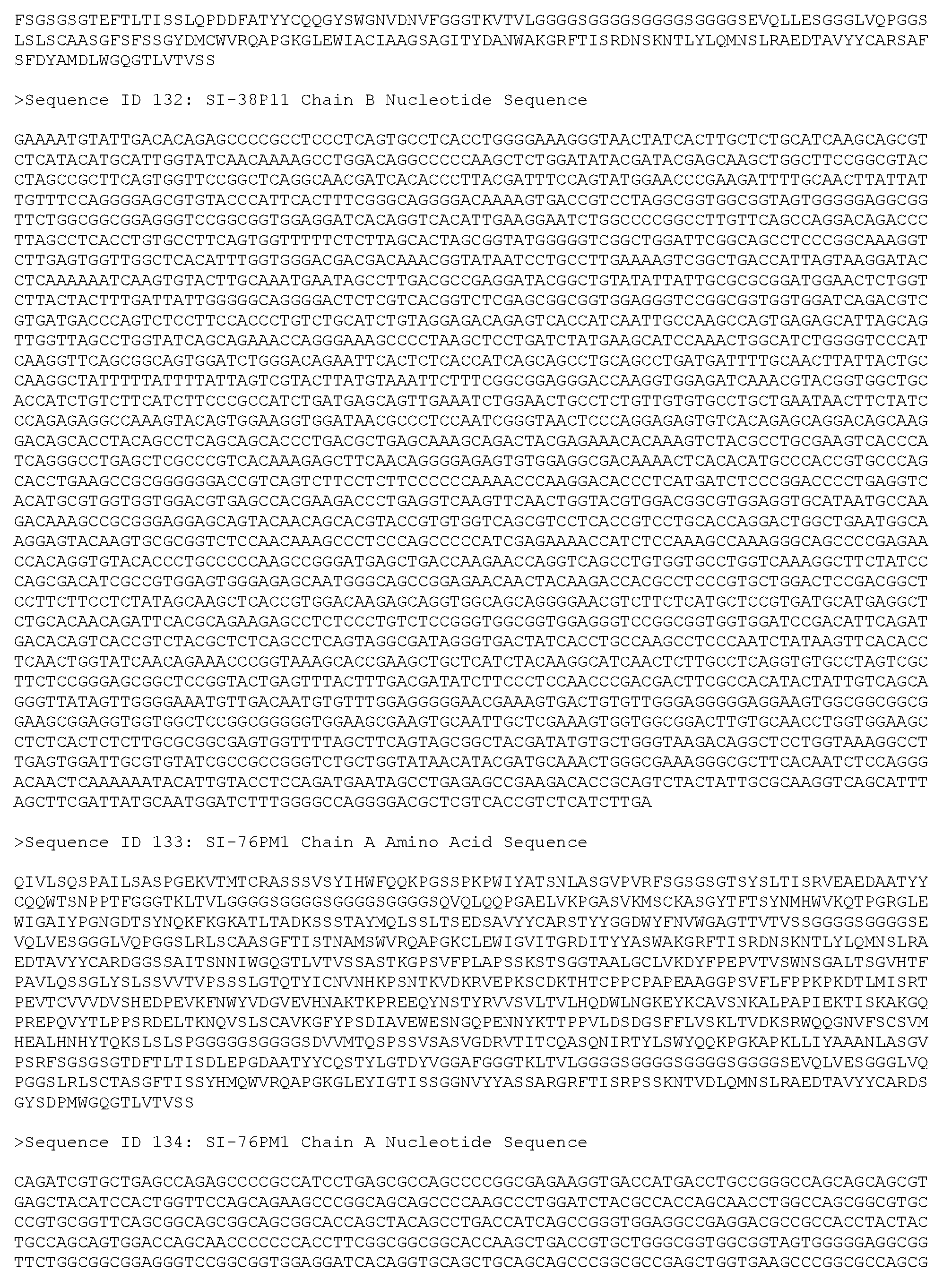




Claims
Priority Applications (11)
| Application Number | Priority Date | Filing Date | Title |
|---|---|---|---|
| JP2022555924A JP7503642B2 (en) | 2020-03-17 | 2021-03-17 | Miniature Guidance and Navigation Control (miniGNC) Antibody-Like Proteins, Methods of Making and Using The Same - Patent application |
| KR1020227033907A KR20220154710A (en) | 2020-03-17 | 2021-03-17 | Miniature Guided and Navigated Control (miniGNC) Antibody-Like Proteins and Methods of Making and Using The Same |
| EP21771761.0A EP4121461A4 (en) | 2020-03-17 | 2021-03-17 | MINIATURE NAVIGATION GUIDANCE AND CONTROL ANTIBODY (MINIGNC)-LIKE PROTEINS AND METHODS OF MAKING AND USING THE SAME |
| MX2022011529A MX2022011529A (en) | 2020-03-17 | 2021-03-17 | MINIATURE GUIDANCE AND NAVIGATION CONTROL (miniGNC) ANTIBODY-LIKE PROTEINS AND METHODS OF MAKING AND USING THEREOF. |
| CA3173883A CA3173883A1 (en) | 2020-03-17 | 2021-03-17 | Miniature guidance and navigation control (minignc) antibody-like proteins and methods of making and using thereof |
| AU2021238341A AU2021238341A1 (en) | 2020-03-17 | 2021-03-17 | Miniature guidance and navigation control (miniGNC) antibody-like proteins and methods of making and using thereof |
| BR112022018495A BR112022018495A2 (en) | 2020-03-17 | 2021-03-17 | MINIATURE ORIENTATION AND NAVIGATION CONTROL ANTIBODY-LIKE PROTEINS AND METHODS OF PREPARATION AND USE THEREOF |
| US17/909,360 US20230114801A1 (en) | 2020-03-17 | 2021-03-17 | MINIATURE GUIDANCE AND NAVIGATION CONTROL (miniGNC) ANTIBODY-LIKE PROTEINS AND METHODS OF MAKING AND USING THEREOF |
| IL295996A IL295996A (en) | 2020-03-17 | 2021-03-17 | Miniature guidance and navigation control (minignc) antibody-like proteins and methods of making and using thereof |
| CN202180007454.XA CN115175941A (en) | 2020-03-17 | 2021-03-17 | Miniaturised guidance and navigation control (miniGNC) antibody-like proteins and methods of making and using same |
| JP2024093524A JP7854121B2 (en) | 2020-03-17 | 2024-06-10 | Miniature guidance and navigation control (miniGNC) antibody-like protein, method for producing the same, and method for using the same |
Applications Claiming Priority (2)
| Application Number | Priority Date | Filing Date | Title |
|---|---|---|---|
| US202062991042P | 2020-03-17 | 2020-03-17 | |
| US62/991,042 | 2020-03-17 |
Publications (1)
| Publication Number | Publication Date |
|---|---|
| WO2021188736A1 true WO2021188736A1 (en) | 2021-09-23 |
Family
ID=77771308
Family Applications (2)
| Application Number | Title | Priority Date | Filing Date |
|---|---|---|---|
| PCT/US2021/022849 Ceased WO2021188737A1 (en) | 2020-03-17 | 2021-03-17 | Guidance and navigation control (gnc) antibody-like proteins and methods of making and using thereof |
| PCT/US2021/022847 Ceased WO2021188736A1 (en) | 2020-03-17 | 2021-03-17 | MINIATURE GUIDANCE AND NAVIGATION CONTROL (miniGNC) ANTIBODY-LIKE PROTEINS AND METHODS OF MAKING AND USING THEREOF |
Family Applications Before (1)
| Application Number | Title | Priority Date | Filing Date |
|---|---|---|---|
| PCT/US2021/022849 Ceased WO2021188737A1 (en) | 2020-03-17 | 2021-03-17 | Guidance and navigation control (gnc) antibody-like proteins and methods of making and using thereof |
Country Status (12)
| Country | Link |
|---|---|
| US (2) | US20230114801A1 (en) |
| EP (2) | EP4121461A4 (en) |
| JP (3) | JP7503642B2 (en) |
| KR (1) | KR20220154710A (en) |
| CN (5) | CN121248789A (en) |
| AU (1) | AU2021238341A1 (en) |
| BR (1) | BR112022018495A2 (en) |
| CA (1) | CA3173883A1 (en) |
| IL (2) | IL295995A (en) |
| MX (1) | MX2022011529A (en) |
| TW (2) | TWI874613B (en) |
| WO (2) | WO2021188737A1 (en) |
Cited By (1)
| Publication number | Priority date | Publication date | Assignee | Title |
|---|---|---|---|---|
| EP4114373A4 (en) * | 2020-03-03 | 2024-05-01 | Systimmune, Inc. | ANTI-CD19 ANTIBODIES AND METHODS OF USE AND MANUFACTURE THEREOF |
Families Citing this family (6)
| Publication number | Priority date | Publication date | Assignee | Title |
|---|---|---|---|---|
| US12139536B2 (en) * | 2017-06-08 | 2024-11-12 | Antibody Biopharm Inc. | Guided combinational therapeutic antibody |
| WO2022061256A2 (en) * | 2020-09-21 | 2022-03-24 | Systimmune, Inc. | Egfr binding complex and method of making and using thereof |
| WO2023141713A1 (en) * | 2022-01-26 | 2023-08-03 | Zymeworks Bc Inc. | Immunomodulatory trispecific t cell engager fusion proteins |
| WO2025043111A2 (en) * | 2023-08-23 | 2025-02-27 | Forte Subsidiary, Inc. | Multispecific immune cell engager |
| TW202540198A (en) * | 2023-11-29 | 2025-10-16 | 美商西雅圖免疫公司 | Bispecific antibody-like protein and methods of making and using thereof |
| WO2025157132A1 (en) * | 2024-01-23 | 2025-07-31 | Wuxi Biologics (Shanghai) Co., Ltd. | Multispecific antibodies targeting cd3, cd19 and cd20 and uses thereof |
Citations (4)
| Publication number | Priority date | Publication date | Assignee | Title |
|---|---|---|---|---|
| WO2009040562A1 (en) * | 2007-09-26 | 2009-04-02 | Ucb Pharma S.A. | Dual specificity antibody fusions |
| US20150315296A1 (en) * | 2014-04-02 | 2015-11-05 | Hoffmann-La Roche Inc. | Multispecific antibodies |
| WO2019005640A2 (en) * | 2017-06-25 | 2019-01-03 | Systimmune, Inc. | Multi-specific antibodies and methods of making and using thereof |
| WO2019136309A1 (en) * | 2018-01-04 | 2019-07-11 | Iconic Therapeutics, Inc. | Anti-tissue factor antibodies, antibody-drug conjugates, and related methods |
Family Cites Families (25)
| Publication number | Priority date | Publication date | Assignee | Title |
|---|---|---|---|---|
| US7053202B2 (en) * | 2001-10-19 | 2006-05-30 | Millennium Pharmaceuticals, Inc. | Immunoglobulin DNA cassette molecules, monobody constructs, methods of production, and methods of use therefor |
| KR20140032004A (en) | 2004-07-22 | 2014-03-13 | 제넨테크, 인크. | Her2 antibody composition |
| KR20100058509A (en) * | 2007-07-31 | 2010-06-03 | 메디뮨 엘엘씨 | Multispecific epitope binding proteins and uses thereof |
| US9493578B2 (en) * | 2009-09-02 | 2016-11-15 | Xencor, Inc. | Compositions and methods for simultaneous bivalent and monovalent co-engagement of antigens |
| US20130245233A1 (en) * | 2010-11-24 | 2013-09-19 | Ming Lei | Multispecific Molecules |
| CA2854806A1 (en) * | 2011-11-07 | 2013-05-16 | Medimmune, Llc | Multispecific and multivalent binding proteins and uses thereof |
| WO2013164325A1 (en) * | 2012-05-02 | 2013-11-07 | F. Hoffmann-La Roche Ag | Multispecific antigen binding proteins |
| US9714291B2 (en) * | 2012-10-05 | 2017-07-25 | Kyowa Hakko Kirin Co., Ltd | Heterodimer protein composition |
| WO2014100490A1 (en) * | 2012-12-19 | 2014-06-26 | Adimab, Llc | Multivalent antibody analogs, and methods of their preparation and use |
| WO2014127785A1 (en) * | 2013-02-20 | 2014-08-28 | Ganymed Pharmaceuticals Ag | Combination therapy involving antibodies against claudin 18.2 for treatment of cancer |
| CN105722859B (en) * | 2013-07-25 | 2021-05-07 | 西托姆克斯治疗公司 | Multispecific antibodies, multispecific activatable antibodies, and methods of use thereof |
| CN110627907B (en) * | 2013-11-04 | 2024-03-29 | 艾科诺斯科技股份有限公司 | Production of heterodimeric immunoglobulins that re-target T cells |
| JP6775422B2 (en) * | 2014-03-28 | 2020-10-28 | ゼンコー・インコーポレイテッドXencor、 Inc. | Bispecific antibody that binds to CD38 and CD3 |
| WO2016004389A2 (en) * | 2014-07-03 | 2016-01-07 | Abbvie Inc. | Monovalent binding proteins |
| JP7020909B2 (en) * | 2014-07-25 | 2022-02-16 | シトムクス セラピューティクス,インコーポレイティド | Anti-CD3 antibody, activating anti-CD3 antibody, multispecific anti-CD3 antibody, multispecific activating anti-CD3 antibody, and how to use them. |
| CN104403004B (en) * | 2014-11-24 | 2017-10-13 | 苏州丁孚靶点生物技术有限公司 | Preparation and use of antibody-interferon heterodimer |
| SG11201704741PA (en) * | 2014-12-22 | 2017-07-28 | Systimmune Inc | Bispecific tetravalent antibodies and methods of makiing and using thereof |
| EP3288975A1 (en) * | 2015-04-29 | 2018-03-07 | Institute for Research in Biomedicine | Ultra-potent neutralization of cytokines by multispecific antibodies and uses thereof |
| EP3156417A1 (en) * | 2015-10-13 | 2017-04-19 | Affimed GmbH | Multivalent fv antibodies |
| CN108367071B (en) * | 2015-11-13 | 2022-05-13 | 达纳-法伯癌症研究所有限公司 | NKG2D-IG fusion protein for cancer immunotherapy |
| TWI790206B (en) * | 2016-07-18 | 2023-01-21 | 法商賽諾菲公司 | Bispecific antibody-like binding proteins specifically binding to cd3 and cd123 |
| WO2018115262A1 (en) * | 2016-12-23 | 2018-06-28 | Innate Pharma | Heterodimeric antigen binding proteins |
| TWI828625B (en) * | 2017-06-25 | 2024-01-11 | 美商西雅圖免疫公司 | Guidance and navigation control proteins and method of making and using thereof |
| CN110799538B (en) * | 2017-08-28 | 2023-08-01 | 西雅图免疫公司 | Anti-CD3 antibody and methods of making and using same |
| US20210008113A1 (en) * | 2018-03-27 | 2021-01-14 | Systimmune, Inc. | Methods of making and using guidance and navigation control proteins |
-
2021
- 2021-03-16 TW TW110109293A patent/TWI874613B/en active
- 2021-03-16 TW TW110109314A patent/TWI908779B/en active
- 2021-03-17 CN CN202511782784.2A patent/CN121248789A/en active Pending
- 2021-03-17 CN CN202511782770.0A patent/CN121494991A/en active Pending
- 2021-03-17 JP JP2022555924A patent/JP7503642B2/en active Active
- 2021-03-17 IL IL295995A patent/IL295995A/en unknown
- 2021-03-17 WO PCT/US2021/022849 patent/WO2021188737A1/en not_active Ceased
- 2021-03-17 MX MX2022011529A patent/MX2022011529A/en unknown
- 2021-03-17 CA CA3173883A patent/CA3173883A1/en active Pending
- 2021-03-17 JP JP2022555920A patent/JP7611931B2/en active Active
- 2021-03-17 KR KR1020227033907A patent/KR20220154710A/en active Pending
- 2021-03-17 EP EP21771761.0A patent/EP4121461A4/en active Pending
- 2021-03-17 US US17/909,360 patent/US20230114801A1/en active Pending
- 2021-03-17 IL IL295996A patent/IL295996A/en unknown
- 2021-03-17 CN CN202180007454.XA patent/CN115175941A/en active Pending
- 2021-03-17 US US17/909,358 patent/US20230113563A1/en active Pending
- 2021-03-17 CN CN202511790815.9A patent/CN121248790A/en active Pending
- 2021-03-17 BR BR112022018495A patent/BR112022018495A2/en unknown
- 2021-03-17 CN CN202180007472.8A patent/CN115175938B/en active Active
- 2021-03-17 AU AU2021238341A patent/AU2021238341A1/en active Pending
- 2021-03-17 EP EP21772504.3A patent/EP4121458A4/en active Pending
- 2021-03-17 WO PCT/US2021/022847 patent/WO2021188736A1/en not_active Ceased
-
2024
- 2024-12-24 JP JP2024227502A patent/JP2025069123A/en active Pending
Patent Citations (4)
| Publication number | Priority date | Publication date | Assignee | Title |
|---|---|---|---|---|
| WO2009040562A1 (en) * | 2007-09-26 | 2009-04-02 | Ucb Pharma S.A. | Dual specificity antibody fusions |
| US20150315296A1 (en) * | 2014-04-02 | 2015-11-05 | Hoffmann-La Roche Inc. | Multispecific antibodies |
| WO2019005640A2 (en) * | 2017-06-25 | 2019-01-03 | Systimmune, Inc. | Multi-specific antibodies and methods of making and using thereof |
| WO2019136309A1 (en) * | 2018-01-04 | 2019-07-11 | Iconic Therapeutics, Inc. | Anti-tissue factor antibodies, antibody-drug conjugates, and related methods |
Non-Patent Citations (1)
| Title |
|---|
| See also references of EP4121461A4 * |
Cited By (1)
| Publication number | Priority date | Publication date | Assignee | Title |
|---|---|---|---|---|
| EP4114373A4 (en) * | 2020-03-03 | 2024-05-01 | Systimmune, Inc. | ANTI-CD19 ANTIBODIES AND METHODS OF USE AND MANUFACTURE THEREOF |
Also Published As
| Publication number | Publication date |
|---|---|
| EP4121458A1 (en) | 2023-01-25 |
| CN115175938A (en) | 2022-10-11 |
| EP4121461A4 (en) | 2024-08-07 |
| JP2023518241A (en) | 2023-04-28 |
| CN121494991A (en) | 2026-02-10 |
| JP7503642B2 (en) | 2024-06-20 |
| CN115175941A (en) | 2022-10-11 |
| CN121248790A (en) | 2026-01-02 |
| WO2021188737A1 (en) | 2021-09-23 |
| EP4121461A1 (en) | 2023-01-25 |
| US20230114801A1 (en) | 2023-04-13 |
| AU2021238341A1 (en) | 2022-10-06 |
| IL295995A (en) | 2022-10-01 |
| JP7611931B2 (en) | 2025-01-10 |
| TW202200618A (en) | 2022-01-01 |
| JP2023518400A (en) | 2023-05-01 |
| TW202200619A (en) | 2022-01-01 |
| US20230113563A1 (en) | 2023-04-13 |
| JP2025069123A (en) | 2025-04-30 |
| TWI874613B (en) | 2025-03-01 |
| JP2024153077A (en) | 2024-10-28 |
| EP4121458A4 (en) | 2024-10-16 |
| CA3173883A1 (en) | 2021-09-23 |
| KR20220154710A (en) | 2022-11-22 |
| MX2022011529A (en) | 2022-10-13 |
| CN121248789A (en) | 2026-01-02 |
| IL295996A (en) | 2022-10-01 |
| CN115175938B (en) | 2025-12-09 |
| BR112022018495A2 (en) | 2022-12-20 |
| TWI908779B (en) | 2025-12-21 |
Similar Documents
| Publication | Publication Date | Title |
|---|---|---|
| JP7550591B2 (en) | Multispecific NKp46-binding proteins | |
| CN112119097B (en) | Natural Killer Cell Conjugated Antibody Fusion Constructs | |
| JP7503642B2 (en) | Miniature Guidance and Navigation Control (miniGNC) Antibody-Like Proteins, Methods of Making and Using The Same - Patent application | |
| JP6702893B2 (en) | Multispecific antigen binding protein | |
| CA3079363A1 (en) | Multispecific antigen binding proteins | |
| JP7641292B2 (en) | Anti-CD19 antibodies, methods of use and production thereof | |
| JP7854121B2 (en) | Miniature guidance and navigation control (miniGNC) antibody-like protein, method for producing the same, and method for using the same | |
| HK40073541A (en) | Miniature guidance and navigation control (minignc) antibody-like proteins and methods of making and using thereof | |
| RU2808138C1 (en) | Cd3-targeting antibody, bispecific antibody and their applications | |
| WO2024027120A1 (en) | Multi-specific polypeptide complexes | |
| HK40073540A (en) | Guidance and navigation control (gnc) antibody-like proteins and methods of making and using thereof | |
| HK40073540B (en) | Guidance and navigation control (gnc) antibody-like proteins and methods of making and using thereof | |
| HK40129137A (en) | Guidance and navigation control (gnc) antibody-like proteins and methods of making and using thereof |
Legal Events
| Date | Code | Title | Description |
|---|---|---|---|
| 121 | Ep: the epo has been informed by wipo that ep was designated in this application |
Ref document number: 21771761 Country of ref document: EP Kind code of ref document: A1 |
|
| ENP | Entry into the national phase |
Ref document number: 3173883 Country of ref document: CA |
|
| WWE | Wipo information: entry into national phase |
Ref document number: 202217052402 Country of ref document: IN |
|
| ENP | Entry into the national phase |
Ref document number: 2022555924 Country of ref document: JP Kind code of ref document: A |
|
| REG | Reference to national code |
Ref country code: BR Ref legal event code: B01A Ref document number: 112022018495 Country of ref document: BR |
|
| ENP | Entry into the national phase |
Ref document number: 20227033907 Country of ref document: KR Kind code of ref document: A |
|
| ENP | Entry into the national phase |
Ref document number: 2021238341 Country of ref document: AU Date of ref document: 20210317 Kind code of ref document: A |
|
| NENP | Non-entry into the national phase |
Ref country code: DE |
|
| ENP | Entry into the national phase |
Ref document number: 2021771761 Country of ref document: EP Effective date: 20221017 |
|
| REG | Reference to national code |
Ref country code: BR Ref legal event code: B01E Ref document number: 112022018495 Country of ref document: BR Free format text: COM BASE NA PORTARIA 48 DE 20/06/2022, SOLICITA-SE QUE SEJA APRESENTADO, EM ATE 60 (SESSENTA) DIAS, NOVO CONTEUDO DE LISTAGEM DE SEQUENCIA POIS O CONTEUDO APRESENTADO NA PETICAO NO 870220084420 DE 15/09/2022 POSSUI INFORMACOES DIVERGENTES DO PEDIDO EM QUESTAO NO CAMPO 110 E TAMBEM DEVERA SER INCLUIDO NA RESPOSTA O CAMPO 140 / 141 UMA VEZ QUE O DEPOSITANTE JA POSSUI O NUMERO DO PEDIDO NO BRASIL. |
|
| ENP | Entry into the national phase |
Ref document number: 112022018495 Country of ref document: BR Kind code of ref document: A2 Effective date: 20220915 |
|
| WWG | Wipo information: grant in national office |
Ref document number: 2022126707 Country of ref document: RU |
|
| WWD | Wipo information: divisional of initial pct application |
Ref document number: 831129 Country of ref document: NZ |