WO2021200904A1 - 出力装置、情報処理システムおよびプログラム - Google Patents
出力装置、情報処理システムおよびプログラム Download PDFInfo
- Publication number
- WO2021200904A1 WO2021200904A1 PCT/JP2021/013471 JP2021013471W WO2021200904A1 WO 2021200904 A1 WO2021200904 A1 WO 2021200904A1 JP 2021013471 W JP2021013471 W JP 2021013471W WO 2021200904 A1 WO2021200904 A1 WO 2021200904A1
- Authority
- WO
- WIPO (PCT)
- Prior art keywords
- information
- degree
- perishable product
- product
- maturity
- Prior art date
- Legal status (The legal status is an assumption and is not a legal conclusion. Google has not performed a legal analysis and makes no representation as to the accuracy of the status listed.)
- Ceased
Links
Images


Classifications
-
- G—PHYSICS
- G01—MEASURING; TESTING
- G01N—INVESTIGATING OR ANALYSING MATERIALS BY DETERMINING THEIR CHEMICAL OR PHYSICAL PROPERTIES
- G01N33/00—Investigating or analysing materials by specific methods not covered by groups G01N1/00 - G01N31/00
- G01N33/02—Food
-
- A—HUMAN NECESSITIES
- A23—FOODS OR FOODSTUFFS; TREATMENT THEREOF, NOT COVERED BY OTHER CLASSES
- A23B—PRESERVATION OF FOODS, FOODSTUFFS OR NON-ALCOHOLIC BEVERAGES; CHEMICAL RIPENING OF FRUIT OR VEGETABLES
- A23B7/00—Preservation of fruit or vegetables; Chemical ripening of fruit or vegetables
- A23B7/14—Preserving or ripening with chemicals not covered by group A23B7/08 or A23B7/10
- A23B7/144—Preserving or ripening with chemicals not covered by group A23B7/08 or A23B7/10 in the form of gases, e.g. fumigation; Compositions or apparatus therefor
- A23B7/152—Preserving or ripening with chemicals not covered by group A23B7/08 or A23B7/10 in the form of gases, e.g. fumigation; Compositions or apparatus therefor in a controlled atmosphere comprising other gases in addition to CO2, N2, O2 or H2O ; Elimination of such other gases
-
- G—PHYSICS
- G01—MEASURING; TESTING
- G01N—INVESTIGATING OR ANALYSING MATERIALS BY DETERMINING THEIR CHEMICAL OR PHYSICAL PROPERTIES
- G01N33/00—Investigating or analysing materials by specific methods not covered by groups G01N1/00 - G01N31/00
- G01N33/0001—Investigating or analysing materials by specific methods not covered by groups G01N1/00 - G01N31/00 by organoleptic means
Definitions
- This disclosure relates to output devices, information processing systems and programs.
- Patent Document 1 in an inspection system including a container that can be sealed and a detection device that detects a substance generated by the test object according to an inspection operation, the test object and the detection device are housed in the container. It is described that when the inspection operation is performed, the detection device contained in the container detects the substance generated by the test object contained in the container. In addition, it is described that the quality of the test object is determined based on the information about the substance generated by the test object detected by the detection device.
- the purpose of this disclosure is to accurately determine the condition and handling of perishables.
- the output device of the present disclosure is obtained by a degree of maturity specifying means for specifying the degree of maturity of a perishable product, a means for specifying a degree of contamination for specifying the degree of contamination of the perishable product, and the degree of maturity and the degree of contamination of the perishable product. It is an output device for perishables information, which comprises an output means for outputting information related to the perishables. According to this output device, it is possible to accurately determine the state and handling of perishables.
- the output means may output at least one of information on the time to eat the perishable product, information on the storage of the perishable product, and information on how to eat the perishable product.
- information related to perishables complementaryly related information on "when to eat", “preservation method”, and "how to eat” can be output.
- the output means may output information related to the time of eating of the perishable product and / or information related to storage of the perishable product according to the acquired information related to how to eat the perishable product. In this way, it is possible to output information on "when to eat” and “preservation method” that are complementary to a specific "how to eat” for fresh produce.
- the output means outputs information related to how to eat the perishable product and / or information related to storage of the perishable product according to the acquired information related to the time to eat the perishable product. You can do it. In this way, it is possible to output information on "how to eat” and “how to store” that are complementary to a specific "time to eat” for perishables.
- the output means may output information related to the time of eating of the perishable product and / or information related to how to eat the perishable product according to the acquired information related to the storage method of the perishable product. In this way, it is possible to output information on "when to eat” and "how to eat” that are complementary to a specific "preservation method” for perishables.
- this output device includes an acquisition means for acquiring the type of the perishable product, and the output means is configured to output information related to the perishable product according to the type of the perishable product acquired by the acquisition means. Is also good. In this way, even for a plurality of types of perishables, the state and handling of the perishables can be accurately determined based on the degree of maturity and the degree of contamination obtained according to the type of perishables to be processed. It can be carried out.
- the aging degree specifying means may detect the components related to aging emitted by the perishable product by a sensor using a biological element. In this way, the components involved in aging emitted from the perishable product can be detected with higher responsiveness than that detected by an electronic device.
- the contamination degree specifying means may detect a component related to contamination emitted by the perishable product by a sensor using a biological element. In this way, the components involved in the contamination of fresh produce can be detected with higher responsiveness than that detected by an electronic device.
- the information processing system of the present disclosure includes a maturity acquisition means for acquiring the maturity degree of a fresh product, a contamination degree acquisition means for acquiring the contamination degree of the perishable product, and the maturity degree and the contamination degree of the perishable product. It is a perishables information processing system including an output means for outputting the perishables proposal information to the user based on the above. According to this information processing system, it is possible to more appropriately output information on proposals for fresh produce to the user.
- the output means may output the proposal information having different contents depending on the user. In this way, more appropriate information can be provided for each user even if the processing is related to the same perishable product.
- the program of the present disclosure has a function of acquiring the degree of maturity of the perishable product, a function of acquiring the degree of contamination of the perishable product, and the degree of maturity of the perishable product and the degree of contamination of the perishable product. It is a program that realizes a function to output information about products. According to the computer on which this program is installed, the state and handling of perishables can be accurately determined.
- FIG. 1 is a diagram showing an overall configuration of a perishables management system to which the present embodiment is applied.
- the perishables management system 10 of the present embodiment includes a storage 100, a detection device 200, a perishables management device 300, a display device 400, and an input device 500.
- the storage 100 is a device for storing and storing perishables.
- the storage 100 shown in FIG. 1 is a box-shaped device having a space for accommodating perishables inside, and by opening the door 101, perishables can be taken in and out of the internal space. Further, the storage 100 may be configured so that when the door 101 is closed, the space inside the storage 100 is sealed and separated from the external environment. The inside of the storage 100 is divided by a storage shelf 102, and perishables can be sorted and stored.
- the storage 100 may be provided with an environment adjusting device (not shown) that adjusts the internal environment by controlling temperature, humidity, atmospheric pressure, gas components that fill the internal space, and the like.
- the storage 100 stores fresh food in a refrigerated environment, stores fresh food in a frozen environment, stores stored food in a room temperature environment, and the like.
- different environments may be set for each area divided by the storage shelves 102.
- the detection device 200 is provided inside the storage 100 and acquires data indicating the state of the internal space of the storage 100.
- the degree of maturity and the degree of contamination of the perishables stored in the storage 100 are determined using the data obtained by the detection device 200. Therefore, a detection device 200 capable of acquiring data used for determining the degree of maturity and the degree of contamination of fresh products is used.
- the detection device 200 may use a detection means for detecting the quality of a gas using a biological element.
- the type of data used to determine the degree of maturity and the degree of contamination may differ depending on the type of perishables stored in the storage 100 and the cause of contamination. The relationship between the data to be acquired and the detection device 200 will be described later.
- the perishables management device 300 manages information on perishables stored in the storage 100.
- the perishables management device 300 uses the data obtained by the detection device 200 to determine both the degree of maturity and the degree of contamination of the perishables stored in the storage 100. Then, the perishables management device 300 identifies information related to perishables more accurately than when only one of the maturity and the degree of contamination is used, based on both the obtained maturity and the degree of contamination. Further, the perishables management device 300 outputs information corresponding to a specific condition regarding the perishables.
- the perishables management device 300 is realized by, for example, a personal computer, a smartphone, an embedded computer provided in the storage 100, or the like.
- the perishables management device 300 may be provided integrally with the storage 100, or may be provided separately from the storage 100 and configured to acquire data from the detection device 200 using a communication line.
- the communication line may be a wired line or a wireless line.
- the display device 400 is a device that displays screens such as an operation screen and an information presentation screen.
- the display device 400 displays an information presentation screen for presenting information on the perishables acquired from the perishables management device 300 to the user, an operation screen for accepting an operation by the user, and the like.
- a liquid crystal display or the like is used as the display device 400.
- the display device 400 may be a display device of the personal computer.
- the display device 400 may be an individual display device installed in the storage 100.
- the input device 500 is a device that accepts input operations by the user.
- the input device 500 accepts an operation performed by the user according to the operation screen displayed on the display device 400.
- a device such as a keyboard or a mouse is used.
- a touch sensor may be used as the input device 500, and a touch panel as a user interface may be configured in combination with the liquid crystal display which is the display device 400.
- the detection device 200 acquires data for identifying the degree of maturity and the degree of contamination of the perishables contained in the storage 100 based on the quality of the gas inside the storage 100.
- the index indicating the quality of the gas includes the content rate of a specific component in the gas and the like.
- a specific gas component such as ethylene gas or carbon dioxide, an odor component, or the like can be assumed.
- the detection device 200 detects ethylene gas or the like emitted from the perishable product according to the maturity of the perishable product stored in the storage 100.
- the detection device detects the odor generated by mold bacteria and the like generated in the fresh produce stored in the storage 100. Then, based on these detection results, the degree of maturity and the degree of contamination of the perishable product are specified.
- Various mechanisms can be used for the configuration of the detection device 200 and the mechanism for acquiring data.
- a device for detecting the quality of gas using a biological element will be described here.
- the gas inside the storage 100 is collected by a gas collecting mechanism (not shown) and sent to the detection device 200.
- the detection device 200 itself may be provided outside the storage 100.
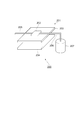
- FIG. 2 is a diagram illustrating the configuration of the detection device 200.
- the detection device 200 uses biological elements to detect the quality of the gas collected from the storage 100.
- the detection device 200 is provided with a cell support unit 201 that supports insect olfactory receptor protein-expressing cells (hereinafter, referred to as “receptor-expressing cells”).
- the cell support unit 201 is provided with a cell container 202 in which the receptor-expressing cells are housed and a substrate 203 that supports the cell container 202.
- the substrate 203 is made of a transparent material such as glass.
- the detection device 200 is provided with a sensor 204 that detects the light emitted by the receptor-expressing cells and outputs a signal. The signal from the sensor 204 is output to the perishables management device 300.
- Receptor-expressing cells can be produced by a general genetic engineering method. Specifically, an insect culture cell contains a gene encoding an olfactory receptor protein of an insect for a specific odorant and a gene encoding a fluorescent protein for confirming that the odorant binds to this olfactory receptor protein. Incorporate into the expression vector. Then, a receptor-expressing cell is produced by transfecting the host cell with this vector for expressing insect cultured cells.
- insects examples include Drosophila melanogaster, Anopheles mosquito, and Spirogyra, and more than 100 types of olfactory receptor proteins have been identified from these insects.
- Olfactory receptor proteins include, for example, phenethyl alcohol, methylbenzoate, ethylbenzoate, benzyl alcohol, methylsalicylate, benzaldehyde, pentanal, hexanal, E2-hexanal, 2-heptanone, 6-methyl-5-hepten-2-one, It has high response characteristics to odorants such as 2-methylphenol.
- the configuration of the detection device 200 is not particularly limited, and may be realized by a known configuration.
- the gas collected in the storage 100 is supplied to the cell container 202 from the upstream flow path 205 provided in the cell support portion 201. After that, this gas is discharged from the exhaust container 207 to the outside through the downstream flow path 206.
- the gas from the storage 100 was directly supplied to the cell container 202, but the present invention is not limited to this, and the gas is dissolved in a solution and the solution in which the gas is dissolved is supplied to the cell container. It may be supplied to 202.
- the sensor 204 is arranged, for example, on the back surface side of the cell support portion 201. Specifically, the sensor 204 is provided on the side opposite to the cell container 202, sandwiching the substrate 203.
- the sensor 204 is composed of, for example, a CCD type image sensor or a CMOS type image sensor. Photoelectric conversion elements are arranged in a two-dimensional array on the sensor 204.
- the sensor 204 obtains an image of the cell container 202 captured by the photoelectric conversion element.
- the image obtained by the sensor 204 is transmitted to the perishables management device 300.
- the perishables management device 300 analyzes this image, and in the gas collected from the storage 100, a predetermined specific substance related to the maturity and contamination degree of the perishables contained is contained in the gas. Determine if it is included.
- the detection device 200 using a biological element has been described, but the detection device 200 may be configured by using an electronic device. However, by using a biological element in the detection device 200, it is possible to detect a component related to aging and a component related to contamination generated by a fresh product with higher responsiveness than when an electronic device is used.
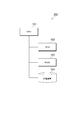
- FIG. 3 is a diagram showing a hardware configuration example of the perishables management device 300.
- a computer that realizes the fresh product management device 300 includes a CPU (Central Processing Unit) 301 that is a calculation means, a RAM (Random Access Memory) 302, a ROM (Read Only Memory) 303, and a storage device 304 that are storage means. ..
- the RAM 302 is a main storage device (main memory), and is used as a working memory when the CPU 301 performs arithmetic processing. Data such as a program and a set value prepared in advance are stored in the ROM 303, and the CPU 301 can directly read the program and the data from the ROM 303 and execute the process.
- the storage device 304 is a means for storing programs and data.
- a program is stored in the storage device 304, and the CPU 301 reads the program stored in the storage device 304 into the main storage device and executes the program. Further, the storage device 304 stores and stores the result of processing by the CPU 301.
- the storage device 304 for example, a magnetic disk device, an SSD (Solid State Drive), or the like is used.
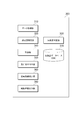
- FIG. 4 is a diagram showing a functional configuration example of the perishables management device 300.
- the perishables management device 300 includes a data acquisition unit 310, a maturity degree identification unit 320, a contamination degree identification unit 330, a judgment unit 340, a condition reception unit 350, a proposal information identification unit 360, and a perishables database (DB). ) 370 and a determination result output unit 380.
- the data acquisition unit 310, the maturity specification unit 320, the contamination degree identification unit 330, the judgment unit 340, the condition reception unit 350, the proposal information identification unit 360, and the judgment result output unit 380 are shown in FIG. 3, for example.
- the perishables database 370 is realized by, for example, the storage device 304 of the computer shown in FIG.
- the data acquisition unit 310 is a function of acquiring data related to the gas inside the storage 100 obtained by the detection device 200.
- the data acquisition unit 310 receives the data transmitted from the detection device 200 via the interface connected to the detection device 200.
- the maturity degree specifying unit 320 is a function of determining the maturity degree of the perishable product stored in the storage 100 based on the data acquired by the data acquisition unit 310.
- the maturity degree specifying unit 320 of the perishables management device 300 is an example of the maturity degree specifying means.
- the degree of maturity is one of the indexes showing the quality of fresh produce, and is a so-called index showing the time to eat. There are various indicators of the quality of fresh produce, but here we will explain the degree of maturity in comparison with freshness.
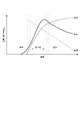
- FIG. 5 is a diagram showing the relationship between changes in freshness and maturity.
- the freshness is 100% at the time of harvest and decreases with the passage of time (see the graph of the broken line in FIG. 5).
- the degree of maturity changes with the passage of time depending on the type of fresh product. For example, climberic fruits (avocado, banana, tomato, etc.) are matured by ripening after harvesting (see the graph of the alternate long and short dash line in FIG. 5). For this reason, the quality of this type of perishable product improves as the maturity increases immediately after harvesting, and when the increase in maturity reaches a plateau after a certain period of time, it decreases as the freshness decreases (Fig. See the solid line graph in 5).
- this type of perishable product is the so-called eating time from the time when ripening after harvesting has progressed to some extent to the time when the freshness decreases and becomes overripe.
- the change in quality over time is not as described above for all perishables.
- non-climateric fruits such as pears have the highest quality immediately after harvest and time.
- the quality simply deteriorates with the passage of time.
- the rate of progress of perishable maturity is also affected by the storage method. For example, depending on the type of perishable product, the progress of maturity can be delayed by storing at low temperature (refrigerating, freezing, etc.) or controlling the gas component inside the storage 100.
- the method of determining the maturity level by the maturity degree specifying unit 320 may differ depending on the type of perishable product to be determined.
- different biological elements are used depending on the type of product to be determined. May be used.
- the insect cells of Drosophila can be used to determine the maturity of meat
- the insect cells of Burying beetle can be used to determine the maturity of fruits.
- the contamination degree specifying unit 330 is a function of determining the contamination degree of the perishables stored in the storage 100 based on the data acquired by the data acquisition unit 310.
- the pollution degree specifying unit 330 of the perishables management device 300 is an example of the pollution degree specifying means.
- the degree of contamination usually progresses simply with the passage of time after a cause of contamination such as bacteria occurs in a fresh product. However, by performing low temperature storage (refrigeration, freezing, etc.), the spread of the cause of contamination can be suppressed and the progress of the degree of contamination can be delayed.
- the method of determining the degree of pollution may differ depending on the cause of pollution to be determined.
- different biological elements are used depending on the cause of contamination to be determined. May be used. Specifically, for example, insect cells of Drosophila can be used to determine the degree of contamination by fungi, whereas insect cells of Anopheles mosquitoes and bed bugs can be used to determine the degree of contamination by food poisoning bacteria. Can be.
- Judgment unit 340 is a function that determines information related to perishable products based on information on the degree of perishable maturity and the degree of contamination of perishables determined by the degree of contamination identification unit 330 determined by the degree of maturity identification unit 320. be. Specifically, as the information on the perishable product, for example, information on the time to eat the perishable product, information on the preservation of the perishable product, information on how to eat the perishable product, and the like are determined.
- the eating time of the perishable product is maintained based on the information on the transition of the maturity of the perishable product to be judged over time and the current maturity of the perishable product judged by the perishable degree identification unit 320.
- the period is estimated.
- the period during which the time to eat is maintained is the period until the degree of maturity progresses and becomes overripe.
- the degree of maturity varies depending on the storage method, the period during which the eating time is maintained is estimated for each storage method.
- the perishables are eaten based on the information on the transition of the degree of contamination of the perishables to be judged with the passage of time and the current degree of contamination of the perishables judged by the perishable degree identification unit 330.
- the time when it becomes impossible is estimated.
- depending on the type of fresh product depending on the progress of contamination, it may not be possible to eat raw food, but it may be edible if heated. Therefore, with regard to such fresh products, it is estimated that they cannot be eaten raw and that they cannot be eaten even if they are heated.
- the degree of pollution progress differs depending on the storage method, it is estimated that the food cannot be eaten for each storage method.
- the judgment unit 340 determines the information related to the perishable product by using the information on the degree of maturity of the perishable product and the information on the degree of contamination, respectively. Since the degree of maturity and the degree of contamination are different indicators related to the quality of perishables, it is possible to overlook events related to the quality of perishables with only one of them. For example, if the perishable product itself is maturing, but the perishable product is also contaminated due to the adherence of bacteria that cause contamination, the judgment based only on the degree of maturity is sufficient to judge the information related to the perishable product. Accuracy is reduced.
- the accuracy of the judgment of the information related to the perishables is lowered only by the judgment based on the degree of contamination. Therefore, by making a judgment based on both the degree of maturity and the degree of contamination, it is possible to make a judgment more accurately than when making a judgment based on only one of them.
- the condition receiving unit 350 is a function that accepts conditions specified by the user in order to obtain information related to perishables.
- the condition receiving unit 350 is an example of the acquisition means.
- the input of the condition is performed, for example, by the user operating the input device 500.
- designation of conditions hereinafter referred to as "designated conditions" for obtaining at least one of information on when to eat fresh food, information on preservation of fresh food, and information on how to eat fresh food. Accept.
- a designated condition input of at least one of "how to eat", “when to eat”, and “preservation method” is accepted.
- “how to eat” conditions such as raw food and heating are specified.
- the designated condition may be a combination of a plurality of conditions. For example, a combination of "how to eat” and “how to store” may be specified.
- the proposal information specifying unit 360 is a function of specifying the proposal information corresponding to the designated conditions received by the condition receiving unit 350.
- the above-mentioned information on when to eat fresh food, information on storage of fresh food, and information on how to eat fresh food are complementary and related information. Therefore, by designating any of these information as the designated condition, the proposed information becomes the information not designated by the designated condition among the information on perishables. For example, when "how to eat" is specified as a designated condition for a certain perishable product, the period during which the eating time suitable for the specified eating method is maintained is determined for each storage method. In addition, when "when to eat" is specified as a designated condition, the combination of eating and storage methods that can be eaten even at the specified time is determined.
- a "preservation method” when specified as a designated condition, how long the fresh food stored by the specified storage method is maintained at the time of eating is determined for each eating method.
- the period during which the eating time is maintained is determined by the specified eating method and storage method.
- the possible eating methods when eating perishables preserved by the specified storage method at the specified time are determined.
- the storage method to be taken in order to eat in the specified way of eating at the specified time is determined.
- the proposal information specifying unit 360 the information related to the perishables specified according to the designated information as described above is specified as the proposal information presented to the user.
- the proposal information may be presented with different contents depending on the user. For example, for a perishable product, the time when the consumer is ready to eat should be the time when he or she eats the perishable product. In contrast, the best time for producers to eat should be after the perishables have been shipped, sold and delivered to consumers. In addition, consumers may choose to eat raw food or heat as a way of eating, but producers and sellers may not be able to select whether or not to heat depending on the route for selling the fresh product. Therefore, the condition receiving unit 350 may receive the information indicating the type of the user together with the designated condition, and the proposal information specifying unit 360 may specify the proposal information according to the type of the received user.
- the perishables DB370 manages information on perishables stored in the storage 100.
- the perishable product DB 370 holds information such as information on the perishable product contained in the perishable product, a method for determining each information related to the perishable product according to the type of perishable product and the cause of contamination, and the like.
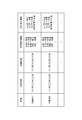
- FIG. 6 is a diagram showing a configuration example of a fresh product DB370.
- the illustrated fresh product DB 370 information on each item of the type of fresh product, harvest time, storage time, transition of maturity, and transition of contamination is registered. Information on the time when the perishables were stored in the storage 100 is registered in the storage time.
- Information on the time when the perishables were stored in the storage 100 is registered in the storage time.
- information on the transition of maturity for example, information on the transition of general maturity of the target fresh product is registered for each combination of eating method (raw food, heating, etc.) and storage method (normal temperature, refrigeration, freezing, etc.).
- eating method raw food, heating, etc.
- storage method normal temperature, refrigeration, freezing, etc.
- the transition of the degree of pollution for example, information on the transition of the general degree of pollution in the target perishables is provided for each combination of the cause of pollution (mold bacteria, food poisoning bacteria, etc.) and the storage method (normal temperature, refrigeration, freezing, etc.). be registered. Judgment is made by the determination unit 340 based on this information and the current maturity and contamination degree information specified by the maturity identification unit 320 and the pollution degree identification unit 330.
- the proposal information specifying unit 360 specifies the proposal information by using the information on the transition of the maturity degree and the information on the transition of the pollution degree corresponding to the type of the user received by the condition receiving unit 350.
- the judgment result output unit 380 outputs the proposal information specified by the proposal information identification unit 360.
- the output proposal information is displayed by, for example, the display device 400 and presented to the user.
- the determination result output unit 380 is an example of the output means.
- the input of the designated conditions by the user is performed using the input device 500 shown in FIG.
- the fresh product management device 300 causes the display device 400 to display a user interface (UI) screen for accepting input of a designated condition, and the user operates the input device 500 on the UI screen to specify. Accepts input of conditions.
- UI user interface
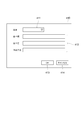
- FIG. 7 is a diagram showing a configuration example of a UI screen for accepting input of a designated condition.
- a target designation field 411 On the UI screen 410 shown in FIG. 7, a target designation field 411, a condition input field 412 for inputting a designated condition, an OK button 413, and a cancel button 414 are displayed.
- the target designation field 411 is an object for designating the item of the perishable product to be processed. For example, when the user selects the target designation field 411 with a mouse pointer or a touch operation, a list of pre-registered perishable items is displayed. The user can specify the perishables to be processed by selecting the desired items from the displayed list of items.
- the list of perishable items may be displayed in a format such as a pull-down menu.
- the items displayed in the list of perishable items may be limited to the perishables stored in the storage 100.
- the name of the perishables stored in the storage 100 may be indicated by text display or the like instead of the target designation column 411.
- Items that can be input as designated conditions are displayed in the condition input field 412, and a text box for inputting the condition is displayed for each item.
- the user selects the item for which he / she wants to specify the condition, and enters the condition in the text box of the corresponding item.
- the OK button 413 is a button object for determining the input designated condition and instructing the perishables management device 300 to transmit the button object.
- the cancel button 414 is a button object for instructing the user to move from the UI screen 410 without transmitting the designated condition to the perishables management device 300.
- the perishables management device 300 receives the designated conditions input from the UI screen 410 or the like shown in FIG. 7 by the condition receiving unit 350, the perishables information specifying unit 360 refers to the perishables DB 370 and is designated as perishables. Identify proposal information that corresponds to the product and specified conditions. Then, the perishables management device 300 presents the proposal information to the user by displaying the UI screen for presenting the proposal information on the display device 400 by the determination result output unit 380.
- FIG. 8 is a diagram showing a configuration example of a UI screen for presenting proposal information.
- a condition display field 421, a proposal information display field 422, and an end button 423 are displayed.
- the condition display column 421 the designated conditions used by the proposal information identification unit 360 of the perishables management device 300 to obtain the proposal information are displayed.
- the proposal information display column 422 the content of the proposal information specified by the proposal information identification unit 360 is displayed.
- the end button 423 is a button object for instructing to end the display of the proposal information and move from the UI screen 420.
- the technical scope of the present disclosure is not limited to the above embodiments.
- the user when inputting the designated conditions, the user inputs the type of perishable product to be processed on the UI screen 410.
- the type of perishable product may be specified by image recognition processing or the like without the user's operation.
- a refrigerator, an aging storage used for aging food, or a building such as a warehouse or a house may be assumed.
- Other changes and configuration substitutions that do not deviate from the scope of the technical ideas of this disclosure are included in this disclosure.
- the perishable product management device 300 includes a perishable degree specifying unit 320 for specifying the maturity degree of the perishable product, a perishable degree specifying unit 330 for specifying the perishable degree of the perishable product, and a perishable product obtained by the perishable degree and the perishable degree. It is a perishables management device 300 for perishables information including a determination result output unit 380 for outputting information related to perishables. According to this perishables management device 300, both the degree of maturity and the degree of contamination of perishables can be used to detect events that may be overlooked by only one of them, and the state and handling of perishables can be accurately determined. Can be done.
- the determination result output unit 380 may output at least one of information on the time to eat the perishable product, information on the preservation of the perishable product, and information on how to eat the perishable product. In this way, as information related to perishables, complementaryly related information on "when to eat", “preservation method”, and “how to eat” can be output.
- the determination result output unit 380 may output information related to the time of eating the fresh product and / or information related to the storage of the fresh product according to the acquired information related to how to eat the fresh product. In this way, it is possible to output information on "when to eat” and “preservation method” that are complementary to a specific "how to eat” for fresh produce.
- the determination result output unit 380 may output information related to how to eat the perishable product and / or information related to storage of the perishable product according to the information related to the time to eat the acquired perishable product. In this way, it is possible to output information on "how to eat” and “how to store” that are complementary to a specific "time to eat” for perishables.
- the determination result output unit 380 may output information related to when the fresh product is eaten and / or information related to how to eat the fresh product, depending on the acquired information related to the storage method of the fresh product. In this way, it is possible to output information on "when to eat” and “how to eat” that are complementary to a specific "preservation method” for perishables.
- the perishables management device 300 includes a condition receiving unit 350 for acquiring the type of perishables, and the determination result output unit 380 provides information on the perishables according to the type of perishables acquired by the condition receiving unit 350. It may be configured to output. In this way, even for a plurality of types of perishables, the state and handling of the perishables can be accurately determined based on the degree of maturity and the degree of contamination obtained according to the type of perishables to be processed. It can be carried out.
- the maturity degree specifying unit 320 may detect the components related to the aging of the perishable product by the detection device 200 using biological elements. In this way, the components involved in aging emitted from the perishable product can be detected with higher responsiveness than that detected by an electronic device.
- the pollution degree specifying unit 330 may detect the components related to the contamination generated by the perishables by the detection device 200 using biological elements. In this way, the components involved in the contamination of fresh produce can be detected with higher responsiveness than that detected by an electronic device.
- the information processing system of the present disclosure is based on the maturity degree specifying unit 320 for acquiring the maturity degree of the perishable product, the pollution degree specifying unit 330 for acquiring the perishable degree of the perishable product, and the maturity degree and the pollution degree of the perishable product.
- This is a perishables information processing system including a determination result output unit 380 that outputs perishables proposal information to the user. According to this information processing system, it is possible to detect events that may be overlooked by using both the degree of maturity and the degree of contamination of perishables, and to output perishable proposal information to the user more appropriately. can.
- the determination result output unit 380 may output proposal information having different contents depending on the user. In this way, more appropriate information can be provided for each user even if the processing is related to the same perishable product.
- the computer has a function of the maturity specifying unit 320 for acquiring the maturity of the perishable product, a function of the pollution degree specifying unit 330 for acquiring the contaminated degree of the perishable product, and a maturity of the perishable product. It is a program that realizes the function of the judgment result output unit 380 that outputs information on perishables obtained by the degree of contamination. According to the computer on which this program is installed, both the degree of maturity and the degree of contamination of perishables can be used to detect events that may be overlooked by only one of them, and the condition and handling of perishables can be accurately determined. Can be done.
Landscapes
- Life Sciences & Earth Sciences (AREA)
- Chemical & Material Sciences (AREA)
- Engineering & Computer Science (AREA)
- Health & Medical Sciences (AREA)
- Food Science & Technology (AREA)
- General Physics & Mathematics (AREA)
- Pathology (AREA)
- Analytical Chemistry (AREA)
- Biochemistry (AREA)
- General Health & Medical Sciences (AREA)
- Medicinal Chemistry (AREA)
- Immunology (AREA)
- Physics & Mathematics (AREA)
- Chemical Kinetics & Catalysis (AREA)
- General Chemical & Material Sciences (AREA)
- Wood Science & Technology (AREA)
- Zoology (AREA)
- Polymers & Plastics (AREA)
- Cold Air Circulating Systems And Constructional Details In Refrigerators (AREA)
- Devices That Are Associated With Refrigeration Equipment (AREA)
- Food Preservation Except Freezing, Refrigeration, And Drying (AREA)
Abstract
【課題】センサを用いて生鮮品の熟成度と汚染度とを特定し、特定した熟成度と汚染度とに基づいて、生鮮品の状態や取扱いの判定を行う。 【解決手段】生鮮品管理装置300は、生鮮品の熟成度を特定する熟成度特定部320と、生鮮品の汚染度を特定する汚染度特定部330と、生鮮品の熟成度および汚染度により得られる生鮮品に関わる情報を特定する判断部340および提案情報特定部360と、特定された情報を出力する判断結果出力部380と、を備える。
Description
本開示は、出力装置、情報処理システムおよびプログラムに関する。
特許文献1には、密閉可能な容器と、被検物が発生する物質を検査操作に応じて検出する検出装置とを備えた検査システムにおいて、被検物と検出装置とが容器に収容され、検査操作が実行されると、容器内に収容された検出装置は、容器内に収容された被検物が発生する物質を検出することが記載されている。また、検出装置が検出した被検物が発生する物質に関する情報に基づいて、被検物のクオリティを判定することが記載されている。
生鮮食品の状態や取扱いを熟成度だけで判定すると、生鮮食品がカビ菌などによって腐敗していたり、生鮮食品に食中毒菌が付着していたりする場合に適切な情報を提供できない。一方で、生鮮食品の状態や取扱いを、汚染度だけで判定すると、生鮮食品が熟成していない場合に適切な情報を提供できない。
本開示は、生鮮品の状態や取扱いの判定を精度良く行うことを目的とする。
本開示の出力装置は、生鮮品の熟成度を特定する熟成度特定手段と、前記生鮮品の汚染度を特定する汚染度特定手段と、前記生鮮品の前記熟成度および前記汚染度により得られる当該生鮮品に関わる情報を出力する出力手段と、を備える生鮮品の情報の出力装置である。
この出力装置によれば、生鮮品の状態や取扱いの判定を精度良く行うことができる。
この出力装置によれば、生鮮品の状態や取扱いの判定を精度良く行うことができる。
ここで、前記出力手段は、前記生鮮品の食べ頃に関する情報、当該生鮮品の保存に関する情報、および当該生鮮品の食べ方に関する情報のうち少なくとも一つを出力することとしても良い。
このようにすれば、生鮮品に関わる情報として、相補的に関連する「食べ頃」、「保存方法」、「食べ方」の情報を出力することができる。
このようにすれば、生鮮品に関わる情報として、相補的に関連する「食べ頃」、「保存方法」、「食べ方」の情報を出力することができる。
また、前記出力手段は、取得した前記生鮮品の食べ方に関わる情報に応じて、当該生鮮品の食べ頃に関わる情報および/または当該生鮮品の保存に関わる情報を出力することとしても良い。
このようにすれば、生鮮品に関して、特定の「食べ方」に対して相補的に関連する「食べ頃」や「保存方法」の情報を出力することができる。
このようにすれば、生鮮品に関して、特定の「食べ方」に対して相補的に関連する「食べ頃」や「保存方法」の情報を出力することができる。
また、前記出力手段は、前記出力手段は、取得した前記生鮮品を食する時間に関わる情報に応じて、当該生鮮品の食べ方に関わる情報および/または当該生鮮品の保存に関わる情報を出力することとしても良い。
このようにすれば、生鮮品に関して、特定の「食する時間」に対して相補的に関連する「食べ方」や「保存方法」の情報を出力することができる。
このようにすれば、生鮮品に関して、特定の「食する時間」に対して相補的に関連する「食べ方」や「保存方法」の情報を出力することができる。
また、前記出力手段は、取得した前記生鮮品の保存方法に関わる情報に応じて、当該生鮮品の食べ頃に関わる情報および/または当該生鮮品の食べ方に関わる情報を出力することとしても良い。
このようにすれば、生鮮品に関して、特定の「保存方法」に対して相補的に関連する「食べ頃」や「食べ方」の情報を出力することができる。
このようにすれば、生鮮品に関して、特定の「保存方法」に対して相補的に関連する「食べ頃」や「食べ方」の情報を出力することができる。
また、この出力装置は、前記生鮮品の種類を取得する取得手段を備え、前記出力手段は、前記取得手段が取得した前記生鮮品の種類に応じて当該生鮮品に関わる情報を出力する構成としても良い。
このようにすれば、複数の種類の生鮮品に対しても、処理対象の生鮮品の種類に応じて得られる熟成度と汚染度とに基づいて、生鮮品の状態や取扱いの判定を精度よく行うことができる。
このようにすれば、複数の種類の生鮮品に対しても、処理対象の生鮮品の種類に応じて得られる熟成度と汚染度とに基づいて、生鮮品の状態や取扱いの判定を精度よく行うことができる。
また、この出力装置において、前記熟成度特定手段は、前記生鮮品が発する熟成に関わる成分を、生物的要素を用いたセンサによって検出することとしても良い。
このようにすれば、生鮮品が発する熟成に関わる成分を、電子的なデバイスによって検出するよりも高い応答性で検出することができる。
このようにすれば、生鮮品が発する熟成に関わる成分を、電子的なデバイスによって検出するよりも高い応答性で検出することができる。
また、この出力装置において、前記汚染度特定手段は、前記生鮮品が発する汚染に関わる成分を、生物的要素を用いたセンサによって検出することとしても良い。
このようにすれば、生鮮品が発する汚染に関わる成分を、電子的なデバイスによって検出するよりも高い応答性で検出することができる。
このようにすれば、生鮮品が発する汚染に関わる成分を、電子的なデバイスによって検出するよりも高い応答性で検出することができる。
また、本開示の情報処理システムは、生鮮品の熟成度を取得する熟成度取得手段と、前記生鮮品の汚染度を取得する汚染度取得手段と、前記生鮮品の前記熟成度および前記汚染度に基づいてユーザに対する当該生鮮品の提案情報を出力する出力手段と、を備える生鮮品の情報処理システムである。
この情報処理システムによれば、ユーザに対する生鮮品の提案情報をより適切に出力することができる。
この情報処理システムによれば、ユーザに対する生鮮品の提案情報をより適切に出力することができる。
ここで、前記出力手段は、前記ユーザに応じて異なる内容の前記提案情報を出力することとしても良い。
このようにすれば、同じ生鮮品に関する処理であっても、ユーザごとに、より適切な情報を提供することができる。
このようにすれば、同じ生鮮品に関する処理であっても、ユーザごとに、より適切な情報を提供することができる。
また、本開示のプログラムは、コンピュータに、生鮮品の熟成度を取得する機能と、前記生鮮品の汚染度を取得する機能と、前記生鮮品の前記熟成度および前記汚染度により得られる当該生鮮品に関する情報を出力させる機能と、を実現させるプログラムである。
このプログラムをインストールしたコンピュータによれば、生鮮品の状態や取扱いの判定を精度良く行うことができる。
このプログラムをインストールしたコンピュータによれば、生鮮品の状態や取扱いの判定を精度良く行うことができる。
以下、添付図面を参照して、実施の形態について詳細に説明する。
<システム構成>
図1は、本実施形態が適用される生鮮品管理システムの全体構成を示す図である。本実施形態の生鮮品管理システム10は、保管庫100と、検知装置200と、生鮮品管理装置300と、表示装置400と、入力装置500とを備える。
<システム構成>
図1は、本実施形態が適用される生鮮品管理システムの全体構成を示す図である。本実施形態の生鮮品管理システム10は、保管庫100と、検知装置200と、生鮮品管理装置300と、表示装置400と、入力装置500とを備える。
保管庫100は、生鮮品を収容し保管する装置である。図1に示す保管庫100は、内部に生鮮品を収容する空間を有する箱型の装置であり、扉101を開けることで、内部の空間に対して生鮮品を出し入れすることができる。また、保管庫100は、扉101を閉じると、保管庫100の内部の空間が密閉され、外部環境から切り離されるように構成しても良い。保管庫100の内部は、収容棚102で区分されており、生鮮品を分類整理して収容することができる。保管庫100には、温度、湿度、気圧、内部の空間を満たす気体の成分等を制御して内部環境を調整する環境調整装置(図示せず)が設けられても良い。具体的には、保管庫100として、冷蔵環境で生鮮品を収容するもの、冷凍環境で生鮮品を収容するもの、常温環境で収容物を収容するもの等を想定し得る。このように保管庫100内部の環境を制御する場合、収容棚102で区分された区域ごとに異なる環境を設定できるようにしても良い。
検知装置200は、保管庫100の内部に設けられ、保管庫100の内部空間の状態を示すデータを取得する。本実施形態では、検知装置200により得られたデータを用いて、保管庫100に収容された生鮮品の熟成度および汚染度を判断する。そのため、生鮮品の熟成度および汚染度を判断するのに用いられるデータを取得可能な検知装置200が用いられる。一例として、検知装置200には、生物的要素を用いて気体の質を検知する検知手段を用いても良い。また、保管庫100に収容される生鮮品の種類や汚染原因に応じて、熟成度および汚染度を判断するのに用いられるデータの種類が異なる場合もある。取得すべきデータと検知装置200との関係については後述する。
生鮮品管理装置300は、保管庫100に収容されている生鮮品の情報を管理する。特に、生鮮品管理装置300は、検知装置200により得られたデータを用いて、保管庫100に収容されている生鮮品の熟成度および汚染度の両方を判断する。そして、生鮮品管理装置300は、得られた熟成度および汚染度の両方に基づき、熟成度および汚染度の一方のみを用いる場合よりも精度よく、生鮮品に関わる情報を特定する。さらに、生鮮品管理装置300は、生鮮品に関して特定の条件に対応する情報を出力する。生鮮品管理装置300は、例えば、パーソナルコンピュータ、スマートフォン、保管庫100に設けられた組み込みコンピュータ等により実現される。生鮮品管理装置300は、保管庫100と一体に設けても良いし、保管庫100とは別個に設け、通信回線を用いて検知装置200からデータを取得するように構成しても良い。通信回線は、有線回線であっても良いし、無線回線であっても良い。
表示装置400は、操作画面や情報提示画面等の画面を表示する装置である。表示装置400は、生鮮品管理装置300から取得した生鮮品に関する情報をユーザに提示する情報提示画面や、ユーザによる操作を受け付けるための操作画面等を表示する。表示装置400としては、例えば、液晶ディスプレイ等が用いられる。上述した生鮮品管理装置300がパーソナルコンピュータで構成される場合、表示装置400は、このパーソナルコンピュータのディスプレイ装置としても良い。また、生鮮品管理装置300が組み込みコンピュータで構成される場合、表示装置400は、保管庫100に設置された個別のディスプレイ装置としても良い。
入力装置500は、ユーザによる入力操作を受け付ける装置である。入力装置500は、表示装置400に表示された操作画面にしたがってユーザが行う操作を受け付ける。入力装置500としては、例えば、キーボードやマウス等のデバイスが用いられる。また、入力装置500としてタッチセンサを用い、表示装置400である液晶ディスプレイと組み合わせて、ユーザインターフェイスとしてのタッチパネルを構成しても良い。
<検知装置200の構成>
検知装置200は、保管庫100の内部の気体の質に基づいて保管庫100に収容された生鮮品の熟成度および汚染度を特定するためのデータを取得する。ここで、気体の質を表す指標には、気体における特定の成分の含有率等がある。特定の成分としては、エチレンガスや二酸化炭素といった具体的な気体成分や、匂い成分等を想定し得る。検知装置200は、保管庫100に収容されている生鮮品の熟成度に応じて生鮮品が発するエチレンガス等を検知する。また、検知装置は、保管庫100に収容されている生鮮品に発生したカビ菌などが発生する匂いを検知する。そして、これらの検知結果に基づいて、生鮮品の熟成度および汚染度が特定される。
検知装置200は、保管庫100の内部の気体の質に基づいて保管庫100に収容された生鮮品の熟成度および汚染度を特定するためのデータを取得する。ここで、気体の質を表す指標には、気体における特定の成分の含有率等がある。特定の成分としては、エチレンガスや二酸化炭素といった具体的な気体成分や、匂い成分等を想定し得る。検知装置200は、保管庫100に収容されている生鮮品の熟成度に応じて生鮮品が発するエチレンガス等を検知する。また、検知装置は、保管庫100に収容されている生鮮品に発生したカビ菌などが発生する匂いを検知する。そして、これらの検知結果に基づいて、生鮮品の熟成度および汚染度が特定される。
検知装置200の構成およびデータを取得するための機構は、様々なものを用い得る。検知装置200の具体的構成の一例として、ここでは、生物的要素を用いて気体の質を検知する装置について説明する。保管庫100の内部の気体は、気体を収集する機構(図示せず)により収集され、検知装置200へ送られる。検知装置200自体は、保管庫100の外部に設けられていても良い。
図2は、検知装置200の構成を説明する図である。検知装置200は、生物的要素を用い、保管庫100から収集された気体の質を検知する。検知装置200には、昆虫の嗅覚受容体タンパク質発現細胞(以下、「受容体発現細胞」と称する)を支持する細胞支持部201が設けられている。
細胞支持部201には、受容体発現細胞が収容された細胞用容器202と、細胞用容器202を支持する基板203が設けられている。基板203は、ガラスなどの透明な材料により構成される。また、検知装置200には、受容体発現細胞が発する光を検出して信号を出力するセンサ204が設けられている。センサ204からの信号は、生鮮品管理装置300に出力される。
受容体発現細胞は、一般的な遺伝子工学的手法により作製できる。具体的には、特定の匂い物質に対する昆虫の嗅覚受容体タンパク質をコードする遺伝子と、匂い物質がこの嗅覚受容体タンパク質に結合したことを確認するための蛍光タンパク質をコードする遺伝子とを昆虫培養細胞発現用ベクターに組み込む。そして、この昆虫培養細胞発現用ベクターを宿主細胞にトランスフェクトすることにより、受容体発現細胞が作成される。
昆虫としては、例えば、キイロショウジョウバエ、ハマダラカ、カイコガが挙げられ、これらの昆虫から、100種類以上の嗅覚受容体タンパク質が特定されている。嗅覚受容体タンパク質は、例えば、フェネチルアルコール、メチルベンゾエート、エチルベンゾエート、ベンジルアルコール、メチルサリシレート、ベンズアルデヒド、ペンタナール、ヘキサナール、E2-ヘキサナール、2-ヘプタノン、6-メチル-5-へプテン-2-オン、2-メチルフェノール等の匂い物質に対して高い応答特性を有する。
受容体発現細胞において検知対象となる匂い物質が受容体に結合すると、受容体発現細胞内へのイオンの流入が起こり、匂い物質が結合した受容体発現細胞は、発光する。検知装置200の構成は、特に制限されず、公知の構成により実現すれば良い。
図2に示す構成例において、保管庫100で収集された気体は、細胞支持部201に設けられた上流側流路205から細胞用容器202に供給される。その後、この気体は、下流側流路206を通って、排気用容器207から外部へ放出される。なお、以上の構成例では、保管庫100からの気体を、直接、細胞用容器202に供給したが、これに限らず、気体を溶液に溶解し、気体が溶解された溶液を、細胞用容器202に供給しても良い。
センサ204は、例えば、細胞支持部201の裏面側に配置されている。具体的には、センサ204は、基板203を挟み、細胞用容器202とは反対側に設けられている。センサ204は、例えば、CCD型イメージセンサやCMOS型イメージセンサにより構成される。センサ204には、光電変換素子が2次元アレイ状に配置されている。センサ204は、この光電変換素子により、細胞用容器202を撮影した画像を得る。センサ204により得られた画像は、生鮮品管理装置300へ送信される。この例では、生鮮品管理装置300は、この画像を解析して、保管庫100から収集された気体中に、収容されている生鮮品の熟成度および汚染度に関わる予め定められた特定物質が含まれているかを判断する。
なお、図2に示した構成例では、細胞用容器202が1つであったが、複数の細胞用容器202を用意するとともに、各細胞用容器202に、種類が互いに異なる受容体発現細胞を収容しても良い。この場合、複数種類の物質の検知を行える。また、上記の例では、生物的要素を用いる検知装置200を説明したが、検知装置200は、電子的なデバイスを用いて構成しても良い。ただし、検知装置200に生物的要素を用いることにより、電子的なデバイスを用いる場合よりも高い応答性で、生鮮品が発する熟成に関わる成分や汚染に関わる成分を検出することができる。
<生鮮品管理装置300の構成>
図3は、生鮮品管理装置300のハードウェア構成例を示す図である。生鮮品管理装置300を実現するコンピュータは、演算手段であるCPU(Central Processing Unit)301と、記憶手段であるRAM(Random Access Memory)302、ROM(Read Only Memory)303、記憶装置304とを備える。RAM302は、主記憶装置(メイン・メモリ)であり、CPU301が演算処理を行う際の作業用メモリとして用いられる。ROM303にはプログラムや予め用意された設定値等のデータが保持されており、CPU301はROM303から直接プログラムやデータを読み込んで処理を実行することができる。記憶装置304は、プログラムやデータの保存手段である。記憶装置304にはプログラムが記憶されており、CPU301は記憶装置304に格納されたプログラムを主記憶装置に読み込んで実行する。また、記憶装置304には、CPU301による処理の結果が格納され、保存される。記憶装置304としては、例えば磁気ディスク装置やSSD(Solid State Drive)等が用いられる。なお、ここでは単一のコンピュータを想定してハードウェア構成を説明したが、後述する生鮮品管理装置300の各機能を、複数のコンピュータで分散して実現しても良い。
図3は、生鮮品管理装置300のハードウェア構成例を示す図である。生鮮品管理装置300を実現するコンピュータは、演算手段であるCPU(Central Processing Unit)301と、記憶手段であるRAM(Random Access Memory)302、ROM(Read Only Memory)303、記憶装置304とを備える。RAM302は、主記憶装置(メイン・メモリ)であり、CPU301が演算処理を行う際の作業用メモリとして用いられる。ROM303にはプログラムや予め用意された設定値等のデータが保持されており、CPU301はROM303から直接プログラムやデータを読み込んで処理を実行することができる。記憶装置304は、プログラムやデータの保存手段である。記憶装置304にはプログラムが記憶されており、CPU301は記憶装置304に格納されたプログラムを主記憶装置に読み込んで実行する。また、記憶装置304には、CPU301による処理の結果が格納され、保存される。記憶装置304としては、例えば磁気ディスク装置やSSD(Solid State Drive)等が用いられる。なお、ここでは単一のコンピュータを想定してハードウェア構成を説明したが、後述する生鮮品管理装置300の各機能を、複数のコンピュータで分散して実現しても良い。
図4は、生鮮品管理装置300の機能構成例を示す図である。生鮮品管理装置300は、データ取得部310と、熟成度特定部320と、汚染度特定部330と、判断部340と、条件受け付け部350と、提案情報特定部360と、生鮮品データベース(DB)370と、判断結果出力部380とを有する。これらの機能のうち、データ取得部310、熟成度特定部320、汚染度特定部330、判断部340、条件受け付け部350、提案情報特定部360および判断結果出力部380は、例えば、図3に示したコンピュータにおいて、CPU301がプログラムを実行することにより実現される。また、生鮮品データベース370は、例えば、図3に示したコンピュータの記憶装置304により実現される。
データ取得部310は、検知装置200により得られた保管庫100の内部の気体に関するデータを取得する機能である。データ取得部310は、検知装置200と接続されるインターフェイスを介して、検知装置200から送信されたデータを受信する。
熟成度特定部320は、データ取得部310により取得したデータに基づいて、保管庫100に収容されている生鮮品の熟成度を判断する機能である。生鮮品管理装置300の熟成度特定部320は、熟成度特定手段の一例である。熟成度とは、生鮮品の品質を表す指標の一つであり、いわゆる食べ頃を示す指標である。生鮮品の品質を表す指標には様々なものがあるが、ここでは鮮度と比較して熟成度を説明する。
図5は、鮮度と熟成度の変化の関係を示す図である。図5に示すように、鮮度は、収穫時を100%とし、時間経過に伴って低下する(図5の破線のグラフ参照)。これに対し、熟成度は、生鮮品の種類によって時間経過に伴う変化の仕方が異なる。例えば、クライマテリック果実(アボカド、バナナ、トマト等)は、収穫後、追熟によって熟成度が上昇する(図5の一点鎖線のグラフ参照)。このため、この種の生鮮品の品質は、収穫直後から熟成度の上昇に伴って向上し、ある程度時間が経過して熟成度の上昇が頭打ちとなると、鮮度の低下に伴って低下する(図5の実線のグラフ参照)。したがって、この種の生鮮品は、収穫後の追熟がある程度進んだ時期から鮮度が低下して過熟となる直前の時期までがいわゆる食べ頃である。なお、時間経過に伴う品質の変化は、全ての生鮮品において上述したようになるのではなく、例えば梨などの非クライマテリック果実は、追熟が無いため、収穫直後が最も品質が高く、時間の経過に伴って品質が単純に低下する。なお、生鮮品の熟成度の進行速度は、保存方法にも影響を受ける。例えば、生鮮品の種類によっては、低温保存(冷蔵や冷凍など)や、保管庫100の内部の気体の成分を制御することにより、熟成度の進行を遅らせることができる。
熟成度特定部320による熟成度の判断方法は、判断対象の生鮮品の種類に応じて異なる場合がある。一例を挙げると、図2を参照して説明した検知装置200のように生物的要素を用いて生鮮品の熟成度を判断する場合、判断対象の製品の種類に応じて、異なる生物的要素が用いられる場合がある。具体的には、例えば、肉の熟成度を判断するには、ショウジョウバエの昆虫細胞を利用し得るのに対し、果物の熟成度を判断するには、モンシデムシの昆虫細胞を利用し得る。
図4に戻り、汚染度特定部330は、データ取得部310により取得したデータに基づいて、保管庫100に収容されている生鮮品の汚染度を判断する機能である。生鮮品管理装置300の汚染度特定部330は、汚染度特定手段の一例である。汚染度は、通常、菌等の汚染原因が生鮮品に生じた後、時間経過に伴って単純に進行する。しかしながら、低温保存(冷蔵や冷凍など)を施すことにより、汚染原因の拡大を抑制し、汚染度の進行を遅らせることができる。汚染度の判断方法は、判断しようとする汚染原因に応じて異なる場合がある。一例を挙げると、図2を参照して説明した検知装置200のように生物的要素を用いて生鮮品の汚染度を判断する場合、判断しようとする汚染原因に応じて、異なる生物的要素が用いられる場合がある。具体的には、例えば、カビ菌による汚染度を判断するには、ショウジョウバエの昆虫細胞を利用し得るのに対し、食中毒菌による汚染度を判断するには、ハマダラ蚊やトコジラミの昆虫細胞を利用し得る。
判断部340は、熟成度特定部320により判断された生鮮品の熟成度および汚染度特定部330により判断された生鮮品の汚染度の情報に基づいて、生鮮品に関わる情報を判断する機能である。生鮮品に関する情報として、具体的には、例えば、生鮮品の食べ頃に関する情報、生鮮品の保存に関する情報、生鮮品の食べ方に関する情報等が判断される。
判断部340では、判断対象の生鮮品における時間経過に伴う熟成度の推移の情報と、熟成度特定部320により判断された生鮮品の現在の熟成度とに基づき、生鮮品の食べ頃が維持される期間が推定される。ここで、食べ頃が維持される期間とは、熟成度が進んで過熟となるまでの期間である。保存方法に応じて熟成度の進行度合いが異なる場合は、保存方法ごとに食べ頃が維持される期間が推定される。
また、判断部340では、判断対象の生鮮品における時間経過に伴う汚染度の推移の情報と、汚染度特定部330により判断された生鮮品の現在の汚染度とに基づき、生鮮品が摂食不可となる時期が推定される。ここで、生鮮品の種類によっては、汚染の進み具合に応じて、生食はできないが、加熱すれば食べられる状態があり得る。そこで、このような生鮮品に関しては、生食ができなくなる時期と、加熱しても食べられなくなる時期がそれぞれ推定される。さらに、保存方法に応じて汚染度の進行度合いが異なる場合は、保存方法ごとに摂食不可となる時期が推定される。
上記のように、判断部340は、生鮮品の熟成度の情報および汚染度の情報をそれぞれ用いて、生鮮品に関わる情報を判断する。熟成度と汚染度とは生鮮品の品質に関わる相異なる指標なので、いずれか一方のみでは生鮮品の品質に関わる事象を見落とす可能性がある。例えば、生鮮品自体は熟成が進んでいるが、汚染原因の菌が付着しているために生鮮品の汚染も進んでいる場合、熟成度に基づく判断のみでは、生鮮品に関わる情報の判断の精度が低下する。また、生鮮品が無菌状態で保管されている場合、汚染度に基づく判断のみでは、生鮮品に関わる情報の判断の精度が低下する。したがって、熟成度および汚染度の両方に基づいて判断することにより、一方のみに基づく場合よりも精度良く判断を行うことができる。
条件受け付け部350は、ユーザが生鮮品に関わる情報を得るために指定する条件を受け付ける機能である。条件受け付け部350は、取得手段の一例である。条件の入力は、例えばユーザが入力装置500を操作することにより行われる。ここでは、生鮮品の食べ頃に関する情報、生鮮品の保存に関する情報、生鮮品の食べ方に関する情報のうちの少なくとも何れか一つの情報を得るための条件(以下、「指定条件」と呼ぶ)の指定を受け付ける。
具体例を挙げると、指定条件としては、「食べ方」、「いつ食べるか」、「保存方法」のうち少なくとも一つの条件の入力を受け付ける。例えば、「食べ方」として、生食、加熱などの条件が指定される。指定条件は、複数の条件の組み合わせであっても良い。例えば、「食べ方」と「保存方法」の組み合わせを指定しても良い。
提案情報特定部360は、条件受け付け部350により受け付けられた指定条件に対応する提案情報を特定する機能である。上述した生鮮品の食べ頃に関する情報、生鮮品の保存に関する情報、生鮮品の食べ方に関する情報は、それぞれ相補的に関連する情報である。したがって、指定条件として、これらの情報の何れかが指定されることにより、提案情報は、生鮮品に関する情報のうち指定条件で指定されていない情報となる。例えば、ある生鮮品に関して、指定条件として「食べ方」が指定されると、指定された食べ方に適した食べ頃が維持される期間が、保存方法ごとに決まる。また、指定条件として「いつ食べるか」が指定されると、指定された時期でも可能な食べ方および保存方法の組み合わせが決まる。また、指定条件として「保存方法」が指定されると、指定された保存方法で保存された生鮮食品が、食べ方ごとに、食べ頃がいつまで維持されるかが決まる。また、指定条件として「食べ方」と「保存方法」が指定されると、指定された食べ方および保存方法で食べ頃が維持される期間が決まる。指定条件として「いつ食べるか」と「保存方法」が指定されると、指定された保存方法で保存された生鮮品を指定された時期に食べる場合に可能な食べ方が決まる。指定条件として「食べ方」と「いつ食べるか」が指定されると、指定された時期に指定された食べ方で食べるために取るべき保存方法が決まる。提案情報特定部360では、以上のようにして指定情報に応じて特定される生鮮品に関わる情報が、ユーザに提示される提案情報として特定される。
ここで、提案情報は、ユーザに応じて異なる内容を提示するようにしても良い。例えば、ある生鮮品に関して、消費者にとって食べ頃となる時期は、自身がその生鮮品を食べる時期となるべきである。これに対し、生産者にとって食べ頃となる時期は、その生鮮品が出荷され、販売されて消費者に渡った後となるべきである。また、消費者は、食べ方として生食や加熱することを選択し得るが、生産者や販売者は、その生鮮品を販売する経路によっては加熱の有無等を選択できない場合がある。したがって、条件受け付け部350が指定条件と共にユーザの種類を示す情報を受け付け、提案情報特定部360は、受け付けたユーザの種類に応じた提案情報を特定するようにしても良い。
生鮮品DB370は、保管庫100に収容されている生鮮品の情報を管理する。生鮮品DB370には、収容している生鮮品の情報、生鮮品の種類や汚染原因に応じた生鮮品に関わる各情報の判断手法等の情報が保持されている。
図6は、生鮮品DB370の構成例を示す図である。図示の生鮮品DB370には、生鮮品の種類、収穫時期、収容時期、熟成度の推移、汚染度の推移の各項目の情報が登録されている。収容時期には、生鮮品が保管庫100に収容された時期の情報が登録される。熟成度の推移には、例えば、食べ方(生食、加熱など)および保存方法(常温、冷蔵、冷凍など)の組み合わせごとに、対象の生鮮品における一般的な熟成度の推移の情報が登録される。汚染度の推移には、例えば、汚染原因(カビ菌、食中毒菌など)および保存方法(常温、冷蔵、冷凍など)の組み合わせごとに、対象の生鮮品における一般的な汚染度の推移の情報が登録される。これらの情報と、熟成度特定部320および汚染度特定部330により特定された現在の熟成度および汚染度の情報とに基づいて、判断部340による判断が行われる。なお、提案情報特定部360について上述した例のように、ユーザの種類に応じて異なる提案情報を特定する場合、生鮮品DB370において、熟成度の推移の情報、汚染度の推移の情報として、ユーザの種類別の情報を登録しておいても良い。この場合、提案情報特定部360は、条件受け付け部350により受け付けたユーザの種類に対応する熟成度の推移の情報および汚染度の推移の情報を用い、提案情報を特定する。
図4に戻り、判断結果出力部380は、提案情報特定部360により特定された提案情報を出力する。出力された提案情報は、例えば、表示装置400により表示され、ユーザに提示される。判断結果出力部380は、出力手段の一例である。
<指定条件の入力>
ユーザによる指定条件の入力は、図1に示した入力装置500を用いて行われる。一例として、生鮮品管理装置300が、指定条件の入力を受け付けるためのユーザインターフェイス(UI)画面を表示装置400に表示させ、このUI画面に対してユーザが入力装置500を操作して行った指定条件の入力を受け付ける。
ユーザによる指定条件の入力は、図1に示した入力装置500を用いて行われる。一例として、生鮮品管理装置300が、指定条件の入力を受け付けるためのユーザインターフェイス(UI)画面を表示装置400に表示させ、このUI画面に対してユーザが入力装置500を操作して行った指定条件の入力を受け付ける。
図7は、指定条件の入力を受け付けるためのUI画面の構成例を示す図である。図7に示すUI画面410には、対象指定欄411と、指定条件を入力するための条件入力欄412と、OKボタン413と、キャンセルボタン414とが表示されている。対象指定欄411は、処理対象の生鮮品の品目を指定するためのオブジェクトである。例えば、ユーザがマウスポインタやタッチ操作で対象指定欄411を選択すると、予め登録されている生鮮品の品目の一覧が表示される。ユーザは表示された品目の一覧から所望の品目を選択することにより、処理対象の生鮮品を指定することができる。生鮮品の品目の一覧の表示は、例えば、プルダウンメニューのような形式で行っても良い。生鮮品の品目の一覧に表示される品目は、保管庫100に収容されている生鮮品に限定しても良い。この場合、保管庫100に収容されている生鮮品が1種類であれば、対象指定欄411に代えて、保管庫100に収容されている生鮮品の名称をテキスト表示等で示しても良い。条件入力欄412には、指定条件として入力可能な項目が表示され、項目ごとに、条件を入力するためのテキストボックスが表示されている。ユーザは、条件を指定したい項目を選択し、該当する項目のテキストボックスに条件を入力する。OKボタン413は、入力された指定条件を確定して生鮮品管理装置300へ送信する指示を行うためのボタンオブジェクトである。キャンセルボタン414は、指定条件を生鮮品管理装置300へ送信せずにUI画面410から移動する指示を行うためのボタンオブジェクトである。
<提案情報の出力>
生鮮品管理装置300は、図7に示したUI画面410等から入力された指定条件を条件受け付け部350により受け付けると、提案情報特定部360により、生鮮品DB370を参照して、指定された生鮮品および指定条件に対応する提案情報を特定する。そして、生鮮品管理装置300は、判断結果出力部380により、提案情報提示用のUI画面を表示装置400に表示させることにより、ユーザに提案情報を提示する。
生鮮品管理装置300は、図7に示したUI画面410等から入力された指定条件を条件受け付け部350により受け付けると、提案情報特定部360により、生鮮品DB370を参照して、指定された生鮮品および指定条件に対応する提案情報を特定する。そして、生鮮品管理装置300は、判断結果出力部380により、提案情報提示用のUI画面を表示装置400に表示させることにより、ユーザに提案情報を提示する。
図8は、提案情報提示用のUI画面の構成例を示す図である。図8に示すUI画面420には、条件表示欄421と、提案情報表示欄422と、終了ボタン423とが表示されている。条件表示欄421には、生鮮品管理装置300の提案情報特定部360が提案情報を得るために用いられた指定条件が表示される。提案情報表示欄422には、提案情報特定部360により特定された提案情報の内容が表示される。終了ボタン423は、提案情報の表示を終了してUI画面420から移動する指示を行うためのボタンオブジェクトである。
以上、実施形態について説明したが、本開示の技術的範囲は上記実施形態には限定されない。例えば、上記の実施形態では、指定条件の入力の際に、UI画面410においてユーザが処理対象の生鮮品の種類を入力した。これに対し、画像認識処理等により、ユーザの操作によらずに生鮮品の種類を特定するようにしても良い。また、保管庫100の具体例としては、冷蔵庫や、食品の熟成に用いられる熟成庫の他、倉庫や住宅等の建築物を想定しても良い。その他、本開示の技術思想の範囲から逸脱しない様々な変更や構成の代替は、本開示に含まれる。
ここで、上記にて説明した実施形態は、以下のように捉えることができる。生鮮品管理装置300は、生鮮品の熟成度を特定する熟成度特定部320と、生鮮品の汚染度を特定する汚染度特定部330と、生鮮品の熟成度および汚染度により得られる生鮮品に関わる情報を出力する判断結果出力部380と、を備える生鮮品の情報の生鮮品管理装置300である。
この生鮮品管理装置300によれば、生鮮品の熟成度および汚染度の両方を用い、一方のみでは見落とす可能性のある事象を検知可能として、生鮮品の状態や取扱いの判定を精度良く行うことができる。
この生鮮品管理装置300によれば、生鮮品の熟成度および汚染度の両方を用い、一方のみでは見落とす可能性のある事象を検知可能として、生鮮品の状態や取扱いの判定を精度良く行うことができる。
ここで、判断結果出力部380は、生鮮品の食べ頃に関する情報、生鮮品の保存に関する情報、および生鮮品の食べ方に関する情報のうち少なくとも一つを出力することとしても良い。
このようにすれば、生鮮品に関わる情報として、相補的に関連する「食べ頃」、「保存方法」、「食べ方」の情報を出力することができる。
このようにすれば、生鮮品に関わる情報として、相補的に関連する「食べ頃」、「保存方法」、「食べ方」の情報を出力することができる。
また、判断結果出力部380は、取得した生鮮品の食べ方に関わる情報に応じて、生鮮品の食べ頃に関わる情報および/または生鮮品の保存に関わる情報を出力することとしても良い。
このようにすれば、生鮮品に関して、特定の「食べ方」に対して相補的に関連する「食べ頃」や「保存方法」の情報を出力することができる。
このようにすれば、生鮮品に関して、特定の「食べ方」に対して相補的に関連する「食べ頃」や「保存方法」の情報を出力することができる。
また、判断結果出力部380は、取得した生鮮品を食する時間に関わる情報に応じて、生鮮品の食べ方に関わる情報および/または生鮮品の保存に関わる情報を出力することとしても良い。
このようにすれば、生鮮品に関して、特定の「食する時間」に対して相補的に関連する「食べ方」や「保存方法」の情報を出力することができる。
このようにすれば、生鮮品に関して、特定の「食する時間」に対して相補的に関連する「食べ方」や「保存方法」の情報を出力することができる。
また、判断結果出力部380は、取得した生鮮品の保存方法に関わる情報に応じて、生鮮品の食べ頃に関わる情報および/または生鮮品の食べ方に関わる情報を出力することとしても良い。
このようにすれば、生鮮品に関して、特定の「保存方法」に対して相補的に関連する「食べ頃」や「食べ方」の情報を出力することができる。
このようにすれば、生鮮品に関して、特定の「保存方法」に対して相補的に関連する「食べ頃」や「食べ方」の情報を出力することができる。
また、この生鮮品管理装置300は、生鮮品の種類を取得する条件受け付け部350を備え、判断結果出力部380は、条件受け付け部350が取得した生鮮品の種類に応じて生鮮品に関わる情報を出力する構成としても良い。
このようにすれば、複数の種類の生鮮品に対しても、処理対象の生鮮品の種類に応じて得られる熟成度と汚染度とに基づいて、生鮮品の状態や取扱いの判定を精度よく行うことができる。
このようにすれば、複数の種類の生鮮品に対しても、処理対象の生鮮品の種類に応じて得られる熟成度と汚染度とに基づいて、生鮮品の状態や取扱いの判定を精度よく行うことができる。
また、この生鮮品管理装置300において、熟成度特定部320は、生鮮品が発する熟成に関わる成分を、生物的要素を用いた検知装置200によって検出することとしても良い。
このようにすれば、生鮮品が発する熟成に関わる成分を、電子的なデバイスによって検出するよりも高い応答性で検出することができる。
このようにすれば、生鮮品が発する熟成に関わる成分を、電子的なデバイスによって検出するよりも高い応答性で検出することができる。
また、この生鮮品管理装置300において、汚染度特定部330は、生鮮品が発する汚染に関わる成分を、生物的要素を用いた検知装置200によって検出することとしても良い。
このようにすれば、生鮮品が発する汚染に関わる成分を、電子的なデバイスによって検出するよりも高い応答性で検出することができる。
このようにすれば、生鮮品が発する汚染に関わる成分を、電子的なデバイスによって検出するよりも高い応答性で検出することができる。
また、本開示の情報処理システムは、生鮮品の熟成度を取得する熟成度特定部320と、生鮮品の汚染度を取得する汚染度特定部330と、生鮮品の熟成度および汚染度に基づいてユーザに対する生鮮品の提案情報を出力する判断結果出力部380と、を備える生鮮品の情報処理システムである。
この情報処理システムによれば、生鮮品の熟成度および汚染度の両方を用い、一方のみでは見落とす可能性のある事象を検知可能として、ユーザに対する生鮮品の提案情報をより適切に出力することができる。
この情報処理システムによれば、生鮮品の熟成度および汚染度の両方を用い、一方のみでは見落とす可能性のある事象を検知可能として、ユーザに対する生鮮品の提案情報をより適切に出力することができる。
ここで、判断結果出力部380は、ユーザに応じて異なる内容の提案情報を出力することとしても良い。
このようにすれば、同じ生鮮品に関する処理であっても、ユーザごとに、より適切な情報を提供することができる。
このようにすれば、同じ生鮮品に関する処理であっても、ユーザごとに、より適切な情報を提供することができる。
また、本開示のプログラムは、コンピュータに、生鮮品の熟成度を取得する熟成度特定部320の機能と、生鮮品の汚染度を取得する汚染度特定部330の機能と、生鮮品の熟成度および汚染度により得られる生鮮品に関する情報を出力させる判断結果出力部380の機能と、を実現させるプログラムである。
このプログラムをインストールしたコンピュータによれば、生鮮品の熟成度および汚染度の両方を用い、一方のみでは見落とす可能性のある事象を検知可能として、生鮮品の状態や取扱いの判定を精度良く行うことができる。
このプログラムをインストールしたコンピュータによれば、生鮮品の熟成度および汚染度の両方を用い、一方のみでは見落とす可能性のある事象を検知可能として、生鮮品の状態や取扱いの判定を精度良く行うことができる。
10…生鮮品管理システム、100…保管庫、101…扉、102…収容棚、200…検知装置、300…生鮮品管理装置、310…データ取得部、320…熟成度特定部、330…汚染度特定部、340…判断部、350…条件受け付け部、360…提案情報特定部、370…生鮮品データベース(DB)、380…判断結果出力部、400…表示装置、500…入力装置
Claims (11)
- 生鮮品の熟成度を特定する熟成度特定手段と、
前記生鮮品の汚染度を特定する汚染度特定手段と、
前記生鮮品の前記熟成度および前記汚染度により得られる当該生鮮品に関わる情報を出力する出力手段と、
を備える生鮮品の情報の出力装置。 - 前記出力手段は、前記生鮮品の食べ頃に関する情報、当該生鮮品の保存に関する情報、および当該生鮮品の食べ方に関する情報のうち少なくとも一つを出力する、
請求項1に記載の生鮮品の情報の出力装置。 - 前記出力手段は、取得した前記生鮮品の食べ方に関わる情報に応じて、当該生鮮品の食べ頃に関わる情報および/または当該生鮮品の保存に関わる情報を出力する、
請求項2に記載の生鮮品の情報の出力装置。 - 前記出力手段は、取得した前記生鮮品を食する時間に関わる情報に応じて、当該生鮮品の食べ方に関わる情報および/または当該生鮮品の保存に関わる情報を出力する、
請求項2に記載の生鮮品の情報の出力装置。 - 前記出力手段は、取得した前記生鮮品の保存方法に関わる情報に応じて、当該生鮮品の食べ頃に関わる情報および/または当該生鮮品の食べ方に関わる情報を出力する、
請求項2に記載の生鮮品の情報の出力装置。 - 前記生鮮品の種類を取得する取得手段を備え、
前記出力手段は、前記取得手段が取得した前記生鮮品の種類に応じて当該生鮮品に関わる情報を出力する、
請求項1乃至5のいずれか1項に記載の生鮮品の情報の出力装置。 - 前記熟成度特定手段は、前記生鮮品が発する熟成に関わる成分を、生物的要素を用いたセンサによって検出する、
請求項1乃至5のいずれか1項に記載の生鮮品の情報の出力装置。 - 前記汚染度特定手段は、前記生鮮品が発する汚染に関わる成分を、生物的要素を用いたセンサによって検出する、
請求項1乃至5のいずれか1項に記載の生鮮品の情報の出力装置。 - 生鮮品の熟成度を取得する熟成度取得手段と、
前記生鮮品の汚染度を取得する汚染度取得手段と、
前記生鮮品の前記熟成度および前記汚染度に基づいてユーザに対する当該生鮮品の提案情報を出力する出力手段と、
を備える生鮮品の情報処理システム。 - 前記出力手段は、前記ユーザに応じて異なる内容の前記提案情報を出力する、
請求項9に記載の生鮮品の情報処理システム。 - コンピュータに、
生鮮品の熟成度を取得する機能と、
前記生鮮品の汚染度を取得する機能と、
前記生鮮品の前記熟成度および前記汚染度により得られる当該生鮮品に関する情報を出力させる機能と、
を実現させるプログラム。
Priority Applications (1)
| Application Number | Priority Date | Filing Date | Title |
|---|---|---|---|
| EP21781639.6A EP4130737A4 (en) | 2020-03-31 | 2021-03-30 | OUTPUT DEVICE, INFORMATION PROCESSING SYSTEM AND PROGRAM |
Applications Claiming Priority (2)
| Application Number | Priority Date | Filing Date | Title |
|---|---|---|---|
| JP2020-065078 | 2020-03-31 | ||
| JP2020065078A JP7007605B2 (ja) | 2020-03-31 | 2020-03-31 | 出力装置、情報処理システムおよびプログラム |
Publications (1)
| Publication Number | Publication Date |
|---|---|
| WO2021200904A1 true WO2021200904A1 (ja) | 2021-10-07 |
Family
ID=77927888
Family Applications (1)
| Application Number | Title | Priority Date | Filing Date |
|---|---|---|---|
| PCT/JP2021/013471 Ceased WO2021200904A1 (ja) | 2020-03-31 | 2021-03-30 | 出力装置、情報処理システムおよびプログラム |
Country Status (3)
| Country | Link |
|---|---|
| EP (1) | EP4130737A4 (ja) |
| JP (1) | JP7007605B2 (ja) |
| WO (1) | WO2021200904A1 (ja) |
Families Citing this family (1)
| Publication number | Priority date | Publication date | Assignee | Title |
|---|---|---|---|---|
| JP7811247B1 (ja) * | 2024-09-13 | 2026-02-04 | Ntt東日本株式会社 | 検出方法、検出装置、及び検出プログラム |
Citations (8)
| Publication number | Priority date | Publication date | Assignee | Title |
|---|---|---|---|---|
| JP2002195971A (ja) * | 2000-12-26 | 2002-07-10 | Matsushita Refrig Co Ltd | 冷蔵庫 |
| WO2017130775A1 (ja) | 2016-01-29 | 2017-08-03 | 京セラ株式会社 | 検査システム及び検査装置 |
| WO2017130774A1 (ja) * | 2016-01-29 | 2017-08-03 | 京セラ株式会社 | 検査装置及び検査システム |
| WO2017150214A1 (ja) * | 2016-02-29 | 2017-09-08 | 京セラ株式会社 | 検査装置及び検査システム |
| JP2018096712A (ja) * | 2016-12-08 | 2018-06-21 | アクア株式会社 | 鮮度・熟成判定装置及び鮮度・熟成判定装置を備えた冷蔵庫 |
| JP2018109614A (ja) * | 2016-12-30 | 2018-07-12 | ローム アンド ハース エレクトロニック マテリアルズ エルエルシーRohm and Haas Electronic Materials LLC | ガスセンサ及びその製造方法 |
| JP2020041751A (ja) * | 2018-09-11 | 2020-03-19 | 東芝ライフスタイル株式会社 | 冷蔵庫 |
| US20200097776A1 (en) * | 2018-09-21 | 2020-03-26 | Samsung Electronics Co., Ltd. | Method and system for providing information related to a status of an object in a refrigerator |
-
2020
- 2020-03-31 JP JP2020065078A patent/JP7007605B2/ja active Active
-
2021
- 2021-03-30 EP EP21781639.6A patent/EP4130737A4/en not_active Withdrawn
- 2021-03-30 WO PCT/JP2021/013471 patent/WO2021200904A1/ja not_active Ceased
Patent Citations (8)
| Publication number | Priority date | Publication date | Assignee | Title |
|---|---|---|---|---|
| JP2002195971A (ja) * | 2000-12-26 | 2002-07-10 | Matsushita Refrig Co Ltd | 冷蔵庫 |
| WO2017130775A1 (ja) | 2016-01-29 | 2017-08-03 | 京セラ株式会社 | 検査システム及び検査装置 |
| WO2017130774A1 (ja) * | 2016-01-29 | 2017-08-03 | 京セラ株式会社 | 検査装置及び検査システム |
| WO2017150214A1 (ja) * | 2016-02-29 | 2017-09-08 | 京セラ株式会社 | 検査装置及び検査システム |
| JP2018096712A (ja) * | 2016-12-08 | 2018-06-21 | アクア株式会社 | 鮮度・熟成判定装置及び鮮度・熟成判定装置を備えた冷蔵庫 |
| JP2018109614A (ja) * | 2016-12-30 | 2018-07-12 | ローム アンド ハース エレクトロニック マテリアルズ エルエルシーRohm and Haas Electronic Materials LLC | ガスセンサ及びその製造方法 |
| JP2020041751A (ja) * | 2018-09-11 | 2020-03-19 | 東芝ライフスタイル株式会社 | 冷蔵庫 |
| US20200097776A1 (en) * | 2018-09-21 | 2020-03-26 | Samsung Electronics Co., Ltd. | Method and system for providing information related to a status of an object in a refrigerator |
Also Published As
| Publication number | Publication date |
|---|---|
| JP2021162248A (ja) | 2021-10-11 |
| EP4130737A4 (en) | 2023-08-30 |
| JP7007605B2 (ja) | 2022-01-24 |
| EP4130737A1 (en) | 2023-02-08 |
Similar Documents
| Publication | Publication Date | Title |
|---|---|---|
| Heising et al. | Options for reducing food waste by quality-controlled logistics using intelligent packaging along the supply chain | |
| La Scalia et al. | Predictive shelf life model based on RF technology for improving the management of food supply chain: A case study | |
| US9121840B2 (en) | Logistic transport system for nutritional substances | |
| US9080997B2 (en) | Local storage and conditioning systems for nutritional substances | |
| US20140214714A1 (en) | Logistic Transport System for Nutritional Substances | |
| JP2024513942A (ja) | 生産物品質査定及び値付けメトリックシステム | |
| US20140041533A1 (en) | Logistic Transport System for Nutritional Substances | |
| US9436170B2 (en) | Appliances with weight sensors for nutritional substances | |
| US8290712B2 (en) | Food content detector | |
| US8386185B2 (en) | Food content detector | |
| US20130275439A1 (en) | System and method for monitoring nutritional substances to indicate adulteration | |
| US20100125178A1 (en) | Food content detector | |
| US20130269454A1 (en) | Preservation System for Nutritional Substances | |
| EP3014475A2 (en) | Local storage and conditioning systems for nutritional substances | |
| Gouda et al. | An overview of low-cost approaches for the postharvest storage of fruits and vegetables for smallholders, retailers, and consumers | |
| EP3055817A1 (en) | Logistic transport system for nutritional substances | |
| EP2695092A2 (en) | System and method for monitoring nutritional substances to indicate adulteration | |
| WO2014182566A2 (en) | Preservation system for nutritional substances | |
| JP6915718B1 (ja) | 学習装置、生鮮品の収容装置およびプログラム | |
| Rao et al. | Application of electronic nose and GC–MS for detection of strawberries with vibrational damage | |
| JP7007605B2 (ja) | 出力装置、情報処理システムおよびプログラム | |
| JP2024004195A (ja) | 鮮度維持期間予測装置、選果機、鮮度維持期間予測方法、鮮度維持期間予測プログラム、及びデータ構造 | |
| WO2017097683A1 (en) | A system and method for determining the freshness of a food item, and a configuration method | |
| Ostojić et al. | Implementation of IoT for food wastage minimisation | |
| Swathi et al. | Survey on IoT based farm freshness mobile application |
Legal Events
| Date | Code | Title | Description |
|---|---|---|---|
| 121 | Ep: the epo has been informed by wipo that ep was designated in this application |
Ref document number: 21781639 Country of ref document: EP Kind code of ref document: A1 |
|
| NENP | Non-entry into the national phase |
Ref country code: DE |
|
| ENP | Entry into the national phase |
Ref document number: 2021781639 Country of ref document: EP Effective date: 20221031 |
|
| WWW | Wipo information: withdrawn in national office |
Ref document number: 2021781639 Country of ref document: EP |