WO2021201127A1 - リチウム硫黄電池用正極組成物、リチウム硫黄電池用正極及びリチウム硫黄電池 - Google Patents
リチウム硫黄電池用正極組成物、リチウム硫黄電池用正極及びリチウム硫黄電池 Download PDFInfo
- Publication number
- WO2021201127A1 WO2021201127A1 PCT/JP2021/013926 JP2021013926W WO2021201127A1 WO 2021201127 A1 WO2021201127 A1 WO 2021201127A1 JP 2021013926 W JP2021013926 W JP 2021013926W WO 2021201127 A1 WO2021201127 A1 WO 2021201127A1
- Authority
- WO
- WIPO (PCT)
- Prior art keywords
- lithium
- positive electrode
- sulfur
- sulfur battery
- transition metal
- Prior art date
- Legal status (The legal status is an assumption and is not a legal conclusion. Google has not performed a legal analysis and makes no representation as to the accuracy of the status listed.)
- Ceased
Links
Images


Classifications
-
- H—ELECTRICITY
- H01—ELECTRIC ELEMENTS
- H01M—PROCESSES OR MEANS, e.g. BATTERIES, FOR THE DIRECT CONVERSION OF CHEMICAL ENERGY INTO ELECTRICAL ENERGY
- H01M4/00—Electrodes
- H01M4/02—Electrodes composed of, or comprising, active material
- H01M4/36—Selection of substances as active materials, active masses, active liquids
- H01M4/362—Composites
- H01M4/364—Composites as mixtures
-
- H—ELECTRICITY
- H01—ELECTRIC ELEMENTS
- H01M—PROCESSES OR MEANS, e.g. BATTERIES, FOR THE DIRECT CONVERSION OF CHEMICAL ENERGY INTO ELECTRICAL ENERGY
- H01M4/00—Electrodes
- H01M4/02—Electrodes composed of, or comprising, active material
- H01M4/13—Electrodes for accumulators with non-aqueous electrolyte, e.g. for lithium-accumulators; Processes of manufacture thereof
- H01M4/139—Processes of manufacture
- H01M4/1397—Processes of manufacture of electrodes based on inorganic compounds other than oxides or hydroxides, e.g. sulfides, selenides, tellurides, halogenides or LiCoFy
-
- H—ELECTRICITY
- H01—ELECTRIC ELEMENTS
- H01M—PROCESSES OR MEANS, e.g. BATTERIES, FOR THE DIRECT CONVERSION OF CHEMICAL ENERGY INTO ELECTRICAL ENERGY
- H01M10/00—Secondary cells; Manufacture thereof
- H01M10/05—Accumulators with non-aqueous electrolyte
- H01M10/052—Li-accumulators
-
- H—ELECTRICITY
- H01—ELECTRIC ELEMENTS
- H01M—PROCESSES OR MEANS, e.g. BATTERIES, FOR THE DIRECT CONVERSION OF CHEMICAL ENERGY INTO ELECTRICAL ENERGY
- H01M10/00—Secondary cells; Manufacture thereof
- H01M10/05—Accumulators with non-aqueous electrolyte
- H01M10/052—Li-accumulators
- H01M10/0525—Rocking-chair batteries, i.e. batteries with lithium insertion or intercalation in both electrodes; Lithium-ion batteries
-
- H—ELECTRICITY
- H01—ELECTRIC ELEMENTS
- H01M—PROCESSES OR MEANS, e.g. BATTERIES, FOR THE DIRECT CONVERSION OF CHEMICAL ENERGY INTO ELECTRICAL ENERGY
- H01M4/00—Electrodes
- H01M4/02—Electrodes composed of, or comprising, active material
- H01M4/04—Processes of manufacture in general
- H01M4/0402—Methods of deposition of the material
- H01M4/0404—Methods of deposition of the material by coating on electrode collectors
-
- H—ELECTRICITY
- H01—ELECTRIC ELEMENTS
- H01M—PROCESSES OR MEANS, e.g. BATTERIES, FOR THE DIRECT CONVERSION OF CHEMICAL ENERGY INTO ELECTRICAL ENERGY
- H01M4/00—Electrodes
- H01M4/02—Electrodes composed of, or comprising, active material
- H01M4/13—Electrodes for accumulators with non-aqueous electrolyte, e.g. for lithium-accumulators; Processes of manufacture thereof
-
- H—ELECTRICITY
- H01—ELECTRIC ELEMENTS
- H01M—PROCESSES OR MEANS, e.g. BATTERIES, FOR THE DIRECT CONVERSION OF CHEMICAL ENERGY INTO ELECTRICAL ENERGY
- H01M4/00—Electrodes
- H01M4/02—Electrodes composed of, or comprising, active material
- H01M4/13—Electrodes for accumulators with non-aqueous electrolyte, e.g. for lithium-accumulators; Processes of manufacture thereof
- H01M4/136—Electrodes based on inorganic compounds other than oxides or hydroxides, e.g. sulfides, selenides, tellurides, halogenides or LiCoFy
-
- H—ELECTRICITY
- H01—ELECTRIC ELEMENTS
- H01M—PROCESSES OR MEANS, e.g. BATTERIES, FOR THE DIRECT CONVERSION OF CHEMICAL ENERGY INTO ELECTRICAL ENERGY
- H01M4/00—Electrodes
- H01M4/02—Electrodes composed of, or comprising, active material
- H01M4/36—Selection of substances as active materials, active masses, active liquids
-
- H—ELECTRICITY
- H01—ELECTRIC ELEMENTS
- H01M—PROCESSES OR MEANS, e.g. BATTERIES, FOR THE DIRECT CONVERSION OF CHEMICAL ENERGY INTO ELECTRICAL ENERGY
- H01M4/00—Electrodes
- H01M4/02—Electrodes composed of, or comprising, active material
- H01M4/36—Selection of substances as active materials, active masses, active liquids
- H01M4/362—Composites
-
- H—ELECTRICITY
- H01—ELECTRIC ELEMENTS
- H01M—PROCESSES OR MEANS, e.g. BATTERIES, FOR THE DIRECT CONVERSION OF CHEMICAL ENERGY INTO ELECTRICAL ENERGY
- H01M4/00—Electrodes
- H01M4/02—Electrodes composed of, or comprising, active material
- H01M4/36—Selection of substances as active materials, active masses, active liquids
- H01M4/362—Composites
- H01M4/366—Composites as layered products
-
- H—ELECTRICITY
- H01—ELECTRIC ELEMENTS
- H01M—PROCESSES OR MEANS, e.g. BATTERIES, FOR THE DIRECT CONVERSION OF CHEMICAL ENERGY INTO ELECTRICAL ENERGY
- H01M4/00—Electrodes
- H01M4/02—Electrodes composed of, or comprising, active material
- H01M4/36—Selection of substances as active materials, active masses, active liquids
- H01M4/38—Selection of substances as active materials, active masses, active liquids of elements or alloys
-
- H—ELECTRICITY
- H01—ELECTRIC ELEMENTS
- H01M—PROCESSES OR MEANS, e.g. BATTERIES, FOR THE DIRECT CONVERSION OF CHEMICAL ENERGY INTO ELECTRICAL ENERGY
- H01M4/00—Electrodes
- H01M4/02—Electrodes composed of, or comprising, active material
- H01M4/36—Selection of substances as active materials, active masses, active liquids
- H01M4/38—Selection of substances as active materials, active masses, active liquids of elements or alloys
- H01M4/381—Alkaline or alkaline earth metals elements
- H01M4/382—Lithium
-
- H—ELECTRICITY
- H01—ELECTRIC ELEMENTS
- H01M—PROCESSES OR MEANS, e.g. BATTERIES, FOR THE DIRECT CONVERSION OF CHEMICAL ENERGY INTO ELECTRICAL ENERGY
- H01M4/00—Electrodes
- H01M4/02—Electrodes composed of, or comprising, active material
- H01M4/36—Selection of substances as active materials, active masses, active liquids
- H01M4/48—Selection of substances as active materials, active masses, active liquids of inorganic oxides or hydroxides
- H01M4/485—Selection of substances as active materials, active masses, active liquids of inorganic oxides or hydroxides of mixed oxides or hydroxides for inserting or intercalating light metals, e.g. LiTi2O4 or LiTi2OxFy
-
- H—ELECTRICITY
- H01—ELECTRIC ELEMENTS
- H01M—PROCESSES OR MEANS, e.g. BATTERIES, FOR THE DIRECT CONVERSION OF CHEMICAL ENERGY INTO ELECTRICAL ENERGY
- H01M4/00—Electrodes
- H01M4/02—Electrodes composed of, or comprising, active material
- H01M4/36—Selection of substances as active materials, active masses, active liquids
- H01M4/48—Selection of substances as active materials, active masses, active liquids of inorganic oxides or hydroxides
- H01M4/52—Selection of substances as active materials, active masses, active liquids of inorganic oxides or hydroxides of nickel, cobalt or iron
- H01M4/525—Selection of substances as active materials, active masses, active liquids of inorganic oxides or hydroxides of nickel, cobalt or iron of mixed oxides or hydroxides containing iron, cobalt or nickel for inserting or intercalating light metals, e.g. LiNiO2, LiCoO2 or LiCoOxFy
-
- H—ELECTRICITY
- H01—ELECTRIC ELEMENTS
- H01M—PROCESSES OR MEANS, e.g. BATTERIES, FOR THE DIRECT CONVERSION OF CHEMICAL ENERGY INTO ELECTRICAL ENERGY
- H01M4/00—Electrodes
- H01M4/02—Electrodes composed of, or comprising, active material
- H01M4/36—Selection of substances as active materials, active masses, active liquids
- H01M4/58—Selection of substances as active materials, active masses, active liquids of inorganic compounds other than oxides or hydroxides, e.g. sulfides, selenides, tellurides, halogenides or LiCoFy; of polyanionic structures, e.g. phosphates, silicates or borates
-
- H—ELECTRICITY
- H01—ELECTRIC ELEMENTS
- H01M—PROCESSES OR MEANS, e.g. BATTERIES, FOR THE DIRECT CONVERSION OF CHEMICAL ENERGY INTO ELECTRICAL ENERGY
- H01M4/00—Electrodes
- H01M4/02—Electrodes composed of, or comprising, active material
- H01M4/36—Selection of substances as active materials, active masses, active liquids
- H01M4/58—Selection of substances as active materials, active masses, active liquids of inorganic compounds other than oxides or hydroxides, e.g. sulfides, selenides, tellurides, halogenides or LiCoFy; of polyanionic structures, e.g. phosphates, silicates or borates
- H01M4/581—Chalcogenides or intercalation compounds thereof
-
- H—ELECTRICITY
- H01—ELECTRIC ELEMENTS
- H01M—PROCESSES OR MEANS, e.g. BATTERIES, FOR THE DIRECT CONVERSION OF CHEMICAL ENERGY INTO ELECTRICAL ENERGY
- H01M4/00—Electrodes
- H01M4/02—Electrodes composed of, or comprising, active material
- H01M4/36—Selection of substances as active materials, active masses, active liquids
- H01M4/58—Selection of substances as active materials, active masses, active liquids of inorganic compounds other than oxides or hydroxides, e.g. sulfides, selenides, tellurides, halogenides or LiCoFy; of polyanionic structures, e.g. phosphates, silicates or borates
- H01M4/581—Chalcogenides or intercalation compounds thereof
- H01M4/5815—Sulfides
-
- H—ELECTRICITY
- H01—ELECTRIC ELEMENTS
- H01M—PROCESSES OR MEANS, e.g. BATTERIES, FOR THE DIRECT CONVERSION OF CHEMICAL ENERGY INTO ELECTRICAL ENERGY
- H01M4/00—Electrodes
- H01M4/02—Electrodes composed of, or comprising, active material
- H01M4/36—Selection of substances as active materials, active masses, active liquids
- H01M4/58—Selection of substances as active materials, active masses, active liquids of inorganic compounds other than oxides or hydroxides, e.g. sulfides, selenides, tellurides, halogenides or LiCoFy; of polyanionic structures, e.g. phosphates, silicates or borates
- H01M4/583—Carbonaceous material, e.g. graphite-intercalation compounds or CFx
- H01M4/587—Carbonaceous material, e.g. graphite-intercalation compounds or CFx for inserting or intercalating light metals
-
- H—ELECTRICITY
- H01—ELECTRIC ELEMENTS
- H01M—PROCESSES OR MEANS, e.g. BATTERIES, FOR THE DIRECT CONVERSION OF CHEMICAL ENERGY INTO ELECTRICAL ENERGY
- H01M4/00—Electrodes
- H01M4/02—Electrodes composed of, or comprising, active material
- H01M4/62—Selection of inactive substances as ingredients for active masses, e.g. binders, fillers
-
- H—ELECTRICITY
- H01—ELECTRIC ELEMENTS
- H01M—PROCESSES OR MEANS, e.g. BATTERIES, FOR THE DIRECT CONVERSION OF CHEMICAL ENERGY INTO ELECTRICAL ENERGY
- H01M4/00—Electrodes
- H01M4/02—Electrodes composed of, or comprising, active material
- H01M4/62—Selection of inactive substances as ingredients for active masses, e.g. binders, fillers
- H01M4/624—Electric conductive fillers
-
- H—ELECTRICITY
- H01—ELECTRIC ELEMENTS
- H01M—PROCESSES OR MEANS, e.g. BATTERIES, FOR THE DIRECT CONVERSION OF CHEMICAL ENERGY INTO ELECTRICAL ENERGY
- H01M4/00—Electrodes
- H01M4/02—Electrodes composed of, or comprising, active material
- H01M4/62—Selection of inactive substances as ingredients for active masses, e.g. binders, fillers
- H01M4/624—Electric conductive fillers
- H01M4/625—Carbon or graphite
-
- H—ELECTRICITY
- H01—ELECTRIC ELEMENTS
- H01M—PROCESSES OR MEANS, e.g. BATTERIES, FOR THE DIRECT CONVERSION OF CHEMICAL ENERGY INTO ELECTRICAL ENERGY
- H01M4/00—Electrodes
- H01M4/02—Electrodes composed of, or comprising, active material
- H01M2004/021—Physical characteristics, e.g. porosity, surface area
-
- H—ELECTRICITY
- H01—ELECTRIC ELEMENTS
- H01M—PROCESSES OR MEANS, e.g. BATTERIES, FOR THE DIRECT CONVERSION OF CHEMICAL ENERGY INTO ELECTRICAL ENERGY
- H01M4/00—Electrodes
- H01M4/02—Electrodes composed of, or comprising, active material
- H01M2004/026—Electrodes composed of, or comprising, active material characterised by the polarity
- H01M2004/028—Positive electrodes
-
- Y—GENERAL TAGGING OF NEW TECHNOLOGICAL DEVELOPMENTS; GENERAL TAGGING OF CROSS-SECTIONAL TECHNOLOGIES SPANNING OVER SEVERAL SECTIONS OF THE IPC; TECHNICAL SUBJECTS COVERED BY FORMER USPC CROSS-REFERENCE ART COLLECTIONS [XRACs] AND DIGESTS
- Y02—TECHNOLOGIES OR APPLICATIONS FOR MITIGATION OR ADAPTATION AGAINST CLIMATE CHANGE
- Y02E—REDUCTION OF GREENHOUSE GAS [GHG] EMISSIONS, RELATED TO ENERGY GENERATION, TRANSMISSION OR DISTRIBUTION
- Y02E60/00—Enabling technologies; Technologies with a potential or indirect contribution to GHG emissions mitigation
- Y02E60/10—Energy storage using batteries
Definitions
- the present disclosure relates to a positive electrode composition for a lithium-sulfur battery, a positive electrode for a lithium-sulfur battery, and a lithium-sulfur battery.
- the lithium-sulfur battery is a secondary battery having a high energy density per unit mass, and as a positive electrode material, for example, a mesoporous sulfur-carbon composite in which sulfur is arranged in mesopores is used (for example, Japanese Patent Application Laid-Open No. 2010-). 095390 (see).
- Lithium-sulfur batteries are expected to be installed in large power equipment applications such as electric vehicles and aviation applications such as drones as lighter batteries than conventional lithium-ion batteries. In these applications, batteries with a high cycle capacity retention rate are expected. Is required.
- One aspect of the present disclosure is to provide a positive electrode composition capable of achieving a high cycle capacity retention rate in a lithium-sulfur battery.
- the first aspect is a positive composition for a lithium-sulfur battery containing a carbon material having voids, a sulfur-carbon composite containing a material containing a sulfur element arranged in the voids of the carbon material, and a lithium transition metal composite oxide. It is a thing.
- the second aspect comprises a current collector and a positive electrode active material layer arranged on the current collector, and the positive electrode active material layer is for a lithium-sulfur battery containing the positive electrode composition for a lithium-sulfur battery of the first aspect. It is a positive electrode.
- the third aspect is a lithium-sulfur battery including the positive electrode for a lithium-sulfur battery of the second aspect, a negative electrode, and an electrolyte arranged between the positive electrode and the negative electrode.
- a positive electrode composition capable of achieving a high cycle capacity retention rate in a lithium-sulfur battery.
- FIG. 1 It is a schematic perspective view which shows an example of the positive electrode which concerns on this embodiment. It is a schematic plan view which shows an example of the lithium-sulfur battery which concerns on this embodiment. It is an example of a scanning electron microscope (SEM) image of the porous carbon material used in the examples. It is an example of the pore distribution diagram of the porous carbon material used in the Example. This is an example of an SEM image of the positive electrode composition for a lithium-sulfur battery according to Example 1. It is an example of the cross-sectional view of the positive electrode composition for a sulfur battery which concerns on Example 1.
- SEM scanning electron microscope
- the term "process” is included in this term not only as an independent process but also as long as the intended purpose of the process is achieved even if it cannot be clearly distinguished from other processes. ..
- the content of each component in the composition means the total amount of the plurality of substances present in the composition when a plurality of substances corresponding to each component are present in the composition, unless otherwise specified.
- the upper limit and the lower limit of the numerical range described in the present specification can be arbitrarily selected and combined.
- the embodiments shown below exemplify a positive electrode active material for a lithium-sulfur battery, a positive electrode composition for a lithium-sulfur battery, a positive electrode for a lithium-sulfur battery, a lithium-sulfur battery, and the like for embodying the technical idea of the present invention.
- the present invention is not limited to the following positive electrode active materials for lithium-sulfur batteries, positive electrode compositions for lithium-sulfur batteries, positive electrodes for lithium-sulfur batteries, lithium-sulfur batteries, and the like.
- the members shown in the claims are not limited to the members of the embodiment.
- the positive electrode composition for lithium-sulfur battery (hereinafter, also simply referred to as “positive electrode composition”) includes a carbon material having voids, a material containing sulfur elements arranged in the voids of the carbon material, and a material containing sulfur elements. Includes, with, a lithium transition metal composite oxide.
- the positive electrode composition for a lithium-sulfur battery contains a carbon material in which a material containing a sulfur element is arranged in voids and a lithium transition metal composite oxide, and lithium obtained by using the positive electrode composition for a lithium-sulfur battery. It is possible to improve the cycle capacity retention rate in a sulfur battery.
- a sulfur-containing component for example, lithium sulfide, sulfur, metal sulfide
- the carbon material constituting the positive electrode composition may be a carbon material having voids on at least one of the surface and the inside.
- the carbon material include mesoporous carbon, Ketjen black, acetylene black, activated carbon, carbon nanotubes, multilayer graphene, graphite and the like.
- mesoporous carbon include Knobel (registered trademark; manufactured by Toyo Tanso Co., Ltd.).
- a carbon material having voids inside the secondary particles is preferable, and examples thereof include mesoporous carbon, Ketjen black, acetylene black, and at least one selected from the group consisting of these. May include.
- the carbon material may be one kind alone or a combination of two or more kinds.
- the specific surface area of the carbon material may be, for example, 100 m 2 / g or more and 2000 m 2 / g or less, preferably 200 m 2 / g or more, and more preferably 500 m 2 / g or more as a BET value.
- the BET value is measured by a one-point method using nitrogen gas based on the BET (Brunauer, Emmet, Teller) theory. Generally, the larger the BET value, the higher the charge / discharge capacity of the sulfur-carbon composite.
- the carbon material may be secondary particles in which primary particles are aggregated, or may be secondary particles having connecting holes in which voids are connected inside.
- the volume average particle diameter of the secondary particles of the carbon material may be, for example, 0.5 ⁇ m or more and 100 ⁇ m or less, preferably 1 ⁇ m or more, and more preferably 2 ⁇ m or more.
- the volume average particle size of the carbon material is preferably 50 ⁇ m or less, more preferably 30 ⁇ m or less.
- the volume average particle size of the carbon material is measured as the particle size corresponding to the cumulative 50% from the small diameter side in the volume-based particle size distribution.
- the volume-based particle size distribution is measured using, for example, a laser diffraction type particle size distribution measuring device.
- the primary particles constituting the secondary particles of the carbon material may be hollow particles.
- the particle size of the primary particles constituting the secondary particles may be, for example, 1 nm or more and 500 nm or less.
- the particle size of the primary particles is preferably 2 nm or more, more preferably 5 nm or more.
- the particle size of the primary particles is preferably 300 nm or less, more preferably 100 nm or less.
- the particle size of the primary particles is determined by, for example, each of the 10 secondary particles selected in the image observed using a scanning electron microscope (SEM), a transmission electron microscope (TEM) or a scanning transmission electron microscope (STEM).
- SEM scanning electron microscope
- TEM transmission electron microscope
- STEM scanning transmission electron microscope
- STEM scanning transmission electron microscope
- Examples of the material containing a sulfur element arranged in the voids of the carbon material include elemental sulfur, polysulfide produced in the charging / discharging process of a lithium-sulfur battery, and the like.
- Specific examples of materials containing sulfur elements include S 8 , Li 2 S 8 , Li 2 S 6 , Li 2 S 4 , Li 2 S 2, and elemental sulfur (S 8 ) from the viewpoint of yield. preferable.
- the content of the sulfur-containing material arranged in the voids of the carbon material in the sulfur-carbon composite is, for example, 25 mass as the ratio of the mass of the sulfur-containing material to the total mass of the carbon material and the sulfur-containing material. It may be% or more and 95% by mass or less, preferably 50% by mass or more and 90% by mass or less, and more preferably 67% by mass or more and 80% by mass or less. In addition, “67% by mass” is the content ratio when the mixing ratio of the material containing the sulfur element and the carbon material is 2: 1. When the content of the material containing a sulfur element is within these ranges, the decrease in capacity as a sulfur-carbon composite is reduced.
- the transition metal element constituting the lithium transition metal composite oxide may be at least one selected from the transition metal elements capable of forming the lithium transition metal composite oxide.
- the transition metal element contained in the lithium transition metal composite oxide include scandium (Sc), titanium (Ti), vanadium (V), chromium (Cr), manganese (Mn), iron (Fe), and cobalt ( Co), nickel (Ni), copper (Cu), zinc (Zn), ittrium (Y), zirconium (Zr), niobium (Nb), molybdenum (Mo), lantern (La), technetium (Tc), ruthenium ( Ru), rhodium (Rh), palladium (Pd), silver (Ag), cadmium (Cd), hafnium (Hf), tantalum (Ta), tungsten (W), renium (Re), osmium (Os), iridium ( Included are at least one element selected from the group consisting of Ir), platinum (Pt) and gold (Au
- the cycle capacity retention rate of the lithium-sulfur battery can be improved.
- the lithium transition metal composite oxide can improve the cycle capacity retention rate by containing lithium. It is expected that the lithium transition metal composite oxide is more likely to interact with the elution sulfur component than the lithium-free transition metal composite oxide.
- the transition metal elements contained in the lithium transition metal composite oxide are preferably Sc, Ti, V, Cr, Mn, Fe, Co, Ni, Cu, Zn, Y. , Zr, Nb, Mo, La, Ta and W, at least one element selected from the group.
- the transition metal elements contained in the lithium transition metal composite oxide are preferably derived from Ti, Ni, Zr, Nb, W and Fe. At least one selected from the group of When the lithium transition metal composite oxide contains these specific transition metals, at least one of the cycle capacity retention rate and the capacity rate ratio of the lithium-sulfur battery tends to be further improved.
- the "capacity rate (Capacity rate, hereinafter simply referred to as C rate or rate) ratio" in the present specification means, for example, 1C discharge capacity / 1C discharge capacity as a ratio (%) of 1C discharge capacity to 0.2C discharge capacity. It refers to the calculated 0.2C discharge capacity ⁇ 100.
- 1C is a current value obtained by multiplying the theoretical capacity of sulfur by 1672 (mAh / g) ⁇ the weight of sulfur in the positive electrode composition (g) / 1 (h), and is the theoretical capacity of sulfur (1672 mAh / g). ) Means the magnitude of the current that fully charges (or discharges) in one hour.
- 0.2C is 0.2 times as large as 1C.
- the 1C discharge capacity means the discharge capacity measured when a current value of 1C is applied.
- the 0.2C discharge capacity means the discharge capacity measured when a current value of 0.2C is passed.
- the 1C discharge capacity is lower than the 0.2C discharge capacity, so that the closer the 1C discharge capacity / 0.2C discharge capacity is to 100%, the more electricity can be used when discharging with a large current. do.
- the transition metal element contained in the lithium transition metal composite oxide is preferably at least one selected from the group consisting of Ni, Zr and W. be.
- the lithium transition metal composite oxide contains these specific transition metal elements, both the cycle capacity retention rate and the rate ratio can be improved.
- the positive electrode composition contains the lithium transition metal composite oxide, there is a possibility that the voltage drop is less likely to occur until the end of the discharge as a result of the interaction between sulfur and the lithium transition metal composite oxide.
- lithium transition metal composite oxide examples include lithium titanate (for example, Li 2 TiO 3 ), lithium niobate (for example, Li 2 NiO 2 ), lithium zirconate (for example, Li 2 ZrO 3 ), and niobate.
- lithium acid for example, LiNbO 3
- lithium titanate for example, Li 6 WO 6
- lithium ferrite LiFeO 2
- the fact that it is a lithium transition metal composite oxide can be confirmed by performing X-ray diffraction measurement and observing a diffraction peak derived from the compound.
- the particle size of the lithium transition metal composite oxide in the positive electrode composition for a lithium-sulfur battery may be, for example, 1 nm or more and 1 ⁇ m or less, preferably 2 nm or more, or 5 nm or more, and preferably 800 nm or less, or It may be 500 nm or less.
- the ratio of the particle size of the lithium transition metal composite oxide to the volume average particle size of the carbon material (lithium transition metal composite oxide / carbon material) may be, for example, 0.0002 or more and 0.2 or less, preferably 0. .1 or less, more preferably 0.05 or less.
- the particle size of the lithium transition metal composite oxide can be calculated by an electron microscope (SEM, TEM or STEM).
- EDX energy dispersive X-ray analysis
- SEM scanning electron microscope
- the lithium transition metal composite oxide is identified.
- 50 lithium transition metal composite oxide particles are arbitrarily selected, and the equivalent sphere diameter is calculated from the contour length of the primary particles.
- the particle size of the lithium transition metal composite oxide is calculated as the arithmetic mean of these.
- TEM transmission electron microscope
- STEM scanning transmission electron microscope
- the content of the lithium transition metal composite oxide in the positive electrode composition for a lithium sulfur battery is, for example, 0.1% by mass or more and 30% by mass or less as the content of the lithium transition metal composite oxide with respect to the sulfur-carbon composite. It may be preferably 0.1% by mass or more and 20% by mass or less, more preferably 1% by mass or more and 20% by mass or less, still more preferably 2% by mass or more and 15% by mass or less, still more preferable. Is 3% by mass or more and 10% by mass or less. Further, the content of the lithium transition metal composite oxide in the positive electrode composition for a lithium sulfur battery is, for example, 0.1% by mass or more and 30% by mass or less as the content of the lithium transition metal composite oxide with respect to the sulfur-carbon composite.
- the capacity retention rate of the lithium-sulfur battery can be further improved.
- a lithium transition metal composite oxide having a desired composition can be obtained by a known method.
- it can be produced by a production method including mixing an alkali metal compound and a transition metal oxide having a desired composition to obtain a raw material mixture, and heat-treating the obtained raw material mixture.
- the heat-treated product obtained after the heat treatment may be subjected to a crushing treatment, or may be subjected to a treatment for removing unreacted products, by-products and the like by washing with water or the like. Further, distributed processing, classification processing and the like may be further performed.
- a method for obtaining a transition metal oxide having a desired composition there is a method in which a raw material compound (hydroxide, carbonate compound, etc.) is mixed according to a target composition and decomposed into a transition metal oxide by heat treatment. Further, a raw material compound soluble in a solvent is dissolved in a solvent, a precipitate is obtained according to a target composition by adjusting the temperature, adjusting the pH, adding a complexing agent, etc., and the obtained precursor is subjected to a heat treatment to obtain a transition metal. There is a coprecipitation method to obtain an oxide.
- a raw material compound hydrooxide, carbonate compound, etc.
- the lithium transition metal composite oxide may be arranged on the sulfur-carbon composite, or may be arranged on the conductive auxiliary agent described later.
- the lithium transition metal composite oxide may be arranged more on the outer surface than on the inside of the carbon material. As a result, the cycle capacity retention rate tends to be further improved. Further, the lithium transition metal composite oxide may be arranged only on the outer surface of the carbon material. As a result, the cycle capacity retention rate tends to be further improved.
- the outer surface of the carbon material may be, for example, a surface region of particles identified as the carbon material in scanning electron microscopy.
- the lithium transition metal composite oxide may be partially disposed on the outer surface of the carbon material.
- the lithium transition metal composite oxide is partially arranged on the outer surface of the carbon material” means that the lithium transition metal composite oxide is discontinuously arranged with respect to the outer surface of the carbon material. To say that you are. Further, the lithium transition metal composite oxide may be scattered on the outer surface of the carbon material.
- lithium transition metal composite oxide is an insulator
- lithium is due to the fact that the lithium transition metal composite oxide is partially arranged on the outer surface of the carbon material and is scattered on the outer surface.
- the electrical conductivity can be improved as compared to the case where the transition metal composite oxide completely covers the outer surface of the carbon material. Thereby, for example, it is considered that the rate ratio can be improved.
- the positive electrode composition may further contain a liquid medium, a binder, a conductive auxiliary agent, and the like, if necessary, in addition to the carbon material, sulfur, and lithium transition metal composite oxide described above.
- the positive electrode composition may be applied to the formation of a positive electrode of a lithium-sulfur battery, whereby a lithium-sulfur battery capable of at least excellent cycle capacity retention rate can be formed.
- an organic solvent or water may be used depending on the application.
- the organic solvent include water, amide solvents such as N-methyl-2-pyrrolidone (NMP), ketone solvents such as diisopropyl ketone, diisobutyl ketone and methyl ethyl ketone, hydrocarbon solvents such as heptane, tetrahydrofuran and dimethoxyethane. , Ether solvent such as dioxolane, amine solvent such as diethylenetriamine, ester solvent and the like.
- the organic solvent may be used alone or in combination of two or more.
- the content of the liquid medium may be, for example, 10% by mass or more and 90% by mass or less with respect to the total mass of the positive electrode composition.
- the binder is a material that assists the adhesion between the positive electrode composition and the conductive auxiliary agent, and the adhesion of the positive electrode composition to the current collector, for example.
- binders include polyvinylidene fluoride (PVDF), polyvinyl alcohol, carboxymethyl cellulose (CMC), starch, hydroxypropyl cellulose, regenerated cellulose, polyvinylpyrrolidone, tetrafluoroethylene, polyethylene, polypropylene, ethylene propylene diene rubber (ethylene propylene diene rubber).
- EPDM sulfonated EPDM, styrene butylene rubber, fluororubber, various copolymers and the like.
- the content of the binder may be, for example, 0.05% by mass or more and 50% by mass or less with respect to the total mass of the positive electrode composition.
- the conductive auxiliary agent is, for example, a material that improves the electrical conductivity of the positive electrode active material layer described later.
- Examples of the conductive auxiliary agent include graphite such as modified graphene, natural graphite and artificial graphite, carbon black such as acetylene black, ketjen black, channel black, furnace black, lamp black and thermal black, carbon fiber and metal fiber. Examples thereof include carbon materials such as conductive fibers, graphite, and carbon nanotubes.
- the content of the conductive auxiliary agent may be, for example, 0.5% by mass or more and 30% by mass or less with respect to the total mass of the positive electrode composition.
- the positive electrode composition for a lithium-sulfur battery is obtained by mixing the above-mentioned sulfur-carbon composite and a lithium transition metal composite oxide. If necessary, the liquid medium, the binder, the conductive auxiliary agent, and the like may be further mixed. Further, the sulfur-carbon composite, the liquid medium, the binder, the conductive auxiliary agent and the like may be mixed in advance, and then the lithium transition metal composite oxide may be mixed. Further, the lithium transition metal composite oxide, the liquid medium, the binder, the conductive auxiliary agent and the like may be mixed in advance, and then mixed with the sulfur-carbon composite. The details of the sulfur-carbon composite, the lithium transition metal composite oxide, the liquid medium, the binder, and the conductive auxiliary agent are as described above.
- Positive electrode active material for lithium-sulfur batteries includes a carbon material having voids, a material containing a sulfur element arranged in the voids of the carbon material, and a lithium transition arranged on the surface of the carbon material. Includes with metal composite oxides.
- the positive electrode active material for lithium-sulfur batteries has a lithium transition metal composite oxide arranged on the surface of a carbon material in which a material containing a sulfur element is arranged in voids, and can be obtained by using these positive electrode active materials for lithium-sulfur batteries.
- the cycle capacity retention rate can be improved in a lithium-sulfur battery.
- a sulfur-containing component for example, lithium sulfide, sulfur, metal sulfurization
- the positive electrode active material for a lithium-sulfur battery may be obtained in the process of producing the above-mentioned composition for a lithium-sulfur battery, or may be obtained by mixing a sulfur-carbon composite and a lithium transition metal composite oxide in advance. ..
- the detailed description of the sulfur-carbon composite and the lithium transition metal composite oxide is as described above.
- the positive electrode for lithium-sulfur battery (hereinafter, also simply referred to as “positive electrode”) is arranged on the current collector and the current collector, and is a positive electrode active material layer containing the above-mentioned positive electrode composition for lithium-sulfur battery. And.
- the positive electrode is produced by dispersing the above-mentioned positive electrode composition in a solvent such as water or NMP to form a slurry, applying the above-mentioned positive electrode composition onto a current collector, and then drying and pressure-molding.
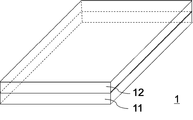
- FIG. 1 is a schematic perspective view showing an example of a positive electrode according to the present embodiment.
- the positive electrode 1 includes a current collector 11 and a positive electrode active material layer 12 arranged on the current collector 11.
- the current collector examples include metals such as copper, stainless steel, aluminum, nickel and titanium, composite materials whose surfaces such as copper and stainless steel are surface-treated with carbon, nickel, titanium and silver, and carbon foil. Be done.
- metals such as copper, stainless steel, aluminum, nickel and titanium, composite materials whose surfaces such as copper and stainless steel are surface-treated with carbon, nickel, titanium and silver, and carbon foil. Be done.
- aluminum and carbon foil are preferable as a lightweight current collector.
- the current collector can also enhance the adhesive force of the positive electrode active material layer or the like by forming fine irregularities on the surface thereof.
- various forms such as films, sheets, foils, nets, porous bodies, foams, and non-woven fabrics are possible.
- the thickness of the current collector may be, for example, 3 ⁇ m or more and 500 ⁇ m or less.
- Negative electrode As the negative electrode constituting the lithium-sulfur battery, a known negative electrode may be used.
- the negative electrode material constituting the negative electrode include Li metal, Li—Si alloy, Li—Al alloy, Li—In alloy, lithium titanate (for example, Li 4 Ti 5 O 12 and Li Ti 2 O 4 ), and lithium titanium. It may be a composite oxide (for example, Li 4 Ti 5-x Mn x O 12 ; 0 ⁇ x ⁇ 0.3), Li x C (x ⁇ 6), or the like. In these negative electrode materials, a part of lithium may be replaced with another alkali metal.
- Li metal Li—Si alloy, Li—Al alloy, Li—In alloy, Li x C (x ⁇ 6) and the like are preferable. With these materials, it can be said that a high voltage can be extracted from the lithium-sulfur battery.
- a known material may be used as the separator, and examples thereof include porous polyethylene and polypropylene. Further, a known separator may be coated and used.
- the electrolyte may contain a lithium salt and may be appropriately selected from the lithium salts used in conventional lithium ion batteries.
- the lithium salt may contain, for example, an anion having a fluorine element.
- Specific examples of the lithium salt containing an anion having a fluorine element include LiPF 6 , LiBF 4 , LiSbF 6 , LiAsF 6 , LiSO 3 CF 3 , LiN (SO 2 CF 3 ) 2 (LiTFSI) and the like.
- the electrolyte may be lithium nitrate, it may include a lithium salt that does not contain fluorine elements such as LiClO 4. Lithium nitrate is preferable because it can form a film that protects the negative electrode.
- the electrolyte may contain an organic solvent.
- a carbonate solvent, an ether solvent, an ester solvent, an amide solvent, a nitrile solvent, a sulfur-containing solvent may be used, or an organic solvent in which some elements of the organic solvent are replaced with fluorine. May be used.
- the carbonate-based solvent fluoroethylene carbonate in which some elements of the carbonate-based solvent are replaced with fluorine can be used. The fluoroethylene carbonate can form a protective film on the negative electrode and reduce the decrease in the cycle capacity retention rate.
- organic solvent examples include carbonate solvents such as propion carbonate, ethylene carbonate, dimethyl carbonate and ethyl methyl carbonate, 1,3-dioxolane, 1,2-dimethoxyethane, 1,3-dimethoxypropane and 2,2,3. , 3-Tetrafluoropropyl difluoromethyl ether, ether solvent such as tetrahydrofuran, ester solvent such as methyl formate, methyl acetate, ⁇ -butyl lactone, amide solvent such as N, N-dimethylacetamide, N, N-dimethylformamide.
- carbonate solvents such as propion carbonate, ethylene carbonate, dimethyl carbonate and ethyl methyl carbonate
- 1,3-dioxolane 1,2-dimethoxyethane
- 1,3-dimethoxypropane 1,3-dimethoxypropane
- 3-Tetrafluoropropyl difluoromethyl ether ether solvent such as t
- Examples thereof include a solvent, a sulfur-containing solvent such as sulfolane, dimethylsulfoxide, and 1,3-propanesartone.
- a solvent a sulfur-containing solvent such as sulfolane, dimethylsulfoxide, and 1,3-propanesartone.
- the organic solvent 1,3-dioxolane and 1,2-dimethoxyethane are preferably used. These organic solvents are not easily affected by the sulfur component eluted from the carbon material.
- the lithium-sulfur battery includes the positive electrode for the lithium-sulfur battery.
- the lithium-sulfur battery includes a positive electrode for a lithium-sulfur battery, a negative electrode, and an electrolyte and the like arranged between the positive electrode and the negative electrode.
- the lithium-sulfur battery may be provided with a separator, if necessary.
- FIG. 2 is an example of a lithium-sulfur battery in this embodiment.
- the lithium-sulfur battery 10 includes a positive electrode 1 for a lithium-sulfur battery, a negative electrode 2, a separator 3 arranged between the positive electrode 1 and the negative electrode 2 for a lithium-sulfur battery, and an electrolytic solution.
- the electrolytic solution is contained in the positive electrode 1, the negative electrode 2 and the separator 3 for a lithium-sulfur battery.
- Example 1 ⁇ Preparation of sulfur-carbon complex> A mixture was obtained by mixing 4.5 g of sulfur (98%; Fuji Film Wako Pure Chemical Industries, Ltd.) and 1.5 g of a porous carbon material (Knobel (registered trademark); manufactured by Toyo Tanso Co., Ltd.). The obtained mixture was heated at 170 ° C. for 15 hours in a heat-resistant pressure-resistant container to obtain a sulfur-carbon composite in which sulfur was embedded in a carbon material. The content of sulfur arranged in the voids of the carbon material in the sulfur-carbon composite was 75% by mass.
- FIG. 3 shows an SEM image of the porous carbon material used.
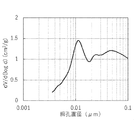
- FIG. 4 shows a pore distribution map measured with a mercury porosimeter. From FIG. 3, it can be seen that the porous carbon material is a carbon material in which primary particles aggregate to form secondary particles. From the pore distribution in FIG. 4, it can be seen that the pore volume ( ⁇ 20 nm) is 0.63 cm 3 / g, and the peak diameter of the pores is 12 nm mesoporous carbon. The BET specific surface area of the porous carbon material used was 1472 m 2 / g.
- the fact that the obtained heat-treated product is lithium tungstate (Li 6 WO 6 ) means that X-ray diffraction measurement (X-ray diffractometer manufactured by Rigaku Co., Ltd. (model number MiniFlex), X-ray source: CuK ⁇ ray, tube current 15 mA) , Tube voltage 40 kV), it was confirmed by the fact that the diffraction peak derived from the compound was observed.
- the obtained lithium tungstate was added to NMP to adjust the concentration to 5% by mass, and this was pulverized with a bead mill using zirconia beads to obtain a lithium tungstate slurry.
- Example 2 Preparation of metal oxide slurry> A lithium tungstate slurry having a concentration of 13% by mass was prepared in the same manner as in Example 1.
- Example 2 A positive electrode composition of Example 2 was obtained in the same manner as in Example 1 except that 3.0 g of lithium tungstate slurry having a concentration of 13% by mass was used as the metal slurry.
- Example 3 ⁇ Preparation of metal oxide slurry> 4.8 g of lithium carbonate and 8.0 g of zirconium oxide (ZrO 2 ) were mixed, and the obtained mixture was heat-treated at 900 ° C. in an air atmosphere to obtain lithium zirconate (Li 2 ZrO 3).
- the fact that the obtained heat-treated product was lithium zirconate (Li 2 ZrO 3 ) was due to the fact that X-ray diffraction measurement was performed under the same conditions as in Example 1 to obtain a diffraction peak derived from the compound. confirmed.
- the obtained lithium zirconate was added to NMP to adjust the concentration to 5% by mass, and this was pulverized with a bead mill using zirconia beads to obtain a lithium zirconate slurry.
- Example 3 A positive electrode composition of Example 3 was obtained in the same manner as in Example 1 except that 3.0 g of lithium zirconate slurry having a concentration of 5% by mass was used as the metal slurry.
- Example 4 ⁇ Preparation of metal oxide slurry> 2.5 g of lithium carbonate and 9.0 g of niobium oxide (Nb 2 O 5 ) were mixed, and the obtained mixture was heat-treated at 900 ° C. in an air atmosphere to obtain lithium niobate. It was confirmed that the obtained heat-treated product was lithium niobate (LiNbO 3 ) by performing X-ray diffraction measurement under the same conditions as in Example 1 and obtaining a diffraction peak derived from the compound. .. The obtained lithium niobate was added to NMP to adjust the concentration to 5% by mass, and this was pulverized with a bead mill using zirconia beads to obtain a lithium niobate slurry.
- NMP lithium niobate
- Example 4 The positive electrode composition of Example 4 was obtained in the same manner as in Example 1 except that 3.0 g of lithium niobate slurry having a concentration of 5% by mass was used as the metal slurry.
- Example 5 ⁇ Preparation of metal oxide slurry> 2.9 g of lithium oxide and 7.1 g of nickel oxide (NiO) were mixed, and the obtained mixture was heat-treated at 600 ° C. under a nitrogen atmosphere to obtain lithium nickel oxide.
- the fact that the obtained heat-treated product is lithium nickelate (Li 2 NiO 2 ) means that X-ray diffraction measurement (X-ray diffractometer (smartLab) manufactured by Rigaku Co., Ltd.), X-ray source: CuK ⁇ ray, tube current 200 mA, It was confirmed by observing a diffraction peak derived from the compound with a tube voltage of 45 kV).
- the obtained lithium nickelate was added to NMP to adjust the concentration to 5% by mass, and this was pulverized with a bead mill using zirconia beads to obtain a lithium nickelate slurry.
- Example 5 The positive electrode composition of Example 5 was obtained in the same manner as in Example 1 except that 3.0 g of lithium nickelate slurry having a concentration of 5% by mass was used as the metal slurry.
- Example 6 ⁇ Preparation of oxide slurry> 6.7 g of lithium carbonate and 7.3 g of titanium oxide (TiO 2 ) were mixed, and the obtained mixture was heat-treated at 900 ° C. in an air atmosphere to obtain lithium titanate.
- the obtained lithium titanate was added to NMP to adjust the concentration to 5% by mass, and this was pulverized with a bead mill using zirconia beads to obtain a lithium titanate slurry.
- Example 6 A positive electrode composition of Example 6 was obtained in the same manner as in Example 1 except that 3.0 g of lithium titanate slurry having a concentration of 5% by mass was used as the metal slurry.
- Example 7 ⁇ Preparation of metal oxide slurry> First, lithium ferrite (LiFeO 2, manufactured by Sigma-Aldrich) was prepared. Next, lithium ferrite was added to NMP to adjust the concentration to 5% by mass, and this was pulverized with a bead mill using zirconia beads to obtain a lithium ferrite slurry.
- lithium ferrite LiFeO 2, manufactured by Sigma-Aldrich
- Example 7 A positive electrode composition of Example 7 was obtained in the same manner as in Example 1 except that 3.0 g of a lithium ferrite slurry having a concentration of 5% by mass was used as the metal slurry.
- Comparative Example 1 A positive electrode composition of Comparative Example 1 was obtained in the same manner as in Example 1 except that no metal oxide slurry was added.
- Comparative Example 2 As the metal oxide slurry, 3.0 g of 5% by mass tungsten oxide slurry prepared by using tungsten oxide (WO 3 ) instead of the lithium transition metal composite oxide was used in the same manner as in Example 1. A positive electrode of Comparative Example 2 was obtained.
- Non-aqueous electrolyte solution The preparation of the non-aqueous electrolyte solution was carried out as follows. 1,3-Dioxolane (DOL) and 1,2-dimethoxyethane (DME) were mixed in a volume ratio of 5: 5. Bis (trifluoromethanesulfonyl) imidelithium (LiTFSI) was dissolved in the obtained mixed solvent so as to have a concentration of 1.0 mol / L. Subsequently, lithium nitrate (LiNO 3 ) was dissolved so as to have a concentration of 0.2 mol / L to prepare a non-aqueous electrolytic solution.
- DIOL 1,3-Dioxolane
- DME 1,2-dimethoxyethane
- LiTFSI bis (trifluoromethanesulfonyl) imidelithium
- LiNO 3 lithium nitrate
- a lead electrode was attached to the positive electrode obtained above, a separator made of porous polypropylene (Cellguard 2400) was arranged, and they were stored in a bag-shaped laminate pack. After storage, it was vacuum dried at 50 ° C. to remove the moisture adsorbed on each member. After vacuum drying, the metallic lithium of the negative electrode arranged on the SUS foil is placed in the laminate pack facing the positive electrode via the porous polypropylene, and the non-aqueous electrolyte solution is injected and sealed to serve as an evaluation battery. A laminated type non-aqueous electrolyte secondary battery was obtained. The following battery characteristics were evaluated using the obtained evaluation battery.
- the evaluation battery was installed in a constant temperature bath at 25 ° C., and an evaluation test of the rate ratio was performed.
- the charge / discharge voltage was carried out in the range of 1.8 V to 3.0 V.
- the 1C discharge capacity was measured using the 1C current value.
- the 0.2C discharge capacity was measured using the current value of 0.2C.
- the rate ratio (1C discharge capacity / 0.2C discharge capacity) was calculated using the obtained 1C discharge capacity and 0.2C discharge capacity.
- the results are shown in Table 1.
- the addition rate in the table means the ratio of the content of the transition metal oxide to the content of the sulfur-carbon complex.
- the rate ratio is also improved. I was able to confirm that. Further, in the positive electrode composition for a lithium-sulfur battery containing lithium tungstate according to Examples 1 and 2, the content of the lithium transition metal composite oxide with respect to the total amount of the carbon material and the material containing the sulfur element is 1% by mass or more. It is 30% by mass or less. In each case, the cycle capacity retention rate was improved as compared with the case where the positive electrode composition for a lithium-sulfur battery of the comparative example was used.
- SEM observation Scanning electron microscope (SEM) observation was performed on the positive electrode composition for a lithium-sulfur battery of Example 1. The observation was performed using an SEM device (model number SU5000) manufactured by Hitachi High-Technologies Corporation under the condition of an acceleration voltage of 3.0 kV.
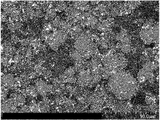
- FIG. 5 is an SEM image observed at 4000 times. From the contrast of the obtained SEM image, it is presumed that lithium tungstate is contained in the white portion.
- EDX analysis EDX analysis was performed on the positive electrode composition for a lithium-sulfur battery prepared in Example 1. Further, the evaluation battery containing the positive electrode composition for a lithium-sulfur battery produced in Example 1 is charged and discharged 30 times under the same conditions as the cycle capacity retention rate, and then the lithium-sulfur battery is used as a lithium-sulfur battery.
- the positive electrode composition for EDX was taken out and analyzed by EDX.
- the EDX analysis was performed using an EDX device manufactured by Bruker (XFlash (registered trademark) FlatQUAD 5060F) under the condition of an acceleration voltage of 5 kV. As a result of EDX analysis, the presence of tungsten and oxygen was confirmed in the positive electrode composition in any of the above cases. Therefore, it can be said that the lithium transition metal composite oxide is contained in the positive electrode composition by SEM observation and EDX analysis.
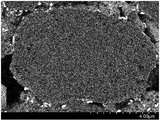
- FIG. 6 is a cross-sectional SEM image of the positive electrode composition for a lithium-sulfur battery produced in Example 1. From the obtained SEM image, it was confirmed that lithium tungstate was arranged on the surface of the carbon material. It was confirmed that lithium tungstate was scattered on the outer surface of the carbon material.
Landscapes
- Chemical & Material Sciences (AREA)
- Chemical Kinetics & Catalysis (AREA)
- Electrochemistry (AREA)
- General Chemical & Material Sciences (AREA)
- Inorganic Chemistry (AREA)
- Engineering & Computer Science (AREA)
- Composite Materials (AREA)
- Manufacturing & Machinery (AREA)
- Materials Engineering (AREA)
- Battery Electrode And Active Subsutance (AREA)
Abstract
リチウム硫黄電池において、高いサイクル容量維持率を達成することができる正極組成物が提供される。空隙を有する炭素材料と、前記炭素材料の空隙に配置される硫黄元素を含む材料とを含む硫黄-炭素複合物と、リチウム遷移金属複合酸化物とを含むリチウム硫黄電池用正極組成物である。
Description
本開示は、リチウム硫黄電池用正極組成物、リチウム硫黄電池用正極及びリチウム硫黄電池に関する。
リチウム硫黄電池は、単位質量当たりのエネルギー密度が高い2次電池であり、正極材料として、例えばメソ孔内に硫黄を配置したメソポーラス硫黄-炭素複合物が用いられている(例えば、特開2010-095390号公報参照)。リチウム硫黄電池は従来のリチウムイオン電池より軽い電池として、例えば、電気自動車などの大型動力機器用途、ドローンなどの航空用途への搭載が期待されており、それら用途においてはサイクル容量維持率の高い電池が求められている。
本開示の一態様は、リチウム硫黄電池において、高いサイクル容量維持率を達成することができる正極組成物を提供することを目的とする。
第一態様は、空隙を有する炭素材料と、炭素材料の空隙に配置される硫黄元素を含む材料を含む硫黄-炭素複合物と、リチウム遷移金属複合酸化物と、を含むリチウム硫黄電池用正極組成物である。
第二態様は、集電体と、集電体上に配置される正極活物質層と、を備え、正極活物質層が、第一態様のリチウム硫黄電池用正極組成物を含むリチウム硫黄電池用正極である。
第三態様は、第二態様のリチウム硫黄電池用正極と、負極と、正極と負極の間に配置される電解質と、を備えるリチウム硫黄電池である。
本開示の一態様によれば、リチウム硫黄電池において、高いサイクル容量維持率を達成することができる正極組成物を提供することができる。
本明細書において「工程」との語は、独立した工程だけではなく、他の工程と明確に区別できない場合であってもその工程の所期の目的が達成されれば、本用語に含まれる。また組成物中の各成分の含有量は、組成物中に各成分に該当する物質が複数存在する場合、特に断らない限り、組成物中に存在する当該複数の物質の合計量を意味する。さらに本明細書に記載される数値範囲の上限及び下限は、当該数値を任意に選択して組み合わせることが可能である。以下、本発明の実施形態を詳細に説明する。ただし、以下に示す実施形態は、本発明の技術思想を具体化するための、リチウム硫黄電池用正極活物質、リチウム硫黄電池用正極組成物、リチウム硫黄電池用正極、リチウム硫黄電池等を例示するものであって、本発明は、以下に示すリチウム硫黄電池用正極活物質、リチウム硫黄電池用正極組成物、リチウム硫黄電池用正極、リチウム硫黄電池等に限定されない。なお、特許請求の範囲に示される部材を、実施形態の部材に限定するものではない。
リチウム硫黄電池用正極組成物
リチウム硫黄電池用正極組成物(以下、単に「正極組成物」ともいう)は、空隙を有する炭素材料と、炭素材料の空隙に配置される硫黄元素を含む材料と、リチウム遷移金属複合酸化物と、を含む。
リチウム硫黄電池用正極組成物(以下、単に「正極組成物」ともいう)は、空隙を有する炭素材料と、炭素材料の空隙に配置される硫黄元素を含む材料と、リチウム遷移金属複合酸化物と、を含む。
リチウム硫黄電池用正極組成物は、空隙に硫黄元素を含む材料が配置された炭素材料と、リチウム遷移金属複合酸化物とを含んでおり、上記リチウム硫黄電池用正極組成物を用いて得られるリチウム硫黄電池においてサイクル容量維持率を向上することができる。例えば、リチウム硫黄電池用正極組成物に含まれるリチウム遷移金属複合酸化物と、空隙に硫黄元素を含む材料が配置された炭素材料から溶出する含硫黄成分(例えば、硫化リチウム、硫黄、金属硫化物)とが相互作用することにより、サイクル容量維持率が向上すると考えられる。
正極組成物を構成する炭素材料は、表面及び内部の少なくとも一方に空隙を有する炭素材料であればよい。炭素材料としては、例えば、メソポーラス炭素、ケッチェンブラック、アセチレンブラック、活性炭、カーボンナノチューブ、多層グラフェン、グラファイトなどを挙げることができる。メソポーラス炭素としては、例えば、クノーベル(登録商標;東洋炭素株式会社製)を挙げることができる。これらの炭素材料の中でも好ましくは、二次粒子内部に空隙を有する炭素材料であり、例えば、メソポーラス炭素、ケッチェンブラック、アセチレンブラック等が挙げられ、これらからなる群から選択される少なくとも1種を含んでいてよい。炭素材料は1種単独であっても、2種以上の組み合わせであってもよい。
炭素材料の比表面積は、BET値として例えば、100m2/g以上2000m2/g以下であってよく、好ましくは200m2/g以上、より好ましくは500m2/g以上である。なお、BET値は、BET(Brunauer,Emmett,Teller)理論に基づき、窒素ガスを用いる一点法で測定される。一般的に、BET値が大きくなるほど、硫黄-炭素複合物の充放電容量が高くなる。
炭素材料は、1次粒子が集合した2次粒子であってよく、内部で空隙が繋がった連結孔を有する2次粒子であってもよい。炭素材料の2次粒子の体積平均粒径は、例えば、0.5μm以上100μm以下であってよく、好ましくは1μm以上、より好ましくは2μm以上である。炭素材料の体積平均粒径は、好ましくは50μm以下、より好ましくは30μm以下である。炭素材料の体積平均粒径は、体積基準の粒度分布において小径側からの累積50%に対応する粒径として測定される。体積基準の粒度分布は、例えば、レーザー回折式粒度分布測定装置を用いて測定される。
炭素材料の2次粒子を構成する1次粒子は、中空粒子であってよい。2次粒子を構成する1次粒子の粒径は例えば、1nm以上500nm以下であってよい。1次粒子の粒径は、好ましくは2nm以上、より好ましくは5nm以上である。1次粒子の粒径は、好ましくは300nm以下、より好ましくは100nm以下である。1次粒子の粒径は、例えば、走査電子顕微鏡(SEM)、透過電子顕微鏡(TEM)又は走査透過電子顕微鏡(STEM)を用いて観察される画像において、選択された10個の2次粒子それぞれに対して、20個の1次粒子の輪郭長から球相当径をそれぞれ算出し、これらの算術平均として1次粒子の粒径が算出される。
炭素材料の空隙に配置される硫黄元素を含む材料としては、例えば、硫黄単体、リチウム硫黄電池の充放電過程において生成される多硫化物等が挙げられる。硫黄元素を含む材料として具体的には、S8、Li2S8、Li2S6、Li2S4、Li2S2などが挙げられ、歩留まりの観点からは硫黄単体(S8)が好ましい。
硫黄-炭素複合物における炭素材料の空隙に配置される硫黄元素を含む材料の含有率は、炭素材料と硫黄元素を含む材料の総質量に対する硫黄元素を含む材料の質量の比率として、例えば25質量%以上95質量%以下であってよく、好ましくは50質量%以上90質量%以下、より好ましくは67質量%以上80質量%以下である。なお、「67質量%」とは、硫黄元素を含む材料と炭素材料の混合比を2対1にしたときの含有率である。硫黄元素を含む材料の含有率がこれらの範囲内であると、硫黄-炭素複合物としての容量低下が低減される。
リチウム遷移金属複合酸化物を構成する遷移金属元素は、リチウム遷移金属複合酸化物を形成し得る遷移金属元素から選択される少なくとも1種であればよい。リチウム遷移金属複合酸化物中に含まれる遷移金属元素としては、例えば、スカンジウム(Sc)、チタン(Ti)、バナジウム(V)、クロム(Cr)、マンガン(Mn)、鉄(Fe)、コバルト(Co)、ニッケル(Ni)、銅(Cu)、亜鉛(Zn)、イットリウム(Y)、ジルコニウム(Zr)、ニオブ(Nb)、モリブデン(Mo)、ランタン(La)、テクネチウム(Tc)、ルテニウム(Ru)、ロジウム(Rh)、パラジウム(Pd)、銀(Ag)、カドミウム(Cd)、ハフニウム(Hf)、タンタル(Ta)、タングステン(W)、レニウム(Re)、オスミウム(Os)、イリジウム(Ir)、白金(Pt)及び金(Au)からなる群から選択される少なくとも1種の元素が挙げられる。リチウム遷移金属複合酸化物が正極組成物に含まれることで、リチウム硫黄電池のサイクル容量維持率を向上させることができる。リチウム遷移金属複合酸化物は、リチウムを含むことでサイクル容量維持率を向上させ得る。リチウム遷移金属複合酸化物は、リチウムを含まない遷移金属複合酸化物よりも溶出する硫黄成分との相互作用が起こりやすいと予想される。
サイクル容量維持率を向上させるという観点において、リチウム遷移金属複合酸化物中に含まれる遷移金属元素は、好ましくは、Sc、Ti、V、Cr、Mn、Fe、Co、Ni、Cu、Zn、Y、Zr、Nb、Mo、La、Ta及びWからなる群から選択される少なくとも1種の元素である。
また、サイクル容量維持率及びレート比の少なくとも一方をより向上させるという観点において、リチウム遷移金属複合酸化物中に含まれる遷移金属元素は、好ましくは、Ti、Ni、Zr、Nb、W及びFeからなる群から選択される少なくとも1種である。リチウム遷移金属複合酸化物がこれら特定の遷移金属を含むことで、リチウム硫黄電池のサイクル容量維持率及び容量レート比の少なくとも一方がより向上する傾向がある。ここで、本明細書における「容量レート(Capacity rate、以後、単にCレート又はレートという)比」とは、例えば、1C放電容量の0.2C放電容量に対する比率(%)として、1C放電容量/0.2C放電容量×100を算出したものを指す。なお、1Cとは、硫黄の理論容量1672(mAh/g)×正極組成物中の硫黄の重さ(g)/1(h)で得られる電流値であり、硫黄の理論容量(1672mAh/g)を1時間で完全充電(または放電)させる電流の大きさを意味する。0.2Cとは、1Cの0.2倍の電流の大きさである。1C放電容量とは、1Cの電流値を流した時に測定される放電容量を意味する。0.2C放電容量とは、0.2Cの電流値を流した時に測定される放電容量を意味する。一般に、1C放電容量は0.2C放電容量と比べて低くなるため、1C放電容量/0.2C放電容量が100%に近いほど、大電流で放電したときに利用できる電気量が多いことを意味する。
さらに、サイクル容量維持率及びレート比を両立するという観点において、リチウム遷移金属複合酸化物中に含まれる遷移金属元素は、好ましくは、Ni、Zr及びWからなる群から選択される少なくとも1種である。リチウム遷移金属複合酸化物がこれら特定の遷移金属元素を含むことで、サイクル容量維持率及びレート比がともに向上し得る。
なお、正極組成物がリチウム遷移金属複合酸化物を含むことで、硫黄とリチウム遷移金属複合酸化物が相互作用した結果、例えば、放電末期まで電圧降下が起こりにくくなる可能性がある。
リチウム遷移金属複合酸化物として、具体的には、チタン酸リチウム(例えば、Li2TiO3)、ニッケル酸リチウム(例えば、Li2NiO2)、ジルコン酸リチウム(例えば、Li2ZrO3)、ニオブ酸リチウム(例えば、LiNbO3)、タングステン酸リチウム(例えば、Li6WO6)、リチウムフェライト(LiFeO2)等を挙げることができる。リチウム遷移金属複合酸化物であることは、X線回折測定を行い、当該化合物に由来する回折ピークが観測されることにより確認することができる。
リチウム硫黄電池用正極組成物におけるリチウム遷移金属複合酸化物の粒子径は、例えば、1nm以上1μm以下であってよく、好ましくは2nm以上、又は5nm以上であってよく、また好ましくは800nm以下、又は500nm以下であってよい。炭素材料の体積平均粒径に対するリチウム遷移金属複合酸化物の粒子径の比(リチウム遷移金属複合酸化物/炭素材料)は、例えば、0.0002以上0.2以下であってよく、好ましくは0.1以下、より好ましくは0.05以下である。ここで、リチウム遷移金属複合酸化物の粒子径は、電子顕微鏡(SEM、TEM又はSTEM)により算出することができる。具体的には、まず、走査電子顕微鏡(SEM)によって200倍から100000倍の範囲内で観察された範囲に対して、エネルギー分散型X線分析(EDX)を行う。電子顕微鏡により観察された画像のコントラスト及びEDXにより確認される遷移金属元素の存在を考慮して、リチウム遷移金属複合酸化物を特定する。次に、50個のリチウム遷移金属複合酸化物粒子を任意に選択し、1次粒子の輪郭長から球相当径を算出する。これらの算術平均としてリチウム遷移金属複合酸化物の粒子径が算出される。以上では、SEM像を得る場合における拡大倍率の範囲を説明したが、これらの範囲で観察することができない粒子は、透過電子顕微鏡(TEM)、又は走査透過電子顕微鏡(STEM)によって観察することができる。この時の拡大倍率は、例えば、100000倍から15000000倍の範囲である。
リチウム硫黄電池用正極組成物におけるリチウム遷移金属複合酸化物の含有率は、硫黄-炭素複合物に対するリチウム遷移金属複合酸化物の含有率として、例えば、0.1質量%以上30質量%以下であってよく、好ましくは0.1質量%以上20質量%以下であってよく、より好ましくは1質量%以上20質量%以下であってよく、さらに好ましくは2質量%以上15質量%以下、なお好ましくは3質量%以上10質量%以下である。また、リチウム硫黄電池用正極組成物におけるリチウム遷移金属複合酸化物の含有率は、硫黄-炭素複合物に対するリチウム遷移金属複合酸化物の含有率として、例えば、0.1質量%以上30質量%以下であってよく、好ましくは1質量%以上、2質量%以上、又は3質量%以上であってよく、また好ましくは20質量%以下、15質量%以下、又は10質量%以下であってよい。リチウム遷移金属複合酸化物の含有率がこれらの範囲であれば、リチウム硫黄電池の容量維持率をより向上させることができる。
所望の組成を有するリチウム遷移金属複合酸化物は、公知の手法で得ることができる。例えば、アルカリ金属化合物と所望の組成を有する遷移金属酸化物等とを混合して原料混合物を得ることと、得られる原料混合物を熱処理することと、を含む製造方法で製造することができる。熱処理後に得られる熱処理物については、解砕処理を行ってもよく、水洗等によって未反応物、副生物等を除去する処理を行ってもよい。また更に分散処理、分級処理等を行ってもよい。所望の組成を有する遷移金属酸化物を得る方法としては、原料化合物(水酸化物、炭酸化合物等)を目的組成に合わせて混合し熱処理によって遷移金属酸化物に分解する方法がある。また、溶媒に可溶な原料化合物を溶媒に溶解し、温度調整、pH調整、錯化剤投入等で目的の組成に合わせて前駆体の沈殿を得て、得られる前駆体を熱処理によって遷移金属酸化物を得る共沈法などがある。
なお、リチウム遷移金属複合酸化物は、硫黄-炭素複合物上に配置されていてもよく、後述する導電助剤上に配置されていてもよい。
リチウム遷移金属複合酸化物は、炭素材料の内部よりも外表面に多く配置されてよい。これにより、サイクル容量維持率をより向上させることができる傾向がある。さらに、リチウム遷移金属複合酸化物は、炭素材料の外表面にのみ配置されていてよい。これにより、サイクル容量維持率をより向上させることができる傾向がある。ここで、炭素材料の外表面は、例えば、走査電子顕微鏡観察において、炭素材料として識別される粒子の表面領域であってよい。
リチウム遷移金属複合酸化物は、炭素材料の外表面に部分的に配置されていてよい。ここで、「リチウム遷移金属複合酸化物が炭素材料の外表面に部分的に配置されている」とは、リチウム遷移金属複合酸化物が、炭素材料の外表面に対して不連続に配置されていることをいう。また、リチウム遷移金属複合酸化物は、炭素材料の外表面に点在していてよい。
リチウム遷移金属複合酸化物は絶縁体であるので、リチウム遷移金属複合酸化物が炭素材料の外表面に部分的に配置されていることにより、また、外表面に点在していることにより、リチウム遷移金属複合酸化物が炭素材料の外表面を完全に覆う場合と比較して、電気伝導性を向上させ得る。これにより、例えば、レート比を向上させ得ると考えられる。
正極組成物は、上述した炭素材料と硫黄とリチウム遷移金属複合酸化物の他に、必要に応じて、液媒体、結着剤、導電助剤等をさらに含んでいてよい。正極組成物は、リチウム硫黄電池の正極の形成に適用してよく、これにより、少なくともサイクル容量維持率に優れうるリチウム硫黄電池を構成することができる。
液媒体は、有機溶剤や水を用途に応じて使用してよい。有機溶剤としては、例えば、水、N-メチル-2-ピロリドン(NMP)等のアミド系溶剤、ジイソプロピルケトン、ジイソブチルケトン、メチルエチルケトン等のケトン系溶剤、ヘプタン等の炭化水素系溶剤、テトラヒドロフラン、ジメトキシエタン、ジオキソラン等のエーテル系溶剤、ジエチレントリアミン等のアミン系溶剤、エステル系溶剤等を挙げることができる。有機溶剤は1種単独でも、2種以上を組み合わせて用いてもよい。液媒体の含有率は、正極組成物の総質量に対して、例えば10質量%以上90質量%以下であってよい。
結着剤は、例えば正極組成物と導電助剤などとの付着、及び集電体に対する正極組成物の付着を助ける材料である。結着剤の例としては、ポリフッ化ビニリデン(PVDF)、ポリビニルアルコール、カルボキシメチルセルロース(CMC)、澱粉、ヒドロキシプロピルセルロース、再生セルロース、ポリビニルピロリドン、テトラフルオロエチレン、ポリエチレン、ポリプロピレン、エチレン・プロピレン・ジエンゴム(EPDM)、スルホン化EPDM、スチレンブチレンゴム、フッ素ゴム、様々な共重合体などが挙げられる。結着剤の含有率は、正極組成物の総質量に対して例えば0.05質量%以上50質量%以下であってよい。
導電助剤は、例えば後述する正極活物質層の電気伝導性を向上させる材料である。導電助剤としては、例えば、修飾グラフェン、天然黒鉛、人造黒鉛などの黒鉛、アセチレンブラック、ケッチェンブラック、チャンネルブラック、ファーネスブラック、ランプブラック、サーマルブラックなどのカーボンブラック、炭素繊維、金属繊維などの導電性繊維、グラフェン、カーボンナノチューブなどの炭素材料などが挙げられる。導電助剤の含有率は、正極組成物の総質量に対して例えば0.5質量%以上30質量%以下であってよい。
リチウム硫黄電池用正極組成物は、上述の硫黄-炭素複合物とリチウム遷移金属複合酸化物とを混合することで得られる。必要に応じて、液媒体と結着剤と導電助剤等をさらに混合してもよい。また、硫黄-炭素複合物と、液媒体と結着剤と導電助剤等とを予め混合した後に、リチウム遷移金属複合酸化物を混合してもよい。また、リチウム遷移金属複合酸化物と、液媒体と結着剤と導電助剤等を予め混合した後に、硫黄-炭素複合物と混合してもよい。なお、硫黄-炭素複合物とリチウム遷移金属複合酸化物と液媒体と結着剤と導電助剤の詳細の説明については、上述の通りである。
リチウム硫黄電池用正極活物質
リチウム硫黄電池用正極活物質は、空隙を有する炭素材料と、前記炭素材料の空隙に配置される硫黄元素を含む材料と、前記炭素材料の表面に配置されるリチウム遷移金属複合酸化物とを含む。
リチウム硫黄電池用正極活物質は、空隙を有する炭素材料と、前記炭素材料の空隙に配置される硫黄元素を含む材料と、前記炭素材料の表面に配置されるリチウム遷移金属複合酸化物とを含む。
リチウム硫黄電池用正極活物質は、空隙に硫黄元素を含む材料が配置された炭素材料の表面にリチウム遷移金属複合酸化物が配置されており、それらリチウム硫黄電池用正極活物質を用いて得られるリチウム硫黄電池においてサイクル容量維持率を向上することができる。例えば、リチウム硫黄電池用正極活物質表面に配置されたリチウム遷移金属複合酸化物と空隙に硫黄元素を含む材料が配置された炭素材料から溶出する含硫黄成分(例えば、硫化リチウム、硫黄、金属硫化物)とが相互作用することによりサイクル容量維持率が向上すると考えられる。
リチウム硫黄電池用正極活物質は、上述のリチウム硫黄電池用組成物を作製する過程で得られてよいし、予め硫黄-炭素複合物とリチウム遷移金属複合酸化物とを混合して得てもよい。なお、硫黄-炭素複合物とリチウム遷移金属複合酸化物の詳細の説明については、上述の通りである。
リチウム硫黄電池用正極
リチウム硫黄電池用正極(以下、単に「正極」ともいう)は、集電体と、集電体上に配置され、上述したリチウム硫黄電池用正極組成物を含む正極活物質層とを備える。正極は、上述の正極組成物を、水、NMPなどの溶媒中に分散してスラリー状にした後、これを集電体上に塗布し、その後乾燥及び加圧成形することで製造される。図1は本実施形態にかかる正極の一例を示す概略斜視図である。正極1は、集電体11と、集電体11上に配置される正極活物質層12とを含む。
リチウム硫黄電池用正極(以下、単に「正極」ともいう)は、集電体と、集電体上に配置され、上述したリチウム硫黄電池用正極組成物を含む正極活物質層とを備える。正極は、上述の正極組成物を、水、NMPなどの溶媒中に分散してスラリー状にした後、これを集電体上に塗布し、その後乾燥及び加圧成形することで製造される。図1は本実施形態にかかる正極の一例を示す概略斜視図である。正極1は、集電体11と、集電体11上に配置される正極活物質層12とを含む。
集電体の例としては、銅、ステンレススチール、アルミニウム、ニッケル、チタン等の金属、銅、ステンレススチール等の表面をカーボン、ニッケル、チタン、銀などで表面処理した複合材料、炭素箔などが挙げられる。重さの軽いリチウム硫黄電池を製造する場合は、例えば、アルミニウム、炭素箔は軽量な集電体として好ましい。集電体は、その表面に微細な凹凸を形成することによって正極活物質層などの接着力を高めることもできる。またフィルム、シート、箔、ネット、多孔質体、発泡体、不織布体等、多様な形態が可能である。集電体の厚みは例えば3μm以上500μm以下であってよい。
負極
リチウム硫黄電池を構成する負極としては、公知のものを用いればよい。負極を構成する負極材料としては、例えば、Li金属、Li-Si合金、Li-Al合金、Li-In合金、チタン酸リチウム(例えば、Li4Ti5O12及びLiTi2O4)、リチウムチタン複合酸化物(例えば、Li4Ti5-xMnxO12;0<x≦0.3)、LixC(x≦6)等であってよい。これらの負極材料はリチウムの一部が他のアルカリ金属に置換されていてもよい。負極材料としては、Li金属、Li-Si合金、Li-Al合金、Li-In合金、LixC(x≦6)等が好ましい。これらの材料であれば、リチウム硫黄電池から高い電圧を取り出すということができる。
リチウム硫黄電池を構成する負極としては、公知のものを用いればよい。負極を構成する負極材料としては、例えば、Li金属、Li-Si合金、Li-Al合金、Li-In合金、チタン酸リチウム(例えば、Li4Ti5O12及びLiTi2O4)、リチウムチタン複合酸化物(例えば、Li4Ti5-xMnxO12;0<x≦0.3)、LixC(x≦6)等であってよい。これらの負極材料はリチウムの一部が他のアルカリ金属に置換されていてもよい。負極材料としては、Li金属、Li-Si合金、Li-Al合金、Li-In合金、LixC(x≦6)等が好ましい。これらの材料であれば、リチウム硫黄電池から高い電圧を取り出すということができる。
セパレータ
セパレータは公知の材料を用いればよく、例えば、多孔性のポリエチレン、ポリプロピレン等が挙げられる。また、公知のセパレータをコーティングして使用してもよい。
セパレータは公知の材料を用いればよく、例えば、多孔性のポリエチレン、ポリプロピレン等が挙げられる。また、公知のセパレータをコーティングして使用してもよい。
電解質
電解質は、リチウム塩を含んでいればよく、従来のリチウムイオン電池に用いられているリチウム塩から適宜選択すればよい。リチウム塩は、例えばフッ素元素を有するアニオンを含んでいてよい。フッ素元素を有するアニオンを含むリチウム塩として具体的には、LiPF6、LiBF4、LiSbF6、LiAsF6、LiSO3CF3、LiN(SO2CF3)2(LiTFSI)などを挙げることができる。また、電解質は、硝酸リチウム、LiClO4等のフッ素元素を含まないリチウム塩を含んでいてもよい。硝酸リチウムは負極を保護する膜を形成することができるので好ましい。電解質はこれらの中から1種を単独で、あるいは2種以上を組み合わせて用いることができる。電解質は有機溶剤を含んでいてもよい。有機溶剤としては、カーボネート系溶剤、エーテル系溶剤、エステル系溶剤、アミド系溶剤、ニトリル系溶剤、含硫黄溶剤を用いてもよく、また上記有機溶剤の一部の元素をフッ素に置換した有機溶剤を用いてもよい。カーボネート系溶剤として、カーボネート系溶剤の一部の元素をフッ素に置換したフルオロエチレンカーボネートを用いることができる。フルオロエチレンカーボネートは、負極上に保護膜を形成し、サイクル容量維持率が低下することを低減できる。有機溶剤としては、例えば、プロピオンカーボネート、エチレンカーボネート、ジメチルカーボネート、エチルメチルカーボネート等のカーボネート系溶剤、1,3-ジオキソラン、1,2-ジメトキシエタン、1,3-ジメトキシプロパン、2,2,3,3-テトラフルオロプロピルジフルオロメチルエーテル、テトラヒドロフラン等のエーテル系溶剤、ギ酸メチル、酢酸メチル、γ-ブチルラクトン等のエステル系溶剤、N,N-ジメチルアセトアミド、N,N-ジメチルホルムアミド等のアミド系溶剤、スルホラン、ジメチルスルホキシド、1,3-プロパンサルトン等の含硫黄溶剤などを挙げることができる。有機溶剤としては、1,3-ジオキソランおよび1,2-ジメトキシエタンを用いることが好ましい。これらの有機溶剤は、炭素材料から溶出した硫黄成分による影響を受けにくい。
電解質は、リチウム塩を含んでいればよく、従来のリチウムイオン電池に用いられているリチウム塩から適宜選択すればよい。リチウム塩は、例えばフッ素元素を有するアニオンを含んでいてよい。フッ素元素を有するアニオンを含むリチウム塩として具体的には、LiPF6、LiBF4、LiSbF6、LiAsF6、LiSO3CF3、LiN(SO2CF3)2(LiTFSI)などを挙げることができる。また、電解質は、硝酸リチウム、LiClO4等のフッ素元素を含まないリチウム塩を含んでいてもよい。硝酸リチウムは負極を保護する膜を形成することができるので好ましい。電解質はこれらの中から1種を単独で、あるいは2種以上を組み合わせて用いることができる。電解質は有機溶剤を含んでいてもよい。有機溶剤としては、カーボネート系溶剤、エーテル系溶剤、エステル系溶剤、アミド系溶剤、ニトリル系溶剤、含硫黄溶剤を用いてもよく、また上記有機溶剤の一部の元素をフッ素に置換した有機溶剤を用いてもよい。カーボネート系溶剤として、カーボネート系溶剤の一部の元素をフッ素に置換したフルオロエチレンカーボネートを用いることができる。フルオロエチレンカーボネートは、負極上に保護膜を形成し、サイクル容量維持率が低下することを低減できる。有機溶剤としては、例えば、プロピオンカーボネート、エチレンカーボネート、ジメチルカーボネート、エチルメチルカーボネート等のカーボネート系溶剤、1,3-ジオキソラン、1,2-ジメトキシエタン、1,3-ジメトキシプロパン、2,2,3,3-テトラフルオロプロピルジフルオロメチルエーテル、テトラヒドロフラン等のエーテル系溶剤、ギ酸メチル、酢酸メチル、γ-ブチルラクトン等のエステル系溶剤、N,N-ジメチルアセトアミド、N,N-ジメチルホルムアミド等のアミド系溶剤、スルホラン、ジメチルスルホキシド、1,3-プロパンサルトン等の含硫黄溶剤などを挙げることができる。有機溶剤としては、1,3-ジオキソランおよび1,2-ジメトキシエタンを用いることが好ましい。これらの有機溶剤は、炭素材料から溶出した硫黄成分による影響を受けにくい。
リチウム硫黄電池
リチウム硫黄電池は、上記リチウム硫黄電池用正極を備える。リチウム硫黄電池は、リチウム硫黄電池用正極と、負極と、正極と負極の間に配置される電解質等を備えて構成される。リチウム硫黄電池は、必要に応じてセパレータを備えてもよい。図2は本実施形態におけるリチウム硫黄電池の一例である。リチウム硫黄電池10は、リチウム硫黄電池用正極1と、負極2と、リチウム硫黄電池用正極1と負極2との間に配置されたセパレータ3と、電解液を含む。電解液は、リチウム硫黄電池用正極1、負極2及びセパレータ3中に含まれている。
リチウム硫黄電池は、上記リチウム硫黄電池用正極を備える。リチウム硫黄電池は、リチウム硫黄電池用正極と、負極と、正極と負極の間に配置される電解質等を備えて構成される。リチウム硫黄電池は、必要に応じてセパレータを備えてもよい。図2は本実施形態におけるリチウム硫黄電池の一例である。リチウム硫黄電池10は、リチウム硫黄電池用正極1と、負極2と、リチウム硫黄電池用正極1と負極2との間に配置されたセパレータ3と、電解液を含む。電解液は、リチウム硫黄電池用正極1、負極2及びセパレータ3中に含まれている。
以下、本発明を実施例により具体的に説明するが、本発明はこれらの実施例に限定されるものではない。
(実施例1)
<硫黄-炭素複合物の調製>
硫黄(98%;富士フィルム和光純薬工業)4.5gと多孔質炭素材料(クノーベル(登録商標);東洋炭素社製)1.5gとを混合して混合物を得た。得られた混合物を耐熱耐圧容器内で170℃、15時間加熱して、炭素材料内に硫黄が包埋された硫黄-炭素複合物を得た。硫黄-炭素複合物における炭素材料の空隙に配置される硫黄の含有率は75質量%であった。
<硫黄-炭素複合物の調製>
硫黄(98%;富士フィルム和光純薬工業)4.5gと多孔質炭素材料(クノーベル(登録商標);東洋炭素社製)1.5gとを混合して混合物を得た。得られた混合物を耐熱耐圧容器内で170℃、15時間加熱して、炭素材料内に硫黄が包埋された硫黄-炭素複合物を得た。硫黄-炭素複合物における炭素材料の空隙に配置される硫黄の含有率は75質量%であった。
図3に使用した多孔質炭素材料のSEM画像を示す。また、図4に水銀ポロシメーターで測定した細孔分布図を示す。図3から多孔質炭素材料は、1次粒子が凝集し、2次粒子を形成する炭素材料であることがわかる。図4の細孔分布から、細孔容積(<20nm)は0.63cm3/gであり、細孔のピーク直径は12nmのメソポーラス炭素であることがわかる。また、使用した多孔質炭素材料のBET比表面積は1472m2/gであった。
<金属酸化物スラリーの調製>
炭酸リチウム8.1gと酸化タングステン(WO3)8.5gとを混合し、得られた混合物を大気雰囲気下、900℃で熱処理することによりタングステン酸リチウム(Li6WO6)を得た。なお、得られた熱処理物がタングステン酸リチウム(Li6WO6)であることは、X線回折測定(リガク社製のX線回折装置(型番MiniFlex)、X線源:CuKα線、管電流15mA、管電圧40kV)によって、当該化合物に由来する回折ピークが観測されたことにより確認した。得られたタングステン酸リチウムを、NMPに加え、濃度を5質量%に調整し、これを、ジルコニアビーズを用いてビーズミルにて粉砕処理することで、タングステン酸リチウムスラリーを得た。
炭酸リチウム8.1gと酸化タングステン(WO3)8.5gとを混合し、得られた混合物を大気雰囲気下、900℃で熱処理することによりタングステン酸リチウム(Li6WO6)を得た。なお、得られた熱処理物がタングステン酸リチウム(Li6WO6)であることは、X線回折測定(リガク社製のX線回折装置(型番MiniFlex)、X線源:CuKα線、管電流15mA、管電圧40kV)によって、当該化合物に由来する回折ピークが観測されたことにより確認した。得られたタングステン酸リチウムを、NMPに加え、濃度を5質量%に調整し、これを、ジルコニアビーズを用いてビーズミルにて粉砕処理することで、タングステン酸リチウムスラリーを得た。
<正極組成物の作製>
硫黄-炭素複合物を3.0g(硫黄:3.0g×0.75=2.25g)、気相法炭素繊維(VGCF(R)-H)を0.15g、金属酸化物スラリーとして濃度が5質量%のタングステン酸リチウムスラリーを3.0g、濃度が5質量%のPVDFを含むNMP溶液を12.0g、NMPを2.0g、を混合、混錬して、硫黄-炭素複合物に対して5質量%のリチウム遷移金属複合酸化物を含有する正極組成物を得た。
硫黄-炭素複合物を3.0g(硫黄:3.0g×0.75=2.25g)、気相法炭素繊維(VGCF(R)-H)を0.15g、金属酸化物スラリーとして濃度が5質量%のタングステン酸リチウムスラリーを3.0g、濃度が5質量%のPVDFを含むNMP溶液を12.0g、NMPを2.0g、を混合、混錬して、硫黄-炭素複合物に対して5質量%のリチウム遷移金属複合酸化物を含有する正極組成物を得た。
(実施例2)
<金属酸化物スラリーの調製>
実施例1と同様にして、濃度が13質量%のタングステン酸リチウムスラリーを調製した。
<金属酸化物スラリーの調製>
実施例1と同様にして、濃度が13質量%のタングステン酸リチウムスラリーを調製した。
<正極組成物の作製>
金属スラリーとして濃度が13質量%のタングステン酸リチウムスラリーを3.0g用いたこと以外は、実施例1と同様にして実施例2の正極組成物を得た。
金属スラリーとして濃度が13質量%のタングステン酸リチウムスラリーを3.0g用いたこと以外は、実施例1と同様にして実施例2の正極組成物を得た。
(実施例3)
<金属酸化物スラリーの調製>
炭酸リチウム4.8gと酸化ジルコニウム(ZrO2)8.0gとを混合し、得られた混合物を大気雰囲気下、900℃で熱処理することによりジルコン酸リチウム(Li2ZrO3)を得た。なお、得られた熱処理物がジルコン酸リチウム(Li2ZrO3)であることは、実施例1と同様の条件でX線回折測定を行い、当該化合物に由来する回折ピークが得られたことにより確認した。得られたジルコン酸リチウムをNMPに加え、濃度を5質量%に調整し、これを、ジルコニアビーズを用いてビーズミルにて粉砕処理することで、ジルコン酸リチウムスラリーを得た。
<金属酸化物スラリーの調製>
炭酸リチウム4.8gと酸化ジルコニウム(ZrO2)8.0gとを混合し、得られた混合物を大気雰囲気下、900℃で熱処理することによりジルコン酸リチウム(Li2ZrO3)を得た。なお、得られた熱処理物がジルコン酸リチウム(Li2ZrO3)であることは、実施例1と同様の条件でX線回折測定を行い、当該化合物に由来する回折ピークが得られたことにより確認した。得られたジルコン酸リチウムをNMPに加え、濃度を5質量%に調整し、これを、ジルコニアビーズを用いてビーズミルにて粉砕処理することで、ジルコン酸リチウムスラリーを得た。
<正極組成物の作製>
金属スラリーとして濃度が5質量%のジルコン酸リチウムスラリーを3.0g用いたこと以外は、実施例1と同様にして実施例3の正極組成物を得た。
金属スラリーとして濃度が5質量%のジルコン酸リチウムスラリーを3.0g用いたこと以外は、実施例1と同様にして実施例3の正極組成物を得た。
(実施例4)
<金属酸化物スラリーの調製>
炭酸リチウム2.5gと酸化ニオブ(Nb2O5)9.0gとを混合し、得られた混合物を大気雰囲気下、900℃で熱処理することによりニオブ酸リチウムを得た。なお、得られた熱処理物がニオブ酸リチウム(LiNbO3)であることは、実施例1と同様の条件でX線回折測定を行い、当該化合物に由来する回折ピークが得られたことにより確認した。得られたニオブ酸リチウムをNMPに加え、濃度を5質量%に調整し、これを、ジルコニアビーズを用いてビーズミルにて粉砕処理することで、ニオブ酸リチウムスラリーを得た。
<金属酸化物スラリーの調製>
炭酸リチウム2.5gと酸化ニオブ(Nb2O5)9.0gとを混合し、得られた混合物を大気雰囲気下、900℃で熱処理することによりニオブ酸リチウムを得た。なお、得られた熱処理物がニオブ酸リチウム(LiNbO3)であることは、実施例1と同様の条件でX線回折測定を行い、当該化合物に由来する回折ピークが得られたことにより確認した。得られたニオブ酸リチウムをNMPに加え、濃度を5質量%に調整し、これを、ジルコニアビーズを用いてビーズミルにて粉砕処理することで、ニオブ酸リチウムスラリーを得た。
<正極組成物の作製>
金属スラリーとして濃度が5質量%のニオブ酸リチウムスラリーを3.0g用いたこと以外は、実施例1と同様にして実施例4の正極組成物を得た。
金属スラリーとして濃度が5質量%のニオブ酸リチウムスラリーを3.0g用いたこと以外は、実施例1と同様にして実施例4の正極組成物を得た。
(実施例5)
<金属酸化物スラリーの調製>
酸化リチウム2.9gと酸化ニッケル(NiO)7.1gとを混合し、得られた混合物を窒素雰囲気下、600℃で熱処理することによりニッケル酸リチウムを得た。なお、得られた熱処理物がニッケル酸リチウム(Li2NiO2)であることは、X線回折測定(リガク社製のX線回折装置(smartLab)、X線源:CuKα線,管電流200mA、管電圧45kV)によって、当該化合物に由来する回折ピークが観測されたことにより確認した。得られたニッケル酸リチウムをNMPに加え、濃度を5質量%に調整し、これを、ジルコニアビーズを用いてビーズミルにて粉砕処理することで、ニッケル酸リチウムスラリーを得た。
<金属酸化物スラリーの調製>
酸化リチウム2.9gと酸化ニッケル(NiO)7.1gとを混合し、得られた混合物を窒素雰囲気下、600℃で熱処理することによりニッケル酸リチウムを得た。なお、得られた熱処理物がニッケル酸リチウム(Li2NiO2)であることは、X線回折測定(リガク社製のX線回折装置(smartLab)、X線源:CuKα線,管電流200mA、管電圧45kV)によって、当該化合物に由来する回折ピークが観測されたことにより確認した。得られたニッケル酸リチウムをNMPに加え、濃度を5質量%に調整し、これを、ジルコニアビーズを用いてビーズミルにて粉砕処理することで、ニッケル酸リチウムスラリーを得た。
<正極組成物の作製>
金属スラリーとして濃度が5質量%のニッケル酸リチウムスラリーを3.0g用いたこと以外は、実施例1と同様にして実施例5の正極組成物を得た。
金属スラリーとして濃度が5質量%のニッケル酸リチウムスラリーを3.0g用いたこと以外は、実施例1と同様にして実施例5の正極組成物を得た。
(実施例6)
<酸化物スラリーの調製>
炭酸リチウム6.7gと酸化チタン(TiO2)7.3gとを混合し、得られた混合物を大気雰囲気下、900℃で熱処理することによりチタン酸リチウムを得た。なお、得られた熱処理物がチタン酸リチウム(Li2TiO3)であることは、実施例1と同様の条件でX線回折測定を行い、当該化合物に由来する回折ピークが得られたことにより確認した。得られたチタン酸リチウムをNMPに加え、濃度を5質量%に調整し、これを、ジルコニアビーズを用いてビーズミルにて粉砕処理することで、チタン酸リチウムスラリーを得た。
<酸化物スラリーの調製>
炭酸リチウム6.7gと酸化チタン(TiO2)7.3gとを混合し、得られた混合物を大気雰囲気下、900℃で熱処理することによりチタン酸リチウムを得た。なお、得られた熱処理物がチタン酸リチウム(Li2TiO3)であることは、実施例1と同様の条件でX線回折測定を行い、当該化合物に由来する回折ピークが得られたことにより確認した。得られたチタン酸リチウムをNMPに加え、濃度を5質量%に調整し、これを、ジルコニアビーズを用いてビーズミルにて粉砕処理することで、チタン酸リチウムスラリーを得た。
<正極組成物の作製>
金属スラリーとして濃度が5質量%のチタン酸リチウムスラリーを3.0g用いたこと以外は、実施例1と同様にして実施例6の正極組成物を得た。
金属スラリーとして濃度が5質量%のチタン酸リチウムスラリーを3.0g用いたこと以外は、実施例1と同様にして実施例6の正極組成物を得た。
(実施例7)
<金属酸化物スラリーの調製>
まず、リチウムフェライト(LiFeO2、Sigma‐Aldrich社製)を準備した。次にリチウムフェライトをNMPに加え、濃度を5質量%に調整し、これを、ジルコニアビーズを用いてビーズミルにて粉砕処理することで、リチウムフェライトスラリーを得た。
<金属酸化物スラリーの調製>
まず、リチウムフェライト(LiFeO2、Sigma‐Aldrich社製)を準備した。次にリチウムフェライトをNMPに加え、濃度を5質量%に調整し、これを、ジルコニアビーズを用いてビーズミルにて粉砕処理することで、リチウムフェライトスラリーを得た。
<正極組成物の作製>
金属スラリーとして濃度が5質量%のリチウムフェライトスラリーを3.0g用いたこと以外は、実施例1と同様にして実施例7の正極組成物を得た。
金属スラリーとして濃度が5質量%のリチウムフェライトスラリーを3.0g用いたこと以外は、実施例1と同様にして実施例7の正極組成物を得た。
(比較例1)
金属酸化物スラリーを添加しなかったこと以外は、実施例1と同様にして比較例1の正極組成物を得た。
金属酸化物スラリーを添加しなかったこと以外は、実施例1と同様にして比較例1の正極組成物を得た。
(比較例2)
金属酸化物スラリーとして、リチウム遷移金属複合酸化物の代わりに酸化タングステン(WO3)を用いて調製した5質量%の酸化タングステンスラリーを3.0g用いたこと以外は、実施例1と同様にして比較例2の正極を得た。
金属酸化物スラリーとして、リチウム遷移金属複合酸化物の代わりに酸化タングステン(WO3)を用いて調製した5質量%の酸化タングステンスラリーを3.0g用いたこと以外は、実施例1と同様にして比較例2の正極を得た。
<正極の作製>
実施例1から実施例7及び比較例1、比較例2で得られた正極組成物を、ギャップ240μmのドクターブレードを用いて、集電体に塗布して乾燥し、乾燥品を得た。集電体には、カーボンで被覆されたアルミニウム箔を用いた。乾燥品をロールプレス機で、活物質層の密度が0.63g/cm3になるように圧縮成形した後、所定のサイズに裁断することにより、正極を得た。
実施例1から実施例7及び比較例1、比較例2で得られた正極組成物を、ギャップ240μmのドクターブレードを用いて、集電体に塗布して乾燥し、乾燥品を得た。集電体には、カーボンで被覆されたアルミニウム箔を用いた。乾燥品をロールプレス機で、活物質層の密度が0.63g/cm3になるように圧縮成形した後、所定のサイズに裁断することにより、正極を得た。
<非水電解液の作製>
非水電解液の作製は以下のように実施した。1,3-ジオキソラン(DOL)と1,2-ジメトキシエタン(DME)を体積比5:5で混合した。得られた混合溶媒にビス(トリフルオロメタンスルホニル)イミドリチウム(LiTFSI)をその濃度が1.0mol/Lとなるように溶解させた。続いて硝酸リチウム(LiNO3)をその濃度が0.2mol/Lとなるように溶解して、非水電解液を作製した。
非水電解液の作製は以下のように実施した。1,3-ジオキソラン(DOL)と1,2-ジメトキシエタン(DME)を体積比5:5で混合した。得られた混合溶媒にビス(トリフルオロメタンスルホニル)イミドリチウム(LiTFSI)をその濃度が1.0mol/Lとなるように溶解させた。続いて硝酸リチウム(LiNO3)をその濃度が0.2mol/Lとなるように溶解して、非水電解液を作製した。
<非水電解質二次電池の組み立て>
上記で得られた正極にリード電極を取り付け、多孔性ポリプロピレン(セルガード2400)からなるセパレータを配し、袋状のラミネートパックにそれらを収納した。収納後50℃で真空乾燥して各部材に吸着した水分を除去した。真空乾燥後、SUS箔上に配した負極の金属リチウムを、多孔性ポリプロピレンを介して正極と対向してラミネートパック内に配置し、非水電解液を注入、封止して、評価用電池としてのラミネートタイプの非水電解質二次電池を得た。得られた評価用電池を用い、以下の電池特性の評価を行った。
上記で得られた正極にリード電極を取り付け、多孔性ポリプロピレン(セルガード2400)からなるセパレータを配し、袋状のラミネートパックにそれらを収納した。収納後50℃で真空乾燥して各部材に吸着した水分を除去した。真空乾燥後、SUS箔上に配した負極の金属リチウムを、多孔性ポリプロピレンを介して正極と対向してラミネートパック内に配置し、非水電解液を注入、封止して、評価用電池としてのラミネートタイプの非水電解質二次電池を得た。得られた評価用電池を用い、以下の電池特性の評価を行った。
<充放電サイクル容量維持率の評価>
上記のように得られた評価用電池を25℃の恒温槽に設置し、サイクル容量維持率の評価試験を実施した。充放電電圧は1.8Vから3.0Vの範囲で実施した。放電電流は0.2C容量を取り出すときの電流値を流した。放電を開始した直後の1サイクル目の放電容量Qcyc(1)を測定した。以下充電と放電を繰り返し、30サイクル目の放電容量Qcyc(30)を測定した。得られたQcyc(1)でQcyc(30)を除して30サイクル後の容量維持率Pcyc(=100×Qcyc(30)/Qcyc(1))(%)を算出した。結果を表1に示す。
上記のように得られた評価用電池を25℃の恒温槽に設置し、サイクル容量維持率の評価試験を実施した。充放電電圧は1.8Vから3.0Vの範囲で実施した。放電電流は0.2C容量を取り出すときの電流値を流した。放電を開始した直後の1サイクル目の放電容量Qcyc(1)を測定した。以下充電と放電を繰り返し、30サイクル目の放電容量Qcyc(30)を測定した。得られたQcyc(1)でQcyc(30)を除して30サイクル後の容量維持率Pcyc(=100×Qcyc(30)/Qcyc(1))(%)を算出した。結果を表1に示す。
<レート比の評価>
評価用電池を25℃の恒温槽に設置し、レート比の評価試験を行った。充放電電圧は1.8Vから3.0Vの範囲で実施した。1Cの電流値を用いて1C放電容量を測定した。また、0.2Cの電流値を用いて0.2C放電容量を測定した。得られた1C放電容量と0.2C放電容量を用いてレート比(1C放電容量/0.2C放電容量)を算出した。結果を表1に示す。なお、表中の添加率は、硫黄-炭素複合物の含有量に対する遷移金属酸化物の含有量の割合を意味する。
評価用電池を25℃の恒温槽に設置し、レート比の評価試験を行った。充放電電圧は1.8Vから3.0Vの範囲で実施した。1Cの電流値を用いて1C放電容量を測定した。また、0.2Cの電流値を用いて0.2C放電容量を測定した。得られた1C放電容量と0.2C放電容量を用いてレート比(1C放電容量/0.2C放電容量)を算出した。結果を表1に示す。なお、表中の添加率は、硫黄-炭素複合物の含有量に対する遷移金属酸化物の含有量の割合を意味する。

表1から、実施例1から実施例7にかかるリチウム遷移金属複合酸化物を含むリチウム硫黄電池用正極組成物を用いて作製した正極を含む評価用電池では、遷移金属複合酸化物を含まないリチウム硫黄電池用正極組成物を用いて作製した正極を含む評価用電池と比べて、サイクル容量維持率が向上することが確認できた。実施例1から実施例7にかかるリチウム遷移金属複合酸化物を含むリチウム硫黄電池用正極組成物を用いて作製した正極を含む評価用電池では、酸化タングステン(WO3)を含むリチウム硫黄電池用正極組成物を用いて作製した正極を含む評価用電池と比べてもサイクル容量維持率が向上することが確認できた。また、実施例1から実施例3及び実施例5かかるW、Zr、又はNiを含有するリチウム遷移金属複合酸化物を含むリチウム硫黄電池用正極組成物を用いた場合においては、レート比も向上することが確認できた。また、実施例1及び実施例2にかかるタングステン酸リチウムを含むリチウム硫黄電池用正極組成物は、炭素材料と硫黄元素を含む材料の総量に対するリチウム遷移金属複合酸化物の含有率が1質量%以上30質量%以下である。いずれの場合も、サイクル容量維持率は比較例のリチウム硫黄電池用正極組成物を用いた場合と比べて向上していた。
(SEM観察)
実施例1のリチウム硫黄電池用正極組成物に対して走査電子顕微鏡(SEM)観察を行った。観察は日立ハイテクノロジーズ社製のSEM装置(型番SU5000)を用いて、加速電圧3.0kVの条件で行った。図5は4000倍で観察したSEM像である。得られたSEM像のコントラストから、白色の部分に、タングステン酸リチウムが含まれていると推測される。
実施例1のリチウム硫黄電池用正極組成物に対して走査電子顕微鏡(SEM)観察を行った。観察は日立ハイテクノロジーズ社製のSEM装置(型番SU5000)を用いて、加速電圧3.0kVの条件で行った。図5は4000倍で観察したSEM像である。得られたSEM像のコントラストから、白色の部分に、タングステン酸リチウムが含まれていると推測される。
(EDX分析)
実施例1で作製したリチウム硫黄電池用正極組成物に対してEDX分析を行った。また、実施例1で作製したリチウム硫黄電池用正極組成物、を含む評価用電池を上記サイクル容量維持率と同じ条件にて30回の充放電を行った後、該リチウム硫黄電池からリチウム硫黄電池用正極組成物を取り出して、EDX分析を行った。EDX分析は、ブルカー社製のEDX装置(XFlash(登録商標) FlatQUAD 5060F)を用いて、加速電圧が5kVの条件で行った。EDX分析の結果、上記いずれの場合においても、正極組成物中においてタングステンと酸素の存在を確認した。したがって、SEM観察とEDX分析により、正極組成物中にリチウム遷移金属複合酸化物が含まれているといえる。
実施例1で作製したリチウム硫黄電池用正極組成物に対してEDX分析を行った。また、実施例1で作製したリチウム硫黄電池用正極組成物、を含む評価用電池を上記サイクル容量維持率と同じ条件にて30回の充放電を行った後、該リチウム硫黄電池からリチウム硫黄電池用正極組成物を取り出して、EDX分析を行った。EDX分析は、ブルカー社製のEDX装置(XFlash(登録商標) FlatQUAD 5060F)を用いて、加速電圧が5kVの条件で行った。EDX分析の結果、上記いずれの場合においても、正極組成物中においてタングステンと酸素の存在を確認した。したがって、SEM観察とEDX分析により、正極組成物中にリチウム遷移金属複合酸化物が含まれているといえる。
図6は実施例1で作製したリチウム硫黄電池用正極組成物の断面SEM像である。得られたSEM像から、炭素材料の表面にタングステン酸リチウムが配置されていることが確認された。タングステン酸リチウムは、炭素材料の外表面に点在していることが確認された。
日本国特許出願2020-063851号(出願日:2020年3月31日)の開示はその全体が参照により本明細書に取り込まれる。本明細書に記載された全ての文献、特許出願、及び技術規格は、個々の文献、特許出願、及び技術規格が参照により取り込まれることが具体的かつ個々に記された場合と同程度に、本明細書に参照により取り込まれる。
1 正極
2 負極
3 セパレータ
10 リチウム硫黄電池
11 集電体
12 正極活物質層
2 負極
3 セパレータ
10 リチウム硫黄電池
11 集電体
12 正極活物質層
Claims (10)
- 空隙を有する炭素材料と、前記炭素材料の空隙に配置される硫黄元素を含む材料とを含む硫黄-炭素複合物と、リチウム遷移金属複合酸化物とを含むリチウム硫黄電池用正極組成物。
- 前記リチウム遷移金属複合酸化物は、遷移金属としてSc,Ti,V,Cr,Mn,Fe,Co,Ni,Cu,Zn,Y,Zr,Nb,Mo,La,Tc,Ru,Rh,Pd,Ag,Cd,Hf,Ta,W,Re,Os,Ir,Pt,及びAuからなる群から選択される少なくとも1種を含む請求項1に記載のリチウム硫黄電池用正極組成物。
- 前記硫黄-炭素複合物に対する前記リチウム遷移金属複合酸化物の含有率が、0.1質量%以上30質量%以下である請求項1又は2に記載のリチウム硫黄電池用正極組成物。
- 前記炭素材料の体積平均粒径に対する前記リチウム遷移金属複合酸化物の粒子径の比が0.0002以上0.2以下である請求項1から3のいずれか1項に記載のリチウム硫黄電池用正極組成物。
- 前記リチウム遷移金属複合酸化物は、前記炭素材料の内部よりも外表面に多く配置されている請求項1から4のいずれか1項に記載のリチウム硫黄電池用正極組成物。
- 前記リチウム遷移金属複合酸化物は、前記炭素材料の外表面に部分的に配置されている請求項1から5のいずれか1項に記載のリチウム硫黄電池用正極組成物。
- 導電助剤を更に含む請求項1から6のいずれか1項に記載のリチウム硫黄電池用正極組成物。
- 液媒体を更に含む請求項1から7のいずれか1項に記載のリチウム硫黄電池用正極組成物。
- 集電体と、前記集電体上に配置される正極活物質層とを備え、
前記正極活物質層は請求項1から7のいずれか1項に記載のリチウム硫黄電池用正極組成物を含むリチウム硫黄電池用正極。 - 請求項9に記載のリチウム硫黄電池用正極と、負極と、前記正極と負極の間に配置される電解質とを備えるリチウム硫黄電池。
Priority Applications (2)
| Application Number | Priority Date | Filing Date | Title |
|---|---|---|---|
| EP21779548.3A EP4131481A4 (en) | 2020-03-31 | 2021-03-31 | POSITIVE ELECTRODE COMPOSITION FOR LITHIUM-SULFUR BATTERIES, POSITIVE ELECTRODE FOR LITHIUM-SULFUR BATTERIES, AND LITHIUM-SULFUR BATTERY |
| US17/995,303 US20230187609A1 (en) | 2020-03-31 | 2021-03-31 | Positive electrode composition for lithium sulfur batteries, positive electrode for lithium sulfur batteries, and lithium sulfur battery |
Applications Claiming Priority (2)
| Application Number | Priority Date | Filing Date | Title |
|---|---|---|---|
| JP2020063851 | 2020-03-31 | ||
| JP2020-063851 | 2020-03-31 |
Publications (1)
| Publication Number | Publication Date |
|---|---|
| WO2021201127A1 true WO2021201127A1 (ja) | 2021-10-07 |
Family
ID=77929115
Family Applications (1)
| Application Number | Title | Priority Date | Filing Date |
|---|---|---|---|
| PCT/JP2021/013926 Ceased WO2021201127A1 (ja) | 2020-03-31 | 2021-03-31 | リチウム硫黄電池用正極組成物、リチウム硫黄電池用正極及びリチウム硫黄電池 |
Country Status (3)
| Country | Link |
|---|---|
| US (1) | US20230187609A1 (ja) |
| EP (1) | EP4131481A4 (ja) |
| WO (1) | WO2021201127A1 (ja) |
Cited By (4)
| Publication number | Priority date | Publication date | Assignee | Title |
|---|---|---|---|---|
| WO2023210232A1 (ja) * | 2022-04-26 | 2023-11-02 | 株式会社Abri | リチウム硫黄電池用正極、リチウム硫黄電池及びその充放電方法 |
| WO2024090405A1 (ja) * | 2022-10-26 | 2024-05-02 | 三井金属鉱業株式会社 | タングステン酸リチウム分散液およびその製造方法 |
| WO2024090404A1 (ja) * | 2022-10-26 | 2024-05-02 | 三井金属鉱業株式会社 | 金属酸リチウム混合液およびその製造方法 |
| WO2024090406A1 (ja) * | 2022-10-26 | 2024-05-02 | 三井金属鉱業株式会社 | ニオブ酸リチウム分散液 |
Citations (5)
| Publication number | Priority date | Publication date | Assignee | Title |
|---|---|---|---|---|
| JP2010095390A (ja) | 2008-09-16 | 2010-04-30 | Tokyo Institute Of Technology | メソポーラス炭素複合材料およびこれを用いた二次電池 |
| JP2012109223A (ja) * | 2010-10-29 | 2012-06-07 | Yokohama National Univ | アルカリ金属−硫黄系二次電池 |
| JP2013225496A (ja) * | 2012-03-19 | 2013-10-31 | Yokohama National Univ | アルカリ金属−硫黄系二次電池 |
| JP2017168434A (ja) * | 2016-03-11 | 2017-09-21 | 東京電力ホールディングス株式会社 | 全固体リチウム硫黄電池およびその製造方法 |
| JP2020063851A (ja) | 2018-10-15 | 2020-04-23 | 東邦瓦斯株式会社 | 熱交換器の異常診断装置 |
Family Cites Families (2)
| Publication number | Priority date | Publication date | Assignee | Title |
|---|---|---|---|---|
| EP3788666A4 (en) * | 2018-04-30 | 2022-01-19 | Lyten, Inc. | LITHIUM-ION BATTERY AND BATTERY MATERIALS |
| GB2577114B (en) * | 2018-09-14 | 2022-04-27 | Johnson Matthey Plc | Battery |
-
2021
- 2021-03-31 WO PCT/JP2021/013926 patent/WO2021201127A1/ja not_active Ceased
- 2021-03-31 EP EP21779548.3A patent/EP4131481A4/en active Pending
- 2021-03-31 US US17/995,303 patent/US20230187609A1/en active Pending
Patent Citations (5)
| Publication number | Priority date | Publication date | Assignee | Title |
|---|---|---|---|---|
| JP2010095390A (ja) | 2008-09-16 | 2010-04-30 | Tokyo Institute Of Technology | メソポーラス炭素複合材料およびこれを用いた二次電池 |
| JP2012109223A (ja) * | 2010-10-29 | 2012-06-07 | Yokohama National Univ | アルカリ金属−硫黄系二次電池 |
| JP2013225496A (ja) * | 2012-03-19 | 2013-10-31 | Yokohama National Univ | アルカリ金属−硫黄系二次電池 |
| JP2017168434A (ja) * | 2016-03-11 | 2017-09-21 | 東京電力ホールディングス株式会社 | 全固体リチウム硫黄電池およびその製造方法 |
| JP2020063851A (ja) | 2018-10-15 | 2020-04-23 | 東邦瓦斯株式会社 | 熱交換器の異常診断装置 |
Non-Patent Citations (1)
| Title |
|---|
| See also references of EP4131481A4 |
Cited By (10)
| Publication number | Priority date | Publication date | Assignee | Title |
|---|---|---|---|---|
| WO2023210232A1 (ja) * | 2022-04-26 | 2023-11-02 | 株式会社Abri | リチウム硫黄電池用正極、リチウム硫黄電池及びその充放電方法 |
| JP2023161891A (ja) * | 2022-04-26 | 2023-11-08 | 株式会社Abri | リチウム硫黄電池用正極、リチウム硫黄電池及びその充放電方法 |
| JP7789619B2 (ja) | 2022-04-26 | 2025-12-22 | 古河電池株式会社 | リチウム硫黄電池用正極、リチウム硫黄電池及びその充放電方法 |
| WO2024090405A1 (ja) * | 2022-10-26 | 2024-05-02 | 三井金属鉱業株式会社 | タングステン酸リチウム分散液およびその製造方法 |
| WO2024090404A1 (ja) * | 2022-10-26 | 2024-05-02 | 三井金属鉱業株式会社 | 金属酸リチウム混合液およびその製造方法 |
| WO2024090406A1 (ja) * | 2022-10-26 | 2024-05-02 | 三井金属鉱業株式会社 | ニオブ酸リチウム分散液 |
| JP7546188B1 (ja) * | 2022-10-26 | 2024-09-05 | 三井金属鉱業株式会社 | ニオブ酸リチウム分散液 |
| JP7546190B1 (ja) * | 2022-10-26 | 2024-09-05 | 三井金属鉱業株式会社 | 金属酸リチウム混合液およびその製造方法 |
| JP7546189B1 (ja) * | 2022-10-26 | 2024-09-05 | 三井金属鉱業株式会社 | タングステン酸リチウム分散液およびその製造方法 |
| TWI871059B (zh) * | 2022-10-26 | 2025-01-21 | 日商三井金屬鑛業股份有限公司 | 鋰金屬氧化物混合液及其製造方法 |
Also Published As
| Publication number | Publication date |
|---|---|
| EP4131481A4 (en) | 2025-07-16 |
| US20230187609A1 (en) | 2023-06-15 |
| EP4131481A1 (en) | 2023-02-08 |
Similar Documents
| Publication | Publication Date | Title |
|---|---|---|
| KR101512573B1 (ko) | 리튬 이온 2차 전지 | |
| JP5888418B2 (ja) | 負極活物質、負極活物質の製造方法、負極および二次電池 | |
| WO2021201127A1 (ja) | リチウム硫黄電池用正極組成物、リチウム硫黄電池用正極及びリチウム硫黄電池 | |
| JP7028073B2 (ja) | 非水系電解質二次電池用正極活物質、非水系電解質二次電池 | |
| TWI861164B (zh) | 負極活性物質、負極及該等的製造方法 | |
| JP6578189B2 (ja) | 非水二次電池用正極材料及びその製造方法、並びにその非水二次電池用正極材料を用いた非水二次電池用正極及びそれを用いた非水二次電池 | |
| JP6665483B2 (ja) | リチウムイオン二次電池用正極及びリチウムイオン二次電池 | |
| WO2021241077A1 (ja) | 非水電解質二次電池用正極、及び非水電解質二次電池 | |
| WO2021241076A1 (ja) | 非水電解質二次電池用正極、及び非水電解質二次電池 | |
| JP7060336B2 (ja) | 正極活物質、リチウムイオン二次電池および正極活物質の製造方法 | |
| JP2017050204A (ja) | 非水電解質二次電池用正極材料、その製造方法および非水電解質二次電池 | |
| EP4621928A1 (en) | Method for manufacturing lithium secondary battery | |
| JP2017117529A (ja) | 正極活物質、リチウムイオン二次電池用正極およびリチウムイオン二次電池 | |
| CN119013801A (zh) | 正极活性物质及非水电解质二次电池 | |
| JP2025175191A (ja) | 非水電解質二次電池用正極活物質の製造方法 | |
| JP2023019106A (ja) | 電極用複合粒子及びその製造方法 | |
| JP6466145B2 (ja) | 非水二次電池用正極材料及びその製造方法、並びにその非水二次電池用正極材料を用いた非水二次電池用正極及びそれを用いた非水二次電池 | |
| CN116072836B (zh) | 锂离子电池用正极活性物质及其制造方法以及锂离子电池 | |
| JP2007053081A (ja) | 非水電解質二次電池用正極活物質 | |
| WO2024070220A1 (ja) | 非水電解質二次電池 | |
| JP7649998B2 (ja) | 二次電池 | |
| JP2021093330A (ja) | 非水系電解質二次電池用電極およびその製造方法 | |
| JP2014017154A (ja) | リチウム二次電池用正極活物質及びリチウム二次電池 | |
| US20240363855A1 (en) | Electrode mixture and lithium-ion battery | |
| EP4024530B1 (en) | Positive electrode active material for nonaqueous electrolyte secondary batteries, and nonaqueous electrolyte secondary battery |
Legal Events
| Date | Code | Title | Description |
|---|---|---|---|
| 121 | Ep: the epo has been informed by wipo that ep was designated in this application |
Ref document number: 21779548 Country of ref document: EP Kind code of ref document: A1 |
|
| NENP | Non-entry into the national phase |
Ref country code: DE |
|
| ENP | Entry into the national phase |
Ref document number: 2021779548 Country of ref document: EP Effective date: 20221031 |
|
| NENP | Non-entry into the national phase |
Ref country code: JP |