WO2021205867A1 - 糖を回収する方法 - Google Patents
糖を回収する方法 Download PDFInfo
- Publication number
- WO2021205867A1 WO2021205867A1 PCT/JP2021/012015 JP2021012015W WO2021205867A1 WO 2021205867 A1 WO2021205867 A1 WO 2021205867A1 JP 2021012015 W JP2021012015 W JP 2021012015W WO 2021205867 A1 WO2021205867 A1 WO 2021205867A1
- Authority
- WO
- WIPO (PCT)
- Prior art keywords
- sugar
- fermentation inhibitor
- exchange resin
- anion exchange
- column
- Prior art date
- Legal status (The legal status is an assumption and is not a legal conclusion. Google has not performed a legal analysis and makes no representation as to the accuracy of the status listed.)
- Ceased
Links
Images





Classifications
-
- C—CHEMISTRY; METALLURGY
- C13—SUGAR INDUSTRY
- C13B—PRODUCTION OF SUCROSE; APPARATUS SPECIALLY ADAPTED THEREFOR
- C13B20/00—Purification of sugar juices
- C13B20/14—Purification of sugar juices using ion-exchange materials
-
- B—PERFORMING OPERATIONS; TRANSPORTING
- B01—PHYSICAL OR CHEMICAL PROCESSES OR APPARATUS IN GENERAL
- B01D—SEPARATION
- B01D15/00—Separating processes involving the treatment of liquids with solid sorbents; Apparatus therefor
- B01D15/08—Selective adsorption, e.g. chromatography
- B01D15/10—Selective adsorption, e.g. chromatography characterised by constructional or operational features
- B01D15/18—Selective adsorption, e.g. chromatography characterised by constructional or operational features relating to flow patterns
- B01D15/1814—Recycling of the fraction to be distributed
- B01D15/1821—Simulated moving beds
- B01D15/185—Simulated moving beds characterised by the components to be separated
-
- B—PERFORMING OPERATIONS; TRANSPORTING
- B01—PHYSICAL OR CHEMICAL PROCESSES OR APPARATUS IN GENERAL
- B01D—SEPARATION
- B01D15/00—Separating processes involving the treatment of liquids with solid sorbents; Apparatus therefor
- B01D15/08—Selective adsorption, e.g. chromatography
- B01D15/26—Selective adsorption, e.g. chromatography characterised by the separation mechanism
- B01D15/36—Selective adsorption, e.g. chromatography characterised by the separation mechanism involving ionic interaction, e.g. ion-exchange, ion-pair, ion-suppression or ion-exclusion
- B01D15/361—Ion-exchange
- B01D15/362—Cation-exchange
-
- B—PERFORMING OPERATIONS; TRANSPORTING
- B01—PHYSICAL OR CHEMICAL PROCESSES OR APPARATUS IN GENERAL
- B01D—SEPARATION
- B01D15/00—Separating processes involving the treatment of liquids with solid sorbents; Apparatus therefor
- B01D15/08—Selective adsorption, e.g. chromatography
- B01D15/26—Selective adsorption, e.g. chromatography characterised by the separation mechanism
- B01D15/36—Selective adsorption, e.g. chromatography characterised by the separation mechanism involving ionic interaction, e.g. ion-exchange, ion-pair, ion-suppression or ion-exclusion
- B01D15/361—Ion-exchange
- B01D15/363—Anion-exchange
-
- B—PERFORMING OPERATIONS; TRANSPORTING
- B01—PHYSICAL OR CHEMICAL PROCESSES OR APPARATUS IN GENERAL
- B01D—SEPARATION
- B01D15/00—Separating processes involving the treatment of liquids with solid sorbents; Apparatus therefor
- B01D15/08—Selective adsorption, e.g. chromatography
- B01D15/42—Selective adsorption, e.g. chromatography characterised by the development mode, e.g. by displacement or by elution
- B01D15/424—Elution mode
- B01D15/426—Specific type of solvent
-
- C—CHEMISTRY; METALLURGY
- C13—SUGAR INDUSTRY
- C13B—PRODUCTION OF SUCROSE; APPARATUS SPECIALLY ADAPTED THEREFOR
- C13B35/00—Extraction of sucrose from molasses
-
- C—CHEMISTRY; METALLURGY
- C13—SUGAR INDUSTRY
- C13K—SACCHARIDES OBTAINED FROM NATURAL SOURCES OR BY HYDROLYSIS OF NATURALLY OCCURRING DISACCHARIDES, OLIGOSACCHARIDES OR POLYSACCHARIDES
- C13K1/00—Glucose; Glucose-containing syrups
-
- C—CHEMISTRY; METALLURGY
- C13—SUGAR INDUSTRY
- C13K—SACCHARIDES OBTAINED FROM NATURAL SOURCES OR BY HYDROLYSIS OF NATURALLY OCCURRING DISACCHARIDES, OLIGOSACCHARIDES OR POLYSACCHARIDES
- C13K11/00—Fructose
-
- C—CHEMISTRY; METALLURGY
- C13—SUGAR INDUSTRY
- C13K—SACCHARIDES OBTAINED FROM NATURAL SOURCES OR BY HYDROLYSIS OF NATURALLY OCCURRING DISACCHARIDES, OLIGOSACCHARIDES OR POLYSACCHARIDES
- C13K13/00—Sugars not otherwise provided for in this class
- C13K13/007—Separation of sugars provided for in subclass C13K
-
- Y—GENERAL TAGGING OF NEW TECHNOLOGICAL DEVELOPMENTS; GENERAL TAGGING OF CROSS-SECTIONAL TECHNOLOGIES SPANNING OVER SEVERAL SECTIONS OF THE IPC; TECHNICAL SUBJECTS COVERED BY FORMER USPC CROSS-REFERENCE ART COLLECTIONS [XRACs] AND DIGESTS
- Y02—TECHNOLOGIES OR APPLICATIONS FOR MITIGATION OR ADAPTATION AGAINST CLIMATE CHANGE
- Y02E—REDUCTION OF GREENHOUSE GAS [GHG] EMISSIONS, RELATED TO ENERGY GENERATION, TRANSMISSION OR DISTRIBUTION
- Y02E50/00—Technologies for the production of fuel of non-fossil origin
- Y02E50/10—Biofuels, e.g. bio-diesel
Definitions
- the present invention relates to a method for recovering sugar. Specifically, the present invention relates to a method for separating a fermentation inhibitor and a sugar from a sugar solution containing a fermentation inhibitor and recovering the sugar.
- the present application claims priority based on Japanese Patent Application No. 2020-609876 filed in Japan on April 8, 2020, the contents of which are incorporated herein by reference.
- microorganisms assimilate sugar raw materials to produce ethanol, amino acids, etc. At that time, if the sugar raw material contains impurities in a certain concentration or more, the fermentation yield of the target product is lowered or the growth of microorganisms is suppressed.
- a substance that has such an effect on a microorganism is called a fermentation inhibitor, and the type of the substance and the concentration at which the substance is inhibited vary greatly depending on the microorganism.
- microorganisms whose genes have been recombined tend to be more susceptible to inhibitors than microorganisms before recombination. Therefore, when a genetically modified microorganism is used to produce a target substance, the sugar raw material required for culturing or fermenting the microorganism has a fermentation inhibitor content that matches the inhibitor resistance of the microorganism. There must be.
- non-food-based sugar raw materials include molasses, which is a by-product generated from a sugar factory, and cellulosic sugar produced from non-food-based biomass (trees, grasses, etc.).
- non-food-based sugar raw materials have a higher organic acid concentration and contain coloring components as compared with food-based sugar raw materials. It is known that these organic acids and coloring components inhibit the culture and fermentation of microorganisms above a certain concentration. Therefore, there is a need for the development of a technique for removing fermentation inhibitors of microorganisms from non-food-based sugar raw materials and preparing sugar raw materials suitable for a substance production process using microorganisms.
- Membrane separation technology adsorption removal technology (see, for example, Patent Documents 1 to 3), sedimentation separation technology, etc. have been researched and developed as technologies for removing fermentation inhibitors of microorganisms from non-food sugar raw materials. There is.
- Patent Documents 1 to 3 and the like for removing microbial fermentation inhibitors from non-food-based sugar raw materials have room for improvement in terms of cost, separation efficiency, and the like.
- the present invention has been made in view of the above circumstances, and provides a method for separating a fermentation inhibitor and a sugar from a sugar solution containing a fermentation inhibitor, which is inexpensive and has good separation efficiency, and recovers the sugar.
- the present invention includes the following aspects.
- (1) A method of separating a fermentation inhibitor and a sugar from a sugar solution containing a fermentation inhibitor and recovering the sugar. After contacting the sugar solution containing the fermentation inhibitor with the basic anion exchange resin filled in the column, water is used as an eluent to separate the fermentation inhibitor and the sugar by the difference in retention time. Including collecting the fraction containing the fermentation inhibitor and the fraction containing the sugar separately.
- the method wherein the basic anion exchange resin is pretreated with a solution containing a fermentation inhibitor.
- (2) The method according to (1) above, wherein the basic anion exchange resin is a strong basic anion exchange resin.
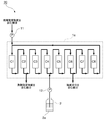
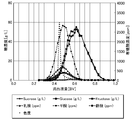
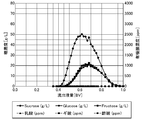
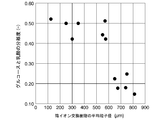
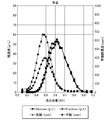
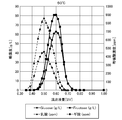
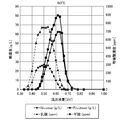
- Example 1 It is a schematic block diagram which shows the apparatus which concerns on one Embodiment of this invention. It is a schematic block diagram which shows the apparatus which concerns on other embodiment of this invention. It is a chromatogram in Example 1. It is a chromatogram (with chromaticity data) in Example 2. It is a chromatogram in Comparative Example 1. It is a chromatogram in Example 3. It is a chromatogram in Example 4. It is a chromatogram in Example 5. It is a graph which shows the relationship between the average particle diameter and the degree of separation of an anion exchange resin in Example 6. It is a chromatogram (normal temperature) in Example 7. It is a chromatogram (40 ° C.) in Example 7. It is a chromatogram (50 ° C.) in Example 7. It is a chromatogram (60 ° C.) in Example 7.
- the "sugar solution containing a fermentation inhibitor” in the present specification is a sugar solution obtained from a biomass raw material.
- Biomass is roughly classified into three types: waste-based biomass, resource crops, and unused biomass.
- waste-based biomass include molasses, used paper, waste wood, waste building materials, leftover food and the like.
- Molasses is a dark brown liquid that is produced as a by-product during sugar production using sugar cane or sugar beet as a raw material.
- resource crops include sugar cane, sugar beet, potatoes, corn, and corn.
- Examples of unused biomass include sugar cane bagasse, rice straw, straw, rice husks, corn residue (corn stover, corn cob, corn hull) and the like.
- unused biomass may be referred to as cellulosic biomass.
- biomasses may be used alone or in combination of two or more.
- the sugar solution containing the fermentation inhibitor is formed by mixing sugar (hereinafter, also referred to as a sugar component) and the fermentation inhibitor so as to have the same composition as the sugar solution obtained from the above-mentioned biomass raw material. It may be an artificially synthesized sugar solution.
- a sugar solution obtained from moraces or cellulosic biomass is preferable, and moraces is more preferable.
- the main sugars in the moraces include sucrose, glucose and fructose.
- the sugar solution containing the fermentation inhibitor is a sugar solution obtained from cellulosic biomass
- the main sugar components of the sugar solution include glucose, xylose, mannose and the like.
- disaccharides or monosaccharides are preferable, monosaccharides are more preferable, and at least one monosaccharide selected from the group consisting of glucose and fructose is further preferable. ..
- an enzyme (cellulase or the like) is used after pretreating a cellulosic biomass raw material, such as crushing, steaming, or treating with an acid or an alkali, if necessary.
- a known technique such as a method for obtaining a sugar solution by saccharification can be appropriately selected.
- Fermentation inhibitor means a substance that inhibits the culture and fermentation of microorganisms in a substance production system using a sugar solution as a raw material.
- Specific examples include organic acids, coloring components, saccharification by-products, and salts.
- the organic acid include formic acid, acetic acid, lactic acid and the like.
- the coloring component include melanoidin, polyphenol, caramel and the like.
- the by-product of saccharification is a substance produced as a by-product when the above-mentioned biomass raw material is saccharified to produce a sugar solution.
- Specific examples thereof include furans such as furfural and 5-hydroxymethylfurfural (HMF).
- the method of this embodiment is suitable for separating the organic acid and the coloring component from the sugar solution.
- the method according to an embodiment of the present invention is a method of separating a fermentation inhibitor and a sugar from a sugar solution containing a fermentation inhibitor and recovering the sugar.
- the method of the present embodiment includes collecting the fraction containing the fermentation inhibitor and the fraction containing sugar separately (hereinafter, referred to as “recovery step”).
- recovery step the sugar solution containing the fermentation inhibitor is brought into contact with the basic anion exchange resin filled in the column, and then water is used as the eluent to separate the fermentation inhibitor and the sugar by the difference in retention time. Separate and collect separately from the fraction containing the fermentation inhibitor and the fraction containing sugar.
- the basic anion exchange resin is pretreated with a solution containing a fermentation inhibitor.
- the fermentation inhibitor and the sugar can be separated from the sugar solution containing the fermentation inhibitor with good separation efficiency, and the sugar can be recovered. Further, in the method of the present embodiment, since it is not necessary to regenerate the ion exchange resin, continuous separation is possible.
- the pH is adjusted so that the resolution of the target component is maximized with respect to impurities in the sample. Specifically, the amount of the target component adsorbed on the ion exchange resin was maximized, the pH was adjusted to minimize the amount of impurities adsorbed, the target component was adsorbed on the ion exchange resin, and all impurities were allowed to pass through. Then, by eluting the target component with an eluent having an increased salt concentration (ion intensity), separation of the target component and impurities in the sample is achieved.
- the amount of the target component adsorbed is suppressed to the minimum or zero, the pH is adjusted to maximize the amount of impurities adsorbed, the impurities are adsorbed on the ion exchange resin, and all the target components are passed through the sample. Achieve separation of target components and impurities.
- the ion exchange resin is not used in the original purpose of utilizing the adsorption phenomenon, and the fermentation inhibitor and the sugar component (particularly, the sugar component) in the sugar solution are not adjusted without adjusting the pH.
- Glucose and fructose The fermentation inhibitor and sugar are separated by the difference in chemical affinity (difference in strength) for each ion exchange resin. Specifically, first, a sugar solution containing a fermentation inhibitor is injected into a column filled with an ion exchange resin. Immediately after being injected into the column, the fermentation inhibitor and the sugar component were not separated. Then, water is injected into the column as an eluent to flush the sugar solution containing the fermentation inhibitor to the column outlet.
- the difference in the strength of the chemical affinity of each component in the sugar solution with respect to the ion exchange resin is maintained. Therefore, the components having a weak chemical affinity for the ion exchange resin are swept away at the same speed as the flow velocity of the column, and the components having a strong chemical affinity for the ion exchange resin are slowly swept away from the column. As a result, a difference in retention time in the column between the fermentation inhibitor and the sugar solution containing the sugar component is created, and the fermentation inhibitor and the sugar component can be separated. As shown in Examples described later, the sugar-containing fraction may be recovered after the fraction containing the fermentation inhibitor, or the sugar-containing fraction may be recovered before the fraction containing the fermentation inhibitor. It may be recovered.
- the basic anion exchange resin is pretreated with a solution containing a fermentation inhibitor. That is, it is broken by the anionic component in the sugar solution containing the fermentation inhibitor.
- a basic anion exchange resin pretreated with a solution containing a fermentation inhibitor the components in the sugar solution are not adsorbed on the ion exchange resin, and the fermentation inhibitor and sugar in the sugar solution are not adsorbed.
- the fermentation inhibitor and the sugar component can be separated by the difference in chemical affinity (difference in strength) of each component with respect to the ion exchange resin.
- breakthrough means a state in which the adsorption of the ion exchange resin to the ion exchange group is saturated by an arbitrary ion component (a state in which all the ion exchange groups are replaced by an arbitrary ion component).
- concentration of an arbitrary ionic component in the solution supplied to the column and the concentration of an arbitrary ionic component in the solution eluted from the outlet of the column are about the same.
- the concentration of the specific fermentation inhibitor in the solution eluted from the column outlet is relative to the concentration of the specific fermentation inhibitor in the solution containing the fermentation inhibitor supplied to the column.
- the ratio (percentage) is preferably 75% or more, more preferably 80% or more, further preferably 90% or more, particularly preferably 95% or more, and preferably 100%. Most preferred.
- the solution containing the fermentation inhibitor for treating the basic anion exchange resin the solution exemplified in the above ⁇ sugar solution containing the fermentation inhibitor> or in the sugar solution containing the exemplified fermentation inhibitor.
- An artificially synthesized solution obtained by adding and mixing fermentation inhibitors and inorganic salts contained in is added to a solvent such as water can be used.
- the solution containing the fermentation inhibitor is a sugar solution containing the fermentation inhibitor
- it is subjected to chromatographic separation in the recovery step with the sugar solution containing the fermentation inhibitor that pre-treats the basic anion exchange resin. It may be the same as or different from the sugar solution containing the fermentation inhibitor.
- a treatment method using a solution containing a fermentation inhibitor of a basic anion exchange resin (hereinafter, also referred to as “breaking method” or “breaking step”), for example, the following procedure can be carried out.
- breaking method also referred to as “breaking method” or “breaking step”.
- the following procedure can be carried out.
- the column is filled with a basic anion exchange resin, and a solution containing a fermentation inhibitor is sent from the column inlet.
- water was sent from the column inlet as a cleaning solution to remove the fermentation inhibitor remaining in the column. Rinse the containing solution.
- the timing to end the washing with water can be performed by confirming the concentration of the fermentation inhibitor in the solution discharged from the column outlet.
- the concentration of the fermentation inhibitor in the solution discharged from the column outlet was, for example, 1 w / v% or less, preferably 0.1 w / v% or less, and more preferably 0 w / v%. By doing so, the washing with water can be completed. This makes it possible to obtain a column packed with a basic anion exchange resin previously treated with a solution containing a fermentation inhibitor.
- the new basic anion exchange resin When the basic anion exchange resin is new, the new basic anion exchange resin is brought into contact with a sugar solution containing a fermentation inhibitor before the recovery step to obtain the fermentation inhibitor. It is preferable to further include adsorbing on a basic anion exchange resin to separate the fermentation inhibitor and the sugar (hereinafter referred to as "adsorption separation step").
- the "new basic anion exchange resin” referred to here is an unused basic anion exchange resin in a state in which the anion exchange group is not replaced by another anion. Means.
- the adsorption separation step also corresponds to the above-mentioned breakthrough step.
- the sugar solution containing the fermentation inhibitor used in the adsorption separation step may be the same as or different from the sugar solution containing the fermentation inhibitor used for chromatographic separation in the recovery step, but it is the same. Is preferable. Since these sugar solutions are the same, the adsorption separation step and the recovery step can be continuously carried out. As a method of continuously carrying out the adsorption separation step and the recovery step, for example, the following procedure can be carried out. First, a new basic anion exchange resin is filled in the column, and a sugar solution containing a fermentation inhibitor is sent from the column inlet.
- the fermentation inhibitor is adsorbed on the new basic anion exchange resin, while the sugar is not adsorbed on the basic anion exchange resin, so that it is separated and recovered.
- the basic anion exchange resin in the column is in a ruptured state.
- the separation of the fermentation inhibitor and the sugar by adsorption separation is completed, and subsequently, as described above, the difference in chemical affinity (strength and weakness) for the basic anion exchange resin in the fractured state is completed. Shift to separation (recovery process) by (difference).
- the work involves injecting water as an eluent into the column and flushing the sugar solution containing the fermentation inhibitor to the outlet of the column to have a chemical affinity for the fractured basic anion exchange resin.
- the fermentation inhibitor and sugar are separated by the difference in sex (difference in strength).
- the basic anion exchange resin may be a weakly basic anion exchange resin or a strongly basic anion exchange resin, but among them, a strongly basic anion exchange resin is preferable.
- the weakly basic anion exchange resin include a resin having a diethylaminoethyl (DEAE) group as an ion exchanger.
- the strong basic anion exchange resin include a resin having a quaternary ammonium group as an ion exchanger.
- Cl - may be a type
- OH - may be a type
- Cl - is preferably type.
- the resin constituting the ion exchange resin is composed of (meth) acrylic polymer, styrene polymer, phenol polymer, silica gel and the like.
- the resin is an aromatic crosslinkable monomer such as divinyltoluene, divinylxylene, divinylnaphthalene or divinylbenzene, or an aliphatic monomer such as isoprene, ethylene glycol diacrylate, ethylene glycol dimethacrylate, N, N'-methylenebis-acrylamide. It may be crosslinked with a crosslinkable monomer.
- These resins may be contained alone or in combination of two or more.
- the average particle size of the ion exchange resin is, for example, 10 ⁇ m or more and 1000 ⁇ m or less, preferably 100 ⁇ m or more and 600 ⁇ m or less, more preferably 125 ⁇ m or more and 575 ⁇ m or less, and further preferably 200 ⁇ m or more and 500 ⁇ m or less. It is particularly preferably 200 ⁇ m or more and 400 ⁇ m or less, and most preferably 250 ⁇ m or more and 350 ⁇ m or less.
- the average particle size of the ion exchange resin is not more than the above upper limit value, the degree of separation between the fermentation inhibitor and the sugar is further improved.
- the average particle size of the ion exchange resin can be measured and calculated based on, for example, "PARTICLE SIZE DESTRIBUSION" defined in ASTM D2187-17.
- water used as an eluent examples include pure water and ultrapure water.
- the contact between the sugar solution containing the fermentation inhibitor and the ion exchange resin and the separation and recovery of the fermentation inhibitor and the sugar are usually carried out at a temperature of room temperature or higher, specifically, 20 ° C. or higher. It can be carried out at a temperature of 25 ° C. or higher, more preferably carried out at a temperature of 40 ° C. or higher, further preferably carried out at a temperature of 50 ° C. or higher, 60. It is particularly preferable to carry out at a temperature of ° C. or higher.
- the separation efficiency between the fermentation inhibitor and the sugar can be further improved, as shown in Examples described later, and a higher concentration of sugar can be obtained. Can be recovered.
- the upper limit of the temperature can be equal to or lower than the heat resistant temperature of the ion exchange resin, for example, 100 ° C., 90 ° C., or 80 ° C.
- the upper limit of the temperature may be higher than 100 ° C. as long as it is equal to or lower than the heat resistant temperature of the ion exchange resin.
- a method for controlling the temperature in the recovery step for example, a method of preheating the sugar solution containing the fermentation inhibitor to be used so as to be within a predetermined temperature range, or a method of using a column oven or the like to keep the temperature inside the column at a predetermined temperature. Examples include a method of controlling the temperature so that it is within the range.
- the method of the present embodiment is a method of separating a fermentation inhibitor and a sugar from a sugar solution containing a fermentation inhibitor and recovering the sugar.
- the method of the present embodiment includes a removal step and a recovery step in this order.
- the removal step alkaline earth metal ions are removed from the sugar solution containing the fermentation inhibitor.
- the recovery step the sugar solution containing the fermentation inhibitor after the removal step is brought into contact with the monovalent cationic acidic cation exchange resin packed in the column, and then water is used as an eluent to maintain the retention time.
- the fermentation inhibitor and sugar are separated by the difference, and the fraction containing the fermentation inhibitor and the fraction containing sugar are collected separately.
- the method according to the second embodiment of the present invention further includes the method according to the first embodiment, a removal step, and a point that a monovalent cationic acidic cation exchange resin is used as the ion exchange resin in the recovery step.
- the other points are the same as the method according to the first embodiment.
- the fermentation inhibitor and the sugar are separated from the sugar solution containing the fermentation inhibitor with good separation efficiency, and the sugar is recovered. be able to. Further, in the method according to the second embodiment of the present invention, since it is not necessary to regenerate the ion exchange resin, continuous separation is possible.
- the sugar solution containing a fermentation inhibitor generally contains alkaline earth metal salts. Therefore, in the removal step, alkaline earth metal ions are removed from the sugar solution containing the fermentation inhibitor. This is because the divalent cation has a stronger adsorption force to the ion exchanger than the monovalent cation when the recovery step is performed using the monovalent cation type acidic cation exchange resin. The cation bound to the ion exchanger is replaced from a monovalent cation to a divalent cation, an alkaline earth metal ion.
- the alkaline earth metal salt referred to here is a salt containing an alkaline earth metal ion (particularly Ca 2+ ) as a constituent ion.
- the alkaline earth metal ion include magnesium ion, calcium ion, barium ion and the like.
- Specific examples of the alkaline earth metal salt include chlorides, hydroxides, sulfates and nitrates of the alkaline earth metal ions.
- Examples of the method for removing alkaline earth metal ions include a method of adding sodium carbonate and the like to reduce the solubility of alkaline earth metal ions and removing them by sedimentation. Specifically, a method of adding sodium carbonate to a sugar solution containing a fermentation inhibitor to form calcium ions in the form of calcium carbonate and precipitating and removing the calcium ions can be mentioned. According to this method, since the solubility of calcium carbonate is low, the calcium component can be precipitated by converting the calcium existing in the sugar solution in the form of calcium chloride or the like into the form of calcium carbonate.
- the acidic cation exchange resin used in the recovery step may be a weakly acidic cation exchange resin or a strongly acidic cation exchange resin, and among them, a strongly acidic cation exchange resin is preferable.
- the weakly acidic cation exchange resin include resins having a carboxylic acid group and a carboxymethyl (CM) group as ion exchangers.
- the strongly acidic cation exchange resin include a resin having a sulfonic acid group as an ion exchanger and the like.
- the acidic cation exchange resin is a monovalent cation type.
- Examples of the monovalent cation type include Na + type and H + type, but Na + type is preferable.
- the method of the present embodiment preferably further includes a decomposition step before the recovery step.
- the decomposition step may be before or after the removal step.
- sucrose is decomposed into glucose and fructose.
- the method according to the third embodiment of the present invention is different from the method according to the first embodiment or the second embodiment in that it further includes a decomposition step, and in other respects, the first embodiment or the above. This is the same as the method according to the second embodiment.
- the fermentation inhibitor and the sugar component can be separated with better separation efficiency.
- sucrose is decomposed into glucose and fructose.
- sucrose tends to be difficult to separate from the fermentation inhibitor, and may be contained not only in the sugar-containing fraction but also in the fermentation-inhibiting fraction.
- glucose and fructose are separated from the fermentation inhibitor as shown in Examples described later because the chemical affinity for the ion exchange resin is significantly different from the chemical affinity for the ion exchange resin of the fermentation inhibitor. It's easy to do. Therefore, by decomposing sucrose into glucose and fructose in advance, the fermentation inhibitor and the sugar component can be separated with better separation efficiency.
- Examples of the method for decomposing sucrose include known methods such as an acid hydrolysis method and an enzymatic decomposition method such as invertase (also referred to as saccharase, sucrase or ⁇ -D-fructofuranosidase).
- an acid hydrolysis method and an enzymatic decomposition method such as invertase (also referred to as saccharase, sucrase or ⁇ -D-fructofuranosidase).
- the method of the present embodiment may further include other steps such as a detection step, if necessary.
- the detection step is preferably included after the recovery step.
- fermentation inhibitors and sugar components in each fraction obtained in the recovery step are detected.
- the concentration of each fermentation inhibitor and sugar component in each fraction eluted from the column is measured and detected by using a known detection means such as a detector or a detection kit, for example. The method and the like can be mentioned.
- FIG. 1 is a schematic view showing an apparatus according to an embodiment of the present invention.
- the device 10 shown in FIG. 1 includes a liquid chromatograph 1 and an eluent supply unit 2.
- the fermentation inhibitor and the sugar can be separated from the sugar solution containing the fermentation inhibitor with good separation efficiency, and the sugar can be recovered. Further, since the apparatus of the present embodiment does not need to regenerate the ion exchange resin, continuous separation is possible.
- the liquid chromatograph 1 includes a liquid feeding unit 3, a sample injection unit 4, a separation unit 5, a detection unit 6, and a data processing unit 7.
- the liquid feed unit 3 is configured to feed the eluate at a constant flow rate without pressure fluctuation, and a known pump according to the liquid feed flow rate range can be appropriately selected and used. Specifically, in the case of a liquid feed flow rate of about several hundred ⁇ L / min, a semi-micro LC pump, and in the case of a liquid feed flow rate of about several mL / min, an analysis pump, several tens of mL / min or more. In the case of the liquid feed flow rate, a preparative pump can be used.
- the sample injection unit 4 is configured to inject a sugar solution containing a fermentation inhibitor into the column, and includes a manual injector that injects manually and an autosampler that allows automatic injection. good.
- the sample injection unit 4 may include a solution switching valve or the like configured to switch between the eluent and the sugar solution containing the fermentation inhibitor.
- the separation unit 5 includes a column 5a. Further, the separation unit 5 may further include a column oven 5b.
- the column 5a is filled with an ion exchange resin.
- the ion exchange resin the same ones as those exemplified in the above method for recovering sugar can be used.
- the volume of the column is not particularly limited and can be appropriately set according to the volume of the sugar solution containing the fermentation inhibitor to be separated.
- the column oven 5b is configured to keep the temperature of the column constant.
- the temperature in the column oven is not particularly limited, but can be maintained, for example, about 10 ° C. or higher and 40 ° C. or lower, preferably about 15 ° C. or higher and 35 ° C. or lower.
- the temperature in the column oven is preferably kept at 50 ° C. or higher, more preferably 60 ° C. or higher.
- the upper limit of the temperature in the column oven can be equal to or lower than the heat resistant temperature of the ion exchange resin, for example, 100 ° C., 90 ° C., or 80 ° C. ..
- the upper limit of the temperature may be higher than 100 ° C. as long as it is equal to or lower than the heat resistant temperature of the ion exchange resin.
- the detection unit 6 is configured to detect the components contained in each recovered fraction, and is composed of a known detector generally used in a liquid chromatograph.
- Known detectors include, for example, an ultraviolet-visible spectroscopic detector, a photodiode array (PDA) detector, a differential refractometer detector, a fluorescence spectroscopic detector, an electrochemical detector, an electric conductivity detector, and a mass. Examples thereof include an analyzer, a photodiode detector, a circular dichroic detector, and an evaporative light scattering detector.
- the data processing unit 7 is configured to calculate the content of each component in the sugar solution from the area or height of the peak detected by the detection unit and output the result.
- the eluent supply unit 2 stores water 2a as an eluent and supplies it into the column.
- the shape and size of the eluent supply unit 2 are not particularly limited and can be appropriately selected.
- As the water 2a the same water as those exemplified in the above method for recovering sugar can be used.
- the apparatus 10 can further include a fraction collector 8 configured to select and fractionate a fraction containing a sugar solution (sugar component).
- the fraction collector 8 separates the fraction 9a containing various sugar components such as sucrose, glucose, and fructose, and discharges the fraction 9b containing the fermentation inhibitor as a waste liquid.
- the apparatus 10 can further include other configurations known in a liquid chromatograph such as a degasser configured to remove the eluate or dissolved gas in the sample.
- a degasser configured to remove the eluate or dissolved gas in the sample.
- FIG. 2 is a schematic view showing an apparatus according to another embodiment of the present invention.
- the device 20 shown in FIG. 2 is different from the device 10 shown in FIG. 1 in that the liquid chromatograph 1 is a pseudo moving layer method (also referred to as a pseudo moving bed method), and other configurations are the same as those of the device 10. be.
- the liquid chromatograph 1 is a pseudo moving layer method (also referred to as a pseudo moving bed method)
- other configurations are the same as those of the device 10. be.
- the pseudo-moving layer type chromatographic separation device 1a is a device in which a plurality of columns C1, C2, ... C8 filled with an ion exchange resin are connected in series and as a closed circuit by a pipeline.
- the number of columns may be 4 or more, and may be, for example, 4, 5, 6, 8, 10, 12, 12, 15, 16, 18, 20, or the like. ..
- a sugar solution containing the fermentation inhibitor is pumped into the first column C1 of the pseudo-moving layer type chromatographic separation device 1a.
- a fraction mainly composed of a fermentation inhibitor having a high moving speed is derived from the column C2 in the second stage by injecting the mixture at a constant flow rate without pressure fluctuation.
- a fraction mainly composed of sugar having a slow moving speed is derived from the column C6 in the sixth stage by injecting an eluent using a pump 12 or the like.
- a sugar solution containing a fermentation inhibitor is injected into the first-stage column C1 of the pseudo-moving layer type chromatographic separation device 1a at a constant flow rate without pressure fluctuation using a pump 11 or the like, and mainly sugar having a high moving speed is used.
- the fraction is derived from the second column C2.
- a fraction mainly composed of a fermentation inhibitor having a slow moving speed is derived from the sixth-stage column C6 by injecting an eluent using a pump 12 or the like.
- the pseudo-moving layer type chromatographic separation apparatus 1a the fraction mainly composed of the fermentation inhibitor and the fraction mainly composed of sugar are separated by the difference in the moving speed of each component.
- the inlet of the sugar solution and the eluent containing the fermentation inhibitor and the outlet of the fraction mainly composed of the fermentation inhibitor and the outlet port mainly composed of sugar are provided for a certain period of time.
- each component does not spread throughout the column even if the circulation of the sugar solution containing the fermentation inhibitor is repeated, and a high-purity fraction can be continuously derived.
- the same pumps as those exemplified in the liquid feeding unit 3 of the above device 10 can be used.
- the apparatus 20 can further include other configurations known in the pseudo-moving layer type chromatographic separation apparatus such as a degasser configured to remove the dissolved gas in the eluate or the sample.
- a degasser configured to remove the dissolved gas in the eluate or the sample.
- Example 1 Method of recovering sugar solution by liquid chromatography using Na + type strong acid cation exchange resin
- invertase manufactured by Mitsubishi Chemical Foods Co., Ltd., yeast-derived, titer 769 U / mL
- sucrose having a sugar concentration of 40 w / v% so as to be 4 ⁇ L per 1 g of the sucrose, and the temperature was maintained at 50 ° C.
- the reaction was carried out under stirring for 24 hours to decompose sucrose in the molases into glucose and fructose.
- Liquid transfer unit (Chromatographic separator and separation conditions) Liquid transfer unit (pump): SMP-23S (Tokyo University of Science) Column: 15.8 mm ⁇ x 1090 mm Resin filling amount: 213.6 mL Morases liquid delivery amount: 11 mL (amount that is about 5% by volume of the resin filling amount) Flow rate: SV0.5 (speed at which the same amount of solution as the resin volume flows in 0.5 hours) Temperature: Normal temperature (about 25 ° C)
- Liquid transfer unit Prominence LC-20AD (manufactured by Shimadzu Corporation)
- Sugar detector Differential refractometer (Prominence RID-20A, manufactured by Shimadzu Corporation)
- Organic Acid Detector Electrical Conductivity Detector (Prominence CDD-10A, manufactured by Shimadzu Corporation)
- a fraction containing each of glucose and fructose was detected after the fraction containing each of various fermentation inhibitors (lactic acid, formic acid and acetic acid), and a Na + type strongly acidic cation exchange resin was used.
- the liquid chromatography used showed that various fermentation inhibitors (lactic acid, formic acid and acetic acid) and glucose and fructose could be separated. Further, by decomposing sucrose into glucose and fructose in advance, more glucose and fructose were obtained.
- Example 2 Method of recovering sugar solution by liquid chromatography using Cl-type strongly basic anion exchange resin
- invertase manufactured by Mitsubishi Chemical Foods Co., Ltd., yeast-derived, titer 769 U / mL
- sucrose having a sugar concentration of 40 w / v% so as to be 4 ⁇ L per 1 g of the sucrose, and the temperature was maintained at 50 ° C.
- the reaction was carried out under stirring for 24 hours to decompose sucrose in the molases into glucose and fructose.
- the column was packed with a Cl- type strongly basic anion exchange resin (manufactured by Mitsubishi Chemical Corporation, product name "UMA130J", average particle size: 300 ⁇ m).
- a Cl- type strongly basic anion exchange resin manufactured by Mitsubishi Chemical Corporation, product name "UMA130J", average particle size: 300 ⁇ m.
- the invertase-treated moraces were continuously supplied to the column, and the concentration of various organic acids (lactic acid, formic acid and acetic acid) at the outlet of the column was the concentration of various organic acids (lactic acid, formic acid and acetic acid) in the moraces supplied to the column.
- the resin was kept in a broken state by continuing to supply until the same concentration was reached. Then, a sufficient amount of pure water was supplied to wash away the moraces remaining in the column.
- Example 3 Method of recovering sugar solution by liquid chromatography using Cl-type strongly basic anion exchange resin
- invertase manufactured by Mitsubishi Chemical Foods Co., Ltd., yeast-derived, titer 769 U / mL
- sucrose having a sugar concentration of 40 w / v% so as to be 4 ⁇ L per 1 g of the sucrose, and the temperature was maintained at 50 ° C.
- the reaction was carried out under stirring for 24 hours to decompose sucrose in the molases into glucose and fructose.
- the column was packed with a Cl- type strongly basic anion exchange resin (manufactured by Mitsubishi Chemical Corporation, product name "UMA130J", average particle size: 300 ⁇ m).
- a Cl- type strongly basic anion exchange resin manufactured by Mitsubishi Chemical Corporation, product name "UMA130J", average particle size: 300 ⁇ m.
- the invertase-treated moraces were continuously supplied to the column, and the concentration of various organic acids (lactic acid, formic acid and acetic acid) at the outlet of the column was the concentration of various organic acids (lactic acid, formic acid and acetic acid) in the moraces supplied to the column.
- the resin was kept in a broken state by continuing to supply until the same concentration was reached. Then, a sufficient amount of pure water was supplied to wash away the moraces remaining in the column.
- Liquid transfer unit (pump): SMP-23S (Tokyo University of Science) Column: 20 mm ⁇ x 980 mm (with jacket) Resin filling amount: 307.7 mL Morases liquid delivery amount: 15 mL (amount that is about 5% by volume of the resin filling amount) Flow rate: SV0.5 (speed at which the same amount of solution as the resin volume flows in 0.5 hours) Temperature: 60 ° C
- the chromatogram of Example 3 carried out at 60 ° C. particularly shows the peaks of glucose and fructose. Was sharpened respectively. From this, it was suggested that by increasing the temperature at the time of separation and recovery, the separation efficiency between glucose and fructose and the fermentation inhibitor can be improved, and the concentration of the recovered sugar can be increased.
- Example 4 Method of recovering sugar solution by liquid chromatography using Cl-type strongly basic anion exchange resin
- a Cl- type strongly basic anion exchange resin manufactured by Mitsubishi Chemical Corporation, product name "UMA130J", average particle size: 300 ⁇ m.
- a moraces having a sugar concentration of 40 w / v% was continuously supplied to the column, and the concentration of various organic acids (lactic acid, formic acid and acetic acid) at the outlet of the column was adjusted to various organic acids (lactic acid, formic acid and acetic acid) in the moraces supplied to the column.
- lactic acid, formic acid and acetic acid lactic acid, formic acid and acetic acid
- Example 5 Method of recovering sugar solution by liquid chromatography using Cl-type strongly basic anion exchange resin
- a Cl- type strongly basic anion exchange resin manufactured by Mitsubishi Chemical Corporation, product name "UMA130J", average particle size: 300 ⁇ m.
- a bagus saccharified solution having a sugar concentration of 10 w / v% was continuously supplied to the column, and the concentration of various organic acids (formic acid and acetic acid) at the outlet of the column was adjusted to that of the various organic acids (formic acid and acetic acid) in the moraces supplied to the column.
- the resin was brought into a broken state by continuing to supply until the concentration became the same as the concentration.
- Example 6 (Relationship between average particle size and degree of separation of ion exchange resin) Sugar was recovered using the same method as in Example 3 except that Cl- type strongly basic anion exchange resins having different average particle sizes were used.
- the average particle size of the Cl - type strongly basic anion exchange resin was measured and calculated based on "PARTICLE SIZA DESTRIBUSION" specified in ASTM D2187-17.
- the average particle sizes of the 12 types of Cl - type strongly basic anion exchange resins used were 125 ⁇ m, 250 ⁇ m, 300 ⁇ m, 350 ⁇ m, 550 ⁇ m, 570 ⁇ m, 575 ⁇ m, 650 ⁇ m, 675 ⁇ m, 740 ⁇ m, 750 ⁇ m, and 812 ⁇ m, respectively.
- rice field was measured and calculated based on "PARTICLE SIZA DESTRIBUSION" specified in ASTM D2187-17.
- FIG. 9 shows a graph showing the relationship between the average particle size of the anion exchange resin and the degree of separation.
- the degree of separation between sugar and fermented substance is particularly excellent by using an anion exchange resin having an average particle size within a specific numerical range.
- Example 7 (Relationship between recovery temperature and degree of separation) Regarding the separation conditions in the chromatographic separator, sugar was recovered using the same method as in Example 3 except that the temperatures were set to normal temperature (about 20 ° C. or higher and 25 ° C. or lower), 40 ° C., 50 ° C., and 60 ° C. .. Further, the detailed analysis conditions for the obtained fraction are the same as those in Example 1. The results are shown in FIGS. 10 (normal temperature), 11 (40 ° C), 12 (50 ° C), and 13 (60 ° C).
- glucose and fructose could be separated from lactic acid and formic acid at any temperature.
- the higher the temperature the sharper the peaks of glucose and fructose tended to be.
- the lower the temperature the more the deterioration of the anion exchange resin during continuous separation was suppressed, and there was a tendency that continuous sugar separation could be performed for a longer period of time (detailed data is omitted). do).
- the fermentation inhibitor and the sugar can be separated from the sugar containing the fermentation inhibitor and the sugar can be recovered with low cost and good separation efficiency.
Landscapes
- Chemical & Material Sciences (AREA)
- Life Sciences & Earth Sciences (AREA)
- Biochemistry (AREA)
- Organic Chemistry (AREA)
- Analytical Chemistry (AREA)
- Chemical Kinetics & Catalysis (AREA)
- Sustainable Development (AREA)
- Health & Medical Sciences (AREA)
- Emergency Medicine (AREA)
- General Health & Medical Sciences (AREA)
- Treatment Of Liquids With Adsorbents In General (AREA)
- Preparation Of Compounds By Using Micro-Organisms (AREA)
Abstract
Description
(1) 発酵阻害物質を含む糖液から発酵阻害物質と糖を分離し、前記糖を回収する方法であって、
前記発酵阻害物質を含む糖液を、カラムに充填された塩基性陰イオン交換樹脂に接触させた後、溶離液として水を用いて、保持時間の差により前記発酵阻害物質と前記糖とを分離し、前記発酵阻害物質を含む画分と前記糖を含む画分と別に回収することを含み、
前記塩基性陰イオン交換樹脂は、発酵阻害物質を含む溶液で予め処理されている、方法。
(2) 前記塩基性陰イオン交換樹脂は、強塩基性陰イオン交換樹脂である、前記(1)に記載の方法。
(3) 前記塩基性陰イオン交換樹脂の平均粒子径が100μm以上600μm以下である、前記(1)又は(2)に記載の方法。
(4)前記発酵阻害物質を含む溶液で予め処理する際に、前記塩基性陰イオン交換樹脂に、前記発酵阻害物質を含む糖液を接触させて、前記発酵阻害物質を前記塩基性陰イオン交換樹脂に吸着させて、前記発酵阻害物質と前記糖とを分離させることを更に含む、前記(1)~(3)のいずれか一つに記載の方法。
(5) 前記回収において、前記発酵阻害物質を含む画分の後に、前記糖を含む画分が回収される、前記(1)~(4)のいずれか一つに記載の方法。
(6) 前記発酵阻害物質を含む糖液にスクロースが含まれる場合に、前記回収の前に、
前記スクロースをグルコース及びフルクトースに分解する分解工程を更に含む、前記(1)~(5)のいずれか一つに記載の方法。
(7) 前記回収を、25℃以上の温度下で実施する、前記(1)~(6)のいずれか一つに記載の方法。
(8) 前記糖が単糖である、前記(1)~(7)のいずれか一つに記載の方法。
(9) 前記発酵阻害物質が有機酸及び着色成分からなる群より選ばれる少なくとも1種である、前記(1)~(8)のいずれか一つに記載の方法。
本明細書における「発酵阻害物質を含む糖液」とは、バイオマス原料から得られる糖液である。バイオマスは、廃棄物系バイオマス、資源作物、未利用バイオマスの3種類に大別される。廃棄物系バイオマスとしては、例えば、廃糖蜜(モラセス)、古紙、廃木材、廃建材、残飯等が挙げられる。廃糖蜜(モラセス)とは、さとうきび又はてんさいを原料とした製糖時に副生する、黒褐色の液体である。資源作物としては、例えば、さとうきび、てんさい、ばれいしょ、かんしょ、トウモロコシ等が挙げられる。未利用バイオマスとしては、例えば、サトウキビバガス、稲わら、麦わら、もみ殻、トウモロコシ残渣(コーンストーバー、コーンコブ、コーンハル)等が挙げられる。以下、未利用バイオマスを、セルロース系バイオマスと称する場合がある。これらバイオマスを1種単独で用いてもよく、2種以上組み合わせて用いてもよい。
また、発酵阻害物質を含む糖液としては、上述したバイオマス原料から得られる糖液と同じ組成となるように、糖(以下、糖質成分ともいう)と発酵阻害物質とを混合してなる、人工的に合成された糖液であってもよい。
中でも、本実施形態の方法の適用対象となる発酵阻害物質を含む糖液としては、モラセス又はセルロース系バイオマスから得られる糖液が好ましく、モラセスがより好ましい。
発酵阻害物質を含む糖液がセルロース系バイオマスから得られる糖液の場合に、当該糖液の主な糖質成分としては、グルコース、キシロース、マンノース等が挙げられる。
本実施形態の方法で回収される糖(糖質成分)としては、二糖類又は単糖が好ましく、単糖がより好ましく、グルコース及びフルクトースからなる群より選ばれる少なくとも1種の単糖がさらに好ましい。
<第一実施形態>
本発明の一実施形態に係る方法(以下、「本実施形態の方法」と称する)は、発酵阻害物質を含む糖液から発酵阻害物質と糖を分離し、前記糖を回収する方法である。本実施形態の方法は、発酵阻害物質を含む画分と糖を含む画分と別に回収すること(以下、「回収工程」という)を含む。
回収工程では、発酵阻害物質を含む糖液を、カラムに充填された塩基性陰イオン交換樹脂に接触させた後、溶離液として水を用いて、保持時間の差により発酵阻害物質と糖とを分離し、発酵阻害物質を含む画分と糖を含む画分と別に回収する。
前記塩基性陰イオン交換樹脂は、発酵阻害物質を含む溶液で予め処理されている。
回収工程では、まず、発酵阻害物質を含む糖液を、カラムに充填された塩基性陰イオン交換樹脂に接触させる。次いで、溶離液として水を用いて、保持時間の差により発酵阻害物質と糖とを分離し、発酵阻害物質を含む画分と糖を含む画分と別に回収する。
また、塩基性陰イオン交換樹脂を処理する発酵阻害物質を含む溶液としては、上記<発酵阻害物質を含む糖液>において例示したものや、或いは、当該例示された発酵阻害物質を含む糖液中に含まれる、発酵阻害物質や無機塩類を水等の溶媒に添加し混合してなる、人工的に合成された溶液を用いることができる。
また、発酵阻害物質を含む溶液が、発酵阻害物質を含む糖液である場合に、塩基性陰イオン交換樹脂を予め処理する発酵阻害物質を含む糖液と、回収工程においてクロマト分離に供される発酵阻害物質を含む糖液とは、同一であってもよく、異なってもよい。
吸着分離工程を回収工程の前に実施することで、塩基性陰イオン交換樹脂の発酵阻害物質を含む糖液による処理と、発酵阻害物質と糖との分離を同時に行うことができる。すなわち、吸着分離工程は、上記破過工程にもあたる。
吸着分離工程において、使用する発酵阻害物質を含む糖液は、回収工程においてクロマト分離に供される発酵阻害物質を含む糖液と、同一であってもよく、異なってもよいが、同一であることが好ましい。これら糖液が同一であることで、吸着分離工程と、回収工程とを連続的に実施することができる。吸着分離工程と、回収工程とを連続的に実施する方法としては、例えば、以下のような手順で実施することができる。まず、カラム内に新品の塩基性陰イオン交換樹脂を充填し、カラム入口から発酵阻害物質を含む糖液を送液する。これにより、発酵阻害物質を新品の塩基性陰イオン交換樹脂に吸着させ、一方で、糖は塩基性陰イオン交換樹脂に吸着しないことから、分離されて、回収される。次いで、上述したように、カラム内の塩基性陰イオン交換樹脂が破過した状態となったことを確認する。これにより、吸着分離による発酵阻害物質と糖との分離(吸着分離工程)が完了し、続いて、上述したように、破過状態の塩基性陰イオン交換樹脂に対する化学的親和性の違い(強弱の差)による分離(回収工程)に移行する。作業としては、上述したように、溶離液として水をカラムに注入して、発酵阻害物質を含む糖液をカラム出口へと押し流すことで、破過状態の塩基性陰イオン交換樹脂に対する化学的親和性の違い(強弱の差)によって、発酵阻害物質と、糖とが分離される。
イオン交換樹脂の平均粒子径が上記上限値以下であることで、発酵阻害物質と糖との分離度がより向上する。一方で、イオン交換樹脂の平均粒子径は10μmより小さいものであっても高い分離度を達成できるが、イオン交換樹脂の平均粒子径が上記下限値以上であることで、イオン交換樹脂のコストをより抑えることができる。
イオン交換樹脂の平均粒子径は、例えば、ASTM D2187-17に規定される“PARTICLE SIZE DESTRIBUSION”に基づいて測定及び算出することができる。
一方、温度の上限値は、イオン交換樹脂の耐熱温度以下とすることができ、例えば、100℃とすることができ、90℃とすることができ、80℃とすることができる。また、イオン交換樹脂の耐熱温度が100℃超の場合は、温度の上限値は、イオン交換樹脂の耐熱温度以下であれば、100℃超であってもよい。
回収工程における温度の制御方法としては、例えば、使用する発酵阻害物質を含む糖液を所定の温度範囲内となるように予め加熱する方法や、カラムオーブン等を使用してカラム内が所定の温度範囲となるように制御する方法等が挙げられる。
本実施形態の方法は、発酵阻害物質を含む糖液から発酵阻害物質と糖を分離し、前記糖を回収する方法である。本実施形態の方法は、除去工程と、回収工程と、をこの順に含む。
除去工程では、発酵阻害物質を含む糖液からアルカリ土類金属イオンを除去する。
回収工程では、前記除去工程後の発酵阻害物質を含む糖液を、カラムに充填された1価のカチオン型酸性陽イオン交換樹脂に接触させた後、溶離液として水を用いて、保持時間の差により発酵阻害物質と糖とを分離し、発酵阻害物質を含む画分と糖を含む画分と別に回収する。
発酵阻害物質を含む糖液には、一般的にアルカリ土類金属塩類が含まれる。そのため、除去工程では、発酵阻害物質を含む糖液からアルカリ土類金属イオンを除去する。これは、1価のカチオン型酸性陽イオン交換樹脂を用いて回収工程を行う際に、2価のカチオンの方が1価のカチオンよりもイオン交換体に対する吸着力が強いことから、経時的にイオン交換体に結合するカチオンが1価のカチオンから2価のカチオンであるアルカリ土類金属イオンに置換される。これにより、糖液中の発酵阻害物質及び糖質成分それぞれのイオン交換樹脂に対する化学的親和性が変化し、発酵阻害物質と糖質成分との分離能が低下する虞がある。よって、予め発酵阻害物質を含む糖液からアルカリ土類金属イオンを除去することで、発酵阻害物質と糖質成分との分離能を高く保つことができる。
なお、ここでいうアルカリ土類金属塩とは、構成イオンとしてアルカリ土類金属イオン(特に、Ca2+)を含む塩である。アルカリ土類金属イオンとしては、マグネシウムイオン、カルシウムイオン、バリウムイオン等が挙げられる。アルカリ土類金属塩として具体的には、例えば、上記アルカリ土類金属イオンの塩化物、水酸化物、硫酸塩、硝酸塩等が挙げられる。
回収工程で用いられる酸性陽イオン交換樹脂は、弱酸性陽イオン交換樹脂であってもよく、強酸性陽イオン交換樹脂であってもよいが、中でも、強酸性陽イオン交換樹脂が好ましい。弱酸性陽イオン交換樹脂としては、例えば、イオン交換体としてカルボン酸基やカルボキシメチル(CM)基を有する樹脂等が挙げられる。強酸性陽イオン交換樹脂としては、例えば、イオン交換体としてスルホン酸基を有する樹脂等が挙げられる。
本実施形態の方法は、発酵阻害物質を含む糖液に糖質成分としてスクロースが含まれる場合に、回収工程前に、分解工程を更に含むことが好ましい。分解工程は、上記除去工程の前であってもよく、後であってもよい。分解工程では、スクロースをグルコース及びフルクトースに分解する。
分解工程では、スクロースをグルコース及びフルクトースに分解する。回収工程において、スクロースは、発酵阻害物質と分離しにくい傾向があり、糖を含む画分だけでなく、発酵阻害物質を含む画分にも含まれる虞がある。一方で、グルコース及びフルクトースは、イオン交換樹脂に対する化学的親和性が、発酵阻害物質のイオン交換樹脂に対する化学的親和性と大きく異なることから、後述する実施例に示すように、発酵阻害物質と分離しやすい。そのため、予めスクロースをグルコース及びフルクトースに分解しておくことで、より良好な分離効率で、発酵阻害物質と糖質成分とを分離することができる。
本実施形態の方法は、必要に応じて、検出工程等のその他の工程を更に含むことができる。検出工程は、回収工程の後に含むことが好ましい。検出工程では、回収工程で得られた各画分中の発酵阻害物質及び糖質成分を検出する。
検出方法としては、カラムから溶出した各画分(フラクション)中の発酵阻害物質及び糖質成分それぞれの濃度を、例えば、検出器や検出キット等の公知の検出手段を用いて測定し、検出する方法等が挙げられる。
図1は、本発明の一実施形態に係る装置を示す概略図である。図1に示す装置10は、液体クロマトグラフ1と、溶離液供給部2と、を備える。
液体クロマトグラフ1としては、回分式クロマト分離装置を一例として説明するが、その他のクロマト分離装置であってもよい。
液体クロマトグラフ1は、送液部3、試料注入部4、分離部5、検出部6、及びデータ処理部7を備える。
一方、カラムオーブン内の温度の上限値は、イオン交換樹脂の耐熱温度以下とすることができ、例えば、100℃とすることができ、90℃とすることができ、80℃とすることができる。また、イオン交換樹脂の耐熱温度が100℃超の場合は、温度の上限値は、イオン交換樹脂の耐熱温度以下であれば、100℃超であってもよい。
溶離液供給部2は、溶離液として水2aを格納し、カラム内に供給するためのものである。溶離液供給部2の形状及びサイズとしては特別な限定はなく、適宜選択することができる。水2aとしては、上記糖を回収する方法で例示されたものと同様のものを用いることができる。
擬似移動層式クロマト分離装置1aでは、各成分の移動速度の差によって、発酵阻害物質を主体とする画分と、糖を主体とする画分とを分離する。
(Na+型強酸性陽イオン交換樹脂を用いた液体クロマトグラフィーによる糖液の回収方法)
まず、糖濃度40w/v%のモラセスに、インベルターゼ(三菱ケミカルフーズ社製、酵母由来、力価769U/mL)をモラセス1g当たり4μLとなるように添加して、50℃に温度を保ちながら、攪拌下で24時間反応させて、モラセス中のスクロースをグルコース及びフルクトースに分解した。
送液ユニット(ポンプ):SMP-23S(東京理科器械)
カラム:15.8mmφ×1090mm
樹脂充填量:213.6mL
モラセス送液量:11mL(樹脂充填量の5容量%程度となる量)
流速:SV0.5(樹脂体積と同量の溶液が0.5時間で流れる速度)
温度:常温(25℃程度)
送液ユニット(ポンプ):Prominence LC-20AD(島津製作所製)
カラム:(糖)ULTRON PS-80C、(有機酸)TSKgel OApak-A
溶離水:(糖)超純水、(有機酸)0.75mM 硫酸水溶液
カラムオーブン:Prominence CTO-20A(島津製作所製)
温度:(糖)80℃、(有機酸)40℃
糖検出器:示差屈折率検出器(Prominence RID-20A、島津製作所製)
有機酸検出器:電気伝導度検出器(Prominence CDD-10A、島津製作所製)
(Cl-型強塩基性陰イオン交換樹脂を用いた液体クロマトグラフィーによる糖液の回収方法)
まず、糖濃度40w/v%のモラセスに、インベルターゼ(三菱ケミカルフーズ社製、酵母由来、力価769U/mL)をモラセス1g当たり4μLとなるように添加して、50℃に温度を保ちながら、攪拌下で24時間反応させて、モラセス中のスクロースをグルコース及びフルクトースに分解した。
(Cl-型強塩基性陰イオン交換樹脂を用いた液体クロマトグラフィーによる糖液の回収方法)
カラムにCl-型強塩基性陰イオン交換樹脂(三菱ケミカル社製、製品名「UMA130J」、平均粒子径:300μm)を充填した。次いで、糖濃度40w/v%のモラセス11mLをカラムに供給した後、溶離液として純水を供給した。詳細な分離条件及び得られた画分についての分析条件は実施例1と同じである。結果を図5に示す。
(Cl-型強塩基性陰イオン交換樹脂を用いた液体クロマトグラフィーによる糖液の回収方法)
まず、糖濃度40w/v%のモラセスに、インベルターゼ(三菱ケミカルフーズ社製、酵母由来、力価769U/mL)をモラセス1g当たり4μLとなるように添加して、50℃に温度を保ちながら、攪拌下で24時間反応させて、モラセス中のスクロースをグルコース及びフルクトースに分解した。
送液ユニット(ポンプ):SMP-23S(東京理科器械)
カラム:20mmφ×980mm(ジャケット付き)
樹脂充填量:307.7mL
モラセス送液量:15mL(樹脂充填量の5容量%程度となる量)
流速:SV0.5(樹脂体積と同量の溶液が0.5時間で流れる速度)
温度:60℃
(Cl-型強塩基性陰イオン交換樹脂を用いた液体クロマトグラフィーによる糖液の回収方法)
まず、カラムにCl-型強塩基性陰イオン交換樹脂(三菱ケミカル社製、製品名「UMA130J」、平均粒子径:300μm)を充填した。次いで、糖濃度40w/v%のモラセスをカラムに連続供給し、カラム出口における各種有機酸(乳酸、ギ酸及び酢酸)の濃度が、カラムに供給したモラセス中の各種有機酸(乳酸、ギ酸及び酢酸)の濃度と同じ濃度になるまで供給し続けて、樹脂を破過状態とした。その後、純水を十分に供給してカラム内に残ったモラセスを洗い流した。次いで、分離用試料として糖濃度8w/v%のバガス糖化液15mLをカラムに供給した後、溶離液として純水を供給した。詳細な分離条件は、実施例3と同じである。また、得られた画分についての詳細な分析条件は実施例1と同じである。結果を図7に示す。
(Cl-型強塩基性陰イオン交換樹脂を用いた液体クロマトグラフィーによる糖液の回収方法)
まず、カラムにCl-型強塩基性陰イオン交換樹脂(三菱ケミカル社製、製品名「UMA130J」、平均粒子径:300μm)を充填した。次いで、糖濃度10w/v%のバガス糖化液をカラムに連続供給し、カラム出口における各種有機酸(ギ酸及び酢酸)の濃度が、カラムに供給したモラセス中の各種有機酸(ギ酸及び酢酸)の濃度と同じ濃度になるまで供給し続けて、樹脂を破過状態とした。その後、純水を十分に供給してカラム内に残ったモラセスを洗い流した。次いで、分離用試料として糖濃度10w/v%のバガス糖化液15mLをカラムに供給した後、溶離液として純水を供給した。詳細な分離条件は、実施例3と同じである。また、得られた画分についての詳細な分析条件は実施例1と同じである。結果を図8に示す。
(イオン交換樹脂の平均粒子径と分離度の関係)
平均粒子径の異なるCl-型強塩基性陰イオン交換樹脂を用いた以外は、実施例3と同じ方法を用いて、糖の回収を行った。
(回収温度と分離度の関係)
クロマト分離装置における分離条件について、温度を常温(20℃以上25℃以下程度)、40℃、50℃及び60℃とした以外は、実施例3と同じ方法を用いて、糖の回収を行った。また、得られた画分についての詳細な分析条件は実施例1と同じである。結果を図10(常温)、図11(40℃)、図12(50℃)、及び図13(60℃)に示す。
Claims (9)
- 発酵阻害物質を含む糖液から発酵阻害物質と糖を分離し、前記糖を回収する方法であって、
前記発酵阻害物質を含む糖液を、カラムに充填された塩基性陰イオン交換樹脂に接触させた後、溶離液として水を用いて、保持時間の差により前記発酵阻害物質と前記糖とを分離し、前記発酵阻害物質を含む画分と前記糖を含む画分と別に回収することを含み、
前記塩基性陰イオン交換樹脂は、発酵阻害物質を含む溶液で予め処理されている、方法。 - 前記塩基性陰イオン交換樹脂は、強塩基性陰イオン交換樹脂である、請求項1に記載の方法。
- 前記塩基性陰イオン交換樹脂の平均粒子径が100μm以上600μm以下である、請求項1又は2に記載の方法。
- 前記発酵阻害物質を含む溶液で予め処理する際に、前記塩基性陰イオン交換樹脂に、前記発酵阻害物質を含む糖液を接触させて、前記発酵阻害物質を前記塩基性陰イオン交換樹脂に吸着させて、前記発酵阻害物質と前記糖とを分離させることを更に含む、請求項1~3のいずれか一項に記載の方法。
- 前記回収において、前記発酵阻害物質を含む画分の後に、前記糖を含む画分が回収される、請求項1~4のいずれか一項に記載の方法。
- 前記発酵阻害物質を含む糖液にスクロースが含まれる場合に、前記回収の前に、
前記スクロースをグルコース及びフルクトースに分解する分解工程を更に含む、請求項1~5のいずれか一項に記載の方法。 - 前記回収を、25℃以上の温度下で実施する、請求項1~6のいずれか一項に記載の方法。
- 前記糖が単糖である、請求項1~7のいずれか一項に記載の方法。
- 前記発酵阻害物質が有機酸及び着色成分からなる群より選ばれる少なくとも1種である、請求項1~8のいずれか一項に記載の方法。
Priority Applications (3)
| Application Number | Priority Date | Filing Date | Title |
|---|---|---|---|
| US17/917,248 US12545967B2 (en) | 2020-04-08 | 2021-03-23 | Method for recovering sugar |
| JP2022514382A JP7677951B2 (ja) | 2020-04-08 | 2021-03-23 | 糖を回収する方法 |
| EP21784320.0A EP4134455A4 (en) | 2020-04-08 | 2021-03-23 | PROCESS FOR PRODUCTION OF SUGAR |
Applications Claiming Priority (2)
| Application Number | Priority Date | Filing Date | Title |
|---|---|---|---|
| JP2020-069876 | 2020-04-08 | ||
| JP2020069876 | 2020-04-08 |
Publications (1)
| Publication Number | Publication Date |
|---|---|
| WO2021205867A1 true WO2021205867A1 (ja) | 2021-10-14 |
Family
ID=78024096
Family Applications (1)
| Application Number | Title | Priority Date | Filing Date |
|---|---|---|---|
| PCT/JP2021/012015 Ceased WO2021205867A1 (ja) | 2020-04-08 | 2021-03-23 | 糖を回収する方法 |
Country Status (4)
| Country | Link |
|---|---|
| US (1) | US12545967B2 (ja) |
| EP (1) | EP4134455A4 (ja) |
| JP (1) | JP7677951B2 (ja) |
| WO (1) | WO2021205867A1 (ja) |
Citations (5)
| Publication number | Priority date | Publication date | Assignee | Title |
|---|---|---|---|---|
| JPS60130400A (ja) * | 1983-12-15 | 1985-07-11 | 三菱化学株式会社 | イオン交換樹脂による糖類の分離、精製方法 |
| JP2007520195A (ja) * | 2003-06-27 | 2007-07-26 | ダニスコ スィートナーズ オイ | クロマトグラフィ分画段階及び結晶化を用いた植物ベースのバイオマスに由来する溶液からガラクトースを回収するための方法。 |
| JP2007237057A (ja) * | 2006-03-07 | 2007-09-20 | Mitsubishi Chemicals Corp | 水溶液の精製方法 |
| JP2017074010A (ja) * | 2015-10-15 | 2017-04-20 | Jnc株式会社 | 酸糖分離方法 |
| JP2020069876A (ja) | 2018-10-30 | 2020-05-07 | 本田技研工業株式会社 | 鞍乗り型電動車両 |
Family Cites Families (6)
| Publication number | Priority date | Publication date | Assignee | Title |
|---|---|---|---|---|
| JPS5420578B1 (ja) * | 1970-12-09 | 1979-07-24 | ||
| EP0481603A1 (en) | 1990-10-15 | 1992-04-22 | The Dow Chemical Company | Separation of weak organic acids from liquid mixtures |
| JP2009095282A (ja) | 2007-10-17 | 2009-05-07 | Gunma Univ | 糖蜜又は廃糖蜜からのエタノール発酵用原料の生成方法 |
| JP2011078327A (ja) | 2009-10-05 | 2011-04-21 | Gunma Univ | 糖溶液からの発酵阻害物質の分離方法 |
| JP2014083003A (ja) | 2012-10-24 | 2014-05-12 | National Institute Of Advanced Industrial & Technology | 酵素阻害物質を除去する工程を経由する糖の製造方法 |
| WO2016094878A1 (en) | 2014-12-12 | 2016-06-16 | Virdia, Inc. | Methods for converting cellulose to furanic products |
-
2021
- 2021-03-23 EP EP21784320.0A patent/EP4134455A4/en active Pending
- 2021-03-23 WO PCT/JP2021/012015 patent/WO2021205867A1/ja not_active Ceased
- 2021-03-23 US US17/917,248 patent/US12545967B2/en active Active
- 2021-03-23 JP JP2022514382A patent/JP7677951B2/ja active Active
Patent Citations (5)
| Publication number | Priority date | Publication date | Assignee | Title |
|---|---|---|---|---|
| JPS60130400A (ja) * | 1983-12-15 | 1985-07-11 | 三菱化学株式会社 | イオン交換樹脂による糖類の分離、精製方法 |
| JP2007520195A (ja) * | 2003-06-27 | 2007-07-26 | ダニスコ スィートナーズ オイ | クロマトグラフィ分画段階及び結晶化を用いた植物ベースのバイオマスに由来する溶液からガラクトースを回収するための方法。 |
| JP2007237057A (ja) * | 2006-03-07 | 2007-09-20 | Mitsubishi Chemicals Corp | 水溶液の精製方法 |
| JP2017074010A (ja) * | 2015-10-15 | 2017-04-20 | Jnc株式会社 | 酸糖分離方法 |
| JP2020069876A (ja) | 2018-10-30 | 2020-05-07 | 本田技研工業株式会社 | 鞍乗り型電動車両 |
Non-Patent Citations (3)
| Title |
|---|
| FUJII SATOSHI, KAWASAKI KOHJI, KOMOTO MASAHIKO: "Studies on Purification of Sugar Liquor with Ion-exchange Resin Part I. Adsorption and decomposition of sugars by strongly basic anion-exchange resin", JOURNAL OF JAPANESE SOCIETY FOR FOOD SCIENCE AND TECHNOLOGY, vol. 20, no. 10, 15 October 1973 (1973-10-15), pages 449 - 455, XP055865766 * |
| MATSUURA HIROTAKA, SUN ZHAOYONG, YANASE MASASHI, IHARA TOSHIHIRO, KIDA KENJI, JYO AKINORI: "Separation of Sulfuric Acid and Monosaccharides with a Strong-Base Anion Exchange Resin Containing Polystyrenesulfonate as Polymeric Counter Ion to Reduce Tailing of Sulfuric Acid", NIHON ION KOKAN GAKKAISHI - JOURNAL OF ION EXCHANGE, NIHON ION KOKAN GAKKAI, TOKYO, JP, vol. 25, no. 4, 1 January 2014 (2014-01-01), JP , pages 81 - 87, XP055865761, ISSN: 0915-860X, DOI: 10.5182/jaie.25.81 * |
| See also references of EP4134455A4 |
Also Published As
| Publication number | Publication date |
|---|---|
| US12545967B2 (en) | 2026-02-10 |
| EP4134455A1 (en) | 2023-02-15 |
| JPWO2021205867A1 (ja) | 2021-10-14 |
| JP7677951B2 (ja) | 2025-05-15 |
| EP4134455A4 (en) | 2024-07-17 |
| US20230160026A1 (en) | 2023-05-25 |
Similar Documents
| Publication | Publication Date | Title |
|---|---|---|
| CN101023179B (zh) | 从纤维素生物质获得产物糖流的方法 | |
| US8247200B2 (en) | Method of obtaining inorganic salt and acetate salt from cellulosic biomass | |
| US8298796B2 (en) | Method for the production of glucose from lignocellulosic feedstocks | |
| US7718070B2 (en) | Method of obtaining an organic salt or acid from an aqueous sugar stream | |
| CN1964767B (zh) | 木质纤维素原料处理过程中无机盐的回收 | |
| US8273181B2 (en) | Process of removing calcium and obtaining sulfate salts from an aqueous sugar solution | |
| Sainio et al. | Adsorptive removal of fermentation inhibitors from concentrated acid hydrolyzates of lignocellulosic biomass | |
| JP5007878B2 (ja) | クロマトグラフィ分画段階及び結晶化を用いた植物ベースのバイオマスに由来する溶液からガラクトースを回収するための方法。 | |
| CN107142337B (zh) | 一种以甘蔗渣为原料制备木糖和阿拉伯糖的方法 | |
| JP7677951B2 (ja) | 糖を回収する方法 | |
| Hatano et al. | Evaluation of nonionic adsorbent resins for removal of inhibitory compounds from corncob hydrolysate for ethanol fermentation | |
| CA2576317A1 (en) | Method of obtaining inorganic salt and acetate salt from cellulosic biomass | |
| CN105238841A (zh) | 头孢菌素c吸附废液中dcpc的回收与转化方法 | |
| CN108220486A (zh) | 一种利用酸阻滞树脂分离糖酸的方法 | |
| AU2007200287A1 (en) | Method of obtaining inorganic salt and acetate salt from cellulosic biomass | |
| Pham-Bugayong et al. | SYRUP PRODUCTION FROM ENZYME HYDROLYSATES DERIVED FROM DILUTE AMMONIA PRETREATED SWEET SORGHUM AND ENERGYCANE BAGASSE | |
| BR112017014667B1 (pt) | Métodos para extração e conversão de açúcares de hemicelulose |
Legal Events
| Date | Code | Title | Description |
|---|---|---|---|
| 121 | Ep: the epo has been informed by wipo that ep was designated in this application |
Ref document number: 21784320 Country of ref document: EP Kind code of ref document: A1 |
|
| ENP | Entry into the national phase |
Ref document number: 2022514382 Country of ref document: JP Kind code of ref document: A |
|
| WWE | Wipo information: entry into national phase |
Ref document number: 202217056988 Country of ref document: IN |
|
| NENP | Non-entry into the national phase |
Ref country code: DE |
|
| ENP | Entry into the national phase |
Ref document number: 2021784320 Country of ref document: EP Effective date: 20221108 |
|
| WWG | Wipo information: grant in national office |
Ref document number: 17917248 Country of ref document: US |
|
| WWG | Wipo information: grant in national office |
Ref document number: 202217056988 Country of ref document: IN |