WO2021225161A1 - Pac1受容体拮抗薬を用いた抗うつ・抗不安薬 - Google Patents
Pac1受容体拮抗薬を用いた抗うつ・抗不安薬 Download PDFInfo
- Publication number
- WO2021225161A1 WO2021225161A1 PCT/JP2021/017501 JP2021017501W WO2021225161A1 WO 2021225161 A1 WO2021225161 A1 WO 2021225161A1 JP 2021017501 W JP2021017501 W JP 2021017501W WO 2021225161 A1 WO2021225161 A1 WO 2021225161A1
- Authority
- WO
- WIPO (PCT)
- Prior art keywords
- group
- mice
- test
- day
- days
- Prior art date
- Legal status (The legal status is an assumption and is not a legal conclusion. Google has not performed a legal analysis and makes no representation as to the accuracy of the status listed.)
- Ceased
Links
- 0 *N(CC(C1)C(O)=O)C1=O Chemical compound *N(CC(C1)C(O)=O)C1=O 0.000 description 2
- NTYJJOPFIAHURM-UHFFFAOYSA-N NCCc1c[nH]cn1 Chemical compound NCCc1c[nH]cn1 NTYJJOPFIAHURM-UHFFFAOYSA-N 0.000 description 1
Images


Classifications
-
- A—HUMAN NECESSITIES
- A61—MEDICAL OR VETERINARY SCIENCE; HYGIENE
- A61P—SPECIFIC THERAPEUTIC ACTIVITY OF CHEMICAL COMPOUNDS OR MEDICINAL PREPARATIONS
- A61P25/00—Drugs for disorders of the nervous system
- A61P25/18—Antipsychotics, i.e. neuroleptics; Drugs for mania or schizophrenia
-
- A—HUMAN NECESSITIES
- A61—MEDICAL OR VETERINARY SCIENCE; HYGIENE
- A61K—PREPARATIONS FOR MEDICAL, DENTAL OR TOILETRY PURPOSES
- A61K31/00—Medicinal preparations containing organic active ingredients
- A61K31/33—Heterocyclic compounds
- A61K31/395—Heterocyclic compounds having nitrogen as a ring hetero atom, e.g. guanethidine or rifamycins
- A61K31/495—Heterocyclic compounds having nitrogen as a ring hetero atom, e.g. guanethidine or rifamycins having six-membered rings with two or more nitrogen atoms as the only ring heteroatoms, e.g. piperazine or tetrazines
- A61K31/505—Pyrimidines; Hydrogenated pyrimidines, e.g. trimethoprim
- A61K31/519—Pyrimidines; Hydrogenated pyrimidines, e.g. trimethoprim ortho- or peri-condensed with heterocyclic rings
-
- A—HUMAN NECESSITIES
- A61—MEDICAL OR VETERINARY SCIENCE; HYGIENE
- A61K—PREPARATIONS FOR MEDICAL, DENTAL OR TOILETRY PURPOSES
- A61K31/00—Medicinal preparations containing organic active ingredients
- A61K31/33—Heterocyclic compounds
- A61K31/395—Heterocyclic compounds having nitrogen as a ring hetero atom, e.g. guanethidine or rifamycins
- A61K31/41—Heterocyclic compounds having nitrogen as a ring hetero atom, e.g. guanethidine or rifamycins having five-membered rings with two or more ring hetero atoms, at least one of which being nitrogen, e.g. tetrazole
- A61K31/4164—1,3-Diazoles
- A61K31/4178—1,3-Diazoles not condensed 1,3-diazoles and containing further heterocyclic rings, e.g. pilocarpine, nitrofurantoin
-
- A—HUMAN NECESSITIES
- A61—MEDICAL OR VETERINARY SCIENCE; HYGIENE
- A61P—SPECIFIC THERAPEUTIC ACTIVITY OF CHEMICAL COMPOUNDS OR MEDICINAL PREPARATIONS
- A61P25/00—Drugs for disorders of the nervous system
- A61P25/22—Anxiolytics
-
- A—HUMAN NECESSITIES
- A61—MEDICAL OR VETERINARY SCIENCE; HYGIENE
- A61P—SPECIFIC THERAPEUTIC ACTIVITY OF CHEMICAL COMPOUNDS OR MEDICINAL PREPARATIONS
- A61P25/00—Drugs for disorders of the nervous system
- A61P25/24—Antidepressants
-
- C—CHEMISTRY; METALLURGY
- C07—ORGANIC CHEMISTRY
- C07D—HETEROCYCLIC COMPOUNDS
- C07D403/00—Heterocyclic compounds containing two or more hetero rings, having nitrogen atoms as the only ring hetero atoms, not provided for by group C07D401/00
- C07D403/02—Heterocyclic compounds containing two or more hetero rings, having nitrogen atoms as the only ring hetero atoms, not provided for by group C07D401/00 containing two hetero rings
- C07D403/12—Heterocyclic compounds containing two or more hetero rings, having nitrogen atoms as the only ring hetero atoms, not provided for by group C07D401/00 containing two hetero rings linked by a chain containing hetero atoms as chain links
-
- C—CHEMISTRY; METALLURGY
- C07—ORGANIC CHEMISTRY
- C07D—HETEROCYCLIC COMPOUNDS
- C07D403/00—Heterocyclic compounds containing two or more hetero rings, having nitrogen atoms as the only ring hetero atoms, not provided for by group C07D401/00
- C07D403/14—Heterocyclic compounds containing two or more hetero rings, having nitrogen atoms as the only ring hetero atoms, not provided for by group C07D401/00 containing three or more hetero rings
-
- C—CHEMISTRY; METALLURGY
- C07—ORGANIC CHEMISTRY
- C07D—HETEROCYCLIC COMPOUNDS
- C07D471/00—Heterocyclic compounds containing nitrogen atoms as the only ring hetero atoms in the condensed system, at least one ring being a six-membered ring with one nitrogen atom, not provided for by groups C07D451/00 - C07D463/00
- C07D471/02—Heterocyclic compounds containing nitrogen atoms as the only ring hetero atoms in the condensed system, at least one ring being a six-membered ring with one nitrogen atom, not provided for by groups C07D451/00 - C07D463/00 in which the condensed system contains two hetero rings
- C07D471/04—Ortho-condensed systems
Definitions
- the present invention relates to an antidepressant / anxiolytic drug using a PAC1 receptor antagonist.
- Anxiety disorder is a collective name for a group of mental illnesses whose main symptom is anxiety, while “depression” refers to those whose depressed mood is more than a certain degree.
- anxiety disorder precedes about 40% of depression, and it is said that when anxiety disorder and depression occur together, it tends to be severe and treatment-resistant.
- Treatment of anxiety disorder / depression can be divided into drug therapy and psychotherapy.
- drug therapy the first-line drugs for both anxiety disorders and depression in recent years are selective serotonin reuptake inhibitors (SSRIs), which are antidepressants, but benzodiazepine derivatives (BZD: benzodiazepine acceptance) are used for early-onset anxiety disorders. Body agonists) are still commonly used.
- SSRIs serotonin reuptake inhibitors
- BZD benzodiazepine derivatives
- Body agonists body agonists
- psychotherapy is based on cognitive behavioral therapy.
- SSRIs and BZDs have their own characteristics, and combination therapy is recommended based on the strengths and weaknesses of both.
- SSRIs have no immediate effect (it takes 2 to 4 weeks to develop the effect), and the initial stage of administration (1 to 2).
- side effects such as drowsiness, nausea, loss of appetite, diarrhea, and loose stools, and temporary increase in anxiety (serotonin syndrome) may be observed.
- side effects such as drowsiness, nausea, loss of appetite, diarrhea, and loose stools, and temporary increase in anxiety (serotonin syndrome) may be observed.
- side effects such as drowsiness, nausea, loss of appetite, diarrhea, and loose stools, and temporary increase in anxiety (serotonin syndrome) may be observed.
- side effects such as drowsiness, nausea, loss of appetite, diarrhea, and loose stools, and temporary increase in anxiety (serotonin syndrome) may be observed.
- side effects such as drowsiness, nausea, loss of appetite, diarrhea, and loose stools,
- ketamine optical isomer esketamine was approved in the United States and Europe as a nasal spray to be used in combination with an oral antidepressant. Esketamine is said to have immediate effects compared to other antidepressants. It has also been reported that ketamine has an immediate effect on suicidal ideation and suicidal ideation in patients with severe depression. However, it is known to have a psychiatric symptom-inducing effect, dissociation symptom, and dependence due to repeated administration, and there is a problem in safety.
- PACAP Pulitary Adenylate Cyclase Activating Polypeptide
- PACAP is a neuropeptide isolated and structurally determined from the hypothalamus of sheep using rat pituitary adenylate cyclase activity as an index in 1989, and mechanical pain via spinal cord PAC1 receptor. Although it causes hypersensitivity (mechanical allodynia: a phenomenon in which pain is felt even when touched) (Non-Patent Document 1), it is not clear what kind of pain is clinically (in humans) involved.
- PACAP PACAP receptor
- SNL model peripheral nerve impaired pain
- PACAP PACAP receptor
- Patent Document 1 describes that an anti-PACAP antibody and an antigen-binding fragment thereof are useful as a prophylactic or therapeutic agent for depression, anxiety disorders, and the like.
- Patent Document 2 shows that the compounds PA-8 and PA-9 and their derivatives have PAC1 receptor antagonistic activity and analgesic activity, but mentions antidepressant / anxiolytic activity. No.
- Compound PA-8 has the following formula (A): The compound is represented by the following formula (B): It is a compound indicated by.
- the above compounds are common in that they have a nitrogen-containing heterocyclic structure and a lactam structure containing two or more nitrogen atoms.
- the present invention has a mechanism of action different from SSRI and BZD, which are conventionally widely used for the treatment of anxiety disorders / depression, and is an effective anti-treatment resistant (refractory) stress disorder / anxiety disorder / depression.
- the challenge is to provide depression and anxiolytics.
- the gist of the present invention is as follows.
- Antidepressant / anxiolytic drug containing the compound represented by (1) or a salt thereof or a solvate thereof.
- the anxiolytic / anxiolytic agent of the present invention has a mechanism (PAC1 receptor antagonism) different from SSRI and BZD, which are conventionally used for the treatment of anxiety disorders / depression, and BZD using rodents. It enables treatment of anxiety disorders and depression that avoids the sedative effect (leading to adverse effects such as drowsiness and dizziness) at the medicinal dose often observed in the effect examination of SSRI.
- PAC1 receptor antagonism PAC1 receptor antagonism
- the antidepressant / anxiolytic drug of the present invention does not show a pharmacological effect on normal mice, but is highly effective in a pathological model (stress-induced anxiety / depression-like model mouse), and thus has side effects. It makes it possible to perform treatment that is specific to a small number of pathological conditions.
- the antidepressant / anxiolytic agent of the present invention has both anxiolytic and anxiolytic effects, it can be expected to improve the QOL of depressed patients with anxiety disorders, which are considered to be highly intractable.
- FIG. 1 shows the effects of PA-8 and PA-81004 (evaluation in an open field test) in normal mice.
- FIG. 2 shows the effects of PA-8 and PA-81004 (evaluation in a light-dark test) in normal mice.
- FIG. 3 shows the effects of PA-8 and PA-81004 in normal mice (evaluation in an elevated cross maze test).
- FIG. 4 shows the effects of PA-8 and PA-81004 (evaluation in a forced swimming test) in normal mice.
- FIG. 5 shows the effects of PA-9 and PA-915 (evaluation in an open field test) in normal mice.
- FIG. 6 shows the effects of PA-9 and PA-915 (evaluation in a light-dark test) in normal mice.
- FIG. 1 shows the effects of PA-8 and PA-81004 (evaluation in an open field test) in normal mice.
- FIG. 2 shows the effects of PA-8 and PA-81004 (evaluation in a light-dark test) in normal mice.
- FIG. 3 shows the
- FIG. 7 shows the effects of PA-9 and PA-915 in normal mice (evaluation in an elevated cross maze test).
- FIG. 8 shows the effects of PA-9 and PA-915 (evaluation in a forced swimming test) in normal mice.
- FIG. 9 shows the improvement effect (evaluation in the open field test) of PA-8 and PA-81004 on single restraint stress-induced anxiety-like behavior.
- FIG. 10 shows the improving effect of PA-8 and PA-81004 on single restraint stress-induced anxiety-like behavior (evaluation in a light-dark test).
- FIG. 11 shows the improvement effect of PA-9 and PA-915 on single restraint stress-induced anxiety-like behavior (evaluation in an open field test).
- FIG. 12 shows the improving effect of PA-9 and PA-915 on single restraint stress-induced anxiety-like behavior (evaluation in a light-dark test).
- FIG. 13 shows a comparison of the effects of PA-915 and the existing drug fluoxetine on single-restraint stress-induced anxiety-like behavior (evaluation in an open field test (10-minute free search)).
- FIG. 14 shows a comparison of the effects of PA-915 and the existing drug fluoxetine on single-restraint stress-induced anxiety-like behavior (evaluation in an open field test (30-minute free search)).
- FIG. 15 shows the improving effect of daily administration of PA-8 once daily for 7 days for chronic social defeat stress-induced social behavioral abnormalities (depression-like behavior).
- FIG. 16 shows the improving effect of continuous administration of PA-8 for 7 days on the suppression of sucrose preference (depression-like behavior) due to chronic social defeat stress.
- FIG. 17 shows the effect of daily administration of PA-9 once daily for 7 days on chronic social defeat stress-induced social behavioral abnormalities (depression-like behavior).
- FIG. 18 shows the improving effect of single and 7-day continuous administration of PA-9 on sucrose palatability suppression (depression-like behavior) due to chronic social defeat stress.
- FIG. 19 shows the immediate antidepressant effect 60 minutes after a single administration of PA-915 on chronic social defeat stress-induced social behavioral abnormalities (depression-like behavior).
- FIG. 20 shows a sustained antidepressant effect 7 days after a single dose of PA-915 on chronic social defeat stress-induced social behavioral abnormalities (depressive behavior).
- FIG. 21 shows a sustained antidepressant effect 28 days after a single dose of PA-915 on chronic social defeat stress-induced social behavioral abnormalities (depressive behavior).
- FIG. 22 shows the immediate anxiolytic effect (evaluation in a light-dark test) 60 minutes after a single administration of PA-915 on anxiety-like behavior due to chronic social defeat stress.
- FIG. 23 shows a significant anxiolytic effect (evaluation in an open field test) 24 hours after a single administration of PA-915 on anxiety-like behavior due to chronic social defeat stress.
- FIG. 24 shows a sustained anxiolytic effect (evaluation in an elevated cross maze test) 48 hours after a single dose of PA-915 on anxiety-like behavior due to chronic social defeat stress.
- FIG. 25 shows the improvement effect of a single dose of PA-915 on depressive behavior due to chronic social defeat stress and abnormal plasma corticosterone secretion (sucrose preference test, forced swimming test, enzyme-linked immunosorbent assay (ELISA)). Evaluation) is shown.
- FIG. 26 shows the immediate and sustained improvement effect of a single dose of PA-915 on cognitive dysfunction due to chronic social defeat stress (evaluation in Y-shaped maze test and novel object recognition test).
- FIG. 27 shows the immediate effect (after 60 minutes) and persistence (7 days, 14) of PA-915, ketamine and the existing drug fluoxetine on chronic social defeat stress-induced social behavioral abnormalities (depression-like behavior). (Day, 28, 56 days later) Comparison of effects is shown.
- FIG. 28 shows the immediate effect (after 24 hours) and persistence (8 days) of PA-915, ketamine and the existing drug fluoxetine on sucrose palatability suppression (depression-like behavior) due to chronic social defeat stress.
- a comparison of the effects (15 days, 29 days, 57 days later) is shown.
- FIG. 29 shows a comparison of the effects of PA-915 and ketamine and the existing drug fluoxetine in normal mice (spontaneous momentum, prepulse inhibition, evaluation in radial maze test).
- FIG. 30 shows the immediate antidepressant effect 60 minutes after oral administration of PA-915 on chronic social defeat stress-induced social behavioral abnormalities (depressive behavior).
- FIG. 31 shows a significant anxiolytic effect (evaluation in an elevated cross maze test) of oral administration of PA-915 on anxiety-like behavior due to chronic social defeat stress.
- FIG. 32 shows a significant improvement effect of oral administration of PA-915 on depressive behavior and cognitive dysfunction due to chronic social defeat stress (evaluation in sucrose preference test, forced swimming test, Y-maze test).
- FIG. 33 shows a significant improvement effect (evaluation in a forced swimming test) of PA-915 on depressive behavior due to long-term isolated breeding stress.
- FIG. 34 shows a comparison of the effects of PA-915, ketamine and the existing drug fluoxetine on depressive behavior due to repeated corticosterone administration (compulsory swimming test, evaluation in enzyme-linked immunosorbent assay (ELISA)). show.
- ELISA enzyme-linked immunosorbent assay
- FIG. 35 shows a significant improvement effect (evaluation in a forced swimming test) of PA-915 on depressive behavior by repeated administration of corticosterone using female mice.
- FIG. 36 shows the effect of PA-915 (evaluation in the Y-shaped labyrinth test and the novel object recognition test) in normal mice.
- FIG. 37 shows the results of a study using a fear conditioning learning model (PTSD model) regarding the fear memory recall suppressing effect of PA-915.
- PTSD model fear conditioning learning model
- Examples of the C 1-6 -alkyl group represented by R 1 or R 2 in the formula (I) include a methyl group, an ethyl group, a propyl group, an isopropyl group, a butyl group, an isobutyl group, and a sec-butyl group (1).
- -Methylpropyl group tert-butyl group, pentyl group, isopentyl group, 1-ethylpropyl group, hexyl group, cyclopropyl group, cyclobutyl group, cyclopentyl group, cyclohexyl group.
- Examples of the C 1-6 -alkoxy group represented by R 1 or R 2 in the above formula (I) include a methoxy group, an ethoxy group, a propoxy group, an isopropoxy group, a butoxy group, an isobutoxy group, and a sec-butoxy group. Examples thereof include a tert-butoxy group, a pentyloxy group, an isopentyloxy group, a hexyloxy group, a cyclopropyloxy group, a cyclobutyloxy group, a cyclopentyloxy group and a cyclohexyloxy group.
- Examples of the C 2-6 -alkenyloxy group represented by R 1 or R 2 in the above formula (I) include a vinyloxy group, a 1-propenyloxy group, an allyloxy group, a 1-butenyloxy group and a 2-butenyloxy (crotyloxy). Examples thereof include a group, a pentenyloxy group, a 3-methyl-2-butenyloxy (prenyloxy) group, and a hexenyloxy group.
- Examples of the halogen atom represented by R 1 or R 2 in the formula (I) include a fluorine atom, a chlorine atom, a bromine atom and an iodine atom.
- Examples of the C 1-6 -haloalkyl group represented by R 1 or R 2 in the formula (I) include a trifluoromethyl group.
- Examples of the C 1-6 -haloalkoxy group represented by R 1 or R 2 in the formula (I) include a trifluoromethoxy group.
- the phenyl group represented by R 1 or R 2 in the above formula (I) is a C 1-6 -alkyl group, a C 1-6 -alkoxy group, a methylenedioxy group, a C 2-6 -alkenyloxy group, and an aralkyl group.
- Oxy groups eg, benzyloxy group, 4-methylbenzyloxy group, 3-methylbenzyloxy group, 2-methylbenzyloxy group, 4-fluorobenzyloxy group, 3-fluorobenzyloxy group, 4-chlorobenzyloxy group, 3-Chlorobenzyloxy group), halogen atom, C 1-6 -haloalkyl group, C 1-6 -haloalkoxy group, substituted or unsubstituted phenyl group, acyl group (eg, formyl group, acetyl group, propanoyl group, butanoyl) C 1-6 -aliphatic acyl group such as group, pentanoyl group, hexanoyl group; alloyl group such as benzoyl group and toluoil group), acyloxy group (for example, formyloxy group, acetoxy group, propanoyloxy group, butanoyloxy group) , C 1-6 -aliphatic
- R 1 is a C 1-6 -alkoxy group or a C 1-6 -haloalkoxy group (for example, a trifluoromethoxy group) is preferable.
- the indazolyl group substituted with the halogen atom represented by R in the above formula (II) is substituted with at least one halogen atom (preferably chlorine atom) selected from a fluorine atom, a chlorine atom, a bromine atom and an iodine atom.
- halogen atom preferably chlorine atom
- Examples of the aralkyl group represented by R in the above formula (II) include a benzyl group and a phenethyl group.
- the phenyl group and aralkyl group represented by R in the above formula (II) are C 1-6 -alkyl groups (for example, methyl group, ethyl group, propyl group, isopropyl group, butyl group, isobutyl group, sec-butyl group (for example).
- C 1 -6- Adiphilic acyl group ; alloyl group such as benzoyl group and toluoil group), acyloxy group (for example, formyloxy group, acetoxy group, propanoyloxy group, butanoyloxy group, pentanoyloxy group, hexanoyloxy group, etc. 1 or more substituents selected from C 1-6 -aliphatic acyloxy group; alloyloxy group such as benzoyloxy group and toluoiloxy group), hydroxyl group, carboxyl group, acetamido group, carbamoyl group, cyano group, nitro group and the like. It may be replaced with.
- alloyl group such as benzoyl group and toluoil group
- acyloxy group for example, formyloxy group, acetoxy group, propanoyloxy group, butanoyloxy group, pentanoyloxy group, hexanoyloxy group, etc.
- the salt of the compound represented by the formula (I) or (II) is preferably a pharmaceutically acceptable salt, for example, hydrochloric acid, sulfuric acid, phosphoric acid, hydrobromic acid, hydroiodic acid, nitrate, pyro.
- Inorganic acids such as sulfuric acid and metaphosphoric acid, or organic acids such as citric acid, benzoic acid, acetic acid, propionic acid, fumaric acid, maleic acid and sulfonic acid (eg, methanesulfonic acid, p-toluenesulfonic acid, naphthalenesulfonic acid).
- salt can be mentioned.
- Examples of the solvate of the compound represented by the formula (I) or (II) or a salt thereof include hydrates.
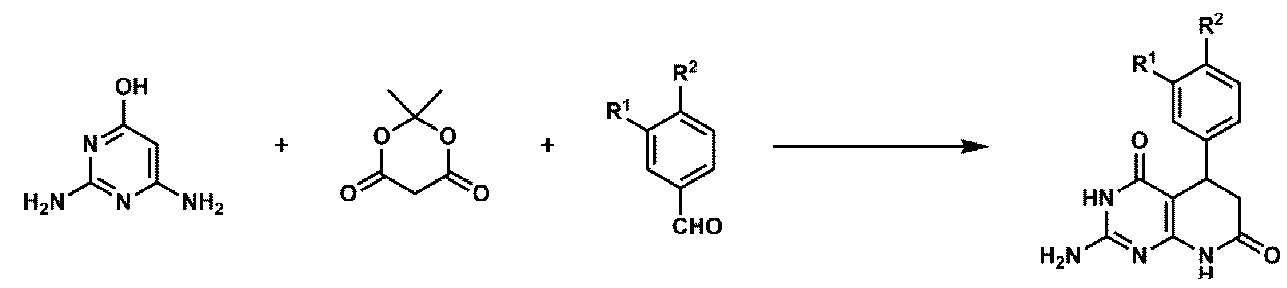
- the compound represented by the formula (I) is, for example, Shi, D. Q. et al. J. Heterocyclic Chem. 2009, 46, 1331-1334, or Tu, S. et al. Bioorg. Med. Chem. Lett. It can be manufactured as shown below according to the method described in 2006, 16, 3578-3581.
- the corresponding aromatic aldehyde compound, 2,4-diamino-6-hydroxypyrimidine (also known as 2,6-diaminopyrimidine-4 (3H) -one) and Meldrum's acid were added to (i) triethylbenzylammonium chloride in water.
- the target compound (I) can be produced by reacting under heating in the presence of (ii) reacting under heating under microwave irradiation, or (iii) reacting under heating in an organic solvent. can.
- the compound represented by the formula (II) can be produced, for example, according to the method described in JP-A-2006-510596 as shown below.
- the target compound (II) is obtained by reacting the corresponding amine compound with itaconic acid to convert it to ⁇ -lactamcarboxylic acid, and then reacting it with histamine in the presence of a condensing agent (for example, carbodiimide).
- a condensing agent for example, carbodiimide
- the above compound can be formulated as an antidepressant / anxiolytic drug in combination with a conventional pharmaceutical carrier.
- the administration form is not particularly limited and is appropriately selected and used as necessary. Tablets, capsules, granules, fine granules, powders, sustained release preparations, liquids, suspensions, emulsions, syrups. , Oral preparations such as elixirs, parenteral preparations such as injections and suppositories, but oral preparations are preferable.
- Oral preparations are produced by a conventional method using, for example, starch, lactose, sucrose, mannitol, carboxymethyl cellulose, inorganic salts and the like.
- binders, disintegrants, surfactants, lubricants, fluidity promoters, flavoring agents, colorants, fragrances and the like can be appropriately added.
- binder examples include starch, dextrin, gum arabic, gelatin, hydroxypropyl starch, methyl cellulose, sodium carboxymethyl cellulose, hydroxypropyl cellulose, crystalline cellulose, ethyl cellulose, polyvinylpyrrolidone, macrogol and the like.
- disintegrant examples include starch, hydroxypropyl starch, sodium carboxymethyl cellulose, calcium carboxymethyl cellulose, carboxymethyl cellulose, low-substituted hydroxypropyl cellulose and the like.
- surfactant examples include sodium lauryl sulfate, soybean lecithin, sucrose fatty acid ester, polysorbate 80 and the like.
- lubricant examples include talc, waxes, hydrogenated vegetable oil, sucrose fatty acid ester, magnesium stearate, calcium stearate, aluminum stearate, polyethylene glycol and the like.
- fluidity accelerator examples include light anhydrous silicic acid, dry aluminum hydroxide gel, synthetic aluminum silicate, magnesium silicate and the like.
- the injection is produced according to a conventional method, and generally distilled water for injection, physiological saline, aqueous glucose solution, olive oil, sesame oil, lacquer oil, soybean oil, corn oil, propylene glycol, polyethylene glycol and the like can be used as the diluent. .. Further, if necessary, a bactericide, a preservative, a stabilizer, an isotonic agent, a soothing agent and the like may be added. Further, from the viewpoint of stability, the injection can be filled in a vial or the like and then frozen, water is removed by a usual freeze-drying technique, and the liquid preparation can be re-prepared from the freeze-dried product immediately before use.
- the proportion of the compound of formula (I) or (II) in the injection may vary from 5 to 50% by weight, but is not limited thereto.
- parenteral preparations examples include suppositories for rectal administration, external preparations for topical administration (for example, eye drops, ointments, pasta preparations), etc., which are manufactured according to a conventional method.
- the formulated antidepressant / anxiolytic drug varies depending on the dosage form, administration route, etc., but for example, it is possible to administer 1 to 4 times a day for a period of 1 week to 3 months.
- the weight of the compound of the above formula (I) or (II) is, for example, 0. It is appropriate to take 1 to 1000 mg, preferably 1 to 500 mg, in several divided doses a day.
- the weight of the compound of the above formula (I) or (II) is usually used, for example. It is appropriate to administer 0.1 to 1000 mg, preferably 1 to 500 mg, by intravenous injection, intravenous drip infusion, subcutaneous injection, intramuscular injection, intraperitoneal administration, or intrathecal (subarachnoid space) administration.
- the antidepressant / anxiolytic agent of the present invention has a mechanism different from SSRI and BZD (PAC1 receptor antagonism), and sedation at a drug efficacy often observed in the effect study of BZD / SSRI using rodents. It is possible to treat anxiety and depression while avoiding the effects (leading to adverse effects such as drowsiness and dizziness).
- SSRI and BZD PAC1 receptor antagonism
- the antidepressant / anxiolytic drug of the present invention does not show a pharmacological effect on normal mice, but is highly effective in a pathological model (stress-induced anxiety / depression-like model mouse), and thus has side effects. It makes it possible to perform treatment that is specific to a small number of pathological conditions.
- the antidepressant / anxiety agent of the present invention is useful for treating and / or preventing psychiatric disorders, particularly anxiety disorders, stress disorders and / or psychiatric disorders such as depression.
- Example 3 Effect of the antidepressant / anxiolytic drug of the present invention on normal mice (1) Effect of PA-8 and PA-81004 (evaluation in open field test) Open field test of the effects of PA-8 and PA-81004 on normal mice (using a box with a length and width of 40 cm and a height of 30 cm, using the property of mice to search in a novel environment, spontaneously in a novel environment. A test to measure the activity. The locomotor activity is measured from the total distance traveled. In addition, the staying time and the number of invasions in the central section (20 cm in length and width) are measured by utilizing the property that the mouse prefers the wall and avoids a bright environment. It was evaluated by a test) to evaluate anxiety-like behavior.
- Elevated cross maze test (a test that utilizes the property that mice avoid high places and prefers the wall surface. A wall with a length of 26 cm and a width of 8 cm installed at a height of 50 cm. A mouse was placed in the center of a maze in which no open arm and a closed-arm with a wall were arranged in a cross shape, and the time and frequency of staying in the open arm were measured to evaluate anxiety-like behavior).
- restraint stress stress of retaining the mouse in a 2.8 cm diameter tube with a hole for breathing
- Example 7 Improvement effect of PA-9 and PA-915 on single restraint stress-induced anxiety-like behavior (evaluation in light-dark test)
- Light-dark test on the improvement effect of PA-9 and PA-915 on single-time restraint stress-induced anxiety-like behavior (using the property of mice to avoid bright environments, a box connecting a light box and a dark box (each length 20 cm, height 30 cm) ),
- a test to measure voluntary activity using the property of mice to avoid bright environments, a box connecting a light box and a dark box (each length 20 cm, height 30 cm)
- a test to measure voluntary activity A test to evaluate anxiety-like behavior by measuring the time spent in the bright box and the dark box and the number of times the mouse was moved between the bright box and the dark box).
- Example 8 Comparison of the effects of PA-915 and the existing drug fluoxetine on single-restraint stress-induced anxiety-like behavior (evaluation in an open field test) Open field test of the effects of PA-915 and fluoxetine on single-restraint stress-induced anxiety-like behavior A test to measure voluntary activity underneath. Spontaneous movement is measured from the total distance traveled. Also, taking advantage of the property that the mouse prefers the wall and avoids a bright environment, the staying time and the number of invasions in the central section (length and width 20 cm) was compared by a test) that evaluates anxiety-like behavior by measuring.
- Example 9 Chronic social defeat Improvement effect of PA-8 on stress-induced social behavioral abnormalities (depression-like behavior)
- Male C57BL / 6N mice (8-12 weeks old) coexist with large ICR mice Then, the male C57BL / 6N mouse escapes at first in order to avoid the attack of the ICR mouse, but due to the repeated load for 5 to 10 days, the front leg is immediately raised and the pose (submission) to admit the loss is taken. (Chronic social defeat stress (SDS) load).
- the Social Preference or Avoidance Test is a test that has been attracting attention in recent years as a screening system for highly extrapolated antidepressants. SPAT evaluates the degree of interest (sociality) with other individuals. Install a box (with wire mesh on the contact surface) in the open field. The first time, the target (ICR mouse) was not put in the box, and the second time, the target (ICR mouse) was put in the box, and the contact time with the target (stay in the social behavior area: stayed in the Interaction Zone). Time) and the time spent in the avoidance zone (time spent in the avoidance zone) are measured, and the second stay time / first stay time is calculated (social interaction ratio). In chronic social defeat stress mice, the Social Interaction Ratio is reduced. There are individual differences in stress sensitivity, and sensitive individuals (Social Interaction Ratio ⁇ 1) and resilient individuals (Social Interaction Ratio ⁇ 1) can be seen.
- mice Male C57BL / 6N mice (8-12 weeks old) that had been bred alone for 10 days or more were subjected to chronic social defeat stress for 10 days (Days 1-10) for 10 minutes / day.
- Example 10 Improvement effect of PA-8 on suppression of sucrose preference (depression-like behavior) due to chronic social defeat stress
- sucrose preference test a sucrose solution and a bottle containing normal water were simultaneously applied to mice. give. Normal mice prefer to drink sweet sucrose solution, but depressed mice drink less sucrose solution.
- mice Male C57BL / 6N mice (8-12 weeks old) that had been bred alone for 10 days or more were subjected to chronic social defeat stress for 10 days (Days 1-10) for 10 minutes / day.
- Day 11 was SPAT and susceptible mice were selected.
- Example 11 Effect of PA-9 on chronic social defeat stress-induced social behavioral abnormalities (depression-like behavior)
- a social behavior test (SPAT) was performed on Day 11, and susceptible mice were selected.
- the results are shown in FIG. 17 (A: social behavior ratio, B: time spent in the social behavior area, C: time spent in the repellent area).
- PA-9 tended to improve social behavioral abnormalities.
- the data are shown as mean ⁇ standard error. * P ⁇ 0.05 (One-way ANOVA followed by Tukey-Kramer test).
- the data are shown as mean ⁇ standard error. * P ⁇ 0.05 (One-way ANOVA followed by Tukey-Kramer test).
- the results are shown in FIG. 19 (A: social behavior ratio, B: time spent in the social behavior area, C: time spent in the repellent area).
- a single dose of PA-915 significantly improved social behavioral abnormalities (immediate-acting antidepressant effect).
- the data are shown as mean ⁇ standard error. ** P ⁇ 0.01; * P ⁇ 0.05 (One-way ANOVA followed by Tukey-Kramer test).
- Example 14 Persistent antidepressant effect of a single dose of PA-915 on chronic social defeat stress-induced social behavioral abnormalities (depression-like behavior)
- Example 15 Chronic social defeat Effect of single injection of PA-915 on stress-induced anxiety-like behavior
- Effect of PA-915 evaluation in light-dark test
- a light-dark test of the effect of PA-915 on mice loaded with chronic social defeat stress using the property of mice to avoid a bright environment, put the mouse in a box (length and width 20 cm, height 30 cm) in which a light box and a dark box are connected.
- a test to measure voluntary activity A test to evaluate anxiety-like behavior by measuring the time spent in the light box and the dark box and the number of times the light box and the dark box were moved).
- mice Male C57BL / 6N mice (8-12 weeks old) bred independently for 10 days or more were subjected to chronic social defeat stress for 10 days (Days 1-10) for 10 minutes / day.
- a social behavior test (SPAT) was performed on Day 11, and susceptible mice were selected.
- mice Male C57BL / 6N mice (8-12 weeks old) bred independently for 10 days or more were subjected to chronic social defeat stress for 10 days (Days 1-10) for 10 minutes / day.
- a social behavior test was performed on Day 11, and susceptible mice were selected.
- the results are shown in FIG. 23 (A: total distance traveled, B: number of times the central section has entered, C: time spent in the central section).
- the data are shown as mean ⁇ standard error. ** P ⁇ 0.01; * P ⁇ 0.05 (One-way ANOVA followed by Tukey-Kramer test).
- mice Male C57BL / 6N mice (8-12 weeks old) bred independently for 10 days or more were subjected to chronic social defeat stress for 10 days (Days 1-10) for 10 minutes / day.
- a social behavior test was performed on Day 11, and susceptible mice were selected.
- the results are shown in FIG. 24 (A: total travel distance, B: open arm approach count, C: open arm stay time). The data are shown as mean ⁇ standard error. ** P ⁇ 0.01; * P ⁇ 0.05 (One-way ANOVA followed by Tukey-Kramer test).
- the data are shown as mean ⁇ standard error. ** P ⁇ 0.01; * P ⁇ 0.05 (One-way ANOVA followed by Tukey-Kramer test).
- Example 19 A single dose of PA-915, a single dose of ketamine, and a continuous dose of the existing drug fluoxetine for suppression of sucrose palatability (depression-like behavior) due to chronic social defeat stress.
- Comparison of Sustainable Effects Male C57BL / 6N mice (8-12 weeks old) that had been bred alone for 10 days or more were subjected to chronic social defeat stress for 10 days (Days 1-10) for 10 minutes / day.
- a social behavior test (SPAT) was performed on Day 11, and susceptible mice were selected.
- a single dose of PA-915 and ketamine improved sucrose palatability with immediate effect and maintained its effectiveness after 8, 15, 29 and 57 days (persistent antidepressant effect).
- fluoxetine did not improve sucrose preference with a single dose and improved sucrose preference suppression with continuous administration for 14 days, but its effectiveness could not be maintained after drug suspension.
- Example 20 Comparison of effects of PA-915, ketamine and the existing drug fluoxetine on spontaneous motility, startle response, and spatial work memory in normal mice (1)
- PA-915, ketamine (1) in normal mice Open field test of the effects of ketamine) and the existing drug fluoxetine (using the property of mice to search in a novel environment, using a box 45 cm in length and width and 30 cm in height, spontaneously in a novel environment It was evaluated by a test to measure various activities).
- prepulse inhibition test a relatively weak stimulus precedes a sudden sensory stimulus, resulting in a significant startle response.
- the phenomenon of inhibition is called prepulse inhibition.
- the stimulus given for seconds was given 20 times at random.
- the ratio of PPI at that time was calculated as [(average value of startle amplitude without prepulse)-(average value of startle amplitude of trial with prepulse)] / (average value of startle amplitude without prepulse) ⁇ 100.
- the result of the PPI ratio is shown in FIG. 29B.
- the data are shown as mean ⁇ standard error. ** P ⁇ 0.01; * P ⁇ 0.05 (One-way ANOVA followed by Tukey-Kramer test). Prepulse inhibition was observed by administration of ketamine, but administration of PA-915 did not give a significant change.
- the results are shown in FIG. 30 (A: social behavior ratio, B: time spent in the social behavior area, C: time spent in the repellent area).
- Oral administration of PA-915 showed a tendency to improve social behavioral abnormalities (immediate-acting antidepressant effect).
- the data are shown as mean ⁇ standard error. ** P ⁇ 0.01; * P ⁇ 0.05 (One-way ANOVA followed by Tukey-Kramer test).
- Example 22 Effect of oral administration of PA-915 on anxiety-like behavior due to chronic social defeat stress (evaluation in an elevated cross maze test)
- a social behavior test (SPAT) was performed on Day 11, and susceptible mice were selected.
- Example 24 Effect of PA-915 on depressive behavior due to long-term isolated breeding stress (evaluation in forced swimming test) Long-term social isolation from early childhood is known to cause aggression, anxiety, and depressive behavior after maturity, and is widely used as an evaluation model for antidepressants.
- the data are shown as mean ⁇ standard error. * P ⁇ 0.05 (One-way ANOVA followed by Tukey-Kramer test).
- a single dose of PA-915 improved depressive behavior indexed by akinesia time in depression model animals other than chronic social defeat stress.
- Example 25 Comparison of the effects of PA-915, ketamine, and the existing drug fluoxetine on depressive behavior due to repeated administration of corticosterone (compulsory swimming test, evaluation in enzyme-linked immunosorbent assay (ELISA)) ) (1) Improvement effect of PA-915 on depression-like behavior (evaluation in forced swimming test)
- the chronic corticosterone-administered model mouse is a model mouse that mimics the high plasma corticosterone level associated with hyperactivation of the hypothalamus-pituitary-adrenal system in stress conditions, and is widely used as a depression model mouse.
- the data are shown as mean ⁇ standard error. ** P ⁇ 0.01 (One-way ANOVA followed by Tukey-Kramer test).
- a single dose of PA-915 improved depressive behavior indexed by akinesia time in this depression model as well as ketamine.
- fluoxetine did not show an improving effect.
- Example 26 Effect of PA-915 on depressive behavior of female mice by repeated administration of corticosterone (evaluation in forced swimming test)
- Female C57BL / 6J mice (9 weeks old) were subcutaneously administered with Vehicle (0.5% carboxymethyl cellulose solution) or corticosterone (20 mg / kg) for 21 days (0.1 mL / 10 g), and on the 21st day.
- the data are shown as mean ⁇ standard error. ** P ⁇ 0.01 (One-way ANOVA followed by Tukey-Kramer test).
- PA-915 improved depressive behavior using immobility time as an index not only in male mice but also in female mice.
Landscapes
- Health & Medical Sciences (AREA)
- Chemical & Material Sciences (AREA)
- Organic Chemistry (AREA)
- Animal Behavior & Ethology (AREA)
- Medicinal Chemistry (AREA)
- Veterinary Medicine (AREA)
- Public Health (AREA)
- General Health & Medical Sciences (AREA)
- Life Sciences & Earth Sciences (AREA)
- Pharmacology & Pharmacy (AREA)
- Bioinformatics & Cheminformatics (AREA)
- Engineering & Computer Science (AREA)
- Nuclear Medicine, Radiotherapy & Molecular Imaging (AREA)
- Biomedical Technology (AREA)
- General Chemical & Material Sciences (AREA)
- Chemical Kinetics & Catalysis (AREA)
- Neurosurgery (AREA)
- Neurology (AREA)
- Epidemiology (AREA)
- Psychiatry (AREA)
- Pain & Pain Management (AREA)
- Pharmaceuticals Containing Other Organic And Inorganic Compounds (AREA)
Abstract
Description


(1)次式(I):

で示される化合物もしくはその塩又はそれらの溶媒和物を含有する抗うつ・抗不安薬。
(2)不安障害、ストレス性障害及び/又はうつ病を治療及び/又は予防するための前記(1)に記載の抗うつ・抗不安薬。
(3)経口投与される前記(1)1又は(2)に記載の抗うつ・抗不安薬。
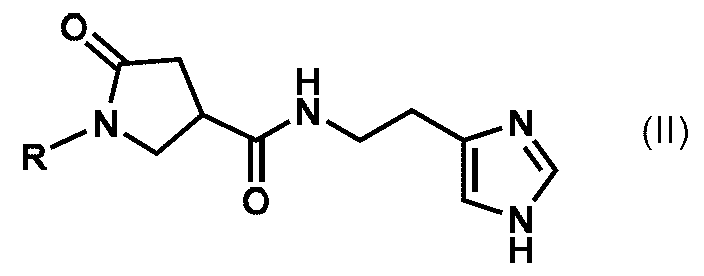
で示される化合物もしくはその塩又はそれらの溶媒和物を含有する抗うつ・抗不安薬。
(5)前記式(II)において、Rがハロゲン原子で置換されたインダゾリル基である前記(4)に記載の抗うつ・抗不安薬。
(6)前記式(II)において、Rが塩素原子で置換されたインダゾリル基である前記(4)に記載の抗うつ・抗不安薬。
(7)不安障害、ストレス性障害及び/又はうつ病を治療及び/又は予防するための前記(4)~(6)のいずれかに記載の抗うつ・抗不安薬。
(8)経口投与される前記(4)~(7)のいずれかに記載の抗うつ・抗不安薬。


Yield: 46%; mp: >300 ℃; IR (KBr): 3455, 3166, 2856, 2699, 1578, 1477 cm-1; 1H NMR (400 MHz, DMSO-d6): δ 10.55 (1H, br s), 10.01 (1H, s), 6.90 (1H, d, J = 2.4 Hz), 6.84 (1H, dd, J = 8.8, 2.4 Hz), 6.77 (1H, d, J = 8.8 Hz), 6.51 (2H, br s), 4.00 (1H, d, J = 7.6 Hz), 3.95 (2H, q, J = 7.0 Hz), 2.88 (1H, dd, J = 16.0, 7.6 Hz), 2.42 (1H, d, J = 16.0 Hz), 2.07 (3H, s), 1.29 (3H, t, J = 7.0 Hz); 13C NMR (100 MHz, DMSO-d6): δ 171.10, 161.42, 156.45, 155.20, 154.95, 135.08, 128.74, 125.49, 124.61, 111.22, 92.07, 63.14, 32.12, 16.21, 14.83; MS (EI) m/z 314 (M+).
Yield: 37%; mp: >300 ℃; IR (KBr): 3462, 3309, 2850, 2743, 1582, 1521 cm-1; 1H NMR (400 MHz, DMSO-d6): δ 10.57 (1H, br s), 10.02 (1H, s), 6.84 (1H, d, J = 2.3 Hz), 6.78 (1H, d, J = 8.7 Hz), 6.53 (1H, dd, J = 8.7, 2.3 Hz), 6.50 (2H, br s), 4.05 (1H, d, J = 7.7 Hz), 3.92 (2H, q, J = 6.9 Hz), 3.69 (3H, s), 2.88 (1H, dd, J = 16.4, 7.7 Hz), 1.27 (3H, t, J = 6.9 Hz); 13C NMR (100 MHz, DMSO-d6): δ 171.34, 161.47, 156.43, 155.01, 148.89, 146.63, 136.09, 117.65, 112.90, 111.24, 92.03, 63.73, 55.38, 38.71, 32.44, 14.81; MS (EI) m/z 330 (M+).
Yield: 38%; mp: >300 ℃; IR (KBr): 3450, 3167, 2959, 2876, 1652, 1591 cm-1; 1H NMR (400 MHz, DMSO-d6): δ 10.57 (1H, br s), 10.03 (1H, br s), 6.83 (1H, d, J = 2.3 Hz), 6.79 (1H, d, J = 8.4 Hz), 6.52 (1H, dd, J = 8.4, 2.3 Hz), 6.51 (2H, br s), 4.05 (1H, d, J = 7.9 Hz), 3.82 (2H, t, J = 7.1 Hz), 3.69 (3H, s), 2.88 (1H, dd, J = 16.4, 7.9 Hz), 1.67 (2H, sext, J = 7.1 Hz), 0.92 (3H, t, J = 7.1 Hz); 13C NMR (100 MHz, DMSO-d6): δ 171.22, 161.69, 158.44, 157.50, 146.831, 145.48, 137.33, 117.79, 113.05, 111.44, 99.65, 69.86, 55.57, 38.73, 32.52, 22.20, 10.53; MS (EI) m/z 344 (M+).
Yield: 41%; mp: >300 ℃; IR (KBr): 3188, 2977, 2868, 1653, 1635 cm-1; 1H NMR (400 MHz, DMSO-d6): δ 10.57 (1H, s), 10.01 (1H, s), 6.81 (1H, d, J = 1.8 Hz), 6.78 (1H, d, J = 8.8 Hz), 6.53 (1H, dd, J = 8.8, 1.8 Hz), 6.50 (2H, br s), 4.03 (1H, d, J = 7.8 Hz), 3.93 (2H, q, J = 6.9 Hz), 3.92 (2H, q, J = 6.9 Hz), 2.87 (1H, dd, J = 16.0, 7.8 Hz), 1.28 (3H, t, J = 6.9 Hz), 1.26 (3H, t, J = 6.9 Hz); 13C NMR (100 MHz, DMSO-d6): δ 171.27, 161.47, 156.42, 154.97, 148.11, 146.87, 136.19, 117.94, 113.45, 112.69, 92.07, 63.83, 63.78, 38.66, 32.37, 14.82; MS (EI) m/z 344 (M+).
Yield: 34%; mp: >300 ℃; IR (KBr): 3471, 3161, 1646, 1592 cm-1; 1H-NMR (400 MHz, DMSO-d6): δ 10.62 (1H, br s), 10.13 (1H, br s), 7.32 (1H, dt, J = 10.8, 8.4 Hz), 7.18 (1H, ddd, J = 10.8, 8.4, 2.4 Hz), 6.95 (1H, m), 6.57 (2H, br s), 4.12 (1H, d, J = 7.2 Hz), 2.94 (1H, dd, J = 16.3, 7.2 Hz); 13C NMR (125 MHz, DMSO-d6): δ 170.86, 161.41, 156.68, 155.24, 149.02, 147.17, 141.45, 122.88, 117.41 (d, J = 17.0 Hz), 115.62 (d, J = 17.0 Hz), 91.05, 38.22, 32.24; MS (EI) m/z 292 (M+).
Yield: 40%; mp: >300 ℃; IR (KBr): 3458, 3080, 2863, 2751, 1540, 1475 cm-1; 1H NMR (400 MHz, DMSO-d6): δ 10.57 (1H, br s), 10.09 (1H, s), 7.30 (1H, d, J = 2.4 Hz), 7.06 (1H, dd, J = 8.0, 2.4 Hz), 6.99 (1H, d, J = 8.0 Hz), 6.56 (2H, br s), 4.09 (1H, m), 4.04 (2H, q, J = 7.1 Hz), 2.90 (1H, dd, J = 16.2, 6.7 Hz), 1.31 (3H, t, J = 7.1 Hz); 13C NMR (100 MHz, DMSO-d6): δ 170.93, 161.39, 156.55, 155.10, 153.29, 137.33, 130.87, 126.80, 113.77, 110.89, 91.53, 64.39, 38.47, 31.82, 14.58; MS (EI) m/z 379 (M+).
Yield: 45%; mp: >300 ℃; IR (KBr): 3461, 3160, 2841, 1591, 1516 cm-1; 1H NMR (400 MHz, DMSO-d6): δ 10.58 (1H, br s), 10.03 (1H, s), 6.82 (1H, d, J = 2.4 Hz), 6.80 (1H, d, J = 8.4 Hz), 6.55 (1H, dd, J = 8.4, 2.4 Hz), 6.50 (1H, br s), 4.04 (1H, d, J = 7.8 Hz), 3.96-3.88 (2H, m), 3.68 (3H, s), 2.87 (1H, dd, J = 16.0, 7.8 Hz), 1.28 (3H, t, J = 7.2 Hz); 13C NMR (100 MHz, DMSO-d6): δ 171.30, 161.55, 156.51, 155.00, 147.88, 147.66, 136.10, 117.81, 112.20, 111.90, 92.11, 63.68, 55.54, 38.72, 32.42, 14.83; MS (EI) m/z 330 (M+).
Yield: 35%; mp: >300 ℃; IR (KBr): 3462, 3169, 1636, 1617, 1591 cm-1; 1H NMR (400 MHz, DMSO-d6): δ 10.58 (1H, br s), 10.02 (1H, s), 6.84 (1H, d, J = 2.0 Hz), 6.81 (1H, d, J = 8.4 Hz), 6.57 (1H, dd, J = 8.4, 2.0 Hz), 5.99 (1H, ddd, J = 17.6, 10.4, 5.2 Hz), 5.36 (1H, dd, J = 17.6, 2.0 Hz), 5.22 (1H, dd, J = 10.4, 2.0 Hz), 4.46 (2H, d, J = 5.2 Hz), 4.03 (1H, d, J = 7.2 Hz), 3.68 (3H, s), 2.87 (1H, dd, J = 15.8, 7.2 Hz); 13C NMR (100 MHz, DMSO-d6): δ 171.16, 158.72, 156.11, 154.99, 147.79, 147.55, 136.10, 133.95, 118.27, 117.88, 112.81, 112.09, 92.02, 69.10, 55.65, 32.41; MS (EI) m/z 342 (M+).
Yield: 41%; mp: >300 ℃; IR (KBr): 3463, 3160, 2846, 1695, 1591, 1539, 1516 cm-1; 1H NMR (400 MHz, DMSO-d6): δ 10.58 (1H, br s), 10.03 (1H, s), 6.82 (1H, d, J = 2.4 Hz), 6.80 (1H, dd, J = 8.4, 2.4 Hz), 6.55 (1H, d, J = 8.4 Hz), 6.51 (2H, br s), 4.04 (1H, d, J = 7.2 Hz), 3.84-3.81 (2H, m), 3.67 (3H, s), 2.87 (1H, dd, J = 16.4, 7.2 Hz), 1.68 (2H, sext, J = 6.8 Hz), 0.94 (3H, t, J = 6.8 Hz); 13C NMR (100 MHz, DMSO-d6): δ 171.24, 161.48, 156.43, 154.96, 148.04, 147.68, 136.14, 117.78, 112.27, 112.04, 92.06, 69.63, 55.61, 38.66, 32.38, 22.12, 10.46; MS (EI) m/z 344 (M+).
Yield: 43%; mp: >300 ℃; IR (KBr): 3447, 3170, 2854, 1592, 1539 cm-1; 1H NMR (400 MHz, DMSO-d6): δ 10.58 (1H, br s), 10.06 (1H, s), 7.15 (1H, t, J = 7.8 Hz), 6.72 (1H, dd, J = 7.8, 2.4 Hz), 6.70 (1H, dd, J = 7.8, 2.4 Hz), 6.66 (1H, d, J = 2.4 Hz), 6.53 (2H, br s), 4.07 (1H, d, J = 7.4 Hz), 3.94 (2H, q, J = 6.0 Hz), 2.91 (1H, dd, J = 16.3, 7.4 Hz), 1.28 (3H, t, J = 6.0 Hz); 13C NMR (100 MHz, DMSO-d6): δ 171.04, 161.40, 158.57, 156.59, 155.03, 145.32, 129.28, 118.56, 113.19, 111.58, 91.65, 62.78, 38.50, 32.86, 14.65; MS (EI) m/z 300 (M+).
Yield: 45%; mp: >300 ℃; IR (KBr): 3085, 2855, 2727, 1520 cm-1; 1H NMR (400 MHz, DMSO-d6): δ 10.58 (1H, br s), 10.06 (1H, s), 7.15 (1H, t, J = 7.6 Hz), 6.76 (1H, dd, J = 7.6, 2.4 Hz), 6.71 (2H, m), 6.53 (2H, br s), 6.00 (1H, ddd, J = 17.4, 10.6, 5.5 Hz), 5.36 (1H, dd, J = 17.4, 1.6 Hz), 5.23 (1H, dd, J = 10.6, 1.6 Hz), 4.48 (2H, d, J = 5.5 Hz), 4.07 (1H, d, J = 7.5 Hz), 3.89 (1H, dd, J = 16.2, 7.5 Hz); 13C NMR (100 MHz, DMSO-d6): δ 171.09, 161.41, 158.26, 156.58, 155.06, 145.35, 133.75, 129.48, 118.78, 117.56, 113.43, 112.03, 91.60, 68.11, 38.50, 32.86; MS (EI) m/z 312 (M+).
Yield: 30%; mp: >300 ℃; 1H NMR (400 MHz, DMSO-d6): δ 10.60 (1H, br s), 10.09 (1H, s), 7.15 (1H, s), 7.02 (2H, s), 6.55 (2H, br s), 4.06 (1H, d, J = 8.0 Hz), 4.05 (2H, q, J = 7.0 Hz), 2.91 (1H, dd, J = 16.0, 8.0 Hz), 1.31 (3H, t, J = 7.0 Hz); 13C NMR (100 MHz, DMSO-d6): δ 171.0, 161.38, 156.52, 155.11, 153.38, 136.81, 127.90, 126.09, 121.07, 113.90, 91.53, 64.28, 38.42, 31.87, 14.57.
Yield: 35%; mp: >300 ℃; 1H NMR (400 MHz, DMSO-d6): δ 10.61 (1H, br s), 10.11 (1H, s), 7.30 (1H, t, J = 8.0 Hz), 7.24 (1H, d, J = 8.0 Hz), 7.16 (1H, s), 7.11 (1H, d, J = 8.0 Hz), 6.57 (2H, br s), 4.13 (1H, d, J = 8.0 Hz), 2.95 (1H, dd, J = 16.0, 8.0 Hz); 13C NMR (100 MHz, DMSO-d6): δ 170.85, 161.42, 156.76, 155.18, 146.35, 133.07, 130.46, 126.49, 126.41, 125.20, 91.61, 38.24, 32.72.
Yield: 25%; mp: >300 ℃; 1H NMR (400 MHz, DMSO-d6): δ 10.61 (1H, br s), 10.12 (1H, s), 7.38 (1H, d, J = 8.0, 1.8 Hz), 7.31 (1H, t, J = 1.8 Hz), 7.24 (1H, t, J = 8.0 Hz), 7.14 (1H, d, J = 8.0 Hz), 6.57 (2H, br s), 4.12 (1H, d, J = 8.0 Hz), 2.95 (1H, dd, J = 16.2, 8.0 Hz); 13C NMR (100 MHz, DMSO-d6): δ 170.81, 161.40, 156.74, 155.18, 146.63, 130.77, 129.38, 129.30, 125.57, 121.78, 91.03, 38.25, 32.71.
Yield: 23%; mp: >300 ℃; 1H NMR (400 MHz, DMSO-d6): δ 10.64 (1H, br s), 10.15 (1H, s), 7.40 (1H, t, J = 8.0 Hz), 7.17 (2H, t, J = 8.0 Hz), 7.12 (1H, s), 6.58 (2H, br s), 4.18 (1H, d, J = 7.2 Hz), 2.97 (1H, dd, J = 16.2, 7.2 Hz); 13C NMR (100 MHz, DMSO-d6): δ 171.26, 161.71, 156.92, 155.40, 148.72, 146.70, 130.66, 120.22 (q, J = 254.60 Hz), 119.21, 119.08, 116.41, 91.23, 38.31, 32.81.
Yield: 35%; mp: >300 ℃; 1H NMR (400 MHz, DMSO-d6): δ 10.60 (1H, br s), 10.07 (1H, s), 7.17 (1H, t, J = 7.6 Hz), 6.75 (1H, dd, J = 7.6, 2.4 Hz), 6.71 (1H, d, J = 2.4 Hz), 6.70 (1H, s), 6.54 (2H, br s), 4.08 (1H, d, J = 7.2 Hz), 3.69 (3H, s), 2.92 (1H, dd, J = 16.0, 7.2 Hz); 13C NMR (100 MHz, DMSO-d6): δ 171.24, 161.45, 159.34, 156.54, 155.11, 145.32, 129.53, 118.56, 112.85, 111.29, 91.65, 54.91, 38.51, 32.89.
Yield: 32%; mp: >300 ℃; 1H NMR (400 MHz, DMSO-d6): δ 10.58 (1H, br s), 10.05 (1H, s), 7.15 (1H, t, J = 8.0 Hz), 6.74-6.67 (3H, m), 6.52 (2H, br s), 4.07 (1H, d, J = 8.0 Hz), 3.84 (2H, t, J = 6.4 Hz), 2.91 (1H, dd, J = 16.4, 8.0 Hz), 1.69 (2H, sext, J = 6.4 Hz), 0.94 (3H, t, J = 6.4 Hz); 13C NMR (100 MHz, DMSO-d6): δ 171.09, 161.47, 158.76, 156.62, 155.05, 145.34, 129.50, 118.54, 112.19, 111.74, 91.68, 68.76, 38.52, 32.89, 22.05, 10.47.
Yield: 37%; mp: >300 ℃; 1H NMR (400 MHz, DMSO-d6): δ 10.58 (1H, br s), 10.09 (1H, s), 7.53 (2H, dd, J = 8.0, 1.2 Hz), 7.42 (5H, m), 7.32 (2H, t, J = 8.0 Hz), 7.01 (1H, d, J = 8.0 Hz), 6.51 (2H, brs), 4.17 (1H, d, J = 7.6 Hz), 2.95 (1H, dd, J = 16.0, 7.6 Hz); 13C NMR (100 MHz, DMSO-d6): δ 171.38, 161.86, 155.22, 144.66, 140.62, 140.46, 129.37, 129.21, 127.71, 126.94, 126.85, 125.65, 125.20, 91.95, 62.93, 38.71, 33.17.
Yield: 37% ; mp: >300 ℃; 1H NMR (400 MHz, DMSO-d6): δ 10.60 (1H, br s), 10.07 (1H, s), 7.15 (1H, t, J = 8.0 Hz), 7.01 (1H, d, J = 8.0 Hz), 7.00 (1H, s), 6.91 (1H, d, J = 8.0 Hz), 6.53 (2H, br s), 4.08 (1H, d, J = 7.2 Hz), 2.93 (1H, dd, J = 16.6, 7.2 Hz), 2.52 (2H, q, J = 7.6 Hz), 1.13 (3H, t, J = 7.6 Hz); 13C NMR (100 MHz, DMSO-d6): δ 171.27, 161.52, 156.60, 155.09, 143.76, 128.43, 126.14, 125.87, 123.66, 91.75, 62.82, 32.95, 28.24, 15.61.
Yield: 18%; mp: >300 ℃; 1H NMR (400 MHz, DMSO-d6): δ 10.57 (1H, br s), 10.05 (1H, s), 7.14 (1H, t, J = 7.6 Hz), 6.98 (1H, d, J = 7.6 Hz), 6.97 (1H, s), 6.91 (1H, d, J = 7.6 Hz), 6.52 (2H, br s), 4.07 (1H, d, J = 8.0 Hz), 2.92 (1H, dd, J = 16.2, 8.0 Hz), 1.52 (2H, sext, J = 7.2 Hz), 0.86 (3H, t, J = 7.2 Hz); 13C NMR (100 MHz, DMSO-d6): δ 171.20, 161.48, 156.59, 155.04, 143.66, 142.24, 128.32, 126.63, 126.43, 123.73, 91.75, 38.87, 37.38, 32.90, 24.18, 13.74.
Yield: 30%; mp: >300 ℃; 1H NMR (400 MHz, DMSO-d6): δ 10.57 (1H, br s), 10.01 (1H, s), 7.13 (1H, t, J = 7.6 Hz), 6.98 (1H, d, J = 7.6 Hz), 6.97 (1H, s), 6.90 (1H, d, J = 7.6 Hz), 6.52 (2H, br s), 4.07 (1H, d, J = 8.0 Hz), 2.92 (1H, dd, J = 16.4, 8.0 Hz), 1.48 (2H, quin, J = 7.4 Hz), 1.27 (2H, sext, J = 7.4 Hz), 0.87 (3H, t, J = 7.4 Hz); 13C NMR (100 MHz, DMSO-d6): δ 171.16, 161.46, 156.59, 155.04, 143.66, 142.42, 128.33, 126.59, 126.39, 123.67, 91.76, 38.70, 34.93, 33.20, 32.90, 21.82, 13.82.
2) Muskinja, J. et al. Med. Chem. Res. 2016, 25, 1744-1753.
3) McDonald, B. et al. Org. Lett. 2015, 17, 98-101.
4) 米国特許出願公開第2015/0210682号明細書
5) 特表2010-526138号公報
6) Wang, B. et al. Eur. J. Org. Chem. 2009, 22, 3688-3692.
7) WO2008/136756
8) Shi, D. Q. et al. J. Heterocyclic Chem. 2009, 46, 1331-1334.

1H NMR (400MHz, Pyridine-d5): δ 10.74 (1H, br s), 7.73 (1H, d, J = 2.1 Hz), 7.45 (1H, d, J = 8.6 Hz), 7.15 (1H, dd, J = 2.1, 8.6 Hz), 4.65 (1H, dd, J = 13.0, 7.6 Hz), 4.44 (1H, t, J = 7.6 Hz), 3.40 (1H, quint, J = 7.6 Hz), 2.77 (1H, dd, J = 17.6, 7.6 Hz), 2.60 (1H, dd, J = 17.6, 7.6 Hz).
1H NMR (400MHz, Pyridine-d5): δ 11.53 (1H, br s), 7.38 (1H, d, J = 8.4 Hz), 7.14 (1H, dd, J = 8.4, 7.2 Hz), 6.93 (1H, d, J = 7.2 Hz), 4.67 (1H, dd, J = 13.0, 7.5 Hz), 4.52 (1H, t, J = 7.5 Hz), 3.39 (1H, quint, J = 7.5 Hz), 2.76 (1H, dd, J = 17.5, 7.5 Hz), 2.57 (1H, dd, J = 17.5, 7.5 Hz).
1H NMR (400MHz, Pyridine-d5): δ 11.63 (1H, br s), 7.71 (1H, d, J = 9.0 Hz), 7.48 (1H, d, J = 1.7 Hz), 6.88 (1H, dd, J = 9.0, 1.7 Hz), 4.65 (1H, dd, J = 13.0, 7.7 Hz), 4.44 (1H, t, J = 7.7 Hz), 3.40 (1H, quint, J = 7.7 Hz), 2.68 (1H, dd, J = 17.1, 7.7 Hz), 2.60 (1H, dd, J = 17.1, 7.7 Hz).
1H NMR (400MHz, Pyridine-d5): δ 11.66 (1H, br s), 7.67 (1H, d, J = 8.7 Hz), 7.30 (1H, d, J = 7.3 Hz), 6.86 (1H, dd, J = 8.7, 7.3 Hz), 4.71 (1H, dd, J = 13.4, 7.4 Hz), 4.48 (1H, t, J = 7.4 Hz), 3.42 (1H, quint, J = 7.4 Hz), 2.78 (1H, dd, J = 17.6, 7.4 Hz), 2.61 (1H, dd, J = 17.6, 7.4 Hz).
mp: 190-191 ℃; IR (KBr): 3566, 3437, 3306, 1695, 1636, 1558, 1508 cm-1; 1H NMR (400MHz, Pyridine-d5): δ 9.00 (1H, br s), 7.96 (1H, s), 7.61 (1H, d, J = 7.4 Hz), 7.14 (1H, t, J = 7.4 Hz), 7.15(1H, s), 6.98 (1H, d, J = 7.4 Hz), 4.72 (1H, t, J = 9.1 Hz), 3.96-3.85 (3H, m), 3.26 (1H, dd, J = 15.6, 9.1 Hz), 3.11 (2H, t, J = 6.8 Hz), 2.78 (1H, dd, J = 15.6, 9.1 Hz); 13C NMR (100 MHz, DMSO-d6): δ 169.56, 168.62, 147.59, 134.59, 131.61, 126.70, 123.80, 119.28, 116.97, 115.67, 107.11, 48.23, 36.47, 32.61, 26.57.
Yield: 24% over two steps; mp: 208-209 ℃; IR (KBr): 3735, 3649, 3097, 1684, 1653, 1558, 1508 cm-1; 1H NMR (400MHz, Pyridine-d5): δ 9.04 (1H, br s), 8.05 (1H, s), 7.69 (1H, d, J = 9.6 Hz), 7.68 (1H, s), 7.27 (1H, d, J = 9.6 Hz), 7.71(1H, s), 5.09 (1H, dd, J = 13.6, 8.4 Hz), 4.73 (1H, t, J = 8.4 Hz), 3.94-3.86 (3H, m), 3.28 (1H, dd, J = 14.8, 8.4 Hz), 3.11 (2H, t, J = 6.6 Hz), 2.84 (1H, dd, J = 14.8, 8.4 Hz); 13C NMR (100 MHz, DMSO-d6): δ 169.63, 168.21, 145.55, 134.50, 133.79, 131.92, 127.15, 123.19, 118.50, 118.39, 116.85, 108.13, 48.33, 38.747, 36.33, 32.92, 26.53.
Yield: 17% over two steps; mp: 196-198 ℃; IR(KBr): 3290, 3213, 3101, 1683, 1636, 1558, 1508 cm-1; 1H NMR (400MHz, Pyridine-d5): δ 9.12 (1H, br s), 8.30 (1H, s), 7.83 (1H, s), 7.66 (1H, d, J = 9.2 Hz), 7.25 (1H, s), 6.96 (1H, d, J = 9.2 Hz), 5.03 (1H, dd, J = 13.0, 8.3 Hz), 4.71 (1H, t, J = 8.3 Hz), 3.91-3.84 (3H, m), 3.27 (1H, dd, J = 15.2, 8.3 Hz), 3.12 (2H, t, J = 6.4 Hz), 2.87 (1H, dd, J = 15.2, 8.3 Hz); 13C NMR (100 MHz, DMSO-d6): δ 169.79, 168.28, 147.25, 134.03, 132.74, 132.42, 131.35, 121.77, 119.93, 116.53, 115.03, 106.65, 48.23, 38.21, 36.25, 32.92, 25.47.
Yield: 36% over two steps; mp: 238-239 ℃; IR(KBr): 3319, 3231, 3213, 1663, 1636, 1558, 1508 cm-1; 1H NMR (400MHz, Pyridine-d5): δ 9.02 (1H, br s), 8.49 (1H, s), 7.76 (1H, s), 7.52 (1H, d, J = 7.5 Hz), 7.40 (1H, d, J = 7.5 Hz), 6.98 (1H, s), 6.88 (1H, t, J = 7.5 Hz), 5.13 (1H, dd, J = 14.6, 8.5 Hz), 4.81 (1H, t, J = 8.5 Hz), 3.95-3.86 (3H, m), 3.26 (1H, dd, J = 16.2, 8.5 Hz), 3.11 (2H, t, J = 6.8 Hz), 2.83 (1H, dd, J = 16.2, 8.5 Hz); 13C NMR (100 MHz, DMSO-d6): δ 169.56, 168.32, 144.32, 134.51, 133.83, 133.30, 125.80, 120.48, 119.42, 119.04, 116.84, 109.42, 48.36, 38.77, 36.32, 32.95, 26.57.
Yield: 63%; mp: 149-151 ℃; IR (KBr): 3675, 3306, 1678, 1643, 1558 cm-1; 1H NMR (400MHz, Pyridine-d5): δ 9.11 (1H, t, J = 5.8 Hz),7.90 (1H, s), 7.72 (2H, d, J = 8.4 Hz), 7.28 (2H, t, J = 8.4 Hz), 7.09 (1H, s), 7.06 (1H, t, J = 8.4 Hz), 4.13 (1H, dd, J = 9.6, 8.3 Hz), 3.93 (1H, t, J = 8.3 Hz), 3.83 (2H, q, J = 7.5 Hz ), 3.47 (1H, quint, J =8.3 Hz), 3.14 (1H, dd, J = 16.7, 8.3 Hz), 3.08 (2H, t, J = 7.5 Hz), 2.84 (1H, dd, J = 16.7, 8.3 Hz); 13C NMR (100 MHz, DMSO-d6): δ 172.16, 171.96, 139.22, 134.58, 133.95, 128.70, 124.00, 119.36, 116.83, 50.73, 38.66, 35.66, 35.43, 26.38.
Yield: 93%; mp: 176-178 ℃; IR (KBr): 3306, 3088, 1675, 1639, 1556 cm-1; 1H NMR (400 MHz, Pyridine-d5): δ 9.10 (1H, t, J = 5.8 Hz), 7.91 (1H, s), 7.64 (2H, d, J = 7.2 Hz), 7.08 (2H, t, J = 7.2 Hz), 7.07 (1H, s), 4.14 (1H, dd, J = 9.6, 8.0 Hz), 3.92 (1H, t, J = 8.0 Hz), 3.83 (2H, q, J = 7.2 Hz), 3.46 (1H, quint, J = 8.0 Hz), 3.14 (1H, dd, J = 17.6, 8.0 Hz), 3.08 (2H, t, J = 7.2 Hz), 2.84 (1H, dd, J = 17.6, 8.0 Hz), 2.13 (3H, s); 13C NMR (100 MHz, DMSO-d6): δ 172.17, 172.10, 137.00, 134.86, 134.44, 133.26, 129.30, 119.58, 117.04, 51.00, 39.17, 36.02, 35.84, 27.01, 20.63.
Yield: 93%; mp: 196-198 ℃; IR (KBr): 3119, 3017, 1695, 1647, 1558 cm-1; 1H NMR (400MHz, Pyridine-d5): δ 9.16 (1H, t, J = 5.2 Hz), 7.95 (1H, s), 7.71 (2H, d, J = 8.4 Hz), 7.30 (2H, d, J = 8.4 Hz), 7.11 (1H, s), 4.10 (1H, dd, J = 9.4, 8.3 Hz), 3.92 (1H, t, J = 8.3 Hz), 3.83 (2H, q, J = 6.7 Hz), 3.50 (1H, quint, J = 8.3 Hz), 3.11 (1H, dd, J = 17.5, 8.3 Hz), 3.09 (2H, t, J = 5.7 Hz), 2.85 (1H, dd, J = 17.5, 8.3 Hz); 13C NMR (100 MHz, DMSO-d6): δ 172.20, 171.68, 137.90, 134.43, 133.95, 128.36, 127.49, 120.60, 116.62, 50.47, 38.74, 35.62, 35.30, 26.52.
Yield: 94%; mp: 232-234 ℃; IR (KBr): 3140, 3126, 1688, 1645, 1570 cm-1; 1H NMR (400MHz, Pyridine-d5): δ 9.13 (1H, t, J = 4.8 Hz), 7.72-7.68 (2H, m), 7.92 (1H, s), 7.11 (1H, s), 7.09-7.04 (2H, m), 4.12 (1H, dd, J = 12.2, 8.7 Hz), 3.92 (1H, t, J = 8.7 Hz), 3.84 (2H, t, J = 7.0 Hz), 3.49 (1H, quint, J = 8.7 Hz), 3.14 (1H, dd, J = 17.2, 8.7 Hz), 3.09 (2H, t, J = 7.0 Hz), 2.85 (1H, dd, J = 17.2, 8.7 Hz); 13C NMR (100 MHz, DMSO-d6): δ 172.05, 171.90, 158.44 (d, J = 240.3 Hz), 135.64, 134.62, 134.14, 121.35 (d, J = 7.6 Hz), 116.81, 115.25 (d, J = 22.0 Hz), 50.92, 38.92, 35.68, 35.58, 26.72.
Yield: 95%; mp: 151-153 ℃; IR (KBr): 3239, 3075, 1684, 1635, 1568 cm-1; 1H NMR (400 MHz, Pyridine-d5): δ 9.08 (1H, t, J = 5.2 Hz), 7.91 (1H, s), 7.68 (2H, d, J = 8.6 Hz), 7.10 (1H, s), 6.92 (2H, d, J = 8.6 Hz),4.16 (1H, dd, J = 9.4, 8.4 Hz), 3.93 (1H, t, J = 8.4 Hz), 3.84 (2H, q, J = 7.6 Hz), 3.62 (3H, s), 3.46 (1H, quint, J = 8.4 Hz), 3.15 (1H, dd, J = 17.1, 8.4 Hz), 3.09 (2H, t, J = 7.6 Hz), 2.84 (1H, dd, J = 17.1, 8.4 Hz); 13C NMR (100 MHz, DMSO-d6): δ 171.97, 171.57, 155.80, 134.65, 134.26, 132.41, 121.20, 116.80, 113.82, 55.20, 51.03, 38.95, 35.68, 35.62, 26.81.
Yield: 69%; mp: 211-212 ℃; IR (KBr ): 3151, 3019, 2231, 1703, 1646, 1558 cm-1; 1H NMR (400MHz, Pyridine-d5): δ 9.17 (1H, t, J = 5.2 Hz), 7.92 (1H, s), 7.83 (2H, d, J = 8.8 Hz), 7.60 (2H, d, J = 8.8 Hz), 7.11 (1H, s), 4.12 (1H, dd, J = 9.6, 8.4 Hz), 3.96 (1H, t, J = 8.4 Hz), 3.84 (2H, t, J = 7.0 Hz), 3.51 (1H, quint, J = 8.4 Hz), 3.16 (1H, dd, J = 17.2, 8.4 Hz), 3.10 (2H, t, J = 7.0 Hz), 2.88 (1H, dd, J = 17.2, 8.4 Hz); 13C NMR (100 MHz, DMSO-d6): δ 173.28, 171.75, 143.03, 134.67, 133.06, 119.03, 118.93, 105.53, 51.51, 38.98, 36.03, 35.39, 26.85.
Yield: 40%; IR (KBr): 3651, 3265, 3213, 1684, 1670, 1558 cm-1; 1H NMR (400 MHz, Pyridine-d5): δ 9.08 (1H, br s), 7.91 (1H, s), 7.42 (1H, d, J = 8.8 Hz), 7.21-7.15 (2H, m), 7.10 (1H, s), 6.92-6.88 (1H, m), 4.30 (1H, dd, J = 9.2, 7.5 Hz), 4.10 (1H, t, J = 7.5 Hz), 3.85 (2H, q, J = 6.4 Hz), 3.47 (1H, quint, J = 7.5 Hz), 3.13 (1H, dd, J = 16.4, 7.5 Hz), 3.06 (2H, t, J = 6.4 Hz), 2.83 (1H, dd, J = 16.4, 7.5 Hz); 13C NMR (100 MHz, DMSO-d6): δ 172.52, 172.22, 152.77, 134.68, 128.30, 128.24, 125.48, 119.12, 118.74, 116.87, 116.74, 51.68, 38.98, 37.09, 34.39, 26.85.
Yield: 58%; IR (KBr): 3790, 3439, 3337, 1684, 1653, 1558 cm-1; 1H NMR (400 MHz, Pyridine-d5): δ 8.97 (1H, br s), 8.09 (1H, s), 7.93 (1H, s), 7.28 (1H, t, J = 8.2 Hz), 7.20 (1H, d, J = 8.2 Hz), 7.13 (1H, s), 6.98 (1H, d, J = 8.2 Hz), 4.29 (1H, dd, J = 9.0, 8.3 Hz), 3.98 (1H, t, J = 8.3 Hz), 3.89 (2H, q, J = 6.9 Hz), 3.36 (1H, quint, J = 8.3 Hz), 3.21 (1H, dd, J = 17.1, 8.3 Hz), 3.09 (2H, t, J = 6.9 Hz), 2.82 (1H, dd, J = 17.1, 8.3 Hz); 13C NMR (100 MHz, DMSO-d6): δ 172.07, 171.93, 157.55, 140.28, 134.68, 129.38, 111.17, 109.78, 106.63, 50.84, 39.00, 35.99, 35.54, 26.89.
Yield: 54%; IR (KBr): 3585, 3251, 3190, 1684, 1653, 1558 cm-1; 1H NMR (400 MHz, Pyridine-d5): δ 11.49 (1H, br s), 8.97 (1H, br s), 7.93 (1H, s), 7.76 (2H, dd, J = 8.6, 2.4 Hz), 7.15 (2H, dd, J = 8.6, 2.4 Hz), 7.14 (1H, s), 4.29 (1H, td, J = 8.4, 2.1 Hz), 3.95 (1H, td, J = 8.4, 2.1 Hz), 3.90 (2H, q, J = 6.3 Hz), 3.39 (1H, quint, J = 8.4 Hz), 3.22 (1H, ddd, J = 16.7, 8.4, 2.1 Hz), 3.10 (2H, t, J = 6.3 Hz), 2.84 (1H, ddd, J = 16.7, 8.4, 2.1 Hz); 13C NMR (100 MHz, DMSO-d6): δ 172.52, 171.86, 154.61, 135.20, 131.48, 122.05, 115.61, 51.67, 39.49, 36.23, 36.09, 27.40.
Yield: 30%; mp: 213-211 ℃; IR (KBr): 3676, 3320, 3203, 1689, 1652, 1635, 1557 cm-1; 1H NMR (400 MHz, Pyridine-d5): δ 12.24 (1H, br s), 9.00 (1H, br s), 8.03 (1H, s), 7.88 (1H, s), 7.56 (1H,s), 7.10(1H, s), 4.78 (1H, dd, J = 12.6, 8.1 Hz), 4.26 (1H, t, J = 8.1 Hz), 3.82 (2H, q, J = 6.7 Hz), 3.69 (1H, quint, J = 8.1 Hz), 3.22 (1H, dd, J = 15.3, 8.1 Hz), 3.06 (2H, t, J = 6.7 Hz), 2.72 (1H, dd, J = 15.3, 8.1 Hz); 13C NMR (100 MHz, DMSO-d6): δ 169.67, 168.26, 162.33, 138.77, 138.73, 134.64, 134.53, 89.01, 47.04, 38.87, 36.72, 33.00, 26.97.
Yield: 29%; IR (KBr): 3271, 3155, 1670, 1652, 1558 cm-1; 1H NMR (400MHz, Pyridine-d5): δ 8.85 (1H, br), 7.92 (1H, s), 7.33-7.25 (5H, m), 7.08 (1H, s), 4.56 (1H, d, J = 14.6 Hz), 4.48 (1H, d, J = 14.6 Hz), 3.85 (2H, q, J = 6.5 Hz), 3.67 (1H, t, J = 8.0 Hz), 3.39 (1H, t, J = 8.0 Hz), 3.25 (1H, quint, J = 8.0 Hz), 3.10 (1H, dd, J =17.0, 8.0 Hz), 3.05 (2H, t, J = 6.5 Hz), 2.72 (1H, dd, J = 17.0, 8.0 Hz).
Yield: 30%; IR (KBr): 3748, 3738, 3651, 1684, 1653, 1558 cm-1; 1H NMR (400MHz, Pyridine-d5): δ 11.36 (1H, br s) 8.81 (1H, t, J = 5.8 Hz), 7.84 (1H, d, J = 1.2 Hz), 7.34 (1H, dd, J = 7.5, 1.3 Hz), 7.13 (1H, td, J = 7.5, 1.3 Hz), 7.08 (1H, dd, J = 7.5, 1.3 Hz), 7.03 (1H, s), 6.81 (1H, td, J = 1.3, 7.5 Hz), 4.74 (1H, d, J = 15.2 Hz), 4.65 (1H, d, J = 15.2 Hz), 3.82 (1H, dd, J = 9.6, 8.2 Hz), 3.77 (2H, q, J = 6.6 Hz), 3.57 (1H, t, J = 8.2 Hz), 3.22 (1H, quint, J = 8.2 Hz), 3.03 (1H, dd, J = 16.5, 8.2 Hz), 2.99 (2H, t, J = 6.6 Hz), 2.63 (1H, dd, J = 16.5, 8.2 Hz); 13C NMR (100 MHz, DMSO-d6): δ 172.57, 172.18, 155.26, 134,67, 128.78, 128.38, 122.58, 119.03, 115.21, 49.63, 40.57, 38.94, 35.93, 33.91, 26.87.
Yield: 40%; IR (KBr): 3734, 3647, 3623, 1684, 1653, 1558 cm-1; 1H NMR (400MHz, Pyridine-d5): δ 8.83 (1H, br s), 7.93 (1H, s), 7.24 (2H, d, J = 7.9 Hz), 7.22 (1H, s), 7.09 (1H, s), 7.08 (1H, d, J = 7.9 Hz), 6.88 (1H, d, J = 7.9 Hz), 4.57 (1H, d, J = 14.6 Hz), 4.48 (1H, d, J = 14.6 Hz), 3.84 (2H, q, J = 6.1 Hz), 3.72 (1H, t, J = 8.1 Hz), 3.45 (1H, t, J = 8.1 Hz), 3.23 (1H, quint, J = 8.1 Hz), 3.09 (1H, dd, J = 16.0, 8.1 Hz), 3.05 (2H, t, J = 6.1 Hz), 2.67 (1H, dd, J = 16.0, 8.1 Hz); 13C NMR (100 MHz, DMSO-d6): δ 172.31, 172.05, 157.63, 138.14, 134.66, 134.18, 129.55, 118.17, 116.90, 114.41, 114.30, 49.14, 45.31, 38.88, 35.89, 26.78.
Yield: 29%; IR (KBr): 3651, 3271, 3213, 1663, 1653, 1558 cm-1; 1H NMR (400MHz, Pyridine-d5): δ 8.85 (1H, br s), 7.91 (1H, s), 7.28 (2H, d, J = 7.6 Hz), 7.10 (2H, d, J = 7.6 Hz), 4.55 (1H, d, J = 14.6 Hz), 4.44 (1H, d, J = 14.6 Hz), 3.91-3.71 (2H, m), 3.70 (1H, dd, J = 8.8, 7.9 Hz), 3.45 (1H, t, J = 7.9 Hz), 3.26 (1H, quint, J = 7.9 Hz), 3.11 (1H, dd, J = 15.0, 7.9 Hz), 3.06 (2H, t, J = 7.4 Hz), 2.71 (1H, dd, J = 15.0, 7.9 Hz); 13C NMR (100 MHz, DMSO-d6) : δ 172.15, 156.66, 134.68, 129.07, 126.80, 115.30, 48.93, 44.83, 38.94, 35.83, 34.03, 26.89.
2) 特表2012-529476号公報
3) Saczewski, F. et al. Bioorg. Med. Chem. 2011, 19, 321-329
4) Mestichelli, P. et al. Org. Lett. 2013, 15, 5448-5451
5) Commercially available, Aurora Building Blocks, A17.818.885
6) Commercially available, Aurora Building Blocks, A21.884.126
以下の実施例では、前記式(I)で示される化合物として、PA-8及びPA-81004(実施例1の化合物2o)、前記式(II)で示される化合物として、PA-9及びPA-915(実施例2の化合物3d)を用いた。
(1)PA-8及びPA-81004の効果(オープンフィールドテストにおける評価)
正常マウスにおけるPA-8及びPA-81004の効果をオープンフィールドテスト(マウスが新奇環境下で探索行動を行う性質を利用し、縦横40cm、高さ30cmの箱を用いて、新奇環境下での自発的な活動を測定する試験。総移動距離から自発運動量を測定する。また、マウスが壁際を好み明るい環境を避ける性質を利用し、中央区画(縦横20cm)の滞在時間や侵入回数を測定することで不安様行動を評価する試験)により評価した。
PA-8及びPA-81004は、正常マウスに対して薬理学的作用を示さなかった。
正常マウスにおけるPA-8及びPA-81004の効果を明暗試験(マウスが明るい環境を避ける性質を利用し、明箱と暗箱を連結させた箱(各縦横20cm高さ30cm)にマウスを入れ、自発的な活動を測定する試験。明箱と暗箱に滞在した時間、明箱と暗箱を移動した回数を測定することで不安様行動を評価する試験)により評価した。
PA-8及びPA-81004は、正常マウスに対して薬理学的作用を示さなかった。
正常マウスにおけるPA-8及びPA-81004の効果を高架式十字迷路試験(マウスが高所を避け、壁際を好む性質を利用した試験。高さ50cmに設置された長さ26cm幅8cmの壁のないopen armと壁のあるclosed-armを十字に配置した迷路の中央にマウスを置き、open armに滞在した時間、回数を測定することで不安様行動を評価する試験)により評価した。
PA-8及びPA-81004は、正常マウスに対して薬理学的作用を示さなかった。
正常マウスにおけるPA-8及びPA-81004の効果を強制水泳試験(避けることのできない環境で水泳させられたマウスが積極的な逃避行動から受動的な浮遊又は無動状態になることを利用した試験。水(水温25℃)を深さ15cmまで満たした直径20cm高さ25cmのアクリル製シリンダーにマウスを入れ、受動的な浮遊や無動の時間を測定することでうつ様行動を評価する試験)により評価した。
PA-8及びPA-81004は、正常マウスに対して薬理学的作用を示さなかった。
正常マウスにおけるPA-9及びPA-915の効果をオープンフィールドテストにより評価した。
PA-9及びPA-915は、正常マウスに対して薬理学的作用を示さなかった。
正常マウスにおけるPA-9及びPA-915の効果を明暗試験により評価した。
雄性C57BL/6J系マウス(8~12週齢)を実験室(照度330 lx)に60分間馴化した。その後、Vehicle(10%DMSO溶液;生理食塩水に溶解;n=12)、PA-9(30mg/kg;n=10)あるいはPA-915(30mg/kg;n=10)を腹腔内投与(0.1mL/10g)し、投与後60分経過後、10分間の試験を行った。結果を図6に示す(A:明箱滞在時間、B:明暗箱間移動回数。明箱照度:330 lx)。
PA-9及びPA-915は、正常マウスに対して薬理学的作用を示さなかった。
正常マウスにおけるPA-9及びPA-915の効果を高架式十字迷路試験により評価した。
PA-9及びPA-915は、正常マウスに対して薬理学的作用を示さなかった。
正常マウスにおけるPA-9及びPA-915の効果を強制水泳試験により評価した。
雄性C57BL/6J系マウス(8~12週齢)を実験室(照度200 lx)に60分間馴化した。その後、Vehicle(10%DMSO溶液;生理食塩水に溶解;n=10)、PA-9(30mg/kg;n=9)あるいはPA-915(30mg/kg;n=9)を腹腔内投与(0.1mL/10g)し、投与後60分経過後、6分間強制水泳させ、無動時間を計測した。結果を図8に示す。
PA-9及びPA-915は、正常マウスに対して薬理学的作用を示さなかった。
単回拘束ストレス誘発不安様行動に対するPA-8及びPA-81004の改善効果をオープンフィールドテスト(マウスが新奇環境下で探索行動を行う性質を利用し、縦横40cm、高さ30cmの箱を用いて、新奇環境下での自発的な活動を測定する試験。総移動距離から自発運動量を測定する。また、マウスが壁際を好み明るい環境を避ける性質を利用し、中央区画(縦横20cm)の滞在時間や侵入回数を測定することで不安様行動を評価する試験)により評価した。
単回拘束ストレス誘発不安様行動に対するPA-8及びPA-81004の改善効果を明暗試験(マウスが明るい環境を避ける性質を利用し、明箱と暗箱を連結させた箱(各縦横20cm高さ30cm)にマウスを入れ、自発的な活動を測定する試験。明箱と暗箱に滞在した時間、明箱と暗箱を移動した回数を測定することで不安様行動を評価する試験)により評価した。
単回拘束ストレス誘発不安様行動に対するPA-9及びPA-915の改善効果をオープンフィールドテスト(マウスが新奇環境下で探索行動を行う性質を利用し、縦横40cm、高さ30cmの箱を用いて、新奇環境下での自発的な活動を測定する試験。総移動距離から自発運動量を測定する。また、マウスが壁際を好み明るい環境を避ける性質を利用し、中央区画(縦横20cm)の滞在時間や侵入回数を測定することで不安様行動を評価する試験)により評価した。
単回拘束ストレス誘発不安様行動に対するPA-9及びPA-915の改善効果を明暗試験(マウスが明るい環境を避ける性質を利用し、明箱と暗箱を連結させた箱(各縦横20cm高さ30cm)にマウスを入れ、自発的な活動を測定する試験。明箱と暗箱に滞在した時間、明箱と暗箱を移動した回数を測定することで不安様行動を評価する試験)により評価した。
単回拘束ストレス誘発不安様行動に対するPA-915とフルオキセチンの効果をオープンフィールドテスト(マウスが新奇環境下で探索行動を行う性質を利用し、縦横40cm、高さ30cmの箱を用いて、新奇環境下での自発的な活動を測定する試験。総移動距離から自発運動量を測定する。また、マウスが壁際を好み明るい環境を避ける性質を利用し、中央区画(縦横20cm)の滞在時間や侵入回数を測定することで不安様行動を評価する試験)により比較した。
雄性C57BL/6N系マウス(8~12週齢)に対して体格の大きいICRマウスを共存させると、雄性C57BL/6N系マウスはICRマウスの攻撃を避けるため、最初のうちは逃げ回るが、5日から10日間の繰り返し負荷により、直ぐ前脚をあげ、負けを認めるポーズ(服従)をとるようになる(慢性社会的敗北ストレス(SDS)の負荷)。
ショ糖嗜好性試験では、ショ糖溶液及び通常の水の入ったボトルを同時にマウスに与える。通常のマウスは甘いショ糖溶液を好んで飲むが、うつ状態のマウスではショ糖溶液を飲む割合が少なくなる。
10日間以上単独飼育した雄性C57BL/6N系マウス(8~12週齢)に10日間(Day1~10)、10分間/日の慢性社会的敗北ストレスを加えた。Day11に社会性行動試験(SPAT)を行い、感受性(susceptible)マウスを選別した。Day12より7日間Vehicle(10%DMSO溶液;生理食塩水に溶解;n=12)あるいはPA-9(30mg/kg;n=9)を1日1回連日腹腔内投与(0.1mL/10g)し、7日目(Day18)の最終投与後30分後に150秒間のSPATを行った。なお、慢性社会的敗北ストレスを負荷せずにホームケージで10日間飼育したマウスをコントロール(n=12)とした。結果を図17に示す(A:社会性行動比率、B:社会性行動領域滞在時間、C:忌避領域滞在時間)。PA-9は社会性行動異常を改善する傾向にあった。データは平均値±標準誤差で表示した。*P<0.05(One-way ANOVA followed by Tukey-Kramer test)。
10日間以上単独飼育した雄性C57BL/6N系マウス(8~12週齢)に10日間(Day1~10)、10分間/日の慢性社会的敗北ストレスを加えた。Day11にSPATを行い、感受性(susceptible)マウスを選別した。Day12より7日間Vehicle(10%DMSO溶液;生理食塩水に溶解;n=11)あるいはPA-9(30mg/kg;n=9又は8)を1日1回連日腹腔内投与(0.1mL/10g)し、初日(Day12)及び7日目(Day18)の投与後30分後から、ショ糖嗜好性試験を行った(17時間のショ糖嗜好割合を検討)。結果を図18に示す。PA-9は単回投与でもショ糖嗜好性を改善し(図18、A:即効性抗うつ効果)、その効果は7日間の反復投与後も持続した(図18、B:持続性抗うつ効果)。なお、慢性社会的敗北ストレスを負荷せずにホームケージで10日間飼育したマウスをコントロール(n=10)とした。データは平均値±標準誤差で表示した。*P<0.05(One-way ANOVA followed by Tukey-Kramer test)。
10日間以上単独飼育した雄性C57BL/6N系マウス(8~12週齢)に10日間(Day1~10)、10分間/日の慢性社会的敗北ストレスを加えた。Day11に社会性行動試験(SPAT)を行い、感受性(susceptible)マウスを選別した。その翌日(Day12)において、マウスにVehicle(10%DMSO溶液;生理食塩水に溶解;n=17)あるいはPA-915(30mg/kg;n=17)を腹腔内投与(0.1mL/10g)し、60分後に150秒間のSPATを行った。なお、慢性社会的敗北ストレスを負荷せずにホームケージで10日間飼育したマウスをコントロール(n=22)とした。結果を図19に示す(A:社会性行動比率、B:社会性行動領域滞在時間、C:忌避領域滞在時間)。PA-915の単回投与は、社会性行動異常を有意に改善した(即効性抗うつ効果)。データは平均値±標準誤差で表示した。**P<0.01;*P<0.05(One-way ANOVA followed by Tukey-Kramer test)。
10日間以上単独飼育した雄性C57BL/6N系マウス(8~12週齢)に10日間(Day1~10)、10分間/日の慢性社会的敗北ストレスを加えた。Day11に社会性行動試験(SPAT)を行い、感受性(susceptible)マウスを選別した。その翌日(Day12)において、マウスにVehicle(10%DMSO溶液;生理食塩水に溶解;n=17、Day40のみn=16)あるいはPA-915(30mg/kg;n=17)を腹腔内投与(0.1mL/10g)し、7日後(Day19)又は28日後(Day40)に150秒間のSPATを行った(社会性行動比率の検討)。なお、慢性社会的敗北ストレスを負荷せずにホームケージで10日間飼育したマウスをコントロール(n=22)とした。結果を図20又は21に示す(A:社会性行動比率、B:社会性行動領域滞在時間、C:忌避領域滞在時間)。PA-915の単回投与は、社会性行動異常を改善した7日後(図20)及び28日後(図21)においてもその有効性(社会性行動異常の改善)を維持していた(持続性抗うつ効果)。データは平均値±標準誤差で表示した。**P<0.01;*P<0.05(One-way ANOVA followed by Tukey-Kramer test)。
(1)PA-915の効果(明暗試験における評価)
慢性社会的敗北ストレスを負荷したマウスにおけるPA-915の効果を明暗試験(マウスが明るい環境を避ける性質を利用し、明箱と暗箱を連結させた箱(縦横20cm高さ30cm)にマウスを入れ、自発的な活動を測定する試験。明箱と暗箱に滞在した時間、明箱と暗箱を移動した回数を測定することで不安様行動を評価する試験)により評価した。
慢性社会的敗北ストレス誘発不安様行動に対するPA-915の改善効果をオープンフィールドテスト(マウスが新奇環境下で探索行動を行う性質を利用し、縦横40cm、高さ30cmの箱を用いて、新奇環境下での自発的な活動を測定する試験。総移動距離から自発運動量を測定する。また、マウスが壁際を好み明るい環境を避ける性質を利用し、中央区画(縦横20cm)の滞在時間や侵入回数を測定することで不安様行動を評価する試験)により評価した。
慢性社会的敗北ストレス誘発不安様行動に対するPA-915の改善効果を高架式十字迷路試験(マウスが高所を避け、壁際を好む性質を利用した試験。高さ50cmに設置された長さ26cm幅8cmの壁のないopen armと壁のあるclosed-armを十字に配置した迷路の中央にマウスを置き、open armに滞在した時間、回数を測定することで不安様行動を評価する試験)により評価した。
(1)ショ糖嗜好性抑制(うつ様行動)に対するPA-915の改善効果
ショ糖嗜好性試験では、ショ糖溶液及び通常の水の入ったボトルを同時にマウスに与える。通常のマウスは甘いショ糖溶液を好んで飲むが、うつ状態のマウスではショ糖溶液を飲む割合が少なくなる。
慢性社会的敗北ストレス誘発うつ様行動に対するPA-915の改善効果を強制水泳試験(避けることのできない環境で水泳させられたマウスが積極的な逃避行動から受動的な浮遊又は無動状態になることを利用した試験。水(水温25℃)を深さ15cmまで満たした直径20cm高さ25cmのアクリル製シリンダーにマウスを入れ、受動的な浮遊や無動の時間を測定することでうつ様行動を評価する試験)により評価した。
身体的・精神的ストレス負荷に伴って、副腎皮質から糖質コルチコイド(マウスでは主にコルチコステロン) の血漿中分泌量が増加することが知られており、血漿コルチコステロン量はストレス応答の指標として汎用される。
(1)PA-915の効果(Y字迷路試験における評価)
慢性社会的敗北ストレスによる認知機能異常に対するPA-915単回投与の効果をY字迷路試験(各アームが長さ40cm、幅3cm、高さ12cmのY字型の装置を用いて、マウスが直前に侵入したアームと異なるアームに侵入しようとする性質を利用した空間認知機能試験。装置内を自由に探索させた際の自発的な交替行動(異なる三つのアームに連続して入った回数)から総侵入回数を除した交替行動率(Alterations ratio)を求めることで短期作業記憶を評価する試験)により評価した。
慢性社会的敗北ストレスによる認知機能異常に対するPA-915単回投与の効果を新奇物体認識試験(マウスの新奇性を好んで探索する性質を利用し、縦横30cm、高さ35cmの箱において、総探索時間に対する新奇物体の探索時間割合を求めることで視覚的認知記憶を評価する試験)により評価した。
10日間以上単独飼育した雄性C57BL/6N系マウス(8~12週齢)に10日間(Day1~10)、10分間/日の慢性社会的敗北ストレスを加えた。Day11に社会性行動試験(SPAT)を行い、感受性(susceptible)マウスを選別した。その翌日(Day12)において、マウスにVehicle(V:10%DMSO溶液;生理食塩水に溶解;n=17)、PA-915(P:30mg/kg;n=15)、ケタミン(K:20mg/kg;n=15)あるいはフルオキセチン(F:20mg/kg;n=16)を腹腔内投与(0.1mL/10g)し、60分後、7日後(Day19)、14日後(Day26)、28日後(Day40)、56日後(Day68)に150秒間のSPAT(社会性行動比率の検討)を行った。ただし、フルオキセチン投与群においては、Day12からDay26まで14日間の連続投与(F:20mg/kg, 腹腔内投与(0.1mL/10g))を行った。なお、慢性社会的敗北ストレスを負荷せずにホームケージで10日間飼育したマウスをコントロール(n=22)とした。社会性行動比率の結果を図27に示す。データは平均値±標準誤差で表示した。**P<0.01;*P<0.05(Unpaired t-test)。PA-915とケタミンの単回投与は、即効性に社会性行動異常(うつ様行動)を改善し(Day12)、7、14、28日後においてもその有効性を維持していた(持続性抗うつ効果)。一方で、フルオキセチンは、単回投与、14日間の連続投与においても社会性行動異常を改善しなかった。
10日以上単独飼育した雄性C57BL/6N系マウス(8~12週齢)に10日間(Day1~10)、10分間/日の慢性社会的敗北ストレスを加えた。Day11に社会性行動試験(SPAT)を行い、感受性(susceptible)マウスを選別した。その翌日(Day12)において、マウスにVehicle(V:10%DMSO溶液;生理食塩水に溶解;n=17)、PA-915(P:30mg/kg;n=15)、ケタミン(K:20mg/kg;n=15)あるいはフルオキセチン(F:20mg/kg;n=16、DAY69のみn=15)を腹腔内投与(0.1mL/10g)し、24時間後(Day13)、8日後(Day20)、15日後(Day27)、29日後(Day41)、57日後(Day69)にショ糖嗜好性試験を行った(各日、前日17時から当日10時までのショ糖嗜好割合を検討)。ただし、フルオキセチン投与群においては、Day12からDay26まで14日間の連続投与(F:20mg/kg, 腹腔内投与(0.1mL/10g))を行った。なお、慢性社会的敗北ストレスを負荷せずにホームケージで10日間飼育したマウスをコントロール(n=22)とした。社会性行動比率の結果を図28に示す。データは平均値±標準誤差で表示した。**P<0.01;*P<0.05(One-way ANOVA followed by Tukey-Kramer test)。PA-915とケタミンの単回投与は、ショ糖嗜好性抑制を即効性に改善し、8、15、29、57日後においてもその有効性を維持していた(持続性抗うつ効果)。一方で、フルオキセチンは、単回投与ではショ糖嗜好性を改善せず、14日間の連続投与においてショ糖嗜好性抑制を改善したが、休薬後はその有効性を維持できなかった。
(1)正常マウスにおけるPA-915、ケタミン(ketamine)及び既存薬フルオキセチン(fluoxetine)の効果をオープンフィールドテスト(マウスが新奇環境下で探索行動を行う性質を利用し、縦横45cm、高さ30cmの箱を用いて、新奇環境下での自発的な活動を測定する試験)により評価した。
雄性C57BL/6J系マウス(8週齢)をDay0において、実験室(照度200 lx)で、装置内を10分間自由探索させることで、装置に馴化させた。Day1~2に正解アームに報酬(フードペレット、5mg)がある状況で、正解アームのみを10分間探索させた。Day3~9に正解アームの先端に報酬がある状況下で、報酬を摂餌し終えるまで最大5分間、全アームを探索させた。Day10において、Vehicle(V:10%DMSO溶液;生理食塩水に溶解;n=10)、PA-915(PA:30mg/kg;n=10)あるいはケタミン(K:20mg/kg;n=10)を腹腔内投与(0.1mL/10g)し、30分後から自由探索させ、報酬のないアームに侵入した回数(エラー回数)を計測した。なお、試験期間中、食餌制限を行い、著明なマウス体重変化がないことを確認した。Day10のエラー回数の結果を図29Cに示す。データは平均値±標準誤差で表示した。**P<0.01(One-way ANOVA followed by Tukey-Kramer test)。ケタミンは空間認知機能を低下させたが、PA-915では、このような有意な影響が認められなかった。
10日間以上単独飼育した雄性C57BL/6N系マウス(8~12週齢)に10日間(Day1~10)、10分間/日の慢性社会的敗北ストレスを加えた。Day11に社会性行動試験(SPAT)を行い、感受性(susceptible)マウスを選別した。その翌日(Day12)において、Vehicle(10%DMSO溶液;生理食塩水に溶解;n=15)あるいはPA-915(30mg/kg;n=16)を経口投与(0.1mL/10g)し、60分後に150秒間のSPATを行った。なお、慢性社会的敗北ストレスを負荷せずにホームケージで10日間飼育したマウスをコントロール(n=10)とした。結果を図30に示す(A:社会性行動比率、B:社会性行動領域滞在時間、C:忌避領域滞在時間)。PA-915の経口投与は、社会性行動異常の改善傾向が認められた(即効性抗うつ効果)。データは平均値±標準誤差で表示した。**P<0.01;*P<0.05(One-way ANOVA followed by Tukey-Kramer test)。
10日間以上単独飼育した雄性C57BL/6N系マウス(8~12週齢)に10日間(Day1~10)、10分間/日の慢性社会的敗北ストレスを加えた。Day11に社会性行動試験(SPAT)を行い、感受性(susceptible)マウスを選別した。その翌日(Day12)において、Vehicle(10%DMSO溶液;生理食塩水に溶解;n=15)あるいはPA-915(30mg/kg;n=16)を経口投与(0.1mL/10g)し、2日後(Day14)、マウスを実験室(照度50 lx)にて、5分間の高架式十字迷路試験を行った。なお、慢性社会的敗北ストレスを負荷せずにホームケージで10日間飼育したマウスをコントロール(n=11)とした。結果を図31に示す(A:総移動距離、B:open arm進入回数、C:open arm滞在時間)。データは平均値±標準誤差で表示した。**P<0.01;*P<0.05(One-way ANOVA followed by Tukey-Kramer test)。
(1)ショ糖嗜好性抑制(うつ様行動)に対するPA-915の経口投与の改善効果
10日間以上単独飼育した雄性C57BL/6N系マウス(8~12週齢)に10日間(Day1~10)、10分間/日の慢性社会的敗北ストレスを加えた。Day11にSPATを行い、感受性(susceptible)マウスを選別した。その翌日(Day12)において、Vehicle(10%DMSO溶液;生理食塩水に溶解;n=16)あるいはPA-915(30mg/kg;n=17)を経口投与(0.1mL/10g)し、Day15にショ糖嗜好性試験を行った(Day14の17時からDay15の10時までのショ糖嗜好割合を検討)。結果を図32Aに示す。なお、慢性社会的敗北ストレスを負荷せずにホームケージで10日間飼育したマウスをコントロール(n=12)とした。データは平均値±標準誤差で表示した。**P<0.01(One-way ANOVA followed by Tukey-Kramer test)。
10日間以上単独飼育した雄性C57BL/6N系マウス(8~12週齢)に10日間(Day1~10)、10分間/日の慢性社会的敗北ストレスを加えた。Day11にSPATを行い、感受性(susceptible)マウスを選別した。その翌日(Day12)において、Vehicle(10%DMSO溶液;生理食塩水に溶解;n=14)あるいはPA-915(30mg/kg;n=16)を経口投与(0.1mL/10g)した。Day15に6分間強制水泳させ、無動時間を計測した。結果を図32Bに示す。なお、慢性社会的敗北ストレスを負荷せずにホームケージで10日間飼育したマウスをコントロール(n=12)とした。データは平均値±標準誤差で表示した。*P<0.05(One-way ANOVA followed by Tukey-Kramer test)。
10日間以上単独飼育した雄性C57BL/6N系マウス(8~12週齢)に10日間(Day1~10)、10分間/日の慢性社会的敗北ストレスを加えた。Day11にSPATを行い、感受性(susceptible)マウスを選別した。その翌日(Day12)において、Vehicle(10%DMSO溶液;生理食塩水に溶解;n=15)あるいはPA-915(30mg/kg;n=16)を腹腔内投与(0.1mL/10g)し、Day13にマウスを実験室(照度20 lx)で5分間Y字迷路を探索させた。結果を図32Cに示す。なお、慢性社会的敗北ストレスを負荷せずにホームケージで10日間飼育したマウスをコントロール(n=16)とした。データは平均値±標準誤差で表示した。**P<0.01;*P<0.05(One-way ANOVA followed by Tukey-Kramer test)。
幼若期からの社会的長期隔離飼育は、成熟後に攻撃、不安、うつ様行動などを引き起こすことが知られており、抗うつ薬の評価モデルとして汎用される。
雄性C57BL/6J系マウス(3週齢)を6週間、周囲の見えない灰色のケージ(縦24cm、横17cm、高さ12cm)に個別飼育した。マウスにVehicle(10%DMSO溶液;生理食塩水に溶解;n=14)あるいはPA-915(30mg/kg;n=13)を腹腔内投与(0.1mL/10g)し、24時間後に6分間強制水泳させ、無動時間を計測した。結果を図33に示す。なお、長期隔離飼育せずに同サイズのケージで、1ケージあたり6匹で群飼育したマウスをコントロール(n=16)とした。データは平均値±標準誤差で表示した。*P<0.05(One-way ANOVA followed by Tukey-Kramer test)。PA-915の単回投与は、慢性社会的敗北ストレス以外のうつ病モデル動物においても、無動時間を指標にしたうつ様行動を改善した。
(1)うつ様行動に対するPA-915の改善効果(強制水泳試験における評価)
慢性コルチコステロン投与モデルマウスは、ストレス病態における視床下部―下垂体―副腎系の過活性化に伴う血漿コルチコステロン高値を模倣したモデルマウスであり、うつ病モデルマウスとして汎用される。
雄性C57BL/6J系マウス(7週齢)に21日間、Vehicle(0.5%カルボキシメチルセルロース溶液)あるいはコルチコステロン(20mg/kg)を皮下投与(0.1mL/10g)し、21日目の投与3時間後にVehicle(10%DMSO溶液;生理食塩水に溶解;n=4)、PA-915(30mg/kg;n=4)あるいはケタミン(20mg/kg;n=4)を腹腔内投与(0.1mL/10g)した。翌日に強制水泳試験を実施後、断頭し全身循環血を採取した。Cayman社のCorticosterone ELISA kitを用いて、血漿コルチコステロン量を測定した。結果を図34Bに示す。なお、コルチコステロン反復投与せずにVehicle反復投与したマウスをコントロール(n=4)とした。データは平均値±標準誤差で表示した。**P<0.01(One-way ANOVA followed by Tukey-Kramer test)。PA-915の単回投与は、ケタミンと同様に血漿コルチコステロン量を減少させた。
雌性C57BL/6J系マウス(9週齢)に21日間、Vehicle(0.5%カルボキシメチルセルロース溶液)あるいはコルチコステロン(20mg/kg)を皮下投与(0.1mL/10g)し、21日目の投与直後にVehicle(10%DMSO溶液;生理食塩水に溶解;n=8)あるいはPA-915(30mg/kg;n=9)を腹腔内投与(0.1mL/10g)した。24時間後に6分間強制水泳させ、無動時間を計測した。結果を図35に示す。なお、コルチコステロン反復投与せずにVehicle反復投与したマウスをコントロール(n=8)とした。データは平均値±標準誤差で表示した。**P<0.01(One-way ANOVA followed by Tukey-Kramer test)。PA-915は、雄性マウスだけでなく、雌性マウスにおいても、無動時間を指標にしたうつ様行動を改善した。
雄性C57BL/6J系マウス(8~12週齢)にVehicle(10%DMSO溶液;生理食塩水に溶解;n=11)あるいはPA-915(30mg/kg;n=10)を腹腔内投与(0.1mL/10g)し、投与後60分経過後、マウスを実験室(照度20 lx)で5分間Y字迷路を探索させた。結果を図36Aに示す。データは平均値±標準誤差で表示した。PA-915は、正常マウスに対して認知機能に影響を及ぼさなかった。
雄性C57BL/6J系マウス(8週齢)を3日間毎日10分間、test boxを探索させ馴化した。4日目に2つの形の異なる物体をtest boxに入れ、10分間自由に探索させた(訓練試行)。探索終了23時間後に、Vehicle(10%DMSO溶液;生理食塩水に溶解;n=10)あるいはPA-915(30mg/kg;n=10)を腹腔内投与(0.1mL/10g)した。60分後に2つのうち片方の物体を新奇物体に変え、5分間探索させ(保持試行)、新奇・既知物体の探索時間を計測した。結果を図36B及びC(B:識別指数、C:新奇物体探索割合)に示す。データは平均値±標準誤差で表示した。PA-915は、正常マウスの認知機能に影響を及ぼさなかった。
雄性C57BL/6J系マウス(8~12週齢)をDay0で実験環境に馴化させた。翌日(Day1)において、文脈刺激(テストケージに導入すること)と無条件刺激(それだけですくみ反応を引き起こす刺激。本検討では電気刺激のこと)を関連させて学習させることにより、文脈刺激のみで恐怖応答(すくみ反応)が生じるようにさせた(恐怖条件付け)。その翌日(Day2)において、Vehicle(10%DMSO溶液;生理食塩水に溶解;n=9)あるいはPA-915(30mg/kg;n=10)を腹腔内投与(0.1mL/10g)し、60分後に3分間の文脈刺激(電気刺激のあるテストケージに導入すること)を行い、文脈刺激中のすくみ反応時間割合(Freezing rate)を測定した。結果を図37に示す。PA-915は恐怖記憶想起を有意に抑制した(即効性抗不安効果)。データは平均値±標準誤差で表示した。*P<0.05(Student’s t-test)。
Claims (8)
- 次式(I):

で示される化合物もしくはその塩又はそれらの溶媒和物を含有する抗うつ・抗不安薬。 - 不安障害、ストレス性障害及び/又はうつ病を治療及び/又は予防するための請求項1記載の抗うつ・抗不安薬。
- 経口投与される請求項1又は2記載の抗うつ・抗不安薬。
- 次式(II):
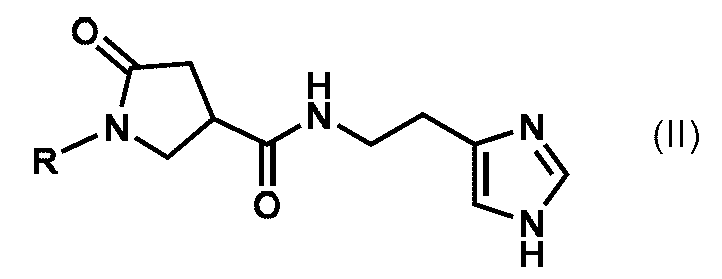
で示される化合物もしくはその塩又はそれらの溶媒和物を含有する抗うつ・抗不安薬。 - 前記式(II)において、Rがハロゲン原子で置換されたインダゾリル基である請求項4記載の抗うつ・抗不安薬。
- 前記式(II)において、Rが塩素原子で置換されたインダゾリル基である請求項4記載の抗うつ・抗不安薬。
- 不安障害、ストレス性障害及び/又はうつ病を治療及び/又は予防するための請求項4~6のいずれか1項に記載の抗うつ・抗不安薬。
- 経口投与される請求項4~7のいずれか1項に記載の抗うつ・抗不安薬。
Priority Applications (3)
| Application Number | Priority Date | Filing Date | Title |
|---|---|---|---|
| EP21799745.1A EP4147701A4 (en) | 2020-05-08 | 2021-05-07 | Antidepressant/anxiolytic drug in which pac1 receptor antagonist is used |
| US17/997,974 US12458643B2 (en) | 2020-05-08 | 2021-05-07 | Antidepressant/anxiolytic drug in which PAC1 receptor antagonist is used |
| JP2021556246A JP7049637B1 (ja) | 2020-05-08 | 2021-05-07 | Pac1受容体拮抗薬を用いた抗うつ・抗不安薬 |
Applications Claiming Priority (2)
| Application Number | Priority Date | Filing Date | Title |
|---|---|---|---|
| JP2020-082465 | 2020-05-08 | ||
| JP2020082465 | 2020-05-08 |
Publications (1)
| Publication Number | Publication Date |
|---|---|
| WO2021225161A1 true WO2021225161A1 (ja) | 2021-11-11 |
Family
ID=78467990
Family Applications (1)
| Application Number | Title | Priority Date | Filing Date |
|---|---|---|---|
| PCT/JP2021/017501 Ceased WO2021225161A1 (ja) | 2020-05-08 | 2021-05-07 | Pac1受容体拮抗薬を用いた抗うつ・抗不安薬 |
Country Status (4)
| Country | Link |
|---|---|
| US (1) | US12458643B2 (ja) |
| EP (1) | EP4147701A4 (ja) |
| JP (1) | JP7049637B1 (ja) |
| WO (1) | WO2021225161A1 (ja) |
Citations (9)
| Publication number | Priority date | Publication date | Assignee | Title |
|---|---|---|---|---|
| JP2006510596A (ja) | 2002-09-20 | 2006-03-30 | エフ.ホフマン−ラ ロシュ アーゲー | Maob阻害剤としてのピロリドン誘導体 |
| WO2008018472A1 (fr) * | 2006-08-08 | 2008-02-14 | Kyoto University | Nouvel anticorps monoclonal et son utilisation |
| WO2008136756A1 (en) | 2007-05-08 | 2008-11-13 | Astrazeneca Ab | Pyrrolopyrimidin-7-one derivatives and their use as pharmaceuticals |
| JP2012529476A (ja) | 2009-06-11 | 2012-11-22 | カトリーク ユニベェルシテ ルーヴァン, ケー.ユー.ルーヴァン アールアンドディー | 神経変性疾患治療における使用のためのインドールアミン誘導体および関連化合物 |
| US20150210682A1 (en) | 2014-01-30 | 2015-07-30 | Hoffmann-La Roche Inc. | Novel dihydroquinolizinones for the treatment and prophylaxis of hepatitis B virus infection |
| WO2019065794A1 (ja) | 2017-09-27 | 2019-04-04 | 国立大学法人鹿児島大学 | Pac1受容体拮抗薬を用いた鎮痛薬 |
| JP2019513398A (ja) | 2016-04-15 | 2019-05-30 | アルダー バイオファーマシューティカルズ、インコーポレイテッド | ヒト化抗pacap抗体及びそれらの使用 |
| JP2020082465A (ja) | 2018-11-22 | 2020-06-04 | セイコーエプソン株式会社 | 三次元造形装置および三次元造形装置の制御方法 |
| WO2020175134A1 (ja) * | 2019-02-27 | 2020-09-03 | 国立大学法人鹿児島大学 | Pac1受容体拮抗薬を用いた鎮痒薬 |
-
2021
- 2021-05-07 EP EP21799745.1A patent/EP4147701A4/en active Pending
- 2021-05-07 JP JP2021556246A patent/JP7049637B1/ja active Active
- 2021-05-07 WO PCT/JP2021/017501 patent/WO2021225161A1/ja not_active Ceased
- 2021-05-07 US US17/997,974 patent/US12458643B2/en active Active
Patent Citations (10)
| Publication number | Priority date | Publication date | Assignee | Title |
|---|---|---|---|---|
| JP2006510596A (ja) | 2002-09-20 | 2006-03-30 | エフ.ホフマン−ラ ロシュ アーゲー | Maob阻害剤としてのピロリドン誘導体 |
| WO2008018472A1 (fr) * | 2006-08-08 | 2008-02-14 | Kyoto University | Nouvel anticorps monoclonal et son utilisation |
| WO2008136756A1 (en) | 2007-05-08 | 2008-11-13 | Astrazeneca Ab | Pyrrolopyrimidin-7-one derivatives and their use as pharmaceuticals |
| JP2010526138A (ja) | 2007-05-08 | 2010-07-29 | アストラゼネカ・アクチエボラーグ | ピロロピリミジン−7−オン誘導体とその薬剤としての使用 |
| JP2012529476A (ja) | 2009-06-11 | 2012-11-22 | カトリーク ユニベェルシテ ルーヴァン, ケー.ユー.ルーヴァン アールアンドディー | 神経変性疾患治療における使用のためのインドールアミン誘導体および関連化合物 |
| US20150210682A1 (en) | 2014-01-30 | 2015-07-30 | Hoffmann-La Roche Inc. | Novel dihydroquinolizinones for the treatment and prophylaxis of hepatitis B virus infection |
| JP2019513398A (ja) | 2016-04-15 | 2019-05-30 | アルダー バイオファーマシューティカルズ、インコーポレイテッド | ヒト化抗pacap抗体及びそれらの使用 |
| WO2019065794A1 (ja) | 2017-09-27 | 2019-04-04 | 国立大学法人鹿児島大学 | Pac1受容体拮抗薬を用いた鎮痛薬 |
| JP2020082465A (ja) | 2018-11-22 | 2020-06-04 | セイコーエプソン株式会社 | 三次元造形装置および三次元造形装置の制御方法 |
| WO2020175134A1 (ja) * | 2019-02-27 | 2020-09-03 | 国立大学法人鹿児島大学 | Pac1受容体拮抗薬を用いた鎮痒薬 |
Non-Patent Citations (12)
| Title |
|---|
| "Commercially available", AURORA BUILDING BLOCKS, vol. A21, no. 884, pages 126 |
| MABUCHI ET AL., J NEUROSCI, vol. 24, 2004, pages 7283 - 7291 |
| MCDONALD, B. ET AL., ORG. LETT, vol. 17, 2015, pages 98 - 101 |
| MESTICHELLI, P. ET AL., ORG. LETT, vol. 15, 2013, pages 5448 - 5451 |
| MUSKINJA, J. ET AL., MED. CHEM. RES, vol. 25, 2016, pages 1744 - 1753 |
| ROMAN, C. W. ET AL.: "PAC1 receptor antagonism in the bed nucleus of the stria terminal is (BNST) attenuates the endocrine and behavioral consequences of chronic stress", PSYCHONEUROENDOCRINOLOGY, vol. 47, 2014, pages 151 - 165, XP028862081, DOI: 10.1016/j.psyneuen.2014.05.014 * |
| SACZEWSKI, F. ET AL., BIOORG. MED. CHEM, vol. 19, 2011, pages 321 - 329 |
| See also references of EP4147701A4 |
| SHI, D. Q. ET AL., J. HETEROCYCLIC CHEM, vol. 46, 2009, pages 1331 - 1334 |
| TU, S. ET AL., BIOORG. MED. CHEM. LETT, vol. 16, 2006, pages 3578 - 3581 |
| WANG, B. ET AL., EUR. J. ORG. CHEM, vol. 22, 2009, pages 3688 - 3692 |
| YOKAI ET AL., MOL. PAIN, vol. 12, 2016, pages 1 - 13 |
Also Published As
| Publication number | Publication date |
|---|---|
| EP4147701A1 (en) | 2023-03-15 |
| EP4147701A4 (en) | 2024-06-12 |
| US12458643B2 (en) | 2025-11-04 |
| JP7049637B1 (ja) | 2022-04-07 |
| US20230181587A1 (en) | 2023-06-15 |
| JPWO2021225161A1 (ja) | 2021-11-11 |
Similar Documents
| Publication | Publication Date | Title |
|---|---|---|
| KR20240055035A (ko) | 6-아미노피라졸로피리미딘 화합물 및 그 의약 용도 | |
| CN103781753B (zh) | 用于治疗ape1介导的疾病的醌化合物 | |
| JP4315300B2 (ja) | 新規なキナゾリン誘導体 | |
| KR102588426B1 (ko) | 치환 디히드로피롤로피라졸 유도체 | |
| US7902359B2 (en) | Decahydronaphthalene compounds | |
| US20250114361A1 (en) | Pyrazolopyrimidine compound and pharmaceutical use thereof | |
| JP6910424B2 (ja) | 掻痒症および/または痒みの治療方法 | |
| JP7729000B2 (ja) | 6-アルコキシピラゾロピリミジン化合物及びその医薬用途 | |
| JP7049637B1 (ja) | Pac1受容体拮抗薬を用いた抗うつ・抗不安薬 | |
| JP2002518333A (ja) | 転写因子NF−κBの阻害剤 | |
| JP2025108626A (ja) | Pac1受容体拮抗薬を用いた鎮痒薬 | |
| JP7169592B2 (ja) | Pac1受容体拮抗薬を用いた鎮痛薬 | |
| JP6195100B2 (ja) | プロテインキナーゼgに対する高阻害活性を有する化合物及びその製造方法 | |
| JP2016540756A (ja) | 筋障害及び疼痛の治療並びに痙直(spasticity)及び振戦の制御に有用なベンズアミド誘導体 | |
| KR102855784B1 (ko) | 세포보호효과를 지니는 신규 N-Phenyl cinnamic amide 유도체의 약학적 조성물 및 제조방법 | |
| US20050113405A1 (en) | Methods of treating rheumatoid arthritis using NF-kB inhibitors | |
| US20030064978A1 (en) | Novel compounds | |
| CN117881682A (zh) | 6-氨基吡唑并嘧啶化合物及其医药用途 | |
| KR20250071888A (ko) | 신규한 카나비디올 유도체, 이의 제조방법 및 이를 포함하는 뇌전증 치료용 약학 조성물 |
Legal Events
| Date | Code | Title | Description |
|---|---|---|---|
| ENP | Entry into the national phase |
Ref document number: 2021556246 Country of ref document: JP Kind code of ref document: A |
|
| 121 | Ep: the epo has been informed by wipo that ep was designated in this application |
Ref document number: 21799745 Country of ref document: EP Kind code of ref document: A1 |
|
| ENP | Entry into the national phase |
Ref document number: 2021799745 Country of ref document: EP Effective date: 20221208 |
|
| NENP | Non-entry into the national phase |
Ref country code: DE |
|
| WWG | Wipo information: grant in national office |
Ref document number: 17997974 Country of ref document: US |