WO2021226663A1 - Compositions and methods for treating disorders associated with loss-of-function mutations in syngap1 - Google Patents
Compositions and methods for treating disorders associated with loss-of-function mutations in syngap1 Download PDFInfo
- Publication number
- WO2021226663A1 WO2021226663A1 PCT/AU2021/050436 AU2021050436W WO2021226663A1 WO 2021226663 A1 WO2021226663 A1 WO 2021226663A1 AU 2021050436 W AU2021050436 W AU 2021050436W WO 2021226663 A1 WO2021226663 A1 WO 2021226663A1
- Authority
- WO
- WIPO (PCT)
- Prior art keywords
- intron
- antisense oligonucleotide
- sequence
- mrna
- syngap1
- Prior art date
- Legal status (The legal status is an assumption and is not a legal conclusion. Google has not performed a legal analysis and makes no representation as to the accuracy of the status listed.)
- Ceased
Links
Classifications
-
- C—CHEMISTRY; METALLURGY
- C12—BIOCHEMISTRY; BEER; SPIRITS; WINE; VINEGAR; MICROBIOLOGY; ENZYMOLOGY; MUTATION OR GENETIC ENGINEERING
- C12N—MICROORGANISMS OR ENZYMES; COMPOSITIONS THEREOF; PROPAGATING, PRESERVING, OR MAINTAINING MICROORGANISMS; MUTATION OR GENETIC ENGINEERING; CULTURE MEDIA
- C12N15/00—Mutation or genetic engineering; DNA or RNA concerning genetic engineering, vectors, e.g. plasmids, or their isolation, preparation or purification; Use of hosts therefor
- C12N15/09—Recombinant DNA-technology
- C12N15/11—DNA or RNA fragments; Modified forms thereof; Non-coding nucleic acids having a biological activity
- C12N15/113—Non-coding nucleic acids modulating the expression of genes, e.g. antisense oligonucleotides; Antisense DNA or RNA; Triplex- forming oligonucleotides; Catalytic nucleic acids, e.g. ribozymes; Nucleic acids used in co-suppression or gene silencing
-
- A—HUMAN NECESSITIES
- A61—MEDICAL OR VETERINARY SCIENCE; HYGIENE
- A61K—PREPARATIONS FOR MEDICAL, DENTAL OR TOILETRY PURPOSES
- A61K31/00—Medicinal preparations containing organic active ingredients
- A61K31/70—Carbohydrates; Sugars; Derivatives thereof
- A61K31/7088—Compounds having three or more nucleosides or nucleotides
-
- A—HUMAN NECESSITIES
- A61—MEDICAL OR VETERINARY SCIENCE; HYGIENE
- A61P—SPECIFIC THERAPEUTIC ACTIVITY OF CHEMICAL COMPOUNDS OR MEDICINAL PREPARATIONS
- A61P25/00—Drugs for disorders of the nervous system
- A61P25/28—Drugs for disorders of the nervous system for treating neurodegenerative disorders of the central nervous system, e.g. nootropic agents, cognition enhancers, drugs for treating Alzheimer's disease or other forms of dementia
-
- C—CHEMISTRY; METALLURGY
- C07—ORGANIC CHEMISTRY
- C07K—PEPTIDES
- C07K14/00—Peptides having more than 20 amino acids; Gastrins; Somatostatins; Melanotropins; Derivatives thereof
- C07K14/435—Peptides having more than 20 amino acids; Gastrins; Somatostatins; Melanotropins; Derivatives thereof from animals; from humans
- C07K14/46—Peptides having more than 20 amino acids; Gastrins; Somatostatins; Melanotropins; Derivatives thereof from animals; from humans from vertebrates
- C07K14/47—Peptides having more than 20 amino acids; Gastrins; Somatostatins; Melanotropins; Derivatives thereof from animals; from humans from vertebrates from mammals
- C07K14/4701—Peptides having more than 20 amino acids; Gastrins; Somatostatins; Melanotropins; Derivatives thereof from animals; from humans from vertebrates from mammals not used
- C07K14/4702—Regulators; Modulating activity
- C07K14/4705—Regulators; Modulating activity stimulating, promoting or activating activity
- C07K14/4706—Guanosine triphosphatase activating protein, GAP
-
- C—CHEMISTRY; METALLURGY
- C12—BIOCHEMISTRY; BEER; SPIRITS; WINE; VINEGAR; MICROBIOLOGY; ENZYMOLOGY; MUTATION OR GENETIC ENGINEERING
- C12N—MICROORGANISMS OR ENZYMES; COMPOSITIONS THEREOF; PROPAGATING, PRESERVING, OR MAINTAINING MICROORGANISMS; MUTATION OR GENETIC ENGINEERING; CULTURE MEDIA
- C12N15/00—Mutation or genetic engineering; DNA or RNA concerning genetic engineering, vectors, e.g. plasmids, or their isolation, preparation or purification; Use of hosts therefor
- C12N15/09—Recombinant DNA-technology
- C12N15/11—DNA or RNA fragments; Modified forms thereof; Non-coding nucleic acids having a biological activity
- C12N15/111—General methods applicable to biologically active non-coding nucleic acids
-
- C—CHEMISTRY; METALLURGY
- C12—BIOCHEMISTRY; BEER; SPIRITS; WINE; VINEGAR; MICROBIOLOGY; ENZYMOLOGY; MUTATION OR GENETIC ENGINEERING
- C12N—MICROORGANISMS OR ENZYMES; COMPOSITIONS THEREOF; PROPAGATING, PRESERVING, OR MAINTAINING MICROORGANISMS; MUTATION OR GENETIC ENGINEERING; CULTURE MEDIA
- C12N9/00—Enzymes; Proenzymes; Compositions thereof; Processes for preparing, activating, inhibiting, separating or purifying enzymes
- C12N9/14—Hydrolases (3)
-
- C—CHEMISTRY; METALLURGY
- C12—BIOCHEMISTRY; BEER; SPIRITS; WINE; VINEGAR; MICROBIOLOGY; ENZYMOLOGY; MUTATION OR GENETIC ENGINEERING
- C12N—MICROORGANISMS OR ENZYMES; COMPOSITIONS THEREOF; PROPAGATING, PRESERVING, OR MAINTAINING MICROORGANISMS; MUTATION OR GENETIC ENGINEERING; CULTURE MEDIA
- C12N2310/00—Structure or type of the nucleic acid
- C12N2310/10—Type of nucleic acid
- C12N2310/11—Antisense
-
- C—CHEMISTRY; METALLURGY
- C12—BIOCHEMISTRY; BEER; SPIRITS; WINE; VINEGAR; MICROBIOLOGY; ENZYMOLOGY; MUTATION OR GENETIC ENGINEERING
- C12N—MICROORGANISMS OR ENZYMES; COMPOSITIONS THEREOF; PROPAGATING, PRESERVING, OR MAINTAINING MICROORGANISMS; MUTATION OR GENETIC ENGINEERING; CULTURE MEDIA
- C12N2310/00—Structure or type of the nucleic acid
- C12N2310/30—Chemical structure
- C12N2310/31—Chemical structure of the backbone
- C12N2310/315—Phosphorothioates
-
- C—CHEMISTRY; METALLURGY
- C12—BIOCHEMISTRY; BEER; SPIRITS; WINE; VINEGAR; MICROBIOLOGY; ENZYMOLOGY; MUTATION OR GENETIC ENGINEERING
- C12N—MICROORGANISMS OR ENZYMES; COMPOSITIONS THEREOF; PROPAGATING, PRESERVING, OR MAINTAINING MICROORGANISMS; MUTATION OR GENETIC ENGINEERING; CULTURE MEDIA
- C12N2310/00—Structure or type of the nucleic acid
- C12N2310/30—Chemical structure
- C12N2310/32—Chemical structure of the sugar
-
- C—CHEMISTRY; METALLURGY
- C12—BIOCHEMISTRY; BEER; SPIRITS; WINE; VINEGAR; MICROBIOLOGY; ENZYMOLOGY; MUTATION OR GENETIC ENGINEERING
- C12N—MICROORGANISMS OR ENZYMES; COMPOSITIONS THEREOF; PROPAGATING, PRESERVING, OR MAINTAINING MICROORGANISMS; MUTATION OR GENETIC ENGINEERING; CULTURE MEDIA
- C12N2310/00—Structure or type of the nucleic acid
- C12N2310/30—Chemical structure
- C12N2310/32—Chemical structure of the sugar
- C12N2310/321—2'-O-R Modification
-
- C—CHEMISTRY; METALLURGY
- C12—BIOCHEMISTRY; BEER; SPIRITS; WINE; VINEGAR; MICROBIOLOGY; ENZYMOLOGY; MUTATION OR GENETIC ENGINEERING
- C12N—MICROORGANISMS OR ENZYMES; COMPOSITIONS THEREOF; PROPAGATING, PRESERVING, OR MAINTAINING MICROORGANISMS; MUTATION OR GENETIC ENGINEERING; CULTURE MEDIA
- C12N2310/00—Structure or type of the nucleic acid
- C12N2310/30—Chemical structure
- C12N2310/32—Chemical structure of the sugar
- C12N2310/322—2'-R Modification
-
- C—CHEMISTRY; METALLURGY
- C12—BIOCHEMISTRY; BEER; SPIRITS; WINE; VINEGAR; MICROBIOLOGY; ENZYMOLOGY; MUTATION OR GENETIC ENGINEERING
- C12N—MICROORGANISMS OR ENZYMES; COMPOSITIONS THEREOF; PROPAGATING, PRESERVING, OR MAINTAINING MICROORGANISMS; MUTATION OR GENETIC ENGINEERING; CULTURE MEDIA
- C12N2310/00—Structure or type of the nucleic acid
- C12N2310/30—Chemical structure
- C12N2310/35—Nature of the modification
- C12N2310/352—Nature of the modification linked to the nucleic acid via a carbon atom
- C12N2310/3525—MOE, methoxyethoxy
-
- C—CHEMISTRY; METALLURGY
- C12—BIOCHEMISTRY; BEER; SPIRITS; WINE; VINEGAR; MICROBIOLOGY; ENZYMOLOGY; MUTATION OR GENETIC ENGINEERING
- C12N—MICROORGANISMS OR ENZYMES; COMPOSITIONS THEREOF; PROPAGATING, PRESERVING, OR MAINTAINING MICROORGANISMS; MUTATION OR GENETIC ENGINEERING; CULTURE MEDIA
- C12N2320/00—Applications; Uses
- C12N2320/30—Special therapeutic applications
- C12N2320/33—Alteration of splicing
-
- C—CHEMISTRY; METALLURGY
- C12—BIOCHEMISTRY; BEER; SPIRITS; WINE; VINEGAR; MICROBIOLOGY; ENZYMOLOGY; MUTATION OR GENETIC ENGINEERING
- C12Y—ENZYMES
- C12Y306/00—Hydrolases acting on acid anhydrides (3.6)
- C12Y306/05—Hydrolases acting on acid anhydrides (3.6) acting on GTP; involved in cellular and subcellular movement (3.6.5)
- C12Y306/05002—Small monomeric GTPase (3.6.5.2)
Definitions
- the disclosure relates to antisense oligonucleotides specific for SYNGAP1 and their use for treating a disorder associated with heterozygous loss-of-function mutations of SYNGAP1.
- the SynGAP1 protein also referred to as SynGAP, Synaptic Ras GTPase-activating protein 1, Ras/Rap GTPase-activating protein SynGAP, Neuronal RasGAP, or Synaptic Ras-GAP 1
- SYNGAP1 is encoded by SYNGAP1 on chromosome 6 at 6p21.32 (HGNC:11497; NCBI gene:8831; NCBI Reference Sequence: NG_016137.2).
- SynGAP1 is a major component protein of the post synaptic dense matrix and is involved in the N-methyl-D-aspartate receptor (NMDAR)-mediated signal transduction (Rumbaugh et al, 2006, Proc. Natl. Acad. Sci. USA. 103, 4344-4351). It is primarily expressed in the brain (mostly forebrain structures such as the cortex, hippocampus and olfactory bulb).
- NMDAR N-methyl-D-aspartate receptor
- the SynGAP1 primary transcript is alternatively spliced at several sites to generate at least four C-terminal isoforms: SynGAP- ⁇ 1, SynGAP1- ⁇ 2, SynGAP1- ⁇ , and SynGAP1- ⁇ .
- SynGAP1- ⁇ 1 and SynGAP1- ⁇ 2 isoforms skip exon 19 and are produced by selective splicing of exon 20, such that SynGAP1- ⁇ 1 contains a PDZ ligand (-QTRV) and SynGAP1- ⁇ 2 lacks this domain.
- the SynGAP1- ⁇ isoform includes a frameshifting extension of exon 18 leading to early termination, while the SynGAP1- ⁇ isoform includes exon 19, which contains a short coding sequence followed by a STOP codon.
- These isoforms appear to have varying functions and may play different roles during development (Araki et al.2020. bioRxiv 2020.01.28.922013).
- A-C N-terminal isoforms
- A-C N-terminal isoforms
- heterozygous mutations in SYNGAP1 and the resulting haploinsufficiency leads to neurodevelopmental defects that include altered dendritic spine and neuronal circuit formation.
- the variety of symptoms resulting from heterozygous loss-of- function mutations in SYNGAP1 can be classified as a single disorder: mental retardation, autosomal dominant 5 (MRD5). Onset of MRD5 is in the first year of life and the clinical features may be found in different combinations. Most, but not all, patients suffer from epileptic seizures (e.g. myoclonic seizures, reflex seizures, and drop attacks).
- SYNGAP1 loss-of-function mutations exhibit some form of intellectual disability or developmental delay (generally moderate to severe, although mild in some cases), around half are also diagnosed with autism spectrum disorder.
- the vast majority of heterozygous loss- of-function mutations in SYNGAP1 are de novo mutations.
- the only therapies currently available to patients with MRD5 or any other disorder associated with a heterozygous loss-of-function mutation in SYNGAP1 are those that treat a symptom of the disorder, such as agents to treat epileptic seizures or interventions (e.g. speech therapy, physiotherapy, occupational therapy, etc.) to treat the behavioural or developmental symptoms of ASD, intellectual disability or developmental delay. Consequently, there remains a need for agents, compositions and methods for the treatment of MRD5 or any other disorder associated with a heterozygous loss-of-function mutation in SYNGAP1.
- Intron retention is a form of gene regulation that serves to direct intron-harbouring transcripts to nonsense-mediated decay, thereby reducing gene expression (Kurosaki & Maquat, 2016, J Cell Sci. 129 (3): 461-467). Intron-retaining transcripts have also been shown to serve as a reservoir of RNAs that undergo splicing and translation whenever their expression is required (Jacob & Smith, 2017, Hum Genet.
- Intron retention has been demonstrated to occur in a pool of polyadenylated transcripts that are retained in the nucleus. Following neuronal stimulation, they undergo intron excision and are transported to the cytoplasm for further processing, thereby aiding in faster gene regulation.
- a retained intron in SynGAP1 mRNA or pre-RNA can be targeted with antisense oligonucleotides so as to enhance splicing at the splice site of the retained intron, resulting in an increase in the amount of fully-spliced SynGAP1 mRNA.
- the antisense oligonucleotides provided herein are useful for increasing the amount of SynGAP1 produced by a cell.
- the antisense oligonucleotides provided herein are therefore also useful as therapeutic agents for the treatment of diseases or disorders associated with heterozygous loss-of-function mutations in SYNGAP1, such as autosomal mental retardation type 5 (or SYNGAP1-related intellectual disability) wherein increasing the levels of SynGAP1 protein can provide a therapeutic effect.
- targeting intron 8 and/or intron 9 with antisense oligonucleotides can increase the amount of fully-spliced SynGAP1 mRNA (as demonstrated herein), more so than targeting other introns, and thus may be particularly useful for treating disorders associated with a heterozygous loss-of-function mutation in SYNAGP1.
- a method for increasing levels of SynGAP1 protein in a cell comprising contacting the cell with an antisense oligonucleotide that enhances splicing at a splice site of a retained intron in an intron-retaining SynGAP1 mRNA or pre-mRNA, wherein the retained intron is selected from among intron 5, 8, 9, 12, 13 and 14 and wherein the antisense oligonucleotide comprises a sequence of nucleobases that is complementary to a target region in the SynGAP1 mRNA or pre-mRNA.
- a method for increasing levels of SynGAP1 protein in a subject comprising administering to the subject an antisense oligonucleotide that enhances splicing at a splice site of a retained intron in an intron-retaining SynGAP1 mRNA or pre-mRNA, wherein the retained intron is selected from among intron 5, 8, 9, 12, 13 and 14 and wherein the antisense oligonucleotide comprises a sequence of nucleobases that is complementary to a target region in the SynGAP1 mRNA or pre-mRNA.
- the subject has a heterozygous loss-of-function mutation in SYNAGP1.
- the subject has a disorder associated with a heterozygous loss- of-function mutation in SYNAGP1, such as mental retardation, autosomal dominant 5 (MRD5), autism or intellectual disability.
- a method for treating a disorder associated with a heterozygous loss-of-function mutation in SYNAGP1, comprising administering to the subject an antisense oligonucleotide that enhances splicing at a splice site of a retained intron in an intron-retaining SynGAP1 mRNA or pre-mRNA, wherein the retained intron is selected from among intron 5, 8, 9, 12, 13 and 14, and wherein the antisense oligonucleotide comprises a sequence of nucleobases that is complementary to a target region in the SynGAP1 mRNA or pre-mRNA.
- the disorder is mental retardation, autosomal dominant 5 (MRD5), autism or intellectual disability.
- the antisense oligonucleotide binds to, or adjacent to, an intron splicing silencer (ISS); binds to nucleotides within a G-quadruplex; or binds to nucleotides with an RNA secondary structure.
- the ISS may be recognised by a heterogeneous nuclear ribonucleoprotein (hnRNP), such as hnRNPA1 or hnRNP I.
- hnRNP heterogeneous nuclear ribonucleoprotein
- the retained intron is intron 8 and the ISS is at positions +17-22, +23-28, +17-28, or +57-62 relative to the 5' splice site of intron 8.
- the retained intron is intron 8 and the target region spans positions +4-35, +5-35, +6-35, +7-35, +8-35, +9-35, +10-35, +11-35, +12-35, +13- 35, +4-34, +5-34, +6-34, +7-34, +8-34, +9-34, +10-34, +11-34, +12-34, +13-34, +4-33, +5-33, +6-33, +7-33, +8-33, +9-33, +10-33, +11-33, +12-33, +13-33, +4-32, +5-32, +6- 32, +7-32, +8-32, +9-32, +10-32
- the retained intron is intron 8 and the target region spans positions +45-70, +46-70, +47-70, +48-70, +49-70, +50-70, +51-70, +52-70, +53-70, +45- 69, +46-69, +47-69, +48-69, +49-69, +50-69, +51-69, +52-69, +53-69, +45-68, +46-68, +47-68, +48-68, +49-68, +50-68, +51-68, +52-68, +53-68, +45-67, +46-67, +47-67, +48- 67, +49-67, +50-67, +51-67, +52-67, +53-67, +45-66, +46-66, +47-66, +48-66, +49-66, +50-67, +51-67, +52-67, +53-67, +45-66, +46-66, +47
- the antisense oligonucleotide comprises a sequence having at least or about 70%, 80%, or 90% sequence identity to a sequence set forth in any one of SEQ ID NOs:83-143, or a sequence having at least 8, 9, 10, 11, 12, 13, 14 or 15 contiguous nucleotides from a sequence set forth in any one of SEQ ID NOs:83-143.
- the antisense oligonucleotide comprises the sequence set forth in any one of SEQ ID NOs:91- 93, or a sequence comprising at least 8, 9, 10, 11, 12, 13, 14 or 15 contiguous nucleotides from a sequence set forth in any one of SEQ ID NOs:91-93.
- the retained intron is intron 9 and the ISS is at positions +21- 29, +104-108 or +190-195 relative to the 5' splice site of intron 8.
- the retained intron is intron 9 and the target region spans +10-40, +11-40, +12-40, +13-40, +14-40, +15-40, +16-40, +17-40, +18-40, +10-39, +11- 39, +12-39, +13-39, +14-39, +15-39, +16-39, +17-39, +18-39, +10-38, +11-38, +12-38, +13-38, +14-38, +15-38, +16-38, +17-38, +18-38, +10-37, +11-37, +12-37, +13-37, +14- 37, +15-37, +16-37, +17-37, +18-37, +10-36, +11-36, +12-36,
- the antisense oligonucleotide comprises a sequence having at least or about 70%, 80%, or 90% sequence identity to a sequence set forth in any one of SEQ ID NOs:144-167, or a sequence having at least 8, 9, 10, 11, 12, 13, 14 or 15 contiguous nucleotides from a sequence set forth in any one of SEQ ID NOs:144-167.
- the retained intron is intron 9 and the target region spans positions +87-120, +88-120, +89-120, +90-120, +91-120, +92-120, +93-120, +94-120, +95- 120, +96-120, +97-120, +98-120, +87-119, +88-119, +89-119, +90-119, +91-119, +92-119, +93-119, +94-119, +95-119, +96-119, +97-119, +98-119, +87-118, +88-118, +89-118, +90-118, +91-118, +92-118, +93-118, +94-118, +95-118, +96-118, +97-118, +98-118, +87-117, +88-117, +89-117, +90-117, +91-117, +92-117, +93-117, +94-117, +95-117, +96-118, +97-118, +98-118
- the antisense oligonucleotide comprises a sequence having at least or about 70%, 80%, or 90% sequence identity to a sequence set forth in any one of SEQ ID NOs: 168-189, or a sequence having at least 8, 9, 10, 11, 12, 13, 14 or 15 contiguous nucleotides from a sequence set forth in any one of SEQ ID NOs: 168-189.
- the retained intron is intron 9 and the target region spans positions +175-205, +176-205, +177-205, +178-205, +179-205, +180-205, +181-205, +182- 205, +183-205, +184-205, +185-205, +175-204, +176-204, +177-204, +178-204, +179-204, +180-204, +181-204, +182-204, +183-204, +184-204, +185-204, +175-203, +176-203, +177-203, +178-203, +179-203, +180-203, +181-203, +182-203, +183-203, +184-203, +185-203, +175-202, +176-202, +177-202, +178-202, +179-202, +180-202, +181-202, +182-202, +183-202, +184-202, +185-202, +175-202, +176-202
- the antisense oligonucleotide may consist of, for example, from 8 to 50, 8 to 40, 8 to 35, 8 to 30, 8 to 25, 8 to 20, 8 to 15, 9 to 50, 9 to 40, 9 to 35, 9 to 30, 9 to 25, 9 to 20, 9 to 15, 10 to 50, 10 to 40, 10 to 35, 10 to 30, 10 to 25, 10 to 20, 10 to 15, 11 to 50, 11 to 40, 11 to 35, 11 to 30, 11 to 25, 11 to 20, 11 to 15, 12 to 50, 12 to 40, 12 to 35, 12 to 30, 12 to 25, 12 to 20, or 12 to 15 nucleobases.
- the antisense oligonucleotide is at least 70%, 80%, 85%, 86%, 87%, 88%, 89%, 90%, 91%, 92%, 93%, 94%, 95%, 96%, 97%, 98%, or 99% complementary to the target region.
- the antisense oligonucleotide comprises least 8, 9, 10, 11, 12, 13, 14, 15, 16, 17, 18, 19 or 20 contiguous nucleobases that are 100% complementary to the target region.
- the antisense oligonucleotide utilised in the methods of the present disclosure may comprise at least one modification, e.g.
- the antisense oligonucleotide comprises a modified sugar selected from among a 2′-O-methyl (2OMe), 2′-O- methoxy-ethyl (MOE), locked nucleic acids (LNA), 2′-fluoro or S-constrained-ethyl (cEt).
- the antisense oligonucleotide comprises backbone that comprises phosphorothioates.
- the antisense oligonucleotide activates RNase H.
- the subject may first be determined to have a heterozygous loss-of- function mutation in SYNAGP1.
- the subject has been genotyped to identify a heterozygous loss-of-function mutation in SYNAGP1.
- the antisense oligonucleotide may be administered to the subject by parenteral administration (e.g. subcutaneous administration, intravenous administration, intramuscular administration, intraarterial administration, intraperitoneal administration, or intracranial administration) or intranasal administration (e.g. intrathecal or intracerebroventricular administration).
- the antisense oligonucleotide or composition is administered to the subject about every 1, 2, 3, 4, 5, 6, 7, 8, 9, 10, 11, 12 or more months.
- an antisense oligonucleotide comprising a sequence of nucleobases that is complementary to a target region in an intron-retaining SynGAP1 mRNA or pre-mRNA, wherein the target region is in a retained intron and wherein the retained intron is selected from among intron 5, 8, 9, 12, 13 or 14.
- the antisense oligonucleotide binds to, or adjacent to, an intron splicing silencer (ISS); binds to nucleotides within a G-quadruplex; or binds to nucleotides with an RNA secondary structure.
- the ISS is recognised by a heterogeneous nuclear ribonucleoproteins (hnRNP), e.g. hnRNPA1 or hnRNP I.
- hnRNP heterogeneous nuclear ribonucleoproteins
- the retained intron in which the target region is present is intron 8 and the ISS is at positions +17-22, +23-28, +17-28, or +57-62 relative to the 5' splice site of intron 8.
- the retained intron is intron 8 and the target region spans positions +4-35, +5-35, +6-35, +7-35, +8-35, +9-35, +10-35, +11-35, +12-35, +13- 35, +4-34, +5-34, +6-34, +7-34, +8-34, +9-34, +10-34, +11-34, +12-34, +13-34, +4-33, +5-33, +6-33, +7-33, +8-33, +9-33, +10-33, +11-33, +12-33, +13-33, +4-32, +5-32, +6- 32, +7-32, +8-32, +9-32, +10-32, +11-32, +12-32, +13-32, +4-31, +5-31, +6-31, +7-31, +8-31, +9-31, +10-31, +11-31, +12-31
- the retained intron is intron 8 and the target region spans positions +45-70, +46-70, +47-70, +48-70, +49-70, +50-70, +51-70, +52-70, +53-70, +45- 69, +46-69, +47-69, +48-69, +49-69, +50-69, +51-69, +52-69, +53-69, +45-68, +46-68, +47-68, +48-68, +49-68, +50-68, +51-68, +52-68, +53-68, +45-67, +46-67, +47-67, +48- 67, +49-67, +50-67, +51-67, +52-67, +53-67, +45-66, +46-66, +47-66, +48-66, +49-66, +50-67, +51-67, +52-67, +53-67, +45-66, +46-66, +47
- the antisense oligonucleotide comprises a sequence having at least or about 70%, 80%, or 90% sequence identity to a sequence set forth in any one of SEQ ID NOs:83-143, or a sequence having at least 8, 9, 10, 11, 12, 13, 14 or 15 contiguous nucleotides from a sequence set forth in any one of SEQ ID NOs:83-143.
- the antisense oligonucleotide comprises the sequence set forth in any one of SEQ ID NOs:91- 93, or a sequence comprising at least 8, 9, 10, 11, 12, 13, 14 or 15 contiguous nucleotides from a sequence set forth in any one of SEQ ID NOs:91-93.
- the retained intron is intron 8 and the target region spans positions +45-70, +46-70, +47-70, +48-70, +49-70, +50-70, +51-70, +52-70, +53-70, +45- 69, +46-69, +47-69, +48-69, +49-69, +50-69, +51-69, +52-69, +53-69, +45-68, +46-68, +47-68, +48-68, +49-68, +50-68, +51-68, +52-68, +53-68, +45-67, +46-67, +47-67, +48- 67, +49-67, +50-67, +51-67, +52-67, +53-67, +45-66, +46-66, +47-66, +48-66, +49-66, +50-67, +51-67, +52-67, +53-67, +45-66, +46-66, +47
- the retained intron is intron 9 and the ISS is at positions +21- 29, +104-108 or +190-195 relative to the 5' splice site of intron 8.
- the retained intron is intron 9 and the target region spans +10-40, +11-40, +12-40, +13-40, +14-40, +15-40, +16-40, +17-40, +18-40, +10-39, +11- 39, +12-39, +13-39, +14-39, +15-39, +16-39, +17-39, +18-39, +10-38, +11-38, +12-38, +13-38, +14-38, +15-38, +16-38, +17-38, +18-38, +10-37, +11-37, +12-37, +13-37, +14- 37, +15-37, +16-37, +17-37, +18-37, +10-36, +11-36, +12-36,
- the antisense oligonucleotide comprises a sequence having at least or about 70%, 80%, or 90% sequence identity to a sequence set forth in any one of SEQ ID NOs:144-167, or a sequence having at least 8, 9, 10, 11, 12, 13, 14 or 15 contiguous nucleotides from a sequence set forth in any one of SEQ ID NOs:144-167.
- the retained intron is intron 9 and the target region spans positions +90-120, +91-120, +92-120, +93-120, +94-120, +95-120, +96-120, +97-120, +98- 120, +90-119, +91-119, +92-119, +93-119, +94-119, +95-119, +96-119, +97-119, +98-119, +90-118, +91-118, +92-118, +93-118, +94-118, +95-118, +96-118, +97-118, +98-118, +90-117, +91-117, +92-117, +93-117, +94-117, +95-117, +96-117, +97-117, +98-117, +90-116, +91-116, +92-116, +93-116, +94-116, +95-116, +96-116, +97-116, +98-116, +90-115, +91
- the antisense oligonucleotide comprises a sequence having at least or about 70%, 80%, or 90% sequence identity to a sequence set forth in any one of SEQ ID NOs: 168-189, or a sequence having at least 8, 9, 10, 11, 12, 13, 14 or 15 contiguous nucleotides from a sequence set forth in any one of SEQ ID NOs: 168-189.
- the retained intron is intron 9 and the target region spans positions +175-205, +176-205, +177-205, +178-205, +179-205, +180-205, +181-205, +182- 205, +183-205, +184-205, +185-205, +175-204, +176-204, +177-204, +178-204, +179-204, +180-204, +181-204, +182-204, +183-204, +184-204, +185-204, +175-203, +176-203, +177-203, +178-203, +179-203, +180-203, +181-203, +182-203, +183-203, +184-203, +185-203, +175-202, +176-202, +177-202, +178-202, +179-202, +180-202, +181-202, +182-202, +183-202, +184-202, +185-202, +175-202, +176-202
- the antisense oligonucleotide may consist of, for example, from 8 to 50, 8 to 40, 8 to 35, 8 to 30, 8 to 25, 8 to 20, 8 to 15, 9 to 50, 9 to 40, 9 to 35, 9 to 30, 9 to 25, 9 to 20, 9 to 15, 10 to 50, 10 to 40, 10 to 35, 10 to 30, 10 to 25, 10 to 20, 10 to 15, 11 to 50, 11 to 40, 11 to 35, 11 to 30, 11 to 25, 11 to 20, 11 to 15, 12 to 50, 12 to 40, 12 to 35, 12 to 30, 12 to 25, 12 to 20, or 12 to 15 nucleobases.
- the antisense oligonucleotide is at least 70%, 80%, 85%, 86%, 87%, 88%, 89%, 90%, 91%, 92%, 93%, 94%, 95%, 96%, 97%, 98%, or 99% complementary to the target region.
- the antisense oligonucleotide comprises least 8, 9, 10, 11, 12, 13, 14, 15, 16, 17, 18, 19 or 20 contiguous nucleobases that are 100% complementary to the target region.
- the antisense oligonucleotide may comprise at least one modification, e.g. a nucleobase modification, a modification of the oligonucleotide backbone or a modification of a ribose sugar.
- the antisense oligonucleotide comprises a modified sugar selected from among a 2′-O-methyl (2OMe), 2′-O-methoxy-ethyl (MOE), locked nucleic acids (LNA), 2′- fluoro or S-constrained-ethyl (cEt).
- the antisense oligonucleotide comprises backbone that comprises phosphorothioates.
- the antisense oligonucleotide activates RNase H.
- compositions comprising an antisense oligonucleotide of the present disclosure, such as pharmaceutical compositions.
- an antisense oligonucleotide for the treatment of a disorder associated with a heterozygous loss-of-function mutation in SYNAGP1, wherein the antisense oligonucleotide enhances splicing at a splice site of a retained intron in an intron-retaining SynGAP1 mRNA or pre-mRNA, wherein the retained intron is selected from among intron 5, 8, 9, 12, 13 and 14 and wherein the antisense oligonucleotide comprises a sequence of nucleobases that is complementary to a target region in the SynGAP1 mRNA or pre- mRNA.
- Figure 1 is a schematic representation of intron retention in SYNGAP1, as analysed from information obtained from IRBase.
- the top panel shows a genomic map of the Syngap1 gene from UCSC browser. Thin lines represent the introns and the thick lines/blocks correspond to the exons.
- the bottom panel shows intron-retention events corresponding to introns in the genomic map. The height of the bars is indicative of the number of recorded events.
- Figure 2 is a schematic showing the design of primers for each exon-intron pair across the SynGAP1 sequence. A.
- Primers that are specific for intron-retaining transcripts The forward primer was designed from the sequence of the preceding exon and the reverse primer from the sequence of the intron downstream to the exon.
- Primers specific to spliced transcripts One of the primers was designed such that it spanned the junction of two nearby exons, while the other was designed from the sequence of the preceding or the succeeding exon accordingly.
- Figure 3 shows relative expression of introns in whole brain SynGAP1 mRNA obtained from two commercial sources. The expression of individual introns across the entire transcript was compared with the averaged exon expression. The results are a representation of three experiments, with the standard error of the mean indicated.
- Figure 4 shows relative expression of introns in SynGAP1 mRNA from cell lines. The expression of individual introns across the entire transcript was compared with the averaged exon expression. The results are a representation of three experiments, with the standard error of the mean indicated.
- A mRNA from SH-SY5Y cells.
- B mRNA from SK-N-AS cells.
- C mRNA from ARPE19 cells.
- Figure 5 is a schematic of the secondary structure prediction of a sequence of an intron of Syngap1.
- Figure 6 is a graphical representation of modulation of SynGAP1 transcript expression in the presence of antisense oligonucleotides.
- FIG. 7 is a photographic representation of PCR products following amplification of RNA prepared from antisense oligonucleotide-treated cells.
- Figure 8 is a graphical representation of the effect of varying of the antisense oligonucleotides (ASOs; SYN-INT8+10, SYN-INT8+11) on Syngap1 expression. Following 24 hours incubation of ASOs, the expression of Syngap1 was analysed by qPCR. Mock transfected cells were used as a negative control. The housekeeping gene GUSB was used for normalization.
- Figure 9 is a graphical representation of the effect of varying treatment time periods of the ASOs (SYN-INT8+10, SYN-INT8+11) on Syngap1 expression. Following 24-96 hours ASO incubation, the expression of Syngap1 was analysed by qPCR. Mock transfected cells were used as a negative control. The housekeeping gene GUSB was used for normalization. The bars in the graph represent, from left to right for each ASO, 24 hr, 48 hr, 72 hr and 96 hr treatment using each ASO.
- Figure 10 is a graphical representation of modulation of SynGAP1 transcript expression in the presence of antisense oligonucleotides. Effect of antisense oligonucleotides targeting SynGAP1 intron 9 on its expression. The antisense oligonucleotides were transfected into ARPE19 cells at a concentration of 200nM. Following 24 hours incubation, the expression of Syngap1 was analysed by qPCR. Mock transfected cells were used as a negative control. The housekeeping gene GUSB was used for normalization. The number of biological replicates ranges from 3 to 9. The sequence targeted by the antisense oligonucleotides that induce upregulation is given below the x-axis.
- Figure 11 is a photographic and graphical representation of PCR products following amplification of RNA prepared from cells treated with the ASO SYN-INT8+11 or SYN-INT9+89.
- A Semi-quantitative PCR of cDNA prepared from ASO-treated ARPE19 cells. The primers used bound within the flanking exons (E8-E9) of intron 8 and (E9-E10) intron 9. The PCR products were separated on an agarose gel. The samples were ran as biological duplicates.
- B Graphical representation of the quantification by Image J of 3 semi-quantitative PCR experiments assessing intron 8 transcripts following treatment with ASO SYN-INT8+11.
- C Graphical representation of the quantification by Image J of 3 semi-quantitative PCR experiments assessing intron 8 transcripts following treatment with ASO SYN-INT8+11.
- an "antisense oligonucleotide” refers to a single-stranded oligonucleotide having a sequence that permits hybridization to a corresponding region or segment of a target nucleic acid.
- Reference to an antisense oligonucleotide includes reference to both unmodified and modified antisense oligonucleotides, wherein a modified antisense oligonucleotide contains at least one modified nucleoside and/or modified internucleoside linkage.
- Complementary refers to the capacity for precise pairing between two nucleobases, such as between a nucleobase in an antisense oligonucleotide and a nucleobase in a SynGAP1 mRNA or pre-mRNA.
- the antisense oligonucleotide and the mRNA or pre-mRNA are complementary to each other when a sufficient number of corresponding positions in each molecule are occupied by nucleobases which can hydrogen bond with each other.
- “complementary” is used to indicate a sufficient degree of precise pairing over a sufficient number of nucleotides such that stable and specific binding occurs between the antisense oligonucleotide and the mRNA or pre-mRNA. It is understood that the antisense oligonucleotide need not be 100% complementary to the target region in the SYNGAP1 mRNA or pre-mRNA to hybridize thereto. Moreover, an oligonucleotide may be complementary to, and hybridize, over one or more segments such that intervening or adjacent segments are not involved in the hybridization event. "Complementary” as used herein therefore includes reference to less than 100% complementary, such at least or about 70%, 75%, 80%, 85%, 90% or 95% sequence complementarity.
- a “disorder associated with a loss-of-function mutation in SYNGAP1” refers to a disorder that is associated with, is partially or completely caused by, or has one or more symptoms that are partially or completely caused by, a mutation in SYNGAP1that results in a loss-of-function phenotype, i.e. an decrease in the level (or amount) or activity of SynGAP1.
- expression of SynGAP1 refers to the transcription of mRNA from SYNGAP1 or the translation of protein from the SynGAP1 mRNA.
- SynGAP1 expression can be assessed using any method known in the art, including, but not limited to, Northern blot, Western blot and qRT-PCR.
- a "loss-of-function mutation” is a mutation in SYNGAP1 that results in a decrease in expression and/or activity of the encoded SynGAP1 protein. Expression of the encoded SynGAP1 protein can be assessed using standard assays, such as Western blot. Typically, a loss-of-function mutation results in a decrease of at least or about 20%, 30%, 40%, 50%, 60%, 70%, 80%, 90%, 95% or more of the expression and/or activity of the encoded SynGAP1 protein.
- the loss-of-function mutation results in a complete (i.e. 100%) loss of expression or activity of the encoded SynGAP1 protein, such as when the mutation is a mutation (e.g. nonsense mutation, large deletion or frameshift mutation) that results in the formation of a truncated transcript that is either not translated or is translated to a non- functional protein.
- a "heterozygous loss-of-function mutation" in SYNGAP1 is one that is present in only one copy of SYNGAP1 in the cell (i.e. one allele is a wild-type allele) and can lead to haploinsufficiency.
- a "gapmer” as referred to herein is a chimeric antisense oligonucleotide in which an internal region having a plurality of nucleotides that support RNase H cleavage is positioned between external regions having one or more nucleotides, wherein the nucleotides comprising the internal region are chemically distinct from the nucleoside or nucleotides comprising the external regions.
- hybridization or “binding” or grammatical variations thereof means the pairing of substantially complementary strands of nucleic acids, such as between an antisense oligonucleotide of the disclosure and a SynGAP1 mRNA or pre-mRNA.
- One mechanism of pairing involves hydrogen bonding, which may be Watson-Crick, Hoogsteen or reversed Hoogsteen hydrogen bonding, between complementary nucleobases of the strands of nucleic acids.
- hydrogen bonding may be Watson-Crick, Hoogsteen or reversed Hoogsteen hydrogen bonding, between complementary nucleobases of the strands of nucleic acids.
- adenine and thymine or uracil are complementary nucleotides which pair through the formation of hydrogen bonds.
- Hybridization can occur under varying circumstances.
- references to “hybridizes” or “binds” as used herein means that the antisense oligonucleotide hybridizes or binds to a target region in SynGAP1 mRNA or pre-mRNA by virtue of the complementarity in sequence between the antisense oligonucleotide and the target region, and does not significantly bind to a non-target region.
- the terms “linked” and “attached” are used interchangeably and relate to any type of interaction that join two entities, such as an antisense oligonucleotide and a moiety (e.g.
- exon refers to a portion of a gene that is present in the mature form of mRNA. Exons include the ORF (open reading frame), i.e., the sequence which encodes protein, as well as the 5' and 3' UTRs (untranslated regions). The UTRs are important for translation of the protein. Algorithms and computer programs are available for predicting exons in DNA sequences (e.g. Grail, Grail 2 and Genscan and US 20040219522 for determining an exon-intron junctions).
- the term "intron” refers to a portion of a gene that is not translated into a wild- type protein and while present in genomic DNA and pre-mRNA, it is generally removed in the formation of mature mRNA by splicing.
- the term "messenger RNA” or “mRNA” refers to RNA that is transcribed from genomic DNA and that carries the coding sequence for protein synthesis.
- pre-mRNA refers to an immature single strand of messenger ribonucleic acid (mRNA) that contains one or more introns and that is directly transcribed from the DNA; for the purposes of the present disclosure, it is considered pre-mRNA until the poly(A) is added and 5’ and 3’ modifications take place.
- Pre-mRNA is transcribed by an RNA polymerase from a DNA template in the cell nucleus and is comprised of alternating sequences of introns and exons.
- pre-mRNA is processed into mRNA, which includes removal of the introns, i.e., "splicing", and modifications to the 5' and 3' end (e.g., polyadenylation).
- mRNA typically comprises from 5' to 3'; a 5'cap (modified guanine nucleotide), 5' UTR (untranslated region), the coding sequence (beginning with a start codon and ending with a stop codon), the 3' UTR, and the poly(A) tail.
- Eukaryotic pre-mRNAs exist only transiently before being processed into mRNA.
- polyadenylated transcripts in the nucleus of a cell can have one or more retained introns even after initial splicing of the primary transcript and addition of the poly(A) tail.
- these transcripts are considered mRNA with retained introns.
- a pre-mRNA has been properly processed to an mRNA, it is exported out of the nucleus and translated into a protein by ribosomes in the cytoplasm.
- the term "fully- spliced mRNA" as used herein means that the mRNA does not contain any introns, or does not contain the intron being targeted by the antisense oligonucleotides and methods according to the present disclosure.
- nucleobase means a heterocyclic moiety capable of pairing with a base of another nucleic acid, and includes, for example, adenine (A), guanine (G), cytosine (C), thymine (T) and uracil (U).
- A adenine
- G guanine
- C cytosine
- T thymine
- U uracil
- a "nucleoside” as used herein refers to a nucleobase linked to a sugar. Reference herein to a nucleoside also includes reference to a modified nucleoside, which has a modified sugar moiety or modified nucleobase.
- a “nucleoside mimetic” includes those structures used to replace the sugar or the sugar and the base and not necessarily the linkage at one or more positions of an oligomeric compound such as for example nucleoside mimetics having morpholino, cyclohexenyl, cyclohexyl, tetrahydropyranyl, bicyclo or tricyclo sugar mimetics e.g. non furanose sugar units.
- nucleotide refers to a nucleoside having a phosphate group covalently linked to the sugar portion of the nucleoside.
- Reference herein to a nucleotide also includes reference to a modified nucleotide, which has a modified sugar moiety, modified internucleoside linkage, or modified nucleobase.
- splicing refers to the modification of a pre-mRNA following transcription, in which introns are removed and exons are joined.
- Pre-mRNA splicing involves two sequential biochemical reactions. Both reactions involve the spliceosomal transesterification between RNA nucleotides. In a first reaction, the 2'-OH of a specific branch-point nucleotide within an intron, which is defined during spliceosome assembly, performs a nucleophilic attack on the first nucleotide of the intron at the 5' splice site forming a lariat intermediate.
- sequence identity or “% identical” or grammatical variations means that in a comparison of two sequences over a specified region the two sequences have the specified number or percentage of identical residues in the same position. Sequences can be aligned by any method known to those of skill in the art. Such methods typically maximize matches, and include methods such as using manual alignments and by using the numerous alignment programs available.
- splice site refers to the junction between an exon and an intron in a pre- mRNA molecule (also known as a "splice junction").
- the "splice site sequence” is the sequence surround the splice site that is capable of being recognised by the splicing machinery of the cell.
- a 5' splice site (also referred to as a splice donor site) is the splice site at the 5' end of the intron that marks the start of the intron and its boundary with the preceding exon sequence.
- a 3' splice site (also referred to as a splice acceptor site) is the splice site at the 3' end of the intron that marks the end of the intron and its boundary with the following exon sequence. Numbering used herein in reference to a 5' splice site of an intron is therefore also in reference to the first nucleotide of the intron. Thus, for example, reference to position +1 relative to the 5' splice site of an intron is reference to the first nucleotide in the intron sequence, e.g. reference to position +1 relative to the 5' splice site of intron 8 is reference to nucleotide position 1 of the intron 8 sequence, e.g.
- references to positions +18-27 relative to the 5' splice site of an intron is reference to the 18 th through to the 27 th nucleotide position of the intron sequence, e.g. position 18 through to position 27 of the intron 8 set forth in SEQ ID NO:6.
- the terms “treating” or “treatment” refer to any and all uses which remedy a condition or symptoms, prevent the establishment of a condition or disease, or otherwise prevent, hinder, retard, or reverse the progression of a condition or disease or other undesirable symptoms in any way whatsoever. Thus the terms “treating” and the like are to be considered in their broadest context.
- treatment does not necessarily imply that a patient is treated until total recovery.
- the treatment or prevention need not necessarily remedy, prevent, hinder, retard, or reverse all of said symptoms, but may prevent, hinder, retard, or reverse one or more of said symptoms.
- symptoms that may be ameliorated, reversed, prevented, retarded or the linked include but are not limited to seizures and spasms.
- subject refers to an animal, in particular a mammal and more particularly a primate including a lower primate and even more particularly, a human who can benefit from the protocol of the present invention.
- Antisense oligonucleotides for SYNGAP1 [0073] As demonstrated herein, introns 5, 8, 9, 12, 13, 14 and 18 are retained in mature SynGAP1 mRNA in brain tissue. Introns 8 and 9 in particular have relatively high retention rates. As demonstrated herein, a retained intron in SynGAP1 mRNA or pre-RNA can be targeted with antisense oligonucleotides so as to enhance splicing at the splice site of the retained intron, resulting in an increase in the amount of fully-spliced SynGAP1 mRNA (i.e.
- SynGAP1 mRNA that does not contain any intron.
- Such antisense oligonucleotides are therefore useful for increasing the amount of SynGAP1 produced by a cell, and thus useful as therapeutic agents for the treatment of disorders associated with heterozygous loss-of-function mutations in SYNGAP1, such as autosomal mental retardation type 5 (or SYNGAP1-related intellectual disability), where increasing the levels of SynGAP1 protein can provide a therapeutic effect.
- SYNGAP1 autosomal mental retardation type 5
- SYNGAP1-related intellectual disability where increasing the levels of SynGAP1 protein can provide a therapeutic effect.
- antisense oligonucleotides that enhance splicing at a splice site of a retained intron in an intron-retaining SynGAP1 mRNA or pre-mRNA, such as intron 5, 8, 9, 12, 13 or 14.
- the antisense oligonucleotides enhance splicing at a splice site of intron 8 or intron 9 in an intron-retaining SynGAP1 mRNA or pre- mRNA.
- the antisense oligonucleotide can function to enhance splicing in one of many ways.
- the antisense oligonucleotide binds to, or adjacent to, an intronic splicing silencer (ISS) (also referred to as an ISS site or ISS motif).
- ISS intronic splicing silencer
- ISS are cis-acting elements (i.e. sequences) in the RNA that play a role in silencing or inhibiting splicing at a splice site.
- RNA ⁇ binding protein that acts as a silencing repressor.
- RBPs RNA ⁇ binding protein
- exemplary RBPs that act as repressors include heterogeneous nuclear ribonucleoproteins (hnRNPs), such as hnRNP A1, A2/B1, C1/C2, E1/E2/E3/E4, F, G, H, I, K, L, M, P, Q1/Q2/Q3 and U (for review, see e.g. and hnRNP A2.
- hnRNPs The motifs recognised and bound by hnRNPs are not necessarily strict consensus sequences in the classical sense, but can be repeat elements (such as in the case of hnRNP L1, which recognises a CA repeat-rich element) or short and degenerate sequences. Moreover, hnRNPs may recognize specific structures rather than linear sequence motifs, such as in the case of hnRNP F (for review, see e.g. Geunes et al., 2016, Hum Genet. 135:851-867; Dvinge, 2018, FEBS Letters, 592:2987-3006). Notwithstanding this, algorithms are available to predict hnRNP binding motifs in RNA molecules (see e.g.
- Binding of an antisense oligonucleotide to, or adjacent to, an ISS can prevent or inhibit binding of the RBP suppressor (e.g. an hnRNP, such as hnRNP A1), thereby enhancing splicing at a splice site of a retained intron, such as intron 5, 8, 9, 12, 13 or 14.
- the antisense oligonucleotide binds to a site in SynGAP1 mRNA or pre-mRNA that has a propensity to form an RNA secondary structure (e.g.
- the antisense oligonucleotide binds to a sequence involved in the formation of G-quadruplexes, which can stabilise the G-quadruplexe and enhance splicing (see e.g. Rouleau et al., 2015, Nucleic Acids Res. 43(1): 595–606; Ribeiro et al. 2015, Hum Genet. 134(1):37-44).
- the antisense oligonucleotide of the present disclosure binds to nucleotides (or a target region) within the targeted intron, i.e. the intron for which enhanced splicing is to be effected, e.g. intron 5, 8, 9, 12, 13 or 14.
- the antisense oligonucleotide of the present disclosure binds to nucleotides (or a target region) in an adjacent exon, while still enhancing splicing at a splice site of the targeted intron.
- any reference to T is understood to be a reference to U.
- the antisense oligonucleotide binds to a target region within intron 8 in the intron-retaining SynGAP1 mRNA or pre-mRNA.
- an antisense oligonucleotide of the present disclosure has a sequence of nucleobases that is complementary to a sequence of nucleotides within intron 8 of SynGAP1 pre-mRNA, such as within the intron 8 set forth as follows: [0078]
- the antisense oligonucleotide binds to (i.e. comprises a sequence that is complementary to) a target region in intron 8 in an intron-retaining SynGAP1 mRNA or pre-mRNA, wherein the target region spans positions +4-100, +4-80, +4-65, +4-30, or +50-70 relative to the 5' splice site of intron 8.
- the antisense oligonucleotide binds to, or adjacent to, an ISS in intron 8.
- putative ISS recognised by hnRNPA1 are at positions +17-22 and +23-28 (i.e. spanning +17-28), and +57- 62 relative to the 5' splice site of intron 8 (bolded in the representation of SEQ ID NO:6, above).
- the antisense oligonucleotide binds to, or adjacent to, nucleotides at positions +17-22, +23-28, +17-28, and/or +57-62 relative to the 5' splice site of intron 8.
- the antisense oligonucleotide may bind to one or more of the nucleotides at position +4, +5, +6, +7, +8, +9, +10, +11, +12, +13, +14, +15, +16, +17, +18, +19, +20, +21, +22, +23, +24, +25, +26, +27, +28, +29, +30, +31, +32, +33 or +34 relative to the 5' splice site of intron 8, or may bind to one or more of the nucleotides at position +50, +51, +52, +53, +54, +55, +56, +57, +58, +59, +60, +61, +62, +63, +64 or +65 relative to the 5' splice site of intron 8.
- the antisense oligonucleotide binds to a target region that spans or is within positions +4-35, +5-35, +6-35, +7-35, +8-35, +9-35, +10-35, +11-35, +12-35, +13-35, +4-34, +5-34, +6-34, +7-34, +8-34, +9-34, +10-34, +11-34, +12-34, +13-34, +4- 33, +5-33, +6-33, +7-33, +8-33, +9-33, +10-33, +11-33, +12-33, +13-33, +4-32, +5-32, +6-32, +7-32, +8-32, +9-32, +10-32, +11-32, +12-32, +13-32, +4-31, +5-31, +6-31, +7- 31, +8-31, +9-31, +10-31,
- the antisense oligonucleotide binds to a target region that spans or is within positions +45-70, +46-70, +47-70, +48-70, +49-70, +50-70, +51-70, +52- 70, +53-70, +45-69, +46-69, +47-69, +48-69, +49-69, +50-69, +51-69, +52-69, +53-69, +45-68, +46-68, +47-68, +48-68, +49-68, +50-68, +51-68, +52-68, +53-68, +45-67, +46- 67, +47-67, +48-67, +49-67, +50-67, +51-67, +51-67, +51-67, +51-67, + +51-67, +
- the antisense oligonucleotide has a sequence that is complementary to at least one of the aforementioned regions.
- the antisense oligonucleotide binds to a target region that spans or is within positions +70-100, +70-99, +70-81, +70-80, +70-79, +71-81, +72-81, +73- 81, +83-99, +83-98, +83-97, +84-99, +85-99, +86-99, +87-99, +84-97, +85-97, +86-97, or +87-97, relative to the 5' splice site of intron 8, (e.g.
- the antisense oligonucleotide has a sequence that is complementary to at least one of the aforementioned regions.
- the antisense oligonucleotide binds to, and thus comprises a sequence that is complementary to, positions +4-21, +5-22, +6-23, +7-24, +8-25, +9-26, +10-27, +11-28, +12-29, +13-30, +14-31, +15-32, +16-33, +17-34, +18-35, +19-36, +20- 37, +21-38, +22-39, +23-40, +24-41, +25-42, +26-43, +27-44, +28-45, +29-46, +30-47, +31-48, +32-49, +33-50, +34-51, +35-52, +36-53, +37-54, +38-55, +39-56, +
- the antisense oligonucleotide comprises a sequence having at least or about 70%, 80%, or 90% sequence identity to a sequence set forth in any one of SEQ ID NOs:83-143 (e.g., comprises 1, 2, 3, 4 or 5 nucleotide changes (e.g. substitutions, insertions or deletions) compared to the sequence set forth in any one of SEQ ID NOs:83-143), or a sequence having at least 8, 9, 10, 11, 12, 13, 14 or 15 contiguous nucleotides from a sequence set forth in any one of SEQ ID NOs:83-143.
- the sequence has at least or about 70%, 80%, or 90% sequence identity to a sequence set forth in any one of SEQ ID NOs:86-96, or a sequence having at least 8, 9, 10, 11, 12, 13, 14 or 15 contiguous nucleotides.
- the antisense oligonucleotide comprises the sequence set forth in any one of SEQ ID NOs:91-93, or a sequence comprising at least 8, 9, 10, 11, 12, 13, 14 or 15 contiguous nucleotides from a sequence set forth in any one of SEQ ID NOs:91-93.
- the antisense oligonucleotide binds to nucleotides within intron 9 in the intron-retaining SynGAP1 mRNA or pre-mRNA. Accordingly, in some examples, an antisense oligonucleotide of the present disclosure has a sequence of nucleobases that is complementary to a sequence of nucleotides within intron 9 of SynGAP1 pre-mRNA, such as within the intron 9 set forth as follows: [0084] In some examples, the antisense oligonucleotide binds to (i.e.
- the antisense oligonucleotide binds to, or adjacent to, an ISS in intron 9.
- a putative ISS recognised by hnRNPA1 is at positions +104-108 relative to the 5' splice site of intron 9 (bolded in SEQ ID NO:7, above), and putative ISS recognised by hnRNP I (PTB) are at positions +21-29 (multiple putative overlapping sites at +21-26, +22-26, +22-28, +24-29 and +25-29) and +190-195 relative to the 5’ splice site of intron 9 (underlined in SEQ ID NO:7, above).
- the antisense oligonucleotide binds to, or adjacent to, nucleotides at positions +21-29, +104-108, or +190-195 relative to the 5' splice site of intron 9.
- the antisense oligonucleotide may bind to one or more of the nucleotides at position +10, +11, +12, +13, +14, +15, +16, +17, +18, +19, +20, +21, +22, +23, +24, +25, +26, +27, +28, +29, +30, +31, +32, +33, +34, +35 or +36 relative to the 5' splice site of intron 9, or may bind to one or more of the nucleotides at position +90, +91, +92, +93, +94, +95, +96, +97, +98, +99, +100, +101, +102, +103, +104, +105, +106, +107, +108, +109, +110, +111, +112, +113, +114, +115, +116, +117, +118, +119 or +120 relative to the 5' splice site of intron 9, or may bind to one
- the antisense oligonucleotide binds to a target region in the intron- retaining SynGAP1 mRNA or pre-mRNA that spans or is within positions +10-41, +11-41, +12- 41, +13-41, +14-41, +15-41, +16-41, +17-41, +18-41, +10-40, +11-40, +12-40, +13-40, +14-40, +15-40, +16-40, +17-40, +18-40, +10-39, +11-39, +12-39, +13-39, +14-39, +15- 39, +16-39, +17-39, +18-39, +10-38, +11-38, +12-38, +13-38, +14-38, +15-38, +16-38, +17-38, +18-38, +10-37, +11-37, +12-37, +13-37, +14-37, +15-37, +16-37
- the antisense oligonucleotide has a sequence that is complementary to an aforementioned region.
- the antisense oligonucleotide comprises a sequence having at least or about 70%, 80%, or 90% sequence identity to a sequence set forth in any one of SEQ ID NOs:144-167 (e.g., comprises 1, 2, 3, 4 or 5 nucleotide changes (e.g.
- sequence has at least or about 70%, 80%, or 90% sequence identity to a sequence set forth in any one of SEQ ID NOs:152-155 (e.g., comprises 1, 2, 3, 4 or 5 nucleotide changes (e.g.
- the antisense oligonucleotide binds to a target region in the intron-retaining SynGAP1 mRNA or pre-mRNA that spans or is within positions +87-120, +88- 120, +89-120, +90-120, +91-120, +92-120, +93-120, +94-120, +95-120, +96-120, +97-120, +98-120, +87-119, +88-119, +89-119, +90-119, +91-119, +92-119, +93-119, +94-119, +95-119, +96-119, +97-119, +98-119, +87-118, +88-118, +89-118, +90-118, +91-118, +92-119, +93-119, +94-119, +95-119, +96-119, +97-119, +98-119, +87-118, +88-118, +89-118, +90-118, +91-118, +91-118
- the antisense oligonucleotide has a sequence that is complementary to an aforementioned region.
- the antisense oligonucleotide comprises a sequence having at least or about 70%, 80%, or 90% sequence identity to a sequence set forth in any one of SEQ ID NOs:168-189 (e.g., comprises 1, 2, 3, 4 or 5 nucleotide changes (e.g.
- sequence has at least or about 70%, 80%, or 90% sequence identity to a sequence set forth in any one of SEQ ID NOs:170-172 (e.g., comprises 1, 2, 3, 4 or 5 nucleotide changes (e.g.
- sequence has at least or about 70%, 80%, or 90% sequence identity to a sequence set forth in any one of SEQ ID NOs:179-181 and 183 (e.g., comprises 1, 2, 3, 4 or 5 nucleotide changes (e.g.
- substitutions, insertions or deletions compared to the sequence set forth in any one of SEQ ID NOs: 179-181 and 183), or a sequence having at least 8, 9, 10, 11, 12, 13, 14 or 15 contiguous nucleotides from a sequence set forth in any one of SEQ ID NOs: 177-179 and 181.
- the antisense oligonucleotide binds to a target region in the intron-retaining SynGAP1 mRNA or pre-mRNA that spans or is within positions +175-205, +176- 205, +177-205, +178-205, +179-205, +180-205, +181-205, +182-205, +183-205, +184-205, +185-205, +175-204, +176-204, +177-204, +178-204, +179-204, +180-204, +181-204, +182-204, +183-204, +184-204, +185-204, +175-203, +176-203, +177-203, +178-203, +179-203, +180-203, +181-203, +182-203, +183-203, +184-203, +185-203, +175-202, +176-202, +177-202, +178-202, +179-202, +180-203, +181-203,
- an antisense oligonucleotide of the present disclosure has a sequence of nucleobases that is complementary to a sequence of nucleotides within intron 5 of an intron-retaining SynGAP1 mRNA or pre-mRNA, such as within the intron 5 set forth as follows:
- the antisense oligonucleotide binds to nucleotides within intron 12 in the intron-retaining SynGAP1 mRNA or pre-mRNA.
- an antisense oligonucleotide of the present disclosure has a sequence of nucleobases that is complementary to a sequence of nucleotides within intron 12 of an intron-retaining SynGAP1 mRNA or pre-mRNA, such as within the intron 12 set forth as follows: [0090]
- the antisense oligonucleotide binds to nucleotides within intron 13 in the intron-retaining SynGAP1 mRNA or pre-mRNA.
- an antisense oligonucleotide of the present disclosure has a sequence of nucleobases that is complementary to a sequence of nucleotides within intron 13 of an intron-retaining SynGAP1 mRNA or pre-mRNA, such as within the intron 13 set forth as follows: [0091]
- the antisense oligonucleotide binds to nucleotides within intron 14 in the intron-retaining SynGAP1 mRNA or pre-mRNA.
- an antisense oligonucleotide of the present disclosure has a sequence of nucleobases that is complementary to a sequence of nucleotides within intron 14 of an intron-retaining SynGAP1 mRNA or pre-mRNA, such as within the intron 14 set forth as follows: [0092]
- the antisense oligonucleotides of the present disclosure can enhance splicing such that the amount or level of the fully-spliced SynGAP1 mRNA or the amount or level of SynGAP1 protein in the cell or population of cells that is contacted with theantisense oligonucleotide is increased by at least or about 20%, 30%, 40%, 50%, 60%, 70%, 80%, 90%, 100%, 110%, 120%, 130%, 140%, 150%, 200%, 250%, 300%, 350%, 400%, 450%, 500%, 600%, 700% or more compared to the amount or level of a fully-spliced SynGAP1 mRNA
- the amount or level of a fully- spliced SynGap1 mRNA or of a SynGAP1 protein in the cell or population of cells following exposure to an antisense oligonucleotide of the present disclosure is 1.2x, 1.3x, 1.4x, 1.5x, 1.6x, 1.7x, 1.8x, 1.9x, 2x, 2.1x, 2.2x, 2.3x, 2.4x, 2.5x, 3x, 3.5x, 4x, 4.5x, 5x, 6x, 7x or more compared to the amount or level of a fully-spliced SynGAP1 mRNA or of a SynGAP1 protein in a cell or population of cells that has not been exposed to an antisense oligonucleotide of the present disclosure.
- the fully-spliced SynGAP1 mRNA is that described as NCBI Reference Sequence: NM_006772.3 (SEQ ID NO:1), and/or the SynGAP1 protein is that described as NCBI Reference Sequence: NP_006763.3 (SEQ ID NO:3).
- the fully-spliced SynGAP1 mRNA is that described as NCBI Reference Sequence: NM_001130066.2 (SEQ ID NO:2), and/or the SynGAP1 protein is that described as NCBI Reference Sequence: NP_001123538.1 (SEQ ID NO:4).
- the antisense oligonucleotides of the present disclosure are typically 8 to 50, nucleobases in length, such as 8 to 50, 8 to 40, 8 to 35, 8 to 30, 8 to 25, 8 to 20, 8 to 15, 9 to 50, 9 to 40, 9 to 35, 9 to 30, 9 to 25, 9 to 20, 9 to 15, 10 to 50, 10 to 40, 10 to 35, 10 to 30, 10 to 25, 10 to 20, 10 to 15, 11 to 50, 11 to 40, 11 to 35, 11 to 30, 11 to 25, 11 to 20, 11 to 15, 12 to 50, 12 to 40, 12 to 35, 12 to 30, 12 to 25, 12 to 20, or 12 to 15 nucleobases in length.
- the antisense oligonucleotides are 8, 9, 10, 11, 12, 13, 14, 15, 16, 17, 18, 19, 20, 21, 22, 23, 24, 25, 26, 27, 28, 29, 30, 31, 32, 33, 34, 35, 36, 37, 38, 39, 40, 41, 42, 43, 44, 45, 46, 47, 48, 49, 50, 51, 52, 53, 54, 55, 56, 57, 58, 59, 60, 61, 62, 63, 64, 65, 66, 67, 68, 69, 70, 71, 72, 73, 74, 75, 76, 77, 78, 79, or 80 nucleobases in length.
- the antisense oligonucleotides may be 100% complementary across their entire length to a target region of an intron-retaining SynGAP1 mRNA or pre-mRNA or may be less than 100% complementary.
- the antisense oligonucleotides are at least 70%, 80%, 85%, 86%, 87%, 88%, 89%, 90%, 91%, 92%, 93%, 94%, 95%, 96%, 97%, 98%, or 99% complementary to a target region of an intron-retaining SynGAP1 mRNA or pre-mRNA, such as a region identified above in intron 5, 8, 9, 12, 13, or 14.
- the antisense oligonucleotides may contain, for example, at least 8, at least 9, at least 10, at least 11, at least 12, at least 13, at least 14, at least 15, at least 16, at least 17, at least 18, at least 19, or at least 20 contiguous nucleobases that are complementary to a target region in an intron-retaining SynGAP1 mRNA or pre-mRNA.
- the antisense oligonucleotides are not 100% complementary, the mismatched or non-complementary nucleobase(s) can be clustered or interspersed with complementary nucleobases and need not be contiguous to each other.
- the non- complementary nucleobase(s) may be located at the 5' end and/or 3' end of the antisense compound.
- non-complementary nucleobase(s) can be at an internal position of the antisense oligonucleotide.
- two or more non-complementary nucleobases are present, they can be either contiguous or non-contiguous.
- antisense oligonucleotides of the present disclosure are up to 10, 12, 13, 14, 15, 16, 17, 18, 19, 20, 21, 22, 23, 24, 25, 26, 27, 28, 29 or 30 nucleobases in length and comprise no more than 6, 5, 4, 3, 2, or 1 non-complementary nucleobase(s) relative to a target region in an intron-retaining SynGAP1 mRNA or pre-mRNA.
- the antisense oligonucleotides of the present disclosure can be produced using any method known in the art. Typically, the antisense oligonucleotides are produced using chemical synthesis methods. While the antisense oligonucleotides can be unmodified, more typically the antisense oligonucleotides of the present disclosure contain one or more modifications. These modifications can function to, for example, increase stability of the antisense oligonucleotide (e.g.
- the antisense oligonucleotides of the present disclosure contain one or more modified nucleobases. These can function to, for example, increase stability or binding affinity of the antisense oligonucleotide.
- modified nucleobases include, but are not limited to, N 6 -methyladenine, N 2 -methylguanine, hypoxanthine, 7-methylguanine, 5-methylcytosine, 5-hydroxymethylcytosine, pseudouracil, 4-thiouracil, 2,6-diaminopurine, orotic acid, agmatidine, lysidine, 2-thiopyrimidine (e.g. 2-thiouracil, 2-thiothymine), G-clamp and its derivatives, 5-substituted pyrimidine (e.g.
- 5-halouracil 5-propynyluracil, 5- propynylcytosine, 5-aminomethyluracil, 5-hydroxymethyluracil, 5-aminomethylcytosine, 5- hydroxymethylcytosine, Super T), 7-deazaguanine, 7-deazaadenine, 7-aza-2,6-diaminopurine, 8-aza-7-deazaguanine, 8-aza-7-deazaadenine, 8-aza-7-deaza-2,6-diaminopurine, Super G, Super A, and N 4 -ethylcytosine, or derivatives thereof; N 2 -cyclopentylguanine (cPent-G), N2- cyclopentyl-2-aminopurine (cPent-AP), and N 2 -propyl-2-aminopurine (Pr-AP), pseudouracil or derivatives thereof; and degenerate or universal bases, like 2,6-difluorotoluene or absent bases
- the antisense oligonucleotides contain one or more modified nucleobases that increase the binding affinity of the antisense oligonucleotide to the SynGAP1 mRNA or pre-mRNA, such as 5-methylcytosine (5-me-C), 5-substituted pyrimidines, 6- azapyrimidines and N-2, N-6 and 0-6 substituted purines, including 2 aminopropyladenine, 5- propynyluracil and 5-propynylcytosine.
- modified nucleobases that increase the binding affinity of the antisense oligonucleotide to the SynGAP1 mRNA or pre-mRNA, such as 5-methylcytosine (5-me-C), 5-substituted pyrimidines, 6- azapyrimidines and N-2, N-6 and 0-6 substituted purines, including 2 aminopropyladenine, 5- propynyluracil and 5-propynylcytosine.
- the antisense oligonucleotides of the present disclosure may comprise modified sugar moieties.
- Exemplary sugar moiety modifications include 2′-O-methyl (2OMe), 2′-O- methoxy-ethyl (MOE), locked nucleic acids (LNA), 2′-fluoro and S-constrained-ethyl (cEt) modifications.
- the backbones of the antisense oligonucleotides of the present disclosure comprise phosphorothioates, chiral phosphorothioates, phosphorodithioates, phosphotriesters, aminoalkylphosphotriesters, methyl or other alkyl phosphonates comprising 3'alkylene phosphonates or chiral phosphonates, phosphinates, phosphoramidates comprising 3'-amino phosphoramidate and aminoalkylphosphoramidates, thionophosphoramidates, thionoalkylphosphonates, thionoalkylphosphotriesters, or boranophosphates.
- the backbone has no phosphorus atom.
- exemplary oligonucleotide backbones that do not include a phosphorus atom include those that are formed by short chain alkyl or cycloalkyl internucleoside linkages, mixed heteroatom and alkyl or cycloalkyl internucleoside linkages, or one or more short chain heteroatomic or heterocyclic internucleoside linkages. These comprise those having morpholino linkages (formed in part from the sugar portion of a nucleoside; see e.g. U.S. Patent Nos.
- the antisense oligonucleotides of the present disclosure are a peptide nucleic acid (PNA).
- PNA peptide nucleic acid
- the sugar-backbone of an oligonucleotide is replaced with an amide containing backbone, in particular an aminoethylglycine backbone.
- the nucleobases are retained and are bound directly or indirectly to aza nitrogen atoms of the amide portion of the backbone (see e.g. US Patent Nos. 5,539,082; 5,714,331; and 5,719,262).
- the antisense oligonucleotides of the present invention are partially or completely resistant to RNase H.
- antisense oligonucleotides can include 2'-O-methyl derivatives, and/or phosphorothioate backbones, both of which are resistant to nuclease degradation.
- the antisense oligonucleotides do not activate RNase H, typically by virtue of the presence of one or more structural modifications that sterically hinders or prevent binding of RNase H to a duplex molecule containing the antisense oligonucleotide and the KCNT1 mRNA or pre-mRNA.
- such antisense oligonucleotides include those where at least one, or all, of the inter-nucleotide bridging phosphate residues are modified phosphates, such as methyl phosphonates, methyl phosphorothioates, phosphoromorpholidates, phosphoropiperazidates and phosphoramidates.
- modified phosphates such as methyl phosphonates, methyl phosphorothioates, phosphoromorpholidates, phosphoropiperazidates and phosphoramidates.
- every other one of the internucleotide bridging phosphate residues may be modified as described.
- such antisense molecules are molecules wherein at least one, or all, of the nucleotides contain a 2' lower alkyl moiety (e.g., C1-C4, linear or branched, saturated or unsaturated alkyl, such as methyl, ethyl, ethenyl, propyl, 1-propenyl, 2-propenyl, and isopropyl).
- a 2' lower alkyl moiety e.g., C1-C4, linear or branched, saturated or unsaturated alkyl, such as methyl, ethyl, ethenyl, propyl, 1-propenyl, 2-propenyl, and isopropyl.
- the antisense oligonucleotides of the present disclosure activate RNase H when they form a DNA-RNA duplex with the SynGAP1 mRNA or pre-mRNA.
- Exemplary of such antisense oligonucleotides are gapmers, which are chimeric molecules containing at least one region modified so as to confer increased resistance to nuclease degradation, increased cellular uptake, increased binding affinity for the target nucleic acid, and a second region that serves as a substrate for RNase H.
- Gapmers have an internal region having a plurality of nucleotides that support RNase H cleavage. This internal region is positioned between external regions having a plurality of nucleotides that are chemically distinct from the nucleosides of the internal region, and which serve to, for example, increase stability of the antisense oligonucleotide and protect it from nuclease degradation.
- the external regions of the gapmer contain ⁇ -D-ribonucleosides, ⁇ -D-deoxyribonucleosides, 2'-modified nucleosides (e.g. 2'-MOE, and 2'-O-CH 3 , among others), bridged nucleic acids (BNAs), or locked nucleic acids (LNAs).
- the antisense oligonucleotides of the present disclosure may also be linked to one or more one or more moieties that enhance the activity, cellular distribution or cellular uptake of the oligonucleotide.
- Such moieties include but are not limited to lipid moieties such as a cholesterol moiety, cholic acid, a thioether, e.g., hexyl-5-tritylthiol, a thiocholesterol, an aliphatic chain, e.g., dodecandiol or undecyl residues, a phospholipid, e.g., di-hexadecyl-rac- glycerol or triethylammonium 1,2-di-O-hexadecyl-rac-glycero-3-H-phosphonate, a polyamine or a polyethylene glycol chain, or adamantane acetic acid, a palmityl moiety, or an octadecylamine or hexylamino-carbonyl-oxycholesterol moiety, carbohydrates, phospholipids, biotin, phenazine, folate, phenanthridine, anth
- the antisense oligonucleotides are linked to a cell- penetrating peptide (CPP) that is effective to enhance transport of the compound into cells.
- CPP cell- penetrating peptide
- the transport moiety can be attached to either terminus of the antisense oligonucleotide, resulting in increased penetration of the antisense oligonucleotides into cells and macromolecular translocation within multiple tissues in vivo upon systemic administration.
- the cell-penetrating peptide is an arginine-rich peptide transporter.
- Antisense oligonucleotides linked with arginine-rich CPPs were able to cross the blood-brain barrier and were widely distributed throughout the brain of wild-type mice following systemic delivery (Du et al. Hum. Mol. Genet., 20 (2011), pp. 3151–3160).
- the cell-penetrating peptide may be Penetratin or the Tat peptide.
- These peptides are well known in the art and are disclosed, for example, in US Publication No. 20100016215.
- the transport moieties described above have been shown to greatly enhance cell entry of attached oligomers, relative to uptake of the oligomer in the absence of the attached transport moiety.
- antisense oligonucleotides linked with arginine-rich CPPs were able to cross the blood-brain barrier and were widely distributed throughout the brain of wild-type mice following systemic delivery (Du et al. Hum. Mol. Genet., 20 (2011), pp.3151–3160). Uptake may be enhanced at least ten-fold, or at least twenty-fold, relative to the unconjugated compound.
- the antisense oligonucleotide is coupled to a dopamine reuptake inhibitor (DRI), a selective serotonin reuptake inhibitor (SSRI), a noradrenaline reuptake inhibitor (NRI), a norepinephrine -dopamine reuptake inhibitor (NDRI), or a serotonin-norepinephrine-dopamine reuptake inhibitor (SNDRI), as described in, e.g. , US Patent No. 9193969.
- DRI dopamine reuptake inhibitor
- SSRI selective serotonin reuptake inhibitor
- NRI noradrenaline reuptake inhibitor
- NDRI norepinephrine -dopamine reuptake inhibitor
- SNDRI serotonin-norepinephrine-dopamine reuptake inhibitor
- the antisense oligonucleotides are conjugated to peptides collectively known as "angiopeps" which are capable of crossing the blood-brain barrier by receptor-mediated transcytosis using the low-density lipoprotein receptor-related protein-1 (LRP-1), and which allow the delivery of systemically administered antisense-peptide conjugates to the brain (see e.g. WO200979790).
- angiopeps peptides collectively known as "angiopeps” which are capable of crossing the blood-brain barrier by receptor-mediated transcytosis using the low-density lipoprotein receptor-related protein-1 (LRP-1), and which allow the delivery of systemically administered antisense-peptide conjugates to the brain (see e.g. WO200979790).
- LRP-1 low-density lipoprotein receptor-related protein-1
- the antisense oligonucleotides can also be modified to have one or more stabilizing groups that are generally attached to one or both termini to
- Antisense oligonucleotides of the present disclosure can be designed rationally, so as to target a specific region or site in an intron (e.g.
- the antisense oligonucleotides used in the antisense walk can be tiled every 1, 2, 3, 4, 5, 6, 7, 8, 9 or 10 nucleotides from approximately 100 nucleotides upstream of the 5 ' splice site of the retained intron (e.g.
- the ability of the antisense oligonucleotides to enhance splicing, and thereby increase production of fully-spliced SynGAP1 mRNA and/or SynGAP1 protein can be assessed using in vitro assays to confirm that the antisense oligonucleotides are suitable for use in the methods of the present disclosure.
- Mouse models can be used to not only assess the ability of the antisense oligonucleotides to increase the level or amount of fully-spliced SynGAP1 mRNA and/or SynGAP1 protein in vivo, but to also ameliorate symptoms associated with heterozygous loss-of-function SYNGAP1 mutations.
- cells such as mammalian neuronal cells (e.g. ARPE19, SH-SY5Y or SK-N-AS cells) are transfected with an antisense oligonucleotide of the present disclosure.
- the levels of fully-spliced SynGAP1 mRNA and intron-retaining SynGAP1 mRNA can be assessed using qRT-PCR or Northern blot as is well known in the art.
- the level SynGAP1 protein can also be assessed, such as by Western blot on total cell lysates or fractions.
- the levels of fully-spliced SynGAP1 mRNA, intron-retaining SynGAP1 mRNA and/or SynGAP1 protein observed when cells are exposed to an antisense oligonucleotide of the present disclosure are compared to the respective levels observed when cells are exposed with a negative control antisense oligonucleotide, so as to determine the change resulting from the antisense oligonucleotide of the present disclosure.
- the level of fully-spliced SynGAP1 mRNA and/or SynGAP1 protein is increased by at least or about 20%, 25%, 30%, 35%, 40%, 45%, 50%, 55%, 60%, 65%, 70%, 75%, 80%, 85%, 90%, 100%, 110%, 120%, 125%, 30%, 135%, 140%, 145%, 150%, 155%, 160%, 165%, 170%, 175%, 180%, 185%, 190%, 200%, 250%, 300%, 350%, 400% or more.
- the antisense oligonucleotides of the present disclosure can be used for treating a disease or condition associated with a heterozygous loss-of-function mutation in SYNGAP1.
- Mouse models can also be used to assess and confirm the activity of the antisense oligonucleotides of the present disclosure.
- an antisense oligonucleotide can be administered to a heterozygous SYNGAP1 knockout mouse, which displays physical and behavioural traits similar to those observed in patients with SYNGAP1-related intellectual disability (see e.g. Nakajima et al. 2019, Neuropsychopharmacol Rep. 39(3):223-237; Guo et al., 2009, Neuropsychopharmacol. 2009 34(7):1659–72).
- the ability of the antisense oligonucleotides of the present disclosure to enhance splicing, increase the levels of fully-spliced SynGAP1 mRNA and/or SynGAP1 protein, and/or ameliorate any symptoms associated with the SYNGAP1 mutation can then be assessed.
- SynGAP1 mRNA and/or protein levels in the brain, and in particular the neurons, are assessed.
- the levels of fully-spliced SynGAP1 mRNA, intron-retaining SynGAP1 mRNA and/or SynGAP1 protein following administration of an antisense oligonucleotide of the present disclosure are compared to the respective levels observed when a negative control antisense oligonucleotide is administered to the mice, so as to determine the change resulting from the antisense oligonucleotide of the present disclosure.
- the level of fully-spliced SynGAP1 mRNA and/or SynGAP1 protein is increased by at least or about 20%, 25%, 30%, 35%, 40%, 45%, 50%, 55%, 60%, 65%, 70%, 75%, 80%, 85%, 90%, 100%, 110%, 120%, 125%, 30%, 135%, 140%, 145%, 150%, 155%, 160%, 165%, 170%, 175%, 180%, 185%, 190%, 200%, 250%, 300%, 350%, 400% or more.
- the effect of administration of an antisense oligonucleotide of the present disclosure on the physical and/or behavioural traits of the mice is assessed.
- compositions comprising the antisense oligonucleotides described above and herein.
- pharmaceutical compositions comprising the antisense oligonucleotides and a pharmaceutically acceptable carrier.
- the compositions can also comprise additional ingredients such as carriers, diluents, stabilizers and excipients.
- the compositions can include one or more than one antisense oligonucleotide (e.g.
- the carriers, diluents, stabilizers and excipients can include buffers such as phosphate, citrate, or other organic acids; antioxidants such as ascorbic acid; low molecular weight polypeptides (e.g., less than about 10 residues); proteins such as serum albumin, gelatin or immunoglobulins; hydrophilic polymers such as polyvinylpyrrolidone; amino acids such as glycine, glutamine, asparagine, arginine, or lysine; monosaccharides, disaccharides, and other carbohydrates including glucose, mannose, or dextrins; chelating agents such as EDTA; sugar alcohols such as mannitol or sorbitol; salt-forming counterions such as sodium; and/or nonionic surfactants such as TweenTM, PluronicsTM or polyethylene glycol
- the physiologically acceptable carrier is an aqueous pH buffered solution.
- the antisense oligonucleotides may also be formulated in compositions with liposomes, nanoparticles, microparticles, microspheres, lipid particles, vesicles, and the like, for the introduction of the antisense oligonucleotides of the present disclosure into cells.
- a penetration enhancer is included to effect the efficient delivery of the antisense oligonucleotide, e.g., to aid diffusion across cell membranes and /or enhance the permeability of a lipophilic drug.
- the penetration enhancer is a surfactant, fatty acid, bile salt, chelating agent, or non-chelating nonsurfactant.
- liposomes, nanoparticles, microparticles, microspheres, lipid particles, and vesicles comprising an antisense oligonucleotide of the present disclosure.
- the antisense oligonucleotide is formulated in the context of a viral vector (e.g. adeno-associated viral (AAV) vector) where the vector comprises a genome that encodes an antisense oligonucleotide of the present disclosure.
- AAV adeno-associated viral
- compositions comprising the antisense oligonucleotides encompass compositions comprising any pharmaceutically acceptable salts, esters, or salts of such esters, or any other oligonucleotide which, upon administration to an animal, including a human, is capable of providing (directly or indirectly) the biologically active metabolite or residue thereof.
- the disclosure also provides pharmaceutically acceptable salts of the antisense oligonucleotides described herein and other bio equivalents. Suitable pharmaceutically acceptable salts include, but are not limited to, sodium and potassium salts.
- the antisense oligonucleotides described above and herein can be used to increase levels of fully-spliced SynGAP1 mRNA and/or SynGAP1 protein in a cell (e.g. a neuronal cell) or in a subject. Consequently, the antisense oligonucleotides described above and herein can be used to treat a disorder associated with a heterozygous loss-of-function mutation in SYNAGP1, e.g. mental retardation, autosomal dominant 5 (MRD5; sometimes referred to as SYNGAP1- related intellectual disability) or autism or intellectual disability associated with a heterozygous loss-of-function mutation in SYNAGP1.
- MRD5 autosomal dominant 5
- autism intellectual disability associated with a heterozygous loss-of-function mutation in SYNAGP1.
- the methods of the present disclosure therefore include a step of contacting a cell to an antisense oligonucleotide of the present disclosure, and/or administering an antisense oligonucleotide of the present disclosure to a subject.
- administering an antisense oligonucleotide and grammatical variations thereof encompasses embodiments where a composition comprising the antisense oligonucleotide is administered to subject, and embodiments where a composition comprising an agent that encodes the antisense oligonucleotide (e.g. a viral vector) is administered to subject.
- the antisense oligonucleotide is expressed in vivo, thereby effecting administration of the antisense oligonucleotide to the subject.
- the subject presenting with a disease or condition that may be associated with a heterozygous loss-of-function mutation in SYNAGP1 is genotyped to confirm the presence of a known heterozygous loss-of-function mutation in SYNAGP1 prior to administration of the antisense oligonucleotides and compositions thereof.
- whole exome sequencing can be performed on the subject.
- Known heterozygous loss-of-function mutations in SYNAGP1 may include, but are not limited to, those described in Vlaskamp et al. (Neurology, 2019, 92(2):e96-e97).
- the subject is first genotyped to identify the presence of a mutation in SYNGAP1 and this mutation is then confirmed to be a loss-of- function mutation, e.g. by assessing the levels of SynGAP1 mRNA or protein.
- the precise amount or dose of the antisense oligonucleotide administered to the subject depends on, for example, the efficacy of the antisense oligonucleotide, the presence of other moieties (e.g.
- the antisense oligonucleotides can be administered by any method and route understood to be suitable by a skilled artisan. Typically, the antisense oligonucleotides are administered parenterally, such as by subcutaneous administration, intravenous administration, intramuscular administration, intraarterial administration, intraperitoneal administration, or intracranial administration, e.g., intrathecal or intracerebroventricular administration.
- the antisense oligonucleotides are delivered intranasally. Administration of the antisense oligonucleotides in the methods described herein preferably results in delivery of the antisense oligonucleotides to the central nervous system. In particular embodiments, the antisense oligonucleotides are administered intrathecally or by intracerebroventricular administration. The methods of the present invention can involve any combination of any two or more routes. [00119] The antisense oligonucleotides can be administered to a subject one time or more than one time, including 2, 3, 4, 5 or more times.
- the time between dosage administration can be, for example, 1, 2, 3, 4, 5, 6, 7, 8, 9, 10, 11, 12 or more weeks, or 1, 2, 3, 4, 5, 6, 7, 8, 9, 10, 11, 12 or more months.
- Selecting an optimal protocol is well within the level of skill of the skilled artisan and may depend on, for example, the half-life of the antisense oligonucleotide and the severity of the condition.
- the antisense oligonucleotides are administered about every 3 months.
- the antisense oligonucleotides can be presented in a package, in a kit or dispenser device, such as a syringe with a needle, or a vial and a syringe with a needle, which can contain one or more unit dosage forms.
- a kit or dispenser device such as a syringe with a needle, or a vial and a syringe with a needle, which can contain one or more unit dosage forms.
- the kit or dispenser device can be accompanied by instructions for administration.
- RNA isolation Total RNA was extracted from cells treated with ASO for the required time periods using the Qiagen RNeasy minikit. Briefly, the cells were pelleted, and RNA was isolated according to the manufacturer’s instructions.
- RNA quantity and integrity were determined by nanodrop.
- Reverse transcription A total of 500ug RNA was reverse transcribed to cDNA using the Promega M-MLV reverse transcriptase enzyme as per the kit instructions. The first strand synthesis of cDNA was performed using OligodT primers, which ensured that only mature polyadenylated RNA transcripts were reverse transcribed.
- Intron retention analysis cDNA from the various tissue/cell samples were analysed using the GoTaq® green kit provided by Promega. The cDNA was added to the reaction mastermix and pipetted into the qPCR plate.
- ASO Antisense oligonucleotide screening using the Taqman® Fast Advanced Cells to Ct kit: Cells were seeded in 96 well plates at the required density. Within the following 18-24 hours, transfections were carried out and the cells were incubated up to the time of screening. The further experimental procedures were carried out according to the manufacturer’s instructions. Briefly, the medium was aspirated, and the cells were washed with cold PBS.
- DNase-containing lysis solution was added to the cells and incubated for 5 min at room temperature. Stop solution was then added to the cells and the cells were incubated for 2 min at room temperature in order to halt the lysis. A total of 20% of lysate was used in the conversion to cDNA using the kit components for reverse transcription. The cDNA was then added to the master mix made using the components for qPCR provided in the kit at a concentration of 25%. Taqman® primers were used for the assay. Each reaction was duplexed with a housekeeping gene for in-well normalization of expression. The ASO treated cells were normalized to mock transfected cells.
- IRBase (Middleton et al., 2017, Genome Biol.18: 51) is an RNA sequencing resource of over 2000 human samples, in which a specific intron retention event of a gene in a particular tissue can be assessed. Using this database, the events of intron retention of SYNGAP1 in brain tissue was analysed.
- in vitro validation As shown in Figure 1, several introns of SYNGAP1 exhibit retention, with intron 17 showing the highest number of events (thin lines represent the introns and the thick lines/blocks correspond to the exons; the height of the bars is indicative of the number of recorded events of intron retention).
- B. In vitro validation [00131] In vitro validation of the intron retention was carried out by analysing the levels of sequences corresponding to introns by quantitative PCR. To achieve this, primers were designed that would specifically detect the presence of retained introns relative to the exons flanking them. The use of cDNA that had been reverse transcribed from DNase-treated polyadenylated RNA ensured that pre-mRNA transcripts, and not genomic DNA, was detected by the primers.
- Intron retention events in the mature SynGAP1 mRNA were analysed by real-time PCR. Two sets of primers were designed for each Exon-Intron pair across the SynGAP1 sequence (NM_006772; SEQ ID NO:1), consisting of 19 exons and 18 introns: A: primers that are specific for intron-retaining transcripts: The forward primer was designed from the sequence of the preceding exon and the reverse primer from the sequence of the intron downstream to the exon ( Figure 2A). B: primers specific to spliced transcripts: One of the primers was designed such that it spanned the junction of two nearby exons, while the other was designed from the sequence of the preceding or the succeeding exon accordingly ( Figure 2B). [00133] The primers are set forth below in Table 1. Table 1
- intron retention in the cell culture system [00137] Intron retention in several cell lines, SH-SY5Y, SK-N-AS and ARPE19, was assessed as described above. SH-SY5Y and SK-N-AS are transformed neuronal-like cell lines that were derived from metastatic bone tumours. A human retinal pigment epithelial cell line, ARPE19, as also examined.
- intron 8 SEQ ID NO:6
- 9 SEQ ID NO:7
- Example 3 Identification of antisense oligonucleotides to reduce intro retention
- Targeting of an ASO to a particular sequence can sterically block the access of proteins, such as the spliceosome, to the nucleic acid molecule.
- ASOs can be used to block sites such as splicing enhancer or silencer sequences, thereby altering the splicing propensity of a sequence. Blocking intronic splicing silencer (ISS) sites in the retained introns would in effect induce their splicing.
- ISS intronic splicing silencer
- ISS sequences serve as ideal antisense targets, they are often inconspicuous in long introns.
- available prediction tools Human Splicing Finder, SpliceAid2, RBP Map, PESXs and RegRNA 2.0
- QGRS Mapper was used to predict the formation of G-quadruplexes in SynGAPl pre-mRNA, which can be targeted by ASOs to induce splicing.
- G-quadruplexes are secondary structures that form between DNA/RNA when G quartets are linked by loop nucleotides. They have been reported to be involved in regulatory roles including translation and in the regulation of alternative splicing of pre-mRNA (Gomez et al, 2004, Nucleic Acids Res 32(l):371-9). Table 2 below shows the sequences identified using this process.
- ASOs were designed based on the predictions of the binding sites for the splicing repressors hnRNPA1 and hnRNP I, such that the ASOs would target those sites.
- the ASOs were 18 nucleotide-long, fully modified oligonucleotides with phosphorothioate (PS) backbone (to increase their stability) and 2′-O-methoxyethylribose (2’-MOE) sugar modifications (to increase binding affinity and reduce toxicity).
- PS phosphorothioate
- 2’-MOE 2′-O-methoxyethylribose
- the ASOs were transfected into ARPE19 cells with lipofectamine 3000 at a concentration of 200nM, and cells were lysed 24 hours later. Reverse transcription and qPCR analysis was performed as described in Example 1 using the Taqman® Fast Advance Cells to Ct kit (Thermofisher Scientific). A positive control (the ASO SYN-IVS15-36, which targets intron 15; WO2017/106377) was included in each screening round to ensure a functional screening system. The expression of SynGAP1 in cells following ASO treatment was compared and normalised with cells transfected with mock-transfected cells.
- the intron 9 ASOs were designed based on the predictions of the binding sites for the splicing repressors hnRNPA1 and hnRNPI, such that the ASOs would target those sites.
- the ASOs were 18 nucleotide-long, fully modified oligonucleotides with phosphorothioate (PS) backbone (to increase their stability) and 2′-O-methoxyethylribose (2’-MOE) sugar modifications (to increase binding affinity and reduce toxicity).
- PS phosphorothioate
- 2’-MOE 2′-O-methoxyethylribose sugar modifications
Landscapes
- Health & Medical Sciences (AREA)
- Life Sciences & Earth Sciences (AREA)
- Engineering & Computer Science (AREA)
- Chemical & Material Sciences (AREA)
- Genetics & Genomics (AREA)
- Organic Chemistry (AREA)
- Biomedical Technology (AREA)
- Bioinformatics & Cheminformatics (AREA)
- Zoology (AREA)
- Molecular Biology (AREA)
- General Health & Medical Sciences (AREA)
- Wood Science & Technology (AREA)
- General Engineering & Computer Science (AREA)
- Biotechnology (AREA)
- Biochemistry (AREA)
- Medicinal Chemistry (AREA)
- Biophysics (AREA)
- Microbiology (AREA)
- Neurology (AREA)
- Neurosurgery (AREA)
- Plant Pathology (AREA)
- Physics & Mathematics (AREA)
- Toxicology (AREA)
- Pharmacology & Pharmacy (AREA)
- Proteomics, Peptides & Aminoacids (AREA)
- Gastroenterology & Hepatology (AREA)
- Veterinary Medicine (AREA)
- Public Health (AREA)
- Animal Behavior & Ethology (AREA)
- Psychiatry (AREA)
- Nuclear Medicine, Radiotherapy & Molecular Imaging (AREA)
- General Chemical & Material Sciences (AREA)
- Chemical Kinetics & Catalysis (AREA)
- Hospice & Palliative Care (AREA)
- Epidemiology (AREA)
- Pharmaceuticals Containing Other Organic And Inorganic Compounds (AREA)
- Medicines That Contain Protein Lipid Enzymes And Other Medicines (AREA)
- Enzymes And Modification Thereof (AREA)
Abstract
Description


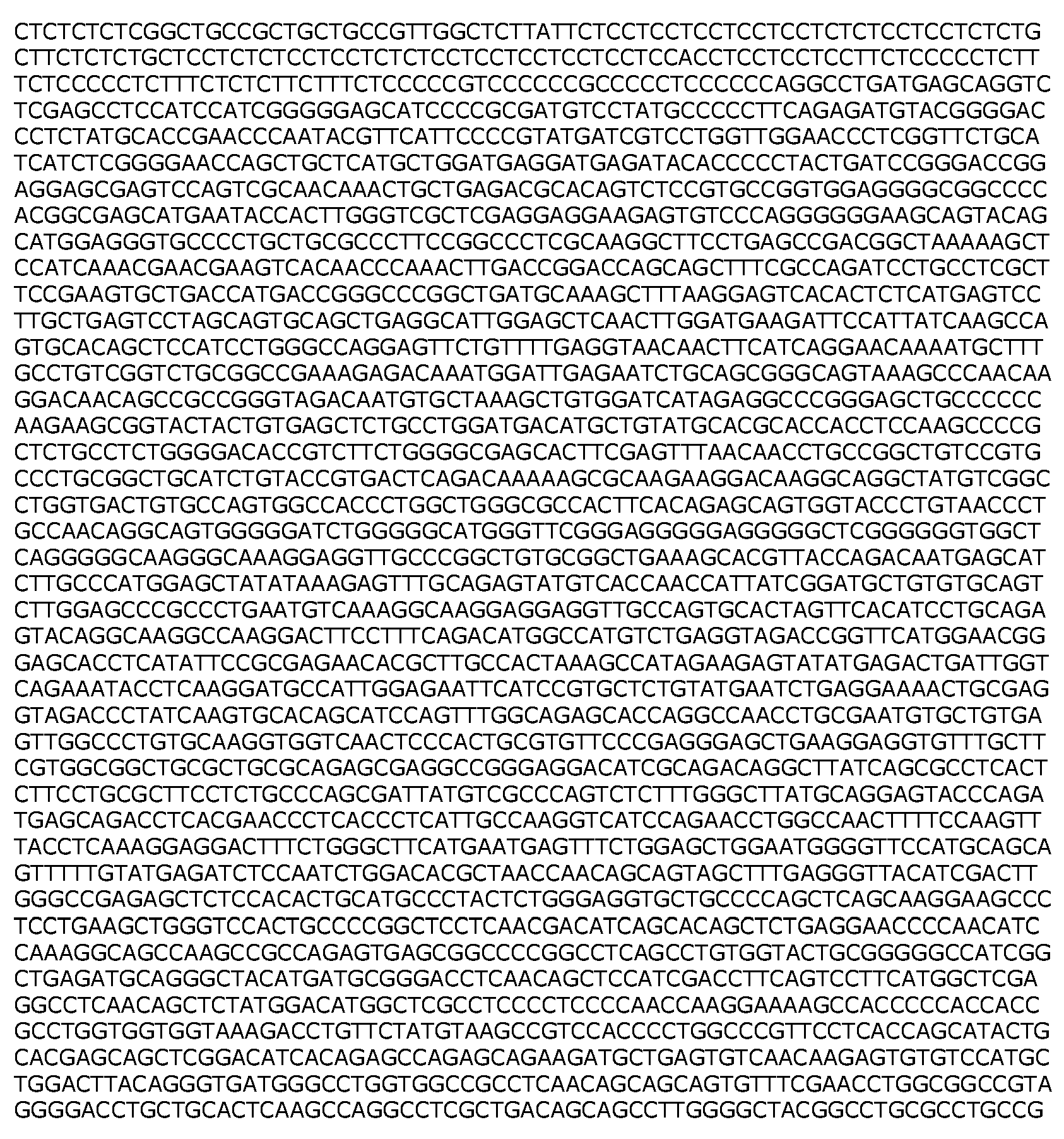


Claims
Priority Applications (13)
| Application Number | Priority Date | Filing Date | Title |
|---|---|---|---|
| CN202180049009.XA CN115916977A (en) | 2020-05-11 | 2021-05-11 | Compositions and methods for treating disorders associated with loss-of-function mutations in SYNGAP1 |
| IL298070A IL298070A (en) | 2020-05-11 | 2021-05-11 | Compositions and methods for treating disorders associated with loss-of-function mutations in syngap1 |
| MX2022014155A MX2022014155A (en) | 2020-05-11 | 2021-05-11 | COMPOSITIONS AND METHODS FOR TREATING DISORDERS ASSOCIATED WITH LOSS OF FUNCTION MUTATIONS IN SYNGAP1. |
| KR1020227043422A KR20230009965A (en) | 2020-05-11 | 2021-05-11 | Compositions and methods for treating disorders associated with loss-of-function mutations in SYNGAP1 |
| EP21804219.0A EP4150094A4 (en) | 2020-05-11 | 2021-05-11 | COMPOSITIONS AND METHODS FOR TREATING DISORDERS ASSOCIATED WITH SYNGAP1 MUTATIONS RESULTING IN FUNCTIONAL LOSS |
| PE2022002642A PE20230739A1 (en) | 2020-05-11 | 2021-05-11 | COMPOSITIONS AND METHODS TO TREAT DISORDERS ASSOCIATED WITH LOSS OF FUNCTION MUTATIONS IN SYNGAP1 |
| BR112022022893A BR112022022893A2 (en) | 2020-05-11 | 2021-05-11 | COMPOSITIONS AND METHODS FOR TREATMENT OF DISORDERS ASSOCIATED WITH LOSS OF FUNCTION MUTATIONS IN SYNGAP1 |
| CA3178334A CA3178334A1 (en) | 2020-05-11 | 2021-05-11 | Compositions and methods for treating disorders associated with loss-of-function mutations in syngap1 |
| JP2022568833A JP2023526060A (en) | 2020-05-11 | 2021-05-11 | Compositions and methods for treating disorders associated with loss-of-function mutations in SYNGAP1 |
| AU2021272832A AU2021272832A1 (en) | 2020-05-11 | 2021-05-11 | Compositions and methods for treating disorders associated with loss-of-function mutations in SYNGAP1 |
| US17/924,255 US20230174984A1 (en) | 2020-05-11 | 2021-05-11 | Compositions and methods for treating disorders associated with loss-of-function mutations in syngap1 |
| CONC2022/0017705A CO2022017705A2 (en) | 2020-05-11 | 2022-12-06 | Compositions and methods for treating disorders associated with loss-of-function mutations in syngap1 |
| ECSENADI202293649A ECSP22093649A (en) | 2020-05-11 | 2022-12-09 | COMPOSITIONS AND METHODS TO TREAT DISORDERS ASSOCIATED WITH LOSS OF FUNCTION MUTATIONS IN SYNGAP1 |
Applications Claiming Priority (2)
| Application Number | Priority Date | Filing Date | Title |
|---|---|---|---|
| AU2020901507 | 2020-05-11 | ||
| AU2020901507A AU2020901507A0 (en) | 2020-05-11 | Compositions and methods for treating disorders associated with loss-of-function mutations in SYNGAP1 |
Publications (1)
| Publication Number | Publication Date |
|---|---|
| WO2021226663A1 true WO2021226663A1 (en) | 2021-11-18 |
Family
ID=78525840
Family Applications (1)
| Application Number | Title | Priority Date | Filing Date |
|---|---|---|---|
| PCT/AU2021/050436 Ceased WO2021226663A1 (en) | 2020-05-11 | 2021-05-11 | Compositions and methods for treating disorders associated with loss-of-function mutations in syngap1 |
Country Status (15)
| Country | Link |
|---|---|
| US (1) | US20230174984A1 (en) |
| EP (1) | EP4150094A4 (en) |
| JP (1) | JP2023526060A (en) |
| KR (1) | KR20230009965A (en) |
| CN (1) | CN115916977A (en) |
| AU (1) | AU2021272832A1 (en) |
| BR (1) | BR112022022893A2 (en) |
| CA (1) | CA3178334A1 (en) |
| CL (3) | CL2022003145A1 (en) |
| CO (1) | CO2022017705A2 (en) |
| EC (1) | ECSP22093649A (en) |
| IL (1) | IL298070A (en) |
| MX (1) | MX2022014155A (en) |
| PE (1) | PE20230739A1 (en) |
| WO (1) | WO2021226663A1 (en) |
Cited By (4)
| Publication number | Priority date | Publication date | Assignee | Title |
|---|---|---|---|---|
| US20230167446A1 (en) * | 2021-11-01 | 2023-06-01 | Ionis Pharmaceuticals, Inc. | Compounds and methods for reducing psd3 expression |
| US20230265436A1 (en) * | 2022-02-24 | 2023-08-24 | Q-State Biosciences, Inc. | Therapeutics for syngap haploinsufficiency |
| WO2023196847A3 (en) * | 2022-04-05 | 2023-11-23 | The Johns Hopkins University | Agents for modulating syngap1 splicing |
| WO2024119145A1 (en) * | 2022-12-01 | 2024-06-06 | Camp4 Therapeutics Corporation | Modulation of syngap1 gene transcription using antisense oligonucleotides targeting regulatory rnas |
Citations (7)
| Publication number | Priority date | Publication date | Assignee | Title |
|---|---|---|---|---|
| US6083695A (en) * | 1996-04-15 | 2000-07-04 | The University Of Houston | Optimized primer library for gene sequencing and method of using same |
| WO2009043353A2 (en) * | 2007-10-04 | 2009-04-09 | Santaris Pharma A/S | Micromirs |
| WO2010051632A1 (en) * | 2008-11-07 | 2010-05-14 | Centre Hospitalier Universitaire Sainte-Justine | Syngap1 dysfunctions and uses thereof in diagnostic and therapeutic applications for mental retardation |
| WO2016201272A1 (en) * | 2015-06-12 | 2016-12-15 | King Abdulaziz City For Science And Technology | Method of diagnosing patients with conditions caused by mendelian mutations |
| WO2017106377A1 (en) * | 2015-12-14 | 2017-06-22 | Cold Spring Harbor Laboratory | Antisense oligomers for treatment of autosomal dominant mental retardation-5 and dravet syndrome |
| US20190070213A1 (en) * | 2015-12-14 | 2019-03-07 | Stoke Therapeutics, Inc. | Antisense oligomers and uses thereof |
| WO2021034985A1 (en) * | 2019-08-19 | 2021-02-25 | Stoke Therapeutics, Inc. | Compositions and methods for modulating splicing and protein expression |
Family Cites Families (3)
| Publication number | Priority date | Publication date | Assignee | Title |
|---|---|---|---|---|
| CN102482677B (en) * | 2009-03-16 | 2017-10-17 | 库尔纳公司 | Treatment of nuclear factor (erythroid-derived 2)-like 2 (NRF2)-associated diseases by inhibiting the natural antisense transcript of NRF2 |
| WO2018217975A1 (en) * | 2017-05-24 | 2018-11-29 | The Regents Of The University Of California | Antisense therapies for treating cancer |
| HUE070436T2 (en) * | 2017-10-23 | 2025-06-28 | Stoke Therapeutics Inc | Antisense oligomers for treatment of non-sense mediated rna decay based conditions and diseases |
-
2021
- 2021-05-11 CN CN202180049009.XA patent/CN115916977A/en active Pending
- 2021-05-11 US US17/924,255 patent/US20230174984A1/en active Pending
- 2021-05-11 KR KR1020227043422A patent/KR20230009965A/en active Pending
- 2021-05-11 AU AU2021272832A patent/AU2021272832A1/en active Pending
- 2021-05-11 IL IL298070A patent/IL298070A/en unknown
- 2021-05-11 PE PE2022002642A patent/PE20230739A1/en unknown
- 2021-05-11 BR BR112022022893A patent/BR112022022893A2/en unknown
- 2021-05-11 CA CA3178334A patent/CA3178334A1/en active Pending
- 2021-05-11 WO PCT/AU2021/050436 patent/WO2021226663A1/en not_active Ceased
- 2021-05-11 JP JP2022568833A patent/JP2023526060A/en active Pending
- 2021-05-11 MX MX2022014155A patent/MX2022014155A/en unknown
- 2021-05-11 EP EP21804219.0A patent/EP4150094A4/en active Pending
-
2022
- 2022-11-11 CL CL2022003145A patent/CL2022003145A1/en unknown
- 2022-12-06 CO CONC2022/0017705A patent/CO2022017705A2/en unknown
- 2022-12-09 EC ECSENADI202293649A patent/ECSP22093649A/en unknown
-
2025
- 2025-04-29 CL CL2025001270A patent/CL2025001270A1/en unknown
- 2025-04-29 CL CL2025001268A patent/CL2025001268A1/en unknown
Patent Citations (7)
| Publication number | Priority date | Publication date | Assignee | Title |
|---|---|---|---|---|
| US6083695A (en) * | 1996-04-15 | 2000-07-04 | The University Of Houston | Optimized primer library for gene sequencing and method of using same |
| WO2009043353A2 (en) * | 2007-10-04 | 2009-04-09 | Santaris Pharma A/S | Micromirs |
| WO2010051632A1 (en) * | 2008-11-07 | 2010-05-14 | Centre Hospitalier Universitaire Sainte-Justine | Syngap1 dysfunctions and uses thereof in diagnostic and therapeutic applications for mental retardation |
| WO2016201272A1 (en) * | 2015-06-12 | 2016-12-15 | King Abdulaziz City For Science And Technology | Method of diagnosing patients with conditions caused by mendelian mutations |
| WO2017106377A1 (en) * | 2015-12-14 | 2017-06-22 | Cold Spring Harbor Laboratory | Antisense oligomers for treatment of autosomal dominant mental retardation-5 and dravet syndrome |
| US20190070213A1 (en) * | 2015-12-14 | 2019-03-07 | Stoke Therapeutics, Inc. | Antisense oligomers and uses thereof |
| WO2021034985A1 (en) * | 2019-08-19 | 2021-02-25 | Stoke Therapeutics, Inc. | Compositions and methods for modulating splicing and protein expression |
Non-Patent Citations (3)
| Title |
|---|
| ANONYMOUS: "ERX288565 HPA RNA-SEQ NORMAL TISSUES", ESTABLISHES PRIORITY OF INTRON-SPANNING READS IN D7, pages 1 - 2, XP093006853, Retrieved from the Internet <URL:https://www.ncbi.nlm.nih.gov/sra/ERX288565[accn> [retrieved on 20221212] * |
| ANONYMOUS: "NIH Genome Viewer of NCBI RefSeq genes, curated subset (NM_*, NR_*, NP_* or YP", NM 006772.3, Retrieved from the Internet <URL:https://www.ncbi.nlm.nih.gov/genome/gdv/browser/nucleotide/?id=NM_006772.3> * |
| See also references of EP4150094A4 * |
Cited By (5)
| Publication number | Priority date | Publication date | Assignee | Title |
|---|---|---|---|---|
| US20230167446A1 (en) * | 2021-11-01 | 2023-06-01 | Ionis Pharmaceuticals, Inc. | Compounds and methods for reducing psd3 expression |
| US20230265436A1 (en) * | 2022-02-24 | 2023-08-24 | Q-State Biosciences, Inc. | Therapeutics for syngap haploinsufficiency |
| US12529057B2 (en) * | 2022-02-24 | 2026-01-20 | Quiver Holdings Inc. | Therapeutics for Syngap haploinsufficiency |
| WO2023196847A3 (en) * | 2022-04-05 | 2023-11-23 | The Johns Hopkins University | Agents for modulating syngap1 splicing |
| WO2024119145A1 (en) * | 2022-12-01 | 2024-06-06 | Camp4 Therapeutics Corporation | Modulation of syngap1 gene transcription using antisense oligonucleotides targeting regulatory rnas |
Also Published As
| Publication number | Publication date |
|---|---|
| CL2022003145A1 (en) | 2023-06-30 |
| PE20230739A1 (en) | 2023-05-03 |
| JP2023526060A (en) | 2023-06-20 |
| EP4150094A1 (en) | 2023-03-22 |
| BR112022022893A2 (en) | 2023-03-14 |
| CO2022017705A2 (en) | 2023-02-16 |
| CL2025001270A1 (en) | 2025-08-08 |
| US20230174984A1 (en) | 2023-06-08 |
| IL298070A (en) | 2023-01-01 |
| EP4150094A4 (en) | 2024-10-09 |
| MX2022014155A (en) | 2023-04-11 |
| CA3178334A1 (en) | 2021-11-18 |
| KR20230009965A (en) | 2023-01-17 |
| ECSP22093649A (en) | 2023-02-28 |
| AU2021272832A1 (en) | 2022-12-15 |
| CL2025001268A1 (en) | 2025-08-08 |
| CN115916977A (en) | 2023-04-04 |
Similar Documents
| Publication | Publication Date | Title |
|---|---|---|
| US20230174984A1 (en) | Compositions and methods for treating disorders associated with loss-of-function mutations in syngap1 | |
| JP2022062140A (en) | Antisense oligomers for treatment of autosomal dominant mental retardation-5 and dravet syndrome | |
| US8101743B2 (en) | Modulation of transthyretin expression | |
| US7399853B2 (en) | Modulation of glucagon receptor expression | |
| JP2020189874A (en) | Antisense oligomers for the treatment of conditions and diseases | |
| JP2017522010A (en) | Antisense oligonucleotides useful for the treatment of Pompe disease | |
| JP2019500347A (en) | Compositions and methods for the treatment of retinitis pigmentosa 18 and retinitis pigmentosa 13 | |
| US11999953B2 (en) | Compositions and methods for treating transposon associated diseases | |
| US20200129538A1 (en) | Compositions and methods for treating conditions associated with gain-of-function mutations in kcnt1 | |
| US9868776B2 (en) | Anti-sense oligonucleotides targeted against exon 9 of IL-23R-alpha gene and method of using same to induce exon skipping and to treat inflammatory bowel diseases | |
| US20230272387A1 (en) | Compositions and methods for treating disorders associated with loss-of-function mutations in scn2a | |
| US7807652B2 (en) | Modulation of eIF4E-BP2 expression | |
| US8778900B2 (en) | Modulation of eIF4E-BP1 expression | |
| US20250049838A1 (en) | Antisense Compounds Targeting Genes Associated with Cystic Fibrosis | |
| WO2024254092A2 (en) | Methods and compositions for treating neurological diseases and disorders and cancers |
Legal Events
| Date | Code | Title | Description |
|---|---|---|---|
| 121 | Ep: the epo has been informed by wipo that ep was designated in this application |
Ref document number: 21804219 Country of ref document: EP Kind code of ref document: A1 |
|
| ENP | Entry into the national phase |
Ref document number: 3178334 Country of ref document: CA |
|
| ENP | Entry into the national phase |
Ref document number: 2022568833 Country of ref document: JP Kind code of ref document: A |
|
| REG | Reference to national code |
Ref country code: BR Ref legal event code: B01A Ref document number: 112022022893 Country of ref document: BR |
|
| WWE | Wipo information: entry into national phase |
Ref document number: NC2022/0017705 Country of ref document: CO |
|
| ENP | Entry into the national phase |
Ref document number: 20227043422 Country of ref document: KR Kind code of ref document: A |
|
| NENP | Non-entry into the national phase |
Ref country code: DE |
|
| ENP | Entry into the national phase |
Ref document number: 2021272832 Country of ref document: AU Date of ref document: 20210511 Kind code of ref document: A |
|
| ENP | Entry into the national phase |
Ref document number: 2021804219 Country of ref document: EP Effective date: 20221212 |
|
| REG | Reference to national code |
Ref country code: BR Ref legal event code: B01E Ref document number: 112022022893 Country of ref document: BR Free format text: COM BASE NA PORTARIA 405 DE 21/12/2020, SOLICITA-SE QUE SEJA APRESENTADO, EM ATE 60 (SESSENTA) DIAS, NOVO CONTEUDO DE LISTAGEM DE SEQUENCIA COM TITULO EQUIVALENTE AO APRESENTADO NA PETICAO NO 870220121733 DE 23/12/2022. |
|
| WWP | Wipo information: published in national office |
Ref document number: NC2022/0017705 Country of ref document: CO |
|
| ENP | Entry into the national phase |
Ref document number: 112022022893 Country of ref document: BR Kind code of ref document: A2 Effective date: 20221110 |
|
| WWE | Wipo information: entry into national phase |
Ref document number: 522441288 Country of ref document: SA |
|
| WWE | Wipo information: entry into national phase |
Ref document number: 522441288 Country of ref document: SA |
|
| WWE | Wipo information: entry into national phase |
Ref document number: 522441288 Country of ref document: SA |
|
| WWE | Wipo information: entry into national phase |
Ref document number: 522441288 Country of ref document: SA |