WO2021229956A1 - 非水マグネシウム電池 - Google Patents
非水マグネシウム電池 Download PDFInfo
- Publication number
- WO2021229956A1 WO2021229956A1 PCT/JP2021/014567 JP2021014567W WO2021229956A1 WO 2021229956 A1 WO2021229956 A1 WO 2021229956A1 JP 2021014567 W JP2021014567 W JP 2021014567W WO 2021229956 A1 WO2021229956 A1 WO 2021229956A1
- Authority
- WO
- WIPO (PCT)
- Prior art keywords
- positive electrode
- active material
- electrode active
- magnesium
- niooh
- Prior art date
- Legal status (The legal status is an assumption and is not a legal conclusion. Google has not performed a legal analysis and makes no representation as to the accuracy of the status listed.)
- Ceased
Links
Images

Classifications
-
- H—ELECTRICITY
- H01—ELECTRIC ELEMENTS
- H01M—PROCESSES OR MEANS, e.g. BATTERIES, FOR THE DIRECT CONVERSION OF CHEMICAL ENERGY INTO ELECTRICAL ENERGY
- H01M4/00—Electrodes
- H01M4/02—Electrodes composed of, or comprising, active material
- H01M4/36—Selection of substances as active materials, active masses, active liquids
- H01M4/48—Selection of substances as active materials, active masses, active liquids of inorganic oxides or hydroxides
- H01M4/52—Selection of substances as active materials, active masses, active liquids of inorganic oxides or hydroxides of nickel, cobalt or iron
-
- H—ELECTRICITY
- H01—ELECTRIC ELEMENTS
- H01M—PROCESSES OR MEANS, e.g. BATTERIES, FOR THE DIRECT CONVERSION OF CHEMICAL ENERGY INTO ELECTRICAL ENERGY
- H01M10/00—Secondary cells; Manufacture thereof
- H01M10/05—Accumulators with non-aqueous electrolyte
- H01M10/054—Accumulators with insertion or intercalation of metals other than lithium, e.g. with magnesium or aluminium
-
- H—ELECTRICITY
- H01—ELECTRIC ELEMENTS
- H01M—PROCESSES OR MEANS, e.g. BATTERIES, FOR THE DIRECT CONVERSION OF CHEMICAL ENERGY INTO ELECTRICAL ENERGY
- H01M10/00—Secondary cells; Manufacture thereof
- H01M10/05—Accumulators with non-aqueous electrolyte
- H01M10/056—Accumulators with non-aqueous electrolyte characterised by the materials used as electrolytes, e.g. mixed inorganic/organic electrolytes
- H01M10/0564—Accumulators with non-aqueous electrolyte characterised by the materials used as electrolytes, e.g. mixed inorganic/organic electrolytes the electrolyte being constituted of organic materials only
- H01M10/0566—Liquid materials
- H01M10/0568—Liquid materials characterised by the solutes
-
- H—ELECTRICITY
- H01—ELECTRIC ELEMENTS
- H01M—PROCESSES OR MEANS, e.g. BATTERIES, FOR THE DIRECT CONVERSION OF CHEMICAL ENERGY INTO ELECTRICAL ENERGY
- H01M4/00—Electrodes
- H01M4/02—Electrodes composed of, or comprising, active material
- H01M4/36—Selection of substances as active materials, active masses, active liquids
- H01M4/38—Selection of substances as active materials, active masses, active liquids of elements or alloys
- H01M4/381—Alkaline or alkaline earth metals elements
-
- H—ELECTRICITY
- H01—ELECTRIC ELEMENTS
- H01M—PROCESSES OR MEANS, e.g. BATTERIES, FOR THE DIRECT CONVERSION OF CHEMICAL ENERGY INTO ELECTRICAL ENERGY
- H01M4/00—Electrodes
- H01M4/02—Electrodes composed of, or comprising, active material
- H01M4/36—Selection of substances as active materials, active masses, active liquids
- H01M4/48—Selection of substances as active materials, active masses, active liquids of inorganic oxides or hydroxides
- H01M4/483—Selection of substances as active materials, active masses, active liquids of inorganic oxides or hydroxides for non-aqueous cells
-
- H—ELECTRICITY
- H01—ELECTRIC ELEMENTS
- H01M—PROCESSES OR MEANS, e.g. BATTERIES, FOR THE DIRECT CONVERSION OF CHEMICAL ENERGY INTO ELECTRICAL ENERGY
- H01M4/00—Electrodes
- H01M4/02—Electrodes composed of, or comprising, active material
- H01M4/36—Selection of substances as active materials, active masses, active liquids
- H01M4/48—Selection of substances as active materials, active masses, active liquids of inorganic oxides or hydroxides
- H01M4/52—Selection of substances as active materials, active masses, active liquids of inorganic oxides or hydroxides of nickel, cobalt or iron
- H01M4/523—Selection of substances as active materials, active masses, active liquids of inorganic oxides or hydroxides of nickel, cobalt or iron for non-aqueous cells
-
- H—ELECTRICITY
- H01—ELECTRIC ELEMENTS
- H01M—PROCESSES OR MEANS, e.g. BATTERIES, FOR THE DIRECT CONVERSION OF CHEMICAL ENERGY INTO ELECTRICAL ENERGY
- H01M4/00—Electrodes
- H01M4/02—Electrodes composed of, or comprising, active material
- H01M2004/026—Electrodes composed of, or comprising, active material characterised by the polarity
- H01M2004/028—Positive electrodes
-
- H—ELECTRICITY
- H01—ELECTRIC ELEMENTS
- H01M—PROCESSES OR MEANS, e.g. BATTERIES, FOR THE DIRECT CONVERSION OF CHEMICAL ENERGY INTO ELECTRICAL ENERGY
- H01M2300/00—Electrolytes
- H01M2300/0017—Non-aqueous electrolytes
- H01M2300/0025—Organic electrolyte
-
- Y—GENERAL TAGGING OF NEW TECHNOLOGICAL DEVELOPMENTS; GENERAL TAGGING OF CROSS-SECTIONAL TECHNOLOGIES SPANNING OVER SEVERAL SECTIONS OF THE IPC; TECHNICAL SUBJECTS COVERED BY FORMER USPC CROSS-REFERENCE ART COLLECTIONS [XRACs] AND DIGESTS
- Y02—TECHNOLOGIES OR APPLICATIONS FOR MITIGATION OR ADAPTATION AGAINST CLIMATE CHANGE
- Y02E—REDUCTION OF GREENHOUSE GAS [GHG] EMISSIONS, RELATED TO ENERGY GENERATION, TRANSMISSION OR DISTRIBUTION
- Y02E60/00—Enabling technologies; Technologies with a potential or indirect contribution to GHG emissions mitigation
- Y02E60/10—Energy storage using batteries
Definitions
- This disclosure relates to non-water magnesium batteries.
- Non-Patent Document 1 describes a magnesium battery using Mo 6 S 8 having a chevrel phase as a positive electrode active material.
- Non-Patent Document 2 describes a magnesium battery using V 2 O 5 as a positive electrode active material.
- the present disclosure provides a non-aqueous magnesium battery having a high reaction potential and a high reversible capacity.
- This disclosure is A positive electrode that contains a positive electrode active material and can occlude and release magnesium ions, With the negative electrode With an electrolyte containing magnesium salts,
- the positive electrode active material contains nickel oxyhydroxide and contains The nickel oxyhydroxide is layered. Provides non-water magnesium batteries.
- a non-aqueous magnesium battery having a high reaction potential and a high reversible capacity can be provided.
- FIG. 1 is a cross-sectional view schematically showing a configuration example of a non-aqueous magnesium battery.
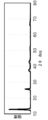
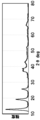
- FIG. 2A is a diagram showing the results of powder X-ray diffraction measurement of the positive electrode active material according to Example 1.
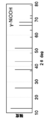
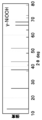
- FIG. 2B is a diagram showing the results of powder X-ray diffraction of ⁇ -NiOOH obtained by simulation.
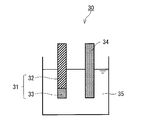
- FIG. 3 is a schematic diagram showing a schematic configuration of the beaker cell according to the embodiment.
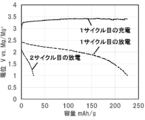
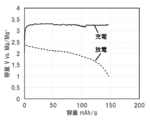
- FIG. 4 is a graph showing the results of a charge / discharge test of the non-aqueous magnesium battery according to Example 1.
- FIG. 5A is a diagram showing the results of powder X-ray diffraction measurement of the positive electrode active material according to Example 2.
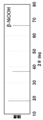
- FIG. 5B is a diagram showing the results of powder X-ray diffraction of ⁇ -NiOOH obtained by simulation.
- FIG. 5C is a diagram showing the results of powder X-ray diffraction of ⁇ -NiOOH obtained by simulation.
- FIG. 6 is a graph showing the results of a charge / discharge test of the non-aqueous magnesium battery according to Example 2.
- multivalent ion batteries using multivalent ions as carriers have been actively studied.
- the polyvalent ion batteries calcium batteries for the Ca 2+ and carrier, beryllium cells using Be 2+ and carrier, manganese battery using Mn 2+ as the carrier, nickel batteries for the Ni 2+ and carrier, Zn 2 + zinc cell according to the carrier, yttrium batteries, aluminum batteries, and nonaqueous magnesium battery using Mg 2+ as a carrier for the Al 3+ with a carrier which the Y 3+ and carrier.
- non-aqueous magnesium batteries has attracted attention.
- the theoretical capacity per unit mass and the theoretical capacity per unit volume of magnesium are large. Magnesium also exhibits a relatively low redox potential. Therefore, a battery using magnesium as a negative electrode is expected to have a high energy density.
- the theoretical capacity per unit volume of magnesium is higher than the theoretical capacity per unit volume of lithium. Therefore, the non-water magnesium battery enables the installation of a large capacity battery in a limited space such as an electric vehicle.
- the reserves of magnesium in the crust are higher than the reserves of lithium in the crust. Therefore, according to the non-aqueous magnesium battery, the problems of resource depletion and cost, which are the drawbacks of the lithium ion battery, are less likely to occur.
- the melting point of magnesium is about 650 ° C.
- the melting point of lithium is about 180 ° C.
- the melting point of sodium is about 98 ° C.
- the melting point of magnesium is much higher than the melting point of lithium and the melting point of sodium. Since the melting point is an index of the stability of the metal, the safety of the battery can be improved by using magnesium in the battery.
- lithium and sodium react violently with, for example, moisture in the air. Magnesium, on the other hand, is stable in air and can be easily handled. For these reasons, non-water magnesium batteries are being actively studied as batteries to replace lithium-ion batteries.
- Non-Patent Document 1 discloses a compound containing a soft base such as sulfur ion and having a chevrel phase. According to Non-Patent Document 1, the reaction potential and reversible capacity of this compound are about 1.1 V and about 116 mAh / g, respectively. It is hard to say that the reaction potential and reversible capacity of this compound are high.
- Non-Patent Document 2 discloses a positive electrode containing V 2 O 5 which is an oxide. According to Non-Patent Document 2, the reaction potential and reversible capacity of this compound are about 1.5 V and about 75 mAh / g, respectively. Although the reaction potential of V 2 O 5 is higher than the reaction potential of the compound described in Non-Patent Document 1, it cannot be said that the reversible capacity of V 2 O 5 is high.
- the non-aqueous magnesium battery according to the first aspect of the present disclosure is A positive electrode that contains a positive electrode active material and can occlude and release magnesium ions, With the negative electrode It comprises an electrolyte containing a magnesium salt.
- the positive electrode active material contains nickel oxyhydroxide, and the nickel oxyhydroxide is layered.
- the first aspect it is possible to provide a non-aqueous magnesium battery having a high reaction potential and a high reversible capacity.
- the nickel oxyhydroxide may contain a compound represented by the composition formula of NiOOH x, and 0 ⁇ x ⁇ 1 May be satisfied.
- x may be 0.3 or more and 1 or less.
- the nickel oxyhydroxide may contain a compound represented by the composition formula of NiOOH x, and 0 ⁇ x ⁇ 1. May be satisfied.
- x may be 0.3 or more and less than 1.
- the nickel oxyhydroxide may contain ⁇ -NiOOH.
- the negative electrode may contain metallic magnesium.
- the negative electrode may contain a negative electrode active material that occludes and releases magnesium ions.
- the non-aqueous magnesium battery can utilize the two-electron reaction of magnesium, it is expected to be put into practical use as a high-capacity battery. However, since the interaction between the divalent magnesium ion and the anion in the active material is large, it is difficult for the magnesium ion to move in the active material, and the electrode reaction in the active material is difficult to proceed.
- the non-aqueous magnesium battery according to this embodiment includes a positive electrode containing a positive electrode active material, a negative electrode, and an electrolytic solution. Magnesium ions can be occluded and released at the positive electrode.
- the electrolytic solution has, for example, magnesium ion conductivity.
- the positive electrode active material contains layered nickel oxyhydroxide.
- the positive electrode may contain only layered nickel oxyhydroxide as the positive electrode active material, or may contain other compounds.
- the layered nickel oxyhydroxide can occlude and release magnesium ions, for example, between layers of nickel oxyhydroxide.
- the non-aqueous magnesium battery can have a high reaction potential and a high reversible capacity.
- the content of layered nickel oxyhydroxide in the positive electrode active material is not limited to a specific value.
- the non-aqueous magnesium battery can have a high reaction potential and a high reversible capacity.
- the layered nickel oxyhydroxide may contain a compound represented by the composition formula of NiOOH x and satisfying 0 ⁇ x ⁇ 1.
- the layered nickel oxyhydroxide may contain only a compound represented by the composition formula of NiOOH x and satisfying 0 ⁇ x ⁇ 1.
- the layered nickel oxyhydroxide may contain a compound represented by the composition formula of NiOOH x and satisfying 0 ⁇ x ⁇ 1.
- the layered nickel oxyhydroxide may contain only a compound represented by the composition formula of NiOOH x and satisfying 0 ⁇ x ⁇ 1.
- the layered nickel oxyhydroxide may contain ⁇ -NiOOH.
- ⁇ -NiOOH is ⁇ -type nickel oxyhydroxide.
- the oxidation number of Ni is 3.0 or more and 3.7 or less.
- ⁇ -NiOOH can be obtained, for example, by oxidizing ⁇ -NiOOH, which will be described later.
- the layered nickel oxyhydroxide may contain ⁇ -NiOOH.
- ⁇ -NiOOH is ⁇ -type nickel oxyhydroxide.
- the oxidation number of Ni is 3.0 or more and 3.7 or less.
- the layered nickel oxyhydroxide may contain ⁇ -NiOOH and ⁇ -NiOOH.
- the non-hydromagnesium battery can more reliably have a higher reaction potential and more reliably a higher reversible capacity.
- the content of ⁇ -NiOOH and the content of ⁇ -NiOOH contained in the positive electrode active material are not limited to specific values. By appropriately adjusting the content of ⁇ -NiOOH and the content of ⁇ -NiOOH contained in the positive electrode active material, the non-aqueous magnesium battery can more surely have a high reaction potential and a higher reversible capacity. ..
- the content of ⁇ -NiOOH may be higher than the content of ⁇ -NiOOH.
- the oxidation number of nickel in ⁇ -NiOOH is definitely higher than the oxidation number of nickel in ⁇ -NiOOH. Therefore, the number of reaction electrons of ⁇ -NiOOH is larger than the number of reaction electrons of ⁇ -NiOOH. Due to the higher content of ⁇ -NiOOH than the content of ⁇ -NiOOH, the non-aqueous magnesium battery can more reliably have a higher reaction potential and more reliably a higher reversible capacity.
- the positive electrode active material may contain ⁇ -NiOOH as a main component.
- ⁇ -NiOOH has a high oxidation number of Ni among nickel oxyhydroxide. Therefore, by containing ⁇ -NiOOH as a main component in the positive electrode active material, the non-aqueous magnesium battery can more surely have a high reaction potential and a more surely high reversible capacity.
- the "main component” means a component contained most in the positive electrode active material in terms of mass ratio.
- the positive electrode active material may contain only ⁇ -NiOOH. This may allow the non-aqueous magnesium battery to more reliably have a higher reaction potential and more reliably a higher reversible capacity.
- the positive electrode active material according to the present embodiment is produced, for example, by oxidizing nickel (II) hydroxide.
- an alkaline aqueous solution is used for the oxidation treatment.
- the alkaline aqueous solution is obtained, for example, by mixing an aqueous solution of sodium hypochlorite and an aqueous solution of potassium hydroxide and stirring at 80 ° C.
- a hot stirrer is used for stirring.
- a nickel hydroxide (II) powder manufactured by High Purity Chemical Laboratory Co., Ltd. is added to an alkaline aqueous solution, and the mixture is stirred at 80 ° C. to oxidize nickel to prepare a nickel oxyhydroxide-containing solution. ..
- a hot stirrer is used for stirring.
- the nickel oxyhydroxide-containing liquid after stirring contains a precipitate and a supernatant liquid. Therefore, the supernatant liquid is removed from the nickel oxyhydroxide-containing liquid and replaced with water to obtain a mixed liquid. Then, let the mixed solution stand still.
- the time for allowing the mixed solution to stand is, for example, 1 hour to 100 hours.
- a solid substance is obtained by removing water from the mixed solution by suction filtration under reduced pressure.
- suction filtration for example, a vacuum pump is used.
- Layered nickel oxyhydroxide can be obtained by pulverizing and sizing the dried solid.
- a mortar is used for crushing the solid matter.
- a sieve is used for sizing the solid matter.
- the composition of layered nickel oxyhydroxide can be determined, for example, by inductively coupled plasma (ICP) emission spectroscopy.
- the crystal structure of the layered nickel oxyhydroxide can be determined, for example, by powder X-ray diffraction.
- the oxidation number of nickel which is a transition metal
- XAFS X-ray absorption fine structure
- the positive electrode active material according to the present embodiment can be used for a non-aqueous magnesium battery.
- the non-aqueous magnesium battery includes a positive electrode containing a positive electrode active material, a negative electrode, and an electrolyte having magnesium ion conductivity.
- the electrolyte contains, for example, a magnesium salt.
- FIG. 1 is a cross-sectional view schematically showing a configuration example of the non-aqueous magnesium battery 10.
- the non-water magnesium battery 10 includes a positive electrode 21, a negative electrode 22, a separator 14, a case 11, a sealing plate 15, and a gasket 18.
- the separator 14 is arranged between the positive electrode 21 and the negative electrode 22.
- the positive electrode 21, the negative electrode 22, and the separator 14 are impregnated with a non-aqueous electrolytic solution, and these are housed in the case 11.
- the case 11 is closed by a gasket 18 and a sealing plate 15.
- the case 11 houses the positive electrode 21, the negative electrode 22, and the separator 14.
- the shape and material of the case 11 are not limited to a specific aspect.
- the case 11 is not limited to the one shown in FIG. 1, and a known battery case can be appropriately selected and used.
- the structure of the non-water magnesium battery 10 may be cylindrical, square, button, coin, or flat.
- the positive electrode 21 includes a positive electrode current collector 12 and a positive electrode active material layer 13 arranged on the positive electrode current collector 12.
- the positive electrode active material layer 13 is arranged between the positive electrode current collector 12 and the separator 14.
- the positive electrode active material layer 13 is described in the above [1. It contains the positive electrode active material described in [Positive Electrode Active Material]. According to such a configuration, it is possible to provide a positive electrode for a non-aqueous magnesium battery having a high reversible capacity, a high reaction potential, and a high energy density.
- the positive electrode active material layer 13 may further contain at least one of a conductive material and a binder, if necessary.
- Examples of conductive materials are carbon materials, metals, inorganic compounds, and conductive polymers.
- Examples of carbon materials are graphite, acetylene black, carbon black, ketjen black, carbon whiskers, needle coke, and carbon fiber.
- Examples of graphite are natural graphite and artificial graphite. Examples of natural graphite are lump graphite and scaly graphite.
- Examples of metals are copper, nickel, aluminum, silver, and gold.
- Examples of inorganic compounds are tungsten carbide, titanium carbide, tantalum carbide, molybdenum carbide, titanium boride, and titanium nitride. These materials may be used alone or in combination of two or more.
- binders are fluororesin, thermoplastic resin, ethylene propylene diene monomer (EPDM) rubber, sulfonated EPDM rubber, and natural butyl rubber (NBR).
- fluororesins are polytetrafluoroethylene (PTFE), polyvinylidene fluoride (PVdF), and fluororubber.
- thermoplastics are polypropylene and polyethylene. These materials may be used alone or in combination of two or more.
- solvents that disperse positive electrode active materials, conductive materials, and binders are N-methylpyrrolidone, dimethylformamide, dimethylacetamide, methylethylketone, cyclohexanone, methyl acetate, methyl acrylate, diethylenetriamine, N, N-dimethylaminopropyl. Amine, ethylene oxide, and tetrahydrofuran.
- a thickener may be added to the dispersant. Examples of thickeners are carboxymethyl cellulose and methyl cellulose.
- the positive electrode active material layer 13 is formed by, for example, the following method. First, these materials are mixed so as to obtain a mixture of the positive electrode active material, the conductive material and the binder. Next, a suitable solvent is added to this mixture to obtain a paste-like positive electrode mixture. Next, this positive electrode mixture is applied to the surface of the positive electrode current collector 12 and dried. As a result, the positive electrode active material layer 13 is formed on the positive electrode current collector 12.
- the positive electrode active material layer 13 may be compressed in order to increase the electrode density.
- the film thickness of the positive electrode active material layer 13 is not limited to a specific value.
- the film thickness is, for example, 1 ⁇ m or more and 100 ⁇ m or less.
- the material of the positive electrode current collector 12 is, for example, a single metal or alloy. More specifically, the material of the positive electrode current collector 12 is a single metal containing at least one selected from the group consisting of copper, chromium, nickel, titanium, platinum, gold, aluminum, tungsten, iron, and molybdenum. It may be an alloy. The material of the positive electrode current collector 12 may be stainless steel.
- the positive electrode current collector 12 may be plate-shaped or foil-shaped.
- the positive electrode current collector 12 may be a laminated film.
- the positive electrode current collector 12 may be omitted.
- the negative electrode 22 includes, for example, a negative electrode active material layer 17 containing a negative electrode active material and a negative electrode current collector 16.
- the negative electrode active material layer 17 is arranged between the negative electrode current collector 16 and the separator 14.
- the negative electrode 22 contains a negative electrode active material that can occlude and release magnesium ions. That is, the negative electrode active material layer 17 contains a negative electrode active material that can occlude and release magnesium ions.
- An example of a negative electrode active material is a carbon material. Examples of carbon materials are graphite, non-graphite carbon, and graphite interlayer compounds. Examples of non-graphite carbons are hard carbons and coke.
- the negative electrode active material layer 17 may further contain at least one of a conductive material and a binder, if necessary.
- Conductive materials, binders, solvents, and thickeners are described, for example, in [3-2.
- the conductive material, the binder, the solvent, and the thickener described in [Positive electrode] can be appropriately used.
- the film thickness of the negative electrode active material layer 17 is not limited to a specific value.
- the film thickness is, for example, 1 ⁇ m or more and 50 ⁇ m or less.
- the negative electrode active material layer 17 contains a negative electrode active material capable of precipitating and dissolving magnesium.
- examples of the negative electrode active material are metallic magnesium and magnesium alloys.
- the magnesium alloy is an alloy of magnesium with at least one selected from the group consisting of, for example, aluminum, silicon, gallium, zinc, tin, manganese, bismuth, and antimony.
- the material of the negative electrode current collector 16 is, for example, [3-2. A material similar to that of the positive electrode current collector 12 described in [Positive electrode] can be appropriately used.
- the negative electrode current collector 16 may be plate-shaped or foil-shaped.
- the negative electrode current collector 16 may be omitted.
- the negative electrode active material layer 17 may be omitted. That is, the negative electrode 22 may be composed of only the negative electrode current collector 16 capable of precipitating and dissolving magnesium. In this case, the negative electrode current collector 16 may be stainless steel, nickel, copper, or iron.
- Examples of materials for the separator 14 are microporous thin films, woven fabrics, and non-woven fabrics.
- the material of the separator 14 may be a polyolefin such as polypropylene or polyethylene.
- the thickness of the separator 14 is, for example, 10 ⁇ m or more and 300 ⁇ m or less.
- the separator 14 may be a single-layer film made of one kind of material, a composite film made of two or more kinds of materials, or a multilayer film.
- the porosity of the separator 14 is, for example, 30% or more and 70% or less.
- the electrolyte can be a material having magnesium ion conductivity.
- the electrolyte is, for example, a non-aqueous electrolyte solution.
- the non-aqueous electrolyte solution contains a non-aqueous solvent and a magnesium salt dissolved in the non-aqueous solvent.
- non-aqueous solvents examples include cyclic ethers, chain ethers, cyclic carbonate esters, chain carbonate esters, cyclic carboxylic acid esters, chain carboxylic acid esters, pyrrocarbonate esters, phosphoric acid esters, borate esters, sulfate esters, sulfites. Esters, cyclic sulfones, chain sulfones, nitriles, and sulton.
- cyclic ethers examples include 1,3-dioxolane, 4-methyl-1,3-dioxolane, tetrahydrofuran, 2-methyltetrahydrofuran, propylene oxide, 1,2-butylene oxide, 1,4-dioxane, 1,3,5. -Trioxane, furan, 2-methylfuran, 1,8-cineole, crown ethers, and derivatives thereof.
- chain ethers are 1,2-dimethoxyethane, diethyl ether, dipropyl ether, diisopropyl ether, dibutyl ether, dihexyl ether, ethyl vinyl ether, butyl vinyl ether, methyl phenyl ether, ethyl phenyl ether, butyl phenyl ether, pentylphenyl.
- Ether methoxytoluene, benzyl ethyl ether, diphenyl ether, dibenzyl ether, o-dimethoxybenzene, 1,2-diethoxyethane, 1,2-dibutoxyethane, diethylene glycol dimethyl ether, diethylene glycol diethyl ether, diethylene glycol dibutyl ether, 1,1 -Dimethoxymethane, 1,1-diethoxyethane, triethylene glycol dimethyl ether, tetraethylene glycol dimethyl ether, and derivatives thereof.
- cyclic carbonates are ethylene carbonate, propylene carbonate, butylene carbonate, vinylene carbonate, fluoroethylene carbonate, 4,5-difluoroethylene carbonate, 4,4,4-trifluoroethylene carbonate, fluoromethylethylene carbonate, trifluoromethyl.
- chain carbonates are dimethyl carbonate, ethyl methyl carbonate, diethyl carbonate, methyl propyl carbonate, ethyl propyl carbonate, methyl isopropyl carbonate, and derivatives thereof.
- cyclic carboxylic acid esters are ⁇ -butyrolactone, ⁇ -valerolactone, ⁇ -caprolactone, ⁇ -caprolactone, ⁇ -acetolactone, and derivatives thereof.
- chain carboxylic acid esters are methyl acetate, ethyl acetate, propyl acetate, butyl acetate, methyl propionate, ethyl propionate, propyl propionate, butyl propionate, and derivatives thereof.
- Examples of pyrocarbonate esters are diethylpyrocarbonate, dimethylpyrocarbonate, di-tert-butyldicarbonate, and derivatives thereof.
- Examples of phosphate esters are trimethyl phosphate, triethyl phosphate, hexamethyl phosphate, and derivatives thereof.
- Examples of borate esters are trimethylborate, triethylborate, and derivatives thereof.
- Examples of sulfate esters are trimethylsulfate, triethylsulfate, and derivatives thereof.
- Examples of sulfite esters are ethylene sulphite and its derivatives.
- Examples of cyclic sulfones are sulfolanes and their derivatives.
- Examples of chain sulfones are alkyl sulfones and their derivatives.
- Examples of nitriles are acetonitrile, valeronitrile, propionitrile, trimethylnitrile, cyclopentanecarbonitrile, adiponitrile, pimeronitrile and derivatives thereof.
- sultone are 1,3-propane sultone and its derivatives.
- magnesium salts are MgBr 2 , MgI 2 , MgCl 2 , Mg (AsF 6 ) 2 , Mg (ClO 4 ) 2 , Mg (PF 6 ) 2 , Mg (BF 4 ) 2 , Mg (CF 3 SO 3 ).
- magnesium salt only one of the above substances may be used, or two or more of them may be used in combination.
- the electrolyte may be a solid electrolyte.
- examples of solid electrolytes are Mg 2-1.5x Al x SiO 4 , Mg 2-1.5y-0.5z Al yz Zn z SiO 4 , MgZr 4 (PO 4 ) 6 , Mg M1 PO 4 , Mg 1-a M2. a M3 (M4O 4 ) 3 and Mg (BH 4 ) (NH 2 ).
- x satisfies 0.1 ⁇ x ⁇ 1.
- y satisfies 0.5 ⁇ y ⁇ 1.
- z satisfies 0.5 ⁇ z ⁇ 0.9.
- yz satisfies yz ⁇ 0.
- M1 is at least one selected from the group consisting of Zr, Nb and Hf.
- M2 is at least one selected from the group consisting of Ca, Sr, Ba and Ra.
- M3 is at least one selected from Zr and Hf.
- M4 is at least one selected from W and Mo. a satisfies 0 ⁇ a ⁇ 1.
- Example 1 Manufacturing of positive electrode active material
- a mixed solution was prepared by adding 87 mL of a 10 mass% sodium hypochlorite aqueous solution and 30 mL of a 48 mass% potassium hydroxide aqueous solution to a glass beaker. This mixed solution was stirred at 80 ° C. using a hot stirrer to obtain an alkaline aqueous solution.
- NiI nickel hydroxide
- HAI High Purity Chemical Laboratory Co., Ltd.
- the mixture was stirred at 80 ° C. for 1 hour using a hot stirrer to prepare a nickel oxyhydroxide-containing solution.
- the nickel oxyhydroxide-containing liquid contains a precipitate and a supernatant liquid.
- the solid matter was washed with water. Then, this solid substance was vacuum dried at 60 ° C. for 12 hours.
- the positive electrode active material according to Example 1 was obtained by pulverizing and sizing the dried solid material.
- the crystal structure of the positive electrode active material according to Example 1 was identified by analyzing the X-ray diffraction pattern using the X-ray diffractometer MiNi Flex manufactured by Rigaku.
- FIG. 2A shows the results of powder X-ray diffraction measurement of the positive electrode active material according to Example 1.
- FIG. 2B shows the result of powder X-ray diffraction of ⁇ -NiOOH obtained by simulation.
- the results of the powder X-ray diffraction measurement of the positive electrode active material according to Example 1 were in good agreement with the results of the simulation of the powder X-ray diffraction spectrum of ⁇ -NiOOH. From this result, it was confirmed that a high-purity ⁇ -NiOOH powder was synthesized.
- FIG. 3 is a schematic diagram showing a schematic configuration of the beaker cell according to the first embodiment.
- the beaker cell 30 includes a positive electrode 31, a negative electrode 34, and a non-aqueous electrolytic solution 35.
- the non-aqueous electrolytic solution 35 is stored in a beaker.
- the positive electrode 31 includes a mesh 32 and a positive electrode mixture 33.
- the positive electrode mixture 33 is arranged at the tip of the mesh 32.
- the positive electrode 31 and the negative electrode 34 are immersed in the non-aqueous electrolytic solution 35.
- the positive electrode active material, acetylene black, and polytetrafluoroethylene according to Example 1 were weighed at a mass ratio of 8: 1: 1.
- the weighed raw materials were mixed in a mortar to obtain a positive electrode mixture.
- the positive electrode mixture was punched into a 5 mm ⁇ 5 mm square.
- the punched positive electrode mixture was placed at the tip of a mesh 32 having a size of 5 mm ⁇ 30 mm and pressure-bonded at a pressure of 5 MPa.
- the mesh 32 was made of aluminum.
- the positive electrode 31 according to Example 1 was obtained.
- the positive electrode 31 was dried at 105 ° C. for 6 hours or more under vacuum.
- a magnesium ribbon with a thickness of 300 ⁇ m was cut into a size of 5 mm ⁇ 40 mm to obtain a magnesium foil.
- the surface of the magnesium foil was scraped to remove the oxide film, and the surface was washed with acetone. As a result, a negative electrode 34 was obtained.
- the non-aqueous electrolyte 35 was stored in a glass beaker.
- 1,2-dimethoxyethane (DME) was used as the non-aqueous solvent.
- 1,2-dimethoxyethane an organic boron ate complex salt of 1,2-dimethoxyethane is coordinated Mg [B (OCH (CF 3 ) 2) 4]
- B (OCH (CF 3 ) 2) 4] The 2 ⁇ 3DME of 0.3 mol / L By dissolving at a concentration, a non-aqueous electrolytic solution 35 was obtained.
- the positive electrode 31 and the negative electrode 34 were immersed in the non-aqueous electrolytic solution 35 to prepare a beaker cell 30 having the configuration shown in FIG.
- the non-water magnesium battery was prepared in an argon atmosphere.
- FIG. 4 is a graph showing the results of the discharge / charge test of the non-aqueous magnesium battery according to Example 1.
- a charge / discharge test was carried out using a charge / discharge device VSP-300 manufactured by Bio-Logic.
- the crystal structure of the positive electrode active material according to Example 1 is nickel oxyhydroxide NiOOH single phase.
- the capacity of the positive electrode active material according to Example 1 is assumed to be 461 mAh / g.
- the C rate was set to 0.01 and the non-aqueous magnesium battery according to Example 1 was discharged.
- the non-aqueous magnesium battery according to Example 1 was discharged by setting the discharge end voltage to 1.0 V.
- the discharge capacity in the first cycle was 226 mAh / g. After discharging, the open circuit state was maintained for 5 hours.
- the non-aqueous magnesium battery according to Example 1 was charged by setting the C rate to 0.01.
- the charge capacity in the first cycle was 226 mAh / g.
- the charge / discharge reaction was confirmed by the above charge / discharge test.
- the non-aqueous magnesium battery according to Example 1 was discharged again.
- the discharge capacity in the second cycle was 26 mAh / g.
- the discharge capacity in the second cycle decreased as compared with the discharge capacity in the first cycle.
- the charge capacity in the first cycle includes the capacity due to the oxidative decomposition of the electrolytic solution.
- the reaction potential which is the average value of the charge potential and the discharge potential, was about 2.7 V.
- Example 2 Manufacturing of positive electrode active material
- the positive electrode active material according to Example 2 was obtained in the same manner as in Example 1 except that the nickel oxyhydroxide-containing liquid was prepared by stirring the mixture using a hot stirrer for 30 minutes.
- the crystal structure of the positive electrode active material according to Example 2 was identified by analyzing the X-ray diffraction pattern using the X-ray diffractometer MiNi Flex manufactured by Rigaku.
- FIG. 5A shows the results of powder X-ray diffraction measurement of the positive electrode active material according to Example 2.
- FIG. 5B shows the result of powder X-ray diffraction of ⁇ -NiOOH obtained by simulation.
- FIG. 5C shows the results of powder X-ray diffraction of ⁇ -NiOOH obtained by simulation.
- the results of the powder X-ray diffraction measurement of the positive electrode active material according to the second embodiment are the result of the simulation of the powder X-ray diffraction spectrum of ⁇ -NiOOH and the powder X-ray diffraction of ⁇ -NiOOH. It was in good agreement with the results of the spectral simulation. From this result, it was confirmed that in Example 2, a powder containing ⁇ -NiOOH and ⁇ -NiOOH was synthesized.
- a non-aqueous magnesium battery according to Example 2 was obtained in the same manner as in Example 1 except that the positive electrode active material according to Example 2 was used instead of the positive electrode active material according to Example 1.
- FIG. 6 is a graph showing the results of the discharge / charge test of the non-aqueous magnesium battery according to Example 2.
- a charge / discharge test was carried out using a charge / discharge device VSP-300 manufactured by Bio-Logic.
- the crystal structure of the positive electrode active material according to Example 1 is nickel oxyhydroxide NiOOH single phase.
- the capacity of the positive electrode active material according to Example 2 is assumed to be 461 mAh / g.
- the C rate was set to 0.01 and the non-aqueous magnesium battery according to Example 2 was discharged.
- the non-aqueous magnesium battery according to Example 1 was discharged by setting the discharge end voltage to 1.0 V.
- the discharge capacity was 147 mAh / g. After discharging, the open circuit state was maintained for 5 hours.
- the non-aqueous magnesium battery according to Example 2 was charged by setting the C rate to 0.01.
- the charging capacity was 147 mAh / g.
- the charge capacity of the non-aqueous magnesium battery according to Example 2 in the first cycle includes the capacity due to oxidative decomposition of the electrolytic solution. Conceivable.
- the reaction potential which is the average value of the charge potential and the discharge potential, was about 2.7 V.
- the density of Mo 6 S 8 which is a sulfide having a chevrel phase described in Non-Patent Document 1, is 5.2 g / cm 3 . According to Non-Patent Document 1, the discharge capacity and reaction potential of Mo 6 S 8 are about 116 mAh / g and about 1.1 V, respectively.
- the density of vanadium pentoxide V 2 O 5 which is an oxide described in Non-Patent Document 2, is 3.4 g / cm 3 . According to Non-Patent Document 2, the discharge capacity and reaction potential of V 2 O 5 are about 75 mAh / g and about 1.5 V, respectively.
- the density of the powder of ⁇ -NiOOH, which is the compound according to Example 1, is 3.8 g / cm 3 .
- the discharge capacity and reaction potential of the positive electrode active material according to Example 1 were 226 mAh / g and about 2.7 V, respectively.
- the density of mixed powder of a compound is gamma-NiOOH and beta-NiOOH according to Example 2 is less than 3.8 g / cm 3 or more 4.1 g / cm 3.
- the discharge capacity and reaction potential of the mixed powder of ⁇ -NiOOH and ⁇ -NiOOH were 147 mAh / g and about 2.7 V, respectively.
- the layered nickel oxyhydroxide according to Examples 1 and 2 had a high discharge capacity and a high reaction potential.
- the mass energy density of the active material can be determined by multiplying the discharge capacity by the reaction potential.
- the mass energy density of Mo 6 S 8 described in Non-Patent Document 1 was about 128 mWh / g.
- the mass energy density of the positive electrode active material according to Example 1 was about 610 mWh / g.
- the mass energy density of the positive electrode active material according to Example 2 was about 397 mWh / g.
- the mass energy density of the positive electrode active material according to Example 1 was about 4.8 times the mass energy density of Mo 6 S 8.
- the mass energy density of the positive electrode active material according to Example 2 was about 3.1 times the mass energy density of Mo 6 S 8. According to the positive electrode active material containing layered nickel oxyhydroxide, it was found to have a high mass energy density.
- the volumetric energy density of the active material can be determined by multiplying the density of the compound by the reversible volume and the reaction potential.
- the volumetric energy density of Mo 6 S 8 described in Non-Patent Document 1 was about 664 mWh / cm 3 .
- the volumetric energy density of the positive electrode active material according to Example 1 was about 2319 mWh / cm 3 .
- the volumetric energy density of the positive electrode active material according to Example 2 was about 1508 mWh / cm 3 or more.
- the volumetric energy density of the positive electrode active material according to Example 1 was about 3.5 times the volumetric energy density of Mo 6 S 8.
- the volumetric energy density of the positive electrode active material according to Example 2 was about 2.3 times the volumetric energy density of Mo 6 S 8. According to the positive electrode active material containing layered nickel oxyhydroxide, it was found to have a high volumetric energy density.
- the positive electrode active material of the present disclosure can be used for a non-aqueous magnesium battery.
- Non-hydrogen magnesium battery 11 Case 12 Positive electrode current collector 13 Positive electrode active material layer 14 Separator 15 Seal plate 16 Negative electrode current collector 17 Negative electrode active material layer 18 Gasket 21 Positive electrode 22 Negative electrode 30 Beaker cell 31 Positive electrode 32 Mesh 33 Positive electrode mixture 34 Negative electrode 35 Non-aqueous electrolyte
Landscapes
- Chemical & Material Sciences (AREA)
- Chemical Kinetics & Catalysis (AREA)
- Electrochemistry (AREA)
- General Chemical & Material Sciences (AREA)
- Engineering & Computer Science (AREA)
- Inorganic Chemistry (AREA)
- Manufacturing & Machinery (AREA)
- Materials Engineering (AREA)
- Physics & Mathematics (AREA)
- Condensed Matter Physics & Semiconductors (AREA)
- General Physics & Mathematics (AREA)
- Battery Electrode And Active Subsutance (AREA)
- Secondary Cells (AREA)
Abstract
Description
正極活物質を含み、マグネシウムイオンの吸蔵及び放出が可能な正極と、
負極と、
マグネシウム塩を含む電解質と、を備え、
前記正極活物質は、オキシ水酸化ニッケルを含み、
前記オキシ水酸化ニッケルは、層状である、
非水マグネシウム電池を提供する。
近年、多価イオンをキャリアとする多価イオン電池が盛んに研究されている。多価イオン電池の例は、Ca2+をキャリアとするカルシウム電池、Be2+をキャリアとするベリリウム電池、Mn2+をキャリアとするマンガン電池、Ni2+をキャリアとするニッケル電池、Zn2+をキャリアとする亜鉛電池、Y3+をキャリアとするイットリウム電池、Al3+をキャリアとするアルミニウム電池、及びMg2+をキャリアとする非水マグネシウム電池である。最近では、非水マグネシウム電池の研究が注目されている。
本開示の第1態様に係る非水マグネシウム電池は、
正極活物質を含み、マグネシウムイオンの吸蔵及び放出が可能な正極と、
負極と、
マグネシウム塩を含む電解質と、を備える。前記正極活物質は、オキシ水酸化ニッケルを含み、前記オキシ水酸化ニッケルは、層状である。
非水マグネシウム電池は、マグネシウムの二電子反応を利用できるため、高容量な電池として実用化が期待されている。しかし、2価のマグネシウムイオンと、活物質中のアニオンとの相互作用が大きいため、マグネシウムイオンが活物質内を移動しにくく、活物質における電極反応が進みにくい。
本実施形態に係る正極活物質は、例えば、水酸化ニッケル(II)を酸化処理することによって製造される。
[3-1.全体構成]
本実施形態に係る正極活物質は、非水マグネシウム電池に利用されうる。非水マグネシウム電池は、正極活物質を含む正極と、負極と、マグネシウムイオン伝導性を有する電解質と、を備える。電解質は、例えば、マグネシウム塩を含む。
正極21は、正極集電体12と、正極集電体12の上に配置された正極活物質層13とを含む。正極活物質層13は、正極集電体12とセパレータ14との間に配置されている。
負極22は、例えば、負極活物質を含有する負極活物質層17と、負極集電体16とを含む。負極活物質層17は、負極集電体16とセパレータ14との間に配置されている。
セパレータ14の材料の例は、微多孔性薄膜、織布、及び不織布である。セパレータ14の材料は、ポリプロピレン、ポリエチレンなどのポリオレフィンであってもよい。セパレータ14の厚さは、例えば、10μm以上300μm以下である。セパレータ14は、1種の材料で構成された単層膜であってもよく、2種以上の材料で構成された複合膜、又は、多層膜であってもよい。セパレータ14の空孔率は、例えば、30%以上70%以下である。
電解質は、マグネシウムイオン伝導性を有する材料でありうる。
(正極活物質の製造)
ガラス製ビーカーに、10質量%の次亜塩素酸ナトリウム水溶液を87mL、48質量%の水酸化カリウム水溶液を30mL加えて混合液を調製した。この混合液を、ホットスターラーを用いて80℃で撹拌することによってアルカリ性の水溶液を得た。
図3は、実施例1に係るビーカーセルの概略構成を示す模式図である。
作製した非水マグネシウム電池の充放電試験は、アルゴン雰囲気下、温度60℃で実施した。
(正極活物質の製造)
混合物を、ホットスターラーを用いて30分撹拌することによって、オキシ水酸化ニッケル含有液を調製したことを除き、実施例1と同様にして、実施例2に係る正極活物質を得た。
実施例1に係る正極活物質の代わりに実施例2に係る正極活物質を用いたことを除き、実施例1と同様にして、実施例2に係る非水マグネシウム電池を得た。
作製した非水マグネシウム電池の充放電試験は、アルゴン雰囲気下、温度60℃で実施した。
11 ケース
12 正極集電体
13 正極活物質層
14 セパレータ
15 封口板
16 負極集電体
17 負極活物質層
18 ガスケット
21 正極
22 負極
30 ビーカーセル
31 正極
32 メッシュ
33 正極合剤
34 負極
35 非水電解液
Claims (6)
- 正極活物質を含み、マグネシウムイオンの吸蔵及び放出が可能な正極と、
負極と、
マグネシウム塩を含む電解質と、を備え、
前記正極活物質は、オキシ水酸化ニッケルを含み、
前記オキシ水酸化ニッケルは、層状である、
非水マグネシウム電池。 - 前記オキシ水酸化ニッケルは、NiOOHxの組成式で表される化合物を含み、
0<x≦1を満たす、
請求項1に記載の非水マグネシウム電池。 - 前記オキシ水酸化ニッケルは、NiOOHxの組成式で表される化合物を含み、
0<x<1を満たす、
請求項2に記載の非水マグネシウム電池。 - 前記オキシ水酸化ニッケルは、γ-NiOOHを含む、
請求項1に記載の非水マグネシウム電池。 - 前記負極は、金属マグネシウムを含む、
請求項1から4のいずれか1項に記載の非水マグネシウム電池。 - 前記負極は、マグネシウムイオンを吸蔵及び放出する負極活物質を含む、
請求項1から4のいずれか1項に記載の非水マグネシウム電池。
Priority Applications (4)
| Application Number | Priority Date | Filing Date | Title |
|---|---|---|---|
| US17/923,799 US12431493B2 (en) | 2020-05-14 | 2021-04-06 | Nonaqueous magnesium battery |
| CN202180034644.0A CN115552679A (zh) | 2020-05-14 | 2021-04-06 | 非水镁电池 |
| EP21803709.1A EP4152443A4 (en) | 2020-05-14 | 2021-04-06 | Nonaqueous magnesium battery |
| JP2022522557A JP7742546B2 (ja) | 2020-05-14 | 2021-04-06 | 非水マグネシウム電池 |
Applications Claiming Priority (2)
| Application Number | Priority Date | Filing Date | Title |
|---|---|---|---|
| JP2020085374 | 2020-05-14 | ||
| JP2020-085374 | 2020-05-14 |
Publications (1)
| Publication Number | Publication Date |
|---|---|
| WO2021229956A1 true WO2021229956A1 (ja) | 2021-11-18 |
Family
ID=78525749
Family Applications (1)
| Application Number | Title | Priority Date | Filing Date |
|---|---|---|---|
| PCT/JP2021/014567 Ceased WO2021229956A1 (ja) | 2020-05-14 | 2021-04-06 | 非水マグネシウム電池 |
Country Status (5)
| Country | Link |
|---|---|
| US (1) | US12431493B2 (ja) |
| EP (1) | EP4152443A4 (ja) |
| JP (1) | JP7742546B2 (ja) |
| CN (1) | CN115552679A (ja) |
| WO (1) | WO2021229956A1 (ja) |
Cited By (1)
| Publication number | Priority date | Publication date | Assignee | Title |
|---|---|---|---|---|
| CN114497535A (zh) * | 2021-12-30 | 2022-05-13 | 贵州梅岭电源有限公司 | 一种层状结构α-Ni(OH)2正极的镁离子电池及其制备方法 |
Families Citing this family (1)
| Publication number | Priority date | Publication date | Assignee | Title |
|---|---|---|---|---|
| CN116062808B (zh) * | 2023-01-17 | 2025-04-18 | 中国科学院苏州纳米技术与纳米仿生研究所 | 一种水系镁离子正极材料羟基氧化镍/碳纳米管复合物及其制备方法和应用 |
Citations (3)
| Publication number | Priority date | Publication date | Assignee | Title |
|---|---|---|---|---|
| JP2001332259A (ja) * | 2000-05-22 | 2001-11-30 | Nippon Telegr & Teleph Corp <Ntt> | ニッケル含有酸化物電極材料の製造方法及びその電極材料を用いる電池 |
| JP2004265675A (ja) * | 2003-02-28 | 2004-09-24 | Sanyo Electric Co Ltd | 非水電解質電池 |
| JP2005322551A (ja) * | 2004-05-11 | 2005-11-17 | Nippon Telegr & Teleph Corp <Ntt> | 層状酸化物電極材料及びその製造方法及びそれを用いる電池 |
Family Cites Families (13)
| Publication number | Priority date | Publication date | Assignee | Title |
|---|---|---|---|---|
| KR100373721B1 (ko) | 1995-11-17 | 2003-04-26 | 삼성에스디아이 주식회사 | 니켈전극활물질및이를채용하고있는니켈전극 |
| JP3518259B2 (ja) * | 1997-07-07 | 2004-04-12 | 松下電器産業株式会社 | ニッケル−水素蓄電池とその正極活物質の製造方法 |
| JP2003157860A (ja) * | 2001-11-22 | 2003-05-30 | Sony Corp | 非水系一次電池 |
| US20040101754A1 (en) * | 2001-11-22 | 2004-05-27 | Kenta Yamamoto | Non-aqueous primary battery |
| US7718315B2 (en) | 2003-11-06 | 2010-05-18 | Panasonic Corporation | Alkaline battery and positive electrode material for alkaline battery comprising nickel oxyhydroxide and manganese dioxide |
| JP5786540B2 (ja) | 2011-08-10 | 2015-09-30 | 株式会社豊田中央研究所 | 非水系マグネシウム電池 |
| KR101899483B1 (ko) * | 2011-11-30 | 2018-09-18 | 삼성전자주식회사 | 리튬 공기 전지 |
| US11075382B2 (en) * | 2014-05-30 | 2021-07-27 | Duracell U.S. Operations, Inc. | Cathode for an electrochemical cell including at least one cathode additive |
| JP6414997B2 (ja) | 2014-10-08 | 2018-10-31 | 国立研究開発法人産業技術総合研究所 | 非水電解質マグネシウム系二次電池 |
| WO2017150577A1 (ja) * | 2016-03-01 | 2017-09-08 | 国立研究開発法人産業技術総合研究所 | マグネシウム二次電池及びマグネシウム二次電池用非水電解液 |
| JP2021073635A (ja) | 2017-01-11 | 2021-05-13 | 幸信 森 | ニッケル−マグネシウム電池 |
| WO2018208860A1 (en) * | 2017-05-09 | 2018-11-15 | Duracell U.S. Operations, Inc. | Battery including beta-delithiated layered nickel oxide electrochemically active cathode meterial |
| JP7170271B2 (ja) * | 2018-04-23 | 2022-11-14 | パナソニックIpマネジメント株式会社 | マグネシウム二次電池用正極活物質及びそれを用いたマグネシウム二次電池 |
-
2021
- 2021-04-06 US US17/923,799 patent/US12431493B2/en active Active
- 2021-04-06 EP EP21803709.1A patent/EP4152443A4/en active Pending
- 2021-04-06 JP JP2022522557A patent/JP7742546B2/ja active Active
- 2021-04-06 CN CN202180034644.0A patent/CN115552679A/zh active Pending
- 2021-04-06 WO PCT/JP2021/014567 patent/WO2021229956A1/ja not_active Ceased
Patent Citations (3)
| Publication number | Priority date | Publication date | Assignee | Title |
|---|---|---|---|---|
| JP2001332259A (ja) * | 2000-05-22 | 2001-11-30 | Nippon Telegr & Teleph Corp <Ntt> | ニッケル含有酸化物電極材料の製造方法及びその電極材料を用いる電池 |
| JP2004265675A (ja) * | 2003-02-28 | 2004-09-24 | Sanyo Electric Co Ltd | 非水電解質電池 |
| JP2005322551A (ja) * | 2004-05-11 | 2005-11-17 | Nippon Telegr & Teleph Corp <Ntt> | 層状酸化物電極材料及びその製造方法及びそれを用いる電池 |
Non-Patent Citations (3)
| Title |
|---|
| JOURNAL OF THE ELECTROCHEMICAL SOCIETY, vol. 161, no. 4, pages A593 - A598 |
| NATURE CHEMISTRY, vol. 10, 2018, pages 532 - 539 |
| See also references of EP4152443A4 |
Cited By (1)
| Publication number | Priority date | Publication date | Assignee | Title |
|---|---|---|---|---|
| CN114497535A (zh) * | 2021-12-30 | 2022-05-13 | 贵州梅岭电源有限公司 | 一种层状结构α-Ni(OH)2正极的镁离子电池及其制备方法 |
Also Published As
| Publication number | Publication date |
|---|---|
| CN115552679A (zh) | 2022-12-30 |
| US20230207797A1 (en) | 2023-06-29 |
| EP4152443A4 (en) | 2023-11-01 |
| US12431493B2 (en) | 2025-09-30 |
| JPWO2021229956A1 (ja) | 2021-11-18 |
| JP7742546B2 (ja) | 2025-09-22 |
| EP4152443A1 (en) | 2023-03-22 |
Similar Documents
| Publication | Publication Date | Title |
|---|---|---|
| CN108336328B (zh) | 正极活性物质和电池 | |
| JP6549565B2 (ja) | リチウム二次電池用正極活物質、リチウム二次電池用正極及びリチウム二次電池 | |
| CN109565047B (zh) | 电池用正极活性物质和电池 | |
| CN107408687B (zh) | 正极活性物质和电池 | |
| CN108075113B (zh) | 电池用正极活性物质和使用该电池用正极活性物质的电池 | |
| CN112005409B (zh) | 正极活性物质及具备该正极活性物质的电池 | |
| US20150147644A1 (en) | Non-aqueous electrolyte secondary battery | |
| JP5205923B2 (ja) | 非水電解質二次電池用電極材、非水電解質二次電池用電極及びそれを用いた非水電解質二次電池 | |
| CN107867721B (zh) | 电池用正极活性物质和电池 | |
| US11018330B2 (en) | Cathode active material containing magnesium-transition metal composite oxide and magnesium secondary battery using the same | |
| KR20100105387A (ko) | 비수전해액 2차 전지 | |
| KR102402389B1 (ko) | 복합 양극 활물질, 이를 포함하는 양극 및 리튬 전지 | |
| CN112758989A (zh) | 正极活性物质的制造方法和锂离子电池的制造方法 | |
| CN114477310B (zh) | 正极活性物质的制造方法、正极活性物质和锂离子电池的制造方法 | |
| JP2016115658A (ja) | 非水系電解質二次電池用正極活物質とその製造方法、および、非水系電解質二次電池 | |
| JPWO2018100792A1 (ja) | 正極活物質、および、正極活物質を用いた電池 | |
| CN107431203B (zh) | 正极活性物质和电池 | |
| JPWO2018163518A1 (ja) | 正極活物質、および、電池 | |
| CN107534143A (zh) | 非水系电解质二次电池用正极活性物质和其制造方法、以及使用该正极活性物质的非水系电解质二次电池 | |
| JP2011228052A (ja) | リチウムイオン二次電池 | |
| CN113745488A (zh) | 正极活性物质和电池 | |
| KR20220109912A (ko) | 리튬 이차 전지용 양극 활물질, 이의 제조 방법 및 이를 포함하는 리튬 이차 전지 | |
| JP7407377B2 (ja) | マグネシウムイオン二次電池、マグネシウムイオン二次電池用正極活物質及びマグネシウムイオン二次電池用正極 | |
| JP2012174535A (ja) | 電極活物質、及び当該電極活物質を負極に含有する金属二次電池 | |
| JP7742546B2 (ja) | 非水マグネシウム電池 |
Legal Events
| Date | Code | Title | Description |
|---|---|---|---|
| 121 | Ep: the epo has been informed by wipo that ep was designated in this application |
Ref document number: 21803709 Country of ref document: EP Kind code of ref document: A1 |
|
| ENP | Entry into the national phase |
Ref document number: 2022522557 Country of ref document: JP Kind code of ref document: A |
|
| NENP | Non-entry into the national phase |
Ref country code: DE |
|
| ENP | Entry into the national phase |
Ref document number: 2021803709 Country of ref document: EP Effective date: 20221214 |
|
| WWG | Wipo information: grant in national office |
Ref document number: 17923799 Country of ref document: US |