WO2021237104A1 - Methods and compositions to spread protein cargoes across multi-nucleated cells - Google Patents
Methods and compositions to spread protein cargoes across multi-nucleated cells Download PDFInfo
- Publication number
- WO2021237104A1 WO2021237104A1 PCT/US2021/033680 US2021033680W WO2021237104A1 WO 2021237104 A1 WO2021237104 A1 WO 2021237104A1 US 2021033680 W US2021033680 W US 2021033680W WO 2021237104 A1 WO2021237104 A1 WO 2021237104A1
- Authority
- WO
- WIPO (PCT)
- Prior art keywords
- protein
- fusion protein
- interest
- nucleic acid
- migration
- Prior art date
- Legal status (The legal status is an assumption and is not a legal conclusion. Google has not performed a legal analysis and makes no representation as to the accuracy of the status listed.)
- Ceased
Links
Classifications
-
- C—CHEMISTRY; METALLURGY
- C12—BIOCHEMISTRY; BEER; SPIRITS; WINE; VINEGAR; MICROBIOLOGY; ENZYMOLOGY; MUTATION OR GENETIC ENGINEERING
- C12N—MICROORGANISMS OR ENZYMES; COMPOSITIONS THEREOF; PROPAGATING, PRESERVING, OR MAINTAINING MICROORGANISMS; MUTATION OR GENETIC ENGINEERING; CULTURE MEDIA
- C12N15/00—Mutation or genetic engineering; DNA or RNA concerning genetic engineering, vectors, e.g. plasmids, or their isolation, preparation or purification; Use of hosts therefor
- C12N15/09—Recombinant DNA-technology
- C12N15/11—DNA or RNA fragments; Modified forms thereof; Non-coding nucleic acids having a biological activity
- C12N15/62—DNA sequences coding for fusion proteins
-
- C—CHEMISTRY; METALLURGY
- C07—ORGANIC CHEMISTRY
- C07K—PEPTIDES
- C07K14/00—Peptides having more than 20 amino acids; Gastrins; Somatostatins; Melanotropins; Derivatives thereof
- C07K14/435—Peptides having more than 20 amino acids; Gastrins; Somatostatins; Melanotropins; Derivatives thereof from animals; from humans
- C07K14/46—Peptides having more than 20 amino acids; Gastrins; Somatostatins; Melanotropins; Derivatives thereof from animals; from humans from vertebrates
- C07K14/47—Peptides having more than 20 amino acids; Gastrins; Somatostatins; Melanotropins; Derivatives thereof from animals; from humans from vertebrates from mammals
- C07K14/4701—Peptides having more than 20 amino acids; Gastrins; Somatostatins; Melanotropins; Derivatives thereof from animals; from humans from vertebrates from mammals not used
- C07K14/4707—Muscular dystrophy
-
- A—HUMAN NECESSITIES
- A61—MEDICAL OR VETERINARY SCIENCE; HYGIENE
- A61K—PREPARATIONS FOR MEDICAL, DENTAL OR TOILETRY PURPOSES
- A61K48/00—Medicinal preparations containing genetic material which is inserted into cells of the living body to treat genetic diseases; Gene therapy
- A61K48/005—Medicinal preparations containing genetic material which is inserted into cells of the living body to treat genetic diseases; Gene therapy characterised by an aspect of the 'active' part of the composition delivered, i.e. the nucleic acid delivered
- A61K48/0058—Nucleic acids adapted for tissue specific expression, e.g. having tissue specific promoters as part of a contruct
-
- C—CHEMISTRY; METALLURGY
- C07—ORGANIC CHEMISTRY
- C07K—PEPTIDES
- C07K14/00—Peptides having more than 20 amino acids; Gastrins; Somatostatins; Melanotropins; Derivatives thereof
-
- C—CHEMISTRY; METALLURGY
- C12—BIOCHEMISTRY; BEER; SPIRITS; WINE; VINEGAR; MICROBIOLOGY; ENZYMOLOGY; MUTATION OR GENETIC ENGINEERING
- C12N—MICROORGANISMS OR ENZYMES; COMPOSITIONS THEREOF; PROPAGATING, PRESERVING, OR MAINTAINING MICROORGANISMS; MUTATION OR GENETIC ENGINEERING; CULTURE MEDIA
- C12N15/00—Mutation or genetic engineering; DNA or RNA concerning genetic engineering, vectors, e.g. plasmids, or their isolation, preparation or purification; Use of hosts therefor
- C12N15/09—Recombinant DNA-technology
- C12N15/63—Introduction of foreign genetic material using vectors; Vectors; Use of hosts therefor; Regulation of expression
- C12N15/79—Vectors or expression systems specially adapted for eukaryotic hosts
- C12N15/85—Vectors or expression systems specially adapted for eukaryotic hosts for animal cells
- C12N15/86—Viral vectors
-
- C—CHEMISTRY; METALLURGY
- C07—ORGANIC CHEMISTRY
- C07K—PEPTIDES
- C07K2319/00—Fusion polypeptide
- C07K2319/01—Fusion polypeptide containing a localisation/targetting motif
- C07K2319/09—Fusion polypeptide containing a localisation/targetting motif containing a nuclear localisation signal
-
- C—CHEMISTRY; METALLURGY
- C07—ORGANIC CHEMISTRY
- C07K—PEPTIDES
- C07K2319/00—Fusion polypeptide
- C07K2319/01—Fusion polypeptide containing a localisation/targetting motif
- C07K2319/095—Fusion polypeptide containing a localisation/targetting motif containing a nuclear export signal
-
- C—CHEMISTRY; METALLURGY
- C12—BIOCHEMISTRY; BEER; SPIRITS; WINE; VINEGAR; MICROBIOLOGY; ENZYMOLOGY; MUTATION OR GENETIC ENGINEERING
- C12N—MICROORGANISMS OR ENZYMES; COMPOSITIONS THEREOF; PROPAGATING, PRESERVING, OR MAINTAINING MICROORGANISMS; MUTATION OR GENETIC ENGINEERING; CULTURE MEDIA
- C12N2750/00—MICROORGANISMS OR ENZYMES; COMPOSITIONS THEREOF; PROPAGATING, PRESERVING, OR MAINTAINING MICROORGANISMS; MUTATION OR GENETIC ENGINEERING; CULTURE MEDIA ssDNA viruses
- C12N2750/00011—Details
- C12N2750/14011—Parvoviridae
- C12N2750/14111—Dependovirus, e.g. adenoassociated viruses
- C12N2750/14122—New viral proteins or individual genes, new structural or functional aspects of known viral proteins or genes
-
- C—CHEMISTRY; METALLURGY
- C12—BIOCHEMISTRY; BEER; SPIRITS; WINE; VINEGAR; MICROBIOLOGY; ENZYMOLOGY; MUTATION OR GENETIC ENGINEERING
- C12N—MICROORGANISMS OR ENZYMES; COMPOSITIONS THEREOF; PROPAGATING, PRESERVING, OR MAINTAINING MICROORGANISMS; MUTATION OR GENETIC ENGINEERING; CULTURE MEDIA
- C12N2750/00—MICROORGANISMS OR ENZYMES; COMPOSITIONS THEREOF; PROPAGATING, PRESERVING, OR MAINTAINING MICROORGANISMS; MUTATION OR GENETIC ENGINEERING; CULTURE MEDIA ssDNA viruses
- C12N2750/00011—Details
- C12N2750/14011—Parvoviridae
- C12N2750/14111—Dependovirus, e.g. adenoassociated viruses
- C12N2750/14141—Use of virus, viral particle or viral elements as a vector
- C12N2750/14143—Use of virus, viral particle or viral elements as a vector viral genome or elements thereof as genetic vector
Definitions
- the disclosure relates to methods and compositions for delivering recombinant genes and/or fusion proteins to multinucleate cells.
- the method comprises administering an isolated nucleic acid to a multinucleate cell, wherein the isolated nucleic acid comprises a sequence encoding a fusion protein, the fusion protein comprising, a protein of interest fused to at least the following migration signals: (a) at least one nuclear export signal (NES); and (b) at least one nuclear localization signal (NLS) and/or at least one nucleolar localization signal (NoLS).
- an isolated nucleic acid encodes an amino acid sequence comprising a sequence with at least 70% identity to SEQ ID NO: 13.
- fusion protein further comprises at least one additional migration signal, wherein the additional migration signal may be identical or distinct from the existing migration signals of the fusion protein. In some embodiments, the fusion protein further comprises at least two additional migration signals, wherein the additional migration signals may be identical or distinct from the existing migration of the fusion protein.
- the isolated nucleic acid encodes a fusion protein wherein at least one of the migration signals is positioned at the C-terminus of the protein of interest. In some embodiments, the isolated nucleic acid encodes a fusion protein wherein at least one of the migration signals is positioned at the N-terminus of the protein of interest. In some embodiments, a fusion protein comprises a sequence with at least 70% identity to SEQ ID NO: 13. In some embodiments, a fusion protein comprises a migration signal comprising a sequence with at least 70% identity to a sequence of any one of SEQ ID NO: 14-570. In some embodiments, a fusion protein comprises a migration signal comprising a sequence of any one of SEQ ID NO: 14-570.
- the protein of interest is a therapeutic protein.
- the protein of interest is a nuclear protein.
- the protein of interest is a transcriptional factor, transcriptional repressor, RNA binding protein, DNA modifying protein (e.g ., enzyme), DNA editing protein (e.g., enzyme), Cas protein (e.g., Cas9, Casl3, etc).
- the protein of interest is DUX4.
- the protein of interest may be used to treat Facioscapulohumeral dystrophy.
- the protein of interest may carry RNA (e.g., mRNA, miRNA (microRNA), shRNA (short hairpin RNA, small hairpin RNA), gRNA (guide RNA)).
- RNA e.g., mRNA, miRNA (microRNA), shRNA (short hairpin RNA, small hairpin RNA), gRNA (guide RNA)
- the protein of interest may carry RNA to multiple nuclei.
- the isolated nucleic acid is flanked by adeno-associated vims (AAV) inverted terminal repeats (ITRs).
- AAV adeno-associated vims
- ITRs inverted terminal repeats
- the multinucleate cell is a skeletal muscle cell.
- the nucleic acid is administered to a subject.
- the subject is mammalian. In some embodiments, the subject is human.
- the disclosure relates to a fusion protein comprising: (a) a protein of interest; and (b) at least the following migration signals: (i) a nuclear export signal (NES); (ii) a nuclear localization signal (NLS); and (iii) a nucleolar localization signal (NoLS).
- the fusion protein further comprises at least one additional migration signal, wherein the additional migration signal may be identical or distinct from the existing migration signals of the fusion protein.
- the fusion protein further comprises at least two additional migration signals, wherein the additional migration signals may be identical or distinct from the existing migration signals of the fusion protein.
- At least one of the migration signals is positioned at the C-terminus of the protein of interest. In some embodiments, at least one of the migration signals is positioned at the N-terminus of the protein of interest.
- At least one of the migration signals is linked to the protein of interest via a linker. In some embodiments, at least one of the migration signals is linked to at least one other migration signal via a linker.
- At least one of the migration signals comprises a sequence with at least 95% identity to SEQ ID NO: 1. In some embodiments, at least one of the migration signals comprises a sequence with at least 95% identity to SEQ ID NO: 3. In some embodiments, at least one of the migration signals comprises a sequence of SEQ ID NO: 1. In some embodiments, at least one of the migration signals comprises a sequence of SEQ ID NO: 3. In some embodiments, at least one of the migration signals comprises a sequence of SEQ ID NO: 1 and at least one of the migration signals comprises a sequence of SEQ ID NO: 3. In some embodiments, a migration signal comprises a sequence with at least 70% identity to a sequence of any one of SEQ ID NO: 14-570. In some embodiments, a migration signal comprises a sequence of any one of SEQ ID NO: 14-570. [0015] In some embodiments, at least one of the migration signals is linked to at least one other migration signal via a linker.
- the disclosure relates to an isolated nucleic acid comprising a nucleic acid sequence encoding at least one of the fusion proteins of the disclosure or of the methods of the disclosure.
- an isolated nucleic acid further comprises a promoter operably linked to a sequence encoding a fusion protein.
- a promoter is a constitutive promoter, an inducible promoter, or a tissue specific promoter.
- a promoter is a tissue specific promoter.
- a tissue specific promoter is specific to skeletal muscle.
- a tissue specific promoter is specific to liver tissue.
- an isolated nucleic acid further comprises at least one additional regulatory sequence.
- the disclosure relates to a recombinant adeno-associated virus (rAAV), comprising: (a) an isolated nucleic acid as described herein flanked by adeno-associated virus (AAV) inverted terminal repeats (ITRs); and (b) an AAV capsid protein.
- rAAV recombinant adeno-associated virus
- AAV capsid protein exhibits a tropism for skeletal muscle. In some embodiments, an AAV capsid protein exhibits a tropism for liver tissue.
- an AAV capsid protein serotype is selected from: AAV1 and AAV6. In some embodiments, an AAV capsid protein serotype is AAV6. In some embodiments, an AAV capsid protein serotype is selected from: AAV7; AAV8; and AAV9. [0022] In some aspects, the disclosure relates to a composition comprising any of the isolated nucleic acids of the disclosure, or any of the rAAVs of the disclosure, and a pharmaceutically acceptable excipient.
- a composition is formulated for intramuscular administration, intrathecal administration, intravenous administration, retrograde intravenous administration, intravascular administration, systemic administration, intra-arterial administration, intraportal administration, intratracheal administration, or direct injection.
- the disclosure relates to a method of delivering a fusion protein to multinucleate cells, comprising, administering any of the fusion proteins of the disclosure, any of the isolated nucleic acids of the disclosure, any of the rAAVs of the disclosure, or any of the compositions of the disclosure to a subject.
- a protein of interest is a therapeutic protein in any of the fusion proteins of the disclosure, any of the isolated nucleic acids of the disclosure, any of the rAAVs of the disclosure, or any of the composition of the disclosure.
- a protein of interest is a transcriptional factor, transcriptional repressor, RNA binding protein, DNA modifying protein, DNA editing protein, Cas protein, DUX4, or variant thereof ( e.g ., dominant negative mutant), or an protein carrying an RNA in any of the fusion proteins of the disclosure, any of the isolated nucleic acids of the disclosure, any of the rAAVs of the disclosure, or any of the composition of the disclosure.
- a protein of interest is a nuclear protein in any of the fusion proteins of the disclosure, any of the isolated nucleic acids of the disclosure, any of the rAAVs of the disclosure, or any of the composition of the disclosure.
- a subject is mammalian. In some embodiments, a subject is human. In some embodiments, a subject has a disorder. In some embodiments, a disorder is Facioscapulohumeral dystrophy.
- the disclosure relates to an isolated nucleic acid encoding at least one of the fusion proteins as disclosed herein.
- the isolated nucleic acid further comprises a promoter operably linked to the isolated nucleic acid encoding the fusion protein.
- the promoter is a constitutive promoter, an inducible promoter, or a tissue specific promoter.
- the promoter is a tissue specific promoter.
- the tissue specific promoter is specific to skeletal muscle.
- the tissue specific promoter is specific to liver tissue.
- the isolated nucleic acid further comprises at least one additional regulatory sequence.
- the disclosure relates to a recombinant adeno-associated virus (rAAV), comprising: (a) at least one of the isolated nucleic acids as described herein flanked by adeno-associated vims (AAV) inverted terminal repeats (ITRs); and (b) an AAV capsid protein.
- rAAV adeno-associated virus
- the AAV capsid protein exhibits a tropism for skeletal muscle.
- the AAV capsid protein serotype is selected from: AAV1; AAV6; AAV7; AAV8; and AAV9.
- the disclosure relates to a composition
- a composition comprising at least one of the isolated nucleic acids as described herein, or at least one of the rAAVs as disclosed herein, and a pharmaceutically acceptable excipient.
- the composition is formulated for intramuscular administration.
- the disclosure relates to a method of delivering at least one of the fusion proteins as disclosed herein, to multinucleate cells.
- the method comprises, administering at least one of the fusion proteins as disclosed herein, at least one of the isolated nucleic acids as disclosed herein, at least one of the rAAVs as disclosed herein, or at least one of the compositions as disclosed herein, to a subject (e.g., to one or more multinucleate cells in a subject).
- the protein of interest used in any of the fusion proteins as disclosed herein, any of the isolated nucleic acids as disclosed herein, any of the rAAVs as disclosed herein, or any of the compositions as disclosed herein, or as used in any of the methods as disclosed herein may be a therapeutic protein.
- the protein of interest is DUX4 or variant thereof (e.g., dominant negative form of DUX4).
- the protein of interest may be used to treat Facioscapulohumeral dystrophy.
- the protein of interest may carry RNA (e.g., mRNA, miRNA (microRNA), shRNA (short hairpin RNA, small hairpin RNA), gRNA (guide RNA)).
- RNA e.g., mRNA, miRNA (microRNA), shRNA (short hairpin RNA, small hairpin RNA), gRNA (guide RNA)
- the protein of interest may carry RNA to multiple nuclei.
- the subject in any of the methods as described herein is mammalian. In some embodiments, the subject is human.
- FIGs. 1A-1F show expression of GFP in C2C12 murine myoblasts transfected with NCT_GFP_017 plasmid.
- Fig. 1A, Fig. 1C, and Fig. IE GFP Signal of myoblasts post serum withdrawal to form myotubes.
- Figs. IB, Fig. ID, and Fig. IF Brightfield Imaging of myoblasts post serum withdrawal to form myotubes.
- FIGs. 2A-2D show expression of GFP in C2C12 murine myoblasts transfected with NCT_GFP_018 plasmid.
- Fig. 2 A and Fig. 2C GFP Signal of myoblasts post serum withdrawal to form myotubes.
- Figs. 2B and Fig. 2D Brightfield Imaging of myoblasts post serum withdrawal to form myotubes.
- FIGs. 3A-3F show expression of GFP in C2C12 murine myoblasts transfected with NCT_GFP_021 plasmid.
- Fig. 3 A, Fig. 3C, and Fig. 3E GFP Signal of myoblasts post serum withdrawal to form myotubes.
- Figs. 3B, Fig. 3D, and Fig. 3F Brightfield Imaging of myoblasts post serum withdrawal to form myotubes.
- FIGs. 4A-4F show expression of GFP in C2C12 murine myoblasts transfected with NCT_GFP_020 plasmid.
- Fig. 4A, Fig. 4C, and Fig. 4E GFP Signal of myoblasts post serum withdrawal to form myotubes.
- Figs. 4B, Fig. 4D, and Fig. 4F Brightfield Imaging of myoblasts post serum withdrawal to form myotubes.
- FIGs. 5A-5C show expression of enhanced green fluorescent protein (EGFP) in C2C12 murine myoblasts.
- Stable C2C12 cells were generated expressing EGFP and were mixed 50:50 with non-expressing C2C12 and fused on gelatin micro-molds to enhance fusion and alignment.
- Myotubes were imaged on day 8 post-serum withdrawal.
- FIG. 5A shows a construct in which the NLS is weaker as compared to the NES.
- FIG. 5B shows a construct in which the NLS is approximately the same strength as the NES.
- FIG. 5C shows a construct using NCT20, using a mutated SV40 NLS (SEQ ID NO: 3) and Alyref NES+Rev NuLS (SEQ ID NO: 1).
- FIGs. 6A-6L show the results of an in vivo study using either construct 1: CBh promoter driving SV40 NLS-EGFP (PKKKRKV; SEQ ID NO: 5) or construct 2: CBh promoter driving NLS-EGFP-NES-NuLS (NCT20; SEQ ID NO: 11).
- Constructs were injected into tibialis anterior (TA) of C57BL6 mice at two different doses. TA fibers were harvested at either 3 or 8 weeks and imaged using fluorescence in situ hybridization against EGFP. Construct, dose, and time period are indicated on each figure. Imaging was performed using tile scans with 20x dry objective magnification.
- FIGs. 7A-7H show the results of an in vivo study using either construct 1: CBh promoter driving SV40 NLS-EGFP (PKKKRKV; SEQ ID NO: 5) or construct 2: CBh promoter driving NLS-EGFP-NES-NuLS (NCT20; SEQ ID NO: 11).
- Constructs were injected into tibialis anterior (TA) of C57BL6 mice at two different doses. TA fibers were harvested at either 3 or 8 weeks and imaged using fluorescence in situ hybridization against EGFP. Construct, dose, and time period are indicated on each figure. Imaging was performed using tile scans with 40x oil objective magnification.
- FIGs. 8A-8J show DUX4 constructs and the results of in vitro experiments in C2C12 murine myoblasts cell lines.
- S+375-397 DUX4 construct contains HOX1 and HOX2 DNA binding domains but only part of the C-terminal domain (FIG. 8A).
- Identified by Mitsuhashi el al. as a potential inhibitory construct which can bind the DUX4 promoter without being toxic to cells (FIG. 8B).
- SEQ ID NO: 12 S+375-397 dominant negative
- S+375-397 dominant negative fused + ALYREF SEQ ID NO: 13 S+375-397 dominant negative fused + ALYREF SEQ ID NO: 13
- the disclosure relates to methods and compositions for delivering recombinant genes and/or fusion proteins to multinucleate cells.
- multinucleate refers to a eukaryotic cell which has at least two ( e.g ., more than one) nuclei per cell (e.g., multiple nuclei ( e.g ., 2 or more)) sharing one common cytoplasm.
- the methods and compositions are useful for delivering a protein to a plurality of nuclei in a cell.
- the disclosure relates to fusion proteins comprising one or more signals useful for promoting delivery of the proteins to a plurality of nuclei in a multinucleate cell.
- a fusion protein comprises a protein of interest fused to one or more (e.g., 1, 2, 3, 4, 5, 6, 7, 8, 9, 10, or more) migration signals.
- a protein may comprise different domains, for example, a migration signal (e.g., NES, NLS, NoLS) and a protein of interest. Any of the fusion proteins provided herein may be produced by any method known in the art.
- the proteins provided herein may be produced via recombinant protein expression and purification, which is especially suited for fusion proteins comprising a peptide linker.
- Methods for fusion protein expression and purification are well known, and include those described by Green and Sambrook, Molecular Cloning: A Laboratory Manual (4th ed., Cold Spring Harbor Laboratory Press, Cold Spring Harbor, N.Y. (2012)), the entire contents of which are incorporated herein by reference.
- a fusion protein can be encoded by a recombinant nucleic acid (e.g., DNA, RNA).
- a fusion protein comprises one or more migration signals at its N-terminus (N-terminal migration signal(s)).
- a fusion protein comprises one or more migration signals at its C-terminus (C-terminal migration signal(s)). In some embodiments, a fusion protein comprises a protein of interest that is fused to only N-terminal migration signal(s). In some embodiments, a fusion protein contains N-terminal migration signals and does not contain C-terminal migrations signals. In some embodiments, a fusion protein contains C-terminal migration signals and does not contain N-terminal migration signals. In some embodiments, a fusion protein contains both N-terminal migration signals and C-terminal migration signals. In some embodiments, a fusion protein comprises a protein of interest that is fused to only C-terminal migration signal(s).
- a fusion protein comprises a protein of interest that is fused to both N-terminal and C-terminal migration signal(s). In some embodiments, a fusion protein comprises one or more migration signals at the N-terminus. In some embodiments, a fusion protein comprises one or more migration signals at its C-terminus. In some embodiments, a fusion protein comprises a protein of interest fused to migration signal(s) only at the N-terminus. In some embodiments, a fusion protein comprises a protein of interest that is fused to only to migration signal(s) at the C-terminus. In some embodiments, a fusion protein comprises a protein of interest that is fused to migration signal(s) at both its N-terminus and C-terminus.
- protein of interest refers to any protein (e.g ., natural, synthetic, fragment, or variation thereof) which is the subject of (e.g., the target of) intervention.
- the term is intended to represent the protein which is to be introduced into a system (e.g., organism, mammal, human, cell) to effect the environment into which it introduced (e.g., the system (e.g., organism, mammal, human, cell)).
- the protein of interest may be a naturally occurring protein. In such instances, the protein of interest may not be expressed by the subject, may be expressed in too little quantity, or a mutant may be expressed by the subject.
- the protein may be a mutant or variant (e.g., non-naturally occurring, recombinant, engineered) of a protein.
- the protein of interest may be not naturally found in the system (e.g., organism, mammal, human, cell) or may be introduced to alleviate a disease or disorder of the system (e.g., organism, mammal, human, cell).
- the protein of interest is a naturally occurring protein.
- the protein of interest is a mutant or variant (e.g., non-naturally occurring, recombinant, engineered) of a protein.
- a protein of interest is a dominant negative variant (e.g., non-naturally occurring, recombinant, engineered) of a wild-type protein.
- the protein of interest may be a therapeutic protein.
- therapeutic protein refers to a protein which is intended to be used as, used as, and/or is a, treatment.
- treatment refers to a clinical intervention aimed to reverse, alleviate, delay the onset of, or inhibit the progress of an, indication, disease, disorder, or one or more symptoms thereof.
- treatment may be administered after one or more symptoms have developed and/or after a disease has been diagnosed.
- treatment may be administered in the absence of symptoms (e.g ., to prevent or delay onset of a symptom or inhibit onset or progression of a disease).
- treatment may be administered to a susceptible individual (e.g., subject) prior to the onset of symptoms (e.g., in light of a history of symptoms and/or in light of genetic or other susceptibility factors). Treatment may also be continued after symptoms have resolved, for example, to prevent or delay their recurrence.
- the therapeutic protein is intended to treat an indication, disease, or disorder of a multinucleate cell.
- the therapeutic protein is intended to treat an indication, disease, or disorder of skeletal muscle.
- the protein of interest is a nuclear protein.
- nuclear protein refers to a protein found in the cell nucleus.
- the protein of interest is a transcriptional factor, transcriptional repressor, RNA binding protein, DNA modifying protein (e.g., enzyme), DNA editing protein (e.g., enzyme), Cas protein (e.g., Cas9, Casl3, etc).
- the protein of interest is DUX4.
- a protein of interest is a variant of a wild- type protein.
- a protein of interest is a DUX4 variant.
- a DUX4 variant is a dominant negative variant. In some embodiments, a DUX 4 variant is a S+375-397 variant.
- the protein of interest may be used to treat Facioscapulohumeral dystrophy.
- the protein of interest may carry RNA (e.g., mRNA, miRNA (microRNA), shRNA (short hairpin RNA, small hairpin RNA), gRNA (guide RNA)).
- the protein of interest may carry RNA to multiple nuclei.
- a fusion protein comprises a protein of interest fused to a migration signal.
- migration signal refers to peptides comprising amino acid sequences which facilitate migration of themselves (i.e., the peptide comprising the migration signal) and/or increase the residence time of a peptide or protein by means of affinity for an environment, non-affinity for another environment, or by the result of mechanical or chemical migration.
- Migration signals may also facilitate the migration of any peptide, protein, or other molecule (e.g., nucleic acid) they may be associated with (e.g., fused to; linked to; bound to by other mechanical, chemical, or biological interaction or bond). Generally, this is effectuated within a cell of an organism.
- the facilitation may occur as the result of recognition of the migration signal by import/export machinery within a cell or as the result of recognition and binding with other components which may be the target of migration (e.g., nucleic acids).
- the migration signals facilitate nuclear export, nuclear localization, and/or nucleolar localization of a peptide.
- the migration signals are nuclear export signals (NES), nuclear localization signals (NLS), and nucleolar localization signals (NoLS).
- nuclear export signal refers to peptides (and their respective amino acid sequences) (generally 8-15 amino acid residues in length), usually attached to ( e.g ., part of) a protein, which promotes the protein for export from the cell nucleus to the cell cytoplasm through the nuclear pore complex using nuclear transport.
- the NES peptide contains four hydrophobic residues. This is in contrast to the nuclear localization signal (NLS), which targets a protein located in the cytoplasm for import to the nucleus.
- NLS nuclear localization signal
- the NES is recognized and bound by exportins.
- a common spacing of the hydrophobic residues found in an NES follows the following pattern LaaaLaaLaL, where “L” denotes a hydrophobic residue (often Leucine (“Leu” or “L”)) and “x” denotes any other amino acid.
- L denotes a hydrophobic residue (often Leucine (“Leu” or “L”))
- x denotes any other amino acid.
- the spacing and configuration is believed to facilitate the protein’s interaction with exportin.
- Various NES motifs are in the art and would be apparent to the skilled artisan. The terms also include, where context implies or requires, the nucleic acid sequences encoding the NES.
- nuclear localization signal refers to peptides (and their respective amino acid sequences), usually attached to (e.g., part of) a protein, which promotes the protein import into the cell nucleus from the cell cytoplasm through the nuclear pore complex using nuclear transport.
- an NLS often consists of one or more short peptides of positively charged amino acid residues of Lysine (“Lys” or “K”) or Arginine (“Arg” or “R”) exposed on the protein surface. This is in contrast to the nuclear export signal (NES), which targets a protein located in the nucleus for export to the cell cytoplasm.
- NES nuclear export signal
- NLS is recognized and bound by importins.
- Various NLS motifs are in the art and would be apparent to the skilled artisan. The spacing and configuration is believed to facilitate the protein’s interaction with importin. The terms also include, where context implies or requires, the nucleic acid sequences encoding the NLS.
- NLSs can be further classified as either monopartite (i.e., of “one” part) or bipartite (i.e., of “two” parts). The classification as monopartite or bipartite results from the presence of a short spacer between the basis amino acid of a bipartite NLS, which is absent in a monopartite NLS.
- nucleolar localization signal refers to peptides (and their respective amino acid sequences), usually attached to (e.g., part of) a protein, which promotes the protein localization to the cell nucleolus in the nucleus and promotes the protein’s migration into the nucleolar compartment from the nucleoplasm.
- an NoLS often comprises of primarily one or more short peptides of positively charged amino acid residues of Arginine (“Arg” or “R”) exposed on the protein surface.
- Arg Arginine
- an NoLS is a positively charged peptide.
- an NoLS may have an isoelectric point above 12.6.
- an NoLS is composed entirely of arginine residues. In some embodiments, an NoLS comprises at least 4 residues. In some embodiments, an NoLS comprises at least 5 residues. In some embodiments, an NoLS comprises at least 6 residues. In some embodiments, an NoLS comprises at least 4 (e.g., 4 or more) arginine residues. In some embodiments, an NoLS comprises at least 5 (e.g., 5 or more) arginine residues. In some embodiments, an NoLS comprises at least 6 (e.g., 6 or more) arginine residues. In some embodiments, an NoLS comprises at least 7 (e.g., 7 or more) arginine residues.
- an NoLS comprises at least 8 (e.g., 8 or more) arginine residues. In some embodiments, an NoLS comprises at least 9 (e.g., 9 or more) arginine residues. In some embodiments, an NoLS consists of 9 arginine residues. In some embodiments, an NoLS comprises at least 10 (e.g., 10 or more) arginine residues. In some embodiments, an NoLS comprises at least 11 (e.g., 11 or more) arginine residues. In some embodiments, an NoLS comprises at least 12 (e.g., 12 or more) arginine residues.
- an NoLS comprises at least 4 (e.g., 4 or more) arginine residues fused to an NLS.
- an NoLS comprises a strong basic charge.
- an NoLS comprises both arginine and lysine.
- an NoLS comprises at least 4 (e.g., 4, 5, 6, 7, 8, 9, 10, 11, 12, or more) residues of arginine and/or lysine.
- the NoLS is fused to an NLS.
- Motifs e.g., peptides, sequences
- the NoLS includes an RNA binding motif.
- NES, NLS, and NoLS signals are known in the art and the skilled artisan will readily be able to ascertain and locate a vast number of such migration signals (see for example, Michael Bernhofer, Tatyana Goldberg, Silvana Wolf, Mohamed Ahmed, Julian Zaugg, Mikael Boden, Burkhard Rost, NLSdb — major update for database of nuclear localization signals and nuclear export signals, Nucleic Acids Research , Volume 46, Issue Dl, 4 January 2018, Pages D503- D508, //doi.org/10.1093/nar/gkxl021).
- various publications and resources exist which provide information on such signals (e.g., databases), such as NLSdb (rostlab.org/services/nlsdbl/browse.php) and NESdb
- a fusion protein comprises a protein of interest and migration signals comprising, an NES and at least one migration signal selected from: (1) an NLS; and (2) an NoLS.
- the fusion protein comprises migration signals comprising an NES and at least two migration signals selected from: (1) an NLS; and (2) an NoLS, wherein the at least two migration signals are distinct from one another.
- the fusion protein comprises migration signals comprising an NES and at least two migration signals selected from: (1) an NLS; and (2) an NoLS, wherein the at least two migration signals are identical from one another.
- the fusion protein may comprise multiple migration signals of the same type (e.g., more than one NES, more than one NLS, more than one NoLS).
- the fusion protein may comprise multiple migration signals of the same type, but fewer than 20 migration signals (e.g., more than one, but less than 20, NES, more than one, but less than 20, NLS, more than one, but less than 20, NoLS).
- the multiple migration signals of the same type may be identical (e.g., the same sequence).
- a fusion protein comprises a protein of interest, wherein the protein of interest has properties of an NES, NLS, and/or NoLS. In some embodiments, a fusion protein comprises a protein of interest, wherein the protein of interest has properties of an NES, NLS, and/or NoLS, wherein the fusion protein further comprises at least one migration signal comprising an NES, an NLS, and/or an NoLS, wherein the at least one migration signal has properties distinct from those of the protein of interest.
- an at least one migration signal may comprise an NLS and/or NoLS, but as can be envisioned by the skilled artisan, each combination and permutation of such a fusion protein are contemplated herein.
- a fusion protein in this way it is contemplated to exploit a fusion protein’s inherent migration signal properties (e.g ., as an NES, NLS, and/or NoLS) without the inclusion of an additional migration signal to incorporate the same property. It is well-known to the skilled artisan how to assess such properties of a protein of interest.
- Lor example without limitation, such properties may be observed as a result of sequences in a protein known to be part of, or a whole, NES, NLS, or NoLS. Additionally, charges or other protein properties analogous or similar to those of an NES, NLS, and/or NoLS may be observed or measured.
- NES nuclear localization
- NLS nuclear localization
- NoLS nuclear localization
- cytoplasmic localization activity of molecular components (e.g., sequences, nucleic acids, proteins).
- the disclosure relates to a method of selecting proteins of interest for use in a fusion protein of the present disclosure, comprising, selecting a protein of interest based on inherent activity analogous to an NES, NLS, and/or NoLS.
- a protein of interest is selected for having inherent properties of an NES, NLS, or NoLS, or a gene encoding a recombinant protein encoding the fusion is produced, and then attached to a migration signal.
- a migration signal is distinct from the inherent NES, NLS, or NoLS property exhibited by, or quantified from, a protein of interest.
- a fusion protein comprises a protein of interest selected for having inherent properties of an NES, NLS, or NoLS, and a migration signal.
- a fusion protein comprises a protein of interest selected for having inherent properties of an NES, NLS, or NoLS, and a migration signal distinct from the inherent NES, NLS, or NoLS property exhibited by, or quantified from, the protein of interest.
- an isolated nucleic acid encodes the fusion protein.
- the fusion protein comprises a protein of interest and migration signals comprising, an NES, an NLS, and an NoLS.
- the fusion protein may comprise multiple migration signals of the same type (e.g ., more than one NES, more than one NLS, more than one NoLS).
- the multiple migration signals of the same type may be identical (e.g., the same sequence).
- the multiple migration signals of the same type may be non-identical (e.g., different sequences).
- the fusion protein comprises a protein of interest, more than one NES (e.g., 2, 3, 4, 5, or more), and at least one migration signal selected from: (1) an NLS; and (2) an NoLS.
- the fusion protein comprises a protein of interest, at least one NES (e.g., 1, 2, 3, 4, 5, or more), and more than one NLS (e.g., 2, 3, 4, 5, or more).
- the fusion protein comprises a protein of interest, at least one NES (e.g., 1, 2, 3, 4, 5, or more), and more than one NoLS (e.g., 2, 3, 4, 5, or more).
- the fusion protein comprises a protein of interest, at least one NES (e.g., 1, 2, 3, 4, 5, or more), more than one NLS (e.g., 2, 3, 4, 5, or more), and an NoLS.
- the fusion protein comprises a protein of interest, at least one NES (e.g., 1, 2, 3, 4, 5, or more), more than one NoLS (e.g., 2, 3, 4, 5, or more), and an NLS.
- the fusion protein comprises a protein of interest, at least one NES (e.g., 1, 2, 3, 4, 5, or more), more than one NLS (e.g., 2, 3, 4, 5, or more), and more than one NoLS (e.g., 2, 3, 4, 5, or more).
- the fusion protein comprises a protein of interest, more than one NES (e.g., 2, 3, 4, 5, or more), more than one NLS (e.g., 2, 3, 4, 5, or more), and more than one NoLS (e.g., 2, 3, 4, 5, or more).
- NES e.g., 2, 3, 4, 5, or more
- NLS e.g., 2, 3, 4, 5, or more
- NoLS e.g., 2, 3, 4, 5, or more
- At least one NES of the fusion protein comprises a sequence with at least 80% identity (e.g., at least 80%, at least 81%, at least 82%, at least 83%, at least 84%, at least 85%, at least 86%, at least 87%, at least 88%, at least 89%, at least 90%, at least 91%, at least 92%, at least 93%, at least 94%, at least 95%, at least 95.5%, at least 96%, at least 96.5%, at least 97%, at least 97.5%, at least 98%, at least 98.5%, at least 99%, at least 99.5%, at least 99.6%, at least 99.7%, at least 99.8%, at least 99.9% identity) to a sequence selected from SEQ ID NO: 1-2 or 14-261.
- At least one NES of the fusion protein comprises a sequence selected from SEQ ID NO: 1-2 or 14-261. In some embodiments, at least one NES of the fusion protein comprises a sequence of SEQ ID NO: 1, 2, or 14-261.
- At least one NLS of the fusion protein comprises a sequence with at least 80% identity (e.g ., at least 80%, at least 81%, at least 82%, at least 83%, at least 84%, at least 85%, at least 86%, at least 87%, at least 88%, at least 89%, at least 90%, at least 91%, at least 92%, at least 93%, at least 94%, at least 95%, at least 95.5%, at least 96%, at least 96.5%, at least 97%, at least 97.5%, at least 98%, at least 98.5%, at least 99%, at least 99.5%, at least 99.6%, at least 99.7%, at least 99.8%, at least 99.9% identity) to a sequence selected from SEQ ID NO: 3-5 or 262-570.
- At least one NLS of the fusion protein comprises a sequence selected from SEQ ID NO: 3-5 or 262-570. In some embodiments, at least one NLS of the fusion protein comprises a sequence of SEQ ID NO: 3-5 or 262-570.
- At least one NoLS of the fusion protein comprises a sequence with at least 80% identity (e.g., at least 80%, at least 81%, at least 82%, at least 83%, at least 84%, at least 85%, at least 86%, at least 87%, at least 88%, at least 89%, at least 90%, at least 91%, at least 92%, at least 93%, at least 94%, at least 95%, at least 95.5%, at least 96%, at least 96.5%, at least 97%, at least 97.5%, at least 98%, at least 98.5%, at least 99%, at least 99.5%, at least 99.6%, at least 99.7%, at least 99.8%, at least 99.9% identity) to a sequence selected from SEQ ID NO:
- At least one NoLS of the fusion protein comprises a sequence selected from SEQ ID NO: 6.
- a fusion protein comprises a protein of interest and one or more of an NES, NLS, and/or NoLS of Table 2, or a variant of any one thereof (e.g., having one or more, for example 1, 2, 3, 4, 5, 6, 7, 8, 9, or 10 amino acid insertions, deletions, and/or substitutions relative to the sequences listed in Table 2).
- percent identity refers to a quantitative measurement of the similarity between two sequences (e.g., nucleic acid or amino acid).
- percent identity refers to a quantitative measurement of the similarity between two sequences (e.g., nucleic acid or amino acid).
- the endpoints shall be inclusive and the range (e.g., at least 70% identity) shall include all ranges within the cited range (e.g., at least 71%, at least 72%, at least 73%, at least 74%, at least 75%, at least 76%, at least
- At least one of the migration signals is positioned at the C-terminus of the protein of interest. In some embodiments, at least one of the migration signals is positioned at the N-terminus of the protein of interest. In some embodiments, at least one migration signal is positioned at each the N-terminus of the protein of interest and the C-terminus of the protein of interest. In some embodiments, all of the migration signals of the fusion protein are position at the N-terminus of the protein of interest. In some embodiments, all of the migration signals of the fusion protein are position at the C-terminus of the protein of interest.
- linker refers to a molecule linking two other molecules or moieties. Linkers are well known in the art and can comprise any suitable combination of nucleic acids or amino acids to facilitate the proper function of the structures they join.
- the linker can be a series of amino acids.
- the linker can be an amino acid sequence in the case of a linker joining two fusion proteins.
- a protein e.g ., protein of interest
- a migration signal e.g., NES, NLS, NoLS
- the linker can also be a nucleotide sequence in the case of joining two nucleotide sequences together.
- the linker is an organic molecule, group, polymer, or chemical moiety.
- the linker is 1-100 amino acids in length, for example: 1; 2; 3; 4; 5; 6; 7; 8; 9; 10; 11; 12; 13; 14; 15; 16; 17; 18; 19; 20; 21; 22; 23; 24; 25; 26; 27; 28; 29; 30; 30-35; 35-40; 40-45; 45-50; 50-60; 60- 70; 70-80; 80-90; 90-100; 100-150; or 150-200 amino acids in length.
- the linker is 5-1,000 nucleotides in length, for example: 5; 6; 7; 8; 9; 10; 11; 12; 13; 14; 15; 16; 17; 18; 19; 20; 21; 22; 23; 24; 25; 26; 27; 28; 29; 30; 30-35; 35-40; 40-45; 45-50; 50-60; 60-70; 70-80; 80-90; 90-100; 100-150; 150-200; 200-300; 300-500; 500-1,000; 1,000-2,000; or 2,000- 5,000 nucleotides. Longer or shorter linkers are also contemplated.
- at least one of the migration signals is linked to at least one other migration signal via a linker.
- the fusion protein comprises a linker between the protein of interest, at least one migration signal, wherein at least one migration signal is linked to at least one other migration signal via a linker. In some embodiments, the fusion protein comprises a linker between the protein of interest, at least one migration signal, wherein each migration signal positioned next to another migration signal is linked to the migration signal via a linker.
- all of the migration signals are positioned at one end of the protein of interest (e.g., at either the N-terminus of the protein of interest or the C-terminus of the protein of interest), they are linked to the protein of interest via a linker at such terminus (e.g., either the N- terminus of the protein of interest or the C-terminus of the protein of interest).
- At least one migration signal is linked to the protein of interest via a linker at such terminus (e.g., either the N-terminus or the C-terminus of the protein of interest).
- the migration signals at either terminus are linked to the protein of interest via a linker at such terminus (e.g ., either the N-terminus or the C-terminus of the protein of interest).
- a fusion protein comprises a DUX4 protein sequence, or variant thereof. In some embodiments, a fusion protein comprises a DUX4 protein sequence of an S+375-397 dominant negative. In some embodiments, a fusion protein comprises a sequence with an S+375-397 dominant negative DUX4 protein sequence and an ALYREF sequence.
- a fusion protein comprises a DUX4 protein sequence with at least 70% (e.g., at least 71%, at least 72%, at least 73%, at least 74%, at least 75%, at least 76%, at least 77%, at least 78%, at least 79%, at least 80%, at least 81%, at least 82%, at least 83%, at least 84%, at least 85%, at least 86%, at least 87%, at least 88%, at least 89%, at least 90%, at least 91%, at least 92%, at least 93%, at least 94%, at least 95%, at least 95.5%, at least 96%, at least 96.5%, at least 97%, at least 97.5%, at least 98%, at least 98.5%, at least 99%, at least 99.5%, at least 99.6%, at least 99.7%, at least 99.8%, at least 99.9%) identity to SEQ ID NO: 13.
- a fusion protein comprises a DUX4
- the disclosure relates to an isolated nucleic acid encoding at least one of the fusion proteins as disclosed herein.
- isolated refers to a characteristic of a material as provided herein (e.g., nucleic acid (e.g., RNA, DNA, polynucleotide), amino acid, peptide (e.g., polypeptide, protein), vector (e.g., viral vector (e.g., adeno-associated viral vector))), as being altered or removed from its natural state (e.g., native or original environment if it is naturally occurring) such material would otherwise be found.
- nucleic acid e.g., RNA, DNA, polynucleotide
- amino acid e.g., polypeptide, protein
- vector e.g., viral vector (e.g., adeno-associated viral vector)
- a naturally-occurring nucleic acid or peptide present in a living animal is not isolated, but the same nucleic acid or peptide, separated by human intervention from some or all of the coexisting materials in the natural system, is “isolated.”
- a nucleic acid or a peptide naturally present in a living animal is not “isolated,” but the same nucleic acid or peptide partially or completely separated from the coexisting materials of its natural state or host is “isolated.”
- An artificial, recombinant, or engineered material, for example, a non-naturally occurring nucleic acid construct or peptide construct are, accordingly, also referred to as isolated.
- an isolated nucleic acid is a recombinant nucleic acid in any environment.
- An isolated material can exist in substantially purified form, or can exist in a non- native environment such as, for example, a vector or host cell, however, a material does not have to be purified in order to be isolated. Accordingly, a material may be part of a vector and/or part of a composition, and still be isolated in that such vector or composition is not part of the environment in which the material is found in its natural state.
- the isolated nucleic acid further comprises a promoter operably linked to the isolated nucleic acid encoding the fusion protein.
- operably linked refers to an arrangement of sequences or regions wherein the components are configured so as to perform their usual or intended function.
- a regulatory or control sequence operably linked to a coding sequence is capable of affecting the expression of the coding sequence.
- the regulatory or control sequences need not be contiguous with the coding sequence, so long as they function to direct the proper expression or polypeptide production.
- a promoter sequence is a DNA regulatory region a short distance from the 5' end of a gene that acts as the binding site for RNA polymerase.
- the promoter sequence may bind RNA polymerase in a cell and/or initiate transcription of a downstream (3' direction) coding sequence.
- the promoter sequence may be a promoter capable of initiating transcription in prokaryotes or eukaryotes.
- eukaryotic promoters include the cytomegalovirus (CMV) promoter, the chicken b-actin (CBA) promoter, and a hybrid form of the CBA promoter (CBh).
- the promoter is a constitutive promoter, an inducible promoter, or a tissue specific promoter. In some embodiments, the promoter is a tissue specific promoter. In some embodiments, the tissue specific promoter is specific to skeletal muscle. In some embodiments, the tissue specific promoter is specific to liver tissue.
- the isolated nucleic acid further comprises at least one additional regulatory sequence.
- regulatory sequence refers to sequences that are responsible for expressing a particular nucleic acid or may include other sequences, such as heterologous, synthetic, or partially synthetic sequences.
- the sequences can be of eukaryotic, prokaryotic, or viral origin that stimulate or repress transcription of a gene in a specific or non specific manner and in an inducible or non-inducible manner.
- Regulatory or control regions may include origins of replication, RNA splice sites, introns, chimeric or hybrid introns, promoters, enhancers, transcriptional termination sequences, poly A sites, locus control regions, signal sequences that direct the polypeptide into the secretory pathways of the target cell, and introns.
- a heterologous regulatory region is not naturally associated with the expressed nucleic acid to which it is linked. Included among the heterologous regulatory regions are regulatory regions from a different species, regulatory regions from a different gene, hybrid regulatory sequences, and regulatory sequences that do not occur in nature, but which are designed by one of ordinary skill in the art.
- At least one NES of the fusion protein comprises a sequence with at least 80% identity (e.g., at least 80%, at least 81%, at least 82%, at least 83%, at least 84%, at least 85%, at least 86%, at least 87%, at least 88%, at least 89%, at least 90%, at least 91%, at least 92%, at least 93%, at least 94%, at least 95%, at least 95.5%, at least 96%, at least 96.5%, at least 97%, at least 97.5%, at least 98%, at least 98.5%, at least 99%, at least 99.5%, at least 99.6%, at least 99.7%, at least 99.8%, at least 99.9% identity) to a sequence selected from SEQ ID NO: 1-2 or 14-261.
- At least one NES of the fusion protein comprises a sequence selected from SEQ ID NO: 1-2 or 14-261. In some embodiments, at least one NES of the fusion protein comprises a sequence of SEQ ID NO: 1-2 or 14-161.
- At least one NLS of the fusion protein comprises a sequence with at least 80% identity (e.g., at least 80%, at least 81%, at least 82%, at least 83%, at least 84%, at least 85%, at least 86%, at least 87%, at least 88%, at least 89%, at least 90%, at least 91%, at least 92%, at least 93%, at least 94%, at least 95%, at least 95.5%, at least 96%, at least 96.5%, at least 97%, at least 97.5%, at least 98%, at least 98.5%, at least 99%, at least 99.5%, at least 99.6%, at least 99.7%, at least 99.8%, at least 99.9% identity) to a sequence selected from SEQ ID NO: 3-5 or 262-570.
- At least one NLS of the fusion protein comprises a sequence selected from SEQ ID NO: 3-5 or 262-570. In some embodiments, at least one NLS of the fusion protein comprises a sequence of SEQ ID NO: 3-5 or 262-570.
- At least one NoLS of the fusion protein comprises a sequence with at least 80% identity (e.g., at least 80%, at least 81%, at least 82%, at least 83%, at least 84%, at least 85%, at least 86%, at least 87%, at least 88%, at least 89%, at least 90%, at least 91%, at least 92%, at least 93%, at least 94%, at least 95%, at least 95.5%, at least 96%, at least 96.5%, at least 97%, at least 97.5%, at least 98%, at least 98.5%, at least 99%, at least 99.5%, at least 99.6%, at least 99.7%, at least 99.8%, at least 99.9% identity) to a sequence selected from SEQ ID NO:
- At least one NoLS of the fusion protein comprises a sequence selected from SEQ ID NO: 6.
- an isolated nucleic acid encodes a fusion protein comprising a DUX4 protein sequence, or variant thereof. In some embodiments, an isolated nucleic acid encodes a fusion protein comprising a DUX4 protein sequence of an S+375-397 dominant negative. In some embodiments, an isolated nucleic acid encodes a fusion protein comprising a sequence with an S+375-397 dominant negative DUX4 protein sequence and an ALYREF sequence. In some embodiments, an isolated nucleic acid encodes a fusion protein comprising a DUX4 protein sequence with at least 70% ( e.g ., at least 71%, at least 72%, at least 73%, at least
- an isolated nucleic acid encodes a fusion protein comprising a DUX4 protein sequence of SEQ ID NO: 13.
- the disclosure relates to a viral vector comprising a recombinant vims and at least one of any of the isolated nucleic acids as described herein.
- the recombinant vims is a recombinant adeno-associated vims (rAAV).
- the recombinant vims is a recombinant lentivims (rLV).
- the rAAV comprises: (a) at least one of the isolated nucleic acids as described herein flanked by adeno-associated vims (AAV) inverted terminal repeats (ITRs); and (b) an AAV capsid protein.
- AAV adeno-associated vims
- ITRs inverted terminal repeats
- Adeno-associated vims is a small (20 nanometer (nm)) replication-defective, non- enveloped DNA vims, that depends on the presence of a second vims, for example, adenovims or herpesvirus, for productive infection.
- AAV is not known to cause disease and induces a very mild immune response.
- AAV can infect both dividing and non-dividing cells and stably incorporates its genome into that of the host cell.
- AAV has a variety of different sub-types, e.g., serotypes, and are known in the art.
- AAV vectors based on serotype 2 (AAV2) provided a proof-of-concept for non-toxic and stable gene transfer in murine and large animal models.
- AAV vectors having distinct tissue targeting capabilities have been developed for gene therapy and research applications.
- AAV serotype affects tissue tropism of the respective viral particles and allows to target specific cell types or tissues, making AAV vectors attractive for in vivo gene delivery applications in which only a specific cell type or tissue is targeted and/or gene transfer into non-targeted cells or tissues is not desirable.
- Wild-type (wt) AAV particles harbor a single-stranded DNA genome comprising two genes: the AAV rep gene and the AAV cap gene.
- the AAV rep gene encodes proteins controlling viral replication, structural gene expression, and integration into the host genome.
- the AAV cap gene encodes capsid structural proteins.
- the 5' and 3' termini of the AAV genome each comprise an inverted terminal repeat (ITR) region, which is involved in multiplication of the AAV genome.
- ITR inverted terminal repeat
- an AAV ITR sequence comprises 145 nucleotides.
- an AAV ITR sequence is a self-complementary nucleic acid structure that is able to form a hairpin, which plays a role in AAV self-priming for synthesis of the second DNA AAV strand during the viral life cycle.
- Recombinant AAV (rAAV) vectors are generally produced by replacing the viral genes, or parts thereof, with a heterologous expression cassettes.
- an expression cassette refers to a nucleic acid construct comprising nucleic acid elements sufficient for the expression of a gene product.
- an expression cassette comprises a nucleic acid encoding a gene product operably linked to a promoter sequence.
- the expression cassette of the rAAVs described herein is any of the isolated nucleic acids of the present disclosure.
- the rAAV construct is a single- stranded rAAV construct (ssAAV). That is, the rAAV construct contains two ITRs, a 5' ITR and a 3' ITR that comprise a functional terminal resolution sites (TRS) each.
- the AAV construct is a double- stranded, self-complementary AAV (scAAV) construct.
- scAAV self-complementary AAV
- rAAV vectors are engineered to target specific cells, cell types, or tissues, for example, skeletal muscle or liver tissue.
- the AAV sequences of a rAAV construct provided herein typically comprise the cisacting 5' and 5' inverted terminal repeat sequences (See, e.g., B. J. Carter, in "Handbook of Parvoviruses", ed., P. Tijsser, CRC Press, pp. 155 168 (1990)).
- the ITR sequences are about 145 bp in length.
- substantially the entire sequences encoding the ITRs are used in the molecule, although some degree of minor modification of these sequences is permissible.
- AAV ITR sequences may be obtained from any known AAV, including presently identified mammalian AAV types.
- a rAAV vector may also include additional transcriptional control elements.
- Transcriptional control elements are known to those of skill in the art and exemplary elements include transcription initiation, termination, promoter and enhancer sequences, RNA processing signals such as splicing and polyadenylation (polyA) signals, sequences that stabilize cytoplasmic mRNA, sequences that enhance translation efficiency (e.g., Kozak consensus sequences), sequences that enhance protein stability, and, if appropriate, sequences that enhance secretion of the encoded product.
- polyA polyadenylation
- a great number of expression control sequences including promoters which are native, constitutive, inducible and/or tissue-specific, are known in the art and may be utilized.
- Adeno-associated viral ITR sequences may be obtained from any known AAV, including presently identified mammalian AAV types.
- the AAV capsid protein is selected from an AAV having a serotype of: AAV1, AAV2, AAV3, AAV3b, AAV4, AAV5, AAV6, AAV7, AAV8, AAVrh.8, AAV9, AAV 10, AAVrh.lO, AAVrh.39, AAVrh.43, AAV.PHPB, AAV.PHPB.e, AAVrh32.33, or a variant thereof.
- the AAV capsid protein is of serotype AAV1.
- the AAV capsid protein is of serotype AAV2.
- the AAV capsid protein is of serotype AAV3.
- the AAV capsid protein is of serotype AAV3b. In some embodiments, the AAV capsid protein is of serotype AAV4. In some embodiments, the AAV capsid protein is of serotype AAV5. In some embodiments, the AAV capsid protein is of serotype AAV6. In some embodiments, the AAV capsid protein is of serotype AAV7. In some embodiments, the AAV capsid protein is of serotype AAV8. In some embodiments, the AAV capsid protein is of serotype AAVrh.8. In some embodiments, the AAV capsid protein is of serotype AAV9. In some embodiments, the AAV capsid protein is of serotype AAV10.
- the AAV capsid protein is of serotype AAVrh.lO. In some embodiments, the AAV capsid protein is of serotype AAVrh.39. In some embodiments, the AAV capsid protein is of serotype AAVrh.43. In some embodiments, the AAV capsid protein is of serotype AAV.PHPB. In some embodiments, the AAV capsid protein is of serotype AAV.PHPB.e. In some embodiments, the AAV capsid protein is of serotype AAVrh32.33. [0088] In some embodiments, the AAV capsid protein exhibits a tropism for tissue having multinucleate cells.
- the AAV capsid protein exhibits a tropism for multinucleate cells. In some embodiments, the AAV capsid protein exhibits a tropism for skeletal muscle. In some embodiments, the AAV capsid protein serotype is selected from: AAV1; AAV6; AAV7; AAV8; and AAV9.
- the disclosure relates to a composition
- a composition comprising at least one of the fusion proteins as described herein, at least one of the isolated nucleic acids as described herein, or at least one of the rAAVs as disclosed herein, and a pharmaceutically acceptable excipient.
- At least one of the fusion proteins as described herein, at least one of the isolated nucleic acids as described herein, or at least one of the rAAVs as disclosed herein can be formulated for administration to a subject as a composition, which, as used herein, comprises at least one of the fusion proteins as described herein, at least one of the isolated nucleic acids as described herein, or at least one of the rAAVs as disclosed herein and a pharmaceutically acceptable carrier, diluent, or excipient.
- a carrier, diluent, or excipient that is “pharmaceutically acceptable” includes one that is sterile and pyrogen free.
- Formulations suitable for parenteral administration include aqueous and non-aqueous sterile injection solutions which may contain anti-oxidants, buffers, bacteriostats, and solutes which render the formulation isotonic with the blood of the intended recipient; and aqueous and non-aqueous sterile suspensions which may include suspending agents and thickening agents.
- Aqueous solutions may be suitably buffered (preferably to a pH of from about 3 to about 9).
- Injectable compositions may contain various carriers such as vegetable oils, dimethylactamide, dimethyformamide, ethyl lactate, ethyl carbonate, isopropyl myristate, ethanol, and polyols (glycerol, propylene glycol, liquid polyethylene glycol, and the like).
- water soluble antibodies can be administered by the drip method, whereby a pharmaceutical formulation containing the fusion protein, nucleic acid, rAAV and/or rLV and a physiologically acceptable excipients is infused.
- Physiologically acceptable excipients may include, for example, 5% dextrose, 0.9% saline, Ringer’s solution or other suitable excipients.
- Intramuscular preparations e.g., a sterile formulation of a suitable soluble salt form of the agents, can be dissolved and administered in a pharmaceutical excipient such as Water- for- Injection, 0.9% saline, or 5% glucose solution.
- a pharmaceutical excipient such as Water- for- Injection, 0.9% saline, or 5% glucose solution.
- any of the fusion proteins, nucleic acids, rAAVs, and/or rLVs disclosed herein may be administered by any administration route known in the art, such as parenteral administration, oral administration, buccal administration, sublingual administration (e.g., tablets, capsules, ovules, elixirs, solutions or suspensions, which may contain flavoring or coloring agents, for immediate-, delayed- or controlled-release applications) topical administration, or inhalation, in the form of a pharmaceutical formulation (e.g ., comprising a composition) comprising the active ingredient, optionally in the form of a non-toxic organic, or inorganic, acid, or base, addition salt, in a pharmaceutically acceptable dosage form.
- parenteral administration e.g., oral administration, buccal administration, sublingual administration (e.g., tablets, capsules, ovules, elixirs, solutions or suspensions, which may contain flavoring or coloring agents, for immediate-, delayed- or controlled-release applications) topical administration,
- Suitable tablets may contain excipients such as microcrystalline cellulose, lactose, sodium citrate, calcium carbonate, dibasic calcium phosphate and glycine, disintegrants such as starch (preferably com, potato or tapioca starch), sodium starch glycolate, croscarmellose sodium and certain complex silicates, and granulation binders such as polyvinylpyrrolidone, hydroxypropylmethylcellulose (HPMC), hydroxypropylcellulose (HPC), sucrose, gelatin and acacia.
- Solid compositions of a similar type may also be employed as fillers in gelatin capsules.
- Preferred excipients in this regard include lactose, starch, a cellulose, milk sugar or high molecular weight polyethylene glycols.
- the fusion proteins, nucleic acids, rAAVs, and/or rLVs of the disclosure may be combined with various sweetening or flavoring agents, coloring matter or dyes, with emulsifying and/or suspending agents and with diluents such as water, ethanol, propylene glycol and glycerin, and combinations thereof.
- lubricating agents such as magnesium stearate, stearic acid, glyceryl behenate and talc may be included.
- the formulations may be presented in unit-dose or multi-dose containers, for example sealed ampoules or vials, and may be stored in a freeze-dried (lyophilized) condition requiring only the addition of the sterile liquid carrier immediately prior to use.
- any of the fusion proteins, nucleic acids, rAAVs, and/or rLVs described herein can be administered to a subject in single or divided doses. In some embodiments, any of the fusion proteins, nucleic acids, rAAVs, and/or rLVs described herein is administered to a subject in a single dose. In some embodiments, any of the fusion proteins, nucleic acids, rAAVs, and/or rLVs described is administered to a subject in divided doses (e.g., multiple or sequential doses).
- any of the fusion proteins, nucleic acids, rAAVs, and/or rLVs described herein can be administered to a subject at a dose of between 25 and 100 pg per subject or between 0.4 to 1.7 pg/kg per subject, administered in single or divided doses (e.g., multiple or sequential doses).
- a physician in any event may determine the actual dosage which will be most suitable for any subject, which will vary with the age, weight, and the particular indications (e.g., disease or disorder) to be treated or prevented.
- the disclosure relates to a method of delivering at least one of the fusion proteins as disclosed herein, to multinucleate cells.
- multinucleate cells exist throughout nature and are well known to the skilled artisan. Multinucleate cells can occur as part of a natural development, for example cells of the mammalian placenta, skeletal muscle, liver tissue, and osteoclasts of bone tissue.
- the multinucleate cells are mammalian. In some embodiments, the multinucleate cells are cells of the placenta. In some embodiments, the multinucleate cells are skeletal muscle cells. In some embodiments, the multinucleate cells are cells of the liver ( e.g ., hepatocytes). In some embodiments, the multinucleate cells are osteoclasts. In some embodiments, the multinucleate cells are human cells.
- Multinucleate cells can also occur as the result of fusion of cells or as the result of exposure to a pathogen, for example Human Immuno-deficiency Virus (HIV).
- HIV Human Immuno-deficiency Virus
- the multinucleate cells are cells resulting from fusion of cells.
- the multinucleate cells are cells resulting from exposure to a pathogen.
- the multinucleate cells are cells resulting from exposure to HIV.
- the method comprises, administering at least one of the fusion proteins as disclosed herein, at least one of the isolated nucleic acids as disclosed herein, at least one of the rAAVs as disclosed herein, at least one of the rLVs as disclosed herein, or at least one of the compositions as disclosed herein, to a subject.
- the disclosure relates to a method of administering the fusion proteins, compositions, and/or isolated nucleic acids of the disclosure to a multinucleate tissue in a subject.
- administration is directly to the tissue.
- administration is by intravenous administration.
- subject refers to any organism in need of treatment or diagnosis using the subject matter herein.
- subjects may include mammals and non-mammals.
- a “mammal” refers to any animal constituting the class Mammalia (e.g., a human, mouse, rat, cat, dog, sheep, rabbit, horse, cow, goat, pig, guinea pig, hamster, chicken, turkey, or a non-human primate (e.g., Marmoset, Macaque)).
- the subject in any of the methods as described herein is a mammal.
- the subject is human.
- the subject has a disorder.
- the disorder is a genetic disorder.
- the disorder is muscular dystrophy.
- the disorder is a genetically dominant muscle disorder.
- the disorder is oculopharyngeal muscular dystrophy.
- the disorder is Emery- Dreifuss muscular dystrophy.
- the disorder is myotonic dystrophy.
- the disorder is Facioscapulohumeral dystrophy.
- the disorder is Charcot-Marie Tooth disease.
- the disorder is Limb Girdle muscular dystrophy.
- the disorder is Duchenne muscular dystrophy.
- the disorder is a muscular dystrophy.
- an effective amount of the fusion proteins, nucleic acids, rAAVs, and/or rLVs as described herein can be administered as described herein.
- the terms “effective amount,” “therapeutically effective amount,” and “pharmaceutically effective amount,” as may be used interchangeably herein, refer to an amount of the fusion proteins, nucleic acids, rAAVs, and/or rLVs sufficient to elicit a desired biological response.
- an effective amount of a fusion protein, nucleic acid, rAAV, and/or rLV may refer to the amount of fusion proteins, nucleic acids, rAAVs, and/or rLVs sufficient to treat the disorder.
- treatment may refer to the amount of fusion proteins, nucleic acids, rAAVs, and/or rLVs sufficient to treat the disorder.
- treat refers to a clinical intervention aimed to reverse, alleviate, delay the onset of, or inhibit the progress of a, indication, disease, disorder, or one or more symptoms thereof, as described herein.
- treatment may be administered after one or more symptoms have developed and/or after a disease has been diagnosed.
- treatment may be administered in the absence of symptoms (e.g ., to prevent or delay onset of a symptom or inhibit onset or progression of a disease).
- treatment may be administered to a susceptible individual (e.g., subject) prior to the onset of symptoms (e.g., in light of a history of symptoms and/or in light of genetic or other susceptibility factors).
- Treatment may also be continued after symptoms have resolved, for example, to prevent or delay their recurrence.
- the effective amount may vary depending on various factors as, for example, on the desired biological response (e.g., on the miRNA to be inhibited, the mRNA transcript to be promoted), on the cell or tissue being targeted, and on the agent being used.
- any of the isolated nucleic acids of the disclosure, any of the fusion proteins of the disclosure, any of the vectors of the disclosure, and/or any of the compositions of the disclosure are administered intramuscularly.
- any of the isolated nucleic acids of the disclosure, any of the fusion proteins of the disclosure, any of the vectors of the disclosure, and/or any of the compositions of the disclosure are administered intrathecally. In some embodiments, any of the isolated nucleic acids of the disclosure, any of the fusion proteins of the disclosure, any of the vectors of the disclosure, and/or any of the compositions of the disclosure are administered intravenously. In some embodiments, any of the isolated nucleic acids of the disclosure, any of the fusion proteins of the disclosure, any of the vectors of the disclosure, and/or any of the compositions of the disclosure are administered by retrograde intravenous administration. In some embodiments, the composition administered intravascularly.
- any of the isolated nucleic acids of the disclosure, any of the fusion proteins of the disclosure, any of the vectors of the disclosure, and/or any of the compositions of the disclosure are administered systemically. In some embodiments, any of the isolated nucleic acids of the disclosure, any of the fusion proteins of the disclosure, any of the vectors of the disclosure, and/or any of the compositions of the disclosure are administered intra arterially. In some embodiments, any of the isolated nucleic acids of the disclosure, any of the fusion proteins of the disclosure, any of the vectors of the disclosure, and/or any of the compositions of the disclosure are administered by intraportal administration.
- any of the isolated nucleic acids of the disclosure, any of the fusion proteins of the disclosure, any of the vectors of the disclosure, and/or any of the compositions of the disclosure are administered by intratracheal administration. In some embodiments, any of the isolated nucleic acids of the disclosure, any of the fusion proteins of the disclosure, any of the vectors of the disclosure, and/or any of the compositions of the disclosure are administered by direct injection.
- the composition is formulated for intramuscular administration.
- the composition is formulated for intrathecal administration. In some embodiments, the composition is formulated for intravenous administration. In some embodiments, the composition is formulated for retrograde intravenous administration. In some embodiments, the composition is formulated for intravascular administration. In some embodiments, the composition is formulated for systemic administration. In some embodiments, the composition is formulated for intra-arterial administration. In some embodiments, the composition is formulated for intraportal administration. In some embodiments, the composition is formulated for intratracheal administration. In some embodiments, the composition is formulated for direct injection.
- Example 1 Inclusion of a Nucleolar Localization Sequence (NoLS) Increases Transduction of Multiple Nuclei in Multi-Nucleated Cells
- C2C12 mouse myoblasts were transfected with the experimental GFP plasmid constructs and allowed to fuse. Due to the inefficient nature of transient transfection and the fact that many nuclei never receive the plasmid, imaging of GFP distribution within the fused tubes reveals the ability of each construct to spread throughout the myotubes. Myotubes were imaged after several days of fusion in culture.
- Example 2 Relative Strength of Signal Tags Affects Expression in vitro
- Stable C2C12 were generated in which EGFP is stably expressed.
- Various Nuclear Localization Sequences (NLS) or Nuclear Export Sequences (NES) were attached to EGFP (an EFlalpha promoter was used to drive EGFP expression).
- Cells were mixed 50:50 with non expressing C2C12 cells and fused on gelatin micro-molds to enhance fusion and alignment
- Myotubes were imaged on day 8 post-serum withdrawal (FIGs. 5A-5C).
- Various constructs were imaged, constructs where the NLS was weaker than the NES (FIG.
- Example 3 Adeno-associated Viral Constructs Transduce Multinucleated Cells in vivo
- construct 1 CBh promoter driving SV40 NFS-EGFP (PKKKRKV (SEQ ID NO: 5)
- construct 2 CBh promoter driving NLS -EGFP-NES -NuLS (NCT20 (SEQ ID NO: 11)).
- construct 1 CBh promoter driving SV40 NFS-EGFP (PKKKRKV (SEQ ID NO: 5)
- construct 2 CBh promoter driving NLS -EGFP-NES -NuLS (NCT20 (SEQ ID NO: 11)).
- NCT20 SEQ ID NO: 11
- the constructs were administered in two doses, either 7 x 10 L 10 viral genome (vg) total or 2 x 10 L 11 vg total.
- Doses were delivered via intramuscular injection into the tibialis anterior (TA) of C57BL6 mice. Tibialis Anterior fibers were harvested at two time periods, either 3 weeks or 8 weeks post injection. Fibers were analyzed using immunofluorescence and fluorescent in situ hybridization (FISH) using RNA ainst EGFP (FIGs. 6A-6L and FIGs. 7A-7H). Native EGFP was also imaged for some fibers. Fibers were assessed for EGFP expression and stained using DAPI (FIGs.
- Facioscapulohumeral muscular dystrophy is a muscular dystrophy characterized by weakness of facial muscles, scapula, shoulder blades, upper arms, other muscles. Broad range of disease severity, with muscle weakness often presenting asymmetrically, which is caused by aberrant expression of DUX4 in muscle.
- a DUX4 Dominant Negative can compete with full length DUX4 to prevent DUX4- mediated transcription.
- One such construct is S+375-397 DUX4, which contains HOX1 and HOX2 DNA binding domains, which but only part of the C-terminal domain (FIG. 8A). This construct was identified by Mitsuhashi el al. as a potential inhibitory construct which can bind the DUX4 promoter without being toxic to cells (FIG. 8B).
- Muscle cells include cells including multiple nuclei, thus a DUX4 dominant negative may require efficient spreading to multiple myonuclei. Thus, if delivered by AAV, not all myonuclei will generate DUX4 dominant negative RNA, and if the DUX4 dominant negative has nuclear localization activity, then activity of the dominant negative will be limited to only a few nuclei. Addition of nuclear export sequences may enable the DUX4 dominant negative to spread across the myofiber.
- C2C12 mouse myoblast stable cell lines created and used: Reporter cell line containing Zscan4 promoter driving tdTomato (Zscan4 is a promoter activated by DUX4); cell line that contains tet- inducible DUX4-Halo (Halo is a fluorescent protein that can be visualized upon addition of a small molecule dye); cell line that stably expresses S+375-397 DUX4 dominant negative fused to GFP; and Cell line that stably expresses S+375-397 DUX4 dominant negative fused to GFP (SEQ ID NO: 12) and an ALYREF nuclear export signal (SEQ ID NO: 13).
- Myotubes were imaged 72 hours following doxycycline induction (FIGs. 8C-8J). S+375- 397 dominant negative prevents binding of DUX4-Halo to the Zscan promoter, limiting expression of tdTomato, with the ALYREF construct performing more efficiently.
- the ALYREF dominant negative fusion prevents tdTomato expression more effectively than the dominant negative without the ALYREF sequence providing enhanced nuclear- cytoplasmic trafficking which is beneficial to limit DUX4 transcriptional activation (FIGs. 8A- 8J).
- This Table exhibits some exemplary sequences as disclosed by the instant Specification, but is not limiting.
- This Specification includes a Sequence Listing submitted concurrently herewith as a text file in ASCII format. The Sequence Listing and all of the information contained therein are expressly incorporated herein and constitute part of the instant Specification as filed.
- nucleic acid sequences are described 5' to 3' and amino acid sequences are described N-terminus to C-terminus ** ‘NT’ denotes a nucleic acid sequence; ‘AA’ denotes an amino acid sequence.
- Embodiment 1 A method comprising administering an isolated nucleic acid to a multinucleate cell, wherein the isolated nucleic acid comprises a sequence encoding a fusion protein, the fusion protein comprising, a protein of interest fused to at least the following migration signals: (a) at least one nuclear export signal (NES); and (b) at least one nuclear localization signal (NLS) and/or at least one nucleolar localization signal (NoLS), optionally, wherein the isolated nucleic acid encodes an amino acid sequence comprising a sequence with at least 70% identity to SEQ ID NO: 13.
- NES nuclear export signal
- NLS nuclear localization signal
- NoLS nucleolar localization signal
- Embodiment 2 The method of embodiment 1, wherein the fusion protein further comprises at least one additional migration signal, wherein the additional migration signal may be identical or distinct from the migration signals used in embodiment 1.
- Embodiment 3 The method of any one of embodiments 1-2, wherein the fusion protein further comprises at least two additional migration signals, wherein the additional migration signals may be identical or distinct from the migration signals used in any one of embodiments 1-2.
- Embodiment 4 The method of any one of embodiments 1-3, wherein the isolated nucleic acid encodes a fusion protein wherein at least one of the migration signals is positioned at the C-terminus of the protein of interest.
- Embodiment 5 The method of any one of embodiments 1-3, wherein the isolated nucleic acid encodes a fusion protein wherein at least one of the migration signals is positioned at the N-terminus of the protein of interest.
- Embodiment 6 The method of any one of embodiments 1-5, wherein the protein of interest is a therapeutic protein.
- Embodiment 7 The method of any one of embodiments 1-5, wherein the protein of interest is a nuclear protein.
- Embodiment 8 The method of any one of embodiments 1-5, wherein the protein of interest is at least one of the following: a transcriptional factor, a transcriptional repressor, an RNA binding protein, a DNA modifying protein, a DNA editing protein, and a Cas protein.
- Embodiment 9. The method of any one of embodiments 1-5, wherein the protein of interest is DUX4, or variant thereof.
- Embodiment 10 The method of any one of embodiments 1-5, wherein the protein of interest carries RNA.
- Embodiment 11 The method of any one of embodiments 1-5, wherein the protein of interest be used to treat Facioscapulohumeral dystrophy.
- Embodiment 12 The method of any one of embodiments 1-11, wherein the isolated nucleic acid is flanked by adeno-associated virus (AAV) inverted terminal repeats (ITRs).
- Embodiment 13 The method of any one of embodiments 1-12, wherein the multinucleate cell is a skeletal muscle cell.
- AAV adeno-associated virus
- ITRs inverted terminal repeats
- Embodiment 14 The method of any one of embodiments 1-12, wherein the multinucleate cell is a liver cell.
- Embodiment 15 The method of any one of embodiments 1-14, wherein the nucleic acid is administered to a subject.
- Embodiment 16 The method of any one of embodiments 1-15, wherein the subject has a disorder.
- Embodiment 17 The method of embodiment 16, wherein the protein of interest treats the disorder.
- Embodiment 18 The method of any one of embodiments 16-17, wherein the disorder is Facioscapulohumeral dystrophy.
- Embodiment 19 The method of any one of embodiments 16-18, wherein the protein of interest treats Facioscapulohumeral dystrophy.
- Embodiment 20 The method of any one of embodiments 15-19, wherein the subject is mammalian.
- Embodiment 21 The method of any one of embodiments 15-20, wherein the subject is human.
- Embodiment 22 A fusion protein comprising: (a) a protein of interest; and (b) at least the following migration signals: (i) a nuclear export signal (NES); (ii) a nuclear localization signal (NLS); and (iii) a nucleolar localization signal (NoLS), optionally, wherein the fusion protein comprises a sequence with at least 70% identity to SEQ ID NO: 13.
- NES nuclear export signal
- NLS nuclear localization signal
- NoLS nucleolar localization signal
- Embodiment 23 The fusion protein of embodiment 22, further comprising at least one additional migration signal, wherein the additional migration signal may be identical or distinct from the migration signals used in embodiment 22.
- Embodiment 24 The fusion protein of any one of embodiments 22-23, further comprising at least two additional migration signals, wherein the additional migration signals may be identical or distinct from the migration signals used in any one of embodiments 22-23.
- Embodiment 25 The fusion protein of any one of embodiments 22-24, wherein the at least one of the migration signals is positioned at the C-terminus of the protein of interest.
- Embodiment 26 The fusion protein of any one of embodiments 22-24, wherein at least one of the migration signals is positioned at the N-terminus of the protein of interest.
- Embodiment 27 The fusion protein of any one of embodiments 22-26, wherein at least one of the migration signals is linked to the protein of interest via a linker.
- Embodiment 28 The fusion protein of any one of embodiments 22-27, wherein at least one of the migration signals comprises a sequence with at least 95% identity to SEQ ID NO: 1-6 or 14-570.
- Embodiment 29 The fusion protein of any one of embodiments 22-28, wherein at least one of the migration signals comprises a sequence with at least 95% identity to SEQ ID NO: 3.
- Embodiment 30 The fusion protein of any one of embodiments 22-29, wherein at least one of the migration signals comprises a sequence of SEQ ID NO: 1.
- Embodiment 31 The fusion protein of any one of embodiments 22-30, wherein at least one of the migration signals comprises a sequence of SEQ ID NO: 3.
- Embodiment 32 The fusion protein of any one of embodiments 22-31, wherein at least one of the migration signals comprises a sequence of SEQ ID NO: 1 and at least one of the migration signals comprises a sequence of SEQ ID NO: 3.
- Embodiment 33 The fusion protein of the method of any one of embodiments 1-21, or the fusion protein of any one of embodiments 22-31, wherein at least one of the migration signals is linked to at least one other migration signal via a linker.
- Embodiment 34 An isolated nucleic acid comprising a nucleic acid sequence encoding the fusion protein of the method of any one of embodiments 1-21, or the fusion protein of any one of embodiments 22-31.
- Embodiment 35 The isolated nucleic acid of embodiment 34, further comprising a promoter operably linked to the sequence encoding the fusion protein.
- Embodiment 36 The isolated nucleic acid of embodiment 35, wherein the promoter is a constitutive promoter, an inducible promoter, or a tissue specific promoter.
- Embodiment 37 The isolated nucleic acid of any one of embodiments 35-36, wherein the promoter is a tissue specific promoter.
- Embodiment 38 The isolated nucleic acid of embodiment 37, wherein the tissue specific promoter is specific to skeletal muscle.
- Embodiment 39 The isolated nucleic acid of embodiment 37, wherein the tissue specific promoter is specific to liver tissue.
- Embodiment 40 The isolated nucleic acid of any one of embodiments34-39, further comprising at least one additional regulatory sequence.
- Embodiment 41 A recombinant adeno-associated virus (rAAV), comprising: (a) the isolated nucleic acid of any one of embodiments 34-40 flanked by adeno-associated virus (AAV) inverted terminal repeats (ITRs); and (b) an AAV capsid protein.
- rAAV adeno-associated virus
- Embodiment 42 The rAAV of embodiment 41, wherein the AAV capsid protein exhibits a tropism for skeletal muscle.
- Embodiment 43 The rAAV of embodiment 41, wherein the AAV capsid protein exhibits a tropism for liver tissue.
- Embodiment 44 The rAAV of any one of embodiments 41-42, wherein the AAV capsid protein serotype is selected from: AAV1 and AAV6.
- Embodiment 45 The rAAV of any one of embodiments 44, wherein the AAV capsid protein serotype is AAV6.
- Embodiment 46 The rAAV of any one of embodiments 41-43, wherein the AAV capsid protein serotype is selected from: AAV7; AAV8; and AAV9.
- Embodiment 47 A composition comprising the isolated nucleic acid of any one of embodiments 34-40, or the rAAV of any one of embodiments 41-46, and a pharmaceutically acceptable excipient.
- Embodiment 48 The composition of embodiment 47, wherein the composition is formulated for intramuscular administration, intrathecal administration, intravenous administration, retrograde intravenous administration, intravascular administration, systemic administration, intra-arterial administration, intraportal administration, intratracheal administration, or direct injection.
- Embodiment 49 A method of delivering a fusion protein to multinucleate cells, comprising, administering the fusion protein of any one of embodiments 22-32, the isolated nucleic acid of any one of embodiments 34-40, the rAAV of any one of embodiments 41-46, or the composition of any one of embodiments 47-48 to a subject.
- Embodiment 50 The fusion protein of any one of embodiments 22-32, the isolated nucleic acid of any one of embodiments 34-40, the rAAV of any one of embodiments 41-46, or the composition of any one of embodiments 47-48, or the fusion protein of the method of embodiment 49, wherein the protein of interest is a therapeutic protein.
- Embodiment 51 The fusion protein of any one of embodiments 22-32, the isolated nucleic acid of any one of embodiments 34-40, the rAAV of any one of embodiments 41-46, or the composition of any one of embodiments 47-48, or the fusion protein of the method of embodiment 49, wherein the protein of interest is a transcriptional factor, transcriptional repressor, RNA binding protein, DNA modifying protein, DNA editing protein, Cas protein, DUX4, or an protein carrying an RNA.
- the protein of interest is a transcriptional factor, transcriptional repressor, RNA binding protein, DNA modifying protein, DNA editing protein, Cas protein, DUX4, or an protein carrying an RNA.
- Embodiment 52 The fusion protein of any one of embodiments 22-32, the isolated nucleic acid of any one of embodiments 34-40, the rAAV of any one of embodiments 41-46, or the composition of any one of embodiments 47-4841-42, or the fusion protein of the method of embodiment 49, wherein the protein of interest is a nuclear protein.
- Embodiment 53 The method of embodiment 49, wherein the subject is mammalian.
- Embodiment 54 The method of any one of embodiments 49 or 53, wherein the subject is human.
- Embodiment 55 The method of any one of embodiments 49 or 53-54, wherein the subject has a disorder.
- Embodiment 56 The method of embodiment 55, wherein the disorder is Facioscapulohumeral dystrophy.
- any particular embodiment of this disclosure that falls within the prior art may be explicitly excluded from any one or more of the claims. Because such embodiments are deemed to be known to one of ordinary skill in the art, they may be excluded even if the exclusion is not set forth explicitly herein. Any particular embodiment of the disclosure can be excluded from any claim, for any reason, whether or not related to the existence of prior art.
- Claims or descriptions that include “or” between one or more members of a group are considered satisfied if one, more than one, or all of the group members are present in, employed in, or otherwise relevant to a given product or process unless indicated to the contrary or otherwise evident from the context.
- the disclosure includes embodiments in which exactly one member of the group is present in, employed in, or otherwise relevant to a given product or process.
- the disclosure includes embodiments in which more than one, or all of the group members are present in, employed in, or otherwise relevant to a given product or process.
- the disclosure encompasses all variations, combinations, and permutations in which one or more limitations, elements, clauses, and descriptive terms from one or more of the listed claims is introduced into another claim.
- any claim that is dependent on another claim can be modified to include one or more limitations found in any other claim that is dependent on the same base claim.
- elements are presented as lists ( e.g ., in Markush group format), each subgroup of the elements is also disclosed, and any element(s) can be removed from the group. It should it be understood that, in general, where the disclosure, or aspects of the disclosure, is/are referred to as comprising particular elements and/or features, certain embodiments of the disclosure or aspects of the disclosure consist, or consist essentially of, such elements and/or features.
Landscapes
- Health & Medical Sciences (AREA)
- Life Sciences & Earth Sciences (AREA)
- Genetics & Genomics (AREA)
- Chemical & Material Sciences (AREA)
- Engineering & Computer Science (AREA)
- Organic Chemistry (AREA)
- Biomedical Technology (AREA)
- Zoology (AREA)
- Biotechnology (AREA)
- Molecular Biology (AREA)
- Biochemistry (AREA)
- General Health & Medical Sciences (AREA)
- General Engineering & Computer Science (AREA)
- Bioinformatics & Cheminformatics (AREA)
- Wood Science & Technology (AREA)
- Biophysics (AREA)
- Medicinal Chemistry (AREA)
- Plant Pathology (AREA)
- Physics & Mathematics (AREA)
- Microbiology (AREA)
- Gastroenterology & Hepatology (AREA)
- Virology (AREA)
- Proteomics, Peptides & Aminoacids (AREA)
- Epidemiology (AREA)
- Public Health (AREA)
- Veterinary Medicine (AREA)
- Toxicology (AREA)
- Animal Behavior & Ethology (AREA)
- Pharmacology & Pharmacy (AREA)
- Peptides Or Proteins (AREA)
Abstract
Methods and compositions useful for delivering a protein to a plurality of nuclei in a cell. Fusion proteins comprising one or more signals useful for promoting delivery of the proteins to a plurality of nuclei in a multinucleate cell. Methods comprising administering isolated nucleic acids to a multinucleate cell, wherein the isolated nucleic acid comprises a sequence encoding a fusion protein, the fusion protein comprising, a protein of interest fused to at least the following migration signals: (a) at least one nuclear export signal (NFS); and (b) at least one nuclear localization signal (NLS) and/or at least one nucleolar localization signal (NoLS). Fusion proteins comprising: (a) a protein of interest; and (b) at least the following migration signals: (i) a nuclear export signal (NFS); (ii) a nuclear localization signal (NLS); and (iii) a nucleolar localization signal (NoLS). Methods of making and using the same. Methods of delivering recombinant genes and/or fusion proteins to multinucleate cells.
Description
METHODS AND COMPOSITIONS TO SPREAD PROTEIN CARGOES ACROSS
MULTI-NUCLEATED CELLS
CROSS-REFERENCE TO RELATED APPLICATIONS
[0001] This application claims the benefit under 35 U.S.C. § 119(e) of the filing date of United States Patent Application Serial Number 63/029,303, filed May 22, 2020, the contents of which is hereby incorporated herein in its entirety by reference.
STATEMENT REGARDING FEDERALLY SPONSORED RESEARCH OR
DEVELOPMENT
[0002] This invention was made with government support under grant number OD017865 and R01 AG058636 awarded by the National Institutes of Health. The government has certain rights in the invention.
BACKGROUND OF THE INVENTION
[0003] Gene therapy has become an intense focus of research over the past decade. The focus of gene therapies has been to effect a change in an organism such that the organism itself produces a beneficial product, refrains from making a deleterious product, or a combination thereof. However, for such therapies to be successful, they should target the appropriate cellular machinery, including targeting relevant nucleic acids, and accomplish such targeting with a great enough efficiency to effectuate the change without causing toxicity or producing deleterious off- target effects. Various techniques have been employed to achieve this targeting of cellular reprogramming, with mixed results. Examples of some techniques are the inclusion of nuclear localization signals (NLS) and nuclear export signals (NES). However, while these signals may facilitate nuclear entry, they can inhibit and/or prevent the effective and efficient spread of such gene therapies across multiple nuclei, which is problematic, for example, in multinucleate cells. New directions and therapies that could improve understanding and treating of multinucleate cells are desperately needed.
SUMMARY OF THE INVENTION
[0004] In some aspects, the disclosure relates to methods and compositions for delivering recombinant genes and/or fusion proteins to multinucleate cells. In some embodiments, the method comprises administering an isolated nucleic acid to a multinucleate cell, wherein the isolated nucleic acid comprises a sequence encoding a fusion protein, the fusion protein comprising, a protein of interest fused to at least the following migration signals: (a) at least one nuclear export signal (NES); and (b) at least one nuclear localization signal (NLS) and/or at least one nucleolar localization signal (NoLS). In some embodiments, an isolated nucleic acid encodes an amino acid sequence comprising a sequence with at least 70% identity to SEQ ID NO: 13.
[0005] In some embodiments, fusion protein further comprises at least one additional migration signal, wherein the additional migration signal may be identical or distinct from the existing migration signals of the fusion protein. In some embodiments, the fusion protein further comprises at least two additional migration signals, wherein the additional migration signals may be identical or distinct from the existing migration of the fusion protein.
[0006] In some embodiments, the isolated nucleic acid encodes a fusion protein wherein at least one of the migration signals is positioned at the C-terminus of the protein of interest. In some embodiments, the isolated nucleic acid encodes a fusion protein wherein at least one of the migration signals is positioned at the N-terminus of the protein of interest. In some embodiments, a fusion protein comprises a sequence with at least 70% identity to SEQ ID NO: 13. In some embodiments, a fusion protein comprises a migration signal comprising a sequence with at least 70% identity to a sequence of any one of SEQ ID NO: 14-570. In some embodiments, a fusion protein comprises a migration signal comprising a sequence of any one of SEQ ID NO: 14-570.
[0007] In some embodiments, the protein of interest is a therapeutic protein. In some embodiments, the protein of interest is a nuclear protein. In some embodiments, the protein of interest is a transcriptional factor, transcriptional repressor, RNA binding protein, DNA modifying protein ( e.g ., enzyme), DNA editing protein (e.g., enzyme), Cas protein (e.g., Cas9, Casl3, etc...). In some embodiments, the protein of interest is DUX4. In some embodiments the protein of interest may be used to treat Facioscapulohumeral dystrophy. In some embodiments, the protein of interest may carry RNA (e.g., mRNA, miRNA (microRNA), shRNA (short hairpin
RNA, small hairpin RNA), gRNA (guide RNA)). In some embodiments, the protein of interest may carry RNA to multiple nuclei.
[0008] In some embodiments, the isolated nucleic acid is flanked by adeno-associated vims (AAV) inverted terminal repeats (ITRs).
[0009] In some embodiments, the multinucleate cell is a skeletal muscle cell.
[0010] In some embodiments, the nucleic acid is administered to a subject. In some embodiments, the subject is mammalian. In some embodiments, the subject is human.
[0011] In some aspects, the disclosure relates to a fusion protein comprising: (a) a protein of interest; and (b) at least the following migration signals: (i) a nuclear export signal (NES); (ii) a nuclear localization signal (NLS); and (iii) a nucleolar localization signal (NoLS). In some embodiments, the fusion protein further comprises at least one additional migration signal, wherein the additional migration signal may be identical or distinct from the existing migration signals of the fusion protein. In some embodiments, the fusion protein further comprises at least two additional migration signals, wherein the additional migration signals may be identical or distinct from the existing migration signals of the fusion protein.
[0012] In some embodiments, at least one of the migration signals is positioned at the C-terminus of the protein of interest. In some embodiments, at least one of the migration signals is positioned at the N-terminus of the protein of interest.
[0013] In some embodiments, at least one of the migration signals is linked to the protein of interest via a linker. In some embodiments, at least one of the migration signals is linked to at least one other migration signal via a linker.
[0014] In some embodiments, at least one of the migration signals comprises a sequence with at least 95% identity to SEQ ID NO: 1. In some embodiments, at least one of the migration signals comprises a sequence with at least 95% identity to SEQ ID NO: 3. In some embodiments, at least one of the migration signals comprises a sequence of SEQ ID NO: 1. In some embodiments, at least one of the migration signals comprises a sequence of SEQ ID NO: 3. In some embodiments, at least one of the migration signals comprises a sequence of SEQ ID NO: 1 and at least one of the migration signals comprises a sequence of SEQ ID NO: 3. In some embodiments, a migration signal comprises a sequence with at least 70% identity to a sequence of any one of SEQ ID NO: 14-570. In some embodiments, a migration signal comprises a sequence of any one of SEQ ID NO: 14-570.
[0015] In some embodiments, at least one of the migration signals is linked to at least one other migration signal via a linker.
[0016] In some aspects, the disclosure relates to an isolated nucleic acid comprising a nucleic acid sequence encoding at least one of the fusion proteins of the disclosure or of the methods of the disclosure.
[0017] In some embodiments, an isolated nucleic acid further comprises a promoter operably linked to a sequence encoding a fusion protein. In some embodiments, a promoter is a constitutive promoter, an inducible promoter, or a tissue specific promoter. In some embodiments, a promoter is a tissue specific promoter. In some embodiments, a tissue specific promoter is specific to skeletal muscle. In some embodiments, a tissue specific promoter is specific to liver tissue.
[0018] In some embodiments, an isolated nucleic acid further comprises at least one additional regulatory sequence.
[0019] In some aspects, the disclosure relates to a recombinant adeno-associated virus (rAAV), comprising: (a) an isolated nucleic acid as described herein flanked by adeno-associated virus (AAV) inverted terminal repeats (ITRs); and (b) an AAV capsid protein.
[0020] In some embodiments, AAV capsid protein exhibits a tropism for skeletal muscle. In some embodiments, an AAV capsid protein exhibits a tropism for liver tissue.
[0021] In some embodiments, an AAV capsid protein serotype is selected from: AAV1 and AAV6. In some embodiments, an AAV capsid protein serotype is AAV6. In some embodiments, an AAV capsid protein serotype is selected from: AAV7; AAV8; and AAV9. [0022] In some aspects, the disclosure relates to a composition comprising any of the isolated nucleic acids of the disclosure, or any of the rAAVs of the disclosure, and a pharmaceutically acceptable excipient.
[0023] In some embodiments, a composition is formulated for intramuscular administration, intrathecal administration, intravenous administration, retrograde intravenous administration, intravascular administration, systemic administration, intra-arterial administration, intraportal administration, intratracheal administration, or direct injection.
[0024] In some aspects, the disclosure relates to a method of delivering a fusion protein to multinucleate cells, comprising, administering any of the fusion proteins of the disclosure, any of
the isolated nucleic acids of the disclosure, any of the rAAVs of the disclosure, or any of the compositions of the disclosure to a subject.
[0025] In some embodiments, a protein of interest is a therapeutic protein in any of the fusion proteins of the disclosure, any of the isolated nucleic acids of the disclosure, any of the rAAVs of the disclosure, or any of the composition of the disclosure.
[0026] In some embodiments, a protein of interest is a transcriptional factor, transcriptional repressor, RNA binding protein, DNA modifying protein, DNA editing protein, Cas protein, DUX4, or variant thereof ( e.g ., dominant negative mutant), or an protein carrying an RNA in any of the fusion proteins of the disclosure, any of the isolated nucleic acids of the disclosure, any of the rAAVs of the disclosure, or any of the composition of the disclosure.
[0027] In some embodiments, a protein of interest is a nuclear protein in any of the fusion proteins of the disclosure, any of the isolated nucleic acids of the disclosure, any of the rAAVs of the disclosure, or any of the composition of the disclosure.
[0028] In some embodiments, a subject is mammalian. In some embodiments, a subject is human. In some embodiments, a subject has a disorder. In some embodiments, a disorder is Facioscapulohumeral dystrophy.
[0029] In some aspects, the disclosure relates to an isolated nucleic acid encoding at least one of the fusion proteins as disclosed herein.
[0030] In some embodiments, the isolated nucleic acid further comprises a promoter operably linked to the isolated nucleic acid encoding the fusion protein. In some embodiments, the promoter is a constitutive promoter, an inducible promoter, or a tissue specific promoter. In some embodiments, the promoter is a tissue specific promoter. In some embodiments, the tissue specific promoter is specific to skeletal muscle. In some embodiments, the tissue specific promoter is specific to liver tissue.
[0031] In some embodiments, the isolated nucleic acid further comprises at least one additional regulatory sequence.
[0032] In some aspects, the disclosure relates to a recombinant adeno-associated virus (rAAV), comprising: (a) at least one of the isolated nucleic acids as described herein flanked by adeno-associated vims (AAV) inverted terminal repeats (ITRs); and (b) an AAV capsid protein.
[0033] In some embodiments, the AAV capsid protein exhibits a tropism for skeletal muscle. In some embodiments, the AAV capsid protein serotype is selected from: AAV1; AAV6; AAV7; AAV8; and AAV9.
[0034] In some aspects, the disclosure relates to a composition comprising at least one of the isolated nucleic acids as described herein, or at least one of the rAAVs as disclosed herein, and a pharmaceutically acceptable excipient.
[0035] In some embodiments, the composition is formulated for intramuscular administration. [0036] In some aspects, the disclosure relates to a method of delivering at least one of the fusion proteins as disclosed herein, to multinucleate cells. In some embodiments, the method comprises, administering at least one of the fusion proteins as disclosed herein, at least one of the isolated nucleic acids as disclosed herein, at least one of the rAAVs as disclosed herein, or at least one of the compositions as disclosed herein, to a subject (e.g., to one or more multinucleate cells in a subject).
[0037] In some embodiments, the protein of interest used in any of the fusion proteins as disclosed herein, any of the isolated nucleic acids as disclosed herein, any of the rAAVs as disclosed herein, or any of the compositions as disclosed herein, or as used in any of the methods as disclosed herein, may be a therapeutic protein.
[0038] In some embodiments, the protein of interest used in any of the fusion protein as disclosed herein, any of the isolated nucleic acids as disclosed herein, any of the rAAVs as disclosed herein, or any of the compositions as disclosed herein, or as used in any of the methods as disclosed herein, wherein the protein of interest is a nuclear protein.
[0039] In some embodiments, the protein of interest used in any of the fusion protein as disclosed herein, any of the isolated nucleic acids as disclosed herein, any of the rAAVs as disclosed herein, or any of the compositions as disclosed herein, or as used in any of the methods as disclosed herein, wherein the protein of interest is a transcriptional factor, transcriptional repressor, RNA binding protein, DNA modifying protein (e.g., enzyme), DNA editing protein (e.g., enzyme), Cas protein (e.g., Cas9, Casl3, etc...). In some embodiments, the protein of interest is DUX4 or variant thereof (e.g., dominant negative form of DUX4). In some embodiments the protein of interest may be used to treat Facioscapulohumeral dystrophy. In some embodiments, the protein of interest may carry RNA (e.g., mRNA, miRNA (microRNA),
shRNA (short hairpin RNA, small hairpin RNA), gRNA (guide RNA)). In some embodiments, the protein of interest may carry RNA to multiple nuclei.
[0040] In some embodiments, the subject in any of the methods as described herein is mammalian. In some embodiments, the subject is human.
[0041] These and other aspects and embodiments will be described in greater detail herein. The description of some exemplary embodiments of the disclosure are provided for illustration purposes only and not meant to be limiting. Additional compositions and methods are also embraced by this disclosure.
[0042] The summary above is meant to illustrate, in a non-limiting manner, some of the embodiments, advantages, features, and uses of the technology disclosed herein. Other embodiments, advantages, features, and uses of the technology disclosed herein will be apparent from the Detailed Description, Drawings, Examples, and Claims.
BRIEF DESCRIPTION OF THE DRAWINGS [0043] Further aspects of the disclosure will be readily appreciated upon review of the Detailed Description of its various aspects and embodiments, described below, when taken in conjunction with the accompanying Drawings.
[0044] FIGs. 1A-1F show expression of GFP in C2C12 murine myoblasts transfected with NCT_GFP_017 plasmid. Fig. 1A, Fig. 1C, and Fig. IE: GFP Signal of myoblasts post serum withdrawal to form myotubes. Figs. IB, Fig. ID, and Fig. IF: Brightfield Imaging of myoblasts post serum withdrawal to form myotubes.
[0045] FIGs. 2A-2D show expression of GFP in C2C12 murine myoblasts transfected with NCT_GFP_018 plasmid. Fig. 2 A and Fig. 2C: GFP Signal of myoblasts post serum withdrawal to form myotubes. Figs. 2B and Fig. 2D: Brightfield Imaging of myoblasts post serum withdrawal to form myotubes.
[0046] FIGs. 3A-3F show expression of GFP in C2C12 murine myoblasts transfected with NCT_GFP_021 plasmid. Fig. 3 A, Fig. 3C, and Fig. 3E: GFP Signal of myoblasts post serum withdrawal to form myotubes. Figs. 3B, Fig. 3D, and Fig. 3F: Brightfield Imaging of myoblasts post serum withdrawal to form myotubes.
[0047] FIGs. 4A-4F show expression of GFP in C2C12 murine myoblasts transfected with NCT_GFP_020 plasmid. Fig. 4A, Fig. 4C, and Fig. 4E: GFP Signal of myoblasts post serum
withdrawal to form myotubes. Figs. 4B, Fig. 4D, and Fig. 4F: Brightfield Imaging of myoblasts post serum withdrawal to form myotubes.
[0048] FIGs. 5A-5C show expression of enhanced green fluorescent protein (EGFP) in C2C12 murine myoblasts. Stable C2C12 cells were generated expressing EGFP and were mixed 50:50 with non-expressing C2C12 and fused on gelatin micro-molds to enhance fusion and alignment. Myotubes were imaged on day 8 post-serum withdrawal. FIG. 5A shows a construct in which the NLS is weaker as compared to the NES. FIG. 5B shows a construct in which the NLS is approximately the same strength as the NES. FIG. 5C shows a construct using NCT20, using a mutated SV40 NLS (SEQ ID NO: 3) and Alyref NES+Rev NuLS (SEQ ID NO: 1).
[0049] FIGs. 6A-6L show the results of an in vivo study using either construct 1: CBh promoter driving SV40 NLS-EGFP (PKKKRKV; SEQ ID NO: 5) or construct 2: CBh promoter driving NLS-EGFP-NES-NuLS (NCT20; SEQ ID NO: 11). Constructs were injected into tibialis anterior (TA) of C57BL6 mice at two different doses. TA fibers were harvested at either 3 or 8 weeks and imaged using fluorescence in situ hybridization against EGFP. Construct, dose, and time period are indicated on each figure. Imaging was performed using tile scans with 20x dry objective magnification.
[0050] FIGs. 7A-7H show the results of an in vivo study using either construct 1: CBh promoter driving SV40 NLS-EGFP (PKKKRKV; SEQ ID NO: 5) or construct 2: CBh promoter driving NLS-EGFP-NES-NuLS (NCT20; SEQ ID NO: 11). Constructs were injected into tibialis anterior (TA) of C57BL6 mice at two different doses. TA fibers were harvested at either 3 or 8 weeks and imaged using fluorescence in situ hybridization against EGFP. Construct, dose, and time period are indicated on each figure. Imaging was performed using tile scans with 40x oil objective magnification.
[0051] FIGs. 8A-8J show DUX4 constructs and the results of in vitro experiments in C2C12 murine myoblasts cell lines. S+375-397 DUX4 construct contains HOX1 and HOX2 DNA binding domains but only part of the C-terminal domain (FIG. 8A). Identified by Mitsuhashi el al. as a potential inhibitory construct which can bind the DUX4 promoter without being toxic to cells (FIG. 8B). An S+375-397 dominant negative (SEQ ID NO: 12) and an S+375-397 dominant negative fused to ALYREF (S+375-397 dominant negative fused + ALYREF SEQ ID NO: 13) were used to inhibit a DUX4 promoter, greater inhibition was shown using the ALYREF sequence (FIGs. 8C-8J).
DETAILED DESCRIPTION OF CERTAIN EMBODIMENTS
[0052] In some aspects, the disclosure relates to methods and compositions for delivering recombinant genes and/or fusion proteins to multinucleate cells. The terms “multinucleate,” “multinucleated,” and “polynuclear,” as may be used interchangeably herein, refer to a eukaryotic cell which has at least two ( e.g ., more than one) nuclei per cell (e.g., multiple nuclei ( e.g ., 2 or more)) sharing one common cytoplasm. In some embodiments, the methods and compositions are useful for delivering a protein to a plurality of nuclei in a cell. In some embodiments, the disclosure relates to fusion proteins comprising one or more signals useful for promoting delivery of the proteins to a plurality of nuclei in a multinucleate cell.
Fusion Proteins
[0053] In some embodiments, a fusion protein comprises a protein of interest fused to one or more (e.g., 1, 2, 3, 4, 5, 6, 7, 8, 9, 10, or more) migration signals. The term “fusion protein,” as may be used herein, refers to a hybrid (e.g., chimeric, recombinant) polypeptide which comprises protein domains from at least two different proteins. A protein may comprise different domains, for example, a migration signal (e.g., NES, NLS, NoLS) and a protein of interest. Any of the fusion proteins provided herein may be produced by any method known in the art. For example, the proteins provided herein may be produced via recombinant protein expression and purification, which is especially suited for fusion proteins comprising a peptide linker. Methods for fusion protein expression and purification are well known, and include those described by Green and Sambrook, Molecular Cloning: A Laboratory Manual (4th ed., Cold Spring Harbor Laboratory Press, Cold Spring Harbor, N.Y. (2012)), the entire contents of which are incorporated herein by reference. A fusion protein can be encoded by a recombinant nucleic acid (e.g., DNA, RNA). In some embodiments, a fusion protein comprises one or more migration signals at its N-terminus (N-terminal migration signal(s)). In some embodiments, a fusion protein comprises one or more migration signals at its C-terminus (C-terminal migration signal(s)). In some embodiments, a fusion protein comprises a protein of interest that is fused to only N-terminal migration signal(s). In some embodiments, a fusion protein contains N-terminal migration signals and does not contain C-terminal migrations signals. In some embodiments, a fusion protein contains C-terminal migration signals and does not contain N-terminal migration signals. In some embodiments, a fusion protein contains both N-terminal migration signals and C-terminal migration signals. In some embodiments, a fusion protein comprises a protein of
interest that is fused to only C-terminal migration signal(s). In some embodiments, a fusion protein comprises a protein of interest that is fused to both N-terminal and C-terminal migration signal(s). In some embodiments, a fusion protein comprises one or more migration signals at the N-terminus. In some embodiments, a fusion protein comprises one or more migration signals at its C-terminus. In some embodiments, a fusion protein comprises a protein of interest fused to migration signal(s) only at the N-terminus. In some embodiments, a fusion protein comprises a protein of interest that is fused to only to migration signal(s) at the C-terminus. In some embodiments, a fusion protein comprises a protein of interest that is fused to migration signal(s) at both its N-terminus and C-terminus.
[0054] The term “protein of interest,” as may be used herein, refers to any protein ( e.g ., natural, synthetic, fragment, or variation thereof) which is the subject of (e.g., the target of) intervention. By this, the term is intended to represent the protein which is to be introduced into a system (e.g., organism, mammal, human, cell) to effect the environment into which it introduced (e.g., the system (e.g., organism, mammal, human, cell)). The protein of interest may be a naturally occurring protein. In such instances, the protein of interest may not be expressed by the subject, may be expressed in too little quantity, or a mutant may be expressed by the subject. Further, the protein may be a mutant or variant (e.g., non-naturally occurring, recombinant, engineered) of a protein. In such instances, the protein of interest may be not naturally found in the system (e.g., organism, mammal, human, cell) or may be introduced to alleviate a disease or disorder of the system (e.g., organism, mammal, human, cell). In some embodiments, the protein of interest is a naturally occurring protein. In some embodiments, the protein of interest is a mutant or variant (e.g., non-naturally occurring, recombinant, engineered) of a protein. In some embodiments, a protein of interest is a dominant negative variant (e.g., non-naturally occurring, recombinant, engineered) of a wild-type protein.
[0055] In some embodiments, the protein of interest may be a therapeutic protein. The term “therapeutic protein,” as may be used herein, refers to a protein which is intended to be used as, used as, and/or is a, treatment. The terms “treatment,” “treat,” and “treating,” as may be used interchangeably herein, refer to a clinical intervention aimed to reverse, alleviate, delay the onset of, or inhibit the progress of an, indication, disease, disorder, or one or more symptoms thereof. In some embodiments, treatment may be administered after one or more symptoms have developed and/or after a disease has been diagnosed. In other embodiments, treatment may be
administered in the absence of symptoms ( e.g ., to prevent or delay onset of a symptom or inhibit onset or progression of a disease). For example, treatment may be administered to a susceptible individual (e.g., subject) prior to the onset of symptoms (e.g., in light of a history of symptoms and/or in light of genetic or other susceptibility factors). Treatment may also be continued after symptoms have resolved, for example, to prevent or delay their recurrence. In some embodiments, the therapeutic protein is intended to treat an indication, disease, or disorder of a multinucleate cell. In some embodiments, the therapeutic protein is intended to treat an indication, disease, or disorder of skeletal muscle. In some embodiments, the protein of interest is a nuclear protein. The term “nuclear protein,” as may be used herein, is intended to have the meaning as commonly attributed to it in the art. Generally, a nuclear protein refers to a protein found in the cell nucleus. In some embodiments, the protein of interest is a transcriptional factor, transcriptional repressor, RNA binding protein, DNA modifying protein (e.g., enzyme), DNA editing protein (e.g., enzyme), Cas protein (e.g., Cas9, Casl3, etc...). In some embodiments, the protein of interest is DUX4. In some embodiments, a protein of interest is a variant of a wild- type protein. In some embodiments, a protein of interest is a DUX4 variant. In some embodiments, a DUX4 variant is a dominant negative variant. In some embodiments, a DUX 4 variant is a S+375-397 variant. In some embodiments the protein of interest may be used to treat Facioscapulohumeral dystrophy. In some embodiments, the protein of interest may carry RNA (e.g., mRNA, miRNA (microRNA), shRNA (short hairpin RNA, small hairpin RNA), gRNA (guide RNA)). In some embodiments, the protein of interest may carry RNA to multiple nuclei. In some embodiments, a fusion protein comprises a protein of interest fused to a migration signal. The term “migration signal,” as may be used herein refers to peptides comprising amino acid sequences which facilitate migration of themselves (i.e., the peptide comprising the migration signal) and/or increase the residence time of a peptide or protein by means of affinity for an environment, non-affinity for another environment, or by the result of mechanical or chemical migration. Migration signals may also facilitate the migration of any peptide, protein, or other molecule (e.g., nucleic acid) they may be associated with (e.g., fused to; linked to; bound to by other mechanical, chemical, or biological interaction or bond). Generally, this is effectuated within a cell of an organism. The facilitation may occur as the result of recognition of the migration signal by import/export machinery within a cell or as the result of recognition and binding with other components which may be the target of migration (e.g., nucleic acids). In
some embodiments, the migration signals facilitate nuclear export, nuclear localization, and/or nucleolar localization of a peptide. In some embodiments, the migration signals are nuclear export signals (NES), nuclear localization signals (NLS), and nucleolar localization signals (NoLS).
[0056] The terms “nuclear export signal,” “nuclear export sequence,” and “NES,” as may be used interchangeably herein, refer to peptides (and their respective amino acid sequences) (generally 8-15 amino acid residues in length), usually attached to ( e.g ., part of) a protein, which promotes the protein for export from the cell nucleus to the cell cytoplasm through the nuclear pore complex using nuclear transport. In some embodiments, the NES peptide contains four hydrophobic residues. This is in contrast to the nuclear localization signal (NLS), which targets a protein located in the cytoplasm for import to the nucleus. The NES is recognized and bound by exportins. A common spacing of the hydrophobic residues found in an NES follows the following pattern LaaaLaaLaL, where “L” denotes a hydrophobic residue (often Leucine (“Leu” or “L”)) and “x” denotes any other amino acid. The spacing and configuration is believed to facilitate the protein’s interaction with exportin. Various NES motifs are in the art and would be apparent to the skilled artisan. The terms also include, where context implies or requires, the nucleic acid sequences encoding the NES.
[0057] The terms “nuclear localization signal,” “nuclear localization sequence,” and “NLS,” as may be used interchangeably herein, refer to peptides (and their respective amino acid sequences), usually attached to (e.g., part of) a protein, which promotes the protein import into the cell nucleus from the cell cytoplasm through the nuclear pore complex using nuclear transport. In some embodiments, an NLS often consists of one or more short peptides of positively charged amino acid residues of Lysine (“Lys” or “K”) or Arginine (“Arg” or “R”) exposed on the protein surface. This is in contrast to the nuclear export signal (NES), which targets a protein located in the nucleus for export to the cell cytoplasm. The NLS is recognized and bound by importins. Various NLS motifs are in the art and would be apparent to the skilled artisan. The spacing and configuration is believed to facilitate the protein’s interaction with importin. The terms also include, where context implies or requires, the nucleic acid sequences encoding the NLS.
[0058] NLSs can be further classified as either monopartite (i.e., of “one” part) or bipartite (i.e., of “two” parts). The classification as monopartite or bipartite results from the presence of a short spacer between the basis amino acid of a bipartite NLS, which is absent in a monopartite NLS. [0059] The terms “nucleolar localization signal,” “NoLS,” and “Nucleolar Targeting Signal,” as may be used interchangeably herein, refer to peptides (and their respective amino acid sequences), usually attached to (e.g., part of) a protein, which promotes the protein localization to the cell nucleolus in the nucleus and promotes the protein’s migration into the nucleolar compartment from the nucleoplasm. In some embodiments, an NoLS often comprises of primarily one or more short peptides of positively charged amino acid residues of Arginine (“Arg” or “R”) exposed on the protein surface. In some embodiments, an NoLS is a positively charged peptide. In some embodiments, an NoLS may have an isoelectric point above 12.6. In some embodiments, an NoLS is composed entirely of arginine residues. In some embodiments, an NoLS comprises at least 4 residues. In some embodiments, an NoLS comprises at least 5 residues. In some embodiments, an NoLS comprises at least 6 residues. In some embodiments, an NoLS comprises at least 4 (e.g., 4 or more) arginine residues. In some embodiments, an NoLS comprises at least 5 (e.g., 5 or more) arginine residues. In some embodiments, an NoLS comprises at least 6 (e.g., 6 or more) arginine residues. In some embodiments, an NoLS comprises at least 7 (e.g., 7 or more) arginine residues. In some embodiments, an NoLS comprises at least 8 (e.g., 8 or more) arginine residues. In some embodiments, an NoLS comprises at least 9 (e.g., 9 or more) arginine residues. In some embodiments, an NoLS consists of 9 arginine residues. In some embodiments, an NoLS comprises at least 10 (e.g., 10 or more) arginine residues. In some embodiments, an NoLS comprises at least 11 (e.g., 11 or more) arginine residues. In some embodiments, an NoLS comprises at least 12 (e.g., 12 or more) arginine residues. In some embodiments, an NoLS comprises at least 4 (e.g., 4 or more) arginine residues fused to an NLS. In some embodiments, an NoLS comprises a strong basic charge. In some embodiments, an NoLS comprises both arginine and lysine. In some embodiments, an NoLS comprises at least 4 (e.g., 4, 5, 6, 7, 8, 9, 10, 11, 12, or more) residues of arginine and/or lysine. In some embodiments, the NoLS is fused to an NLS. Motifs (e.g., peptides, sequences) involved in regulating nucleolar localization are not well defined and are believed to result from direct or indirect interaction with one of the nucleolar building blocks (e.g., rDNA, its transcripts, protein components, which facilitates localization. This is in contrast to NLS and/or
NES, which serve as recognition motifs for binding with import/export machinery (respectively). In some embodiments, the NoLS includes an RNA binding motif. Various NLS motifs are in the art and would be apparent to the skilled artisan (for a more detailed background see for example, Martin et ah, Principals of protein targeting to the nucleolus, Nucleus. 2015; 6(4): 314-325 (2015)), some exemplary NoLS can be found in Table 2. The terms also include, where context implies or requires, the nucleic acid sequences encoding the NoLS.
[0060] NES, NLS, and NoLS signals are known in the art and the skilled artisan will readily be able to ascertain and locate a vast number of such migration signals (see for example, Michael Bernhofer, Tatyana Goldberg, Silvana Wolf, Mohamed Ahmed, Julian Zaugg, Mikael Boden, Burkhard Rost, NLSdb — major update for database of nuclear localization signals and nuclear export signals, Nucleic Acids Research , Volume 46, Issue Dl, 4 January 2018, Pages D503- D508, //doi.org/10.1093/nar/gkxl021). Lor example, without limitation, various publications and resources exist which provide information on such signals (e.g., databases), such as NLSdb (rostlab.org/services/nlsdbl/browse.php) and NESdb
(prodata.swmed.edu/LRNes/IndexLiles/namesGood.php), which (in addition to those listed in Berhofer hereinabove) without limitation, are contemplated as encompassed in this disclosure. [0061] In some embodiments, a fusion protein comprises a protein of interest and migration signals comprising, an NES and at least one migration signal selected from: (1) an NLS; and (2) an NoLS. In some embodiments, the fusion protein comprises migration signals comprising an NES and at least two migration signals selected from: (1) an NLS; and (2) an NoLS, wherein the at least two migration signals are distinct from one another. In some embodiments, the fusion protein comprises migration signals comprising an NES and at least two migration signals selected from: (1) an NLS; and (2) an NoLS, wherein the at least two migration signals are identical from one another. In some embodiments, the fusion protein may comprise multiple migration signals of the same type (e.g., more than one NES, more than one NLS, more than one NoLS). In some embodiments, the fusion protein may comprise multiple migration signals of the same type, but fewer than 20 migration signals (e.g., more than one, but less than 20, NES, more than one, but less than 20, NLS, more than one, but less than 20, NoLS). In some embodiments, the multiple migration signals of the same type may be identical (e.g., the same sequence). In some embodiments, the multiple migration signals of the same type may be non identical (e.g., different sequences).
[0062] In some embodiments, a fusion protein comprises a protein of interest, wherein the protein of interest has properties of an NES, NLS, and/or NoLS. In some embodiments, a fusion protein comprises a protein of interest, wherein the protein of interest has properties of an NES, NLS, and/or NoLS, wherein the fusion protein further comprises at least one migration signal comprising an NES, an NLS, and/or an NoLS, wherein the at least one migration signal has properties distinct from those of the protein of interest. Lor clarity, without limitation, if a protein of interest has properties of an NES, an at least one migration signal may comprise an NLS and/or NoLS, but as can be envisioned by the skilled artisan, each combination and permutation of such a fusion protein are contemplated herein. In structuring a fusion protein in this way it is contemplated to exploit a fusion protein’s inherent migration signal properties ( e.g ., as an NES, NLS, and/or NoLS) without the inclusion of an additional migration signal to incorporate the same property. It is well-known to the skilled artisan how to assess such properties of a protein of interest. Lor example, without limitation, such properties may be observed as a result of sequences in a protein known to be part of, or a whole, NES, NLS, or NoLS. Additionally, charges or other protein properties analogous or similar to those of an NES, NLS, and/or NoLS may be observed or measured. One of skill in the art will readily be able to ascertain proteins of this type without undue experimentation. Lor example, various assays exist to measure the nuclear localization, nucleolar localization, or cytoplasmic localization (e.g., as in the case of NES signals) activity of molecular components (e.g., sequences, nucleic acids, proteins). Lor example, and without limitation, heterokaryon assays for measurement and quantification of nucleocytoplasmic shuttling of proteins (see for example, McNicoll, L. and Miiller-McNicoll, M. (2018). A Quantitative Heterokaryon Assay to Measure the Nucleocytoplasmic Shuttling of Proteins. Bio-protocol 8(17): e2472. DOI: 10.21769/BioProtoc.2472; and Llach J, Bossie M, Vogel J, et al. A yeast RNA-binding protein shuttles between the nucleus and the cytoplasm. Mol Cell Biol. 1994;14(12):8399-8407. doi: 10.1128/mcb.14.12.8399).
[0063] In some embodiments, the disclosure relates to a method of selecting proteins of interest for use in a fusion protein of the present disclosure, comprising, selecting a protein of interest based on inherent activity analogous to an NES, NLS, and/or NoLS. In some embodiments, a protein of interest is selected for having inherent properties of an NES, NLS, or NoLS, or a gene encoding a recombinant protein encoding the fusion is produced, and then attached to a
migration signal. In some embodiments, a migration signal is distinct from the inherent NES, NLS, or NoLS property exhibited by, or quantified from, a protein of interest. In some embodiments, a fusion protein comprises a protein of interest selected for having inherent properties of an NES, NLS, or NoLS, and a migration signal. In some embodiments, a fusion protein comprises a protein of interest selected for having inherent properties of an NES, NLS, or NoLS, and a migration signal distinct from the inherent NES, NLS, or NoLS property exhibited by, or quantified from, the protein of interest. In some embodiments, an isolated nucleic acid encodes the fusion protein.
[0064] In some embodiments, the fusion protein comprises a protein of interest and migration signals comprising, an NES, an NLS, and an NoLS. In some embodiments, the fusion protein may comprise multiple migration signals of the same type ( e.g ., more than one NES, more than one NLS, more than one NoLS). In some embodiments, the multiple migration signals of the same type may be identical (e.g., the same sequence). In some embodiments, the multiple migration signals of the same type may be non-identical (e.g., different sequences).
[0065] In some embodiments, the fusion protein comprises a protein of interest, more than one NES (e.g., 2, 3, 4, 5, or more), and at least one migration signal selected from: (1) an NLS; and (2) an NoLS. In some embodiments, the fusion protein comprises a protein of interest, at least one NES (e.g., 1, 2, 3, 4, 5, or more), and more than one NLS (e.g., 2, 3, 4, 5, or more). In some embodiments, the fusion protein comprises a protein of interest, at least one NES (e.g., 1, 2, 3, 4, 5, or more), and more than one NoLS (e.g., 2, 3, 4, 5, or more). In some embodiments, the fusion protein comprises a protein of interest, at least one NES (e.g., 1, 2, 3, 4, 5, or more), more than one NLS (e.g., 2, 3, 4, 5, or more), and an NoLS. In some embodiments, the fusion protein comprises a protein of interest, at least one NES (e.g., 1, 2, 3, 4, 5, or more), more than one NoLS (e.g., 2, 3, 4, 5, or more), and an NLS. In some embodiments, the fusion protein comprises a protein of interest, at least one NES (e.g., 1, 2, 3, 4, 5, or more), more than one NLS (e.g., 2, 3, 4, 5, or more), and more than one NoLS (e.g., 2, 3, 4, 5, or more). In some embodiments, the fusion protein comprises a protein of interest, more than one NES (e.g., 2, 3, 4, 5, or more), more than one NLS (e.g., 2, 3, 4, 5, or more), and more than one NoLS (e.g., 2, 3, 4, 5, or more).
[0066] In some embodiments, at least one NES of the fusion protein comprises a sequence with at least 80% identity (e.g., at least 80%, at least 81%, at least 82%, at least 83%, at least 84%, at
least 85%, at least 86%, at least 87%, at least 88%, at least 89%, at least 90%, at least 91%, at least 92%, at least 93%, at least 94%, at least 95%, at least 95.5%, at least 96%, at least 96.5%, at least 97%, at least 97.5%, at least 98%, at least 98.5%, at least 99%, at least 99.5%, at least 99.6%, at least 99.7%, at least 99.8%, at least 99.9% identity) to a sequence selected from SEQ ID NO: 1-2 or 14-261. In some embodiments, at least one NES of the fusion protein comprises a sequence selected from SEQ ID NO: 1-2 or 14-261. In some embodiments, at least one NES of the fusion protein comprises a sequence of SEQ ID NO: 1, 2, or 14-261.
[0067] In some embodiments, at least one NLS of the fusion protein comprises a sequence with at least 80% identity ( e.g ., at least 80%, at least 81%, at least 82%, at least 83%, at least 84%, at least 85%, at least 86%, at least 87%, at least 88%, at least 89%, at least 90%, at least 91%, at least 92%, at least 93%, at least 94%, at least 95%, at least 95.5%, at least 96%, at least 96.5%, at least 97%, at least 97.5%, at least 98%, at least 98.5%, at least 99%, at least 99.5%, at least 99.6%, at least 99.7%, at least 99.8%, at least 99.9% identity) to a sequence selected from SEQ ID NO: 3-5 or 262-570. In some embodiments, at least one NLS of the fusion protein comprises a sequence selected from SEQ ID NO: 3-5 or 262-570. In some embodiments, at least one NLS of the fusion protein comprises a sequence of SEQ ID NO: 3-5 or 262-570.
[0068] In some embodiments, at least one NoLS of the fusion protein comprises a sequence with at least 80% identity (e.g., at least 80%, at least 81%, at least 82%, at least 83%, at least 84%, at least 85%, at least 86%, at least 87%, at least 88%, at least 89%, at least 90%, at least 91%, at least 92%, at least 93%, at least 94%, at least 95%, at least 95.5%, at least 96%, at least 96.5%, at least 97%, at least 97.5%, at least 98%, at least 98.5%, at least 99%, at least 99.5%, at least 99.6%, at least 99.7%, at least 99.8%, at least 99.9% identity) to a sequence selected from SEQ ID NO:
6. In some embodiments, at least one NoLS of the fusion protein comprises a sequence selected from SEQ ID NO: 6.
[0069] In some embodiments, a fusion protein comprises a protein of interest and one or more of an NES, NLS, and/or NoLS of Table 2, or a variant of any one thereof (e.g., having one or more, for example 1, 2, 3, 4, 5, 6, 7, 8, 9, or 10 amino acid insertions, deletions, and/or substitutions relative to the sequences listed in Table 2).
[0070] The terms “percent identity,” “sequence identity,” “% identity,” “% sequence identity,” and % identical,” as they may be interchangeably used herein, refer to a quantitative measurement of the similarity between two sequences (e.g., nucleic acid or amino acid). The
percent identity of genomic DNA sequence, intron and exon sequence, and amino acid sequence between humans and other species varies by species type, with chimpanzee having the highest percent identity with humans of all species in each category. Percent identity can be determined using the algorithms of Karlin and Altschul, Proc. Natl. Acad. Sci. USA 87:2264-68, 1990, modified as in Karlin and Altschul, Proc. Natl. Acad. Sci. USA 90:5873-77, 1993. Such algorithms is incorporated into the NBLAST and XBLAST programs (version 2.0) of Altschul et al, J. Mol. Biol. 215:403-10, 1990. BLAST protein searches can be performed with the XBLAST program, score=50, word length=3, to obtain amino acid sequences homologous to the protein molecules of interest. Where gaps exist between two sequences, Gapped BLAST can be utilized as described in Altschul et ah, Nucleic Acids Res. 25(17):3389-3402, 1997. When utilizing BLAST and Gapped BLAST programs, the default parameters of the respective programs ( e.g ., XBLAST and NBLAST) can be used. When a percent identity is stated, or a range thereof (e.g., at least, more than, etc.), unless otherwise specified, the endpoints shall be inclusive and the range (e.g., at least 70% identity) shall include all ranges within the cited range (e.g., at least 71%, at least 72%, at least 73%, at least 74%, at least 75%, at least 76%, at least
77%, at least 78%, at least 79%, at least 80%, at least 81%, at least 82%, at least 83%, at least
84%, at least 85%, at least 86%, at least 87%, at least 88%, at least 89%, at least 90%, at least
91%, at least 92%, at least 93%, at least 94%, at least 95%, at least 95.5%, at least 96%, at least
96.5%, at least 97%, at least 97.5%, at least 98%, at least 98.5%, at least 99%, at least 99.5%, at least 99.6%, at least 99.7%, at least 99.8%, at least 99.9% identity) and all increments thereof (e.g., tenths of a percent (i.e., 0.1%), hundredths of a percent (i.e., 0.01%), etc.).
[0071] In some embodiments, at least one of the migration signals is positioned at the C-terminus of the protein of interest. In some embodiments, at least one of the migration signals is positioned at the N-terminus of the protein of interest. In some embodiments, at least one migration signal is positioned at each the N-terminus of the protein of interest and the C-terminus of the protein of interest. In some embodiments, all of the migration signals of the fusion protein are position at the N-terminus of the protein of interest. In some embodiments, all of the migration signals of the fusion protein are position at the C-terminus of the protein of interest.
[0072] In some embodiments, at least one of the migration signals is linked to the protein of interest via a linker. The term “linker,” as may be used herein, refers to a molecule linking two
other molecules or moieties. Linkers are well known in the art and can comprise any suitable combination of nucleic acids or amino acids to facilitate the proper function of the structures they join. The linker can be a series of amino acids. The linker can be an amino acid sequence in the case of a linker joining two fusion proteins. For example, a protein ( e.g ., protein of interest) can be fused to a migration signal (e.g., NES, NLS, NoLS) (e.g., fusion protein as disclosed herein) by an amino acid linker sequence. The linker can also be a nucleotide sequence in the case of joining two nucleotide sequences together. In other embodiments, the linker is an organic molecule, group, polymer, or chemical moiety. In some embodiments, the linker is 1-100 amino acids in length, for example: 1; 2; 3; 4; 5; 6; 7; 8; 9; 10; 11; 12; 13; 14; 15; 16; 17; 18; 19; 20; 21; 22; 23; 24; 25; 26; 27; 28; 29; 30; 30-35; 35-40; 40-45; 45-50; 50-60; 60- 70; 70-80; 80-90; 90-100; 100-150; or 150-200 amino acids in length. In some embodiments, the linker is 5-1,000 nucleotides in length, for example: 5; 6; 7; 8; 9; 10; 11; 12; 13; 14; 15; 16; 17; 18; 19; 20; 21; 22; 23; 24; 25; 26; 27; 28; 29; 30; 30-35; 35-40; 40-45; 45-50; 50-60; 60-70; 70-80; 80-90; 90-100; 100-150; 150-200; 200-300; 300-500; 500-1,000; 1,000-2,000; or 2,000- 5,000 nucleotides. Longer or shorter linkers are also contemplated. In some embodiments, at least one of the migration signals is linked to at least one other migration signal via a linker. In some embodiments, the fusion protein comprises a linker between the protein of interest, at least one migration signal, wherein at least one migration signal is linked to at least one other migration signal via a linker. In some embodiments, the fusion protein comprises a linker between the protein of interest, at least one migration signal, wherein each migration signal positioned next to another migration signal is linked to the migration signal via a linker. In some embodiments, where all of the migration signals are positioned at one end of the protein of interest (e.g., at either the N-terminus of the protein of interest or the C-terminus of the protein of interest), they are linked to the protein of interest via a linker at such terminus (e.g., either the N- terminus of the protein of interest or the C-terminus of the protein of interest). In some embodiments, where migration signals are positioned at both ends of the protein of interest (e.g., at least one at the N-terminus of the protein of interest and at least one at the C-terminus of the protein of interest), at least one migration signal is linked to the protein of interest via a linker at such terminus (e.g., either the N-terminus or the C-terminus of the protein of interest). In some embodiments, where migration signals are positioned at both ends of the protein of interest (e.g., at least one at the N-terminus of the protein of interest and at least one at the C-terminus of the
protein of interest), the migration signals at either terminus are linked to the protein of interest via a linker at such terminus ( e.g ., either the N-terminus or the C-terminus of the protein of interest).
[0073] In some embodiments, a fusion protein comprises a DUX4 protein sequence, or variant thereof. In some embodiments, a fusion protein comprises a DUX4 protein sequence of an S+375-397 dominant negative. In some embodiments, a fusion protein comprises a sequence with an S+375-397 dominant negative DUX4 protein sequence and an ALYREF sequence. In some embodiments, a fusion protein comprises a DUX4 protein sequence with at least 70% (e.g., at least 71%, at least 72%, at least 73%, at least 74%, at least 75%, at least 76%, at least 77%, at least 78%, at least 79%, at least 80%, at least 81%, at least 82%, at least 83%, at least 84%, at least 85%, at least 86%, at least 87%, at least 88%, at least 89%, at least 90%, at least 91%, at least 92%, at least 93%, at least 94%, at least 95%, at least 95.5%, at least 96%, at least 96.5%, at least 97%, at least 97.5%, at least 98%, at least 98.5%, at least 99%, at least 99.5%, at least 99.6%, at least 99.7%, at least 99.8%, at least 99.9%) identity to SEQ ID NO: 13. In some embodiments, a fusion protein comprises a DUX4 protein sequence of SEQ ID NO: 13.
Nucleic Acids
[0074] In some aspects, the disclosure relates to an isolated nucleic acid encoding at least one of the fusion proteins as disclosed herein. The term “isolated,” as may be used herein, refers to a characteristic of a material as provided herein (e.g., nucleic acid (e.g., RNA, DNA, polynucleotide), amino acid, peptide (e.g., polypeptide, protein), vector (e.g., viral vector (e.g., adeno-associated viral vector))), as being altered or removed from its natural state (e.g., native or original environment if it is naturally occurring) such material would otherwise be found. Therefore, a naturally-occurring nucleic acid or peptide present in a living animal is not isolated, but the same nucleic acid or peptide, separated by human intervention from some or all of the coexisting materials in the natural system, is “isolated.” For example, a nucleic acid or a peptide naturally present in a living animal is not “isolated,” but the same nucleic acid or peptide partially or completely separated from the coexisting materials of its natural state or host is “isolated.” An artificial, recombinant, or engineered material, for example, a non-naturally occurring nucleic acid construct or peptide construct, are, accordingly, also referred to as isolated. In some embodiments, an isolated nucleic acid is a recombinant nucleic acid in any environment. An isolated material can exist in substantially purified form, or can exist in a non-
native environment such as, for example, a vector or host cell, however, a material does not have to be purified in order to be isolated. Accordingly, a material may be part of a vector and/or part of a composition, and still be isolated in that such vector or composition is not part of the environment in which the material is found in its natural state.
[0075] In some embodiments, the isolated nucleic acid further comprises a promoter operably linked to the isolated nucleic acid encoding the fusion protein. The term “operably linked,” as may be used herein, refers to an arrangement of sequences or regions wherein the components are configured so as to perform their usual or intended function. Thus, a regulatory or control sequence operably linked to a coding sequence is capable of affecting the expression of the coding sequence. The regulatory or control sequences need not be contiguous with the coding sequence, so long as they function to direct the proper expression or polypeptide production. Thus, as a non-limiting example, intervening untranslated but transcribed sequences can be present between a promoter sequence and the coding sequence and the promoter sequence can still be considered operably linked to the coding sequence. A promoter sequence, as described herein, is a DNA regulatory region a short distance from the 5' end of a gene that acts as the binding site for RNA polymerase. The promoter sequence may bind RNA polymerase in a cell and/or initiate transcription of a downstream (3' direction) coding sequence. The promoter sequence may be a promoter capable of initiating transcription in prokaryotes or eukaryotes. Some non-limiting examples of eukaryotic promoters include the cytomegalovirus (CMV) promoter, the chicken b-actin (CBA) promoter, and a hybrid form of the CBA promoter (CBh).
In some embodiments, the promoter is a constitutive promoter, an inducible promoter, or a tissue specific promoter. In some embodiments, the promoter is a tissue specific promoter. In some embodiments, the tissue specific promoter is specific to skeletal muscle. In some embodiments, the tissue specific promoter is specific to liver tissue.
[0076] In some embodiments, the isolated nucleic acid further comprises at least one additional regulatory sequence. The terms “regulatory sequence,” “regulatory signal,” “control sequence,” and “control signal,” as may be used interchangeably herein, refer to sequences that are responsible for expressing a particular nucleic acid or may include other sequences, such as heterologous, synthetic, or partially synthetic sequences. The sequences can be of eukaryotic, prokaryotic, or viral origin that stimulate or repress transcription of a gene in a specific or non specific manner and in an inducible or non-inducible manner. Regulatory or control regions may
include origins of replication, RNA splice sites, introns, chimeric or hybrid introns, promoters, enhancers, transcriptional termination sequences, poly A sites, locus control regions, signal sequences that direct the polypeptide into the secretory pathways of the target cell, and introns.
A heterologous regulatory region is not naturally associated with the expressed nucleic acid to which it is linked. Included among the heterologous regulatory regions are regulatory regions from a different species, regulatory regions from a different gene, hybrid regulatory sequences, and regulatory sequences that do not occur in nature, but which are designed by one of ordinary skill in the art.
[0077] In some embodiments, at least one NES of the fusion protein comprises a sequence with at least 80% identity (e.g., at least 80%, at least 81%, at least 82%, at least 83%, at least 84%, at least 85%, at least 86%, at least 87%, at least 88%, at least 89%, at least 90%, at least 91%, at least 92%, at least 93%, at least 94%, at least 95%, at least 95.5%, at least 96%, at least 96.5%, at least 97%, at least 97.5%, at least 98%, at least 98.5%, at least 99%, at least 99.5%, at least 99.6%, at least 99.7%, at least 99.8%, at least 99.9% identity) to a sequence selected from SEQ ID NO: 1-2 or 14-261. In some embodiments, at least one NES of the fusion protein comprises a sequence selected from SEQ ID NO: 1-2 or 14-261. In some embodiments, at least one NES of the fusion protein comprises a sequence of SEQ ID NO: 1-2 or 14-161.
[0078] In some embodiments, at least one NLS of the fusion protein comprises a sequence with at least 80% identity (e.g., at least 80%, at least 81%, at least 82%, at least 83%, at least 84%, at least 85%, at least 86%, at least 87%, at least 88%, at least 89%, at least 90%, at least 91%, at least 92%, at least 93%, at least 94%, at least 95%, at least 95.5%, at least 96%, at least 96.5%, at least 97%, at least 97.5%, at least 98%, at least 98.5%, at least 99%, at least 99.5%, at least 99.6%, at least 99.7%, at least 99.8%, at least 99.9% identity) to a sequence selected from SEQ ID NO: 3-5 or 262-570. In some embodiments, at least one NLS of the fusion protein comprises a sequence selected from SEQ ID NO: 3-5 or 262-570. In some embodiments, at least one NLS of the fusion protein comprises a sequence of SEQ ID NO: 3-5 or 262-570.
[0079] In some embodiments, at least one NoLS of the fusion protein comprises a sequence with at least 80% identity (e.g., at least 80%, at least 81%, at least 82%, at least 83%, at least 84%, at least 85%, at least 86%, at least 87%, at least 88%, at least 89%, at least 90%, at least 91%, at least 92%, at least 93%, at least 94%, at least 95%, at least 95.5%, at least 96%, at least 96.5%, at least 97%, at least 97.5%, at least 98%, at least 98.5%, at least 99%, at least 99.5%, at least 99.6%,
at least 99.7%, at least 99.8%, at least 99.9% identity) to a sequence selected from SEQ ID NO:
6. In some embodiments, at least one NoLS of the fusion protein comprises a sequence selected from SEQ ID NO: 6.
[0080] In some embodiments, an isolated nucleic acid encodes a fusion protein comprising a DUX4 protein sequence, or variant thereof. In some embodiments, an isolated nucleic acid encodes a fusion protein comprising a DUX4 protein sequence of an S+375-397 dominant negative. In some embodiments, an isolated nucleic acid encodes a fusion protein comprising a sequence with an S+375-397 dominant negative DUX4 protein sequence and an ALYREF sequence. In some embodiments, an isolated nucleic acid encodes a fusion protein comprising a DUX4 protein sequence with at least 70% ( e.g ., at least 71%, at least 72%, at least 73%, at least
74%, at least 75%, at least 76%, at least 77%, at least 78%, at least 79%, at least 80%, at least
81%, at least 82%, at least 83%, at least 84%, at least 85%, at least 86%, at least 87%, at least
88%, at least 89%, at least 90%, at least 91%, at least 92%, at least 93%, at least 94%, at least
95%, at least 95.5%, at least 96%, at least 96.5%, at least 97%, at least 97.5%, at least 98%, at least 98.5%, at least 99%, at least 99.5%, at least 99.6%, at least 99.7%, at least 99.8%, at least 99.9%) identity to SEQ ID NO: 13. In some embodiments, an isolated nucleic acid encodes a fusion protein comprising a DUX4 protein sequence of SEQ ID NO: 13.
Viral Vectors
[0081] In some aspects, the disclosure relates to a viral vector comprising a recombinant vims and at least one of any of the isolated nucleic acids as described herein. In some embodiments, the recombinant vims is a recombinant adeno-associated vims (rAAV). In some embodiments, the recombinant vims is a recombinant lentivims (rLV).
[0082] In some embodiments, the rAAV, comprises: (a) at least one of the isolated nucleic acids as described herein flanked by adeno-associated vims (AAV) inverted terminal repeats (ITRs); and (b) an AAV capsid protein.
[0083] Adeno-associated vims (AAV) is a small (20 nanometer (nm)) replication-defective, non- enveloped DNA vims, that depends on the presence of a second vims, for example, adenovims or herpesvirus, for productive infection. AAV is not known to cause disease and induces a very mild immune response. AAV can infect both dividing and non-dividing cells and stably incorporates its genome into that of the host cell. AAV has a variety of different sub-types, e.g., serotypes, and are known in the art. AAV vectors based on serotype 2 (AAV2) provided a
proof-of-concept for non-toxic and stable gene transfer in murine and large animal models.
AAV vectors having distinct tissue targeting capabilities have been developed for gene therapy and research applications. AAV serotype affects tissue tropism of the respective viral particles and allows to target specific cell types or tissues, making AAV vectors attractive for in vivo gene delivery applications in which only a specific cell type or tissue is targeted and/or gene transfer into non-targeted cells or tissues is not desirable.
[0084] Wild-type (wt) AAV particles harbor a single-stranded DNA genome comprising two genes: the AAV rep gene and the AAV cap gene. The AAV rep gene encodes proteins controlling viral replication, structural gene expression, and integration into the host genome.
The AAV cap gene encodes capsid structural proteins. The 5' and 3' termini of the AAV genome each comprise an inverted terminal repeat (ITR) region, which is involved in multiplication of the AAV genome. In some embodiments, an AAV ITR sequence comprises 145 nucleotides. In general, an AAV ITR sequence is a self-complementary nucleic acid structure that is able to form a hairpin, which plays a role in AAV self-priming for synthesis of the second DNA AAV strand during the viral life cycle. Recombinant AAV (rAAV) vectors are generally produced by replacing the viral genes, or parts thereof, with a heterologous expression cassettes. The term “expression cassette,” as may be used herein, refers to a nucleic acid construct comprising nucleic acid elements sufficient for the expression of a gene product. Typically, an expression cassette comprises a nucleic acid encoding a gene product operably linked to a promoter sequence. In some embodiments, the expression cassette of the rAAVs described herein is any of the isolated nucleic acids of the present disclosure.
[0085] Typically, rAAV genomes up to about 5kb in length can efficiently be packaged into infectious viral particles useful for gene transfer. In some embodiments, the rAAV construct is a single- stranded rAAV construct (ssAAV). That is, the rAAV construct contains two ITRs, a 5' ITR and a 3' ITR that comprise a functional terminal resolution sites (TRS) each. In some such embodiments, the AAV construct is a double- stranded, self-complementary AAV (scAAV) construct. For an overview of AAV biology, ITR function, and scAAV constructs, see McCarty DM. Self-complementary AAV vectors; advances and applications. Mol Ther. 2008 Oct; 16(10): at pages 1648-51, first full paragraph, incorporated herein by reference for disclosure of AAV and scAAV constructs, ITR function, and role of TRS ITR in scAAV constructs. An rAAV vector comprising a TRS ITR cannot correctly be nicked during the replication cycle and,
accordingly, produces a self-complementary, double-stranded AAV (scAAV) genome, which can efficiently be packaged into infectious AAV particles. Various rAAV, ssAAV, and scAAV vectors, as well as the advantages and drawbacks of each class of vector for specific applications and methods of using such vectors in gene transfer applications are well known to those of skill in the art (see, for example, Choi VW, Samulski RJ, McCarty DM. Effects of adeno-associated virus DNAhairpin structure on recombination. J Virol. 2005 Jun;79(ll):6801-7; McCarty DM, Young SM Jr, Samulski RJ. Integration of adeno-associated 20 virus (AAV) and recombinant AAV vectors. Annu Rev Genet. 2004;38:819-45; McCarty DM, Monahan PE, Samulski RJ. Self-complementary recombinant adeno-associated vims (scAAV) vectors promote efficient transduction independently of DNA synthesis. Gene Ther. 2001 Aug;8(16): 1248-54; and McCarty DM. Self-complementary AAV vectors; advances and applications. Mol Ther. 2008 Oct;16(10):1648-56; all references cited in this application are incorporated herein by reference for disclosure of AAV, rAAV, and scAAV vectors).
[0086] In some embodiments, rAAV vectors are engineered to target specific cells, cell types, or tissues, for example, skeletal muscle or liver tissue. The AAV sequences of a rAAV construct provided herein typically comprise the cisacting 5' and 5' inverted terminal repeat sequences (See, e.g., B. J. Carter, in "Handbook of Parvoviruses", ed., P. Tijsser, CRC Press, pp. 155 168 (1990)). The ITR sequences are about 145 bp in length. Preferably, substantially the entire sequences encoding the ITRs are used in the molecule, although some degree of minor modification of these sequences is permissible. The ability to modify these ITR sequences is within the skill of the art. (See, e.g., texts such as Sambrook et al, "Molecular Cloning. A Laboratory Manual", 2d ed., Cold Spring Harbor Laboratory, New York (1989); and K. Fisher et ah, J Virol., 70:520532 (1996)). AAV ITR sequences may be obtained from any known AAV, including presently identified mammalian AAV types. In addition to the major elements identified above for the rAAV vectors and constructs, a rAAV vector may also include additional transcriptional control elements. Transcriptional control elements are known to those of skill in the art and exemplary elements include transcription initiation, termination, promoter and enhancer sequences, RNA processing signals such as splicing and polyadenylation (polyA) signals, sequences that stabilize cytoplasmic mRNA, sequences that enhance translation efficiency (e.g., Kozak consensus sequences), sequences that enhance protein stability, and, if appropriate, sequences that enhance secretion of the encoded product. A great number of
expression control sequences, including promoters which are native, constitutive, inducible and/or tissue-specific, are known in the art and may be utilized. Adeno-associated viral ITR sequences may be obtained from any known AAV, including presently identified mammalian AAV types.
[0087] In some embodiments, the AAV capsid protein is selected from an AAV having a serotype of: AAV1, AAV2, AAV3, AAV3b, AAV4, AAV5, AAV6, AAV7, AAV8, AAVrh.8, AAV9, AAV 10, AAVrh.lO, AAVrh.39, AAVrh.43, AAV.PHPB, AAV.PHPB.e, AAVrh32.33, or a variant thereof. In some embodiments, the AAV capsid protein is of serotype AAV1. In some embodiments, the AAV capsid protein is of serotype AAV2. In some embodiments, the AAV capsid protein is of serotype AAV3. In some embodiments, the AAV capsid protein is of serotype AAV3b. In some embodiments, the AAV capsid protein is of serotype AAV4. In some embodiments, the AAV capsid protein is of serotype AAV5. In some embodiments, the AAV capsid protein is of serotype AAV6. In some embodiments, the AAV capsid protein is of serotype AAV7. In some embodiments, the AAV capsid protein is of serotype AAV8. In some embodiments, the AAV capsid protein is of serotype AAVrh.8. In some embodiments, the AAV capsid protein is of serotype AAV9. In some embodiments, the AAV capsid protein is of serotype AAV10. In some embodiments, the AAV capsid protein is of serotype AAVrh.lO. In some embodiments, the AAV capsid protein is of serotype AAVrh.39. In some embodiments, the AAV capsid protein is of serotype AAVrh.43. In some embodiments, the AAV capsid protein is of serotype AAV.PHPB. In some embodiments, the AAV capsid protein is of serotype AAV.PHPB.e. In some embodiments, the AAV capsid protein is of serotype AAVrh32.33. [0088] In some embodiments, the AAV capsid protein exhibits a tropism for tissue having multinucleate cells. In some embodiments, the AAV capsid protein exhibits a tropism for multinucleate cells. In some embodiments, the AAV capsid protein exhibits a tropism for skeletal muscle. In some embodiments, the AAV capsid protein serotype is selected from: AAV1; AAV6; AAV7; AAV8; and AAV9.
Compositions
[0089] In some aspects, the disclosure relates to a composition comprising at least one of the fusion proteins as described herein, at least one of the isolated nucleic acids as described herein, or at least one of the rAAVs as disclosed herein, and a pharmaceutically acceptable excipient.
[0090] In some embodiments, at least one of the fusion proteins as described herein, at least one of the isolated nucleic acids as described herein, or at least one of the rAAVs as disclosed herein can be formulated for administration to a subject as a composition, which, as used herein, comprises at least one of the fusion proteins as described herein, at least one of the isolated nucleic acids as described herein, or at least one of the rAAVs as disclosed herein and a pharmaceutically acceptable carrier, diluent, or excipient. A carrier, diluent, or excipient that is “pharmaceutically acceptable” includes one that is sterile and pyrogen free. Suitable pharmaceutical carriers, diluents, and excipients are well known in the art. The carrier(s) should be “acceptable” in the sense of being compatible with the at least one of the fusion protein, at least one isolated nucleic acid, or at least one rAAV and not deleterious to the recipients thereof. [0091] Formulations suitable for parenteral administration include aqueous and non-aqueous sterile injection solutions which may contain anti-oxidants, buffers, bacteriostats, and solutes which render the formulation isotonic with the blood of the intended recipient; and aqueous and non-aqueous sterile suspensions which may include suspending agents and thickening agents. Aqueous solutions may be suitably buffered (preferably to a pH of from about 3 to about 9). The preparation of suitable parenteral formulations under sterile conditions is readily accomplished by standard pharmaceutical techniques well-known to those skilled in the art.
[0092] Injectable compositions may contain various carriers such as vegetable oils, dimethylactamide, dimethyformamide, ethyl lactate, ethyl carbonate, isopropyl myristate, ethanol, and polyols (glycerol, propylene glycol, liquid polyethylene glycol, and the like). For intravenous injection, water soluble antibodies can be administered by the drip method, whereby a pharmaceutical formulation containing the fusion protein, nucleic acid, rAAV and/or rLV and a physiologically acceptable excipients is infused. Physiologically acceptable excipients may include, for example, 5% dextrose, 0.9% saline, Ringer’s solution or other suitable excipients. Intramuscular preparations, e.g., a sterile formulation of a suitable soluble salt form of the agents, can be dissolved and administered in a pharmaceutical excipient such as Water- for- Injection, 0.9% saline, or 5% glucose solution.
[0093] Any of the fusion proteins, nucleic acids, rAAVs, and/or rLVs disclosed herein may be administered by any administration route known in the art, such as parenteral administration, oral administration, buccal administration, sublingual administration (e.g., tablets, capsules, ovules, elixirs, solutions or suspensions, which may contain flavoring or coloring agents, for immediate-,
delayed- or controlled-release applications) topical administration, or inhalation, in the form of a pharmaceutical formulation ( e.g ., comprising a composition) comprising the active ingredient, optionally in the form of a non-toxic organic, or inorganic, acid, or base, addition salt, in a pharmaceutically acceptable dosage form. Suitable tablets may contain excipients such as microcrystalline cellulose, lactose, sodium citrate, calcium carbonate, dibasic calcium phosphate and glycine, disintegrants such as starch (preferably com, potato or tapioca starch), sodium starch glycolate, croscarmellose sodium and certain complex silicates, and granulation binders such as polyvinylpyrrolidone, hydroxypropylmethylcellulose (HPMC), hydroxypropylcellulose (HPC), sucrose, gelatin and acacia. Solid compositions of a similar type may also be employed as fillers in gelatin capsules. Preferred excipients in this regard include lactose, starch, a cellulose, milk sugar or high molecular weight polyethylene glycols. For aqueous suspensions and/or elixirs, the fusion proteins, nucleic acids, rAAVs, and/or rLVs of the disclosure may be combined with various sweetening or flavoring agents, coloring matter or dyes, with emulsifying and/or suspending agents and with diluents such as water, ethanol, propylene glycol and glycerin, and combinations thereof. Additionally, lubricating agents such as magnesium stearate, stearic acid, glyceryl behenate and talc may be included.
[0094] The formulations may be presented in unit-dose or multi-dose containers, for example sealed ampoules or vials, and may be stored in a freeze-dried (lyophilized) condition requiring only the addition of the sterile liquid carrier immediately prior to use.
[0095] In some embodiments, any of the fusion proteins, nucleic acids, rAAVs, and/or rLVs described herein can be administered to a subject in single or divided doses. In some embodiments, any of the fusion proteins, nucleic acids, rAAVs, and/or rLVs described herein is administered to a subject in a single dose. In some embodiments, any of the fusion proteins, nucleic acids, rAAVs, and/or rLVs described is administered to a subject in divided doses (e.g., multiple or sequential doses). In some embodiments, any of the fusion proteins, nucleic acids, rAAVs, and/or rLVs described herein can be administered to a subject at a dose of between 25 and 100 pg per subject or between 0.4 to 1.7 pg/kg per subject, administered in single or divided doses (e.g., multiple or sequential doses). A physician in any event may determine the actual dosage which will be most suitable for any subject, which will vary with the age, weight, and the particular indications (e.g., disease or disorder) to be treated or prevented.
Methods
[0096] In some aspects, the disclosure relates to a method of delivering at least one of the fusion proteins as disclosed herein, to multinucleate cells. Various examples of multinucleate cells exist throughout nature and are well known to the skilled artisan. Multinucleate cells can occur as part of a natural development, for example cells of the mammalian placenta, skeletal muscle, liver tissue, and osteoclasts of bone tissue.
[0097] In some embodiments, the multinucleate cells are mammalian. In some embodiments, the multinucleate cells are cells of the placenta. In some embodiments, the multinucleate cells are skeletal muscle cells. In some embodiments, the multinucleate cells are cells of the liver ( e.g ., hepatocytes). In some embodiments, the multinucleate cells are osteoclasts. In some embodiments, the multinucleate cells are human cells.
[0098] Multinucleate cells can also occur as the result of fusion of cells or as the result of exposure to a pathogen, for example Human Immuno-deficiency Virus (HIV). In some embodiments, the multinucleate cells are cells resulting from fusion of cells. In some embodiments, the multinucleate cells are cells resulting from exposure to a pathogen. In some embodiments, the multinucleate cells are cells resulting from exposure to HIV.
[0099] In some aspects, the method comprises, administering at least one of the fusion proteins as disclosed herein, at least one of the isolated nucleic acids as disclosed herein, at least one of the rAAVs as disclosed herein, at least one of the rLVs as disclosed herein, or at least one of the compositions as disclosed herein, to a subject.
[0100] In some aspects, the disclosure relates to a method of administering the fusion proteins, compositions, and/or isolated nucleic acids of the disclosure to a multinucleate tissue in a subject. In some embodiments, administration is directly to the tissue. In some embodiments, administration is by intravenous administration.
[0101] The term “subject,” as used herein, refers to any organism in need of treatment or diagnosis using the subject matter herein. For example without limitation, subjects may include mammals and non-mammals. As used herein, a “mammal,” refers to any animal constituting the class Mammalia (e.g., a human, mouse, rat, cat, dog, sheep, rabbit, horse, cow, goat, pig, guinea pig, hamster, chicken, turkey, or a non-human primate (e.g., Marmoset, Macaque)). In some embodiments, the subject in any of the methods as described herein is a mammal. In some embodiments, the subject is human.
[0102] In some embodiments, the subject has a disorder. In some embodiments, the disorder is a genetic disorder. In some embodiments, the disorder is muscular dystrophy. In some embodiments, the disorder is a genetically dominant muscle disorder. In some embodiments, the disorder is oculopharyngeal muscular dystrophy. In some embodiments, the disorder is Emery- Dreifuss muscular dystrophy. In some embodiments, the disorder is myotonic dystrophy. In some embodiments, the disorder is Facioscapulohumeral dystrophy. In some embodiments, the disorder is Charcot-Marie Tooth disease. In some embodiments, the disorder is Limb Girdle muscular dystrophy. In some embodiments, the disorder is Duchenne muscular dystrophy. In some embodiments, the disorder is a muscular dystrophy. To perform such a method, an effective amount of the fusion proteins, nucleic acids, rAAVs, and/or rLVs as described herein can be administered as described herein. The terms “effective amount,” “therapeutically effective amount,” and “pharmaceutically effective amount,” as may be used interchangeably herein, refer to an amount of the fusion proteins, nucleic acids, rAAVs, and/or rLVs sufficient to elicit a desired biological response. For example, in some embodiments, an effective amount of a fusion protein, nucleic acid, rAAV, and/or rLV may refer to the amount of fusion proteins, nucleic acids, rAAVs, and/or rLVs sufficient to treat the disorder. The terms “treatment,”
“treat,” and “treating,” as may be used interchangeably herein, refer to a clinical intervention aimed to reverse, alleviate, delay the onset of, or inhibit the progress of a, indication, disease, disorder, or one or more symptoms thereof, as described herein. In some embodiments, treatment may be administered after one or more symptoms have developed and/or after a disease has been diagnosed. In other embodiments, treatment may be administered in the absence of symptoms ( e.g ., to prevent or delay onset of a symptom or inhibit onset or progression of a disease). For example, treatment may be administered to a susceptible individual (e.g., subject) prior to the onset of symptoms (e.g., in light of a history of symptoms and/or in light of genetic or other susceptibility factors). Treatment may also be continued after symptoms have resolved, for example, to prevent or delay their recurrence. As will be appreciated by the skilled artisan, the effective amount may vary depending on various factors as, for example, on the desired biological response (e.g., on the miRNA to be inhibited, the mRNA transcript to be promoted), on the cell or tissue being targeted, and on the agent being used.
[0103] In some embodiments, any of the isolated nucleic acids of the disclosure, any of the fusion proteins of the disclosure, any of the vectors of the disclosure, and/or any of the compositions of the disclosure are administered intramuscularly. In some embodiments, any of the isolated nucleic acids of the disclosure, any of the fusion proteins of the disclosure, any of the vectors of the disclosure, and/or any of the compositions of the disclosure are administered intrathecally. In some embodiments, any of the isolated nucleic acids of the disclosure, any of the fusion proteins of the disclosure, any of the vectors of the disclosure, and/or any of the compositions of the disclosure are administered intravenously. In some embodiments, any of the isolated nucleic acids of the disclosure, any of the fusion proteins of the disclosure, any of the vectors of the disclosure, and/or any of the compositions of the disclosure are administered by retrograde intravenous administration. In some embodiments, the composition administered intravascularly. In some embodiments, any of the isolated nucleic acids of the disclosure, any of the fusion proteins of the disclosure, any of the vectors of the disclosure, and/or any of the compositions of the disclosure are administered systemically. In some embodiments, any of the isolated nucleic acids of the disclosure, any of the fusion proteins of the disclosure, any of the vectors of the disclosure, and/or any of the compositions of the disclosure are administered intra arterially. In some embodiments, any of the isolated nucleic acids of the disclosure, any of the fusion proteins of the disclosure, any of the vectors of the disclosure, and/or any of the compositions of the disclosure are administered by intraportal administration. In some embodiments, any of the isolated nucleic acids of the disclosure, any of the fusion proteins of the disclosure, any of the vectors of the disclosure, and/or any of the compositions of the disclosure are administered by intratracheal administration. In some embodiments, any of the isolated nucleic acids of the disclosure, any of the fusion proteins of the disclosure, any of the vectors of the disclosure, and/or any of the compositions of the disclosure are administered by direct injection.
[0104] In some embodiments, the composition is formulated for intramuscular administration.
In some embodiments, the composition is formulated for intrathecal administration. In some embodiments, the composition is formulated for intravenous administration. In some embodiments, the composition is formulated for retrograde intravenous administration. In some embodiments, the composition is formulated for intravascular administration. In some embodiments, the composition is formulated for systemic administration. In some embodiments,
the composition is formulated for intra-arterial administration. In some embodiments, the composition is formulated for intraportal administration. In some embodiments, the composition is formulated for intratracheal administration. In some embodiments, the composition is formulated for direct injection.
Examples
Example 1: Inclusion of a Nucleolar Localization Sequence (NoLS) Increases Transduction of Multiple Nuclei in Multi-Nucleated Cells
[0105] C2C12 mouse myoblasts were transfected with the experimental GFP plasmid constructs and allowed to fuse. Due to the inefficient nature of transient transfection and the fact that many nuclei never receive the plasmid, imaging of GFP distribution within the fused tubes reveals the ability of each construct to spread throughout the myotubes. Myotubes were imaged after several days of fusion in culture.
[0106] Table 1: Experimental Plasmid Constructs

Example 2: Relative Strength of Signal Tags Affects Expression in vitro [0107] Stable C2C12 were generated in which EGFP is stably expressed. Various Nuclear Localization Sequences (NLS) or Nuclear Export Sequences (NES) were attached to EGFP (an EFlalpha promoter was used to drive EGFP expression). Cells were mixed 50:50 with non expressing C2C12 cells and fused on gelatin micro-molds to enhance fusion and alignment [0108] Myotubes were imaged on day 8 post-serum withdrawal (FIGs. 5A-5C). Various constructs were imaged, constructs where the NLS was weaker than the NES (FIG. 5A and 5C) and where the NLS was approximately equal strength to the NES (FIG. 5B). As is shown, where
the NLS was weaker than the NES, increased proliferation of EGFP among the nuclei was observed (FIG. 5A and 5C) relative to equal strength tags (FIG. 5B).
Example 3: Adeno-associated Viral Constructs Transduce Multinucleated Cells in vivo [0109] Two constructs were made: construct 1: CBh promoter driving SV40 NFS-EGFP (PKKKRKV (SEQ ID NO: 5)); and construct 2: CBh promoter driving NLS -EGFP-NES -NuLS (NCT20 (SEQ ID NO: 11)). Each used an AAV6 capsid protein.
[0110] The constructs were administered in two doses, either 7 x 10L10 viral genome (vg) total or 2 x 10L11 vg total. Doses were delivered via intramuscular injection into the tibialis anterior (TA) of C57BL6 mice. Tibialis Anterior fibers were harvested at two time periods, either 3 weeks or 8 weeks post injection. Fibers were analyzed using immunofluorescence and fluorescent in situ hybridization (FISH) using RNA ainst EGFP (FIGs. 6A-6L and FIGs. 7A-7H). Native EGFP was also imaged for some fibers. Fibers were assessed for EGFP expression and stained using DAPI (FIGs. 6A-6L, EGFP shown in leftmost panels/fibers; DAPI shown in rightmost panels/fibers; merged in center panels/fibers), as well as using FISH (FIGs. 7A-7H). Highly and lowly transduced fibers observed in both dosage groups.
Example 4: Application of Nuclear Spreading to Facioscapulohumeral Muscular Dystrophy (FSHD)
[0111] Facioscapulohumeral muscular dystrophy (FSHD) is a muscular dystrophy characterized by weakness of facial muscles, scapula, shoulder blades, upper arms, other muscles. Broad range of disease severity, with muscle weakness often presenting asymmetrically, which is caused by aberrant expression of DUX4 in muscle.
[0112] A DUX4 Dominant Negative can compete with full length DUX4 to prevent DUX4- mediated transcription. One such construct is S+375-397 DUX4, which contains HOX1 and HOX2 DNA binding domains, which but only part of the C-terminal domain (FIG. 8A). This construct was identified by Mitsuhashi el al. as a potential inhibitory construct which can bind the DUX4 promoter without being toxic to cells (FIG. 8B).
[0113] Muscle cells include cells including multiple nuclei, thus a DUX4 dominant negative may require efficient spreading to multiple myonuclei. Thus, if delivered by AAV, not all myonuclei will generate DUX4 dominant negative RNA, and if the DUX4 dominant negative has nuclear localization activity, then activity of the dominant negative will be limited to only a
few nuclei. Addition of nuclear export sequences may enable the DUX4 dominant negative to spread across the myofiber.
[0114] Experimental Design
[0115] C2C12 mouse myoblast stable cell lines created and used: Reporter cell line containing Zscan4 promoter driving tdTomato (Zscan4 is a promoter activated by DUX4); cell line that contains tet- inducible DUX4-Halo (Halo is a fluorescent protein that can be visualized upon addition of a small molecule dye); cell line that stably expresses S+375-397 DUX4 dominant negative fused to GFP; and Cell line that stably expresses S+375-397 DUX4 dominant negative fused to GFP (SEQ ID NO: 12) and an ALYREF nuclear export signal (SEQ ID NO: 13).
[0116] Cells lines were plated at varying ratios onto a gelatin substrate that facilitates formation of myotubes. The cells were then differentiated into myotubes; each myotube contains a mixture of nuclei from all the different cell lines. Once differentiated (7 days post serum withdrawal), DUX4-Halo is induced with doxycycline-containing media (500 nanograms per milliliter (ng/ml))
[0117] Myotubes were imaged 72 hours following doxycycline induction (FIGs. 8C-8J). S+375- 397 dominant negative prevents binding of DUX4-Halo to the Zscan promoter, limiting expression of tdTomato, with the ALYREF construct performing more efficiently.
[0118] Conclusions
[0119] The ALYREF dominant negative fusion prevents tdTomato expression more effectively than the dominant negative without the ALYREF sequence providing enhanced nuclear- cytoplasmic trafficking which is beneficial to limit DUX4 transcriptional activation (FIGs. 8A- 8J).
Exemplary Sequences
[0120] This Table exhibits some exemplary sequences as disclosed by the instant Specification, but is not limiting. This Specification includes a Sequence Listing submitted concurrently herewith as a text file in ASCII format. The Sequence Listing and all of the information contained therein are expressly incorporated herein and constitute part of the instant Specification as filed.
[0121] Table 2: Exemplary Sequences


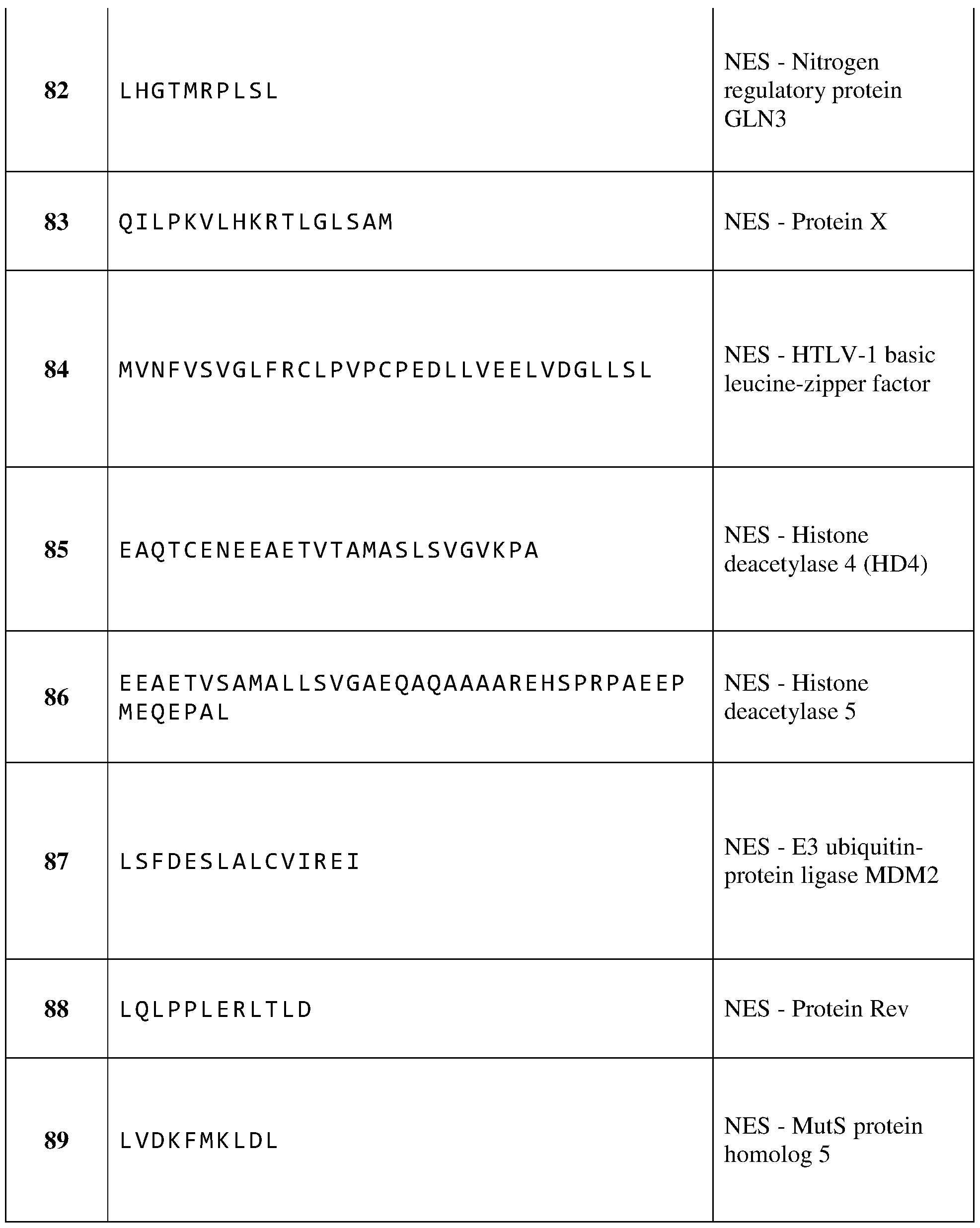


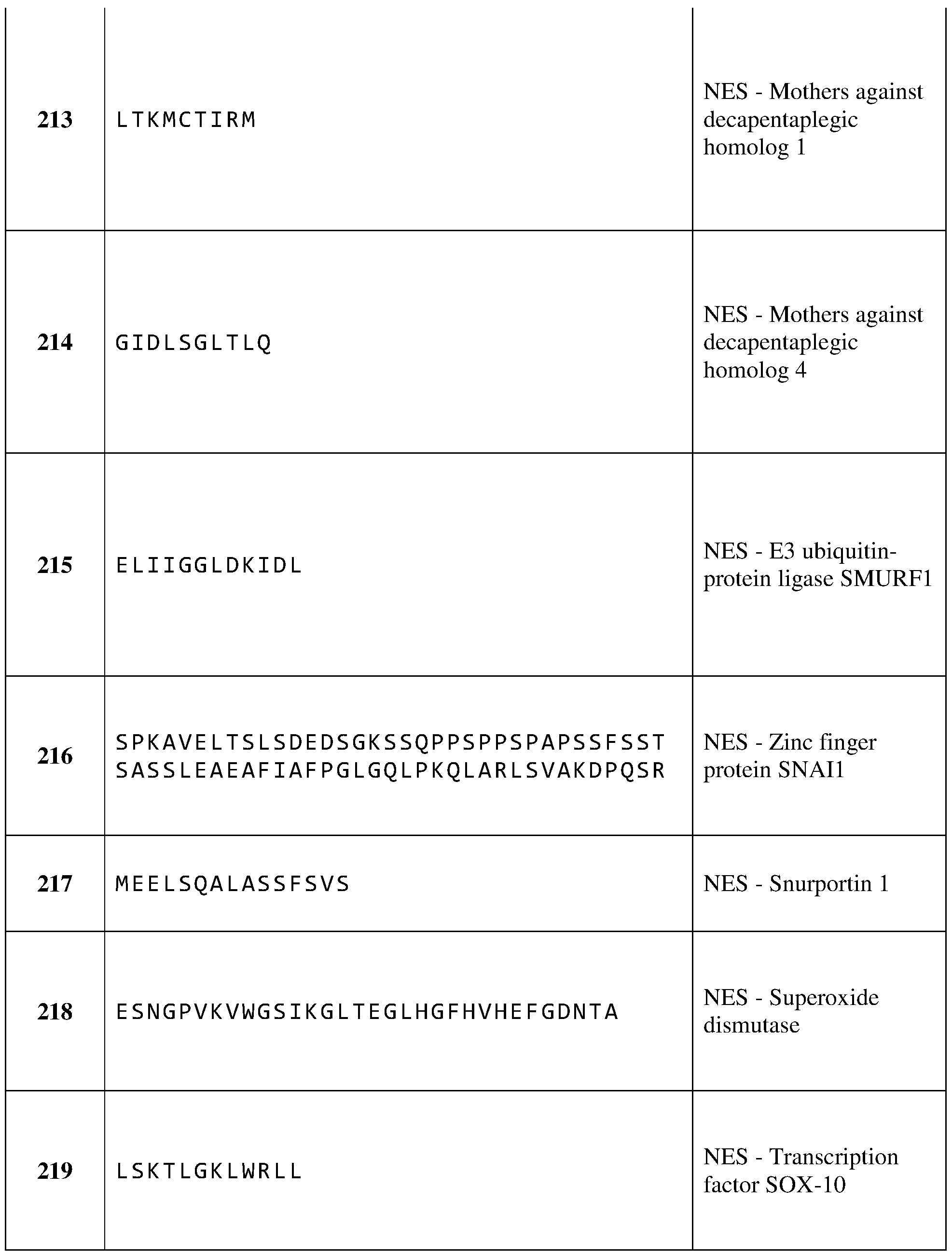


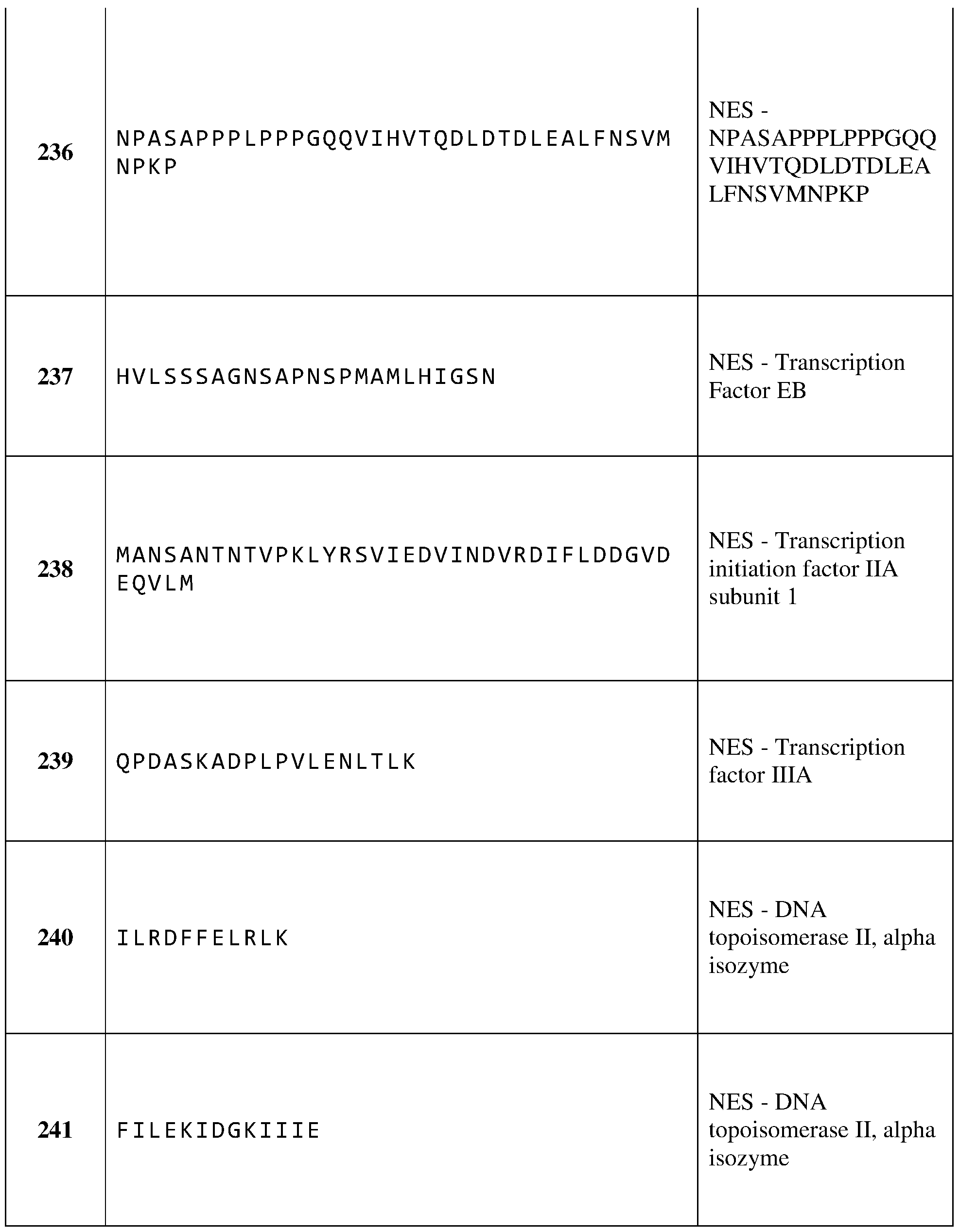


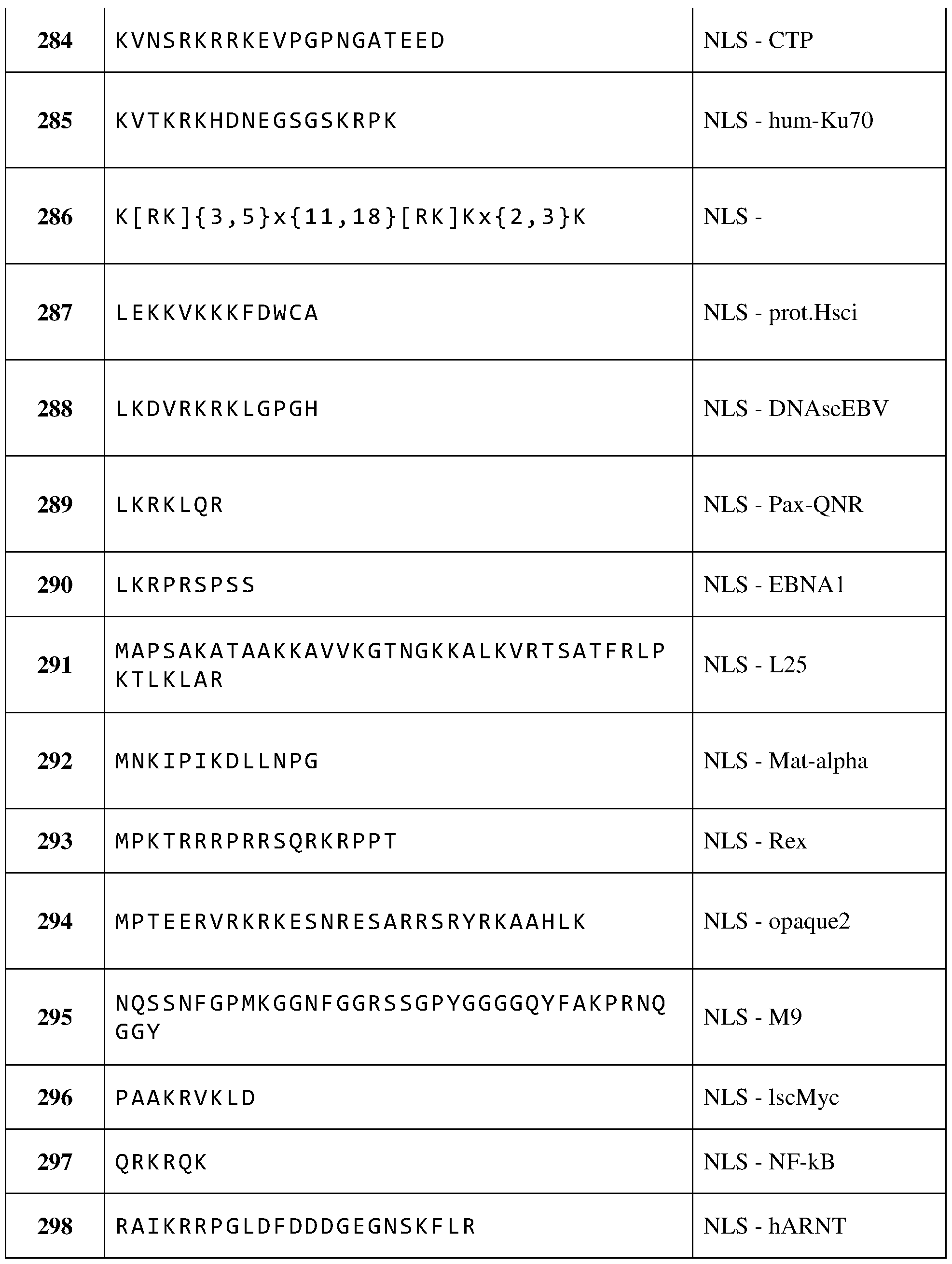


* Unless otherwise specified, nucleic acid sequences are described 5' to 3' and amino acid sequences are described N-terminus to C-terminus ** ‘NT’ denotes a nucleic acid sequence; ‘AA’ denotes an amino acid sequence.
Other Embodiments
[0122] Embodiment 1. A method comprising administering an isolated nucleic acid to a multinucleate cell, wherein the isolated nucleic acid comprises a sequence encoding a fusion protein, the fusion protein comprising, a protein of interest fused to at least the following migration signals: (a) at least one nuclear export signal (NES); and (b) at least one nuclear localization signal (NLS) and/or at least one nucleolar localization signal (NoLS), optionally,
wherein the isolated nucleic acid encodes an amino acid sequence comprising a sequence with at least 70% identity to SEQ ID NO: 13.
[0123] Embodiment 2. The method of embodiment 1, wherein the fusion protein further comprises at least one additional migration signal, wherein the additional migration signal may be identical or distinct from the migration signals used in embodiment 1.
[0124] Embodiment 3. The method of any one of embodiments 1-2, wherein the fusion protein further comprises at least two additional migration signals, wherein the additional migration signals may be identical or distinct from the migration signals used in any one of embodiments 1-2.
[0125] Embodiment 4. The method of any one of embodiments 1-3, wherein the isolated nucleic acid encodes a fusion protein wherein at least one of the migration signals is positioned at the C-terminus of the protein of interest.
[0126] Embodiment 5. The method of any one of embodiments 1-3, wherein the isolated nucleic acid encodes a fusion protein wherein at least one of the migration signals is positioned at the N-terminus of the protein of interest.
[0127] Embodiment 6. The method of any one of embodiments 1-5, wherein the protein of interest is a therapeutic protein.
[0128] Embodiment 7. The method of any one of embodiments 1-5, wherein the protein of interest is a nuclear protein.
[0129] Embodiment 8. The method of any one of embodiments 1-5, wherein the protein of interest is at least one of the following: a transcriptional factor, a transcriptional repressor, an RNA binding protein, a DNA modifying protein, a DNA editing protein, and a Cas protein. [0130] Embodiment 9. The method of any one of embodiments 1-5, wherein the protein of interest is DUX4, or variant thereof.
[0131] Embodiment 10. The method of any one of embodiments 1-5, wherein the protein of interest carries RNA.
[0132] Embodiment 11. The method of any one of embodiments 1-5, wherein the protein of interest be used to treat Facioscapulohumeral dystrophy.
[0133] Embodiment 12. The method of any one of embodiments 1-11, wherein the isolated nucleic acid is flanked by adeno-associated virus (AAV) inverted terminal repeats (ITRs).
[0134] Embodiment 13. The method of any one of embodiments 1-12, wherein the multinucleate cell is a skeletal muscle cell.
[0135] Embodiment 14. The method of any one of embodiments 1-12, wherein the multinucleate cell is a liver cell.
[0136] Embodiment 15. The method of any one of embodiments 1-14, wherein the nucleic acid is administered to a subject.
[0137] Embodiment 16. The method of any one of embodiments 1-15, wherein the subject has a disorder.
[0138] Embodiment 17. The method of embodiment 16, wherein the protein of interest treats the disorder.
[0139] Embodiment 18. The method of any one of embodiments 16-17, wherein the disorder is Facioscapulohumeral dystrophy.
[0140] Embodiment 19. The method of any one of embodiments 16-18, wherein the protein of interest treats Facioscapulohumeral dystrophy.
[0141] Embodiment 20. The method of any one of embodiments 15-19, wherein the subject is mammalian.
[0142] Embodiment 21. The method of any one of embodiments 15-20, wherein the subject is human.
[0143] Embodiment 22. A fusion protein comprising: (a) a protein of interest; and (b) at least the following migration signals: (i) a nuclear export signal (NES); (ii) a nuclear localization signal (NLS); and (iii) a nucleolar localization signal (NoLS), optionally, wherein the fusion protein comprises a sequence with at least 70% identity to SEQ ID NO: 13.
[0144] .
[0145] Embodiment 23. The fusion protein of embodiment 22, further comprising at least one additional migration signal, wherein the additional migration signal may be identical or distinct from the migration signals used in embodiment 22.
[0146] Embodiment 24. The fusion protein of any one of embodiments 22-23, further comprising at least two additional migration signals, wherein the additional migration signals may be identical or distinct from the migration signals used in any one of embodiments 22-23. [0147] Embodiment 25. The fusion protein of any one of embodiments 22-24, wherein the at least one of the migration signals is positioned at the C-terminus of the protein of interest.
[0148] Embodiment 26. The fusion protein of any one of embodiments 22-24, wherein at least one of the migration signals is positioned at the N-terminus of the protein of interest.
. embodiment
[0149] Embodiment 27. The fusion protein of any one of embodiments 22-26, wherein at least one of the migration signals is linked to the protein of interest via a linker.
[0150] Embodiment 28. The fusion protein of any one of embodiments 22-27, wherein at least one of the migration signals comprises a sequence with at least 95% identity to SEQ ID NO: 1-6 or 14-570.
[0151] Embodiment 29. The fusion protein of any one of embodiments 22-28, wherein at least one of the migration signals comprises a sequence with at least 95% identity to SEQ ID NO: 3. [0152] Embodiment 30. The fusion protein of any one of embodiments 22-29, wherein at least one of the migration signals comprises a sequence of SEQ ID NO: 1.
[0153] Embodiment 31. The fusion protein of any one of embodiments 22-30, wherein at least one of the migration signals comprises a sequence of SEQ ID NO: 3.
[0154] Embodiment 32. The fusion protein of any one of embodiments 22-31, wherein at least one of the migration signals comprises a sequence of SEQ ID NO: 1 and at least one of the migration signals comprises a sequence of SEQ ID NO: 3.
[0155] Embodiment 33. The fusion protein of the method of any one of embodiments 1-21, or the fusion protein of any one of embodiments 22-31, wherein at least one of the migration signals is linked to at least one other migration signal via a linker.
[0156] Embodiment 34. An isolated nucleic acid comprising a nucleic acid sequence encoding the fusion protein of the method of any one of embodiments 1-21, or the fusion protein of any one of embodiments 22-31.
[0157] Embodiment 35. The isolated nucleic acid of embodiment 34, further comprising a promoter operably linked to the sequence encoding the fusion protein.
[0158] Embodiment 36. The isolated nucleic acid of embodiment 35, wherein the promoter is a constitutive promoter, an inducible promoter, or a tissue specific promoter.
[0159] Embodiment 37. The isolated nucleic acid of any one of embodiments 35-36, wherein the promoter is a tissue specific promoter.
[0160] Embodiment 38. The isolated nucleic acid of embodiment 37, wherein the tissue specific promoter is specific to skeletal muscle.
[0161] Embodiment 39. The isolated nucleic acid of embodiment 37, wherein the tissue specific promoter is specific to liver tissue.
[0162] Embodiment 40. The isolated nucleic acid of any one of embodiments34-39, further comprising at least one additional regulatory sequence.
[0163] Embodiment 41. A recombinant adeno-associated virus (rAAV), comprising: (a) the isolated nucleic acid of any one of embodiments 34-40 flanked by adeno-associated virus (AAV) inverted terminal repeats (ITRs); and (b) an AAV capsid protein.
[0164] Embodiment 42. The rAAV of embodiment 41, wherein the AAV capsid protein exhibits a tropism for skeletal muscle.
[0165] Embodiment 43. The rAAV of embodiment 41, wherein the AAV capsid protein exhibits a tropism for liver tissue.
[0166] Embodiment 44. The rAAV of any one of embodiments 41-42, wherein the AAV capsid protein serotype is selected from: AAV1 and AAV6.
[0167] Embodiment 45. The rAAV of any one of embodiments 44, wherein the AAV capsid protein serotype is AAV6.
[0168] Embodiment 46. The rAAV of any one of embodiments 41-43, wherein the AAV capsid protein serotype is selected from: AAV7; AAV8; and AAV9.
[0169] Embodiment 47. A composition comprising the isolated nucleic acid of any one of embodiments 34-40, or the rAAV of any one of embodiments 41-46, and a pharmaceutically acceptable excipient.
[0170] Embodiment 48. The composition of embodiment 47, wherein the composition is formulated for intramuscular administration, intrathecal administration, intravenous administration, retrograde intravenous administration, intravascular administration, systemic administration, intra-arterial administration, intraportal administration, intratracheal administration, or direct injection.
[0171] Embodiment 49. A method of delivering a fusion protein to multinucleate cells, comprising, administering the fusion protein of any one of embodiments 22-32, the isolated nucleic acid of any one of embodiments 34-40, the rAAV of any one of embodiments 41-46, or the composition of any one of embodiments 47-48 to a subject.
[0172] Embodiment 50. The fusion protein of any one of embodiments 22-32, the isolated nucleic acid of any one of embodiments 34-40, the rAAV of any one of embodiments 41-46, or
the composition of any one of embodiments 47-48, or the fusion protein of the method of embodiment 49, wherein the protein of interest is a therapeutic protein.
[0173] Embodiment 51. The fusion protein of any one of embodiments 22-32, the isolated nucleic acid of any one of embodiments 34-40, the rAAV of any one of embodiments 41-46, or the composition of any one of embodiments 47-48, or the fusion protein of the method of embodiment 49, wherein the protein of interest is a transcriptional factor, transcriptional repressor, RNA binding protein, DNA modifying protein, DNA editing protein, Cas protein, DUX4, or an protein carrying an RNA.
[0174] Embodiment 52. The fusion protein of any one of embodiments 22-32, the isolated nucleic acid of any one of embodiments 34-40, the rAAV of any one of embodiments 41-46, or the composition of any one of embodiments 47-4841-42, or the fusion protein of the method of embodiment 49, wherein the protein of interest is a nuclear protein.
[0175] Embodiment 53. The method of embodiment 49, wherein the subject is mammalian. [0176] Embodiment 54. The method of any one of embodiments 49 or 53, wherein the subject is human.
[0177] Embodiment 55. The method of any one of embodiments 49 or 53-54, wherein the subject has a disorder.
[0178] Embodiment 56. The method of embodiment 55, wherein the disorder is Facioscapulohumeral dystrophy.
General Techniques
[0179] The practice of the subject matter of the disclosure will employ, unless otherwise indicated, conventional techniques of molecular biology (including recombinant techniques), microbiology, cell biology, biochemistry and immunology, which are within the skill of the art. Such techniques are explained fully in the literature, such as, but without limiting, Molecular Cloning: A Laboratory Manual, second edition (Sambrook, et al., 1989) Cold Spring Harbor Press; Oligonucleotide Synthesis (M. J. Gait, ed., 1984); Methods in Molecular Biology,
Humana Press; Cell Biology: A Laboratory Notebook (J. E. Cellis, ed., 1998) Academic Press; Animal Cell Culture (R. I. Freshney, ed., 1987); Introduction to Cell and Tissue Culture (J. P. Mather and P. E. Roberts, 1998) Plenum Press; Cell and Tissue Culture: Laboratory Procedures (A. Doyle, J. B. Griffiths, and D. G. Newell, eds., 1993-8) J. Wiley and Sons; Methods in Enzymology (Academic Press, Inc.); Handbook of Experimental Immunology (D. M. Weir and
C. C. Blackwell, eds.); Gene Transfer Vectors for Mammalian Cells (J. M. Miller and M. P. Calos, eds., 1987); Current Protocols in Molecular Biology (F. M. Ausubel, et al., eds., 1987); PCR: The Polymerase Chain Reaction, (Mullis, et al., eds., 1994); Current Protocols in Immunology (J. E. Coligan et al., eds., 1991); Short Protocols in Molecular Biology (Wiley and Sons, 1999); Immunobiology (C. A. Janeway and P. Travers, 1997); Antibodies (P. Finch, 1997); Antibodies: a practical approach (D. Catty., ed., IRL Press, 1988-1989); Monoclonal antibodies: a practical approach (P. Shepherd and C. Dean, eds., Oxford University Press, 2000); Using antibodies: a laboratory manual (E. Harlow and D. Lane (Cold Spring Harbor Laboratory Press, 1999); The Antibodies (M. Zanetti and J. D. Capra, eds., Harwood Academic Publishers, 1995).
Equivalents and Scope
[0180] It is to be understood that this disclosure is not limited to any or all of the particular embodiments described expressly herein, and as such may, of course, vary. It is also to be understood that the terminology used herein is for the purpose of describing particular embodiments only, and is not intended to be limiting.
[0181] Unless defined otherwise, all technical and scientific terms used herein have the same meaning as commonly understood by one of ordinary skill in the art to which this disclosure belongs. Although any methods and materials similar or equivalent to those described herein can also be used in the practice or testing of the present disclosure, the preferred methods and materials are now described.
[0182] All publications and patents cited in this specification are cited to disclose and describe the methods and/or materials in connection with which the publications are cited. All such publications and patents are herein incorporated by references as if each individual publication or patent were specifically and individually indicated to be incorporated by reference. Such incorporation by reference is expressly limited to the methods and/or materials described in the cited publications and patents and does not extend to any lexicographical definitions from the cited publications and patents (i.e., any lexicographical definition in the publications and patents cited that is not also expressly repeated in the disclosure should not be treated as such and should not be read as defining any terms appearing in the accompanying claims). If there is a conflict between any of the incorporated references and this disclosure, this disclosure shall control. In addition, any particular embodiment of this disclosure that falls within the prior art may be explicitly excluded from any one or more of the claims. Because such embodiments are deemed
to be known to one of ordinary skill in the art, they may be excluded even if the exclusion is not set forth explicitly herein. Any particular embodiment of the disclosure can be excluded from any claim, for any reason, whether or not related to the existence of prior art.
[0183] The citation of any publication is for its disclosure prior to the filing date and should not be construed as an admission that the present disclosure is not entitled to antedate such publication by virtue of prior disclosure. Further, the dates of publication provided could be different from the actual publication dates that may need to be independently confirmed.
[0184] As will be apparent to those of skill in the art upon reading this disclosure, each of the individual embodiments described and illustrated herein has discrete components and features which may be readily separated from or combined with the features of any of the other several embodiments without departing from the scope or spirit of the present disclosure. Any recited method can be carried out in the order of events recited or in any other order that is logically possible.
[0185] In the claims articles such as “a,” “an,” and “the” may mean one or more than one unless indicated to the contrary or otherwise evident from the context. Wherever used herein, a pronoun in a gender ( e.g ., masculine, feminine, neuter, other, etc...) the pronoun shall be construed as gender neutral (e.g., construed to refer to all genders equally) regardless of the implied gender unless the context clearly indicates or requires otherwise. Wherever used herein, words used in the singular include the plural, and words used in the plural includes the singular, unless the context clearly indicates or requires otherwise. Claims or descriptions that include “or” between one or more members of a group are considered satisfied if one, more than one, or all of the group members are present in, employed in, or otherwise relevant to a given product or process unless indicated to the contrary or otherwise evident from the context. The disclosure includes embodiments in which exactly one member of the group is present in, employed in, or otherwise relevant to a given product or process. The disclosure includes embodiments in which more than one, or all of the group members are present in, employed in, or otherwise relevant to a given product or process.
[0186] Furthermore, the disclosure encompasses all variations, combinations, and permutations in which one or more limitations, elements, clauses, and descriptive terms from one or more of the listed claims is introduced into another claim. For example, any claim that is dependent on another claim can be modified to include one or more limitations found in any other claim that is
dependent on the same base claim. Where elements are presented as lists ( e.g ., in Markush group format), each subgroup of the elements is also disclosed, and any element(s) can be removed from the group. It should it be understood that, in general, where the disclosure, or aspects of the disclosure, is/are referred to as comprising particular elements and/or features, certain embodiments of the disclosure or aspects of the disclosure consist, or consist essentially of, such elements and/or features. For purposes of simplicity, those embodiments have not been specifically set forth in haec verba herein. It is also noted that the terms “comprising” and “containing” are intended to be open and permits the inclusion of additional elements or steps. Where ranges are given, endpoints are included in such ranges unless otherwise specified. Furthermore, unless otherwise indicated or otherwise evident from the context and understanding of one of ordinary skill in the art, values that are expressed as ranges can assume any specific value or sub-range within the stated ranges in different embodiments of the disclosure, to the tenth of the unit of the lower limit of the range, unless the context clearly dictates otherwise. [0187] Those skilled in the art will recognize or be able to ascertain using no more than routine experimentation many equivalents to the specific embodiments described herein. The scope of the present embodiments described herein is not intended to be limited to the above Description, but rather is as set forth in the appended claims. Those of ordinary skill in the art will appreciate that various changes and modifications to this description may be made without departing from the spirit or scope of the disclosure, as defined in the following claims.
Claims
1. A method comprising administering an isolated nucleic acid to a multinucleate cell, wherein the isolated nucleic acid comprises a sequence encoding a fusion protein, the fusion protein comprising, a protein of interest fused to at least the following migration signals:
(a) at least one nuclear export signal (NES); and
(b) at least one nuclear localization signal (NLS) and/or at least one nucleolar localization signal (NoLS), optionally, wherein the isolated nucleic acid encodes an amino acid sequence comprising a sequence with at least 70% identity to SEQ ID NO: 13.
2. The method of claim 1, wherein the fusion protein further comprises at least one additional migration signal, wherein the additional migration signal may be identical or distinct from the migration signals used in claim 1.
3. The method of any one of claims 1-2, wherein the fusion protein further comprises at least two additional migration signals, wherein the additional migration signals may be identical or distinct from the migration signals used in any one of claims 1-2.
4. The method of any one of claims 1-3, wherein the isolated nucleic acid encodes a fusion protein wherein at least one of the migration signals is positioned at the C-terminus of the protein of interest.
5. The method of any one of claims 1-3, wherein the isolated nucleic acid encodes a fusion protein wherein at least one of the migration signals is positioned at the N-terminus of the protein of interest.
6. The method of any one of claims 1-5, wherein the protein of interest is a therapeutic protein.
7. The method of any one of claims 1-5, wherein the protein of interest is a nuclear protein.
8. The method of any one of claims 1-5, wherein the protein of interest is at least one of the following: a transcriptional factor, a transcriptional repressor, an RNA binding protein, a DNA modifying protein, a DNA editing protein, and a Cas protein.
9. The method of any one of claims 1-5, wherein the protein of interest is DUX4, or variant thereof.
10. The method of any one of claims 1-5, wherein the protein of interest carries RNA.
11. The method of any one of claims 1-5, wherein the protein of interest be used to treat
Facioscapulohumeral dystrophy.
12. The method of any one of claims 1-11, wherein the isolated nucleic acid is flanked by adeno-associated vims (AAV) inverted terminal repeats (ITRs).
13. The method of any one of claims 1-12, wherein the multinucleate cell is a skeletal muscle cell.
14. The method of any one of claims 1-12, wherein the multinucleate cell is a liver cell.
15. The method of any one of claims 1-14, wherein the nucleic acid is administered to a subject.
16. The method of any one of claims 1-15, wherein the subject has a disorder.
17. The method of claim 16, wherein the protein of interest treats the disorder.
18. The method of any one of claims 16-17, wherein the disorder is Facioscapulohumeral dystrophy.
19. The method of any one of claims 16-18, wherein the protein of interest treats Facioscapulohumeral dystrophy.
20. The method of any one of claims 15-19, wherein the subject is mammalian.
21. The method of any one of claims 15-20, wherein the subject is human.
22. A fusion protein comprising:
(a) a protein of interest; and
(b) at least the following migration signals:
(i) a nuclear export signal (NES);
(ii) a nuclear localization signal (NLS); and
(iii) a nucleolar localization signal (NoLS), optionally, wherein the fusion protein comprises a sequence with at least 70% identity to SEQ ID NO: 13.
23. The fusion protein of claim 22, further comprising at least one additional migration signal, wherein the additional migration signal may be identical or distinct from the migration signals used in claim 22.
24. The fusion protein of any one of claims 22-23, further comprising at least two additional migration signals, wherein the additional migration signals may be identical or distinct from the migration signals used in any one of claims 22-23.
25. The fusion protein of any one of claims 22-24, wherein the at least one of the migration signals is positioned at the C-terminus of the protein of interest.
26. The fusion protein of any one of claims 22-24, wherein at least one of the migration signals is positioned at the N-terminus of the protein of interest.
27. The fusion protein of any one of claims 22-26, wherein at least one of the migration signals is linked to the protein of interest via a linker.
28. The fusion protein of any one of claims 22-27, wherein at least one of the migration signals comprises a sequence with at least 95% identity to SEQ ID NO: 1-6 or 14-570.
29. The fusion protein of any one of claims 22-28, wherein at least one of the migration signals comprises a sequence with at least 95% identity to SEQ ID NO: 3.
30. The fusion protein of any one of claims 22-29, wherein at least one of the migration signals comprises a sequence of SEQ ID NO: 1.
31. The fusion protein of any one of claims 22-30, wherein at least one of the migration signals comprises a sequence of SEQ ID NO: 3.
32. The fusion protein of any one of claims 22-31, wherein at least one of the migration signals comprises a sequence of SEQ ID NO: 1 and at least one of the migration signals comprises a sequence of SEQ ID NO: 3.
33. The fusion protein of the method of any one of claims 1-21, or the fusion protein of any one of claims 22-31, wherein at least one of the migration signals is linked to at least one other migration signal via a linker.
34. An isolated nucleic acid comprising a nucleic acid sequence encoding the fusion protein of the method of any one of claims 1-21, or the fusion protein of any one of claims 22-31.
35. The isolated nucleic acid of claim 34, further comprising a promoter operably linked to the sequence encoding the fusion protein.
36. The isolated nucleic acid of claim 35, wherein the promoter is a constitutive promoter, an inducible promoter, or a tissue specific promoter.
37. The isolated nucleic acid of any one of claims 35-36, wherein the promoter is a tissue specific promoter.
38. The isolated nucleic acid of claim 37, wherein the tissue specific promoter is specific to skeletal muscle.
39. The isolated nucleic acid of claim 37, wherein the tissue specific promoter is specific to liver tissue.
40. The isolated nucleic acid of any one of claims34-39, further comprising at least one additional regulatory sequence.
41. A recombinant adeno-associated vims (rAAV), comprising:
(a) the isolated nucleic acid of any one of claims 34-40 flanked by adeno-associated virus (AAV) inverted terminal repeats (ITRs); and
(b) an AAV capsid protein.
42. The rAAV of claim 41, wherein the AAV capsid protein exhibits a tropism for skeletal muscle.
43. The rAAV of claim 41, wherein the AAV capsid protein exhibits a tropism for liver tissue.
44. The rAAV of any one of claims 41-42, wherein the AAV capsid protein serotype is selected from: AAV1 and AAV6.
45. The rAAV of any one of claims 44, wherein the AAV capsid protein serotype is AAV6.
46. The rAAV of any one of claims 41-43, wherein the AAV capsid protein serotype is selected from: AAV7; AAV8; and AAV9.
47. A composition comprising the isolated nucleic acid of any one of claims 34-40, or the rAAV of any one of claims 41-46, and a pharmaceutically acceptable excipient.
48. The composition of claim 47, wherein the composition is formulated for intramuscular administration, intrathecal administration, intravenous administration, retrograde intravenous administration, intravascular administration, systemic administration, intra-arterial administration, intraportal administration, intratracheal administration, or direct injection.
49. A method of delivering a fusion protein to multinucleate cells, comprising, administering the fusion protein of any one of claims 22-32, the isolated nucleic acid of any one of claims 34- 40, the rAAV of any one of claims 41-46, or the composition of any one of claims 47-48 to a subject.
50. The fusion protein of any one of claims 22-32, the isolated nucleic acid of any one of claims 34-40, the rAAV of any one of claims 41-46, or the composition of any one of claims 47- 48, or the fusion protein of the method of claim 49, wherein the protein of interest is a therapeutic protein.
51. The fusion protein of any one of claims 22-32, the isolated nucleic acid of any one of claims 34-40, the rAAV of any one of claims 41-46, or the composition of any one of claims 47- 48, or the fusion protein of the method of claim 49, wherein the protein of interest is a transcriptional factor, transcriptional repressor, RNA binding protein, DNA modifying protein, DNA editing protein, Cas protein, DUX4, or an protein carrying an RNA.
52. The fusion protein of any one of claims 22-32, the isolated nucleic acid of any one of claims 34-40, the rAAV of any one of claims 41-46, or the composition of any one of claims 47- 4841-42, or the fusion protein of the method of claim 49, wherein the protein of interest is a nuclear protein.
53. The method of claim 49, wherein the subject is mammalian.
54. The method of any one of claims 49 or 53, wherein the subject is human.
55. The method of any one of claims 49 or 53-54, wherein the subject has a disorder.
56. The method of claim 55, wherein the disorder is Facioscapulohumeral dystrophy.
Priority Applications (2)
| Application Number | Priority Date | Filing Date | Title |
|---|---|---|---|
| US17/927,337 US20240391969A1 (en) | 2020-05-22 | 2021-05-21 | Methods and compositions to spread protein cargoes across multi-nucleated cells |
| EP21809074.4A EP4153742A4 (en) | 2020-05-22 | 2021-05-21 | METHODS AND COMPOSITIONS FOR DISTRIBUTION OF PROTEIN CARGOES ACROSS MULTINUCLEATED CELLS |
Applications Claiming Priority (2)
| Application Number | Priority Date | Filing Date | Title |
|---|---|---|---|
| US202063029303P | 2020-05-22 | 2020-05-22 | |
| US63/029,303 | 2020-05-22 |
Publications (1)
| Publication Number | Publication Date |
|---|---|
| WO2021237104A1 true WO2021237104A1 (en) | 2021-11-25 |
Family
ID=78707686
Family Applications (1)
| Application Number | Title | Priority Date | Filing Date |
|---|---|---|---|
| PCT/US2021/033680 Ceased WO2021237104A1 (en) | 2020-05-22 | 2021-05-21 | Methods and compositions to spread protein cargoes across multi-nucleated cells |
Country Status (3)
| Country | Link |
|---|---|
| US (1) | US20240391969A1 (en) |
| EP (1) | EP4153742A4 (en) |
| WO (1) | WO2021237104A1 (en) |
Citations (3)
| Publication number | Priority date | Publication date | Assignee | Title |
|---|---|---|---|---|
| US20030049712A1 (en) * | 2001-07-31 | 2003-03-13 | Michael Haugwitz | Method of detecting protease activity in a cell |
| US20130288976A1 (en) * | 2010-08-18 | 2013-10-31 | Fred Hutchinson Cancer Research Center | Methods for Determining the Presence or Risk of Developing Facioscapulohumeral Dystrophy (FSHD) |
| WO2020232271A1 (en) * | 2019-05-14 | 2020-11-19 | The Broad Institute, Inc. | Compositions and methods for targeting multinucleated cells |
Family Cites Families (3)
| Publication number | Priority date | Publication date | Assignee | Title |
|---|---|---|---|---|
| ES2596977T3 (en) * | 2010-09-02 | 2017-01-13 | Université de Mons | Agents useful in the treatment of facioscapulohumeral muscular dystrophy |
| EP2736539B1 (en) * | 2011-07-25 | 2017-08-23 | Nationwide Children's Hospital, Inc. | Recombinant virus products and methods for inhibition of expression of dux4 |
| EP3515506B1 (en) * | 2016-09-23 | 2023-09-13 | University of Massachusetts | Silencing of dux4 by recombinant gene editing complexes |
-
2021
- 2021-05-21 US US17/927,337 patent/US20240391969A1/en active Pending
- 2021-05-21 WO PCT/US2021/033680 patent/WO2021237104A1/en not_active Ceased
- 2021-05-21 EP EP21809074.4A patent/EP4153742A4/en active Pending
Patent Citations (3)
| Publication number | Priority date | Publication date | Assignee | Title |
|---|---|---|---|---|
| US20030049712A1 (en) * | 2001-07-31 | 2003-03-13 | Michael Haugwitz | Method of detecting protease activity in a cell |
| US20130288976A1 (en) * | 2010-08-18 | 2013-10-31 | Fred Hutchinson Cancer Research Center | Methods for Determining the Presence or Risk of Developing Facioscapulohumeral Dystrophy (FSHD) |
| WO2020232271A1 (en) * | 2019-05-14 | 2020-11-19 | The Broad Institute, Inc. | Compositions and methods for targeting multinucleated cells |
Non-Patent Citations (3)
| Title |
|---|
| CUTLER ALICIA A., JACKSON JENNIFER B., CORBETT ANITA H., PAVLATH GRACE K.: "Non-equivalence of nuclear import among nuclei in multinucleated skeletal muscle cells", JOURNAL OF CELL SCIENCE, COMPANY OF BIOLOGISTS LIMITED, CAMBRIDGE, 5 February 2018 (2018-02-05), Cambridge , XP055881118, ISSN: 0021-9533, DOI: 10.1242/jcs.207670 * |
| MARCHAND CLAUDE, LEMAY GUY, ARCHAMBAULT DENIS: "The Jembrana disease virus Rev protein: Identification of nuclear and novel lentiviral nucleolar localization and nuclear export signals", PLOS ONE, vol. 14, no. 8, pages e0221505, XP055881116, DOI: 10.1371/journal.pone.0221505 * |
| See also references of EP4153742A4 * |
Also Published As
| Publication number | Publication date |
|---|---|
| EP4153742A1 (en) | 2023-03-29 |
| US20240391969A1 (en) | 2024-11-28 |
| EP4153742A4 (en) | 2024-06-12 |
Similar Documents
| Publication | Publication Date | Title |
|---|---|---|
| JP7182873B2 (en) | Multiple vector system and its use | |
| CN112368390B (en) | Gene therapy for CNS degeneration | |
| US20210054405A1 (en) | Closed-ended dna (cedna) vectors for insertion of transgenes at genomic safe harbors (gsh) in humans and murine genomes | |
| CN116194154A (en) | PLAKOPHILIN-2 (PKP2) Gene Therapy Using AAV Vectors | |
| JP2021502058A (en) | Compositions and methods for editing RNA | |
| JP2024050766A (en) | Modified viral capsids | |
| KR20200124250A (en) | Controlled expression of transgenes using closed-ended DNA (CEDNA) vectors | |
| EP3924491A1 (en) | Modulation of rep protein activity in closed-ended dna (cedna) production | |
| KR20240164824A (en) | Compositions and methods comprising engineered small nuclear RNA (SNRNA) | |
| US20220347317A1 (en) | Aavrh74 vectors for gene therapy of muscular dystrophies | |
| JP7846677B2 (en) | Muscle-specific hybrid promoter | |
| US12383615B2 (en) | Protoparvovirus compositions comprising a protoparvovirus variant VP1 capsid polypeptide and related methods | |
| CN117580948A (en) | Synthetic Cas12a for enhanced multiplex gene control and editing | |
| AU2024276934A1 (en) | Adeno-associated virus capsid protein, adeno-associated virus containing same, vector and use thereof | |
| CN121127599A (en) | Recombinant AAV mutant vectors with specific targeting motifs for cardiac and skeletal muscle, and compositions containing them. | |
| TW201837173A (en) | shRNA expression cassette, polynucleotide sequence carrying same and application thereof sequentially containing a DNA sequence for expressing shRNA and a filling sequence according to a sequence 5'-3' | |
| AU2021255934A1 (en) | Compositions and methods for treatment of neurological disorders | |
| WO2023184107A1 (en) | Crispr-cas13 system for treating mecp2-associated diseases | |
| WO2021237104A1 (en) | Methods and compositions to spread protein cargoes across multi-nucleated cells | |
| US20250011791A1 (en) | Rnai therapy for apbd and lafora disease | |
| JP2023545384A (en) | Recombinant adeno-associated virus for central nervous system or muscle delivery | |
| WO2023184108A1 (en) | Crispr-cas13 system for treating ube3a-associated diseases | |
| EA052057B1 (en) | Compositions and methods comprising engineered small nuclear RNA (snRNA) | |
| TW202545971A (en) | Capsid polypeptides and methods of use thereof | |
| HK40108544A (en) | Synthetic cas12a for enhanced multiplex gene control and editing |
Legal Events
| Date | Code | Title | Description |
|---|---|---|---|
| 121 | Ep: the epo has been informed by wipo that ep was designated in this application |
Ref document number: 21809074 Country of ref document: EP Kind code of ref document: A1 |
|
| ENP | Entry into the national phase |
Ref document number: 2021809074 Country of ref document: EP Effective date: 20221222 |
|
| NENP | Non-entry into the national phase |
Ref country code: DE |