WO2021240903A1 - 情報処理装置、情報処理方法及びプログラム - Google Patents
情報処理装置、情報処理方法及びプログラム Download PDFInfo
- Publication number
- WO2021240903A1 WO2021240903A1 PCT/JP2021/004731 JP2021004731W WO2021240903A1 WO 2021240903 A1 WO2021240903 A1 WO 2021240903A1 JP 2021004731 W JP2021004731 W JP 2021004731W WO 2021240903 A1 WO2021240903 A1 WO 2021240903A1
- Authority
- WO
- WIPO (PCT)
- Prior art keywords
- authentication
- person
- information processing
- information
- processing apparatus
- Prior art date
- Legal status (The legal status is an assumption and is not a legal conclusion. Google has not performed a legal analysis and makes no representation as to the accuracy of the status listed.)
- Ceased
Links
Images





Classifications
-
- G—PHYSICS
- G06—COMPUTING OR CALCULATING; COUNTING
- G06V—IMAGE OR VIDEO RECOGNITION OR UNDERSTANDING
- G06V10/00—Arrangements for image or video recognition or understanding
- G06V10/70—Arrangements for image or video recognition or understanding using pattern recognition or machine learning
- G06V10/74—Image or video pattern matching; Proximity measures in feature spaces
- G06V10/761—Proximity, similarity or dissimilarity measures
-
- G—PHYSICS
- G06—COMPUTING OR CALCULATING; COUNTING
- G06V—IMAGE OR VIDEO RECOGNITION OR UNDERSTANDING
- G06V40/00—Recognition of biometric, human-related or animal-related patterns in image or video data
- G06V40/10—Human or animal bodies, e.g. vehicle occupants or pedestrians; Body parts, e.g. hands
- G06V40/16—Human faces, e.g. facial parts, sketches or expressions
- G06V40/172—Classification, e.g. identification
- G06V40/173—Classification, e.g. identification face re-identification, e.g. recognising unknown faces across different face tracks
-
- G—PHYSICS
- G06—COMPUTING OR CALCULATING; COUNTING
- G06F—ELECTRIC DIGITAL DATA PROCESSING
- G06F18/00—Pattern recognition
- G06F18/20—Analysing
- G06F18/24—Classification techniques
-
- G—PHYSICS
- G06—COMPUTING OR CALCULATING; COUNTING
- G06F—ELECTRIC DIGITAL DATA PROCESSING
- G06F18/00—Pattern recognition
- G06F18/20—Analysing
- G06F18/25—Fusion techniques
- G06F18/253—Fusion techniques of extracted features
-
- G—PHYSICS
- G06—COMPUTING OR CALCULATING; COUNTING
- G06V—IMAGE OR VIDEO RECOGNITION OR UNDERSTANDING
- G06V20/00—Scenes; Scene-specific elements
- G06V20/50—Context or environment of the image
- G06V20/52—Surveillance or monitoring of activities, e.g. for recognising suspicious objects
-
- G—PHYSICS
- G06—COMPUTING OR CALCULATING; COUNTING
- G06V—IMAGE OR VIDEO RECOGNITION OR UNDERSTANDING
- G06V40/00—Recognition of biometric, human-related or animal-related patterns in image or video data
- G06V40/10—Human or animal bodies, e.g. vehicle occupants or pedestrians; Body parts, e.g. hands
- G06V40/12—Fingerprints or palmprints
- G06V40/1365—Matching; Classification
-
- G—PHYSICS
- G06—COMPUTING OR CALCULATING; COUNTING
- G06V—IMAGE OR VIDEO RECOGNITION OR UNDERSTANDING
- G06V40/00—Recognition of biometric, human-related or animal-related patterns in image or video data
- G06V40/10—Human or animal bodies, e.g. vehicle occupants or pedestrians; Body parts, e.g. hands
- G06V40/16—Human faces, e.g. facial parts, sketches or expressions
- G06V40/161—Detection; Localisation; Normalisation
- G06V40/166—Detection; Localisation; Normalisation using acquisition arrangements
-
- G—PHYSICS
- G06—COMPUTING OR CALCULATING; COUNTING
- G06V—IMAGE OR VIDEO RECOGNITION OR UNDERSTANDING
- G06V40/00—Recognition of biometric, human-related or animal-related patterns in image or video data
- G06V40/10—Human or animal bodies, e.g. vehicle occupants or pedestrians; Body parts, e.g. hands
- G06V40/16—Human faces, e.g. facial parts, sketches or expressions
- G06V40/168—Feature extraction; Face representation
-
- H—ELECTRICITY
- H04—ELECTRIC COMMUNICATION TECHNIQUE
- H04N—PICTORIAL COMMUNICATION, e.g. TELEVISION
- H04N23/00—Cameras or camera modules comprising electronic image sensors; Control thereof
- H04N23/60—Control of cameras or camera modules
- H04N23/61—Control of cameras or camera modules based on recognised objects
- H04N23/611—Control of cameras or camera modules based on recognised objects where the recognised objects include parts of the human body
Definitions
- This disclosure relates to information processing devices, information processing methods and programs.
- Patent Document 1 An authentication system that performs face recognition for an unspecified number of people is being studied (see, for example, Patent Document 1).
- Patent Document 1 is a system that authenticates the face of a stationary person such as a seated person at a table, and there is room for consideration as to how to improve the efficiency of authentication in an environment where the person moves.
- the non-limiting examples of the present disclosure contribute to the provision of information processing devices, information processing methods, and programs that improve the efficiency of authentication in an environment in which a person moves.
- the information processing apparatus is based on an authentication circuit that authenticates the person based on the face image of the person in the captured image data and information on attributes related to the time change of the face image.
- a control circuit for controlling the order of re-authentication for a plurality of persons who have failed in the authentication is provided.
- the efficiency of authentication can be improved in an environment where a person moves.
- Flow chart showing an operation example of the authentication system Flowchart showing an example of the process of determining the priority of re-authentication Diagram showing an example of re-authentication priority Figure showing an example of weighting of authentication score Diagram showing an example of computer hardware configuration
- an authentication system that identifies a person by performing face recognition in an area where a large number of people move (or pass), such as outdoors, offices, commercial facilities, or public facilities, is being studied.
- Examples of such an authentication system include use in a system for identifying a person, such as an entry / exit management system and a crime prevention system.
- the cause of the failure of face recognition is temporary concealment or change of the face, the cause may be solved by performing re-authentication at a timing different from the time of failure.
- authentication area the area for which the person to be re-authenticated performs face authentication. May move out of). In this case, the authentication system cannot re-authenticate the person who has moved out of the authentication area, and the authentication efficiency may decrease.
- a method of improving the authentication efficiency in the authentication system in an environment in which a person moves will be described.
- the order in which re-authentication is performed for example, "priority"
- I will explain how to determine (called).
- FIG. 1 is a diagram showing a configuration example of the authentication system 1 according to the present embodiment.
- the authentication system 1 shown in FIG. 1 includes, for example, an information processing device 10 and a camera 20.
- the information processing device 10 and the camera 20 may be connected via a communication network such as a wireless network or a wired network.
- the information processing device 10 may perform face recognition processing based on, for example, image data acquired from the camera 20. Further, the information processing apparatus 10 may perform re-authentication on, for example, a face image of a person who has failed in face authentication (for example, a person who has failed in face authentication). For example, the information processing apparatus 10 may determine an order (for example, priority) for re-authentication for a face image of a person whose face authentication has failed, and perform re-authentication according to the determined priority.
- a face image of a person who has failed in face authentication for example, a person who has failed in face authentication
- the information processing apparatus 10 may determine an order (for example, priority) for re-authentication for a face image of a person whose face authentication has failed, and perform re-authentication according to the determined priority.
- the camera 20 may transmit, for example, image data captured in the authentication area to the information processing device 10.
- the camera 20 may be installed so as to include, for example, an authentication area in a shooting area (or a shooting range).
- the camera 20 may determine a shooting area (in other words, a shooting direction) so as to shoot a plurality of areas in which the authentication area is divided in order.
- the camera 20 may be composed of a plurality of cameras, and the authentication area may be covered by the shooting areas of the plurality of cameras.
- the information processing device 10 shown in FIG. 1 may include, for example, a storage unit 101, an authentication unit 102, and a control unit 103.
- the storage unit 101 may store, for example, information about a person (for example, person information).
- the storage unit 101 may include a database containing personal information.
- the person information may include, for example, information for identifying a person such as an ID or a person's name, and registered image data (for example, called face image data) of a person registered in advance.
- the person information may be, for example, customer information in a customer management system, employee information in an employee management system, information on a criminal or suspicious person in a crime prevention system, or information on another type of person.
- the storage unit 101 may store, for example, an identification model (also referred to as a learned model) used for authentication in the authentication unit 102.
- the storage unit 101 has, for example, information regarding the ease of authentication in the authentication unit 102 (in other words, the ease of authentication, or the direction / unsuitability of authentication) (for example, "quality score” or "priority regarding re-authentication”.
- the discriminative model may be stored for each attribute (or type) of (referred to as).
- the quality score attribute may be, for example, an attribute related to the time change of the facial image.
- the quality score may be based on changes in features of the facial image over time.
- the quality score attribute may include an attribute having a characteristic that does not easily change with the passage of time.
- Features that are less likely to change over time include, for example, masks, sunglasses, hats, beards, makeup (including, for example, face paint) that continuously conceal or change at least part of a person's face. ..
- the attribute of the quality score may include, for example, an attribute having a characteristic that easily changes with the passage of time.
- Features that change over time include, for example, facial expressions, face orientation, eye closure, image blur, lighting (eg, low light or backlight), or at least part of a person's face that is messy.
- lighting eg, low light or backlight
- features that can be concealed or changed include, for example, facial expressions, face orientation, eye closure, image blur, lighting (eg, low light or backlight), or at least part of a person's face that is messy.
- the storage unit 101 may store, for example, an identification model for identifying at least one quality score attribute in the authentication unit 102 (for example, an identification model in which a face wearing sunglasses is learned).
- the authentication unit 102 may perform face authentication of a person based on, for example, the captured image data captured by the camera 20 and the person information stored in the storage unit 101.
- the authentication unit 102 may output, for example, information indicating an authentication result (for example, personal information of an authenticated person or information regarding the success or failure of authentication) to the control unit 103.
- the authentication unit 102 may perform face recognition of a person based on the degree of similarity between the face image data of the person registered in advance in the storage unit 101 and the face image in the image data captured by the camera 20. ..
- the higher the similarity with the registered face image data the higher the information regarding the similarity (hereinafter referred to as “authentication score”) may be set.
- the authentication unit 102 may determine that a person included in the face image data having an authentication score equal to or higher than the threshold value is a person corresponding to the registered face image data. Further, for example, the authentication unit 102 may re-authenticate the face image of a person who has failed in face authentication (person who has failed in face authentication) according to an instruction from the control unit 103.
- the control unit 103 may control the authentication process in the authentication unit 102, for example. For example, the control unit 103 identifies a face authentication failure person (or a face image) based on the information input from the authentication unit 102. When there are a plurality of face recognition failure persons, the control unit 103 may control re-authentication for the plurality of face recognition failure persons based on, for example, the quality score and the authentication score regarding the similarity in face recognition. For example, the control unit 103 may determine the order (for example, called priority) for re-authentication for the face recognition failure person. The control unit 103 may output a re-authentication instruction to the authentication unit 102, for example, based on the determined re-authentication priority.
- control unit 103 may control the operation of the camera 20. For example, the control unit 103 may determine the shooting area of the camera 20 in the authentication area based on the control result (for example, priority) of re-authentication for the face authentication failure person, and instruct the camera 20. Further, the control unit 103 may control, for example, the tracking (or tracking or tracking) processing of the camera 20 for the face image corresponding to the person whose face authentication has failed.
- FIG. 2 is a diagram showing an example of installing the camera 20 in the authentication area.
- the camera 20 may include, for example, a camera 20-1 having a certain shooting area and a camera 20-2 having a shooting area narrower than the shooting area of the camera 20-1.
- the camera 20-1 may be, for example, a wide area camera.
- the camera 20-2 may be, for example, a PTZ (Pan-Tilt-Zoom) camera.
- the camera 20-1 may transmit, for example, image data obtained by capturing at least a part of the authentication area to the information processing apparatus 10.
- the shooting by the camera 20-1 is referred to as “whole shooting”
- the shooting area by the camera 20-1 is referred to as “whole shooting area”.
- the camera 20-2 may transmit, for example, image data captured in a range narrower than the shooting area (or the entire shooting area) of the camera 20-1 to the information processing apparatus 10.
- the shooting by the camera 20-2 is referred to as “individual shooting”, and the shooting area by the camera 20-2 is referred to as “individual shooting area”.
- the camera 20 determines a shooting mode such as a shooting direction or a magnification according to an instruction from the information processing device 10 (for example, a control unit 103 described later). It's okay.
- the information processing apparatus 10 identifies a face portion (for example, a face image) of a person in the authentication area and a person (face image) in the authentication area based on the image data obtained by the whole shooting. Tracking processing may be performed. Further, for example, the information processing apparatus 10 may perform face recognition processing on a person's face image based on the image data obtained by individual shooting.
- identification, tracking and face recognition of a person are not limited to the case of being based on the image data obtained by different cameras, and these processes may be performed based on the image data obtained from a single camera.
- the configuration of the camera 20 is not limited to the configuration example shown in FIG.
- the camera 20 may include a PTZ camera and may not include a wide area camera.
- the camera 20 is not limited to the PTZ camera, and may be a camera having a fixed shooting area. That is, the type and number of cameras 20 are not limited as long as the entire shooting area and the individual shooting area can be shot.
- the data acquired by the camera 20 may be either still image data or moving image data.
- FIG. 3 is a diagram showing an example of control of a shooting area of the camera 20 by the information processing device 10, for example.
- FIG. 3 shows, as an example, a control example of a photographing area in the installation example of the camera 20 shown in FIG.
- the information processing apparatus 10 may switch the entire shooting area by the camera 20 from the area of the whole shooting (1) to the area of the whole shooting (2) in the authentication area.
- the information processing apparatus 10 may control, for example, the identification of a person and the tracking of a person in the authentication area.
- the method of switching the entire shooting area (for example, the switching order, the switching direction, or the area size) is not limited to the example shown in FIG.
- the entire shooting area may be the same size as the authentication area.
- the information processing apparatus 10 sets the individual shooting area by the camera 20 in the order of individual shooting (1), individual shooting (2), and individual shooting (3). You may switch. For example, when the information processing apparatus 10 does not succeed in face recognition within a specified number of frames (or a specified time) in a certain individual shooting area, the information processing device 10 may switch to the individual shooting area of the next person to be authenticated. For example, if the face printed on a poster in the background happens to meet the high priority property of reshooting, the individual including the poster is unlikely to succeed in face recognition. The shooting area continues to be prioritized over other individual shooting areas.
- the information processing apparatus 10 may record, for example, the individual shooting area in which the face recognition is not successful within the specified number of frames as exempt from the subsequent re-authentication. This is because posters and the like do not move and may be subject to recertification again.
- the switching of the photographing area in the authentication area is not limited to the example shown in FIG.
- the information processing device 10 may track, for example, a face image of a person who has failed in face authentication (for example, person 1, person 2 and person 3 in FIG. 3) in the authentication area.
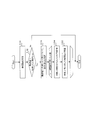
- FIG. 4 is a flowchart showing an operation example of the authentication system 1.
- the information processing apparatus 10 performs face recognition of a person based on the face image of the person in the captured image data acquired from the camera 20 (S101).
- the information processing device 10 determines, for example, whether or not there is a person who has failed in face authentication (for example, a person who has failed in face authentication) as a result of face authentication (S102).
- the information processing device 10 may count, for example, the number of people who have failed face recognition.
- the information processing apparatus 10 may end the process shown in FIG. 2, or return to the process of S101, for example.
- the information processing apparatus 10 may determine, for example, a priority for re-authentication for the face recognition failure person (S103). An example of determining the priority of recertification will be described later.
- the information processing apparatus 10 may control the camera 20 based on the determined priority, for example (S104). For example, the information processing apparatus 10 identifies a person (or a face image) to be re-authenticated in order according to a priority, and shoots the camera 20 so that the person to be re-authenticated is at the center of the shooting area of the camera 20. Operations such as direction and magnification (eg, zoom) may be controlled.
- S104 the information processing apparatus 10 may control the camera 20 based on the determined priority, for example (S104). For example, the information processing apparatus 10 identifies a person (or a face image) to be re-authenticated in order according to a priority, and shoots the camera 20 so that the person to be re-authenticated is at the center of the shooting area of the camera 20. Operations such as direction and magnification (eg, zoom) may be controlled.
- direction and magnification eg, zoom
- the information processing device 10 may perform face recognition (in other words, re-authentication) based on image data obtained by capturing a person to be re-authenticated by the camera 20, for example (S105).
- the information processing apparatus 10 may repeat, for example, the camera control in S104 and the face authentication process in S105 for the number of people who failed in face authentication.
- FIG. 5 is a flowchart showing an example of a process of determining the priority of re-authentication in the information processing apparatus 10.
- the information processing apparatus 10 may classify the face recognition failure person into a plurality of groups based on the quality score (in other words, the priority regarding re-authentication) for each face image of the face recognition failure person (in other words, the priority regarding re-authentication). S131).
- the “quality score” may be, for example, information on attributes related to changes in the face image over time. Further, for example, the quality score may be information on the ease of face recognition (or the ease of face recognition) for a face image. For example, the higher the probability of successful face recognition, the higher the quality score (in other words, the weight related to the attributes of the face image) may be set.
- the quality score may be determined based on the change in characteristics of the facial image over time.
- the quality score may be determined based on facial facial features such as facial expression, facial orientation, eye closure, image blur, lighting, and in facial images such as masks, sunglasses, hats, beards, and makeup. It may be determined based on the presence or absence of features.
- facial facial expression features such as facial expression, face orientation, eye closure, image blurring, and lighting conditions can be said to be features that easily change (or temporarily appear) over time. For example, at one point when a person passes through the authentication area, it may be a laughing face, and at another time, it may be expressionless.
- the face image of a person who has failed face recognition includes the above-mentioned variable features, it has the features that make it easy to succeed in face recognition at different timings (in other words, it does not have the variable features). there is a possibility.
- facial image features such as masks, sunglasses, hats, beards, or makeup can be said to be features that are unlikely to change over time (or features that appear continuously). For example, at a certain timing when a person passes through the authentication area, the person wearing the mask is likely to wear the mask at different timings. For example, when the face image of a person who has failed face recognition includes the above-mentioned features that are difficult to change, it is highly possible that the face image has features that are likely to fail face recognition even at different timings.
- the information processing apparatus 10 sets, for example, a quality score (in other words, a weight) for a face image including features that easily change with the passage of time higher than a quality score for a face image including features that do not easily change with the passage of time. It's okay.
- a quality score in other words, a weight
- a face image having neither a feature that easily changes with the passage of time nor a feature that does not easily change is assumed to be in the same state as the face image registered in advance in the storage unit 101, for example, and face recognition is performed. Can be said to be in a state where it is easy to succeed (in other words, high quality). Therefore, when face recognition fails for a face image in a state where face recognition is likely to succeed, there is a high possibility that the person information is not registered in the storage unit 101, for example. Therefore, for example, even if the information processing apparatus 10 re-authenticates a face image having neither a changeable feature nor a hard-to-change feature, there is a high possibility that the authentication fails again.
- the information processing apparatus 10 sets the quality score for a face image having neither the characteristic that is easily changed with the passage of time and the feature that is not easily changed as described above higher than the quality score for the face image having the characteristic that is easily changed. You can lower it.
- the face image does not have both easily changeable features and hard-to-change features, at least from the viewpoint that the face image can be taken correctly, a part of the face is hidden or partially hidden by the hard-to-change features. It is considered that the face recognition is more likely to be successful than the changing face image.
- the information processing apparatus 10 sets the quality score for a face image having neither the characteristic that is easily changed or the feature that is difficult to change with the passage of time as described above, than the quality score for the face image that has the feature that is hard to change. You may set it high.
- the quality score (or priority) of a facial image having a variable feature is expressed as "high”.
- the quality score (or priority) of a facial image having features that are difficult to change is expressed as "low”.
- the quality score of the facial image having neither the changeable feature nor the hard-to-change feature is expressed as "medium”. In this example, for example, the quality score may be higher in the order of "high”, “medium”, and "low”.
- the information processing apparatus 10 may classify each face recognition failure person into three groups corresponding to each quality score (“high”, “medium”, and “low”) of the face image.
- the information processing apparatus 10 determines the quality score regardless of the presence or absence of the feature that is easily changed. It may be set to "Low”. Further, the information processing apparatus 10 sets the quality score to "high” and changes, for example, when a feature that is difficult to change is not detected and a feature that is easy to change is detected in the face image of a person whose face authentication has failed. If both difficult and variable features are not detected, the quality score may be set to "medium".
- the information processing apparatus 10 may sort the face recognition failure persons in each group based on, for example, the authentication score (S132). For example, the information processing apparatus 10 may sort the face recognition failure persons in descending order of the authentication score.
- the face recognition failure person may be sorted based on the maximum authentication score among the authentication scores with the data.
- the information processing apparatus 10 may determine, for example, the order (for example, priority) of re-authentication for a person whose face authentication has failed (S133).
- the information processing apparatus 10 may determine the priority of re-authentication, for example, in descending order of quality score and in descending order of authentication score within the same group of quality scores.
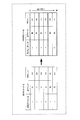
- FIG. 6 is a diagram showing an example of determining the priority.
- the number of people who have failed in face recognition is not limited to six, and may be other people.
- the information processing device 10 determines, for example, a quality score (either "high”, “medium”, or "low") for each of the six face recognition failure persons. Further, the information processing apparatus 10 determines, for example, an authentication score for each of the six face recognition failure persons. The authentication score may be calculated, for example, in the process of face recognition processing.
- the information processing apparatus 10 may determine the priority of re-authentication, for example, in descending order of quality score and in descending order of authentication score within the same group of quality scores.
- the information processing apparatus 10 has an order (priority) of re-authentication for a plurality of persons who have failed in face authentication based on the quality score and the authentication score for the face image of the person in the captured image data acquired from the camera 20. To control.
- the information processing apparatus 10 can perform re-authentication in order from, for example, a person who has a high possibility of succeeding in authentication among face recognition failure persons.
- the information processing apparatus 10 can, for example, re-authenticate a person who has a high possibility of succeeding in re-authentication among a plurality of face recognition-failed persons in an earlier order. Therefore, the information processing apparatus 10 can perform re-authentication, for example, while a person who is likely to succeed in re-authentication exists in the authentication area (in other words, before passing through the authentication area). become.
- the information processing apparatus 10 slows down the order of re-authentication of a person who is unlikely to succeed in authentication among a plurality of persons who have failed face authentication. As a result, for example, in the information processing apparatus 10, it is possible to prevent the re-authentication process for another person who has failed in face authentication from being delayed due to the re-authentication process for a person who is unlikely to succeed in authentication.
- the information processing apparatus 10 can preferentially re-authenticate a person who has a high possibility of succeeding in re-authentication by grouping by a quality score and then sorting by an authentication score. That is, a person with a high quality score is a person who is likely to have failed in authentication due to a temporary cause, and therefore is a person who is likely to be eliminated by re-authentication. By placing such a person at the top of the sort, it is possible to lower the priority of re-authentication for a person who has failed authentication due to a difficult cause, and re-authentication succeeds. You can increase the possibility.
- the number of people who can succeed in face recognition by the authentication system 1 can be increased, so that the authentication efficiency in the authentication system 1 can be improved.
- the information processing apparatus 10 may group the face recognition failure person into any of a plurality of groups based on the authentication score, and sort the face recognition failure person in the order of the quality score in the group (hereinafter,). It is called “priority determination method 2").
- the person whose quality score is "medium” and whose authentication score is lower may be, for example, an unregistered person, and there is a high possibility that the authentication will fail again in the re-authentication.
- the priority determination method 1 since the quality score for such a person is "medium”, in the priority determination method 1, the priority of re-authentication is likely to be set near the center of the entire face recognition failure person.
- the priority determination method 2 since grouping is performed based on the authentication score, a person with an extremely low authentication score is set in a group with a low priority for re-authentication.
- the information processing apparatus 10 can set the priority of re-authentication lower, for example, if the person has a low authentication score even if the quality score is "medium". Similarly, even if the quality score is "high", the priority of recertification for a person with a low certification score can be lowered. That is, with this setting, regardless of the quality score, the lower the authentication score, the slower the order of re-authentication tends to be. Therefore, the information processing apparatus 10 can prioritize the re-authentication of another person whose face authentication has failed. Therefore, the authentication efficiency can be improved.
- the priority order determination method 1 and determination method 2 may be dynamically switched. For example, in the determination method 1, when the authentication process for a person having a quality score of "medium" and a low authentication score continues in chronological order (for example, when the authentication process continues for a specified time or a specified number of times), the information processing apparatus 10 determines. The method 1 may be switched to the determination method 2.
- the priority determination method 2 is authenticated in an environment (or area) where more people (for example, unregistered people) different from the person registered in the person information of the storage unit 101 visit, such as an event venue. It may be applied when performing processing. In such an environment, there may be more people with a quality score of "medium" and a low certification score. Therefore, for example, the information processing apparatus 10 sets a high priority for re-authentication for a person registered in the storage unit 101 (in other words, a person whose authentication score tends to be high) based on the determination method 2, and the storage unit 10. It is possible to set a low priority for authentication for a person who is not registered in 101 (in other words, a person whose authentication score tends to be low). By this setting, the re-authentication process for the person registered in the storage unit 101 is preferentially performed, so that the authentication efficiency can be improved.
- the priority order determination method 1 and the determination method 2 may be switched by the user's selection.
- the determination method can be set according to the environment in which each determination method is advantageous, so that the authentication efficiency can be improved.
- the information processing apparatus 10 has described, for example, a case where the quality score and the authentication score are individually referred to to determine the priority of re-authentication, but the present invention is not limited thereto.
- the information processing apparatus 10 may determine the priority of re-authentication based on, for example, a score that refers to both a quality score and an authentication score (for example, referred to as an overall score or an overall evaluation).
- the information processing apparatus 10 may weight the authentication score for each of a plurality of face recognition failure persons for each attribute of the quality score (for example, facial expression, face orientation, mask, sunglasses, etc.). Then, for example, the information processing apparatus 10 may set the authentication score after weighting as the priority of re-authentication, and determine the priority of re-authentication in descending order of priority.
- a plurality of face recognition failure persons for example, facial expression, face orientation, mask, sunglasses, etc.
- the weighting for variable attributes such as facial expressions and face orientation may be higher than the weighting for hard-to-change attributes such as sunglasses or masks.
- the information processing apparatus 10 may set a weighting value for a face image having a feature that easily changes with the passage of time to a positive value.
- the authentication score (or priority) after weighting for the face recognition failure person (for example, the person who is easily authenticated) having a variable characteristic increases, so that the priority of re-authentication can be increased.
- different values may be set for each of the plurality of features that are likely to change with the passage of time. For example, since the possibility of keeping the same facial expression for a long time is lower than the possibility of keeping the face facing different from the front for a long time, the weighting value corresponding to the facial expression attribute is set to +50, and the face different from the front is set.
- the weighting value corresponding to the orientation attribute of may be set to +30.
- the information processing apparatus 10 may set a weighting value for a face image having a feature that does not easily change with the passage of time to a negative value.
- a weighting value for a face image having a feature that does not easily change with the passage of time may be set to a negative value.
- the authentication score (or priority) after weighting for a face recognition failure person for example, a person who is difficult to be authenticated
- a characteristic that is difficult to change is reduced, so that the priority of re-authentication can be lowered.
- different values may be set for each of the plurality of features that are unlikely to change with the passage of time. This value may be set to a lower value, for example, as the feature is less likely to change.
- the weighting value corresponding to the attribute of removable sunglasses may be set to -50, and the weighting value corresponding to the attribute of a beard that is difficult to remove may be set to -100.
- the weighted values described above are examples and are not limited thereto.
- FIG. 7 is a diagram showing an example of weighting of the authentication score by the quality score.
- the authentication score is simply represented by two values, a high value (represented as “high”) and a low value (represented as “low”).
- the authentication score is "high", and the face image has a feature of having a facial expression.
- the priority of the face authentication failure person 3 may be set higher by weighting a positive value to the authentication score of the face authentication failure person 3.
- the authentication score is "low" for each of the face images of the face recognition failure person 1 and the face recognition failure person 2.
- the authentication score of the face authentication failure person 1 having the characteristics of sunglasses is weighted with a negative value, and the authentication score of the face authentication failure person 2 having the facial recognition characteristics is weighted. And positive weighting is done. Therefore, the priority of the face authentication failure person 2 is set higher than the priority of the face authentication failure person 1.
- the information processing apparatus 10 performs face authentication for the face authentication failed person as compared with the above-described embodiment. Ease of can be determined in more detail.
- the quality score is "medium” (in the case of a person who does not have both variable features and hard-to-change features)
- the priority of re-authentication is low and easy to set.
- the information processing apparatus 10 sets a high priority of authentication for a person registered in the storage unit 101 (in other words, a person whose authentication score tends to be high), and a person not registered in the storage unit 101 (in other words, a person who is not registered in the storage unit 101). Then, the priority of authentication for a person whose authentication score tends to be low) can be set low, and the authentication efficiency in the authentication system 1 can be improved.
- the information processing apparatus 10 may decide not to re-authenticate a person having a low priority of re-authentication (for example, a person having a priority lower than a threshold value). Alternatively, the information processing apparatus 10 may determine, for example, not to re-authenticate a person whose quality score is equal to or less than a threshold value (for example, when it is "low"). Since there is a high possibility that re-authentication for such a person will fail, the information processing apparatus 10 can improve the authentication efficiency by reducing the number of people subject to re-authentication and increasing the chances of re-authentication for another person. ..
- the information processing apparatus 10 may calculate a quality score based on the image data acquired by the wide area camera of the camera 20, and calculate the authentication score based on the image data acquired by the PTZ camera. For example, since the image quality of the PTZ camera is better than that of the wide area camera, the accuracy of face recognition can be improved. On the other hand, even when the image quality of the wide area camera is poor as compared with the PTZ camera, the information processing apparatus 10 has, for example, the characteristics of the person (for example, the attribute of the quality score) based on the image data acquired by the wide area camera. Can be determined.
- the camera 20 is not limited to the wide area camera and the PTZ camera, but may be a camera that can be controlled by the information processing device 10.
- the camera 20 may be a camera mounted on a drone or a robot.
- the quality score is not limited to 3 types (high, medium, and low), but may be 2 types or 4 or more types.
- the features relating to removable objects such as masks, sunglasses, and hats relate to features that are difficult to remove such as whiskers and makeup. A higher quality score than the feature may be associated.
- the classification of a feature that does not easily change with the passage of time and a feature that easily changes with the passage of time is not limited to the embodiment of the above-described embodiment.
- it may be different depending on the environment in which face recognition is performed. Specifically, when performing face recognition indoors, it is rare to keep wearing sunglasses or a hat, so these may also be classified into features that are likely to change over time. Similarly, since it is unlikely that the hairstyle will change significantly indoors where the influence of wind or the like is small, the hair or the like may be classified into features that are unlikely to change over time.
- the information processing apparatus 10 may automatically perform classification based on information on the environment in which face recognition is performed (for example, geographical position, time, brightness, wind strength, etc.).
- the quality score is calculated using the discriminative model trained for each attribute, but the quality score is not limited to this.
- the information processing apparatus 10 calculates the authentication score of the face image for each part of the face (eyes, nose, mouth, etc.), estimates which feature the face image has from the result, and calculates the quality score. You may. For example, if the eye authentication score is extremely low compared to other parts, it can be estimated that sunglasses or the like are worn. If the authentication score of the mouth is extremely low compared to other parts, it can be estimated that a mask or the like is worn.
- the quality score may be, for example, a value (for example, 0 or 1) indicating the presence or absence of the corresponding feature (for example, facial expression, mask, sunglasses, etc.), and the corresponding feature (for example, face orientation, lighting, etc.). It may be a value indicating the degree. As an example, in the face orientation feature, the closer the person's face orientation is to the front, the higher the quality score may be set.
- the information processing apparatus 10 may determine the quality score based on the comparison result between the degree of the feature and the threshold value. Alternatively, the information processing apparatus 10 may weight the authentication score based on the degree of the feature in the variation 2, for example.
- the characteristics of the quality score are not limited to the above-mentioned examples (for example, mask, sunglasses, facial expression, or face orientation), and may be other characteristics related to the ease of face recognition.
- the information processing apparatus 10 determines the priority of re-authentication based on the quality score and the authentication score has been described, but the present invention is not limited to this.
- the information processing apparatus 10 may determine the priority of re-authentication based on, for example, the quality score (not based on the authentication score).
- a person with a high quality score is likely to have failed authentication due to a temporary cause, so re-authentication may eliminate the cause regardless of the current authentication score. A tall person. Therefore, by evaluating the quality score, it is possible to raise the priority of recertification for a person who is likely to succeed in recertification without considering the current certification score.
- the information processing apparatus 10 may determine the priority of re-authentication based on, for example, the authentication score (not based on the quality score).
- FIG. 8 is a diagram showing a hardware configuration of a computer that realizes the functions of each device by a program.
- the computer 1100 includes an input device 1101 such as a keyboard or mouse and a touch pad, an output device 1102 such as a display or a speaker, a CPU (Central Processing Unit) 1103, a GPU (Graphics Processing Unit) 1104, and a ROM (Read Only Memory) 1105.
- Read information from a recording medium such as RAM (RandomAccessMemory) 1106, hard disk device or storage device 1107 such as SSD (SolidStateDrive), DVD-ROM (DigitalVersatileDiskReadOnlyMemory) or USB (UniversalSerialBus) memory.
- It includes a reading device 1108 and a transmitting / receiving device 1109 that communicates via a network, and each unit is connected by a bus 1110.
- the reading device 1108 reads the program from the recording medium on which the program for realizing the function of each of the above devices is recorded, and stores the program in the storage device 1107.
- the transmission / reception device 1109 communicates with the server device connected to the network, and stores the program downloaded from the server device for realizing the function of each device in the storage device 1107.
- the CPU 1103 copies the program stored in the storage device 1107 to the RAM 1106, and sequentially reads and executes the instructions included in the program from the RAM 1106, whereby the functions of the above devices are realized.
- LSI is an integrated circuit. These may be individually integrated into one chip, or may be integrated into one chip so as to include a part or all of them. Although it is referred to as LSI here, it may be referred to as IC, system LSI, super LSI, or ultra LSI depending on the degree of integration.
- the method of making an integrated circuit is not limited to LSI, and may be realized by a dedicated circuit or a general-purpose processor.
- An FPGA Field Programmable Gate Array
- a reconfigurable processor that can reconfigure the connection and settings of the circuit cells inside the LSI may be used.
- CPS Chip Physical Systems
- an edge server arranged in a physical space and a cloud server arranged in a cyber space are connected via a network, and processing is performed by a processor mounted on both servers. It is possible to process in a distributed manner.
- each processing data generated in the edge server or the cloud server is preferably generated on a standardized platform, and by using such a standardized platform, various sensor groups and IoT application software can be used. It is possible to improve the efficiency when constructing the including system.
- the edge server is arranged at the installation location of the camera 20 to perform a part of the authentication process, and the cloud server uses, for example, the data received from the edge server via the network. Then, the rest of the authentication process may be performed. Further, in the above embodiment, for example, the edge server may perform processing on image data acquired from the camera 20, and the cloud server may perform authentication processing.
- the information processing apparatus is based on an authentication circuit that authenticates the person based on the face image of the person in the captured image data and information on attributes related to the time change of the face image.
- a control circuit for controlling the order of re-authentication for a plurality of persons who have failed in the authentication is provided.
- the information regarding the attributes is based on changes in the characteristics of the facial image over time.
- the authentication circuit performs the authentication based on the degree of similarity between the captured image data and the registered image data of a person registered in advance, and the control circuit is an information regarding the attribute. , And the order is determined based on the information regarding the similarity.
- control circuit classifies the plurality of persons into a plurality of groups based on one of the information regarding the attribute and the information regarding the similarity, and the information regarding the attribute and the similarity.
- the order is determined by sorting the people in the plurality of groups based on the other side of the information.
- control circuit weights the information about the similarity based on the information about the attribute of the plurality of persons, and based on the weighted information about the similarity, the control circuit weights the information about the similarity. The order is determined.
- control circuit includes a second feature that does not easily change the weight of information about the attribute with respect to the first face image including the first feature that is likely to change with the passage of time. It is set higher than the information regarding the attribute for the second face image.
- control circuit weights the information about the attribute for a face image that does not have both the first feature and the second feature from the information about the attribute for the second face image. Is also set high, and is set lower than the information regarding the attribute for the first face image.
- control circuit determines whether or not re-authentication is performed for a person whose index based on a change in characteristics of the facial image according to the passage of time is equal to or less than a threshold value among the plurality of persons.
- control circuit controls the operation of the camera that captures the captured image data based on the control result of the re-authentication.
- the information processing apparatus authenticates the person based on the face image of the person in the captured image data, and is based on the information regarding the attribute related to the time change of the face image. Therefore, the order of re-authentication for a plurality of persons who have failed in the authentication is controlled.
- the program according to the embodiment of the present disclosure is based on a process of authenticating the person based on the face image of the person in the captured image data and information on attributes related to the time change of the face image in the information processing apparatus. Then, the process of controlling the order of re-authentication for the plurality of persons who failed in the authentication is executed.
- One embodiment of the present disclosure is useful for an authentication system.
Landscapes
- Engineering & Computer Science (AREA)
- Theoretical Computer Science (AREA)
- General Physics & Mathematics (AREA)
- Physics & Mathematics (AREA)
- Multimedia (AREA)
- Health & Medical Sciences (AREA)
- Computer Vision & Pattern Recognition (AREA)
- Oral & Maxillofacial Surgery (AREA)
- Human Computer Interaction (AREA)
- General Health & Medical Sciences (AREA)
- Data Mining & Analysis (AREA)
- Evolutionary Computation (AREA)
- Artificial Intelligence (AREA)
- Bioinformatics & Cheminformatics (AREA)
- Life Sciences & Earth Sciences (AREA)
- Bioinformatics & Computational Biology (AREA)
- Evolutionary Biology (AREA)
- General Engineering & Computer Science (AREA)
- Medical Informatics (AREA)
- Software Systems (AREA)
- Databases & Information Systems (AREA)
- Computing Systems (AREA)
- Signal Processing (AREA)
- Collating Specific Patterns (AREA)
- Studio Devices (AREA)
- Image Analysis (AREA)
Abstract
Description
図1は、本実施の形態に係る認証システム1の構成例を示す図である。
図1に示す情報処理装置10は、例えば、記憶部101、認証部102、及び、制御部103を備えてよい。
図2は、認証エリアに対するカメラ20の設置例を示す図である。
次に、上述した認証システム1における動作の一例について説明する。
次に、認証失敗人物に対する再認証の優先順位の決定例(例えば、図4のS103の処理)について説明する。
上述した実施の形態では、品質スコアによるグループ分けの後、グループ内の認証スコアの順に顔認証失敗人物をソートする場合(以下、「優先順位の決定方法1」と呼ぶ)について説明したが、優先順位の決定方法はこれに限定されない。
上述した実施の形態では、情報処理装置10は、例えば、品質スコア及び認証スコアのそれぞれを個別に参照して、再認証の優先順位を決定する場合について説明したが、これに限定されない。
情報処理装置10は、例えば、再認証の優先順位が低い人物(例えば、優先順位が閾値より低い人物)の再認証の不実施を決定してもよい。または、情報処理装置10は、例えば、品質スコアが閾値以下(例えば、「低」の場合)の人物に対する再認証の不実施を決定してもよい。このような人物に対する再認証は失敗する可能性が高いので、情報処理装置10は、再認証の対象人数を削減し、他の人物に対する再認証の機会を増加することにより、認証効率を向上できる。
情報処理装置10は、例えば、カメラ20のうち広域カメラによって取得した画像データに基づいて品質スコアを算出し、PTZカメラによって取得した画像データに基づいて認証スコアを算出してもよい。例えば、広域カメラと比較して、PTZカメラの画質が良いので、顔認証の精度を向上できる。その一方で、PTZカメラと比較して、広域カメラの画質が悪い場合でも、情報処理装置10は、例えば、広域カメラによって取得した画像データに基づいて、人物の特徴(例えば、品質スコアの属性)を判断可能である。
10 情報処理装置
20 カメラ
101 記憶部
102 認証部
103 制御部
Claims (11)
- 撮像画像データにおける人物の顔画像に基づいて前記人物の認証を行う認証回路と、
前記顔画像の時間変化に関連した属性に関する情報に基づいて、前記認証に失敗した複数の人物に対する再認証の順序を制御する制御回路と、
を具備する情報処理装置。 - 前記属性に関する情報は、前記顔画像の時間経過に応じた特徴の変化に基づく、
請求項1に記載の情報処理装置。 - 前記認証回路は、前記撮像画像データと事前に登録された人物の登録画像データとの類似度に基づいて、前記認証を行い、
前記制御回路は、前記属性に関する情報、及び、前記類似度に関する情報に基づいて、前記順序を決定する、
請求項1に記載の情報処理装置。 - 前記制御回路は、前記複数の人物を、前記属性に関する情報及び前記類似度に関する情報の一方に基づいて複数のグループに分類し、前記属性に関する情報及び前記類似度に関する情報の他方に基づいて前記複数のグループ内の人物をソートすることにより、前記順序を決定する、
請求項3に記載の情報処理装置。 - 前記制御回路は、前記複数の人物について、前記属性に関する情報に基づいて前記類似度に関する情報の重みづけを行い、重みづけされた前記類似度に関する情報に基づいて、前記順序を決定する、
請求項3に記載の情報処理装置。 - 前記制御回路は、前記時間経過によって変化しやすい第1特徴を含む第1顔画像に対する前記属性に関する情報の重みを、前記時間経過によって変化しにくい第2特徴を含む第2顔画像に対する前記属性に関する情報よりも高く設定する、
請求項2に記載の情報処理装置。 - 前記制御回路は、前記第1特徴及び前記第2特徴の双方を有さない顔画像に対する前記属性に関する情報の重みを、前記第2顔画像に対する前記属性に関する情報よりも高く設定し、かつ、前記第1顔画像に対する前記属性に関する情報よりも低く設定する、
請求項6に記載の情報処理装置。 - 前記制御回路は、前記複数の人物のうち、前記顔画像の時間経過に応じた特徴の変化に基づく指標が閾値以下の人物に対する再認証の不実施を決定する、
請求項2に記載の情報処理装置。 - 前記制御回路は、前記再認証の制御結果に基づいて、前記撮像画像データを撮像するカメラの動作を制御する、
請求項1に記載の情報処理装置。 - 情報処理装置は、
撮像画像データにおける人物の顔画像に基づいて前記人物の認証を行い、
前記顔画像の時間変化に関連した属性に関する情報に基づいて、前記認証に失敗した複数の人物に対する再認証の順序を制御する、
情報処理方法。 - 情報処理装置に、
撮像画像データにおける人物の顔画像に基づいて前記人物の認証を行う処理と、
前記顔画像の時間変化に関連した属性に関する情報に基づいて、前記認証に失敗した複数の人物に対する再認証の順序を制御する処理と、
を実行させる、プログラム。
Priority Applications (2)
| Application Number | Priority Date | Filing Date | Title |
|---|---|---|---|
| US17/927,291 US12307816B2 (en) | 2020-05-29 | 2021-02-09 | Information processing device, information processing method, and program |
| EP21814051.5A EP4160527A4 (en) | 2020-05-29 | 2021-02-09 | Information processing device, information processing method, and program |
Applications Claiming Priority (2)
| Application Number | Priority Date | Filing Date | Title |
|---|---|---|---|
| JP2020094284A JP7653599B2 (ja) | 2020-05-29 | 2020-05-29 | 情報処理装置、情報処理方法及びプログラム |
| JP2020-094284 | 2020-05-29 |
Publications (1)
| Publication Number | Publication Date |
|---|---|
| WO2021240903A1 true WO2021240903A1 (ja) | 2021-12-02 |
Family
ID=78744257
Family Applications (1)
| Application Number | Title | Priority Date | Filing Date |
|---|---|---|---|
| PCT/JP2021/004731 Ceased WO2021240903A1 (ja) | 2020-05-29 | 2021-02-09 | 情報処理装置、情報処理方法及びプログラム |
Country Status (4)
| Country | Link |
|---|---|
| US (1) | US12307816B2 (ja) |
| EP (1) | EP4160527A4 (ja) |
| JP (1) | JP7653599B2 (ja) |
| WO (1) | WO2021240903A1 (ja) |
Cited By (3)
| Publication number | Priority date | Publication date | Assignee | Title |
|---|---|---|---|---|
| JP7470921B1 (ja) | 2022-10-24 | 2024-04-19 | パナソニックIpマネジメント株式会社 | 認証装置、認証システム及び認証方法 |
| WO2024127955A1 (ja) * | 2022-12-16 | 2024-06-20 | パナソニックIpマネジメント株式会社 | 管理装置、管理システム及び管理方法 |
| WO2025224788A1 (ja) * | 2024-04-22 | 2025-10-30 | 日本電気株式会社 | 情報処理装置、情報処理方法、及び記録媒体 |
Families Citing this family (4)
| Publication number | Priority date | Publication date | Assignee | Title |
|---|---|---|---|---|
| WO2023090440A1 (ja) | 2021-11-22 | 2023-05-25 | 株式会社小糸製作所 | 画像照射装置 |
| WO2025173108A1 (ja) * | 2024-02-14 | 2025-08-21 | 日本電気株式会社 | 情報処理装置、情報処理方法、及び記録媒体 |
| WO2025191724A1 (ja) * | 2024-03-13 | 2025-09-18 | 日本電気株式会社 | 情報処理装置、情報処理方法及び記録媒体 |
| WO2025254143A1 (ja) * | 2024-06-07 | 2025-12-11 | パナソニックIpマネジメント株式会社 | 情報処理装置、人物照合システム、及び、情報処理方法 |
Citations (4)
| Publication number | Priority date | Publication date | Assignee | Title |
|---|---|---|---|---|
| JP2007249298A (ja) * | 2006-03-13 | 2007-09-27 | Toshiba Corp | 顔認証装置および顔認証方法 |
| JP2008234578A (ja) * | 2007-03-23 | 2008-10-02 | Omron Corp | 顔検出装置、顔検出方法及び顔検出プログラム |
| WO2017146160A1 (ja) * | 2016-02-26 | 2017-08-31 | 日本電気株式会社 | 顔照合システム、顔照合方法、及び記録媒体 |
| JP2020094284A (ja) | 2018-12-07 | 2020-06-18 | 株式会社コイワイ | 熱伝導性アルミニウム合金積層成形体、その製造方法、及び電子機器の放熱体 |
Family Cites Families (8)
| Publication number | Priority date | Publication date | Assignee | Title |
|---|---|---|---|---|
| US20090089588A1 (en) * | 2007-09-28 | 2009-04-02 | Farid Adrangi | Method and apparatus for providing anti-theft solutions to a computing system |
| US9519769B2 (en) * | 2012-01-09 | 2016-12-13 | Sensible Vision, Inc. | System and method for disabling secure access to an electronic device using detection of a predetermined device orientation |
| JP2014067315A (ja) | 2012-09-27 | 2014-04-17 | Canon Inc | 認証装置、認証方法、および、そのプログラム |
| JP6036335B2 (ja) | 2013-01-24 | 2016-11-30 | 富士通株式会社 | 画像処理装置、画像処理方法および画像処理プログラム |
| JP6982168B2 (ja) | 2018-03-20 | 2021-12-17 | 株式会社日立国際電気 | 顔照合システム |
| KR102520199B1 (ko) * | 2018-07-23 | 2023-04-11 | 삼성전자주식회사 | 전자 장치 및 그 제어 방법. |
| TWI671685B (zh) * | 2018-09-19 | 2019-09-11 | 和碩聯合科技股份有限公司 | 臉部識別方法與使用此方法的電子裝置 |
| JP7373729B2 (ja) * | 2019-03-29 | 2023-11-06 | パナソニックIpマネジメント株式会社 | 精算決済装置および無人店舗システム |
-
2020
- 2020-05-29 JP JP2020094284A patent/JP7653599B2/ja active Active
-
2021
- 2021-02-09 EP EP21814051.5A patent/EP4160527A4/en not_active Withdrawn
- 2021-02-09 US US17/927,291 patent/US12307816B2/en active Active
- 2021-02-09 WO PCT/JP2021/004731 patent/WO2021240903A1/ja not_active Ceased
Patent Citations (4)
| Publication number | Priority date | Publication date | Assignee | Title |
|---|---|---|---|---|
| JP2007249298A (ja) * | 2006-03-13 | 2007-09-27 | Toshiba Corp | 顔認証装置および顔認証方法 |
| JP2008234578A (ja) * | 2007-03-23 | 2008-10-02 | Omron Corp | 顔検出装置、顔検出方法及び顔検出プログラム |
| WO2017146160A1 (ja) * | 2016-02-26 | 2017-08-31 | 日本電気株式会社 | 顔照合システム、顔照合方法、及び記録媒体 |
| JP2020094284A (ja) | 2018-12-07 | 2020-06-18 | 株式会社コイワイ | 熱伝導性アルミニウム合金積層成形体、その製造方法、及び電子機器の放熱体 |
Non-Patent Citations (1)
| Title |
|---|
| See also references of EP4160527A4 |
Cited By (5)
| Publication number | Priority date | Publication date | Assignee | Title |
|---|---|---|---|---|
| JP7470921B1 (ja) | 2022-10-24 | 2024-04-19 | パナソニックIpマネジメント株式会社 | 認証装置、認証システム及び認証方法 |
| WO2024089978A1 (ja) * | 2022-10-24 | 2024-05-02 | パナソニックIpマネジメント株式会社 | 認証装置、認証システム及び認証方法 |
| JP2024062146A (ja) * | 2022-10-24 | 2024-05-09 | パナソニックIpマネジメント株式会社 | 認証装置、認証システム及び認証方法 |
| WO2024127955A1 (ja) * | 2022-12-16 | 2024-06-20 | パナソニックIpマネジメント株式会社 | 管理装置、管理システム及び管理方法 |
| WO2025224788A1 (ja) * | 2024-04-22 | 2025-10-30 | 日本電気株式会社 | 情報処理装置、情報処理方法、及び記録媒体 |
Also Published As
| Publication number | Publication date |
|---|---|
| JP2021189739A (ja) | 2021-12-13 |
| US12307816B2 (en) | 2025-05-20 |
| EP4160527A1 (en) | 2023-04-05 |
| EP4160527A4 (en) | 2023-11-29 |
| US20230206688A1 (en) | 2023-06-29 |
| JP7653599B2 (ja) | 2025-03-31 |
Similar Documents
| Publication | Publication Date | Title |
|---|---|---|
| JP7653599B2 (ja) | 情報処理装置、情報処理方法及びプログラム | |
| US10650261B2 (en) | System and method for identifying re-photographed images | |
| CN102375970B (zh) | 一种基于人脸的身份认证方法和认证装置 | |
| WO2021139171A1 (zh) | 人脸增强识别方法、装置、设备及存储介质 | |
| CN108470169A (zh) | 人脸识别系统及方法 | |
| US20070174272A1 (en) | Facial Recognition in Groups | |
| CN106997629A (zh) | 门禁控制方法、装置及系统 | |
| CN104091176A (zh) | 人像比对在视频中的应用技术 | |
| JP2019057815A (ja) | 監視システム | |
| US20210134146A1 (en) | Tracking and alerting traffic management system using iot for smart city | |
| US11216648B2 (en) | Method and device for facial image recognition | |
| CN110688888A (zh) | 一种基于深度学习的行人属性识别方法和系统 | |
| CN109325462A (zh) | 基于虹膜的人脸识别活体检测方法及装置 | |
| Mittal et al. | GOTCHA: Real-time video deepfake detection via challenge-response | |
| CN107832730A (zh) | 提高人脸识别准确率的方法和人脸识别系统 | |
| CN111339811A (zh) | 图像处理方法、装置、设备及存储介质 | |
| CN111461041B (zh) | 一种基于生成对抗网络的多因素联合判别异常行人方法 | |
| CN107358151A (zh) | 一种眼部运动检测方法和装置及活体识别方法和系统 | |
| Jeny et al. | Deep learning framework for face mask detection | |
| CN116959045A (zh) | 图像识别方法、装置、存储介质和电子设备 | |
| EP4390862A1 (en) | User authentication based on stream and periocular images | |
| Chatterjee et al. | Identity Verification in Real Time Proctoring: An Integrated Approach with Face Recognition and Eye Tracking | |
| CN112183202B (zh) | 一种基于牙齿结构特征的身份认证方法及装置 | |
| Rashidan et al. | Analysis of artificial neural network and Viola-Jones algorithm based moving object detection | |
| CN114612954A (zh) | 人脸生成方法、装置、电子设备及存储介质 |
Legal Events
| Date | Code | Title | Description |
|---|---|---|---|
| 121 | Ep: the epo has been informed by wipo that ep was designated in this application |
Ref document number: 21814051 Country of ref document: EP Kind code of ref document: A1 |
|
| NENP | Non-entry into the national phase |
Ref country code: DE |
|
| ENP | Entry into the national phase |
Ref document number: 2021814051 Country of ref document: EP Effective date: 20230102 |
|
| WWG | Wipo information: grant in national office |
Ref document number: 17927291 Country of ref document: US |
|
| WWW | Wipo information: withdrawn in national office |
Ref document number: 2021814051 Country of ref document: EP |