WO2021248196A1 - Improved virucidal formulations - Google Patents
Improved virucidal formulations Download PDFInfo
- Publication number
- WO2021248196A1 WO2021248196A1 PCT/AU2021/050590 AU2021050590W WO2021248196A1 WO 2021248196 A1 WO2021248196 A1 WO 2021248196A1 AU 2021050590 W AU2021050590 W AU 2021050590W WO 2021248196 A1 WO2021248196 A1 WO 2021248196A1
- Authority
- WO
- WIPO (PCT)
- Prior art keywords
- pvp
- formulation
- aqueous
- virucidal
- menthol
- Prior art date
- Legal status (The legal status is an assumption and is not a legal conclusion. Google has not performed a legal analysis and makes no representation as to the accuracy of the status listed.)
- Ceased
Links
Classifications
-
- A—HUMAN NECESSITIES
- A61—MEDICAL OR VETERINARY SCIENCE; HYGIENE
- A61P—SPECIFIC THERAPEUTIC ACTIVITY OF CHEMICAL COMPOUNDS OR MEDICINAL PREPARATIONS
- A61P31/00—Antiinfectives, i.e. antibiotics, antiseptics, chemotherapeutics
- A61P31/04—Antibacterial agents
-
- A—HUMAN NECESSITIES
- A01—AGRICULTURE; FORESTRY; ANIMAL HUSBANDRY; HUNTING; TRAPPING; FISHING
- A01N—PRESERVATION OF BODIES OF HUMANS OR ANIMALS OR PLANTS OR PARTS THEREOF; BIOCIDES, e.g. AS DISINFECTANTS, AS PESTICIDES OR AS HERBICIDES; PEST REPELLANTS OR ATTRACTANTS; PLANT GROWTH REGULATORS
- A01N59/00—Biocides, pest repellants or attractants, or plant growth regulators containing elements or inorganic compounds
- A01N59/12—Iodine, e.g. iodophors; Compounds thereof
-
- A—HUMAN NECESSITIES
- A61—MEDICAL OR VETERINARY SCIENCE; HYGIENE
- A61K—PREPARATIONS FOR MEDICAL, DENTAL OR TOILETRY PURPOSES
- A61K31/00—Medicinal preparations containing organic active ingredients
- A61K31/045—Hydroxy compounds, e.g. alcohols; Salts thereof, e.g. alcoholates
-
- A—HUMAN NECESSITIES
- A61—MEDICAL OR VETERINARY SCIENCE; HYGIENE
- A61K—PREPARATIONS FOR MEDICAL, DENTAL OR TOILETRY PURPOSES
- A61K31/00—Medicinal preparations containing organic active ingredients
- A61K31/70—Carbohydrates; Sugars; Derivatives thereof
- A61K31/715—Polysaccharides, i.e. having more than five saccharide radicals attached to each other by glycosidic linkages; Derivatives thereof, e.g. ethers, esters
- A61K31/729—Agar; Agarose; Agaropectin
-
- A—HUMAN NECESSITIES
- A61—MEDICAL OR VETERINARY SCIENCE; HYGIENE
- A61K—PREPARATIONS FOR MEDICAL, DENTAL OR TOILETRY PURPOSES
- A61K31/00—Medicinal preparations containing organic active ingredients
- A61K31/74—Synthetic polymeric materials
- A61K31/785—Polymers containing nitrogen
- A61K31/787—Polymers containing nitrogen containing heterocyclic rings having nitrogen as a ring hetero atom
- A61K31/79—Polymers of vinyl pyrrolidone
-
- A—HUMAN NECESSITIES
- A61—MEDICAL OR VETERINARY SCIENCE; HYGIENE
- A61K—PREPARATIONS FOR MEDICAL, DENTAL OR TOILETRY PURPOSES
- A61K33/00—Medicinal preparations containing inorganic active ingredients
- A61K33/18—Iodine; Compounds thereof
-
- A—HUMAN NECESSITIES
- A61—MEDICAL OR VETERINARY SCIENCE; HYGIENE
- A61K—PREPARATIONS FOR MEDICAL, DENTAL OR TOILETRY PURPOSES
- A61K47/00—Medicinal preparations characterised by the non-active ingredients used, e.g. carriers or inert additives; Targeting or modifying agents chemically bound to the active ingredient
- A61K47/06—Organic compounds, e.g. natural or synthetic hydrocarbons, polyolefins, mineral oil, petrolatum or ozokerite
- A61K47/08—Organic compounds, e.g. natural or synthetic hydrocarbons, polyolefins, mineral oil, petrolatum or ozokerite containing oxygen, e.g. ethers, acetals, ketones, quinones, aldehydes, peroxides
- A61K47/10—Alcohols; Phenols; Salts thereof, e.g. glycerol; Polyethylene glycols [PEG]; Poloxamers; PEG/POE alkyl ethers
-
- A—HUMAN NECESSITIES
- A61—MEDICAL OR VETERINARY SCIENCE; HYGIENE
- A61K—PREPARATIONS FOR MEDICAL, DENTAL OR TOILETRY PURPOSES
- A61K47/00—Medicinal preparations characterised by the non-active ingredients used, e.g. carriers or inert additives; Targeting or modifying agents chemically bound to the active ingredient
- A61K47/30—Macromolecular organic or inorganic compounds, e.g. inorganic polyphosphates
- A61K47/32—Macromolecular compounds obtained by reactions only involving carbon-to-carbon unsaturated bonds, e.g. carbomers, poly(meth)acrylates, or polyvinyl pyrrolidone
-
- A—HUMAN NECESSITIES
- A61—MEDICAL OR VETERINARY SCIENCE; HYGIENE
- A61K—PREPARATIONS FOR MEDICAL, DENTAL OR TOILETRY PURPOSES
- A61K47/00—Medicinal preparations characterised by the non-active ingredients used, e.g. carriers or inert additives; Targeting or modifying agents chemically bound to the active ingredient
- A61K47/30—Macromolecular organic or inorganic compounds, e.g. inorganic polyphosphates
- A61K47/36—Polysaccharides; Derivatives thereof, e.g. gums, starch, alginate, dextrin, hyaluronic acid, chitosan, inulin, agar or pectin
-
- A—HUMAN NECESSITIES
- A61—MEDICAL OR VETERINARY SCIENCE; HYGIENE
- A61K—PREPARATIONS FOR MEDICAL, DENTAL OR TOILETRY PURPOSES
- A61K9/00—Medicinal preparations characterised by special physical form
- A61K9/0012—Galenical forms characterised by the site of application
- A61K9/0043—Nose
-
- A—HUMAN NECESSITIES
- A61—MEDICAL OR VETERINARY SCIENCE; HYGIENE
- A61K—PREPARATIONS FOR MEDICAL, DENTAL OR TOILETRY PURPOSES
- A61K9/00—Medicinal preparations characterised by special physical form
- A61K9/08—Solutions
-
- A—HUMAN NECESSITIES
- A61—MEDICAL OR VETERINARY SCIENCE; HYGIENE
- A61P—SPECIFIC THERAPEUTIC ACTIVITY OF CHEMICAL COMPOUNDS OR MEDICINAL PREPARATIONS
- A61P31/00—Antiinfectives, i.e. antibiotics, antiseptics, chemotherapeutics
- A61P31/12—Antivirals
-
- A—HUMAN NECESSITIES
- A61—MEDICAL OR VETERINARY SCIENCE; HYGIENE
- A61P—SPECIFIC THERAPEUTIC ACTIVITY OF CHEMICAL COMPOUNDS OR MEDICINAL PREPARATIONS
- A61P31/00—Antiinfectives, i.e. antibiotics, antiseptics, chemotherapeutics
- A61P31/12—Antivirals
- A61P31/14—Antivirals for RNA viruses
-
- A—HUMAN NECESSITIES
- A61—MEDICAL OR VETERINARY SCIENCE; HYGIENE
- A61P—SPECIFIC THERAPEUTIC ACTIVITY OF CHEMICAL COMPOUNDS OR MEDICINAL PREPARATIONS
- A61P31/00—Antiinfectives, i.e. antibiotics, antiseptics, chemotherapeutics
- A61P31/12—Antivirals
- A61P31/14—Antivirals for RNA viruses
- A61P31/16—Antivirals for RNA viruses for influenza or rhinoviruses
-
- A—HUMAN NECESSITIES
- A61—MEDICAL OR VETERINARY SCIENCE; HYGIENE
- A61K—PREPARATIONS FOR MEDICAL, DENTAL OR TOILETRY PURPOSES
- A61K2300/00—Mixtures or combinations of active ingredients, wherein at least one active ingredient is fully defined in groups A61K31/00 - A61K41/00
Definitions
- the present invention is directed to povidone-iodine (PVP-I) formulations having enhanced virucidal activity.
- the formulations are intended for topical administration for treatment and/or decreased risk of viral infections in subjects.
- the formulations include PVP- I and other ingredients selected to enhance the virucidal activity of the formulation over PVP- I alone.
- PVP-I povidone-iodine
- Povidone-iodine (PVP-I) is a complex of polyvinylpyrrolidone and an effective concentration of iodine (generally 9-12%).
- PVP-I is considered to have a broader spectrum of antimicrobial action compared with other common antiseptics such as chlorhexidine, octenidine, polyhexanide 20 and hexetidine 26 with reported ability to inactivate Gram ⁇ positive and Gram ⁇ negative bacteria, bacteria spores, fungi, protozoa and enveloped and non-enveloped viruses (Lachapelle J, et al. Antiseptics in the era of bacterial resistance: a focus on povidone iodine. Future Med 2013; 10: 579–92; Gocke DJ, et al. In vitro studies of the killing of clinical isolates by povidone-iodine solutions. J Hosp Infect.
- PVP-I is routinely used as a general antiseptic in ophthalmology and surgery and there have been numerous clinical studies demonstrating the safety of PVP-I in a variety of topical applications in ophthalmology, otology, rhinology and dermatology. PVP-I in nasal usage has been explored for nasal decolonization of potentially pathogenic bacteria (see for example Rezapoor M, et al. Povidone-Iodine–Based Solutions for Decolonization of Nasal Staphylococcus Aureus: A Randomized, Prospective, Placebo-Controlled Study. The Journal of Arthroplasty.
- Povidone-iodine or PVP-I is a broad-spectrum topical microbicide that is known to rapidly inactivate a wide range of micro-organisms, principally through the potent oxidative effects of free iodine on microbial proteins and nucleic acids.
- PVP-I has shown no susceptibility to antimicrobial resistance development despite more than 30 years of extensive usage as a topical antiseptic. More recently, it has found applicability as a microbicide for use on mucous membranes.
- Low PVP-I concentrations in the range of 0.1% to 1.25% w/v are known to be generally safe for use on mucous membranes, such as in the nasal passages, where infections by microorganisms, notably viruses, are common.
- the dose form and other components of the formulation which comprise a pharmaceutically acceptable medication having enhanced virucidal activity are desirable.
- the most common infection of the nasal passages is the common cold, which is usually caused by viruses and is otherwise referred to as an acute upper respiratory tract infection or URI.
- the most common viral pathogen that causes acute URIs is human rhinovirus (HRV).
- HRV human rhinovirus
- PVP-I at low concentrations for the treatment and prevention of the common cold caused by HRV and other viruses has been previously disclosed.
- viruses can cause other relevant problems in the nasal passages.
- highly pathogenic viruses such as pandemic influenza, SARS-CoV-2 and similar viruses, can produce asymptomatic or mild infections in the nasal passages, using the nasal passages as a site of replication and transmission, rather than necessarily causing a manifest clinical infection in the nose.
- the present inventors have developed formulations containing PVP-I which have enhanced virucidal activity. This enhanced activity is particularly surprising as the enhanced activity was only seen against viruses and not bacteria.
- the present invention therefore provides a PVP-I containing formulations with specific enhanced activity which has particular therapeutic use.
- the present invention relates to effective combinations of concentrations of PVP-I no greater than 1.25% together with other active constituents in a fixed dose combination product composition that is safe and can be readily administered via a suitable intranasal spray, or similar device.
- the formulations can be used in the management of viral infections of the respiratory tract and/or viral infections that utilise the respiratory tract as a portal of entry and/or dissemination.
- the present invention provides an aqueous virucidal formulation (based on %w/v of the total formulation) comprising: a) about 0.10% to about 1.25% w/v PVP-I; b) 0.00% to about 15% w/v of hyaluronic acid, polyethylene glycol and/or glycerol; c) 0.00% to about 0.20% w/v of menthol; d) 0.00% to about 30% of a polar solvent; e) 0.00% to about 5% of sodium hydrogen phosphate or similar buffer; and f) 0.00% to about 0.20% w/v of iodide and/or iodate salt; wherein the formulation comprises at least two of (b) – (f).
- the aqueous virucidal formulation comprises: about 0.10% to about 1.25% w/v PVP-I; about 0.005% to about 0.20% w/v of iodide and/or iodate salt; and about 0.005% to about 0.05% w/v menthol.
- the aqueous virucidal formulation comprises: about 0.10% to about 1.25% w/v PVP-I; about 0.005% to about 0.01% w/v of an iodate salt; about 0.005% to about 0.05% w/v menthol; about 0.005% to about 0.10% w/v of an iodide salt; and about 1.0% w/v to about 15% w/v of glycerol.
- the aqueous virucidal formulation comprises: about 0.10% to about 1.25% w/v PVP-I; about 0.005% to about 0.01% w/v of an iodate salt; about 0.005% to about 0.05% w/v menthol; about 0.005% to about 0.10% w/v of an iodide salt; about 1.0% w/v to about 15% w/v of glycerol; and about 0.2% w/v to about 30% w/v of a polar solvent other than water.
- the aqueous virucidal formulation comprises: about 0.10% to about 1.0% w/v PVP-I; about 0.005% to about 0.01% w/v of an iodate salt; about 0.005% to about 0.05% w/v menthol; about 0.005% to about 0.10% w/v of an iodide salt; about 1.0% w/v to about 10% w/v of glycerol; about 0.2% w/v to about 1.0% w/v of ethanol; about 0.05% to about 0.20% w/v of sodium dihydrogen phosphate dihydrate; sodium hydroxide q.s. ; and water q.s..
- a preferred concentration range of PVP-I is about 0.25% to about 1.00%, preferably about 0.50%.
- the aqueous virucidal formulation preferably has a pH of about 3 to about 6.
- the invention provides an aqueous virucidal formulation (based on %w/v of the total formulation) comprising: (a) about 0.10% to about 1.25% w/v PVP-I; (b) 0.00% to about 15% w/v of hyaluronic acid, polyethylene glycol and/or glycerol; (c) 0.00% to about 0.20% w/v of menthol; (d) 0.00% to about 30% of a polar solvent; (e) 0.00% to about 5% of sodium hydrogen phosphate or similar buffer; and (f) 0.00% to about 0.20% w/v of iodide and/or iodate salt; wherein the formulation comprises at least two of (b) – (f).
- Figure 1 shows a comparison of the published time dependant virucidal activity at clinically relevant exposure times of formulations containing 0.45-1.0% PVP-I against HRV- 14, compared with representative inventive formulation (Formulation 2) containing 0.5% PVP- I. Units are log10 viral titre reduction.
- the heavy horizontal line corresponds to a 4 log10 reduction (corresponding to a 99.99% reduction in viral infectivity) in accordance with the Therapeutic Goods Administration (TGA) guidelines for virucidal testing: “TGA instructions for disinfectant testing, Disinfectants, sterilants and sanitary products”, Version 2.1, March 2020 (TGA Department of Health, Australian Government).
- TGA Therapeutic Goods Administration
- free iodine refers to that elemental or diatomic iodine which is in solution and not actually bound to the polymer, in the case of povidone-iodine, although it may initially have been so bound.
- the free iodine concentration represents the instantaneous microbicidal potency of the iodophor solution and is measured according to methods taught in United States Patent No.3,028,300 to Cantor, incorporated herein by this reference.
- available iodine refers to that iodine of the iodophor which is ultimately available to be released from the polymer as free iodine. It therefore includes free iodine in solution, diatomic iodine available from tri-iodide ions as well as diatomic iodine held within a reservoir formed by the polymer structure. The available iodine does not include iodide ions. Available iodine is measured by thiosulfate titration in accordance with United States and British Pharmacopeia monographs.
- total iodine refers to all forms of iodine including free iodine, available iodine, iodide, iodate and other charged species of iodine in solution.
- effective amount refers to the dosage volume and frequency of the administration of the aqueous formulation according to the inventive method, which is sufficient to be effective in the application. The effective amount will vary in a manner which would be understood by a person of skill in the art with patient age, sex, weight, nasal passage volume etc. An appropriate dosage and dosage frequency can be ascertained through routine trial.
- ambient temperature refers to the temperature in the environment at which the method of the current invention is conducted in one of the preferred embodiments. Typically ambient temperature will be about 10 o C to about 30 o C. Importantly the term “ambient temperature” means that neither the formulation nor the nasal passages of the subject to be treated are exposed to external heating in carrying out the method of the present invention.
- virucidal formulations comprising PVP-I can be surprisingly improved (either in a supra-additive or synergistic manner) by combining with certain know pharmaceutically acceptable ingredients.
- the aqueous formulations of the present invention may be presented in the form a solution, drops, spray, gel, cream, aerosol, or inhalant.
- the formulations disclosed herein are aqueous formulations and as such contains water as the major carrier/diluent.
- water makes up from about 70%w/v to about 96%w/v of the total formulation, such as about 75%w/v, 78%w/v, 80%w/v, 82%w/v, 84%w/v, 86%w/v, 88%w/v, 90%w/v, 92%w/v, 94%w/v, 96%w/v, or about 97%w/v, or any range between such concentrations.
- the other formulation ingredients are typically first added together and water is then added QS (quantum satis) to make up 100%w/v of the total composition.
- the formulations disclosed herein comprise about 0.10% to about 1.25% w/v PVP- I of the total formulation.
- PVP-I also known as povidone-iodine and iodopovidone
- Suitable concentration of PVP-I is between 0.10% w/v and 1.25% w/v, such as about 0.15%, 0.2%, 0.25%, 0.3%, 0.35%, 0.4%, 0.45%, 0.5%, 0.55%, 0.6%, 0.65%, 0.7%, 0.75%, 0.8%, 0.85%, 0.9%, 0.95%, 1%, 1.05%, 1.1%, 1.15%, or about 1.2% or any range within such concentrations.
- the formulations also comprise quantities of iodide and/or iodate salt (0.005% to about 0.20%w/v), and preferably potassium iodide and/or potassium iodate.
- the formulations comprise 0.005% to about 0.10% w/v potassium iodide of the total formulation.
- Suitable concentration of potassium iodide is between 0.005% w/v and 0.10% w/v, such as about 0.006%, 0.007%, 0.008%, 0.009%, 0.01%, 0.02%, 0.03%, 0.04%, 0.05%, 0.06%, 0.07%, 0.08%, or about 0.09% w/v or any range within such concentrations.
- the formulations comprise about 0.001% to about 0.01% w/v potassium iodate of the total formulation.
- Suitable concentration of potassium iodate is between 0.001% w/v and 0.01% w/v, such as about 0.002%, 0.003%, 0.004%, 0.005%, 0.006%, 0.007%, 0.008%, or about 0.009% w/v or any range within such concentrations.
- the formulations may also comprise about 0.005% to about 0.20% w/v menthol of the total formulation.
- Suitable concentration of menthol is between 0.005% w/v and 0.20% w/v, such as about 0.006%, 0.007%, 0.008%, 0.009%, 0.01%, 0.02%, 0.03%, 0.04%, 0.05%, 0.06%, 0.07%, 0.08%, 0.09%, 1.0%, 1.5%, 1.8% or about 1.9% w/v or any range within such concentrations.
- the formulations may also comprise about 1.0% to about 15% w/v hyaluronic acid, polyethylene glycol and/or glycerol of the total formulation, preferably glycerol.
- the formulations disclosed herein additionally includes an amount of glycerol (glycerine) from about 1 to about 15%w/v of the total preparation. In certain embodiments the formulations disclosed herein additionally includes an amount of glycerol (glycerine) from about 1 to about 10%w/v of the total preparation.
- Suitable concentration of hyaluronic acid, polyethylene glycol and/or glycerol is between 1.0% w/v and 15% w/v, such as about 2%, 3%, 4%, 5%, 6%, 7%, 8%, 9%, 10%, 11%, 12%, 13%, or about 14% w/v or any range within such concentrations.
- the formulations disclosed herein may also include one or more of the following: solubilising agents, polar solvents, dry acidulant, sequestrants, alkaline agents, counter-irritant agents, local anaesthetic and/or preservatives.
- the formulations may also comprise an amount of a polar solvent, such as isopropyl alcohol and ethanol, from about 0.2 to about 30%w/v of the total preparation.
- Suitable concentrations of the polar solvent is between 0.2% w/v and 30% w/v, such as about 0.4%, 0.5%, 0.6%, 0.7%, 0.8%, 0.9%, 1.0%, 1.2%, 1.3%, 1.4%, 1.5%, 1.6%, 1.7%, 1.8%, 1.9%, 2.5%, 5%, 10%, 15%, 20% or about 25% w/v or any range within such concentrations.
- the formulations are aqueous based intranasal preparations where water makes up from about 70%w/v to about 96%w/v of the total preparation and has a pH of from about 2-7 such as a pH range of about 3-6, such as about 2, 3, 4, 5 or 6, or any range within.
- the formulations disclosed herein additionally includes an amount of an alkaline agent, such as sodium hydroxide, from about 0.01 to about 2%w/v of the total preparation.
- an alkaline agent such as sodium hydroxide
- Suitable concentrations of the alkaline agent is between 0.01% w/v and 2% w/v, such as about 0.03%, 0.05%, 0.07%, 0.09%.0.1%, 0.2%, 0.3%, 0.4%, 0.5%, 0.6%, 0.7%, 0.8%, 0.9%, 1.0%, 1.2%, 1.3%, 1.4%, 1.5%, 1.6%, 1.7%, 1.8%, or about 1.9% w/v or any range within such concentrations.
- the formulations disclosed herein optionally includes an amount of a preservative, such as a quaternary ammonium salt preservative, from about 0.01 to about 0.5%w/v of the total preparation.
- a preservative such as a quaternary ammonium salt preservative
- concentrations of the preservative is between 0.01% w/v and 0.5% w/v, such as about 0.03%, 0.05%, 0.07%, 0.09%.0.1%, 0.2%, 0.3%, or about 0.4% w/v or any range within such concentrations.
- the formulations disclosed herein additionally includes an amount of a buffer such as sodium phosphate, citrate or acetate from about 0.05 to about 0.5%w/v of the total preparation, such as 0.06%, 0.07%, 0.08%, 0.09%, 0.1%, 0.2%, 0.3%, or about 0.4% w/v or any range within such concentrations.
- a buffer such as sodium phosphate, citrate or acetate from about 0.05 to about 0.5%w/v of the total preparation, such as 0.06%, 0.07%, 0.08%, 0.09%, 0.1%, 0.2%, 0.3%, or about 0.4% w/v or any range within such concentrations.
- the inventive methods produce substantial positive outcomes in key clinical measures of the infections, including reducing the severity of symptoms and the duration of the infection and thereby constitute methods for the effective treatment of a viral infections known to be treatable with PVP-I, such as those discussed in Australian Patent No. 20144206143 and WO 2020/232515 which are incorporated here in their entirety.
- the pharmaceutical preparation is administered into the nostrils of the human subject at least once, and preferably between 1 and 12 times, daily with between about 50 ⁇ L and about 1000 ⁇ L of the pharmaceutical preparation administered to each nostril for each administration of the preparation.
- the pharmaceutical preparation is in a dosage form selected from the group consisting of intranasal solutions, drops, sprays, gels, aerosols, or inhalants, but may include any other device or formulation suitable for administering an effective amount of the formulation to the nasal passages.
- Exemplary Aqueous PVP-I Formulations Formulation 1: Per 100 mL g %w/v PVP-I 0.80 0.80% Potassium Iodide 0.010 0.010% Potassium Iodate 0.005 0.005% Glycerol 4.80 4.80% Sodium DiHydrogen Phosphate Dihydrate 0.15 0.15% Sodium Hydroxide 0.75 0.75% Ethanol 0.49 0.49% Menthol 0.01 0.010% Benzalkonium Chloride 0.1 0.10% Water 93.08 93.08% 100.00 100.0%
- Formulation 2 Per 100 mL g %w/v PVP-I 0.50 0.50% Potassium Iodide 0.050 0.050% Potassium Iodate 0.005 0.005% Glycerol 5.00 5.00% Sodium DiHydrogen Phosphate Dihydrate 0.15 0.15% Sodium Hydroxide 0.75 0.75% Ethanol 0.50 0.50% Menthol 0.01 0.
- Formulation 5 Per 100 mL g %w/v PVP-I 0.30% 0.30% Potassium Iodide 0.010 0.010% Potassium Iodate 0.005 0.005% Glycerol 5.20 5.20% Sodium DiHydrogen Phosphate Dihydrate 0.35 0.35% Sodium Hydroxide 0.55 0.55% Ethanol 0.49 0.49% Menthol 0.01 0.010% Benzalkonium Chloride 0.08 0.08% Water 93.0 93.0% 100.00 100.0%
- Formulation 6 Per 100 mL g %w/v PVP-I 0.10 0.10% Potassium Iodide 0.010 0.010% Potassium Iodate 0.005 0.005% Glycerol 5.10 5.10% Sodium DiHydrogen Phosphate Dihydrate 0.25 0.25% Sodium Hydroxide 0.85 0.85% Ethanol 0.59 0.59% Menthol 0.01 0.010% Benzalkonium Chloride 0.08 0.08% Water
- Formulation 10 Per 100 mL g %w/v PVP-I 0.80 0.80% Potassium Iodide 0.010 0.010% Polyethylene Glycol 400 4.80 4.80% Sodium DiHydrogen Phosphate 0.15 0.15% Sodium Hydroxide 0.75 0.75% Ethanol 0.49 0.49% Menthol 0.01 0.010% Benzalkonium Chloride 0.1 0.10% Water 92.89 92.89% 100.00 100.0%
- Formulation 11 Per 100 mL g %w/v PVP-I 0.50 0.50% Potassium Iodide 0.050 0.050% Potassium Iodate 0.005 0.005% Glycerol 5.00 5.00% Sodium DiHydrogen Phosphate Dihydrate 0.15 0.15% Sodium Hydroxide 0.7 0.7% Ethanol 0.50 0.50% Menthol 0.01 0.010% Water 93.085 93.085% 100.00 100.0%
- Formulation 12 Per 100 mL g %w
- the heavy horizontal line corresponds to a 4 log10 reduction (corresponding to a 99.99% reduction in viral infectivity) in accordance with the Therapeutic Goods Administration (TGA) guidelines for virucidal testing: TGA instructions for disinfectant testing, Disinfectants, sterilants and sanitary products, Version 2.1, March 2020 (TGA Department of Health, Australian Government).
- TGA Therapeutic Goods Administration
- the 0.5% PVP-I formulation of the present invention (Formulation 2) showed a markedly increased virucidal activity compared to other PVP-I formulations (concentrations between around 0.5% and 1.0%), at clinically-relevant exposure times of 2 and 5 minutes and comparable activity at 1 minute.
- Formulation 2 was the only PVP-I formulation which exceeded the 4 log 10 reduction for virucidal products with a 5-minute exposure period. The other formulations required at least 15 minutes to achieve this standard.
- 0.5% PVP-I formulation of the present invention was clearly more effective than the other PVP-I formulations previously disclosed, including 1% PVP-I solutions tested (Isodine Gargle and PVP-I solution in phosphate buffer).
- the activity of the example Formulation 2 was compared with a simple solution in water of PVP-I at the same concentration and the background formula of Formulation 2 without the PVP-I.
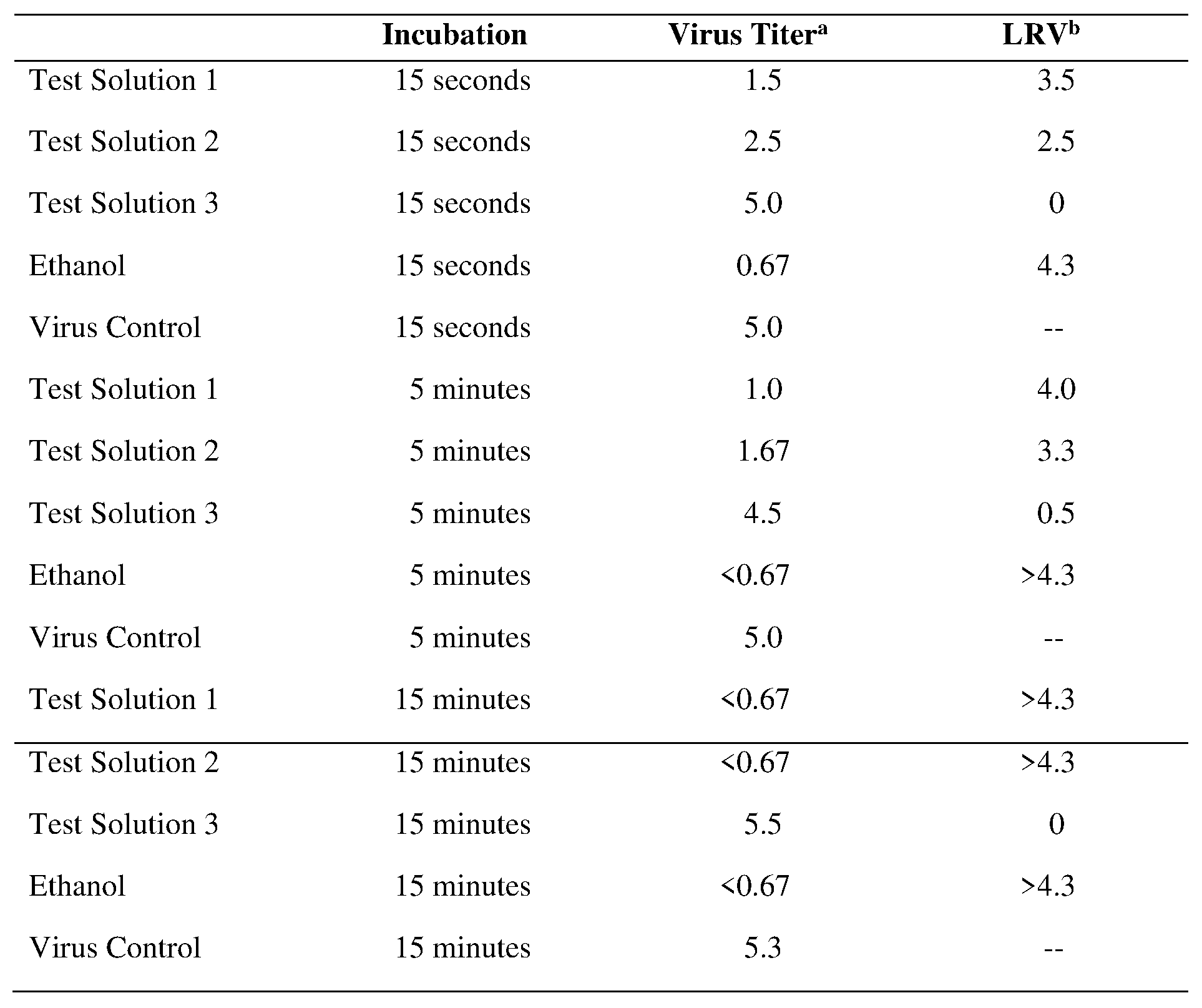
- Test solution 1 (Formulation 2 containing 0.5% PVP-I), Test solution 2 (0.5% PVP-I in water), Test solution 3 (Formulation 2 without PVP-I).
- Test solution 1 (Formulation 2 containing 0.5% PVP-I)
- Test solution 2 (0.5% PVP-I in water)
- Test solution 3 (Formulation 2 without PVP-I).
- the test solutions were tested at full strength at three contact time-points: 15 sec, 5 min, and 15 min to reflect clinically-relevant exposure periods.
- SARS-CoV-2 virus stock was added to tubes at 1/10 of the test solution, so the final concentrations of solution tested was 90%.
- test solutions were added to two tubes of each solution to serve as toxicity controls. Ethanol (70%) was tested in parallel as a positive virucidal control and a virus control was included for each contact time-point.
- Solution and virus were incubated at 37 ⁇ C for three contact times of 15 seconds, 5 minutes, and 15 minutes. Following contact period, the solutions were neutralized by a 1/10 dilution in test media containing 10% FBS.
- Neutralized samples were serially diluted using eight log10 dilutions in test medium. Each dilution was added to 4 wells of a 96-well plate with 80-100% confluent Vero E6 cells.
- the toxicity controls were added to an additional 4 wells and 2 of these wells were infected with virus to serve as neutralization controls, ensuring that residual sample in the titer assay plated did not inhibit growth and detection of surviving virus. All plates were incubated at 37°C, 5% CO 2 . [0065] On day 6 post-infection plates were scored for presence or absence of viral cytopathic effect (CPE). The Reed-Muench method was used to determine end-point titers (50% cell culture infectious dose, CCID 50 ) of the samples, and the log reduction value (LRV) of the compound compared to the negative (water) control was calculated.
- CPE viral cytopathic effect
- Virus controls were tested in diluent and the reduction of virus in compound-treated test wells compared to virus controls was calculated as the log reduction value (LRV). Toxicity controls were tested to see if the samples were toxic to cells. Neutralization controls were tested to ensure that virus inactivation did not continue after the specified contact time, and that residual sample in the titer assay plates did not inhibit growth and detection of surviving virus. This was done by adding toxicity samples to titer test plates then spiking each well with a low amount of virus that would produce an observable amount of CPE during the incubation period. RESULTS [0067] Virus titres and LRV for the three solutions against SARS-CoV-2 are shown in Table 1.
- Table 1 Virucidal efficacy against SARS-CoV-2 after incubation with virus at 37°C. a Log 10 CCID 50 of virus per mL, mean of 3 replicates ⁇ standard deviation. b LRV (log reduction value) is the reduction of virus compared to the virus control.
- - Test Solution 1 Example Formulation 2 supplied in amber glass.
- - Test Solution 2 0.5% PVP-I aqueous solution supplied in amber glass.
- - Test Solution 3 Example Formulation 2 without PVP-I.
- EXAMPLE 3 Activity of various solutions against MRSA METHOD [0070] S. aureus ATCC 33591 was streaked from frozen stock onto Tryptic Soy Agar (TSA) plates and grown overnight at 37°C.
- TSA Tryptic Soy Agar
- the bacteria inocula was prepared by suspending ATCC 33591 colonies in sterile PBS to generate 1.0 McFarland standards in 2 mL volume. The suspension was centrifuged to pellet the bacteria, then resuspended in 0.2 mL sterile PBS. Two independent inocula was prepared using this method. [0072] 2 mL of each of four test solutions were dispensed into sterile borosilicate glass tubes; 2 mL of sterile PBS was also prepared to determine inoculum density (i.e. time 0 control). One set of test solutions was prepared and tested for each independent inoculum.
- each inoculum was added to each test solution or to PBS control.
- each test solution was vortexed on high and a timer was started; at each time point, 20 ⁇ L was removed from the inoculated solution and added to 180 ⁇ L DE Neutralization buffer. This was then 10-fold serially diluted and 100 ⁇ L of the appropriate dilution was plated on TSA plates.
- TSA plates were incubated overnight at 37°C, after which CFU was enumerated. The results are shown in Tables 2 and 3.
Landscapes
- Health & Medical Sciences (AREA)
- Life Sciences & Earth Sciences (AREA)
- Chemical & Material Sciences (AREA)
- General Health & Medical Sciences (AREA)
- Medicinal Chemistry (AREA)
- Pharmacology & Pharmacy (AREA)
- Animal Behavior & Ethology (AREA)
- Public Health (AREA)
- Veterinary Medicine (AREA)
- Virology (AREA)
- Epidemiology (AREA)
- Chemical Kinetics & Catalysis (AREA)
- General Chemical & Material Sciences (AREA)
- Oncology (AREA)
- Nuclear Medicine, Radiotherapy & Molecular Imaging (AREA)
- Organic Chemistry (AREA)
- Communicable Diseases (AREA)
- Molecular Biology (AREA)
- Inorganic Chemistry (AREA)
- Engineering & Computer Science (AREA)
- Pulmonology (AREA)
- Oil, Petroleum & Natural Gas (AREA)
- Otolaryngology (AREA)
- Wood Science & Technology (AREA)
- Environmental Sciences (AREA)
- Pest Control & Pesticides (AREA)
- Agronomy & Crop Science (AREA)
- Zoology (AREA)
- Plant Pathology (AREA)
- Dentistry (AREA)
- Medicinal Preparation (AREA)
- Pharmaceuticals Containing Other Organic And Inorganic Compounds (AREA)
- Acyclic And Carbocyclic Compounds In Medicinal Compositions (AREA)
- Agricultural Chemicals And Associated Chemicals (AREA)
Abstract
Description


Claims
Priority Applications (10)
| Application Number | Priority Date | Filing Date | Title |
|---|---|---|---|
| AU2021287456A AU2021287456B2 (en) | 2020-06-10 | 2021-06-10 | Improved virucidal formulations |
| BR112022024381A BR112022024381A2 (en) | 2020-06-10 | 2021-06-10 | IMPROVED VIRUCIDENT FORMULATIONS |
| PH1/2022/553297A PH12022553297A1 (en) | 2020-06-10 | 2021-06-10 | Improved virucidal formulations |
| US18/001,343 US20230233600A1 (en) | 2020-06-10 | 2021-06-10 | Improved virucidal formulations |
| IL298888A IL298888A (en) | 2020-06-10 | 2021-06-10 | Improved virucidal formulations |
| CA3180198A CA3180198A1 (en) | 2020-06-10 | 2021-06-10 | Improved virucidal formulations |
| MX2022015411A MX2022015411A (en) | 2020-06-10 | 2021-06-10 | IMPROVED VIRICIDAL FORMULATIONS. |
| NZ794684A NZ794684A (en) | 2020-06-10 | 2021-06-10 | Improved virucidal formulations |
| EP21822759.3A EP4171583A4 (en) | 2020-06-10 | 2021-06-10 | IMPROVED VIRUCIDAL FORMULATIONS |
| ZA2022/12855A ZA202212855B (en) | 2020-06-10 | 2022-11-25 | Improved virucidal formulations |
Applications Claiming Priority (2)
| Application Number | Priority Date | Filing Date | Title |
|---|---|---|---|
| AU2020901910 | 2020-06-10 | ||
| AU2020901910A AU2020901910A0 (en) | 2020-06-10 | Improved antimicrobial formulations |
Publications (1)
| Publication Number | Publication Date |
|---|---|
| WO2021248196A1 true WO2021248196A1 (en) | 2021-12-16 |
Family
ID=78846815
Family Applications (1)
| Application Number | Title | Priority Date | Filing Date |
|---|---|---|---|
| PCT/AU2021/050590 Ceased WO2021248196A1 (en) | 2020-06-10 | 2021-06-10 | Improved virucidal formulations |
Country Status (12)
| Country | Link |
|---|---|
| US (1) | US20230233600A1 (en) |
| EP (1) | EP4171583A4 (en) |
| AU (1) | AU2021287456B2 (en) |
| BR (1) | BR112022024381A2 (en) |
| CA (1) | CA3180198A1 (en) |
| CL (1) | CL2022003513A1 (en) |
| IL (1) | IL298888A (en) |
| MX (1) | MX2022015411A (en) |
| NZ (1) | NZ794684A (en) |
| PH (1) | PH12022553297A1 (en) |
| WO (1) | WO2021248196A1 (en) |
| ZA (1) | ZA202212855B (en) |
Cited By (1)
| Publication number | Priority date | Publication date | Assignee | Title |
|---|---|---|---|---|
| AU2021203846B2 (en) * | 2021-06-10 | 2022-11-24 | Firebrick Pharma Limited | Virucidal formulations containing povidone-iodine |
Citations (11)
| Publication number | Priority date | Publication date | Assignee | Title |
|---|---|---|---|---|
| US3028300A (en) | 1960-09-13 | 1962-04-03 | West Laboratories Inc | Germicidal compositions and methods for preparing the same |
| JPH04173726A (en) * | 1990-11-05 | 1992-06-22 | Nippon Zetotsuku Kk | dentifrice composition |
| JPH09151127A (en) * | 1995-09-29 | 1997-06-10 | Taisho Pharmaceut Co Ltd | Composition for pharyngeal diseases |
| EP0526695B1 (en) * | 1991-07-16 | 1998-02-11 | Euro-Celtique S.A. | Stabilized PVP-I solutions |
| JP2000169378A (en) * | 1998-12-10 | 2000-06-20 | Taisho Pharmaceut Co Ltd | Composition for pharyngeal diseases |
| JP2004352642A (en) * | 2003-05-29 | 2004-12-16 | Meiji Seika Kaisha Ltd | Prophylactic against viral infectious disease |
| CN1203864C (en) * | 2003-07-23 | 2005-06-01 | 南京大学 | Spray formulation of providone iodine |
| US20060122082A1 (en) * | 2000-02-17 | 2006-06-08 | Leonard Paul | Foam/spray producing compositions and dispensing system therefor |
| AU2014206143B1 (en) | 2014-07-23 | 2014-10-23 | Firebrick Pharma Limited | Treatment and prevention of the common cold using povidone-iodine |
| KR101935250B1 (en) * | 2017-07-04 | 2019-01-04 | 김대황 | Antiviral and antibacterial composition comprising iodide and osmotic tastant for eye, oral cavity, nasal cavity or inhalation |
| WO2020232515A1 (en) | 2019-06-10 | 2020-11-26 | Firebrick Pharma Pty Ltd | Prevention of infection by highly pathogenic viruses using topical application of povidone-iodine on mucous membranes |
Family Cites Families (1)
| Publication number | Priority date | Publication date | Assignee | Title |
|---|---|---|---|---|
| CN102550601A (en) * | 2010-12-22 | 2012-07-11 | 昆明振华制药厂有限公司 | Iodine disinfection liquid and preparation method thereof |
-
2021
- 2021-06-10 NZ NZ794684A patent/NZ794684A/en unknown
- 2021-06-10 US US18/001,343 patent/US20230233600A1/en active Pending
- 2021-06-10 EP EP21822759.3A patent/EP4171583A4/en active Pending
- 2021-06-10 CA CA3180198A patent/CA3180198A1/en active Pending
- 2021-06-10 WO PCT/AU2021/050590 patent/WO2021248196A1/en not_active Ceased
- 2021-06-10 AU AU2021287456A patent/AU2021287456B2/en active Active
- 2021-06-10 BR BR112022024381A patent/BR112022024381A2/en unknown
- 2021-06-10 IL IL298888A patent/IL298888A/en unknown
- 2021-06-10 PH PH1/2022/553297A patent/PH12022553297A1/en unknown
- 2021-06-10 MX MX2022015411A patent/MX2022015411A/en unknown
-
2022
- 2022-11-25 ZA ZA2022/12855A patent/ZA202212855B/en unknown
- 2022-12-09 CL CL2022003513A patent/CL2022003513A1/en unknown
Patent Citations (12)
| Publication number | Priority date | Publication date | Assignee | Title |
|---|---|---|---|---|
| US3028300A (en) | 1960-09-13 | 1962-04-03 | West Laboratories Inc | Germicidal compositions and methods for preparing the same |
| JPH04173726A (en) * | 1990-11-05 | 1992-06-22 | Nippon Zetotsuku Kk | dentifrice composition |
| EP0526695B1 (en) * | 1991-07-16 | 1998-02-11 | Euro-Celtique S.A. | Stabilized PVP-I solutions |
| JPH09151127A (en) * | 1995-09-29 | 1997-06-10 | Taisho Pharmaceut Co Ltd | Composition for pharyngeal diseases |
| JP2000169378A (en) * | 1998-12-10 | 2000-06-20 | Taisho Pharmaceut Co Ltd | Composition for pharyngeal diseases |
| US20060122082A1 (en) * | 2000-02-17 | 2006-06-08 | Leonard Paul | Foam/spray producing compositions and dispensing system therefor |
| JP2004352642A (en) * | 2003-05-29 | 2004-12-16 | Meiji Seika Kaisha Ltd | Prophylactic against viral infectious disease |
| CN1203864C (en) * | 2003-07-23 | 2005-06-01 | 南京大学 | Spray formulation of providone iodine |
| AU2014206143B1 (en) | 2014-07-23 | 2014-10-23 | Firebrick Pharma Limited | Treatment and prevention of the common cold using povidone-iodine |
| KR101935250B1 (en) * | 2017-07-04 | 2019-01-04 | 김대황 | Antiviral and antibacterial composition comprising iodide and osmotic tastant for eye, oral cavity, nasal cavity or inhalation |
| WO2020232515A1 (en) | 2019-06-10 | 2020-11-26 | Firebrick Pharma Pty Ltd | Prevention of infection by highly pathogenic viruses using topical application of povidone-iodine on mucous membranes |
| US20200384016A1 (en) | 2019-06-10 | 2020-12-10 | Firebrick Pharma Pty Ltd | Prevention of infection by highly pathogenic viruses using topical application of povidone-iodine on mucous membranes |
Non-Patent Citations (16)
Cited By (1)
| Publication number | Priority date | Publication date | Assignee | Title |
|---|---|---|---|---|
| AU2021203846B2 (en) * | 2021-06-10 | 2022-11-24 | Firebrick Pharma Limited | Virucidal formulations containing povidone-iodine |
Also Published As
| Publication number | Publication date |
|---|---|
| BR112022024381A2 (en) | 2022-12-27 |
| MX2022015411A (en) | 2023-01-11 |
| CA3180198A1 (en) | 2021-12-16 |
| EP4171583A4 (en) | 2024-06-26 |
| AU2021287456B2 (en) | 2026-02-05 |
| US20230233600A1 (en) | 2023-07-27 |
| CL2022003513A1 (en) | 2023-08-18 |
| PH12022553297A1 (en) | 2023-04-03 |
| ZA202212855B (en) | 2024-04-24 |
| IL298888A (en) | 2023-02-01 |
| EP4171583A1 (en) | 2023-05-03 |
| NZ794684A (en) | 2026-01-30 |
| AU2021287456A1 (en) | 2023-01-05 |
Similar Documents
| Publication | Publication Date | Title |
|---|---|---|
| US8198326B2 (en) | Phenolic antiseptic compositions and methods of use | |
| US7045548B2 (en) | Methods of inactivating viruses | |
| US20060051384A1 (en) | Antiseptic compositions and methods of use | |
| CN110917196B (en) | Chloroquine antibacterial disinfectant and application thereof | |
| US20050100612A1 (en) | Virucidal activities of cetylpyridinium chloride | |
| WO2002069887A2 (en) | Virucidal compositions | |
| AU2002251933A1 (en) | Virucidal compositions | |
| AU2021287456B2 (en) | Improved virucidal formulations | |
| WO2005046738A2 (en) | Virucidal activities of cetylpyridinium chloride | |
| AU2021105927A4 (en) | Virucidal formulations containing povidone-iodine | |
| US20210308232A1 (en) | Treatement of pathogen infections formulations and methods for use | |
| CN114555072A (en) | Aqueous formulation containing povidone-iodine for effective treatment and prevention of viral infections | |
| CN120154635A (en) | Use of disinfectant compositions to prevent the spread of viruses | |
| Zachar | Respiratory Infections Early-Stage Medication: Inhalation Formulation & Dosage of PVP Iodine | |
| US20240066056A1 (en) | Formulations of a Prophylactic Nasal Spray and Methods of Use and Manufacture Thereof | |
| US20240226215A9 (en) | Treatement of pathogen infections formulations and methods for use | |
| Zachar | Inhalation Formulation & Dosage of PVP Iodine for Respiratory Infections Early-Stage Treatment | |
| Zachar | Inhalation Formulation & Dosage of PVP Iodine for Respiratory Infections Treatment |
Legal Events
| Date | Code | Title | Description |
|---|---|---|---|
| 121 | Ep: the epo has been informed by wipo that ep was designated in this application |
Ref document number: 21822759 Country of ref document: EP Kind code of ref document: A1 |
|
| ENP | Entry into the national phase |
Ref document number: 3180198 Country of ref document: CA |
|
| REG | Reference to national code |
Ref country code: BR Ref legal event code: B01A Ref document number: 112022024381 Country of ref document: BR |
|
| ENP | Entry into the national phase |
Ref document number: 112022024381 Country of ref document: BR Kind code of ref document: A2 Effective date: 20221129 |
|
| ENP | Entry into the national phase |
Ref document number: 2021287456 Country of ref document: AU Date of ref document: 20210610 Kind code of ref document: A |
|
| NENP | Non-entry into the national phase |
Ref country code: DE |
|
| ENP | Entry into the national phase |
Ref document number: 2021822759 Country of ref document: EP Effective date: 20230110 |