WO2022017309A1 - 胰岛素-Fc融合蛋白及其应用 - Google Patents
胰岛素-Fc融合蛋白及其应用 Download PDFInfo
- Publication number
- WO2022017309A1 WO2022017309A1 PCT/CN2021/107040 CN2021107040W WO2022017309A1 WO 2022017309 A1 WO2022017309 A1 WO 2022017309A1 CN 2021107040 W CN2021107040 W CN 2021107040W WO 2022017309 A1 WO2022017309 A1 WO 2022017309A1
- Authority
- WO
- WIPO (PCT)
- Prior art keywords
- insulin
- fusion protein
- region
- seq
- chain
- Prior art date
- Legal status (The legal status is an assumption and is not a legal conclusion. Google has not performed a legal analysis and makes no representation as to the accuracy of the status listed.)
- Ceased
Links
Images


Classifications
-
- C—CHEMISTRY; METALLURGY
- C07—ORGANIC CHEMISTRY
- C07K—PEPTIDES
- C07K14/00—Peptides having more than 20 amino acids; Gastrins; Somatostatins; Melanotropins; Derivatives thereof
- C07K14/435—Peptides having more than 20 amino acids; Gastrins; Somatostatins; Melanotropins; Derivatives thereof from animals; from humans
- C07K14/575—Hormones
- C07K14/62—Insulins
-
- A—HUMAN NECESSITIES
- A61—MEDICAL OR VETERINARY SCIENCE; HYGIENE
- A61K—PREPARATIONS FOR MEDICAL, DENTAL OR TOILETRY PURPOSES
- A61K38/00—Medicinal preparations containing peptides
- A61K38/16—Peptides having more than 20 amino acids; Gastrins; Somatostatins; Melanotropins; Derivatives thereof
- A61K38/17—Peptides having more than 20 amino acids; Gastrins; Somatostatins; Melanotropins; Derivatives thereof from animals; from humans
- A61K38/22—Hormones
- A61K38/28—Insulins
-
- A—HUMAN NECESSITIES
- A61—MEDICAL OR VETERINARY SCIENCE; HYGIENE
- A61K—PREPARATIONS FOR MEDICAL, DENTAL OR TOILETRY PURPOSES
- A61K47/00—Medicinal preparations characterised by the non-active ingredients used, e.g. carriers or inert additives; Targeting or modifying agents chemically bound to the active ingredient
- A61K47/50—Medicinal preparations characterised by the non-active ingredients used, e.g. carriers or inert additives; Targeting or modifying agents chemically bound to the active ingredient the non-active ingredient being chemically bound to the active ingredient, e.g. polymer-drug conjugates
- A61K47/51—Medicinal preparations characterised by the non-active ingredients used, e.g. carriers or inert additives; Targeting or modifying agents chemically bound to the active ingredient the non-active ingredient being chemically bound to the active ingredient, e.g. polymer-drug conjugates the non-active ingredient being a modifying agent
- A61K47/68—Medicinal preparations characterised by the non-active ingredients used, e.g. carriers or inert additives; Targeting or modifying agents chemically bound to the active ingredient the non-active ingredient being chemically bound to the active ingredient, e.g. polymer-drug conjugates the non-active ingredient being a modifying agent the modifying agent being an antibody, an immunoglobulin or a fragment thereof, e.g. an Fc-fragment
-
- A—HUMAN NECESSITIES
- A61—MEDICAL OR VETERINARY SCIENCE; HYGIENE
- A61K—PREPARATIONS FOR MEDICAL, DENTAL OR TOILETRY PURPOSES
- A61K47/00—Medicinal preparations characterised by the non-active ingredients used, e.g. carriers or inert additives; Targeting or modifying agents chemically bound to the active ingredient
- A61K47/50—Medicinal preparations characterised by the non-active ingredients used, e.g. carriers or inert additives; Targeting or modifying agents chemically bound to the active ingredient the non-active ingredient being chemically bound to the active ingredient, e.g. polymer-drug conjugates
- A61K47/51—Medicinal preparations characterised by the non-active ingredients used, e.g. carriers or inert additives; Targeting or modifying agents chemically bound to the active ingredient the non-active ingredient being chemically bound to the active ingredient, e.g. polymer-drug conjugates the non-active ingredient being a modifying agent
- A61K47/68—Medicinal preparations characterised by the non-active ingredients used, e.g. carriers or inert additives; Targeting or modifying agents chemically bound to the active ingredient the non-active ingredient being chemically bound to the active ingredient, e.g. polymer-drug conjugates the non-active ingredient being a modifying agent the modifying agent being an antibody, an immunoglobulin or a fragment thereof, e.g. an Fc-fragment
- A61K47/6801—Drug-antibody or immunoglobulin conjugates defined by the pharmacologically or therapeutically active agent
- A61K47/6803—Drugs conjugated to an antibody or immunoglobulin, e.g. cisplatin-antibody conjugates
- A61K47/6811—Drugs conjugated to an antibody or immunoglobulin, e.g. cisplatin-antibody conjugates the drug being a protein or peptide, e.g. transferrin or bleomycin
-
- A—HUMAN NECESSITIES
- A61—MEDICAL OR VETERINARY SCIENCE; HYGIENE
- A61P—SPECIFIC THERAPEUTIC ACTIVITY OF CHEMICAL COMPOUNDS OR MEDICINAL PREPARATIONS
- A61P3/00—Drugs for disorders of the metabolism
- A61P3/08—Drugs for disorders of the metabolism for glucose homeostasis
- A61P3/10—Drugs for disorders of the metabolism for glucose homeostasis for hyperglycaemia, e.g. antidiabetics
-
- C—CHEMISTRY; METALLURGY
- C12—BIOCHEMISTRY; BEER; SPIRITS; WINE; VINEGAR; MICROBIOLOGY; ENZYMOLOGY; MUTATION OR GENETIC ENGINEERING
- C12N—MICROORGANISMS OR ENZYMES; COMPOSITIONS THEREOF; PROPAGATING, PRESERVING, OR MAINTAINING MICROORGANISMS; MUTATION OR GENETIC ENGINEERING; CULTURE MEDIA
- C12N15/00—Mutation or genetic engineering; DNA or RNA concerning genetic engineering, vectors, e.g. plasmids, or their isolation, preparation or purification; Use of hosts therefor
- C12N15/09—Recombinant DNA-technology
- C12N15/63—Introduction of foreign genetic material using vectors; Vectors; Use of hosts therefor; Regulation of expression
- C12N15/79—Vectors or expression systems specially adapted for eukaryotic hosts
- C12N15/85—Vectors or expression systems specially adapted for eukaryotic hosts for animal cells
-
- C—CHEMISTRY; METALLURGY
- C12—BIOCHEMISTRY; BEER; SPIRITS; WINE; VINEGAR; MICROBIOLOGY; ENZYMOLOGY; MUTATION OR GENETIC ENGINEERING
- C12P—FERMENTATION OR ENZYME-USING PROCESSES TO SYNTHESISE A DESIRED CHEMICAL COMPOUND OR COMPOSITION OR TO SEPARATE OPTICAL ISOMERS FROM A RACEMIC MIXTURE
- C12P21/00—Preparation of peptides or proteins
- C12P21/06—Preparation of peptides or proteins produced by the hydrolysis of a peptide bond, e.g. hydrolysate products
-
- A—HUMAN NECESSITIES
- A61—MEDICAL OR VETERINARY SCIENCE; HYGIENE
- A61K—PREPARATIONS FOR MEDICAL, DENTAL OR TOILETRY PURPOSES
- A61K38/00—Medicinal preparations containing peptides
-
- C—CHEMISTRY; METALLURGY
- C07—ORGANIC CHEMISTRY
- C07K—PEPTIDES
- C07K2319/00—Fusion polypeptide
- C07K2319/30—Non-immunoglobulin-derived peptide or protein having an immunoglobulin constant or Fc region, or a fragment thereof, attached thereto
-
- C—CHEMISTRY; METALLURGY
- C12—BIOCHEMISTRY; BEER; SPIRITS; WINE; VINEGAR; MICROBIOLOGY; ENZYMOLOGY; MUTATION OR GENETIC ENGINEERING
- C12N—MICROORGANISMS OR ENZYMES; COMPOSITIONS THEREOF; PROPAGATING, PRESERVING, OR MAINTAINING MICROORGANISMS; MUTATION OR GENETIC ENGINEERING; CULTURE MEDIA
- C12N2800/00—Nucleic acids vectors
- C12N2800/10—Plasmid DNA
- C12N2800/106—Plasmid DNA for vertebrates
- C12N2800/107—Plasmid DNA for vertebrates for mammalian
Definitions
- the present invention relates to the field of polypeptide drugs, in particular to an insulin-Fc fusion protein with enhanced insulin activity and prolonged in vivo half-life after being cleaved by site-specific protease, a preparation method and application thereof.
- Type 1 diabetes mainly relies on exogenous insulin to control blood sugar; type 2 diabetes has become the main drug for blood sugar control as the disease progresses. Therefore, the use of insulin to treat diabetes has become a more effective way.
- Insulin therapy is necessary for patients with abnormal insulin secretion (type I) or insulin resistance (type II), and blood glucose levels are normally regulated by insulin administration.
- type I abnormal insulin secretion
- type II insulin resistance
- insulin has a very short half-life in vivo and thus suffers from the disadvantage of repeated administration.
- Such frequent administration causes severe pain and discomfort to the patient.
- many studies have been carried out on protein formulations and chemical conjugation (fatty acid conjugates, polyethylene polymer conjugates) in order to improve the quality of life by prolonging the in vivo half-life of proteins and reducing the frequency of administration.
- long-acting insulins include insulin glargine (lantus, lasting about 20 hours to 22 hours), manufactured by Sanofi Aventis, and insulin detemir (levemir, lasting about 18 hours to 22 hours) and tresiba, manufactured by Novo Nordisk. Insulin degludec for about 40 hours).
- These long-acting insulin formulations do not produce peak blood insulin concentrations, so they are suitable as basal insulins. However, since these formulations do not have a sufficiently long half-life, there is still the disadvantage of injecting once a day or every two to three days. Thus, there are limitations in achieving the intended goal of once-weekly dosing frequency to improve convenience for diabetic patients requiring chronic insulin administration.
- Patent publication CN103509118B discloses a single-chain insulin fused to the Fc region of an antibody. Although in vitro experiments have shown that the insulin-Fc fusion protein has an improved half-life, the fusion insulin has low in vivo hypoglycemic activity and is not suitable for clinical use. apply.
- the inventors provided an insulin-Fc fusion protein, which obtained enhanced insulin activity and prolonged in vivo half-life after being cleaved by site-specific proteases, and surprisingly found that the fusion protein has The in vivo hypoglycemic effect is more flat and stable, which can improve the safety of clinical medication and patient compliance, thereby better achieving blood sugar management and providing a better quality of life.
- the present invention provides an insulin-Fc fusion protein having enhanced insulin activity and prolonged in vivo half-life upon site-specific protease cleavage, having the structure of formula (I):
- X and Z are the B and A chains of insulin, respectively, and if X is the B chain, Z is the A chain; if X is the A chain, then Z is the B chain.
- Y is an optional linking peptide; Y can be 1-100 amino acids or more in length, eg, 1, 2, 3, 4, 5, 6, 7, 8, 9, 10, 11, 12, 13, 14, 15, 16, 17, 18, 19, 20, 21, 22, 23, 24, 25, 26, 27, 28, 29, 30, 31, 32, 33, 34, 35, 36, 37, 38, 39, 40, 50, 60, 70, 80, 90, 100 or a value between any two numbers above; eg Y is insulin C-peptide or a variant or fragment thereof.
- E1 and E2 are present and are a stretch of amino acids containing a site-specific protease cleavage site;
- E1 and E2 can be 1-10 or more amino acids in length, such as 1, 2, 3 , 4, 5, 6, 7, 8, 9 or 10 amino acids; if present at the same time, E1 and E2 can be cleaved by the same or different site-specific proteases, e.g.
- the site-specific protease cleavage site may be Kex2 and/or Furin
- the cleavage site of a protease is, for example, the cleavage site of the Kex2 protease.
- L is a linker (Linker) connecting Z and Fc;
- L can be a polypeptide fragment, for example, L comprises a flexible unit of one, two or more amino acids selected from the group consisting of Ala, Thr, Gly and Ser (also referred to as flexible herein).
- peptide segment more for example, a flexible unit composed of G and S;
- L can also be a polypeptide fragment comprising a rigid unit (also referred to as a rigid peptide segment herein).
- the rigid unit comprises or consists essentially of rigid amino acids including, but not limited to, V, P, I, K, and L.
- the rigid unit comprises one or more PPPX1LP (SEQ ID NO: 125), wherein X1 is any amino acid;
- the rigid unit comprises one or more of X2APPPX1LP (SEQ ID NO: 126), wherein X1 is any amino acid and X2 is K or V.
- the rigid unit comprises a polypeptide fragment selected from the group consisting of:
- PPPSLPSPSRLPGPSDTPILPQ (SEQ ID NO: 127);
- PPPALPAVAPPPALP (SEQ ID NO: 129).
- the rigid unit comprises a polypeptide fragment selected from the group consisting of:
- KAPPPSLPSPSRLPGPSDTPILPQ (SEQ ID NO: 130);
- VAPPPALPAPVRLPGP (SEQ ID NO: 131);
- VAPPPALPAVAPPPALP (SEQ ID NO: 132).
- L contains both rigid and flexible units, and may be more than two units.
- Fc is the Fc region of an immunoglobulin; the Fc can be from a human immunoglobulin; the Fc region can be an Fc region from IgG, IgA, IgD, IgE or IgM; preferably, the Fc region is from IgG an Fc region, such as an Fc region from IgG1, IgG2, IgG3 or IgG4; further preferably, the Fc region is an Fc region from IgG2; wherein the Fc region may carry one or more Fc regions compared to the sequence from which it is derived Substitutions, additions and/or deletions while still retaining the ability to extend half-life, e.g.
- the mutation may be selected from: N297A, G236R/L328R, L234A/L235A, N434A, M252Y/S254T/T256E, M428L/N434S, T250R/M428L; the Fc region may be glycosylated or unglycosylated.
- the insulin is selected from human insulin, bovine insulin, or porcine insulin, preferably human insulin; eg, the A and B chains of the insulin are derived from human insulin.
- Y, El and E2 are all present, or where Y is absent, one of El and E2 is present.
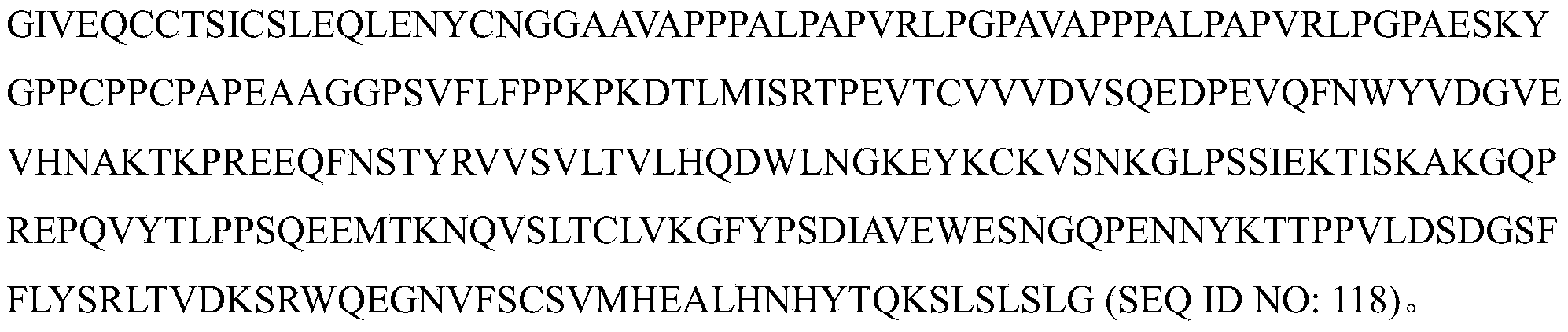
- the fusion protein has an amino acid sequence selected from the group consisting of SEQ ID NOs: 47-72.
- the present invention provides an insulin-Fc fusion protein having an Ins-L-Fc structure.
- the fusion protein of the first aspect of the present invention can remove the C chain under the action of a specific protease to produce the fusion protein of the second aspect of the present invention.
- the insulin-Fc fusion protein exists in the form of a homodimer, the schematic diagram of which is shown in FIG. 3 .
- the insulin-Fc fusion protein has secondary and tertiary structures similar to native insulin.
- Ins is the insulin moiety that provides insulin activity, which includes insulin A and B chains linked by a covalent bond, but the A and B chains are located in different peptide chains; the covalent bond is preferably a disulfide bond .
- L is a linker linking Z to Fc;
- L can be a polypeptide fragment (also referred to as a linker peptide in some embodiments herein), eg, L comprises one, two or more selected from Ala, Thr, Gly and Ser A flexible unit of amino acids;
- L can also be a polypeptide fragment comprising a rigid unit.
- the L comprises one or more rigid units comprising or consisting essentially of rigid amino acids including, but not limited to, V, P, I, K, and L.
- the rigid unit comprises one or more PPPX1LP (SEQ ID NO: 125), wherein X1 is any amino acid.
- the rigid unit comprises one or more of X2APPPX1LP (SEQ ID NO: 126), wherein X1 is any amino acid and X2 is K or V.
- the rigid unit comprises a polypeptide fragment selected from the group consisting of:
- PPPSLPSPSRLPGPSDTPILPQ (SEQ ID NO: 127);
- PPPALPAVAPPPALP (SEQ ID NO: 129).
- the rigid unit comprises a polypeptide fragment selected from the group consisting of:
- KAPPPSLPSPSRLPGPSDTPILPQ (SEQ ID NO: 130);
- VAPPPALPAPVRLPGP (SEQ ID NO: 131);
- VAPPPALPAVAPPPALP (SEQ ID NO: 132).
- Fc is the Fc region of an immunoglobulin; the Fc can be from a human immunoglobulin; the Fc region can be an Fc region from IgG, IgA, IgD, IgE or IgM; preferably, the Fc region is from IgG an Fc region, such as an Fc region from IgG1, IgG2, IgG3 or IgG4; further preferably, the Fc region is an Fc region from IgG2; wherein the Fc region may carry one or more Fc regions compared to the sequence from which it is derived Substitutions, additions and/or deletions while still retaining the ability to extend half-life, e.g.
- the mutation may be selected from: N297A, G236R/L328R, L234A/L235A, N434A, M252Y/S254T/T256E, M428L/N434S, T250R/M428L; the Fc region may be glycosylated or unglycosylated.
- the insulin is selected from human insulin, bovine insulin, or porcine insulin, preferably human insulin; eg, the A and B chains of the insulin are derived from human insulin.
- the L comprises CTPs, eg, 1, 2, 3 or more CTPs.
- the present invention provides a method of producing an insulin-Fc fusion protein with enhanced insulin activity and extended half-life, comprising combining the fusion protein of the first aspect of the present invention with a site capable of cleaving the said contact with a specific protease, preferably the site-specific protease is Kex2 and/or Furin protease.
- the insulin-Fc fusion proteins of the present invention with enhanced insulin activity and prolonged half-life in vivo are obtained by the methods described above.
- the present invention provides a polynucleotide encoding the fusion protein, preferably the polynucleotide is an expression vector capable of expressing the fusion protein.
- the present invention provides cells capable of expressing an insulin-Fc fusion protein, comprising the above-described polynucleotide.
- the present invention provides a method for producing an insulin-Fc fusion protein, which comprises culturing the cells described in the fifth aspect of the present invention under conditions of expressing the insulin-Fc fusion protein; preferably further comprising The insulin-Fc fusion protein is contacted with a specific protease capable of cleaving the site, wherein the incubation step and the contact cleavage step can be performed simultaneously or separately.
- the method can also include a protein purification step to obtain the target fusion protein.
- the present invention provides a method for characterizing the structure of an insulin-Fc fusion protein, comprising the detection of the deglycosylated molecular weight of the fusion protein and the characterization of disulfide bonds.
- the present invention provides a pharmaceutical composition comprising the fusion protein described in the first and third aspects above, the polynucleotide described in the fourth aspect or the fifth aspect said cells.
- the present invention provides a method for lowering blood sugar and/or treating diabetes, comprising combining the fusion protein described in the first and second aspects, the polynucleotide described in the fourth aspect Or the cells described in the fifth aspect are administered to a subject in need thereof, preferably the diabetes is Type I or Type II diabetes.
- additional administration of appropriate site-specific proteases, or utilization of appropriate site-specific proteases present in vivo may also be considered.
- the present invention also provides the use of the fusion protein, polynucleotide or cell in preparing a medicament for lowering blood sugar and/or treating diabetes.
- the present invention also provides fusion proteins, polynucleotides or cells for lowering blood sugar and/or treating diabetes.
- Fig. 1 shows a schematic diagram of the vector of the present invention used for the expression of insulin precursor fusion protein; wherein, Fig. 1A is a stable transfection expression vector, and Fig. 1B is a transient transfection expression vector.
- Figure 2 shows the SDS-PAGE electropherogram of the insulin-Fc fusion protein captured in Example 3;
- M denotes marker, different Ps are the target proteins collected in sections during the chromatography process, and P+DTT is the target band after protein reduction.
- the marker size is marked next to the SDS map of the SS302-002 molecule, and the markers used in other maps are the same.
- Figure 3 is a schematic diagram showing the structure of the insulin-Fc fusion protease of the present invention before (3A) and after (3B) cleavage.
- Figure 4 shows the results of the efficacy of SS 302-002 molecules in normal Kunming mice before and after enzyme cleavage.
- Figure 5 shows the results of hypoglycemic effect of different fusion proteins on normal C57 mice; 5A shows the results of SS302-012M, SS302-019M, SS302-029M and SS302-035M, 5B shows SS302-008M, SS302-014M, SS302 -015M and SS302-030M results.
- Figure 6 shows a dose-response plot of SS302-035M in normal C57 mice.
- Figure 7 shows the hypoglycemic effect of SS302-002M (7A) and SS302-004M (7B) in type I diabetes model mice.
- 8A and 8B show the hypoglycemic effects of SS302-008M, SS302-012M and SS302-035M in type I diabetes model mice.
- Figure 9 is a graph showing the efficacy results of SS302-008M and SS302-012M in normal SD rats.
- Figure 10 shows the pharmacokinetic results of SS302-008M and SS302-012M in SD rats.
- Figure 11 shows the hypoglycemic effect (10A) and the blood concentration curve (10B) of SS302-008M and SS302-012M in normal SD rats.
- Insulin is a hormone secreted by pancreatic beta cells to promote glucose absorption and inhibit fat degradation, thereby controlling blood sugar levels.
- the DNA of the insulin gene region on the short arm of the 11th pair of chromosomes is transcribed into mRNA, and the mRNA moves from the nucleus to the endoplasmic reticulum of the cytoplasm, and is translated into preproinsulin consisting of 106 amino acid residues.
- preproinsulin consisting of 106 amino acid residues.
- the signal peptide When preproinsulin passes through the endoplasmic reticulum membrane, the signal peptide is cleaved by signal peptidase to generate a long peptide chain composed of 86 amino acids-proinsulin.
- Insulin acts by proteolytic enzymes in the Golgi apparatus to cleave two arginine residues at positions 31 and 32, lysine residues at 64 and arginine residues at position 65, and the chain scission generates as a connecting part.
- C-peptide which simultaneously generates insulin, is secreted out of beta cells and enters the blood circulation.
- a small part of proinsulin that has not been hydrolyzed by protease enters the blood circulation with insulin, and the proinsulin has almost no biological activity, and its biological activity value is only 5%-10% of that of insulin.
- the "insulin" of the present invention includes not only naturally occurring insulin, but also functional variants of insulin, and the functional variants refer to modifications to the natural sequence and/or structure of insulin, such as additions, deletions and/or substitution of one or more amino acids, resulting in a polypeptide that still has insulin activity (regulating blood sugar levels in the body). Amino acid substitutions, additions or deletions can be in naturally occurring mutant forms or artificial modifications for specific purposes. It is well known to those of ordinary skill in the art that in practice functional variants of insulin are often also referred to as insulins. Another example is the insulin analogs disclosed in CN105636979B and CN 201480006998. With reference to this specification, this practice is also covered herein.
- a functional variant of insulin means at least 80% (preferably 85%, 90%, 91%, 92%, 93%, 94%, 95%, 96%, 97%) of native insulin , 98%, 99%, 100%) amino acid sequence homology and still have insulin activity.
- chemical substitutions eg, alpha-methylation, alpha-hydroxylation
- deletions eg, deaminations
- modifications eg, N- methylation
- insulin analogs that have been marketed such as insulin lispro (Lilly), insulin aspart (Novo Nordisk), insulin glulisine (Aventis), Insulin glargine (Sanofi), insulin detemir (Novo Nordisk) and insulin degludec (Novo Nordisk).
- Insulin lispro replaces the proline at position 28 and lysine at position 29 on the B chain of human insulin, and the other amino acid sequence and structure remain unchanged.
- the function of insulin has not changed, but the insulin that is easy to form dimers and hexamers is no longer easy to aggregate into dimers and hexamers, but exists in the form of monomers , so that it is easily absorbed after subcutaneous injection, resulting in a rapid onset of action.
- Insulin aspart is also a fast-acting insulin, which replaces the proline at position B28 of human insulin with aspartic acid, so that the insulin analog is not easy to form a hexamer, making it easy to absorb subcutaneously. , which works quickly.
- Insulin lysine uses lysine instead of asparagine at position B3 and glutamic acid instead of lysine at position B29 to achieve a rapid onset of action.
- Insulin glargine insulin glargine, Lantus, Lantus
- the difference from human insulin is: 1) The 21st aspartic acid in the A chain is replaced by glycine; 2) 2 arginines are added to the C-terminus of the B chain acid residue.
- the result of this change can be changed as follows: the replacement of the A21 position by glycine results in a more stable binding of the hexamer, and in the neutral environment of the subcutaneous tissue, the solubility decreases and precipitates, resulting in a slow absorption, similar to the no peak secretion of basal insulin , suitable for long-acting treatment, if a small amount of zinc is added, its action time will be further extended; the result of adding 2 arginine residues to the C-terminal of the B chain changes the isoelectric point of insulin, which increases from the original pH4.5 To pH 6.7, micro-precipitates are formed in the neutral environment of subcutaneous tissue, which prolongs the decomposition, absorption and action time of insulin.
- Insulin detemir (Levermir) was developed and produced by Novo Nordisk. The amino acid at position B30 was removed from the structure, and a 14-carbon N-16-alkanoic acid group was attached to the lysine position at position B29. free fatty acid chains. In the liquid with zinc ions, the insulin molecule still exists in the form of hexamers, the modification of the fatty acid chain makes the subcutaneous absorption slow, and the insulin detemir in the plasma will combine with the albumin in the plasma due to the presence of the fatty acid. , and only free insulin detemir can play a hypoglycemic effect, and also prolong the action time of insulin.
- Insulin degludec removes the threonine at position B30, and at the lysine position at position B29, is linked to the 16-carbon fatty diacid side chain through a glutamic acid linker. Under the action of phenol and zinc ions, insulin degludec is polymerized into double hexamers in the preparation. After subcutaneous injection, with the diffusion of phenol and the slow release of zinc ions, insulin degludec monomer can be slowly and continuously released, and then the monomer can be absorbed into the blood. Based on the above characteristics, insulin degludec has an ultra-long action time in diabetic patients, and its half-life is about 25 hours.
- the fusion protein described herein refers not only to a protein formed by connecting amino acids through peptide bonds, but also to a protein formed by connecting two or more peptide chains through disulfide bonds.
- the "insulin-Fc fusion protein” in the present invention refers to a fusion protein formed by insulin (including its functional variants) and the Fc region of an immunoglobulin, and is sometimes simply referred to as "fusion protein” herein.
- the fusion protein before enzyme cleavage is sometimes referred to as "insulin precursor-Fc fusion protein", and correspondingly the simultaneous occurrence of "insulin-Fc fusion protein”
- Fc fusion protein refers to the fusion protein after removal of the linking peptide moiety by enzymatic cleavage.
- fusion protein before and after cleavage is not specifically distinguished, in which case the fusion protein or insulin-Fc fusion protein encompasses its before and after cleavage.
- fusion protein or insulin-Fc fusion protein are often used directly to refer to this form when it is clear from the context which form the fusion protein refers to.
- the A chain sequence of native human insulin is:
- the B chain sequence of native human insulin is:
- the fusion proteins described herein may also comprise additional sequences that prolong half-life in vivo, for example, one or more selected from Fc, CTP (C-terminal peptide), XTEN, SABA (serum albumin binding adnectin) and PAS Piece.
- the additional sequences may be located at termini, linkers or other positions in the fusion protein.
- the structural formulae X-E1-Y-E2-Z-L-Fc and Ins-L-Fc used herein also encompass these situations where the additional sequence is located elsewhere.
- the linking peptide linking the A and B chains of insulin is the C-peptide.
- the C-peptide includes both its naturally-occurring sequence and a variant form with the same function formed by substitution, deletion or addition of one or more amino acids based on the naturally-occurring sequence.
- sequence of the native form C-peptide of human insulin is:
- the linking peptide is not limited to the C-peptide of natural insulin or its variant/fragment, but can also be any other suitable polypeptide that plays the role of linking the A chain and the B chain of insulin.
- the linker peptide can be 1-100 amino acids or more in length, eg, 1, 2, 3, 4, 5, 6, 7, 8, 9, 10, 11, 12, 13 , 14, 15, 16, 17, 18, 19, 20, 21, 22, 23, 24, 25, 26, 27, 28, 29, 30, 31, 32, 33, 34, 35, 36, 37, 38 , 39, 40, 50, 60, 70, 80, 90, 100 amino acids, or a value between any two of the above.
- sequence of the linker peptide is:
- EAEDLQVGQVELGGGPGAGSLQPLALEGSL (SEQ ID NO: 4)
- the linker peptide can be in the form of a polypeptide of any length:
- Human immunoglobulin IgG consists of 4 polypeptides (two identical copies of the light and heavy chains) covalently linked by disulfide bonds. Proteolysis of IgG molecules by papain yields two Fab fragments and one Fc fragment. The Fc fragment consists of two polypeptides linked together by disulfide bonds. Each polypeptide, from N to C terminus, consists of a hinge region, a CH2 domain and a CH3 domain. The Fc fragment structure is nearly identical in all subtypes of human immunoglobulins. IgG is one of the most abundant proteins in human blood, making up 70 to 75% of the total immunoglobulins in human serum.
- the Fc region of an immunoglobulin is safe for use as a drug carrier because it is a biodegradable polypeptide that is metabolized in the body, and in addition, the Fc region of an immunoglobulin has a relatively low molecular weight compared to the entire immunoglobulin molecule, so it can be used in fusions. It is advantageous in the preparation, purification and production of proteins. Since the immunoglobulin Fc region does not contain Fab fragments (the amino acid sequence of which varies according to antibody subclass and is therefore highly heterogeneous), the immunoglobulin Fc region can be expected to greatly increase the homogeneity of the substance and have low antigenicity .
- Fc region of an immunoglobulin refers to the heavy chain constant region 2 (CH2) and heavy chain constant region 3 (CH3) of an immunoglobulin without the heavy chain constant region of an immunoglobulin. Protein segments of variable regions of chains and light chains. It may also comprise the hinge region at the heavy chain constant region. Furthermore, the immunoglobulin Fc region of the present invention may contain a part or all of the Fc region comprising the heavy chain constant region 1 (CH1) and/or the light chain constant region (CL) in addition to the variable regions of the heavy and light chains , as long as it has substantially similar or better physiological functions to natural proteins.
- CH1 heavy chain constant region 1
- CL light chain constant region
- an immunoglobulin Fc region of the present invention may comprise 1) a CH1 domain, a CH2 domain and a CH3 domain; 2) a CH1 domain and a CH2 domain; 3) a CH1 domain and a CH3 domain; 4) a CH2 structure domain and a CH3 domain; 5) a CH1 domain, a CH2 domain, a CH3 or CL domain; 6) a combination of one or more constant region domains and an immunoglobulin hinge region (or portion thereof); or 7 ) dimers of the respective domains of the heavy chain constant region and the light chain constant region.
- the immunoglobulin Fc region of the present invention refers to any form of Fc or variant thereof having one or more heavy/light chain constant region domains or variants thereof, capable of conferring a function of extending half-life in vivo to the fusion protein /derivatives such as single chain Fc, monomeric Fc.
- the immunoglobulin Fc region of the present invention may include the native amino acid sequence and sequence variants (mutants) thereof.
- Amino acid sequence derivatives have sequences that differ from the native amino acid sequence due to deletions, insertions, non-conservative or conservative substitutions of one or more amino acid residues, or a combination thereof.
- amino acid residues at positions 214 to 238, 297 to 299, 318 to 322, or 327 to 331 known to be important for binding can be used as suitable targets for modification.
- deletions can occur at complement binding sites, such as the C1q binding site and ADCC site.
- Fc region can enhance the affinity of Fc for FcRn and prolong serum half-life, such as the T250Q/M428L mutation (CN 1798767B), these mutant forms of the Fc region Also within the meaning of the Fc region of the present invention.
- Amino acid substitutions in proteins and peptides that generally do not alter the activity of the molecule are known in the art (H. Neurath, R.L. Hill, The Proteins, Academic Press, New York, 1979).
- the most frequently occurring substitutions are Ala/Ser, Val/Ile, Asp/Glu, Thr/Ser, Ala/Gly, Ala/Thr, Ser/Asn, Ala/Val, Ser/Gly, Thy/Phe, Ala/Pro, Lys/Arg, Asp/Asn, Leu/Ile, Leu/Val, Ala/Glu and Asp/Gly, both ways.
- the Fc region can be modified by phosphorylation, sulfation, acrylation, glycosylation, methylation, farnesylation, acetylation, amidation, and the like.
- Fc derivatives are derivatives having the same biological activity or improved structural stability (eg, structural stability to heat, pH, etc.) as the Fc region of the present invention.
- these Fc regions may be obtained in native forms isolated from humans and other animals including cattle, goats, pigs, mice, rabbits, hamsters, rats and guinea pigs, or may be derived from transformed animal cells or microorganisms in their native form. Recombinant or derivative.
- they can be obtained from native immunoglobulins by isolating intact immunoglobulins from human or animal organisms and treating them with proteolytic enzymes. Papain digests native immunoglobulins into Fab and Fc regions, while pepsin treatment results in pFc' and F(ab')2 fragments. For example, these fragments can be subjected to size exclusion chromatography to isolate Fc or pFc'.
- the immunoglobulin Fc region of the present invention may be in a form having natural sugar chains, increased sugar chains compared to the natural form, or reduced sugar chains compared to the natural form, or may be a deglycosylated form.
- the increase, decrease or removal of immunoglobulin Fc sugar chains can be accomplished by methods commonly used in the art, such as chemical methods, enzymatic methods, using genetic engineering methods, or by mutating the N297 glycosylation site. Removal of sugar chains from the Fc fragment results in a marked reduction in binding affinity to complement (C1q) and reduction or loss of antibody-dependent cell-mediated cytotoxicity or complement-dependent cytotoxicity, thereby not inducing unwanted in vivo immune responses.
- the deglycosylated or unglycosylated form of the immunoglobulin Fc region may be more suitable for the purposes of the present invention for use as a medicament.
- deglycosylation means the enzymatic removal of sugar moieties from the Fc region
- aglycosylated means that the Fc region is in an aglycosylated form from a prokaryotic (preferably E. coli) ), or by mutating the N297 glycosylation site to G, A, or any other amino acid.
- the immunoglobulin Fc region can be an Fc region derived from IgG, IgA, IgD, IgE and IgM, or prepared by a combination or hybridization thereof.
- it is derived from IgG or IgM (which are among the most abundant proteins in human blood), most preferably from IgG (which is known to prolong the half-life of ligand-binding proteins).
- dimer or multimer can be formed from two or more segments selected from the group consisting of: IgG Fc segment, IgA Fc segment, IgM Fc segment, IgD Fc segment, and IgE Fc segment.
- Proinsulin is inactive or very low in activity.
- the conventional process for preparing recombinant insulin in the prior art is to express it in Escherichia coli or yeast, and then use trypsin or trypsin plus carboxypeptidase B to process it into an active molecule.
- the conventional preparation process cannot be used, because there are many trypsin cleavage sites on the Fc, which will cause the proinsulin to be processed into an active molecule. Cut to fail.
- single-chain insulin is directly combined with the Fc region, but the inventors have found through research that the in vivo activity of the above-mentioned insulin is very low.
- the inventors unexpectedly found that if the mature mechanism of insulin in vivo can be simulated, and the structure of insulin is closer to that of natural insulin (the A chain and the B chain in the mature molecule are connected by disulfide bonds), and the Fc region is connected to the insulin conjugate at the same time. It can greatly increase the activity of insulin.
- the applicant found that if the fusion polypeptide of the structure of the present invention is prepared, an enzyme cleavage site such as Kex2 protease or furin (Furin) is introduced into it, and active long-acting insulin can be obtained by processing with the protease. Conjugate molecules.
- the Kex2 protease described in the present invention is a calcium ion-dependent proteolytic enzyme, which can specifically recognize and cut the carboxyl-terminal peptide bonds of bibasic amino acids such as Arg-Arg and Lys-Arg. Unlike trypsin, Kex2 cannot recognize and cleave the carboxy-terminal peptide bond of a single basic amino acid, arginine or lysine.
- the Kex2 protease is responsible for processing the precursors of killer toxin and ⁇ -factor in yeast. Kex2 protease activity is not inhibited by conventional serine protease inhibitors such as aprotinin, PMSF, TPCK.
- the furin described in the present invention is an important endoprotease in eukaryotic cells, located in the network outside the Golgi body, and is a major protein converting enzyme in the exocrine pathway, which can Recognizing specific amino acid sequences, after two self-cleavage activation in the endoplasmic reticulum-Golgi apparatus, the precursors of many important polypeptides and proteins in the secretion pathway are sheared to make them biologically active. It is named after its encoding gene (fur) is located upstream of the proto-oncogene fes/feps.
- furin catalyzes the cleavage of the Arg-Xaa-Yaa-Arg carboxy-terminal peptide bond in the original protein (Xaa is any amino acid, Yaa is Arg or Lys) to produce a mature protein.
- the connecting peptide between the A chain and the B chain is cleaved, so that a disulfide bond is formed between the A chain and the B chain in a manner similar to natural insulin, for example, in A7(Cys)-B7
- the sulfhydryl groups in the four cysteines (Cys), A20(Cys)-B19(Cys) form two disulfide bonds to connect the A and B chains.
- the role of the linker L is to connect the insulin A chain or B chain and the Fc region, which can be a polypeptide or a non-peptide chain chemical structure.
- the linker is a polypeptide comprising or consisting essentially of a flexible unit of A, T, G and/or S (a flexible peptide segment), more eg a stretch of a flexible unit consisting of G and S; the The length of the flexible unit can be 2-50 or more amino acids, eg 2, 3, 4, 5, 6, 7, 8, 9, 10, 11, 12, 13, 14, 15, 16, 17, 18 , 19, 20, 21, 22, 23, 24, 25, 26, 27, 28, 29, 30, 35, 40, 45, or 50 amino acids.
- the linker is a polypeptide comprising a rigid unit (rigid peptide segment) consisting essentially of rigid amino acids including, but not limited to, V, P, I, K, and L.
- Insulin-Fc fusion protein is fermented and secreted by CHO cells, and the fusion protein undergoes a series of processing after transcription and translation in CHO cells, including proline hydroxylation, O sugar, N sugar, C-terminal lysine deletion, etc. Modifications that occur at sequences other than the B and A chains of insulin.
- the insulin-Fc fusion protein also formed disulfide bonds in the organelles of CHO cells to stabilize its structure.
- the disulfide bond of the insulin-Fc fusion protein is formed between two cysteine (Cys) residues. Its disulfide bond can be divided into two parts according to the position, one part exists in insulin, and the other part exists in Fc.
- the disulfide bonds of insulin are located in the B and A chains, and the amino acids of the B and A chains are represented by position (X), BX and AX, respectively, in order from the N-terminus to the C-terminus.
- the disulfide bond CysA7-CysB7, CysA20-CysB19, CysA6-CysA11.
- the Fc region is composed of two single chains with the same amino acid sequence.
- each single chain has 2 pairs of disulfide bonds, and there are 2 pairs of interchain disulfide bonds between the two single chains. 6 pairs of disulfide bonds.
- UPLC-QTOF is a conventional instrument for analyzing the structure of biological macromolecules. Its main functional modules are UPLC and QTOF. After the sample to be tested is separated by UPLC, it enters the ion source in the state of solution for ionization and becomes charged ions. Under the action of the accelerating electric field, it enters the mass analyzer QTOF. Then, the m/z of various ions are captured by triple quadrupole (Q) and time-of-flight mass spectrometry (TOF) mass analyzers, and the software calculates the precise molecular weight, and finally realizes the structure analysis of complex biological macromolecular proteins.
- the present invention adopts UPLC-QTOF, a commonly used instrument method with high resolution and high sensitivity, as an ideal method for analyzing fusion proteins. The ratios were analyzed and characterized.
- the molecular weight and disulfide bond of the insulin-Fc fusion protein are consistent with the theory, the mismatch rate is low, and there are proline hydroxylation, O glycosylation, N glycosylation, C-terminal Post-translational modifications such as lysine deletions.
- insulin precursor fusion protein is sometimes also referred to as insulin fusion protein.
- the molecular form of the insulin precursor fusion protein is: proINS-L-Fc. It can be secreted and expressed in yeast or eukaryotic cells (such as CHO, HEK293, etc.), and the expressed protein exists in the form of homodimer.
- a signal peptide and/or propeptide can be added to the N-terminus of the protein.
- Signal peptides include, but are not limited to, the sequences shown in Table 1 below.
- proINS refers to natural insulin precursors or analogs thereof from human or other sources.
- the analogs include insertion, deletion, truncated or mutated insulin precursors, such as A14E ⁇ B16E ⁇ B25H ⁇ desB30 variants, A14E ⁇ B16H ⁇ B25H ⁇ desB30 variants or A14E ⁇ desB30 variants, and the like.
- the analog can reduce the immunogenicity of insulin, or reduce proteolysis to improve the stability of insulin, or reduce the affinity of insulin and insulin receptor (IR) to prolong the half-life in vivo, and the like. It can also be used for any other purpose.
- the insulin precursor of this embodiment can be processed into mature insulin by proteases such as Kex2, Furin, pancreatin and the like.
- proteases such as Kex2, Furin, pancreatin and the like.
- the insulin precursor of this example can also promote the correct folding and processing of the protein through the optimized C-peptide.
- the insulin precursor analogs selected in this example include but are not limited to those shown in Table 3 below.
- L represents the linker between proINS and Fc, which can be composed of amino acids from 0 to any length, and can be either a flexible polypeptide or a rigid polypeptide. L can help each of the two insulin molecules linked to the Fc homodimer to form the correct spatial structure.
- the L sequence includes but is not limited to the sequences shown in Table 4 and Table 5.
- the Fc is preferably human IgG; more preferred is human IgG without ADCC and CDC activities and variants thereof, such as IgG2 and Igg4; more preferred is human IgG with extended half-life after mutation.
- Fc can also be a fragment of Fc or a fusion of Fc to other proteins/protein fragments.
- the Fc selected by the present invention includes, but is not limited to, the following sequences.
- Fc1 Human IgG1Fc
- Fc2 Human IgG2Fc, T250Q/P331S/M428L
- Fc3 Human IgG4Fc, S228P
- Fc4 Human IgG2Fc, T250Q/N297A/P331S/M428L
- Fc5 Human IgG2Fc, M252Y/S254T/T256E/N297A
- Fc6 Human IgG2 Fc, N297A/M428L/N434S
- Fc7 Human IgG4Fc, S228P/F234A/L235A
- Fc8 Human IgG4Fc, S228P/M252Y/S254T/T256E/N297A
- Fc9 Human IgG4Fc, S228P/N297A/M428L/N434S
- Fc15 Human IgG4 Fc, S228P/F234A/L235A
- Fc16 Human IgG2Fc
- Insulin precursor fusion proteins can be processed by proteases such as Kex2, Furin, trypsin, etc., to remove sequences such as C-peptide, and convert them into mature insulin fusion proteins.
- proteases such as Kex2, Furin, trypsin, etc.
- the name of the protein after enzyme digestion is to add the letter M (mature) at the end of the name of the precursor protein.
- the mature protein is named SS302-002M.
- the amino acid sequences of mature insulin fusion proteins obtained by protease processing of some insulin precursor fusion proteins shown in the present invention are as follows.
- Each insulin precursor fusion protein sequence was codon optimized according to CHO cell codon preference.
- the optimized DNA sequence was cloned into eukaryotic expression vector pFRL3.0 or pTS1 through HindIII and EcoRI sites after whole gene synthesis.
- the pFRL3.0 vector contains the dihydrofolatereductase (DHFR) gene, which can achieve high-level protein expression through co-amplification of DHFR and the target gene.
- DHFR dihydrofolatereductase
- pTS1 is a transient transfection plasmid without pressurized selection marker, which can quickly obtain a small amount of insulin precursor fusion protein for early molecular identification.
- a schematic diagram of the expression vector of the insulin precursor fusion protein is shown in Figures 1A and 1B.
- Partially expressing the insulin precursor-Fc fusion protein plasmid prepared in Example 1 was transferred into human embryonic kidney cells HEK-293, and the target protein was transiently expressed.
- the HEK-293 cells were recovered and placed in a cell culture shake flask for subculture at a subculture density of 1.0 ⁇ 10 6 cells/mL, the medium was OPM-293CD05Medium (Shanghai Opmax Biotechnology Co., Ltd.), and the culture condition was 37°C , 120rpm, CO 2 , passage every two days, and can be used for transient transfection after one week of culture. Adjust the cell density before transfection, so that the cell density on the day of transfection is about 4.0 ⁇ 10 6 cells/ml.
- the plasmid was transiently transfected into HEK-293 cells using the FectoPRO kit (Polyplus Transfection).
- the ratio of Reagent is 1:1 ( ⁇ g/ ⁇ L), 1 ⁇ g DNA is transfected per ml of cells, corresponding to 1 ⁇ L Reagent.
- the plasmid was diluted with room temperature Opti-MEM (Gibco) at 10% of the total volume, and mixed by shaking. Add the plasmid diluent at one time to the Reagent in a centrifuge tube, mix immediately, and incubate at room temperature for 10 min.
- the prepared plasmid and transfection reagent mixture to the adjusted HEK-293 cell suspension at one time, mix well, put the cell culture shaker into the incubator, and the culture conditions are 37°C, 5% CO 2 , shaker Speed 120rpm. After the cells were transfected and cultured for 4 hours, the Volume of Booster, add 0.5 ⁇ L per mL of cells. After culturing for 24 hours, the culture conditions were changed to a temperature of 31°C, 5% CO 2 , 120 rpm fermentation culture, and cultured for 3-5 days. When the cell viability was lower than 90%, the supernatant was harvested by centrifugation (3000 rpm) and the expression level was detected. One-step purification and obtain the target protein.
- Example 1 Partially express the plasmid of insulin precursor-Fc fusion protein prepared in Example 1 (transferred into Chinese hamster ovary cells (CHO DG44) (Invitrogen), construct a stable expression cell line, and select high-yield cell lines from it for fed-batch batching. culture to prepare the protein of interest.
- CHO DG44 Chinese hamster ovary cells
- the host cell DG44 was recovered and cultured with complete medium.
- the composition of the complete medium was CDM1N (Shanghai Opmax Biotechnology Co., Ltd.) plus 1% HT (Invitrogen), and the culture conditions were 37° C., 5% CO 2 , shaker The rotational speed is 120rpm.
- CDM1N Dishanghai Opmax Biotechnology Co., Ltd.
- HT Invitrogen
- the rotational speed is 120rpm.
- Sterile suction certain day count cell suspension the cells were subcultured when density reached 3 ⁇ 10 6 -4 ⁇ 10 6 cells / mL, the initial density of the cells after passage maintained at about 1 ⁇ 10 6 cells / mL. When the total amount of cells met the transfection requirements, the cells were collected for electrotransfection experiments.
- Host cells (CHO DG44) were transfected by electroporation, using a Bio-Rad electroporator, and a 4 mm electroporation cup was used for electroporation. 1 x 10 7 cells per electroporation, 40 ⁇ g of plasmid, and a total volume of 0.8 mL. After electroporation, cells were transferred into recovery medium (CDM1N+1%HT) containing 15 mL, and cultured in cell culture dishes for 48 hours.
- recovery medium CDM1N+1%HT
- the cells were centrifuged and resuspended in screening medium (CDM1N+100nM MTX), the cells were diluted to about 1 ⁇ 10 4 cells/mL, and the cell dilution solution was seeded in a 96-well plate, 100 ⁇ L/well, and The cells were placed in an incubator for static culture at a temperature of 37°C and 5% CO 2 . The cells were cultured for 5 days and then supplemented with 50 ⁇ L of screening medium. When the clone confluence rate reached 80% or more, the expression level was analyzed by dot blotting.
- the antibody was HRP-labeled goat anti-human IgG antibody.
- the clones with high expression levels were transferred from 96-well plates to 24-wells for continued cultivation, and 1 mL of screening medium was added. The same method was used for screening and expansion of high-yielding clones in 12-well plates and 10 cm cell culture dishes.
- the high-yielding clones were transferred to cell culture shake flasks for culture at a culture temperature of 37°C, 5% CO 2 , and a shaker rotation speed of 120 rpm. After the high-yielding cell clones grow to a certain number, a part of the cells are collected for cryopreservation, and the remaining cells are cultured in fed batches. In fed-batch, the seeding density was 1 ⁇ 10 6 cells/ml, and the cells were cultured in a cell culture shake flask at a culture temperature of 37° C., 5% CO 2 , and a shaker rotation speed of 120 rpm.
- Example 2 The respective insulin precursor-Fc fusion proteins expressed in Example 2 (SS302-002, SS302-004, SS302-005, SS302-008, SS302-012, SS302-014, SS302-015, SS302-019, SS302-029 , SS302-030, SS302-035) cell fermentation broth was centrifuged and filtered with a 0.22 ⁇ m filter to remove cell debris and then captured by affinity chromatography.
- the impurity protein was washed with washing buffer (20mM Tris, 1.5M NaCl, 2M Urea, pH 7.5) to the baseline, and finally with 20mM Na 2 HPO 4 -citric acid, 0.4M Arg, pH3.5 elution buffer for elution, collect according to the reading of the UV detector, collect in sections, start collecting when the UV280nm absorption value is higher than 0.15AU, and again lower than 0.20AU Stop collecting.
- the collected samples were immediately added with 2.0 mol/L Tris-HCl buffer and stirred slowly to adjust the pH of the samples to 6.5-7.0. Samples were stored at -80°C and subjected to subsequent SDS-PAGE analysis (Figure 2) and structural identification (see Example 4).
- the SDS-PAGE results are shown in Figure 2, where load represents the chromatographic loading sample, FT represents the flow through sample (flow through), wash represents the rinsing sample, and P1, P2, P3, etc. represent the chromatographically collected samples.
- Target protein sample "P combined" indicates that the samples collected in sections are combined according to the volume ratio of the collection volume, NaOH indicates the sample collected by column cleaning, DTT indicates the target protein after reduction, and M indicates the molecular weight marker (maker); A: SS302-002, B: SS302-004, C: SS302-005, D: SS302-008, E: SS302-014, F: SS302-019, G: SS302-030, H: SS302-012, I: SS302- 015, J: SS302-029, K: SS302-035.
- the SS302-002 protein has a distinct upper band (about 130KD) and lower band (between 95-130KD), and exists in a high molecular weight form (>170KD).
- the yield of the upper band (130KD) with a purity greater than 90% is about 60%.
- the SS302-004 protein has obvious upper band (95-130KD) and lower band (about 95KD), of which the lower band P1-4 combined sample and the upper band P13-15 combined sample were sent to mass spectrometry for structural identification (implementation Example 4), and most of this molecule is the lower band of 95KD in the captured protein, and the upper band with a purity greater than 90% between 95-130KD has a lower yield (about 15%) in the captured protein;
- the -005 protein is between 72-95KD, and the electrophoresis band is wide and diffuse; the common feature of these molecules is that they all contain GS flexible linkers; other molecules such as SS302-008, SS302-012, SS302-015, etc.
- the disulfide bond of insulin precursor-Fc fusion protein containing flexible linkers (such as GS) has a certain mismatch rate, and the proportion of correct band recovery is low; Insulin precursor-Fc fusion proteins with flexible linkers (eg GS) and insulin precursor-Fc fusion proteins with rigid linkers have a lower disulfide bond mismatch rate, and the resulting proteins have higher content of correctly folded insulin precursor proteins.
- the protein captured in step 1 was exchanged with G25 buffer 50mM Tris, 150mM NaCl, pH 8.0. After the exchange, each protein was cleaved with Kex2 to cleave the C-peptide to obtain insulin-Fc fusion protein, SS302-002 and SS302-004 enzymes
- the cutting conditions are: the final protein concentration is 1 mg/mL, the feeding ratio (mass ratio) is 200:1 (precursor: Kex2), the final concentration of CaCl 2 is 20 mM/L, the total reaction volume is 5 mL and 3 mL, and the enzyme is carried out in a 37 °C water bath for 6 h. cut.
- the digestion conditions of the three proteins of SS302-008 and SS302-012 were as follows: the final protein concentration was 1 mg/mL, the feeding ratio (mass ratio) was 50:1 (precursor: Kex2), the final concentration of CaCl 2 was 20 mM/L, and the total reaction The volume was 190 mL, and the reaction was performed in a water bath at 37 °C for 6 h.
- SS302-014, SS302-015, SS302-019, SS302-029, SS302-030, SS302-035 digestion conditions are the final protein concentration of 1 mg/mL, and the feeding ratio (mass ratio) is 1:25 (Kex2: precursor) , the final concentration of CaCl 2 is 20mM/L, the total reaction volume is 60-180mL (the reaction volume of different proteins is slightly different), and the water bath is 37 °C for 6h.
- the insulin-Fc fusion proteins after each insulin precursor-Fc fusion protease cleavage were named S302-002M, SS302-004M, SS302-005M, SS302-008M, SS302-012M, SS302-014M, SS302-015M, SS302-019M, SS302 -029M, SS302-030M and SS302-035M.
- SS302-004M and SS302-005M were digested with 10KD ultrafiltration tube to remove the protease and other impurities, and the higher purity insulin- Fc fusion proteins.
- SS302-008M, SS302-012M, SS302-014M, SS302-015M, SS302-029M, SS302-030M were digested with hydrophobic chromatography to remove impurities.
- the structure of the insulin fusion protein precursor is proINS-L-Fc
- proINS is a human insulin precursor (including B-C-A)
- L is a linker.
- the schematic diagram is shown in Figure 3A.
- the insulin fusion protein precursor is enzymatically hydrolyzed to form a mature protein, and its structure is insulin (B-A)-L-Fc, the schematic diagram of which is shown in Figure 3B.
- the linkers used in insulin fusion proteins include flexible linkers (eg GS) or rigid linkers (eg CTP, C1).
- SS302-002 (about 130KD), SS302-002 (between 95-130KD), SS302-008, SS302-008M, SS302-012, SS302-012M, SS302-014, SS302-014M, SS302-015, SS302- 015M, SS302-019, SS302-019M, SS302-029, SS302-029M, SS302-030, SS302-030M, SS302-035, SS302-035M were tested for complete deglycosylation and reduction of sugars, and SS302-004 (95 The molecular weight of insulin-Fc fusion protein is consistent with the theory.
- the spatial structure of the insulin-Fc fusion protein is supported and stabilized by the formation of disulfide bonds between the sulfhydryl groups of two cysteine (Cys) residues. Its disulfide bond is divided into two parts, namely the disulfide bond of the insulin part and the disulfide bond of the Fc part. The disulfide bond of the insulin part is located in the B chain and the A chain.
- the amino acids of the B chain and A chain are named according to the sequence from the N-terminus to the C-terminus, BX and AX respectively, where X is the sequence number of the amino acid, and the disulfide bond is CysA7 -CysB7, CysA20-CysB19, CysA6-CysA11.
- Fc consists of two polypeptide chains with the same sequence, each polypeptide chain contains 2 pairs of disulfide bonds, the two polypeptide chains contain a total of 4 pairs of disulfide bonds, and there are 2 pairs of interchain disulfide bonds between the two polypeptide chains. , so Fc has a total of 6 pairs of disulfide bonds.
- the disulfide bond of the insulin-Fc fusion protein is not affected by the kex2 enzymatic hydrolysis process.
- the analysis of the disulfide bond structure of the insulin-Fc fusion protein was completed by non-reducing denaturation, medium exchange, restriction endonuclease digestion, and UNIFI software analysis. There are two pretreatment methods.
- the two chains of the insulin-Fc fusion protein precursor were named as 1 chain and 2 chain, respectively, and the peptide segment formed by Glu-C enzymatic hydrolysis of pretreatment method 1 was named as 1: VN, 2: VN (see Table 8 to Table 11), the peptide segment formed by Glu-C enzyme and trypsin digestion of pretreatment method 2 is named 1: VTN, 2: VTN (see Table 15) by UNIFI software; insulin -The two B chains of the mature protein of Fc fusion protein are named as 1 and 3 chains, and the two A+Fc chains are named as 2 and 4 chains, respectively. They are digested by Glu-C enzyme and trypsin in pretreatment method 2.
- SS302-002 (about 130KD), SS302-002 (between 95-130KD), SS302-004 (between 95-130KD), SS302-004 (about 95KD), SS302-005, using preprocessing method 1 Disulfide bond analysis.
- Pretreatment method 1 The denaturation is incomplete, so the linker region is difficult to be enzymatically hydrolyzed, so that the disulfide bond on the insulin and the disulfide bond in the hinge region are connected together by the linking peptide, the molecular weight is large, and it is difficult to match, this method will lack the key disulfide bond Information, mainly used to compare the two belts of SS302-002 (about 130KD) and SS302-002 (between 95-130KD) and SS302-004 (between 95-130KD) and SS302-004 (about 95KD) Differences in disulfide mismatches between bands.
- SS302-008, SS302-012, SS302-012M, SS302-014, SS302-014M, SS302-015, SS302-015M, SS302-019M, SS302-029M, SS302-030M, SS302-035, SS302-035M are pre-processed Method 2 performs disulfide bond analysis.
- the 2 steps of the pretreatment method are as follows: take 40 ⁇ L of SS302 protein sample, add 120 ⁇ L of 8M guanidine hydrochloride, water bath at 60 °C for 1 h, cool to room temperature, add 3.2 ⁇ L of 1 M IAA, incubate at room temperature for 45 min in the dark, use a 0.5 mL 10 kD ultrafiltration tube Under the conditions of 12000rpm and 4°C, the liquid was changed three times to 50mM Tris-HCl (pH8) buffer, so that the sample concentration after the liquid change was about 0.62 mg/mL.
- the disulfide bond mismatch is expressed by the total mismatch rate and insulin mismatch rate.
- the ratio is the ratio of the total XIC peak area of the mismatched disulfide peptides to the total XIC peak area of all disulfide peptides
- the insulin mismatch ratio is the total XIC peak area of the mismatched disulfide peptides of the insulin moiety and all the disulfide peptides. The ratio of the total XIC peak area of the segment.
- Table 7 The mismatch rates of 030M, SS302-035, and SS302-035M are shown in Table 7.
- SS302-005 has the highest mismatch rate of all molecules
- SS302-004 has the highest mismatch rate in the target band (between 95-130KD) Relatively low, but it is not easy to separate from the components with high mismatch rate, so its yield is not high.
- the target band was comparable to the total mismatch rate and insulin mismatch rate of the fusion protein containing the flexible linker (SS302-004), both of which were It contains components with high total mismatch rate and insulin mismatch rate, and is not easy to purify and isolate.
- While the precursor and mature proteins containing rigid linkers (SS302-008, SS302-012, SS302-012M, SS302-014, SS302-014M, SS302-015, SS302-015M, SS302-019M, SS302-029M, SS302- 030M, SS302-035, SS302-035M) had a total mismatch rate and insulin mismatch rate of less than 8%.
- the disulfide bond results of SS302-002, SS302-004, SS302-012M, SS302-019M, SS302-030M, SS302-035, and SS302-035M in Example 4 are described in detail, and the results are shown in Table 8-16.
- the rigid linker has a great positive effect on the accuracy of the structural expression of insulin fusion protein in CHO cells, and the stronger the rigidity, the higher the accuracy of its molecular structural expression.
- a means that the fusion protein contains a flexible linker
- b means that the fusion protein contains a rigid linker
- the total mismatch ratio is the ratio of the total XIC peak area of mismatched disulfide peptides to the total XIC peak area of all disulfide peptides;
- the insulin mismatch ratio is the ratio of the total XIC peak area of the mismatched disulfide bonds of the insulin moiety to the total XIC peak area of all disulfide bond peptides.
- this molecule can be purified to obtain a band of about 130KD and a band between 95-130KD.
- Disulfide bond identification was performed on these two bands, respectively, and the total disulfide mismatch rate and insulin mismatch rate were estimated.
- the results showed that the total mismatch rate and insulin mismatch rate of the band about 130KD were both 9%, and the total mismatch rate and insulin mismatch rate of the band between 95-130KD were both 29%.
- the results of the disulfide bonds of the band of about 130KD are shown in Table 8, and the results of the disulfide bonds of the bands between 95 and 130KD are shown in Table 9.
- the mismatched disulfide bonds are mainly reflected in the self-linking of the insulin B chain and the mismatch between the two B chains of insulin. .
- the underline is the segment where the mismatched disulfide bond is located
- the underline is the segment where the mismatched disulfide bond is located
- the underline is the segment where the mismatched disulfide bond is located
- the underline is the segment where the mismatched disulfide bond is located
- the underline is the segment where the mismatched disulfide bond is located
- the underline is the segment where the mismatched disulfide bond is located
- the underline is the segment where the mismatched disulfide bond is located
- the underline is the segment where the mismatched disulfide bond is located
- the underline is the segment where the mismatched disulfide bond is located
- mice 24 healthy male Kunming mice (22-28g) were randomly divided into 4 groups, 6 mice/group: (1) SS302-002M-24nmol/kg;
- mice were not fasted, and were given sufficient water and food.
- the effect of insulin glargine continued to 4h.
- the SS302-002 group started to have obvious hypoglycemic effect 4h after administration, but the SS302-002 group was significantly weaker than the SS302-002M group in terms of hypoglycemic effect and duration of drug effect, SS302-002 group vs. SS302-002M group
- the maximum hypoglycemic effect was (5.33vs.2.97mmol/L) and the duration of drug effect was (36h vs.72h).
- the above data analysis showed that the insulin fusion protein after excision of C-peptide had higher titer and better hypoglycemic effect.
- Example 6 Hypoglycemic effect of SS302-008M, SS302-012M, SS302-014M, SS302-015M, SS302-019M, SS302-029M, SS302-030M and SS302-035M on normal C57 mice
- mice/group 50 healthy male C57 mice aged 8-10 weeks and weighing 22-28g were randomly divided into 10 groups, 5 mice/group, including SS302-008M, SS302-012M, SS302-014M, SS302-015M, SS302-019M , SS302-029M, SS302-030M, SS302-035M, insulin degludec and control group.
- the samples to be tested were subcutaneously administered at 15 nmol/kg neck, and the dose of insulin degludec was 30 nmol/kg, and blood glucose values were detected at different time points before and after administration. Mice were not fasted during the experiment.
- the experimental data were plotted using Graphpad prism 7.0, and differences were analyzed by Mann-whiteney statistics.
- mice in the administration group had obvious hypoglycemic effect.
- the efficacy of insulin degludec (30nmol/kg) lasted to 12h; at the dose of 15nmol/kg, the duration of efficacy of different insulin fusion proteins on normal C57 mice was as follows:
- Example 7 Hypoglycemic effect of different doses of SS302-035M in normal C57 mice
- mice/group Twenty-five healthy male C57 mice aged 8-10 weeks and weighing 22-28g were randomly divided into 5 groups, 5 mice/group.
- SS302-035M was administered subcutaneously in the neck at 5, 7.5, 10, and 12.5 nmol/kg, respectively, and blood glucose levels were detected at 0, 4, 24, 48, 72, 96, and 120 h. Mice were not fasted during the experiment.
- the experimental data were plotted with Graphpad prism 7.0, and differences were analyzed with Mann-whiteney statistics.
- the hypoglycemic effect of SS302-035M had an obvious dose-dependent relationship.
- the lowest blood glucose value was 4.3mmol/L, and the drug effect lasted for 72h;
- the lowest blood sugar value was 3.2mmol/L, and the drug effect lasted for 72h;
- SSS302- In the 035M-10nmol/kg group, the lowest blood glucose value was 2.8mmol/L, and the drug effect lasted for 96h; in the SSS302-035M-12.5nmol/kg group, the lowest blood sugar value was 2.5mmol/L, and the drug effect lasted for 96h.
- Example 8 Hypoglycemic effect of SS302-004M and SS302-002M in diabetic model mice
- C57BL/6j mice (8 weeks old, body weight 22-28 g) were injected intraperitoneally with a 0.4% streptozotocin (STZ) solution prepared in citric acid-sodium citrate buffer, 40 mg/kg for five consecutive days, once a day , the fasting blood glucose level was detected on the 7th to 10th day after the last administration.
- a fasting blood glucose value >13.8 mmol/L (fasting time is 8:00a.m-14:00p.m) is a successful model.
- mice Thirty-five STZ-induced type I diabetic mice were randomly divided into 7 groups according to their blood glucose values: 1-2: SS302-002M high-dose and low-dose groups; 3-4: SS302-004M high-dose and low-dose groups; 5-6: Insulin glargine (Glargine Insulin) high and low dose groups; (7) control group (20mM Tris+300mM NaCl).
- the high and low dose groups of SS302-002M and SS302-004M were administered by subcutaneous injection of 12.5nmol/kg and 6.25nmol/kg in the neck, respectively, and the high and low dose groups of insulin glargine were administered by 25nmol/kg and 12.5nmol/kg, respectively. kg neck subcutaneous injection. Changes in blood glucose levels were monitored at different time points before and after administration. During the experiment, the mice were not fasted, and were given sufficient water and food.
- Example 9 Hypoglycemic effect of SS302-008M, SS302-012M and SS302-035M in diabetic model mice
- mice (12 weeks old, body weight 22-28 g) were injected intraperitoneally with a 0.4% streptozotocin (STZ) solution in citric acid-sodium citrate buffer, 40 mg/kg for five consecutive days, once a day , on the 7th to 10th day after the last administration, the fasting blood glucose value >13.8mmol/L (the fasting time is 8:00a.m-14:00p.m), the model was successfully established.
- STZ streptozotocin
- mice with successful STZ modeling were randomly divided into 8 groups according to their blood glucose values: (1) SS302-008M-7.5nmol/kg group; (2) SS302-012M-7.5nmol/kg group; (3) SS302-012M-7.5nmol/kg group; ) SS302-035M-7.5nmol/kg group; (4) SS302-008M-15nmol/kg group; (5) SS302-012M-15nmol/kg group; (6) SS302-035M-15nmol/kg group; (7) Insulin degludec-30nmol/kg; (8) buffer control group (20mM Tris+150mM NaCl). Blood glucose levels were detected at different time points before and after administration. Mice were not fasted during the experiment. The experimental results were plotted using Graphpad prism 7.0, and differences were analyzed by Mann-whiteney statistics.
- the maintenance time of SS302-035M at the same dose was significantly better than that of SS302-008M and S302-012M, especially in the low dose 7.5nmol/kg group (144h vs. 72h).
- Fig. 8B after administration of insulin degludec at 30 nmol/kg, the blood glucose level of the diabetic mice decreased and recovered rapidly, reaching the lowest point in about 1 h, and returning to the initial blood glucose value in 24 h. This suggests that SS302-008M, SS302-012M, and SS302-035M have a longer PD spectrum, and the duration of drug efficacy is much better than that of insulin degludec.
- Mouse anti-insulin monoclonal antibody (abcam, ab8302) was diluted with PBS to 1ug/mL, 100 ⁇ L/well was added to the ELISA plate, and placed at 4°C overnight for coating; the coating solution was removed, and 4% BSA was added after washing the plate 4 times with PBST , 250 ⁇ l/well, blocked at 37°C for 2h; after removing the blocking solution, the plate was washed 4 times with PBST.
- the SS302-008M/SS302-012M standard was diluted with 2% BSA, starting from 200ng/ml, and a total of 8 gradients of doubling dilution were used to establish a standard. Rat serum was diluted to various folds with 2% BSA.
- the negative control was normal rat serum.
- SD rats have obvious hypoglycemic effect after administration of SS302-008M and SS302-012M.
- the efficacy of SS302-008M was maintained to 96h, while the efficacy of SS302-012M was maintained to 72h.
- the pharmacokinetic results of SS302-008M and SS302-012M in SD rats are shown in FIG. 10 .
- the half-lives (T1/2) of SS302-008M and SS302-012M in SD rats were 16.32 ⁇ 0.77h and 13.39 ⁇ 0.43h, respectively.
- the specific PK parameters are shown in Table 17.
- Pharmacodynamic and pharmacokinetic parameters were evaluated after a single subcutaneous administration of 2.5 nmol/kg SS302-035M to 8-12 kg male healthy general-grade beagle dogs (4 dogs). Blood samples were collected at different time points before and after administration, and the sampling sites were peripheral veins of extremities. About 1 mL of whole blood was collected at each time point, put into an anticoagulation tube containing EDTA-K2, and then centrifuged at 3000 g/min for 10 min at 4°C to collect plasma.
- SS302-035M at a dose of 2.5nmol/kg can significantly reduce the random blood sugar of beagle dogs, the effect of reducing blood sugar lasts for 120h, and there is no obvious symptoms of hypoglycemia.
- the PK results showed that at the dose of 2.5nmol/kg, the in vivo half-life of SS302-035M in normal beagle dogs was 37.65 ⁇ 7.36h.
- PK parameter result AUC 0- ⁇ (ng*hr/mL) 14631.28 ⁇ 628.94 T1/2(hr) 37.65 ⁇ 7.36 Tmax (hr) 2 ⁇ 0 Cmax (ng/mL) 485.75 ⁇ 26.18 Vss(mL/kg) 498.53 ⁇ 55.90 CL(mL/hr/kg) 11.83 ⁇ 1.29 MRT(hr) 39.05 ⁇ 4.11
Landscapes
- Health & Medical Sciences (AREA)
- Life Sciences & Earth Sciences (AREA)
- Chemical & Material Sciences (AREA)
- Engineering & Computer Science (AREA)
- Bioinformatics & Cheminformatics (AREA)
- Organic Chemistry (AREA)
- Diabetes (AREA)
- General Health & Medical Sciences (AREA)
- Genetics & Genomics (AREA)
- Medicinal Chemistry (AREA)
- Zoology (AREA)
- Molecular Biology (AREA)
- Endocrinology (AREA)
- Public Health (AREA)
- Pharmacology & Pharmacy (AREA)
- Veterinary Medicine (AREA)
- Animal Behavior & Ethology (AREA)
- Biochemistry (AREA)
- Wood Science & Technology (AREA)
- Biophysics (AREA)
- General Engineering & Computer Science (AREA)
- Biotechnology (AREA)
- General Chemical & Material Sciences (AREA)
- Gastroenterology & Hepatology (AREA)
- Chemical Kinetics & Catalysis (AREA)
- Proteomics, Peptides & Aminoacids (AREA)
- Immunology (AREA)
- Epidemiology (AREA)
- Biomedical Technology (AREA)
- Nuclear Medicine, Radiotherapy & Molecular Imaging (AREA)
- Obesity (AREA)
- Hematology (AREA)
- Emergency Medicine (AREA)
- Toxicology (AREA)
- Microbiology (AREA)
- Plant Pathology (AREA)
- Physics & Mathematics (AREA)
- Peptides Or Proteins (AREA)
- Medicines That Contain Protein Lipid Enzymes And Other Medicines (AREA)
- Preparation Of Compounds By Using Micro-Organisms (AREA)
Abstract
Description
| 信号肽名称 | 序列 |
| NS | MALWMRLLPLLALLALWGPDPAAA(SEQ ID NO: 12) |
| LS | MRSLGALLLLLSACLAVSA(SEQ ID NO: 13) |
| HMM+38 | MWWRLWWLLLLLLLLWPMVWA(SEQ ID NO: 14) |
| Exendin-4 | MKIILWLCVFGLFLATLFPISWQ(SEQ ID NO: 15) |


| L名称 | L序列 |
| GS-(G 4S) 5 | GSGGGGSGGGGSGGGGSGGGGSGGGGS(SEQ ID NO:23) |
| (G 4S) 5 | GGGGSGGGGSGGGGSGGGGSGGGGS(SEQ ID NO:24) |
| (G 4S) 3 | GGGGSGGGGSGGGGS(SEQ ID NO:25) |




| 组别 | SS3302-008M | SS3302-0012M |
| T1/2(hr) | 16.32±0.77 | 13.39±0.43 |
| Tmax(hr) | 24.00±0 | 24.00±0 |
| Cmax(nmol/L) | 82.71±7.77 | 74.72±8.66 |
| AUC(hr*nmol/L) | 3217.73±326.15 | 2664.67±208.28 |
| Vss(L/kg) | 0.289±0.039 | 0.289±0.031 |
| Cl(L/hr/kg) | 0.012±0.001 | 0.015±0.001 |
| MRT(hr) | 34.41±2.23 | 25.60±2.23 |
| PK参数 | 结果 |
| AUC 0-∞(ng*hr/mL) | 14631.28±628.94 |
| T1/2(hr) | 37.65±7.36 |
| T max(hr) | 2±0 |
| C max(ng/mL) | 485.75±26.18 |
| Vss(mL/kg) | 498.53±55.90 |
| CL(mL/hr/kg) | 11.83±1.29 |
| MRT(hr) | 39.05±4.11 |


Claims (20)
- 一种胰岛素-Fc融合蛋白,其包含第一部分和第二部分,所述第一部分是提供胰岛素活性的胰岛素部分,所述第二部分是具有延长所述第一部分体内半衰期作用的Fc部分,所述第一部分与所述第二部分通过共价键相连,所述胰岛素-Fc融合蛋白切割后具有胰岛素活性。
- 如权利要求1所述的胰岛素-Fc融合蛋白,其具有式(I)的结构:X-E1-Y-E2-Z-L-Fc (I),其中,X和Z分别是胰岛素的B链和A链,并且如果X是B链,则Z是A链;如果X是A链,则Z是B链;Y为任选的连接肽;Y的长度可以为1-100个或更多个氨基酸,例如1、2、3、4、5、6、7、8、9、10、11、12、13、14、15、16、17、18、19、20、21、22、23、24、25、26、27、28、29、30、31、32、33、34、35、36、37、38、39、40、50、60、70、80、90、100个或以上任意两个数值之间的值;例如Y为胰岛素C肽或者其变体或片段;E1和E2中的一个存在或两个都存在,是包含位点特异性蛋白酶切割位点的一段氨基酸;E1和E2的长度可以是1-10个或更多个氨基酸,例如1、2、3、4、5、6、7、8、9或10个氨基酸;如果同时存在,E1和E2可被相同或不同的位点特异性蛋白酶切割,例如可被相同的位点特异性蛋白酶切割;如果Y存在,则优选地E1和E2两个都存在;如果Y不存在,则优选地E1和E2中存在一个;所述位点特异性蛋白酶切割位点可以是Kex2和/或弗林(Furin)蛋白酶的切割位点,例如是Kex2蛋白酶的切割位点;L为连接Z与Fc的接头,可以是氨基酸片段,也可以是非肽链的化学结构;以及Fc是免疫球蛋白的Fc区;所述Fc可以来自人免疫球蛋白;所述Fc区可以是来自IgG、IgA、IgD、IgE或IgM的Fc区;优选地,所述Fc区是来自IgG的Fc区,例如来自IgG1、IgG2、IgG3或IgG4的Fc区;再优选地,所述Fc区是来自IgG2的Fc区;其中与其来源序列相比,所述Fc区可以带有一个或更多个替换、添加和/或缺失,同时仍保留延长半衰期的能力,例如来自人IgG的Fc区并带有降低或消除与FcγR结合的突变和/或增强与FcRn结合的一个或更多个突变,所述突变可以选自:N297A、G236R/L328R、L234A/L235A、N434A、M252Y/S254T/T256E、M428L/N434S、T250R/M428L;所述Fc区可以是糖基化的或未糖基化的。
- 根据权利要求1或2所述的融合蛋白,其中所述L为多肽片段,优选地,所述L包含选自Ala、Thr、Gly和Ser中一个、两个或更多个氨基酸的柔性肽段,更例如一段由G和S构成的柔性肽段;所述柔性肽段的长度可以是2-50个或更多个氨基酸,例如2、3、4、5、6、7、8、9、10、11、12、13、14、15、16、17、18、19、20、21、22、23、24、25、26、27、28、29、30、35、40、45或50个氨基酸;优选地,所述L包含一个或更多个刚性单元,所述刚性单元包含或主要由刚性氨基酸构成,所述刚性氨基酸包括但不限于V、P、I、K和L;更优选地,所述刚性单元包含一个或更多个PPPX 1LP(SEQ ID NO:125),其中X 1为任意氨基酸;更优选地,所述刚性单元包含一个或更多个X 2APPPX 1LP(SEQ ID NO:126),其中X 1为任意氨基酸,X 2为K或V。
- 根据权利要求3所述的融合蛋白,其中所述刚性单元包含选自以下序列的多肽片段:PPPSLPSPSRLPGPSDTPILPQ(SEQ ID NO:127);PPPALPAPVRLPGP(SEQ ID NO:128);PPPALPAVAPPPALP(SEQ ID NO:129);优选地,所述刚性单元包含选自以下序列的多肽片段:KAPPPSLPSPSRLPGPSDTPILPQ(SEQ ID NO:130);VAPPPALPAPVRLPGP(SEQ ID NO:131);和VAPPPALPAVAPPPALP(SEQ ID NO:132)。
- 根据权利要求1至4所述的融合蛋白,其中所述L包含选自以下序列的多肽片段:


- 根据权利要求1至5任一项所述的融合蛋白,其中所述胰岛素选自人胰岛素、牛胰岛素或猪胰岛素,优选地是人胰岛素;例如所述胰岛素的A链和B链源自人胰岛素。
- 根据权利要求1至6任一项所述的融合蛋白,其中Y、E1和E2都存在,或者其中Y不存在,E1和E2中存在一个。
- 根据权利要求1至7中任一项所述的融合蛋白,其具有选自SEQ ID NO:47-72的氨基酸序列。
- 一种生产具有增强胰岛素活性和延长半衰期的胰岛素-Fc融合蛋白的方法,其包括将权利要求1至8中任一项所述的融合蛋白与能切割所述位点特异性蛋白酶切割位点的位点特异性蛋白酶接触,优选地所述位点特异性蛋白酶是Kex2和/或Furin蛋白酶。
- 一种胰岛素-Fc融合蛋白,其是由权利要求9所述的方法得到。
- 一种胰岛素-Fc融合蛋白,其具有Ins-L-Fc结构,其中Ins是提供胰岛素活性的胰岛素部分,其包括通过共价键连接的胰岛素A链和B链,但A链和B链位于不同的肽链中;所述共价键优选地是二硫键;L为连接Z与Fc的接头,可以是氨基酸片段,也可以是非肽链的化学结构;以及Fc是免疫球蛋白的Fc区;所述Fc可以来自人免疫球蛋白;所述Fc区可以是来自IgG、IgA、IgD、IgE或IgM的Fc区;优选地,所述Fc区是来自IgG的Fc区,例如来自IgG1、IgG2、IgG3或IgG4的Fc区;再优选地,所述Fc区是来自IgG2的Fc区;其中与其来源序列相比,所述Fc区可以带有一个或更多个替换、添加和/或缺失,同时仍保留延长半衰期的能力,例如来自人IgG的Fc区并带有降低或消除与FcγR结合的突变和/或增强与FcRn结合的一个或更多个突变,所述突变可以选自:N297A、G236R/L328R、L234A/L235A、N434A、 M252Y/S254T/T256E、M428L/N434S、T250R/M428L;所述Fc区可以是糖基化的或未糖基化的。
- 根据权利要求11所述的融合蛋白,其中所述胰岛素选自人胰岛素、牛胰岛素或猪胰岛素,优选地是人胰岛素;例如所述胰岛素的A链和B链源自人胰岛素。
- 根据权利要求11或12所述的融合蛋白,其中所述L为多肽片段,优选地,所述L包含选自Ala、Thr、Gly和Ser中一个、两个或更多个氨基酸的柔性肽段,更例如一段由G和S构成的柔性肽段;所述柔性肽段的长度可以是2-50个或更多个氨基酸,例如2、3、4、5、6、7、8、9、10、11、12、13、14、15、16、17、18、19、20、21、22、23、24、25、26、27、28、29、30、35、40、45或50个氨基酸;优选地,所述L包含一个或更多个刚性单元,所述刚性单元包含或主要由刚性氨基酸构成,所述刚性氨基酸包括但不限于V、P、I、K和L;更优选地,所述刚性单元包含一个或更多个PPPX 1LP(SEQ ID NO:125),其中X 1为任意氨基酸;更优选地,所述刚性单元包含一个或更多个X 2APPPX 1LP(SEQ ID NO:126),其中X 1为任意氨基酸,X2为K或V。
- 根据权利要求13所述的融合蛋白,其中所述刚性单元包含选自以下序列的多肽片段:PPPSLPSPSRLPGPSDTPILPQ(SEQ ID NO:127);PPPALPAPVRLPGP(SEQ ID NO:128);和PPPALPAVAPPPALP(SEQ ID NO:129);优选地,所述刚性单元包含选自以下序列的多肽片段:KAPPPSLPSPSRLPGPSDTPILPQ(SEQ ID NO:130);VAPPPALPAPVRLPGP(SEQ ID NO:131);和VAPPPALPAVAPPPALP(SEQ ID NO:132)。
- 根据权利要求11至14任一项所述的融合蛋白,其中所述L包含选自以下序列的多肽片段:


- 编码权利要求1至8中任一项所述融合蛋白的多核苷酸。
- 表达胰岛素-Fc融合蛋白的细胞,其包含权利要求16所述的多核苷酸,优选地,所述细胞为CHO细胞。
- 一种生产胰岛素-Fc融合蛋白的方法,其包括在表达胰岛素-Fc融合蛋白的条件下培养权利要求17所述的细胞;优选地还包括使所述胰岛素-Fc融合蛋白与能切割所述位点特异性蛋白酶切割位点的位点特异性蛋白酶相接触,其中所述培养步骤和接触步骤可以同时进行或分开进行。
- 一种药物组合物,其包含权利要求1至8中任一项所述的融合蛋白或权利要求10至15中任一项所述的融合蛋白。
- 一种降低血糖和/或治疗糖尿病的方法,其包括将权利要求1至8中任一项所述的融合蛋白或者权利要求10至15中任一项所述的融合蛋白施予有此需要的对象,优选地所述糖尿病为I型或II型糖尿病。
Priority Applications (4)
| Application Number | Priority Date | Filing Date | Title |
|---|---|---|---|
| JP2023503514A JP7532638B2 (ja) | 2020-07-24 | 2021-07-19 | インスリン-Fc融合タンパク質及びその応用 |
| US18/016,714 US20230272030A1 (en) | 2020-07-24 | 2021-07-19 | Insulin-fc fusion protein and application thereof |
| EP21845572.3A EP4230216A4 (en) | 2020-07-24 | 2021-07-19 | Insulin-fc fusion protein and application thereof |
| CA3189527A CA3189527A1 (en) | 2020-07-24 | 2021-07-19 | Insulin-fc fusion protein and application thereof |
Applications Claiming Priority (2)
| Application Number | Priority Date | Filing Date | Title |
|---|---|---|---|
| CN202010723972.9 | 2020-07-24 | ||
| CN202010723972 | 2020-07-24 |
Publications (1)
| Publication Number | Publication Date |
|---|---|
| WO2022017309A1 true WO2022017309A1 (zh) | 2022-01-27 |
Family
ID=79586314
Family Applications (1)
| Application Number | Title | Priority Date | Filing Date |
|---|---|---|---|
| PCT/CN2021/107040 Ceased WO2022017309A1 (zh) | 2020-07-24 | 2021-07-19 | 胰岛素-Fc融合蛋白及其应用 |
Country Status (7)
| Country | Link |
|---|---|
| US (1) | US20230272030A1 (zh) |
| EP (1) | EP4230216A4 (zh) |
| JP (1) | JP7532638B2 (zh) |
| CN (2) | CN113968911B (zh) |
| CA (1) | CA3189527A1 (zh) |
| TW (1) | TWI882151B (zh) |
| WO (1) | WO2022017309A1 (zh) |
Cited By (2)
| Publication number | Priority date | Publication date | Assignee | Title |
|---|---|---|---|---|
| WO2023247640A1 (en) * | 2022-06-23 | 2023-12-28 | Sanofi | Single chain insulins and fc conjugates thereof |
| WO2023220555A3 (en) * | 2022-05-09 | 2024-02-22 | Endsulin, Inc. | Variant preproinsulin and constructs for insulin expression and treatment of diabetes |
Families Citing this family (1)
| Publication number | Priority date | Publication date | Assignee | Title |
|---|---|---|---|---|
| EP4717701A1 (en) * | 2024-09-25 | 2026-04-01 | Formycon AG | Method for purifying fc containing polypeptides |
Citations (8)
| Publication number | Priority date | Publication date | Assignee | Title |
|---|---|---|---|---|
| WO1996032478A1 (en) | 1995-04-14 | 1996-10-17 | Genentech, Inc. | Altered polypeptides with increased half-life |
| WO1997034631A1 (en) | 1996-03-18 | 1997-09-25 | Board Of Regents, The University Of Texas System | Immunoglobin-like domains with increased half lives |
| CN1798767B (zh) | 2003-04-10 | 2011-02-16 | 晶面生物技术公司 | 通过诱变来改变抗体对FcRn的结合亲和力或血清半衰期 |
| CN103509118A (zh) | 2012-06-15 | 2014-01-15 | 郭怀祖 | 胰岛素-Fc融合蛋白 |
| CN104995206A (zh) * | 2013-02-26 | 2015-10-21 | 韩美药品株式会社 | 新颖的胰岛素类似物及其用途 |
| CN105636979A (zh) | 2013-10-07 | 2016-06-01 | 诺和诺德股份有限公司 | 胰岛素类似物的新衍生物 |
| CN110612112A (zh) * | 2016-12-09 | 2019-12-24 | 阿卡斯通生物科学公司 | 胰岛素-fc融合物及使用方法 |
| WO2020006529A1 (en) * | 2018-06-29 | 2020-01-02 | Akston Biosciences Corporation | Ultra-long acting insulin-fc fusion proteins and methods of use |
Family Cites Families (12)
| Publication number | Priority date | Publication date | Assignee | Title |
|---|---|---|---|---|
| US1087068A (en) * | 1912-09-13 | 1914-02-10 | Frank O Lueck | Block-cleaning machine. |
| EP2194064A1 (en) | 2004-05-13 | 2010-06-09 | Eli Lilly & Company | FGF-21 fusion proteins |
| EP2069502B1 (en) * | 2006-09-27 | 2014-02-26 | Novo Nordisk A/S | Method for making maturated insulin polypeptides |
| CN102516393B (zh) * | 2011-11-30 | 2017-03-15 | 北京康明百奥新药研发有限公司 | 胰岛素模拟肽融合蛋白和突变体及其应用 |
| BR112014015156A2 (pt) * | 2011-12-20 | 2020-10-27 | Indiana University Research And Technology Corporation | análogos de insulina à base de ctp, seus métodos de produção e uso no tratamento de hiperglicemia, bem como sequência de ácido nucleico e célula hospedeira |
| JP6538645B2 (ja) | 2013-03-14 | 2019-07-03 | インディアナ ユニバーシティー リサーチ アンド テクノロジー コーポレーションIndiana University Research And Technology Corporation | インスリン‐インクレチン複合物 |
| AR105616A1 (es) * | 2015-05-07 | 2017-10-25 | Lilly Co Eli | Proteínas de fusión |
| WO2017106684A2 (en) | 2015-12-17 | 2017-06-22 | Janssen Biotech, Inc. | Antibodies specifically binding hla-dr and their uses |
| CN106317226B (zh) * | 2016-08-19 | 2017-09-05 | 安源医药科技(上海)有限公司 | 用于构建融合蛋白的连接肽 |
| JP2020513019A (ja) * | 2017-04-05 | 2020-04-30 | ノヴォ ノルディスク アー/エス | オリゴマー伸長インスリン−Fcコンジュゲート |
| KR20190036956A (ko) * | 2017-09-28 | 2019-04-05 | 한미약품 주식회사 | 지속형 단쇄 인슐린 아날로그 및 이의 결합체 |
| WO2019219048A1 (zh) * | 2018-05-18 | 2019-11-21 | 北京辅仁瑞辉生物医药研究院有限公司 | 具有延长半衰期的融合多肽缀合物 |
-
2021
- 2021-07-19 CN CN202110814750.2A patent/CN113968911B/zh active Active
- 2021-07-19 US US18/016,714 patent/US20230272030A1/en active Pending
- 2021-07-19 WO PCT/CN2021/107040 patent/WO2022017309A1/zh not_active Ceased
- 2021-07-19 CA CA3189527A patent/CA3189527A1/en active Pending
- 2021-07-19 CN CN202311220423.XA patent/CN117487026A/zh active Pending
- 2021-07-19 JP JP2023503514A patent/JP7532638B2/ja active Active
- 2021-07-19 EP EP21845572.3A patent/EP4230216A4/en active Pending
- 2021-07-21 TW TW110126873A patent/TWI882151B/zh active
Patent Citations (8)
| Publication number | Priority date | Publication date | Assignee | Title |
|---|---|---|---|---|
| WO1996032478A1 (en) | 1995-04-14 | 1996-10-17 | Genentech, Inc. | Altered polypeptides with increased half-life |
| WO1997034631A1 (en) | 1996-03-18 | 1997-09-25 | Board Of Regents, The University Of Texas System | Immunoglobin-like domains with increased half lives |
| CN1798767B (zh) | 2003-04-10 | 2011-02-16 | 晶面生物技术公司 | 通过诱变来改变抗体对FcRn的结合亲和力或血清半衰期 |
| CN103509118A (zh) | 2012-06-15 | 2014-01-15 | 郭怀祖 | 胰岛素-Fc融合蛋白 |
| CN104995206A (zh) * | 2013-02-26 | 2015-10-21 | 韩美药品株式会社 | 新颖的胰岛素类似物及其用途 |
| CN105636979A (zh) | 2013-10-07 | 2016-06-01 | 诺和诺德股份有限公司 | 胰岛素类似物的新衍生物 |
| CN110612112A (zh) * | 2016-12-09 | 2019-12-24 | 阿卡斯通生物科学公司 | 胰岛素-fc融合物及使用方法 |
| WO2020006529A1 (en) * | 2018-06-29 | 2020-01-02 | Akston Biosciences Corporation | Ultra-long acting insulin-fc fusion proteins and methods of use |
Non-Patent Citations (12)
| Title |
|---|
| ANONYMOUS: "Novolin® R (insulin human) injection", NOVO NORDISK - PRESCRIBING INFORMATION, 30 November 2019 (2019-11-30), pages 1 - 8, XP009533845 * |
| CHURCH, CHRISTOPHER; TREVASKIS, JAMES; ROSSI, ALESSANDRA; RHODES, CHRISTOPHER; OLDHAM, STEPHANIE; NAYLOR, JACQUELINE; MATHER, KARL: "Pharmacological characterisation of an ultra-long acting once-weekly insulin-Fc fusion with continuous glucose monitoring", EASD VIRTUAL MEETING, 54TH ANNUAL MEETING OF THE EUROPEAN ASSOCIATION FOR THE STUDY OF DIABETES; BERLIN, GERMANY; 1-5 OCTOBER, 2018, EUROPEAN ASSOCIATION FOR THE STUDY OF DIABETES, 3 October 2018 (2018-10-03) - 5 October 2018 (2018-10-05), pages Abstr. 483, XP009533612 * |
| GU XINLI YAN: "Discussion on the method of electroporation of mammalian cells DG44-CHO [J", BIOTECHNOLOGY LETTERS, vol. 19, no. 1, 2008, pages 87 |
| H. NEURATHR.L. HILL: "The Proteins", 1979, ACADEMIC PRESS |
| HE YAOSHENG, SHEN WEN-TAO1,CHEN CHUN-BAO1,WANG MING-QIN 1,ZHOU PENG: "Secretory Expression of Recombinant Human Insulin in the Pichia Pastoris ", PHARMACEUTICAL BIOTECHNOLOGY, vol. 16, no. 2, 31 December 2009 (2009-12-31), pages 108 - 112, XP055888360, ISSN: 1005-8915, DOI: 10.19526/j.cnki.1005-8915.2009.02.004 * |
| JUN, KIMBAIK, HWANG, LEE: "Selection strategies for the establishment of recombinant Chinese hamster ovary cell line with dihydrofolate reductase-mediated gene amplification", APPL MICROBIOL BIOTECHNOL, vol. 69, no. 2, 2005, pages 162 - 169, XP019332002, DOI: 10.1007/s00253-005-1972-8 |
| See also references of EP4230216A4 |
| SREENIVAS SUMA; KRISHNAIAH SATEESH M.; GOVINDAPPA NAGARAJA; BASAVARAJU YOGESH; KANOJIA KOMAL; MALLIKARJUN NIVEDITHA; NATARAJAN JAY: "Enhancement in production of recombinant two-chain Insulin Glargine by over-expression of Kex2 protease inPichia pastoris", APPLIED MICROBIOLOGY AND BIOTECHNOLOGY, SPRINGER BERLIN HEIDELBERG, BERLIN/HEIDELBERG, vol. 99, no. 1, 20 September 2014 (2014-09-20), Berlin/Heidelberg, pages 327 - 336, XP035422293, ISSN: 0175-7598, DOI: 10.1007/s00253-014-6052-5 * |
| WANG Q, ET AL: "Novel GLP-1 Fusion chimera as potent long acting GLP-1 receptor agonist", PLOS ONE, PUBLIC LIBRARY OF SCIENCE, US, vol. 5, no. 9, 1 September 2010 (2010-09-01), US , pages 1 - 9, XP003028384, ISSN: 1932-6203, DOI: 10.1371/JOURNAL.PONE.0012734 * |
| WOLFGANG GLAESNER, MARK VICK ANDREW, MILLICAN ROHN, ELLIS BERNICE, TSCHANG SHENG-HUNG, TIAN YU, BOKVIST KRISTER, BRENNER MARTIN, K: "Engineering and characterization of the long-acting glucagon-like peptide-1 analogue LY2189265, an Fc fusion protein", DIABETES/METABOLISM RESEARCH AND REVIEWS, JOHN WILEY & SONS, vol. 26, no. 4, 1 May 2010 (2010-05-01), pages 287 - 296, XP055181624, ISSN: 15207552, DOI: 10.1002/dmrr.1080 * |
| YANG WEIWANG DICHEN KEQING ET AL.: "Selection of electroporation transfection conditions of plasmid [J", JOURNAL OF HUAZHONG UNIVERSITY OF SCIENCE AND TECHNOLOGY, vol. 38, no. 6, 2009, pages 858 - 860 |
| YANG YI, CHEN FANG, WAN DEYOU, LIU YUNHUI, YANG LI, FENG HONGRU, CUI XINLING, GAO XIN, SONG HAIFENG: "Expression and Characterization of a Potent Long-Acting GLP-1 Receptor Agonist, GLP-1-IgG2σ-Fc", PLOS ONE, vol. 11, no. 5, 27 May 2016 (2016-05-27), pages e0156449, XP055888358, DOI: 10.1371/journal.pone.0156449 * |
Cited By (2)
| Publication number | Priority date | Publication date | Assignee | Title |
|---|---|---|---|---|
| WO2023220555A3 (en) * | 2022-05-09 | 2024-02-22 | Endsulin, Inc. | Variant preproinsulin and constructs for insulin expression and treatment of diabetes |
| WO2023247640A1 (en) * | 2022-06-23 | 2023-12-28 | Sanofi | Single chain insulins and fc conjugates thereof |
Also Published As
| Publication number | Publication date |
|---|---|
| CA3189527A1 (en) | 2022-01-27 |
| CN113968911B (zh) | 2023-10-10 |
| JP7532638B2 (ja) | 2024-08-13 |
| EP4230216A1 (en) | 2023-08-23 |
| CN113968911A (zh) | 2022-01-25 |
| TW202206451A (zh) | 2022-02-16 |
| CN117487026A (zh) | 2024-02-02 |
| US20230272030A1 (en) | 2023-08-31 |
| EP4230216A4 (en) | 2025-02-19 |
| TWI882151B (zh) | 2025-05-01 |
| JP2023534531A (ja) | 2023-08-09 |
Similar Documents
| Publication | Publication Date | Title |
|---|---|---|
| CN104995206B (zh) | 新颖的胰岛素类似物及其用途 | |
| KR101324828B1 (ko) | 면역글로불린 단편을 이용한 단쇄 인슐린 아날로그 약물 결합체 | |
| TWI617569B (zh) | 製備生理活性多肽複合物之方法 | |
| KR102865175B1 (ko) | 초-장기 작용 인슐린-fc 융합 단백질 및 사용 방법 | |
| CN104114183A (zh) | 用于治疗糖尿病的基于ctp的胰岛素类似物 | |
| TW202140065A (zh) | 包含長效胰島素類似物接合物及長效促胰島素肽接合物之治療糖尿病組成物 | |
| TWI882151B (zh) | 胰島素-Fc融合蛋白及其應用 | |
| AU2024200074B2 (en) | Heterodimeric relaxin fusions and uses thereof | |
| JP2015527974A (ja) | 線維芽細胞増殖因子21タンパク質 | |
| CA2802485A1 (en) | Single chain insulin agonists exhibiting high activity at the insulin receptor | |
| CN102516393B (zh) | 胰岛素模拟肽融合蛋白和突变体及其应用 | |
| KR20200078413A (ko) | 글루카곤, glp-1 및 gip 수용체 모두에 활성을 갖는 삼중 활성체 및 인슐린을 포함하는 약학 조성물 | |
| US7595294B2 (en) | Vasoactive intestinal polypeptide pharmaceuticals | |
| KR102334315B1 (ko) | 신규 중간체 제조를 통한 지속형 약물 결합체의 제조 방법 | |
| HK40061872B (zh) | 胰岛素-fc融合蛋白及其应用 | |
| HK40061872A (zh) | 胰岛素-fc融合蛋白及其应用 | |
| HK40067345B (zh) | 通过制备新型中间物制备长效药物结合物的方法 | |
| Jiang et al. | Muda et al. | |
| HK1211944B (zh) | 新颖的胰岛素类似物及其用途 |
Legal Events
| Date | Code | Title | Description |
|---|---|---|---|
| 121 | Ep: the epo has been informed by wipo that ep was designated in this application |
Ref document number: 21845572 Country of ref document: EP Kind code of ref document: A1 |
|
| ENP | Entry into the national phase |
Ref document number: 3189527 Country of ref document: CA |
|
| ENP | Entry into the national phase |
Ref document number: 2023503514 Country of ref document: JP Kind code of ref document: A |
|
| WWE | Wipo information: entry into national phase |
Ref document number: 2021845572 Country of ref document: EP |
|
| NENP | Non-entry into the national phase |
Ref country code: DE |
|
| ENP | Entry into the national phase |
Ref document number: 2021845572 Country of ref document: EP Effective date: 20230224 |