WO2022036393A1 - Insecticide - Google Patents
Insecticide Download PDFInfo
- Publication number
- WO2022036393A1 WO2022036393A1 PCT/AU2021/050903 AU2021050903W WO2022036393A1 WO 2022036393 A1 WO2022036393 A1 WO 2022036393A1 AU 2021050903 W AU2021050903 W AU 2021050903W WO 2022036393 A1 WO2022036393 A1 WO 2022036393A1
- Authority
- WO
- WIPO (PCT)
- Prior art keywords
- alkyl
- podolepis
- pyrone
- insecticidal composition
- independently selected
- Prior art date
- Legal status (The legal status is an assumption and is not a legal conclusion. Google has not performed a legal analysis and makes no representation as to the accuracy of the status listed.)
- Ceased
Links
- 0 CCC1C(C(C)C)(C2C)C2C(C2C)C2C1* Chemical compound CCC1C(C(C)C)(C2C)C2C(C2C)C2C1* 0.000 description 6
- HBEDROLFFYNRLM-UHFFFAOYSA-N CCCC(C(OC(C)=C1C)=C(C)C1=O)=C Chemical compound CCCC(C(OC(C)=C1C)=C(C)C1=O)=C HBEDROLFFYNRLM-UHFFFAOYSA-N 0.000 description 1
Classifications
-
- A—HUMAN NECESSITIES
- A01—AGRICULTURE; FORESTRY; ANIMAL HUSBANDRY; HUNTING; TRAPPING; FISHING
- A01P—BIOCIDAL, PEST REPELLANT, PEST ATTRACTANT OR PLANT GROWTH REGULATORY ACTIVITY OF CHEMICAL COMPOUNDS OR PREPARATIONS
- A01P7/00—Arthropodicides
- A01P7/04—Insecticides
-
- A—HUMAN NECESSITIES
- A01—AGRICULTURE; FORESTRY; ANIMAL HUSBANDRY; HUNTING; TRAPPING; FISHING
- A01N—PRESERVATION OF BODIES OF HUMANS OR ANIMALS OR PLANTS OR PARTS THEREOF; BIOCIDES, e.g. AS DISINFECTANTS, AS PESTICIDES OR AS HERBICIDES; PEST REPELLANTS OR ATTRACTANTS; PLANT GROWTH REGULATORS
- A01N43/00—Biocides, pest repellants or attractants, or plant growth regulators containing heterocyclic compounds
- A01N43/02—Biocides, pest repellants or attractants, or plant growth regulators containing heterocyclic compounds having rings with one or more oxygen or sulfur atoms as the only ring hetero atoms
- A01N43/04—Biocides, pest repellants or attractants, or plant growth regulators containing heterocyclic compounds having rings with one or more oxygen or sulfur atoms as the only ring hetero atoms with one hetero atom
- A01N43/14—Biocides, pest repellants or attractants, or plant growth regulators containing heterocyclic compounds having rings with one or more oxygen or sulfur atoms as the only ring hetero atoms with one hetero atom six-membered rings
- A01N43/16—Biocides, pest repellants or attractants, or plant growth regulators containing heterocyclic compounds having rings with one or more oxygen or sulfur atoms as the only ring hetero atoms with one hetero atom six-membered rings with oxygen as the ring hetero atom
-
- A—HUMAN NECESSITIES
- A01—AGRICULTURE; FORESTRY; ANIMAL HUSBANDRY; HUNTING; TRAPPING; FISHING
- A01N—PRESERVATION OF BODIES OF HUMANS OR ANIMALS OR PLANTS OR PARTS THEREOF; BIOCIDES, e.g. AS DISINFECTANTS, AS PESTICIDES OR AS HERBICIDES; PEST REPELLANTS OR ATTRACTANTS; PLANT GROWTH REGULATORS
- A01N65/00—Biocides, pest repellants or attractants, or plant growth regulators containing material from algae, lichens, bryophyta, multi-cellular fungi or plants, or extracts thereof
-
- A—HUMAN NECESSITIES
- A01—AGRICULTURE; FORESTRY; ANIMAL HUSBANDRY; HUNTING; TRAPPING; FISHING
- A01P—BIOCIDAL, PEST REPELLANT, PEST ATTRACTANT OR PLANT GROWTH REGULATORY ACTIVITY OF CHEMICAL COMPOUNDS OR PREPARATIONS
- A01P7/00—Arthropodicides
- A01P7/02—Acaricides
-
- A—HUMAN NECESSITIES
- A01—AGRICULTURE; FORESTRY; ANIMAL HUSBANDRY; HUNTING; TRAPPING; FISHING
- A01N—PRESERVATION OF BODIES OF HUMANS OR ANIMALS OR PLANTS OR PARTS THEREOF; BIOCIDES, e.g. AS DISINFECTANTS, AS PESTICIDES OR AS HERBICIDES; PEST REPELLANTS OR ATTRACTANTS; PLANT GROWTH REGULATORS
- A01N65/00—Biocides, pest repellants or attractants, or plant growth regulators containing material from algae, lichens, bryophyta, multi-cellular fungi or plants, or extracts thereof
- A01N65/08—Magnoliopsida [dicotyledons]
- A01N65/12—Asteraceae or Compositae [Aster or Sunflower family], e.g. daisy, pyrethrum, artichoke, lettuce, sunflower, wormwood or tarragon
-
- Y—GENERAL TAGGING OF NEW TECHNOLOGICAL DEVELOPMENTS; GENERAL TAGGING OF CROSS-SECTIONAL TECHNOLOGIES SPANNING OVER SEVERAL SECTIONS OF THE IPC; TECHNICAL SUBJECTS COVERED BY FORMER USPC CROSS-REFERENCE ART COLLECTIONS [XRACs] AND DIGESTS
- Y02—TECHNOLOGIES OR APPLICATIONS FOR MITIGATION OR ADAPTATION AGAINST CLIMATE CHANGE
- Y02A—TECHNOLOGIES FOR ADAPTATION TO CLIMATE CHANGE
- Y02A50/00—TECHNOLOGIES FOR ADAPTATION TO CLIMATE CHANGE in human health protection, e.g. against extreme weather
- Y02A50/30—Against vector-borne diseases, e.g. mosquito-borne, fly-borne, tick-borne or waterborne diseases whose impact is exacerbated by climate change
Definitions
- the present invention relates to pyrone derivative compounds which can be naturally (such as a plant extract) or synthetically derived for use as an insecticide.
- Insect pests have been a problem for crops and stored food products since the dawn of agriculture. Since the 1950s, synthetic insecticides have been the method of choice for controlling insect pest infestations in the agricultural industry such as in crop fields, stored grain, warehouses and food processing facilities.
- Insecticidal control of aphids is difficult, as they breed rapidly, so even small areas missed may enable a population to recover promptly. Aphids may occupy the undersides of leaves where spray misses them, while systemic insecticides do not move satisfactorily into flower petals. Finally, some aphid species are resistant to common insecticide classes including carbamates, organophosphates, and pyrethroids.
- a y-pyrone compound for use as an insecticide.
- the y-pyrone compound is a podopyrone.
- the y-pyrone is of the general Formula (1):
- R R 2 , R 3 and R 4 are each independently selected from an optionally substituted C1-C12 alkyl, preferably Ci-Ce alkyl, more preferably C1-C2 alkyl; H; -COOH; -OH; - OCH3 or -R 5 (CH2) n R 6 R 7 CH 3 ;
- n i to 18
- the y-pyrone is of the general Formula (2):
- R ⁇ R 2 , R 3 are each independently selected from C1-C12 alkyl, preferably Ci-Ce alkyl, more preferably C1-C2 alkyl, wherein said C1-C12 alkyl, Ci-Ce alkyl and C1-C2 alkyl may be optionally substituted with an epoxide, glycoside, acetoxy, halogen, cyano, amino, phenyl, heteroaryl; H; -COOH; -OH; or -OCH3;
- n 1 to 18,
- the y-pyrone is of the general Formula (3):
- n 6, 7 or 8;
- R 1 is C1-C12 alkyl, preferably Ci-Ce alkyl, more preferably C1-C2 alkyl;
- the y-pyrone is a compound selected from the group consisting of compounds (la) to (Iq), a salt, solvate, dimer or isomer thereof as described herein.
- an insecticidal composition comprising a y-pyrone compound as described herein.
- the present inventors have found that the y-pyrone compound or insecticidal compositions comprising the compound thereof have selectivity against specific insecticidal pests and can have minimal impact on non-target organisms such as beneficials.
- the present inventors have surprisingly found that the y- pyrone compound or insecticidal compositions comprising the compound thereof have high mortality against aphids and mites, without significant impact against Apis.
- the present inventors have shown that the y-pyrone compound has minimal impact against Apis mellifera, which is regarded as one of the most important pollinators of agricultural crops worldwide because of its abundance and amenity to human handling.
- a formulation for controlling insect pests comprising:
- one or more agronomically-acceptable diluents and/or carriers and/or other additives such as emulsifiers, wetting agents, surfactants, stabilisers, spreaders or the like; and
- an insecticidally-effective amount of a compound or insecticidal composition comprising of one or more y-pyrone compound/s as described herein, wherein the formulation, in use, elicits insecticidal activity and/or repels the insect pest and/or deters the insect pest from laying eggs and/or influences the position of egg laying and/or deters the insect pest from feeding on a plant.
- an insecticidally-effective amount of a compound or insecticidal composition comprising of one or more y-pyrone compound/s as described herein for controlling insect pests by eliciting insecticidal activity and/or repelling the insect pest and/or deterring the insect pest from laying eggs and/or influencing the position of egg laying and/or deterring the insect pest from feeding on a plant.
- a method of controlling one or more insect pests comprising treating a locus with an insecticidally-effective amount of a compound or insecticidal composition comprising of one or more y-pyrone compound/s as described herein, by eliciting insecticidal activity and/or repelling the insect pest and/or deterring the insect pest from laying eggs and/or influencing the position of egg laying and/or deterring the insect pest from feeding on a plant.
- the present inventors have surprisingly found that the y-pyrone compound or insecticidal compositions comprising the compound thereof can affect at least two ion channels (such as neuronal ion channels) of the insect pest.
- the y- pyrone compound or insecticidal compositions comprising the compound thereof can affect at least two ion channels selected from the group consisting of sodium, potassium and chloride ion channels.
- the y-pyrone compound or insecticidal compositions comprising the compound thereof can cause an efflux (outflow) of sodium and potassium ions from the target cells of insect pests.
- the y-pyrone compound or insecticidal compositions comprising the compound thereof can cause an influx (inflow) of chloride ions from the target cells of insect pests.
- insecticidal compounds only affect a single ion channel.
- the y-pyrone compound or insecticidal compositions of the present invention can have dual modes of action, that is, can affect at least two ion channels of insect pests which can elicit nerve poisoning-type modes of action.
- kits for on- the-shelf sale comprising:
- a compound or insecticidal composition comprising of one or more y-pyrone compound/s as described herein;
- one or more agronomically-acceptable diluents and/or carriers and/or other additives such as emulsifiers, wetting agents, surfactants, stabilisers, spreaders or the like
- instructions for preparing a formulation comprising an insecticidally-effective amount of the compound or insecticidal composition comprising of one or more y-pyrone compound/s as described herein per unit volume of the one or more agronomically- acceptable diluents and/or carriers and/or other additives such as emulsifiers, wetting agents, surfactants, stabilisers, spreaders or the like.
- the kit further comprises application means in the form of a sprayer or the like, optionally within which the formulation is prepared.
- an insecticidal composition for controlling insect pests comprising one or more extracts from the genera Podolepis, Gonystylus and combinations thereof comprising one or more secondary plant compounds (SPCs) having insecticidal activity and/or which repel the insect pest and/or deter the insect pest from laying eggs and/or influence the position of egg laying and/or deter the insect pest from feeding on a plant.
- SPCs secondary plant compounds
- a formulation for controlling insect pests comprising:
- one or more agronomically-acceptable diluents and/or carriers and/or other additives such as emulsifiers, wetting agents, surfactants, stabilisers, spreaders or the like; and
- an insecticidally-effective amount of an insecticidal composition comprising one or more extracts from the genera Podolepis, Gonystylus and combinations thereof comprising one or more secondary plant compounds (SPCs) as described herein, [052] wherein the formulation, in use, elicits insecticidal activity and/or repels the insect pest and/or deters the insect pest from laying eggs and/or influences the position of egg laying and/or deters the insect pest from feeding on a plant.
- SPCs secondary plant compounds
- an insecticidally-effective amount of an insecticidal composition comprising of one or more extracts from the genera Podolepis, Gonystylus and combinations thereof comprising one or more secondary plant compounds (SPCs) as described herein for controlling insect pests by eliciting insecticidal activity and/or repelling the insect pest and/or deterring the insect pest from laying eggs and/or influencing the position of egg laying and/or deterring the insect pest from feeding on a plant.
- SPCs secondary plant compounds
- a method of controlling one or more insect pests comprising treating a locus with an insecticidally-effective amount of an insecticidal composition comprising one or more extracts from the genera Podolepis, Gonystylus and combinations thereof comprising one or more secondary plant compounds (SPCs) as described herein, by eliciting insecticidal activity and/or repelling the insect pest and/or deterring the insect pest from laying eggs and/or influencing the position of egg laying and/or deterring the insect pest from feeding on a plant.
- SPCs secondary plant compounds
- compositions comprising one or more extracts from the genera Podolepis, Gonystylus and combinations thereof comprising one or more secondary plant compounds (SPCs) as described herein can affect at least two ion channels (such as neuronal ion channels) of the insect pest.
- the SPCs can affect at least two ion channels selected from the group consisting of sodium, potassium and chloride ion channels.
- the SPCs can cause an efflux (outflow) of sodium and potassium ions from the target cells of insect pests.
- the SPCs can cause an influx (inflow) of chloride ions from the target cells of insect pests.
- kits for on-the-shelf sale comprising:
- an insecticidal composition comprising one or more extracts from the genera Podolepis, Gonystylus and combinations thereof comprising one or more secondary plant compounds (SPCs) as described herein;
- SPCs secondary plant compounds
- one or more agronomically-acceptable diluents and/or carriers and/or other additives such as emulsifiers, wetting agents, surfactants, stabilisers, spreaders or the like
- instructions for preparing a formulation comprising an insecticidally-effective amount of the one or more SPC/s per unit volume of the one or more agronomically- acceptable diluents and/or carriers and/or other additives such as emulsifiers, wetting agents, surfactants, stabilisers, spreaders or the like.
- the kit further comprises application means in the form of a sprayer of the like, optionally within which the formulation is prepared.
- an extract comprising an SPC in an embodiment, a y-pyrone
- an SPC in an embodiment, a y-pyrone
- an extract derived from Podolepis jaceoides comprising a podopyrone has significant insecticidal activity against insect pests, particularly against aphids and mites.
- the SPC is an y-pyrone.
- the y- pyrone is a podopyrone.
- the podopyrone is selected from the group consisting of lO’-oxopodopyrone, 10’-oxo-8-methylpodopyrone, 9’- oxopodopyrone, 9’-oxo-8-methylpodopyrone, I’-oxo-nor-podopyrone, 1’- oxopodopyrone, l’-deoxo-8-methyl-l’-oxonorpodopyrone, 8-methylpodopyrone, 8- methyl- 1 ’-oxo-nor-podopyrone, 1 ’-oxo-8-methylpodopyrone, podopyrone, norpodopyrone, homopodopyrone, 10’-hydroxy-8-methylpodopyrone, 10’-acetoxy-8- methylpodopyrone, lO’-
- the extract comprising a y-pyrone is derived from the genus Podolepis, Gonystylus and combinations thereof.
- the Poz/oZepzs-derived extract is selected from the group consisting of Podolepis labill, Podolepis acuminata, Podolepis affinis Sond., Podolepis aristata, Podolepis arachnoidea, Podolepis auriculata, Podolepis basalt plain, Podolepis canescens, Podolepis capillaris, Podolepis Carnarvon, Podolepis centauroides, Podolepis chrysantha, Podolepis contorta, Podolepis cupulata, Podolepis davisiana, Podolepis decipiens, Podolepis divaricata, Podolepis sect.
- the Gonyslylus-dcvivcd extract is selected from the group consisting of Gonystylus acuminatus, Gonystylus affinis, Gonystylus areolatus, Gonystylus augescens, Gonystylus nieanus, Gonystylus borneensis, Gonystylus brunnescens, Gonystylus calophylloides, Gonystylus calophyllus, Gonystylus confusus, Gonystylus consanguineus, Gonystylus costalis, Gonystylus decipiens, Gonystylus eximius, Gonystylus forbesii, Gonystylus glaucescens, Gonystylus keithii, Gonystylus lucid
- the extract comprising a y-pyrone is derived from Podolepis jaceoides, Gonystylus keithii and combinations thereof.
- the present invention provides a method of controlling one or more insect pests, the method comprising treating a locus with an insecticidally-effective amount of a compound or insecticidal composition of the present invention, or with an insecticidal composition comprising one or more extracts from the genera Podolepis, Gonystylus and combinations thereof comprising one or more secondary plant compounds (SPCs) as described herein by eliciting insecticidal activity and/or repelling the insect pest and/or deterring the insect pest from laying eggs and/or influencing the position of egg laying and/or deterring the insect pest from feeding on a plant.
- SPCs secondary plant compounds
- the present inventors have surprisingly found use of low concentrations of an extract comprising a y-pyrone has significant insecticidal activity against insect pests (for example less than 2 w/v% active ingredient, preferably less than 1 w/v% active ingredient).
- the method comprises treating a locus with the compound, insecticidal composition or an extract comprising a y-pyrone of the present invention at a concentration of less than about 20 w/v%, less than about 15 w/v%, less than about 10 w/v%, less than about 5 w/v%, less than about 3 w/v%, less than about 2 w/v%, less than about 1 w/v%, less than about 0.5 w/v% and less than about 0.25 w/v%.
- the method comprises treating a locus with the compound, insecticidal composition or an extract comprising a y-pyrone of the present invention at a concentration of between about 0.25 and about 20 w/v%, between about 0.25 and about 15 w/v%, between about 0.25 and about 10 w/v%, between about 0.25 and about 5 w/v%, between about 0.25 and about 3 w/v%, preferably between about 0.25 and about 2 w/v%, between about 0.25 and about 1 w/v%, between about 0.5 and about 1 w/v%.
- the method comprises treating a locus with an SPC (i.e., active ingredient) at a concentration of less than about 20 w/v%, less than about 15 w/v%, less than about 10 w/v%, less than about 5 w/v%, less than about 3 w/v%, less than about 2 w/v%, less than about 1 w/v%, less than about 0.5 w/v% and less than about 0.25 w/v%.
- SPC i.e., active ingredient
- the method comprises treating a locus with an SPC (i.e., active ingredient) at a concentration of between about 0.001 and about 20 w/v%, between about 0.001 and about 15 w/v%, between about 0.001 and about 10 w/v%, between about 0.001 and about 5 I/N%, between about 0.001 and 3 I/N%, between about 0.001 and 2 w/v%, between about 0.001 and 1 w/v%, between about 0.005 and 0.5 w/v% and between about 0.001 and 0.1 I/N%.
- SPC i.e., active ingredient
- the method comprises treating a locus with an SPC (i.e., active ingredient) at a concentration of between about 1 and about 30000 ppm, between about 30 and about 30000 ppm, between about 50 and about 30000 ppm, between about 100 and about 30000 ppm, between about 150 and about 30000 ppm, between about 200 and about 30000 ppm, between about 300 and about 30000 ppm, between about 300 and about 25000 ppm, between about 300 and about 16000 ppm, between about 300 and about 15000 ppm, between about 300 and about 12000 ppm, between about 3000 and about 12000 ppm.
- SPC i.e., active ingredient
- the insect pest is a plant pest and the method comprises applying a compound, insecticidal composition or an extract comprising a y-pyrone of the present invention to the plant or its surroundings.
- the phrase “consisting of’ excludes any element, step, or ingredient not specified in the claim.
- the phrase “consists of’ (or variations thereof) appears in a clause of the body of a claim, rather than immediately following the preamble, it limits only the element set forth in that clause; other elements are not excluded from the claim as a whole.
- the phrase “consisting essentially of’ limits the scope of a claim to the specified elements or method steps, plus those that do not materially affect the basis and novel characteristic/s of the claimed subject matter.
- R e , R f , R g and R h are each independently selected from the group consisting of H, Ci-Ci 2 alkyl, Ci-Ci 2 haloalkyl, C 2 -Ci 2 alkenyl, C 2 -Ci 2 alkynyl, Ci- Cioheteroalkyl, C3-Ci 2 cycloalkyl, C3-Ci 2 cycloalkenyl, Ci-Ci 2 heterocycloalkyl, Ci- Ci 2 heterocycloalkenyl, Ce-Cisaryl, Ci-Cisheteroaryl, and acyl, or any two or more of R a , R b , R c and R d , when taken together with the atoms to which they are attached form a heterocyclic ring system with 3 to 12 ring atoms.
- Examples of particularly suitable optional substituents include F, Cl, Br, I, CH3, CH 2 CH 3 , OH, OCH3, CF 3 , OCF3, NO 2 , NH 2 , and CN.
- the term “secondary plant compound” is a chemical compound synthesised by a plant which is not essential to the survival of the plant.
- the SPCs of the present invention have insecticidal activity and/or repel the insect pest and/or deter the insect pest from laying eggs and/or influence the position of egg laying and/or deter the insect pest from feeding on the plant.
- insect or its equivalents or derivatives such as “insecticidal” shall be used in this application; however, it should be understood that the term “insect” refers, not only to insects but to their immature forms and larvae.
- insecticidal activity refers to the killing of insect pests, that is, the mortality of the insect pests.
- Figure 1 shows the net ion flux for K + “ under control conditions (0-15 mins) and post-treatment of negative control (A) DMSO 1.0% w/v, and positive controls (B) Pyrethrum 0.01% w/v and (C) Tasmanone 0.01% w/v.
- Figure 2 shows the net ion flux for Na + under control conditions (0-15 mins) and post-treatment of negative control (A) DMSO 1.0% w/v, and positive controls (B) Pyrethrum 0.01% w/v and (C) Tasmanone 0.01% w/v.
- Figure 3 shows the net ion flux for Cl’ under control conditions (0-15 mins) and posttreatment of negative control (A) DMSO 1.0% w/v, and positive controls (B) Pyrethrum 0.01% w/v and (C) Tasmanone 0.01% w/v.
- Figure 4 shows (A) the net ion flux traces under control conditions (0-15 mins) and post-treatment of negative control for K + ; and (B) the relative response of each treatment to its own control, comparing 0.01% w/v extract of the present invention to DMSO 1.0% w/v, pyrethrum 0.01% w/v and tasmanone 0.01% w/v.
- Figure 5 shows (A) the net ion flux traces under control conditions (0-15 mins) and post-treatment of negative control for CT; and (B) the relative response of each treatment to its own control, comparing 0.01% w/v extract of the present invention to DMSO 1.0% w/v, pyrethrum 0.01% w/v and tasmanone 0.01% w/v.
- Figure 6 shows (A) the net ion flux traces under control conditions (0-15 mins) and post-treatment of negative control for Na + ; and (B) the relative response of each treatment to its own control, comparing 0.01% w/v extract of the present invention to DMSO 1.0% w/v, pyrethrum 0.01% w/v and tasmanone 0.01% w/v.
- Figure 7 is a Markush structure corresponding to selected y-pyrones of the present invention.
- R ⁇ R 2 , R 3 and R 4 are each independently selected from an optionally substituted C1-C12 alkyl, preferably Ci-Ce alkyl, more preferably C1-C2 alkyl; H; -COOH; -OH; -OCH 3 or -R 5 (CH2)
- the present inventors have developed an insecticide based on a y-pyrone compound derivate having insecticidal efficacy against pests.
- the present invention provides a y-pyrone compound for use as an insecticide.
- the y-pyrone is a podopyrone.
- a pyrone is a heterocyclic compound containing an unsaturated six-membered ring containing one oxygen atom and a ketone functional group.
- a y-pyrone also known as a 4-pyrone
- the y-pyrone compound is of the general Formula (1):
- R ⁇ R 2 , R 3 and R 4 are each independently selected from an optionally substituted C1-C12 alkyl, preferably Ci-Ce alkyl, more preferably C1-C2 alkyl; H; -COOH; -OH; - OCH3 or -R 5 (CH2) n R 6 R 7 CH 3 ;
- n 1 to 18
- the y-pyrone compound is of the general Formula (1):
- R ⁇ R 2 , R 3 and R 4 are each independently selected from C1-C12 alkyl, preferably Ci-Ce alkyl, more preferably C1-C2 alkyl, wherein said C1-C12 alkyl, Ci-Ce alkyl and Ci- C2 alkyl may be optionally substituted with an epoxide, glycoside, acetoxy, halogen, cyano, amino, alcohol, phenyl, heteroaryl; H; -COOH; -OH; -OCH3 or - R 5 (CH2) n R 6 R 7 CH 3 ;
- the y-pyrone is of the general Formula (1):
- R’ are each independently selected from C1-C12 alkyl, preferably Ci-Ce alkyl, more preferably C1-C2 alkyl; H; -COOH; -OH; -OCH3; or - R 5 (CH2) n R 6 R 7 CH 3 ;
- the y-pyrone is of the general Formula (1):
- R 2 , R 3 and R 4 are each independently selected from C1-C12 alkyl, preferably Ci-Ce alkyl, more preferably C1-C2 alkyl; H; -COOH; -OH; -OCH3; or - R 5 (CH2) n R 6 R 7 CH 3 ;
- n 1 to 18
- R 1 , R 2 , R 3 and R 4 is R 5 (CH2) n R 6 R 7 CH3, [0129] a salt, solvate, dimer or isomer thereof.
- the y-pyrone is of the general Formula (2):
- R ⁇ R 2 , R 3 are each independently selected from C1-C12 alkyl, preferably Ci-Ce alkyl, more preferably C1-C2 alkyl, wherein said C1-C12 alkyl, Ci-Ce alkyl and C1-C2 alkyl may be optionally substituted with an epoxide, glycoside, acetoxy, halogen, cyano, amino, phenyl, heteroaryl; H; -COOH; -OH; or -OCH3;
- n 1 to 18,
- the y-pyrone compound is of the general Formula (2):
- R ⁇ R 2 , R 3 are each independently selected from C1-C12 alkyl, preferably Ci-Ce alkyl, more preferably C1-C2 alkyl; H; -COOH; -OH; or -OCH3;
- n 1 to 18
- the y-pyrone compound is of the general Formula (2):
- R ⁇ R 2 , R 3 are each C1-C2 alkyl; H; -COOH; -OH; or -OCH 3 ;
- n 1 to 18
- the y-pyrone is of the general Formula (3):
- n 6, 7 or 8;
- the y-pyrone is selected from the group consisting of compounds (la) to (Iq): l’-oxo-8-methylpodopyrone (la) 8-methylpodopyrone (lb)
- the y-pyrone compound of the general Formula (1) is lO'-oxopodopyrone (1c).
- the y-pyrone compound of the general Formula (1) is 10'-oxo-8-methyl podopyrone (11).
- the present invention provides an insecticidal composition
- a y-pyrone compound as described herein.
- the podopyrone is selected from the group consisting of lO’-oxopodopyrone, 10’-oxo-8-methylpodopyrone, 9’-oxopodopyrone, 9’-oxo-8- methylpodopyrone, I’-oxo-nor-podopyrone, l’-oxopodopyrone, l’-deoxo-8-methyl-l’- oxonorpodopyrone, 8-methylpodopyrone, 8-methyl-l’-oxo-nor-podopyrone, l’-oxo-8- methylpodopyrone, podopyrone, norpodopyrone, homopodopyrone, 10’-hydroxy-8- methylpodopyrone, 10’-acetoxy-8-methylpodopyrone, lO’-acetoxypodopyrone and combinations thereof.
- an extract comprising a y-pyrone derived from the genus Podolepis, Gonystylus and combinations thereof.
- the Poz/o/epz5-derived extract is selected from the group consisting of Podolepis labill, Podolepis acuminata, Podolepis affinis Sond., Podolepis aristata, Podolepis arachnoidea, Podolepis auriculata, Podolepis basalt plain, Podolepis canescens, Podolepis capillaris, Podolepis Carnarvon, Podolepis centauroides, Podolepis chrysantha, Podolepis contorta, Podolepis cupulata, Podolepis davisiana, Podolepis decipiens, Podolepis divaricata, Podolepis sect.
- the Gony stylus A xiNe extract is selected from the group consisting of Gonystylus acuminatus, Gonystylus affinis, Gonystylus areolatus, Gonystylus augescens, Gonystylus niethanus, Gonystylus borneensis, Gonystylus brunnescens, Gonystylus calophylloides, Gonystylus calophyllus, Gonystylus confusus, Gonystylus consanguineus, Gonystylus costalis, Gonystylus decipiens, Gonystylus eximius, Gonystylus forbesii, Gonystylus glaucescens, Gonystylus keithii, Gonystylus lucidul
- the extract comprising an y-pyrone is derived from Podolepis jaceoides, Gonystylus keithii and combinations thereof.
- Embodiments of the invention can be used to treat crops in order to limit or prevent insect infestation.
- the present invention is especially suitable for agronomically- important plants, which refers to a plant that is harvested or cultivated on a commercial scale.
- agronomically-important crop is cotton.
- agronomic plants or crops
- cereals such as wheat, barley, rye, oats, rice, maize or sorghum
- beet such as sugar or fodder beet
- fruit for example pome fruit, stone fruit and soft fruit, such as apples, pears, plums, prunes, peaches, almonds, cherries or berries, for example strawberries, raspberries or blackberries
- legumes such as beans, lentils, peas or soya beans
- oil crops such as oil seed rape, mustard, poppies, olives, sunflowers, coconuts, castor, cacao or peanuts
- the marrow family such as pumpkins, cucumbers or melons
- fibre plants such as cotton, flax, hemp or jute
- citrus fruits such as oranges, lemons, grapefruits or tangerines
- vegetables such as spinach, lettuce, asparagus, cabbage species, carrots, onions, chillies, tomatoes, potatoes, or
- plants include fibre plants, grain crops, legume crops, pulse crops, vegetables and fruit, more particularly, cotton, maize, sorghum, sunflower, lucerne, various legumes especially soybean, pigeon pea, mung bean and chickpea, tomatoes, okra and like plants.
- plants include ornamental plants.
- these ornamental plants may be orchids, roses, tulips, trees, shrubs, herbs, lawns and grasses, bulbs, vines, perennials, succulents, house plants.
- the present invention encompasses applying a compound, insecticidal composition or an extract comprising a y-pyrone in a carrier (such as non-polar solvent, polar solvent, oil, water or any carrier product) to a plant affected by the pest or its surroundings, or to an animal affected by the pest.
- Treatment can include use of a nonpolar solvent-based formulation, oil-based formulation, a water-based formulation, a residual formulation, wettable powder, dry powder and the like.
- the compound, insecticidal composition or an extract comprising a y-pyrone can be applied directly as plant material such as dried ground plant material as a powder.
- combinations of formulations can be employed to achieve the benefits of different formulation types.
- the compound, insecticidal composition or an extract comprising a y-pyrone may be added to the carrier or, in the case of a liquid formulation, the carrier may have been used to extract the SPCs, e.g., chloroform, methanol, water and combinations thereof.
- the formulation is an oil-based formulation which may further comprise a surfactant.
- the formulation is an oil-based formulation and the oil is a C19- C27 hydrocarbon.
- the formulation comprises a y-pyrone in an organic solvent such as an alcohol, ketone, aldehyde or sulfoxide.
- suitable organic solvents can be selected from the group consisting of pentane, cyclopentane, hexane, cyclohexane, benzene, toluene, 1,4-dioxane, chloroform, diethyl ether, dichloromethane, tetrahydrofuran, ethyl acetate, acetone, dimethyl formamide, acetonitrile, dimethyl sulfoxide, nitromethane, propylene carbonate, n-butanol, isopropanol, n-propanol, ethanol, methanol, formic acid, acetic acid, hexafluoroisopropanol, trifluoroacetic acid and combinations thereof.
- the formulation comprises a y-pyrone in alcohol.
- the formulation includes a methanolic extract from the genus Podolepis, Gonystylus and combinations thereof.
- the formulation includes an ethanolic extract from the genus Podolepis, Gonystylus and combinations thereof.
- the formulation comprises a y-pyrone in low molecular weight oil such as crude and refined cotton seed oil or canola oil.
- oils include white oils, DC Tron oil (nC 21 and nC 24 oils), Canopy oil (nC27 oil), Biopest oil (nC 24 oils), dormant oil or summer oil, as known in the horticultural industry. Most of these oils are nCi9-nC27 but other hydrocarbons having an acceptable toxicological profile may be used.
- oils are nCi9-nC27 but other hydrocarbons having an acceptable toxicological profile may be used.
- the petroleum spray oil may be used in conjunction with suitable agronomically- acceptable diluents and/or carriers and with other additives common in the art such as emulsifiers, wetting agents, surfactants, stabilisers, spreaders or the like.
- the formulation includes an aqueous solution comprising an y- pyrone.
- the formulation includes a y-pyrone in a low hydrocarbon solvent such as hexane.
- the formulation includes a fraction of a crude extract comprising an y-pyrone.
- the formulation includes a fraction of a crude extract from the genus Podolepis, Gonystylus and combinations thereof.
- the formulation includes a mixture of fractions of a crude extract from the genus Podolepis, Gonystylus and combinations thereof.
- carrier means a liquid or solid material, which can be inorganic or organic and of synthetic or natural origin, with which the active compound is mixed or formulated to facilitate application of a compound, insecticidal composition, extract comprising a y-pyrone according to the invention or an SPC which is applied to a locus to be treated, or to facilitate its storage, transport and/or handling.
- active compound is mixed or formulated to facilitate application of a compound, insecticidal composition, extract comprising a y-pyrone according to the invention or an SPC which is applied to a locus to be treated, or to facilitate its storage, transport and/or handling.
- any of the materials customarily employed in formulating insecticides are suitable.
- locus refers to a place to which a composition according to the invention or an SPC is applied. It includes application to an individual plant, a group of plants such as a plant and/or its surrounds, an animal individually or in a group and the region in which plants may be planted or in which animals may congregate, as well application directly to an insect or insects and/or the vicinity in which they are located.
- the compound, insecticidal composition or extract comprising a y-pyrone of the present invention can be employed alone or in the form of mixtures with such solid and/or liquid dispersible carrier vehicles and/or other known compatible active agents such as pesticides, or acaricides, nematicides, fungicides, bactericides, rodenticides, herbicides, fertilisers, growth-regulating agents, etc., if desired, or in the form of particular dosage preparations for specific application made therefrom, such as solutions, emulsions, suspensions, powders, pastes, and granules which are thus ready for use.
- active agents such as pesticides, or acaricides, nematicides, fungicides, bactericides, rodenticides, herbicides, fertilisers, growth-regulating agents, etc.
- the compound, insecticidal composition or extract comprising a y-pyrone of the present invention can be formulated or mixed with, if desired, conventional inert insecticide diluents or extenders of the type usable in conventional pest control agents, e.g., conventional dispersible carrier vehicles in the form of solutions, emulsions, suspensions, emulsifiable concentrates, spray powders, pastes, soluble powders, dusting agents, granules or foams.
- conventional inert insecticide diluents or extenders of the type usable in conventional pest control agents, e.g., conventional dispersible carrier vehicles in the form of solutions, emulsions, suspensions, emulsifiable concentrates, spray powders, pastes, soluble powders, dusting agents, granules or foams.
- Typical emulsifiers that may be suitable for use in the compound, insecticidal composition or extract of the invention, include, but are not limited to, light molecular weight oils (e.g., canola, cottonseed, groundnut, com, germ, olive, castor and sesame oils), and non-anionic, anionic and cationic surfactants. Blends of any of the above emulsifiers may also be used in the compound, insecticidal composition or extract of the present invention.
- light molecular weight oils e.g., canola, cottonseed, groundnut, com, germ, olive, castor and sesame oils
- non-anionic, anionic and cationic surfactants e.g., canola, cottonseed, groundnut, com, germ, olive, castor and sesame oils
- Blends of any of the above emulsifiers may also be used in the compound, insecticidal composition or extract of the present invention.
- Typical non-ionic surfactants include ethoxylated alkanols, in particular ethoxylated fatty alcohols and ethoxylated oxoalcohols, such as ethoxylated lauryl alcohol, ethoxylated isotridecanol, ethoxylated cetyl alcohol, ethoxylated stearyl alcohol, and esters thereof, such as acetates; ethoxylated alkylphenols, such as ethoxylated nonylphenyl, ethoxylated dodecylphenyl, ethoxylated isotridecylphenol and the esters thereof, e.g., the acetates alkylglucosides and alkyl polyglucosides, ethoxylated alkylglucosides; ethoxylated fatty amines, ethoxylated fatty acids, partial esters, such as mono-, di- and
- Typical anionic surfactants include salts, in particular, sodium, potassium calcium or ammonium salts of alkylsulfonates, such as lauryl sulfonate, isotridecylsulfonate, alkylsulfates, in particular fatty alcohol sulfates, such as lauryl sulfate, isotridecylsulfate, cetylsulfate, stearylsulfate, aryl- and alkylarylsulfonates, such as napthylsulfonate, dibutylnaphtylsulfonate, alkyldiphenylether sulfonates such as dodecyldiphenylether sulfonate, alkylbenzene sulfonates such as cumylsulfonate, nonylbenzenesulfonate and dodecylbenzene sulfonate; sulfonates
- Typical cationic surfactants include quaternary ammonium compounds, in particular alkyltrimethylammonium salts and dialkyldimethylammonium salts, e.g., the halides, sulfates and alkylsulfates.
- the compound, insecticidal composition or extract can be combined with one or more insecticides or pesticides. In some embodiments, the compound, insecticidal composition or extract can be combined with one or more synthetic insecticides or pesticides.
- the insecticide or pesticide is selected from one or more of endosulfan, dicofol, chlorpyrifos, dimethoate, disulfoton, omethoate, parathion, phorate, profenofos, sulprofos, thiometon, aldicarb, carbaryl, beta- cyfluthrin, deltamethrin, esfenvalerate, fenvalerate, fluvalinate, lamda-cyhalothrin, chlorfluazuron, piperonyl butoxide, and petroleum spray oils.
- the pesticide is a biological pesticide selected from a nuclear polyhedrosis virus and/or a plant extract known to be anti-feedant of pests.
- the insecticide or pesticide is used at a reduced label rate.
- the insecticide or pesticide may be used at half or one-third of the label rate.
- the compound, insecticidal composition or extract of the present invention can be used to control insect pests by either treating a host directly or treating an area in which the host will be located.
- the host can be treated directly by using a spray formulation, which can be applied to a plant individually or when grouped, such as an agricultural crop.
- the formulation of the present invention may further comprise other formulation auxiliaries known in the art of agrochemical formulations in customary amounts.
- auxiliaries include, but are not limited to, antifreeze agents (such as but not limited to glycerine, ethylene glycol, propylene glycol, monopropylene glycol, hexylene glycol, 1- methoxy-2-propanol, cyclohexanol), buffering agents (such as but not limited to sodium hydroxide, phosphoric acid), preserving agents (such as but not limited to derivatives of l,2-benzisothiazolin-3-one, benzoic acid, sorbic acid, formaldehyde, a combination of methyl parahydroxybenzoate and propyl parahydroxybenzoate), stabilising agents (such as but not limited to acids, preferably organic acids, such as dodecylbenzene sulfonic acid, acetic acid, propionic acid or butyl hydroxyl toluene, butyl hydroxy
- the present invention uses fractions, SPCs and crude extracts from the genus Podolepis, Gonystylus and combinations thereof formulated to control cotton pests.
- an extract can be obtained by added a solvent to a plant sample to provide a mixture.
- the mixture is then agitated such as by sonication and/or maceration.
- the mixture is then filtered and transferred to a separating funnel for solvent extraction.
- the bilayer formed during solvent extraction is then separated and the solvent is removed for example under pressure to result in at least two fractions of extract.
- the present invention provides a method of controlling one or more insect pests, the method comprising treating a locus with an insecticidally-effective amount of a compound, insecticidal composition comprising of one or more y-pyrone compound/s of the present invention, or with an insecticidal composition comprising one or more extracts from the genera Podolepis, Gonystylus and combinations thereof comprising one or more secondary plant compounds (SPCs) of the present invention by eliciting insecticidal activity and/or repelling the insect pest and/or deterring the insect pest from laying eggs and/or influencing the position of egg laying and/or deterring the insect pest from feeding on a plant.
- SPCs secondary plant compounds
- the method comprises treating a locus of an extract comprising an y- pyrone at a concentration of less than about 20 ⁇ IN%, less than about 15 ⁇ IN%, less than about 10 ⁇ IN%, less than about 5 ⁇ IN%, less than about 3 ⁇ IN%, less than about 2 ⁇ IN%, less than about 1 w/v%, less than about 0.5 w/v% and less than about 0.25 ⁇ IN%.
- the method comprises treating a locus with a compound, insecticidal composition or an extract comprising a y-pyrone at a concentration of between about 0.25 and about 20 ⁇ IN%, between about 0.25 and about 15 ⁇ IN%, between about 0.25 and about 10 ⁇ IN%, between about 0.25 and about 5 ⁇ IN%, between about 0.25 and about 3 ⁇ IN%, preferably between about 0.25 and about 2 ⁇ IN% and more preferably between about 0.25 and about 1 IIN%.
- the method comprises treating a locus with an SPC (i.e., active ingredient) at a concentration of less than about 20 ⁇ IN%, less than about 15 ⁇ IN%, less than about 10 ⁇ IN%, less than about 5 ⁇ IN%, less than about 3 ⁇ IN%, less than about 2 ⁇ IN%, less than about 1 ⁇ IN%, less than about 0.5 ⁇ IN% and less than about 0.25 ⁇ IN%.
- an SPC i.e., active ingredient
- the method comprises treating a locus of an SPC (i.e., active ingredient) at a concentration of between about 0.001 and about 20 ⁇ IN%, between about 0.001 and about 15 ⁇ IN%, between about 0.001 and about 10 ⁇ IN%, between about 0.001 and about 5 I/N%, between about 0.001 and 3 I/N%, between about 0.001 and 2 ⁇ IN%, between about 0.001 and 1 ⁇ IN%, between about 0.005 and 0.5 ⁇ IN% and between about 0.001 and 0.1 I/N%.
- SPC i.e., active ingredient
- the method comprises treating a locus of an SPC (i.e., active ingredient) at a concentration of between 1 and about 30000 ppm, between about 30 and about 30000 ppm, between about 50 and about 30000 ppm, between about 100 and about 30000 ppm, between about 150 and about 30000 ppm, between about 200 and about 30000 ppm, between about 300 and about 30000 ppm, between about 300 and about 25000 ppm, between about 300 and about 16000 ppm, between about 300 and about 15000 ppm, between about 300 and about 12000 ppm, between about 3000 and about 12000 ppm.
- SPC i.e., active ingredient
- the compound, insecticidal composition, extract and formulation of the present invention are suitable for killing the insect (i.e., insecticidal activity).
- insecticidal activity i.e., insecticidal activity
- the present inventors believe the y-pyrone when applied to the plant or insect penetrates the insect’s cuticle layers or is ingested to kill the insects.
- the residue of the extract on the plant can repel insects or deter the insects from laying eggs or feeding.
- the formulation can kill or deter insect egg laying or feeding within 3-4 days of application to the insect or the target crop.
- the present inventors have surprisingly found that the y-pyrone of the present invention can affect at least two ion channels of the insect pest, in contrast to known insecticides, which typically only affect a single ion channel as part of its mode of action.
- known insecticides typically only affect a single ion channel as part of its mode of action.
- dichlorodiphenyltrichloroethane (DDT) and pyrethoids typically target sodium channels of insect pests.
- the y-pyrone affects at least two neuronal ion channels of the insect pest, preferably selected from the group consisting of sodium, potassium and chloride ion channels. In some embodiments, the y-pyrone causes an efflux of sodium and potassium ions. In some embodiments, the y-pyrone causes an influx of chloride ions. [0201] Without being bound by any one theory, the present inventors believe that the insecticidal activity of the y-pyrone/s of the present invention is provided by having a y- pyrone moiety “core” in combination with at least one optionally substituted aliphatic chain on any one of the C2, C3, C5 or C6 carbons of the y-pyrone “core”.
- the compound, insecticidal composition, extract, fractions, crude or SPC (i.e., active ingredients) of the present invention is dissolved in a carrier (such as an organic solvent or organic solvent/water mix) and applied to the crops infested with the target insects.
- a carrier such as an organic solvent or organic solvent/water mix
- the rate of application of the compound, insecticidal composition or extract of the invention is typically between about 1-500 L of compound, insecticidal composition, extract or SPC in a carrier per hectare, preferably about 60-120 L of compound, insecticidal composition, extract or SPC in a carrier per hectare, more preferably about 100 L of compound, insecticidal composition, extract or SPC in a carrier per hectare.
- the treatment may involve follow- up sprays if desired. In certain embodiments, the treatment involves at least two, three or four sprays at 3-28 day intervals, 3-14 day intervals, preferably 7 day intervals.
- the present Inventors have surprisingly and advantageously found that the y- pyrone of the present invention has minimal effect against beneficial species such as pollinators including the European honey bee (Apis mellifera).
- the y- pyrone compound, insecticidal composition, extracts and formulations of the present invention have shown selectivity against insect pests.
- the y-pyrone compound of the present invention has insecticidal activity against aphids and two-spotted spider mites, with minimal effect against Helicoverpa.
- the y-pyrone compound has minimal effect against beneficial species such as pollinators including the European honey bee (Apis mellifera') as discussed above.
- Compounds, insecticidal compositions and extracts of the present invention can be used to compliment integrated pest management and resistance management programs of growers while providing an environmentally sensitive option.
- the plant structure used to obtain the extract is the leaves, stems, roots, pods, seeds and a combination of any of the plant parts.
- the plant structure used to obtain the extract is at the pre-flower stage.
- the plant structure used to obtain the extract is at the post-flower stage.
- the plant structure used to obtain the extract is during the flowering stage.
- the genus Podolepis is an annual and perennial herb having woolly appearance with fine septate hairs and often with minute glandular hairs, or glabrescent.
- the plant typically has basal and cauline leaves. Inflorescence occurs on one or a few terminal heads and the plant has solitary or contracted to elongated cyme.
- the terminal heads are campanulate to hemispherical shaped, usually with scale leaves at the peduncle apex merging with involucral bracts.
- the outer florets are typically yellow.
- Podolepis can be found distributed around the world with 18 species known to date and is endemic to Australia.
- the genus Gonystylus is a southeast Asian genus of about 30 species of hardwood trees also known as ramin, melawis (Malay) and ramin telur (Sarawak).
- Ramin is native to Malaysia, Singapore, Indonesia, Brunei, the Philippines, and Papua New Guinea, with the highest species diversity on Borneo. It is related to Arnhemia, Deltaria, Lethedon and Solmsia.
- Ramin is a medium-sized tree, typically reaching a height of about 24 m with a straight, clear (branch-free), unbuttressed bole about 18 m long and 60 cm in diameter. The trees are slow-growing, occurring mainly in swamp forests.
- insecticidal compositions of the present invention display activity against insect pests, which may include economically important agronomic, forest, greenhouse, nursery, ornamentals, food and fibre, public and animal health, domestic and commercial structure, household, and stored product pests.
- Insect pests include insects selected from the orders Coleoptera, Diptera, Hymenoptera, Lepidoptera, Mallophaga, Homoptera, Acari, Hemiptera, Orthoptera, Thysanoptera, Dermaptera, Isoptera, Anoplura, Siphonaptera, Trichoptera, Coleoptera, etc., particularly Hemiptera and Trombidiformes .
- Larvae of the order Lepidoptera include, but are not limited to, army worms, cutworms, loopers, and heliothines in the family Noctuidae Spodoptera frugiperda JE Smith (fall army worm); S. exigua Hvbner (beet army worm); S. litura Fabricius (tobacco cutworm, cluster caterpillar); Mamestra configurata Walker (bertha army worm); M. brassicae Linnaeus (cabbage moth); Agrotis ipsilon Hufnagel (black cutworm); A. orthogonia Morrison (western cutworm); A.
- subterranea Fabricius (granulate cutworm); Alabama argillacea Hvbner (cotton leaf worm); Trichoplusia ni Hvbner (cabbage looper); Pseudoplusia includens Walker (soybean looper); Anticar sia gemmatalis Hvbner (velvetbean caterpillar); Hypena scabra Fabricius (green cloverworm); Heliothis virescens Fabricius (tobacco budworm); Pseudaletia unipuncta Haworth (armyworm); Athetis mindara Barnes and Mcdunnough (rough skinned cutworm); Euxoa messopa Harris (darksided cutworm); Earias insulana Boisduval (spiny bollworm); E.
- vittella Fabricius (spotted bollworm); Helicoverpa armigera Hvbner (American bollworm); H. zea Boddie (corn earworm or cotton bollworm); Melanchra picta Harris (zebra caterpillar); Egira (Xylomyges), curialis Grote (citrus cutworm); borers, casebearers, webworms, coneworms, and skeleton izers from the family Pyralidae Ostrinia nubilalis Hvbner (European corn borer); Amyelois transitella Walker (naval orangeworm);
- Corcyra cephalonica Stainton (rice moth); Crambus caliginosellus Clemens (corn root webworm); C. teterrellus Zincken (bluegrass webworm); Cnaphalocrocis medinalis Guenee (rice leaf roller); Desmia funeralis Hvbner (grape leaffolder); Diaphania hyalinata Linnaeus (melon worm); D. nitidalis Stoll (pickleworm); Diatraea grandiosella Dyar (soiled corn borer), D.
- saccharalis Fabricius (surgarcane borer); Eoreuma loftini Dyar (Mexican rice borer); Ephestia elutella Hvbner (tobacco (cacao) moth); Galleria mellonella Linnaeus (greater wax moth); Herpetogramma licarsisalis Walker (sod webworm); Homoeosoma electellum Hulst (sunflower moth); Elasmopalpus lignosellus Zeller (lesser cornstalk borer); Achroia gpsella Fabricius (lesser wax moth); Loxostege sticticalis Linnaeus (beet webworm); Orthaga thyrisalis Walker (tea tree web moth); Maruca testulalis Geyer (bean pod borer); Plodia interpunctella Hvbner (Indian meal moth); Scirpophaga incertulas Walker (yellow stem borer
- Selected other agronomic pests in the order Lepidoptera include, but are not limited to, Alsophila pometaria Harris (fall cankerworm); Anarsia lineatella Zeller (peach twig borer); Anisota senatoria J. E.
- fiscellaria lugubrosa Hulst (Western hemlock looper); Leucoma salicis Linnaeus (satin moth); Lymantria dispar Linnaeus (gypsy moth); Manduca quinquemaculata Haworth (five spotted hawk moth, tomato homworm); M. sexta Haworth (tomato hornworm, tobacco homworm);
- Operophtera brumata Linnaeus (winter moth); Paleacrita vernata Peck (spring cankerworm); Papilio cresphontes Cramer (giant swallowtail, orange dog); Phryganidia calif ornica Packard (California oakworm); Phyllocnistis citrella Stainton (citrus leafminer); Phyllonorycter blancardella Fabricius (spotted tentiform leafminer); Pieris brassicae Linnaeus (large white butterfly); P. rapae Linnaeus (small white butterfly); P.
- larvae and adults of the order Coleoptera including weevils from the families Anthribidae, Bruchidae, and Curculionidae (including, but not limited to: Anthonomus grandis Boheman (boll weevil); Lissorhoptrus oryzophilus Kuschel (rice water weevil); Sitophilus granarius Linnaeus (granary weevil); S. oryzae Linnaeus (rice weevil); Hypera punctata Fabricius (clover leaf weevil); Cylindrocopturus adspersus LeConte (sunflower stem weevil); Smicronyx fulvus LeConte (red sunflower seed weevil); S.
- Anthonomus grandis Boheman boll weevil
- Lissorhoptrus oryzophilus Kuschel rice water weevil
- Sitophilus granarius Linnaeus granary weevil
- sordidus LeConte (gray sunflower seed weevil); Sphenophorus maidis Chittenden (maize billbug)); flea beetles, cucumber beetles, rootworms, leaf beetles, potato beetles, and leafminers in the family Chrysomelidae (including, but not limited to: Leptinotarsa decemlineata Say (Colorado potato beetle); Diabrotica virgifera virgifera LeConte (western com rootworm); D. barberi Smith & Lawrence (northern corn rootwormj; D.
- Leafminers Agromyza parvicornis Loew (com blotch leafminer); midges (including, but not limited to: Contarinia sorghicola Coquillett (sorghum midge); Mayetiola destructor Say (Hessian fly); Sitodiplosis mosellana Gehin (wheat midge); Neolasioptera murtfeldtiana Felt, (sunflower seed midge)); fruit flies (Tephritidae), Oscinella frit Linnaeus (fruit flies), Bactrocera tryoni (Queensland fruit fly); maggots (including, but not limited to: Delia platura Meigen (seedcorn maggot); D.
- midges including, but not limited to: Contarinia sorghicola Coquillett (sorghum midge); Mayetiola destructor Say (Hessian fly); Sitodiplosis mosellana Gehin (wheat midge); Neolasioptera murt
- femoralis Stein (lesser house flies); Stomoxys calcitrans Linnaeus (stable flies)); face flies, horn flies, blow flies, Chrysomya spp.', Phormia spp.', and other muscoid fly pests, horse flies Tabanus spp.', bot flies Gastrophilus spp.', Oestrus spp.', cattle grubs Hypoderma spp.', deer flies Chrysops spp.', Melophagus ovinus Linnaeus (keds); and other Brachycera, mosquitoes Aedes spp.', Anopheles spp.', Culex spp.', black flies Prosimulium spp.', Simulium spp.', biting midges, sand flies, sciahds, and other Nematocera.
- insects of interest are adults and nymphs of the orders Hemiptera and Homoptera such as, but not limited to, adelgids from the family Adelgidae, plant bugs from the family Miridae, cicadas from the family Cicadidae, leafhoppers, Empoasca spp.
- Agronomically important members from the order Homoptera further include, but are not limited to: Acyrthisiphon pisum Harris (pea aphid); Aphis craccivora Koch (cowpea aphid); Aphis fabae Scopoli (black bean aphid); Aphis gossypii (cotton aphid, melon aphid); A. maidiradicis Forbes (corn root aphid); A. pomi De Geer (apple aphid); A.
- vaporariorum Westwood greenhouse whitefly
- Empoasca fabae Harris potato leafhopper
- Laodelphax striatellus Fallen small brown planthopper
- Macrolestes quadrilineatus Forbes aster leafhopper
- Nephotettix cinticeps Uhler green leafhopper
- nigropictus Stal (rice leafhopper); Nilaparvata lugens Stal (brown planthopper); Peregrinus maidis Ashmead (corn planthopper); Sogatella furcifera Horvath (white-backed planthopper); Sogatodes orizicola Muir (rice delphacid); Typhlocyba pomaria McAtee (white apple leafhopper); Erythroneoura spp.
- Agronomically important species of interest from the order Hemiptera include, but are not limited to: Acrosternum hilare Say (green stink bug); Anasa tristis De Geer (squash bug); Blissus leucopterus leucopterus Say (chinch bug); Corythuca gossypii Fabricius (cotton lace bug); Cyrtopeltis modesta Distant (tomato bug); Dysdercus suturellus Herrich-Schaffer (cotton stainer); Euschistus servus Say (brown stink bug); E. vaqolaqus Palisot de Beauvois (one- spotted stink bug); Graptostethus spp.
- rugulipennis Poppius European tarnished plant bug
- Lygocoris pabulinus Linnaeus common green capsid
- Nezara viridula Linnaeus (southern green stink bug); Oebalus pugnax Fabricius (rice stink bug); Oncopeltus fasciatus Dallas (large milkweed bug); Pseudatomoscelis seriatus Reuter (cotton fleahopper).
- embodiments of the present invention may be effective against Hemiptera such, Calocoris norvegicus Gmelin (strawberry bug); Orthops campestris Linnaeus; Plesiocops rugicollis Fallen (apple capsid); Cyrtopeltis modestus Distant (tomato bug); Cyrtopeltis notatus Distant (suckfly); Spanagonicus albofasciatus Reuter (whitemarked fleahopper); Diaphnocoris chlorionis Say (honeylocust plant bug); Labopidicola allii Knight (onion plant bug); Pseudatomoscelis seriatus Reuter (cotton fleahopper); Adelphocoris rapidus Say (rapid plant bug); Poecilocapsus lineatus Fabricius (four-lined plant bug); Nysius ericae Schilling (false chinch bug); Nysius raphanus Howard (false
- holocyclus Neumann Australian paralysis tick
- Dermacentor variabilis Say American dog tick
- Amblyomma americanum Linnaeus (lone star tick); and scab and itch mites in the families Psoroptidae, Pyemotidae, and Sarcoptidae.
- Insect pests of the order Thysanura are of interest, such as Lepisma saccharina Linnaeus (silverfish); Thermobia domestica Packard (firebrat).
- Agronomically-important species of interest from the order Thysanoptera include but are not limited to: Frankliniella occidentalis (western flower thrips); F. occidentalis , Thrips simplex, Thrips palmi, Frankliniella tritici and Heliothrips haemorrhoidalis (greenhouse thrips).
- the insect pests are selected from cotton bollworm, native budworm, green mirids, aphids, green vegetable bugs, apple dimpling bugs, thrips (plaque thrips, tobacco thrips, onion thrips, western flower thrips), white flies and two spotted spider mites.
- insect pests of animals include fleas, lice, mosquitoes, flies, tsetse flies, ants, ticks, mites, silverfish and chiggers.
- the insecticidal activity of the present invention may be tested against the insect pests at any stage of their lifecycle. For instance, in their early developmental stages, e.g., as larvae or other immature forms.
- the insects may be reared in either total darkness or natural light at from about 20 °C to about 30 °C and from about 30% to about 70% relative humidity. Methods of rearing insect larvae and performing bioassays are well known to one of ordinary skill in the art.
- the insecticidal effect is an effect wherein treatment causes at least about 10% of the exposed insect pests to die. In some embodiments, the insecticidal effect is an effect wherein causes at least about 25% of the insect pests to die. In some embodiments the insecticidal effect is an effect wherein treatment causes at least about 50% of the exposed insect pests to die. In some embodiments the insecticidal effect is an effect wherein treatment causes at least about 75% of the exposed insect pests to die. In some embodiments the insecticidal effect is an effect wherein treatment causes at least about 90% of the exposed insect pests to die. In some embodiments the insecticidal effect is an effect wherein treatment causes at least about 95% of the exposed insect pests to die.
- the insecticidal effect is an effect wherein treatment causes at least about 99% of the exposed insect pests to die. In some embodiments the insecticidal effect is an effect wherein treatment causes at least about 99.5% of the exposed insect pests to die. In some embodiments the insecticidal effect is an effect wherein treatment causes at least about 99.9% of the exposed insect pests to die.
- Beneficial insects that can be conserved by the present invention, i.e., are not significantly harmed by exposure to it include (1) predatory beetles Harmonia arcuata (Fabricius) adults, Diomus notescens (Blackburn) adults, Coccinella repanda (Thunberg) adults, Dicranolauis bellulus (Guerin); (2) predatory bugs such as Geocoris lubra (kirkaldy adults, Cermatulus nasalis (Westwood) adults, Nabis capsiformis (Germar), (3) Spiders especially salticidae, Araneus spp. Oxypes spp.
- Embodiments of the invention are also directed to making an improved insect control agent by identifying one or more fractions in a complex agent, screening the one or more fractions using the methods disclosed herein, and characterising the one or more fractions as having a positive or negative effect on potential activity against a target insect.
- one or more fractions in a complex agent can be isolated using fractionation techniques including, for example, differential solvent extraction, fractional distillation, fractional crystallisation, fractional freezing, dry fractionation, detergent fractionation, solvent extraction, supercritical CO2 fractionation, vacuum distillation, column chromatography, reversephase chromatography, high-pressure liquid chromatography, and the like. These methods are known to those of skill in the art and practised widely. Vacuum distillation is preferred, because it is relatively simple to employ and does not require the use of solvents.
- one or more fractions of a complex agent can be isolated by column chromatography using silica or alumina solid support.
- An organic solvent including for example, alkanes such as hexanes and petroleum ether, toluene, methylene chloride (or other halogenated hydrocarbons), diethyl ether, ethyl acetate, acetone, alcohol, acetic acid, and the like, can be used alone or in combination as the column solvent, or mobile phase.
- the complex agent is fractionated by column chromatography using an increasing concentration of a polar solvent as eluting solvent. Methods of performing column chromatography and solvents common for its use are well known in the art.
- the SPCs can be isolated by solvent extraction.
- an extract can be combined with an organic solvent, including, for example an organic solvent such as methanol, acetic acid, acetone, acetonitrile, benzene, 1 -butanol, 2- butanol, 2-butanone, t-butyl alcohol, carbon tetrachloride, chlorobenzene, chloroform, cyclohexane, 1,2-dichloroethane, diethyl ether, diethylene glycol, diglyme (diethylene glycol dimethyl ether), 1,2-dimethoxy-ethane (glyme, DME), dimethylether, dimethylformamide (DMF), dimethyl sulfoxide (DMSO), dioxane, ethanol, ethyl acetate, ethylene glycol, glycerin, heptane, hexamethylphosphoramide (HMPA), hexamethylphosphorous triamide (HMPA), hexamethylphospho
- the mixture of the SPC and the organic solvent can then be combined with an extraction solvent that is not miscible in the organic solvent, including, for example, water, ethanol, and methanol.
- an extraction solvent that is not miscible in the organic solvent, including, for example, water, ethanol, and methanol.
- This combination is shaken vigorously in a glass container such as a separatory funnel for several minutes, then allowed to settle into separate phases for several minutes.
- the lower, denser phase is then allowed to drain from the separatory funnel.
- the organic phase can then be repeatedly re-extracted with the extraction solvent to further partition compounds that are soluble in the extraction solvent from the organic phase.
- the volume of the organic phase and the extracted phase can then be reduced in volume using rotary evaporation, yielding two separate fractions of the SPC.
- the method for identifying an improved agent against a target insect can include the identification of the compounds present in either a complex agent or individual isolated fractions of a complex agent and screening of the ingredient compounds for their activity. Identification of the compounds can be performed by analysing the complex agent or an isolated fraction thereof by High-Performance Liquid Chromatography (HPLC) or gas chromatography (GC) coupled with Mass Spectrometry (MS).
- HPLC High-Performance Liquid Chromatography
- GC gas chromatography
- MS Mass Spectrometry
- Ingredient compounds can also be identified by first enriching or purifying individual ingredients to homogeneity using techniques including, for example, differential solvent extraction, fractional distillation, vacuum distillation, fractional crystallization, fractional freezing, dry fractionation, detergent fractionation, solvent extraction, supercritical CO2 fractionation, column chromatography, reverse-phase chromatography, high-pressure liquid chromatography, and the like.
- Enriched or purified components can be identified using spectroscopy techniques, including, for example, infrared (IR) spectroscopy, Raman spectroscopy, nuclear magnetic resonance spectroscopy (NMR), and the like.
- Chemical derivatives of the chemicals identified can include compounds derivatised with an inorganic or organic functional group.
- the chemical derivative is a compound derivatised with an organic functional group.
- the organic functional group can be an alkyl group.
- the organic functional group can be a methyl, ethyl, propyl, butyl, ceryl, decyl, heptyl, hexyl, myricyl, myristyl, nonyl, octyl, palmityl, pentyl, stearyl, isopropyl, isobutyl, lignoceryl, pentacosyl, heptacosyl, montanyl, nonacosyl, pentan-2-yl, isopentyl, 3-methylbutan-2-yl, tert-pentyl, neopentyl, undecyl, tridecyl, pentadecyl, margaryl, nonadecyl, arachidyl, henicosyl, behenyl, tricosyl, cyclobutyl, cyclopropyl group, or the like.
- the organic functional group can be an aryl group.
- the improved agent against a target insect includes a chemical derivative that is a halogenated derivative of a compound identified.
- the chemical derivative is a fluorinated, chlorinated, brominated, or iodinated derivative.
- the improved agent against a target insect includes a chemical derivative that is an alkenylated derivative of a compound.
- the improved agent against a target insect includes a chemical derivative that is a glycosylated derivative of a compound or the like which improves water solubility.
- the chemical derivative is an oleylated, allylated, isopropenylated, vinylated, prenylated, glycosylated, or phytylated derivative.
- the improved agent against a target insect includes a chemical derivative that is a hydroxylated derivative of a compound identified. In some embodiments, the improved agent against a target insect includes a chemical derivative that is a thiolated derivative of a compound identified. In some embodiments, the improved agent against a target insect includes a chemical derivative that is a carboxylated derivative of a compound identified. In some embodiments, the improved agent against a target insect includes a chemical derivative that is an amidated derivative of a compound identified. In some embodiments, the improved agent against a target insect includes a chemical derivative that is an esterified derivative of a compound identified.
- the improved agent against a target insect includes a chemical derivative that is acylated derivative of a compound identified. In some embodiments, the improved agent against a target insect includes a chemical derivative that is a sulfonated derivative of a compound identified.
- the improved agent against a target insect includes a chemical derivative that is derivatised by introducing a homologue of a substituent group.
- the improved agent against a target insect includes a chemical derivative that is derivatised by moving a substituent around a ring to a different position.
- the efficacy of a test composition can be determined by conducting studies with insect pests. For example, the efficacy of a test composition for killing an insect pest, altering its propensity to feed or lay eggs, or the like, an insect can be studied using controlled experiments wherein insect pests are exposed to the test composition. In some embodiments, the toxicity of a test composition against an insect pest can be studied using controlled experiments wherein insects are exposed to the test composition. The efficacy of a test composition can also be determined with beneficial and predatory species.
- the formulations consist of an emulsifier of high solvency and the capacity to form stable emulsions of the total formulation in water and a “carrier” oil which may also have pesticidal properties.
- a preferred “carrier” oil is an esterified vegetable oil.
- the insect pest is a pest of an animal and the method comprises applying a compound, insecticidal composition or extract comprising an y-pyrone to the animal.
- the animal may be dogs, cats, cattle, sheep, horses, goats, pigs, chicken, guinea pig, donkey, duck, bird, water buffalo, camel, reindeer, goose, llama, alpaca, elephant, deer, rabbit, mink, chinchilla, hamster, fox, emu and ostrich.
- the method comprises treating a habitat, for instance, the habitat of any one or more of the animals identified above.
- the LC50 value of the compound, insecticidal composition or extract is less than about 3000 ppm (i.e., 0.3%), less than about 2500 ppm, less than about 2000 ppm, less than about 1500 ppm, less than about 1000 ppm, less than about 500 ppm, less than about 200 ppm, less than about 100 ppm, less than about 50 ppm and preferably less than about 30 ppm.
- the LC50 value of the compound, insecticidal composition or extract is between about 10 and 3000 ppm, between about 10 and 2500 ppm, between about 10 and 2000 ppm, between about 10 and 1500 ppm, between about 10 and 1000 ppm, between about 10 and 500 ppm, between about 10 and 200 ppm, between about 10 and 100 ppm, between about 10 and 50 ppm and preferably between about 10 and 30 ppm.
- the LC95 value of the compound, insecticidal composition or extract is less than about 1500 ppm (i.e., 0.15%), less than about 1000 ppm, less than about 500 ppm, less than about 200 ppm, less than about 100 ppm, less than about 50 ppm, less than about 30 ppm and preferably less than about 10 ppm.
- the LC95 value of the compound, insecticidal composition or extract is between about 10 and 1500 ppm, between about 10 and 1000 ppm, between about 10 and 800 ppm, between about 10 and 500 ppm and preferably between about 100 and 300 ppm.
- the method of the present invention can be performed by spraying a dispersion solution.
- Sprays can be applied from spray containers such as a can, a bottle or other container, either by means of a pump or by releasing it from a pressurised container, e.g., a pressurised aerosol spray can.
- Such spray compositions can take various forms, for example, sprays, mists, foams, fumes or fog.
- Such spray compositions thus can further comprise propellants, foaming agents, etc. as the case may be.
- kits for on-the- shelf sale comprising a spraying means, a container means which may or not be integral with the spraying means, predetermined amounts of the constituent ingredients of the spray formulation (e.g., the y-pyrone, the carrier, the surfactant, if applicable), and instructions for preparing the formulation for use.
- Typical propellants include, but are not limited to, methane, ethane, propane, butane, isobutane, butene, pentane, isopentane, neopentane, pentene, hydrofluorocarbons, chlorofluorocarbons, dimethyl ether, and combinations thereof.
- the method can be performed using a cream, ointment, emollient, paste, gel, powder, solid and combinations thereof.
- Plant samples (aerial parts) from identified living plants were collected and placed in labelled paper bags then dried in an oven at 40 °C for 7 days after which the material was ground and stored in appropriate containers at room temperature.
- the original sample of Podolepis jaceoides in flower was obtained from Mt Annan Botanic Gardens, Mt Annan NSW, Australia.
- the plants were subsequently grown at Western Sydney University’s Hawkesbury campus from seeds obtained from a commercial supplier, Nindethana Australian Seeds, Albany Western Australia; and from seeds collected from this crop.
- a suitable organic solvent such as methanol, ethanol, acetone or binary (two solvent) system was used.
- Extracts were prepared from dried, harvested flowers of Podolepis jaceoides (plant #68) grown at Western Sydney University (WSU). The flowers were ground to a fine powder using a waring blender and extracted with pure methanol (20 g ground plant in 200 mL pure methanol), shaken on a Ratec platform mixer for 24 h, sonicated for 80 min and then filtered through a glass filter funnel fitted with a Whatman no 1 filter paper. The filtrate formed the “methanol extract”.
- Aphis gossypii Glover (Hemiptera: Aphidoidea), commonly known as the cotton or melon aphid, is a world-wide pest with a very wide host range (see, e.g., www.cabi.or /isc/datasheet/6204). It also is a vector of numerous viruses.
- Aphis gossypii susceptible strain
- Hemiptera: Aphididae was established as a culture from material supplied by Dr Grant Herron, NSW Department of Primary Industries, Menangle NSW, Australia. Aphids were reared on potted Gossypium hirsutum L.
- Tetranychus urticae Koch (Acari: Tetranychidae), commonly known as two- spotted spider mite is a cosmopolitan, phytophagous species, and an important agricultural pest in many temperate and sub-tropical countries. It is highly polyphagous, and feeds primarily on plant foliage. Tetranychus urticae Koch UWS 1 (organophosphate-susceptible) strain, originally obtained from Dr Grant Herron, NSW Department of Primary Industries, Menangle NSW, Australia, but had been maintained at WSU Hawkesbury campus for approximately 18 years.
- Helicoverpa armigera (Hiibner) (Lepidoptera: Noctuidae), commonly known as the cotton bollworm or as heliothis, is a widespread species, with an extensive host range (see, e.g., https://www.cabi.org/isc/datasheet/26757). It typically feeds selectively on high protein plant parts, such as flowers, buds and fruits.
- Helicoverpa armigera was obtained as fresh eggs from AgBiTech Pty. Ltd, Glenvale QLD, Australia, or CSIRO Agriculture and Food, Cotton Research Institute, Myall Vale NSW, Australia.
- Eggs (50-75) were transferred with a fine camel hair brush onto 90 mm Whatman No. 1 filter paper partially moistened with distilled water and thin slices from the artificial medium supplied by AgBiTech were placed on the filter paper as a source of food for the hatching caterpillars.
- the eggs were left to hatch under laboratory conditions of 25+3 °C and 65+10% RH. Hatching occurred within 24 h and bioassays were carried out on neonate larvae with an average weight of 4.12 mg.
- the average weight of the solution sprayed on each dish was calculated to be 5.385 mg/cm 2 or 0.05385 mg/cm 2 active ingredient (a.i.). Dishes were retained under laboratory conditions (24+2 °C, 50+15% RH) for post-treatment observations. Mortality was recorded 24 h and 48 h after treatment (HAT). Death was recognised by the absence of movement when the test organisms were mechanically stimulated by prodding with a brush.
- the cage had a lid with a hole (15 mm diameter) which was covered with fine mesh; the lid was removed just prior to spraying. Aliquots (3 mL) of the 1% w/v extracts were applied with a Potter Spray Tower for each treatment, as described above, and the spray was allowed to partially dry before the cage was covered with its lid and the sides of the cage sealed with Parafilm M®.
- control treatments were conducted, with methodology identical to other treatments.
- the control treatment solutions comprised 3 mL aliquots of 200 ppm Triton X-100 in distilled water and acetone or hexane at the same concentration as the test solutions. Investigations were discarded if control mortality exceeded 15%. Treatment mortality was calculated and is presented as corrected mortality, to account for any control mortality (Abbott WS., A method of computing the effectiveness of an insecticide. Journal of Economic Entomology, 18, 265-267, 1925).
- Table 1 shows initial experimental data, demonstrating that the efficacy of the non-polar extract of P. jaceiodes was highly efficacious against cotton aphid and two- spotted spider mite, but not against Helicoverpa.
- the polar extract showed substantially less efficacy against these target species. It showed almost immediate activity after application at efficacious concentrations, with signs of intoxication in target organisms within the first hour after treatment (HAT), and resulted in 100% mortality within a few hours, and no offspring. However, the polar fraction showed substantially lower efficacy against the target species than the non-polar fraction, particularly against cotton aphid.
- a subsequent investigation showed 100% mortality in cotton aphid at 0.25% a.i. (Table 2).
- Example 5 Pot trial to assess P.jaceoides methanol extract against cotton aphid [0275] A replicated pot trial also demonstrated high efficacy of the P. jaceoides methanol extract against cotton aphid.
- a 1.0% w/v concentration of the P. jaceoides methanol extract in water containing 200 ppm Triton X-100 was prepared, as well as a control that contained all contents except the extract, as previously described.
- One group of plants was sprayed with the 1.0% w/v extract and the other with the control emulsion.
- a 500 mL hand sprayer was used to apply 45 mL of each treatment to the six plants. Each plant was sprayed separately to cover upper and lower surfaces of all leaves until run off; this was approximately 7.5 mL of treatment per plant.
- the extracts did not cause phytotoxicity in cotton or French bean plants when applied at much higher concentrations than those found to be effective. This result indicates that no crop damage is likely to arise with end-use insecticides derived from these botanical extracts of the present invention.
- Example 6 Field trial to assess efficacy of Podolepis jaceoides methanol extract against cotton aphid
- the treatment plots were arranged in a randomised complete block design with 3 replicates per treatment. Each replicated plot measured 2 m (2 rows) wide and 1 m long with 2 m (rows) buffer between replicated plots. Three plants in each treatment replicate with terminals infested with aphids were randomly selected and terminals tagged for pre- and post-treatment assessments. The following treatments were evaluated against Aphis gossypii adults and nymphs: (1) 1.0% v/v P. jaceoides methanol extract, (2) 125 mL/ha Clothianidin (Shield), (3) Control.
- A. gossypii and beneficial species were assessed by visually counting A. gossypii adults and nymphs and beneficials on the upper and undersides of leaves from the 3-4 nodes below the tagged plant terminals. Pretreatment counts were made 24 h before treatment and post treatment counts on 1, 2, 5, 6, 7, 8, 9, 12 and 14 days after treatment (DAT).
- a range of beneficial species were recorded during the trial period. The most common species were spiders, ladybirds (adults and larvae), pirate bugs and hover flies. Comparison between treatments was difficult. First, some data (e.g., mummified aphids in Control at 1 DAT) were a result of activities prior to the trial commencing. Second, higher numbers of aphid predators in the Control at 5-6 DAT is likely to reflect previous higher aphid numbers. In general, numbers of beneficial species were low for the early stages of the trial but had generally built up in all treatments (including the control) by 9 DAT.
- the trials had untreated buffer rows where beneficial species could have resided prior to moving into the trial site. It was late in the season (when beneficial species are generally in high numbers) and most other surrounding cotton crops had been harvested, making the trial site attractive.
- Table 5 Summary of results from field trial assessing efficacy of P. jaceoides extract against cotton aphid. Data show percentage differences in aphid populations at different timepoints following application of a single spray of P. jaceoides extract at 1.0% and a comparative application of the industry standard clothianidin at 125 mL/ha.
- Example 7 Assessment of acute toxicity of P. jaceoides methanol extract against honey bees
- Bifenthrin (CAS No 82657-04-3) 97.0 % technical (Batch 50118) was sourced from Dr. Ehrenstorfer GmbH D-86190 Augsburg, Germany.
- a 0.05% w/v a.i. concentration was prepared by dissolving 0.013 g bifenthrin in 1 mL acetone, sonicating for 5 min and then diluted in a 25 mL volumetric flask with 200 ppm Triton X-100 in distilled water. It was applied using a 3 mL aliquot of the 0.05% a.i via a Potter Spray Tower; this concentration was based on recommended label rate in cotton.
- the control comprised 5 mL acetone and water-Triton X-100 mixture only; two controls were conducted.
- Example 8 Assessment of efficacy of P. jaceoides methanol extract against Queensland Fruit Fly and Cabbage White Fly
- Cabbage white fly has a global distribution and is a pest on various Brassica species (particularly kale Brassica oleracea var. sabellica'). Specimens for bioassay were collected from a natural heavy infestation at Western Sydney on healthy potted kale plants. Once the kale plants were observed to contain a high numbers of adult whiteflies, leaves were gently cut and put inside a one 1 L Perspex beaker covered with muslin netting and fixed with a rubber band.
- a I L Perspex beaker was used to transfer the whiteflies on freshly cut kale leaves into a deep freezer at -20 °C. It was found out that ⁇ 40 minutes inside the deep freezer was sufficient for restricting movement of the white flies to allow transferring and treatment with a Potter Tower application of a control and a #68 methanol extract treatment.
- a fine camel hair brush was used to transfer adult white flies to a filter paper which was lining the base of a small Petri dish 50x15 mm.
- a 3 mL aliquot was applied with Potter Spray Tower on a control (0.0%) and 1.0% w/v concentrations (3 separate dishes, repeated treatment). After application of the treatments, a piece of fresh kale leaf approx. 25 mm diam. was placed inside the Petri dish before covering it with its lid, which had a 15 mm diam. hole covered with fine mesh.
- Example 9 Investigation of chemistry of Podolepis jaceoides to determine active constituents of solvent extracts
- This Example had two objectives: 1) to elucidate the chemistry of insecticidal P. jaceoides extracts and 2) to identify active fractions/compounds by conducting bioassay- guided fractionations.
- LCMS liquid chromatography-mass spectrometry
- Chromatographic separation was performed using a C18 column (Phenomenex kinetex 1.7 pM, 100 A, 150 x 2.10 mm) and ACN/H2O (acetonitrile/water) gradient (with 0.1% formic acid in both mobile phases) employing a mobile phase gradient from 10% ACN to 95% ACN over 25 min then 95% ACN for 5 min at a flow rate of 0.2 mL/min.
- Mass spectra were acquired in atmospheric pressure chemical ionisation (APCI) positive mode with a mass range of m/z (mass to charge ratio) 150-800 a.m.u. (atomic mass units) and diode array detection (200-500 nm) with a capillary voltage of 2.5 kV; cone voltage 10 V; probe temperature 350-375 °C and gas flow 300 L/h.
- APCI atmospheric pressure chemical ionisation
- NMR spectra were obtained on a Bruker Avance DRX-400. Mnova NMR software (Mestrelab, Santiago de Compostela, Spain) was used to analyse the spectral data. The 1 H NMR spectra were recorded at 400 MHz and the 13 C NMR spectra at 100 MHz. The chemical shifts (6) are expressed in parts per million (ppm) as 6 values and the coupling constants (J) in Hertz (Hz). COSY, NOESY, HSQC and HMBC experiments were acquired using the standard Bruker pulse programs.
- Bioassays were conducted against the same three target organisms, namely two- spotted spider mite, cotton aphid and Helicoverpa, as previously described, with mortality counts taken at 24 and 48 HAT. The concentration was 1.0% w/v unless otherwise stated in Table 9. The data are expressed as corrected mortality. Furthermore, any signs of phytotoxicity on the treated plant material (leaf discs) were noted and recorded.
- the inventors subsequently compared chromatograms of methanol extracts from seeds, flower heads, white petals (ray florets) of Western Sydney University-grown Podolepis jaceoides to determine presence of podopyrones in these different plant parts (not shown).
- a comparison of the whole flower methanolic extract to the seeds, flower heads and white petals chromatogram was made.
- the whole flower methanolic extract and the divided components, white petals, flower heads and seeds showed the presence of podopyrones (dominant large double UV peaks at around 16 and 17 min).
- the same column was used for the seeds, flower heads and white petals, so are comparable.
- the podopyrone peaks are present in seeds, flower heads and petals between 18-20 min.
- Example 10 Identifying active constituents from Podolepis jaceoides (non-polar) extract
- Table 9 shows efficacy data from numerous extract fractions from these three- plant species. The bioactive components are more concentrated in flowers than stems and leaves. Further, fraction 44 was the most active fraction.
- the extract (2.5 g) was fractionated on a reversed-phase preparative C18 Luna 5 pm 100A (150 x 21.2 mm) column (Phenomenex, Lane Cove, Australia) with a binary solvent system of solvent A (MQ water 0.01% TFA (trifluoroacetic acid)) and solvent B (MeOH (methanol), 0.01% TFA) and monitored at 210 nm (Shimadzu SPD-20A UV/Vis detector). Gradient HPLC conditions of 25% B to 98% B were employed over 60 min at a flow rate of 9 mL/min. Sixty fractions were collected between 1-60 min.
- Insecticidal activity was identified across fractions 40, 42, 44, 53, 55 and the column wash fraction HPLC fractions 42 (m/z 323) and 44 (m/z 337) contained the major metabolites in the extract and subsequent lyophilisation yielded the known podopyrones: lO'-oxopodopyrone (1c) and 10'-oxo-8-methyl podopyrone (11).
- Example 11 Mode of action - Ion flux response
- MIFE Magnetic Ink-Field Activated F-Fi permeability
- FIG. 1 -3 shows MIFE traces of net potassium, sodium and chloride flux as a comparative example.
- A) shows the influence of the negative control DMSO at 1.0%
- B) shows the positive control pyrethrum at 0.01%
- C) shows the plant extract positive control Tasmanone at 0.01%.
- Figures 4-6 shows net ion flux as measured for the extracts of the present invention and compared against the positive controls for comparison.
Landscapes
- Life Sciences & Earth Sciences (AREA)
- Engineering & Computer Science (AREA)
- Environmental Sciences (AREA)
- Zoology (AREA)
- Plant Pathology (AREA)
- Wood Science & Technology (AREA)
- Pest Control & Pesticides (AREA)
- Health & Medical Sciences (AREA)
- General Health & Medical Sciences (AREA)
- Chemical & Material Sciences (AREA)
- Agronomy & Crop Science (AREA)
- Insects & Arthropods (AREA)
- Dentistry (AREA)
- Chemical Kinetics & Catalysis (AREA)
- General Chemical & Material Sciences (AREA)
- Biotechnology (AREA)
- Microbiology (AREA)
- Mycology (AREA)
- Agricultural Chemicals And Associated Chemicals (AREA)
- Pharmaceuticals Containing Other Organic And Inorganic Compounds (AREA)
Abstract
Description


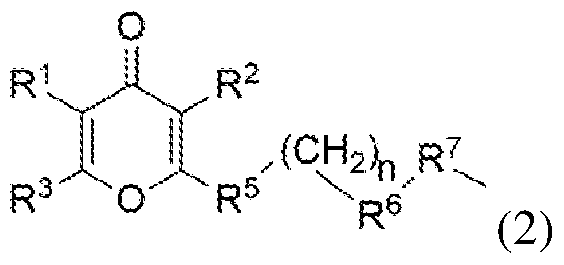


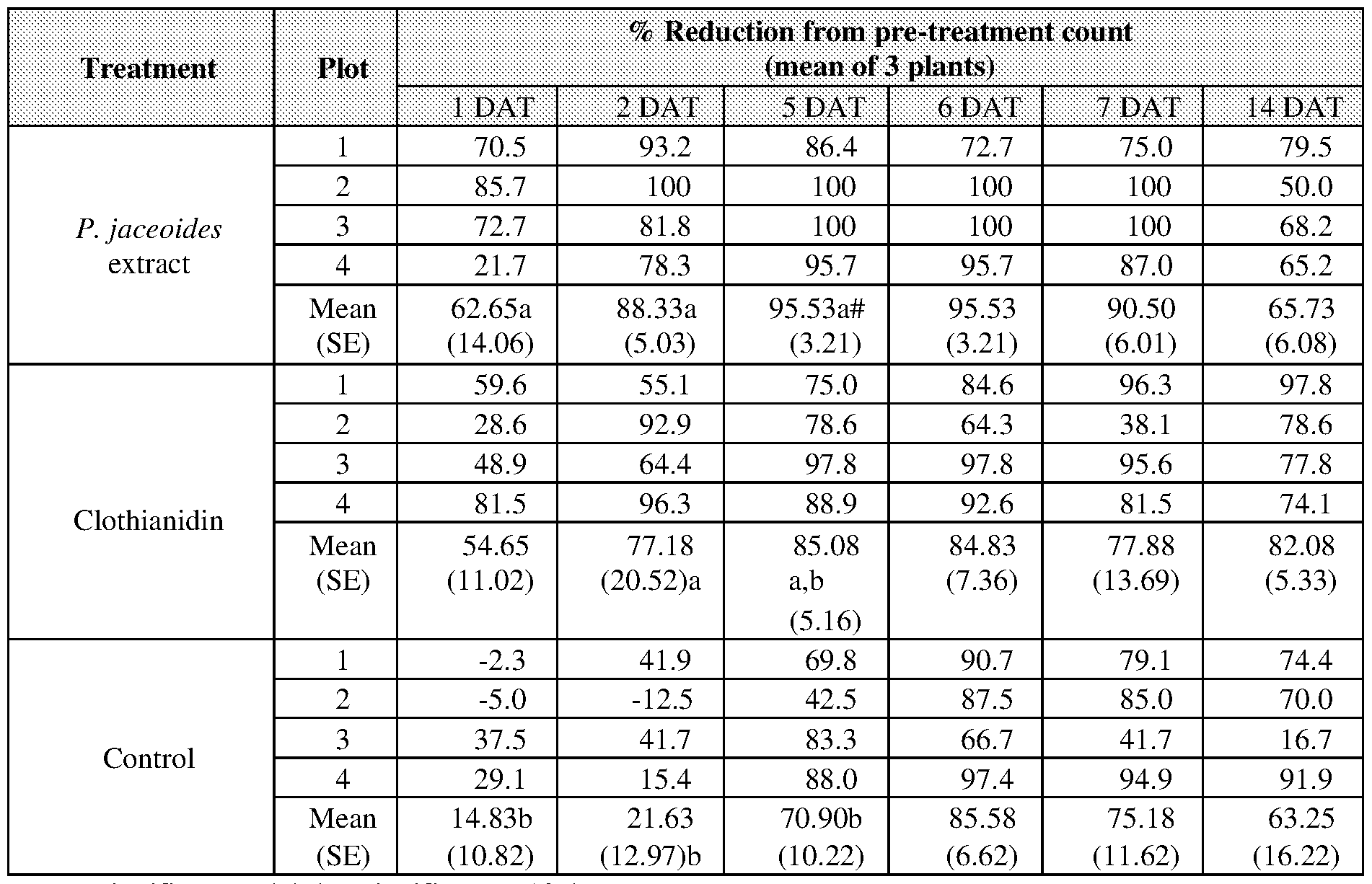


Claims


Priority Applications (7)
| Application Number | Priority Date | Filing Date | Title |
|---|---|---|---|
| US18/020,681 US20230345940A1 (en) | 2020-08-18 | 2021-08-17 | Insecticide |
| CA3188811A CA3188811A1 (en) | 2020-08-18 | 2021-08-17 | Insecticide |
| JP2023509612A JP7794402B2 (en) | 2020-08-18 | 2021-08-17 | insecticides |
| EP21857036.4A EP4199720A4 (en) | 2020-08-18 | 2021-08-17 | Insecticide |
| AU2021327034A AU2021327034A1 (en) | 2020-08-18 | 2021-08-17 | Insecticide |
| CN202180063784.0A CN116234445A (en) | 2020-08-18 | 2021-08-17 | insecticide |
| BR112023003293A BR112023003293A2 (en) | 2020-08-18 | 2021-08-17 | GAMMA-PYRON COMPOUND AND ITS USE, INSECTICIDE COMPOSITION AND ITS USE, FORMULATION, METHOD TO CONTROL ONE OR MORE INSECT PESTS, KIT |
Applications Claiming Priority (2)
| Application Number | Priority Date | Filing Date | Title |
|---|---|---|---|
| AU2020902941A AU2020902941A0 (en) | 2020-08-18 | Insecticide | |
| AU2020902941 | 2020-08-18 |
Publications (1)
| Publication Number | Publication Date |
|---|---|
| WO2022036393A1 true WO2022036393A1 (en) | 2022-02-24 |
Family
ID=80322301
Family Applications (1)
| Application Number | Title | Priority Date | Filing Date |
|---|---|---|---|
| PCT/AU2021/050903 Ceased WO2022036393A1 (en) | 2020-08-18 | 2021-08-17 | Insecticide |
Country Status (8)
| Country | Link |
|---|---|
| US (1) | US20230345940A1 (en) |
| EP (1) | EP4199720A4 (en) |
| JP (1) | JP7794402B2 (en) |
| CN (1) | CN116234445A (en) |
| AU (1) | AU2021327034A1 (en) |
| BR (1) | BR112023003293A2 (en) |
| CA (1) | CA3188811A1 (en) |
| WO (1) | WO2022036393A1 (en) |
Citations (9)
| Publication number | Priority date | Publication date | Assignee | Title |
|---|---|---|---|---|
| US3093659A (en) * | 1956-06-20 | 1963-06-11 | Pfizer & Co C | Antifungal and insecticidal halokojic acid metal complexes |
| JPS5387358A (en) * | 1978-01-09 | 1978-08-01 | Nisshin Flour Milling Co Ltd | Gamma-pyrone compound, its preparation and agricultural medicine therefrom |
| JPS55151595A (en) * | 1979-05-11 | 1980-11-26 | Otsuka Chem Co Ltd | Novel gamma-pyranone(thiono)-phosphoric acid(phosphonic acid) ester, its preparation, and insecticide for arthropod comprizing it |
| GB2163748A (en) * | 1984-07-31 | 1986-03-05 | Otsuka Kagaku Kk | Y-pyrone phosphoric ester derivative |
| JPH06329691A (en) * | 1993-05-24 | 1994-11-29 | Otsuka Chem Co Ltd | Pyrane derivative, insecticide, acaricide and nematocide |
| US5646179A (en) * | 1991-02-08 | 1997-07-08 | Analyticon Gesellschaft Fur Chemische Analytik Und Consulting Gmbh | γ-pyrones, γ-pyridones, and γ-thiopyrones, their use as medicaments and process for preparing same |
| JPH10182626A (en) * | 1996-12-20 | 1998-07-07 | Sumitomo Metal Ind Ltd | Pyran derivative |
| US6071937A (en) * | 1995-11-29 | 2000-06-06 | Bayer Aktiengesellschaft | Oxymethoxy-3-aryl-pyrone derivatives |
| CN105685038A (en) * | 2016-02-05 | 2016-06-22 | 烟台顺隆化工科技有限公司 | Insecticide for prevention and control of musca sorbens |
Family Cites Families (5)
| Publication number | Priority date | Publication date | Assignee | Title |
|---|---|---|---|---|
| CS209201B1 (en) * | 1979-04-17 | 1981-11-30 | Julius Brtko | Insecticide and its semisynthetic method of manufacture |
| CN1008819B (en) * | 1985-07-30 | 1990-07-18 | 大化学株式会社 | The method for preparing r-pyrone phosphoric acid derivatives |
| DE4103904C2 (en) * | 1991-02-08 | 1995-06-14 | Analyticon Ges Fuer Chemische | New drugs from gamma-pyrones, gamma-pyridones and gamma-thiopyrones |
| AU2002216364A1 (en) * | 2001-12-11 | 2003-06-23 | The Kitasato Institute | Novel substance fki-1083 and process for producing the same |
| CN108727321A (en) * | 2018-05-22 | 2018-11-02 | 邵阳学院 | Gallic acid kojic acid ester type compound and its application as tyrosinase inhibitor |
-
2021
- 2021-08-17 WO PCT/AU2021/050903 patent/WO2022036393A1/en not_active Ceased
- 2021-08-17 BR BR112023003293A patent/BR112023003293A2/en unknown
- 2021-08-17 US US18/020,681 patent/US20230345940A1/en active Pending
- 2021-08-17 AU AU2021327034A patent/AU2021327034A1/en active Pending
- 2021-08-17 CN CN202180063784.0A patent/CN116234445A/en active Pending
- 2021-08-17 EP EP21857036.4A patent/EP4199720A4/en active Pending
- 2021-08-17 CA CA3188811A patent/CA3188811A1/en active Pending
- 2021-08-17 JP JP2023509612A patent/JP7794402B2/en active Active
Patent Citations (9)
| Publication number | Priority date | Publication date | Assignee | Title |
|---|---|---|---|---|
| US3093659A (en) * | 1956-06-20 | 1963-06-11 | Pfizer & Co C | Antifungal and insecticidal halokojic acid metal complexes |
| JPS5387358A (en) * | 1978-01-09 | 1978-08-01 | Nisshin Flour Milling Co Ltd | Gamma-pyrone compound, its preparation and agricultural medicine therefrom |
| JPS55151595A (en) * | 1979-05-11 | 1980-11-26 | Otsuka Chem Co Ltd | Novel gamma-pyranone(thiono)-phosphoric acid(phosphonic acid) ester, its preparation, and insecticide for arthropod comprizing it |
| GB2163748A (en) * | 1984-07-31 | 1986-03-05 | Otsuka Kagaku Kk | Y-pyrone phosphoric ester derivative |
| US5646179A (en) * | 1991-02-08 | 1997-07-08 | Analyticon Gesellschaft Fur Chemische Analytik Und Consulting Gmbh | γ-pyrones, γ-pyridones, and γ-thiopyrones, their use as medicaments and process for preparing same |
| JPH06329691A (en) * | 1993-05-24 | 1994-11-29 | Otsuka Chem Co Ltd | Pyrane derivative, insecticide, acaricide and nematocide |
| US6071937A (en) * | 1995-11-29 | 2000-06-06 | Bayer Aktiengesellschaft | Oxymethoxy-3-aryl-pyrone derivatives |
| JPH10182626A (en) * | 1996-12-20 | 1998-07-07 | Sumitomo Metal Ind Ltd | Pyran derivative |
| CN105685038A (en) * | 2016-02-05 | 2016-06-22 | 烟台顺隆化工科技有限公司 | Insecticide for prevention and control of musca sorbens |
Non-Patent Citations (2)
| Title |
|---|
| DATABASE REGISTRY 20 April 1990 (1990-04-20), ANONYMOUS : "4H-Pyran-4-one, 2-dodecyl-6-methoxy-3,5-dimethyl- (CA INDEX NAME)", XP055907978, retrieved from STN Database accession no. 126622-70-6 * |
| See also references of EP4199720A4 * |
Also Published As
| Publication number | Publication date |
|---|---|
| US20230345940A1 (en) | 2023-11-02 |
| JP2023537966A (en) | 2023-09-06 |
| EP4199720A1 (en) | 2023-06-28 |
| AU2021327034A1 (en) | 2023-03-09 |
| EP4199720A4 (en) | 2024-09-04 |
| CN116234445A (en) | 2023-06-06 |
| BR112023003293A2 (en) | 2023-05-02 |
| CA3188811A1 (en) | 2022-02-24 |
| JP7794402B2 (en) | 2026-01-06 |
Similar Documents
| Publication | Publication Date | Title |
|---|---|---|
| US10010084B2 (en) | Control of insect pests | |
| US9220245B2 (en) | Methods of using field-derived colonies of insects selected for decreased susceptibility to plants expressing insecticidal toxins | |
| JP7794402B2 (en) | insecticides | |
| AU2015202052B2 (en) | Control of insect pests | |
| US20220015372A1 (en) | Biologicals and their use in plants | |
| CN110066807A (en) | The plant of pest-resistant performance enhancement and it is related to the construct and method of pest resistance genes | |
| NZ613979B2 (en) | Control of insect pests | |
| HK1193007A (en) | Control of insect pests | |
| HK1193007B (en) | Control of insect pests | |
| US20260132417A1 (en) | Insecticidal proteins compositions and methods of use | |
| WO2026003252A1 (en) | Means and methods to suppress plant insect pests | |
| WO2025193453A1 (en) | Insecticidal proteins compositions and methods of use | |
| WO2026006045A1 (en) | Insecticidal proteins, compositions and methods of use | |
| WO2025264584A1 (en) | Insecticidal proteins, compositions and methods of use | |
| WO2025235220A1 (en) | Insecticidal proteins compositions and methods of use | |
| WO2026076007A1 (en) | Insecticidal proteins compositions and methods of use | |
| WO2025264577A1 (en) | Insecticidal proteins, compositions and methods of use | |
| CN109536508A (en) | The plant of pest-resistant performance enhancement and it is related to the construct and method of pest resistance genes | |
| Raghavendra | Impact of Honey Bee Pollination on Seed Yield and Qualitative Parameters of Sunflower (Helianthus Annuus L.) Hybrids and Their Parental Lines |
Legal Events
| Date | Code | Title | Description |
|---|---|---|---|
| 121 | Ep: the epo has been informed by wipo that ep was designated in this application |
Ref document number: 21857036 Country of ref document: EP Kind code of ref document: A1 |
|
| ENP | Entry into the national phase |
Ref document number: 2023509612 Country of ref document: JP Kind code of ref document: A Ref document number: 3188811 Country of ref document: CA |
|
| REG | Reference to national code |
Ref country code: BR Ref legal event code: B01A Ref document number: 112023003293 Country of ref document: BR |
|
| ENP | Entry into the national phase |
Ref document number: 2021327034 Country of ref document: AU Date of ref document: 20210817 Kind code of ref document: A |
|
| NENP | Non-entry into the national phase |
Ref country code: DE |
|
| ENP | Entry into the national phase |
Ref document number: 2021857036 Country of ref document: EP Effective date: 20230320 |
|
| ENP | Entry into the national phase |
Ref document number: 112023003293 Country of ref document: BR Kind code of ref document: A2 Effective date: 20230223 |