WO2022042547A1 - 流量转发处理方法及设备 - Google Patents
流量转发处理方法及设备 Download PDFInfo
- Publication number
- WO2022042547A1 WO2022042547A1 PCT/CN2021/114303 CN2021114303W WO2022042547A1 WO 2022042547 A1 WO2022042547 A1 WO 2022042547A1 CN 2021114303 W CN2021114303 W CN 2021114303W WO 2022042547 A1 WO2022042547 A1 WO 2022042547A1
- Authority
- WO
- WIPO (PCT)
- Prior art keywords
- network device
- mac address
- packet
- forwarding
- network
- Prior art date
- Legal status (The legal status is an assumption and is not a legal conclusion. Google has not performed a legal analysis and makes no representation as to the accuracy of the status listed.)
- Ceased
Links
Images




Classifications
-
- H—ELECTRICITY
- H04—ELECTRIC COMMUNICATION TECHNIQUE
- H04L—TRANSMISSION OF DIGITAL INFORMATION, e.g. TELEGRAPHIC COMMUNICATION
- H04L45/00—Routing or path finding of packets in data switching networks
- H04L45/54—Organization of routing tables
-
- H—ELECTRICITY
- H04—ELECTRIC COMMUNICATION TECHNIQUE
- H04L—TRANSMISSION OF DIGITAL INFORMATION, e.g. TELEGRAPHIC COMMUNICATION
- H04L45/00—Routing or path finding of packets in data switching networks
-
- H—ELECTRICITY
- H04—ELECTRIC COMMUNICATION TECHNIQUE
- H04L—TRANSMISSION OF DIGITAL INFORMATION, e.g. TELEGRAPHIC COMMUNICATION
- H04L45/00—Routing or path finding of packets in data switching networks
- H04L45/24—Multipath
- H04L45/243—Multipath using M+N parallel active paths
-
- H—ELECTRICITY
- H04—ELECTRIC COMMUNICATION TECHNIQUE
- H04L—TRANSMISSION OF DIGITAL INFORMATION, e.g. TELEGRAPHIC COMMUNICATION
- H04L45/00—Routing or path finding of packets in data switching networks
- H04L45/56—Routing software
- H04L45/566—Routing instructions carried by the data packet, e.g. active networks
-
- H—ELECTRICITY
- H04—ELECTRIC COMMUNICATION TECHNIQUE
- H04L—TRANSMISSION OF DIGITAL INFORMATION, e.g. TELEGRAPHIC COMMUNICATION
- H04L45/00—Routing or path finding of packets in data switching networks
- H04L45/66—Layer 2 routing, e.g. in Ethernet based MAN's
-
- H—ELECTRICITY
- H04—ELECTRIC COMMUNICATION TECHNIQUE
- H04L—TRANSMISSION OF DIGITAL INFORMATION, e.g. TELEGRAPHIC COMMUNICATION
- H04L45/00—Routing or path finding of packets in data switching networks
- H04L45/74—Address processing for routing
-
- H—ELECTRICITY
- H04—ELECTRIC COMMUNICATION TECHNIQUE
- H04L—TRANSMISSION OF DIGITAL INFORMATION, e.g. TELEGRAPHIC COMMUNICATION
- H04L47/00—Traffic control in data switching networks
- H04L47/10—Flow control; Congestion control
-
- H—ELECTRICITY
- H04—ELECTRIC COMMUNICATION TECHNIQUE
- H04L—TRANSMISSION OF DIGITAL INFORMATION, e.g. TELEGRAPHIC COMMUNICATION
- H04L47/00—Traffic control in data switching networks
- H04L47/10—Flow control; Congestion control
- H04L47/12—Avoiding congestion; Recovering from congestion
- H04L47/125—Avoiding congestion; Recovering from congestion by balancing the load, e.g. traffic engineering
-
- H—ELECTRICITY
- H04—ELECTRIC COMMUNICATION TECHNIQUE
- H04L—TRANSMISSION OF DIGITAL INFORMATION, e.g. TELEGRAPHIC COMMUNICATION
- H04L49/00—Packet switching elements
- H04L49/70—Virtual switches
Definitions
- the present invention relates to the field of communication technologies, and in particular, to a traffic forwarding processing method and device.
- PE1 and PE2 establish communication connections with active-active or multi-active network devices.
- PE1 and PE2 Establish a communication connection with PE3.
- PE2 and PE3 are aliasing devices for PE1.
- PE1 when PE2 and PE3 are active-active devices for PE1, that is, for the same traffic, PE1 can share the traffic load to PE2 and PE3 for routing. Forward.
- PE2 and PE3 are active-active devices for PE1, that is, for the same traffic, PE1 can share the traffic load to PE2 and PE3 for routing.
- PE1 may share the traffic load on PE3 for traffic 's forwarding.
- a certain traffic cannot be matched with the required forwarding policy, which reduces the forwarding efficiency of the traffic and further affects the processing efficiency of the service.
- the present application provides a traffic forwarding processing method and device, which can be used in a scenario where a network device establishes a communication connection with an active-active or multi-active network device to match a forwarding strategy that meets requirements to improve traffic forwarding efficiency.
- the present application provides a traffic forwarding processing method, which includes:
- the first network device receives a first message from the second network device, where the first message includes the media access control MAC address of the destination device and the color identification of the MAC address;
- the first network device obtains the address of the third network device, and the destination device mostly belongs to the second network device and the third network device. That is, the above-mentioned destination device is directly multi-homed to the above-mentioned second network device and the above-mentioned third network device, or the above-mentioned destination device is multi-homed to the above-mentioned second network device and the above-mentioned third network device through other devices;
- the first network device determines a first forwarding strategy according to the address of the third network device and the color identification, and forwards the traffic destined for the MAC address to the third network device according to the first forwarding strategy.
- the above-mentioned second network device and third network device are dual-homing and active-active devices for the first network device.
- Ethernet Virtual Private Network Ethernet Virtual Private Network
- EVPN Ethernet Virtual Private Network
- a first forwarding strategy that satisfies the specific level of service is configured between the first network device and the third network device
- a second forwarding strategy that satisfies the specific level of service is configured between the first network device and the second network device.
- a forwarding strategy and a second forwarding strategy may be used to forward traffic destined for the MAC address of the destination device, and the color of the first forwarding strategy and the second forwarding strategy are the same.
- the first network device can find the first forwarding strategy and the second forwarding strategy according to routing information sent by one of the second network device and the third network device, such as the first packet, and based on the first forwarding
- the policy and the second forwarding policy establish a forwarding entry, so that the first network device can forward the traffic destined for the first part of the MAC address of the destination device to the third network device based on the established forwarding entry through the first forwarding policy, and
- the traffic destined for the second part of the MAC address of the destination device is forwarded to the second network device through the second forwarding policy. That is, the present application can be used in a scenario where a network device establishes a communication connection with an active-active or multi-active network device to match a forwarding strategy that meets the requirements, so as to improve the forwarding efficiency of traffic.
- the present application can also be applied to a multi-active device scenario, and the present application exemplarily takes two devices in the multi-active device as an example to introduce.
- the above-mentioned first network device obtains the address of the above-mentioned third network device, including:
- the first network device determines one or more network devices that together with the second network device constitute the multi-homed device of the destination device, and the one or more network devices include the third network device;
- the first network device obtains the addresses of the one or more network devices.
- the above-mentioned multi-homed device together with the second network device constitutes the above-mentioned destination device.
- it can also be said to be an alias device of the second network device that establishes a communication connection with the first network device.
- the first network device After the first network device receives the above-mentioned first message, it can find the addresses of one or more alias devices of the second network device through pre-configuration or through an automatic discovery mechanism, and the one or more alias devices include:
- the above-mentioned third network device, the above-mentioned automatic discovery mechanism includes automatic discovery of each routing segment (auto-discovery per Ethernet segment route, AD per ES) mechanism and automatic discovery of each virtual private network instance (auto-discovery per EVPN instance route, AD per EVI) one or more of the routing mechanisms.
- the first packet further includes an identifier corresponding to the address of the third network device, and the first network device obtains the address of the third network device, including:
- the first network device resolves the identifier to obtain the address of the third network device
- the first network device searches for the address of the third network device according to the identifier.
- the address of the third network device can be obtained without the above-mentioned pre-configuration or automatic discovery mechanism, so as to determine the above-mentioned first forwarding strategy, which can also be used for the network device to establish communication with a dual-active or multi-active network device
- a forwarding policy that meets the requirements is matched to improve the forwarding efficiency of traffic.
- the MAC address and the color identification in the first packet received by the first network device from the second network device originate from the third network device.
- the second network device may first obtain the above-mentioned MAC address and the corresponding color identifier sent by the third network device that constitutes the multi-homing device.
- the above-mentioned MAC address is the MAC address obtained by the above-mentioned third network device from the destination device, and then the above-mentioned color identification corresponding to the above-mentioned MAC address is determined by the above-mentioned third network device.
- the second network device may send the above-mentioned MAC address and the above-mentioned color identification obtained from the third network device, as well as other MAC addresses and other corresponding color identifications learned by the second network device to the first network device, so that the first network device can
- a network device determines a corresponding forwarding policy for the second network device according to the acquired MAC address and the color identifier, as well as the other MAC addresses and the corresponding other color identifiers.
- the above-mentioned forwarding of the traffic destined for the above-mentioned MAC address to the above-mentioned third network device according to the above-mentioned first forwarding policy includes:
- the above-mentioned first network device establishes a forwarding entry according to the above-mentioned MAC address, the address of the above-mentioned third network device, and the above-mentioned first forwarding strategy, and the above-mentioned forwarding entry indicates to forward the above-mentioned traffic through the above-mentioned first forwarding strategy;
- the first network device forwards the traffic to the third network device according to the forwarding entry.
- the above-mentioned first packet further includes a routing target and a virtual private network identifier.
- the routing target included in the first packet can be used to match the corresponding forwarding instance, and the virtual private network identifier can be used to match the corresponding private network when forwarding the traffic, so that the traffic can be forwarded smoothly.
- the traffic sent to the MAC address forwarded to the third network device according to the first forwarding policy is the first part of the traffic sent to the MAC address
- the first packet also includes Including the address of the above-mentioned second network device; the above-mentioned method further includes:
- the above-mentioned first network device determines the second forwarding strategy according to the address of the above-mentioned second network device and the above-mentioned color identification;
- the first network device forwards the second part of the traffic sent to the MAC address to the second network device according to the second forwarding policy.
- This application introduces a process in which the first network device forwards the traffic sent to the MAC address of the destination device to the second network device.
- the first network device can share the traffic load to the second network device and the third network device, thereby improving the efficiency of traffic forwarding and reducing the forwarding burden of the network device.
- the present application provides a traffic forwarding processing method, which is applied to a first system, where the first system includes a first network device, a second network device, a third network device, and a first destination device.
- the destination device belongs to the above-mentioned second network device and the above-mentioned third network device, and the above-mentioned method includes:
- the above-mentioned first network device receives a second packet from the above-mentioned third network device, and the above-mentioned second packet includes the first media access control MAC address of the above-mentioned first destination device, the first color identification of the above-mentioned first MAC address, and the above-mentioned first MAC address.
- the address of the third network device, the first MAC address and the first color identification in the second packet sent by the third network device are obtained by the third network device from the second network device;
- the first network device determines a first forwarding strategy according to the address of the third network device and the first color identifier, and forwards the traffic destined for the first MAC address to the third network device according to the first forwarding strategy.
- the first network device can The above-mentioned first MAC address and the above-mentioned first color identification obtained by the above-mentioned second network device configure a corresponding forwarding policy for the above-mentioned third network device, so that the above-mentioned network device can establish a communication connection with a dual-active or multi-active network device.
- the purpose of matching the forwarding policy that meets the requirements in the scenario is to obtain the effect of improving the forwarding efficiency of traffic.
- the first MAC address and the first color identification are obtained by the third network device from the second network device, including:
- the first MAC address and the first color identification are obtained by the third network device from a Type-Length-Value (TLV) field of a packet sent by the second network device.
- TLV Type-Length-Value
- a new TLV field is defined for sending the MAC address and the color identification configured for the MAC address between alias devices.
- the above method further includes:
- the first network device receives a third packet from the second network device, where the third packet includes the first MAC address and the first color identifier;
- the above-mentioned first network device determines a second forwarding strategy according to the above-mentioned first MAC address and the above-mentioned first color identification in the above-mentioned third packet, and forwards the data to the above-mentioned second network device according to the above-mentioned second forwarding strategy to the above-mentioned first MAC address. traffic to the address.
- the second network device may also send the first MAC address and the first color identifier as its own route to the first network device.
- the network device so that the first network device matches the corresponding forwarding policy according to the third packet sent by the second network device and establishes a forwarding entry.
- the first system further includes a second destination device
- the second packet and the third packet further include the second MAC address and the second MAC address of the second destination device, respectively.
- the second color identification of the address, wherein the second MAC address and the second color identification originate from the third network device.
- alias devices such as a second network device and a third network device can mutually receive MAC addresses and color identifiers sent by each other, and then send these received MAC addresses and color identifiers to the first network as their own routes.
- the first network device is used to match the corresponding forwarding policy to establish a forwarding entry.
- the second packet further includes a routing target and a virtual private network identifier.
- the routing target included in the first packet can be used to match the corresponding forwarding instance, and the virtual private network identifier can be used to match the corresponding private network when forwarding the traffic, so that the traffic can be forwarded smoothly.
- the present application provides a traffic forwarding processing method, the method is applied to a first system, the first system includes a first network device, a second network device, a third network device and a destination device, and the destination device is multi-homed
- the above-mentioned method includes:
- the above-mentioned second network device sends a first packet to the above-mentioned first network device, and the above-mentioned first packet includes the media access control MAC address of the above-mentioned destination device and the color identification of the above-mentioned MAC address, and the above-mentioned first packet also includes the above-mentioned third.
- the address of the network device or an identifier indicating the address of the third network device, the first packet is used to instruct the first network device to determine a first forwarding strategy, and the first forwarding strategy is used to send the third network device to the Forwards traffic destined for the above MAC addresses.
- the MAC address and the color identification in the first packet originate from the third network device.
- the above-mentioned first packet further includes a routing target and a virtual private network identifier.
- the present application provides a traffic forwarding processing method.
- the above method is applied to a first system.
- the first system includes a first network device, a second network device, a third network device, and a first destination device.
- the destination device belongs to the above-mentioned second network device and the above-mentioned third network device, and the above-mentioned method includes:
- the third network device receives a fourth message from the second network device, where the fourth message includes the first media access control MAC address of the first destination device and the first color identification of the first MAC address;
- the third network device sends a second packet to the first network device, where the second packet includes the first MAC address and the first color identifier, and the second packet is used to instruct the first network device to determine the first A forwarding strategy, where the first forwarding strategy is used to forward the traffic destined for the MAC address to the third network device.
- the above-mentioned first MAC address and the above-mentioned first color identifier are carried in the type-length-value TLV field in the above-mentioned fourth packet.
- the above-mentioned first system further includes a second destination device
- the above-mentioned method further includes:
- the third network device sends the second MAC address of the second destination device and the second color identification of the second MAC address to the second network device;
- the above-mentioned third network device sends the second packet to the above-mentioned first network device, including:
- the third network device sends the second packet including the first MAC address, the first color identifier, the second MAC address, and the second color identifier to the first network device.
- the second packet further includes a routing target and a virtual private network identifier.
- the present application provides a traffic forwarding processing method.
- the above method is applied to a first system.
- the first system includes a first network device, a second network device, a third network device, and a first destination device.
- the network devices are multi-attributed to the second network device and the third network device, and the method includes:
- the above-mentioned second network device sends a fourth packet to the above-mentioned third network device, and the above-mentioned fourth packet includes the first media access control MAC address of the above-mentioned first destination device and the first color identification of the above-mentioned first MAC address, the above-mentioned
- the first MAC address and the first color identifier are used to instruct the third network device to send a second packet to the first network device, where the second packet includes the first MAC address and the first color identifier.
- the above-mentioned first system further includes a second destination device
- the above-mentioned method further includes:
- the second network device receives the second MAC address of the second destination device and the second color identification of the second MAC address from the third network device;
- the second network device sends a third packet to the first network device, where the third packet includes the first MAC address, the first color identifier, the second MAC address, and the second color identifier.
- the above-mentioned first MAC address and the above-mentioned first color identifier are carried in the type-length-value TLV field in the above-mentioned fourth packet.
- the present application provides a traffic forwarding processing device, the device comprising:
- a receiving unit configured to receive a first packet from the second network device, where the first packet includes a first packet, and the first packet includes the media access control MAC address of the destination device and the color of the MAC address identification;
- an obtaining unit configured to obtain an address of a third network device, where the above-mentioned destination device mostly belongs to the above-mentioned second network device and the above-mentioned third network device;
- a determining unit configured to determine a first forwarding strategy according to the address of the third network device and the color identification
- a forwarding unit configured to forward the traffic destined for the MAC address to the third network device according to the first forwarding policy.
- the above-mentioned obtaining unit is specifically used for:
- the obtaining unit determines one or more network devices that together with the second network device constitute the multi-homed device of the destination device, specifically:
- the one or more alias devices include the third network device, and the automatic discovery mechanism includes the automatic discovery of each routing segment AD per ES mechanism and automatically discover one or more of the AD per EVI routing mechanisms for each VPN instance.
- the above-mentioned first packet further includes an identifier corresponding to the address of the above-mentioned third network device, and the above-mentioned obtaining unit is specifically configured to:
- the above-mentioned identifier includes the address of the above-mentioned third routing device, resolve the above-mentioned identifier to obtain the address of the above-mentioned third network device;
- the above-mentioned identifier is an identifier used to indicate the address of the above-mentioned third network device
- the address of the above-mentioned third network device is found according to the above-mentioned identifier.
- the MAC address and the color identification in the first packet received by the receiving unit from the second network device originate from the third network device.
- the above-mentioned forwarding unit is specifically used for:
- a forwarding entry is established according to the MAC address, the address of the third network device, and the first forwarding strategy, and the forwarding entry indicates that the traffic is forwarded through the first forwarding strategy;
- the above-mentioned first packet further includes a routing target and a virtual private network identifier.
- the traffic destined for the MAC address forwarded to the third network device according to the first forwarding policy is the first part of the traffic destined for the MAC address, so The first message further includes the address of the second network device;
- the determined unit is further configured to: determine a second forwarding strategy according to the address of the second network device and the color identification;
- the forwarding unit is further configured to: forward the second part of the traffic sent to the MAC address to the second network device according to the second forwarding policy.
- the present application provides a traffic forwarding processing device, the device is a first network device in a first system or a chip or a processing system of the first network device, and the first system further includes a second network device , a third network device and a first destination device, where the first destination device is mostly attributable to the second network device and the third network device, and the device includes:
- a receiving unit configured to receive a second packet from the third network device, where the second packet includes the first media access control MAC address of the first destination device, the first color identification of the first MAC address, and the above-mentioned first MAC address.
- the address of the third network device, the first MAC address and the first color identification in the second packet sent by the third network device are obtained by the third network device from the second network device;
- a determining unit configured to determine a first forwarding strategy according to the address of the third network device and the first color identification, and forward the traffic destined for the first MAC address to the third network device according to the first forwarding strategy.
- the first MAC address and the first color identification are obtained by the third network device from the second network device, including:
- the above-mentioned first MAC address and the above-mentioned first color identification are obtained by the above-mentioned third network device from the type-length-value TLV field of the packet sent by the above-mentioned second network device.
- the receiving unit is further configured to receive a third packet from the second network device, where the third packet includes a third packet, and the third packet includes the first packet MAC address and the above first color identification;
- the above-mentioned determining unit is further configured to determine a second forwarding strategy according to the above-mentioned first MAC address and the above-mentioned first color identification in the above-mentioned third packet, and forward the data to the above-mentioned second network device according to the above-mentioned second forwarding strategy. traffic to a MAC address.
- the first system further includes a second destination device
- the second packet and the third packet further include the second MAC address and the second MAC address of the second destination device, respectively.
- the second color identification of the address, wherein the second MAC address and the second color identification originate from the third network device.
- the second packet further includes a routing target and a virtual private network identifier.
- the present application provides a traffic forwarding processing device, wherein the traffic forwarding processing device is a second network device in the first system or a chip or processing system of the second network device, etc., and the first system further includes a first system.
- a sending unit configured to send a first message to the above-mentioned first network device, where the above-mentioned first message includes the media access control MAC address of the above-mentioned destination device and the color identification of the above-mentioned MAC address, and the above-mentioned first message also includes the above-mentioned third The address of the network device or an identifier indicating the address of the third network device, the first packet is used to instruct the first network device to determine a first forwarding strategy, and the first forwarding strategy is used to send the third network device to the Forwards traffic destined for the above MAC addresses.
- the MAC address and the color identification in the first packet originate from the third network device.
- the above-mentioned first packet further includes a routing target and a virtual private network identifier.
- the present application provides a traffic forwarding processing device, wherein the traffic forwarding processing device is a third network device in the first system or a chip or processing system of the third network device, etc., and the first system further includes a third network device.
- a receiving unit configured to receive a fourth message from the above-mentioned second network device, where the above-mentioned fourth message includes the first media access control MAC address of the above-mentioned first destination device and the first color identification of the above-mentioned first MAC address;
- a sending unit configured to send a second message to the above-mentioned first network device, where the above-mentioned second message includes the above-mentioned first MAC address and the above-mentioned first color identification, and the above-mentioned second message is used to instruct the above-mentioned first network device to determine the first A forwarding strategy, where the first forwarding strategy is used to forward the traffic destined for the MAC address to the third network device.
- the above-mentioned first MAC address and the above-mentioned first color identifier are carried in the type-length-value TLV field in the above-mentioned fourth packet.
- the above-mentioned first system further includes a second destination device
- the above-mentioned sending unit is further configured to send the second MAC address of the above-mentioned second destination device and the second color identification of the above-mentioned second MAC address to the above-mentioned second network device;
- the sending unit sends the second packet to the first network device, specifically:
- the sending unit sends the second packet including the first MAC address, the first color identification, the second MAC address, and the second color identification to the first network device.
- the second packet further includes a routing target and a virtual private network identifier.
- the present application provides a traffic forwarding processing device.
- the traffic forwarding processing device is a second network device in the first system or a chip or a processing system of the second network device.
- the first system further includes a first system.
- a sending unit configured to send a fourth message to the above-mentioned third network device, where the above-mentioned fourth message includes the first media access control MAC address of the above-mentioned first destination device and the first color identification of the above-mentioned first MAC address, the above-mentioned
- the first MAC address and the first color identifier are used to instruct the third network device to send a second packet to the first network device, where the second packet includes the first MAC address and the first color identifier.
- the first system further includes a second destination device
- the traffic forwarding processing device further includes:
- a receiving unit configured to receive the second MAC address of the second destination device and the second color identification of the second MAC address from the third network device;
- the sending unit is further configured to send a third packet to the first network device, where the third packet includes the first MAC address, the first color identifier, the second MAC address, and the second color identifier.
- the above-mentioned first MAC address and the above-mentioned first color identifier are carried in the type-length-value TLV field in the above-mentioned fourth packet.
- the present application provides a device comprising a processor, a communication interface and a memory, wherein the memory is used to store program instructions and/or data, and the processor is used to execute the program instructions stored in the memory, so that the above
- the apparatus performs a method as claimed in any one of claims 1 to 8.
- the present application provides a device including a processor, a communication interface and a memory, wherein the memory is used to store program instructions and/or data, and the processor is used to execute the program instructions stored in the memory, so that the above
- the apparatus performs a method as claimed in any one of claims 9 to 13.
- the present application provides a device including a processor, a communication interface and a memory, wherein the memory is used to store program instructions and/or data, and the processor is used to execute the program instructions stored in the memory, so that the above
- the apparatus performs a method as claimed in any one of claims 14 to 16.
- the present application provides a device including a processor, a communication interface and a memory, wherein the memory is used to store program instructions and/or data, and the processor is used to execute the program instructions stored in the memory, so that the above
- the apparatus performs a method as claimed in any one of claims 17 to 20.
- the present application provides a device including a processor, a communication interface and a memory, wherein the memory is used to store program instructions and/or data, and the processor is used to execute the program instructions stored in the memory, so that the above
- the apparatus performs a method as claimed in any one of claims 21 to 23.
- the present application provides a system, the system includes a first network device and a second network device, wherein the first network device is the device described in the eleventh aspect above, and the second network device is the above-mentioned device The device of the thirteenth aspect.
- the present application provides a system, the system includes a first network device, a second network device, and a third network device, wherein the first network device is the device described in the twelfth aspect, and the first network device is the device described in the twelfth aspect.
- the second network device is the device described in the fifteenth aspect, and the third network device is the device described in the fourteenth aspect.
- the present application provides a computer-readable storage medium, where the computer-readable storage medium stores a computer program, and the computer program is executed by a processor to implement the method of any one of claims 1 to 8; or the above
- the computer program is executed by the processor to implement the method of any one of claims 9 to 13; or the computer program is executed by the processor to implement the method of any one of claims 14 to 16; or the computer program is executed by the processor.
- to implement the method according to any one of claims 17 to 20; or the computer program is executed by a processor to realize the method according to any one of claims 21 to 23.
- the application provides a computer program product
- the present application can be used to match a forwarding strategy that meets requirements in a scenario where a network device establishes a communication connection with an active-active or multi-active network device, so as to improve the forwarding efficiency of traffic.
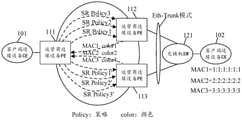
- 1 to 3 are schematic diagrams of system scenarios to which a traffic forwarding processing method provided by the present application is applicable;
- FIG. 4 shows a schematic flowchart of a traffic forwarding processing method provided by an embodiment of the present application
- FIG. 5 is a schematic flowchart of another traffic forwarding processing method provided by an embodiment of the present application.
- FIG. 6 is a schematic flowchart of another traffic forwarding processing method provided by an embodiment of the present application.
- FIG. 7 is a schematic diagram of another system scenario to which a traffic forwarding processing method provided by the present application is applicable.
- FIG. 8 is a schematic diagram of a logical structure of a device provided by an embodiment of the present application.
- FIG. 9 is a schematic diagram of a logical structure of another device provided by an embodiment of the present application.
- FIG. 10 is a schematic diagram of a logical structure of another device provided by an embodiment of the present application.
- FIG. 11 is a schematic diagram of a logical structure of another device provided by an embodiment of the present application.
- FIG. 12 is a schematic diagram of a logical structure of another device provided by an embodiment of the present application.
- FIG. 13 is a schematic diagram of a hardware structure of a device provided by an embodiment of the present application.
- FIG. 1 is a schematic diagram of a system architecture to which the traffic forwarding processing method provided by the embodiment of the present invention is applicable.
- the system architecture may include client edge device 101 , client edge device 102 , operator edge device 111 , operator edge device 112 , operator edge device 113 , and switch 121 .
- the client edge device 101 is connected to the operator edge device 111, and the operator edge device 111 establishes a communication connection with the operator edge device 112 and the operator edge device 113 respectively.
- the operator edge device The device 111 may also establish communication connections with other operator edge devices.
- the switch 121 is dual-homed to the operator edge device 112 and the operator edge device 113 , and the client edge device 102 is connected to the switch 121 . Since the client edge device 102 is connected to the operator edge device 112 and the operator edge device 113 through the switch 121 , it can also be said that the client edge device 102 is dual-homed to the operator edge device 112 and the operator edge device 113 . In another possible implementation, the client edge device 102 can also access other operator edge devices through the switch 121, so it can be said that the client edge device 102 is multi-homed to the operator edge device 112 and the operator edge device 113 and this other operator edge device. In other possible scenarios, the client edge device 102 may also directly access the operator edge device 112 and the operator edge device 113 without going through the switch 121 .
- the customer edge equipment (customer edge, CE) is the client router or switch connected to the service provider, and the CE provides service access for users by connecting one or more provider edge equipment (provider edge, PE).
- CEs and connected PEs can establish adjacencies, such as border gateway protocol (BGP) neighbors, or open shortest path first (OSPF) neighbors, or intermediate system-to-intermediate system (intermediate system-to-intermediate system) neighbors. system to intermediate system, ISIS) link-state routing protocol neighbors, etc.
- BGP border gateway protocol
- OSPF open shortest path first
- ISIS system to intermediate system
- the operator edge device PE can also be a router or a switch, and the PE can be used to connect the CE device and the operator backbone network device. User traffic flows into the user network through the PE device, or flows to the backbone network through the PE device.
- the above-mentioned operator edge device 111, operator edge device 112, and operator edge device 113 may be referred to as PE111, PE112, and PE113 for short.
- a switch can provide an exclusive electrical signal path for any two network nodes connected to the switch.
- the above-mentioned switch 121 may be referred to as SW121 for short.
- the network where the PE111, PE112, and PE113 are located may be a network in which segment routing (SR) is applied to the Internet Protocol Version 6 (Internet Protocol Version 6, IPv6) data plane, which may be referred to as an SRv6 network.
- SR segment routing
- the network where the PE111, PE112, and PE113 are located may be a network in which SR is applied to a multi-protocol label switching (Multi-Protocol Label Switching, MPLS) data plane, which may be referred to as an SR-MPLS network.
- MPLS Multi-Protocol Label Switching
- PE111, PE112, and PE113 can pass the SRv6 segment routing policy (SR Policy) or the SRv6 segment routing traffic engineering tunnel (Segment Routing-Traffic Engineering, SR) in the traffic engineering (traffic engineering, TE) system. -TE Tunnel) and other tunnels with Endpoint and Color attributes to realize traffic forwarding.
- SRv6SR Policy is a forwarding policy system based on SRv6, which can realize automatic diversion of traffic routing.
- SRv6SR-TE Tunnel is an SRv6-based tunnel interface system, and it is necessary to configure tunnels between devices to realize traffic forwarding.
- PE111, PE112, and PE113 can forward traffic through tunnels such as MPLS SR Policy or MPLS SR-TE Tunnel with tail Endpoint and Color attributes in the TE system.
- MPLS SR Policy is a forwarding policy system based on MPLS, which can realize the automatic diversion of traffic routing.
- MPLS SRTE Tunnel is an MPLS-based tunnel interface system. It is necessary to configure tunnels between devices to realize traffic forwarding.
- SR Policy is taken as an example for illustrative introduction, and other tunnels with attributes of tail Endpoint and Color, such as SR-TE Tunnel, are similar, and details are not repeated here.
- SR Policy is identified by the following triples:
- Headend The place where the SR Policy is generated and implemented; for example, the headend may be the PE111 shown in Figure 1 above.
- Endpoint The endpoint of the SR Policy, which is an IPv4 or IPv6 address.
- the tail end may be PE112 or PE113 shown in FIG. 1 above.
- Color is an arbitrary 32-bit value used to distinguish multiple SR policies between the same head-end and tail-end pair. Different colors have different corresponding numerical values, which can be called color identification.
- the SR Policy is identified by a (color, tail) 2-tuple.
- the Candidate Path of an SR Policy represents a specific way of delivering traffic from the headend to the tailend of the corresponding SR Policy.
- Each candidate path has a preference value (Preference). The higher the preference value of the path, the more preferred it is.
- An SR Policy has at least one candidate path, where the valid candidate path with the highest preference value is the active candidate path.
- the segment list of SR Policy is the segment list of its active path.
- Each candidate path can have one or more segment lists, and each segment list has an associated load balancing weight. The traffic directed to this path is load balanced among all valid segment lists of this candidate path according to the weight ratio.
- the link between PE111 and PE112 may further include one or more PEs, and the link between PE111 and PE113 may further include one or more PEs. PE and so on.
- the applicable system architecture of the traffic forwarding processing method provided by the embodiment of the present application is not limited to the above description, as long as it is applied to the scenario of the traffic forwarding processing method provided by the embodiment of the present application, such as a dual-homing or multi-homing scenario of a network device, all Scenarios to which the embodiments of the present application are applicable are not repeated here.
- the network device described in this embodiment of the present application may include a router or a device with a routing function, such as a Layer 3 switch, and the like.
- PE112 and PE113 may be in a virtual private LAN service (virtual private LAN service, VPLS) active-active state for PE111 or may be in a virtual private network (virtual private network, VPN) active-standby state; or ,
- VPN virtual private network
- PE112 is an aliasing device of PE113
- PE113 is an aliasing device of PE112.
- the VPLS may be a service in an Ethernet virtual private network (Ethernet virtual private network, EVPN).
- VPLS active-active state or VPN active-standby state or PE112 and PE113 are alias devices to each other, indicating that PE111 can share the traffic load on PE112 for forwarding, and can share the traffic load on PE113 for forwarding. Traffic can include business traffic or control traffic, etc.
- SR Policy1 is configured between PE111 and PE112, and SR Policy1' is configured between PE111 and PE113.
- the SR Policy1 can be the policy configured by default between PE111 and PE112, and the SR Policy1' can be PE111
- the Policy configured by default between PE113 and PE113 can be used to provide VPLS services for the entire virtual private LAN service, that is, to forward the VPLS traffic of the virtual private LAN service.
- the SR Policy1 since the head end has been given as PE111, the SR Policy1 can be identified by color and tail end. Assume that the color is blue, the blue identifier is 20, and the tail is PE112, and the IP address of PE112 is assumed to be 1.1.1.3. Then, the SR Policy1 can be identified with "blue (20), 1.1.1.3".
- the above MAC address may also be called a local area network address (LAN address), an Ethernet address (Ethernet address) or a physical address (physical address).
- LAN address local area network address
- Ethernet address Ethernet address
- physical address physical address
- the SR Policy1 and SR Policy1' can be used to carry unicast (unicast) traffic and broadcast-unknown unicast-multicast (broadcast, unknown unicast and multicast, BUM) traffic.
- PE111 can match the corresponding outbound interface according to the quintuple information of the packets in the traffic, so as to carry the traffic in the above SR Policy1 or SR Policy1' and send it to the corresponding next-hop device such as PE112 or PE113, and then The next step is forwarded by PE112 or PE113, for example, forwarded to SW121.
- a quintuple is a set of five quantities consisting of a source Internet protocol (IP) address, a source port, a destination IP address, a destination port and a transport layer protocol.
- IP Internet protocol
- PE111 can match the corresponding outbound interface according to the quintuple information of the packets in the traffic, so as to carry the traffic in the above SR Policy1 or SR Policy1' and send it to the corresponding next-hop device such as PE112 or PE113 , but PE112 or PE113 needs to decide whether to continue to forward the BUM traffic according to whether it is a designated forwarder (designated forwarder, DF). For example, assuming that PE112 is a designated forwarder DF, and PE113 is a non-designated forwarder (NDF), then PE112 can continue to forward the received BUM traffic, such as forwarding to SW121, while PE113 will forward the received BUM traffic. BUM discarded.
- DF designated forwarder
- the SW121 is configured in the Ethernet link aggregation Eth-Trunk mode, which can increase the link bandwidth by bundling multiple Ethernet physical links together into a logical link.
- the network devices connected by the bundled Ethernet physical links belong to the same Ethernet segment (Ethernet segment, ES).
- these bundled links can effectively improve link reliability through mutual dynamic backup. That is, SW121 bundles the links to PE112 and to PE113 to form a logical link. Then, PE112 and PE113 belong to the same ES. For SW121, the link to PE112 and PE113 is the same link.
- SW121 can only forward packets to PE112 or PE113, but not to PE112 and PE113 at the same time.
- CE101 or a user equipment connected to CE101 may be a source device of traffic
- CE102 or a user equipment connected to CE102 may be a destination device of traffic
- the source device refers to the device that generates and sends the traffic
- the destination device is the device indicated by the destination address where the traffic finally arrives.
- SLA service level agreement
- the SR Policy2' can be established between PE111 and PE113, and the SR Policy2 and SR Policy2' can meet the requirements of a specific service level agreement.
- the certain specific service level agreement may, for example, require a bandwidth of 200 Mbps, and a delay of ⁇ 20 ms, and so on.
- Figure 3 shows the schematic diagram of establishing SR Policy2 between PE111 and PE112, and establishing SR Policy2' between PE111 and PE113.
- SR Policy2 and SR Policy2' are configured with the same color, that is, the two forwarding policies have the same color identification.
- PE112 and PE113 In order to carry the traffic destined for MAC1 on PE111 to SR Policy2 and/or SR Policy2' for forwarding, that is, to forward the traffic destined for MAC1 through SR Policy2 and/or SR Policy2', PE112 and PE113 need to transfer the traffic to MAC1 from SW121 Obtain the MAC1 (SW121 obtains the MAC1 from CE2), and color the MAC1, that is, configure the color identification for the MAC1, which is the same as the color identification of SR Policy2 and SR Policy2'. Then, PE112 and PE113 send the route of MAC1 to PE111.
- MAC1 can only be sent to one of PE112 and PE113. Assuming that it is sent to PE112, only PE112 will color MAC1 and send the route of MAC1 to PE111. After receiving the route of the MAC1, the PE111 establishes a forwarding entry according to the route, and the forwarding entry indicates that the traffic destined for the MAC1 is forwarded through the SR Policy2 between the PE111 and the PE112. That is, when PE111 forwards the traffic destined for MAC1, PE111 can carry the traffic destined for MAC1 to SR Policy2 and send it to PE112.
- PE111 Since PE113 does not send the route of MAC1 to PE111, PE111 does not establish a forwarding entry indicating that the traffic destined for MAC1 is forwarded through the SR Policy2' between PE111 and PE113, and since PE112 and PE113 are alias devices, PE111 will forward the traffic to MAC1.
- the traffic of MAC1 is sent to PE112 and PE113 for forwarding, so PE111 can only send the traffic to MAC1 to PE113 through SR Policy1', which leads to the problem that the above-mentioned specific grade service agreement cannot be satisfied and reduces the forwarding efficiency of traffic , which further affects the processing efficiency of the business.
- the present application provides a traffic forwarding processing method.
- the following describes the traffic forwarding processing method provided by the present application through several embodiments.
- the method may include but is not limited to the following steps :
- a first network device receives a first packet from a second network device, where the first packet includes first information, where the first information includes a MAC address of a destination device and a color identifier of the MAC address.
- the first network device may be the aforementioned PE111
- the second network device may be the aforementioned PE112
- the third network device may be the aforementioned PE113
- the destination device may be the aforementioned CE102 or a device connected to CE102
- the MAC address of the destination device may be is the above MAC1.
- the second network device and the third network device are alias devices to each other for the first network device.
- the devices that are aliased to the first network device and the second network device may also include other network devices.
- the destination device is directly multi-homed to the second network device and the third network device, or the destination device is multi-homed to the second network device and the third network device through other devices.
- the destination device is multi-homed to the second network device and the third network device.
- the destination device floods its own MAC address to a switch through a certain protocol, such as a BGP protocol, an OSPF protocol, or an ISIS protocol, and the switch can be, for example, the aforementioned SW121.
- the switch can be dual-homed to the second network device and the third network device, and the switch configures the Eth-Trunk mode for the link reaching the second network device and the third network device. Then, the switch sends the learned MAC address of the destination device to the second network device. Based on the above description, in the Eth-Trunk mode, the switch only sends the MAC address to the second network device and the third network device. one of the devices, the switch does not send the learned MAC address of the destination device to the third network device.
- the second network device After receiving the MAC address of the destination device, the second network device colors the MAC address, that is, configures the color identification of the MAC address. Based on the foregoing description, it can be known that the traffic sent to the MAC address needs to meet a specific level of service agreement, and the first network device and the second network device and between the first network device and the third network device have established a service agreement that satisfies this level. Forwarding policy for a specific level of service agreement.
- the forwarding strategy established between the first network device and the third network device that satisfies the specific level of service agreement may be referred to as a first forwarding strategy
- the forwarding strategy established between the first network device and the second network device that satisfies the specific level of service may be referred to as the second forwarding policy.
- the first forwarding policy may be, for example, the above-mentioned SR Policy2'
- the second forwarding policy may be, for example, the above-mentioned SR Policy2.
- the first forwarding strategy and the second forwarding strategy have the same color identification.
- the color of the MAC address coloring needs to be the same as the first and/or second forwarding policy. Color is the same. Therefore, the color identification of the MAC address configured by the second network device is the same as the Color identification of the first forwarding policy and the second forwarding policy.
- the second network device After the second network device completes the configuration of the color identification of the MAC address, it generates the above-mentioned first message, and sends the first message to the first network device.
- the first packet may include the address of the second network device, a route target (route target, RT), the MAC address of the destination device, the configured color identification of the MAC address, and the network identification of the first VPN, and the like.
- the MAC address and the color of the MAC address are identified as the above-mentioned first information.
- the first information is mainly for the convenience of describing the specific content carried in the first packet, rather than for limiting the carrying position of the specific content.
- the MAC address and the color identification of the MAC address included in the first information may be located in an adjacent field of the first packet, or may be located in a non-adjacent field of the first packet.
- the address of the second network device may be the local loopback address (loopback address) of the second network device, and the loopback address is a virtual interface, which can ensure the stability of the route, and the interface will not experience link failure Case.
- the address of the second network device may also be an internet protocol (internet protocol, IP) address of the second network device.
- the routing target included in the above-mentioned first information can be represented as RT1, and this RT1 can be a routing control identifier of an Ethernet virtual routing forwarding (Ethernet virtual routing forwarding, EVRF) instance, and on the forwarding plane, used for routing information distribution and routing.
- EVRF Ethernet virtual routing forwarding
- An EVRF instance may correspond to a forwarding table, and the forwarding table is generally formed through a multi-protocol border gateway protocol (Multi-protocol border gateway protocol, MP-BGP) of the control plane.
- MP-BGP Multi-protocol border gateway protocol
- the RT route target carried by MP-BGP controls whether the VPN route received locally is stored in the local EVRF route forwarding table.
- the network identifier of the above-mentioned first VPN is mainly used to identify the VPN network where the second network device is located on the forwarding plane. , SID), which can be abbreviated as VPNSID1.
- the third network device generates a packet including information such as the address of the third network device, RT2 and the network identifier of the second VPN, and sends the packet to the first network device.
- the address of the third network device may be a local loopback address (loopback address) of the third network device.
- the address of the third network device may also be an IP address or the like of the third network device.
- the above RT2 may be a label of another Ethernet virtual routing forwarding (Ethernet virtual routing forwarding, EVRF) instance. Or, in a possible implementation manner, the RT2 and the above RT1 are the same EVRF tag. Or, in a possible implementation manner, the RT2 and the above RT1 are the same EVRF tag, and RT2 and RT1 are the same.
- Ethernet virtual routing forwarding EVRF
- the network identification of the above-mentioned second VPN is mainly used to identify the VPN network where the third network device is located on the forwarding plane, and the network identification of the second VPN can be the VPN segment identification (segment identification) of the third network device for the EVPN VPLS message.
- identification, SID which can be abbreviated as VPNSID2. Since the second network device and the third network device are alias devices for the first network device, the VPNSID2 and the above-mentioned VPNSID1 may be the same.
- the first network device acquires the address of the third network device.
- the alias device includes a third network device.
- the automatic discovery mechanism of the ES may be referred to as AD per ES for short
- the automatic discovery mechanism of the EVI may be referred to as AD per EVI routing for short.
- the AD per EVI route can be a message sent by the third network device described in S401 to the first network device, and the message includes information such as the address of the third network device, RT2 and the network identifier of the second VPN.
- the first network device before the first network device receives the first message, the first network device first receives the ES identifiers sent by the second network device and the third network device respectively.
- the three network devices all belong to the same Ethernet segment, so the ES identifiers sent to the first network device are the same, which enables the first network device to know that the second network device and the third network device both belong to the same Ethernet segment.
- the second network device and the third network device go to the first network device through the Auto-discovery (Auto-discovery, AD) mechanism of the alias route of the EVPN instance (EVPN instance, EVI) (this mechanism may be referred to as AD per EVI Aliasing route) to the first network device.
- the network device sends the route target RT.
- the RT can be used to identify a VPN on the control plane, then the RT sent by the second network device and the third network device is the same, so that the first network device knows that the second network device and the third network device belong to the same VPN.
- network devices belonging to the same VPN are aliased devices to each other. Therefore, the first network device may determine that the second network device and the third network device are alias devices for each other according to the received ES and RT.
- the above-mentioned first network device After the above-mentioned first network device receives the ES identifier and RT sent by the above-mentioned second network device and the third network device, these ES identifiers and RT will be saved in a list, and the second network device and the third network device. Addresses are stored into this list. Aliased devices for a network device can be found in this list.
- the list may also include information such as addresses of network devices.
- the address of the network device may be a loopback address or an IP address of the network device.
- the first network device After the first network device receives the above-mentioned first message, it can find each alias device of the second network device in the above-mentioned list according to the ES and RT1 where the second network device is located, including the above-mentioned third network device, And the address of the third network device can be obtained in the list.
- the first network device may not use an automatic discovery mechanism to discover the alias device of the second network device, but can determine the alias device of the second network device through pre-configuration, and may The addresses of these alias devices are obtained, thereby obtaining the addresses of the above-mentioned third network devices.
- the first network device determines a first forwarding strategy according to the address of the third network device and the above-mentioned color identification, and forwards the traffic destined for the MAC address to the third network device according to the first forwarding strategy.
- the first network device finds the first forwarding policy established between the first network device and the third network device by using the address of the third network device and the color ID of the configured MAC address of the destination device as an index.
- the first network device may forward the traffic destined for the destination device to the third network device according to the first forwarding policy.
- the first network device searches for the corresponding forwarding table according to the above RT2, and then adds a forwarding table entry to the forwarding table to indicate that the first network device can The first traffic is forwarded to the third network device according to the first forwarding policy, where the first traffic is the traffic sent to the MAC address of the destination device.
- the first network device After the first network device receives the first packet, it finds out the connection between the first network device and the second network device through the color identification of the address of the second network device and the MAC address of the destination device configured above. The second forwarding policy established between them. Then, the corresponding forwarding table is found through the above RT1, and a forwarding table entry is added to the forwarding table to indicate that the first network device can forward the first traffic to the second network device according to the second forwarding policy .
- the above-mentioned forwarding table entries established for the second network device and the third network device are in one forwarding table.
- Table 1 is based on the above-mentioned example of FIG. 2 and FIG. 3 The content of the partial forwarding table after the forwarding table entry is established above is shown.
- the traffic processing method provided in this embodiment can refer to FIG. 5 , and the method can also be applied to the scenarios shown in FIG. 2 and FIG. 3 to solve the above-mentioned problem that the above-mentioned specific graded service agreement cannot be satisfied.
- the method may include but is not limited to the following step:
- a first network device receives a first packet from a second network device, where the first packet includes the address of the second network device, the MAC address of the destination device, and the configured color identification of the MAC address.
- the message further includes the address of the third network device or an identifier indicating the address of the third network device.
- the first packet in the second embodiment is not the same packet as the first packet in the above-mentioned first embodiment.
- the relationship between the first network device, the second network device, the third network device, and the destination device and the corresponding relationship with FIG. 2 and FIG. 3 described in the first embodiment are also applicable to the second embodiment, and will not be repeated here. .
- the second network device and the third network device establish a neighbor relationship, for example, a BGP neighbor relationship, an OSPF neighbor relationship, or an ISIS neighbor relationship. Therefore, the second network device and the third network device can pass the established neighbor relationship.
- the relationship learns that the other party and itself belong to the same Ethernet segment and the same EVPN instance, and can learn that the other party is its own alias device.
- the second network device After completing the configuration of the color identification of the MAC address of the destination device, the second network device generates the first packet, and sends the first packet to the first network device.
- the first packet may include the address of the third network device or include an identifier indicating the address of the third network device.
- the first packet may further include the address of the second network device, RT1, the MAC address of the destination device, the color identification of the configured MAC address, the network identification of the first VPN, and the like.
- the information for advertising the route sent by the second network device to the first network device in the existing EVPN protocol does not include the address of the third network device or the above-mentioned identifier, it can be modified by modifying The EVPN protocol implements the solution of the second embodiment.
- the first network device acquires the address of the third network device.
- the first network device can directly parse the first packet to obtain the address of the third network device.
- the identifier may be, for example, the label of the EVI to which the above-mentioned MAC address belongs, or may be any preset identifier, then After receiving the first packet, the first network device may parse the first packet to obtain the identifier, and find the address of the third network device in the corresponding list according to the identifier.
- the first network device determines a first forwarding strategy according to the address of the third network device and the above-mentioned color identification, and forwards the traffic destined for the MAC address to the third network device according to the first forwarding strategy.
- the second embodiment also realizes that in the first network device, the next hop of the traffic destined for the MAC address of the destination device can be forwarded by the second network device or the third network device through a forwarding policy that satisfies a specific level of service. This traffic is made to meet the requirements of the above-mentioned specific level of service agreement.
- the traffic processing method provided in this embodiment can refer to FIG. 6 , and the method can also be applied to the scenarios shown in FIG. 2 and FIG. 3 to solve the above-mentioned problem that the above-mentioned specific graded service agreement cannot be satisfied.
- the method may include but is not limited to the following step:
- the first network device receives a second packet from a third network device, where the second packet includes second information, where the second information includes the MAC address of the destination device, the configured color identification of the MAC address, and the first information.
- the address of the third network device, the MAC address and the color identification are obtained by the third network device from the second network device.
- the relationship between the first routing device, the second routing device, the third routing device, and the destination device and the corresponding relationship with FIG. 2 and FIG. 3 described in the first embodiment are also applicable to the third embodiment, and will not be repeated here. .
- the second network device and the third network device establish a neighbor relationship, for example, a BGP neighbor relationship, an OSPF neighbor relationship, or an ISIS neighbor relationship. Therefore, the second network device and the third network device can pass the established neighbor relationship.
- the relationship learns that the other party and itself belong to the same Ethernet segment and the same EVPN instance, and can learn that the other party is its own alias device.
- the second network device may send the MAC address and the configured color identification of the MAC address to its own alias device, including the third network device.
- Network equipment For the process that the second network device completes the configuration of the color identification of the MAC address of the destination device, reference may be made to the corresponding description in S401 of the first embodiment, and details are not repeated here.
- the existing EVPN protocol cannot implement the function of the second network device sending the MAC address and the color identification of the configured MAC address to the alias device, so it can be implemented by adding an agreement for this function to the EVPN protocol.
- TLV is a format used to encapsulate information into a message.
- TLV refers to a structure composed of data type Type, data length Length, and data value Value, which can describe almost any data type. Therefore, a TLV structure can be extended to encapsulate the MAC address to be sent and the color identification configured for the MAC address.
- the above-mentioned MAC address and the color identification are obtained by the third network device from the second network device include: the MAC address and the color identification are the TLV of the message sent by the third network device from the second network device obtained from the field.
- the extension mechanism of the packet encapsulated by the extended TLV structure can also be defined, that is, which devices can the packet be sent and received. The device can receive the message and perform subsequent processing.
- the subsequent processing may be as follows: after the third network device receives the MAC address of the destination device and the configured color identification of the MAC address sent by the second network device, it generates the second packet, and sends the second packet to the second network device. sent to the first network device.
- the second packet may also include RT2 and network identifiers of the second VPN, and the like.
- the first network device determines a first forwarding strategy according to the address of the third network device and the color identifier, and forwards the traffic destined for the MAC address to the third network device according to the first forwarding strategy.
- the second network device after the above-mentioned second network device completes the configuration of the color identification of the MAC address of the above-mentioned destination device, it can also generate a first packet as described in S401, and in the third embodiment, the first packet can be called a third packet message, and send the third message to the first network device, so that the network device can generate according to the third message to indicate that the first network device can forward the first network device to the second network device according to the second forwarding policy.
- the forwarding entry for the traffic For the specific process of generating the forwarding entry, reference may be made to the corresponding description in S403 of the above-mentioned first embodiment, which will not be repeated here.
- the third implementation also realizes that in the first network device, the next hop of traffic destined for the MAC address of the destination device can be forwarded by the second network device or the third network device through a forwarding policy that satisfies a specific level of service. This traffic is made to meet the requirements of the above-mentioned specific level of service agreement.
- the above-mentioned extended TLV structure is not limited to encapsulating a MAC address and a color identification configured for the MAC address, but can also be used to encapsulate multiple MAC addresses and Color identification of multiple MAC address configurations.
- the alias devices can send the MAC address and the color identification configured for the MAC address to each other.
- using the TLV extension manner to carry the MAC address and the color identification configured for the MAC address is a possible example. In practical applications, other suitable manners may also be selected to carry the MAC address.
- the system also includes a second destination device, and the switch sends the MAC address of the second destination device to the third network device, then The third network device configures a color identification for the MAC address of the second destination device, and then sends the MAC address and the configured color identification to the second network device through the above-mentioned extended EVPN protocol. Then, including the MAC address of the first destination device and the color identification of the MAC address, two destination devices (ie, the first destination device and the second destination device) are stored in the second network device and the third network device. MAC address and color identification.
- the second packet sent by the third network device to the first network device may also include the MAC address of the second destination device and the color identification of the MAC address; the first packet sent by the second network device to the first network device
- the three packets may also include the MAC address of the second destination device and the color identification of the MAC address.
- FIG. 7 is obtained by adding some information on the basis of the above-mentioned FIGS. 2 and 3 . Therefore, the above description of FIGS. 2 and 3 is applicable to FIG. 7 .
- the switch SW121 sends MAC1 to PE112, and sends MAC2 and MAC3 to PE113.
- the PE112 colors the MAC1, that is, configures a color identification for the MAC1, assuming that the configured color identification is represented by color1.
- the PE113 colorizes the MAC2 and MAC3, that is, configures color labels for the MAC2 and MAC3. It is assumed that the color labels configured for MAC2 are represented by color2, and the color labels configured for MAC3 are represented by color3. color3 is also the color identification of SR Policy3 and SR Policy3', that is, PE111 can forward traffic to MAC3 addresses through SR Policy3 and SR Policy3'.
- PE112 can send MAC1 and color1 into a packet according to the above-mentioned extended TLV structure to the alias device PE113, and PE113 can convert MAC2, MAC2, color1 according to the above-mentioned extended TLV structure color2, MAC3, and color3 are encapsulated into packets and sent to the alias device PE112. Then, PE112 and PE113 respectively send the acquired MAC1, color1, MAC2, color2, MAC3, and color3 to PE111. After PE111 receives the packet, it can establish corresponding forwarding entries according to the same MAC and color information received from PE112 and PE113 respectively. For the specific process of establishing the forwarding entry, reference may be made to the foregoing description, which will not be repeated here.
- the second network device and the third network device obtain the MAC address and the MAC address sent by the other party through the extended EVPN protocol described above. After the color identification of the addresses, according to the preset configuration, only one of the network devices, such as the second network device or the third network device, sends the multiple MAC addresses colored by the two devices and the color identification of the corresponding MAC addresses to the first network device. Network equipment, no need to send all alias equipment. The following is further described by taking the preset configuration of the third network device for sending as an example.
- the address of the alias device may be sent to the first network device together.
- the first network device so that the first device determines a forwarding policy corresponding to the alias device according to the address of the alias device, thereby establishing a forwarding table entry.
- the third network device when the third network device sends the multiple MAC addresses and the color identifiers corresponding to the MAC addresses to the first network device, the third network device may send the address of the alias device (including the above-mentioned second network device) The identifier is sent to the first network device, so that the first device determines a corresponding forwarding policy according to the identifier, thereby establishing a forwarding entry.
- the specific process of determining the forwarding policy and establishing the forwarding entry reference may be made to the corresponding description in the above-mentioned second embodiment, which will not be repeated here.
- the third network device when it sends the multiple MAC addresses and the color identifiers corresponding to the MAC addresses to the first network device, it may not carry the address of the alias device or the identifier indicating the address of the alias device, Instead, based on the MAC address, the first network device finds the address of the alias device according to the AD per ES mechanism and/or the AD per EVI routing mechanism, so as to determine the corresponding forwarding policy according to these addresses to establish a forwarding entry. For the process of finding the address of the alias device, determining the forwarding policy, and establishing the forwarding entry, reference may be made to the specific description in the above-mentioned Embodiment 1, and details are not repeated here.
- the first network device may forward the first part of the traffic destined for the foregoing MAC address to the foregoing third network device according to the foregoing first forwarding policy, and The first network device may forward the second part of the traffic destined for the MAC address to the second network device according to the second forwarding policy.
- the traffic of the first part and the second part may be all the service traffic sent to the above MAC address.
- the traffic of the first part and the second part may be part or all of the service traffic sent to the above MAC address, if it is part of the service traffic, The remaining service traffic can be forwarded through the other network device.
- the first network device determines the forwarding policy for the other network device reference may be made to the foregoing embodiments.
- each device includes corresponding hardware structures and/or software modules for performing each function.
- the present application can be implemented in hardware or a combination of hardware and computer software with the units and algorithm steps of each example described in conjunction with the embodiments disclosed herein. Whether a function is implemented by hardware or computer software-driven hardware depends on the specific application and design constraints of the technical solution. Skilled artisans may implement the described functionality using different methods for each particular application, but such implementations should not be considered beyond the scope of this application.
- the device may be divided into functional modules according to the foregoing method examples.
- each functional module may be divided corresponding to each function, or two or more functions may be integrated into one module.
- the above-mentioned integrated modules can be implemented in the form of hardware, and can also be implemented in the form of software function modules. It should be noted that, the division of modules in the embodiments of the present application is schematic, and is only a logical function division, and there may be other division manners in actual implementation.
- FIG. 8 shows a schematic diagram of a possible logical structure of the apparatus, and the apparatus may be the first network device in each of the foregoing embodiments, or may be the first network A chip in the device, or may be a processing system in the first network device, or the like.
- the apparatus 800 includes a receiving unit 801 , an obtaining unit 802 , a determining unit 803 and a forwarding unit 804 . in:
- a receiving unit 801 configured to receive a first message from a second network device, where the first message includes the media access control MAC address of the destination device and the color identification of the MAC address;
- an obtaining unit 802 configured to obtain an address of a third network device, where the above-mentioned destination device mostly belongs to the above-mentioned second network device and the above-mentioned third network device;
- a determining unit 803, configured to determine a first forwarding strategy according to the address of the third network device and the color identification
- the forwarding unit 804 is configured to forward the traffic destined for the MAC address to the third network device according to the first forwarding policy.
- the foregoing obtaining unit 802 is specifically configured to:
- the obtaining unit 802 determines one or more network devices that together with the second network device constitute the multi-homed device of the destination device, specifically:
- the one or more alias devices include the third network device, and the automatic discovery mechanism includes the automatic discovery of each routing segment AD per ES mechanism and automatically discover one or more of the AD per EVI routing mechanisms for each VPN instance.
- the above-mentioned first packet further includes an identifier corresponding to the address of the above-mentioned third network device, and the above-mentioned obtaining unit 802 is specifically configured to:
- the above-mentioned identifier includes the address of the above-mentioned third routing device, resolve the above-mentioned identifier to obtain the address of the above-mentioned third network device;
- the above-mentioned identifier is an identifier used to indicate the address of the above-mentioned third network device
- the address of the above-mentioned third network device is found according to the above-mentioned identifier.
- the MAC address and the color identification in the first packet received by the receiving unit 801 from the second network device originate from the third network device.
- the forwarding unit 804 is specifically configured to:
- a forwarding entry is established according to the MAC address, the address of the third network device, and the first forwarding strategy, and the forwarding entry indicates that the traffic is forwarded through the first forwarding strategy;
- the above-mentioned first packet further includes a routing target and a virtual private network identifier.
- the traffic destined for the MAC address forwarded to the third network device according to the first forwarding policy is the first part of the traffic destined for the MAC address, so The first message further includes the address of the second network device;
- the further determining unit 803 is further configured to: the first network device determines a second forwarding strategy according to the address of the second network device and the color identification;
- the forwarding unit 804 is further configured to: forward the second part of the traffic sent to the MAC address to the second network device according to the second forwarding policy.
- FIG. 9 shows a schematic diagram of a possible logical structure of the apparatus, and the apparatus may be the first network device in the third embodiment above, or may be the first network A chip in the device, or may be a processing system in the first network device, or the like.
- the apparatus 900 includes a receiving unit 901 and a determining unit 902 . in:
- the receiving unit 901 is configured to receive a second packet from the third network device, where the second packet includes the first media access control MAC address of the first destination device, the first color identification of the first MAC address, and The address of the third network device, the first MAC address and the first color identification in the second packet sent by the third network device are obtained by the third network device from the second network device;
- the determining unit 902 is configured to determine a first forwarding strategy according to the address of the third network device and the first color identifier, and forward the traffic destined for the first MAC address to the third network device according to the first forwarding strategy.
- the first MAC address and the first color identification are obtained by the third network device from the second network device, including:
- the above-mentioned first MAC address and the above-mentioned first color identification are obtained by the above-mentioned third network device from the type-length-value TLV field of the packet sent by the above-mentioned second network device.
- the receiving unit 901 is further configured to receive a third packet from the second network device, where the third packet includes the first MAC address and the first color identifier;
- the above-mentioned determining unit 902 is further configured to determine a second forwarding strategy according to the above-mentioned first MAC address and the above-mentioned first color identification in the above-mentioned third packet, and forward the data to the above-mentioned second network device according to the above-mentioned second forwarding strategy. Traffic for the first MAC address.
- the first system further includes a second destination device
- the second packet and the third packet further include the second MAC address and the second MAC address of the second destination device, respectively.
- the second color identification of the address, wherein the second MAC address and the second color identification originate from the third network device.
- the second packet further includes a routing target and a virtual private network identifier.
- the above-mentioned first MAC address is the MAC address of one of the devices connected to the destination device in the above-mentioned FIG. 6 and its possible embodiments
- the above-mentioned second MAC address is the MAC address of another device in the devices connected to the above-mentioned destination device. address.
- FIG. 10 shows a schematic diagram of a possible logical structure of the apparatus, and the apparatus may be the second network device in the second embodiment above, or may be the second network A chip in the device, or it may be a processing system in the second network device, or the like.
- the apparatus 1000 includes a sending unit 1001 . in:
- the sending unit 1001 is configured to send a first packet to the above-mentioned first network device, where the above-mentioned first packet includes the media access control MAC address of the above-mentioned destination device and the color identification of the above-mentioned MAC address, and the above-mentioned first packet also includes the above-mentioned first packet.
- the address of the third network device or an identifier indicating the address of the third network device, the first packet is used to instruct the first network device to determine a first forwarding strategy, and the first forwarding strategy is used to send the third network device to the third network.
- the device forwards traffic destined for the above MAC addresses.
- FIG. 11 shows a schematic diagram of a possible logical structure of the apparatus, and the apparatus may be the third network device in the third embodiment above, or may be the third network A chip in the device, or it may be a processing system in the third network device, or the like.
- the apparatus 1100 includes a receiving unit 1101 and a sending unit 1102 . in:
- a receiving unit 1101 configured to receive a fourth packet from the above-mentioned second network device, where the above-mentioned fourth packet includes the first media access control MAC address of the above-mentioned first destination device and the first color identification of the above-mentioned first MAC address ;
- the sending unit 1102 is configured to send a second packet to the above-mentioned first network device, the above-mentioned second packet includes the above-mentioned first MAC address and the above-mentioned first color identification, and the above-mentioned second packet is used to instruct the above-mentioned first network device to determine A first forwarding strategy, where the first forwarding strategy is used to forward the traffic destined for the MAC address to the third network device.
- the fourth packet may be a packet obtained by the third network device from the second network device and including the MAC address of the destination device and the color identification of the MAC address in the third embodiment and its possible implementations.
- the above-mentioned first MAC address and the above-mentioned first color identifier are carried in the type-length-value TLV field in the above-mentioned fourth packet.
- the above-mentioned first system further includes a second destination device
- the sending unit 1102 is further configured to send the second MAC address of the second destination device and the second color identification of the second MAC address to the second network device;
- the sending unit 1102 sends the second packet to the first network device, specifically:
- the sending unit 1102 sends the second packet including the first MAC address, the first color identifier, the second MAC address, and the second color identifier to the first network device.
- FIG. 12 shows a schematic diagram of a possible logical structure of the apparatus, and the apparatus may be the second network device in the third embodiment above, or may be the second network A chip in the device, or it may be a processing system in the second network device, or the like.
- the apparatus 1200 includes a sending unit 1201 . in:
- the sending unit 1201 is configured to send a fourth packet to the above-mentioned third network device, where the above-mentioned fourth packet includes the first media access control MAC address of the above-mentioned first destination device and the first color identification of the above-mentioned first MAC address,
- the first MAC address and the first color identification are used to instruct the third network device to send a second packet to the first network device, where the second packet includes the first MAC address and the first color identification.
- the first system further includes a second destination device
- the traffic forwarding processing device further includes:
- a receiving unit configured to receive the second MAC address of the above-mentioned second destination device and the second color identification of the above-mentioned second MAC address from the above-mentioned third network device;
- the sending unit 1201 is further configured to send a third packet to the first network device, where the third packet includes the first MAC address, the first color identifier, the second MAC address, and the second color identifier.
- the above-mentioned first MAC address and the above-mentioned first color identifier are carried in the type-length-value TLV field in the above-mentioned fourth packet.
- FIG. 13 shows a schematic diagram of a possible hardware structure of the device provided by the present application.
- the device may be any network device in the methods described in the foregoing embodiments, for example, it may be a first network device, or may be a second network device device, or may be a third network device.
- the device 1300 includes: a processor 1301 , a memory 1302 and a communication interface 1303 .
- the processor 1301 , the communication interface 1303 , and the memory 1302 may be connected to each other or to each other through a bus 1304 .
- the memory 1302 is used to store computer programs and data of the device 1300, and the memory 1302 may include, but is not limited to, random access memory (RAM), read-only memory (ROM), memory Erase programmable read only memory (erasable programmable read only memory, EPROM) or portable read only memory (compact disc read-only memory, CD-ROM), etc.
- RAM random access memory
- ROM read-only memory
- EPROM erasable programmable read only memory
- portable read only memory compact disc read-only memory
- the software or program codes required to perform the functions of all or part of the units in FIG. 10 are stored in the memory 1302 .
- the processor 1301 can call the program codes in the memory 1302 to implement some functions except for , and can also cooperate with other components (such as the communication interface 1303 ) to jointly complete other functions (such as the function of receiving data) described in any one of the embodiments of FIG. 8 to FIG. 12 .
- the communication interface 1303 is used to support the device 1300 to communicate, such as to receive or transmit data or signals.
- the processor 1301 may be a central processing unit, a general purpose processor, a digital signal processor, an application specific integrated circuit, a field programmable gate array or other programmable logic devices, transistor logic devices, hardware components, or any combination thereof.
- a processor may also be a combination that performs computing functions, such as a combination comprising one or more microprocessors, a combination of a digital signal processor and a microprocessor, and the like.
- the processor 1301 may be configured to read the program stored in the above-mentioned memory 1302, and execute the operations performed by the server in the method described in the above-mentioned FIG. 13 and the method described in the possible implementation manner.
- An embodiment of the present application further provides an apparatus, the apparatus includes a processor, a communication interface, and a memory, and the apparatus is configured to execute the method described in any one of the foregoing embodiments and possible embodiments thereof.
- the device is a chip or a System on a Chip (SoC).
- SoC System on a Chip
- Embodiments of the present application further provide a computer-readable storage medium, where a computer program is stored in the computer-readable storage medium, and the computer program is executed by a processor to implement any one of the foregoing embodiments and possible embodiments thereof. method described.
- the embodiments of the present application also provide a computer program product, when the computer program product is read and executed by a computer, the method described in any one of the foregoing embodiments and its possible embodiments will be executed.
- the embodiments of the present application further provide a computer program, which, when executed on a computer, enables the computer to implement the method described in any one of the foregoing embodiments and possible embodiments thereof.
- the present application can be used to match a forwarding strategy that meets requirements in a scenario where a network device establishes a communication connection with an active-active or multi-active network device, so as to improve the forwarding efficiency of traffic.
- first, second and other words are used to distinguish the same or similar items with basically the same function and function, and it should be understood that between “first”, “second” and “nth” There are no logical or timing dependencies, and no restrictions on the number and execution order. It will also be understood that, although the following description uses the terms first, second, etc. to describe various elements, these elements should not be limited by the terms. These terms are only used to distinguish one element from another. For example, a first image may be referred to as a second image, and, similarly, a second image may be referred to as a first image, without departing from the scope of various described examples. Both the first image and the second image may be images, and in some cases, may be separate and distinct images.
- the size of the sequence number of each process does not mean the sequence of execution, and the execution sequence of each process should be determined by its function and internal logic, and should not be used in the embodiment of the present application.
- the implementation process constitutes any limitation.
- references throughout the specification to "one embodiment,” “an embodiment,” and “one possible implementation” mean that a particular feature, structure, or characteristic associated with the embodiment or implementation is included herein. in at least one embodiment of the application. Thus, appearances of "in one embodiment” or “in an embodiment” or “one possible implementation” in various places throughout this specification are not necessarily necessarily referring to the same embodiment. Furthermore, the particular features, structures or characteristics may be combined in any suitable manner in one or more embodiments.
Landscapes
- Engineering & Computer Science (AREA)
- Computer Networks & Wireless Communication (AREA)
- Signal Processing (AREA)
- Data Exchanges In Wide-Area Networks (AREA)
Abstract
本申请实施例公开了一种流量转发处理方法及设备,该方法包括:第一网络设备接收来自该第二网络设备的包括该目的设备的MAC地址和该MAC地址的颜色标识的第一报文;该第一网络设备获取第三网络设备的地址,该目的设备多归属于该第二网络设备和该第三网络设备;该第一网络设备根据该第三网络设备的地址和该颜色标识确定第一转发策略,并根据该第一转发策略向该第三网络设备转发发往该MAC地址的流量。本申请能够提高流量的转发效率。
Description
本申请要求于2020年08月28日提交国家知识产权局、申请号为202010890103.5、申请名称为“流量转发处理方法及设备”的中国专利申请的优先权,其全部内容通过引用结合在本申请中。
本发明涉及通信技术领域,尤其涉及一种流量转发处理方法及设备。
在基于流量工程(traffic engineering,TE)体系的网络中,存在网络设备与双活或多活网络设备建立通信连接的场景,例如以运营商边缘设备(provider edge,PE)为例,PE1与PE2和PE3建立通信连接,PE2和PE3对于PE1互为别名(aliasing)设备,或者说,PE2和PE3对于PE1为双活设备时,即对于同一流量,PE1可以将流量负载分担到PE2和PE3进行路由转发。若某个流量需要满足特定的服务等级协定,且PE2和PE3只有一个例如只有PE2能够实现该特定的服务等级协定的流量转发的情况下,PE1可能将该某个流量负载分担到PE3上进行流量的转发。这就导致了该某个流量无法匹配到需要的转发策略,降低流量的转发效率,进一步影响业务的处理效率。
综上所述,如何在上述网络设备与双活或多活网络设备建立通信连接的场景中匹配到满足需求的转发策略,以提高流量的转发效率是本领域技术人员需要解决的技术问题。
发明内容
本申请提供一种流量转发处理方法及设备,能够用于网络设备与双活或多活网络设备建立通信连接的场景中匹配到满足需求的转发策略,以提高流量的转发效率。
第一方面,本申请提供一种流量转发处理方法,该方法包括:
第一网络设备接收来自第二网络设备的第一报文,上述第一报文包括上述目的设备的媒体访问控制MAC地址和上述MAC地址的颜色标识;
上述第一网络设备获取第三网络设备的地址,上述目的设备多归属于上述第二网络设备和上述第三网络设备。也即上述目的设备直接多归接入上述第二网络设备和上述第三网络设备,或者上述目的设备通过其它设备多归接入上述第二网络设备和上述第三网络设备;
上述第一网络设备根据上述第三网络设备的地址和上述颜色标识确定第一转发策略,并根据上述第一转发策略向上述第三网络设备转发发往上述MAC地址的流量。
在本申请中,上述第二网络设备和第三网络设备对于第一网络设备为双归双活设备。在以太网虚拟私有网络(Ethernet Virtual Private Network,EVPN)场景下,也可以说上述第二网络设备和第三网络设备互为别名(aliasing)设备。第一网络设备与第三网络设备之间配置了满足该特定等级服务的第一转发策略,第一网络设备与第二网络设备之间配置了满足该特定等级服务的第二转发策略,该第一转发策略和第二转发策略可以用于转发发往上述目的设备的MAC地址的流量,第一转发策略与第二转发策略的颜色(color)相同。因此,第一网络设备可以根据第二网络设备和第三网络设备其中一个设备发送的路由信息例如上述第一报文来查找到上述第一转发策略和第二转发策略,并基于该第一转发策略和第二转发策略建立 转发表项,以使得第一网络设备可以基于建立的转发表项通过第一转发策略向第三网络设备转发发往上述目的设备的MAC地址的第一部分的流量,并通过第二转发策略向第二网络设备转发发往上述目的设备的MAC地址的第二部分的流量。即本申请能够用于网络设备与双活或多活网络设备建立通信连接的场景中匹配到满足需求的转发策略,以提高流量的转发效率。
本申请也可以应用于多活设备的场景,本申请示例性地以多活设备中的两个设备为例介绍。
在其中一种可能的实施方式中,上述第一网络设备获取上述第三网络设备的地址,包括:
上述第一网络设备确定与上述第二网络设备共同构成上述目的设备的多归属设备的一个或多个网络设备,上述一个或多个网络设备包括上述第三网络设备;
上述第一网络设备获取上述一个或多个网络设备的地址。
在本申请中,在上述与第二网络设备共同构成上述目的设备的多归属设备。在诸如EVPN多归多活应用场景下,也可以说是与第一网络设备建立通信连接的第二网络设备的别名设备。第一网络设备在接收到上述第一报文之后,可以通过预先的配置,或者通过自动发现机制查找到该第二网络设备的一个或多个别名设备的地址,上述一个或多个别名设备包括上述第三网络设备,上述自动发现机制包括自动发现每一个路由段(auto-discovery per Ethernet segment route,AD per ES)机制和自动发现每一个虚拟专用网络实例(auto-discovery per EVPN instance route,AD per EVI)路由机制中的一个或多个机制。
在其中一种可能的实施方式中,上述第一报文还包括对应于上述第三网络设备的地址的标识,上述第一网络设备获取上述第三网络设备的地址,包括:
在上述标识包括上述第三路由设备的地址时,上述第一网络设备解析上述标识获取上述第三网络设备的地址;
或者,在上述标识为用于指示上述第三网络设备的地址的标识时,上述第一网络设备根据上述标识查找到上述第三网络设备的地址。
在本申请中,无需通过上述预先的配置或自动发现机制即可获取到第三网络设备的地址,从而确定上述第一转发策略,同样可以用于网络设备与双活或多活网络设备建立通信连接的场景中匹配到满足需求的转发策略,以提高流量的转发效率。
在其中一种可能的实施方式中,上述第一网络设备从上述第二网络设备接收的上述第一报文中的上述MAC地址和上述颜色标识源于上述第三网络设备。在该实施方式中,第二网络设备可以先获取与其构成多归设备的第三网络设备发送的上述MAC地址和对应的颜色标识。上述MAC地址是上述第三网络设备从目的设备获取的MAC地址,然后由上述第三网络设备确定与上述MAC地址对应的上述颜色标识。第二网络设备可以将从第三网络设备获取的上述MAC地址和上述颜色标识,以及第二网络设备自身学习到的其他MAC地址和对应的其他颜色标识一同发送给第一网络设备,以使得第一网络设备根据获取的上述MAC地址和上述颜色标识,以及上述其他MAC地址和对应的其他颜色标识,为第二网络设备确定相应的转发策略。
在其中一种可能的实施方式中,上述根据上述第一转发策略向上述第三网络设备转发发往上述MAC地址的流量,包括:
上述第一网络设备根据上述MAC地址、上述第三网络设备的地址和上述第一转发策略建立转发表项,上述转发表项指示通过上述第一转发策略转发上述流量;
上述第一网络设备根据上述转发表项向上述第三网络设备转发上述流量。
在其中一种可能的实施方式中,上述第一报文中还包括路由目标和虚拟专用网络标识。
本申请中,第一报文包括的路由目标可以用于匹配到对应的转发实例,而虚拟专用网络标识可以用于转发上述流量时匹配到对应的专用网络,从而可以顺利实现流量的转发。
在其中一种可能的实施方式中,上述根据上述第一转发策略向上述第三网络设备转发的发往上述MAC地址的流量为发往上述MAC地址的流量的第一部分,上述第一报文还包括上述第二网络设备的地址;上述方法还包括:
上述第一网络设备根据上述第二网络设备的地址和上述颜色标识确定第二转发策略;
上述第一网络设备根据上述第二转发策略向上述第二网络设备转发发往上述MAC地址的上述流量的第二部分。
本申请是介绍第一网络设备将上述发往目的设备的MAC地址的流量转发给第二网络设备的过程。在本申请中,第一网络设备可以将该流量负载分担到第二网络设备和第三网络设备,从而提高了流量转发的效率,减轻网络设备的转发负担。
第二方面,本申请提供一种流量转发处理方法,该方法应用于第一系统,该第一系统包括第一网络设备、第二网络设备、第三网络设备和第一目的设备,上述第一目的设备多归属于上述第二网络设备和上述第三网络设备,上述方法包括:
上述第一网络设备接收来自上述第三网络设备的第二报文,上述第二报文包括上述第一目的设备的第一媒体访问控制MAC地址、上述第一MAC地址的第一颜色标识和上述第三网络设备的地址,上述第三网络设备发送的上述第二报文中的上述第一MAC地址和上述第一颜色标识是上述第三网络设备从上述第二网络设备获取的;
上述第一网络设备根据上述第三网络设备的地址和上述第一颜色标识确定第一转发策略,并根据上述第一转发策略向上述第三网络设备转发发往上述第一MAC地址的流量。
在本申请中,即使上述第三网络设备无法为上述目的设备的第一MAC地址配置第一颜色标识,上述第一网络设备也可以根据上述第三网络设备发送的上述第二报文中包括的上述第二网络设备获取的上述第一MAC地址和上述第一颜色标识,为上述第三网络设备配置相应的转发策略,从而能够实现上述在网络设备与双活或多活网络设备建立通信连接的场景中匹配到满足需求的转发策略的目的,以获得提高流量的转发效率的效果。
在其中一种可能的实施方式中,上述第一MAC地址和上述第一颜色标识是上述第三网络设备从上述第二网络设备获取的,包括:
上述第一MAC地址和上述第一颜色标识是上述第三网络设备从上述第二网络设备发送的报文的类型长度值(Type-Length-Value,TLV)字段中获取的。
在本申请中,新定义了一种TLV字段用于在别名设备之间发送MAC地址和为该MAC地址配置的颜色标识。
在其中一种可能的实施方式中,上述方法还包括:
上述第一网络设备接收来自上述第二网络设备的第三报文,上述第三报文包括上述第一MAC地址和上述第一颜色标识;
上述第一网络设备根据上述第三报文中的上述第一MAC地址和上述第一颜色标识确定第二转发策略,并根据上述第二转发策略向上述第二网络设备转发发往上述第一MAC地址的流量。
在本申请中,第二网络设备在将第一MAC地址和第一颜色标识发送给别名设备第三网络设备之后,还可以将第一MAC地址和第一颜色标识作为自身的路由发送给第一网路设备,以使得第一网络设备根据第二网络设备发送的上述第三报文匹配对应的转发策略并建立转发 表项。
在其中一种可能的实施方式中,上述第一系统还包括第二目的设备,上述第二报文和上述第三报文还分别包括上述第二目的设备的第二MAC地址和上述第二MAC地址的第二颜色标识,其中,上述第二MAC地址和上述第二颜色标识源于上述第三网络设备。
在本申请中,别名设备例如第二网络设备和第三网络设备之间可以互相接收对方发送的MAC地址和颜色标识,然后将接收的这些MAC地址和颜色标识作为自身的路由发送给第一网路设备,以使得第一网络设备用于匹配对应的转发策略建立转发表项。
在其中一种可能的实施方式中,上述第二报文中还包括路由目标和虚拟专用网络标识。
本申请中,第一报文包括的路由目标可以用于匹配到对应的转发实例,而虚拟专用网络标识可以用于转发上述流量时匹配到对应的专用网络,从而可以顺利实现流量的转发。
第三方面,本申请提供一种流量转发处理方法,上述方法应用于第一系统,上述第一系统包括第一网络设备、第二网络设备、第三网络设备和目的设备,上述目的设备多归属于上述第二网络设备和上述第三网络设备,上述方法包括:
上述第二网络设备向上述第一网络设备发送第一报文,上述第一报文包括上述目的设备的媒体访问控制MAC地址和上述MAC地址的颜色标识,上述第一报文还包括上述第三网络设备的地址或者还包括指示上述第三网络设备的地址的标识,上述第一报文用于指示上述第一网络设备确定第一转发策略,上述第一转发策略用于向上述第三网络设备转发发往上述MAC地址的流量。
在其中一种可能的实施方式中,上述第一报文中的上述MAC地址和上述颜色标识源于上述第三网络设备。
在其中一种可能的实施方式中,上述第一报文中还包括路由目标和虚拟专用网络标识。
第四方面,本申请提供一种流量转发处理方法,上述方法应用于第一系统,上述第一系统包括第一网络设备、第二网络设备、第三网络设备和第一目的设备,上述第一目的设备多归属于上述第二网络设备和上述第三网络设备,上述方法包括:
上述第三网络设备接收来自上述第二网络设备的第四报文,上述第四报文中包括上述第一目的设备的第一媒体访问控制MAC地址和上述第一MAC地址的第一颜色标识;
上述第三网络设备向上述第一网络设备发送第二报文,上述第二报文包括上述第一MAC地址和上述第一颜色标识,上述第二报文用于指示上述第一网络设备确定第一转发策略,上述第一转发策略用于向上述第三网络设备转发发往上述MAC地址的流量。
在其中一种可能的实施方式中,上述第一MAC地址和上述第一颜色标识携带于上述第四报文中的类型长度值TLV字段中。
在其中一种可能的实施方式中,上述第一系统还包括第二目的设备,上述方法还包括:
上述第三网络设备向上述第二网络设备发送上述第二目的设备的第二MAC地址和上述第二MAC地址的第二颜色标识;
上述第三网络设备向上述第一网络设备发送第二报文,包括:
上述第三网络设备向上述第一网络设备发送包括上述第一MAC地址、上述第一颜色标识、上述第二MAC地址和上述第二颜色标识的上述第二报文。
在其中一种可能的实施方式中,上述第二报文中还包括路由目标和虚拟专用网络标识。
第五方面,本申请提供一种流量转发处理方法,上述方法应用于第一系统,上述第一系统包括第一网络设备、第二网络设备、第三网络设备和第一目的设备,上述第一网路设备多归属于上述第二网络设备和上述第三网络设备,上述方法包括:
上述第二网络设备向上述第三网络设备发送第四报文,上述第四报文中包括上述第一目的设备的第一媒体访问控制MAC地址和上述第一MAC地址的第一颜色标识,上述第一MAC地址和上述第一颜色标识用于指示上述第三网络设备向上述第一网络设备发送第二报文,上述第二报文包括上述第一MAC地址和上述第一颜色标识。
在其中一种可能的实施方式中,上述第一系统还包括第二目的设备,上述方法还包括:
上述第二网络设备从上述第三网络设备接收上述第二目的设备的第二MAC地址和上述第二MAC地址的第二颜色标识;
上述第二网络设备向上述第一网络设备发送第三报文,上述第三报文包括上述第一MAC地址、上述第一颜色标识、上述第二MAC地址和上述第二颜色标识。
在其中一种可能的实施方式中,上述第一MAC地址和上述第一颜色标识携带于上述第四报文中的类型长度值TLV字段中。
第六方面,本申请提供一种流量转发处理装置,该装置包括:
接收单元,用于接收来自上述第二网络设备的第一报文,上述第一报文包括第一报文,上述第一报文包括上述目的设备的媒体访问控制MAC地址和上述MAC地址的颜色标识;
获取单元,用于获取第三网络设备的地址,上述目的设备多归属于上述第二网络设备和上述第三网络设备;
确定单元,用于根据上述第三网络设备的地址和上述颜色标识确定第一转发策略;
转发单元,用于根据上述第一转发策略向上述第三网络设备转发发往上述MAC地址的流量。
在其中一种可能的实施方式中,上述获取单元具体用于:
确定与上述第二网络设备共同构成上述目的设备的多归属设备的一个或多个网络设备,上述一个或多个网络设备包括上述第三网络设备;
获取上述一个或多个网络设备的地址。
在其中一种可能的实施方式中,上述获取单元确定与上述第二网络设备共同构成上述目的设备的多归属设备的一个或多个网络设备,具体为:
根据自动发现机制查找到上述第二网络设备的一个或多个别名设备的地址,上述一个或多个别名设备包括上述第三网络设备,上述自动发现机制包括自动发现每一个路由段AD per ES机制和自动发现每一个虚拟专用网络实例AD per EVI路由机制中的一个或多个机制。
在其中一种可能的实施方式中,上述第一报文还包括对应于上述第三网络设备的地址的标识,上述获取单元具体用于:
在上述标识包括上述第三路由设备的地址时,解析上述标识获取上述第三网络设备的地址;
或者,在上述标识为用于指示上述第三网络设备的地址的标识时,根据上述标识查找到上述第三网络设备的地址。
在其中一种可能的实施方式中,上述接收单元从上述第二网络设备接收的上述第一报文中的上述MAC地址和上述颜色标识源于上述第三网络设备。
在其中一种可能的实施方式中,上述转发单元具体用于:
根据上述MAC地址、上述第三网络设备的地址和上述第一转发策略建立转发表项,上述转发表项指示通过上述第一转发策略转发上述流量;
根据上述转发表项向上述第三网络设备转发上述流量。
在其中一种可能的实施方式中,上述第一报文中还包括路由目标和虚拟专用网络标识。
在其中一种可能的实施方式中,所述根据所述第一转发策略向所述第三网络设备转发的发往所述MAC地址的流量为发往所述MAC地址的流量的第一部分,所述第一报文还包括所述第二网络设备的地址;
所还确定单元还用于:根据所述第二网络设备的地址和所述颜色标识确定第二转发策略;
所述转发单元还用于:根据所述第二转发策略向所述第二网络设备转发发往所述MAC地址的所述流量的第二部分。
第七方面,本申请提供一种流量转发处理装置,该装置为第一系统中的第一网络设备或为该第一网络设备的芯片或者处理系统等,上述第一系统还包括第二网络设备、第三网络设备和第一目的设备,上述第一目的设备多归属于上述第二网络设备和上述第三网络设备,上述装置包括:
接收单元,用于接收来自上述第三网络设备的第二报文,上述第二报文包括上述第一目的设备的第一媒体访问控制MAC地址、上述第一MAC地址的第一颜色标识和上述第三网络设备的地址,上述第三网络设备发送的上述第二报文中的上述第一MAC地址和上述第一颜色标识是上述第三网络设备从上述第二网络设备获取的;
确定单元,用于根据上述第三网络设备的地址和上述第一颜色标识确定第一转发策略,并根据上述第一转发策略向上述第三网络设备转发发往上述第一MAC地址的流量。
在其中一种可能的实施方式中,上述第一MAC地址和上述第一颜色标识是上述第三网络设备从上述第二网络设备获取的,包括:
上述第一MAC地址和上述第一颜色标识是上述第三网络设备从上述第二网络设备发送的报文的类型长度值TLV字段中获取的。
在其中一种可能的实施方式中,上述接收单元,还用于接收来自上述第二网络设备的第三报文,上述第三报文包括第三报文,上述第三报文包括上述第一MAC地址和上述第一颜色标识;
上述确定单元,还用于根据上述第三报文中的上述第一MAC地址和上述第一颜色标识确定第二转发策略,并根据上述第二转发策略向上述第二网络设备转发发往上述第一MAC地址的流量。
在其中一种可能的实施方式中,上述第一系统还包括第二目的设备,上述第二报文和上述第三报文还分别包括上述第二目的设备的第二MAC地址和上述第二MAC地址的第二颜色标识,其中,上述第二MAC地址和上述第二颜色标识源于上述第三网络设备。
在其中一种可能的实施方式中,上述第二报文中还包括路由目标和虚拟专用网络标识。
第八方面,本申请提供一种流量转发处理装置,上述流量转发处理设备为第一系统中的第二网络设备或为该第二网络设备的芯片或者处理系统等,上述第一系统还包括第一网络设备、第三网络设备和目的设备,上述目的设备多归属于上述第二网络设备和上述第三网络设备,上述装置包括:
发送单元,用于向上述第一网络设备发送第一报文,上述第一报文包括上述目的设备的媒体访问控制MAC地址和上述MAC地址的颜色标识,上述第一报文还包括上述第三网络设备的地址或者还包括指示上述第三网络设备的地址的标识,上述第一报文用于指示上述第一网络设备确定第一转发策略,上述第一转发策略用于向上述第三网络设备转发发往上述MAC地址的流量。
在其中一种可能的实施方式中,上述第一报文中的上述MAC地址和上述颜色标识源于上述第三网络设备。
在其中一种可能的实施方式中,上述第一报文中还包括路由目标和虚拟专用网络标识。
第九方面,本申请提供一种流量转发处理装置,上述流量转发处理设备为第一系统中的第三网络设备或为该第三网络设备的芯片或者处理系统等,上述第一系统还包括第一网络设备、第二网络设备和第一目的设备,上述第一目的设备多归属于上述第二网络设备和上述第三网络设备,上述装置包括:
接收单元,用于接收来自上述第二网络设备的第四报文,上述第四报文中包括上述第一目的设备的第一媒体访问控制MAC地址和上述第一MAC地址的第一颜色标识;
发送单元,用于向上述第一网络设备发送第二报文,上述第二报文包括上述第一MAC地址和上述第一颜色标识,上述第二报文用于指示上述第一网络设备确定第一转发策略,上述第一转发策略用于向上述第三网络设备转发发往上述MAC地址的流量。
在其中一种可能的实施方式中,上述第一MAC地址和上述第一颜色标识携带于上述第四报文中的类型长度值TLV字段中。
在其中一种可能的实施方式中,上述第一系统还包括第二目的设备,
上述发送单元,还用于向上述第二网络设备发送上述第二目的设备的第二MAC地址和上述第二MAC地址的第二颜色标识;
上述发送单元向上述第一网络设备发送第二报文,具体为:
上述发送单元向上述第一网络设备发送包括上述第一MAC地址、上述第一颜色标识、上述第二MAC地址和上述第二颜色标识的上述第二报文。
在其中一种可能的实施方式中,上述第二报文中还包括路由目标和虚拟专用网络标识。
第十方面,本申请提供一种流量转发处理装置,上述流量转发处理设备为第一系统中的第二网络设备或为该第二网络设备的芯片或者处理系统等,上述第一系统还包括第一网络设备、第三网络设备和第一目的设备,上述第一网路设备多归属于上述第二网络设备和上述第三网络设备,上述装置包括:
发送单元,用于向上述第三网络设备发送第四报文,上述第四报文中包括上述第一目的设备的第一媒体访问控制MAC地址和上述第一MAC地址的第一颜色标识,上述第一MAC地址和上述第一颜色标识用于指示上述第三网络设备向上述第一网络设备发送第二报文,上述第二报文包括上述第一MAC地址和上述第一颜色标识。
在其中一种可能的实施方式中,上述第一系统还包括第二目的设备,上述流量转发处理设备还包括:
接收单元,用于从上述第三网络设备接收上述第二目的设备的第二MAC地址和上述第二MAC地址的第二颜色标识;
上述发送单元,还用于向上述第一网络设备发送第三报文,上述第三报文包括上述第一MAC地址、上述第一颜色标识、上述第二MAC地址和上述第二颜色标识。
在其中一种可能的实施方式中,上述第一MAC地址和上述第一颜色标识携带于上述第四报文中的类型长度值TLV字段中。
第十一方面,本申请提供一种设备,包括处理器、通信接口和存储器,其中,上述存储器用于存储程序指令和/或数据,上述处理器用于执行上述存储器中存储的程序指令,使得上述设备执行如权利要求1至8任一项上述的方法。
第十二方面,本申请提供一种设备,包括处理器、通信接口和存储器,其中,上述存储器用于存储程序指令和/或数据,上述处理器用于执行上述存储器中存储的程序指令,使得上述设备执行如权利要求9至13任一项上述的方法。
第十三方面,本申请提供一种设备,包括处理器、通信接口和存储器,其中,上述存储器用于存储程序指令和/或数据,上述处理器用于执行上述存储器中存储的程序指令,使得上述设备执行如权利要求14至16任一项上述的方法。
第十四方面,本申请提供一种设备,包括处理器、通信接口和存储器,其中,上述存储器用于存储程序指令和/或数据,上述处理器用于执行上述存储器中存储的程序指令,使得上述设备执行如权利要求17至20任一项上述的方法。
第十五方面,本申请提供一种设备,包括处理器、通信接口和存储器,其中,上述存储器用于存储程序指令和/或数据,上述处理器用于执行上述存储器中存储的程序指令,使得上述设备执行如权利要求21至23任一项上述的方法。
第十六方面,本申请提供一种系统,该系统包括第一网络设备和第二网络设备,其中,该第一网络设备为上述第十一方面所述的设备,该第二网络设备为上述第十三方面所述的设备。
第十七方面,本申请提供一种系统,该系统包括第一网络设备、第二网络设备和第三网络设备,其中,该第一网络设备为上述第十二方面所述的设备,该第二网络设备为上述第十五方面所述的设备,该第三网络设备为上述第十四方面所述的设备。
第十八方面,本申请提供一种计算机可读存储介质,上述计算机可读存储介质存储有计算机程序,上述计算机程序被处理器执行以实现权利要求1至8任意一项上述的方法;或者上述计算机程序被处理器执行以实现权利要求9至13任意一项上述的方法;或者上述计算机程序被处理器执行以实现权利要求14至16任意一项上述的方法;或者上述计算机程序被处理器执行以实现权利要求17至20任意一项上述的方法;或者上述计算机程序被处理器执行以实现权利要求21至23任意一项上述的方法。
第十九方面,本申请提供一种计算机程序产品,
当上述计算机程序产品被计算机读取并执行时,如权利要求1至8任意一项上述的方法将被执行;
或者,当上述计算机程序产品被计算机读取并执行时,如权利要求9至13任意一项上述的方法将被执行;
或者,当上述计算机程序产品被计算机读取并执行时,如权利要求14至16任意一项上述的方法将被执行;
或者,当上述计算机程序产品被计算机读取并执行时,如权利要求17至20任意一项上述的方法将被执行;
或者,当上述计算机程序产品被计算机读取并执行时,如权利要求21至23任意一项上述的方法将被执行。
综上所述,本申请能够用于网络设备与双活或多活网络设备建立通信连接的场景中匹配到满足需求的转发策略,以提高流量的转发效率。
图1至图3所示为本申请提供的一种流量转发处理方法适用的系统场景示意图;
图4所示为本申请实施例提供的一种流量转发处理方法的流程示意图;
图5所示为本申请实施例提供的另一种流量转发处理方法的流程示意图;
图6所示为本申请实施例提供的另一种流量转发处理方法的流程示意图;
图7所示为本申请提供的一种流量转发处理方法适用的另一个系统场景示意图;
图8为本申请实施例提供的一个设备的逻辑结构示意图;
图9为本申请实施例提供的另一个设备的逻辑结构示意图;
图10为本申请实施例提供的另一个设备的逻辑结构示意图;
图11为本申请实施例提供的另一个设备的逻辑结构示意图;
图12为本申请实施例提供的另一个设备的逻辑结构示意图;
图13为本申请实施例提供的设备的硬件结构示意图。
下面结合附图对本申请实施例中的技术方案进行描述。
为了更好的理解本发明实施例提供的一种流量转发处理方法,下面先对本发明实施例适用的场景进行示例性地描述。参阅图1,图1是本发明实施例提供的流量转发处理方法适用的系统构架示意图。
如图1所示,系统构架可以包括客户端边缘设备101、客户端边缘设备102、运营商边缘设备111、运营商边缘设备112、运营商边缘设备113和交换机121。
其中,客户端边缘设备101与运营商边缘设备111连接,运营商边缘设备111分别与运营商边缘设备112和运营商边缘设备113建立通信连接,在另一种可能的实施方式中,运营商边缘设备111还可以与其它运营商边缘设备建立通信连接。
交换机121双归接入运营商边缘设备112和运营商边缘设备113,客户端边缘设备102与交换机121连接。由于客户端边缘设备102通过交换机121接入运营商边缘设备112和运营商边缘设备113,因此也可以说客户端边缘设备102双归接入运营商边缘设备112和运营商边缘设备113。在另一种可能的实施方式中,客户端边缘设备102还可以通过交换机121接入其它运营商边缘设备,那么可以说客户端边缘设备102多归接入运营商边缘设备112、运营商边缘设备113和该其它运营商边缘设备。在其他可能的场景中,客户端边缘设备102也可以不通过交换机121而直接接入运营商边缘设备112和运营商边缘设备113。
客户端边缘设备(customer edge,CE)为服务供应商所连接的用户端路由器或者交换机,CE通过连接一个或多个运营商边缘设备(provider edge,PE),为用户提供服务接入。CE与连接的PE可以建立邻接关系,例如可以建立边界网关协议(border gateway protocol,BGP)邻居,或者建立开放最短路径优先(open shortest path first,OSPF)邻居,或者建立中间系统到中间系统(intermediate system to intermediate system,ISIS)的链接状态路由协议邻居等。上述客户端边缘设备101和客户端边缘设备102可以分别简称为CE101和CE102。
运营商边缘设备PE也可以是路由器或者交换机,PE可以用于连接CE设备和运营商骨干网络设备。用户的流量通过PE设备流入用户网络,或者通过PE设备流到骨干网。上述运营商边缘设备111、运营商边缘设备112和运营商边缘设备113可以分别简称为PE111、PE112和PE113。
交换机(switch,SW)可以为接入交换机的任意两个网络节点提供独享的电信号通路。上述交换机121可以简称为SW121。
上述PE111、PE112和PE113所在的网络可以是分段路由(segment routing,SR)应用于互联网协议第6版(Internet Protocol Version 6,IPv6)数据平面的网络,可以称为SRv6网络。
或者,上述PE111、PE112和PE113所在的网络可以是SR应用于多协议标签交换 (Multi-Protocol Label Switching,MPLS)数据平面的网路,可以称为SR-MPLS网络。
在SRv6网络中,PE111、PE112和PE113可以通过流量工程(traffic engineering,TE)体系中的SRv6段路由策略(segment routing policy,SR Policy)或者SRv6段路由流量工程隧道(Segment Routing-Traffic Engineering,SR-TE Tunnel)等带有尾端(Endpoint)和颜色(Color)属性的隧道来实现流量的转发。其中,SRv6SR Policy为基于SRv6的转发策略体系,能够实现流量路由的自动引流。SRv6SR-TE Tunnel为基于SRv6的隧道接口体系,需要在设备之间配置隧道才可以实现流量的转发。
类似地,在SR-MPLS网络中,PE111、PE112和PE113可以通过TE体系中的MPLS SR Policy或者MPLS SR-TE Tunnel等带有尾端Endpoint和颜色Color属性的隧道来实现流量的转发。其中,MPLS SR Policy为基于MPLS的转发策略体系,能够实现流量路由的自动引流。MPLS SRTE Tunnel为基于MPLS的隧道接口体系,需要在设备之间配置隧道才可以实现流量的转发。
在本申请实施例中,以SR Policy为例进行示例性地介绍,SR-TE Tunnel等其它带有尾端Endpoint和颜色Color属性的隧道类似,则不多赘述。SR Policy由以下三元组标识:
头端(Headend):SR Policy生成和实现的地方;例如,头端可以是上述图1所示的PE111。
尾端(Endpoint):SR Policy的终结点,是一个IPv4或者IPv6地址。例如,尾端可以是上述图1所示的PE112或PE113。
颜色(Color):是任意的32位数值,用于区分同一头端和尾端对之间的多条SR Policy。不同的颜色其对应的数值不同,该数值可以称为颜色标识。
在给定的头端节点上,SR Policy由(颜色,尾端)二元组标识。SR Policy的候选路径(Candidate Path)代表将流量从相应SR Policy头端传送到尾端的特定方式。每条候选路径有一个偏好值(Preference)。路径的偏好值越高则越优选。SR Policy具有至少一条候选路径,其中具有最高偏好值的有效候选路径是活动候选路径。SR Policy的段(Segment)列表是其活动路径的Segment列表。每条候选路径可以具有一个或者多个Segment列表,每个Segment列表具有关联的负载均衡权重。引导至此路径的流量根据权重比例,在该条候选路径的所有有效Segment列表之间进行负载均衡。
需要说明的是,上述如1所示系统架构仅为一个示例,例如PE111到PE112的链路之间还可以包括一个或多个PE,PE111到PE113的链路之间还可以包括一个或多个PE等等。本申请实施例提供的流量转发处理方法适用的系统构架不限于上述的描述,只要是应用到本申请实施例提供的流量转发处理方法的场景,例如网络设备的双归或多归场景,都是本申请实施例适用的场景,此处不再赘述。本申请实施例所述的网络设备可以包括路由器或者具备路由功能的设备例如三层交换机等等。
在介绍本申请提供的流量转发处理方法之前,先示例性介绍一下在网络设备与双活或多活网络设备建立通信连接的场景下,存在的流量无法匹配到需要的转发路径的问题。
参见图2,图2为在图1的基础添加了相关的信息得到,因此,上述对图1的描述适用于图2。在图2中,PE112和PE113对于PE111来说可以是处于虚拟专用局域网业务(virtual private LAN service,VPLS)双活状态或者可以是处于虚拟专用网络(virtual private network,VPN)主备状态;或者说,对于PE111来说,PE112为PE113的别名(aliasing)设备,同样的,PE113为PE112的别名设备。该VPLS可以是以太虚拟专用网络(Ethernet virtual private network,EVPN)中的业务。VPLS双活状态或者VPN主备状态或者PE112和PE113互为别 名设备表明:PE111既可以将流量负载分担到PE112上进行转发,又可以将该流量负载分担到PE113上进行转发。流量可以包括业务流量或控制流量等。
另外,在图2中,PE111和PE112之间配置了SR Policy1,PE111和PE113之间配置了SR Policy1’,该SR Policy1可以是PE111和PE112之间默认配置的Policy,该SR Policy1’可以是PE111和PE113之间默认配置的Policy,可以用于为整个虚拟专用局域网业务VPLS服务,即用于转发该虚拟专用局域网业务VPLS的流量。示例性地,对于SR Policy1,由于已经给定头端为PE111,因此,可以用颜色和尾端来标识该SR Policy1。假设该颜色为蓝色,该蓝色的标识为20,且该尾端为PE112,假设PE112的IP地址为1.1.1.3。那么,可以用“蓝色(20),1.1.1.3”来标识该SR Policy1。
图2中示出了该CE102的媒体访问控制(media access control,MAC)地址MAC1=1:1:1:1:1:1。上述MAC地址又可以称为局域网地址(LAN address)、以太网地址(Ethernet address)或物理地址(physical address)。
该SR Policy1和SR Policy1’可以用于承载单播(unicast)流量和广播-未知单播-组播(broadcast,unknown unicast and multicast,BUM)流量。
对于单播流量,PE111可以根据流量中报文的五元组信息匹配到对应的出接口,从而将流量承载在上述SR Policy1或SR Policy1’发送给对应的下一跳设备例如PE112或PE113,然后再由PE112或PE113进行下一步的转发,例如转发到SW121。五元组为源互联网协议(internet protocol,IP)地址,源端口,目的IP地址,目的端口和传输层协议这五个量组成的一个集合。
对于BUM流量,同样的,PE111可以根据流量中报文的五元组信息匹配到对应的出接口,从而将流量承载在上述SR Policy1或SR Policy1’发送给对应的下一跳设备例如PE112或PE113,但是PE112或PE113需要根据自身是否为指定转发器(designated forwarder,DF)来决定是否继续转发该BUM流量。例如,假设PE112为指定转发器DF,PE113为非指定转发器(none-designated forwarder,NDF),那么,PE112可以将接收到的BUM流量继续转发,例如转发到SW121,而PE113则将接收到的BUM丢弃。
另外,在图2中,SW121配置为以太网链路聚合Eth-Trunk模式,该Eth-Trunk模式通过将多条以太网物理链路捆绑在一起成为一条逻辑链路,从而实现增加链路带宽的目的,捆绑在一起的以太网物理链路连接的网络设备则属于同一个以太网段(Ethernet segment,ES)。同时,这些捆绑在一起的链路通过相互间的动态备份,可以有效地提高链路的可靠性。即SW121将到PE112和到PE113的链路捆绑在一起形成一条逻辑链路,那么,PE112和PE113属于同一个ES。对于SW121来说,到PE112和PE113的链路为同一条链路,在转发报文时,SW121只能将报文转发给PE112或者PE113,不能同时转发给PE112和PE113。
在本申请实施例中,CE101或CE101连接的用户设备可以是流量的源设备,CE102或者CE102连接的用户设备可以是流量的目的设备。源设备指的是生成流量并将流量发出的设备,目的设备是流量最终到达的目的地址指示的设备。基于上述对图2的描述,当源设备例如CE101发往目的设备例如CE102的流量需要满足某个特定的服务等级协定(service level agreement,SLA)时,需要在PE111和PE112之间建立独立的转发策略,该转发策略可以称为SR Policy2,同样的,可以在PE111和PE113之间建立该SR Policy2’,该SR Policy2和SR Policy2’能够满足该某个特定的服务等级协定的需求。示例性地,该某个特定的服务等级协定例如可以是要求带宽200Mbps,且时延<20ms等。在PE111和PE112之间建立SR Policy2,以及PE111和PE113之间建立SR Policy2’的示意图可以参见图3。
另外,SR Policy2和SR Policy2’配置为相同的color,即该两个转发策略的颜色标识相同。
为了实现在PE111上将发往MAC1的流量承载到SR Policy2和/或SR Policy2’上进行转发,即通过SR Policy2和/或SR Policy2’来转发该发往MAC1的流量,需要PE112和PE113从SW121获取该MAC1(SW121则是从CE2获取到MAC1),并针对MAC1进行着色,即为MAC1配置颜色标识,该颜色标识与SR Policy2和SR Policy2’的颜色标识相同。然后,PE112和PE113再将MAC1的路由发送到PE111。
但是,由于SW121配置了Eth-Trunk模式,只能将MAC1发送给PE112和PE113中的一个设备,假设发送给了PE112,那么只有PE112对MAC1进行着色并将MAC1的路由发送给PE111。PE111接收到该MAC1的路由后,根据该路由建立转发表项,该转发表项指示通过PE111到PE112之间的SR Policy2来转发发往MAC1的流量。即当PE111转发发往MAC1的流量时,PE111可以将发往MAC1的流量承载到SR Policy2发送给PE112。
而由于PE113没有给PE111发送MAC1的路由,PE111没有建立指示通过PE111到PE113之间的SR Policy2’来转发发往MAC1的流量的转发表项,且由于PE112和PE113为别名设备,PE111将发往MAC1的流量发送给PE112和PE113进行转发,所以PE111只能通过SR Policy1’将发往MAC1的流量发送给PE113,这样就导致了无法满足上述特定的等级服协定的问题,降低了流量的转发效率,进一步影响业务的处理效率。
为了解决这个问题,本申请提供了一种流量转发处理方法,下面通过几个实施例对本申请提供的流量转发处理方法进行介绍。
实施例一
本实施例提供的流量处理方法可以参见图4,该方法可以适用于上述图2和图3所示场景以解决上述无法满足上述特定的等级服协定的问题,该方法可以包括但不限于如下步骤:
S401、第一网络设备接收来自第二网络设备的第一报文,该第一报文包括第一信息,该第一信息包括目的设备的MAC地址和该MAC地址的颜色标识。
示例性地,第一网络设备可以是上述PE111,第二网络设备可以是上述PE112,第三网络设备可以是上述PE113,目的设备可以是上述CE102或者CE102连接的设备,该目的设备的MAC地址可以是上述MAC1。该第二网络设备和第三网络设备对于第一网络设备来说互为别名设备。在一些场景中,与第一网络设备和第二网络设备互为别名的设备还可以包括其它网络设备。该目的设备直接多归接入该第二网络设备和该第三网络设备,或者该目的设备通过其它设备多归接入该第二网络设备和该第三网络设备。该目的设备多归属于该第二网络设备和该第三网络设备。
在具体实施例中,目的设备通过一定的协议例如BGP协议或者OSPF协议或者ISIS协议等将自身的MAC地址泛洪到交换机,该交换机例如可以是上述的SW121。该交换机可以双归接入该第二网络设备和第三网络设备,且交换机对到达该第二网络设备和第三网络设备的链路配置了Eth-Trunk模式。然后,交换机再将学习到的目的设备的MAC地址发送给第二网络设备,基于上述的描述可知,在Eth-Trunk模式下,交换机只将该MAC地址发送给该第二网络设备和第三网络设备中的一个,则交换机不将学习到的目的设备的MAC地址发送给第三网络设备。
第二网络设备接收到该目的设备的MAC地址之后,对该MAC地址进行着色,即配置该MAC地址的颜色标识。基于前述的描述可知,发往该MAC地址的流量需要满足特定的等级服务协定,且第一网络设备和第二网络设备之间以及第一网络设备和第三网络设备之间已经建立了满足该特定的等级服务协定的转发策略。第一网络设备和第三网络设备之间建立的满 足该特定的等级服务协定的转发策略可以称为第一转发策略,第一网络设备和第二网络设备之间建立的满足该特定的等级服务协定的转发策略可以称为第二转发策略。该第一转发策略例如可以是上述SR Policy2’,该第二转发策略例如可以是上述SR Policy2。该第一转发策略与第二转发策略的颜色标识相同。
那么,为了能够将发往目的设备的MAC地址的流量承载在第一转发策略和/或第二转发策略上进行转发,那么该MAC地址着色的Color需要与第一转发策略和第二转发策略的Color相同。因此,第二网络设备配置的该MAC地址的颜色标识与该第一转发策略和第二转发策略的Color的标识相同。
第二网络设备完成该MAC地址的颜色标识的配置后,生成上述第一报文,并将该第一报文发送给第一网络设备。该第一报文可以包括该第二网络设备的地址、路由目标(route target,RT)、上述目的设备的MAC地址、配置的该MAC地址的颜色标识和第一VPN的网络标识等。其中,该MAC地址和该MAC地址的颜色标识为上述第一信息。该第一信息主要为了便于描述第一报文中携带的具体内容,而非用于限定具体内容的携带位置。例如,该第一信息中包括的该MAC地址和该MAC地址的颜色标识可以位于第一报文的相邻字段,也可以位于第一报文的不相邻字段。
其中,该第二网络设备的地址可以是该第二网络设备的本地环回地址(loopback address),环回地址是一个虚拟的接口,可以确保路由的稳定性,该接口不会出现链路失效的情况。或者,该第二网络设备的地址也可以是该第二网络设备的互联网协议(internet protocol,IP)地址。
上述第一信息中包括的路由目标可以表示为RT1,该RT1可以是一个以太网虚拟路由转发(Ethernet virtual routing forwarding,EVRF)实例的一个路由控制标识,在转发面,用于路由信息的分发和接纳,一般情况下不同的EVRF实例配置有不同的RT,在控制面该RT1标识一个VPN,可以用于查找别名设备。
EVRF实例可以对应为一个转发表,该转发表一般通过控制面多协议的边界网关协议(Multi-protocol border gateway protocol,MP-BGP)形成。MP-BGP携带的RT路由目标控制着本地接收到的VPN路由是否存放到本地的EVRF路由转发表中。EVRF的路由转发表形成后,用户侧(user network interface,UNI)报文到达网络设备例如路由器后,网络设备按照EVRF的转发表进行报文转发。
上述第一VPN的网络标识主要用于在转发面标识该第二网络设备所在的VPN网络,该第一VPN的网络标识可以是该第二网络设备用于EVPN VPLS报文的VPN段标识(segmentidentification,SID),可以简称为VPNSID1。
另外,第三网络设备生成包括该第三网络设备的地址、RT2和第二VPN的网络标识等信息的报文,并将该报文发送给第一网络设备。
其中,该第三网络设备的地址可以是该第三网络设备的本地环回地址(loopback address)。或者,该第三网络设备的地址也可以是该第三网络设备的IP地址等。
上述RT2可以是另一个以太网虚拟路由转发(Ethernetvirtual routing forwarding,EVRF)实例的一个标签。或者,一种可能的实施方式中,该RT2和上述RT1同为一个EVRF的标签。或者,一种可能的实施方式中,该RT2和上述RT1同为一个EVRF的标签,且RT2和RT1相同。
上述第二VPN的网络标识主要用于在转发面标识该第三网络设备所在的VPN网络,该第二VPN的网络标识可以是该第三网络设备用于EVPN VPLS报文的VPN段标识(segment identification,SID),可以简称为VPNSID2。由于第二网络设备和第三网络设备对于第一网络设备互为别名设备,因此该VPNSID2和上述VPNSID1可以是相同的。
S402、该第一网络设备获取上述第三网络设备的地址。
第一网络设备接收到上述第一报文之后,可以通过ES的自动发现机制和EVPN实例(EVPN instance,EVI)路由的自动发现机制中的一个或多个机制找到第二网络设备的别名设备,该别名设备包括第三网络设备。该ES的自动发现机制可以简称为AD per ES,该EVI的自动发现机制可以简称为AD per EVI路由。该AD per EVI路由可以是S401中描述的第三网络设备发送至第一网络设备的报文,该报文包括该第三网络设备的地址、RT2和第二VPN的网络标识等信息。
在具体实施例中,在上述第一网络设备接收到上述第一报文之前,第一网络设备先接收到了第二网络设备和第三网络设备分别发送的ES标识,由于第二网络设备和第三网络设备同属于一个以太网段,因此发送给第一网络设备的ES标识相同,这就使得第一网络设备获知第二网络设备和第三网络设备同属于一个以太网段。然后,第二网络设备和第三网络设备又通过EVPN实例(EVPN instance,EVI)的别名路由的自动发现(Auto-discovery,AD)机制(该机制可以简称为AD per EVI Aliasing route)向第一网络设备发送路由目标RT。基于前述的描述可知,该RT在控制面可以用于标识一个VPN,那么第二网络设备和第三网络设备发送的RT相同,从而使得第一网络设备获知第二网络设备和第三网络设备属于同一个VPN。在同一个ES内,又属于同一个VPN的网络设备互为别名设备。因此,第一网络设备可以根据上述接收到的ES和RT确定第二网络设备和第三网络设备互为别名设备。
上述第一网络设备接收到上述第二网络设备和第三网络设备发送的ES标识和RT之后,会将这些ES标识和RT保存在一个列表中,并将第二网络设备和第三网络设备的地址存储到该列表中。在该列表中可以查找到某个网络设备的别名设备。该列表中还可以包括网络设备的地址等信息。该网络设备的地址可以是网络设备的环回地址或者IP地址。
那么,第一网络设备接收到上述第一报文之后,可以根据该第二网络设备所在的ES和RT1,在上述列表中查找到第二网络设备的各个别名设备,包括上述第三网络设备,并可以在列表中获取到该第三网络设备的地址。
在另一种可能的实施方式中,第一网络设备可以不用通过自动发现机制来发现该第二网络设备的别名设备,而是通过预先的配置即可确定第二网络设备的别名设备,并可以获取这些别名设备的地址,从而获取到上述第三网络设备的地址。
S403、第一网络设备根据该第三网络设备的地址和上述颜色标识确定第一转发策略,并根据该第一转发策略向该第三网络设备转发发往该MAC地址的流量。
该第一网络设备以上述第三网络设备的地址和上述配置的目的设备的MAC地址的颜色标识为索引,查找到在第一网络设备和第三网络设备之间建立的第一转发策略。
第一网络设备查找到在第一网络设备和第三网络设备之间建立的第一转发策略之后,可以根据该第一转发策略向第三网络设备转发发往目的设备的流量。作为一种可能的实现,第一网络设备在确定第一转发策略后,再根据上述RT2查找到对应的转发表,然后在该转发表中添加一个转发表项,用于指示第一网络设备可以根据该第一转发策略向该第三网络设备转发上述第一流量,该第一流量即为上述发往上述目的设备的MAC地址的流量。
另外,上述第一网络设备接收到上述第一报文之后,通过上述第二网络设备的地址和上述配置的目的设备的MAC地址的颜色标识,查找到在第一网络设备和第二网络设备之间建立的第二转发策略。然后,再通过上述RT1查找到对应的转发表,并在该转发表中添加一个 转发表项,用于指示第一网络设备可以根据该第二转发策略向该第二网络设备转发上述第一流量。
假设上述RT1和RT2相同,那么上述为第二网络设备和第三网络设备建立的转发表项在一个转发表中,示例性的,可以参见表1,表1基于上述图2和图3示例性示出了上述建立了转发表项之后的部分转发表的内容。
表1

在表1中,假设上述RT1和RT2关联的EVRF实例为EVRF1,那么,在第一网络设备即PE111中建立了转发表项之后,发往MAC1的流量下一跳不管是PE112还是PE113都可以通过满足了上述特定的等级服务协定的需求的转发策略SR Policy2和/或SR Policy2’来转发,而发往其它MAC的流量则可以通过SR Policy1和/或SR Policy1’来转发。
实施例二
本实施例提供的流量处理方法可以参见图5,该方法同样可以适用于上述图2和图3所示场景以解决上述无法满足上述特定的等级服协定的问题,该方法可以包括但不限于如下步骤:
S501、第一网络设备接收来自第二网络设备的第一报文,该第一报文包括该第二网络设备的地址、目的设备的MAC地址、配置的该MAC地址的颜色标识,该第一报文还包括第三网络设备的地址或者还包括指示该第三网络设备的地址的标识。
该实施例二的第一报文与上述实施一的报文不是同一个报文。
上述实施例一介绍的第一网络设备、第二网络设备、第三网络设备和目的设备之间的关系以及与图2和图3的对应关系同样适用于本实施例二,此处不再赘述。
在具体实施例中,第二网络设备和第三网络设备建立了邻居关系,例如建立了BGP邻居关系、OSPF邻居关系或者ISIS邻居关系,因此第二网络设备和第三网络设备可以通过建立的邻居关系学习到对方和自己属于同一个以太网段以及属于同一个EVPN实例,且可以学习到对方为自身的别名设备。
那么,第二网络设备完成上述目的设备的MAC地址的颜色标识的配置后,生成上述第一报文,并将该第一报文发送给第一网络设备。该第一报文可以包括第三网络设备的地址或者包括指示该第三网络设备的地址的标识。该第二网络设备完成上述目的设备的MAC地址的颜色标识的配置的过程可以参见上述实施例一的S401中对应的描述,此处不再赘述。
该第一报文还可以包括该第二网络设备的地址、RT1、上述目的设备的MAC地址、配置的该MAC地址的颜色标识和第一VPN的网络标识等。关于该第一报文包括的各项信息的具体描述可以参见上述实施例一的S401中对应的描述,此处不再赘述。
需要说明的是,由于现有的EVPN协议中第二网络设备向第一网络设备发送的用于通告路由的信息中不包括上述第三网络设备的地址或者不包括上述标识,因此,可以通过修改EVPN协议实现本实施例二的方案。
S502、该第一网络设备获取上述第三网络设备的地址。
若上述第一报文包括第三网络设备的地址,那么第一网络设备可以直接解析该第一报文获取到该第三网络设备的地址。
若该第一报文中包括指示该第三网络设备的地址的标识,示例性地,该标识例如可以是上述MAC地址所属的EVI的标签,或者可以是预先设定好的任意一个标识,那么第一网络设备接收到该第一报文之后,可以解析第一报文获取该标识,并根据该标识在对应的列表中查找到该第三网络设备的地址。
S503、第一网络设备根据该第三网络设备的地址和上述颜色标识确定第一转发策略,并根据该第一转发策略向该第三网络设备转发发往该MAC地址的流量。
该S503的具体描述可以对应参见上述实施例一中的S403的具体描述,此处不再赘述。
本实施二也实现了在第一网络设备中,发往目的设备的MAC的流量下一跳不管是第二网络设备还是第三网络设备都可以通过满足特定的等级服务的转发策略来转发,从而使得该流量满足了上述特定的等级服务协定的需求。
实施例三
本实施例提供的流量处理方法可以参见图6,该方法同样可以适用于上述图2和图3所示场景以解决上述无法满足上述特定的等级服协定的问题,该方法可以包括但不限于如下步骤:
S601、第一网络设备接收来自第三网络设备的第二报文,该第二报文包括第二信息,该第二信息包括目的设备的MAC地址、配置的该MAC地址的颜色标识和该第三网络设备的地址,该MAC地址和该颜色标识为该第三网络设备从该第二网络设备获取。
上述实施例一介绍的第一路由设备、第二路由设备、第三路由设备和目的设备之间的关系以及与图2和图3的对应关系同样适用于本实施例三,此处不再赘述。
在具体实施例中,第二网络设备和第三网络设备建立了邻居关系,例如建立了BGP邻居关系、OSPF邻居关系或者ISIS邻居关系,因此第二网络设备和第三网络设备可以通过建立的邻居关系学习到对方和自己属于同一个以太网段以及属于同一个EVPN实例,且可以学习到对方为自身的别名设备。
在本申请实施例中,第二网络设备完成上述目的设备的MAC地址的颜色标识的配置后,可以将该MAC地址和该配置的该MAC地址的颜色标识发送给自身的别名设备,包括第三网络设备。该第二网络设备完成上述目的设备的MAC地址的颜色标识的配置的过程可以参见上述实施例一的S401中对应的描述,此处不再赘述。
需要说明的是,现有的EVPN协议不能实现第二网络设备向别名设备发送该MAC地址和该配置的该MAC地址的颜色标识的功能,因此可以通过在EVPN协议中增加该功能的协定来实现该实施例三。
另外,如果在EVPN协议中增加设备可以向别名设备发送MAC地址和为该MAC地址配置的颜色标识这一功能,需要扩展EVPN协议中的TLV,TLV是用来将信息封装成报文的格式。TLV是指由数据的类型Type,数据的长度Length,数据的值Value组成的结构体,几乎可以描述任意数据类型。因此,可以扩展一个TLV结构体用于封装需要发送的MAC地址和为该MAC地址配置的颜色标识。那么,上述该MAC地址和该颜色标识为该第三网络设备从该第二网络设备获取包括:该MAC地址和该颜色标识是该第三网络设备从该第二网络设备发送的报文的TLV字段中获取的。
在EVPN协议中还可以定义该扩展的TLV结构体封装得到的报文的扩展机制,即该报文可以在哪些设备之间发送和接收,例如定义该报文可以由设备向别名设备发送,别名设备可 以接收该报文并进行后续的处理。
该后续的处理可以如下:第三网络设备接收到上述第二网络设备发送的目的设备的MAC地址和配置的该MAC地址的颜色标识之后,生成上述第二报文,并将该第二报文发送给第一网络设备。该第二报文除了上述第二信息之外,还可以包括RT2和第二VPN的网络标识等。关于该第二报文包括的各项信息的具体描述可以参见上述实施例一的S401中对应的描述,此处不再赘述。
S602、第一网络设备根据上述第三网络设备的地址和上述颜色标识确定第一转发策略,并根据该第一转发策略向该第三网络设备转发发往上述MAC地址的流量。
该S602的具体描述可以对应参见上述实施例一中的S403的具体描述,此处不再赘述。
另外,上述第二网络设备完成上述目的设备的MAC地址的颜色标识的配置后,同样可以生成如S401中描述的第一报文,在实施例三中可以称该第一报文为第三报文,并将第三报文发送给第一网络设备,这样网络设备可以根据该第三报文生成用于指示第一网络设备可以根据上述第二转发策略向该第二网络设备转发上述第一流量的转发表项。具体的生成该转发表项的过程可以参见上述实施例一的S403中对应的描述,此处不再赘述。
本实施三也实现了在第一网络设备中,发往目的设备的MAC的流量下一跳不管是第二网络设备还是第三网络设备都可以通过满足特定的等级服务的转发策略来转发,从而使得该流量满足了上述特定的等级服务协定的需求。
基于上述实施例三,在另一种可能的实施例中,上述扩展的TLV结构体不限于封装一个MAC地址和为该MAC地址配置的颜色标识,还可以用于封装多个MAC地址以及为该多个MAC地址配置的颜色标识。且别名设备之间可以互相向对方发送MAC地址和为该MAC地址配置的颜色标识。此外,使用该TLV扩展方式携带MAC地址和为该MAC地址配置的颜色标识的方式作为一种可能的示例,在实际应用中,也可以根据需要选择其他适合的方式携带。
例如,假设上述实施例三中所述的目的设备为第一目的设备,系统中还包括第二目的设备,且上述交换机将该第二目的设备的MAC地址发送给了上述第三网络设备,那么第三网络设备对该第二目的设备的MAC地址配置颜色标识,然后将该MAC地址和配置的颜色标识通过上述扩展EVPN协议发送给第二网络设备。那么,包括上述第一目的设备的MAC地址和该MAC地址的颜色标识,该第二网络设备和该第三网络设备中均存储有两个目的设备(即第一目的设备和第二目的设备)的MAC地址和颜色标识。因此,上述第三网络设备向第一网络设备发送的第二报文中还可以包括第二目的设备的MAC地址和该MAC地址的颜色标识;上述第二网络设备向第一网络设备发送的第三报文中也可以还包括第二目的设备的MAC地址和该MAC地址的颜色标识。
为了便于理解,下面结合图7示例说明。图7是在上述图2和图3的基础上增加了一些信息获得的,因此上述对图2和图3的描述适用于图7。
如图7所示,CE102上挂载有三个目的设备(如用户主机)的三个MAC地址,分别为MAC1、MAC2和MAC3,MAC2=2:2:2:2:2:2,MAC3=3:3:3:3:3:3,可以称MAC1、MAC2和MAC3对应的设备分别为第一目的设备、第二目的设备和第三目的设备。假设交换机SW121将MAC1发送给PE112,将MAC2和MAC3发送给PE113。然后,PE112对该MAC1进行着色,即为该MAC1配置颜色标识,假设配置的颜色标识用color1来表示。PE113对该MAC2和MAC3进行着色,即为该MAC2和MAC3配置颜色标识,假设为MAC2配置的颜色标识用color2来表示,为MAC3配置的颜色标识用color3来表示。color3也是SR Policy3和SR Policy3’的颜色标识,即PE111可以通过SR Policy3和SR Policy3’来转发发往MAC3地址的流量。然后,根据实施例三描述的扩展EVPN协议的方式,PE112可以将根据上述扩展的TLV结构体将MAC1和color1成报文发送给别名设备PE113,且PE113可以根据上述扩展的TLV结构体将MAC2、color2、MAC3和color3封装成报文发送给别名设备PE112。然后,PE112和PE113再分别将获取到的MAC1、color1、MAC2、color2、MAC3和color3发送给PE111。PE111接收到报文之后,可以根据从PE112和PE113分别收到的相同的MAC和color信息建立对应的转发表项。具体建立转发表项的过程可以参见前述的描述,此处不再赘述。
基于上述实施例三及其可能的实施例,在另一种可能的实施例中,上述第二网络设备和第三网络设备通过上述描述的扩展EVPN协议获取到对方发过来的MAC地址和该MAC地址的颜色标识之后,可以根据预设配置,只由其中的一个网络设备例如第二网络设备或第三网络设备将两个设备着色的多个MAC地址和对应MAC地址的颜色标识发送给第一网络设备,无需所有的别名设备都发。下面以预设配置第三网络设备进行发送为例进一步介绍。
一种可能的实施方式中,第三网络设备在向第一网络设备发送该多个MAC地址和对应MAC地址的颜色标识时,可以将别名设备(包括上述第二网络设备)的地址一起发送给第一网络设备,以便于第一设备根据别名设备的地址确定与别名设备对应的转发策略,从而建立转发表项。该确定转发策略和建立转发表项的具体过程可以参见上述实施例一中的S402和S403的具体描述,此处不再赘述。
另一种可能的实施方式中,第三网络设备在向第一网络设备发送该多个MAC地址和对应MAC地址的颜色标识时,可以将指示别名设备(包括上述第二网络设备)的地址的标识发送给第一网络设备,以便于第一设备根据该标识确定对应的转发策略,从而建立转发表项。该确定转发策略和建立转发表项的具体过程可以参见上述实施例二中的对应的描述,此处不再赘述。
另一种可能的实施方式中,第三网络设备在向第一网络设备发送该多个MAC地址和对应MAC地址的颜色标识时,可以不携带别名设备的地址或指示别名设备的地址的标识,而是由第一网络设备基于MAC地址,根据AD per ES机制和/或AD per EVI路由机制查找到别名设备的地址,从而根据这些地址确定对应的转发策略,以建立转发表项。该查找别名设备的地址、确定转发策略和建立转发表项的过程可以参见上述实施例一中的具体描述,此处不再赘述。
在一种可能的实施例中,基于上述各个实施例建立的转发表项,第一网络设备可以根据上述第一转发策略向上述第三网络设备转发发往上述MAC地址的流量的第一部分,且第一网络设备可以根据上述第二转发策略向上述第二网络设备转发发往上述MAC地址的流量的第二部分。在第二网络设备的别名设备只有第三网络设备时,该第一部分和第二部分的流量可以为发往上述MAC地址的全部业务流量。在第二网络设备的别名设备除了第三网络设备还有其它网络设备时,该第一部分和第二部分的流量可以为发往上述MAC地址的部分或全部业务流量,若为部分业务流量时,剩余的业务流量可以通过该其它网络设备来转发。其中,第一网络设备针对该其他网络设备确定转发策略的方式可参见前述各实施例。
上述主要对本申请实施例提供的流量转发处理方法进行了介绍。可以理解的是,各个设备为了实现上述对应的功能,其包含了执行各个功能相应的硬件结构和/或软件模块。本领域技术人员应该很容易意识到,结合本文中所公开的实施例描述的各示例的单元及算法步骤,本申请能够以硬件或硬件和计算机软件的结合形式来实现。某个功能究竟以硬件还是计算机 软件驱动硬件的方式来执行,取决于技术方案的特定应用和设计约束条件。专业技术人员可以对每个特定的应用使用不同方法来实现所描述的功能,但这种实现不应认为超出本申请的范围。
本申请实施例可以根据上述方法示例对设备进行功能模块的划分,例如,可以对应各个功能划分各个功能模块,也可以将两个或两个以上的功能集成在一个模块中。上述集成的模块既可以采用硬件的形式实现,也可以采用软件功能模块的形式实现。需要说明的是,本申请实施例对模块的划分是示意性的,仅仅为一种逻辑功能划分,实际实现时可以有另外的划分方式。
在采用对应各个功能划分各个功能模块的情况下,图8示出了装置的一种可能的逻辑结构示意图,该装置可以是上述各个实施例中的第一网络设备,或者可以是该第一网络设备中的芯片,或者可以是该第一网络设备中的处理系统等。该装置800包括接收单元801、获取单元802、确定单元803和转发单元804。其中:
接收单元801,用于接收来自第二网络设备的第一报文,上述第一报文包括上述目的设备的媒体访问控制MAC地址和上述MAC地址的颜色标识;
获取单元802,用于获取第三网络设备的地址,上述目的设备多归属于上述第二网络设备和上述第三网络设备;
确定单元803,用于根据上述第三网络设备的地址和上述颜色标识确定第一转发策略;
转发单元804,用于根据上述第一转发策略向上述第三网络设备转发发往上述MAC地址的流量。
在其中一种可能的实施方式中,上述获取单元802具体用于:
确定与上述第二网络设备共同构成上述目的设备的多归属设备的一个或多个网络设备,上述一个或多个网络设备包括上述第三网络设备;
获取上述一个或多个网络设备的地址。
在其中一种可能的实施方式中,上述获取单元802确定与上述第二网络设备共同构成上述目的设备的多归属设备的一个或多个网络设备,具体为:
根据自动发现机制查找到上述第二网络设备的一个或多个别名设备的地址,上述一个或多个别名设备包括上述第三网络设备,上述自动发现机制包括自动发现每一个路由段AD per ES机制和自动发现每一个虚拟专用网络实例AD per EVI路由机制中的一个或多个机制。
在其中一种可能的实施方式中,上述第一报文还包括对应于上述第三网络设备的地址的标识,上述获取单元802具体用于:
在上述标识包括上述第三路由设备的地址时,解析上述标识获取上述第三网络设备的地址;
或者,在上述标识为用于指示上述第三网络设备的地址的标识时,根据上述标识查找到上述第三网络设备的地址。
在其中一种可能的实施方式中,上述接收单元801从上述第二网络设备接收的上述第一报文中的上述MAC地址和上述颜色标识源于上述第三网络设备。
在其中一种可能的实施方式中,上述转发单元804具体用于:
根据上述MAC地址、上述第三网络设备的地址和上述第一转发策略建立转发表项,上述转发表项指示通过上述第一转发策略转发上述流量;
根据上述转发表项向上述第三网络设备转发上述流量。
在其中一种可能的实施方式中,上述第一报文中还包括路由目标和虚拟专用网络标识。
在其中一种可能的实施方式中,所述根据所述第一转发策略向所述第三网络设备转发的发往所述MAC地址的流量为发往所述MAC地址的流量的第一部分,所述第一报文还包括所述第二网络设备的地址;
所还确定单元803还用于:所述第一网络设备根据所述第二网络设备的地址和所述颜色标识确定第二转发策略;
所述转发单元804还用于:根据所述第二转发策略向所述第二网络设备转发发往所述MAC地址的所述流量的第二部分。
图8所示装置800中各个单元的具体操作以及有益效果可以参见上述图4或图5所述方法及其可能的实施方式中的描述,此处不再赘述。
在采用对应各个功能划分各个功能模块的情况下,图9示出了装置的一种可能的逻辑结构示意图,该装置可以是上述实施例三中的第一网络设备,或者可以是该第一网络设备中的芯片,或者可以是该第一网络设备中的处理系统等。该装置900包括接收单元901和确定单元902。其中:
接收单元901,用于接收来自上述第三网络设备的第二报文,上述第二报文包括上述第一目的设备的第一媒体访问控制MAC地址、上述第一MAC地址的第一颜色标识和上述第三网络设备的地址,上述第三网络设备发送的上述第二报文中的上述第一MAC地址和上述第一颜色标识是上述第三网络设备从上述第二网络设备获取的;
确定单元902,用于根据上述第三网络设备的地址和上述第一颜色标识确定第一转发策略,并根据上述第一转发策略向上述第三网络设备转发发往上述第一MAC地址的流量。
在其中一种可能的实施方式中,上述第一MAC地址和上述第一颜色标识是上述第三网络设备从上述第二网络设备获取的,包括:
上述第一MAC地址和上述第一颜色标识是上述第三网络设备从上述第二网络设备发送的报文的类型长度值TLV字段中获取的。
在其中一种可能的实施方式中,上述接收单元901,还用于接收来自上述第二网络设备的第三报文,上述第三报文包括上述第一MAC地址和上述第一颜色标识;
上述确定单元902,还用于根据上述第三报文中的上述第一MAC地址和上述第一颜色标识确定第二转发策略,并根据上述第二转发策略向上述第二网络设备转发发往上述第一MAC地址的流量。
在其中一种可能的实施方式中,上述第一系统还包括第二目的设备,上述第二报文和上述第三报文还分别包括上述第二目的设备的第二MAC地址和上述第二MAC地址的第二颜色标识,其中,上述第二MAC地址和上述第二颜色标识源于上述第三网络设备。
在其中一种可能的实施方式中,上述第二报文中还包括路由目标和虚拟专用网络标识。
上述第一MAC地址为上述图6及其可能的实施方式中的目的设备连接的设备中的其中一个设备的MAC地址,上述第二MAC地址为上述目的设备连接的设备中的另一个设备的MAC地址。
图9所示装置900中各个单元的具体操作以及有益效果可以参见上述图6所述方法及其可能的实施方式中的描述,此处不再赘述。
在采用对应各个功能划分各个功能模块的情况下,图10示出了装置的一种可能的逻辑结构示意图,该装置可以是上述实施例二中的第二网络设备,或者可以是该第二网络设备中的 芯片,或者可以是该第二网络设备中的处理系统等。该装置1000包括发送单元1001。其中:
发送单元1001,用于向上述第一网络设备发送第一报文,上述第一报文包括上述目的设备的媒体访问控制MAC地址和上述MAC地址的颜色标识,上述第一报文还包括上述第三网络设备的地址或者还包括指示上述第三网络设备的地址的标识,上述第一报文用于指示上述第一网络设备确定第一转发策略,上述第一转发策略用于向上述第三网络设备转发发往上述MAC地址的流量。
图10所示装置1000中各个单元的具体操作以及有益效果可以参见上述图5所述方法及其可能的实施方式中的描述,此处不再赘述。
在采用对应各个功能划分各个功能模块的情况下,图11示出了装置的一种可能的逻辑结构示意图,该装置可以是上述实施例三中的第三网络设备,或者可以是该第三网络设备中的芯片,或者可以是该第三网络设备中的处理系统等。该装置1100包括接收单元1101和发送单元1102。其中:
接收单元1101,用于接收来自上述第二网络设备的第四报文,上述第四报文中包括上述第一目的设备的第一媒体访问控制MAC地址和上述第一MAC地址的第一颜色标识;
发送单元1102,用于向上述第一网络设备发送第二报文,上述第二报文包括上述第一MAC地址和上述第一颜色标识,上述第二报文用于指示上述第一网络设备确定第一转发策略,上述第一转发策略用于向上述第三网络设备转发发往上述MAC地址的流量。
上述第四报文可以是上述实施例三及其可能的实施方式中是第三网络设备从第二网络设备获取的包括目的设备的MAC地址和该MAC地址的颜色标识的报文。
在其中一种可能的实施方式中,上述第一MAC地址和上述第一颜色标识携带于上述第四报文中的类型长度值TLV字段中。
在其中一种可能的实施方式中,上述第一系统还包括第二目的设备,
上述发送单元1102,还用于向上述第二网络设备发送上述第二目的设备的第二MAC地址和上述第二MAC地址的第二颜色标识;
上述发送单元1102向上述第一网络设备发送第二报文,具体为:
上述发送单元1102向上述第一网络设备发送包括上述第一MAC地址、上述第一颜色标识、上述第二MAC地址和上述第二颜色标识的上述第二报文。
图11所示装置1100中各个单元的具体操作以及有益效果可以参见上述图6所述方法及其可能的实施方式中的描述,此处不再赘述。
在采用对应各个功能划分各个功能模块的情况下,图12示出了装置的一种可能的逻辑结构示意图,该装置可以是上述实施例三中的第二网络设备,或者可以是该第二网络设备中的芯片,或者可以是该第二网络设备中的处理系统等。该装置1200包括发送单元1201。其中:
发送单元1201,用于向上述第三网络设备发送第四报文,上述第四报文中包括上述第一目的设备的第一媒体访问控制MAC地址和上述第一MAC地址的第一颜色标识,上述第一MAC地址和上述第一颜色标识用于指示上述第三网络设备向上述第一网络设备发送第二报文,上述第二报文包括上述第一MAC地址和上述第一颜色标识。
在其中一种可能的实施方式中,上述第一系统还包括第二目的设备,上述流量转发处理设备还包括:
接收单元,用于从上述第三网络设备接收上述第二目的设备的第二MAC地址和上述第 二MAC地址的第二颜色标识;
上述发送单元1201,还用于向上述第一网络设备发送第三报文,上述第三报文包括上述第一MAC地址、上述第一颜色标识、上述第二MAC地址和上述第二颜色标识。
在其中一种可能的实施方式中,上述第一MAC地址和上述第一颜色标识携带于上述第四报文中的类型长度值TLV字段中。
图12所示装置1200中各个单元的具体操作以及有益效果可以参见上述图6所述方法及其可能的实施方式中的描述,此处不再赘述。
图13所示为本申请提供的设备的一种可能的硬件结构示意图,该设备可以是上述实施例所述方法中的任意一个网络设备,例如可以是第一网络设备,或者可以是第二网络设备,或者可以是第三网络设备。该设备1300包括:处理器1301、存储器1302和通信接口1303。处理器1301、通信接口1303以及存储器1302可以相互连接或者通过总线1304相互连接。
示例性的,存储器1302用于存储设备1300的计算机程序和数据,存储器1302可以包括但不限于是随机存储记忆体(random access memory,RAM)、只读存储器(read-only memory,ROM)、可擦除可编程只读存储器(erasable programmable read only memory,EPROM)或便携式只读存储器(compact disc read-only memory,CD-ROM)等。
在实现图8所示实施例的情况下,执行图8中的全部或部分单元的功能所需的软件或程序代码存储在存储器1302中。
在实现图9所示实施例的情况下,执行图9中的全部或部分单元的功能所需的软件或程序代码存储在存储器1302中。
在实现图10所示实施例的情况下,执行图10中的全部或部分单元的功能所需的软件或程序代码存储在存储器1302中。
在实现图11所示实施例的情况下,执行图11中的全部或部分单元的功能所需的软件或程序代码存储在存储器1302中。
在实现图12所示实施例的情况下,执行图12中的全部或部分单元的功能所需的软件或程序代码存储在存储器1302中。
在实现图8-图12任一个实施例的情况下,如果是部分单元的功能所需的软件或程序代码存储在存储器1302中,则处理器1301除了调用存储器1302中的程序代码实现部分功能外,还可以配合其他部件(如通信接口1303)共同完成图8-图12任一个实施例所描述的其他功能(如接收数据的功能)。
通信接口1303用于支持设备1300进行通信,例如接收或发送数据或信号等。
示例性的,处理器1301可以是中央处理器单元、通用处理器、数字信号处理器、专用集成电路、现场可编程门阵列或者其他可编程逻辑器件、晶体管逻辑器件、硬件部件或者其任意组合。处理器也可以是实现计算功能的组合,例如包含一个或多个微处理器组合,数字信号处理器和微处理器的组合等等。处理器1301可以用于读取上述存储器1302中存储的程序,执行上述图13所述的方法以及可能的实施方式所述的方法中服务器所做的操作。
图13所示设备1300所执行的具体操作以及有益效果可以参见上述各个方法实施例及其可能的实施方式中的描述,此处不再赘述。
本申请实施例还提供一种装置,该装置包括处理器、通信接口和存储器,该装置被配置为执行上述各个实施例及其可能的实施例中任意一个实施例所述的方法。
在其中一种可能的实施方式中,该装置为芯片或系统芯片(System on a Chip,SoC)。
本申请实施例还提供一种计算机可读存储介质,该计算机可读存储介质存储有计算机程序,该计算机程序被处理器执行以实现上述各个实施例及其可能的实施例中任意一个实施例所述的方法。
本申请实施例还提供一种计算机程序产品,当该计算机程序产品被计算机读取并执行时,上述各个实施例及其可能的实施例中任意一个实施例所述的方法将被执行。
本申请实施例还提供一种计算机程序,当该计算机程序在计算机上执行时,将会使该计算机实现上述各个实施例及其可能的实施例中任意一个实施例所述的方法。
综上所述,本申请能够用于网络设备与双活或多活网络设备建立通信连接的场景中匹配到满足需求的转发策略,以提高流量的转发效率。
本申请中术语“第一”“第二”等字样用于对作用和功能基本相同的相同项或相似项进行区分,应理解,“第一”、“第二”、“第n”之间不具有逻辑或时序上的依赖关系,也不对数量和执行顺序进行限定。还应理解,尽管以下描述使用术语第一、第二等来描述各种元素,但这些元素不应受术语的限制。这些术语只是用于将一元素与另一元素区别分开。例如,在不脱离各种所述示例的范围的情况下,第一图像可以被称为第二图像,并且类似地,第二图像可以被称为第一图像。第一图像和第二图像都可以是图像,并且在某些情况下,可以是单独且不同的图像。
还应理解,在本申请的各个实施例中,各个过程的序号的大小并不意味着执行顺序的先后,各过程的执行顺序应以其功能和内在逻辑确定,而不应对本申请实施例的实施过程构成任何限定。
还应理解,术语“包括”(也称“includes”、“including”、“comprises”和/或“comprising”)当在本说明书中使用时指定存在所陈述的特征、整数、步骤、操作、元素、和/或部件,但是并不排除存在或添加一个或多个其他特征、整数、步骤、操作、元素、部件、和/或其分组。
还应理解,说明书通篇中提到的“一个实施例”、“一实施例”、“一种可能的实现方式”意味着与实施例或实现方式有关的特定特征、结构或特性包括在本申请的至少一个实施例中。因此,在整个说明书各处出现的“在一个实施例中”或“在一实施例中”、“一种可能的实现方式”未必一定指相同的实施例。此外,这些特定的特征、结构或特性可以任意适合的方式结合在一个或多个实施例中。
最后应说明的是:以上各实施例仅用以说明本申请的技术方案,而非对其限制;尽管参照前述各实施例对本申请进行了详细的说明,本领域的普通技术人员应当理解:其依然可以对前述各实施例所记载的技术方案进行修改,或者对其中部分或者全部技术特征进行等同替换;而这些修改或者替换,并不使相应技术方案的本质脱离本申请各实施例技术方案的范围。
Claims (26)
- 一种流量转发处理方法,其特征在于,所述方法包括:第一网络设备接收来自第二网络设备的第一报文,所述第一报文包括所述目的设备的媒体访问控制MAC地址和所述MAC地址的颜色标识;所述第一网络设备获取第三网络设备的地址,所述第三网络设备和所述第二网络设备为所述目的设备的多归属设备;所述第一网络设备根据所述第三网络设备的地址和所述颜色标识确定第一转发策略,并根据所述第一转发策略向所述第三网络设备转发发往所述MAC地址的流量。
- 根据权利要求1所述的方法,其特征在于,所述第一网络设备获取所述第三网络设备的地址,包括:所述第一网络设备确定与所述第二网络设备共同构成所述目的设备的多归属设备的一个或多个网络设备,所述一个或多个网络设备包括所述第三网络设备;所述第一网络设备获取所述一个或多个网络设备的地址。
- 根据权利要求2所述的方法,其特征在于,所述第一网络设备确定与所述第二网络设备共同构成所述目的设备的多归属设备的一个或多个网络设备,包括:所述第一网络设备根据自动发现机制查找到所述第二网络设备的一个或多个别名设备的地址,所述一个或多个别名设备包括所述第三网络设备,所述自动发现机制包括自动发现每一个路由段AD per ES机制和自动发现每一个虚拟专用网络实例AD per EVI路由机制中的一个或多个机制。
- 根据权利要求1所述的方法,其特征在于,所述第一报文还包括对应于所述第三网络设备的地址的标识,所述第一网络设备获取所述第三网络设备的地址,包括:在所述标识包括所述第三路由设备的地址时,所述第一网络设备解析所述标识获取所述第三网络设备的地址;或者,在所述标识为用于指示所述第三网络设备的地址的标识时,所述第一网络设备根据所述标识查找到所述第三网络设备的地址。
- 根据权利要求4所述的方法,其特征在于,所述第一网络设备从所述第二网络设备接收的所述第一报文中的所述MAC地址和所述颜色标识源于所述第三网络设备。
- 根据权利要求1至5任一项所述的方法,其特征在于,所述根据所述第一转发策略向所述第三网络设备转发发往所述MAC地址的流量,包括:所述第一网络设备根据所述MAC地址、所述第三网络设备的地址和所述第一转发策略建立转发表项,所述转发表项指示通过所述第一转发策略转发所述流量;所述第一网络设备根据所述转发表项向所述第三网络设备转发所述流量。
- 根据权利要求1-6任一项所述的方法,其特征在于,所述第一报文中还包括路由目标和虚拟专用网络标识。
- 根据权利要求1至7任一项所述的方法,其特征在于,所述根据所述第一转发策略向所述第三网络设备转发的发往所述MAC地址的流量为发往所述MAC地址的流量的第一部分,所述第一报文还包括所述第二网络设备的地址;所述方法还包括:所述第一网络设备根据所述第二网络设备的地址和所述颜色标识确定第二转发策略;所述第一网络设备根据所述第二转发策略向所述第二网络设备转发发往所述MAC地址 的所述流量的第二部分。
- 一种流量转发处理方法,其特征在于,所述方法应用于第一系统,所述第一系统包括第一网络设备、第二网络设备、第三网络设备和第一目的设备,所述第一目的设备多归属于所述第二网络设备和所述第三网络设备,所述方法包括:所述第一网络设备接收来自所述第三网络设备的第二报文,所述第二报文包括所述第一目的设备的第一媒体访问控制MAC地址、所述第一MAC地址的第一颜色标识和所述第三网络设备的地址,所述第三网络设备发送的所述第二报文中的所述第一MAC地址和所述第一颜色标识是所述第三网络设备从所述第二网络设备获取的;所述第一网络设备根据所述第三网络设备的地址和所述第一颜色标识确定第一转发策略,并根据所述第一转发策略向所述第三网络设备转发发往所述第一MAC地址的流量。
- 根据权利要求9所述的方法,其特征在于,所述第一MAC地址和所述第一颜色标识是所述第三网络设备从所述第二网络设备获取的,包括:所述第一MAC地址和所述第一颜色标识是所述第三网络设备从所述第二网络设备发送的报文的类型长度值TLV字段中获取的。
- 根据权利要求9或10所述的方法,其特征在于,所述方法还包括:所述第一网络设备接收来自所述第二网络设备的第三报文,所述第三报文包括所述第一MAC地址和所述第一颜色标识;所述第一网络设备根据所述第三报文中的所述第一MAC地址和所述第一颜色标识确定第二转发策略,并根据所述第二转发策略向所述第二网络设备转发发往所述第一MAC地址的流量。
- 根据权利要求11所述的方法,其特征在于,所述第一系统还包括第二目的设备,所述第二报文和所述第三报文还分别包括所述第二目的设备的第二MAC地址和所述第二MAC地址的第二颜色标识,其中,所述第二MAC地址和所述第二颜色标识源于所述第三网络设备。
- 根据权利要求9至12任一项所述的方法,其特征在于,所述第二报文中还包括路由目标和虚拟专用网络标识。
- 一种流量转发处理方法,其特征在于,所述方法应用于第一系统,所述第一系统包括第一网络设备、第二网络设备、第三网络设备和目的设备,所述目的设备多归属于所述第二网络设备和所述第三网络设备,所述方法包括:所述第二网络设备向所述第一网络设备发送第一报文,所述第一报文包括所述目的设备的媒体访问控制MAC地址和所述MAC地址的颜色标识,所述第一报文还包括所述第三网络设备的地址或者还包括指示所述第三网络设备的地址的标识,所述第一报文用于指示所述第一网络设备确定第一转发策略,所述第一转发策略用于向所述第三网络设备转发发往所述MAC地址的流量。
- 根据权利要求14所述的方法,其特征在于,所述第一报文中的所述MAC地址和所述颜色标识源于所述第三网络设备。
- 根据权利要求14或15所述的方法,其特征在于,所述第一报文中还包括路由目标和虚拟专用网络标识。
- 一种流量转发处理方法,其特征在于,所述方法应用于第一系统,所述第一系统包括第一网络设备、第二网络设备、第三网络设备和第一目的设备,所述第一目的设备多归属于所述第二网络设备和所述第三网络设备,所述方法包括:所述第三网络设备接收来自所述第二网络设备的第四报文,所述第四报文中包括所述第一目的设备的第一媒体访问控制MAC地址和所述第一MAC地址的第一颜色标识;所述第三网络设备向所述第一网络设备发送第二报文,所述第二报文包括所述第一MAC地址和所述第一颜色标识,所述第二报文用于指示所述第一网络设备确定第一转发策略,所述第一转发策略用于向所述第三网络设备转发发往所述MAC地址的流量。
- 根据权利要求17所述的方法,其特征在于,所述第一MAC地址和所述第一颜色标识携带于所述第四报文中的类型长度值TLV字段中。
- 根据权利要求17或18所述的方法,其特征在于,所述第一系统还包括第二目的设备,所述方法还包括:所述第三网络设备向所述第二网络设备发送所述第二目的设备的第二MAC地址和所述第二MAC地址的第二颜色标识;所述第三网络设备向所述第一网络设备发送第二报文,包括:所述第三网络设备向所述第一网络设备发送包括所述第一MAC地址、所述第一颜色标识、所述第二MAC地址和所述第二颜色标识的所述第二报文。
- 根据权利要求17-19任一项所述的方法,其特征在于,所述第二报文中还包括路由目标和虚拟专用网络标识。
- 一种流量转发处理方法,其特征在于,所述方法应用于第一系统,所述第一系统包括第一网络设备、第二网络设备、第三网络设备和第一目的设备,所述第一网路设备多归属于所述第二网络设备和所述第三网络设备,所述方法包括:所述第二网络设备向所述第三网络设备发送第四报文,所述第四报文中包括所述第一目的设备的第一媒体访问控制MAC地址和所述第一MAC地址的第一颜色标识,所述第一MAC地址和所述第一颜色标识用于指示所述第三网络设备向所述第一网络设备发送第二报文,所述第二报文包括所述第一MAC地址和所述第一颜色标识。
- 根据权利要求21所述的方法,其特征在于,所述第一系统还包括第二目的设备,所述方法还包括:所述第二网络设备从所述第三网络设备接收所述第二目的设备的第二MAC地址和所述第二MAC地址的第二颜色标识;所述第二网络设备向所述第一网络设备发送第三报文,所述第三报文包括所述第一MAC地址、所述第一颜色标识、所述第二MAC地址和所述第二颜色标识。
- 根据权利要求21或22所述的方法,其特征在于,所述第一MAC地址和所述第一颜色标识携带于所述第四报文中的类型长度值TLV字段中。
- 一种设备,其特征在于,包括处理器、通信接口和存储器,其中,所述存储器用于存储程序指令和/或数据,所述处理器用于执行所述存储器中存储的程序指令,使得所述设备执行如权利要求1至8任一项所述的方法;或者使得所述设备执行如权利要求9至13任一项所述的方法;或者使得所述设备执行如权利要求14至16任一项所述的方法;或者使得所述设备执行如权利要求17至20任一项所述的方法;或者使得所述设备执行如权利要求21至23任一项所述的方法。
- 一种计算机可读存储介质,其特征在于,所述计算机可读存储介质存储有计算机程序,所述计算机程序被处理器执行以实现权利要求1至8任意一项所述的方法;或者所述计算机程序被处理器执行以实现权利要求9至13任意一项所述的方法;或者所述计算机程序被处理器执行以实现权利要求14至16任意一项所述的方法;或者所述计算机程序被处理器执行以 实现权利要求17至20任意一项所述的方法;或者所述计算机程序被处理器执行以实现权利要求21至23任意一项所述的方法。
- 一种计算机程序产品,其特征在于,当所述计算机程序产品被计算机读取并执行时,如权利要求1至8任意一项所述的方法将被执行;或者,当所述计算机程序产品被计算机读取并执行时,如权利要求9至13任意一项所述的方法将被执行;或者,当所述计算机程序产品被计算机读取并执行时,如权利要求14至16任意一项所述的方法将被执行;或者,当所述计算机程序产品被计算机读取并执行时,如权利要求17至20任意一项所述的方法将被执行;或者,当所述计算机程序产品被计算机读取并执行时,如权利要求21至23任意一项所述的方法将被执行。
Priority Applications (2)
| Application Number | Priority Date | Filing Date | Title |
|---|---|---|---|
| EP21860382.7A EP4195614A4 (en) | 2020-08-28 | 2021-08-24 | Traffic forwarding processing method, and device |
| US18/174,253 US11824779B2 (en) | 2020-08-28 | 2023-02-24 | Traffic forwarding processing method and device |
Applications Claiming Priority (2)
| Application Number | Priority Date | Filing Date | Title |
|---|---|---|---|
| CN202010890103.5 | 2020-08-28 | ||
| CN202010890103.5A CN114205297B (zh) | 2020-08-28 | 2020-08-28 | 流量转发处理方法及设备 |
Related Child Applications (1)
| Application Number | Title | Priority Date | Filing Date |
|---|---|---|---|
| US18/174,253 Continuation US11824779B2 (en) | 2020-08-28 | 2023-02-24 | Traffic forwarding processing method and device |
Publications (1)
| Publication Number | Publication Date |
|---|---|
| WO2022042547A1 true WO2022042547A1 (zh) | 2022-03-03 |
Family
ID=80352670
Family Applications (1)
| Application Number | Title | Priority Date | Filing Date |
|---|---|---|---|
| PCT/CN2021/114303 Ceased WO2022042547A1 (zh) | 2020-08-28 | 2021-08-24 | 流量转发处理方法及设备 |
Country Status (4)
| Country | Link |
|---|---|
| US (1) | US11824779B2 (zh) |
| EP (1) | EP4195614A4 (zh) |
| CN (1) | CN114205297B (zh) |
| WO (1) | WO2022042547A1 (zh) |
Families Citing this family (3)
| Publication number | Priority date | Publication date | Assignee | Title |
|---|---|---|---|---|
| CN114615321B (zh) * | 2022-03-25 | 2024-03-12 | 度小满科技(北京)有限公司 | 流量处理方法和装置 |
| CN115134291B (zh) * | 2022-06-28 | 2024-05-28 | 联想(北京)有限公司 | 数据的传输控制方法、装置、传输设备及系统 |
| CN118827434B (zh) * | 2023-08-16 | 2026-04-24 | 中国移动通信集团设计院有限公司 | 应用加速方法、装置、设备和存储介质 |
Citations (6)
| Publication number | Priority date | Publication date | Assignee | Title |
|---|---|---|---|---|
| CN107959611A (zh) * | 2016-10-17 | 2018-04-24 | 华为技术有限公司 | 一种转发报文的方法,装置及系统 |
| WO2018103099A1 (zh) * | 2016-12-09 | 2018-06-14 | 华为技术有限公司 | 发送和接收消息的方法、设备和系统 |
| CN108390821A (zh) * | 2018-02-27 | 2018-08-10 | 盛科网络(苏州)有限公司 | 一种openflow交换机实现双活的方法及系统 |
| CN109218178A (zh) * | 2017-07-05 | 2019-01-15 | 华为技术有限公司 | 一种报文处理方法及网络设备 |
| CN109698788A (zh) * | 2017-10-20 | 2019-04-30 | 华为技术有限公司 | 流量转发方法和流量转发装置 |
| CN109818869A (zh) * | 2017-11-22 | 2019-05-28 | 北京华为数字技术有限公司 | 组播流量转发端口的生成方法及相关设备 |
Family Cites Families (13)
| Publication number | Priority date | Publication date | Assignee | Title |
|---|---|---|---|---|
| CN101083611B (zh) * | 2006-05-30 | 2010-05-12 | 中兴通讯股份有限公司 | 使用颜色标识l-lsp隧道报文转发优先级的装置 |
| CN102333028B (zh) * | 2011-06-22 | 2013-02-13 | 杭州华三通信技术有限公司 | 一种分层式二层虚拟专用网发送报文的方法及通信设备 |
| US8948169B2 (en) * | 2011-12-07 | 2015-02-03 | Cisco Technology, Inc. | Mechanism for E-VPN interoperability with VPLS |
| US9858150B2 (en) * | 2015-06-25 | 2018-01-02 | Cisco Technology, Inc. | Fast convergence for failures of large scale virtual ethernet segments in EVPN and PBB-EVPN |
| US20170063600A1 (en) * | 2015-08-31 | 2017-03-02 | Juniper Networks, Inc. | Egress protection for bum traffic with link failures in evpn |
| US10285066B2 (en) * | 2016-03-29 | 2019-05-07 | Lg Electronics Inc. | VHT frame including spatial reuse parameter in HE WLAN |
| US10523466B1 (en) * | 2017-10-19 | 2019-12-31 | Juniper Networks, Inc. | Aliasing in an active-active multi-homed PBB-EVPN network |
| US11032193B2 (en) * | 2018-09-11 | 2021-06-08 | Cisco Technology, Inc. | In-situ operation, administration, and maintenance in segment routing with multiprotocol label switching networks |
| CN110535772B (zh) * | 2019-08-27 | 2020-06-16 | 南京中兴软件有限责任公司 | 分段路由流量工程策略的发送及接收方法、装置和网元 |
| US11070422B2 (en) * | 2019-09-16 | 2021-07-20 | Cisco Technology, Inc. | Enabling enterprise segmentation with 5G slices in a service provider network |
| US11881963B2 (en) * | 2020-02-28 | 2024-01-23 | Juniper Networks, Inc. | Service-based transport classes for mapping services to tunnels |
| US11418436B2 (en) * | 2020-05-08 | 2022-08-16 | Ciena Corporation | NG-VPLS E-tree signaling using segment routing |
| US11743166B2 (en) * | 2020-06-03 | 2023-08-29 | Juniper Networks, Inc. | Provisioning non-colored segment routing label switched paths via segment routing policies in border gateway protocol |
-
2020
- 2020-08-28 CN CN202010890103.5A patent/CN114205297B/zh active Active
-
2021
- 2021-08-24 WO PCT/CN2021/114303 patent/WO2022042547A1/zh not_active Ceased
- 2021-08-24 EP EP21860382.7A patent/EP4195614A4/en active Pending
-
2023
- 2023-02-24 US US18/174,253 patent/US11824779B2/en active Active
Patent Citations (6)
| Publication number | Priority date | Publication date | Assignee | Title |
|---|---|---|---|---|
| CN107959611A (zh) * | 2016-10-17 | 2018-04-24 | 华为技术有限公司 | 一种转发报文的方法,装置及系统 |
| WO2018103099A1 (zh) * | 2016-12-09 | 2018-06-14 | 华为技术有限公司 | 发送和接收消息的方法、设备和系统 |
| CN109218178A (zh) * | 2017-07-05 | 2019-01-15 | 华为技术有限公司 | 一种报文处理方法及网络设备 |
| CN109698788A (zh) * | 2017-10-20 | 2019-04-30 | 华为技术有限公司 | 流量转发方法和流量转发装置 |
| CN109818869A (zh) * | 2017-11-22 | 2019-05-28 | 北京华为数字技术有限公司 | 组播流量转发端口的生成方法及相关设备 |
| CN108390821A (zh) * | 2018-02-27 | 2018-08-10 | 盛科网络(苏州)有限公司 | 一种openflow交换机实现双活的方法及系统 |
Non-Patent Citations (1)
| Title |
|---|
| See also references of EP4195614A4 |
Also Published As
| Publication number | Publication date |
|---|---|
| EP4195614A4 (en) | 2024-01-03 |
| CN114205297B (zh) | 2024-05-17 |
| US20230208759A1 (en) | 2023-06-29 |
| EP4195614A1 (en) | 2023-06-14 |
| CN114205297A (zh) | 2022-03-18 |
| US11824779B2 (en) | 2023-11-21 |
Similar Documents
| Publication | Publication Date | Title |
|---|---|---|
| US11533249B2 (en) | Route processing method and apparatus, and data transmission method and apparatus | |
| CN110635935B (zh) | 为用户接口的相应服务接口使用多个evpn路由 | |
| US11895006B2 (en) | Communication method, device, and system | |
| US8531941B2 (en) | Intra-domain and inter-domain bridging over MPLS using MAC distribution via border gateway protocol | |
| US9860169B1 (en) | Neighbor resolution for remote EVPN hosts in IPV6 EVPN environment | |
| CN103685022B (zh) | 报文转发方法及服务提供商网络边缘设备 | |
| WO2019105462A1 (zh) | 报文的发送、处理方法及装置,pe节点,节点 | |
| WO2018166252A1 (zh) | Evpn报文处理方法、设备及系统 | |
| WO2018166253A1 (zh) | Evpn报文处理方法、设备及系统 | |
| CN107040469A (zh) | 网络设备及方法 | |
| CN108574616A (zh) | 一种处理路由的方法、设备及系统 | |
| US11824779B2 (en) | Traffic forwarding processing method and device | |
| CN109995654A (zh) | 一种基于隧道传输数据的方法及装置 | |
| US20160226753A1 (en) | Scheme for performing one-pass tunnel forwarding function on two-layer network structure | |
| US11895021B2 (en) | Message sending and receiving method, apparatus, and system | |
| CN112468398B (zh) | 一种vpn的处理方法和pe设备以及系统 | |
| WO2022117018A1 (zh) | 报文传输的方法和装置 | |
| WO2024016869A1 (zh) | 一种组播配置方法及装置 | |
| CN113114553B (zh) | Evpn下不同组网对接的实现方法及装置 | |
| WO2023284675A1 (zh) | 转发表的查找方法及装置、存储介质及电子装置 | |
| US11516123B2 (en) | Configuring logical network devices for label-switched networks | |
| US20250141787A1 (en) | Route advertisement method, communication method, and apparatus | |
| CN116886663A (zh) | 基于rfc 8317的e-tree实现方式、装置和通信设备 | |
| WO2024061184A1 (zh) | 对应关系的获取方法、参数通告方法、装置、设备及介质 |
Legal Events
| Date | Code | Title | Description |
|---|---|---|---|
| ENP | Entry into the national phase |
Ref document number: 2021860382 Country of ref document: EP Effective date: 20230306 |
|
| NENP | Non-entry into the national phase |
Ref country code: DE |
|
| 121 | Ep: the epo has been informed by wipo that ep was designated in this application |
Ref document number: 21860382 Country of ref document: EP Kind code of ref document: A1 |