WO2022049498A1 - Formulations and methods for regulating and stimulating plant growth - Google Patents
Formulations and methods for regulating and stimulating plant growth Download PDFInfo
- Publication number
- WO2022049498A1 WO2022049498A1 PCT/IB2021/057978 IB2021057978W WO2022049498A1 WO 2022049498 A1 WO2022049498 A1 WO 2022049498A1 IB 2021057978 W IB2021057978 W IB 2021057978W WO 2022049498 A1 WO2022049498 A1 WO 2022049498A1
- Authority
- WO
- WIPO (PCT)
- Prior art keywords
- plant
- crop
- biostimulant
- fungicide
- herbicide
- Prior art date
- Legal status (The legal status is an assumption and is not a legal conclusion. Google has not performed a legal analysis and makes no representation as to the accuracy of the status listed.)
- Ceased
Links
Classifications
-
- B—PERFORMING OPERATIONS; TRANSPORTING
- B01—PHYSICAL OR CHEMICAL PROCESSES OR APPARATUS IN GENERAL
- B01J—CHEMICAL OR PHYSICAL PROCESSES, e.g. CATALYSIS OR COLLOID CHEMISTRY; THEIR RELEVANT APPARATUS
- B01J20/00—Solid sorbent compositions or filter aid compositions; Sorbents for chromatography; Processes for preparing, regenerating or reactivating thereof
- B01J20/22—Solid sorbent compositions or filter aid compositions; Sorbents for chromatography; Processes for preparing, regenerating or reactivating thereof comprising organic material
-
- A—HUMAN NECESSITIES
- A01—AGRICULTURE; FORESTRY; ANIMAL HUSBANDRY; HUNTING; TRAPPING; FISHING
- A01P—BIOCIDAL, PEST REPELLANT, PEST ATTRACTANT OR PLANT GROWTH REGULATORY ACTIVITY OF CHEMICAL COMPOUNDS OR PREPARATIONS
- A01P15/00—Biocides for specific purposes not provided for in groups A01P1/00 - A01P13/00
-
- A—HUMAN NECESSITIES
- A01—AGRICULTURE; FORESTRY; ANIMAL HUSBANDRY; HUNTING; TRAPPING; FISHING
- A01N—PRESERVATION OF BODIES OF HUMANS OR ANIMALS OR PLANTS OR PARTS THEREOF; BIOCIDES, e.g. AS DISINFECTANTS, AS PESTICIDES OR AS HERBICIDES; PEST REPELLANTS OR ATTRACTANTS; PLANT GROWTH REGULATORS
- A01N61/00—Biocides, pest repellants or attractants, or plant growth regulators containing substances of unknown or undetermined composition, e.g. substances characterised only by the mode of action
-
- A—HUMAN NECESSITIES
- A01—AGRICULTURE; FORESTRY; ANIMAL HUSBANDRY; HUNTING; TRAPPING; FISHING
- A01N—PRESERVATION OF BODIES OF HUMANS OR ANIMALS OR PLANTS OR PARTS THEREOF; BIOCIDES, e.g. AS DISINFECTANTS, AS PESTICIDES OR AS HERBICIDES; PEST REPELLANTS OR ATTRACTANTS; PLANT GROWTH REGULATORS
- A01N3/00—Preservation of plants or parts thereof, e.g. inhibiting evaporation, improvement of the appearance of leaves or protection against physical influences such as UV radiation using chemical compositions; Grafting wax
- A01N3/02—Keeping cut flowers fresh chemically
-
- A—HUMAN NECESSITIES
- A01—AGRICULTURE; FORESTRY; ANIMAL HUSBANDRY; HUNTING; TRAPPING; FISHING
- A01N—PRESERVATION OF BODIES OF HUMANS OR ANIMALS OR PLANTS OR PARTS THEREOF; BIOCIDES, e.g. AS DISINFECTANTS, AS PESTICIDES OR AS HERBICIDES; PEST REPELLANTS OR ATTRACTANTS; PLANT GROWTH REGULATORS
- A01N37/00—Biocides, pest repellants or attractants, or plant growth regulators containing organic compounds containing a carbon atom having three bonds to hetero atoms with at the most two bonds to halogen, e.g. carboxylic acids
- A01N37/36—Biocides, pest repellants or attractants, or plant growth regulators containing organic compounds containing a carbon atom having three bonds to hetero atoms with at the most two bonds to halogen, e.g. carboxylic acids containing at least one carboxylic group or a thio analogue, or a derivative thereof, and a singly bound oxygen or sulfur atom attached to the same carbon skeleton, this oxygen or sulfur atom not being a member of a carboxylic group or of a thio analogue, or of a derivative thereof, e.g. hydroxy-carboxylic acids
-
- A—HUMAN NECESSITIES
- A01—AGRICULTURE; FORESTRY; ANIMAL HUSBANDRY; HUNTING; TRAPPING; FISHING
- A01N—PRESERVATION OF BODIES OF HUMANS OR ANIMALS OR PLANTS OR PARTS THEREOF; BIOCIDES, e.g. AS DISINFECTANTS, AS PESTICIDES OR AS HERBICIDES; PEST REPELLANTS OR ATTRACTANTS; PLANT GROWTH REGULATORS
- A01N37/00—Biocides, pest repellants or attractants, or plant growth regulators containing organic compounds containing a carbon atom having three bonds to hetero atoms with at the most two bonds to halogen, e.g. carboxylic acids
- A01N37/36—Biocides, pest repellants or attractants, or plant growth regulators containing organic compounds containing a carbon atom having three bonds to hetero atoms with at the most two bonds to halogen, e.g. carboxylic acids containing at least one carboxylic group or a thio analogue, or a derivative thereof, and a singly bound oxygen or sulfur atom attached to the same carbon skeleton, this oxygen or sulfur atom not being a member of a carboxylic group or of a thio analogue, or of a derivative thereof, e.g. hydroxy-carboxylic acids
- A01N37/38—Biocides, pest repellants or attractants, or plant growth regulators containing organic compounds containing a carbon atom having three bonds to hetero atoms with at the most two bonds to halogen, e.g. carboxylic acids containing at least one carboxylic group or a thio analogue, or a derivative thereof, and a singly bound oxygen or sulfur atom attached to the same carbon skeleton, this oxygen or sulfur atom not being a member of a carboxylic group or of a thio analogue, or of a derivative thereof, e.g. hydroxy-carboxylic acids having at least one oxygen or sulfur atom attached to an aromatic ring system
- A01N37/40—Biocides, pest repellants or attractants, or plant growth regulators containing organic compounds containing a carbon atom having three bonds to hetero atoms with at the most two bonds to halogen, e.g. carboxylic acids containing at least one carboxylic group or a thio analogue, or a derivative thereof, and a singly bound oxygen or sulfur atom attached to the same carbon skeleton, this oxygen or sulfur atom not being a member of a carboxylic group or of a thio analogue, or of a derivative thereof, e.g. hydroxy-carboxylic acids having at least one oxygen or sulfur atom attached to an aromatic ring system having at least one carboxylic group or a thio analogue, or a derivative thereof, and one oxygen or sulfur atom attached to the same aromatic ring system
-
- A—HUMAN NECESSITIES
- A01—AGRICULTURE; FORESTRY; ANIMAL HUSBANDRY; HUNTING; TRAPPING; FISHING
- A01N—PRESERVATION OF BODIES OF HUMANS OR ANIMALS OR PLANTS OR PARTS THEREOF; BIOCIDES, e.g. AS DISINFECTANTS, AS PESTICIDES OR AS HERBICIDES; PEST REPELLANTS OR ATTRACTANTS; PLANT GROWTH REGULATORS
- A01N37/00—Biocides, pest repellants or attractants, or plant growth regulators containing organic compounds containing a carbon atom having three bonds to hetero atoms with at the most two bonds to halogen, e.g. carboxylic acids
- A01N37/42—Biocides, pest repellants or attractants, or plant growth regulators containing organic compounds containing a carbon atom having three bonds to hetero atoms with at the most two bonds to halogen, e.g. carboxylic acids containing within the same carbon skeleton a carboxylic group or a thio analogue, or a derivative thereof, and a carbon atom having only two bonds to hetero atoms with at the most one bond to halogen, e.g. keto-carboxylic acids
-
- A—HUMAN NECESSITIES
- A01—AGRICULTURE; FORESTRY; ANIMAL HUSBANDRY; HUNTING; TRAPPING; FISHING
- A01N—PRESERVATION OF BODIES OF HUMANS OR ANIMALS OR PLANTS OR PARTS THEREOF; BIOCIDES, e.g. AS DISINFECTANTS, AS PESTICIDES OR AS HERBICIDES; PEST REPELLANTS OR ATTRACTANTS; PLANT GROWTH REGULATORS
- A01N43/00—Biocides, pest repellants or attractants, or plant growth regulators containing heterocyclic compounds
- A01N43/02—Biocides, pest repellants or attractants, or plant growth regulators containing heterocyclic compounds having rings with one or more oxygen or sulfur atoms as the only ring hetero atoms
- A01N43/04—Biocides, pest repellants or attractants, or plant growth regulators containing heterocyclic compounds having rings with one or more oxygen or sulfur atoms as the only ring hetero atoms with one hetero atom
- A01N43/06—Biocides, pest repellants or attractants, or plant growth regulators containing heterocyclic compounds having rings with one or more oxygen or sulfur atoms as the only ring hetero atoms with one hetero atom five-membered rings
- A01N43/08—Biocides, pest repellants or attractants, or plant growth regulators containing heterocyclic compounds having rings with one or more oxygen or sulfur atoms as the only ring hetero atoms with one hetero atom five-membered rings with oxygen as the ring hetero atom
-
- A—HUMAN NECESSITIES
- A01—AGRICULTURE; FORESTRY; ANIMAL HUSBANDRY; HUNTING; TRAPPING; FISHING
- A01N—PRESERVATION OF BODIES OF HUMANS OR ANIMALS OR PLANTS OR PARTS THEREOF; BIOCIDES, e.g. AS DISINFECTANTS, AS PESTICIDES OR AS HERBICIDES; PEST REPELLANTS OR ATTRACTANTS; PLANT GROWTH REGULATORS
- A01N43/00—Biocides, pest repellants or attractants, or plant growth regulators containing heterocyclic compounds
- A01N43/34—Biocides, pest repellants or attractants, or plant growth regulators containing heterocyclic compounds having rings with one nitrogen atom as the only ring hetero atom
- A01N43/36—Biocides, pest repellants or attractants, or plant growth regulators containing heterocyclic compounds having rings with one nitrogen atom as the only ring hetero atom five-membered rings
- A01N43/38—Biocides, pest repellants or attractants, or plant growth regulators containing heterocyclic compounds having rings with one nitrogen atom as the only ring hetero atom five-membered rings condensed with carbocyclic rings
-
- A—HUMAN NECESSITIES
- A01—AGRICULTURE; FORESTRY; ANIMAL HUSBANDRY; HUNTING; TRAPPING; FISHING
- A01N—PRESERVATION OF BODIES OF HUMANS OR ANIMALS OR PLANTS OR PARTS THEREOF; BIOCIDES, e.g. AS DISINFECTANTS, AS PESTICIDES OR AS HERBICIDES; PEST REPELLANTS OR ATTRACTANTS; PLANT GROWTH REGULATORS
- A01N43/00—Biocides, pest repellants or attractants, or plant growth regulators containing heterocyclic compounds
- A01N43/90—Biocides, pest repellants or attractants, or plant growth regulators containing heterocyclic compounds having two or more relevant hetero rings, condensed among themselves or with a common carbocyclic ring system
-
- A—HUMAN NECESSITIES
- A01—AGRICULTURE; FORESTRY; ANIMAL HUSBANDRY; HUNTING; TRAPPING; FISHING
- A01N—PRESERVATION OF BODIES OF HUMANS OR ANIMALS OR PLANTS OR PARTS THEREOF; BIOCIDES, e.g. AS DISINFECTANTS, AS PESTICIDES OR AS HERBICIDES; PEST REPELLANTS OR ATTRACTANTS; PLANT GROWTH REGULATORS
- A01N47/00—Biocides, pest repellants or attractants, or plant growth regulators containing organic compounds containing a carbon atom not being member of a ring and having no bond to a carbon or hydrogen atom, e.g. derivatives of carbonic acid
- A01N47/08—Biocides, pest repellants or attractants, or plant growth regulators containing organic compounds containing a carbon atom not being member of a ring and having no bond to a carbon or hydrogen atom, e.g. derivatives of carbonic acid the carbon atom having one or more single bonds to nitrogen atoms
- A01N47/10—Carbamic acid derivatives, i.e. containing the group —O—CO—N<; Thio analogues thereof
- A01N47/24—Carbamic acid derivatives, i.e. containing the group —O—CO—N<; Thio analogues thereof containing the groups, or; Thio analogues thereof
-
- A—HUMAN NECESSITIES
- A01—AGRICULTURE; FORESTRY; ANIMAL HUSBANDRY; HUNTING; TRAPPING; FISHING
- A01N—PRESERVATION OF BODIES OF HUMANS OR ANIMALS OR PLANTS OR PARTS THEREOF; BIOCIDES, e.g. AS DISINFECTANTS, AS PESTICIDES OR AS HERBICIDES; PEST REPELLANTS OR ATTRACTANTS; PLANT GROWTH REGULATORS
- A01N57/00—Biocides, pest repellants or attractants, or plant growth regulators containing organic phosphorus compounds
- A01N57/18—Biocides, pest repellants or attractants, or plant growth regulators containing organic phosphorus compounds having phosphorus-to-carbon bonds
- A01N57/20—Biocides, pest repellants or attractants, or plant growth regulators containing organic phosphorus compounds having phosphorus-to-carbon bonds containing acyclic or cycloaliphatic radicals
-
- A—HUMAN NECESSITIES
- A01—AGRICULTURE; FORESTRY; ANIMAL HUSBANDRY; HUNTING; TRAPPING; FISHING
- A01N—PRESERVATION OF BODIES OF HUMANS OR ANIMALS OR PLANTS OR PARTS THEREOF; BIOCIDES, e.g. AS DISINFECTANTS, AS PESTICIDES OR AS HERBICIDES; PEST REPELLANTS OR ATTRACTANTS; PLANT GROWTH REGULATORS
- A01N59/00—Biocides, pest repellants or attractants, or plant growth regulators containing elements or inorganic compounds
-
- A—HUMAN NECESSITIES
- A01—AGRICULTURE; FORESTRY; ANIMAL HUSBANDRY; HUNTING; TRAPPING; FISHING
- A01P—BIOCIDAL, PEST REPELLANT, PEST ATTRACTANT OR PLANT GROWTH REGULATORY ACTIVITY OF CHEMICAL COMPOUNDS OR PREPARATIONS
- A01P1/00—Disinfectants; Antimicrobial compounds or mixtures thereof
-
- A—HUMAN NECESSITIES
- A01—AGRICULTURE; FORESTRY; ANIMAL HUSBANDRY; HUNTING; TRAPPING; FISHING
- A01P—BIOCIDAL, PEST REPELLANT, PEST ATTRACTANT OR PLANT GROWTH REGULATORY ACTIVITY OF CHEMICAL COMPOUNDS OR PREPARATIONS
- A01P13/00—Herbicides; Algicides
-
- A—HUMAN NECESSITIES
- A01—AGRICULTURE; FORESTRY; ANIMAL HUSBANDRY; HUNTING; TRAPPING; FISHING
- A01P—BIOCIDAL, PEST REPELLANT, PEST ATTRACTANT OR PLANT GROWTH REGULATORY ACTIVITY OF CHEMICAL COMPOUNDS OR PREPARATIONS
- A01P13/00—Herbicides; Algicides
- A01P13/02—Herbicides; Algicides selective
-
- A—HUMAN NECESSITIES
- A01—AGRICULTURE; FORESTRY; ANIMAL HUSBANDRY; HUNTING; TRAPPING; FISHING
- A01P—BIOCIDAL, PEST REPELLANT, PEST ATTRACTANT OR PLANT GROWTH REGULATORY ACTIVITY OF CHEMICAL COMPOUNDS OR PREPARATIONS
- A01P21/00—Plant growth regulators
-
- A—HUMAN NECESSITIES
- A01—AGRICULTURE; FORESTRY; ANIMAL HUSBANDRY; HUNTING; TRAPPING; FISHING
- A01P—BIOCIDAL, PEST REPELLANT, PEST ATTRACTANT OR PLANT GROWTH REGULATORY ACTIVITY OF CHEMICAL COMPOUNDS OR PREPARATIONS
- A01P3/00—Fungicides
-
- A—HUMAN NECESSITIES
- A01—AGRICULTURE; FORESTRY; ANIMAL HUSBANDRY; HUNTING; TRAPPING; FISHING
- A01P—BIOCIDAL, PEST REPELLANT, PEST ATTRACTANT OR PLANT GROWTH REGULATORY ACTIVITY OF CHEMICAL COMPOUNDS OR PREPARATIONS
- A01P7/00—Arthropodicides
-
- A—HUMAN NECESSITIES
- A23—FOODS OR FOODSTUFFS; TREATMENT THEREOF, NOT COVERED BY OTHER CLASSES
- A23B—PRESERVATION OF FOODS, FOODSTUFFS OR NON-ALCOHOLIC BEVERAGES; CHEMICAL RIPENING OF FRUIT OR VEGETABLES
- A23B7/00—Preservation of fruit or vegetables; Chemical ripening of fruit or vegetables
- A23B7/14—Preserving or ripening with chemicals not covered by group A23B7/08 or A23B7/10
- A23B7/144—Preserving or ripening with chemicals not covered by group A23B7/08 or A23B7/10 in the form of gases, e.g. fumigation; Compositions or apparatus therefor
- A23B7/152—Preserving or ripening with chemicals not covered by group A23B7/08 or A23B7/10 in the form of gases, e.g. fumigation; Compositions or apparatus therefor in a controlled atmosphere comprising other gases in addition to CO2, N2, O2 or H2O ; Elimination of such other gases
-
- B—PERFORMING OPERATIONS; TRANSPORTING
- B01—PHYSICAL OR CHEMICAL PROCESSES OR APPARATUS IN GENERAL
- B01D—SEPARATION
- B01D53/00—Separation of gases or vapours; Recovering vapours of volatile solvents from gases; Chemical or biological purification of waste gases, e.g. engine exhaust gases, smoke, fumes, flue gases, aerosols
- B01D53/14—Separation of gases or vapours; Recovering vapours of volatile solvents from gases; Chemical or biological purification of waste gases, e.g. engine exhaust gases, smoke, fumes, flue gases, aerosols by absorption
- B01D53/1487—Removing organic compounds
-
- B—PERFORMING OPERATIONS; TRANSPORTING
- B01—PHYSICAL OR CHEMICAL PROCESSES OR APPARATUS IN GENERAL
- B01D—SEPARATION
- B01D53/00—Separation of gases or vapours; Recovering vapours of volatile solvents from gases; Chemical or biological purification of waste gases, e.g. engine exhaust gases, smoke, fumes, flue gases, aerosols
- B01D53/14—Separation of gases or vapours; Recovering vapours of volatile solvents from gases; Chemical or biological purification of waste gases, e.g. engine exhaust gases, smoke, fumes, flue gases, aerosols by absorption
- B01D53/1493—Selection of liquid materials for use as absorbents
-
- B—PERFORMING OPERATIONS; TRANSPORTING
- B01—PHYSICAL OR CHEMICAL PROCESSES OR APPARATUS IN GENERAL
- B01J—CHEMICAL OR PHYSICAL PROCESSES, e.g. CATALYSIS OR COLLOID CHEMISTRY; THEIR RELEVANT APPARATUS
- B01J20/00—Solid sorbent compositions or filter aid compositions; Sorbents for chromatography; Processes for preparing, regenerating or reactivating thereof
- B01J20/30—Processes for preparing, regenerating, or reactivating
- B01J20/3078—Thermal treatment, e.g. calcining or pyrolizing
-
- A—HUMAN NECESSITIES
- A01—AGRICULTURE; FORESTRY; ANIMAL HUSBANDRY; HUNTING; TRAPPING; FISHING
- A01N—PRESERVATION OF BODIES OF HUMANS OR ANIMALS OR PLANTS OR PARTS THEREOF; BIOCIDES, e.g. AS DISINFECTANTS, AS PESTICIDES OR AS HERBICIDES; PEST REPELLANTS OR ATTRACTANTS; PLANT GROWTH REGULATORS
- A01N31/00—Biocides, pest repellants or attractants, or plant growth regulators containing organic oxygen or sulfur compounds
- A01N31/06—Oxygen or sulfur directly attached to a cycloaliphatic ring system
-
- A—HUMAN NECESSITIES
- A01—AGRICULTURE; FORESTRY; ANIMAL HUSBANDRY; HUNTING; TRAPPING; FISHING
- A01N—PRESERVATION OF BODIES OF HUMANS OR ANIMALS OR PLANTS OR PARTS THEREOF; BIOCIDES, e.g. AS DISINFECTANTS, AS PESTICIDES OR AS HERBICIDES; PEST REPELLANTS OR ATTRACTANTS; PLANT GROWTH REGULATORS
- A01N35/00—Biocides, pest repellants or attractants, or plant growth regulators containing organic compounds containing a carbon atom having two bonds to hetero atoms with at the most one bond to halogen, e.g. aldehyde radical
- A01N35/08—Biocides, pest repellants or attractants, or plant growth regulators containing organic compounds containing a carbon atom having two bonds to hetero atoms with at the most one bond to halogen, e.g. aldehyde radical at least one of the bonds to hetero atoms is to nitrogen
- A01N35/10—Biocides, pest repellants or attractants, or plant growth regulators containing organic compounds containing a carbon atom having two bonds to hetero atoms with at the most one bond to halogen, e.g. aldehyde radical at least one of the bonds to hetero atoms is to nitrogen containing a carbon-to-nitrogen double bond
-
- A—HUMAN NECESSITIES
- A01—AGRICULTURE; FORESTRY; ANIMAL HUSBANDRY; HUNTING; TRAPPING; FISHING
- A01N—PRESERVATION OF BODIES OF HUMANS OR ANIMALS OR PLANTS OR PARTS THEREOF; BIOCIDES, e.g. AS DISINFECTANTS, AS PESTICIDES OR AS HERBICIDES; PEST REPELLANTS OR ATTRACTANTS; PLANT GROWTH REGULATORS
- A01N37/00—Biocides, pest repellants or attractants, or plant growth regulators containing organic compounds containing a carbon atom having three bonds to hetero atoms with at the most two bonds to halogen, e.g. carboxylic acids
- A01N37/44—Biocides, pest repellants or attractants, or plant growth regulators containing organic compounds containing a carbon atom having three bonds to hetero atoms with at the most two bonds to halogen, e.g. carboxylic acids containing at least one carboxylic group or a thio analogue, or a derivative thereof, and a nitrogen atom attached to the same carbon skeleton by a single or double bond, this nitrogen atom not being a member of a derivative or of a thio analogue of a carboxylic group, e.g. amino-carboxylic acids
- A01N37/46—N-acyl derivatives
-
- A—HUMAN NECESSITIES
- A01—AGRICULTURE; FORESTRY; ANIMAL HUSBANDRY; HUNTING; TRAPPING; FISHING
- A01N—PRESERVATION OF BODIES OF HUMANS OR ANIMALS OR PLANTS OR PARTS THEREOF; BIOCIDES, e.g. AS DISINFECTANTS, AS PESTICIDES OR AS HERBICIDES; PEST REPELLANTS OR ATTRACTANTS; PLANT GROWTH REGULATORS
- A01N41/00—Biocides, pest repellants or attractants, or plant growth regulators containing organic compounds containing a sulfur atom bound to a hetero atom
- A01N41/02—Biocides, pest repellants or attractants, or plant growth regulators containing organic compounds containing a sulfur atom bound to a hetero atom containing a sulfur-to-oxygen double bond
- A01N41/04—Sulfonic acids; Derivatives thereof
- A01N41/06—Sulfonic acid amides
-
- A—HUMAN NECESSITIES
- A01—AGRICULTURE; FORESTRY; ANIMAL HUSBANDRY; HUNTING; TRAPPING; FISHING
- A01N—PRESERVATION OF BODIES OF HUMANS OR ANIMALS OR PLANTS OR PARTS THEREOF; BIOCIDES, e.g. AS DISINFECTANTS, AS PESTICIDES OR AS HERBICIDES; PEST REPELLANTS OR ATTRACTANTS; PLANT GROWTH REGULATORS
- A01N43/00—Biocides, pest repellants or attractants, or plant growth regulators containing heterocyclic compounds
- A01N43/34—Biocides, pest repellants or attractants, or plant growth regulators containing heterocyclic compounds having rings with one nitrogen atom as the only ring hetero atom
- A01N43/40—Biocides, pest repellants or attractants, or plant growth regulators containing heterocyclic compounds having rings with one nitrogen atom as the only ring hetero atom six-membered rings
-
- A—HUMAN NECESSITIES
- A01—AGRICULTURE; FORESTRY; ANIMAL HUSBANDRY; HUNTING; TRAPPING; FISHING
- A01N—PRESERVATION OF BODIES OF HUMANS OR ANIMALS OR PLANTS OR PARTS THEREOF; BIOCIDES, e.g. AS DISINFECTANTS, AS PESTICIDES OR AS HERBICIDES; PEST REPELLANTS OR ATTRACTANTS; PLANT GROWTH REGULATORS
- A01N43/00—Biocides, pest repellants or attractants, or plant growth regulators containing heterocyclic compounds
- A01N43/48—Biocides, pest repellants or attractants, or plant growth regulators containing heterocyclic compounds having rings with two nitrogen atoms as the only ring hetero atoms
- A01N43/60—1,4-Diazines; Hydrogenated 1,4-diazines
-
- A—HUMAN NECESSITIES
- A01—AGRICULTURE; FORESTRY; ANIMAL HUSBANDRY; HUNTING; TRAPPING; FISHING
- A01N—PRESERVATION OF BODIES OF HUMANS OR ANIMALS OR PLANTS OR PARTS THEREOF; BIOCIDES, e.g. AS DISINFECTANTS, AS PESTICIDES OR AS HERBICIDES; PEST REPELLANTS OR ATTRACTANTS; PLANT GROWTH REGULATORS
- A01N47/00—Biocides, pest repellants or attractants, or plant growth regulators containing organic compounds containing a carbon atom not being member of a ring and having no bond to a carbon or hydrogen atom, e.g. derivatives of carbonic acid
- A01N47/08—Biocides, pest repellants or attractants, or plant growth regulators containing organic compounds containing a carbon atom not being member of a ring and having no bond to a carbon or hydrogen atom, e.g. derivatives of carbonic acid the carbon atom having one or more single bonds to nitrogen atoms
- A01N47/28—Ureas or thioureas containing the groups >N—CO—N< or >N—CS—N<
- A01N47/34—Ureas or thioureas containing the groups >N—CO—N< or >N—CS—N< containing the groups, e.g. biuret; Thio analogues thereof; Urea-aldehyde condensation products
-
- B—PERFORMING OPERATIONS; TRANSPORTING
- B01—PHYSICAL OR CHEMICAL PROCESSES OR APPARATUS IN GENERAL
- B01D—SEPARATION
- B01D2252/00—Absorbents, i.e. solvents and liquid materials for gas absorption
- B01D2252/20—Organic absorbents
- B01D2252/205—Other organic compounds not covered by B01D2252/00 - B01D2252/20494
Definitions
- the present invention relates to a method for protection and promoting nutrition of a plant.
- the invention relates to a method for stimulating and promoting growth of a plant and for increasing the yield and quality of the crop.
- Sustainability is farming in sustainable ways, which means meeting society's food needs, without compromising the ability of future generations to meet their needs. It can be based on an understanding of ecosystem services. It includes environmental stewardship, fairness, health, business and familial aspects on a farm setting. There are many methods to increase the sustainability of agriculture. Sustainability focuses on the business process and practice of a farm in general, rather than a specific agricultural product.
- the sustainable agriculture can be defined as an integrated system of plant and animal production practices having a site-specific application that will, over the long term satisfy human food and fiber needs, enhance environmental quality and the natural resource based upon which the agriculture economy depends; make the most efficient use of nonrenewable resources and on-farm resources and integrate, where appropriate, natural biological cycles and controls; sustain the economic viability of farm operations; enhance the quality of life for farmers and society as a whole.
- Plant growth stimulators are used to increase biomass, manage the rate of growth and to increase yield and quality of the crops. These products are also used to manage abiotic stresses such as cold stress, drought stress, and the like. In many horticultural and agricultural applications, plant growth regulators (growth inhibitors or growth stimulants) are applied for a variety of reasons.
- One of the challenges of modem agriculture is to address the social demand for sustainability, quality, and safety in agricultural production and to adapt itself to the world population increase by improving yields and crop tolerance to a changing environment.
- Biosolutions can be used to improve plant nutrition, which impacts yield and quality parameters.
- Plant biostimulants are used to treat crops in a commercial setting in view of their ability to increase growth rates, increase stress tolerance, increase photosynthetic rate and increase disease tolerance. Plant biostimulants are generally believed to operate by up- regulating or down-regulating key biological pathway genes.
- Biostimulants or biological control agents used to increase plant tolerance and recovery from abiotic stresses This means a higher return on investment for farmers and better use of the natural resources from which many crop nutrition products are derived.
- Biostimulants help to protect and improve soil health by fostering the development of beneficial soil microorganisms. Healthier soil retains water more effectively and better resists erosion.
- Increasing yields is at the heart of farmers' concerns. However, the yield depends greatly on the good development of the plant and therefore its growth, as well as its good health is important.
- the present invention thus provides a complete solution from pre-sowing to post- harvest for agriculture.
- the present inventor with an expertise in technological development in the agricultural sector identified the farmers need to potentiate the results of a crop, under the qualitative, quantitative and temporal orders, considering the unavoidable fact that the agricultural crop plants of interest are subject to biotic and / or abiotic factors.
- the present invention therefore provided a sustainable agriculture method and a complete package of solution to the farmers/growers that provide qualitative, quantitative results with good development of the plant.
- the present invention relates to a unique method for providing protection and nutrition to the plant.
- the present invention provides a method for complete pesticidal solution for crops comprising an effective amount of at least one pesticide and at least one biostimulant or biological control agent.
- the present invention provides an integrated crop health solution to meet the needs of farmers/growers.
- the present invention provides a method for supporting sustainable agricultural practices by providing crop solutions which plant needs throughout the season or at a specific development stage of the crop.
- the present invention is directed towards improving grower economic meet evolving food chain requirements.
- the advantages of the invention include managing resistance and residues, enhancing crop protection, targeting higher yields and better-quality products/food.
- the method of present invention promotes maximum genetic potential of the crop and mitigate the stress factors by using present composition that combines essential nutrients with natural plant extracts that biologically activate plant functions with conventional crop protection products. The activation of plant functions helps the formation of plant metabolites and trigger biochemical reactions that promotes plant growth and performance.
- the present invention provides an integrated programme with one stop solution to provide nutrition with certain active ingredients that have an impact on a crop at different life stages.
- embodiments herein provide methods of stimulating or promoting plant growth comprising applying to a crop plant a composition comprising at least pesticide and at least one biostimulant or biocontrol agent in an amount sufficient to stimulate or promote plant growth.
- Fig. la and Fig. lb It represents crop vigour and enhanced plant health according to present invention as demonstrated in example 11.
- plant embraces plant crops (or just crops), ornamentals, trees, grasses, annuals, perennials or any other commonly cultivated member of the kingdom Plantae.
- crop plants include floral and non-floral plants, perennials and annuals, trees, shrubs, vegetable plants, fruit trees, turf, and ground cover.
- Non-limiting specific examples of crop plants include canola, flax, peas, lentils, beans, linola, mustard, chickpeas, sunflowers, potatoes, seedling alfalfa, onions, soybeans and turf grass.
- plants is meant to include germinant seeds, cuttings, emerging seedlings, and established vegetation, including roots and above-ground portions, for example, leaves, stalks, flowers, fruits, branches, limbs, root, and the like.
- locus shall denote the vicinity of a desired crop in which control is desired.
- the locus includes the vicinity of desired crop plants wherein the fungal infestation has occurred or is expected to occur.
- crop shall include a multitude of desired crop plants or an individual crop plant growing at a locus.
- an amount of sufficient to stimulate or promote plant growth means any amount of active compound or biostimulant or biocontrol agent capable of increasing seedling germination, plant height, biomass, enhancing color, and the like, relative to an untreated control. In general, the amount sufficient to stimulate plant growth may be within the application rate range from about Igram to about 3000 grams of active ingredient per hectare.
- the present invention provides an effective, sustainable solution for farmers that maximizes productivity, quality, and profitability in several crops, potentiating the results of the grower’s business.
- the main goal of the present invention is to strengthen the concept of plant health, which is to care for all the crop cycle in an integrated way, from planting stage to harvest. Therefore, it is necessary to have a synergy between crop protection and the most modern technologies that stimulate and strengthen the plant.
- the present methods comprise application of one or more plant health compositions comprising at least one biological control agent and at least one agrochemical pesticidal chemical at different stages of the plant in the field.
- methods comprising applying to a crop plant a composition comprising pesticides and biostimulant or biological control agent in an amount sufficient to stimulate plant growth, to accelerate growth, to improve fruit quality and to increase crop yields.
- methods comprising applying to a crop plant a composition comprising at least one pesticide and at least one biostimulant in an amount sufficient to stimulate plant growth, to accelerate growth, to improve fruit quality and to increase crop yields.
- the present invention comprises a combined biosolutions product containing biocontrol agents and/or biostimulants and innovative nutrition with reduced pest resistance and long-life cycle, to solve the current issues associated with conventional crop protection products.
- the present methods promote and stimulate plant growth and reproduction, help the plant against climatic stress, feed the crop at key stage and increase the quality of crop production.
- the present invention is thus directed to increase nutrient efficiency in plants, promoting growth and managing the stress in changing environment conditions, and providing economic benefits to the growers at the same time.
- the present invention facilitates clear product positioning based on agronomic needs which is specific to the crop and specific to each growth stage of the plant.
- the present invention comprising a comprehensive integrated crop health solution to meet the desire need of todays growers.
- the present disclosure accordingly provide a complete program that integrates natural biosolutions with conventional crop protection products which covers the need of plants throughout the crop cycle or at a specific stage of development.
- the main benefit of the present invention is to promote stimulation, nutrition and abiotic stress reduction together with integrated management of pests, weeds and disease promote synergies that translate into greater increase in yield and crop quality.
- the present method provides more profits for the growers, support sustainable agriculture as well as meeting evolving food chain requirements. Further advantages of the present method include, providing solutions to new age problems like growing food demand, climate change, and limited resources.
- the present method also preserves the soil and environment to sustain future production.
- the present invention provides combinations/compositions and method of using said compositions which in some aspects at least achieve the above stated objectives.
- the present invention provides a method for providing pesticidal solution comprising applying to a locus an effective amount of at least two components selected from a) herbicide; b) an insecticide; c) a fungicide and d) biostimulant or biocontrol agent.
- the method comprises applying concurrently or subsequently or sequentially at least one component selected from a) to c) and at least one biostimulant or biocontrol agent to plants or a part or locus thereof.
- the method comprises applying concurrently or subsequently or sequentially at least two componentseach selected from a) to c) and at least one biostimulant or biocontrol agent to a plant or a part or locus thereof.
- the method comprises applying concurrently or subsequently or sequentially, a component selected from at least one from the group of a herbicide, a insecticide, a fungicide and second component is selected from a biostimulant or a biological control agent to the plant or a part of locus thereof.
- the method comprises applying concurrently or subsequently or sequentially, a herbicide, an insecticide and a biostimulant or a biological control agent to the plant or a part or locus thereof.
- the present method comprises first application of a biostimulant and second application of at least one component selected from a) to c) with biostimulant or biocontrol agent, simultaneously to the plant or a part or locus thereof for effective control of weeds, fungus and insects and stimulating plant health and promoting nutrition of the plant.
- the method comprises first application of at least one component selected from a) to c) concurrently or subsequently or sequentially and second application of biostimulant, simultaneously to the plant or a part or locus thereof for effective control of weeds, fungus and insects.
- the method comprises first application of at least one component selected from a) to c) preferably a herbicide concurrently or subsequently or sequentially and second application of biostimulant, simultaneously to the plant or a part or locus thereof for effective control of weeds.
- the method comprises first application of at least one component selected from a) to c) preferably a fungicide concurrently or subsequently or sequentially and second application of biostimulant, simultaneously to the plant or a part or locus thereof for effective control of phytop athogenic fungus.
- the method comprises first application of at least one component selected from a) to c) preferably an insecticide concurrently or subsequently or sequentially and second application of biostimulant, simultaneously to the plant or a part or locus thereof for effective control of target insects.
- the method comprises first application of at least two components selected from a) to c) preferably a herbicide and insecticide or herbicide and fungicide or insecticide and fungicide, concurrently or subsequently or sequentially and second application of biostimulant, simultaneously to the plant or a part or locus thereof for effective control of weeds, fungus or insects and stimulating plant health and promoting nutrition of the plant.
- the method comprises application of tow or more components selected from a) to c) concurrently or subsequently or sequentially and an application of biostimulant, simultaneously to the plant or a part or locus thereof for effective control of weeds, fungus or insects and stimulating plant health and promoting nutrition of the plant.
- the present invention provides an integrated pest management strategy, in particular a method for protecting plants and any parts thereof.
- the present invention provides various methods as per the crop development need or a specific stage development of the crop, to increases yield and enhance resistance level in crops by ensuring effective growth regulation.
- the present invention provides conventional crop product combinations and compositions and methods for reducing the damage of plants and plant parts as well as losses in harvested fruits or vegetables caused by insects, nematodes or phytopathogens and which have fungicidal or nematicidal or insecticidal activity.
- the active compound combinations according to the invention have further surprising properties which, in a wider sense, may also be called synergistic, such as, for example: broadening of the activity spectrum to other weeds, insects, nematodes or phytopathogens, for example to resistant strains of plant diseases; lower application rates of the active compound combination; sufficient control of weeds, pests with the aid of the active compound combinations according to the invention even at application rates where the individual compounds show no or virtually no activity; advantageous behaviour during formulation or during use, for example during grinding, sieving, emulsifying, dissolving or dispensing; improved storage stability and light stability; advantageous residue formation; improved toxicological or ecotoxicological behaviour; improved properties of the plant so called plant physiology effects, for example better growth, increased harvest yields, a better developed root system, a larger leaf area, greener leaves, stronger shoots, less seed required, lower phytotoxicity, mobilization of the
- the use of the active pesticide compound combinations or compositions along with biostimulant for cereal crop protection according to the invention contributes considerably to keeping young cereal stands healthy, which increases, for example, the winter survival of the cereal seed treated, and also safeguards quality and yield.
- the present method comprising integrated product combinations according to the invention may contribute to enhanced systemic action. Even if the individual compounds of the combination have no sufficient systemic properties, the active compound combinations according to the invention may still have this property.
- the active compounds or active compound combinations of the invention are suitable for protecting plants and plant organs, for increasing the harvest yields, for improving the quality of the harvested material. They may be preferably employed as crop protection agents. They are active against normally sensitive and resistant species and against all or some stages of development.
- wild plant species and plant cultivars or those obtained by conventional biological breeding methods, such as crossing or protoplast fusion, and parts thereof, can also be treated.
- the treatment according to the invention may also result in super-additive or synergistic effects.
- reduced application rates or a widening of the activity spectrum or an increase in the activity of the active compound combinations and compositions which can be used according to the invention better plant growth, increased tolerance to high or low temperatures, increased tolerance to drought or to water or soil salt content, increased flowering performance, easier harvesting, accelerated maturation, higher harvest yields, bigger fruits, larger plant height, greener leaf color, earlier flowering, higher quality or a higher nutritional value of the harvested products, higher sugar concentration within the suits, better storage stability or processability of the harvested products are possible, which exceed the effects which were actually to be expected.
- the method of present invention comprising combination of biostimulant and a pesticide selected from herbicide, fungicide, insecticide, nematocide, acaricides or combinations thereof, are useful to promote stimulation and provide nutrition to the plant or a part thereof.
- the insecticide is selected from group of Acetylcholinesterase (AChE) inhibitors, GABA-gated chloride channel blockers, Sodium channel modulators, Nicotinic acetylcholine receptor (nAChR) competitive modulators, Nicotinic acetylcholine receptor (nAChR) allosteric modulators - Site I, Glutamate-gated chloride channel (GluCl) allosteric modulators, Juvenile hormone mimics, Miscellaneous nonspecific (multi-site) inhibitors, Chordotonal organ TRPV channel modulators, Mite growth inhibitors affecting CHS1, Microbial disruptors of insect midgut membranes, Inhibitors of mitochondrial ATP synthase, Uncouplers of oxidative phosphorylation via disruption of the proton gradient, Nicotinic acetylcholine receptor (nAChR) channel blockers, Inhibitors of chitin biosynthesis affecting CHS1.
- AChE Acetylcholinesterase
- Acetylcholinesterase (AChE) inhibitors may be selected from class of Carbamates or Organophosphate.
- Carbamates are selected from Alanycarb, Aldicarb, Bendiocarb, Benfuracarb, Butocarboxim, Butoxycarboxim, Carbaryl, Carbofuran, Carbosulfan, Ethiofencarb, Fenobucarb, Formetanate, Furathiocarb, Isoprocarb, Methiocarb, Methomyl, Metolcarb, Oxamyl, Pirimicarb, Propoxur, Thiodicarb, Thiofanox, Triazamate, Trimethacarb, XMC, Xylylcarb.
- Organophosphate are selected from Acephate, Azamethiphos, Azinphos-ethyl, Azinphosmethyl, Cadusafos, Chlorethoxyfos, Chlorfenvinphos, Chlormephos, Chlorpyrifos, Chlorpyrifos-methyl, Coumaphos, Cyanophos, Demeton-S-methyl, Diazinon, Dichlorvos/ DDVP, Dicrotophos, Dimethoate, Dimethylvinphos, Disulfoton, EPN, Ethion, Ethoprophos, Famphur, Fenamiphos, Fenitrothion, Fenthion, Fosthiazate, Heptenophos, Imicyafos, Isofenphos, Isopropyl O- (methoxyaminothio-phosphoryl) salicylate, Isoxathion, Malathion, Mecarbam, Methamidophos, Methidathion, Mevinphos,
- Sodium channel modulators may be selected from Pyrethroids, DDT and Methoxychlor.
- Pyrethroid is selected from Acrinathrin, Allethrin, d-cis-trans Allethrin, d-trans Allethrin, Bifenthrin, Bioallethrin, Bioallethrin Scyclopentenyl isomer , Bioresmethrin, Cycloprothrin, Cyfluthrin, beta-Cyfluthrin, Cyhalothrin, lambdaCyhalothrin, gamma- Cyhalothrin, Cypermethrin, alpha-Cypermethrin, beta-Cypermethrin, thetacypermethrin, zeta-Cypermethrin, Cyphenothrin , (IR)-trans- isomers], Deltamethrin, Empenthrin (EZ)- (1R)- isomers], Esfenvalerate,
- Nicotinic acetylcholine receptor (nAChR) competitive modulators may be selected from Neonicotinoids, Nicotine, Sulfoxaflor, Flupyradifurone and Triflumezopyrim.
- Neonicotinoids may be selected from Acetamiprid, Clothianidin, Dinotefuran, Imidacloprid, Nitenpyram, Thiacloprid, Thiamethoxam.
- Nicotinic acetylcholine receptor (nAChR) allosteric modulators - Site I is selected from Spinosyns such as Spinetoram and Spinosad.
- Glutamate-gated chloride channel (GluCl) allosteric modulators may be selected from Abamectin, Emamectin benzoate, Eepimectin, Milbemectin.
- Juvenile hormone mimics selected from Hydroprene, Kinoprene, Methoprene, Fenoxycarband Pyriproxyfen.
- Miscellaneous nonspecific (multi-site) inhibitors may be selected from Methyl bromide and other alkyl halides, Chloropicrin, Cryolite (Sodium aluminum fluoride), Sulfuryl fluoride, Borax, Boric acid, Disodium octaborate, Sodium borate, Sodium metaborate, Tartar emetic, Dazomet, Metam.
- Chordotonal organ TRPV channel modulators may be selected from Pymetrozine, Pyrifluquinazon,Afidopyropen.
- Mite growth inhibitors affecting CHS 1 may be selected from Clofentezine, Diflovidazin, Hexythiazox and Etoxazole.
- Microbial disruptors of insect midgut membranes may be selected from Bacillus thuringiensis subsp. israelensis Bacillus thuringiensis subsp. aizawai Bacillus thuringiensis subsp. kurstaki Bacillus thuringiensis subsp. and Bacillus sphaericus.
- Inhibitors of mitochondrial ATP synthase may be selected from Diafenthiuron , Azocyclotin, Cyhexatin, Fenbutatin oxide, Propargite, Tetradifon.
- Uncouplers of oxidative phosphorylation via disruption of the proton gradient may be selected from Chlorfenapyr DNOC Sulfluramid.
- Nicotinic acetylcholine receptor (nAChR) channel blockers may be selected from Bensultap, Cartap hydrochloride, Thiocyclam, Thiosultap-sodium.
- Inhibitors of chitin biosynthesis affecting CHS1 may be selected from Bistrifluron, Chlorfluazuron, Diflubenzuron, Flucycloxuron, Flufenoxuron, Hexaflumuron, Lufenuron, Novaluron, Noviflumuron, Teflubenzuron, Triflumuron.
- Inhibitors of chitin biosynthesis type 1 may be selected from Buprofezin.
- Dipteran may be selected from Cyromazine.
- Ecdysone receptor agonists may be selected from Chromafenozide, Halofenozide, Methoxyfenozide, Tebufenozide.
- Octopamine receptor agonists may be selected from Amitraz.
- Mitochondrial complex III electron transport inhibitors may be selected from Hydramethylnon, Acequinocyl, Fluacrypyrim and Bifenazate.
- Mitochondrial complex I electron transport inhibitors may be selected from Fenazaquin, Fenpyroximate, Pyridaben, Pyrimidifen, Tebufenpyrad, Tolfenpyrad and Rotenone (Derris).
- Voltage-dependent sodium channel blockers may be selected from Indoxacarb and Metaflumizone.
- Inhibitors of acetyl CoA carboxylase may be selected from Spirodiclofen, Spiromesifen, Spiropidion, Spirotetramat.
- Mitochondrial complex IV electron transport inhibitors may be selected from Aluminium phosphide, Calcium phosphide, Phosphine, Zinc phosphide, Calcium cyanide, Potassium cyanide, Sodium cyanide.
- Mitochondrial complex II electron transport inhibitors may be selected from Cyenopyrafen, Cyflumetofen and Pyflubumide.
- Ryanodine receptor modulators may be selected from Chlorantraniliprole, Cyantraniliprole, Cyclaniliprole Flubendiamide, Tetraniliprole and the like.
- Chordotonal organ Modulators - undefined target site may be selected from Flonicamid.
- GABA-gated chloride channel allosteric modulators may be selected from Broflanilide or Fluxametamide.
- Baculoviruses may be selected from Cydia pomonella GV Thaumatotibia leucotreta GV Anticarsia gemmatalis MNPV Helicoverpa armigera NPV.
- Nicotinic Acetylcholine Receptor (nAChR) Allosteric Modulators - Site II may be selected from GS-omega/kappa HXTX-Hvla peptide.
- the compounds of unknown or uncertain mechanism of action may be selected from Azadirachtin, Benzoximate, Bromopropylate, Chinomethionat, Dicofol, Lime sulfur, Mancozeb, Pyridalyl and Sulfur.
- the bacterial agents (nonBt) of unknown or uncertain MoA may be selected from Burkholderia spp Wolbachia pipientis (Zap).
- the botanical essence including synthetic, extracts and unrefined oils with unknown or uncertain MoA may beselected from Chenopodium ambrosioides near ambrosioides extract Fatty acid monoesters with glycerol or propanediol Neem oil.
- the insecticide used include, Metofluthrin, Flubendiamide, Pyrifluquinazon, Chlorantraniliprole, Cyantraniliprole, Spinetoram, Metaflumizone, Spirotetramat, Sulfoxaflor, Tetraniliprole, Afidopyropen, Broflanilide, Fluxametamide, Spiropidion, Flometoquin, Triflumezopyrim, Acynonapyr, Flupyrimin, Lepimectin, Bacillus firmus strain 1-1582, Fluensulfone, Momfluorothrin, Flupyradifurone, Pyflubumide and Cyclaniliprole.
- the fungicide may be selected from nucleic acid synthesis inhibitors, cytoskeleton and motor protein inhibitors, amino acids and protein synthesis inhibitors, respiration process inhibitors, signal transduction inhibitors, lipid synthesis or transport and membrane integrity disruptors or functions, sterol biosynthesis inhibitors, melanin synthesis inhibitors, cell wall biosynthesis inhibitors, melanin synthesis inhibitor in cell wall, host plant defence inductors, fungicides with unknown modes of action, nonclassified fungicides, fungicides with multisite activity and/or biologicals with multiple mode of action.
- the nucleic acid synthesis inhibitor fungicides may be selected from acylalanines such as benalaxyl, benalaxyl-M (kiralaxyl), furalaxyl, metalaxyl, metalaxyl-M (mefenoxam), oxazolidinones such as oxadixyl, butyrolactones such as ofurace, hydroxy-(2-amino-) pyrimidines such as bupirimate, dimethirimol, ethirimol, isoxazoles such as hymexazole, isothiazolones such as octhilinone, carboxylic acids such as oxolinic acid.
- acylalanines such as benalaxyl, benalaxyl-M (kiralaxyl), furalaxyl, metalaxyl, metalaxyl-M (mefenoxam)
- the cytoskeleton and motor protein inhibitors may be benzimidazoles such as benomyl, carbendazim, fuberidazole, thiabendazole, thiophanates such as thiophanate, thiophanate-methyl, N-phenyl carbamates such as diethofencarb, toluamides such as zoxamide, thiazole carboxamides such as ethaboxam, phenylureas such as pencycuron, benzamides such as fluopicolide and fluopimomide, cyanoacrylates such as phenamacril; aryl-phenylketones such as metrafenone and pyriofenone.
- benzimidazoles such as benomyl, carbendazim, fuberidazole, thiabendazole, thiophanates such as thiophanate, thiophanate-methyl, N-phenyl carbamates such as diethofencarb, tol
- the respiration process inhibitor fungicides may be selected from pyrimidinamines such diflumetorim, pyrazole-5-carboxamides such as tolfenpyrad, quinazoline such as fenazaquin SDHI such as benodanil, flutolanil, mepronil, isofetamid, fluopyram, fenfuram, carboxin, oxycarboxin, thifluzamide, benzovindiflupyr, bixafen, fluindapyr, fluxapyroxad, furametpyr, inpyrfluxam, isopyrazam, penflufen, penthiopyrad, sedaxane, isoflucypram, pydiflumetofen, boscalid and pyraziflumid; strobilurins such as azoxystrobin, coumoxystrobin, enoxastrobin, flufenoxystrobin, picoxystrobin, pyraoxystrobin, mande
- the fungicide used include, Metrafenone, Amisulbrom, Isotianil, Fluopicolide, Fenpyrazamine, Valifenalate, Mandipropamid, Penflufen, Bixafen, Fluopyram, Fluxapyroxad, Isopyrazam, Penthiopyrad, Pyriofenone, Sedaxane, Pydiflumetofen, Dichlobentiazox, Isoflucypram, Fenpicoxamid, Florylpicoxamid, Fluoxapiprolin, Mefentrifluconazole, Ipfentrifluconazole, Metyltetraprole, Inpyrfluxam, Quinofumelin, Oxathiapiprolin, Fluindapyr, Dipymetitrone, Pyridachlometyl, Benzo vindiflupyr, Orysastrobin, Ametoctradin, Flutianil, Pyraziflumid, Coum
- amino acids and protein synthesis inhibitor fungicides may be selected from anilino-pyrimidines such as cyprodinil, mepanipyrim, pyrimethanil, antibiotic fungicides such as blasticidin-S, kasugamycin, streptomycin, oxytetracycline and the like.
- signal transduction inhibitor fungicides may be selected from aryloxyquinolines such as quinoxyfen, quinazolinones such as proquinazid, phenylpyrroles such as fenpiclonil, fludioxonil, dicarboximides such as chlozolinate, dimethachlone, iprodione, procymidone and vinclozolin.
- aryloxyquinolines such as quinoxyfen, quinazolinones such as proquinazid
- phenylpyrroles such as fenpiclonil, fludioxonil
- dicarboximides such as chlozolinate, dimethachlone, iprodione, procymidone and vinclozolin.
- the fungicide may be selected from lipid synthesis and membrane integrity distruptors such as phosphoro-thiolates such as edifenphos, Iprobenfos, pyrazophos, dithiolanes such as isoprothiolane, aromatic hydrocarbons such as biphenyl, chloroneb, dicloran, quintozene (PCNB), tecnazene (TCNB), tolclofos-methyl and the like, 1,2,4-thiadiazoles such as etridiazole, carbamates such as iodocarb, propamocarb, prothiocarb and the like.
- lipid synthesis and membrane integrity distruptors such as phosphoro-thiolates such as edifenphos, Iprobenfos, pyrazophos, dithiolanes such as isoprothiolane, aromatic hydrocarbons such as biphenyl, chloroneb, dicloran, quintozene (PCNB), tecna
- microbial disrupters of pathogen cell membranes such as Bacillus amyloliquefaciens strain QST 713, Bacillus amyloliquefaciens strain FZB24, Bacillus amyloliquefaciens strain MBI600, Bacillus amyloliquefaciens strain D747 (synonyms for Bacillus amyloliquefaciens are Bacillus subtilis and B. subtilis var.
- amyloliquefaciens cell membrane disruption such as extract from Melaleuca altemifolia (tea tree) ; plant oils (mixtures): eugenol, geraniol, thymol, carvacrol; ergosterol binding such as natamycin (pimaricin) piperidinyl-thiazoleisoxazolines such as oxathiapiprolin.
- the sterol biosynthesis inhibitors may be selected from triazoles such as azaconazole, bitertanol, bromuconazole, cyproconazole, difenoconazole, diniconazole, etaconazole, fenbuconazole, fluquinconazole, flusilazole, flutriafol, hexaconazole, imibenconazole, Ipconazole, metconazole, myclobutanil, penconazole, Propiconazole, simeconazole, tebuconazole, tetraconazole, triadimefon, triadimenol, triticonazole, prothioconazole, piperazines such as triforine, pyridines such as pyrifenox, pyrisoxazole, pyrimidines such as fenarimol, nuarimol imidazoles such as imazalil, oxpoconazo
- cell wall biosynthesis inhibitor fungicides may be selected from peptidyl pyrimidine nucleoside fungicides such as polyoxin, cinnamic acid amides such as dimethomorph, flumorph, pyrimorph, valinamide carbamates such as benthiavalicarb, iprovalicarb, valifenalate, mandelic acid amides such as mandipropamid and mixtures thereof.
- peptidyl pyrimidine nucleoside fungicides such as polyoxin
- cinnamic acid amides such as dimethomorph, flumorph, pyrimorph
- valinamide carbamates such as benthiavalicarb, iprovalicarb, valifenalate
- mandelic acid amides such as mandipropamid and mixtures thereof.
- melanin synthesis inhibitor fungicide may be selected from isobenzofuranone such as thalide, pyrrolo-quinolinones such as pyroquilon, triazolobenzo- thiazoles such as tricyclazole, cyclopropane-carboxamides such as carpropamid, carboxamides such as diclocymet, propionamides such as fenoxanil, trifluoroethyl- carbamates such as tolprocarb, and mixtures thereof.
- isobenzofuranone such as thalide
- pyrrolo-quinolinones such as pyroquilon
- triazolobenzo- thiazoles such as tricyclazole
- cyclopropane-carboxamides such as carpropamid
- carboxamides such as diclocymet
- propionamides such as fenoxanil
- trifluoroethyl- carbamates such as tolprocarb, and mixture
- host plant defence inductors fungicides may be selected from benzothiadiazoles such as acibenzolar-S -methyl, benzisothiazoles such as probenazole, thiadiazole-carboxamides such as tiadinil, isotianil, polysaccharides such as laminarin, and mixtures thereof; complex mixture, ethanol extract (anthraquinones, resveratrol) such as Reynoutria sachalinensis (giant knotweed) bacterial Bacillus spp.such as Bacillus mycoides isolate; fungal Saccharomyces spp such as cell walls of Saccharomyces cerevisiae strain; ethyl phosphonates such as fosetyl-Al phosphorous acid and salts.
- benzothiadiazoles such as acibenzolar-S -methyl
- benzisothiazoles such as probenazole
- thiadiazole-carboxamides such as ti
- the fungicide may be one with an unknown mode of action and may be selected from cyanoacetamide-oximes such as cymoxanil, ethyl phosphonates such as foestyl, phophorous acid and salts, phthalamic acids such as teclofthalam, benzotriazines such as triazoxide, benzene-sulphonamides such as flusulfamide, pyridazinones such as diclomezine, thiocarbamates such as methasulfocarb, phenyl-acetamides such as cyflufenamid, aryl-phenyl-ketones such as metrafenone, pyriofenone, guanidines such as dodine, cyano-methylene-thiazolidines such as flutianil, pyrimidinone-hydrazones such as ferimzone, piperidinyl-thiazole-isoxazolines such as o
- the fungicide may be chemicals with multi-site activity selected from the group consisting of dithiocarbamates, phthalimides, chloronitriles, inorganic fungicides, sulfamides, bis-guanidines, triazines, quinones, quinoxalines, maleimide and mixtures thereof.
- the multi-site fungicide is selected from the class of dithiocarbamate fungicides selected from asamobam, asomate, azithiram, carbamorph, cufraneb, cuprobam, disulfiram, ferbam, metam, nabam, tecoram, thiram, urbacide, ziram, dazomet, etem, milneb, mancopper, mancozeb, maneb, metiram, polycarbamate, propineb and zineb.
- dithiocarbamate fungicides selected from asamobam, asomate, azithiram, carbamorph, cufraneb, cuprobam, disulfiram, ferbam, metam, nabam, tecoram, thiram, urbacide, ziram, dazomet, etem, milneb, mancopper, mancozeb, maneb, metiram, polycarbamate, propineb and zineb.
- the multi-site fungicide is a phthalimide fungicide selected from captan, captafol and folpet.
- the multi-site fungicide is a chloronitrile fungicide such as chlorothalonil.
- the multi-site fungicide is a sulfamide fungicide selected from dichlofluanid and tolylfluanid.
- the multi-site fungicide is a bis-guanidine fungicide selected from guazatine and iminoctadine.
- the multi- site fungicide is a triazine fungicide selected from anilazine.
- the multi-site fungicide is a quinone fungicide selected from dithianon.
- the multi-site fungicide is a quinoxaline fungicide selected from quinomethionate and chlorquinox. In an embodiment, the multi-site fungicide is a maleimide fungicide selected from fluoroimide.
- the multi- site fungicide is an inorganic fungicide selected from copper fungicides including copper (II) hydroxide, copper oxychloride, copper (II) sulfate, basic copper sulfate, Bordeaux mixture, copper salicylate, cuprous oxide, or sulphur.
- copper fungicides including copper (II) hydroxide, copper oxychloride, copper (II) sulfate, basic copper sulfate, Bordeaux mixture, copper salicylate, cuprous oxide, or sulphur.
- the ergosterol biosynthesis inhibitors may be selected from prothioconazole, tebuconazole, hexaconazole, cyroconazole or epoxiconazole.
- the fungicide may be a Quinone outside (Qo) inhibitor fungicide selected from azoxystrobin, coumoxystrobin, enoxastrobin, flufenoxystrobin, picoxystrobin, pyraoxystrobin, mandestrobin, pyraclostrobin, pyrametostrobin, triclopyricarb, kresoxim-methyl, dimoxystrobin, fenaminostrobin, metominostrobin, trifloxystrobin, famoxadone, fluoxastrobin, fenamidone, pyribencarb and mixtures thereof.
- Qo Quinone outside
- the Quinone outside (Qo) inhibitor fungicide may be selected from azoxystrobin, picoxystrobin, kresoxim-methyl, pyraclostrobin and trifloxystrobin.
- the herbicide may be selected from a isoxazolidinone herbicide, a urea herbicide, a triazine herbicide, a hydroxybenzonitrile herbicide, a thiocarbamate herbicide, a pyridazine herbicide, chloroacetanilide herbicides; benzothiazole herbicides; carbanilate herbicides, cyclohexene oxime herbicides; picolinic acid herbicides; pyridine herbicides; quinolinecarboxylic acid herbicides; chlorotriazine herbicides, aryloxyphenoxypropionic herbicides, oxadiazolone herbicides; phenylurea herbicides, sulfonanilide herbicides; triazolopyrimidine herbicides, amide herbicides, pyridazine herbicides, dinitroaniline herbicides or combinations thereof.
- the herbicide is selected from an amide herbicide such as allidochlor, amicarbazone, beflubutamid, benzadox, benzipram, bromobutide, cafenstrole, cafentrazone, cafentrazone-ethyl, cyprazole, dimethenamid, dimethenamid-P, diphenamid, epronaz, etnipromid, fentrazamide, flucarbazone, flupoxam, fomesafen, halosafen, huangcaoling, isocarbamid, isoxaben, napropamide, napropamide-M naptalam, pethoxamid, propyzamide, quinonamid, saflufenacil, tebutam, tiafenacil, sulfonamide herbicide such as asulam, carbasulam, fenasulam, oryzalin, penoxsulam
- the herbicides used in present invention include, Topramezone, Metamitron, Metribuzin, Orthosulfamuron, Pinoxaden, Metamifop, Pyrimisulfan, Tembotrione, Thiencarbazone methyl, Flucetosulfuron, Aminopyralid, Pyrasulfotole, Saflufenacil, Pyroxsulam, Pyroxasulfone, Pyraclonil, Indaziflam, Fenquinotrione, Florpyrauxifen-benzyl, Tiafenacil, Cinmethylin, Lancotrione-Sodium, Bixlozone, Trifludimoxazin, Cyclopyrimorate, Methiozolin, Aminocyclopyrachlor, Metazosulfuron, Ipfencarbazone, Fenoxasulfone, Bicyclopyrone, Triafamone, Halauxifen methyl and Tolpyralate.
- compositions of the present invention comprise a combination of a biostimulant and at least one pesticide of interest of the herbicidal type.
- compositions used to promote the plant health and reduce crop damage can comprise at least one herbicide selected from the group of active ingredients: (2,4-D), (2,4-D + picloram), (2,4 (Gibberellic acid + benzyladenine), (acifluorfemodic), (acifluorfemodic + bentazone), (acifluorfem sodium + bentazone), (acifluorfemodic acid + gibberellic acid + kinetin), acellifen), (alachlor + atrazine), alachlor + trifluralin), (aloxidim), (ametrine), (ametrine + clomazone), (ametrine + diurom), (ametrine + diurom + MCPA), (amicarbazone + flumioxazin), (amicarbazone + flazasulfurom), (amicarbazone + hexazinone + diuron), (amicarbazone + clomazone), (amicarbazone + flumio
- compositions of the present invention containing combination of a biostimulant and at least one pesticide of interest of the fungicidal type.
- the compositions used in the present invention may comprise at least one fungicide selected from the group of active ingredients or combinations thereof: (2- phenylphenol), (8 -hydroxyquinoline sulfate), (copper acetate) acetate (acibenzolar-S- methyl), (benzohydroxamic acid), (dehydroacetic acid, (allyl alcohol), (aldimorph), (ampropylphos), (anilazine), (azaconazole), (sodium azide), sodium azide), (azithromycin), (azoxystrobin), (azoxystrobin + benzovindiflupir), (azoxystrobin + cyproconazole), (azoxystrobin + tebuconazole), (azoxystrobin + tetraconazole), (aureofy stine), (Bacillus
- compositions of the present invention can comprise a combination of a biostimulant and at least one pesticide of interest of the insecticidal type.
- compositions in the present invention may comprise at least one insecticide selected from the group of active ingredients or combinations thereof: (1,4- dimethoxybenzene), (4,8-dimethyldecanal), (5,9-dimethylpentadecane), (abamectin), (mite Neoseiulus califomicus), (acetate), (acequinoyl), (acetamiprid), (acetamiprid + alpha-cypermethrin), (acetamiprid + biphenyl) acetate (acetamiprid + ethophenproxy), (acetamiprid + fenpropatrin), (acetamiprid + pyriproxyfen), [(E, Z, Z) -3,8,11- tetradecatrienyl acetate], Z-7 acetate (Z) -9,7-tridecadienyl acetate), (Z, E) -9,12- tetradecadienyl acetate
- herbicides selected from a isoxazolidinone herbicide, a urea herbicide, a triazine herbicide, a hydroxybenzonitrile herbicide, a thiocarbamate herbicide, a pyridazine herbicide, chloroacetanilide herbicides; benzothiazole herbicides; carbanilate herbicides, cyclohexene oxime herbicides; picolinic acid herbicides; pyridine herbicides; quinolinecarboxylic acid herbicides; chlorotriazine herbicides, aryloxyphenoxypropionic herbicides, oxadiazolone herbicides; phenylurea herbicides, sulfonanilide herbicides; triazolopyrimidine herbicides, amide herbicides, pyridazine herbicides, dinitroaniline herbicides or combinations thereof;
- fungicides selected from amide fungicides, acylamino acid fungicides, anilide fungicides, benzamide fungicides, sulfonamide fungicides, strobilurin fungicides, aromatic fungicides, benzimidazole fungicides, carbamate fungicides, carbanilate fungicides, conazole fungicides (imidazoles triazoles), copper fungicides, dithiocarbamate fungicides, imidazole fungicides, organophosphorus fungicides, oxazole fungicides, pyrazole fungicides, pyridine fungicides or combinations thereof;
- insecticides selected from arsenical insecticides, botanical insecticides, carbamate insecticides, benzofuranyl methylcarbamate insecticides, dimethylcarbamate insecticides, insecticides, dinitrophenol insecticides, fluorine insecticides, formamidine insecticides, fumigant insecticides, inorganic insecticides, insect growth regulators, benzoylphenylurea chitin synthesis inhibitors, macrocyclic lactone insecticides, neonicotinoid insecticides, nereistoxin analogue insecticides, organochlorine insecticides, organophosphorus insecticides, organothiophosphate insecticides, heterocyclic organothiophosphate insecticides, phenyl organothiophosphate insecticides, phosphonate insecticides, phosphonothioate insecticides, phosphoramidate insecticides, phosphoramidothioate insecticides, phosphorodiamide insecticides, oxadiazine insect insect
- the biostimulants used in the present method can be selected from a group for example seaweed extract, laminarin, superabsorbent polymers (Zeba®), Kasugamin, hexadecenal, ortho-silicic acid, or combinations thereof.
- the plant growth stimulant or biostimulant is selected from the group consisting of ancymidol, butralin, alcohols, chlormequat chloride, cytokinin, daminozide, ethephon, ethylene, humic acid, fulvic acid, flurprimidol, gibberellic acid, gibberellin mixtures, indole-3 -butyric acid (IBA), maleic hydrazide, potassium salt, mefluidide, mepiquat chloride, mepiquat pentaborate, naphthalene-acetic acid (NAA), 1 -naphthaleneacetamide (NAD), n-decanol, paclobutrazol, prohexadione calcium, trinexapac-ethyl, and uniconazole.
- IBA indole-3 -butyric acid
- maleic hydrazide potassium salt, mefluidide, mepiquat chloride, mepiquat pent
- BIOZYME® comprising natural plant extracts, manganese, sulfur, magnesium, boron, iron zinc
- PILATUS® comprising vegetal origin extracts, fulvic acid, inositol, zinc
- p- Sodium Nitrophenolate o-Sodium Nitrophenolate, 5-Sodium Nitroguaiacolate
- Tytanit® comprising magnesium oxide, sulfur trioxide, complexed titanium
- Natural occurring plant growth rhizobacteria BM86®-plant extract, product comprising seaweed based fertilizer, magnesium nitrate, FOLTRON® (comprising nitrogen, phosphorus, potassium, iron, zinc, magnesium, manganese, boron, copper, molybdemum, Folcisteine) or combinations thereof.
- biostimulants for example biostimulants based on algal extract, natural extracts for example root stimulant growth stimulant can also be used in the present method for promoting nutrition essential to the plant growth.
- biostimulant products for example seaweed extracts and algae extracts for example Ascophyllum nodosum, Fucus vesiculosus, Laminaria digitata, Laminaria hyperborea, Laminaria saccharina, Eklonia maxima, Sargassum spp. and mixtures thereof, can be used in the method of present invention.
- the compositions of the present invention can further contain biopesticide,
- biopesticide means pesticides based on micro-organisms (bacteria, fungi, viruses, nematodes, etc.) or natural products (compounds, such as metabolites, proteins, or extracts from biological or other natural sources).
- Biopesticides are pesticides derived from such natural materials as animals, plants, bacteria, and certain minerals. Biopesticides fall into three major classes. Biochemical pesticides are naturally occurring substances that control pests by non-toxic mechanisms. Microbial pesticides consist of a microorganism (e.g., a bacterium, fungus, virus or protozoan) as the active ingredient.
- a microorganism e.g., a bacterium, fungus, virus or protozoan
- Macro-nutrients are needed in a higher dosage while micro -nutrients may be needed in a lower dosage, e.g., being important as a co-factor for certain enzymes.
- the exact amount will differ for each crop and also depend on the life stage they are in or the environmental conditions, e.g., water supply, exposure to light, soil properties and weather.
- the present methods comprising the combinations/compositions may further comprise macro-nutrients.
- the examples of macronutrients are selected from the group comprising of nitrogen, for example ammonium salts, nitrates, phosphate, for example dihydrogen phosphates, hydrogen phosphates, potassium, e.g., potassium salts, calcium, e.g., calcium salts, iron, e.g., iron salts, sulfur, e.g., sulfates or hydrogen sulfates, or magnesium, e.g., magnesium salts and the like.
- nitrogen for example ammonium salts, nitrates, phosphate, for example dihydrogen phosphates, hydrogen phosphates, potassium, e.g., potassium salts, calcium, e.g., calcium salts, iron, e.g., iron salts, sulfur, e.g., sulfates or hydrogen sulfates, or magnesium, e.g., magnesium salts and the like.
- the methods include the agrochemical composition combined with supply of nutrients to the plant and can be selected from the group of calcium acetate, calcium ammonium nitrate, calcium borate, calcium carbonate, calcium chelate, calcium chloride, calcium cyanamide, calcium dihydrogen phosphate, calcium fluoride, calcium hydrogen phosphate, calcium hydroxide, calcium nitrate, calcium oxalate, calcium oxide, calcium phosphate, calcium silicate calcium sulfate, dolomitic lime, hydrated lime, quick lime (CaO), tricalcium phosphate, or combinations thereof.
- Useful mixing partners include, for example, known agrochemicals.
- Agrochemicals also referred to as agricultural pesticides, biocides, biologicals or phytosanitary productsused in agriculture.
- the combinations/composition may optionally include one or more adjuvants.
- An adjuvant may enhance or improve herbicidal and/or plant growth performance, for example.
- Adjuvants may be added to the composition at the time of formulation, or by the applicator to a mix prior to treatment.
- Adjuvants include, for example, surfactants (emulsifier), crop oil, fertilizers, dispersing agents, compatibility agents, foaming activators, foam suppressants, correctives, and spray colorants (dyes).
- Nonlimiting adjuvants include Crop Oil Concentrate (COC), Methylated Seed Oil, also Soybean Oil, Organo- siliconates, Non-Ionic Surfactants, and Methylated Vegetable Oil Concentrate
- An adjuvant may be present in any desired amount. For example, 1% to 3% of adjuvant, 3% to 8% of adjuvant, 8% to 16% adjuvant, 17% to 30% adjuvant, or 30% or (e.g. 40% or more) more
- compositions in the present invention mean the compositions of the combinations as described above together with agriculturally suitable auxiliaries, solvents, carriers, surfactants or extenders, in a form as suitable for agrochemical application.
- carrier is to be understood as meaning a natural or synthetic, organic or inorganic substance which is mixed or combined with the active compounds for better applicability, in particular for application to plants or plant parts or seeds.
- the carrier which may be solid or liquid, is generally inert and should be suitable for use in agriculture.
- Suitable solid or liquid carriers are: for example ammonium salts and natural ground minerals, such as kaolins, clays, talc, chalk, quartz, attapulgite, montmorillonite or diatomaceous earth, and ground synthetic minerals, such as finely divided silica, alumina and natural or synthetic silicates, resins, waxes, solid fertilizers, water, alcohols, especially butanol, organic solvents, mineral oils and vegetable oils, and also derivatives thereof. It is also possible to use mixtures of such carriers.
- natural ground minerals such as kaolins, clays, talc, chalk, quartz, attapulgite, montmorillonite or diatomaceous earth
- ground synthetic minerals such as finely divided silica, alumina and natural or synthetic silicates, resins, waxes, solid fertilizers, water, alcohols, especially butanol, organic solvents, mineral oils and vegetable oils, and also derivatives thereof. It is also possible to use mixtures of such carriers.
- Solid carriers suitable for granules are: for example, crushed and fractionated natural minerals, such as calcite, marble, pumice, sepiolite, dolomite, and also synthetic granules of inorganic and organic meals and also granules of organic material, such as sawdust, coconut shells, maize cobs and tobacco stalks.
- Suitable liquefied gaseous extenders or carriers are liquids which are gaseous at ambient temperature and under atmospheric pressure, for example aerosol propellants, such as butane, propane, nitrogen and carbon di- oxide.
- Suitable liquid solvents are essentially: aromatic compounds, such as xylene, toluene or alkylnaphthalenes, chlorinated aromatic compounds or chlorinated aliphatic hydrocarbons, such as chlorobenzenes, chloroethyl-enes or methylene chloride, aliphatic hydrocarbons, such as cyclohexane or paraffins, for example mineral oil fractions, mineral and vegetable oils, alcohols, such as butanol or glycol, and also ethers and esters thereof, ketones, such as acetone, methyl ethyl ketone, methyl isobutyl ketone or cyclohexanone, strongly polar solvents, such as dimethylformamide and dimethyl sulphoxide, and also water.
- aromatic compounds such as xylene, toluene or alkylnaphthalenes
- chlorinated aromatic compounds or chlorinated aliphatic hydrocarbons such as chlorobenzenes, chloro
- compositions according to the invention may include additional components, such as, for example, surfactants.
- Suitable surfactants can be emulsifiers, dispersants or wetting agents having ionic or nonionic properties, or mixtures of these surfactants. Examples of these are salts of polyacrylic acid, salts of lignosul-phonic acid, salts of phenolsulphonic acid or naphthalenesulphonic acid, polycondensates of ethylene oxide with fatty alcohols or with fatty acids or with fatty amines, substituted phenols (preferably alkylphenols or arylphenols), salts of sulphosuccinic esters, taurine derivatives (preferably alkyl taurates), phosphoric esters of polyethoxylated alcohols or phenols, fatty esters of polyols, and derivatives of the compounds containing sulphates, sulphonates and phosphates.
- the presence of a surfactant is required if one of the active compounds or
- the composition comprises a diluent.
- the diluent is selected from the group consisting of water, an aliphatic hydrocarbon, an aromatic hydrocarbon, or an alkyl ester.
- the amount of diluent in a composition may range from 1% to 99%, or from 10% to 80%.
- Suitable diluents include, for example, a non-polar water-immiscible solvent, or a polar aprotic water miscible organic solvent.
- Non-polar solvents include, for example, substituted or unsubstituted aliphatic or aromatic hydrocarbons and esters of plant oils or mixtures thereof.
- Non-limiting examples of aromatic hydrocarbons include benzene or substituted benzene derivatives such as toluene, xylene, 1,2,4-trimethylbenzene, naphthalene or mixtures thereof.
- Water-miscible polar aprotic solvents include, for example, alkyl lactates, isopropyl lactate, alkyl carbonates, polyethylene glycols, polyethylene glycol alkyl ethers, polypropylene glycols, and polypropylene glycol alkyl ethers, or mixtures thereof.
- additional components may also be present, for example protective colloids, binders, adhesives, thickeners, thixotropic substances, penetrants, stabilizers, sequestering agents, complex formers.
- the active compounds can be combined with any solid or liquid additive customarily used for formulation purposes.
- compositions according to the invention comprise between 0.01 and 99 % by weight, 0.05 and 98 % by weight, preferable between 0.1 and 95 % by weight, particularly preferred between 0.5 and 90 % by weight of the active pesticide compound according to the invention.
- compositions according to the invention comprise from about 0.05-99%of biostimulannt or biological control agent.
- present combinations or compositions according to the invention can be on growing plants or all plant parts including seed or seedling to protect the plants or plant parts or harvested crop or crop at storage.
- the present method thus suitable for providing complete solution required at each stage of the crop.
- compositions according to the invention can be used as such or, depending on their respective physical or chemical properties, in the form of commercially available products/formulations, such as aerosols, capsule suspensions, cold-fogging concentrates, warm-fogging concentrates, encapsulated granules, fine granules, flowable concentrates for the treatment of seed, ready-to-use solutions, dustable powders, emulsifiable concentrates, oil-in-water emulsions, water-in-oil emulsions, macro granules, microgranules, oil-dispersible powders, oil-miscible flowable concentrates, oil-miscible liquids, foams, pastes, pesticide-coated seed, suspension concentrates, suspoemulsion concentrates, soluble concentrates, suspensions, wettable powders, soluble powders, dusts and granules, water-soluble granules or tablets, water- soluble powders for the treatment of seed,
- the application rates can be varied within a broad range.
- the dose of active compound in the combination/application rate usually applied in the method of treatment according to the invention is generally and advantageously for the treatment of part of plants, can be varied or standard recommended dose rate can be used e.g.
- leaves (foliar treatment) from 0.01 to 10,000 g/ha, preferably from 50 to 1,000 g/ha, more preferably from 100 to 750g/ha; in case of drench or drip application, the dose can even be reduced, especially while using inert substrates like rockwool or perlite; for seed treatment: from 2 to 250 g per 100 kg of seed, preferably from 3 to 200 g per 100 kg of seed, more preferably from 2.5 to 50 g per 100 kg of seed, even more preferably from 2.5 to 25 g per 100 kg of seed; for soil treatment: from 0.01 to 10,000 g/ha, preferably from 1 to 5,000 g/ha.
- the active compound combination or composition according to the invention can be used in order to protect plants within a certain time range after the treatment against pests or phytopatho genic fungi or microorganisms.
- the time range, in which protection is effected spans in general 0 to 60 days preferably 1 to 28 days, more preferably 1 to 14 days, more preferably 1 to 10 days, even more preferably 1 to 7 days after the treatment of the plants with the combinations or up to 200 days after the treatment of plant propagation material.
- the protection according to the present invention continues till the post-harvest of the crop.
- present methods employ formulations for example a premix or a readymix or a tank mix or ready to use product.
- the method includes application of combination of pesticides and biostimulants, said method involve application of combinations selected from superab sorbent polymer (Zeba), Microbial consortium, Cartap hydrochloride, Carboxin+ Thiram, Bispyribac sodium, Oxydiargyl, Acephate+ Imidacloprid, carbendazim+ Mancozeb, Metalaxyl+ Mancozeb, Bifenazate, Oxyfluorfen, flonicamid, Pendimethalin, Glufosinate Ammonium, Haloxyfop R methyl, Emmamectin benzoate, Monochrotophos, Copper sulphate+ mancozeb, Azoxystrobin+ Mancozeb, Diafenthiuron, Chlorfluazuron, Aluminium phosphide and/or other commercially available crop protection productsfor the treatment of crops started
- the method comprises a complete package for protection of crop, said method comprises application of combination of pesticides and bio stimulants, for the protection of cotton crop.
- compositions can be applied in the form of ready to use product. Compositions may also be mixed with other active compounds, such as herbicides, fungicides, insecticides, acaricides, nematicides, bird repellents, growth substances, plant nutrients and agents which improves the soil structure as per the practices known to skilled person.
- active compounds such as herbicides, fungicides, insecticides, acaricides, nematicides, bird repellents, growth substances, plant nutrients and agents which improves the soil structure as per the practices known to skilled person.
- compositions according to the invention do not only comprise ready-to-use compositions which can be applied with suitable apparatus to the plant or the seed, but also the commercial concentrates which have to be diluted with water prior to use.
- the active compound combinations according to the invention can be present in (commercial) formulations known to a person skilled in the art and in the use forms prepared from these formulations as a mixture with other (known) active compounds, such as insecticides, attractants, sterilants, bactericides, acaricides, nematicides, fungicides, growth regulators, herbicides, fertilizers, safeners and adjuvants.
- active compounds such as insecticides, attractants, sterilants, bactericides, acaricides, nematicides, fungicides, growth regulators, herbicides, fertilizers, safeners and adjuvants.
- the present invention provides a method of stimulating or promoting plant growth comprising applying to a crop plant the present compositions.
- the present invention provides a method of stimulating or increasing plant growth comprisingapplying a pesticide and biostinulant as described above to a plant or a part of a plant or locus thereof in an effective amount to enhance the growth and yield of the plant or plant (s) grown from the plant part.
- the pesticide is applied at a rate ranging from about 0.1 g/ha to about 5kg/ha.
- the treatment according to the invention of the plants and plant parts with the active compounds or compositions is carried out directly or by action on their surroundings, habitat or storage space using customary treatment methods, for example by dipping, spraying, atomizing, irrigating, evaporating, dusting, fogging, broadcasting, foaming, painting, spreading-on, watering (drenching), drip irrigating and, in the case of propagation material, in particular in the case of seeds, furthermore as a powder for dry seed treatment, a solution for seed treatment, a water-soluble powder for slurry treatment, by incrusting, by coating with one or more layers, etc. It is furthermore possible to apply the active compound combination by the ultra-low volume method, or to inject the active compound combination or the active compound combination itself into the soil.
- the term “storage goods” is understood to denote natural substances of vegetable or animal origin and their processed forms, which have been taken from the natural life cycle and for which long-term protection is desired.
- Storage goods of vegetable origin such as plants or parts thereof, for example stalks, leafs, tubers, seeds, fruits or grains, can be protected in the freshly harvested state or in processed form, such as pre-dried, moistened, comminuted, ground, pressed or roasted.
- storage goods are timber, whether in the form of crude timber, such as construction timber, electricity pylons and barriers, or in the form of finished articles, such as furniture or objects made from wood.
- Storage goods of animal origin are hides, leather, furs, hairs and the like. The combinations according the present invention can prevent disadvantageous effects such as decay, discoloration or mold.
- storage goods is understood to denote natural substances of vegetable origin and their processed forms, more preferably fruits and their processed forms, such as pomes, stone fruits, soft fruits and citrus fruits and their processed forms.
- the present invention is compared to an untreated check, or when added to a grower standard program vs. that grower standard program alone.
- a ‘Grower Standard Program” is the totality of all normal crop protection and fertility applications used to produce a high quality and high-yielding crop. As demonstrated in the Examples the particular combinations or compositions/formulations and applications rates with specific time period that may be useful are readily determined based on a particular target crop, provide high yield and good quality product.
- stimulating or promoting plant growth is assessed by enhanced seedling germination, plant height, leaf area, biomass, plant vigor, plant color, or combinations thereof.
- One or more of these characteristics can be measured by conventional means. Others may be assessed by visual observation.
- the present method provided significant enhancement in seed vigor and good effect on seed germination for soybean crop.
- the crop yield is increased to 10 to 15 % than the standard treatments and control treatments.
- enhanced plant height is sufficient increase in height than the control.
- a series of application rates for a particular target crop plant can be used to determine a particular optimal application rate for a given plant, the optimal increase in characteristics being different depending on the exact crop plant.
- methods include the applying step of the formulations that is carried out post-emergence.
- post-emergence comprises seedling stage of the crop plant.
- methods include the applying step of the formulations that is carried out pre-emergence.
- application of the compositions disclosed herein may be performed both pre- and post-emergence.
- the applying step involveapplication of the compositions at any growth stage, including but not limited to, pre-emergence, early post emergence, and later stages of a crop growth cycle.
- the plant to be treated according to the method of the invention is an agricultural plant.
- Agricultural plants are plants of which a part (e.g. seeds) or all is harvested or cultivated on a commercial scale or which serve as an important source of feed, food, fibres (e.g. cotton, linen), combustibles (e.g. wood, bioethanol, biodiesel, biomass) or other chemical compounds.
- Preferred agricultural plants are for example cereals, e.g. wheat, rye, barley, triticale, oats, sorghum or rice, beet, e.g. sugar beet or fodder beet; fruits, such as pomes, stone fruits or soft fruits, e.g.
- the combinations described herein may be applied to perennial crops, including, without limitation, Stone fruits (cherries, plums, apricots, peaches, nectarines), blueberries, mangos, avocados, pastures, turfgrass, ornamentals, tree crops, eucalyptus, pine, tea, coffee, nut trees, citrus, tropical fruits, pome fruits, grapes and vines, perennial grasses, caneberries, bananas, sugarcane.
- Stone fruits cherries, plums, apricots, peaches, nectarines
- blueberries mangos
- avocados pastures, turfgrass, ornamentals, tree crops, eucalyptus, pine, tea, coffee, nut trees, citrus, tropical fruits, pome fruits, grapes and vines, perennial grasses, caneberries, bananas, sugarcane.
- the crop is selected from the group consisting of com, wheat, soybean, dry bean, cotton, cereals, rice, maize, sorghum, sugar cane, canola, soya, turf, barley, potato, sweet potato, sunflower, rye, oats, sugar beet, safflower, alfalfa, cassava, cucurbits, pineapple and pastures.
- the plant to be treated according to the method of the invention is an ornamental plant.
- Ornamental plants are plants which are commonly used in gardening, e.g. in parks, gardens and on balconies. Examples are turf, geranium, pelargonia, petunia, begonia and fuchsia.
- the present invention provides increased yield of tubers per plant, higher productivity of potatoes and better sanity and vigor.
- the present invention provides a method for protection and growth of cotton crop. In an embodiment the present invention provides a method for protection and growth of tomato crop.
- the present invention provides a method for protection and growth of com and soybean crop.
- the present invention provides a method for protection and growth of wheat and rice crop.
- the method comprises simultaneous, separate or sequential application of desired product combinations to a plant or plant propagation material or locus thereof.
- the methods according to the invention improves the growth of the plants, increase the yield and improve the tolerance of the plants to abiotic stress.
- the term "increasing the yield" of a plant means that the yield of a product of the plant is increased by a measurable amount over the yield of the same product of the plant produced under the same conditions, but without the application of the combinations according to the present invention. It is preferred that the yield is increased by at least about 0.5 %, preferably 1 %, more preferably 2 %, yet more preferably 4 % or more. Even more preferred is an increase in yield of at least about 5 %, 10 %, 15 % or 20 % or 30% or more. In addition to this the overall cost for protection and growth of crop according to the present method is reduced to at least 25% to 30% as compared to the conventional method which provides a great economic advantage to the farmer in agriculture.
- 'crop enhancement' means an improvement in plant vigour, an improvement in plant quality and/or improved tolerance to stress factors.
- an 'improvement in plant vigour' means that certain traits are improved qualitatively or quantitatively when compared with the same trait in a control plant which has been grown under the same conditions in the absence of the method of the invention.
- Such traits include, but are not limited to, early and/or improved germination, improved emergence, the ability to use less seeds, increased root growth, a more developed root system, in- creased root nodulation, increased shoot growth, increased tillering, stronger tillers, more productive tillers, increased or improved plant stand, less plant verse (lodging), an increase and/or improvement in plant height, an increase in plant weight (fresh or dry), bigger leaf blades, greener leaf colour, increased pigment content, increased photosynthetic activity, earlier flowering, longer panicles, early grain maturity, increased seed, fruit or pod size, increased pod or ear number, increased seed number per pod or ear, increased seed mass, enhanced seed filling, less dead basal leaves, delay of senescence, improved vitality of the plant, increased levels of amino acids
- an 'improvement in plant quality' means that certain traits are improved qualitatively or quantitatively when compared with the same trait in a control plant which has been grown under the same conditions in the absence of the method of the invention.
- Such traits include, but are not limited to, improved visual appearance of the plant, reduced ethylene (reduced production and/or inhibition of reception), improved quality of harvested material, e.g. seeds, fruits, leaves, vegetables (such improved quality may manifest as improved visual appearance of the harvested material), improved carbohydrate content (e.g.
- a plant with improved quality may have an increase in any of the aforementioned traits or any combination or two or more of the aforementioned traits.
- an 'improved tolerance to stress factors' means that certain traits are improved qualitatively or quantitatively when compared with the same trait in a control plant which has been grown under the same conditions in the absence of the method of the invention.
- Such traits include, but are not limited to, an increased tolerance and/or resistance to abiotic stress factors which cause sub-optimal growing conditions such as drought (e.g. any stress which leads to a lack of water content in plants, a lack of water uptake potential or a reduction in the water supply to plants), cold exposure, heat exposure, osmotic stress, UV stress, flooding, increased salinity (e.g. in the soil), increased mineral exposure, ozone exposure, high light exposure and/or limited availability of nutrients (e.g.
- a plant with improved tolerance to stress factors may have an increase in any of the aforementioned traits or any combination or two or more of the aforementioned traits. In the case of drought and nutrient stress, such improved tolerances may be due to, for example, more efficient uptake, use or retention of water and nutrients.
- the combinations/compositions of present invention may be applied to the locus of the plant on one or more occasions/key stages during the growth of the plant till post-harvest of the crop. It can be applied to the planting site before the seed is sown, during the sowing of the seed, pre-emergence and/or post-emergence stage and final storage of harvested crop.
- the combinations can also be used while the plant is being grown in a green house and the use can be continued after transplantation.
- the soil may, for example, be treated directly, prior to transplanting, at transplanting or after transplanting.
- the combinations/compositions can be applied via any suitable method, which ensures that the agents penetrate the soil, for example, nursery tray application, in furrow application, soil drenching, soil injection, drip irrigation, application through sprinklers or central pivot, incorporation into soil (broad cast or in band) are such methods.
- the rate and frequency of use of the combinations/compositions on the plant may vary within wide limits and depends on the type of use, the specific active agents, the nature of the soil, the method of application (pre- or post-emergence, etc.), the plant to be controlled, the prevailing climatic conditions, and other factors governed by the method of application, the time of application and the target plant.
- the amounts of active substances applied are, depending on the kind of effect desired, standard methods known to skilled person, preferably from 0.001 to 10 kg per ha, preferably from 0.001 to 5 kg per ha orO.OOl to 2 kg per ha preferably from 0.005 to 1 kg per ha, in particular from 0.005 to 0.5 kg per ha.
- the present invention provides a kit of parts comprising a kit for complete pesticide solution: combination a pack containing a) at least one biostimulant and b) at least one pesticide compound selected from groups i) to iii): i) a herbicide ii) an insecticide iii) a fungicide or combinations thereof.
- the kit containing said pack comprises ready formulations of at least one biostimulant and at least one pesticide selected from the groups i) to iii) and an user manual for the user to apply the products on the crop to achieve high crop yield and healthy food quality.
- Embodiments herein are generally disclosed herein using affirmative language to describe the numerous embodiments.
- the disclosure also specifically includes embodiments in which particular subject matter is excluded, in full or in part, such as substances or materials, method steps and conditions, protocols, procedures, assays or analysis.
- the embodiments are generally not expressed herein in terms of what the invention does not include aspects that are not expressly included are nevertheless disclosed herein.
- Cotton crop protection and nutrition programmewith one stop solution to provide nutrition with certain active ingredients that have an impact on the crop at different life stages was performed. This method was found to be effective and better than the conventional crop protection products.
- Table 1 The cotton crop package and the method of applying product at key stages provided in above table enhanced the yield of the crop, pref erablyit resulted in 15% to 20% increase in yieldwith improved the quality of the crop.
- the new program of present invention includes application of the combination of herbicide, insecticide, fungicide and bistrimulant. The results show that this new program is very effective to promote plant growth and increase the yield of the crop.
- This test was performed with 4 repetitions and 4 treatments in com crop.
- the plant was treated only with herbicide as a comparison reference.
- the other treatments (2, 3 and 4) used a blend of a folcysteine-based biostimulant and a herbicide for example ammonium glufosinate, at a volume of 300 1/ha was sprayed on stage V4 com plants.
- Y ammonium glufosinate herbicide
- Bl blend of a folcysteine-based biostimulant and an ammonium glufosinate -based herbicide.
- the results of the application according to the present invention represented that it consistently increased the weight of harvested corn grains and the yield measured in volume of grain per hectare (treatment 2). This performance was repeated in subsequent treatments (see treatments 3 and 4) and consistent results were observed.
- Treatment 1 is a sample of the plant with no treatment at all (control), and the other treatments (2, 3 and 4) used a blend of a folcysteine-based biostimulant and herbicide (fomesafen + fluazifop-p-ethyl), sprayed in a volume of 200 1/ha of the blend applied to bean plants.
- the results can be seen in the following chart: Table 5
- Control plant with no treatment.
- B2 Blend of a folcysteine -based biostimulant and an agrotoxic of interest, a fomesafen + fluazifop-p-ethyl based herbicide.
- Example 5 Complementing the test in above example, 4 repetitions of 10 treatments were performed to test the productivity of method by applying folcysteine-based biostimulant + herbicide + fungicide.
- Control plant with no treatment.
- B2 Blend of a folcysteine -based biostimulant and an agrotoxic of interest, a fomesafen + fluazifop-p-ethyl based herbicide.
- B3 blend of a folcysteine-based biostimulant and a pyraclostrobin based fungicide
- Control plant with no treatment.
- Y agrotoxic of interest, abamectin-based miticide.
- OSA Orthosilicic acid
- CTPR Chlorantraniliprole
Landscapes
- Life Sciences & Earth Sciences (AREA)
- Engineering & Computer Science (AREA)
- Zoology (AREA)
- Wood Science & Technology (AREA)
- Plant Pathology (AREA)
- Environmental Sciences (AREA)
- Pest Control & Pesticides (AREA)
- Chemical & Material Sciences (AREA)
- Health & Medical Sciences (AREA)
- General Health & Medical Sciences (AREA)
- Dentistry (AREA)
- Agronomy & Crop Science (AREA)
- Chemical Kinetics & Catalysis (AREA)
- General Chemical & Material Sciences (AREA)
- Analytical Chemistry (AREA)
- Organic Chemistry (AREA)
- Oil, Petroleum & Natural Gas (AREA)
- Botany (AREA)
- Microbiology (AREA)
- Mycology (AREA)
- Toxicology (AREA)
- Food Science & Technology (AREA)
- Polymers & Plastics (AREA)
- Physics & Mathematics (AREA)
- Thermal Sciences (AREA)
- Insects & Arthropods (AREA)
- Inorganic Chemistry (AREA)
- Agricultural Chemicals And Associated Chemicals (AREA)
- Fertilizers (AREA)
- Cultivation Of Plants (AREA)
Abstract
Description


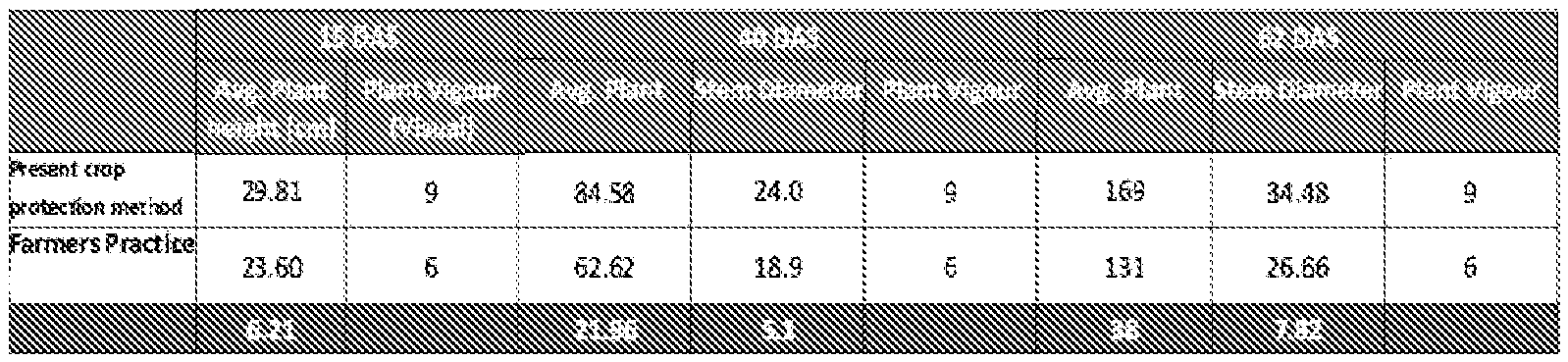


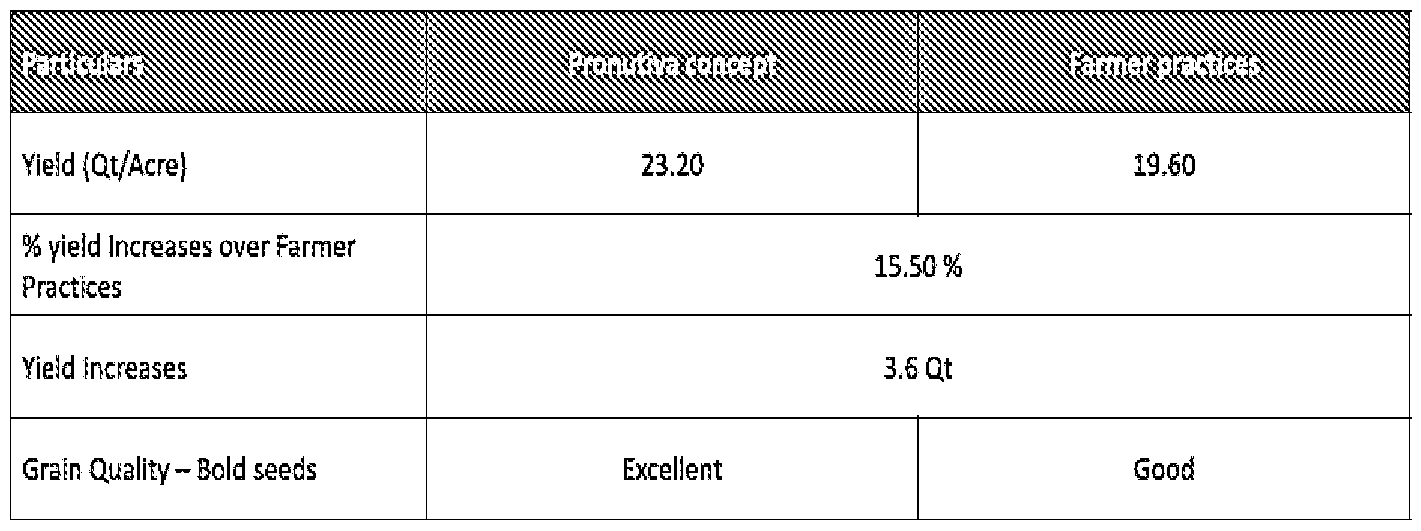
Claims
Priority Applications (7)
| Application Number | Priority Date | Filing Date | Title |
|---|---|---|---|
| BR112023003855A BR112023003855A2 (en) | 2020-09-01 | 2021-09-01 | FORMULATIONS AND METHODS TO REGULATE AND STIMULATE PLANT GROWTH |
| MX2023002523A MX2023002523A (en) | 2020-09-01 | 2021-09-01 | Formulations and methods for regulating and stimulating plant growth. |
| US18/043,190 US20230320360A1 (en) | 2020-09-01 | 2021-09-01 | Formulations and methods for regulating and stimulating plant growth |
| PH1/2023/550572A PH12023550572A1 (en) | 2020-09-01 | 2021-09-01 | Formulations and methods for regulating and stimulating plant growth |
| EP21863811.2A EP4185114A4 (en) | 2020-09-01 | 2021-09-01 | FORMULATIONS AND METHODS FOR REGULATING AND STIMULATING PLANT GROWTH |
| CONC2023/0002358A CO2023002358A2 (en) | 2020-09-01 | 2023-02-28 | Formulations and methods to regulate and stimulate plant growth |
| ZA2023/03173A ZA202303173B (en) | 2020-09-01 | 2023-02-28 | Formulations and methods for regulating and stimulating plant growth |
Applications Claiming Priority (2)
| Application Number | Priority Date | Filing Date | Title |
|---|---|---|---|
| IN202021035283 | 2020-09-01 | ||
| IN202021035283 | 2020-09-01 |
Publications (1)
| Publication Number | Publication Date |
|---|---|
| WO2022049498A1 true WO2022049498A1 (en) | 2022-03-10 |
Family
ID=80490706
Family Applications (1)
| Application Number | Title | Priority Date | Filing Date |
|---|---|---|---|
| PCT/IB2021/057978 Ceased WO2022049498A1 (en) | 2020-09-01 | 2021-09-01 | Formulations and methods for regulating and stimulating plant growth |
Country Status (10)
| Country | Link |
|---|---|
| US (2) | US20230320360A1 (en) |
| EP (1) | EP4185114A4 (en) |
| AR (1) | AR123383A1 (en) |
| BR (1) | BR112023003855A2 (en) |
| CL (1) | CL2023000581A1 (en) |
| CO (1) | CO2023002358A2 (en) |
| MX (1) | MX2023002523A (en) |
| PH (1) | PH12023550572A1 (en) |
| WO (1) | WO2022049498A1 (en) |
| ZA (1) | ZA202303173B (en) |
Cited By (2)
| Publication number | Priority date | Publication date | Assignee | Title |
|---|---|---|---|---|
| CN115299439A (en) * | 2022-08-08 | 2022-11-08 | 河南省农业科学院植物保护研究所 | Plant growth regulator containing compound sodium nitrophenolate for alfalfa field |
| WO2025012311A1 (en) | 2023-07-11 | 2025-01-16 | Upl Mauritius Limited | Agrochemical combinations, compositions and method of use thereof |
Citations (7)
| Publication number | Priority date | Publication date | Assignee | Title |
|---|---|---|---|---|
| ZA961824B (en) * | 1994-12-08 | 1996-09-11 | Kombat Chemicals Proprietary L | A plant treatment kit |
| WO2012102703A1 (en) | 2011-01-25 | 2012-08-02 | The Anderson, Inc . | Dispersible adhesive granules |
| CN104222157A (en) * | 2014-09-09 | 2014-12-24 | 山东省农作物种质资源中心 | Compound herbicide suitable for planting sesban and alfalfa in Huang-Huai-Hai region |
| CN104542669A (en) * | 2015-01-09 | 2015-04-29 | 浙江新农化工股份有限公司 | Weeding composition containing pendimethalin and ethoxysulfuron as well as preparation and application thereof |
| US20150126369A1 (en) * | 2013-11-01 | 2015-05-07 | Rotam Agrochem International Company Limited | Synergistic herbicidal composition |
| WO2016007987A1 (en) | 2014-07-15 | 2016-01-21 | Seasol International Pty Ltd | Aqueous seaweed extract in the form of a solution concentrate |
| WO2019046921A1 (en) * | 2017-09-06 | 2019-03-14 | Arysta Lifescience Do Brasil Indústria Química E Agropecuária S.A. | Mixture of a folcysteine-based biostimulant and an agrotoxic substance of interest resulting in a quantitatively, qualitatively and time-related result-potentiating action as observed in an agricultural crop of a plant of interest |
Family Cites Families (3)
| Publication number | Priority date | Publication date | Assignee | Title |
|---|---|---|---|---|
| FR2693454B1 (en) * | 1992-07-07 | 1994-10-07 | Goemar Laboratoires | Compositions for agricultural use containing laminarin; method for growing plants using these compositions. |
| CA2150489C (en) * | 1994-06-10 | 2000-12-12 | Takeo Tsujimoto | Method of improving seed germination |
| KR0183517B1 (en) * | 1996-01-31 | 1999-04-01 | 서형원 | Plant growth promotive composition and the microbial agent |
-
2021
- 2021-08-31 AR ARP210102439A patent/AR123383A1/en unknown
- 2021-09-01 BR BR112023003855A patent/BR112023003855A2/en unknown
- 2021-09-01 EP EP21863811.2A patent/EP4185114A4/en active Pending
- 2021-09-01 PH PH1/2023/550572A patent/PH12023550572A1/en unknown
- 2021-09-01 WO PCT/IB2021/057978 patent/WO2022049498A1/en not_active Ceased
- 2021-09-01 US US18/043,190 patent/US20230320360A1/en active Pending
- 2021-09-01 MX MX2023002523A patent/MX2023002523A/en unknown
-
2023
- 2023-02-28 ZA ZA2023/03173A patent/ZA202303173B/en unknown
- 2023-02-28 CL CL2023000581A patent/CL2023000581A1/en unknown
- 2023-02-28 CO CONC2023/0002358A patent/CO2023002358A2/en unknown
- 2023-04-20 US US18/136,891 patent/US20230256412A1/en not_active Abandoned
Patent Citations (8)
| Publication number | Priority date | Publication date | Assignee | Title |
|---|---|---|---|---|
| ZA961824B (en) * | 1994-12-08 | 1996-09-11 | Kombat Chemicals Proprietary L | A plant treatment kit |
| WO2012102703A1 (en) | 2011-01-25 | 2012-08-02 | The Anderson, Inc . | Dispersible adhesive granules |
| US20150126369A1 (en) * | 2013-11-01 | 2015-05-07 | Rotam Agrochem International Company Limited | Synergistic herbicidal composition |
| WO2016007987A1 (en) | 2014-07-15 | 2016-01-21 | Seasol International Pty Ltd | Aqueous seaweed extract in the form of a solution concentrate |
| CN104222157A (en) * | 2014-09-09 | 2014-12-24 | 山东省农作物种质资源中心 | Compound herbicide suitable for planting sesban and alfalfa in Huang-Huai-Hai region |
| CN104542669A (en) * | 2015-01-09 | 2015-04-29 | 浙江新农化工股份有限公司 | Weeding composition containing pendimethalin and ethoxysulfuron as well as preparation and application thereof |
| WO2019046921A1 (en) * | 2017-09-06 | 2019-03-14 | Arysta Lifescience Do Brasil Indústria Química E Agropecuária S.A. | Mixture of a folcysteine-based biostimulant and an agrotoxic substance of interest resulting in a quantitatively, qualitatively and time-related result-potentiating action as observed in an agricultural crop of a plant of interest |
| EP3679796A1 (en) | 2017-09-06 | 2020-07-15 | UPL Corporation Limited | Mixture of a folcysteine-based biostimulant and an agrotoxic substance of interest resulting in a quantitatively, qualitatively and time-related result-potentiating action as observed in an agricultural crop of a plant of interest |
Non-Patent Citations (2)
| Title |
|---|
| CALVO, P. ET AL.: "Agricultural uses of plant biostimulants", PLANT SOIL, vol. 383, 2014, pages 3 - 41, XP035395225, DOI: 10.1007/s11104-014-2131-8 * |
| See also references of EP4185114A4 |
Cited By (3)
| Publication number | Priority date | Publication date | Assignee | Title |
|---|---|---|---|---|
| CN115299439A (en) * | 2022-08-08 | 2022-11-08 | 河南省农业科学院植物保护研究所 | Plant growth regulator containing compound sodium nitrophenolate for alfalfa field |
| CN115299439B (en) * | 2022-08-08 | 2023-08-04 | 河南省农业科学院植物保护研究所 | Plant growth regulator containing compound sodium nitrophenolate for alfalfa field |
| WO2025012311A1 (en) | 2023-07-11 | 2025-01-16 | Upl Mauritius Limited | Agrochemical combinations, compositions and method of use thereof |
Also Published As
| Publication number | Publication date |
|---|---|
| CO2023002358A2 (en) | 2023-06-20 |
| EP4185114A1 (en) | 2023-05-31 |
| BR112023003855A2 (en) | 2023-04-04 |
| EP4185114A4 (en) | 2024-12-04 |
| ZA202303173B (en) | 2024-10-30 |
| PH12023550572A1 (en) | 2024-03-04 |
| US20230320360A1 (en) | 2023-10-12 |
| AR123383A1 (en) | 2022-11-23 |
| MX2023002523A (en) | 2023-03-13 |
| CL2023000581A1 (en) | 2023-10-06 |
| US20230256412A1 (en) | 2023-08-17 |
Similar Documents
| Publication | Publication Date | Title |
|---|---|---|
| AU2020309326B2 (en) | Plant growth regulator and method for promoting plant growth | |
| US11793199B2 (en) | Formulations and methods for controlling rootworm larvae | |
| KR102646452B1 (en) | Blends of polycysteine biostimulants and pesticides of interest that provide quantitative, qualitative and time-related outcome-enhancing actions observed in crops of the plant of interest. | |
| JP2023168400A (en) | Compositions and methods for controlling fecundity of arachnida species | |
| US9439435B2 (en) | Method for controlling weeds using formulations containing fluthiacet-methyl and HPPD herbicides | |
| EP3590334A1 (en) | Foam formulations and emulsifiable concentrates | |
| KR20250051108A (en) | Agents for improving the environmental stress tolerance of plants and methods for improving the environmental stress tolerance | |
| US20230320360A1 (en) | Formulations and methods for regulating and stimulating plant growth | |
| UA126830C2 (en) | Fungicidal compositions of mefentrifluconazole | |
| US10537104B2 (en) | Insecticide mixtures comprising loline alkaloids | |
| CN120417754A (en) | Methods to reduce plant damage and increase crop yields | |
| OA21251A (en) | Formulations and methods for regulating and stimulating plant growth. | |
| US20210112809A1 (en) | Methods for reducing the volatility and toxicity of clomazone | |
| KR20260049296A (en) | Plant damage recovery enhancer and preparation for enhancing damage recovery, method for enhancing plant damage recovery, plant body, and plant physical stress tolerance enhancer | |
| WO2026003713A1 (en) | Microbial compositions and methods of use for benefiting plant growth and treating plant disease | |
| WO2025143153A1 (en) | Agent for shortening growth period of plant, formulation for shortening growth period, agent for inducing expression of anthogenesis inducing gene, method for shortening growth period of plant, plant, agent for making growth speed of plant uniform, and method for making growth speed of plant uniform | |
| BR122022022617B1 (en) | MIXTURE COMPRISING FOLCYSTEIN AND AN AGROCHEMICAL OBTAINING ENHANCEMENT OF THE RESULTS OF QUALITATIVE, QUANTITATIVE AND TEMPORAL ORDER OBSERVED IN AN AGRICULTURAL CROP OF A PLANT OF INTEREST |
Legal Events
| Date | Code | Title | Description |
|---|---|---|---|
| 121 | Ep: the epo has been informed by wipo that ep was designated in this application |
Ref document number: 21863811 Country of ref document: EP Kind code of ref document: A1 |
|
| WWE | Wipo information: entry into national phase |
Ref document number: NC2023/0002358 Country of ref document: CO |
|
| REG | Reference to national code |
Ref country code: BR Ref legal event code: B01A Ref document number: 112023003855 Country of ref document: BR |
|
| ENP | Entry into the national phase |
Ref document number: 2021863811 Country of ref document: EP Effective date: 20230224 |
|
| ENP | Entry into the national phase |
Ref document number: 112023003855 Country of ref document: BR Kind code of ref document: A2 Effective date: 20230301 |
|
| NENP | Non-entry into the national phase |
Ref country code: DE |
|
| WWP | Wipo information: published in national office |
Ref document number: NC2023/0002358 Country of ref document: CO |