WO2022054532A1 - Dispositif de commande de véhicule, procédé de commande de véhicule, et programme de commande de véhicule - Google Patents
Dispositif de commande de véhicule, procédé de commande de véhicule, et programme de commande de véhicule Download PDFInfo
- Publication number
- WO2022054532A1 WO2022054532A1 PCT/JP2021/030490 JP2021030490W WO2022054532A1 WO 2022054532 A1 WO2022054532 A1 WO 2022054532A1 JP 2021030490 W JP2021030490 W JP 2021030490W WO 2022054532 A1 WO2022054532 A1 WO 2022054532A1
- Authority
- WO
- WIPO (PCT)
- Prior art keywords
- vehicle
- image
- control
- pixel group
- reflected light
- Prior art date
- Legal status (The legal status is an assumption and is not a legal conclusion. Google has not performed a legal analysis and makes no representation as to the accuracy of the status listed.)
- Ceased
Links
Images









Classifications
-
- H—ELECTRICITY
- H04—ELECTRIC COMMUNICATION TECHNIQUE
- H04N—PICTORIAL COMMUNICATION, e.g. TELEVISION
- H04N23/00—Cameras or camera modules comprising electronic image sensors; Control thereof
- H04N23/45—Cameras or camera modules comprising electronic image sensors; Control thereof for generating image signals from two or more image sensors being of different type or operating in different modes, e.g. with a CMOS sensor for moving images in combination with a charge-coupled device [CCD] for still images
-
- B—PERFORMING OPERATIONS; TRANSPORTING
- B60—VEHICLES IN GENERAL
- B60S—SERVICING, CLEANING, REPAIRING, SUPPORTING, LIFTING, OR MANOEUVRING OF VEHICLES, NOT OTHERWISE PROVIDED FOR
- B60S1/00—Cleaning of vehicles
- B60S1/02—Cleaning windscreens, windows or optical devices
- B60S1/56—Cleaning windscreens, windows or optical devices specially adapted for cleaning other parts or devices than front windows or windscreens
-
- G—PHYSICS
- G01—MEASURING; TESTING
- G01S—RADIO DIRECTION-FINDING; RADIO NAVIGATION; DETERMINING DISTANCE OR VELOCITY BY USE OF RADIO WAVES; LOCATING OR PRESENCE-DETECTING BY USE OF THE REFLECTION OR RERADIATION OF RADIO WAVES; ANALOGOUS ARRANGEMENTS USING OTHER WAVES
- G01S17/00—Systems using the reflection or reradiation of electromagnetic waves other than radio waves, e.g. lidar systems
- G01S17/86—Combinations of lidar systems with systems other than lidar, radar or sonar, e.g. with direction finders
-
- G—PHYSICS
- G01—MEASURING; TESTING
- G01S—RADIO DIRECTION-FINDING; RADIO NAVIGATION; DETERMINING DISTANCE OR VELOCITY BY USE OF RADIO WAVES; LOCATING OR PRESENCE-DETECTING BY USE OF THE REFLECTION OR RERADIATION OF RADIO WAVES; ANALOGOUS ARRANGEMENTS USING OTHER WAVES
- G01S17/00—Systems using the reflection or reradiation of electromagnetic waves other than radio waves, e.g. lidar systems
- G01S17/88—Lidar systems specially adapted for specific applications
- G01S17/93—Lidar systems specially adapted for specific applications for anti-collision purposes
- G01S17/931—Lidar systems specially adapted for specific applications for anti-collision purposes of land vehicles
-
- G—PHYSICS
- G06—COMPUTING OR CALCULATING; COUNTING
- G06V—IMAGE OR VIDEO RECOGNITION OR UNDERSTANDING
- G06V10/00—Arrangements for image or video recognition or understanding
- G06V10/40—Extraction of image or video features
- G06V10/44—Local feature extraction by analysis of parts of the pattern, e.g. by detecting edges, contours, loops, corners, strokes or intersections; Connectivity analysis, e.g. of connected components
- G06V10/443—Local feature extraction by analysis of parts of the pattern, e.g. by detecting edges, contours, loops, corners, strokes or intersections; Connectivity analysis, e.g. of connected components by matching or filtering
-
- G—PHYSICS
- G06—COMPUTING OR CALCULATING; COUNTING
- G06V—IMAGE OR VIDEO RECOGNITION OR UNDERSTANDING
- G06V10/00—Arrangements for image or video recognition or understanding
- G06V10/70—Arrangements for image or video recognition or understanding using pattern recognition or machine learning
- G06V10/74—Image or video pattern matching; Proximity measures in feature spaces
-
- G—PHYSICS
- G06—COMPUTING OR CALCULATING; COUNTING
- G06V—IMAGE OR VIDEO RECOGNITION OR UNDERSTANDING
- G06V20/00—Scenes; Scene-specific elements
- G06V20/50—Context or environment of the image
- G06V20/56—Context or environment of the image exterior to a vehicle by using sensors mounted on the vehicle
- G06V20/58—Recognition of moving objects or obstacles, e.g. vehicles or pedestrians; Recognition of traffic objects, e.g. traffic signs, traffic lights or roads
-
- H—ELECTRICITY
- H04—ELECTRIC COMMUNICATION TECHNIQUE
- H04N—PICTORIAL COMMUNICATION, e.g. TELEVISION
- H04N23/00—Cameras or camera modules comprising electronic image sensors; Control thereof
- H04N23/50—Constructional details
- H04N23/52—Elements optimising image sensor operation, e.g. for electromagnetic interference [EMI] protection or temperature control by heat transfer or cooling elements
-
- G—PHYSICS
- G01—MEASURING; TESTING
- G01S—RADIO DIRECTION-FINDING; RADIO NAVIGATION; DETERMINING DISTANCE OR VELOCITY BY USE OF RADIO WAVES; LOCATING OR PRESENCE-DETECTING BY USE OF THE REFLECTION OR RERADIATION OF RADIO WAVES; ANALOGOUS ARRANGEMENTS USING OTHER WAVES
- G01S7/00—Details of systems according to groups G01S13/00, G01S15/00, G01S17/00
- G01S7/48—Details of systems according to groups G01S13/00, G01S15/00, G01S17/00 of systems according to group G01S17/00
- G01S7/497—Means for monitoring or calibrating
- G01S2007/4975—Means for monitoring or calibrating of sensor obstruction by, e.g. dirt- or ice-coating, e.g. by reflection measurement on front-screen
-
- G—PHYSICS
- G01—MEASURING; TESTING
- G01S—RADIO DIRECTION-FINDING; RADIO NAVIGATION; DETERMINING DISTANCE OR VELOCITY BY USE OF RADIO WAVES; LOCATING OR PRESENCE-DETECTING BY USE OF THE REFLECTION OR RERADIATION OF RADIO WAVES; ANALOGOUS ARRANGEMENTS USING OTHER WAVES
- G01S7/00—Details of systems according to groups G01S13/00, G01S15/00, G01S17/00
- G01S7/48—Details of systems according to groups G01S13/00, G01S15/00, G01S17/00 of systems according to group G01S17/00
- G01S7/497—Means for monitoring or calibrating
- G01S2007/4975—Means for monitoring or calibrating of sensor obstruction by, e.g. dirt- or ice-coating, e.g. by reflection measurement on front-screen
- G01S2007/4977—Means for monitoring or calibrating of sensor obstruction by, e.g. dirt- or ice-coating, e.g. by reflection measurement on front-screen including means to prevent or remove the obstruction
Definitions
- This disclosure relates to a control technology for using a sensor system in a vehicle.
- Patent Document 1 discloses a determination technique for determining stains such as water droplets adhering to an incident surface on which light is incident from a sensing region in a sensor system.
- the contamination of the incident surface is determined based on the change in the intensity of the reflected light with respect to the light irradiation.
- Patent Document 1 the existence of the water-related substance cannot be determined unless it adheres to the incident surface. Therefore, it is feared that it is difficult to prevent the situation where the appropriateness of vehicle control deteriorates due to the deterioration of the sensing accuracy by the sensor system after the water-related substance adheres to the incident surface.
- An object of the present disclosure is to provide a vehicle control device that enhances the appropriateness of vehicle control. Another object of the present disclosure is to provide a vehicle control method for enhancing the appropriateness of vehicle control. Yet another subject of the present disclosure is to provide a vehicle control program that enhances the appropriateness of vehicle control.
- the first aspect of the present disclosure is A vehicle that controls a vehicle equipped with an optical sensor that acquires a reflected light image by sensing the reflected light for light irradiation and a sensing camera that acquires a camera image according to the external light intensity in the sensing area that overlaps with the optical sensor. It ’s a control device, An extraction unit that extracts unmatched pixel groups by comparing the reflected light image with the camera image, It is provided with a control unit that commands the vehicle to control according to the water-related substance presumed to correspond to the unmatched pixel group.
- the second aspect of the present disclosure is A vehicle that controls a vehicle equipped with an optical sensor that acquires a reflected light image by sensing the reflected light for light irradiation and a sensing camera that acquires a camera image according to the external light intensity in the sensing area that overlaps with the optical sensor. It ’s a control method, An extraction process that extracts unmatched pixel groups by comparing the reflected light image with the camera image, It includes a control step of instructing the vehicle to control according to the water-related substance presumed to correspond to the unmatched pixel group.
- the third aspect of the present disclosure is To control a vehicle equipped with an optical sensor that acquires a reflected light image by sensing the reflected light for light irradiation and a sensing camera that acquires a camera image according to the external light intensity in the sensing area that overlaps with the optical sensor.
- a vehicle control program that includes instructions to be executed by the processor.
- the order is An extraction process that extracts unmatched pixel groups by comparing the reflected light image with the camera image, It includes a control step of instructing the vehicle to control according to the water-related substance presumed to correspond to the unmatched pixel group.
- the reflected light image acquired by the optical sensor by sensing the reflected light for light irradiation and the external light intensity in the sensing region overlapping with the sensor are acquired by the sensing camera.
- the camera image is contrasted. It can be accurately estimated that the unmatched pixel group extracted by such a comparison corresponds to a water-related substance whose reflected light is easily sensed, that is, a water-related substance which is easily reflected in the reflected light image. Therefore, if the vehicle is instructed to control according to the water-related substance as a result of the estimation, it is possible to improve the appropriateness of the vehicle control.
- the fourth aspect of the present disclosure is A vehicle control device that controls a vehicle equipped with an optical sensor that acquires a reflected light image by sensing the reflected light with respect to light irradiation and acquires an external light image according to the external light intensity while the light irradiation is stopped.
- An extraction unit that extracts unmatched pixel groups by comparing the reflected light image and the external light image, It is provided with a control unit that commands the vehicle to control according to the water-related substance presumed to correspond to the unmatched pixel group.
- the fifth aspect of the present disclosure is It is a vehicle control method that controls a vehicle equipped with an optical sensor that acquires a reflected light image by sensing the reflected light with respect to light irradiation and acquires an external light image according to the external light intensity while the light irradiation is stopped.
- An extraction process that extracts unmatched pixel groups by comparing the reflected light image and the external light image, It includes a control step of instructing the vehicle to control according to the water-related substance presumed to correspond to the unmatched pixel group.
- the sixth aspect of the present disclosure is An optical sensor that acquires a reflected light image by sensing the reflected light with respect to the light irradiation and acquires an external light image according to the external light intensity while the light irradiation is stopped is executed by a processor in order to control the mounted vehicle.
- a vehicle control program that includes instructions The order is An extraction process that extracts unmatched pixel groups by comparing the reflected light image and the external light image, It includes a control step of instructing the vehicle to control according to the water-related substance presumed to correspond to the unmatched pixel group.
- the reflected light image acquired by the optical sensor by sensing the reflected light with respect to the light irradiation and the outside acquired by the sensor according to the external light intensity while the light irradiation is stopped.
- the optical image is contrasted. It can be accurately estimated that the unmatched pixel group extracted by such a comparison corresponds to a water-related substance whose reflected light is easily sensed, that is, a water-related substance which is easily reflected in the reflected light image. Therefore, if the vehicle is instructed to control according to the water-related substance as a result of the estimation, it is possible to improve the appropriateness of the vehicle control.
- the automatic driving unit ADU including the vehicle control device 1 of the first embodiment is mounted on the vehicle 2.
- the vehicle 2 is capable of steady or temporary automatic driving in an automatic driving mode by autonomous driving control or advanced driving support control.
- the automatic driving unit ADU includes a housing 3, a sensor system 4, and a cleaning system 5 together with a vehicle control device 1.
- front, rear, left, right, top and bottom are defined with reference to the vehicle 2 on the horizontal plane.
- the housing 3 is formed in a hollow flat box shape by, for example, metal or the like.
- the housing 3 is installed on the roof 20 of the vehicle 2.
- a plurality of sensor windows 31 are open on the wall 30 of the housing 3.
- Each sensor window 31 is covered with a plate-shaped translucent cover 32.
- the outer surface of each translucent cover 32 constitutes an incident surface 33 to which light is incident from the outside world of the vehicle 2.
- the sensor system 4 includes an optical sensor 40.
- the optical sensor 40 is a so-called LiDAR (Light Detection and Ringing / Laser Imaging Detection and Ringing) that acquires optical information that can be used in the automatic driving mode in the vehicle 2.
- the optical sensor 40 includes a light emitting element 400, an image pickup element 401, and an image pickup circuit 402.
- the light emitting element 400 is a semiconductor element that emits directional laser light, such as a laser diode.
- the light emitting element 400 irradiates the laser beam toward the outside world of the vehicle 2 in the form of an intermittent pulse beam.
- the image pickup device 401 is a semiconductor device having high sensitivity to light, such as a SPAD (Single Photon Avalanche Diode).
- An incident surface 33o dedicated to the optical sensor 40 is arranged on the outside world side (front side in this embodiment) of the image pickup device 401. In the outside world, the light incident on the incident surface 33o from the sensing region Ao determined by the angle of view of the image sensor 401 exposes the element 401.
- the image pickup circuit 402 is an integrated circuit that controls exposure and scanning of a plurality of pixels in the image pickup element 401 and processes signals from the element 401 to convert them into data.
- the image pickup circuit 402 In the reflected light mode in which the image pickup circuit 402 exposes the image pickup element 401 by irradiating light from the light emitting element 400, a physical point in the sensing region Ao becomes a reflection point of the laser beam. As a result, the laser light reflected at the reflection point (hereinafter referred to as reflected light) is incident on the image pickup device 401 through the incident surface 33o. At this time, the image pickup circuit 402 senses the reflected light by scanning a plurality of pixels of the image pickup element 401.
- the image pickup circuit 402 converts the distance value acquired for each of a plurality of pixels according to the reflection point distance dr of the reflected light sensed as shown in FIG. 4 into three-dimensional data as each pixel value, thereby FIG.
- the distance image Iord as the reflected light image Ior as shown in the above is acquired.
- the sensor system 4 includes a sensing camera 41 in addition to the optical sensor 40.
- the sensing camera 41 is a so-called external camera that acquires optical information that can be used in the automatic driving mode in the vehicle 2.
- the sensing camera 41 has an image pickup device 411 and an image pickup circuit 402.
- the image sensor 411 is, for example, a semiconductor element such as CMOS.
- An incident surface 33c dedicated to the sensing camera 41 is arranged on the outside world side (front side in this embodiment) of the image pickup device 411. In the outside world, the light incident on the incident surface 33c from the sensing region Ac determined by the angle of view of the image sensor 411 exposes the element 411.
- the sensing region Ac of the sensing camera 41 partially overlaps with the sensing region Ao of the optical sensor 40.
- the overlap rate of the sensing regions Ac and Ao that is, the ratio of the overlapping region Aoc in each of the regions Ac and Ao is, for example, 50% or more, preferably 70% or more, and more preferably 90% or more.
- the image pickup circuit 412 is an integrated circuit that controls exposure and scanning of a plurality of pixels in the image pickup element 411 and processes signals from the element 411 to convert them into data.
- an object point in the sensing region Ac becomes a reflection point of external light.
- the external light reflected at the reflection point is incident on the image pickup device 411 through the incident surface 33c.
- the image pickup circuit 412 senses the reflected external light by scanning a plurality of pixels of the image pickup element 411.
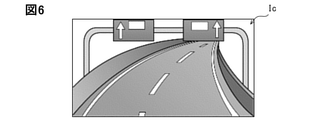
- the image pickup circuit 412 acquires the camera image Ic as shown in FIG. 6 by converting the luminance value acquired for each of a plurality of pixels according to the intensity of the sensed external light into two-dimensional data as each pixel value. do.
- the cleaning system 5 shown in FIGS. 1 to 3 cleans a plurality of incident surfaces 33 including incident surfaces 33o and 33c in which light is incident from the sensing regions Ao and Ac in the optical sensor 40 and the sensing camera 41.
- the cleaning system 5 includes a cleaning module 50 for each incident surface 33.
- Each cleaning module 50 may have a cleaning nozzle for injecting a cleaning gas such as air onto the incident surface 33 as a cleaning fluid for cleaning the incident surface 33.
- Each cleaning module 50 may have a cleaning nozzle for injecting a cleaning liquid onto the incident surface 33 as a cleaning fluid for cleaning the incident surface 33.
- Each cleaning module 50 may have a cleaning wiper that cleans the incident surface 33 by wiping.
- the vehicle control device 1 shown in FIGS. 2 and 3 is connected to the electrical components 4 and 5 of the automatic driving unit ADU via at least one of a LAN (Local Area Network), a wire harness, an internal bus, and the like. Ru.
- the vehicle control device 1 includes at least one dedicated computer.
- the dedicated computer constituting the vehicle control device 1 may be an operation control ECU that controls the automatic operation mode in cooperation with the ECU (Electronic Control Unit) in the vehicle 2.
- the dedicated computer constituting the vehicle control device 1 may be an actuator ECU that individually controls the traveling actuator of the vehicle 2.
- the dedicated computer constituting the vehicle control device 1 may be a locator ECU that estimates the state quantity of the vehicle 2 including its own position.
- the dedicated computer constituting the vehicle control device 1 may be a navigation ECU that navigates the traveling route of the vehicle 2.
- the dedicated computer constituting the vehicle control device 1 may be an HCU (HMI (Human Machine Interface) Control Unit) that controls the information presentation of the information presentation system of the vehicle 2.
- HCU Human Machine Interface
- the vehicle control device 1 includes at least one memory 10 and one processor 12 by being configured to include such a dedicated computer.
- the memory 10 non-transitory tangible, for example, at least one kind of non-transitory substantive storage medium (non-transitory tangible) among semiconductor memories, magnetic media, optical media, and the like, which stores programs and data that can be read by a computer non-temporarily. storage medium).
- the processor 12 includes, for example, at least one of a CPU (Central Processing Unit), a GPU (Graphics Processing Unit), a RISC (Reduced Instruction Set Computer) -CPU, and the like as a core.
- the processor 12 executes a plurality of instructions included in the vehicle control program stored in the memory 10.
- the vehicle control device 1 constructs a plurality of functional units (that is, functional blocks) for controlling the vehicle 2.
- a plurality of functional units are constructed by causing the processor 12 to execute a plurality of instructions by the vehicle control program stored in the memory 10 in order to control the vehicle 2.
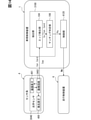
- the plurality of functional units constructed by the vehicle control device 1 include an extraction unit 100 and a control unit 120.
- the distance image Iord as the reflected light image Ior is input from the optical sensor 40, and the camera image Ic is input from the sensing camera 41 to the extraction unit 100.
- the extraction unit 100 extracts the unmatched pixel group Po by comparing the distance image Iord and the camera image Ic. Therefore, the extraction unit 100 has a pixel interpolation unit 102, an edge detection unit 104, and a matching determination unit 106 as sub-functional units.
- the pixel interpolation unit 102 pixel-interpolates the high-resolution side of the distance image Iord as the reflected light image Ior and the camera image Ic according to the low-resolution side.
- the number of pixel groups for photographing the overlapping region Aoc in the sensing regions Ao and Ac is set to be larger in the camera image Ic than in the distance image Iord. That is, the camera image Ic is on the high resolution side, while the distance image Iord is on the low resolution side. Therefore, the pixel interpolation unit 102 internally interpolates the pixel value of each pixel coordinate in the camera image Ic according to each pixel coordinate in the distance image Iord. As a result of the interpolation, the pixel interpolation unit 102 generates a camera image Ic having substantially the same resolution as the distance image Iord with respect to the overlapping region Aoc, as shown in FIG. 7.
- the edge detection unit 104 detects an edge from the pixel-interpolated camera image Ic by performing at least one type of edge filter processing on the pixel-interpolated camera image Ic.
- the edge detection unit 104 also performs at least one type of edge filter processing on the distance image Iord, which is the reflected light image Ior of the overlapping region Aoc whose resolution is substantially the same as that of the camera image Ic by pixel interpolation. Edges are detected from the image Iord.
- the matching determination unit 106 determines the matching state of the image Iord and Ic by comparing the detected edges with each other in the distance image Iord as the reflected light image Ior and the camera image Ic. At this time, the matching determination unit 106 determines that the pixel group is unmatched, for example, by normalizing the constituent pixel values of the edges to each other and calculating the difference, when a pixel group whose difference is out of the matching range is confirmed. Give it down.
- the determination of unmatching by the water-related substance Mw (detailed later) that exists in the distance image Iord and does not exist in the camera image Ic is, for example, the past and present of the images Iord, Ic.
- the matching determination unit 106 extracts the pixel group Po corresponding to the edge unmatched with the camera image Ic in the distance image Iord as shown in FIG.
- the pixel group means a group of a plurality of pixels, and in particular, the pixel group Po when it is determined to be unmatched may be a group of a plurality of pixels that are adjacent to each other and are continuous. Further, for convenience of explanation, in FIG. 5, an unmatched pixel group Po is shown by adding a reference numeral Po to a thick solid line circle.
- the pixel group Po extracted by the unmatching determination by the matching determination unit 106 in the distance image Iord as the reflected light image Ior is input to the control unit 120.
- the unmatched pixel group Po corresponds to the presence of the water-related substance Mw, which is easily sensed by the reflected light of the laser beam having high intensity in the control unit 120.
- the water-related substance Mw is at least one of, for example, rain (including water droplets), fog, water vapor (including components in exhaust gas), and water-containing sludge.
- FIG. 5 schematically shows the existence of fog as a water-related substance Mw in an easy-to-understand manner for convenience.
- the value of the reflection point distance dr which is the pixel value in the unmatched pixel group Po of the distance image Iord, is also input to the control unit 120 from the matching determination unit 106. Therefore, the control unit 120 determines the short length of the reflection point distance dr in the unmatched pixel group Po by comparison with a predetermined set range.
- the set range is defined as a range below the threshold value for the reflection point distance dr or below the threshold value.
- the threshold value that defines the setting range is set to an appropriate value such as 1 to 3 m when stopped and 3 to 10 m when traveling. Of course, the threshold value that defines the setting range may be set to an appropriate value of such an exemplary value.
- the control unit 120 when the reflection point distance dr is within the set range, the water-related substance Mw, which is estimated to correspond to the unmatched pixel group Po, is incident on the optical sensor 40. It is predicted that there is a high possibility that it will adhere to the surface 33o.
- the water-related substance Mw that is predicted to adhere to the incident surface 33o as described above rain, fog, water vapor, sludge, and the like are assumed as the above-mentioned exemplary substances.
- the control unit 120 determines that the incident surface 33o of the optical sensor 40 is attached.
- the cleaning control is instructed to the cleaning system 5 of the vehicle 2 in the automatic operation mode so as to perform cleaning.
- the cleaning system 5 executes the cleaning process of the incident surface 33o by driving and controlling the cleaning module 50o corresponding to the incident surface 33o as shown in FIG.
- the command for cleaning control regarding the incident surface 33c of the sensing camera 41 is not essential, and therefore the cleaning module 50c is not an essential element.
- the adhesion prediction of the water-related substance Mw is established on the incident surface 33o of the optical sensor 40
- the adhesion prediction is also established on the incident surface 33c of the sensing camera 41 which is arranged as close as possible to the sensor 40. As such, cleaning control regarding the same surface 33c may be instructed.
- each "S" in this flow means a plurality of steps executed by a plurality of instructions included in a vehicle control program.
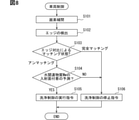
- the pixel interpolation unit 102 of the extraction unit 100 pixel-interpolates the high-resolution camera image Ic according to the distance image Iord as the reflected light image Ior on the low-resolution side.
- the edge detection unit 104 of the extraction unit 100 detects an edge from each of the distance image Iord and the camera image Ic.
- the matching determination unit 106 of the extraction unit 100 determines the matching state of the images Iord and Ic by comparing the edges detected in the distance image Iord and the camera image Ic.
- the control unit 120 commands the cleaning system 5 to execute cleaning control for the incident surface 33o of the optical sensor 40 as the control of the vehicle 2 in the automatic driving mode.
- the acquired camera image Ic is compared with the acquired camera image Ic. It can be accurately estimated that the unmatched pixel group Po extracted by such a comparison corresponds to the water-related substance Mw in which the reflected light is easily sensed, that is, the water-related substance Mw in which the reflected light image Ior is easily reflected. Therefore, if the vehicle 2 is instructed to control the water-related substance Mw as a result of the estimation, it is possible to increase the appropriateness of the vehicle control.
- the cleaning system 5 is mounted on the vehicle 2 so as to clean the incident surface 33o on which light is incident from the sensing region Ao in the optical sensor 40. According to this, it is accurately estimated that the unmatched pixel group Po extracted from the comparison of the reflected light image Ior and the camera image Ic acquired by the optical sensor 40 and the sensing camera 41 respectively corresponds to the water-related substance Mw. obtain. Therefore, according to the fact that the cleaning control is instructed to the cleaning system 5 of the vehicle 2 in the automatic driving mode for the incident surface 33o, which is predicted to have a high possibility of the water-related substance Mw adhering as a result of the estimation. , It is possible to increase the appropriateness of the cleaning control.
- the distance image Ior is compared with the camera image Ic as the reflected light image Ior corresponding to the reflection point distance dr of the reflected light with respect to the light irradiation. It can be accurately estimated that the unmatched pixel group Po extracted by such a comparison corresponds to the water-related substance Mw whose reflection point distance dr is easily sensed, that is, the water-related substance Mw which is easily reflected in the distance image Iord. Therefore, as a result of the estimation, it is possible to instruct the cleaning control according to the water-related substance Mw and enhance the appropriateness of the cleaning control.
- the pixel group Po in which the reflection point distance dr in the distance image Iord as the reflected light image Ior is within the set range is located within the set range and is optical. It is possible to accurately estimate the correspondence with the water-related substance Mw which is predicted to easily adhere to the incident surface 33o of the sensor 40. Therefore, it is possible to appropriately command and control the cleaning of the incident surface 33o in a situation where the water-related substance Mw is likely to adhere.
- the high resolution side of the reflected light image Ior and the camera image Ic is pixel-interoperated according to the low resolution side, and then the images Ior and Ic are compared. According to such a comparison, it is possible to prevent a situation in which a pixel group that should be originally matched is erroneously extracted due to a difference in resolution. Therefore, it is possible to appropriately command and execute the control according to the water-related substance Mw presumed to correspond to the unmatched pixel group Po.
- the second embodiment is a modification of the first embodiment.
- the travel control device 6 is mounted in the vehicle 2 of the second embodiment.
- the travel control device 6, in collaboration with the automatic driving unit ADU, executes travel control of the vehicle 2 including the automatic mode based on various sensing information by the sensor system 4. Therefore, the travel control device 6 includes at least one dedicated computer such as an ECU in the vehicle 2 described in the first embodiment.
- the cleaning system 5 of the second embodiment is not indispensable, and the illustration of the system 5 is omitted in FIG.
- the control unit 2120 of the second embodiment commands the travel control device 6 of the vehicle 2 to control the travel in the automatic driving mode so as to exclude the unmatched pixel group Po, which is presumed to correspond to the water-related substance Mw, from being recognized as an obstacle. do.
- S101, S102, and S103 are executed according to the first embodiment, while S205 and S206 instead of S104, S105, and S106 are executed. Will be done.
- the control unit 2120 commands the travel control device 6 of the vehicle 2 to control the travel in the automatic operation mode so as to exclude the water-related substance Mw from being recognized as an obstacle.
- the control unit 2120 instructs the travel control device 6 to stop the travel control that removes the water-related substance Mw from the obstacle recognition.
- S101, S102, and S103 correspond to the extraction step
- S205 and S206 correspond to the control step.
- the water-related substance Mw presumed to correspond to the unmatched pixel group Po extracted from the comparison of the reflected light image Ior and the camera image Ic is automatically excluded from the recognition as an obstacle.
- the travel control in the operation mode is instructed to the vehicle 2. According to this, it is possible to ensure the continuity of the automatic operation mode by appropriate traveling control that suppresses the situation where the water-related substance Mw is erroneously recognized as an obstacle.
- the third embodiment is a modification of the first embodiment.
- the optical sensor 3040 of the third embodiment has a function of acquiring a reflected light image Ior during light irradiation according to the first embodiment and a function of acquiring an image while the light irradiation is stopped.
- the object point in the sensing region Ao becomes the reflection point of the outside light.
- the external light reflected at the reflection point is incident on the image pickup device 401 through the incident surface 33o.
- the image pickup circuit 3402 senses the reflected external light by scanning a plurality of pixels of the image pickup element 401.
- the image pickup circuit 3402 converts the luminance value acquired for each of a plurality of pixels according to the intensity of the sensed external light into two-dimensional data as each pixel value, thereby producing an external light image Ioo as shown in FIG. get.
- the sensing of the external light in the acquisition function of the external light image Ioo is realized by the same image pickup device 401 as the sensing of the reflected light in the acquisition function of the reflected light image Ior.
- the sensing camera 41 of the third embodiment is not indispensable, and the camera 41 is not shown in FIG.
- the distance image Iord as the reflected light image Ior and the external light image Ioo are sequentially input from the optical sensor 3040 for each control cycle.
- the pixel interpolation unit 102 as a sub-functional unit is omitted due to the sensing by the same element 401 described above.
- the extraction unit 3100 realizes each function of the edge detection unit 104 and the matching determination unit 106 between the external light image Ioo instead of the camera image Ic and the reflected light image Ior according to the first embodiment.
- the edge detection unit 104 of the extraction unit 3100 has the distance image Iord as the reflected light image Ior and the external light image Ioo. Edges are detected from each.
- the matching determination unit 106 of the extraction unit 3100 determines the matching state of the images Iord and Ioo by comparing the edges detected in the distance image Iord and the external light image Ioo.
- S104, S105, and S106 after S303 are executed according to the first embodiment. From the above, in the third embodiment, S302 and S303 correspond to the extraction step, and S104, S105 and S106 correspond to the control step.
- the reflected light image Ior acquired by the optical sensor 3040 by sensing the reflected light with respect to the light irradiation, and the outside acquired by the sensor 3040 according to the external light intensity while the light irradiation is stopped.
- the optical image Ioo is contrasted. It can be accurately estimated that the unmatched pixel group Po extracted by such a comparison corresponds to the water-related substance Mw in which the reflected light is easily sensed, that is, the water-related substance Mw in which the reflected light image Ior is easily reflected. Therefore, if the vehicle 2 is instructed to control the water-related substance Mw as a result of the estimation, it is possible to increase the appropriateness of the vehicle control.
- the cleaning system 5 is mounted on the vehicle 2 so as to clean the incident surface 33o on which light is incident from the sensing region Ao in the optical sensor 3040.
- the unmatched pixel group Po extracted from the contrast between the reflected light image Ior and the external light image Ioo acquired by the optical sensor 3040 can be accurately estimated to correspond to the water-related substance Mw. Therefore, for the incident surface 33o where the possibility of the water-related substance Mw adhering as a result of the estimation is predicted, the cleaning control is instructed to the cleaning system 5 of the vehicle 2 in the automatic driving mode. It is possible to increase the appropriateness of cleaning control.
- the distance image Iord is compared with the external light image Ioo as the reflected light image Ior corresponding to the reflection point distance dr of the reflected light with respect to the light irradiation. It can be accurately estimated that the unmatched pixel group Po extracted by such a comparison corresponds to the water-related substance Mw whose reflection point distance dr is easily sensed, that is, the water-related substance Mw which is easily reflected in the distance image Iord. Therefore, as a result of the estimation, it is possible to instruct the cleaning control according to the water-related substance Mw and enhance the appropriateness of the cleaning control.
- the pixel group Po in which the reflection point distance dr in the distance image Iord as the reflected light image Ior is within the set range is located within the set range and is optical. It can be accurately estimated to correspond to the water-related substance Mw which is predicted to easily adhere to the incident surface 33o of the sensor 3040. Therefore, it is possible to appropriately command and control the cleaning of the incident surface 33c in a situation where the water-related substance Mw is likely to adhere.
- the reflection point distance dr sensed by the same element 401 as the external light intensity in the optical sensor 3040, an error occurs in the internal / external determination with the set range due to the axis deviation between the sensing.
- the situation can be deterred. Therefore, it is possible to appropriately command and control the cleaning of the incident surface 33o where the water-related substance Mw is expected to adhere to the pixel group Po in which the reflection point distance dr is within the set range.
- the fourth embodiment is a modification of the third embodiment.
- a traveling control device 6 according to the second embodiment is mounted in the vehicle 2 of the fourth embodiment.
- the control unit 4120 of the fourth embodiment has a driving control command function according to the second embodiment.
- the cleaning system 5 of the fourth embodiment is not essential, and the illustration of the system 5 is omitted in FIG.
- S302 and S303 are executed according to the third embodiment, while S205 of the second embodiment is replaced with S104, S105 and S106.
- S405 and S406 according to S206 are executed. That is, in S405, the control unit 4120 commands the travel control device 6 of the vehicle 2 to control the travel in the automatic operation mode so as to remove the water-related substance Mw from being recognized as an obstacle.
- the control unit 4120 runs and commands the row control device 6 to stop the running control that removes the water-related substance Mw from the obstacle recognition.
- S302 and S303 correspond to the extraction step
- S405 and S406 correspond to the control step.
- the water-related substance Mw presumed to correspond to the unmatched pixel group Po extracted from the contrast between the reflected light image Ior and the external light image Ioo is excluded from the recognition as an obstacle.
- the traveling control in the automatic driving mode is instructed to the vehicle 2. According to this, it is possible to ensure the continuity of the automatic operation mode by appropriate traveling control that suppresses the situation where the water-related substance Mw is erroneously recognized as an obstacle.
- the fifth embodiment is a modification of the first embodiment.
- the incident surface 33c of the sensing camera 41 is referred to as the incident surface 33c of the camera
- the incident surface 33o of the optical sensor 40 is referred to as the optical incident surface 33o.
- the camera incident surface 33c in which light is incident from the sensing region Ac overlapping with the optical sensor 40 captures the incident light as an image sensor. It is arranged on the inner world side on the optical axis L from the outer world side focal position pf of the image pickup lens system 413 that forms an image on 411. That is, the camera incident surface 33c is located within the focal length df on the sensing region Ac side in the imaging lens system 413.
- the focal length df there is a high possibility that the edge of the water-related substance Mw will not be detected even by the edge filter processing in the camera image Ic by the sensing camera 41.
- the extraction unit 5100 of the fifth embodiment has a pixel interpolation unit 102, an edge detection unit 104, a matching determination unit 106, and a search unit 5108 as sub-functional units.
- the search unit 5108 searches for a target (hereinafter, also referred to as a target within the set range) in which the reflection point distance dr is within the set range ⁇ d in the distance image Iord by the optical sensor 40. This means searching for a physical point near the optical incident surface 33o in which the reflection point distance dr is within the set range ⁇ d.
- the setting range ⁇ d in the fifth embodiment means that the edge of the water-related substance Mw is processed by the edge filter in the distance image Iord by the optical sensor 40 according to the focal length df on the sensing region Ac side in the imaging lens system 413. It is set within the detectable range.
- the distance image Iord including the target within the set range of the search by the search unit 5108 and the camera image Ic pixel-interpolated by the pixel interpolation unit 102 are edge-detected by the edge detection unit 104, respectively.
- the matching determination unit 106 compares the edges with each other.
- the matching determination unit 106 that determines the matching state can extract the pixel group Po representing the edge of the target within the set range as the pixel group Po that is unmatched with the camera image Ic in the distance image Iord.
- the control unit 5120 of the fifth embodiment is a water-related substance that is presumed to correspond to the unmatched pixel group Po when the unmatched pixel group Po representing the edge of the target within the set range is extracted. It is determined that the adhesion of Mw to the optical incident surface 33o is predicted. That is, when the reflection point distance dr in the unmatched pixel group Po is within the set range ⁇ d corresponding to the focal length df, the control unit 5120 predicts that the water-related substance Mw adheres to the optical incident surface 33o. It will be.
- control unit 5120 which is determined to be expected to adhere the water-related substance Mw to the optical incident surface 33o when the reflection point distance dr in the unmatched pixel group Po is within the set range ⁇ d, is cleaned.
- the cleaning system 5 is instructed to control the cleaning of the optical incident surface 33o by the gas.
- the unit 5120 further controls the cleaning of the optical incident surface 33o with the cleaning liquid. Is instructed to the cleaning system 5.
- the unmatched pixel group Po in the distance image Iord before the cleaning control command by the cleaning gas is edge-detected by the edge detection unit 104 also in the latest distance image Iord after the command. By doing so, it will be realized.
- the control unit 5120 stops the cleaning control in the cleaning system 5. Be ordered.
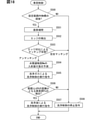
- the search unit 5108 of the extraction unit 5100 is a target, that is, a target in which the reflection point distance dr is within the set range ⁇ d in the distance image Iord. Search for targets within range. As a result, when the target within the set range is searched, this flow shifts to S501.
- the pixel interpolation unit 102 of the extraction unit 5100 pixel-interpolates the high-resolution camera image Ic in accordance with the distance image Iord as the reflected light image Ior on the low-resolution side.
- the edge detection unit 104 of the extraction unit 5100 detects an edge from each of the distance image Iord and the camera image Ic.
- the matching determination unit 106 of the extraction unit 5100 determines the matching state of the image Iord and Ic by comparing the edges detected in the distance image Iord and the camera image Ic.
- the pixel group Po representing the edge of the target within the set range is extracted as the pixel group Po unmatched with the camera image Ic in the distance image Iord, this flow shifts to S504.
- the control unit 5120 estimates that the unmatched pixel group Po representing the edge of the target within the set range corresponds to the water-related substance Mw predicted to adhere to the optical incident surface 33o. In other words, the adhesion of the water-related substance Mw, which is presumed to correspond to the unmatched pixel group Po, to the optical incident surface 33o is predicted. Therefore, in the subsequent S505, the control unit 5120 instructs the cleaning system 5 to execute cleaning control of the optical incident surface 33o by the cleaning gas as the control of the vehicle 2 in the automatic driving mode.
- the camera incident surface 33c on which light is incident from the sensing region Ac overlapping the optical sensor 40 in the sensing camera 41 is the image pickup lens system 413 in which the incident light is imaged on the image pickup element 411. It is located within the focal length df on the sensing region Ac side. According to this, when the reflection point distance dr in the unmatched pixel group Po is within the set range ⁇ d corresponding to the focal length df, the judgment that the adhesion of the water-related substance Mw is predicted is accurate. obtain. Therefore, it is possible to appropriately command and control the cleaning of the incident surface 33o in a situation where the water-related substance Mw is likely to adhere.
- the pixel group Po having the reflection point distance dr within the set range ⁇ d is
- the cleaning control by the cleaning liquid is instructed to the cleaning system 5.
- the dedicated computer constituting the vehicle control device 1 may be at least one external center computer capable of communicating with the vehicle 2.
- the dedicated computer constituting the vehicle control device 1 may include at least one of a digital circuit and an analog circuit as a processor.
- the digital circuit is, for example, among ASIC (Application Specific Integrated Circuit), FPGA (Field Programmable Gate Array), SOC (System on a Chip), PGA (Programmable Gate Array), CPLD (Complex Programmable Logic Device), and the like. At least one type. Further, such a digital circuit may have a memory for storing a program.
- the translucent cover 32 forming the incident surface 33o may be provided on the optical sensors 40 and 3040.
- the incident surface 33o may be formed by an optical member such as a lens in the optical sensors 40 and 3040.
- the intensity image obtained by converting the luminance value acquired for each of a plurality of pixels according to the reflected light intensity into two-dimensional data as each pixel value may be acquired as the reflected light image Ior. ..
- the functions of the sub-functional units constituting the extraction units 100 and 3100 are realized between the camera image Ic or the external light image Ioo and the intensity image as the reflected light image Ior.
- the function of determining the reflection point distance dr by the control unit 120 of the first and third embodiments may be performed based on the distance image Iord as the reflected light image Ior, or may be omitted. ..
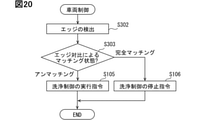
- S104 of the first and third embodiments may be omitted as shown in FIGS. 19 and 20. That is, in the flow of the vehicle control method, S105 may be executed assuming that the possibility of adhesion of the water-related substance Mw to the incident surface 33o is predicted only by the unmatching determination in S103 or S303.
- the first embodiment and the second embodiment may be realized in combination as shown in FIG. 21. That is, when the adhesion of the water-related substance Mw to the incident surface 33o is not predicted as a result of S104, the flow of the vehicle control method shifts to S205, and in the case of perfect matching as a result of S103, the same. The flow may sequentially shift to S106 and S206.
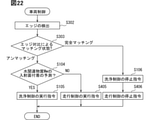
- the third embodiment and the fourth embodiment may be realized in combination as shown in FIG. 22. That is, when the adhesion of the water-related substance Mw to the incident surface 33o is not predicted as a result of S104, the flow of the vehicle control method shifts to S405, and in the case of perfect matching as a result of S303, the same. The flow may sequentially shift to S106 and S406.
- the running control according to the second embodiment may be executed in place of or in addition to the cleaning control according to the fifth embodiment.
- a step in which the control unit 5120 commands the cleaning system 5 to control cleaning by at least one of the cleaning gas and the cleaning liquid may be executed.
- the extraction determination of the pixel group Po may be realized by the edge detection unit 104 of the extraction unit 5100 by executing the processing according to S500 to S503.
- the steps according to S506 to S508 of the fifth embodiment (however, the setting range is the range defined in the first embodiment) may be executed.
Landscapes
- Engineering & Computer Science (AREA)
- Physics & Mathematics (AREA)
- General Physics & Mathematics (AREA)
- Multimedia (AREA)
- Remote Sensing (AREA)
- Radar, Positioning & Navigation (AREA)
- Electromagnetism (AREA)
- Theoretical Computer Science (AREA)
- Computer Networks & Wireless Communication (AREA)
- Signal Processing (AREA)
- Computer Vision & Pattern Recognition (AREA)
- Human Computer Interaction (AREA)
- Mechanical Engineering (AREA)
- General Health & Medical Sciences (AREA)
- Medical Informatics (AREA)
- Software Systems (AREA)
- Evolutionary Computation (AREA)
- Databases & Information Systems (AREA)
- Computing Systems (AREA)
- Artificial Intelligence (AREA)
- Health & Medical Sciences (AREA)
- Studio Devices (AREA)
- Traffic Control Systems (AREA)
Abstract
L'invention concerne un dispositif de commande de véhicule (1) destiné à commander un véhicule sur lequel sont montés un capteur optique (40), servant à acquérir une image de lumière réfléchie (Ior) par détection de la lumière réfléchie à partir d'un faisceau de lumière, et un appareil de prise de vues de détection (41), destiné à acquérir une image d'appareil de prise de vues (Ic)) correspondant à l'intensité de lumière externe dans une région de détection chevauchant le capteur optique (40), comprenant une unité d'extraction (100) destinée à comparer l'image de lumière réfléchie (Ior) et l'image d'appareil de prise de vues (Ic) pour extraire un groupe de pixels non concordants (Po), et une unité de commande (120) destinée à commander, à un véhicule, une commande correspondant à une substance liée à l'eau (Mw) estimée pour correspondre au groupe de pixels non concordants (Po).
Priority Applications (2)
| Application Number | Priority Date | Filing Date | Title |
|---|---|---|---|
| CN202180055171.2A CN116076078B (zh) | 2020-09-11 | 2021-08-20 | 车辆控制装置、车辆控制方法、车辆控制程序 |
| US18/179,958 US12549834B2 (en) | 2020-09-11 | 2023-03-07 | Vehicle control device, vehicle control method, and computer program product |
Applications Claiming Priority (4)
| Application Number | Priority Date | Filing Date | Title |
|---|---|---|---|
| JP2020153238 | 2020-09-11 | ||
| JP2020-153238 | 2020-09-11 | ||
| JP2021124655A JP7647424B2 (ja) | 2020-09-11 | 2021-07-29 | 車両制御装置、車両制御方法、車両制御プログラム |
| JP2021-124655 | 2021-07-29 |
Related Child Applications (1)
| Application Number | Title | Priority Date | Filing Date |
|---|---|---|---|
| US18/179,958 Continuation US12549834B2 (en) | 2020-09-11 | 2023-03-07 | Vehicle control device, vehicle control method, and computer program product |
Publications (1)
| Publication Number | Publication Date |
|---|---|
| WO2022054532A1 true WO2022054532A1 (fr) | 2022-03-17 |
Family
ID=80631603
Family Applications (1)
| Application Number | Title | Priority Date | Filing Date |
|---|---|---|---|
| PCT/JP2021/030490 Ceased WO2022054532A1 (fr) | 2020-09-11 | 2021-08-20 | Dispositif de commande de véhicule, procédé de commande de véhicule, et programme de commande de véhicule |
Country Status (3)
| Country | Link |
|---|---|
| US (1) | US12549834B2 (fr) |
| CN (1) | CN116076078B (fr) |
| WO (1) | WO2022054532A1 (fr) |
Families Citing this family (2)
| Publication number | Priority date | Publication date | Assignee | Title |
|---|---|---|---|---|
| DE102020005343A1 (de) * | 2020-08-31 | 2022-03-03 | Daimler Ag | Verfahren zur Objektverfolgung von mindestens einem Objekt, Steuereinrichtung zur Durchführung eines solchen Verfahrens, Objektverfolgungsvorrichtung mit einer solchen Steuereinrichtung und Kraftfahrzeug mit einer solchen Objektverfolgungsvorrichtung |
| JP2022152402A (ja) * | 2021-03-29 | 2022-10-12 | 本田技研工業株式会社 | 認識装置、車両システム、認識方法、およびプログラム |
Citations (8)
| Publication number | Priority date | Publication date | Assignee | Title |
|---|---|---|---|---|
| JP2003114277A (ja) * | 2001-10-04 | 2003-04-18 | Nissan Motor Co Ltd | 車間距離計測装置 |
| JP2013120076A (ja) * | 2011-12-06 | 2013-06-17 | Ricoh Co Ltd | 付着物検出装置及び付着物検出方法 |
| JP2014041106A (ja) * | 2012-08-23 | 2014-03-06 | Mazda Motor Corp | 撮像装置、車載用監視装置および対象物検知方法 |
| JP2017173298A (ja) * | 2016-03-16 | 2017-09-28 | 株式会社リコー | 物体検出装置及び移動体装置 |
| US20190208111A1 (en) * | 2017-12-28 | 2019-07-04 | Waymo Llc | Multiple Operating Modes to Expand Dynamic Range |
| JP2020076589A (ja) * | 2018-11-06 | 2020-05-21 | 日本電産モビリティ株式会社 | 対象物検出装置 |
| US20200271823A1 (en) * | 2019-02-26 | 2020-08-27 | Ford Global Technologies, Llc | Illuminator obstruction detection |
| WO2021075299A1 (fr) * | 2019-10-18 | 2021-04-22 | 株式会社小糸製作所 | Système de lampe de véhicule, dispositif de détermination de substance étrangère et procédé de détermination de substance étrangère |
Family Cites Families (20)
| Publication number | Priority date | Publication date | Assignee | Title |
|---|---|---|---|---|
| US6020704A (en) * | 1997-12-02 | 2000-02-01 | Valeo Electrical Systems, Inc. | Windscreen sensing and wiper control system |
| US7683326B2 (en) * | 2002-07-09 | 2010-03-23 | Gentex Corporation | Vehicle vision system with high dynamic range |
| JP3915742B2 (ja) | 2003-06-20 | 2007-05-16 | 株式会社デンソー | 車両用物体認識装置 |
| JP5207057B2 (ja) * | 2008-11-28 | 2013-06-12 | サクサ株式会社 | 撮影装置の汚れを検知する汚れ検知装置及び同検知方法 |
| JP5267101B2 (ja) * | 2008-12-18 | 2013-08-21 | マツダ株式会社 | 車両用対象物検出装置 |
| JP2014032174A (ja) * | 2012-07-13 | 2014-02-20 | Ricoh Co Ltd | 撮像装置、付着物検出装置、移動装置用機器制御システム及び移動装置 |
| JP5759950B2 (ja) * | 2012-08-24 | 2015-08-05 | 日立オートモティブシステムズ株式会社 | 車載カメラ装置 |
| JP6123377B2 (ja) * | 2012-09-14 | 2017-05-10 | オムロン株式会社 | 画像処理装置、オブジェクト検出方法、およびオブジェクト検出プログラム |
| US9726604B2 (en) * | 2014-11-12 | 2017-08-08 | Ricoh Company, Ltd. | Adhering detection apparatus, adhering substance detection method, storage medium, and device control system for controlling vehicle-mounted devices |
| US9781361B2 (en) * | 2015-09-01 | 2017-10-03 | Delphi Technologies, Inc. | Integrated camera, ambient light detection, and rain sensor assembly |
| JP6597350B2 (ja) * | 2016-02-03 | 2019-10-30 | トヨタ自動車株式会社 | 車両用撮像システム |
| JP2018137569A (ja) * | 2017-02-21 | 2018-08-30 | ソニーセミコンダクタソリューションズ株式会社 | 測距装置、および測距方法 |
| JP6882092B2 (ja) * | 2017-06-22 | 2021-06-02 | 株式会社日立製作所 | 経路探索装置および経路探索方法 |
| JP6772113B2 (ja) * | 2017-08-02 | 2020-10-21 | クラリオン株式会社 | 付着物検出装置、および、それを備えた車両システム |
| US11176426B2 (en) * | 2018-06-18 | 2021-11-16 | Zoox, Inc. | Sensor obstruction detection and mitigation using vibration and/or heat |
| DK180429B1 (en) * | 2018-11-20 | 2021-04-23 | Motional Ad Llc | Self-cleaning sensor housings |
| US10867201B2 (en) * | 2019-01-15 | 2020-12-15 | Waymo Llc | Detecting sensor occlusion with compressed image data |
| US11673533B2 (en) * | 2019-06-19 | 2023-06-13 | Ford Global Technologies, Llc | Vehicle sensor enhancements |
| DE102020104875A1 (de) * | 2020-02-25 | 2021-08-26 | Zf Cv Systems Global Gmbh | Verfahren zum Betreiben eines Reinigungssystems, Reinigungssystem |
| US20230311818A1 (en) * | 2020-08-24 | 2023-10-05 | Koito Manufacturing Co., Ltd. | Sensing system and vehicle |
-
2021
- 2021-08-20 WO PCT/JP2021/030490 patent/WO2022054532A1/fr not_active Ceased
- 2021-08-20 CN CN202180055171.2A patent/CN116076078B/zh active Active
-
2023
- 2023-03-07 US US18/179,958 patent/US12549834B2/en active Active
Patent Citations (8)
| Publication number | Priority date | Publication date | Assignee | Title |
|---|---|---|---|---|
| JP2003114277A (ja) * | 2001-10-04 | 2003-04-18 | Nissan Motor Co Ltd | 車間距離計測装置 |
| JP2013120076A (ja) * | 2011-12-06 | 2013-06-17 | Ricoh Co Ltd | 付着物検出装置及び付着物検出方法 |
| JP2014041106A (ja) * | 2012-08-23 | 2014-03-06 | Mazda Motor Corp | 撮像装置、車載用監視装置および対象物検知方法 |
| JP2017173298A (ja) * | 2016-03-16 | 2017-09-28 | 株式会社リコー | 物体検出装置及び移動体装置 |
| US20190208111A1 (en) * | 2017-12-28 | 2019-07-04 | Waymo Llc | Multiple Operating Modes to Expand Dynamic Range |
| JP2020076589A (ja) * | 2018-11-06 | 2020-05-21 | 日本電産モビリティ株式会社 | 対象物検出装置 |
| US20200271823A1 (en) * | 2019-02-26 | 2020-08-27 | Ford Global Technologies, Llc | Illuminator obstruction detection |
| WO2021075299A1 (fr) * | 2019-10-18 | 2021-04-22 | 株式会社小糸製作所 | Système de lampe de véhicule, dispositif de détermination de substance étrangère et procédé de détermination de substance étrangère |
Also Published As
| Publication number | Publication date |
|---|---|
| CN116076078B (zh) | 2025-04-25 |
| CN116076078A (zh) | 2023-05-05 |
| US12549834B2 (en) | 2026-02-10 |
| US20230219532A1 (en) | 2023-07-13 |
Similar Documents
| Publication | Publication Date | Title |
|---|---|---|
| CN111223135B (zh) | 通过使用雷达和运动数据的单目相机来增强距离估计的系统和方法 | |
| JP6825569B2 (ja) | 信号処理装置、信号処理方法、およびプログラム | |
| US20200191927A1 (en) | Sensor calibration method and sensor calibration apparatus | |
| CN108140323B (zh) | 用于机动车中的环境检测时改进的数据融合的方法和设备 | |
| JP7498364B2 (ja) | 雨、侵入光および汚れがある場合のカメラの画像の補正 | |
| CN112419776B (zh) | 自主泊车方法、装置、汽车及计算设备 | |
| CN112287834A (zh) | 机器人的巡检清洁方法、装置、机器人和存储介质 | |
| CN112315383A (zh) | 机器人的巡检清洁方法、装置、机器人和存储介质 | |
| CN112997093A (zh) | 用于确定关于车辆环境中的物体的信息的方法和处理单元 | |
| JP2017111803A (ja) | 駐車スペースの検出装置、方法及び画像処理装置 | |
| US12549834B2 (en) | Vehicle control device, vehicle control method, and computer program product | |
| CN114842442A (zh) | 道路边界获取方法、道路边界获取装置和车辆 | |
| CN113313935B (zh) | 图像处理装置及图像处理方法 | |
| US20210272289A1 (en) | Sky determination in environment detection for mobile platforms, and associated systems and methods | |
| US12403864B2 (en) | Vehicle control device, vehicle control method, and storage medium storing vehicle control program | |
| JP7472759B2 (ja) | 位置推定装置、位置推定方法、及び位置推定プログラム | |
| JP7571479B2 (ja) | 汚れ検出装置、汚れ検出方法、及び汚れ検出プログラム | |
| JP7525936B2 (ja) | 確信度推定値を有する深度マップを提供するための方法およびシステム | |
| JP7647424B2 (ja) | 車両制御装置、車両制御方法、車両制御プログラム | |
| JP7559613B2 (ja) | 車両用制御装置、車両用制御方法、車両用制御プログラム | |
| JP2024072098A (ja) | 物体検知装置及び物体検知方法 | |
| US12475788B2 (en) | Parking information processing device, storage medium for storing computer program for processing parking information, method for processing parking information, parking information processing system, and parking information processing server | |
| JP7452341B2 (ja) | 洗浄制御装置、洗浄制御方法、洗浄制御プログラム | |
| JP4767052B2 (ja) | 光軸ずれ検出装置 | |
| US11047673B2 (en) | Method, device, apparatus and storage medium for detecting a height of an obstacle |
Legal Events
| Date | Code | Title | Description |
|---|---|---|---|
| 121 | Ep: the epo has been informed by wipo that ep was designated in this application |
Ref document number: 21866492 Country of ref document: EP Kind code of ref document: A1 |
|
| NENP | Non-entry into the national phase |
Ref country code: DE |
|
| 122 | Ep: pct application non-entry in european phase |
Ref document number: 21866492 Country of ref document: EP Kind code of ref document: A1 |
|
| WWG | Wipo information: grant in national office |
Ref document number: 202180055171.2 Country of ref document: CN |