WO2022064490A1 - Herbicidal compounds and methods of use thereof - Google Patents
Herbicidal compounds and methods of use thereof Download PDFInfo
- Publication number
- WO2022064490A1 WO2022064490A1 PCT/IL2021/051150 IL2021051150W WO2022064490A1 WO 2022064490 A1 WO2022064490 A1 WO 2022064490A1 IL 2021051150 W IL2021051150 W IL 2021051150W WO 2022064490 A1 WO2022064490 A1 WO 2022064490A1
- Authority
- WO
- WIPO (PCT)
- Prior art keywords
- linear
- branched
- substituted
- unsubstituted
- compound
- Prior art date
- Legal status (The legal status is an assumption and is not a legal conclusion. Google has not performed a legal analysis and makes no representation as to the accuracy of the status listed.)
- Ceased
Links
Classifications
-
- C—CHEMISTRY; METALLURGY
- C07—ORGANIC CHEMISTRY
- C07C—ACYCLIC OR CARBOCYCLIC COMPOUNDS
- C07C311/00—Amides of sulfonic acids, i.e. compounds having singly-bound oxygen atoms of sulfo groups replaced by nitrogen atoms, not being part of nitro or nitroso groups
- C07C311/50—Compounds containing any of the groups, X being a hetero atom, Y being any atom
- C07C311/51—Y being a hydrogen or a carbon atom
-
- A—HUMAN NECESSITIES
- A01—AGRICULTURE; FORESTRY; ANIMAL HUSBANDRY; HUNTING; TRAPPING; FISHING
- A01N—PRESERVATION OF BODIES OF HUMANS OR ANIMALS OR PLANTS OR PARTS THEREOF; BIOCIDES, e.g. AS DISINFECTANTS, AS PESTICIDES OR AS HERBICIDES; PEST REPELLANTS OR ATTRACTANTS; PLANT GROWTH REGULATORS
- A01N33/00—Biocides, pest repellants or attractants, or plant growth regulators containing organic nitrogen compounds
- A01N33/02—Amines; Quaternary ammonium compounds
- A01N33/04—Nitrogen directly attached to aliphatic or cycloaliphatic carbon atoms
-
- A—HUMAN NECESSITIES
- A01—AGRICULTURE; FORESTRY; ANIMAL HUSBANDRY; HUNTING; TRAPPING; FISHING
- A01N—PRESERVATION OF BODIES OF HUMANS OR ANIMALS OR PLANTS OR PARTS THEREOF; BIOCIDES, e.g. AS DISINFECTANTS, AS PESTICIDES OR AS HERBICIDES; PEST REPELLANTS OR ATTRACTANTS; PLANT GROWTH REGULATORS
- A01N33/00—Biocides, pest repellants or attractants, or plant growth regulators containing organic nitrogen compounds
- A01N33/02—Amines; Quaternary ammonium compounds
- A01N33/08—Amines; Quaternary ammonium compounds containing oxygen or sulfur
-
- A—HUMAN NECESSITIES
- A01—AGRICULTURE; FORESTRY; ANIMAL HUSBANDRY; HUNTING; TRAPPING; FISHING
- A01N—PRESERVATION OF BODIES OF HUMANS OR ANIMALS OR PLANTS OR PARTS THEREOF; BIOCIDES, e.g. AS DISINFECTANTS, AS PESTICIDES OR AS HERBICIDES; PEST REPELLANTS OR ATTRACTANTS; PLANT GROWTH REGULATORS
- A01N35/00—Biocides, pest repellants or attractants, or plant growth regulators containing organic compounds containing a carbon atom having two bonds to hetero atoms with at the most one bond to halogen, e.g. aldehyde radical
- A01N35/08—Biocides, pest repellants or attractants, or plant growth regulators containing organic compounds containing a carbon atom having two bonds to hetero atoms with at the most one bond to halogen, e.g. aldehyde radical at least one of the bonds to hetero atoms is to nitrogen
-
- A—HUMAN NECESSITIES
- A01—AGRICULTURE; FORESTRY; ANIMAL HUSBANDRY; HUNTING; TRAPPING; FISHING
- A01N—PRESERVATION OF BODIES OF HUMANS OR ANIMALS OR PLANTS OR PARTS THEREOF; BIOCIDES, e.g. AS DISINFECTANTS, AS PESTICIDES OR AS HERBICIDES; PEST REPELLANTS OR ATTRACTANTS; PLANT GROWTH REGULATORS
- A01N37/00—Biocides, pest repellants or attractants, or plant growth regulators containing organic compounds containing a carbon atom having three bonds to hetero atoms with at the most two bonds to halogen, e.g. carboxylic acids
- A01N37/36—Biocides, pest repellants or attractants, or plant growth regulators containing organic compounds containing a carbon atom having three bonds to hetero atoms with at the most two bonds to halogen, e.g. carboxylic acids containing at least one carboxylic group or a thio analogue, or a derivative thereof, and a singly bound oxygen or sulfur atom attached to the same carbon skeleton, this oxygen or sulfur atom not being a member of a carboxylic group or of a thio analogue, or of a derivative thereof, e.g. hydroxy-carboxylic acids
-
- A—HUMAN NECESSITIES
- A01—AGRICULTURE; FORESTRY; ANIMAL HUSBANDRY; HUNTING; TRAPPING; FISHING
- A01N—PRESERVATION OF BODIES OF HUMANS OR ANIMALS OR PLANTS OR PARTS THEREOF; BIOCIDES, e.g. AS DISINFECTANTS, AS PESTICIDES OR AS HERBICIDES; PEST REPELLANTS OR ATTRACTANTS; PLANT GROWTH REGULATORS
- A01N37/00—Biocides, pest repellants or attractants, or plant growth regulators containing organic compounds containing a carbon atom having three bonds to hetero atoms with at the most two bonds to halogen, e.g. carboxylic acids
- A01N37/44—Biocides, pest repellants or attractants, or plant growth regulators containing organic compounds containing a carbon atom having three bonds to hetero atoms with at the most two bonds to halogen, e.g. carboxylic acids containing at least one carboxylic group or a thio analogue, or a derivative thereof, and a nitrogen atom attached to the same carbon skeleton by a single or double bond, this nitrogen atom not being a member of a derivative or of a thio analogue of a carboxylic group, e.g. amino-carboxylic acids
-
- A—HUMAN NECESSITIES
- A01—AGRICULTURE; FORESTRY; ANIMAL HUSBANDRY; HUNTING; TRAPPING; FISHING
- A01N—PRESERVATION OF BODIES OF HUMANS OR ANIMALS OR PLANTS OR PARTS THEREOF; BIOCIDES, e.g. AS DISINFECTANTS, AS PESTICIDES OR AS HERBICIDES; PEST REPELLANTS OR ATTRACTANTS; PLANT GROWTH REGULATORS
- A01N37/00—Biocides, pest repellants or attractants, or plant growth regulators containing organic compounds containing a carbon atom having three bonds to hetero atoms with at the most two bonds to halogen, e.g. carboxylic acids
- A01N37/44—Biocides, pest repellants or attractants, or plant growth regulators containing organic compounds containing a carbon atom having three bonds to hetero atoms with at the most two bonds to halogen, e.g. carboxylic acids containing at least one carboxylic group or a thio analogue, or a derivative thereof, and a nitrogen atom attached to the same carbon skeleton by a single or double bond, this nitrogen atom not being a member of a derivative or of a thio analogue of a carboxylic group, e.g. amino-carboxylic acids
- A01N37/46—N-acyl derivatives
-
- A—HUMAN NECESSITIES
- A01—AGRICULTURE; FORESTRY; ANIMAL HUSBANDRY; HUNTING; TRAPPING; FISHING
- A01N—PRESERVATION OF BODIES OF HUMANS OR ANIMALS OR PLANTS OR PARTS THEREOF; BIOCIDES, e.g. AS DISINFECTANTS, AS PESTICIDES OR AS HERBICIDES; PEST REPELLANTS OR ATTRACTANTS; PLANT GROWTH REGULATORS
- A01N41/00—Biocides, pest repellants or attractants, or plant growth regulators containing organic compounds containing a sulfur atom bound to a hetero atom
- A01N41/02—Biocides, pest repellants or attractants, or plant growth regulators containing organic compounds containing a sulfur atom bound to a hetero atom containing a sulfur-to-oxygen double bond
- A01N41/04—Sulfonic acids; Derivatives thereof
- A01N41/06—Sulfonic acid amides
-
- A—HUMAN NECESSITIES
- A01—AGRICULTURE; FORESTRY; ANIMAL HUSBANDRY; HUNTING; TRAPPING; FISHING
- A01N—PRESERVATION OF BODIES OF HUMANS OR ANIMALS OR PLANTS OR PARTS THEREOF; BIOCIDES, e.g. AS DISINFECTANTS, AS PESTICIDES OR AS HERBICIDES; PEST REPELLANTS OR ATTRACTANTS; PLANT GROWTH REGULATORS
- A01N43/00—Biocides, pest repellants or attractants, or plant growth regulators containing heterocyclic compounds
- A01N43/34—Biocides, pest repellants or attractants, or plant growth regulators containing heterocyclic compounds having rings with one nitrogen atom as the only ring hetero atom
- A01N43/36—Biocides, pest repellants or attractants, or plant growth regulators containing heterocyclic compounds having rings with one nitrogen atom as the only ring hetero atom five-membered rings
-
- A—HUMAN NECESSITIES
- A01—AGRICULTURE; FORESTRY; ANIMAL HUSBANDRY; HUNTING; TRAPPING; FISHING
- A01N—PRESERVATION OF BODIES OF HUMANS OR ANIMALS OR PLANTS OR PARTS THEREOF; BIOCIDES, e.g. AS DISINFECTANTS, AS PESTICIDES OR AS HERBICIDES; PEST REPELLANTS OR ATTRACTANTS; PLANT GROWTH REGULATORS
- A01N43/00—Biocides, pest repellants or attractants, or plant growth regulators containing heterocyclic compounds
- A01N43/34—Biocides, pest repellants or attractants, or plant growth regulators containing heterocyclic compounds having rings with one nitrogen atom as the only ring hetero atom
- A01N43/40—Biocides, pest repellants or attractants, or plant growth regulators containing heterocyclic compounds having rings with one nitrogen atom as the only ring hetero atom six-membered rings
-
- A—HUMAN NECESSITIES
- A01—AGRICULTURE; FORESTRY; ANIMAL HUSBANDRY; HUNTING; TRAPPING; FISHING
- A01N—PRESERVATION OF BODIES OF HUMANS OR ANIMALS OR PLANTS OR PARTS THEREOF; BIOCIDES, e.g. AS DISINFECTANTS, AS PESTICIDES OR AS HERBICIDES; PEST REPELLANTS OR ATTRACTANTS; PLANT GROWTH REGULATORS
- A01N43/00—Biocides, pest repellants or attractants, or plant growth regulators containing heterocyclic compounds
- A01N43/48—Biocides, pest repellants or attractants, or plant growth regulators containing heterocyclic compounds having rings with two nitrogen atoms as the only ring hetero atoms
- A01N43/50—1,3-Diazoles; Hydrogenated 1,3-diazoles
-
- A—HUMAN NECESSITIES
- A01—AGRICULTURE; FORESTRY; ANIMAL HUSBANDRY; HUNTING; TRAPPING; FISHING
- A01N—PRESERVATION OF BODIES OF HUMANS OR ANIMALS OR PLANTS OR PARTS THEREOF; BIOCIDES, e.g. AS DISINFECTANTS, AS PESTICIDES OR AS HERBICIDES; PEST REPELLANTS OR ATTRACTANTS; PLANT GROWTH REGULATORS
- A01N43/00—Biocides, pest repellants or attractants, or plant growth regulators containing heterocyclic compounds
- A01N43/48—Biocides, pest repellants or attractants, or plant growth regulators containing heterocyclic compounds having rings with two nitrogen atoms as the only ring hetero atoms
- A01N43/54—1,3-Diazines; Hydrogenated 1,3-diazines
-
- A—HUMAN NECESSITIES
- A01—AGRICULTURE; FORESTRY; ANIMAL HUSBANDRY; HUNTING; TRAPPING; FISHING
- A01N—PRESERVATION OF BODIES OF HUMANS OR ANIMALS OR PLANTS OR PARTS THEREOF; BIOCIDES, e.g. AS DISINFECTANTS, AS PESTICIDES OR AS HERBICIDES; PEST REPELLANTS OR ATTRACTANTS; PLANT GROWTH REGULATORS
- A01N43/00—Biocides, pest repellants or attractants, or plant growth regulators containing heterocyclic compounds
- A01N43/72—Biocides, pest repellants or attractants, or plant growth regulators containing heterocyclic compounds having rings with nitrogen atoms and oxygen or sulfur atoms as ring hetero atoms
- A01N43/74—Biocides, pest repellants or attractants, or plant growth regulators containing heterocyclic compounds having rings with nitrogen atoms and oxygen or sulfur atoms as ring hetero atoms five-membered rings with one nitrogen atom and either one oxygen atom or one sulfur atom in positions 1,3
- A01N43/76—1,3-Oxazoles; Hydrogenated 1,3-oxazoles
-
- C—CHEMISTRY; METALLURGY
- C07—ORGANIC CHEMISTRY
- C07C—ACYCLIC OR CARBOCYCLIC COMPOUNDS
- C07C229/00—Compounds containing amino and carboxyl groups bound to the same carbon skeleton
- C07C229/02—Compounds containing amino and carboxyl groups bound to the same carbon skeleton having amino and carboxyl groups bound to acyclic carbon atoms of the same carbon skeleton
- C07C229/04—Compounds containing amino and carboxyl groups bound to the same carbon skeleton having amino and carboxyl groups bound to acyclic carbon atoms of the same carbon skeleton the carbon skeleton being acyclic and saturated
- C07C229/22—Compounds containing amino and carboxyl groups bound to the same carbon skeleton having amino and carboxyl groups bound to acyclic carbon atoms of the same carbon skeleton the carbon skeleton being acyclic and saturated the carbon skeleton being further substituted by oxygen atoms
-
- C—CHEMISTRY; METALLURGY
- C07—ORGANIC CHEMISTRY
- C07C—ACYCLIC OR CARBOCYCLIC COMPOUNDS
- C07C229/00—Compounds containing amino and carboxyl groups bound to the same carbon skeleton
- C07C229/46—Compounds containing amino and carboxyl groups bound to the same carbon skeleton having amino or carboxyl groups bound to carbon atoms of rings other than six-membered aromatic rings of the same carbon skeleton
-
- C—CHEMISTRY; METALLURGY
- C07—ORGANIC CHEMISTRY
- C07C—ACYCLIC OR CARBOCYCLIC COMPOUNDS
- C07C237/00—Carboxylic acid amides, the carbon skeleton of the acid part being further substituted by amino groups
- C07C237/02—Carboxylic acid amides, the carbon skeleton of the acid part being further substituted by amino groups having the carbon atoms of the carboxamide groups bound to acyclic carbon atoms of the carbon skeleton
- C07C237/04—Carboxylic acid amides, the carbon skeleton of the acid part being further substituted by amino groups having the carbon atoms of the carboxamide groups bound to acyclic carbon atoms of the carbon skeleton the carbon skeleton being acyclic and saturated
- C07C237/12—Carboxylic acid amides, the carbon skeleton of the acid part being further substituted by amino groups having the carbon atoms of the carboxamide groups bound to acyclic carbon atoms of the carbon skeleton the carbon skeleton being acyclic and saturated having the nitrogen atom of at least one of the carboxamide groups bound to an acyclic carbon atom of a hydrocarbon radical substituted by carboxyl groups
-
- C—CHEMISTRY; METALLURGY
- C07—ORGANIC CHEMISTRY
- C07C—ACYCLIC OR CARBOCYCLIC COMPOUNDS
- C07C311/00—Amides of sulfonic acids, i.e. compounds having singly-bound oxygen atoms of sulfo groups replaced by nitrogen atoms, not being part of nitro or nitroso groups
- C07C311/01—Sulfonamides having sulfur atoms of sulfonamide groups bound to acyclic carbon atoms
- C07C311/10—Sulfonamides having sulfur atoms of sulfonamide groups bound to acyclic carbon atoms of a saturated carbon skeleton containing rings
-
- C—CHEMISTRY; METALLURGY
- C07—ORGANIC CHEMISTRY
- C07C—ACYCLIC OR CARBOCYCLIC COMPOUNDS
- C07C311/00—Amides of sulfonic acids, i.e. compounds having singly-bound oxygen atoms of sulfo groups replaced by nitrogen atoms, not being part of nitro or nitroso groups
- C07C311/01—Sulfonamides having sulfur atoms of sulfonamide groups bound to acyclic carbon atoms
- C07C311/12—Sulfonamides having sulfur atoms of sulfonamide groups bound to acyclic carbon atoms of an unsaturated carbon skeleton containing rings
- C07C311/13—Sulfonamides having sulfur atoms of sulfonamide groups bound to acyclic carbon atoms of an unsaturated carbon skeleton containing rings the carbon skeleton containing six-membered aromatic rings
-
- C—CHEMISTRY; METALLURGY
- C07—ORGANIC CHEMISTRY
- C07C—ACYCLIC OR CARBOCYCLIC COMPOUNDS
- C07C323/00—Thiols, sulfides, hydropolysulfides or polysulfides substituted by halogen, oxygen or nitrogen atoms, or by sulfur atoms not being part of thio groups
- C07C323/23—Thiols, sulfides, hydropolysulfides or polysulfides substituted by halogen, oxygen or nitrogen atoms, or by sulfur atoms not being part of thio groups containing thio groups and nitrogen atoms, not being part of nitro or nitroso groups, bound to the same carbon skeleton
- C07C323/30—Thiols, sulfides, hydropolysulfides or polysulfides substituted by halogen, oxygen or nitrogen atoms, or by sulfur atoms not being part of thio groups containing thio groups and nitrogen atoms, not being part of nitro or nitroso groups, bound to the same carbon skeleton having the sulfur atom of at least one of the thio groups bound to a carbon atom of a ring other than a six-membered aromatic ring of the carbon skeleton
-
- C—CHEMISTRY; METALLURGY
- C07—ORGANIC CHEMISTRY
- C07D—HETEROCYCLIC COMPOUNDS
- C07D207/00—Heterocyclic compounds containing five-membered rings not condensed with other rings, with one nitrogen atom as the only ring hetero atom
- C07D207/02—Heterocyclic compounds containing five-membered rings not condensed with other rings, with one nitrogen atom as the only ring hetero atom with only hydrogen or carbon atoms directly attached to the ring nitrogen atom
- C07D207/04—Heterocyclic compounds containing five-membered rings not condensed with other rings, with one nitrogen atom as the only ring hetero atom with only hydrogen or carbon atoms directly attached to the ring nitrogen atom having no double bonds between ring members or between ring members and non-ring members
- C07D207/08—Heterocyclic compounds containing five-membered rings not condensed with other rings, with one nitrogen atom as the only ring hetero atom with only hydrogen or carbon atoms directly attached to the ring nitrogen atom having no double bonds between ring members or between ring members and non-ring members with hydrocarbon radicals, substituted by hetero atoms, attached to ring carbon atoms
-
- C—CHEMISTRY; METALLURGY
- C07—ORGANIC CHEMISTRY
- C07D—HETEROCYCLIC COMPOUNDS
- C07D213/00—Heterocyclic compounds containing six-membered rings, not condensed with other rings, with one nitrogen atom as the only ring hetero atom and three or more double bonds between ring members or between ring members and non-ring members
- C07D213/02—Heterocyclic compounds containing six-membered rings, not condensed with other rings, with one nitrogen atom as the only ring hetero atom and three or more double bonds between ring members or between ring members and non-ring members having three double bonds between ring members or between ring members and non-ring members
- C07D213/04—Heterocyclic compounds containing six-membered rings, not condensed with other rings, with one nitrogen atom as the only ring hetero atom and three or more double bonds between ring members or between ring members and non-ring members having three double bonds between ring members or between ring members and non-ring members having no bond between the ring nitrogen atom and a non-ring member or having only hydrogen or carbon atoms directly attached to the ring nitrogen atom
- C07D213/60—Heterocyclic compounds containing six-membered rings, not condensed with other rings, with one nitrogen atom as the only ring hetero atom and three or more double bonds between ring members or between ring members and non-ring members having three double bonds between ring members or between ring members and non-ring members having no bond between the ring nitrogen atom and a non-ring member or having only hydrogen or carbon atoms directly attached to the ring nitrogen atom with hetero atoms or with carbon atoms having three bonds to hetero atoms with at the most one bond to halogen, e.g. ester or nitrile radicals, directly attached to ring carbon atoms
- C07D213/72—Nitrogen atoms
- C07D213/73—Unsubstituted amino or imino radicals
-
- C—CHEMISTRY; METALLURGY
- C07—ORGANIC CHEMISTRY
- C07D—HETEROCYCLIC COMPOUNDS
- C07D233/00—Heterocyclic compounds containing 1,3-diazole or hydrogenated 1,3-diazole rings, not condensed with other rings
- C07D233/04—Heterocyclic compounds containing 1,3-diazole or hydrogenated 1,3-diazole rings, not condensed with other rings having one double bond between ring members or between a ring member and a non-ring member
- C07D233/06—Heterocyclic compounds containing 1,3-diazole or hydrogenated 1,3-diazole rings, not condensed with other rings having one double bond between ring members or between a ring member and a non-ring member with only hydrogen atoms or radicals containing only hydrogen and carbon atoms, directly attached to ring carbon atoms
- C07D233/08—Heterocyclic compounds containing 1,3-diazole or hydrogenated 1,3-diazole rings, not condensed with other rings having one double bond between ring members or between a ring member and a non-ring member with only hydrogen atoms or radicals containing only hydrogen and carbon atoms, directly attached to ring carbon atoms with alkyl radicals, containing more than four carbon atoms, directly attached to ring carbon atoms
- C07D233/12—Heterocyclic compounds containing 1,3-diazole or hydrogenated 1,3-diazole rings, not condensed with other rings having one double bond between ring members or between a ring member and a non-ring member with only hydrogen atoms or radicals containing only hydrogen and carbon atoms, directly attached to ring carbon atoms with alkyl radicals, containing more than four carbon atoms, directly attached to ring carbon atoms with substituted hydrocarbon radicals attached to ring nitrogen atoms
- C07D233/18—Radicals substituted by carbon atoms having three bonds to hetero atoms with at the most one bond to halogen, e.g. ester or nitrile radicals
-
- C—CHEMISTRY; METALLURGY
- C07—ORGANIC CHEMISTRY
- C07D—HETEROCYCLIC COMPOUNDS
- C07D239/00—Heterocyclic compounds containing 1,3-diazine or hydrogenated 1,3-diazine rings
- C07D239/02—Heterocyclic compounds containing 1,3-diazine or hydrogenated 1,3-diazine rings not condensed with other rings
- C07D239/06—Heterocyclic compounds containing 1,3-diazine or hydrogenated 1,3-diazine rings not condensed with other rings having one double bond between ring members or between a ring member and a non-ring member
- C07D239/08—Heterocyclic compounds containing 1,3-diazine or hydrogenated 1,3-diazine rings not condensed with other rings having one double bond between ring members or between a ring member and a non-ring member with hetero atoms directly attached in position 2
- C07D239/12—Nitrogen atoms not forming part of a nitro radical
- C07D239/14—Nitrogen atoms not forming part of a nitro radical with only hydrogen atoms, hydrocarbon or substituted hydrocarbon radicals, attached to said nitrogen atoms
-
- C—CHEMISTRY; METALLURGY
- C07—ORGANIC CHEMISTRY
- C07D—HETEROCYCLIC COMPOUNDS
- C07D263/00—Heterocyclic compounds containing 1,3-oxazole or hydrogenated 1,3-oxazole rings
- C07D263/02—Heterocyclic compounds containing 1,3-oxazole or hydrogenated 1,3-oxazole rings not condensed with other rings
- C07D263/08—Heterocyclic compounds containing 1,3-oxazole or hydrogenated 1,3-oxazole rings not condensed with other rings having one double bond between ring members or between a ring member and a non-ring member
- C07D263/16—Heterocyclic compounds containing 1,3-oxazole or hydrogenated 1,3-oxazole rings not condensed with other rings having one double bond between ring members or between a ring member and a non-ring member with hetero atoms or with carbon atoms having three bonds to hetero atoms with at the most one bond to halogen, e.g. ester or nitrile radicals, directly attached to ring carbon atoms
- C07D263/18—Oxygen atoms
- C07D263/20—Oxygen atoms attached in position 2
- C07D263/24—Oxygen atoms attached in position 2 with hydrocarbon radicals, substituted by oxygen atoms, attached to other ring carbon atoms
Definitions
- the present invention relates to novel herbicidally active compounds, agrochemical composition thereof, methods of preparation thereof, and uses thereof for controlling the growth of undesirable plants (e.g., weeds), for example in crop fields.
- undesirable plants e.g., weeds
- weeds act in a poisonous fashion against other plants, animals, and humans by secreting toxic substances known as allelopathic compounds or by spreading agents that may cause allergies and/or disease.
- weeds provide shelter for insects and rodents that spread disease or are otherwise harmful to desired plants, animals, or humans.
- Mechanical means such as hand pulling, hoeing or cultivation, deep plowing, clipping, mowing, burning and/or mulching, may be employed in an attempt to eradicate or control weeds.
- cover crops may be planted to keep the ground covered when not growing more valuable crops and thus weed infestation that would ordinarily be expected to occur in bare ground areas is typically minimized.
- Crop rotation and planting of “smother” crops that are adapted to grow more vigorously than weeds have also been attempted as means of controlling weed infestations.
- biological methods of weed control such as introduction of predator populations that feed on the weeds and thereby reduce weed population, have also been attempted.
- Chemically active herbicides represent another potential weed control technique. These chemical herbicides may be broken down into pre-emergent herbicides and post-emergent herbicides. Pre- emergent herbicides typically interfere with germination of weed seeds, whereas post-emergent herbicides kill the weeds after the weed seeds have germinated and weed growth has begun.
- Pre-emergent herbicides may be effective when present at the required dosage at the time weed seed germination is ready to occur.
- this timing issue points out a major problem with respect to pre-emergent herbicides. Specifically, if the pre-emergent herbicide is not applied, or degrades, prior to weed seed germination, the weed seeds are free to germinate and begin growing into mature weeds. Additionally, pre-emergent herbicides are typically weed specific and are not equally effective against all types of weeds.
- the timing problem present with pre-emergent herbicides may be avoided by employing post-emergent herbicides and by applying the post-emergent herbicide only after the weed seeds have germinated and the weeds are actively growing. However, many presently available post-emergent herbicides are non-selective herbicides and therefore will kill desirable plants in addition to weeds.
- pre- and post-emergent herbicides also suffer from another problem. Specifically, many pre-emergent herbicides and post-emergent herbicides are either moderately or highly toxic to humans and animals and may thereby have damaging effects far beyond the intended weed control effect. Toxic herbicides may cause injury either immediately or over the long term to persons applying the herbicides and to persons present when the herbicides are applied. Also, residual concentrations of toxic herbicides that remain in the soil or water after application of the herbicide may pose a significant threat to human beings and to animals, including land-based animals and amphibians and fish, upon contact with the treated area or runoff from the treated area. Furthermore, public alarm about the use of toxic chemicals as herbicides and their potential widespread and long-term effects on environmental quality dictate against the continued use of these toxic herbicides.
- this invention is directed to a compound represented by the structure of formula I, I(a)-I(ga), X and X(a)-X(d) as defined herein below or its agrochemically acceptable salt, stereoisomer, tautomer, hydrate, N-oxide, reverse amide analog, isotopic variant (e.g., deuterated analog), or any combination thereof.
- this invention is directed to a compound represented by the structure of formula I(g):
- R 1 , R 1 ’, R 2 , R 2 ’ and R 40 are each independently H, C 1 -C 5 linear or branched, unsubstituted alkyl, methyl, ethyl, propyl, iso-propyl, t-Bu, iso-butyl, pentyl, benzyl, C(O)-R 10 , or C(O)-CH 3 ;
- R 3 is OH, or NH2
- R 4 is NH 2 , or OH; wherein if R 3 is OH then R 4 is NH 2 and if R 3 is NH 2 then R 4 is OH; wherein if R 3 is OH and R 4 is NH 2 , then n + m cannot be equal to 3; or R 3 and R 4 are joined together to form ring A, represented by the following structure:
- R 5 is H, C 1 -C 5 linear or branched, substituted or unsubstituted alkyl (e.g., methyl, CH 2 SH, ethyl, butyl, CH 2 -CCH, iso-propyl, CH 2 -C(O)-OCH 3 ), C 2 -C 5 linear or branched, substituted or unsubstituted alkenyl, C 2 -C 5 linear or branched, substituted or unsubstituted alkynyl (e.g., CCH, CH 2 -CCH,), C 1 -C 5 linear or branched haloalkyl (e.g., CF 3 , CF 2 CH 3 , CH 2 CF 3 , CF 2 CH 2 CH 3 , CH 2 CH 2 CF 3 , CF 2 CH(CH 3 ) 2 ,CF(CH 3 )-CH(CH 3 ) 2 ), R 8 -aryl (e.g., CH 2 -P
- R 10 is H, CN, C 1 -C 5 linear or branched alkyl, C(O)R, or S(O) 2 R;
- R is C 1 -C 5 linear or branched alkyl, C 1 -C 5 linear or branched alkoxy, phenyl, aryl or heteroaryl; m is 1 or 2; n is 0, 1, 2 or 3;
- X 1 is S, O, or CH 2 ;
- X 2 is S, O, or CH 2 ; or its agrochemically acceptable salt, stereoisomer, tautomer, hydrate, N-oxide, reverse amide analog, isotopic variant (e.g., deuterated analog), or any combination thereof.
- ring A has two chiral centers.
- the compound is not (6R, 7S)-6-amino-7-hydroxyoctanoic acid or 5-((4R,5S)-5-methyl-2-oxooxazolidin-4- yl)pentanoic acid.
- the compound is a substantially pure single stereoisomer.
- the compound is a mixture of stereoisomers.
- the compound is the substantially pure SR stereoisomer.
- the compound is the substantially pure RS stereoisomer.
- the substantially pure stereoisomer has a purity higher than 90%.
- the substantially pure stereoisomer has a purity higher than 95%. In some embodiments, the substantially pure stereoisomer has a purity higher than 98%.
- the compound is compound 101, 102, 104, 105, 113, 114, 115, 116, 117, 118, 119, 120, 123, 124, 125, 126, 127, 128, 129, 130, 131, 132, 133, 134, 137, 138, 139, 140, 141, 142 or an agrochemically acceptable salt, stereoisomer, tautomer, hydrate, N-oxide, reverse amide analog, or isotopic variant thereof; each represents a separate embodiment according to this invention.
- the compound is compound any one of the compounds listed in Table 1 herein below or an agrochemically acceptable salt, stereoisomer, tautomer, hydrate, N-oxide, reverse amide analog, or isotopic variant thereof; each represents a separate embodiment according to this invention.
- this invention is directed to an herbicidal compound represented by the structure of formula I, I(a)-I(ga), X and X(a)-X(d) as defined herein below, or an agrochemically acceptable salt, stereoisomer, tautomer, hydrate, N-oxide, reverse amide analog, or isotopic variant (e.g., deuterated analog) thereof; each represents a separate embodiment according to this invention.
- this invention is directed to an herbicidal compound represented by the structure of formula I(ga):
- CA and CB are both chiral carbon centers, or CA and CB together with R 3 and R 4 are joined to form ring A, represented by the following structure:
- R 1 , R 1 ’, R 2 , R 2 ’ and R 40 are each independently H, C 1 -C 5 linear or branched, unsubstituted alkyl, methyl, ethyl, propyl, iso-propyl, t-Bu, iso-butyl, pentyl, benzyl, C(O)-R 10 , or C(O)-CH 3 ;
- Rg is OH, SH, NH 2 , NHNH 2 , NHR, N(Rh, NHC(O)OBz, -NHC(O)-R 10 , NHC(O)CH 3 , C 1 -C 5 linear or branched, substituted or unsubstituted alkyl, methyl, ethyl, propyl, iso-propyl, t-Bu, iso-butyl, pentyl, substituted or unsubstituted C 3 -C 8 cycloalkyl, C 1 -C 5 linear or branched or C 3 -C 8 cyclic haloalkyl, C 1 -C 5 linear or branched or C 3 -C 8 cyclic alkoxy, substituted or unsubstituted C 3 -C 8 heterocyclic ring, or substituted or unsubstituted aryl; R 4 is NH 2 , NHNH 2 , N(R) 2 , -NHC(
- R 5 is H, C 1 -C 5 linear or branched, substituted or unsubstituted alkyl (e.g., methyl, CH 2 SH, ethyl, butyl, CH 2 -CCH, iso-propyl, CH 2 -C(O)-OCH 3 ), C 2 -C 5 linear or branched, substituted or unsubstituted alkenyl, C 2 -Cs linear or branched, substituted or unsubstituted alkynyl (e.g., CCH, CH 2 -CCH,), C 1 -C 5 linear oorr branched haloalkyl (e.g., CF3, CF 2 CH 3 , CH2CF3, CF 2 CH 2 CH 3 , CH 2 CH 2 CFg, CF 2 CH(CH 3 ) 2 ,CF(CH 3 )-CH(CH 3 ) 2 ), Rg-aryl (e.g., CH 2 -Ph), C(
- R 8 is [CH 2 ]p wherein p is between 1 and 10;
- R 10 and R 11 are each independently H, CN, C 1 -C 5 linear or branched alkyl, C(O)R, or 8(O) ⁇ ; or R 10 and Ru are joined to form a substituted or unsubstituted C 3 -C 8 heterocyclic ring;
- R is C 1 -C 5 linear or branched alkyl, C 1 -C 5 linear or branched alkoxy, phenyl, aryl or heteroaryl, or two gem R substituents are joined together to form a 5 or 6 membered heterocyclic ring;
- m is 1 or 2;
- n is 0, 1, 2 or 3;
- X 1 is 8, O, or CH 2 ;
- X 2 is 8, O, or CH 2 ; or its agrochemically acceptable salt, stereoisomer, tautomer, hydrate, /V-oxide, reverse amide analog, isotopic variant (e.g., deuterated analog), or any combination thereof [0016]
- this invention is directed to an herbicidal compound represented by the structure of any one of compounds 101, 102, 104-120, 123-134, 137-178 or an agrochemically acceptable salt, stereoisomer, tautomer, hydrate, N-oxide, reverse amide analog, or isotopic variant thereof; each represents a separate embodiment according to this invention.
- the compound is compound any one of the compounds listed in Table 2 herein below or an agrochemically acceptable salt, stereoisomer, tautomer, hydrate, N-oxide, reverse amide analog, or isotopic variant thereof; each represents a separate embodiment according to this invention.
- this invention is directed to an herbicidal compound represented by the wherein
- R 5 is H, C 1 -C 5 linear or branched, substituted or unsubstituted alkyl (e.g., methyl, CH 2 SH, ethyl, butyl, CH 2 -CCH, iso-propyl, CH 2 -C(O)-OCH 3 ), C 2 -C 5 linear or branched, substituted or unsubstituted alkenyl, C 2 -C 5 linear or branched, substituted or unsubstituted alkynyl (e.g., CCH, CH 2 -CCH,), C 1 -C 5 linear or branched haloalkyl (e.g., CF 3 , CF 2 CH 3 , CH 2 CF 3 , CF 2 CH 2 CH 3 , CH 2 CH 2 CF 3 , CF 2 CH(CH 3 ) 2 ,CF(CH 3 )-CH(CH 3 ) 2 ), R 8 -aryl (e.g., CH 2 -P
- R 8 is [CH 2 ] P wherein p is between 1 and 10;
- R 9 is [CH] q , [C] q wherein q is between 2 and 10;
- R 10 and R 11 are each independently H, CN, C 1 -C 5 linear or branched alkyl (e.g., methyl, ethyl), C(O)R (e.g., C(O)(OCH 3 )), or S(O) 2 R; or R 10 and R 11 are joined to form a substituted or unsubstituted C 3 -C 8 heterocyclic ring (e.g., piperazine, piperidine), wherein substitutions include: F, Cl, Br, I, OH, SH, C 1 -C 5 linear or branched alkyl (e.g.
- C 2 -C 5 linear or branched alkenyl C 2 -C 5 linear or branched alkynyl (e.g. CCH), C 3 -C 8 cycloalkyl, linear, branched or cyclic alkoxy, COOH, COO(R), NH 2 , N(R) 2 , CF 3 , aryl, phenyl, heteroaryl (e.g., imidazole), C 3 -C 8 cycloalkyl (e.g., cyclohexyl), CN, NO 2 or any combination thereof;
- R is H, C 1 -C 5 linear or branched alkyl (e.g., methyl, ethyl), C 1 -C 5 linear or branched alkoxy (e.g., methoxy), phenyl, aryl or heteroaryl, or two gem R substituents are joined together to form a 5 or 6 membered heterocyclic ring;
- X 1 is S, O, CH 2 , CH(R) or C(R) 2 ; n and o are each independently an integer number between 0 and 2; m is an integer number between 1 and 3; or its agrochemically acceptable salt, stereoisomer, tautomer, hydrate, N-oxide, reverse amide analog, isotopic variant (e.g., deuterated analog), or any combination thereof
- this invention is directed to a compound represented by the structure of formula X(a) as defined herein above, wherein n is 2; o is 0; and if X 1 is CH 2 , then R5 cannot be H.
- this invention is directed to an herbicidal compound represented by the structure of formula X(b):
- R 5 is H, C 1 -C 5 linear or branched, substituted or unsubstituted alkyl (e.g., methyl, CH 2 SH, ethyl, butyl, CH 2 -CCH, iso-propyl, CH 2 -C(O)-OCH 3 ), C 2 -C 5 linear or branched, substituted or unsubstituted alkenyl, C 2 -C 5 linear or branched, substituted or unsubstituted alkynyl (e.g., CCH, CH 2 -CCH,), C 1 -C 5 linear or branched haloalkyl (e.g., CF 3 , CF 2 CH 3 , CH 2 CF 3 , CF 2 CH 2 CH 3 , CH 2 CH 2 CF 3 , CF 2 CH(CH 3 ) 2 ,CF(CH 3 )-CH(CH 3 ) 2 ), R 8 -aryl (e.g., CH 2 -P
- R 8 is [CH 2 ] P wherein p is between 1 and 10;
- R 10 is H, CN, C 1 -C 5 linear or branched alkyl (e.g., methyl, ethyl), C(O)R (e.g., C(O)(OCH 3 )), or S(O) 2 R;
- R is H, C 1 -C 5 linear or branched alkyl (e.g., methyl, ethyl), C 1 -C 5 linear or branched alkoxy (e.g., methoxy), phenyl, aryl or heteroaryl, or two gem R substituents are joined together to form a 5 or 6 membered heterocyclic ring;
- X 1 is S, O, CH 2 , CH(R) or C(R) 2 ;
- X 2 is S, O, CH 2 , CH(R) or C(R) 2 ; n is an integer number between 0 and 2; m is an integer number between 1 and 3; or its agrochemically acceptable salt, stereoisomer, tautomer, hydrate, N-oxide, reverse amide analog, isotopic variant (e.g., deuterated analog), or any combination thereof
- this invention is directed to an herbicidal compound represented by the structure of formula X(c):
- R 5 is H, C 1 -C 5 linear or branched, substituted or unsubstituted alkyl (e.g., methyl, CH 2 SH, ethyl, butyl, CH 2 -CCH, iso-propyl, CH 2 -C(O)-OCH 3 ), C 2 -C 5 linear or branched, substituted or unsubstituted alkenyl, C 2 -C 5 linear or branched, substituted or unsubstituted alkynyl (e.g., CCH, CH 2 -CCH,), C 1 -C 5 linear or branched haloalkyl (e.g., CF 3 , CF 2 CH 3 , CH 2 CF 3 , CF 2 CH 2 CH 3 , CH 2 CH 2 CF 3 , CF 2 CH(CH 3 ) 2 ,CF(CH 3 )-CH(CH 3 ) 2 ), R 8 -aryl (e.g., CH 2 -P
- R 8 is [CH 2 ] p wherein p is between 1 and 10;
- R 9 is [CH] q , [C] q wherein q is between 2 and 10;
- R 10 and R 11 are each independently H, CN, C 1 -C 5 linear or branched alkyl (e.g., methyl, ethyl), C(O)R (e.g., C(O)(OCH 3 )), or S(O) 2 R; or R 10 and R 11 are joined to form a substituted or unsubstituted C 3 -C 8 heterocyclic ring (e.g., piperazine, piperidine), wherein substitutions include: F, Cl, Br, I, OH, SH, C 1 -C 5 linear or branched alkyl (e.g.
- C 2 -C 5 linear or branched alkenyl C 2 -C 5 linear or branched alkynyl (e.g. CCH), C 3 -C 8 cycloalkyl, linear, branched or cyclic alkoxy, COOH, COO(R), NH 2 , N(R) 2 , CF 3 , aryl, phenyl, heteroaryl (e.g., imidazole), C 3 -C 8 cycloalkyl (e.g., cyclohexyl), CN, NO 2 or any combination thereof;
- R is H, C 1 -C 5 linear or branched alkyl (e.g., methyl, ethyl), C 1 -C 5 linear or branched alkoxy (e.g., methoxy), phenyl, aryl or heteroaryl, or two gem R substituents are joined together to form a 5 or 6 membered heterocyclic ring;
- X 1 is S, O, CH 2 , CH(R) or C(R) 2 ;
- X 2 is S, O, CH 2 , CH(R) or C(R) 2 ; n is an integer number between 0 and 2; m is an integer number between 1 and 3; or its agrochemically acceptable salt, stereoisomer, tautomer, hydrate, N-oxide, reverse amide analog, isotopic variant (e.g., deuterated analog), or any combination thereof.
- this invention is directed to a compound represented by the structure of formula X(c) as described hereinabove, wherein n is an integer number between 1 and 2; or its agrochemically acceptable salt, stereoisomer, tautomer, hydrate, N-oxide, reverse amide analog, isotopic variant (e.g., deuterated analog), or any combination thereof.
- this invention is directed to an herbicidal compound represented by the structure of formula X(d): wherein
- R 5 is H, C 1 -C 5 linear or branched, substituted or unsubstituted alkyl (e.g., methyl, CH 2 SH, ethyl, butyl, CH 2 -CCH, iso-propyl, CH 2 -C(O)-OCH 3 ), C 2 -C 5 linear or branched, substituted or unsubstituted alkenyl, C 2 -C 5 linear or branched, substituted or unsubstituted alkynyl (e.g., CCH, CH 2 -CCH,), C 1 -C 5 linear or branched haloalkyl (e.g., CF 3 , CF 2 CH 3 , CH 2 CF 3 , CF 2 CH 2 CH 3 , CH 2 CH 2 CF 3 , CF 2 CH(CH 3 ) 2 ,CF(CH 3 )-CH(CH 3 ) 2 ), R 8 -aryl (e.g., CH 2 -P
- R 8 is [CH 2 ] p wherein p is between 1 and 10;
- R 9 is [CH] q , [C] q wherein q is between 2 and 10;
- R 10 and R 11 are each independently H, CN, C 1 -C 5 linear or branched alkyl (e.g., methyl, ethyl), C(O)R (e.g., C(O)(OCH 3 )), or S(O) 2 R; or R 10 and R 11 are joined to form a substituted or unsubstituted C 3 -C 8 heterocyclic ring (e.g., piperazine, piperidine), wherein substitutions include: F, Cl, Br, I, OH, SH, C 1 -C 5 linear or branched alkyl
- CCH C 3 -C 8 cycloalkyl, linear, branched or cyclic alkoxy, COOH, COO(R), NH 2 , N(R) 2 , CF 3 , aryl, phenyl, heteroaryl (e.g., imidazole), C 3 -C 8 cycloalkyl (e.g., cyclohexyl), CN, NO 2 or any combination thereof;
- X 2 is S, O, CH 2 , CH(R) or C(R) 2 ; n is an integer number between 0 and 2; m is an integer number between 1 and 3; or its agrochemically acceptable salt, stereoisomer, tautomer, hydrate, N-oxide, reverse amide analog, isotopic variant (e.g., deuterated analog), or any combination thereof.
- this invention is directed to a compound represented by the structure of formula X(d) as described hereinabove, wherein m is 1 or 3; or an agrochemically acceptable salt, stereoisomer, tautomer, hydrate, N-oxide, reverse amide analog, isotopic variant (e.g., deuterated analog), or any combination thereof.
- this invention is directed to an agrochemical composition comprising an herbicidally effective amount of a compound according to this invention.
- this invention is directed to a method of controlling the growth of undesired plants, comprising applying a compound according to this invention or an agrochemical composition according to this invention, to crop fields.
- this invention is directed to a compound according to this invention, or an agrochemical composition according to this invention, for use in controlling the growth of undesired plants.
- the plant is a eudicot (dicot) or a monocotyledon (monocot).
- the plant is a weed.
- the weed comprises: Abutilon theophrasti , Amaranthus palmeri, Ambrosia artemisiifolia , Alopecurus myosuroides , Avena sterilis , Chenopodium album , Conyza Canadensis , Digitaria sanguinalis , Echinochloa colona, Euphorbia heterophylla , Lolium perenne , Lolium rigidum , Matricaria chamomilla , Phalaris paradoxa , Poa annua , Portulaca oleracea , Setaria viridis, Solanum nigrum or any combination thereof.
- the dicot plant is Arabidopsis thaliana, and/or the monocot plant is Dactyloctenium aegyptium or Eragrostis teff.
- the compound is for use in pre-plant treatments, pre-emergence treatments, post-emergence treatments, or any combination thereof; each represents a separate embodiment according to this invention.
- a and B rings are absent, or are each independently a substituted or unsubstituted single or fused aromatic or heteroaromatic ring system (e.g., B: aryl, pyridine), or a substituted or unsubstituted single or fused C 3 -C 10 cycloalkyl (e.g., cyclopropyl, cyclobutyl, cyclopentyl, cyclohexyl), or a substituted or unsubstituted single or fused C 3 -C 10 heterocyclic ring (e.g., A: 5-methyloxazolidin-2-one, 1, 2, or 3- pyrrolidine, tetrahydropyridine, 5,6-dihydro-4H-l,3-thiazine, 4,5-dihydro-1H-imidazole, pyridine, tetrahydropyrimidine; piperidine, imidazole); R 1 , R 1 ’, R 2 , R 2 ’ and R
- C(O)O-CH 3 , C(O)O-CH 2 CH 3 ), R 8 -C(O)-R 1 O e.g., CH 2 C(O)CH 3 ), C(O)H, C(O)-R 10 (e.g., C(O)-CH 3 , C(O)-CH 2 CH 3 , C(O)-CH 2 CH 2 CH 3 ), C 1 -C 5 linear or branched C(O)-haloalkyl (e.g., C(O)-CF 3 ), - C(O)NH 2 , C(O)NHR, C(O)N(R 1 O)(R 11 ) (e.g., C(O)N(CH 3 ) 2 ), SO 2 R, SO 2 N(R 10 )(R 11 ) (e.g., SO 2 N(CH 3 ) 2 ), C 1 -C 5 linear or branched, substituted or unsubstituted alkyl (e.g.,
- C(O)O-CH 3 , C(O)O-CH 2 CH 3 ), R 8 -C(O)-R 10 e.g., CH 2 C(O)CH 3 ), C(O)H, C(O)-R 10 (e.g., C(O)-CH 3 , C(O)-CH 2 CH 3 , C(O)-CH 2 CH 2 CH 3 ), C 1 -C 5 linear or branched C(O)-haloalkyl (e.g., C(O)-CF 3 ), -C(O)NH 2 , C(O)NHR, C(O)N(R 10 )(R 11 ) (e.g., C(O)N(CH 3 ) 2 ), SO 2 R, SO 2 N(R 10 )(R 11 ) (e.g., SO 2 N(CH 3 ) 2 ), C 1 -C 5 linear or branched, substituted or unsubstituted alkyl (e.g., methyl
- R 5 is H, C 1 -C 5 linear or branched, substituted or unsubstituted alkyl (e.g., methyl, CH 2 SH, ethyl, butyl, CH 2 -CCH, iso-propyl, CH 2 -C(O)-OCH 3 ), C 2 -C 5 linear or branched, substituted or unsubstituted alkenyl, C 2 -C 5 linear or branched, substituted or unsubstituted alkynyl (e.g., CCH, CH 2 -CCH,), C 1 -C 5 linear or branched haloalkyl (e.g., CF 3 , CF 2 CH 3 , CH 2 CF 3 , CF 2 CH 2 CH 3 , CH 2 CH 2 CF 3 , CF 2 CH(CH 3 ) 2 ,CF(CH 3 )-CH(CH 3 ) 2 ), R 8 -aryl (e.g., CH 2 -P
- R 8 is [CH 2 ] P wherein p is between 1 and 10;
- R 9 is [CH] q , [C] q wherein q is between 2 and 10;
- R 10 and R 11 are each independently H, CN, C 1 -C 5 linear or branched alkyl (e.g., methyl, ethyl), C(O)R (e.g., C(O)(OCH 3 )), or S(O) 2 R; or R 10 and R 11 are joined to form a substituted or unsubstituted C 3 -C 8 heterocyclic ring (e.g., piperazine, piperidine),
- R is H, C 1 -C 5 linear or branched alkyl (e.g., methyl, ethyl), C 1 -C 5 linear or branched alkoxy (e.g., methoxy), phenyl, aryl or heteroaryl, or two gem R substituents are joined together to form a 5 or 6 membered heterocyclic ring;
- m is an integer number between 1 and 5 (e.g., 1 or 2);
- n is an integer number between 0 and 5 (e.g., 0, 1, 2 or 3);
- X 1 is S, O, N-OH, CH 2 , C(R) 2 or N-OMe;
- X 2 is S, O, N-OH, CH 2 , C(R) 2 or N-OMe; or X 2 together with the carbon next to X 1 are joined to form ring B as defined above;
- X 3 is O, NH or N-R 50 ;
- R 3 and R 4 are joined together to form ring A.
- ring B is absent.
- R 3 is OH, or NH 2 .
- R 4 is NH 2 , or OH.
- R 3 and R 4 cannot both be NH 2 .
- if R 3 is OH then R 4 is NH 2 .
- if R 3 is OH then R 4 is NH 2 and if R 3 is NH 2 then R 4 is OH.
- the compound is compound 101, 102, 104, 105, 106, 113, 114, 115, 116, 117, 118, 119, or 120; each represents a separate embodiment according to this invention.
- ring A has two chiral centers.
- the compound is not (6R, 7S)-6- amino-7-hydroxyoctanoic acid.
- the compound is not 5-((4R,5S)-5-methyl- 2-oxooxazolidin-4-yl)pentanoic acid.
- the compound is a substantially pure single stereoisomer.
- R 1 and R 1 ’ are both H.
- R 2 is CH 3 or CH 2 CH 3 .
- R 2 ’ is H or CH 3 .
- R 40 is CH 3 or H.
- X 1 is CH 2 .
- X 2 is CH 2 .
- X 3 is O, NH or N- CH 3 .
- R 5 is H, or C 1 -C 5 linear or branched, substituted or unsubstituted alkyl, or substituted or unsubstituted alkyl sulfone.
- R 5 is a substituted or unsubstituted alkyl. In some embodiments, R 5 is H. In some embodiments, R 5 is H, ethyl, butyl, CH 2 -CCH, CH 2 - C(O)-OCH 3 or SO 2 -CH 2 -cyclopentyl; each is a separate embodiment according to this invention. In some embodiments, n is 0, 1, 2 or 3. In some embodiments, n is 1. In some embodiments, m is 1 or 2. In some embodiments, m is 1.
- the substitution is at least one selected from: F, Cl, Br, I, OH, SH, C 1 -C 5 linear or branched alkyl, C 3 -C 8 cycloalkyl, linear, branched or cyclic alkoxy, COOH, COO(R), NH 2 , N(R) 2 , CF 3 , aryl, phenyl, heteroaryl, C 3 -C 8 cycloalkyl, CN and NO 2 ; each represents a separate embodiment according to this invention.
- A is a substituted cycloalkyl. In some embodiments, A is substituted cyclopropyl. In some embodiments, A is substituted cyclobutyl. In some embodiments, A is substituted cyclopentyl. In some embodiments, A is substituted cyclohexyl. In some embodiments, A is substituted at least with an amine. In some embodiments, A is substituted at least with NH2. In some embodiments, A is substituted with NH2. In some embodiments, A is a cycloalkyl, substituted at least with an amine. In some embodiments, A is a cycloalkyl, substituted with NH2.
- A is a 5 or 6 membered nitrogen containing heterocyclic ring.
- A is 1, 2, or 3-piperidine, oxazolidin-2-one, tetrahydropyrimidine, pyridine, dihydro-thiazine, dihydro-imidazole, tetrahydropyridine, or pyrrolidine, which may be substituted or unsubstituted; each is a separate embodiment according to this invention.
- A is substituted with an amine. In some embodiments, A is substituted at least with NH2.
- substitutions include: F, Cl, Br, I, OH, SH, C 1 -C 5 linear or branched alkyl (e.g. methyl, ethyl), C 2 -C 5 linear or branched alkenyl, C 2 -C 5 linear or branched alkynyl (e.g.
- CCH C 3 - C 8 cycloalkyl, linear, branched or cyclic alkoxy, COOH, COO(R), NH 2 , N(R)2, CF 3 , aryl, phenyl, heteroaryl (e.g., imidazole), C 3 -C 8 cycloalkyl (e.g., cyclohexyl), CN, NO 2 or any combination thereof.
- the compound is any one of the compounds listed in Table 1.
- the compound is an herbicidal compound.
- the compound is for use in controlling the growth of undesired plants.
- the compound is any one of the compounds listed in Table 2.
- this invention is directed to a compound represented by the structure of formula 1(a): wherein
- CA and CB are both chiral carbon centers, or CA and CB together with R 3 and R 4 are joined to form ring A, represented by the following structure:
- R 1 , R 1 ’, R 2 , R 2 ’ and R 40 are each independently H, F, Cl, Br, I, OH, SH, R 8 -OH (e.g., CH 2 -OH), R 8 -SH, -R 8 -O-R 10 , (e.g., -CH 2 -O-CH 3 ), R 8 -(C 3 -C 8 cycloalkyl) (e.g., cyclohexyl), R 8 -(C 3 -C 8 heterocyclic ring) (e.g., CH 2 -imidazole, CH 2 -indazole), CF 3 , CD 3 , OCD 3 , CN, NO 2 , -CH 2 CN, -R 8 CN, NH 2 , NHR, N(R) 2 , R 8 -N(R 10 )(R 11 ) (e.g., CH 2 -NH 2 , CH 2 -N(CH 3 ) 2
- C(O)O-CH 3 , C(O)O-CH 2 CH 3 ), R 8 -C(O)-R 1 O e.g., CH 2 C(O)CH 3 ), C(O)H, C(O)-R 10 (e.g., C(O)-CH 3 , C(O)-CH 2 CH 3 , C(O)-CH 2 CH 2 CH 3 ), C 1 -C 5 linear or branched C(O)-haloalkyl (e.g., C(O)-CF 3 ), - C(O)NH 2 , C(O)NHR, C(O)N(R 1 O)(R 11 ) (e.g., C(O)N(CH 3 ) 2 ), SO 2 R, SO 2 N(R 10 )(R 11 ) (e.g., SO 2 N(CH 3 ) 2 ), C 1 -C 5 linear or branched, substituted or unsubstituted alkyl (e.g.,
- C(O)O-CH 3 , C(O)O-CH 2 CH 3 ), R 8 -C(O)-R 10 e.g., CH 2 C(O)CH 3 ), C(O)H, C(O)-R 10 (e.g., C(O)-CH 3 , C(O)-CH 2 CH 3 , C(O)-CH 2 CH 2 CH 3 ), C 1 -C 5 linear or branched C(O)-haloalkyl (e.g., C(O)-CF 3 ), -C(O)NH 2 , C(O)NHR, C(O)N(R 10 )(R 11 ) (e.g., C(O)N(CH 3 ) 2 ), SO 2 R, SO 2 N(R 10 )(R 11 ) (e.g., SO 2 N(CH 3 ) 2 ), C 1 -C 5 linear or branched, substituted or unsubstituted alkyl (e.g., methyl
- R 5 is H, C 1 -C 5 linear or branched, substituted or unsubstituted alkyl (e.g., methyl, CH 2 SH, ethyl, butyl, CH 2 -CCH, iso-propyl, CH 2 -C(O)-OCH 3 ), C 2 -C 5 linear or branched, substituted or unsubstituted alkenyl, C 2 -C 5 linear or branched, substituted or unsubstituted alkynyl (e.g., CCH, CH 2 -CCH,), C 1 -C 5 linear or branched haloalkyl (e.g., CF 3 , CF 2 CH 3 , CH 2 CF 3 , CF 2 CH 2 CH 3 , CH 2 CH 2 CF 3 , CF 2 CH(CH 3 ) 2 ,CF(CH 3 )-CH(CH 3 ) 2 ), R 8 -aryl (e.g., CH 2 -P
- R 8 is [CH 2 ] P wherein p is between 1 and 10;
- R 9 is [CH] q , [C] q wherein q is between 2 and 10;
- R 10 and R 11 are each independently H, CN, C 1 -C 5 linear or branched alkyl (e.g., methyl, ethyl), C(O)R (e.g., C(O)(OCH 3 )), or S(O) 2 R; or R 10 and R 11 are joined to form a substituted or unsubstituted C 3 -C 8 heterocyclic ring (e.g., piperazine, piperidine),
- R is H, C 1 -C 5 linear or branched alkyl (e.g., methyl, ethyl), C 1 -C 5 linear or branched alkoxy (e.g., methoxy), phenyl, aryl or heteroaryl, or two gem R substituents are joined together to form a 5 or 6 membered heterocyclic ring;
- m is an integer number between 1 and 5 (e.g., 1 or 2);
- n is an integer number between 0 and 5 (e.g., 0, 1, 2 or 3);
- X 1 is S, O, N-OH, CH 2 , C(R) 2 or N-OMe;
- X 2 is S, O, N-OH, CH 2 , C(R) 2 or N-OMe; or X 2 together with the carbon next to X 1 are joined to form ring B, represented by the following structure: (in such case, X 1 is X 7 ):
- X 4 , X 5 , X 6 , and X 7 are each independently C or N, wherein if any of X 4 , X 5 , X 6 , and X 7 is N, then the respective substitution R 90 , R 60 , R 70 or R 80 is absent; R 60 , R 80 and R 90 are each independently selected from: H, F, Cl, Br, I, OH, SH, R 8 - OH, R 8 -SH, -R 8 -O-R 1 O, CF 3 , CN, NO 2 , NH 2 , NHR, N(R) 2 , R 8 -N(R 10 )(R 11 ), -OC(O)CF 3 , - OCH 2 Ph, NHC(O)OBz, -NHC(O)-R 10 , COOH, -C(O)Ph, C(O)O-R 10 , C(O)H, C(O)-R 10 , C 1 -C 5 linear or
- R 70 is selected from: H, F, Cl, Br, I, OH, SH, R 8 -OH, R 8 -SH, -R 8 -O-R 10 , CF 3 , CN, NO 2 , NH 2 , NHR, N(R) 2 , R 8 -N(R 1 O)(R 11 ), -OC(O)CF 3 , -OCH 2 Ph, NHC(O)OBz, -NHC(O)-R 10 , COOH, -C(O)Ph, C(O)O-R 10 , C(O)H, C(O)-R 10 , C 1 -C 5 linear or branched C(O)-haloalkyl, - C(O)NH 2 , C(O)NHR, C(O)N(R 10 )(R 11 ), SO 2 R, SO 2 N(R 1 O)(R 11 ), C 1 -C 5 linear or branched or C 3 -C 8 cyclic
- R 50 is H or C 1 -C 5 linear or branched, substituted or unsubstituted alkyl; or its agrochemically acceptable salt, stereoisomer, tautomer, hydrate, N-oxide, reverse amide analog, isotopic variant (e.g., deuterated analog), or any combination thereof.
- R 3 and R 4 are joined together to form ring A.
- ring B is absent.
- B is pyridine.
- R 3 is OH, or NH 2 .
- R 4 is NH 2 , or OH.
- R 3 and R 4 cannot both be NH 2 .
- if R 3 is OH then R 4 is NH 2 .
- if R 3 is NH 2 then R 4 is OH.
- the compound is compound 101, 102, 104, 105, 106, 113, 114, 115, 116, 117, 118, 119, or 120; each represents a separate embodiment according to this invention.
- ring A has two chiral centers.
- the compound is not (6R, 7S)-6-amino-7-hydroxyoctanoic acid.
- the compound is not 5-((4R, 5R)-5-methyl-2-oxooxazolidin-4-yl)pentanoic acid.
- the compound is a substantially pure single stereoisomer. In some embodiments,
- R 1 , R 1 ’, R 2 , R 2 ’ and R 40 are each independently H or C 1 -C 5 linear or branched, substituted or unsubstituted alkyl (e.g., methyl, ethyl). In some embodiments, R 1 and R 1 ’ are both H. In some embodiments, R 2 is CH 3 or CH 2 CH 3 . In some embodiments, R 2 ’ is H or CH 3 . In some embodiments,
- R 40 is CH 3 or H.
- X 1 is CH 2 .
- X 2 is CH 2 .
- X 3 is O, NH or N-CH 3 .
- R 5 is H, or C 1 -C 5 linear or branched, substituted or unsubstituted alkyl, or substituted or unsubstituted alkyl sulfone. In some embodiments,
- R 5 is a substituted or unsubstituted alkyl.
- R 5 is H.
- R 5 is H, ethyl, butyl, CH 2 -CCH, CH 2 -C(O)-OCH 3 or SO 2 -CH 2 -cyclopentyl; each is a separate embodiment according to this invention.
- n is 0, 1, 2 or 3.
- n is 1.
- m is 1 or 2.
- m is 1.
- substitutions include: F, Cl, Br, I, OH, SH, C 1 -C 5 linear or branched alkyl (e.g. methyl, ethyl), C 2 -C 5 linear or branched alkenyl, C 2 -C 5 linear or branched alkynyl (e.g.
- CCH C 3 - C 8 cycloalkyl, linear, branched or cyclic alkoxy, COOH, COO(R), NH 2 , N(R) 2 , CF 3 , aryl, phenyl, heteroaryl (e.g., imidazole), C 3 -C 8 cycloalkyl (e.g., cyclohexyl), CN, NO 2 or any combination thereof.
- the compound is any one of the compounds listed in Table 1.
- the compound is an herbicidal compound.
- the compound is for use in controlling the growth of undesired plants.
- the compound is any one of the compounds listed in Table 2.
- this invention is directed to a compound represented by the structure of formula 1(b):
- CA and CB are both chiral carbon centers, or CA and CB together with R 3 and R 4 are joined to form ring A, represented by the following structure:
- R 1 , R 1 ’, R 2 , R 2 ’ and R 40 are each independently H, F, Cl, Br, I, OH, C 1 -C 5 linear or branched, substituted or unsubstituted alkyl (e.g., methyl, ethyl, propyl, iso-propyl, t-Bu, iso-butyl, pentyl, benzyl), or C(O)-R 10 (e.g., C(O)-CH 3 );
- R 3 is OH, F, SH, R 8 -OH (e.g., CH 2 -OH), NH 2 , NHNH 2 , NHR, N(R) 2 , NHC(O)OBz, -NHC(O)- R 10 (e.g., NHC(O)CH 3 ), C 1 -C 5 linear or branched, substituted or unsubstituted alkyl (e.g., methyl, ethyl, propyl, iso-propyl, t-Bu, iso-butyl, pentyl), substituted or unsubstituted C 3 -C 8 cycloalkyl, C 1 -C 5 linear or branched or C 3 -C 8 cyclic haloalkyl, C 1 -C 5 linear or branched or C 3 -C 8 cyclic alkoxy, substituted or unsubstituted Cx-Cx heterocyclic ring, or substituted or unsubstituted
- R 4 is NH 2 , OH, NHNH 2 , NHR, N(R) 2 , -NHC(O)-R 10 , NHC(O)H, NHC(O)CH 3 , C 1 -C 5 linear or branched, substituted or unsubstituted alkyl, C 1 -C 5 linear or branched or C 3 -C 8 cyclic haloalkyl, C 1 -C 5 linear or branched or C 3 -C 8 cyclic alkoxy, substituted or unsubstituted C 3 -C 8 cycloalkyl, substituted or unsubstituted C 3 -C 8 heterocyclic ring, or substituted or unsubstituted aryl; or R 3 and R 4 are joined together to form ring A as described above (e.g., cyclopropyl, 5- methyloxazolidin-2-one [1,3]dioxole, furan-2(3H)-one, benz
- R 5 is H, C 1 -C 5 linear or branched, substituted or unsubstituted alkyl (e.g., methyl, CH 2 SH, ethyl, butyl, CH 2 -CCH, iso-propyl, CH 2 -C(O)-OCH 3 ), C 2 -C 5 linear or branched, substituted or unsubstituted alkenyl, C 2 -C 5 linear or branched, substituted or unsubstituted alkynyl (e.g., CCH, CH 2 -CCH,), C 1 -C 5 linear or branched haloalkyl (e.g., CF 3 , CF 2 CH 3 , CH 2 CF 3 , CF 2 CH 2 CH 3 , CH 2 CH 2 CF 3 , CF 2 CH(CH 3 ) 2 ,CF(CH 3 )-CH(CH 3 ) 2 ), R 8 -aryl (e.g., CH 2 -P
- R 8 is [CH 2 ] p wherein p is between 1 and 10;
- R 10 and R 11 are each independently H, CN, C 1 -C 5 linear or branched alkyl (e.g., methyl, ethyl), C(O)R (e.g., C(O)(OCH 3 )), or S(O) 2 R; or R 10 and R 11 are joined to form a substituted or unsubstituted C 3 -C 8 heterocyclic ring (e.g., piperazine, piperidine),
- R is H, C 1 -C 5 linear or branched alkyl (e.g., methyl, ethyl), C 1 -C 5 linear or branched alkoxy (e.g., methoxy), phenyl, aryl or heteroaryl, or two gem R substituents are joined together to form a 5 or 6 membered heterocyclic ring;
- m is an integer number between 1 and 5 (e.g., 1 or 2);
- n is an integer number between 0 and 5 (e.g., 0, 1, 2 or 3);
- X 1 is S, O, or CH 2 ;
- X 2 is S, O, or CH 2 ; or
- X 2 together with the carbon next to X 1 are joined to form ring B, represented by the following structure (in such case, X 1 is X 7 ): wherein
- X 4 , X 5 , X 6 , and X 7 are each independently C or N, wherein if any of X 4 , X 5 , X 6 , and X 7 is N, then the respective substitution R 90 , R 60 , R 70 or R 80 is absent; R 60 , R 80 and R 90 are each independently selected from: H, F, Cl, Br, I, OH, SH, R 8 - OH, R 8 -SH, -R 8 -O-R 1 O, CF 3 , CN, NO 2 , NH 2 , NHR, N(R) 2 , R 8 -N(R 10 )(R 11 ), -OC(O)CF 3 , - OCH 2 Ph, NHC(O)OBz, -NHC(O)-R 10 , COOH, -C(O)Ph, C(O)O-R 10 , C(O)H, C(O)-R 10 , C 1 -C 5 linear or
- R 70 is selected from: H, F, Cl, Br, I, OH, SH, R 8 -OH, R 8 -SH, -R 8 -O-R 10 , CF 3 , CN, NO 2 , NH 2 , NHR, N(R) 2 , R 8 -N(R 1 O)(R 11 ), -OC(O)CF 3 , -OCH 2 Ph, NHC(O)OBz, -NHC(O)-R 10 , COOH, -C(O)Ph, C(O)O-R 10 , C(O)H, C(O)-R 10 , C 1 -C 5 linear or branched C(O)-haloalkyl, - C(O)NH 2 , C(O)NHR, C(O)N(R 1 O)(R 11 ), SO 2 R, SO 2 N(R 1 O)(R 11 ), C 1 -C 5 linear or branched or C 3 - C 8 cyclic
- X 3 is O, NH or N-R 50 ;
- R 50 is H or C 1 -C 5 linear or branched, substituted or unsubstituted alkyl; or its agrochemically acceptable salt, stereoisomer, tautomer, hydrate, N- oxide, reverse amide analog, isotopic variant (e.g., deuterated analog), or any combination thereof.
- R 3 and R 4 are joined together to form ring A.
- ring B is absent.
- B is pyridine.
- R 3 is OH, or NH 2 .
- R 4 is NH 2 , or OH.
- R 3 and R 4 cannot both be NH 2 .
- if R 3 is OH then R 4 is NH 2 .
- if R 3 is NH 2 then R 4 is OH.
- the compound is compound 101, 102, 104, 105, 106, 113, 114, 115, 116, 117, 118, 119, or 120; each represents a separate embodiment according to this invention.
- ring A has two chiral centers.
- the compound is not (6R, 7S)-6-amino-7-hydroxyoctanoic acid.
- the compound is not 5-((4R,5S)-5-methyl-2-oxooxazolidin-4-yl)pentanoic acid.
- the compound is a substantially pure single stereoisomer. In some embodiments,
- R 1 , R 1 ’, R 2 , R 2 ’ and R 40 are each independently H or C 1 -C 5 linear or branched, substituted or unsubstituted alkyl (e.g., methyl, ethyl). In some embodiments, R 1 and R 1 ’ are both H. In some embodiments, R 2 is CH 3 or CH 2 CH 3 . In some embodiments, R 2 ’ is H or CH 3 . In some embodiments,
- R 5 is a substituted or unsubstituted alkyl.
- R 5 is H.
- R 5 is H, ethyl, butyl, CH 2 -CCH, CH 2 -C(O)-OCH 3 or SO 2 -CH 2 -cyclopentyl; each is a separate embodiment according to this invention.
- n is 0, 1, 2 or 3.
- n is 1.
- m is 1 or 2.
- m is 1.
- substitutions include but not limited to: F, Cl, Br, I, OH, SH, C 1 -C 5 linear or branched alkyl (e.g. methyl, ethyl), C 2 -C 5 linear or branched alkenyl, C 2 -C 5 linear or branched alkynyl (e.g.
- CCH C 3 -C 8 cycloalkyl, linear, branched or cyclic alkoxy, COOH, COO(R), NH 2 , N(R) 2 , CF 3 , aryl, phenyl, heteroaryl (e.g., imidazole), C 3 -C 8 cycloalkyl (e.g., cyclohexyl), CN, NO 2 or any combination thereof.
- the compound is any one of the compounds listed in Table 1.
- the compound is an herbicidal compound.
- the compound is for use in controlling the growth of undesired plants.
- the compound is any one of the compounds listed in Table 2.
- this invention is directed to a compound represented by the structure of formula 1(c):
- CA and CB are both chiral carbon centers
- R 1 , R 1 ’, R 2 , R 2 ’ and R 40 are each independently H, F, Cl, Br, I, OH, C 1 -C 5 linear or branched, substituted or unsubstituted alkyl (e.g., methyl, ethyl, propyl, iso-propyl, t-Bu, iso-butyl, pentyl, benzyl), or C(O)-R 10 (e.g., C(O)-CH 3 );
- R 3 is OH, F, R 8 -OH (e.g., CH 2 -OH), SH, NH 2 , NHNH 2 , NHR, N(R) 2 , NHC(O)OBz, -NHC(O)- R 10 (e.g., NHC(O)CH 3 ), C 1 -C 5 linear or branched, substituted or unsubstituted alkyl (e.g., methyl, ethyl, propyl, iso-propyl, t-Bu, iso-butyl, pentyl), substituted or unsubstituted C 3 -C 8 cycloalkyl, C 1 -C 5 linear or branched or C 3 -C 8 cyclic haloalkyl, C 1 -C 5 linear or branched or C 3 -C 8 cyclic alkoxy, substituted or unsubstituted C 3 -C 8 heterocyclic ring, or substituted or unsubstituted
- R 4 is OH, NH 2 , NHNH 2 , NHR, N(R) 2 , -NHC(O)-R 10 , NHC(O)H, NHC(O)CH 3 , C 1 -C 5 linear or branched, substituted or unsubstituted alkyl (e.g., methyl, C(OH)(CH 3 )(Ph), ethyl, propyl, iso-propyl, t- Bu, iso-butyl, pentyl),, C 1 -C 5 linear or branched or C 3 -C 8 cyclic haloalkyl, C 1 -C 5 linear or branched or C 3 -C 8 cyclic alkoxy, substituted or unsubstituted C 3 -C 8 cycloalkyl, substituted or unsubstituted C 3 -C 8 heterocyclic ring, or substituted or unsubstituted aryl;
- alkyl e.
- R 5 is H, C 1 -C 5 linear or branched, substituted or unsubstituted alkyl (e.g., methyl, CH 2 SH, ethyl, butyl, CH 2 -CCH, iso-propyl, CH 2 -C(O)-OCH 3 ), C 2 -C 5 linear or branched, substituted or unsubstituted alkenyl, C 2 -C 5 linear or branched, substituted or unsubstituted alkynyl (e.g., CCH, CH 2 -CCH,), C 1 -C 5 linear or branched haloalkyl (e.g., CF 3 , CF 2 CH 3 , CH 2 CF 3 , CF 2 CH 2 CH 3 , CH 2 CH 2 CF 3 , CF 2 CH(CH 3 ) 2 ,CF(CH 3 )-CH(CH 3 ) 2 ), R 8 -aryl (e.g., CH 2 -P
- R 8 is [CH 2 ] P wherein p is between 1 and 10;
- R 10 and R 11 are each independently H, CN, C 1 -C 5 linear or branched alkyl (e.g., methyl, ethyl), C(O)R (e.g., C(O)(OCH 3 )), or S(O) 2 R; or R 10 and R 11 are joined to form a substituted or unsubstituted C 3 -C 8 heterocyclic ring (e.g., piperazine, piperidine),
- R is H, C 1 -C 5 linear or branched alkyl, C 1 -C 5 linear or branched alkoxy, phenyl, aryl or heteroaryl, or two gem R substituents are joined together to form a 5 or 6 membered heterocyclic ring;
- m is an integer number between 1 and 5 (e.g., 1 or 2);
- n is an integer number between 0 and 5 (e.g., 0, 1, 2 or 3);
- X 1 is S, O, N-OH, CH 2 , C(R) 2 or N-OMe;
- X 2 is S, O, N-OH, CH 2 , C(R) 2 or N-OMe;
- X 3 is O, NH or N-R 50 ;
- R 50 is H or C 1 -C 5 linear or branched, substituted or unsubstituted alkyl; or its agrochemically acceptable salt, stereoisomer, tautomer, hydrate, N-oxide, reverse amide analog, isotopic variant (e.g., deuterated analog), or any combination thereof.
- R 3 is OH, or NH 2 .
- R 4 is NH 2 , or OH.
- R 3 and R 4 cannot both be NH 2 .
- n + m cannot be equal to 3.
- the compound is compound 101, 102, 104, 105, 106, 113, 114, 115, 116, 117, 118, 119, or 120; each represents a separate embodiment according to this invention.
- the compound is not (6R, 7S)-6-amino-7-hydroxyoctanoic acid.
- the compound is a substantially pure single stereoisomer.
- R 1 , R 1 ’, R 2 , R 2 ’ and R 40 are each independently H or C 1 -C 5 linear or branched, substituted or unsubstituted alkyl (e.g., methyl, ethyl). In some embodiments, R 1 and R 1 ’ are both H.
- R 2 is CH 3 or CH 2 CH 3 . In some embodiments, R 2 ’ is H or CH 3 . In some embodiments, R 40 is CH 3 or H. In some embodiments, X 1 is CH 2 . In some embodiments, X 2 is CH 2 . In some embodiments, X 3 is O, NH or N- CH 3 . In some embodiments, R 5 is H, or C 1 -C 5 linear or branched, substituted or unsubstituted alkyl, or substituted or unsubstituted alkyl sulfone. In some embodiments, R 5 is a substituted or unsubstituted alkyl. In some embodiments, R 5 is H.
- R 5 is H, ethyl, butyl, CH 2 -CCH, CH 2 - C(O)-OCH 3 or SO 2 -CH 2 -cyclopentyl; each is a separate embodiment according to this invention.
- n is 0, 1, 2 or 3.
- n is 1.
- m is 1 or 2.
- substitutions include but not limited to: F, Cl, Br, I, OH, SH, C 1 -C 5 linear or branched alkyl (e.g.
- C 2 -C 5 linear or branched alkenyl C 2 -C 5 linear or branched alkynyl (e.g. CCH), C 3 -C 8 cycloalkyl, linear, branched or cyclic alkoxy, COOH, COO(R), NH 2 , N(R)2, CF 3 , aryl, phenyl, heteroaryl (e.g., imidazole), C 3 -C 8 cycloalkyl (e.g., cyclohexyl), CN, NO 2 or any combination thereof.
- the compound is an herbicidal compound. In various embodiments, the compound is for use in controlling the growth of undesired plants.
- this invention is directed to a compound represented by the structure of formula 1(d): I(d) wherein
- R 1 , R 1 ’, R 2 , R 2 ’ are each independently H, C 1 -C 5 linear or branched, substituted or unsubstituted alkyl (e.g., methyl, ethyl, propyl, iso-propyl, t-Bu, iso-butyl, pentyl, benzyl), or C(O)-R 10 (e.g., C(O)- CH 3 );
- R 5 is H, C 1 -C 5 linear or branched, substituted or unsubstituted alkyl (e.g., methyl, CH 2 SH, ethyl, butyl, CH 2 -CCH, iso-propyl, CH 2 -C(O)-OCH 3 ), C 2 -C 5 linear or branched, substituted or unsubstituted alkenyl, C 2 -C 5 linear or branched, substituted or unsubstituted alkynyl (e.g., CCH, CH 2 -CCH,), C 1 -C 5 linear or branched haloalkyl (e.g., CF 3 , CF 2 CH 3 , CH 2 CF 3 , CF 2 CH 2 CH 3 , CH 2 CH 2 CF 3 , CF 2 CH(CH 3 ) 2 ,CF(CH 3 )-CH(CH 3 ) 2 ), R 8 -aryl (e.g., CH 2 -P
- R 10 is H, CN, C 1 -C 5 linear or branched alkyl, C(O)R, or S(O)2R;
- R is H, C 1 -C 5 linear or branched alkyl, C 1 -C 5 linear or branched alkoxy, phenyl, aryl or heteroaryl, or two gem R substituents are joined together to form a 5 or 6 membered heterocyclic ring;
- m is an integer number between 1 and 5 (e.g., 1 or 2);
- n is an integer number between 0 and 5 (e.g., 0, 1, 2 or 3);
- X 1 is S, O, N-OH, CH 2 , C(R) 2 or N-OMe;
- X 2 is S, O, N-OH, CH 2 , C(R) 2 or N-OMe; or X 2 together with the carbon next to X 1 are joined to form ring B, represented by the following structure (in such case, X 1 is X 7 ): wherein
- X 4 , X 5 , X 6 , and X 7 are each independently C or N, wherein if any of X 4 , X 5 , X 6 , and X 7 is N, then the respective substitution R 90 , R 60 , R 70 or R 80 is absent; R 60 , R 70 , R 80 and R 90 are each independently selected from: H, F, Cl, Br, I, OH, SH,
- X 3 is O, NH or N-R 50 ;
- R 50 is H or C 1 -C 5 linear or branched, substituted or unsubstituted alkyl; or its agrochemically acceptable salt, stereoisomer, tautomer, hydrate, N-oxide, reverse amide analog, isotopic variant (e.g., deuterated analog), or any combination thereof.
- the compound is not 5-((4R,5S)-5-methyl-2-oxooxazolidin-4- yl)pentanoic acid.
- the compound is a substantially pure single stereoisomer.
- R 1 , R 1 ’, R 2 , R 2 ’ and R 40 are each independently H or C 1 -C 5 linear or branched, substituted or unsubstituted alkyl (e.g., methyl, ethyl).
- R 1 and R 1 ’ are both H.
- R 2 is CH 3 or CH 2 CH 3 .
- R 2 ’ is H or CH 3 .
- R 40 is CH 3 or H.
- X 1 is CH 2 .
- X 2 is CH 2 .
- X 3 is O, NH or N-CH 3 .
- R 5 is H, or C 1 -C 5 linear or branched, substituted or unsubstituted alkyl, or substituted or unsubstituted alkyl sulfone. In some embodiments,
- R 5 is a substituted or unsubstituted alkyl.
- R 5 is H.
- R 5 is H, ethyl, butyl, CH 2 -CCH, CH 2 -C(O)-OCH 3 or SO 2 - CH 2 -cyclopcntyl; each is a separate embodiment according to this invention.
- n is 0, 1, 2 or 3.
- n is 1.
- m is 1 or 2.
- m is 1.
- the compound is compound 105, 106; each represents a separate embodiment according to this invention.
- substitutions include but not limited to: F, Cl, Br, I, OH, SH, C 1 -C 5 linear or branched alkyl (e.g. methyl, ethyl), C 2 -C 5 linear or branched alkenyl, C 2 -C 5 linear or branched alkynyl (e.g.
- CCH C 3 -C 8 cycloalkyl, linear, branched or cyclic alkoxy, COOH, COO(R), NH 2 , N(R)2, CF 3 , aryl, phenyl, heteroaryl (e.g., imidazole), C 3 -C 8 cycloalkyl (e.g., cyclohexyl), CN, NO 2 or any combination thereof.
- the compound is an herbicidal compound. In various embodiments, the compound is for use in controlling the growth of undesired plants.
- this invention is directed to a compound represented by the structure of formula 1(e): I(e) wherein
- R 1 , R 1 ’, R 2 , R 2 ’ are each independently H, F, Cl, Br, I, OH, C 1 -C 5 linear or branched, substituted or unsubstituted alkyl (e.g., methyl, ethyl, propyl, iso-propyl, t-Bu, iso-butyl, pentyl, benzyl), or C(O)- R 10 (e.g., C(O)-CH 3 );
- R 3 is OH, F, SH, R 8 -OH (e.g., CH 2 -OH), NH 2 , NHNH 2 , NHR, N(R) 2 , NHC(O)OBz, -NHC(O)- R 10 (e.g., NHC(O)CH 3 ), C 1 -C 5 linear or branched, substituted or unsubstituted alkyl (e.g., methyl, ethyl, propyl, iso-propyl, t-Bu, iso-butyl, pentyl), substituted or unsubstituted C 3 -C 8 cycloalkyl, C 1 -C 5 linear or branched or C 3 -C 8 cyclic haloalkyl, C 1 -C 5 linear or branched or C 3 -C 8 cyclic alkoxy, substituted or unsubstituted C 3 -C 8 heterocyclic ring, or substituted or unsubstituted
- R 4 is NH 2 , OH, NHNH 2 , NHR, N(R) 2 , -NHC(O)-R 10 , NHC(O)H, NHC(O)CH 3 , C 1 -C 5 linear or branched, substituted or unsubstituted alkyl, C 1 -C 5 linear or branched or C 3 -C 8 cyclic haloalkyl, C 1 -C 5 linear or branched or C 3 -C 8 cyclic alkoxy, substituted or unsubstituted C 3 -C 8 cycloalkyl, substituted or unsubstituted C 3 -C 8 heterocyclic ring, or substituted or unsubstituted arylf; or R 3 and R 4 are joined together to form a 5 or 6 membered substituted or unsubstituted, aliphatic or aromatic, carbocyclic or heterocyclic ring (e.g., cyclopropyl, 5-methylox
- R 5 is H, C 1 -C 5 linear or branched, substituted or unsubstituted alkyl (e.g., methyl, CH 2 SH, ethyl, butyl, CH 2 -CCH, iso-propyl, CH 2 -C(O)-OCH 3 ), C 2 -C 5 linear or branched, substituted or unsubstituted alkenyl, C 2 -C 5 linear or branched, substituted or unsubstituted alkynyl (e.g., CCH, CH 2 -CCH,), C 1 -C 5 linear or branched haloalkyl (e.g., CF 3 , CF 2 CH 3 , CH 2 CF 3 , CF 2 CH 2 CH 3 , CH 2 CH 2 CF 3 , CF 2 CH(CH 3 ) 2 ,CF(CH 3 )-CH(CH 3 ) 2 ), R 8 -aryl (e.g., CH 2 -P
- R 8 is [CH 2 ] P wherein p is between 1 and 10;
- R 10 and R 11 are each independently H, CN, C 1 -C 5 linear or branched alkyl (e.g., methyl, ethyl), C(O)R (e.g., C(O)(OCH 3 )), or S(O) 2 R; or R 10 and R 11 are joined to form a substituted or unsubstituted C 3 -C 8 heterocyclic ring (e.g., piperazine, piperidine),
- R is H, C 1 -C 5 linear or branched alkyl, C 1 -C 5 linear or branched alkoxy, phenyl, aryl or heteroaryl, or two gem R substituents are joined together to form a 5 or 6 membered heterocyclic ring; n is 0, 1, 2 or 3; R 60 , R 70 , R 80 and R 90 are each independently selected from: H, F, Cl, Br, I, OH, SH, R 8 -OH,
- X 3 is O, NH or N-R 50 ;
- R 50 is H or C 1 -C 5 linear or branched, substituted or unsubstituted alkyl
- X 4 , X 5 , X 6 , and X 7 are each independently C or N, wherein if any of X 4 , X 5 , X 6 , and X 7 is N, then the respective substitution R 90 , R 60 , R 70 or R 80 is absent; or its agrochemically acceptable salt, stereoisomer, tautomer, hydrate, N-oxide, reverse amide analog, isotopic variant (e.g., deuterated analog), or any combination thereof.
- substitutions include but not limited to: F, Cl, Br, I, OH, SH, C 1 -C 5 linear or branched alkyl (e.g. methyl, ethyl), C 2 -C 5 linear or branched alkenyl, C 2 -C 5 linear or branched alkynyl (e.g.
- CCH C 3 -C 8 cycloalkyl, linear, branched or cyclic alkoxy, COOH, COO(R), NH 2 , N(R) 3 , CF 3 , aryl, phenyl, heteroaryl (e.g., imidazole), C 3 -C 8 cycloalkyl (e.g., cyclohexyl), CN, NO 2 or any combination thereof.
- the compound is an herbicidal compound. In various embodiments, the compound is for use in controlling the growth of undesired plants. In some embodiments, the compound is compound 108, 109, 141, 142, 172, 173, 174, 175, 176, 177 or 178; each represents a separate embodiment according to this invention. [0055] In various embodiments, this invention is directed to a compound represented by the structure of formula 1(f): I(f)
- R 1 , R 1 ’, R 2 , R 2 ’ are each independently H, F, Cl, Br, I, OH, C 1 -C 5 linear or branched, substituted or unsubstituted alkyl (e.g., methyl, ethyl, propyl, iso-propyl, t-Bu, iso-butyl, pentyl, benzyl), or C(O)- R 10 (e.g., C(O)-CH 3 );
- R 3 is SH, NHNH 2 , or NHC(O)OBz;
- R 8 is [CH 2 ] P wherein p is between 1 and 10;
- R 10 and R 11 are each independently H, CN, C 1 -C 5 linear or branched alkyl, C(O)R, or S(O) 2 R; or R 10 and R 11 are joined to form a substituted or unsubstituted C 3 -C 8 heterocyclic ring, R is H, C 1 -C 5 linear or branched alkyl, C 1 -C 5 linear or branched alkoxy, phenyl, aryl or heteroaryl, or two gem R substiuents are joined together to form a 5 or 6 membered heterocyclic ring; m is an integer number between 1 and 5 (e.g., 1 or 2); n is an integer number between 0 and 5 (e.g., 0, 1, 2 or 3);
- X 1 is S, O, N-OH, CH 2 , C(R) 2 or N-OMe;
- X 2 is S, O, N-OH, CH 2 , C(R) 2 or N-OMe; or X 2 together with the carbon next to X 1 are joined to form ring B, represented by the following structure (in such case, X 1 is X 7 ):
- X 4 , X 5 , X 6 , and X 7 are each independently C or N, wherein if any of X 4 , X 5 , X 6 , and X 7 is N, then the respective substitution R 90 , R 60 , R 70 or R 80 is absent; R 60 , R 70 , R 80 and R 90 are each independently selected from: H, F, Cl, Br, I, OH, SH,
- X 3 is O, NH or N-R 50 ;
- R 50 is H or C 1 -C 5 linear or branched, substituted or unsubstituted alkyl; or its agrochemically acceptable salt, stereoisomer, tautomer, hydrate, N-oxide, reverse amide analog, isotopic variant (e.g., deuterated analog), or any combination thereof.
- substitutions include but not limited to: F, Cl, Br, I, OH, SH, C 1 -C 5 linear or branched alkyl (e.g. methyl, ethyl), C 2 -C 5 linear or branched alkenyl, C 2 -C 5 linear or branched alkynyl (e.g.
- CCH C 3 -C 8 cycloalkyl, linear, branched or cyclic alkoxy, COOH, COO(R), NH 2 , N(R) 2 , CF 3 , aryl, phenyl, heteroaryl (e.g., imidazole), C 3 -C 8 cycloalkyl (e.g., cyclohexyl), CN, NO 2 or any combination thereof.
- the compound is an herbicidal compound. In various embodiments, the compound is for use in controlling the growth of undesired plants.
- this invention is directed to a compound represented by the structure of formula I(g): I( g) wherein
- R 1 , R 1 ’, R 2 , R 2 ’ and R 40 are each independently H, F, Cl, Br, I, OH, C 1 -C 5 linear or branched, substituted or unsubstituted alkyl (e.g., methyl, ethyl, propyl, iso-propyl, t-Bu, iso-butyl, pentyl, benzyl), or C(O)-R 10 (e.g., C(O)-CH 3 );
- R 3 is F, OH, SH, R 8 -OH (e.g., CH 2 -OH), NH 2 , NHNH 2 , NHR, N(R) 2 , NHC(O)OBz, -NHC(O)- R 10 (e.g., NHC(O)CH 3 ), C 1 -C 5 linear or branched, substituted or unsubstituted alkyl (e.g., methyl, ethyl, propyl, iso-propyl, t-Bu, iso-butyl, pentyl), substituted or unsubstituted C 3 -C 8 cycloalkyl, C 1 -C 5 linear or branched or C 3 -C 8 cyclic haloalkyl, C 1 -C 5 linear or branched or C 3 -C 8 cyclic alkoxy, substituted or unsubstituted Cx-Cx heterocyclic ring, or substituted or unsubstituted
- R 4 is OH, NH 2 , NHNH 2 , NHR, N(R) 2 , -NHC(O)-R 10 , NHC(O)H, NHC(O)CH 3 , C 1 -C 5 linear or branched, substituted or unsubstituted alkyl, C 1 -C 5 linear or branched or C 3 -C 8 cyclic haloalkyl, C 1 -C 5 linear or branched or C 3 -C 8 cyclic alkoxy, substituted or unsubstituted C 3 -C 8 cycloalkyl, substituted or unsubstituted C 3 -C 8 heterocyclic ring, or substituted or unsubstituted aryl; or R 3 and R 4 are joined to form ring A, represented by the following structure:
- R 5 is H, C 1 -C 5 linear or branched, substituted or unsubstituted alkyl (e.g., methyl, CH 2 SH, ethyl, butyl, CH 2 -CCH, iso-propyl, CH 2 -C(O)-OCH 3 ), C 2 -C 5 linear or branched, substituted or unsubstituted alkenyl, C 2 -C 5 linear or branched, substituted or unsubstituted alkynyl (e.g., CCH, CH 2 -CCH,), C 1 -C 5 linear or branched haloalkyl (e.g., CF 3 , CF 2 CH 3 , CH 2 CF 3 , CF 2 CH 2 CH 3 , CH 2 CH 2 CF 3 , CF 2 CH(CH 3 ) 2 ,CF(CH 3 )-CH(CH 3 ) 2 ), R 8 -aryl (e.g., CH 2 -P
- R 8 is [CH 2 ] P wherein p is between 1 and 10;
- R 10 and R 11 are each independently H, CN, C 1 -C 5 linear or branched alkyl (e.g., methyl, ethyl), C(O)R (e.g., C(O)(OCH 3 )), or S(O) 2 R; or R 10 and R 11 are joined to form a substituted or unsubstituted C 3 -C 8 heterocyclic ring (e.g., piperazine, piperidine),
- R is H, C 1 -C 5 linear or branched alkyl, C 1 -C 5 linear or branched alkoxy, phenyl, aryl or heteroaryl, or two gem R substiuents are joined together to form a 5 or 6 membered heterocyclic ring;
- m is an integer number between 1 and 5 (e.g., 1 or 2);
- n is an integer number between 0 and 5 (e.g., 0, 1, 2 or 3);
- X 1 is S, O, N-OH, CH 2 , C(R) 2 or N-OMe
- X 2 is S, O, N-OH, CH 2 , C(R) 2 or N-OMe
- X 3 is O, NH or N-R50;
- R 3 and R 4 of compound of formula I(g) cannot both be NH 2 .
- n + m cannot be equal to 3.
- R 3 is OH, or NH 2 .
- R 4 is NH 2 , or OH.
- R 3 is OH then R 4 is NH 2 .
- R 3 is NH 2 then R 4 is OH.
- R 3 is OH then R 4 is NH 2 and if R 3 is NH 2 then R 4 is OH.
- the compound is compound 101, 102, 104, 105, 106, 113, 114, 115, 116, 117, 118, 119, or 120; each represents a separate embodiment according to this invention.
- ring A has two chiral centers.
- the compound is not (6R, 7S)-6-amino-7-hydroxyoctanoic acid.
- the compound is not 5-((4R,5S)-5-methyl-2-oxooxazolidin-4-yl)pentanoic acid.
- the compound is a substantially pure single stereoisomer.
- R 1 , R 1 ’, R 2 , R 2 ’ and R 40 are each independently H or C 1 -C 5 linear or branched, substituted or unsubstituted alkyl (e.g., methyl, ethyl). In some embodiments, R 1 and R 1 ’ are both H. In some embodiments, R 2 is CH 3 or CH 2 CH 3 . In some embodiments, R 2 ’ is H or CH 3 . In some embodiments, R 40 is CH 3 or H. In some embodiments, X 1 is CH 2 . In some embodiments, X 2 is CH 2 . In some embodiments, X 3 is O, NH or N- CH 3 .
- R 5 is H, or C 1 -C 5 linear or branched, substituted or unsubstituted alkyl, or substituted or unsubstituted alkyl sulfone. In some embodiments, R 5 is a substituted or unsubstituted alkyl. In some embodiments, R 5 is H. In some embodiments, R 5 is H, ethyl, butyl, CH 2 -CCH, CH 2 - C(O)-OCH 3 or SO 2 -CH 2 -cyclopentyl; each is a separate embodiment according to this invention. In some embodiments, n is 0, 1, 2 or 3. In some embodiments, n is 1. In some embodiments, m is 1 or 2. In some embodiments, m is 1.
- substitutions include but not limited to: F, Cl, Br, I, OH, SH, C 1 -C 5 linear or branched alkyl (e.g. methyl, ethyl), C 2 -C 5 linear or branched alkenyl, C 2 -C 5 linear or branched alkynyl (e.g.
- the compound is an herbicidal compound. In various embodiments, the compound is for use in controlling the growth of undesired plants.
- this invention is directed to a compound represented by the structure of formula I(ga):
- CA and CB are both chiral carbon centers, or CA and CB together with R 3 and R 4 are joined to form ring A, represented by the following structure:
- R 1 , R 1 ’, R 2 , R 2 ’ and R 40 are each independently H, F, Cl, Br, I, OH, C 1 -C 5 linear or branched, substituted or unsubstituted alkyl (e.g., methyl, ethyl, propyl, iso-propyl, t-Bu, iso-butyl, pentyl, benzyl), or C(O)-R 10 (e.g., C(O)-CH 3 );
- R 4 is OH, NH 2 , NHNH 2 , NHR, N(R) 2 , -NHC(O)-R 10 , NHC(O)H, NHC(O)CH 3 , C 1 -C 5 linear or branched, substituted or unsubstituted alkyl, C 1 -C 5 linear or branched or C 3 -C 8 cyclic haloalkyl, C 1 -C 5 linear or branched or C 3 -C 8 cyclic alkoxy, substituted or unsubstituted C 3 -C 8 cycloalkyl, substituted or unsubstituted C 3 -C 8 heterocyclic ring, or substituted or unsubstituted aryl;
- R 5 is H, C 1 -C 5 linear or branched, substituted or unsubstituted alkyl (e.g., methyl, CH 2 SH, ethyl, butyl, CH 2 -CCH, iso-propyl, CH 2 -C(O)-OCH 3 ), C 2 -C 5 linear or branched, substituted or unsubstituted alkenyl, C 2 -C 5 linear or branched, substituted or unsubstituted alkynyl (e.g., CCH, CH 2 -CCH,), C 1 -C 5 linear or branched haloalkyl (e.g., CF 3 , CF 2 CH 3 , CH 2 CF 3 , CF 2 CH 2 CH 3 , CH 2 CH 2 CF 3 , CF 2 CH(CH 3 ) 2 ,CF(CH 3 )-CH(CH 3 ) 2 ), R 8 -aryl (e.g., CH 2 -P
- R 8 is [CH 2 ] P wherein p is between 1 and 10;
- R 10 and R 11 are each independently H, CN, C 1 -C 5 linear or branched alkyl (e.g., methyl, ethyl), C(O)R (e.g., C(O)(OCH 3 )), or S(O) 2 R; or R 10 and R 11 are joined to form a substituted or unsubstituted C 3 -C 8 heterocyclic ring (e.g., piperazine, piperidine),
- R is H, C 1 -C 5 linear or branched alkyl, C 1 -C 5 linear or branched alkoxy, phenyl, aryl or heteroaryl, or two gem R substiuents are joined together to form a 5 or 6 membered heterocyclic ring;
- m is an integer number between 1 and 5 (e.g., 1 or 2);
- n is an integer number between 0 and 5 (e.g., 0, 1, 2 or 3);
- X 2 is S, O, N-OH, CH 2 , C(R) 2 or N-OMe;
- X 3 is O, NH or N-R 50 ;
- R 50 is H or C 1 -C 5 linear or branched, substituted or unsubstituted alkyl; or its agrochemically acceptable salt, stereoisomer, tautomer, hydrate, N-oxide, reverse amide analog, isotopic variant (e.g., deuterated analog), or any combination thereof.
- R 3 and R 4 of compound of formula I(ga) cannot both be NH 2 .
- n + m cannot be equal to 3.
- R 3 is OH, or NH 2 .
- R 4 is NH 2 , or OH.
- R 3 is OH then R 4 is NH 2 and if R 3 is NH 2 then R 4 is OH.
- R 3 is OH then R 4 is NH 2 .
- R 4 is OH.
- the compound is compound 101, 102, 104, 105, 106, 113, 114, 115, 116, 117, 118, 119, or 120; each represents a separate embodiment according to this invention.
- ring A has two chiral centers.
- the compound is not (6R, 7S)-6-amino-7-hydroxyoctanoic acid.
- the compound is not 5-((4R,5S)-5-methyl-2-oxooxazolidin-4-yl)pentanoic acid.
- the compound is a substantially pure single stereoisomer. In some embodiments,
- R 1 , R 1 ’, R 2 , R 2 ’ and R 40 are each independently H or C 1 -C 5 linear or branched, substituted or unsubstituted alkyl (e.g., methyl, ethyl). In some embodiments, R 1 and R 1 ’ are both H. In some embodiments, R 2 is CH 3 or CH 2 CH 3 . In some embodiments, R 2 ’ is H or CH 3 . In some embodiments,
- R 40 is CH 3 or H.
- X 1 is CH 2 .
- X 2 is CH 2 .
- X 3 is O, NH or N-CH 3 .
- R 5 is H, or C 1 -C 5 linear or branched, substituted or unsubstituted alkyl, or substituted or unsubstituted alkyl sulfone. In some embodiments,
- R 5 is a substituted or unsubstituted alkyl.
- R 5 is H.
- R 5 is H, ethyl, butyl, CH 2 -CCH, CH 2 -C(O)-OCH 3 or SO 2 -CH 2 -cyclopentyl; each is a separate embodiment according to this invention.
- n is 0, 1, 2 or 3.
- n is 1.
- m is 1 or 2.
- m is 1.
- substitutions include but not limited to: F, Cl, Br, I, OH, SH, C 1 -C 5 linear or branched alkyl (e.g. methyl, ethyl), C 2 -C 5 linear or branched alkenyl, C 2 -C 5 linear or branched alkynyl (e.g.
- CCH C 3 -C 8 cycloalkyl, linear, branched or cyclic alkoxy, COOH, COO(R), NH 2 , N(R)2, CF 3 , aryl, phenyl, heteroaryl (e.g., imidazole), C 3 -C 8 cycloalkyl (e.g., cyclohexyl), CN, NO 2 or any combination thereof.
- the compound is an herbicidal compound. In various embodiments, the compound is for use in controlling the growth of undesired plants.
- this invention is directed to a compound represented by the structure of formula 1(h): I( h) wherein
- R 1 , R 1 ’, R 2 , R 2 ’ are each independently H, F, Cl, Br, I, OH, SH, R 8 -OH (e.g., CH 2 -OH), R 8 -SH, -R 8 -O-R 10 , (e.g., -CH 2 -O-CH 3 ), RS-(C3-CS cycloalkyl) (e.g., cyclohexyl), R 8 -(C3-C 8 heterocyclic ring) (e.g., CH 2 -imidazole, CH 2 -indazole), CF 3 , CD 3 , OCD 3 , CN, NO 2 , -CH 2 CN, -R 8 CN, NH 2 , NHR, N(R) 2 , R 8 -N(R 10 )(R 11 ) (e.g., CH 2 -NH 2 , CH 2 -N(CH 3 ) 2 ), R 9 -RS
- C(O)O-CH 3 C(O)O-CH(CH 3 ) 2 , C(O)O-CH 2 CH 3 ), R 8 -C(O)-R 10 (e.g., CH 2 C(O)CH 3 ), C(O)H, C(O)-R 10 (e.g., C(O)-CH 3 , C(O)-CH 2 CH 3 , C(O)-CH 2 CH 2 CH 3 ), C 1 -C 5 linear or branched C(O)-haloalkyl (e.g., C(O)-CF 3 ), -C(O)NH 2 , C(O)NHR, C(O)N(R 10 )(R 11 ) (e.g., C(O)N(CH 3 ) 2 ), SO 2 R, SO 2 N(R 1 O)(R 11 ) (e.g., SO 2 N(CH 3 ) 2 , SO 2 NHC(O)CH 3 ), C 1 -C 5 linear
- C(O)O-CH 3 , C(O)O-CH 2 CH 3 ), R 8 -C(O)-R 1 O e.g., CH 2 C(O)CH 3 ), C(O)H, C(O)-R 10 (e.g., C(O)-CH 3 , C(O)-CH 2 CH 3 , C(O)-CH 2 CH 2 CH 3 ), C 1 -C 5 linear or branched C(O)-haloalkyl (e.g., C(O)-CF 3 ), - C(O)NH 2 , C(O)NHR, C(O)N(R 1 O)(R 11 ) (e.g., C(O)N(CH 3 ) 2 ), SO 2 R, SO 2 N(R 10 )(R 11 ) (e.g., SO 2 N(CH 3 ) 2 ), C 1 -C 5 linear or branched, substituted or unsubstituted alkyl (e.g.,
- R 5 is H, C 1 -C 5 linear or branched, substituted or unsubstituted alkyl (e.g., methyl, CH 2 SH, ethyl, butyl, CH 2 -CCH, iso-propyl, CH 2 -C(O)-OCH 3 ), C 2 -C 5 linear or branched, substituted or unsubstituted alkenyl, C 2 -C 5 linear or branched, substituted or unsubstituted alkynyl (e.g., CCH, CH 2 -CCH,), C 1 -C 5 linear or branched haloalkyl (e.g., CF 3 , CF 2 CH 3 , CH 2 CF 3 , CF 2 CH 2 CH 3 , CH 2 CH 2 CF 3 , CF 2 CH(CH 3 ) 2 ,CF(CH 3 )-CH(CH 3 ) 2 ), R 8 -aryl (e.g., CH 2 -P
- R 8 is [CH 2 ] P wherein p is between 1 and 10;
- R 9 is [CH] q , [C] q wherein q is between 2 and 10;
- R 10 and R 11 are each independently H, CN, C 1 -C 5 linear or branched alkyl (e.g., methyl, ethyl), C(O)R (e.g., C(O)(OCH 3 )), or S(O) 2 R; or R 10 and R 11 are joined to form a substituted or unsubstituted C 3 -C 8 heterocyclic ring (e.g., piperazine, piperidine),
- R is H, C 1 -C 5 linear or branched alkyl (e.g., methyl, ethyl), C 1 -C 5 linear or branched alkoxy (e.g., methoxy), phenyl, aryl or heteroaryl, or two gem R substituents are joined together to form a 5 or 6 membered heterocyclic ring;
- m is an integer number between 1 and 5 (e.g., 1 or 2);
- n is an integer number between 0 and 5 (e.g., 0, 1, 2 or 3);
- X 1 is S, O, N-OH, CH 2 , C(R) 2 or N-OMe;
- X 2 is S, O, N-OH, CH 2 , C(R) 2 or N-OMe; or X 2 together with the carbon next to X 1 are joined to form ring B, represented by the following structure (in such case, X 1 is X 7 ):
- X 4 , X 5 , X 6 , and X 7 are each independently C or N, wherein if any of X 4 , X 5 , X 6 , and X 7 is N, then the respective substitution R 90 , R 60 , R 70 or R 80 is absent; R 60 , R 70 , R 80 and R 90 are each independently selected from: H, F, Cl, Br, I, OH, SH,
- X 3 is O, NH or N-R 50 ;
- R 50 is H or C 1 -C 5 linear or branched, substituted or unsubstituted alkyl; or its agrochemically acceptable salt, stereoisomer, tautomer, hydrate, N-oxide, reverse amide analog, isotopic variant (e.g., deuterated analog), or any combination thereof.
- substitutions include but not limited to: F, Cl, Br, I, OH, SH, C 1 -C 5 linear or branched alkyl (e.g. methyl, ethyl), C 2 -C 5 linear or branched alkenyl, C 2 -C 5 linear or branched alkynyl (e.g.
- CCH C 3 -C 8 cycloalkyl, linear, branched or cyclic alkoxy, COOH, COO(R), NH 2 , N(R) 2 , CF 3 , aryl, phenyl, heteroaryl (e.g., imidazole), C 3 -C 8 cycloalkyl (e.g., cyclohexyl), CN, NO 2 or any combination thereof.
- the compound is an herbicidal compound. In various embodiments, the compound is for use in controlling the growth of undesired plants.
- this invention is directed to a compound represented by the structure of formula (X):
- A is a C3-C7 cycloalkyl or absent (e.g., cyclohexyl, cyclopropyl, cyclobutyl);
- B is a 5-7 membered nitrogen-containing heterocyclic ring or absent (e.g., pyrrolidine, piperidine);
- C is a C5-C7 a substituted or unsubstituted cycloalkyl, aromatic ring or absent (e.g., phenyl, cyclopentyl, cyclohexyl);
- D is a C5-C7 cycloalkyl or absent (e.g., cyclopentyl);
- E is substituted or unsubstituted 5-7 membered nitrogen-containing heterocyclic ring or absent (e.g., pyrrolidine, piperidine, oxazolidin-2-one); wherein at least one of ring A, B, C, D or E is not absent;
- R 5 is H, C 1 -C 5 linear or branched, substituted or unsubstituted alkyl (e.g., methyl, CH 2 SH, ethyl, butyl, CH 2 -CCH, iso-propyl, CH 2 -C(O)-OCH 3 ), C 2 -C 5 linear or branched, substituted or unsubstituted alkenyl, C 2 -C 5 linear or branched, substituted or unsubstituted alkynyl (e.g., CCH, CH 2 -CCH,), C 1 -C 5 linear or branched haloalkyl (e.g., CF 3 , CF 2 CH 3 , CH 2 CF 3 , CF 2 CH 2 CH 3 , CH 2 CH 2 CF 3 , CF 2 CH(CH 3 ) 2 ,CF(CH 3 )-CH(CH 3 ) 2 ), R 8 -aryl (e.g., CH 2 -P
- R 8 is [CH 2 ] P wherein p is between 1 and 10;
- R 9 is [CH] q , [C] q wherein q is between 2 and 10; R 10 and R 11 are each independently H, CN, C 1 -C 5 linear or branched alkyl (e.g., methyl, ethyl), C(O)R (e.g., C(O)(OCH 3 )), or S(O) 2 R; or R 10 and R 11 are joined to form a substituted or unsubstituted C 3 -C 8 heterocyclic ring (e.g., piperazine, piperidine),
- R is H, C 1 -C 5 linear or branched alkyl (e.g., methyl, ethyl), C 1 -C 5 linear or branched alkoxy (e.g., methoxy), phenyl, aryl or heteroaryl, or two gem R substituents are joined together to form a 5 or 6 membered heterocyclic ring; n is an integer number between 0 and 2;
- X 1 is S, O, CH 2 , CH(R) or C(R) 2 ;
- X 2 is S, O, CH 2 , CH(R) or C(R) 2 ; or its agrochemically acceptable salt, stereoisomer, tautomer, hydrate, N-oxide, reverse amide analog, isotopic variant (e.g., deuterated analog), or any combination thereof.
- At least one of rings A - E of compound of formula (X) is not absent. In some embodiments, only one of rings A - E is not absent. In some embodiments, A is absent. In some embodiments, A is cyclohexyl. In some embodiments, A is cyclopropyl. In some embodiments, A is cyclobutyl. In some embodiments, B is absent. In some embodiments, B is pyrrolidine. In some embodiments, B is piperidine. In some embodiments, C is absent. In some embodiments, C is a C5-C7 a substituted or unsubstituted cycloalkyl. In some embodiments, C is cyclopentyl.
- C is cyclohexyl. In some embodiments, C is an aromatic ring. In some embodiments, C is a phenyl. In some embodiments, D is absent. In some embodiments, D is cyclopentyl. In some embodiments, E is absent. In some embodiments, E is pyrrolidine. In some embodiments, E is piperidine. In some embodiments, E is oxazolidin-2-one. In some embodiments, E is substituted oxazolidin-2-one. In some embodiments, X 1 is S. In some embodiments, X 1 is O. In some embodiments, X 1 is CH 2 . In some embodiments, X 2 is S. In some embodiments, X 2 is O. In some embodiments, X 2 is CH 2 . In some embodiments, n is 0. In some embodiments, n is 1. In some embodiments, n is 2. In some embodiments,
- substitutions include but not limited to: F, Cl, Br, I, OH, SH, C 1 -C 5 linear or branched alkyl (e.g. methyl, ethyl), C 2 -C 5 linear or branched alkenyl, C 2 -C 5 linear or branched alkynyl (e.g.
- CCH C 3 -C 8 cycloalkyl, linear, branched or cyclic alkoxy, COOH, COO(R), NH 2 , N(R) 2 , CF 3 , aryl, phenyl, heteroaryl (e.g., imidazole), C 3 -C 8 cycloalkyl (e.g., cyclohexyl), CN, NO 2 or any combination thereof.
- the compound is an herbicidal compound. In various embodiments, the compound is for use in controlling the growth of undesired plants. In various embodiments, the compound is compound 105, 106, 123, 124, 125, 126, 129, 130, 131, 132, 133, 134, 138, 139, 143, 145, 146, 147, 148, 150, 152, 153, 154, 155, 165, 166, 167, 168 or 171; each represents a separate embodiment according to this invention. [0073] In various embodiments, this invention is directed to a compound represented by the structure of formula X(a):
- R 5 is H, C 1 -C 5 linear or branched, substituted or unsubstituted alkyl (e.g., methyl, CH 2 SH, ethyl, butyl, CH 2 -CCH, iso-propyl, CH 2 -C(O)-OCH 3 ), C 2 -C 5 linear or branched, substituted or unsubstituted alkenyl, C 2 -C 5 linear or branched, substituted or unsubstituted alkynyl (e.g., CCH, CH 2 -CCH,), C 1 -C 5 linear or branched haloalkyl (e.g., CF 3 , CF 2 CH 3 , CH 2 CF 3 , CF 2 CH 2 CH 3 , CH 2 CH 2 CF 3 , CF 2 CH(CH 3 ) 2 ,CF(CH 3 )-CH(CH 3 ) 2 ), R 8 -aryl (e.g., CH 2 -P
- R 8 is [CH 2 ] p wherein p is between 1 and 10;
- R 9 is [CH] q , [C] q wherein q is between 2 and 10;
- R 10 and R 11 are each independently H, CN, C 1 -C 5 linear or branched alkyl (e.g., methyl, ethyl), C(O)R (e.g., C(O)(OCH 3 )), or S(O) 2 R; or R 10 and R 11 are joined to form a substituted or unsubstituted C 3 -C 8 heterocyclic ring (e.g., piperazine, piperidine),
- R is H, C 1 -C 5 linear or branched alkyl (e.g., methyl, ethyl), C 1 -C 5 linear or branched alkoxy (e.g., methoxy), phenyl, aryl or heteroaryl, or two gem R substituents are joined together to form a 5 or 6 membered heterocyclic ring;
- X 1 is S, O, CH 2 , CH(R) or C(R) 2 ; n and o are each independently an integer number between 0 and 2; m is an integer number between 1 and 3; or its agrochemically acceptable salt, stereoisomer, tautomer, hydrate, N-oxide, reverse amide analog, isotopic variant (e.g., deuterated analog), or any combination thereof.
- m compound of formula X(a) is 1. In some embodiments, m is 2. In some embodiments, m is 1 or 2. In some embodiments, o is 0. In some embodiments, o is 1. In some embodiments, o is 0 or 1. In some embodiments, n is 0. In some embodiments, n is 1. In some embodiments, n is 2. In some embodiments, n is 0 or 1. In some embodiments, n is 1 or 2. In some embodiments, X 1 is CH 2 . In some embodiments, X 1 is S. In some embodiments, X 1 is O. In some embodiments, R 5 is H.
- R 5 is not H.
- X 1 is CH 2 , m is 2, n is 1 , and R 5 is substituted or unsubstituted alkyl.
- X 1 is CH 2 , m is 2, n is 1, o is 1, and R 5 is substituted or unsubstituted alkyl.
- X 1 is O or S, m is 1 or 2, n is 1 or 2, o is 0 or 1, and R 5 is H.
- R 5 is H then X 1 is not CH 2 .
- if X 1 is O and R 5 is H then n is not 1.
- substitutions include but not limited to: F, Cl, Br, I, OH, SH, C 1 -C 5 linear or branched alkyl (e.g. methyl, ethyl), C 2 -C 5 linear or branched alkenyl, C 2 -C 5 linear or branched alkynyl (e.g.
- CCH C 3 -C 8 cycloalkyl, linear, branched or cyclic alkoxy, COOH, COO(R), NH 2 , N(R) 2 , CF 3 , aryl, phenyl, heteroaryl (e.g., imidazole), C 3 -C 8 cycloalkyl (e.g., cyclohexyl), CN, NO 2 or any combination thereof.
- the compound of formula X(a) is represented by any one of the following structures:
- the compound is an herbicidal compound. In various embodiments, the compound is for use in controlling the growth of undesired plants.
- this invention is directed to a compound represented by the structure of formula X(b):
- R 5 is H, C 1 -C 5 linear or branched, substituted or unsubstituted alkyl (e.g., methyl, CH 2 SH, ethyl, butyl, CH 2 -CCH, iso-propyl, CH 2 -C(O)-OCH 3 ), C 2 -C 5 linear or branched, substituted or unsubstituted alkenyl, C 2 -C 5 linear or branched, substituted or unsubstituted alkynyl (e.g., CCH, CH 2 -CCH,), C 1 -C 5 linear or branched haloalkyl (e.g., CF 3 , CF 2 CH 3 , CH 2 CF 3 , CF 2 CH 2 CH 3 , CH 2 CH 2 CF 3 , CF 2 CH(CH 3 ) 2 ,CF(CH 3 )-CH(CH 3 ) 2 ), R 8 -aryl (e.g., CH 2 -P
- R 8 is [CH 2 ] P wherein p is between 1 and 10;
- R 9 is [CH] q , [C] q wherein q is between 2 and 10;
- R 10 and R 11 are each independently H, CN, C 1 -C 5 linear or branched alkyl (e.g., methyl, ethyl), C(O)R (e.g., C(O)(OCH 3 )), or S(O) 2 R; or R 10 and R 11 are joined to form a substituted or unsubstituted C 3 -C 8 heterocyclic ring (e.g., piperazine, piperidine),
- R is H, C 1 -C 5 linear or branched alkyl (e.g., methyl, ethyl), C 1 -C 5 linear or branched alkoxy (e.g., methoxy), phenyl, aryl or heteroaryl, or two gem R substituents are joined together to form a 5 or 6 membered heterocyclic ring;
- X 1 is S, O, CH 2 , CH(R) or C(R) 2 ;
- m of compound of formula X(b) is 1. In some embodiments, m is 2. In some embodiments, m is 1 or 2. In some embodiments, n is 0. In some embodiments, n is 1. In some embodiments, n is 0 or 1. In some embodiments, X 1 is CH 2 . In some embodiments, X 2 is CH 2 . In some embodiments, X 1 and X 2 are CH 2 . In some embodiments, R 5 is H.
- substitutions include but not limited to: F, Cl, Br, I, OH, SH, C 1 -C 5 linear or branched alkyl (e.g. methyl, ethyl), C 2 -C 5 linear or branched alkenyl, C 2 -C 5 linear or branched alkynyl (e.g.
- CCH C 3 -C 8 cycloalkyl, linear, branched or cyclic alkoxy, COOH, COO(R), NH 2 , N(R) 2 , CF 3 , aryl, phenyl, heteroaryl (e.g., imidazole), C 3 -C 8 cycloalkyl (e.g., cyclohexyl), CN, NO 2 or any combination thereof.
- the compound is an herbicidal compound. In various embodiments, the compound is for use in controlling the growth of undesired plants.
- this invention is directed to a compound represented by the structure of formula X(c):
- R 5 is H, C 1 -C 5 linear or branched, substituted or unsubstituted alkyl (e.g., methyl, CH 2 SH, ethyl, butyl, CH 2 -CCH, iso-propyl, CH 2 -C(O)-OCH 3 ), C 2 -C 5 linear or branched, substituted or unsubstituted alkenyl, C 2 -C 5 linear or branched, substituted or unsubstituted alkynyl (e.g., CCH, CH 2 -CCH,), C 1 -C 5 linear or branched haloalkyl (e.g., CF 3 , CF 2 CH 3 , CH 2 CF 3 , CF 2 CH 2 CH 3 , CH 2 CH 2 CF 3 , CF 2 CH(CH 3 ) 2 ,CF(CH 3 )-CH(CH 3 ) 2 ), R 8 -aryl (e.g., CH 2 -P
- R 8 is [CH 2 ] P wherein p is between 1 and 10;
- R 9 is [CH] q , [C] q wherein q is between 2 and 10;
- R 10 and R 11 are each independently H, CN, C 1 -C 5 linear or branched alkyl (e.g., methyl, ethyl), C(O)R (e.g., C(O)(OCH 3 )), or S(O) 2 R; or R 10 and R 11 are joined to form a substituted or unsubstituted C 3 -C 8 heterocyclic ring (e.g., piperazine, piperidine),
- R is H, C 1 -C 5 linear or branched alkyl (e.g., methyl, ethyl), C 1 -C 5 linear or branched alkoxy (e.g., methoxy), phenyl, aryl or heteroaryl, or two gem R substituents are joined together to form a 5 or 6 membered heterocyclic ring;
- X 1 is S, O, CH 2 , CH(R) or C(R) 2
- X 2 is S, O, CH 2 , CH(R) or C(R) 2
- n is an integer number between 0 and 2
- m is an integer number between 1 and 3; or its agrochemically acceptable salt, stereoisomer, tautomer, hydrate, N-oxide, reverse amide analog, isotopic variant (e.g., deuterated analog), or any combination thereof.
- m of compound of formula X(c) is 1. In some embodiments, m is 2. In some embodiments, m is 1 or 2. In some embodiments, n is 0. In some embodiments, n is 1. In some embodiments, n is 0 or 1. In some embodiments, X 1 is CH 2 . In some embodiments, X 2 is CH 2 . In some embodiments, X 2 is S. In some embodiments, X 2 is O. In some embodiments, X 1 and X 2 are CH 2 . In some embodiments, R 5 is H. In some embodiments, R 5 is substituted or unsubstituted alkyl. In some embodiments, R 5 is methyl. In some embodiments, X 1 and X 2 are CH 2 , n is 1, and m is 1 or 2. In some embodiments, n is 1, R 5 is H and m is 1 or 2. In some embodiments, n is 1, R 5 is H and m is 1 or 2.
- substitutions include but not limited to: F, Cl, Br, I, OH, SH, C 1 -C 5 linear or branched alkyl (e.g. methyl, ethyl), C 2 -C 5 linear or branched alkenyl, C 2 -C 5 linear or branched alkynyl (e.g.
- CCH C 3 -C 8 cycloalkyl, linear, branched or cyclic alkoxy, COOH, COO(R), NH 2 , N(R) 2 , CF 3 , aryl, phenyl, heteroaryl (e.g., imidazole), C 3 -C 8 cycloalkyl (e.g., cyclohexyl), CN, NO 2 or any combination thereof.
- the compound of formula X(c) is represented by any one of the following structures:
- the compound is an herbicidal compound. In various embodiments, the compound is for use in controlling the growth of undesired plants.
- this invention is directed to a compound represented by the structure of formula X(d): wherein
- R 5 is H, C 1 -C 5 linear or branched, substituted or unsubstituted alkyl (e.g., methyl, CH 2 SH, ethyl, butyl, CH 2 -CCH, iso-propyl, CH 2 -C(O)-OCH 3 ), C 2 -C 5 linear or branched, substituted or unsubstituted alkenyl, C 2 -C 5 linear or branched, substituted or unsubstituted alkynyl (e.g., CCH, CH 2 -CCH,), C 1 -C 5 linear or branched haloalkyl (e.g., CF 3 , CF 2 CH 3 , CH 2 CF 3 , CF 2 CH 2 CH 3 , CH 2 CH 2 CF 3 , CF 2 CH(CH 3 ) 2 ,CF(CH 3 )-CH(CH 3 ) 2 ), R 8 -aryl (e.g., CH 2 -P
- R 8 is [CH 2 ] P wherein p is between 1 and 10;
- R 9 is [CH] q , [C] q wherein q is between 2 and 10;
- R 10 and R 11 are each independently H, CN, C 1 -C 5 linear or branched alkyl (e.g., methyl, ethyl), C(O)R (e.g., C(O)(OCH 3 )), or S(O) 2 R; or R 10 and R 11 are joined to form a substituted or unsubstituted C 3 -C 8 heterocyclic ring (e.g., piperazine, piperidine),
- R is H, C 1 -C 5 linear or branched alkyl (e.g., methyl, ethyl), C 1 -C 5 linear or branched alkoxy (e.g., methoxy), phenyl, aryl or heteroaryl, or two gem R substituents are joined together to form a 5 or 6 membered heterocyclic ring;
- X 2 is S, O, CH 2 , CH(R) or C(R) 2 ; n is an integer number between 0 and 2; m is an integer number between 1 and 3; or its agrochemically acceptable salt, stereoisomer, tautomer, hydrate, N-oxide, reverse amide analog, isotopic variant (e.g., deuterated analog), or any combination thereof.
- m of compound of formula X(d) is 1. In some embodiments, m is 2. In some embodiments, m is 1 or 2. In some embodiments, n is 1. In some embodiments, n is 2. In some embodiments, n is 1 or 2. In some embodiments, X 2 is CH 2 . In some embodiments, R 5 is H. In some embodiments, R 5 is H, n is 2 and m is 1. In some embodiments, R 5 is H, X 2 is CH 2 , n is 2 and m is 1.
- substitutions include but not limited to: F, Cl, Br, I, OH, SH, C 1 -C 5 linear or branched alkyl (e.g. methyl, ethyl), C 2 -C 5 linear or branched alkenyl, C 2 -C 5 linear or branched alkynyl (e.g.
- CCH C 3 -C 8 cycloalkyl, linear, branched or cyclic alkoxy, COOH, COO(R), NH 2 , N(R)2, CF 3 , aryl, phenyl, heteroaryl (e.g., imidazole), C 3 -C 8 cycloalkyl (e.g., cyclohexyl), CN, NO 2 or any combination thereof.
- the compound of formula X(d) is represented by any one of the following structures:
- the compound is an herbicidal compound. In various embodiments, the compound is for use in controlling the growth of undesired plants.
- this invention is directed to a compound represented by any one of the following structures:
- the compound is an herbicidal compound. In various embodiments, the compound is for use in controlling the growth of undesired plants. [0095] In various embodiments, this invention is directed to an herbicidal compound and/or to a use of a compound represented by any one of the following structures, or an agrochemical composition thereof, in controlling the growth of undesired plants:
- ring A of compound of formula I, 1(a), 1(b), I(g) and I(ga) has one chiral center (i.e., R 2 and R 2 ’ are identical).
- CB of ring A of formula 1(a) or 1(b) is achiral (i.e., R 2 and R 2 ’ are identical).
- CB of ring A is chiral.
- ring A has two chiral centers (i.e., R 2 and R 2 ’ are different)).
- the compound is a single stereoisomer.
- the compound is a single enantiomer.
- the compound comprises a substantially pure stereoisomer.
- substantially pure it is intended that a stereoisomer is at least about 90% pure, more preferably at least about 95% pure, even more preferably at least about 98% pure, most preferably at least about 99% pure.
- the compound comprises a single stereoisomer in a purity of >80%; >85%; >90%; >91%; >92%; >93%; >94%; >95%; >96%; >97%; >98%; >99%; >99.5% enantiomeric excess (ee); each represents a separate embodiment according to this invention.
- the compound comprises a single stereoisomer in a purity >80%; >85%; >90%; >91%; >92%; >93%; >94%; >95%; >96%; >97%; >98%; >99%; >99.5% enantiomeric ratio (er); each represents a separate embodiment according to this invention.
- the compound comprises a single stereoisomer in a purity higher than 80%; 85%; 90%; 91%; 92%; 93%; 94%; 95%; 96%; 97%; 98%; 99%; 99.5%; each represents a separate embodiment according to this invention.
- the compound is a substantially pure single enantiomer. In various embodiments, the compound comprises a mixture of stereoisomers. In various embodiments, the compound comprises a mixture of enantiomers. In various embodiments, the compound is a racemate.
- the compound has two chiral centers.
- the compound comprises a mixture of stereoisomers.
- the compound comprises a mixture of 2, 3, or 4 stereoisomers; each represents a separate embodiment according to this invention.
- the compound is a single stereoisomer.
- the compound is a substantially pure single stereoisomer.
- the substantially pure stereoisomer is compound 104, 105, 106, 114, 115, 116, 117, 118, or 119 as described herein below; each represents a separate embodiment according to this invention.
- the substantially pure stereoisomer has at least 80%, 85%, 90%, 95%, 97%, 98%, 99% purity; each represents a separate embodiment according to this invention.
- the compound is the substantially pure RR stereoisomer.
- the compound is the substantially pure SS stereoisomer.
- the compound is the substantially pure RS stereoisomer.
- the compound is 5-((4R,5S)-5-methyl-2-oxooxazolidin-4-yl)pentanoic acid.
- the compound is Compound 106.
- the compound is the substantially pure SR stereoisomer.
- the compound is (6S,7R)-6-amino-7- hydroxyoctanoic acid. In various embodiments, the compound is Compound 104. In various embodiments, the compound is 5-((4S,5R)-5-methyl-2-oxooxazolidin-4-yl)pentanoic acid. In various embodiments, the compound is Compound 105. In various embodiments, the compound is not (6R, 7S) ⁇ 6-amino-7-hydroxyoctanoic acid. In various embodiments, the compound is not 5-((4R,5S)-5- methyl-2-oxooxazolidin-4-yl)pentanoic acid.
- a of formula 1, 1(a), 1(b), I(g) or I(ga) is absent.
- a of formula I is a substituted or unsubstituted single or fused aromatic or heteroaromatic ring system, or a substituted or unsubstituted single or fused C 3 -C 10 cycloalkyl, or a single or fused C 3 -C 10 heterocyclic ring.
- a of formula I is a substituted or unsubstituted single or fused aromatic or heteroaromatic ring system, or a substituted or unsubstituted single or fused C 4 -C 10 cycloalkyl, or a single or fused C 4 -C 10 heterocyclic ring.
- A is a single aromatic ring system.
- A is a substituted aryl.
- the aryl is substituted with NH2.
- A is a single heteroaromatic ring.
- A is a single C 3 -C 10 cycloalkyl.
- A is a substituted single C 3 -C 10 cycloalkyl. In some embodiments, A is a single C 4 -C 10 cycloalkyl. In some embodiments, A is a substituted single C 4 -C 10 cycloalkyl. In some embodiments, A is cyclopropyl. In some embodiments, A is cyclobutyl. In some embodiments, A is cyclopentyl. In some embodiments, A is cyclohexyl. In some embodiments, A is further substituted with at least one substitution selected from: F, Cl, Br, I, OH, SH, C 1 -C 5 linear or branched alkyl (e.g.
- A is further substituted with NH2.
- A is a cycloalkyl, substituted with NH2.
- the cycloalkyl is cyclopropyl, cyclobutyl, cyclopentyl or cyclohexyl; each represents a separate embodiment according to this invention.
- A is a single C 3 -C 10 heterocyclic ring.
- A is a single C 4 -C 10 heterocyclic ring.
- A is a substituted oxazolidin-2-one ring.
- A is an alkyl substituted oxazolidin-2- one ring.
- A is 5-methyloxazolidin-2-one.
- A is 5- methyloxazolidin-2-one. In some embodiments, A is a nitrogen-containing heterocyclic ring. In some embodiments, A is 1, 2, or 3 -pyrrolidine; each represents a separate embodiment according to this invention. In some embodiments, A is tetrahydropyridine. In some embodiments, A is 5,6-dihydro-4H- 1,3-thiazine. In some embodiments, A is 4,5-dihydro-lH-imidazole. In some embodiments, A is 2, 3 or 4-pyridine; each represents a separate embodiment according to this invention. In some embodiments, the pyridine is further substituted with at least NH2. In some embodiments, A is tetrahydropyrimidine.
- A is 1, 2 or 3-piperidine; each represents a separate embodiment according to this invention.
- A is imidazole.
- the nitrogen containing heterocyclic ring is further substituted with at least NH2.
- A is a fused aromatic ring system.
- A is a fused heteroaromatic ring system.
- A is a fused C 3 -C 10 cycloalkyl.
- A is a fused C 3 -C 10 heterocyclic ring system.
- A is a phenyl.
- A is pyridinyl.
- A is 2- pyridinyl.
- A is 3-pyridinyl. In other embodiments, A is 4-pyridinyl. In other embodiments, A is naphthyl. In other embodiments, A is benzothiazolyl. In other embodiments, A is benzimidazolyl. In other embodiments, A is quinolinyl. In other embodiments, A is isoquinolinyl. In other embodiments, A is indolyl. In other embodiments, A is tetrahydronaphthyl. In other embodiments, A is indenyl. In other embodiments, A is benzofuran-2(3H)-one. In other embodiments, A is benzo[d][l,3]dioxole.
- A is naphthalene. In other embodiments, A is tetrahydrothiophene 1,1 -dioxide. In other embodiments, A is thiazole. In other embodiments, A is benzimidazole. In other embodiments, A is piperidine. In other embodiments, A is 1 -methylpiperidine. In other embodiments, A is imidazole. In other embodiments, A is 1 -methylimidazole. In other embodiments, A is thiophene. In other embodiments, A is isoquinoline. In other embodiments, A is indole. In other embodiments, A is 1,3-dihydroisobenzofuran. In other embodiments, A is benzofuran.
- A is single or fused C 3 -C 10 cycloalkyl ring. In other embodiments, A is cyclohexyl. In some embodiments, A may be further substituted, with at least one substituent selected from: F, Cl, Br, I, OH, SH, C 1 -C 5 linear or branched alkyl (e.g. methyl, ethyl), C 2 -C 5 linear or branched alkenyl, C 2 -C 5 linear or branched alkynyl (e.g.
- A may be further substituted, with NH2.
- ring A of formula 1, 1(a), 1(b), I(g), and/or I(ga), is represented by the following structure: wherein R 2 and R 2 ’ are as defined below.
- the wigly line in ring A above represents the connection point of A to the rest of the molecule (i.e., to -(C(R 1 )(R 1 ’)) n of formula 1, 1(a), 1(b), I(g) or I(ga).
- ring B of formula I, 1(a), 1(b), 1(f) and/or 1(h) is absent. In other embodiments, ring B is pyridine.
- ring B of formula I is a single or fused aromatic or heteroaromatic ring system, or a single or fused C 3 -C 10 cycloalkyl, or a single or fused C 3 -C 10 heterocyclic ring. In some embodiments, ring B is a single aromatic ring system (i.e., arene). In some embodiments, ring B is a single heteroaromatic ring (e.g., pyridine).
- ring B is a single C 3 -C 10 cycloalkyl. In some embodiments, ring B is a single C 3 -C 10 heterocyclic ring. In some embodiments, ring B is a fused aromatic ring system. In some embodiments, ring B is a fused heteroaromatic ring system. In some embodiments, ring B is a fused C 3 -C 10 cycloalkyl. In some embodiments, ring B is a fused C 3 -C 10 heterocyclic ring system. In some embodiments, ring B is an arene. In other embodiments, ring B is pyridine ring. In other embodiments, ring B is pyrazine.
- ring B is pyridazine. In other embodiments, ring B is pyrimidine. In other embodiments, ring B is a triazine. In other embodiments, ring B is a tetrazine.
- ring B may be further substituted, with at least one substituent selected from: F, Cl, Br, I, OH, SH, R 8 -OH, R 8 -SH, -R 8 -O-R 10 , CF 3 , CN, NO 2 , NH 2 , NHR, N(R) 2 , R 8 -N(R 1 O)(R 11 ), -OC(O)CF 3 , -OCH 2 Ph, NHC(O)OBz, -NHC(O)-R 10 , COOH, -C(O)Ph, C(O)O-R 10 , C(O)H, C(O)-R 10 , C 1 -C 5 linear or branched C(O)-haloalkyl, -C(O)NH 2 , C(O)NHR, C(O)N(R 10 )(R 11 ), SO 2 R, SO 2 N(R 10 )(R 11 ), C 1 -C 5 linear or
- ring B of formula I, 1(a), 1(b), 1(f) and/or 1(h) is represented by the following structure:
- X 1 of formula 1, 1(a), 1(b), 1(f) and 1(h) is represented by X 7 in ring B, wherein X 4 , X 5 , X 6 , and X 7 , R 90 , R 60 , R 70 and R 80 are as defined below.
- the wigly lines in ring B above represent the connection points of ring B to the rest of the molecule (i.e., to -(C(R 1 )(R 1 ’)) n from the left and to the carbonyl carbon atom from the right)
- R 1 of compound of formula I and/or I(a)-I(h) is each independently H.
- R 1 is each independently F, Cl, Br, or I; each represents a separate embodiment according to this invention.
- R 1 is C(O)-R 10 , wherein R 10 is as defined below.
- R 1 is C(O)-CH 3 .
- R 1 is each independently C 1 -C 5 linear or branched, substituted or unsubstituted alkyl.
- R 1 is methyl.
- R 1 is ethyl.
- R 1 is is iso-propyl.
- R 1 is each independently methyl, 2, 3, or 4-CH 2 -C 6 H 4 -CI, ethyl, propyl, iso-propyl, t-Bu, iso-butyl, pentyl, benzyl; each represents a separate embodiment according to this invention.
- R 1 is H, C 1 -C 5 linear or branched, unsubstituted alkyl, methyl, ethyl, propyl, iso-propyl, t-Bu, iso-butyl, pentyl, benzyl, C(O)-R 10 or C(O)-CH 3 ; each represents a separate embodiment according to this invention.
- each R 1 may be further substituted with at least one substitution selected from: F, Cl, Br,
- R 1 ’ of compound of formula I and/or I(a)-I(h) is each independently H.
- R 1 ’ is each independently F, Cl, Br, or I; each represents a separate embodiment according to this invention.
- R 1 ’ is C(O)-R 10 , wherein R 10 is as defined below.
- R 1 ’ is C(O)-CH 3 .
- R 1 ’ is each independently C 1 -C 5 linear or branched, substituted or unsubstituted alkyl.
- R 1 ’ is methyl.
- R 1 ’ is ethyl.
- R 1 ’ is iso-propyl.
- R 1 ’ is methyl,
- R 1 ’ is H, C 1 -C 5 linear or branched, unsubstituted alkyl, methyl, ethyl, propyl, iso-propyl, t-Bu, iso-butyl, pentyl, benzyl, C(O)-R 10 or C(O)-CH 3 ; each representes a separate embodiment according to this invention.
- each R 1 ’ may be further substituted with at least one substitution selected from: F, Cl, Br, I, OH, SH, C 1 -C 5 linear or branched alkyl (e.g.
- R 2 of compound of formula I and/or I(a)-I(h) is H.
- R 2 is F, Cl, Br, or I; each represents a separate embodiment according to this invention.
- R 2 is C(O)-R 10 , wherein R 10 is as defined below.
- R 2 is C(O)-CH 3 .
- R 2 is C 1 -C 5 linear or branched, substituted or unsubstituted alkyl.
- R 2 is C 1 -C 5 linear or branched, unsubstituted alkyl.
- R 2 is methyl.
- R 2 is ethyl.
- R 2 is iso-propyl. In some embodiments, R 2 is methyl, 2, 3, or 4-CH 2 -C 6 H 4 -CI, ethyl, propyl, iso-propyl, t-Bu, iso-butyl, pentyl, benzyl; each represents a separate embodiment according to this invention.
- R 2 is H, C 1 -C 5 linear or branched, unsubstituted alkyl, methyl, ethyl, propyl, iso-propyl, t-Bu, iso-butyl, pentyl, benzyl, C(O)-R 10 or C(O)-CH 3 ; each represents a separate embodiment according to this invention.
- R 2 may be further substituted with at least one substitution selected from: F, Cl, Br, I, OH, SH, C 1 -C 5 linear or branched alkyl (e.g.
- R 2 ’ of compound of I and/or I(a)-I(h) is H.
- R 2 ’ is F, Cl, Br, or I; each represents a separate embodiment according to this invention.
- R 2 ’ is C(O)-R 10 , wherein R 10 is as defined below.
- R 2 ’ is C(O)-CH 3 .
- R 2 ’ is C 1 -C 5 linear or branched, substituted or unsubstituted alkyl.
- R 2 ’ is C 1 -C 5 linear or branched, unsubstituted alkyl.
- R 2 ’ is methyl.
- R 2 ’ is ethyl. In some embodiments, R 2 ’ is iso-propyl. In some embodiments, R 2 ’ is methyl, 2, 3, or 4-CH 2 -C 6 H 4 -CI, ethyl, propyl, iso-propyl, t-Bu, iso-butyl, pentyl, benzyl; each represents a separate embodiment according to this invention.
- R 2 ’ is H, C 1 -C 5 linear or branched, unsubstituted alkyl, methyl, ethyl, propyl, iso-propyl, t-Bu, iso-butyl, pentyl, benzyl, C(O)-R 10 or C(O)-CH 3 ; each represents a separate embodiment according to this invention.
- R 2 ’ may be further substituted with at least one substitution selected from: F, Cl, Br, I, OH, SH, C 1 -C 5 linear or branched alkyl (e.g.
- R 40 of compound of I, I(a)-I(c), I(g) and/or I(ga) is H.
- R 40 is F, Cl, Br, or I; each represents a separate embodiment according to this invention.
- R 40 is C(O)-R 10 , wherein R 10 is as defined below.
- R 40 is C(O)-CH 3 .
- R 40 is C 1 -C 5 linear or branched, substituted or unsubstituted alkyl.
- R 40 is C 1 -C 5 linear or branched, unsubstituted alkyl.
- R 40 is methyl.
- R 40 is ethyl. In some embodiments, R 40 is iso-propyl. In some embodiments, R 40 is methyl, 2, 3, or 4-CH 2 -C 6 H 4 -Cl, ethyl, propyl, iso-propyl, t-Bu, iso-butyl, pentyl, benzyl; each represents a separate embodiment according to this invention.
- R 2 ’ is H, C 1 -C 5 linear or branched, unsubstituted alkyl, methyl, ethyl, propyl, iso-propyl, t-Bu, iso-butyl, pentyl, benzyl, C(O)-R 10 or C(O)-CH 3 ; each represents a separate embodiment according to this invention.
- R 40 may be further substituted with at least one substitution selected from: F, Cl, Br, I, OH, SH, C 1 -C 5 linear or branched alkyl (e.g.
- R 2 and R 2 ’ of compound of formula I, and I(a)-I(h) are identical.
- R 2 and R 2 ’ are both H.
- R 2 and R 2 ’ are both methyl.
- R 2 and R 2 ’ are different.
- R 2 is H and R 2 ’ is a C 1 -C 5 linear or branched, substituted or unsubstituted alkyl.
- R 2 is H and R 2 ’ is a methyl.
- R 2 is H and R 2 ’ is an ethyl.
- R 2 and R 1 of formula I and I(a)-I(h) are joined to form a C 3 -C 8 substituted or unsubstituted, carbocyclic or heterocyclic ring.
- R 2 and R 1 are joined to form a C 3 -C 8 carbocyclic ring (e.g., cyclopropane, cyclopentane, cyclohexane).
- R 2 and R 1 are joined to form a C 3 -C 8 heterocyclic ring.
- R 3 of compound of formula 1, 1(a), 1(b), 1(c), 1(e), I(g), I(ga) and 1(h) is OH, F, SH, NH 2 , NHNH 2 , NHR, N(R) 2 , NHC(O)OBZ, -NHC(O)-R 10 (e.g., NHC(O)CH 3 ), C 1 -C 5 linear or branched, substituted or unsubstituted alkyl (e.g., methyl, ethyl, propyl, iso-propyl, t-Bu, iso-butyl, pentyl), substituted or unsubstituted C 3 -C 8 cycloalkyl, C 1 -C 5 linear or branched or C 3 -C 8 cyclic haloalkyl, C 1 -C 5 linear or branched or C 3 -C 8 cyclic alkoxy, substituted or unsub
- R 3 is OH. In some embodiments, R 3 is F. In some embodiments, R 3 is F, Cl, Br or I; each represents a separate embodiment. In some embodiments, R 3 is SH. In some embodiments, R 3 is NH 2 . In some embodiments, R 3 is NHNH 2 . In some embodiments, R 3 is NHR. In some embodiments, R 3 is N(R) 2 . In some embodiments, R 3 is NHC(O)OBz. In some embodiments, R 3 is -NHC(O)-R 10 - In some embodiments, R 3 is NHC(O)CH 3 .
- R 3 is C 1 -C 5 linear or branched, substituted or unsubstituted alkyl. In some embodiments, R 3 is methyl. In some embodiments, R 3 is ethyl. In some embodiments, R 3 is propyl. In some embodiments, R 3 is iso-propyl. In some embodiments, R 3 is t-Bu. In some embodiments, R 3 is iso-butyl. In some embodiments, R 3 is pentyl. In some embodiments, R 3 is substituted or unsubstituted C 3 -C 8 cycloalkyl. In some embodiments, R 3 is C 1 - C5 linear or branched or C 3 -C 8 cyclic haloalkyl.
- R 3 is C 1 -C 5 linear or branched or C 3 -C 8 cyclic alkoxy. In some embodiments, R 3 is substituted or unsubstituted C 3 -C 8 heterocyclic ring. In some embodiments, R 3 is substituted or unsubstituted aryl. In some embodiments, R 3 of compound of formula 1(f) is SH, NHNH 2 , or NHC(O)OBz; each represents a separate embodiment according to this invention. In some embodiments, R 3 may be further substituted with at least one substitution selected from: F, Cl, Br, I, OH, SH, C 1 -C 5 linear or branched alkyl (e.g.
- R 3 of compound of formula 1, 1(a), 1(b), 1(c), 1(e), I(g), I(ga) and/or 1(h) is OH or NH 2 .
- R 3 and R 2 of compound of any one of formula I-I(h) are joined to form a C 3 -C 8 substituted or unsubstituted, carbocyclic or heterocyclic ring.
- R 3 and R 2 are joined to form a C 3 -C 8 carbocyclic ring.
- R 3 and R 2 are joined to form a cyclopropyl.
- R 3 and R 2 are joined to form a heterocyclic ring.
- R 4 is NHC(O)H. In some embodiments, R 4 is NHC(O)CH 3 . In some embodiments, R 4 of compound is NHNH2. In some embodiments, R 4 is alkyl. In some embodiments, R 4 is methyl. In some embodiments, R 4 may be further substituted with at least one substitution selected from: F, Cl, Br, I, OH, SH, C 1 -C 5 linear or branched alkyl (e.g. methyl, ethyl), C 2 -C 5 linear or branched alkenyl, C 2 -C 5 linear or branched alkynyl (e.g.
- R 4 of compound of formula I-I(c) and/or I(e)-I(ga) is NH 2 , OH, NHNH 2 , NHR, N(R) 2 , -NHC(O)-R 10 , NHC(O)H, NHC(O)CHS, C 1 -C 5 linear or branched, substituted or unsubstituted alkyl, C 1 -C 5 linear or branched or C 3 -C 8 cyclic haloalkyl, C 1 -C 5 linear or branched or Cs- Cs cyclic alkoxy, substituted or unsubstituted C 3 -C 8 cycloalkyl, substituted or unsubstituted C 3 -C 8 heterocyclic ring, or substituted or unsubstituted aryl; each represents a separate embodiment according to this invention.
- R 4 is NH2. In some embodiments, R 4 is OH. In some embodiments, R 4 is alkyl. In some embodiments, R 4 is methyl. In some embodiments, R 4 may be further substituted with at least one substitution selected from: F, Cl, Br, I, OH, SH, C 1 -C 5 linear or branched alkyl (e.g. methyl, ethyl), C 2 -C 5 linear or branched alkenyl, C 2 -C 5 linear or branched alkynyl (e.g.
- R 4 of compound of formula 1, 1(a), 1(b), 1(c), 1(e), I(g), I(ga) and/or 1(f) is OH or NH 2 .
- R 4 is NH2 and if R 3 is NH2 then R 4 is OH. In some embodiments, if R 3 is OH and R 4 is NH 2 , then n + m cannot be equal to 3. In some embodiments, R 3 and R 4 cannot both be NH2.
- R 3 and R 4 of compound of formula I, I(a)-I(c), 1(e), I(g) and/or I(ga) are joined together to form ring A.
- ring A has two chiral centers.
- ring A of formula I and/or 1(e) is a substituted aryl.
- ring A is 2-amino-phenyl.
- ring A is methyloxazolidin-2-one.
- ring A is a substituted or unsubstituted cycloalkyl.
- ring A is cyclopentyl.
- ring A is cyclohexyl.
- ring A is a substituted cycloalkyl.
- the substitution is at least one selected from: F, Cl, Br, I, OH, SH, C 1 - C5 linear or branched alkyl, C 3 -C 8 cycloalkyl, linear, branched or cyclic alkoxy, COOH, COO(R), NH 2 , N(R) 2 , CF 3 , aryl, phenyl, heteroaryl, C 3 -C 8 cycloalkyl, CN and NO 2 ; each represents a separate embodiment according to this invention.
- ring A is substituted cyclopropyl.
- ring A is substituted cyclobutyl.
- ring A is substituted cyclopentyl.
- ring A is substituted cyclohexyl. In some embodiments, ring A is substituted at least with NH2. In some embodiments, ring A is substituted with NH2. In some embodiments, ring A is a cycloalkyl, substituted at least with NH2. In some embodiments, ring A is a cycloalkyl, substituted with NH2. In some embodiments, ring A is a 5 or 6 membered nitrogen containing heterocyclic ring.
- ring A is 1, 2, or 3-piperidine, oxazolidin-2-one, tetrahydropyrimidine, pyridine, dihydro-thiazine, dihydro-imidazole, tetrahydropyridine, or pyrrolidine, which may be substituted or unsubstituted; each is a separate embodiment according to this invention.
- ring A is substituted at least with NH2.
- R 3 and R 4 of formula I and/or 1(e) are joined to form a 5 or 6 membered substituted or unsubstituted, aliphatic or aromatic, carbocyclic or heterocyclic ring.
- R 3 and R 4 are joined to form a 5 membered unsubstituted, aliphatic heterocyclic ring. In some embodiment, R 3 and R 4 are joined to form a 6 membered unsubstituted, aliphatic heterocyclic ring. In some embodiment, R 3 and R 4 are joined to form a 5 membered substituted, aliphatic heterocyclic ring. In some embodiment, R 3 and R 4 are joined to form a methyloxazolidin-2-one. In some embodiment, R 3 andR 4 are joined to form a 6 membered substituted, aliphatic heterocyclic ring.
- R 3 and R 4 are joined to form a 5 membered unsubstituted, aromatic heterocyclic ring. In some embodiment, R 3 and R 4 are joined to form a 6 membered unsubstituted, aromatic heterocyclic ring. In some embodiment, R 3 and R 4 are joined to form a 5 membered substituted, aromatic heterocyclic ring. In some embodiment, R 3 and R 4 are joined to form a 6 membered substituted, aromatic heterocyclic ring. In some embodiment, R 3 and R 4 are joined to form an arene.
- R 3 and R 4 of compound of formula I, 1(a), 1(b), 1(e), I(g), and/or I(ga) are joined to form ring A represented by the following structure, wherein R 2 and R 2 ’ are as defined above:
- the wigly line in ring A above represents the connection point of A to the rest of the molecule (i.e., to -(C(R 1 )(R 1 ’)) n in formula I-I(h)).
- R 5 of compound of formula I, I(a)-I(h) and/or X-X(d), is H, C 1 -C 5 linear or branched, substituted or unsubstituted alkyl, methyl, CH 2 SH, ethyl, iso-propyl, butyl, CH 2 -CCH, CH 2 -C(O)-OCHS, C 2 -C 5 linear or branched, substituted or unsubstituted alkenyl, C 2 -C 5 linear or branched, substituted or unsubstituted alkynyl, CCH, CH 2 -CCH, C 1 -C 5 linear or branched haloalkyl, CFs, CF 2 CH 3 , CH 2 CF 3 , CF 2 CH 2 CH 3 , CH 2 CH 2 CF 3 , CF 2 CH(CH 3 ) 2 ,CF(CH 3 )-CH(CHS)2, R 8 -aryl,
- R5 is H, C 1 -C 5 linear or branched, substituted or unsubstituted alkyl, methyl, ethyl, isopropyl, butyl, CH 2 -CCH, CH 2 -C(O)-OCH 3 , C 2 -C 5 linear or branched, substituted or unsubstituted alkenyl, C 2 -C 5 linear or branched, substituted or unsubstituted alkynyl, CCH, CH 2 -CCH, C 1 -C 5 linear or branched haloalkyl, substituted or unsubstituted alkyl sulfone, SO 2 -CH 2 -cyclopentyl, or substituted or unsubstituted aryl.
- R5 is H. In some embodiments, R5 is C 1 -C 5 linear or branched, substituted or unsubstituted alkyl. In some embodiments, R5 is C 1 -C 5 linear alkyl. In some embodiments,
- R 5 is branched C 1 -C 5 alkyl. In some embodiments, R5 is methyl. In some embodiments, R5 is ethyl. In some embodiments, R5 is butyl. In some embodiments, R5 is a substituted C 1 -C 5 alkyl. In some embodiments, R5 is a C 1 -C 5 alkyl substituted with a C 2 -C 5 linear or branched alkynyl. In some embodiments, R5 is CH 2 -CCH. In some embodiments, R5 is a C 1 -C 5 alkyl substituted with CCH. In some embodiments, R5 is CH 2 -C(O)-OCH 3 .
- R 50 of compound of formula 1(a), 1(b), 1(d), 1(e), 1(f) and/or 1(h) is H, F, Cl, Br, I, OH, SH, R 8 -OH, R 8 -SH, -R 8 -O-R 10 , CF 3 , CN, NO 2 , NH 2 , NHR, N(R) 2 , R 8 -N(R 10 )(R 11 ), - OC(O)CF 3 , -OCH 2 Ph, NHC(O)OBz, -NHC(O)-R 10 , COOH, -C(O)Ph, C(O)O-R 10 , C(O)H, C(O)-R 10 , C 1 -C 5 linear or branched C(O)-haloalkyl, -C(O)NH 2 , C(O)NHR, C(O)N(R 10 )(R 11 ), SO 2 R
- R 60 is H.
- R ⁇ ,o is COOH.
- R ⁇ ,o is absent (e.g., when X4 is N).
- Reo may be further substituted with at least one substitution selected from: F, Cl, Br, I, OH, SH, C 1 -C 5 linear or branched alkyl, C 2 -C 5 linear or branched alkenyl, C 2 -C 5 linear or branched alkynyl (e.g.
- R 70 of compound of formula 1(a), 1(b), 1(d), 1(e), 1(f) and/or 1(h) is H, F, Cl, Br, I, OH, SH, R 8 -OH, R 8 -SH, -R 8 -O-R 10 , CF 3 , CN, NO 2 , NH 2 , NHR, N(R) 2 , R 8 -N(R 10 )(R 11 ), - OC(O)CF 3 , -OCH 2 Ph, NHC(O)OBz, -NHC(O)-R 10 , COOH, -C(O)Ph, C(O)O-R 10 , C(O)H, C(O)-R 10 , C 1 -C 5 linear or branched C(O)-haloalkyl, -C(O)NH 2 , C(O)NHR, C(O)N(R 10 )(R 11 ), SO 2 R
- R 70 is not an alkyl. In some embodiments, R 70 may be further substituted with at least one substitution selected from: F, Cl, Br, I, OH, SH, C 1 -C 5 linear or branched alkyl, C 2 -C 5 linear or branched alkenyl, C 2 -C 5 linear or branched alkynyl (e.g.
- R 80 of compound of formula 1(a), 1(b), 1(d), 1(e), 1(f) and/or 1(h) is H, F, Cl, Br, I, OH, SH, R 8 -OH, R 8 -SH, -R 8 -O-R 10 , CFs, CN, NO 2 , NH 2 , NHR, N(R) 2 , R 8 -N(R 10 )(R 11 ), - OC(O)CF 3 , -OCH 2 Ph, NHC(O)OBz, -NHC(O)-R 10 , COOH, -C(O)Ph, C(O)O-R 10 , C(O)H, C(O)-R 10 , C 1 -C 5 linear or branched C(O)-haloalkyl, -C(O)NH 2 , C(O)NHR, C(O)N(R 10 )(R 11 ), SO 2 R,
- R 80 is H. In some embodiment, R 80 is absent (e.g., when Xe is N). In some embodiments, R 80 may be further substituted with at least one substitution selected from: F, Cl, Br, I, OH, SH, C 1 -C 5 linear or branched alkyl, C 2 -C 5 linear or branched alkenyl, C 2 -C 5 linear or branched alkynyl (e.g.
- R 90 of compound of formula 1(a), 1(b), 1(d), 1(e), 1(f) and/or 1(h) is H, F, Cl, Br, I, OH, SH, R 8 -OH, R 8 -SH, -R 8 -O-R 10 , CF 3 , CN, NO 2 , NH 2 , NHR, N(R) 2 , R 8 -N(R 10 )(R 11 ), - OC(O)CF 3 , -OCH 2 Ph, NHC(O)OBz, -NHC(O)-R 10 , COOH, -C(O)Ph, C(O)O-R 10 , C(O)H, C(O)-R 10 , C 1 -C 5 linear or branched C(O)-haloalkyl, -C(O)NH 2 , C(O)NHR, C(O)N(R 10 )( R 11 ), SO 2 R
- R 3 cannot be OH.
- R 3 is OH and R 4 is NH 2 , n cannot be 1.
- R 3 is OH and R 4 is NH 2 , X 1 or X 7 -R 90 of compound of formula I-I(b), 1(e), 1(f) or 1(h) cannot be CH.
- R 8 of formula I, I(a)-I(h) and/or X-X(d) is CH 2 . In other embodiments, R 8 is CH 2 CH 2 . In other embodiments, R 8 is CH 2 CH 2 CH 2 .
- p of formula I, I(a)-I(h) and/or X-X(d) is 1. In other embodiments, p is 2. In other embodiments, p is 3.
- q of formula I, I(a)-I(h) and/or X-X(d) is 2.
- R 10 of formula I, I(a)-I(h) and/or X-X(d) is H. In other embodiments,
- R 11 of formula I, I(a)-I(h) and/or X-X(d) is C 1 -C 5 linear or branched alkyl.
- R 11 is H.
- R 11 is H, CN, C 1 -C 5 linear or branched alkyl, methyl, ethyl, C(O)R, C(O)(OCH 3 ) or S(O) 2 R; each represents a separate embodiment according to this invention.
- R 11 is CH 3 .
- R 11 is CH 2 CH 3 .
- R 11 is CH 2 CH 2 CH 3 .
- R 11 is CN.
- R 11 is C(O)R.
- R 11 is S(O) 2 R.
- R 11 is C(O)(OCH 3 ).
- R 10 and R 11 of formula I, I(a)-I(h) and/or X-X(d) are joined to form a substituted or unsubstituted C 3 -C 8 heterocyclic ring.
- R 10 and R 11 are joined to form a piperazine ring.
- R 10 and R 11 are joined to form a piperidine ring.
- the rings may be further substituted with at least one substitution selected from: F, Cl, Br,
- R of formula I, I(a)-I(h) and/or X-X(d) is H.
- R is C 1 -C 5 linear or branched alkyl, C 1 -C 5 linear or branched alkoxy, phenyl, aryl or heteroaryl. In other embodiments, R is not H.
- R is C 1 -C 5 linear or branched alkyl.
- R is methyl.
- R is ethyl.
- R is C 1 -C 5 linear or branched alkoxy.
- R is methoxy.
- R is phenyl.
- R is aryl.
- R is heteroaryl.
- two gem R substituents are joined together to form a 5 or 6 membered heterocyclic ring.
- m of formula I, I(a)-I(d) and I(f)-I(h) is 1. In some embodiments, m is
- n 3, 4 or 5; each is a separate embodiment according to this invention.
- m of formula X(a)-X(d) is 1. In some embodiments, m is 2. In some embodiments, m is 3. In some embodiments, m is 1 or 2. In some embodiments, m is 1 or 3.
- n of formula X and/or X(a)-X(d) is 1. In some embodiments, n is 2. In some embodiments, n is 0. In some embodiments, n is 3. In some embodiments, n is 1 or 2. In some embodiments, n is 0 or 1. In some embodiments, n is between 0 and 2.
- o of formula X(a) is 1. In some embodiments, o is 2. In some embodiments, o is 0. In some embodiments, o is 3. In some embodiments, o is 1 or 2. In some embodiments, o is 0 or 1. In some embodiments, o is between 0 and 2.
- X 1 of formula I, I(a)-I(d) and I(f)-I(h) is S. In other embodiments, X 1 is O. In other embodiments, X 1 is CH 2 . In some embodiments, X 1 of formula I, 1(a), 1(c), 1(d) and 1(f)- 1(h) is N-OH. In some embodiments, X 1 is C(R)2- In some embodiments, X 1 is N-OMe.
- X 1 of formula X-X(c) is S. In other embodiments, X 1 is O. In other embodiments, X 1 is CH 2 . In some embodiments, X 1 is CH(R). In some embodiments, X 1 is C(R)2- In some embodiments, X 1 is S, O, or CH 2 .
- X 2 of formula I, I(a)-I(d) and I(g) is S. In other embodiments, X 2 is O. In other embodiments, X 2 is CH 2 . In some embodiments, X 2 of formula 1, 1(a), 1(c), 1(d) and I(f)-I(h) is N-OH. In some embodiments, X 2 is C(R)2- In some embodiments, X 2 is N-OMe.
- X 2 of formula I is O, and R 3 or R 4 are NH2.
- X 2 of formula X, X(b), X(c) and/or X(d) is S. In other embodiments, X 2 is O. In other embodiments, X 2 is CH 2 . In some embodiments, X 2 is CH(R). In some embodiments, X 2 is C(R) 2 . In some embodiments, X 2 is S, O, or CH 2 .
- X 1 and X 2 of compound of formula X-X(d) are both CH 2 .
- X 2 together with the carbon next to X 1 in compound of formula 1, 1(a), Kb), 1(f) and/or 1(h) are joined to form ring B, represented by the following structure (in such case, X 1 is X 7 ): wherein X 4 , X 5 , X 6 , and X 7 are each independently C or N, wherein if any of X 4 , X 5 , X 6 , and X 7 is N, then the Respective substitution R 90 , R 60 , R 70 or R 80 is absent, and wherein R 90 , R 60 , R 70 or R 80 are as defined above.
- X3 of formula I and/or I(a)-I(h) is O. In other embodiments, X3 is NH. In other embodiments, X3 is N-R50. In other embodiments, X3 is S.
- R 50 be further substituted with at least one substitution selected from: F, Cl, Br, I, OH, SH, C 1 -C 5 linear or branched alkyl, C 2 -C 5 linear or branched alkenyl, C 2 -C 5 linear or branched alkynyl (e.g. CCH), C 3 -C 8 cycloalkyl, linear, branched or cyclic alkoxy, COOH, COO(R), NH 2 , N(R) 2 , CF 3 , aryl, phenyl, heteroaryl, C 3 -C 8 cycloalkyl, CN and NO 2 ; each represents a separate embodiment according to this invention.
- substitutions selected from: F, Cl, Br, I, OH, SH, C 1 -C 5 linear or branched alkyl, C 2 -C 5 linear or branched alkenyl, C 2 -C 5 linear or branched alkynyl (e.g. CCH), C 3
- X4 of formula I, I(a)-I(d) and I(f)-I(h) is C. In other embodiments, X4 is N.
- X 5 of formula I, I(a)-I(d) and I(f)-I(h) is C. In other embodiments, X 5 is N.
- X 6 of formula I, I(a)-I(d) and I(f)-I(h) is C. In other embodiments, X 6 is N.
- X 7 of formula I, I(a)-I(d) and I(f)-I(h) is C. In other embodiments, X 7 is N.
- ring A of compound of formula X is a C5-C7 cycloalkyl. In some embodiments, ring A is cyclohexyl. In some embodiments, ring A is cyclopropyl. In some embodiments, ring A is cyclobutyl. In some embodiments, ring A is absent.
- ring B of compound of formula X is a 5-7 membered nitrogen-containing heterocyclic ring.
- ring B is pyrrolidine.
- ring B is piperidine.
- ring B is absent.
- ring C of compound of formula X is a C5-C7 a substituted or unsubstituted cycloalkyl.
- ring C is an unsubstituted cycloalkyl.
- ring C is a substituted cycloalkyl.
- ring C is a cyclopentyl.
- ring C is a cyclohexyl.
- ring C is aromatic ring.
- ring C is a phenyl.
- ring C is absent.
- ring D of compound of formula X is a C5-C7 cycloalkyl. In some embodiments, ring D is cyclopentyl. In some embodiments, ring D is absent.
- At least one of rings A - E of compound of formula (X) is not absent. In some embodiments, only one of rings A - E is not absent. In some embodiments, all rings A - E of compound of formula (X) are absent.
- this invention is directed to any one of the compounds presented in Table 1 as described herein above, agrochemical compositions and/or method of use thereof in controlling the growth of undesired plants.
- this invention is directed to the use of any one of the compounds presented in Table 2 as described herein above, and/or agrochemical compositions thereof, in controlling the growth of undesired plants.
- single or fused aromatic or heteroaromatic ring systems can be any such ring, including but not limited to phenyl, naphthyl, pyridinyl, (2-, 3-, and 4-pyridinyl), quinolinyl, pyrimidinyl, pyridazinyl, pyrazinyl, triazinyl, tetrazinyl, thiazolyl, isothiazolyl, oxazolyl, isoxazolyl, imidazolyl, 1 -methylimidazole, pyrazolyl, pyrrolyl, furanyl, thiophene-yl, quinolinyl, isoquinolinyl, 2,3-dihydroindenyl, indenyl, tetrahydronaphthyl, 3,4-dihydro-2H-benzo[b][l,4]dioxepine , benzod
- alkyl can be any linear- or branched-chain alkyl group containing up to about 30 carbons unless otherwise specified.
- an alkyl includes C 1 -C 5 carbons.
- an alkyl includes C 1 -C 6 carbons.
- an alkyl includes C 1 -C 8 carbons.
- an alkyl includes C 2 -C 5 carbons.
- an alkyl includes C 2 -C 8 carbons.
- an alkyl includes C 1 -C 10 carbons.
- an alkyl is a C 1 -C12 carbons.
- an alkyl is a C 1 -C 20 carbons.
- branched alkyl is an alkyl substituted by alkyl side chains of 1 to 5 carbons.
- the alkyl group may be unsubstituted.
- the alkyl group may be substituted by a halogen, haloalkyl, hydroxyl, alkoxy, carbonyl, amido, alkylamido, dialkylamido, cyano, nitro, CO 2 H, amino, alkylamino, dialkylamino, carboxyl, thio, thioalkyl, C 1 -C 5 linear or branched haloalkoxy, CF 3 , phenyl, halophenyl, (benzyloxy)phenyl, -CH 2 CN, NH 2 , NH-alkyl, N(alkyl)2, - OC(O)CF 3 , -OCH 2 Ph, -NHC(O)-alkyl, -C(O)Ph, C(O)O-alkyl, C(O)H, -C(O)NH 2 or any combination thereof.
- the alkyl group can be a sole substituent, or it can be a component of a larger substituent, such as in an alkoxy, alkoxyalkyl, haloalkyl, arylalkyl, alkylamino, dialkylamino, alkylamido, alkylurea, etc.
- Preferred alkyl groups are methyl, ethyl, and propyl, and thus halomethyl, dihalomethyl, trihalomethyl, haloethyl, dihaloethyl, trihaloethyl, halopropyl, dihalopropyl, trihalopropyl, methoxy, ethoxy, propoxy, arylmethyl, arylethyl, arylpropyl, methylamino, ethylamino, propylamino, dimethylamino, diethylamino, methylamido, acetamido, propylamido, halomethylamido, haloethylamido, halopropylamido, methyl-urea, ethyl-urea, propyl-urea, 2, 3, or 4-CH 2 -C 6 H 4 -CI, C(OH)(CH 3 )(Ph), etc.
- alkenyl can be any linear- or branched-chain alkenyl group containing up to about 30 carbons as defined hereinabove for the term “alkyl” and at least one carboncarbon double bond. Accordingly, the term alkenyl as defined herein includes also alkadienes, alkatrienes, alkatetraenes, and so on. In some embodiments, the alkenyl group contains one carbon- carbon double bond. In some embodiments, the alkenyl group contains two, three, four, five, six, seven or eight carbon-carbon double bonds; each represents a separate embodiment according to this invention.
- alkenyl groups include: Ethenyl, Propenyl, Butenyl (i.e., 1-Butenyl, trans-2- Butenyl, cA-2-Butenyl, and Isobutylenyl), Pentene (i.e., 1 -Pentenyl, cis-2-Pentenyl, and trans-2- Pentenyl), Hexene (e.g., 1-Hexenyl, (E)-2-Hexenyl, (Z)-2-Hexenyl, (E)-3-Hexenyl, (Z)-3-Hexenyl, 2- Methyl-1 -Pentene , etc.), which may all be substituted as defined herein above for the term “alkyl”.
- alkynyl can be any linear- or branched-chain alkynyl group containing up to about 30 carbons as defined hereinabove for the term “alkyl” and at least one carboncarbon triple bond. Accordingly, the term alkynyl as defined herein includes also alkadiynes, alkatriynes, alkatetraynes, and so on. In some embodiments, the alkynyl group contains one carboncarbon triple bond. In some embodiments, the alkynyl group contains two, three, four, five, six, seven or eight carbon-carbon triple bonds; each represents a separate embodiment according to this invention.
- alkynyl groups include: acetylenyl, Propynyl, Butynyl (i.e., 1-Butynyl, 2- Butynyl, and Isobutylynyl), Pentyne (i.e., 1-Pentynyl, 2-Pentynyl), Hexyne (e.g., 1-Hexynyl, 2- Hexynyl, 3-Hexynyl, etc.), which may all be substituted as defined herein above for the term “alkyl”.
- aryl refers to any aromatic ring that is directly bound to another group and can be either substituted or unsubstituted.
- the aryl group can be a sole substituent, or the aryl group can be a component of a larger substituent, such as in an arylalkyl, arylamino, arylamido, etc.
- Exemplary aryl groups include, without limitation, phenyl, tolyl, xylyl, furanyl, naphthyl, pyridinyl, pyrimidinyl, pyridazinyl, pyrazinyl, triazinyl, thiazolyl, oxazolyl, isooxazolyl, pyrazolyl, imidazolyl, thiophene-yl, pyrrolyl, indolyl, phenylmethyl, phenylethyl, phenylamino, phenylamido, 3-methyl-4H- 1,2,4-triazolyl, 5-methyl-l,2,4-oxadiazolyl, etc.
- Substitutions include but are not limited to: F, Cl, Br, I, C 1 -C 5 linear or branched alkyl, C 1 -C 5 linear or branched haloalkyl, C 1 -C 5 linear or branched alkoxy, C 1 -C 5 linear or branched haloalkoxy, CF 3 , phenyl, halophenyl, (benzyloxy)phenyl, CN, NO 2 , -CH 2 CN, NH 2 , NH-alkyl, N(alkyl) 2 , hydroxyl, -OC(O)CF 3 , -OCH 2 Ph, -NHC(O)-alkyl, COOH, -C(O)Ph, C(O)O- alkyl, C(O)H, -C(O)NH2 or any combination thereof.
- alkoxy refers to an ether group substituted by an alkyl group as defined above. Alkoxy refers both to linear and to branched alkoxy groups. Nonlimiting examples of alkoxy groups are methoxy, ethoxy, propoxy, Ao-propoxy, tert-butoxy.
- haloalkyl group refers, in some embodiments, to an alkyl group as defined above, which is substituted by one or more halogen atoms, e.g. by F, Cl, Br or I.
- haloalkyl include but is not limited to fluoroalkyl, i.e., to an alkyl group bearing at least one fluorine atom.
- Nonlimiting examples of haloalkyl groups are CF 3 , CF 2 CF 3 , CF 2 CH 3 , CH 2 CF 3 , CF 2 CH 2 CH 3 , CH 2 CH 2 CF 3 , CF 2 CH(CH 3 ) 2 and CF(CH 3 )-CH(CH 3 ) 2 .
- a “halophenyl” group refers, in some embodiments, to a phenyl substitutent which is substituted by one or more halogen atoms, e.g. by F, Cl, Br or I. In one embodiment, the halophenyl is 4- chlorophenyl.
- An “alkoxyalkyl” group refers, in some embodiments, to an alkyl group as defined above, which is substituted by alkoxy group as defined above, e.g. by methoxy, ethoxy, propoxy, i-propoxy, t- butoxy etc.
- Nonlimiting examples of alkoxyalkyl groups are -CH 2 -O-CH 3 , -CH 2 -O-CH(CH 3 ) 2 , -CH 2 -O- C(CH 3 ) 3 , -CH 2 -CH 2 -O-CH 3 , -CH 2 -CH 2 -O-CH(CH 3 ) 2 , -CH 2 -CH 2 -O-C(CH 3 ) 3 .
- a “cycloalkyl” or “carbocyclic” group refers, in various embodiments, to a ring structure comprising carbon atoms as ring atoms, which may be either saturated or unsaturated, substituted or unsubstituted, single or fused.
- the cycloalkyl is a 3-10 membered ring.
- the cycloalkyl is a 3-12 membered ring.
- the cycloalkyl is a 6 membered ring.
- the cycloalkyl is a 5-7 membered ring.
- the cycloalkyl is a 3-8 membered ring.
- the cycloalkyl group may be unsubstituted or substituted by a halogen, alkyl, haloalkyl, hydroxyl, alkoxy, carbonyl, amido, alkylamido, dialkylamido, cyano, nitro, CO 2 H, amino, alkylamino, dialkylamino, carboxyl, thio, thioalkyl, C 1 -C 5 linear or branched haloalkoxy, CF 3 , phenyl, halophenyl, (benzyloxy )phenyl, -CH 2 CN, NH 2 , NH-alkyl, N(alkyl)2, -OC(O)CF 3 , -OCFFPh, - NHC(O)-alkyl, -C(O)Ph, C(O)O-alkyl, C(O)H, -C(O)NH2 or any combination thereof.
- a halogen alkyl,
- the cycloalkyl ring may be fused to another saturated or unsaturated cycloalkyl or heterocyclic 3-8 membered ring. In some embodiments, the cycloalkyl ring is a saturated ring. In some embodiments, the cycloalkyl ring is an unsaturated ring.
- Non limiting examples of a cycloalkyl group comprise cyclohexyl, cyclohexenyl, cyclopropyl, cyclopropenyl, cyclopentyl, cyclopentenyl, cyclobutyl, cyclobutenyl, cyclooctyl, cyclooctadienyl (COD), cyclooctane (COE) etc.
- a “heterocycle” or “heterocyclic” group refers, in various embodiments, to a ring structure comprising in addition to carbon atoms, sulfur, oxygen, nitrogen or any combination thereof, as part of the ring.
- a “heteroaromatic ring” refers in various embodiments, to an aromatic ring structure comprising in addition to carbon atoms, sulfur, oxygen, nitrogen, selenium or any combination thereof, as part of the ring.
- the heterocycle or heteroaromatic ring is a 3-10 membered ring.
- the heterocycle or heteroaromatic ring is a 3-12 membered ring.
- the heterocycle or heteroaromatic ring is a 6 membered ring.
- the heterocycle or heteroaromatic ring is a 5-7 membered ring. In some embodiments the heterocycle or heteroaromatic ring is a 3-8 membered ring. In some embodiments, the heterocycle group or heteroaromatic ring may be unsubstituted or substituted by a halogen, alkyl, haloalkyl, hydroxyl, alkoxy, carbonyl, amido, alkylamido, dialkylamido, cyano, nitro, CO 2 H, amino, alkylamino, dialkylamino, carboxyl, thiol, thioalkyl, C 1 -C 5 linear or branched haloalkoxy, CF 3 , phenyl, halophenyl, (benzyloxy )phenyl, -CH 2 CN, NH 2 , NH-alkyl, N(alkyl) 3 , -OC(O)CF 3 , -OCH 2 Ph,
- the heterocycle ring or heteroaromatic ring may be fused to another saturated or unsaturated cycloalkyl or heterocyclic 3-8 membered ring.
- the heterocyclic ring is a saturated ring.
- the heterocyclic ring is an unsaturated ring.
- Non limiting examples of a heterocyclic ring or heteroaromatic ring systems comprise pyridine, piperidine, morpholine, piperazine, thiophene, pyrrole, benzodioxole, benzofuran-2(3H)-one, benzo[d][l,3]dioxole, indole, oxazole, isoxazole, imidazole and 1 -methylimidazole, furane, triazole, pyrimidine, pyrazine, oxacyclobutane (1 or 2- oxacyclobutane), naphthalene, tetrahydrothiophene 1,1 -dioxide, thiazole, benzimidazole, piperidine, 1- methylpiperidine, isoquinoline, 1,3-dihydroisobenzofuran, benzofuran, 3-methyl-4H-l,2,4-triazole, 5- methyl-l,2,4
- this invention provides a compound of this invention or its agrochemically acceptable salt, stereoisomer, optical isomer, tautomer, hydrate, N-oxide, reverse amide analog, isotopic variants (e.g., deuterated analog), or any combination thereof.
- this invention provides a single stereoisomer of the compound of this invention.
- this invention provides an optical isomer of the compound of this invention.
- this invention provides an agrochemically acceptable salt of the compound of this invention.
- this invention provides a tautomer of the compound of this invention.
- this invention provides a hydrate of the compound of this invention.
- this invention provides an N-oxide of the compound of this invention. In some embodiments, this invention provides a reverse amide analog of the compound of this invention. In some embodiments, this invention provides an isotopic variant (including but not limited to deuterated analog) of the compound of this invention. In some embodiments, this invention provides a polymorph of the compound of this invention. In some embodiments, this invention provides a crystal of the compound of this invention.
- this invention provides an agrochemical composition
- agrochemical composition comprising a compound of this invention, as described herein, or, in some embodiments, any combination of a stereoisomer, optical isomer, agrochemically acceptable salt, tautomer, hydrate, N-oxide, isotopic variant (deuterated analog), polymorph, or crystal of the compound of this invention.
- the term “isomer” includes, but is not limited to, stereoisomers including optical isomers and analogs, structural isomers and analogs, conformational isomers and analogs, and the like.
- the isomer is a stereoisomer.
- the isomer is an optical isomer.
- this invention encompasses the use of various stereoisomers of the compounds of the invention. It will be appreciated by those skilled in the art that the compounds of the present invention may contain at least one chiral center. Accordingly, the compounds used in the methods of the present invention may exist in, and be isolated in, optically-active or racemic forms.
- the compounds according to this invention may further exist as stereoisomers which may be also optically- active isomers (e.g., enantiomers such as (R) or (S)), as enantiomerically enriched mixtures, racemic mixtures, or as single diastereomers, diastereomeric mixtures, or any other stereoisomers, including but not limited to: (R)(R), (R)(S), (S)(S), (S)(R), (R)(R)(R), (R)(R)(S), (R)(S)(R), (S)(R)(R), (R)(S)(R), (S)(R)(S), (S)(R)(S), (S)(S)(R)(R) or (S)(S)(S)(S) stereoisomers.
- enantiomers such as (R) or (S)
- Some compounds may also exhibit polymorphism. It is to be understood that the present invention encompasses any racemic, optically-active, polymorphic, or stereroisomeric form, or mixtures thereof, which form possesses properties useful in controlling the growth of various undesired plants as described herein.
- optically-active forms for example, by resolution of the racemic form by recrystallization techniques, by synthesis from optically-active starting materials, by chiral synthesis, or by chromatographic separation using a chiral stationary phase).
- Compounds of the present invention can also be in the form of a hydrate, which means that the compound further includes a stoichiometric or non-stoichiometric amount of water bound by non-covalent intermolecular forces.
- Compounds of the present invention may exist in the form of one or more of the possible tautomers and depending on the conditions it may be possible to separate some or all of the tautomers into individual and distinct entities. It is to be understood that all of the possible tautomers, including all additional enol and keto tautomers and/or isomers are hereby covered. For example, the following tautomers, but not limited to these, are included:
- the invention includes “agrochemically acceptable salts” of the compounds of this invention, which may be produced, by reaction of a compound of this invention with an acid or base. Certain compounds, particularly those possessing acidic or basic groups, can also be in the form of a salt, preferably an agrochemically acceptable salt.
- agrochemically acceptable salt refers to those salts that retain the agrochemical effectiveness and properties of the free bases or free acids, which are not agrochemically or otherwise undesirable.
- the salts are formed with inorganic acids such as hydrochloric acid, hydrobromic acid, sulfuric acid, nitric acid, phosphoric acid and the like, and organic acids such as acetic acid, propionic acid, glycolic acid, pyruvic acid, oxalic acid, maleic acid, malonic acid, succinic acid, fumaric acid, tartaric acid, citric acid, benzoic acid, cinnamic acid, mandelic acid, methanesulfonic acid, ethanesulfonic acid, p-toluenesulfonic acid, salicylic acid, N- acctylcystcinc and the like.
- Other salts are known to those of skill in the art and can readily be adapted for use in accordance with the present invention.
- Suitable agrochemically-acceptable salts of amines of the compounds of this invention may be prepared from an inorganic acid or from an organic acid.
- examples of inorganic salts of amines are bisulfates, borates, bromides, chlorides, hemisulfates, hydrobromates, hydrochlorates, 2-hydroxyethylsulfonates (hydroxy ethanesulfonates), iodates, iodides, isothionates, nitrates, persulfates, phosphates, sulfates, sulfamates, sulfanilates, sulfonic acids (alkylsulfonates, arylsulfonates, halogen substituted alkylsulfonates, halogen substituted arylsulfonates), sulfonates and thiocyanates.
- examples of organic salts of amines may be selected from aliphatic, cycloaliphatic, aromatic, araliphatic, heterocyclic, carboxylic and sulfonic classes of organic acids, examples of which are acetates, aspartates, ascorbates, adipates, anthranilates, algenates, alkane carboxylates, substituted alkane carboxylates, alginates, benzenesulfonates, benzoates, bisulfates, butyrates, bicarbonates, bitartrates, citrates, camphorates, camphorsulfonates, cyclohexylsulfamates, cyclopentanepropionates, calcium edetates, camsylates, carbonates, clavulanates, cinnamates, dicarboxylates, digluconates, dodecylsulfonates, dihydrochlorides, decanoates, enanth
- examples of inorganic salts of carboxylic acids or hydroxyls may be selected from ammonium, alkali metals to include lithium, sodium, potassium, cesium; alkaline earth metals to include calcium, magnesium, aluminum; zinc, barium, cholines, quaternary ammoniums.
- examples of organic salts of carboxylic acids or hydroxyl may be selected from arginine, organic amines to include aliphatic organic amines, alicyclic organic amines, aromatic organic amines, benzathines, t-butylamines, benethamines (N- benzylphenethylamine), dicyclohexylamines, dimethylamines, diethanolamines, ethanolamines, ethylenediamines, hydrabamines, imidazoles, lysines, methylamines, meglamines, N- mcthyl-D-glucamiiics, N,N’- dibenzylethylenediamines, nicotinamides, organic amines, ornithines, pyridines, picolies, piperazines, procain, tris(hydroxymethyl)methylamines, triethylamines, triethanolamines, trimethylamines, trometh
- the salts may be formed by conventional means, such as by reacting the free base or free acid form of the product with one or more equivalents of the appropriate acid or base in a solvent or medium in which the salt is insoluble or in a solvent such as water, which is removed in vacuo or by freeze drying or by exchanging the ions of an existing salt for another ion or suitable ion-exchange resin.
- agrochemical composition including an agrochemically acceptable carrier or diluent and a compound according to the aspects of the present invention.
- the agrochemical composition can contain one or more of the above-identified compounds of the present invention.
- the agrochemical composition of the present invention will include a compound of the present invention or its agrochemically acceptable salt, as well as an agrochemically acceptable carrier or diluent.
- agrochemically acceptable carrier refers to any suitable adjuvants, carriers, excipients, or stabilizers, and can be in solid or liquid form such as sprays, aerosols, powders, solutions, suspensions, or emulsions.
- the compounds according to the invention can be used as herbicidal agents in unmodified form, but they are generally formulated into compositions in various ways using formulation adjuvants, such as carriers, solvents and surface-active substances.
- formulation adjuvants such as carriers, solvents and surface-active substances.
- the formulations can be in various physical forms, e.g.
- emulsifiable concentrates in the form of dusting powders, gels, wettable powders, water-dispersible granules, water- dispersible tablets, effervescent pellets, emulsifiable concentrates, microemulsifiable concentrates, oil- in-water emulsions, oil- flowables, aqueous dispersions, oily dispersions, suspo-emulsions, capsule suspensions, emulsifiable granules, soluble liquids, water-soluble concentrates (with water or a water- miscible organic solvent as carrier), impregnated polymer films or in other forms known.
- Such formulations can either be used directly or diluted prior to use. The dilutions can be made, for example, with water, liquid fertilizers, micronutrients, biological organisms, oil or solvents.
- the composition will contain from about 0.01 to 99 percent, preferably from about 20 to 75 percent of active compound(s), together with the adjuvants, carriers and/or excipients. While individual needs may vary, determination of optimal ranges of effective amounts of each component is within the skill of the art.
- the formulations can be prepared e.g. by mixing the active ingredient with the formulation adjuvants in order to obtain compositions in the form of finely divided solids, granules, solutions, dispersions or emulsions.
- the active ingredients can also be formulated with other adjuvants, such as finely divided solids, mineral oils, oils of vegetable or animal origin, modified oils of vegetable or animal origin, organic solvents, water, surface-active substances or combinations thereof.
- the active ingredients can also be contained in very fine microcapsules.
- Microcapsules contain the active ingredients in a porous carrier. This enables the active ingredients to be released into the environment in controlled amounts (e.g. slow-release).
- Microcapsules usually have a diameter of from 0.1 to 500 microns. They contain active ingredients in an amount of about from 25 to 95 % by weight of the capsule weight.
- the active ingredients can be in the form of a monolithic solid, in the form of fine particles in solid or liquid dispersion or in the form of a suitable solution.
- the encapsulating membranes can comprise, for example, natural or synthetic rubbers, cellulose, styrene/butadiene copolymers, polyacrylonitrile, polyacrylate, polyesters, polyamides, polyureas, polyurethane or chemically modified polymers and starch xanthates or other polymers that are known to the person skilled in the art.
- very fine microcapsules can be formed in which the active ingredient is contained in the form of finely divided particles in a solid matrix of base substance, but the microcapsules are not themselves encapsulated.
- liquid carriers there may be used: water, toluene, xylene, petroleum ether, vegetable oils, acetone, methyl ethyl ketone, cyclohexanone, acid anhydrides, acetonitrile, acetophenone, amyl acetate, 2-butanone, butylene carbonate, chlorobenzene, cyclohexane, cyclohexanol, alkyl esters of acetic acid, diacetone alcohol, 1,2-dichloropropane, diethanolamine, p-diethylbenzene, diethylene glycol, diethylene glycol abietate, diethylene glycol butyl ether, diethylene glycol ethyl ether, diethylene glycol methyl ether, dimethylformamide (DMF), dimethyl sulfoxide (DMSO), 1,4-dioxane, di
- Suitable solid carriers are, for example, talc, titanium dioxide, pyrophyllite clay, silica, attapulgite clay, kieselguhr, limestone, calcium carbonate, bentonite, calcium montmorillonite, cottonseed husks, wheat flour, soybean flour, pumice, wood flour, ground walnut shells, lignin and similar substances.
- a large number of surface-active substances can advantageously be used in both solid and liquid formulations, especially in those formulations which can be diluted with a carrier prior to use.
- Surfaceactive substances may be anionic, cationic, non-ionic or polymeric and they can be used as emulsifiers, wetting agents or suspending agents or for other purposes.
- Typical surface-active substances include, for example, salts of alkyl sulfates, such as diethanolammonium lauryl sulfate; salts of alkylarylsulfonates, such as calcium dodecylbenzenesulfonate; alkylphenol/alkylene oxide addition products, such as nonylphenol ethoxylate; alcohol/alkylene oxide addition products, such as tridecylalcohol ethoxylate; soaps, such as sodium stearate; salts of alkylnaphthalenesulfonat.es, such as sodium dibutylnaphthalenesulfonate; dialkyl esters of sulfosuccinate salts, such as sodium di(2- ethylhexyl)sulfosuccinate; sorbitol esters, such as sorbitol oleate; quaternary amines, such as lauryltrimethylammonium chloride, polyethylene glycol est
- Further adjuvants that can be used in herbicidal formulations include crystallization inhibitors, viscosity modifiers, suspending agents, dyes, anti-oxidants, foaming agents, light absorbers, mixing auxiliaries, antifoams, complexing agents, neutralizing or pH-modifying substances and buffers, corrosion inhibitors, fragrances, wetting agents, take-up enhancers, micronutrients, plasticizers, glidants, lubricants, dispersants, thickeners, antifreezes, microbicides, and liquid and solid fertilizers.
- compositions according to the invention can include an additive comprising an oil of vegetable or animal origin, a mineral oil, alkyl esters of such oils or mixtures of such oils and oil derivatives.
- the amount of oil additive in the composition according to the invention is generally from 0.01 to 10 %, based on the mixture to be applied.
- the oil additive can be added to a spray tank in the desired concentration after a spray mixture has been prepared.
- Preferred oil additives comprise mineral oils or an oil of vegetable origin, for example rapeseed oil, olive oil or sunflower oil, emulsified vegetable oil, alkyl esters of oils of vegetable origin, for example the methyl derivatives, or an oil of animal origin, such as fish oil or beef tallow.
- Preferred oil additives comprise alkyl esters of C 8 -C 22 fatty acids, especially the methyl derivatives of C 12 -C 18 fatty acids, for example the methyl esters of lauric acid, palmitic acid and oleic acid (methyl laurate, methyl palmitate and methyl oleate, respectively).
- Other oil derivatives are known to the skilled in the arts, for examples from the Compendium of Herbicide Adjuvants, 10 th Edition, Southern Illinois University, 2010.
- the herbicidal compositions generally comprise from 0.1 to 99 % by weight, especially from 0.1 to 95 % by weight, compounds according to this invention and from 1 to 99.9 % by weight of a formulation adjuvant which preferably includes from 0 to 25 % by weight of a surface-active substance.
- the inventive compositions generally comprise from 0.1 to 99 % by weight, especially from 0.1 to 95 % by weight, of compounds of the present invention and from 1 to 99.9 % by weight of a formulation adjuvant which preferably includes from 0 to 25 % by weight of a surface-active substance. Whereas commercial products may preferably be formulated as concentrates, the end user will normally employ dilute formulations.
- the rates of application vary within wide limits and depend on the nature of the soil, the method of application, the crop plant, the pest to be controlled, the prevailing climatic conditions, and other factors governed by the method of application, the time of application and the target crop.
- compounds may be applied at a rate of from 1 to 2000 1/ha, especially from 10 to 1000 1/ha.
- Preferred formulations can have the following compositions (weight %): [00205] Emulsifiable concentrates:
- active ingredient 1 to 95 %, preferably 60 to 90 %
- surface-active agent 1 to 30 %, preferably 5 to 20 %
- liquid carrier 1 to 80 %, preferably 1 to 35 %
- active ingredient 0.1 to 10 %, preferably 0.1 to 5 %
- solid carrier 90 to 99.9 %, preferably 99 to 99.9 %
- active ingredient 5 to 75 %, preferably 10 to 50 %
- surface-active agent 1 to 40 %, preferably 2 to 30 %
- active ingredient 0.5 to 90 %, preferably 1 to 80 %
- solid carrier 5 to 95 %, preferably 15 to 90 %
- active ingredient 0.1 to 30 %, preferably 0.1 to 15 %
- solid carrier 70 to 99.5 %, preferably 85 to 97 %
- the agrochemical composition can also contain, or can be administered in conjunction with, other agrochemical agents or treatment regimen presently known or hereafter developed for the growth control of various types of plants.
- composition of the present invention may further comprise at least one additional pesticide including but not limited to herbicide.
- additional pesticide including but not limited to herbicide.
- the compounds according to the invention can also be used in combination with other herbicides or plant growth regulators.
- the additional pesticide is an herbicide and/or herbicide safener.
- herbicides examples include but are not limited to: acetochlor, acifluorfen (including acifluorfen-sodium), aclonifen, alachlor, alloxydim, ametryn, amicarbazone, amidosulfuron, aminocyclopyrachlor , aminopyralid, amitrole, asulam, atrazine, bensulfuron (including bensulfuron-methyl), bentazone, bicyclopyrone, bilanafos, bifenox, bispyribac-sodium, bixlozone, bromacil, bromoxynil, butachlor, butafenacil, cafenstrole, carfentrazone (including carfentrazone-ethyl); cloransulam (including cloransulam-methyl), chlorimuron (including chlorimuron-ethyl), chlorotoluron, cinosulfur
- herbicide safeners include but are not limited to: benoxacor, cloquintocet (including cloquintocet-mexyl), cyprosulfamide, dichlormid, fenchlorazole (including fenchlorazole-ethyl), fenclorim, fluxofenim, furilazole, isoxadifen (including isoxadifen-ethyl), mefenpyr (including mefenpyr-diethyl), metcamifen, N- (2- methoxybenzoyl)-4-[(methylaminocarbonyl)amino] benzenesulfonamide and oxabetrinil; all of which may be in the form of esters or salts thereof.
- the compound of the invention can also be used in mixtures with other agrochemicals such as fungicides, nematicides or insecticides, examples of which are known to the skilled in the art.
- the mixing ratio of compound of the invention and the additional agent is preferably from 1: 100 to 1000: 1.
- the mixing ratio of compound of the invention to safener is from 100:1 to 1:10, especially from 20:1 to 1:1.
- mixtures can advantageously be used in the above-mentioned formulations (in which case "active ingredient” relates to the respective mixture of compound of the invention with the additional agent.
- the invention provides compounds and compositions, including any embodiment described herein, for use in any of the methods of this invention.
- use of a compound of this invention or a composition comprising the same will have utility in inhibiting, suppressing, enhancing, or stimulating a desired response, as will be understood by one skilled in the art.
- the compositions may further comprise additional active ingredients, whose activity is useful for the particular application for which the compound of this invention is being administered.
- the compounds of this invention are useful as herbicides or herbicidal compounds.
- the present invention therefore further comprises a method for controlling the growth of undesired plants, comprising applying to the plants or a locus comprising them, an effective amount of a compound according to this invention, or an agrochemical composition thereof, under conditions effective to control the growth of the undesired plants, in particular the growth of weeds, in crops of useful plants.
- Controlling refers to killing, reducing or retarding growth or preventing or reducing germination.
- the plants to be controlled are unwanted plants (weeds).
- “Locus” refers to the area in which the plants are growing or will grow.
- the rates of application of compounds of the invention may vary within wide limits and depend on the nature of the soil, the method of application (for example: pre-plant, pre-emergence; post-emergence; application to the seed furrow; no tillage application etc.), the crop plant, the weed(s) to be controlled, the prevailing climatic conditions, and other factors governed by the method of application, the time of application and the target crop.
- the compounds of the invention are generally applied at a rate of from 10 to 2000 g/ha, especially from 50 to 1000 g/ha.
- the application is made by spraying the composition, typically by tractor mounted sprayer for large areas, but other methods such as dusting (for powders), drip or drench can also be used.
- useful plants in which the composition according to the invention can be used upon include crops such as cereals including but not limited to barley and wheat, cotton, oilseed rape, sunflower, maize, rice, soybeans, sugar beet, sugar cane and turf.
- crops such as cereals including but not limited to barley and wheat, cotton, oilseed rape, sunflower, maize, rice, soybeans, sugar beet, sugar cane and turf.
- crop plants also include trees, such as fruit trees, palm trees, coconut trees or other nuts. Also included are vines such as grapes, fruit bushes, fruit plants and vegetables.
- crops are resistant crops. Therefore, according to some embodiments, crops also include those crops which have been rendered tolerant to herbicides or classes of herbicides (including but not limited to: ALS-, GS-, EPSPS-, PPO-, ACCase- and HPPD-inhibitors) by conventional methods of breeding or by genetic engineering. Examples of crops that have been rendered tolerant to herbicides by genetic engineering methods include but not limited to glyphosate- and glufosinate-resistant maize varieties commercially available under the trade names RoundupReady® and LibertyLink®.
- crops also include those which have been rendered resistant to harmful insects by genetic engineering methods
- crops include but not limited to: Bt maize (resistant to European corn borer), Bt cotton (resistant to cotton boll weevil) and Bt potatoes (resistant to Colorado beetle).
- Bt maize include the Bt 176 maize hybrids of NK® (Syngenta Seeds).
- Non limiting examples of transgenic plants comprising one or more genes that code for an insecticidal resistance and express one or more toxins are: KnockOut® (maize), Yield Gard® (maize), NuCOTIN33B® (cotton), Bollgard® (cotton), NewLeaf® (potatoes), NatureGard® and Protexcta®. Plant crops or seed material thereof can be both resistant to herbicides and, at the same time, resistant to insect feeding ("stacked" transgenic events).
- crops include those which are obtained by conventional methods of breeding or genetic engineering and contain so-called output traits (e.g. improved storage stability, higher nutritional value and improved flavour).
- output traits e.g. improved storage stability, higher nutritional value and improved flavour.
- Other useful plants include turf grass for example in golf-courses, lawns, parks and roadsides, or grown commercially for sod, and ornamental plants such as flowers or bushes.
- Herbicidal compounds, or chemically active herbicides may be broken down into pre-plant herbicides, pre-emergent herbicides and post-emergent herbicides.
- Pre-plant and pre-emergent herbicides typically interfere with germination of weed seeds and are applied before and after planting or sowing, respectively, but before seed germination, whereas post-emergent herbicides kill the weeds after the weed seeds have germinated and weed growth has begun.
- this invention is directed to a method of controlling the growth of undesired plants, comprising applying a compound according to this invention, or an agrochemical composition thereof, to crop fields.
- the compound is a pre-plant herbicide.
- the compound is a pre-emergent herbicide.
- the compound is a post- emergent herbicide. Therefore, in some embodiment, the compound is applied to crop fields before the undesired plants emerge (i.e. pre-emergent or pre-plant herbicide). In some embodiments, the compound is applied to crop fields after the undesired plants emerge (i.e. post-emergent herbicide).
- compounds according to this invention are used to control undesired plants, which include a wide variety of monocotyledonous and dicotyledonous weed species.
- the undesired plant is a weed. In some embodiments, the undesired plant is a eudicot (dicotyledonous or dicot). In some embodiments, the undesired plant is a monocotyledon (monocotyledonous or monocot).
- Non limiting examples of monocotyledonous species that can typically be controlled include Alopecurus myosuroides, Avena fatua, Brachiaria plantaginea, Bromus tectorum, Cyperus esculentus, Digitaria sanguinalis, Echinochloa crus-galli, Lolium perenne, Lolium multiflorum, Panicum miliaceum, Poa annua, Setaria viridis, Setaria faberi and Sorghum bicolor; each represents a separate embodiment according to this invention.
- Non limiting examples of dicotyledonous species that can be controlled include Abutilon theophrasti, Amaranthus retroflexus, Bidens pilosa, Chenopodium album, Euphorbia heterophylla, Galium aparine, Ipomoea hederacea, Kochia scoparia, Polygonum convolvulus, Sida spinosa, Sinapis arvensis, Solanum nigrum, Stellaria media, Veronica persica and Xanthium strumarium; each represents a separate embodiment according to this invention.
- the undesired plant is Abutilon theophrasti , Amaranthus palmeri, Ambrosia artemisiifolia , Alopecurus myosuroides , Avena sterilis , Chenopodium album , Conyz.a Canadensis , Digitaria sanguinalis , Echinochloa colona, Euphorbia heterophylla , Lolium perenne , Lolium rigidum , Matricaria chamomilla , Phalaris paradoxa , Poa annua , Portulaca oleracea , Setaria viridis, Solanum nigrum or any combination thereof.
- the compound is any one of the compounds listed in Table 1 and 2; each compound represents a separate embodiment according to this invention.
- compounds, and compositions according to this invention are utilized to control undesirable vegetation in rice.
- the undesirable vegetation is Brachiaria platyphylla (Groseb.) Nash (broadleaf signalgrass, BRAPP), Digitaria sanguinalis (L.) Scop, (large crabgrass, DIGSA), Echinochloa crus-galli (L.) P. Beauv.
- Presl ex Kuhth (monochoria, MOOVA), Murdannia nudifiora (L.) Brenan (doveweed, MUDNU), Polygonum pensylvanicum L. (Pennsylvania smartweed, POLPY), Polygonum persicaria L. (ladysthumb, POLPE), Polygonum hydropiperoides Michx. (POLHP, mild smartweed), Rotala indica (Willd.) Koehne (Indian toothcup, ROTIN), Sagittaria species, (arrowhead, SAGSS), Sesbania exaltata (Raf) Cory/Rydb.
- the compound is any one of the compounds listed in Table 1 and 2; each compound represents a separate embodiment according to this invention.
- the compounds and compositions according to this invention are utilized to control undesirable vegetation in cereals.
- the undesirable vegetation is Alopecurus myosuroides Huds. (blackgrass, ALOMY), Apera spica-venti (L.) Beauv. (windgrass, APESV), Avena fatua L. (wild oat, AVEFA), Bromus tectorum L. (downy brome, BROTE), Lolium multiflorum Lam. (Italian ryegrass, LOLMU), Phalaris minor Retz. (littleseed canarygrass, PHAMI), Poa annua L.
- the compound is any one of the compounds listed in Table 1 and 2; each compound represents a separate embodiment according to this invention.
- the compounds and compositions according to this invention are utilized to control undesirable vegetation in range and pasture.
- the undesirable vegetation is Ambrosia artemisiifolia L. (common ragweed, AMBEL), Cassia obtusifolia (sickle pod, CASOB), Centaurea maculosa auct. non Lam. (spotted knapweed, CENMA), Cirsium arvense (L.) Scop. (Canada thistle, CIRAR), Convolvulus arvensis L. (field bindweed, CONAR), Euphorbia esula L. (leafy spurge, EPHES), Lactuca serriola L./Tom.
- the compounds and compositions according to this invention are utilized to control undesirable vegetation found in row crops.
- the undesirable vegetation is Alopecurus myosuroides Huds. (blackgrass, ALOMY), Avena fatua L. (wild oat, AVEFA), Brachiaria platyphylla (Groseb.) Nash (broadleaf signalgrass, BRAPP), Digitaria sanguinalis (L.) Scop, (large crabgrass, DIGSA), Echinochloa crus-galli (L.) P. Beauv. (bamyardgrass, ECHCG), Echinochloa colonum (L.) Link (junglerice, ECHCO), Lolium multiflorum Lam.
- the compound is any one of the compounds listed in Table 1 and 2; each compound represents a separate embodiment according to this invention.
- Step N [00242] To solution from the previous step were added MeCN (300 mL) and methanol (250 mL). Then to obtain mixture at 0°C were added dropwise BoczO (92.2 mL, 401 mmol) and triethylamine (105 mL, 753 mmol), and it was left stirring overnight. After that it was concentrated under reduced pressure, dissolved in dichloromethane (400 mL) and water (400 mL), extracted with dichloromethane (2x200 mL). Combined organic layers was washed with 2N HC1 (200 mL), K 2 CO 3 , dried over NazSCh, and concentrated to obtained 74.6 g of compound 3 (320 mmol, 95% yield for 2 steps ).
- BoczO 92.2 mL, 401 mmol
- triethylamine 105 mL, 753 mmol
- K 2 CO 3 (57.7 g, 418 mmol) and 18-crown-6 (36.9 g, 140 mmol) were dissolved in toluene and it was stirred for 1 h.
- Step T
- Step Y [00254] To solution of diastereomeric acid (0.87 g, 4.96 mmol) from the previous step in DMF (10 mL) was added K 2 CO 3 (1.19 g) and benzyl bromide (0.56 mL, 4.71 mmol), and the reaction mixture was stirred overnight.
- Compound 148 was prepared using the same route, starting with tert-butyl 2- formylpyrrolidine-1 -carboxylate (instead of tert-butyl 3-formylpyrrolidine-1 -carboxylate), as described below. Synthesis of Compound 123
- a basic panel of eight weed species (Table 3) sowed in 4X4X 7 cm plastic pots containing a garden mix (klasmann). Each specie was sowed in a separate pot. In each pot, 10-15 seeds were sowed according to the specie viability. Timing of application determined at a 1-2 true leaf stage. The plants grew for 30 days in a controlled greenhouse (26 ⁇ 2°C day, 20 ⁇ 2°C night). Flood irrigation (tap water + Shefer 5:3:8 8mM) was given at a 50% water content by weight. Two days before application, the tested plants thinned down to three plants per pot. Compounds were soluble in water (DDW), and commercial herbicide control was soluble in formulation B (Table 4).
- 1% (v/v) crop oil and 0.02% (v/v) surfactant were added to the solution.
- Application was conducted with an industrial sprayer (TeeJet 6502E nozzle) at a rate of 2kg/ha and spray volume of 4801/ha. Plants were evaluated at 3 time points (4, 8, 12 days after application (DAA)). At each time point, visual phenotyping was recorded using a scale of 0-6 (0: no visible effect, 6: maximum effect). At 12 DAA, plants foliage was harvested, dried and weighed for dry weight analysis.
- Post-emergence advanced dose response experiment included 4 species: SETVI, ECHCO, AMAPA, ABUTH (Tables 3, 5). Application was conducted at six rates between 0.6-0.0187kg/ha and spray volume of 4801/ha. Plants were evaluated at 4 time points (6, 12, 18 and 26 DAA). At each time point, visual phenotyping was recorded using a scale of 0-6 (0: no visible effect, 6: maximum effect). At 26 DAA, plants foliage was harvested, dried and weighed for dry weight analysis.
- Post-emergence advanced wide panel experiment included 24 weed species (Table 5). Application was conducted at 2 rates of 2kg/ha and 0.25kg/ha and spray volume of 4801/ha. Visual phenotyping was recorded at 4, 11, 17 and 20 DAA using a scale of 0-6 (0: no visible effect, 6: maximum effect). At 21 DAA, plants foliage was harvested, dried, and weighed for dry weight analysis. All experiments included an untreated control, a solvent control, and a positive control (commercial herbicide A.I.). Statistical analysis for visual phenotyping determined by a median value of >3.5 and Fisher test (pval ⁇ 0.05). Statistical analysis for dry weight determined by % inhibition >50 and T test (pval ⁇ 0.05), as well as Wilcox test (pval ⁇ 0.05).
- a basic panel of 8 weed species (Table 3) were sowed in 4X4X 7 cm plastic pots containing inert sand (Sweet sand), intensively washed using osmosis water. Each specie was sowed in a separate pot. In each pot 10-15 seeds were sowed according to the specie viability. Sowing was performed one day before application. The plants were grown for 21 days in a controlled greenhouse (26 ⁇ 2°C day 20 ⁇ 2°C night). Flood irrigation (tap water + Shefer 5:3:8 8mM) was given at a 50% water content by weight. Compounds were soluble in water (DDW), and commercial herbicide control was soluble in formulation B (Table 4). Application was conducted with an industrial sprayer (TeeJet 6502E nozzle) at a rate of 2kg/ha and spray volume of 4801/ha.
- an industrial sprayer TeeJet 6502E nozzle
- Pre-emergence advanced dose response experiment application was conducted at six rates between l-0.0312kg/ha and spray volume of 4801/ha. Percentage of emergence was evaluated at 15 DAA. Visual phenotyping was recorded using a scale of 0-6 (0: no visible effect, 6: maximum effect) at 18 DAA. All experiments included an untreated control, a solvent control and a positive control (commercial herbicide A.I.). Statistical analysis for visual phenotyping determined by a median value of >3.5 and Fisher test (pval ⁇ 0.05). Statistical analysis for plant emergence determined by % emergence >50 and T test (pval ⁇ 0.05), as well as Wilcox test (pval ⁇ 0.05).
- a 96 well plate was used as a stock plate for preparing application solutions for 8 repeats. Each row contained different concentrations per chemical. Maximal concentration for application was 1.5Kg/Ha and dilution factor is 2.5. Chemical application was performed one day after thinning out in a chemical hood. 5pL applied on first two true leaves in each well using 12 channel pipettes. Data collection: RGB (red, green, blue) data for green area per well was documented using camera. Data is collected at a few time points during the experiment: one day after thinning and before chemical application, two-, six- or nine-days post application. During the last two documentations, visual phenotyping was performed.
- RGB results and visual phenotype scores Given RGB results and visual phenotype scores, a student t-test conducted to compare between treatment and control performance for continuous data (RGB) and Fisher exact test to analyze the non- continuous data (phenotypic scores). Dose-Response curves are generated for each treatment to infer ED50 and max. inhibition parameters, using treatment's log concentration range as the dependent variable and normalized green area.
- Compounds 104-154 were applied in either or both pre- and post-emergence mode to either or both monocot and dicot model plants, following the methods described above. The compounds were applied as a gradient of concentrations as listed above, from which the ED50 was calculated.
Landscapes
- Chemical & Material Sciences (AREA)
- Organic Chemistry (AREA)
- Life Sciences & Earth Sciences (AREA)
- Environmental Sciences (AREA)
- Wood Science & Technology (AREA)
- Plant Pathology (AREA)
- Health & Medical Sciences (AREA)
- Engineering & Computer Science (AREA)
- Dentistry (AREA)
- General Health & Medical Sciences (AREA)
- Agronomy & Crop Science (AREA)
- Zoology (AREA)
- Pest Control & Pesticides (AREA)
- Agricultural Chemicals And Associated Chemicals (AREA)
- Pyridine Compounds (AREA)
- Organic Low-Molecular-Weight Compounds And Preparation Thereof (AREA)
- Plural Heterocyclic Compounds (AREA)
Abstract
Description


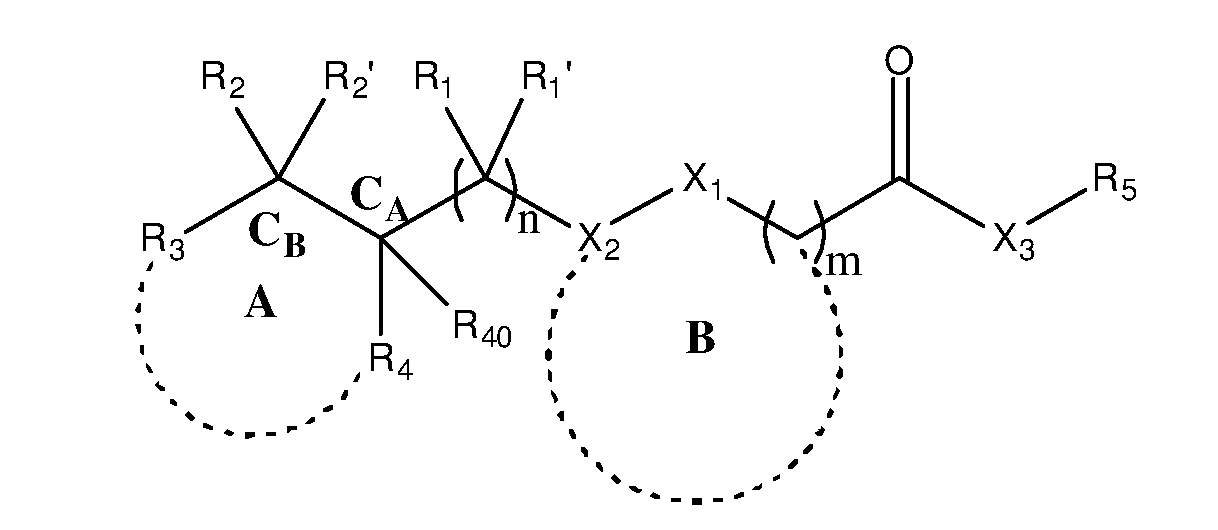


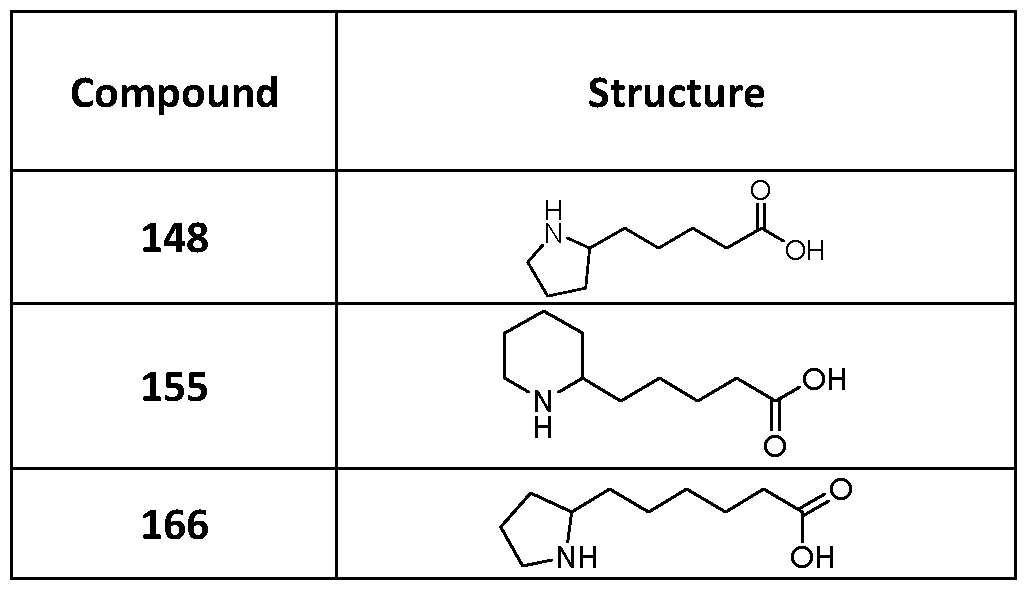


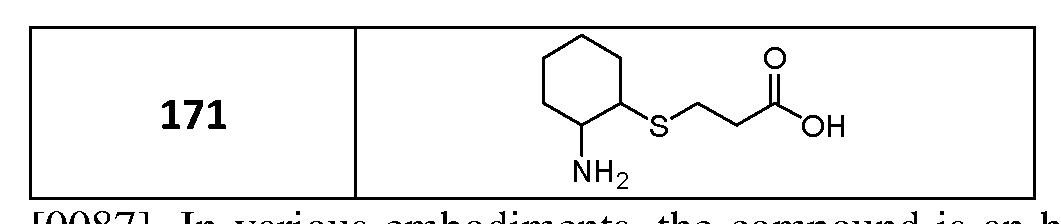


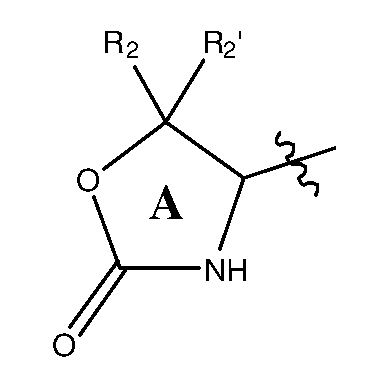




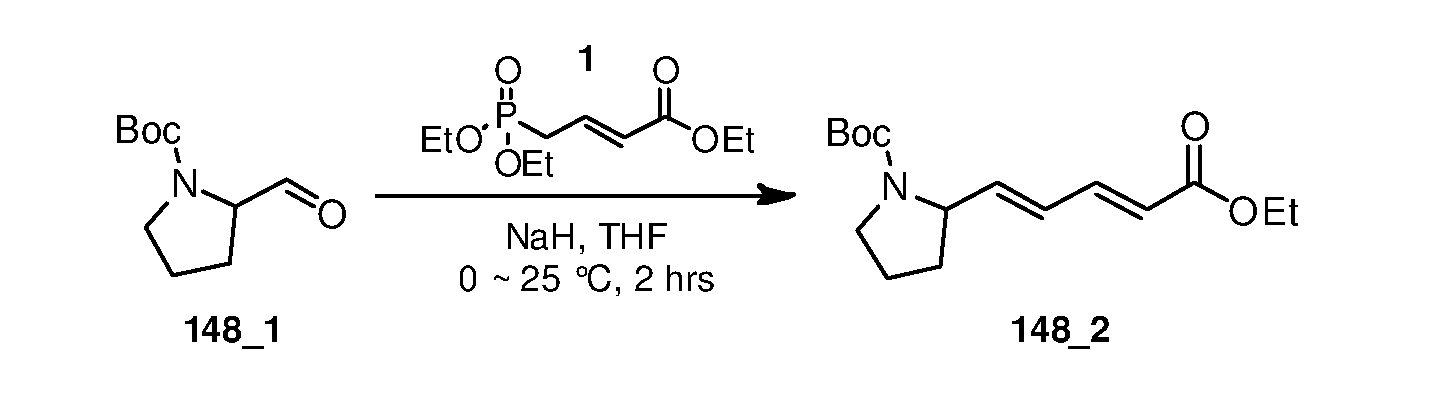




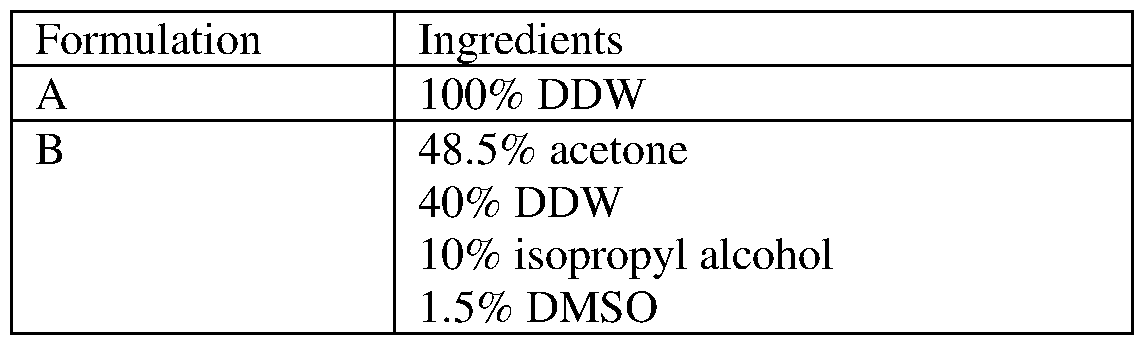


Claims
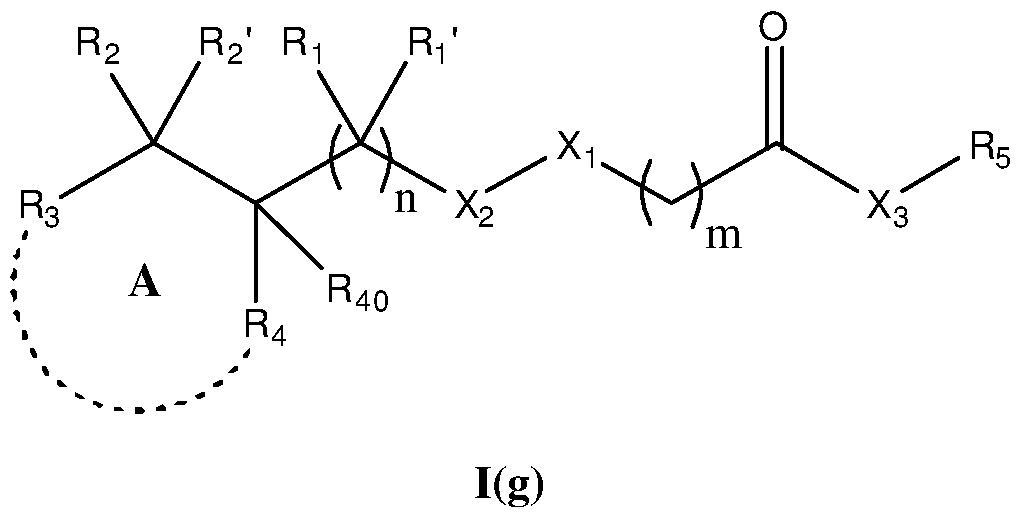
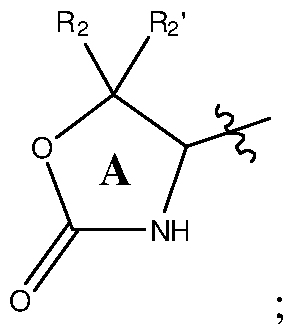


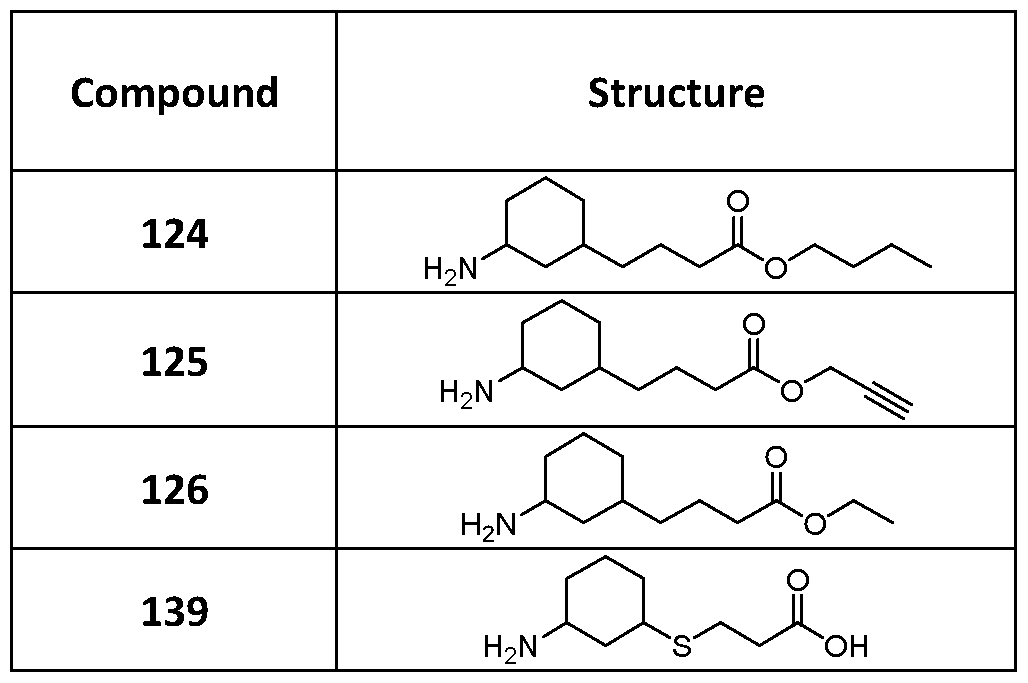


Priority Applications (9)
| Application Number | Priority Date | Filing Date | Title |
|---|---|---|---|
| CN202180075867.1A CN116438156A (en) | 2020-09-22 | 2021-09-22 | Herbicidal compounds and methods of use thereof |
| CA3191797A CA3191797A1 (en) | 2020-09-22 | 2021-09-22 | Herbicidal compounds and methods of use thereof |
| MX2023003279A MX2023003279A (en) | 2020-09-22 | 2021-09-22 | Herbicidal compounds and methods of use thereof. |
| EP21871833.6A EP4217338A4 (en) | 2020-09-22 | 2021-09-22 | HERBICIDAL COMPOUNDS AND METHODS OF USE THEREOF |
| US18/025,401 US20230331685A1 (en) | 2020-09-22 | 2021-09-22 | Herbicidal compounds and methods of use thereof |
| JP2023542026A JP7837983B2 (en) | 2020-09-22 | 2021-09-22 | Herbicide compounds and methods of using them |
| KR1020237012837A KR20230074184A (en) | 2020-09-22 | 2021-09-22 | Herbicide compounds and methods of use thereof |
| AU2021346966A AU2021346966A1 (en) | 2020-09-22 | 2021-09-22 | Herbicidal compounds and methods of use thereof |
| IL301257A IL301257A (en) | 2020-09-22 | 2021-09-22 | Herbicidal compounds and methods of their use |
Applications Claiming Priority (2)
| Application Number | Priority Date | Filing Date | Title |
|---|---|---|---|
| IL277528 | 2020-09-22 | ||
| IL277528A IL277528B (en) | 2020-09-22 | 2020-09-22 | Herbicidal compounds and methods of use thereof |
Publications (1)
| Publication Number | Publication Date |
|---|---|
| WO2022064490A1 true WO2022064490A1 (en) | 2022-03-31 |
Family
ID=80845545
Family Applications (1)
| Application Number | Title | Priority Date | Filing Date |
|---|---|---|---|
| PCT/IL2021/051150 Ceased WO2022064490A1 (en) | 2020-09-22 | 2021-09-22 | Herbicidal compounds and methods of use thereof |
Country Status (11)
| Country | Link |
|---|---|
| US (1) | US20230331685A1 (en) |
| EP (1) | EP4217338A4 (en) |
| JP (1) | JP7837983B2 (en) |
| KR (1) | KR20230074184A (en) |
| CN (1) | CN116438156A (en) |
| AU (1) | AU2021346966A1 (en) |
| CA (1) | CA3191797A1 (en) |
| CL (4) | CL2023000815A1 (en) |
| IL (2) | IL277528B (en) |
| MX (1) | MX2023003279A (en) |
| WO (1) | WO2022064490A1 (en) |
Cited By (3)
| Publication number | Priority date | Publication date | Assignee | Title |
|---|---|---|---|---|
| WO2024160989A1 (en) | 2023-02-03 | 2024-08-08 | Syngenta Crop Protection Ag | Herbicide resistant plants |
| US12234245B2 (en) | 2018-07-20 | 2025-02-25 | Genentech, Inc. | Sulfonimidamide compounds as inhibitors of interleukin-1 activity |
| US12617802B2 (en) | 2020-09-22 | 2026-05-05 | Genentech, Inc. | Sulfonimidamide compounds as NLRP3 modulators |
Family Cites Families (7)
| Publication number | Priority date | Publication date | Assignee | Title |
|---|---|---|---|---|
| US4410526A (en) * | 1981-11-20 | 1983-10-18 | Syntex (U.S.A.) Inc. | Oxazolidin-2-one prostaglandin compounds |
| US9274101B2 (en) * | 2001-04-20 | 2016-03-01 | Biolog, Inc. | Methods and kits for obtaining a metabolic profile of living animal cells |
| US9447310B2 (en) * | 2008-04-17 | 2016-09-20 | Thomas P. Daly | Biological buffers with wide buffering ranges |
| JP2010138134A (en) * | 2008-12-12 | 2010-06-24 | Tokyo Univ Of Pharmacy & Life Science | Compound having readthrough activity and pharmaceutical composition containing the compound |
| CN101921203A (en) * | 2009-06-09 | 2010-12-22 | 长江大学 | N-phenoxy phenyl substituted alpha-amino acid, as well as derivatives and application thereof as weedicide |
| WO2011110049A1 (en) * | 2010-03-12 | 2011-09-15 | 中国人民解放军军事医学科学院毒物药物研究所 | Anti-hiv fusion polypeptide and use thereof |
| CN113423470B (en) * | 2019-02-13 | 2024-07-09 | 三吉油脂株式会社 | Cosmetic compound, cosmetic and method for producing the same |
-
2020
- 2020-09-22 IL IL277528A patent/IL277528B/en unknown
-
2021
- 2021-09-22 IL IL301257A patent/IL301257A/en unknown
- 2021-09-22 WO PCT/IL2021/051150 patent/WO2022064490A1/en not_active Ceased
- 2021-09-22 MX MX2023003279A patent/MX2023003279A/en unknown
- 2021-09-22 KR KR1020237012837A patent/KR20230074184A/en active Pending
- 2021-09-22 JP JP2023542026A patent/JP7837983B2/en active Active
- 2021-09-22 AU AU2021346966A patent/AU2021346966A1/en active Pending
- 2021-09-22 EP EP21871833.6A patent/EP4217338A4/en active Pending
- 2021-09-22 US US18/025,401 patent/US20230331685A1/en active Pending
- 2021-09-22 CA CA3191797A patent/CA3191797A1/en active Pending
- 2021-09-22 CN CN202180075867.1A patent/CN116438156A/en active Pending
-
2023
- 2023-03-22 CL CL2023000815A patent/CL2023000815A1/en unknown
-
2024
- 2024-11-18 CL CL2024003516A patent/CL2024003516A1/en unknown
- 2024-11-18 CL CL2024003517A patent/CL2024003517A1/en unknown
- 2024-11-19 CL CL2024003534A patent/CL2024003534A1/en unknown
Non-Patent Citations (5)
| Title |
|---|
| DATABASE PUBCHEM [online] 13 September 2017 (2017-09-13), Database accession no. 341526259 * |
| DATABASE PUBCHEM [online] 18 December 2017 (2017-12-18), Database accession no. 349320386 * |
| DATABASE PUBCHEM [online] 2 December 2016 (2016-12-02), Database accession no. 319544054 * |
| DATABASE PUBCHEM [online] 25 January 2017 (2017-01-25), Database accession no. 326612545 * |
| See also references of EP4217338A4 * |
Cited By (3)
| Publication number | Priority date | Publication date | Assignee | Title |
|---|---|---|---|---|
| US12234245B2 (en) | 2018-07-20 | 2025-02-25 | Genentech, Inc. | Sulfonimidamide compounds as inhibitors of interleukin-1 activity |
| US12617802B2 (en) | 2020-09-22 | 2026-05-05 | Genentech, Inc. | Sulfonimidamide compounds as NLRP3 modulators |
| WO2024160989A1 (en) | 2023-02-03 | 2024-08-08 | Syngenta Crop Protection Ag | Herbicide resistant plants |
Also Published As
| Publication number | Publication date |
|---|---|
| EP4217338A4 (en) | 2025-01-22 |
| KR20230074184A (en) | 2023-05-26 |
| CN116438156A (en) | 2023-07-14 |
| CL2023000815A1 (en) | 2023-09-29 |
| AU2021346966A1 (en) | 2023-06-01 |
| CL2024003534A1 (en) | 2025-01-17 |
| AU2021346966A9 (en) | 2024-09-12 |
| IL277528A (en) | 2022-04-01 |
| JP7837983B2 (en) | 2026-03-31 |
| CL2024003517A1 (en) | 2025-01-17 |
| JP2023543347A (en) | 2023-10-13 |
| CA3191797A1 (en) | 2022-03-31 |
| CL2024003516A1 (en) | 2025-01-17 |
| IL277528B (en) | 2022-05-01 |
| IL301257A (en) | 2023-05-01 |
| EP4217338A1 (en) | 2023-08-02 |
| MX2023003279A (en) | 2023-05-24 |
| US20230331685A1 (en) | 2023-10-19 |
Similar Documents
| Publication | Publication Date | Title |
|---|---|---|
| US20240336567A1 (en) | Pesticidal and herbicidal compounds and methods of use thereof | |
| PL200027B1 (en) | Herbicidal composition | |
| EP2424367A1 (en) | Method of controlling undesired vegetation | |
| KR20170015336A (en) | Herbicidal weed control from combinations of fluroxypyr and als inhibitors | |
| ES2982989T3 (en) | Herbicidal compounds | |
| JP7770340B2 (en) | Herbicidal shinorine derivatives | |
| KR20210029300A (en) | Heterocyclic amide compound | |
| JP2023551870A (en) | herbicidal derivatives | |
| WO2022064490A1 (en) | Herbicidal compounds and methods of use thereof | |
| EP4496785B1 (en) | Pesticidal and herbicidal compounds and methods of use thereof | |
| JP2025506046A (en) | Herbicidal quinolone derivatives | |
| KR20180086253A (en) | Herbicide compositions containing 4-amino-3-chloro-6- (4-chloro-2-fluoro-3-methoxyphenyl) pyridine-2- carboxylic acid, florasulam and pyroxosulam or derivatives thereof | |
| WO2025176562A1 (en) | 2-[5-(3,5-dimethyl-2,6-dioxo-4-thioxo-1,3,5-triazinan-1-yl)-2-oxo-1,3-benzothiazole derivatives and the corresponding 1,3-benzoxazole and benzimidazole derivatives as herbicides | |
| JP2025530747A (en) | Herbicidal pyridone derivatives | |
| WO2020164970A1 (en) | Cinnolinium compounds for use in a method of controlling unwanted plant growth | |
| WO2020161248A1 (en) | Herbicidal compounds | |
| EP3898594A1 (en) | Herbicidal cinnolinium compounds |
Legal Events
| Date | Code | Title | Description |
|---|---|---|---|
| 121 | Ep: the epo has been informed by wipo that ep was designated in this application |
Ref document number: 21871833 Country of ref document: EP Kind code of ref document: A1 |
|
| ENP | Entry into the national phase |
Ref document number: 3191797 Country of ref document: CA |
|
| ENP | Entry into the national phase |
Ref document number: 2023542026 Country of ref document: JP Kind code of ref document: A |
|
| WWE | Wipo information: entry into national phase |
Ref document number: 202317022966 Country of ref document: IN |
|
| REG | Reference to national code |
Ref country code: BR Ref legal event code: B01A Ref document number: 112023005355 Country of ref document: BR |
|
| ENP | Entry into the national phase |
Ref document number: 20237012837 Country of ref document: KR Kind code of ref document: A |
|
| NENP | Non-entry into the national phase |
Ref country code: DE |
|
| ENP | Entry into the national phase |
Ref document number: 2021871833 Country of ref document: EP Effective date: 20230424 |
|
| REG | Reference to national code |
Ref country code: BR Ref legal event code: B01E Ref document number: 112023005355 Country of ref document: BR Free format text: FAVOR EFETUAR, EM ATE 60 (SESSENTA) DIAS, O PAGAMENTO DE GRU CODIGO DE SERVICO 260 PARA A REGULARIZACAO DO PEDIDO, CONFORME ART 2O 1O DA RESOLUCAO 189/2017 E NOTA DE ESCLARECIMENTO PUBLICADA NA RPI 2421 DE 30/05/2017, UMA VEZ QUE A PETICAO NO 870230042422 DE 20/05/2023 APRESENTA DOCUMENTOS REFERENTES A 02 SERVICOS DIVERSOS (TRADUCAO DO RELATORIO DESCRITIVO E MODIFICACOES NO QUADRO REIVINDICATORIO) TENDO SIDO PAGA SOMENTE 1 RETRIBUICAO. DEVERA SER PAGA MAIS 1 (UMA) GRU CODIGO DE SERVICO 260 E A GRU CODIGO DE SERVICO 207 REFERENTE A RESPOSTA DESTA EXIGENCIA. |
|
| ENP | Entry into the national phase |
Ref document number: 2021346966 Country of ref document: AU Date of ref document: 20210922 Kind code of ref document: A |
|
| ENP | Entry into the national phase |
Ref document number: 112023005355 Country of ref document: BR Kind code of ref document: A2 Effective date: 20230322 |