WO2022065074A1 - 情報処理装置、情報処理方法、およびプログラム - Google Patents
情報処理装置、情報処理方法、およびプログラム Download PDFInfo
- Publication number
- WO2022065074A1 WO2022065074A1 PCT/JP2021/033273 JP2021033273W WO2022065074A1 WO 2022065074 A1 WO2022065074 A1 WO 2022065074A1 JP 2021033273 W JP2021033273 W JP 2021033273W WO 2022065074 A1 WO2022065074 A1 WO 2022065074A1
- Authority
- WO
- WIPO (PCT)
- Prior art keywords
- temperature
- cooking object
- cooking
- information processing
- dimensional model
- Prior art date
- Legal status (The legal status is an assumption and is not a legal conclusion. Google has not performed a legal analysis and makes no representation as to the accuracy of the status listed.)
- Ceased
Links
Images











Classifications
-
- G—PHYSICS
- G01—MEASURING; TESTING
- G01J—MEASUREMENT OF INTENSITY, VELOCITY, SPECTRAL CONTENT, POLARISATION, PHASE OR PULSE CHARACTERISTICS OF INFRARED, VISIBLE OR ULTRAVIOLET LIGHT; COLORIMETRY; RADIATION PYROMETRY
- G01J5/00—Radiation pyrometry, e.g. infrared or optical thermometry
- G01J5/0003—Radiation pyrometry, e.g. infrared or optical thermometry for sensing the radiant heat transfer of samples, e.g. emittance meter
-
- G—PHYSICS
- G06—COMPUTING OR CALCULATING; COUNTING
- G06T—IMAGE DATA PROCESSING OR GENERATION, IN GENERAL
- G06T17/00—Three-dimensional [3D] modelling for computer graphics
- G06T17/10—Constructive solid geometry [CSG] using solid primitives, e.g. cylinders, cubes
-
- A—HUMAN NECESSITIES
- A47—FURNITURE; DOMESTIC ARTICLES OR APPLIANCES; COFFEE MILLS; SPICE MILLS; SUCTION CLEANERS IN GENERAL
- A47J—KITCHEN EQUIPMENT; COFFEE MILLS; SPICE MILLS; APPARATUS FOR MAKING BEVERAGES
- A47J36/00—Parts, details or accessories of cooking-vessels
- A47J36/32—Time-controlled igniting mechanisms or alarm devices
-
- F—MECHANICAL ENGINEERING; LIGHTING; HEATING; WEAPONS; BLASTING
- F24—HEATING; RANGES; VENTILATING
- F24C—DOMESTIC STOVES OR RANGES ; DETAILS OF DOMESTIC STOVES OR RANGES, OF GENERAL APPLICATION
- F24C7/00—Stoves or ranges heated by electric energy
- F24C7/08—Arrangement or mounting of control or safety devices
- F24C7/082—Arrangement or mounting of control or safety devices on ranges, e.g. control panels, illumination
- F24C7/083—Arrangement or mounting of control or safety devices on ranges, e.g. control panels, illumination on tops, hot plates
-
- G—PHYSICS
- G01—MEASURING; TESTING
- G01J—MEASUREMENT OF INTENSITY, VELOCITY, SPECTRAL CONTENT, POLARISATION, PHASE OR PULSE CHARACTERISTICS OF INFRARED, VISIBLE OR ULTRAVIOLET LIGHT; COLORIMETRY; RADIATION PYROMETRY
- G01J5/00—Radiation pyrometry, e.g. infrared or optical thermometry
- G01J5/02—Constructional details
- G01J5/025—Interfacing a pyrometer to an external device or network; User interface
-
- G—PHYSICS
- G01—MEASURING; TESTING
- G01J—MEASUREMENT OF INTENSITY, VELOCITY, SPECTRAL CONTENT, POLARISATION, PHASE OR PULSE CHARACTERISTICS OF INFRARED, VISIBLE OR ULTRAVIOLET LIGHT; COLORIMETRY; RADIATION PYROMETRY
- G01J5/00—Radiation pyrometry, e.g. infrared or optical thermometry
- G01J5/48—Thermography; Techniques using wholly visual means
-
- G—PHYSICS
- G01—MEASURING; TESTING
- G01N—INVESTIGATING OR ANALYSING MATERIALS BY DETERMINING THEIR CHEMICAL OR PHYSICAL PROPERTIES
- G01N25/00—Investigating or analyzing materials by the use of thermal means
- G01N25/18—Investigating or analyzing materials by the use of thermal means by investigating thermal conductivity
-
- G—PHYSICS
- G01—MEASURING; TESTING
- G01J—MEASUREMENT OF INTENSITY, VELOCITY, SPECTRAL CONTENT, POLARISATION, PHASE OR PULSE CHARACTERISTICS OF INFRARED, VISIBLE OR ULTRAVIOLET LIGHT; COLORIMETRY; RADIATION PYROMETRY
- G01J5/00—Radiation pyrometry, e.g. infrared or optical thermometry
- G01J2005/0077—Imaging
-
- G—PHYSICS
- G06—COMPUTING OR CALCULATING; COUNTING
- G06F—ELECTRIC DIGITAL DATA PROCESSING
- G06F2119/00—Details relating to the type or aim of the analysis or the optimisation
- G06F2119/08—Thermal analysis or thermal optimisation
-
- G—PHYSICS
- G06—COMPUTING OR CALCULATING; COUNTING
- G06F—ELECTRIC DIGITAL DATA PROCESSING
- G06F30/00—Computer-aided design [CAD]
- G06F30/10—Geometric CAD
- G06F30/17—Mechanical parametric or variational design
-
- G—PHYSICS
- G06—COMPUTING OR CALCULATING; COUNTING
- G06F—ELECTRIC DIGITAL DATA PROCESSING
- G06F30/00—Computer-aided design [CAD]
- G06F30/20—Design optimisation, verification or simulation
Definitions
- the present technology relates to an information processing device, an information processing method, and a program, and more particularly to an information processing device, an information processing method, and a program capable of appropriately estimating the internal temperature of a food material being heated.
- Patent Document 1 sensors for measuring the shape and surface temperature of an object are arranged on the top surface and side surfaces of a cooking device, and a three-dimensional model is constructed based on the shape of the object to form a boundary.
- a technique for estimating the internal temperature of an object by heat conduction analysis by the element method has been proposed.
- Patent Document 1 it is not assumed that the temperature on the bottom surface side, which cannot be directly detected by the temperature sensor, is measured (estimated). Therefore, the technique described in Patent Document 1 is not suitable for cooking in a frying pan or the like.
- This technology was made in view of such a situation, and makes it possible to appropriately estimate the internal temperature of the foodstuff being heated.
- the information processing device on one aspect of the present technology constructs a three-dimensional model representing the shape and temperature distribution of the cooking object based on the sensor data acquired by the sensor that measures the state of the cooking utensil and the cooking object. It is provided with a construction unit and an internal temperature estimation unit that estimates the temperature inside the cooking object by performing heat conduction analysis based on the three-dimensional model.
- a three-dimensional model representing the shape and temperature distribution of the cooking object is constructed based on the sensor data acquired by the sensor that measures the state of the cooking utensil and the cooking object.
- the temperature inside the cooking object is estimated by performing heat conduction analysis based on the three-dimensional model.
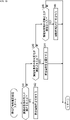
- FIG. 1 It is a figure which shows the configuration example of the cooking support system which concerns on one Embodiment of this technique. It is a block diagram which shows the structure of a cooking support system. It is a block diagram which shows the functional structure example of a calculation part. It is a flowchart explaining the processing of an information processing apparatus. It is a flowchart explaining the position shape recognition process performed in step S2 of FIG. It is a figure which shows the example of contour extraction. It is sectional drawing which shows the example of the method of constructing the 3D model of a cooking object. It is sectional drawing which shows the example of the method of constructing the 3D model of a cooking object. It is a flowchart explaining the surface temperature extraction process performed in step S3 of FIG.
- the present technology assists in appropriately controlling the heating state of a cooking object in a cooking method in which the object to be cooked is brought into contact with a heating medium and heated by heat conduction.
- FIG. 1 is a diagram showing a configuration example of a cooking support system according to an embodiment of the present technology.
- the cooking support system of the present technology is used, for example, in a situation where a cook U1 uses a frying pan as a cooking utensil 11 to bake steak meat as a cooking object 12.
- the cooking support system of FIG. 1 is composed of a heating device 1, a stereo camera 2, a thermography camera 3, a processor module 4, a network device 5, a server 6, an information terminal 7, and an air conditioner 8.
- the heating device 1 is composed of a stove for heating the cooking utensil 11, an IH cooker, and the like.
- the heating device 1 is installed in a work area where the cooking object 12 is cooked by the cooking utensil 11.
- the camera sensor including the stereo camera 2 and the thermography camera 3 is installed above the work area, for example, as a position where the work area including the cooking utensil 11 and the cooking object 12 can be seen.
- the camera sensor is mounted near a ventilation port installed at the top of the heating device 1.
- the stereo camera 2 captures a work area and acquires a visible image including depth information.
- the thermography camera 3 captures a work area and acquires a thermal image.
- the camera sensor is connected to the processor module 4 installed in a predetermined place such as in the same kitchen environment by a high-speed interface, and data is transmitted and received in real time between the processor module 4 and the processor module 4.
- the processor module 4 is connected to the server 6 via the network device 5.
- the processor module 4 estimates the internal temperature of the cooking object 12 by performing information processing in cooperation with the server 6. Further, the processor module 4 automatically adjusts the thermal power of the heating device 1, automatically adjusts the air conditioning by the air conditioning device 8, and presents information to the cook U1 by the information terminal 7 according to the heating state of the cooking object 12. ..
- data transmission / reception between the processor module 4 and each of the heating device 1, the network device 5, the information terminal 7, and the air conditioning device 8 is performed by, for example, wireless communication.
- Server 6 is a server on the intranet or the Internet.
- the information terminal 7 is composed of a smartphone or tablet terminal having a display such as an LCD (Liquid Crystal Display).
- the information terminal 7 placed in the vicinity of the cook U1 detects the operation of the cook U1 and accepts the input of the information.
- the information terminal 7 presents information to the cook U1 according to the control of the processor module 4.
- the air conditioner 8 adjusts the air conditioning of the kitchen environment according to the control by the processor module 4.
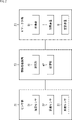
- FIG. 2 is a block diagram showing a configuration of a cooking support system.
- the cooking support system of FIG. 2 is composed of a sensor unit 21, an information processing device 22, and an effector unit 23.
- processing unit shown in FIG. 2 shows the logical configuration of the function, and does not limit the physical device configuration.
- One processing unit may include a plurality of physical devices. Further, one physical device may constitute a plurality of processing units.
- the specific configuration of the interface connecting the inside of each processing unit and the interface connecting between the processing units is not limited.
- the communication path between the processing units may be configured by wire or wireless, or the communication path may include the Internet.
- the sensor unit 21 includes a temperature sensor 31, a distance sensor 32, and an image sensor 33.
- the temperature sensor 31, the distance sensor 32, and the image sensor 33 are composed of a camera sensor including a stereo camera 2 and a thermography camera 3.
- the temperature sensor 31 is a sensor that measures the surface temperature distribution of an object.
- the distance sensor 32 is a sensor that measures the three-dimensional shape of an object.
- the image sensor 33 is a sensor that captures an image of an object in the visible light region.
- Each sensor of the sensor unit 21 is treated separately as a logical function, but it is not always composed of the corresponding three physical devices.
- these three sensors are collectively referred to as a basic sensor group as appropriate.
- Each sensor of the basic sensor group measures the state of the object in a non-contact and non-destructive manner, and transmits the measurement result as time-series data to the information processing apparatus 22.
- the internal parameters and external parameters of each sensor are calculated by so-called camera calibration, and it is possible to associate the pixels between the sensors with each other by coordinate conversion.
- the data measured by the basic sensor group can be represented by a common three-dimensional coordinate system (world coordinates) in the information processing apparatus 22.
- the information processing device 22 includes a calculation unit 41 and a storage unit 42.
- the information processing device 22 is composed of a processor module 4.
- the arithmetic unit 41 is composed of, for example, a general-purpose arithmetic unit such as a CPU, GPU, and DSP, and a dedicated arithmetic unit specialized in AI-related processing.
- the calculation unit 41 estimates the three-dimensional shape, surface temperature, and heat conduction characteristics of the cooking object 12 based on the information measured by the sensor unit 21 and the known information held in the storage unit 42, and is tertiary.
- the internal temperature of the cooking object 12 is estimated by heat conduction analysis using the original model.
- the storage unit 42 is composed of a storage device such as a memory or a storage.
- the storage unit 42 holds known information such as a database representing the heat conduction characteristics of the cooking object 12.
- the information processing device 22 may be configured by a combination of a local processor module 4 and a server 6 on the network.
- the effector unit 23 is a peripheral device controlled by the information processing device 22 in order to control the cooking state.
- the effector unit 23 also includes an input device related to input of information by the cook, an information terminal used by a user at a remote location away from the work area, and the like, which are not included in the sensor unit 21.
- the effector unit 23 includes, for example, a UI device 51, a heating device 1, and an air conditioner 8.
- the UI device 51 is composed of the information terminal 7 and the PC shown in FIG.
- the effector unit 23 automatically controls the heating operation and presents information to the user.
- FIG. 3 is a block diagram showing a functional configuration example of the calculation unit 41.
- the sensor data input unit 101 As shown in FIG. 3, in the calculation unit 41, the sensor data input unit 101, the position shape recognition unit 102, the surface temperature extraction unit 103, the process status recognition unit 104, the heat conduction characteristic estimation unit 105, the internal temperature estimation unit 106, And the effector control unit 107 is realized.
- the process status recognition unit 104 As shown in FIG. 3, the sensor data input unit 101, the position shape recognition unit 102, the surface temperature extraction unit 103, the process status recognition unit 104, the heat conduction characteristic estimation unit 105, the internal temperature estimation unit 106, And the effector control unit 107 is realized.
- the details of the functions of each processing unit will be described later.
- the sensor data input unit 101 receives the sensor data transmitted from the sensor unit 21 and outputs it to the position shape recognition unit 102, the surface temperature extraction unit 103, the process status recognition unit 104, and the heat conduction characteristic estimation unit 105.
- the position and shape recognition unit 102 recognizes the position and shape of the cooking object 12 based on the sensor data supplied from the sensor data input unit 101. For example, the position shape recognition unit 102 detects the occlusion of the visual field due to the cooking work of the cook.
- the position shape recognition unit 102 detects the cooking utensil 11 and the cooking object 12 and extracts the contour.
- the position shape recognition unit 102 recognizes the shape of the cooking object 12 and builds a three-dimensional model.
- the three-dimensional model of the cooking object 12 is a model representing the shape and temperature distribution of the cooking object 12.
- the recognition result by the position shape recognition unit 102 is supplied to the surface temperature extraction unit 103, the process situation recognition unit 104, the heat conduction characteristic estimation unit 105, and the internal temperature estimation unit 106.
- the surface temperature extraction unit 103 of the cooking object 12 and the heating medium is based on the sensor data supplied from the sensor data input unit 101 and the contour information of the cooking object 12 and the heating medium supplied from the position shape recognition unit 102. Extract the surface temperature.
- the surface temperature extraction result by the surface temperature extraction unit 103 is supplied to the process situation recognition unit 104, the heat conduction characteristic estimation unit 105, and the internal temperature estimation unit 106.
- the process status recognition unit 104 has the sensor data supplied from the sensor data input unit 101, the position shape of the cooking object 12 supplied from the position shape recognition unit 102, and the surface temperature supplied from the surface temperature extraction unit 103. Recognize the status of the cooking process based on the extraction results. Specifically, the process situation recognition unit 104 detects the input, removal, shape change, position / posture change, and the like of the cooking object 12. The recognition result by the process situation recognition unit 104 is supplied to the heat conduction characteristic estimation unit 105 and the internal temperature estimation unit 106.
- the heat conduction characteristic estimation unit 105 receives the sensor data supplied from the sensor data input unit 101 and the cooking object supplied from the position shape recognition unit 102 according to the cooking process status recognized by the process status recognition unit 104.
- the heat conduction characteristics of the cooking object 12 are estimated based on the position and shape of the twelve. Specifically, the heat conduction characteristic estimation unit 105 estimates the physical property values of the cooking object 12.
- the heat conduction characteristic estimation unit 105 determines the cooking object 12 and the heating medium based on the contour information of the cooking object 12 supplied from the position shape recognition unit 102 and the surface temperature extraction result by the surface temperature extraction unit 103. Estimate the contact thermal resistance between. Information representing the contact thermal resistance estimated by the heat conduction characteristic estimation unit 105 is supplied to the internal temperature estimation unit 106.
- the internal temperature estimation unit 106 estimates the temperature of the heated portion of the cooking object 12 based on the information supplied from the heat conduction characteristic estimation unit 105.
- the internal temperature of the cooking object 12 is estimated based on the three-dimensional model of the cooking object 12 in which the temperature of the heated portion is set according to the cooking process status recognized by the process status recognition unit 104.
- the estimation result of the internal temperature by the internal temperature estimation unit 106 is supplied to the effector control unit 107.
- the effector control unit 107 controls the effector unit 23 based on the estimation result of the internal temperature by the internal temperature estimation unit 106.
- the effector control unit 107 controls the heating device 1, controls the presentation of information to the cook, and the like.
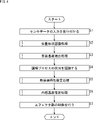
- FIG. 4 shows the main processing contents in series as one embodiment. The processing of each step is not necessarily executed in the order shown in FIG. Some processing is performed only under certain conditions.
- step S1 the sensor data input unit 101 receives input of sensor data from each sensor of the sensor unit 21.
- a thermal image representing the surface temperature is input from the temperature sensor 31, and an RGB image as a visible image is input from the distance sensor 32. Further, a depth image as depth information is input from the image sensor 33.
- Each sensor data is time-series data captured in real time, and is input to the sensor data input unit 101 at an arbitrary timing. For the sake of simplicity, in the following, it is assumed that all sensor data are input in synchronization at a fixed cycle.
- step S2 the position shape recognition unit 102 performs the position shape recognition process.
- the position shape recognition process the cooking work of the cook is detected, and the position, contour, and shape of the cooking object 12 are recognized. Further, a three-dimensional model of the cooking object 12 is constructed based on the recognition result of the position and shape of the cooking object 12. The details of the position shape recognition process will be described later with reference to the flowchart of FIG.
- step S3 the surface temperature extraction unit 103 performs a surface temperature extraction process.
- the surface temperatures of the cooking object 12 and the heating medium are extracted. The details of the surface temperature extraction process will be described later with reference to the flowchart of FIG.
- step S4 the process situational awareness unit 104 recognizes the state of the cooking process based on the information obtained up to the process of step S4. The details of recognizing the status of the cooking process will be described later.
- step S5 the heat conduction characteristic estimation unit 105 performs the heat conduction characteristic estimation process.
- the heat conduction property estimation process the heat conduction property of the cooking object 12 is estimated. The details of the heat conduction characteristic estimation process will be described later with reference to the flowchart of FIG.
- step S6 the internal temperature estimation unit 106 performs the internal temperature estimation process.
- the temperature of the heated portion of the cooking object 12 is estimated, and the internal temperature is estimated based on the estimation result of the temperature of the heated portion. The details of the internal temperature estimation process will be described later with reference to the flowchart of FIG.
- step S7 the effector control unit 107 controls the effector unit 23 based on the estimation result of the internal temperature of the cooking object 12 by the internal temperature estimation unit 106.
- An example of control of the effector unit 23 will be described later.
- step S7 After the effector unit 23 is controlled in step S7, the process ends. Each time the sensor data is input, the above series of processes is executed.
- step S21 Detection of visual field occlusion by cook's operation
- the position shape recognition unit 102 detects the visual field occlusion of the camera sensor due to the cooking work of the cook.
- the object includes a cooking object 12 such as steak meat and a cooking utensil 11 such as a frying pan. If the subsequent processing is performed in such a state, the processing accuracy may decrease.
- the position shape recognition unit 102 detects that the cook's hand is inserted in the field of view (within the shooting range) of the camera sensor by image recognition for the RGB image and the depth image, and recognizes the position of the hand. If the important object is shielded by the cooking work of the cook, the subsequent processing related to the recognition of the object is skipped. By skipping the processing after step S22, it is possible to prevent a decrease in the accuracy of the processing.
- step S22 the position shape recognition unit 102 detects whether or not the cooking utensil 11 and the cooking object 12 are present in the field of view by image processing. do.
- the position shape recognition unit 102 extracts the contours of the cooking utensil 11 and the cooking object 12 on the image of the basic sensor group. Extracting the contour means identifying the contour of the object.
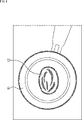
- FIG. 6 is a diagram showing an example of contour extraction.
- FIG. 6 shows an RGB image obtained by imaging a state of grilling steak meat as a cooking object 12 using a frying pan as a cooking utensil 11.
- the position shape recognition unit 102 extracts the contour of the container (main body) of the cooking utensil 11 and the contour of the cooking object 12 from the RGB image, respectively, as shown by being surrounded by the thick line in FIG.
- contour extraction methods using image processing technology based on sensor data acquired by the basic sensor group. Regardless of which method is used, if the contour can be specified on the image acquired by one sensor, the contour can be specified on the image acquired by another sensor by the coordinate conversion between the sensors.
- the contour of the cooking utensil 11 is extracted by, for example, the following method.
- (C) Example of using a marker embedded in the cooking utensil 11
- the three-dimensional shape of the cooking utensil 11 and a marker such as a feature pattern embedded in a specific area of the cooking utensil 11 are known information in the position shape recognition unit 102. If prepared, the presence or absence of a marker and the position and orientation on the RGB image are detected using known information. Based on the position and orientation of the marker, the position and orientation of the cooking utensil 11 is specified, and the contour on the RGB image is extracted.
- the position shape recognition unit 102 detects the presence / absence of the cooking utensil 11 and extracts the contour by the method as described above, and then detects the presence / absence of the cooking object 12 and the contour with the inside of the contour of the cooking utensil 11 as the region of interest. Is extracted.
- a solid substance that can specify the overall shape and the shape of the heated portion is assumed.
- solids such as chunks of meat, fish (one fish or fillets), pancakes, and omelets are treated as cooking objects 12.
- a plurality of cooking objects 12 may be put on the cooking utensil 11, or different kinds of cooking objects 12 may be put together.
- the presence or absence of the cooking object 12 and the extraction of the contour are performed by, for example, the following method.
- step S23 Shape recognition of the cooking object 12 and construction of a three-dimensional model
- the position shape recognition unit 102 constructs a three-dimensional model of the cooking object 12.
- the position shape recognition unit 102 functions as a construction unit that constructs a three-dimensional model of the cooking object 12 based on sensor data.
- the position shape recognition unit 102 constructs a three-dimensional model based on the shape information representing the shape of the cooking object 12.
- the position / shape recognition unit 102 reconstructs the three-dimensional model.
- the point cloud data represents the three-dimensional shape of the cooking object 12 with respect to the exposed surface on which the distance sensor 32 can detect the distance.
- the three-dimensional shape and position / orientation of the cooking utensil 11 (particularly, the heating surface in contact with the cooking object 12) as the heating medium are recognized.
- the three-dimensional shape and position / orientation of the cooking utensil 11 serve as a reference for the three-dimensional model of the cooking object 12.
- FIGS. 7 and 8 are cross-sectional views showing an example of a method for constructing a three-dimensional model of the cooking object 12. Although the two-dimensional cross sections are shown in FIGS. 7 and 8, the processing is actually performed so as to construct a three-dimensional model.
- the position shape recognition unit 102 generates point cloud data for the cooking object 12 based on the depth image.
- the point cloud data based on the depth image represents the exposed surface of the cooking object 12 included in the angle of view of the distance sensor 32 installed above the cooking utensil 11. Generated.
- the position shape recognition unit 102 performs mesh division of the space on the cooking utensil 11 including the cooking object 12 with the heating surface of the cooking utensil 11 as a reference.
- the space on the cooking utensil 11 is divided by voxels.
- the setting parameters representing the shape and fineness of the mesh are appropriately set according to the type, size, shape, and the like of the cooking object 12.
- the position shape recognition unit 102 determines the voxel containing the point cloud data of the cooking object 12 as a component of the three-dimensional model.
- the position shape recognition unit 102 is the lower part of the voxel (relative to the heating surface of the cooking utensil 11) determined as a component of the three-dimensional model based on the point cloud data. All voxels in the direction vertically away from the distance sensor 32) are also determined as components of the three-dimensional model.
- the position shape recognition unit 102 constructs a three-dimensional model of the cooking object 12 by using a set of voxels determined as constituent elements as the shape structure of the three-dimensional model of the cooking object 12.
- the above procedure for building a 3D model is an example.
- a three-dimensional model of the cooking object 12 is constructed so as to have an expression format suitable for heat conduction analysis.
- the accuracy of the contour extraction performed in step S22 and the construction of the three-dimensional model performed in step S23 is determined based on the estimation accuracy of the internal temperature required as a result of the heat conduction analysis.
- step S23 After the three-dimensional model of the cooking object 12 is constructed in step S23, the process returns to step S2 in FIG. 4 and the subsequent processing is performed.
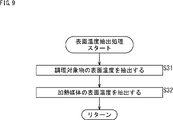
- step S31 the surface temperature extracting unit 103 extracts the surface temperature of the cooking object 12 based on the thermal image acquired by the temperature sensor 31, and positions the cooking object 12. It maps to the three-dimensional model of the cooking object 12 constructed by the shape recognition unit 102. Extracting the temperature means detecting the temperature.
- the position on the surface of the cooking object 12 where the temperature can be extracted based on the thermal image is called the "temperature extraction point”.
- the temperature extraction points are represented by three-dimensional coordinates.
- temperature definition point the position where the temperature is defined on the 3D model is called the "temperature definition point”.
- the temperature definition points are set according to the method of constructing the three-dimensional model. For example, temperature definition points are set at the vertices and center points of each voxel.
- the surface temperature extraction unit 103 determines the temperature of the temperature definition point based on the temperature value of the temperature extraction point in the vicinity of the temperature definition point. For example, the surface temperature extraction unit 103 determines the temperature of the temperature extraction point closest to the temperature definition point as the temperature of the temperature definition point, with the region within a certain distance from the temperature definition point as the vicinity region. ..
- General sampling such as applying filtering to the thermal image when there is a lot of noise at the temperature extraction point, or linearly complementing the temperature at the temperature definition point when the temperature gradient is large near the temperature definition point.
- the treatment may be used to determine the temperature at the temperature definition point.
- the temperature definition point of the voxel shown by the diagonal line in FIG. 10 is determined.
- the voxels shown with diagonal lines correspond to the voxels containing the point cloud data of the cooking object 12.
- the voxel at which the temperature definition point is determined does not have to match the voxel containing the point cloud data of the cooking object 12.
- step S32 Extraction of Surface Temperature of Heating Medium
- the surface temperature extracting unit 103 extracts the surface temperature of the heating medium based on the thermal image acquired by the temperature sensor 31.
- the contours of the cooking utensil 11 and the cooking object 12 on the thermal image are extracted.
- the thermal image obtained by imaging the state of baking steak meat using a frying pan is subjected to image processing, so that B of FIG. 11 is outlined.
- the contours of the cooking utensil 11 and the cooking object 12 are extracted.
- the surface temperature extraction unit 103 of the heating medium is based on the temperature of the region as shown by the shaded line A in FIG. 12, excluding the inside of the contour of the cooking object 12 from the inside of the contour of the cooking utensil 11. Extract the surface temperature.
- the heating medium whose temperature is actually measured is, for example, oil or water charged in the cooking utensil 11.
- the temperature distribution of the heating medium becomes uneven depending on how the fats and oils accumulate on the frying pan.
- the surface temperature extraction unit 103 obtains the enlarged contour of the cooking object 12, and is a neighborhood region which is a region excluding the inside of the contour of the cooking object 12 from the inside of the enlarged contour. Pay attention to.
- the enlarged contour is a contour obtained by expanding the contour of the cooking object 12 to the outside, and is set to be included inside the contour of the cooking utensil 11.
- the shaded area in B in FIG. 12 is the neighborhood area.
- the surface temperature extraction unit 103 extracts the average temperature of the neighboring region of the entire region of the heating medium as the surface temperature T heat of the heating medium.
- step S32 After the surface temperature T heat of the heating medium is calculated in step S32, the process returns to step S3 in FIG. 4 and the subsequent processing is performed.
- step S2 and S3 By the processing of steps S2 and S3, the number of cooking objects 12 put into the cooking utensil 11 and their respective positions, contours, shapes, and surface temperatures are recognized.
- the timing at which the cooking work is performed by the cook is also recognized as auxiliary information.
- Auxiliary information is information for assisting the recognition of the situation of the cooking process.
- the occurrence or removal of the cooking object 12 ((A) or (B) above) is recognized when the number of cooking objects 12 changes before and after the cooking work is performed by the cook. ..
- a weight sensor When a weight sensor is provided as a sensor constituting the sensor unit 21, it is recognized that the cooking object 12 has been added or removed according to the detection of the discontinuous weight change by the weight sensor. You may. When there are a plurality of cooking objects 12, it is necessary to identify the identity of the individual as the cooking object 12 and appropriately maintain the association with the three-dimensional model.
- the change in the position and orientation of the cooking object 12 ((C) above) is based on the change in the position, contour, shape, surface temperature, surface image, etc. of the cooking object 12 regardless of the presence or absence of the number change. Is recognized. In particular, it is recognized that the portion (heated portion) of the cooking object 12 in contact with the heating medium, such as the meat being baked or the inside out of the fish, has changed significantly.
- the shape of the object to be cooked 12 may change during the cooking process. For example, pancakes and hamburgers as cooking objects 12 swell by heating.
- the posture and shape of the cooking object 12 change during the cooking process and the deviation from the three-dimensional model becomes large, it is necessary to reconstruct the three-dimensional model.
- the reconstruction of the three-dimensional model will be described later.
- step S41 the heat conduction characteristic estimation unit 105 determines whether or not the input of the cooking object 12 is detected based on the recognition result of the process status by the process status recognition unit 104.
- the heat conduction characteristic estimation unit 105 estimates the heat conduction characteristic of the cooking object 12 charged into the cooking utensil 11.
- Heat conduction properties are parameters required for heat conduction analysis and include, for example, the thermal conductivity, specific heat, density, and heat diffusion coefficient of an object. The thermal diffusivity is calculated based on the thermal conductivity, specific heat, and density of an object.
- the heat conduction characteristic estimation unit 105 identifies the food characteristics representing the type, part, quality, etc. of the food as the cooking object 12, and various known measurement data of the heat conduction characteristics corresponding to the food characteristics. Ask using. Ingredient characteristics are specified, for example, by the methods described below.
- Example of a cook selecting recipe data The cook selects recipe data using the UI function provided in the effector unit 23. For example, when performing a cooking operation according to navigation by an application installed on the information terminal 7, the cook selects recipe data of the dish to be prepared.
- the heat conduction characteristic estimation unit 105 identifies the food characteristic by directly acquiring the food characteristic information included in the recipe data selected by the cook or by acquiring the food characteristic information from the database.
- a cook directly inputs food characteristics using a UI function. For example, when there is a difference between the ingredient characteristics of the ingredients presented by the recipe data and the ingredient characteristics of the ingredients actually used for cooking, the cook inputs information on the ingredient characteristics that the recipe data does not hold.
- the type of food may be set by using a button on the main body of the cooking utensil 11 such as a microwave oven.
- the heat conduction characteristic estimation unit 105 recognizes the cooking object 12 based on the information acquired by the sensor unit 21, such as an RGB image of the cooking object 12. Identify the characteristics of the ingredients. For the characteristics of foodstuffs such as the fat content of meat in which individual differences of foodstuffs appear, image recognition for an image showing an actual cooking object 12 is effective.
- the heat conduction characteristic estimation unit 105 can specify the volume of the input cooking object 12 based on the three-dimensional model of the cooking object 12.
- the sensor unit 21 includes a weight sensor and can individually measure the weight of the cooking object 12, the heat conduction characteristic estimation unit 105 specifies the density based on the volume and weight of the cooking object 12.
- the density is specified by the method (C) above, by using the density as known information, it is possible to narrow down more probable candidates for the foodstuff characteristics.
- the heat conduction characteristics of the cooking object 12 are estimated.
- step S41 determines whether the input of the cooking object 12 is not detected. If it is determined in step S41 that the input of the cooking object 12 is not detected, the process proceeds to step S43.
- step S43 the heat conduction characteristic estimation unit 105 determines whether or not the shape change of the cooking object 12 is detected based on the process status recognition result by the process status recognition unit 104.
- the heat conduction characteristic estimation unit 105 updates the heat conduction characteristic of the cooking object 12 in step S44.
- the heat conduction characteristics of the cooking object 12 generally change during the heating process. Therefore, it is desirable that the heat conduction characteristics are updated at any time not only at the time of charging but also after charging.
- the heat conduction characteristic estimation unit 105 repeatedly updates the heat conduction characteristics in a cooking process such as a heating process.
- the heat conduction characteristic estimation unit 105 updates the density estimation value based on the state of the cooking object 12.
- Meat and fish lose water when heated. Since the specific heat of water is high, the water content of the cooking object 12 has a great influence on the heat conduction characteristics. Therefore, it is also useful to detect changes in water content.
- the heat conduction characteristic estimation unit 105 is based on the weight change of the cooking object 12.
- the water content can be estimated.
- the water content is contained by using a database constructed by machine learning so as to input the RGB image acquired by the image sensor 33 and output the food characteristics and the water content of the cooking object 12.
- the amount may be detected. In this case, the estimation accuracy equivalent to that of a skilled chef visually judging the state of the cooking object 12 can be expected.
- a database is constructed by machine learning using not only RGB images but also thermal images (surface temperature of cooking object 12) obtained by imaging the cooking object 12, internal temperature estimated in the subsequent processing, and the like. You may do so.
- the change in water content may be obtained based on the infrared radiation spectrum of the cooking object 12 measured by the near-infrared spectrometer. In this way, the water content may be directly measured.
- step S43 if it is determined in step S43 that the shape change of the cooking object 12 is not detected, the process proceeds to step S45.
- step S45 the heat conduction characteristic estimation unit 105 determines whether or not the posture change of the cooking object 12 is detected based on the process status recognition result by the process status recognition unit 104.
- the heat conduction characteristic estimation unit 105 estimates the contact thermal resistance between the cooking object 12 and the heating medium in step S46.
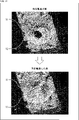
- FIG. 14 is a diagram showing an example of thermal images before and after turning over the steak meat baked in a frying pan.
- the surface of the cooking object 12 has not been heated yet and maintains a temperature close to normal temperature.
- the fact that the surface of the cooking object 12 is shown in a blackish color indicates that the surface temperature is lower than the temperature of the surrounding heating medium or the like.
- the surface of the cooking object 12 becomes hot due to being heated.
- the fact that the surface of the cooking object 12 is shown in a whitish color indicates that the temperature of the surface is as high as the temperature of the surrounding heating medium or the like.
- the temperature of the cooking object 12 and the temperature of the heating medium in the vicinity of the cooking object 12 are extracted by the processing of steps S2 and S3 of FIG.
- the posture of the cooking object 12 changes based on the temperature of the cooking object 12 and the heating medium, and the heated portion on the back surface of the cooking object 12 is exposed on the surface, that is, the cooking object 12 is exposed. It is determined that it has been turned inside out.
- the process situation recognition unit 104 determines that the cooking object 12 has been turned inside out based on the following equations (1) and (2).
- T before represents the surface temperature of the cooking object 12 before the posture change
- T after represents the surface temperature of the cooking object 12 after the posture change
- T heat represents the temperature of the heating medium in the vicinity of the cooking object 12 after the posture change.
- T flip represents the threshold value of the temperature difference at which it is determined that the inside out has occurred
- T gap represents the threshold value of the temperature difference of the contact surface where it is determined that the cooking object 12 has been in contact with the heating medium for a sufficient time.
- the condition defined by the equation (1) is that the change in the surface temperature of the cooking object 12 is larger than the threshold value before and after the posture change, that is, the surface of the cooking object 12 exposed by turning over is sufficiently sufficient. It means that it is heated.
- condition defined by the equation (2) is that the difference between the temperature of the heating medium and the surface temperature of the cooking object 12 after the posture change is smaller than the threshold value, that is, the cooking object exposed by turning over. It means that the surface of the object 12 is sufficiently heated to a temperature close to the temperature of the heating medium.
- the surface temperature T after when it is determined that the heated portion of the sufficiently heated cooking object 12 has just been exposed to the surface while satisfying the conditions defined by the formulas (1) and (2) is the temperature. It can be regarded as a temperature equal to the temperature of the heated portion that was in contact with the heating medium of T heat .
- the contact thermal resistance R contact on the contact surface between the heating medium and the cooking object 12 is defined by the following equation (3).
- A represents the area of the contact surface where heat conduction occurs
- k represents the heat conductivity of the cooking object 12.
- z represents the direction in which heat is transferred.
- z represents the vertical upward direction from the contact surface.
- T is the temperature of the cooking object 12 and is represented by a function of z.
- the area A is obtained based on the contour of the cooking object 12 extracted by the position shape recognition process in step S2 of FIG.
- the thermal conductivity k is obtained as a part of the thermal conductivity characteristics estimated by the thermal conductivity characteristic estimation process in step S5.
- the heat flow rate Q is estimated by the equation (4).
- the temperature gradient inside the cooking object 12 becomes a relatively monotonous gradient from the contact surface toward the center (along the z direction). You can expect it.
- L represents the thickness of the cooking object 12 in the z direction, and is obtained based on the three-dimensional model constructed by the process of step S2.
- T center represents the temperature of the center of the cooking object 12, which is located above the contact surface by a distance L / 2.
- the value of the temperature T center at the center is not exactly known, but when the equation (1) holds, the values of T center and T before can be approximated as the same value. Assuming that the exposed surface before the attitude change has not been directly heated and the temperature of the exposed surface is close to normal temperature (the temperature before the start of heating), the temperature at the center remains at the same level. Conceivable.
- the contact thermal resistance R contact can be approximately obtained by the following equation (6).
- the contact thermal resistance R contact thus obtained is used for estimating the internal temperature. After the contact thermal resistance is estimated in step S46, the process returns to step S5 in FIG. 4 and the subsequent processing is performed.
- step S42 After the heat conduction property is obtained in step S42, after the heat conduction property is updated in step S44, or when it is determined in step S45 that the posture change of the cooking object 12 is not detected. Returning to step S5 in FIG. 4, subsequent processing is performed.
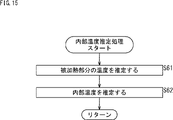
- step S61 Estimating the temperature of the heated portion
- the internal temperature estimating unit 106 estimates the temperature of the heated portion in contact with the heating medium and maps it to the three-dimensional model of the cooking object 12. For example, the temperature of the heated portion is mapped to the temperature definition point of the voxel shown by the dots in FIG.
- r is a dimensionless constant.
- the contact thermal resistance R contact is caused by the roughness, hardness, pressing pressure, etc. of the contact surface. It is considered that the contact thermal resistance R contact does not change abruptly when the heated portion of the cooking object 12 is heated to some extent by uniformly interposing oils and fats as a heating medium on the contact surface.
- the temperature T heat of the heating medium the temperature T top of the exposed surface of the cooking object 12, and the constant r obtained from the known parameters are used.
- the temperature T bottom of the heated portion of the cooking object 12 can be estimated.
- step S62 the internal temperature estimation unit 106 estimates the internal temperature of the cooking object 12. By the processing up to the previous stage, the temperatures of the surface portion and the heated portion of the cooking object 12 are mapped to the three-dimensional model.
- the inside of the cooking object 12 is a part corresponding to the region of the three-dimensional model to which the temperature is not mapped.
- the internal temperature is estimated by a different method for each of the following conditions.
- the internal temperature estimation unit 106 obtains the average value of the surface temperature of the cooking object 12 and maps it to the voxel corresponding to the inside of the cooking object 12 as the internal temperature. This corresponds to the initial conditions of heat conduction analysis.
- the representative value of the surface temperature of the cooking object 12 is estimated as the internal temperature.
- the representative value of the surface temperature of the cooking object 12 includes a value obtained based on the surface temperature of the cooking object 12, such as an average value or a median value of the surface temperature of the cooking object 12.
- step S4 When a change in the position / orientation or shape of the cooking object 12 is detected When the change in the position / orientation or shape of the cooking object 12 is recognized in step S4, the three-dimensional model is reconstructed.
- FIG. 16 is a cross-sectional view showing an example of reconstruction of a three-dimensional model.
- the posture and shape of the cooking object 12 change. As shown on the left side of the upper part of FIG. 16, before the posture and shape change, the bottom surface temperature of the cooking object 12 is high and the surface temperature is low. On the other hand, as shown on the right side, after the posture and shape have changed, the surface temperature of the cooking object 12 is high and the bottom surface temperature is low.
- the three-dimensional model is reconstructed according to the change in the posture and shape of the cooking object 12.
- the voxels of the cooking object 12 and the extraction of the temperature at the temperature definition point on the surface portion of the three-dimensional model shown with dots are steps S2 and S3. It is performed in the same manner as the processing of.
- the bottom surface temperature when the posture and shape of the cooking object 12 changes is specified by the process of step S61 and is mapped to the voxels indicated by dots.
- the other voxels excluding the surface and heated parts ideally have the temperature distribution estimated before reconstruction in order to continue the heat conduction analysis. It is desirable to be reproduced.
- the temperature of the temperature definition point of the three-dimensional model corresponding to the inside of the cooking object 12 is mapped by the following method.
- the internal temperature estimation unit 106 obtains the internal energy U all (total heat amount held by the cooking object 12) of the cooking object 12 based on the following formula (9) based on the temperature distribution before the reconstruction.
- Equation (9) the sum of the internal energies of all the temperature definition points of the three-dimensional model before reconstruction can be obtained.
- the specific heat c is generally not uniform in the whole foodstuff and has temperature dependence, but is treated as a constant here.
- the calculation may be performed using the accurate value of the specific heat c instead of treating it as a constant.
- the internal temperature estimation unit 106 obtains the internal energy U bound of the portion where the temperature can be specified in the reconstructed three-dimensional model.
- the subscript j represents the temperature definition point. From equation (10), the sum of the internal energies of the temperature definition points of the region corresponding to the surface portion from which the temperature is extracted and the portion to be heated in the reconstructed three-dimensional model can be obtained.
- the internal temperature estimation unit 106 obtains the temperature T bulk by the following equation (11), where N bulk is the total number of temperature definition points for which the temperature is not specified in the reconstructed three-dimensional model.
- the internal temperature estimation unit 106 maps the temperature T bulk as the temperature value of the temperature definition point where the temperature is not specified in the reconstructed three-dimensional model.
- the three-dimensional model is reconstructed so that the sum of the internal energies is preserved before and after the reconstruction, and after the reconstruction, the three-dimensional model is reconstructed.
- the temperature T bulk is estimated as the internal temperature. This makes it possible to substantially maintain the estimation accuracy of the internal temperature before and after the reconstruction of the 3D model.
- the internal temperature estimation unit 106 performs heat conduction analysis by numerical analysis such as the finite element method.
- the heat conduction model which is a mathematical model of heat conduction, is represented by a three-dimensional unsteady heat conduction equation as shown in the following equation (12).
- T (x, y, z, t) represents the temperature of the cooking object 12 expressed as a function of time and space.
- the arguments x, y, and z representing the spatial coordinates are omitted.
- the heat conduction model is shown in FIG.
- the temperature distribution mapped to the three-dimensional model corresponds to the temperature distribution T (0) under the initial condition.
- the reconstruction of the three-dimensional model performed by the method (B) above is performed at the timing of time t> 0, but it substantially means the resetting of the initial conditions.
- the temperature distribution T top (t) of the surface temperature measured by the temperature sensor 31 and the temperature distribution T bottom (t) of the bottom surface temperature estimated in step S61 are given.
- the temperature inside the cooking object 12, which is not bound as a boundary condition, is obtained by numerical calculation based on the governing equation in which the equation (12) is discretized.
- the temperature distribution T top (t) is based on the time-series data of the measured values until the heating is stopped. is expected.
- FIG. 18 is a diagram showing an example of the measurement result of the temperature change of the exposed surface after the steak meat baked in the frying pan is turned inside out.
- the vertical axis represents the temperature of the exposed surface, and the horizontal axis represents the elapsed time.
- the temperature of the exposed surface after being turned inside out continues to decrease monotonically. As the temperature of the exposed surface decreases and approaches room temperature, the temperature change becomes a gentle linear shape. Therefore, if the slope of the temperature change at the time when the heating is stopped is obtained and the temperature change of the temperature distribution T top (t) after the heating is stopped is predicted by simple extrapolation, the temperature distribution T with sufficient accuracy is used. You get top (t).
- the temperature distribution T bottom (t) is predicted based on the prediction result of the temperature change of the heating medium after the heating is stopped.
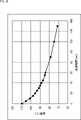
- FIG. 19 is a diagram showing an example of the measurement result of the temperature change of the frying pan after the heating is stopped.
- the vertical axis represents the temperature of the frying pan, and the horizontal axis represents the elapsed time.
- the temperature of the frying pan after the heating is stopped continues to decrease monotonically. As the temperature of the frying pan decreases and approaches room temperature, the temperature change becomes gentle and linear. However, the speed of temperature decrease depends on the heat conduction characteristics of a heating medium such as a frying pan. Mainly, the heat capacity affects the speed of temperature decrease.
- the heat conduction characteristics of the cooking utensil 11 actually used are required.
- the heat conduction characteristics of the cooking utensil 11 are calculated based on physical property values related to heat conduction such as the material, specific heat, volume, and surface area of the cooking utensil 11.
- the method of estimating the heat conduction characteristics of the cooking utensil 11 actually used and predicting the temperature change of the heating medium based on the heat conduction characteristics is not a realistic method because it is not versatile.
- the cook puts only the cooking utensil 11 actually used on the stove, heats it until it reaches a sufficiently high temperature, turns off the heat, and leaves it naturally.
- the temperature sensor 31 By measuring the temperature of the cooking utensil 11 in the cooling process by the temperature sensor 31, a curve showing the temperature change as shown in FIG. 19 is obtained. Along with the temperature of the cooking utensil 11, the room temperature is also measured.
- the internal temperature estimation unit 106 holds the inclination of the temperature decrease of the cooking utensil 11 as the characteristic value of the cooking utensil 11, which is determined according to the difference between the temperature of the cooking utensil 11 and the room temperature. After the calibration, the internal temperature estimation unit 106 can predict the temperature change of the cooking utensil 11 based on the measured value of the temperature of the cooking utensil 11 and the measured value of the room temperature at the time when the heating is stopped in the cooking process. ..
- the internal temperature estimation unit 106 can predict the temperature change of the temperature distribution T bottom (t) based on the above-mentioned equation (8) based on the temperature change of the cooking utensil 11.
- step S62 After the internal temperature of the cooking object 12 is estimated in step S62, the process returns to step S6 in FIG. 4 and the subsequent processing is performed.
- the effector control unit 107 communicates with the information terminal 7 of FIG. 1 and presents the heating status of the cooking object 12 to the cook.
- the display of the information terminal 7 displays information that visualizes the temperature distribution of the cooking object 12 and the cooking utensil 11.
- the effector control unit 107 displays the surface temperature and the internal temperature of the cooking object 12 in real time from a free viewpoint based on the three-dimensional model.
- the display of the surface temperature and the internal temperature is displayed in the same way as the result of the heat conduction analysis is displayed on the screen by the CAE (Computer Aided Engineering) tool installed in the PC using CG.
- CAE Computer Aided Engineering
- the heat flow may be visualized in the same way as the vector field is visualized with the CAE tool.
- Cooking may proceed in the work area while being in a remote location and receiving judgment and guidance from a skilled chef who has seen the presentation by the information terminal 7.
- the information terminal 7 constituting the cooking support system is connected to the information processing device 22 via an intranet or the Internet.
- the effector control unit 107 communicates with the heating device 1 of FIG. 1 to automatically adjust the thermal power. In order to perform even heating, it is desirable to keep the temperature of the heating medium constant according to the cooking content. For example, the effector control unit 107 adjusts the thermal power of the heating device 1 by feedback control according to the temperature of the heating medium extracted in step S3.
- the effector control unit 107 controls the operation setting of the air conditioner 8 so that the periphery of the cooking object 12 becomes an appropriate condition as feedback control based on the temperature information measured by the thermography camera 3.
- auxiliary sensor including a sensor built in a device other than the basic sensor group such as the heating device 1 may be used.
- a thermometer or a hygrometer installed at a position where the vicinity of the cooking object 12 can be measured is provided as an auxiliary sensor.
- the scent sensor may be provided as an auxiliary sensor. When making dishes where aroma is important, it is essential to control the finish by removing unnecessary offensive odors from the environment with air conditioning.
- the effector control unit 107 controls at least one of the heating device 1, the information terminal 7, and the air conditioner 8, for example.
- Sensor data measured by the sensor unit 21 and information estimated by the information processing device 22 may be stored in the storage unit 42 for post-analysis. That is, applications such as estimation results by the information processing apparatus 22 are not limited to real-time heating control.
- the physical configuration of the storage unit 42 is arbitrary so that it may be included in the processor module 4 or provided in the server 6.
- the sensor unit 21 has a temperature sensor that can accurately measure the internal temperature of the cooking object 12.
- a cooking thermometer using a thermocouple probe is provided as a component of the cooking utensil 11.
- the information processing apparatus 22 acquires the data measured by the cooking thermometer and stores it together with other sensor data in association with the information of the estimation result. Referencing this information as Ground Truth information for internal temperature estimation is useful for developing technical methods to improve the internal temperature estimation accuracy.
- the temperature of the heated portion of the cooking object 12 which is important for heat conduction analysis, is based on the thermal image acquired by the temperature sensor 31 without destroying the cooking object 12. Is required accurately.
- the cooking support system can estimate the internal temperature with high accuracy.
- the cooking support system it is recognized based on the sensor data acquired by the sensor unit 21 that the heated portion of the cooking object 12 is exposed, and it is heated based on the thermal image acquired immediately after the exposure. The contact thermal resistance between the moiety and the heating medium is estimated.
- the cooking support system can improve the estimation accuracy of the temperature of the heated part and estimate the internal temperature with high accuracy.
- a three-dimensional model of the cooking object 12 is constructed based on the sensor data acquired by the distance sensor 32, and the boundary condition of the heat conduction analysis and the temperature information which is the initial condition are mapped to the three-dimensional model. Will be done.
- the cooking support system can estimate the internal temperature with high accuracy.
- the cooking support system can also use the same three-dimensional model to simulate the temperature change after the heating is stopped.
- FIG. 20 is a block diagram showing a configuration example of computer hardware that executes the above-mentioned series of processes programmatically.
- the CPU Central Processing Unit
- ROM Read Only Memory
- RAM Random Access Memory
- the input / output interface 205 is further connected to the bus 204.
- An input unit 206 including a keyboard, a mouse, and the like, and an output unit 207 including a display, a speaker, and the like are connected to the input / output interface 205.
- the input / output interface 205 is connected to a storage unit 208 composed of a hard disk, a non-volatile memory, or the like, a communication unit 209 composed of a network interface, and a drive 210 for driving the removable media 211.
- the CPU 201 loads the program stored in the storage unit 208 into the RAM 203 via the input / output interface 205 and the bus 204 and executes the above-mentioned series of processes. Is done.
- the program executed by the CPU 201 is recorded on the removable media 211, or provided via a wired or wireless transmission medium such as a local area network, the Internet, or digital broadcasting, and installed in the storage unit 208.
- the program executed by the computer may be a program in which processing is performed in chronological order according to the order described in the present specification, in parallel, or at a necessary timing such as when a call is made. It may be a program in which processing is performed.
- the system means a set of a plurality of components (devices, modules (parts), etc.), and it does not matter whether all the components are in the same housing. Therefore, a plurality of devices housed in separate housings and connected via a network, and a device in which a plurality of modules are housed in one housing are both systems. ..
- this technology can take a cloud computing configuration in which one function is shared by multiple devices via a network and processed jointly.
- each step described in the above flowchart can be executed by one device or shared by a plurality of devices.
- the plurality of processes included in the one step can be executed by one device or shared by a plurality of devices.
- a construction unit that builds a three-dimensional model that represents the shape and temperature distribution of the cooking object based on the sensor data acquired by the sensor that measures the state of the cooking utensil and the cooking object.
- An information processing device including an internal temperature estimation unit that estimates the temperature inside the cooking object by performing heat conduction analysis based on the three-dimensional model.
- the construction unit constructs the three-dimensional model when the cooking object is put into the cooking utensil.
- the construction unit reconstructs the three-dimensional model when any one of the shape, volume, and posture of the cooking object changes in the cooking process.
- the information processing apparatus according to any one of (1) to (3), further comprising a heat conduction characteristic estimation unit that estimates the heat conduction characteristics of the cooking object based on the sensor data, which is used for the heat conduction analysis. .. (5) The information processing apparatus according to (4) above, wherein the heat conduction characteristics include thermal conductivity, specific heat, density, and thermal diffusivity. (6) The information processing apparatus according to (4) or (5), wherein the heat conduction characteristic estimation unit repeatedly updates the heat conduction characteristics in the cooking process. (7) The information processing apparatus according to any one of (4) to (6), further comprising an extraction unit that extracts the surface temperature of the cooking object and the temperature of the heating medium based on the sensor data.
- the information processing apparatus according to (7) above, wherein the extraction unit extracts the temperature of a region near the cooking object in the entire heating medium as the temperature of the heating medium.
- the internal temperature estimation unit sets the temperature of the heating medium as the temperature of the heated portion of the cooking object in the three-dimensional model, and estimates the temperature inside the cooking object (7) or (8). ).
- the information processing device (10) When the posture of the cooking object changes, the heat conduction characteristic estimation unit determines the cooking object and the heating medium based on the surface temperature of the cooking object and the temperature of the heating medium after the posture change. Estimate the contact thermal resistance that occurs between The information processing apparatus according to (7) or (8), wherein the internal temperature estimation unit estimates the temperature inside the cooking object by using the contact thermal resistance.
- the internal temperature estimation unit uses the temperature obtained based on the contact heat resistance, the surface temperature of the cooking object, and the temperature of the heating medium as the temperature of the heated portion of the cooking object as the three-dimensional model.
- the information processing apparatus according to (10) above which is set to the above and estimates the temperature inside the cooking object.
- (12) When the change in the surface temperature of the cooking object is larger than the threshold value and the difference between the temperature of the heating medium and the surface temperature of the cooking object after the change is smaller than the threshold value, the change in the posture of the cooking object is as a change.
- the internal temperature estimation unit estimates the representative value of the surface temperature of the cooking object as the temperature inside the cooking object at the time of the first construction of the three-dimensional model. Any of the above (1) to (12). Information processing device described in Crab. (14) The internal temperature estimation unit estimates the temperature inside the cooking object based on the internal energy in the three-dimensional model before the reconstruction when the three-dimensional model is reconstructed (1) to (13). The information processing device described in any of. (15) The internal temperature estimation unit estimates the temperature inside the cooking object based on the heat conduction equation represented by the heat diffusion coefficient and a function representing the temperature of each position on the three-dimensional model. 5) The information processing apparatus according to any one of (12).
- the information processing apparatus according to any one of (1) to (15), further comprising a control unit that controls peripheral devices based on the estimation result of the temperature inside the cooking object.
- the control unit is at least one of a heating device for heating the cooking object, an information terminal for presenting the heating state of the cooking object, and an air conditioning device installed in a space where cooking for the cooking object is performed.
- the information processing apparatus according to (16) above, which controls any of the above.
- a three-dimensional model representing the shape and temperature distribution of the cooking object is constructed. An information processing method for estimating the temperature inside the cooking object by performing heat conduction analysis based on the three-dimensional model.
- thermography camera 1 heating device, 2 stereo camera, 3 thermography camera, 4 processor module, 5 network equipment, 6 server, 7 information terminal, 8 air conditioning device, 21 sensor section, 22 information processing device, 23 effector section, 31 temperature sensor, 32 distance Sensor, 33 image sensor, 41 calculation unit, 42 storage unit, 51 UI equipment, 101 sensor data input unit, 102 position shape recognition unit, 103 surface temperature extraction unit, 104 process status recognition unit, 105 heat conduction characteristic estimation unit, 106 Internal temperature estimation unit, 107 effector control unit
Landscapes
- Engineering & Computer Science (AREA)
- Physics & Mathematics (AREA)
- General Physics & Mathematics (AREA)
- Chemical & Material Sciences (AREA)
- Spectroscopy & Molecular Physics (AREA)
- Geometry (AREA)
- General Engineering & Computer Science (AREA)
- Mechanical Engineering (AREA)
- Combustion & Propulsion (AREA)
- Computer Graphics (AREA)
- Theoretical Computer Science (AREA)
- Software Systems (AREA)
- Health & Medical Sciences (AREA)
- Life Sciences & Earth Sciences (AREA)
- Analytical Chemistry (AREA)
- Biochemistry (AREA)
- General Health & Medical Sciences (AREA)
- Immunology (AREA)
- Pathology (AREA)
- Human Computer Interaction (AREA)
- Food Science & Technology (AREA)
- Radiation Pyrometers (AREA)
Abstract
Description
本技術は、調理対象物を加熱媒体に接触させて熱伝導により加熱する調理手法において、調理対象物の加熱状態を適切にコントロールすることを支援するものである。
1.調理支援システム
2.各機器の構成
3.情報処理装置の動作
4.その他
図1は、本技術の一実施形態に係る調理支援システムの構成例を示す図である。
図2は、調理支援システムの構成を示すブロック図である。
<全体の処理>
図4のフローチャートを参照して、以上のような構成を有する情報処理装置22の処理について説明する。
ここで、図5のフローチャートを参照して、図4のステップS2において行われる位置形状認識処理について説明する。
ステップS21において、位置形状認識部102は、調理者の調理作業によるカメラセンサの視野の遮蔽を検出する。
ステップS22において、位置形状認識部102は、調理器具11と調理対象物12が視野内に存在するかどうかを画像処理により検出する。位置形状認識部102は、調理器具11と調理対象物12が視野内に存在する場合、基本センサ群の画像上における調理器具11と調理対象物12の輪郭を抽出する。輪郭を抽出することは、対象物の輪郭を特定することを意味する。
機械学習により生成されたデータベース(推論モデル)を利用して、調理器具11の物体検出と、調理器具11の輪郭抽出が行われる。RGB画像を入力情報とすると、データベースからは、調理器具11の輪郭を表す情報が出力情報として得られる。
調理器具11の三次元形状を表す三次元モデルなどの既知情報が位置形状認識部102に用意される場合、既知情報を利用して、調理器具11の輪郭抽出が行われる。例えば、デプス画像に基づいて生成された、シーン点群に対する三次元モデルのレジストレーション処理により、調理器具11の有無と位置姿勢が検出される。検出された位置姿勢と三次元モデルに基づいて、RGB画像上での調理器具11の輪郭が抽出される。
調理器具11の三次元形状と、調理器具11の特定領域に埋め込まれた特徴パターンなどのマーカとが既知情報として位置形状認識部102に用意される場合、既知情報を利用して、RGB画像上におけるマーカの有無と位置姿勢が検出される。マーカの位置姿勢に基づいて、調理器具11の位置姿勢が特定され、RGB画像上における輪郭が抽出される。
機械学習により生成されたデータベースを利用して、調理対象物12の物体検出と、調理対象物12の輪郭抽出が行われる。RGB画像を入力情報とすると、データベースからは、調理対象物12の輪郭を表す情報が出力情報として得られる。
調理器具11の三次元形状が既知であり、上記(B)または(C)の手法で調理器具11の位置姿勢が検出された場合、調理器具11だけが写るデプス画像が生成される。調理器具11だけが写るデプス画像を背景として、ステレオカメラ2により実際に撮像されたデプス画像に対して背景差分処理を行うことにより、調理対象物12のデプス画像が前景として抽出される。これにより、デプス画像上における調理対象物12の輪郭が抽出される。
図5の説明に戻り、ステップS23において、位置形状認識部102は、調理対象物12の三次元モデルの構築を行う。位置形状認識部102は、調理対象物12の三次元モデルをセンサデータに基づいて構築する構築部として機能する。
図9のフローチャートを参照して、図4のステップS3において行われる表面温度抽出処理について説明する。
ステップS31において、表面温度抽出部103は、温度センサ31により取得された熱画像に基づいて、調理対象物12の表面温度を抽出し、位置形状認識部102により構築された調理対象物12の三次元モデルにマッピングする。温度を抽出することは、温度を検出することを意味する。
ステップS32において、表面温度抽出部103は、温度センサ31により取得された熱画像に基づいて、加熱媒体の表面温度を抽出する。
図4のステップS4において行われる調理プロセスの状況の認識の詳細について説明する。例えば、以下の状況が起きたことがプロセス状況認識部104により認識される。
(A)調理器具11への調理対象物12の投入
(B)調理器具11からの調理対象物12の除去
(C)調理器具11内での調理対象物12の位置姿勢変化
(D)調理器具11内での調理対象物12の形状変化
図13のフローチャートを参照して、図4のステップS5において行われる熱伝導特性推定処理について説明する。
ステップS41において、熱伝導特性推定部105は、プロセス状況認識部104によるプロセス状況の認識結果に基づいて、調理対象物12の投入が検出されたか否かを判定する。
調理者は、エフェクタ部23が備えるUI機能を用いて、レシピデータを選択する。例えば、情報端末7にインストールされたアプリケーションによるナビゲーションに従って調理作業を行う際、調理者は、作る料理のレシピデータを選択する。
上記(A)の方法の補助手段として、調理者が、UI機能を用いて食材特性を直接入力する。例えば、レシピデータが提示する食材の食材特性と、実際に調理に用いられる食材の食材特性とに差分がある場合、調理者は、レシピデータが保持していない食材特性の情報を入力する。電子レンジなどの調理器具11の本体のボタンを用いて、食材の種類が設定されるようにしてもよい。
熱伝導特性推定部105は、調理対象物12が写るRGB画像などの、センサ部21により取得された情報に基づく画像認識により、調理対象物12の食材特性を特定する。食材の個体差が現れる肉の脂肪含有量などの食材特性については、実際の調理対象物12が写る画像に対する画像認識が有効となる。
熱伝導特性推定部105は、調理対象物12の三次元モデルに基づいて、投入された調理対象物12の体積を特定することができる。センサ部21が重量センサを備え、調理対象物12の重量を個々に計測できる場合、熱伝導特性推定部105は、調理対象物12の体積と重量に基づいて密度を特定する。上記(C)の方法で食材特性を特定する場合、密度を既知情報とすることにより、より確からしい食材特性の候補を絞り込むことができる。
一方、調理対象物12の投入が検出されていないとステップS41において判定された場合、処理はステップS43に進む。
一方、調理対象物12の形状変化が検出されていないとステップS43において判定された場合、処理はステップS45に進む。



図15のフローチャートを参照して、図4のステップS6において行われる内部温度推定処理について説明する。
ステップS61において、内部温度推定部106は、加熱媒体と接触する被加熱部分の温度を推定し、調理対象物12の三次元モデルにマッピングする。例えば、図10のドットを付して示すボクセルの温度定義点に対して、被加熱部分の温度がマッピングされる。


ステップS62において、内部温度推定部106は、調理対象物12の内部温度を推定する。前段までの処理により、調理対象物12の表面部分と被加熱部分の温度は、三次元モデルにマッピングされている。
調理対象物12が調理器具11に投入され、加熱が開始された初期状態においては、調理対象物12の内部温度は均一であると仮定される。すなわち、内部温度は、温度センサ31により計測される表面温度に近い温度であると考えられる。
調理対象物12の位置姿勢や形状の変化がステップS4において認識された場合、三次元モデルの再構築が行われる。



上記(A)または(B)の方法で構成された三次元モデルを用いて、内部温度推定部106は、有限要素法などの数値解析によって熱伝導解析を行う。熱伝導の数理モデルである熱伝導モデルは、下式(12)のような三次元の非定常熱伝導方程式で表される。

図4のステップS7において行われるエフェクタ部23の制御の詳細について説明する。エフェクタ部23の制御の内容が、調理者に対する価値の提供に繋がる。エフェクタ部23の制御に関する代表的なアプリケーションの例を以下で説明する。
エフェクタ制御部107は、図1の情報端末7と通信を行い、調理対象物12の加熱状態を調理者に対して提示する。例えば、情報端末7のディスプレイには、調理対象物12と調理器具11の温度分布を可視化した情報が表示される。
エフェクタ制御部107は、図1の加熱装置1と通信を行い、火力を自動調整する。ムラのない加熱を行うためには、調理内容に応じて、加熱媒体の温度を一定に保つことが望ましい。例えば、エフェクタ制御部107は、ステップS3において抽出された加熱媒体の温度に応じて、加熱装置1の火力をフィードバック制御によって調整する。
調理環境の温度や湿度などの環境条件は、料理の仕上がりに大きな影響を及ぼす場合がある。肉や魚の調理では、食材の温度を常温に戻す作業が下準備として行われる。過熱開始時に食材の温度にムラがあると焼き加減のムラに直結するため、常温(室内の気温)を一定に保つことが重要である。
センサ部21により計測されたセンサデータや情報処理装置22により推定された情報が、事後解析のために記憶部42に記憶されるようにしてもよい。すなわち、情報処理装置22による推定結果などの用途は、リアルタイムでの加熱制御に限定されるものではない。プロセッサモジュール4に内包されたり、サーバ6に設けられたりするように、記憶部42の物理構成は任意である。
・コンピュータの構成例
上述した一連の処理は、ハードウェアにより実行することもできるし、ソフトウェアにより実行することもできる。一連の処理をソフトウェアにより実行する場合には、そのソフトウェアを構成するプログラムが、専用のハードウェアに組み込まれているコンピュータ、または汎用のパーソナルコンピュータなどに、プログラム記録媒体からインストールされる。
本技術は、以下のような構成をとることもできる。
調理器具と調理対象物との状態を計測するセンサにより取得されたセンサデータに基づいて、前記調理対象物の形状と温度分布を表す三次元モデルを構築する構築部と、
前記三次元モデルに基づく熱伝導解析を行うことにより前記調理対象物の内部の温度を推定する内部温度推定部と
を備える情報処理装置。
(2)
前記構築部は、前記調理対象物が前記調理器具に投入された場合、前記三次元モデルを構築する
前記(1)に記載の情報処理装置。
(3)
前記構築部は、前記調理対象物の形状、体積、姿勢のいずれかが調理過程で変化した場合、前記三次元モデルの再構築を行う
前記(1)または(2)に記載の情報処理装置。
(4)
前記熱伝導解析に用いられる、前記調理対象物の熱伝導特性を前記センサデータに基づいて推定する熱伝導特性推定部をさらに備える
前記(1)乃至(3)のいずれかに記載の情報処理装置。
(5)
前記熱伝導特性は、熱伝導率、比熱、密度、および熱拡散係数を含む
前記(4)に記載の情報処理装置。
(6)
前記熱伝導特性推定部は、前記熱伝導特性の更新を調理過程において繰り返し行う
前記(4)または(5)に記載の情報処理装置。
(7)
前記調理対象物の表面温度と、加熱媒体の温度とを前記センサデータに基づいて抽出する抽出部をさらに備える
前記(4)乃至(6)のいずれかに記載の情報処理装置。
(8)
前記抽出部は、前記加熱媒体全体のうち、前記調理対象物の近傍の領域の温度を前記加熱媒体の温度として抽出する
前記(7)に記載の情報処理装置。
(9)
前記内部温度推定部は、前記加熱媒体の温度を前記調理対象物の被加熱部分の温度として前記三次元モデルに設定し、前記調理対象物の内部の温度を推定する
前記(7)または(8)に記載の情報処理装置。
(10)
前記熱伝導特性推定部は、前記調理対象物の姿勢が変化した場合、姿勢変化後の前記調理対象物の表面温度と前記加熱媒体の温度とに基づいて、前記調理対象物と前記加熱媒体との間に生じる接触熱抵抗を推定し、
前記内部温度推定部は、前記接触熱抵抗を用いて、前記調理対象物の内部の温度を推定する
前記(7)または(8)に記載の情報処理装置。
(11)
前記内部温度推定部は、前記接触熱抵抗、前記調理対象物の表面温度、および、前記加熱媒体の温度に基づいて求められた温度を前記調理対象物の被加熱部分の温度として前記三次元モデルに設定し、前記調理対象物の内部の温度を推定する
前記(10)に記載の情報処理装置。
(12)
前記調理対象物の表面温度の変化が閾値より大きく、前記加熱媒体の温度と変化後の前記調理対象物の表面温度との差が閾値より小さい場合に、前記調理対象物の姿勢の変化として、前記調理対象物が裏返されたことを認識する認識部をさらに備える
前記(10)または(11)に記載の情報処理装置。
(13)
前記内部温度推定部は、前記三次元モデルの最初の構築時、前記調理対象物の表面温度の代表値を、前記調理対象物の内部の温度として推定する
前記(1)乃至(12)のいずれかに記載の情報処理装置。
(14)
前記内部温度推定部は、前記三次元モデルの再構築時、再構築前の前記三次元モデルにおける内部エネルギーに基づいて、前記調理対象物の内部の温度を推定する
前記(1)乃至(13)のいずれかに記載の情報処理装置。
(15)
前記内部温度推定部は、前記熱拡散係数と、前記三次元モデル上の各位置の温度を表す関数により表される熱伝導方程式に基づいて、前記調理対象物の内部の温度を推定する
前記(5)乃至(12)のいずれかに記載の情報処理装置。
(16)
前記調理対象物の内部の温度の推定結果に基づいて、周辺機器の制御を行う制御部をさらに備える
前記(1)乃至(15)のいずれかに記載の情報処理装置。
(17)
前記制御部は、前記調理対象物を加熱する加熱装置、前記調理対象物の加熱状態を提示する情報端末、および、前記調理対象物に対する調理が行われる空間に設置された空調装置のうちの少なくともいずれかの制御を行う
前記(16)に記載の情報処理装置。
(18)
調理器具と調理対象物との状態を計測するセンサにより取得されたセンサデータに基づいて、前記調理対象物の形状と温度分布を表す三次元モデルを構築し、
前記三次元モデルに基づく熱伝導解析を行うことにより前記調理対象物の内部の温度を推定する
情報処理方法。
(19)
コンピュータに、
調理器具と調理対象物との状態を計測するセンサにより取得されたセンサデータに基づいて、前記調理対象物の形状と温度分布を表す三次元モデルを構築し、
前記三次元モデルに基づく熱伝導解析を行うことにより前記調理対象物の内部の温度を推定する
処理を実行させるためのプログラム。
Claims (19)
- 調理器具と調理対象物との状態を計測するセンサにより取得されたセンサデータに基づいて、前記調理対象物の形状と温度分布を表す三次元モデルを構築する構築部と、
前記三次元モデルに基づく熱伝導解析を行うことにより前記調理対象物の内部の温度を推定する内部温度推定部と
を備える情報処理装置。 - 前記構築部は、前記調理対象物が前記調理器具に投入された場合、前記三次元モデルを構築する
請求項1に記載の情報処理装置。 - 前記構築部は、前記調理対象物の形状、体積、姿勢のいずれかが調理過程で変化した場合、前記三次元モデルの再構築を行う
請求項1に記載の情報処理装置。 - 前記熱伝導解析に用いられる、前記調理対象物の熱伝導特性を前記センサデータに基づいて推定する熱伝導特性推定部をさらに備える
請求項1に記載の情報処理装置。 - 前記熱伝導特性は、熱伝導率、比熱、密度、および熱拡散係数を含む
請求項4に記載の情報処理装置。 - 前記熱伝導特性推定部は、前記熱伝導特性の更新を調理過程において繰り返し行う
請求項4に記載の情報処理装置。 - 前記調理対象物の表面温度と、加熱媒体の温度とを前記センサデータに基づいて抽出する抽出部をさらに備える
請求項4に記載の情報処理装置。 - 前記抽出部は、前記加熱媒体全体のうち、前記調理対象物の近傍の領域の温度を前記加熱媒体の温度として抽出する
請求項7に記載の情報処理装置。 - 前記内部温度推定部は、前記加熱媒体の温度を前記調理対象物の被加熱部分の温度として前記三次元モデルに設定し、前記調理対象物の内部の温度を推定する
請求項7に記載の情報処理装置。 - 前記熱伝導特性推定部は、前記調理対象物の姿勢が変化した場合、姿勢変化後の前記調理対象物の表面温度と前記加熱媒体の温度とに基づいて、前記調理対象物と前記加熱媒体との間に生じる接触熱抵抗を推定し、
前記内部温度推定部は、前記接触熱抵抗を用いて、前記調理対象物の内部の温度を推定する
請求項7に記載の情報処理装置。 - 前記内部温度推定部は、前記接触熱抵抗、前記調理対象物の表面温度、および、前記加熱媒体の温度に基づいて求められた温度を前記調理対象物の被加熱部分の温度として前記三次元モデルに設定し、前記調理対象物の内部の温度を推定する
請求項10に記載の情報処理装置。 - 前記調理対象物の表面温度の変化が閾値より大きく、前記加熱媒体の温度と変化後の前記調理対象物の表面温度との差が閾値より小さい場合に、前記調理対象物の姿勢の変化として、前記調理対象物が裏返されたことを認識する認識部をさらに備える
請求項10に記載の情報処理装置。 - 前記内部温度推定部は、前記三次元モデルの最初の構築時、前記調理対象物の表面温度の代表値を、前記調理対象物の内部の温度として推定する
請求項1に記載の情報処理装置。 - 前記内部温度推定部は、前記三次元モデルの再構築時、再構築前の前記三次元モデルにおける内部エネルギーに基づいて、前記調理対象物の内部の温度を推定する
請求項1に記載の情報処理装置。 - 前記内部温度推定部は、前記熱拡散係数と、前記三次元モデル上の各位置の温度を表す関数により表される熱伝導方程式に基づいて、前記調理対象物の内部の温度を推定する
請求項5に記載の情報処理装置。 - 前記調理対象物の内部の温度の推定結果に基づいて、周辺機器の制御を行う制御部をさらに備える
請求項1に記載の情報処理装置。 - 前記制御部は、前記調理対象物を加熱する加熱装置、前記調理対象物の加熱状態を提示する情報端末、および、前記調理対象物に対する調理が行われる空間に設置された空調装置のうちの少なくともいずれかの制御を行う
請求項16に記載の情報処理装置。 - 調理器具と調理対象物との状態を計測するセンサにより取得されたセンサデータに基づいて、前記調理対象物の形状と温度分布を表す三次元モデルを構築し、
前記三次元モデルに基づく熱伝導解析を行うことにより前記調理対象物の内部の温度を推定する
情報処理方法。 - コンピュータに、
調理器具と調理対象物との状態を計測するセンサにより取得されたセンサデータに基づいて、前記調理対象物の形状と温度分布を表す三次元モデルを構築し、
前記三次元モデルに基づく熱伝導解析を行うことにより前記調理対象物の内部の温度を推定する
処理を実行させるためのプログラム。
Priority Applications (3)
| Application Number | Priority Date | Filing Date | Title |
|---|---|---|---|
| US18/042,601 US20240027275A1 (en) | 2020-09-25 | 2021-09-10 | Information processing apparatus, information processing method, and program |
| EP21872205.6A EP4220106A4 (en) | 2020-09-25 | 2021-09-10 | Information processing device, information processing method, and program |
| JP2022551879A JP7754099B2 (ja) | 2020-09-25 | 2021-09-10 | 情報処理装置、情報処理方法、およびプログラム |
Applications Claiming Priority (2)
| Application Number | Priority Date | Filing Date | Title |
|---|---|---|---|
| JP2020-161384 | 2020-09-25 | ||
| JP2020161384 | 2020-09-25 |
Publications (1)
| Publication Number | Publication Date |
|---|---|
| WO2022065074A1 true WO2022065074A1 (ja) | 2022-03-31 |
Family
ID=80846575
Family Applications (1)
| Application Number | Title | Priority Date | Filing Date |
|---|---|---|---|
| PCT/JP2021/033273 Ceased WO2022065074A1 (ja) | 2020-09-25 | 2021-09-10 | 情報処理装置、情報処理方法、およびプログラム |
Country Status (4)
| Country | Link |
|---|---|
| US (1) | US20240027275A1 (ja) |
| EP (1) | EP4220106A4 (ja) |
| JP (1) | JP7754099B2 (ja) |
| WO (1) | WO2022065074A1 (ja) |
Cited By (1)
| Publication number | Priority date | Publication date | Assignee | Title |
|---|---|---|---|---|
| CN121657789A (zh) * | 2026-02-09 | 2026-03-13 | 四川公路桥梁建设集团有限公司 | 路面沥青混合料摊铺温度场智能调控方法、系统、计算机设备及计算机可读存储介质 |
Families Citing this family (1)
| Publication number | Priority date | Publication date | Assignee | Title |
|---|---|---|---|---|
| KR20250089987A (ko) * | 2023-12-12 | 2025-06-19 | 삼성전자주식회사 | 조리 장치 및 그 제어 방법 |
Citations (11)
| Publication number | Priority date | Publication date | Assignee | Title |
|---|---|---|---|---|
| JPH0815037A (ja) | 1994-06-27 | 1996-01-19 | Sharp Corp | 加熱調理器 |
| JP2008251193A (ja) * | 2007-03-29 | 2008-10-16 | Matsushita Electric Ind Co Ltd | 加熱調理器およびそのプログラム |
| JP2009140638A (ja) * | 2007-12-04 | 2009-06-25 | Panasonic Corp | 加熱調理器 |
| JP2010508493A (ja) * | 2006-11-02 | 2010-03-18 | エレクトロラクス ホーム プロダクツ コーポレーション エヌ ヴィ | 調理すべきアイテム内部の温度検出装置および温度検出方法 |
| JP2015206502A (ja) | 2014-04-18 | 2015-11-19 | パナソニックIpマネジメント株式会社 | 収納庫 |
| JP2017517322A (ja) * | 2014-06-06 | 2017-06-29 | コーニンクレッカ フィリップス エヌ ヴェKoninklijke Philips N.V. | 調理装置、及び、食品コア温度の予測に基づく食品調理方法 |
| WO2019059209A1 (ja) * | 2017-09-25 | 2019-03-28 | パナソニックIpマネジメント株式会社 | 加熱調理器 |
| JP2019200002A (ja) | 2018-05-17 | 2019-11-21 | パナソニックIpマネジメント株式会社 | 加熱調理装置 |
| JP2020091217A (ja) * | 2018-12-06 | 2020-06-11 | 三星電子株式会社Samsung Electronics Co.,Ltd. | 三次元計測装置および加熱調理器 |
| JP2020139866A (ja) * | 2019-02-28 | 2020-09-03 | 三星電子株式会社Samsung Electronics Co.,Ltd. | 温度計測装置、加熱調理器、および温度計測方法 |
| US20200292392A1 (en) * | 2019-03-13 | 2020-09-17 | Midea Group Co., Ltd. | Calibration of a thermal imaging device for a surface cooking appliance |
Family Cites Families (7)
| Publication number | Priority date | Publication date | Assignee | Title |
|---|---|---|---|---|
| US5893051A (en) * | 1994-09-27 | 1999-04-06 | Matsushita Electric Industrial Co., Ltd. | Method of estimating temperature inside material to be cooked and cooking apparatus for effecting same |
| DE102007039027A1 (de) * | 2007-08-17 | 2009-02-26 | Rational Ag | Verfahren zur Bestimmung der Kerntemperatur eines Garguts und Gargerät zur Durchführung solch eines Verfahrens |
| AU2016370628A1 (en) * | 2015-12-16 | 2018-05-31 | Mbl Limited | Robotic kitchen including a robot, a storage arrangement and containers therefor |
| WO2020116814A1 (en) * | 2018-12-06 | 2020-06-11 | Samsung Electronics Co., Ltd. | Heating cooker including three dimensional measuring device |
| JP7257224B2 (ja) * | 2019-04-02 | 2023-04-13 | 東京瓦斯株式会社 | 温度推定の方法、システム、プログラムおよび機器 |
| JP7213750B2 (ja) * | 2019-05-10 | 2023-01-27 | 株式会社 ゼンショーホールディングス | 調理指示装置、調理システム、及び調理指示方法 |
| JP2022023297A (ja) * | 2020-07-27 | 2022-02-08 | 三菱電機株式会社 | 加熱調理器 |
-
2021
- 2021-09-10 US US18/042,601 patent/US20240027275A1/en active Pending
- 2021-09-10 WO PCT/JP2021/033273 patent/WO2022065074A1/ja not_active Ceased
- 2021-09-10 JP JP2022551879A patent/JP7754099B2/ja active Active
- 2021-09-10 EP EP21872205.6A patent/EP4220106A4/en active Pending
Patent Citations (11)
| Publication number | Priority date | Publication date | Assignee | Title |
|---|---|---|---|---|
| JPH0815037A (ja) | 1994-06-27 | 1996-01-19 | Sharp Corp | 加熱調理器 |
| JP2010508493A (ja) * | 2006-11-02 | 2010-03-18 | エレクトロラクス ホーム プロダクツ コーポレーション エヌ ヴィ | 調理すべきアイテム内部の温度検出装置および温度検出方法 |
| JP2008251193A (ja) * | 2007-03-29 | 2008-10-16 | Matsushita Electric Ind Co Ltd | 加熱調理器およびそのプログラム |
| JP2009140638A (ja) * | 2007-12-04 | 2009-06-25 | Panasonic Corp | 加熱調理器 |
| JP2015206502A (ja) | 2014-04-18 | 2015-11-19 | パナソニックIpマネジメント株式会社 | 収納庫 |
| JP2017517322A (ja) * | 2014-06-06 | 2017-06-29 | コーニンクレッカ フィリップス エヌ ヴェKoninklijke Philips N.V. | 調理装置、及び、食品コア温度の予測に基づく食品調理方法 |
| WO2019059209A1 (ja) * | 2017-09-25 | 2019-03-28 | パナソニックIpマネジメント株式会社 | 加熱調理器 |
| JP2019200002A (ja) | 2018-05-17 | 2019-11-21 | パナソニックIpマネジメント株式会社 | 加熱調理装置 |
| JP2020091217A (ja) * | 2018-12-06 | 2020-06-11 | 三星電子株式会社Samsung Electronics Co.,Ltd. | 三次元計測装置および加熱調理器 |
| JP2020139866A (ja) * | 2019-02-28 | 2020-09-03 | 三星電子株式会社Samsung Electronics Co.,Ltd. | 温度計測装置、加熱調理器、および温度計測方法 |
| US20200292392A1 (en) * | 2019-03-13 | 2020-09-17 | Midea Group Co., Ltd. | Calibration of a thermal imaging device for a surface cooking appliance |
Non-Patent Citations (1)
| Title |
|---|
| See also references of EP4220106A4 |
Cited By (2)
| Publication number | Priority date | Publication date | Assignee | Title |
|---|---|---|---|---|
| CN121657789A (zh) * | 2026-02-09 | 2026-03-13 | 四川公路桥梁建设集团有限公司 | 路面沥青混合料摊铺温度场智能调控方法、系统、计算机设备及计算机可读存储介质 |
| CN121657789B (zh) * | 2026-02-09 | 2026-04-21 | 四川公路桥梁建设集团有限公司 | 路面沥青混合料摊铺温度场智能调控方法、系统、计算机设备及计算机可读存储介质 |
Also Published As
| Publication number | Publication date |
|---|---|
| JP7754099B2 (ja) | 2025-10-15 |
| JPWO2022065074A1 (ja) | 2022-03-31 |
| EP4220106A4 (en) | 2024-03-06 |
| EP4220106A1 (en) | 2023-08-02 |
| US20240027275A1 (en) | 2024-01-25 |
Similar Documents
| Publication | Publication Date | Title |
|---|---|---|
| CN113194792B (zh) | 训练烹饪器具、定位食物以及确定烹饪进度的系统和方法 | |
| US11618155B2 (en) | Multi-sensor array including an IR camera as part of an automated kitchen assistant system for recognizing and preparing food and related methods | |
| US11058132B2 (en) | System and method for estimating foodstuff completion time | |
| US10819905B1 (en) | System and method for temperature sensing in cooking appliance with data fusion | |
| US20170332841A1 (en) | Thermal Imaging Cooking System | |
| CN110780628B (zh) | 烹饪设备的控制方法、装置、烹饪设备及存储介质 | |
| AU2016295396B2 (en) | Food preparation control system | |
| JP6704125B2 (ja) | 加熱調理器 | |
| Goñi et al. | Prediction of cooking times and weight losses during meat roasting | |
| DE112015005709T5 (de) | Nahrungsmittelzubereitungsführungs-system | |
| CN110806699A (zh) | 烹饪设备的控制方法、装置、烹饪设备及存储介质 | |
| JP7001991B2 (ja) | 情報処理装置および情報処理方法 | |
| JP7754099B2 (ja) | 情報処理装置、情報処理方法、およびプログラム | |
| JP2021063608A (ja) | 加熱調理システム | |
| CN113436159A (zh) | 食材的熟度检测方法和装置、存储介质及电子装置 | |
| US20240180361A1 (en) | Electronic device and method for controlling same | |
| WO2022202410A1 (ja) | 判定装置、学習装置、判定システム、判定方法、学習方法、及び、プログラム | |
| CN114049933A (zh) | 生成用餐报告的方法、系统、装置、电子设备及存储介质 | |
| US20250160372A1 (en) | Profiling, modeling and monitoring temperature and heat flow in meat or food items in a cooking process | |
| CN118891477A (zh) | 信息处理装置、信息处理方法和程序 | |
| JP2021103038A (ja) | 調理機器 | |
| WO2021082284A1 (zh) | 烘焙模具规格检测的方法及装置、厨电设备 | |
| CN114839894A (zh) | 基于成熟度的食材烹饪曲线的获取方法及其智能烹饪器具 | |
| JP2020169865A (ja) | 温度推定の方法、システム、プログラムおよび機器 | |
| JP6829788B1 (ja) | 調理評価の方法、システム、プログラム、記録媒体、および調理機器 |
Legal Events
| Date | Code | Title | Description |
|---|---|---|---|
| 121 | Ep: the epo has been informed by wipo that ep was designated in this application |
Ref document number: 21872205 Country of ref document: EP Kind code of ref document: A1 |
|
| ENP | Entry into the national phase |
Ref document number: 2022551879 Country of ref document: JP Kind code of ref document: A |
|
| WWE | Wipo information: entry into national phase |
Ref document number: 18042601 Country of ref document: US |
|
| NENP | Non-entry into the national phase |
Ref country code: DE |
|
| ENP | Entry into the national phase |
Ref document number: 2021872205 Country of ref document: EP Effective date: 20230425 |