WO2022078967A1 - Method for smear-ripening of cheese - Google Patents

Method for smear-ripening of cheese Download PDF

Info

Publication number
WO2022078967A1
WO2022078967A1 PCT/EP2021/078069 EP2021078069W WO2022078967A1 WO 2022078967 A1 WO2022078967 A1 WO 2022078967A1 EP 2021078069 W EP2021078069 W EP 2021078069W WO 2022078967 A1 WO2022078967 A1 WO 2022078967A1
Authority
WO
WIPO (PCT)
Prior art keywords
cheese
envelope
smear
ripening
ripened
Prior art date
Legal status (The legal status is an assumption and is not a legal conclusion. Google has not performed a legal analysis and makes no representation as to the accuracy of the status listed.)
Ceased
Application number
PCT/EP2021/078069
Other languages
French (fr)
Inventor
Helena Stoffers
Hans-Peter Bachmann
Karl Schafroth
Current Assignee (The listed assignees may be inaccurate. Google has not performed a legal analysis and makes no representation or warranty as to the accuracy of the list.)
Eidgenoessisches Departement Fuer Wirtschaft Bildung und Forschung Wbf Agroscope
Original Assignee
Eidgenoessisches Departement Fuer Wirtschaft Bildung und Forschung Wbf Agroscope
Priority date (The priority date is an assumption and is not a legal conclusion. Google has not performed a legal analysis and makes no representation as to the accuracy of the date listed.)
Filing date
Publication date
Application filed by Eidgenoessisches Departement Fuer Wirtschaft Bildung und Forschung Wbf Agroscope filed Critical Eidgenoessisches Departement Fuer Wirtschaft Bildung und Forschung Wbf Agroscope
Priority to US18/031,501 priority Critical patent/US20230380437A1/en
Priority to EP21783032.2A priority patent/EP4208033B1/en
Publication of WO2022078967A1 publication Critical patent/WO2022078967A1/en
Anticipated expiration legal-status Critical
Ceased legal-status Critical Current

Links

Classifications

    • AHUMAN NECESSITIES
    • A23FOODS OR FOODSTUFFS; TREATMENT THEREOF, NOT COVERED BY OTHER CLASSES
    • A23CDAIRY PRODUCTS, e.g. MILK, BUTTER OR CHEESE; MILK OR CHEESE SUBSTITUTES; PREPARATION THEREOF
    • A23C19/00Cheese; Cheese preparations; Making thereof
    • A23C19/06Treating cheese curd after whey separation; Products obtained thereby
    • A23C19/068Particular types of cheese
    • A23C19/0682Mould-ripened or bacterial surface ripened cheeses
    • AHUMAN NECESSITIES
    • A23FOODS OR FOODSTUFFS; TREATMENT THEREOF, NOT COVERED BY OTHER CLASSES
    • A23CDAIRY PRODUCTS, e.g. MILK, BUTTER OR CHEESE; MILK OR CHEESE SUBSTITUTES; PREPARATION THEREOF
    • A23C19/00Cheese; Cheese preparations; Making thereof
    • A23C19/14Treating cheese after having reached its definite form, e.g. ripening or smoking
    • A23C19/16Covering the cheese surface, e.g. with wax coating compositions
    • A23C19/166Covering the cheese surface, e.g. with wax coating compositions with non-edible preformed foils, films or bandages

Definitions

  • the present invention relates to a method for producing a smear-ripenened cheese and to a cheese obtainable or ob- tained by such method.
  • the present invention relates to a method by which it is possible to remove part of the smear surface prior to packaging.
  • Smear-ripened cheeses are characterized by a complex mi- croflora, which develops on the surface during ripening.
  • the development of the microflora contributes to a red- orange pigmented surface.
  • the cheese is brushed 3-5 times per week until growth of the microorganisms within the smear layer has started. Then, the frequency of brushing can be reduced stepwise to 1-2 times per week until the ripening process is complete.
  • Suitable smear liquids are known in the art.
  • a smear liquid comprises salty water or a whey liquid solu- tion and may or may not comprise commercially available microorganisms, so called surface starters.
  • the salty water comprises 2-5% sodium chloride.
  • surface starter organisms are Debaryomyces han- senii, Geotrichum candidum, Brevibacterium linens, Brevi- bacterium easel. Staphylococcus equorum, Microbacterium gubbeenense, Arthrobacter spp . , Corynebacterium easel and mixtures thereof .
  • Ripening occurs in a climate-controlled environment at a temperature of 8°C to 20°C and a high relative humidity. Usually the relative humidity is at least 90% RH.
  • microor- ganisms in general are (1) yeasts, (2) Gram-positive bac- teria, (3) Gram-negative bacteria, (4) moulds and mixtures thereof .
  • yeasts such as Debaryomyces hansenii , Kluyveromyces marx- ianus, Kluyveromyces lactls, Geotrichum candidum and mix- tures thereof;
  • coryneform bacteria such as coryneform bacteria, Mi- crococcaceae and mixtures thereof, wherein examples of coryneform bacteria are Brevibacterium linens, Brevibacterium aurantiacum and Arthrobacter sp. and mix- tures thereof; and examples of Micrococcaceae are Micrococcus sp. , non-path- ogenic Staphylococcus sp. and mixtures thereof,
  • Gram-negative bacteria such as Enterobacteriaceae , Halo- monadaceae, Alcaligenaceae , Caulobacteriaceae, Moraxel- laceae, Oceanospirillaceae, Pseudoalteromonadaceae , Pseu- domonadaceae , Vibrionaceae , Xanthomonadaceae, in particu- lar Enterobacteriaceae, and mixtures thereof; and
  • Selected moulds such as Bisi fusarium domesticum can have a positive effect on the smear by reducing stickiness. Many moulds, however, lead to undesirable discolouration or can even form mycotoxins.
  • the composition of the smear typically changes during rip- ening .
  • a pack- aging material for post-ripening storage, distribution and/or sales.
  • Such packaging material is typically air- tight.
  • the smear surface may also become sticky and an off-odour may develop.
  • Such a sticky surface and/or off- odourous surface is also referred to as a defective or faulty smear.
  • the off-odour that may escape the packaging material upon opening is also referred to as off-flavour- ing .
  • the group of substances that contribute to the off-flavour comprises ammonia and low molecular weight sulphur com- pounds such as methanethiol (CH 3 SH) , hydrogen sulphide (H 2 S) , dimethyl sulphide (DMS) , dimethyl disulphide (DMDS) , dimethyl trisulphide (DMTS) and carbonyl sulphide (herein collectively referred to as "off-flavour compounds”) .
  • sulphur compounds may interact with each other and with other compounds in the cheese, generating other volatile off-flavour compounds.
  • US 2641545 describes production of a soft surface cured cheese using a porous fabric.
  • the fabric is removed by the consumer and facilitates removal of a mould pad that is formed during ripening.
  • this document does not provide any guidance for a manufacturing method for a smear-ripened cheese, or a cheese obtainable by such method, with improved properties for storage in a packaging material .
  • FR 2774556 describes production of a cheese comprising a peelable rind and a ribbon that facilitates removal of the rind by the consumer.
  • this document does not pro- vide any guidance for a manufacturing method for a smear- ripened cheese, or a cheese obtainable by such method, with improved properties for storage in a packaging material.
  • FR 2710820 describes a production method for a cheese com- prising jellification of the cheese and introduction of the cheese, before or after j ellif ication, into an intes- tine casing which is semi-permeable for gas and humidity.
  • intestine casing is inherently impermeable for microorganisms.
  • the casing is to be removed by the consumer.
  • this document does not provide any guidance for a manufacturing method for a smear-ripened cheese, or a cheese obtainable by such method, with im- proved properties for storage in a packaging material.
  • FR 1437562 also describes a method of manufacturing a cheese using a casing that is removed by the consumer in order to facilitate removal of the rind of a cheese.
  • this document does not provide any guidance for a manufac- turing method for a smear-ripened cheese, or a cheese ob- tainable by such method, with improved properties for stor- age in a packaging material.
  • fabric is known in the field and particularly relates to textile materials made from fibers.
  • fabric also encompasses the terms "textile fabric”, “tex- tile sheet material”, “fibre aggregate”, “textile sur- face”, “textile structure”, “textile surface structure”.
  • woven fabric is known in the field and relates to a fabric formed by weaving. Woven fabrics are often created on a loom, and made of many threads woven on a warp and a weft. A woven fabric is made by interlacing two or more threads at right angles to one another.
  • knitted fabric is known in the field and relates to a fabric made (i.e. knitted) of thread systems by form- ing stitches on a knitting machine. Knitted fabrics are commonly used, for example, to make underwear or curtain fabrics .
  • non-woven fabric is known in the field and re- lates to sheet or web structures bonded together by entan- gling fiber or filaments (and by perforating films) me- chanically, thermally or chemically. The term is used to denote fabrics which are neither knitted nor woven.
  • biodegradable or “biodegrada- bility” relates to the "cradle to cradle” (C2C) standard.
  • C2C Certified compostability requirements are specified for example in EN 13432 (alternatively ISO 17088, ISO 18606 or ASTM D6400) .
  • EN 13432 alternatively ISO 17088, ISO 18606 or ASTM D6400
  • the fabric must be appropriate for home composting, and must not be limited to industrial composting facilities.
  • the term "comparable cheese” relates to a smear-ripened cheese of the same cheese group, according to the German cheese regulation as of date 02 June 2021, as the cheese produced by the inventive method.
  • a manufacturing method for smear-ripened cheese is disclosed.
  • the inventive method for producing a smear-ripened cheese is manifested by the steps a) applying an envelope on a pressed and freshly brined cheese, said envelope being in direct physical contact with the surface of the cheese, said envelope being permeable for metabolites produced by microorganisms and for microorganisms themselves and for components of the cheese and for gaseous elements, in particular surrounding air; b) ripening the cheese within the envelope; c) removing the envelope with thereon adherent part of a smear (or smear pad) formed during ripening.
  • step c) the thus obtained cheese is packaged for transport and/or sale in a subse- quent step d) .
  • Such a procedure leads to a smear-ripened cheese with a residual smear layer of less than 50%, preferably less than 30%, more preferably less than 10%, of the smear layer of a comparable cheese which was produced by a method for smear-ripening which is currently known in the art.
  • inventive method leads to a smear-ripened cheese with an improved preservation of the primary struc- ture of the cheese resulting from the press mould and with improved properties upon storage in a packaging material.
  • a further advantage of the method is that regular brushing with a smear liquid is not required. Instead, immersing the cheese in a smear liquid, optionally comprising surface starter organisms, preferably directly after step (a) , and afterwards keeping the cheese humid is sufficient. This shall be explained in more detail below.
  • a first aspect of the invention is that the microorganisms are cultured on a removable envelope, which is permeable for metabolites produced by microorganisms and for the mi- croorganisms themselves and for components of the cheese and for gaseous elements, in particular surrounding air.
  • the envelope is applied onto the cheese immediately after brining .
  • the envelope is in direct physical contact with the cheese, preferably over its entire surface.
  • the envelope contains pores and/or micropores, preferably pores having a mean pore size in the range of 0.01 mm - 2.00 mm, preferably in the range of 0.1 mm - 1.0 mm, such as 0.3 mm - 0.7 mm.
  • the mean pore size may be measured by clamping the envelope in a tentering frame and applying to the envelope maximum extension in the elastic range of the envelope (no over- stretching of the envelope) .
  • the mean pore size can be measured using a microscope, preferably a digital micro- scope, e.g. an Olympus DSX110 microscope.
  • the mean pore size is determined from the pores that are vis- ible on a 5.8x5.8 mm sized microscopy image with 48 fold magnification (see e.g. Fig. 2 - 4) , or from a suitable multitude of pores, such as 10 pores that are visible on said microscopy image.
  • pores can have different shapes.
  • a broad range of pore shapes of the envelope is suitable for the in- ventive method, e.g. a circular shape or an oval shape, such as an ellipse, or a polygonal shape, such as a quad- rangle, pentagon, hexagon, heptagon, octagon, nonagon, or decagon.
  • the pore size relates to the diameter of the pore.
  • the pore size can be determined either by measuring the width or the height of the pore, i.e.
  • pore size can be determined by measuring the distance between the most distant points (e.g. of an oval shape) or corners (e.g. of a polygonal shape) of the pore. In each case, the pore size is measured in the extended state of the envelope as described above. However, the exact method of measuring the mean pore size is not critical as long as the mean pore size is measured in the extended state of the envelope as described above.
  • the envelope is elas- tic. Suitable elasticity values are in the range of 10- 500%, i.e. the envelope can be elastically extended by 10 - 500% of its size in a non-extended state, measured ac- cording to DIN EN 14704-1. More preferably, the envelope is 50-350% elastic, most preferably 100-300% elastic, again measured according to DIN EN 14704-1.
  • the envelope com- prises particularly consists of, knitted fabrics or woven fabrics or non-woven fabrics, in particular knitted fabrics or woven fabrics, most preferably knitted fabrics.
  • the envelope comprises materials selected from the group consisting of natural or synthetic polymeric materials and mixtures thereof .
  • Natural polymeric materials may be selected from the group consisting of cellulose, cotton, wool, silk, cashmere and mixtures thereof .
  • Synthetic materials may be selected from the group con- sisting of cellulose-deri vatives such as cellulose acetate and nitrocellulose, polyamides such as nylon, elastomers, polyurethanes, polyolefins such as polypropylenes, polyes- ters such as polyethylene terephthalate (PET) , polyeth- ylene glycols (PEG) , acrylics and mixtures thereof.
  • PEG polyeth- ylene glycols
  • Elas- tane is a mixture of pol- yurethane and polyethylene glycol.
  • suitable synthetic materials may also be made from and/or comprise natural polymeric materials, in par- ticular cellulose, and/or cellulose-deri vatives such as cellulose acetate and nitrocellulose.
  • Such synthetic mate- rials are sometimes also referred to as semi-synthetic ma- terials.
  • Suitable examples of such synthetic (or semi-syn- thetic) materials are rayon, lyocell, modal and micromodal.
  • Cellulose derivatives include materials comprising a char- acteristic backbone of cellulose wherein one or more of the hydroxyl groups are substituted, e.g. by nitro- or acetate groups .
  • the envelope comprises cel- lulose and/or cellulose derivatives such as cellulose ac- etate and nitrocellulose.
  • the envelope com- prises cellulose or cellulose derivatives that have been obtained from hard wood, in particular obtained from beech tree .
  • Modal is a form of rayon and consists of cellulose and/or cellulose derivatives as defined above.
  • Micromodal is a finer variant of modal. Micromodal fibres have a diameter of less than 10 ⁇ m (microfiber) .
  • micromodal as used herein is thus synonymous to "modal fibres having a diameter of 0.1 - 10 ⁇ m”.
  • the envelope comprises modal or micromodal.
  • Lyocell is a form of rayon and consists of cellulose and/or cellulose derivatives as defined above.
  • the envelope comprises lyocell.
  • the envelope comprises elastane (synonymously spandex, lycra) .
  • the envelope consists of a mixed fabric comprising cellulose or cellulose deriv- atives and elastane.
  • the envelope consists of a mixed fabric comprising, preferably consist- ing of, (1) modal or micromodal and (ii) elastane.
  • the envelope consists of a mixed fabric comprising, preferably consisting of, (i) 80- 95% modal or micromodal, and (ii) 5-20% elastane.
  • a par- ticularly suitable envelope consists of (i) 92% modal or micromodal and (ii) 8% elastane.
  • an example of such an envelope is an envelope consisting of the fabric "26319/1, 28 E Single Jersey Micromodal- E las tane" .
  • the envelope comprises 0-100% polyamide, 0-60% elastane, 0-70% polyurethane, 0- 40% polypropylene and 0-70% cotton.
  • the envelope comprises, more preferably con- sists of, materials that are biodegradable.
  • materials that are biodegradable.
  • biodegradable materials are modal, micromodal and lyocell.
  • the envelope comprises materials selected from the group consisting of natural or synthetic polymeric materials and mixtures thereof, in particular materials selected from the group comprising polyamides such as nylon, elastomers, polyurethanes, polypropylenes, polyesters, acrylics, polyolefins, rayon, cotton, wool, silk, cashmere and mixtures thereof.
  • polyamides such as nylon, elastomers, polyurethanes, polypropylenes, polyesters, acrylics, polyolefins, rayon, cotton, wool, silk, cashmere and mixtures thereof.
  • the envelope has a thickness of between 0.001 mm - 1.0 mm, preferably 0.01 mm - 0.1 mm.
  • the envelope may thus also be a sheet-like mate- rial or a thin film.
  • the envelope comprises knitted or woven-fabrics , preferably knitted fabrics, con- sisting of yarns having a linear mass density (i.e. the thickness of a yarn in only one dimension; also referred to as linear density) of 5-165 DTEX, preferably 10-120 DTEX, more preferably 15-100 DTEX.
  • linear mass density i.e. the thickness of a yarn in only one dimension; also referred to as linear density
  • the linear mass density of a yarn can be measured according to DIN EN ISO 2060.
  • the envelope comprises knitted or woven-fabrics , preferably knitted fabrics, con- sisting of yarns having a linear mass density of 2.000-61 Nm, preferably 667-83 Nm, more preferably 667-400 Nm.
  • the envelope prevents or at least reduces spread of mycelium on the cheese sur- face.
  • the envelope serves as a physical barrier against the spread of mould mycelium.
  • step a) the en- velope is elastically extended and applied in step a) in such an at least partially elastically extended state.
  • step (b) ripening is achieved by
  • step (b2) water, optionally comprising 2- 5% sodium chloride, is sprayed onto the enveloped cheese 3-5 times per week until growth of the microorganisms within the smear layer has started. Then, the frequency of spraying can be reduced stepwise to 1-2 times per week until the ripening process is complete.
  • a further advantage of the method is that brushing of the cheese surface with a smear liquid is not required. Nevertheless, brushing is possible within the scope of the method .
  • a second aspect of the invention relates to a cheese or piece of cheese obtainable or obtained by the method of the invention. Due to the removal of the envelope with thereon adherent part of a smear, the inventive method in particular leads to a smear-ripened cheese that is less susceptible to develop an off-odour after storage in a packaging material, in particular an air-tight packaging material, than a comparable cheese that was not produced according to the inventive method. Nevertheless, a cheese or piece of cheese obtainable or obtained by the inventive method typically maintains, or at least partially main- tains, the optical characteristics of a comparable cheese that was produced according to a traditional method.
  • a cheese or piece of cheese obtainable or obtained by the method of the invention has a red-orange surface.
  • a com- parable cheese (or a statistically significant number of comparable cheeses) can be produced by the method of the invention and be used as reference material.
  • comparable cheese is a smear-ripened cheese of the same cheese group according to the German cheese reg- ulation as of date 02 June 2021. Comparison of a smear- ripened cheese with this reference material thus offers a possibility to determine if a smear-ripened cheese was produced by the method of the invention.
  • a comparable cheese or a statis- tically significant number of comparable cheeses is pro- prised using a currently known method for smear ripening and a similar number of cheese (s) is produced using the inventive method.
  • the respective characteristics of a cheese of interest are determined and compared with the characteristics of the comparable cheese (s) .
  • a com- parable cheese is a smear-ripened cheese of the same cheese group according to the German cheese regulation as of date 02 June 2021.
  • a third aspect of the invention relates to a cheese or piece of cheese obtainable or obtained by the method of the invention which has a residual smear layer with a mean thickness of less than 50%, preferably less than 30%, more preferably less than 10%, of the smear layer of a compara- ble cheese which was produced by a method for smear-ripen- ing which is currently known in the art, i.e. smear-ripen- ing without an envelope.
  • a cheese or piece of cheese obtainable or obtained by the method of the inven- tion, has a residual smear layer with a mean thickness of in general not more than 0.2 mm, preferably less than 0.1 m .
  • a cheese or piece of cheese obtainable or obtained by the method of the invention, has a residual smear layer with a mean thickness of between 0.05 mm to 0.2 mm, preferably 0.05 mm to 0.1 mm.
  • a fourth aspect of the invention relates to a cheese or piece of cheese, obtainable or obtained by the method of the invention, which has an increased water content com- pared to a comparable cheese which was smear-ripened by a method currently known in the art.
  • the inventive method reduces the loss of water during ripening which results in a softer cheese texture (may be measured using a texture analyser; cf . sixth aspect of the invention) and a more aromatic cheese .
  • the water content after 1, 2, 3 and/or 4 months of ripening is increased by at least 1%, preferably 2%, more preferably 3% compared to a smear-ripened cheese which was produced without an envelope.
  • the water content is dependent on the type of cheese.
  • the water content is at least 370 g/kg as measured according to Agroscope method 13.8 ME.068 (accredited according to ISO/IEC 17025:2017) as of date 25.02.2019, available from Agroscope upon request.
  • said lesser decrease in wa- ter content leads to a thinner cheese rind compared to a cheese that was smear-ripened by a method currently known in the art .
  • a fifth aspect of the invention relates to a cheese or piece of cheese, obtainable or obtained by the method of the invention, where the ripening process occurs faster than during a process for smear-ripening a cheese which is currently known in the art.
  • said faster ripening is characterised by at least one of the following characteristics, determined after 4 months of ripening, in comparison to a comparable cheese, which was smear-ripened by a method which is currently known in the art: a decrease in total lactic acid of at least 20 mmol/kg as measured according to Agroscope method 13.6 ME.026 (accredited according to ISO/IEC 17025:2017) as of date 04.03.2014, available from Agroscope upon reguest; an increase in the concentration of total volatile car- boxylic acids of at least 10 mmol/kg as measured ac- cording to Agroscope method 13.8. ME.030 (accredited according to ISO/IEC 17025:2017) as of date 11.08.2017, available from Agroscope upon request.
  • the concentration of iso-valeric acid is increased by at least 0.2 mmol/kg as measured according to Agroscope method 13.8.
  • ME.030 (accredited according to ISO/IEC 17025:2017) as of date 11.08.2017, available from Agro- scope upon request;
  • the concentration of iso-butyric acid is increased by at least 0.2 mmol/kg as measured according to Agroscope method 13.8.
  • ME.030 (accredited according to ISO/IEC 17025:2017) as of date 11.08.2017, available from Agro- scope upon request.
  • the concentration of total lactic acid is less than 60 mmol/kg; and/or total volatile carboxylic acids is at least 25 mmol/kg; and/ or iso-valeric acid is at least 0.23 mmol/kg; and/or iso-butyric acid is at least 0.4 mmol/kg as measured according to the corresponding method described above .
  • said faster ripening is characterised by an increase in the fraction of non-protein nitrogen relative to total nitrogen compared to a compara- ble cheese that was smear-ripened by a method currently known in the art for 4 months.
  • the fraction of non-protein nitrogen relative to total nitrogen is at least 16.5% .
  • the concentration of total nitrogen is meas- ured according to Agroscope method 13.8. ME.061 (accredited according to ISO/IEC 17025:2017) as of date 22.02.2019, available from Agroscope upon request.
  • the concentration of non-protein nitrogen is measured according to Agroscope method 13.8. ME.054 (accredited according to ISO/IEC 17025 :2017) as of date 22.02.2019, available from Agroscope upon request.
  • the fraction of non-protein nitrogen relative to total ni- trogen is calculated by dividing the concentration of non- protein nitrogen by the concentration of total nitrogen.
  • said faster ripening is characterised by an increase of the pH value in the cheese distant from the smear such as 10 cm from the smear or at the centre of the cheese in case of whole cheeses.
  • the pH value after 4 months of ripening is at least 5.80.
  • the pH value is measured according to Agroscope method 13.8. ME.056 (ac- credited according to ISO/IEC 17025:2017) as of date 12.02.2019, available from Agroscope upon request.
  • a sixth aspect: of the invention relates to a cheese or piece of cheese obtainable or obtained by the method of the invention, which is softer (softer cheese texture) than a comparable cheese that was smear-ripened by a method currently known in the art.
  • the force re- quired for a 33% deformation of the aforementioned tradi- tional semi-hard cheese variety upon uniaxial compression is 3 N lower compared to a comparable cheese that was smear-ripened by a method currently known in the art.
  • the force required for a 33% deformation of the cheese upon uniaxial compression is lower than 17 N.
  • Suitable methods of measuring the texture of a cheese are known in the art.
  • the cheese texture may be measured using a texture analyser.
  • the force required for a 33% deformation as described above is meas- ured according to Agroscope method 18.6.2.ME.026 (accred- ited according to ISO/IEC 17025:2017) as of date 23.01.2017, available from Agroscope upon request.
  • a seventh aspect of the invention relates to a cheese or piece of cheese obtainable or obtained by the method of the invention, which leads to less of f-f lavouring during storage in an air-tight (or essentially air-tight) packag- ing than a comparable cheese that was not produced accord- ing to the method of the invention.
  • An air-tight (or es- sentially air-tight) packaging is a packaging leading to an anaerobic environment.
  • off-flavour compounds The group of substances which contribute to the off-fla- vouring (“off-flavour compounds”) comprises ammonia and low molecular weight sulphur compounds such as methan- ethiol, hydrogen sulphide, dimethyl sulphide (DMS) , dime- thyl disulphide (DMDS) , dimethyl trisulphide (DMTS) and carbonyl sulphide.
  • sulphur compounds may inter- act with each other and with other compounds in the cheese, generating other volatile off-flavour compounds.
  • a cheese or piece of cheese obtainable or obtained by the method of the invention, shows less, in particular 10-80% (w/w) less, volatile off- flavour compounds compared to a comparable cheese that was not produced according to the inventive method, measured by gas chromatography (GC) upon storage in an air-tight packaging for at least 10 days.
  • GC gas chromatography
  • off-flavour compounds are as defined above (ammonia, low molecular weight sulphur compounds) .
  • ammonia and other volatile off-flavour compounds from a first packaged cheese, which was smear-ripened according to the method of the invention, and a second packaged cheese, which was not smear-ripened according to the method of the invention but according to a currently known method for smear-ripening and which has the same remaining time to the expiry date, can be deter- mined according to the following methods:
  • the amount of ammonia can be measured according to Agro- scope method 13.6. ME.089 (accredited according to ISO/IEC 17025 :2017) as of date 20.12.2019, available from Agroscope upon request.
  • the amount of ammonia and also other volatile off-flavour compounds can be measured according to Agroscope method18.6.3.AA.003 ("F.ige Komponenten in Lebensmit teln mit Purge & Trap/GC") as of date 03.01.2014 and/or Agroscope method 18.6.3.AA.002 ("HS-SPME/GC - Fluchtige Komponenten in fond” ) as of date 03.01.2014. Both methods are available from Agroscope upon request.
  • the above-mentioned first packaged cheese or piece of cheese leads to the for- mation of less than 100 ppm ammonia, preferably less than 80 ppm ammonia, more preferably less than 50 ppm ammonia when analysed according to the procedure mentioned above.
  • a cheese or piece of cheese obtainable or obtained by the method of the invention leads to the formation of more of volatile flavour compounds that contribute to a positive flavour of the cheese (said cheese being more aromatic) than a compa- rable cheese that was not produced according to the method of the invention.
  • the group of substances which contribute to the positive flavour (“positive volatile flavour compounds”) comprises ketones, aldehydes, alcohols and carboxylic acids but not ammonia or low molecular weight sulphur compounds.
  • a cheese or piece of cheese obtainable or obtained by the method of the inven- tion shows more positive volatile flavour compounds such as ketones, aldehydes, alcohols and carboxylic acids, in particular 10-80% (w/w) more positive volatile flavour com- pounds, than a comparable cheese that was not produced according to the inventive method.
  • Methods for measuring such positive volatile flavour compounds are known in the art.
  • a suitable method is analysis by headspace in-tube extraction (HS-ITEX) and solid phase microextraction (HS- SPME) sampling, followed by gas chromatography-mass spec- trometry (GC-MS) detection.
  • An eighth aspect of the invention relates to a cheese or piece of cheese, in particular obtainable or obtained by the method of the invention, which has a residual smear layer comprising a lower total count of microorganisms calculated based on the surface area of the cheese or smear layer of the cheese, in particular a 50-99% lower total count of microorganisms (based on surface area of the cheese or smear) , compared to a comparable cheese that was smear-ripened by a method currently known in the art.
  • said lower total count relates to microorgan- isms selected from the group consisting of anaerobic bac- teria, aerobic bacteria, yeasts, moulds and mixtures thereof, compared to a comparable cheese that was smear- ripened by a method currently known in the art.
  • the thinner residual smear layer of a cheese or piece of cheese obtained by the inventive method contributes to the lower total count of microorganisms .
  • the total count of microorganisms is not calculated relative to the weight of the smear but relative to the surface area of the cheese.
  • a refer- ence cheese can be produced according to the method of the invention .
  • comparative cheeses of the same cheese group according to the German cheese regulation as of date 02 June 2021 have to be produced by the inventive method and preferably also by a method for smear ripening that is currently known, and the characteristics indicated above be compared.
  • the actually used method is not critical as long as for the test cheese and the comparative cheeses the same method is applied.
  • the ripening time is not crucial as long as all cheeses have the same age upon analysis.
  • a ninth aspect of the invention relates to the use of a sheet-like material (e.g. an envelope) in a method for producing smear-ripened cheese.
  • a sheet-like material e.g. an envelope
  • the sheet-like material is as defined above in the context of an envelope and the method of manufacturing is also as described herein.
  • Figure 1 Picture (30x zoom) of the surface structure after 4 months of smear-ripening.
  • Figure 2 Picture of envelope A in a non-extended state (A) and in an elastically extended state (B)
  • Figure 3 Picture of envelope B in a non-extended state (A) and in an elastically extended state (B)
  • Figure 4 Picture of envelope C in a non-extended state (A) and in an elastically extended state (B)
  • the envelopes comprised knitted fabrics consisting of yarns having a linear mass density in the range of 15-100 DTEX .
  • the envelopes were in an elastically extended state before applying on the freshly brined cheese.
  • the cheese was im- mersed in a smear liquid comprising 2-5% sodium chloride and a combination of microorganisms selected from the group consisting of yeasts, Gram-positive bacteria, Gram- negative bacteria and moulds.
  • the enveloped cheese was kept humid by spraying onto said cheese water, optionally comprising 2- 5% sodium chloride, 3-5 times per week until growth of the microorganisms within the smear layer had started.
  • the frequency of brushing was reduced stepwise to 1-2 times per week until the ripening process was com- plete .
  • the envelope was removed and the cheese was packaged for distribution or sale.
  • the water content was measured according to Agroscope method 13.8. ME.068 (accredited according to ISO/IEC 17025 :2017) , as of date 25.02.2019, available from Agro- scope upon request.
  • Total lactic acid was measured according to Agroscope method 13.6 ME.026 (accredited according to ISO/IEC 17025 :2017) as of date 04.03.2014, available from Agroscope upon request.
  • Iso-valeric acid was measured according to Agroscope method 13.8. ME.030 (accredited according to ISO/IEC 17025 :2017) as of date 11.08.2017, available from Agroscope upon re- quest .
  • Iso-butyric acid was measured according to Agroscope method 13.8. ME.030 (accredited according to ISO/IEC 17025 :2017) as of date 11.08.2017, available from Agroscope upon re- quest .
  • the concentration of total nitrogen was measured according to Agroscope method 13.8. ME.061 (accredited according to ISO/IEC 17025:2017) as of date 22.02.2019, available from Agroscope upon request.
  • the concentration of non-protein nitrogen was measured ac- cording to Agroscope method 13.8.
  • ME.054 (accredited ac- cording to ISO/IEC 17025:2017) as of date 22.02.2019, available from Agroscope upon request.
  • the pH value was measured at the center of the cheese according to Agroscope method 13.8.
  • ME.056 (accredited ac- cording to ISO/IEC 17025:2017) as of date 12.02.2019, available from Agroscope upon request.
  • the force required for a 33% deformation was measured ac- cording to Agroscope method 18.6.2.ME .026 (accredited ac- cording to ISO/IEC 17025:2017) as of date 23.01.2017, available from Agroscope upon request.
  • Any of the cheeses that were smear-ripened according to the method of the invention had a residual smear layer with a mean thickness of 0.1 mm whereas the cheese that was produced according to a conventional method had a residual smear layer with a mean thickness of 1 mm.

Landscapes

  • Life Sciences & Earth Sciences (AREA)
  • Chemical & Material Sciences (AREA)
  • Engineering & Computer Science (AREA)
  • Food Science & Technology (AREA)
  • Polymers & Plastics (AREA)
  • Dairy Products (AREA)

Abstract

This invention relates to a method for smear-ripening a cheese comprising: (a) applying an envelope on a freshly brined cheese which is in direct physical contact with the surface of the cheese and which is permeable for metabolites produced by microorganisms and for microorganisms themselves and for components of the cheese and for gaseous elements, in particular surrounding air; (b) ripening the cheese within the envelope and (c) removing the envelope and at least part of a smear. After step c) the cheese may be packaged. Moreover the invention relates to a cheese which is in particular obtainable by the method disclosed herein. Said cheese is less susceptible to develop an off-odour after storage in a packaging material, in particular an air-tight packaging material, than a comparable cheese that was not produced according to the inventive method. Furthermore, such cheese typically comprises a residual smear layer of not more than 10% of a comparable cheese.

Description

Method for smear-ripening of cheese
Technical Field
The present invention relates to a method for producing a smear-ripenened cheese and to a cheese obtainable or ob- tained by such method. In particular, the present invention relates to a method by which it is possible to remove part of the smear surface prior to packaging.
Background Art
Smear-ripened cheeses are characterized by a complex mi- croflora, which develops on the surface during ripening. The development of the microflora contributes to a red- orange pigmented surface.
Methods for smear-ripening a cheese are known in the art. According to a conventional process for providing a smear- ripened cheese, a freshly brined cheese block is frequently brushed (smeared) with a smear liquid. Such a process is either labour-intensive in case of manual brushing or cap- ital-intensive in case brushing is performed by robots. Moreover, frequent brushing usually leads to an at least partial destruction of the primary structure of the cheese which results from the press mould.
Usually the cheese is brushed 3-5 times per week until growth of the microorganisms within the smear layer has started. Then, the frequency of brushing can be reduced stepwise to 1-2 times per week until the ripening process is complete.
Suitable smear liquids are known in the art. Usually, a smear liquid comprises salty water or a whey liquid solu- tion and may or may not comprise commercially available microorganisms, so called surface starters.
Usually, the salty water comprises 2-5% sodium chloride. Examples of surface starter organisms are Debaryomyces han- senii, Geotrichum candidum, Brevibacterium linens, Brevi- bacterium easel. Staphylococcus equorum, Microbacterium gubbeenense, Arthrobacter spp . , Corynebacterium easel and mixtures thereof .
Ripening occurs in a climate-controlled environment at a temperature of 8°C to 20°C and a high relative humidity. Usually the relative humidity is at least 90% RH.
Irrespective of whether or not such microorganisms are comprised in the smear liquid, the resulting smear in gen- eral comprises a mixture of microorganisms. Such microor- ganisms in general are (1) yeasts, (2) Gram-positive bac- teria, (3) Gram-negative bacteria, (4) moulds and mixtures thereof .
Usually, in smear liquids one or more of the following microorganisms are found:
- yeasts such as Debaryomyces hansenii , Kluyveromyces marx- ianus, Kluyveromyces lactls, Geotrichum candidum and mix- tures thereof;
- Gram-positive bacteria such as coryneform bacteria, Mi- crococcaceae and mixtures thereof, wherein examples of coryneform bacteria are Brevibacterium linens, Brevibacterium aurantiacum and Arthrobacter sp. and mix- tures thereof; and examples of Micrococcaceae are Micrococcus sp. , non-path- ogenic Staphylococcus sp. and mixtures thereof,
- Gram-negative bacteria such as Enterobacteriaceae , Halo- monadaceae, Alcaligenaceae , Caulobacteriaceae, Moraxel- laceae, Oceanospirillaceae, Pseudoalteromonadaceae , Pseu- domonadaceae , Vibrionaceae , Xanthomonadaceae, in particu- lar Enterobacteriaceae, and mixtures thereof; and
- Moulds such as Bisi fusarium domesticum.
Selected moulds such as Bisi fusarium domesticum can have a positive effect on the smear by reducing stickiness. Many moulds, however, lead to undesirable discolouration or can even form mycotoxins.
The composition of the smear typically changes during rip- ening . In some cases it is desired to pack the cheese in a pack- aging material for post-ripening storage, distribution and/or sales. Such packaging material is typically air- tight. During storage in such a packaging material, the metabolism and/or composition of the microflora of a smear- ripened cheese in general changes. During storage in a packaging material, in particular air-tight packaging ma- terial, the smear surface may also become sticky and an off-odour may develop. Such a sticky surface and/or off- odourous surface is also referred to as a defective or faulty smear. The off-odour that may escape the packaging material upon opening is also referred to as off-flavour- ing .
The group of substances that contribute to the off-flavour comprises ammonia and low molecular weight sulphur com- pounds such as methanethiol (CH3SH) , hydrogen sulphide (H2S) , dimethyl sulphide (DMS) , dimethyl disulphide (DMDS) , dimethyl trisulphide (DMTS) and carbonyl sulphide (herein collectively referred to as "off-flavour compounds") . Moreover, sulphur compounds may interact with each other and with other compounds in the cheese, generating other volatile off-flavour compounds.
Hostin et al. [Hostin S and Palo V, 1992, Milchwirt sch . Ber. Bundesanst. Wolfpassing Rotholz No. Ill: 106-109, Ei- genschaften der Schmiere der Käseoberf läche der Roquefort- art, International food information service, database ac- cession no. FS-1993-01-P-0075] describes the properties of smear from the surface of Roquef ort-type cheeses. However, this document does not provide any guidance for a manufac- turing method for a smear-ripened cheese, or a cheese ob- tainable by such method, with improved properties for stor- age in a packaging material.
US 2641545 describes production of a soft surface cured cheese using a porous fabric. The fabric is removed by the consumer and facilitates removal of a mould pad that is formed during ripening. However, this document does not provide any guidance for a manufacturing method for a smear-ripened cheese, or a cheese obtainable by such method, with improved properties for storage in a packaging material .
FR 2774556 describes production of a cheese comprising a peelable rind and a ribbon that facilitates removal of the rind by the consumer. However, this document does not pro- vide any guidance for a manufacturing method for a smear- ripened cheese, or a cheese obtainable by such method, with improved properties for storage in a packaging material.
FR 2710820 describes a production method for a cheese com- prising jellification of the cheese and introduction of the cheese, before or after j ellif ication, into an intes- tine casing which is semi-permeable for gas and humidity. However such intestine casing is inherently impermeable for microorganisms. Moreover, the casing is to be removed by the consumer. Thus, this document does not provide any guidance for a manufacturing method for a smear-ripened cheese, or a cheese obtainable by such method, with im- proved properties for storage in a packaging material.
FR 1437562 also describes a method of manufacturing a cheese using a casing that is removed by the consumer in order to facilitate removal of the rind of a cheese. Thus, this document does not provide any guidance for a manufac- turing method for a smear-ripened cheese, or a cheese ob- tainable by such method, with improved properties for stor- age in a packaging material.
Disclosure of the Invention
Hence, it is a general object of the invention to provide an improved method for providing a smear-ripened cheese with reduced off-flavouring and/or reduced stickiness of the surface upon storage in a packaging material, in par- ticular an air-tight packaging material, and/or a facili- tated smear-ripening method.
Unless otherwise stated, the following definitions shall apply in this specification:
As used herein, the term "a", "an", "the" and similar terms used in the context of the present invention (especially in the context of the claims) are to be construed to cover both the singular and plural unless otherwise indicated herein or clearly contradicted by the context.
As used herein, the terms "including", "containing" and "comprising" are used herein in their open, non-limiting sense. It is understood that the various embodiments, pref- erences and ranges may be combined at will.
The term "fabric" is known in the field and particularly relates to textile materials made from fibers. The term "fabric" also encompasses the terms "textile fabric", "tex- tile sheet material", "fibre aggregate", "textile sur- face", "textile structure", "textile surface structure".
The term "woven fabric" is known in the field and relates to a fabric formed by weaving. Woven fabrics are often created on a loom, and made of many threads woven on a warp and a weft. A woven fabric is made by interlacing two or more threads at right angles to one another.
The term "knitted fabric" is known in the field and relates to a fabric made (i.e. knitted) of thread systems by form- ing stitches on a knitting machine. Knitted fabrics are commonly used, for example, to make underwear or curtain fabrics . The term "non-woven fabric" is known in the field and re- lates to sheet or web structures bonded together by entan- gling fiber or filaments (and by perforating films) me- chanically, thermally or chemically. The term is used to denote fabrics which are neither knitted nor woven.
As used herein, the term "biodegradable" or "biodegrada- bility" relates to the "cradle to cradle" (C2C) standard. C2C Certified compostability requirements are specified for example in EN 13432 (alternatively ISO 17088, ISO 18606 or ASTM D6400) . However, to meet C2C Certified composta- bility requirements, the fabric must be appropriate for home composting, and must not be limited to industrial composting facilities.
As used herein, the term "comparable cheese" relates to a smear-ripened cheese of the same cheese group, according to the German cheese regulation as of date 02 June 2021, as the cheese produced by the inventive method.
Now, in order to implement these and still further objects of the invention, which will become more readily apparent as the description proceeds, a manufacturing method for smear-ripened cheese is disclosed. The inventive method for producing a smear-ripened cheese is manifested by the steps a) applying an envelope on a pressed and freshly brined cheese, said envelope being in direct physical contact with the surface of the cheese, said envelope being permeable for metabolites produced by microorganisms and for microorganisms themselves and for components of the cheese and for gaseous elements, in particular surrounding air; b) ripening the cheese within the envelope; c) removing the envelope with thereon adherent part of a smear (or smear pad) formed during ripening.
In a preferred embodiment, after step c) , the thus obtained cheese is packaged for transport and/or sale in a subse- quent step d) .
Such a procedure leads to a smear-ripened cheese with a residual smear layer of less than 50%, preferably less than 30%, more preferably less than 10%, of the smear layer of a comparable cheese which was produced by a method for smear-ripening which is currently known in the art.
Further, the inventive method leads to a smear-ripened cheese with an improved preservation of the primary struc- ture of the cheese resulting from the press mould and with improved properties upon storage in a packaging material. A further advantage of the method is that regular brushing with a smear liquid is not required. Instead, immersing the cheese in a smear liquid, optionally comprising surface starter organisms, preferably directly after step (a) , and afterwards keeping the cheese humid is sufficient. This shall be explained in more detail below.
A first aspect of the invention is that the microorganisms are cultured on a removable envelope, which is permeable for metabolites produced by microorganisms and for the mi- croorganisms themselves and for components of the cheese and for gaseous elements, in particular surrounding air. The envelope is applied onto the cheese immediately after brining .
The envelope is in direct physical contact with the cheese, preferably over its entire surface.
In an advantageous embodiment, the envelope contains pores and/or micropores, preferably pores having a mean pore size in the range of 0.01 mm - 2.00 mm, preferably in the range of 0.1 mm - 1.0 mm, such as 0.3 mm - 0.7 mm. The mean pore size may be measured by clamping the envelope in a tentering frame and applying to the envelope maximum extension in the elastic range of the envelope (no over- stretching of the envelope) . The mean pore size can be measured using a microscope, preferably a digital micro- scope, e.g. an Olympus DSX110 microscope. Typically, the mean pore size is determined from the pores that are vis- ible on a 5.8x5.8 mm sized microscopy image with 48 fold magnification (see e.g. Fig. 2 - 4) , or from a suitable multitude of pores, such as 10 pores that are visible on said microscopy image.
In general, pores can have different shapes. A broad range of pore shapes of the envelope is suitable for the in- ventive method, e.g. a circular shape or an oval shape, such as an ellipse, or a polygonal shape, such as a quad- rangle, pentagon, hexagon, heptagon, octagon, nonagon, or decagon. In case of a circular shape, the pore size relates to the diameter of the pore. In case of a polygonal shape, the pore size can be determined either by measuring the width or the height of the pore, i.e. the distance between the most distant corners (sometimes also referred to as vertices) of a polygonal pore in horizontal ("from left to right") or vertical ("from top to bottom") direction, re- spectively. Alternatively, pore size can be determined by measuring the distance between the most distant points (e.g. of an oval shape) or corners (e.g. of a polygonal shape) of the pore. In each case, the pore size is measured in the extended state of the envelope as described above. However, the exact method of measuring the mean pore size is not critical as long as the mean pore size is measured in the extended state of the envelope as described above.
In another advantageous embodiment, the envelope is elas- tic. Suitable elasticity values are in the range of 10- 500%, i.e. the envelope can be elastically extended by 10 - 500% of its size in a non-extended state, measured ac- cording to DIN EN 14704-1. More preferably, the envelope is 50-350% elastic, most preferably 100-300% elastic, again measured according to DIN EN 14704-1.
Suitable fabrics complying with the elasticity and porosity as defined above are known in the field and commercial items . In an advantageous embodiment, the envelope com- prises, particularly consists of, knitted fabrics or woven fabrics or non-woven fabrics, in particular knitted fabrics or woven fabrics, most preferably knitted fabrics.
In another advantageous embodiment, the envelope comprises materials selected from the group consisting of natural or synthetic polymeric materials and mixtures thereof .
Natural polymeric materials may be selected from the group consisting of cellulose, cotton, wool, silk, cashmere and mixtures thereof .
Synthetic materials may be selected from the group con- sisting of cellulose-deri vatives such as cellulose acetate and nitrocellulose, polyamides such as nylon, elastomers, polyurethanes, polyolefins such as polypropylenes, polyes- ters such as polyethylene terephthalate (PET) , polyeth- ylene glycols (PEG) , acrylics and mixtures thereof. Elas- tane (synonymously spandex or lycra) is a mixture of pol- yurethane and polyethylene glycol.
In addition, suitable synthetic materials may also be made from and/or comprise natural polymeric materials, in par- ticular cellulose, and/or cellulose-deri vatives such as cellulose acetate and nitrocellulose. Such synthetic mate- rials are sometimes also referred to as semi-synthetic ma- terials. Suitable examples of such synthetic (or semi-syn- thetic) materials are rayon, lyocell, modal and micromodal.
Cellulose derivatives include materials comprising a char- acteristic backbone of cellulose wherein one or more of the hydroxyl groups are substituted, e.g. by nitro- or acetate groups . In an advantageous embodiment, the envelope comprises cel- lulose and/or cellulose derivatives such as cellulose ac- etate and nitrocellulose. Preferably, the envelope com- prises cellulose or cellulose derivatives that have been obtained from hard wood, in particular obtained from beech tree .
Modal is a form of rayon and consists of cellulose and/or cellulose derivatives as defined above. Micromodal is a finer variant of modal. Micromodal fibres have a diameter of less than 10 μm (microfiber) . The term "micromodal" as used herein is thus synonymous to "modal fibres having a diameter of 0.1 - 10 μm".
In an advantageous embodiment, the envelope comprises modal or micromodal.
Lyocell is a form of rayon and consists of cellulose and/or cellulose derivatives as defined above. In another advan- tageous embodiment, the envelope comprises lyocell.
In another advantageous embodiment, the envelope comprises elastane (synonymously spandex, lycra) .
In another advantageous embodiment, the envelope consists of a mixed fabric comprising cellulose or cellulose deriv- atives and elastane.
In a particularly advantageous embodiment, the envelope consists of a mixed fabric comprising, preferably consist- ing of, (1) modal or micromodal and (ii) elastane.
In an advantageous embodiment, the envelope consists of a mixed fabric comprising, preferably consisting of, (i) 80- 95% modal or micromodal, and (ii) 5-20% elastane. A par- ticularly suitable envelope consists of (i) 92% modal or micromodal and (ii) 8% elastane.
An example of such an envelope is an envelope consisting of the fabric "26319/1, 28 E Single Jersey Micromodal- E las tane" . In another advantageous embodiment, the envelope comprises 0-100% polyamide, 0-60% elastane, 0-70% polyurethane, 0- 40% polypropylene and 0-70% cotton.
Preferably, the envelope comprises, more preferably con- sists of, materials that are biodegradable. Examples of biodegradable materials are modal, micromodal and lyocell.
In a further embodiment, the envelope comprises materials selected from the group consisting of natural or synthetic polymeric materials and mixtures thereof, in particular materials selected from the group comprising polyamides such as nylon, elastomers, polyurethanes, polypropylenes, polyesters, acrylics, polyolefins, rayon, cotton, wool, silk, cashmere and mixtures thereof.
In another advantageous embodiment, the envelope has a thickness of between 0.001 mm - 1.0 mm, preferably 0.01 mm - 0.1 mm. The envelope may thus also be a sheet-like mate- rial or a thin film.
In another advantageous embodiment, the envelope comprises knitted or woven-fabrics , preferably knitted fabrics, con- sisting of yarns having a linear mass density (i.e. the thickness of a yarn in only one dimension; also referred to as linear density) of 5-165 DTEX, preferably 10-120 DTEX, more preferably 15-100 DTEX.
The linear mass density of a yarn can be measured according to DIN EN ISO 2060.
An alternative unit for expressing the linear mass density of a yarn is "metric count (Nm)". The unit "Nm" is defined as the number of meters per gram of fiber or yarn. For example, 50.8 Nm correspond to 50.8 m per gram of yarn. Thus in an advantageous embodiment, the envelope comprises knitted or woven-fabrics , preferably knitted fabrics, con- sisting of yarns having a linear mass density of 2.000-61 Nm, preferably 667-83 Nm, more preferably 667-400 Nm.
In another advantageous embodiment, the envelope prevents or at least reduces spread of mycelium on the cheese sur- face. Preferably, the envelope serves as a physical barrier against the spread of mould mycelium.
In another advantageous embodiment, before step a) the en- velope is elastically extended and applied in step a) in such an at least partially elastically extended state.
In another advantageous embodiment, in step (b) ripening is achieved by
(bl) immersing the enveloped cheese in a smear liquid, optionally comprising surface starter organisms; and afterwards
(b2) keeping the cheese humid by spraying onto said cheese water, optionally water comprising 2-5% sodium chlo- ride.
Preferably, in step (b2) , water, optionally comprising 2- 5% sodium chloride, is sprayed onto the enveloped cheese 3-5 times per week until growth of the microorganisms within the smear layer has started. Then, the frequency of spraying can be reduced stepwise to 1-2 times per week until the ripening process is complete.
Hence, a further advantage of the method is that brushing of the cheese surface with a smear liquid is not required. Nevertheless, brushing is possible within the scope of the method .
A second aspect of the invention relates to a cheese or piece of cheese obtainable or obtained by the method of the invention. Due to the removal of the envelope with thereon adherent part of a smear, the inventive method in particular leads to a smear-ripened cheese that is less susceptible to develop an off-odour after storage in a packaging material, in particular an air-tight packaging material, than a comparable cheese that was not produced according to the inventive method. Nevertheless, a cheese or piece of cheese obtainable or obtained by the inventive method typically maintains, or at least partially main- tains, the optical characteristics of a comparable cheese that was produced according to a traditional method. Some of the advantageous characteristics of a smear-ripened cheese that was produced according to the inventive method are described in further detail in the following embodi- ments (also third to eighth aspect of the invention) . These characteristics of the cheese are a consequence of the inventive method by which the cheese was produced.
In an advantageous embodiment, a cheese or piece of cheese obtainable or obtained by the method of the invention has a red-orange surface.
It is clear to the person skilled in the art that the various types of smear-ripened cheese differ in their exact composition and physical properties. Moreover, smear-rip- ened cheeses of the same type that were produced at dif- ferent sites can also differ in their composition and phys- ical properties . Nevertheless, the composition and the physical properties of a given cheese can be determined by one or more of the methods described below.
Hence, in order to determine if a smear-ripened cheese was produced according to the method of the invention, a com- parable cheese (or a statistically significant number of comparable cheeses) can be produced by the method of the invention and be used as reference material. As defined above, such comparable cheese is a smear-ripened cheese of the same cheese group according to the German cheese reg- ulation as of date 02 June 2021. Comparison of a smear- ripened cheese with this reference material thus offers a possibility to determine if a smear-ripened cheese was produced by the method of the invention.
In an alternative method, a comparable cheese or a statis- tically significant number of comparable cheeses is pro- duced using a currently known method for smear ripening and a similar number of cheese (s) is produced using the inventive method. The respective characteristics of a cheese of interest are determined and compared with the characteristics of the comparable cheese (s) . Again, a com- parable cheese is a smear-ripened cheese of the same cheese group according to the German cheese regulation as of date 02 June 2021.
As an example, the specific values given in the further aspects below were obtained using a traditional semi-hard cheese variety produced in an artisanal cheese dairy.
A third aspect of the invention relates to a cheese or piece of cheese obtainable or obtained by the method of the invention which has a residual smear layer with a mean thickness of less than 50%, preferably less than 30%, more preferably less than 10%, of the smear layer of a compara- ble cheese which was produced by a method for smear-ripen- ing which is currently known in the art, i.e. smear-ripen- ing without an envelope.
In another advantageous embodiment, a cheese or piece of cheese, obtainable or obtained by the method of the inven- tion, has a residual smear layer with a mean thickness of in general not more than 0.2 mm, preferably less than 0.1 m .
In a preferred embodiment, a cheese or piece of cheese, obtainable or obtained by the method of the invention, has a residual smear layer with a mean thickness of between 0.05 mm to 0.2 mm, preferably 0.05 mm to 0.1 mm.
The mean thickness of the smear layer can be measured by microscopy, e.g. using an Olympus DSX110 microscope. A fourth aspect of the invention relates to a cheese or piece of cheese, obtainable or obtained by the method of the invention, which has an increased water content com- pared to a comparable cheese which was smear-ripened by a method currently known in the art.
It was surprisingly found that the inventive method reduces the loss of water during ripening which results in a softer cheese texture (may be measured using a texture analyser; cf . sixth aspect of the invention) and a more aromatic cheese .
In particular, the water content after 1, 2, 3 and/or 4 months of ripening is increased by at least 1%, preferably 2%, more preferably 3% compared to a smear-ripened cheese which was produced without an envelope. The water content is dependent on the type of cheese. For example, for the aforementioned traditional semi-hard cheese variety which was produced according to the method of the invention, the water content is at least 370 g/kg as measured according to Agroscope method 13.8 ME.068 (accredited according to ISO/IEC 17025:2017) as of date 25.02.2019, available from Agroscope upon request.
In an advantageous embodiment, said lesser decrease in wa- ter content leads to a thinner cheese rind compared to a cheese that was smear-ripened by a method currently known in the art .
A fifth aspect of the invention relates to a cheese or piece of cheese, obtainable or obtained by the method of the invention, where the ripening process occurs faster than during a process for smear-ripening a cheese which is currently known in the art.
In case of the aforementioned traditional semi-hard cheese variety, said faster ripening is characterised by at least one of the following characteristics, determined after 4 months of ripening, in comparison to a comparable cheese, which was smear-ripened by a method which is currently known in the art: a decrease in total lactic acid of at least 20 mmol/kg as measured according to Agroscope method 13.6 ME.026 (accredited according to ISO/IEC 17025:2017) as of date 04.03.2014, available from Agroscope upon reguest; an increase in the concentration of total volatile car- boxylic acids of at least 10 mmol/kg as measured ac- cording to Agroscope method 13.8. ME.030 (accredited according to ISO/IEC 17025:2017) as of date 11.08.2017, available from Agroscope upon request.
In more detail: the concentration of iso-valeric acid is increased by at least 0.2 mmol/kg as measured according to Agroscope method 13.8. ME.030 (accredited according to ISO/IEC 17025:2017) as of date 11.08.2017, available from Agro- scope upon request; the concentration of iso-butyric acid is increased by at least 0.2 mmol/kg as measured according to Agroscope method 13.8. ME.030 (accredited according to ISO/IEC 17025:2017) as of date 11.08.2017, available from Agro- scope upon request.
Furthermore, in said cheese, which was smear ripened ac- cording to the method of the invention, the concentration of total lactic acid is less than 60 mmol/kg; and/or total volatile carboxylic acids is at least 25 mmol/kg; and/ or iso-valeric acid is at least 0.23 mmol/kg; and/or iso-butyric acid is at least 0.4 mmol/kg as measured according to the corresponding method described above .
In another preferred embodiment, said faster ripening is characterised by an increase in the fraction of non-protein nitrogen relative to total nitrogen compared to a compara- ble cheese that was smear-ripened by a method currently known in the art for 4 months. In particular, the fraction of non-protein nitrogen relative to total nitrogen is at least 16.5% . The concentration of total nitrogen is meas- ured according to Agroscope method 13.8. ME.061 (accredited according to ISO/IEC 17025:2017) as of date 22.02.2019, available from Agroscope upon request. The concentration of non-protein nitrogen is measured according to Agroscope method 13.8. ME.054 (accredited according to ISO/IEC 17025 :2017) as of date 22.02.2019, available from Agroscope upon request.
The fraction of non-protein nitrogen relative to total ni- trogen is calculated by dividing the concentration of non- protein nitrogen by the concentration of total nitrogen.
In another advantageous embodiment, said faster ripening is characterised by an increase of the pH value in the cheese distant from the smear such as 10 cm from the smear or at the centre of the cheese in case of whole cheeses. For the semi-hard cheese investigated, after 4 months of ripening the pH increased by at least 0.15 compared to a comparable cheese that was smear-ripened by a method cur- rently known in the art. In particular, the pH value after 4 months of ripening is at least 5.80. The pH value is measured according to Agroscope method 13.8. ME.056 (ac- credited according to ISO/IEC 17025:2017) as of date 12.02.2019, available from Agroscope upon request.
A sixth aspect: of the invention relates to a cheese or piece of cheese obtainable or obtained by the method of the invention, which is softer (softer cheese texture) than a comparable cheese that was smear-ripened by a method currently known in the art. In particular, the force re- quired for a 33% deformation of the aforementioned tradi- tional semi-hard cheese variety upon uniaxial compression is 3 N lower compared to a comparable cheese that was smear-ripened by a method currently known in the art. In particular, the force required for a 33% deformation of the cheese upon uniaxial compression is lower than 17 N. Suitable methods of measuring the texture of a cheese are known in the art. For example, the cheese texture may be measured using a texture analyser. In particular, the force required for a 33% deformation as described above is meas- ured according to Agroscope method 18.6.2.ME.026 (accred- ited according to ISO/IEC 17025:2017) as of date 23.01.2017, available from Agroscope upon request.
A seventh aspect of the invention relates to a cheese or piece of cheese obtainable or obtained by the method of the invention, which leads to less of f-f lavouring during storage in an air-tight (or essentially air-tight) packag- ing than a comparable cheese that was not produced accord- ing to the method of the invention. An air-tight (or es- sentially air-tight) packaging is a packaging leading to an anaerobic environment.
The group of substances which contribute to the off-fla- vouring ("off-flavour compounds") comprises ammonia and low molecular weight sulphur compounds such as methan- ethiol, hydrogen sulphide, dimethyl sulphide (DMS) , dime- thyl disulphide (DMDS) , dimethyl trisulphide (DMTS) and carbonyl sulphide. Moreover, sulphur compounds may inter- act with each other and with other compounds in the cheese, generating other volatile off-flavour compounds.
In an advantageous embodiment, a cheese or piece of cheese, obtainable or obtained by the method of the invention, shows less, in particular 10-80% (w/w) less, volatile off- flavour compounds compared to a comparable cheese that was not produced according to the inventive method, measured by gas chromatography (GC) upon storage in an air-tight packaging for at least 10 days.
In particular the off-flavour compounds are as defined above (ammonia, low molecular weight sulphur compounds) . In more detail, the formation of ammonia and other volatile off-flavour compounds from a first packaged cheese, which was smear-ripened according to the method of the invention, and a second packaged cheese, which was not smear-ripened according to the method of the invention but according to a currently known method for smear-ripening and which has the same remaining time to the expiry date, can be deter- mined according to the following methods:
The amount of ammonia can be measured according to Agro- scope method 13.6. ME.089 (accredited according to ISO/IEC 17025 :2017) as of date 20.12.2019, available from Agroscope upon request.
The amount of ammonia and also other volatile off-flavour compounds can be measured according to Agroscope method18.6.3.AA.003 ("Fluchtige Komponenten in Lebensmit teln mit Purge & Trap/GC") as of date 03.01.2014 and/or Agroscope method 18.6.3.AA.002 ("HS-SPME/GC - Fluchtige Komponenten in Lebensmitteln" ) as of date 03.01.2014. Both methods are available from Agroscope upon request.
In another advantageous embodiment, the above-mentioned first packaged cheese or piece of cheese leads to the for- mation of less than 100 ppm ammonia, preferably less than 80 ppm ammonia, more preferably less than 50 ppm ammonia when analysed according to the procedure mentioned above.
In addition, it was surprisingly found that a cheese or piece of cheese obtainable or obtained by the method of the invention leads to the formation of more of volatile flavour compounds that contribute to a positive flavour of the cheese (said cheese being more aromatic) than a compa- rable cheese that was not produced according to the method of the invention. The group of substances which contribute to the positive flavour ("positive volatile flavour compounds") comprises ketones, aldehydes, alcohols and carboxylic acids but not ammonia or low molecular weight sulphur compounds.
In another advantageous embodiment, a cheese or piece of cheese obtainable or obtained by the method of the inven- tion shows more positive volatile flavour compounds such as ketones, aldehydes, alcohols and carboxylic acids, in particular 10-80% (w/w) more positive volatile flavour com- pounds, than a comparable cheese that was not produced according to the inventive method. Methods for measuring such positive volatile flavour compounds are known in the art. A suitable method is analysis by headspace in-tube extraction (HS-ITEX) and solid phase microextraction (HS- SPME) sampling, followed by gas chromatography-mass spec- trometry (GC-MS) detection.
An eighth aspect of the invention relates to a cheese or piece of cheese, in particular obtainable or obtained by the method of the invention, which has a residual smear layer comprising a lower total count of microorganisms calculated based on the surface area of the cheese or smear layer of the cheese, in particular a 50-99% lower total count of microorganisms (based on surface area of the cheese or smear) , compared to a comparable cheese that was smear-ripened by a method currently known in the art. In particular, said lower total count relates to microorgan- isms selected from the group consisting of anaerobic bac- teria, aerobic bacteria, yeasts, moulds and mixtures thereof, compared to a comparable cheese that was smear- ripened by a method currently known in the art.
Without wishing to be bound by theory, the thinner residual smear layer of a cheese or piece of cheese obtained by the inventive method, contributes to the lower total count of microorganisms . Given the above definition, it is clear that the total count of microorganisms is not calculated relative to the weight of the smear but relative to the surface area of the cheese.
As above, in order to perform such a comparison, a refer- ence cheese can be produced according to the method of the invention .
Various methods for the determination of such microorgan- isms are known in the art. Such methods are routinely per- formed by certified laboratories such as the Laboratoire agroalimentaire fribourgeois (LAAF) . Exemplary methods are described in "Amato, Lea; ETH Diss. No. 21744; Impact of different packaging films on smear microflora composition, metabolic activity and quality of red-smear cheeses during cold storage". In general, while above, some amounts for specific characteristics have been indicated, it has to be understood that dependent on the actual cheese variety, the amounts can vary. Therefore, for determining whether a cheese has been produced according to the method of the invention, comparative cheeses of the same cheese group according to the German cheese regulation as of date 02 June 2021 have to be produced by the inventive method and preferably also by a method for smear ripening that is currently known, and the characteristics indicated above be compared. For such comparative studies, the actually used method is not critical as long as for the test cheese and the comparative cheeses the same method is applied. In addition, also the ripening time is not crucial as long as all cheeses have the same age upon analysis.
A ninth aspect of the invention relates to the use of a sheet-like material (e.g. an envelope) in a method for producing smear-ripened cheese. The sheet-like material is as defined above in the context of an envelope and the method of manufacturing is also as described herein. Brief Description of the Drawings
The invention will be better understood and objects other than those set forth above will become apparent when con- sideration is given to the following detailed description thereof . This description makes reference to the annexed drawings, wherein:
Figure 1: Picture (30x zoom) of the surface structure after 4 months of smear-ripening. A) No envelope. B) Envelope A. C) Envelope B. D) Envelope C
Figure 2 : Picture of envelope A in a non-extended state (A) and in an elastically extended state (B)
Figure 3 : Picture of envelope B in a non-extended state (A) and in an elastically extended state (B)
Figure 4 : Picture of envelope C in a non-extended state (A) and in an elastically extended state (B)
Modes for Carrying Out the Invention
The following examples were performed with cheeses of one traditional semi-hard cheese variety. Different envelopes were compared to a cheese of the same cheese group (ac- cording to the German cheese regulation as of date 02 June 2021) that was smear-ripened without an envelope. In the embodiments of the invention, an envelope was applied on a freshly brined cheese. Said envelope was applied on the cheese immediately after brining. Said envelope was in di- rect physical contact with the cheese over its entire sur- face. The envelope was permeable for metabolites produced by microorganisms and for microorganisms themselves and for gaseous elements, in particular surrounding air. Said envelopes were 100-300% elastic, as measured according to DIN EN 14704-1, and comprised pores with a mean pore size in the range of 0.01 mm - 2.00 mm.
The envelopes comprised knitted fabrics consisting of yarns having a linear mass density in the range of 15-100 DTEX . The envelopes were in an elastically extended state before applying on the freshly brined cheese.
Exemplary envelopes and their characteristics are listed in table 1 below.
Table 1. Exemplary envelopes
Figure imgf000024_0001
Directly after applying the envelope, the cheese was im- mersed in a smear liquid comprising 2-5% sodium chloride and a combination of microorganisms selected from the group consisting of yeasts, Gram-positive bacteria, Gram- negative bacteria and moulds. Subsequently, the enveloped cheese was kept humid by spraying onto said cheese water, optionally comprising 2- 5% sodium chloride, 3-5 times per week until growth of the microorganisms within the smear layer had started. Then, the frequency of brushing was reduced stepwise to 1-2 times per week until the ripening process was com- plete .
Upon completion of the ripening, the envelope was removed and the cheese was packaged for distribution or sale.
As mentioned before, since the various types of a smear- ripened cheese differ in their composition as well as in their physical properties, the specific values given be- low were obtained using one traditional semi-hard cheese variety produced in one artisanal cheese dairy. Other types of smear-ripened cheeses may deviate from these values .
The specific values obtained for said traditional semi- hard cheese variety, which was either produced using the envelope A, B, C, D, or according to a conventional pro- cess, which does not include ripening within an envelope, are listed in tables 2, 3 and 4 below.
Table 2. Results after 4 months of ripening (I)
Figure imgf000026_0001
Table 3. Results after 4 months of ripening (II)
Figure imgf000026_0002
CHB P182221PC00
2021-10-11
Table 4. Results after 4 months of ripening (III)
Figure imgf000027_0001
CHB P182221PC00
2021-10-11
The following analysis methods were used to obtain the results listed in table 2.
Water content (Loss on drying) :
The water content was measured according to Agroscope method 13.8. ME.068 (accredited according to ISO/IEC 17025 :2017) , as of date 25.02.2019, available from Agro- scope upon request.
Total lactic acid:
Total lactic acid was measured according to Agroscope method 13.6 ME.026 (accredited according to ISO/IEC 17025 :2017) as of date 04.03.2014, available from Agroscope upon request.
Total volatile carboxylic acids :
Total volatile carboxylic acids were measured according to Agroscope method 13.8. ME.030 (accredited according to ISO/IEC 17025:2017) as of date 11.08.2017, available from Agroscope upon request.
Iso-valeric acid:
Iso-valeric acid was measured according to Agroscope method 13.8. ME.030 (accredited according to ISO/IEC 17025 :2017) as of date 11.08.2017, available from Agroscope upon re- quest .
Iso-butyric acid:
Iso-butyric acid was measured according to Agroscope method 13.8. ME.030 (accredited according to ISO/IEC 17025 :2017) as of date 11.08.2017, available from Agroscope upon re- quest .
Total nitrogen:
The concentration of total nitrogen was measured according to Agroscope method 13.8. ME.061 (accredited according to ISO/IEC 17025:2017) as of date 22.02.2019, available from Agroscope upon request.
Non-protein nitrogen:
The concentration of non-protein nitrogen was measured ac- cording to Agroscope method 13.8. ME.054 (accredited ac- cording to ISO/IEC 17025:2017) as of date 22.02.2019, available from Agroscope upon request.
The fraction of non-protein nitrogen relative to total ni- trogen was calculated by dividing the concentration of non- protein nitrogen by the concentration of total nitrogen. pH value:
The pH value was measured at the center of the cheese according to Agroscope method 13.8. ME.056 (accredited ac- cording to ISO/IEC 17025:2017) as of date 12.02.2019, available from Agroscope upon request.
Force required for a 33% deformation:
The force required for a 33% deformation was measured ac- cording to Agroscope method 18.6.2.ME .026 (accredited ac- cording to ISO/IEC 17025:2017) as of date 23.01.2017, available from Agroscope upon request.
Any of said cheeses that were produced using either of the envelopes A, B or C - also after removal of the envelope - had a red-orange coloured surface.
Any of said cheeses, which were produced using either of the envelopes A, B or C - after removal of the envelope - had a residual smear layer with a mean thickness of less than 10% compared to an otherwise identical traditional semi-hard cheese variety that was produced according to a conventional method for smear-ripening, which does not in- clude ripening within an envelope and removing the enve- lope . Any of the cheeses that were smear-ripened according to the method of the invention had a residual smear layer with a mean thickness of 0.1 mm whereas the cheese that was produced according to a conventional method had a residual smear layer with a mean thickness of 1 mm.
While there are shown and described presently preferred embodiments of the invention, it is to be distinctly un- derstood that the invention is not limited thereto but may be otherwise variously embodied and practiced within the scope of the following claims.
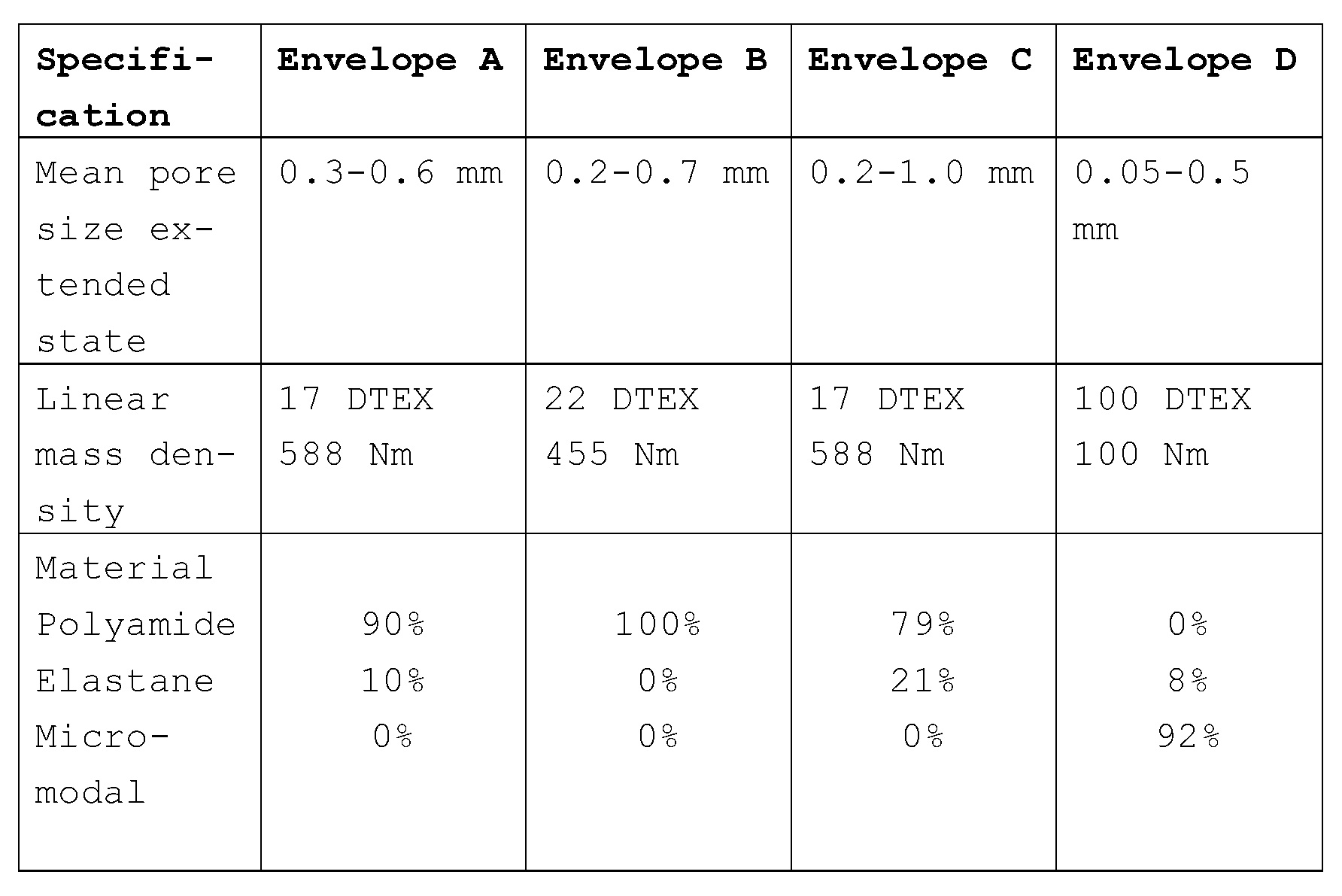
Claims

Claims A method for producing smear-ripened cheese, charac- terized in that the method comprises the steps (a) applying an envelope on a pressed and freshly brined cheese, said envelope being in direct physical contact with the surface of the cheese, said envelope being permeable for metabolites produced by microor- ganisms and for microorganisms themselves and for com- ponents of the cheese and for gaseous elements, in particular surrounding air; (b) ripening the cheese within the envelope; (c) removing the envelope with thereon adherent part of a smear formed during ripening; and (d) packaging the cheese for transport and/or sale. The method according to claim 1, wherein the envelope contains pores having a mean size in the range of 0.01 mm - 2.00 mm, wherein the mean size relates to a) in case of a circular pore, the pore size relates to the diameter of the pore; or b) in case of an oval or polygonal shape of the pore, the pore size relates to the distance between the most distant points or corners of the pore as measured by light microscopy, preferably according to the following protocol:
(1) clamping the envelope in a tentering frame; and
(ii) applying to the envelope maximum extension in the elastic range of the envelope; and
(iii) measuring the size of a multitude of pores that are visible on a 5.8x5.8 mm sized microscopy image with 48 fold magnification. The method according to any one of the preceding claims wherein the envelope is 10-500% elastic as measured according to DIN EN 14704-1. The method according to any one of the preceding claims wherein the envelope comprises knitted fabrics or woven fabrics or non-woven fabrics, in particular knitted fabrics or woven fabrics, most preferred knitted fab- rics . The method according to any one of the preceding claims wherein the envelope comprises materials selected from the group consisting of natural polymeric materials, synthetic polymeric materials, and mixtures thereof, wherein natural polymeric materials are preferably se- lected from the group consisting of cellulose, cotton, wool, silk, cashmere and mixtures thereof, and wherein synthetic polymeric materials are preferably selected from the group consisting of cellulose-deri v- atives (such as cellulose acetate and nitrocellulose) , polyamides, elastomers, polyurethanes, polyolefins such as polypropylenes, polyesters (such as polyeth- ylene terephthalate) , polyethylene glycols, acrylics, and mixtures thereof. The method according to claim 5 wherein the envelope consists of a mixed fabric of (i) modal or micromodal and (11) elastane. The method according to any one of claims 4 to 6 wherein the envelope comprises knitted or woven-fabrics , pref- erably knitted fabrics, consisting of yarns having a linear mass density of 5-165 DTEX, preferably 10-120 DTEX, more preferably 15-100 DTEX. The method according to any one of the preceding claims wherein before step a) the envelope is in an at least partially elastically extended state. he method according to any one of the preceding claims wherein step (b) is divided into the following steps: (bl) immersing the enveloped cheese in a smear liquid, optionally comprising surface starter organisms; and (b2) keeping the cheese humid by spraying onto said cheese water, optionally comprising 2-5% sodium chlo- ride, at regular time intervals, which are adjustable during the ripening period. A cheese or a piece of cheese obtainable or obtained by the method according to any one of the preceding claims . The cheese or a piece of cheese according to claim 10, which has a residual smear layer with a thickness of less than 50% of the smear layer of a comparable cheese that was not produced by a method according to any of claims 1 to 9, said comparable cheese being a smear- ripened cheese of the same cheese group according to the German cheese regulation as of date 02 June 2021; and/ or which has a residual smear layer with a mean thickness of not more than 0.2 mm, as measured by microscopy. The cheese or a piece of cheese according to any one of claims 10 to 11 which shows 10-80% (w/w) less vol- atile off-flavour compounds when compared to a compa- rable cheese that was not produced by a method accord- ing to any one of claims 1 to 9, wherein said comparable cheese being a smear-ripened cheese of the same cheese group according to the German cheese regulation as of date 02 June 2021, and wherein said measurement is performed by gas-chroma- tography when both the inventive and the comparable cheese are stored for at least 10 days in an air-tight packaging . The cheese or a piece of cheese according to claim 12, wherein the volatile off-flavour compounds are selected from the group consisting of ammonia and/or low molec- ular weight sulphur compounds such as methanethiol, hydrogen sulphide, dimethyl sulphide (DMS) , dimethyl disulphide (DMDS) , dimethyl trisulphide (DMTS) , car- bonyl sulphide and mixtures thereof. A cheese or a piece of cheese according to any one of claims 10 to 13, which shows a residual smear layer comprising a 50-99% lower total count of microorganisms than a comparable cheese that was not produced by a method according to any of claims 1 to 9, wherein the microorganisms are selected from the group consisting of anaerobic bacteria, aerobic bacteria, yeasts, moulds and/or mixtures thereof, and wherein the total count of microorganisms is calculated based on the surface area of the cheese, and wherein said comparable cheese being a smear-ripened cheese of the same cheese group according to the German cheese regulation as of date 02 June 2021. Use of an envelope as defined in any one of claims 1 to 7 in a method for producing smear-ripened cheese according to any one of claims 1, 8 or 9.
PCT/EP2021/078069 2020-10-12 2021-10-11 Method for smear-ripening of cheese Ceased WO2022078967A1 (en)

Priority Applications (2)

Application Number Priority Date Filing Date Title
US18/031,501 US20230380437A1 (en) 2020-10-12 2021-10-11 Method for smear-ripening of cheese
EP21783032.2A EP4208033B1 (en) 2020-10-12 2021-10-11 Method for smear-ripening of cheese and use of an envelope in a respective method

Applications Claiming Priority (2)

Application Number Priority Date Filing Date Title
EP20201350.4A EP3981258B1 (en) 2020-10-12 2020-10-12 Method for smear-ripening of cheese
EP20201350.4 2020-10-12

Publications (1)

Publication Number Publication Date
WO2022078967A1 true WO2022078967A1 (en) 2022-04-21

Family

ID=72840389

Family Applications (1)

Application Number Title Priority Date Filing Date
PCT/EP2021/078069 Ceased WO2022078967A1 (en) 2020-10-12 2021-10-11 Method for smear-ripening of cheese

Country Status (3)

Country Link
US (1) US20230380437A1 (en)
EP (2) EP3981258B1 (en)
WO (1) WO2022078967A1 (en)

Citations (4)

* Cited by examiner, † Cited by third party
Publication number Priority date Publication date Assignee Title
US2641545A (en) 1951-04-11 1953-06-09 Kraft Foods Co Manufacture of soft surface cured cheese
FR1437562A (en) 1965-03-23 1966-05-06 Envelope for soft cheeses
FR2710820A1 (en) 1993-10-05 1995-04-14 Bel Fromageries Method for manufacturing products by means of the setting or gelling of a protein substance
FR2774556A1 (en) 1998-02-10 1999-08-13 Bel Fromageries Mature cheese, with easy removal crust

Family Cites Families (1)

* Cited by examiner, † Cited by third party
Publication number Priority date Publication date Assignee Title
FR2759253B1 (en) * 1997-02-10 1999-04-30 Bel Fromageries NOVEL MATURED CHEESES AND METHOD OF MANUFACTURE

Patent Citations (4)

* Cited by examiner, † Cited by third party
Publication number Priority date Publication date Assignee Title
US2641545A (en) 1951-04-11 1953-06-09 Kraft Foods Co Manufacture of soft surface cured cheese
FR1437562A (en) 1965-03-23 1966-05-06 Envelope for soft cheeses
FR2710820A1 (en) 1993-10-05 1995-04-14 Bel Fromageries Method for manufacturing products by means of the setting or gelling of a protein substance
FR2774556A1 (en) 1998-02-10 1999-08-13 Bel Fromageries Mature cheese, with easy removal crust

Non-Patent Citations (2)

* Cited by examiner, † Cited by third party
Title
DATABASE FSTA [online] INTERNATIONAL FOOD INFORMATION SERVICE (IFIS), FRANkFURT-MAIN, DE; HOSTIN S ET AL: "Properties of smear from the surface of Roquefort-type cheeses. (translated) TIOL- Eigenschaften der Schmiere der Kaeseoberflaeche der Roquefortart.", XP002802532, Database accession no. FS-1993-01-P-0075 *
HOSTIN SPALO V, MILCHWIRTSCH. BER. BUNDESANST. WOLFPASSING ROTHOLZ, vol. 111, 1992, pages 106 - 109

Also Published As

Publication number Publication date
US20230380437A1 (en) 2023-11-30
EP3981258A1 (en) 2022-04-13
EP4208033A1 (en) 2023-07-12
EP4208033C0 (en) 2025-12-24
EP4208033B1 (en) 2025-12-24
EP3981258B1 (en) 2023-01-25

Similar Documents

Publication Publication Date Title
EP3135606B1 (en) Packed body having filter tow bale packed in unsealed state in packing material, and method for producing same
AU2008309571A1 (en) Process for foil ripening of cheese
US11781249B2 (en) Polyurethane elastic fiber, yarn package of same, and product including same
WO2022078967A1 (en) Method for smear-ripening of cheese
US6440555B1 (en) Package for taking up false twist yarns
EP1295975B1 (en) Beam for weaving and sizing method
AU2022268312A1 (en) A woven textile fabric
AU2015221423B2 (en) Fresh produce storage device
US6692835B1 (en) Innerwrap with polyvinyl alcohol slip coating
Gammariello et al. Effect of modified atmospheres on microbiological and sensorial properties of Apulian fresh cheeses
US3798340A (en) Manufacture of salted cheese
CN106223052B (en) A kind of plain weave silk facial mask cloth
US4053678A (en) Fiber tow for stuffing purposes and process for producing it
WO2019174760A1 (en) Improved cheese ripening
RU2110627C1 (en) Filter-sorbing cloth for protection dress
JPH082241B2 (en) Vegetable and fruit freshness maintaining packaging material, packaging method and packaging body
US3887070A (en) Package of crimped thermoplastic synthetic yarns and method of winding up same
JP2009052159A (en) Method for heat-treating cellulosic material or molded article thereof
US3046140A (en) Sliced swiss cheese
JP2002046939A (en) Monofilament for industrial fabric web and winding method therefor
US2025376A (en) Conditioned material and method of preparing same
US3645061A (en) Method for manufacturing an improved polycaproamide filament yarn by sealing a package in a bag
IE42114B1 (en) Textile package and process for preparing it
JPH08259110A (en) Polyamide fiber package and manufacturing method thereof
JP2002112700A (en) Packaging material for keeping freshness of cherry tomato

Legal Events

Date Code Title Description
121 Ep: the epo has been informed by wipo that ep was designated in this application

Ref document number: 21783032

Country of ref document: EP

Kind code of ref document: A1

ENP Entry into the national phase

Ref document number: 2021783032

Country of ref document: EP

Effective date: 20230404

WWE Wipo information: entry into national phase

Ref document number: 18031501

Country of ref document: US

NENP Non-entry into the national phase

Ref country code: DE

WWG Wipo information: grant in national office

Ref document number: 2021783032

Country of ref document: EP